Tag: Civil litigation

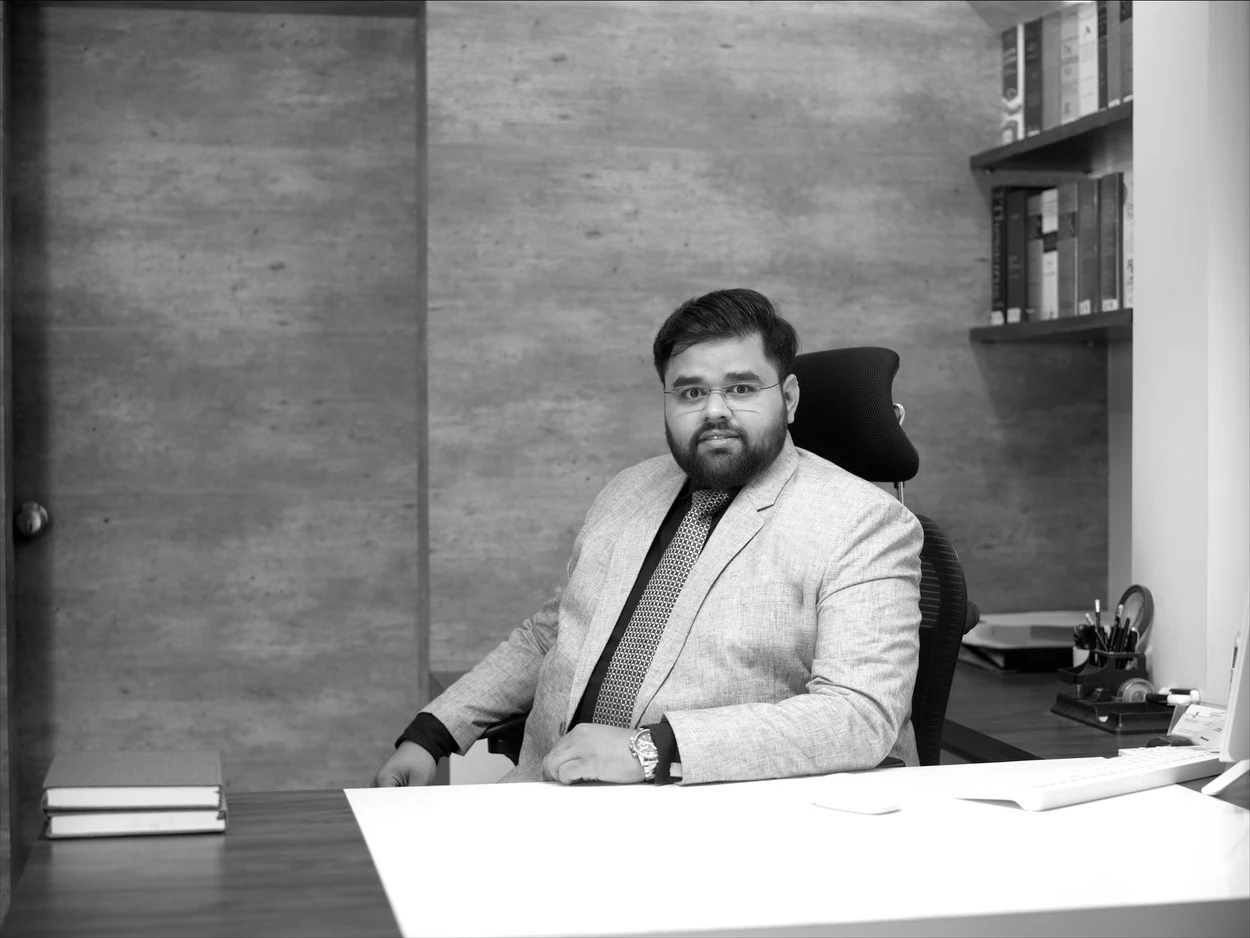
  • From Vision to Perspective: A Journey of Innovation, Growth, and Lasting Social Impact in the Legal Industry. – Harshavardhan Bhende, Founder & Principal Advocate at Regulus Advocates & Consultants.

    From Vision to Perspective: A Journey of Innovation, Growth, and Lasting Social Impact in the Legal Industry. – Harshavardhan Bhende, Founder & Principal Advocate at Regulus Advocates & Consultants.

    This interview has been published by Anshi Mudgal and The SuperLawyer Team

    With over 13 years of experience in various courts, including high courts NGT and Supreme Court as well. What were the personal experiences that may have influenced your decision to build your career in the legal fraternity and how was the path? How did you intend to follow it and how have you built your practice around it?

    My journey in the field of law honestly started purely by chance. I was never supposed to be in the field of law, but it happened purely by chance. And as soon as I got into it, I started developing interest. In fact, I would say I’m more a product of reverse engineering than anything else, where my interest developed as I started working in the field. I predominantly come from a business family and as every person born in the business family, your first inclination is towards the family business. But as I started working in the field of law, as I started interning and thereafter, once I graduated and I started working with some law firms and some senior lawyers, it set out this kind of a feeling in me that  I could work in this field and I could succeed in it. And it also enabled me to create my own niche, to create my own identity. And the rest is, as they say, is history.

    You have also done MSc in management from Bradford University. What was the motivation behind doing this degree after law? And how has management degree or management education helped you in not only running your law firm, but actually working in the business operations field?

    Because usually we have hardly seen lawyers doing management degrees. So how has it turned out for you?

     As I came from a business family, I needed something to fall back upon because, you know, I joined the five year law course. So, obviously I had no knowledge about our business administration per se, apart from the practical side of things, which I saw how my family business was being run. So I believed that I needed some backup. Just in case my legal career doesn’t take off, I should have something to fall back upon.  But, to be honest, my decision to do an MSc in management, and especially from the UK has reaped amazing rewards for me in my legal field, simply because, you know, when you are into corporate advisory or you work closely with companies.

    A lot of times as lawyers, it is very difficult to understand the mindset behind doing business. And you normally would only look at the business or you would look at the company from the purview of what the statute says or what the law says. What the MSc basically helped me do is to differentiate and understand the business of my clients better. And, hence the advice that I would give them was more in terms of enabling them or rather giving them a better footing for them to do their business and to also help them create a more solid foundation while doing business.  As lawyers, a lot of times we tend to be a little pessimistic towards things  that’s an occupational hazard I would say. 

    That being said, if you are able to understand your client and your client’s requirements, especially somebody who has either got a startup or is well established entity, you are able to guide them in the proper manner and basically just enable the law to become more like a safety net for them rather than being an impediment. So, that’s how the MSc has really helped me.

    Sir, before starting your career you have worked with several advocates, senior advocates as well. How was that journey helpful in shaping your career as well as if you could share some key learning experiences from the time when you were practicing with them, learning the nuances of the trades. Also, before you started your own practice, how did you make up your mind? Or how did you decide that now I can go independent?

    I started interning with a senior lawyer here in Pune and what he helped me understand is that when you’re in practice, every little task that is given to you is of great importance. As I always tell even my juniors who work with me, my first task was, for the first maybe two or three months, not only stapling the notices, but also how the staple should be done, and how the letter should be folded.  These are little little things. Then when it comes to the aspects of court, a lot of times you have to make applications which are handwritten. How the paper needs to be folded, how those decreases need to be done.  All these little, little things were taught to me. So, law requires a lot of patience and I was lucky that I had mentors like the seniors that I had, who basically enabled me to  understand the final nuances of law. See, when you are practicing, especially in the field of litigation, you come across various aspects. Simple things like, you are in court, you need to file a particular bunch of applications or a bunch of documents. They have to be threaded or you have to drive that thread  through the top corner of how do you do that?

    How do you go about it? A lot of times, you know, you’re privileged if you have a clerk with you, but if you don’t, how do you fend for yourself?  And these smaller nuances helped me a lot. Even today if you leave me alone in my office, I can still operate on my own without anybody’s help. So, learning all these final nuances. Then came the aspect of the art of advocacy, how to present yourself in court. One of my seniors would often tell me this, that lawyers are like stage actors. The courtroom is your stage and everything that you do is noticed. Every word that you speak, everything that you cite, it gets you your attention.

    Ensure that you’re well prepared with what you’re doing. You know what you’re saying. You can’t just go blabbering what you want over there. So even simple things like the way you would appear in court or your entire getup, whether you’re well taken care of. How your coat is, how your band is, if your shoes are polished or not. For men, if you’ve shaved or not, these are little, little things that even matter because at the end of the day, you’re  creating an impression. 

    You’re creating an impression in the eyes of the judge, you’re creating an impression with the opposite side lawyer, and you’re creating an impression, not just with your client, but also with the other members of the fraternity. So, learning these little, little things is very important. I see a lot of times, the newer generation does not have the patience, they want to get from point A to point B in a jiffy.  So law doesn’t work like that.  It’s a process. You have to experience every element of that process. And if you are able to enjoy that process,  the field of law really ensures that you’re well taken care of.  If you start getting impatient, you will realize that a lot of people leave the field of law or they get into things like corporate practice or they get into things like joining some company. Litigation is tough, but it’s fun. And you have to enjoy it. You have to enjoy being in the court. You have to enjoy every moment of being in court. Just as is when it comes to non litigation practice. It also requires a lot of patience because you are restricted to your office. You have to understand what your client requires.

    You have to understand how the market is behaving. You have to understand the field in which your client is currently operating. How does that field operate? What are the global ramifications of what you’re doing? So you have to understand all these nuances while applying the various facets of law to a particular document. You have to be well aware about everything around you.  See you learn from every person that you meet. So it’s not just your seniors. I think I’ve learned a little bit from everybody that I’ve either seen in court or I have come across during my entire 13, 14 year journey. But yeah, my seniors have played a massive role in shaping me as to where I am today. And I credit them for that.

    What was the inspiration behind establishing Regulus Advocates & Consultants after years and years of practice, what factors actually influenced you or your decision to start your own practice? And how was it that you built the resources for the same? 

     When I decided to go independent, it was a very tough decision because what happens is when you’re working with a senior, you’re living a life in a cocoon. Even if you make a little mistake, you know that you have somebody who’s covering up for you.

    You know that a little here and there is fine because your senior is going to take care of it. But when you’re breaking out on your own, you are the whole and soul of whatever you’re doing. You’re responsible for every action that either you or your juniors are doing. So that being said. A lot of people find it tough going independent one is predominantly because, especially if you’re in the field of litigation, that work comes in slowly, and the gratification for that work comes in even later.

    So a lot of times, you will have lawyers who work for minuscule fees just so that they can get to work, but that doesn’t mean that it keeps their cash flows going.  And a lot of times it’s like working at a loss, but you do it for the experience. Going independent  is like diving into the deep ocean. The moment you feel that, yes, you’re well equipped intellectually and with a little bit of experience to back you up, that’s the time you should start thinking of going independent. And so far as starting Regulus was concerned. I am a strong believer in the fact that consolidation is very important.

    If you can bring various people together and work as one unit, it helps serve the purpose better than working as a lone wolf.  You can’t behave like an individualistic person, when it comes to this, you have to think that collectively what you can offer to people.  And that is what Regulus is all about.

    We basically believe in providing a one stop shop solution for all our clients. So a lot of times we have clients who come to us with a particular legal requirement. And during the course of handling that client. The client itself realizes, Oh, I have another issue that needs to be taken care of. Now, they need not go out to any other lawyer because they know that my office is well equipped to take care of that. So that is what was the thought process behind starting Regulus. And, we’ve been able to do that to a large extent, I would say we’ve been able to do that. Where we helped clients in various walks of life, whether they’re individual clients or whether they’re companies.

    So we’ve really been able to help them, secure them, and that’s how we want to keep working.  So even whether it’s me or whether it’s my partner, our singular focus is to ensure that we don’t treat law like a business, but we treat law as something that we are passionate about. And through that passion is what we generate business. So it doesn’t work the other way around.

    You have been involved in many cases at the Supreme Court as well.  If you will be able to share or shed some light on the particular airline ticket refund case which has had bigger implications, what strategies did you follow or how was it that you planned and you had that particular favorable outcome for yourself and your client obviously? Also, how has your management degree helped you in building that particular strategy over here in this particular case?

     To be very honest,  I was the second lead on the matter. I was not leading the case. This case predominantly was happening during the lockdown and post lockdown scenario during Covid, it was in 2020  when the government had basically put a stop on all air travel. And when that happened, you had a lot of people who were either passengers or travel agents,  facing tremendous losses because they had paid for their tickets for the travel during those months when the airlines had stopped operations and they were unable to get their money back.

    And there was a notification by the central government saying how the money will be returned back to the passengers and things like that. Now, there was a petition that was filed by one organization. In the Supreme Court.   I happened to be representing a travel agents association and  it was tasked upon me to see whether we could intervene in this particular case.

    I was lucky that I had the guidance and support of a very senior lawyer in Delhi. Who today is a sitting judge of the Bombay High Court, Dr.Neela Gokhale  who was basically engaged by us to lead the entire matter. Now, interestingly, what happened was there were two other senior lawyers who were representing other organizations and then the airlines came all guns blazing with creme de la creme of the legal field where you had people like Hari Salve, Arvind Dada, Mukul Rohatgi and you know, the works. And you obviously had the Solicitor General also appearing for the Union of India.

    Honestly, for me, that was extremely intimidating because I had never appeared in the matter where you had such a star studded opposition and people who I have looked up to in this field. So, it so happened that on the day of the arguments, Dr.Neela Gokhale’s mic couldn’t work and that was the only opportunity we were given for arguments. And it was absolutely magnanimous on her part where she said, look, you know, the case, just go ahead and argue. And I argued and I was plain lucky that the bench of the Supreme Court heard me out in detail. And see what happened was till date, till that case,  The element, or rather, who is a travel agent was never really explained to any other court. But travel agents were always treated like a middleman or a dalal, as you would say.

    But I basically went forward and explained the role of a travel agent and how that entire thing worked which struck a chord somewhere. And when the judgment came, the court basically put down all the suggestions and all the points that I had argued as a part of the judgment, which was tremendous. I mean, for me, that was incredible because the court mentioned my name in that, that because I have stated.

     So it was a wonderful experience. And, I would say it’s a feather in my cap because it ended up being a reported judgment, and which was  the only reported judgment right now that I have to do my entire work.

    Over the years of your experience, how have you seen the legal landscape change and take shape, especially when it comes to corporate advisory or tech law or all these fields which are very emerging ones and how have you worked around  your own role and how do you think all these technologies are going to play any role in future of your legal practice and of others, keeping in mind the way it is changing?

     I would say that you have to look at law or rather any field for that matter in a pre COVID vis a vis a post COVID scenario, because what the pandemic really did was it changed the landscape of how work is done across the world.

    Now, if you were looking at a pre COVID scenario, this interview would be happening face to face. I don’t think any of us were even aware about a platform called Zoom or Webex or any of that nature till before the pandemic came into play. I mean, I remember only using platforms like Skype. I was completely unaware about things like Zoom till the pandemic really came about. 

    And in the legal field, what it did was, It brought about a sizable revolution in so far as how the courts function.  So a lot of the courts, like the High courts and the Supreme courts, the NCLT or the NGT for that matter are going virtual.  I remember during that time we would appear in the NCLT in various matters.

    And we would be appearing in various cities. So I would be sitting in my office in Pune,  appearing in the morning, maybe in Mumbai, in the afternoon session, maybe in a place like Ahmedabad or Delhi.  So what they did was that enabled people like me sitting in places like Pune to appear across India.

    Even that Supreme Court case that I could handle,  it was a virtual case, all the councils were appearing virtually. So what they did was it brought about a revolutionary change. Also, it brought about something which is known as e-Filing. Like all documents which are filed in the court are e-Filed today. Where in the past we would, you know, go and submit everything in the court. Now, it is all uploaded onto a platform and it is submitted there. So what happens is, it brings in technology to a large extent and it helps various people from various walks of life to also be involved in this field. 

    Now in the state of Maharashtra, you have the Bombay High Court, which is located in three places. You have it in Mumbai, you have it in Aurangabad, in Nagpur and then you have also one in Goa.  But let’s keep Goa aside for the moment, we look at these three places. Now, each of these three benches have certain districts which have their jurisdiction to the Bombay High Court.

    A lot of these people who are from these districts which are far away from Mumbai or from Aurangabad or from Nagpur have to travel every time to the respective places to attend the matters.  Today, what happens is I’m able to sit in Pune, or the lawyer is able to sit in a place like Kolhapur or in Solapur, attend the matter in Mumbai virtually, without having the trouble of traveling all the way there.

    So it is less time consuming, it is more productive.  And it also enables a person who’s sitting in a remote place to have the experience of appearing before the High court. So, what technology has done is, it’s broken down the entire monopoly of certain lawyers in certain places that If it is a matter in the High court, only those lawyers will handle it.

    That’s not the case anymore. So technology is making way for the Superb revolution in the field of law. You’re seeing it even in business  and it is also bringing about a lot of complications with it. It  has its advantages. It also has its disadvantages.  You’re seeing cybercrime, you’re seeing all these things happen.

    But that is also enabling a new generation of lawyers to come into play who are focusing more on these activities. We had the Information Technology Act, which was passed way back in the year 2011 2012, or even before that. But the actual implementation is actually happening now. In a post COVID scenario, you are seeing cybercrime, you’re seeing scams happening over using information technology, you’re seeing all these things happen.

    And law is playing a huge role in that lawyers are playing a huge role in helping agencies understand how to work on it. Till about three, four years ago, you would not have any lawyers in India understanding what the GDPR guidelines  were. But now you have a lot of lawyers who are understanding that, taking courses in that, and working in that field, advising companies on those fronts. 

    So, the post pandemic scenario has been, I think, great for the field of law. Yes, for the older generation, it has been quite a setback because they’ve had to unlearn a lot of things and relearn a lot of things, but it has helped them to a large extent as well because they have engaged juniors who understand the usage of technology. But for the newer generation, it’s become like a cakewalk.

     There are skepticisms that there are chances that AI will take over all the work, we will not be left with much of the work. How do you see that particular fear and how would you like to suggest some ways of overcoming that fear and making sure that even if technology is coming in head on, still we have better chances of not only surviving, but thriving in those practices?

    The way technology is an advantage, it’s bringing its disadvantages hand in hand. Now, you have a lot of the newer generation of lawyers or this newer generation of clients who come to you with solutions that they find on platforms like chatGPT.  Now, even if you put an input on Chat GPT that drafts me an entire petition, it does that for you in a matter of seconds. You tell it, give me a case law on a particular subject. It gives you about 5, 10 case laws on a particular subject.  But the problem lies in how much reliance do you base on it? 

    See finally, you can use these tools as mere reference points rather than being your primary source of information, they can be used as enablers  of making your work simpler than being used as a primary source of drafting or creating a document. And unfortunately, I’m seeing a lot of people doing that. I’m seeing a lot of people using it in a manner in which they’re so reliant on that platform, on AI, which is not the best thing to do. For a simple reason is because the AI is also still learning. 

    It is, I would say,  still at an infancy stage, it is also learning, it will take its time for it to understand what inputs and what it’s supposed to really give out as an output. But that does not take away from the fact that as a lawyer, your primary source of information has to be the books of law.

    It has to be the statutes that are there available, and they have to be the commentaries and the various precedents set out by the various courts in the country. Yes, it is going to create a scenario where future generations of lawyers may have to face certain hardships. But I always say this, that when you look at it not as a problem, but you look at it as an opportunity. It also brings about various elements of opportunities to do different types of work. And you should use AI to work on a global stage then.  You have to then aim higher and AI is only there to enable that for you. If you can do it, that’s the best, you should.

    You actually juggle in your legal practice, then your firm management, then also with your social contribution with Drishaan Charitable Trust. How do you actually prioritize your responsibilities? How do you have that work life balance? And how do you make time for yourself? How do you make sure that you are in absolute perfect shape for your practice for yourself as well?

     So far as my philanthropic work is concerned, that is something that I started about 15 odd years ago. So even before I got into the field of practice of law, I had started my organization and we’ve done a lot of work since then. Obviously, prior to me getting into the field of law, the amount of attention and work I could do in the field was much greater than what I can do today.

    But that being said,  our primary focus today is to ensure that we are able to provide financial assistance to anybody, any underprivileged child out there. Whether he or she requires medical aid or whether he or she requires educational help. So we are working towards that.

    We’ve helped a lot of kids. In fact, just a couple of days ago, we conducted a massive eye camp just on the outskirts of Pune with the assistance of another organization, where we treated close to about, 4 and a 1/2, 5, 000 people, students, basically from the underprivileged backgrounds. And we did free eye checkups and we gave glasses off to whoever required it. So, this is something that we do. The reason we keep doing this or rather I keep doing this is basically it helps me have a different perspective about how the world is. That’s number one.

    Number two, it also enables me to get my mind off the regular work kind of things. And, it is extremely satisfying. As I always say to my friends that you know, it is something that gives me a massive kick and I do it for that. But when you talk about things like mental health, a lot is said about it these days.

    I think my generation or the generation before that were not really so bothered about our mental health and things like that, because we were made to grind our teeth to the very core and because we were made to work extremely hard,  you know, there was nothing like saying no to any task.

    So because of that, this element of feeling entitled to a particular thing never really arose for us. I feel a lot of the newer generation of the students that I see are always in  this entitlement trap and because they feel that they are entitled to a particular thing and when they don’t get it, it starts putting a mental pressure on them. 

    Yes, there are a lot of people out there who work in some toxic places where they’re made to work, where the remunerations are not as good and the entire environment is not really good.  Yes, in such places, there are cases of mental breakdowns, but at the same time,  what the field of law really does is if you really grinded your teeth well enough, it toughens you out. And it helps you take on the world like no other profession can  because see what happens, especially if you’re in litigation, you learn the art of talking to the lowest person in the court to the highest person who is the judge.

    If you have to get your work done, how do you convince the lowest person in that, from say the person who calls out the case to the bench clerk, to anybody else, how do you work around it? That’s also an art.  And it teaches you this, it enables you to learn these things. So people understand, human resource understanding is something that gives you a lot of insight.

     All that is not that easy as well the way you were saying that even people do understand that we have to work hard but sometimes the work itself takes a different kind of toll. Don’t you think?

     Yes, But to these people I’ll always say that you need to have a hobby that you can pursue, whether it is music, whether it is sport, anything else.

    I mean, there are people who just like to take maybe a Sunday off and just go drive somewhere or cycle somewhere or take the motorcycles and go somewhere. You need that little bit of me time that you need to give yourself. And that is quite a lot to rejuvenate your mind and body. And it is important that you stay away from unnecessary vices.

    I’m not saying you should not have a vice, but you stay away from the unnecessary ones. So, that will also help you keep your mind alert and be focused. Like, you know, I have a simple rule that if I’m going to be socializing over the weekday, I will ensure that I will never have any alcoholic beverages. It’s a rule because it can unnecessarily tamper with your mind. So you need a little bit of self discipline as well. And that nobody else can do for you that only that individual can do for himself.

    What kind of key skills or mindsets that you emphasize while you are mentoring the young law students or your interns or your juniors and what kind of advice do you give them in order to make sure that it helps them stand out in the kind of competitive environment and the legal market that we are currently in?

    The most important aspect for any young lawyer or any lawyer, I would say, young or old, new or experienced is the ability or the thing that you have to read, if you are averse to reading, then you’re not meant for this field. So even whether it means, reading the statute,  whether it is reading the case law or whether it is reading your case file,  a young lawyer or any lawyer has to have the ability to read .  The second thing is reading between the lines is very important. So a lot of times you’ll come across documents which are running through thousands of  pages. But how to have a quick read, how to read in a jiffy yet grasp and understand what is said in there so that you can give your inputs on it and give your advice on it in the proper manner.

    That is most important. Another skill that I always emphasize upon is the use of technology. So, basic things like how to use your Microsoft Words or Excels or PowerPoint presentations, these are very important. Your command of the English language, especially if you want to practice in the higher courts is very important. In fact when you’re practicing in law, you need to have command all  the languages that you either speak, but having knowledge and command over English is very important because if you get an opportunity, especially if you’re practicing in the lower courts and you get an opportunity to practice or conduct a matter before the High court or the Supreme court, you should have the to speak over there.

    That also goes for, if you get a job or an opportunity to work with a law firm, and you’re going to be drafting contracts, your contracts are going to be in English. And therefore your command over that language is very important. That being said, the command over your native language is also important, because when you practice in the lower courts, which is the trial courts, A lot of times you will use your native language, which is like in Maharashtra, you’ll use Marathi or  up North, you’ll use Hindi, down south, you’ll use any of those four or five languages that they speak there. 

    But if you’re going to be living in those places and practicing in those areas, you need to know the language there for sure.  So that is another skill set that is very important and the most important aspect of it all is the,  I won’t say the ability, but rather the desire to work hard. So if you can work hard, you can definitely excel in this profession.

    While reading about you and the kind of work which Drishaan has done. How did you pick up that you have to work in the eye department because you started with Drishaan Charitable Trust in order to make sure that you work for not only students, but also those who need help with the eye and it’s not very easy for a non doctor to organize such big camps. How did you do that?  

     You don’t need to be a doctor or you don’t need to be  equipped with that particular skillset to do that kind of work, to be very honest. I was all of 18 years old when I started doing this work, and it started off by me, to be very honest, using the money that I had collected during my 18th birthday, and I decided that I will utilize it to help one child get their eyesight back.

    How I came to work on the aspect of the blind is predominantly because the college that I was studying in at that time would have these blind students there, and I would often see their struggle. So I said that if I can help one, maybe I can help start something with that. What happened was, when I did that particular activity, and I did it purely for myself, I didn’t do it for publicity, I didn’t do it for anybody’s attention.

    It so happened at the hospital that I helped this child get operated in and things like that, they informed the local newspaper and that  newspaper kept asking me to do an interview, which I rejected for a very long time  until the editor in chief himself gave me a call one day and said that, look, I would like to speak to you regarding what you’ve done. 

    And it so happened that by then my next birthday had come up, I’d again helped another child.  So they said, look, you want to know who you are and what you’re doing. So I went there for a regular chat. And I just spoke about what I’m doing and why I’m doing what I’m doing. Interestingly, without me knowing, he actually wrote an entire editorial about me in the local newspaper and that paper got circulated in various parts of Maharashtra and it created a position for me where I had people from across the state of Maharashtra coming to see me.

    And meet with me and basically contribute to what I was doing. And that basically laid the foundations for Drishaan because by then I’d collected so much money from so many people that I could not obviously retain that money for myself. So then I formed a trust and  through that trust since 2010, we’ve restored the eyesight of over 150,  175 odd kids till date. We’ve conducted various eye camps.

    So what happened was we started working in this field and we realized that there is a disease called rubella. So, I started doing my own research on this.  And then I started understanding that there is nobody who’s really working towards this. And it so happened that I realized that there’s no immunization program for it as well. 

    So I started writing to the government and I was writing to various authorities saying that they should start immunization  programs. So that we can eradicate this disease out of India. Interestingly, in 2014, when the present dispensation came into power, I happened to write to the Honorable Prime Minister and in about three, four months, I got a response from the Ministry of Health saying that  whatever I have stated out is being forwarded to the nursery departments and they are working on an immunization program.

    So, that was extremely satisfying. And since then, because I also got busy with my work and things like that. My fieldwork reduced and my focus changed toward more of, helping kids or rather the underprivileged kids by way of financial help. So in order to do that we conduct small little programs where they’re more like fundraisers and things like that.

    And it also creates awareness amongst people. And my logic behind it is simple, so in Hindi, as we say, “sirf drishti nahi drishtikon dena hai” That’s how we are doing it. So, what we are doing is, we are working with the underprivileged children, on one side, and at the second side, we are also now, we started a new program, where we’re calling various thought leaders to come and speak on certain subjects, because we want to change and imbibe the feeling of nationalism and patriotism in the youth.

    So we are working on that as well now, slowly. So we recently did a program in the month of March or April, where we had various speakers come and speak on the subject of Savarkar. So we’re going to organize more programs in the future to speak about various other people and basically instill a sense of nationalism and patriotism in the youth.

    What that also does is that also inspires them to carry on the work that I’m also doing because finally what we are doing is helping the children of the nation. And we are creating them for tomorrow.

    Get in touch with Harshavardhan Bhende –

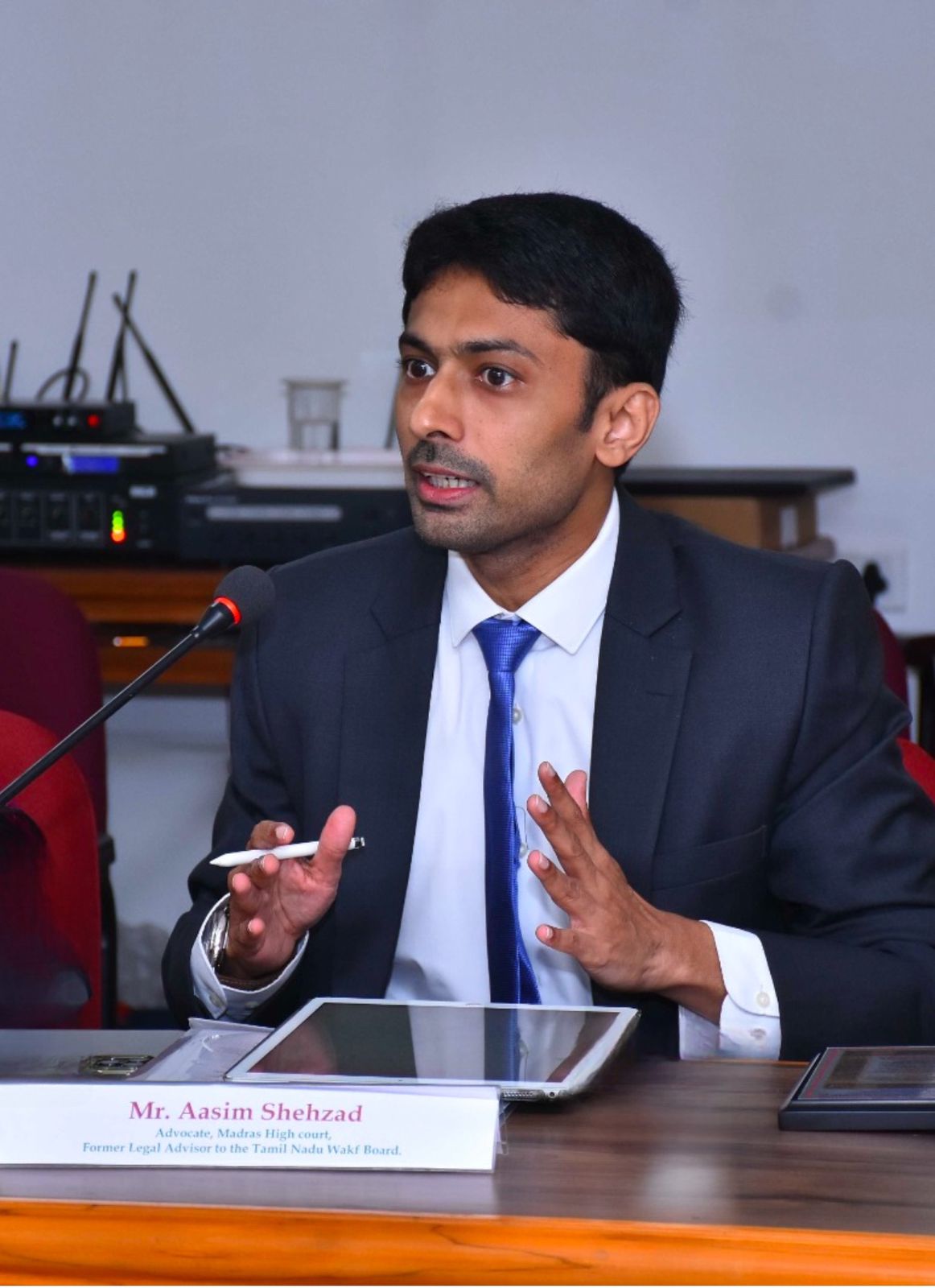
  • “The legal profession is not just about personal growth but also about service to society. Uphold the rule of law, work for the right cause and contribute positively to the legal community and the society at large.” – Aasim Shehzad, Founding Partner at BFS Legal and Counsel at Madras High Court.

    “The legal profession is not just about personal growth but also about service to society. Uphold the rule of law, work for the right cause and contribute positively to the legal community and the society at large.” – Aasim Shehzad, Founding Partner at BFS Legal and Counsel at Madras High Court.

    This interview has been published by Anshi Mudgal and The SuperLawyer Team

    With over two decades of experience in various areas of the law, looking back, was law a planned career path for you and what inspired your practice specifically in Arbitration & Constitutional Laws?

    Law has always been a deeply personal and deliberate career choice for me—a passion that took root when I was just 10 years old. My fascination with the legal profession was sparked by moments such as seeing my father in his lawyer’s robes and observing advocates gathered outside the District Court, which I passed by daily on my way to primary school. Reading landmark judgements featured prominently on the front page of the newspapers and the role played by the lawyers further motivated me. The courtroom’s dynamic nature—the challenge and intellectual rigor of the adversarial process inspired me to imagine myself as an advocate. These early experiences left a profound impression on me, fostering a deep admiration for the sense of purpose and justice inherent in the practice of law. My parents (Mr.K.M.Shafeeq Ahmed & Mrs.T.Akthar Sultana) deserve a mention for providing their unwavering support and encouragement which gave me the confidence to pursue my passion, ultimately transforming a childhood dream into a lifelong vocation.

    When I enrolled and started my legal practice in 2003, Arbitration caught my interest as it emerged as a growing field offering effective and efficient alternative dispute resolution mechanism. It was a welcome change to witness a system that allowed resolution of disputes outside traditional courtrooms, in a manner that preserved fairness, saved time and resources and proved highly effective when compared to the conventional mode of dispute resolution.

    As for constitutional law, a deep understanding of the Constitution is indispensable for any lawyer. It serves as the foundation of our legal system- not only safeguarding fundamental rights but also acting as a benchmark to test the validity and vires of other laws, rules and regulations.

    Having appeared before various forums from Supreme Court of India to High Courts at Allahabad, Delhi, Hyderabad and Madras, Principal District & Sessions Courts, Armed Courts Tribunal, Company Law Board, Central Administrative Tribunal etc., can you share with us the journey that led you to founding BFS Legal? What were the initial challenges you faced when establishing the firm?

    The journey to founding BFS Legal is a testament to perseverance, professional growth and the importance of teamwork. It all began with a strong foundation laid during my initial years of practice under the guidance of Mr.J.Sivanandaraaj (now a designated Senior Counsel) whose mentorship exposed me to a diverse range of branches of law and instilled key values of discipline, professionalism and ethics. The early exposure to branches like Arbitration, Constitutional Law, Commercial Litigation, Company Law and Business Crimes clearly shaped my professional interests and trajectory.

    My extensive experience briefing eminent Senior Counsel and arguing cases across various jurisdictions greatly refined my legal acumen and advocacy skills. This journey was firmly rooted in my formative years as a mooter, representing Dr. Ambedkar Government Law College, Chennai (formerly Madras Law College), at prestigious international competitions such as the Willem C. Vis International Commercial Arbitration Moot in Vienna and the Stetson Environmental Law Moot Court Competition in Florida, alongside numerous domestic moot court competitions.

    The transition in 2007 when my senior decided to merge his practice with a firm having pan India practice became a pivotal moment, sparking the creation of BFS Legal. My determination to retain my identity as a litigation lawyer and the camaraderie with my colleagues, Mr.P.V.Balasubramaniam (now a designated Senior Counsel), Mr.D.Ferdinand and Mr.Akhil Bhansali were instrumental in this decision.

    Establishing BFS Legal, however, was not without its challenges. Identifying a suitable office location and setting up infrastructure within a tight timeframe was a significant hurdle, especially during the court vacation period. Yet, our collective resolve and resourcefulness enabled us to overcome those initial obstacles, setting the stage for BFS Legal to grow into a successful and respected firm, it is today. This journey underscores the importance of a strong professional foundation, collaboration and the courage to take risks to achieve one’s vision.

    You’ve argued several precedent-setting cases before the Madras High Court. Could you share one of the most significant cases you’ve worked on, and the impact it had on your career or the legal landscape?

    One of the most memorable and challenging case that I worked on involved filing an appeal against the dismissal of an application under Order 6 Rule 16 of the Civil Procedure Code (CPC) by a Single Judge of the Madras High Court. The appeal was heard by the First Bench, comprising the Chief Justice Ms.Indira Bannerjee and Mr.Justice M. Sundar. The primary issue was the maintainability of an intra-court appeal against an order that was not final in nature, as such orders are generally not appealable.

    For two days, I had the privilege of arguing before the Hon’ble Judges, presenting comprehensive arguments on how the provisions of the CPC risk becoming ineffective if litigants were compelled to endure a protracted trial when the outcome was evident due to inherent flaws in the pleadings. The Bench rigorously examined and grilled me on my submissions, challenging every aspect of my reasoning. This experience was invaluable in deepening my understanding of how appellate courts test appeals and interpret statutory provisions and the thoroughness of the judicial process.

    This case is memorable for me because it sharpened my ability to articulate complex procedural issues and strengthened my confidence in handling challenging legal questions under rigorous judicial scrutiny by the sharpest minds. On a broader level, it underscored the importance of procedural fairness and judicial efficiency in civil litigation. Arguing the case before a bench that subjected me to intense questioning right from the word go had a profound impact on my professional journey, reinforcing my belief in the transformative power of well-constructed legal arguments and the ability to think on the feet to withstand intense questioning by the Judges.

    Your expertise in arbitration has been recognized by your appointment as an arbitrator at the Madras High Court Arbitration Centre. How do you see the evolution of arbitration in India, and what role do you think it will play in the future of dispute resolution?

    Arbitration in India has come a long way, evolving significantly over the years to address inefficiencies and delays. Historically, litigation in India has often been criticized for being time-consuming, leading to the adage, “Process is the punishment.” Alternative Dispute Resolution (ADR) mechanisms such as Arbitration, Conciliation and Mediation have emerged as a critical solution to mitigate these delays and provide efficient avenues for dispute resolution.

    Legislative amendments to the Arbitration and Conciliation Act, particularly in 2015 and 2019, have been instrumental in enhancing the arbitration process. By introducing stricter timelines for pleadings, arguments, and the delivery of awards, these reforms aim to ensure that arbitration remains an efficient alternative to traditional litigation. The treatment of appeals under Sections 34 and 37 as special proceedings, distinct from regular civil appeals, further reflects the judiciary’s intention to preserve the expeditious nature of arbitration as contemplated by the Parliament.

    The institutionalization of arbitration centres, such as the Madras High Court Arbitration Centre under the auspices of Madras High Court, is another significant development. These centres promote professionalism and ensure adherence to timelines, thereby increasing the credibility of the process. As an arbitrator, I have witnessed firsthand how these changes have streamlined proceedings and enhanced the experience for litigants.

    As businesses demand quicker resolutions to maintain continuity and reduce costs, arbitration offers a viable path. Additionally, the integration of technology, online dispute resolution platforms and the increasing emphasis on mediation and conciliation as complementary processes will further strengthen the ADR ecosystem. Looking to the future, arbitration will play an increasingly dominant role in dispute resolution, particularly in commercial and cross-border disputes.

    However, the ultimate success of arbitration in India depends on a continued focus on minimizing judicial intervention, ensuring uniform standards for arbitral awards, and fostering trust in the system. With these advancements, arbitration is well-positioned to become the preferred mode of dispute resolution in India, balancing efficiency with fairness.

    You have acted as legal advisor to the Tamil Nadu Wakf Board and also have had a unique opportunity to work on public interest litigation matters. Can you tell us about your experience in this area, and your preparation for approaching such cases?

    Working as a legal advisor to statutory body like the Tamil Nadu Wakf Board and engaging in public interest litigation matters has been a deeply enriching experience, marked by unique challenges and opportunities. It requires balancing the legal intricacies of governance with a commitment to justice and public welfare.

    Representing statutory bodies involves navigating several hurdles, primarily arising from systemic constraints. The sheer number of ongoing cases can be overwhelming, and prioritizing urgent matters demands effective time management. Due to staff shortages and administrative bottlenecks, panel lawyers often receive incomplete or delayed information, which can hinder case preparation. Lawyers frequently need to take the initiative to gather and verify data to ensure accurate representation. This involves persistence and innovative problem-solving to piece together the required context. Panel lawyers often have to devise innovative strategies to collect and corroborate data, ensuring that the responses are both accurate and comprehensive.

    Handling Public Interest Litigation (PIL) cases requires a thoughtful and strategic approach, as these cases often involve matters of broad social significance, addressing the rights of marginalized communities or issues that affect public welfare. Here are key steps to approach PIL cases effectively:

    1. The issue should affect a larger section of the population, not just a specific individual or group.
    2. The case must have a legitimate public interest element, such as a violation of Constitutional Rights, Public Health, Law & Order, Environmental Protection, Human Rights, Law & Order or those affecting public at large.
    3. Thorough Research and Legal Grounds requires
    4. Examining the relevant statutes, constitutional provisions, and precedents.
    5. Clearly identifying the legal violations.
    6. The petition should speak for itself setting out clear facts and the legal grounds in order to make a compelling argument. Emphasis should be on how the issue affects a large section of the population or public welfare. It is imperative to highlight the urgency for judicial intervention.
    7. Ensure that you rule out alternate remedy that may be available for achieving what you seek through PIL.
    8. Consult with affected communities to bring out the practical side of the issue.
    9. Judges often scrutinise whether issue is being brought before the court in good faith or for seeking publicity.
    10. Courts may want to know a clear remedy. Therefore, one should be ready to offer practical solutions for the Court’s consideration.

    Ultimately, representing a statutory body or addressing public interest issues have not only deepened my understanding of the law but also reinforced my belief in its transformative power to address systemic challenges and serve the greater good.

    You’ve been a guest lecturer at Tamil Nadu Dr. Ambedkar Law University and judged several national and international moot court competitions. What advice would you give to young law students and aspiring lawyers today?

    For young law students and aspiring lawyers, I’d emphasize these key principles to guide their journey in the legal profession:

    1. Choose a Senior of Repute & Knowledge: My primary advice to young lawyers is to focus on building a strong foundation by working with a senior of repute and expertise in your chosen area of law. A knowledgeable and respected mentor can provide invaluable guidance, help refine your skills, and expose you to diverse facets of legal practice. Learning under such a senior not only sharpens your understanding of the law but also instils discipline, work ethic, and professionalism—qualities essential for long-term success in the legal field.

    2. No Substitute for Hard Work: The legal profession demands immense dedication, and the effort you put in during your formative years will shape your career. Stay disciplined, dive deep into your studies and refine your skills tirelessly. Never forget that there are no shortcuts to success and consistent hard work is the foundation of a strong career.

    3. Stay Focused: In a world full of distractions, focus is your greatest ally. Set clear goals, prioritize learning, and avoid shortcuts. Success in law is a journey, not a sprint.

    4. Integrity is Non-Negotiable: Trust and Integrity are the cornerstones of a lawyer’s reputation. Never compromise on these values, as they are your greatest assets in earning respect and building lasting professional relationships. Always uphold honesty and integrity, both with clients and in court.

    5. Never Mislead the Court: Credibility is everything. Judges and peers respect advocates who present their cases truthfully and ethically.

    6. Learn by Observation: Courtrooms are classrooms. Observe how experienced advocates present their cases, frame arguments and handle judges’ questions. There is immense value in observing and learning from others.

    7. Have an Alternate Argument: Always be prepared for contingencies. A backup argument demonstrates your understanding of the case and readiness to adapt.

    8. Chase Excellence, Not Money or Fame: Focus on becoming the best in your field. Success, Recognition and Rewards are the by-products of excellence. Focus on mastering your craft, and everything else will follow.

    9. Challenge Your Limits: Instead of fearing challenges, embrace them. Use every obstacle as an opportunity to grow and continuously push yourself to improve. The legal field is vast, and the more you stretch your boundaries, the more you’ll achieve.

    10. Look for Opportunity in Adversity: Challenges often bring hidden opportunities. Approach setbacks with a problem-solving mindset and use them as stepping stones to success.

    11. Being Good Pays: Kindness and professionalism go a long way. Treat everyone with respect and courtesy.

    Lastly, remember that the legal profession is not just about personal growth but also about service to society. Uphold the rule of law, work for the right cause and contribute positively to the legal community and the society at large.

    What motivates you to provide pro bono legal services to those in need and how do you see the role of lawyers in social justice? How important is espousing larger cause through Public Interest Litigation?

    Pro bono work allows lawyers to challenge injustices, advocate for marginalized communities, and harness the power of law to drive social change. I firmly believe that lawyers play a vital role in promoting social justice. As officers of the court, we are uniquely positioned to bridge the gap between the legal system and the public, ensuring that justice is not a privilege for the affluent but a fundamental right accessible to all. Public Interest Litigation (PIL), in particular, exemplifies this ethos. It enables lawyers to address broader societal issues—whether it’s environmental protection, safeguarding fundamental rights, public health, law and order or rectifying administrative failures. The impact of such work often extends beyond individual clients, influencing policies and creating precedents for a better society.

     Given the demanding nature of your obligations at work and your commitment to social justice and pro bono work, how do you manage to maintain a balance between your professional obligations and personal well-being?

    Maintaining a balance between professional commitments, social causes and personal well-being is undoubtedly challenging, but it’s essential for long-term sustainability in a demanding profession like law. Here’s my framework to approach such balance:

    1. Starting the Day Early with a Clear Plan: Beginning the day early allows me to plan effectively and approach my professional obligations with focus and clarity. A well-structured day ensures that no time is wasted, enabling me to stay productive and efficient.

    2. Setting Clear Boundaries: Defining specific work hours and creating time for personal activities helps maintain a boundary between professional and personal life.

    3.Prioritizing and Delegating: Identifying tasks that require my direct involvement and delegating those where my absolute involvement is not required ensures that my energy is spent on what truly matters.

    4.Exercise for Body and Mind: I start my day with exercise, which helps keep my body healthy and my mind sharp. Physical activity is essential to stay energized and manage the stresses of a demanding schedule.

    5.Aligning Work with Purpose: When professional work resonates with personal values, it can become a source of emotional contentment.

    6.Practicing Time Management: Efficiently managing time by breaking tasks into smaller, actionable steps helps avoid mind blocks and burnouts.

    7.Family Time: Spending time with family is non-negotiable. It provides a sense of balance and fulfilment, even amidst a busy schedule.

    8.Commitment to Social Causes: Allocating some time in a week for social causes is important. Contributing to society through these efforts is both rewarding and a meaningful extension of my professional life.

    9.Reflecting and Adjusting: Regularly reflecting on what’s working and what’s not can help recalibrate commitments to ensure they’re sustainable in the long term.

    10.Reading and Traveling: Reading books on diverse subjects and traveling are vital for broadening perspective and providing mental rejuvenation. They inspire me and offer a much-needed break from routine.

    By maintaining this balance, I ensure that I can meet my professional obligations while also nurturing my physical health, personal relationships and social commitments. This harmony sustains my productivity and passion in every aspect of life.

    Get in touch with Aasim Shehzad –

  • “The journey from being a fresh law graduate to establishing my own law firm has been one of growth, learning and resilience.” – Nikhil Kulkarni, Founder of Nikhil Kulkarni + Associates.

    “The journey from being a fresh law graduate to establishing my own law firm has been one of growth, learning and resilience.” – Nikhil Kulkarni, Founder of Nikhil Kulkarni + Associates.

    This interview has been published by Anshi Mudgal and The SuperLawyer Team

    Having a background in commerce, looking back, what inspired you to transition into law as a profession?

    Reflecting on my transition from commerce to law, it was driven by a deep-seated interest in understanding the systems that govern society and the desire to make a meaningful impact. My commerce background provided me with a strong foundation in analytical thinking, understanding corporate finance, problem-solving and understanding economic frameworks, which seamlessly complemented the logical and structured nature of law.

    My passion for detailed research evolved into a strong interest in the field of law, where I found a perfect outlet for my drive to explore and solve complex issues. The turning point in my academic career was realizing that law not only offered a dynamic and intellectually challenging career but also a platform to advocate for justice, resolve conflicts and contribute to societal progress. The ability to bridge commerce with law, especially in areas like corporate frauds and insurance law, further motivated me to take this path, blending my prior knowledge with the intricacies of legal practice.

    How did your role evolve over time at each of the organizations you worked with, particularly from Legalogic Consulting LLP to Nikhil Kulkarni and Associates? What were some of the key challenges you faced when setting up your own practice?

    Being a first-generation lawyer, my ultimate goal was always to start my own practice. The journey from being a fresh law graduate to establishing my own law firm has been one of growth, learning and resilience. At each stage, my role evolved as I gained more responsibility, honed my skills and expanded my understanding of the legal field.   All my previous experiences have helped me develop important skills such as client communication, legal strategy formation, preparing arguments for a case, problem solving skills, to name a few. Establishing my own practice marked a significant shift. I transitioned from focusing solely on legal work to also managing the operational, administrative, and business aspects of a law firm.

    Establishing one’s own legal practice requires a lot of patience, perseverance and hard work. Building a client base initially was challenging in the initial years, however maintaining a strong work ethic and providing consistent results to earn referrals helped us build a good client base. Building a competent team is also crucial so that all the diverse areas of practice are effectively managed. Juggling the responsibilities of a lawyer, leader and entrepreneur was also a challenge. But prioritizing tasks and delegating effectively helps in overall management of the firm. Each step of this journey has been a learning experience, and the challenges faced have shaped my practice into what it is today. Fortunately, all my clients have had faith in my legal acumen and my team at Nikhil Kulkarni & Associates have given favourable results to most of my clients.

    How have you navigated the cases in the insurance sector particularly in your role as an empanelled advocate for United India Insurance Company? What was the most interesting case you had to deal with and what were your preparation strategies?

    To deal with cases in insurance sector requires a lot of preparation, particularly the motor accident cases since in most of these cases, the insurance companies are ordered by courts to pay compensation to the victims. Hence, preparing a good defence to mitigate the liability of insurance company is paramount. I will share one of the interesting cases relating to motor accident, which acquired a lot of media attention also. In that case, the relatives of the motor accident victim submitted a fake insurance policy belonging to our client United India insurance to claim compensation from the said insurance company. We had to convince the hon’ble court that in such a case, it is the victim who has not approached the court with clean hands by submitting a fake insurance policy before the court. Our team thoroughly prepared the questions for cross examination and extensively researched on various judicial precedents to support our case. After a series of arguments, counter-arguments and recording of evidence, the court came to a conclusion that our client insurance company is not liable to pay compensation. This verdict is significant since in most of the MACT cases, the courts order insurance companies to pay compensation whereas in this case, we zeroed down the liability of insurance company.

    You’ve handled a wide range of criminal proceedings, including FIR quashing, bail, and anticipatory bail in both Sessions Court and the High Court. Can you share the most difficult case you’ve worked on and how you approached it?

    One of the most challenging cases I handled involved securing anticipatory bail for a client accused in a highly publicized fraud case. The stakes were high, as the accusations not only threatened my client’s liberty but also had severe professional and personal repercussions. The case involved allegations under the MPID Act, where obtaining anticipatory bail is difficult due to the nature of the offences, which are considered crimes against society at large. Courts typically adopt a stringent stance in cases under special statutes like the MPID Act and MCOCA, given their gravity and impact. Despite these challenges, through a strategic and persistent legal battle, we successfully secured anticipatory bail for our clients, safeguarding their rights and ensuring they could cooperate with the legal process without fear of immediate custody.

    We have encountered cases involving cross FIRs, where both parties file complaints against each other, often presenting contradictory versions of the same incident. One particularly challenging case involved a client accused in a molestation case. Securing the quashing of the FIR and related proceedings was especially difficult, given the stringent restrictions imposed by the Hon’ble High Courts and the Hon’ble Supreme Court on the accused’s right to seek such relief. Despite these challenges, through meticulous preparation and strategic advocacy, we succeeded in having the FIR and proceedings against our client quashed. This outcome not only reinforced our confidence in handling complex cross-FIR scenarios but also deepened our understanding of the nuanced approach required in such cases.

    Corporate fraud cases often involve intricate details. Can you share an example where your legal expertise helped uncover or resolve a complex corporate fraud case?

    One of the most challenging corporate fraud cases I handled involved a Private Limited company accused of financial irregularities and siphoning funds through shell entities. The allegations not only threatened investor confidence but also had serious implications for regulatory compliance and the company’s reputation. The case required navigating a complex web of legal frameworks, including the Companies Act, SEBI regulations, the Partnership Act, and provisions under the Indian Penal Code. The involvement of substantial public funds attracted intense scrutiny from regulatory authorities and the media, adding to the pressure.

    Handling such a case demanded a deep understanding of both civil and criminal laws, as the issues often overlapped in unexpected ways. I worked closely with auditors to meticulously analyse financial records, identify discrepancies, and trace the diversion of funds to various entities. My background in Commerce proved invaluable in understanding the transactions and their accounting implications, enabling me to navigate the complexities of the case with greater precision. Defending a company in such circumstances required strategic legal manoeuvring, proactive compliance measures and consistent engagement with stakeholders. We had to clearly defined our client’s scope of work and their specific roles in the alleged offence, which is a crucial aspect when dealing with frauds committed through companies or other entities.

    Your experience spans across multiple domains—civil, criminal, insurance, and corporate law. How do you manage and prioritize cases across these diverse legal areas?

    I believe in the philosophy “Jack of all trades, master of none, but oftentimes better than a master of one.” 

    In litigation, we often handle cases where multiple legal domains intersect. Clients may have access to various legal remedies including both of civil and criminal nature. Additionally, corporate law often involves litigation where companies must file or defend both civil and/or criminal cases. Therefore, to provide comprehensive legal solutions, it is essential to be well-versed in multiple areas of law. Corporate clients increasingly demand such all-encompassing legal services. Our firm has carved out a niche in this sector by combining a core corporate law practice with expertise in the litigation aspects of corporate law. We have a dedicated team of lawyers who specialize in diverse domains. My wife, a highly skilled lawyer, leads a team that handles much of our corporate work, including contract negotiation, drafting, contract management, general corporate advisory and handling employer-employee disputes.

    With such a diverse and demanding portfolio, how do you maintain a balance between your professional and personal life, especially considering your interests in football, music, and stock market analysis?

    I have always drawn inspiration from the famous lines of poet William Henry Davies: “What is this life if, full of care, we have no time to stand and stare.” A healthy work-life balance helps in personal well-being as well as professional performance. Everyone gets the same number of hours in a day; it’s how you manage and utilize your time effectively that determines your success. Hobbies are incredibly useful when we need a rejuvenation from our daily routine. Football serves not just as a passion but also a way to stay physically and mentally fit. Football helps me lead a disciplined routine and enhance team work skills beneficial to legal practice.  I have a keen interest in music and stock market analysis. Listening to music is an excellent stress buster. I also follow the stock market regularly.

    I started with stock market analysis and gradually shifted my focus towards investments, realizing that analysis alone—without practical application—won’t lead to desired results. Similarly, law is about translating theoretical knowledge into real-world solutions.

    How do you think the advancement of technology, particularly through AI and other innovations, is transforming the way lawyers and the judiciary operate, improving efficiency, accessibility, and decision-making processes?

    Technology has been significantly transforming the legal landscape in India, offering numerous benefits for both lawyers and the judiciary. The introduction of e-filing systems allows lawyers to submit petitions, affidavits and other documents online, reducing delays and the burden of physical paperwork. It makes accessing court services more convenient, especially for clients in remote areas. With the rise of video conferencing tools, courts have increasingly held virtual hearings, making justice more accessible and reducing the need for physical presence. This is especially beneficial in a country as vast as India where transportation and geographical barriers can delay proceedings. However, the District Courts face certain infrastructure issues which makes it difficult to adopt technology as Hon’ble High Courts and the Hon’ble Supreme Court. Technology is playing a pivotal role in transforming the legal field in India by enhancing efficiency, accessibility and transparency. It helps lawyers manage their workload, conduct thorough research and serve clients more effectively. For the judiciary, technology accelerates case management, improves accessibility and helps in reducing delays, ultimately contributing to a more efficient justice delivery system. The adoption of these tools continues to improve legal processes, making them faster, more accurate and widely accessible to all. Technology in law has also opened various avenues and accelerated the growth of Apps and websites like LawSikho and Superlawyers which give advocates a platform to showcase their skills and experiences. 

    What advice would you offer to young individuals aspiring to follow a similar career path as yours?

    Always consider yourself of the student of the law. The attitude of knowing everything, will only make you complacent. To grow your practise, you need to constantly evolve with changing times.  As a first-generation lawyer aspiring to build a career in litigation and having your own law firm, you may face unique challenges but you also have the potential to shape your path with determination and strategy. Building a strong foundation in terms of understanding the basic procedural laws such as Civil Procedure Code and Criminal Procedure Code (BNSS) is crucial for advocates. You must stay up to date with recent judgments and understand the changes in the laws. Plan your internships in advance and spend time in understanding the court procedures, drafting skills and client interactions. Networking is equally important in our field. Stay connected with your faculties, colleagues, batchmates and seniors. Technology in law is constantly growing, and this will create more opportunities for young lawyers, who are tech-savvy and adaptable to the changing times. It can open doors to opportunities and mentorship. Success in litigation is a marathon, not a sprint. Stay dedicated, seek knowledge at every opportunity, and be patient. The respect and recognition you earn will make the effort worthwhile.

    Get in touch with Nikhil Kulkarni –

  • “Reflecting on this journey, from a small-town upbringing to standing before the Supreme Court, fills me with both immense satisfaction and a renewed sense of resolve.” – Aakarshan Aditya, Advocate-on-Record, Supreme Court of India.

    “Reflecting on this journey, from a small-town upbringing to standing before the Supreme Court, fills me with both immense satisfaction and a renewed sense of resolve.” – Aakarshan Aditya, Advocate-on-Record, Supreme Court of India.

    This interview has been published by Anshi Mudgal and The SuperLawyer Team

    With over 13 years of extensive legal experience as an Advocate and over 6 years as an Advocate on Record at the Supreme Court of India, what inspired you to choose law as your career path? 

    The inspiration to pursue law came from multiple sources. My mother is a significant influence— she joined the legal profession at the age of 45, once my elder brother had joined the Army, my elder sister was in college pursuing medicine, and I was transitioning from Class 10 to 11. Her resilience and passion greatly inspired me. Growing up, I was also deeply interested in reading newspapers and absorbing information. This habit nurtured my analytical thinking and my drive to stay informed, traits that have greatly helped me in my legal career; I became fascinated by the stories of lawyers and how their work shaped society. The idea that lawyers could make such a difference, combined with the intellectual challenge and professional independence aligned perfectly with my aspirations and personality, making law the ideal career choice for me.

    What motivated you to start your own practice after completing your law degree, and what were some of the initial challenges you encountered while setting up? 

    Once you choose to become a practicing lawyer, the natural progression is to set up an independent practice. The real challenge, however, is deciding when to take that step. For me, the motivation was always there—it was a matter of timing. I started as a chamber junior, gradually assisting other lawyers on case-to-case basis, and eventually became an Advocate-on-Record in 2018, which marked my readiness to embrace independent practice. Every stage before that was preparation, building the skills and confidence needed to take the plunge. 

    A key factor in making the transition successful is cultivating strong professional relationships. In our profession, seniors often move on to more complex and high-value cases as they gain experience, leaving opportunities for younger lawyers to handle the work they previously did. If you maintain positive relationships and avoid burning bridges, seniors are more likely to trust you with cases or clients they can no longer manage, providing you with both work and credibility. 

    The challenges of independent practice are significant. Financial uncertainty, ensuring timely client payments, and retaining clients require tact and effort. Additionally, during slow periods, staying productive is crucial. These moments should not feel like “off days.” Instead, they are opportunities to improve skills, network, and prepare for future cases. Success in independent practice requires resilience, adaptability, and consistent effort to navigate uncertainties and grow. 

    Given your diverse legal practice, could you share a particularly challenging constitutional law case you have argued before the Hon’ble Supreme Court of India? What strategies did you use in preparing for the case? 

    One of the most challenging constitutional law cases I argued before the Hon’ble Supreme Court involved the arbitrary exercise of legislative and executive powers in notifying sporting events as “Events of National Importance” under the Sports Broadcasting Signals (Mandatory Sharing with Prasar Bharti) Act, 2007. The case raised critical questions about the violation of Article 14 of the Constitution, focusing on the lack of objective criteria for determining such events, which led to inconsistencies and arbitrariness in notifications. 

    The case attracted significant attention as it directly impacted the sports broadcasting industry, threatening the revenue models of major broadcasters who relied on exclusive rights. During the admission hearing, the courtroom saw intense arguments from several senior advocates representing the broadcasters, emphasizing how arbitrary classifications undermined their profitability and autonomy. 

    Our challenge focused on the absence of transparent guidelines, arguing that such notifications disregarded constitutional principles of equality and fairness. Drawing comparisons with global best practices, such as the “anti-siphoning lists” in Australia and “listed events” in the UK, we highlighted how these systems balanced public access with commercial interests. 

    Preparation of the case, required multi-faceted approach to address its complexity and ensure a robust argument. This began with in-depth legal research, focusing on judicial precedents related to Article 14, comparative analysis of global practices, including the “anti-siphoning lists” in Australia and “listed events” in the UK, to highlight the lack of transparency and objectivity in the Indian framework. A meticulous review of the notifications issued under the Act revealed inconsistencies, demonstrating how events of significant public interest were excluded while less important ones were arbitrarily included. Collaborative brainstorming with colleagues helped refine arguments and anticipate counterpoints, especially given the presence of senior advocates representing major broadcasters. Mock arguments further ensured clarity and precision in presenting key submissions. The strategy also involved framing the issue as one that extended beyond commercial concerns, emphasizing the public interest in accessing culturally significant events. 

    Can you share some impactful experiences from the “Lawyers on Borders” project that demonstrate the critical role of legal support for soldiers and their families? 

    The “Lawyers on Borders” initiative, launched by the KhushHal Bharat Public Charitable Trust in collaboration with VanGuard Legal, addresses the legal challenges faced by serving and retired Indian Armed Forces personnel and their families. Since November 2023, it has provided free legal consultancy, litigation support, and educational resources to over 50 soldiers and their families, covering civil, criminal, service, and consumer matters. Leveraging its extensive network and technology, VanGuard Legal operates a dedicated helpline, offers pro bono advisory services, and provides litigation support on a needs basis at most reasonable fees. Regular updates are shared via helplines, emails, Google Meet, and WhatsApp, ensuring convenience and accessibility even for soldiers in remote areas. This initiative embodies a commitment to safeguarding the rights and dignity of those who serve the nation, delivering legal solutions with the professionalism of a top-tier law firm. 

    How do you manage the dual responsibilities of being an Advocate on Record at the Supreme Court and leading VanGuard Legal? What challenges do you face in balancing both roles effectively? 

    Managing the dual responsibilities is undoubtedly demanding, but it is also deeply fulfilling. It requires careful planning, thoughtful delegation, and a sharp focus on priorities. I ensure my court work and client commitments are well-structured, allowing me to give focused attention to both roles. At VanGuard Legal, I am fortunate to have a dedicated and capable team that manages day-to-day operations, while I oversee strategic decisions and maintain the quality of our services. To ensure efficiency, my chamber and the firm operate as separate entities from distinct physical spaces. 

    Balancing time and energy can be challenging, particularly during peak litigation periods or when handling complex cases. However, open communication with and within the team and leveraging technology have been crucial in streamlining processes and ensuring that both roles align seamlessly. What inspires me the most is the work we are doing at VanGuard Legal, especially through the Lawyers on Borders project. It is more than just legal work—it feels like a way to repay our debt to the country and give back to those who serve us selflessly. This sense of purpose keeps me motivated and committed to making a meaningful impact. 

    How has your experience as an Advocate on Record at the Supreme Court contributed to the growth of your professional practice, and how do you keep yourself updated on the latest trends in the legal field? 

    It has profoundly enhanced my professional practice, allowing me to deepen my understanding of complex legal issues while honing my skills in drafting, advocacy, and strategy. It has also pushed me to develop my intellectual and cognitive faculties, sharpening my ability to analyze and address intricate cases. Representing a diverse range of clients at the highest judicial forum has strengthened my confidence, broadened my professional network across the country, and exposed me to the multifaceted challenges of the legal profession. 

    Beyond professional growth, this journey has enriched me personally. Becoming an AOR brought with it the honor of representing my peers as an elected member of the Supreme Court Advocates on Record Association—a responsibility I hold close to my heart. Securing the runner-up position in the first Hackathon organized by the Hon’ble Supreme Court was another milestone that reinforced my belief in innovation and teamwork. 

    Reflecting on this journey, from a small-town upbringing to standing before the Supreme Court, fills me with both immense satisfaction and a renewed sense of resolve.  

    To stay updated on the latest trends in the legal field, I make it a point to actively follow landmark judgments, legislative developments, and esteemed legal publications. Engaging in discussions with peers and participating in seminars, lectures and other programmes organised by SCAORA, SCBA and other platforms allows me to exchange ideas and gain fresh perspectives. I also rely on technology to access global legal resources, which keeps me informed and well-prepared for the evolving challenges of the profession. 

    In my free time, I enjoy exploring emerging tools like GPTs and similar platforms, where I engage in debates, discussions, and predictive analyses of legal and broader issues. While no one can predict the future with certainty, these interactions offer fascinating insights into the potential directions the profession might take. It excites me to imagine how legal practice could evolve and to prepare myself for those changes. At the same time, this exploration serves as a refreshing intellectual exercise, keeping me curious and forward-looking. 

    As a mentor to younger lawyers and law students, what advice do you offer to those aiming to build a successful career in litigation and corporate practice? 

    Start by mastering the fundamentals of law, developing strong drafting and research skills, and gaining hands-on experience through internships in diverse areas. Ideally, start from the Trial Courts moving up to Higher Courts. Work under experienced mentors who can guide you and help refine your skills while navigating the challenges of the profession. Communication and interpersonal skills are critical—both for courtroom advocacy and collaborative corporate work. Stay updated on legal developments, leverage technology to enhance your efficiency, and actively network with seniors and peers to create opportunities rather than waiting for them to come to you. Success, especially in our profession takes time, so be patient, persistent, and disciplined. Treat each day as a new opportunity—finish what you start, avoid procrastination, and tackle challenges with calm determination. Take pride in your profession, remain mentally agile under pressure, and continuously train yourself to be a powerhouse of knowledge and eloquence. Always maintain humility in your interactions, even as you take confidence in your growing abilities. This is a lifelong learning process—embrace it with passion, adaptability, and integrity, as your reputation and commitment to excellence will ultimately define your success. 

    How do you manage the demands of being an Advocate on Record and leading your firm, while also maintaining balance with your personal obligations? 

    We all operate within the same 24-hour framework, balancing the demands of personal and professional life. However, how effectively we use these hours determines our success and well-being. These days, many people adopt irregular routines, staying up late and following inconsistent sleep schedules. While a number of conversations these days often emphasize flexibility in choosing one’s schedule, the reality is that our profession demands a disciplined and structured approach to time management. 

    While it is essential to identify your own personal rhythm—understanding when you are most productive and at your best, however, a time-tested approach for our field is adhering to the principle of “early to bed and early to rise.” This routine not only ensures physical health but also sharpens mental clarity and focus, both of which are non-negotiable for success in the legal profession. Good health and wisdom form the bedrock of this career, and financial success inevitably follows when these two are in place. In a demanding profession like ours, maintaining discipline in your daily routine is not just advisable—it is essential for sustaining long-term excellence and balance.  

    One essential quality every lawyer should cultivate is the ability to switch between their professional and personal modes, even more so when family members or close friends are also part of the legal profession, such as in husband-wife, parent-child, or sibling relationships. While it is natural for discussions about law to spill over into personal spaces, it is equally important to consciously step out of your “lawyer mode” when you are with your family and friends. 

    Learning to disconnect from the professional mindset allows you to nurture your personal relationships, which are your greatest sources of strength, comfort, and happiness. Your loved ones offer the emotional balance and support needed to thrive in a demanding profession. By creating boundaries between your professional and personal life, you ensure that your personal relationships remain fulfilling and unaffected by the pressures of work, ultimately contributing to both your mental well-being and professional success.

    Get in touch with Aakarshan Aditya-

  • “The Legal profession demands hard work, dedication, perseverance, and a great deal of patience. While it is undoubtedly challenging, it is equally fascinating and rewarding.” – Yoothica Pallavi, Advocate on Record at Supreme Court of India.

    “The Legal profession demands hard work, dedication, perseverance, and a great deal of patience. While it is undoubtedly challenging, it is equally fascinating and rewarding.” – Yoothica Pallavi, Advocate on Record at Supreme Court of India.

    This interview has been published by Anshi Mudgal and The SuperLawyer Team

    Coming from a science background, was pursuing law a deliberate decision for  you? How did you prepare to gain admission to Chanakya National Law University,  Patna? 

    This question brings back a wave of nostalgia, and I find it hard to decide where  to begin—it’s quite a story. I belong to a generation where most students were drawn  towards either medicine or engineering. After completing my 12th in 2007, I, too, took  a gap year to prepare for engineering entrance exams. In 2008, I had secured admission  to an engineering college through my AIEEE rank. 

    However, my father, an IITian himself, always had a keen interest in law that ultimately  inspired me to consider law as a profession. 2008 was also, if I recall correctly, the  inaugural year of the CLAT examination. At his encouragement, I decided to take the  exam, and soon after, I found myself admitted to CNLU, Patna—without having spent  even a single day in an engineering classroom. 

    My father often says, “Law is nothing but science,” and it wasn’t long after stepping  into this noble profession that I realized how true this is. Law is fundamentally rooted  in logic and reason. Looking back, I am grateful for the redirection and for discovering  a field where I truly belong. 

    You have significant experience in education law and have represented clients in  cases such as the NEET UG Test 2024 case. What do you believe are the most pressing  legal challenges currently faced by students and educational institutions in India? 

    Talking in legal context, students are among the most vulnerable segments of  society, and it deeply concerns me when they are forced to seek relief through the courts.  I have had the privilege of representing and seeking relief for several students who, after  completing their MBBS degrees from foreign universities, were denied eligibility  certificates by the National Medical Commission (NMC). This certificate is essential  for appearing in the Foreign Medical Graduate Examination (FMGE), which is a  prerequisite for practicing medicine in India. Unfortunately, in some cases, the NMC  denies these certificates due to non-fulfilment of specific conditions. 

    The situation is particularly distressing for students who, after investing more than five  years to earn their MBBS degrees, find themselves unable to practice in India due to  technicalities. These students are left with no choice but to approach the courts. 

    Similarly, I have encountered cases where students are denied admission or faced issues  related to unfair examinations, such as those arising in NEET-UG 2024. For instance, I  had the opportunity to represent tribal students from Meghalaya in the NEET-UG 2024 dispute.

    On the other hand, educational institutions also face significant challenges, particularly  regarding recognition from regulatory bodies like the University Grants Commission  (UGC) or the All India Council for Technical Education (AICTE). One particularly  intriguing case I am currently handling involves a dispute over granting recognition for  a dual-mode university (for running conventional and open courses both) to a university  with “Open” in its name. 

    In addition to these issues, there are numerous disputes concerning fee regulation,  inadequate infrastructure, reservations, and other systemic challenges within the  education sector. These matters highlight the pressing need for robust policies and a  student-centered approach to ensure that education serves its intended purpose  effectively. 

    In your early years of practice, you worked with various advocates and law firms,  handling diverse areas such as Constitutional Law, Civil Law, Arbitration Law, and the  Law of Limitation. How did these experiences shape your approach to litigation, and  what key lessons did you take away from them? 

    When I joined law school, one thing I was certain about was my desire to practice  in courts. I never had any second thoughts about it. However, when I initially entered  the profession, adapting to court life was quite challenging. During those early years, I  was exclusively practicing in the Delhi High Court as I was working under the guidance  of Hon’ble Mrs. Justice Mini Pushkarna, who was then Standing Counsel for Municipal  Corporation of Delhi. I was fortunate enough to have regular appearances before the  High Court on a daily basis and that gave me confidence and encouragement to handle  the matters in Court even in adverse situations. I have many anecdotes also which I would never forget. 

    However, contrary to what it may seem to beginners, litigation is not solely about  appearing in court and presenting arguments. It encompasses much more. The process,  from drafting a case to getting it listed before the court, is a journey in itself. Litigation  also involves various registry-related tasks, which are crucial for any lawyer to learn  and understand. In my experience, I firmly believe that a lawyer first has to become a  clerk to grasp the basics of the profession and its importance one would realise after  beginning her/his own practice. It didn’t take long for me to realize the immense  physical and mental effort required in this field. 

    Another vital lesson I learned over time—though I underestimated its significance in  the beginning—is the importance of client handling. As lawyers, we are not only  officers of the court but also advocates for our clients’ interests. Effective client  management is a core skill for building a successful legal practice. A lawyer must  understand client’s needs, build trust, communicate effectively, and provide advice  within ethical boundaries. 

    Currently, at Indus Law Associates, you handle litigation and arbitration before the  Hon’ble Supreme Court of India, the Delhi High Court, the Meghalaya High Court and  various District Courts. Can you share one of the most challenging cases you’ve  encountered, and how did you approach your preparation for it? 

    While working in my current office, I have had the opportunity to handle a variety  of cases across different forums. Among the most notable were two cases involving  students who were denied eligibility certificates after completing their MBBS degrees  in Ukraine. Securing favourable orders in these matters was particularly challenging. 

    Primarily practicing in civil litigation, I faced a unique challenge while handling a  criminal case in the District Court. This bail matter involved allegations of forgery and required navigating proceedings from the Magistrate Court to the District and Sessions  Court. The case provided me with valuable insights into the fundamentals of criminal  law. Additionally, it offered the rare experience of visiting Tihar Jail for a client meeting,  which further broadened my professional exposure. 

    I am also handling election petition before the Hon’ble High Court of Meghalaya, which  has been a challenging and enriching experience. This case has allowed me to explore  a new area of law, delving into its intricacies and technicalities, thereby by broadening  my experience.  

    Could you explain your experience in arbitration, particularly your role in  representing clients such as the Meghalaya Urban Development Authority? How do you  ensure effective representation in arbitration as compared to traditional litigation? 

    Arbitration and litigation are fundamentally different methods of dispute resolution. Arbitration offers an efficient and flexible approach, making it particularly  suitable for commercial disputes. In contrast, litigation is generally preferred for cases  requiring public scrutiny due to its broader scope. 

    For a lawyer, excelling in arbitration demands a deep understanding of the field’s  complexities, especially the Arbitration and Conciliation Act. While the Act may appear  concise, it raises numerous intricate legal questions. Arbitration is often more complex  than litigation, requiring extensive time, effort, and meticulous attention to  documentation and record-keeping, which are critical to the process. 

    Evidence is pivotal in arbitration proceedings, making cross-examination one of the  most essential advocacy skills for arbitration lawyers. 

    Representing government clients in arbitration adds another layer of responsibility.  Cases involving government entities, such as MUDA, necessitate a careful balance  between safeguarding public interest and protecting public funds. These matters often 

    involve substantial sums of money and require adherence to public policy  considerations, given their sensitive nature. 

    Arbitration indeed, is challenging but also interesting.  

    What do you find most fulfilling about your practice as an Advocate on Record,  and what motivates you to continue pursuing this challenging and demanding  profession? 

    Becoming an Advocate on Record (AoR) in the Supreme Court was a significant  milestone in my legal career, something I had always aspired to achieve. The journey  to earning this title was not without its challenges, particularly as I became an AoR in  2020 during the height of the Covid-19 pandemic. It was a time of rapid digital  transformation in the judiciary, and adapting to the newly introduced procedures was  initially challenging. However, this digital shift proved to be a great relief and a stepping  stone toward a more efficient system. 

    A common misconception about AoRs is that they function merely as filing agents for  the Supreme Court. While it is true that an AoR must be well-versed in the Court’s  procedural rules, I soon realized that their role goes far beyond filing documents. Early  in my practice, there was an expectation that my involvement would be limited to  lending my name and signature. Fortunately, with the guidance of my seniors, I quickly  understood the deeper purpose and responsibility of an AoR. 

    AoRs are not just intermediaries; they are the “face of the case” before the Hon’ble  Supreme Court. This role demands accountability, and a deep understanding of the  matter being presented. The Supreme Court itself has recently underscored the critical  responsibilities of AoRs, issuing strict guidelines to ensure that cases are filed and  presented with the utmost diligence and professionalism. 

    Beyond the procedural responsibilities, the designation of “AoR” brings a sense of  professional recognition and respect. It is both a privilege and a significant  responsibility. The journey as an AoR is undoubtedly challenging, but it is also  immensely rewarding, offering the opportunity to make significant contributions in  delivery of justice at the highest level. 

    Considering the demanding nature of your legal career, how do you manage to  balance your professional duties with personal commitments? 

    Litigation is undoubtedly a demanding profession, requiring unwavering dedication and the ability to work under constant deadlines. As a lawyer, the work never  truly ends—court hours are followed by preparation for the next day’s cases, client  meetings, drafting, and various other responsibilities.

    For me, balancing this rigorous professional life with personal commitments, especially  as a mother, presents new challenges every day. Maintaining a work-life balance is  crucial, but I won’t deny that there are moments of panic and stress. 

    However, I firmly believe that in both personal and professional spheres, no one can do  it all alone. Teamwork plays a vital role in navigating challenges and achieving success.  I am incredibly fortunate to have a strong support system—both in my personal life and  in my professional circle. Their encouragement, collaboration, and assistance enable me to meet the demands of my profession while fulfilling my responsibilities at home.  Without their support, it would have been nearly impossible to strike this balance and  carry out my duties effectively. 

    What advice would you give to young lawyers looking to follow a similar career  path in litigation and arbitration? 

    This profession demands hard work, dedication, perseverance, and a great deal of  patience. While it is undoubtedly challenging, it is equally fascinating and rewarding.  Be willing to learn from failures and adapt to the demands of each case. Never  compromise on integrity and ethics.  

    Keeping oneself updated with legal developments and regularly reading and analysing  judgments is indispensable. It is one of the critical skills necessary for excelling in  litigation, enabling lawyers to stay informed, craft stronger arguments, and navigate the  evolving legal landscape effectively. 

    On a lighter note, this profession also gives the benefit of the summer and winter  vacations. These small breaks offer lawyers a well-deserved opportunity to relax,  unwind, recharge, and prepare for the challenges ahead. 

    Get in touch with Yoothica Pallavi-

  • “In essence, success is about creating value, making a positive impact, and finding joy in the journey. It’s an ongoing, evolving goal rather than a single milestone.” – Dr. Abhimanyu Singh, Founder and Managing Partner at Manulegal & Associates.

    “In essence, success is about creating value, making a positive impact, and finding joy in the journey. It’s an ongoing, evolving goal rather than a single milestone.” – Dr. Abhimanyu Singh, Founder and Managing Partner at Manulegal & Associates.

    This interview has been published by Anshi Mudgal and The SuperLawyer Team

    Can you tell us about your academic journey, starting from your undergraduate studies at National Law University, Patiala, to completing your Ph.D. at the University of Rajasthan? What motivated you to specialise in criminal law and criminology?

    Well, I hail from Bharatpur, Rajasthan which is a very small town; got my initial education there till 12th Standard and thereafter my academic journey in Law began with my under graduation at National Law University, Patiala, where I pursued a Bachelor in Law with a specialization in criminal law. My years at NLU Patiala were full of new and inspirational formatives, providing me with a solid foundation in various aspects of law and life including improving and working on my articulation skills. This period marked my initial exposure to the multifaceted nature of how the world is revolving around law  and deepened my interest in understanding the mechanics of the criminal justice system.

    Upon completing my postgraduate studies, I sought further specialization through a Ph.D. program at the University of Rajasthan. The decision to focus on criminal law and criminology stemmed from a combination of personal motivation and academic curiosity. Growing up in an environment where societal issues, particularly crime, were frequently discussed, I developed an early interest in the root causes of criminal behavior and the societal mechanisms to address it. Criminal law and criminology offer insight not only into punitive measures but also into preventive aspects, which I find particularly compelling. My Ph.D. thesis, focusing on “Crimes Against Juveniles in India,” allowed me to delve deeper into specific issues affecting vulnerable populations, contributing to both academic discourse and practical solutions in the field.

    You worked as a Junior Associate with an IP Law Firm before establishing your own practice. What motivated this transition and what were the initial challenges you faced while starting your firm?

    I guess all experiences matter, be it me working as a Junior Associate in an IP law firm or any other, provided me with invaluable experience in routing all my legal impressions towards what laws says and its implementation. Talking specifically about the IP Law Firm I honed my skills in client management, legal drafting, and courtroom proceedings, which prepared me for the multidimensional demands of independent practice. However, I soon felt the urge to branch out on my own, driven by a desire to apply my legal skills across a broader spectrum of law and cater to a more diverse clientele.

    The transition to establishing my own practice was both exciting and challenging. Initially, I faced difficulties in building a client base, as the legal industry is highly competitive, and establishing credibility as a new firm takes time. Managing administrative tasks, securing office space, and setting up operational systems were other hurdles. Yet, these challenges were instrumental in shaping my resilience and business acumen. Overcoming these obstacles strengthened my commitment to my clients and fortified my understanding of what it takes to thrive in independent legal practice.

    As a Managing Partner at ManuLegal & Associates, you deal with complex legal matters in domains like corporate law, taxation, ADR, IPR, and criminal law. Could you share a memorable case or challenge you’ve encountered in your legal practice?

    One of the most memorable cases I encountered at ManuLegal & Associates involved a complex corporate dispute intertwined with criminal allegations. This particular case required a nuanced approach, as it involved corporate stakeholders and accusations of embezzlement. We needed to navigate both corporate law and criminal proceedings simultaneously, balancing civil legal remedies with criminal defenses.

    The case taught me a great deal about the intricacies of handling multi-dimensional legal matters, particularly the importance of collaboration across legal domains. Our team’s efforts ultimately helped secure a favorable outcome for our client, while reinforcing my commitment to a holistic approach in managing cases. This case underscored the value of multidisciplinary legal expertise and reminded me of the profound impact that comprehensive legal strategies can have on a client’s life and livelihood.

    Your career spans across both legal practice and academia. How do you balance the practical demands of running a law firm with your academic pursuits and publications?

    Balancing the responsibilities of running a law firm with academic pursuits is challenging but rewarding. I have always been passionate about contributing to academic literature, as it enables me to share my insights and learnings with future legal practitioners. I believe the more knowledge we share the more knowable we become. My approach to balancing these roles involves structured time management and a commitment to prioritizing both facets of my career.

    I often schedule my academic commitments, such as lectures and research, around my practice’s caseload. Engaging in academia also keeps me updated with evolving legal theories and practices, which, in turn, benefits my clients. This dual commitment has enhanced my professional versatility and enriched my contributions to both the academic and legal communities.

    Your Ph.D. dissertation focused on ‘Crimes Against Juveniles in India’ with a special reference to Rajasthan. Could you elaborate on the key findings of your research and how it contributes to the understanding of juvenile crimes in India?

    My Ph.D. dissertation, “Crimes Against Juveniles in India,” focused on understanding the patterns, causes, and implications of juvenile crimes, with a particular emphasis on Rajasthan. One of the key findings of my research was the alarming prevalence of crimes perpetrated against juveniles, highlighting the need for targeted reforms in juvenile protection laws. I discovered that socio-economic factors, educational disparities, and lack of awareness contribute significantly to the vulnerability of juveniles.

    My research also underscored the need for a stronger legal framework that specifically addresses juvenile protection, beyond the general provisions of the Juvenile Justice Act. The study’s findings advocate for improvements in preventive measures, awareness programs, and the establishment of rehabilitative support systems. By contributing to the understanding of juvenile crimes in India, I hope my research will aid policymakers and legal practitioners in implementing more effective protection mechanisms for vulnerable young individuals.

    As a lawyer specialising in both criminal and corporate law, how do you see the intersection of these fields, particularly in areas like corporate crime, data protection, and intellectual property rights?

    As a lawyer with a specialization in both criminal and corporate law, I often encounter cases where these fields intersect, especially in areas such as corporate crime, data protection, and intellectual property rights. Corporate crime has become a pressing issue, as global businesses face increasing scrutiny over issues such as fraud, insider trading, and data breaches. These cases not only involve criminal liability but also impact corporate reputation and operational integrity.

    Data protection is another area where criminal and corporate law intersect. With the rise of digital platforms, protecting sensitive data has become paramount, and legal frameworks must address both corporate responsibilities and criminal liabilities associated with data breaches. Intellectual property rights also face challenges from digital piracy and infringement, which have criminal implications. My expertise in these fields allows me to offer clients comprehensive guidance that addresses both regulatory compliance and criminal accountability, ensuring they are well-prepared to navigate today’s complex legal landscape.

    You’ve worked with a variety of organisations and governmental bodies. What changes or improvements would you recommend for enhancing the legal and institutional support for child protection laws in India?

    Working with various organizations and governmental bodies has given me insights into the strengths and gaps in India’s child protection laws. To enhance legal and institutional support for child protection, I recommend several key improvements. First, there should be greater emphasis on preventive measures, such as community-based awareness programs, to educate families and children about their rights.

    Second, the judicial process for child protection cases should be expedited to minimize the trauma and uncertainty faced by young victims. Establishing special courts with trained professionals dedicated to child protection cases could ensure faster and more sensitive handling of these matters. Finally, I believe that better coordination among governmental agencies, law enforcement, and non-governmental organizations is crucial for effective child protection. With these improvements, India’s child protection framework can become more resilient and responsive to the needs of vulnerable children.

    As someone who has worked both as an educator and as a practitioner, what is one piece of advice you would give to those entering the legal field in India today?

    For those entering the legal field in India, my advice is to embrace the learning process and maintain resilience. The legal profession is challenging and demands a lifelong commitment to learning, as the law is ever-evolving. New lawyers should focus on developing a strong foundation in legal principles and gaining practical experience through internships or clerkships.

    Additionally, I encourage aspiring lawyers to be adaptable, as the legal field often requires one to navigate diverse areas of law and adjust to changing regulatory environments. It is also important to cultivate professional integrity and uphold ethical standards, as these qualities form the bedrock of a reputable legal career. By embracing these values and committing to continuous growth, new lawyers can make meaningful contributions to the legal field and their communities.

    You have handled intricate legal matters across areas such as corporate law, taxation, ADR, IPR, and criminal law. What does success look like to you now?

    To me, success has evolved far beyond conventional measures like profit or growth. Success now means creating a lasting impact and making a difference in people’s lives and in my industry that continues to resonate, even when I’m not directly involved.

    Today, I define success as building a business that’s sustainable, resilient, and purpose-driven. It’s about more than just reaching short-term goals; it’s about creating a legacy, something meaningful that reflects my values and contributes positively to society. 

    I’ve learned that if my work is not aligned with my personal values or if it detracts from my well-being, it doesn’t feel like real success. I aim to build a business that not only thrives but allows me and my team to thrive alongside it.

    In essence, success is about creating value, making a positive impact, and finding joy in the journey. It’s an ongoing, evolving goal rather than a single milestone, and it motivates me to keep learning, adapting, and growing every day.

    Based on your extensive experience, what advice would you offer to aspiring entrepreneurs?

    Embrace learning and adaptability as your greatest assets. In business, nothing will go exactly as planned. Markets shift, trends evolve, and obstacles arise when you least expect them. So, rather than striving for perfection, focus on building resilience and agility.

    One of the most important lessons I’ve learned is that failure is a stepping stone, not an endpoint. You’ll make mistakes, and you’ll face setbacks—probably more than once. But each mistake brings a new insight, and each setback is a chance to grow stronger and smarter. Don’t let fear of failure hold you back; lean into the challenges, and let them teach you.

    Build a strong support network too. Surround yourself with people who challenge and inspire you—mentors, advisors, or even fellow entrepreneurs who understand the journey. No one builds success alone, and the perspectives of others can help you see things you might miss or encourage you when things feel tough.

    Finally, remember to stay true to your values and your “why.” Having a clear purpose will ground you in moments of uncertainty and remind you why you started in the first place. Passion is a powerful motivator, but a meaningful purpose is what keeps you going over the long haul.

    Get in touch with Dr. Abhimanyu Singh-

  • “Success in law isn’t just about winning cases, it’s about the respect you earn, the difference you make, and the justice you help deliver.” – Juhi Arora, Founder of Juhi Arora and Associates and Counsel at Supreme Court of India.

    “Success in law isn’t just about winning cases, it’s about the respect you earn, the difference you make, and the justice you help deliver.” – Juhi Arora, Founder of Juhi Arora and Associates and Counsel at Supreme Court of India.

    This interview has been published by Anshi Mudgal and The SuperLawyer Team

    You have an incredibly diverse legal career with expertise in several areas. Could you share with us what initially inspired you to pursue law as a profession?

    Thank you for the kind words! Honestly, my decision to pursue law wasn’t something I planned from the beginning—it grew out of a strong desire to help people navigate a system that often feels overwhelming and inaccessible. Coming from a family with no legal background, I saw how intimidating the legal world could be for those without connections or guidance. That’s what inspired me: the idea that I could bridge that gap for people who felt unheard or unsupported.

    When I started Juhi Arora & Associates, it wasn’t just about building a career—it was about creating a space where clients feel seen and empowered, knowing they have someone who genuinely cares about their rights and their story. Law, for me, has always been about standing up for fairness and justice, and every case reminds me why I took this path.

    It’s been a journey filled with learning, growth, and moments of real impact. I often say that the beauty of law is that it’s not just about solving problems; it’s about giving people the courage to face them. That’s what keeps me going.

    As the Founder of Juhi Arora & Associates, how do you manage the challenges of running a law firm along with your practice in high-profile cases and on several legal panels?

    Honestly, it’s not easy, and there are days when it feels like I’m juggling too many things at once. But I’ve learned that you can’t—and shouldn’t—do it all alone. My team at Juhi Arora & Associates is my biggest strength. I’ve always believed in trusting and empowering the people I work with. They handle so much with confidence and dedication, which lets me focus on the things that really need my attention, whether that’s a high-profile case or contributing to a legal panel.

    I also rely on good planning. It’s about taking things one step at a time and being realistic about what can be done in a day. I try to keep my priorities clear—clients always come first, but so does ensuring my team has what they need to succeed.

    Of course, there are moments when it feels overwhelming, but that’s part of the journey. I remind myself that it’s not about being perfect—it’s about staying committed. What keeps me going is knowing that the work we do matters. Whether it’s helping a client in crisis or shaping a broader discussion on a legal issue, it’s all worth it.

    At the end of the day, I think the key is to stay grounded, take a deep breath when things get hectic, and remind myself why I started this journey in the first place.

    One of your notable cases was challenging a tender issued by NCERT in the matter of Samit Khanna v. UOI & Ors. What was the motivation behind this case and how did you prepare for it?

    This case was particularly close to my heart because it wasn’t just about legalities—it was about fairness and accountability in public processes. The motivation came from the realization that the tender process in question wasn’t transparent. The eligibility criteria were vague, and the evaluation process seemed unfair, raising questions about whether it truly allowed equal opportunity for all participants.

    Preparation for this case was intense and detail-oriented. We started with a thorough review of the tender documents, comparing them against legal standards for public procurement. This involved identifying where the process fell short and how it potentially violated principles of fairness and equality under Article 14 of the Constitution. We also researched past judgments to strengthen our arguments and present a clear picture of why this tender needed scrutiny.

    For me, the case wasn’t just about challenging NCERT’s actions—it was about standing up for the idea that public institutions must be held to the highest standards of integrity. Fairness isn’t optional; it’s foundational. Cases like this remind me why I became a lawyer: to ensure that the principles of justice are upheld, no matter how complex the issue.

    In family law, you have represented clients in cases such as Sandhya v. Manish and Kavita Malik v. State of NCT of Delhi. What are some of the key takeaways for you from these cases, especially regarding the evolving dynamics of marriage and divorce laws in India?

    Family law cases are always deeply personal, and working on cases like Sandhya v. Manish and Kavita Malik v. State of NCT of Delhi has been both challenging and eye-opening. These cases have really shown me how the law is evolving in response to the changing dynamics of marriage and divorce in India.

    In Sandhya v. Manish, we dealt with issues of domestic violence and financial dependency. It made me realize just how hard it can be for women to assert their rights within a marriage, especially when societal pressures or economic factors come into play. This case highlighted the importance of legal safeguards that protect women’s rights—both emotionally and financially—during and after a marriage.

    Then, in Kavita Malik v. State of NCT of Delhi, the focus was on post-divorce maintenance, and it was heartening to see how the courts are increasingly taking a more holistic approach to divorce. It’s no longer just about ending a marriage; it’s about making sure that both parties can move forward with dignity and financial security.

    The key takeaway for me has been how marriage and divorce laws are no longer seen just through the lens of tradition but are also evolving to protect individuals and ensure fairness. Whether it’s about addressing domestic violence or ensuring financial stability after a divorce, the law is moving toward a more inclusive and balanced approach, one that recognizes the complexities of relationships today.

    These cases remind me why I’m passionate about family law—because it’s not just about the law itself, but about making sure people feel supported and heard in some of the most difficult moments of their lives.

    You’ve been a strong advocate for women’s rights, and your efforts have earned you several awards, such as the Nari Shakti Award. In your opinion, how can the legal profession further empower women and ensure gender equality?

    As a woman in law, I believe the legal profession plays a pivotal role in empowering women. One of the first steps is to increase women’s representation in leadership roles—whether in law firms, the judiciary, or academia. Diverse leadership brings new perspectives, and that’s essential for shaping a fairer legal system.

    Mentorship is also crucial. Senior women lawyers need to actively support and guide younger women in navigating career challenges, from overcoming biases to achieving work-life balance. It’s about creating a support system that helps them grow and thrive in the profession.

    We also need stronger policies to tackle discrimination head-on—ensuring equal pay, offering flexible work arrangements, and creating more inclusive environments for women.

    Finally, training lawyers to handle cases involving women’s rights with greater empathy and sensitivity is key. When the legal profession takes these steps, we can set the stage for gender equality, not just within our field, but across society.

    Your expertise as a Certified Mediator by DDRS shows your dedication to Alternative Dispute Resolution (ADR). How do you think ADR is transforming dispute resolution in India, and how can it be more widely accepted?

    As a Certified Mediator by DDRS, I am deeply committed to Alternative Dispute Resolution (ADR) because it aligns with my core belief that disputes can be resolved more peacefully, efficiently, and collaboratively. ADR methods such as mediation, arbitration, and conciliation offer not just a cost-effective solution, but also one that prioritizes mutual respect and understanding. Given the growing pressure on our judicial system, ADR is an essential alternative that helps parties resolve their issues quickly, while encouraging a more cooperative approach to conflict.

    In India, we’re starting to see a cultural shift towards ADR, particularly in commercial disputes, family matters, and labor issues. ADR creates a platform where parties can engage in open, productive conversations, leading to mutually beneficial outcomes. However, awareness around ADR is still developing, especially in smaller towns and rural areas, where many are unaware of its advantages or lack access to trained professionals.

    To make ADR more effective, we need to focus on increasing awareness, providing better training for mediators, and ensuring ADR services are accessible and affordable for everyone. Legal reforms that integrate ADR into the mainstream legal framework would further promote its use. With continued support, ADR can not only help ease the burden on our courts but also foster a more peaceful, efficient, and collaborative approach to resolving disputes across the country.

    As a lawyer, how do you maintain a work-life balance, especially when handling complex cases and public appearances? Are there any personal practices that keep you grounded?

    Maintaining a work-life balance as a lawyer, especially when dealing with complex cases and public appearances, is certainly challenging, but it’s essential for both professional success and personal well-being. For me, it’s about prioritizing and setting clear boundaries.

    Firstly, time management is crucial. I make sure to plan my day carefully—balancing court appearances, client meetings, and my family time. Of course, there will be days when work demands more attention, but I ensure that I carve out personal time in my schedule, whether it’s spending time with my children or pursuing my hobbies, like cooking or painting, which help me recharge.

    I also delegate tasks to my trusted associates at the firm. Delegation is not about relinquishing control; it’s about empowering your team to handle matters effectively while you focus on the bigger picture. This helps in reducing the pressure on myself and ensuring that we’re all working together efficiently.

    On a personal level, I’ve always found it important to stay grounded and connected with my roots. I practice gratitude regularly and believe in taking moments to reflect on how far I’ve come and how much I still have to achieve. This perspective helps me stay focused on what truly matters. I also make it a point to exercise—a good workout or a walk always clears my mind and helps me stay energized throughout the day.

    Above all, self-belief is the key. When you’re confident in your abilities, you can handle the pressure without losing sight of your personal life. And yes, having a support system—especially family—plays a big role. My mother, for instance, has been a huge source of inspiration and support for me. Balancing work and personal life aren’t easy, but it’s all about managing your time, staying organized, and remembering that you’re in control of your journey.

    As a woman in a highly competitive profession, what advice would you give to young women who aspire to pursue law, especially those who wish to establish themselves as successful legal practitioners?

    As a woman in this highly competitive profession, my advice to young women aspiring to pursue law would be simple yet powerful: believe in yourself and never underestimate your potential. The legal field is demanding, and yes, it’s tough, but remember, as women, we are naturally resilient, intuitive, and capable of handling challenges that come our way.

    First and foremost, education and continuous learning are key. Law is a dynamic profession that evolves with time, so you need to stay updated with the latest developments, case laws, and legal trends. Secondly, embrace hard work and discipline. There will be times when you’ll feel overwhelmed, but your perseverance will be what sets you apart. Don’t expect shortcuts to success; it’s the long hours and dedication that will ultimately take you far.

    Additionally, don’t be afraid to take up challenges. When opportunities come your way, grab them with both hands, even if they seem daunting. Seek mentorship from senior lawyers and build relationships with your peers. Your network will help you grow both personally and professionally.

    Lastly, I cannot stress enough the importance of integrity and honesty. In our profession, we deal with the truth, and the way you practice will define your reputation. Stand by your values, be ethical, and ensure that justice remains at the heart of everything you do.

    Remember, success in law isn’t just about winning cases—it’s about the respect you earn, the difference you make, and the justice you help deliver. Keep your vision clear, stay grounded, and trust the process. You’ve got this!

    Get in touch with Juhi Arora-

  • “Patience, combined with a willingness to embrace new challenges, will set apart those who not only succeed but thrive in this evolving landscape.” – Rishabh Gandhi, Founder of Rishabh Gandhi & Advocates.

    “Patience, combined with a willingness to embrace new challenges, will set apart those who not only succeed but thrive in this evolving landscape.” – Rishabh Gandhi, Founder of Rishabh Gandhi & Advocates.

    This interview has been published by Anshi Mudgal and The SuperLawyer Team

    Welcome to SuperLawyer, Mr. Rishabh Gandhi! We’re excited to have you here with us today.

    Thank you so much for having me here! It’s truly a pleasure to be speaking with you, and I’m looking forward to our conversation. 

    We’re going to ask you a few questions about your journey as a lawyer, academician, judge, and your general experiences in life and learning. Shall we begin? 

    Certainly! I’m all yours. I’m looking forward to sharing my experiences and thoughts.

    Your academic journey is truly distinguished, including topping the MPSC interview, being a Gold Medalist, achieving top ranks as a university topper, receiving the Chief Minister’s appreciation, winning in national research, debates, and moot court competitions, presenting and publishing internationally, and now as a PhD research scholar of law and religion with a thriving legal practice. How have these accomplishments shaped your legal practice, and how do you integrate these experiences into your daily work as a lawyer?

    (Smiling after hearing the question)  Ah, now I get why your team was so keen on my CV!

    My academic journey has been truly fulfilling. Coming from a Marathi medium background until the 12th standard, English was my 5th language, so the early years were certainly challenging. I had to work harder, learn faster, and adapt quickly. But once I found my rhythm, I was able to keep pace.

    I wouldn’t say I was the most brilliant or intelligent, but I was certainly the most sincere. Looking back now, these accomplishments don’t seem as significant as they once did, but at the time, each one pushed me to work a little harder and aim a little higher.

    What I truly gained from this journey was a deep appreciation for sincerity and hard work. These values have shaped my approach to everything—whether it’s diving deep into legal research or crafting arguments for arbitration and litigation.

    The discipline of thorough preparation, structuring complex arguments logically, and presenting them persuasively—all stem from the principles that guided me throughout my academic years. 

     And perhaps, more than anything, it’s about maintaining that sense of curiosity—always wanting to learn more, to dig deeper, and to apply that knowledge in ways that can truly make a difference, whether in the courtroom or beyond. 

    Clerking with Hon’ble Justice Dr. D. Y. Chandrachud at the Bombay High Court, interning at Fox Mandal and other law firms, and working with firms like J S Wad & Co. and Karnik and Karnik Advocates must have been highly formative experiences. Could you share any particularly interesting or challenging situation from these roles and what you learned from it? 

    I vividly remember my first day clerking with Justice Chandrachud—it was November 11th, his birthday, and in the evening after court hours. I walked into his ante chamber and introduced myself, and he responded by saying, ‘Hello, I am Dhananjay.’ A senior high court judge introducing himself with his first name—it was remarkable. I was nothing compared to his stature, yet his humility and grace left a lasting impression on me.

    I also recall how Justice Chandrachud would take a bag full of files home with him every day, preparing for the next day’s work. His dedication and commitment to preparation were powerful lessons that have stayed with me throughout my career. I still think about the case we discussed involving Section 295A of the IPC and Section 95 of the CrPC before a full bench. His depth of analysis was inspiring and shaped my approach to complex legal issues. 

    (Pauses, reflecting)  At Karnik and Karnik Advocates, I learned the ABCs of civil procedure. It was the first time I appeared in court, even if it was just for an adjournment. But for me, it was a big opportunity to successfully convince the judge. I also gained my first experience drafting plaints, applications, and written statements. I’ll never forget one incident during the Facebook era—I was in the court chambers during lunch, using the office computer to check Facebook, when suddenly my senior walked in! Panicking, instead of closing the page, I shut off the computer—losing hours of unsaved work. It was a naive mistake, but it taught me two valuable lessons: never mix social media with work and always save your files—Ctrl + S became my best friend after that!  (Chuckles)

    (Pauses, then continues)  At J S Wad & Co., I had the opportunity to handle civil and commercial disputes from start to finish. I was heavily involved in drafting, arguing interim and final matters, and conducting witness examinations and cross-examinations. I even got a taste of the corporate working style. 

    Turning down an MNC offer to pursue litigation must have been a significant decision, especially as a first-generation lawyer practicing away from your hometown. What factors influenced that choice, and how did you navigate the obstacles you faced early in your career? Reflecting on your journey, what advice would you give to others in similar positions who may be considering a similar path?

    The offer from Infosys appeared quite lucrative, but I wasn’t drawn to the job profile. I felt that litigation and dispute resolution were where I truly belonged. Litigation is fascinating—each day brings new challenges, different cases, different people.

    In the beginning, there were financial challenges, but over time, you find your rhythm. I’m happy I chose litigation over that offer, and if I had to make the decision today, I’d still do the same.

    For those starting out, don’t focus on money early on. There will be struggles, but with patience and perseverance, the rewards will come. Patience is the key.

    Your time as a Trial Court Judge must have offered unique insights into the legal process. Can you share an experience that challenged your views or required you to rethink your approach to law?

    (Pauses, reflecting)  As a Civil Judge and Judicial Magistrate, I had the opportunity to handle many complex partition suits relating to agricultural lands, specific performance suits, and injunction cases. These matters required extensive reading and strengthened my understanding of contractual obligations. I particularly recall granting a status quo ante in a case, which required deep thought and careful consideration.

    Apart from that, I also served as a judicial member of the Juvenile Justice Board. Handling juveniles was quite different—it required a more humane and understanding approach. The process and environment were kept less formal to make it less intimidating for the juveniles. It was challenging, but also incredibly rewarding.

    In my time as a Magistrate in criminal cases, I often encountered witnesses turning hostile. Navigating those situations required quick thinking, patience, and adaptability.

    I must also mention the incredible training we received from the Maharashtra Judicial Academy. The training was rigorous and went beyond legal skills—it worked on discipline and integrity as well. The academy instilled a strong ethical foundation in us, which has shaped my approach to every case since. 

    Why did you leave the judiciary? What motivated you to transition from the judiciary back to legal practice, and how has your experience as a judge influenced your work in arbitration and litigation?

    Why did I leave the judiciary? That’s a question I’ve been answering since 2016, and it still follows me! There’s no single reason, but I’ll share some pivotal moments.

    The thought of resigning first crossed my mind just two months into my appointment when my leave application for my pre-planned wedding was rejected by the Principal District Judge.  Fortunately, after escalating the matter to the Bombay High Court, the Principal District Judge was directed to grant me two days of leave.

    However, that wasn’t the reason I ultimately left. After completing my training and taking charge, I enjoyed my work in the judiciary. But over time, there were some health issues and personal reasons. After much reflection, I made the decision to step down. I paid the compensation for the bond to the Government and resigned.

    That said, my experience as a judge continues to shape my work in arbitration and litigation. Sitting on the bench taught me how arguments are perceived, what judges prioritize, and the importance of precision in presenting a case. I apply these lessons in every case I handle, whether it’s arbitration or litigation, giving me a more well-rounded approach to dispute resolution

    You’ve handled high-profile cases, including the defamation case involving Justice P. B. Sawant and the Osho will forgery case. How did you approach these complex cases, and what lessons did they teach you about advocacy?

    The Osho will forgery case was incredibly complex. It involved multiple police statements and a voluminous record, with the media closely watching. The case required detailed preparation, touching on international legal aspects like letters rogatory, multi-country assets, and the accused residing in another country who was never arrested. The police investigation had its flaws, and the case is now sub judice before the appellate court, but it remains one of the most interesting cases I’ve worked on.

    As for Justice P. B. Sawant’s defamation case, I was retained by J. S. Wad & Co. as the advocate on record, alongside Late Adv. Nahar in the trial court. The case involved Times Now mistakenly displaying Justice Sawant’s photo and name in connection with a scam involving another judge, Justice Samanta. The trial was intense, with many witnesses and considerable media attention.

    In the end, the court ruled in our favor, ordering Times Now to pay ₹100 crore in damages, though the case is now under appeal. The judge didn’t just refer to one of my submissions but actually included it in her judgment. I had quoted the Bhagavad Gita, where Lord Krishna tells Arjuna that damage to one’s reputation is worse than death, and she wrote that shloka verbatim in her decision.

    Both of these cases taught me that working on minute details is crucial. As lawyers, we must not only refer to laws and precedents but also draw inspiration from broader sources, like the Gita in this case. It reminded me that advocacy goes beyond legal knowledge; it involves a deeper understanding of context and philosophy as well. 

    With experience in commercial litigation, real estate, and arbitration, how do you manage the demands of these different areas? Are there common challenges across these fields, and how do you address them?

    In commercial litigation, the parties are typically corporate entities, which means communication must be prompt, and clients expect regular updates. Having a strong understanding of contract law and specific reliefs is essential, but it’s also about thinking with a businessperson’s perspective. You need to understand the business context in which the dispute arises to offer strategic legal solutions that align with the client’s goals.

    Real estate, on the other hand, presents its own unique challenges. One of the biggest is untangling complex revenue records and land ownership histories. Real estate disputes often involve intricate, layered documentation, and resolving these disputes requires a meticulous approach to both historical and legal records.

    Arbitration brings a different set of challenges. Domestic arbitration, especially when led by retired judges, has unfortunately become time-consuming, resembling traditional court processes. International arbitration, particularly institutional ones, tends to be more streamlined, although the complexity of cases can be higher due to jurisdictional issues. Arbitration has also become more expensive, and recently, the Government of India has discouraged arbitration for government-related cases below ₹10 crores in value.

    It’s clear that Indian arbitration stakeholders need to reflect on this trend and revisit how the process can be streamlined. Making domestic arbitration more cost-effective and efficient is essential for restoring faith in the system. Across all these fields—whether commercial litigation, real estate, or arbitration—careful preparation, client communication, and strategic thinking are key to managing the demands and challenges effectively. 

    Arbitration is becoming increasingly important in India. What trends do you observe in this area, and how do you see arbitration evolving in the future, particularly in light of recent legal developments?

    The legal profession is undergoing significant transformation due to technological advances, particularly AI. How do you view the role of AI in law, and do you see it as more of an opportunity or a challenge?

    AI is playing an increasingly important role in law, and I see it as more of an opportunity than a challenge. Tools like live streaming, live transcription, and auto-dictation are revolutionizing court proceedings, making them more transparent and efficient. Research has become easier with AI-powered tools that can analyze case law and statutes in seconds. These advancements allow lawyers to focus more on strategy and less on routine tasks. However, it’s vital to remember that while AI can enhance efficiency, it can never replace human judgment, empathy, and ethics in legal practice. So, while AI is a powerful tool, it should complement human expertise rather than replace it. 

    Looking ahead, what do you see as the most significant trends or challenges that will shape the future of the legal profession? What skills and attributes will be most crucial for young lawyers in this evolving landscape?

    (Pauses, reflecting) Looking ahead, the legal profession will be shaped by several transformative trends. Technology, particularly AI, will continue to streamline legal processes, but it will challenge lawyers to balance efficiency with human judgment. Globalization will intensify cross-border disputes, and alternative dispute resolution mechanisms like arbitration will become even more prominent as courts face backlogs.

    For young lawyers, adaptability and technical proficiency will be crucial, but patience will be equally important. This is not a profession that yields instant rewards. You need to give it time—years, even—before it truly bears fruit. It’s essential to build a solid foundation of experience, knowledge, and client trust, which only comes with time. Emotional intelligence, resilience, and a strong ethical foundation will remain indispensable as well.

    Patience, combined with a willingness to embrace new challenges, will set apart those who not only succeed but thrive in this evolving landscape.

    Reflecting on your career, what have been some of the most important lessons you’ve learned? Were there any experiences that particularly shaped your philosophy as a lawyer?

    (Pauses, reflecting) One of the most important lessons I’ve learned throughout my career is that patience and persistence are key. As the Mahabharata says, धैर्यं सर्वत्र साधनम्। ‘Patience is the solution to everything.’ Success in law takes time—years, even—and it’s essential to build a solid foundation before you see the real rewards. Equally important is humility. Be humble; humility helps. As the shloka says: अश्वस्य भूषणं वेगो मत्तस्य भूषणं क्षमा। वश्यस्य भूषणं विद्या विनयः शीलस्य भूषणम्।। ‘The ornament of a horse is its speed, of an elephant, its forgiveness; the ornament of a wise person is knowledge, and of character, humility. You don’t need to exhibit your knowledge or oratory skills to impress the courtroom. Instead, focus on persuading the judge. Argue to convince, not to show off. Don’t play to the gallery—play to the judge. It’s about expressing to persuade, not expressing to impress.”

    This version effectively integrates the shloka with your original thoughts, reinforcing the importance of humility and persuasive advocacy in law.I’ve also learned that every suit has its own fate. You may feel you have a favorable case, or the law is on your side, or you’ve argued brilliantly, but the outcome might still go against you. Likewise, there are times when the facts and law aren’t favorable, and yet you receive a favorable order. Don’t let outcomes—favorable or otherwise—affect your state of mind. Remember, there’s always an appeal in case of an unfavorable judgment.

    Networking is crucial in this profession, as is clear communication with your clients. Always be transparent and never give false hope. Be clear about the realities and complexities of their cases.

    Above all, READ. You must constantly educate yourself. Reading will always be your most powerful tool in law. And finally, respect your peers, whether senior or junior. It’s important to show respect to opposing lawyers, as professional courtesy will always take you further.

    With your extensive experience in trial court practice, what do you believe are the most critical skills or mindsets for young lawyers who want to succeed in litigation?

    (Pauses, reflecting) For young lawyers entering litigation, several critical skills and mindsets are key to success. Preparation is everything—mastering the facts and anticipating courtroom questions is vital. Patience and persistence are equally important, as litigation is a long journey with inevitable setbacks.

    Cross-examination skills are crucial: knowing what to ask, what not to ask, and how to read a witness can make or break a case. Understanding the foundational principles of evidence and a deep knowledge of procedural laws are essential. Minute procedural understanding ensures that you’re not caught off-guard by technicalities.

    Communication is key, both in court and with your client. And finally, humility and respect—towards judges, staff, and opposing counsel—are non-negotiable. Litigation isn’t just about legal knowledge; it’s also about how you conduct yourself professionally. 

    As someone deeply involved in both legal practice and academia, what areas of law do you think need more attention in legal education? How can law schools better prepare students for the practical challenges they will face in the profession?

    There are a few areas in legal education that I believe need more attention. First, there needs to be a greater focus on procedural law and its practical applications. Many young lawyers enter practice without a deep understanding of procedural intricacies, which can be critical in litigation.

    Cross-examination techniques and understanding the nuances of evidence law should also be emphasized more. Law schools should introduce more hands-on training, such as moot courts, mock trials, internships, and regular court visits, to provide practical insights into how the legal system operates and bridge the gap between theory and practice.

    Research skill enhancement is vital, as the ability to conduct thorough legal research underpins strong advocacy. Moot courts and mock trials are invaluable for simulating real-world courtroom experience, while regular court visits provide students with a real-time understanding of courtroom proceedings. Internships allow students to apply what they’ve learned in real-life scenarios, helping them gain practical exposure.

    Moreover, legal education should adopt a multidisciplinary approach, integrating subjects like business, technology, and international law, which are increasingly relevant in today’s legal landscape. Finally, developing skills like client management, ethics, oratory, debating skills, and clear communication—often learned on the job—should be incorporated into curricula to better prepare students for the profession’s demands.

    Your role as an Arbitrator and Mediator offers a unique perspective. What trends do you observe in dispute resolution in India, and how do you see the future of arbitration and mediation evolving?

    In recent years, there’s been a noticeable shift toward arbitration and mediation, with more businesses seeking quicker and less adversarial alternatives to litigation. However, domestic arbitration in India is becoming slower and more expensive as many arbitrators, particularly retired judges, follow procedures resembling court litigation. This is a trend that Indian stakeholders need to revisit to ensure arbitration remains efficient and cost-effective.

    On the other hand, international arbitrations, particularly institutional ones, are more streamlined and efficient, despite the complexity of the cases. The processes are smoother, and parties benefit from a structured framework. One recent development is the government’s decision to discourage arbitration for disputes under ₹10 crores in value for government contracts, which raises questions about the accessibility of arbitration for smaller cases.

    Mediation is also growing in acceptance, particularly in commercial disputes and family matters. Its ability to resolve disputes amicably without prolonged court involvement is being increasingly recognized. I believe mediation will continue to evolve, with a focus on better training for mediators and a more robust framework for implementation.

    A model that I think has great potential in India is Arb-Med-Arb. This hybrid approach allows parties to begin with arbitration, transition to mediation to seek a collaborative solution, and return to arbitration if mediation fails. It combines the best of both processes, reducing the adversarial nature of disputes while ensuring a final, enforceable resolution through arbitration. I see a bright future for Arb-Med-Arb, especially in complex commercial and civil matters.

    You’ve been a visiting professor at many law colleges and frequently give guest lectures. How has your experience been in these academic roles?

    Teaching is, to me, one of the most pious professions. I genuinely enjoy it, and I believe one learns a lot while teaching. The curiosity and enthusiasm of students are always fascinating. I fondly remember giving coffee lectures under the trees at one college—those informal discussions were some of the most memorable. I also cherish moments like when a class at ILS Law College, Pune, choreographed a dance on the last day of my lecture—it was such a sweet gesture, and I’ll treasure it forever.

    One of the most rewarding experiences is seeing my former students standing across from me in court, arguing passionately. It makes me feel incredibly proud to see how far they’ve come and to know that I played a small part in their journey.

    You manage a team of lawyers and paralegals while running a boutique law firm in Pune. What are some of the challenges you face in operating the firm, especially when dealing with high attrition rates? Is it difficult to manage and sustain a law firm in such a competitive environment?

    High attrition rates are a universal challenge for law firms, and the key is to avoid becoming overly reliant on any one individual. You need to operate with the understanding that any employee may submit their notice at any time, which is why strong management and delegation skills are so important.

    Some lawyers struggle with delegation—they prefer to handle everything themselves. However, effective delegation allows you to focus on high-priority work without micromanaging. Trusting your team empowers them and creates an efficient workflow while enabling you to invest time in strategic decisions.

    Balancing client expectations, case management, and team dynamics can be challenging, but with clear leadership, a vision, and consistent professional development, it becomes manageable. Ultimately, running a successful law firm is about nurturing relationships—both with the team and clients—while ensuring everyone is aligned with the firm’s goals.


    With your demanding career, how do you manage to unwind and find balance in your life? Are there any hobbies or activities that help you recharge and stay grounded amidst your busy schedule? 

    Balancing work and life is tricky, but I make it a priority because it’s essential to stay sharp. I wish I could say my hobbies include something fancy like golf or late-night partying! But I’m quite simple—a good book, good food and a solid night’s sleep, and I’m happy. Eating is honestly my hobby! I love trying different vegetarian cuisines, and sleep is my ultimate relaxation.

    I enjoy visiting temples, especially old ones. I find a sense of peace there that helps me reconnect with myself. I also enjoy Family get-togethers, meetings with friends, beach vacations. It’s all about finding balance, and in the end, it’s the little things that keep me grounded and ready for the challenges ahead.

    Reflecting on your diverse career, what advice would you give to aspiring lawyers or young professionals who are just starting their journey in law? What mindset or approach has been most valuable to you, and what would you encourage them to focus on as they build their own path?

    For aspiring lawyers and young professionals, I would say: patience, persistence, and humility are key. The legal profession is a long game—success doesn’t come overnight, and you’ll face your share of challenges and setbacks. Embrace the process, and don’t focus solely on the end result. Learn from every case, whether you win or lose.

    We must always remember the wisdom from Hitopadesha: उद्यमेन हि सिद्ध्यन्ति कार्याणि न मनोरथैः। न हि सुप्तस्य सिंहस्य प्रविशन्ति मुखे मृगाः।। ‘Success is achieved through effort, not by mere dreams. A deer doesn’t enter the mouth of a sleeping lion.’ With this in mind, we must put in all the efforts required.

    Most importantly, maintain integrity. Be ethical in your dealings with clients, colleagues, and the court. Focus on continuous learning—read widely, stay curious, and never stop honing your craft. And remember, law is not just about knowing the law; it’s about understanding people, managing relationships, and balancing the technical with the human side of the profession. If you can do that, you’ll go far.

    Get in touch with Rishabh Gandhi-

  • “A legal career, just like Rome is never built in one day, it’s like trust and based on it, which is built over a longish period of time and even greater service through GRIT, sincerity and hard work.” – Soumyadeep Biswas, Attorney at Law, at High Court of Calcutta

    “A legal career, just like Rome is never built in one day, it’s like trust and based on it, which is built over a longish period of time and even greater service through GRIT, sincerity and hard work.” – Soumyadeep Biswas, Attorney at Law, at High Court of Calcutta

    This interview has been published by Anshi Mudgal and The SuperLawyer Team

    Can you take us through your early journey as a lawyer? What inspired you to choose law as a career, and how did you build your path to where you are today?  

    “I am standing in a courtroom before one of the senior most judges of the Hon’ble High Court, and I started, My Lord, the Petitioner wants immediate intervention of My Lord in the nature of a mandamus (I wanted to sound important, I guess and college made me superfluously over-confident); The immediate reply, though a simple one came in a resounding baritone- ‘Yes, Mr. Counsel, Mandamus! Why? Tell me, what do you want! ’, while I took the Hon’ble Court through the merits of the Petitioner’s case, the Hon’ble Judge listened to me intimately with an amusing chuckle on his face to denote that he was already abreast with the relief claimed and the merits of the matter, however he, with immense patience granted a hearing to an absolutely green junior and awarded me with a win”- An overwhelming pleasure as a lawyer but I was rewarded with a fee, so meagre that would not even cover the expenses; it’s quite evidently a mixed feeling. Albeit, one experience should never deter a young practitioner from going on especially since each and every experience is unique and distinct in its flavour and nature, not always salty and more often than not it’s actually rewarding. A legal career, just like Rome is never built in one day, it’s like trust and based on it, which is built over a longish period of time and even greater service through GRIT, sincerity and hard work.

    With a career that bridges multiple aspects of law, how do you see the legal landscape in India evolving, particularly with respect to consumer protection, banking disputes, and taxation?  

    It’s rightly put by you and it really seems to be the future of the legal landscape where monetary disputes would seem to rule the profession in the coming days.

    As someone who upholds the rule of law, how do you balance professionalism with empathy when dealing with cases that involve sensitive or personal matters, such as criminal defense or family disputes?  

    Your question warrants two separate answers, I believe. With regard to empathy, I have my own standards and method of choosing the clients I represent and often I choose to represent client’s pro bono and with regard to criminal defense I believe it ought to be the ethical code which should guide us in efficiently representing the clients. In family matters, well it’s really the worst of it all since it’s where everything including each and every intimate details of a household comes to be strained through the test of evidence and testimony and is often exhausting. Nevertheless, it’s your legal aptitude which saves the day and rescues you from the difficult trenches of matrimonial mudslinging. It’s not easy, but it’s the job and it demands your objectivity and so it lets you go on with the interests of the client at heart.

    With a strong foundation in arbitration and dispute resolution, what are your views on the importance of Alternative dispute resolution methods in the Indian legal system? How can they help reduce the burden on courts and offer quicker justice? 

    Alternative Dispute Resolution is without any ambiguity the future and we must resort to it more often, especially since the need of the hour is avoidance of protracted litigation in any matter.

    What advice would you give to young lawyers who aspire to specialize in diverse areas of law, from arbitration to constitutional law? How should they navigate the complexities of building such a broad skill set?  

    Specialization in terms of academic qualification cannot be equated with professional specialization. A young lawyer must aim to and actually practise each and every aspect of law and if so desired and necessitated navigate towards one or more specializations later on not before.

    With your experience in both litigation and arbitration, which of the two do you find more rewarding and why? Can you share an instance where you felt arbitration was a more effective approach than traditional litigation?

    It would be unfair to compare traditional litigation to arbitration and to be truthful both are equally rewarding. However, since arbitration tends to do away with strict rules of procedure it certainly aims at an expeditious resolution.

    You hold a diploma in Medical Jurisprudence & Forensic Science, which is quite unique for a civil and criminal law practitioner. How has this specialized knowledge influenced the way you approach cases, particularly those involving forensic evidence?  

    I must confess, I am more based in the High Court which more often than not lets me not use my knowledge gained in studying Forensics however at conducting Trial at Trial Courts I am at an immense advantage where I am easily and quite effectively able put such knowledge to use in deciphering the case details put forth by the prosecution and find the obvious and not so obvious loopholes in it favouring in criminal defense to my benefit.

    Could you share some of the key differences you’ve experienced in practicing law across different courts, and what do you see as the major distinctions when representing a government client versus a private client?  

    Yes, Trial Courts are often so accommodating to you to put forth facts, law and so on in a detailed manner however, the Hon’ble High Courts are often so about your capacity to put forth your submissions in a concise manner supported by sound legal principles which are ‘jointly and severally’ so rewarding.

    After handling intense and high-profile cases across various legal domains, what are some of your favourite ways to unwind and recharge outside of work? 

    My unwinding is far away from the legal domain. We’ve heard ‘all work and no play…’ and I believe it verbatim. As a matter of fact, I love trekking, travelling the most besides having a Bengali Adda with friends with a simmering hot tea and incidentals.

    Get in touch with Soumyadeep Biswas-

  • “The legal profession grants creative and financial freedom, but true success comes when one learns to focus on enhancing their lawyering skills without indulging in comparisons.” – Rishi Raj Sharma, Advocate-on-Record at the Supreme court of India and Founder of Law Chambers of Rishi Raj Sharma.

    “The legal profession grants creative and financial freedom, but true success comes when one learns to focus on enhancing their lawyering skills without indulging in comparisons.” – Rishi Raj Sharma, Advocate-on-Record at the Supreme court of India and Founder of Law Chambers of Rishi Raj Sharma.

    This interview has been published by Anshi Mudgal and The SuperLawyer Team

    What inspired you to pursue a career in law, and how did you begin your journey in this field? What motivated you to establish your own practice in 2016, and what challenges did you face in the initial stages?

    Belonging to the family of civil servant, I was influenced by prominent members of legal fraternity who were family acquaintances. When I was around 9-10 years old, my father pursued LLB course from Agra University (though he never practised), which gave me access to judicial precedents that I used to read as bed-time stories. Being academically inclined, I was pursuing the IIT-dream, when I came across Harper Lee’s To Kill a Mocking Bird, which fructified my decision to pursue law. 

    My parents readily agreed to allow me to pursue law with the condition that I get admitted to one of the top law schools. I missed NLSUI-Bangalore seat by a whisker. However, I got selected in almost all other top law schools in country, but decided to join ILS Law College-Pune. During my five-years at law school, I worked hard on academics as well as all extra-curricular and sports activities. During college vacations, I did my internships with law firms, senior advocates, and high court judges for my all-round development as a complete lawyer.

    With an initial focus on work-discipline, I joined Remfry & Sagar, where I had an illustrious career for nearly five years. My memorable tenure at Remfry & Sagar taught my punctuality and sharpened my comprehension skills, which I feel are the key essentials for every good lawyer. Thereafter, for short periods, I joined few other legal offices, law firms, senior advocates, etc. to learn court-craft and get an exposure on the variety of work on offer in the market, and then, I set up my own chamber practice in the year 2016. With my experience, I advise that in our country, the legal profession is structured in a manner that one gets complete creative and financial freedom for work and growth only in self-owned law-firm/chamber practice. However, being a first-generational lawyer, the biggest initial challenge that I faced was handling clients and sometimes the lack of them. My advice to every aspiring and young lawyer is to not indulge in comparative analysis, and instead focus on enhancing the lawyering skills, and success will follow.  

    How did your time working with former Solicitor General Mr. Ranjit Kumar and former Additional Solicitor General Mr. Sanjay Jain shape your legal acumen? Can you share some insights from your time working with them?

    Both these two gentlemen are God’s men, and my two gurus, and legal legends in the true spirit. They have completely different lawyering kills and court-craft, but humbleness and kindness are common to them. When you spend long hours with someone together, especially your teacher/guru, a special bond develops with them. My life is deeply indebted to both of them in a lot many ways. Having worked elaborately with both of them, I say that Ranjit Kumar sir has an orthodox teacher-pupil like approach, where for gaining true knowledge, one has to first completely surrender and unlearn everything. Whilst Sanjay sir has a rather modernized approach, to teach and learn at the same time. 

    Can you share some insights and experiences from handling high-profile cases like Lajpat Nagar Bomb Blast case or the 2G scam?

    My third guru, Uttam Datt sir has taught me that all cases are equally important. The nature of court forum and the nature/gravity of the case should neither cause anxiety/over-keenness, nor deserve any special attention/concession. I do my best in every case and opportunity that lands at my door step. It is the small steps we take on daily basis that prepares us for the one large big step. Certainly, Rome was not built in a day. In my short career of fifteen years, God has been kind enough to provide me the opportunity to be associated with several high-profile cases defining legal jurisprudence in the country. I am grateful to Sanjay Jain sir for providing me with the opportunity to be involved in several high-profile cases such Lajpat Nagar Bomb Blast, 2G scam, and Antrix-Devas. All high-profile cases come with the baggage of voluminous court records and long-sitting hours. The happiness and satisfaction achieved by success obtained in these high-profile cases has no bounds and cannot be measured. 

    What are the unique responsibilities and challenges of being an Advocate-on-Record at the Supreme Court of India? Could you describe a typical day in your life as an Advocate-on-Record, and how do you manage the demands of such a prestigious and demanding role?

    Being an Advocate-on-Record at Supreme Court of India is a prestigious designation for any lawyer. We must understand that Supreme Court is the final frontier for all litigation disputes, and therefore, the biggest responsibility and challenge faced is to meet the expectation of clients. With the court hearings being conducted via hybrid mode – physically/virtually, and considerable infrastructure development, appearing before the Court has been made easier for the lawyers as well as the litigants. However, for listing of the case, one has to coordinate with the Registry, which since past few months has not been functioning at optimal level. Though the silver lining in the dark clouds is that some changes are lined-up, and we can expect things to improve in near future. 

    My chamber-practice is very structured and organized. Having an efficient and loyal clerk like Anand-ji helps.  We are planned/prepared in all our cases a week before the court-date, courtesy which I am able to appear before two-three different courts in a day. In my initial days of practice, I would be working 15-16 hours a day. However, things have changed post-COVID. Now, as opposed to the general practice of law chambers starting work post 4:00 pm, I start my work day at 7:30 am, and try to finish the major drafting work by 9:30 am. Courts are attended to from 10am to 4:30pm. The time available between court hearings is spent on reading case files, legal research, client meetings, etc. After court hours, 5:00pm to 6:30pm is spent on preparing for the next day or some client meetings. Unless there are some urgent pressing work commitments, I do not attend to any office work after 7:00pm. On a daily basis, 30 minutes is specially dedicated on reading the latest judicial precedents as bed-time reading.   

    As a legal advisor to media companies and projects like the documentary series “HUNT FOR THE INDIAN MUJAHIDEEN”, how do you balance creative freedom with legal compliance?

    Contrary to popular belief, the only role lawyers play in media and corporate houses is to red flag possible legal hurdles and issues, and suggest ways to avoid any hurdles/issues by making changes in the document, script, characterization, dialogues, nature of depiction / representation, drafting / vetting agreements/ NOCs / disclaimers etc. with the objective of retaining the creative freedom for the artists, who are essentially your clients. The final outlook of the visual content created and the market reception of the same is not in domain of the lawyer, whose job is to be handle and avoid all legal objections / possible legal objections from all sections of the society. This is relatively easier for fictional works, but for documentary works a lot of time is spent verifying the sources, whilst the problematic areas from lawyer perspective are inspirational works and biographical works.   

    Outside of your legal career, what hobbies or interest do you pursue, and how do they help you maintain a work-life balance?

    Litigation practice is a full-time job and serious work. I do not get time for pursuing hobbies and interests. I am immensely fond of reading and playing chess, but it has been a decade since I read a novel or played chess at club-level. All my days are structured and planned about a fortnight in advance. Whatever limited time I get from work, I spend with my family and go out for shopping, movies, social gatherings, temple visits, picnics, long-walks, sports, vacations, etc. During winters, I do play sports like badminton, cricket, and hockey at club-level. As a rule, I keep one day a week exclusively for family. I do cook once a week, which calms my mind.  

    Are there any specific legal reforms or policy changes you are passionate about advocating for, based on your experience in the field?

    My litigation practice is diverse to include civil, corporate and criminal matters, both at original and appellate levels. I strongly believe that the drastic changes need to be made in the judicial system to make it speedier. Justice delayed is Justice denied. We need more competent Judges at District Court level. All civil and criminal trials should be done on day-to-day basis. All cases should be processed chronologically. Hefty costs should be imposed for seeking adjournments. There are numerous judgements by Supreme Court and High Courts on this issue, but in ground reality, things still move at snail pace. 

    What trends do you foresee shaping the future of legal practice in India, and how are you preparing your firm to stay ahead of these trends?

    I feel law firm practice will be way forward. However, independent counsels / people with small chamber-practice will never be out of work. The focus is to keep enhancing the lawyering skills on daily basis. People with top skills are never out of work, be it in any field.  

    As someone with significant experience, how do you approach mentorship and leadership within your firm and broader legal community? What advice would you give to young aspiring lawyers who are just starting their legal careers and looking to make significant impact in the field?

    At this stage, mentorship are big shoes for me to fill. In the past, I have visited quite a few colleges to share my experience with the students. I am accessible to all young lawyers for guidance and advise, and many of them do consult me from time to time. My general advice to everyone aspiring to be a litigation lawyer is to keep head down, learn, work, and be patient for at least 8-10 years. As opposed to other professions, the legal profession requires considerable maturity, compassion, and years of skill and learning. I would suggest them to not compete with anyone or to do comparative analysis or to be influenced by social media influencers, and rather they must try to be a person with substance, and an empty noisy vessel.  

    Get in touch with Rishi Raj Sharma-