Tag: CLC

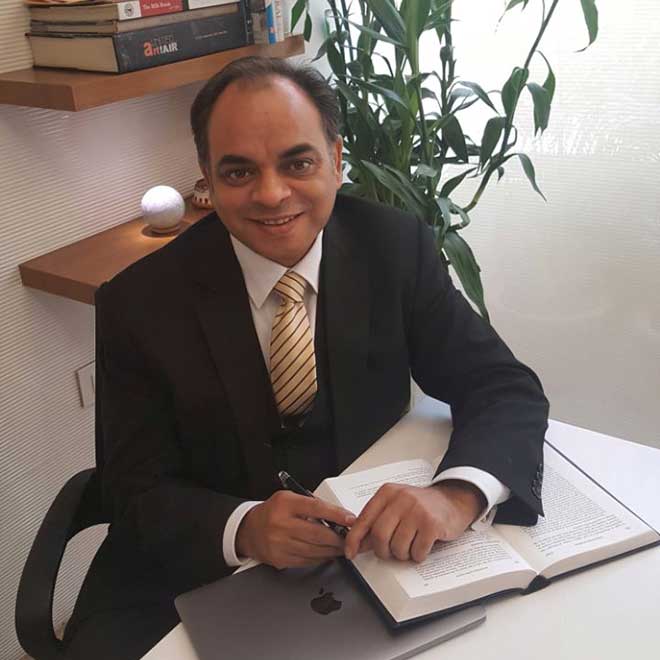
  • “It must be understood that true inclusion lies in recognising difference, not ignoring it, and creating conditions that enable success on equal terms.” – Karan Kamra, Intellectual Property Lawyer.

    “It must be understood that true inclusion lies in recognising difference, not ignoring it, and creating conditions that enable success on equal terms.” – Karan Kamra, Intellectual Property Lawyer.

    This interview has been published by Anshi Mudgal and The SuperLawyer Team

    Your journey from Dhanbad to where you stand today is truly inspiring. How have your personal experiences and academic background in Political Science shaped your decision to pursue law, and how have they influenced your strong legal journey and commitment to the profession?

    I’m a first-generation lawyer, born into a family deeply rooted in the pharmaceutical business, a world far removed from the courts and statutes that now define my everyday life. Growing up with cerebral palsy in a small town like Dhanbad, I often felt the need to prove myself – to be seen, to be heard, and to be taken seriously. For me, the black coat was more than a symbol of the legal profession, it  signified  a  possibility – that merit could speak louder than mobility and that confidence and conviction could override any preconceived notions about ability. 

    I came to Delhi and pursued Political Science. The discipline deepened my understanding of the Constitution, legal systems, and power structures. It eventually led me to Campus Law Centre, Faculty of Law where I discovered my calling in Intellectual Property law. 

    My personal experience instilled in me a deep sense of resilience, to persist, adapt, and advocate in a world not always built for difference.  At the same time, my academic grounding in Political Science gave me a strong structural lens helping me understand laws and  their intricate interplay with legal systems and institutions.  

    This foundation, combined with lived experience, has shaped not just how I view the law but how I approach Intellectual Property, with empathy for creators and right holders,  strategic thinking for brand protection, and a deep sense of purpose in safeguarding invention.  

    In the early phase of your career, you worked  in a full-service law firm and an independent  general practitioner. What motivated your transition into intellectual property law, and how did those foundational years shape your current approach to IP practice? 

    In the early phase of my career, working with a full-service law firm and an independent  general practitioner exposed me to the breadth and intensity of legal practice – from civil suits to commercial disputes. It was a rigorous training ground that honed my advocacy, research, and drafting skills. 

    I began noticing how deeply brands, trademarks,  domain names, content, and technology were getting intertwined with legal disputes. I was drawn to the unique intersection of law, commerce, and creativity that intellectual property law offered. The shift to IP felt organic—it allowed me to work not just reactively in disputes, but also proactively with creators, individuals and businesses to safeguard what they were building. 

    Those foundational litigation years instilled in me a detail-oriented, strategic mindset. They taught me how to anticipate risks, think like a litigator even in advisory work, and approach IP not in isolation, but in its commercial and legal context. 

    You’ve represented clients in domain name disputes before WIPO and INDRP. Could you walk us through your experience in this space? What are some of the key legal and strategic challenges entities commonly face in such matters? 

    The legal framework under both WIPO’s UDRP and India’s INDRP is robust but exacting, placing the onus on the Complainant to establish three core elements: (1) that the domain is identical or confusingly similar to a trademark in which it has rights, (2) that the registrant lacks legitimate interests in the domain, and (3) that the domain has been registered and is being used in bad faith. While WIPO offers quicker, globally recognized redress—typically resolving disputes within 60–75 days—INDRP is key for .in domain disputes and may take 3–6 months or more due to procedural flexibilities and single-arbitrator handling under NIXI.

    Success before both forums relies heavily on the Complainant’s ability to present comprehensive evidence, including proof of trademark rights, prior and continuous use, and supporting documentation like screenshots of misuse, WHOIS records, archived web content, and prior communications. This evidence must clearly align with the legal criteria, particularly to demonstrate the registrant’s bad faith and lack of legitimate interest. The process is evidence-driven and leaves little room for error.

    One of the significant challenges is that infringers often hide behind privacy services or proxy registrations, making it harder to trace the true registrant. WIPO has mechanisms in place to request unmasking, usually coordinated with the registrar, though it’s not guaranteed. INDRP poses more hurdles due to NIXI’s limited procedural transparency and lack of early disclosure protocols. In such cases, complainants must rely on circumstantial and digital forensics—such as WHOIS history, DNS and IP data, website metadata, and linkages across abusive registrations—to build a strong, inferential case.

    While dealing with software piracy and advising software firms, what major trends and challenges have you observed globally? How do you think India’s legal and enforcement mechanisms compare with international frameworks in addressing piracy?

    Software piracy today has evolved into a highly complex and dynamic threat, fuelled by digital proliferation and the increasing sophistication of infringers. We’ve seen a decisive shift from physical duplication to digital piracy, with unauthorized downloads, license key sharing, and hacked installations spreading through torrent sites, web platforms, and even on social media and e-commerce portals. A major trend is the rise of ‘cracked’ enterprise solutions being sold at a fraction of their actual price, often through resellers masquerading as legitimate vendors. In the SaaS ecosystem, misuse takes subtler forms – such as license overuse, unauthorized API calls, credential stuffing, and cloning of proprietary software models.

    From a comparative lens, India’s enforcement mechanisms have strengthened in recent years. Courts have become more proactive in granting Anton Piller orders, John Doe orders, and dynamic injunctions to block rogue websites. The IT Act and Rules coupled with the Copyright Act, provides a statutory framework for enforcement, and cybercrime units in metro cities are increasingly equipped to tackle software piracy, especially in B2B settings.

    However, when compared with jurisdictions like the U.S., EU, or even Singapore, India still lags in certain areas- particularly in digital forensics, quick takedown protocols and cross-border enforcement cooperation. Lack of digital IP expertise in certain enforcement bodies and different judicial approaches to damages also pose challenges.

    To combat this, software companies must take a multi-pronged strategy: strong, enforceable EULAs with audit rights; proactive license tracking using Software Asset Management (SAM) tools; deployment of digital watermarking and DRM technologies; and active online surveillance of infringing platforms. Legal action must often be supported by pre-suit investigations to establish unauthorized use, followed by civil enforcement and, where appropriate, criminal prosecution. 

    The most effective anti-piracy efforts globally involve a mix of litigation, technology, partnerships with enforcement agencies, and user education, something India is slowly but surely aligning itself. 

    You’ve also championed client interests during mediations at the Delhi High Court Mediation Centre. In your view, how effective is mediation in resolving complex IP disputes, and what role does it play in balancing commercial and legal interests?

    Mediation, especially in the context of IP disputes, can be a remarkably effective tool when approached with the right mindset. At the Delhi High Court Mediation Centre, I’ve seen firsthand how it creates space for parties to move beyond rigid legal positions and engage in commercially meaningful dialogue. Unlike litigation, which is often adversarial and time-consuming, mediation allows for tailored, confidential, and business-sensitive solutions, making it particularly valuable in high-stakes IP matters. 

    In disputes involving brand reputation, time-to-market pressures or ongoing commercial relationships, mediation offers the flexibility to craft outcomes that litigation may not be equipped to provide, such as licensing arrangements, joint ventures, or mutually acceptable phased withdrawals. Pre-suit mediation, in particular, has emerged as a powerful tool to resolve conflicts early, avoid escalation, and maintain goodwill – saving time, cost, and reputational strain.

    Ultimately, mediation helps balance legal rights with commercial realities. It empowers clients to co-create outcomes that serve both legal and business interests. In an IP landscape shaped by innovation and speed, mediation is increasingly becoming a strategic first step—particularly effective in resolving disputes early and efficiently, with the exception of aggravated cases of infringement or passing off that merit litigation.

    Having advised multinational clients in sectors such as automotive, pharmaceuticals, e-commerce, and hospitality, what unique IP challenges have you seen in the automotive sector? What preventive strategies would you recommend to avoid trademark issues early on?

    The automotive sector in India faces distinct IP challenges due to its vast supply chain, aggressive branding strategies, and a rapidly growing aftermarket ecosystem.  Trademark infringement today extends beyond core brand names and registered marks to include sub-brands, model names, variant tags, and even alphanumeric identifiers. Infringers, particularly in the spare parts and accessories markets, routinely misuse these marks to falsely suggest association or compatibility to original vehicle manufacturers (the rightful IP holders). This not only dilutes brand equity but also risks consumer deception and safety, especially when counterfeit or substandard parts and accessories are involved. 

    A common defence invoked by unauthorised sellers is Section 30(2)(d) of the Trade Marks Act, which allows the use of a registered mark to indicate the intended purpose of a product or service (e.g., “compatible with Brand X”). However, this defence is not absolute. The protection under the provision ceases to apply where the use is not in accordance with honest industrial or commercial practices, or where it takes unfair advantage of  or is detrimental to the distinctive character or repute of the mark. In the automotive space, this line is often crossed when infringers stylise logos, mimic trade dress, or market counterfeit parts under the guise of compatibility.

    Design infringement is another major concern, especially with regard to spare parts like headlights, grills, mirrors, and alloy wheels. Many of these are reverse-engineered and sold in the grey market without authorization, undermining both brand value and consumer safety. Companies often fail to register industrial designs or delay doing so, weakening their enforcement stance in cases of replication by third-party manufacturer.

    To address this, companies must actively monitor and enforce rights not just in their principal marks but also in model-specific and component-related branding, which are often more vulnerable. Registering sub-brands and variant names in relevant classes, including digital and retail categories, is key. Furthermore, legal notices and litigation should specifically challenge bad-faith use that exceeds the scope of Section 30(2) (d) focusing on consumer confusion, deceptive marketing, and reputational harm. 

    On the design front, preventive strategies include timely registration of industrial designs for high-risk components such as headlights, mirrors, grilles, and alloy wheels, especially those with distinctive visual appeal likely to be replicated. Companies should conduct regular design audits, embed subtle identifiers to support enforcement, and use border enforcement mechanisms to block infringing imports. Where misuse persists, design infringement lawsuits under the Designs Act, 2000—seeking injunctions, damages, and delivery of infringing goods—are vital tools to deter copycats and affirm rights. Combined with trademark enforcement, these steps help safeguard brand equity and product integrity across the automotive ecosystem.

    You’ve often mentored and guided younger professionals. What advice would you offer to law students or litigators looking to shift to IP law, and what resources or habits can help them stay competitive and updated in this fast-evolving domain

    For law students or litigators looking to transition into IP law, my first piece of advice would be: ‘cultivate curiosity’. It is important to ground yourself in the fundamentals—copyrights, trademarks, patents, and designs but it is equally imperative to go beyond textbooks. Following case law developments and tracking decisions of various courts, as well as international bodies like WIPO and dispute resolution platforms like INDRP, is essential. These decisions not only reflect how the law is being interpreted in real time but also reveal emerging trends, judicial attitudes, and strategic nuances that shape IP enforcement and protection.

    Using legal search engines like Manupatra and Westlaw, staying tuned into online news portals such as Live Law and Bar & Bench, and regularly reading blogs like SpicyIP and IPKat are excellent ways to stay updated. Newsletters, national and international legal magazines and webinars (hosted by bar associations or IP firms) also offer timely insights into evolving jurisprudence and policy shifts.  

    I would recommend interning with or working alongside seasoned practitioners. Many young professionals grow the most by observing and absorbing. Simply being in the room with experienced lawyers, watching how they interpret statutes, craft arguments and strategy and navigate court dynamics can shape your legal thinking in ways that are both subtle and lasting. Know the procedure as regards court filings and court practice. Most importantly, stay open to learning and listening whether from seniors, peers, or juniors. The humility will keep you sharp and grounded. 

    Balancing demanding professional responsibilities with personal well-being is no small feat. How do you manage this balance, and what practices or mindset have helped you stay grounded over the years? 

    Balancing the intensity of legal practice with personal well-being has been one of the most challenging and ongoing lessons of my career. In the early years, it was easy to get swept up in the long hours and high-pressure deadlines and the constant push to prove myself. But over time, I’ve come to realize that sustainability in this profession requires more than endurance, it needs intentionality, boundaries and deliberate pauses. 

    Balance comes from prioritizing high-impact tasks and pressing deadlines, while simultaneously planning a clear roadmap for research, preparation, and argument execution in other matters. This structured approach ensures that urgent work is handled efficiently without losing sight of long-term responsibilities, helping me stay steady, focused, and prepared across all fronts. 

    Spending time with family and friends, engaging in conversations beyond law, and learning to disconnect have become vital. Music, movies, and books are more than just breaks, they’re essential tools to break monotony, spark creativity, and keep me grounded.

    From being mentored by senior lawyers to independently handling high-stakes litigation, your journey has been marked by growth and learning. What are some of the most valuable lessons you’ve carried forward, especially when it comes to leadership and courtroom advocacy?

    Every journey has its highs and lows, and mine has been no exception. I did make my share of mistakes in the early years – be it in court, professional interactions, or even client handling. Each misstep became a valuable lesson. I learnt to face embarrassment, accept feedback, and grow from it. One of the most important lessons was to remain both tenacious in facing challenges and malleable enough to learn from seniors and peers—an essential balance not just at the start, but throughout one’s legal career.

    I’m deeply grateful for the mentorship I received, especially from Mr. Achuthan Shreekumar, Mr. Saif Khan and Ms. Binny Kalra in my early years. They taught me to take full ownership of my work, to be meticulous in my preparation, and to argue with clarity, conviction, and courage. These values continue to guide me through complex matters and high-pressure situations in court with balance and self-belief. 

    Observing some of the finest legal minds during my legal career has been my privilege. It has helped me absorb the nuances of court craft, statutory interpretation, and legal strategy, often through a quiet process of osmosis.

    Equally important have been the lessons in procedural rigour, understanding filings, registry practices, court processes, and client coordination. Perhaps most importantly, I’ve learned to listen, whether to seniors, peers, or juniors. Staying open and receptive has I’ve imbibed the importance of discipline, resilience, ethics, and a commitment to timeline – qualities that help build a legal culture that respects creativity, integrity, and innovation.  

    As a lawyer with cerebral palsy, you’ve spoken powerfully about inclusion and structural challenges. What changes would you like to see in the legal industry to make it more accessible, and how can organizations move from intent to implementation on this aspect?

    Navigating the legal profession as a differently-abled lawyer has been a mixed journey. I’ve been fortunate to encounter mentors and colleagues who valued my credentials and potential over visible physical limitations. Despite the same, I’ve also faced scepticism—about whether I could handle the physical demands of litigation or keep pace in a high-pressure environment. These misconceptions stem from deeper social conditioning around disability and competence. The only real way to counter them is through consistent performance, meaningful outcomes, and quiet persistence.

    Over time, I’ve realised the issue isn’t about access to opportunity. Many firms today are open to hiring professionals with disabilities, especially as diversity becomes a core organisational value. The real challenge lies in organisations being  truly disability-cognizant beyond the point of entry. 

    Genuine inclusion means going beyond symbolic representation—it requires accessible infrastructure, assistive tech and software apps, flexible work schedules. Most importantly, more organisations need to invest in inclusive training across teams and levels and to build  a culture rooted in empathy, understanding, and intentional dialogue. Equally important is addressing ‘disability blindness’—the expectation that disabled professionals meet identical performance standards without acknowledging their physical limitation or the systemic barriers they navigate. It must be understood that true inclusion lies in recognising difference, not ignoring it and creating conditions that enable success on equal terms. 

    Looking ahead, how do you see IP law evolving over the next decade, especially with the rise of AI-generated content, deepfakes, and non-traditional trademarks? What key reforms or innovations do you think are essential to future-proof the IP framework?

    Over the next decade, IP law in India will be under mounting pressure to modernise in response to rapid technological advances. AI generated content fundamentally challenges the traditional copyright framework, which is centred on human authorship and originality. As machines autonomously create literary, artistic, and musical works, existing laws struggle to define ownership, liability, and infringement. To address this, regulatory clarity is essential either through specific amendments to the Copyright Act or by introducing sui generis protections tailored to AI generated  and machine generated content. 

    To address deepfake misuse, India’s IP regime must strengthen personality rights to prevent unauthorized digital cloning of a person’s image, voice, or likeness, especially for commercial use. There must be an expansion of the scope of ‘misrepresentation’ under  trademark and passing-off laws to cover deepfake endorsements or AI-generated impersonations that mislead consumers or dilutes brand identity. 

    Additionally, there must  be  an introduction of mandatory disclosure or watermarking requirements for AI-generated or manipulated content, especially on social media or commercial platforms, to ensure transparency and traceability. Lastly, there is a need of faster takedown mechanisms and intermediary liability guidelines tailored to AI and deepfake content under IP enforcement rules, empowering right holders to act swiftly.

    Trademark law must evolve to protect non-traditional marks like sound, scent, motion, and holograms. With businesses increasingly operating in digital-first or virtual environments, including the metaverse,  the law must address how trademarks function when use is no longer confined to physical goods or services. This will require not only legislative amendments but also updated examination guidelines, jurisprudence, and technological competence within the Trademark Registry and Judiciary. 

    Get in touch with Karan Kamra –

  • Pinky Anand, Additional Solicitor General of India, on studying at Delhi University and at Harvard, and on the formative years of her career

    Pinky Anand, Additional Solicitor General of India, on studying at Delhi University and at Harvard, and on the formative years of her career

    Dr. Pinky Anand is considered one of India’s top lawyers. She is the current Additional Solicitor General of India and a Senior Advocate. An alumna of the Campus Law Centre at Delhi University, she went on to pursue her LL.M from the prestigious Harvard University on an Inlaks scholarship in 1980. She recently came out with the much acclaimed book, Trials of Truth which is available on Amazon. In conversation with Manushi Desai, she shares her experience as a lawyer and the formative years.


    How were the formative years which resulted in such a strong yet warm personality?

    My parents were married very young. My mother’s sensible nature has rubbed on me and so has my joint family’s sharing and caring nature. I have grown up in the streets of Old Delhi and have fond memories of sharing everything with my family which is my support system and I greatly believe in the idea of balance which my family taught me. I further studied in a convent school and the values of discipline and good virtues were inculcated very firmly in my outlook. I endeavoured to participate in all extra curriculars, especially during the law faculty days where I was the student leader within BJP as well.


    How was your Harvard experience?

    It was an ambition to go to Harvard and I achieved it by providing a systematic approach. I was inspired by the movie Paper Chase based on Harvard. I applied for Rhodes actually, I did not get the Rhodes, however, the Rhodes committee recommended me to the Inlaks foundation and that’s how I got into Harvard. Years later, I was called back to Harvard to give a lecture which is when I stumbled across my thesis in the Harvard library archives which is a must read even now to know more about the concept of public policy in arbitration.


    How were the initial years as a lawyer?

    I am a first generation lawyer. After marriage, circumstances were different since my husband is a lawyer, my father in law is a lawyer, but the intial years were not the same. I did not have any benevolent hand in that sense which is quite a necessary part. However, I did not have as bad a struggle as I should have is because my friend Geeta Luthra, who is a senior advocate now and I started practice together. It was very unknown of women partnering with each other in the profession.


    How did you join politics?

    My tryst with politics started when I joined ABVP as a law student and contested the prestigious Delhi University Students Union (DUSU) elections. However, when I went to Harvard and later partnered with Ms. Geeta Luthra, politics took a back seat. This changed later when I headed the BJP National Legal Cell as the first woman convenor which gave me a chance to change people at a grassroot level.


    You have risen high in your domain and have even been named as India’s top influential women in a book. How was the struggle been?

    The principle struggle is not being a part of the old Boy’s club. There is also a prejudice against engaging women counsels. However, beyond a point when you prove yourself, you actually were acknowledged. You have to continue to be twice a man. So the demonstration effect and the visibility or your proving your mettle is something which has to be done at the first degree level. Having done that, you need to have people who kind of support you. My family is a very big support, my in-laws are very supportive and I think that’s a very important feature too, because professional life is a tough one.


    What was the tipping point in your career?

    I fondly state my tipping point to be the retainership we had from a Marwadi business group through which I got exposure to various kinds of cases. It proved that you learn far more on your feet than you learn from any text book. We got a wide exposure to wide variety of cases from that group not only in Delhi, but in various parts of Delhi. We used to go to various even district courts and in fact I think even trial courts.


    Why practice in trial courts when you could, as a Harvard graduate, have easily started in the Delhi High Court or Supreme Court?

    Trial courts are great fun! I think you learn the most there and you have to understand the set up of what law is about and how law is made. For young lawyers, you are trusted far more with the trial court cases than you are with Higher Court cases- so it was a relation you build- you go up the ladder. The ladder is a very slow one, like snakes and ladders – you go up and then you sometimes come down.


    What is the secret sauce to your success?

    I believe in confidence and determination apart from the support of your loved ones. There is constant juggling of the work life balance but it is important to set goals and challenges and strive to achieve them as well.


    This interview was taken by Manushi Satyajeet Desai. Do read her blog at desaimanushi.blogspot.in and follow her on @manushidesai on twitter and instagram.

  • Shravan Kumar Bansal, Senior Partner, United IPR on building a successful practice in intellectual property law for over a span of two decades

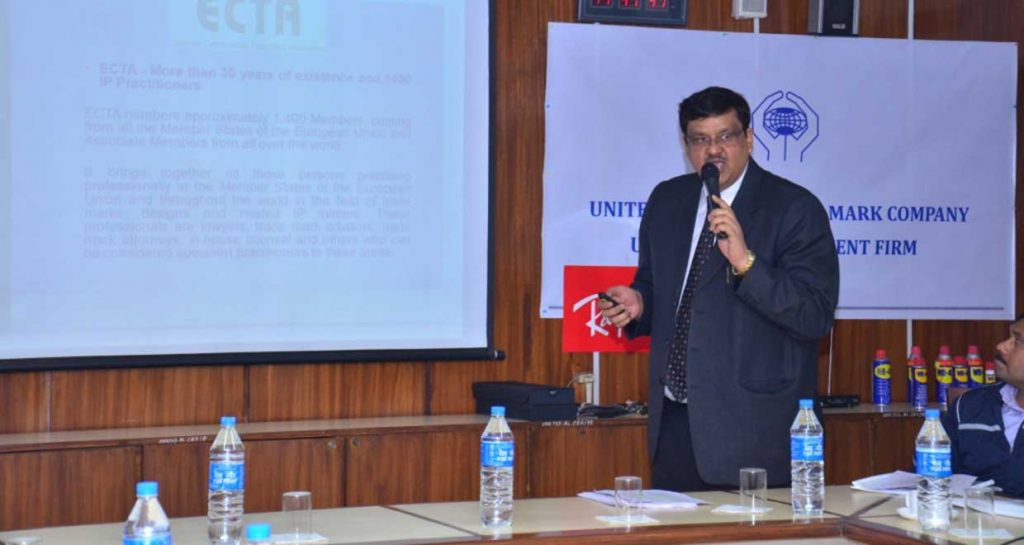
    Shravan Kumar Bansal, Senior Partner, United IPR on building a successful practice in intellectual property law for over a span of two decades

    Shravan Kumar Bansal qualified in law from the Campus Law Centre, Delhi University in 1989. Shravan is a science graduate in the field of Botany, Zoology and Biotechnology and armed with a degree in Law and substantial expertise in patent litigation he is a renowned expert in IPR litigation, counterfeiting and Anton Pillar actions.

    With experience spanning over two decades in litigation he also has expertise in prosecution and enforcement of patents, trademark and copyright cases. He advises clients on diverse aspects of intellectual property including ownership and enforcement matters in India and abroad. He is on the panel of number of Indian as well as international companies and trade-oriented organizations. He is an active member of accredited International IPR organizations and has to his credit several landmark IPR reported judgments passed by different courts in India.


    In this interview, we speak to him about:

    • His journey as a litigating lawyer
    • Importance of IPR in the contemporary times
    • The task of taking over family legal practice
    • His experience with international IPR organisations and landmark judgments in India


    How would you introduce yourself to our readers? Do you come from a family of lawyers?

    I do come from a  family of lawyers, and I belong to the third generation of lawyers in my family. My grandfather was a leading taxation advocate and the Intellectual Property practice was started by my father in 1954. Practising solely in the field of IP Law since 1954, we happen to be one of the first full-service IPR Law Firms in the country dealing solely and dedicatedly in IP Law.


    What motivated you to pursue law after pursuing the sciences? How did you realise your interest in the legal field? How was your experience at law school?

    Science was a subject of personal interest to me as I have always maintained that studying science opens one’s mind to greater curiosity and spirit of inquiry and develops analytical ability in a person which really helps a person in any and all spheres of life and profession. Studying science at the graduation level in the field of Botany, Zoology and Biotechnology has really helped me in Patent Litigation matters and Patent Filings/Analysis of inventions in my profession. My interest in the legal field developed when I was quite young as I was watching my father argue important matters in the court, which gave me a sense of passion and pride and made me want to follow in his footsteps. My experience at law school was one which is difficult to forget, having a great time with friends enjoying college life and reading interesting subjects of law at law school, followed by my daily visit to my father’s law chamber where I used to spend hours on endafter law school, learning the nuances of this profession.


    What piqued your interest in the field of Intellectual Property Law? Can you describe the relevance of this field today in context of domestic and international law?

    I believe that Intellectual Property Law is one of the very few domains of legal practice (apart from Arbitration Law possibly) which is truly global in its outreach and relevance. Criminal Law, Civil Law matters and other domains of the legal practice I believe are nationalized and localized in their approach and relevance; as such laws are limited and vary/differ from one jurisdiction to another. Intellectual Property Law, as opposed to these, offers a global platform for practice in terms of serving a global clientele for their brand protection and IP matters. This is one of the few factors about the IP practice which captures my interest and imagination.

    As to your question about relevance of Intellectual Property law in today’s scenario with respect to domestic and international law, I believe Intellectual Property law is one of the few domains in today’s time which is playing a pivotal role in shaping national and international polices of nations and legal structures at large. Intellectual Property law is intrinsically related to a country’s economy and commerce. The degree of protection which a country is able to offer to the industry in terms of the legal framework in place to protect and encourage intellectual property directly impacts the level of commerce and innovation taking place in the country, as well as the amount of foreign investment coming in. This is the reason why we can see a marked shift in the policy and intention of the present Indian Government which is taking huge steps in areas such as digitizing IP Registration processes, lowering the time taken to grant trademark, copyright and patent registrations by the government and promoting easier enforcement of IP rights through support of enforcement agencies like the Police, Customs and Courts.


    What are your views on the importance and necessity of higher education? What would be your advice to readers undecided about pursuing further studies?

    “Learning is a treasure that will follow its owner everywhere”, is what I believe. However, I do not believe that learning only comes from higher education such as a master’s degree or further higher studies. Of course a Masters Program or such other higher study programs do add to one’s skill set but so does practical experience in the profession and I believe that if one is armed with a basic bachelor’s degree in law in this country, he has ammunition enough to build on that through his own practice and practical learning experiences in the profession.

    I have seen instances of advocates benefitting from pursuing higher education and have also seen others benefit from using those years to excel and learn during  practice of the profession instead.


    Can you recall the first time you appeared in court in a significant matter? How did you prepare for this? What is the attitude of judges and senior lawyers towards young lawyers?

    In my opinion, the attitude of judges and senior lawyers towards young lawyers in India is highly motivating and encouraging as opposed to the general perception which exists, that the attitude is not very positive and embracing. I believe that if a young lawyer possesses the required legal acumen, is well read with his research and has a positive, accommodative and learning attitude, he would be well received by his colleagues and also by senior lawyers and judges.

    I do recall the first time I appeared in court in a significant matter – It was before the Delhi High Court in a Patent Infringement matter. I had prepared thoroughly for this and was lucky enough to have the relief granted in my favour.


    You have been involved in various landmark cases that have shaped the law relating to IPR in India. How did you prepare you arguments in cases where the law was silent?

    Yes, I do feel privileged to be a part of landmark cases which shape the law relating to this domain in India. Interestingly cases do crop up time and again where the law is silent on a complex situation of fact and for which the statue doesn’t really have a straight answer. I believe the rules of interpretation of statutes and borrowings from international jurispudence/case law come in handy in such situations and I have seen judges in my own cases rely on international jurisprudence and arguments based on suggested interpretation of statutes to grant reliefs in such cases.


    Can you tell us about some landmark matters you have worked on and how the court interpreted the point of law?

    Again, I feel privileged to have have had the honour of working on various landmark cases which have helped shape the Intellectual Property jurisprudence in this country through judgements of the courts in these cases. Some such cases are where the court recognized the rights of my clients in the shape trademarks of their products (non-conventional trademarks) for the purpose of enforcement on the basis of the wide use, reputation, goodwill and trans-boundary use of the marks, even when my clients did not have statutory trademark registrations of these marks. The court interpreted the point of law on the basis of the doctrine of passing off in trademark law.

    In a separate set of cases, the courts recognized the rights of my clients in the colour combinations used on their packaging for the purpose of issuing and injunction against the opposite party, restraining it on account of creating confusion in the market following the doctrines of trademark infringement, passing off and rights in trade dress and colour combinations.


    How are custom duties imposed on IPR? How does this tie to international trade law?

    (Shravan has worked closely with governmental authorities in relation to matters of customs enforcement for intellectual property in India.)

    It is true that my colleagues and I have had the privlege to work closely with the Indian Customs office in relation to enforcement of intellectual property at the borders. We have have been extensively practicing in customs enforcement & conducting capacity building training sessions on IPR laws with the customs officials of India across various land, sea and air ports in the country. India being a signatory to the TRIPS Agreement has an obligation to enforce Intellectual Property Rights at the Territorial Borders. In compliance with the said obligation, India came out with IPR Rules for Customs Enforcement in 2007 after which we were one of the first law firms to register our clients’ Intellectual Property Rights with the Indian Customs to facilitate enforcement. IPR enforcement is an integral part of International Trade Law as it helps in ensuring ‘fair trade’ which is one of the founding principles of the World Trade Organization (WTO) and one of the bed-rock principles guiding International Trade. This it ensures by filtering out counterfeit, sub-standard, spurious and harmful products at the territorial borders thus ensuring that legitimate commerce is promoted and countries are not dumped with counterfeit products which more than anything else, affect a country’s economy by lowering its duty collection at the borders and the investment environment as a whole.


    How significant have WTO negotiations and the TRIPS Agreement been in protecting and enforcing trans-boundary intellectual property rights? Has this interest been balanced with social and distributive justice that is significantly important to developing countries?

    I believe WTO negotiations and the TRIPS Agreement which brought about the origin of an obligation on member countries to enforce IP Rights at the territorial borders has been hugely significant in protecting trans-boundary IP Rights. Further, I believe that the enforcement of IP Rights at the borders has in fact resulted in greater social and distributive justice being served as the Indian consumers have been protected from spurious and counterfeit goods due to this enforcement regime and the Indian Government has also benefitted from prevention of loss of revenue resulting from tax evasion and lesser duties being paid by importers of counterfeit goods, which in my opinion is a boon for a developing economy like India.


    As a proponent of academia, do you feel that law schools produce socially relevant lawyers equipped to handle the real world practice of law?

    I feel this is an immensely relevant question and a topic which needs greater discussion across the industry and I am glad to answer this. Though I believe that law schools produce exciting talent in terms of the potential and energy that fresh law graduates possess, the real world practice does come down hard on everyone which is true not just for the legal industry but in any domain, profession or business. I believe law schools can consider increasing the preparedness they provide to youngsters on how to deal with and what to expect when they land in the real world practice of law, which can help fresh law graduates immensely. As far as imparting the correct information and skills is concerned, I believe law schools in today’s time are doing a great job, especially when you look at the practical exposure they provide in terms of a higher stress on internships, moot court competitions and other such activities.


    You are a member of several international IPR related organisations. What role do such organisations play in the development of IPR law? What role do you play in such organisations?

    I believe that the role played by international IPR related organizations in policy advocacy, development of debate and discussion on important facets of IPR practice and bringing the International community with its various stakeholders closer to each other cannot be expressed in a few words and the importance is huge, to say the least. The credit of the IPR practice today being a truly global practice goes to such organizations which have played an immense role over the years. I happen to be part of such International Organizations for over 3 decades now and share the honour of being one of the first few membership holders from India.

    It has been an honour for me over the years to be a part of and lead various high-level policy advocacy initiatives undertaken by such international organizations in the sphere of proposing policy/legislation change to governments of member countries as far as their IPR Laws and Enforcement Mechanisms are concerned.


    What are the skills that one needs to develop to become an effective litigator and how can students develop such skills?

    Command over the language, confidence to express/speak, presence of mind, ability to hustle and strong preparation of the case are the five skills which if mastered, in my opinion, are enough to become a great litigator.

    A litigating lawyer, apart from concentrating on pleading/arguments in the courts also has to set his office in order, ensure smooth client correspondence, case preparation and follow-up which means that any litigating lawyer has to have the ability to hustle and manage his time in a manner such that he is able to make the most of the time he has in a day.

    Presence of mind, amongst other things, involves reading the mind of the Judge and foreseeing/predicting through observation and convention as to what aspects of a case is a particular Judge more interested in on a general basis and preparing a strong case on such points accordingly.


    What are the challenges you have faced in building your career as it stands today? In this respect, how has your family legacy impacted your success as a lawyer?

    Though there are definite advantages of having a family legacy in the same profession, there are various challenges one faces in taking over the reigns of an entire law firm. Apart from focusing on my legal practice and research, I had the added responsibility of management of the entire firm and the human resources at my hand at a very young age. I faced the task of dividing my day meticulously and managing my time between focusing on my personal law research and litigation with managing the affairs of the entire firm and focusing on its growth.

    Apart from this, another obvious challenge which I believe everyone faces is keeping up with stiff competition. Though this is a common challenge faced by all, it is a challenge nonetheless, and one which keeps you from getting comfortable with your success and pushing you to strive to improve every day.


    What advice do you have for our readers who are primarily college students?

    I believe the time available on one’s hand when one is in college is highly valuable in terms of the information and knowledge one can gather and accumulate from different fields of law and the research one can do. I strongly believe that sincere research done on any point of law during law school definitely helps one later in the profession regardless of whether or not he/she remembers the entire research conclusion after so many years. What it does provide is a sense of confidence and familiarity with a point of law researched on albeit years ago which makes it easier for one to grasp and understand affairs during the practice years when the time available on one’s hand to spend on research is lesser and expectations with speed are greater. Therefore my advice to college students would be to put this time to the best possible use while of course experiencing the fun aspects of college life, which is also very important.


  • Vaibhav Kumar, Advocate-on-Record, Supreme Court of India, on litigation, ADR, and his diverse experience

    Vaibhav Kumar, Advocate-on-Record, Supreme Court of India, on litigation, ADR, and his diverse experience

    Vaibhav graduated from Campus Law Centre, University of Delhi, in 2008. He has handled litigation as well as advised clients across a broad range of issues like commercial disputes, information technology law, intellectual property law, drafting and vetting of contracts, sale/lease deeds, corporate issues, consumer disputes, arbitrations, writ petitions, appeals, real-estate, matrimonial & family disputes, Wills and estate planning etc. An ardent supporter of alternate dispute resolution mechanisms like mediation and counselling, he has also assisted several clients in resolving their disputes amicably. Amongst his clients are up and coming companies in the SaaS, ITES and e-commerce sectors who deploy cloud-based solutions like AWS, Salesforce etc. for enterprises across all sectors, as well as other medium and small enterprises whom he has helped on various aspects like corporate structuring, shareholder issues, advisory services related to expansion to other territories, drafting of Master Service Agreements with clients, Vendor agreements, Non-Disclosure Agreements, Employee agreements etc.

    In this interview we speak to him about:

    • Being an Advocate-on-Record
    • His passion for litigation
    • His interest in ADR


    Given that most of our readers are law students and young lawyers, how will you introduce yourself to them? 

    I am an independent lawyer, with a broad focus from civil to corporate matters. Early in the profession, I recognized that practising law at all different levels – from the District courts to the High Courts to the Supreme Court – was not only something I enjoyed, but was something that gave unique value to my clients. Since I practise along this broad spectrum, not only do I serve the A-Z needs of my litigating clients, but I am also in a unique position to advise my corporate clients. Having recently been designated as an Advocate-on-Record, I look forward to the AOR practice adding another dimension to my practice.

    I gained inspiration to study law from my maternal grandfather, Justice Gyan Chand Mathur, who was a judge several decades ago in the Allahabad High Court. Unfortunately, my decision to join the legal profession came several years after he passed away, so de facto I have had to build my practice as a first-generation lawyer. I did not even benefit from his comprehensive legal library, which we donated to a charitable institution soon after he passed away.


    What made you decide to pursue a career in law after obtaining a BA degree? 

    I earned my B.A. degree from Kenyon College, USA, with a major in Anthropology and a minor in Mathematics. At the time of my undergraduate studies, law was not anywhere in my mental framework, and initially I had considered a career in academia in the field of Anthropology. However, several circumstances brought me back to India, when I narrowed my choices down to doing a MBA or Law.

    The legal profession stood out to me as uniquely diverse in that a lawyer could in the same day work on a large corporate matter as well as on a pro-bono/ public interest matter. Secondly, I recognized that so long as you worked across a range of matters and didn’t narrow yourself, the variety of cases you can be involved in would ensure that life never got boring and each day would be different from the previous one, even more so if one was practising in different courts. Especially at that age, the idea of being stuck at a desk, day in and out, seemed extremely undesirable to me. Thirdly, if you have your own practice, you have the power to determine the pace and path of your professional career. I had recognized early on that building my own practice was a definite goal for me, and I have been extremely happy in this role as an independent practitioner. And so, the choice to do Law was a fairly easy one over doing a MBA.

    I graduated with a three-year LL.B. degree from the Faculty of Law (CLC), University of Delhi. I am a big proponent of the three year LL.B. program after a Bachelor’s degree, because having a Bachelor’s degree in something unrelated gives a person a broad horizon and a general understanding of a larger world. Law is something that we will knock our heads against for the rest of our career, and the years after school are some of the most formative years of a person. It is not by accident that historically some of the most accomplished litigators were people with a tremendous breadth of interest in the arts, music, literature, etc.


    How was your experience in law school? Have you ever felt the NLU- non NLU divide?

    Ours was a three-year program, and there weren’t many opportunities for us to interact with NLU students. In the practice of law, I feel there is no divide between NLU/ Non-NLU and really what defines you in this profession is your personal abilities and achievements, not which law college you come from. Maybe if you are working in a firm, the institution you studied Law might be relevant for the first couple of years in the profession, especially in the recruitment of associates fresh out of law school, but after that it’s not much of a factor.


    What was your first job after law school? 

    I started my practice working with Ms. Maninder Acharya, who at that time was a standing counsel for the Municipal Corporation of Delhi, and has since been designated as a Senior Advocate. Her office was like jumping into the proverbial deep water, as with the volume and time sensitivity of our work, I had to hit the ground running immediately. With multiple matters listed every day (if I recall correctly the maximum reached 26!), her office was perfect in giving me unmatched exposure and responsibility in handling matters myself. I found myself appearing almost daily before the Delhi High Court and that helped me tremendously in gaining confidence in arguing matters.

    From Ms. Acharya’s office, I moved to Mr. Virender Goswami’s office, which was a truly formative experience. Mr. Goswami is in my opinion of the most formidable lawyers I have seen especially when it comes to witness examination, which is an art that is unfortunately lost on most in our profession. In his office, I was given the opportunity to be personally responsible for several matters, and was given the chance to appear in several courts, especially the District courts, where I feel the true meat-and-bones of any case really lies.

    I got both these positions by way of recommendations through personal and well-meaning contacts, and I am thankful for that serendipity.


    How important is CGPA to recruiters? 

    Everywhere that I have worked so far, has been in a litigating position and typically in small to medium offices, so I can’t speak for recruitment in corporate and large law firms. In my experience, while every recruiter would certainly want to review your resumé, good recruiters would put the most emphasis in the interview, because that’s where you can tell a lot about a person’s personality, maturity and capability. In my opinion, there’s little correlation between your CGPA scores and your professional success, so for a recruiter to place undue importance on CGPAs etc. would eventually be detrimental to their own organization.


    Do you recall the first time you argued a matter in court? 

    If anyone ever told you that they were confident the first time they appeared before a court or argued a matter, they would be lying! Arguing in court is immensely challenging, because if you want to be good at it, you need to not only know your facts and law inside out, you also need to know how to read the judge and the flow of the proceedings. While arguing, you are of course a bundle of nerves, but if you do perform well, in my experience most judges are very receptive and encouraging, as are other members of the bar. On occasion, I have had the counsel for the other side comment positively on my arguments, and that always adds a little spring in your step! If I had to give only one piece of advice, it would be to never ever appear before a judge without reading the file, even if you are just stepping in for a colleague to ask for a passover or adjournment.


    Can you describe an ordinary day of a litigator?

    The best part about being a litigator, and a generalist at that, is that there is no “ordinary” day. I could be working on a motor accident compensation case one minute, then a property dispute, and then be advising a client on how to structure their company when expanding to new areas, and then be counselling a couple having marital discord. While you work as an associate under other lawyers, they would of course set the tone for how the office works in terms of work timings etc. I have seen lawyers who are unforgiving of unpunctuality (“9:00AM means 9:00AM, and not 9:01AM”) and I have seen lawyers who give you complete flexibility to work as you want to, even from home, provided that the work is never compromised and deadlines are met. I personally gravitate towards the latter, as I think not only does it keep everyone in the office happy, but also boosts productivity and creativity at work.


    What are the skills one needs to develop in order to succeed as a litigator?

    That is an extremely tough question, not in the least because it presupposes that there is a single definition to what is “success” as a litigator. Some people define it in terms of money and the car that you drive, while others define it in terms of the respect you get from the bar and the bench, and there are numerous other criteria you could posit. What each person needs to do is to discern what is their definition of success, and then understand the skills you need to achieve it.

    That said, a few skills that that one could say are somewhat universal are communication skills, your ability to think out of the box, paying attention to detail, ability to deal with different personalities with respect to your client, the other side’s lawyer, the judge etc. Moreover, as a litigator you need to be master of a number of other skills in order to run a successful practice, not the least of which are time management, ability to manage an office, ability to keep a track of billing etc. One of the most important tasks in running an independent practice is business development, which comes easy to some and harder for others.


    How did you secure a position at O.P. Khaitan? 

    As with my other positions, it was a colleague who was aware of a requirement at the firm who introduced me to them. By this time, I had practiced with a number of lawyers, and I felt joining a firm was the natural progression towards my career growth. At O.P. Khaitan, I worked on a number of litigation matters ranging from corporate disputes, real estate disputes, matrimonial matters, etc. and was also introduced to new aspects like filing trademark applications globally for clients who were expanding their business in a big way. I had a great experience there and got to work with the Managing Partner and a Senior Partner directly, and was also given the responsibility to handle many matters on my own. My decision to leave was based on an offer I received from Luthra & Luthra.


    How did you secure a position at Luthra & Luthra? 

    I joined Luthra & Luthra to work under a partner with whom I was acquainted over the years. He was looking for someone with my experience and the ability to handle matters independently, and I think it was a good fit both ways. In L&L, apart from general litigation, I got the chance to work on some high stakes matters such as those involving some of the largest telecom companies, arbitration matters etc. I left L&L when I felt it was time to start my own practice, and I had enough experience, skills and confidence commensurate with what is required to build your own practice.


    How was working at a law firm different from working at a lawyer’s chamber?

    The smallest office I have worked in was two lawyers (myself included!) and the largest about 200. They are completely different experiences, and I encourage young lawyers to try them both before making a long-term choice. Law firms are great in terms of the exposure they give you to large clients and important matters, as well as to have a steady and good income, but can be restrictive in terms of personal responsibility, bureaucracy, politics and most importantly skill growth. Working in a lawyer’s chamber can be invaluable in terms of the skills and independence you have no choice but to embrace.


    What are your areas of specialisation as a lawyer? 

    I have been conscious of not narrowing down my work to specialized domains. Even in terms of my clientele, I assist SMEs as well as individual clients. I love having a wide breadth of work and enjoy exploring new domains of law that I have not previously dealt with.

    As for fresh graduates finding their domain, if you do not already have a strong leaning towards a particular specialization by the time you graduate (and it’s okay not to), I recommend working for a chamber or two that has a wide breadth of work, and you will over time either organically gravitate towards a specialization, or like me find out that you prefer to be a generalist.

    Can you briefly tell us about some important matters you have worked on? 

    I wouldn’t be at liberty to talk about specific matters. However, as far as preparing for a day in court, there are no surprises there. If there is an argument, one needs to be well versed with the file and the relevant case law, and you need to anticipate the arguments the opposing counsel is likely to lead, and prepare for your response to them as well. That said, there is never a point you feel 100% prepared. Every now and then, you will feel prepared, only to appear and have the judge throw a googly at you. An important skill set is how you respond and react on your feet in this position.


    Have you ever considered pursuing higher education? 

    Over the course of my career I had thought about applying to LL.M. programs on several occasions, but never did. To summarize a whole lot of advice I got from numerous people in India and abroad is this: a LL.M. is great for your personal development in terms of your knowledge and skills (which you can control through studying and hard work), and can also be great for developing a network (which you unfortunately have little control over and left largely to luck). That said, most LL.M.s especially abroad are extremely expensive, and from a financial perspective you get little-to-no-value in terms of career growth and jobs. Most people who get LL.M. degrees return to the same city and perhaps even the same office they were with before, with little-to-no-growth in terms of promotions, salary etc. (certainly not commensurate with the money you would have paid for the program). So, in a nutshell for most people: if you are blessed with the financial means and have value for personal growth (skills and knowledge), then pursue a LL.M. Else, don’t.

    What is the process of being designated an Advocate on Record? 

    To become an AOR, there are some stringent qualifications you have to meet, but briefly put you need to work with an established AOR for at least a year, and then pass the AOR examinations that are held once a year. The examinations are tough, and it doesn’t make it easier that most people appearing would have last taken an exam anywhere from 5-10 years ago. Nor are most people accustomed any longer to writing for 3+ hours straight every day for 4 days straight! I don’t think there is one set path to success in the exams, especially since the examiners can change every year (and hence what they look for in the answers also changes), but what worked for me was to review the past several years’ exam papers, as well as to use the literature provided on the Supreme Court website and make my own notes. If you practice with a good AOR, then the Practice & Procedures and Drafting papers may require little effort and just a little bit of brushing up. For me personally, the last paper, on leading cases, was the most difficult as there is a LOT of information to digest there, and I would highly recommend that you space out reading those judgments over one or two months leading to the exam.


    What do you think is the future of ADR in India?

    I am a big believer in the power of mediation and counselling. I have seen cases where you would think the parties would not be ready to even talk to each other, much less compromise, eventually open up in the semi-formal setting of a mediation before an independent mediator, and resolve their issue amicably. The power of mediation and counselling is immense especially in domains like matrimonial law, where prolonged litigation really only serves the lawyers in the case, and the parties end up depleting their mental, emotional and financial strengths. My advice to clients, in matrimonial matters especially, is to aim for a divorce by mutual consent, and even in the business world, most business leaders recognize that litigation should only be a last resort after expending all efforts to find a middle ground. Increasingly, businesses are themselves building in mandatory mediation in the dispute resolution provisions in their agreements.

    However, I am less optimistic about arbitration, as I feel the same deficiencies have crept up in arbitration as is the bane of litigation (long adjournments, unnecessary formalities, arbitrariness, bureaucracy etc.). However, if we were to embrace the model used abroad where formal institutions administer arbitrations and mediations with more adherence to a transparent and efficient process, I think that could be a game-changer.


    What are the challenges you have faced in building your career as it stands today? 

    The single biggest challenge for me as an independent practitioner has been business development, and the never-ending process of looking for clients and work continuously. As lawyers are not allowed to advertise or solicit for work (which therefore relegates lawyers and clients meeting each other only through word of mouth) this particularly makes it harder for first generation lawyers to build their practice, and easier for generational lawyers to build upon the existing practice. The best that I can do is to maintain high-standards for the services I provide to my clients and a high level of integrity, and trust that satisfied client would not only return but would recommend me to others. So far, this strategy has worked for me and a majority of my work comes through referrals, and repeat clients.


    How do you maintain a work life balance?

    A part of my decision to go independent was to be able to manage my own time, clients, personal and professional time as per my needs. I am fortunate to have my office in Neeti Bagh, which also happens to be my residence. Due to this, I am able to cut travel time, and most courts are quite close too. I feel a lot of lawyers are victims of inadequate time management skills and regressive work timing policies, and a lot of time in law offices especially is spent unproductively. By culling this unproductive time from my life, I have been able to be actively involved in raising my daughter, and have also had the time to follow other pursuits like travelling. I see this change in my other colleagues who have their own independent practices as well, who have been able to balance their focus not only on work, but also on personal time and space.


    What advice do you have for our readers who are primarily college students?

    I think a lot of lawyers you have interviewed have probably covered the basics. What I would add is that you should use your internships and time in college to see how different career paths in the legal profession work. Don’t do it for the certificate. This is an invaluable time for you to explore and discover what attracts you the most. Law has a very high attrition rate (globally) with very few people studying law ending up being involved in the legal profession five years after graduation. I think a lot of that has to do with unrealistic expectations of your day-to-day life in a law office, and I know of several young lawyers who burnt out too fast working in offices which demanded fourteen to sixteen hour workdays, six to seven days a week. The good part is that even if you decide not to have a legal career at the end of it, the law degree is uniquely advantageous in that it will enhance virtually whatever you choose to do in life.

  • Shellen Bajaj, Partner, A&A Law, on the Indian legal education regime, mooting, and his diverse experience

    Shellen Bajaj, Partner, A&A Law, on the Indian legal education regime, mooting, and his diverse experience

    Shellen Bajaj graduated in law from Campus Law Center, Delhi University, in 1992. After successful stints with Times Internet Limited (The digital venture of Times of India Group), and Emaar MGF Land Limited (EMGF), he is currently Partner at  A & A Law. He has an experience of over two decades in handling corporate matters, including corporate advisory on infrastructure regulation and compliances, and real estate, which also includes performing due diligence and title search of the properties for client assistance and knowledge.

    In this interview we speak to him about:

    • The legal regime back in his day
    • His time in Delhi University
    • His diverse experience

    How would you like to introduce yourself to our readers?

    As a first generation lawyer and being from a business family, I barely had any clarity on the path to success in the legal sphere. One thing which I was clear on, however, was that I had no inclination to join my family business.

    As soon as I passed out from Campus Law Center, Delhi, I joined the Delhi High Court, where I got associated with Mr. Adarsh Dial Sr. Adv. who happened to be an old family friend. Mr. Dial was on the panel of a couple of PSUs and various banks. I got initiated into litigation and actively litigated for ten years. I have always taken life head on and have treated challenges as opportunities. I feel whatever has to be done should be done without any postponement.

    I am a hardcore positivist and feel everything which one conceives is achievable, notwithstanding the hardships one finds on the way to success. Given my attitude towards life I got a chance to get into a corporate job, after ten years of active litigation, as I saw an opportunity to see law from the business perspective. Due to my family background I never felt that I could or would ever sustain in a ‘job’ environment, but I well managed it for over ten years as head of legal for various companies. I personally feel that if one is open and hardworking, the doors to success are always open. Restrictions are always in the mind.

    Having tried both the fields i.e Litigation and Corporate I feel litigation has no glass ceiling and am therefore back into active practices as a Partner in A & A Law. I have traversed and actually enjoyed both to the fullest.


    Tell us the best and worst things about your law school experience.

    My initiation to the Campus Law Centre (CLC) was not because I had any preconceived notions to take up law practice as my main vocation, but merely to stay in the campus three more years in order to avoid my family business. It was while studying law, that I realised that it made a great subject as there is no sphere of life which is untouched by the vast and ever increasing expanse.

    During my time at the faculty of law we had some incredible professors teaching us. Noteworthy ones being Prof. Upendra Baxi, Prof. Dr. M.C. Sharma, Dr. Nomita Aggarwal, Mr. T.D. Sethi, Mr. K.B. Rohatgi to name a few.

    Life in the law faculty was pretty easy during those days. We did not bother much about attendance, internships, moots, etc., which now have become major issues, especially with the five year courses. So much so that the students are being debarred from taking their exams in case they are short on attendance and internships have become a part and parcel of the curriculum. However, the five year courses these days, though strenuous and nerve wracking at times, help students to find their focus sooner and provide more exposure. The importance attributed to internships these days also is an important aspect of today’s legal education.

    The best experiences at CLC would include the time spent with friends, teachers, understanding law and its application, as also the regular ideation sessions with peers and mentors, which eventually came in handy in the creation and development of multiple businesses.

    I do feel that my time at the Faculty of Law would have academically been more fulfilling had the college itself taken the course more seriously, and that is something I still feel about the institution, specially after talking to DU students who are currently pursuing law or are done with their course.


    What are the subjects that you took particular interest in, during your law school days?

    Law interested me right from the start. As a law student one begins to appreciate the vastness of the corpus of laws that lawyers deal with in the course of their regular business. With this understanding also came the realisation that not everything can be rote learnt and that it is important for a law student to understand the essence of the law and to know how the law needs to be referred to and applied in the given circumstance.

    That being said, there are, of course, certain subjects that require more effort and that form the basis of a lawyer’s day to day functioning. Subjects like Constitutional law, CPC, CrPC, Law of contract, etc. were the ones that I paid greater attention to because of this reason. These were the ones that then became my favourites, not by chance, but almost by design.

    One thing which I realised later and keep telling youngsters, is that nothing which one does is irrelevant, however immaterial it might seem at that given point in time. Everything adds up to one’s overall experience and the learning never fails you. So give everything and every subject your hundred percent at the present moment and it is sure to bring you results at the most opportune moment.


    How important is mooting, in the life of a law student?

    I got my law degree back in 1992. That was a time when law was an entirely different ball game, not in terms of its content, not so much in the way that lawyers practised it, but more in terms of the way students approached it. In our minds, it wasn’t as competitive, it wasn’t as rigorous as it is now and we could still have it easy at least while we were in law school. During our times there were no entrance exams for the law course, there weren’t any for getting enrolled into the bar either.

    For us, actual rigours of the profession began only after college was over; that was more or less the perception that we were operating with. I don’t mean to sound like I was an aimless student then, but really, that was the kind of environment in which we became lawyers, because that was a time when the ‘smarter’, more ‘intelligent’ students of the lot were either pursuing engineering, medicine, etc. In short, everything that was far removed from the ‘arts’ stream as it was commonly referred to back in the day.

    Law, for students now, is a far more serious course than it was for us. Law schools are simmering with competition as more and more young minds gravitate towards careers in law. In such an environment I feel mooting is of utmost importance. Not only does it provide students with a break from class room learning, but it also gives them opportunities to learn and grow.

    That mooting doesn’t serve the purpose, according to me, is a myth. There are students who feel that it doesn’t accurately portray how courts work. That may be partially true, however, the pros of mooting in my view outweigh the cons by a substantial margin. It develops in students the essential skills of researching, developing innovative lines of argument in consonance with the law, drafting and withstanding the questioning of seasoned and learned judges, which they are bound to face in their future, no matter what line they eventually tend to tow. Mooting skills go a long way in transforming these students into effective lawyers. So yes, mooting in my view is an irreplaceable part of one’s experience as a law student, I’ve always encouraged students, including my son, to actively participate in them. I believe it does make a distinct difference.


    What are your areas of specialisation and how did you go about choosing these fields?

    I started out in the High Court here in Delhi and have dealt with all kinds of cases which came my way. The only choice during those days was not to accept the brief being offered, which I never refused. Every case provides loads of learning if dealt with properly.
    In 2002, as luck could have it, I got the opportunity to work as an in-house counsel for Benett Coleman and Company Ltd., for their internet division, Times Internet Limited. I took it as a challenge as I have never feared trying out new things. I joined the group as a legal manager and set up the entire legal team. I learned about the internet and the possibilities it could offer on the go. I also got great exposure in print media, radio, television and even in outdoor domains. We worked extensively for variety of businesses such as ad sales, travel, ticketing, hospitality, inventory sales, online auctions, telecom etc. as well as legally documented various new businesses. One of the major challenges was to offer a ‘game of chance’ for the public, equivalent to gambling in legal terms, through SMS and the internet. Being online exposed the said business to being present pan India at once. I realised that being the part of a business one needed a change in the perspective and effectively facilitate the way to do business, while ensuring that nothing illegal was done or caused.

    It was a formidable experience working with the corporates and gave me quiet an insight into the dos and don’ts of handling the legality of the business from the front, including managing the compliances, IPRs and other legalese. While in Times, I provided the documentation for the Indiatimes.com website, including the privacy policies, terms and conditions for the entire business paradigm for the main website as well as various other sub domains under the Indiatimes brand which were not there before I had joined. I got to interact with the likes of Google, Yahoo, Amadeus etc., the leaders in their respective domains. Another feat was to create legal templates for the ease of business, which not only saved time and effort but also provided a comprehensive ballpark for the proper conduct of the business.

    I was always connected to the litigation side, even as an in-house counsel. I obtained multiple stay orders from the Delhi High Court including staying operations of even international websites who were masquerading themselves as being a part of the Times group, by flouting / stalking on the IPRs of the organisation. I was soon promoted as the Vice President of the company. I was associated to the Times Group for over seven years and post leaving times, I joined EmaarMGF where I dealt with legal nuances of PPPs pertaining to SEZs, including residential housings, and golf courses. I also dealt with EPC, CFA contracts, arbitrations, etc. I also worked with Monnet Ispat and Energy Ltd. The Hon’ble Supreme Court cancelled the mines of the private sector and there were subsequent changes in the laws pertaining to the mining sector which brought in the new phase of e-auctioning. Those were eventful times for the mining sector as the cancellation marked the change in the entire paradigm of legal implications.

    By this time I was more or less done with my SWOT analysis and thought of returning to my second home, i.e. litigation, as I found it to be better suited to my lifestyle and I needed greater independence at work. One of my dear friends Mr. Sanjay Aggarwal, whom I had known from CLC days and had a great understanding with, had started a law firm by the name of A & A Law. He offered me to join him as a partner in this firm and the rest is history. The areas of my specialization today are consultancy in the fields of corporate transactional documentation, hospitality, EPC contracting, IPRs, property related documentation and of course litigation.


    At what stage in one’s law school life must one pick a specialisation?

    As soon as one understands their areas of interest, one must choose his or her areas of specialization.
    However, there are various considerations that go into choosing specialisations based upon the areas of interest, his/her skill set, prospects of material gain, etc. Some students tend to favour areas of law which are still developing in comparison to others, the niche areas so to say, and I feel there has been no better time than now to scout for opportunities in these ever expanding new legal arenas where law tries to regulate unprecedented behaviours, transactions, technologies, so on and so forth.

    I do feel, however, that the choice of a specialisation must rest more on interest than on any other consideration, because more often than not, in a field such as law, it is easy to lose interest and motivation, given the overtly academic nature of our business which needs motivated and driven individuals if they are to act as the machinery that transforms the law.

    So, my advice will be that students follow their interests and chose a specialisation that they feel can continue to interest them and motivate them to work years after they’ve chosen it. I feel skill without interest is akin to a rocket fitted with a car’s engine, it leads to wastage of potential. On the other hand, interest without skill leads to skill development, thereby transforming the car into a rocket.

    I’m glad about the fact that in recent times, interning for a specified duration of time has been made mandatory in law courses, it equips students to make better informed choices about what areas they want to specialise in.


    How important are grades, in your opinion?

    This is something I feel very strongly about. Of course, having a son in his fourth year of law gives me greater insight into this topic. Ask any student pursuing a master’s degree in law, and the answer without a shade of doubt will be yes. For LLM aspirants, especially the ones who wish to do it from colleges and universities abroad, it is a rat race, they need to score and they need to score higher than the people they are competing with because grades are a major objective criterion on which their applications will be accepted or rejected. I’m not implying that grades alone will land them colleges, but they do play a substantial part.

    As far as litigation is concerned, fortunately, it is a field where only performance matters. No judge will dismiss a good argument simply because the lawyer making it did not have satisfactory grades in college. It may, however, impact an individual’s employability, both in corporate jobs and in litigation, though that isn’t necessary. On the employability front, I feel we owe a duty of care to young lawyers who are freshly out of law schools to refrain from judging them solely on their grades or overplaying the importance of grades while judging them. The approach has to be subjective as far as possible because intelligence or potential doesn’t necessarily translate into marks.

    In light of whatever I have stated here, there can be no definite answer to “how important are grades”. This is a question that can only be answered within a certain context, so grades hold variable importance in my view.

    The Indian legal education system is conducive to learning, though partially, and only for some students. The Bar Council of India governs the Indian legal education system, or at least practises oversight, stipulating basic attendance norms, laying down the subjects which are necessary to be taught etc. The real problem lies with the implementation of these policies and stipulations. Universities and colleges are given considerable autonomy in deciding how to test students and how to teach. In fact, these colleges, at least in practice, are free to implement the attendance policies of the Bar Council as they please which results in a wide disparity in the way question papers are set in different universities, how subjects are taught and how attendance concessions are granted. In some colleges there is emphasis on application based learning which is undoubtedly the best way to teach and understand the law, in some institutions teaching is merely a matter of making students rote learn bare acts. Likewise, the evaluation of a student’s prowess is also far from uniform, with some institutions setting purely theory based question papers and others asking application based questions.

    What is most disturbing is the amount of autonomy that these institutions have in administering attendance norms. It may not exist on paper, but it does exist in practice. I am an alumnus of the CLC, and do not believe that it is controversial anymore to say that strictness regarding attendance, at least in DU, is mild and the status quo remains maintained till date. On the other hand there are pending matters in courts regarding students getting debarred from appearing for examinations and being made to repeat entire academic years for paucity of attendance. There was recently an incident where a student committed suicide for the same reason and this is serious, it is a serious problem that is plaguing our education system. Norms are created to ensure that there is uniformity, there is no abuse of process, then how is it that institutions are allowed to act in such an arbitrary fashion?

    There are colleges which refuse to grant attendance concessions for activities like mooting as well, which require time and which the Bar Council prescribes as essential to any legal course and then there are institutions granting up to 30 percent attendance concessions for the same. There are innumerable cases where medical certificates have been refused and students have been made to repeat years for valid illnesses. There are even institutes that lack students grievance redressal forums which I feel are a basic right of every student. I could give endless examples of such disparities which can potentially go on to unduly harm students, but I doubt any reader will have that kind of time or patience.

    I do not support an unnecessarily strict and insensitive implementation of the 75% attendance rule, I know of no lawyer who has made a mark in our profession simply because he or she attended 75% of their lectures. Lawyers are made of more than an attendance percentage. I feel, if an eighteen year old has the right to choose who governs our country, I feel he or she must also have to right to decide whether they wish to attend a lecture, to intern, or moot. I’m not suggesting that this be an absolute right, I am merely suggesting that an implementation of this rule to the prejudice of a student cannot be justified, morally or academically.

    In conclusion, I feel that our legal education system is conducive to learning but only for some and it can be made so for all if there is better implementation and oversight of the policies laid down by the Bar. There needs to be a check on the way institutions behave and there is a need for the legal fraternity to understand that a student, struggling to maintain his/her grades, while trying to build a presentable CV while fighting to prevent possibly debarment for not meeting the 75% threshold in most cases has neither time nor means to move court against his/her own college or university. Therefore, there needs to be a mechanism to keep a check on educational institutions and a legally protected right to students grievance redressal.


    What, in your opinion, are viable options for a law graduate to consider on completion of his/her undergraduate course?

    Options in life are only as viable as you make them. The viability of post graduation options depends on the personal liking. Getting into litigation or working for Corporates, Indian or MNCs are both favourable.

    However, the interest an individual has in a certain subject is paramount. It is important for an individual to analyse the pros and cons of either field. The main difference being that the returns as an in house counsel start to come in the day one joins the organisation, including compulsive savings which form a part of one’s remuneration, whereas litigation takes a few years of gestation. There are various aspects to litigation as there are various advocates taking their pick from the vast paraphernalia leading to the management of the entire process from pre-legal notice to post execution of the decree. For example, in case the individual wishes to concern himself more with drafting/research work and not so much with appearing before the court, one may join a law firm and get to work as a team to reach the final objective in a matter. On the other hand, if one likes arguing matters one needs to practice that craft. Again, it depends on the individual to choose relevant areas in both.


    Is there any other suggestion you would like to give to our budding lawyers?

    Of course, for any student reading this, specially anyone who may have skipped a few of my answers, my suggestion is, do read all of them, you’d find a lot of suggestive content to help you along your chosen path.

  • Ashish Chandra, Former Group General Counsel and Head of Tax, Snapdeal, on being a Company Secretary, and Corporate Lawyer

    Ashish Chandra, Former Group General Counsel and Head of Tax, Snapdeal, on being a Company Secretary, and Corporate Lawyer

    Ashish Chandra graduated in law from Delhi University, batch of 2001. His area of expertise includes eCommerce, mobile payment, telecom, media and technology. Ashish is a qualified Company Secretary and a law graduate from Delhi University. Ashish holds specialized diploma in Cyber (Information Technology) Laws from Indian Law Institute, Delhi and a diploma in Intellectual Property Laws from National Law School, Bangalore.

    In this interview we speak to him about:

    • Being a Company Secretary
    • His experience in the E-commerce sector
    • His role at Snapdeal

    How would you like to introduce yourself to our readers?

    Legal buddy for millennials and a perpetual student of law.


    What motivated you to pursue law?

    Becoming a lawyer was not my career goal during high school. Most of my family members are from medical or engineering backgrounds. Being average in science, I decided to pursue commerce. I started my professional education through the Company Secretary course and thereafter law was the obvious choice. While I was graduating as lawyer in 2000, I saw a huge opportunity in technology and internet related laws and I complemented my basic law education with further specialization in technology, internet and IP laws.


    Tell us a little about your days in law school.

    I graduated from Law Centre II at Delhi University’s South Campus while undergoing my CS internship and thereafter, a day job. For me, studying law was more practical than academic as I was working in a corporate, so I could clearly relate legal principles into real corporate and personal life. Through this I developed a skill which I term it as LAWBI i.e. Legal Acumen With Business Intelligence. Studying law was also detoxing after a day long hard work.


    What are your areas of specialisation, and when/how did you go about choosing these?

    I was graduating as a lawyer and a company secretary in 2000 and took the decision to build my career in corporate, technology, internet and IP laws. The professional journey thereafter has been satisfying. The choice you make should provide a combination of both professional and financial satisfaction. The other important aspect is to have an open mind and ability to change choices depending upon the business and personal circumstances.


    How were the first few years after your graduation?

    I have always been an in-house counsel. I saw implementation of law in business and commerce during my law school days. Law school did strengthen my academic roots, but it’s the day-to-day grind and time-to-time taking of risk that provided me the ability to practise law more effectively and meaningfully. This also prepared me to take up critical business roles in my most recent stint.


    What kind of internships did you undertake during your student years?

    I was interning in my company secretary course during my law school days. I would advise students and freshers to choose a place that provides ability to put law into real-life practice, and gives you opportunity to dirty your hands. Internship is the best period to learn the basics of working smart.


    When did you decide to complete the Company Secretary course and when did you clear the qualification examinations?

    I started my company secretary course right after my commerce graduation at Delhi University. I cleared all my CS examination within two years after my commerce graduation. I started my law graduation after completion of CS exams. I did not want to sail in two boats and wanted to focus on one thing at a time, and also enjoy the life.


    What are the benefits that come with combining a CS qualification with an LL.B?

    A combination of CS and LL.B. gives you better understanding and appreciation of corporate and commercial laws. It benefits in all aspects of profession for eg: as an in-house counsel, working for a corporate law firm, or corporate litigation and white collar crime law.


    Is it cumbersome to complete both side by side?

    I don’t think so as both complement each other.


    From your vast experience in the corporate sector, would you recommend this environment for fresh graduates?

    (Ashish has worked with several corporate giants such as eBay India and Reliance Industries Ltd. in the past, before joining Snapdeal.)

    Well, it’s not whether you start your career in a corporate or you start your career in a law firm or under an independent lawyer. The most important part is what work you do and with whom during the initial part of your career. You need to work at a place which is growing very fast, and where there are more things to do than there are people to do them. During the initial years, you should in-fact do some part of paralegal work including learn the art of properly stapling the papers, quickly taking photo-copies, learning fast typing and taking quick notes.


    What does a regular working day look like for you, as Group General Counsel & Head of Taxation of Snapdeal.com?

    When I was the Group GC and Head of Tax, most part of my day used to go in managing my team (internal and external counsels), my peers and my CXOs. Managing people and getting everyone aligned for a common goal in a reasonably safe and stable legal and regulatory environment is the key aspect of any GC. As a GC, you need to evangelize your company’s business, its opportunities and challenges to the external world including industry bodies, government organizations and law enforcement.


    If given an opportunity, what would you do differently in your career journey up to this point?

    I regret not working under a good litigator during the early stage of my career. As a rounded lawyer (even in-house), your job is not completed unless you know court processes and how your contracts and advises be argued before a judge or decided by a judge. Never stop updating yourself in your subject matter, always take a global perspective in your legal research, be a patient listener (adopt 80:20 rule i.e. 80% time in listening and 20% time in relevant speaking), and a great orator with good voice modulation and body gestures.


    Is there any other suggestion you would like to give to our budding lawyers?

    There cannot be a better time to be a lawyer. Analyse your areas of interests and strength, and give your 100%. Lastly, give back to society in whatever form whether time, knowledge, wisdom o wealth. Most importantly, laugh out loud on lawyers’ jokes!

  • Ameeta Duggal, Partner, DGS Associates, on studying at York, working at AMS, and starting her own firm

    Ameeta Duggal, Partner, DGS Associates, on studying at York, working at AMS, and starting her own firm

    Ameeta Duggal graduated in law from Campus Law Center, Delhi University, in 1991. She started her career with Mr. Ashwini Kumar, former Minister of Law and currently the special envoy to Japan. She then worked briefly with Amarchand Mangaldas Shroff before joining Associated Law Advisers. Ameeta was awarded a British Chevening Scholarship by the Foreign and Commonwealth Office to study at the College of Law, York from 1996 – 1997. Thereafter she worked briefly in the London office of Clifford Chance, one of the world’s largest law firms before returning to India. Ameeta founded DGS Associates in 2004.

    In this interview we speak to her about:

    • The legal industry in the ’90s
    • Working at AMS
    • Winning the British Chevening Scholarship by the Foreign and Commonwealth Office

    How would you like to introduce yourself to our readers?

    I am a somewhat unconventional lawyer who has always tread the unchartered path. There has been no planning that has gone into charting my professional growth. This has helped me in exploring various areas of law, which may have been lost to me had I proceeded with a predeteremined growth trajectory. I do not believe in compartmentalising my practice areas and have tried to explore various aspects of law. I started my professional career as a pure litigator and have continued to keep litigation as one of my practice areas irrespective of the fact that over the years I have moved to a completely different line of practice, being my trade laws practice, which I started in 2008. I believe that my strength lies in drafting and negotiations rather than arguing in Court. While I am immensely passionate about my work, I ensure that it never deprives me of my love for travel so I strive to make my work complement my travels to the greatest extent possible.


    Tell us a little about your days in law school.

    I studied law from the Faculty of Law, Campus Law Centre, Delhi between 1989 and 1991. In those days, Law was a residual career option since majority of the law students were writing their Civil Services exams. There were just a handful of us who were there to pursue law as a career option. The others just wanted to have a Plan B should they fail to clear the Civil Services exam or such other options.

    Having come from an all girls’ college, Lady Shri Ram, life in he Delhi University campus was an experience with a varied mix of students. One of the incidents that has, however, stayed with me is from a class in Negotiable Instruments. In my first semester, one of our Professors had asked us a question pertaining to the bouncing of a cheque and I remember getting up and saying that “my common sense tells me…” The professor told me something that I have never forgotten. He said that we must always remember that law is not about “common sense” but what is provided in the statute. Over the years, I have often been reminded of this saying and how true it holds.


    What are your areas of specialisation in law? 

    Specialisation in a given field of law is a fairly recent practice in Law. During our days at the Law Faculty we neither specialised in any specific area nor were we required to intern. Those who belonged to a family of lawyers may have spent time interning. But the rest of us had not seen a lawyers’ chamber till the time we started to looking for work. Accordingly, there were no areas of specialisation but we had areas of interest. I was always interested in contractual and corporate laws. We, however, did not have the option of International trade laws as a subject.

    I personally do not conform to specialisations. I have always been open to assisting a client with all areas of law. The only distinction I draw is between civil and criminal laws and I have stayed away from criminal law in all my years of practicing law. Other than that I have worked on varied assignments, including environmental audits, project financing, mergers & acquisitions, International commercial arbitrations and litigation (both as a Government and private counsel). It is only recently, that I have started focusing more on International trade and mergers & acquisition as my preferred areas of work.

    While on the issue of specialisation, I would like to share one of my experiences at Clifford Chance when I was working with them briefly. One morning we received a fax from a client with some four to five questions, including queries on tax and securitisation. The fax was shared across three floors depending on the areas of  law involved. This was in my initial week at Clifford Chance. Having worked in India for a few years by then I was somewhat surprised since in those days, a client query like that would have come to our table in India and we would have responded to all of them, more like a single window clearance. In my opinion, it is more comforting for a client to go to a single person for advice rather than being sent from one team to the other.


    How were the first few years after your graduation? 

    Unlike today, when students spend considerable time interning and gaining practical experience, for us studying Law was essentially an academic exercise, which guided us through the legal fundamentals and taught us what and how to look for the answer to a query received from a client. However, what we learnt at the law faculty was far removed from the real world practice. Objectively speaking we cannot be taught how to be a lawyer sitting in a classroom. Legal practice can only be learnt standing in a courtroom, sitting in a board room negotiating across the table or sitting across a Government authority proposing policy changes.

    This is where I owe a lot to the chambers of Dr. Ashwani Kumar (including my gown, which traditionally is presented by one’s senior) with whom I worked for almost a year. We used to be paid pittance in those days but the experience we gained was immense. Dr. Kumar was in those days a standing counsel for the Delhi Electricity Supply Undertaking (DESU), one of the biggest litigators in the Delhi High Court. On any given day we had at least ten to twelve cases listed in the High Court and we had no option but to start arguing from the very first day. Credit is also due to the judges who encouraged freshers to seize the opportunity and argue rather than seek an adjournment on the ground that the senior lawyer was unavailable. I have had a very special hearing before a Division Bench of Justice B.N. Kirpal (former Chief Justice of India) and Justice Sunanda Bhandare, who coaxed me into arguing a petition in the very first month of having joined Dr. Kumar; guiding me through the arguments and eventually dismissing the petition in my favour. Those were days filled with excitement and exhaustion but the thrill of getting a good order from the High Court was priceless. I learnt to be a lawyer overnight.


    Tell us about working at a Tier-I firm such as Amarchand Mangaldas Shroff.

    Amarchand Mangaldas Shroff is  undoubtedly a sought after firm now and also in those days when it was not so huge. I had the privilege of working directly with Pallavi Shroff and her team, I realised in my first few days there that I was not meant to work in a big law firm. I tendered my resignation within weeks of my joining that firm to move to a start up firm, Associated Law Advisers (ALA), which was still getting established in terms of office space. I spent almost eleven years with ALA and left only to start my own law firm.

    ALA is where I grew as a lawyer. We started as a small team of four lawyers (two partners and two associates). Each one of us supported the other and we learnt to do everything on our own – from filing to researching to drafting to appearing in courts and before arbitrators and to do large sized acquisitions, legal and environmental due diligences. My first acquisition was when Whirlpool acquired Kelvinator. I learnt as we moved through the acquisition and all credit goes to my partners, Mr. O.P. Bhardwaj and Ms. Lira Goswami, who never hesitated in giving us complete charge of a client file while keeping a broad check on the deliverables. I owe my growth as a lawyer to my years in ALA.


    Tell us about winning the British Chevening Scholarship by the Foreign Commonwealth Office.

    Applying for the British Chevening Scholarship was almost an accident. My then senior partner, Lira Goswami, mentioned the scholarship while we were waiting for our matter. From Court I went to the British Council to collect the form only to learn that I had just a day to submit it. Of course, I never expected to be selected but I did get an interview call. The interview panel comprised two faculty members of the college of law, York, a senior counsel from India and a representative of the Foreign Commonwealth Office. The counsel posed some direct questions on the various provisions of the Companies Act. After having fielded a few questions I remember telling him that as a lawyer I am aware which legislation I need to check but I was not aware of each and every provision of the Companies Act. The intent was not to be rude but it was an irrational expectation for a young lawyer to be familiar with more than 500 provisions of the Companies Act. I do believe that this response got me the scholarship.  


    How was your experience at College of Law, York?

    We were a group of twelve lawyers from all over India who were sent to the College of Law, York. Most of us were travelling outside India for the very first time and we were indeed an excited bunch of young lawyers who landed in York. The course was very thoughtfully conceived with an amazing faculty. We forged new friendships, not only within the group but with other law students at the College and with our faculty. The friendships have continued and we also continue to be referral partners for each other.

    What made our days at the College of law most memorable and fun filled is the fact that we were all practicing law already and had the security of having a job waiting for us back home. That sense of security eased the pressures and made the entire programme a huge learning experience. We got an opportunity to work with some of the biggest law firms in London.


    Which is the ideal time to do an L.L.M?

    From my personal experience,  I would recommend pursuing LL.M. only after having gained some work experience. I believe a LL.M. programme will be far more beneficial and focused if pursued after a few years of practice.


    Please elaborate on your work experience at Clifford Chance.

    The scholarship offered by the Foreign Commonwealth Office comprised two sections. First was a programme at the College of Law, York and second was a work stint at the law firms selected and allotted by them. I was sent to Clifford Chance as part of that programme. Working in a huge law firm like Clifford Chance, which at that time was the biggest law firm globally, was an experience in itself. It gave me the confidence to be able to stand on my own in the midst of an ocean of lawyers. Although I was offered a role in the firm, I longed to return to ALA and declined the offer. I have not regretted my decision ever as I do not think I would have evolved into a risk taking lawyer that I am today if I had worked in the secure confines of a large law firm as opposed to a small boutique firm like ALA.


    What or who motivated you to take the leap of faith to found your own law firm?

    DGS Associates owes its existence to ALA and the work culture that we imbibed there. The sense of self sufficiency and independence instilled by Mr. Bhardwaj and Lira gave me the courage to move out and start my own firm. Having worked with ALA since the days when the ALA office was being first set up, I was already familiar with the grind that setting up of a law office entailed. However, the thrill of starting one’s own practice is unparalleled.  

    Although I moved out of ALA with another lawyer there, Niti Sudhakar, we never really severed our ties with ALA. This was easy since we did not try and leave with any existing client of ALA. We moved out without any announcements and started afresh. Admittedly, those were challenging times as we had no continuing client. However, our friendship gave each of us the strength to persevere and that friendship continues to be the central pillar on which DGS stands even today.


    With regard to DGS Associates, what is your vision for the firm?

    At DGS, we pride ourselves for being completely relationship driven, be it with our staff, colleagues or clients. We are a small firm with a very congenial atmosphere. We would want to continue with that. We see ourselves as a well entrenched boutique law firm where the client comes never to leave. Our clients treat us as part of their management and we are happy to be in that space. We work with huge corporates as well as mid to small sized companies and individuals. We promote start ups and have always advised them basis the understanding that if they ever get funding they will pay our legal fees. The virtues of strict timelines and economies are deeply entrenched in our work culture and we never miss our deadlines. DGS has a very different work culture where associates are expected to act responsibly and independently. The stress is on timely delivery and quality output rather than the number of hours that they put in at work.


    Give us a brief capsule of the life of a partner and your average working day experience.

    True to the spirit of DGS, we try and maintain a balance between our work and personal lives. While we are at work, the office functions almost like a library with very focused work but we try and shut office in good time so that we all can head back home to spend time with our families. Without compromising on our work commitments, the partners also ensure time out together. Increasingly, there is lesser time available with our travel and work commitments but we always make an effort to optimise our time off. The firm has a policy of all lawyers lunching together so as to be able to get to know each other at a personal level.


    Is there any other suggestion you would like to give to our budding lawyers?

    I can only say that as budding lawyers give your profession all you have as this is the time when you have the energy and enthusiasm to focus entirely on work. Be open to doing all kinds of work at your work place. It gives you a better appreciation of the work that is happening around you. Most importantly, I always encourage budding lawyers to gain some experience in litigation since you cannot be a complete lawyer  without knowing how your judicial system works and how the judges think when dealing with a given dispute.


  • Raddhika Singh, Managing Partner, Aletheiaa Legal, on being a first generation lawyer, studying at King’s College London, and starting her own firm

    Raddhika Singh, Managing Partner, Aletheiaa Legal, on being a first generation lawyer, studying at King’s College London, and starting her own firm

    Raddhika Singh graduated from Campus Law Center, batch of 2006. She then went on to pursue her Masters from Kings College London, University of London. Since then she has worked with Remfry & Sagar, K&S Partners, and Luthra & Luthra Law Offices before starting out on her own.  She is currently Managing Partner at Aletheiaa Legal, an Intellectual Property and Corporate law firm.

    In this interview, we speak to her about:

    • Studying at Kings College London
    • Working at Tier I firms in India
    • Starting her own firm.


    How would you like to introduce yourself to our readers?

    I am a first generation lawyer and entrepreneur. I am the Founder and Managing Partner of ALETHEIAA LEGAL an Intellectual Property and Corporate Law Firm. I was enrolled with the Bar Council of India in August 2006 and over a decade have had the privilege of working with India’s Tier 1 law firms like Remfry & Sagar; K&S Partners and Luthra & Luthra Law Offices.

    I did my schooling from The Army Public School, Dhaula Kuan. I pursued History Hons. from Hindu College and LL.B from Campus Law Centre, Delhi University. Thereafter, I completed my Masters in Intellectual Property Law from Kings College London.

    On a personal front, I belong to a family with four generations in the Indian Army. My father retired as a Brigadier from the Army and my mother is a PGT English who taught for nearly 35 years in India and Bhutan. My elder sister is an Assistant Vice President, Corporate Transitions with a global business process management and services and IT corporation. I am married to Bharadwaj Jaishankar, who is an Associate Partner with an Intellectual property and Commercial Law firm.


    What motivated you to take up law as your choice of career?

    While I was growing up I was inspired and captivated by the way lawyers’ especially criminal lawyers were portrayed and the role they played in delivering justice. I was an avid reader and enjoyed books authored by John Grisham especially The Runaway Jury and The Pelican Brief. I loved watching thrillers, murder mysteries and legal dramas and enjoyed predicting and resolving cases before they were solved in the serials/movies. I was out spoken, possessed good communication and analytical skills and enjoyed interacting with people… so choosing law as a career came naturally to me.


    Could you tell us about the internships you took up, and what you learnt from those experiences?

    Internships are extremely important as you get first hand practical experience. I started interning from the first year itself. In my three years, I interned at the National Human Rights Commission, Delhi, at Tees Hazari with a senior lawyer practising on the criminal side, with Rajinder Narain & Company and lastly with J. Sagar Associates. Hence, I got to experience diverse fields of law ranging from Human Rights, Criminal and Civil litigation, Corporate Commercial law and Intellectual Property law which played a significant role in helping me choose my area of specialization. There could be a major difference between the area of law that intellectually stimulates you and what you enjoy practicing on a daily basis. My advice to students would, therefore, be to intern with law firms/organizations practising different areas of law so that ultimately you can identify the area where your interest lies. That is why internships are very important as they expose you to the diverse facets of law.


    What advice would you give students in avoiding a decision paralysis?

    Majority of law students on graduating are faced with a dilemma on whether to pursue higher studies or start working. This is a very personal decision and would depend upon several factors that every student must consider while taking the decision. The most important parameters that must be considered while making the decision are, inter alia, do you wish to practise in India/abroad? Do you have the funds/scholarship to finance studies abroad? Do you know the area of law that you wish to specialize in? Do you wish to work in India after graduating from Masters, if yes then how do you plan to pay back the loan? Do you plan to work for other law firms or do you wish to start your own law firm or independent practise in future? Which are the colleges that you have applied to or received acceptance from and what are the courses? How are the employment opportunities in that country?

    Speaking from my personal experience, I chose to pursue my Masters in Law after completing my LLB as I was clear that I wanted to start my own law firm in the future and doing Masters from Kings College London would give me a competitive advantage. I also believe that pursing your Masters from a reputed foreign university is a life changing experience. You not only grow professionally but also personally. The kind of exposure students get when they are competing with lawyers from across the globe is a very enriching experience.


    What was the application process like for the King’s College London?

    The Application process for King’s College London was quite straight forward. I was required to submit a Statement of Purpose where I had to write about myself, my strengths, reasons for pursuing Masters and most importantly stating how King’s would benefit by offering me a seat. I applied for Masters in Intellectual Property to Kings College London as it is a premier university in the world and is amongst the top three colleges in London to pursue Masters in Intellectual Property Law. The parameters for choosing Kings was its ranking, the courses it offers, the outstanding faculty and its location.


    What did you enjoy most about studying at King’s College London?

    The LLM programme I pursued at Kings was a specialization in Intellectual Property Law. We got to study courses relating to Comparative Trademarks and Copyright laws in United States, United Kingdom, France and India which gave us an insight into the diverse and completely differing schools of thought pertaining to protection and enforcement of Intellectual Property Rights in different jurisdictions. At that time, we had the distinct advantage that Kings College, Queens College and SOAS were all part of University College London and we had classes with students from all these colleges. What was an added benefit was that we had the privilege of being taught by world renowned professors like Professor Sir Hugh Laddie who was considered one of the leading English judges and academics in the field of intellectual property law and Professor David Llewelyn who has co-authored the book International Trademarks Law Intellectual Property: Patents, Copyright, Trade Marks and Allied Rights Cornish, W. & Llewelyn, D. 2007. What I found challenging at the beginning but which turned out to be the most rewarding experience was the entire educational system. At Kings, we were expected to think independently, out of the box and develop analytical and problem solving skills. These skill sets played a very significant role in developing my career.


    What activities were you involved in as a student at King’s College London?

    At Kings, I was elected as the Vice President of the Kings LLM Society. As the Vice President I had to organize social events such as Christmas, New Year and boat parties and seminars to enable students pursuing different courses to interact with each other.

    The year 2007-2008 was a defining moment in my life. I learnt how to be totally independent, self reliant as I had to take all the major day to day decisions myself. It was an enriching experience as I forged friendships of a lifetime with students from diverse countries and cultures. I will always cherish the experience I had at King’s and the friends I made there.


    Post your LLM, did you consider staying back to write the bar exam there?

    At the time of applying for my Masters, I was clear that I wanted to return to India to work with Tier-1 Intellectual Property Law firms and eventually start my own law firm. With that in mind, I didn’t consider staying back in London.


    What prompted you to take up a position with Remfry & Sagar and then K & S Partners?

    While I was pursing my Masters, I was clear that I wanted to specialize in Intellectual Property Law in India. In April 2008, I applied to Remfry & Sagar and was extremely lucky to get a call for an interview in May 2008 when I was visiting India for the summer break. The interview was successful and I was made an offer to join Remfry & Sagar in October 2008. I was one of the few LLM students who had a pre-placement offer before completing their Masters.

    Remfry & Sagar is India’s oldest Tier-1 Boutique Intellectual Property Law firm. One of the things I learnt at Remfry was Trademark prosecution i.e. conducting pre-filing searches, advising clients on registrability of Trademarks, developing strategies for overcoming objections posed at the time of examination/hearings, advising on assignment and licensing of trademarks etc. The prosecution experience I acquired at Remfry & Sagar played an important role in my securing a position at K&S Partners. After spending two years at Remfry & Sagar I wanted to practise different aspects of Intellectual Property like Copyright, Geographical Indications and work on contentious matters like oppositions, rectifications, litigation.

    At K&S Partners, I got the chance to be involved in handling post registration aspects including enforcement of IP Rights through civil and criminal proceedings; border enforcement measures through the Indian customs offices; IP licensing; advising on copyright law in the areas of software, motion pictures, literary and artistic works. I was part of the team and played an active role in protecting and enforcing some of India’s and the world’s well-known Geographical Indications. I also had an opportunity to travel to the United States of America to represent the concerns of traders of an Indian Geographical Indication before the US Food and Drug Administration Agency (USFDA) and Environment Protection Agency, USA (EPA). At K&S Partners, we were encouraged to think out of the box and express our opinions freely. Senior Partners and other senior colleagues took time out of their busy schedules to share their knowledge with us and to answer all the questions we had. At K&S Partners, lawyers are nurtured and mentored to give their best and grow personally and professionally.


    How would you describe your experience working at Luthra & Luthra?

    After having worked with Boutique IP law firms, I wanted to experience working with a Full service law firm. The reason I applied to Luthra & Luthra is because it was a small team of around eight lawyers who worked on all aspects of Intellectual Property Law from prosecution, opposition, enforcement, litigation, advisory and transactional work. At Luthra, I enhanced my drafting and research skills. I also worked on a portfolio for a leading Indian Company in the two wheeler sector by coordinating filings and enforcement of Intellectual property rights across several jurisdictions around the world. That was a learning experience where I honed my skills and felt that I was now well equipped to start my own practise.


    Did you have a mentor or guide during the formative years of your career?

    Being a first generation lawyer, I didn’t have any mentor to guide me in my early years in college. I, however, throughout my career and even till date have had the advantage of being mentored by several seniors in the profession. At the time when I was deciding whether to pursue my LLM or start working, I was advised by my mentor to follow my dream and pursue my LLM from Kings College London. His advice was to pursue my studies before I start working as it would give me the right exposure and advantage over my colleagues.  At each juncture in my career, when I changed jobs from Remfry to K&S and then to Luthra & Luthra I had mentors who guided and advised me. I spoke to several Senior Lawyers in the profession and Founders and Managing Partners at leading law firms when I was evaluating my decision to start my own law firm. Majority of them advised me to pursue my dream and I decided to fulfil my dream so that I never look back and say, “what if…”


    What made you decide to start your own law firm Aletheiaa Legal?

    Having devoted nearly eight years in the profession and worked with India’s leading Intellectual Property law firms, I believed that I had achieved the requisite experience and acquired the necessary skill sets to start my own law firm. During my stint with the above law firms, what I enjoyed most was interacting with clients, understanding their business requirements, developing and implementing strategies to protect, enforce and commercially utilize their IP assets. With this interest in mind, I took a leap of faith and founded “Aletheiaa Legal” on August 6, 2014 and have enjoyed the journey thus far.


    On what parameters do you choose the projects you work on?

    At the beginning, the assignments I undertook were restricted to Intellectual Property law i.e. filing, prosecuting, enforcing and drafting of agreements pertaining to licensing and assigning of Trademarks, Copyrights, Patents and Designs. Thereafter, like every law firm, I consciously decided to expand my scope of work and started accepting work relating to vetting or drafting of commercial/business contracts. With the Start-Up boom in India I have started actively advising start-ups and providing them a one stop legal solution. The body of work keeps growing with time.


    What are the challenges and learning opportunities that you were/are faced while heading Aletheiaa Legal?

    There have been several opportunities and challenges along the way from which I have learned and grown personally and professionally. When I started Aletheiaa Legal I had only three clients who were friends and family and today I have 90+ clients.

    The biggest challenge which every law firm faces is generating clients and revenue. I had to wear several hats of networking, generating business, advising clients, delivering before deadlines, raising invoices and following up with clients for new assignments and payments. I have learnt how to work with different types of clients and on diverse aspects of law ranging from Intellectual property rights, Information technology, Commercial and Corporate transactions, Media and entertainment, Dispute Resolution. The other challenge and learning opportunity is to keep pace with the latest developments in diverse fields of law.


    What are the key attributes that one must develop in order to excel as a lawyer?

    Key attributes that a good lawyer must possess are he/she must be articulate, have an eye for detail, work hard and possess good drafting and analytical skills. In addition to the above, a lawyer must be a good listener so that he/she can hear and clearly understand what the client wants and deliver the desired result. Another important skill is having the ability to build relationships through networking. I developed these skills by reading judgements, articles, seeking advice and asking questions from seniors in the profession and attending networking events.


    How do you manage your time between your professional and personal interests?  

    One of the advantages of having your own practise is that you can easily balance between your professional and personal life. In addition to work, I love travelling to new destinations in and outside India and experiencing diverse cultures; I enjoy sketching, watching plays and eating out at new places.


    What are the challenges you have faced in building up your career as it stands today?

    I believe every challenge is an opportunity to grow in life. When I chose law as a profession my parents were sceptical as I was a first generation lawyer and didn’t know anyone in the legal fraternity. When I completed my LLB I scored very well but didn’t get placed in the Tier 1 law firms and was very disappointed. This was a big challenge as I didn’t know whether to pursue my Masters in Law or work with a law firm. I saw this challenge as an opportunity to pursue my Masters and was fortunate to get through King’s College London. Upon completing my Master’s with specialization in Intellectual Property Law, I was amongst the few students who got a pre-placement offer before completing their Masters. I achieved my dream to work in a Tier 1 law firm when I was offered a position with Remfry & Sagar. There was no looking back thereafter, throughout my career I worked with Tier 1 Law firms like Remfry & Sagar, K&S Partners and Luthra & Luthra. Another challenge that I faced in my career was when I decided to start my own law firm and only had three clients. With hard work, dedication, passion for my work and spirit to succeed today Aletheiaa Legal has over 90+ clients. In the next ten years I want Aletheiaa Legal to be counted amongst the leading Intellectual Property and Corporate Law Firms of India.


    What advice would you like to give our readers, who are mostly law students and young lawyers?

    Believe in yourself and pursue your dreams…have the faith, courage and conviction to make them a reality because if you have the ability to see those dreams, you have the ability and capability to achieve them.


  • Kabir Dixit, Advocate-on-Record, Supreme Court of India, on independent practice, litigation, and working in corporate firms

    Kabir Dixit, Advocate-on-Record, Supreme Court of India, on independent practice, litigation, and working in corporate firms

    Kabir Dixit graduated from Campus Law Centre, Delhi University, in 2006.  Subsequently, he worked in the chamber of now Solicitor General of India, Sr. Advocate Sh. Ranjit Kumar for a year. Thereafter, he worked full-time for two years, and part-time for five years with KSB Partners (now SB Partners), with special mention for Mr. Kilanbi Singh Bedi. He has been engaged with litigation since then.

    In this interview we talk to him about:

    • His experience as an AoR
    • The importance of working with a law firm in order to understand the judicial process better
    • His experience in litigation and at a law firm


    Tell us about your time as a law student.

    I ventured into law at a time when the discipline was considered a back-up option for failed engineering and medical aspirants. This was also a time when the NLU phenomenon was taking over the legal industry. In law school, I interned with Trial Courts, Centre for Study of Developing Societies, and certain law firms which did not deal with Corporate Law.

    In my first year after graduation, I worked with Sh. Ranjit Kumar who was a Senior Advocate then (now Solicitor General of India). He was a one man army and it was astonishing and encouraging to see how much a single person could achieve while sitting alone in a room, reading case laws and preparing matters at hand. However, because he did not ever feel the need for associates or interns, I probably could not contribute as much as I would have liked to.


    What motivated the shift from litigation to a law firm?

    Taking up a law firm job was mostly because of the necessity to pay living expenses in a city like New Delhi (remuneration with Sh. Ranjit Kumar was negligible and the law firm paid a lot). In the firm, I was earning equal to what my father earned while working as a Central Government employee. In addition to the monetary incentives, I also felt like I was making a more substantial contribution as the firm had just started out.


    How did you move back to litigation again?

    Inside my heart, I always wanted to pursue Litigation. I took a sabbatical of six months and went to my hometown to decide what to do further in life. A friend of mine made me meet Mr. Jaideep Narayan Mathur (then Additional Advocate General of Lucknow) and I joined him. There, another mentor of mine was his brother Mr. Dhruvi Mathur, from whom I learnt a lot. Both of them were top counsels and the experience was supremely exciting. The level of competence from colleagues was excruciating and the talent pool was amazing.


    How challenging was the experience of setting up independent practice and working in Delhi?

    I was very sure that I wanted to settle in Delhi and also that I wanted to work in the Supreme Court of India as I used to look up to Mr. Rohinton F. Nariman (who was also from my college). Practising in Delhi was culturally different than in Lucknow and a tad bit more competitive as high value matters were entrusted upon Senior Advocates and not young lawyers. However, I had good bit of work from the side of U.P. Govt as I was on its Panel of Advocates, but I wanted to help out individuals with their cases.

    The struggle of setting up a practice was to make others understand that you are a competent advocate. Such an impression can be created by a lot of material things like fancy cars, a lavish office, a Mont Blanc pen, foreign holidays, etc. and this is the reason why you can see a fleet of luxury cars in the SC parking lot on any given day.


    How did you crack the AoR exam?

    Till 2015, my private work grew and I started to lose interest in government side work. I always wanted to be an AoR at the Supreme Court and I took a shot at it in 2015. My conceptual clarity of laws taught during law school and experience in litigation helped me crack the exam in one attempt. I also think the way you write your answers determines your success.

    I was elated and overwhelmed to become an AoR and the fact that I was registered with the Supreme Court of India. Many new opportunities came my way as I was retained by PSUs and a couple of corporate. Also, I was treated specially by clients, and more recognition for work came towards me.


    What would be your advice to young law students?

    Students should have the sense of excitement and hunger and zeal to learn more. Command over the English language certainly helps, so if you don’t have it, make efforts in that direction. Don’t focus on money, be patient as money will eventually come, but give due importance to money. Also, entering into litigation, the stress free and thrilling environment (something new every day) makes work seem fun and you don’t need a foreign country holiday to rejuvenate. Life at litigation is a marvelous experience.

    I definitely provide internship opportunities to law students, they may reach me on  LinkedIn and send in their applications wherein I make sure that they learn drafting legal documents and researching case laws.


  • Siddharth Marwah, Associate, IndusLaw, on student politics, the art of writing, and his experience in commercial law

    Siddharth Marwah, Associate, IndusLaw, on student politics, the art of writing, and his experience in commercial law

    Siddharth Marwah is a graduate in law from Campus Law Centre, Delhi University, batch of 2015. He established the Legal Aid Cell in his college and was declared the best paralegal by DLSA. Since then he has been working with IndusLaw in their corporate-commercial team. His area of practice involves mergers and acquisitions, joint ventures, foreign investment and general corporate and commercial matters. During his time in law school, he was actively involved in the Delhi University student politics and legal aid and was awarded a 100% scholarship by the University of St.Thomas, Minnesota.

    In this interview he talks to us about:

    • Being convener of the Legal Aid Society in his college
    • His involvement in student politics
    • His many accomplishments as paralegal, writer, etc.


    How was life at Campus Law Centre?

    Life at CLC was a rollercoaster ride to me. From managing the scores to being the part of Student Union was fun and taught me various aspects of law and gave an insight into politics.

    How was your experience working as a paralegal?

    (DLSA awarded him as the best paralegal volunteer 2014 and he was also the Student Convener of the Legal Aid Cell at his college)

    Legal Aid in our country still needs a helping hand from the authorities to enhance the justice system. Being the student convener of the Legal Aid Cell, I helped establish the Legal Aid Clinic in our college. I was involved in organizing legal awareness drive in slums and informing people about their basic rights, organising legal aid camps and conducting PLV training sessions. Working as a paralegal made me question conventions that we had unquestioningly come to accept. DLSA, on seeing my zeal towards the work awarded me as the best Paralegal in 2014.


    Do you have plans now for an LL.M?

    I always had a plan to work for sometime in India before going for further studies. St. Thomas School of law awarded me a 100% scholarship to pursue LL.M but I chose to practise law in India first. My family supported my decision and IndusLaw provided me an opportunity to work with them as an associate in their corporate team. Yes, I do have plans to study further and I am seeking LL.M. oppurtunities in business and corporate laws.


    How does one go about the art of writing?

    (MONDAQ awarded his article on GST as the “Most popular article in India”.)

    Article writing requires in-depth research on the topic and one should use simple as well as classic vocabulary in order to make the article attractive and understandable even to a layman. Article writing plays an important role in improving your research skills and it adds stars to your CV if published.

    In what way do internships help a student?

    (Siddharth has interned with the likes of Trilegal, Luthra&Luthra, and Senior Advocate Mr. Amarjeet Singh Chandhiok in the past.)

    Internships are very important for a law student as they provide a practical exposure to the student and help him to analysis knowledge of books in real life. Working under Chandhiok sir was a thrilling experience and made me follow a concept of love what you do and do what do love. Internships play a vital role for a law student and one must try to get an exposure of all fields through internships in order to evaluate his interest before graduation.


    What does your work at IndusLaw entail?

    My area of work at Indus Law includes mergers and acquisitions, joint ventures, foreign investment, and general corporate and commercial matters. Working in a law firm is a great learning curve for me and I’m happy doing it. The main element in a law firm is its working environment and Indus in this aspect is the best place to work.


    Tell us about your tryst with student politics.

    (Siddharth served as the Vice president of Campus Law Centre Student’s Union 2013.)

    I always wanted to help students who face problems on entering an English institution from a vernacular background. The sole purpose in contesting elections was to uplift the conditions of students in the college and to provide various opportunities to strengthen the students interest. Student politics gave a lesson that one should be happy to help others in order to achieve the desired mark in politics.


    What would you like to say to the upcoming lawyers?

    Work in an area of your interest. Enjoy your days in college and study for good scores too. In the field of law, you can achieve success only by hard work and once you attain that position, sky is the limit for your prosperity and fame.