Tag: CLC

  • Kapil Sankhla, Founder, Sankhla & Associates, on litigation and managing a firm

    Kapil Sankhla, Founder, Sankhla & Associates, on litigation and managing a firm

    Kapil Sankhla qualified in law from Campus Law Centre, Delhi University in 1999 after gaining a B.Com degree from Shri Ram College of Commerce and another degree in Hotel Management from IHM, Pusa. For the better part of his law school, he engaged in a long term internship which prepared him to take on litigation with ease even as a fresh graduate. He is the Founder and Managing Partner of Sankhla & Associates, based out of New Delhi.

    In this interview he talks to us about:

    • His pre-law school days and passion for debating
    • Decision to pursue law and the inspiration behind it
    • The importance of reading as a habit and a passion
    • His life at law school
    • Starting up with Sankhla & Associates


    How would you like to introduce yourself to our legal amateurs and professionals?

    The learning never stops and I believe that I too am a student of law, albeit a few years your senior! I practice and perform not in a moot court but in real life courts and like any other student of law, I compete and collaborate every day. As a first generation lawyer, I have gone through my share of self doubts, trials and tribulations and have realised that the journey is its own reward. It has been a beautiful journey so far mixed with struggles, success, challenges, more struggle and more success and the graph continues to waver. I have realised, the harder I work on the basics of law, the simpler things get. I am enjoying every bit of this amazing profession where I get to understand various levels of issues and strategise and grapple with various aspects of law every day.

    As a lawyer, my mantra, my life philosophy, and the philosophy of the firm which has worked in Court battles against the biggest and the strongest opponents, and which I would like to share with our young readers is -tenacious resolve, which means stick on-hold tight, despite all odds, and your time will come.


    Tell us about your childhood and pre-college life. Was it your all time dream to be in the legal profession?

    I was an average student which, according to teachers would mean not very bright, but I loved (and still do) to read and was a very imaginative child. I believe that it is your education and not your studies that make a success out of you. If I had to advice, it would be-keep reading, it doesn’t matter what you read, just keep reading, and trust me all that information, however random is churning and stirring up ideas and dialogues which will hold you in good stead in the profession, irrespective of whether you become a litigator or do chamber practice.

    As a child, I think I wanted to become a writer, which I realise I can very well do even now, and best part is, there cannot be a better profession than this!


    What incidents, influences or interests prompted you to think of law as a career?

    I remember the first time I saw legal luminaries like Mr. Ashok Aggarwal and his famous interview where he chose morals over a client, got me interested in law as a profession and got me hooked on to it; Mr. Ram Jethmalani being in the news with Harshad Mehta made me want to stay in the profession; reading about Mr. Nani Palkivala made me want to reach for the stars and briefing and interacting with (now) Justice U.U. Lalit ensured that my faith in honesty, fairness and humbleness is firmly anchored. Most lawyers don’t join law to become lawyers, for most, it is a stepping stone for something else. Fortunately, I am a part of the minority, as law chose me.


    Tell us about your experience at Delhi University. What all curricular and extra-curricular activities did you participate in?

    I have a very chequered past vis-a-vis the time post school. I got through SRCC but realised early on that it wasn’t for me, so I got into Hotel Management, a field where I did quite well. Throughout my college life, I was very active in theatre and debates and it was my passion to always speak against the motion and see how I am able to convince the audience. This caught my interest towards law as a field and I took the entrance, thinking ‘what’s the harm in trying?’ I didn’t think of law as a profession, when I took the exam, but when I did get through Campus Law Centre, DU, I took it up seriously and also interned with a lawyer for more than two and a half years while I was in college. This proved to my advantage as by the time I was in my third year I was confident about court visits and in-fact upon graduating as a lawyer, I handled a final argument matter within 19 days of registration.


    What would you advise our readers is the ideal things to look to get out of university, other than a degree?

    A university one looks for to study should definitely have a good name and reputation. It should encourage real life examples in terms of case research and also encourage participation in moots, etc. Any university which promotes practical learning as well as theoretical learning is an ideal University to be in. Alumni of the university and their performance in the real world also has a bearing on whether the University would be able to provide what one is looking for.

    I would advise you to enjoy yourself to the fullest. Be foolish, make mistakes, learn and enjoy. Participate in whatever activity takes place, you’ll never have the opportunity to probably get away with mistakes once you become a lawyer. Enjoyment is integral to being a college student, it is indeed a time wherein one needs to relax as once we are thrown in the profession one must not forget what the stars of the legal profession have said again and again “Law IS a jealous mistress!” and there shall be hardly any time for leisure as such!


    You founded a law firm that is doing very well today. What challenges do you think someone who wishes to start a firm or independent practice is likely to face? What would you advise them to do to mitigate such circumstances?

    It is not easy to build a practice in law, yet not impossible either. The challenges one faces are manifold. Convincing clients to assign and engage a new firm/independent lawyer is the most important one. It is imperative that the clients approaching a new firm/lawyer should be able to get a level of comfort to be able to engage the firm as their lawyers. Necessary infrastructure to work from is also required. A decent library and efficient work staff goes a long way to enable a lawyer to concentrate on his job, leaving aside worries of billing, file management, correspondence and follow up with clients. A good support team to handle such issues coupled with dedication and hard-work should help any lawyer achieve pinnacles of success.


    Presently you are the Managing Partner of Sankhla & Associates. What falls within the scope of your responsibility?

    As the Managing Partner of the firm, I have the responsibility to bring in new clients, hire new Associates, make alliances with international and national firms to enable a global presence of the firm. Motivating my team and encouraging them including pointing out spheres of improvement also constitutes a large part of my role. I have to ensure that not only does the team work to their optimum potential and a bit more, but also that they get their fair share of fun, recreation and feel connected to each other as a team and a family. This ensures all round development of the firm and relations therein. The growth and success of the firm is a team work with the Managing Partner at the helm of all affairs.


    While hiring new lawyers what kind of skills do you look for in them?

    A promising CV entails besides a good grade, involvement in moot courts, research and an active college record. As a student, it does speak volumes if your CV boasts of a reputed college, a healthy participation in moot courts and debates, internships involving firms and lawyers handling various aspects of law and published papers and articles, if any.

    However, apart from the aforesaid, the interview matters in itself which would be the ultimate judge of what is written in the CV and the impression that one carries to the interviewer. Be honest about what you put in the CV. Knowledge of different subjects and specially the one which is a preferred choice does really go a long way to secure a job in the place of choice.  But above it all, the one thing that we really look for when we hire someone is the hunger to win and the desire to make a difference. If someone has that, then really, nothing else matters!


    What kind of effort should a young Associate put into work to get it appreciated? What distinguishes an Associate from a Partner when it comes to work?

    Besides hard work and dedication, self-motivated effort and initiative definitely invite appreciation. A young lawyer who takes initiative to draft out matters, research and provides innovative suggestions and a different solution to a matter, would always get appreciated.

    An associate is expected to do all the base work from research to initial drafting, coordination with interns, junior associates and clients, if necessary. He will make sure that the strategy as has been suggested by the Partner and all points discussed in the Partner-Associate meeting are followed and put it on paper. Thereafter the Partner takes over to give a final check to the draft, strategy check and additions wherever required. Partners bring in work and are instrumental in firm management, its promotion and alliances: both national and international. They are expected to bring in work, infrastructure and the support needed by the team for execution of work.


    What would be your advice to our readers?

    Choose what you want to do. There are many lawyers who want to be researchers, conveyance and pleading solicitors, arguing counsels all rolled into one. The rest are dreamy eyed and want to become Corporate Lawyers because it pays well. Work on your strength and choose the facet of law. Polish it every day, enjoy it to the fullest and work hard- very hard and the world is your platform and sky is the limit.


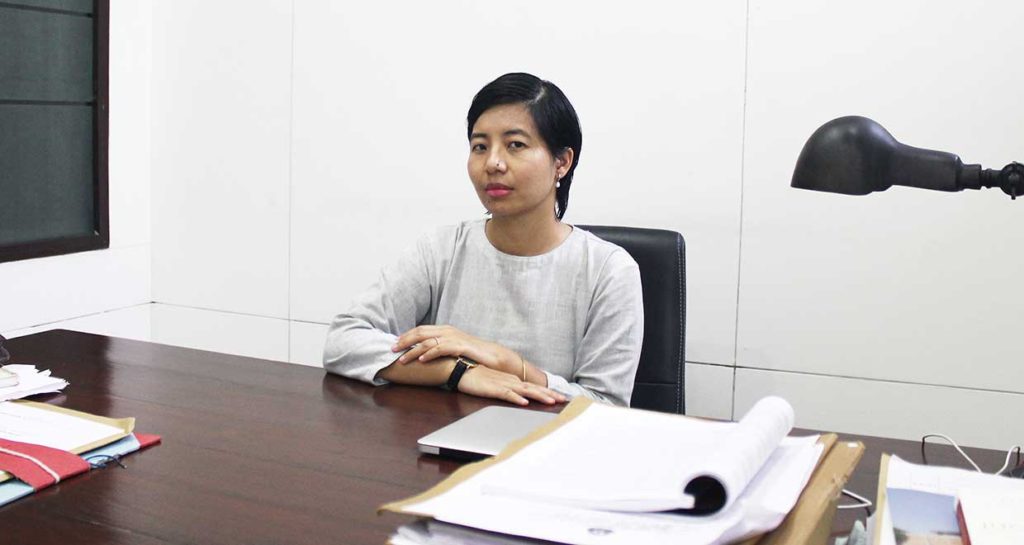
  • Enatoli Sema, on being the first from Nagaland to crack the AOR exam and work experience with Mr. Neeraj Kishan Kaul

    Enatoli Sema, on being the first from Nagaland to crack the AOR exam and work experience with Mr. Neeraj Kishan Kaul

    Enatoli Sema graduated from Campus Law Centre, Delhi University in 2005 after completing a Bachelor of Arts degree from St. Stephen’s College. In the pursuit of her determination to do litigation, she joined the chambers of Mr. Neeraj Kishan Kaul, Senior Advocate before starting her independent practice in the Supreme Court. Being the first from Nagaland to have passed the AOR examination of the Supreme Court, she talks in this interview about:

    • Her decision to pursue law
    • Experience at Campus Law Centre
    • Professional and personal challenges after graduation
    • Working at the chambers of a Senior Advocate
    • Cracking the Advocates-on-Record examination
    • Following her passion for litigation


    Please introduce yourself to our readers. Where did you grow up and attend school? What was your initial career plan?

    My name is K. Enatoli Sema, I come from the State of Nagaland. I grew up in Kohima and that is where I did part of my schooling and then shifted to the Convent of Jesus & Mary, a boarding school in Shimla.


    You completed your Bachelor’s degree from St. Stephen’s College in Delhi University, which is a very prestigious and difficult college to get admission into. How was your college experience? Did you decide from the beginning to study law after graduation?

    I feel privileged and blessed to have attended this prestigious college during the most crucial years of one’s life. It is during this period that I was constantly faced with situations and circumstances that questioned my roots, faith, identity, foundation and my core values. At first, I did not know how to respond to them but as a result I was forced to grow up and decide who I am and who I want to be rather than being defined by others.

    Studying law was also an option for me because of my family background but I was not too sure if I really wanted to do it immediately after graducation. In fact, after graduating from St. Stephen’s and after a year in CLC, I took a gap year just to be sure that I really wanted to study law.


    How was your law school experience? Looking back, do you wish you had done anything differently?

    (Enatoli graduated from Campus Law Centre, Delhi University in 2005)

    CLC was a very different experience altogether, something I wasn’t prepared for. I realised how sheltered and protected I was in St. Stephen’s. At first it was overwhelming, the sheer number of students in the class was enough to make you feel small and insignificant. There were some classes I enjoyed more as compared to others. We had execellent faculty members because of whom my love, interest and curiousity for law started. The one thing I wish I could have changed about law school was probably being more active in campus. I would usually try and find a quiet place in a corner and read and did not interact much.


    How was your first year after graduation? What were your thoughts and in hindsight how did they work out?

    The first few months after graduation was difficult for me. Nothing prepares you for what you are going to face especially if you choose to do litigation. There is no similarity between the theory and practice and it takes time to get used to it. As time passed, I grew more intrigued with the drama and process of how law evolved in court room proceedings. My first year went just fine, there is nothing I would like to change about it. But yes, I wish someone would have told me that it is OK to feel lost and clueless in the first few months of practise and that everyone goes through it.


    enatoli-sema-2

    You worked as an associate in the chambers of Senior Advocate Neeraj Kishan Kaul from 2007 to 2009. What did your work consist of? Were you free to take up your own cases, independent of the ones your senior allotted you?

    Joining the chambers of Mr. Neeraj Kishan Kaul, Senior Advocate, was the one of the wisest steps I took as a young lawyer who was interested in doing purely litigation. Being in the chamber of a Senior Advocate, the work of the junior associates mostly revolved around legal research, analysis and assisting him with our notes and preparations. Working in his chambers trained and exposed me to the basics of law in a variety of subjects within a short span of time. In his chambers, I was not only taught law but I also learned professional ethics and discipline which is crucial for any Advocate who views this profession seriously.

    Mr. Kaul’s chamber was very demanding as working in any top notch Senior Advocate’s chamber would be so there was really no time to take up any independent cases and since I was just freshly out of law school, I don’t think I had the experience to take up cases on my own.


    You became the first from Nagaland to pass the AOR exam of the Supreme Court. How did you prepare for it? What do you think are the reasons that no person from your state has ever passed it?

    As I started my independent practise in Supreme Court, I realised that it was very important for me to take the AOR exam. I was encouraged and guided by AOR’s who had taken and passed the exam. I was blessed to get sound advice and guidance by fellow colleagues who were already AOR’s.

    There are very few lawyers from Nagaland practising in Supreme Court and partly that is the reason why there were no AOR’s from Nagaland. I hope that in the coming years there will be many more AOR’s from Nagaland.


    Please tell us more about the AOR exam. When do you think one should start preparing for it and attempt it?

    It is important to familiarize yourself with the syllabus and the study material that is available for taking the exam. I started preparing for it around the month of February-March since our exam was in June. It is always better to start preparing earlier because you have to juggle your work and studies at the same time. Sitting for an examination after years of gap did not help but the idea is to remain focused and hydrated in the Delhi heat! For me attending the lectures given by the examiners helped a lot while studying because they give you an insight of what to expect.


    Currently, you are Standing Counsel for the state of Nagaland in the Supreme Court of India. What do the duties and responsibilities include?

    Being a Standing Counsel for any State is a matter of great honour and a privilege. Since I have been away from Nagaland for so many years, personally I see it as a chance to stay connected to my people. I also see it as an opportunity to contribute towards my society as a legal professional. The duty and responsibility is to ensure that your State is effectively represented and that the Government is given sound legal advice and guidance at all times.


    What are your plans for the future?

    As of now, the only plan is to be a lawyer whose work is respected.


    Lastly, what advice would you give to law students wishing to make a career in litigation?

    Litigation has its share of fun and adventure but it is also taxing. Choosing to do litigation while your other friends from law school may be joining fancy law firms is certainly tough. But if your heart is in litigation and that is what you want to do, then don’t let go of your dream and be prepared to slog and work hard towards it.

    When I expressed my desire to do only litigation after a year into practise, I was advised and warned by a wise man to be prepared to put in a lot of hard work for at least 10 years. As a naive young lawyer, I thought that that his ‘old school’ philosophy talking. I now understand what he meant. This profession, specially litigation will also remain ‘old school’ and I hope that it continues to do so. There is no short cut if you want to be someone who truly works for justice.  So, take your time to decide if litigation is really what you want.

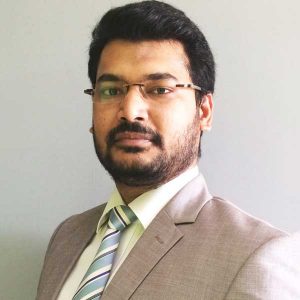
  • Ritwik Sahay, Partner, Jus Remedium, on building a Corporate/Commercial practice

    Ritwik Sahay, Partner, Jus Remedium, on building a Corporate/Commercial practice

    Ritwik Sahay qualified in law from Delhi University in 2008, prior to which he had attained a bachelor’s degree in Commerce. He has worked as an Advocate at firms like Trilegal and Dua Associates, with his specialization being Corporate Law. He currently heads the Corporate and Commercial team at Jus Remedium.

    In this interview, he talks to us about:

    • The selection of law as a career choice and the role Commerce had to play
    • Starting up Jus Remedium
    • The art of negotiations and liaisons
    • Identification of key areas of responsibilities and taking on assignments in various fields of specialization


    How would you like to introduce yourself to our readers?

    Hi, I am Ritwik Sahay, the Corporate Partner at Jus Remedium Law Offices. I am a law graduate from Delhi University and have completed C.S. (Executive). My core areas of practice include M&A, FDI, general corporate & commercial advisory, labour & employment, and corporate and regulatory compliances. I love reading and that helps me to improvise myself, on a personal as well as a professional front, on a regular basis. My success mantra is hard-work, honesty and collective growth.


    ritwik-sahay-2

    Was Law your first choice as a career? What prompted you to take up this line of work?

    Well, Law was not my first choice as a career. I was aspiring for business administration but could not get through any ‘A’ grade business school. Basically, I started Law to compliment my CS syllabus, but gradually I fell in love with Law and pursued it as my main course. Most lawyers would agree when I say that Law is a challenging career that literally forces you to excel everyday if you want to be in the practice for a long period. I became fascinated towards Law practice after realising that this profession will not only provide me a platform to gain immense knowledge but will also give me opportunities to make a difference in the functioning of corporate sector.


    Did your Bachelors in Commerce in any way prompt you to choose Corporate Law, or further your interest in it?

    Yes, of course. I strongly believe that my commerce background not only prompted me to take up Corporate Law as a practice but also proved to be of great help in understanding the intricacies of corporate structure and requirement. Some of the commerce subjects like economics, accounts and business laws gave me a bigger horizon to understand  Corporate Law issues and measures to tackle them. I also believe that in the present era, legal and business requirements go hand in hand, and you cannot really segregate them especially if you are in Corporate Law practice. Having a commerce degree (and pursuing CS) literally mended my way toward adopting Corporate Law practice. Once you have been in this practice for 7-8 years, you tend to realise that having a good understanding of financial records of a company gives a cutting edge over others, and having a commerce background certainly helps you in decoding these financials records.


    What was your experience like during your stay in Delhi University? What were some of your biggest takeaways?

    Oh, it was a life-time experience staying in DU. I had come to DU from a small town in Bihar/Jharkhand and it was a quite a cultural shock to me initially when I was introduced to DU (during my graduation days). Gradually, DU started taking good care of me and all I had to do was to adapt to the circumstances. Law graduation from DU was, of course, a prestigious thing and I thoroughly enjoyed my days at Law Faculty. I still believe that the Law Faculty trains you to be hard-working, dedicated and innovative. The variety of students you find in Law Faculty will completely change your outlook towards life and your career. Moot courts were really helpful in understanding the importance of the research part of Law practice. Similarly, debate competition literally improved my negotiating skills. It is quite important that you keep participating in these activities during your college days. I had bagged a couple of awards in debate and moot-court competitions in Law Faculty.


    You refer to your ability to act as a liaison and your negotiation skills as some of your key skills. How do you think these have played a relevant role in your career?

    Well, I think liaising and negotiating skills are inseparable part of Corporate Law practice, and these are as important as your knowledge of laws. I am an ardent believer in the fact that if you cannot express or communicate your knowledge, your knowledge will not be useful. As Corporate Law practice largely involves finalising the terms of several agreements, it is not important only to draft these agreements but also to negotiate the terms with the other parties and to convince them to agree to your terms. If you do not have a strong negotiating skill (coupled with knowledge to back it up, of course), it would be difficult for you to get through any transaction. I also believe that adaptability is one of the significant factors that you must possess to enhance your negotiating skills. Likewise, liaising with different Government bodies to conclude a transaction is something which you cannot afford to ignore. It is necessary to understand that different Government bodies function in different styles and you have to adopt different measures to liaise with them.


    A lot of your work involved foreign investment. Do you think the current laws do a satisfactory job at safeguarding and promoting foreign investment?

    Foreign Investment is one of the most important aspects of Corporate Law practice. Majority of the Corporate Law Firms in India, these days, base their practice on foreign investments. As a firm, we are of the view that the current legal regime has been quite successful in attracting foreign investment. There are, of course, certain areas like labour and industrial laws, which – in my view – are archaic and can be improvised to make them simpler and practical, but a large number of current legislations are providing good opportunities to foreign investors to explore Indian market. Further, introduction of the new set of companies laws and bankruptcy & insolvency laws are a good sign which have already attracted the eye balls of foreign investors. Also, the liberalisation in the conditions for foreign investments (through amendments in the foreign exchange laws), on a regular basis, not only signify the Government’s intention to make India a better place to invest in, but also make the investment procedure simpler and smoother. At present, one of the biggest challenges is to eliminate the uncertainty regarding the tax laws (in terms of Goods and Service Tax laws and Direct Tax Code) which, I think, are causing the foreign investors being overcautious.


    Did your internships and/or prior work experience in any way aid you in the furtherance of these?

    Actually, being a commerce graduate and pursuing CS, I always had interest in corporate laws, and the kind of internships I undertook pushed me to take up Corporate Law practice.


    You have worked with issues regarding benefits available to employees under various labour welfare organisations etc. What are your thoughts regarding the Labour Laws present in India today?

    Most of the labour laws in India are welfare legislations and were enacted to protect the interests of labourers to a large extent. The Indian Judiciary, too, have time and again been proven to be labour friendly because of the fact that labourers are considered to be having week bargaining power vis-a-vis their engagements with corporate entities. However, with the evolution of trade unions in India, there has been an immense shift in the bargaining power of the labour force which at times gets exercised in unwanted manners. If you see, a majority of the labour laws in India have failed to adapt the new trend and that causes a regular tussle between the corporate entities and them. Further, these labour laws are so scattered that it is really difficult for a corporate entity to be fully complied. Segregation between Central legislations and State legislations vis-a-vis the labour laws has further added to the complexity of these laws. We, as a firm, strongly believe that now is the time when the Labour Laws need overhauling to make them simpler and practical so at to cater the needs of the labours but at the same time making the compliances easier and smoother for corporate entities.


    What made you decide to start your independent practise Jus Remedium? What are some key differences you have faced in terms of dealing with clients while working under a firm, and being an independent practitioner?

    I think it is broadly a matter of choice whether you wish to continue working with a law firm or want to go independent – both has its pros and cons. For me, I think it was an urge to develop my own philosophy of working which sort of compelled me to start Jus Remedium. Of course, it was a tough decision to leave a settled career in Trilegal and start an independent practice, but it was a bit of self-belief and the support of family and clients-cum-friends that allowed me to go for it.

    I did not find much difference in dealing with clients because of the fact that I have been dealing with similar clients for a substantial period of time while I was in a law firm. One prominent difference would be the added responsibility that you not only have to execute the work but also to develop a relationship with the clients directly to earn works. Initially, it was little difficult to realise that we are a start-up firm and we have to adjust to the clients’ requirement in terms fees and deadlines. But, we adapted quickly and the clients are quite happy with the quality and turn-around-time we offer to them.


    In the short while since you have founded Jus Remedium, you have built a significant network of big corporate clients. What are the key factors to building such a clientele and maintaining their trust?

    These days, competition amongst law firms is acute, and hence it becomes important that your clients are satisfied with the quality of your work. It is not important only to win new clients but also to maintain a healthy relationship with these clients, and this is possible only if they feel safe in your hands. There are several factors which should be focussed on while you are developing your clientele, including your expertise and acumen to understand clients’ specific requirements. Additionally, you have to make your clients feel important irrespective of its size and the industry it belongs to. As a start-up firm, our philosophy is to provide quality work to our clients within a flexible turn-around-time, at a highly competitive price.


    Please share with us your experience with identifying and shouldering Key-Responsibility Areas with regards to assignments in a myriad of fields. How did you go about such a mammoth task?

    Basically, I enjoy identifying and shouldering responsibilities- be it towards clients or other lawyers. It has been quite a journey for me from being an associate to being a partner, and it has really helped me to understand the ground level issues to top level issues. As regards the legal assignments, I strongly believe that you would be able to give your 100% only if you get a sense of attachment with the assignments. It is easy to convince others on any issue but you should always try to convince yourself first before discussing it with others. Once you are convinced with your view, you would have a solid logic to back it up.


    What message would you like to share with our readers?

    Always stick to the fundamentals. Never opt for any shortcuts. Law is such a profession where you have to grow on a daily basis and be updated with the changes around. Since these days, laws are so dynamic: it becomes all the more important to be aware about all the amendments in the legislations you are practicing. My candid suggestion to the readers would be to focus on developing analytical and reasoning skills besides adopting an attitude of getting into the depth of every matter.

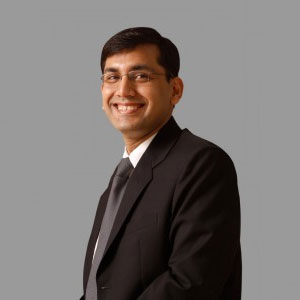
  • Arun Gupta, Founder, Factum Legal, on a profile in Corporate Commercial work and the Corporate Secretarial

    Arun Gupta, Founder, Factum Legal, on a profile in Corporate Commercial work and the Corporate Secretarial

    Arun Gupta is a Fellow member of ICSI and a member of the Bar Council of Delhi. He graduated with a B.Com(H) degree in 1995 followed by CS degree in 1999 and later qualified in law.  Arun is a lawyer with more than 15 years experience in Corporate and Commercial matters.

    Arun acted as a key contributor to the book authored by Corporate Professionals titled “Insight into Companies Bill 2012” and he is also an author of a book titled “Companies Act 2013- Impact on foreign companies in India” published by CCH, Wolters Kluwer in 2014.

    He started his own firm – Factum Legal, Advocates and Solicitors in 2013.

    In this interview he tells us about:

    • Life, law and the choices he’s made while pursuing it.
    • The benefits of having a commerce background while practicing corporate law and the value of additional degrees.
    • Factum Legal – its establishment and his plans for expansion.
    • His publication and the role of academic pursuits in a lawyer’s career.


    How would you like to introduce yourself to our readers, most of whom are students studying law?

    This is Arun Gupta, a Law Graduate and also a Fellow Member of ICSI, presently practicing as a lawyer in Corporate & Commercial Laws. I love to learn a lot and I’m always keen to upgrade my knowledge of changes in law and the impact of the same on industries.


    Tell us about your life before you joined college. Where did your interests lie as a student and what made you gravitate towards law?

    I was from a business family so as usual, I did not plan anything in my childhood. So I tried my luck in the family business also along with my studies, but after just a few months I realised that this is not my cup of tea and God had planned something else for me. I was always good in terms of scoring marks in school exams and enjoyed the law subjects, while doing regular B.com (h), so I think that was the beginning of an inclination to enter the field of corporate law.


    You specialize in corporate matters, Mergers & Acquisitions, tax law, among others. How did your interests develop in this field?

    Yes I specialise in corporate matters, Mergers & Acquisitions, Due Diligence, Compliances & Governance etc. Actually being a qualified company secretary and practitioner of Corporate Law what I enjoyed the most, from the beginning of my professional career, was to find solutions in all type of transactional issues in restructuring and also assessing and finding the potential risk in any acquisition or joint venture apart from governance and compliances issues. Being part of some fund raising activities including Initial Public Offer (IPO) & Preferential Allotment etc by corporates in India, the interest towards such areas developed and sharpened.


    How helpful was your background in commerce in aiding you with a better understanding of corporate law? Would you recommend professional degrees like the Company Secretary degree or any other such degree?

    This is very interesting, I strongly believe that a commerce background really helped me a lot in understanding commercial law, Economic and accounting issues. I initially registered myself for the science stream after passing class X, but after 5-7 days I shifted to the Commerce stream and I am extremely happy for that decision and thankful to one of my teachers for such wonderful advice. Well, I believe that an LLB degree itself gives a wider horizon in commercial, corporate, and Personal laws, but if somebody wants to explore Corporate law then a Company Secretary course would definitely add value to that person. My CS degree really helps me a lot in all kinds of Corporate Transactions and General Corporate Advisory, however one must not forget that the most important part in practical life is not really additional degrees but the approach in handling complex situations.


    Tell us about your initial years in practise – from starting out independently to the time you founded your own firm. What challenges did you face initially?

    Well, the initial years of practice were very tough, I started practicing from the beginning of my professional career and no one in my family was either an advocate/ Chartered accountant or company secretary, so to setup an independent practice was really a daunting task. But I did not bother about monetary earnings, what I concentrated on was whether I was earning knowledge or not and that really helped me in setting up own firm in 2013 again. So I think you need to maintain your patience also to be in the practice of law.


    arun-gupta-1

    Your firm, Factum Legal, has been featured as one of the Promising Legal consultants of India, 2015 by SiliconIndia. Tell us about the firm in general and the kind of work you deal with on a daily basis.

    Yes, we have been recognised as one of the Promising Legal consultants of India 2015 by a business magazine Silicon India and the credit goes to the hard work of our team factum legal and the trust of our clients. We are a boutique law firm providing a comprehensive range of legal services and solutions for domestic and international clients. Our practice area embraces advisory, execution and representation services and dispute resolution.  We are involved in all kinds of M& A transactions, Legal Due Diligence, Commercial Agreements, Corporate Compliance, Governance & Secretarial Practice, Private Equity help desk, Litigation & Alternate Dispute Resolution, Inbound & Outbound Investment Transactions, Registration and Licensing Services, Renewable Power Projects.


    What would you advise young lawyers who are starting out working in the corporate sector. What areas might they find interesting?

    My advice is don’t jump into corporate law because it is a lucrative career, but do what you enjoy most. We are lucky that we are born and practicing the profession in India as there are ample opportunities in every sphere of Legal services, so you should choose the subject based upon your knowledge and interest. My advice to all young lawyers and students is that there is no shortcut to gain knowledge, you have to work hard to become an expert in your area of interest.


    You have authored a book on the Companies Act 2013 and have quite a few publications to your name. How helpful is an academic pursuit in the life of a practising lawyer and how can one find time out for the same considering the hectic schedule one inevitably finds himself in?

    Authoring a book or writing articles and publications needs a huge time investment, and you cannot do such things just for the sake of doing them. You can write articles on a particular topic when you have command over the subject. The practice of law is based upon knowledge and expertise and an academically strong lawyer can really achieve a lot in a short period of time. If you ask about finding time, then I am of the view that time is essential, time is precious but if you enjoy something you always have time to pursue those things. Just to inform you, now also, I am working on a book relating to Companies Act 2013.


    In the present environment of cross border transaction among corporates, what is your strategy to expend internationally?

    We as a firm, believe in collaboration and mutual cooperation, so in that direction, we have joined an international legal network, which will surely help us in gaining knowledge and executing cross border transaction with local and cultural expertise. Further we have also entered into a strategic relationship with a European Full service Law firm ‘Adamas’ to serve our clients in their cross border transactions in the best and most effective manner. We will continue to expend internationally with such mutual cooperation for another few years.


    Finally, what would be your parting advice to our readers?

    I would like to suggest everyone ‘Have a zeal to learn, work hard, and discover your interest area as early as possible’ and the rest will follow on its own.

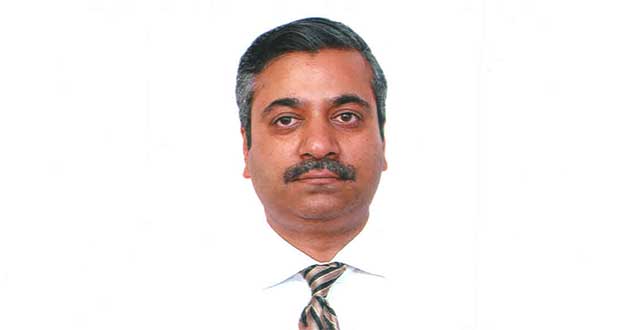
  • Puneet Bansal, Managing Partner, Nitya Tax Associates, on being a CA + Lawyer and practice in Indirect Taxes

    Puneet Bansal, Managing Partner, Nitya Tax Associates, on being a CA + Lawyer and practice in Indirect Taxes

    Puneet Bansal graduated in B. Com. from Hansraj College, Delhi University in 1998 and thereafter he acquired an LL.B degree in 2007 by eking out time for the evening classes of Campus Law Centre of Delhi University. Over the course of his highly successful career he has worked as a Partner at Lakshmi Kumaran & Sridharan as well as BMR Associates. He is at present a Managing Partner at Nitya Tax Associates.

    In this interview he tells us about:

    • Chartered Accountancy – his time in college, the contours of the course and tips to ace the entrance exam.
    • The work in an advisory practice, his law degree and experiences as a Partner at two firms.
    • The importance and convergence of law and taxation, advice for Tax Law enthusiasts, his views on the GST and setting up Nitya Tax Associates.


    How would you introduce yourself to our readers? Please tell us about your family and childhood.

    I was born and brought-up in a middle class family. My father is a business man and mother is a house maker. Being in a middle class household, my upbringing was normal. I was a pretty average student till Class X.


    Were you always clear about your career plans considering you pursued commerce in senior secondary and went on to graduate from Hansraj College, Delhi University in B.Com?

    Never. I choose Commerce in Class XI as I was not interested in Science and Arts. It was in Class XI that I developed an interest in studies and started doing well. Since my marks in Class XII were good, I joined Hansraj College. I didn’t have any career plan till then.


    How did you manage college with your CA preparations?

    One of my uncles filled the Chartered Accountancy form and that’s how I started doing CA. Indeed, CA used to be a tough course earlier as well. I used to go to college in the first half and come back to the CA firm in the second half when I was interning. It was a tough 3 years of managing both studies and internships.


    Please tell us about your CA Articleship. What was the application procedure? How competitive was it to secure an Articleship? What was the work assigned to you?

    I did an internship in a medium-size CA firm. My senior in the CA firm was a family friend so I got the internship with ease. I did accounting, company law and Income tax related work during the internship. Importantly, I was not at all exposed to indirect taxes during my internship which is my area of profession now. The period of my internship was a thorough enjoyment and was my first chance to peek into the professional services space.


    You graduated from Hansraj College in 1998 and finished your CA course in 1999 with an All India Rank. Please enlighten our readers with some valuable tips to ace the CA examinations.

    I cleared all CA exams in the first go and was the All India 27th rank holder in the CA final. I have followed one rule for preparation for CA exams, and in fact, now as well when I am practicing on my own I abide by it and that is ‘whatever you do, do with passion and then everything will fall in place. Otherwise do not do it’. I was always interested in understanding concepts rather than clearing exams. The conceptual clarity in all the CA final subjects only helped me in clearing the exams.


    puneet-bansal-2

    Our readers would like to know about your initial days as a CA professional. Could you share with us any interesting anecdotes?

    When I became a CA, I thought that life henceforth would be easy. But I was confronted with reality soon and realized clearing CA is the start of struggles in one’s professional career. Clearing the CA exam only opens the gates to the professional world. At each stage of our professional lives, we need to prove ourselves with hard work and competence.


    Was it difficult for you to shift to a new place of work, which was primarily a law firm? Please tell us about your work experience at L&S.

    (Puneet joined Lakshmikumaran & Sridharan in 2003 as a Chartered Accountant in their indirect tax litigation practice.)

    Indeed. I was working in Maruti Udyog and suddenly decided to shift to L&S. My family was stunned and couldn’t understand my decision. Also, the decision to shift from an Industry to a Law firm was a big change in my career. Working at L&S was a great experience. It was a close knit family environment comprised of competent professionals. Initially I did litigation, and later, set up their advisory practice. It was 9 years well spent in my career.


    In 2004, you joined Delhi University to pursue law. What was the driving force behind this decision?

    As I was working in L&S and wanted to make a career in litigation, I decided to do law. The admission procedure at the Delhi University required clearance of an entrance test. Clearing the entrance test was not tough.


    Please tell us about your law school days. Did you participate in any student activities? How active were you in other college activities?

    I did law from the Campus Law Centre, Delhi University evening batch, so I used to attend the classes and write the exams. As I was working full time in L&S, I didn’t participate in student or college activities during my law school days.


    How helpful was your law degree in terms of the added legal perspective to your existing knowledge? What career advantages did it bring?

    (Puneet qualified in Law in 2007, after that he continued with L&S.)

    The law degree really helped in giving me perspectives on the Indian Constitution and various other Commercial laws. I would recommend it as a “must do” if one needs to practice tax. Further, the law degree opens an opportunity for you to appear in the High Court and Supreme Court.


    What work does advisory practice include? What were the added responsibilities as a partner of one of the leading firm in indirect taxes?

    (After establishing the advisory practice of L&S, Puneet headed this team as a partner from 2010 to 2012.)

    The advisory practice involved advising clients on Indirect Tax issues involving legal interpretation, structuring business models etc. As a Partner of a large law firm, I was responsible for advising leading corporates of India. I also had the responsibility of managing a team of 10 – 12 professionals.


    Please share with us your work experience at BMR.

    (In 2012, Puneet joined BMR & Associates LLP as a partner.)

    My professional journey wouldn’t have been complete without joining BMR. It was a totally different way of practicing when compared to a law firm. The advisory practice was more focused on bringing legal, practical and implementable solution for clients. Furthermore, I really liked the professional practices in BMR. Overall, it was a great experience.


    How important is taxation as a subject for law students? What advice would you give our readers to consider taxation as an area of practice?

    Taxation is a very important subject for law students especially if one is focused on commercial laws. Taxation plays a key role in business transactions and has the effect of making and breaking the business. The current times are most exciting times for tax professionals with so many things coming up or growing up, be it GST, Transfer Pricing, International Taxation etc. This is right time to be in the taxation field.


    What issues did you face while setting up Nitya Tax Associate? Our readers would love to know about the significance of “Nitya” in the firm’s name.

    (Puneet recently founded an independent indirect tax boutique “Nitya Tax Associates” at New Delhi.)

    The decision to start Nitya was an attempt to create something on our known outside a framework of large firm. In professional services firm, only two things are important – clients and people. Some of the leading corporates have reposed faith in us and the going has been good till now. There were initial challenges on getting good people but now, we have a good team.

    The name ‘Nitya’ has its origination in the Sanskrit word and stands for ‘continuity’ / ‘eternity’. The name is a reflection of our belief and commitment to be available to our clients.


    Please introduce us to your team. What plans do you have to take forward Nitya Tax Associates, in terms of workforce as well as setting up branches in other major cities of India?

    We have a good team with some members with experience ranging from five to eight years. Kulraj Ashpnani, Deepak Suneja and Gaurav Narula have worked in large and reputed professional services firms. As of today, we are twelve professionals -a mix of Accountants and Lawyers. As of now, our focus is on NCR though we continue to cater to clients in other parts of India. For the next one, two, years, we plan to operate from Delhi and to strengthen our foothold first.


    What are your views about the upcoming GST regime?

    The GST will significantly simplify the indirect tax regime. During the first few years, it will open a floodgate of opportunities for professionals be it accountants or lawyers.


    What are the preferred legal issues you like to work on? Do you have any hobbies that help you unwind after a long day at work?

    Working on complex Indirect Tax issues for large manufacturing clients is my favorite as of now. I also enjoy doing litigation. Spending time with my kids and watching Hindi movies really helps me unwind.


    What would be your parting message for our readers?

    It does not matter what career you choose, but whatever you choose, do it in the most exemplary way and then everything will fall in place. Success is not a destination; it is a never-ending journey.


  • Huzefa Ahmadi, Senior Advocate, Supreme Court, on an illustrious career in litigation and work experience at Magic Circle

    Huzefa Ahmadi, Senior Advocate, Supreme Court, on an illustrious career in litigation and work experience at Magic Circle

    Huzefa A. Ahmadi graduated from Law Center-II, University of Delhi. He joined the Bar Council of Delhi on 6th September ’91 and started litigating before High Courts and Tribunals. He briefly went abroad and worked with Clifford Chance on a work experience placement.

    Huzefa came back to join litigation in India. He practices before the Supreme Court of India in matters concerning Constitutional Law, Administrative Law, Tax, Civil and Criminal Law. A third generation lawyer, law came naturally to him and he never considered any alternate career choices at all. Huzefa has been designated as a Senior Advocate in November, 2012.

    In this interview, he talks to SuperLawyer about:

    • Being influenced by his father, who retired as the Chief Justice of India
    • Experience as a law student at Delhi University in the early 1990s
    • Importance and minimum requirement for the designation of Senior Counsel
    • Entry of foreign law firms in India and its impact upon Indian lawyers


    When did you get inclined towards law?Tell us a bit about your family.

    I had decided to do law while I was doing my graduation. I am a third generation lawyer. My grandfather was a judge in the subordinate judiciary under the erstwhile State of Bombay. My father retired as Chief Justice of India.


    Did your father motivate you to pursue law? How did you come to study law?

    My father did not try to influence my decision as to the vocation I would like to pursue. In hindsight, I feel that my lineage did subconsciously goad me to take up law.


    huzefa-ahmadi-1

    Which stream did you pursue your basic graduation in? Was the five-year course available to you?

    The five-year course was not introduced when I studied law. I did my B.A. with Psychology. I had no other plans but worked for a short time with HCL and sold computers for some extra pocket money.


    How was the environment in Delhi University in the early ’90s? What student activities were you a part of? How about internships?

    I did my law at the Evening Centre at Mandir Marg (CLC-II). Some professors were good but overall the course was neglected. You required an upper second in graduation to get into the law course. There weren’t too many student activities happening at the Evening Centre but classes were frequently disrupted by union activities. Most students were in Government service or over 40 years of age and did not seem interested in active practice of law.

    Internships weren’t introduced at that point of time. Internships now help in getting a broader insight of the profession. A lot depends on how keen the intern is towards the profession.


    Could you tell our readers about the first time that you appeared in court?

    (Huzefa began practicing at various High Courts and Tribunals soon after graduation)

    You always get a mixed bag of judges. Some were very helpful to young lawyers. I was fortunate to be in a chamber where I got a lot of opportunities to argue cases. My first appearance was before the C.A.T. where I argued the case of an Excise Superintendent against whom there was a disciplinary proceeding.


    Who were your mentors?

    Mr. M. Chandrasekharan, Senior Advocate and Mr. Maheshwer Dayal, Senior Advocate were my mentors in my initial days of practice. I was also inspired by my mother and father whose advice and guidance served as a beacon of light in the profession.


    Did you ever have any other plans other than litigation? What are your views on LL.M.? Do you think Indian Legal Education needs to improve?

    I never had any alternative plans.

    I think LL.M. helps in building a jurisprudential base. Legal education needs to improve at the middling level. There is a huge gap between the five-year courses and others.


    How did you get to work at a Magic Circle firm? When did you decide to come back to India?

    (Huzefa worked at Clifford Chance on a work experience placement)

    There was some work that I had done in India which led to my joining them on a work experience placement. The exposure was good as I saw the scale and expanse of an international law firm. I returned because I wanted to practice litigation in India and did not want to work with a corporate law firm.


    How does one become a Senior Advocate? Is there a lot of work owing to the designation?

    (Huzefa was designated as a Senior Advocate by the Supreme Court of India in 2012)

    It is necessary that you practice purely as a counsel at least for about 5-7 years before you apply to be a Senior Counsel. Designation can sometimes be a boon and sometimes a curse. If you are not up to it and aren’t briefed for the strangest of reasons you will be without work. As a Senior Advocate you get very less time to prepare as you are invariably briefed on the previous day.


    What are your views on the possibility of foreign law firms entering the Indian market?

    I think they should be allowed to enter but on a reciprocal basis. Their entry will ensure better terms for young lawyers.


    What would be your message and advice for our readers?

    Work hard and stay focussed on the profession. Have a hobby and other interests because there may be long periods of time when you may not have work despite doing your best.


  • Rohan Mahajan, Founder, LawRato.com, on starting up and pursuing legal entrepreneurship

    Rohan Mahajan, Founder, LawRato.com, on starting up and pursuing legal entrepreneurship

    Rohan Mahajan started out as a Bachelor of Science from Hans Raj College, Delhi University in 1997, but destiny had other plans for him. Right after in 2000, he opted for law from Campus Law Center, DU, which in turn lead him to his first employment, that with Bharti Airtel Limited. After 4 more job changes from 2002 till 2013, he finally found his niche in the wonderful world of entrepreneurship – beginning his own startup LawRato.com to reach impeccable success and job satisfaction.

    In this interview, he talks to us about:

    • The conflict between the head and the heart in choosing a career;
    • The journey of establishing LawRato.com;
    • The attractive aspects of legal entrepreneurship; and
    • The necessity to choose a career that truly fulfils you.


    How would you introduce yourself to our readers? Please tell us about your pre-college days. As a young adult, what plans did you have for your future?

    A warm hug to all the SuperLawyer readers here. I come from a family of scholars, and I have two elder sisters who were quite meritorious themselves. While it certainly is a blessing, it turned out to be a tough one, as I had to not only compete with my classmates to get grades better than them, but the competitive environment was equally tough at home as well. So yes, I have been brought up with a sense of competition, and winning is in my genes – a trait quite important in the startup world, where we strive to be the best each day.


    rohan-mahajan-2

    You are a B.Sc. (Hons) graduate from Hans Raj College, New Delhi. What was the motivation behind your decision to pursue law? Are there any lawyers in your family?

    Those were the last few days of my graduation days at Hans Raj College, and I remember I was sitting quite confused in the college lawns. While my heart was pushing me to pursue an MBA and get a cushy corporate job, my mind was fighting my heart to go ahead and get into a Law college, as I was always fascinated by the authority that the legal profession enjoys, and was always annoyed by people who did not abide the laws. With my father being a practicing lawyer, I suppose I was a little biased, and ended up deciding to pursue law post my graduation.


    Was Campus Law Center, New Delhi always your choice for law school, or did you apply to other colleges as well? What was the procedure to secure admission back then in the year 2000? Was there a lot of competition?

    Well, with the heart and mind in sync, after their tussle ended up in the mind winning over the heart, the next step was to figure out where to head to in order to get my legal robes. Being a North Campus guy for 3 years, Law Fac, DU was the obvious and only choice, as the thought of continuing coming to the north campus for another 3 years was too exciting to even consider any other law college. You know, once you are sure what you are looking for, achieving it is just a few steps away. I studied hard for the entrance, and came out with flying colors to join the Campus Law Center, Law Faculty, Delhi University as a law student.


    Our readers would love to know about your law school days. Tell us a bit about it.

    Honestly, the only memories I have from my law school days are those of gorging on food (especially the mutton kebabs at Delhi School of Economics), shopping at the Bunglow Road (North Campus, DU), and helping friends contest the Law Fac elections. As far as studies go, I have always applied logics in everything I have studied, and this ensured that there were no difficulties whatsoever in moving from my science background to the legal studies.


    Your marketing career spans an impressive 15 years across various industries. How has the journey been?

    It’s said that in the end, the heart wins over the mind. Back then in my 3rd year of Law college, mobile phones were still a big deal, and were a privilege to only a few. I desperately wanted to own one, and my desire became so bad that I even started dreaming of owning one. I suppose the Almighty saw my desperation, and one of my close friends told me about a job offer with Airtel. One of the best days of my life were scripted when the HR offered me a meagre salary, but a Nokia Handset and an Airtel SIM with unlimited calls as part of my remuneration. I cannot describe in words the happiness one gets when one’s dreams come true, quite literally. This first corporate job was followed by another, and then another when I joined this Marketing agency which not only taught me the A to Z of marketing, but also made me travel half the world. This was another dream come true, when your passion becomes your profession and you don’t even know how a decade passed by.


    rohan-mahajan-3

    You’re the Founder and CEO of LawRato.com. Please tell us about LawRato. What inspired you to embark on this entrepreneurial journey?

    Back in 2009, I was working in Singapore & Jakarta, Indonesia. A legal issue cropped up during my stint, and surprisingly, I was left dangling for help. Even in the age of internet and globalization, I had no platform to seek a verified and a reliable solution to my problem. It occurred to me how there would be many more stranded like me. And hence, the seeds of LawRato were sown.

    There is no way whatsoever by which a common man can evaluate and identify the right lawyer for their legal situation. With no data available on the lawyers’ performance and track record, its next to impossible to tell which lawyer would be the right one for your need. It becomes more difficult, as unlike healthcare, where there are clear specialists for different healthcare problems (cardiologist, neurologist, etc.), lawyers take up matters across multiple practice areas and there are no defined specialists for each practice area like property matters, matrimonial matters and others.

    With 3 Crore pending matters and 17 Lac new cases filed each month in various courts in the country, there was no transparent way to get access to the right lawyer so far. This becomes graver as 1 in 5 clients seeking legal consultation files a case. This makes it a whopping 1 crore consultations each month. With most of us not knowing where and how to find the right lawyer, we end up either reaching out to someone through a close reference or finding one through local directory listings. Either of these routes have no way to promise the credibility and quality of the lawyer as references are mostly based on 1 or 2 past experiences and local listings have no control over who is listing themselves as professionals.

    A lot of clients end up in legal issues where they need a counsel to represent them in a faraway city. Be it a property situated in another city where relatives are having an illegal possession or a cheque bounce matter where the other party has filed a case in another city or matrimonial matters where one of the spouse has gone to his / her parental home thousands of miles away and pressed criminal charges in the local police station, the need to a local counsel in that city is of utmost importance to ensure the matter is handled in the most appropriate manner.

    We have top rated verified lawyers in 110+ cities in India, and one can consult with them with a click of a button at the platform. Clients needing lawyers in faraway cities have actually called us as life-savers as we not only save them the time needed to physically travel to another city to find the right lawyer, but as mentioned earlier, even if they would have travelled to the city, there was no way to evaluate and identity the right lawyer so far. In today’s world where everything is so connected and transparent, having access to top level legal support is certainly the need of the hour.

    LawRato.com ensures that this need of having access to transparent & guided legal support system is covered with their highly curated and verified lawyer listings and ratings and reviews for each lawyer on the platform. The team conducts in depth online and offline verification of each lawyer before getting them onboard which includes verification through referral. Each user consulting a lawyer on the platform gets to rate and review them once the consultation is received.


    Please explain to our readers how LawRato.com functions. How do you manage your extensive database of lawyers across cities and varying fields of law?

    LawRato.com works as an introduction-cum-Service partner for the clients and also Top Rated Verified Lawyers across any city and any court in India.

    It handholds the user right from the initial consultation with the lawyer to the final outcome of the case. The portal offers multiple modes of engagement in the form of email, phone, video calling, meeting & their home/office meetings to avail the services of the listed lawyers. The aim is to set transparency and trust in a highly cluttered and disorganized Legal Industry in India.


    Could you also introduce us to your team?

    The Team:

    Rohan Mahajan (Founder & CEO)

    • A law graduate from Law Faculty (DU), obsessed with helping solve people’s problems
    • Operations specialist with 14 years’ experience in BTL marketing across APAC.
    • Spearhead of Wizcraft’s BTL operations. Expanded Digitas’ operations in Indonesia as Country head – Handled field sales & telesales teams.

    Nikhil Sarup (Co-Founder & CTO)

    • A software engineer by education, still putting his B.Tech(CSE) degree to good use, coding open source apps.
    • 16 years’ experience in Digital & Direct marketing. Previously headed digital strategy for Razorfish & Digitas India. Deep expertise in E-commerce platforms, CRM systems, and social communities.

    The crazy duo are supported by a team comprising of 4 law graduates who handle all incoming client requirements, and 2 marketing and relationship managers who take care of lawyer onboarding, management and other PR activities.


    How do you plan to expand LawRato.com, in terms of operations, infrastructure, as well as attracting more investments? Can we expect a mobile app soon?

    We have received angel funding a few months ago, and are chasing tough targets which are reviewed on a weekly basis, since the aim is to achieve a sizeable traction before raising the next round of funding. We currently have 500+ top lawyers on-board, across 100+ cities and are targeting to take this number to 3000+ lawyers across 200 cities in 6 months from now. We are happy growing a little slow, since our process of bringing new lawyers on-board involves online and offline verification of the lawyer’s credentials, as the quality of lawyers we offer is the best in the business and that’s what sets us apart from any competition. On the User traction, we are currently getting 1500 daily site visitors and 100 client requirements per day, out of which we are able to help 5-10 clients hire a lawyer through the portal. We have been  reaching a measurement  of growth at @ 10-15% on a weekly basis, and are now aiming to handle 10,000 visitors and 1000 client requirements per day in 6 months from now. A user app and a separate lawyer app that enables onboard lawyers to answer client queries and manage their client appointments, are under development and are expected to be launched in October / November 2015.


    Will you be practicing law in the near future? Do you aim to do pro bono work?

    Honestly, practicing law is on my mind, but not for another 4-5 years, atleast. I really want to get involved in pro bono practice to take up matters of public interest. The idea is to grow LawRato.com to a level where we are able to take up CSR projects and offer free legal aid to the needy. I would love to do this in association with the Government’s legal aid program.


    What would be your message for our readers, particularly young lawyers and law students, who wish to foray into entrepreneurship?

    Entrepreneurship is for people who want to see a change in the way they lead their daily lives. If you feel that you can, in some way, impact the life of a few people, give your idea a shot and see how it works. If your prototype is able to impact even one person’s life, go ahead and get involved in full time entrepreneurship. However, also remember that there is nothing such as work-life balance if you are looking into starting up on your own.

    One of my favourite quotes is – In entrepreneurship, you live a few years of your life like no one else does, so that you can live the rest of your life like no one else can!


  • Sayali Phatak, Senior Vice President-Legal, Airtel, on work experience in Telecommunication Laws and the role of an In-House counsel

    Sayali Phatak, Senior Vice President-Legal, Airtel, on work experience in Telecommunication Laws and the role of an In-House counsel

    Sayali Phatak graduated in Political Science in 1988 from Lady Shriram College and thereafter qualified in law in 1991 from Delhi University. She joined JB Dadachanji & Co. soon after graduation and worked there for the next two years.

    In 1999, she joined the litigation team at Amarchand Mangaldas & Suresh A. Shroff & Co. (AMSAS as it was then called). Thereafter, she joined as a legal counsel at Airtel. Having joined and quit Accenture in between, Sayali is currently Senior Vice President-Legal at the Corporate office of the Bharti Group.

    In this interview, she talks about:

    • Her work experience at JB Dadachanji and AMSS,
    • Her work experience as a Senior Vice-President-Legal at the Bharti Corporate office,
    • The work profile and practice of an in-house lawyer.


    How would you introduce yourself in one line to our readers?

    I am a Senior Vice President-Legal at the Bharti Corporate office with experience as an in-house counsel of over 17 years. My main areas of practice include corporate litigation, transactions, and corporate advisory matters.

    I come from a family of lawyers and Law was a natural progression after my Political Science Honours from Lady Shriram College.


    Tell us about your time as a law student and your internship experiences in Delhi University.

    DU was fun and friends. There were many subjects over the period of three years. Contract law was of particular interest to me.

    We did not have any concept of compulsory internships and so I did not intern.


    Right after graduation, you joined JB Dadachanji and Co. Which practice areas did you deal with, in the years that you worked there?

    I worked at JBD for about two years from 1992 to 1994. I was in the litigation team, so most of my work included drafting, researching case law and briefing senior advocates.


    What was the experience in the firm like? What made you shift to Amarchand & Mangaldas & Suresh A Shroff & Co. in 1999?

    JBD was a great place and I am still in touch with my friends from then. They had a lot of good matters and we got very good exposure in drafting and briefing. While I was with JBD, I received an offer to join AMSAS as it was then. I joined AMSAS in 1999 after taking a break as my daughter was born in 1994. I initially worked part time there but later joined full-time.

    sayali-phatak-2


    What was your work experience like in Amarchand?

    At AMSAS, I was in the litigation team again. I got an opportunity to work in various fora, ranging from the Supreme Court, High Court, MRTP, DRT the consumer forum and the BIFR. It was a great learning ground and we worked with different clients and got an opportunity to learn drafting, preparing opinions, researching case laws all over again, and I had the opportunity to brief various senior counsel and occasionally appear in courts.


    After Amarchand, you joined the legal team of Bharti Airtel. What was the reason behind this shift, especially since you were working at a premier law firm?

    Working in a law firm helped me build a great grounding for me, but due to family reasons I shifted to in-house legal work where I felt it was less pressing.


    Tell us about a day in your life as a legal counsel. How different was the kind of work at Airtel from Amarchand?

    Being an in-house counsel has been very satisfying and challenging. The experience and learnings from JBD and AMSAS, especially in litigation, were very useful. As an in-house counsel one needs to understand the business requirement and accordingly advise the internal teams how to meet their business needs within the parameters of the law. Earlier in the law firms, I was doing mainly litigation but in-house changed to a mixed bag, of contracts, some fairly straightforward, some complicated ones and litigation.


    What attracted you to Telecommunication Law?

    Telecom is a very happening space. It has seen exponential growth and is meshed with technology to reach out to millions for a variety of issues through voice or data and thus touches all people in some manner or the other. Clearly it is fast paced and an exciting field, and this is exactly what got me interested to Telecommunications.


    Why did you shift to Accenture in 2007? How was the work experience different from Airtel?

    I got an opportunity to be the Lead Counsel for the India Domestic business for Accenture and so I took that up. It was my first experience with an MNC and it was a good learning to understand how to interact with teams across Asia Pacific, etc. and understand their processes.


    You thereafter moved back to Airtel.

    It’s always good to improve one’s skill sets. I got an opportunity to work at the Corporate Office of Bharti and worked on a lot of M&A transactions, bond issues and thus took this up.


    What is the nature of your work at Airtel presently? Is it true that work in-house is less stressing than at a firm?

    We at the corporate office do not have a lot of litigation which is mainly handled by the Airtel Team but I have been part of briefing sessions with some eminent senior counsel in some sensitive matters.

    The role of an in-house counsel has changed substantially over the last few years with many persons from law firms making the transition to in-house at various levels. As stated above the role of an in-house counsel is extremely challenging as we live with the business and have to take ownership of all matters, especially in organizations which are fast paced. Also briefing senior counsel is done for litigation matters but there is a lot of transactional and advisory work which happens internally. Further in litigation, a lot of strategizing is done in-house.


    Does working as a legal counsel get monotonous? How is it possible for one to keep experiencing new learning curves while working as a legal counsel?

    The role of an in-house counsel is far from monotonous for the reasons stated above. As regards experiencing new learning curves, as stated above, with a business which is fast paced and evolving one has no choice but to be ahead of the times and work with business to ensure that the business goes ahead.


    What would you advise law students who want to join in-house roles?

    My personal view is that young students must first do a few years of litigation and garner work experience with law firms. These would be extremely useful and would serve as an edge over others if one wishes to move in-house.

    Work as an in-house counsel requires collaborative and team effort. Each counsel is measured on how they are able to help the business achieve their objectives and thus all have to work with all teams in order to close the issue.

    Diligence, commercial insight, updated legal knowledge, attention to detail and good healthy relationships with internal customers is required if one wants to do well.


    What is your current work profile like? How do you balance work and personal life?

    I am currently leading a team of four colleagues and we provide full support to the Corporate office for all legal issues. Work life balance is something one has to achieve for oneself and there are spikes when there may be no weekends off, some with one day and some with both. If one finds one’s work exciting then all can be managed.


    What are your plans for the future?

    To continue what I am doing and learn new skill sets.


    What is the one advice you would like to give young law students?

    Law is an extremely versatile area and due to its far reach touching all aspects of life, it’s a great subject to study whether one wants to practice or teach or pursue other careers in environment, Human rights etc.

  • Sudhir Mishra, Founder & Managing Partner, Trust Legal, on building an illustrious career in Environmental Law

    Sudhir Mishra, Founder & Managing Partner, Trust Legal, on building an illustrious career in Environmental Law

    Sudhir Mishra completed his graduation in History from Deshbandhu College, Delhi University. Thereafter in 1998, he finished his degree in Law from Campus Law Centre, Delhi University. Soon after graduation, he started his own law firm, Trust Legal, which specialises in environmental, health, financial services, securitisation, banking, oil and gas law practice, as well as alternative dispute resolution.

    In this interview, he speaks about:

    • Choosing a niche area such as Environment Law for specialisation
    • Starting his own full service law firm right after graduation
    • His most memorable transactions in Environment and Corporate Law


    How would you introduce yourself to our readers, who are young and aspiring lawyers?

    I am a first generation lawyer who was always very sure about one thing – that I will not join any law firm, but will start on my own. It was in the year 1998, when I plunged into the legal profession with all my belief, that one day this country will take note of me.


    What made you decide to have a career in law?

    I did not decide – it happened by accident and destiny. I was interviewed for IAS in 1998 and failed to clear it, and then was forced to a large extent by my father, who was a serving IAS officer, to take law as a career.


    What made you decide to become an independent legal professional, rather than joining a senior lawyer or law firm at the beginning of your career?

    As in 1998 there were very few law firms and I was already twenty eight (28) years of age, I had a lot of reluctance in undertaking prolonged training and working as a junior in a law office. I had great interest in environmental issues, and during my training with Ms. Pinki Anand, Senior Advocate and now Additional Solicitor General (ASG), I was very confident about kick starting my own practice, rather than being part of somebody else’s setup. I took everyday as a challenge, setup a small office at home and started visiting NGOs working in the field of Environmental Law. Somehow, there was a deep feeling inside me that I will succeed as a lawyer, which propelled and fuelled my ambition of being on my own. In three years’ time, by 2001, I was retained by close to five National and International NGO’s and was also working for Government Undertakings and lot of private companies. It was a time of excitement, uncertainty and thrill, and I loved every moment of it.


    What made you choose Environmental Law? Please tell us your experiences that made you focus your practice in environmental law.

    I was attracted to Environmental Law because there were very few lawyers involved in this field, and I had a great liking for environmental issues, most specifically Wildlife and Conservation.


    sudhir-mishra-2

    Please tell us about the most memorable environmental law petitions you have litigated on.

    The two most important petitions which I followed and argued on Environmental Law have been:

    1. Stopping the road which was passing through the Jim Corbett Tiger Reserve, before the Supreme Court, and
    2. Stopping a wet land (World Bank Drainage) project, for the protection of Sarus Cranes, before the Allahabad High Court.


    Also, what have been your most memorable environmental law transactions on the corporate side?

    My most memorable environmental law transaction on the corporate side has been in helping the largest FDI in a tourism project for setting up a Ski Village in Manali (Himachal Pradesh), wherein I managed the Environment Impact Assessment (EIA), Environmental Clearance issues (EC) and Environmental Management Plans, by engaging with The Energy and Resources Institute (TERI) and Indian Institute of Forest Management (IIFM).


    What did you find appealing about working on your own?

    It’s like being a daily wage earner, who is a master of his own fate. Life is so uncertain that securing a career and a settled and a protected life is too boring.


    sudhir-mishra-1

    From an independent legal practice to forming and running the boutique law firm Trust Legal – how challenging was your journey?

    I was left with little options, since the country had been acknowledging me as a prolific Environmental lawyer by 2003-2004. Infact, I went for the International Visitors Leadership Programme (IVLP 2005) organised by the US Government, owing to my pioneer work in Environmental Law in India. However, big commercial success was more a need and necessity for social recognition. I was married in 1999 to Mamta Tiwari, who became a Partner in Fox Mandal in the year 2001, and was regularly being voted amongst the top 20 Dispute Resolution Lawyers in Chambers & Partners, Legal 500, etc.

    Comparisons  started to happen, and it was very important for me to ensure that environmental law would pay just as well. We created the firm Trust Legal with that philosophy, and today we are the leading law firm representing all kinds of companies in India and abroad on Environment and Health law practice. Infact, Healthcare has become a bigger and major practice area of the firm, with Trust Legal representing more than 30 hospital groups across the country in litigation and corporate advisory. The firm is also very active in the field of Real Estate & Infrastructure, Oil and Gas and Banking & Finance law practice.


    What is your role as the Managing Partner of Trust Legal? What are the challenging and stressful aspects of managing and running a firm?

    As the Managing Partner of the firm, I encourage my team to think as entrepreneurs. My job is to ensure that the business of the firm is moving in the positive direction, salaries are paid on time, talented people are encouraged, along with ensuring the emotional and physical well-being of lawyers. There is nothing stressful in managing a law firm as a lead Partner, since your entire day is filled with excitement, and a sense of purpose and duty.


    What do you want to say to the next generation lawyers? Which are the growing areas of law where a new law student or young lawyer can focus and distinguish himself/ herself?

    I suggest that each lawyer should follow his/her own dreams, by assessing his/her own interest area, and then working accordingly. I believe that apart from environment; health, infrastructure, commercial litigation will also be  new big areas to focus on.


    Tell us about your early education, your place of graduation, your place for learning law and your experiences during student years.

    My early education was in a place called Siwan in Bihar, where most of my classes upto class 10th were conducted under a tree, as the school building was very depleted. I did my 10+2 from an even smaller town called Bankain Bihar, where my father was posted, and then I moved to Delhi University. I did my graduation from Deshbandhu College in History, and Law from Campus Law Centre, Delhi University. Most of my education upto class 12th was supervised by my father at home, who used to teach me personally, and there was a great emphasis on reading newspapers, books, autobiography and magazines from a very early age of my life. In my college and law school, my personality was greatly decided and shaped by my friends who all are well accomplished in their respective careers.


    Whom are you influenced by? Who is your role model?

    I am influenced by my father S.K. Misra (Ex IAS officer Bihar Cadre) and my role model is my cousin sister Sonal Mishra (IAS officer Gujarat Cadre). My father taught me that with confidence and integrity, anything is achievable. My sister Sonal taught me the spirit of hard work, determination and aiming very high. Her success in IAS in 1997 fuelled in me a desire to make a very big career in law.


    These days, most young law students look towards corporate law. What is your take on that?

    As I said earlier, one should not go by what everybody else is doing – the idea is to create your own destiny, your own line, your own fate, your own league. One should follow one’s instincts and never settle for something ordinary, or for quick returns. One should remember that it’s a long life and success should remain a guiding factor in your fifties and sixties, so the decision which you take in your twenties should not ruin your old age.


    What do you see as the future of legal profession? What message would you give to young law students and recent law graduates?

    The future of legal profession is superb, and is undergoing a silent revolution. Hundreds of more law firms will come to cater to increased economic activity within the country.

    My message to young law graduates is to create something new and long-lasting.


  • Amrapali Satpathy on studying LL.M from Cornell University, being a Summer Associate at Clifford Chance and experience in litigation

    Amrapali Satpathy on studying LL.M from Cornell University, being a Summer Associate at Clifford Chance and experience in litigation

    Amrapali Satpathy graduated from Delhi University with an LL.B degree before practising at the Supreme Court. She was awarded with the “Scroll of Honour” for “Promising New Advocate of the Year” by the Hon’ble President of India at the International Conference of Jurists. She then worked at United Lex, Gurgaon, followed by the Law Offices of Ireneo A Reus, Los Angeles and Clifford Chance LLP, New York. She is currently studying for her LL.M from Cornell University.

    In this interview she talks about:

    • Studying law at Delhi University.
    • Being a Senior Associate at CPA Global.
    • LL.M from Cornell University.


    How would you like to introduce yourself? Tell us a bit about your childhood and pre-college life as well as educational background.

    I am a simple girl who believes in traditional values while possessing a modern outlook. I am from Cuttack, Odisha. As a child I travelled quite a bit, and got to visit a lot of countries since my father is a Merchant Navy Captain. Travelling all over the world from such an early age helped me to develop a very wide and tolerant perspective about life and people in general.

    During the course of such travels I also made many friends globally and understood different cultures and way of life. At the same time my values as imparted by my parents, helped me to be very grounded and from a very early age I learnt to take deep pride in the diversity and magnitude of our Indian culture and traditions while respecting every other culture in the world. Part of my primary schooling was in Singapore from the Siglap Education Centre. When I was seven, we shifted back to Bhubaneswar, Odisha where I completed my higher secondary studies and was the state topper.

    Later my family shifted to Delhi. My inherent love for English made me complete my higher studies in English Literature with Honors and distinction and my childhood desire to be a lawyer made me study LL.B, which I passed with good grades and high merit. Currently I am completing my Masters in Laws (LL.M) from Cornell University in New York, USA.


    How did your interest gravitate towards law?

    My family has always encouraged me to be a lawyer. Two of my uncles are lawyers, and so was my grandfather. Books have always been my greatest influence after my parents. The subject of law and imparting justice has always fascinated me through my readings of various books on the subject. As a child I was absolutely caught up with Sherlock Holmes, Hercule Poirot, and Perry Mason while as a teenager I enjoyed reading Catherine Barnard’s ‘What About Law’ and Amartya Sen’s ‘The Idea of Justice’. Back then I perceived the law as an indestructible, infallible weapon which had the power of liberating the society from all kinds of misdeeds. Although as a teenager I did get a little cynical about the judicial system, nevertheless I always had this belief, which was strengthened as an adult, that no matter what, the law when used by the right people in the right manner has tremendous potential to bring forth the right result and guide society in the right direction. I could join my father’s business, I could be an astronaut, an actress, a model, an engineer etc. In short I could do anything and be anybody. But if there was any profession which allowed me to be in control of my life and at the same time possess the power to help people and society, it was the legal profession. As a lawyer I could have the freedom of interpreting the law in the manner I wanted and then implement it for the betterment of society. And that’s the very reason why I chose this profession.


    You have completed your law graduation from Delhi University. Tell us about your law school experience and the co-curricular activities you took part in?

    Studying law at Delhi University was one of the best and most memorable experiences of my life. More than anything else, it brought me in contact with people from extremely diverse ages, economic backgrounds and social beliefs. One of my classmates at the Faculty of Law was a 69 year old gentleman who was a doctor by profession, but wanted to study and understand the Indian law since he was going through some property dispute with his brothers. Then there was this lady who was a teacher at a primary school but wanted to study law so as to get a better paying job as a lawyer in order to support her family, who were entirely dependent on her. My educational experience at Delhi University was truly an eye opener for me, in the sense that I got to see and understand different people, all belonging to the Indian society yet each was so different from the other.  Their differences added colour and variety to the atmosphere at Delhi University, which I don’t think can be found at any other educational campus. I was the convenor for the legal aid society and also headed the dramatic club. Both these roles were extremely enriching. As the convenor of the legal aid society I arranged legal aid camps for the slum dwellers at Yamuna Pushta and as the head of the dramatic society I arranged street plays addressing sensitive, yet less talked about issues in our society like female infanticide, domestic violence and incest. I love debating and was in charge of the debating society for some time where I participated in and arranged college and inter-college debate competitions.


    What skills did you get to hone as the Secretary of the Student’s Debating Association and Dramatic Society and also as a   Convener of the Legal Aid Society?

    More than anything else my involvement in these societies made me a people’s person and a team player. Today these are the two skills which have helped me forge lasting friendships and be a good listener while being able to work effectively as a lawyer amongst different kinds of people.


    After your graduation, you worked in the Supreme Court. What has been your perspective of litigation in India? Have you found in overrated in any way?

    Sadly the field of litigation in India is quite gender biased and dynasty based. Gender biased in the sense that even today while the courts give judgments for empowering women, yet the very same lawyers at these courts look down on practising female advocates and belittle their talent and knowledge. Unless you are a woman belonging to a very reputed legal based family, it is almost extremely difficult to make a decent entry into the field of litigation. Which reminds me of the admiration, adulation and work opportunities which are bestowed on some freshers, only because of their connection to such reputed legal families, while there are lawyers who slog away their entire life finding clients willing to pay them a decent amount in exchange for their services. Still, I don’t think litigation is an overrated career option. There are always exceptions to the rule and I also firmly believe in hard work paying off sooner or later. Like I said earlier that no matter what, the law when used by the right people in the right manner has the tremendous potential to bring forth the right result and guide society in the right direction. What matters is that the right people should not give up.


    Please tell us about your experience with regard to your first few sessions in court. Has it become more difficult for a fresher to achieve success?

    There is an immense sense of responsibility, pride and self satisfaction when you are standing in front of a judge to a packed courtroom and fighting for your client’s rights. In the current scenario, yes it is definitely becoming more and more difficult for freshers to achieve immediate success in this field, unless you are extremely well connected. However, hard work, patience and perseverance coupled with ambition always bears fruition in the long run, if not immediately.


    What was the role of a mentor in your case? How important do you think a mentor is in the field of litigation?

    Frankly, I had no mentor, except my parents who have always been my greatest source of motivation and support. Since I had no mentor, I personally cannot speak about it, since I personally don’t know about it. But yes, speaking pragmatically, a good word of recommendation always helps in advancing your career in any field and the field of litigation is no exception to this rule. But then again, if you are talented, ambitious and hard working you can still make a mark without any mentor.


    What motivated you to leave your litigation practice and join United Lex an LPO?

    Although my family is extremely well connected both politically and many of my family members hold reputed positions in the legal field, yet my parents were absolutely clear from the day I joined the legal profession, that no matter what, they would never ask any of their connections for any professional assistance for my career. I agreed with my parents and respected them for this decision. At the same time it was extremely difficult for me to get interesting cases in order to further my career, because without having anybody to vouch for my credentials it was extremely difficult to get important cases. Also, truthfully speaking I was getting bored with the simple quality of the cases I was asked to deal with, while my seniors took charge of the more challenging ones. It was at this point that I got an offer from United Lex asking me to join their corporate department and provide legal services to their overseas client British Telecom. Apart from being extremely interesting, the job profile was something which I had not done before. Hence I took the bait and joined United Lex as Associate for Contract Management.


    You have worked for one year at United Lex. What had contributed towards this appointment? Tell us about your work profile at United Lex.

    LPOs have a very tight budget which depends entirely on their international/national clients. Depending on this budget LPOs determine the salaries of their employees. That’s one of the reasons why LPOs rank number one in hiring freshers because then they do not have to pay these freshers higher salaries. Since I was in the litigation field and had no corporate experience, I was treated as a fresher by United Lex and my remuneration was paid according to the industry standards of a fresher. At the same time I had the knowledge and confidence required for this role and that contributed towards my appointment.

    Working at United Lex was a very good experience. As an Associate of Contract Management, my responsibilities encompassed handling the entire contract lifecycle management process which included reviewing of complex agreements, and drafting and negotiating a wide variety of agreements ranging from NDAs, MSAs, Procurement Agreements, Framework Agreements, Software License Agreements, etc. each of which were unique in their structure and level of complexity. The work experience at United Lex was very dynamic and interesting.


    After United Lex, you went on to the University of California, Los Angeles (Los Angeles, California, U.S.A.)  as a  Visiting Scholar. How did you get appointed at University of California as a visiting scholar? What was your role and what are the responsibilities you were entrusted as a visiting scholar?

    As a legal counsel for my father’s business venture, I had to travel a lot to Los Angeles where one of our clients had their offices. While there, one of my relatives told me about UCLA’s course for visiting scholars. Since I had to be there for many months at a time, I decided to look this up online and later visited the campus. The course was fast paced and quite interesting. It would add value to my Resume apart from increasing my knowledge. There were no formal certifications as such, except a transcript of all the subjects which I studied there. Since I was not getting any formal certification, yet I was taking classes with the LL.M and JD students and I was also giving the exams, my designation was that of a Visiting Scholar. UCLA comes up with these exchange programmes and summer courses which are really good because you get to learn about international law without getting hassled about degrees and certificates. Since I was in Los Angeles primarily as legal counsel for my father’s organization, I really didn’t have too much time to take on added responsibilities at UCLA. It was mostly work, study and seeing the lovely places in Los Angeles. It was a cool experience and Los Angeles was a beautiful place.

     

    amrapali-sathpathy-3

    You have also worked at the Law Offices of Ireneo A Reus (Los Angeles, USA) as a paralegal for four months. How did you apply? What did your work profile consist of?

    While at Los Angeles, I thought it would be a good idea to work for an international law firm and get an idea how the legal process works in the US. I looked up for any vacancies at law firms in Los Angeles through online U.S. employment portals and came across this opportunity at the Law Offices of Ireneo A Reus. I applied online and was selected after being interviewed. My work profile involved mostly researching on core  legal issues and assisting the senior attorneys with drafting and vetting of complex legal contracts, conducting comparison, risk analysis, and due diligence of complex contracts.


    What does being a Paralegal mean? How different is it from being an Associate at a law firm?

    Paralegals are not allowed to offer legal services directly to the public on their own and must perform their legal work under the supervision of a senior associate. Usually lawyers who work in a foreign country are initially hired as paralegals because they do not have the requisite knowledge and understanding of that country’s law and legal process. Hence they are not permitted to give legal counselling or take up cases in courts for the clients. Where an associate is expected to deal with the entire legal process at an organization, from counselling clients, to going to courts and drafting contracts and negotiating, a paralegal’s work is only limited to giving assistance to the associates on various legal issues.


    Thereafter, you have also worked as a Summer Associate at Clifford Chance LLP (New York, USA). What does Summer Associate mean? How is this position valuable to a law student?

    A summer associate is just another synonym for an intern in the US. As a designation, a summer associate of course sounds cooler than an intern. Summer associates are current law students who are interning at a law firm or organization for the summer. Summer associates have not passed the bar exam and are not lawyers. This position holds the same value as that of an intern. It’s not a job guarantee but if you are interning at a reputed law firm or organization, the brand name looks great on the Resume and can attract prospective employers into calling you for an interview. Also if you have worked really diligently you can even get hired by the same firm for which you interned, provided of course there is a current vacancy, which is usually rare because the attrition rate at such reputed firms is very low.


    Also, please brief us about your work profile as a Summer Associate at Clifford Chance LLP.

    My job profile as a Summer Associate with Clifford Chance LLP involved assisting the senior attorneys on structured debt including CLOs, securitization, small balance commercial mortgages, RMBS and covered bonds.


    Meanwhile, you were also associated with Amrapali Exports Pvt. Ltd. [your father’s startup venture], as a Legal Counsel. What does Amrapali Exports do? Tell us about the nature of work you were entrusted with therein.

    Amrapali Exports provides legal solutions to a Singapore based corporation. My responsibilities included managing multiple client environments and various accounts as Legal Counsel for my father’s startup venture. I dealt with prospective clients by interacting with the key sponsors in various multinational companies and drafted corporate and commercial agreements. I also extensively advised on post execution enforcement issues, exit options under joint venture agreements, compliances under the companies’ law and FDI regulations.


    After serving at your father’s startup venture, you have joined CPA Global as a Senior Associate. Please walk us through your appointment procedure and interviews. Also, tell us about your work profile at CPA Global.

    The HR Manager at CPA Global contacted me after going through my work profile on a leading online Indian employment portal. They briefed me about the job description which involved giving legal solutions to a leading overseas metal and mining corporation. The work was challenging and interesting. Also since my father’s startup venture was doing really good, I was interested in seeking further challenging opportunities with global organizations so as to further increase and enhance my knowledge. I was selected after the requisite number of interview rounds. My responsibilities included contract drafting and database maintenance, contract review and redlining, contract template creation and revision, contract negotiation and approval support.


    Were you doubtful before joining Cornell University? Why did you prefer Masters over your job?

    I have been interested in a Master’s degree in Law ever since I was studying for my LL.B degree at Delhi University. It has been on my mind for the longest possible time but somehow the time was never right. I didn’t simply want an LL.M degree to adorn my already quite impressive repertoire. My desire for pursuing an LL.M degree was to further complement my existing knowledge with an understanding of how to implement my knowledge on an international platform. For that, I obviously needed to gain practical work experience as a lawyer. That was the reason I waited for a few years and got the necessary experience before venturing out to get the much coveted LL.M degree. A Master’s degree in Law, from a reputed university can do wonders to your career prospects, provided you know how to use the knowledge you have gained in order to further your career by putting yourself at par with other globally acclaimed lawyers at an international level.


    How did you choose Cornell University over others? How did you go about choosing a university?

    Cornell University is an Ivy League University which is one of a kind just as Harvard, Colombia, Upenn, Princeton and Brown Universities. My criteria for choosing which universities to apply at was primarily based on the institution’s intrinsic reputation, online reviews and from what my seniors who had completed their LL.M abroad, told me. I was selected at the London School of Economics, the National University of Singapore, both Colombia University and University of Pensylvania. However, I chose Cornell because of its reputation for conducting an extremely limited, unbiased and exclusive selection process based entirely on a student’s merit and intelligence. I was also quite keen to study at Cornell, because of its reputation of offering interesting legal courses coupled with the freedom to choose the subjects depending on a student’s individual interests. Cornell also has some of the world’s best teachers in the field of law. Luckily due to my incessant hoping, the blessings of my parents and God’s grace, Cornell selected me and I was offered a place in its prestigious LL.M degree.


    How did you go about writing your SOP? Are there any key factors which one should keep in mind before writing the SOP?

    While writing my SOP, I stayed clear of artificiality and repetitiveness. I was honest to myself and tried to convey my career goals and my interests as lucidly as I could. SOP is giving the other person an insight into your career goals, your interests and motivations and most importantly an insight into the kind of person you are. It’s important to be true to yourself and your goals while writing an SOP. The same should be conveyed in a simple yet dynamic choice of vocabulary. Simplicity of language is one of the key factors while writing an SOP.


    How about recommendation letters? Who all recommended you to pursue LL.M?

    Recommendation letters are an essential requirement while applying to universities abroad. My teachers at Delhi University very kindly recommended me for my application to the LL.M degree course abroad.


    What is your topic of research for LL.M? Why did you choose that subject for research?

    I chose two major topics for my research dissertation while studying for my LL.M degree. Both were original research papers for which I was awarded High Honors and was applauded by my teachers at Cornell University. My first topic of research was on the ‘Global Financial Crisis of 2008 and its effect on Legal Process Outsourcing.’ Though a lot of research has been conducted on the reasons behind the financial crisis of 2008 and its aftermath, yet I found that there was no satisfactory research which explained the connection between the financial crisis and the growth of the LPO industry. My second topic of research was ‘Seeking A Permanent Solution to the Rohingya Crisis.’ The Rohingya are a stateless population belonging to the Northern Rakhine State (formerly Arakan State), who are amongst Burma’s ethnic, linguistic and religious minority groups. The Burmese government has consistently denied this community citizenship status. Their exceptionally harsh treatment by the Burmese authorities and their condition as a persecuted minority has been a topic of international discussion. What amazed me was the fact that this issue had been so prolonged and without any solution still. I gradually conducted a lot of individual research on this issue. Apart from helping out with various non-profit organizations working for these refugees, I also ensured that I took active interest in letting the general public know about this problem. My inherent interest in international law and human rights has ensured my continuing interest in this cause.


    Please tell us a little about your academic schedule and the general experience of studying abroad? How different do you think it is from the pedagogy that Indian Universities follow?

    The academic schedule at Cornell University is very well charted out, giving the students enough time to conduct self study and participate in various scholastic as well as extra-curricular activities. Depending on what subjects you take your classes can start as early as 8:45 in the morning and end at 10 in the night. Since students are not encouraged to take more than 13 credits per semester, most students have an easy schedule. I personally had 18 credits for one semester, but due to the amazingly co-ordinated manner in which the classes were scheduled, I found that I still had ample time on my hands to do as I pleased. Indian Universities put a lot of value on study by rote method, which is not the case at Cornell. At Cornell rather than remembering cases and citing important legal judgments, we were expected to give our own personal opinion on whatever we studied. That opened up a lot of opportunity for thinking as a lawyer while still preparing as a student. Also before each class, we had assigned readings to do so that we would be able to get what the teachers are saying in class. The teachers, as a rule do not teach from the book. Rather, they have a Socratic manner of imparting education, whereby each student is called and asked for an opinion on the topic assigned for that particular day.


    Does Cornell University provide students with scholarships? Are there any other institutions, which provide scholarships?

    Cornell University does provide financial aid to deserving candidates. I am not so sure about scholarships though. Usually educational institutes abroad do not provide scholarships, but there may be exceptions. Instead, they give financial aid as and if required by an applicant. For this the applicant needs to show proof of requirement for the financial aid.


    You are about to finish your LL.M from Cornell University this year. So, what next?

    I am planning to take the New York State Bar exam soon. In the mean while, I do have a few job offers, two of which are from reputed software companies in India for the position of Legal Counsel, one is from a leading law firm in Singapore, and two are from real estate companies in the US. I also have a job offer from a newspaper publication in the UK, but for that I need to take a few exams in order to be eligible to practise law in the UK, and I am not too keen on that. And yes, I have an offer from Google but the position is based out of Tel Aviv, Israel. Depending on the circumstances and the remuneration offered, I shall make a decision soon.


    What led to your academic and professional achievements?

    (Amrapali was awarded “Scroll of Honor” for “Promising New Advocate of the Year” by the Hon’ble President of India, at the International Conference of Jurists while pursuing her graduation from Delhi University. She was also awarded High Honors for writing original research papers on “Global Financial Crisis of 2008 and its effect on Legal Process Outsourcing” and “Seeking A Permanent Solution to the Rohingya Crisis” at Cornell University.)

    My academic and professional records have been flawless. I have always been an exceptionally bright student scoring good marks throughout my academic career. As a lawyer I have always given my best to all my legal assignments. During the course of my education at Delhi University and my then ongoing internship at the Supreme Court of India, my name was recommended for the “Scroll of Honor” by my teachers at Delhi University and my seniors at the Supreme Court of India. As for being awarded High Honors for my research papers at Cornell, both my papers were original in their subject matter and analysis, apart from discussing issues of international relevance.


    Could you enlighten us, in brief, about your role at Arakan Project  and  Samarpan Foundation as a part of your Volunteering activity beside your  professional life.

    As a volunteer for the Arakan Project, I mostly worked towards ensuring that the Rohingya refugees in India were being given a decent lifestyle with access to health and education facilities. While volunteering at the Samarpan Foundation, I worked towards giving proper legal aid to the erstwhile refugees at Yamuna Pushta.


    Where do you see yourself five years from now?

    Five years from now I see myself having started my own law firm or legal consultancy. That’s a dream which I hope I can achieve. Let’s see.


    Lastly, what would be your parting message for our readers?

    No matter which ever profession you are or choose to be in, make sure you enjoy what you do. If you love your work, 60% of the battle is won. The rest 40% depends on your hard work, patience and passion. And of course as in everything in life, 1% depends on God’s grace or luck, but this 1% can actually go towards making or breaking your career. You will see the signs. If in spite of giving all your hard work and dedication, you are still not reaching that desired point in your career then maybe it’s time to do some serious thinking and perhaps make a career switch. It’s never too late for that. On another note you will meet a lot of people. People will try to pull you down and there will also be people who will encourage you. My advice is to greet all kinds of people with a smile on your face and to always be cordial to everybody. Be dignified at all times and never ever compromise on your ideals. Keep your calm in the face of all odds and don’t let failure touch your heart or success go to your head. All the best.