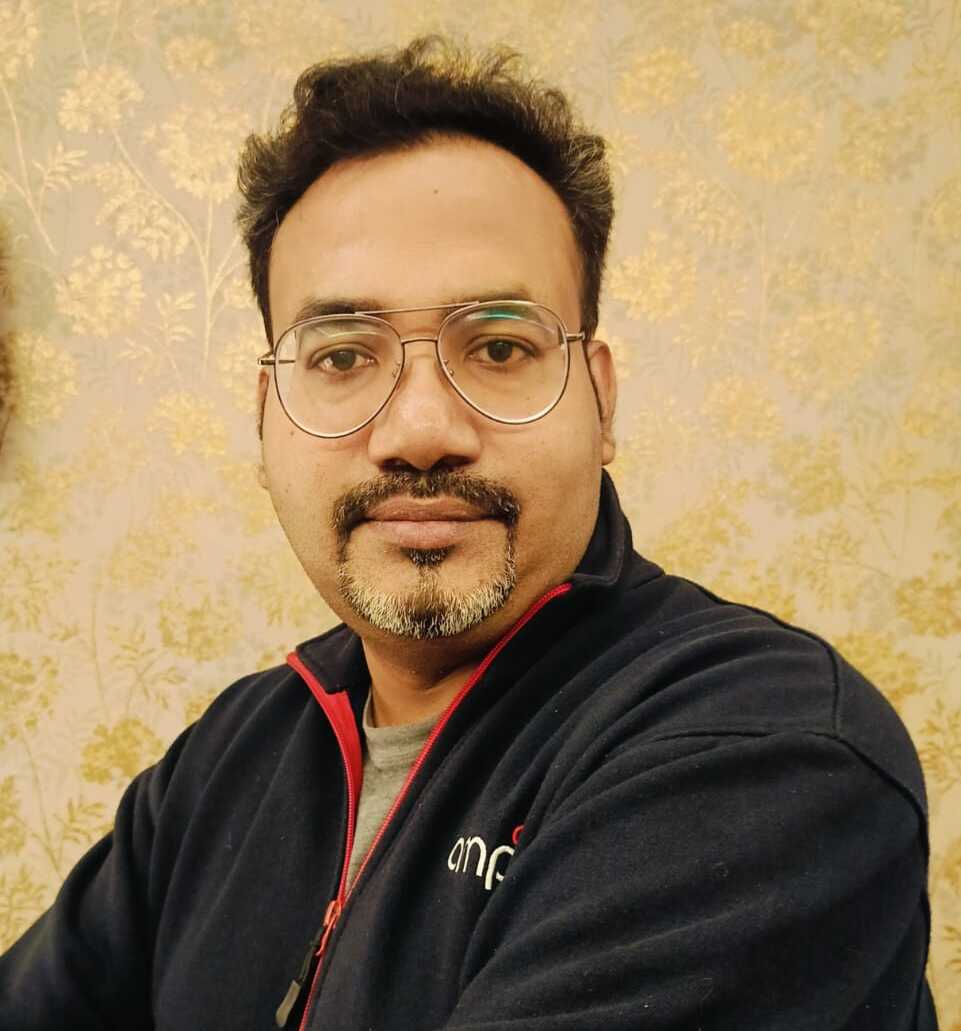
Tag: contract law

  • “Law wasn’t a detour, it was a logical conclusion of my evolution from being just a writer to being one who writes to ensure that justice is available to everyone in need of it.” – Siddharth Chandrashekhar, Sr. Panel Counsel CBIC/DRI & Standing Counsel CBDT, Bombay High Court.

    “Law wasn’t a detour, it was a logical conclusion of my evolution from being just a writer to being one who writes to ensure that justice is available to everyone in need of it.” – Siddharth Chandrashekhar, Sr. Panel Counsel CBIC/DRI & Standing Counsel CBDT, Bombay High Court.

    This interview has been published by Anshi Mudgal and The SuperLawyer Team
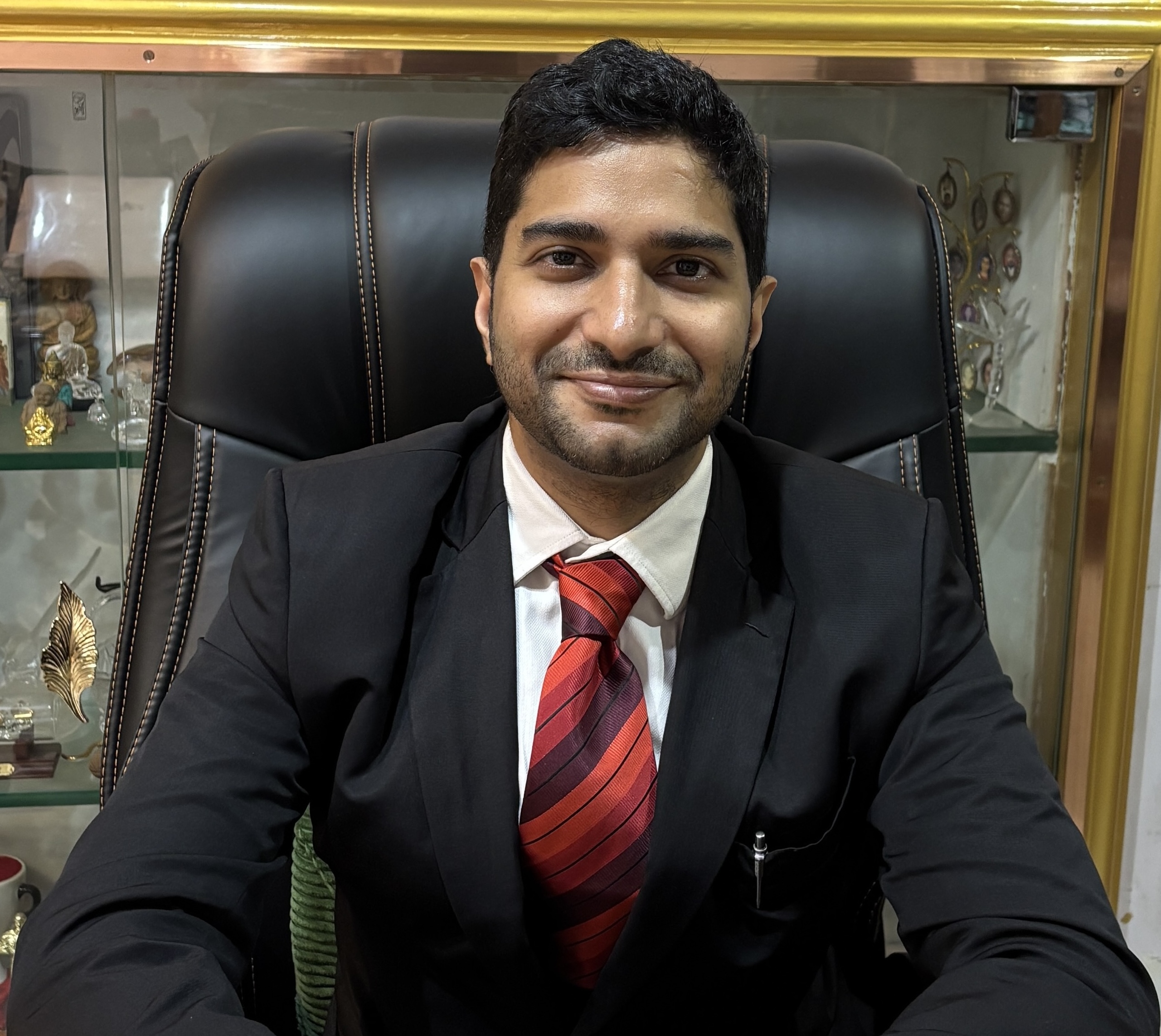
    What inspired you to pursue a career in law?  Was there a particular moment, influence, or personal experience that drew you to the legal profession? 

    Since the time I learned to read and write, I have been a voracious reader. This passion led me to a deep interest in literature, history & political science. Everything I could lay my hands on, from William Shakespeare to Edgar Allen Poe to George Orwell and William Wordsworth to Arthur Conan Doyle, Oscar Wilde & of course Haruki Murakami. I was fascinated by how stories shape society and I was certain that I would either end up as a journalist chasing and breaking news stories or a writer churning out books and articles.

    My family of lawyers, journalists and politicians encouraged me to develop my writing skills by reading.  Contrary to popular belief, being a second generation lawyer is not always easy. In fact, like in my case, the bar was already set high by the rest of my family, and I knew that nothing less than excellence would be acceptable should I decide to join the legal practice and forge a career in law. However, my first choice was to be a journalist. 

    But one day during the Diwali/Winter break in my final year of studying for my Bachelor’s degree in Arts as I had made no plans to spend time in recreation with my friends, I decided to attend a cross-examination being conducted by my Advocate aunt when I watched her meticulously extract the truth with surgical precision from a witness on the stand with. The next day I requested my father, who had a flourishing legal practice in civil disputes and trial courts, if I could intern with him for a week. He agreed on the condition that I had to work even harder and put in more hours that week than the rest of the interns and not look at the clock. The first day I sat with him while he painstakingly drafted and re-draft a legal notice meticulously with the skill of what I could barely fathom. We must have spent close to 16 hours that first day, and much to my surprise, I was back again the next day where we spent another 16 hours, and I kept my word, I was the first to arrive and the last to leave. At the end of that week, I made up my mind to pursue a career in law.

     Thus, Law wasn’t a detour, it was a logical conclusion of my evolution from being just a writer to being one who writes to ensure that justice is available to everyone in need of it. 

    What motivated you to pursue your master of laws degree (LL.M.) from Queen Mary University of London?  What aspects of the program & institution aligned with your academic and professional goals? What are your key takeaways & experiences from your time there ? 

    If the degree of Bachelor of Laws was the foundation for my legal practice , my Masters in Law at Queen Mary, University of London was what built the edifice  from which I could have a world view of international legal trends at and the ever widening scope that law provides to ensure a more equitable world. Out there I wasn’t analysing just the law in theory, but society and the way we function in relation to the law which gave me tools to further my learning. 

    Most of India’s statutes have either been drafted while we were a colony of the British or are based on laws in the U.K. In that sense Queen Mary offered me a historical mirror coupled with a modern lens, which made it ideal for my practice in Corporate & Commercial law. I chose Queen Mary because its LL.M. was famous for being both rigorous in theory and incredibly practical. It felt less like a classroom and more akin to partaking in real world legal scenarios. Three factors converged to create the perfect storm: In fact, prior to my LL.M. degree I had already been advising startups on Transactions, Litigation Avoidance advisory and Pre-Litigation when I realized that understanding international commercial law wasn’t optional anymore, it was the only means of raising India to the highest international standards.  Second, London’s position as a global financial hub meant access to case studies that textbooks simply cannot replicate. Third, QMUL’s University’s faculty included practitioners who wrote the rulebooks on disputes and dispute avoidance.

    My Master’s Degree in law laid an emphasis on comparative legal systems which proved invaluable to me now in my legal practice. Part of socialising and networking would regularly involve heated debates with faculty and peers which were our own version of the Oxford Union debates where we dissected existential legal conundrums faced in transactional agreements under Indian, English, American (Delaware), and Singapore laws. These were followed by a round of Hors d’oeuvres and drinks for which the lawyers who had failed to win the crowd would have to pay for it. The program’s real value wasn’t in the lecture halls but in the conversations that followed afterward. Late-night debates at the pub about whether certain aspects of media law really needed new legal frameworks, weekend trips with peers, faculty and chance encounters with renowned QCs & KCs. 

    These sessions taught me that Law isn’t just about a set of rules, it’s the art of predicting human behavior within social constraints. That became my mantra. Even my dissertation became the foundation for later advising several startups on their transactional and regulatory strategies. My London experience taught me that legal advice without commercial context is akin holding G.P.S. hardware with no connection to satellites and software, technically sophisticated, but practically useless. London offered something Mumbai could not at that time, proximity to the birthplace of commercial law and traditions that govern global transactions even today. London taught me two things: how to use the law with surgical precision and how to survive in a multi-cultural metro much akin to my own home city of Mumbai, with the only difference being that it wasn’t ‘Home’.  

    Queen Mary wasn’t just a campus; it was a court room without borders. I chose it for its emphasis on comparative commercial laws and of course, being in London, the commercial capital of the world was the icing on the cake. Every lecture was an eye opener to the world’s legal machinery and watching it in motion. We didn’t just study corporate and commercial law but we debated it with both present and future public policy influencers. It provided me with the opportunity to interact with vanguards and scholars of law and economic policy in our classrooms and campus. Of course, having such as alumni consists of stalwarts including India’s former RBI Governor Mr. Urjit Patel, Economist Pranoy Roy & Davidson Nicol, the former Under Secretary General of the United Nations makes it stand out even more.  

    Legal expertise without cultural fluency is like using complicated words with no proper context in an unrecognisable language. The LL.M. taught me to be multi-lingual in legal traditions essential for any lawyer serious about Start-up advisory in our globalized world.  

    In the early stages of your legal career, what experiences or matters significantly enhanced your understanding of the Law? Are there any pivotal moments that helped shape your professional trajectory? 

    If law school is your boot camp, then your initial few years of practice are akin to active combat duty. My father who was my mentor when I joined the profession has a saying: “Every mistake you make costs someone else money, time, or opportunity, so be extremely alert you may make new mistakes, but never repeat the old ones which you must use as a means of from your old ones which you must use as a means of enhancing your knowledge.”. Those words transformed how I approach every Start-up advisory engagement. 

    Every lawyer has that one case or a few early on in their career that serve as their trial by fire. Mine involved a tech Start-up whose founders had structured their equity like a Rom-Com love triangle, complicated, dramatic & destined for disaster. As we worked towards reconstituting the documentation, one thing was clear to me, ‘Startup Law’ (as people have labelled it) isn’t about preventing problems, it’s about creating efficient solutions for smart people who often make predictable mistakes. That client taught me three things: First, documentation matters, but context matters more. Second, the best legal advice often sounds like business advice. Third, sometimes the best service you can provide to a client is talking them out of their own cleverness. 

    Another pivotal moment came during my first due diligence exercise for a Series A round. Thirty hours into document review, I discovered a licensing agreement that could torpedo the entire deal. The lead investor later told me that I didn’t just save them money, I saved them from becoming a cautionary tale. My (Late) Grand-mother, who was a highly respected and loved State Legislator once told me: Good lawyers know the law; great lawyers understand the story behind the enactment of that law. That’s when I realized that due diligence isn’t treasure hunting; it’s about defusing land mines. These experiences of multiple successful people shaped my philosophy: Be the lawyer who prevents a crisis, not one who profits from it. 

    One of my first major transactions involved a then small scale e-commerce startup with revenue in different jurisdictions and compliance documentation in none of them. It was like being asked to perform surgery with a plastic knife. We spent several weeks creating the legal infrastructure for them which in fact should have existed from day one. One of its founders later said, ‘We thought that legal documentation was trivial until we realized it was life support.’  

    You advise & litigate for several major government bodies as a Senior Panel Counsel for the Directorate of Revenue Intelligence (DRI)/GST Intelligence & Central Board of Indirect Taxes (CBIC) as well as Standing Counsel for the Central Board of Direct Taxes (CBDT), & Maharashtra Housing & Area Development Board (MHADA)  AND  being a legal advisor to several Start-Ups in the tech & media space on the other how has working across such diverse institutions influenced your legal approach?  What have been some of the most challenging matters among them? 

    My experiences with government agencies and statutory bodies taught me to navigate bureaucracy not as an obstacle, but as a playing field where real business gets done. This perspective proves invaluable when guiding startups through regulatory approval processes. Of course, I have been blessed and privileged to have had the opportunity to work with some of the most intelligent, upright & hard-working officers right from the grass-roots level Inspectors & Superintendents to Legal Advisors/Officers from right at the top up to (Chief/Joint/Deputy)  Commissioners, A.D.G., Deputy & Joint Directors, so I have to give them credit where it’s due. If I have to sit and name them all that in itself would be a fairly long list.  

     Diversity proves invaluable for Start-up advisory work. When advising media houses or fintech companies, It’s not just about understanding MCA, RBI, SEBI, SWA regulations, It’s about deciphering the Regulatory and counter party mindset, the concerns that keep regulators awake at night, and how policy gets translated into practice. 

    That lesson now translates directly into how I work with startups and media houses. I cannot count the number of times boot strapped founders have met me and said “We don’t need the paperwork, it’s fine, we trust each other” only to reappear a few  months later realising that when disputes arise trust flies out of the window. My early career showed me that cross-checking every consent form, every signature, every assumption can mean the difference between smooth sailing and sinking fast. 

    Despite my LL.M. specialisation I never restricted myself to one particular area of practice, which is why I now am able to decipher matters ranging from Income Tax disputes, Customs act & GST related Writs, Appeals, Bail & Anticipatory Bail dealing with Tax Evasion, NDPS cases, Housing disputes & other laws. Working across government bodies is like playing five-dimensional chess with tax intelligence, urban planning, housing rights, anti-evasion laws being the pieces on the chess board. Each brief requires switching mental gear and watching details with varied legal lenses. I’ve argued tax evasion by breakfast and housing and society related issues in the second half. 

    Working with multiple statutory bodies is like being a legal anthropologist and a linguist, each institution has its own culture, priorities and rules, both written and unwritten. My empanelments read like a tour of some of India’s most fascinating legal statutes including The Black Money (Undisclosed Foreign Income & Assets) and Imposition of Tax Act, Finance Act & Income Tax Act under the CBDT, the Goods & Services Act, Customs Act & Narcotics & Psychotropic Substances (NDPS) Act under the CBIC & DRI and the Maharashtra Housing & Area Development Act, to name just a few. 

    Each case has been fascinating and just like fingerprints no two cases are alike but one of my most fascinating as well as challenging one has been a Writ Petition filed by one of the world’s largest manufacturers of automobiles having it’s parent company based in Germany who had sought to quash & set aside a $1.4 billion Show Cause Notice issued by the Office of the Commissioner of Customs based on investigations by the Directorate of Revenue Intelligence for wilful tax evasion  misclassifying imported car parts to avail lower import duties. In that case, I was led by the Learned Additional Solicitor General (ASG) of the Government of India who used to regularly fly down from New Delhi to argue the case. It was like solving a Rubik’s cube while being blindfolded where every move in one dimension affects others. That case taught me that regulatory strategy isn’t merely about simple compliance or the lack thereof with statutory provisions which may appear uncomplicated but a complex choreographed play involving multiple issues which ought to be viewed from multiple angles to get a holistic picture and arrive at what requires to be followed in practice. 

    Another case involved the challenge to an incorrect and manipulated technical opinion given by a multi-national consultancy firm to a multi-national South Korea based conglomerate who imported electronic equipment worth billions of dollars under a wrong entry based on the aforesaid technical opinion.  

    Yet another case involved a challenge to a pivotal aspect of tax administration which involved the transfer of a group of cases from one Assessing Officer (AO) to another and was crucial in ensuring the smooth functioning between two different state jurisdictions of the tax administration where the Assessee raised objections to the change in jurisdiction. 

    The diversity proves invaluable for startup advisory work. When advising Start-ups and individual entrepreneurs, I don’t just have to understand and simplify regulations I have to understand the regulatory mindset, the concerns that keep regulators awake at night, and understand how policy has to get translated into practice. 

    My government litigation experience taught me to navigate bureaucracy not as an obstacle, but as a playing field where real business gets done. This perspective proves invaluable when guiding Start-ups through regulatory approval processes. It has helped me to represent my private clients in their attempt to bridge the gap between legal theory and public policy reality. 

    Each role brought with it unique challenges, serving on regulatory panels involves balancing innovation with protection, investigating financial irregularities requires detective skills which they don’t teach you in law school, and where policy advisory work demands thinking beyond individual cases to systemic implications. 

    Yet another challenging matter pertained to a multi-agency investigation into a scandal involving small individual investors on the one hand and a group of companies, whose interests ranged from real estate development to cattle rearing to broadcasting services. Over three years, multiple stakeholders, and countless sleepless nights later, we crafted a resolution that protected investors while preserving innovation incentives. The experience taught me that public service isn’t about serving the law, it’s about serving justice through the law. 

    The experience of working with government bodies and statutory bodies transformed my startup advisory practice. I don’t just help companies comply with regulations; I help them understand the ‘why’ behind the rules. When founders grasp regulatory intent, they can work smoothly within set boundaries rather than riding rough shod over the set perimeters. These roles have made me lawyer, policy analyst & virtual entrepreneur. When advising CBIC on procedural lapses or individual entrepreneur clients, I often have to translate complex regulations into implementable steps. That cross-sectoral experience honed both my legal acumen and empathy to various causes. 

    You’ve actively participated in pro bono matters & causes varying from human rights to animal welfare, including filing public interest issues before the hon’ble Bombay High Court.   What drives you to take up such socially significant and often challenging cases?   In your view, what role should pro bono work play in a lawyer’s practice?   You’re also a legal advisor to Sanctuary Foundation and Fur-rida’s Animal and Rehabilitation Trust, NGOs dedicated to Animal Welfare & rehabilitation in Mumbai,  how do you balance both out? 

    Pro bono work, for me, began as a calling of my conscience. As a lawyer when you only litigate on behalf of  those who can afford it, you are not helping the cause of justice but only helping those who are already privileged. Pro bono work always reminds me why I became a lawyer: not to rake in the money, but to actively work towards changing our world for the better, using the opportunity to advocate for a better, fairer and more equitable society. Billed clients feed the body. Pro bono work feeds the soul. 

    But here, before I even begin to think of taking any personal credit I must mention that it was the elders in my family for instilling whose values instilled in me makes me give back to society. My Late grandfather, an industrialist paved the way by social and charitable work. My Late grandmother was a Mumbai City Legislator and later Maharashtra State Legislator from the 1990s to the early 2000s. My Late uncle, also a businessman, sacrificed his business interests to champion the causes of the common man and was well known as a vociferous advocate of causes who many felt were lost causes. Just the three of them were responsible for providing basic sanitation and piped water connections to lakhs of residents of informal settlements in underserved parts of (South) Mumbai and also later went on to build study centres and gymnasiums for the poorer class of citizens who could not afford these “luxuries” throughout (South) Mumbai.  

    I grew up watching my father put in the same dedication and hard work into his pro bono clients that he would into his millionaire clients and once (while I was very young) I asked him why he did this, he simply said, If I don’t, then who will? … and that rational question just stuck with me. My mother gave up a very promising career as a journalist to teach journalism, creative writing and conduct writing boot camps. My brother, now a high-profile Surgeon still spends days working pro bono and organising medical camps in rural Maharashtra where there is little to no expert medical facilities. Another uncle is a senior journalist who has covered some of the most ground breaking issues of the time, not stories about luxury but the ones that no one else dared to cover because he felt that someone had to take up such matters. Another aunt gave up her job as a Banker to teach children. 

    When the Covid-19 pandemic hit India people had to take recourse to the Covid vaccine as it appeared to be the only defence against it. However, some unscrupulous elements took advantage of the rush for the vaccine and started administering mere saline water and passing it off as the Covid Vaccine. When my aunt, and I heard of it we couldn’t ignore it. The idea that thousands of people were tricked into believing that they were being given the vaccine when in reality they were not, shook both of us. Our PIL on this issue wasn’t just about a legal remedy, it was about restoring public faith in the ability of the  law in dealing with such unscrupulous elements. 

    What continues to drive me is the belief that law must serve those who can least afford it. If startups look to me for guidance on shareholder rights, ordinary citizens need me for something far more basic: the right to life and health. In my view, pro bono isn’t charity, it’s oxygen for the soul. It reminds us why we became lawyers in the first place. As William Scott Downey had aptly put it, Law Without Justice is a Wound Without a Cure. 

     Pro bono litigation is not mere work without purpose in monetary terms, it’s about priceless work for those who cannot afford to pay to get good legal representation. I believe every lawyer who has crossed 10 or more years of practice must dedicate a part of their practice to Pro Bono Litigation. Otherwise, we risk becoming mere paper pushers and money making soulless machines instead of custodians of real justice. 

    Once I found myself in the thick of a case involving a teenage boy who died after being detained and allegedly tortured by the police whilst in their custody. The boy, barely 17 years old from Mumbai’s Dharavi slum district, was accused of stealing a mobile phone. After being released from “routine police detention” in July 2018, he complained to his parents and siblings of his torture by the police while in their custody. Soon after his release, he developed a fever, and his condition deteriorated rapidly, and he tragically passed away within a week. The post-mortem report mentioned pneumonia as the cause of his death. To everyone but his family, the case was as good as closed. The family’s grief was not just raw, it was distrustful of the very system that swore to protect them and it was absolutely justified in refusing to take their child’s body for his last rites for nearly two years until the High Court ordered a second post-mortem. For those two years, the body lay unclaimed in a morgue, almost frozen in time. But the law did not forget him and nor did I.  

    I wasn’t new to litigation then, but here I learned something every statute book misses: law isn’t just about sections and precedents; it’s about instilling trust in those for whom laws are enacted. The Hon’ble High Court’s order was a pivotal moment it showed me about the compassion and kindness of judges and it showed me that you don’t need to have the loudest voice to tilt the scales of justice in favour of the helpless and restore faith in the judiciary. It also sharpened my skills in due diligence because when you’re digging through contradictory medical reports and hospital records, you learn how to scrutinize details like an auditor hunting for hidden liabilities.  

    Taking on that case was not about earning any fees as it was completely pro bono, it was the weight of my conscience which guided me to do so. That case became my personal reminder that law is not always swift, but it is relentless. Sometimes you carry files that weigh more than law books they weigh with grief, suspicion, and silence. 

    Another matter that shaped my formative years was one that involved a medical negligence case where a woman contracted Hepatitis C after a hysterectomy at a famous South Bombay hospital. A team of surgeons and doctors, one operating theatre, and a chain of negligence right from the top, it was a puzzle of medical protocol and accountability. For a young lawyer, it was baptism by fire. I spent nights reading medical manuals, learning how a surgery should be conducted, and finding out with what went wrong. What it taught me is that the devil truly hides in the documentation. 

    Pro bono cases also tend to surprise you and throw you into the deep end, no fees, minimal support, high legal stakes for those involved. But they also teach you to think creatively and advocate fiercely. They’re a bootcamp for both skill and conscience.  Pro bono work teaches you humility: you are not always the smartest person in the room, sometimes you are the only person standing between injustice and justice. 

    Animal welfare law in India is like a crossword puzzle with half its clues missing. As advisor to Stranctuary Foundation and Fur-rida’s Animal Rehabilitation Trust, I have actively helped them get set up as well as look into internal policy and legal fine print. I’ve worked on matters involving animal cruelty, harassment from societies against members from using elevators or accessing common areas with their pets. These cases taught me that education is as vital as litigation. Sometimes, the law needs a lawyer often it needs an earnest storyteller. “Until one has loved an animal, a part of one’s soul remains unawakened.” – Anatole France 

    Pro bono work should be mandatory in every lawyer’s practice, not as a penance for making money, but as a training for making better decisions. Every PIL or Pro Bono Writ I advise on makes me a sharper commercial lawyer because it reminds me that law exists to serve, not the other way around. Plus, there’s practical value: Pro bono cases often involve cutting-edge legal questions that commercial clients pay premium rates to explore. It’s continuing education coupled with social service. My pro bono work began with the simple realization of the advice of my (Late) grandmother who told me: Corporate law pays your bills, but public service will reward you with a clear conscience and a good night’s sleep. When you spend your days crafting shareholder agreements and due diligence reports, you can lose sight of law’s fundamental purpose of protecting the vulnerable and ensuring fairness. Pro bono work keeps me honest. 

    Every time I review a startup’s employment policies, I remember the domestic workers whose rights I’ve advocated for. Every time I structure a complex transaction, I’m informed by cases where transparency could have prevented injustice. It’s enlightened self-interest: Better lawyers emerge from engaging with law’s moral dimensions, not just its commercial applications. 

    And oddly, these cases have made me sharper in my commercial practice. Start-ups come to me with messy equity structures, hidden liabilities, and co-founder disputes. I approach those files with the same rigor I did in the case of the boy’s family who allegedly died as a result  of custodial interrogation, digging until the truth emerges from a metaphorical mountain of dirt and stones which seek to hide it. Pro bono makes your professional muscle stronger, because when you stand against the State or against a famous hospital with unlimited resources and a legal team the size of a small army for free, a mere shareholder squabble doesn’t scare you. 

    Why take up pro bono cases? Because the power of the law is meaningless unless it reaches those who most need it. The directing of a second post-mortem after a teen’s death or holding doctors accountable for medical negligence are milestones for society and for any lawyer involved in pursuing such cases. 

    Looking ahead, what is your vision for the future of your legal practice? How do you see your personal journey evolving within the legal field? In a profession that is both demanding and dynamic, how do you maintain focus, purpose, and mindfulness?

    My future vision is to promote people to start building a hybrid practice where commercial matters fuel a strong public interest wing and not just something which has purely commercial motivation. Think of it as the Robin Hood model: charge the rich, fight for the voiceless. 

    The future belongs to lawyers who can speak three languages fluently: Law, business, and technology. I’m building a practice that serves as a bridge between these worlds, helping founders navigate not just current regulations but anticipate future ones. 

    As for purpose: I want my legacy to be measured not in my tangible assets, but in barriers removed, regulatory hurdles that no longer impede innovation because I found simple solutions, and compliance frameworks that enable rather than constrain entrepreneurial ambition. My goal isn’t to be the most famous lawyer or the richest one, it’s to be the one clients trust with their most important decisions because they know I’ll give them efficient solutions within the parameters of the law and not just some short sighted temporary balm for any problems that they could encounter. 

    The legal profession needs fewer disruptors and more steady ships. Staying focused requires principled pragmatism. When faced with ethical dilemmas, I ask not ‘What’s legally permissible?’ but ‘What would I want my family & friends  to be told about me as a lawyer and a human?’ This compass has never steered me wrong. I see myself evolving into policy advisory roles, where law meets legislation. I mentor young lawyers and young law students, and I hope to  use this to build a legal aid network where all of us endeavour to focus just 30% of our time and resources towards pro bono legal aid in india focussing on individual cases and causes ranging from human rights, prevention of  domestic violence and animal welfare cases.  

    My five-year vision: Become the first and last go-to legal strategist for Tech & Media Entrepreneurs and Start-ups tackling challenges such as: Intellectual Property Protection, Transfer & Monetization, Data Privacy & Compliance, Fund-raising & Investor relations, Content Liability & Platform Responsibility, Technology Contracts & Partnerships, Regulatory & Policy Navigation and the biggest & most common one being: Dispute Prevention & Legal Crisis Management.  These companies don’t need traditional lawyers; they need legal pioneers who can craft frameworks for technologies that don’t yet have regulatory precedents. Maintaining focus requires what I call ‘productive paranoia’ constantly asking ‘What could go wrong?’ not from anxiety, but from genuine curiosity. Mindfulness comes from remembering that every legal document I draft affects real people’s lives and dreams. 

    My endgame? To be feared by crooks, respected to be fair by counter-parties and of course, followed by puppies, especially the ones that have no place to call home. 

    Focus and mindfulness? I journal, I used to learn Salsa & Bachata, popular latin american dances, I also took up MMA and found that to be a great stress-buster, I spend time taking care of my dogs as well as feeding a few community dogs. I take breaks from the screen.  “The law is a jealous mistress, but she respects a loyal one.”   

    I have one rule which most of my clients are already aware of: if it’s urgent I’ll be drafting and doing research even if it’s 3am or a holiday, but if it doesn’t need urgent redressal I stop working by 9 pm. Balance isn’t a luxury, it’s how I keep the fire burning without burning out. 

    Based on your extensive experience across sectors, what advice would you offer to young lawyers just starting out in the profession? Are there any particular resources or habits you would recommend to help them build a strong foundation?

    Your law degree is just a learner’s license. The real exam begins in court. Try and read at least one interesting case law a day or at the very least. Argue (respectfully) with your peers. Your opponents and counter-parties are not your enemies. In litigation, your opponent is your adversary, but only inside the courtroom, they are your peers, your colleagues, your juniors and seniors outside the courtroom, treat them all with the same respect once your matter is over that you would want them to treat you with. 

    Even if you’re being appointed just for an adjournment, read the entire case, carefully, make sure if given the opportunity by the court, you answer correctly and confidently, most judges asking you about your case are providing you with an opportunity, they know they may lose time with a young lawyer, but they are trying to help you and not put you in a spot. 

    Your counter-parties are not your adversaries, you have a common goal, mutual co-operation and trust go a long way here, far longer than brow beating or one-upmanship.  Write even when no one’s reading. Don’t confuse over-confidence with Confidence. But humility is better. Young lawyers often worry about the wrong things. 

    Here’s what actually matters: Master the fundamentals before chasing specializations. You can’t advise on complex M&A structures if you don’t understand basic contract principles. It’s like trying to compose symphonies before learning scales. 

    Your first five years will feel like everyone’s speaking Latin while you’re struggling with the alphabets, that’s okay, read and re-read. The lawyers who succeed aren’t the smartest ones, they’re the ones who can admit ignorance, ask better questions, and turn feedback into improvement rather than taking it personally. Clients hire lawyers to solve problems, not to demonstrate legal knowledge. Be solution-oriented, not statute-oriented. 

    Stop thinking like a student who merely asks for answers and start thinking like a strategist who helps clients navigate ambiguous situations. Law school teaches you what the law says; practice teaches you what the law means. 

    In start-up advisory, I’ve learned that founders and investors speak different languages, even when using the same words. ‘Aggressive timeline’ means ‘next week’ to founders and ‘next quarter’ to VCs. A founder once wanted to structure their Series A with several different classes of shares: one for each team member’s ‘unique contribution.’ We simplified to three classes and closed the round in half the time. Then there was the time that Start Up wanted to grant equity to advisors before clarifying their intellectual property ownership. We sorted IP first, advisory agreements second. One recent challenging due diligence involved a company with operations in four countries, three legal entities, and legal documentation that looked like abstract art.  

    Good legal advice feels expensive until you need it, then it feels cheap. My approach is preventive medicine for businesses, identifying potential complications before they become complications. Whether it’s crafting founder agreements that anticipate future disputes, structuring employee equity plans that scale with growth, or creating compliance frameworks that evolve with regulation, the goal is always the same: Build legal infrastructure that enables business success rather than constraining it. Benjamin Franklin said, ‘An ounce of prevention is worth a pound of cure.’ In startup law, an hour of careful drafting can prevent months and sometimes years of expensive litigation. Don’t aim to be the smartest/richest lawyer. Aim to be the one your client calls first when they need a solution. 

    Four Non-Negotiable Principles: 

    1. Understand not just legal implications but business consequences. 
    2. Sometimes the best legal advice is telling clients what they don’t want to hear. 
    3. Your career will be defined not by the cases you win, but by the problems you prevent and the trust you build. Be the lawyer people call not just when they’re in trouble, but when they want to avoid trouble altogether. 
    4. The moment you think you know everything is the moment you become dangerous to yourself, as well as your clients. 

    Essential Habits: 

    1. Read everything thrice, once for content, once for implications, and once again for good measure.  
    2. Make time for one pro bono brief,  at least once a month. 
    3. When you aren’t reading, attend court like an obsession: watch, make notes, learn. 
    4. Kindness, not money, makes the world go round. Be Kind… Always, especially when you would not benefit. Be kind to those less fortunate than you, how you treat a clerk or a peon is a lot more telling of your character than how you behave in front of a Judge or a Senior Advocate.  Be kind to people, be kind to animals.
    5. You don’t have to be the biggest fish in the court-room or the negotiation table, remember piranhas bite more sharply (but remember, above all, Kindness) 

    Get in touch with Siddharth Chandrashekhar –

  • “In essence, global success in law is no longer reserved for the privileged few. With the right mindset, a commitment to growth, and the courage to take that first step, no matter how small, you can carve your own path.” – Medini Sourav Dutta, Regional Lead Legal at The Hershey Company, Malaysia.

    “In essence, global success in law is no longer reserved for the privileged few. With the right mindset, a commitment to growth, and the courage to take that first step, no matter how small, you can carve your own path.” – Medini Sourav Dutta, Regional Lead Legal at The Hershey Company, Malaysia.

    This interview has been published by Anshi Mudgal and The SuperLawyer Team

    Your journey from a remote village in India to a senior legal role in a century-old American multinational is incredibly inspiring. What early experiences or turning points played a pivotal role in developing your interest in Law in the first place?

    Growing up in a remote village in Assam, access to resources was limited, but the values instilled in me, resilience, curiosity, and a strong sense of justice, were profound. I vividly remember witnessing everyday challenges faced by people in my community, often due to a lack of awareness of their rights or access to legal support. These early observations sparked a deep interest in the mechanisms of justice and how the law could serve as a tool for empowerment.

    A pivotal moment came during my school years when I had the opportunity to assist a local teacher who was helping villagers draft and understand basic legal documents. That experience, though informal, was transformative. It opened my eyes to how meaningful an impact legal knowledge could have when applied with empathy and purpose.

    Later, during my university studies, I was drawn not just to the theory of law, but also to its application in real-world, cross-border business scenarios. This interest deepened as I began to understand the role legal professionals play in shaping not only individual outcomes but also the trajectory of entire organizations.

    Each step of the way, from the modest beginnings in my village to engaging with multinational teams across continents, has been driven by a belief that the law, when practiced with integrity and foresight, can be a powerful enabler of growth, fairness, and progress.

    Spanning over 15 years across industries like pharmaceuticals, IT, and manufacturing, your career reflects both depth and versatility. What foundational lessons from your early roles continue to guide your practice today?

    One of the most enduring lessons from my early roles is the importance of listening deeply and understanding the business context before offering legal advice. Early in my career, I realized that being technically sound in law is essential but not sufficient. To be truly effective, a legal professional must align legal strategy with business objectives and operational realities. This perspective has consistently guided my approach across industries.

    Another foundational lesson is the value of clarity and simplicity in communication. Whether I was supporting a pharmaceutical company on regulatory compliance or helping an IT firm scale its contract operations, I learned that demystifying legal complexity for non-legal stakeholders builds trust and accelerates decision-making. The ability to translate legal language into practical guidance is something I continue to emphasize and foster in the teams I lead.

    Lastly, adaptability has been a constant companion. Working across different geographies and regulatory frameworks, from India to the Americas, taught me to stay agile, culturally sensitive, and open to learning. The legal landscapes may differ, but the need for sound judgment, ethical integrity, and strategic foresight remains universal.

    These early principles, business empathy, clear communication, and adaptability, have become the cornerstones of my practice and continue to shape how I engage with stakeholders, lead teams, and deliver value in complex, evolving environments.

    At The Hershey Company, you’ve played a key role in ensuring compliance with corporate governance, legal obligations, and regulatory standards across regions including APAC and Europe. Could you share one of the most challenging situations you’ve encountered in this journey, and how you effectively navigate it?

    Thank you for the question. While I must respect the confidentiality obligations inherent to my current role and cannot discuss specific internal situations, I can share that navigating complex compliance challenges across diverse jurisdictions requires a combination of proactive stakeholder engagement, cross-functional collaboration, and adaptability to evolving regulations.

    In my experience, the key to effectively managing such challenges lies in fostering open communication with local experts, aligning legal strategies with business goals, and maintaining a flexible yet rigorous approach to compliance. This mindset has consistently enabled successful navigation of complex regulatory environments without compromising confidentiality.

    With extensive experience in negotiating high-value contracts, what common pitfalls have you observed in commercial negotiations and how can legal teams proactively avoid them in high-pressure environments?

    One of the most common pitfalls I have observed in high-value commercial negotiations is focusing too heavily on legal minutiae without fully understanding the commercial drivers and deal dynamics. While it’s crucial to safeguard the company’s legal interests, an overly rigid approach can alienate the counterparty or delay progress, especially in high-pressure environments where timing and agility are critical.

    Another frequent misstep is insufficient alignment between the legal team and internal business stakeholders before negotiations begin. When legal teams are brought in late or are not fully briefed on the business objectives and risk tolerance, negotiations can become reactive rather than strategic, leading to missed opportunities or poorly structured outcomes.

    To proactively avoid these pitfalls, I emphasize the following approaches:

    1. Early and continuous collaboration: Involving legal professionals at the outset of the deal cycle fosters a proactive, strategic approach rather than a reactive one. By gaining a deep understanding of the underlying business rationale, legal teams can craft solutions that not only mitigate risks but also actively facilitate and enable the successful execution of the deal.
    2. Scenario planning and fallback positions: In high-stakes negotiations, pressure can lead to rushed decisions. By preparing fallback positions and pre-approved negotiation levers in advance, legal teams can respond quickly without compromising on key risk parameters.
    3. Clear internal alignment on priorities: Before entering negotiations, I ensure that all internal stakeholders, from finance to operations, are aligned on what is negotiable and what is not. This clarity helps present a united front and prevents conflicting messages during the negotiation process.
    4. Balancing firmness with flexibility: Successful negotiations often require finding creative middle ground. Legal teams that are solution-oriented, commercially aware, and culturally attuned are far better positioned to achieve outcomes that are both compliant and commercially viable.

    Ultimately, effective negotiation is about understanding both the legal and human elements of the deal. By staying calm under pressure, communicating clearly, and staying focused on the end goal, legal teams can not only protect the business but also enhance its reputation as a trusted and pragmatic partner.

    Legal technology and process optimization are central to your work. What do you see as the biggest opportunities and challenges for legal departments embracing automation and AI in contract lifecycle management?

    The rise of automation and AI in contract lifecycle management presents an exciting opportunity for legal departments to transform from being reactive support functions to strategic enablers of business efficiency and growth. When implemented thoughtfully, legal technology can drastically reduce cycle times, improve compliance, and deliver actionable insights from contract data, turning legal operations into a source of competitive advantage.

    With AI-powered analytics, legal teams can extract trends from thousands of contracts, identifying risks, renegotiation triggers, or compliance gaps proactively. Automation also enables standardization and scalability, especially for high-volume, low-risk agreements, freeing up legal talent to focus on complex, strategic matters.

    However, the challenges are equally significant. One major hurdle is change management. Legal functions have traditionally been risk-averse, and shifting mindsets toward embracing technology can be slow. Without clear alignment between legal, IT, procurement, and business teams, implementation can become fragmented, resulting in poor adoption and underutilized platforms.

    Another challenge is balancing automation with judgment. AI can streamline workflows, but legal decision-making still requires human insight, especially in nuanced or high-stakes scenarios. Ensuring that automation enhances, rather than replaces, critical thinking is key.

    To navigate this journey successfully, I believe legal departments should focus on three core principles:

    • Start with process clarity and optimize before automating.
    • Select tools that integrate seamlessly into existing ecosystems and workflows.
    • Invest in capability building, ensuring teams are trained not just on how to use technology, but how to extract its full strategic value.

    Ultimately, the goal is not just to automate for efficiency but to elevate the role of legal as a proactive, tech-enabled partner in the business ecosystem.

    You’ve led teams and collaborated across functions globally. What leadership principles have stayed with you, especially when working with diverse legal and business stakeholders?

    Leading and collaborating across diverse legal and business teams, often spread across different geographies, cultures, and regulatory environments, has taught me that effective leadership is grounded in empathy, clarity, and trust.

    One principle that has consistently guided me is the importance of active listening and cultural sensitivity. In global environments, legal and business perspectives can vary significantly depending on local norms, risk perceptions, and market dynamics. Taking the time to understand those perspectives, before offering solutions, builds credibility and strengthens collaboration.

    I also believe in leading with clarity of purpose. Whether I’m guiding a legal team or partnering with cross-functional stakeholders, I strive to clearly communicate goals, expectations, and the rationale behind key decisions. In complex projects, especially those involving regulatory or commercial risk, clarity helps align efforts and fosters collective ownership.

    Another key principle is empowerment through trust. I have found that giving people the space to take ownership while being available as a sounding board, creates stronger, more resilient teams. It is especially important when managing legal functions across time zones, where micromanagement is not only ineffective but also unsustainable.

    Finally, I try to lead by example, particularly when it comes to integrity and accountability. In legal roles, your credibility often precedes you. Being consistent, dependable, and fair, even under pressure, helps build long-term trust across both legal and business communities.

    In essence, leadership in a global legal context isn’t just about directing, it is about connecting, aligning diverse perspectives toward common objectives, and doing so with authenticity, respect, and strategic foresight.

    Your early exposure to litigation and dispute resolution must have provided valuable perspective. How did you decide to transition to an international practice and how did you navigate the complexities involved with it?

    My early exposure to litigation and dispute resolution gave me a solid ground in the fundamentals of legal analysis, advocacy, and risk assessment. Working on contentious matters in the Indian legal system taught me to think critically, anticipate challenges, and understand the nuances of courtroom dynamics, all of which are invaluable skills, even outside the litigation context.

    However, over time, I became increasingly drawn to the preventive and strategic side of legal practice, particularly how legal frameworks could be leveraged to support business growth, mitigate risk before it materializes, and enable long-term value creation. I saw international practice as a natural evolution of this interest. It offered the opportunity to work across jurisdictions, partner closely with business leaders, and help organizations navigate regulatory complexity on a global scale.

    The transition wasn’t without challenges. Moving from a litigation-focused role to an in-house, cross-border environment required me to reorient my mindset from issue resolution to issue prevention, and from adversarial negotiation to collaborative problem-solving. I invested significant time in understanding international legal systems, both common law and civil law traditions, as well as gaining fluency in business operations and corporate governance.

    One of the most effective ways I navigated this shift was by embracing continuous learning and remaining adaptable. I took on roles that expanded my exposure to multinational operations, built relationships with colleagues across functions and cultures, and sought mentors who had successfully made similar transitions.

    In hindsight, my litigation experience gave me a strong foundation in legal rigor and risk management, while my move into international practice allowed me to broaden my impact, helping businesses not just survive legal hurdles, but thrive through strategic legal support.

    Having worked across both common and civil law systems, what key differences do you notice in legal operations, and how do you keep up with the ever changing dimensions of legal compliances across jurisdictions?

    Working across both common and civil law systems has deepened my appreciation for the diversity in legal reasoning, procedural approaches, and the role of precedent in shaping legal outcomes. In common law systems, there is a strong reliance on case law and judicial interpretation, which demands a nuanced understanding of precedent and how it evolves over time. In contrast, civil law systems are more codified and statute-driven, requiring a close reading of the legislative framework and its administrative interpretations.

    From an operational standpoint, these differences manifest in contract drafting styles, dispute resolution mechanisms, and compliance expectations. For instance, civil law jurisdictions may favor more concise contracts that rely on statutory provisions, whereas common law jurisdictions often require more detailed, self-contained agreements. Similarly, the pace and approach to regulatory enforcement can vary widely. What is standard in one jurisdiction may be seen as intrusive or inadequate in another.

    To manage these complexities, I take a proactive, layered approach to legal compliance:

    • Local Expertise: I collaborate closely with local counsel and regional experts to stay aligned with jurisdiction-specific interpretations and enforcement trends. This ensures that our global strategies are grounded in local realities.
    • Knowledge Sharing and Internal Training: I prioritize creating internal awareness through cross-functional training, compliance toolkits, and internal policy updates, making sure legal and business teams are equipped to operate responsibly across borders.
    • Regulatory Monitoring and Strategic Technology Use: I leverage legal tech solutions and regulatory intelligence platforms to track evolving legal landscapes, particularly in areas like data privacy, ESG, and trade compliance, where change is rapid and multidimensional.
    • Harmonization with Flexibility: Wherever possible, I advocate for harmonized global processes that can be tailored for local adaptation. This allows for consistency in core legal and compliance principles while respecting jurisdictional nuances.

    Ultimately, navigating these varied legal systems requires not only technical knowledge, but also cultural sensitivity, open communication, and a commitment to continuous learning. It is this blend of structure and adaptability that allows legal operations to remain effective and compliant in a constantly shifting global environment.

    What advice would you offer to young legal professionals particularly those from non-metropolitan backgrounds aspiring to make a mark globally? And how do you personally stay ahead in this ever-evolving legal ecosystem?

    To young legal professionals, particularly those from non-metropolitan or modest backgrounds, I want to say that your origin does not define your destination. What matters most is your willingness to learn, your resilience in the face of challenges, and your ability to adapt. I come from a remote village in Assam, and I understand firsthand the barriers, both visible and invisible, that can make global aspirations seem out of reach. But those very roots can also be your greatest strength. They teach you humility, grit, and the power of persistence.

    My advice is to focus on building a strong foundation in both legal knowledge and practical skills. Be curious, ask questions, and don’t shy away from stepping outside your comfort zone. Seek mentors, even if informally, and be open to feedback. Language, geography, or access may feel like limitations initially, but with consistency, self-discipline, and digital access to global knowledge, those gaps can be closed.

    Also, understand that legal excellence today goes beyond black-letter law. Develop a commercial mindset, be tech-aware, and build cultural fluency. In a globalized legal ecosystem, your ability to collaborate across time zones, cultures, and functions is just as critical as your ability to interpret a statute.

    As for how I stay ahead in this evolving field, it is a combination of continuous learning, strategic networking, and hands-on collaboration. I make it a point to stay informed through industry publications, legal tech forums, and cross-functional discussions. I also learn immensely from mentoring others which offers fresh perspectives and keeps me grounded.

    In essence, global success in law is no longer reserved for the privileged few. With the right mindset, a commitment to growth, and the courage to take that first step, no matter how small, you can carve your own path.

    Get in touch with Medini Sourav Dutta –

  • Curiosity Is My Superpower: From Art Aspirations to Global Legal Leadership – Aakritee Tiwari, Head of Legal & Compliance at VeeOne, Sweden.

    Curiosity Is My Superpower: From Art Aspirations to Global Legal Leadership – Aakritee Tiwari, Head of Legal & Compliance at VeeOne, Sweden.

    This interview has been published by Anshi Mudgal and The SuperLawyer Team

    You have more than nine years of experience, including civil and common law jurisdictions. Would you be comfortable sharing the kind of initial reason for your interest in law as well as any particular event or any kind of maybe realization that guided you through this whole process in order to make sure that you have the better career, and as you are leading the legal front of an Emerging Institution in Sweden, being one of the first Indian woman over there, please do share it with our audience who are new learners, new entrants for law?

    My father was the one who encouraged me to consider law as a career as opposed to what I actually wanted.
    So I wanted to be an artist. I am a very creative person, and through my childhood and when I was in school, I participated in every art competition. I participated in slogan writing competitions in Delhi. Also represented my school at the national level. Won a lot of awards. So by the time I reached class 10, I realized that art is my calling.

    This is what I do best. And then came that moment which really paved my journey to law. So, one evening, me and my family were having dinner, sitting at the dining table, and my father asked me, so what do you plan to do after school? And my instant excited reply was, I want to be an artist.

    So he is a chartered accountant. He has his own firm. And he said, okay, do you have a plan B? Because getting into an art university is also very difficult. I said, I don’t really have a plan B, to which he said, what do you think about law as a career? And I was listening. So he said, see, as an artist, it would take you some time till you can build yourself after university and you can start earning, which was actually true.

    And then he said that, imagine, what if you study law—how much better your art would be sold if you are a lawyer and also an artist? And that, for me, was a brilliant idea. So from class 10th to 12th, I started preparing for both the art university and the law university, and I realized over the period of preparation I have developed an increasing interest in law because I realized that in art you have to be creative.

    You have to have a vision, which you would make into reality. Then you perceive some things, and then you align it with your vision, and then you paint. And that is the same in law. Now, when I look back, I see that, okay, I pull out a Word document, draft a legal document.

    Then if that document is a contract, for example, then that contract would be negotiated. Then that contract would be signed. Then that contract would have an expiry date, we would renew it. So I am building a relationship. I am bringing into existence something which was just an idea first. So. I entered the university in 2007, graduated 2012, and proudly became the first lawyer of my family.

    Thank you for sharing that particular story. After this, you also did your masters in business in corporate law. What was the motivation behind that particular specialization and how has that particular understanding of business and corporate law doing your masters helped you make your career trajectory reach to the point where you wanted or as you planned?

    So I gained working experience before I decided I wanted to pursue masters, and in my university, we were encouraged to do an internship every semester. So by the time I had finished university, I had a couple of internships with law firms like Amarchand, Jyoti Sagar.

    And then when I started working. Again, I had an experience. So while having this experience, I could really assess, analyze, understand what is my area of strength, where do my interests really go, and what is my passion? So I realized, looking back at my experience, that I decided to pursue my masters in 2015.

    So these years, I realized my area has always been business and corporate law. That is how I decided, okay, this is the masters that I want to pursue. Now because I pursued masters in business and corporate law, and one of our subjects was international business, that really helped me set the foundation of what I will be doing in the future.

    So I developed curiosity and interest towards cross-border transactions, conflict management, and assessing the different legal landscapes. How do you set up companies in a country which is not your area of expertise? Those questions really made me think, read more, and that became my passion.

    So I would say passion and curiosity led me to where I am now.

    While doing all of these things related to business and corporate law, you have also worked with prominent companies. How has working or maybe doing internships or doing a job, paved your way for international legal practice, what were the preparations or the kind of thought process you have had in order to make sure that you transition from national to international practice?

    Like I said, curiosity. I think curiosity is my superpower.
    I realized that because I was curious—reading, meeting professionals, going to events—that really helped me deepen my understanding of law, and prepared me for international practice. So what happens when I encounter something unfamiliar? Because I’m a curious person, it would compel me to read more, reach out to people who have done a similar thing, or if there is a case law that talks about a similar situation, or if there is a post which talks about a similar legal issue, but that legal issue happened in a different jurisdiction.

    And if I already know something, my curiosity pushes me to observe fellow lawyers—how did they approach this subject matter? How did they approach this issue? And then it helps me to refine my understanding, my expertise, and that really helps me to improve continuously.

    Since you said that curiosity is your superpower, what made you transition from national, especially India to Dubai and then to Sweden? And the kind of changes that you saw in all these jurisdictions, how did that help you actually reach your love I would say for business and corporate law? And what kind of practice did you do that you actually got what you wanted? So how did you do that and what are your suggestions for the same?

    When I was in India and I was working with Ansal Housing, I got this opportunity of working on an international arbitration. And now if I reflect back, I think I was put in that project because of my curiosity, because I’m very enthusiastic and I would really love to put in an extra hour if it is something that I don’t really know.

    So that experience of working on an international arbitration, combined with my experience and my study of international business law, made me realize that I am ready to step out of my comfort zone, which is India. And I realized that if I want to work on cross-border transactions, work with international clients, and be ready to negotiate deals which are happening in an international sphere, I need to be outside. And I still remember I had a conversation with my then manager, who is the General Counsel of Ansal Housing—an amazing mentor and a wonderful manager—and it was he who really said that:

    See, if you go and if you don’t like it, you can always come back, but if you don’t, you wouldn’t really know what your potential is. And I think that was the best mentorship advice he could have given me. So I found this opportunity at a law firm in Dubai, and I moved to Dubai. It was very scary, because I was moving abroad for the first time.

    I was always being taken care of in India, but now I am taking care of myself. And it is a very international space. So the work culture is like that. And the expectation from you as a lawyer is different. So I was working in this law firm. We were a batch of international lawyers working together on international issues.

    And every new client that we had in the law firm was from a different jurisdiction. So that really put me in a position where I, of course, had to know the law of India because that is where I’m coming from, and it is expected that I can advise on Indian laws. But I was expected to work on an issue with a client who is from Australia, and he wants to set up a company in Dubai. Or a transactioning, a partnership happening with a cement manufacturing company from China who wants to set up the manufacturing company in Spain. So you would understand the nuances of both these jurisdictions. So I realized that experience and that ease of moving from one jurisdiction to another really helped me globally connect, helped me easily move from one jurisdiction to another, and it no longer was a challenge.

    Then when I moved to Sweden, it was very different from how it was in Dubai, because now I became a wife, also a mother, and I was in a country in which the first language is Swedish. So then my third language became Swedish. So Hindi, English, and then Swedish. So I realized that now I need to deepen my understanding of the local laws and also the EU laws, because in every European country you would first look at the local laws and then you would look at the EU law if there is any precedent or if there is a law that reflects on the legal issue that you’re working on.

    So that is what Sweden gave me—helped me deepen my understanding of local and European laws, and I would say this path or this journey I was on, what really helped me was strategic thinking, being committed to the goal that I set for myself, adaptability, and lots and lots of hard work.

    The reason why I say hard work is that there is so much pre-work that I have to do, or any lawyer who moves from a different country to a new country has to do, which may or may not be directly proportional to the role that you would be performing. For example, if you’re moving to a European country or a non-English-speaking country, you would have to learn the language.

    And then you would have to understand the working culture in that country, because that is also very different. Like leadership style—what I saw, leadership style in India, in Dubai, and in Stockholm, Sweden is very different. So you need to understand the cultural nuances. So navigating those cultural and regulatory differences was a crucial aspect of having an international career, I would say. Then maintaining a strong network of local lawyers. So I didn’t forget my roots. I still am connected with Indian lawyers who are experts, so I can reach out to them on knowing what is happening. So, just a week back, my manager, who is the CEO, was asking what is the impact of the tariffs that the US is making now in India?

    So had I not read that, I wouldn’t know that. Had I not been connected with my local friends, I wouldn’t know how it is impacting. So these small skills really bridge—or really helped me bridge—the international legal career. One tip that I would like to give to a student who wants to pursue an international legal career, or a person who’s already working,

    He wants to move abroad: Have a strong network of professionals, and have a strong network of local lawyers who you can reach out to for advice, who you can reach out to reassess your thoughts, your analysis on a legal issue. Having a group of professionals who you can trust is a game changer if you are moving abroad or if you want to have a global legal career.

    After relocating to Sweden, you took maternity leave as well, how did you make yourself return to the workforce without the so-called guilt that we always have as working moms?

    Second, how did you continue your professional development during the time when you were not there practicing? What were the strategies? How did you connect with the industry? Like you said, we need to be connected with not only good lawyers, but local lawyers as well, who can give you the nuances and the kind of update that you need. So how does that work for you? And during that time, how did you make sure that you don’t lose that particular connect? 

    I never truly stepped out of the legal field. I was very focused, and I always knew that I want to continue being a lawyer.

    I want to continue my legal profession. And I would say, when you move abroad, it’s a great opportunity to reassess whether you want to have the same career or you want to maybe branch out to something different. For me, you know, it is law, it has been law, it is law. So I knew, okay, after resuming my career after maternity leave, it would be law.

    So, I had that in mind, and I had the preparation ready. So for me, maternity leave—which we over here call parental leave—was actually not a break, it was a form of professional growth. I looked at the break as a time to invest in myself, to refine my skills, and to actually prepare for the biggest and the most difficult role, which is of being a parent.

    And I was being a twin mother, which is, let me tell you, it’s a full-time job. You are a parent yourself, you know it’s challenging. So during the parental leave time, and also because I was moving to Sweden, I took the time to familiarize myself with the culture, the education system, understanding the local laws and understanding the regulations.

    Then I actively also followed the domestic developments, which are the developments that are happening in India and in Dubai. Because if I say that I’m an international lawyer and I have worked in India and Dubai, the expectation is that I know what is happening in the industry. So it comes with a lot of responsibility.

    So I kept myself updated. Then it was my time to again assess my skills, identify my area of growth, because now I would be stepping into a new jurisdiction. So I stayed focused, connected with my friends who are based in India, who are working in-house and also practicing as lawyers.

    I followed—I still follow—professionals on LinkedIn who talk about leadership, who talk about the changes that are happening in the industry. I read newsletters. I love reading. I read a lot. I enrolled myself in the Swedish language course.

    So this continuous preparation for what I want to do once I resume my career really helped me to stay confident of my skills and also to bring a very fresh perspective to the role that I would be doing. Staying focused, committed to law, my passion for reading.

    Then my curiosity of knowing—so a very small example I’ll give you, like in India, we remove our shoes outside and then we would step into the house. It’s the same in Sweden. So understanding these similarities and, like for us in India, the tea culture is something that brings two people together.

    So if you want to call somebody home, you would call for tea. And in Sweden, you would call them for coffee. And there is a culture called Fika. So it is—you have to be mindful of taking breaks, and those breaks are about you sitting with your colleague or you sitting with your friends, unwinding and connecting.

    So my curiosity led me to learn so many new things. So I already felt that I am at home. I know what the culture is about. I fairly understand the language. So I was ready. I was ready for the next step.

    I think that is what is needed for everyone and probably that has brought you being the head of legal and compliance at VeeOne AB. What kind of primary factors were there? You already have said a lot about your commitment to your reading, to your learning culture. How did you foresee the kind of role that you were going forward for? In particular, it is a totally technology driven industry. So what kind of new learnings did you do while you were transitioning towards being the head of this number one company over there?

    Preparation is the key in anything that we do in our life. This role was a little different because this industry was new to me. So VeeOne is a company in crew planning.
    My focus on legal compliance stemmed from the fact that to have a strong foundation, you need to have a robust regulatory framework. The role of legal and compliance has evolved and I would say has become complex. Earlier, it was very traditional—even for a lawyer, it was traditional.

    Either you are in a law firm, or you are in a court, or you are in a company. Now, when there are other factors, like AI, there is data privacy, there are regulatory landscapes that really come into play, and that makes the environment more complex and dynamic.

    So I foresee that to perform well in this role, I need to shift my approach from being reactive to be proactive. So there has to be a shift in strategy where there has to be a risk analysis done even before the risk can or may or may not occur. So, we in VeeOne, we try to integrate compliance with innovation or new ideas so we can mitigate the risk.

    And I think that is what a lot of companies are also trying to do to have a competitive advantage in the global market.

    While you are doing all of this, you also read a lot. First I would like to ask, how do you carve out that much time with being a full-time mother to twins, then working your way up in your organization, being the head you are the most responsible one. So what kind of books do you read to keep yourself inspired to shape your perspective?

    Like you said, you follow newsletters also of leadership styles and others. How do you connect all that with your legal understanding and implement it in your career? For the new aspirants or the graduates who are coming up, if they want to pursue a similar kind or maybe the same pathway. So what would be your suggestion? The kind of journals that they should read or they should go through, the kind of books, resources that you may recommend and to build the kind of mindset of always being prepared as yours. What guidance would you like to give them?

     First, I would say, and this could be controversial, that reading that you do during work is not something I would say is reading.

    Reading is something that you do outside of your work. If you are doing reading during your work, that is to accomplish a task or to work on a project or to expand your knowledge on the issue that is at hand. Reading that you do outside of your work is reading that would grow you as a person, grow you as a professional.

    So that being said, when I say reading, it is outside my work. For me, mostly it has been biographies. And I am more inclined towards nonfiction. I have tried reading fiction, but I again gravitate towards nonfiction. So it’s not that I haven’t tried—I’ve tried. So biographies that have really shaped my perspective on life and also on the legal field have been of Nani Palkhivala, J.R.D. Tata.

    And very recently I read this biography of Haben Girma. Must read! A beautiful book. She is the first American disability rights advocate. She is the first blind person to graduate from Harvard Law School, and the work that she is doing for the disability community is amazing. So that is on the biography part.

    Somebody who wants to start reading, hasn’t read before but wants to have that habit—I would suggest a book called Creativity by John Cleese, a very thin book, a very quick read. It talks about how creativity is not something you are born with; it is a skill that you can develop. What makes the book really interesting is that John Cleese is a lawyer.

    He went to Cambridge to study law. Eventually he became a comedian, and he’s a very popular comedian. So that is something that I would suggest to somebody who’s wanting to read, planning to read, has little time, but still wants to get into the habit of reading or come back to reading. Since the role of a lawyer has transformed—from at least when I graduated, it was still very traditional.

    Now it has transformed to beyond the traditional lawyer, which is either you are in litigation or you are giving legal advice. I think creativity is now a skill that can help us as professionals, as legal professionals, be ahead of AI. Because there could be possibilities when, for example—a very small example—review of contracts.

    If you are very, very good at contracts, there are extremely good contract management platforms, contract review platforms, which can review a contract for you—maybe better than what we can do, quicker than what we can do. So if you want to stay ahead of AI as a professional, creativity is the skill that is a must.

    And I would generalize your question when you said somebody who wants to have a legal career. I would say cultivating a hobby. And that hobby should be consistent—something that you would like to do every day. It could be running, it could be reading, it could be swimming, it could be vlogging.

    Having a personal passion outside of work will help you contribute to your life—your personal life—and to your professional life in a wonderful way. And your journey as a professional would be very fulfilling, because there are days as a professional, especially as a lawyer, some days are very tense.

    Some days are not that tense. So you really need help when those days are tense. So I would say having a consistent hobby.

    Then the second most important thing would be finding a mentor. Having a mentor is extremely important. That is how you can have continuous growth, which is required if you are in this profession. For me, I have been very fortunate that I have had amazing mentors throughout my career.
    Always have a mentor. I would say you are never too expert to not have a mentor.

    Then the books that I am reading right now. I usually read two books—one is mostly legal and the other is mostly related to non-legal. The first book is Range by David Epstein. The author talks about how individuals who explore multiple disciplines—that really helps you have a broad skill set. So you would have multiple tools, and then you can really narrow down those expertise to one thing that you would really like to do. So I would say the sum of the book is that sampling is the key to success.

    And now if I look back—for me, also because of my internships, because of my experiences—when I decided that I wanted to pursue masters in business and corporate law, I had done my sampling.

    So I had worked with NPOs, I had worked with judges, I had worked with senior lawyers. I did my sampling. I realized, yes, this is what I want to do. And this is my area of interest.

    Then the second interesting book that I’m reading—and thanks to my current manager, the CEO of my company, he recommended that book. That book is called Getting to We: Negotiating Agreements as Highly Collaborative Relationships. So this book is written by a university professor and two lawyers. One of the lawyers is a Swedish lawyer. So the book tells a five-step process to create a collaborative agreement.

    And this was very interesting to me because for me, as a lawyer who is drafting back in India or back in Dubai, I would look only at my liabilities, only at my governing law, only at what impacts me. But the book really shifts the focus from the relationship or the approach being transactional to a strategic partnership. And now when I draft a contract, it is a very different approach.

    So if I’m drafting a contract, I would look at the contract or the document from a we perspective, because it is a partnership at the end of the day. It could be an employment agreement, service agreement, partnership agreement. If I only focus on my liabilities, if I only focus on my governing law, if it is very unilateral—first, I would have a challenge when negotiating the contract, there would be red lines everywhere.

    Then it would take me a lot more time to negotiate the contract because it is very unilateral. So that book really shifts the mindset and says that to have a collaborative relationship, the agreement should also be collaborative. So if there is somebody who really likes drafting contracts, or says that they’re an expert in contracts, or would like to work on contracts, I would recommend this book.

    Thank you for sharing that. I won’t ask how you balance work and life, but rather how do you plan your day? As a mother to twins, your planning must be very intentional. Personally, I’d love to learn how you manage everything without compromising your personal or professional life, especially when your children need you so much. How do you ensure there’s enough time for work, family, and still carve out personal space for yourself for reading, relaxing, and recharging that superpower of curiosity that keeps you moving forward?

    You gave out the keyword, which is planning. I would put a prefix, which is strategic planning.
    So first, it is strategic planning. Then, because both of us are working, both of us have a very demanding schedule—managing our time, managing our schedule—that is what we do. So generally, our day would look like: the twins are off to school, and I am at work, my husband is at work.

    We would come home, and some days after work, I would go to an event, I would meet friends. And if I’m not doing that, I would come home, then it would be cooking together. Over here, it’s all about involving the child, no matter how small that child is. So it would be cooking with them, and we have created a habit of asking, How was your day?

    So as soon as I step in the house, they would ask me, How was your day? I would ask them, How was your day? After having the meal, we would watch TV, and that is, I think, something that I realized is great because we switched on TV for them when they were very young, and the TV is always on.

    So now for them, TV is furniture. It’s not TV. So even if the TV is on, they would not necessarily want to watch the TV. They would want to play or they would want to paint or they want to color. So TV is always on in the background, and that actually helps us to build their language. Because in the school they go to a Swedish preschool.

    On the TV we have English programs, and we speak with them in Hindi. So they’re always listening, and we are doing these activities together, which is either watching the TV or coloring or cooking. And then once the twins have slept, it is either my time with my husband—we would either watch something or I would read.

    So that is what our schedule looks like. I make sure that I invest time with my friends, with my husband, I attend events, I mentor in Sweden also.

    I have two mentees right now, giving time to them, upskilling myself—which is through reading that would directly relate to me. But also, I have to read about how I can be a better mentor, or if my mentee has some questions and I don’t know about them, so I need to prepare myself. Then it is parenting.

    We were talking about parenting—the most crucial role. So, there is a lot of reading about what activities can we give the twins, how can we keep them engaged? If they have a question, what should be the right answer for that question? So I think if I know, okay, the task that I have for me in a day—and you gave me the keyword, which is planning. 

    So I do strategic planning. That is how we plan, I would say.

    Get in touch with Aakritee Tiwari –

  • “To transition into media and technology law, one should start by building a strong foundation in contract and intellectual property law, especially copyright and licensing.” – Diwakar Abhishek, Legal Counsel at Swastik Productions Private Limited, Mumbai.

    “To transition into media and technology law, one should start by building a strong foundation in contract and intellectual property law, especially copyright and licensing.” – Diwakar Abhishek, Legal Counsel at Swastik Productions Private Limited, Mumbai.

    This interview has been published by Anshi Mudgal and The SuperLawyer Team

    What initially drew you to the legal profession, and how did your academic journey shape your early interest in media, entertainment, and technology laws?

    To be honest, I initially became a lawyer almost by elimination! Like many in my region, engineering was presented as the ‘obvious’ path. While I knew it wasn’t for me, law wasn’t a generational profession in my family, which led to some initial resistance. However, I was eventually drawn to the legal field’s potential to shape society and advocate for others.

    My early interest in criminal law was more out of curiosity for the drama, but it was the MCU and similar movies that unexpectedly sparked my fascination with IPR. I was intrigued by how these films showcased the immense value of creative works, the complex web of ownership and licensing, and how legal frameworks protect and enable the entire entertainment industry. It was a whole new world! 

    Did I pursue it right in the beginning – the answer is NO! My first job was purely out of need and financial constraints, I grabbed the job that demonstrated security, and paid fine. Then the second and the third; none gave me ample satisfaction.

    Even though this interest in IPR grew within me sub-consciously but persistently, for almost a decade, it took me some time to really gather courage to pursue it. The world of media and entertainment law seemed very specialized and competitive, and I wasn’t sure how to break in. Interviewing with studios and specialized law firms in media practices resulted in disappointment. 

    The pandemic of 2020, in a way, provided the space to seriously reflect and take that leap, when I jumped from the ship, in unchartered waters (for myself). I took the time to build a solid foundation in media law while continuing to explore opportunities. 

    Looking back, I’m grateful for that journey. The initial resistance from my family has turned into immense support, and I’ve found a truly rewarding path in a dynamic field. Learning from all previous jobs has equipped me to face challenges. For any young lawyer unsure of their path, I’d say embrace the unexpected, explore your passions, and don’t be afraid to carve out your own niche. Your unique background and interests can become your greatest strengths.

    Looking back at your first role, how did your experience in legal project management and forensic investigations lay the foundation for your future work in corporate and media law?

    My initial role in digital forensics, or e-Discovery, might seem far removed from media law, but it provided an invaluable foundation. This role involved analyzing the communications of top-level executives (like CEOs and CFOs) at major global companies. Reading their emails, strategic plans, risk assessments, and discussions gave me a unique understanding of how business decisions are made at the highest level. I saw firsthand how legal considerations intertwined with financial projections, market analysis, and strategic goals. You get to see how the executives of fortune 500 companies across the world think. Their communications with their lawyers, their external lawyers, business considerations, thought process; they were open before me. When you are reading through the emails, financial projections, opinions, risk assessment, business proposals, and the discussions of these CXOs day-in and day-out, at around 1000 documents per day, the information, although enormous, starts building up, stacking in a meaningful manner.

    Simultaneously, I had the opportunity to work with some of the world’s leading legal minds, who possessed inspiring business acumen. I learned how to manage client expectations, innovate in real-time to expedite processes, and build efficiency to handle large volumes while maintaining high quality.

    These experiences taught me how to assess risks and rewards, a skill that’s crucial in any legal field, including media law. For instance, when evaluating a content licensing agreement or advising on a new production, I draw on my understanding of the business realities to provide informed and balanced counsel. I am able to give the risk assessment which is a balance between risks and rewards for each deal or opportunity. This background has shaped how I approach legal challenges, combining legal expertise with a practical understanding of business objectives. That experience helps me even today in interpreting contracts not just for what they say, but what they might mean commercially.

    Your work at Sodexo involved legal operations across the APAC region, what challenges did you face managing cross-border legal compliance, and how did this prepare you for later in-house counsel roles?

    Sodexo was my first in-house role, a significant shift from working with external clients and a deep dive into Indian law. Initially, I found it quite challenging. For example, understanding the specific needs and expectations of “internal clients”; colleagues in departments like sales, operations, and HR who needed legal support, was new. Also, I had to quickly learn the ropes of a completely new industry and adapt to the company’s work culture. There was a lot to learn in a short time!

    Fortunately, I had patient mentors and a very supportive boss, without whom I may have struggled. I was given increasing responsibilities, starting with contracts management for Indian operations, then litigation, and eventually overseeing legal matters for Southeast Asia and the Middle East.

    While the role didn’t involve managing cross-border compliance in the way that some multinational companies do, it did require me to handle legal issues with an international dimension. For instance, when supporting a project in Hong Kong, I had to immerse myself in Hong Kong law, compare it to Indian law, and ensure our contracts were sound in that jurisdiction. This involved careful analysis and collaboration with local counsel. For example, navigating labour laws while drafting service-level agreements with large FMCG clients taught me about balancing scalability and compliance.

    Looking back, my time at Sodexo was pivotal. It taught me how to be a business partner, not just a legal advisor. I learned to communicate legal advice effectively to non-legal colleagues, manage diverse stakeholders, and develop practical solutions in a fast-paced environment. These are essential skills for any in-house counsel, and the experience I gained at Sodexo truly prepared me for the challenges and opportunities I’ve encountered in my subsequent roles.

    Having transitioned into media law with ALTT and later Screenwriters Association, what were the most significant legal or contractual differences you encountered between tech-sector law and entertainment law?

    When I left Sodexo to pursue media and entertainment law, I started small – drafting contracts for screenwriters and gradually working with artists, producers, and even international clients on content compliance and music rights. The early work didn’t pay much, but it helped me build trust and credibility; some of those clients still reach out today. Breaking into the industry wasn’t easy, and I’m grateful to Balaji Telefilms for giving me my first in-house opportunity, which soon led to heading legal operations at ALTT.

    The shift from service industries to a content-driven company was massive. Earlier, I was reviewing contracts post-signing; now I was involved from ideation to release: across film, TV, and digital platforms. The core legal principles stayed the same (like contracts and labour laws), but the subject matter completely changed, from food regulations to copyright, talent agreements, and licensing.

    My tech background, especially in digital forensics, gave me an edge in content rights, data governance, and cross-border compliance. At the Screenwriters Association, I focused on protecting creators, negotiating fair contracts, and educating them on their rights. While each role was different, the constant has been using law as a tool to empower, protect, and enable creative work. The shift taught me that while legal fundamentals remain the same, the ‘language’ of law differs dramatically across industries, and learning to speak both fluently is what makes a good media lawyer.

    In your current role leading the legal department at Swastik Productions, how do you approach providing strategic legal counsel on content production, syndication, and partnerships, and what are the key intellectual property considerations that typically arise when structuring such deals in the entertainment industry?

    In my current role at Swastik Productions, legal strategy is never one-size-fits-all; each production, syndication, or partnership comes with its own set of challenges.

    Content Production: I tailor my approach based on the medium:

    • TV deals often mean limited IP ownership for us, so I focus on securing strong commercial terms and airtight contracts.
    • Films require deeper negotiations around IP, creative control, and distribution rights; I handle these with a mix of legal detail and business sense.
    • Digital content needs special attention to rights, copyright risks, and compliance with evolving digital laws.

    Syndication: Whether we’re licensing content in or out, rights clarity is key. I ensure we secure or retain the right scope, minimize exposure, and structure deals for long-term value, thanks to my prior experience managing complex licensing agreements.

    Partnerships: Strategic alliances need a 360° legal view, requiring balancing IP rights, revenue models, creative inputs, and risk-sharing. Each deal is structured with both business goals and legal safeguards in mind.

    IP at the Core: Across the board, IP is central:

    • Ownership and assignment must be clear.
    • Licensing scopes (use, geography, duration) must be precise.
    • Third-party rights must be cleared, my digital forensics background helps here.
    • Moral rights and creative decision rights, often overlooked, matter deeply in creative collaborations.

    At the heart of it, my job is to enable great storytelling while protecting Swastik’s interests. The diversity of work keeps it exciting, no two deals are the same.

    Having led IP litigation and compliance operations across UK and US jurisdictions, how did you navigate the complexities of cross-border intellectual property enforcement, and what were some of the key challenges or learnings from handling high-stakes cases internationally?

    While I haven’t directly led litigation in foreign jurisdictions, I’ve played a crucial managerial and support role in several high-stakes IP matters, particularly during my time with legal process outsourcing and consulting firms where I collaborated on UK and US cases. My involvement ranged from overseeing document review teams to coordinating closely with external counsels and in-house legal departments of multinational clients.

    In cross-border IP enforcement, especially in the context of mergers and acquisitions or global patent disputes, the challenge is often less about the black-letter law and more about synchronizing legal strategy across jurisdictions, each with its own procedural idiosyncrasies. For example, reconciling discovery expectations in the US with data protection constraints under the UK or EU regimes required a deep understanding of not just the laws, but also cultural and operational nuances.

    A major learning for me was the importance of structured communication, translating legal and technical complexity into actionable advice for internal business teams while keeping litigation timelines and compliance risk under control. I also became adept at coordinating across time zones and legal systems, often acting as a bridge between the litigation counsel and the business decision-makers.

    The most impactful aspect of this work was realizing that successful enforcement is as much about procedural discipline and strategic foresight as it is about substantive rights. Managing document trails, understanding patent families, aligning with antitrust concerns in cross-border deals, all required a careful orchestration of legal, commercial, and compliance objectives.

    In sum, while I wasn’t the lead litigator, I contributed meaningfully by ensuring the right intelligence, compliance safeguards, and documentation flowed to the right hands at the right time. These experiences have given me both a global perspective and a strong operational grasp of how IP enforcement plays out in practice across borders. This foundation makes me confident in navigating global rights and data governance frameworks as the media landscape continues to globalize.

    What advice would you offer to law students or early-career professionals who aspire to transition into media and technology law, and what skills or experiences should they actively pursue?

    I would like to reiterate, there is no “one glove to fit all hands!” The media and entertainment industry is nuanced, and comes with its own struggles. To transition into media and technology law, law students and early-career professionals should start by building a strong foundation in contract and intellectual property law, especially copyright and licensing. Staying updated on evolving tech regulations like data privacy and cybersecurity is equally important. Developing a basic fluency in emerging technologies such as AI or blockchain can give you a distinct advantage. 

    Key soft skills like negotiation, discretion, and commercial awareness are essential in this space. Understanding how entertainment and tech businesses generate revenue will help you navigate legal challenges better. 

    Pursuing specialized certifications such as CopyrightX or NPTEL or from organizations such as Law Sikho are helpful to offer a competitive edge. 

    Gaining hands-on experience through internships with production houses, OTT platforms, or digital rights organizations is highly valuable. Working with law firms that service media clients or freelancing for creators helps build practical knowledge and a portfolio. 

    Networking with professionals at media and tech law events and maintaining an active LinkedIn presence helps in staying visible and informed. Lastly, be open to non-traditional roles within content, IP, or compliance teams as stepping stones into the field.

    Outside of your legal career, how do you unwind and relax, and in what ways do these personal interests contribute to maintaining balance, focus, and resilience in such a demanding profession?

    Outside of my legal work, I unwind through short motorcycle rides that help clear my mind and give me a fresh perspective. Riding requires focus and adaptability, which mirrors the multitasking I often do in my professional life. I also enjoy reading fiction, it allows me to step into different worlds and sharpens my storytelling, something I find useful when drafting arguments or simplifying complex ideas. Most of my downtime is spent with my wife and our two dogs, whose companionship is a constant source of comfort and balance. I keep a very small circle of close friends, and those rare conversations keep me grounded. While the legal profession demands attention over weekends too, I make the most of any free moment to recharge. I’ve learned to juggle tasks efficiently, and I believe my passion for riding and stories plays a part in that. They teach me presence, rhythm, and timing, the qualities I bring into my legal work too. These personal interests may be simple, but they help me stay focused and resilient. Even a brief ride or a good book can do wonders in keeping the mind relaxed and sharp.

    Get in touch with Diwakar Abhishek –

  • “I would say a good mentor plays a pivotal role in shaping one’s life, and in enhancing the thought process. I was fortunate enough to work at places where I was provided complete autonomy in work.” – Richa Saraf, Head of Legal and Compliance at Merlin Holdings Pvt. Ltd.

    “I would say a good mentor plays a pivotal role in shaping one’s life, and in enhancing the thought process. I was fortunate enough to work at places where I was provided complete autonomy in work.” – Richa Saraf, Head of Legal and Compliance at Merlin Holdings Pvt. Ltd.

    This interview has been published by Anshi Mudgal and The SuperLawyer Team

    What inspired you to take up Law? Did you have to deal with any resistance from your family while making that decision?

    My father wanted me to pursue CA like the rest of my relatives, since it was considered as a good earning prospect, especially in Kolkata. For him, law meant running around court rooms, which was mostly the case back in 2011. While there were law firms like Khaitan in Kolkata, in-house roles were minimal. 

    I somehow tried to convince him that I don’t want to pursue litigation, and am willing to work as a corporate lawyer, which I believe will have an enhanced scope in 5 years, by the time I graduate from law school. However, he was so reluctant that he even got me the CPT exam form, which he said would be a backup in case I am unable to clear CLAT. 

    During that time, NLU Odisha, NLU Delhi and JGLS were just newly launched, and the entrance exams for these institutions were held separately. I was not able to fill up many forms due to the resistance at home, thus, my options were quite limited.

    Later, I spoke to a relative staying in Kolkata that I am desirous of moving to Bangalore, and he helped me with the admission process at Bangalore Institute of Legal Studies.

    Would you say your law school prepared you for the practical work which you had to do at work?

    I think the curriculum at traditional non NLUs do not prepare you for a corporate job. Neither the intricacies of due diligence nor contract drafting are taught; you learn them while at work. When I visited NLSIU for their intra college client counselling competition, on a special invite, I realised that these things are so much helpful and I missed out on so much. 

    The only advantage I had was of staying in the city of Bangalore- I could intern at some prestigious law firms, and I was able to avail the benefit of the NLSIU library for conducting research work for moot competitions. 

    In deciding between corporate and litigation practice, what are the parameters that you considered?

    My internship experience was a mix of corporate and litigation, however, given the state of courts in India, the number of adjournments; I decided against litigating.  

    You have interned with former Justice Indu Malhotra, Supreme Court. Can you share the experience with our readers?

    When I had applied for an internship with Ms. Malhotra was a Senior Advocate of the Supreme Court. I had procured two internships for the same period; another one being with Mr. K.V. Viswanathan, the then Additional Solicitor General of India (who also was elevated as a Judge of the Hon’ble Supreme Court later). I searched for their email ids on the Supreme Court Bar Association directory, which provides open online access on contact details of all advocates registered with the bar association of the Hon’ble Supreme Court, and followed up my application with calls.

    The juniors at the office of Ms. Malhotra were extremely helpful and welcoming, and assigned me work like preparing a list of dates, research work on service matters, etc. In fact Ms. Malhotra also personally assigned me research work on her book on International Commercial Arbitration, which she was editing. I also visited the Apex Court regularly during my internship period, and was lucky to witness other eminent counsels like Kapil Sibal, Pinky Anand, Arvind Datar, etc arguing in court.

    How was your time interning at law firms like Krishnamurthy & Co. (K Law), Majmudar and Partners and Tatva Legal?

    Most of the law firms do not hire interns until 3rd or 4th year, and therefore, I could only intern with firms at the later part of college life. In Karnataka State Law University, the curriculum is designed in such a way that in a B.A. LL.B. course you are not taught core law subjects until 4th year.

    While many of my friends complained that they were not assigned proper work during internship, and were given clerical tasks such as lifting of files or printing, surprisingly, for me, this wasn’t the case; my first internship with a law firm was at Tatva Legal, where I was conducting research on corporate laws, and was also involved in preparation of due diligence report of a company. At K Law also, the associate partners were kind enough, and I was assisting them in preparation of opinions, drafting of agreements and legal notices.

    Majmudar & Partners offered me a long term internship during my final year, and therefore, I declined the internship offer at Bharucha & Partners (Delhi), however, later I realised that the decision was misplaced. Majmudar’s Bangalore office was very small, with only 1 partner and 2 junior associates. The partner directly assigned me work relating to review of agreements and drafting of advice, however, no proper feedback was provided on the same. Also, he kept assuring me of a PPO, which never happened.

    After your education, you moved back to Kolkata, your hometown. Many stayed back in Bangalore or moved to Mumbai/ Delhi for better opportunities and bigger pay packages. Was this a conscious decision to move back to your hometown? If so, why? How challenging was it?

    It was more of a personal decision for me; I had stayed out of home for 5 long years, and I wanted to be close to my parents. In fact I had a job offer from Wipro Legal and Compliance Team, Bangalore, as a Legal Executive, which I declined.

    Finding a job which gives you a good exposure and also pays well was difficult. The corporates in Kolkata mostly have real estate work, and there is no departmentalisation (MA, PE, VC, Banking and Finance, and so on) as in most law firms outside Kolkata. I even interviewed for Khaitan, where the work was General Corporate; later, I joined Mr. Vinod Kothari in his financial and resolution services team, which gave me a good exposure both in terms of clientele as well as work. I worked with big corporate houses and NBFCs like Emami, Lux, Motilal Oswal, Poonawalla Finance (erstwhile Magma), Shriram Finance, Srei, amongst others. 

    You have pursued LLM from Jindal Global Law School. What was your motivation behind pursuing LLM? When did you finally decide that you need to do it? What was your topic of thesis? Why did you choose that subject for research?

     I had an inclination towards teaching, and I always wanted to pursue a PhD; the decision to pursue LLM was a just step towards that.

    I just didn’t want to leave a full time job to pursue academics, and when JGLS offered the blended LLM program in collaboration with Upgrad, I grabbed the opportunity.

    My topic for my thesis was “Lifting of Corporate Veil and Group Insolvency”. I was involved in insolvency related work since its inception, i.e. from 2017, and during my LLM, the Insolvency and Bankruptcy Board of India had constituted a working group to develop draft framework on group insolvency, the Videocon ruling was also recently pronounced during that time, it was a burning topic during that time, therefore, the decision.

    You’ve advised on market entry strategies across jurisdictions like Australia, Thailand, Philippines, Vietnam, Indonesia and supported international acquisitions in Singapore. Please share your key experiences?

    I worked closely with the global expansion and marketing team of Livspace. My role included the following:

    1. to provide a comparative analysis of entry mechanisms abroad;

    2. to highlight the risks and restrictions on the marketing approach in various jurisdictions;

    3. to engage with foreign lawyers for due diligence of the target company, and to review related agreements.

    Laws in common law jurisdictions are mostly similar, and due to the emergence of technology, the relevant statutes are also readily available online, therefore, advisory on Singapore law was manageable. The difficult part was litigation management overseas. 

    Livspace is into the service industry, and therefore, there were cases filed with the Consumers Association of Singapore and with Small Claims Tribunals every now and then. Since I was not qualified to practice in Singapore, I was unable to personally appear in these matters; but still I managed most of the litigation inhouse, I used to draft replies, assist with filing (which was done online with SingPass), and was also instrumental in training the executives (mostly from operations) to appear in the said matters.

    You’ve engaged with regulatory bodies and handled litigation including under IBC and MSME. How do you build legal strategies that balance compliance with business risk, particularly in high-stakes cases?

    I am not keen on lengthy litigation and cutting the pocket of my client, I am practical that way and mostly try to conduct a cost benefit analysis for my client, and suggest negotiation or settlement, as the situation demands. However, where the reputation of my client may be at stake for frivolous claims, I would strongly urge for a no settlement policy, and to pursue the matter legally to deter the opposite party and also to set a precedent.

    Please share your journey as an adjunct faculty at Neotia University. You have taught a number of legal subjects and the trending ones from alternative dispute resolution, contracts, company law, intellectual property law and international trade law. Tell us about your teaching methodology. What advice do you share with your students on scoring higher grades?

    The experience was great. I had complete flexibility on the way I wanted to conduct classes. The teaching methodology varied depending on the subject- for instance, (1) for ADR, my focus was on practical aspects of mediation and negotiation through extensive role play sessions, where students were also provided feedback; (2) ITL is more of a theoretical subject, but I was not very keen on delivering notes, since that makes the class very monotonous, therefore, I used the reverse teaching methodology, where each student was assigned a topic on which he/she had to give a presentation, and then any part left unanswered was addressed by me; I believe that the flipped classroom approach enhances the presentation and speaking skills of students; (3) classes for contracts were a bit theoretical where the emphasis was teaching the essentials of the contract law and the key terms of contracts, with a blend of problem-solving and collaborative assignments.

    My advice to law students (esp to non NLU students) would be to study for knowledge, not for exams. Most of the time I hear that the students should mug up sections and case laws to pass the exams; and in some cases, students may not understand any part of what they are writing, but that seemingly does not matter for the exams. I would instead advise students to be inquisitive and ask the most important question “why”.

    Our readers will also be curious to know about your love for writing?

    My former employee Mr. Vinod Kothari is a renowned author of several books, and I was fortunate enough assist him in his books- 27th Edition of Tannan’s Banking Law and Practice in India (2017) and 6th Edition Lexis Nexis’s Securitisation, Asset Reconstruction and Enforcement of Security Interests (2020). He was the one who encouraged me to write. 

    When I was working with Mr. Vinod Kothari (who is also an Insolvency Professional), I used to write mostly on practical issues we used to face with the newly launched Insolvency and Bankruptcy Code, and the gaps therein along with my suggestions; later my write ups were quoted by the Hon’ble Supreme Court in Phoenix Arc Private Limited vs. Spade Financial Services Limited & Ors. (February 1, 2021) and by the National Company Law Appellate Tribunal in the case of Jayanta Banerjee vs. Shashi Agarwal & Ors. (June 4, 2021), and my writings have continued ever since; with the most recent one being on the “Co-Lending Arrangements” published by SSRN. 

    Now, I feel writing for me is more of a way to express my thoughts on any recent amendment/ judicial pronouncement.

    Is it easy to have a work-life balance in this profession?

    Well I would say that’s a decision you have to make. I have seen people quitting the profession to focus more on personal life, mostly after marriage, or to raise their kids. While I am in favour of having a balanced life, I did not want to take a career break, and continued to work even post maternity, however, with a more flexible work environment in-house. 

    Looking back at your diverse legal journey, what advice would you give to young legal professionals aiming to transition into in-house roles? 

    I would say a good mentor plays a pivotal role in shaping one’s life, and in enhancing the thought process. I was fortunate enough to work at places where I was provided complete autonomy in work. I also believe strong interpersonal skills, analytical and problem-solving abilities, research skills, and a keen attention to detail are important not only as an inhouse counsel but for any lawyer.

    Get in touch with Richa Saraf –

  • “Every other legal challenge is simply a puzzle that must be solved, and there’s always a solution!” – Meghana Aggarwal, Independent Legal Advisor.

    “Every other legal challenge is simply a puzzle that must be solved, and there’s always a solution!” – Meghana Aggarwal, Independent Legal Advisor.

    This interview has been published by Anshi Mudgal and The SuperLawyer Team

    What inspired you to pursue a career in law? Was there a defining moment or influence that steered you in this direction?

    Having an analytical mind, I tend to find reason in, and a solution to everything. From my early-teen years, the idea of problem-solving always seemed appealing. When you add to that my love for reading, language and interpretation, a career in law was an easy and natural decision.  

    What was your experience like at Georgetown University Law Centre while pursuing your Master of Laws, and what motivated your choice to specialize in Energy and Antitrust law?

    A year at Georgetown was an immensely fulfilling and transformational experience. I had only two years of work-experience under my belt at the time, and I was able to exponentially build on that experience. Most of the courses I studied were based on discussions around practical issues and current affairs. Solution-oriented thinking and discussion was not just encouraged but mandated. Additionally, as most of the students in the LLM course were also international students with several years of work experience, the discourse was truly informative and enlightening not just professionally, but culturally as well. It was especially interesting to engage in conversation with people of different nationalities and learn how their culture shaped and continues to shape the legal landscape in their country.

    The choice to pursue energy and antirust at the time was motivated by several factors; I had prior experience of working in those sectors in India, the principles of energy and antitrust remain similar through the globe, and the robust regulatory framework in the United States. It was my intention to continue working in commercial law, so it was an apt choice. Since then, even though my area of practice has evolved beyond energy and antirust, the learning and experience from Georgetown are constant aids in my work.

    You began your career working on matters before the Appellate Tribunal for Electricity, particularly involving tariff disputes and State Electricity Regulatory Commissions. What were some of the formative experiences during this time that deepened your understanding of the energy sector and shaped your legal career?

    The energy sector was a completely unknown domain for me when I began my career, which meant that every aspect of the sector was new. However, the most challenging and fascinating aspect was the sheer amount of technical knowledge and understanding of the sector that was required to be able to effectively deliver on a matter. We would often joke that we learn more engineering than law in this sector!

    After gaining substantial experience working with leading law firms and Senior Advocates, you eventually set up your own independent practice. What drove this transition, and what challenges did you encounter in the early stages of establishing yourself?

    The decision to work independently was a result of wanting to do something different. Having gained experience in chamber practice and firms, I wasn’t ready to go in-house but was sure that I wanted to expand work outside of a typical firm set-up. It definitely has been and continues to be challenging in almost every aspect imaginable! The most interesting challenge I faced in the early stages was getting used to being directly accountable to clients, as opposed to being part of tiered set-up in an office. Additionally, working independently means that you don’t say no to any kind of work, regardless of the fact that you may not have prior experience in similar subject-matter. Therefore, you are almost swimming in the deep-end, as the effort, motivation and discipline are completely different when the responsibility of generating business and delivering on a client’s expectations are solely on you.

    Having advised clients across a wide range of sectors including EPC, Energy, Telecom, Software, AI, and General Corporate, any common challenge(s) that unites all the sectors?

    The only common challenge that truly unites all sectors is demanding clients! Building client relationships, delivering on and managing client expectations is crucial to the legal profession. Every client is demanding, sometimes without truly understanding the complexities of the issue at hand. Every other legal challenge is simply a puzzle that must be solved, and there’s always a solution! 

    In your work with the UAE telecom regulator on drafting the policy for Radio Frequency (RF) drive testing, how did you navigate the legal and technical complexities, especially around national compliance, data privacy, and telecom operators’ requirements? 

    Well, the answer to this is a fairly simple and obvious one, really. We worked in collaboration with a global consulting firm, and the team responsible for executing this project comprised highly skilled experts from the legal and regulatory domain. Numerous discussions and iterations of the policy over months of work lead to policy that is currently in force in the UAE. This, for me, was one of the most exciting projects as a lawyer, as instead of always learning and interpreting the law, I was writing it (albeit for a different jurisdiction)!

    For young lawyers aspiring to build a career in law and/or and independent practice, what advice would you offer? Are there specific skills, areas of focus, or resources you consider essential for excelling in this field?

    There are several skills that may be useful in this profession, however the most important one in my opinion is the ability to learn. One must always be open to learning from any and every source, especially since law is one of the most dynamic professions ever and affords us the opportunity to not restrict ourselves to one sector only.   

    Practicing law can be both intellectually demanding and time-intensive. How do you maintain a healthy balance between your professional responsibilities and personal life? What are your favourite ways to unwind after a long day?

    The beauty of working independently is that one is only answerable to the client, so as long as work gets done, one can decide their own hours! Many people make their work their identity and that was all I had seen of lawyers when I was much younger in the profession. I wasn’t going to allow myself to do that, so I continue to create a slow, simple and full life that allows me time for hobbies and such! As for unwinding after a long day, it always includes a good meal and some music or a show/movie. 

    Get in touch with Meghana Aggarwal –

  • Beyond the Courtroom: Building The Contract Consultants Around the Heart of Every Business. – Abhinav Kumar Karn, Founder of The Contract Consultants.

    Beyond the Courtroom: Building The Contract Consultants Around the Heart of Every Business. – Abhinav Kumar Karn, Founder of The Contract Consultants.

    This interview has been published by Anshi Mudgal and The SuperLawyer Team

    Could you share the thought process behind starting this consultancy? What inspired the idea, and why did you choose this particular name?

    In an era of prestigious law firms with legendary names, I wanted to create something different, something that directly conveyed our expertise. That’s why I chose “The Contract Consultants.”

    Throughout my career, I realized that contracts are the heart and soul of any business. Well-drafted contracts protect companies from legal expenses, arbitration, mediation, and compliance issues. Businesses that want to excel should prioritize strong contracts.

    Our expertise lies in contracts, and we wanted our name to reflect that. The idea behind this name is simple: you focus on growing your business while we handle your contracts and documentation.

     What challenges did you face in choosing law as a career, especially when your choices were questioned? With 12 years of experience, how has your journey shaped you?

    I’ll keep it brief. I’m originally from Ranchi, and my house was next to the High Court. Seeing lawyers in their black coats from childhood fascinated me and made me admire the profession.

    However, where I come from, law wasn’t considered prestigious, it was often seen as a fallback option. My entire family had a science background, and my brother is a major in the Indian Army. So, my decision to pursue law was unconventional.

    The first challenge was convincing my family. My father supported me and encouraged me to take the AILET exam. Once I joined law school, I realized the vast opportunities the field offers beyond just becoming a judge or starting a practice.

    I studied law at MS Ramaiah College of Law in Bangalore. Moving from a small town to a metropolitan city was a transformative experience. It broadened my perspective, shaped my career choices, and helped me evolve as a person.

    I started in litigation, then shifted to corporate law. Over time, I realized my true passion was making an impact and building something of my own. For me, success isn’t just about financial gains—it’s about standing for what you believe in. My journey has been a gradual process of discovery, with each experience reinforcing my commitment to law.

     Given your expertise in contracts, particularly in e-commerce, what are the most common pitfalls businesses face? How have you helped address them?

     As a lawyer, two crucial questions guide my approach: What? and How?

    E-commerce businesses often make the mistake of copying existing terms and conditions or privacy policies without considering their specific business model. There are different categories: intermediaries, B2C, and B2B platforms, each requiring tailored contracts.

    Some common issues include:

    Dispute Resolution: Many businesses fail to include clear dispute resolution mechanisms in customer-facing contracts.

    Liability Limitations: Companies don’t define liability properly, leaving them exposed to unexpected claims.

    Regulatory Compliance: Ensuring compliance with laws like India’s IT Rules, Consumer Protection Act, and FDI regulations is crucial

    A well-drafted contract should align with the business model, define liability, include compliance measures, and ensure trade secret protection. Boilerplate clauses are everywhere, but strategic customization is what mitigates risk.

    With rapid technological changes, how have you adapted your approach to risk management and contract negotiations?

    Contracts have evolved significantly over the last decade, especially with AI and data privacy regulations.

    Previously, a simple NDA was considered sufficient for confidentiality. Now, contracts must explicitly define data privacy, data breaches, data transfers, and liability for AI-generated outcomes.

    Key changes include:

    Precise Confidentiality Clauses: Defining what constitutes confidential information and outlining penalties for breaches.

    Regulatory Adaptability: Contracts must allow for amendments in response to legal and technological developments.

    Cross-Border Compliance: Understanding GDPR, CCPA, India’s DPDPA, and other international privacy laws.

    Businesses need contracts that are both legally robust and flexible enough to adapt to evolving regulations.

     What key provisions do you focus on when drafting Master Service Agreements for tech companies?

    Many businesses focus on boilerplate clauses (indemnity, liability, termination, governing law) but overlook critical details.

    Commonly missed elements include:

    Auto-Renewal Clauses: If not properly structured, businesses might get locked into contracts they wanted to exit.

    Audit Rights: Allowing unlimited audits can expose sensitive trade secrets and confidential information.

    Scope of Work Clarity: Vague scopes lead to increased work without additional compensation.

    Early Termination Provisions: Without structured termination clauses, companies may be forced to pay the full contract value despite early exits.

    A well-drafted MSA should protect both short-term and long-term business interests while ensuring flexibility.

    How do you ensure contracts maintain clarity and legal safety in new markets with evolving regulations?

    Compliance is all about understanding “What?” (laws and regulations) and “How?” (implementation).

    We conduct gap analyses, risk assessments, and compliance roadmaps to ensure businesses remain compliant. Using a Red-Amber-Green framework, we prioritize urgent risks while addressing lesser risks systematically.

    When entering new markets, businesses must understand:

    Applicable data protection laws (e.g., GDPR, CCPA, DPDPA).

    Cross-border contractual obligations.

    Industry-specific compliance standards.

    We focus on ensuring that contracts align with regulations while maintaining operational flexibility.

    How has ADR (Alternative Dispute Resolution) evolved, and how do you incorporate it into contracts?

    Dispute resolution isn’t just about litigation, it’s about economic viability and preserving business relationships.

    Key considerations:

    Cost-Benefit Analysis: Is the dispute worth pursuing, or would negotiation be a better option?

    IP Disputes: Clearly defining IP ownership in contracts reduces conflicts.

    Confidentiality Protections: Preventing trade secret exposure during audits or negotiations.

    Effective ADR clauses ensure disputes are resolved efficiently, preserving business continuity.

    How do you stay updated with constant legal and regulatory changes?

    It’s about building a habit.

    Weekly Review Checklist: I set aside time to track key developments.

    Webinars & Newsletters: Staying connected to legal platforms and industry experts.

    Peer Discussions: Conversations with colleagues provide fresh insights.

    Being proactive ensures we anticipate legal changes rather than just reacting to them

    Balancing Corporate Life & Mental Well-being

    How do you maintain work-life balance while thriving in a corporate environment?

    Mental well-being is key. Work culture matters more than the company name. A great manager and team make a huge difference.

    Prioritize mental health over money. Financial success is meaningless if you’re mentally exhausted.

    Corporate life isn’t just about earning; it’s about personal growth.

    The best professionals aren’t just technically skilled; they are resilient, self-aware, and mentally strong. 

    Get in touch with Abhinav Kumar Karn –

  • “There are many roads to the same destination- so if you are a young lawyer, explore more and find that aspect of law which excites.” – Shwetambara Mani, Global Counsel – Commercial, Legal Operations & Privacy at Integrated DNA Technologies.

    “There are many roads to the same destination- so if you are a young lawyer, explore more and find that aspect of law which excites.” – Shwetambara Mani, Global Counsel – Commercial, Legal Operations & Privacy at Integrated DNA Technologies.

    This interview has been published by Anshi Mudgal and The SuperLawyer Team

    With 15 years of experience and leadership across six continents managing legal operations, what initially sparked your interest in law, and what continues to drive your passion for the field today?

    I cannot think of that one aha! moment, when I decided to be a lawyer, but I think the spark was lit by my mother. She saw something in me, long before I could recognize it myself. I was in class 7 when my cousin asked me what I wanted to be when I grew up. I thought for a bit and said maybe a journalist. My mother was sitting across the room and said, “Why not a lawyer, you do love to argue”! That sentence sat with me, and interest slowly turned into curiosity and learning, and then into my goal and journey. 

    The first few years of my career, I was pulled in different directions, and this was a quite confusing time for me. My masters, followed by relocating to South Africa and moving in house reignited my passion for law. I enjoyed being curious again and realized that the constant learning and variety of being an in-house counsel excites me. My job gives me a chance to add value and enable outcomes, while meeting many brilliant minds while doing so! This drives me and makes me look forward to my work every day. 

    After your time at a top-tier law firm in India, you decided to pursue a Master’s degree from UCLA School of Law, USA. What prompted this decision, and how did your experiences at UCLA shape your career path? How was the experience of being awarded the Dean’s Tuition Fellowship Award?

    2 years into my first job, I felt the hunger to learn and explore. While I enjoyed the comforts of having a stable job- it became increasingly clear that I wanted to step out of my comfort zone. I was eager to explore the world and felt it was time to be a student again. I applied to a few law schools in the US and Europe and was grateful to be accepted into UCLA School of Law. UCLA has a well-rounded Masters Program in Business Laws, Media and Technology Law- and it was the best fit for me. The Dean’s Tuition Fellowship is awarded to students based on merit and need and is a straightforward application process. Being awarded the fellowship came as a blessing and eased the financial burden of pursuing the degree. 

    Pursuing further education is an investment in yourself- it is resource intensive and expensive. However, like all good investments, value is reaped not immediately but in spurts, and over a long period of time. The academic curriculum of the LLM degree built on the skills I had acquired in my Bachelors and became a strong point in enabling a career outside of my home turf. 

    However, what has continued to positively impact my career path is the softer skills I acquired such as cultural awareness and adaptability- which was facilitated by the larger educational experience of meeting so many people from different cultures, countries and backgrounds.

    What early experiences in your career helped shape your legal expertise and set you on the path to success? After working with several law firms in India, you transitioned to working with the Corporates in South Africa. How did you adjust to the cultural shifts between these environments, and how did you navigate those differences?

    After my stint in law firms, I spent 6 months teaching at Christ University, School of Law before moving to South Africa. What began as a journey to teach ended up being a journey of learning. I loved working with the young energy my students brought to the table, their curiosity became a way for me to sharpen my own skillset. My students taught me that preparation gets you closer to success, and good communication gets you there! This lesson became the biggest enabler for my transition into South Africa. 

    My move to South Africa was a leap of faith, hoping that it would all work out. It was incredibly humbling to be in the job market in South Africa- where the firms I had worked for or the university I graduated from did not carry the weight it carried on home ground. I had to up my game, learn new skills and explore the flavor, politics, laws and people of the country. I volunteered at a few organizations and networked with several professionals in the quest for my next step. It took time to let go, relearn, unlearn and adjust. I landed a job at CNBC Africa about 1 year after my move! By that time, my heart and mind had grown to embrace South Africa, and South Africa embraced me back!

    When you are in a law firm, you are the external neutral party bringing in your wisdom and expertise. As an in-house lawyer, you are more like a one-stop shop for all legal solutions- you facilitate outcomes and provide guidance. I had to develop a deeper understanding of the business, the product and the people. Reading, researching and preparation for my daily tasks helped. I had to use my knowledge of familiar systems like India and the US and transfer it to a South African context- conceptually compare them and find real life and real time solutions! It was very exciting and offered a sharp learning curve in legal and people skills.

    In your current role, you’re responsible for implementing global privacy strategies. What strategies do you employ to cater to compliance with the diverse privacy regulations across regions? Additionally, can you share an example of a legal dispute you’ve managed relating to privacy compliance and the factors you took under consideration to effectively manage it?

    Privacy has emerged as a consistent stream of work, and most in-house teams are now upskilling their resources or getting onboard talent to effectively address this area of work. Another area we have noticed traction in the past couple of years is laws relating to AI. 

    While the global network of privacy laws has rapidly increased after the enactment of the GDPR, the principles they embody and the efforts they require from an organization are largely similar. Our approach is to assess these legislations and measure our compliance with the most stringent standard. Of course there are times when we have to customize our approach based on the jurisdiction and issue at hand. 

    A well-built privacy program for a company deals with both proactive and reactive efforts. Our teams proactive efforts include training high touch point teams, awareness campaigns, privacy impact assessments for vendors, diligence and risk assessments for vendors and customers, and data protection agreements. Reactive efforts include things like managing data incidents and addressing data subject requests. 

    In my experience reactive efforts in managing data privacy and addressing data incidents are a delicate balance between speed and cautiousness, a difficult mix! We manage to navigate complexities through collaborative efforts with teams such as IT, Information Security and Governance and Risk, subject matter experts, external counsel and tools for tracking and monitoring. While there can be a standard approach, it is also critical to customize your approach based on the facts which are unique each time around. 

    Given your extensive experience managing intellectual property matters across diverse regions such as India, Africa, and the Netherlands, how do you approach the protection of IP assets in these varying legal frameworks? Could you share a specific example of an IP infringement case you’ve encountered, and how you navigated the legal complexities in those different jurisdictions?

    Over the past six years my team has relied on specialized IP teams and in house subject matter experts to protect our assets, and my role has been to facilitate their guidance and support. However, during my time with CNBC Africa & Forbes Africa protecting our IP portfolio within my role- and it was interesting because Africa is such an active landscape for IP law, issues and litigation. Being in the media industry, infringement had 2 angles- we had to ensure that our brand was not being infringed, including the content we were putting out every day; and we had to ensure that we were not infringing copyright and other IP rights in the content we created and curated on a real time basis. So there never was a dull day!

    My first day at CNBC Africa & Forbes Africa involved finding legal representation in the High Court of Nairobi for a copyright allegation we were defending. I remember reading the paperwork and spending a nerve-wracking night converting my IP law classes in NALSAR and UCLA to the Kenyan context. It was much like a suspense thriller, where I found the right representation and guidance just at the nick of time. 

    As an in-house counsel covering IP among other tasks, I relied on local counsel and subject matter experts to provide me with in-depth guidance and representation. My value add was in translating this guidance into the context of the business and giving the business a strong assessment of the facts, the risks, timelines, costs and impact on the product and organization, to enable them to make decisions. 

    As a woman in a leadership position, have you faced any hurdles while managing and motivating a global team of commercial counsels and paralegals across regions? Additionally, what is your idea of supporting and empowering other women in your team to thrive in the workforce? What is one piece of advice or principle that you live by that continues to influence your work today?

    While workplaces can present hurdles in terms of navigating complex people and cultural dynamics- the biggest hurdle was often my own self-doubt. When you conquer the conversation in your head about yourself, it breaks you free to do things with confidence. Confidence in myself, helps me add more value to people’s lives at work and home. 

    I am fortunate to work at an organization where diversity, equity and inclusion forms a part of the social fabric of our work life and is integral to our ethos as a team. Our team actively encourages us to bring our whole selves to work. Supporting and empowering others around you becomes easier when the entire organization and work culture backs you to do it. 

    Support and empowerment are powerful words but are so human and can be achieved through simple things. A few years ago, I was tired and anxious about a new project, it didn’t help that my daughter was teething, and the sleepless night routine seemed endless. In the middle of the mania, there was an unexpected parcel on my desk! It was a present from my manager which had a teething necklace for my daughter and a scented candle, with a note “relax, you’ve got this”! I was moved by her act of kindness. What struck me is that she had listened to me, listened to what I was telling her, and to the things I was not really telling her. With this small act of kindness, she showed me she cared, she supported and empowered me all at the same time!

    I have the honor of working with many strong women across different countries, in different age groups, with different backgrounds and unique perspectives, my way of supporting and empowering them is by showing that I care- this can mean hopping on a call on short notice, sending the contract a day ahead of time, helping on a tough assignment, giving someone an afternoon off, or giving a new mother or grandmother flexibility, pet sitting, or sending a teething necklace! 

    Women and men have many roles to play outside of their employment, they are parents, caregivers, pawrents, children, siblings and friends. Allowing them to embrace all these aspects of their life allows them to bring their best to work, be more productive and find value in their work. The principle I live by is ‘be kind to the person in front of you, you do not know the battle they fought to be here today’!

    What advice would you give to law students or young lawyers aspiring to pursue an international career in legal compliance and advisory? What resources or strategies would you recommend for staying current on the latest global legal trends?

    There are many roads to the same destination- so if you are a young lawyer, explore more and find that aspect of law which excites. An international career often begins with a good education or career at home- the Indian law degree is incredibly versatile and prepares you well to understand, compare and transition into common law countries. The core principles which you learn also help in navigating complex legal systems with higher compliance risks. 

    Please take a chance and explore areas of the law which get you curious, even the less popular ones. You can build on your education and experience by doing an LLM or MBA abroad, joining a multinational company which offers exposure to other jurisdictions, secondments at an international law firm or Indian law firm with offices abroad. 

    Based on the path you choose, or the path which chooses you- there is no shortage of resources available. From online literature, information groups to resources which specialize in international careers. It is important to find a good mentor in the field of your choice – so invest in connecting with people who have a career graph you aspire to have. 

    International taxation, laws related to data privacy and AI, international dispute resolution and trade compliance, are some areas which can help with transitioning your degree and experience into an international context. 

    After taking a parenting break, how did you navigate your return to work, particularly in a leadership role? What strategies or support systems helped you balance your professional responsibilities with your personal life, and how did the experience shape your approach to leadership moving forward?

    Before I had my first child, I underestimated the demands of caring for a little human being! I thought I would head back to work in a few weeks. But after my daughter was born- realization hit home that I wanted to be a part of her journey and give her more time. So, I did not rush back- but when the day to head back came around, I still remember being very anxious! I was constantly looking at my phone, waiting for it to ring! 

    Support systems can come in many forms- mine turned out to be family and flexibility! Since I was far from home, my husband and I had to rely on each other as a support system. We juggled our days and calendars and made sure one of us was around with the little ones. My husband remains my strongest support network- and much of what I do would have been impossible if not for him. My parents and brother pitch in with emotional encouragement, advice and humor- indispensable emotional support!

    Flexibility continues to give me the support system I need- my manager and teammates are considerate and provide me with the much-needed flexibility to make it work. 

    The only strategy I continue to use to help me balance is I let go of my fear and ask for help- from my partner, my family, my employer and manager, my colleagues and friends. Most times people always are willing to help! 

    To a new parent heading back after a break, please know that it is always scarier in your head! When the day finally comes – whether it is the first day back at work, or having to wear your baby for a meeting, or when you must reschedule your life because work or your child needs you, you find the strength!  Don’t be afraid to be transparent and let people know what you need. Most people at work or around you, want to help, but don’t know how they can set you up for success- so ask for what you need, be it flexibility, change in hours or the longer lunch break. 

    Some skills are life earned and may not always find a place in your CV, but the impact is still there! After several months of consecutive all-nighters and nappy changes- I discovered a newfound confidence in myself. Becoming a parent was the biggest turning point in my life, it impacted me deeply both personally and professionally. I found that I had more compassion, humility and empathy. My passion for work, focus, my ability to prioritize and efficiency improved greatly- making me a better teammate and leader. Overall, my children really have brought out the best in me!

    Given the demanding nature of your work, how do you manage to unwind and maintain a healthy balance between your professional responsibilities and personal interests?

    Over the years I have learnt the importance and strength of saying no! I try not to spread myself too thin with multiple commitments and social engagements. I try to keep my focus simple for each day, between work and the kids. Even with that, balance looks different on different days- so I truly take it one day at a time. 

    My personal interests have evolved over time, and at this phase of my life most of my own interests be it theatre, music, staying fit or reading is customized to a child friendly format! We also end our day together through a fam-jam session with music and a meal as a family- which is the best part of my day! 

    I believe life has phases, and in this phase of my life, my children are small and enjoy my company- I have been told that this doesn’t last forever, so I am trying to make the most it! Me time during this phase is also ‘we time’ with the kids, so a 20-minute workout, a bicycle ride (since I live in the Netherlands)! or reading. As this phase changes, my definition of balance and me time will also change, so I look forward to more adventurous experiments on balance in the seasons to come! 

    Get in touch with Shwetambara Mani –

  • “Staying dynamic, updated and proactive with the current market trends is crucial for the young generation looking to pursue energy law as a specialization.” – Anirban Mondal, DGM -Contracts & Legal at Sirius Renewable Power Private Limited.

    “Staying dynamic, updated and proactive with the current market trends is crucial for the young generation looking to pursue energy law as a specialization.” – Anirban Mondal, DGM -Contracts & Legal at Sirius Renewable Power Private Limited.

    This interview has been published by Anshi Mudgal and The SuperLawyer Team

    With over a decade of experience in the energy and infrastructure sector, what initially motivated you to pursue a career in this specialized area of law, and how did you navigate the early stages of your career to develop such expertise?

    In my schooling days, I was always fascinated by the idea of energy – source, creation, transmission and flow of electrons. Although I had always been a back bencher while attending physics classes, it was fear associated with a tinge of curiosity in me that triggered this fascination about the concept of energy. Having watched my father who was notably a tax practitioner working hard through thick and thins, advising clients and the very next day, appearing before various courts and tribunals. It was pure hard work and yet glamorous to me. Eventually, I developed an attraction towards law. However, I was still unaware of the fact that there can ever exist a law which regulates the energy market and that curiosity driven by passion to know something unknown ignited my inner engine to learn and develop the skill set to dive into this unorthodox field of law.

    In the final year of my college, after my university examination got over, I was fortunate and overwhelmed to land an offer from Electrosteel Castings Ltd. (now Tata Steel Ltd.), one of the most reputed steel manufacturing companies. However, since my university exam results were delayed by a few months, I had to leave that offer. The hunt for landing lucrative jobs began but to no avail as I was faced with only rejections in the next few months. Many of my friends chose to work in law firms, or prepare for state judiciary but somewhere I was determined to pursue an in-house transactional lawyer. Eventually, I moved out from the ‘city of joy’ to ‘New Delhi’ and begun my career as an in-house counsel in the energy and infrastructure sector. Let me be very candid about it, energy law is more technical than legal. One of the biggest challenges which I faced in the early stages was understanding the engineering of electricity. As I was not from a science background, things became worse to ugly in no time. However, group discussions with fellow colleagues after office hours, cross-functional teams and extensive research on electrical engineering and the regulatory framework helped me to navigate these challenges.

    In your career, you have a blend of expertise both as a litigation practitioner and also at the corporate side. What prompted this transition, and what differences have you observed between the two fields?

    Ans: Basically, the energy market is driven by four stakeholders – power generation, transmission, distribution and trading. In the early stages of my career, I was mostly associated with the energy trading business and in a way, I felt that somewhere my opportunity to grow is being narrowed. Although, I was very keen on getting to the other side of the table, i.e. energy generation, transmission and distribution but unfortunately did not find a way through. Being a litigating lawyer, you get a handful amount of experience and knowledge dealing with diversified clients. Both litigation practice and corporate role has its own set of pros and cons, however, I personally felt that except for a few handful of law firms who actually are paymasters, the professional growth for litigating lawyers is on the lower side. Fortunately and courtesy of being a litigating lawyer, although for a brief tenure, helped me to develop skills, knowledge and gave me the exposure to pursue opportunities in power generation and distribution.

     In your position at ACME Solar, you led land acquisition and EPC contracts for major renewable energy projects. What was the most challenging aspect of managing these large-scale projects, especially concerning land acquisition and regulatory frameworks in India?

    In so far as land acquisition is concerned, the biggest challenge is manual keeping and maintaining of land records at the SRO and land department offices. Unless and until these land record keeping are digitalized, the entire process to acquire land cannot be expedited nor be free from errors. All these large scale renewable energy projects are being established and commissioned within a specific time frame, say 2 to 3 years, and the major chunk of time goes to land acquisition. Moreover, land acquisition is the first step followed by EPC towards building these large scale and ultra mega power projects. So, if land acquisition gets delayed, the entire project gets delayed and consequentially, triggers complexities and litigation. In so far as EPC contracts are concerned, the negotiation of these voluminous and capital intensive contracts at times gets a bit tricky as it involves a lot of money and shoulders a lot of responsibilities upon the contractor. Another major challenge is the irregularity and instability in the policy and regulatory framework, which at times poses a risk to the investors and the project stakeholders.

    Your experience includes handling several regulatory disputes in electricity generation, power trading, and distribution. How do you approach resolving disputes related to tariff determination and deviations in power contracts? Do you have specific strategies you use in arbitration or court proceedings?

    Basically, tariff determination is the most important (because it is the basis on which revenue will be generated) and by far the most complex process (because it has to factor-in a lot of components, permutations and combinations) involved in any project. In the energy sector, the majority of the regulatory disputes arise out of contracts. Therefore, drafting, crafting, moulding and tweaking the terms of a contract holds the key to minimize and mitigate contractual risk.

    Arbitration is a specialized category of dispute which arises from a contract having a pre-defined arbitration clause. My approach is to simplify the drafting of the claims, counterclaims and pleadings and clearly carve out the case so that it becomes easier for the external counsels to argue and the arbitrator to understand the legal proposition and factum of the case. In court proceedings, it largely depends on how you craft your case.

    As the DGM in Legal & Contracts at Sirius Renewable, you manage a large team. What leadership strategies have been most effective for you in overseeing cross-functional teams, particularly when dealing with complex contracts and high-value disputes in the energy sector?

    My current role as DGM – Legal & Contracts at Sirius Renewable pertains to dealing with drafting and negotiation of commercial contracts, regulatory and policy advisory, handling land acquisition, due diligence, merger and acquisition in the renewable energy space. I have always been an extrovert and often engage in group discussions be it with my team or cross-functional team members which actually lays the foundation of being a good communicator, a keen observer and precise listener. My approach is always to keep things as simple as possible, be brief, clear, and specific. Appreciation and recognition acts as a catalyst to motivation. I always vouch on working as a cohesive unit and create an atmosphere where none feels that one is superior over the other.

    What has been one of the most challenging cases you’ve worked on, and how did you prepare for it? Additionally, what resources do you rely on to stay updated on the rapidly evolving legal trends in the energy and infrastructure sectors?

    During my stint with Global Energy, I was given an assignment to draft a petition and represent the company before various electricity regulatory commissions for establishment of intra-state over-the-counter (OTC) power exchanges. The transaction was somewhat similar to the operation of a multi-commodity exchange. The most interesting and challenging part was that there was no statute or regulatory framework, at that time, which governed these types of transactions. It was an extensive research oriented work involving analyzing reports, devising methodology to determine landed tariffs etc. along with long and extended meetings, conferences, discussions with business teams, external lawyers and internal stakeholders. Eventually and although the petitions got rejected yet it created some kind of a stir in the minds of the regulators and legislators. Subsequently, in 2020, CERC, the electricity regulatory commission at the national level issued a regulatory framework by recognizing the need of OTC power exchanges in India, and that itself was a proud moment for me and my former colleagues.

    To stay myself updated, I keep on reading energy blogs, magazines, newsletters, the regulations being issued and framed by the Ministry of Power, MNRE, CERC, CEA. I do attend workshops, conferences both at national and international level to apprise myself and adapt to the market trends. In addition to that, I keep on brushing my foundations by reading books, judgments, research and obviously, engage in long-haul discussions with my senior colleagues and managers.

    What advice would you give to young legal professionals interested in specializing in energy law and infrastructure? What skills and experiences should they focus on to build a successful career in this dynamic field?

    The energy sector is one of the most booming sectors which is constantly evolving and delivers both professional and personal growth. The world is slowly and steadily making a transition towards a cleaner and sustainable development, and we feel (and all should feel) extremely proud to be a contributor in this energy transition mission. Embrace, Engage and Evolve.

    Know yourself, know the business and always be open to new ideas, approaches, and adaptability. Staying dynamic, updated and proactive with the current market trends is crucial for the young generation looking to pursue energy law as a specialization. It enables to better serve the business and adapt to changes in the legal landscape. Avoid taking short-cuts as there is no shortcut to success. 

    Managing a demanding legal career can be challenging. How do you balance your professional responsibilities with personal life, and what strategies do you employ to maintain that balance?

    Structuring the office work, prioritising the assignments and time management holds the key to strike a balance between professional commitments and personal life. I always tends to stick to my schedule while at my workplace and possibly stay, as much as possible, away from personal commitments. When I am at home, I ensure that I spend some real good time with parents and loved ones.

    Get in touch with Anirban Mondal –

  • “Anyone who seeks to build a career in Law must learn to master time management, particularly in a dynamic field such as litigation.” – Hiresh Choudhary, Advocate on Record at Supreme Court of India and Partner at C&S Law Chambers.

    “Anyone who seeks to build a career in Law must learn to master time management, particularly in a dynamic field such as litigation.” – Hiresh Choudhary, Advocate on Record at Supreme Court of India and Partner at C&S Law Chambers.

    This interview has been published by Anshi Mudgal and The SuperLawyer Team

    What initially inspired you to pursue a career in law, and what factors influenced your decision to enrol at the National Law Institute University in Bhopal, Madhya Pradesh?

    When I decided to pursue a career in law, my understanding of the legal profession was limited to what happens in courtrooms. The idea of litigation seemed quite appealing to me. While I have since discovered a number of other facets of the legal profession, I remain enamoured with a disputes oriented practice. 

    The decision to enrol at NLIU Bhopal was quite an easy one. When I was applying to law schools, it was ranked in the top five universities in the country. They also had an excellent faculty and a vast alumni network. 

    After 3 years of practice, what motivated you to pursue an LL.M. at Columbia Law School? Additionally, could you elaborate on the admission process, particularly for young aspirants in the field of law?

    While an undergraduate program provides a broad survey of the various areas of law, a postgraduate degree such as the LLM enables one to dive deeper into specific areas and even undertake a comparative analysis. Practising for a couple of years before applying to universities allowed me the opportunity to narrow down my areas of interest through a process of elimination. I was keen to attend Columbia Law School because of its flexible approach to its curriculum. Students get complete freedom to choose any of the courses offered by the Law School and even other schools at the University. Given my interests in arbitration law, I was also quite keen to take the International Commercial Arbitration course taught by the legendary professor George Bermann. 

    From what I understand, most law schools look for candidates who have a clear vision of their academic and professional goals and are able to describe exactly how the LLM can help them achieve those goals. It also helps to have a balanced CV that can demonstrate a mix of academic excellence, extra-curricular interests and work experience. 

    Having worked with a prestigious law firm for three years before pursuing your Masters, how did this experience contribute to your professional development and shape the trajectory of your legal career?

    In my opinion, the first few years of practice greatly influence your career trajectory. This is the time when you develop a work ethic which inevitably tends to mirror that of your seniors. I spent three years at Wadhwa Law Chambers in the team led by Mr. Anirudh Wadhwa, who has been a great mentor to me. Working in his team exposed me to a wide range of cases and provided ample opportunities to take independent charge of cases. He also encouraged me to apply for the LLM. It is a testament to our rigorous professional training that all my colleagues from WLC continue to excel in different roles, most of whom have now set up successful independent practices. I still enjoy a great relationship with Mr. Anirudh Wadhwa and we often brief him as counsel in several cases. 

    In 2021, after gaining vast experience you decided to establish your own practice. What inspired you to take this step, and what were the initial challenges you faced when setting up your own legal practice?

    Starting my own practice was always part of the plan, but timing a major decision such as this is quite tricky. Everyone has different ideas about it. I set up C&S Law Chambers with Surbhi Sharma when we felt confident in our ability to effectively advise clients without supervision. 

    It has been rewarding and challenging in equal measures. On the work front, the challenges were along expected lines. But we were also confronted with unexpected challenges across the other dimensions of running a practice, such as managing client relations, building a team, setting up office infrastructure, hiring staff, etc. We are constantly learning and finding ways to navigate such challenges. 

    Clearing the Advocate on Record (AOR) examination is a remarkable accomplishment. What aspects of the AOR exam did you find most challenging, and what steps did you take to successfully prepare for this prestigious examination?

    The AOR exam is considered challenging for a couple of different reasons. First, you become eligible for it only after 5 years of practice. This means that you are now entering that phase in your career where you are expected to take independent responsibility for the cases you are working on, whether or not you run your own practice. Finding the time to study for the exam becomes the primary challenge. The second challenge is that the exam is a handwritten one. This can seem insignificant but plays a huge role. After spending years mastering typing speed and accuracy, one has to now go back to writing by hand. Even the petitions for the drafting exam have to be written by hand. It took a lot of practice to get used to writing by hand while maintaining speed and legibility. I started preparing for the exam around 2 months in advance and whenever possible, tried to spend a couple of hours studying for the exam in the evening after completing the work for the day. 

    You have represented parties in both international and domestic arbitration. Could you provide an example of a particularly complex arbitration case under ICC or VIAC rules? What was your role in the process, and what were the key challenges you faced in navigating international arbitration laws?

    I can discuss a recent case where we secured a favourable award for an Indian company against a Vietnamese company in a Vietnam seated arbitration. This was a case for recovery of certain unpaid dues arising out of a contract for supply of equipment for a hydropower plant. Since the agreement was governed by Vietnamese law, we had to first engage a Vietnamese firm to represent the client. We also had to spend a fair amount of time trying to understand the structure of Vietnamese commercial law and the remedies available to parties so as to assist the client in taking the right call. 

    We advised the client to institute arbitration proceedings under the arbitration rules of the Vietnam International Arbitration Centre (VIAC). Interestingly, the VIAC Rules permit the parties to invite witnesses to attend the hearing and even submit fresh documents or evidence during the final hearing. During a marathon final hearing that went on for 11 hours from 7 AM (IST) to 6 PM, the Respondent introduced several fresh factual arguments in an attempt to suggest that the equipment supplied by my client was failed to meet the technical specifications. Rather than seeking time to respond, we took the collective call to address these new submissions in the same hearing. I had to then act as a real-time link between the client’s team in India and the Vietnamese lawyers who were addressing the Tribunal. We were able to work with the client to provide point wise response to all the fresh submissions – all within the 2 hour lunch recess. Thankfully, the Tribunal passed the award in our favour. 

    Now we are navigating the fresh challenges that arise with enforcement of the award. I think the key take away is that each case comes with its own unique challenges and there are no easy cases. But that is what makes our work so engaging. 

    You were involved in challenging the constitutionality of the Haryana State Employment of Local Candidates Act, 2020. How did you approach preparing for such a challenging case, and what strategies led to a favourable outcome? 

    It would not be proper to go into the merits of this case since an SLP is still pending before the Hon’ble Supreme Court. I can only discuss my involvement in the case, which was one of the best learning experiences of my career so far. 

    We were representing one of the two main petitioners (both associations of industries in different districts of Haryana) who had challenged the Act before the Hon’ble Punjab and Haryana High Court. Working on cases such as this is always a team effort. We must credit the client for taking a bold decision and promptly providing us with the necessary instructions and supporting documents. At the time of drafting the Petition, we had to do a broad review of all the possible arguments and incorporate them as grounds of challenge. Then we worked with our colleagues practising in Chandigarh, who advised us on the applicable procedures and helped us in briefing the senior advocate. Finally, the most important role was that of the senior advocate, Mr. Akshay Bhan. He quickly grasped the case and was excellent in his arguments. He also guided our research in the right direction and we learned a lot working with him. 

    Given the demanding nature of your practice, how do you manage to maintain a balance between your professional responsibilities and personal life?

    I like to limit the number of hours that I work in a given day, since there is a noticeable dip in my productivity beyond that. Of course, there are situations of extreme urgency where we need to file applications seeking interim relief and time is of the essence. But those situations are exceptions rather than the rule. 

    It also helps that we run a digital office with little to no requirement for any physical documents. There is no need to stay in the office, even where urgent work requires putting in a few extra hours. I can always go home for the day, spend some time with my family, reset mentally and then continue my work from where I left it. I advise our associates to follow a similar approach to the extent possible. 

    What advice would you offer to law students aspiring to build a successful career in law? Are there any specific resources, tools, or practices you regularly rely on when navigating the complexities of the legal profession?

    Anyone who seeks to build a career in law must learn to master time management, particularly in a dynamic field such as litigation. Your plan to work on a given task is always in tension with time spent in courts, the timelines imposed by courts and tribunals in different cases, response time of clients, instructions of senior advocates and the case load of your own team members. You have to constantly reassess what requires your immediate attention and how much time you can afford to spend on a given task. I like to plan all the work that needs to be done for a given month, then split the tasks into different weeks and take a call on a daily basis as to what requires immediate attention on a given day. This allows sufficient flexibility to work on any urgent tasks that may come up while still meeting my weekly goals.

    Law school certainly provides a flavour of this time management dilemma through the challenge of juggling your time between course readings and other activities such as competitions, sports, clubs, etc. One can get better at time management by thinking more intentionally about it and testing out different strategies. 

    Get in touch with Hiresh Choudhary –