Tag: Criminal Law

  • No one with a defeatist or pessimist mentality or an irresolute mind-set can ever start their own practice- Founding Partner at THYNK CELS

    No one with a defeatist or pessimist mentality or an irresolute mind-set can ever start their own practice- Founding Partner at THYNK CELS

    This interview has been published by  Priyanka Karwa and The SuperLawyer Team
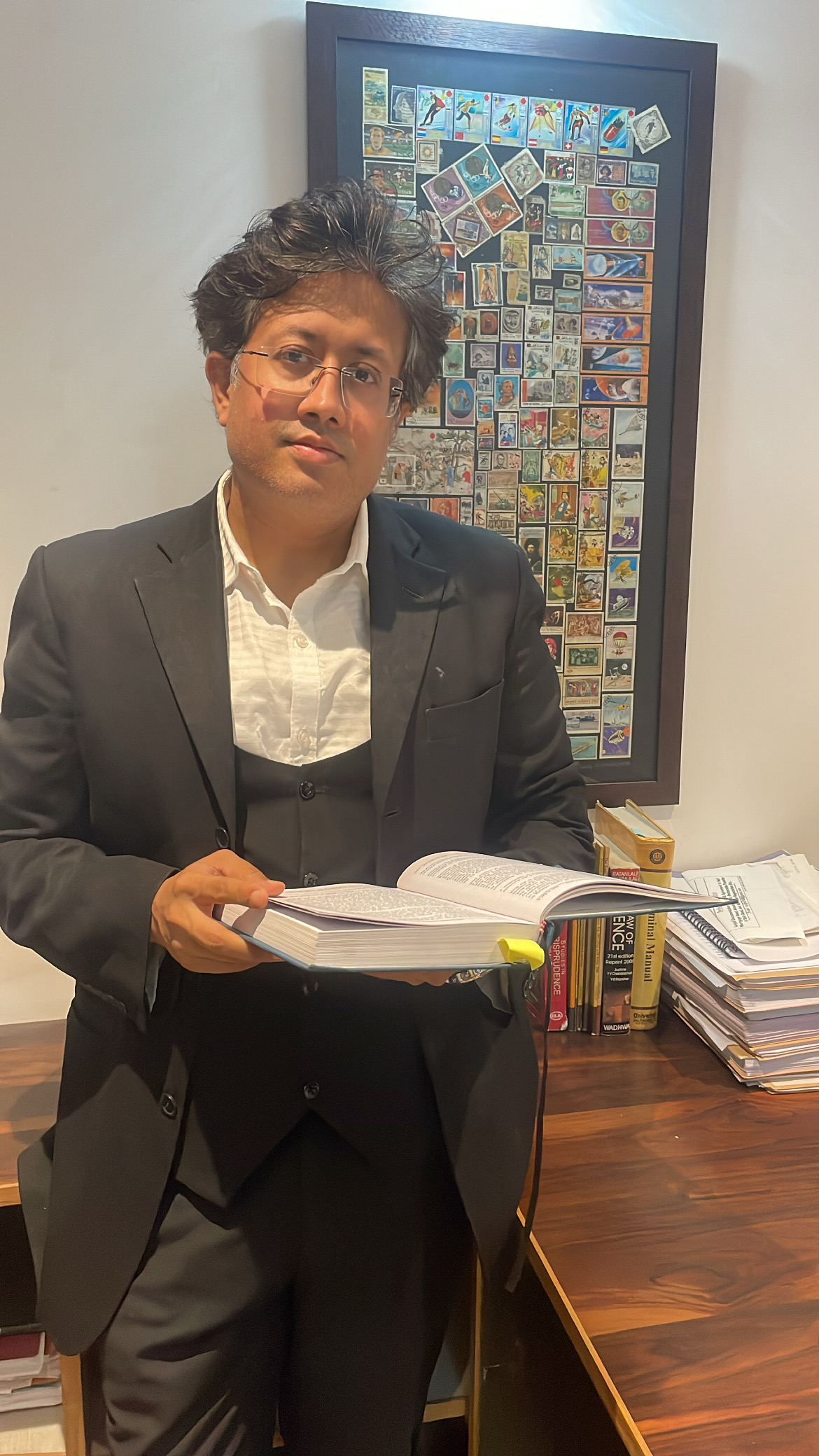
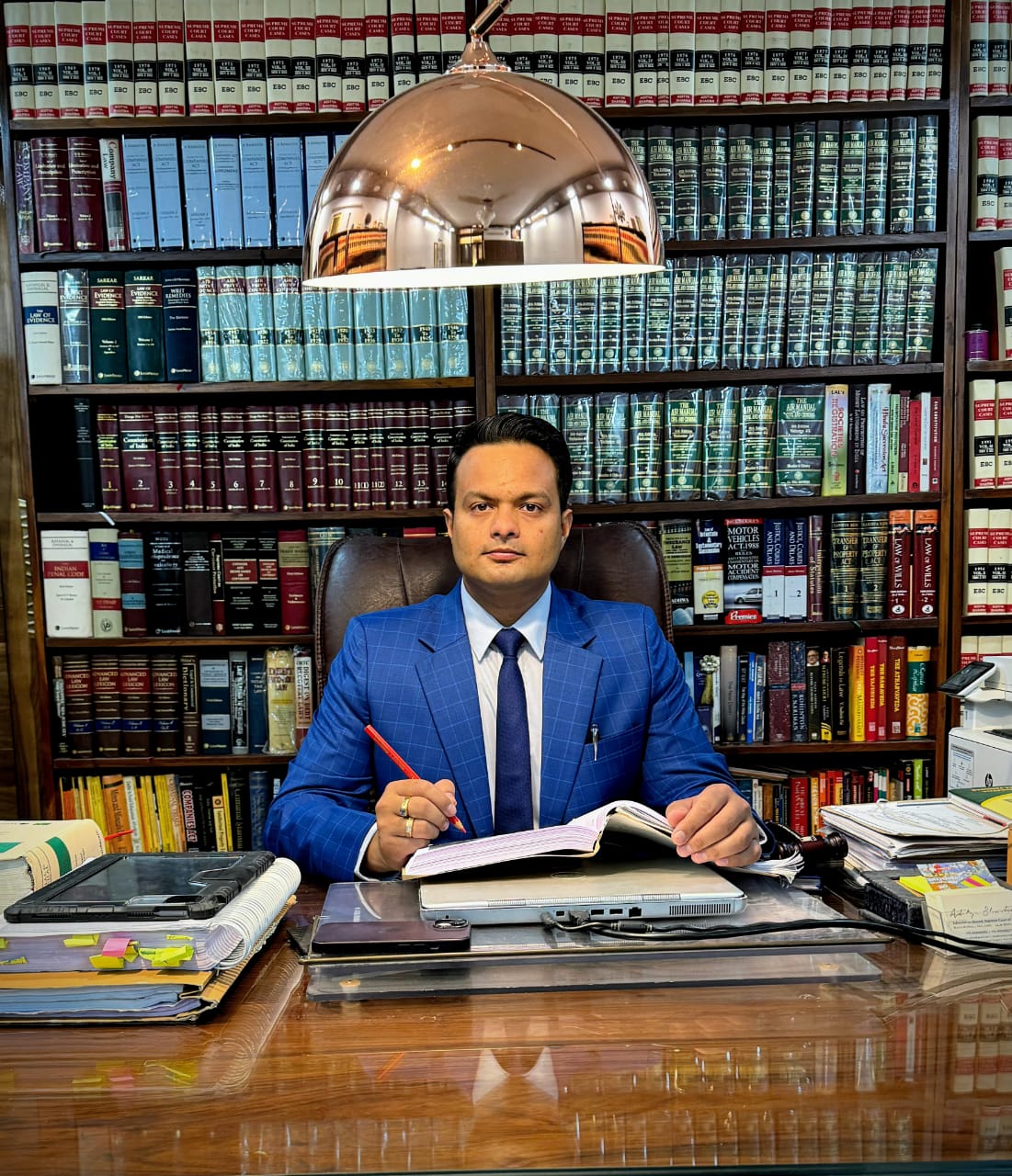
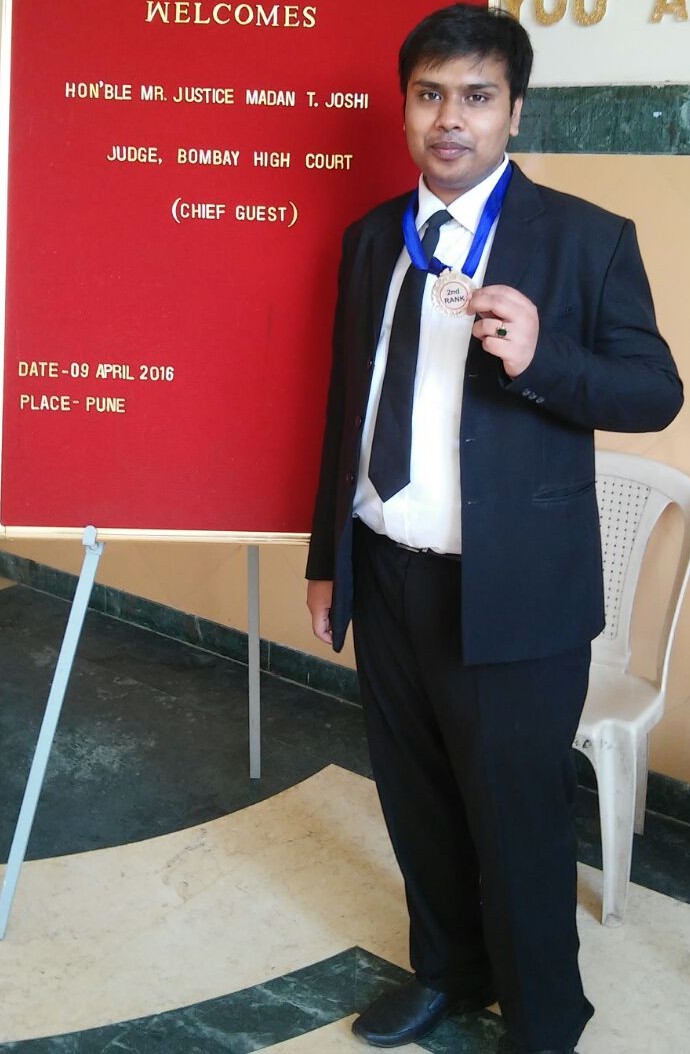
    What motivated you to start your own legal practice, and what areas of law do you primarily focus on? Could you please share more about your role as a Founding Partner at Cost Effective Legal Solutions (CELS)?

    I think the majority of advocates are motivated to start an independent legal practice by default. It’s more like a factory setting of the brain after clearing the bar exams. Mine was tuned even before I began studying law. The desire and motivation to go independent further grew in college. But once I stepped into the real world of practice, the scene changed. As a first generation lawyer, I realised that the ball was never in my court. The bubble shattered, after seeing the strength of the bar and the amount of advocates struggling to make a living. I learnt it the hard way. I realised I had to first grow in terms of knowledge. It took me four jobs and ten years to feel, I am sufficiently knowledgeable. I realised over these developing years that knowledge is not enough to keep me motivated so I developed the capacity to do laborious work. I steadily and slowly increased my patience level and self-confidence. It took a lot of mixing of all these emotions before I went independent in 2021 and started CELS. I realised only the ones capable of labour, patience, self-confidence and faith are welcome in this profession. No one with a defeatist or pessimist mentality or an irresolute mind-set can ever start their own practice. In 2021, I finally decided to not merely look to principles but have the readiness to act upon them. I put my art of persuasion to test developing clients in the field I was extremely confident about. 

    I started my practice at tribunals where the law application is quasi –judicial in nature/ sort of easy for any advocate to absorb in terms of procedure. I practiced at the NCDRC, DRT, DRAT, NGT and slowly shifted gears to civil, criminal and commercial trial courts. Now I primarily focus on business/commercial related disputes for Individuals, Corporates, Financial Institutions. The area of law practiced by CELS covers both civil and criminal statutes. As founding partner, I ensure that CELS always has business. We started with a team of two and now we have 25 people in our office in two years’ time directly and indirectly associated with us. 

    You’ve mentioned your extensive experience with Title Search Reports for financial institutions. Could you explain the importance of these reports and how they benefit organizations like National Housing Bank, Indian Bank, Bank of India, and LICHFL?

    We at CELS have rendered more than 15000 Title Search Reports for the above stated Institutions and more. TSR facilitates a buyer to help buy a property, a Bank / FI / NBFC determines the authenticity of a title. The Title Search Report made by CELS helps the Financial Institutions stated above deal with the crucial and imperative aspects of identifying an undisputed title. Identifying an undisputed title is important to all stakeholders involved, be it a buyer, seller, or a lending institution. Our reports facilitate the seeker/FI with an answer, as to whether a property is mortgage worthy as collateral or not. When I started working for the aforesaid FI’s I was put across several questions. Questions which had simple solutions yet no one had compiled the answers in a streamlined manner. CELS then published a hand book for its clients which not only gives its readers theoretical knowledge but practical knowledge which the reader can implement “tout de suite”, while dealing with a title. CELS has published the said handbook primarily keeping the documents, sub-registrar offices, the authorities, legislations, and other aspects which have direct application to the NCT of Delhi and its nearby territories (NCR). But the research base is such, that said fundamentals apply to the whole of India more or less.

    Your experience includes handling Commercial Court Cases. Could you share a challenging case that you worked on and the strategies you employed?

    Recently before the Patiala House Court, New Delhi, I had the opportunity to defend a case in which recovery of more than two crore inclusive of interest was filed against my client. All remedies under the Pre-Mediation and Settlement had been waived as my client had failed to participate. Now I was left to defend a massive recovery. I asked my client how much of the demand was legitimate. He admitted to me that the applicant / suing party is entitled to almost 80% of the amount mentioned in the suit. All though it is difficult to sum up in a paragraph as to what strategies were adopted. I’d say we went at everything from challenging the jurisdiction, to the absence of cause of action. We challenged the clause vesting jurisdiction on a Court which otherwise does not have jurisdiction. I relied on the judgement of Bahrain Petroleum Co., where the Hon’ble Supreme Court had held that neither consent nor waiver nor acquiescence can confer jurisdiction upon a court, otherwise incompetent to try the suit. It is well-settled and needs no authority that ‘where a court takes upon itself to exercise a jurisdiction it does not possess, its decision amounts to nothing. Further strategies adopted were challenging the facts on the basis of evidence available, an applicability of an expired contract etc, filing a detailed written statement. At the end the matter was settled we had to only pay a fraction of the suit amount. The court’s name was Anurag Sain DJ (Commercial Court)-01, CS(COMM)525/22. 

    NCDRC cases against builders on behalf of homebuyers are significant. Can you discuss the typical issues faced by homebuyers and the legal steps you take to address their concerns?

    NCDRC is the highest consumer forum available in India for relief against wrongs done by Builders. But after my experience at the NCDRC I’d suggest all consumers to approach RERA or NCLT. I am not suggesting that NCDRC is not an apt forum for relief, but the fact that the said forum is flooded with cases cannot be discarded. I had filed a class action complaint in 2019. And the matter has recently reached the stage of final arguments. All my home buyers were seeking a refund but had to eventually settle. Even though I was successful in getting them massive discounts, the fact that during the proceedings the builder started to go insolvent project by project, broke the home buyer’s spirits to seek refund with interest and they opted for possession with discounts. The typical issues faced by home buyers are delayed possession, unlawful demands in construction linked payment plan, forfeiture of booking amount, non – construction of Unit & builder / project being declared insolvent. These are some typical cases which are ongoing before the NCDRC. Once a favourable order is passed, the execution of the said order also takes a substantial amount of time. And one just has to keep his fingers crossed on the builder not running away from the country or being sent to jail or being declared insolvent. Hence as an advocate you have to be equipped with alternate remedies for your client. Ref: CC/912/2019

    You’ve also been involved in defamation cases. What is the most interesting or unusual defamation case you’ve handled, and how did you navigate the complexities of civil and criminal aspects in such cases?

    The most interesting defamation case I have had the privilege of filing was for a celebrity YouTuber against another less known You Tuber. The defamation was done vide an impugned video clip uploaded on YouTube and shared across Telegram. Whatsapp and other messenger applications. The statements made in the impugned video were made with the culpable and malicious intention to defame my client. The video was made to spread an untrue, false and scandalous imputation against my client that he is a fraudulent person who has misguided its subscribers. The scandalous, false and defamatory statements were explicitly intended to harm the reputation of my client and to malign him before the public. We argued before the Civil and Criminal Court that a person’s reputation is an inseparable element of an individual’s personality and it cannot be allowed to be tarnished in the name of the right to freedom of speech and expression because the right to free speech does not mean the right to offend. Rather, the object of guaranteeing constitutional protection to freedom of speech and expression is to advance public debate and discourse. However, speech and writings laden with harmful intent or knowledge of causing harm or made with reckless disregard is not entitled to the protection of Article 19(1) (a) since it does not serve any Constitutional purpose. We navigated the complexities by stating that the mental suffering caused to my client cannot even be calculated in terms of money. The words published and spoken on YouTube, the statements made and the video posted were made to cause and to bring my client into hatred, contempt or ridicule and to diminish the good opinion that people at large have of him and, therefore, we prayed before the court to punish the offender. We were able to get the video removed immediately and the matter is now pending adjudication for damages and punishment. Ref :Cc 726/2023 MM-1/NE/KKD and CS(OS) 207/2023 

    You’ve mentioned drafting and arguing a petition for a ban against TikTok before the Supreme Court. Can you walk us through the process and the outcome of this high-profile case?

    I had filed a Writ Petition in Public Interest under Article 32, requesting the court to issue order or direction, in the nature of Mandamus imposing a temporary ban on the mobile application/social media portal such as TIK-TOK and others those are capable of being misused till the Coronavirus / Covid-19 disease subsides in India and/or directing the concerned government authority/authorities to formulate and implement a proper statutory framework or adequate Rules, Regulations or Guidelines thereto in order to prevent the misuse of such platforms during the crucial times when the world is fighting against the pandemic. The videos uploaded back then were adversely promoting cultural, spiritual and theological dimensions, instigating a particular community to violate and not to follow the Rules and Regulations/Advisories for Health and Safety, set out by the Government of India amidst the havoc of Covid-19. The advisories as to social distancing appealed by the Prime Minister had been projected through these adult videos as being contradictory to what is entailed in the Quran. The circulated videos were full of misinformation and were meant to incite fear, hate, or prejudice among communities. Even Dr Tedros Adhanom Ghebreyesus, Director General, World Health Organisation (WHO), had stated as under: “We are not just fighting an epidemic; we are fighting an infidemic. Fake news spreads faster and more easily than this virus, and is just as dangerous. ” I along with adv.J. Sai Deepak had filed this PIL with the motive to upkeep the safety and interest of 227 Million active users of Tik – Tok in India along with a population of 130 crore (approx.) population that has access to such misinformed videos that were causing harm to the public at large. But the Supreme Court dismissed our petition. Thereafter, I went to all the authorities in the legislature such as counsel of states, house of the people, legislative departments and even the Prime Minister. Eventually I was permitted to submit my research to the standing committee of Parliament after which the Government banned the application along with several other Chinese apps in 2020.

    Your experience at HCL Technologies involved managing legal aspects of contracts. Can you discuss how you identify ?

    At HCL Technologies we treated IT risk management as a necessity. At HCL Tech a team of lawyers used to realign their IT risk management processes to meet the constantly evolving regulatory requirements. We ensured that their IT ecosystem struck a balance between cost-effectiveness and efficiency. At the same time, we ensured that the next generation innovation and transformational business went smoothly. As a team we used to discuss and understand the complex IT business ecosystem first. We used to Visualize and understand risk as our first steps. Then we went about assessing the same and once risk elements were identified, we used to try and quantify the impact levels of the same. We used to prioritize the High-impact like situations and manoeuvre by drafting our contracts which would lower the impact. 

    What advice would you give to the fresh graduates who aspire to start their career in the legal industry?

    As law students and fresh graduates, there must have been an era when you, as viewers of TV series, may have grown addicted to ‘Celebrity Lawyer’ shows such as Boston Legal, Suits etc. Furthermore, this begins to seem a reality within the approach when you read about lawyers repeatedly in newspapers every day. To add to this illusion, most of our Government Post from Politicians to Head of Government Organizations are holding a law Degree. Their fee(s) is often a discussion from classrooms to club rooms. But this notion holds true only for a handful. Not every lawyer is paid exorbitant amounts of money and as a fresher, one might even have to work for a mere 15K to 20k. Yes, it’s a rate existing in the inflated year of 2023. Furthermore, the profession reaches a new level of toughness, in small towns, such as Allahabad. Allahabad High Court may be having the biggest Bar strength in terms of numbers but this does not imply that every litigating lawyer is having a ball. One might come across lawyers stating “Cigarette ka kharcha nikalata hai”. Undoubtedly, with experience comes a better Salary/ Fee but it takes perseverance and patience to reach that level. Thus the moral of the story is not to get influenced by hearsay or by the life of a lawyer in glorifying and glamorous TV series. Sorry to disappoint you but, all that you see on TV is a script, which is not only well written, but a gimmick that plays illusions with lawyers wearing crisp suits, swanky shoes and nice hairdos. Law does have a price which we all should aspire not to go by the glamour it has to offer, but by the richness it can offer in terms of knowledge and life skills.

    Get in touch with Vibhor Gupta-

  • It is very important that we give back to the society we live in. It is even more important for a lawyer to do so because we form part of this privileged and noble profession, where we understand not only the rights and duties but also the general state of affairs in the country- Aditya Sharma, Advocate on Record at Supreme Court of India

    It is very important that we give back to the society we live in. It is even more important for a lawyer to do so because we form part of this privileged and noble profession, where we understand not only the rights and duties but also the general state of affairs in the country- Aditya Sharma, Advocate on Record at Supreme Court of India

    This interview has been published by  Priyanka Karwa and The SuperLawyer Team

    Can you please share your journey from obtaining a B.A., LL.B (Hons.) degree at National Law University, Delhi, to becoming an Advocate-on-record at the Supreme Court of India? What motivated you to pursue a career in law?

    There were no lawyers in my immediate family, in fact I grew up in the beautiful city of Bhopal which despite being the capital doesn’t even have a High Court. I took mathematics and science and it was only in my senior secondary year that law as a profession attracted me. It was my English teacher who saw my potential in law and suggested that I take it up as a profession. At that time little did I know that it would change my perspective towards society completely and give my life a deeper meaning and purpose. 

    I loved every bit of my time at National Law University, Delhi, it ignited a sincere passion towards law and people here were smart in so many different ways and fields. At NLU, Delhi, I was busy doing assignments, research work, internships, Moot Courts, Mediation & publishing articles. I had no clue that 5 years went by so quickly. I enjoyed mooting, I guess it came naturally to me, it gave my exposure at international level at Jakarta (Indonesia), Malaysia and Cape Town (South Africa). I was part of the Moot Court Organizing Committee and also Convener of the Student Welfare Committee at NLU, Delhi. When I graduated with a degree in law I was selected in western universities with partial scholarship & fee waiver and also at Indian Law Institute, Delhi for LLM (1 year program) but I chose to start practicing law and learn in the chamber and before the Courts. 

    Becoming an Advocate-on-Record was a necessity for me being a first generation advocate practicing at the Supreme Court. It was with God’s grace and years of chamber practice that I was able to attain this milestone in my very first attempt despite the challenges that came along with the way. When I cleared the AOR exam, Coronavirus (COVID-19) Pandemic was already here and that gave me an opportunity to pursue a master’s degree in law. I did my LLM in constitutional law and administrative law during that period. It motivates me that as advocates not only we contribute in the justice delivery system but also keep the faith of the masses in our wonderful system & constitution, despite the challenges, flaws and adversities. 

    You’ve had a diverse range of experiences in different legal chambers and roles. How did these experiences shape your understanding of the legal profession, and what valuable lessons did you learn during this time?

    In my final year of law school while interning at the office of Sr. Adv. Sidharth Luthra I realized that litigation at the Supreme Court of India is my calling. After enrolling as an advocate I joined the chamber of Sr. Adv. Rebecca M. John where I got an opportunity to work on leading criminal cases including cases involving heinous crimes, CBI trials, trap & disproportionate asset cases and many more. This gave me hands-on experience of addressing the court & arguing, drafting and filing, observing examination in chief & conducting cross-examinations and also further enhanced my court craft. After a year, I joined the Chambers of Sr. Adv. Gopal Subramanium, where I assisted him in variety of matters before the Hon’ble Supreme Court of India & other High Courts. Sir, dealt with various issues such as constitutional matters, writs, challenging varies of Acts, election petitions, criminal appeals, opinion on Delhi as State or Union territory, tender and mining cases, intellectual property matters & so on. 

    During this time as a chamber junior I learnt a lot about the legal profession, most importantly how to approach any case, how to extract facts and not only to simplify the most difficult situations/ facts/ documents but also to present it in a manner which is easy and effective to understand. Understanding of law is only one part of practice of law, its application on given facts as they come from the lower court, after various testimonies of witnesses and their cross examinations is not the same thing. It is only when you apply yourself to the given factual matrix and understanding of law, that you can unravel the truth and get justice for your client(s). Above all, never compromise with your professional ethics and morals. Give yourself a little grace, don’t have unrealistic expectations or look for magic to happen overnight, give it time. It takes years and its own time so just be honest, humble and diligent with your work and don’t lose patience or hope. 

    Could you tell us more about your interest in these specialized areas of criminal law, original suits before the Supreme Court of India (Suits between states) & river water disputes and how they have influenced your legal practice?

    Criminal jurisprudence and penal law always fascinated me, perhaps it was the small town factor along with the media reporting where news reports covered major financial & heinous crimes regularly. They also covered interesting arguments of the lawyers appearing in those cases and opinions on its impact in general. Every student of law knows that bail is the rule and jail is an exception. There are so many cases where courts have emphasized bail should be granted, even recently by order dated 30.07.2023 in MD. Asfak Alam v. the state of Jharkhand & Anr. The Hon’ble Supreme Court reiterated the directions issued earlier and as well as other directions to emphasize unnecessary arrest should not be made & bail should be granted especially in cases where punishment is less than seven years. Thus given the grim situation we have there is so much one can contribute in the field of criminal law & more importantly I feel fortunate that I can actually help people get justice and live a life outside prison. 

    It is very important to resolve disputes that arise between states/ union & states for the integrity of our country. It is not only the government which is at stake here but also lives, peace and prosperity. When the suit is between two states which are equally independent and part of the same constitutional framework, the suit is instituted at the Supreme Court of India which has to find a solution and pass a decree. Similarly a life & prosperity depends on the river water availability and this gives rise to disputes where the upper riparian doesn’t provide the water to the lower riparian state. Such disputes are heard before the River Water Disputes Tribunal and where the claims of the states are heard and their shares are determined. They also lead to Original Suits for enforcement of agreements, power distribution, for seeking mandatory injunctions and for control & administration between the States &/ or Union. Both these areas have significantly influenced my practice as on one hand there are criminal cases and suffering of the individuals waiting for justice and to come out of prison and on the other hand issues that will affect millions of people in different states. 

    As a practicing lawyer, you’ve represented clients in various matters before the Supreme Court of India and other high courts. Could you share a memorable or challenging experience that had a significant impact on you and your career?

    Early in profession I was approached to file a bail application, where client was arrested for the offence of rape. This one stands out in particular because I was able to get the client out on bail in one day from the lower court itself. We were able to establish that this woman was not only married to someone else and seeking settlement from her present husband but in the last 2 years she had filed over 5 complaints in different police station against different individuals alleging rape on the ground of false promise of marriage. Eventually case was quashed by the Hon’ble High Court. While I was legal advisor at National Commission for Scheduled Tribes, I came across this case where a tribal women was raped and police was not even ready to take her complaint, much less the registration of an FIR. This case touched me because it made me realize that despite 75 years of independence our forces are still in colonial hangover, where the station head officer feels he is the king & his word in the law. There is no audience for the downtrodden in his police station. With commission intervention police became active, FIR was registered and investigation was done, commission also recommended stern action against the erring police officials. In another case, I have a decree in my clients favor passed by the Hon’ble Supreme Court almost two decades ago but looking into the sensitivity of the matter and the geo-political implications, the Hon’ble Court was pleased to direct the central Government to play an active role to mediate the matter. This matter highlights the importance of mediation as all levels and parties should consider it not to complete the formality but put in real effort to resolve the dispute. 

    In your experience, what are the key skills and qualities that a successful lawyer should possess, especially for those who aspire to practice at the highest levels, like the Supreme Court?

    Lawyer should be hard working and honest to begin with, he should be ready to put in the analytical abilities and also the hours required to complete the draft or prepare the arguments. He must be consistent and diligent, each and every case must be prepared very carefully, and detailed legal research should be carried out on the subject, not only he should go through the latest judgments but also how law has developed over the years on the concerned issue. Lawyer must have good analytical ability, he should be able to extract facts, information from the factual details & complex documents provided by the client, testimonies of the witnesses. Attention to detail is very important for any lawyer for instance any inconsistencies during the cross examination must be caught on the spot. Whether it’s the witness testimony or the inconsistency in the documents, attention to detail can save your day and present surprises in the middle of a hearing. Other important skills include, time management, keeping your documents organized (even on the electronic devices as a lawyer one must keep documents and files up to date & organized), legal writing skills as not only oral arguments but also petitions/ applications/ written submissions have to be simple to understand and yet very persuasive and lastly interpersonal skills as lawyers have to interact with clients and other professionals on regular basis. 

    You mentioned providing free legal advice to the underprivileged through a Legal Helpline. Can you share the importance of pro bono work in the legal profession, and how can young lawyers get involved in such initiatives?

    It is very important that we give back to the society we live in. It is even more important for a lawyer to do so because we form part of this privileged and noble profession, where we understand not only the rights and duties but also the general state of affairs in the country. We can see when the law is wrong, when it will not stand in court of law and when it is being misused thus it is our responsibility to take action and help those who cannot afford to fight their own legal battles. Many times people are not even aware that legal aid is available in the courts and if someone tells them able the procedure of getting legal aid or where the office for legal services are situated, that in itself a huge help for them. A young lawyer may have difficulty taking up the case pro bono due to the financial incapacity and lack of experience but he can provide his opinion and also guide the person / fill the application for getting legal aid, which will enable the needy to get assistance and representation from the concerned legal services authority. 

    Finally, what advice would you give to recent law graduates who are just starting their legal careers? What lessons have you learned along the way that you believe would be valuable for them as they embark on their own journeys in law?

    Be patient and take your time to decide how you want to serve, look for your calling. Whether you want to litigate or be a judge, teach law and become a professor, join the civil services or a law firm or a corporate house. In litigation, first look for a mentor, a chamber where you will unlearn the bookish knowledge and learn the practice of law. It is under the able guidance of your senior that one honed their skills, collects the tools necessary for future cases. Be prepared to be a student of law for all your life, develop a habit of reading daily, not just law but also other subjects. Be through with the research and apply your mind, be analytical and work on your legal writing skills. In any chamber first way to prove your ability and to bind trust and credibility with your senior is through in depth research (not just reading of headnotes, but developing habit of reading the cases & commentaries cover to cover) and by legal writing skills reflected through the drafts. Don’t be scared of working long hours and working hard but at the same time manage your time wisely to ensure no clients suffer because of you. Lastly, enjoy the journey in law, you have a long way to go. 

  • The Trials & Triumphs of a 1st generation Faujdari Vakil: Dhruv Gupta’s Story from Aarushi Hemraj to Delhi Liquor Excise Case -A Candid Conversation

    The Trials & Triumphs of a 1st generation Faujdari Vakil: Dhruv Gupta’s Story from Aarushi Hemraj to Delhi Liquor Excise Case -A Candid Conversation

    This interview has been published by  Priyanka Karwa and The SuperLawyer Team

    Could you please take us back to the beginning and share with us, what inspired you to pursue your career in law, especially in criminal law litigation and that too in Delhi only, despite having no law background in your family? 

    I always wanted to do something different from what my family had been doing for decades i.e. a private business in Jammu. I always found law to be more fascinating and enthralling versus my family business. During my school days, I developed a special inclination towards becoming a lawyer, though there was no specific trigger for the same, and it was just a feeling, which gradually turned into an ambition, with time. When I discussed my aspirations with my peers, most of them initially advised me, in good faith, that as I had a good hold on science subjects, I should opt for courses like engineering, finance, etc, instead of law. But, with my family support, after completing my higher secondary education, in 2006, I got myself enrolled into a 5-year law course at Fergusson Law College, Pune.

    During my undergrad, I made sure that I do plenty of internships in diverse fields of law, including civil, criminal, corporate, etc., at Delhi, which gave me practical insights into the legal profession. But even then, I was very confused as to which field I should initially pursue after graduating from law college. However, I vividly remember that during one of my internships with one of the renowned human rights NGOs in Delhi, I met a few people who claimed themselves to have been falsely implicated in criminal cases. I recall meeting the mother of a 23-year-old guy, who was incarcerated for almost four-years in an alleged cheating indictment punishable u/s. 420 IPC, and his matter had not even reached the stage of prosecution evidence and on account of his financial condition, he apparently had not even filed any bail application. I was deeply pained to listen to her agony. I assisted the office, where I was interning at that time, in drafting a bail application for her son, which ultimately came to be allowed and he was released. I remember, whilst I was present in court when the said bail was being argued, I was itching to argue it myself only. The said case is still fresh in my mind, it was one of those incidents that further catapulted me to pursue my career as a criminal defence lawyer. 

    Choosing Delhi instead of my hometown i.e. Jammu, as the place of my practice, was a very difficult decision, even emotionally, as I was here all by myself and my kith and kin were in Jammu. But after my internships’ experiences in Delhi, I was very clear in my mind that I want to practice in Delhi only. I feel that here in Delhi, the professionalism and talent are quite high and it always keeps you on your toes and forges the best out of you, which I personally relish.

    What challenges did you face, in the initial few years of finding your feet in the field of litigation, as a fresher? 

    ‘Challenge’ is just another name for ‘life’. After I graduated, I was pretty clear in my mind that I wanted to primarily pursue criminal law litigation only but the question was, “in which office?”. I had minimal contacts in Delhi as I hailed from Jammu and even my graduation was from Pune, so I had close to zero options. There almost came a  point when, instead of joining a criminal law litigation office, I almost decided to join a corporate law firm, where I was very hopeful of getting a job, on account of my past performances there during my internships in the said firm. Just at that point of inflection, I received a confirmation from an office to join them, where there were umpteen criminal law matters, besides civil law matters. I joined the same, instead of that corporate law firm. But the remuneration was another challenge, especially on account of the fact that Delhi was not my hometown and as we all know, it’s an expensive place to live. But I somehow managed to survive without thinking much about the remuneration aspect and continued to focus on the exposure I was getting not only in criminal law but also in other fields like civil law, arbitration, etc. As for me, ’exposure’ was far more important than the ’monetary aspect’.  

    Another challenge that I remember facing in my initial days, almost daily, was how to effectively assist my seniors without getting scolded, not only in preparing brief notes, and basic drafts but also in providing them with appropriate research to bolster his arguments. Initially, there used to be mistakes, which gradually reduced with the passage of time leading to a point where my senior did not even have to vet my drafts, research work, brief notes, etc. I remember, within the initial months of my first job, while drafting a petition, on behalf of an accused, which had to be filed before the Hon’ble Delhi High Court against an Order on charge passed by a Ld. Session’s Court in a dowry death case, I drafted a criminal writ petition instead of a criminal revision petition. When I showed that draft to my senior, he was infuriated and straightaway pressed ‘Ctrl+A & Delete’ and told me to first find out the remedy against an order on charge and then get back to him with the correct petition. Even today, when I draft a petition against a Charge Order, that incident brings a smile to my face.

    If we turn the clock back to 2011, when you were learning the ropes of criminal law litigation while working on a very basic salary, did you ever feel dissuaded from the idea of pursuing criminal law litigation when you saw your friends making a much higher amount practising corporate law or doing govt. job?

    Not really. My clarity of thought was my strength. I was very content with what I was doing and as I stated above, for me, exposure was far more precious than remuneration. When my counterparts, who were getting much higher salaries, used to call me to seek my advice on various legal propositions, they had no clue of, it used to give me immense satisfaction, which was unmatchable and incomparable to any amount of salary. I was very clear that no matter what, I will pursue primarily criminal law litigation only, which is my forte. Today, those very people, who used to advise me to go for higher paying jobs (regardless of how the exposure was), come to me and tell me that my approach was indeed better than theirs. It reaffirms my conviction in myself. 

    Being a 1st-generation lawyer from Jammu practising primarily in Delhi courts, you have certainly carved out a niche for yourself. But are there any challenges you face even today, despite being an established criminal law practitioner?

    After I started my independent practice, the biggest challenge I faced was to develop a good client base for me. Despite the fact that I, being an out-stationed lawyer, did not have any close friends/ relatives/ contacts in Delhi, who could send some good references to help my practice and my self-respect never allowed me to go to anybody’s office to ask for work, so getting clients initially was quite a task. 

    But then, I, alongside some senior counsels, secured an acquittal for the Talwar couple in the high-profile & widely covered ‘Aarushi Hemraj Double Murder Case’ from the Hon’ble Allahabad High Court, which gave me considerable media attention being a prominent part of the legal defence team. This success not only helped me in developing my legal practice in the beginning but it also gave me a lot of self-confidence and belief that I was definitely not wrong in choosing criminal law litigation as my career. However, even today, clientele development is an area where I still consider myself to be a ‘fresher’. “You can’t show your talent to a client unless he first engages you as his lawyer”, for which references are vital and, in my opinion, even various other far more talented lawyers face this challenge.

    Another major hurdle that I faced initially was to build a good team of lawyers on whom I could rely, as in litigation, stakes are always very high and one petty mistake can really turn the tables, which can deeply affect your association with the client and his case as well. I remember, once, I was occupied in one court arguing a bail application and had told one of my younger colleagues to seek a passover in the other matter which was a criminal complaint listed before a different court, however, my colleague did not reach on time and the said complaint was dismissed on account of non-prosecution. I still remember the embarrassment when I told my client about it. One thing I have always been very particular about is that there can be no explanation/excuse for coming late to the court.              

    Even today, one query that I often come across from various people is, “How can you defend an alleged rapist, murderer, etc?”, and they sometimes even judge you on that basis. It often gets very difficult to make them understand the difference between your professional duties and personal beliefs. However, I always tell them that one should not judge someone until the judicial procedure is taken to its logical conclusion and that everyone has a  fundamental right to be represented by a lawyer of his choice. I still remember, it was 2018, I secured an acquittal from the Hon’ble Delhi High Court in a rape indictment involving a visually challenged prosecutrix, and when I shared the news with a friend, he said “What are you so proud of?” and I immediately hung up the call. These sorts of challenges have become part and parcel of my journey, and I have reached a point where I don’t really become impassive about what others think of it. I am sure that after reading this particular anecdote, even some of the readers might be looking at it critically, but like I always say to my younger colleagues, “Becoming a faujdari vakil is no cake-walk, especially when you are an out stationed and 1st-generation lawyer and one should take such things as part and parcel of our esteemed profession”. 

    Could you tell us about any key experiences or moments whilst you were representing clients in any criminal law matter, be it a white-collar crime or a heinous crime or any other legal matter, including some anecdotes from your extensive experience of cross-examinations?

    Though, there are so many highlights which are still very fresh in my mind. But some of the most memorable moments are: 

    1. Once, I got the opportunity to argue a petition against an order of charge before the Hon’ble Delhi High Court when I was still a newbie in the profession. My god! I was bombarded with various queries by the Hon’ble Court like “Have you read this judgment i.e. against your contentions…?” to which I immediately reverted “Yes, my lord, I am carrying a printout of the same also and it is completely distinguishable from my case and my apologies that I didn’t bring it up earlier”, and then I argued as to how the said judgment was not applicable to my case. I thoroughly remember, after I concluded my arguments, I was told by a very senior lawyer, who was also present in the courtroom, “Your presentation today was better than a 10-year experienced lawyer”. 
    2. I was cross-examining a witness on behalf of the defence in an alleged rape indictment, and after my lengthy cross-examination running into various pages, the witness started crying in the middle of the court. The witness was none other than the Investigating officer of the case and was a very senior and experienced police official. When the Hon’ble Court asked the witness why is she crying, I still remember her answer given by her,“mjhe wakil sahab ke cross se bahut dar lag raha hai aur mujhe lag raha hai ki kahin vo meri naukari na khaa jaye”. The attempt on my part was to show that the entire investigation was shoddy and biased leading to false implication of my client. Thereafter, the matter was adjourned on account of the same and finally, my client was acquitted in the said case, though obviously not on this ground but on the merits of the case.
    3. Another case I remember clearly is when I got the privilege to cross-examine a witness at Kolkata, who was a very renowned Indian cricketer and had also been the Captain of the Indian men’s cricket team for a significant number of years. I was very confident rather overconfident that I would be able to demolish the testimony of the witness to corroborate the version of my client through the art of cross-examination, as he might not be very well-versed with the intricacies of the art of cross-examination, being a very renowned personality. However, within a few minutes of my cross-examination, I realised that I was being very overconfident and my perception was misplaced and that if I don’t improvise and change my line of cross-examination, I would achieve nothing. Accordingly, instead of continuing with an aggressive style of cross-examination, I switched to a very polite & subtle style, which is usually not my way, and finally, I could see the tides turning in favour of my client. 
    4. I recall that once, I had to argue one application on behalf of an old lady who was accused in a builder-buyer dispute, but somehow on account of my prior engagement in some other matter, by the time I reached the Court, the application had already been dismissed.  Though, I had already told the client before getting engaged that I might not be able to reach court on time on account of my prior engagement in some other matter, and in that event, their lawyer on-record should argue the application. However, when I reached the courtroom, the client insisted that I should request the court to re-hear the application, to which I had my reservations. However, as the stakes were very high and the client was repeatedly insisting, I thought of at least making an attempt for the client and accordingly requested the Hon’ble Court to take up the case file again, to which I was initially reprimanded and rightly so. However, on my polite persistence and some theatrics, the matter was taken up again and the Hon’ble Court heard my arguments for about an hour. It was a one-of-a-kind incident because the Hon’ble Court had already dictated the order but as they say, “luck favours the brave”. Though, the fate of the application remained the same, but the client’s words after the proceeding’s conclusion, still echo in my mind, when she said, ‘You will go a long way beta and, irrespective of the outcome of the application, I am most grateful to you for what you did today for me’.
    5. Another case that I still remember is when, I besides other counsels, had to go to All India Institute of Medical Sciences (AIIMS), New Delhi, to cross-examine the prosecutrix in an alleged rape indictment, where a special court had been set-up for 3-days inside the  hospital premises itself, upon the orders of the Ld. Trial Court. When we used to enter the hospital in our lawyers’ uniform surrounded by full security, commoners used to be totally astounded and shocked as to how come lawyers and the Hon’ble judge are conducting trials inside the hospital. During the lunch break when we used to have lunch in the common canteen, a lot of people used to come to me and ask “Why is the trial being held in the hospital premises instead of the court complex and which case is this?” and the only answer I could give them was “we are just rendering our professional duties”. The intense atmosphere of those 3-days still feels like yesterday.

    Your portfolio features an impressive array of high-profile cases, including representing Dr. Rajesh and Dr. Nupur Talwar in the ‘Aarushi Talwar – Hemraj Double Murders’ case or ‘Delhi Liquor Excise case’ or ‘the riots case in Panchkula’ or ‘Unnao rape case’? Do you adopt a different strategy for a high-profile case than that of a routine case?

    For me, every case is equally important and I try my level best to do justice with every brief irrespective of the fact that whether it’s a high-profile case or otherwise. It doesn’t matter how much coverage a case is getting in the media as I like to prepare my brief on the basis of the documents and the instructions and not by what’s happening in the media. However, I must admit that media-covered cases are more difficult to defend as everybody is on their toes and one small mistake can really put you in a bad light. But if you are confident in your preparation then ultimately, you will not be swayed by any outside attention. 

    I remember in my initial days I was requested to defend a pro-bono murder case for an accused who had come to me through his very aged father from a rural background who could hardly make ends meet. He wanted to engage me after seeing my arguments in some cases when he was standing in the same courtroom waiting for his son’s case and wanted me to lead the case of his son. I took up the challenge and never charged a penny to them and even bore basic expenses for the case all by myself, as I was deeply moved by the agony of the old father according to whom his son had been falsely implicated. To be very honest, I was also very excited to know that I would get to cross-examine various witnesses in a murder case all by myself, which was running into more than 70 witnesses. The said case got over somewhere in the year 2015 and amongst other accused persons, my client was the only one to be acquitted of the murder charges. It was this case that actually made me learn the nitty-gritty of cross-examination in the initial years of practice. I still remember, that after I secured an acquittal in the said case, the old father while gifting me three cartons of mangoes, said, “main apko aashirwaad ke ilawa yeh hi de sakta hun, vakil babu” and he hugged me and left. Though, despite securing an acquittal for the accused, the accused never came to meet me even once, which over a period of time, I learnt to be a part & parcel of our profession. I still keep that judgment in my drawer as a souvenir as a self-claimed achievement of mine. But yes, it still gives me a lot of confidence and perseverance to wade forward in this ever-demanding and highly challenging profession.

    Though, in white-collar crimes, usually, the prosecution complaints, relied-upon documents, digital evidence, etc. collectively run into thousands of pages, unlike heinous crime cases, and if you are comparatively a young counsel, you will be often asked to brief designated Senior Advocates in such matters. Therefore, in such matters, I ensure that I make a detailed list of dates & events and brief notes for the cases so that you don’t have to rummage through thousands of pages every time and the task gets easier whenever you have to address arguments or brief a Senior in such cases.  

    Therefore, if you have worked hard on your brief, irrespective of the nature of the case, you can really change the outcome. I feel that if you have built up a strong defence in the trial court, wherein the art of cross-examination is the best weapon in the hands of a defence lawyer, you can really give the prosecution a run for its money. 

    In the realm of corporate litigation, you argued one of the most landmark cases titled “BK Educational Services Pvt. Ltd vs. Parag Gupta Associates” before the Hon’ble Supreme Court of India. How was the experience in arguing such an important case? 

    The experience was very exciting and challenging. I was not conversant with the subject as the matter pertained to the provisions of The Insolvency and Bankruptcy Code, 2016. However, after I did thorough research and study on the subject, I was very excited to argue such a one-of-its-kind case. I still remember, after arguing for 2  days straight before the Hon’ble Supreme Court, I was feeling on top of the world, as the entire day I got quite a few phone calls from some lawyers who saw my arguments that day. I still remember one of them asking me, “Why don’t you shift your entire practice exclusively to the Supreme Court”, to which I humbly replied, “Sir, it’s definitely not my choice to make and it all depends on the client that engages me.”

    Do you ever get nervous when you are cross-examining, as the stakes in the same are extremely high, and the odds are desperately stacked against you and a minor mistake can deliver a permanent fatal blow to the client’s case? 

    Definitely not. I can’t recall a single day when I would have gone unprepared for a cross-examination. Rather, I feel absolutely thrilled to test my skills. I feel that your job as a criminal defence lawyer is like that of a cricketer as, no matter how well you have performed in the past, if you fail on a particular day, your entire case can go for a toss. One bad cross-examination can cause irretrievable damage to your client, so if you are nervous, that’s perfectly fine, but your nervousness should never be able to overpower your confidence and the rigour of your preparation. It’s very important to know what NOT to ask a witness in a cross-examination, as sometimes, unnecessary questions in a cross-examination can cause more harm than good to the case.

    In your 12 years of experience, when is the right time when one may consider before going independent as a criminal law practitioner?

    There is no hard-and-fast rule to it. It is quite subjective but I feel before going independent, one should definitely have a few years of experience at district courts, so that one can also learn the art of examination and cross-examination. The stage of evidence is very crucial for a criminal defence lawyer because, unlike civil law, the concept of filing a plaint, written statement and replication is not there and the cases are decided on the basis of the chargesheet, examination-in-chief, cross-examination, statement of accused recorded u/s. 313 CrPC, documents on-record, etc.

    I would also suggest that even if you want to pursue your career as a criminal defence lawyer only, you should also have some experience of civil law because the drafting work is more in civil law as compared to criminal law and it enhances your drafting skills if you have also laid your hands in civil cases. For example, if you are, as an independent criminal lawyer, engaged to draft a petition to be filed before the Hon’ble High Court or Supreme Court and your drafting skills are not up to the mark, it can be very problematic. Therefore, having a blend of experience of a few years, in both civil and criminal litigation at the district court level as well as higher courts, would be an ideal situation. But it doesn’t mean that those who don’t get such a chance cannot be good criminal defence lawyers as you can also choose to argue cases directly before the higher courts and still do justice with your work.

    Your journey in the legal field has undoubtedly been filled with challenges and accomplishments. Considering your vast experience, what advice would you give to freshly graduated lawyers?

    It’s a tough one! I would say that patience, hard work, sacrifice and perseverance are the basic qualities one must inculcate from day one. You should choose a field which you genuinely enjoy practicing. To be very honest, I love practising criminal law litigation as it’s my passion and I don’t even remember the day when I got this crazy about my career and I love it when I am called a “faujdari vakil”. Though, when I think of my college days, I was not even certain if I would actually practice law after completing my graduation or I would end up joining my family business only. But as the days passed by, I became more and more motivated and passionate towards my career.

    • So, don’t get swayed away by extraneous considerations and short-term monetary benefits, but one should strive towards her/his long-term goal, which can happen only after putting in a few years of practice. 
    • One should be ready to burn the midnight oil and make sacrifices for holidays for at least 3-4 years. Undergo training with full honesty and dedication towards her/his work. Because, remember, whatever you are doing today, even as a younger colleague or a senior, it would ultimately reap benefits for you only in the long run. 
    • Adopting unethical shortcuts for lucrative monetary benefits should never be done and you should have a firm belief in your abilities, while also being practical at the same time.
    • I have seen that sometimes new-grads are more eager to work only on higher-profile cases than on ordinary cases, which approach, I would advise, should not be adopted. 
    • In your initial days, you must read case files inside-out, try to have a good grip on facts of the case. 
    • Don’t get afraid of voluminous files. 
    • Try to make a chronological list of dates and events and also whatever petition/ application you are assigned to draft. 
    • Try to read as many judgments as possible.

    I know it’s quite a task to do all these things, but at the end of the day, like I said above, litigation is not a cake walk and no matter who you are, if you want to be a successful lawyer, realistically speaking, be ready to face the heat and yet continue to believe in yourself! I know, initially, you may have bad days at work and you will be reprimanded for your inadvertent mistakes, but when you will perform well and will be told “very well argued Mr. Counsel”, you will be on cloud nine and you will be even more fueled to continue your journey. There will come a time, when after concluding your arguments, you will be walking out of the courtroom and every other person will be asking for your visiting card and that day you will be extremely proud of yourself and would give you more boost to continue doing what you are doing. I am confident that if it can happen with a below-average lawyer like me (as against being termed as an “established” criminal law practitioner in this interview), then I am sure that the future holds much, much, much better for you!

    Get in touch with Dhruv Gupta-

  • Knowing your brief, correct facts, being bold and aware about what you present, are key points which come what may, would not shake the confidence no matter what- Anushkaa Arora,Principal & Founder at ABA Law Office

    Knowing your brief, correct facts, being bold and aware about what you present, are key points which come what may, would not shake the confidence no matter what- Anushkaa Arora,Principal & Founder at ABA Law Office

    This interview has been published by  Priyanka Karwa and The SuperLawyer Team

    Ma’am, please tell us about your educational background and how you ended up pursuing a Master of Laws (LL.M) in Intellectual Property Laws from the National University of Singapore?

    I was born and brought up in Delhi however, I pursued 8 years of school from Dehradun, namely Ann Mary School.  I am a Science with Maths student from an ICSE + ISC school named previously. Thereafter, from a PCM background I took the plunge into BA LLB, and with god’s blessings topped semesters and attained top position during my final semester. I further pursued my masters in IPR from NUS Law. Meanwhile during school, I have also had the innate interest towards yoga and attained Pramana Patra by clearing all 5 levels with highest grades. 

    I took the plunge into IPR for the reason that apart from criminal laws, IP Laws interested me a lot during university days. I found that the curriculum taught in law schools was not enough to overall understand this subject, which is when I decided that I would definitely want to study IP  in depth. I was fortunate to get into Amarchand Mangaldas on merit, as an intern, where I was put into the IP team, which further caught my attention towards IP, which is when I was sure that I would like to explore this subject more, before I hit the professional world. I thereafter to satisfy my curiosity over this subject got into Luthra & Luthra internship and experienced various more aspects in the same. Further, I was called back at Amarchand Mangaldas over an assessment internship, with which I was sure that I would really love to further pursue this subject and dwell into advanced core. This is when, it struck me, to pursue IP from NUS, being top 10 in the world for IP Laws, as a recommendation from every well-known practitioner of IP India has seen. After further training with some of the most refined law firms as named above including RK Dewan, I took the plunge for Singapore to pursue masters in IP. 

    During your LL.M program, you specialized in subjects such as Celebrity and Entertainment laws, fair use in the UK and USA, copyright, trade marks, cyber law, and more. What sparked your interest in these areas of law, and how do you think they contribute to the field of intellectual property?

    My main motive to pursue masters from Singapore in IP field was to be trained by the best and pursue subjects which form part of real core of IP. These subjects form part of the real core of IP if we talk about trademarks and copyrights. Being trained by the best, witnessing luxury brands In Front of your eyes by professors who teach such subjects, not only amazed me, but reinstated the dedication for which I had subscribed to masters from Singapore. 

    These subjects have not only contributed towards my professional commitments but have given me the maturity, edge over competitors and confidence to deal with some of the very high stake and high profile IP litigations/advisory I have handled so far.

    You completed Directed Research under Prof David Tan on Luxury Brand Counterfeiting. Could you share some insights from your research and its significance in addressing the issue of counterfeiting?

    My directed research under the topic as mentioned has been pursued under the guidance of a person who is not only well known for the said subject but is a live example of walking luxury brands. My research involved understanding luxury brands, the efforts and time spent on making the same, counterfeits of such brands, empirical research of the same. To undertake the research,  I even travelled to south Vietnam, which houses counterfeits of the world, understanding the market there, issues with use of counterfeits etc were some aspects which were witnessed in person and thereafter jotted down. 

    Counterfeiting is escalating especially with advent in technology and know-how. The directed research addresses very specific points over the same, creating significant impacts over society to understand the issue to its root cause and the pitfalls associated.

    Your Bachelor of Arts and Law Honours degree from Guru Gobind Singh IP University in Delhi showcased exceptional academic performance. What motivated you to excel in your studies, and how did this experience shape your understanding of the law?

    Honestly, I was always passion driven. Nothing seems rather a task when it comes to law. I just loved what I am doing, hence it all happened as it should happen. I always had the innate quality to understand arts subjects right from school where I used to obtain highest grades in history, English etc. continuing the same interest in BA LLB. I am glad I did exceptionally well. 

    Being honest, law school studies did shape a personality, however with respect to understanding of law, I will say I give the credit to my training as an intern since 2012 in any or all holidays. I think practical knowledge in law is most important which one does not get by studying law. Same story follows, at least for me. 

    As a member of the Singapore International Arbitration Center (SIAC), could you share some of your experiences in handling arbitration cases and the significance of alternative dispute resolution in the legal profession?

    I have represented Indian clients before SIAC and have also advised on such international arbitrations. Apart from the same, I have dealt/been a part of some of the high stake arbitrations in India for which the journey compared with litigation has been a much smoother ride.

    Getting instructions from clients, presenting the same before the arbitrator working your way out in a much organised and sophisticated manner, have been some of the most loved experiences.

    I believe we should work towards advising parties in choosing ADR rather than complex, long and haphazard litigation, which not only saves time and money of the Client but it does give a comprehensive organised flavour to the case. Speedy angle being added, makes it even more suited for clients. 

    You have been actively involved in conducting webinars on various legal topics and moderating sessions with renowned individuals in the legal field. What motivated you to engage in knowledge-sharing activities, and how do you think they benefit both legal professionals and the wider community?

    I have always been involved in such knowledge-sharing activities, since school days. Having an innate quality to help the society, I have even kept myself occupied with pro bono activities and extending pro bono legal aid to the downtrodden. 

    Be that as it may, I do not think anything motivated me, I think this is always something I liked, because I wanted to help a major section of society either by imparting education or by getting dignitaries who could do the same. 

    Such knowledge-sharing activities have far reaching effects. These days, the internet is accessible to masses. For those students or professionals who cannot afford expensive commentaries, web access, mentoring under dignitaries, can gain insights by witnessing such knowledge-sharing activities, which has been my main motive all the while. People who are preparing for exams, involved in litigation over subject matter relating to such knowledge-sharing activities etc are tremendously befitted, as they can join and during interactive sessions, pen down their queries and thereby avail answers. 

    In your role as the Founder of ABA Law Office, you have worked on notable matters such as handling complex criminal law cases, intellectual property rights etc. matters for clients. Could you share some key challenges you faced in these cases and how you effectively addressed them?

    Key challenge faced is I believe with respect to me being a female. Gender discrimination though subtle but is prevalent. Tackling the same especially in lower courts outside Delhi is yet again a major task, which I successfully seem to have handed over the years of my practice. 

    Knowing your brief, correct facts, being bold and aware about what you present, are key points which come what may, would not shake the confidence no matter what. Being any sort of subjugation from the opposite sex, having the above mentioned points, would not let you digress from your end goal.

    As a litigator, you have represented clients in various forums and courts, including notable companies like M & R Furnishing (Apartment 9), Asian Paints, Mr. Shiv Khera Central, Government of India, Indian Railways etc. Could you share some experiences from your litigation practice and how you have successfully advocated for your clients’ interests?

    Running from one court to another, 1 DAY- different forums, different state courts, international matters, briefings, advisories, client calls, drafting’s, arguing, sleep and repeat is a summary of my experience of litigation.  

    I am very confident to say that I believe in obtaining a speedy redressal for my Clients which my track record till date (by god’s grace) has been at par with my thought process. Having an unblemished record of win and speedy redressal is something for which I am truly humbled and bow down to the almighty to bestow upon his kindness. 

    Throughout your career, you have received several professional qualifications and honors, such as winning the Best Research Paper Award and being a recipient of the Ram Jethmalani Academic Excellence Award. How have these accolades contributed to your growth as a legal professional?

    They have given me the boost to consider that I am on the right track and also the reinstatement of the thought that with hard work comes success.

    Based on your experiences and expertise, what advice would you give to fresh law graduates who are about to embark on their legal careers?

    Train/intern as much as you can. Do not waste law school years by sitting ideal and wasting vacations. Any vacations, joining an internship, online internship, virtual internships can be done even if we have difficulty in pursuing physical internships. 

    Only once you have experienced different types of law offices, you would have clarity as to what is the right profession for you when you leave law school. 

    Many a times, students do not train/intern much during law schools, and end up figuring for the first 1-3 years as to which place suits them best, is it a law office, law firm, chamber, judges chamber etc. so to avoid wasting 3 -5 crucial years of career post law school, my only advice would be this. 

    Could you provide us with an overview of the collaboration between ABA Law Office and R S Solomon LLC? What drove the two firms to sign a Memorandum of Understanding (MOU) and join forces?

    The collaboration is an understanding between group international law firms, to work together on matters which may come across each other’s way including advisory, drafting or vetting etc.

    I always had a vision for a global practice of my Law Firm. I have always since my law school ventured to international domains to present papers, understand cultures, built international contacts, and then pursued my masters from Singapore, which further gave me an excellent domain to further strengthen my international contact database. 

    With the said edge of having an international masters from Singapore my south east Asia connect with my colleagues became very strong and soon ABA Law Office started to become a one stop shop for client who wanted to set up companies in southeast Asia by having an Indian law office who could coordinate with various other law offices abroad and get the work done.

    India clients reposed trust in ABA Law Office and soon ABA Law Office developed a strong international practice of advisory, registering trade marks, opinions on IP, contract vetting etc. 

    In the same manner, R S Solomon LLC carrying the same vision was already in a group law firm collaboration with various other law firms across the globe. With the recent BCI notification of allowing foreign lawyers and law firms in India, I saw the same as a good opportunity to further strengthen my Firm’s international practice and with the same in mind, both law firms found synergies to further dwell and commit to. 

    Get in touch with Anushkaa Arora-

  • Develop the skill that makes you special than your counterparts and focus on that skill- Janki Hemani, Criminal Lawyer at Bombay High Court

    Develop the skill that makes you special than your counterparts and focus on that skill- Janki Hemani, Criminal Lawyer at Bombay High Court

    This interview has been published by  Priyanka Karwa and The SuperLawyer Team

    Ma’am, please tell us about your journey and how you ended up practicing law, specifically in criminal litigation and domestic violence matters?

    I started my journey as a litigator in 2007, when I passed out of Government Law College. I started my practice as a corporate lawyer, however, my passion towards criminal law took me to Bombay High Court. In 2010, I started my journey as a criminal lawyer and since then I have never looked back. I started my practice as a junior associate lawyer to Counsel Mr. Niranjan Mundargi, who has been practising in Bombay High Court since the last 25 years.

    Thereafter, my marriage took me to the beautiful country of Oman, where I continued my legal practice in disputes and arbitration in an American law firm in Muscat.

    Just before Covid struck, I relocated to Mumbai and joined Advocate Harish Shetty, a famous criminal lawyer at the Andheri Metropolitan Magistrates Court, where I gained exposure in domestic violence cases.

    Throughout your career, you have worked in various courts and with different types of cases. Could you share some of your experiences and challenges while representing clients in criminal matters?

    My experience is wide and varied as I have worked in international law and domestic law. However, there are some cases that profoundly impact every lawyer’s life. I still learn from my clients and empathize with them, whether it is the Accused or the Victim, fighting a legal battle is not easy for anyone. I had once worked on a case where an innocent young girl was  falsely accused of abetting a suicide of a man who was only a collegaue of hers. Eventually, she was discharged from the case, but had to spend some weeks of her life in jail. Similarly, there was another case, where a man was falsely accused of mixing some substance in the tea of a woman, who was merely an acquaintance. We succeeded in the trial and the man was acquitted. 

    In both these case, the people who were accused of committing a serious offence were actually victims themselves. It is painful to see such innocent people suffer and their families suffer too. As a lawyer, I have always tried to show empathy and patience to my client.

    You have also gained expertise in will drafting and legal notices. How do these skills contribute to your overall practice, and what advice would you give to individuals who may need assistance in these areas?

    COVID has taught us that life is unpredictable and having a WILL, secures our loved ones so they do not have to go through the procedural issues that the legal heirs of a person who dies intestate has to suffer. Sometimes, people delay in making payments despite delivery of products or services, and legal notices help in recovering such amounts. 

    You have experience in commercial and international arbitration. Could you elaborate on the significance of arbitration in today’s legal landscape, particularly in resolving disputes related to tax cases, agency disputes, labor cases, and construction claims?

    My major experience in arbitration has been at an international level. However, in India also most contract have an arbitration clause. It is a faster, easier and more effective way of resolving disputes and may even lead to settlement in some cases. 

    As a senior associate and mid-level associate attorney, you have worked in different law firms and legal environments. How have these experiences shaped your approach to representing clients and handling legal cases?

    Whether it is an Indian client or an international client, as a lawyer, I am of the view that every client wants three things, i.e. a patient ear, solution to the problem and empathy. If you can give these 3 things to your client, they will always be satisfied. I strive to provide excellence at work, whether it is a small matter or a big case and my goal is customer satisfaction. 

    In your previous roles, you have drafted various pleadings, conducted trials, and represented clients in court hearings. Can you share a memorable case or achievement that you are particularly proud of?

    There have been cases which looked absolutely irreconcilable, but with a will to help people, I have been able to reach settlement in such matters especially domestic violence. I feel proud and satisfied when the truth prevails, like the example of the cases cited above.       

    As a criminal lawyer with extensive experience, what do you consider the most important qualities or skills that aspiring lawyers should develop to excel in this field?

           1. Punctuality and Discipline

           2. Knowledge of the law

           3. Attitude of accepting whatever work comes your way

           4. Confidence and Simplicity in submission.

           5. Being precise in submissions, short is sweet as it saves time.

           6. Honesty and Integrity towards your client and the court. 

    In your current role as a senior associate, what are your responsibilities and how do you balance the demands of your caseload while maintaining strong client relationships?

    My mantra is to be keep the focus on the issue at hand, examine the law and judgments and accordingly advise the clients. I believe that good legal research is the key to satisfy the clients and the courts and to maintain the equilibrium.

    What advice would you give to law students or fresh graduates who are interested in pursuing a career in criminal litigation or any other specific area of law?

    Focus on experience to gain expertise and knowledge, money eventually follows. Develop an attitude towards developing an eye for research and skill for drafting. These days, respect is a rare quality, but that is the only quality that makes a person succeed. Most lawyers who are doing well today are doing well because they get work through reference and you get referred only if you are cordial in your behavior with your colleagues.

    Finally, based on your experiences and insights gained throughout your career, what advice would you like to give to fresh graduates who are just starting their legal journey?

    Work hard and never give up. Develop the skill that makes you special than your counterparts and focus on that skill. Never refuse any work and don’t go after money. When in Court, remember that the only thing in your hand is to give your best shot.

    Get in touch with Janki Hemani-

  • It takes a mixture of interest, skill, experience, and diligent work to succeed in commercial litigation- Anuja Pethia, Former Civil Servant, Government of India ,Advocate on Record, Supreme Court of India

    It takes a mixture of interest, skill, experience, and diligent work to succeed in commercial litigation- Anuja Pethia, Former Civil Servant, Government of India ,Advocate on Record, Supreme Court of India

    This interview has been published by  Priyanka Karwa and The SuperLawyer Team

    Ma’am, could you please share with us how you began your career in law, and what motivated you to pursue this profession?

    I completed my B.A.LL.B. degree from National Law Institute University, Bhopal in 2013 and enrolled as an advocate in the same year. Propelled by my keen interest in International Criminal Law, I pursued my LL.M in International Crime and Justice from United Nations Interregional Crime and Justice Research Institute and Università degli Studi di Torino, Italy in the year 2014.

    Immediately after returning to India, I cleared the All India Civil Services Examination in  2015. My position thereafter provided me with great exposure. I took the charge of Assistant Director, Office of Regional Director (North Zone), Ministry of Corporate Affairs, New Delhi for two fulfilling years. Since December 2018, I have been pursuing my career in law as a Legal Practitioner and as the co-founder of Pethia and Shergill Law Offices which is now being rebranded as Swarnim Partners and Associates.

    My passion for social justice and litigation were the main factors that motivated me to pursue law as a career. As I was pursuing my B.A.LL.B., I witnessed workplace inequalities, social inequality, and injustice. It ignited a strong desire in me to make a difference in people’s lives by being there for them to fight for their rights. I also had a keen interest in the Indian legal system and its workings, which further fuelled my decision to pursue a career in law.   

    As an advocate on record at the Supreme Court of India, and a registered advocate with the Bar Council of Madhya Pradesh, could you tell us what it takes to become a successful advocate in India’s legal system?

    I’m a panel lawyer for the State of Madhya Pradesh before the Supreme Court of India since 2020 and qualified for the Advocate-on-record exam in the year July 2022. To become a successful advocate in India’s legal system, I feel that, one must have a strong foundation in legal knowledge. It is important to continually learn and evolve in this profession. If you are first generation lawyer, then you also need a lot of patience because it takes time to start getting your own clients. Till that time, one must try to gain as much practical knowledge of law as possible.

    From my personal experience, I have observed that the kind of exposure my LL.M. degree gave me is immeasurable. After that, I cleared the AOR exam, and preparing for it again was an evolutionary process. Every exam’s preparation will always give you something in return.

    Moreover, excellent communication and analytical skills are also two significant requirements for a successful litigation career. It is also essential to stay up-to-date with the latest developments in the field of law. In addition to that, I believe that one of the most important traits of a successful lawyer is to build a good rapport with clients and to empathetically understand their needs and objectives. Additionally, networking within your profession also plays an important role in building a successful career.     

    You ranked 593 in the UPSC Civil Services Exam in 2015 on your first attempt. How did you prepare for this exam, and how has your experience in the Indian Corporate Law Service informed your current work as an advocate?

    My preparation for the UPSC Civil Services Exam involved a lot of hard work, strategic planning, and dedication. I studied by dividing hours each day systematically and focused on improving my knowledge in new areas. I also took several mock tests to help me better understand the format of the exam and to build my confidence.

    Taking the charge of Assistant Director, Office of Regional Director (North Zone), Ministry of Corporate Affairs, New Delhi has played an invaluable role in my independent litigation practice and also in co-founding my firm. It not only invoked my interest in corporate law but also enhanced my knowledge and understanding of the same. The profound experience helped me to advise my clients better on matters related to corporate law and IBC. Additional capabilities cultivated during my tenure as a civil servant such as strong analytical and problem-solving skills have also proven to be useful in my litigation practice.

    You have extensive experience in commercial litigation, including representing private and government. Could you speak to the challenges of working in this area of law and how you approach them?

    There are various challenges in commercial litigation. If I have to name a few, then the complexity of cases and voluminous documentation involved. To overcome voluminous documentation, I have adopted a meticulous and organized approach to document management. The shift towards electronic gadgets has also been a saviour in this regard. The complexity of the case is not a challenge per se, but it requires a deep understanding and interest in the subject to bring out fruitful results for your clients.

    Additionally, maintaining transparency with clients by regularly updating them on the progress of the case, and providing them a realistic assessment of the case’s potential outcome also helps in dealing with the complexities issue. Ultimately, it takes a mixture of interest, skill, experience, and diligent work to succeed in commercial litigation.        

    In addition to your work in law, you have also served as a member of several internal complaints committees established under the Sexual Harassment at Workplace Act. What inspired you to take on this role, and what lessons have you learned from it?

    As someone who strongly believes in ensuring safe and equitable workplaces for all women, I was inspired to take on the role of serving as the Independent External Member on the Internal Complaints Committees of the Lok Sabha Secretariat, Parliament of India, Swarovski India Private Limited, Cvent India Private Limited. Through my work on these committees, I have learned that creating a safe and supportive environment for women to report incidents of sexual harassment is crucial in preventing and addressing these issues in the workplace. With my keen interest in workplace equality, I have also founded an organization namely Equalplus. The sole purpose of this organization is to ensure workplace equality.

    It is of paramount importance to approach every complaint of sexual harassment with the utmost sensitivity, empathy, and dedication to deal with a complaint with impartiality and fairness. At the same time, it is also about protecting the rights of the respondent as well. This role  has strengthened my belief in the requirement for constant efforts to raise awareness and educate the public at large about the seminal importance of preventing sexual harassment at workplace.     

    You hold an LL.M. in International Criminal Law, which you earned from the United Nations Inter-Regional Crime and Justice Institute and Universitá Degli di Torino, Italy. How has this advanced degree influenced your legal practice, and what are some of the key takeaways you gained from your studies?

    Having pursued my LL.M. in International Crime and Justice, I have been able to enhance my knowledge of criminal law beyond the domestic Indian legal system. It helped me understand the relevance of comparative studies and understanding the other prevalent criminal justice systems around the world. The degree has also given me a much deeper knowledge of international criminal law.  

    Having a broader understanding of other nations’ judicial systems has also made me better understand the domestic Indian justice system, and has helped me represent my clients with a strategic approach domestically.  

    Overall, my LL.M. from United Nations Interregional Crime and Justice Research Institute and Università degli Studi di Torino, Italy has helped me to become a more well-rounded and informed advocate and has given me the tools to approach legal issues from a more nuanced perspective. As I have mentioned earlier, the legal profession is ever evolving and the only way to survive in this profession is to learn and expand your knowledge.  

    You have published several articles on legal topics, including “To Bail or Not to Bail?” and “In the Light of Growing Prison Population Should We Look for Alternatives to Imprisonment?” What inspired you to begin writing about the law, and what message do you hope to convey through your work?

    The legal profession is not just about practicing law, it is more than that.  It is an ever-growing process to learn. It is very important to share your thoughts and views with the public at large and then have a critical analysis of your thoughts from others. This is one of the best ways to grow and learn.

    My articles reflect my insights on the issues related to reluctance in granting bail, overburdening the already overburdened jails by non-strategical imprisonment, and my thoughts on alternatives to imprisonment.

    The reluctance of granting bail to the accused is an issue that has recently been pointed out by the Hon’ble CJI D.Y. Chandrachud as well. As a progressive nation with an independent judiciary that believes in the idea of transformative constitutionalism, there is a need to have an effective change in the criminal justice system to make provisions regarding the alternatives to imprisonment.  Through my writing, I hope to encourage meaningful conversations about these important topics and promote reforms that can lead to a more just criminal justice system.

    As a member of various complaints committees, you have likely seen how the law impacts people’s everyday lives in profound ways. What do you believe are some of the most pressing legal issues facing India today, and how do you think they can best be addressed?

    Working in several complaints committees has given me the exposure to see first-hand how the law leaves an impression on people’s lives in remarkable ways. I believe the most pressing legal issues which India is facing today are, the lack of equal access to justice for all, the lacunas in our justice system, being less vocal and active in addressing gender-based violence and discrimination, and the inability to protect and defend the rights of marginalized communities.     

    The best way to address these challenges is to promote legal literacy and awareness. This can be done with the help of various law schools in India, and by enhancing the efficiency of our justice system by being more alert on the issues related to corruption. It is important to work towards creating an environment that is more inclusive to protect the rights of everybody. Additionally, efforts must be made to address the root causes of social and economic inequality, which can exacerbate legal problems for marginalized communities.

    Lastly, what advice would you like to give to all the law graduates who are at the beginning of their careers?

    As a legal professional with several years of experience, I would advise young law graduates to continually strive to expand their knowledge base. Since the field is constantly evolving, it is imperative to stay up to date with the latest developments.

    Another significant piece of advice for young lawyers is to be patient in their quest to have an independent legal career. By expecting success overnight in this challenging field, they set themselves up for disappointment. However, through persistent efforts and dedication, they can achieve their goals and make a lasting positive impact on society.

    Get in touch with Anuja Pethia-

  • “Every case brings a lot of challenges and to bring relief to the client is a most challenging assignment for any lawyer”-Senior Advocate Manish Vashisht

    “Every case brings a lot of challenges and to bring relief to the client is a most challenging assignment for any lawyer”-Senior Advocate Manish Vashisht

    This interview has been published by Priyanka Karwa and The SuperLawyer Team

    Sir, in order to start our conversation, kindly let us know about your decision to pursue law as a career.

    Even though you have asked me about my “decision” about choosing law as a career, however, it is my firm belief that there is nothing which we decide to do but destiny plays an important role in what we do! Coming back to your question I may say that ;

    I decided to pursue law while I was in my first year of graduation in the year 1991. I did my graduation from the Govt Arts and commerce College Indore. My father initially wanted me to become an engineer but I was fond of reading and writing . Maths and physics were not my cup of tea. Sociology, Political Science and History were my forte . Studying about society and political system enhanced my skills in analysing various aspects of human behaviour. In depth study of the subjects helped me in clearing the entrance examination of law course of Delhi university in 1994 . I completed my law course in 1997 and thereafter joined the chamber of Mr LR Gupta, senior Advocate who was a distinguished civil lawyer . That’s the initial journey of my life which started in 1974 , followed by my admission in Bal Bharti Public school.

    Being a senior Advocate, how would you explain the changes which have taken place in our judicial system over the time and if any, kindly express your views upon the same.

    Our judicial system is indeed a dynamic one . When I started my career in 1998 a system was placed for the new entrants to complete a six months training programme , for those who wanted to appear for judicial services they were required to undergo a couple of years of training under an advocate. Gradually these programmes were changed. Many people would have different opinions on the practices and the systems which were in place but my personal opinion is that training under the lawyers was a good initiative. It is indeed very necessary to understand and to become acquainted with the working process before one starts his or her career as an advocate or a judge . Judicial academies have been set up in the country and the training which is imparted now is one of the best . Young judges meet many legal experts and jurists as a part of their training. I have traveled and have appeared before many courts in India . Undoubtedly the courts and Tribunals in Delhi have an edge in comparison to other courts in different states of India but we all have noticed that due to infuse of technology justice dispensation is becoming quick and easy. I am sure in next couple of years we shall all see many a new innovations being introduced with an objective to ease the grant of justice to those who approach courts for redressal of their problems and grievances. 

    Sir we would like to know about that one case you can never forget.

    It’s indeed very difficult to answer which case is difficult to forget . Every case brings a lot of challenges and to bring relief to the client is a most challenging assignment for any lawyer . I have appeared for clients while representing their cause in different areas of law. Yet I remember that I was able to secure an acquittal of an engineer somewhere in the year 2014 who was convicted of murder by the sessions court by misreading of the factual aspects and erroneous application of legal provisions and the evidence. The  young man had to undergo rigorous imprisonment for a period of seven years even though charges could hardly be proved against him . False evidence was created and witnesses were planted against him . That is certainly a case I remember . 

    Kindly throw some light upon your initial days as a young lawyers and the challenges faced by you.

    Initial years were full of learning and hard work. My father late Shri Inder Kumar Sharma played a huge role in my success . He was a learned man who excelled in the field of administration but he always remained humble and treated everyone with affection and kindness. This character is extremely essential for anyone to become a successful person. I have always tried to follow the traits of my father. I was extremely lucky during my early years of practice to have worked with some fine senior lawyers . I learnt a lot from them for which I shall ever be greatfull . I fondly remember my senior Mr LR Gupta who was extremely kind to me and always blessed me .  

    Please tell our viewers about your daily routine which helps you maintain the work life balance.

    My routine includes a brisk walk / cycling for around an hour . Fit mind is very essential for any professional. One must spend time with nature. I also make it a point to have a sound sleep for atleast 6 hours a day. Rest of the time must be spent in preparing cases , reading newspaper and to keep yourself updated. I read and note in my register important cases and I am maintaining this habit of writing since the year 2000. 

    Sir, while looking at your profile we read your article named “Unfounded prejudices shouldn’t be allowed to damage independence and esteem of the judiciary”, please tell our audience about the same.

    The article was written by me not to defend someone or to accuse someone . The same reflected my point of view which is clear from the reading of the article itself . I can’t add anything to it except to say that normal human conduct and human nature gives a clear indication of many a facets of life and turn of events . 

    Lastly, any advice you would give to the professionals in the legal field?

    The youngsters are smart and intelligent. They think better than us and have many new ways to approach towards a problem for an effective solution. The legal profession is such that it keeps one mind active. I will just like to add that any young lawyer who wants to join the litigation must remember few things to start with . Work with a good lawyer for at least 2-3 years . This period is sufficient to understand the procedures of courts. Develop good habit of listening. It adds to your advantage and many a times a good listener will be in a better position to answer the questions which may be posed by the judges. Respect your seniors and learn from your colleagues who appear for the opposite side . Never loose heart if you loose a case . No one can win hundred percent and therefore no one can loose constantly. Develop the habit of reading . Read files carefully. Read at least one or two reported judgments daily and try to keep a note of those . Never run after money . Since we all are lucky to be in an intelligent profession with time finances are never a concern . Behave properly and dress up smartly. The judges takes a note of appearance also. One should always be smartly dressed. While appearing in a matter with your senior colleague ask him / her questions which may come to your mind well before the hearing . This will make your senior glad as well and it goes without saying you will win a case for the client.

    Get in touch with Manish Vashisht

  • In Conversation With: Ananth Kini, Advocate practicing at the Supreme Court of India, with over 17 publications to his credit and stellar Academic records.

    In Conversation With: Ananth Kini, Advocate practicing at the Supreme Court of India, with over 17 publications to his credit and stellar Academic records.

    This interview has been published by Sonali ParasharOjuswi Sahay, and the SuperLawyer Team


    What motivated you to make a career in law? How would you describe your professional journey up until now?

    I would say that studying law was a natural choice for me, and I find nothing that is more interesting, captivating and easier for me than law. Having studied law for the last 8-9 years of my life, I can confidently say that choosing law as my career has been the best decision of my life to date and I have never found laws to be complicated as such but just pure common sense.

    If you believe in what you are doing, then you will find your work to be interesting; as it has been rightly said by Steve Jobs that ‘…Your work is going to fill a large part of your life, and the only way to be truly satisfied is to do what you believe is great work. And the only way to do great work is to love what you do. If you haven’t found it yet, keep looking….’

    As far as my professional journey is concerned, I would say that I had to work very hard to understand the nitty-gritty of the laws, court procedures, principles of legal drafting, the art of advocacy, the jurisdiction of courts/tribunals etc. One has to work hard initially to understand the laws but it gets easier with time once you know the basics. 

    You have excelled in your academics throughout your career and also were a rank holder in your LLB and Graduation. What would you say were the factors that helped you excel in academics, especially while pursuing law?

    I had more than 90% attendance in each semester of my college and rarely used to miss classes. I used to pay attention to whatever the professor was teaching and make notes. I never left anything to the last moment, a practice that I follow even today, and I used to study for all the exams well before the exam date. On the day before the exams, I only used to revise and think about how I could somehow improve my answers.

    I focused more on writing as many cases as I could and on correctly writing the provisions of the laws; all this was only possible because I revised multiple times before the exams. I was confident that I had learnt it and focused on keywords while reading anything new. I used to read many different books and xerox the relevant parts to prepare my answers.

    As this required a lot of effort and time, therefore I used to begin my preparation around one month before the first-semester exam and increased my hours of studying as the exams approached. Also, starting early gave me the advantage of clarifying my doubts to the concerned professor and I never left anything to luck; I always gave the exams by reading almost the entire syllabus, so that even if the question paper was difficult, I could answer them.

    I always focused on writing the answers supported by case laws, sections and notes of that teacher and never missed answering any of the questions in my exams during my college days; I used to allocate a specific time frame for answering each question and then used to move on to the next question on completion of the allotted time frame.

    Out of the wide spectrum of internships you did in college (Shardul Amarchand Mangaldas, NCRB, Ministry of law and Justice, Kochhar and Co etc), which one of them was the most enriching experience? What should be the three things one should keep in mind while choosing an Internship?

    My internships at the Chamber of Adv. Murari Tiwari Sir and Chamber of Adv. Rajesh Yadav Sir was the most enriching for me. 

    Murari Tiwari Sir and Tripurari Tiwari Sir are both very polite, helpful and friendly, and they used to make sure that all the interns in their office learned something new each day; I was given case files which I had to read, and after that, Sir used to ask me as to what I understood from the case and after that guide me as to the facts of the case and laws applicable thereof. Despite Murari Tiwari Sir and Tripurari Tiwari Sir being very busy with their work, they always kept some time aside each day for their interns. 

    My internship at the Chamber of Adv. Rajesh Yadav Sir was also very enriching. I learned a lot under his able guidance, and Sir used to teach me about the intricacies of court procedures. I was given some case files to read, which I later used to discuss with him. Sir had an excellent command over the facts of the case, and he used to tell me about the arguments of both sides in that case. During this internship, I visited the Hon’ble Delhi High Court for the very first time. Sir had extensive knowledge of the facts and the laws pleased in the case so much so that even without opening the file, he could remember all the details of the case and even the page number where it was mentioned! 

    On the aspect of what one should keep in mind while choosing an internship is concerned, I would say that it would depend on the career objective of that person. If one has not decided which area they want to join, one may intern at different places to get an idea. Also, I feel that if one has figured out what one wants to join after completing their LL. B then a long-term internship at a single place is more beneficial than multiple short internships at different locations, provided one enjoys their time and is learning at that internship.

    You hold expertise in various areas of practice like Civil Law, Criminal Law, Arbitration, Insolvency Law, Recovery matters etc. How would you describe your journey in the field of litigation so far? Please tell us – the good, bad and the ugly.

    Litigation requires one to read a lot and spend a lot of the time thinking as to what could be the possible arguments in the case and anticipate the arguments that the opposite party might advance and how to tackle them. 

    The good part in litigation is the encouragement and appreciation you get from the judges, seeing your name as a counsel in judgements/order sheets, and the fact that what one might argue may become the law of the land if agreed by the judge.

    The bad part would be the long hours one has to spend each day reading; there are so many documents that one has to read. Then after figuring out what the question of law is involved in the case, one has to read multiple judgments on that specific provision of law to find which cases laws support your case and which decisions are against your case and then think as to how to distinguish these decisions.

    I would say the ugly part is that travelling from one court to another to the office daily can be extremely tiring.

    You have 17 publications in various reputed journals. You also presented a paper on defamation at the Freedom of Speech and Expression Regional Conference organized by the Law Commission of India in 2016. Do ‘ideas pick you’ or do you have an extensive process of picking topics which you want to write about. Please take us through the whole process from finding an idea to publishing it in a reputed journal. How challenging is it?

    Legal writing is my hobby, and I find it a way to express myself on legal issues that have evoked my curiosity. Generally, I write on contemporary legal issues and those issues which would not lose their relevance over time, such as prison reforms and electoral reforms. I had written legal articles on these two topics some 4-5 years ago, and even today, they remain a contemporary topic for discussion.

    Before writing an article, it is first necessary to convince yourself as to why you want to write an article on that legal issue. For that, I used to read a little background about the same to ensure that it is indeed a good topic to write on. If I am sure that it is a good topic then I will read about it in detail. Usually, I choose those topics that are being discussed in the media/news so that the chances of their publication would also increase. I always substantiate whatever I would write through primary and secondary sources such as law commission reports, parliamentary committee reports, judges’ interviews, judgements on those points, legislations etc as it has been rightly said by Edwards Deming that ‘Without datayou’re just another person with an opinion’.

    If one wants the article to be published in a reputed journal. In that case, the article must be well researched and something that is not only a bit different from the existing literature but also, more importantly, it should make the reader ponder and think if what the author intends to say is unique, has credence and is indeed thought-provoking!

    At this young age, you have achieved so much, what do you think is in store for you in the future? How are you planning to use your skills and knowledge accumulated till now?

    I still have a long way to go and plenty of things that I want to achieve in my life. I always believe that life would be meaningless if we don’t achieve difficult things. To achieve anything worthwhile, hard work and planning are necessary. Achievements often come at the cost of sacrifices which do pinch a lot; therefore, one should allocate his/her time accordingly and focus on things that are more important to them and in line with their professional aims. I will focus my future on achieving my ambitions and plan accordingly.

    You were posted as a Young Professional (Legal) in the Ministry of Consumer Affairs, Food and Public Distribution, Government of India. Please share your experience in the job. How can one scale such an achievement?

    I had a brief stint at the Central Consumer Protection Authority (CCPA), which is currently a part of the Ministry of Consumer Affairs, GOI. I enjoyed my time over there and cherish those moments. I am extremely grateful to Ms Nidhi Khare Ma’am (Chief Commissioner, CCPA), Mr Anupam Mishra Sir (Commissioner, CCPA), Rout Sir and Jayashree Narayanan Ma’am for giving me this opportunity to work at the CCPA. 

    CCPA is a newly established regulatory body under section 10 of the Consumer Protection Act, 2019 (CPA) and has been established to protect the rights of consumers. Regulatory bodies are different from courts/tribunals and are equally important institutions in the administration of justice. I wanted to work there so as to learn about regulatory bodies and to get exposure to how the work culture of the government is different from that of the private sector.

    Finally, a word of advice for the lawyers and law graduates who are passionate about litigation & arbitration?

    I don’t think that right now I am at that stage in my life where I can advise lawyers or law graduates. I still have a long way to go. However, those who intend to join the field of litigation & arbitration must be ready to work hard and focus their time on learning the intricacies of the laws. In any given facts of a case, there can be various laws that could be applicable, so you must have a fair idea of the applicable substantive and procedural laws so that you can research if there has been any violation of some legal principles or judicial precedents that would help you to advance your case before the courts.

    For example, if there is a contractual dispute between two parties over goods purchased through an e-commerce site, then depending upon the facts, various laws could be applicable, such as the Contract Act, 1872, Sale of Goods Act, E-commerce rules, IT Act, 2000, CPC, IPC, CRPC, Evidence Act, Commercial Court Act, 2015 etc. Therefore, a holistic understanding of all the major laws is necessary while developing expertise in a few laws that one is most comfortable with.

    I am grateful to the ‘SuperLawyer’ for giving me this opportunity to share my experience and conclude by quoting an extract of a speech by Justice K. M. Joseph, Judge Supreme Court of India, at the convocation of the National University of Advanced Legal Studies, Kochi, which I consider to be very useful and practical advice in life, he said that ‘…Study the Court. When I joined the Bar, a senior counsel gave me advice which I thought was useful. He told me that the Court is like a zoo. There is the elephant, the horse, the deer and also the tiger and the lion. You cannot feed grass to the tiger as much as you would feed them to a deer..’


  • Shweta Luthra, An independent Legal Consultant, on switching from Corporate Law to Criminal Law

    Shweta Luthra, An independent Legal Consultant, on switching from Corporate Law to Criminal Law

    Shweta Luthra graduated from National University of Juridical Sciences, Kolkata in 2007. Her research, which started in 2011 and is still ongoing, is focused on the socio-legal aspects of fitness to plead and stand trial in English and Indian Courts. It involves a comparative analysis of the trial procedures for defendants who are charged with criminal offences, but are unable to plead or participate in their trial, as a result of mental disabilities.

    She currently acts as the external member on fifteen ICCs and as a legal consultant to many other organisations. She has worked with IISc (Indian Institute of Science), KEONICS, Orange County Hotels and Resorts, Skyway International Tours and Travels, CMCA (Children’s Movement for Civic Awareness), the Nature Conservation Foundation and Quikr. She also provides consulting services to a global technology support company with over 5000 employees in India alone, a global MNC providing customer engagement software and services, and a leading Life Science and High Tech company.

    In this interview she talks to us about:

    • Her areas of interest and developing expertise and knowledge in these fields.
    • Biggest hurdles faced in her career.
    • Her experience at Amarchand & Mangaldas.
    • Her experience as a trainer, legal consultant and external member to ICCs on sexual harassment matters.


    How would you like to introduce yourself to our readers?

    I am a legal professional interested in aspects related to human rights, especially those of persons with mental illnesses and victims of sexual harassment, since their issues have not received as much attention (until quite recently) as other issues.
    An Alumni of NUJS, Kolkata (2007 batch), I worked with AMSS Bangalore for two years before deciding to follow my true interests and joined the University of Oxford in 2009 to read for the MSc in Criminology and Criminal Justice (Research Methods).After completing my MSc, I started my Ph.D. at the School of Law, the University of Leicester on a part-time basis, which I am still pursuing.
    Since 2013, I have taught Principles of Criminal Law at Christ Law School, Bangalore as guest faculty and now work with an NGO, SASHA (Support Against Sexual Harassment), where I provide legal consultancy on matters relating to sexual harassment at the workplace.


    What inclined you towards legal education?

    As a child, I really enjoyed puzzles and mysteries. As I grew older, this interest moved towards brain teasers, and then towards logical reasoning and analysis. While I would have preferred to become a detective, that did not seem to be a very stable career option! I was also excellent at arguing (not just debating) and seriously considered becoming a criminal lawyer. When I got accepted at NUJS, studying law seemed like an excellent career prospect.


    What were your areas of interest while you were in law school? How did you go about developing expertise and knowledge in these areas?

    What I found most interesting at law school, was criminal law. What I did not realise then, was that my interest lay more towards the psychological aspects of crime and the socio-legal aspects of criminal law, rather than substantive or procedural law – why certain acts are considered to be criminal; why the same acts and behaviours that are punishable offences in some countries, are not criminalised in others? Most importantly, why, despite knowing that an act would result in punishment, people still continue to commit crimes?

    I was not at all sure where I would go with these interests. When you think of criminal law, you immediately think “litigation”, as did I. To that end a majority of my internships were with litigating lawyers – at all courts (trial to Supreme Court), and while I enjoyed trial court litigation most, I was not convinced enough to make a career out of it.

    By 3rd year, my interest took me towards criminology (which I chose as an elective), and during my summer vacation, I decided to conduct some research on the treatment of mentally disordered offenders. For this, I interviewed nearly 30 mentally ill persons who were either under trial or convicted and serving time at the Bangalore Central Prison. I spoke to mental health professionals and prison psychiatrists about the treatment received by such prisoners and realised what an abominable state they were in. It was this project that ultimately defined my career. My M.Sc dissertation and Ph.D. thesis, both are related to mentally disordered offenders and how law and society, both need to change to improve their situation.


    What do you think were the biggest hurdles and challenges in the early days of your career? How did you deal with them?

    Despite wanting to work in the specific area of criminal law relating to the mentally ill, I had no idea where to start, and with the pressure of placements, I applied for a job in corporate law, just like everyone else. My only corporate law internship had been with Amarchand Bangalore (in my 4th year), and when they offered me a PPO, I accepted it. It’s hard to refuse such an offer, especially against peer pressure as well as family pressure. Most families do not want their daughters running around prisons to speak to convicts suffering from Psychosis.

    While I adjusted to the job at Amarchand, I never really felt excited by it.A big challenge for me was the long hours required of a capital markets lawyer. Markets were booming at the time that I joined, and there was more work than we could comfortably manage. It’s easy to burn out quickly when you do not see yourself making a career out of that job. But, the biggest hurdle for me was to convince my family that I wanted to leave a coveted high paying job in order to enter into completely unknown territory, with no clear career prospects.


    How was the job interview? Do you remember any of the questions asked to you? Please give our readers some tips to nail a law firm interview.

    A lot of the questions asked during these interviews are about your personal opinions and aspirations. They want to know about the sort of person you are and whether you would fit into that particular law firm culture. They want to know where you see yourself in 5 or 10 years. What could you bring to that law firm, that is unique? Sometimes, they also ask you for your opinions on current legal affairs.
    While many applicants are quite scared to answer these questions because they want to sound impressive, the thing to remember is that there is no right or wrong answer. Rather than expecting a perfect answer, I believe that recruiters want to know if you have the ability to self-introspect and whether you have any future goals or not. Whether your aspirations are limited to getting the highest paying job at a huge law firm, or if you have actually thought of a long term plan. They also want to know if your knowledge is limited to what you have been taught in the classroom, or are up to date with and can critically discuss what is happening in the world.


    Describe your experience at Amarchand & Mangaldas. Why did you shift from Corporate Law to Criminal law and research?

    I was assigned to the capital markets team along with a majority of the new recruits. That is something that I was clueless about, never having worked in the area. But, considering the IPO boom at that time, they needed all hands on deck. I learned quite a lot during my two years there, but I missed my prison research and finally decided to study further, but not law – I wanted to study criminology and criminal justice. When I got accepted at Oxford, there was no looking back.


    What can help a student get through the application process at the  University of Oxford? How different was the work environment at that University?

    Unlike many high ranking global universities, Oxford does not put as much weight on your previous academic record, as it does to your potential.

    To gauge this, in addition to the statement of purpose, which is the most important part of your application, you are also required to submit two essays on subjects of your choice (not necessarily related to the course you are applying for), through which they analyse your ability to write, research and think critically. The latter is essential – Oxford looks for uniqueness rather than the ability to score high marks in exams. They would like to know that their students are interested in long term achievements rather than just a degree.
    I had an average GPA and was ranked in the middle of my class, but they took me anyway. I believe what they found interesting, was my research and ideas on the law related to Mentally Disordered Offenders.
    They also ask for three references, instead of the usual two – one of which needs to be non-academic.


    Please share a bit about your Ph.D. research experience with medical and legal professionals in India.

    My Ph.D. relates to the socio-legal aspects of fitness to stand trial for persons with mental disorders. I am looking at trial procedures followed in India and England if the accused is suffering from a mental disorder that prevents him from participating in his defence or from instructing his lawyers.

    During my research, I realised that legal professionals in India know very little about this area of law, and many steers clear of it. There are cases of mentally disordered offenders being imprisoned as under-trial prisoners for decades!A factor that further intensifies the implementation of this law is the stigma attached to mental illness, which prevents many from admitting that they are unwell, and therefore not fit to undergo a normal trial.

    On the flip side, until quite recently, this law could be misused very easily – there have been many cases where families who wanted to rid themselves of the responsibility of a mentally ill relative, accused them of criminal offences like rape or sexual harassment and then let them stay in jail until a proper trial, indefinitely. When India ratified the United Nations Convention on the Rights of Persons with Disabilities, many changes were brought into the Indian legal system. More than sixty Indian legislations that related to disabled persons (including persons with mental disabilities) are currently being reviewed and amended in order to harmonize them with this convention. That is currently the main focus of my research.

    When I started my research and conducted pilot interviews with legal and medical professionals, I realised that a major issue in India was not lacuna in the law, but more as a result of our legal culture and society. Besides the lack of awareness of these legal provisions, there are also contradictions between the medical and legal definitions of concepts like insanity and disability, in addition to how such persons should be treated. My Ph.D. may not be able to resolve these issues, but I aim to bring those issues to light, that have previously been ignored or disregarded.
    IMG_20151017_134953

    How did you become a legal consultant? What are the skills one must acquire to become a legal consultant?

    SASHA actually happened quite unexpectedly. In 2014, I was approached by Kanti Joshi, an old family friend who convened SASHA, as she was looking for lawyers to join her.Since the notification of the Sexual Harassment of Women at Workplace (Prevention, Prohibition and Redressal) Act in December 2013, she had suddenly seen an upsurge in her work as there was an immediate requirement of experts in this field. I attended a few of her sessions, read about the requirements under the law and realised that very few lawyers had this expertise.

    I was instantly drawn to this issue because in, addition to its relation to human rights and criminal law, it is another issue that has been ignored for too long.I initially started conducting awareness and training sessions on sexual harassment, and as I gained experience, I started analysing the law and became an external member of Internal Complaints Committees and also started providing legal consultation on this subject to other companies, who already had external members, but required expert knowledge of how to handle certain complicated cases.

    As such, there is no specific skill set required to become a legal consultant. In fact, lawyers working at law firms are legal consultants. Providing consultation is simply a practice, where instead of providing litigation services, the lawyer provides legal advice to individuals or businesses. However, most legal consultants have expertise in particular subjects. A big advantage for me has been the fact that as an independent legal consultant, I can keep my own work timings, and usually work out of my home office. I am very family oriented. I have a four-year-old son, with whom I get to spend a good amount of time, despite having a successful career. Also, as a result of this flexibility, I am able to dedicate a fair amount of time towards my Ph.D. research.


    Share your work experience as a trainer, legal consultant and an external member to ICCs on sexual harassment matters.

    The Sexual Harassment Act requires every organisation with more than 10 employees to have an Internal Complaints Committee to deal with cases of Sexual Harassment.For this, they need training on the provisions of the law as well as an external member who is either a legal professional or has expertise on this subject. The law also requires these organisations to conduct awareness sessions for the prevention of sexual harassment in the workplace.

    At SASHA, we provide all these services. Presently, I am an external member on the ICCs of 17 companies, where I assist them in resolving sexual harassment complaints. I also conduct training and awareness sessions for various organisations including hospitals, educational institutions, BPOs, IT companies, companies in the manufacturing, travel and tourism sectors, as well as various government departments and corporations.

    Despite our efforts, and efforts of other similar organisations, there is still some resistance to comply with this law. Many organisations are hesitant to sensitise their employees towards sexual harassment law, as they are worried that the provisions of this law will be misused. Their negative opinions towards this law include the fact that this legislation is just a political gimmick and that creating this law has resulted in giving power to women employees to retaliate against their superiors when unhappy with their professional progress. While not unfounded, these fears are a result of a lack of knowledge of the new law.

    Sexual harassment is a universal problem, unrestricted by financial or social status or the type of organisation one works for. No employer can be blamed for the behaviour indulged in by their employees, but closing their eyes to it is also not feasible. Many victims do not come forward with their grievances as they are unsure of what acts and behaviours amount to sexual harassment, and are unaware of what to do if faced with them. Many also do not have enough faith in their employer to deal with a complaint in a sensitive and supportive manner.

    It is my aim to spread as much awareness as possible, as I believe that to be the most effective way to bring about the desired impact.


    What would be your message to our readers?

    Don’t concentrate only on the subjects that are taught in law school. Learning about procedural and substantive laws is important, but what is more important, is how you practically apply that knowledge in the real world. I think internships are the best way to gather this knowledge. An internship can help you to understand the realities of the legal profession. You may learn Contract law and Company law at school, but you do not learn how to draft a contract or negotiate it.
    Also, you may not realise that you enjoy a specific field of law unless you have worked in it, so you should try your hand at internships in a variety of fields. In addition to learning the practice of law, internships are a great forum to learn from the experiences of professionals working in that field.
    Most importantly, keep an open mind. Litigation and Corporate Law are not the only options for legal professionals.

  • Roshan Santhalia, Advocate, High Court, on studying criminal law at Oxford, starting his own boutique firm and plans for the future

    Roshan Santhalia, Advocate, High Court, on studying criminal law at Oxford, starting his own boutique firm and plans for the future

    Roshan Santhalia graduated from NALSAR University in 2011. He has interned with Hon’ble Justice Madan B. Lokur, High Court, Delhi, Hon’ble Justice J.M. Panchal, Supreme Court of India, UN Anti-Corruption and Crime Prevention Department, and Cambridge Police Executive Programme during his time as an undergraduate. He then went on to pursue his masters in criminal justice at Oxford University, batch of 2012. He is currently a litigator based in Delhi, and primarily practices at trial courts and the Delhi High Court. He also founded his own boutique firm, Santhalia Law Chambers, in 2012.

    We have taken this opportunity to ask him about:

    • His motivation behind pursuing a LL.M Degree.
    • His experience as a student of the Oxford University.
    • The recruitment rate for overseas students.
    • Means of securing a scholarship to study at a foreign university.


    What was your motivation behind doing LL.M.? When did you finally decide to do your masters?

    I have always wanted to litigate in courts right from the beginning of law school. My primary and predominant motivation for pursuing an LL.M. was to improve my capabilities as a litigating lawyer. Moreover, I have always believed that as a first generation lawyer, the an LL.M. from a reputed university will help me build my litigation practice. As of now, the plan seems to be working. It was by the end of my second year in law school that I had made up my mind to take up an LL.M. after my first law degree.


    How did you choose the university/college?

    I believe that choosing the right university for your LL.M is extremely important. I have always advised my juniors to not apply to universities which are average or below average. With the upsurge in the global education market, there have been numerous universities which have come up with their own LL.M programs. It is important that every LL.M aspirant emphasizes on two aspects of the LL.M program. These are the overall brand reputation of the university and the quality of the faculty in the area of your interest. For instance, an aspirant might want to go to Oxford because of the brand name it has, but, if he/ she wants to specialize in Intellectual Property Right laws then Berkeley or Stanford are much better options. The right balance needs to be struck between these two factors and an ideal combination would be one in which the target university has a good brand name along with having a good faculty in the area of the desired specialization of the aspirant.


    What did you study? Why did you decide to take up this particular subject?

    I took up Criminal Justice at Oxford because I have always wanted to practise criminal law. All throughout my law school career, I have devoted a major portion of education and learning in the field of criminal law. I believe that every aspirant should first locate his or her lead in a particular area of law. An area which interests the aspirant much more than other areas of law and other similar factors should be taken into consideration. It is important that by the end of the first half of one’s law school career, he/ she should decide his/ her lead area so that he/ she can concentrate and build his/ her CV accordingly.


    How has your experience been so far? Tell us about the faculty and facilities. Anything memorable that has stayed with you?

    It’s been about six months since the completion of my masters. I would say that my experience as a Masters student was a bit poorly balanced. The academic side of my entire experience took away all the time in which I should have probably socialized and done other extracurricular activities in and around the town in which I was living. I was very lucky to be a part of a class at which luminaries like Professor Andrew Ashworth and Professor Lucia Zedner taught. One does not need to worry about the faculty if he/she is going to renowned universities. Professors abroad are extremely professional and diligent. They would never ever give you an opportunity to be critical of them in any form.


    How’s the Indian fraternity over there? Are there many Indian students?

    Indians are everywhere, aren’t they? I believe that all the good LL.M schools across the world have an excellent Indian fraternity. We have done very well across different disciplines and therefore, one will never find any dearth of friendly and helpful Indian students in any university. Not to forget, the children of Indians who have settled abroad also form a substantial portion of the Indian fraternity abroad.


    How is the recruitment/ placement situation for overseas students?

    Prior to the recession, I hear that the placement rate for overseas students was good. Currently, I believe that it has become very difficult for anyone who does an international LL.M to get a job in the international market. One needs to appreciate the fact that LL.M is a masters degree and therefore, it is more analytical, jurisprudential and theoretical in nature. As compared to this, the JDs and other undergraduate equivalents in foreign law schools teach the practical aspects of the local laws to their students. Therefore, the undergraduate students always have a better bet with local jobs of that particular jurisdiction. Having said this, I must say that exceptional candidates who do very well in their LL.M programs do end up getting good jobs too.


    How is the academic schedule? Is there a lot of academic work?

    Yes. A lot of academic work. LL.M programs across the globe are designed in a manner that a huge amount of course content can be compressed in one single year. As I have answered before, a major portion of my time which should have been spent discovering other things around Oxford was taken up by the excessive academic pressure which was exerted by the LL.M course on me. One should be mentally prepared for a lot of academic reading during the course of their LL.M program.


    How did you manage food and accommodation?

    Accommodation varies from university to university. Oxford and Cambridge have a collegiate system which means that every student will be allotted a college which shall essentially take care of the residence and food for that student. US universities, I have heard have halls of residence within their faculty of law or very near to it.


    Tell us about your classmates – is there a predominantly international crowd? What is the general age group of students?

    My class had students from all over the world. I had classmates from all the seven continents. The general age group of students is anything between 24 – 30. However, there are certain students who are also more than 30 years old.


    How does one go about scholarships? Does the institute offer any scholarship?

    Comprehensive scholarships to high quality law schools are very difficult to get. Again the mode of scholarship and the way in which one can get it varies from one law school to the other. The US and UK employ different mechanisms to provide academic scholarship to deserving candidates. One needs to do his/ her research very well to apply for all the appropriate scholarships. You can either get a full scholarship or tuition fees waiver depending on your class rank in the undergraduate law school and the interview which you give to the scholarship committee.


    Going forward, how do you expect this experience to influence your career?

    I believe that every LL.M has two major components to it. One is the substantive component of the course which basically relates to the substantive law and theories which you have gained from your LL.M course. The other component is the improvement in your capabilities to analyze, think, draft etc. on different legal issues. I believe that my higher education experience has added much more to the second component mentioned above than the first. The first component is primarily municipal/ local in nature as the theories and substantive law which one learns in his/ her masters can be most related to that particular jurisdiction in which the law school is located. In contrast to this, skills of analysis, drafting and how to critically develop a perspective on any particular area of law are skills which are universally applicable in different fields and sectors of law.