Tag: Criminal lawyer

  • In Conversation with: Aonghus Kelly, Executive Director of Irish Rule of Law International.

    In Conversation with: Aonghus Kelly, Executive Director of Irish Rule of Law International.

    This interview has been published by Prabhjot Singh, Priyanka Karwa and The SuperLawyer Team

    How do you see law as a career and what strategies can make the journey better when someone opts for law?

    I see it as an amazingly diverse and varied career that offers endless possibilities and opportunities. The law is one of the cornerstones of every human society for good or ill. I think pursuing a career in the type of law that interests you if at all possible is key. You will hopefully be working for many years so being enthusiastic and committed to that career will be much easier if you enjoy that area of law and are interested in it.

    Let’s not kid ourselves though, if we as lawyers don’t respect the rule of law then how can we expect others too. With the great rights we enjoy come great responsibilities.

    Being an international lawyer, how do you manage completing the tasks considering the fact that you should always be aware of the recent legal updates on the same?

    I think one has to be open to learning every single day as a lawyer, from your clients and your colleagues. There is always something new to learn and therefore grow and improve. This is particularly so in international law as you are often working with different contexts, legal systems, languages and cultures.

    The way you’ve handled critical cases is commendable, but then on the same hand, do you take the assistance of legal tech or some AI tools to manage laborious tasks in your litigation practice?

    The future of human society in general will be driven by developments in technology. The law is no different. We can already see the massive effect on the gathering of evidence that recent technologies have created. It also will be hugely important in the way we as humans deal with the effects of the climate emergency. Lawyers will have a key role in the massive improvements we need across the planet to move to sustainable methodologies that create a fairer, more just society.

    The Environmental, Social, and Governance (ESG) agenda that is an enormous part of legal practice today, and will only grow, also demands that we examine how technology can assist in dealing with the enormous challenges we face.

    It would be great if you can share a roadmap in terms of your career?

    I studied law after secondary school at University College Cork in Ireland. I later qualified as a barrister and solicitor in New Zealand while living there. I then qualified as a solicitor in Ireland and then completed a master’s degree in International Human Rights Law at the Irish Centre for Human Rights at the University of Galway while working a solicitor in the city.

    I then moved to the United Kingdom and worked on human rights cases there and was admitted as a solicitor in England & Wales. Following on from that I worked at the Prosecutor’s Office of Bosnia and Herzegovina in Sarajevo on mass atrocity cases from the war in that country.

    While in Sarajevo I completed a Diploma in Islamic Studies at Sarajevo University. I later moved to the Special Prosecution Office in Pristina in Kosovo where I worked on both organised crime and wars crimes cases.

    Having represented victims and worked in the prosecution I wanted to undertake some defence work. I moved to the Extraordinary Chambers in the Courts in Cambodia (ECCC) where I worked on the team defending IM Chaem and I was admitted as an attorney in that jurisdiction.

    After my time in Phnom Penh, I moved to Libya where I worked for the European Union on assisting our Libyan colleagues with work on their criminal justice system. Most recently I was Executive Director of Irish Rule Law International, and I have been admitted as a solicitor in Northern Ireland.

    I am presently undertaking a master’s degree in Sustainability Leadership at the University of Cambridge as well as working in my present post.

    How do you manage work-life balance?

    Badly I think many of my family and friends would say. But I think I am getting better, at least I hope so, but it is a struggle I must admit. Doing a master’s in Cambridge certainly demands that I move away from work and to my studies every day. I also like to play and watch sport so that helps a lot.

    Lastly some tips for our readers?

    Well, everyone has their own route, but I think the parting words of my mother before I left the car and started in boarding school when I was 12 are still key in my view. “Never look down on anyone, never think you are better than anyone, respect everyone you meet.”

    I am a great admirer of the Stoic philosophers also, so much to learn from them and from wise thinkers around the world from Rumi to the Buddha to Mandela to Iris Murdoch. Finally, happiness is perspective, as lawyers we are lucky to have the chance to change the world, work on being happy, it will help you achieve much more.


    Get in touch with Aonghus Kelly-

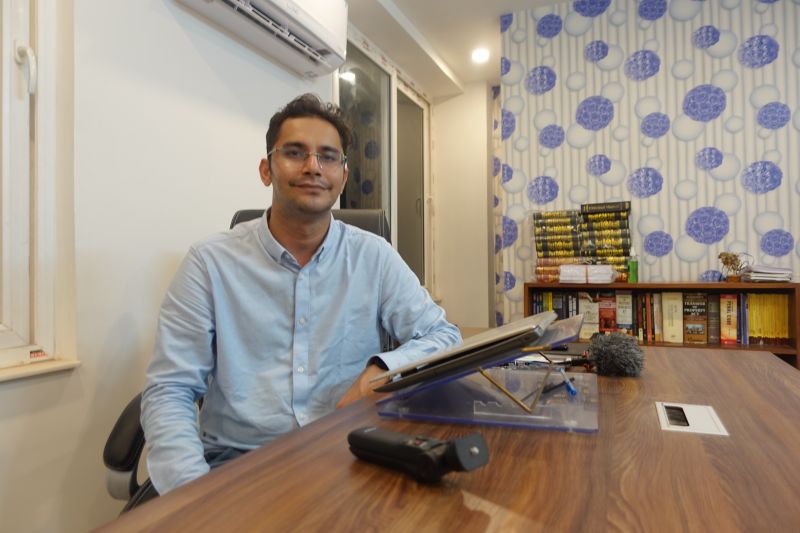
  • Nitish Banka- Founder of Lexspeak Legal who has also marked his steps in Civil, Consumer, Criminal Litigation along with corporate legal support

    Nitish Banka- Founder of Lexspeak Legal who has also marked his steps in Civil, Consumer, Criminal Litigation along with corporate legal support

    This interview has been published by Tanmaya Sharma. The Interview was taken by The SuperLawyer Team.


    You’ve graduated with a Bachelor in Engineering and then went on to pursue Law from the University of Delhi. What motivated you to switch your stream and pursue law?

    It was demotivation that actually motivated me to do law. I was tired of the monotonous routine offered by my previous job and to break that I enrolled in an evening college offered by Delhi University at that time and thereby I entered into law and for some time I was pursuing Job as well as law side by side. But then I quit my job and entered into law and restarted my career as an Intern. Believe me, it is the most difficult task to abandon a good career and restart as an intern in a totally unrelated field and that was the actual motivation to take the law very seriously. Motivation is overrated as I was not that motivated but I had no choice other than to pursue law seriously and improve. It is a consistent effort to become better which actually worked.

    You have been actively taking up Pro-Bono cases and have done a lot of free service in your career trajectory? How important is it for Law Students and professionals to take up Pro-Bono cases and help the needy? 

    At the initial stage, maybe for 2-3 years, you should not think about the fee as the experience you will gain will work wonders in years to come. That will compensate for free or pro bono work. I recommend enrolling with legal service authority in the initial years and helping the society and when you become established in your field then also devote some time to Pro Bono activities.

    Not all students manage to get into good law colleges let alone NLUs. How did you, as an engineering student, become fortunate?

    It is not about college or fortune. It is about how desperate are you? How needy are you? How much hunger do you have? When something is not working, we blame our college, the circumstances and our background. Instead of improving ourselves, putting hours in grooming our skills, we blame them. Your college or background has nothing to do with it. It is your hunger to achieve more.

    Can you walk us through your day in life? What is the life of a Founder of a reputed law firm and a renowned lawyer? 

    I have to reach 10 AM to court if it is an argument, then have to spend a few hours preparing that too in the morning, so you can say, I have to start at 6 AM or 7 AM in the morning.

    Between 10 AM to 4 PM I have to be in court and come to the office at 4 PM or 5 PM then have to start preparing for conferences scheduled for that day. Drafting work and preparation work for the upcoming day is delegated to associates who briefs me by EOD.

    At 7 PM when I finish with conferences, I get briefs from associates and plan for the next day.

    At 8 PM-9 PM, you-tubing and blogging are scheduled.

    On weekends, I focus mainly on Judgement reading and conferences.

    How has social media impacted your career?

    As a first-generation lawyer, I started blogging in 2014, started youtube 2018 and LinkedIn in 2021 so the impact is huge as 90% of clients come through these platforms.

    It is now close to a decade that you have been a Practising Advocate at the Hon’ble Supreme Court of India and also are the Founder of LexSpeak Legal.  What kept you motivated all the way long? 

    Again, I would say motivation is overrated. Someday you will feel motivated and someday you may not. It is consistent efforts and working on different cases, handling challenges that have worked.

    Can you share with us what it is like to build a clientele from scratch? What tips would you like to share with the aspiring lawyers?

    I was blogging for almost 7 years so it was my source but there are many sources for beginners like offering free legal advice on various online/offline platforms, joining legal aid, acting as proxy counsel for various seniors which in future may refer your matters. Socializing/Networking. Taking lead in legally solving social issues.

    What key tips do you suggest to the lawyers representing in the Courts?

    Well, I am still learning things so I am not at that level to give advice or tips. But I would like to emphasize that apart from legal skills lawyers should develop allied skills like marketing, accounting, finance, blogging, business management.


    Get in touch with: