After completing your B. Com (Hons) from Delhi University and qualifying as a Company Secretary from the Institute of Company Secretaries of India, what inspired you to pursue a career in law? Was there a particular moment or experience that led you in this direction?
Truly speaking, I always aspired to pursue a career in law. However, instead of enrolling in a 5-year integrated law program, life took me on a different path. My brother, who was then pursuing Chartered Accountancy, encouraged me to join the Company Secretary (CS) course. That decision proved to be a turning point.
During my undergraduate studies, I found myself particularly drawn to subjects such as Business and Corporate Laws, and Information Technology Laws, quickly becoming my favourites. These disciplines didn’t just pique my interest — they ignited a genuine passion for the legal field. In fact, the CS course deepened my interest in the legal field and broadened my understanding of its practical applications in the corporate world. This growing passion led me to appear for the law entrance examination at the University of Delhi in my final year of graduation. Determined to align my career with my true interests, I appeared for the law entrance examination conducted by the University of Delhi. I was thrilled to clear the exam in 2012 and enrolled in the three-year LL.B. program, becoming a part of the 2012–2015 batch. The moment marked the realization of a long-cherished dream, one that had only grown stronger with time and still motivates me every day.
In the early phase of your career, you dealt with a wide range of matters from RERA and intellectual property to corporate compliance. What were some of the key skills and insights you gained from working across such diverse areas? How did these shape your understanding of the legal field?
During my tenure at KNM & Partners, Law Offices, I was fortunate to be entrusted with a wide range of responsibilities, each offering me the opportunity to grow as a legal professional. My role encompassed advising on business setup, drafting and reviewing transaction documents, conducting due diligence, managing secretarial compliances for a diverse clientele, and providing legal advisory on various aspects of general corporate law. The breadth of work not only sharpened my technical skills but also nurtured my ability to approach legal issues from multiple perspectives, the versatility at work provided me with an ability to handle different legal domains.
One of the most defining phases of my career was in 2016, when two landmark legislations — the Real Estate (Regulation and Development) Act, 2016 and the Insolvency and Bankruptcy Code, 2016 came into force. At the time, our firm represented several real estate clients, and the enactment of RERA brought with it a surge of queries, concerns, and restructuring needs. I took this as an opportunity to engage deeply with the legislation, dissecting each provision and analysing its impact on ongoing and upcoming real estate projects. It was an intellectually enriching experience to assist clients through this legislative shift, helping them align their operations with the new regulatory framework.
Simultaneously, the introduction of the Insolvency and Bankruptcy Code opened another complex legal frontier. I undertook a coordinated study of both RERA and IBC, which proved essential in redrafting agreements and project documentation to align with the changing legal landscape. While the full implications of these reforms were difficult to predict at the time, our early analysis proved prescient, especially as high-profile insolvency cases in the real estate sector, like Jaypee and Amrapali, unfolded. I take pride in the fact that we were able to anticipate critical challenges and guide our clients effectively through an evolving and often uncertain terrain.
In addition, I was actively involved in navigating the changes introduced by the Trademark Rules, 2017, which significantly streamlined the trademark registration process in India. Being part of this period of rapid legal development gave me first-hand insight into how legislation evolves in response to market needs and how practitioners must adapt quickly and thoughtfully to serve their clients’ best interests.
These diverse experiences have helped me build a strong foundation in corporate and commercial law, instilling a deep appreciation for the interconnectedness of legal domains. Each assignment strengthened not only my analytical skills but also my ability to view the law in its broader business and societal context. I remain grateful to the seniors and mentors at KNM & Partners whose precision, discipline, and attention to detail continue to inspire my approach to legal practice.
After starting out in a law firm, you transitioned to working with various government establishments over the years. What motivated this shift? How would you compare the working dynamics of a law firm to those of public sector roles, particularly in terms of impact and approach?
The transition from a flourishing law firm career to government and policy-focused roles was a deliberate and deeply considered decision. Having witnessed the enactment of the Insolvency and Bankruptcy Code (IBC) in 2016, I was eager to move beyond advisory and transactional work to engage directly with the mechanisms of business restructuring. I wanted to be at the forefront of this legal and economic transformation, not just interpreting the law but shaping its implementation.
I was privileged to be among the first cohort of Research Associates recruited by the Insolvency and Bankruptcy Board of India (IBBI). Working under the visionary leadership of Dr. M.S. Sahoo, along with senior members such as Mr. Navrang Saini, Ms. Mukulita Vijayawargiya, and Ms. Suman Saxena, was both an honour and a turning point in my career. It gave me the rare opportunity to contribute to the institutional framework of a law still in its infancy, and to witness firsthand how regulations are designed, tested, and refined in the real world.
One of the most meaningful aspects of working in the public sector is the shift in purpose from serving the interests of individual clients to contributing toward broader economic and societal goals. At IBBI, I experienced how law, policy, and economics intersect and how legal reform can influence market behaviour, investor confidence, and systemic integrity.
Building on my insolvency experience, I later served as a Legal Consultant in the Department of Economic Affairs, Ministry of Finance, where I had the opportunity to work on emerging areas such as the digital economy and fintech regulations. This role further deepened my understanding of how legal frameworks must evolve alongside technology, innovation, and global economic shifts. The work was intellectually demanding but equally fulfilling, as it required a macro-level perspective and a fine balance between enabling innovation and safeguarding systemic stability.
Subsequently, my engagement with the Confederation of Indian Industry (CII) allowed me to interface closely with both industry stakeholders and government institutions. It reaffirmed the importance of collaborative policymaking, where the voices of regulators, businesses, and civil society come together to shape balanced, forward-looking legal solutions.
These transitions have not only broadened my subject-matter expertise but also enriched my professional ethos. Moving from a law firm to policy and regulatory roles has equipped me with a multidimensional view of the legal ecosystem, i.e., from ground-level enforcement to high-level strategy and governance. Each step has reaffirmed my belief in the power of law as a tool for structural change.
You pursued an LL.M. in Cyber laws from IP University. How did this specialized legal education support your work at the Department of Economic Affairs, Ministry of Finance especially while handling complex fintech issues like virtual banking, cryptocurrencies, data protection, and cybersecurity? Could you share a key takeaway from that experience?
My LL.M. in Cyber Law significantly complemented and enhanced my professional engagement with the Department of Economic Affairs (DEA), Ministry of Finance. In this role, I was entrusted with the critical task of coordinating actions among multiple Ministries and departmental committees involved in implementing the recommendations of the Steering Committee on Fintech-Related Issues.
This period coincided with a transformative phase in India’s digital economy — UPI was reshaping the payments landscape, emerging technologies were disrupting traditional financial systems, and conversations around cryptocurrencies and blockchain were gaining momentum. The government was actively focused on policy formulation, technology integration, and the development of robust data governance frameworks to promote innovation in fintech while also addressing the challenges posed by rapidly evolving technologies.
My academic grounding in cyber law proved invaluable as I navigated complex regulatory questions and worked at the intersection of law, technology, and financial innovation. This experience not only deepened my understanding of the legal implications of digital finance but also reaffirmed my commitment to contributing to policy frameworks that are both forward-thinking and resilient.
In your current role, you are closely involved in policy research and development. Could you share an example of one of the most interesting or impactful policy projects you’ve worked on recently, and what made it stand out to you?
One of my most recent projects involves stakeholder engagement on the newly enacted Digital Personal Data Protection (DPDP) Act, 2024. Given the Act’s cross-sectoral impact, it is poised to influence not just business operations, but also the daily lives of individuals. Naturally, it has attracted diverse and often divergent viewpoints from industry, civil society, and regulatory bodies.
Facilitating dialogue in such a dynamic environment requires both sensitivity and strategic clarity. Achieving consensus among varied stakeholders is inherently challenging, but it is essential for shaping effective and inclusive implementation frameworks. What guides my approach is a belief that every concern raised deserves to be addressed thoughtfully and with the best available expertise and resources.
While the legislation itself marks a critical milestone, I firmly believe that its true evolution will occur over time, as market dynamics, technological advancements, and social expectations come into play. Participating in this ongoing process where law adapts to the real-world context continues to be one of the most intellectually and professionally fulfilling aspects of my work.
Given your active engagement with regulatory bodies such as MCA, SEBI, CCI, and RBI, has there been an instance where you had to manage conflicting stakeholder interests? How did you navigate the situation? In your view, what are the key elements of drafting an effective and balanced policy?
When engaging with a diverse group of stakeholders, everyone brings their own unique perspective, shaped by personal and professional experience. In such a setting, especially when actively working with regulatory bodies, managing conflicting interests becomes both an art and a science.
Articulation of differing viewpoints is essential, but so is the ability to facilitate collaboration, build trust, and guide dialogue toward consensus. Successfully liaising with a broad spectrum of stakeholders requires deep research, a nuanced understanding of varied perspectives, and the ability to clearly and objectively communicate those positions.
Drafting balanced, effective suggestions to the policies in such an environment demands more than legal or technical expertise; it calls for empathy, strategic thinking, and the capacity to harmonize competing priorities while keeping the broader public interest at the core.
With such a demanding professional role, how do you manage your time, focus, and energy between work and personal life? What’s your approach to unwinding and maintaining balance?
Balancing a demanding professional role with personal well-being is both a challenge and a conscious commitment. Over the years, I’ve realized that effective time management is not just about scheduling, it’s about setting clear priorities and boundaries.
I approach my work with dedication and structure my day with focused time blocks, which allows me to be fully present in what I’m doing, whether it’s working on projects, attending meetings or handling tasks at hand. I believe in working smart, not just long — which means delegating when appropriate and leveraging tools and systems that promote efficiency.
That said, I also place great value on personal time. To unwind, I turn to reading — especially motivational books that lie outside the legal realm and occasionally journalise and reflect. Quiet evenings with family, walks in nature, and mindfulness practices like meditation help me reset and recharge. These moments of stillness and connection give me the clarity and emotional resilience to bring my best self to work.
Ultimately, for me, balance doesn’t mean equal time for everything but rather being fully engaged in whatever I’m doing — and knowing when to step back to rest and realign.
Looking ahead, what advice would you offer to young lawyers who aspire to work in government advisory roles or pursue a career in public policy and research? What skills or experiences should they focus on developing?
I will be glad if my career path and skills provide a source of guidance to the young fraternity. I would advise to develop a strong foundation in law and gain diverse experience-work in different legal areas and with various organizations, be it-law firms, government bodies, industry associations. Cultivate policy research and advocacy skills early on. The ability to analyse policy issues, conducting research, and articulating positions effectively is crucial. Working with government and regulatory bodies requires strong communication and the ability to collaborate with diverse stakeholders.
As a first-generation lawyer, what motivated you to pursue alegal career, and what challenges did you face early on in yourjourney?
Honestly, not having to study maths anymore was my biggest motivation at first. But as I went through law school and started practicing, I realized what really keeps me going is the ability to make a real difference in people’s lives. There aren’t many professions that give you that kind of impact, and that’s what makes litigation so rewarding for me. Being part of such an esteemed fraternity pushes me to do my job with sincerity and diligence.
The challenges in building a legal practice are immense and ever-evolving, irrespective of background. However, as a first-generation lawyer, the journey comes with additional hurdles. Without an established network or a ready-made path to follow, the learning curve is steeper, and access to fair guidance early in one’s career can be limited. Despite these challenges, I firmly believe that resilience, continuous learning, and an unwavering commitment to the profession are what define success in litigation.
How did your experience at the National Law InstituteUniversity, Bhopal, shape your path and influence your legalcareer?
NLIU has played a huge role in shaping me as a legal professional. During my time there, I had the privilege of meeting and building friendships with some incredible people who constantly guided, supported, and motivated me to pursue litigation as an independent advocate. In fact, every major opportunity in my legal career—whether internships, jobs, or other professional breaks—came through the support of my friends and alumni from NLIU. Needless to say, the institution has had a lasting influence on my journey. More than just academics, it helped me build a strong network that has been invaluable in sustaining my legal career, both inside and outside the courtroom.
Your career began at the Gwalior High Court, and later joined Advocate-on-Record (Supreme Court) office at New Delhi. What valuable lessons did you learn from these experiences, and how did they contribute to your development as a litigator?
As a first-generation lawyer, I believe that gaining experience in a chamber is essential before starting an independent practice. For me, these experiences have been invaluable, shaping my approach to the profession and teaching me important lessons about sincerity and dedication in law. Whether in Gwalior or Delhi, I was fortunate to work closely with some incredibly hardworking professionals who mentored me along the way. Their constant support and guidance, even today, help me navigate the complexities of the profession.
During your time at RS Prabhu & Co., you had the opportunityto work with major corporations and industry players. Whatchallenges did you face while handling corporate clients, andhow did this experience enhance your expertise in corporatelaw?
My time at RS Prabhu & Co. was instrumental in shaping my professional growth. Working with major corporations like Reliance Industries, ONGC, L&T etc. provided me with invaluable exposure to high-stakes corporate legal matters. This experience not only allowed me to engage with some of the biggest industry players but also gave me the opportunity to work alongside and learn from some of the most respected legal pioneers in our fraternity.
Handling corporate clients comes with its own set of challenges. Large organizations operate in complex legal and regulatory environments, requiring a deep and constantly evolving understanding of corporate law. Each case or transaction presented unique challenges, pushing me to refine my legal knowledge and skills continuously. The dynamic nature of corporate legal work—ranging from regulatory compliance to high-value contractual negotiations—demanded adaptability, meticulous attention to detail, and a proactive approach to problem-solving. I will always remain grateful to Mr. K.R. Sasiprabhu, whose mentorship and leadership at RS Prabhu & Co. created an environment that nurtured my growth. His guidance not only enhanced my expertise but also gave me the confidence to establish my own practice. The challenges I faced while working with such major corporate clients ultimately strengthened my ability to navigate complex legal issues, making me a more well-rounded legal professional.
What motivated you to transition from working in establishedlaw firms to starting your own independent practice in 2020?What were some of the significant challenges you encounteredin building your practice from scratch, and how did youovercome them?
Starting my own independent practice was always the plan since my college days. However, the timing depended on several factors. It was during the COVID-19 pandemic, when many offices were shutting down, that I saw an opportunity and decided to take a leap of faith.
One of the biggest challenges early on was establishing a steady flow of work, especially since I wasn’t originally from Delhi. Ensuring that my office could sustain itself financially while also keeping myself engaged was a priority. To do that, I took on a wide range of legal work—not just court matters but anything that required legal assistance. Some of these areas were new to me, as I hadn’t dealt with them much during my time with law firms, but they kept me occupied and helped me build a foundation. The early days of independent practice can be exhausting and uncertain, but the constant support and motivation from my family, friends, and mentors made all the difference. Their guidance helped me push through the difficult phases, and over time, I was able to establish a practice that I could sustain and grow.
When preparing for and presenting arguments in criminalcases, especially those involving serious offences, what are thekey considerations you take into account?
When preparing for any case and not just cases involving serious offenses, the first and most important step is to go through the case file thoroughly. Every document needs to be examined in detail to ensure there are no gaps in understanding the facts. A solid argument starts with knowing the case inside out. It’s equally important to carefully study the legal provisions under which the offense is charged. The exact wording of the law matters, and staying updated on recent judgments and legislative changes is crucial. Criminal law keeps evolving, and being aware of these developments helps in building strong and effective arguments.
I also make it a point to write down my arguments, no matter how well I remember them. Practicing beforehand allows me to structure my submissions clearly and present them with confidence in court. This ensures that every important detail is covered and arguments are delivered in the most effective way possible.
What advice would you offer to young lawyers, especially thosewho are first-generation lawyers, just starting their legalcareers? What qualities or skills do you believe are essential forsuccess in today’s competitive legal environment?
My advice to young lawyers, especially first-generation lawyers, is to not overthink the difficulties of starting an independent practice. Challenges are inevitable, no matter what field you’re in. Instead of stressing over them, focus on finding something that keeps you going during tough times—whether it’s a strong support system, a particular area of law you enjoy, or just the drive to keep improving. A strong command over the language in which you argue is crucial, and it’s something you need to constantly work on. Never underestimate the importance of hard work—it’s one of the biggest factors in building a successful practice. Also, be disciplined. Always be on time, whether it’s for court hearings or client meetings. Being reliable goes a long way in earning trust and credibility.
Most importantly, learn to balance your time between applying your skills and improving them. Keep learning, stay open to feedback, and never stop refining your craft. And no matter how far you go, always be humble and grateful to the people who support you along the way. Success in law isn’t just about what you know—it’s also about how you grow.
Ma’am, with over two decades of experience, when most people didn’t know about cyber laws, intellectual property laws, let alone media laws, what initially inspired you to pursue a career in this field? And what led you to study at the most prestigious King’s College, London? How did you choose this as your specialization?
Very interesting question at the outset. Well, if I look back at my journey in this field of law, it’s been very fascinating. It’s been evolving just like the dynamic nature of law and technology. Way back when I was studying at Delhi University, I did my law from DU, and at that time, the IT Act 2000 was just enacted, and we were very fascinated to see a new law being enacted in India.
We were looking at what exactly the nuances of this new field would be, what the challenges would be. Everything was so new that this field of law made me very inquisitive about what could be the legal issues that would arise, considering the inherent nature of the internet would be borderless.
You know, questions like, will the conventional laws still apply in this medium? How will it change the way people work? How will it change the way people communicate? What kind of complications could arise? For example, jurisdiction issues: if two parties were interacting and contracting online, and there was a dispute, which court would be the right forum to decide? Because there is no global internet court, and there is no global internet law. So that was very, very interesting to think about, and I wanted to read more in-depth into this field, research it further, and contribute to it.
So, I think it’s basically the fact that it was a completely new and unsaturated area, completely new to explore, and I always like to explore something that is an uncharted avenue of our subject. It makes you brainstorm. And I wanted to do this brainstorming in the field of law.
And that’s what really kept me energized. Even today, I still feel like a student. Every day, there is so much to learn. So I may have been here for 25 years, but I still feel just like a graduate would. There is so much to learn and contribute.
In your early stages, you must have obviously, like us, faced a lot of challenges. There must have been a variety of experiences. As you said, the IT Act had just entered and became a reality. How has all of this understanding helped you make a niche for yourself in technology law? How did you decide where and when to start, what kind of practice you should do, and how you should approach it?
You are also majorly involved in training and developing public policies with the government sector. How have you shaped your practice around this?
Well, as I said, the field was unexplored at that time. It was very new. And I wanted to do anything and everything under the sun because this is, you know, learning. And when you’re learning, you can contribute in multifarious ways. As we say, this was a road less traveled, and I took that.
When I looked at the way in which I could basically learn and gain more experience, I looked at the IT Act. Then I also looked at what was happening across the world. When I studied at King’s, we understood that the approaches to the same issues really varied across various jurisdictions. So we had professors, and we had interactions from different jurisdictions across the world. And with those perspectives and the kind of debates in the classrooms, we discussed issues like criminality. For example, how would criminality apply in the metaverse today? Can we say an avatar is responsible for committing a crime? Is the player liable if it’s an assault in a game that leads to some sort of mental shock to a user? How would one impute criminality in such a scenario?
We also discussed how jurisdiction would apply if a person commits a crime in one location and damages critical infrastructure in another country. If while deciding a court’s jurisdiction for example, if the protective principle applies, then the courts would pass orders. How would one go about enforcing those orders? These kinds of cross-jurisdictional issues were really at the helm of discussions even at that particular point in time.
If you look back, the IT Act, when it was just a basic Act, and the way technology developed, the industry grew, cybersecurity became a huge area in itself because with the rising crime, the industry had to catch up. Cyber safety tools were being floated, right from a basic antivirus to spyware to firewalls, and other kinds of technologies. Nowadays, we have blockchain, VPNs, data loss prevention software, and many network safeguards.
So as the industry developed, they also needed legal compliance, and legal advice. I started advising companies on various issues linked with cyber law, which was also interesting. I helped frame their policies, shape their HR policies, social media policies, and tackled tricky issues like whether companies could scan employee emails in the name of productivity. These policies became very important as e-commerce grew.
So in this way, my role became more advisory. I was also involved in education. I taught cyberlaw at the Indian Law Institute and Amity University. In fact, I was part of the first batch of PG Diploma in cyber law at AmityI completed after LLB from Delhi University, and that was a significant encouragement and motivation for me to learn more about this field. That was just the beginning, I would say. Then I went on to study Masters at King’s and further pursued my Ph.D. in cyber law.
It’s been a fascinating journey, but as far as contributions are concerned, there was a need for capacity-building in the country because law was changing. Cybercrime increased phenomenally, so I dealt with those cases, represented clients in various forums, and assisted law enforcement bodies. I also worked on educating and training judicial academies and police academies across India.
And then came writing, which is also a passion I followed and pursued. I wrote my book on computers, the internet, and new technology laws, which was released in 2012. We have a third edition, the latest edition in the market now. I’ve been writing extensively on this subject, and since it’s been changing so fast, we’ve already had 3 editions since 2012. So you can imagine. This is also one way in which technology has positively impacted me and helped me contribute better to society.
How do you see the advent of artificial intelligence shaping the kind of technology law that we have? How is it going to influence not only the legal system but all systems, especially the defense system, as you are with the DRDO right now, advising them in different capacities? How do you see all of this being impacted by international AI acts as well? There are so many of them from which we also take a lot of references, like with the DPDP Act, as it happened. Where do you see we lie with artificial intelligence, and what kind of track are we going to take? Obviously, it can only be speculation. I’ve been advising the government for more than two decades now, and in my personal experience, it’s been a very enriching journey. The way we have shaped our laws and looked at technology, it’s been a very liberal and progressive approach.
I do believe, and firmly believe rather, that one should allow technology to advance liberally and support R&D in the country because, truly, India, when we say ‘Make in India,’ ‘Viksit Bharat,’ or ‘Digital India,’ we have seen this revolution, and it is ongoing and in process.
We are already working towards India at 2047. Looking at that, we are building our roadmaps, and plans are already being implemented. It’s not just in one department; I’m talking about the Ministry of Law, Ministry of Defense, Ministry of IT and Telecom, Ministry of Home, for example—they’re all trying to bring in coordination. There’s scope for more, but with the adoption of the PPP model we see now in AI, India’s AI projects are truly creating a platform for India to progress in the right way.
There is going to be minimum regulation because if you put too much regulation, it’ll stifle the growth of the industry, and that’s the approach of the government as well. But I do feel that high-risk systems need to be regulated immediately because they can play havoc with people’s lives and bring destruction to countries.
For that reason, I strongly advocate that there should be a regulation. In fact, in my mind, there should be a separate regulation for AI. As a voluntary initiative to support G20 and as country chair of G100 for AI and cybersecurity, I drafted a proposed code, a proposed Act for India on AI.
I would like the government to consider it, and in various roundtables with the Honorable Minister, we’ve had discussions. We know the DPDP Act is already there in the offing and it will have provisions for high-risk systems that need to be prohibited and regulated. There will be some regulation to that extent.
Although I think we’re still far away from having separate AI legislation because there’s no talk on that right now, but you never know. The way technology is progressing, I think this will become indispensable very soon. Let’s see how it goes, but so far so good.
The government is taking a lot of interest and initiative, and we are truly world leaders in the ‘Make in India’ space, and I think the law will support the government’s approach and initiative because it’s in the interest of the industry.
With India being quite active in AI, there has been a lot of conversation surrounding its cultural and diversity impact. Ethical concerns and language considerations are important, but cultural aspects must also play a significant role. Where do you see this intersection of culture, ethics, and AI impacting society, and when will these changes be realized by the common man? Currently, a lot is happening at the policy level, but how do you foresee it affecting society when it becomes a reality, especially given that India is a leader in AI yet culturally diverse? How do you see India impacting the global AI scene with its own AI Act, coupled with cyber and intellectual property laws?
I believe we have already started exploring the key pillars of AI ethics. I’ve been involved in developing ethical frameworks, particularly in national projects and educational institutions, such as my role as a professor at Vivekananda Institute of Professional Studies (VIPS). Here, we’ve introduced an ethical framework for AI, which reflects global principles such as transparency, justice, inclusiveness, sustainable development, and bias elimination. These principles are endorsed globally, though regulations can vary by jurisdiction. In India, while we don’t yet have an AI Act like the EU, we are working on provisions for AI regulation.
On the industry side, AI development is progressing rapidly, with models being developed for multilingual AI systems that consider India’s diverse languages and cultural contexts. This is already ingrained in the AI models being developed in India, and as a result, the laws need to reflect these cultural nuances as well. However, these laws must also be globally synchronized, given that AI models or data may eventually travel outside India for processing or storage, requiring compliance not only with Indian laws but also global standards.
Take, for example, the GDPR and its standard contractual clauses (SCC) for data transfers. Similarly, India’s DPDP law also addresses these concerns. While we have cultural diversity, the core principles, like data protection, remain universal. Therefore, I believe we need a harmonized framework that works both for India’s unique needs and the broader global landscape.
Moreover, there are also concerns about data ownership and intellectual property when training AI models. A current case before the Delhi High Court involving ANI and OpenAI raises these issues, questioning whether permission is required for using copyrighted material in AI training. Such cases highlight the need for clear regulations to determine how intellectual property laws apply to AI and data usage for training.
AI regulation is already becoming a pressing matter, and I believe it will require global cooperation to set clear principles and enforce them. The lack of a universal convention on cybercrime and AI further complicates enforcement, even when jurisdiction is assumed.
You’ve managed so much despite being an author, professor, advisor, and now a law firm founder. What motivated you to start your own law firm, especially considering your already extensive involvement in cyberspace and AI law?
The main driving factor behind starting my law firm was the desire for flexibility. I wanted to contribute to the legal field in multiple ways, integrating the knowledge I gained in various roles—whether it was teaching, advising, policy-making, or litigation. Each experience enriched my understanding of the law, and I believed it was essential to bridge the gap between legal theory and practice.
Through teaching and advising, I gained deep insights into the law’s practical challenges. When engaging with Public policy, I was able to identify gaps that needed to be filled. For instance, there were complications in the law around intermediary content removal, and after handling cases such as the one involving HubPages and a spiritual guru, I realized how critical it was for the law to evolve with changing technology.
This interdisciplinary approach—combining litigation, advisory work, policy-making, and teaching—allowed me to contribute meaningfully to law reforms in India, especially in areas like data protection and AI regulation. By establishing my law firm, I could consolidate these experiences and provide a platform for further contributions to legal practice and public policy.
You’re also well known for your work in women and children’s empowerment, especially in the context of cyber safety. Can you elaborate on your work with organizations like UNESCO and ICMEC, and how these global initiatives are being adapted or modified to protect Indian women and children online?
Child protection and women’s empowerment have always been at the core of my work, particularly in the realm of cyber law. Online harassment and digital abuse were rising concerns, especially as many women and children lacked awareness of the risks and legal protections. The existing laws were inadequate, and that’s what prompted me to focus on researching and advocating for stronger protections.
In 2015, I wrote the first book in India on child protection on the internet, which later became the subject of my PhD thesis. In this, I proposed various reforms to strengthen laws such as the Juvenile Justice (JJ) Act and the Protection of Children from Sexual Offences (POCSO) Act. Additionally, I’ve written extensively about women’s rights against cybercrimes, including a book on cyber safety for women.
Through my work with organizations like UNESCO and ICMEC, I was able to contribute to global policy discussions on child protection and cyber safety. In India, I’ve helped tailor these global frameworks to suit our local context. For instance, I established a not-for-profit organization that focuses on awareness-building in schools and colleges, empowering women and children with cyber safety skills and best practices.
During the COVID-19 pandemic, we conducted over 50 webinars to raise awareness about online scams, fake emails, and malicious content targeting vulnerable populations. We were able to educate women, children, and educators on how to protect themselves from online threats, and the response was overwhelmingly positive.
These efforts were particularly rewarding because we saw tangible changes, with many women and children reaching out for guidance, and schools actively engaging in cyber safety education. Through these initiatives, I believe we were able to mitigate harm and empower individuals to navigate the digital world more safely.
You have also worked extensively in intellectual property protection, particularly in the digital space. Could you share some of the primary challenges you’ve faced in this area and how industries have reached out to you for solutions? Given the rising importance of digital platforms, how can businesses better protect their intellectual property?
Intellectual property (IP) has grown tremendously over the years, and new laws were needed to address these changes. In the early days, it wasn’t clear whether domain names could be protected like trademarks. But over time, legal clarity emerged, affirming that domain names could indeed be protected as trademarks. I’ve had the privilege of serving as an arbitrator for the National Internet Exchange of India, where I resolved many cross-border disputes involving “.in” domains.
The expansion of cyber litigation, especially in areas like music piracy, video piracy, and film piracy, has been notable. I also advised Prasar Bharati in overhauling their royalty contracts, ensuring they accounted for the rise of the internet. Many of their contracts, at that time, did not even mention the internet. More recently, we’ve worked on updating these contracts to align with today’s technological landscape.
Governments and industries are now paying more attention to policies that govern emerging technologies, including AI. In this context, governance and audits have become essential. We must ensure that businesses are not collecting unnecessary data, that the data being used is unbiased, and that proper security measures—such as encryption and data redaction tools—are implemented.
The protection of trade secrets, copyrights, and trademarks through registration is fundamental. However, in the case of trade secrets, businesses must ensure confidentiality through other means. The development of new technologies, including AI-generated images, music, and art, raises questions of ownership. Who owns AI-generated art—the person who provided the prompt or the AI system itself? These are some of the challenges businesses face, and it’s crucial for them to adopt encryption, anonymization, and pseudonymization to protect sensitive data.
Moreover, sectors like the social sector, which deal with sensitive data such as donor and beneficiary information, must ensure that data is encrypted and stays within the country. I’ve been advising these sectors on policies, ensuring they comply with legal frameworks. Protecting confidential information is not just the responsibility of the government; the industry must also play its part by adhering to these laws.
The PPP model is vital. It allows for a collaboration between government resources and industry expertise. The government brings its authority and resources, while the industry contributes its technical know-how and capabilities. When both sectors work together, it results in a win-win situation that benefits the nation’s progress.
How would you guide aspiring lawyers looking to specialize in fields like media law, cyber law, or IT law, which are expanding rapidly? What skills should they focus on, and are there any particular books, journals, or individuals they should follow?
To make a meaningful contribution to this field, aspiring lawyers must have the right mindset. You should always consider yourself a student, as there is always more to learn. If you think you know everything, that’s the end of real learning. Passionate research is also key. You cannot delve into the depths of these fields without thorough research and understanding different perspectives. It’s essential to look at how different jurisdictions address similar challenges and tailor those solutions to India’s context.
Perseverance is another crucial trait. The journey in this field isn’t always easy, and you may face challenges along the way. But consistency and hard work will bring results. The legal profession is full of ups and downs, and while your views might differ from others, time often proves the validity of your perspectives. The world changes, and sometimes the policies you advocate for today become essential in the future. Being open to criticism is important, as it helps you grow.
Cyber law and IP law are highly specialized fields. Today, we have DPDP laws, AI laws, and entire branches dedicated to IPR, all of which often intersect. A lawyer working in this space needs to have a broad understanding of various legal issues. These fields cannot be treated in isolation, as cases often involve multiple areas of law.
There are wonderful resources available today that were not accessible when we started law practice. The proliferation of e-learning platforms, educational apps, and online courses is a game-changer. I have personally taken courses such as the Cybersecurity CS50 from Harvard University, which was a fantastic experience. These online platforms provide a wealth of knowledge, allowing students to access information from anywhere.
Additionally, portals like Manu Patra, SCC Online, and government-backed platforms like Swayam and E Pathshala offer free courses that cover a wide array of subjects. There are also incubation centers at institutions like DSCI and NASSCOM that promote startup culture, which is an excellent opportunity for students to learn hands-on and learn about new technologies.
What inspired you to pursue a career in intellectual property law immediately after completing your Master’s in Organic Chemistry? How has your technical background contributed to your expertise and effectiveness in the patent field?
After finishing my Master’s in Organic Chemistry, I was all set to dive into a Ph.D., but then a surprising opportunity at an IPR law firm came up. What I thought would be a short-term role quickly turned into a real passion. The idea of taking lab research and turning it into something commercially viable really sparked my interest, and before long, I realized patent law was where I wanted to build my career. My chemistry background turned out to be a huge advantage, helping me dive deep into life sciences and chemical inventions. It gave me the understanding I needed to break down the science behind patents, draft clear claims, and spot potential challenges during prosecution and litigation.
What challenges did you face when you first entered the patent field, especially coming from a non-legal technical background? How did you overcome these obstacles, and what strategies helped you adapt?
When I first jumped into the patent field, it felt like diving into the deep end—legal jargon everywhere, and I had no idea how the whole process worked! Coming from a technical background, the legal side was completely foreign to me. But I wasn’t about to back down. I threw myself into learning—devouring books, joining training sessions, and reaching out to my seniors. I remember spending extra hours at the office, diving into patent files and getting the hang of everything—from drafting to filing and grants. I made it a point to ask tons of questions and have lively conversations with my peers/seniors or other industry experts. I didn’t just stick to technical-legal side of patent either; I took on filing, invoicing, client communication, and really got a feel for how the entire patent system runs. That hands-on experience gave me the confidence I needed and helped me build a solid foundation in this new field.
In your journey from a patent scientist to the Director of Patents at Adastra IP, how have your personal values and work ethics evolved?
My journey from a patent scientist to the Director of Patents has been a big shift for me, both professionally and personally. Early on, I realized how important it was to get the technical details right and really understand patent law. This strong foundation helped me move forward in my career. As I took on more responsibilities, I also focused on networking, connecting with others, and collaborating with experts from all over the world—things that have helped me grow and expand my knowledge.
A big part of my growth has been my commitment to lifelong learning. The patent world is always changing, with new technologies and legal updates popping up all the time. Staying open to learning—whether through reading, mentorship, workshops, or industry events—has given me fresh perspectives and helped me take on new challenges. Through it all, the idea of “work is worship” has been my guide. It’s a reminder to put my best effort into everything I do. Integrity has also become a key part of my work. By sticking to high ethical standards, I’ve been able to stay true to my commitment to the profession.
What is a piece of advice you received early in your career that has stuck with you and continues to guide your decisions and actions in the patent law space?
Early in my career, I can’t pinpoint one specific piece of advice, but I’ve learned so much from my mentors, and I’m still learning now. One key lesson that has always shaped how I approach my work in patent law is “Always put yourself in your client’s shoes.” This shift in mindset was a game-changer for me. It moved my focus from just understanding the technical details to truly considering my clients’ needs and goals. By viewing things from their perspective, I’ve been able to offer more practical, tailored solutions that truly add value.
Another principle that has been my lifelong guide is, “There’s no substitute for hard work, and never stop learning.” This really resonated with me, especially in a field like patent law that’s always evolving. It’s easy to get comfortable with what you know, but this mentality keeps me pushing myself to stay ahead of new trends and developments. It’s a mindset that’s helped me grow both professionally and personally—because when you’re in a field that never stands still, neither can you!
How crucial is it for professionals to maintain a healthy balance between their work and personal lives, and what impact can this balance have on their overall well-being and performance?
Finding balance outside of work is super important, especially for professionals. It’s so easy to get lost in the hustle of your career, but taking time for yourself actually makes you better at what you do. For me, spending quality time with family, traveling, and diving into hobbies like designing help me recharge and come back to work with fresh ideas and a lot more energy. It’s all about keeping your mind and emotions in check, which keeps you focused, creative, and productive. Without that balance, burnout can creep in, and both work and personal life can take a hit.
And honestly, health is everything. Your body is your temple, right? Regular exercise, yoga, and just taking care of yourself physically isn’t just about staying fit—it helps clear your mind and manage stress too. In a fast-paced field like patent law, finding time for personal care is key to staying sharp. So, no matter how busy you are, always make your health a priority. It’s the foundation for everything else.
Having worked with Indian and Malaysian firms, how have your experiences differed in terms of patent ecosystem, cultural dynamics, and work approach? What insights can you share from navigating these diverse environments?
Working with Indian and Malaysian firms has been an enriching experience, with both offering unique strengths. In India, the patent system is well-established, and you get to dive into complex cases that require a lot of technical and legal detail. It’s a structured and thorough process. Malaysia, meanwhile, has this fresh, evolving energy. The processes are streamlined, and there’s a clear push to align with global standards, which is exciting to be part of.
Both experiences have been invaluable, showing me different ways to approach challenges and deliver solutions. I genuinely value what each brings to the table.
With the rapid advancements in technologies such as artificial intelligence, how do you envision these developments influencing the future of patent law? In particular, how might emerging technologies like AI impact the way patents are filed, granted, and enforced?
AI is moving at lightning speed, and it’s shaking up patent law in ways we couldn’t have imagined just a few years ago. On one hand, it’s a game-changer. Tasks like patent searches and prior art analysis that used to take weeks can now be done in hours. It’s even assisting with drafting to some extent. But it’s not without its challenges. For one, how accurate are AI’s outputs? Can we always trust the data it presents?
And then there’s the bigger question: what happens when AI creates something genuinely new? Does the AI get credited as the inventor, or do we need to completely rethink what inventorship means? We all have seen the DABUS case, current laws don’t quite fit, so do we need to revisit the framework or create new legislation?
And let’s not forget the ethical side. If AI starts influencing decisions, how do we ensure it’s fair and transparent? These are tricky issues, and they’re not just legal questions—they touch on technology, policy, and even philosophy.
This is why collaboration is going to be crucial. Lawyers, tech experts, and policymakers will all need to work together to keep the system fair and relevant. I think we’re heading into a phase where patent law will become more flexible and open to innovation, not just in tech but in the way we approach regulation itself. It’s an exciting time, but it’s definitely a space where we need to tread carefully and thoughtfully.
With your elaborate experience in Patent Law what message would you like to convey to aspiring patent attorneys or professionals considering a career in intellectual property?
To aspiring patent attorneys or professionals considering a career in intellectual property, my advice would be to be patient and persistent. Patent law can be a rewarding career, but it requires dedication and continuous learning. Building strong technical and legal skills is essential, and don’t be afraid to seek mentorship. Finding a niche that excites you and developing expertise in that area will set you apart in the field. Lastly, always stay curious and open to new knowledge, as the world is evolving rapidly, and so is the law that governs it.
Given your extensive expertise in the field, are there any resources: books, or organizations that you would recommend for those starting a career in patent law?
If you’re just starting in patent law, there are a few resources that can really help you get a solid foundation. For books, Patent Law by Hon’ble Justice Prathiba M. Singh, the recently launched Patent Law by Adarsh Ramanujan, and Patent Law by P. Narayan are all excellent choices for understanding the Indian patent system. If you’re coming from a technical background, Legal Writing by Bryan A. Garner is a great resource for honing your legal writing skills. Beyond books, it’s essential to regularly read the Patent Act—think of it as a novel. WIPO Academy’s online courses are good for your basic understanding of patent law. Finally, make sure to stay up to date with court judgments and attend seminars or networking events when you can—it’s a great way to stay connected and keep learning from the latest developments in the field and advance your knowledge.
Your educational background spans a range of fields, from M. Com and LLB to Company Secretary (Executive) and an LLM in International Trade Laws and WTO. What motivated you to pursue a career in law, and why did you choose to specialise in International Trade and WTO during your LLM?
My decision to pursue a career in law stemmed from the profound realization that lawyers hold one of the most influential roles in shaping not only society but also the economy, industry, and politics on a global scale. The weight of responsibility carried by legal professionals, whose work directly impacts individuals, communities, and the broader environment, deeply resonated with me. This sentiment was strongly reinforced during my childhood when a neighbour, wrongfully accused, was forced to endure repeated visits to the police station. Witnessing this firsthand highlighted the immense difference that legal support can make during distressing and complex situations. This experience solidified my belief that the power of legal knowledge, combined with the ethical responsibility it entails, is what inspired my journey into law.
In essence, the law’s ability to safeguard rights and bring justice fuelled my passion, and I remain steadfast in my commitment to upholding these principles.
As for my choice to specialize in International Trade Laws and WTO during my LLM, it was driven by my keen interest in the global market, international politics, and economic policies. I have always been fascinated by the intricate workings of international commerce and governance. I wanted to equip myself with a solid understanding of the fundamental norms, agencies, and regulatory standards that shape global trade, ensuring that I am well-prepared to support businesses operating in an interconnected world.
Could you walk us through your career progression, starting from your early days as a Junior Associate to your current role as a Partner at Singhania & Co LLP? What were some of the most valuable lessons you learned in the early stages of your practice that have influenced your professional journey?
My professional journey has been an enriching experience, shaped by diverse roles and exposure across multiple jurisdictions. I have had the privilege of working with three listed companies and two top-tier law firms, gaining legal expertise in India, the UAE, and Africa. My career began in litigation, which laid the groundwork for a comprehensive understanding of dispute resolution. Over time, I transitioned into the corporate and regulatory domains, acquiring hands-on experience in areas like real estate, corporate laws, intellectual property rights, projects, project finance, technology, M&A, EPC contracts, and FEMA compliance.
In my early roles, I served as the legal head for zones spanning West Bengal, Rajasthan, North and East India, and Delhi NCR for leading housing finance companies. This phase gave me practical insights into regulatory compliance, litigation, and real estate transactions. My tenure at Amarchand Mangaldas & Suresh A. Shroff, and later with Shardul Amarchand Mangaldas and Cyril Amarchand Mangaldas, further refined my expertise in corporate transactions and advisory work. Before joining Singhania & Co LLP, I gained international exposure working with a Dubai-based conglomerate with operations in Miami, the Middle East, Europe, and eight African countries.
This diverse journey, spanning five cities and engaging with varied sectors, has been a transformative experience. It has equipped me with a strong legal foundation, strategic thinking, and the ability to navigate complex legal landscapes effectively—skills that I bring to every professional engagement.
You have extensive experience in structuring, strategizing, and negotiating transaction documents across multiple sectors. Can you discuss a particularly challenging deal and how you overcame the challenges?
One of the most challenging deals I worked on involved a multi-jurisdictional M&A transaction for exploration of iron ore deposits that required navigating conflicting regulatory frameworks across India, Africa, and Dubai, and involved government representative, multinational mining giant. The primary challenge was aligning the interests of stakeholders while ensuring compliance with diverse legal systems. By fostering open communication among parties, engaging local legal experts, and adopting a phased negotiation strategy, we successfully closed the deal. This experience underscored the importance of adaptability, cultural sensitivity, and a solution-oriented approach.
You’ve worked on transactions across various jurisdictions, including Africa, Dubai, and India. What are the unique legal and cultural challenges you face when dealing with cross-border deals?
Navigating cross-border transactions requires a combination of legal expertise and cultural sensitivity. For example, while structuring agreements in African jurisdictions, addressing legal ambiguities is often critical, as is fostering trust through strong personal relationships, especially given the significant involvement of government liaisons and multinational stakeholders, including European influences. Similarly, in Dubai, aligning with DIFC and free zone regulations, adhering to Sharia law, and respecting local business customs are essential. Success in these transactions is not just about technical proficiency but also about understanding and adapting to diverse cultural and regulatory landscapes.
Ultimately, the ability to engage with local norms, working practices, and mindsets strengthens relationships and significantly enhances the chances of successful negotiations and seamless transactions.
How do you manage the complexities of advising clients on international legal frameworks, especially when dealing with issues like FDI, foreign exchange regulations (FEMA), and local laws in emerging markets?
Advising clients on international legal frameworks, such as FDI policies, FEMA regulations, and local laws, requires not only a deep understanding of evolving regulations but also a strong network of global legal experts. This task is often more challenging than it appears, as the legal environment has become increasingly dynamic and complex over time. My approach is to first understand the client’s specific needs and then ensure alignment with the applicable laws. When necessary, I also guide clients to take corrective steps to achieve compliance. Industry norms play a crucial role, as they often drive changes in regulations over time, which must be carefully considered while structuring advice.
Breaking down intricate legal requirements into actionable steps and delivering clear, pragmatic solutions is at the heart of my practice. By combining legal knowledge with strategic foresight, I ensure my clients remain compliant while safeguarding their interests, especially in the context of emerging markets. Ultimately, success in this field comes from balancing legal expertise with a nuanced understanding of industry trends and regulatory shifts.
Having led teams in multiple roles, from Manager (Legal) at DHFL to Partner at Singhania & Co, what is your approach to managing legal teams? How do you ensure high levels of productivity and collaboration within your team?
Leading legal teams have underscored the importance of clear communication, strategic delegation, and fostering a collaborative, trust-driven environment. I prioritize understanding each team member’s strengths, aspirations, and areas of interest, which helps me align individual goals with collective objectives. Encouraging ownership of work, while providing guidance and support, empowers the team to approach tasks with passion and responsibility. Regular knowledge-sharing sessions and open discussions keep the team updated, motivated, and aligned with evolving legal trends.
By cultivating a culture of trust, mutual respect, and continuous learning, I have consistently seen high levels of productivity, innovative problem-solving, and seamless collaboration, ensuring exceptional outcomes for clients and individual growth for team members.
You’ve advised clients on issues like data mining and trademark infringements on websites. In your view, what are the biggest emerging legal challenges in the technology space, and how do you see them evolving in the next 5-10 years?
The technology landscape is advancing at an unprecedented pace, bringing forth multifaceted challenges such as data privacy, cybersecurity, and the regulation of AI and blockchain technologies. Emerging concerns, including cross-border data transfers, digital copyright infringement, and the intricacies of smart contracts, highlight the growing complexity in legal documentation and compliance. Over the next 5-10 years, these issues will necessitate the formulation of robust policies, standard operating procedures (SOPs), and multi-jurisdictional frameworks to address the regulatory gaps many are still grappling with today.
Irrespective of the nature of a business—be it a sole proprietorship or a publicly listed company—or whether one is an individual or an entity, technology is profoundly impacting and will continue to reshape every sphere of life and profession. This digital transformation spares no domain, making it imperative for everyone to adapt to the rapid pace of change. As lawyers and policy influencers, we bear a greater responsibility to engage with technology, society, and industry in a way that ensures the outcomes of this technological advent are beneficial to all, rather than resulting in exploitation. It is our duty to ensure that the legal frameworks and policies we shape foster innovation while safeguarding against undue risks and inequities, creating a more equitable and sustainable future for all.
The legal profession itself is undergoing a transformative shift, especially post-COVID, where technological fluency has become indispensable. The era of delegating technological tasks solely to juniors is long past—modern lawyers must actively skill up to adapt to this digital transgression. As legal practitioners, agility, foresight, and a proactive approach will be essential to effectively navigate this evolving landscape and remain relevant in the globalized legal domain.
What advice would you offer to the younger generation aspiring to succeed in the field of Corporate Law, given your extensive experience?
For freshers starting their careers in law, my advice is simple: first, build a strong foundation by mastering the basics of law, whether in corporate or litigation. A solid understanding of legal principles will set the stage for your career. Stay curious and proactive about learning, especially in emerging fields like technology, cross-border transactions, and regulatory developments. Equally important is building relationships—networking with clients and colleagues will play a big role in your growth, as trust and communication are key to success.
For mid-level lawyers, it’s time to focus on deepening your expertise in a specific area and honing your skills. Whether it’s corporate law, litigation, or a niche practice, developing specialization will help you stand out and become a trusted advisor. Be proactive in managing client relationships, taking ownership of complex cases, and looking for new business opportunities. In addition, focus on improving your efficiency—balancing technical knowledge with client-focused, practical solutions will be crucial as you progress in your career. Ultimately, whether you’re a fresher or mid-level lawyer, success comes from a combination of knowledge, integrity, and a client-first approach.
You started your educational journey with the University of Cape Town (UCT), and then went to the University of Warwick, and from there went on to do your master’s at The London School of Economics and Political Science (LSE). Was law a planned choice for you and what were the challenges you faced in law school?
To be honest, I really didn’t want to study law, let alone be a lawyer of any kind.
But the BA degree I took at UCT gave me a much broader education, majoring in English and Comparative African Government and Law. This allowed me to study in depth English language and literature, and the rise of African independence movements and the politics of liberation. Some of the lecturers on those two courses were inspirational – and brave. In my final year, I was taught by Mary Simons (both of whose parents were major figures in the ANC and were then in exile) while she was under a succession of 90-day banning orders. I have her to thank for the most important part of my education there – or anywhere. In summary, being a student at UCT at that time, and opposing Apartheid, I faced challenges just being there.
The BA I took was part of the (then) South African legal qualification, leading to a second, LLB, degree. During my BA, I was exposed to some legal studies, as we had to take Roman Law, Roman Dutch Law and Constitutional Law. Roman Law was historically and intellectually interesting and challenging as it also required university-level Latin, but bore no relationship to the socio-political, economic and human reality of Apartheid SA. As I saw it, Roman Dutch law was equally irrelevant to the lives of most South Africans.
I knew that I wanted to leave South Africa because of my views on Apartheid. And I was lucky enough to have British nationality, so the UK was, thankfully, my first and only choice. I left SA forever as soon as I could, soon after graduating from UCT.
I had become interested in English law – mainly through my constitutional law studies at UCT (which were largely based on UK constitutional law). So, when I arrived at Warwick to study for the LLB degree, I was committed to studying law, and about four-five years older than most of my undergraduate class. Being a mature student, I understood why I was there and was committed to my UK legal studies. Warwick had (and still has) an exceptional and pioneering Law School – having developed its “law in context” approach to studying law. I had several inspirational teachers, too. It was at Warwick that I became so interested in English law that I then seriously considered an academic legal career.
The main challenge I faced at Warwick was settling into a very different institution, approach to teaching and studying law, and, of course, learning what it was actually like to live in the UK – a challenge that many international students are likely to face when arriving in the UK for their studies. I had no doubts about being there, studying law, or the value of its LLB degree. And it didn’t take too long to settle.
In my final year at Warwick, I realised that I wanted, if possible, to take a master’s or equivalent degree to broaden my legal thinking and to allow me to study and think about subjects that weren’t available to me as an undergraduate. Financial constraints meant that it had to be a one-year degree course.
The LSE was my first choice, mainly because of its outstanding reputation as an institution and because of the quality and fame of its Law Department. Again, I was lucky to have some inspirational teachers and mentors. I studied the law of restitution and English legal history. I was also able to study in much greater depth constitutional and administrative law and wrote my dissertation on administrative law. (It was subsequently published in The Modern Law Review in 1984.) Again, I had no doubts about being at LSE.
The challenges I faced as a law student were different at each of UCT, Warwick and LSE. Those I faced at UCT are obvious from the way I have outlined my background. The main moral challenge I faced at UCT is that you can’t divorce law from its place in its social, political, economic and human contexts, and that, as in Apartheid SA, it was an instrument of oppression for the majority. The Law Faculty at UCT did what it could under very challenging circumstances. As I said, some of my teachers were trying to live and teach under a series of banning orders (in effect, house arrest, and under near constant surveillance). Others were arrested, charged and imprisoned for serious offences in resisting Apartheid.
At Warwick, I had to settle into a new country and a very different university and academic life. Those challenges were more personal. By the time I arrived at LSE my challenges were mostly financial, especially as I had then decided to become a barrister. I knew I was going to have to find ways of keeping myself for some time beyond LSE, at the Inns of Court School of Law for my Bar Final Examination studies, and into 12 months’ pupillage in London barristers’ chambers. I was fortunate – and I am grateful to this day – that the Law School at Warwick offered me extensive part-time lecturing and tutoring, and the LSE Law Department engaged me as a part-time teacher, too. These, among other jobs I held while studying at LSE for my LLM and at the Inns of Court School of Law, kept me afloat.
More broadly, one challenge I have come across often is trying to answer the question asked by many in the UK who are contemplating a legal career: should I study law at university, or something else?
There are two opposing schools of thought here: one is that it is better to have a broader education than the typical, three-year, UK undergraduate law degree offers, and to take the law conversion course later, and then the professional examinations. The argument is that this creates a more rounded individual with broader perspectives to bring to legal practice. There are many, including some of our most senior judges, who advocate this thinking.
The other is that it is better to immerse yourself in law from the start to get a deeper understanding of, and grounding in, law as an academic discipline. And besides, that saves you taking a law conversion course, so there is a timing and financial advantage, too.
I realise that, for many prospective law students in India and elsewhere, this may not be a dilemma, but I thought this challenge may resonate for some.
You’ve been involved in the technology and outsourcing sectors since the mid-80s. How have you seen the landscape evolve, particularly in terms of regulation, client needs, and technology advancements like AI and cloud computing?
The information technology landscape has evolved markedly from product (think mainframe computers that occupied entire buildings) to software and applications and then to IT-enabled services, including IT and business process outsourcing (which has of course, led to the dominance of India as an offshore IT services destination). This isn’t to say that the infrastructure – information networks and systems and their components – aren’t important. Obviously, they’re critical, as we’re now seeing at GPU level in AI compute. It’s just that, over the years, there’s been greater focus on software and services, especially from market and client perspectives. This broad evolution has obviously led the focus of regulatory responses and client needs from a product-supplier perspective leading to a service-service provider perspective.
To illustrate this evolution from hardware to software – cloud computing is a good example of a business model – less a technology (though some may argue with that), that has evolved to become all-pervasive “as a service”..
AI has been and is evolving all the time and will continue to evolve. To be honest, I think it’s too early to call how AI will evolve.
But, based on experience of tech hype cycles to the point where tech ultimately delivers real value, I think we must take the long view of all technology developments. This means that it’s probably wrong to take either of the extreme views that, on the hand, AI spells the end of humanity as we know it and should be regulated accordingly, while, on the other, AI will be the saviour of humanity and should, if it’s regulated at all, be regulated as lightly as possible. AI’s actual benefits, risks and challenges will become clearer over time. This makes regulation today, and even client needs, much more difficult to formulate – and to deliver.
Today, the greatest challenge facing governments and regulators with AI – as with any significant, fast-developing technology – is if, how and to what extent to regulate it. We can see at either end of the spectrum the US approach (broadly, don’t regulate federally or we’ll stifle innovation) and the European Union response evidenced in the recent and comprehensive AI Act, with which I am sure all your readers are familiar. The UK is perhaps somewhere in the middle, for now. It’s hard to read the direction of travel that the current UK government and our sector regulators will take. For those interested in this subject, have a look at writings on “the Collingridge Dilemma” and “the Pacing Problem” in technology regulation.
Can you walk us through your journey from starting your career with the UK Civil Service to your current role? How has your career evolved over the last 40 years, and what were some pivotal moments that shaped your path?
In the 1980s while in the UK government, I was lucky enough to have access to some leading-edge information technologies, systems, and products. I became fascinated by them and their potential. I also started to understand – at a very basic level – how those technologies, products and systems were supposed to work and what their implications might be for the mission-critical networks and computer systems then deployed by the UK government and its agencies – and for the outputs and outcomes of those networks and systems. At the same time, in the mid- and late-‘80s, I found myself as probably the only lawyer in the UK government having to advise on some leading-edge technology applications and the start of what we’d now call outsourcing (then, we called it “facilities management”).
I had to learn very quickly to apply traditional legal rules and principles, that had no apparent application to the transactions before me, to developing technologies and the services around them, where there were no textbooks or precedents – in fact, no guidance at all, either from the UK, the USA, or elsewhere. So, I learned the hard way, and certainly made some big mistakes of various kinds along the way. Those mistakes were all my own.
I found this challenge both daunting, but also exhilarating and fascinating, and I still do today, for example, when I must think about and advise on AI. That’s what drew me to becoming a technology lawyer. IT law and the challenges of being an IT lawyer aren’t for everyone. But they were pivotal for me and made me want to practise “computer law” (I am not sure it even had a name then) when I left the UK government and went into legal private practice in the City of London. And so I became a highly specialised (some would say, too narrowly specialised) advisory and transactional commercial lawyer, focusing on the strategic and operational aspects of IT and related regulation. As I am today.
Recognising that I had chosen such a narrow path in my legal career, as soon as I’d established myself as an IT legal practitioner, I realised that I needed to broaden my perspective. It wasn’t common then – and it’s still relatively uncommon – for lawyers like me in private practice to represent IT suppliers and service providers. But I decided that I should represent some selected suppliers and service providers, because this would broaden my transactional perspectives, my legal, contractual, and negotiating experience, my practice base, and my career prospects. And I thought it would make me a more rounded, effective IT lawyer.
Also, I started to engage with others in the IT ecosystem, for example, management and procurement consultants, business advisers, corporate financiers, banks that debt- funded IT companies and projects, and private equity and venture capital houses – all of which increased my networks, live connections, and opportunities. That isn’t to say that I became a corporate, corporate finance, finance or any other kind of lawyer – but I was (and am) able to introduce my colleagues who were (and are) to those IT-market and client-related opportunities. So, this was a career- and practice-enhancing pivot.
Another major development in my career comes from, and is about, India. When India started opening up economically in the early 1990s, its IT sector became recognised, and Jack Welch at GE had decided to site GE’s back-office operations in India. This eventually opened a very important new practice for me. It came about because my team and I were often instructed by Western organisations to advise on the newly emerging offshore outsourcings from India to our client locations, as well as to represent our Western clients in the development and operations of Indian-based captive and build-operate-transfer structures. This took me to India frequently, and I came to know the giants of the Indian IT sector: Tata Consultancy Services, Infosys, Wipro, HCL, Satyam (as was) and Tech Mahindra, along with most of the other major IT and newly emerging business process service providers like L&T Infotech (as was), NIIT Technologies (as was), WNS, Genpact and EXL Service. Consistent with my desire to broaden my practice and client base, I started representing many of those Indian Tier 1 and 2 service providers in their first major IT and outsourcing transactions in the UK and Europe, as well as being involved in their first M&A transactions in the UK. India being India, and with such a highly networked business community, I found myself drawn into a wide range of Indian transactions and opportunities, irrespective of my legal experience. I have spent many happy years travelling in India, also on family holidays, from the far North to the deep South.
Another one of those unexpected developments that proves to be pivotal in a career: while I was making my way as a partner in Stephenson Harwood (where I started my IT private practice legal career in earnest in the 1990s), a fellow SH partner and I were approached by the UK firm of Coopers & Lybrand, then one of the global accountancy practices, to set up and lead their first associated UK law firm. So we established Tite & Lewis. This meant learning new, very different, and much broader management skills alongside running an IT law practice and serving clients. Coopers & Lybrand very soon merged with Price Waterhouse, to become what is now PwC. We became, in effect, PwC Legal. So, my co-founder and I, along with our T&L colleagues, saw a massive, complex, global merger at close quarters. All I can say is that it was quite an experience, and not an especially comfortable one, either.
The direction of travel and aspirations for PwC’s legal practice changed, but not in a way that appealed to all of us. So, when Ernst & Young (EY) UK approached us to create their first associated UK law firm, we moved shop and created Tite & Lewis a second time. I learned much from the experience, too, as this was a complete start-up that needed to scale up rapidly and, on the EY side, it was led with a different senior management style to PwC’s. Again, I had to combine senior management learning with running a successful IT law practice and serving clients, often in places like Europe, the USA, Hong Kong and Australia. That experience came to an end because of Enron, the demise of Arthur Andersen, the Sarbanes-Oxley Act, and changes in SEC public audit rules, all of which meant that a standalone UK legal practice was no longer viable for EY.
So, I returned to mainstream legal private practice as an IT specialist and held various practice leadership and senior partnerial positions. And I now find myself – very happily – back where I started my specialist IT legal career, at City of London and international law firm, Stephenson Harwood LLP, but this time, as senior consultant, not a partner.
Finally, another direction that proved pivotal for me has been serving as a non-executive director and adviser to various companies, including chairing a UK plc. The first opportunity arose because an important academic client needed someone to represent it on the board of a funding body operating in the medical and scientific technology areas. I had never served on such a board. So I learned.
The next, much more significant, opportunity arose because a client who had become a close friend had been appointed chief executive of one of Europe’s leading IT and outsourcing advisory groups and wanted me to support him and the board as non-executive chair. The other directors interviewed me and agreed. As this was a UK public company, I had to learn, understand, and apply corporate governance rules and London Stock Exchange regulations, as well as – and most challenging of all – boardroom dynamics and politics. This was a powerful and valuable, if occasionally unnerving, experience, from which I learned more than I could have imagined. As the company I chaired operated in the IT and outsourcing markets, often involving my clients, I had to consider and negotiate my way through potential conflicts and other legal practice governance rules. But, overall, my part-time, non-executive, chairing and later non-executive director role at this company complemented my legal private practice very well and helped me to develop my skills and experience.
Other corporate and academic non-executive director and senior advisory roles followed, all of which were complementary to my practice as an IT lawyer, and actively enhanced my career. I had to ensure that none of these roles was going to cause difficulties for my work as a private practitioner, which was always top priority.
Based on my experience, are there any messages for readers? Maybe these:
broaden your networks and horizons,
learn from your colleagues, your clients, and others you meet along the way,
keep an open mind about the opportunities that may come your way (some which you may make for yourselves, some of which may be entirely fortuitous),
be open to taking up those opportunities, even if you decide, ultimately, not to take them,
consider all opportunities and roles that are complementary to, and will enhance, your personal, business, and legal skills and experience,
think about helping, giving opportunities to, and nurturing others when you can. It’s rewarding in so many ways, and
above all, it’s really important that you enjoy your work and your role(s), accepting that there will inevitably be moments that are definitely less enjoyable.
In your experience, what are the key legal or regulatory risks that companies face when outsourcing critical IT services or adopting cloud computing solutions.
Each critical IT outsourcing or cloud computing transaction raises legal and regulatory risks depending on specific contexts and conditions, including on the customer side, for example its operational readiness for the transaction and the strength of its IT and compliance functions. It would be wrong and potentially misleading to set out a long list of specific legal or regulatory risks in such situations. Instead, based on my experience, I’ll list some of the most common key legal and regulatory risks concerned.
Regulatory compliance, especially in the UK and Europe, with the financial services sector outsourcing and cloud controls under, for example, the European Banking Authority outsourcing guidelines, the EU Digital Operational Resilience Act (DORA) and the UK Operational Resilience requirements.
Similar regulatory compliance in the EU critical national infrastructure (CNI) sectors, under the Network and Information Systems Directive (NIS2). The UK should soon be legislating to introduce similar rules in our CNI sectors. NIS2 has important implications – and obligations – for the IT, data centre, internet infrastructure, managed services and outsourcing markets.
Third-party supply chain transparency, especially in the context of cloud sub-outsourcing, clearly identifying where the cloud service provision is in the customer supply chain and putting in place suitable contractual governance.
Concentration risk in contracting with one of the small group of cloud hyperscalers, and how to relocate and ensure continuity of service in the cloud-delivered services in the event of a hyperscaler service outage or failure.
EU and UK GDPR compliance, including in cross-border data transfers outside Europe.
The application of the Acquired Rights Directive (ARD) and its UK equivalent, the TUPE Regulations (TUPE), effecting the mandatory transfer of in-scope staff on outgoing employment terms to the new outsourcing service provider or back to the customer where it takes the outsourcing back in house, especially where certain contractual pensions and enhanced redundancy rights are included in the transfer. It has not (yet) been established conclusively that the ARD and TUPE will apply to cloud computing transactions (especially public or hybrid deployment models), but in principle these rules could apply to certain kinds of cloud outsourcing.
Exit provisions to ensure efficient and timely migration of IT and cloud services on the expiry or termination of the outsourcing or cloud service provision.
As a trusted advisor to boards of some of the world’s largest corporations, what are the key strategic factors you emphasize when advising companies? Additionally, could you describe a particularly complex IT or outsourcing transaction you’ve been involved in, and how you approached overcoming the challenges associated with it?
In my experience, corporate boards do not usually call on external counsel in my practice area early enough in transactions or projects to advise on key strategic factors. Maybe they should, but usually that advice has been given before by a combination of external consultants and internal stakeholders.
When I’m called on to advise boards, it’s most often in the final stages of a transaction or technology implementation, when the board wants an external counsel’s view, delivered face-to-face and supported in writing, on the particular material risks in the IT or outsourcing transaction or project, and how those risks are being mitigated by contract, operationally, or in some other way. The board wants final legal sign-off. The key strategic risk factors vary from transaction to transaction, and from board to board. There is no one list of these factors, so it would be misleading to list them here.
In many cases, my role is to support board and corporate governance to enable the board to reach a critical “go/no-go” decision. You may think that it seems too late for such a decision, and you would be right, but that’s often the way it is. Usually, I’m able to give the legal assurance sought.
One exceptional (in every way) transaction that fell into the above category was a massively complex, business- and mission-critical IT outsourcing and data migration project for a UK bank. Because of the history of the bank, its financial situation, and its standing in the UK retail banking market, for the first time in my experience, this outsourcing project was under the regular, direct supervision of the three UK financial regulators – the Bank of England, the Prudential Regulation Authority and the Financial Conduct Authority. Such was the importance of this outsourcing in the UK retail banking market, that I was interviewed personally by the three regulators on the risks of the outsourcing to the bank concerned, and how they were being mitigated.
I was then asked to attend a full board meeting of the bank with the bank’s then general counsel to address those risks and the mitigation. My team and I prepared a graphic chart to illustrate and clarify the transactional risks to the bank’s board – this helped to explain and emphasise the issues and concerns. The board questioned me and, finally, the chair asked me directly if I would sign the outsourcing contract in its present form, given the legal and contractual risks we had identified and the mitigation in place. I said I wouldn’t unless certain contractual and operational measures were put in place, which was consistent with the advice we had been giving as the outsourcing progressed.
The board did not sign off the transaction until, sometime later, we had been able to negotiate various additional risk and operational mitigations with the outsource service provider and other entities. When these had been achieved and the documentation was finally agreed, I was able to confirm to the board that the outstanding risk areas had been addressed in contractual and operational mitigation.
The deal signed and is still considered one of the most effective banking technology and data migrations and outsourcings in the UK market.
As a Visiting Professor in Practice at LSE Law School, you teach subjects like AI, cloud computing, and legal technologies. What do you think are the most pressing legal issues in the realm of advanced technology today, and how do you prepare your students to tackle them?
LSE’s motto is “rerum cognoscere causas” meaning “to know the causes of things”. I am going to apply the motto broadly in answering this question.
In the realm of advanced technologies today, I think – and it’s a personal view that others in LSE Law may disagree with – that what serves our students best is an intellectual framework to help them “know the causes” of advanced technologies and their implications, and understand and analyse the most pressing legal issues that follow from those causes. So when I am preparing and delivering lectures, I have in mind a framework, which I hope will help our students to know and to understand the following kinds of things (this is not intended as an exhaustive list):
the way(s) that the advanced technologies concerned work
their macro and micro impacts, positive or negative or both, on the world, for example, the environment, society at large, on human activities and interactions, and in all relevant contexts, including in the commercial sphere(s) concerned. For example, in the context of AI in retail financial services markets, how bias in datasets and skewed algorithms might result in denying credit to particular, say ethnic, groups in society,
the specific risks and harms, as well as the positive impacts, associated with those technologies (see the example in (2) above),
the main providers of such technologies and their market position, for example, if those providers are dominant, as the hyperscalers are in the cloud infrastructure markets, and especially if this creates systemic concentration risk in, say, the regulated financial markets,
the ancillary issues and considerations that may arise from such technologies, for example, the impact of the growing cyber risk on the insurance markets, how AI and sovereign actors and their proxies may be contributing to that risk, and the decreasing insurability of certain kinds of cyber risk, or the private right of self-defence in response to cyberattacks,
the geopolitical consequences of advanced technologies, for example, the so-called “arms race” for GPUs in AI, and the rush to acquire alternative energy sources to drive the increasing power demands of data centres in AI compute, as well as the strategic importance of AI in the “Third Offset”,
how current law and regulation may apply to those technologies and those risks, especially in unintended or unexpected ways, and
how proposed law and regulation may apply to those technologies and those risks.
How do I try to prepare our students to tackle these issues? By encouraging them to think about them, to discuss them in class and, if students wish, to write about some or all of these issues in their summative essays.
You may be surprised that I follow this approach. I think that having a framework to “know the causes of things”, then trying to understand and think more about the impact of those things, is a more adaptable, flexible and useful approach in considering the most pressing legal issues in advanced technologies like AI, which are constantly evolving and changing. Our thinking needs to be able to keep track, and to evolve, too.
You’ve played significant leadership roles at firms like PwC and EY. How have you navigated the challenges of managing large teams of lawyers while maintaining a focus on technological innovation and client service?
The honest answer is that it was a struggle, though an exciting and rewarding one in many, though not all, ways. And it remains so for all senior lawyers in private practice and, similarly, for general counsel in corporate roles. There is an inherent and constant tension in balancing the following:
developing new and maintaining existing client relationships,
delivering the best possible legal service to clients,
being aware of, and deploying, new technologies, processes and techniques in legal service delivery,
nurturing, managing and retaining teams,
taking difficult decisions about people and the business,
general management, and
interacting with other, non-legal, colleagues.
I don’t mean this to be a complete list.
There is another, more personal and, maybe for your readers, more important challenge here. I allowed work to come first. Because of those challenges, I wasn’t at home much, I wasn’t around to support my wife much of the time and missed my three children growing up. While being an international technology lawyer looked, and was, exciting and took me all over the world serving household-name clients, I was away from my family and home for long periods over many years.
So, as I say, while it was exciting for me, and materially rewarding for my family, there were significant downsides in trying to balance these challenges. If I had my time again, I hope I would do, and be more able to do, things differently in that respect.
Your career spans across both legal practice and academia. How do you balance the practical demands of being a Senior Consultant at Stephenson Harwood LLP with your academic pursuits and publications?
These roles are actually quite complementary. My main academic commitments, which involve lecturing to the LLM and LLB classes in LSE Law, are concentrated in a relatively short period, around which I can plan my legal practice and academic work. I also have an understanding, supportive and inspirational leader in LSE Law, Professor Andrew Murray, who happens also to be one of the foremost academic lawyers globally in IT law and regulation.
My title at LSE says it: Visiting Professor in Practice. What LSE expects from me is exactly that – perspectives from practice. It says much about the LSE Law School that it recognises that a perspective in practice benefits both undergraduate and taught postgraduate students.
More importantly, I find that the learning and experience I have from my practice and academic careers enhance each other. I have the chance to think more widely and deeply about subjects like cybersecurity, cloud computing and AI when I’m preparing and delivering my lectures. This, in turn, brings additional perspectives and also opportunities to my private practice work, both substantively and in offering new and creative ideas to clients.
At Stephenson Harwood, I’m grateful to Simon Bollans, Technology practice global lead partner, and Dan Holland, overall practice leader, for their vision, understanding, and the opportunity to work in their team.
Given your involvement in legal innovation and technology, do you have any personal projects or initiatives that you’re particularly passionate about in the field of legal technology?
I’m going to interpret “legal technology” here as it applies to legal practice thinking and operations, and to client delivery of legal services in the broadest and narrowest senses.
In answer to this question, I wouldn’t single out one single personal project I can say I am particularly passionate about.
What I am passionate about is an initiative, both in my private practice and academic roles, which starts from this proposition: all lawyers, especially those studying law at university or elsewhere, and those coming into legal private or in-house practice, need to understand as best they can, and to embrace, developing legal technologies and processes, wherever and whenever they have the opportunity to do so. A current example is AI in legal use cases and applications, legal analytics, document assembly tools, workflows, and so on.
All lawyers today need to be aware of and to manage the implications of legal technologies and new processes for their clients, their markets, their own legal careers, and for their effectiveness as lawyers, especially in the age of artificial intelligence.
And, as senior lawyers, whether as practitioners or academics, we have a responsibility to our junior colleagues and students to provide them with opportunities to help them understand, and to embrace where suitable, legal technologies and processes. This doesn’t mean that all lawyers should become legal technologists, software developers and coders, or data scientists – just that all lawyers nowadays must understand the impact of these technologies and processes on their work to be able to operate effectively as lawyers, in whatever capacity.
This is a subset of the much wider challenge of AI in society: to have a future, we must try to understand the impact of AI on our lives, working and otherwise, and to harness AI by working with it. If it will let us!
In your career, you’ve mentored numerous lawyers and young professionals. What advice do you typically offer to those considering starting out as technology lawyers?
While I’m often glad that those who approach me are considering becoming technology lawyers, I feel dutybound to point out that, whether they intend to be and remain in legal private practice or work in-house, they are choosing a narrower career path for themselves than many others for lawyers.
To be blunt, in legal private practice IT law is not mainstream in most law firms, unless they are IT law boutiques. And even in boutiques, there is likely to be a need for more broadly based practitioners, for example those who can advise clients on VC or PE deals, fundraising, IP rights protection, as well as on operational IT commercial work.
So, the first piece of advice I give anyone thinking of starting out as a technology lawyer is this: understand that you would be choosing a much narrower career path than other areas of legal practice. I discuss the obvious and real implications of that choice, whether in private practice or in-house practice, including a smaller range of career opportunities, more limited opportunities for career advancement, and in many scenarios, lower levels of remuneration. I also emphasise the upsides of choosing IT law as a career, which I hope everything I’ve said here supports. But obviously it’s a personal decision.
If anyone then remains determined to pursue a career in technology law, I encourage them to find ways of broadening their perspectives, markets and market opportunities, networks, and potential client bases, and I explain how (as I have earlier in this interview) this could benefit them. Above all, my message to them – and to you – is that you need to have fun!
Can you share the journey of how you started your career in law and the key experiences that have shaped your path to becoming the Managing Partner at TJA Law Chambers? Please walk us through your journey starting from selecting Law as a career and your time at NLU, Jodhpur.
My journey in law is deeply rooted in my upbringing in Nagina, a small town in District Bijnor of Uttar Pradesh. Despite our humble background, my parents ensured that we received a quality education from the best convent school in the district. As the youngest of three siblings, I was greatly influenced by my father, a dedicated lawyer practising at the trial Courts. Since the court premises were within walking distance from our home, I spent my summer vacations at my father’s chamber captivated by watching him argue in Court. My father noticed my fascination with court proceedings and envisioned me following in his footsteps, aspiring to become a lawyer in the Supreme Court.
Early Challenges and Decision to Pursue Law: Tragically, I lost my father when I was in the 12th standard. This loss left a significant void in my life and threw my future into uncertainty. Until I completed my 12th standard, I had no clear direction for my career path. Although I was a student of science, the influence of my father’s legacy and my desire to honour his dreams led me to opt for a career in law after completing my 12th.
Academic Achievements: I pursued 5-year law degree with determination and dedication, earning a gold medal for being the University Topper. This achievement not only solidified my passion for the field but also opened doors for further opportunities. In my final year of law school, I also enrolled in a postgraduate diploma course in Cyber Laws at the Indian Law Institute, New Delhi, which required me to travel to Delhi every alternate day. The travel experience in UP Roadways and retuning hometown by train was a time to remember. After completing my law degree, I worked briefly at the Allahabad High Court before deciding to further my legal education by pursuing an MBA-LLM at National Law University, Jodhpur.
Time at NLU, Jodhpur: Choosing to pursue an MBA-LLM degree at NLU, Jodhpur, was a pivotal decision. My time there was transformative, providing me with a comprehensive legal education and shaping my professional outlook. The diverse exposure to life experiences, meeting people from across India, and engaging in various activities significantly transformed my personality. Being from a small town, this meant a lot to me. The rigorous academic environment, coupled with opportunities to participate in competitions and internships, honed my analytical and advocacy skills. These experiences were instrumental in building a solid foundation in legal principles and practice, helping me build my practice and learn to read people better.
All these experiences of highs and lows in life left a fathomless mark on me and somewhere encouraged to make a bold decision to start my own law firm.
You began your career from High Court and subsequently held various managerial roles in legal departments before taking the Advocate-On-Record (AOR) exam and founding your firm. How have these diverse experiences across different legal roles and sectors contributed to your approach to managing and running TJA Law Chambers? What insights did you gain from each phase of your career that have shaped your current practice?
My journey in law has been marked by a series of diverse and enriching experiences that have collectively shaped my approach to managing and running TJA Law Chambers. Each phase of my journey has provided me with unique insights and skills, which I have integrated into my current practice.
I began my legal career at the Allahabad High Court, where I initially did my judicial clerkship under the able guidance of Mr. Justice R.K Agrawal, who was later elevated to become a Supreme Court Judge. This initial experience exposed me to the fundamentals of courtroom procedures, legal research, and the importance of meticulous preparation. It also taught me the value of strategic thinking and the complexities involved in litigation.
After completing my post-graduation, I joined various reputed companies as an in-house counsel like GMR Energy, Indus Towers Limited and Sterlite Power Limited to name a few. Working in-house was a distinct experience compared to practising law in courts. Supporting the organization and other departments from a legal perspective taught me a lot about corporate governance, compliance, and risk management. It also highlighted the importance of effective communication, teamwork, and aligning legal strategies with business objectives.
Before founding my law firm, I had a short stint at a law firm called Advaita Legal. My distinct experiences allowed me to understand the nuances of private practice, client management, and the importance of building a professional network. It reinforced the need for thorough research, strategic thinking, and delivering client-centric legal solutions.
Founding TJA Law Chambers: It was always my dream to have an independent practice, but being from a small town and without a godfather in the profession, it was challenging. Nevertheless, I took the plunge and founded TJA Law Chambers in late 2019 with no significant clients in hand. Shortly after, the pandemic hit, which for my legal practice turned out to be a blessing in disguise. Despite the global challenges, I received work directly from foreign clients, which kickstarted the firm’s growth. There has been no looking back since then, and we are now catering to companies like ONGC, NTPC, EESL etc.
Advocate-On-Record (AOR) Exam: With my dream to establish my law firm, I also aspired to establish my practice in the Supreme Court, fulfilling my father’s dream. To this end, I started preparing for the Advocate-On-Record (AOR) exam last year and cleared it on the first attempt. This credential not only enhanced my credibility but also deepened my understanding of Supreme Court practices and procedures. The rigorous preparation for the AOR exam honed my analytical abilities and reinforced the importance of staying abreast of legal developments.
What motivated you to pursue the Advocate-On-Record (AOR) examination, and how did your mentor or any influential figures support you through this process? What are your thoughts on the significance of the AOR exam in a legal career?
Establishing a practice in the Supreme Court was a way to pay tribute to my father and the values he instilled in me.
Self-Guided Journey: Unfortunately, I did not have the benefit of a mentor or any influential figures to guide me through the journey of the AOR exam. This made the journey more challenging but also incredibly rewarding. I had to rely on my self-discipline, determination, and resourcefulness. I meticulously studied the Supreme Court rules, procedures, and landmark judgments. I sought out study materials, attended relevant workshops, and engaged in self-study to ensure I was thoroughly prepared for the exam. Achieving success on my first attempt was particularly gratifying and reinforced my belief in the power of perseverance and self-reliance.
The AOR exam’s significance in a legal career cannot be overstated, as it enhances credibility, provides exclusive rights, contributes to professional growth, instils client confidence, and opens up numerous career opportunities. I am now reaping the benefits of becoming an AOR.
As the Managing Partner and Founder of TJA Law Chambers, what were some of the significant challenges you faced while starting the firm? Now, after five years, how has the firm’s approach evolved in handling complex cases, and what types of cases have become a focus for your team?
Challenges Faced While Starting the Firm: Starting TJA Law Chambers came with significant challenges, primarily due to the absence of a godfather or established network and the onset of the COVID-19 pandemic. These factors made business development and client acquisition particularly difficult. The pandemic restricted our ability to engage in traditional business development activities and necessitated a shift to remote operations. One of the initial breakthroughs was receiving our first assignment from clients in London and Luxembourg. This opportunity was crucial, as it involved negotiating and drafting high-stakes agreements across various jurisdictions, including China, Hong Kong, the UK, Russia, and Europe. This international work was a ray of hope, helping to establish our reputation on a global scale.
Adaptations and Strategies: Despite the pandemic’s constraints, working from home allowed us to save on office expenses, which was a critical advantage during the early stages. By focusing on delivering the best results for every assignment, we demonstrated our commitment and capability. This dedication paid off as our reputation grew, leading to subsequent opportunities and an influx of work. As a result, we were able to secure empanelment with prominent organizations such as ONGC, EESL, DERC, and Kolkata Port. These empanelments were pivotal in solidifying our presence in the legal market.
After five years, TJA Law Chambers has evolved significantly. Holding the prestigious Advocate-On-Record (AOR) designation, we are now well-positioned in the legal landscape. Our approach to handling complex cases has matured in several ways.
Our firm has developed deep expertise in representing corporate clients and handling complex legal matters across various sectors. Enhanced Services: We provide comprehensive legal services in areas such as energy law, regulatory compliance, dispute resolution, contract management and advisory services. Our practice now spans several key forums, including Arbitration, the Appellate Tribunal for Electricity (APTEL), various Electricity Regulatory Commissions, the National Consumer Disputes Redressal Commission (NCDRC), the National Company Law Appellate Tribunal (NCLAT), and the National Company Law Tribunal (NCLT), in addition to various High Courts and the Supreme Court.
Strategic Growth: The firm has strategically focused on building a strong client base and expanding our service offerings. Our growth is driven by a commitment to excellence and adapting to the evolving legal landscape.
Client-Centric Approach: We have refined our approach to ensure that we meet the unique needs of each client, providing tailored legal solutions and maintaining strong, transparent relationships.
Do you engage in any pro bono work or community service? How does this aspect of your career influence your professional perspective and personal satisfaction?
While we prefer not to disclose specific details, I want to emphasize that TJA Law Chambers is committed to supporting those in need. Our office is open to assisting individuals who are unable to afford legal services, regardless of their financial situation. We believe that everyone deserves access to legal representation and justice, and we are dedicated to helping those who face significant challenges.
It enhances our professional perspective, provides personal satisfaction, and strengthens our commitment to justice and community service.
The legal field is constantly evolving. What are some emerging trends or challenges in commercial litigation and corporate law that new lawyers should be aware of?
The evolving landscape of legal practice increasingly emphasizes the growth of Alternative Dispute Resolution (ADR). Mechanisms such as arbitration and mediation are gaining preference over traditional litigation, primarily for their cost-effectiveness and efficiency. Lawyers must grasp these processes to effectively navigate and resolve disputes, harnessing the benefits of ADR to better serve their clients.
Additionally, the impact of technology and artificial intelligence (AI) on the legal field cannot be overstated. AI tools are revolutionizing legal research, document review, and case outcome predictions, providing unprecedented accuracy and efficiency. Lawyers are encouraged to leverage these advancements to enhance their practice, embracing the future of legal technology.
Staying current with new judgments from the Supreme Court and High Courts is also crucial. As laws, such as the Insolvency and Bankruptcy Code (IBC), continue to evolve, understanding the latest judicial decisions is essential for grasping the development and application of the law. Regularly reviewing these judgments ensures that legal professionals remain informed and adept in their practice.
Could you share some of the landmark cases you’ve handled throughout your career and discuss the key challenges you faced in those cases? How did these experiences contribute to your understanding of the legal field and what lessons can current and aspiring legal professionals draw from them?
I have had the opportunity to be part of several landmark cases involving important questions of law. However, one case in particular stands out to me. While it may not be a landmark case, handling it independently had a profound impact on me.
This was at the inception of my independent practice. An elderly woman had her pension stopped due to a mismatch in her name in government records. This pension was her lifeline, provided due to her late husband’s job. I took up her case, but unfortunately, she passed away before it was resolved. Despite my repeated requests for an early hearing, citing her dire financial and health conditions, the court did not give serious consideration to expediting the case. This was a disheartening moment for me as it felt like our judicial system failed her.
The second notable case was my first as an Advocate-on-Record (AOR) in the Supreme Court. It involved the rights of homebuyers in the context of insolvency proceedings under the Insolvency and Bankruptcy Code (IBC). The issue was the denial of rights to homebuyers who did not file a claim form. The Supreme Court has issued a notice in this case, and its outcome could become a landmark judgment for homebuyers’ rights. This case is particularly challenging as current IBC provisions and Supreme Court judgments support the exclusion of those who haven’t filed claims. We are eagerly awaiting the court’s decision as it could introduce a new legal precedent.
With my limited experience in the legal field spanning over 14 years, I could say that every day presents new challenges, and as legal professionals, we must embrace and welcome them. You strive to achieve the best outcomes for your clients, but sometimes, due to court delays or other reasons, you might not get the desired relief. The important thing is to continue fighting for your clients with the same zeal and dedication.
There will be cases where you face strong opposition. If you have worked on the minute details and thoroughly prepared your brief, even if the law is not on your side, you will earn respect and recognition in the court.
Beyond your legal career, what are some of your hobbies or interests? How do they contribute to your overall well-being and professional performance?
I am an avid adventurer, thriving on the thrill of exploring the great outdoors. I have summited peaks reaching 16,000 and 14,000 feet, embracing the challenges of high-altitude trekking. My passion extends to biking, swimming, and playing cricket, as I constantly seek new ways to stay active and connected to nature. As a true nature lover, I find immense joy in travelling and discovering new places, immersing myself in the beauty and wonder of the natural world. This blend of physical and mental challenges has enriched my professional outlook, enhancing my ability to tackle complex problems and adapt to various situations with a fresh and dynamic approach.
With your vast experience, what advice would you offer to current legal professionals and law students who aspire to make a significant impact in their careers?
Though I feel I am still on my journey if I were to offer advice, it would be this: Embrace life-long learning, clearly define your goals, create a structured plan to pursue them and always be ethical. With dedicated focus and determination, you can achieve anything.
Can you share with us what initially drew you to the field of law, and how your journey began?
I decided to become a lawyer and declared my intent as early as in my 7th grade and am happy to share that the passion for law burns bright. Whilst I come from a family of lawyers up to my grandfather’s generation, my father’s generation skipped it. My interest in law could have stemmed from the stories I heard of the cases my grandfather handled but I faced the struggles of a first-generation lawyer whilst commencing practice.
You’ve handled cases in Constitutional, Criminal, Commercial, IPR, and Cyber laws. You are also a trained mediator. How did you develop such a broad spectrum of expertise, and what challenges did you face along the way?
My initial focus was on Criminal and Constitutional laws. Interestingly, I studied law to practise criminal law – my interest in this field was strongly rooted on principles of human rights and liberties. I simultaneously also focussed on IPR as it was an evolving field at that time (1991). I value my association with an eminent and revered senior Shri. N. T. Vanamamalai, Senior Advocate for 3 years as a student intern and thereafter continued to practise from his chambers. My other senior during practice was Shri. V. Gopinath, Senior Advocate. The person who recognised my potential and added wind to my wings by making me part of the firm Amarchand Mangaldas Suresh A. Shroff & Co., (as it then was), albeit briefly, was Shri. Cyril Shroff, who I attribute my learning on client handling and composure apart from the skills I acquired in structuring of private equity and debt transactions. Apart from this, each senior counsel I have briefed for cases contributed to developing my skills and approach to law.
Whilst I honed my skills in Constitutional and criminal laws in my seniors’ chambers, my expertise in IPR was rooted in extensive reading (which in those days of no computers or devices meant opening books and visiting libraries) and applying the same to cases, I was briefed in from early days. I also learnt to apply my learnings from litigation to draft commercial and IPR transaction documentation. My involvement in Cyber evolved from around 1995-96 due to the IPR cases I handled in software licensing. From there I gained expertise in cyber laws reading the evolving legal landscape across foreign jurisdictions and model UN laws and honing my knowledge and skills and simultaneously keeping abreast of technological advances. With cyber being an exponentially evolving field, it was imperative for me to keep reading and honing my knowledge and skills in this field since then.
I was truly blessed to have grown in this profession without even an iota of concern over gender bias or obstacles due to the same. I did not face the usual obstacles that I have heard from other practitioners be it those of 1st generation or lady lawyers. This was certainly a boon considering the male-dominated fields of expertise I chose.
There were of course the other obstacles of developing clientele from scratch as a first -generation lawyer. I have in effect set up my practice from scratch thrice – first in Chennai, then Mumbai and thereafter before the Supreme Court in Delhi. Each time I believe, at the cost of sounding cliche, that it was sheer hard work that helped. Apart from hard work my sincere advice to the young practitioners is to maintain composure and a pleasant demeanour in Court and with peers, particularly with opponents. We, as practitioners, have to learn to distance ourselves from the briefs we handle and learn to be fair. I can safely confirm that it was my advice to clients to be fair that helped garner the respect and trust of my clients. For, in the long run, the clients benefit more from a balanced approach.
Mediation is again a passion, which I manifested in multiple forms from handling court referred mediations to assisting in formulation of and setting up of mediation centres. The training helped me to become a better Advocate, particularly whilst handling clients and negotiations such that I was able to successfully conclude litigations that were festering for several decades. Mediation training is another skill set I believe is critical for all law students.
Could you tell us more about your experience as Amicus Curiae before the Supreme Court and representing a State Government in the data protection case during the pandemic lockdown? What were the key issues at stake?
The Amicus Curiae experience in “Re: Prajwala Letter dt.18.2.2015. Violent Videos & Recommendations” was profound. Of the many cases handled, this was a satisfying journey, which gave me the opportunity to contribute to online safety of women and children. I proposed the use of Artificial Intelligence (AI) for this purpose, and argued for use of tech to protect users, which was a first. The consensus proposals mooted through the Government Committee I was part of and the Supreme Court making the same an order of court were seminal steps towards bettering online safety.
The case before the Kerala High Court was during the covid pandemic and another satisfying engagement wherein I advised use of anonymisation to protect sensitive personal health information, which the State Government accepted and submitted and was made an order of Court. Significantly, under Section 43A of the Information Technology Act, 2000 (as amended) (“IT Act”) Government is not covered and hence volunteering as above was a proactive measure.
What inspired you to start Cyber Saathi®, and what are the primary goals and achievements of the foundation?
I founded the non-profit – Cyber Saathi Foundation (www.cybersaathi.org), which is focussed primarily on contributing to law and policy making in the field of cyber and emerging technologies and for online safety of women, children and other soft targets (such as LGBTQ+) through awareness and peer first responder support through “Be A Cyber Saathi” (Cyber Saathi translates to “Cyber Friend”).
I first conceptualised Cyber Saathi in 2016 after a meeting in the UK during my Chevening fellowship, when I realised the gravity and spread of offences against children. The reason for the name is also based on the young adult / child psyche i.e., that they will reach out to a friend first. Hence the name “Cyber Saathi”. I must add here that each of my fellowships have contributed to my evolution and helped me to contribute more to society. My first was the International Visitor Leadership Program – IPR (2005), and then the Cybersecurity Chevening Fellowship in 2016 and thereafter my Stanford CDDRL Fellowship on Democracy, Development and Rule of Law (2019).
You train judges, police, armed forces, and intelligence agencies on cyber laws and safety. How do you approach such a critical and diverse audience, and what are some key messages you emphasize?
My involvement in such training or capacity building initiatives commenced from about 2003 and continues. It has been most gratifying to have been able to contribute to nation building through these initiatives. I have conceptualised and conducted cyber law training programs spanning all subjects on cyber. Anyone who wishes to undertake such initiatives just needs to have the urge to contribute, be willing to set aside time for the same including personal time and be generous and conscientious in the preparation and sharing of knowledge. The field of cyberlaws is constantly evolving. Keeping abreast not only of law but also of technology innovations and developments is critical and ensuring the bridging of tech and law is essential to lend value to such initiatives.
You have been involved in various national and international committees, including presenting before the UN’s UNODC Ad Hoc Committee on Cross Border ICT Crimes and the Parliamentary Standing Committee on IT. How do these engagements influence policy and legal frameworks?
It is more about how much we can contribute to the narrative. I bring my expertise as a practitioner, which I believe is the most critical, as I can speak about the practical impediments to implementing a law at grassroots level. I also contribute, as a civil society member and speak for a balanced approach ensuring protection of human rights whilst enabling law enforcement. My engagement in training and capacity building for judges and police has contributed immensely to enriching discussions and negotiations at policy level.
As a prolific writer and author of several seminal books on technology laws, how do you see the role of legal writing in shaping public understanding and policy?
Books still form the foundation of practise of law and my intent was to contribute to “democratising practise of cyber”. I wanted more practitioners to enter this field of specialisation, particularly youngsters. The move from the structure I adapted in the first book to my second book probably also reflects the evolutionary process in legal writing. Whilst my first book Technology Laws Decoded (2017) published by LexisNexis was in effect a compendium on cyber laws, my second book CSassy Tales – Cybercrime Stories & The Law (2022) published by Oakbridge Publishing takes a unique approach of teaching through storytelling. I am glad to share that both books have been received extremely well both by practitioners and industry and the latter book by users also who were also the target audience.
What advice would you give to fresh law graduates who aspire to make a significant impact in the field of law, particularly in emerging areas like cyber law and digital rights?
The field of cyber is ripe for youngsters to enter and the scope is immense. With each new law that is enacted in the field of cyber, the opportunities open up further. For instance, data protection is a niche field of practice and once the rules are notified in India the floodgates would open up for advisory and adversarial practice. Similarly, cybercrime, IPR and cyber are fields which are already reasonably robust and will get further impetus from emerging laws such as the Digital India Act proposed.
Learning basics of the technology that drives a specific field of law, understanding the intersection between law and tech and also of existing and evolving laws and always applying fundamentals irrespective of whichever field of law that a practitioner chooses are my advice to any practitioner who decides to focus on cyber laws.
Can you share what initially drew you to pursue a career in law, especially considering your diverse educational background that includes both commerce and cyber laws, as well as the influence of your family of lawyers, including your father who practiced law in courts and your brother who is a corporate litigating partner with a law firm?
I chose to pursue a career in law for several reasons. Firstly, my diverse educational background prepared me to handle complex and diverse situations. It also prepared me for a wide variety of challenges given my exposure to various areas, from financial to business environment and to technology. Particularly my exposure to cyber laws helped me understand the intersection of technology, business, and regulations in a fast-paced environment.
My family’s deep roots within the legal profession were a stepping-stone for me to grow in the sphere with dedication and diligence, which was inspired by my father and brother’s commitment and success story. In essence, my journey into law reflects a blend of personal passion, academic rigor, and the enduring legacy of my family’s commitment to the legal profession.
Your journey seems to have transitioned from commerce to law. How did your experience at Delhi College of Arts and Commerce influence your decision to delve into the legal field and what further solidified your interest in pursuing a degree in law?
I had secured admission at the Delhi College of Arts and Commerce (DCAC) in the commerce program through sports quota as a cricketer. Balancing academic pursuits with rigorous cricket practice taught me valuable lessons in discipline, time management, and perseverance, skills that later proved invaluable in my legal studies and career.
During this time, my father’s guidance was particularly influential. He recognized my potential and encouraged me to pursue a Bachelor of Law degree, understanding that while I may not have been inclined towards courtroom practice, my aptitude for analysis, problem-solving, and attention to details made me well-suited for a role as an in-house lawyer within a company.
A pivotal moment that solidified my interest in pursuing a law degree was my interactions at the evening law college. The unique setting provided an opportunity for students, many of whom were already working in various government and private sectors, to pursue their LLB degrees while juggling professional responsibilities. It was through these shared experiences and collective efforts to overcome challenges that I gained a deeper appreciation for the power of legal expertise in driving positive change.
Moving forward to your experience at National Academy of Legal Studies and Research (NALSAR) University Hyderabad, could you elaborate on how your PG diploma in Cyber Laws has complemented your overall legal expertise?
My experience at National Academy of Legal Studies and Research (NALSAR) University Hyderabad, where I pursued a PG diploma in Cyber Laws, has been invaluable for upgrading and upskilling myself, particularly in the context of emerging legal challenges in the digital age.
This specialized program has significantly enhanced my overall legal expertise, particularly in the field of cyber law, which is increasingly relevant for all in-house lawyers. The PG diploma curriculum provided me with a comprehensive understanding of the legal complexities surrounding cyberspace, including data privacy, intellectual property rights and cybercrime. It has prepared me to contribute effectively as an in-house lawyer, ensuring that my organization remains compliant with cyber laws, protects sensitive information, and mitigates risks associated with digital operations.
As the General Counsel for Evalueserve, your focus is on technology law, data privacy, cybersecurity, and intellectual property rights. What inspired you to specialize in these areas?
My focus on technology law, data privacy, cybersecurity, and intellectual property rights as the General Counsel for our organization is driven by the industry’s unique demands and my passion for leveraging legal expertise in a rapidly evolving digital landscape.
· Industry Focus: Our work involves managing data, technology platforms, and digital assets, requiring a deep understanding of legal regulations and risks in these areas.
· Regulatory Landscape: Laws governing technology and data are constantly changing, so I stay updated to ensure compliance and mitigate risks.
· Strategic Importance: Our organization’s value depends on technology, data, and intellectual property, so I provide strategic legal guidance to protect our assets and interests.
· Ethical Considerations: I advocate for ethical data practices and responsible innovation to uphold privacy rights and promote trust in our industry.
· Personal Interest: I am genuinely interested in the intersection of law and technology, and I am driven by the opportunity to apply legal principles to solve complex challenges.
Your profile mentions your passion for enhancing legal efficiencies through automation and innovation. Could you share an example of a particularly impactful automation project you have implemented?
Recognizing the manual and time-intensive nature of our day-to-day work, I led several initiatives to evaluate, select, and implement a robust automation solution tailored to our business needs, including contract management software. This involved collaborating closely with cross-functional teams including IT, various corporate functions and stakeholders across business units and CXOs. The complex organization structure and global footprint of my company required end-to-end business process management to define requirements, assess available options, and customize the software to align with our workflows and business objectives.
I had recently implemented the contract management system at Evalueserve, aimed at streamlining the contract lifecycle process and enhancing efficiencies across the organization, with several impactful outcomes:
· Centralized Repository: The system provided a centralized repository for storing all contracts, enabling easy access, retrieval, and tracking of contract data across the organization. This eliminated the need for cumbersome manual filing systems and reduced the risk of misplaced or lost contracts.
· Automated Workflows: We configured the system to automate key contract management workflows, such as contract creation, review, approval, and renewal. By automating routine tasks and standardizing processes, we significantly accelerated the contract lifecycle, reducing turnaround times and improving overall productivity.
· Enhanced Compliance: The system included built-in compliance features, such as contract templates with predefined clauses and compliance checklists.
· Reporting and Analytics: The system offered robust reporting and analytics capabilities, allowing us to gain insights into contract performance, identify trends, and track key metrics such as contract volumes, expiration dates, and renewal rates. This data-driven approach enabled us to make informed decisions and optimize contract management strategies.
Being recognized by Forbes Legal Powerlist as one of the top General Counsels in India reflects your commitment to excellence and innovation. What strategies do you employ to stay at the forefront of legal innovation in such a dynamic field?
Staying ahead in legal innovation means learning continuously, building partnerships, adopting new technologies, collaborating across teams, and staying flexible.
· Continuous Learning: to stay updated on legal changes and trends through conferences, seminars, and ongoing education.
· Strategic Partnerships: working closely with legal tech providers and experts to find innovative solutions.
· Cross-Functional Collaboration: engage closely with leaders from different functions to share knowledge and build innovation pipelines.
· Agile Mindset: stay flexible and adapt quickly to changing needs and market dynamics.
By using these strategies, I steer the legal & compliance function to lead our organization by adding value to the company and staying ahead in a dynamic legal landscape.
Finally, drawing from your extensive experience, what advice would you give to fresh law graduates stepping into the legal profession, particularly in the realm of technology and compliance?
For new law graduates stepping into technology and compliance law-
· Build Strong Foundation: Learn core legal principles and get practical experience through internships.
· Keep Learning: Stay updated on legal trends and tech advancements through seminars and webinars.
· Tech-Savvy: Learn legal tech tools like contract management systems to streamline processes.
· Stay Ethical: Follow ethical standards, especially in areas like data privacy and cybersecurity.
· Network: Build connections in the legal community for mentorship and career opportunities.
By following these tips, you can prepare for success and contribute to the evolving fields of technology and compliance.
Your career trajectory took a fascinating turn from working in operations management at an Air Hostess Academy to pursuing law. What inspired or motivated this shift in your professional focus, and was there a specific event or realization that sparked your interest in this field?
My shift in professional focus from operations management to law was motivated by a desire for intellectual challenge and a deeper engagement with the legal system. The decision to pursue law was not precipitated by a single event, but rather a gradual realization of my passion for justice, advocacy, and the complexities of the legal framework. However, my fascination with legal principles and their diverse applications burgeoned during my involvement with Lawrato, where I partnered with Mr. Rohan Mahajan in managing backend legal operations. It was during this time that the decision to pursue a career in law crystallized for me. I delved deeper into understanding the legal landscape, I found myself drawn to its intricacies and the potential to make a meaningful impact through legal practice.
Ultimately, the transition to law represented a natural evolution of my career aspirations, aligning with my values of fairness, integrity, and a commitment to serving others. I am excited about the opportunities that the field of law presents for personal and professional growth, and I am eager to contribute my skills and experiences to this dynamic and rewarding profession.
Your initiative, WizCyber, aims to promote cyber safety and awareness globally. What inspired you to establish this platform, and what impact do you hope to achieve?
The inspiration behind establishing WizCyber stemmed from witnessing the increasing prevalence of cyber threats and the profound impact they have on individuals, businesses, and society as a whole. Collaboration with Col. Sanjeev Relia (Retd.) in this initiative we recognized the critical need for proactive measures to address these challenges, I felt compelled to take action and contribute to the collective effort in safeguarding digital environments.
As technology continues to advance rapidly, so do the tactics employed by cyber criminals, making it essential for individuals and organizations to stay informed and equipped with the necessary knowledge and tools to protect themselves. WizCyber was founded with the vision of empowering people with practical cybersecurity guidance, resources, and educational content to navigate the digital landscape safely and confidently.
After been appointed as Empaneled Faculty with Institute of Secretariat Training and Management, Government of India, driven by a passion for mentoring and guiding students and aspiring professionals, conducting campaigns in Various schools and corporates globally. Our primary goal is to make a tangible impact by raising awareness about cybersecurity best practices, providing actionable insights to mitigate risks, and fostering a culture of cyber resilience across diverse communities worldwide. Through collaborative partnerships, educational initiatives and advocacy efforts, we aspire to create a safer online ecosystem where individuals and organizations can thrive securely.
We believe that by fostering a proactive approach to cybersecurity and empowering individuals with the right knowledge and skills, we can significantly reduce the incidence of cyber threats and their associated impacts. Our ultimate aim is to contribute to a safer and more secure digital future for all.
With your experience in handling various cases on cybercrime, could you shed light on some common misconceptions people have about cyber threats?
One prevalent misconception is that only large corporations or high-profile individuals are targeted by cybercriminals. In reality, cyber threats do not discriminate based on size or status; individuals, small businesses, and organizations of all types are vulnerable to attacks. Cybercriminals often exploit vulnerabilities in software, weak passwords, or unsuspecting users to gain unauthorized access to personal or sensitive information.
Another misconception is that antivirus software provides complete protection against all cyber threats. While antivirus software is an essential component of cybersecurity, it is not a foolproof solution. Cyber threats continue to evolve, with sophisticated malware and social engineering tactics bypassing traditional antivirus measures. Therefore, it’s crucial for individuals and organizations to implement a multi-layered approach to cybersecurity, including regular software updates, strong password management, and user awareness training.
Additionally, there is a misconception that cybersecurity is solely a technical issue and not a human one. While technology plays a significant role in mitigating cyber threats, human behaviour also contributes to cybersecurity vulnerabilities. Factors such as phishing scams, social engineering tactics, and careless handling of sensitive information can pose significant risks. Therefore, raising awareness and educating users about cybersecurity best practices is essential in minimizing these human-related risks.
Lastly, some people believe that cyber threats are isolated incidents and not a continuous, ongoing threat. However, cyber threats are persistent and constantly evolving, with cybercriminals adapting their tactics to exploit new vulnerabilities and technologies. Therefore, cybersecurity should be approached as an ongoing process rather than a one-time solution, with regular assessments, updates, and training to stay ahead of emerging threats.
By addressing these common misconceptions and promoting a better understanding of cyber threats, we can empower individuals and organizations to take proactive steps towards enhancing their cybersecurity posture and reducing their risk exposure.
As a mentor to students and professionals, what advice would you give to the current generation aspiring to pursue a career in cyber law or cybersecurity?
For those considering a career in cyber law or cybersecurity, I would offer the following advice:
Educate Yourself: Begin by building a solid foundation of knowledge in both law and cybersecurity. Pursue relevant educational opportunities, such as degree programs, certifications, and workshops, to develop expertise in these areas.
Stay Updated: The field of cybersecurity is constantly evolving, with new threats and technologies emerging regularly. Stay informed about the latest developments, trends, and best practices through continuous learning and professional development.
Gain Practical Experience: Seek out opportunities to gain hands-on experience in cybersecurity through internships, volunteer work, or entry-level positions. Practical experience will not only enhance your skills but also provide valuable insights into real-world challenges and solutions.
Network: Connect with professionals in the field of cyber law and cybersecurity through networking events, industry conferences, and online communities. Building relationships with experienced professionals can provide mentorship, guidance, and potential career opportunities.
Develop Soft Skills: In addition to technical skills, cultivate soft skills such as communication, problem-solving, and critical thinking. Effective communication and collaboration are essential for success in both cyber law and cybersecurity roles, particularly when interacting with diverse stakeholders.
Ethical Considerations: Aspiring professionals in cyber law and cybersecurity must also consider ethical implications and responsibilities. Uphold ethical standards, respect privacy rights, and prioritize the ethical use of technology in your work.
By following these pieces of advice and remaining dedicated to continuous learning and growth, aspiring individuals can position themselves for success in the dynamic and rewarding field of cyber law and cybersecurity.
Given your extensive experience, could you share some key trends or emerging challenges in cyber law that professionals should be aware of?
As the digital landscape continues to evolve, several trends and challenges are shaping the practice of cyber law and requiring the attention of legal professionals:
Cybersecurity Incident Response: As cyber threats become more sophisticated and prevalent, organizations are increasingly experiencing cybersecurity incidents such as data breaches and ransomware attacks. Cyber law professionals must be well-versed in incident response protocols, breach notification requirements, and legal obligations to mitigate the impact of cyber incidents on their clients.
Cybercrime Prosecution: The rise of cybercrime poses significant challenges for law enforcement and legal professionals. From cyber fraud and identity theft to cyber espionage and online harassment, prosecuting cybercriminals requires specialized knowledge of digital forensics, jurisdictional issues, and international cooperation frameworks.
Artificial Intelligence and Automation: The integration of artificial intelligence (AI) and automation technologies presents both opportunities and challenges in the realm of cyber law. Legal professionals must grapple with complex legal and ethical considerations surrounding AI algorithms, autonomous systems, and liability for AI-driven decisions.
Regulation of Emerging Technologies: Emerging technologies such as blockchain, Internet of Things (IoT), and cryptocurrency present novel legal issues and regulatory challenges. Cyber law professionals need to anticipate regulatory developments, advise clients on compliance strategies, and navigate legal uncertainties associated with these technologies.
By staying informed about these key trends and emerging challenges, legal professionals can effectively navigate the complex and rapidly evolving landscape of cyber law and provide valuable guidance to their clients.
Apart from your work in cyber law, you’ve also assisted various startups. How do you think entrepreneurship intersects with cybersecurity, especially for new ventures?
Entrepreneurship and cybersecurity are closely intertwined, especially for new ventures that are navigating the complexities of the digital landscape. As startups innovate and develop new products or services, they must also prioritize cybersecurity to protect their assets, data, and reputation. Here are some key points to consider:
Risk Management: Cybersecurity is a critical aspect of risk management for startups. New ventures often have limited resources and may be particularly vulnerable to cyber threats due to their innovative technologies or lack of robust security measures. Therefore, entrepreneurs must proactively identify and mitigate cybersecurity risks to safeguard their business operations and intellectual property.
Investor Confidence: Investors and stakeholders increasingly consider cybersecurity readiness as a factor when evaluating startup opportunities. Demonstrating a proactive approach to cybersecurity can enhance investor confidence and differentiate a startup in a competitive market landscape.
Customer Trust: Building and maintaining customer trust is paramount for startups. Strong cybersecurity practices reassure customers that their data is protected, fostering long-term relationships and loyalty. Conversely, a data breach or security incident can severely damage a startup’s reputation and credibility.
Cybersecurity Culture: Cultivating a culture of cybersecurity awareness and responsibility is vital for startups. Employees should be educated about cybersecurity best practices, trained to recognize and respond to potential threats, and encouraged to report security incidents promptly.
Partnerships and Collaboration: Startups can benefit from partnerships and collaborations with cybersecurity experts, industry associations, and government agencies. Engaging with the broader cybersecurity community can provide access to resources, expertise, and support to strengthen cybersecurity posture.
Overall, entrepreneurship and cybersecurity are complementary aspects of building a successful startup in today’s digital economy. By integrating cybersecurity into their business strategies and operations, entrepreneurs can mitigate risks, enhance trust, and position their ventures for sustainable growth and success.
Despite your extensive experience and accomplishments in the field, what inspired you to pursue a Ph.D. in Cyber Protection Management at this stage of your career?
The decision to pursue a Ph.D. in Cyber Protection Management stems from a combination of factors, including a deep-seated passion for advancing knowledge in cybersecurity, a commitment to lifelong learning, and a desire to make a significant contribution to the field.
Despite my years of experience and achievements, I recognize that cybersecurity is a rapidly evolving and multifaceted domain, continually presenting new challenges and opportunities for innovation. A Ph.D. program offers a structured environment to delve deeper into specialized areas of cybersecurity, conduct original research, and develop expertise that can contribute to addressing pressing cybersecurity issues.
Moreover, pursuing a Ph.D. aligns with my long-term career goals of becoming a thought leader and subject matter expert in cybersecurity. By engaging in rigorous academic inquiry and scholarly discourse, I aim to broaden my understanding of complex cybersecurity concepts, refine my analytical skills, and develop innovative solutions to real-world cybersecurity challenges.
Additionally, earning a Ph.D. opens doors to opportunities for teaching, mentoring, and disseminating knowledge to future generations of cybersecurity professionals. I am passionate about sharing my insights and experiences with aspiring cybersecurity practitioners and contributing to the education and training of the next wave of cybersecurity leaders.
Ultimately, pursuing a Ph.D. in Cyber Protection Management represents a natural progression in my career journey, allowing me to deepen my expertise, expand my professional network, and make a meaningful impact on the field of cybersecurity.
With such a dynamic and demanding career, how do you unwind and recharge outside of your professional endeavors? Could you share some of your favorite hobbies or relaxation techniques that help you maintain balance amidst your busy schedule?
Balancing work and personal life is essential for maintaining overall well-being and productivity. Here are some of my favorite hobbies and relaxation techniques that help me achieve balance amidst my busy schedule. Spending time outdoors with my kids and pet allows me to disconnect from technology and reconnect with nature. Whether it’s hiking in the mountains, cycling along scenic trails, or simply taking a leisurely walk in the park, being outdoors helps me clear my mind and rejuvenate my spirit.
Reading: Reading is one of my favorite pastimes and a great way to unwind after a long day. Whether it’s fiction, non-fiction, or professional literature related to my field, immersing myself in a good book helps me relax, gain new perspectives, and expand my knowledge.
Exercise and Fitness: Physical activity is essential for maintaining both physical and mental well-being. Whether it’s hitting the gym, practicing yoga, or going for a run, regular exercise helps me relieve stress, boost my mood, and increase my energy levels.
Quality Time with Loved Ones: Being a mother of twins I love spending time with my children and my pet, it is invaluable for maintaining work-life balance. Whether it’s sharing a meal, watching a movie, or simply having meaningful conversations, connecting with loved ones helps me recharge and cultivate a sense of belonging and support.
Mindfulness and Meditation: Practicing mindfulness and meditation techniques helps me cultivate inner peace, reduce stress, and improve focus and clarity of mind. Taking a few moments each day to practice mindfulness allows me to center myself and approach challenges with a calm and balanced perspective.
By incorporating these hobbies and relaxation techniques into my routine, I am able to maintain a sense of balance and well-being amidst the demands of my professional career.
As a cyber law expert deeply involved in cyber safety initiatives, could you share some practical tips for our readers on how they can protect themselves from cyber threats or cybercrime in their daily lives?
Here are some practical tips for protecting oneself from cyber threats or cybercrime in daily life:
Use Strong, Unique Passwords: Create complex passwords for your accounts, using a combination of letters, numbers, and special characters. Avoid using easily guessable information such as birthdays or pet names. Consider using a password manager to securely store and manage your passwords.
Enable Two-Factor Authentication (2FA): Whenever possible, enable two-factor authentication for your online accounts. This adds an extra layer of security by requiring a secondary form of verification, such as a code sent to your mobile device, in addition to your password.
Keep Software Updated: Regularly update your operating system, web browsers, antivirus software, and other applications to patch security vulnerabilities and protect against known threats. Enable automatic updates whenever possible to ensure timely protection.
Be Wary of Suspicious Emails and Links: Exercise caution when opening emails or clicking on links from unknown or suspicious sources. Be vigilant for phishing attempts, where attackers impersonate legitimate entities to trick you into revealing personal information or downloading malware.
Secure Your Devices: Use encryption and security features such as device passcodes, biometric authentication (e.g., fingerprint or face recognition), and remote wipe capabilities to protect your smartphones, tablets, and computers from unauthorized access.
Practice Safe Browsing Habits: Be cautious when accessing websites, especially those that require you to enter personal or financial information. Look for HTTPS encryption and reputable security seals. Avoid downloading software from untrusted sources, as they may contain malware.
Protect Your Personal Information: Limit the amount of personal information you share online, especially on social media platforms. Be mindful of the privacy settings on your accounts and consider what information you make publicly available.
Monitor Financial Accounts Regularly: Regularly review your bank and credit card statements for any unauthorized transactions or suspicious activity. Report any discrepancies to your financial institution immediately.
Backup Your Data: Regularly backup important files and data to a secure external hard drive, cloud storage service, or backup solution. This ensures that you can recover your information in the event of data loss or ransomware attacks.
Stay Informed and Educated: Keep yourself updated on the latest cyber threats, scams, and best practices for cybersecurity. Attend cybersecurity awareness training, read reputable cybersecurity blogs or news sources, and share knowledge with friends and family.
By following these practical tips and adopting a proactive approach to cybersecurity, you can better protect yourself from cyber threats and minimize the risk of falling victim to cybercrime in your daily life.
Never Miss Out on Important Updates!
Subscribe to notifications and get instant alerts for everything that matters to you. Stay ahead with real-time updates!
Allow notifications
Enable notifications to get the latest updates, tips, and insights delivered straight to your device.
Click "Allow" on the browser popup to subscribe.
If the modal does not open automatically, then follow these steps.

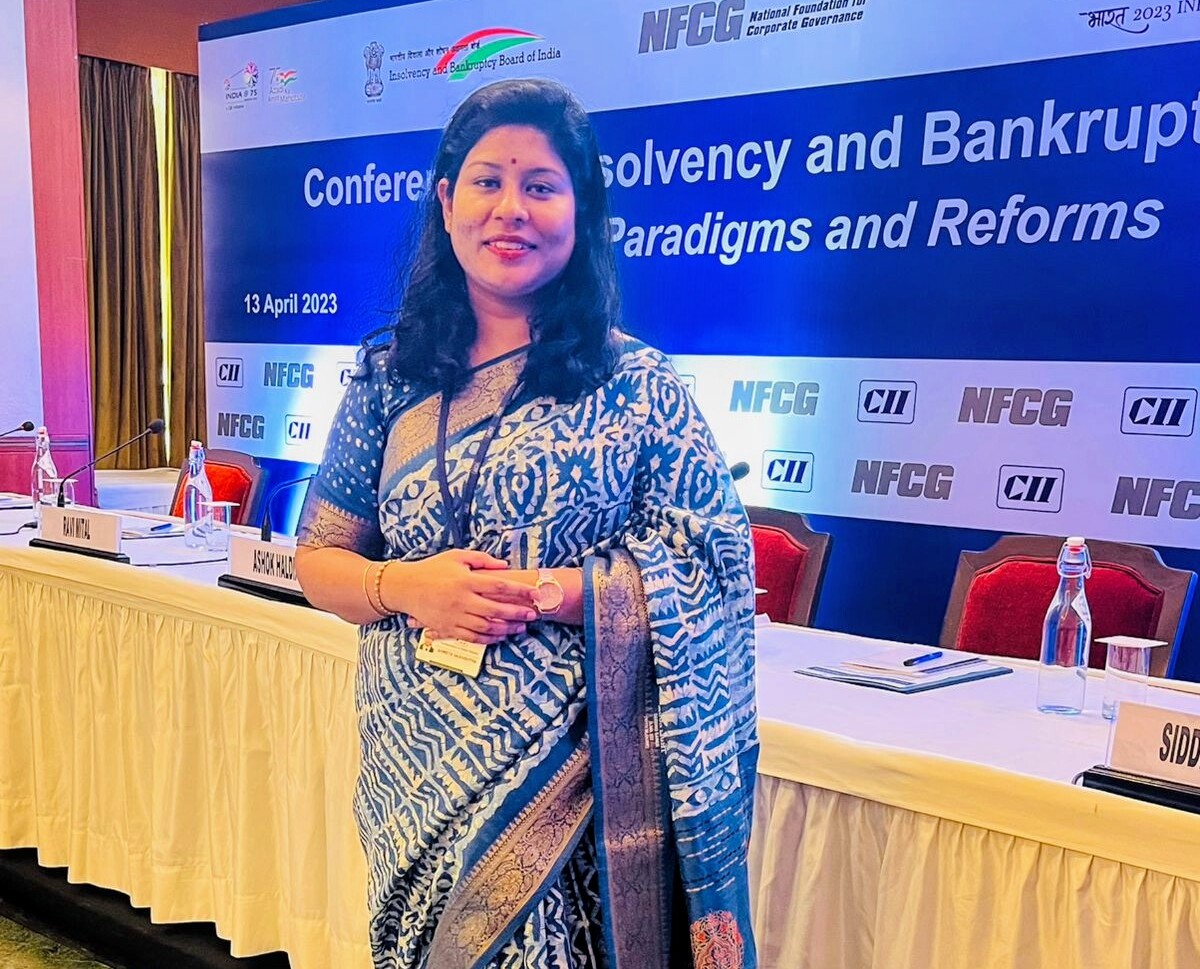















 Allow notifications