Tag: Cyber law

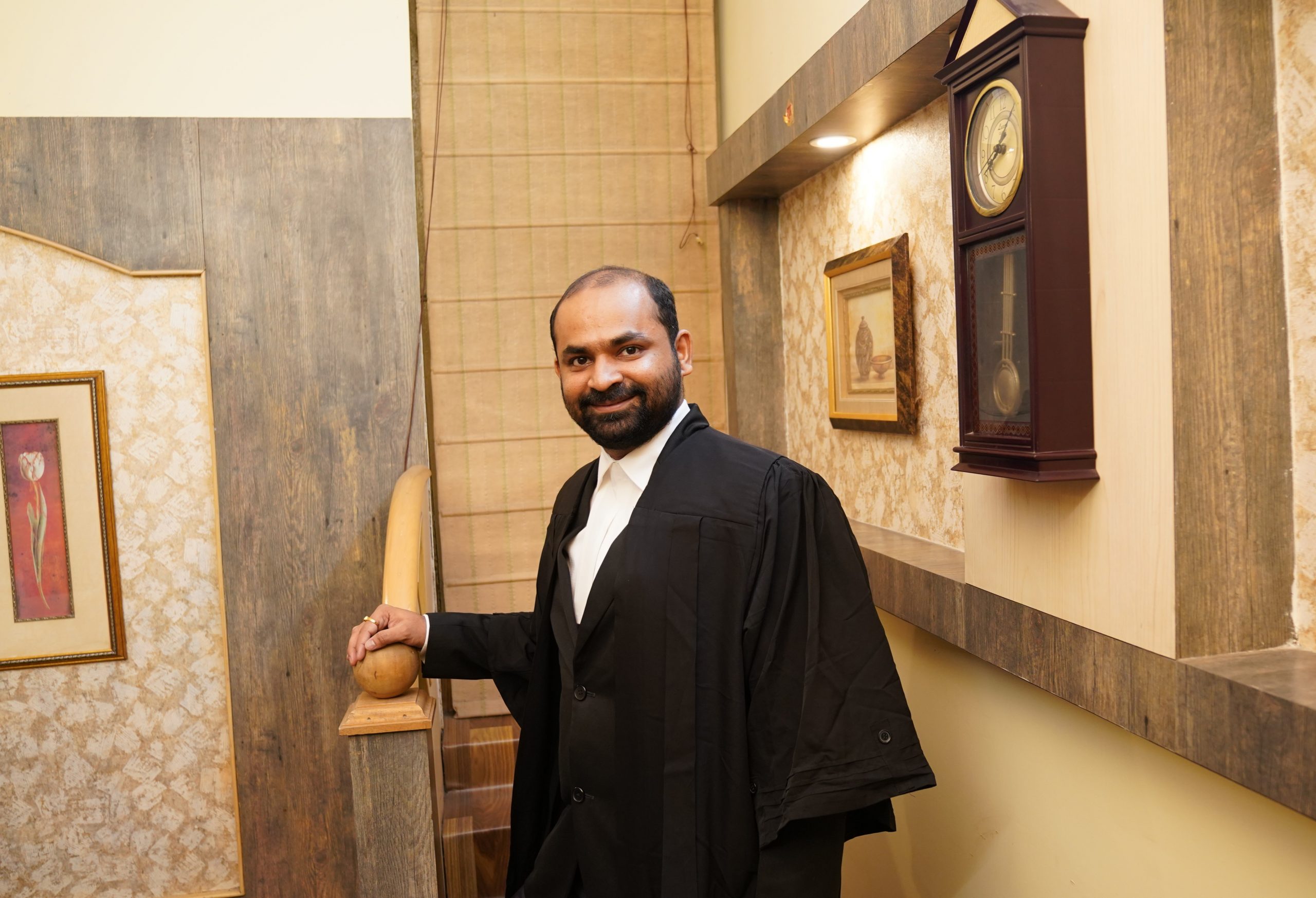
  • “Being a lawyer is a continuous learning process, Dedication, Punctuality and Patience are the most important attributes to be successful in the profession” – Sankalp Anantwar, Founding and Managing Partner at SMA Law Partners and Advocate at Bombay High Court

    “Being a lawyer is a continuous learning process, Dedication, Punctuality and Patience are the most important attributes to be successful in the profession” – Sankalp Anantwar, Founding and Managing Partner at SMA Law Partners and Advocate at Bombay High Court

    This interview has been published by Namrata Singh and The SuperLawyer Team
    Could you please introduce yourself to our readers and share your journey of how you embarked on the path of law? What inspired you to pursue this profession, and could you walk us through the pivotal moments that shaped your journey from your initial interest in law to becoming a founding and managing partner at SMA Law Partners?

    My journey started in my childhood when I saw my father getting ready for court hearings every day. Initially, as a child, I often wondered what my father did in court. As time passed by, my inquisitiveness grew, and I insisted on going to Chambers with him. I gradually began going to Chambers with my father and I think that’s when I developed a keen interest in law. Thereafter, I never looked back and decided to pursue law. My father realized that I had developed an interest in law and I was allowed to go to his Chambers and sometimes to court to witness proceedings. I can say with conviction that my father is my role model and my first mentor.

    As a second-generation lawyer, I was blessed to have exposure to the legal fraternity even before joining the profession.

    I was always encouraged to pursue further education after my LL.B. Degree which led me to pursue an LL.M. program from the prestigious University of London.

    As my father practices at Nagpur, I always wanted to practice at Nagpur and follow in his footsteps after returning from London. However, my father had a better plan and wanted me to practice in Mumbai and get exposure in Commercial matters and Arbitration. Being my role model and mentor, I could not think of anything but to take his advice for a bright and better professional future and explore opportunities in Mumbai.

    When I was exploring work opportunities in Mumbai, I got through a not-so-known law firm (now one of the leading law firms in Mumbai). Initially, I was sceptical about joining the law firm as I was unsure whether I would get any exposure there. However, I was encouraged to join the firm and was told I would get better opportunities to learn and work on matters in smaller firms. The decision to join a not-so-know law firm changed my life. I was exposed to such diverse matters and practice areas. I got opportunities to argue matters and also brief Counsels and Senior Counsels. I got an opportunity to extensively work on Arbitration matters. My partner and seniors at the firm also encouraged me to appear in the matters and gradually I was given independent assignments and then a Team to work. My first workplace in Mumbai enriched me with good exposure to diverse matters and instilled confidence in me to be a better lawyer. Thereafter, I worked with various leading law firms to gather more knowledge and experience. However, the enriching experience at my first workplace has played a pivotal role in my journey to become a Founding and Managing Partner at SMA Law Partners.

    How has your experience studying law in different locations, such as London and India, influenced your approach to legal practice?

    When I joined Law College, more attention was given to theoretical aspects. That is how the university curriculum was designed. Though theoretical knowledge is essential to understand the basic concepts of law, practical knowledge is also required to shape students for better application of law which is vital for lawyers in practice. The LL.M. course in London changed my perspective towards law and made it interesting by giving a practical approach in understanding the subject better.     

    However, now the scenario has completely changed and legal education in India has transformed to impart better education in terms of practical knowledge to the students.

    You’ve specialized in various areas of law, including Corporate and Commercial, Insolvency and Bankruptcy, Civil and Criminal Litigation, among others. What drew you to such diverse practice areas?

    Mumbai is a financial capital and is a hub for diverse business and financial transactions. This leads to various disputes under the commercial contracts between the parties. As a lawyer practicing in the courts in Mumbai, I was always exposed to disputes related to commercial transactions. I have appeared for various PSU Banks and Financial Institutions. With the introduction of the Insolvency and Bankruptcy Code, 2016, which amended and/or repealed almost 20 existing statutes, I entered this specialized sphere with an intention to explore new opportunities. As I commenced my journey in Insolvency and Bankruptcy Law, I developed a keen interest in it.

    Balancing the roles of an Advocate at Bombay High Court and a Managing Partner at SMA Law Partners must be demanding. Could you walk us through a typical day in your life and shed some light on how you effectively manage your responsibilities in both realms?

    It is undoubtedly demanding. The role at Bombay High Court and various courts is solely of a lawyer whereas the role of a Managing Partner is both, a lawyer and an administrator.

    I start my day early which helps me plan my day effectively. As a lawyer, my typical day is nothing different from other lawyers. The day starts with reading briefs for the matters, sometimes conference with the clients and Counsels/Senior Counsels for the matters which are listed in court on the same day. As the day progresses and the matters before the Courts are over, I return to chambers to work on various drafts to deliver them to the clients within the best possible turnaround time. Evening time is usually dedicated to conferences with either the clients or with the Counsels and Senior Counsels. Though the day is long and ends with preparing for matters that are listed the next day, the thrill of the profession is never-ending.

    Can you elaborate on your involvement with the Rights Protection Programme during the ICC World Cup in 2011? How did this experience shape your perspective on law and its broader societal implications?

    I was one of the fortunate final-year students to be selected from my college to participate in the Rights Protection Programme of the International Cricket Council (ICC) during the Cricket World Cup in 2011. I got an opportunity to interact with the Rights Protection Team of the ICC which comprises of members from various nationalities. The programme gave me an insight into how the Rights Protection Team of ICC worked towards protecting the copyright and trademarks of its sponsors and other associated entities during the World Cup event.

    Could you discuss a particularly complex or challenging case you’ve worked on, and what lessons you took away from it?

    There were many complex and challenging cases that I have worked on. But one case I remember is that of a challenge to the Maratha Reservation Statute in the State of Maharashtra. We were representing the students enrolling for medical courses in one of the Petitions out of many on a similar issue. This was a Constitutional Law matter and gave me an opportunity to work with leading Senior Counsels from Mumbai and Delhi. I was actively involved in the matter working in tandem with lawyers appearing for other bunch of Petitioners and the Senior Counsels. The matter gave me an insight on meticulous way of working on a matter and interpretation of law from the Senior Counsels and Stalwarts of the professional.

    Your LLM program in Commercial and Corporate Law at Queen Mary, University of London, provided you with international exposure. How did this experience shape your perspective on law, and what insights did you gain from studying in a diverse and cosmopolitan environment like London?

    The experience of pursuing an LLM Program in London was indeed a wonderful and once-in-a-lifetime experience. The program was designed to impart practical knowledge to students. The personal interaction with the professors was frequent. Group Discussions and Presentations were a regular affair. Right from choosing a topic for the dissertation/thesis till its completion, the professors guided us well enough to make us comfortable to complete the dissertation/thesis. The Professors also insisted on regular discussions on its progress. All these practical aspects alleviate your knowledge and perspective on law. In addition to academics, we also meet people of various nationalities and understand the laws and legal concepts of their countries and diverse perspectives. Pursuing studies abroad with professors and students of varied nationalities is a life lesson and should be experienced by everyone. 

    Outside of law, you have interests in music, etc. How do these personal hobbies contribute to your professional life, if at all?

    Since childhood, I have been fascinated with Indian Classical music which developed my interest in playing Tabla. Though I could not continue it due to professional commitments, I sometimes play Tabla whenever I get leisurely time. I was also associated with the Society for Promotion of Indian Classical Music and Culture Amongst Youth (SPICMACAY) which is an organisation established by an IIT Delhi Alumni and works towards the promotion and preservation of Indian Classical music. I regularly listen to Indian Classical Music which gives me peace of mind and rejuvenates me to prepare for another hectic day in court.

    Given your experience, what advice would you offer to law students considering further education? Do you recommend gaining practical experience before pursuing an L.L.M., or do you believe it’s beneficial to pursue postgraduate studies immediately after completing an undergraduate law degree?

    Pursuing postgraduate courses is always beneficial as it enhances your knowledge and also improves your perspective. My advice to law students who intend to practice law would be to pursue postgraduate courses immediately after completing an undergraduate degree in law. It is sometimes difficult to pursue full-time post-graduate courses after entering the profession.

    What would be your advice for lawyers who have recently entered the profession?

    Dedication, Punctuality and Patience are the most important attributes to be successful in the profession. As rightly said by Justice Joseph Story, “The law is a jealous mistress and requires long and constant courtship. It is not to be won by trifling favors, but by lavish homage”. Being a lawyer is a continuous learning process. I would advise the lawyers who have recently entered the profession to learn the nuances of the profession and absorb as much as they can around them, follow these attributes and success will follow. 

    Get in touch with Sankalp Anantwar–
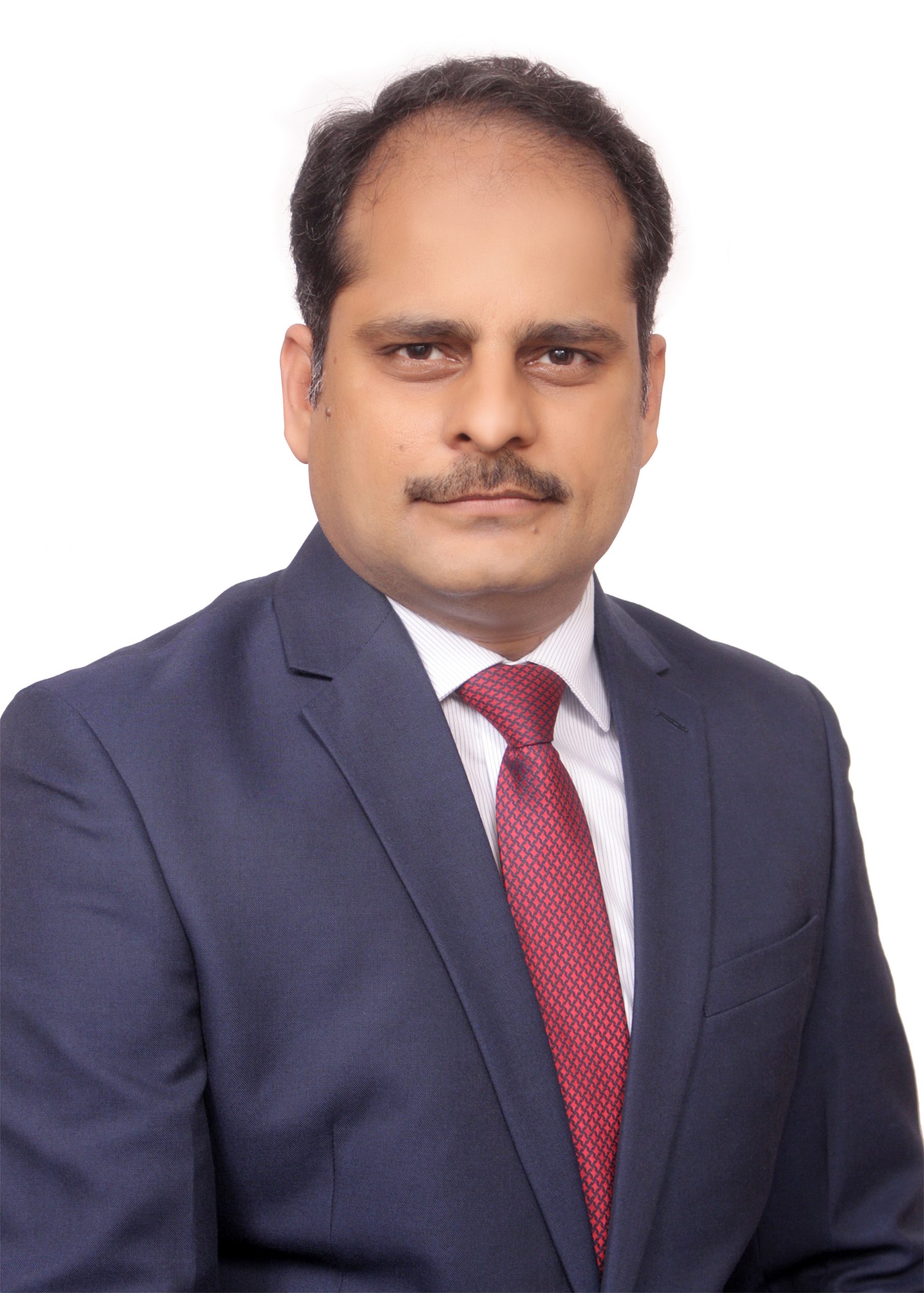
  • “Delegating responsibilities, ensuring clear communication, and fostering a collaborative environment are all aspects of managing a team which will run as a well-oiled machine”- Manish Kumar Mishra, Partner at Inttl Advocare

    “Delegating responsibilities, ensuring clear communication, and fostering a collaborative environment are all aspects of managing a team which will run as a well-oiled machine”- Manish Kumar Mishra, Partner at Inttl Advocare

    This interview has been published by Priyanka Karwa and The SuperLawyer Team

    Can you share the pivotal moments or experiences that led you to pursue a career in law, specifically specializing in Intellectual Property Laws?

    It is said that every person has their own destiny. I had come to Delhi to crack Civil Services. Failure to crack civil services pushed me to try law. It is also true that the interest of the students in particular subjects depend upon the teacher teaching the subject. While pursuing law in Campus Law Centre, University of Delhi the discussions and interactions were very interesting, engaging and different from all the other subjects. That is what piqued my interest in the IP laws and how I decided to pursue my career in IP. My interest further grew when I started PG Diploma in Intellectual Property from Indian Law Institute and then I saw how important it was to protect ideas and creations. This realization further motivated me to explore IP laws.

    This journey has not only shaped my career goals but also fueled my passion for advocating the significance of intellectual property. I am eager to use my legal skills to support and defend the innovations that drive our society forward. 

    Given your extensive experience in handling more than 200 litigations, could you highlight a case that significantly shaped your approach to legal practice or left a lasting impression on you?

    One time, during the early days of my career, I was appearing before a Single Judge of Hon’ble Delhi High Court in an appeal against the order of the Copyright Board. I was assisting my senior who was to argue the matter and was thoroughly prepared with the matter myself. However, when the matter was called, my senior was before another court appearing in another matter. The Passover request was declined by the court and I was asked to argue the matter. I was a bit nervous but presented the facts of the case with energy. However, the Ld. Judge wanted to hear from me the application of ‘Principle of Comity’ to the case which I was unable to. The Ld. Judge then not took the time to explain the principle but also taught the same to me like a teacher. The Ld. Judge definitely sympathized with a junior caught off-guard but that experience taught me that it is not sufficient to only know the facts of your case. It is also important to know how the law applies to those facts and that there is a manner in which laws and facts should be presented before the court for understanding of the judge. I have never forgotten the ‘Principle of Comity’ since and have applied the judgment passed by the Ld. Judge in my favour in various cases handled thereafter.

    You’ve been involved in various contentions cases related to trademarks, copyright, and designs. What drew you to these specific areas within Intellectual Property, and how have you seen these fields evolve over your 15 years of practice?

    I was drawn to specializing in trademarks, copyright, and design within intellectual property because of their dynamic nature and the real-world impact they have on businesses and creativity. These areas require a delicate balance between protecting original ideas and allowing for innovation and competition.

    Over my 15 years of practice, I’ve witnessed significant evolution in these fields. The advent of the digital age has transformed the landscape of IP laws. During my journey, just as an example, I have seen issues about exhaustion of rights in physical sale of products raised for the first time. We then reached an era of online sales and issues such as those of intermediaries and jurisdiction in cases of online sales etc. cropped up before the courts and now, we are discussing the impact of AI in all domains. The changes are not only with respect to the law but also the procedures before the courts. The advent of Commercial courts, special IP Division, digital filings etc. have also made litigation for litigators and litigants hassle-free.

    The ever-changing technological and business landscape continually presents new challenges, making it imperative to stay at the forefront of legal developments. I find it both professionally rewarding and intellectually stimulating to navigate these complexities and contribute to the evolving dialogue within IP laws.

    Being a regular guest on All India Radio and a guest faculty at the Indian Law Institute, can you tell us about the role of education and public outreach in your legal career and how it contributes to your professional growth?

    Being a regular guest on All India Radio and serving as a guest faculty at the Indian Law Institute apart from various other Universities has been instrumental in shaping my legal career.

    Engaging with the public through All India Radio allowed me to simplify legal concepts and make them accessible to a broader audience. My appearances at the AIR were not only limited to talking about IP Laws but also on various other laws which are relevant for socio-economic conditions of society.

    As a guest faculty at universities, I have the opportunity to interact with aspiring legal professionals. Teaching not only allows me to share my practical experiences but also keeps me abreast of the latest developments in legal academia. The exchange of ideas with students fosters a two-way learning process, enhancing my own understanding of legal principles.

    These educational and outreach activities complement legal practice providing a unique perspective about various issues and challenges faced by students and members of the public which I might not have the opportunity to otherwise encounter.

    You’ve been a panelist at the Conclave of Dharmashastra National Law University on the topic of AI and Intellectual Property. How do you see emerging technologies impacting the field of law, specifically in Intellectual Property, and what challenges and opportunities do you foresee?

    As a panelist at the Conclave of Dharmashastra National Law University on AI and Intellectual Property, I had the privilege of discussing the impact that emerging technologies have on the field of law, particularly IP. The intersection of AI and IP presents both challenges and opportunities.

    The advent of AI has streamlined certain aspects of IP processes, such as patent searches and prior art analysis, significantly enhancing efficiency. However, it also raises challenges in addressing issues like AI-generated creations and the attribution of intellectual property rights.

    Opportunities lie in leveraging AI for more robust IP protection mechanisms and the development of innovative solutions to combat piracy and infringement. Additionally, the use of AI in data analysis has proven invaluable in identifying patterns of IP violations.

    On the flip side, challenges include the need for updated regulations to address the unique aspects of AI-generated content and the ethical considerations surrounding AI in the legal landscape. Striking a balance between fostering innovation and safeguarding IP rights in this evolving technological landscape is a complex but essential task.

    Overall, embracing these technological advancements is crucial for the evolution of IP law, and navigating these challenges presents an exciting opportunity to shape a more resilient and adaptive legal framework.

    Having conducted numerous civil and criminal raids, can you share a particularly challenging enforcement situation you encountered and how you navigated through it?

    There was a civil raid in Meerut in around 2014 which comes to my mind. I along with a court appointed Commissioner was visiting a wholesaler engaged in the sale of infringing coffee. Initially, we went to the police station wherein we were declined assistance. However, considering the Commissioner had orders from the Court and there were chances of goods being removed now, since we had given information to the Police, we reached the premises directly. The entire process was obstructed and delayed by the female family members of the shop owner and during that period several nearby shopkeepers and market leaders gathered. We were surrounded by around 80-100 people who all turned aggressive and did not allow us to conduct the seizure or even go back to our car. I then spoke to the president of the market association who was leading the mob and explained to him that the infringing activity that the wholesaler was involved in was not only harming the reputation of the client but the low quality products being sold by the party was also being consumed by the public including the families of various members of the mob. After some explaining and a cool temper kept by us throughout, the mob allowed us to invent the stock, prepare a report and leave without seizing the products.  

    Though I must add, not all civil and criminal raids have such interesting stories. While this story does not paint a pretty picture of how sometimes civil or criminal actions turn out, this also reminds me of how a calm mind, quick thinking and easy communication can help you overcome challenging situations.

    As a lawyer with strengths in team management, litigation, and public speaking, how do you balance these diverse skills in your day-to-day practice, and which aspect do you find most fulfilling?

    As a lawyer and working with an esteemed organization one learns to strike a balance between these and various other aspects of being a professional. In my view, the job of a lawyer demands an all-round capability and one is tested everyday with challenges on these fronts. It is not only required of me to manage the team or prepare for various court cases or attend public speaking sessions but also to participate in other activities such as management of the Firm, attending conferences for business development etc. 

    Delegating responsibilities, ensuring clear communication, and fostering a collaborative environment are all aspects of managing a team which will run as a well-oiled machine. This allows me to streamline workflows and gives me the chance to undertake other works and projects. In order to achieve the same, a robust motivated team is a must. It is my philosophy that my team should pass on the complete knowledge which I possess in all fields, and that is one of the most fulfilling experiences as a professional. I also ensure that my team is motivated and properly trained to effectively complete the delegated works which not only allows me time for other endeavors but also allows them to grow independently.

    Litigation requires meticulous preparation, attention to detail, and the ability to think on my feet. Prioritizing tasks, managing timelines efficiently, and staying adaptable to the evolving nature of legal proceedings are the pillars of effective advocacy. On the other hand, public speaking allows me to not only advocate for my clients but also contribute to legal education and public understanding of the law.

    Looking back at your journey from law school to moderating a topic at INTA in Atlanta in 2024, what advice would you give to fresh law graduates aspiring to specialize in Intellectual Property or follow a similar path in their legal careers?

    My advice to the fresh law graduates aspiring to specialize in IP or pursuing a similar path would be to (i) Build a Strong Foundation by focusing on learning and gaining practical experience in initial years of practice; (ii) Keep yourself updated with the latest legal developments and familiarize yourself with technological tools used in the legal field; (iii) Develop Communication Skills as effective communication, both written and verbal, is crucial for a lawyer. This also includes honing your networking skills which open up various opportunities for one; (iv) Be flexible to adapt to the demanding situations and conditions of the profession.

    Remember, each step contributes to your growth, and perseverance is key in building a successful career.

    Get in touch with Manish Kumar Mishra-

  • Bivas Chatterjee, Special Public Prosecutor, Govt of WB, on challenges in cyber law and skills to become a good cyber lawyer

    Bivas Chatterjee, Special Public Prosecutor, Govt of WB, on challenges in cyber law and skills to become a good cyber lawyer

    Bivas Chatterjee qualified in Law from University of Calcutta in the year 1997, thereafter he pursued his Masters in Law from the Kakatia University.  He is currently Special Public Prosecutor in Cyber Laws and Electronic evidence related cases, engaged by Government of West Bengal. He has over sixteen years of professional experience and has experience of working in cyber law. He deals with major Information Technology, telecom and infrastructure companies. He is also the author of Electronic  Evidence, Cyber Criminal Manual, Cyber Security and The Law, Cyber Contract(Legal Analysis), Dense Cloud( Legal Analysis of Cloud), Information Technology Manual, Your Ultimate Protection Guide, Cyber Adjudication. CID, West Bengal got its first conviction in the case where he was the special public prosecutor. He shares the challenges and experiences being a cyber lawyer in India.

    In this interview, he talks to us about:

    • Challenges faced in cyber law
    • The importance of cyber awareness in the digital world.
    • The skills to develop to become a good cyber lawyer
    • Combining technology with cyber law


    PLEASE EXPLAIN TO OUR READERS: WHAT IS CYBER LAW? DOES THIS INCLUDE TECHNOLOGY LAW?

    Summarily law, which governs the cyber/virtual world, is cyber law in common parlance. As cyber world has taken an unprecedented proportion, it has now various sub-structures. For example, people say that today it is a data world and to govern the data world, especially in this big data world, we have in USA, ECPA or other legislations to govern various data-breaches.

    In my opinion it is purely a technology law or it can be coined as techno-legal subject. We know technology runs much faster than appropriate legislation to come and that is why there is a clear constrain between law and technology and hence the present subject requires a thorough techno-legal-experimental attitude and flair to solve various legal issues or problems.


    WHAT KIND OF WORK DO CYBER LAWYERS DO?

    The areas of works are limitless and also unexplored till date. A cyber lawyer can fight the cyber crime related cases (be in defence side or as prosecutor, in prosecution side). Actually specking every modern day lawyer should have a fare bit of understanding on cyber related matters. Even in civil suit, namely matrimonial suits, etc., the litigants are coming with Facebook pages or other various types of electronic evidences. The application of electronic documents in every spheres of legal world is now inevitable.


    ARE THERE DIFFERENT KINDS OF CYBER LAWYERS WHO DO DIFFERENT KIND OF WORK LIKE THERE ARE DEAL LAWYERS WHO SPECIALISE IN DIFFERENT KIND OF DEALS?

    Cyber lawyers can practise in various civil as well as in criminal cases. Cyber lawyers can also give advice to the lawyers in various fields and can also share their knowledge with various LEA, academies etc. The prospect is growing everyday.


    IS A CAREER IN CYBER LAW VIABLE? WHAT KIND OF OPPORTUNITY IS THERE FOR YOUNG LAWYERS IN CYBER LAW?

    I have already discussed that present day lawyers can not proceed with their jobs without a fair bit of knowledge in this techno-legal field. The next generation legal fields require huge number of cyber-lawyers who will assist the judicial system in various ways in Courts apart from various in house legal jobs.


    HOW DID YOU MAKE A CAREER IN CYBER LAW?

    Being a first generation practitioner, when I started my career, I started with telecom industries. In the year 2002 I was engaged as a lawyer in a very famous telecom company in West Bengal and lateran one by one other telecom companies engaged me as their lawyer. In the year 2008 I have dealt with one of the first case of cyber corporate espionage between two very famous telecom company and later in the year 2010, I single-handedly dealt with one of the famous defacement case of a world renowned telecom company, spreading entire India, on behalf of the company. It was one of the first and biggest success in cyber crime related cases in the eastern India. Then onwards, I simply fall in love with this subject and it has become rather passion than to only profession. That time I could foresee the potential of this subject and since 2012, I have been engaged with all the various prestigious academies in India, I used to speak in those classes or seminars, that the future lies in the digital/electronic cases. I love to see that what I have thought and predicted years before, has actually proved to be truth. Though I was from the science background but not from information technology background, I have to upgrade and update myself to the present day changes in this filed. Actually technology moves mush faster than law or legislative changes or amendments. Even today, everyday I have to learn new changes taking place in this world.


    WHAT WERE THE FIVE BIGGEST CHALLENGES YOU FACED ALONG THE WAY? HOW DID YOU OVERCOME THEM?

    From day one I have faced various challenges in this field and I have to make over them in various ways. The following will make things clear:

    • In the yearly days, dealing with only cyber laws would not suffice for my living and I had to do other conventional cases along with the same to sustain my family. It was very tough and struggling period.
    • The law-enforcement machineries in the beginning was not ready, which they are now, to welcome the changes in the legal and other related fields. In various cases, there was lacuna in investigation for want of sufficient knowledge to collect, preserve and present digital/electronic evidences. For the last five years or so, I have trained more than thousands law enforcement officers in India, written books on how to solve and investigate various types of cases so that the evidence can be presented before the Learned Court.
    • The application of E-evidence in the existing conventional fields, like paper-oriented court system, was and still is a challenge. To make things uncomplicated, I have started to file written argument in details highlighting the recent development in these fields. I have been taking various classes covering the entire area/domain for learned judicial officers and public prosecutors.
    • To make things easier I have also written various books covering various areas of this techno-legal field. I have my blog/page under Facebook under title, “Cyber Crime Awareness Campaign”, through which time to time I post and share various articles, so that people specially the legal friends get help.
    • Finally, as I am the only Special Public Prosecutor in cyber-crime and electronic evidence related cases in Bengal today, I have very hectic schedule in everyday life and I have to continue my study in various related fields, which I have to do in my way to various Ld Courts sitting in vehicles through mobile or laptop. Everyday I have to work 16 to 18 hours to keep up with my hectic schedule.


    WHAT COURSES, BOOKS WOULD YOU RECOMMEND FOR A LAW STUDENT LOOKING TO SPECIALISE IN CYBER LAW?

    There are lot of books but students have to go through the contents and look into books which contain the practical-approach-oriented materials before purchasing. The best way to learn is to look into the various resources available in the internet but they should verify them and if possible cross-check with other resources. The student should have interest in technology, specially software development. I love to code everyday in my favourite languages like python, javascript etc.


    IS IT IMPORTANT TO GET A DEGREE OR DIPLOMA IN CYBER LAW?

    In my opinion there is no need to get a degree or diploma, rather a law degree is enough. The online certifications on various new fields are more useful than any diploma. The fundamental concept matters most.


    HOW DO YOU KEEP YOURSELF UPDATED GIVEN THAT CYBER AND TECHNOLOGY LAW IS AN ALWAYS EVOLVING FIELD?

    It is an ever-changing world. The platform or technology in buzz today may be obsolete tomorrow. I am sure the knowledge, which I acquire today after a lot of arduous efforts, is of no use tomorrow. Technology moves much faster than legal amendments. Everyday I dedicate at least three to four hours to study technology and sometimes I felt frustrated that my study-hours cover more technology study than law. I think law is more interpretation than only the statues and hence for those areas I need to allocate times to study. I have to allocate more time on real life problem-solving issues, like how the security breaches occur, the technique of hacking, the data-breaches etc.


    WHAT BLOGS, JOURNALS OR WEBSITES DO YOU FOLLOW?

    Various online website / blog of USA, Canada and European Union etc. dealing with this techno-legal world.

    I have mentioned details of the url/links in my books, students can follow those links.

    Study through you tube or Google article related to this field.


    IF I AM INTERESTED IN CYBER LAW, WHOM SHOULD I FOLLOW ON TWITTER AND LINKEDIN IN YOUR OPINION?

    You go through works of various persons and can follow one you think credible. You can follow me at:

    https://www.linkedin.com/in/bivaschatterjee/

    bivas.chatterjee@gmail.com

    https://twitter.com/cybercrimemanua

    https://www.facebook.com/bivas.chatterjee.5

    https://www.facebook.com/awarenesstocyber/


    WHAT ARE THE TOP FIVE SKILLS TO DEVELOP IF I WANT TO BE A GOOD CYBER LAWYER?

    The following top 5 skills are desirable from a cyber lawyer:

    • Tenacity and eagerness to learn new things everyday, specially new development in this field.
    • A little bit thorough knowledge of computer system specially hardware details of computer, mobile, IOT devices etc.
    • A little bit thorough knowledge of operating software, other computer software especially in depth knowledge of at least the grammar of a single computer language i.e knowledge of coding.
    • A little bit thorough knowledge of networking system specially web-development, network protocols, various frameworks and at least one server-side and one client-side language, namely php, javascript, nodejs etc.
    • A little bit thorough knowledge of cyber and electronic evidence related laws in India and beyond India, various case studies, case laws related to that.


    WHO ACCORDING TO YOU ARE THE BIGGEST INFLUENCERS IN CYBER LAW IN 2018?

    There are various stake-holders who have the biggest influences in cyber laws and some of them are as follows:

    •  Law enforcement agencies that can ethically hack and solve the cyber crime related cases.
    • Intermediaries i.e. various online service providers as defined in section 2(w) of Information Technology Act,2000, as amended.
    • Technical experts who have thorough knowledge on the ins and out of a system.
    • Banking sector companies, online wallets companies etc. who provide online money transactions platforms.
    • NGOs working in this field(though the number is meagre), public prosecutors, lawyers and judges.

    UNDERSTANDING CYBER LAW – DOES IT ALSO REQUIRE A DETAILED UNDERSTANDING OF TECHNOLOGY?

    The obvious answer is yes. If practising lawyers does not know the practical details of ins and outs of the technology, how can he find the actual problem and provide solution which is admissible and acceptable by Ld. Courts and society at larger.


    SHOULD ENGINEERS AND CYBER SECURITY EXPERTS LEARN CYBER LAW? HOW CAN IT POSSIBLY HELP THEM?

    If a fire-tender does not know how to deal with fire, how can he make himself safe from being burnt and more so how can he make other safe. For example, person dealing with private, secure, sensitive data or electronic systems may at any point of time implicate himself or herself in unnecessary legal binding / litigation. (Say for example after the GDPR, in European Union, huge compliances are required, otherwise stringent actions may follow). In every sphere, the knowledge of cyber laws around the world is a prerequisite for engineers and cyber expert and the knowledge will provide a safety-valve to them.


    WHAT IS THE EARNING POTENTIAL OF A SUCCESSFUL CYBER LAWYER?

    Earning potential as a profession cyber lawyer is good in my opinion. The number of Cyber lawyers are numbered and crimes and contraventions are on increase in virtual world.


    IS IT BETTER TO PRACTICE INDEPENDENTLY OR TO WORK WITH A LAW FIRM OR COMPANY?

    It depends on person to person. But for the newly-started professionals, it is better to have one guide, though being the pioneer in this field, I never felt the urge to have someone. If someone has the highest level of passion, zeal, dedication, honesty and integrity, he or she will surely succeed.


    HOW DOES ONE GET STARTED IN CYBER LAW PRACTICE?

    In my opinion to start in legal professional, one should not be very choosy, and in the early stages he or she should do or put his head into various issues and as the cyber-law related issues are everywhere, one who wants to pursue the career in cyber law can start only specialisation work after at least 5 years of his or her practice years.


    DO YOU THINK INDIAN CYBER LAW REGIME NEEDS AN UPGRADE? WHAT ARE THE AREAS THAT NEED ATTENTION OF LAWMAKERS?

    After the amendment has been made by way of Information Technology Amendment Act, 2008, some of the famous judgements been pronounced, and lot of technological changes took place, especially in arena of Data-science, cloud-computing, Artificial Intelligence and its predictive algorithm, Blockchain etc., Indian Cyber laws should require upgradation. The following areas need attention:

    • Getting evidences from the intermediaries, especially from WhatsApp and other Instant messenger services.
    • Appointment of Examiners of Electronic evidence.
    • Laws relating to forensics evidences, especially incorporating chain of evidence in Indian law.
    • Details of laws clarifying the process of collection, preservation and presentation of electronic evidence.
    • Clarifying the status of the cyber security personnel and IT- security audit or ethical hacking.
    • Strong data-protecting laws (We already got the Personal Data Privacy Law Bill, 2018)
    • Changes in procedural laws in cyber crime investigation,
    • Laws dealing in details on Child pornography and Online-Trafficking.
    • Laws relating internet of things (now Internet of Everything)
    • Laws related to CCTV footage, etc


    WHAT ARE THE MOST PROMISING AREAS OF WORK WITHIN CYBER LAW IN THE NEXT DECADE?

    The most promising areas are:

    • Artificial Intelligence, Machine Learning and Deep Learning.
    • Cloud-computing
    • internet of things (now Internet of Everything)
    • Data privacy and security, specially big data, data-analytics and predictive and destructive logarithm.
    • Blockchain and crypto-currencies.
    • Dealing with digital/electronic evidence in non conventional and conventional fields.


    DOES IT MAKE SENSE FOR LAWYERS TO SUPER SPECIALISE WITHIN THE DOMAIN OF CYBER LAW?

    If any lawyer wants to specialise in cyber law arena, specialising within the domain is obviously required, specially regular and intensive study in technology and exploring its new areas is a must. Dedicated and passionate effort is a prerequisite in this domain.

