Tag: Cyberlaw

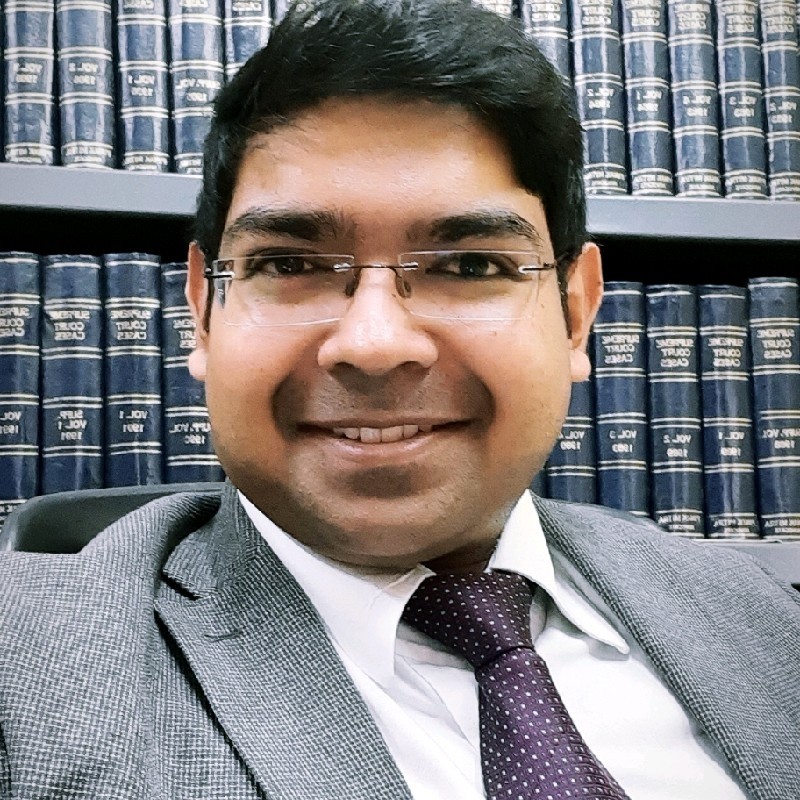
  • “To foster a stronger IP culture, we must empower founders with foundational IP knowledge, which shall help them to identify their IP assets.” – Sonali Sawant, Founding Partner Projulex Global.

    “To foster a stronger IP culture, we must empower founders with foundational IP knowledge, which shall help them to identify their IP assets.” – Sonali Sawant, Founding Partner Projulex Global.

    This interview has been published by Anshi Mudgal and The SuperLawyer Team

    Your journey reflects remarkable versatility and determination. Looking back, what pivotal decisions do you believe have contributed most to your practice over the years?

    My journey into law, and specifically as an IP Attorney, was far from a linear path. Unlike many, I never initially aimed to be a lawyer; in fact, the term “IP Attorney” was completely foreign to me until my second year of law school when IP was first introduced as a subject.

    Coming from a humble, rural background in Talegaon Dabhade, Pune, my early academic pursuits were remarkably diverse. I chose arts at Ferguson College, majored in Psychology for my B.A., and even dedicated time to learning and tutoring German language while preparing for Nritya Visharad, harbouring aspirations of becoming a classical dancer, psychologist, or German translator. Law was never on my radar.

    However, destiny, as they say, had other plans. Being a first-generation lawyer in the family, unaware of the fascinating journey ahead, I took a significant leap of faith. I applied to only one institution, ILS Law College. Getting selected in the first list felt incredibly lucky, as it was a high-risk gamble with no Plan B – a rejection would have meant a wasted year. Although I later transferred to Shankarrao Chavan Law College in my second year, this initial entry into the legal field was itself a pivotal decision.

    This unconventional start , directly led to numerous vital career breaks, opportunities, and challenges. The journey itself broadened my horizons, exposing me to diverse people, institutions, experiences, and ideologies. These early experiences undoubtedly instilled in me resilience, an openness to new directions, and a unique interdisciplinary perspective. I truly believe these qualities laid the foundation for my enriching legal practice and have profoundly shaped who I am today.

    What motivated you to pursue a Master’s degree in Science and Technology Law? Why did you choose this particular specialization, and how has it influenced your practice?

    My decision to pursue a Master’s degree in Science and Technology Law was a pivotal moment in my journey. The dynamic and evolving nature of science and technology, encompassing fascinating areas like Intellectual Property, Biotechnology Law, Cyber Law, and Health Law, deeply intrigued me. This particular specialization, offered by the Department of Law at Savitribai Phule Pune University, provided a holistic overview of the actual laws in place, regulations, and pending bills in these fields.

    The one-year LL.M. program was instrumental in cultivating strong research, presentation, and public speaking skills. While Intellectual Property (IP) was my primary focus, this course provided a robust theoretical foundation in IP, which was crucial for my understanding, research, and practice in IP law. I am particularly grateful to my professors, Dr. Jyoti Bhakare Ma’am and the late T.S.N. Shastry Sir, for fostering my interest in research. The affinity for research I developed during my LL.M. studies remains a cornerstone of my practice today. Beyond academics, the program also allowed me to forge valuable connections and a supportive network that continues to be a source of shared knowledge and care.

    In the early phase of your career, what experiences or cases helped solidify your interest and expertise in intellectual property law, ultimately leading you to build a career in this domain?

    So, from administrative and accounting roles during my LL.B. to becoming a Trademark Associate, visiting faculty, researcher, and ultimately leading my own law firm, every step has been instrumental in building my network, professionalism, knowledge, and interpersonal skills. The one constant thread woven through all these experiences has been Intellectual Property.

    A particularly pivotal moment occurred during my third year of LL.B., when I was working in an administrative capacity. However, my main work was to recover pending invoices from clients. For the first time I was tasked with coordinating copyright filings for a corporate client. As I wasn’t yet a qualified lawyer, the initial plan was to outsource this work. However, being new to the field with no prior legal experience or strong professional connections, I struggled to find a trustworthy attorney online, causing a delay in the assignment. Instead of waiting, I took the initiative. Under the guidance of my senior, I decided to undertake the assignment myself. Successfully completing it single-handedly, by the time the registrations were finalized, I had not only gained valuable IP experience, but this experience provided the initial boost of confidence I needed to delve deeper into IP. 

    At that time, I even found myself daydreaming about having my own law office and all the “corporate fancy things,” largely inspired by series like “SUITS.” From that point forward, the more I immersed myself in this field, the more opportunities I seized. Another impactful experience that solidified my global perspective was assisting foreign attorneys with trademark infringement matters in SAARC countries. Additionally, I had the opportunity to introduce new perspectives to the firm’s trademark practice, which led to a drastic increase in their filings. This invaluable exposure allowed me to read, understand, and apply IP laws in various foreign jurisdictions, especially within Asian countries, further cementing my dedication to this domain.

    After working with prominent law firms, what inspired you to branch out and establish your own practice? What were some of the major challenges you faced during this transition, and how did you navigate them?

    Establishing my own practice and ultimately my own office was always a core aspiration. While working with Ex- law firms, I actively immersed myself in client counselling, meetings, networking, and client acquisition, eventually realizing I excelled in these areas. By the time I decided to make the leap, I felt confident in my ability to navigate the challenges that lay ahead.

    The opportune moment arrived post-COVID-19, amidst a global surge in entrepreneurial spirit. I decided to take the plunge, giving myself a pragmatic six-month window to explore the market. This time, I had a well-thought-out Plan B, given my increased responsibilities. I am incredibly satisfied, happy, and grateful for the overwhelming positive response and trust I received not only from my professional network but also from my husband. What began as an individual practice has since grown into an LLP, offering a diverse range of services beyond IP, including Data Protection, Privacy Laws, Cyber Laws, Entertainment Laws, Legal Metrology, POSH, Litigation, and General Corporate matters. My portfolio expanded organically, driven by my clients’ evolving needs.

    A unique challenge emerged during this transition, one that I found both amusing and concerning. I received calls, on multiple occasions, demanding justification for starting my individual practice. These calls explicitly instructed me not to approach former firms’ clients or even to redirect any clients who might approach me in my individual capacity. Such demands from senior industry figures were not only illogical but also fundamentally unacceptable. Indeed, it felt like an attempt to threaten, suppress, and dominate me. But, this act inadvertently bolstered my confidence, affirming that I was on the right track and destined for something significant. 

    My belief has always been, “There are plenty of fish in the sea; go and catch yours.” I am immensely proud to state that my first 50 clients were acquired purely through my own efforts and network, not by “stealing” or personally soliciting from any previous firm. This is a point I’ve rarely discussed publicly, known only to my closest friends. Naturally, I chose to ignore those unwarranted demands, focusing instead on testing and implementing my own ideas. I am proud to say that I have never had to proactively solicit work from clients. Instead, my clients, friends, family, my husband, and my business partner have organically become my most effective brand ambassadors. 

    You’ve worked on over 3000 trademark applications across jurisdictions. Could you share a particularly complex or memorable case that left a lasting impact on you professionally?

    Yes, indeed. Each and every case and application has its own unique journey with its challenges and surprises. One particularly memorable case that left a lasting impact on me professionally involved a situation where the infringers were, surprisingly, a group of my client’s own students. They had copied my client’s domain name with deceptively similar words and spellings, leading to clear trademark infringement and cyber-squatting.

    The complexity arose from the existing relationship between my client and these individuals. A direct legal enforcement action, while legally justifiable, would have severely damaged those relations. Therefore, my approach had to be non-conventional. Instead of issuing a formal legal notice, we had to very politely communicate with them, explaining the legal implications and amicably requesting them to take down the domain name and refrain from future use.

    This case was a significant learning experience for me. It taught me that legal solutions aren’t always black and white, and understanding the human element can lead to a far more satisfactory and sustainable outcome for all parties involved.

    As a Trademark Facilitator and mentor under the Start-up India initiative, how would you assess the current level of IP awareness among Indian startups? What more can be done to foster a stronger culture of IP protection in the startup ecosystem?

    As a Trademark Facilitator and mentor under the Start-up India initiative, I’ve seen India’s startup ecosystem flourish since 2015. While many startups are aware of IP’s existence, there’s a significant lack of strategic understanding in approaching IP registrations. Even after a decade of Start-up India Scheme, very few startups genuinely prioritize and secure their IPs seriously. Those who do are consistently at the forefront of the market, proving the competitive edge IP offers.

    To foster a stronger IP culture, we must empower founders with foundational IP knowledge, which shall help them to identify their IP assets. Also, this would prevent them from being misled and enable them to proactively integrate IP protection into their business strategy, which is crucial for long-term success. 

    You’ve presented research and spoken at international conferences in Singapore and China. How have these global engagements shaped your professional outlook and influenced your long-term vision?

    My global engagements, especially the ARCIALA research conference in Singapore and fellowship in China, profoundly shaped my professional outlook. Initially seeking research opportunities in IP, these experiences offered me an invaluable global perspective from diverse international researchers. They provided strong connections and significantly deepened my understanding of the subject. This exposure solidified my long-term vision to practice IP with a broader, more interconnected view, constantly seeking to understand and adapt to the evolving international IP landscape.

    Your extensive work across SAARC, GCC countries, and through the Madrid Protocol gives you a unique global perspective. What are some key considerations Indian IP practitioners should keep in mind while managing international trademark portfolios?

    Having the opportunity to work on various international trademark assignments, definitely it becomes very important for us as Trademark Attorneys to go beyond eye on details, deadlines and trademark filing requirements of a particular country. It’s crucial to grasp the technical nuances of each country’s trademark law, such as “first-to-use” versus “first-to-file” systems, and ensure the mark is morally and culturally acceptable in that specific region. Thorough due diligence, understanding local language requirements, knowing the protection period, establishing strong connections with foreign attorneys, and being prepared for diverse enforcement procedures are all vital. This comprehensive approach is essential for effective global trademark management. 

    In addition to your legal practice, you’ve been a visiting lecturer for nearly seven years, work with an NGO, and have co-authored a book. How do you balance your professional responsibilities with these meaningful pursuits, and what drives you to stay engaged on so many fronts?

    Balancing my legal practice with lecturing, NGO work as a POSH committee member, and co-authoring a book comes down to strategic time management and prioritizing urgency. I initially took lecturing roles outside office hours, and now, with a diverse practice, I focus on shorter courses and sessions. Co-authoring was part of a job role, yet it significantly advanced my research direction, while NGO work is primarily “as required on site” role. 

    So, the support and belief of the good people around me drives me across these varied engagements, which keeps me motivated and energized!

    Get in touch with Sonali Sawant –
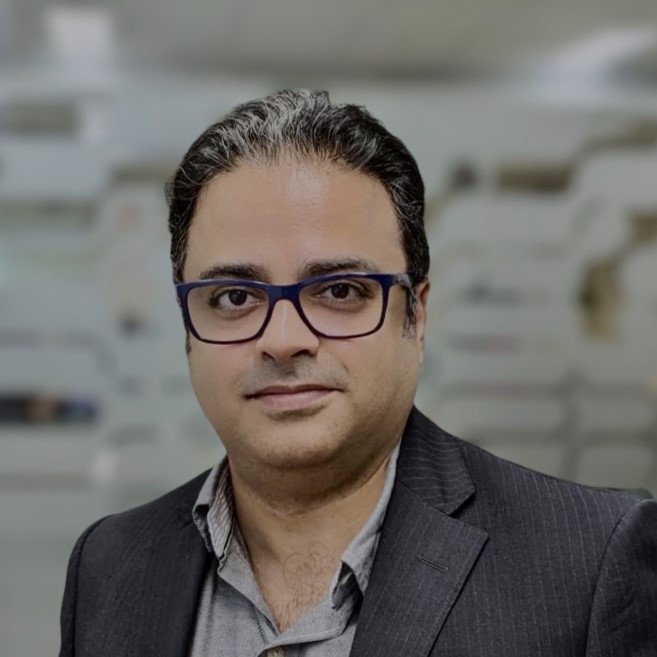
  • “With the evolving jurisprudence in arbitration law, cyber and tech law, India is on the right path to becoming a robust jurisdiction for global business.” – Ankit Chaturvedi, Advocate on Record at Supreme Court of India.

    “With the evolving jurisprudence in arbitration law, cyber and tech law, India is on the right path to becoming a robust jurisdiction for global business.” – Ankit Chaturvedi, Advocate on Record at Supreme Court of India.

    This interview has been published by Anshi Mudgal and The SuperLawyer Team

    With a specialized academic background in Intellectual Property Law and experience in arbitration, what first sparked your interest in these fields, and how did you chart your path toward building a niche?

    My interest in Intellectual Property (IP) Law and Arbitration developed early during my legal education, as I observed how legal structures could facilitate innovation and enable efficient dispute resolution. The interplay of creativity, commerce, and protection within IP law captivated me, while arbitration appealed to my inclination toward structured, time-bound mechanisms for conflict resolution. Recognizing their growing relevance in a globalized, technology-driven world, I pursued a specialization in Intellectual Property Law and complemented it with a Diploma in Cyber Law and a Diploma in Alternate Dispute Resolution. Early in my career, I had the opportunity to work on both IP-centric transactions and arbitration matters, particularly for technology and media clients. This exposure helped me build core competence in these areas. Over the years, I have advised and represented clients in complex IP disputes, as well as high-value arbitrations, thereby developing a niche, multidisciplinary litigation and advisory practice.

    With over 12 years of diverse litigation experience across multiple domains, what inspired you to establish your own independent practice? What were some of the initial challenges you faced, and how did you overcome them?

    The decision to establish my independent practice was a natural evolution in my professional journey. After years of working with reputed law firms and handling high-stakes litigation and arbitration, I felt the need to channel my experience into building a practice that reflects my values and strategic approach.

    Presently, I am regularly engaged by clients and fellow advocates for representation and strategic assistance in matters before the Supreme Court of India, the High Court of Delhi, the NCLT/NCLAT, NCDRC, and Arbitral Tribunals. My practice spans a wide range of civil, commercial, and arbitration matters, with a strong emphasis on tailoring strategy to suit the forum and the nature of the dispute.

    That said, the transition to independent practice came with its own set of challenges, particularly as a first-generation lawyer. Unlike those with family legacies in the profession, I did not inherit a chamber, a network, or a ready set of clients. Every brief, every introduction, every recommendation had to be earned through consistent effort and credibility. 

    One of the most immediate hurdles was building a reliable and cohesive team that aligned with the standards and expectations I had set. Another was gaining visibility and establishing credibility in a competitive legal ecosystem where institutional names often carry weight. Financial unpredictability, especially during the initial phase, was a very real concern.

    But persistence, the trust of long standing clients, and the support of peers in the profession helped me navigate those early hurdles. Looking back, the absence of a safety net made the process harder, but it also made every milestone more meaningful.

    You’ve represented various corporates and associations before the Hon’ble Supreme Court. What are some key strategic and procedural considerations when preparing matters for the Apex Court?

    As an Advocate-on-Record, I am closely involved in ensuring procedural compliance at every stage, whether it is curating the record, certifying pleadings, or meeting filing timelines. The smallest procedural oversight can delay a matter or, worse, affect its prospects, so attention to detail is non-negotiable.

    Strategically, it’s essential to identify and frame substantial questions of law that warrant the Court’s attention, especially when seeking special leave. The task is not just to argue well but to demonstrate why the matter deserves to be heard at the apex level. This often involves a careful study of precedents, anticipating the judicial approach, and distilling complex factual matrices into crisp legal propositions.

    When representing corporates or industry bodies, an added layer of responsibility arises, ensuring that litigation strategy is aligned with their internal governance, compliance protocols, and long-term commercial outlook. In such cases, the objective is not only to secure relief but to do so in a manner that reinforces institutional credibility and legal preparedness.

    Ultimately, preparation for the Supreme Court is not about volume of material, but the clarity of thought and brevity in presentation. Every word counts and every argument must serve a precise purpose.

    With the rapid rise of technology including AI and digital platforms, how do you see the landscape of dispute resolution changing, particularly in the realms of IP and commercial litigation?

    The rapid evolution of technology, particularly artificial intelligence, and digital platforms, is fundamentally reshaping the legal landscape. In the realms of commercial litigation and arbitration, we are already seeing an increased reliance on digital evidence, virtual hearings, and AI-enabled legal research tools. 

    In the context of intellectual property, technology has created both opportunities and complex challenges. Issues like digital piracy, AI-generated works, and automated infringement detection demand legal interpretations that go beyond traditional IP frameworks. The pace of innovation often outstrips legislative response, placing greater responsibility on lawyers and Courts to bridge that gap with well-reasoned, forward-looking arguments.

    From a procedural standpoint, the integration of e-filing systems, hybrid hearings, and digital evidence management has significantly improved access to justice and case efficiency. These changes, initially introduced out of necessity during the pandemic, have now become institutional features, and rightly so.

    Looking ahead, I believe technology will not just augment dispute resolution but redefine it. Online dispute resolution (ODR), smart contracts, and AI-assisted decision-making are likely to become more mainstream. For practitioners, this underscores the need to stay agile, continually upgrade their understanding of emerging technologies, and reimagine advocacy in a digital-first environment.

    Having said that, while AI can assist in streamlining legal tasks, it cannot substitute the nuanced reasoning, ethical judgment, and strategic insight that human intelligence brings to the legal process. Law is not only about rules, it is about context, persuasion, and the ability to interpret human conduct. These are areas where human advocates remain irreplaceable. It will likely take considerable time, and fundamental shifts in legal philosophy, before AI can meaningfully replicate that depth of analysis and discretion. For Advocates today, the challenge lies in integrating new-age tools without losing the craft of advocacy. 

    In advising international clients, especially in technology-related matters, how do you navigate cross-border legal systems? Do you feel India’s evolving legal framework is now aligned with global standards in this space?

    Advising international clients requires not just legal expertise but also cultural and regulatory sensitivity. I ensure that our advisory is aligned with both Indian legal requirements and the client’s jurisdictional obligations. This involves collaborating with foreign counsel, staying updated on global developments, and contextualizing advice for transnational operations. India’s legal framework, particularly in arbitration, data protection, fintech, and IP, is increasingly converging with global best practices, though there is room for further harmonization. With the evolving jurisprudence in arbitration law, cyber and tech law, India is on the right path to becoming a robust jurisdiction for global business.

    Having handled numerous high-stakes arbitrations, what are the key challenges you’ve encountered? In your opinion, how is Alternate Dispute Resolution shaping the future of dispute resolution in India?

    Arbitration, particularly in sectors like construction, infrastructure, and real estate, often brings with it layered complexities, voluminous records, overlapping issues, technical details, and multi-party coordination. One of the foremost challenges I have encountered is ensuring that the presentation of evidence remains streamlined and digestible for the arbitral tribunal, especially when dealing with expert reports, engineering documents, or financial data spanning several years.

    Coordinating with technical experts, be it structural engineers, accountants, or valuation professionals, also demands careful calibration. Their inputs must be integrated in a legally coherent manner while preserving clarity. Additionally, procedural inefficiencies, such as fragmented hearings, delayed cross-examinations, or challenges in securing timely interim relief, can dilute the effectiveness of arbitration if not proactively managed.

    Enforcement remains another practical concern. Winning an award is one part of the battle; ensuring its timely execution, particularly in cross-border contexts, can often test both patience and strategy.

    That said, I firmly believe that Alternate Dispute Resolution is no longer just an alternative, it is becoming central to the evolution of commercial justice in India. With institutional arbitration gaining maturity, greater judicial support for party autonomy, and statutory amendments aimed at reducing timelines, ADR is now seen not only as a faster route to resolution but also as one that offers confidentiality, flexibility, and sector-specific expertise.

    In my own practice, I have seen clients grow increasingly open to ADR mechanisms, not only for dispute resolution but also for pre-dispute risk management. The shift is encouraging and, in many ways, necessary for a modern, efficient legal ecosystem.

    What guidance would you offer to young lawyers who aim to develop a multifaceted practice in litigation and advisory, especially in specialized areas such as intellectual property and arbitration?

    Young lawyers have more access today than ever, judgments are online, mentors are more approachable, and the legal market is broader. But with this comes pressure to specialize early.

    My advice is to not to rush it. Spend your first few years building a strong base helps immensely. Attend court. Observe. Take notes. I still remember sitting in the back row of a courtroom during my early days, watching a senior counsel argue a simple interim application. The way he positioned facts, paused, and responded taught me more than any classroom could. That moment stayed with me.

    Do not hesitate to ask questions or seek feedback. Invest in courses, read beyond textbooks, and keep your curiosity alive. Most importantly, find mentors who do not just teach the law, but help shape how you think. I have been lucky in that regard and I try to offer the same to juniors in my chamber.

    Honestly, there is no one-size-fits-all formula. But if you stay honest with your work, remain open to learning, and surround yourself with people who push you to grow, the law has a way of rewarding your efforts.

    Being enrolled as an Advocate-on-Record at the Supreme Court is a significant professional milestone. How has this achievement influenced your practice, and what additional responsibilities does it entail?

    Becoming an Advocate-on-Record at the Supreme Court has been one of the most defining moments of my professional journey. It has brought me honor and repute. It is both a privilege and a significant responsibility, one that has deepened my involvement in constitutional, commercial, and regulatory litigation at the highest level.

    The designation has brought with it the ability to independently file and conduct matters before the Supreme Court, which naturally expands both the scope and depth of my practice. It has also instilled a heightened sense of accountability, not just to clients, but to the institution of the Court itself. Every filing under my name carries the weight of professional integrity and procedural precision.

    As a first-generation practitioner, the journey to clearing the Advocate-on-Record examination and earning the trust of clients in this capacity has been particularly meaningful. The recognition has not only enhanced my standing within the legal fraternity but has also opened doors to more complex and high-stakes litigation assignments, often requiring strategic foresight, coordination with senior counsel, and deep research.

    Managing a demanding legal practice, especially as an AOR, can be intense. How do you maintain personal well-being amidst professional commitments? What does unwinding and relaxation look like for you?

    Managing a demanding legal practice, especially in the role of an Advocate-on-Record, requires more than just professional discipline. It calls for conscious balance, perspective, and self-care. The pace can be relentless, with high expectations and tight timelines, but I have learned over the years that sustainability in this profession depends on how well you manage your energy, not just your time.

    The unwavering support of my family has been the bedrock of that balance. Their patience and encouragement, especially during peak court seasons or when critical matters are listed back-to-back, provide a sense of stability that anchors me amidst the intensity of litigation. Knowing that there is understanding and reassurance outside the courtroom makes the pressures inside it more manageable.

    I also try to be deliberate about switching off. Reading, particularly outside of law, is something I turn to regularly. Even a short walk or a quiet break during the day can bring a surprising amount of clarity. Setting boundaries around work hours and consciously unplugging when possible has helped me stay mentally alert and emotionally steady.

    Ultimately, it is the combined support system at home and at the workplace that sustains consistent performance and personal fulfillment in this profession.

    Get in touch with Ankit Chaturvedi –

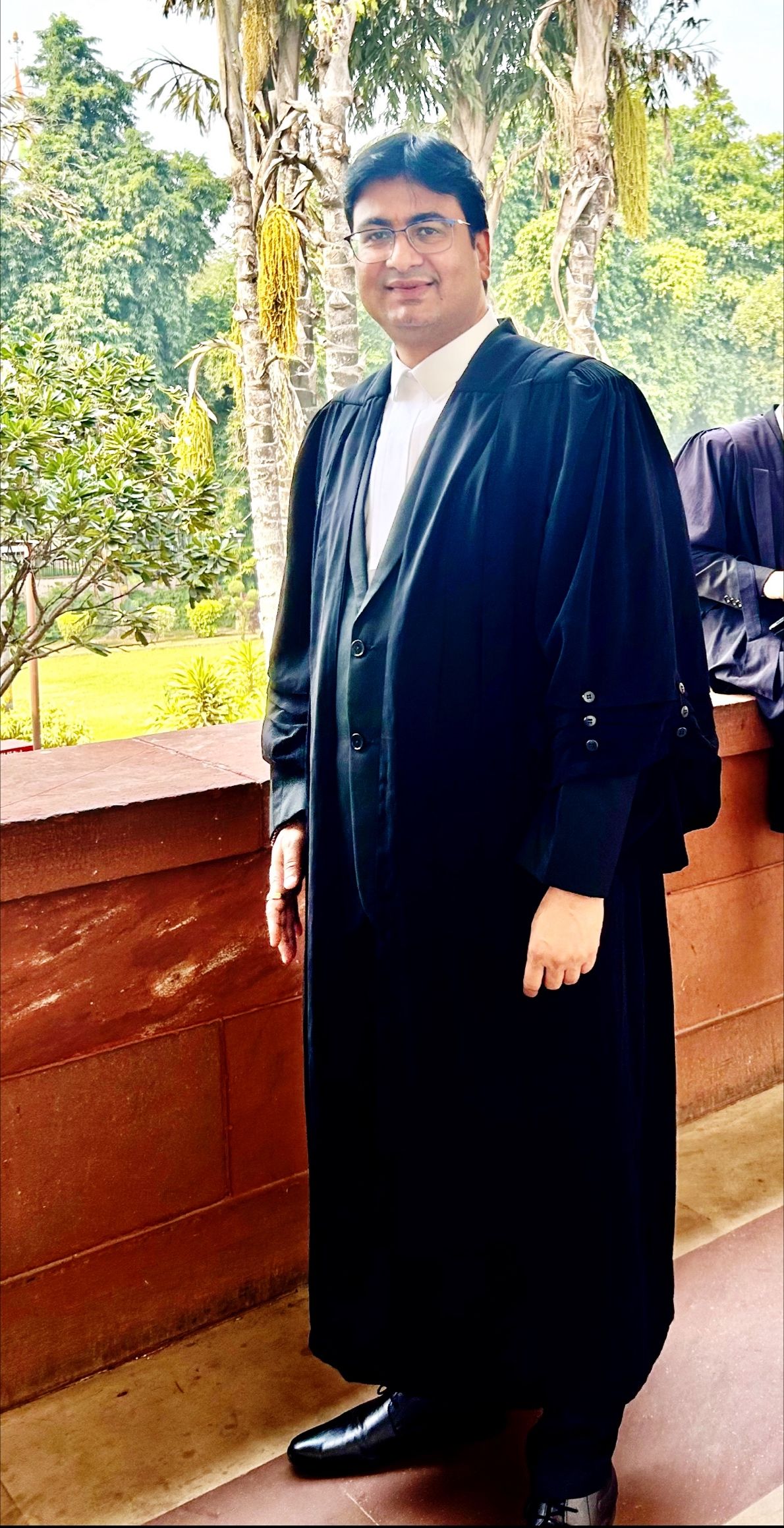
  • “The reality is that law isn’t about flashy suits or truckloads of money; it’s about resilience. The initial years are tough, but perseverance will always reward the committed” – Pinak Mitra, Partner at DMG India Law offices LLP

    “The reality is that law isn’t about flashy suits or truckloads of money; it’s about resilience. The initial years are tough, but perseverance will always reward the committed” – Pinak Mitra, Partner at DMG India Law offices LLP

    This interview has been published by Namrata Singh and The SuperLawyer Team

    Hello and welcome, everyone! The SuperLawyer’s team is excited to bring you yet another insightful session today. If you are seeking inspiration through diversification and unwavering dedication, look no further—today’s guest embodies both.

    We are honored to welcome Advocate Pinak Mitra, a respected figure in the legal community.

    For those joining us today, let me briefly introduce our esteemed guest. Advocate Mitra is a distinguished lawyer at the High Court of Calcutta, serving as Counsel for the State of West Bengal. He is a distinguished Member of the International Council of Jurists and a National Board Member of the Indian Lawyers Association—yet this is just the beginning of his impressive journey.

    With a dynamic practice spanning criminal law, constitutional law, consumer law, medico-legal issues, family law, and matrimonial disputes, Advocate Mitra’s legal expertise is truly vast. He continually upskills himself, delving into intellectual property law, and navigating the intricacies of economic offenses.

    We are thrilled to have you with us today, sir. Thank you for graciously accepting our invitation and joining us to share your knowledge. Welcome, Advocate Mitra!

    Thank you so much, Akash.

    Sir, let’s begin with a topic that resonates with many young lawyers. Litigation, as we know, is a challenging path, and it can feel overwhelming, especially for those just starting out.

    Given your remarkable achievements in this field, could you share with us how you navigated this journey and what drew you to pursue a career in litigation? We would love to hear about your experiences and the key insights that shaped your path

    Actually, for me, law was never my first choice. I wanted to study medicine and become a doctor. Law was my second option. The reason I chose between medicine and law was that I wanted to be a professional and not have a job where I worked under an employer. I didn’t want to be just another employee. That’s precisely why medicine and law were my two options. After failing to crack the medical exams, I shifted my focus to law.

    I managed to get into law, took the entrance exams—though without much preparation—and got into the Department of Law at the University of Calcutta for a five-year BA LLB course. Initially, it was very boring because we had several papers related to humanities, and I came from a science background. The first and second years were especially dull since we didn’t have semester exams at that time in Calcutta University. But once we started with the law subjects, things slowly became more interesting.

    After graduating and joining court, I realized the stark contrast between what I had heard, seen on TV, and the reality. It’s very different from the common notion that lawyers are flashy people earning truckloads of money. The reality is that it’s a tough nut to crack, especially in the initial years, where you need a lot of resilience to sustain yourself.

    I’ve seen many of my batchmates join court after graduating from law school, but within two or three years, their initial energy fizzles out. The struggle is real, especially when you see friends from other fields, like engineering or MBA, earning decent salaries, enjoying job security, buying cars, and investing. Meanwhile, someone who studied law and joined litigation finds it incredibly difficult, not just to sustain themselves, but even to ask family members for basic expenses to travel to court.

    It’s quite embarrassing to ask for small amounts of money just to sustain yourself when you’re 24 or 25 years old and should ideally be independent. And when you see your friends with steady salaries, negativity can easily creep in. It’s challenging not to get depressed or bogged down by these realities and to just keep going. This is why some people, despite their potential, eventually give up or lose the patience to hang on after a few years. That’s the biggest challenge anyone entering litigation has to face.

    Thank you, sir. Your insights are truly grounded in the practical realities that many face at the start of their careers. I believe the motivational mantra you shared at the beginning of this interview—to persist, remain resilient, and stay dedicated—will resonate deeply with everyone listening today.

    Now, moving on to the next question: Your career has spanned the judicial hierarchy, from the trial courts to the High Court and eventually to the Supreme Court. Could you share with us your journey through these stages? Any memorable experiences, key moments, or valuable insights you’d like to pass on from your progression through these courts?

    Yes, so I’ll tell you. During my five-year tenure in law school, I only did two internships. The first was as a judicial intern under a Supreme Court judge, and the second was in a trial court for three months. I didn’t have the chance to intern in the high court. There was a stark contrast between my experiences in the Supreme Court and the trial court.

    I really enjoyed my time at the Supreme Court, watching the stalwarts of law argue, and I learned a great deal from them. On the other hand, when I returned to the trial court, especially in West Bengal, I found it very difficult to understand what was happening. What I was reading in my books didn’t seem to align with the reality of the trial court. There wasn’t much synchronization between the two. I’ve even heard judicial officers mention that each trial court seems to have its own separate procedures, which, as a law student, was quite shocking for me to hear and witness.

    Now, that’s one side of the story. As far as the High Court and the Supreme Court go, particularly the Calcutta High Court, the standard there is exceptionally high and has been maintained over the years. Bengalis, as a community, are very academic in nature, which leads them to always engage in legal discussions and have a deep understanding of the nuances of law, both in letter and spirit.

    In my opinion, if you’re practicing in the Calcutta High Court, dealing with complex legal issues or arguing a matter in the Supreme Court becomes relatively easier because of the high standards upheld here.

    Now, coming back to the trial courts—without any offense, I have to say there are some brilliant trial court advocates in our state and across India. However, the problem is that their work often goes unrecognized because the judgments from trial courts are rarely reported. Even though they sometimes do a fantastic job, trial court lawyers don’t receive the recognition they deserve.

    That’s another side of the story. The second aspect is that a law student or candidate must decide early on which area of practice they want to pursue. For example, if someone is interested in constitutional law, then the trial court is not an option, and they must focus on building their practice in the High Court or the Supreme Court.

    On the other hand, if someone is passionate about trial court work, including examination and cross-examination, they should focus on trial courts or the original side of the High Court, where suits are filed and heard. So, it all depends on personal preference. One should first choose their area of practice and then make a decision accordingly. Also, gaining some internship experience in both trial courts and high courts is crucial to understand if they like the setup and environment because, ultimately, after graduation, they need to blend into that environment and become part of it.

    In order to make an informed decision, it’s important to get a heads-up about these things beforehand. Otherwise, one might spend three or four years practicing in the High Court only to later realize they prefer trial court work. In such cases, they could end up losing two or three years of their practical life, even though they would have gained valuable experience.

    That’s the problem. Experience-wise, they would certainly benefit, but in terms of establishing their own practice, they might lose those crucial years.

    Sir, how was your experience when you first argued, represented, or took on a matter in the Supreme Court? Could you share what it was like transitioning from the state level to the Supreme Court?

    During my internship at the Supreme Court, I had the unique opportunity to see a side of the Court that most lawyers don’t—working behind the scenes with a Supreme Court judge. This was especially insightful before the miscellaneous days, which are Mondays and Fridays. I saw firsthand how the research is done, and I gained an understanding of the level of preparation and efficiency involved when judges handle SLPs (Special Leave Petitions).

    Usually, these hearings last just a few seconds, and at that time, we had to prepare a short note outlining the legal point involved so that the judge could quickly frame his mind. Everything moves very fast, and this experience was incredibly valuable during my internship.

    The second significant experience was when I joined the bar at the High Court. At that time, the Criminal Motion Bench was headed by Justice Bagchi for a considerable period, and he was extremely fast. We had to be quick and precise in presenting ourselves, and that definitely helped me when preparing for SLP admissions as well. The way Justice Bagchi conducted motion admission hearings at the Calcutta High Court was very similar to how the Supreme Court handles SLP admissions.

    This experience proved invaluable. You must know your brief inside out because you won’t have time to fumble through papers during the hearing. Even in a heavy matter, you might only get one minute to present, and there are always super seniors in the field of law arguing.

    As a young lawyer, it’s particularly challenging to get an audience with a Supreme Court judge. You have to make an impact right away, like hitting a six on the first ball. That’s my approach to it.

    Thank you so much, sir, for sharing these insights. This discussion feels like a technical workshop with all the nuances you’re imparting. I’m certain that individuals in independent litigation practice who aspire to reach the highest levels will greatly benefit from the wealth of experience you’ve brought to this session today.

    Sir, your experience extends beyond India, encompassing both local and global perspectives. If your awe-inspiring trajectory were to be anchored in specific professional virtues, what would those virtues be? And would you be willing to share them with junior professionals?

    When it comes to professional virtues, I would highlight three key qualities. First is discipline. There is no substitute for discipline; you need to maintain a fixed routine and adhere to it. This principle applies across all fields—law, politics, Bollywood, and beyond. Successful individuals, regardless of their profession, follow a rigorous and disciplined lifestyle.

    The second quality is hard work, coupled with staying updated. Hard work is crucial, and it includes keeping abreast of developments in your field. Nowadays, we don’t wait for a Supreme Court bound volume to arrive; updates are provided through various websites and legal articles. Supreme Court decisions are reported within the same day. Embracing technology and staying informed is essential; otherwise, you risk being outpaced by your opponents if you aren’t up-to-date.

    The third quality is the ability to build good public relations skills. In the legal field, especially as a lawyer, connecting with people socially is vital. Initially, clients may come through your relatives, friends, or referrals from teachers. Your network grows over time through these connections. Just as in medicine, where a patient’s choice of doctor is influenced by reputation and referrals, the same holds true for law. Effective social skills help in client acquisition, which in turn drives your success.

    To summarize, discipline, hard work, and strong interpersonal skills are interconnected. Discipline ensures you stick to your routine, even on slow days. Hard work involves both effort and staying updated. Building social connections helps in gaining clients, which requires continued hard work. Each quality supports and enhances the others, creating a successful professional path.

    Given that you have continually upskilled yourself through various courses and degrees, and considering the current legal landscape with its transformative changes across sectors, what are your thoughts on the legal and technological upskilling of lawyers? How should they adapt to these changes, and how significant is this process within the legal profession?

    Regarding the integration of technology into the legal field, I believe it is no longer a choice but a necessity. Whether we like it or not, we have to adapt.

    For instance, I recently visited the Supreme Court, which has nearly gone completely paperless. In contrast, the Calcutta High Court still relies heavily on paper and bulky briefs. During my recent appearance at the Supreme Court, my advocate on record provided me with a digital copy of the SLP. Even though I have a tablet and a MacBook, I am accustomed to holding a physical brief. Nonetheless, I tried to go paperless and use the digital copy.

    It’s a matter of habit; initially, it was a bit challenging. I can only imagine the difficulties faced by senior members of the bar, who have been trained to handle physical books and documents. Personally, I still prefer having an SCC (Supreme Court Cases) in hand rather than reading judgments on a screen. It may be easier on the eyes, but we must embrace technology.

    Furthermore, technology helps us stay updated. Without it, we would miss out on current developments. For a lawyer to grow and evolve, accepting technology is essential.

    During the COVID-19 pandemic, courts adopted a hybrid model of physical and virtual hearings. After the pandemic, some high courts moved away from this model, but the Supreme Court mandated that hybrid hearings continue. This has been beneficial, though there is still some resistance to accepting virtual appearances. However, technology allows lawyers who are unwell or cannot afford junior lawyers to participate virtually and seek adjournments without harming their clients.

    Technology has also improved court processes. Orders are now uploaded to the high court servers and e-courts, eliminating the need for certified copies. Additionally, we can now view which cases are being heard in which courtrooms via our phones, which was not possible in the past. This advancement saves time and effort compared to earlier practices where one had to physically check courtrooms or rely on clerks.

    Another significant benefit of virtual hearings is that clients can observe their representation and proceedings. This transparency helps address issues where clients have been misled about hiring senior advocates or other concerns. Clients can now view hearings and understand the proceedings better.

    In summary, technology is crucial in the legal field today, and there is no way to proceed without it in the current age.

    Sir, what is the constant drive or motivating force that sustains you in your profession? Is there a particular philosophy or mantra that you believe in?

    I have been quite inspired by the story of Mr. Ram Jethmalani. He has been a guiding force for me. During my internship days, I saw him argue a case in the Supreme Court on the principles of bail, and I was awestruck by his aura. After that, I read about him—his struggles and his journey as a lawyer—and I was fascinated by how he transformed himself.

    Outside the realm of law, I would also say I have been inspired by the journey of Mr. Shah Rukh Khan. He has been a role model for me, not just as an actor but as a personality as well. His journey is incredible. These people have had a profound impact on my journey as a lawyer. They have motivated me, especially when I see how they faced failures and bounced back.

    If you look at the trajectory of any successful person, they go through ups and downs. Even Mr. Amitabh Bachchan, the legend of Bollywood, experienced highs and lows, and his transformation later in life is remarkable. Figures like these—successful individuals in their respective fields—should serve as a motivation for others. Whether it’s sports, Bollywood, film, politics, or the legal field, their journeys and the challenges they faced can guide and inspire aspiring individuals.

    Their stories have been a tremendous source of inspiration for me and have helped me in my own journey.

    On that note, sir, a demanding profession like law can certainly take a toll on mental health. How do you manage the pressure of work while maintaining your personal space? Are there any hobbies, interests, or general routines you follow to strike a balance that you’d like to share?

    Yes, law is very taxing. It is extremely demanding on our mental health as well, because it takes at least 14 to 15 hours of our daily life. Apart from that, you need time for your daily activities—sleep, rest, and spending time with your family. Unfortunately, if you’re in the field of law, especially as a litigating lawyer, you don’t get much time with your family. That is one of the hardest parts. You don’t get time to hang out with friends either.

    Initially, you might, but as you become busier, the profession consumes a lot of your time, so you won’t be able to do that. Sometimes it becomes overwhelming. You might feel like taking an evening off to watch a movie or go out with friends or family, but then you remember you have cases the next day and need to study. You’re forced to study, and it can become very difficult and, at times, even depressing. I wouldn’t say it doesn’t. That’s one aspect—if you’re busy.

    The other aspect is if you don’t have work, which many lawyers experienced during COVID. The pandemic was a huge eye-opener for everybody. Most courts weren’t functioning properly at first, though they eventually moved to a hybrid model and virtual hearings. But initially, it wasn’t like that.

    So, for almost two years, many lawyers didn’t have work. At that time, it was very depressing and mentally challenging for lawyers to sustain themselves and take care of their families. Our profession is already very uncertain. I might have a very busy week now, and the next week, I could be completely without work.

    During that free time, how you channel your thoughts is very important. It takes a huge mental toll on every serious lawyer because the insecurity looms large. As for me, I used to enjoy reading as a hobby. But after joining litigation, the profession has taken that hobby away from me. Now, in my free time, I hardly read books because I’m already reading so much during the day. So instead, I’ve taken to watching a lot of content on OTT platforms, which I enjoy.

    Another principle I’ve maintained during my 10 years of practice is not going to court during the vacations. Many people work through the vacations, but I’ve made it a point not to work during the three vacations we have in Calcutta. For the good part of that time, I spend it with my family.

    I love traveling a lot, so whenever I get the opportunity, I leave the city and go somewhere to spend some time. Traveling helps keep me refreshed. We have such an amazing country with so much to offer, and I love exploring the length and breadth of it. So, that’s how I unwind.

    Since you’ve been involved in various editorial and pedagogical activities, where you’ve interacted with both students and practitioners, how do you think this involvement has enhanced your legal acumen and expertise? Additionally, how much do you enjoy these activities alongside your primary role in litigation?

    Yes, actually, I would say it is very helpful, even for the growth of an individual as a lawyer. Let me share an anecdote: during my early years of practice, and even more recently during the COVID period, I used to mentor some law students, including my interns. Apart from them interning with me, I would teach them about the practical aspects of the legal field and different statutes that aren’t covered in their syllabus.

    I also gave them basic insights into how cases are filed, conducted, and so on. In addition, I was involved in editing journals for CHN at one point in time. This experience was helpful in two main ways. Firstly, for the purpose of editing, I had to go through judgments passed by various courts. In the process of reading those judgments, I was constantly updating myself as a lawyer.

    Secondly, reading judgments for editing purposes allowed me to cover a lot of material in a short span of time. This not only increased my reading speed but also improved my ability to quickly identify the key portions of a judgment.

    Thirdly, dealing with different aspects of law—whether with law students or fellow lawyers—helped me revise what I had learned earlier, either during law school or later in practice. For example, while I may have studied the Domestic Violence Act or the Negotiable Instruments Act thoroughly during my college days, in practice, we mostly focus on a few sections like Sections 138 to 143, 143A of the NI Act. However, when discussing the entire statute with a student or fellow lawyer, it forces you to revisit and refresh your knowledge of the full text.

    In a way, by teaching others, you’re also learning and revising. This helps to reinforce your understanding of the law and ensures you don’t forget important sections. So, it definitely aids in personal growth and keeps you sharp as a lawyer.

    Thank you, sir. As a concluding note, could you please share your long-term plans, particularly in light of your impressive involvement with various professional legal groups and associations? What are your long-term goals?

    This is a very difficult question for me to answer. In terms of long-term plans, as an individual, I aim to advocate for the cause of law to a certain extent. I also plan to author a few books in the field of law, which I will likely begin working on soon. These books will offer a more practical insight into certain aspects of law, focusing on topics that I choose. The goal is for these books to be beneficial not only for law students but also for legal practitioners.

    There are numerous books on various legal topics available in the market, but I’ve observed that some of them exist just for the sake of being there. They don’t provide a proper or meaningful insight into the areas of law they cover. That’s one side of it. On the other hand, I have a long-term plan to establish a legal institute that imparts practical legal training to students.

    When or how this institute will materialize, I can’t say. It may never happen, or it could happen in the near future, but I believe it’s very important. Many people who enter law school are not from legal backgrounds, and the five years of legal education often don’t provide sufficient practical knowledge. That’s my perspective on that.

    Additionally, many law colleges today focus on ensuring students complete a set number of internships, but it doesn’t necessarily mean that students are learning anything valuable during those internships. It has become more of a target-oriented task—complete the internship, get the certificate, and move on.

    However, in reality, interns who come to courts or law offices aren’t truly learning much. I regularly have interns at my law office, and it’s a practice in my office to interact with them after a week or so. I make sure to ask for their feedback on their previous internships—whether it was in someone else’s chamber or a law firm—and also about what they have learned while working with me. If they come here, they should leave with something productive that will help them in their careers.

    These are the aspects I want to focus on as part of my long-term plans in the field of law. So, let’s see where this journey takes me.

    A very big thanks from the entire team of SuperLawyer. Thank you so much. 

    Thank you, Akash, for having me. It was truly a pleasure to discuss various aspects of our day-to-day professional lives and to share a glimpse into how I maintain balance in my personal life as well. I’m confident that young lawyers will find value in this, as it will help them gain a better understanding of the practical realities in the legal field. Thank you once again for having me.

    Get in touch with Pinak Mitra-

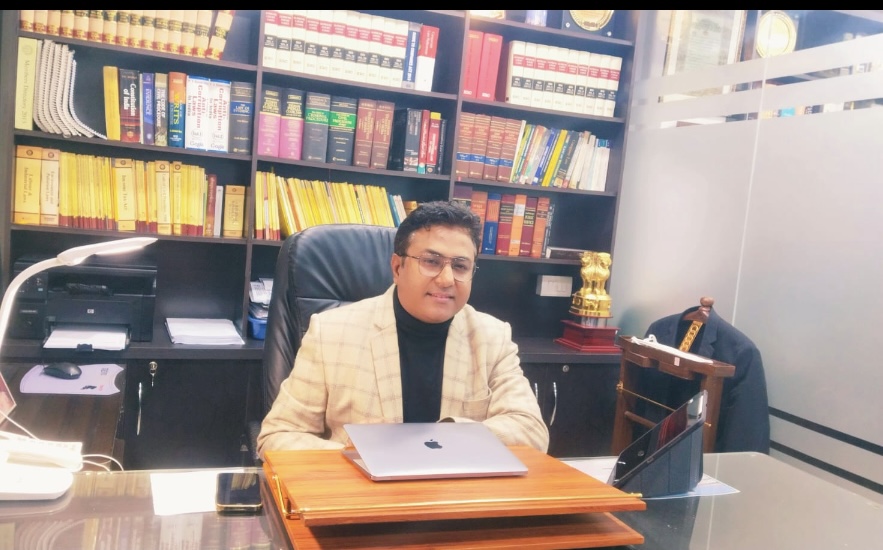
  • “My focus on technology law, data privacy, cybersecurity, and intellectual property rights as the General Counsel for our organization is driven by the industry’s unique demands and my passion for leveraging legal expertise in a rapidly evolving digital landscape”- Sandeep Dembla, Director – Legal and Compliance at Evalueserve

    “My focus on technology law, data privacy, cybersecurity, and intellectual property rights as the General Counsel for our organization is driven by the industry’s unique demands and my passion for leveraging legal expertise in a rapidly evolving digital landscape”- Sandeep Dembla, Director – Legal and Compliance at Evalueserve

    This Interview has been published by Pragya Chandni and The SuperLawyer Team

    Can you share what initially drew you to pursue a career in law, especially considering your diverse educational background that includes both commerce and cyber laws, as well as the influence of your family of lawyers, including your father who practiced law in courts and your brother who is a corporate litigating partner with a law firm?

    I chose to pursue a career in law for several reasons. Firstly, my diverse educational background prepared me to handle complex and diverse situations. It also prepared me for a wide variety of challenges given my exposure to various areas, from financial to business environment and to technology. Particularly my exposure to cyber laws helped me understand the intersection of technology, business, and regulations in a fast-paced environment.

    My family’s deep roots within the legal profession were a stepping-stone for me to grow in the sphere with dedication and diligence, which was inspired by my father and brother’s commitment and success story. In essence, my journey into law reflects a blend of personal passion, academic rigor, and the enduring legacy of my family’s commitment to the legal profession.

    Your journey seems to have transitioned from commerce to law. How did your experience at Delhi College of Arts and Commerce influence your decision to delve into the legal field and what further solidified your interest in pursuing a degree in law?

    I had secured admission at the Delhi College of Arts and Commerce (DCAC) in the commerce program through sports quota as a cricketer. Balancing academic pursuits with rigorous cricket practice taught me valuable lessons in discipline, time management, and perseverance, skills that later proved invaluable in my legal studies and career.

    During this time, my father’s guidance was particularly influential. He recognized my potential and encouraged me to pursue a Bachelor of Law degree, understanding that while I may not have been inclined towards courtroom practice, my aptitude for analysis, problem-solving, and attention to details made me well-suited for a role as an in-house lawyer within a company.

    A pivotal moment that solidified my interest in pursuing a law degree was my interactions at the evening law college. The unique setting provided an opportunity for students, many of whom were already working in various government and private sectors, to pursue their LLB degrees while juggling professional responsibilities. It was through these shared experiences and collective efforts to overcome challenges that I gained a deeper appreciation for the power of legal expertise in driving positive change.

    Moving forward to your experience at National Academy of Legal Studies and Research (NALSAR) University Hyderabad, could you elaborate on how your PG diploma in Cyber Laws has complemented your overall legal expertise?

    My experience at National Academy of Legal Studies and Research (NALSAR) University Hyderabad, where I pursued a PG diploma in Cyber Laws, has been invaluable for upgrading and upskilling myself, particularly in the context of emerging legal challenges in the digital age.

    This specialized program has significantly enhanced my overall legal expertise, particularly in the field of cyber law, which is increasingly relevant for all in-house lawyers. The PG diploma curriculum provided me with a comprehensive understanding of the legal complexities surrounding cyberspace, including data privacy, intellectual property rights and cybercrime. It has prepared me to contribute effectively as an in-house lawyer, ensuring that my organization remains compliant with cyber laws, protects sensitive information, and mitigates risks associated with digital operations.

    As the General Counsel for Evalueserve, your focus is on technology law, data privacy, cybersecurity, and intellectual property rights. What inspired you to specialize in these areas?

    My focus on technology law, data privacy, cybersecurity, and intellectual property rights as the General Counsel for our organization is driven by the industry’s unique demands and my passion for leveraging legal expertise in a rapidly evolving digital landscape.

    · Industry Focus: Our work involves managing data, technology platforms, and digital assets, requiring a deep understanding of legal regulations and risks in these areas.

    · Regulatory Landscape: Laws governing technology and data are constantly changing, so I stay updated to ensure compliance and mitigate risks.

    · Strategic Importance: Our organization’s value depends on technology, data, and intellectual property, so I provide strategic legal guidance to protect our assets and interests.

    · Ethical Considerations: I advocate for ethical data practices and responsible innovation to uphold privacy rights and promote trust in our industry.

    · Personal Interest: I am genuinely interested in the intersection of law and technology, and I am driven by the opportunity to apply legal principles to solve complex challenges.

    Your profile mentions your passion for enhancing legal efficiencies through automation and innovation. Could you share an example of a particularly impactful automation project you have implemented?

    Recognizing the manual and time-intensive nature of our day-to-day work, I led several initiatives to evaluate, select, and implement a robust automation solution tailored to our business needs, including contract management software. This involved collaborating closely with cross-functional teams including IT, various corporate functions and stakeholders across business units and CXOs. The complex organization structure and global footprint of my company required end-to-end business process management to define requirements, assess available options, and customize the software to align with our workflows and business objectives.

    I had recently implemented the contract management system at Evalueserve, aimed at streamlining the contract lifecycle process and enhancing efficiencies across the organization, with several impactful outcomes:

    · Centralized Repository: The system provided a centralized repository for storing all contracts, enabling easy access, retrieval, and tracking of contract data across the organization. This eliminated the need for cumbersome manual filing systems and reduced the risk of misplaced or lost contracts.

    · Automated Workflows: We configured the system to automate key contract management workflows, such as contract creation, review, approval, and renewal. By automating routine tasks and standardizing processes, we significantly accelerated the contract lifecycle, reducing turnaround times and improving overall productivity.

    · Enhanced Compliance: The system included built-in compliance features, such as contract templates with predefined clauses and compliance checklists.

    · Reporting and Analytics: The system offered robust reporting and analytics capabilities, allowing us to gain insights into contract performance, identify trends, and track key metrics such as contract volumes, expiration dates, and renewal rates. This data-driven approach enabled us to make informed decisions and optimize contract management strategies.

    Being recognized by Forbes Legal Powerlist as one of the top General Counsels in India reflects your commitment to excellence and innovation. What strategies do you employ to stay at the forefront of legal innovation in such a dynamic field?

    Staying ahead in legal innovation means learning continuously, building partnerships, adopting new technologies, collaborating across teams, and staying flexible.

    · Continuous Learning: to stay updated on legal changes and trends through conferences, seminars, and ongoing education.

    · Strategic Partnerships: working closely with legal tech providers and experts to find innovative solutions.

    · Cross-Functional Collaboration: engage closely with leaders from different functions to share knowledge and build innovation pipelines.

    · Agile Mindset: stay flexible and adapt quickly to changing needs and market dynamics.

    By using these strategies, I steer the legal & compliance function to lead our organization by adding value to the company and staying ahead in a dynamic legal landscape.

    Finally, drawing from your extensive experience, what advice would you give to fresh law graduates stepping into the legal profession, particularly in the realm of technology and compliance?

    For new law graduates stepping into technology and compliance law-

    · Build Strong Foundation: Learn core legal principles and get practical experience through internships.

    · Keep Learning: Stay updated on legal trends and tech advancements through seminars and webinars.

    · Tech-Savvy: Learn legal tech tools like contract management systems to streamline processes.

    · Stay Ethical: Follow ethical standards, especially in areas like data privacy and cybersecurity.

    · Network: Build connections in the legal community for mentorship and career opportunities.

    By following these tips, you can prepare for success and contribute to the evolving fields of technology and compliance.

    Get in touch with Sandeep Dembla-

  • “As Inhouse counsel, I have learnt how to mitigate the Legal risk, and started thinking like a Business man so that transactions can be materialized in a legal framework, also Team handling is a major learnings which came over the period of time”- Akhilesh Kumar, General Counsel at MBD Group

    “As Inhouse counsel, I have learnt how to mitigate the Legal risk, and started thinking like a Business man so that transactions can be materialized in a legal framework, also Team handling is a major learnings which came over the period of time”- Akhilesh Kumar, General Counsel at MBD Group

    This Interview has been published by Pragya Chandni and The SuperLawyer Team

    Can you share with us your journey into the field of law? What motivated you to pursue this career path, particularly focusing on corporate and securities laws?

    It was continuously new learning every day and at every stage of my journey in the field of Law. After my law college and enrolment at Bar Council my first Guru is Sr. Advocate Mr. Kamal Nayan Choubey. He is one of the best Sr lawyer and legal luminaries practicing at Patna High Court. I have learnt a lot from him. He taught me court crafting and also taught me how much dedication is required to practice the law. During Practice I have also worked as Advocate Member at Mobile Lok Adalat under Bihar Legal Services Authority, also while practicing as a junior advocate associates with Sr Advocate Mr. K.N. Choubey I was thinking and dreaming about the in-house counsel’s/Legal Managers role in the corporate houses who earns well and dresses well, although my senior K.N Choubey ji was not in favour me to join any corporate houses.. as he used to say and pass comments on me jokingly that what In house counsels earn monthly you can earn more than that daily. But I had decided to join corporate house so started as Legal Manager at Pacific Development Corp Limited (Pacific Group, Delhi),  then joined Treasure World Developers Pvt Ltd at Indore M.P, then returned to Delhi again and joined Omaxe Ltd. as Chief Manager Legal, then GM Legal as SGS Group and presently working as Head of Legal at a large conglomerate MBD Group, it is clarified here that while you work as Head of Legal team then you have to have good knowledge in all field of Law, not specific. However, during my journey additionally, I did LLM in Corporate and Securities Law, Diploma in Cyber Law, PG Diploma in Human Rights, which helps me while dealing with the matters pertaining to the respective laws.              

    With such a diverse educational background ranging from botany to law, how do you think your interdisciplinary knowledge has influenced your approach to legal practice, especially in the realms of corporate law and litigation management?

    In the initial days, after my 10th I wanted to become a Scientist who has knowledge of plants/medicines so that I can formulate life saving drugs and Plant tonics, hence in 12th course taken Biology and thereafter in graduation Botany Hons. However, a litigation in my family changed my journey from Scientist to Lawyer/In House Counsel. Certainly the knowledge of Science always helps me in thinking systematically and with utmost patience in finding the right solution to any situation, because study of science requires a systematic approach and patience for the end result.      

    You’ve worked with various esteemed organizations in different capacities such as GM-Legal, Corporate Counsel, and Chief Manager-Legal. Could you elaborate on how each role has contributed to your growth as a legal professional?

    Fortunately , I always got the lead role in the Legal Team in my past organizations since starting as Legal Manager in Pacific till Legal Head in MBD, but yes each role has contributed to my skills and experience whatever I have at present time. Every organization has its own working style/process and each organization teaches something new, Like, while I was appointed first time Legal Manager then I learnt how to work in the corporate culture which is altogether different from working with a law firm or designated Sr Advocate. Nature of work is also different. As inhouse counsel you work as a Client who knows the Law/court procedure and deals with the matter through external counsel. As Inhouse counsel, I have learnt how to mitigate the Legal risk, and started thinking like a Business man so that transactions can be materialized in a legal framework, also Team handling is a major learnings which came over the period of time.    

    Having handled litigations across a wide spectrum including commercial disputes, arbitration, consumer forums, and more, what do you consider as the most challenging aspect of litigation management, and how do you navigate through it effectively?

    I have learnt that for proper management of any litigation of any nature the main thing is the collating the documents and relevant information pertaining to the case, management of case files, means one should must have grip on the facts of the matter and complete documents handy in the court , what and when to be presented before the court that is called court crafting and handling of litigations. Proper management of facts and documents increase 80% chances of winning the case and 20% merit in the matter. You do not require to explain to the Court what is Law but require to present your matter/facts events wise with all the supporting documents/information.   

    Your expertise extends to drafting a myriad of legal documents and agreements. Could you walk us through your approach to drafting and vetting contracts, ensuring clarity and legal compliance?

    I personally enjoy drafting, vetting and negations on the terms of the Agreement and drafting/vetting of the Legal Documents. It is an art and comes gradually when you practice more and more. While drafting I start visualizing the events and consequences of the things not covered in your drafting. For example, if I draft any Construction Agreement on behalf of the Owner who desires to build a building on his plot, then I place myself in the place of Owner and think like Owner and start visualising the consequences of not covering in the Clause of the specific events which eventually shall take place.         

    As a legal head, you’ve been involved in mergers, acquisitions, and other corporate transactions. What strategies do you employ to ensure smooth legal processes in such complex endeavors?

    I try to understand the exact requirement of the Management/Stakeholders and then start collating the data/information and documents. Thereafter we make a team of professionals who shall perform the work in a legal framework and achieve the desired goal.        

    Over your 16+ years of experience, what have been the most significant shifts or developments in corporate law and litigation management, and how have you adapted to these changes?

    There are several changes taken place and still going on day by day, like some Acts/Law changed such as Company Law, amendments in Arbitration, RERA law introduced, forum changed like Company law board to NCLT,  new RERA and Tribunal introduced, also some new Acts introduced like Insolvency and Bankruptcy Code and for litigation management changed from manual management to digital management. Legal profession requires regular updates and demands one should be always adaptive with the changes either in law and technology.  

    Finally, considering your vast experience and achievements, what advice would you offer to fresh law graduates aspiring to embark on a similar career path in the legal field, particularly focusing on corporate law and litigation management?

    I would suggest being dedicated and focused on the subject, because it is not a part time job. He or she has to read apart from basic course materials all the subject related to corporate/commercial such as Company Law, Contract Act, Securities Law, SEBI Guidelines, Consumer Law, Arbitration, Competition law, IT Act, Data Protection Law, Cyber Laws, Partnership Act, Specific Relief Act, Bankruptcy & Insolvency Law, SARFAESI,  Tax Laws, Employment Laws, T.P Act, RERA, PMLA, etc.    It is also pertinent to mention herein that during study of law at least basic requirements of this profession should be well prepared.. such as command over the English language, knowledge of basic computer knowledge, knowledge of words, excel, power point, video conferencing ..means he or she should prepare him/herself to be well versed with the Technology/tools and systems used in the court proceedings.  Reading habits of Judgements/orders and case study shall help in increasing the understanding of the delivery of judgement/order and thinking of the court on the subject matter. One should also visit the court to understand the business of courts.    

    Get in touch with Akhilesh Kumar-


  • “E-commerce in India is moving forward by leaps and bounds. With it , there are  bound to be cyber crimes”- Aviral Saxena, Advocate-on-Record at Supreme Court of India

    “E-commerce in India is moving forward by leaps and bounds. With it , there are  bound to be cyber crimes”- Aviral Saxena, Advocate-on-Record at Supreme Court of India

    This Interview has been published by Pragya Chandni and The SuperLawyer Team

    Can you share the journey of how you decided to pursue a career in law,  especially with a focus on Government Litigation ? 

    Firstly I would like to thank Superlawyer for this interview and convey  my deep appreciation for their endeavor. Law graduates would find my insights  useful while planning their professional journey. 

    Being the second generation lawyer, law was the obvious choice as I have been  watching my father attending court. Also the fact that law is one such mechanism  which touches human lives .It is one such avenue which can bring about positive  changes in this inequitable world. 

    I got through the National Law Institute University , (NLIU) Bhopal in 2007.I  started my practice at Allahabad High Court. After the elevation of my father as a  High Court Judge, I shifted to Delhi to practice at the Supreme Court in 2013.  One does not start with government litigation in the  formative years . I landed with ‘government panels’ after spending considerable  time in private practice. By God’s grace , I have been continuing the work for the past many years before the Supreme Court and different tribunals across Delhi. It’s  indeed a privilege to be part of a competent team of government lawyers where I  get to work on complex and high profile cases. I have gained considerable  experience while representing State Governments and Corporations. 

    With extensive experience in dealing with both State Governments and  Corporations, can you highlight a particular case that has been the most  challenging or memorable in your career so far?

    I have been extremely fortunate to have worked on a wide range of  cases.While every case I argue is close to my heart , but the one that stands out is  the service matter in which I appeared as a standing counsel on behalf of the Delhi  Transport Corporation before Delhi High Court. An Employee had resigned after  rendering 29 years of service.The court was inclined to grant relief on equitable  ground. I could successfully convince the court that the word “resignation” and  “voluntary retirement” cannot be used interchangeably in the case of an employee  and thus not entitled to retiral benefits. 

    Another satisfying case has been of a gazetted government officer wherein I was  able to secure the quashing of criminal proceedings as well as divorce under  Article 142 of the constitution from the Supreme Court . There were multiple cases lodged by his wife in different districts. 

    I have had the opportunity to assist the Senior Advocate/Advocate-on-Record(s) in several high profile cases like CBI autonomy ,Triple talaq Article 370 etc to  name a few. 

    How did your academic background shape your perspective and  approach towards practicing law

    Apart from my legal background , I believe my law school NLIU  played an important role in shaping my personality.Be it moot court participation or time bound completion of research papers involving rigorous research or  internships with top law firms have all contributed to my professional growth .  The interdisciplinary approach taught there has also enabled me to develop a  broader perspective which is helping me to diversify my practice .No wonder , I  never found any hurdles in adapting to the distinct practice culture of the Supreme  Court after shifting to Delhi from Allahabad (now Prayagraj) in 2013. I cracked  the Advocate-on-Record (AOR) exam in my very first attempt in 2019.

    It has been an enriching experience to represent the Government of India ,Uttar  Pradesh and Uttarakhand before the Supreme Court of India. I also appear before  different High Courts like Allahabad , Chandigarh etc frequently. 

    You have an LL.M. in Cyber Laws and have published articles in  prestigious journals. How has the specialization in Cyber Laws influenced  your practice, and what challenges do you often face in this dynamic field

    After some years of practice, I wanted to pursue post-graduation  However it was not possible to leave active practice and pursue studies.  Coronavirus Pandemic provided me an opportunity to pursue a two year masters’  program in Cyber Laws from School of Law and Legal Studies, Guru Gobind  Singh Indraprastha University [GGSIPU], Delhi. These two years not only gave  me invaluable insights, but also provided me with an alternative perspective  that is going to benefit my career as a lawyer. 

    E-commerce in India is moving forward by leaps and bounds. With it , there are  bound to be cyber crimes.We all have seen critically acclaimed web series  ‘Jamtara-Sabka Number Ayega’ where the phishing, a type of cybercrime, is undertaken in an organized manner by the village teenagers . I believe that the role of  Artificial Intelligence (AI) in the realm of cyber security looks promising.The  challenge remains to be seen in respect of effective implementation of AI systems  given the fact that such systems are going to be trained in safeguarding data. 

    As an Advocate-on-Record, you’ve appeared before various courts and  tribunals, including the Supreme Court and High Courts. Could you share  some insights into the differences in presenting cases in these forums and  how you navigate through them?

    I believe the approach varies from court to court.This is due to the fact that  the jurisdiction of each court is different . For instance, the Supreme Court is not  only the highest court of the land but also the final court of appeal.This mandates lawyers taking a different approach which one would not take before High Court  or Tribunal(s). It is like identifying the error committed by Court /Tribunal below  and presenting it in a limited time frame before Supreme Court judges. The case  with the High Court(s) is different as lawyers have the liberty to argue at length. 

    Practice in Trial courts involve more procedure laws while Higher courts involve  mostly appellate or writ jurisdiction dealing with legal issues relating to  substantive law. Facts are the main weapon of choice before the Trial courts  while Higher courts deal with nuances of law.However, I would add a caveat.  Facts are the backbone of every case irrespective of courts involved and lawyers should always be well versed with them .If left to me , I would say that every case  is decided on the facts and law helps in unearthing the truth and reaching at the  correct conclusion to promote justice. 

    Given your interest in writing articles and being invited by universities  to judge legal events, how do you balance your advocacy work with these  academic pursuits, and how do they complement each other in your  professional growth

    Being an Advocate actually provides the satisfaction of directly  representing the ‘aggrieved’ before the court. Whereas writing legal articles or  mentoring law students reflect my commitment of giving back to the legal  fraternity. 

    Both Advocacy and Academic pursuits might be distinct but they are essentially  complementary. Writing articles or mentoring allow me to engage with burning  legal topics on a broader scale. It provides me a platform to share my knowledge 

    and insights with my peers. It would be wrong If I don’t admit that writing brings  about an in-depth understanding of the legal principles. Meeting ‘like-minded’ professionals is another advantage. 

    Thus balancing practice with academic pursuits is challenging but immensely  fulfilling. 

    You’ve worked with different government bodies, including the  Government of India and various state governments. What unique  challenges or considerations arise when representing government entities  compared to private clients

    I have been appearing before the Supreme Court of India , Delhi High  Court, NCLT, NCLAT, and NCDRC. With over a decade of experience, I  personally feel that the case of Government bodies is often strong legally but  lacks either professional advice or proper representation. For instance, crucial  evidence is not adduced or documents vital for adjudication of the case are  not annexed before the Court/Tribunal(s) .Such instances have led to the  dismissal of cases before Supreme Court having financial ramifications. 

    When entrusted with a case , I try my best to go through the records thoroughly  and ensure superfluous claims are nipped in the bud and genuine claims, if any ,  remain for adjudication. Professional fee offered by the Government bodies is although meager but the volume of cases give consistent opportunity to appear before the Courts which enhances one’s nuanced understanding of law , not to  forget court craft. 

    Private clients on the other hand approach lawyers after taking painstaking  research about the reputation one enjoys in the market. I found such clients smart and attentive. But the problem crops up when it comes to managing their 

    expectation especially at a place like the Supreme Court where the dismissal rate of  cases is high at the admission stage. 

    I have been fortunate enough to get the best of both worlds. It has been so far a  transformative experience that has broadened my horizons and equipped me with  the skills necessary to handle extremely challenging propositions. 

    As a Managing Partner of Avika Law Offices LLP, and with reported  judgments to your credit, what advice would you offer to law graduates  entering the profession, particularly those interested in government  litigation ? 

    My journey from a law student to Managing Partner of Avika Law  Offices LLP has been a rewarding experience. I would urge law graduates aspiring to enter this dynamic profession to look for good mentors. It is extremely  important to have a good chamber in initial years which lays down a strong  foundation. Embrace lifelong learning considering the vastness of law as a  discipline. Constant updation is sine qua non .Go for additional qualifications to  hone skills .There are no shortcuts in this profession. Always uphold integrity.  

    Lastly, frequent interaction with peers and legal professionals is a fruitful idea as

    It provides both guidance and opportunities in the profession.

    Get in touch with Aviral Saxena-

  • “With India experiencing rapid growth, witnessing a surge in startups and companies undergoing transformations, there is a burgeoning demand for M&A and related expertise”- Corporate Lawyer Sandip Patil

    “With India experiencing rapid growth, witnessing a surge in startups and companies undergoing transformations, there is a burgeoning demand for M&A and related expertise”- Corporate Lawyer Sandip Patil

    This Interview has been published by Pragya Chandni and and The SuperLawyer Team

    Can you provide a brief overview of your journey in the field of law, from your educational background to your current role as an in-house Legal Advisor?

    My journey began with a passion for Indian civil services, steering my interest towards law despite an initial background in mechanical engineering. Pursuing a law degree from the University of Pune, I prioritized learning over grades, delving deep into various legal dimensions through diplomas, certifications, and practical experience. Working extensively in real estate law before completing LLB, I continued to expand my expertise in diverse legal areas—Civil, Criminal, Family, Consumer, Cooperative, Commercial, Labour, and Finance. 

    Joining a Pune-based law firm with a broad spectrum of cases but limited manpower allowed me to rapidly acquire extensive knowledge. Transitioning to a corporate role in a Singapore based company, specializing in commercial, legal, and financial advisory for startups, exposed me to a new realm of laws such as Corporate, Intellectual Property Rights (IPR), and Cyber Law. 

    Currently, as a Legal Advisor in a cluster of companies, I handle multifaceted legal responsibilities spanning litigation management, corporate agreements, Real Estate law, IPR, Data Privacy, compliance, and due diligence. 

    In your experience at Bluebox Consulting Pte. Ltd. in Singapore, how did you handle entity creation, management, and dissolution, especially in the context of startup operations?

    During my tenure at Bluebox Consulting Pte. Ltd. in Singapore, I navigated entity creation, management, and dissolution within the startup landscape. Singapore’s legal and corporate procedures are notably straightforward, featuring user-friendly applications and streamlined processes that were quick to grasp and integrate into operations. Compared to India, the procedures are notably simpler and less cumbersome. Working closely with government agencies like ACRA & IRAS was a delight; their support further emphasized Singapore’s business-friendly ecosystem, which I found particularly favourable.

    How have skills such as Legal Research, Due Diligence, and Litigation Management been crucial in your day-to-day Work, and can you share a specific example where these skills were instrumental?

    In my current role, the company faces diverse litigations including SCC under section 138 of NI Act 1881, labor law cases, Special Civil suits, RCAs, among others. An instance that highlights the importance of my legal research skills occurred during a specific litigation where we needed case law to challenge the plaintiff’s authority to file the suit. Despite involving external counsel, my legal research proved pivotal. I uncovered relevant Case Laws that not only addressed the pertinent legal points but also showcased instances where the same individual involved in our case had committed a similar act in different cases across various High Court jurisdictions. This comprehensive research significantly contributed to our case strategy and defence.

    As someone with expertise in Contracts & Negotiation, what advice would you give to professionals entering negotiations for international agreements?

    For professionals entering negotiations regarding international agreements, I would emphasize the critical role of dispute resolution and jurisdiction clauses. Litigation costs in foreign countries such as the US and Singapore can be exceptionally high. Hence, incorporating arbitration clauses can significantly save on expenses and prove to be a more cost-effective solution.

    You have pursued various certifications, including a diploma in “US Corporate Law & Paralegal Studies.” How have these certifications enhanced your legal knowledge and skills in practice?

    These certifications I pursued, particularly the diploma in “US Corporate Law & Paralegal Studies,” have been immensely beneficial both in my current role and in my freelance endeavours. In my job, I frequently handle a diverse range of corporate agreements, many originating from foreign countries, necessitating a deep comprehension of international laws and procedures. This certification has served as a strong theoretical foundation that greatly supports and informs the practical work I undertake on a day-to-day basis.

    Pursuing a Diploma in Mergers & Acquisition is an interesting choice. How do you see this specialization shaping your future roles or contributions to your current position?

    Enrolling in a Diploma in Mergers & Acquisitions is a strategic investment in futuristic skills and opportunities. With India experiencing rapid growth, witnessing a surge in startups and companies undergoing transformations, there is a burgeoning demand for M&A and related expertise. I foresee this specialization playing a pivotal role in future roles or contributions, as M&A, being an extensive domain, already contributes, to some extent, to my current role, and I anticipate it will continue to be an asset as the complexities of M&A transactions become more prevalent in the professional landscape.

    Working at Prof. Vijayrao Kale & Associates, you dealt with a variety of litigation matters. Can you share an experience that significantly impacted your approach to legal advocacy?

    Sometimes, circumstances unexpectedly come to one’s aid. Learning directly from senior lawyers can be challenging, especially for first-generation lawyers like myself. In such situations, one must proactively seek opportunities and glean as much knowledge as possible despite facing repeated denials, frustration, and dissatisfaction.

    Fortunately, during my tenure at Prof. Vijayrao Kale & Associates, I encountered a wealth of diverse litigation cases at various stages. Despite the limited number of Advocates available to handle these cases, this situation placed a substantial burden and responsibility on me as a newcomer in the field. This pressure, however, became a catalyst for my intense learning process, and I embraced it wholeheartedly. Within a remarkably short span, I absorbed an extensive amount of knowledge and procedural insights. I acquired insights that an average lawyer might not gain even after five years in the field, all within a mere 1-2 years.

    While the pay scale was disappointing, the experience and knowledge gained were invaluable. This challenging environment became the breeding ground for exponential growth in my understanding and practical experience within the legal sphere.

    Considering your diverse experience in law, what general advice would you give to fresh graduates entering the legal profession today?

    Considering the diversity of experiences in law, my advice to fresh graduates venturing into the legal profession today revolves around the distinction between theoretical knowledge and its practical application. While understanding substantive law might seem more accessible, grasping procedural laws—often intricate and challenging to remember—poses a hurdle for beginners, especially first-generation lawyers.

    Newcomers commonly struggle in acclimating to law practice due to insufficient revision of procedural laws. In my view, it is crucial for budding legal professionals to focus on memorizing procedural laws—prioritizing the relevant and frequently used ones—right from the outset of their practice. This foundational understanding significantly eases the comprehension of court procedures and accelerates progress towards higher levels of learning within the field.

    Lastly, I would like to quote Roy Bennett for the first-generation lawyers,

     “Your hardest times often lead to the greatest moments of your life. Keep going. Tough situations build strong people in the end.”

    Get in touch with Sandip Patil-

  • As technology continues to evolve, it’s crucial for legal professionals to stay  updated on the latest legal advancements and their implications on the law-Akshay Bhambri,Founder at AK Bhambri and Associates

    As technology continues to evolve, it’s crucial for legal professionals to stay updated on the latest legal advancements and their implications on the law-Akshay Bhambri,Founder at AK Bhambri and Associates

    This interview has been published by  Priyanka Karwa and The SuperLawyer Team

    Can you share with us what initially inspired you to pursue a career in  law? What led you to specialize in areas like Cyber Crimes, IT & Cyber  Security, Arbitration, Customs, and Criminal & Matrimonial Litigation? 

    As a practicing cybersecurity advocate, a career in law was never planned nor I  ever dreamed of it. “I prominently believe everything happens to be  destiny. Whatever happens, happens for a reason!” My journey sounds too  cinematic. Growing up, I was fascinated by technology and electronics, which  led me to pursue a degree in Computer Science. However, my father had different  plans for me, and he enrolled me in a Political Science program against my  wishes. At first, I was resistant to the change, but I eventually found myself  becoming increasingly interested in the subject matter. The coursework provided  me with a deep understanding of society, politics, and the justice system, which  sparked my curiosity and drive to learn more. Then came a pivotal moment in my  journey. My friends encouraged me to take the LLB entrance exam during my  penultimate year, and against all odds, I secured a seat while they did not. Little  did I know that this decision would shape my destiny as a legal professional. Today, I stand here with qualifications in LLB, LLM, Cyber Law, Intellectual  Property Rights, Arbitration, and International Law and Diplomacy. My deep rooted passion for technology and computer knowledge led me to specialize in  Cyber Security and Gaming Laws. With only a handful of professionals in the  field, I saw an opportunity to fill a gap and make a real difference. Additionally,  my extensive experience in customs litigation has become another area of  expertise for me. 

    Looking back, I realize that life doesn’t always turn out as we plan it. Sometimes,  unexpected opportunities arise, and it’s up to us to seize them. My journey may  have started unconventionally, but it’s taught me to embrace the unknown and  trust in fate. Today, I proudly serve as a cybersecurity advocate, helping  individuals and organizations navigate the complex digital landscape and protect  themselves from threats lurking in the shadows of the internet. 

    My story serves as a reminder to every first-generation lawyer, that sometimes  the most unlikely paths lead to the most fulfilling destinations. So, my message  to you is this: Embrace the unexpected twists and turns in your journey. Trust in  destiny’s plan and allow it to lead you to greatness. Who knows, you might just  discover your true calling in the most unexpected places.”

    With your diverse academic background and numerous certifications,  including being a Gold Medallist in Cyber Law, could you tell us how your  education has shaped your legal career and expertise in these fields? 

    As I mentioned earlier, my journey into law was not a premeditated plan but  rather a series of destiny’s intriguing twists and turns. I began my academic  voyage with a foundation in Computer Science, guided by my innate curiosity  and fascination with technology. While this might have seemed like an  unconventional start for a future lawyer, it laid a solid groundwork for what was  to come. This diverse subject knowledge has enabled me to better comprehend  the legal implications of cybercrime and the importance of robust cybersecurity  measures. 

    My passion for technology, combined with my computer knowledge, naturally  led me to specialize in Cyber Security and Gaming Laws. I recognized the  scarcity of Cyber Advocates in our country and thus realized how to make a profound impact on India’s digital Legal Cyberspace. My journey has been filled with  unexpected opportunities and challenges, each contributing to my growth as a  practicing Cyber Security Advocate. The Gold Medal in Cyber Law is a symbol  of dedication, hard work, and a commitment to excellence in a rapidly evolving  field. It is a testament to my dedication and commitment to excellence. It has  given me a unique edge in understanding the nuances of cyberlaw and its  applications in various jurisdictions. My certifications in Cybersecurity, Data  Protection, Artificial Intelligence, Crypto and Bitcoin industry have further  strengthened my ability to provide comprehensive legal solutions to clients. 

    As technology continues to evolve, it’s crucial for legal professionals to stay  updated on the latest legal advancements and their implications on the law. As a  practicing cybersecurity advocate, I remain dedicated to continuously updating  my knowledge and skills to provide the best possible service to my clients. 

    To those who aspire to follow a similar path, I would advise you to be open to  exploring diverse academic disciplines and certification programs. Embrace  lifelong learning and stay committed to developing your skills and knowledge.  With persistence, dedication, and the right guidance, you too can build a  successful career in cybersecurity law and make a positive impact on upcoming AI,  Metaverse and Cyber nauseas. 

    Your experience spans working with prominent law firms, senior  advocates, and even in-house internships. How have these experiences  influenced your perspective on the legal profession, and what valuable  lessons have you learned along the way?  

    Throughout my legal journey, I had the opportunity to collaborate with  prestigious law firms, senior advocates, and in-house legal teams. To be candid,  my interactions with senior advocates and law firms were not always positive. As  a legal associate, I came to understand the stark difference between employment  and exploitation. In many instances, I felt more exploited than employed. I  witnessed that some lawyers, often with privileged backgrounds, ventured into  legal practice without truly grasping the challenges faced by first-generation  lawyers like myself – the struggles, the emotional toll, and the pressures from our  families. Unfortunately, much of my early litigation work did not offer significant  financial support; instead, it exploited me both financially and mentally. 

    It became evident that many senior advocates did not provide fair compensation,  and I encountered lawyers who failed to even reimburse basic office expenses or  travel costs. Some would demotivate or discourage newcomers, insisting that  litigation is a brutal profession and advising us to switch careers. The toxic work  culture, demanding hours, late-night commitments, and instances of sexual  harassment involving female students and lawyers revealed some harsh realities  within the profession. 

    However, not all experiences were negative. I learned that, as junior lawyers, we  don’t expect much from our mentors – all we seek is respect, adherence to  professional ethics, and a valuable learning experience. Ironically, professional  ethics often seemed like a theoretical subject during law school but held  significant importance in litigation practice. Fortunately, there are professionals  who uphold these values and serve as exceptional mentors. Some treat you like  family, some as employees, and some younger advocates mentor you as a friend,  guiding you through the basics of the legal profession. No matter what they will  be at your back and will teach you nitties gritties of this profession. 

    All you need is a great mentor, unfortunately I haven’t found any during my  learning span but these experiences have underlined the critical role of  mentorship and the importance of learning from seasoned professionals. They’ve  taught me that the legal field is far more nuanced than it may appear at first  glance. As a practicing cybersecurity advocate, I will continue to uphold these  principles and inspire others to do the same.

    As the founder of AK Bhambri & Associates, what motivated you to  establish your own law firm? Could you tell us about the key focus areas and  goals of your firm? 

    The Motivation was driven by a desire for independence, creativity, and  autonomy. I always wanted to break free from the constraints of traditional law  firms and create a space where I could practice law & learn on my own terms.  This sense of freedom and litigation spirit is something that resonates deeply with  me in order to establish my own path in the litigation practise. The challenges I  faced in my early career served as a catalyst for this decision. 

    My firm’s primary focus areas reflect the lessons I’ve learned and the traditional  principles I hold on to. Our firm aims to provide legal services that prioritize  fairness, transparency, and ethical conduct. Our goals include advocating for  justice, particularly in areas where I’ve witnessed exploitation and challenges  faced by new entrants to the legal field like litigation interns and fresh law graduates. We strive to create a work environment that fosters mentorship,  learning, and professional growth, addressing the lack of support I experienced  during my journey. We aim to be a beacon of hope for young advocates, offering  them not just legal guidance but also a sense of belonging and support. 

    Our firm places a strong emphasis on adaptability, recognizing that the legal  landscape is ever-evolving, especially in areas like Cyber security and IT, A.I and  Metaverse. We aim to stay at the forefront of legal developments and provide  cutting-edge solutions to our clients. 

    Overall, AK Bhambri & Associates serves as a model for what can be achieved  through hard work, determination, and a willingness to take risks. It inspires me  to pursue my dreams and create my own success story in the legal profession stems from a deep-rooted commitment to justice, mentorship, and making a  positive impact in the legal profession, particularly for those who, like me, have  faced adversity along the way. 

    You’ve been actively involved in seminars, webinars, and authored  publications in the field of Cyber Law. Could you share some insights from  your experiences as a speaker and author in this domain? 

    I have had the privilege of sharing my insights and expertise with diverse  audiences through various platforms, including webinars, seminars, and guest  lectures at law schools. Drawing from my experiences as an established Cyber  advocate, having successfully hosted over 50 webinars, seminars, and guest 

    lectures in esteemed law schools, I’d like to share some valuable insights from  my journey as a speaker and author in the domain of Cyber Law, AI, Metaverse,  and Cybersecurity. 

    Through my extensive involvement as a speaker and author in the domain of  Cyber Law, I have had the privilege of sharing knowledge and engaging with  diverse audiences. It’s been immensely gratifying to witness the enthusiasm of  young minds eager to explore the intricate world of Cyber Law and related fields. 

    Engaging with students, legal professionals, and enthusiasts has emphasized the  need for ongoing education in areas like cyber security and AI, which are crucial  for addressing contemporary legal challenges. As a speaker and author, I’ve had  the opportunity to bridge the gap between Cyber law theory and Cyber security  insights, helping aspiring legal professionals comprehend the real-world  implications of the IT laws. Moreover, these experiences have reaffirmed my  belief in the power of education and knowledge sharing. Each seminar, webinar,  or lecture is an opportunity to inspire the next generation of legal experts and to  encourage critical thinking and innovative problem-solving. 

    In sum, my journey as a speaker and author in the realms of Cyber Law, AI,  Metaverse, and Cybersecurity has been a remarkable one, marked by the mutual  exchange of insights and a shared commitment to advancing the field of law in  an increasingly digital world. 

    You’re an Editorial Board Member of prestigious legal publications and  a member of various legal associations. How do you balance your legal  practice with your contributions to the legal community, and why is this  important to you? 

    I actively participate as an Editorial Board Member in prestigious legal  publications and hold memberships in various legal associations. Balancing my  legal practice with these commitments is a testament to my dedication to the legal  community and its continued growth. While my legal practice is vital to my career  and livelihood, I recognize that giving back to the community and sharing my  expertise with others is not only fulfilling but also beneficial to the advancement  of the legal profession. This equilibrium is crucial to me because it allows me to  bridge the gap between practical legal work and the broader legal discourse. My  contributions to legal publications and associations are an extension of my  commitment to staying at the forefront of legal developments, particularly in  Cyber Law and related fields. It enables me to share insights, best practices, and  expertise gained from my legal practice with a wider audience.

    By participating in discussions, publishing articles, and presenting at conferences,  I help raise awareness about critical issues and promote the evolution of legal  frameworks that address the rapidly changing landscape of cyberspace. Moreover, being part of legal associations and editorial boards fosters a sense of  community and collaboration. It connects me with like-minded professionals and  provides a platform for networking and the exchange of ideas. These interactions,  in turn, enrich my legal practice and keep me updated on emerging trends and  challenges in the legal landscape. 

    In essence, balancing my legal practice with contributions to the legal community  is a symbiotic relationship. It allows me to give back to the profession that has  provided me with a fulfilling career while also enhancing my own legal expertise  and professional network. Ultimately, striking a balance between my legal  practice and contributions to the community is not only important for my personal  satisfaction but also essential for the growth and success of the legal profession.  By dedicating myself to both aspects, I aim to create a positive impact that  extends beyond my immediate sphere of influence and contributes to the  betterment of society as a whole. 

    Your firm also runs a unique program called “Cyber Noses Project.”  Could you elaborate on the goals and impact of this initiative? 

    In my capacity as an established Cyber advocate, my firm spearheads a distinctive  initiative known as the “Cyber Noses Project.” This endeavour is driven by our  commitment to raising awareness about cybersecurity, I.T, AI and fostering a  proactive approach to digital safety. 

    The name “Cyber Noses” draws inspiration from a fusion of Greek mythology  and the cyber world. In Greek mythology, the story of Narcissus, a character  known for his obsession with his own reflection, serves as a cautionary tale about  self-absorption and vanity. The term “narcissism” is derived from Narcissus’  name. In the same context “Cyber Noses” the name takes on a unique and  symbolic meaning. It signifies the need for individuals to be vigilant and self 

    aware in the cyber world, much like Narcissus should have been aware of his own  reflection. It emphasizes the importance of looking beneath the surface of the  virtual world to protect oneself and others from cyber threats and dangers. 

    Our program focuses on creating a comprehensive curriculum that covers a wide  range of topics related to cybersecurity, data privacy, and digital citizenship. We  tailor our training sessions to meet the specific needs of each group, ensuring that 

    participants receive relevant and age-appropriate information. The primary  objective of this initiative is to impart practical knowledge and skills related to  cybersecurity to a diverse audience, including students in schools, participants in  NGOs, and aspiring legal professionals in law schools. Through hands-on  training sessions and workshops, we aim to equip individuals with the tools and  understanding necessary to navigate the digital landscape safely and responsibly. It seeks to simplify complex cybersecurity concepts and make them accessible to  all, regardless of their prior background or expertise. By providing practical  training, we empower individuals to protect themselves and their communities  from cyber threats, data breaches, and online vulnerabilities. 

    The impact of this initiative is far-reaching. It not only enhances digital literacy  but also contributes to building a safer and more secure digital environment.  Participants gain the confidence to navigate the online world effectively and  become advocates for cybersecurity within their respective spheres of influence. 

    Ultimately, the “Cyber Noses Project” embodies our dedication to giving back to  society by sharing knowledge and skills that have the potential to safeguard  individuals and organizations in an increasingly interconnected digital age. 

    Given your extensive experience in both litigation and arbitration, could  you explain the key differences and challenges between these two aspects of  legal practice? 

    Litigation and arbitration are two distinct forms of dispute resolution, each with  its unique set of rules, procedures, and strategies. Litigation refers to the process  of taking a dispute to court, where a judge will hear arguments and evidence from  both parties and render a binding decision. Arbitration, on the other hand,  involves submitting a dispute to a neutral third party, known as an arbitrator, who  will review the evidence and arguments presented by both sides and issue a non-binding award. 

    One of the main differences is the level of formality and structure involved in  each process. Litigation tends to be more formal and structured, with strict rules  of procedure and evidence that must be followed whereas arbitration is generally  considered to be a more flexible and informal process, with fewer rules and  procedures to follow. 

    Another significant difference is the role of the decision-maker. In litigation, the  judge plays a central role in deciding the outcome of the case, while in arbitration, 

    The arbitrator acts as a facilitator and mediator, helping the parties to reach a  mutually acceptable agreement. 

    From a practitioner’s perspective, one of the biggest challenges of litigation is  managing client expectations. Clients often have high hopes for a favourable outcome, and it can be difficult to manage their expectations when the judicial  system moves slowly or unpredictably. Additionally, litigation can be expensive  and time-consuming, which can put pressure on attorney fees and billing. 

    Arbitration, on the other hand, offers several advantages over litigation. It can be  faster and less expensive than going to court, and it allows parties to choose an  arbitrator with expertise in the subject matter of the dispute. However, one of the  most significant challenges of arbitration is the limited scope for appeal. Unlike  court decisions, arbitral awards are generally final and binding, leaving little room  for error or challenge. Both litigation and arbitration demand distinct skill sets.  Litigators must excel in courtroom advocacy, legal research, and the ability to  present a compelling case before a Magistrate. Arbitrators require expertise in  negotiation, procedural rules, and specialization of the subject matter. Overall,  both litigation and arbitration have their strengths and weaknesses, and choosing  the right approach depends on the specific circumstances of each case.  

    Finally, as a successful legal professional, what are the key principles or  strategies you would recommend to young lawyers embarking on their  professional journey in the legal field? 

    First and foremost, I would strongly advise aspiring lawyers to follow their  passion and interests when pursuing internships or career opportunities. One of  the biggest challenges is trying to stand out in a crowded field and secure a job in  a reputable law firm. Unfortunately, many law students seem to be focusing on  the wrong things, such as collecting certificates from internships rather than  developing practical skills and gaining real-world experience. Don’t just chase  internships for the sake of certificates. Certificates alone won’t set you apart; it’s  your skills and expertise that truly matter. 

    Secondly, avoid blindly following the crowd or pursuing internships simply for  the sake of numbers on your resume. The quantity of internships does not  necessarily correlate with the quality of your learning experience. Instead,  prioritize internships and experiences that genuinely contribute to your growth as  a legal professional.

    Third, young lawyers need to focus on building their practical skills, including  research, writing, and advocacy abilities. These are the skills that will ultimately  make them valuable assets to law firms and clients alike. 

    Lastly, networking is critical in the legal profession. Young lawyers should strive  to connect with experienced attorneys, judges, and other legal professionals, as  these connections can lead to valuable insights, mentorship, and even job  opportunities. Attending conferences, joining professional organizations, and  participating in online communities are all great ways to expand one’s network. 

    In conclusion, my advice to young lawyers is to be discerning in your choices,  focus on building your knowledge and skills, and don’t lose sight of your passion  and interests. Your dedication to genuine learning and growth will be the most  significant factor in your success in the legal field. 

    Get in touch with Akshay Bhambri-

  • Pavan Duggal, Advocate, Supreme Court, shares his views on protecting privacy, cyber security issues and enforcement of cyber laws in India

    Pavan Duggal, Advocate, Supreme Court, shares his views on protecting privacy, cyber security issues and enforcement of cyber laws in India

    Pavan Duggal is an Advocate specialising in the field of cyberlaw and e-commerce. He has been recognised as one of best cyber lawyers around the world. He has made a tremendous impact with an international reputation as an expert and authority on Cyberlaw, Cyber Security Law and e-Commerce law.

    His empanelment as a consultant to UNCTAD and UNESCAP on Cyberlaw and Cyber crime respectively, membership of the AFACT Legal Working Group of the UN / CEFAT, consulting as an expert with the Council of Europe on Cyber crime, inclusion in the Board of Experts of European Commission’s Dr. E-Commerce and his work as an expert authority on a Cyberlaw primer for e-ASEAN Task Force and as a reviewer for Asian Development Bank speaks volumes of his worldwide acceptance as an authority. He is the President of Cyberlaw Asia, Asia’s pioneering organisation committed to the passing of dynamic Cyber laws in the Asian continent. He is also a member of the WIPO Arbitration and Mediation Center Panel of Neutrals.

    He has been associated with the Ministry of Communication and Information Technology, Government of India on Cyberlaw and Electronic Governance legal issues. He is a member of Advisory Committee on E-Governance in Karnataka constituted by the Government of Karnataka. Pavan is a member of Information Forensic Working Group on e-Information Systems, Security and Audit Association.

    He heads his niche law firm Pavan Duggal Associates, which has practice areas, amongst others, in Cyberlaw, Business Process Outsourcing Law, Intellectual Property Rights and Information Technology Law, Information Security Law, Defence, Biotech and Corporate Law.


    HOW WOULD YOU LIKE TO INTRODUCE YOURSELF TO OUR READERS? PLEASE TELL US SOMETHING ABOUT YOUR PRE-COLLEGE LIFE?

    I would like to introduce myself as a student of Cyberlaw.  A person who is constantly trying to discover new nuances pertaining to legal, policy and regulatory aspects pertaining to the Internet, Cyberspace and the newly emerging technologies.  A scholar who has dedicated more than 23 years of his life in this space and who still believes that he is at the outside periphery of knowledge.  A person who believes that the Internet is a game-changing paradigm, which is potentially the most significant, that human civilization has seen after the advent of fire.  I have been working on various issues on the intersection of law and technology.  Hence, my path has not been like traditional lawyers.  I have chosen to create my own path on the road to discovery.  In fact, it is strange that you could never even think while in school what you will ultimately land up doing in life.  I have been the student of Delhi Public School, Mathura Road, New Delhi and did my entire schooling from that school, excelled in academics and topped the school in Humanities and was also in the merit list.  As a student, I was extremely active in extra-curricular activities including debating, music, theatre, dance, essay writing, quizzes and various other kinds of extra-curricular activities.  I won a record number of prizes in school.


    YOU ARE FAMOUS AS A CYBER LAW EXPERT. WHAT KIND OF WORK DO YOU CURRENTLY DO?

    It is true that today I am known as a Cyberlaw expert.  This is primarily so because of the kind of super specialization that I have acquired the area of Cyberlaw. I have worked for more than the last 2 decades in this space. I have been extensively working on the intersection of law and technology. Currently, I do various kinds of works. I advise clients on nuances pertaining to cyberspace transactions, compliances under the applicable provisions of the Indian Cyberlaw, advise on cyber/electronic transactions and the legal nuances, help companies to protect and preserve their domain names and their web presence online, do litigation for variety of clients so as to protect their legal interests, whether in the form of plaintiffs or defendants.  I write extensively and have written 102 books on various aspects of Cyberlaw and connected nuances.  I teach extensively in select law colleges and international and national institutions including the National Police Academy, National Judicial Academy, Delhi Judicial Academy and various state judicial academies.  I extensively interact with various international stakeholders on the nuances of cyberspace.

    I had been contributing a column entitled “Brief Facts” for 8 years in the Economic Times. I have extensively featured in various international and national media.  My different columns published in various media, news portals and columns include The Economic Times, The Hindustan Times, The Business Standard, The Pioneer, The Deccan Chronicle, and The Mint etc.  I have launched a Course on Cyber Security Law last year, which today has more than 9750 students from 157 countries.  I speak at various conferences, seminars and workshops.

    I am the Conference Director of the International Conference on Cyberlaw, Cybercrime &Cybersecurity which is the world’s unique Conference looking at the intersection of Cyberlaw, Cybercrime &Cybersecurity.  I am chairing the International Commission on Cyber Security Law which is looking at collating legal principles governing cybersecurity at a global level.  I am also heading the Artificial Intelligence Law Hub which is looking at the examination of cutting-edge nuances concerning Artificial Intelligence.  I am also heading the Blockchain Law Epicentre which is also looking at legalities concerning Blockchain. I am extensively working with international organizations including UNESCO, ITU, ICANN, Council of Europe, INTERPOL and many other organizations so as to contribute to the evolving jurisprudence on Cyberlaw, Cybercrime &Cybersecurity. In my humble manner, I have been trying to contribute my small inputs to pushing the envelope of evolving jurisprudence on Cyberlaw, Cybercrime and Cybersecurity.  In a nut-shell, I try to do the variety of activities all surrounding the Internet, cyberspace and legal, policy and regulatory issues connected therewith.   I advise the Government of India and its various Ministries especially the Ministry of Electronics & Information Technology, Government of India on various issues concerning Cyberlaw and am part of various governmental bodies.  I have also been part of G Gopalakrishna Working Group on Electronic Banking formed by the Reserve Bank of India which determined and set the cybersecurity standards for Banks in India.


    WHAT SORT OF CASES DO YOU USUALLY HANDLE?

      I handle a variety of cases on diverse issues. These cases invariably involve data thefts in the corporate sector, unauthorized transmission of data, violation of trade secrets, breach of privacy of individuals, disputes concerning electronic contracts, cybercrime prosecution and defence. I also do cases pertaining to liability arising from contravention under the law.  I advise on domain name disputes and try to get domain names back from the squatters.  I do a lot of cases for protection of reputation.  I do cases concerning cyber defamation, cyber nuisance, cyber harassment, cyberstalking and trolling and help affected persons and provide advisories.  I also do various cases pertaining to breaches of cybersecurity and the potential ramifications emerging therefrom.  I also advice intermediaries, in terms of their respective compliances on how they can limit their liability for third-party data.  I do cases pertaining to abuse of Over The Top Applications and also the social platforms like Facebook, Twitter, Instagram etc.   I also do cases for protecting and preserving digital rights of netizens.  I also file Public Interest Litigations (PIL) on legal aspects concerning cyberspace which impact the public interest at a broader level.


    HOW IS CYBER LAW AND ENFORCEMENT SYSTEM IN INDIA? IS IT ADDING TO THE CHALLENGES OF TIME?

    The Cyberlaw system in India has been put in place by virtue of the Information Technology Act, 2000.  India enacted this law, keeping in mind the UNCITRAL Model Law on Electronic Commerce.  The said legislation is indeed historic as it not only legalized the electronic format but also paved the way for the growth of electronic commerce and electronic governance in the country.  It also sought to cover various cybercrimes.  This law also elaborated the liabilities of intermediaries. However, in the year 2000, this law did not specifically cover the mobiles, despite the fact that mobiles had already emerged as a major factor in mainstream society.  The Information Technology Act, 2000 was amended by the Information Technology (Amendment) Act, 2008, after 26/11 Mumbai attacks.  The said amendments sought to enhance the scope and applicability of the Indian Cyberlaw to be applicable to all kinds of mobiles and communication devices. Various new cybercrimes were added and also the concept of intermediaries and their liability was more specifically well defined. Cybersecurity as a concept was distinctly added in the said law and various provisions concerning the same were also adequately put in the same.  It has been for the last more than 10 years since the amendments have taken place. However, when one looks at the cyber legal regime in the country, one finds that it has not been effectively implemented.  First and foremost, it needs to be understood that the Information Technology (Amendment) Act, 2008 effectively watered down the deterrent effect of the previous law.  This is so because, barring few cybercrimes, almost all cybercrimes were transformed into bailable offences where the accused is entitled to bail.  I was the counsel for the complainant in India’s first cybercrime conviction in the year 2003.  We had hoped that this first conviction could be the precursor of more convictions to follow. However, with the change of law and given the sloppy enforcement of the law, cybercrime convictions have effectively dried up. Today, India is seeing a famine of cybercrime convictions.  This is also primarily so because enforcement of provisions of law has not been very effective.  The way the Police is detecting, investigating and prosecuting cyber crimes, leaves a lot of potential gaps.

    Electronic evidence is not given the right kind of legal treatment, as is mandated by the Hon’ble Supreme Court of India in its various judgments. Consequently, there is a big gap between the registration of such cybercrimes and final prosecution. Majority of electronic evidence has not been able to be put in the right manner that further complicates the entire scenario.   Further, it needs to be understood that technology is a constantly growing target and technology invariably leaves the law 10 steps behind.  The problem in the Indian Cyberlaw is that despite various shortcomings, it is not effectively amended, given the newly emerging challenges that have already come up, which have not been appropriately addressed under the law.  Social media as a paradigm has not been adequately addressed.  Further, issues like cyber stalking, cyber trolling and cyber harassment are not effectively detailed in the said law.  The advent of Over The Top Applications has brought forward new challenges, which are not adequately covered under the law.  Further, the coming of new technologies like Blockchains, Artificial Intelligence and the Internet of Things have further highlighted the inadequacy of the Indian Cyberlaw. There is a need for appropriate amendments in the same so as to make it topical and relevant to the requirements of today’s times.  While it is indeed laudable that the Indian Cyberlaw has provided the legal framework for the legal validity, sanction and growth of electronic commerce and electronic governance, the fact remains that there is lot more work that is required to be done.  India as a country needs to provide utmost focus and priority to Cyberlaw frameworks since the Indian Information Technology Act, 2000 is special legislation and it supersedes any other law prevailing for the time being in force.  Currently, I do feel that due to the advent of emerging technologies, the inadequacy of the Indian Cyberlaw has not been effectively brought forward. It is high time to make the Indian Cyberlaw more topical and relevant, by updating it and incorporating new offences so as to deal with new technological challenges.


    HOW DID YOU BUILD YOUR PRACTICE? THREE STEPS YOU HAVE TAKEN THAT MADE THE DIFFERENCE.

     I began as a civil and corporate lawyer.  I started practice in Tis Hazari Court, Delhi and then moved on to the High Court and Supreme Court.  I was initially interested in technology. In the early 1990s, I got certain software clients and that retriggered my interest in technology.  The advent of the Internet provided a completely new game-changing moment in my life.  After being overwhelmed by the media in the first couple of months, I quickly realised that there are a lot of legal, policy and regulatory issues that need to be appropriately addressed and I started working on the same.  At that time, there was not much work happening in India and I started working with the international players.

    Towards the end of 1990s, the Government of India was preparing the Information Equipment Bill, 1999.  I got active and started working with various stakeholders including the Parliamentarians and the Government of India so as to give inputs on the Bill.  I also started working with the Ministry of Electronics & Information Technology, Government of India on Cyberlaw issues.  All this time, I had started doing work on domain name disputes.  The coming of the Information Technology Act, 2000 provided a new area to focus on, where I focused. As time passed by, clients came back and said that they wanted us to expand the scope of services that we were providing. So, I swam with time and kept on expanding the bouquet of services that were provided to clients and slowly, the practice grew. Today, I am primarily known because of my super-specialization in Cyberlaw, Cybercrime and Cybersecurity.  My law firm PavanDuggal Associates, Advocates also does commercial and civil litigations as well.

    As regards three steps that I have taken that made the difference, I believe that Almighty has got its own ways of getting work done from us. I distinctly believe that we all are puppets on the stage of life, for whom all work has been predetermined.  Looking back, the three steps that made the difference for me would include the following:

    I was driven with my passion for technology and its intersection of law and technology.  I followed my passion and my heart and landed up where I am currently standing.

    My perseverance and hard work.  A lot of people only try to see the glossy side of legal career.  However, it takes a huge volume of untiring effort to make one’s position and contribution.  I have been extensively doing hard work which potentially could also be a contributing factor to my current position.

    Patience is also one factor that has helped me. A lot of people often run out of patience and do not have the patience to pursue their passion for their dreams, if they don’t get early success. There were numerous hiccups and massive earlier failures that I actually experienced but I felt that cyber is the next domain of the future and I need to focus. I patiently waited and kept on working silently in this space.


    COULD YOU TELL OUR READERS ABOUT THE FIRST TIME THAT YOU APPEARED IN COURT?

     I remember the first time when I appeared in the Court. That was immediately after passing out from LL.B. My first appearance was in the Tis Hazari Court, Delhi.  I was nervous.  I was appearing before a Trial Judge and while I was reading the case, I was slightly confused as to how to address the Judge, whether the Judge should be addressed as Your Honour or My Lord.  I had done a lot of preparations for the case and ultimately, when the hearing of the case happened, it took a couple of minutes.  I did fail initially because of the slight nervousness but as the case began, I confidently stated what I had to state and the Judge also asked the other side about the proposition and thereafter proceeded to pass an order.  That particular appearance is still vivid in my mind.  It was a completely different experience from the traditionally filmy legal appearances that we are used to seeing in the Bollywood and Hollywood films.  However, I distinctly remember extensively reading the file prior to my first appearance. I also told myself that I need to be most updated with all the aspects of the file, and worked towards that direction. It was my very interesting first appearance.


    WHY DID YOU CHOOSE CYBER LAW AS YOUR SPECIALISATION?

     I chose Cyberlaw as my specialisation because I felt that cyberspace is the paradigm of the future.  I was very clear that the world is increasingly going more and more digital and therefore if I have to look in the future, I must be fully prepared for the same. Hence, I chose Cyberlaw as my specialisation since I felt that over a period of time, my specialisation will increasingly have to grow very significantly and will even land up having a large impact, on other specialisation as well.


    MANY LAWYERS ARE INTERESTED IN CYBER LAW. WHAT WOULD BE YOUR ADVICE TO THOSE WORKING AS CYBER LAWYERS?

     My advice to lawyers who are interested in working as cyber lawyers is that there is a lot of scope in Cyberlaw in the coming times.  However, everything is not as rosy, as it appears.  There is a lot of hard work, required before one can achieve the desired destination.  There is an increasing need for cyber lawyers as more and more stakeholders are increasingly using the digital format and are using cyberspace as a central theme point for all their operations, activities and initiatives.  As time passes by, the volume of work is constantly going to increase. So if you are interested in Cyberlaw, this is the right time to get started and be involved in this area.


    HOW IMPORTANT IS IT TO HAVE MENTORS FOR A YOUNG LAWYER IN STARTING HIS CAREER? WHO WERE YOUR MENTORS AT THE START OF YOUR CAREER?

     It is very important for a young lawyer in starting his career to have mentors.  Mentors are not just pillars of strength but also inspiration, encouragement and source of advice.  One should not believe that one knows everything in the starting of the career. On the contrary, after passing out from the law college, it is very important to unlearn what you have learnt and then relearn aspects in the profession.  Mentors help guide and supervise young lawyers and also put them in the right direction.  The brilliant aspect about mentors is that mentors can use their lifetime experience to guide youngsters to reach their best potential.  My mentor in the starting of my career was my father and he still continues to be my mentor.  My father is a practicing Advocate.  I looked upto him as my hero, as my idol and as my mentor.  Consequently, I started looking up to him for all advice and inputs to get started and what to do in important cases that I am doing. My father still plays a very significant and invaluable role in my evolution as a lawyer. He is the rock-solid pillar to whom I always go back in the event of any challenge.  He appropriately guided me in the right direction and also warned me on how to face various challenges that lie ahead in my legal practice.


    PRIVACY HAS BECOME VERY FRAGILE. HOW INDIA SHOULD PROTECT PRIVACY OF CITIZENS?

     Privacy is an integral part of our human existence.  No wonder, when the Hon’ble Supreme Court has declared the right to privacy as an integral part of the fundamental right to life, it is effectively ventilating the hopes and aspirations of millions of Indians.  India needs to do extensive homework to protect and preserve the privacy of its citizens.  Currently, India does not have a dedicated law on privacy.  The Indian Information Technology Act, 2000 is not a law on privacy and only has provided lip service to privacy.  There is a need for a dedicated law on privacy that would help define the roles, duties and responsibilities of various stakeholders. Personal and data privacy needs to be adequately specifically addressed.

    As a nation, we should not confuse privacy with data protection. Data protection is important but privacy is critical to human existence, human dignity and human life.  As a nation goes forward, we need to have specific courts who only look at privacy related violations so that privacy violation matters are handled with utmost care in a very gentle manner and with distinctive victim friendly approach. With now increasingly the Government being straddled with the duty to ensure that the right to privacy is effectively implemented, the Government has also a lot of work to do.   India is currently in the process of coming up with a new Personal Data Protection Bill. While that could address some aspects of privacy, but India needs to do far more. Privacy would require the adoption of distinctive new approaches for the purposes of adequately addressing it.  Also, stringent, effective and efficacious remedies need to be provided to victims whose privacy, both data privacy and personal privacy is infringed or violated.  India needs to provide for a regime of exemplary damages so as to give a right message to all stakeholders, that privacy of citizens cannot be taken for granted and is a value of human dignity that needs to be respected and handled with utmost care, caution and regard.


    WHAT IS THE CURRENT STATE OF CYBER SECURITY IN INDIA?

     Today, India as a nation has not been giving its best efforts to the cause of cybersecurity. In fact, India as a nation is giving only lip service to cybersecurity.  India did come across with its National Cyber Security Policy, 2013 which was a remarkable document containing good motherly statements and the Policy of the Indian nation on cybersecurity. However, the last 5 years have shown that the National Cyber Security Policy of 2013 has only remained as a paper-tiger. In addition, we need to appreciate that India does not have dedicated legislation on cybersecurity, in comparison to a large number of other countries.  The Indian Information Technology Act, 2000 is not a cybersecurity legislation.  This is despite the fact that cybersecurity as a concept has been defined and introduced under the Indian Information Technology Act, 2000 by virtue of the Information Technology (Amendment) Act, 2008.

    At a time when countries like China, Singapore, Vietnam, Egypt etc. are racing miles ahead in terms of coming up with detailed and elaborate cyber security legislation, India as a nation has been left behind.  Further, as a nation, we are also not clear as to whose responsibility is cyber security.  A large number of people in India believe that cyber security is a governmental responsibility, without realising that it is not a correct picture. Cyber security is a collectively shared responsibility for all stakeholders. The Government has to play an important role in cyber security, but other shareholders have to increasingly also play a very significant role in this direction.  India as a nation needs to define the rights, duties and responsibilities of various stakeholders. Indian networks and systems are constantly under attack and as a nation, we have not been very effective in terms of repelling those attacks.  There is a need for a dedicated cyber army in India who can actually protect and preserve cyber security attacks, both in the actual world and also in cyberspace on a 24/7 basis.   We still don’t have a dedicated cyber security authority in the country.  Cyber security is a shared baby and is a subject of turf war amongst various ministries.  India as a nation needs to quickly realise that in case if we are not effectively working on protecting and preserving cyber security, it could potentially start adversely affecting the sovereignty, security and integrity of India in the coming times.


    WHAT IS YOUR OPINION IS ON ONLINE DISPUTE RESOLUTION. DO YOU THINK IT WILL BECOME REALITY ANYTIME SOON IN INDIA.

     I feel online dispute resolution is the way going forward.  We have seen the success of online dispute resolution for protection of domain names with the effective implementation of Uniform Domain Name Dispute Resolution Policy (UDRP) of the Internet Corporation for Assigned Names & Numbers (ICANN).  We have also started seeing the beta use of online dispute resolution. It will become a reality very soon with the coming of a few years in India.  In fact, cyber arbitration should be an important element in online dispute resolution in the coming times.


    WHAT IS THAT ONE CASE THAT HAS LEFT A LASTING IMPACT ON YOU?

     The one case that has left a lasting impact on me is the case that I did for an online card processing company. The company suffered a cybersecurity breach and the said breach was extremely complicated and sophisticated. The breach led to not just theft of data but also subsequent cloning of credit cards of some high net worth individuals. The said cards were subsequently cloned and sent to different countries. In more than 2 dozen countries, the said cards were used in massive global operations all aimed to physically withdraw millions of dollars from ATMs across the world.  Our client lost millions of dollars. The client was however insured. This case demonstrated to me the enormity of cybercrimes through various highly professionally organised and ultra sophisticated cybercrime gangs.  It also showed the inadequacy of organisations and companies to deal with cybersecurity breaches and new challenges of cybercrimes. This case brought to my attention the enormous manipulations of ATMs and planning done by cyber criminal gangs and also showed me the ground reality that in the present and in the coming future, there is nothing known as complete security and that nobody is secure. This case further sensitised that everybody is capable of being hacked and therefore now the new norm has to be to accept the fact that breaches of cybersecurity will be a part of our day-to-day lives. How can we concentrate on cyber resilience and how can we be up and about after being breached by the cyber attack, has to be the new focus area.  This case has been an important case which made me understand the impermanence of today’s present scenario.  Just because everything is going fine, there is no guarantee that these things will keep on going fine tomorrow. On the contrary, change is constant and will be so, in the lives and times of stakeholders in the digital and mobile ecosystem.


    HOW CAN A JUNIOR WISHING TO WORK UNDER YOU GET IN TOUCH WITH YOU? WHAT QUALITIES WILL YOU LOOK FOR HIRING A JUNIOR?

     Any junior who wishes to work under me could get in touch with my law firm PavanDuggal Associates, Advocates.   He/she could contact us at email ID info@pavanduggalassociates.com or could also reach out to me personally at my email ID pavan@pavanduggal.com and pduggal@vsnl.com.  I am looking for the hunger and passion to learn as important qualities of any junior that could work for me. A lot of juniors today are not willing to learn.  They come out under the presumption that they know everything and due to overconfidence, often land-up missing important milestones.  Hard work, perseverance, patience, dedication, discipline and good interpersonal relations are important attributes and qualities that I look forward to while hiring a junior.


     WHAT INSPIRES YOU TO WRITE? HOW DOES BEING AN AUTHOR OF NUMEROUS BOOKS AND ARTICLES HELP YOU IN YOUR CAREER?

     I believe that life is short.  We will all be dead and gone tomorrow. Hence, it is very important to write your thoughts and express them in print so that they can be your contribution to society.  I get inspired to write because I believe that my thoughts must be well captured and communicated to other stakeholders.  I have had a flair for writing from the very beginning.  I love to write as I feel that writing is the best way of sharing experience, knowledge, perspectives and opinions.  I write rigorously and regularly. Over the last more than 2 decades, I have authored 102 books on different aspects of Cyberlaw, Cybercrime &Cybersecurity and connected legalities.  In addition, I have written a number of articles that have appeared in various newspapers, online media platforms, websites and other publications.

    Being an author of articles and books will help you in your career. People see you with a different perspective and in a different light, once you become an author.  They start giving you more respect and regard and also your books then become ambassadors of your capacities and capabilities. Also, writing books demonstrates your authoritative command on your subject and hence contributes to your career.


     YOU ARE A PROLIFIC WRITER. DOES IT HELP A LAWYER TO WRITE ARTICLES AND BOOKS?

    As a prolific writer, I believe that it does help a lawyer to write articles and books.  We have to traditionally change our mindsets about the legal profession. The perception that lawyer must only go and argue matters in courts is an old perception and needs to be slightly changed with the times. Today, lawyers are expected to do multi-dimensional roles. Hence, they must not only have people friendly soft skills but also have appropriate contributions to give back to society. Writing books and articles is one such contribution that one can make in terms of giving back to society.  Your books and articles could get read by members of the public who will then become your potential clients and will start forming an opinion about you.  In the event of any challenge and issue, they would come back and seek your opinion.  So over a period of time, a lawyer which writes books and articles not only tends to enhance his/her capability but also tends to contribute to the growth of evolving jurisprudence.  Having authored 102 books and numerous articles, I believe that it definitely helps lawyers to write articles and books.

    In the end, I would just like to say that the world is a constantly changing paradigm. Everything is in a constant state of flux. Hence, the focus of any lawyer has to be to try to update his/her skill-sets. We must unlearn, relearn, unlearn, relearn all the time.  This is so because the coming times are very challenging times ahead. The advent of new technologies will bring in, not only new challenges but far more opportunities as well. It requires a vision to understand and identify some key opportunities that the coming future will bring across. The legal profession has been one of the best professions in the world. I believe that with the advent of technology and cyberspace, it will continue to grow by leaps and bounds.  Cyberlaw, as a discipline, will increasingly contribute in the evolving digital law jurisprudence at global and national levels.


  • Prashant Mali, Cyber Law Expert and President, Cyber Law Consulting on his varied experience in Cyber Law

    Prashant Mali, Cyber Law Expert and President, Cyber Law Consulting on his varied experience in Cyber Law

    Prashant Mali qualified in Law from Mumbai University in the year 2009, thereafter he pursued his Masters in Law from the Mumbai University itself. Prior to 2009 he had gained a Masters in Computer Science and had been working in the domain of Software, Networking and IT security for about a decade.

    Having various accolades to his name like the “Best Cyber Lawyer of 2017″ by India Legal Summit & Awards and Cyber Security Lawyer of the Year: India in 2016 by Financial Monthly Magazine of UK, he is the chairperson for Cyber & Law Foundation (an NGO for Cyber Policy, Research and Awareness) and at the Cyber Law & Security Committee of Indian National Bar Association.

    As a professional he is the President and Founder of Cyber Law Consulting (Advocates & Attorneys) where he deals with Cyber crimes, E-commerce, Privacy and Intellectual Property Issues.

    Prashant is also a regular speaker at national, international conferences and seminars and occasionally takes up training workshops for Mumbai University professors, Maharashtra police, Indian Air-force, Boards of Directors of various Companies and Law enforcement agencies as well.

    In this interview, he talks to us about:

    • His fascination with Cyber and IPR Law.
    • Some of the high profile cases he’s dealt with.
    • The skills to become an effective litigator.
    • The importance of cyber awareness in the digital world.

    How would you like to introduce yourself to our readers?

    I am a human being trapped in lawyer’s robes often caught in trivial decisions of taking or rejecting a case on moral grounds though professionally it is not proper. Shiv is my Guru and the light shown by him via intuitions and thoughts are my essence of being what I am today. I often dream first and then try to achieve the same, my people around now are aware of what my next big dream in terms of work and social work is.


    What motivated you to pursue a career in the legal field?

    (Prashant is the only distinguished Cyber Security & Cyber Law Expert Lawyer in India to have Masters in Computer Science and Masters in Law with prior working experience in the field of S/W, Networking & IT security.)

    As said earlier, after I finished my Yoga & Marshall Art education something in my mind pointed towards combining technology and Law, it clearly said you have a judicial mind with confidence and you need to get formal education to practice and I rightfully followed the same.


    Were you always fascinated by the field of Cyber & IPR Law?

    I had joined Law to be practicing only in Cyber Law, IPR and whatever has technology in combination with the Law. I was never junior to any lawyer, I started my own practice in my own purchased office which I bought by selling my investment in land and in shares. My first client was UTI Technology Services Limited and that time the issue I handled was of fake PAN Card. My first passion is cyber and I am living my dream for that I am thankful to the Almighty.


    What were the challenges you have faced in building your career as it stands today?

    (Prashant has an experience of twenty years.)

    Even if I had  ten years’ experience working in IT industry and working at CMC Limited in my last job, when I started my Law firm specialising in Cyber, IPR & Tech Law, I had no work as people failed to understand what I do and what cases should come to me. I realised that the police and judiciary both are not well acquainted with the implication of Cyber Law for cybercrime. I figured out that Policing in cyber is also in hunky dory state so I have converted the Information Technology Act, 2000 in Marathi the local language which the police use in the State of Maharashtra. The complete first edition of the Act in Marathi was distributed free to police across Maharashtra. I also wrote a book in Marathi “Cyber Gunhe va Cyber Kayda” which is now in 5th edition. The idea was to create awareness among civilians and police. This simplified book I converted into English i.e. Cyber Law Cyber Crimes Simplified which is forwarded by Justice Madan Lokur of Supreme Court and remains one of the highest selling books on Amazon. Hindi version of the book is also available for masses. The biggest challenge I faced was fewer clients and which I continue to face so as awareness levels are low and frankly my fees I have kept premium since day one.


    What are your views on the importance of higher education?

    The LL.B. qualification in India, I feel is the beginning of legal education that one acquires. To develop a judicial mind one has to do his specialisation via a master or a PG degree and has to give minimum 2-3 years of practical’s, to understand the field of his choice. I advise that law students should follow two principles for making career in Law-One; while starting their career identify their passion or interest and Two; is choose a stream of Law which is expected to mature in next 3-5 years.


    Congratulations on being accorded the “Best Cyber Lawyer of 2017” award by the India Legal Summit & Awards and also the “Cyber Security Lawyer of the Year: India” 2016 by Financial Monthly Magazine of UK! What do you think has led to these recognitions?

    Every award I have won has weighted me on my success of professional assignments in litigation, my authorship work, my social work of spreading awareness amongst judges, police, defence forces, bureaucrats, ministers, teachers, corporates, and students. My social work for the society which includes taking pro bono cases and standing as an intervener lawyer. My cyber policy & Law related inputs to the Government, which are implemented. My mentorship efforts are for the young and uninitiated.


    What are the skills that one needs to develop an effective litigator?

    An effective litigator in cyber and technology related cases is not the one who understands technology & Law but who understands and reproduces it in the simplified format and put up your case before the courts keeping in mind Rule of Law and procedures of various courts. I feel a good litigator needs confidence and confidence comes from knowledge and understanding of the matter in hand. A tech lawyer needs to study double i.e. technology as well as Law and then understand concepts which intersect, compliment and interfere. I recommend students to participate in moot, practice with the drafting, read different kind of judgments and attend courts during college. English speaking, body language, grooming, using gadgets, using the internet are some of the other soft skills a good litigator should be equipped with.


    As the Chairman of Cyber & Law Foundation, what are your roles and responsibility?

    Cyber & Law Foundation is an NGO registered in 2004-2005. We are involved in Policy Research and Awareness work. I am the founder and chairman of the NGO and as of now, I finance the NGO from my personal earnings even though we plan to get funded in future. We formulate and send new policy related suggestions to the Government of India. We have conducted independent research on cyber terrorism, revenge porn, internet safety etc. We are co-partner to an event inaugurated by Chief Minister of Maharashtra called National Conference on Cyber Psychology. We conduct various cyber-related awareness workshops across India in schools, colleges for police and citizens.


    As a proponent of academia, do you feel that law schools produce socially relevant lawyers equipped to handle the real world practice of Law?

    Absolutely! Just that the percentage of such socially relevant lawyers is below ten per cent. Specifically, law schools have the minuscule percentage of below five per cent who come in practice as these law schools and students studying in law schools eye for campus placement and it is always for the corporate job or in law firms which do very less litigation work. I feel the law students eye for the package after their graduation and such packages are never offered in first two years of practice by a practicing lawyer or a law firm in pure practice. I am appalled that even NLSIU graduates and masters are not interested in practice. Law ministry & Bar council should do something about this. I feel compulsory internship for students and compulsory quota for lawyers to keep interns can solve this problem to some extent.

    Since you used the word “As a proponent of academia” I need to mention that Amity University has conferred upon me title of “Professor”. But I am not using the same as my name would be crowded as I am also shortly due to get my Ph.D. in International Cyber Law & Cyber warfare.


    You have quite a lot of publications to your name, how do you find time to write in your busy schedule?

    Books, articles, quotes in newspapers and interviews on television help me dissipate my knowledge and experience and I feel I am morally obliged to make society cyber safe and cyber aware. I am passionate about speaking and writing about tech & Law topics. My style is simplified writing, which common man understands. I write everywhere whenever an idea strikes me, I have written many articles on my iPhone while travelling. Early morning or late evenings are the best time when I start writing, till my writings are relevant to the society for spreading awareness I am going to keep writing without any monetary expectations. Every amount I get out of my books goes only for charity. The best research papers, I have authored till date are the one published this January, where I have proposed a landmark Definition for Cyber Weapon in Techno-legal context published in International Journal of Cyber Warfare and Terrorism (IJCWT) Volume 8, Issue 1 by IGI Link: https://www.igi-global.com/journal/international-journal-cyber-warfare-terrorism/1167 , the other paper is titled “Privacy Regulatory & Legal Framework in India” for Jan 2018 Volume 7 Number 1 of International Journal of Law and Policy Review (IJLPR) published by NUJS. Link: http://www.ijlprnujs.com/ijlpr_2018_vol_7_no_1 .

    The best one for Law & Enforcement is on Cyber Forensics or Digital Forensics titled as Low Cost And Ultra Low Cost Digital Forensic Imaging Devices published in International Journal for Science and Advance Research In Technology (IJSART) Volume 4 Issue 1 Link : http://ijsart.com/Home/IssueDetail/19491 .


    What kind of cases do you handle?

    (Prashant has been involved in various landmark cases that have shaped the Law relating to Cyber Law in India.)

    My team and I, handle cases on 5 fronts namely 1. Criminal Courts (Bail, Court trial, Arguments, expert opinion, Drafting and filing cases with police, lodging FIR, etc.) 2. Civil Courts (filing complaints & suits for damages and compensations, getting blocking orders etc.) 3. Arbitration (Arbitrating matters involving data theft, source code theft, trademark theft, copyright violation, Bitcoin issues, e-commerce issues and matters involving technology or Electronic evidence) 4. Intellectual Property related cases (Registration of the Trademark and Copyright, infringement litigation at WIPO or in courts, arbitration etc.) 5. Legal Consulting and Expert Opinion in my office for all court & non-court matters.

    I have handled cases of Shapoorji & Pallonji Vs Mahada, NIC & Ors in HC & SC which talks about e-tenders and Digital Signatures. I have handled Naaptol Versus Big Deal (A Raj Kundra & Akshay Kumar’s Company) and Ors a sensational case of source code theft. I am handling India’s first case of Identity Theft i.e. Rita Basu case. I helped prosecution side in two important matters the one of Palghar Case of Section 66A and the other case of Panvel Court where for the first time in India 5 Nigerians were convicted of cyber fraud. I have handled landmark case of Sunny Leone of her porn website. I have taken the highest number of favourable orders before The Adjudication Officers Court for online banking fraud (i.e in common man’s lingo cybercrime civil court for matters till Rs. 5 crores).

    Bitcoin is the new buzzword, how will the future be affected by it?

    Bitcoin and crypto currencies are the favourite investment destination for the uninitiated, but let me tell you, I am handling various clients who either want to make an ICO or those who have bitcoins, their bitcoins are stolen or people who are being scammed by bitcoin scamsters who lure people with bitcoin for further appreciation with various schemes. Even the common is lured with various MLM schemes around bitcoin, where often bitcoin is the name used for namesake and actually no bitcoin trading is involved. I see BlockChain and the new competitor to BlockChain. Hash graph both have future in the security market. I have my reservations about using bitcoin as a currency in a country like India where digital literacy and Law and Order in cyberspace is an issue.


    As a parting message, what would be your advice to the next generation lawyers?

    There is a need for techno legal trial lawyers today like no other, and the future will require great techno legal trial lawyers even more than the present as fewer and fewer lawyers these days are given the opportunity to try cases. Never get discouraged by someone telling you “you can’t do it this way”. A smart, hard-working junior associate can single-handedly win the case if he or she works hard, thinks creatively and refuses to take no for an answer.

    Prepare, Prepare, Prepare (And Then Prepare Some More). When the time comes for your first trial (or any trial, for that matter), there is no substitute for preparation. Just because you are a newer lawyer does not mean you cannot know every document, every fact, and every witness better than anyone else involved with the case. Use Information Technology as an aid for your profession, wear confidence on your body and specialize on the day one of your practice that will make you a winner in some time to come.