Tag: Cyberlaw

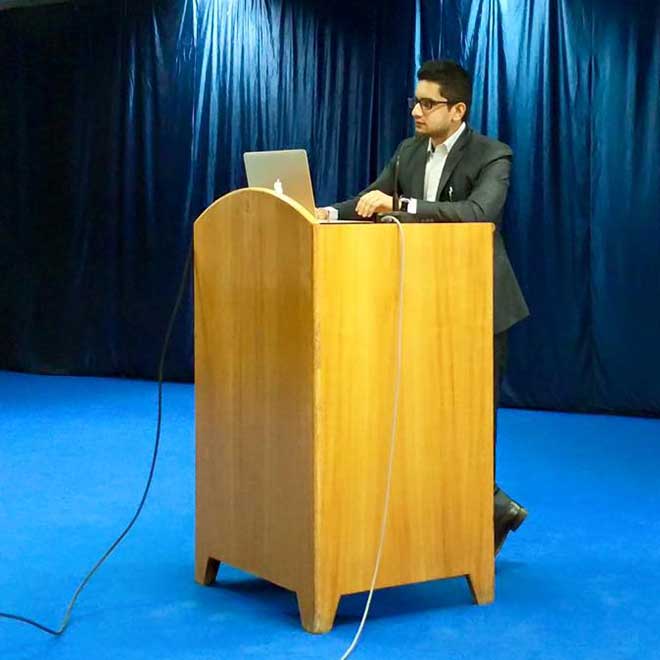
  • Rajas Pingle, Partner, Netlawgic Legal Services, on his passion for technology and the state of cyber law in India

    Rajas Pingle, Partner, Netlawgic Legal Services, on his passion for technology and the state of cyber law in India

    Rajas Pingle graduated from ILS Law College in the year 2011. Since then he’s been visiting lecturer at (DSCI – NASSCOM) India Cyber Lab – Pune, and cyber lawyer at the District/Session Court (Pune)  Bombay High Court and Adjudicating Officer (IT ACT). He is currently Partner at Netlawgic Legal Services, offering services to combat cyber crimes, computer security related incidents, corporate espionage, financial frauds, data theft, hacking , computer security related issues, among others. 

    In this interview we speak to him about:

    • Combining technology with law
    • The state of cyber law in India and what he would like to change
    • Training the police force and being invited to the Rajya Sabha


    How would you introduce yourself to our readers?

    In a nutshell there is only one word which defines me, ‘TechnoLawgy’. I have been practicing Information Technology Law for more than six years and have handled almost every type of cybercrime case. I also conduct training sessions for various government organisations and corporates in India and abroad pertaining to Cyber Law and cyber crime. As they say, “Any sufficiently advanced technology is indistinguishable from magic”. Likewise my love for technology drives me to learn new things every day and to discover this magic.


    What motivated you to take up law as your choice of career? Have you always been inclined to a career in this field?

    I have been a technology nerd from the early ages of my life with no intentions whatsoever in pursuing law as a career. Since my parents were practicing lawyers I got into law school. The first two years went by but I lacked precision. It was only in the third year of law, you can say as Buddha obtained enlightenment, I obtained my illumination when I got introduced to this amazing world of Information Technology Laws (Cyber Laws). That was the turning point in my life and from that day forward, I was certain that I am going to pursue cyber law as my profession in an attempt to combine my technology knowledge with law. When career and passion comes together, work doesn’t seem like work anymore.
     

    Please tell us a bit about the internships you took up during your legal education.

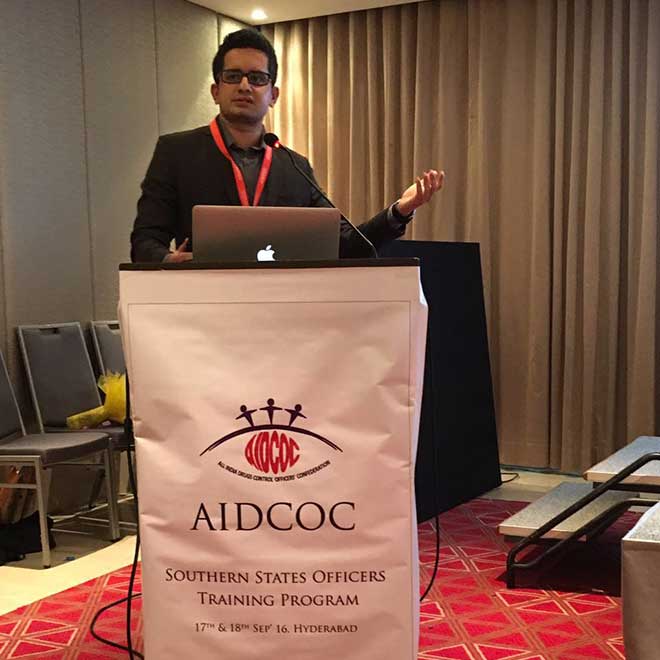
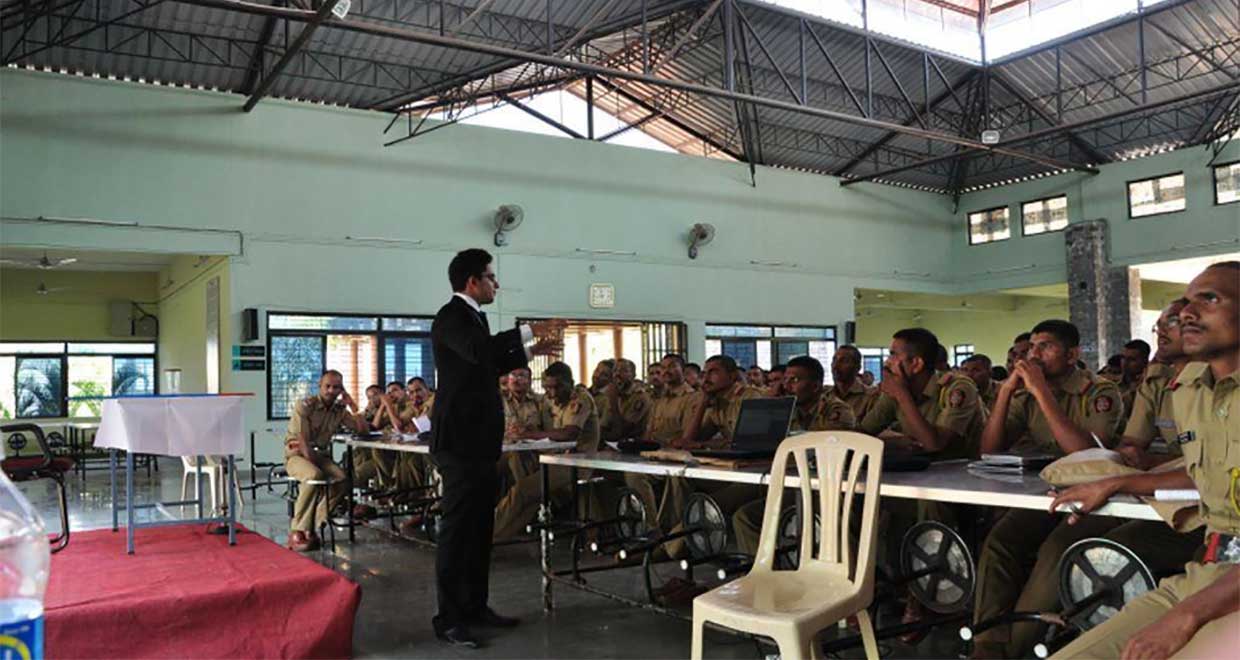
    Candidly, I did not join any lawyer or apply for an internship in a reputed law firm as every ideal law student does. I earnestly desired to do something different so I applied for an internship in DSCI- (Data Security Council of India), Pune Cyber Lab. It is a joint initiative of NASSCOM and DSCI. The lab was mainly established to train police officers in the area of technology and information technology laws. I used to teach information technology laws to police officers. I learnt a lot from this experience, especially real time challenges faced by police officers while investigating cybercrimes. In addition to interning at DSCI-NASSCOM Pune Cyber Lab, I also used to visit court with my father to learn about the court procedure and it helped a lot. I would say that all this helped groom me as a better lawyer.


    How does one acquire expertise in an inter-disciplinary field like information technology law in understanding both the legal and technical aspects that go hand in hand?

    Interactions on real time cybercrime cases with police officers while teaching them information technology law proved beneficial for me as it supplemented my theoretical knowledge with practical experience. Furthermore, while pursuing law I completed following independent courses:

    • Diploma in Cyber Law
    • PG Diploma in Cyber Law
    • Certified Cyber Crime Investigator
    • Certified Ethical Hacker
    • PG Diploma in IPR

    These courses were both technical and legal in nature which helped me to expand my knowledge base. In the course of my journey, I realised technology is like oxygen- ubiquitous, necessary and invisible and thus it is equally important to be apprised of all latest trends in the field.


    Do you think that the present legal framework in India adequately addresses the growing forms of cyber crimes?

    For every lock, there is someone out there trying to pick it or break in. Information technology alone cannot provide us an absolute shield against its evil twin disinformation technology. Our only protection is law. Information Technology Act was introduced in the year 2000 and it was the first technology related legislation in India. Thereafter, in 2008 the Act was substantially amended to include various offences and definitions. The technology is progressing at a very fast pace and the modus operandi of the perpetrator is ever changing and evolving with the technology. Considering these factors, eight years is too long for amendment. If we consider the investigation perspective, many changes are required to increase the conviction rate. Moreover, as per my observation India is a country where people don’t give that much importance to their personal information. One can read in the news every day, how US and EU emphasize on their data protection laws being well established and stringent while in India we don’t even have a data protection regime in place or separate legislation on privacy. We are yet again completing the eight years cycle, let’s hope for a comprehensive amendment soon.

    Share with us your experiences practicing as a cyber-lawyer before the Bombay High Court and the Adjudicating Officer under the IT Act.

    Proceedings before the Adjudicating Officer are largely based on few provisions of the Information Technology Act and the principles of natural justice. As per the law, the Adjudicating Officer needs to pass a final order within six months from the date of filing. Unfortunately it is very rarely followed. In addition to delays, the Cyber Appellate Tribunal has been out of function for the last five years or so. Under the present system, one needs to approach the High Court directly for an appeal from the order passed by the Adjudicating Officer. With not much precedent in the sector, the practice is certainly demanding and engaging. As far as preparation is concerned, I have to look at the case from both angles i.e. technical and legal. Coming to the preparation of complaint, it is always better to simplify the drafting as far as possible to an understandable format instead of using all technical terms.
            

    You have been invited by the Rajya Sabha to review the IT Act. Could you please tell us about it?

    I was invited by the Rajya Sabha committee on petitions to give my views on the topic of ‘Cyber Pornography’. The agenda for discussion was “To put a check on Cyber Pornography among children by amending the IT Act, 2000”. The current Information Technology Act does not completely prohibit pornography and private consumption is not punishable. There was productive discussion between cyber law experts and legislative members and I was asked to submit a note on the same.


    What has your experience been like while representing international clients and successfully arguing international cyber law cases?

    I am very fortunate to receive international exposure at the early stages. I have successfully represented clients from Texas, New York, and Puerto Rico in various cyber law cases and also mediation. With hard work and luck on my side, I was successful in recovering respectable settlement figures for my clients against U.S. and Japan based companies in the matter of unauthorised copying of data. Additionally, I am closely working with international clients with offices in India and abroad. While handling international clients, I observed stark differences in their working style and culture. Furthermore, I got exposure to diverse laws which assist you to compare your country’s position in relation to such international issues. Overall it’s been a wonderful journey so far.


    Tell us about your role as Partner at Netlawgic Legal Services LLP. What does a typical work day look like for you?

    I started Netlawgic with the sole intention to provide Techno Legal solutions to the industry. Our focus and experience in both areas of Cyber Crime Investigation and Technology law, allows us to provide our clients with specialized attention and problem solving in all aspects of Technology law. That said, I start my day with reading e-news articles regarding cybercrimes across the globe, to keep the zest of learning alive and thus keep myself updated. Rest of the day is pretty simple with meetings, court and office.
     

    How has your experience in academia been?

    (Rajas has worked with several governmental and non-governmental organizations in training officers in cyber law. He also teaches cyber law at national and international educational institutions.)

    Education is the most powerful weapon which you can use to change the world. Teaching is one of the things I love and whenever I get time I allot it for teaching. While teaching I cultivate new learnings, ignite the imagination and instil creative expressions. It is a very satisfying experience, especially when I have healthy debates among students/officers on different aspects of cybercrime and cyber law. I also tend to learn a lot from these debates. It’s a completely different experience when I teach in international institutes as the exchange of knowledge is on the global platform and is a synthesis of varied legal practices and procedures. It would be difficult for me to choose between the two, I would love to keep doing both, practice information technology law and pass on that knowledge through teaching.

    How do you manage your time, juggling various roles?

    It is said that time and tide wait for none. Based on my experience, I can say that time management is the greatest virtue and the one who learns to manage it effectively will go many milestones in life. I am still learning to manage the same. Many a time, there are clashes among court dates, meetings and lectures on the table, especially when I travel abroad to deliver lectures. In this situation I have to prioritize and move forward accordingly.


    Do you have any role models/ guides or mentors in the industry?

    I learnt a lot about technology from my brother Mr. Harshad Pingle who is an engineer by profession. Other than my brother, Mr. Sandip Gadiya who is a well renowned Cyber Crime Investigator in India guided me along the way. His knowledge in cybercrime investigation helped me gain deeper insight of cybercrime investigation and for that I am eternally grateful to him. It is definitely helpful to have someone to take advice from when you are starting your career. What is important in the end is that you should keep on learning and always learn from your mistakes while moving forward.


    What would be your parting message to our readers?

    I want to quote Steve Jobs here “Sometimes when you innovate, you make mistakes. It is best to admit them quickly, and get on with improving your other innovations”. The same logic is applicable in law practice, you make mistakes, you learn from them and move on. Ultimately find something which you can relate to and love doing. Don’t be a part of the rat race.

     

  • Somnath De, Advocate, Delhi High Court and Supreme Court, on practice in IPR and Cyber Law

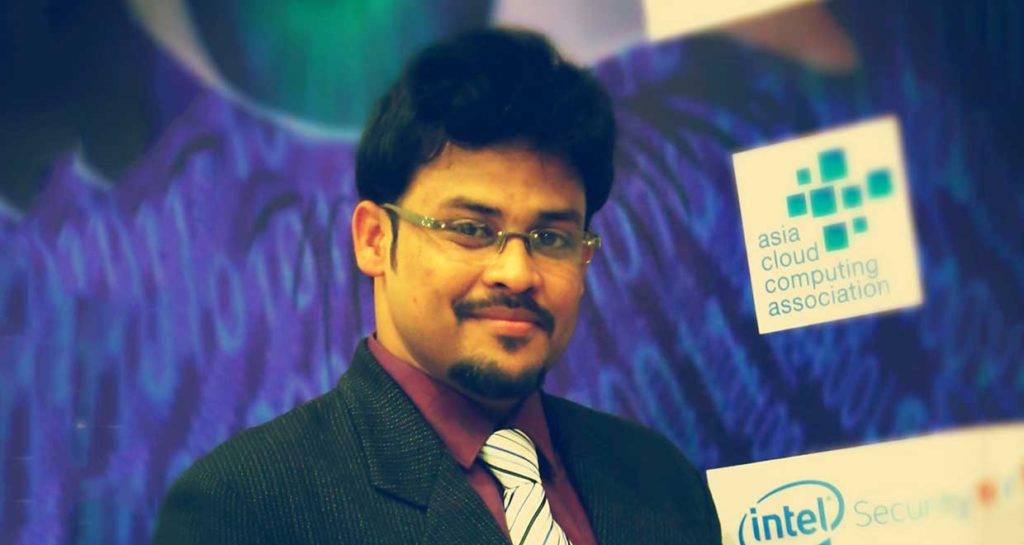
    Somnath De, Advocate, Delhi High Court and Supreme Court, on practice in IPR and Cyber Law

    Somnath De graduated from Kalyani University in 2011 he went on to pursue his higher studies from Symbiosis Law School, Pune and completed his post-graduation in Intellectual Property Rights in the year 2014. During his college days, he actively took part in conferences and has completed several certificate courses in Cyber Laws. Post graduation, he started working under the guidance of Adv. Pavan Duggal in his renowned firm Pavan Duggal Associates. During his stint at Pavan Duggal Associates he handled a number of cases pertaining to his specialization of Cyber Law and IPR. Currently he is working at an IPR law firm, Vohra and Vohra. He is a senior consultant of Astrea Legal in Delhi Region in the IP and Cyber Law matters. Based out of Delhi, Somnath practises in both the Supreme Court and Delhi High Court.

    In this interview Somnath talks about –

    • His college days
    • Importance of mooting in college
    • His reason behind the decision of practising in IPR and Cyber law
    • National IPR Policy
    • His work-experience


    Hello Somnath, how would you like to introduce yourself to the readers of Superlawyer?

    I am an Intellectual Property and Cyber Law attorney. My work is to help people protect their ideas, inventions, and identity, and I deal with counterfeiting and online rights and responsibilities towards clients. I help them, protect them from competitors and establish them in the market place.


    Kindly tell us something about your childhood, school and college days.

    I was born and brought up in Bengal. I come from a business family, and therefore, I have no legal pedigree. I completed my primary and secondary school education in Bengal. Subsequent to completing school education, I completed my B.A.LL.B (Hons.) from Kalyani University, W.B. I pursued my LL.M. from Symbiosis Law School, Pune with specialization in Intellectual Property Law. My almae matres , both for LL.B and LL.M, laid great emphasis on extra-curricular activities. I was an active debater and presenter, and loved playing sports. I was very lucky to find good friends with whom I have the warmest of memories.


    Did you ever take part in any co-curricular activities while being in college? Can you please share with us your experience and opinion on the importance of them in a law student’s life?

    I participated in a few moot court competitions as well as numerous national and international conferences during my college tenure. I have also penned a number of legal articles which were published in various national and international journals. However, apart from improving my legal skills, I love to play cricket and badminton, and to even engage in dramatics sometimes.


    How beneficial do you think mooting is for litigation?

    Practicing in court as a litigation counsel is a different ball game altogether. However, participating in moot court competitions can provide you with a very good idea as to what kind of lawyer you think you want to be. Writing skills and speaking skills are invaluable not only as a student but also when you enter the work force. Having to face a panel of well prepared and demanding judges in a courtroom setting can become an addictive experience. Therefore, participating in moot court competitions lays the roots to become a successful lawyer. A law student must make the most of these opportunities and should participate in as many competitions as possible.


    What exactly prompted you to take up law as a profession?

    Actually, there was no affirmed decision to take law on my part. It happened by accident and not by design. However, previously, i.e. during the time of my school days, I had already been introduced to subjects such as Philosophy, Reasoning, Logic, and Political Science, and this drew my fascination towards Law. Apart from that, I was fond of debating and reasoning. I felt that this would come in handy when I had to stand in court and argue on point.


    You have been practising in the cyber law and ipr law domain for quite some time. What made you choose these fields as the relevant areas of your practice?

    (Somnath has done his LL.M in IPR and is a certified cyber crime investigator and digital forensic investigator)

    I chose these particular fields because I am a strong believer in the digital format crucially shaping the future of the world. We are in an information age. We all are living in the digital world. The impetus came when I was in the 2nd year of finishing my LL.B. I used to read journals and numerous technological blogs and it was the complicated technicalities gradually surfacing including that of legal challenges faced by companies that motivated me to get into this nascent legal ecosystem.  In contrast to other disciplines of law, Cyber Law and Intellectual Property law was constantly evolving. I was fascinated by it and decided to concentrate my efforts in that direction. Then, I perused my Diploma in Cyber Law and after one year I became a Certified Cyber Crime Investigator and Digital Forensic Investigator.

    However, the advent of cyber space has brought newer parameters. The digital ecosystem that exists today has seen a dramatic increase in the scope of Intellectual Property Rights and Cyber Laws. Technology has become an integral part of our day-to-day lives and, consequently, the legalities pertaining to the Internet assume extra significance. The legal ramifications pertaining to Intellectual Property and Cyber security are being rediscovered regularly. Therefore, Cyber Law and Intellectual Property are emerging disciplines, as its contours are yet to be defined. The quantum of Cyber security breaches keeps on increasing with each passing day. That is what, even more than other factors, makes it such an exciting time to be specialising in Cyber Law and Intellectual Property Law as a new discipline of law.


    Apart from Cyber laws and IPR, what are the other areas of law that you are interested in?

    Apart from the Cyber Law and Intellectual Property, I am interested and am currently practicing in the fields of Media Law, Corporate Law, Completion Law and Constitutional Law.


    Can you please share with the readers your work profile so far? What is your average daily worktime like?

    After passing my LL.M, I got the opportunity to work with Mr. Pavan Duggal who had specialised in Cyber Law and Intellectual Property Law. After that, I joined Vohra and Vohra, which is a full service law firm, in the field of Intellectual Property and Cyber Law. Apart from this, I am an IPR and Cyber Law consultant to numerous organisations across India. As a legal professional, I have never declined any case or client however small and was least bothered about fees and other attending monetary issues. I think that such a mindset is instrumental for excelling in this field. As a lawyer, I feel, you should give sixteen to eighteen hours per day. As for me, after court matters, I come back to office. After completing my meetings, I prepare for matters which are listed to be heard the very next day. I believe you should plan out your day in such a way that you have about, say, four to five hours of unperturbed time when you can completely apply your mind to the case. I give two to three hours for my independent research works every day and staying up to date with current legal trends and international developments in my field.

    Law students seemed to remain confused on which particular field of law they should choose for his/ her career. What according to you should be the way of coming out from this maze of conflict?

    One of the key challenges is to match the pace of development in law. During your college days, you should do regular reading and be aware of legal developments, amendments to the law in India and elsewhere, cases, precedents and other development in the industry. I must say that you should absolutely listen to your heart in respect of which field you should choose to practice in. It must be something obviously which you are passionate about and have an ardent interest in; that is the key to build up one’s potential in this field and achieve your motive. Every arena of law has its own beauty. While it is true that should you opt for litigation you should possess a great level of patience, but the scope for litigation practice is widening day by day. Be focused, never lose hope and always keep trying. I also advise that you should choose carefully who you work for. Find someone who will teach you, groom you, pay you decently and mentor your practice after you leave.


    From a law student to a lawyer, how will you describe the transition?

    The beauty of this filed is that you will always remain a ‘student of law’. For me this is just the start of my journey, and there is still a long way to go. Things are harder than when I was in college. However, I enjoy my work and the challenges that I face every single day. Nevertheless, I definitely missing the life I once had with my friends.


    Your experience with the Bar Exam

    Well, the Bar exam, formally AIBE, was fun and totally relaxing for me. Apart from the actual examination and its concomitant experiences, it was also a kind of reunion with my friends. I was really pumped; questions were simple and only just needed a little application of mind. It was not a difficult encounter very much at all.


    Red letter day, so far

    I cannot discuss any specific case in detail due to confidentially. However, the classically antique day for me was when I dealt with a very high-profile case in mid-February, 2015, when we had to take an order at midnight from the Delhi High Court. I remember how there was no single restaurant open at the time to serve us any food. At last, we had food at a Gurudwara near Red Fort, Delhi. I had not slept that night and the next day I had to report early to the office to prepare for the subsequent hearing. Another one was when I started my practicing career. I had gotten the opportunity to deal with a matter independently. It was about setting aside an order and the matter was placed before the Division Bench of the Delhi High Court. The first item listed on the day of the showdown was my case. The case was really challenging. I was thoroughly prepared, and argued for twenty to twenty five minutes, faced numerous questions and clarifications as put forward to me by the Honourable Judges. During my argument, the Court Room was completely silent except the reverberation of my own voice and at the end of the arguments I had bagged an order in my favour.


    Any unpleasant or difficult case/ situation in the courtroom or outside

    There are ups and downs, which is part of this profession. Sometimes, really closely listed matters can become nightmares. To read voluminous documents and then complete the draft within time is a difficult situation. Therefore, it’s very important to manage time smartly and to be well versed with all the intricacies pertaining to the concerned matter.


    somnath-de-2

    Your take on National IPR policy

    I applaud the Government for effectively bringing this far reaching document which kindles creativity and innovation across sectors and also facilitates a stable, transparent and service-oriented intellectual property rights administration in the country. The said policy is enormously relevant for a country like India, being a repository of indigenous creativity and traditional knowledge. Further, by this policy, the Government is attempting to resolve the adjudicatory delays in the newly designated commercial courts. The policy further advocates generation of IPR, which will encourage start-ups and safe guard their Intellectual Property, which is the need of the hour given India’s massive strides towards a digital society. However, the said policy should not remain as a paper tiger; the Government should implement the goals envisaged in the practical world in full phase and plan out for proper mechanism, as the same policy is in a comparative context a directive that needs a fresh look.


    Your opinion on the challenges before IPR regime in India

    At the very outset, there is lack of awareness about Intellectual Property protection among many stakeholders. I must stress that a detailed annual plan ought to be there on spreading awareness about Intellectual Property Rights and the involved legalities alongside interactions with all possible stakeholders. There should be a quicker approach to reduce delays in clearing Intellectual Property applications to encourage innovation and entrepreneurship, which are also one of the seven pillars of the National IPR Policy. Furthermore, India faces challenges to its IPR regime as developed countries try to put in place an even stronger framework through mega regional trade agreements such as the Trans-Pacific Partnership. India needs to create its own culture of innovation for its people and grow at a rapid rate. Apart from that, India is facing challenges of online piracy, data protection, vulnerability of trade secrets etc.

    Where do you want to see yourself five to ten years from today?

    My first aim is to build my expertise in my domain. I would like to be an attorney who will make sure every client who comes to me is satisfied with the quality of services and gains trust. I would also like to earn the respect of my seniors, peers and colleagues. Since I love to interact with people, I would additionally like to become an academician in my field of expertise alongside practicing as an attorney.

    Any piece of advice you would like to pass on to the readers?

    You should have the right kind of attitude towards the legal profession. It’s always advisable to think out of the box and be innovative in order to develop the culture and personality of a true legal professional. One should be determined, patient and remember that there is no alternative to hard work. You should always have faith in yourself and should never be disappointed, as failure is an integral key to success. It’s always advisable to stay up-to-date with both the national and international developments of your chosen field of law.


  • Neeraj Arora, Expert Investigator, Cyber Crimes, Delhi Police on building a career in Cyber Law

    Neeraj Arora, Expert Investigator, Cyber Crimes, Delhi Police on building a career in Cyber Law

    Neeraj Arora started working in the Delhi police as a sub-inspector in order to support his family, while studying B.Com. Thereafter he did his LL.B from Delhi University.

    After graduating and continuing work in the police force, he developed an interest in cyber crimes and law and took up a variety of certificate courses and diplomas in India and abroad to further his knowledge in the area. Eventually, he started up his own law firm, Hazen Legal Associates which specialises mainly in cyber law and offences.

    Presently, he is a designated Expert Investigator and he has investigated a large number of cases relating to E-mail related crimes, Web-Server/System/Wireless Network Hacking, BPO Data theft, Online Auctions Website Frauds, Obscenity, E-mails/SMS Spoofing, Phishing Frauds etc. for the Delhi Police. He serves as a guest faculty member and a guest lecturer of ISACA, NICFS, Indian Law Institute, Directorate of Enforcement, Indian Institute of Corporate Affairs and many other prominent institutions. He is also an Arbitrator for NSE, ICADR and MCX in online trading matters.

    In this interview we asked Neeraj to share:

    • His initial decisive moments during graduation
    • Being a part of the Delhi police and his work in the Cyber Crimes Cell
    • Doing a number of extra diplomas and certificate courses in Cyber Law and Digital Forensics
    • Being a Consultant for the World Bank
    • Being appointed as an Arbitrator of the National Stock Exchange
    • His experience of starting up his own law firm, Hazen Legal Associates


    Please introduce yourself to our readers and tell us a bit about your college life days. Did you have lawyers in your family?

    After doing my 12th, I started working and took my first job as an Accounts Assistant because my family circumstances required me to earn for my family. I joined B.Com (H) at the School of Correspondence Studies, Delhi University, while continuing my job. I also took up part-time writing work, filing of Income Tax/Sales Tax returns and tuitions to support my family. I am a first generation lawyer in my family.


    You are a Commerce (B.Com) Graduate and a Cost Accountant by qualification. What prompted you to make the transition to law?

    After completing B.Com, I joined ICWA as I intended to join the accountancy profession. Meanwhile, due to my financial troubles, [sociallocker]I joined the Delhi police as a Sub-Inspector. I also continued with ICWA and completed my final in 1996.


    You have pursued PG Diplomas in Arbitration and Drafting long after graduating in LL.B. What prompted you to take up these diplomas?

    I did my LL.B. from Delhi University in 2001 and pursued a PG Diploma in Arbitration & PG Diploma Drafting of Legislation, Treaties, International Agreement & Contracts from 2008 to 2010. I pursued the extra diplomas because the topic fascinated me as it upgrades existing skills and enables one to reach new heights in life as well as the legal profession. After resigning from the Delhi police in 2008, I decided to explore my career in Arbitration which is an upcoming and rewarding career. In 2008, I was appointed as an Arbitrator with the MCX Exchange and to augment my skill in the field of International Arbitration, I joined and completed these two part-time courses, PG Diploma in Arbitration, Drafting of Legislation, Treaties, International Agreement & Contracts.


    You have been practicing cyber law for almost eight years now. How did you become interested in cyber law?

    In 2005, I was transferred to the Cyber Crime Cell of Economic Offences Wing (EOW) of Delhi police and at the time I didn’t have much knowledge of computers. I treated the posting as a punishment, but took it up as a challenge as I foresaw huge potential in the area. I did a number of trainings on cyber offences from various police academies: CBI, CDTS and also did a Certificate Course in Computer Forensic from IP University, Cyber Crime Investigator Course from Asian School of Cyber Law, PG Diploma in Cyber Law from Indian Law Institute (ILI), Delhi, PG Diploma in Cyber Security from Asian School of Cyber Law and MBA (Information Technology) from Manipal University. Consequently, that is also how I became one of the prominent Investigators of the Cyber Crime Cell of the Delhi police.


    neeraj-arora-2

    You are associated with Delhi Police as a Cyber Lawyer & an Expert Cyber Crime Investigator. Please share few interesting experiences of your investigation with our readers and tell us more about these issues.

    On being equipped with knowledge on Information Technology, I got opportunities to investigate a large number of cases relating to E-mail related crimes, Web-Server/System/Wireless Network Hacking, BPO Data theft, Online Auctions Website Frauds, Obscenity, E-mails/SMS Spoofing, Phishing Frauds etc.

    In all the cases, I prepared the mirror images on the spot, collected relevant digital evidence, arrested a number of hackers, filed the charge-sheets in the court, etc. The investigation of cyber offences was quite challenging as there were no precedents, standard operating procedure and no one to guide us. I have collected the requisite information from the internet, various books and journals on digital forensics and by 2008, I was awarded the status of an expert cyber crime Investigator.


    You are a Certified Forensic Computer Expert and an empanelled member of IACIS for more than two years now. What is your job as an expert at IACIS? What kind of issues do you deal with?

    The IACIS (International Association of Computer Investigative Specialists) is the top most organization in the world which specializes in the field of computer forensics. The Certification, “Certified Forensic Computer Examiner” (CFCE) is one of the top most certification which is also recognized by the Forensic Specialities Board of U.S.

    In order to augment my skill and also to gain an in-depth knowledge, I joined the Certification and attended two weeks Hands on Training in Orlando, U.S. and after that I worked hard for another year and passed the six exams which involves analysis of mirror images to find out the Window, Internet and other Artifacts of the Crime.

    The Course was a big challenge as this is the only Certification which requires extracting the evidence without using Forensic Software. The only Software which can be used is Hex Editor and for doing one need to have good knowledge of FAT File System, NTFS etc. as the Data/Artifacts has to be extracted manually by finding the location of data from FAT/MFT Table.


    You have vast experience as an Investigating Officer of CBI, Cyber Crime cell and Economic Offences Wing of Delhi Police and you are also associated with Justice K. Venkataswami Commissioner of Enquiry (Tehelka) for more than a decade. Please share your experience.

    I joined the CBI as Inspector on Deputation and got the opportunity to investigate the huge and technically complex cases of Economic Offences going into hundreds of crores of rupees. My skill and knowledge in the field of Finance, being a Cost Accountant, enable me to investigate these cases and to book the fraudsters. As an Investigating Officer with Justice K. Venkataswami Commissioner of Enquiry (Tehelka), I got the opportunity to investigate the huge scam and I received an award for outstanding investigation in the said assignment.


    You have trained many professionals at Police Organisations, Indian Law Institute, CBI and also at IACIS. Please tell us about your training programme.

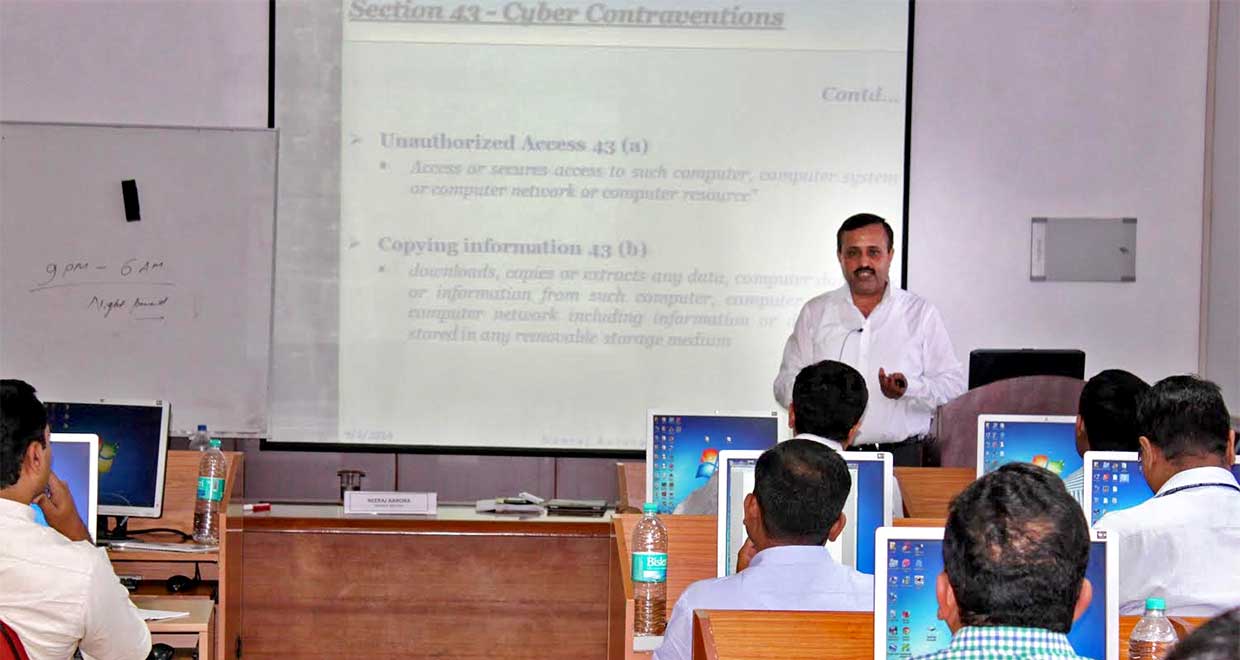
    The arena of cyber forensics comprises of three domains namely Computer Forensic, Network Forensic & Mobile Forensic. These domains are inter-connected and integrated in such a manner that the knowledge of three domains is required to handle the Digital Evidence. I have been continuously sharing my knowledge of these domains by way of training. The training I provide is an integration of Bit & Byte, Debit & Credit with investigation and procedural and substantive laws.


    neeraj-arora-3

    You have also delivered a couple of lectures on cyber law. How do you prepare yourself before any presentation or delivering any lecture? Please give some tips to our readers.

    My competence in integrating computer forensics with digital evidence, e-commerce, procedural/substantive laws gives me a unique edge in delivering training in the field of Cyber Crime/Cyber Law/Computer Forensic/Financial Forensic when it is connected to the ground realities of investigation, analysis and presentation in a court of law. I am able to provide a solution to the various gaps in the investigation, collection, analysis, presentation & cross-examination on the digital evidence and integrate it with the applicable principles of digital investigation, digital evidence, cyber laws and other procedural/substantive law.


    From your profile it can be seen that you have strong exposure, knowledge and specialization in Arbitration law. How did you gravitate towards this discipline?

    Arbitration is one of the upcoming fields which require skills of legal procedure, proceedings, appreciation of evidence and discovery. The academic domain, knowledge and experience plays a major role in acquiring these skills and since the entire world is moving to ADR for dispute resolution, this is the most growing field with opportunities increasing exponentially.


    As an Arbitrator and Mediator for NSE, ICADR and MCX what kind of disputes do you deal with? What is the normal time period of disposal of an arbitral proceeding?

    As an Arbitrator on various exchanges, I am adjudicating the disputes relating to the Online Share/Commodity Transactions between the Members of Exchanges (Brokers) and their clients.

    As a member of IGRC on various exchanges, I conduct conciliatory proceedings to resolve disputes relating to the online share/commodity transactions between the Members of Exchanges (Brokers) and their clients. This mechanism provides an opportunity to the litigant to resolve their dispute with the help of Conciliator/Mediator.

    The normal time period of disposal of such dispute is 3-6 months. The disputes are resolved by conducting the proceedings as per the bye-laws and exchanges and the procedure prescribed in Arbitration & Conciliation Act, 1996.


    You were also appointed as a Consultant of World Bank for four years. How did you get associated with the World Bank?

    I was appointed as a Consultant to the World Bank for analysing the contractual issues relating to the projects of World Bank.


    You have started your own firm – Hazen Legal Associates. What were the primary challenges you faced?

    I have started my own firm as the various skills in the field of law, finance & cyber offences gave me an edge. I got a lot of work in the field of criminal laws, cyber offences and consultancy relating to cyber offences. The only challenge was to bring together so many technical and legal aspects, which I did with the help of my colleagues and associates.


    What are the practice areas at Hazen Legal Associates? Do your firm emphasize more on cyber law than other areas of law?

    The main practice area is confined to criminal trials in the field of economic, cyber & anti-corruption cases. Due to heavy demand in the field of cyber law, we are now specializing in consultancy and compliance with cyber law as required by ISO 27001, storage/maintenance of digital evidence, handling cases relating to cyber crimes, cross- examination on digital evidence, handling of cyber security, etc.


    What is the application procedure for interns at HLA? What do you look for in a prospective applicant?

    We keep 3-4 interns at all times. The application procedure requires the applicant to send the detailed profile at on cyber.nk@gmail.com, we shall then follow it up by an interview. The skills required are knowledge of computer and research in the legal field. The networking and programming knowledge adds to the priority for the applicant.


    In spite of having so many involvements in various organizations apart from managing your own law firm, is it easy to have a work-life balance?

    It’s always a challenge but with the support of good colleagues and associates, one can maintain a work life balance.


    How should one go about starting his/her own cyber law practice in India? Please name a few institutes to study cyber law in India. How important are procedural laws in this discipline?

    A good knowledge of computers is a must. A Diploma in Computer Networking is required to understand the Cyber Offences and any further qualification in the field of Computer, Network or Mobile would add to the success of individual in this arena. There are various Institutes which provide courses like Indian Law Institute, NALSAR, IGNOU etc.

    Procedural laws have a very important aspect in Cyber Law, one should have knowledge of Criminal Procedure Code/Civil Procedure Code/Evidence Act. Without a good knowledge of these procedural laws, success in the field of cyber law cannot be achieved because the implementation would be only through these procedural laws.

    The other important aspect is that the Cyber Law caters to only 20% of the Cyber crimes whereas 80% of all Cyber crimes get covered under the IPC and other Laws.


    What would be your advice for aspiring cyber lawyers?

    The aspiring cyber lawyer should develop their skill in the field of procedural laws and Internet Technology at the same time. Later, these practitioners may not get the time/opportunity to develop skills and therefore, I recommend that aspiring legal practitioners should acquire maximum technical skills parallel with their L.L.B which would give them an edge later on.

    In the Europe, U.S., etc. most of the cyber lawyers have a background in technology like B.Tech etc. Now, integrated Course of B.Tech + L.L.B. (5 Years) have been introduced in various Universities/Colleges and pursing these courses would ensure the success in the field of cyber law. It can be said that candidates with such qualifications will dominate the cyber world in the near future.[/sociallocker]

  • Puneet Bhasin, Cyber Law Expert, Cyberjure Legal Consulting, on mooting, pursuing cyber law, and plans for the future

    Puneet Bhasin, Cyber Law Expert, Cyberjure Legal Consulting, on mooting, pursuing cyber law, and plans for the future

    Puneet Bhasin, graduated from  GLC, Mumbai in 2011. During her time as an undergraduate, she has interned with the likes of Fox Mandal Little and Advani & Co. In 2012 she went on to pursue a postgraduate diploma in Cyber Laws. She is currently a master candidate in the University of Mumbai, specializing in business laws with a focus in e-commerce laws and compliance.

    In this interview we speak to her about:

    • Winning the Surana & Surana Int’l Technology Law Moot
    • Choosing to pursue Cyber Law
    • Her internship experience


    How would you like to introduce yourself to our readers?

    I am an advocate practising in the area of Cyber Laws. It is a new and growing field. I started practice three years back after I graduated from Government Law College (Mumbai) with the B.L.S.LL.B. degree.  I was interested in this field from my first year in law college, and I did the Diploma in Cyber Laws from Asian School of Cyber Laws. This basic course made me realize that I wanted to pursue a career in this field and that is when in my second year in law college I became a Certified Cyber Crime Investigator. Subsequently, I did my Post Graduate Diploma in Cyber Laws in the fourth year of law college. Additionally in my final year, I did short courses in Intellectual Property Laws, Hacking & Cyber Security and E-Commerce Laws. I passed out from college in 2011 and started practicing on my own.


    Why did you decide to study law?

    While in school, I never thought of pursuing law, though many of my family members are lawyers and in judicial services. However, after the 12th Board exams, I came across the prospectus of Government Law College, and the subjects appealed to me. I read up more about them, and decided I wanted to pursue law; and within the first week of law college, I realized that this was probably the best decision I made in my life.


    What does it take to be a great mooter?

    (Puneet has won the Best Student Advocate Award at Surana and Surana International Technology Law Moot Court Competition.)

    It was God’s grace that I got many opportunities to participate in moots in college. Surana and Surana International Technology Law Moot Court Competition was one of the most memorable one for me. I was selected to represent GLC in this moot in my second year, and it gave me an opportunity to research on main law subjects, as till the second year we had only pre-law subjects. The moot problem surrounded a very interesting premise of “legal liability in cases of Augmented Reality”, which means that who is liable if a computer with artificial intelligence does something wrong.

    It is very important to be open to learning in order to excel in moots. Good research skills are a must along with excellent oratory skills. However, the more you participate in moots, the better you become.

    Moots give you practical experience to some extent. More than anything else, they teach you how to handle success and then deal with defeat also. When you win many moots and then you lose in a moot, it is a big set-back for your self-confidence, but it is very important for you to experience this as this is what real world litigation practice is all about. Winning and losing cannot affect you much at all as it is a part of practicing law. You learn to dissociate feelings of self-worth from practice.


    puneet-bhasin2Share some of your memorable mooting experiences.

    Surana and Surana International Technology Law Moot was a very memorable experience, and I was judged by the Director of Asian School of Cyber Laws in one of the rounds in that moot in 2008. Surprisingly, she remembered me even in 2011 and got in touch with me to teach Post Graduate Diploma in Cyber Laws in their institute. Moots definitely give you recognition and help build contacts.

    I participated in the Kanga Moot Court Competition in 2010 and we won the Best Team award along with Best Memorial. The moot problem was based on arbitration, and that is where I got interested in Arbitration and interned in this area of law also. One thing about mooting is that it gives you a chance to read up extensively on different subjects of law, and this helps you to know where your interest for practice lies.

    The Bar Council of Maharashtra and Goa moot was my first moot and it was in Ahmednagar. That was the first time I had gone to stay in the interiors of Maharashtra, and the simplicity of the students there was very impressive. I loved the experience of interacting with the law students there.


    What kind of internships did you do while you were a student?

    I interned in Fox Mandal Little and Co.  under Senior Partner Mr. Pal. He specializes in Shipping laws and I assisted him in matters. However, this experience made me realize that shipping laws was not my cup of tea. Then I interned under Managing Partner Mr. Khatlawala in Corporate Law arena,, and I did like it. I got to learn a lot. Under Junior Partner Ms. Rajni Divkar, I got the opportunity to assist in the drafting of Rules under a State Act.

    But soon Arbitration caught my fancy, and I landed up with an internship under Mr. Hiroo Advani, who is an expert in Arbitrations. I really liked working on arbitration matters and attending arbitration proceedings. In Advani and Co. I even worked on couple of Due Diligences, but soon realized that typical corporate law work like due diligence is probably not made for me.

    The internships gave me a clear insight on what I love doing and what I would prefer to avoid as a career choice with respect to legal practice. They made me more confident along with helping me build good networks in the legal fraternity.


    Do you think participating in extracurricular activities like MUNs is essential?

    (Puneet has been awarded Honorable Mention in Human Rights Council of GLC Model United Nations.)

    Any extra-curricular activity teaches a lot and mere participation makes us a better person and equips us with skills we did not have before. I used to actively participate in Debates, Moots and MUNs in college, and I felt that they made me more confident and improved my analytical and logical thinking skills.

    Students must participate in extra-curricular activities, not just to win, but to gain meaningful experience.


    How did you become interested in a career in cyber law?

    I realized that I had a profound interest in Cyber laws in my first year in law college, and I pursued this interest by doing further courses so that I could equip myself well to be able to practice in this area of law.

    Academic skills of cyber laws you can learn by doing courses on this subject, and practical skills you will learn only on the job.


    What were the difficulties you faced in shaping up your career as it stands today?

    Cyber law was a very new field at that time, with very few people practicing it. This had many advantages, as unlike many fields of law where seniority, experience and age matters, in cyber laws there was less competition three years back, and there was no question of seniority as it was a very nascent and new field.

    However, the major difficulty faced by me is that there are victims of cyber crimes everywhere, but they are ignorant of the law and don’t know that they can seek legal recourse.  I started blogging on cyber laws on http://indiancyberlawyer.wordpress.com and http://blog.ipleaders.in to create awareness about cyber crimes.

    In the initial stages of your career, patience is the key.


    A lot of people don’t understand the specialization of cyber law. Why do you think is this the case?

    Cyber laws are a very specialized field. A cyber lawyer is a techno-legal lawyer who is well-versed with technical aspects of computers, computer networks, communication devices and has complete legal knowledge including the special laws and rules applicable in techno-legal matters. Most evidence in criminal cases is obtained from cell phones or computers, and a cyber lawyer is the only one who can help in proper appreciation of such evidence or to find loop-holes to make such evidence inadmissible. Also, with the advent of E-Commerce, the concept of e-contracts and digital signatures has emerged, and only a cyber attorney would be able to advice with respect to the same. Intellectual Property Rights in cyber space is also a growing arena which requires lawyers proficient in technical aspects.  Cyber security standards are also governed by laws in India, and a cyber attorney is the only person who would be able to give sound advice on the same.


    Tell us something about being an Associate Member of Chartered Institute of Arbitrators (CIARB), UK.

    Affiliation to CIARB (UK) requires you to attend the course conducted by them and then submit your research on the topic given by them. The research paper is graded and if you get above B grade then you are qualified to pay the requisite fees and become an Associate Member of CIARB. This is the first step to become a Chartered Arbitrator.

    Lawyers who are interested in this should visit the CIARB website and enrol for their course in India.


    How do you go about teaching?

    (Puneet is also a faculty for Post Graduate Diploma in Cyber Laws at Asian School of Cyber Laws.)

    I love to teach cyber laws, and being a faculty gives me that opportunity. It keeps you in touch with the subject and also helps you to contribute to the growth of this field in India, by training lawyers and IT professionals in this field. Practicing law is very satisfying and lucrative, however, life as a professor is not as lucrative but it has a very feel good factor to it, as your students look upto you and you get a chance to shape their careers. Teaching is a very humbling experience.


    How important is social media engagement?

    Lawyers cannot advertise, and in specialized fields like cyber laws, it is impossible for people to know about the services you offer. Social media and blogging play the role of the bridge between a legal professional and potential clients.


    Where do you see yourself after five years from now?

    I would like to believe that with the growth of Cyber laws in India even my career will reach new heights in the next five years. Hopefully with God’s grace I would be able to make a lasting mark in the legal fraternity in the area of cyber laws.


    Do you accept interns with you? How does one apply?

    I do accept interns. I even take interns on a distance mode basis for research work. Anyone interested can apply with their resume to contact.cyberjure@gmail.com.


    Last but not the least, what would be your message for aspiring law practitioners?

    Law is an amazing field, and if you aspire to enter this field then you are definitely going to love it. Law involves a lot of human interaction, which is the best part of it. You get to learn new stuff about human nature each day, and in the process you change for the better each day. Good luck for your wonderful journey of becoming a lawyer!