What initially drew you to the field of law? Was there a defining moment or experience that solidified your decision to pursue it as a career?
They say ‘Blood is thicker than water’, well this proved true in my case and there were significant circumstances and events in my life that had drawn me towards the field of law. Later on, as a child as I grew up, I came to know my grandfather was also an advocate and somehow his stories and the cases he advocated motivated me to seek logic and reason in everything and life at large therefore making me question ‘Why?’
My grandfather Late Nirad Behari Sikdar who passed law in 1942 from Calcutta University had a great influence on me but I didn’t have the good fortune to see him but I had heard his stories which made me realise and achieve my destiny later in life and pursue a career in law. I think not seeing him was something I wish I had but then I realised by carrying forward this noble profession, this way I could be a part of him and yet pave the legacy he had made.
As an advocate, he was a senior counsel who had done some impressive landmark cases of that era like against the North Frontier Railways in the year of 1966; as he was a hardcore civil practitioner. I slowly developed a passion and love for law as I tread on my journey, as each day I consider myself to be an apprentice learning and improving the craft of practising law.
What motivated you to pursue an LL.M. in Corporate and Financial Law, and what drew you specifically to this area of specialization?
Well, my internships and clerkships were all aligned towards general corporate practice in Corporate Teams of law firms and organisations because from the onset of my law school, I was much interested in commercial laws and corporate laws. Slowly, I developed a sweet spot for this niche area of law.
I think it is very important to discover and understand your path at an early stage because then you can focus and decide your stream line in the field of law and hence carve your practice area. As a law student and even till now I was always focused on academia and research because better research means better practice and vice -versa. My main objective to do an LLM was to focus on research and academia pertaining to my practice area that would enhance my analytical reasoning and articulation on general corporate and commercial laws. This is a myth that masters are done to have a hike on your payslip or promotion in your organisation. NO, it doesn’t work that way, masters are done simply to have a niche area of intellectual understanding and to develop an expertise of knowledge in a certain specific practice area for those who like to pursue it.
Once I had asked my law school senior in my final year, “Should we do a masters”, his blunt reply was “Yes if you are rich”, well both my masters programs, I had been offered scholarships for the tuition fees because of my precedent academic credentials and entrance exam score also for the second one I didn’t take it because I was working(had taken a sabbatical from the firm), also so that a student who really needed the financial support would get it, hence higher education is not always necessarily only for the rich I suppose.
This area of specialisation is very dynamic as the regulatory, compliance part of the practice keeps on evoluting throughout the world and the best part is that the application is not necessarily bounded by the jurisdiction and surpasses borders and becomes universal for the application part of the law at most times.
In the early stages of your career working both in corporate roles and later with a law firm what key experiences helped hone your legal skills, and how did they contribute to building a strong foundation for your current practice?
Well, during my early years I remember that I was very curious, I wanted to solve problems, I asked ‘why’ till I was satisfied with the answer given. I always did my homework. I did more than what was asked for not because of my senior’s satisfaction but for the fact that I wanted to deliver. I remember asking myself “What can I give? ” and what I am bringing to the table.
I was punctual and I had an eagerness to learn. I think discipline played a strong foundation in building myself for the lawyer I am today but that doesn’t mean I don’t know how to have fun and a good time. Balance is the key and with the right momentum and a little bit of luck the world is your oyster. Just like a lot of lawyers when I worked at law firms, clients were my main focus. Also when I worked in-house, stakeholders were my primary focus.
There is a saying that if a good in-house counsel takes care of the stakeholders, then the stakeholders would take care of you. As a lawyer I think it is very important to build relationships and that’s exactly what I have done in most places I have worked till now.
What prompted your transition from working in the corporate sector to practicing with U.S. & Co (Advocates & Solicitors)? How would you compare the roles and working environments of both settings, and what unique insights did each offer?
After a certain point of time, I think change is inevitable, I took the jump trusting my instinct being the right time to do so. I think the best way to cater as an in-house lawyer is to understand the business because the organisation is your one client and your sole purpose is to make every effort to retain legal sanctity and regulatory legal compliance for the organization also to defend when necessary. Over here you dawn many hats but touch upon almost every available practice area but in a limited spectrum for your day-day work also you have to learn to efficiently manage your stakeholder and have good stakeholder management skills because they are not necessarily lawyers or have studied law but can be people from different verticals in the organisation. You have to be patient, diligent and research-oriented practitioner catering to your stakeholders.
Whereas, in private practice every client possesses a new challenge and there is a need that you got to have the client’s best interest at all times and do what is possible in offering the best possible legal service. Now, it becomes challenging when stepping towards the senior roles in a law firm because you are not only supposed to cater to clients but also bring in business and have a book as a partner which would be mostly about business development in the firm.
Each role has its own appeal and sets of unique challenges as the seniority increases, the complexity increases and the role becomes proactively engaging in different ways for both in-house and law firm lawyers.
As a Principal Associate handling a diverse portfolio of corporate clients across sectors such as IT, pharma, and infrastructure, you’ve led several high-value transactions, including mergers, acquisitions, and investor rounds. Could you share insights into a particularly complex or high-impact deal you’ve worked on and how you navigated them?
One of the most challenging high value transactions was a cross-border acquisition in the technology space. The deal was a high value deal and our client was a mid-sized Indian technology company acquiring a European database company.
Now there were some key challenges we needed to focus on the deal:
Regulatory Issues across Jurisdictions- We had to navigate both Indian regulatory requirements of FEMA, SEBI and RBI Approvals and EU compliances including GDPR.
There was a heavy due diligence on the IP Risks done by the team.
We had to do Investor coordination, the transaction had multiple investors including PE funds and strategic investors with varying expectations. Aligning all the stakeholders required careful drafting of the SPA and waterfall structures.
For the cultural and operational integration, we closely worked with the client’s internal team and foreign external team for minimum disruption and retainment of key talent in the organisation. The deal closed after six months successfully resulting in a significant boost in our client’s global footprint.
While dealing with matters relating to data privacy compliance under the DPDP Act, 2023, how do you balance legal innovation with compliance in today’s fast-evolving corporate regulatory landscape?
Having an equilibrium in legal innovation with compliance under the DPDP Act, 2023 in India’s vigorously changing fast paced corporate regulatory environment requires a proactive strategic and multi-disciplinary approach.
It is very important to understand the spirit as well as the Letter of the Law. The DPDP Act emphasizes consent, purpose, limitation, data minimization, and accountability. It is very important to interpret the law holistically. To designate individual rights while enabling business innovation. Design should be made on the onset of privacy by design principles into products, services, and internal systems.
For better judicial interpretation regulatory landscapes e.g. India’s DPDP, EU GDPR, etc are mostly dynamic. It is very important in having a practical governance framework in place as a centralized privacy governance model. To conclude it should be understood that innovation and compliance are not mutually exclusive. In accordance with the DPDP Act, organisations should have a momentum towards an ethical innovation, to have solutions futuristic but privacy oriented. Thus, developing frameworks that are transparent, adaptable, user centric that supports the business which can promote in this evolving legal environment.
What are some common legal pitfalls startups often encounter during early-stage funding rounds, and how did you proactively address or mitigate these while managing the legal aspects of a technology startup?
Navigating startup early-stage funding rounds can be quite tricky and this may lead to derail progress or damage in the long run.
Some common pitfalls for startups (Early-stage funding) are:
Wrong entity in corporate formation and structure
Incapability in protecting and securing IP Intellectual Property
Chaos on Cap Table
Non-compliance with Securities Laws
Improper Due Diligence
Ambiguous Drafted Founder’s Agreement
Violation of Employment Laws
To manage these legal aspects, it is required to have an active startup focused mindset to set up the company properly and duly advise fundraising. There should be a clean obligation of IP, use safe templates and investor friendly terms, do equity management from issued founder stock. Commit to a structured well planned due diligence flagging risks. Also, last but not least there should be proper scrutiny for supportive compliance with corporate governance and employment law.
What advice would you offer to law students and young professionals aiming to explore corporate law, particularly in areas like M&A, data privacy, and legal compliance? Are there any specific resources or approaches you’d recommend to help them stay ahead of the curve?
I think for law students and young professionals it is very important to have sound knowledge because there needs to be a marriage between theory and practice, that’s where excellence happens. General awareness of recent deal structuring in the market and the tactics followed is always helpful; it helps us understand the latest trends in deal structuring M&A. Also, it’s very important to stay updated with the latest regulations and the statutory norms.
In data privacy one should have a clear understanding of GDPR and DPDP 2023 also one must keep in mind data privacy is not just theory its operational. It is cardinal to understand privacy and compliance are implemented in practice. One can get certified through CIPP/US, CIPP/E these are law focussed privacy certificates from IAPP.
Legal Compliance goes beyond because it acts like a bridge between legal, operations and ethics. Nowadays, businesses try to build a strong legal and regulatory foundation by developing practical, business – facing skills in Anti-Corruption laws: FCPA, UK Bribery Act, AML/KYC in Banking and finance, Anti -Trust Laws (Competition), Environmental & Labor regulations, corporate governance & SEC rules also sometimes there are industry specific compliance. For law students and young law professionals it is also important to make tailor made internship choices from an early stage and take special attention to corporate law classes, white-collar crime, regulatory law or ethics.
For M&A some recommended reads are: Mergers & Acquisitions and Other Restructuring Activities by Donald DePamphilis, The Art of M&A by Stanley Foster Reed, Alexandra Lajoux and H. Peter Nesvold. It also is important to read industry reports Like the Financial Times, Bloomberg M&A News, Reuter Deals etc.
For Data Privacy I recommend EU Data Protection and the GDPR by Christopher Kuner, Privacy Law and Society by Anita Allen & Marc Rotenberg, comprehensive research can be done through Westlaw, LexisNexis and Bloomberg Law.
It is advisable to do some certificate courses as well on these practice areas which helps to stay ahead of the curve and also equips with the latest trends and focus of the industry at large.
Legal Compliance is something where one needs to keep abreast with the latest regulatory laws and focus on the industry trends that provide valuable market insights to delve much further to understand the concepts and safeguarding it. It is recommendable to take one or two internships in an in-house legal department of any good organization to gain a much more mature practical understanding.
Balancing the demands of a legal career with personal life can be challenging. How do you maintain this balance, and what are your go-to ways to unwind or recharge outside of work?
Yes, indeed it is challenging and always has been and would be. Well, maintaining a balance is difficult as it is all about managing workflow and if there is work then it has to be done with maintaining a certain standard, that’s all. I try not to work on a Sunday most times because Sundays, I try to keep for my family and myself.
I try to rejuvenate from work by listening to all kinds of music under the sun and I myself play the piano since childhood for the last 24 years. Since my seventh grade I had been interested in Equestrian activities so I did learn In India and UK now also occasionally I go for pursuing this hobby at the Polo Club when I have the time. I like to travel when I have the time and also, I do love driving, I take out time for going on long drives. Off late, I don’t get to read much outside law these days but I do like to read novels and autobiographies.
Let me begin with a very basic and very important question as in what shaped this particular thought process of pursuing law as a career and what kind of a vision actually evolved over these many years while you are practicing law. After doing it from National Law University, Jodhpur, what kind of perspective or aspirations were there when you started and where it has moved? What kind of challenges have you faced? We would love to hear that story.
When I was in school, I was not very much aware that there is something like a five-year law course. I had heard about National Law School, Bangalore in way. I had heard that there is one legal institution in Bangalore, which produces high quality professionals in law, but law was not my first choice, primarily because I never thought in that direction.
So, I did my higher secondary, 11th and 12th with commerce as a specialization. And my first focus at that point in time was to get through to a good college in Delhi University, colleges like the Hindu College, SRCC, or St. Stephens, or similar colleges if possible.
So that was my first aim, to get into good institutions at Delhi University because Delhi University is one of the best institutions in Asia actually. And especially when I was completing my 12th in the year 2001, it was one of the best in India, in fact, the best in India in terms of the number of colleges it had, number of courses it had and the quality of students it had drawing good resources from across India. So that was my focus. When I was in class 12th, around six months before I was to sit for my 12th exam, I got to know that there is someone I know who is in National Law School, Bangalore, but I had not spoken to him as such.
But I got to know that he’s from National Law School, Bangalore. And that is where I started finding more institutions of such nature in India. At that point in time there were only three or four National Law Universities in India. One was National Law School, Bangalore, the other was NALSAR, Hyderabad. The other NLU was National Law Institute University, Bhopal and NUJS had just started, I think in the year 2000 itself. There was limited visibility of these institutions also. I’m from Jaipur, the capital city of Rajasthan. Maybe students from metro cities like Delhi, Bombay, Chennai, Bangalore, would know more about these institutions. Students from tier two cities did not know much about it.
When I was in school I was not very much aware that there is something like a five year law course. I had heard about National Law School, Bangalore. I had heard that there is one legal institution in Bangalore, which produces high quality professionals in law, but law was not my first choice, primarily because I never thought in that direction.
When I got to know there were three or four institutions, I filled up my forms, applied to National Law School, Bangalore, and applied to NALSAR, applied to Bhopal, and wrote their entrance test also. While I was doing so, there were a lot of talks about an NLU to be set up in the state of Rajasthan.
There were a lot of parallel discussions between the government officials about when to set it up. So NLU, Jodhpur was to be set up in the year 2000, but for certain reasons it could not be set up. And it was decided very, very close to, let’s say, April and May, 2001, that NLU will be started in Jodhpur, in the new academic session. Next three months actually. And it was there in all local newspapers, et cetera. I also read about it. I had already given a couple of entrance tests for other national law schools at that point in time. I also gave an exam for NLU, Jodhpur. I was successful in securing a rank there and getting selected
And that is how my journey began. In parallel, I had taken admission in one of very good colleges in Delhi University. I withdrew my candidature there and went with Jodhpur. There was a reason I went with NLU Jodhpur. You know, the institution just started. So, there was no legacy for the institution as such because the 2001 year was the first batch of the institution. And the prospectus of NLU Jodhpur, a very small, 10-page prospectus was written by our first vice chancellor- NL Mitra. And I can tell you that the 8- or 9-page prospectus spoke volumes of what that the institution (NLUJ) could be.
It was worth a 100 pages prospectus. And in fact, one of my close ones who was senior to me, he read that prospectus in his free time. He told me, if you get a chance to join this institution, do join this institution because the way the prospectus is written, I think this institution will be a very good institution.
And exactly that happened. I got through NLU, Jodhpur and there I started my journey as a law student. Mind you, I never thought that I would join a legal profession as such, but it happened. And initially it was very, very difficult. We had two shifts of classes in NLU, Jodhpur. The first shift was from 8:00 AM to 12:30 PM and then there was a lunch break.
We did not have our own campus for the first three years. So, there was a transitory campus in the local university campus, basically, for us, a small campus. And then we were living in a hostel, which was far away from our university campus. So, we will come back to our hostels and then there’ll be a second shift of classes from 4:00 PM. The timetable said it was up to 7:30 PM in the evening, but it’ll stretch to 8:30 PM or 9:00 PM. And the second session classes were undertaken in the canteen area of our leased building.
We had no infrastructure as such. No physical infrastructure as such. The only thing we had with us at that point in time was that all of us, over a period of time, were mentally united. Subconsciously united over a period of time that we are going to create an institution of great eminence.
And we take pride in ourselves that we are part of the first batch of the institution. Otherwise, being part of the first batch of any institution is in a way an experimental step If things go well, the institution becomes well known. If things don’t go well for three, four batches, institutions take time to actually grow over a period of time that way. But as I said, our batch, we had a very limited number of 41 students. Over a period of time, we got subconsciously united and took pride that we are part of the first batch, and saw that as an opportunity.
That first batch is the most important batch because this is the batch, which is laying down the foundations for years to come.
But there was a great opportunity for all of us and that is where I would use this platform to also thank my first vice chancellor, professor, Dr. NL Mitra, a great man. He had the vision right from day one, how he wants that institution to be and only, and only because of his vision. Our institution started doing well right from the first batch. And his vision, we were able to imbibe to some extent over a period of time.
There is no one who can guide you generally or guide you how to apply for LLMs. There is no one who can guide you on how to crack into tier 1, tier 2, 3 law firms or top legal jobs in companies. And that is where we got a lot of exposure because there was no one to guide us.
We were our own torch bearers. So, we did a lot of trial and error. Actually, we studied a lot at that point in time, processed more information, that is something which really helped all of us. It also helped me a lot because by the end of my second year and the start of my third year, I knew what areas I should specialize in, and how I should take it forward.
I knew it like other students also subconsciously, because we have already tried and tested a lot of things. A lot of things didn’t work out. Only a couple of things worked out for us. So, we knew. It’s like saying, you know 1000 ways a thing will not work, indirectly you know one way the thing will work.
This was my experience at NLU, Jodhpur. I was very interested in corporate laws to start with because I had a commerce background in my 11th and 12th class that really helped me, and I was from ICSE board, so I don’t know now, but at that time ICSE board, some subjects were highly specialized.
For example, the economics that I read in class 11th and 12th was that time very similar to BA economics honors student was doing in Delhi University in second year or in the third year. So that was the level of certain subjects. I had a lot of interest in economics, commerce, and accounts.
That is something which really gave me a head start, an automatic head start when I was reading corporate laws, actually, because corporate laws are all about companies, companies actions, how company is dealing with stakeholders. I had done a bit of it already when I was in higher classes of my school, so that gave me a head start, and that gave me a lot of confidence.
It’s not only about confidence. Confidence has to be backed by substance over a period of time. How to generate that substance? Now, a lot of good students are writing blogs. They’re doing podcasts, they’re making videos on discussions, etc.
They’re joining panels or contributing to panels. But in my time, there were only limited avenues that were available. As far as your visibility is concerned, there was not much branding for legal institutions that time as much as it is today. There were no rankings as such other than some India today ranking and a couple of them.
That also came later on, I think in 2005, 2006, 2007 but 2001, 2002, 2003, 2004 there were no rankings as such, like we have today. We have a lot of rankings, a lot of brand building exercises. In fact, I go to a lot of networking events. I see representatives of legal institutions also being present there and networking there, branding their institutions.
So those things were not there. The only thing you could have done on your visibility on your institution was winning moot courts or writing articles. Even writing articles. They will select journals like All India Reporter, Criminal Law Journal, Company Law Journal and a couple more, and they will primarily prefer practitioners for article publications. Practicing advocates, a lot of practicing advocates and retired judges wrote in All India Reporter that was very famous and very esteemed. And must be even today, I presume so and so room for us as a student, for any student that point in time was less.
Again, that’s an opportunity. You see, mental perspective is very, very important. Very important. So, if you have a positive mental perspective, you see everything as an opportunity. Some of us had informal groups within our batch. In our batch only 40 students were there. So some of us decided that we will try to publish articles in criminal law journals, company law journals, et cetera.
We tried; we were failing. Then suddenly, a couple of us got published in Company Law Journal, Criminal Law Journal, All India Reporter. That gave us a huge impetus that now a journal which publishes articles of practicing lawyers, retired judges, or some judges also. Has published our article. That is a big confidence boost for us.
Others also started trying, then we had a lot more people trying, there was a lot more traction. More traction, possibility of getting positive results is more. If there are two people trying for something, and then there are a hundred people trying for the same thing, the chances of success are more with a hundred people as opposed to only with two people, right?
So that is something which really helped us, that also helped us to create an ecosystem of excellence. That is important because initial years with the first batch, second batch, third batch, and fourth batch law is not a simple course of study. It is very difficult. It is not like any other courses. It is very distinct. It is spread over five years and each year, each semester is different from another semester. So it cannot be that you have done very well in the first four semesters and next six semesters you will do well. No, it is also not that you have not done well in the first five semesters, that you will also not do well in the next five semesters.
You can always come back. That helped us to create a positive ecosystem for ourselves and indirectly for the institution also, because initially what happens is an institution is known by the students. Later on, students are known by the institution because so much of batches, so much of hard work has gone into the foundation over the years’ time and again.
And to motivate us at that point in time we were also trying to follow what other students, very, very good students of like institutions are doing in their fourth year or maybe in their fifth year, so that we can also emulate them, learn from their experience.
If somebody from NLS got into the World Bank, it also gave us a hope that we can also do so. If somebody wrote a book in another institution, it also gave us hope and motivation that we can also publish a book while we are in our fourth year and fifth year. Who is stopping us? That five years shaped all of us, shaped me a lot. When I started my journey as a first semester student, to be honest, I was not sure that I was going to survive for five years.
I thought I may have to drop out after the first year because it was not easy. There was a lot of regimentation at play. You had classes right from 8:00 AM to 9:30 PM effectively, it was too difficult for us actually. Typically, when people go to college, people think that they will have more free time.
That’s how people think of going to colleges of any university anywhere in the world, but when we went into college, it was upside down. We had less time. We had no time actually. So I did not think that I would even survive one year. But somehow, we kept on moving together. And being part of the first batch, I think was the most beautiful opportunity that all of us got. I’ve completed 18 years since I’ve graduated. All those trees, all saplings were planted by us. The first batch, second batch, and the third batch. So, it gives us more identification with the university that way. And the university also recognizes us.
I have a lot of gratitude for that institution. Moving from institution to practice of law, as I said, I was always very interested in corporate laws. I used to read a lot of articles on international forums, I think its Practical Law today, that point in time it was West Law.
I used to read a lot of journals, corporate law related topics or articles and used to follow them. That time there were a lot of changes in the Indian corporate law sections also, like there was a lot of talk about corporate governance in 2003, 2004.
I still remember Narayana Murthy Committee report, Naresh Chandra Committee report, Cadbury Committee report 1999. So again, it gave us a lot of impetus to actually use these changes to our advantage. For example, I wrote 20 plus articles when I was in my fourth year and my fifth year. And all those things helped me. They gave me a lot of topics actually. I was very well aware of what is happening around me in relation to corporate laws, corporate governance, securities law, and I took that as an opportunity to write about them, build my visibility, talk about them, and try to get the right internships.
Once you have known your ecosystem, you have known your ground well then you know what is your next step? What is your way forward? Without it, it is very, very difficult. So, I know that I’m very interested in corporate law, securities law. I was trying for an internship within college when college applied. Nowadays scenarios have changed a bit, but at that time, the College Replacement Association was doing.
I wanted to intern at SEBI, for example. I got a chance to intern at SEBI, and again, I was fortunate. It was a 4-week internship. The day I joined, I was given a task to make a compendium of orders passed by SEBI for the last three years. I did this internship in 2004. So, when I went onto the intranet website of SEBI, we had access because we were interns there, I saw that there were around 550 orders that SEBI had passed.
I had to summarize those 550 orders in a tabular format given by my senior, who was assistant legal advisor at that point in time. And I did that day in and day out. I used to enter the SEBI office like everybody else, and I used to stay in that office till 9:30 or 10:30 PM. By 5:30, 6:00, 6:30 everybody would’ve left.
So, either the office caretaker, et cetera, were there, or I was there. Or maybe a couple of seniors, those who had urgent deliverables also, because it’s a regulator, those were there. So, I had a chance to analyze more than 500 orders passed by SEBI. It gave me a wonderful exposure.
I could not have gotten that in my entire career because I do not think any lawyer or anybody in a particular stream would analyze 500 cases at one go, because you don’t. Because you go by what is your client requirement? What is the nature of the case? You see select precedents, you don’t see 500 cases as precedent, but I was very, very fortunate.
So, while I was doing that it augmented my learning in corporate laws. When I came back to college, I knew inside out about all SEBI regulations, the sections, the provisions, which SEBI order got overruled by SAT in the last three years because of the work I have done. So, I was very fortunate in that way.
I carried on my learning. I read more on securities law, for example, more on corporate laws. In our institution, one thing also which really helped me, I am part of the first batch in India of a five-year integrated law force in law and management, BBA LLB, and then Jodhpur started that course in 2001.
That also gave me an impetus because I had commerce as a background, and BBA was a natural next step to commerce background. So, whatever was to be taught in law school.
Because you see, law school focuses more on law. As opposed to BA or BBA or BSC, et cetera. The BBA part I had already done in my school, more than 90% of it. So, I could focus more on law in the later years to come. And somehow my internships were such, they helped me to explore myself as a person also and myself as a future professional also.
I did my first internship with Mazdoor Kisan Shakti Sangathan, MKSS. MKSS is the pioneer organization in right to information in India from early 1990s led by Aruna Roy. I did an internship with them, a ground internship with them in a village. In the outskirts of Udaipur district.
There was no conveyance, et cetera. It was a national highway; these national highways were not like express highways of today. There were two lane national highways and you had to take a lift. There were no buses, you had to take a lift on a lorry or a tanker or a truck passing by.
And I did my internship in that village. It was the year 2002, I lived with them, I also carried out what they had started, actually social audit. What they will do, they will form a team, they will go to different districts, monitor the development project there, and actually do a social audit of what is written on the paper and what on ground development has been done.
And there I also met Mr. Arvind Kejriwal. Because at that point in time his organization was working for right to Information in Delhi. So, I was with him as a part of his team. We were four or five team members in formal groups doing different parts of social audit, et cetera. So I was fortunate that way also, if I see, so now. And if you remember, 2002 was also a time of Gujarat riots, and this organization, what they were doing, they were trying to inform people about the riots going on, so that people are actually aware. It was May and June in Rajasthan, in the outskirts of Rajasthan, Udaipur. And we had a cycling project wherein we’ll go to different villages.
We had targeted, I think 50, 60 villages. We’ll go, we’ll interact with them, spread awareness, also talk about the right to information, et cetera. So, we would cycle along with 50, 60 more people along with us in the daytime in May and June in Rajasthan for the entire day. And we did that for seven days. And those bicycles were not sports bicycles, if you remember that black and yellow, those bicycles. So, these kinds of challenges, we do not know when we are in them. We do not understand or actually know how they are shaping us, but our experiences are actually shaping us. So, my internship in Mazdoor Kisan Shakti Sangathan also shaped me. Shaping me in terms of leadership skills, spreading awareness, having a team moving along with the team is all about leadership skills.
Otherwise, unless you are on the ground, you don’t get to learn leadership skills, team skills by doing a management course. You have to be on the ground. You have to connect with people. You have to relay what you want to relay to them.
Now, spreading awareness in the remote village of Rajasthan is very, very challengeable because forget about English, you will not find people, those who will even speak Hindi, they’ll speak Marwari or different languages because different areas have different nuanced languages also. Interacting with them, relaying to them how right to information relevant for them, they will not understand, right?
Because what they are concerned about is three times the food and clothes to wear. That’s the basic and all requirements. In remote villages, that’s the reality even today. And talking to them about the right to information, if you are successful doing that, I think you are the best salesperson in this country if you can do that.
So, I got exposed to these kinds of leadership skills, experimentation also, practical experimentation also. I did my second-year internship with Prashant Bhushan. So, you can see the trail. I was with Aruna Roy, Arvind Kejriwal and my next step was with Prashant Bhushan. So, Prashant Bhushan, I interned. We worked a lot on public interest litigation. Again, a very, very good experience, because law is all about well-rounded professionals. You may be practicing in a particular stream, but if you are well-rounded, your knowledge base is wide, your receptivity is wide, your perspectives are more, and that is what helps you in differentiating between yourselves and others, basically, this is your USP.
Any lawyer or any student who has more perspectives is a couple of steps ahead than any other knowledgeable student. Any professional who has more perspective is two steps ahead of any other professional having a host of degrees, host of experiences, best of salaries, does not matter. It’s all about developing perspective over a period of time.
In that way, my internships also helped me. Then I interned at KPMG, Bombay in my fourth year. I learned how accounting firms are important for legal practice or corporate law. Because when you think about law, you think about law in isolation or in silos, actually, it doesn’t happen.
Law requires a context to operate. Without the context, we will not be able to apply law. Very famously, our vice chancellor used to say, and I think there is a question on that also in subsequent discussion pointers, he used to say, you have to be master of fact rather than to be master of law.
If you are a master of fact, you will know how you will apply the law known to you. If you’re not a master of facts, you don’t have expertise on your facts or a subject matter, then how will you apply law? How will you get desired results? It’s all about doing a very nuanced interpretation or nuanced practice.
How do you nuance it when you are able to filter through a lot of information? How do you get more information? You have to know more and more about your facts, and then you get to know that these two statements are the most material statements. I’m basing my case on this; law is applicable on this.
So, before you become a master of law, you have to become a master of facts. I was actually judging one client counseling competition in National University Aurangabad. And I really love that concept because as lawyers, we forget about as a law student, as lawyers, we take years and years to learn the art of client counseling.
What does the client want? How is the client placed? How can he get relief? What should suit him? All this is client counseling, and we take years to actually understand this. I’m very happy that some of the institutions are taking the lead and organizing something like mediation competitions, client counseling competitions, because these are very nuanced initiatives as compared to the moot courts.
Because moot courts, you have a problem at hand. The facts are already with you. The problem statement is already with you. You don’t have to do anything. You have to read the problem statement. You have to apply law and argue. Moot court is all about that. But in a client counseling competition, or a mediation competition, you have to take out information from your client as much as you want, as much as it is relevant, and then use your knowledge to actually supplement.
That is why these initiatives are excellent initiatives. Some of the institutions are doing. I think all institutions should do it. They should have a course in client counseling. We have courses in mediation, but we should also have mock trials and courses in client counseling, because that is what we do as professionals, right from day one. Because day one, when you join as an associate or a zero, your senior may tell you if you’re practicing in the M & A department of a law firm and can tell you, okay, we require X, Y, Z information from the client. Why don’t you call him and take information from him? When you call the client and take information for him, you have to have certain basic knowledge so that you can tell the client why this information is relevant so that he’s more forthcoming and seamless to give you information.
Otherwise, clients would think that person is only asking for information, time and again, time and again, and time and again. The art of asking relevant information. And nuancing your interpretation and practice around it is the legal practice for me, be it contentious, be it litigation, be it non-litigation. Non-litigation at times can become even more difficult actually. So, if you are an M&A lawyer, private equity lawyer, or venture capital lawyer, it’s not about representing your client on the table. It’s also understanding what are the expectations and interests of other stakeholders. Reading the room. And after understanding the interest of other stakeholders, how do you actually manage the stakeholders together to cut the deal?
What happens if something is of much interest to your client, something else is of much interest to another client. And the same is the case with other stakeholders. You will never crack a deal together. There have to be middle grounds, there have to be nuanced positions. How do you do it? You have to have that mental perspective to understand the interest of other stakeholders.
Like we say, a good lawyer is a lawyer who understands the mental framework of judges as if he’s the judge, as if he’s asking the questions, so that he can preempt the questions and include it beforehand while arguing and in his pleadings. The same thing applies for corporate lawyers also. Also thinking from the mental perspective of the other stakeholders.
Counterparties also, because you see, you are saying X and you are not moving an inch at all. The other party is saying Y he is also not moving an inch. What is happening? The time is getting wasted for the clients, the clients may love you for your skills, for a couple of meetings, three meetings, four meetings.
After that, they would want to see how you actually solve this problem. And that’s what the practice is all about. Nobody is hiring lawyers, for example, to not do the deal. They’re hiring lawyers to do the deal, to act as a fulcrum, to act as a catalyst. So as a lawyer, if you’re reading the room well, understanding everybody’s expectation and the interest well understanding your client interest as well.
Then you know in your head that what is good to have for you and what it must have for you, good to have will have 30 items, for example, must have, will have only two items. You do a trade between good to haves to get much must to have. You have to close the deal. My idea talking about this at length is that law students and early legal professionals should focus on developing as much as mental perspective, definitely, and as much as interpretations, other perspective, nuanced perspective as possible. And, it comes with an interactive set of people.
Also, it comes when you take interest beyond your call of duty or beyond your work. So in our transactions, we have financial advisors, we have tax advisors, then there is a client who is talking about commercials. We, as the corporate lawyers advise on, let’s say 70% on commercials and 30% on law.
This is how corporate law transactions work actually, to be honest, now, if you only focus yourself to law and don’t understand what is the objective of the parties commercially. Then it may be very difficult for you to close the deal because you are on the table, on a deal table, you see important people are there. From the key managerial personnel to the directors and the senior managing director. Those are the kind of people there on the deal table. And as a lawyer, you are also on the deal table. That means you have to contribute. Not only with the knowledge, but providing a nuanced solution. Because knowledge will give you a lot of information.
But out of that information, what you pick as a solution is your capability. And that is why some legal professionals are more famous, command premium. Because if you hear their argument, be it in non-contentious practice or in contentious practice, they’re very focused.
They know five counterarguments for one argument and vice versa. They know five arguments for one counterargument, because first they think what the counterparty will think, or thinks. This is what he may tell us. I’ve got my arguments already ready. And to top it up, I also have my own arguments.
I also understand the commercials of the parties. Not only law. Again, we spoke about master of fact and master of law. Here master of fact means understanding the commercials of a transaction for a corporate lawyer because you are expert in law. And you have to ensure that there is a marriage between law and commerce.
That’s how the deal will get done. And that is what should be your capability. So, coming back, we were discussing internships. I was very lucky doing internships at very, very good places.
Then I sat for a campus interview. I was successful in getting selected into various law firms. I joined the Luthra and Luthra offices. It was a very good legal organization having top marquee work in India. I got a lot of opportunities to work on some outstanding transactions which also helped me to understand the relevance of a legal professional.
I understood the relevance of a legal professional is not only about drafting agreements in your laptop or your desktop. Relevance of an illegal professional is actually to get all the parties together and agree on a common solution. That is more important because once that is done, anything can be documented.
Otherwise, the mental perspective, which early lawyers have, new entrants have, law students have, is that they think of documentation first, agreements first, law first, and requirements of the client later. It should be vice versa. Understand the requirements of the client first, requirement of the stakeholder first, and then documentation, then comes legal knowledge, so that you can give a very nuanced and to the point USP, which is your legal opinion or your legal interpretation that you are taking. Your clients will love you for that. Stakeholders will also be happy with you.
Then I worked at different other law firms also. Now you see law firms, two law firms. What my experience was in corporate law, for example, M&A, private equity venture capital. The work stream may be common, but different lawyers and different law firms have different approaches towards their work.
A lot of people say in law firms, it is very, very difficult to have work-life balance because you tend to work long hours, because the transactions are so, they require your last-minute involvement, et cetera. You are the one who gives comfort to other counterparties to your clients as well. So, you have to be involved. But I tell you one thing, there’s nothing like work-life balance in law. Because legal practice is a very difficult and different practice. In legal practice, you don’t have to deliver what you are expected to deliver. You have to deliver what your client thinks you can deliver, and you have to top it up with a premium or with your USB.
This is how it works. So, it is not like drafting a clause a client wants, but while drafting the clause and deciding the contours of that clause and agreement. Also discussing with the clients, the advantages and disadvantages and how different scenarios can actually play out because the document you are drafting is the document which is not useful for good times because in good times nobody opens the documents. The documents get locked up in the cupboard. A lot of our clients also used to tell me that the best document we want to use so that we don’t open it. Absolutely. You should not open a document because once the deal is done, the relationship should be good. Practically also speaking. But what about those rainy days? When there are differences of opinions, disputes and interpretation, then you have to open the document and then you open the document and see whether you had actually thought about it or not.
So, for example, as a lawyer, if you only follow the instructions of your client, it is to get the work done as early as possible because any client would want that. If I’m a client, I will also want it, but at the same time, it is important for you to discuss the nuances of that with your client. And tell him how these frameworks can play out in different scenarios. And that is what you have to document in your agreement. So that your document is fungible and is to an extent futuristic. I’m not saying that all lawyers come together and draft a document for two years.
You cannot think of, there can be innumerable scenarios, et cetera. You cannot actually document it, but you can document what you have learned. This is your experience. So like, I have done 200 plus M&A deals, private equity and venture capital deals. I have had a lot of learning, for example. So, I’m carrying that learning when I’m doing my 251st deal.
I’m carrying out the learning of 250 deals that I have done in the 251st transaction. And I’m also telling my client to also include this scenario. What if this happens, what will you do? Let’s include that. Because you never know. Because commercial transactions in India are increasing.
We are almost a $4 trillion economy and we are moving to a $8 to $10 trillion economy in 25 years. In the last 75 years, we have added 4 trillion in the next 22, 23 years, which is 2047, we’ll add more than 4 trillion, which we could only add in 75 years. The pace of growth will be faster. There’ll be a lot of opportunities, but at the same time, there’ll be a lot of complications also. So, five, seven years back when the startup community in India started in 2015, 2016, now it is at a different level. If I had to discuss the founders’ agreement with my founder client, they would say, no, we are best of friends.
We are family friends; we are thick friends. We are school friends. We’ll not need it. Let us build the company. We’ll see it later on. But today you see there are a lot of founder disputes also. Now the same founders today, their first checklist is having a founder’s agreement.
You don’t have to educate them; they already know it. So, what happens there is more commercial traction. There are more disputes also, and that is where as a legal professional in this time, and in times to come in next 20 years, we have to work at a different level. At a very advanced level. It cannot always be a precedent based learning or a precedent based practice.
In litigation, it can be a precedent based practice. You know what the Supreme Court has viewed in such a scenario, et cetera. But in corporate law, M&A transactions, private equity, venture capital transactions, there are no court judgments that are applicable, it is up to the parties.
What is the nature of the parties? What is the nature of investment, amount of investment, nature of business, of the company? All these things play a very important role when you’re dealing with both the parties, your client as well as the counterparty. And how do you stitch the deal? To me, is the real premium you give to your client and that is something they pay you for. They’re not paying you for regular work. They can get it done from anybody else also, and then there is artificial intelligence also in the picture, which will draft a shareholder and share subscription agreement.
But what you give based on your previous learning is something no automated platform can give because there are a lot of practical nuances you handle while doing so. So that is why, it’s very important that today’s lawyers, today’s law students also think in those terms. Wear both hats, wear a legal hat and also wear an entrepreneurial hat because you don’t have to be a deal breaker, you have to be a deal maker.
You have to ensure, come out with structures, come out with opinions and arguments and practices, which enhances the chances of getting the deal through and not stalling it. Because you see clients have already made up their mind of doing a deal, and that’s why they have got you here. Very important because you see the top client, the principles have already been discussed between themselves, okay, we are going to do this.
They’re getting their advisors in the picture as a next step is to see, just in case there are no deal breakers as such. But they have not got you here to create an issue when the issue can be resolved. So, it’s like something which is of your best interest to your client. Can we oppose it to the other side?
And how you navigate that scenario is your role actually. And it’s continuous learning. You are never a complete lawyer. You are always learning, you are always understanding, you are always meeting new people with new perspectives.
If you have a positive bent of mind, a growth mindset, then you are progressing, then you are always progressing. And that is what I want to suggest to all new entrants in law. Any lawyer as well as, definitely law students have a growth mindset, a positive mindset where you see the counter arguments against you, not as counter arguments, but as an opportunity to develop further.
Give an even more nuanced solution because in a non-contentious practice, typically it is not that one party loses, the other party wins. Both of you win together. It has to be a win-win scenario for every stakeholder. And that is important. And over a period of time, how do you as a law student think how law works? You think of documentation, you think of law first, but when you become a legal profession, you understand how the client is placed? What are the expectations of the client? How can you deal with it? What can you suggest? This takes precedence over this agreement drafting. That comes actually later on. So that’s the mental perspective one needs to work, one needs to understand a lot of commerce, a lot of commercials. That also really helps because then you can read into the mind of your clients and the counterparties what they want to achieve?
Why are they doing so? How can I aid this, how can I facilitate this? Can I come up with a structure? Because in law there are a lot of gray areas, there are not many black and white areas in corporate law, for example, in M&A transactions, there are a lot of gray areas also, and that is where you have to take a call, you have to help your client to take a call.
You have to know market practices. How are other people doing it? Learn from others. So this is how the journey has been. I have always believed in learning as much as possible, learning as many perspectives as possible, trying to become a different version of myself each year, each couple of years, and trying to understand my clients more and more.
So this whole journey has been very fascinating, now I would like to ask you, as in when you start or when you enter these kind of deals, when you are trying to negotiate these big M&A transactions and you are drafting those deals, how do you make sure that you are a problem solver for your party, as well as you are not a problem creator for the other party as well? Second, while you were in your law school, I’m pretty sure that you may not have decided at that point of time that after five years I’ll become this, this, this, it became with learning. What kind of learnings were those?
Also, how did you navigate yourself towards this particular sector of getting so much into corporate law? Obviously, those SEBI 500 files were also very helpful. How have you made sure that that passion of yours, of reading still is there?
So, answering your last discussion point first, how did I decipher it when I was a law student and how I could continue. We just spoke that law is a very different profession, it is not only a deliverable based profession.
Actually, it is a way of life. Now, just try and understand one thing when I said, there is no work life balance as such in law, I did not mean that in a negative sense. I actually meant that in a very positive sense. In legal practice, more important, you are, people will want your more time, you’ll have more clients.
Clients will want your more time. You’ll be developing more trust with your client. This is how it actually works. You work, let’s say for 12 hours or 13 hours before it becomes a work life question. It is a question of your importance because you are important. Why is your client calling you and wants to talk to you at 12:00 AM in the night?
He wants comfort from you. Clients may have decided on something, we have a lot of clients, who are brilliant, people with management backgrounds from Harvard business schools. But still, at times they will discuss with me, they have already made their decision, but still, they will give me a call.
I’m thinking in these directions. Do you have any thoughts? You see how valuable you are to them. Because your one word, your one input can give them comfort or discomfort. In fact, discomfort can maybe give them lighter, more options to think on the decisions that they already wanted to make. Your importance here is inversely proportional to the time you have at hand. Because as a normal employee in any other profession. I go by the clock. Legal profession is a way of life, which doesn’t go by the clock. It’s a way of life. This is how you live, and you are able to manage everything together.
A lot of pieces in our lives move together. It is not that when we are at work, we are at work. Other pieces are not moving; other pieces are also moving. When we are traveling, we are also taking calls. When I’m on a holiday, for example, if a client wants to have a quick call, I’m taking that quick call. That does not take away my holiday leisure plans. In fact, it makes me more important. If you want to command a premium, both in terms of monetary privileges as well as non-monetary privileges, like you want to become famous for that, you have to become an important person. To become an important person, you have to be a trusted advisor to your client.
And why would any client chase you? He thinks you are relevant in the system and you have to give him time. That is why you see a lot of lawyers, top lawyers, they’re working for 18 and 19 hours a day. They still have a great life, great travel around the world, within India, outside India, great family life, great professional life.
How are they doing so? And why are some 9-to-5 people not able to do so? Because we don’t go by the clock. I’m talking to you right now. I’m also learning. It is also giving me an opportunity to express myself. Now I have two ways to think about it. Either think this as an opportunity of viewership.
A lot of people will listen to me, see my videos, and also give me a chance of an audience. Having good communication, developing my communication skills as I’m talking to you with examples or thinking, oh, we have already crossed one hour. Okay, let me see. Another 15 minutes.
I’ll complete it. There are two ways to look at it. A growth mindset looks at things very, very differently and that is where I have seen a lot of difference in my own life also. In my initial years, when I was a junior, I wanted to complete my work as early as possible, which even today, I want to complete as early as possible.
But, once the work is completed, move on to the other work and that is a pattern with lawyers which do not believe that law is a way of life, but once you believe and have a positive mindset, that law is actually your practice. Your profession is your way of life.
You operate very differently. You’re doing 5, 7, 8 transactions together. Doing 5, 7, 8 transactions together mean you are interacting with 50 plus people together at one point in time. 50 people know you directly, in meetings, in calls, and see your emails every day.
Those 50 people are talking to another 50 people about you. Some way, directly or indirectly. Look at your reach, look at your aura is wider. Because you believe in law, your profession and what you’re doing, your actions are the way of your life. That is how it is happening. Otherwise, there could be someone who can say, I cannot handle more than one transaction or two transactions. He is limiting himself. So this is something which when I was a law student, I took a lot of interest in corporate laws. Corporate governance was the flavor of the year at that point in time. As I said, the Naresh Chandra Committee report, Narayana Murthy Committee report, were very helpful to me.
I happened to read both the committee reports inside out and, if you read any of these committee reports inside out 200 pages, you know everything about corporate law practical, because they are the people with great experience in life. And if they’re doing some tasks, they are drawing on the experience of 20,000 people they have met in life, in one committee report.
And I also understood the importance of how the legal market is shaping up. As I said, knowing your ground is very, very important. And if you know your ground well, then you also know what are the movements happening in your ground, in your practice area or your to be practice area. So, I knew when I did my internship in SEBI, I did a lot of work there. When I came back I knew there were a lot of movements in securities related law. A lot of other judgments are coming. Many new laws are coming. Not only in India, but also outside of India with the Securities and Exchange Commission.
I also started reading about the Securities and Exchange Commission and see how SEBI is different from SEC. How did I create my interest? I created my interest by further developing the work. I did an internship when I came back to my college. Otherwise, what happens when you go to internships, you do work there. Once you are back to college, you forget everything. Your internship is as good as nothing. It’s only a statement on your resume. That’s it, because you have not further developed it. But I was somehow fortunate, had that growth mindset, that point in time, which helped me to actually develop on my knowledge.
When I came back from my internships, I read a lot of corporate governance stuff, I started writing articles, getting articles published, which gave me lots of motivation. Gave me a lot of fame within the university also. I was always thinking of cracking something, doing something well. So, my whole focus as a student in my fourth year and fifth year, every utilization of every second I’ve done was about creating something good for me, so that people know me. So that people talk about me. Nothing comes for free. It comes with a lot of hard work, but I never felt my hard work because I was in that momentum. Once you are in this kind of a growth momentum, positive mindset momentum, you are not doing any hard work, you aren’t required to do any hard work at all.
It automatically flows in that way because you are in that momentum. Somehow, I was lucky to be in that situation and having created that momentum for myself that I was only moving forward. That really helped me. And this is what I want law students of today or young lawyers of today to do. Get into that momentum. Give yourself a chance. Because the legal field, if you don’t have passion for law, can get very difficult actually. You have to have a lot of passion for law, a lot of passion for the work that you are doing, and it’ll show in the solutions you are giving to your client, in the discussions you’re doing with your client. And that is where the client will appreciate you. He will not think of you as a kind of another nut or bolt in the system. He will think of your entire setup. And that is where over a period of time the clients have become our friends.
If they’re buying any car or any vehicle or their sons or daughters are getting admitted in any law schools, they’re also talking to us. Because they have become friends. Trust has increased. How has trust increased? Because of the inputs that we are able to give and why we are able to give, because we are in that momentum, in that positive framework, mental setup.
Otherwise, it is not possible. Because law can actually drain you. Drafting a complicated agreement can drain you for days. You can get buried under work. If you have passion, then the scenario is totally different. I felt both I’ve been on both sides, where I’ve been buried under work, I’ve been on the other side also where I’ve done way more work than I was doing and did not feel any heat of what I was doing, I was really, really enjoying it. I was enjoying my time with the clients. I was enjoying talking on the conference call when a lot of people were listening to me.
That’s important. I was able to somehow give a better argument. The client is texting me on WhatsApp, oh, very good, very well done. That gives you a lot of impetus and that is something which keeps you going. It’s like fuel to the machinery. So, my advice for all law students and early lawyers is to somehow create that ecosystem for yourself.
Think out of the box. Today there are innumerable opportunities that are available to everyone. In my time, there were a couple of journals. Then the moot court, that’s it. Now, the number of moot courts and the client counseling events, mediation events, et cetera, has multiplied because we have 20 times more law colleges today, maybe more hundred times, I think. We have students making blogs, we have students making video podcasts, students having their own channels. There are so many avenues available wherein you can do your brand building. While doing brand building, you can augment your experiences and your work on a particular subject over a period of time.
So, SEBI, for example, from time to time or gift city regulators are coming out with consultation papers. As a law student, a sincere law student has done securities law, and has a lot of interest in securities law. Even if I don’t have any, I think I can do something, I can read up more. I can send in my comments to the regulator, who is stopping me?
The regulator is inviting public comments; you can send it. What is stopping me? So, there are lots and lots of opportunities in today’s time that are available with the students and young lawyers. There are a lot of good certificate courses going around. I happened to speak at a lot of good certificate courses. When I was a young lawyer or forget about being a student when I was a young lawyer.
These things were not there as much as they are today. There must have been a couple of certificate courses. Way too expensive. But today there are certificate courses, two hour sessions for 700 rupees, 800 rupees. And that too a partner from a tier one law firm actually doing so and sharing this experience.
So, my advice to all students and young entrants in law, get into that ecosystem, create a momentum for yourself, then you are absolutely unstoppable because you will see more and more meaning in what you are doing, which you may not be seeing now because you are not thinking in that direction. And, your first question is how do we actually strike a balance when on the negotiation table or trying to be part of a transaction? It is very important especially for corporate lawyers to understand what is good to have in a transaction and what is must to have.
If you’re clear on this, I’m telling you, 80% of the job is done. Now, if somebody doesn’t understand this, now, good to have a bucket list is a thirty-item bucket list and must to have a bucket list is the three to four items. If somebody really does not understand difference between good to have and must to have, he has bucket list of thirty five items, he is discussing item by item, by item by item, and the transaction, which should have been done in let’s say six weeks or eight weeks, is not getting done in four months, because he is trying to discuss each point and not trying to solve the points, not trying to understand the other side perspective also. So the best approach is while you put your best foot forward for your client, try to negotiate each point with him, but also see when it is not workable.
It is not working around. If it is not working easily with other stakeholders also, straight away have a couple of middle grounds to solve those problems. What will it do? It’ll make your deal more efficient. Save the deal time. Deal time at times is very important because you may be in a scenario wherein your client is investing in a very fast-growing startup at a X valuation.
You have done the term sheet and now deal with negotiation going for four months. That startup can tell you; the founders can tell you, look, boss, we are getting other suitors also at a higher valuation. Either you close the deal or we are moving ahead with somebody else. Because you cannot be endlessly trying to negotiate points on transaction documents for another four months or three months.
Very important, it doesn’t matter which side you are, the company side or the founder side or the investor side is to work on the middle grounds. If things are not shaping up positively, then work immediately on the middle grounds. See what is the expectation of all the parties and how all the stakeholders could be protected at the same time how your client can be protected, because what happens a lot of things are practical in nature also. You may want to document it in a certain way, but practically it happens with coordination between the shareholders.
This is how it happens and that is something we will need to understand. So, clarity on must have and it’s good to have and is very much required. And that is why I tell you very, very few lawyers have this clarity. They have acquired it over a period of time, and they are called deal lawyers because they make deals happen.
They act as a fulcrum or a catalyst to the deal as opposed to only doing knowledge sharing with their clients. This is how we are able to strike a balance between our client interest and the interest of the stakeholders on the deal table. While there are multiple other points.
It may not be possible to discuss that in video because that can go into some multiple hours of discussions. There are multiple points at play, but once you’re clear on good to have and must to have, 80% of the job is done.
What a journey, sir. It starts from this, that you entered NLU, Jodhpur and you decided to do your five-year law and then chose corporate law, did internships with a variety of legal patterns. Not only corporate, but I’m amazed that you did it with public interest litigation with going to the villages to understand how nitty-gritties work when it comes to fighting the system with the government and against the government, everything, it’s a fascinating story that you have shared. It is a long journey and it should be with the learners because you really have done almost all. From ground to up. And with so much passion. And it’s absolutely a beautiful interview.
We don’t learn at the cost of somebody else. All of us learn together. This is a kind of a win-win scenario. When I share my thoughts and you share your questions, I also learn along with your questions. Because your questions, your nuanced questions and different questions.
Put me in a scenario where I have to come up with something good, deliver. And this is common learning. And that’s why I am associated with a lot of the student community. I go to a lot of legal institutions, judge even in fact, there are even moot courts, et cetera, and take certificate courses also. Again, quoting professor Mitra here, he used to say that teaching is the best way of learning. So that’s my motto. As much as I can share my experience and learn at the same time, and all of us keep moving forward, keep moving together. So that’s my motto.
What initially drew you to the legal profession, and how did your academic journey shape your early interest in media, entertainment, and technology laws?
To be honest, I initially became a lawyer almost by elimination! Like many in my region, engineering was presented as the ‘obvious’ path. While I knew it wasn’t for me, law wasn’t a generational profession in my family, which led to some initial resistance. However, I was eventually drawn to the legal field’s potential to shape society and advocate for others.
My early interest in criminal law was more out of curiosity for the drama, but it was the MCU and similar movies that unexpectedly sparked my fascination with IPR. I was intrigued by how these films showcased the immense value of creative works, the complex web of ownership and licensing, and how legal frameworks protect and enable the entire entertainment industry. It was a whole new world!
Did I pursue it right in the beginning – the answer is NO! My first job was purely out of need and financial constraints, I grabbed the job that demonstrated security, and paid fine. Then the second and the third; none gave me ample satisfaction.
Even though this interest in IPR grew within me sub-consciously but persistently, for almost a decade, it took me some time to really gather courage to pursue it. The world of media and entertainment law seemed very specialized and competitive, and I wasn’t sure how to break in. Interviewing with studios and specialized law firms in media practices resulted in disappointment.
The pandemic of 2020, in a way, provided the space to seriously reflect and take that leap, when I jumped from the ship, in unchartered waters (for myself). I took the time to build a solid foundation in media law while continuing to explore opportunities.
Looking back, I’m grateful for that journey. The initial resistance from my family has turned into immense support, and I’ve found a truly rewarding path in a dynamic field. Learning from all previous jobs has equipped me to face challenges. For any young lawyer unsure of their path, I’d say embrace the unexpected, explore your passions, and don’t be afraid to carve out your own niche. Your unique background and interests can become your greatest strengths.
Looking back at your first role, how did your experience in legal project management and forensic investigations lay the foundation for your future work in corporate and media law?
My initial role in digital forensics, or e-Discovery, might seem far removed from media law, but it provided an invaluable foundation. This role involved analyzing the communications of top-level executives (like CEOs and CFOs) at major global companies. Reading their emails, strategic plans, risk assessments, and discussions gave me a unique understanding of how business decisions are made at the highest level. I saw firsthand how legal considerations intertwined with financial projections, market analysis, and strategic goals. You get to see how the executives of fortune 500 companies across the world think. Their communications with their lawyers, their external lawyers, business considerations, thought process; they were open before me. When you are reading through the emails, financial projections, opinions, risk assessment, business proposals, and the discussions of these CXOs day-in and day-out, at around 1000 documents per day, the information, although enormous, starts building up, stacking in a meaningful manner.
Simultaneously, I had the opportunity to work with some of the world’s leading legal minds, who possessed inspiring business acumen. I learned how to manage client expectations, innovate in real-time to expedite processes, and build efficiency to handle large volumes while maintaining high quality.
These experiences taught me how to assess risks and rewards, a skill that’s crucial in any legal field, including media law. For instance, when evaluating a content licensing agreement or advising on a new production, I draw on my understanding of the business realities to provide informed and balanced counsel. I am able to give the risk assessment which is a balance between risks and rewards for each deal or opportunity. This background has shaped how I approach legal challenges, combining legal expertise with a practical understanding of business objectives. That experience helps me even today in interpreting contracts not just for what they say, but what they might mean commercially.
Your work at Sodexo involved legal operations across the APAC region, what challenges did you face managing cross-border legal compliance, and how did this prepare you for later in-house counsel roles?
Sodexo was my first in-house role, a significant shift from working with external clients and a deep dive into Indian law. Initially, I found it quite challenging. For example, understanding the specific needs and expectations of “internal clients”; colleagues in departments like sales, operations, and HR who needed legal support, was new. Also, I had to quickly learn the ropes of a completely new industry and adapt to the company’s work culture. There was a lot to learn in a short time!
Fortunately, I had patient mentors and a very supportive boss, without whom I may have struggled. I was given increasing responsibilities, starting with contracts management for Indian operations, then litigation, and eventually overseeing legal matters for Southeast Asia and the Middle East.
While the role didn’t involve managing cross-border compliance in the way that some multinational companies do, it did require me to handle legal issues with an international dimension. For instance, when supporting a project in Hong Kong, I had to immerse myself in Hong Kong law, compare it to Indian law, and ensure our contracts were sound in that jurisdiction. This involved careful analysis and collaboration with local counsel. For example, navigating labour laws while drafting service-level agreements with large FMCG clients taught me about balancing scalability and compliance.
Looking back, my time at Sodexo was pivotal. It taught me how to be a business partner, not just a legal advisor. I learned to communicate legal advice effectively to non-legal colleagues, manage diverse stakeholders, and develop practical solutions in a fast-paced environment. These are essential skills for any in-house counsel, and the experience I gained at Sodexo truly prepared me for the challenges and opportunities I’ve encountered in my subsequent roles.
Having transitioned into media law with ALTT and later Screenwriters Association, what were the most significant legal or contractual differences you encountered between tech-sector law and entertainment law?
When I left Sodexo to pursue media and entertainment law, I started small – drafting contracts for screenwriters and gradually working with artists, producers, and even international clients on content compliance and music rights. The early work didn’t pay much, but it helped me build trust and credibility; some of those clients still reach out today. Breaking into the industry wasn’t easy, and I’m grateful to Balaji Telefilms for giving me my first in-house opportunity, which soon led to heading legal operations at ALTT.
The shift from service industries to a content-driven company was massive. Earlier, I was reviewing contracts post-signing; now I was involved from ideation to release: across film, TV, and digital platforms. The core legal principles stayed the same (like contracts and labour laws), but the subject matter completely changed, from food regulations to copyright, talent agreements, and licensing.
My tech background, especially in digital forensics, gave me an edge in content rights, data governance, and cross-border compliance. At the Screenwriters Association, I focused on protecting creators, negotiating fair contracts, and educating them on their rights. While each role was different, the constant has been using law as a tool to empower, protect, and enable creative work. The shift taught me that while legal fundamentals remain the same, the ‘language’ of law differs dramatically across industries, and learning to speak both fluently is what makes a good media lawyer.
In your current role leading the legal department at Swastik Productions, how do you approach providing strategic legal counsel on content production, syndication, and partnerships, and what are the key intellectual property considerations that typically arise when structuring such deals in the entertainment industry?
In my current role at Swastik Productions, legal strategy is never one-size-fits-all; each production, syndication, or partnership comes with its own set of challenges.
Content Production: I tailor my approach based on the medium:
TV deals often mean limited IP ownership for us, so I focus on securing strong commercial terms and airtight contracts.
Films require deeper negotiations around IP, creative control, and distribution rights; I handle these with a mix of legal detail and business sense.
Digital content needs special attention to rights, copyright risks, and compliance with evolving digital laws.
Syndication: Whether we’re licensing content in or out, rights clarity is key. I ensure we secure or retain the right scope, minimize exposure, and structure deals for long-term value, thanks to my prior experience managing complex licensing agreements.
Partnerships: Strategic alliances need a 360° legal view, requiring balancing IP rights, revenue models, creative inputs, and risk-sharing. Each deal is structured with both business goals and legal safeguards in mind.
IP at the Core: Across the board, IP is central:
Ownership and assignment must be clear.
Licensing scopes (use, geography, duration) must be precise.
Third-party rights must be cleared, my digital forensics background helps here.
Moral rights and creative decision rights, often overlooked, matter deeply in creative collaborations.
At the heart of it, my job is to enable great storytelling while protecting Swastik’s interests. The diversity of work keeps it exciting, no two deals are the same.
Having led IP litigation and compliance operations across UK and US jurisdictions, how did you navigate the complexities of cross-border intellectual property enforcement, and what were some of the key challenges or learnings from handling high-stakes cases internationally?
While I haven’t directly led litigation in foreign jurisdictions, I’ve played a crucial managerial and support role in several high-stakes IP matters, particularly during my time with legal process outsourcing and consulting firms where I collaborated on UK and US cases. My involvement ranged from overseeing document review teams to coordinating closely with external counsels and in-house legal departments of multinational clients.
In cross-border IP enforcement, especially in the context of mergers and acquisitions or global patent disputes, the challenge is often less about the black-letter law and more about synchronizing legal strategy across jurisdictions, each with its own procedural idiosyncrasies. For example, reconciling discovery expectations in the US with data protection constraints under the UK or EU regimes required a deep understanding of not just the laws, but also cultural and operational nuances.
A major learning for me was the importance of structured communication, translating legal and technical complexity into actionable advice for internal business teams while keeping litigation timelines and compliance risk under control. I also became adept at coordinating across time zones and legal systems, often acting as a bridge between the litigation counsel and the business decision-makers.
The most impactful aspect of this work was realizing that successful enforcement is as much about procedural discipline and strategic foresight as it is about substantive rights. Managing document trails, understanding patent families, aligning with antitrust concerns in cross-border deals, all required a careful orchestration of legal, commercial, and compliance objectives.
In sum, while I wasn’t the lead litigator, I contributed meaningfully by ensuring the right intelligence, compliance safeguards, and documentation flowed to the right hands at the right time. These experiences have given me both a global perspective and a strong operational grasp of how IP enforcement plays out in practice across borders. This foundation makes me confident in navigating global rights and data governance frameworks as the media landscape continues to globalize.
What advice would you offer to law students or early-career professionals who aspire to transition into media and technology law, and what skills or experiences should they actively pursue?
I would like to reiterate, there is no “one glove to fit all hands!” The media and entertainment industry is nuanced, and comes with its own struggles. To transition into media and technology law, law students and early-career professionals should start by building a strong foundation in contract and intellectual property law, especially copyright and licensing. Staying updated on evolving tech regulations like data privacy and cybersecurity is equally important. Developing a basic fluency in emerging technologies such as AI or blockchain can give you a distinct advantage.
Key soft skills like negotiation, discretion, and commercial awareness are essential in this space. Understanding how entertainment and tech businesses generate revenue will help you navigate legal challenges better.
Pursuing specialized certifications such as CopyrightX or NPTEL or from organizations such as Law Sikho are helpful to offer a competitive edge.
Gaining hands-on experience through internships with production houses, OTT platforms, or digital rights organizations is highly valuable. Working with law firms that service media clients or freelancing for creators helps build practical knowledge and a portfolio.
Networking with professionals at media and tech law events and maintaining an active LinkedIn presence helps in staying visible and informed. Lastly, be open to non-traditional roles within content, IP, or compliance teams as stepping stones into the field.
Outside of your legal career, how do you unwind and relax, and in what ways do these personal interests contribute to maintaining balance, focus, and resilience in such a demanding profession?
Outside of my legal work, I unwind through short motorcycle rides that help clear my mind and give me a fresh perspective. Riding requires focus and adaptability, which mirrors the multitasking I often do in my professional life. I also enjoy reading fiction, it allows me to step into different worlds and sharpens my storytelling, something I find useful when drafting arguments or simplifying complex ideas. Most of my downtime is spent with my wife and our two dogs, whose companionship is a constant source of comfort and balance. I keep a very small circle of close friends, and those rare conversations keep me grounded. While the legal profession demands attention over weekends too, I make the most of any free moment to recharge. I’ve learned to juggle tasks efficiently, and I believe my passion for riding and stories plays a part in that. They teach me presence, rhythm, and timing, the qualities I bring into my legal work too. These personal interests may be simple, but they help me stay focused and resilient. Even a brief ride or a good book can do wonders in keeping the mind relaxed and sharp.
What motivated you to choose law as your career, and what factors influenced this decision? How did your time in law school further fuel your passion for the field and shape your aspirations moving forward?
Back when I decided to pursue law, I did not know what exactly my career graph would look like. I just knew that I had some of the characteristics and skills which lawyers require. I was a voracious reader. I was a deep thinker. And I was a good communicator. Writing and speaking well came naturally to me. Law school was an interesting experience. I prioritized building relationships from my early days. Right from my internship days. In fact, some of my good friends and professional connections today are people who I met while interning with different law firms and offices. So my passion for law grew as I interned with different law firms and offices. I enjoy deep research and writing as much as I enjoy public speaking, and therefore, I thoroughly enjoyed my internships, as well as extra curricular activities in law school. My confidence grew further when I represented my university in National Moot Court Competitions, and Model United Nations.
In the early stages of your career, as you worked with various lawyers and law firms on landmark cases, what was your experience like? What moments or particular cases helped deepen your understanding of the law and shaped your approach as you were learning the ropes? Is there a particular experience you’d like to share with our readers?
The early days of my professional journey, working with different chambers and firms, were indeed a grind. In the very beginning, you have to do a lot of grunt work. Yes, you have to understand the nitty gritties of legal procedures and filings. You initially learn to take notes meticulously, manage files, communicate efficiently with senior colleagues, office staff and clients. It’s only after this stage that you start getting more interesting work. I had an advantage in the sense that I worked with very small setups initially, so bigger responsibilities like drafting pleadings, briefing senior counsels and court appearances came to me sooner. In fact, in a little more than a year, I was managing client portfolios and cases myself. One of the chambers that I worked with had an interesting “anchor” system, which meant that every case was assigned to a particular associate, who was the “anchor” on that matter, and was almost entirely responsible for that case. I believe this is the best way for seniors to manage their offices, and younger lawyers to “learn the ropes” quickly.
Some of the cases that really broadened my understanding of law, its formation and application were landmark constitutional matters. This included matters like the petition challenging the constitutionality of the “Marital Rape Exception” and the petition seeking recognition of “Same Sex Marriages”. While working on these petitions, I got the opportunity to dive deep into various laws, including the Constitution itself, family laws, criminal laws, civil laws, property laws, public laws, citizenship laws and most importantly interpretation of statutory provisions by courts, and the courts’ take on laws made by the legislature that may otherwise seem to infringe upon fundamental rights, or violate the Constitution. These experiences helped me in handling other civil and commercial matters as well. Later on, when I shifted to Singh & Singh Law Firm LLP, the intellectual property law firm, originally founded by Hon’ble Justice Prathibha M. Singh and the Learned Senior Advocate Mr. Maninder Singh, the base that I had built in civil, commercial and constitutional laws, enabled me to pick up IP practice and its fundamentals rather quickly. All of this eventually compounded and enabled me to kickstart my own practice in Intellectual Property, Tech, Regulatory & Commercial Laws.
At Singh & Singh Law Firm LLP, you worked on a number of significant intellectual property cases, such as those involving counterfeit products and trademark infringement. What challenges did you encounter when dealing with unknown defendants and e-commerce platforms? How did your experience in these cases shape your approach to cases involving intermediary liability and technology laws?
That’s an interesting question. Acting against unknown defendants, especially counterfeiters, is a real challenge, for both aggrieved companies and the courts. This is because counterfeiters operate in an incredibly stealthy manner. There was one particular case, where we were representing a large pharma company, against unknown counterfeiters, who were listing counterfeits of our clients’ products on Flipkart. We fondly refer to unknown defendants in IP cases as Ashok Kumars, the Indian equivalent of “John Doe”. These Ashok Kumars would use the names and GST numbers of actual businesses, without their consent, to put up listings of counterfeits of our clients’ products. When our client went to the addresses of those businesses, they found out that their names and GST numbers were being misused by nefarious counterfeiters. These counterfeiters operate through a vicious nexus, and it becomes virtually impossible to trace them. So now the question is, what can be done in such cases?
When we approached the court, the first defendant in our lawsuit was “Ashok Kumar”. The second was Flipkart itself, and then we impleaded the businesses whose names and GST numbers were being misused. We got an injunction from the court, preventing the unauthorized usage of our client’s trade marks, and uploading of counterfeits on Flipkart. The court directed that whenever our client would inform Flipkart about any counterfeit listings, Flipkart would take down the listings within 24 hours of receiving the information. Further, both our client and Flipkart would file monthly compliance affidavits, with details of the listings reported and taken down. So this order was a step in the right direction, as intermediaries like Flipkart are normally only obligated to take down anything unlawful once they get a court order for each listing. Special orders like the one I’m telling you about are passed when there’s rampant and uncontrolled unlawful activity taking place on a platform, like the counterfeit listings. After this order was passed, we pressed that directions should be issued to Flipkart to take more proactive steps to prevent the listings of counterfeits on its platform, in light of the PUMA judgment. The case is still going on. All this information is available in the court orders available publicly, and articles reporting on them.
When handling domain name disputes before WIPO and NIXI, what critical factors should a business consider before pursuing a complaint or defending one? Can you walk us through a recent case you’ve managed in this area?
There are a couple of factors that need to be seen in such cases. One is regarding registration of the “domain name” as a trade mark. A domain name is also a trade mark. Hence, like other trade mark disputes, the party which has prior adoption and prior registration is at an advantage in such cases. Another factor that is seen is the intent behind the usage. Is it honest? Or is it dishonest usage to come closer to someone else’s brand name, to deceive customers?
The domain name dispute that I dealt with recently was quite interesting. It was with regard to cyber squatting. Cyber squatting is when someone registers a domain name without any intention of using it. Now why would someone do this? So that they can profit, when someone else who genuinely wants to use that domain name for their website comes forward, and is compelled to buy it from the cyber squatter. So I represented the genuine user against the cyber squatter. And we were able to settle the dispute in favour of our client. We were able to exert significant pressure because of the fact that our client’s trade name, which was the same as this squatter’s registered domain name, was already registered as a trade mark in more than 30 countries.
With growing global concerns about privacy, how do you guide clients in the tech and fintech sectors to ensure compliance with GDPR and other data privacy laws? Could you provide an example of a recent case where your team helped a client navigate privacy and regulatory challenges, especially with emerging technologies like blockchain or cryptocurrency?
Well, we start with the basics. Having a solid privacy policy in place. GDPR compliance is essential. Now that the enforcement of the DPDP Act is also around the corner, we need to make sure that we address that as well. We advise companies to also have privacy compliant agreements with vendors and other stakeholders, to prevent any breaches of sensitive data. We advise them to have responsible data protection officers and effective grievance redressal mechanisms in place that are in compliance with privacy laws.
When it comes to Cryptocurrency and Blockchain technology clients, we have advised them extensively on KYC regulations, Anti Money Laundering Regulations and Counter Finance Terrorism Regulations. Since a lot of these exchanges are set up in places like the British Virgin Islands and the Cayman Islands, compliance with the regulations that I’ve mentioned is essential in these jurisdictions. We also tailor their terms and policies accordingly. It really is fascinating.
As businesses increasingly operate on an international scale, how do you address cross-border IP and commercial law challenges, particularly for clients in highly regulated sectors like pharmaceuticals or fintech? What strategies do you use to ensure compliance with both Indian and foreign regulations?
It’s indeed true that businesses are increasingly operating on an international scale. Very recently, a client has approached us for IP filings and enforcement in several countries. One of the best mechanisms that we use for international IP filings is the Madrid Protocol. It allows an applicant to file for trade marks in several countries through a single application. So, one can file for trade marks through this mechanism in all the countries that accept Madrid filings. They just need a registered trade mark in one country as the base application. Although Madrid filing is expensive, it is still much more cost efficient than filing directly at each country’s national IP office, when you’re filing in several countries. Many large product based companies, such as pharmaceutical ones, operate in multiple countries, and such mechanisms are very helpful for them.
Although you can file through Madrid in several countries, the applications are eventually forwarded to the national IP offices of each country, where the registries may possibly raise objections, or third parties may file oppositions. To deal with such scenarios, we have a wide network of local IP counsels in several countries. We also utilize this network in case a client wants to file in a country that does not accept Madrid.
So that’s just international IP filings. Our network stretches across Asia, the Asia Pacific, Eurasia, Europe, Africa, the Middle East, Latin America and North America. I’ve met many of the fantastic IP counsels and firms in these countries personally, in the course of work and at international IP conferences. As far as contract drafting and advising on compliances for international clients is concerned, we do it ourselves, and rope in our affiliates and international partners across the globe for fine-tuning and on ground requirements.
What unique legal challenges do startups face when incorporating companies in India or abroad? How does your firm tailor its legal advisory to meet the specific needs of startups, especially in industries like e-commerce, technology, and fintech?
Startups, particularly tech startups, have diverse legal needs. One of the key stages where they require counsel is when they’re negotiating contracts with investors. They have to be very careful, not to relinquish control, and having a lawyer carefully draft their contracts and guide them in negotiations is crucial. Of course, having their IP in place is also essential. Many startups actually want us to apply for their IP at the very outset, as it helps them display authenticity and secure investments. One interesting, recent experience that I had, was drafting the contracts for an ed-tech startup, entering into a collaboration with another education company, to co-brand and offer courses to their customer base jointly. It was interesting as we had to draft the IP related clauses very strategically, to protect the interests of our client, in this co-branding venture.
Then, we also help them have appropriate policies in place and contracts, for employees, particularly with regard to confidentiality concerns, remuneration and benefits. If you’re asking me particularly about tech and fintech startups, we also advise them on specific regulations that apply to them, such as RBI regulations, NPCI regulations, the IT Rules, privacy regulations and the like.
Given your extensive experience, what advice would you offer to aspiring lawyers and law students who wish to build a rewarding and successful career in law?
I would say that this line of work requires a lot of patience, persistence, development of a thick hide, and a knack for understanding business as well as you understand the law. Withstanding pressure, paying close attention to detail, building relationships, staying focussed and the virtue of “giving more than you take”, in the initial years are most important. I also developed most of these traits over a passage of time, and am still growing. So I understand that it’s no cakewalk. One must keep at it.
Maintaining a balance between a high-pressure legal career and personal well-being is something many professionals struggle with. How do you manage to keep a healthy work-life balance, ensuring that both your professional commitments and personal life thrive without one overshadowing the other?
I don’t think this part is as hard as people make it out to be. Legal professionals are busy every day of the week. But as they grow in their careers, they get more control over their time. So it’s for you to make the most of your spare time, and manage your waking hours efficiently. I allot some of my spare time to fun activities that also contribute to my professional growth, such as going to social events, or making episodes for my YouTube Channel, called the “Utsav Mukherjee IP & Tech Law Show”. I also go sightseeing whenever I attend conferences in other cities or countries. I enjoy reading and also watch a nice movie or two over the weekend.
What initially inspired you to pursue a career in law? Were there specific factors that shaped your decision?
The decision to pursue law was driven by a confluence of personal experiences and values. Coming from a family where integrity and public service were paramount, I grew up watching my father, Chaudhary Veer Singh, uphold honesty and credibility in every aspect of life. His example instilled in me a desire to pursue a career that could make a meaningful impact on society.
During my tenure as Executive Counsellor in the Delhi University Students’ Union (2003–2004), I encountered the real-world challenges of governance and conflict resolution.I saw firsthand how law plays a pivotal role in addressing grievances and maintaining order. Advocating for students’ rights and negotiating with authorities underscored the importance of the law as a tool for empowerment. These formative experiences, coupled with a desire to address societal inequities, solidified my commitment to the legal profession. I realised that law is not just a profession but a tool for creating meaningful change and that realisation became the foundation of my career.
What pivotal moments helped develop your legal knowledge and skills early on? Did you face any significant challenges?
Working with seasoned lawyer Sh Charan Singh Verma in District Court, Saket was what laid the foundation of my career but the most pivotal moment in my career was joining the cChambers of Advocate-on-Record Ankur Prakash in Hon’ble Supreme Court of India. His mentorship was instrumental in shaping my understanding of Supreme Court practice. Under his guidance, I learned the art of drafting pleadings, including special leave petitions, writ petitions, and counter-affidavits. His insistence on precision and thorough research helped me develop a strong foundation in procedural law.
A particularly defining experience was assisting him in a complex constitutional matter that required interpreting conflicting statutes. Through his mentorship, I gained not only technical skills but also the confidence to handle high-pressure situations. Challenges during this period included managing tight deadlines and navigating the intricacies of Supreme Court practice. However, these experiences laid the groundwork for my future success as an independent practitioner.
What prompted you to establish your own practice, and what initial challenges did you face?
After years of learning under my senior/ mentor I felt a strong desire to create my own professional identity. Working with mentors like Ankur Prakash gave me the skills and confidence to start my practice. I wanted to take ownership of my career and build a legacy of trust and excellence in the legal field. Establishing my practice allowed me to work on cases that aligned with my values and aspirations.
The initial challenges were significant—building a client base, gaining recognition in a competitive environment, and managing operational responsibilities were all daunting. However, the lessons I learned under my mentors proved invaluable. For example, in one of my early independent cases—a property dispute involving multiple parties—I applied the negotiation skills and strategic planning techniques I had observed during my time with my mentor. Successfully resolving the case helped establish my reputation and brought in more clients.
Could you share an example of a complex case you handled and how you resolved it successfully?
A particularly challenging case involved representing a government body in a constitutional matter where the validity of a state policy was questioned. Opposing counsel argued that the policy violated fundamental rights, making the case both high-stakes and politically sensitive.
Drawing on years of my experience with Ankur Prakash, I approached the case with meticulous preparation. I analysed the legislative history of the policy, collaborated with subject-matter experts, and prepared arguments that balanced individual rights with the policy’s public interest objectives. By presenting clear and well-supported arguments, I was able to secure a favourable judgment for my client. This case demonstrated the importance of combining legal expertise with strategic thinking and reinforced my belief in the power of collaboration.
What are your responsibilities as a Panel Lawyer for the State of Rajasthan and NBCC? What cases do you typically represent?
As a Panel Lawyer for the State of Rajasthan, I handle constitutional challenges, criminal & civil appeals, and administrative disputes. These cases often require balancing the state’s interests with broader public welfare considerations. For NBCC, my responsibilities include managing commercial disputes, advising on contractual obligations, and ensuring compliance with regulatory frameworks.
My responsibilities include drafting pleadings, representing clients in the Supreme Court and providing legal advice on important issues. These roles require me to balance legal acumen with an understanding of policy implications. Ensuring that my clients interests are effectively represented in critical matters. These roles demand not only legal acumen but also strategic foresight, qualities I developed through years of experience and mentorship.
What motivates you to stay focused and driven, and how do you maintain a balance between work and personal life?
My motivation stems from a desire to make a tangible difference through my work. Every case is an opportunity to advocate for justice, contribute to governance, and create a positive impact. My long-term aspirations—to become one of India’s leading lawyers and a respected political figure—keep me focused on continuous improvement.
Balancing professional and personal life is challenging but essential. I prioritise spending time with my family and engaging in activities that refresh and inspire me. Personal time with family and moments of reflection are essential for maintaining perspective and energy. This balance not only keeps me grounded but also enhances my professional effectiveness.
How has your role as an Advocate-on-Record shaped your approach to handling complex matters in the Supreme Court?
Being an Advocate-on-Record has deepened my understanding of the procedural and substantive nuances of Supreme Court practice, it also demands accountability and precision. Handling cases before the Hon’ble Supreme Court of India has sharpened my ability to navigate procedural complexities and distill extensive case records into compelling arguments.
My time of association with Ankur Prakash prepared me for this responsibility by exposing me to high-profile cases and teaching me the importance of precision and accountability.
One unique challenge has been dealing with cases involving conflicting judicial precedents. These require innovative legal reasoning and persuasive articulation to guide the court toward a favourable interpretation. My approach involves detailed research, crafting concise submissions and anticipating questions from the bench to ensure comprehensive preparedness.
What advice would you offer to young lawyers starting out, especially those interested in both criminal and civil law?
I encourage young lawyers to focus on building a strong foundation in legal principles and honing their research skills. A criminal and civil law require different approaches – criminal law emphasises procedural precision, while civil law demands analytical reasoning and negotiation skills. Networking with peers and senior advocates is essential for gaining insights and opportunities.
Additionally, I cannot overstate the value of mentorship. My own experience with Ankur Prakash taught me that having a seasoned professional to guide and challenge you can accelerate your growth and open doors to new opportunities. I also advise young lawyers to embrace challenges, maintain ethical integrity and cultivate resilience. Success in the legal profession is a marathon, not a sprint and consistent effort over time is the key to growth which requires perseverance, and early struggles are stepping stones to long-term achievements.
How do you prepare for high-pressure legal proceedings, and what strategies do you use for effective advocacy?
Preparation begins with a comprehensive review of the case file and identifying key issues. I invest time in drafting concise submissions, researching precedents and anticipating counter arguments. Revising /rehearsing my submissions ensures clarity and confidence during hearings.
In high pressure situations, adaptability and presence of mind are critical. I focus on engaging with the court, addressing questions directly and presenting logical well structured arguments and maintaining composure. I view high pressure situations as opportunities to demonstrate my expertise and adaptability. Effective advocacy, in my view, is about crafting arguments that resonate with the court while addressing the clients objectives.
With your extensive experience in law, what initially inspired you to pursue a career in this field, and what factors contributed to your growing interest in Intellectual Property Rights, Technology, and Commercial Contracts?
I am a bibliophile, and I enjoy listening to music. Growing up, I often heard stories about beloved authors and musicians who struggled to protect their rights. This sparked my passion for Intellectual Property Rights, as it directly addresses the protection of creators’ rights. Additionally, the rapid technological advancements over the past decade have led to evolving legal frameworks, such as the IT Act of 2000 and ongoing discussions around generative AI and online privacy. This dynamic nature of IPR captivated my interest and motivated me to work in this field.
When I was studying at GNLU during each vacation I was interning with a law firm or a company and getting exposure to various fields of law such as competition law, corporate laws, labour laws, banking and finance etc and I thoroughly enjoyed each of my internships but when I participated in the G.H, Raisoni IP Moot Competition and thereafter interned at K&S Partners, Gurgaon, I knew that this was the field of law that aligned with my personal interests and therefore, will be a practice area that I would want to pursue my career in.
After earning your law degree from NLU Gujarat, what motivated you to pursue an LLM in IP & Technology Laws at the National University of Singapore? How did the teaching methods there differ from other law schools you’ve experienced?
Pursuant to earning my law degree at NLU Gujarat, prior to joining the work force for good, I wanted to study intellectual property rights and technology laws in detail since we only had the said subject for 1 semester which is a very brief period to deep dive into the subject. NUS offered a rigorous LLM course in Intellectual Property and Technology Laws with some of the most renowned faculty members teaching the subjects. When I was successful in securing a seat at NUS, it was a dream come true for me.
At NUS the Socratic teaching method fostered critical thinking among students. The professors would often nudge us into diving deeper into a legal issue presented and encourage creative solutions to legal problems. The diverse classroom environment allowed students from various backgrounds to share unique perspectives, enhancing our learning experience.
You began your career at Linklaters Singapore Pte. Ltd.,, and later worked with top law firms in India. What were your early years of practice like, and what are some key lessons you learned that you would like to share with our readers?
My early years at Linklaters Singapore were invaluable. While pursuing my LLM, I worked in their banking and finance team, where I learned the importance of diligence and comprehensive involvement in transactions. My seniors (Mr Michael Vanaselja and Mr Beelee Seah) emphasized the significance of understanding the entire lifecycle of a deal. Upon returning to India, I joined R.K. Dewan & Co., where I was fortunate to work closely with Dr. Mohan Dewan and Late Mr. M.R. Nair (head of Mumbai office). Dr. Dewan is my mentor because he shaped my understanding of Indian IP Laws, he was kind enough to let me lead various IP matters when I was still quite “green” in the field while of course guiding me whenever I required assistance. He and Mr. Nair taught me to approach legal issues from multiple angles and reinforced the need for continuous learning.
At Khaitan & Co., I focused on legal advisories and high-value transactions, learning to deliver quality services evenunder tight deadlines while appreciating the value of teamwork.
You have had an impressive career trajectory. What factors led to your decision to start your independent practice at Willow Legal, and how do the experiences of working at large firms like Khaitan & Co. compare to running your own practice?
After nearly a decade in practice, my partner Vikramaditya and I decided to establish our boutique firm, Willow Legal. We recognized a gap in the market where startups often lacked adequate IP protection, which affected their valuations during funding rounds. Similarly, since Vikramaditya and I are fond of arts and music, we wanted to work closely with independent artists to help them negotiate fair contracts with music labels/producers.
Working at Khaitan & Co. offered the convenience of having a dedicated paralegal team that handled much of the administrative workload, such as couriering documents, managing invoices, and tracking payments. In contrast, at our practice, we must attend to these details ourselves. However, this shift comes with greater freedom in managing our workloads and deliverables. We can foster stronger relationships with our clients by being readily available for meetings and calls when needed. We also have the flexibility to choose the matters we wish to pursue, evaluating them not solely based on billable hours. If certain cases require more time due to their complexities, we embrace that challenge. Additionally, we engage with a diverse range of issues and dynamic entrepreneurs, making this journey both exciting and worthwhile despite the minor inconveniences.
Having worked on high-profile IP due diligence, what are some of the crucial aspects of IP due diligence that companies tend to overlook?
In the music and media related transactions, we often notice that the contracts are not comprehensive to protect one’s IP ownership, specifically copyright. Very often the contracts do not even have the appropriate clauses ensuring the assignment of IP from the artist to the producer, inadequate stamping is a very common issue that is often noticed in the contracts for these industries. With reference to other transactions, we note that very often the employment contracts, founder contracts, consultant contracts also do not have appropriate IP ownership clauses or clauses pertaining to ownership of IP created during the appointment of services of the consultant. Furthermore, in many cases IP is owned by the founders of the company and is being used by the Company without appropriate licenses in place; in many cases IPs filed with the respective authorities are not prosecuted correctly (and applications are abandoned or on the verge of abandonment).
With over nine years of experience in Intellectual Property, what trends do you foresee emerging in IP law, especially in India, in the coming years?
Generative AI is the buzz word everywhere and it also applies to IP laws, with the increased use of Generative AI, it is only a matter of time when more disputes pertaining to the use of content developed using Generative AI or copyrights over the content that is fed to AIs to generate the results will arise. Last month we saw the first such dispute filed before the Delhi High Court (ANI v Open AI). This will definitely be an interesting space to watch. Even in the media industry, the recent case filed by Mr. Jackie Shroff seeking to enforce his personality rights has an important area of copyright law being discussed i.e. parody as an exception to copyright infringement. Furthermore, with the increased focus on clean and green technology, it is safe to say that sustainability and green technology innovations will gain prominence, and there may be more patents filed pertaining to the same.
Given the demands of your profession, how do you manage to strike a balance between your personal life and professional responsibilities?
It is extremely important to have discipline in one’s life. Even in our independent practice we ensure that we have fixed work timings, working days and in all of this we ensure that we continue pursuing our hobbies come what may. Many people underestimate the importance of having hobbies, but it is extremely important for one to make time for their hobbies and it can be something as simple as reading a book or meditation. When work demands spill over into personal time, we compensate by taking breaks on non-working days to recharge.
What advice would you give to law students who aspire to build a successful career in law like yours? Are there any particular resources or tools you regularly rely on when navigating the legal profession?
I encourage law students to pursue diverse internships to discover their true interests rather than simply following trends or lucrative paths. Every area of law has potential for success if one remains committed to continuous learning and adaptability. Embrace challenges as opportunities for growth; mistakes are part of the journey toward improvement. I would also recommend young lawyers to not be afraid of taking chances, to be a solution provider and if in the process you make mistakes, it is alright everyone has been there, we just have to learn from them and be better as each year goes by. Most importantly, have a close circle of family and friends, sometimes the work may get overwhelming and tiresome at such times your loved ones will help you bounce back with rigour.
You completed your Bachelor in Civil Law at Brasenose College, University of Oxford. Was law always the career path you envisioned for yourself and what motivated you to pursue law as a profession?
My tryst with law was accidental. I had lost my Civics book, a day prior to my final exams in school. My father sat me down with a copy of the Constitution of India and spoke about Keshvananda Bharti. Whilst reading through the charter on Fundamental rights and duties, I came across the wide powers of the courts as enforcers and protectors of rights and therefore, by default, the duty of the lawyers to bring causes to justice. That was it! Dreamy eyed about the change and difference that lawyers can make to society (of course also influenced by Alan Shore from Boston Legal), I decided to pursue Law as my profession.
Early in your career, you worked at several prestigious law firms before transitioning to work with Senior advocates like Mr. Akhil Sibal and Mr. K.K. Venugopal. How would you describe the cultural differences between these two environments, and how did you adapt to each?
There are definite distinctions and also certain similarities in the working culture of a Law Firm when compared to a Counsel’s Chamber.
Starting with the distinction first, at a law firm, you are exposed to direct client dealings, extensive drafting and working with many counsels and senior counsels. You are involved with filing and getting matters listed, billing and preparing recording letters for the client.
On the other hand, working in a Senior Advocate’s chamber gives you a balcony view into the mind of the lawyer- her/his quirks, style of presentation, method of preparation and the ultimate act of reading the law and convincing the bench with arguments. Preparation of briefing notes involved detailed churning of legal research with factual analysis.
Coming to the similarity– at both places, you are expected to work hard and stay abreast with the law and the legal system. The working hours don’t get better at either, and you learn and gain immensely at both!
Therefore, whilst the scope of work for the junior may differ in a Law Firm when compared to a Senior’s chamber, the expectations from her/him to give their best- remains the same.
Having worked closely with prominent Senior Advocates like Mr. K.K. Venugopal, what are some of the most valuable lessons you’ve learned from them, and how have those lessons shaped your approach to legal practice?
Working with a venerated counsel like Mr. Venugopal- who is an institution in himself, was a guiding factor in me truly coming to love the law and understand the rigours and discipline that are basic tenets for a lawyer. Boss, as we all call him in his chamber, taught us that there are no shortcuts to success. Even today, whilst preparing for a matter, he refers to judgments and makes copious notes, with the same curiosity as he would have if he were reading it for the first time, despite having argued many of them himself and having applied them in several instances. During arguments, Boss could ask any question from the briefing junior, which was born from the facts stated in the file or beyond, which meant that we had to always be on top of things and be prepared for a volley of questions- sometimes tougher than what came from the bench itself. This taught us to be prepared beyond the file, to ask questions and analyse, to fact-check and to never argue on conjectures. Boss would rarely ever raise his voice at us and his disappointment was often remarked with a long sigh reverberating in a whistle, the consequence of which was far stronger than mere words. He taught us the discipline to reach court early irrespective of how late your matter was on board. He taught us to be fair and to act as an ethical officer of the court. He treats every colleague of his as an extension of his family. One instance that I will never forget was, when I was seeking a passover for him in Court as he was stuck before another bench, and the concerned Judge asked me to argue the matter instead. He came in the middle of my arguments, but patted me on my back and asked me to continue arguing and sat right next to me-that kind of encouragement to a young counsel starting out in their career meant a lot! Despite working so hard, boss also taught us to not take ourselves too seriously and to always remain curious. In his own words, he taught us that “to know that you don’t know is the beginning of knowledge.” I am truly blessed to be a part of his chamber- which has had a large part in shaping me as a lawyer.
Working with Mr. K.K. Venugopal on landmark cases like the Right to Privacy case must have been an enriching experience. Could you share some insights from your involvement in that case and how it has influenced your career?
Being a part of the 9 Judge bench’s unanimous declaration of the right to privacy as a fundamental right definitely stands out for me as one of the most exhilarating experiences in my short stint as a lawyer. Days preceding and during the hearing were spent reading countless judgments, articles, international covenants, and expert views on the issue. As a student of law, partaking in thought-provoking arguments from some of the finest minds in the country- at bar and on bench, was outstanding. It exposed me to understand the many different silos that exist in the right to privacy, beyond its manifest existence in body integrity. As a counsel, I have applied the said doctrine in my matters dealing with data privacy and boundaries of authentication and digital records. We are all richer in our rights by the said decision and I couldn’t be more grateful for having been a part of this landmark case.
After gaining experience with top law firms and senior advocates, you made the transition to establishing your own practice. What motivated that shift, and what were some of the challenges you faced when starting your independent practice?
Like any other counsel, I also dreamt of having my own independent practise and to put my training to task. So, after about 8 years of apprenticeship, and with a small handful of clients, I decided to take the plunge and went independent. The initial days were tough especially as the quality and quantity of work that comes to you as a fresh, off the hook, independent counsel is very different from what you may have done in the senior’s chambers or in firms. But the free time gives you an opportunity to read and update your knowledge base. Being on the panel for the Union of India at the time gave me the opportunity to work on diverse areas of law and appear in court regularly. Soon after, I was appointed as the Deputy Advocate General for the State of Chhattisgarh. As special counsel, I successfully represented the Special Task force in Rajasthan in a multi-cooperative society scam involving thousands of crores of Rupees, which added to my experience. When I look back, my takeaway has been to be patient, to keep up the hard-work, and to know that every opportunity and every win or loss is a golden ticket to learn something new. I am extremely grateful for my fears and experiences, which play a part in shaping me as a lawyer today.
As an Advocate on Record and now running your own practice in areas like Constitutional and Administrative Law, Arbitration, Data Protection etc. You’re clearly dealing with highly complex issues. Could you share one of the most interesting or challenging cases you’ve worked on, and how did you prepare for that case?
A very interesting case that I recently argued was the 7 judges constitutional bench reference on the issue of sub-classification of reservation benefits to Scheduled Caste and Scheduled Tribe seeking re-consideration of the decision in E.V. Chinnaiah v. State of Andhra Pradesh and Ors. [(2005) 1 SCC 394]. In order to justify the reversal of the earlier judgment required presenting the Hon’ble court with constituent assembly debates- to show the original intent of the constitutional framers. I argued that Compensatory discrimination, as a subset of Affirmative Action, has the preliminary goal of curbing discrimination and the ultimate goal of its eradication. I presented empirical data to show that Scheduled Caste as a group is heterogeneous in its form and acute disparity exists within the groups and treating them with the same brush of representation is antithetical to the concept of substantive equality. Several scholarly writings on the subject, such as Marc Galanter’s book-Competing Equalities: Law and the Backward Classes in India, J.H. Hutton’s book, Caste in India: Its Nature, Functions and Origins, celebrated Austrian Economist Friedrich A. Hayek’s work on the Constitution of Liberty, to name a few, came to my extensive aid. We are now in receipt of the landmark judgment, where my arguments have found mention, and which lays down the distinguished principle of sub-classification of reservation benefits as a facet of substantive equality.
Given the demanding nature of your work, especially your role as Counsel for the Union of India in the Supreme Court, how do you manage to maintain a work-life balance? What strategies do you use to recharge and stay passionate about law?
I remember reading the quote somewhere that “The law is a jealous mistress and requires long and constant courtship. It is not to be won by trifling favors, but by lavish homage.” I couldn’t agree more- it takes away most of your weekends and expects you to burn the midnight oil. But the profession is also like riding a wave, some days are crazier than others-So in my free time, I love to read, spend time with my family and pursue my hobbies. Also, the court calendar sets out long vacation periods, allowing us to travel or take time off, which for me, is the best energiser. Staying passionate about law comes from staying in tune with the changing times and also from rigorous reading and discussions. Even if I am not involved in a matter, I love watching cases being argued in court and to witness legal jurisprudence develop. Discussion with my colleagues in the office is an enriching exchange of fresh ideas. Legal conferences can also be a great venue to brainstorm and to learn from other’s experiences and discussions.
For young lawyers just starting out, particularly in the fields of litigation and international/domestic arbitration, what advice would you offer to help them navigate these complex areas and build a successful career?
Young lawyers just starting out today have far more exposure and better understanding of the nuances of law and its practise, than I remember having, when I started out. The only thing that I sometimes find lacking in young lawyers is patience. I see young counsels diving into calling themselves specialists without knowing basic procedural laws. Also, whilst arguing matters in the Apex Court or doing big ticket arbitrations is a thrilling experience, learning from the ground carries you higher. Walking through the registries and learning how to get defects cured and getting matters filed and listed, to me, is as crucial as knowing how to argue a case. These learnings help you especially when you start out on your own and have to run an office and give time commitments to your client. In today’s time, being comfortable with technology is a must- both for litigation and Arbitration. Staying abreast with evolving law helps you stand out. AI based research may have made life easier, but it is crucial that the foundations are laid stronger and provisions in a statute are read before diving into research. In my opinion, perseverance, hard work and integrity are key ingredients to success for any and all.
Your educational background spans a range of fields, from M. Com and LLB to Company Secretary (Executive) and an LLM in International Trade Laws and WTO. What motivated you to pursue a career in law, and why did you choose to specialise in International Trade and WTO during your LLM?
My decision to pursue a career in law stemmed from the profound realization that lawyers hold one of the most influential roles in shaping not only society but also the economy, industry, and politics on a global scale. The weight of responsibility carried by legal professionals, whose work directly impacts individuals, communities, and the broader environment, deeply resonated with me. This sentiment was strongly reinforced during my childhood when a neighbour, wrongfully accused, was forced to endure repeated visits to the police station. Witnessing this firsthand highlighted the immense difference that legal support can make during distressing and complex situations. This experience solidified my belief that the power of legal knowledge, combined with the ethical responsibility it entails, is what inspired my journey into law.
In essence, the law’s ability to safeguard rights and bring justice fuelled my passion, and I remain steadfast in my commitment to upholding these principles.
As for my choice to specialize in International Trade Laws and WTO during my LLM, it was driven by my keen interest in the global market, international politics, and economic policies. I have always been fascinated by the intricate workings of international commerce and governance. I wanted to equip myself with a solid understanding of the fundamental norms, agencies, and regulatory standards that shape global trade, ensuring that I am well-prepared to support businesses operating in an interconnected world.
Could you walk us through your career progression, starting from your early days as a Junior Associate to your current role as a Partner at Singhania & Co LLP? What were some of the most valuable lessons you learned in the early stages of your practice that have influenced your professional journey?
My professional journey has been an enriching experience, shaped by diverse roles and exposure across multiple jurisdictions. I have had the privilege of working with three listed companies and two top-tier law firms, gaining legal expertise in India, the UAE, and Africa. My career began in litigation, which laid the groundwork for a comprehensive understanding of dispute resolution. Over time, I transitioned into the corporate and regulatory domains, acquiring hands-on experience in areas like real estate, corporate laws, intellectual property rights, projects, project finance, technology, M&A, EPC contracts, and FEMA compliance.
In my early roles, I served as the legal head for zones spanning West Bengal, Rajasthan, North and East India, and Delhi NCR for leading housing finance companies. This phase gave me practical insights into regulatory compliance, litigation, and real estate transactions. My tenure at Amarchand Mangaldas & Suresh A. Shroff, and later with Shardul Amarchand Mangaldas and Cyril Amarchand Mangaldas, further refined my expertise in corporate transactions and advisory work. Before joining Singhania & Co LLP, I gained international exposure working with a Dubai-based conglomerate with operations in Miami, the Middle East, Europe, and eight African countries.
This diverse journey, spanning five cities and engaging with varied sectors, has been a transformative experience. It has equipped me with a strong legal foundation, strategic thinking, and the ability to navigate complex legal landscapes effectively—skills that I bring to every professional engagement.
You have extensive experience in structuring, strategizing, and negotiating transaction documents across multiple sectors. Can you discuss a particularly challenging deal and how you overcame the challenges?
One of the most challenging deals I worked on involved a multi-jurisdictional M&A transaction for exploration of iron ore deposits that required navigating conflicting regulatory frameworks across India, Africa, and Dubai, and involved government representative, multinational mining giant. The primary challenge was aligning the interests of stakeholders while ensuring compliance with diverse legal systems. By fostering open communication among parties, engaging local legal experts, and adopting a phased negotiation strategy, we successfully closed the deal. This experience underscored the importance of adaptability, cultural sensitivity, and a solution-oriented approach.
You’ve worked on transactions across various jurisdictions, including Africa, Dubai, and India. What are the unique legal and cultural challenges you face when dealing with cross-border deals?
Navigating cross-border transactions requires a combination of legal expertise and cultural sensitivity. For example, while structuring agreements in African jurisdictions, addressing legal ambiguities is often critical, as is fostering trust through strong personal relationships, especially given the significant involvement of government liaisons and multinational stakeholders, including European influences. Similarly, in Dubai, aligning with DIFC and free zone regulations, adhering to Sharia law, and respecting local business customs are essential. Success in these transactions is not just about technical proficiency but also about understanding and adapting to diverse cultural and regulatory landscapes.
Ultimately, the ability to engage with local norms, working practices, and mindsets strengthens relationships and significantly enhances the chances of successful negotiations and seamless transactions.
How do you manage the complexities of advising clients on international legal frameworks, especially when dealing with issues like FDI, foreign exchange regulations (FEMA), and local laws in emerging markets?
Advising clients on international legal frameworks, such as FDI policies, FEMA regulations, and local laws, requires not only a deep understanding of evolving regulations but also a strong network of global legal experts. This task is often more challenging than it appears, as the legal environment has become increasingly dynamic and complex over time. My approach is to first understand the client’s specific needs and then ensure alignment with the applicable laws. When necessary, I also guide clients to take corrective steps to achieve compliance. Industry norms play a crucial role, as they often drive changes in regulations over time, which must be carefully considered while structuring advice.
Breaking down intricate legal requirements into actionable steps and delivering clear, pragmatic solutions is at the heart of my practice. By combining legal knowledge with strategic foresight, I ensure my clients remain compliant while safeguarding their interests, especially in the context of emerging markets. Ultimately, success in this field comes from balancing legal expertise with a nuanced understanding of industry trends and regulatory shifts.
Having led teams in multiple roles, from Manager (Legal) at DHFL to Partner at Singhania & Co, what is your approach to managing legal teams? How do you ensure high levels of productivity and collaboration within your team?
Leading legal teams have underscored the importance of clear communication, strategic delegation, and fostering a collaborative, trust-driven environment. I prioritize understanding each team member’s strengths, aspirations, and areas of interest, which helps me align individual goals with collective objectives. Encouraging ownership of work, while providing guidance and support, empowers the team to approach tasks with passion and responsibility. Regular knowledge-sharing sessions and open discussions keep the team updated, motivated, and aligned with evolving legal trends.
By cultivating a culture of trust, mutual respect, and continuous learning, I have consistently seen high levels of productivity, innovative problem-solving, and seamless collaboration, ensuring exceptional outcomes for clients and individual growth for team members.
You’ve advised clients on issues like data mining and trademark infringements on websites. In your view, what are the biggest emerging legal challenges in the technology space, and how do you see them evolving in the next 5-10 years?
The technology landscape is advancing at an unprecedented pace, bringing forth multifaceted challenges such as data privacy, cybersecurity, and the regulation of AI and blockchain technologies. Emerging concerns, including cross-border data transfers, digital copyright infringement, and the intricacies of smart contracts, highlight the growing complexity in legal documentation and compliance. Over the next 5-10 years, these issues will necessitate the formulation of robust policies, standard operating procedures (SOPs), and multi-jurisdictional frameworks to address the regulatory gaps many are still grappling with today.
Irrespective of the nature of a business—be it a sole proprietorship or a publicly listed company—or whether one is an individual or an entity, technology is profoundly impacting and will continue to reshape every sphere of life and profession. This digital transformation spares no domain, making it imperative for everyone to adapt to the rapid pace of change. As lawyers and policy influencers, we bear a greater responsibility to engage with technology, society, and industry in a way that ensures the outcomes of this technological advent are beneficial to all, rather than resulting in exploitation. It is our duty to ensure that the legal frameworks and policies we shape foster innovation while safeguarding against undue risks and inequities, creating a more equitable and sustainable future for all.
The legal profession itself is undergoing a transformative shift, especially post-COVID, where technological fluency has become indispensable. The era of delegating technological tasks solely to juniors is long past—modern lawyers must actively skill up to adapt to this digital transgression. As legal practitioners, agility, foresight, and a proactive approach will be essential to effectively navigate this evolving landscape and remain relevant in the globalized legal domain.
What advice would you offer to the younger generation aspiring to succeed in the field of Corporate Law, given your extensive experience?
For freshers starting their careers in law, my advice is simple: first, build a strong foundation by mastering the basics of law, whether in corporate or litigation. A solid understanding of legal principles will set the stage for your career. Stay curious and proactive about learning, especially in emerging fields like technology, cross-border transactions, and regulatory developments. Equally important is building relationships—networking with clients and colleagues will play a big role in your growth, as trust and communication are key to success.
For mid-level lawyers, it’s time to focus on deepening your expertise in a specific area and honing your skills. Whether it’s corporate law, litigation, or a niche practice, developing specialization will help you stand out and become a trusted advisor. Be proactive in managing client relationships, taking ownership of complex cases, and looking for new business opportunities. In addition, focus on improving your efficiency—balancing technical knowledge with client-focused, practical solutions will be crucial as you progress in your career. Ultimately, whether you’re a fresher or mid-level lawyer, success comes from a combination of knowledge, integrity, and a client-first approach.
You started your educational journey with the University of Cape Town (UCT), and then went to the University of Warwick, and from there went on to do your master’s at The London School of Economics and Political Science (LSE). Was law a planned choice for you and what were the challenges you faced in law school?
To be honest, I really didn’t want to study law, let alone be a lawyer of any kind.
But the BA degree I took at UCT gave me a much broader education, majoring in English and Comparative African Government and Law. This allowed me to study in depth English language and literature, and the rise of African independence movements and the politics of liberation. Some of the lecturers on those two courses were inspirational – and brave. In my final year, I was taught by Mary Simons (both of whose parents were major figures in the ANC and were then in exile) while she was under a succession of 90-day banning orders. I have her to thank for the most important part of my education there – or anywhere. In summary, being a student at UCT at that time, and opposing Apartheid, I faced challenges just being there.
The BA I took was part of the (then) South African legal qualification, leading to a second, LLB, degree. During my BA, I was exposed to some legal studies, as we had to take Roman Law, Roman Dutch Law and Constitutional Law. Roman Law was historically and intellectually interesting and challenging as it also required university-level Latin, but bore no relationship to the socio-political, economic and human reality of Apartheid SA. As I saw it, Roman Dutch law was equally irrelevant to the lives of most South Africans.
I knew that I wanted to leave South Africa because of my views on Apartheid. And I was lucky enough to have British nationality, so the UK was, thankfully, my first and only choice. I left SA forever as soon as I could, soon after graduating from UCT.
I had become interested in English law – mainly through my constitutional law studies at UCT (which were largely based on UK constitutional law). So, when I arrived at Warwick to study for the LLB degree, I was committed to studying law, and about four-five years older than most of my undergraduate class. Being a mature student, I understood why I was there and was committed to my UK legal studies. Warwick had (and still has) an exceptional and pioneering Law School – having developed its “law in context” approach to studying law. I had several inspirational teachers, too. It was at Warwick that I became so interested in English law that I then seriously considered an academic legal career.
The main challenge I faced at Warwick was settling into a very different institution, approach to teaching and studying law, and, of course, learning what it was actually like to live in the UK – a challenge that many international students are likely to face when arriving in the UK for their studies. I had no doubts about being there, studying law, or the value of its LLB degree. And it didn’t take too long to settle.
In my final year at Warwick, I realised that I wanted, if possible, to take a master’s or equivalent degree to broaden my legal thinking and to allow me to study and think about subjects that weren’t available to me as an undergraduate. Financial constraints meant that it had to be a one-year degree course.
The LSE was my first choice, mainly because of its outstanding reputation as an institution and because of the quality and fame of its Law Department. Again, I was lucky to have some inspirational teachers and mentors. I studied the law of restitution and English legal history. I was also able to study in much greater depth constitutional and administrative law and wrote my dissertation on administrative law. (It was subsequently published in The Modern Law Review in 1984.) Again, I had no doubts about being at LSE.
The challenges I faced as a law student were different at each of UCT, Warwick and LSE. Those I faced at UCT are obvious from the way I have outlined my background. The main moral challenge I faced at UCT is that you can’t divorce law from its place in its social, political, economic and human contexts, and that, as in Apartheid SA, it was an instrument of oppression for the majority. The Law Faculty at UCT did what it could under very challenging circumstances. As I said, some of my teachers were trying to live and teach under a series of banning orders (in effect, house arrest, and under near constant surveillance). Others were arrested, charged and imprisoned for serious offences in resisting Apartheid.
At Warwick, I had to settle into a new country and a very different university and academic life. Those challenges were more personal. By the time I arrived at LSE my challenges were mostly financial, especially as I had then decided to become a barrister. I knew I was going to have to find ways of keeping myself for some time beyond LSE, at the Inns of Court School of Law for my Bar Final Examination studies, and into 12 months’ pupillage in London barristers’ chambers. I was fortunate – and I am grateful to this day – that the Law School at Warwick offered me extensive part-time lecturing and tutoring, and the LSE Law Department engaged me as a part-time teacher, too. These, among other jobs I held while studying at LSE for my LLM and at the Inns of Court School of Law, kept me afloat.
More broadly, one challenge I have come across often is trying to answer the question asked by many in the UK who are contemplating a legal career: should I study law at university, or something else?
There are two opposing schools of thought here: one is that it is better to have a broader education than the typical, three-year, UK undergraduate law degree offers, and to take the law conversion course later, and then the professional examinations. The argument is that this creates a more rounded individual with broader perspectives to bring to legal practice. There are many, including some of our most senior judges, who advocate this thinking.
The other is that it is better to immerse yourself in law from the start to get a deeper understanding of, and grounding in, law as an academic discipline. And besides, that saves you taking a law conversion course, so there is a timing and financial advantage, too.
I realise that, for many prospective law students in India and elsewhere, this may not be a dilemma, but I thought this challenge may resonate for some.
You’ve been involved in the technology and outsourcing sectors since the mid-80s. How have you seen the landscape evolve, particularly in terms of regulation, client needs, and technology advancements like AI and cloud computing?
The information technology landscape has evolved markedly from product (think mainframe computers that occupied entire buildings) to software and applications and then to IT-enabled services, including IT and business process outsourcing (which has of course, led to the dominance of India as an offshore IT services destination). This isn’t to say that the infrastructure – information networks and systems and their components – aren’t important. Obviously, they’re critical, as we’re now seeing at GPU level in AI compute. It’s just that, over the years, there’s been greater focus on software and services, especially from market and client perspectives. This broad evolution has obviously led the focus of regulatory responses and client needs from a product-supplier perspective leading to a service-service provider perspective.
To illustrate this evolution from hardware to software – cloud computing is a good example of a business model – less a technology (though some may argue with that), that has evolved to become all-pervasive “as a service”..
AI has been and is evolving all the time and will continue to evolve. To be honest, I think it’s too early to call how AI will evolve.
But, based on experience of tech hype cycles to the point where tech ultimately delivers real value, I think we must take the long view of all technology developments. This means that it’s probably wrong to take either of the extreme views that, on the hand, AI spells the end of humanity as we know it and should be regulated accordingly, while, on the other, AI will be the saviour of humanity and should, if it’s regulated at all, be regulated as lightly as possible. AI’s actual benefits, risks and challenges will become clearer over time. This makes regulation today, and even client needs, much more difficult to formulate – and to deliver.
Today, the greatest challenge facing governments and regulators with AI – as with any significant, fast-developing technology – is if, how and to what extent to regulate it. We can see at either end of the spectrum the US approach (broadly, don’t regulate federally or we’ll stifle innovation) and the European Union response evidenced in the recent and comprehensive AI Act, with which I am sure all your readers are familiar. The UK is perhaps somewhere in the middle, for now. It’s hard to read the direction of travel that the current UK government and our sector regulators will take. For those interested in this subject, have a look at writings on “the Collingridge Dilemma” and “the Pacing Problem” in technology regulation.
Can you walk us through your journey from starting your career with the UK Civil Service to your current role? How has your career evolved over the last 40 years, and what were some pivotal moments that shaped your path?
In the 1980s while in the UK government, I was lucky enough to have access to some leading-edge information technologies, systems, and products. I became fascinated by them and their potential. I also started to understand – at a very basic level – how those technologies, products and systems were supposed to work and what their implications might be for the mission-critical networks and computer systems then deployed by the UK government and its agencies – and for the outputs and outcomes of those networks and systems. At the same time, in the mid- and late-‘80s, I found myself as probably the only lawyer in the UK government having to advise on some leading-edge technology applications and the start of what we’d now call outsourcing (then, we called it “facilities management”).
I had to learn very quickly to apply traditional legal rules and principles, that had no apparent application to the transactions before me, to developing technologies and the services around them, where there were no textbooks or precedents – in fact, no guidance at all, either from the UK, the USA, or elsewhere. So, I learned the hard way, and certainly made some big mistakes of various kinds along the way. Those mistakes were all my own.
I found this challenge both daunting, but also exhilarating and fascinating, and I still do today, for example, when I must think about and advise on AI. That’s what drew me to becoming a technology lawyer. IT law and the challenges of being an IT lawyer aren’t for everyone. But they were pivotal for me and made me want to practise “computer law” (I am not sure it even had a name then) when I left the UK government and went into legal private practice in the City of London. And so I became a highly specialised (some would say, too narrowly specialised) advisory and transactional commercial lawyer, focusing on the strategic and operational aspects of IT and related regulation. As I am today.
Recognising that I had chosen such a narrow path in my legal career, as soon as I’d established myself as an IT legal practitioner, I realised that I needed to broaden my perspective. It wasn’t common then – and it’s still relatively uncommon – for lawyers like me in private practice to represent IT suppliers and service providers. But I decided that I should represent some selected suppliers and service providers, because this would broaden my transactional perspectives, my legal, contractual, and negotiating experience, my practice base, and my career prospects. And I thought it would make me a more rounded, effective IT lawyer.
Also, I started to engage with others in the IT ecosystem, for example, management and procurement consultants, business advisers, corporate financiers, banks that debt- funded IT companies and projects, and private equity and venture capital houses – all of which increased my networks, live connections, and opportunities. That isn’t to say that I became a corporate, corporate finance, finance or any other kind of lawyer – but I was (and am) able to introduce my colleagues who were (and are) to those IT-market and client-related opportunities. So, this was a career- and practice-enhancing pivot.
Another major development in my career comes from, and is about, India. When India started opening up economically in the early 1990s, its IT sector became recognised, and Jack Welch at GE had decided to site GE’s back-office operations in India. This eventually opened a very important new practice for me. It came about because my team and I were often instructed by Western organisations to advise on the newly emerging offshore outsourcings from India to our client locations, as well as to represent our Western clients in the development and operations of Indian-based captive and build-operate-transfer structures. This took me to India frequently, and I came to know the giants of the Indian IT sector: Tata Consultancy Services, Infosys, Wipro, HCL, Satyam (as was) and Tech Mahindra, along with most of the other major IT and newly emerging business process service providers like L&T Infotech (as was), NIIT Technologies (as was), WNS, Genpact and EXL Service. Consistent with my desire to broaden my practice and client base, I started representing many of those Indian Tier 1 and 2 service providers in their first major IT and outsourcing transactions in the UK and Europe, as well as being involved in their first M&A transactions in the UK. India being India, and with such a highly networked business community, I found myself drawn into a wide range of Indian transactions and opportunities, irrespective of my legal experience. I have spent many happy years travelling in India, also on family holidays, from the far North to the deep South.
Another one of those unexpected developments that proves to be pivotal in a career: while I was making my way as a partner in Stephenson Harwood (where I started my IT private practice legal career in earnest in the 1990s), a fellow SH partner and I were approached by the UK firm of Coopers & Lybrand, then one of the global accountancy practices, to set up and lead their first associated UK law firm. So we established Tite & Lewis. This meant learning new, very different, and much broader management skills alongside running an IT law practice and serving clients. Coopers & Lybrand very soon merged with Price Waterhouse, to become what is now PwC. We became, in effect, PwC Legal. So, my co-founder and I, along with our T&L colleagues, saw a massive, complex, global merger at close quarters. All I can say is that it was quite an experience, and not an especially comfortable one, either.
The direction of travel and aspirations for PwC’s legal practice changed, but not in a way that appealed to all of us. So, when Ernst & Young (EY) UK approached us to create their first associated UK law firm, we moved shop and created Tite & Lewis a second time. I learned much from the experience, too, as this was a complete start-up that needed to scale up rapidly and, on the EY side, it was led with a different senior management style to PwC’s. Again, I had to combine senior management learning with running a successful IT law practice and serving clients, often in places like Europe, the USA, Hong Kong and Australia. That experience came to an end because of Enron, the demise of Arthur Andersen, the Sarbanes-Oxley Act, and changes in SEC public audit rules, all of which meant that a standalone UK legal practice was no longer viable for EY.
So, I returned to mainstream legal private practice as an IT specialist and held various practice leadership and senior partnerial positions. And I now find myself – very happily – back where I started my specialist IT legal career, at City of London and international law firm, Stephenson Harwood LLP, but this time, as senior consultant, not a partner.
Finally, another direction that proved pivotal for me has been serving as a non-executive director and adviser to various companies, including chairing a UK plc. The first opportunity arose because an important academic client needed someone to represent it on the board of a funding body operating in the medical and scientific technology areas. I had never served on such a board. So I learned.
The next, much more significant, opportunity arose because a client who had become a close friend had been appointed chief executive of one of Europe’s leading IT and outsourcing advisory groups and wanted me to support him and the board as non-executive chair. The other directors interviewed me and agreed. As this was a UK public company, I had to learn, understand, and apply corporate governance rules and London Stock Exchange regulations, as well as – and most challenging of all – boardroom dynamics and politics. This was a powerful and valuable, if occasionally unnerving, experience, from which I learned more than I could have imagined. As the company I chaired operated in the IT and outsourcing markets, often involving my clients, I had to consider and negotiate my way through potential conflicts and other legal practice governance rules. But, overall, my part-time, non-executive, chairing and later non-executive director role at this company complemented my legal private practice very well and helped me to develop my skills and experience.
Other corporate and academic non-executive director and senior advisory roles followed, all of which were complementary to my practice as an IT lawyer, and actively enhanced my career. I had to ensure that none of these roles was going to cause difficulties for my work as a private practitioner, which was always top priority.
Based on my experience, are there any messages for readers? Maybe these:
broaden your networks and horizons,
learn from your colleagues, your clients, and others you meet along the way,
keep an open mind about the opportunities that may come your way (some which you may make for yourselves, some of which may be entirely fortuitous),
be open to taking up those opportunities, even if you decide, ultimately, not to take them,
consider all opportunities and roles that are complementary to, and will enhance, your personal, business, and legal skills and experience,
think about helping, giving opportunities to, and nurturing others when you can. It’s rewarding in so many ways, and
above all, it’s really important that you enjoy your work and your role(s), accepting that there will inevitably be moments that are definitely less enjoyable.
In your experience, what are the key legal or regulatory risks that companies face when outsourcing critical IT services or adopting cloud computing solutions.
Each critical IT outsourcing or cloud computing transaction raises legal and regulatory risks depending on specific contexts and conditions, including on the customer side, for example its operational readiness for the transaction and the strength of its IT and compliance functions. It would be wrong and potentially misleading to set out a long list of specific legal or regulatory risks in such situations. Instead, based on my experience, I’ll list some of the most common key legal and regulatory risks concerned.
Regulatory compliance, especially in the UK and Europe, with the financial services sector outsourcing and cloud controls under, for example, the European Banking Authority outsourcing guidelines, the EU Digital Operational Resilience Act (DORA) and the UK Operational Resilience requirements.
Similar regulatory compliance in the EU critical national infrastructure (CNI) sectors, under the Network and Information Systems Directive (NIS2). The UK should soon be legislating to introduce similar rules in our CNI sectors. NIS2 has important implications – and obligations – for the IT, data centre, internet infrastructure, managed services and outsourcing markets.
Third-party supply chain transparency, especially in the context of cloud sub-outsourcing, clearly identifying where the cloud service provision is in the customer supply chain and putting in place suitable contractual governance.
Concentration risk in contracting with one of the small group of cloud hyperscalers, and how to relocate and ensure continuity of service in the cloud-delivered services in the event of a hyperscaler service outage or failure.
EU and UK GDPR compliance, including in cross-border data transfers outside Europe.
The application of the Acquired Rights Directive (ARD) and its UK equivalent, the TUPE Regulations (TUPE), effecting the mandatory transfer of in-scope staff on outgoing employment terms to the new outsourcing service provider or back to the customer where it takes the outsourcing back in house, especially where certain contractual pensions and enhanced redundancy rights are included in the transfer. It has not (yet) been established conclusively that the ARD and TUPE will apply to cloud computing transactions (especially public or hybrid deployment models), but in principle these rules could apply to certain kinds of cloud outsourcing.
Exit provisions to ensure efficient and timely migration of IT and cloud services on the expiry or termination of the outsourcing or cloud service provision.
As a trusted advisor to boards of some of the world’s largest corporations, what are the key strategic factors you emphasize when advising companies? Additionally, could you describe a particularly complex IT or outsourcing transaction you’ve been involved in, and how you approached overcoming the challenges associated with it?
In my experience, corporate boards do not usually call on external counsel in my practice area early enough in transactions or projects to advise on key strategic factors. Maybe they should, but usually that advice has been given before by a combination of external consultants and internal stakeholders.
When I’m called on to advise boards, it’s most often in the final stages of a transaction or technology implementation, when the board wants an external counsel’s view, delivered face-to-face and supported in writing, on the particular material risks in the IT or outsourcing transaction or project, and how those risks are being mitigated by contract, operationally, or in some other way. The board wants final legal sign-off. The key strategic risk factors vary from transaction to transaction, and from board to board. There is no one list of these factors, so it would be misleading to list them here.
In many cases, my role is to support board and corporate governance to enable the board to reach a critical “go/no-go” decision. You may think that it seems too late for such a decision, and you would be right, but that’s often the way it is. Usually, I’m able to give the legal assurance sought.
One exceptional (in every way) transaction that fell into the above category was a massively complex, business- and mission-critical IT outsourcing and data migration project for a UK bank. Because of the history of the bank, its financial situation, and its standing in the UK retail banking market, for the first time in my experience, this outsourcing project was under the regular, direct supervision of the three UK financial regulators – the Bank of England, the Prudential Regulation Authority and the Financial Conduct Authority. Such was the importance of this outsourcing in the UK retail banking market, that I was interviewed personally by the three regulators on the risks of the outsourcing to the bank concerned, and how they were being mitigated.
I was then asked to attend a full board meeting of the bank with the bank’s then general counsel to address those risks and the mitigation. My team and I prepared a graphic chart to illustrate and clarify the transactional risks to the bank’s board – this helped to explain and emphasise the issues and concerns. The board questioned me and, finally, the chair asked me directly if I would sign the outsourcing contract in its present form, given the legal and contractual risks we had identified and the mitigation in place. I said I wouldn’t unless certain contractual and operational measures were put in place, which was consistent with the advice we had been giving as the outsourcing progressed.
The board did not sign off the transaction until, sometime later, we had been able to negotiate various additional risk and operational mitigations with the outsource service provider and other entities. When these had been achieved and the documentation was finally agreed, I was able to confirm to the board that the outstanding risk areas had been addressed in contractual and operational mitigation.
The deal signed and is still considered one of the most effective banking technology and data migrations and outsourcings in the UK market.
As a Visiting Professor in Practice at LSE Law School, you teach subjects like AI, cloud computing, and legal technologies. What do you think are the most pressing legal issues in the realm of advanced technology today, and how do you prepare your students to tackle them?
LSE’s motto is “rerum cognoscere causas” meaning “to know the causes of things”. I am going to apply the motto broadly in answering this question.
In the realm of advanced technologies today, I think – and it’s a personal view that others in LSE Law may disagree with – that what serves our students best is an intellectual framework to help them “know the causes” of advanced technologies and their implications, and understand and analyse the most pressing legal issues that follow from those causes. So when I am preparing and delivering lectures, I have in mind a framework, which I hope will help our students to know and to understand the following kinds of things (this is not intended as an exhaustive list):
the way(s) that the advanced technologies concerned work
their macro and micro impacts, positive or negative or both, on the world, for example, the environment, society at large, on human activities and interactions, and in all relevant contexts, including in the commercial sphere(s) concerned. For example, in the context of AI in retail financial services markets, how bias in datasets and skewed algorithms might result in denying credit to particular, say ethnic, groups in society,
the specific risks and harms, as well as the positive impacts, associated with those technologies (see the example in (2) above),
the main providers of such technologies and their market position, for example, if those providers are dominant, as the hyperscalers are in the cloud infrastructure markets, and especially if this creates systemic concentration risk in, say, the regulated financial markets,
the ancillary issues and considerations that may arise from such technologies, for example, the impact of the growing cyber risk on the insurance markets, how AI and sovereign actors and their proxies may be contributing to that risk, and the decreasing insurability of certain kinds of cyber risk, or the private right of self-defence in response to cyberattacks,
the geopolitical consequences of advanced technologies, for example, the so-called “arms race” for GPUs in AI, and the rush to acquire alternative energy sources to drive the increasing power demands of data centres in AI compute, as well as the strategic importance of AI in the “Third Offset”,
how current law and regulation may apply to those technologies and those risks, especially in unintended or unexpected ways, and
how proposed law and regulation may apply to those technologies and those risks.
How do I try to prepare our students to tackle these issues? By encouraging them to think about them, to discuss them in class and, if students wish, to write about some or all of these issues in their summative essays.
You may be surprised that I follow this approach. I think that having a framework to “know the causes of things”, then trying to understand and think more about the impact of those things, is a more adaptable, flexible and useful approach in considering the most pressing legal issues in advanced technologies like AI, which are constantly evolving and changing. Our thinking needs to be able to keep track, and to evolve, too.
You’ve played significant leadership roles at firms like PwC and EY. How have you navigated the challenges of managing large teams of lawyers while maintaining a focus on technological innovation and client service?
The honest answer is that it was a struggle, though an exciting and rewarding one in many, though not all, ways. And it remains so for all senior lawyers in private practice and, similarly, for general counsel in corporate roles. There is an inherent and constant tension in balancing the following:
developing new and maintaining existing client relationships,
delivering the best possible legal service to clients,
being aware of, and deploying, new technologies, processes and techniques in legal service delivery,
nurturing, managing and retaining teams,
taking difficult decisions about people and the business,
general management, and
interacting with other, non-legal, colleagues.
I don’t mean this to be a complete list.
There is another, more personal and, maybe for your readers, more important challenge here. I allowed work to come first. Because of those challenges, I wasn’t at home much, I wasn’t around to support my wife much of the time and missed my three children growing up. While being an international technology lawyer looked, and was, exciting and took me all over the world serving household-name clients, I was away from my family and home for long periods over many years.
So, as I say, while it was exciting for me, and materially rewarding for my family, there were significant downsides in trying to balance these challenges. If I had my time again, I hope I would do, and be more able to do, things differently in that respect.
Your career spans across both legal practice and academia. How do you balance the practical demands of being a Senior Consultant at Stephenson Harwood LLP with your academic pursuits and publications?
These roles are actually quite complementary. My main academic commitments, which involve lecturing to the LLM and LLB classes in LSE Law, are concentrated in a relatively short period, around which I can plan my legal practice and academic work. I also have an understanding, supportive and inspirational leader in LSE Law, Professor Andrew Murray, who happens also to be one of the foremost academic lawyers globally in IT law and regulation.
My title at LSE says it: Visiting Professor in Practice. What LSE expects from me is exactly that – perspectives from practice. It says much about the LSE Law School that it recognises that a perspective in practice benefits both undergraduate and taught postgraduate students.
More importantly, I find that the learning and experience I have from my practice and academic careers enhance each other. I have the chance to think more widely and deeply about subjects like cybersecurity, cloud computing and AI when I’m preparing and delivering my lectures. This, in turn, brings additional perspectives and also opportunities to my private practice work, both substantively and in offering new and creative ideas to clients.
At Stephenson Harwood, I’m grateful to Simon Bollans, Technology practice global lead partner, and Dan Holland, overall practice leader, for their vision, understanding, and the opportunity to work in their team.
Given your involvement in legal innovation and technology, do you have any personal projects or initiatives that you’re particularly passionate about in the field of legal technology?
I’m going to interpret “legal technology” here as it applies to legal practice thinking and operations, and to client delivery of legal services in the broadest and narrowest senses.
In answer to this question, I wouldn’t single out one single personal project I can say I am particularly passionate about.
What I am passionate about is an initiative, both in my private practice and academic roles, which starts from this proposition: all lawyers, especially those studying law at university or elsewhere, and those coming into legal private or in-house practice, need to understand as best they can, and to embrace, developing legal technologies and processes, wherever and whenever they have the opportunity to do so. A current example is AI in legal use cases and applications, legal analytics, document assembly tools, workflows, and so on.
All lawyers today need to be aware of and to manage the implications of legal technologies and new processes for their clients, their markets, their own legal careers, and for their effectiveness as lawyers, especially in the age of artificial intelligence.
And, as senior lawyers, whether as practitioners or academics, we have a responsibility to our junior colleagues and students to provide them with opportunities to help them understand, and to embrace where suitable, legal technologies and processes. This doesn’t mean that all lawyers should become legal technologists, software developers and coders, or data scientists – just that all lawyers nowadays must understand the impact of these technologies and processes on their work to be able to operate effectively as lawyers, in whatever capacity.
This is a subset of the much wider challenge of AI in society: to have a future, we must try to understand the impact of AI on our lives, working and otherwise, and to harness AI by working with it. If it will let us!
In your career, you’ve mentored numerous lawyers and young professionals. What advice do you typically offer to those considering starting out as technology lawyers?
While I’m often glad that those who approach me are considering becoming technology lawyers, I feel dutybound to point out that, whether they intend to be and remain in legal private practice or work in-house, they are choosing a narrower career path for themselves than many others for lawyers.
To be blunt, in legal private practice IT law is not mainstream in most law firms, unless they are IT law boutiques. And even in boutiques, there is likely to be a need for more broadly based practitioners, for example those who can advise clients on VC or PE deals, fundraising, IP rights protection, as well as on operational IT commercial work.
So, the first piece of advice I give anyone thinking of starting out as a technology lawyer is this: understand that you would be choosing a much narrower career path than other areas of legal practice. I discuss the obvious and real implications of that choice, whether in private practice or in-house practice, including a smaller range of career opportunities, more limited opportunities for career advancement, and in many scenarios, lower levels of remuneration. I also emphasise the upsides of choosing IT law as a career, which I hope everything I’ve said here supports. But obviously it’s a personal decision.
If anyone then remains determined to pursue a career in technology law, I encourage them to find ways of broadening their perspectives, markets and market opportunities, networks, and potential client bases, and I explain how (as I have earlier in this interview) this could benefit them. Above all, my message to them – and to you – is that you need to have fun!
How did you prepare yourselves to get into NLU Bhopal and what was your motivation to pursue a career in law?
I’d like to say that when it comes to choosing law as a profession, it came to me naturally by virtue of wanting to be someone who wanted to solve a problem and be someone of value. I was very fond of reading about providing proper solutions to people. I grew up in a family with a very strong academic background. And they always encouraged me to think about a solution-oriented approach to complex problems. So that’s how eventually I zeroed down to law because I did not want to be an investment banker. I was not great with math. So, that’s the core of my practice when I started the profession. And that’s the core of my practice even today. Solving problems through value addition is really what I wanted to do.
After completing your career as a law graduate, you started with a tier 2 law firm and then moved your way to a tier 1 law firm like Shardul Amarchand Mangaldas & Co. What was your experience relating to the cultural shift in both the establishments and what were the adjustments you made while making this particular transition?
Yes, this is a personal background story that not many people know of. When I graduated from NLIU, I did not get into the Tier 1 law firms although I had a fantastic base, it is just that my interviews did not go as well as was planned because I was anxious, nervous and attached and it was a very human thing. Therefore, I started off with a Tier 2 law firm, but I think everything does happen for a reason.
I’m very thankful for my journey. The entire journey of going to a tier 2 law firm and then moving to a tier 1 law firms through my work, honing client handling skills and learning to deliver value has been a wholesome journey that happened for a reason and therefore now that I look back at it, it all just adds up, beautifully.
If you were to ask me today, there’s nothing about my journey I’d like to change. When I was in a tier 2 law firm, I experienced a lot of personal training. I experienced people paying attention to my work. Seniors were a little more approachable and relaxed and that is also when I started my preparation for the tier 1 law firms. I joined a lot of courses in LawSikho and gradually the preparation led to Tier 1 which was a different experience on its own and boom I had a couple of offers, I could choose from after my experience.
In Tier 1, there was a lot of exposure relating to international clients and a varied work culture while working with a Tier-1 Law firm.
So, both Tier 2 and Tier 1 firms have taught me a lot. The experiences and the values have been different in terms of what I have taken away from both of them. But, like I said, the journey was the journey for a reason.
Moving on from there, would you be interested in sharing any case, which was very interesting for you while you were working in these top tier law firms, especially in the sector of corporate governance?
I think I’ve been very fortunate to be in a lot of very good deals where I’ve had a lot to learn.
But if you were to talk about my work experience in terms of what I learned, I think I learned the most in SAMVĀD Partners in the sense that the training was very in-depth and they taught you how to think. That skill is irreplaceable. I remember a particular bunch of cases that we did for a couple of venture capital investors, where they were investing in different sectors in India. Preparing the diligence reports required a lot more thought than what people generally think it is, it’s not black and white. There were different types of transaction documents and different natures of transactions which I was exposed to.
I think it’s difficult to pick one case. But let me just say it was so perfect and so beautiful. I learned at every step of the journey. Actually, if you’re in a fast-paced law firm, you learn so much on a regular basis because you work with a different team.
There’s so much to take from there. You work with a senior, learn tricks like how to handle a document better, there’s something to take from everyone. So, everything combined goes a long way.
After working with high-profile law firms, when did you decide to switch to freelancing? What key learnings do you continue to uphold while working with these international clients from over 50 countries?
This is interesting, when COVID hit and the markets were down, at least for me in a tier 2 at that time, I felt the wrath of it because there were salary cuts. There was so much happening. That’s when I explored Fiverr, so this was way back in and at that time I remember I did not have the money in my bank account to have an Upwork profile and buy connects, and I still give Upwork the feedback that, they are expensive for somebody who’s trying to begin their journey because on Upwork one keeps applying initially and it takes time to really crack the market. I remember at that time it was so hard, I couldn’t justify buying so many connects. So, I was only on Fiverr for about 2 months and each month I made a decent amount of money at that time, I mean thank God I had food on the table during COVID. So, for me, I did well on Fiverr and I was happy but the scalability was still missing.
Then I thought, okay, let me explore and go to a law firm. So, I happened to get on the law firm track and then life just took a full circle with Upwork, when I finally reached out to Abhyuday, while I was in a tier 1 law firm and talked to him about how I feel like giving Upwork a real shot.
There was something in me at that time that told me I was prepared for Upwork. From January to August, 2023, I was just recouping and was just all over the place, nothing productive but in August, 2023, I told myself, I need to get my life together and my life unveiled to me the most beautiful journey there could have been as that is when I started Upwork. One more noteworthy factor is that I was never attached to the idea of making USD 100,000 in 14 months or 12 months. I was out there genuinely enjoying what I was doing and that is why I was doing what I was doing without any breaks or without any need for a break.
I really liked it and the profile kept growing. I told Abhyuday somewhere around September/ October, 2023 that this is what I was supposed to do all this while. This is my life journey and I attracted my mentors who helped me through it all – Jean-Luc, Abhyuday, Ramanuj, Priyanka. In my family, my parents, specifically my mom, mama and chacha were always there for me and so was my friend Kartika, she has helped me manage my not-so-good days.
Upwork has taught me a lot even in terms of soft skills. It has taught me first that every project is not going to be perfect, maybe one project in a 100 will not go as planned but we should still do the best we can. You learn through your mistakes, say that it’s fine and that everyone has bad days. And the second thing is that if you put out value, people will value you. Like I said, I don’t undersell myself too much on Upwork. It’s not like I’m the cheapest freelancer there and neither am I the most expensive, but I charge my worth and put out real value to the best of my abilities.
So don’t do something that doesn’t make you feel good in the long run. Charge your worth and be reasonable.
Maintaining a constant workflow of projects and dealing with various clients all over the globe must be very tedious to you. How do you actually manage the same while balancing your personal life?
Okay, Number one, the trick to this when I was discussing this with Ramanuj also, is that you save time if you have a repeat client. So, if you have a repeat client, imagine you don’t have to pitch, you don’t have to go out to someone and convince them of your abilities again, the same client hires you again and again.
Establishing a repeat customer rate makes life easier and saves you time. And therefore, you can take out some time for your personal life.
I have 3 pets at home, actually. I have 1 dog and I have 2 rabbits and I’m in the process of, hopefully if everyone in the house agrees, then also have fish in the house. I take care of my pets also. So, there is a personal life and it’s how you save time by virtue of establishing a clientele, which will help you go a long way.
There must be various statutes and laws that you must research before providing the advice to the clients as they are from different jurisdictions. How do you actually prepare for such opportunities? And what kind of strategies have you developed over the years to keep up with the new emerging trends?
So firstly, there are certain jurisdictions where my clients are concentrated. I have a lot of clients in the US, UK and Australia. So those are 3 jurisdictions, which I know I need to focus on. And secondly, there is a certain joy that I find in reading about a more evolved law in certain aspects. Now when I read different laws, I see that there is a certain level of evolution in specific legislative areas.
So, I find a lot of joy in that process, which is the joy of discovering something new. And it comes with practice but it’s about studying, reading and working on something new every day. It compounds and accumulates over time and you don’t have to overwhelm yourself; in one month saying, I’m going to become an expert. There is no expert – we are all works in progress, working on ourselves, striving for excellence.
What would be the advice given to your younger self, going back a couple of years or the younger generation, which is entering the field of law, on how to make this vertical of freelancing a success for them?
I think to my younger self, I would definitely say, please chill, relax a little bit, life’s not going to end and there’s no one victory or one defeat, which will define your career that doesn’t happen. Take care of your mental health, your needs and be kind to yourself first. Then find a bigger purpose. My bigger purpose is to care for animals and maybe create an animal shelter one day, invest in mental health, financially help especially abled people – that gives me more joy than anything else.
I would also tell myself that it is every day work that defines who you are. And there is no such thing as big or small. I remember when I had started working on Upwork, there were a lot of people who felt it’s just not glamorous enough or not “big enough” for them. So, I would say that, there’s nothing that’s too small. If you think there’s a client you want to work with on Upwork or on Fiverr, whatever your place of interest is, if you like and enjoy it, you should do it. There’s nothing like small – you define your small, you define your big.
And second is don’t undersell yourself because of a client. That’s just something I’ve realized because what I feel is that I have only 24 hours in a day. It makes sense for me to define what I want to do in those 24 hours and who it is that I want to be associated with in those 24 hours.
I therefore like to have my own boundaries in terms of what are the prices I charge or what is it that I put forward in terms of value. So, you should define what keeps you in the journey for the long run and work as per those principles and put out values that match those principles and I think that’s just the way of it.
It’s the interweaving of your values, what you put out and what you really think you deserve. Also, it’s just everything put together, which culminates into a beautiful journey.







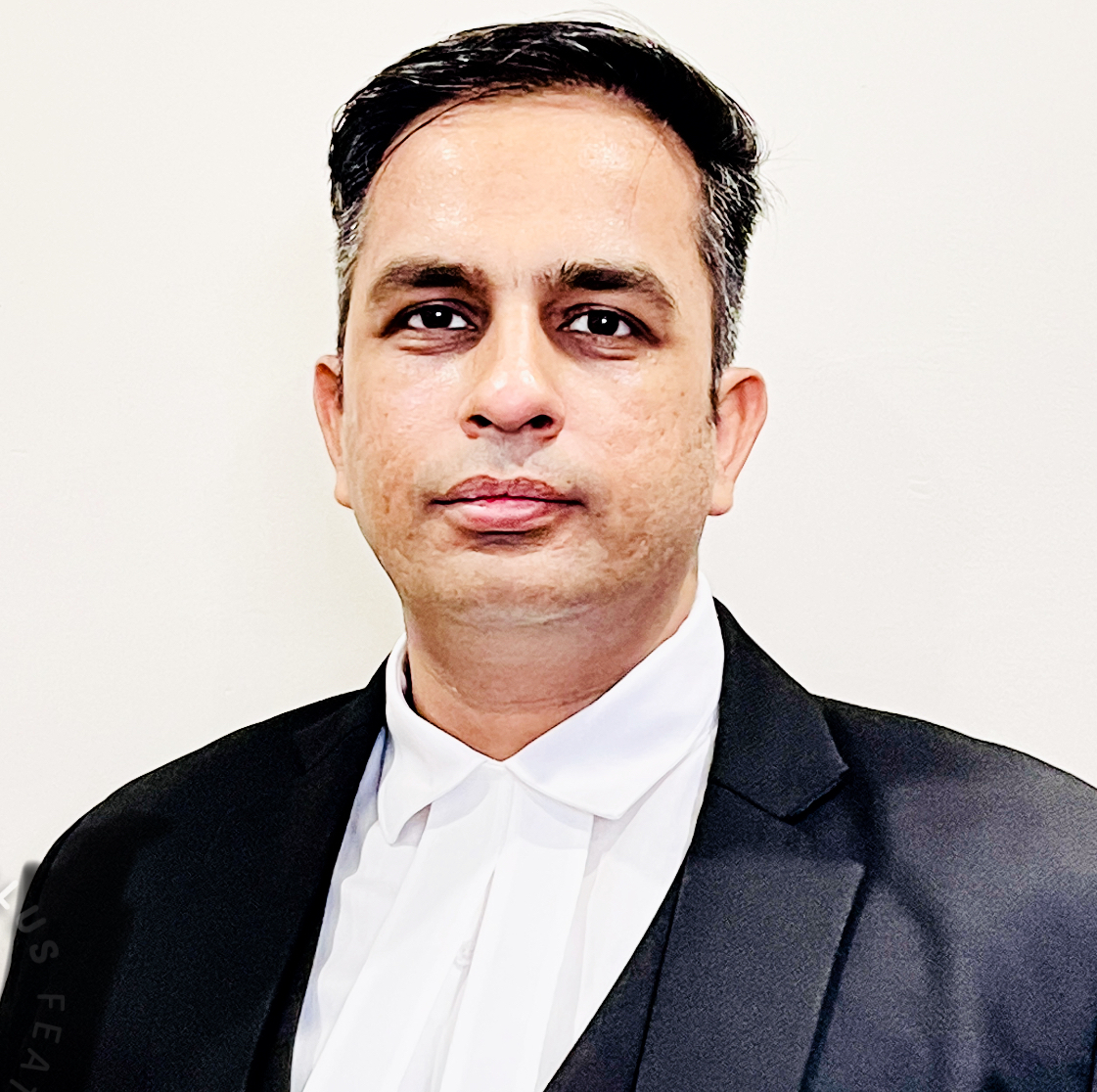




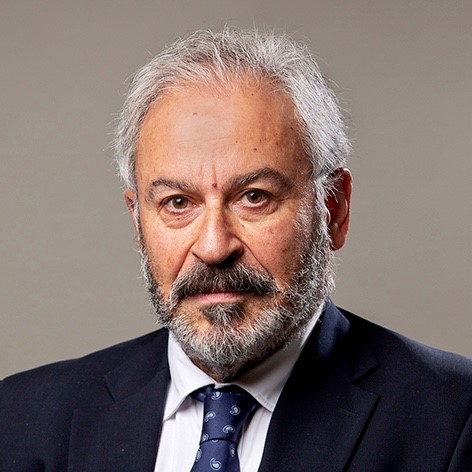




 Allow notifications