With over 14 years of experience in corporate and banking litigation, what initially motivated you to pursue law as a career, and what early experiences strengthened that decision?
My interest in law was sparked quite early, I was drawn to the way legal frameworks shape real-world outcomes. I found the intersection of reasoning, language, and impact particularly compelling. What truly cemented my decision, however, were my early internships and court visits during law school. Watching senior advocates argue complex matters and observing how legal strategy could influence the course of businesses and individuals made me realize that this was a profession where intellectual rigor meets tangible change.
In your early years with law firms, what experiences shaped your understanding of banking laws and guided you toward this specialization?
In my formative years at leading law firms, I had the opportunity to work closely on recovery actions and regulatory compliance matters for major banks. My involvement with corporate recovery teams gave me a ground-level understanding of how financial institutions operate, where the friction points arise, and how legal intervention can create both risk mitigation and strategic advantage. These experiences naturally drew me toward banking, corporate and financial litigation, a field that demands precision, meticulous research, commercial awareness, and long-term perspective.
Having worked extensively with banks, corporates, and financial institutions, what do you see as the most pressing challenges businesses face today in managing disputes and compliance?
Today, businesses operate in an environment where regulatory frameworks and expectations are rising faster than internal systems can adapt. Disputes often arise not just from contractual breaches but from operational gaps, inadequate documentation, and ever-evolving regulatory landscapes. The most pressing challenge I see is the lack of proactive legal risk mitigation & management. Many entities still view legal strategy as a reactive tool rather than an integrated business function, which leads to avoidable disputes, compliance lapses, and reputational risks. As the saying goes ‘prevention is better than cure’.
You’ve also advised on digital and social media laws, as well as data privacy. How do you see these evolving areas influencing the future of corporate legal practice in India?
Digital regulations and data privacy are no longer niche concerns, they’re becoming central to corporate strategy. With the Digital Personal Data Protection Act and increasing regulatory oversight, companies must build data governance and responsible handling into their core structures. Social media presence, influencer marketing, and tech platforms are creating entirely new legal questions around liability, consent, intellectual property and reputation. I believe corporate legal practice in India is at an inflection point where traditional commercial law will increasingly overlap with technology, media and communication laws, and lawyers will need to re-equip and upgrade constantly.
What inspired you to establish Simpli-Counsel, and how does your approach to advising startups, Gen Z entrepreneurs, and corporates distinguish your consultancy?
Simpli-Counsel was born out of a simple observation: many startups, Gen Z founders, and even established businesses need practical, clear, and commercially aligned legal advice — not just legalese. After years of working with large institutions, I wanted to build a consultancy that bridges structured legal strategy with the agility that modern businesses require. Our approach is deliberately collaborative and solutions-oriented. We focus on simplifying complex legal frameworks so that founders and business teams can make informed decisions swiftly, without feeling overwhelmed by jargon or legal process.
Looking back, what has been one of the most complex or high-stakes matters you’ve handled, and what were your key learnings from it?
One of the most challenging matters I’ve handled involved a multi-jurisdictional recovery action for a consortium of banks against a large corporate borrower. The case involved layered security structures, parallel insolvency proceedings, and regulatory sensitivities. Navigating this required not only deep legal analysis but also constant coordination between stakeholders across jurisdictions. My key takeaway was the importance of strategic clarity and communication — aligning diverse teams behind a coherent legal roadmap can often make the decisive difference in complex disputes.
In your transition from working with established law firms to building your own consultancy, what have been the biggest challenges and most rewarding aspects?
The transition from structured law firm environments to building my own practice has been both demanding and deeply fulfilling. The biggest challenge has been stepping out of established institutional systems and creating operational, branding, and business development structures from the ground up. But the reward has been immense: the freedom to shape a practice aligned with my values, the ability to work closely with clients as strategic partners, and the joy of seeing the building something authentic and future-oriented.
Data privacy is becoming increasingly critical. What practical advice would you give startups and entrepreneurs on mitigating legal risks early, especially in this domain?
Startups often underestimate data protection until they face a regulatory hurdle or breach. My advice is: embed privacy-by-design early on. Map what data you collect, define clear consent processes, implement basic security hygiene, and assign responsibility for compliance. Even simple steps like robust terms of service, privacy notices, and access protocols can dramatically reduce risk. More importantly, build a culture of respect for data & privacy — because in today’s world, trust is currency.
What vision do you hold for the future of your practice, and what guidance would you offer younger professionals aspiring to build careers in data privacy and banking law?
My vision for Simpli-Counsel is to build a modern, agile legal advisory practice that combines deep subject expertise with empathy for how businesses actually function and not how they should. I see tremendous opportunities at the intersection of corporate,technology, and regulation, and want to help clients navigate this evolving landscape with clarity and confidence.
For young professionals, my advice is twofold: develop strong foundational legal skills, andstay curious about emerging areas like fintech, data privacy, and digital laws. The future belongs to lawyers who can blend legal acumen with strategic foresight and adaptability.
Beyond your legal career, you are passionate about heritage crafts, travel, and fitness. How do these interests help you maintain balance and perspective in your professional journey?
Law can be an intense profession, and for me, travel, heritage crafts, and fitness offer grounding and perspective. Exploring crafts connects me to India’s rich cultural fabric, travel fuels my curiosity and adaptability, and fitness keeps me focused and energized. These interests remind me that while our work is serious, our growth is richer when we remain open, balanced, and inspired by the world beyond our desks.
Coming from a background in Science from Hindu College, University of Delhi, what inspired you to pursue a career in law? How has your technical background influenced your approach to complex commercial or infrastructure disputes?
As a first-generation lawyer, I often say that I did not choose law, law chose me. Growing up, I was deeply influenced by my grandfather, who fought legal battles for decades to protect our ancestral land. His relentless perseverance, even against an unresponsive system, left a profound impact on me. By the time I graduated in Science from Hindu College, I had already seen how the law could be both an obstacle and a tool for justice.
My scientific training gave me a structured way of thinking. In Science, you learn to analyze problems by breaking them down into fundamentals. That has greatly helped me in disputes involving infrastructure and complex commercial contracts, where one must go through technical details like engineering reports, financial data, regulatory compliances, and present them in a manner that is both legally persuasive and technically accurate. It allows me to approach my cases not just as a lawyer, but as someone trained to understand the “nuts and bolts” of technical issues.
It has been an interesting journey, from solving arithmetic problems and arriving at ‘LHS = RHS’ to addressing complex questions of law and concluding with ‘Hence, this SLP’.
In the early stages of your career, you worked with various senior judges and advocates. How did these experiences shape your approach, and which lessons from that time have had a lasting impact on your professional philosophy?
I had the privilege of clerking with Justice A.K. Sikri at the Supreme Court and Justice Siddharth Mridul at the Delhi High Court. Observing them up close taught me two invaluable lessons: the importance of clarity, and the importance of compassion. Justice Sikri had an extraordinary ability to simplify the most complex constitutional questions, and Justice Mridul always emphasized the human element in adjudication.
Later, when I began working with senior advocates and counsels at the Supreme Court, I saw how preparation and integrity defined good lawyering. One lasting lesson I carry is that courts are not swayed by theatrics- they are swayed by sincerity and substance. These experiences shaped my professional philosophy, that law is not just about winning cases, but about ensuring justice is meaningfully served.
What motivated you to establish an independent practice, and what hurdles did you face while launching your chambers during COVID? How did you overcome them, and what was your vision for the practice?
The decision was born partly out of necessity and partly out of conviction. During COVID, the legal profession itself came to a halt. Many colleagues struggled, and I realized that if I wanted to carry forward my vision of a client-centric and socially conscious practice, I had to build something of my own.
I started my chambers quite literally from one room in my home (with immense gratitude to my parents who allowed me to turn it into an office) with files stacked in the boot of my car. The hurdles were immense, no physical hearings, clients uncertain about the future, and the financial strain of running an independent practice in such times. But adversity also brought clarity. I invested in technology, conducted virtual hearings, and slowly built a team that shared the same values of hard work and service. My vision was, and remains to create a Chambers that combines courtroom advocacy with policy thinking, and where every matter, whether commercial or public interest, is handled with the same dedication.
You have handled complex commercial disputes and arbitration, including cross border infrastructure matters and international arbitration, across areas such as employment law and customs law. Can you share some major challenges you faced in a complex arbitration case and the unique difficulties it presented?
One of the most challenging arbitrations I handled involved a cross-border infrastructure project. The difficulty lay not just in the scale, but in the diversity of the issues, technical construction delays, regulatory clearances, and overlapping jurisdictional laws.
The unique challenge was coordinating with multiple stakeholders, engineers, financial experts, and foreign legal teams, while presenting a coherent case before an arbitral tribunal presided over by a retired Supreme Court judge. It taught me that arbitration advocacy requires more than just legal arguments, it demands the ability to understand complex technical data into a persuasive legal narrative.
You have demonstrated a commitment to advancing legal discourse and contributing to scholarly debate. How do you balance active practice with legal writing and academic contributions?
For me, writing is not separate from practice, it is complementary. Courtroom advocacy is about the urgency of the present; academic writing is about reflecting on the future. Balancing both is difficult, but I make time because writing forces me to step back and critically examine the jurisprudence I am part of. Recently, I have also begun teaching law to students and interns- a pursuit I deeply enjoy, as it allows me to give back to the fraternity while shaping the next generation of lawyers.
During the pandemic, for instance, I wrote extensively on the importance of impartiality in arbitrations and timelines in insolvency laws. These writings later informed some of the arguments I made in court. In a way, legal writing sharpens my practice, and practice keeps my writing, whether it’s articles, blogs, or pleadings, grounded in reality.
Clearing the Advocate-on-Record exam on the first attempt is a remarkable achievement. What were your preparation strategies, and what primary responsibilities come with being an AOR?
The AOR exam is as much about discipline as it is about knowledge. I prepared with the belief that procedural law is the backbone of effective litigation. My strategy was simple: treat every question as a live brief. I wrote my answers as if I were filing in court or briefing a Senior Advocate. That practical approach helped me clear the exam on the first attempt.
The responsibility of being an AOR is immense. You are the face of your client before the Supreme Court and a bridge between the Registry and the Hon’ble Judges, not just in argument, but in procedure. You are responsible for ensuring filings are correct, deadlines are met, pleadings are true and that clients receive the highest level of professional care. It’s a trust that must never be broken.
How has the arbitration landscape in India evolved over the last decade? With the advent of technology, what changes do you see in Supreme Court litigation strategies post-COVID?
Over the last decade, arbitration in India has been projected as having matured from an ‘alternative’ mechanism to the preferred mode for commercial disputes, with a legal framework aligning with international standards.
However, the ground reality is far more complex. Arbitration has, in practice, become less formal, yet more vulnerable to judicial intervention at almost every stage. In one matter I argued before the Supreme Court, the Arbitral Tribunal, the Single and the Division Bench of the High Court, each gave separate findings every time a cross appeal was filed by the parties, resulting in six different outcomes before the case finally reached the Supreme Court. This not only delays justice but also makes arbitration extremely costly and cumbersome. Increasingly, I see my clients preferring to opt out of arbitration clauses altogether, choosing and trusting Courts as their primary forum for dispute resolution, driven largely due to the greater efficiency brought in through the Commercial Courts Act.
Post-COVID, technology has changed Supreme Court litigation in profound ways. Virtual hearings, digital filings, and e-briefs are now routine. This has enhanced accessibility and opened new opportunities. Lawyers today can complement their oral advocacy with strong digital advocacy, while clients too can easily attend and witness hearings in real time from anywhere in the world, ensuring greater transparency and participation.
What has been the most challenging matter you have handled, and how did you navigate it? You have also worked extensively in animal welfare, environmental law, and public interest litigation. What motivates you to take up these cases?
One of the most challenging yet fulfilling matters I handled was Jaggo v. Union of India, 2024 SCC OnLine SC 3826, which I argued before the Supreme Court on behalf of the Appellant. The case involved a woman Safai-Karamchari, who had been working with the Central Water Commission for over two decades, as a so-called part-timer. Despite her long service performing essential duties, her plea for regularisation was rejected not only by her employer but also by CAT and the Delhi High Court. To make matters worse, she was illegally terminated, even though she was the sole breadwinner of her family, surviving on a meagre salary of just ₹4,000 per month.
I decided to take up her case pro bono, moved by her plight and the larger issue of systemic exploitation of temporary workers. The challenge was immense, not only did I have to defend her against three concurrent adverse findings, but I was also pitted against the office of the Additional Solicitor General (ASG). But the Hon’ble Supreme Court heard me patiently, and it was deeply encouraging to see the Court give weight to every argument raised by me in Court.
Ultimately, the Supreme Court held that such long-standing service warranted regularisation rather than termination, and that arbitrary dismissals without cause, violated natural justice. Drawing from constitutional principles under Articles 14 and 16, as well as international labour standards and comparative jurisprudence, the Court delivered a landmark judgment that has since been widely relied upon across the country to protect the rights of temporary and contractual workers.
For me, this case reaffirmed why I chose litigation. It was an uphill battle against the odds, but it showed me that with persistence, empathy, and conviction, the law can restore dignity and transform lives.
I’ve also had the privilege of being appointed as amicus curiae by the Hon’ble Delhi High Court to represent victims/ prosecutrix in POCSO cases, an experience that has deepened my commitment to matters of public interest and justice.
How do you balance your personal life with such demanding professional responsibilities, and how do you manage stress and maintain personal well-being?
Honestly, balance is not always easy. The legal profession demands long hours and deep emotional investment. What helps me is grounding myself in simple things, spending time with family, unwinding with my office colleagues, catching up with my close circle of friends, and taking out time to travel with them. These moments keep me centered amidst the demands of practice.
I’ve realised balance in this profession is a constant work in progress. The long hours and high stakes can be demanding, so I make a conscious effort to attend therapy and stay grounded, whether by taking out time for myself, slowing down when needed, or ensuring I maintain a non-toxic and supportive environment around me.
I try different ways to manage the stress that inevitably comes with the job, but what keeps me going is focusing on the parts I truly enjoy, being on my feet in Court. That’s where I feel most alive. After all, we lawyers live to hear the three words, ‘Issue Notice. Stay’.
Sir, your journey is truly inspiring. After completing a B.Tech in Computer Science & Engineering, you made a noteworthy shift to the field of law. What inspired this transition?
I finished schooling from Delhi Public School, R.K. Puram in 1999. At that point I had an offer for a B-Tech degree in Computer Science & Engineering from GGSIP University in New Delhi. Not being very clear about where I wanted to be in the long term, I decided to take up the offer and figure things out with work and life experience. Various opportunities came my way after graduation of which the most noteworthy was a startup called Montalvo Systems with offices in Bengaluru and Silicon Valley, California. This company was acquired by SUN Microsystems in 2008. The feeling of being a bird of passage in engineering came to a head for me at that point in time. I was not feeling very keen on repeating the technology cycle all over again. I joined Nvidia in Bengaluru and while working there started thinking from first principles about a long-term career best suited to my interests and inclinations. This process culminated in my returning to Delhi and joining Campus Law Centre, Delhi University for an LLB degree.
In school I rather enjoyed languages and the acts of reading, writing, and argumentation. It was a delightful and easy-going kind of engagement with the use of language; and it never occurred to me that it could be the basis for any full-fledged career. It was like breathing. It is only after work experience and self-examination that I let these instincts guide me to law as my long-term career. The peace of mind that comes from working alongside, and not too far away from your natural inclinations, is priceless and an abundant source of mental energy.
How has your engineering background continued to inform or benefit your legal practice? How has your technical education influenced the way you approach complex cases before the Intellectual Property Division and Commercial Courts of the Delhi High Court?
A technical degree in a subject like Computer Science or Electronics can enable one to appreciate and analyze a technical system in its entirety: from the top-level algorithm, to the software that implements the algorithm, through the hardware that executes the software, down to the circuits which constitute the hardware, and even the underlying semiconductor materials on which the circuits are etched.
As a lawyer one can then pause at the required depth in this chain, depending upon the requirements of the case at hand, and synthesize and elucidate the matter in appropriate legal terms to assist the court in reaching a decision. Ultimately technology lawyering is a synthesis of the science of understanding and the art of communicating.
Further, the general analytical rigour typically imbibed in the study of engineering and technology also seems to carry over naturally to law where precise and accurate analysis of legal and factual propositions is of value.
In the initial stages of your legal career, you must have encountered a variety of formative experiences. Could you share a few experiences that deepened your understanding of the law and shaped your approach?
After LLB., I had the opportunity to work in the chambers of a very experienced and encouraging lawyer at the Tis Hazari courts. Thereafter I joined a law firm and came to the High Court of Delhi and practised primarily in IPR and media law related matters. In 2017 I moved out from the firm and helped set up a new law firm with some of my friends and colleagues from Bengaluru and Chennai —this was the genesis of my Supreme Court practice. I was appointed an Advocate-on-Record by the Supreme Court in 2020. Presently I work as an independent chamber counsel engaged by clients, lawyers, and law firms for their matters at the Supreme Court, High Court of Delhi, and the NCLT/NCLAT.
Working in the trial courts as a fresh graduate, I recall, gave a feeling of both empowerment and emancipation: empowerment in terms of getting hands-on experience in practice, and emancipation in terms of a mindset shift that with due effort one could learn and practise any branch of the law in any forum available. I therefore usually recommend experiencing the trial courts to law students and lawyers starting out in the profession.
Another formative experience was listening to other matters being argued in court while I waited for my own matter to be called. This was an easily accessible and enriching source of learning, and it improved my approach to the drafting of pleadings (it was sobering to see experienced lawyers sometimes being put on the spot by the judge for not having impleaded necessary parties, or not having pleaded the cause of action properly, jurisdiction etc.). It also taught me about speaking more, speaking less, and speaking to the point in court. I still like to listen to the back-and-forth between the bench and the bar while waiting for my matters.
What motivated you to take the leap and establish your own legal practice? What were some of the significant challenges you encountered while building your Supreme Court practice, and how did your long-term vision help you navigate the journey particularly leading up to becoming an Advocate-on-Record?
It was clear to me during LLB. that I wanted to have an independent chamber practice in due course. I was fortunate in getting the work experience and the work opportunities (which sometimes came through sheer happenstance) that enabled me to eventually graduate, as it were, into chamber practice.
It also helps to keep in touch with colleagues from the various High Courts who may call upon one for assistance with their appeals to the Supreme Court. Practising in New Delhi provides one the opportunity of being of service to lawyer colleagues from across the country.
As a salutary reminder of the role of time and chance, along with human effort, I have this quote from Ecclesiastes written in my personal notebook of quotations:
“I returned, and saw under the sun, that the race is not to the swift, nor the battle to the strong, neither yet bread to the wise, nor yet riches to men of understanding, nor yet favour to men of skill; but time and chance happeneth to them all.”
On a lighter note, some practice of writing with pen on paper helps in surviving the Advocate-on-Record examination. I had numb fingers by the end of each three-hours long paper!
Which are some of the areas of law where you have had an opportunity to make a contribution to the evolution of jurisprudence through the matters you have handled so far?
My practice has been primarily in commercial litigation, involving: appeals to the Supreme Court from the various High Courts; suits and petitions before the IP Division and the Commercial division of the High Court of Delhi; IBC and Company law matters before the NCLT/NCLAT (New Delhi).
Accordingly, some of the reported judgements that come to mind also pertain to these areas of law.
The High Court of Delhi decided a trademark matter where interpretation of the prior-use defence under S.34 of the Trade Marks Act, 1999 was at issue. The court explained the operation of S.34 and laid down elaborate tests for the applicability of the section in trademark disputes.
In another commercial suit, the High Court of Delhi elaborated the law on the intersection of a counter-claim under the Civil Procedure Code, 1908 with the provision for moratorium under S.14 of the Insolvency & Bankruptcy Code, 2016.
The Supreme Court in an appeal from NCLAT, New Delhi under the Insolvency & Bankruptcy Code, 2016 clarified the law that when a large number of invoices are unpaid by the corporate-debtor, and some of these invoices are older than three years, then the whole claim under S.9 cannot be dismissed as time-barred so long as the invoices that are within limitation together constitute the threshold amount for initiating insolvency resolution.
A matter, somewhat atypical to my usual practice, was recently decided by the Supreme Court. The matter pertained to retrospective appointment of candidates as medical officers in the State of Karnataka. The court dismissed the appeal filed by the State of Karnataka against such retrospective appointments. I had the opportunity to address arguments as Advocate-on-Record and lead counsel for the respondent.
There are various ongoing matters where interesting points of law are at issue, and where I am looking forward to the eventual pronouncements. It is one of the privileges of being a litigation counsel to have the opportunity to contribute directly to the evolution of the law through arguments addressed in court.
What advice would you offer to budding lawyers, especially those looking to transition into the legal field from other professions? Are there specific resources or skills you would recommend they focus on to successfully make this shift?
Law has traditionally been open to and accepting of graduates from many fields through the three-year LLB. courses. This is reflective of the importance that the field of law has placed upon different streams of knowledge and experience.
It was only after the introduction of five-year integrated LLB. degrees that interested students had the opportunity to join a law college directly after school. I understand that one of the most reputable of such colleges offering five-year courses now also offers a three-year LLB. course open to graduates from various fields. This seems to me to mark the coming of a full circle in legal education.
The decision to transition into law ultimately is a personal decision driven by the individual’s aspirations and motivations. A thorough self-examination is necessary to determine these motivations and aspirations. As the Oracle of Delphi says: Know Thyself.
In terms of studying the law and then practising it, I only remind the interested of the three-step classical formula which, in my subjective opinion, leads to good outcomes: 1) attentive reading, 2) careful reasoning, and 3) lucid communication —both written and oral.
Litigation can be mentally and emotionally taxing. How has your long-standing involvement in martial arts, particularly its focus on discipline and mental resilience, helped you maintain balance, composure, and clarity under pressure in your professional life?
I have trained actively and intensively in the martial arts from the age of eight. I hold a black-belt in Karate, and used to teach pro bono in self-defence workshops during halcyon undergraduate days, and also later, when finding free time used to be easier. More than delivering blows it is a particular kind of mental resilience that comes from the practice of martial arts that I encourage people to explore. I have personally found it beneficial in many aspects of life.
Sports generally seem to have a good effect on building discipline and mental resilience. Hobbies too are a great source of engagement, entertainment, and the occasional succour when circumstances may seem too much. In due course everything passes, and it is largely about staying busy and positive in the meantime!
Can you tell us about the beginning of your career in law? What inspired you to pursue this field and how did you navigate the initial challenges?
I’d be happy to share. My interest in law began at a young age when I interacted with a corporate lawyer in Delhi during my civil services exam preparation. He told me that if you wanted to be recognised as a good corporate lawyer, then you must have a Company Secretary degree along with an LL.B degree from a reputed law college. After having this dual qualification you may advise businesses and become an essential part of running them, which intrigued me. Being a first-generation lawyer without much guidance was challenging, but my passion drove me forward.
I studied BA History (Hons.) and thereafter decision to pursue the law and Company Secretary course was unconnected to my domain however my passion and dedication made it easy for me. Additionally, I pursued a Company Secretary (CS) course, deepening my interest in corporate law and governance. Law school was both challenging and rewarding. I specialized in corporate law and was drawn to courses like mergers and acquisitions.
The steep learning curve and balancing work-life demands were significant challenges, but internships provided invaluable practical experience. My first significant step was an internship with a prestigious law firm, where I gained practical insights and faced the realities of the legal profession. Mentorship from senior colleagues was crucial, helping me develop my skills and confidence.
You have both a CS qualification and an LL.B degree. Was Company Secretary your first choice, or did you always plan to pursue law? How do you integrate the knowledge from both fields in your practice?
Initially, I pursued a Company Secretary (CS) qualification to gain a comprehensive understanding of corporate regulations and governance, which I knew would complement my legal education. Law has always been my primary passion, and the CS course deepened my interest in corporate law and governance.
Having both a CS qualification and an L.L.B degree has been incredibly beneficial in my practice. The CS qualification provides me with a solid foundation in corporate law, regulatory frameworks, company management, financial part of transaction and business aspects. It also enhances my ability to analyse financial statements and other relevant documents of a company. This knowledge is invaluable when advising business clients on legal matters related to corporate restructuring, as it allows me to understand and navigate the complexities of corporate law more effectively.
Integrating knowledge from both fields enables me to offer holistic advice to clients. For instance, when working on mergers and acquisitions, my legal expertise helps in drafting and negotiating contracts, while my CS background ensures that all regulatory, compliance, and financial aspects are thoroughly addressed. This dual perspective enhances my ability to provide comprehensive solutions, making me a more effective and versatile legal advisor.
How has your journey been from a Management Trainee at Ashiana Housing Limited to founding Corp Legex? What key experiences shaped your path?
My journey from a Management Trainee at Ashiana Housing Limited to founding Corp Legex has been both challenging and rewarding. At Ashiana Housing, I gained invaluable insights into the real estate industry and corporate law. This hands-on experience in managing compliance and corporate affairs was instrumental in shaping my understanding of the practical applications of law.
A pivotal experience during my training was working on a major merger matter. This exposure to complex regulatory and legal challenges significantly piqued my interest in corporate law and mergers. Additionally, I observed that many in-house counsels outsourced their legal needs to law firms, which sparked my interest in the potential of creating a firm that could offer integrated solutions.
The combination of these experiences solidified my desire to specialize further in corporate law and establish a firm like Corp Legex. My goal in founding Corp Legex was to offer comprehensive solutions that combine legal expertise with corporate governance insights, helping businesses navigate complex regulatory environments. Throughout this journey, mentorship from industry leaders and continuous learning has been crucial, reinforcing my commitment to providing strategic, client-focused services through Corp Legex.
With extensive experience in corporate restructuring, what do you believe are the most critical elements to consider during such processes to ensure a successful outcome?
Successful corporate restructuring hinges on several critical elements. First and foremost, a thorough understanding of the company’s current financial health and operational structure is essential. This involves conducting a detailed analysis of financial statements, cash flow, and market position to identify the core issues that need addressing.
Secondly, clear communication with all stakeholders is paramount. Ensuring that employees, shareholders, creditors, and other relevant parties are informed and engaged throughout the process helps maintain trust and support. Transparent communication also aids in managing expectations and mitigating resistance to change.
Legal compliance is another crucial factor. Restructuring often involves complex legal considerations, including regulatory approvals, contract renegotiations, and potential litigation risks. Ensuring all legal aspects are meticulously addressed minimizes potential obstacles and delays.
Lastly, having a strong leadership team to drive the restructuring process is critical. Effective leadership ensures that the restructuring efforts are aligned with the company’s long-term vision and strategic goals, fostering a successful and sustainable transformation.
Fintech is an evolving field with unique regulatory challenges. Can you share your experiences dealing with fintech companies and the specific legal issues they face?
Absolutely. Working with fintech companies has exposed me to a range of unique legal challenges that are intrinsic to the sector’s rapid innovation.
One significant legal issue is the structuring of complex financial transactions. For instance, I’ve been involved in drafting and negotiating agreements for new digital payment platforms and blockchain-based solutions. These transactions often require careful legal structuring to address the intricacies of new technologies and ensure that all parties’ rights and obligations are clearly defined.
Intellectual property is another critical area. Fintech companies often develop proprietary technologies or algorithms, making it essential to secure patents and protect trade secrets. I’ve worked on securing intellectual property rights for fintech innovations and handling disputes related to technology licensing and patent infringement.
Additionally, navigating contractual relationships between fintech companies and traditional financial institutions involves addressing unique legal concerns. Drafting clear, enforceable agreements that account for the innovative nature of fintech services is crucial.
Having started Corp Legex just five months ago, how are things progressing so far? What are some of the initial challenges you are encountering, and how are you addressing them?
Starting Corp Legex has been an exciting and challenging journey. The progress so far has been encouraging. We’ve been able to establish a solid client base and our team has been working diligently to deliver high-quality services. However, like any new venture, we are facing hiccups, but our collective energies are moving ahead day by day. Ensuring that we have the right team in place has been crucial. We’ve been actively recruiting talented professionals who share our vision and can contribute to our growth. Additionally, we’ve invested in training and development to ensure our team is equipped to handle complex client needs efficiently.
We’ve established robust processes for continuous learning and internal collaboration to stay ahead in these areas. Additionally, we leverage advanced technology to streamline our legal research and analysis, ensuring that we provide precise and informed guidance on our services offered to client. This approach allows us to offer comprehensive and strategic legal support tailored to our clients’ needs.
Overall, while there have been challenges, we’ve tackled them head-on with a proactive and strategic approach. The response from the market has been positive, and we are optimistic about the future as we continue to grow and refine our offerings.
You co-founded Unmukt Udaan, focusing on child education and development in rural areas. How has this initiative shaped your perspective on the importance of education and legal awareness in underserved communities?
I come from very humble background and understand how access to quality education can transform lives. Unmukt Udaan is an initiative to give shape to my belief and hope to spread education to all corners of the nation. It’s not just about academic learning but also about empowering individuals with the skills and confidence to pursue opportunities and advocate for their rights.
The Initiative has highlighted the critical role that legal awareness plays in these communities. Many families lack basic knowledge about their rights and the legal resources available to them. This gap often exacerbates their challenges and limits their ability to address issues like land rights, access to social benefits, and protection from exploitation.
Our efforts to integrate legal education into our programs have shown that when people understand their rights and legal frameworks, they are better equipped to make informed decisions and improve their circumstances. This experience has reinforced my belief in the intersection of education and legal awareness as fundamental tools for societal development and empowerment.
With your extensive experience, what advice would you give to young legal professionals who are just starting their careers? How can they develop a strategic and business-focused approach to law?
For young legal professionals, my advice is to cultivate a blend of technical expertise and strategic thinking. Start by mastering the fundamentals of the law and continually seek opportunities for practical experience. This will build a solid foundation and help you understand the nuances of various legal issues.
Simultaneously, develop a business mindset. Understand your client’’ industries, their strategic goals, and how legal decisions impact their business objectives. Engage in conversations with clients about their broader business challenges and look for ways to align your legal advice with their strategic needs.
Networking is crucial. Build relationships with mentors, colleagues, and industry professionals to gain diverse perspectives and insights. Stay updated on industry trends and regulatory changes, as these can significantly impact legal strategies.
Finally, embrace a problem-solving mindset. Approach each case or issue with a focus on finding effective and innovative solutions rather than just legal answers. This will help you become a valuable advisor and contribute to your client’’ success, thus enhancing your own career growth.
How do you balance your professional responsibilities with your personal interests and hobbies? What activities do you engage in outside of work to maintain this balance?
Balancing professional responsibilities with personal interests is crucial for maintaining overall well-being. I prioritize managing my time effectively by setting clear boundaries between work and personal life. This involves scheduling dedicated times for both work-related tasks and personal activities.
One of my key hobbies is cricket, which I find invaluable for maintaining balance. I try to play on a regular basis and stay physically active, it provides a mental break from work. Cricket helps me in recharging and improving my focus and productivity when I return to work.
In addition to sports, I make time for other personal interests such as reading and traveling. These activities offer me a change of scenery and a chance to unwind. Regularly disconnecting from work and pursuing these hobbies helps me stay refreshed and motivated, ultimately benefiting both my professional performance and personal satisfaction.
Having worked with both domestic and multinational companies, what differences do you observe in handling legal issues across different jurisdictions?
Working with domestic and multinational companies has revealed distinct differences in handling legal issues across jurisdictions. Domestically, the legal environment tends to be more predictable, with established regulations and a clear framework for compliance. This allows for more straightforward legal strategies and risk management.
In contrast, multinational operations introduce complexities due to varying legal systems, cultural norms, and regulatory requirements across countries. This necessitates a more nuanced approach to legal issues. For instance, navigating different regulatory frameworks requires careful coordination and understanding of each jurisdiction’s specific rules, which can impact compliance strategies and operational decisions.
Multinational companies also face challenges related to cross-border transactions, such as differing standards for data protection, intellectual property, and labor laws. Addressing these issues requires a comprehensive approach, often involving local legal experts and tailored strategies to ensure compliance and mitigate risks in each jurisdiction.
Overall, handling legal issues in a global context demands adaptability, thorough research, and effective coordination with local legal teams to address the diverse regulatory landscapes effectively.
Hello and welcome to another episode of Super Lawyer. Today, we have with us esteemed advocate Vishal Khattar, who is the founder of Patine Law Offices in New Delhi. He is also the Additional Advocate General for the State of Haryana at the Supreme Court of India. Welcome, sir, to our episode. Thank you for accepting our invitation and for being here.
Let’s start our journey of questions and answers in a more conversational manner. Sir, I would like to begin with a very basic question. When you decided to become a lawyer, how was that journey? What kind of challenges did you encounter when you started focusing on this career for yourself?
Just a small correction: the office goes by the name of Patine Law Offices. Now, I understand it’s a unique name. I attended a school where the alumni are called Patines, so out of dedication and affection for my school, I decided to name the office after it.
I’ve been a debater throughout my time in school and college, participating in several debates and declamation competitions. I earned some good distinctions and ranks in those competitions. As a result, one day, my principal—Mr. BBS Pathania, a great man—told me, “You will become a good lawyer.” However, being from a small town, the challenge was that I scored high marks in my matriculation exams, and since I was among the top students in the state at that time, my father’s expectations shifted. He wanted me to become a doctor.
I was a medical student in school, but despite my best efforts, I couldn’t make it to medical college. There were three colleges in my city, Rohtak: one for B. Pharmacy, one for MBA, and one for law. To avoid wasting a year, I applied to all three. When I didn’t get into medical college, I was accepted into all three of these institutions. Initially, I planned to pursue an MBA, but after discussing it with my principal, who advised me to go to law school, I decided to study law. He assured me that I wouldn’t regret the decision, and I believe he was absolutely right.
So, I chose to study law because I had an interest in it from the beginning, and it turned out well. I completed my five-year law degree at Maharshi Dayanand University in Rohtak. From my third year, I started interning in Delhi, and since then, I’ve been working here.
Sir, it definitely worked out for you. It seems the path was paved by your faculty, but you’ve made a huge name for yourself.
I was fortunate to be taught and guided by such learned teachers, my professors, and lecturers. I frequently visit my college to mentor students. They often ask, “Vishal, why don’t you come here more often?” I jokingly reply, “It’s because of all the extra blessings you’ve given me that I’m so busy. If you reduce your blessings, I’ll start coming more often.”
I did my final-year internship with a very good organization—sometimes called the most preferred employer in the world—General Electric (GE). They have a finance division here called GE Countrywide, and after my internship, they offered me a job. At that time, it was quite rare for my college to receive such offers, so it was a big deal.
In fact, it was the first campus placement offer received by our department. I joined GE as a legal analyst, though it was a contractual position. During one of the court proceedings, I was noticed by a professional who referred me to ICICI Bank. Early in my career, I joined ICICI Bank as the State Head Legal for Punjab and Chandigarh.
I gained experience with corporates, working at ICICI Bank and later with Tata Capital, where I was responsible for their North India legal operations. However, I never intended to pursue a lifelong career in the corporate sector, so I eventually decided to return to practice.
Sir, with such a trajectory in your career, when did you decide to start Patine Law Offices? What was the inspiration behind its establishment? What exactly sets it apart from others in the legal landscape? Additionally, if possible, we would request you to share some of the challenges and successes you’ve encountered.
See, If I talk about motivation, it always comes when there is a loophole in the system that you want to fill or a need in the industry. In the legal fraternity, we don’t use words like ‘market’ or ‘industry,’ but obviously, the driving and limiting factors are the same. However, I always believe in focusing on the positive aspects. There were good things happening, and we were part of those good things. So, we wanted to start something good on our own. It’s time that we should get independent. I should get independent.
So, we decided to start Patine Law Offices. The name ‘Patine’ and the email ID for Patine Law Offices were things I had already created during my final year. It was clear in my mind that every lawyer wants to be independent. We were just waiting for the right time, when we had some clients who could entrust us with work.
We started Patine Law Offices with a small 300 square foot office. Slowly, we have been able to serve clients from both corporate and non-corporate. We have a reasonable number of practice cases from non-corporate clients, as well as from corporates. In the corporate sector, we are involved in finance, banking, Fintech, and then also in the automobile industry. We have some e-commerce clients, and now we’ve started working in FMCG as well. Being a first-generation lawyer, I had to hustle for every client and for every bit of learning.
About six months ago, we started some operations in the UAE as well. We’re working for two clients in Dubai—one is a Fintech client, and the other is in renewable energy. So, we’ve started working for them as well. Every benchmark we’ve reached has been a story of hustle for us.
But I believe every first-generation lawyer has to go through that. You have to keep learning, reading, and seeking references every time. You’ll face rejections because clients tend to go for big names. This is a trend in our industry.
It’s like when you want to go for a bypass surgery, you’ll always ask who’s the best doctor. No one asks for a doctor who’s available; they want the best. The same principle applies to some extent in our profession—clients want big lawyers. But you have to find those who can trust you.
We were fortunate to find some clients who trusted us. Some corporate officers who had worked with me at that time knew how I performed, and somehow, things worked out.
So, sir, given this fact, you are holding currently, a very esteemed office of being an Additional Advocate General for the state of Haryana, at the Supreme Court of India, which in itself is one of the very prestigious things.
We would request you to shed some light on this particular role and the insights related to the responsibilities and how do you face the challenges, what kind of things do you do over there because that also will become an aspiration for learners as well.
For a litigation lawyer, it’s a very important milestone to have the opportunity at some point in their career to work for a public undertaking or the government.
When we talk about government panels or government cases, the documents, orders, laws, working methods, protocols, and hierarchy—these are things you can only learn when you start working for them. Like any other litigation lawyer, I was also looking for such opportunities.
So, when this position was advertised, I applied for it. I was fortunate enough to be appointed as one of the nine Additional Advocates General (AGs) for Haryana. My role involves handling cases in the Supreme Court.
So in these cases, in government work, there is a well-organized structure. Duties are well-defined, protocols are clear, and there is a very detailed bureaucratic structure. The protocols, documents, and their implementation are all clearly laid out. This makes it a great learning experience for any litigation lawyer working on a panel. Every case comes with its own challenges.
Sometimes, students or juniors who are close to us ask very genuine questions. They often ask, ‘What is the main challenge? How long will it take for me to become a good lawyer? How long will it take to become an independent lawyer?’ I remember something I learned from a senior at the Delhi High Court.
When I used to sit in the canteen, feeling worried, he would come up to me. Once, I remember discussing my concerns with him. He asked me, ‘What happened? You look very upset. What’s on your mind?’ It was 5:30 p.m. at the Delhi High Court. I told him, ‘I’ve been working so hard for two years, and though I’m earning, it’s not what I hear from seniors—about getting many cases, high fees, and having a good office.
He told me, ‘Look, our legal profession is not like an aircraft; it’s like a train. In a train, you have to stay on track. There’s no provision for overtaking. If you try to overtake, you’ll have an accident. There’s no going faster than your schedule, because if you do, you risk an accident. And if you slow down, someone will hit you from behind. All you can do is stay on time and keep moving. This is how a train operates, and this is how our profession works too.
Every day, you need to start at the same time, reach the courts on time, meet your clients properly, meet your deadlines, and do your research timely. If there’s a new law coming in, give extra time to study it. You need to keep improving. If you follow this schedule, just like a train, that’s how you’ll succeed in this profession.
And believe me,’ he said, ‘believe me, Khattar, every station will come. If you stay on track, you’ll reach every station.’ From this, I understood that perseverance is essential in this profession. You need to be consistent, regular, sincere, and disciplined. Whatever benchmarks are set for any professional lawyer, you will achieve them.
You know, my first mentor in Delhi was a Special Public Prosecutor. He used to speak to me in Punjabi and would say, ‘Khattar, you should know how to work, and then you should get work too. So these are the raw standard things we have learned from our seniors.
Absolutely beautiful standards and tried-and-tested tracks. The way they have taught you— ‘Kaam aana bhi chahiye aur kaam milna bhi chahiye’—is an absolute gem. Even running like a train is fascinating. But sir, you were ready to accept that as well, which is very important when someone is teaching or guiding you.
You took it as a challenge to follow this, and I believe that has probably been a key factor in your success. Sir, with all of this in mind and knowing that you specialize in constitutional law, what kind of thought process do you observe in the current generation? Since you encounter many individuals joining you as interns or juniors, how do you guide, train, or mentor them to contribute meaningfully to legal reforms and societal progress, particularly through constitutional law matters?”
Over time, as we began receiving more work related to commercial and marketing law, our main focus shifted to handling contractual and commercial cases—what we often refer to as ‘bread and butter.’ However, constitutional law has always been my favorite subject.
Whenever we receive a brief involving a constitutional issue or aspect, I make sure to keep that brief on my table and not delegate it to anyone else. This is a very good question and one of my favorite topics of discussion with new joiners in my firm. This perspective is something I learned from one of the great mentors I had.
He once quoted some lines from the Bhagavad Gita, telling me, ‘You are part of a bigger system. This bigger system means you are contributing to something larger.’ Let’s consider it in a straightforward way: A person whose rights have been infringed—whether by a family member, a government agency, or a private company—is unable to get what he rightfully deserves. He goes to a lawyer, and what does the lawyer do? The lawyer ensures that his case is presented correctly before the judge, and that justice is delivered to him. And not just justice, but meaningful justice—justice that is also executable.
As they say, justice should not only be done; it should also be seen to be done. So, justice shouldn’t only be on paper. This is what a lawyer does for such a person. If society is suffering from injustice, it is you who are ensuring, through your professional advice and service, that justice is imparted.
When justice is imparted, it restores balance. A society only survives and sustains itself when balance is maintained. Without balance, society will not survive for long; it will become chaotic. Therefore, young lawyers must understand that you are not entering this profession solely for its glamour or money.
You are not entering this profession just to become a good advocate. You must also realize that you are becoming part of a bigger system, and you will contribute to maintaining balance in society. The key to that balance, in this country, is our Constitution. You need to have trust in our Constitution.
You need to have trust in your country. Cursing the Constitution or the country won’t help. What helps society is having trust in the Constitution. The best thing the Indian Constitution provides is balance in society.
For the weaker sections of society, it strengthens them. For those who wish to speak for themselves, it empowers them. For those with different opinions, it empowers them as well. For state authorities and bodies that wish to work, it gives duties to the citizens toward those authorities.
It is a balance: you have rights, and you have duties. So, trust the Constitution. If you are able to work on and win some constitutional cases in the form of writs or public interest litigations, and make a difference through the orders you obtain from these petitions, you will be performing your duties in a more meaningful way.
Unlike many other constitutions that focus primarily on rights without emphasizing duties, ours strikes a balance. I may be wrong, sir, but that’s my understanding of our Constitution. The passion you’ve shown is overwhelming for me, especially when you discuss these matters with young lawyers. They also need to connect with societal progress as you do, giving back to society.
Sir, how do you involve or engage young lawyers, and how do you advise them on handling cross-border litigation or cross-border cases? Since you are involved in many domestic and international cases, I’m sure there must be some learnings that differ from how we work in India compared to how international entities operate in the legal field.
What insights or learnings would you like to share with the learners?
One thing I always make clear to anyone joining my firm is that you’ve entered a profession where, mark my words, the hard work required is extraordinary. When I say extraordinary, it is extraordinary. So if you want to run away, run away now, because you will never like yourself to be a kind of lawyer, wherein you will be spoiling cases of your clients, or him suffering losses because of your mistakes.
You might recall the recent NEET issue where memes were circulating about doctors who graduated that year making such mistakes. You don’t want to become that kind of lawyer. So, the first thing I make them realize is that today is your first day, and this is your first file.
There is no point keeping them busy for another year, just doing research, so that by the time they are in actual practice, they’re 28 or 29 years old and considering switching careers to pursue an MBA or GMAT. No, the only practice that we do here is different from other firms, and I have been a junior in many other firms also, so we allocate cases on day one only.
If not the entire case, then at least a part of it, so they have something to work on right from the start. Every day, you’ll find all my associates attending court, either virtually or physically, carrying the files. We are a pure litigation firm.
Another thing that I felt was missing in my previous experience with firms is the lack of interactive sessions. My associates expect me, as their mentor, to guide them on how a case should be handled. While I can’t do every time, I make sure that every seven to ten days, or every two weeks, we sit down together. I pick up one case or a specific issue, and we all gather in the conference room. I then explain the case, discuss how it’s being handled, and how it should be handled, along with some standard rules of drafting, pleading, and convincing—essentially, how these cases should be done.
Sometimes, I do this on an individual basis as well. This kind of one-on-one teaching and interactive session was missing during my junior ship at other firms. I always felt that if I’m working with a successful lawyer, I should benefit fully from their experience, rather than just being impressed by their performance.
So that’s what we are doing. And one thing we’ve noticed across all litigation firms is the new kinds of assignments we’re receiving. Corporates have now started thinking that since we are the lawyers handling their cases in court, where their agreements, contracts, and other documents are being interpreted by the honorable courts, we should be the ones drafting those agreements as well.
I believe it was around six years ago when we received an assignment from one of our leading passenger car manufacturers. They asked us to come to their office in Pune, stating that the redrafting of their agreement had to be done there. We were surprised because such assignments typically don’t come to us; they usually go to specialized drafting lawyers. But they explained that what needs to be included or excluded in the agreement is something we only learn in court. Since we’re the ones who defend and argue these points in court, they felt we should be the ones drafting the agreements as well. So, we conducted a two-day workshop and began the drafting process.
Now, this has become an additional task for my associates, who, while primarily focused on litigation, are also learning the art of drafting contracts.
And believe me, with both drafting and litigation coming under one banner, the outcome will likely be fewer litigations in the future. If you have a well-crafted agreement, it leads to fewer disputes, which will directly and positively impact the health of businesses in the country. This approach will also help reduce the burden on the courts.
As a small, first-generation law firm, we are committed to this idea. I believe there isn’t a single associate in our firm who doesn’t have a client assigned to them. Each associate handles at least one client, either independently or as part of a team of two to three people.
Wow! Sir. You are such an amazing law firm and the strategy is so good. Actually, the thing which you are talking about is absolutely innovative and it will rise to a standard where there will be lesser litigations related to it. You being so busy with all of these commitments, professional, and obviously your office commitment, then being an AAG as well is a bigger commitment.
How do you recharge yourself or unwind yourself from this kind of commitment centric approach? And are there any hobbies or activities which you keep on doing with your law office as well? Because obviously everyone is going through some of the other stress for sure. So how do you unwind yourself?
What kind of activities do you follow?
The way our schedule is, ma’am, this is a tricky question to ask a lawyer. Most of us might tell you that we play golf, but honestly, we don’t even have time for that. Let me share an incident I learned from one of my principal associates, Vandana. That day, someone was accompanying me, and I had a sudden change in the timing of a meeting.
I was back from court and was supposed to meet someone at 12:30 PM. The meeting got rescheduled to 2:00 PM, and this associate of mine was with me. When she returned, she was asked, “What does he do when sir’s meeting gets postponed by an hour?” She replied, “He goes to Connaught Place, takes a full round on foot, and buys some books.” The person then asked, “What happened? Why do you ask?” She said, “He took me with him, and we went walking for a full round.”
So, that’s what I do. If a meeting gets delayed and I have some time, I go to Connaught Place, take a full round, and visit some bookshops. It’s also a learning experience for young lawyers.
Read as much as possible. You never know when a topic will come up, and if you’re well-read, you’ll be ready with a response. The more confidently and content-rich you respond, the more it adds to your personality as a lawyer. The more books you read, the better you’ll evolve in your career.
In my free time, I read books. I still prefer older authors—I’m yet to be impressed by any new ones—and I hardly get any time. Although I have plans for the future, I’m not sure if they’ll happen. The best way to cool your mind and relax is to meet some friends at the High Court lobby and talk about this and that. After some time, we’ll end up talking about our children and how they’re growing up.
Other than that, we mostly talk about watches and pens.
Absolutely amazing and honest answer from your side.Yes, reading should be a favorite pastime for everyone. It’s a very new thing that everyone talks about everything around books. But if all of us will start sharing those wisdoms as well, it will help the people who work with us, although we talk about it, but somehow the books are not there in hands and I feel like that is something which I see only in High Courts and Supreme Courts that all our learned friends, they definitely carry books now. Earlier also it was the reality and now also.
Sir, given this particular inclination towards books and you’re always interested in reading and finding new books, many a times juniors or the new entrants, they have this particular point that we do not have this much to invest in this. How should we go ahead and do it? Sir, I would request you to answer this because we all have gone through this particular phase where we do not have enough to immediately buy so many books.
So how can we garner that particular reading habit? Probably you will be able to guide us through that as well.
When I started reading, I was in school and had access to a library. Later on, I realized that I could ask the librarian for a book I had heard about, even though there was no Google at that time.
All the new books’ information used to get published in Hindustan Times usually on the second or third page. I would tell my librarian about the book I wanted, and he advised me to write an application to the principal requesting it. When I went to university, I had access to a much larger library.
Then I began studying international law, but there wasn’t enough material in the central library at my university. So, I started coming to Delhi. I would take a bus from Rohtak to Delhi or a train that dropped me at Tilak Bridge, and from there, I would walk to the Indian Society of International Law (ISIL), which has an excellent library for international law. I also had friends who helped me access the Indian Law Institute (ILI) library. Delhi has some great libraries, and although books can be quite expensive, libraries are invaluable resources.
You know, if you start buying 10 books, for example, I can read around 10 books over a period of one to three months, it can cost around 3,500 to 4,000 rupees, which is not feasible for a young lawyer. We have WhatsApp groups, so why don’t we have a system for sharing books? My daughter does it.
I’ve noticed that my daughter, even though she’s a growing teen and doesn’t share everything with me, but I’ve seen that she shares books with her friends. Though there is an old saying, my father used to tell me in Punjabi: One who lends the book is a fool.
The one who returns that book is an even bigger fool. So, if you truly want books to be your friends, you have to follow one rule. I can’t recall the author’s name, but he once said, ‘Before buying a new coat, buy a new book.’ I think youngsters should understand this old-fashioned diversion of funds. If they grasp its importance, it will significantly benefit their careers. Especially considering those Gen Z slangs—they’re getting into them, and I wonder where these slangs will be useful. God bless them all
Books offer a profound way to understand the art of storytelling and the essence of contentment. They teach you how to balance a paragraph, a line, and how to learn from experiences that took place thousands of kilometers away from where you live. When you choose an author with the skill of storytelling, you can feel those experiences as if you were there. You can realize that this is so much richer than the 10- or 20-second reels or shorts we often watch, which are only made perfect after 20 or 30 retakes, right?
And the beauty of learning a language can bring so much. You’ve learned the language, you bought all the beads and threads from the market, and you made a necklace out of it. This is how a book is written. The author or the writer learns the language, gains experience, and talks to people. You know, writers are a different kind of species.
So they do wonderful things, beautiful things. If you get to see that beauty in a book, then let it imbibed inside you. Tomorrow, you will start performing more effectively because of those books. This proves the saying: before buying a new coat, buy a new book.
Sir, this brings me to ask you about your views related to technology. How is it helping us and our future grow in terms of legal practice considering everyone is skeptical about the disruption that technology has brought in. It has reduced our reading time and everything about technology’s impact on us is questioned.
How do you see it affecting legal practice as well? And what kind of future do you foresee that may help us grow? How do you get acquainted with technology better?
As far as litigation and other allied services in the legal industry are concerned, we have tried most of the technologies, including ChatGPT and research tools, as well as references provided by some companies. However, I have yet to find a satisfactory solution. I share this opinion with many of my friends and colleagues as well.
We have yet to find a truly helpful technology that would effectively bring about or disrupt this industry. The reason, I believe, is that a more humanely touch is required in handling matters and preparing briefs. Initially, when we started using ChatGPT, we realized that the volume and number of contracts processed even in a particular region are so vast that even an AI might fail. The main issue is that if you cannot properly customize a contract for a client, it is of no use. Even one small mistake can turn the entire agreement into a disaster.
The same goes for drafting your cases as well. So when it comes to technology, particularly the technology that is often discussed, I believe the real game changer is yet to come, if it is coming at all in the future. I have spoken to many AI lawyers and some AI experts, and it seems the transformative impact is still awaited. The good thing is that we started using resources like Manu Patra and SCC since college.
This paperless approach, which has emerged, has significantly reduced the burden of maintaining a law office. My office is almost paperless. As for law reporters, the new generation of lawyers never really used physical law reporters or books. Our fathers, who were not lawyers, had different practices.
So we never inherited those practices from them. The only difference I now see is that when we used to do research from books, we often ended up reading something extra as well. However, if a new associate or lawyer adapts to this modern method of research and also does extra research in their free time, these tools like Manu Patra, SCC, and other websites are very nice, well-organized, and their search functions are excellent. They are also widely accepted in courts. Technology helps everyone—it helps you, it helps me. We saw during the COVID days how technology kept the courts functioning. Now, we take all our briefs on our iPads and tablets, and we have many software tools that help us with note-taking.
As a practice, we often hold a pencil rather than a pen. But one thing, I don’t know why sometimes I think if, in another four or five years, when the next junior associates come to us, they might call me old school. However, believe we should not leave the habit to write, read, and read randomly also, anything.
Somehow, I have this belief in my mind that if you are using technology, you should not leave the habit of writing. Whenever a client comes, we take notes, we have journals. Even today I keep a journal in my own handwriting. So new lawyers who are joining this profession or are very much new to this profession should know, do not lose the habit of writing.
Do not lose the habit of reading and do not lose the habit of maintaining a file also if it is required. Let technology grow. I believe that tomorrow it can help us even more because today it’s only partly helping us.
Thank you, sir, for taking us back to that era of reading, writing, and taking journals. Sir, we are already towards almost the end of the interview.
We would request you, sir, to share some of your insights that you believe are essential for the new entrants or the interns who are seeking opportunities at Patine Law offices as well as others. And if you could share some insights as well about characteristics or attributes that you prioritize while selecting or taking the candidates to join your team.
One thing I always tell them is that lately, as you’ve also noticed, a lot of law colleges have emerged. I don’t know whether I should say this or not, but if you look at the quality of teaching, it has declined in these law colleges. You need to inform a law student about what the profession will look like so that they can start preparing themselves accordingly.
Students will come to us after completing 12 internships, and then I would ask them 10 questions, but they cannot answer 11 of them. The reason is that the idea being circulated to these students is that they need to do an internship at a prestigious place, but they are not asked what they have actually learned. Whenever I ask, they just say they’ve done an internship with this or that judge.
So what did you learn? They never used to tell us anything. If you don’t have anything to share, don’t include it on your resume. The first question I ask anyone applying to my firm is, How much did you score in your matriculation exams? Now, people will tell me, even my daughter, why marks are important? But they are important. It’s not that the subjects of matriculation and 12th grade are important.
What’s important is whether you were able to work hard and move forward. The academic performance you show us will help us understand if you can perform when given an assignment or not. A student who scored 65 percent in 10th grade but achieved 75 percent in 12th grade is more impressive to me than a student who scored 90 percent both times, because it shows that the student was able to improve and turn things around.
This is what he will be doing in this profession as well—interacting with police officers, district-level judges, high court judges, bureaucrats, and public prosecutors. He should not, however, say that he can only communicate with certain types of people and not others.
All students should understand that academics are very important. The second thing is that you need to work on both your written and spoken language skills. This is a profession where you cannot compromise at all. When I say language, I mean both Hindi and English. When you are talking about working in North India, you cannot compromise by saying I don’t know how to read Hindi Just because you learned in a convent. We have been taught by ex-army and navy officers. But one thing we know is that every language has its own glory and you have to learn it. Even today, there will be many drafts which will be coming across which will be in Hindi. So you cannot come tomorrow and say, I want an English version of it.
This is how I make the assessment for any associate or a young student who is applying for an internship or a job with our firm. I want this message to go to all young students: stop saying academies do not matter. The people who are motivating you on Instagram or those featured in shows like Shark Tank are often from IITs and IIMs.
You are law students, and IITs and IIMs are often the first choices for many. If you are starting in this profession, remember that it requires extraordinary hard work. You have to read extensively, work diligently, and be consistent. You also need to take care of both your mental and physical health. If you can manage all this, you are entering one of the world’s most wonderful professions.
From any point of view—whether it’s learning, building confidence, or earning—this is the best profession you can be in. The only condition is that the hard work required will be extraordinary. There is no compromise. It’s a railway track: you cannot overtake it or jump over it
Thank you for such an honest opinion and a beautiful enriching experience we have had so much learning today. Thank you, sir, once again, for being here and accepting our invitation at SuperLawyer I hope our learners will understand the critical importance of you saying all these things that you can not only depend on online learning, you have to get into the field and you have to be like railways where you cannot jump and race.
You just have to be on time and keep on moving. That’s the best possible advice you can get. Thank you so much, sir. Thank you once again.
Welcome back to the SuperLawyers channel! As our journey as an educational platform continues to grow, we have the privilege of gaining insights from esteemed professionals in the legal fraternity. Today, we are fortunate to have with us Mr. Ajay Sharma, a highly respected figure with over 35 years of experience in corporate law and human resource complexities. He has served as the Chief Legal Advisor for several distinguished organizations and currently holds the position at CorpoTech Legal.
Sir, on behalf of the entire SuperLawyers team, we extend a very warm welcome to you. We are thrilled to have you with us today and are eager to learn from your vast experience. We look forward to sharing this knowledge with a broader audience.
Thank you, Akash, for having me here. I’m glad to share my experiences from the last three and a half decades. I prefer to say “three and a half decades” because saying “35 years” might make me seem older than I feel. So, feel free to ask any questions that you think will benefit the audience, especially the upcoming generation and young lawyers. I’m happy to contribute to that.
Thank you so much, sir. This would be slightly a nostalgic retreat for you because the first question is, even after having three and a half decades of experience in corporate law. If I may ask you, sir, why did you decide to pursue law?
So, I don’t have a full 35 years of corporate law experience. However, during my post-graduation, when I was pursuing my master’s in psychology, I developed an interest in understanding the legal side of things. After completing my master’s, I enrolled in law school and graduated from Delhi University Law Centre I in 1992.
The knowledge of law stayed with me. Once you study law, it’s not something you forget—it remains with you. When I entered the world of HR, this legal background gave me an edge compared to other HR professionals who only had an MBA in HR. I had degrees in psychology, a PGD in HR, and law.
I began exploring how I could apply my legal knowledge, particularly in labor and employment laws, which further fueled my interest. Throughout my career, I worked for both government and private organizations in India and abroad. The knowledge and inclination to learn the laws of the land were always there.
When I was in Europe, I handled HR for around 13-14 countries, each with its own legal framework. It was both interesting and relatively easy for me to adapt to the local systems, understand their laws, and provide corporate solutions.
I also gained considerable exposure to contract law, particularly while working with semiconductor companies. There was significant involvement in software licensing and patent work, as the semiconductor industry heavily focuses on patent writing. My role involved encouraging employees to document and write patents, helping them understand how their ideas could be patented, and assisting patent attorneys in advancing those ideas. If an idea wasn’t patentable, I guided them on how to innovate further to create patentable solutions.
Though I wasn’t a legal professional per se, I applied my legal acumen in my work. That journey has always been a part of me. As I reached a stage in my life where I wanted to formalize my legal expertise, I registered with the Bar Council of Delhi. Now, I’m a practicing advocate, working in the Delhi District Courts as well as the High Court.
Sir, my next question would be related to your trajectory and also something which is a very important question to someone who has a wealth of experience like you, who has seen the change, especially the technology driven changes, what do you think is the contemporary attitude of the lawyers or Indian lawyers towards this robust, disruptive technology change?
I think this issue isn’t limited to Indian lawyers; it’s a global phenomenon. I have connections worldwide, and I’ve spoken to lawyers in the US as well. Some lawyers are more tech-savvy than others.
The key point is that just because legal technology is available doesn’t mean a lawyer will automatically adopt it. We need to see the value it brings. In the last three to four years, as technological advancements have emerged—especially with the advent of generative AI—more solutions have become available. However, some are still rudimentary.
For example, basic case management is more about automation than high-tech solutions. It can improve productivity for law firms or individual lawyers, but each lawyer evaluates technology based on the value it offers.
We have a basic maxim in management called WIIFM—What’s In It For Me? Why should I adopt this technology? Does it genuinely help, or is it just another trend? Legal tech providers must ensure their solutions add real value rather than just being another tool.
The core question is whether the technology provides a solution or is just another piece of technology. Once lawyers understand its value, they will likely adopt it. Another factor is the career trajectory in law. Lawyers typically start young and spend three to four years establishing themselves. By the time they reach their late 30s or 40s, they are deeply involved in their work and may not have the time to learn new technology. So, the technology must present itself as a solution that fits seamlessly into their work.
I recall an incident in 1996 or 1997 when I was working with a company that wanted to introduce email. Many people questioned why we needed email when memos and peons worked just fine. We organized a three-day program to teach senior executives about email, but they still didn’t see the benefit. We had to show them that email could empower them to communicate directly without relying on their secretaries.
If I draw a parallel to the legal profession, much of the legal drafting is done by paralegals. But if a lawyer can use AI to draft documents, it could be a significant advantage. However, generative AI is still in its early stages. The results from platforms like Gemini, Perplexity, and Meta AI are not yet perfect. So, as a lawyer, I might think, “Why should I invest my energy in something that isn’t fully reliable?”
This is a process of evolution, and things will gradually improve. It’s not about Indian versus overseas lawyers; it’s about managing change. Several stakeholders play a role in this. First, legal tech professionals need to work closely with lawyers. You can’t develop a legal tech solution in isolation. Second, the Bar Council of India could get involved to assess what solutions are available and what needs to be developed. Third, lawyers themselves need to engage with younger lawyers.
I’ve wondered if law firms or senior lawyers could have roles like “legal analysts” who use legal tech tools and assist senior lawyers, helping them appreciate how these tools work.
Today, there’s a lot of hype around AI, but it’s not a magic solution. It only works well if you input the right data—garbage in, garbage out. In summary, this is a process of change. All stakeholders must support this change management, and gradually, the legal community will start adopting and adapting to these new systems.
You have mentioned some of the inputs that it’s not only a domestic problem, it’s a global problem. Taking this issue a bit forward, my next question would be, sir, since you have this entire diverse experience of working both with domestic as well as global international organizations, consultancies, and firms, how do you think is the international work culture different from the Indian setup?
“We need to consider this from two perspectives.
First, the lawyer as an individual entity, and second, law firms as a whole. In India, we are governed by the rules of the Bar Council of India, which serve as our guiding principles. These rules are different from those in the US or Europe.
For instance, in the US and Europe, law firms are often treated as profit centers or businesses, so everything operates accordingly. In India, however, law firms are typically centered around individual lawyers. This is evident from the firm names, such as ‘X and X Company’ or ‘X and Associates,’ where the person who founded the firm remains at the top.
When it comes to management practices, it’s important for those approaching retirement to think about how the next generation should take over. That’s a fundamental aspect of management.
Abroad, what is written is strictly followed. They are very precise in their approach. In contrast, we Indians are more flexible, often going the extra mile to help clients. There is an advantage to this Indian way of working; our flexibility and adaptability allow us to navigate the unique challenges of our legal system.
Law isn’t just mechanical; it involves a great deal of emotional intelligence, as we deal with people. Thus, we need to engage with clients on a personal level.
The ideal approach would be to adopt a system-driven method, as seen in the West, while also incorporating the Indian way of flexibility and going the extra mile. By merging these approaches, we can create an eclectic system that draws the best from both worlds. That’s my submission.”
Sir, tagging along with this one is when you have described this differentiation in mechanism of working or the difference in attitude, what do you think should be learned from the global work culture?
The court has mandated that there must be a minimum stipend paid to young lawyers, and I fully support this. The issue is that without adequate financial support, talented individuals may leave the legal profession for higher-paying jobs in other fields. They may start with law, but if they find better-paying opportunities elsewhere, they are likely to pursue them.
Therefore, it’s essential to have a minimum threshold for stipends, as is common outside India. Another crucial point is the adoption of technology to enhance productivity. I’m very pleased to see the implementation of e-Courts and the e-Filing system. The encouragement for people to use virtual conferencing is a significant change that has taken place over the last three to four years. Our Chief Justice of India strongly supports the transition to these new systems, and we are also moving towards Online Dispute Resolution (ODR).
Things are moving in the right direction, but there’s still more to be done. For example, why can’t we have a world-class arbitration center in India? Recently, the GIFT City in Ahmedabad started an international arbitration center. We should be developing such systems and processes in India, rather than relying on places like Singapore for arbitration.
A system-driven approach is crucial. We also need to consider the productivity and well-being of lawyers. Expecting them to work 12, 13, or 18 hours a day can lead to burnout, especially at a young age. We need to create a work-life balance. At a young age, many people are working extremely hard, so it’s important to consider how to create a healthy work-life balance. Law is a profession, not just a relentless pursuit of earning money.
Additionally, I believe the Bar Council is making efforts in this direction, and I recently saw a judgment from the Madras High Court that reflects this. While I’m not suggesting that we should completely mimic the Western or global approach, we can certainly adopt the best practices from around the world. By combining that with our own ingenuity and the passion we have for our clients, we can create a balanced and effective solution.
Since you have been involved with providing unique technology solutions, you have been involved with HR automation, and much of your legal advisory also rests on technology. And we have this digitalization push in India also going on for quite a time, especially since after COVID this thing has been increased.
Sir, we would like to know your views on how important do you think is this digital and technological upskilling in lawyers and what would be your advice or how would you manage this entire technology upskilling operation in your team, or maybe in your organizations. We would love to hear your insights, sir.
Learning is a lifelong journey—you can’t stop. Even at 59, I’m still attending classes regularly. When it comes to legal education, particularly through alternative channels, it’s quite affordable compared to traditional college programs. Some institutions offer courses that are far less expensive, making continuous learning more accessible.
I strongly encourage young lawyers, including my own team, to continually take refresher courses because law is an evolving field. The beauty of law is that it’s never stagnant; there’s always something new to learn.
Take, for example, the recent changes in criminal law—the three new acts that have come into force. If you go through the provisions, you’ll notice that electronic evidence plays a significant role now. Electronic evidence isn’t just about technology law; it’s a form of evidence that is now integral to criminal, civil, and even family court cases. It’s crucial for legal professionals to understand what electronic evidence is and how to secure it, including the cyber forensic aspects.
In the Bhartiya Saksha Adhiniyam, electronic evidence is treated as equivalent to other forms of evidence, but it requires a certificate that details the source and hash value of the evidence. Now, if a lawyer doesn’t understand what a hash value is, how can they effectively present their case in court? Adapting to new technology is essential, and I always encourage my team—and myself—to stay updated with what’s available online.
Today, there’s a wealth of information on the internet, but it’s important to approach it in a structured manner. For example, when learning about the new criminal laws, I focus on understanding both the legal changes and the technological aspects, like electronic evidence. This process of continuous learning is ongoing.
Looking ahead, two significant acts are on the horizon: the Digital India Act, which may replace the IT Act, and the AI Act. Everything is interconnected. For instance, with the AI Act, we need to consider whether AI will be treated as an entity or a support system. If AI manipulates a copyrighted document to create a new one, who bears the responsibility? Is it the AI tool, the owner of the AI platform, or the user? Understanding these complexities requires deep engagement.
So, my advice to everyone, including myself and my team, is to stay at the cutting edge. Dedicate at least three to four hours each week to learning new developments in the legal field.
I really liked the way you have presented that there is no plateauing in the learning curve in the legal fraternity, it’s always a rising and so is upskilling. There’s no end to it. And sir, your words are truly powerful. When you see that even after having so much experience, you still choose to learn.
And that itself is such a motivational dialogue for all youngsters like me and even everyone else in this fraternity. I would like to ask, sir, that with this immense importance of data in today’s world, as is often said, that data is the new oil what are your views on the data legislation framework with reference to India and the other jurisdictions which you might have worked upon?
Let me rephrase that—data is like fuel. It can energize a system, but it can also cause damage if mishandled. Data has both positive and negative aspects.
We first started working with data in the corporate world through GDPR and even earlier with SOX compliance. So, data privacy isn’t a new concept for us. Today, we’re seeing the introduction of new laws—GDPR has established itself in Europe, CCPA is in place in the US, and in India, the DPDP Act has been passed, although it’s not yet enacted. But it will be soon.
The challenge exists on both ends: for those who provide data and for those who collect and process it. For example, how many of us actually read through all the terms when we download an app on our phones? We tend to just accept them without a second thought. The same goes for cookies on websites—we often accept or reject them without fully understanding what we’re agreeing to.
This is why education on data privacy needs to start at the user level. People should be aware of what constitutes personal and sensitive data, to whom they’re giving it, and for what purpose. Do we know that we have the right to request our data to be erased later? Or if we receive unsolicited calls or messages, do we realize that our data might have been leaked?
So, the first step is educating users. The second is ensuring those who collect data are also held accountable. Once the new laws are in place, there will be a stronger emphasis on enforcement. However, even with GDPR, I’m not sure how many companies have faced prosecution for data breaches. Enforcement is crucial.
Data is undoubtedly a powerful tool. We’re constantly surrounded by it, even in our interactions right now—this is all data. Both users and the originators of data, like ourselves, need to be educated to understand the impact of data on individuals, systems, and the world at large
This was very insightful, sir. I am really excited to approach you that as a professional who has indulged in diverse roles from law to tech to HR automation, what is your success mantra?
I believe that being a lifelong learner is crucial. The moment you think you’ve learned everything and reached the pinnacle, it’s like you’ve ceased to grow—you’re done. The quest to learn should never end. Even on your last day, you should be thinking, ‘What else can I learn? Is there something I can grasp in the next 10 minutes?’
Secondly, as professionals, we must learn to balance work and life. I was once like any other young professional, constantly working long hours. This eventually took a toll on my health. Fortunately, I had the opportunity to live in Sweden for a few years, where I met a cultural mentor. He was a simple man with around 55 patents to his name, mostly related to 3GPP and telecom technologies.
One day, he asked me, ‘Why do people in India, or Indians in general, work so hard?’ I responded, ‘We don’t have the kind of social security system you have here in Sweden.’ He then pointed out something that stuck with me: ‘Look at the average lifespan in India—around 70 years. People work hard until 60 or 65, trying to secure their future. After that, they often fall ill, and soon after, they leave this world. Where’s the life in that?’
You’d be surprised to know, that in Sweden, there’s a mandatory summer leave for all employees because that’s when they get to see the sun most often. The rest of the year is mostly dark. They believe you need to spend time with yourself and your family. I’m not saying we should imitate them entirely, but there’s a valuable lesson here. As professionals, we often think that our profession or company is everything. But when you reach old age, it’s your body that remains with you, not your job or your clients. The pain you’ll feel will be yours alone, not shared by your organization or clients. So, work-life balance is critical. I’m still working on it myself, but it’s something we all need to practice.
Lastly, professional integrity is paramount. I’ve never compromised on it. If something is wrong, you must have the courage to call it out and not engage in it. The world isn’t going to change because you decide to bend the rules or circumvent something when no one’s watching. The first gatekeeper is your own conscience. Maintaining professional integrity is essential to being a good professional. At the end of the day, you should be able to sleep peacefully, knowing you haven’t done anything wrong.
So, to sum up, three key things will help anyone grow: continuous learning, work-life balance, and professional integrity. These are timeless pieces of wisdom that I’ve learned from others and strive to follow.
Sir, you’ve placed a strong emphasis on sustainability, which is something we are eager to learn more about, especially given your long and distinguished career across various sectors. How do you view sustainability, both in your work and on a personal level? What does sustainability mean to you?
Sustainability, to me, is about using fewer resources while still achieving your goals. It’s about maintaining what you want to accomplish with minimal impact. This can apply to environmental sustainability, where we focus on preserving our planet, or personal sustainability, where you manage your life with the resources you have.
We often discuss sustainability in the context of global issues, which is aligned with the United Nations’ Sustainable Development Goals (SDGs). These 17 goals remind us that our purpose extends beyond just sustaining ourselves; we are here to contribute to the world as well.
Self-sustainability is crucial, but we must also consider the broader implications. For example, if the global temperature rises by two degrees in the coming years, what challenges will we and the next generation face? In cities like Delhi, we’re already experiencing water crises, and these issues are becoming more widespread.
Resource conservation is key, whether it’s on a personal level, in our homes, offices, or the broader environment. I’m not advocating for a minimalist lifestyle, but it’s important to be mindful of our actions and their impact on the climate. We have a responsibility to the world we live in.
My basic advice is to understand the resources you are consuming and strive to sustain with those, ensuring that you’re contributing positively to the environment.
Thank you for your response, sir. It feels like we’re learning from a wealth of experience. I’m sure all of us are trying to absorb these words of wisdom from you.
Lastly, I’d like to ask, what advice would you give to young lawyers, first-generation lawyers, and anyone who is aspiring or has just begun their journey in the legal fraternity?
The first and foremost thing is to understand why you are entering the field of law. Are you here to earn money? Are you here to provide justice? Or are you one of those who wants to support and uphold the legal system? This purpose is crucial to define early on.
I’ve been in the professional world for the last 35 years, and I’ve seen people who become engineers but aren’t engineers at heart. Passing an exam doesn’t make you a true engineer, just like earning an MBBS degree doesn’t necessarily make you a true doctor. A doctor is defined by their inner drive to serve humanity, not just by their title. Similarly, in law, you must have a clear purpose for why you’re entering this field.
Secondly, I recognize that it can be difficult for young lawyers to find internships and opportunities. I believe the system should do more to support them. My advice isn’t just for young lawyers, but also for seasoned, established lawyers: give opportunities to young professionals. It’s vital because the best way to learn law is through practice, not just by reading books. That’s why we say we “practice” law. You need a real-world platform to apply what you’ve learned.
Third, the world is changing rapidly. If you find that law isn’t the right fit for you, don’t hesitate to explore other professions. Don’t stay in the field if you don’t have the logical mindset or the empathy needed to understand your client’s needs. Technology is also changing the practice of law, and if you can’t adapt to these changes, consider moving to a different profession.
Just because you’ve studied law doesn’t mean you’re obligated to remain in the field. Sundar Pichai, for example, did his B. Tech in Metallurgy, but he’s now the CEO of Google. Education should develop your mind, not just secure employment. If studying law has sharpened your logic and awareness, you can apply those skills in other fields. No one is stopping you from becoming a great manager or technocrat.
In summary, focus your thoughts on whether you truly have the inner drive to be a lawyer. Seek out practical experiences, and if you find that this isn’t the right profession for you, don’t hesitate to make a change. Don’t become someone who constantly complains about the system. Instead, find a solution and move in that direction.
Thank you so much, sir. Your final statement about avoiding negativity and always seeking opportunities is incredibly inspiring. I’m confident that this message will resonate with young minds and serve as a guiding principle to motivate themselves through both highs and lows.
Today’s experience has been truly remarkable. It’s not every day that we have the privilege of interacting with someone who has witnessed such significant technological and social changes, both in India and abroad. Your insights have been enlightening for me and the entire SuperLawyers team. On behalf of everyone here, I extend our deepest gratitude for taking the time to address these important issues. It has been a wonderful experience.
My pleasure. As a parting thought, I’d like to emphasize that years of experience alone don’t hold much value; what truly matters is the wisdom gained. I believe in learning from the younger generation, a concept often referred to as reverse mentoring. As Darwin suggested, evolution implies that younger generations are more intelligent. So, it’s often more beneficial to learn from younger people than to rely solely on repeated years of experience.
Thank you very much for the opportunity to speak with you. I wish the SuperLawyers team continued success. The way you’re bringing together experiences from people across different stages and fields is sure to benefit the entire legal community. Thank you.
We’re delighted to have you here. Could you walk us through your journey from your college days at the Faculty of Law, University of Delhi, to where you are today as a respected founder partner at Acumen Juris?
I’ve always been a regular student, not particularly the outstanding, studious type one might expect. Unlike those who decide early on what they wish to pursue, I hadn’t planned that far ahead. However, I found myself fascinated by the profession of law.
During my college days, I stayed connected with people and even contested in college elections, which helped me build valuable relationships and skills. The path wasn’t always clear, but I realised my passion for taking on new challenges while working in the industry. This realisation led me to establish my independent practice and eventually run a full-service law firm. Embracing challenges with a positive attitude has been key to my journey.
Starting a legal practice and establishing oneself in the industry requires determination and perseverance. Can you share some challenges you faced during the initial stages of founding Acumen Juris, and how you overcame them to build a successful law office?
Indeed, establishing oneself in the legal industry requires immense determination and perseverance. With years of experience, these qualities became ingrained in me.
When I decided to start Acumen Juris, I envisioned creating something different. After years of working long hours six days a week, I sought a balanced life that included time for family and adventure. With this in mind, my partners and I founded the firm with a simple strategy: to operate as a firm from the outset, rather than as individual practitioners, to gain recognition and trust from corporate clients. Our extensive experience and commitment to delivering high-quality, timely services have been key to our success.
I worked across multiple time zones, advising clients globally, supporting their business setups in various jurisdictions, and handling complex transactions.
Your expertise extends beyond M&A to areas like commercial contract, drafting, venture capital funding, and legal due diligence. What inspired you to venture into these diverse areas, and how do they complement your overall legal practice?
My expertise extends beyond M&A to encompass critical areas such as commercial contract drafting, venture capital funding, and legal due diligence. These skills were cultivated during my tenure at a mid-size firm, where I approached challenges with a proactive mindset and a commitment to achieving excellent client outcomes.
In addition to traditional legal responsibilities, I have successfully undertaken corporate valuations required under FEMA 1999 for major corporations. This involved dedicated efforts, often beyond regular work hours, supported by a collaborative and supportive, firm environment.
My deep knowledge of FEMA laws, a focus since the start of my career, enhances my capacity to provide strategic guidance in transaction advisory, resolving complex structures and related legal matters.
These varied experiences have significantly enriched my legal practice, enabling me to offer comprehensive solutions and strategic insights that effectively address the diverse needs of my clients.
You’ve recently handled a notable transaction that garnered attention within the legal community. Could you share some highlights or key takeaways from this case, and how it showcased your expertise in navigating complex legal issues to achieve a favorable outcome for your client?
One recent standout in my career was overseeing a significant 900 crore share swap transaction where we represented the seller side. This transaction was particularly challenging because of its complexity, involving multiple intricate legal components and several limitations. I played a pivotal role within the core team, contributing to discussions, providing strategic advice, finalizing agreements, and devising efficient tax structures across sell-side entities.
Throughout the transaction, our approach began with a thorough legal assessment to gauge feasibility, followed by comprehensive risk assessments, and tax planning to design efficient structures.
Success in such endeavors hinges on years of experience navigating diverse transactions, a robust knowledge base, adept interpretation skills, a proactive attitude, and, crucially, a skilled and cohesive team. I am privileged to work alongside a talented and efficient team that played a pivotal role in achieving a favorable outcome.
This experience underscores my capability to manage complex legal challenges and deliver results that meet the strategic objectives of our clients.
You’ve co-authored multiple editions of a bestselling book on the Companies Act, 2013. Can you tell us about the journey of writing and updating this book, and how it has contributed to your understanding of corporate law?
Contributing to a bestselling book on the Companies Act 2013 has been a pivotal milestone in my career, marking a journey of personal and professional growth. The experience of co-authoring and witnessing its success has been immensely gratifying.
Throughout the process of writing and updating the book, I drew extensively from my practical experience advising clients on corporate law matters. This real-world application provided invaluable insights into the statutory provisions, case law developments, and practical implications of the Companies Act 2013.
Overall, this experience has deepened my understanding of corporate law and strengthened my ability to provide informed counsel to clients. It underscores the importance of continuous learning and practical application in evolving legal landscapes.
In addition, key person in developing the only website for FEMA Laws while working in the previous firm.
With your extensive experience in providing transaction advisory services, what do you consider as the most critical factors for ensuring mutually beneficial terms in agreements related to funding processes or joint ventures?
In the realm of transaction advisory services, securing mutually beneficial terms in agreements related to funding processes or joint ventures requires a multifaceted approach. This approach involves conducting thorough assessments of all parties involved, encompassing their financial health, market positions, potential synergies, and strategic intents.
It’s crucial to establish clear and precise objectives upfront to ensure alignment of expectations and goals among stakeholders. Addressing potential obstacles with innovative solutions and structuring agreements that mitigate risks while maximizing benefits are paramount factors. Moreover, building trust and fostering transparency among stakeholders throughout the negotiation process is essential for cultivating a collaborative and mutually advantageous partnership.
Navigating negotiations with skilful diplomacy, knowing when to concede and when to stand firm, while maintaining open and constructive communication, ensures that agreements are not only favourable, but also set a solid foundation for long-term success and value creation for all parties involved.
You’ve been actively involved in speaking at various forums and contributing articles on corporate laws. How do you balance your commitment to legal practice with these extracurricular activities, and what motivates you to share your knowledge with others in the legal community?
Balancing my commitment to legal practice with speaking at forums and contributing articles on corporate laws can be challenging, as it often requires allocating time from either my personal or professional life. However, these activities are integral to establishing and expanding the presence in the legal industry.
The primary motivation behind engaging in these extracurricular activities is twofold. Firstly, they serve as crucial avenues for showcasing and publicizing my knowledge within the legal community, thereby enhancing my professional reputation and attracting potential clients. Secondly, participating in speaking engagements and writing articles allows me to stay updated on evolving legal developments, enriching my expertise and broadening my perspective.
While there may not always be a perfect balance, I find immense value in contributing to the legal discourse through these platforms, both for personal growth and for the benefit of my legal practice.
You’ve provided legal services across a wide range of sectors, including retail, logistics, hospitality, and more. Is there a particular sector or type of client that you find most rewarding to work with, and if so, what makes it stand out for you?
Having served diverse sectors, including retail, logistics, hospitality, and others, each offers distinct challenges and rewards, making it difficult to single out one as the most fulfilling. However, if I were to identify a particularly rewarding sector based on personal interest and professional satisfaction, it would be the technology industry.
Technology is integral to operations across various sectors, from hospitality to healthcare and education. Working with clients focusing on technology is particularly gratifying due to the sector’s rapid pace of innovation and the continuous evolution of associated legal frameworks. Staying abreast of emerging technologies, regulatory shifts, and industry trends keeps me intellectually engaged and drives ongoing professional growth.
Furthermore, technology firms often operate on a global scale, facilitating complex cross-border transactions and international collaborations. This global dimension adds depth to legal engagements, involving interaction with diverse cultures, legal systems, and business practices.
In my practice, I have had the privilege of supporting technology-driven enterprises across more than 25 jurisdictions, assisting with business structuring, ensuring regulatory compliance, and navigating intricate cross-border transactions through our extensive global network of associates.
Working with technology clients not only challenges me to deliver strategic legal solutions but also broadens my perspective as a legal professional, reinforcing my commitment to excellence and innovation in every client engagement.
Balancing professional responsibilities with personal interests is crucial for overall well-being. What are some of your hobbies or interests outside of the legal realm, and how do you find time to pursue them amidst a demanding legal career?
Maintaining a balance between professional responsibilities and personal interests is crucial for overall well-being, albeit challenging in the demanding legal profession. Outside of my legal work, I have a keen interest in leisure travel, immersing myself in diverse cultures around the world, engaging in adventure sports, hiking, swimming, golf and indulging in cricket—a passion shared by many in India.
I make it a priority to play cricket every weekend and ensure I travel at least twice a year, either with my family or solo. One memorable experience was a biking expedition from Delhi to the highest motorable road in Ladakh and back, where I joined a group of strangers connected through mutual acquaintances—a journey that enriched my perspective on camaraderie and adventure.
Achieving this balance is only possible with the support of a dedicated and responsible team. Their commitment allows me the flexibility to pursue my interests while maintaining the high standards required in our legal practice.
In your experience, what are some emerging trends or challenges in corporate law that you believe young lawyers should be prepared for as they enter the legal profession today?
In today’s legal landscape, young lawyers face a dynamic environment characterized by evolving trends and challenges in corporate law. Initially, they must master the art of understanding and interpreting the law, which forms the foundation of their practice. Law is inherently practical and continuously evolves to meet industry demands, interpreting a crucial skill.
Emerging trends that young lawyers should prepare for include the increasingly complex global legal frameworks due to globalization. Understanding the differences across jurisdictions and navigating international transactions are essential skills. Moreover, the rise of technologies like artificial intelligence, blockchain, and big data analytics is transforming corporate practices. Young lawyers must grasp these technologies’ implications for legal strategy and compliance.
Another significant trend is the growing emphasis on sustainability and Environmental, Social, and Governance (ESG) laws globally. Companies are facing greater scrutiny and regulation regarding their environmental and social impacts, requiring legal advisors to integrate these considerations into corporate strategies.
In summary, young lawyers entering the legal profession today must be ready to navigate a rapidly changing landscape. They should embrace continuous learning, adaptability, and a proactive approach to stay ahead in corporate law.
Internships play a crucial role in shaping the careers of aspiring lawyers. What advice would you give to current law students seeking internships to ensure they make the most out of these opportunities and build themselves into proficient legal professionals?
Internships are essential milestones for aspiring lawyers, offering critical opportunities to gain practical experience, hone essential skills, and establish professional networks early in their careers. Based on my experience and insights, I advise current law students seeking internships to maximize their impact and readiness for a corporate legal career:
Actively pursue internships with law firms and corporate legal departments aligned with your career aspirations and areas of interest within corporate law.
Approach your internship with a proactive mindset to absorb knowledge and insights from experienced corporate lawyers. Take the initiative to understand corporate transactions, regulatory compliance, and strategic legal advice.
Cultivate meaningful relationships with mentors, senior lawyers, and peers during your internship. Networking within the corporate legal environment can provide valuable guidance and potential career opportunities.
Uphold the highest standards of professionalism, ethics, and confidentiality in all interactions and assignments. Demonstrate reliability, punctuality, and a strong work ethic to earn trust and respect within the organization.
Strive for excellence in every task assigned. Deliver accurate, thorough work products and demonstrate your capability to handle corporate legal matters with attention to detail and precision.
Regularly assess your performance, seek constructive feedback from supervisors, and proactively incorporate learnings to enhance your skills and knowledge base.
Internships serve as pivotal experiences for aspiring corporate lawyers to develop foundational skills, gain practical exposure to corporate legal practice, and pave the way for a successful career in corporate law.
You have a distinguished career as an Advocate-on-Record at the Supreme Court of India. Could you share with us how you began your journey in law? And your father, Late Sankar Ghose, was a Senior Advocate at the Supreme Court of India. How did his career influence your decision to enter the legal field, and what lessons did you learn from him?
I was always interested in studying law coming from a family of lawyers. I graduated in Political. Science (Hons ) from Delhi University wherein I studied the Indian Constitution, international relations and other allied subjects and in my third year I had participated in model Parliament organized by the Delhi University and all these factors reinforced my desire to pursue a 3 year LLB course from the Faculty of law, Delhi University (1988 -1991 batch). Thereafter I had wanted to pursue LLM in international law, as my first love was to pursue a career in academia and research however the same didn’t materialize and my father motivated me to join the legal profession as a practicing lawyer. He felt that I had good communication skills. He also emphasized there was ample scope for research while studying a question of law in a case, the lawyers needs to have clear understanding of law, conduct legal research to support the client’s case and stay updated with recent judgements, laws and give his client the most appropriate advice in a particular situation.
After I graduated in Law for a year I worked with M/s Khaitan & Company, Delhi appearing in their Delhi High Court matters ( mostly of Civil nature) and also also drafting related documents and also conducted a few admission/denials. My father always insisted before one finally steps into the Apex Court work one must learn the original side work and conduct trials and master the Code of Civil Procedure .
I joined the legal profession in September 1991 and I passed the Advocate on Record Examination in 1997 in the first attempt. My father was suffering from Prostate cancer from the year 1996 and I lost him in February 1998.
I had an opportunity many a times to work with my father while attending his chamber , I researched on various questions of law and I also drafted notes of Arguments and I learnt from him how to improve upon them and make them more precise. This itself was a great learning experience.
You have been on the panel of the Supreme Court Legal Services Committee, often dealing with criminal and matrimonial matters, and have served as Amicus Curiae. How do these roles contribute to the legal system, and what impact do you believe your work has on the lives of individuals seeking justice? Additionally, what drives your commitment to pro bono work, and how do you choose the cases you take on?
I being a Panel Counsel of the Supreme Court Legal Services Committee ( SCLSC) and Amicus Curiae get an opportunity to provide legal services to the less fortunate people in the society this stems from my belief nobody should be deprived to represent himself or herself through a lawyer irrespective of his or her social status and justice is accessible to all. I also feel by doing pro bono work I am able to give back to society. The legal profession is not just about earning big money but I think we lawyers have a duty to make citizens, the less fortunate ones aware of their legal rights and also protect them from being exploited .
I have dealt with many criminal matters being in the above two panels, in one of my cases the appellant had already undergone more than 21 years incarceration and I had prayed he should be released on sympathetical considerations. The Apex Court observed since the appellant has undergone such a long period in custody, he may apply for remission as per the policy of the Government in vogue and further directed that even in case, the appellant was not able to make any application for remission, the State was obliged to consider this aspect in accordance with the policy of the State. The Apex Court dismissed the Appeal with the above observations(Criminal Appeal No(s). 1681/2013 PANKA VIZ PANKU(s) VERSUS THE STATE OF CHHATTISGARH decided on 08. 05.2024). I feel the above observations would be a great help to the accused. In certain criminal matters
I also had an opportunity to work on matrimonial matters and civil matters bring on the panel of SCLSC panel ,I had an opportunity to draft many transfer petitions for wifes and got their matrimonial matters transferred from one state to another ,these days in some cases the wives are working and well paced , it was not easy to get their matter transferred but one has to convince the Court that the wife is facing genuine difficulties only then one succeeds in getting a transfer.
I have represented a few clients before the Supreme Court Mediation Cell where some cases involving matrimonial disputes, and other civil disputes were referred to Mediation Cell by the Judges of Apex Court wherein we the lawyers from both sides had an opportunity to make the parties sit under one platform under the guidance of mediators and impressed upon them that where a child was involved in the well being of their child they should live together, were we failed to convince the parties to live together, the mediator‘s impressed upon them that instead of filing contentious cases against each other they should resolves all their disputes and part amicably. In some cases the meditators was able to prevent custody battles amongst parents and worked out a shared custody of the child and sharing of expenses for the child, in some cases where the wife was not working, the meditators worked out a lump sum alimony for the wife and child and visitation rights for the father of the child. I feel we lawyers should always give the correct and appropriate advice to our clients and if there is a possibility of out of court settlement we should encourage the same as that it would be beneficial for the client, our legal system, save costs and not unnecessarily prolong litigation.
What do you consider the most important qualities and skills that a successful lawyer should possess today? What advice would you give to the new generation of lawyers to help them excel in the field of law? Are there any specific skills or strategies you believe are essential for success in today’s legal landscape?
To be a successful lawyer one must possess excellent communication skills, analytical skills, argue with persuasiveness before the Court of Law, which can be learned and developed by appearing in various cases and watching and observing seniors argue cases. A lawyer should not always take the paths of the precedents but should be creative and possess the ability to think out of the box to reach the best possible solution.
I feel a newcomer after law school if he opts for litigation, he should either join a lawyer with 10-15 years of experience who has a lot of work, or with a government lawyer, or litigation law firm. I also advice law students during their five year law course to do varied internships like work with a NGO, work with a litigation law firm or corporate law field (whichever field they wish to choose) and make informed career choices.
In today’s time Lawyers have to stay updated with all legal developments, changes in law and be techno savvy.
Given your broad experience across different legal areas, how do you incorporate interdisciplinary approaches in your cases, especially in complex matters that intersect with economics, sociology, or technology? And how do you manage to stay updated and proficient in such diverse fields of law?
My broad expertise developed through years of studying and practicing law across different domains. I was also an empanelled ‘B’ counsel of Union of India, Supreme Court from 30.9.2009 to 29.9.2014 wherein I had the opportunity to draft, appear and brief law officers and Senior Counsel in matters relating to direct and indirect taxation, Land Acquisition matters, Defence matters/ Military matters, Service matters, Matters relating to Railway, Trade Mark n Matters, Arbitration matters.
I am also in the panel of PSU’s, wherein I had an opportunity to work on cases involving disputes arising out of Construction Contracts and therein we took assistance of engineers to understand the technicalities of the Construction Contracts . These disputes were often referred to Arbitral Tribunal.The composition of an arbitral tribunal may involve each of the claimant(s) and the respondent(s) appointing one member each while the two so appointed, nominate the presiding arbitrator. In such a situation, government agencies could consider nominating a technical member on the arbitral tribunal so that the tribunal is not required to seek external expert assistance on matters of technicalities
I find the diversity of legal issues fascinating. The intersection of law with other disciplines such as economics, sociology, business, finance, technology etc., are becoming increasingly dominant. We lawyers have to possess interdisciplinary skills and must sometimes work as a team of varied professionals depending on the nature of legal work to provide the best possible solution to complex legal issues.
Balancing a demanding career and personal life can be challenging. How do you manage to maintain this balance, and what hobbies or interests do you pursue to unwind?
I think it is very important to balance professional and personal life, after becoming an advocate on Record I embarked upon my Independent Practice, it was initially very challenging to ensure inflow of regular work to my office, to continuously follow up payments and ensure all establishment costs are made.
However having a home office had its own advantages as I had a growing daughter, it was easier to manage home, work and spend quality time with her. Since the year 2019 I have a chamber in the Supreme Court, now my daughter is now a working professional, I can afford to spend more time in my Supreme Court Chambers.
I don’t get much time to pursue my hobbies but I am fond of traveling, photography, and listening to good music .
With the increasing integration of technology in the legal field, such as virtual courtrooms and AI-driven legal research, how do you see technology reshaping the practice of law?
Technology is a boon, every lawyer needs to embrace technology in today’s era and as the same helps in enhancing efficiency of lawyers. Legal Tech provides lawyers with instant access to vast databases of legal information and facilitates faster and enables lawyers to find relevant precedents, analyze legal issues, and develop stronger arguments.
When this COVID pandemic arrived, the Indian courts adopted this new system of digitalization. Virtual hearings were introduced which have multifarious advantages The above system has introduced e filing. Physical hearings continue side by side. Lawyers and parties spread across different states, and even countries, can file cases and argue their case from the comfort of their home. Many Courts in India launched a digital platform to ensure that all its orders are available online with digital signatures free of cost for the lawyers and litigants. This provides the dual benefits of cost and time saving. We hope the digitalization of Courts in India will help to clear the backlog of cases.
As someone who has worked under distinguished legal minds like Late Dipankar Gupta and in firms like Orr, Dignam and Co., how important do you think mentorship is in the legal profession? Also could you please share how these work experiences helped you in nurturing your legal knowledge and expertise?
My mentors and seniors have not merely made an impact on my approach to practicing law, they have all shaped me into the lawyer and the person I am today. My father Late Sankar Ghose Senior Advocate was my first mentor who imbibed in me the love for litigation and court craft. I worked in the office of Mr. Late Dipankar Gupta Senior Advocate when he was the Solicitor General of India for a year. I learnt to work on Government Briefs. I learnt how a person of his stature prepares for matters, deals with the pressure, the adulation and the criticism, and keeps the dignity of the Court and the need of the matter at the forefront.
I had an opportunity to work with the law firm, ”Orr Dignam & Company (Solicitors and Advocates law firm“ from the year 1995 to 1997 when Rahul Dave, Advocate on Record had taken over the Delhi office it was a growing law firm with three partners and six associates. I got better opportunities to learn and work on matters independently as it was an upcoming law firm. I was looking after their Supreme Court matters, drafting SLPs, TP.s and Writ petitions and also argued matters before the Apex Court and briefed Senior Counsels. I got an opportunity to extensively work on Civil, Taxation, indirect taxation Arbitration matters contractual and criminal matters. I also got an opportunity to appear in various other forums like Consumer courts, Company law Tribunal, Delhi High and also have drafted matters to be filed in these forums.
The partners in the firm were encouraging towards each of their associates. Since I was regularly doing their Supreme Court work involving myself in the process, right from researching to preparation to drafting to filing, listing and arguing the matter, all this severed as a ground work for preparation for my Advocate on Record exam. Thereafter, I cleared my Advocate on Record exam in the year 1997 in the first attempt and embarked upon my independent practice
You have been in the legal profession for over three decades. Can you share the ups and downs you experienced while establishing yourself, especially considering the challenges of your times? Additionally, please provide some unique insights on the learning and evolution of the legal landscape from when you started to the present day.
My initial years of practice was all about learning, seizing each and every opportunity that came my way wholeheartedly. I never said no to any case be it a corporate client or a less fortunate client (pro bono cases ) as I felt no case is big or small, as every case provided an unique learning opportunity and makes one grow immensely. Similarly I was open to learning all branches of law be it civil, contractual, taxation, arbitration, rent cases, service, criminal etc., on whatever I got an opportunity to lay my hands on and consequently I emerged a an general practitioner which greatly helped me in my practice as an Advocate on Record of the Supreme Court of India.
One of the biggest challenges was passing my Advocate on Record Examination in the first attempt in the year 1997 while I was working in a law firm and my daughter was only 3 years old. After becoming an Advocate on record I had an inflow of some basic works like Transfer Petitions, Service Matters, Land Acquisition matters, Indirect Taxation , Rent matters, Arbitration matters and Criminal matters.
I also managed to get some work from the lawyers in Calcutta High Court, even if a drafted SLP had come to my office I always went through the drafting and ensured the every matter which is filed through my office is drafted in a language appropriate with the Court norms. I have also drafted many special leave petitions, transfer petitions and writ Petitions, argued many matters independently and briefed Senior Counsels as and when required. Sometimes I appeared and argued as an AOR on cases involving a pure question of law which involved extensive research . One such case of the Apex Court being State of West Bengal vs Sarkar & Sarkar being CIVIL APPEAL NO.5939 OF 2007 decided on 19th April 2017 where I argued and got a verdict in favor of my client.
In another public interest litigation which I filed ‘SAYAN MUKHERJEE vs. THE PRINCIPAL SECRETARY TO HIS EXCELLENCY THE GOVERNOR OF WEST BENGAL Diary No.- 12854 – 2024‘ challenging the inaction on the part of the West Bengal Governor Dr C.V. Ananda Bose in giving assent to the West Bengal Universities (Amendment) Bill 2022, which was passed by the State legislature in June 2022, the Apex Court on 22nd April 2024 issued notice and has sought a response from the Principal Secretary to the Governor of West Bengal, the Union as well as the Principal Secretary of the Department of Higher Education in this regard.
Along with my AOR practice in the Apex Court I continued my practice in other forums like Delhi High Court, consumer courts, district Courts, Debt recovery Tribunal etc. I never got any clients from my father as he being Senior Advocate, never entertained litigants directly. I also had to build my law practice from scratch and my journey is full of high and lows and when I was able to get justice for my client, I was happy but at the same time I learnt from every mistake I made.
Hello everyone. We are here today again with Dr. Swati Garg. We want to introduce her as the best female lawyer, I would say, who has opened her office doors for every student or learner. Because she is that humble that she can accept the realities of life and she can guide you through the whole process with a smile on her face. Welcome, Ma’am. And thank you for accepting our invitation to SuperLawyer.
Absolutely. See, I have a background of more than 15 years of teaching experience. And I tell all my students that look, guys, you’re most, most welcome to my office.
Anytime that you need any support in understanding a matter, filing a matter, or taking it ahead in arguing, feel free, don’t ever think that because you’re a first-generation lawyer, you don’t have an office or staff. I tell them that you have me and you will not believe that my office is the DU adda of the place.
At any point in time, all my students are here. They just drop in and ask for suggestions and request me to review their work and I love it. I mean, I feel that as a senior this is the best you can do for your juniors, right?
I have been extremely lucky, people were very kind to me and I just feel what comes around goes around and I can’t even think of any reason to not help your colleague or your junior because you’ve also reached where you are with someone’s help. You did not just parachute land on whatever position that you hold right now.
And, it is very nice, you know, when you go to the courts and people come and touch your feet and they’re like Guruji and you know, that kind of respect. Once a teacher, always a teacher. That’s why I love so many aspects of this profession. I can’t even imagine doing something else.
I love the fact that there is no retirement age in law because I feel you’re growing every day. And, you know, you’re growing on a day-to-day basis. You’re more aware, and more confident today than you were an hour back. So that is the level of learning that you get in this profession.
When did you decide to become a lawyer? What motivated you? And also through your practice years, when did you decide to become an AOR and how has it helped you become the personality that you are?
As for the question of when I decided to become a lawyer, I didn’t really make the decision myself. Others made it for me. Even back in school, for as long as I can recall, I enjoyed arguing and often took the weaker side. It wasn’t about my personal opinion; rather, it was about embracing the challenge. My teachers would often question why I involved myself in certain debates, but I believed every issue deserved a voice, including mine. As I grew older, my teachers encouraged me, saying, “Swati, you’re destined to be a lawyer with your passion for arguing. Why not turn it into a profession?” So, the path was somewhat predetermined, and I didn’t have to ponder much about it.
I’ve always been intrigued by people’s problems and genuinely enjoy listening to them. Often, just lending an ear can alleviate half their troubles. I consider it one of the most fulfilling aspects of my profession. If not a lawyer, I could have pursued a career in psychology, as I believe a lawyer often serves as a counsellor to their clients.
Regarding the AOR designation, I’ve always been drawn to pro bono work, especially in the Supreme Court. However, I realized that financial constraints could hinder access to justice. Without an in-house AOR or someone willing to take on the case pro bono, filing in the Supreme Court becomes challenging. So, I decided to pursue the AOR exam. Although I didn’t achieve top rankings, I approached it with humility and a desire to contribute.
Certain matters may not be universally appealing, and convincing others to take them on can be necessary. However, I decided to take it upon myself, realizing that instead of wasting time persuading others, it would be more efficient to become an AOR myself. This decision was not driven by compulsion but rather by the realization that it would streamline my work. I am generally adaptable, as long as the work is accomplished.
When such tasks begin to impact your efficiency, taking matters into your own hands becomes a logical step. Becoming an AOR is feasible; many have done it successfully. I believe the only barrier to achieving something is the extent of your desire for it. If you truly desire something, you can attain it. Look at Vicky Kaushal, who married Katrina Kaif—his determination is a testament to this. Ultimately, it all comes down to how much you truly desire something. Desperation often leads to success.
How did you manage to pursue a PhD alongside your busy professional life? How has this academic pursuit contributed to your professional and personal growth? Furthermore, what motivates you to advocate for causes like POSH and combat sexual harassment? How do you sustain this motivation and continue your efforts?
I really don’t know myself. It’s as if the path has been decided already. And I just keep walking. As far as the POSH thing is concerned, this was very close to my heart for a long time. I remember I used to work in the area of domestic violence.
Then it was one of my mentors who suggested that look Swati, you are doing wonderful work in the field of domestic violence. Why don’t you look into this field also? It’s an upcoming field. And at that point, I realized that yes, it is indeed a very important field because the percentage of women in the working sector is increasing by the day.
So definitely this is going to cause problems in the future. It is sheer chance that it did turn out to be a hot topic for debate today. And, because I feel strongly passionate about it, it kind of comes through. As far as teaching is concerned, it is definitely becoming more and more difficult with my schedule, but I tell myself that, look, people are doing it right. And, teaching I feel has aided a lot because it gives you that finesse, you know, you are confronting a class of what 80 to 100 students. And all of them are in Delhi University. They have succeeded in reaching that place.
They have eliminated the competition. So they are difficult minds, to say the least. And you are confronting 80 to 100 brains. You’re trying to teach something to them, which makes sense to them. They are going to be coming up with their own questions. So you’re practically training yourself as to how you need to convince a person, how you need to deal with their questions, and how do you continuously speak for two to three hours without getting tired?
Because see the throw of the voice, the projection of the voice, your body language, whether you feel comfortable speaking to a group, whether you feel comfortable addressing a crowd, all these things cannot be learned overnight. Now I have quite a few TV appearances regularly.
I would say two to three TV appearances a month, sometimes more. There was a time when I used to palpitate, thinking, “Oh my God, this is live TV. What if I end up making mistakes?” Like I said, it’s there for perpetuity; you cannot erase it. If it’s a live program, it will be there forever. And you lay yourself open to so much ridicule, and people can kind of show it to you, saying, “Look, this is what you did. This is what you said.” I used to palpitate before every appearance. And now I’m like, “See, it is what it is. We are humans, prone to making mistakes. How does it matter? I mean, if you’ve given an honest effort and ended up saying something incorrect factually, you can always go back and correct it or apologize. As long as you do not do it deliberately or negligently, I’m sure it can be forgivable because you cannot just stop doing things, fearing that you might do them incorrectly.
You have to start somewhere.” So I think academics have helped me a lot. And as far as I think one of your questions was, how has a PhD helped me? Well, it has. At the point in time when I was doing it, I told myself, “Why am I even doing this unnecessarily?” And then people would come to me and say, “Isn’t your practice going well that now you are studying again and teaching?” You know, that used to be very demoralizing at that time. But then I would say, “Well, maybe they haven’t been fortunate enough to get such opportunities, and that’s why they talk like this, right?” And now when the judges address me as Dr. Jindal, I feel so proud of myself. You know, somehow at some level, you have brought yourself out of a regular crowd. I remember once one of my colleagues pointed out to a person of very humble means who happened to be an advocate. I mean, you could make out. He was somehow just loitering around the court complex.
That person was an AOR who pointed it out to me. He said, “Look, what is the difference between him and you? There is no difference. He’s also an advocate and you are also an advocate. So how is it that you two are different?” I said, “Well, I’m a doctor who is an advocate and he’s probably only an advocate. That is the difference.” So any kind of value addition that you do to yourself. I’m not humbling all the advocates out there. So you have to realize that they’re all LLBs and it is very difficult. It’s a five-year course or a three-year postgraduate course. It’s not an easy task. You have to clear around 30 papers if you’re doing a three-year postgraduate course to become a lawyer. Even if you clear 29 out of 30, you’re still not an advocate. It’s as simple as that.
So any kind of value addition that you do to yourself, whether it is as a doctorate or it is as an AOR, anything that you do, will set you apart from that core group of advocates. And I would say that learning is a permanent procedure, that is why you call a lawyer’s practice, you know. It is not like I am a lawyer. People always say that I’m practicing as a lawyer. I’m practising as an advocate, which shows that you can never really be perfect, even if you die around Jethmalani, you will still be practicing. Nobody’s perfect. And they all say that practice till you are perfect. And in this profession, you can never be perfect. So it is sort of a moment for you to sit and self-reflect and tell yourself today.
I had a meeting in the ministry and, the joint secretary told me, “Well, you know, this is a very complicated matter, madam.” And, it was connected to some environmental matters and how the islands need to be protected from sinking and all that. So he was throwing some technical terms and he said, “Look, this is a very complicated matter and somebody would need to convince the judges.” And I was like, “Okay, we’ll try our level best to convince the judges because we would convince ourselves first.” So he said, “This is what I love about lawyers that they are willing to learn new things every day.” I said, “We just take it like somebody has thrown us in the water and it’s either drowned or you learn how to swim.” So only a lawyer would know the nitty-gritty of, for example, construction or in a medical-legal case, they would know about medical negligence. So they know what can go wrong in a human body. They would also know as to why a wife was tortured in the house. The nitty-gritty of who gets to cook in the morning, who’s cooking in the evening. They would also know some sort of injury that happened to a person during playing, or participating in a sport. So this is one field where, practically everything, you know, as many cases as you have handled, you would know as many issues.
What inspired you to write your books, particularly concerning women’s issues? Could you share the motivation behind addressing these topics and discuss your books?
You’ll find it quite unbelievable. Even I do, for that matter. It’s not like I had a plan that I will write a book someday. Things sort of keep happening to me by chance.
The only good thing I can say about myself is I don’t give up the chances I get. So I’ve been writing for a long time, even way back in school. I used to write a lot, even if only for the school magazines. I used to participate in a lot of debates. So writing was a habit.
I used to love reading and writing. It was never forced. I mean, it was never a chore for me to read and be like, “Oh, now I’ll have to read even this.” Never like that. I’m the sort of person who would also read the labels on a shampoo bottle. You know, if I’m just sitting there with conditioner in my hair, I would be like, “Let me just read the label on this bottle while I’m waiting.” That’s sort of an attitude I have.
So it’ll be difficult for me to pass those two minutes. So I would randomly read available things. So, as I was doing my PhD, I remember one of the publishing houses approached me, asking, “Would you like to write a book on this topic?” And I said, “But I have never written a book before,” you know, that was the level of naivety I had at that time.
He said, “Madam, you’ve been writing so much anyway. You’ll just have to write this book in such a way that whoever reads it can understand this topic better.”
And I told myself, “Well, why not? If they’re ready to print, then how does it matter to me?” I mean, I was amazed that you know, if there are takers for this sort of thing, then why not? So, I sort of went ahead and wrote a book on my PhD thesis at that time. At that moment, because somebody approached me, one of the publishing houses approached me. And, you know, I remember at that time I told myself, “Well, if they don’t have a problem printing it, then why should I have a problem writing it?”
That is the kind of attitude I have. And that is how it all started. That was one book I wrote in totality. And there were a couple of other books that I wrote as co-authors. And then thereafter, I’ve been writing regularly in a lot of legal magazines.
Till last year, I was writing one whole page in a national daily, a daily newspaper. So I had one page that used to come out every Wednesday, which was on law and justice. And now also I write in magazines that are weekly magazines. Then there are fortnightly magazines on social issues, primarily related to law, but once in a blue moon, I would also like to write something on a spiritual footing because I like to believe that I’m a spiritual person.
I mean, some of my friends are going to be laughing their asses off hearing the statement, but very, very deep down inside, I do believe that yes, I am. I like to think that I’m a spiritual person. I’m a very God-fearing person. I believe you will get only what you deserve and nothing less and nothing more.
Could you please share how writing has impacted your career and personal growth? Specifically, we’re interested in learning about any increases in reach, career refinement, and personal development you’ve experienced through writing. Your insights on the importance of writing, whether it’s articles, journals, or books, would be invaluable for our learners.
Let me provide another example. If you have two baskets, and in one basket, there are myriad colors – different colored balls – and you have to sort those balls, pick up some of them, and put them in another basket. How many choices are you making? The first choice is whether you want to do it or not. The second choice is which color you should select first. The third choice is looking for that colored ball, picking it up, and putting it in the other basket. Now, the next choice that confronts you is whether you want to continue this task, having finished one color, or do you want to end it there? You know what I mean? What I’m trying to tell you is that when you take that active conscious decision to separate the balls of different colors, you have to make a conscious effort to select some of them and put them together in such a way that it solves your purpose.
So in your mind, you have millions and millions of words. When you make that active conscious decision to put those words to paper, the first thing you need to decide is what you want to write on. If, let’s say, you want to write on women-related issues, for example, how working women today are being sexually harassed at their workplace and what laws are in their favor? What is it that they can do? If you decide to write on it today, let’s say that you want to write a 1500-word article. To write a 1500-word article, you would need to read thousands and thousands of words. Only then will you be able to select some of those words, and put them down on paper, in such a way that they make sense to the readers.
So when you decide to write, you unconsciously, invariably also end up reading, which is imperative for anybody in this field. For any one article that you write, you probably have to read for a week. And then there will be a time when you decide that all the reading you’ve done over the years will somehow be there in your mind subconsciously. And there will be enough words inside of you that you can take them out and put them on paper whenever you want. This is the importance of writing. I don’t know if I could have put it in a better way.
Do you apply similar planning methods to your POSH trainings? How do you structure and conduct these sessions, and what impact have they had on your practice? Additionally, how can individuals, especially lawyers, become involved in such initiatives?
I’ve encountered various trainings, and I’m always intrigued by different approaches to conducting POSH trainings. I’ve noticed that some can be overly academic, simply relaying the law without adding much value. I believe that for any training session, there should be a meaningful takeaway for both the participants and myself. It’s not just about repeating what the law already states.
Often, I conduct sessions for trainers, such as IC members or officers. Tomorrow, for instance, I’ll be training members of the Airport Authority of India. These individuals are well-versed in the law, so my aim isn’t to reiterate basic legal principles. Instead, I focus on real-life cases and practical scenarios to illustrate how to avoid similar issues in their workplaces.
I emphasize the importance of integrating legal knowledge with practical insights to make the training relevant and engaging. It’s like cooking with spices and vegetables – everyone has the ingredients, but it’s how you combine them that makes the dish enjoyable. Similarly, I aim to blend legal concepts with practical applications to provide meaningful guidance.
Rather than dictating what should be done, I prefer to present options and their potential outcomes. It’s about empowering individuals to make informed decisions and be accountable for their actions. This level of accountability is essential in creating a culture of responsibility.
How do you approach complex legal challenges like those involving the Ministry of Environment, Forest, and Climate Change, which have far-reaching impacts on both the environment and human lives?
The only answer you have is knowledge. So if you’re faced with any challenge, the only aspect of the challenge that scares you is not knowing. If you’re in a dark room at night and the light goes out, you’ll only be scared to go out if you don’t know what lies outside.
Once you have an idea, why do people feel so brave when they have a torch in their hand? Because that torch guides them. It tells them that there’s nothing outside, just the plant that was shaking. So the only thing that gives you power is knowledge. Once you are prepared with the problem, once you know the solution, once you know the way ahead, you can tread ahead with full confidence and that confidence will shine through.
The general perception is that the government is not doing anything, and the judiciary is not doing anything. It’s easy to sit in one place and say that they’re not doing anything. When you go and see the efforts the government is making, there’s no one person called the government. If we litter on the roads, is there a government guy roaming around to pick up the trash and put it back in your car from where you threw it? It has to be a social responsibility which lies on everyone’s shoulders. As far as ministry cases about the environment are concerned, getting panelled in this field opened my eyes and I realized that many steps are being taken by the government, and they’re working day and night. Whatever can be done is being done in this area to make the country more habitable, and more compliant. The only thing that remains is for the public to take their way forward in the same direction and be compliant themselves because ultimately the laws can be made, but compliance has to come from the ground level. So I think the best method to prepare for a case is to read as much as you can. Once you’re aware of the idea, what it is that you have to find out, and what are the laws about that particular matter, you will feel better about it. And you will be in a position to give your own opinion. And from there on, the sky’s the limit.
You are in a profession that demands too much seriousness and how do you relax yourself? How do you find time for your family? How do you unwind yourself?
See, I’ll tell you what, I just like to find little amounts of, I call them my stolen moments. So when you go to the court and you realize that, okay, there is a gap between two matters. I would say a chai samosa is my stolen moment.
I would chat around with my friends and just do small things. It doesn’t matter. I tell you, I would call myself a very cheap date. It’s very easy to please me. I mean, you wouldn’t have to take me to ITC or the Taj. I’m quite happy. It depends on the moment.
I think we all need to kind of appreciate the small pleasures of life and not wait for that big moment to come, and that is when we will be happy. So that is imperative, I would say.
What recommendations would you offer for individuals just starting out in their career journey? Considering your earlier advice on the importance of reading, writing, and academic pursuits, how would you advise them to plan their career trajectory?
See, there is only one thing that I would like to say to all the people who are planning to join this profession. I would just say keep going. That is the only thing that never consider a work or any kind of case to be too small or too petty for you to take up. It’s better than sitting idle, right? So don’t wait for that big case to come to you, which will enable you to create a name for yourself. And you will take only a big case because no case is small, the smallest of cases would teach you something. If nothing else then commitment. At least you will end up going to the court. So your visibility in the court matters and visibility does not mean chai samosa. Okay. You’re not just going there to have tea and eat samosa. You’re going there to appear before the court. So any kind of work that you get initially, basically, I would say beggars are not choosers.
When you start in the profession, you are a person who’s begging for work and how does it matter? Go ahead and beg. We are not supposed to solicit work, but if any work comes our way, as long as your expenses are taken care of, forget about your professional fee, because at the end of the day, are you actually contributing professionally to that matter? It’ll be years before, you know, you deserve the consultation fee that you get.
Are you even making sense suggesting people pay for it? To become the person others would pay for wisdom, you must have enough words at your disposal. Until then, doing matters for free hardly matters. I recall times when I spent from my own pocket, a practice I still maintain for matters I deem worthy of legal attention. This is why it’s called a noble profession — only nobility can afford to work without pay. Monetary rewards often come late, leaving little time to enjoy them personally; they become the legacy enjoyed by family, children, or the office. When money does arrive, there’s scarcely time to appreciate it. Needs are minimal for a lawyer: books, a Wi-Fi connection, good shoes, and clean clothes suffice. Peace and quiet become prized commodities for focused work. By then, the enjoyment of work surpasses the desire for money; holidays become a puzzle of what to do with free time. Workaholism becomes a natural byproduct of being a lawyer; creating work is instinctual when idle.
Hello and welcome, today we have with us the esteemed Ashok Kumar Singh sir, who is a senior advocate. And we would like to start the interview by asking the most important and most pertinent question Sir, what inspired you to pursue law and how has been your journey from the beginning till the time when you are doing arbitration and dispute resolution with so much ease?
My father was a government servant. I have seen bad days in my life. He was a small, hardworking government servant and an honest man. To survive with honesty at that time, when I studied professionally back in 1977 and 1978, was a difficult job. So, I thought of not joining any service and doing something different. Business was not an option because I had no money. Ultimately, I decided to adopt a profession that required little or no money. I thought of joining law and, in 1975, I joined the law faculty at Delhi University. I graduated in 1978.
Before I graduated in 1978, I started going to the courts. At that time, there was no concept of internships. My senior would take me to court, and it was usually assumed that I was a new clerk. Sometimes, it was very humiliating and insulting when someone asked if I was a new clerk, and I couldn’t say yes or no. I started the profession because I wanted to do something different and had no money to invest in a business.
Why did I come into arbitration and dispute resolution? Initially, I started as a criminal lawyer. To this day, I love doing criminal work; it is in my blood. In 1986 or 1987, a gentleman who was an additional general manager in the Delhi Transport Corporation gave me a challenge in arbitration. It was against NPCC, and his CMD told me, “Mr. Singh, even if you get it compromised at 20 lakh rupees, I will be the happiest person.” Twenty lakh rupees in 1985-1987 was a big amount. By the grace of God, it was the first case in my life, and I did it.
A NIL award was passed, but no award was granted to NPCC. This brought a major change in my life. I realized that besides criminal clients, dealing with civilized, highly-placed clients allowed you to invite them to your place, your office, or chit-chat with them.
You can have a cup of coffee, but with a criminal client, you can’t have all this liberty. Secondly, I realized that good money was transferred to me even at that time. I charged per hour and per hearing. I was the only counsel in Delhi Transport Corporation who was paid this much.
Thereafter, some other government departments tried me. I worked in Delhi, outside Delhi, and gave good results in arbitration as well. People started liking me for arbitration work too. It was a matter of chance that I started working in arbitration. Slowly, around 2010, somebody from the US approached me. He wanted an Indian counsel to represent them in an international arbitration in different jurisdictions like London, Singapore, Mauritius, the Cayman Islands, and the Isle of Man. I thought he would pay me a certain amount as a fee, but he asked for my fee schedule in hours. He indicated that he didn’t want a petty lawyer, suggesting that I could charge a good amount. This gave a twist to my life. I started working for them as an Indian counsel because Indian laws and properties were involved. They needed someone knowledgeable about civil law, criminal law, and income tax.
English counsels were very costly for them, so they wanted someone to assist the English counsels. Within six months, they made me the second leading counsel in the matter. In a year, I became the leading counsel, overseeing all litigation in the USA, Singapore, London, Mauritius, and other countries. All the counsels were working under me, and they found that I was much cheaper compared to English counsels who charged heavily.
The best part, which I must share with you, is that a claim of about 1700-1800 crore rupees was filed against our client. When we entered the case, we reviewed the entire file, made a claim, and issued a notice for the counterclaim. Within a few months, the chairman of the claimant approached us for a compromise. Without contesting the case too much, they gave our client 192 crore rupees in Indian currency. The claimant didn’t get even a single penny. The respondent, whom we were defending, got 192 crore rupees. Obviously, we also received a good fee and gained confidence that we could handle international resolutions and deliver good results to clients globally. This confidence was earned by our hard work. It wasn’t just me; my team also contributed significantly. Other lawyers working with me helped a lot. That was another turning point in my life. I decided to focus more on arbitration rather than criminal cases because in criminal law, people initially look for a laborious, good lawyer.
I was getting plenty of work. I must say I got plenty of work. I’m not boasting, but I consider myself one of the busiest counsels in District Court and later in High Court on the criminal side. But suddenly, things changed over time. Clients started approaching me with the idea, “Sir, you know such and such person, you know the government counsel.” This was not my cup of tea.
So I slowly started moving away from that. It was a bit disturbing, and when you say, “No, I don’t know,” or “I don’t believe in this sort of practice,” they wouldn’t want to continue with you. They would go to others. But in arbitration and civil practice, I realized that people appreciated your expertise.
They appreciated your knowledge, and over time, even till date, I’m getting good work from domestic as well as international clients. I have no problem. This is how I entered into arbitration, all with the grace of God and a little effort—a little effort, a little zeal to work, and a little enthusiasm to work. That is required too.
Since you picked up such a new field of arbitration and, the field was absolutely new in 1986, as you said. During this course of time, what kind of changes have you seen in commercial dispute resolution as well as the kind of arbitration which we are seeing nowadays? There must be some difference because we suddenly opened up for the world, India, especially in 1991. So you must have seen a lot of change as you had shifted from criminal to arbitration and commercial dispute resolution. We would love to hear that, sir.
There have been a lot of changes as far as arbitration is concerned. You know, it’s a very difficult question you’ve asked. I know a lot of people would get annoyed with my answer. Now it is dominated by a particular class. India wants to become the hub of arbitration. It is said so. But what I feel is, it is something, a slogan which we have been given, that it should be the hub of arbitration. If it is so, then why are about 36 percent of the arbitrations in Singapore conducted by Indians? Why are about 30 percent of arbitrations in Hong Kong or about 30 to 33 percent in Kuala Lumpur conducted by Indians? Why are they not coming back to India? Why are they not engaging Indian arbitrators? Why are they not relying upon Indian counsels? Why are they not relying upon the system which we have, even though it has improved a lot?
The system doesn’t carry that much weight. The people who have to somehow work in the system are very important. How the arbitrators are appointed, who they are, how they behave, how much they charge, and whether it is feasible for international clients to engage them are all important. What is their tone and temperament? That is very important because an international client would not like to be dictated to, as we normally are. Secondly, internationally, when we go out to conduct a matter, we know that early in the morning at 9 o’clock, we have to report, or at 9:30, and by 10 o’clock we will start.
It will continue up to 5 o’clock, and we are paid for that. Hourly basis, arbitrators are also paid hourly. The amount is also very reasonable, 500 pounds or 600 pounds, which is 55,000 or 60,000 rupees in Indian currency per hour. Even the arbitrators charge that much amount. But here it is a little costly affair, as you would appreciate. Normally arbitrators, though Schedule 4 is there for domestic cases, that is something different. But in international arbitration, there is no schedule. Arbitrators are charging fees according to their own choice. Normally charges are 2.50 lakhs per hearing of two hours or more.
A good amount of time is wasted in looking into diaries to find out the actual dates. Then, two hours sometimes are completed or not completed. It is something, you know, which pinches the international clients. If you ask me, 2.50 lakhs means 1.25 lakhs rupees per hour, which is a little higher in comparison to international market rates. They give you a good amount. It doesn’t mean that they don’t make the payment. Their payment is much more than ours, but they give it in different forms, such as hourly preparation of the case. After preparation, when you prepare for the drafting of the awards, they pay you a good amount. For consultation and meetings in between, they give you a good amount. But hearings always go on in one go, from 10 to 5, 10 to 3, or 10 to 4, whatever the time given. And in a very disciplined manner. That is lacking somewhere here because we don’t have many institutional applications, if you ask me.
There are only a few institutions here. And those institutions are also somewhere state-wise, somewhere region-wise. So international clients are unable to choose whom they should go to. Whether it’s the Mumbai International Arbitration Center, Delhi International Arbitration Center, Chennai International Arbitration Center, or Chandigarh International Arbitration Center, there’s no certainty.
So you have to develop a particular city, find a particular city, and then develop it. Like in Singapore, they have a center in Singapore. It doesn’t mean the entire Singapore, it’s a particular place. There are also many other international arbitration centers working there.
I am also an advisor to them, but you have to develop a particular center. You have to choose this, and that center should be completely free from judicial interference. Completely. It should be in the hands of only independent persons. Alright? Highly placed arbitrators, highly placed persons who have good knowledge in arbitration, only they should run it.
Then, probably, we can make a difference. Previously, arbitrations were uncommon in this country, so the system was a little different. I still recollect when I would go to any arbitrator, he would welcome us warmly, invite us for a cup of tea, and teach us as if we were his children. Things are changing. Those days are gone. Now, we have become more commercialized. That is the difference I am noticing.
Secondly, regarding labor, I don’t blame the arbitrators. Nowadays, we are getting 100-page judgments, 200-page judgments. By the time you rely on one judgment, another judgment comes in, contradicting the previous one. Sometimes in a month, we get two or three judgments that are not in line with each other. Nobody is following what was decided earlier.
This creates a lot of difficulty for the clients. Their position is also very bad. Now the provisions are made very stringent. Normally, it should be in line with international practice, but we have to consider our country’s practice as well. In Section 34, there is no chance to get any relief unless the issue is something different. It’s the same with Section 37.
I’m not accusing anyone, but the possibility and probability of a few arbitrators out of 100 becoming dishonest cannot be ruled out. Just imagine the plight of those clients and the impression they would carry if they had not been able to prove their case, despite knowing that an injustice has been done to them.
There should be some judgment for clients facing such great difficulty and injustice. My experience is that most of the arbitrators I work with are very honest and dedicated.
India is a very big place. We have the maximum number of arbitration cases in the world. Most of them are not institutional. When they are not institutional, arbitrations are happening in small places as well, where even the area in charge or market pradhan conducts arbitration. Those arbitrations are also covered by Section 30.
I feel that while we are making the laws very stringent, we should also consider those who are losing good cases because of the arbitrator’s decision. The court says it is not sitting in appeal and that whatever is decided is final. This aspect needs to be looked at differently. The changes have both good and bad sides. It is very difficult to explain all these things.
There are many things you can’t or don’t want to explain openly, but yes, a lot of changes are required. It’s time we make arbitration reach the roots of society. We should include people from society as arbitrators, like lawyers, senior lawyers, engineers, architects, academicians, chartered accountants, and company secretaries.
Whenever I go to institutions to teach law or other aspects, the question they usually ask is, “Sir, will we be appointed as arbitrators sometime in our life?” I can’t say anything to them because appointments are done by someone who is not under my control. We all know how it should be, but I don’t want to open that discussion again.
Alongside your legal career, you’re also a Professor at Sanskriti University. How do you balance your roles in academia and legal practice, and what do you enjoy most about teaching?
When I was in London conducting the matter, I realized that most of the judges worked as part-time lecturers. My son also studied there, and my daughter studied in the US. So, I always got the impression that the judges would come in the late evening, sometimes at 10:30 or 11 o’clock. The message would be floated that they were coming to discuss a legal proposition, and they would come and teach the students.
During the pandemic, I was in touch with my juniors, and we were discussing various aspects of law: arbitration, the IBC code, and other criminal laws. Online, I shared whatever knowledge I had with them. At this point, one or two universities approached me to speak to their students online. One of the universities made me an honorary professor. I don’t go very regularly to teach, but whenever they require my attendance for a particular subject or practical experience for the students, I love to go and share my experiences.
I have realized, and I personally feel, that we should help because universities find it difficult to call us since their curriculum is different from what we have in mind. When we go and discuss practical problems, the students find it challenging. They say, “Sir, we have been taught this much, but you are saying it is to be done like this.” Particularly, there are so many problems in life. You know it very well.
A student who has learned criminal law, when he comes to court, has an idea just like Shatrughna Sinha would come from the back and say, “My Lord, how can you do it?” And the matter would be decided in five minutes. At the time of a bail application, a hearing will take place, or evidence will take place. This sort of idea always remains because they are fascinated by movies and films.
To make them understand that it is very difficult, I always tell my interns that this is not something to teach you. This is something to teach you only discipline in the office: come on time, sit over there, learn the legal propositions, and leave at the appropriate time. If you don’t learn discipline, you won’t be able to be a good lawyer.
We can’t make them lawyers in three months, four months, two months, or six months. No, we can’t. We have to just make them understand what the law is so that tomorrow they should not get frustrated and run away from the profession. You won’t believe that 85% of young lawyers who join the profession leave within two to five years. They don’t continue, especially those who are not in corporate but in trial cases. They get frustrated much earlier because what they have in mind is not there.
Getting clients is a difficult job, getting money from the clients is a very difficult job, and getting relief from the court is the next most difficult job. Unless they get relief, the clients will not come back to them. They won’t get new clients, so they soon get frustrated because they need to settle in life. They come in at the age of 23 or 24, and by 28, 29, or 30, if they are not able to earn even 50,000 rupees per month, they get frustrated. So, besides the legal education we give in universities and colleges, we have to make them aware of the practical aspects as well.
I thought of doing something different besides what is written in the books, to inform them about the practical aspects of the legal profession. Getting this done is not difficult. I recollect one of my seniors, who greatly influenced me. He is no longer in this world, but he always said, “Vyast woh hain jo ast vyast hain.” If I have to take out the time, I will take out the time. If I don’t have to take out the time, I will not take out the time. I just manage. I don’t take up too much work that I can’t do. It is an injustice to the client, to myself, and to my family.
Take only as much work as is required. In the initial stage, yes, I did a lot of work. I was working from 7 in the morning to 12 o’clock at night, conducting 20 to 25 cases in a day. Now, I don’t do that much work. I feel that whatever is required for me, God is giving me. I’m happy with that.
Taking out time is not difficult. You have to manage your schedule. You don’t have to do too much work. You have to give proper time to your family, work, staff, hobbies, and yourself.
I would like to ask you the next question related to the new entrance to the legal field and all the kind of stress that you were talking about that after five to seven years, usually they get frustrated because they have that filmy thought that this is how trial court will work. What would you suggest to those entrants and such kind of thought process, how to build this inherently that later when they enter the profession, they do not feel frustrated. There must be something because as you said, in your early days, you used to take a 25 cases a day. That’s a huge thing, but you must have managed that in some manner. So if you could impart some thought about that, because that will be very helpful to the new generation as well.
For the newcomers, we can give much advice, but before giving any advice, it is better that we change ourselves. I’m still finding it very difficult to persuade my friends to give at least some amount to the interns or junior lawyers. If you go to district courts, you will find the position is also very tough for them.
If we have to ensure that good lawyers join the profession, we have to support them for three years, maybe two, three, four, or even five years. It becomes the duty of every senior who is keeping a junior to cover at least the minimum possible expenses. This support is a great help to them in the initial stage. Even if they are asking for money from their parents, they are happy to receive 20,000, 15,000, 25,000, or 30,000. For a trial lawyer, when you join a law firm, the situation will be different.
Learning in a law firm is a little slow, which I am not against. I have all respect for them, but it is slow. A person working in the district court, starting from zero, and learning from the beginning becomes a very good lawyer. He knows when the accused will be produced, what to do when the bail application is moved, how the bail bond is to be moved, how charges are to be framed, how sensible suit issues are to be framed, and the meanings of rejoinder, application, and written statement.
He learns a lot of things in the process. So, before giving a suggestion to newcomers, I request all my colleagues who are well-placed in the system to extend their hands to help newcomers. That will be much better. The moment you do it, many will stay in the profession and prove to be good lawyers.
The second aspect is that none of the newcomers want to go to the lower courts. Out of 100, you will find hardly 5 or 10 who go to the lower court. Everybody is interested in coming to the High Court or the Supreme Court in their father’s car, enjoying a cup of coffee, some snacks, or smoking with friends, and then going back in the evening with a new white shirt and coat, with a smiling face.
They don’t appreciate that spending two, three, five, or even ten hours per day at the High Court is not going to help them in any case. The High Court has its own limitations, and the Supreme Court has its own limitations. Basic law is to be learned in the lower courts, which nobody wants to learn.
They also have to change their temperament. They have to decide what they want to do. People come to me and say, “Sir, we want to work in the High Court only.” That’s fine, but you will get a chance to work in the High Court after working for five years in the lower court. Then you will be in a position to understand the basic concepts of law, the basic concepts of practice, and the basic difficulties of practice.
So, we should also make them understand that it is better to work for two, three, four, or five years in the lower court, and then come to the High Court or the Supreme Court.
Ninety percent of those who start in the High Court and Supreme Court, 85 to 90%, leave the profession midway because there is nothing. You can work in a law firm for two, three, four, or five years, but eventually, you have to show your worth. They are not going to pay you throughout your life without you showing your worth.
You will show your worth when you learn something. The learning process is a difficult job. So, my humble advice to all newcomers is that they should spend some time in a law firm. Learn from the beginning, whether on the criminal side or the civil side. Learn from the beginning what civil law is, what criminal law is, the basics of the civil procedure court, the Limitation Act, the Specific Relief Act, the Stamp Duty Act, and other important provisions of law. On the criminal side, learn the CrPC, IPC, and Evidence Act. They should understand these and then come to the High Court to try their luck. They might be more successful in comparison to what they are today.
Sir, as you have interacted with so many international and national clients parallelly, kind of ethical complexities, I would say, have you encountered any while representing such clients? And how did you upheld that kind of principle of justice and fairness that we always talk about as lawyers? How has it worked for you? How have you gone through the whole process?
It depends on the person. Simply put, if I am honest, I am honest. If I’m not, I’m not. If I have to do something, I will do it. If I don’t have to do it, I won’t.
I always request everyone in my family, as well as in my office, to learn to say no. The moment you learn to say no, ethical problems and other issues will never come your way. If you are concerned about something, just say no. What is the problem with that? That is the best way out. If you don’t say no and continue with something despite difficulties, it becomes problematic.
It happens, right? Secondly, most people say the profession is degrading. Yes, in some aspects, I do agree, but in my 45 years of practice, I have never been abused for any work. No High Court judge, Supreme Court judge, or minister has ever approached me to manipulate a case. They know me well and are close friends. No member of parliament has ever asked me to ruin a session.
You have to build up your image. Once your image is good, you won’t face such problems, whether domestic or international. No one has ever dared to approach me to say, “Sir, we have to do it in this fashion.” It’s my prerogative, my decision. You have given the problem to me. I will discuss it with you and suggest solutions. If you are happy, that’s fine. If not, give me a counter solution, and I will examine it. No illegal business, no hanky-panky in my office. If I’m sure of my integrity, I won’t face any difficulties.
Problems arise when one doesn’t maintain their character. Otherwise, they don’t. At least, I haven’t faced such problems in the last 45 years. Not a single person has approached me inappropriately. I have handled the second largest arbitration case in the country, worth about 15,000 crore rupees. It’s not a small amount. I’ve also handled other cases worth 500, 1,000, and 2,000 crore rupees. I have been a senior legal advisor to many government departments.
But nobody has ever approached me to do something against my principles. I don’t boast, but even for one of the biggest business houses in the country, when I was a legal advisor for a particular department, a substantial work assignment was based entirely on merit.
So, it depends on the person. I have not found any difficulty, and I don’t think anyone should if they are a person of character. However, a person of character might face difficulties. People might consider you egotistical or form different opinions about you. They might say you don’t visit their chambers or listen to anyone.
But in my heart, I’m happy that I have never compromised my principles in my life.
Sir, that being said, when you mentioned the second-largest case of 15, 000 CR, if you are comfortable sharing some details and how it made a course for you, a difference in your life on your professional front, as well as personal, because this is the biggest thing which one can hear because you were handling such a huge case. How did it bring change in your life?
Look, as far as the case particulars are concerned, they are always confidential.
But I will say again that two things count a lot in all these matters: your reputation and your ability to plan effectively. If one knows how to prepare a case and how to achieve the ultimate relief, this planning must be done in the initial stage. Good work must be done before starting a case.
Someone who was very highly placed in the Government of India, after retirement, became an advisor to that company. He had seen me working for about eight or ten years, dealing with matters worth millions of rupees and achieving positive results. So, he recommended my name, and that matter was assigned to us. We worked for about six months to make a strategy and prepare the case.
I must say, it was a very well-prepared case. I’m happy that I worked on it, even though it presented different challenges. One of my friends, whom I must call a friend because of our long-standing relationship, came to me while I was handling the matter for the Delhi Transport Corporation. He got to know about me, and later, when he became the CMG of a department, he assigned me a case.
He said, “Despite our best efforts, we are unable to recover the money from this gentleman who is politically very highly placed.” With the help of the concerned officers, who were also very nice and dedicated, and my staff, we worked day and night. It was very difficult, like trying to catch a snake that would run here and there. We got an order in the department, and I proposed filing an appeal.
It was a very interesting issue. I proposed filing an appeal, which nobody wanted to do. Luckily, the chairman agreed, and we got the order modified. In the appeal, about 94 crore rupees were additionally paid to the government department. I’m happy that more than 400 crore rupees were recovered from that client for the government department.
All this happens sometimes because of luck, sometimes because of hard work, sometimes because of your reputation, and sometimes because of your relationships. But somewhere, someone is deciding our destiny and making these things happen. I don’t attribute anything special to myself; it’s all the work of the Almighty.
Sir, on that note, I cannot stop myself, but ask you all of this going around, definitely there must be some stress. I know not that much with your kind of thought process, but still, how do you come out of that kind of stressful situation? How do you take care of yourself? Your mental health and what kind of hobbies do you look forward to when you want to de stress yourself?
The very simple process that I am doing, I don’t know. For so many years, early in the morning, I get up and, after getting fresh, my routine is that I do my pranayama.
If I get time, then I go for meditation. For the last three or four years, I’ve been doing Sudarshan Kriya, Guru Shri Ravi Shankar’s. Whenever I get time, I also do my yoga asanas and take my bath. In the evening, if I get time, I like to spend quality time with my wife. My children are well settled with their families, so I have only my wife to help me. I had a good time with her. We are more friends than husband and wife and enjoy life beautifully.
Before Corona, we travelled at least four or five times a year abroad and within the country. After Corona, we started travelling again. We were in Thailand and Cambodia just two weeks ago. Now we are planning to go to the US and Canada next month. You have to make time and choose the right company.
God has already chosen the company for me, so my wife is there to give me company.
As far as hobbies are concerned, I love reading. Sometimes, late at night, I read books of my choice. Previously, it was good literature and history; nowadays, I read spiritual books.



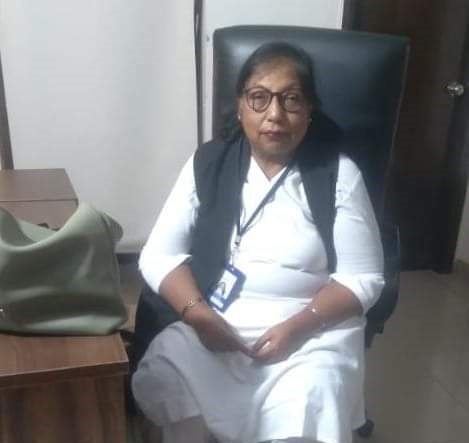





 Allow notifications