Tag: Delhi University

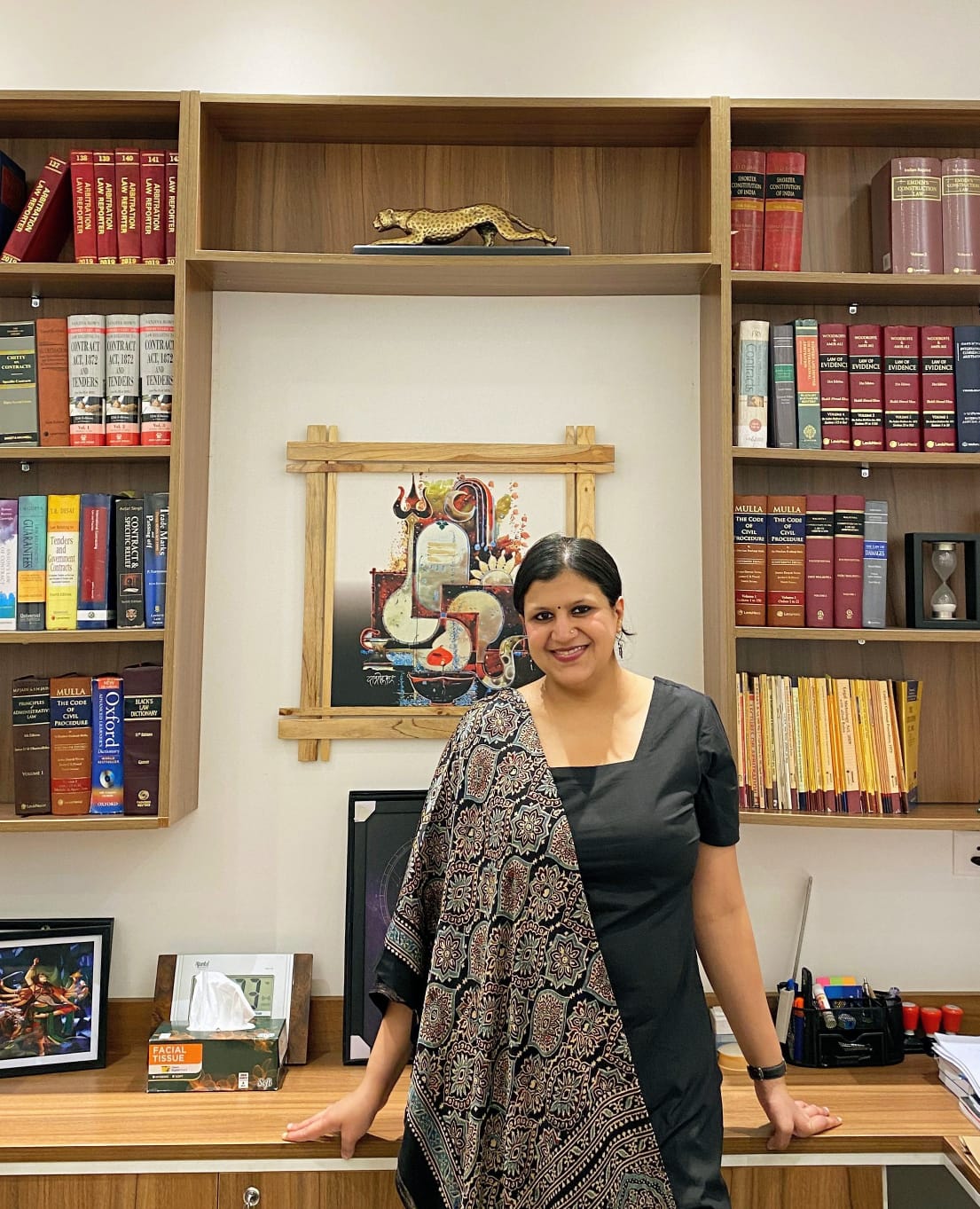
  • “Becoming an AOR transformed my attitude towards law, underscoring the newfound confidence and passion that drove her career trajectory” – Pallavi Pratap, Advocate-on-Record, at the Supreme Court of India

    “Becoming an AOR transformed my attitude towards law, underscoring the newfound confidence and passion that drove her career trajectory” – Pallavi Pratap, Advocate-on-Record, at the Supreme Court of India

    This interview has been published by Namrata Singh and The SuperLawyer Team

    Hello and welcome everyone to Super Lawyer. Today, we have with us, Ms.Pallavi Pratap, who has been named BW Top 40 Under 40 Lawyer She is a legal influencer. She is a women’s rights activist, health enthusiast, and managing partner of Pratap and company. She is a legacy in herself.

    Ma’am, our first question would be to understand how you enter the legal field. And what made you pursue this path? Then how did you come up with your Pratap and company and make it such a big name in this legal background? What were the challenges? Would you like to share it with us?

    The challenges I think were stupendous, but, how it started, I am an accidental lawyer. It was not that it was something that was planned as a matter of fact. I remember that when people would talk about being a lawyer, at least in my generation. That was for people who had done nothing in their life. So because you’ve not achieved anything. So you become a lawyer. That is how, you know, a lawyer was perceived then. So my law happened because after graduation, I was preparing for UPSC.

    And so I did my law, one year, I think I did then.  Then, because I was not able to crack UPSC, my parents thought that you know, I should go abroad and maybe do an MBA, and back then MBA was like how it is right now, LLB. So everybody was doing MBA, so I went to Australia, and I did my MBA there. Then I did my research in France. I came back and then I started to work in a small investment banking company and, that was going okay. It was all right. By the time I think I was married also. So I had two years of law left. So I had to finish off my law and then pursue my investment banking career.

     It was long, and it was difficult at that moment because I think the dot com bubble had just happened. Subprime mortgages that entire 2008, and 2009 time when the economy was not doing very well. We all had challenges then, especially since. I had done my MBA and I was looking at the corporate side to work in. Then interestingly, what happened was since I was married, my husband and I thought that, it had been some years and that we should go the family way.  And so the job I was doing was not so easy to continue, because, with the kind of pressure that we had on the corporate side, it was not possible.

    So, my father suggested that then, why don’t you pursue law? Because it will be easier. You won’t have to put in so many hours and just take it slowly. So I just started working with an AOR.  And, I remember it was around 2011, 12, something like that, when I started.  Went on for four, or five years, but I was never serious about pursuing law as a career.

    I thought that I would go back to the private sector. Because at that time when I shifted, I was already associate vice president. I was associate vice president at the age of 28. So the next in line was VP, which is what I was due for. And then I would have been the CEO of the company that I was in.

    At one point, I had aspirations of becoming a CEO by the age of 32 or 33. However, life has a way of throwing unexpected challenges our way. At that time, my husband and I were facing difficulties conceiving naturally, leading us to explore IVF options, which involved hormone injections and a break from my career.

    During this hiatus, I began studying law, initially considering it a temporary measure until circumstances improved and I could return to my original career path. Life, however, had other plans. In 2015 or 2016, my husband and I decided to separate.

    Around the same time, I found employment in an Advocate-On-Record’s office. It was a demanding role where I was the sole junior, responsible for a wide range of tasks—from clerical duties to drafting and translation. My workdays were long, often stretching from 9 AM to 8:30 or 9 PM, with additional work at home, particularly for translations.

    Despite the challenges, this experience proved invaluable. Working on translations, especially for criminal cases, provided me with a deep understanding of the legal system. I vividly recall translating extensive criminal appeal files, including everything from FIRs to witness statements, which significantly enhanced my knowledge of the Criminal Procedure Code (CRPC). Despite initially viewing translation as a mundane task, it ultimately became a vital learning opportunity, enriching my understanding of legal proceedings.

    So, I found myself in a unique position where I witnessed the entire trial unfolding before me. It’s interesting, as you mentioned, how the younger generation seems less inclined towards traditional legal tasks. Many shy away from such responsibilities, deeming them beneath a lawyer’s stature. I never viewed any task as beneath me. Perhaps it was my genuine interest or simply a lack of concern about status. However, I’ve encountered individuals who readily embrace tasks like using Google Translate, yet hesitate when faced with last-minute requests for simple tasks.

    Everyone has their preferences, and I don’t expect anyone to work for free. However, these experiences taught me invaluable lessons, especially in service matters. Translating documents provided insights into the intricacies of drafting annual confidential reports, sending notices, and crafting representations. While building something akin to SAM or CAM was never my ambition, I recognized my limitations and aimed to excel within them.

    I aspired to establish a reputable litigation firm, one that keeps me consistently engaged with meaningful cases. Initially, the thought of becoming a counsel didn’t even cross my mind. Yet, over time, everything seemed to naturally fall into place. Through gradual progression, I honed my skills in argumentation and management, embracing unforeseen opportunities as they arose.

    Earlier today, I had a conversation at NCLAT with a fellow law firm owner, where we delved into the intricate challenges of managing multiple aspects simultaneously. Balancing client needs, court proceedings, and financial matters poses a significant challenge for all of us in the legal profession.

    My background in MBA has played a pivotal role in navigating these complexities. From my early days in India, I’ve been deeply involved with startups, often spearheading new verticals or assisting nascent companies. This experience instilled in me a knack for cost-cutting and efficient work practices.

    Despite the perception that our workload necessitates a large team, we operate with a lean staff of three to four individuals. Remarkably, my colleagues typically wrap up by early evening without the need to carry work home. Our ability to manage substantial workloads with minimal resources is a testament to our strategic approach.

    This proficiency in streamlining operations and maximizing productivity stems from my understanding of running a small company or startup. While the journey has been challenging, it has also been immensely rewarding. As I reflect on our progress, I’m intrigued by what the future holds.

    Could you elaborate on how your MBA background aided you in navigating the challenges of establishing and managing your law firm, especially during the initial stages when resources were limited? Many lawyers don’t possess an MBA, so it would be insightful to understand how this unique combination of qualifications has influenced your approach to addressing the complexities of running a law practice efficiently.

    Let me share a personal anecdote that shaped my perspective early in life. During my MBA days in Australia, despite having financial support from my father, I chose to work part-time. In Melbourne, there’s a bustling spot called Victoria Market where I found myself selling a product called a spilling remover—a simple solution for common clothing woes like pilling or pet hair. Standing on a podium, I’d invite passersby to experience its effectiveness, selling it for $25 apiece. Essentially, it was just sandpaper in a plastic box, but to foreigners, it was a valuable solution, earning me commissions and teaching me the art of salesmanship.

    My MBA background, particularly in finance, proved invaluable during this time. It equipped me with the skills to calculate ROIs, analyze top and bottom lines, and assess a company’s sustainability. These skills became especially relevant when I ventured into investment banking, where projections and financial viability are paramount in securing investments.

    With my prior experience in startups, I quickly identified areas for improvement in my work. However, having faced challenges before, I knew how to navigate them efficiently. I attribute much of my success to the incredible support system I had. Individuals like Kunal, my office manager, and Anshini bhaiya, my clerk, played pivotal roles, often handling tasks beyond their responsibilities, which allowed us to achieve more with fewer resources. Their dedication and support were instrumental in overcoming obstacles and propelling our endeavors forward.

    The backbone of any endeavor lies in its team and resources. Since the inception of our journey, our staff has been integral to our success. Through thick and thin, from the earliest filings to the present day, they have remained steadfastly by my side. While we may engage in spirited debates and disagreements, our loyalty and commitment to one another have never wavered. I am confident that this bond will endure for as long as we continue on this path.

    Reflecting on my MBA experience, I came to realize the true essence of networking. Contrary to popular belief, simply meeting people at conferences or social events does not guarantee professional opportunities. People seldom recall such encounters, let alone entrust you with work. Recognizing this, I adopted a sales-oriented approach. Rather than passively networking, I embraced the role of a salesperson, focusing on promoting my skills and capabilities.

    In the world of sales, one must shed inhibitions and relentlessly advocate for oneself. I vividly recall my time in Australia, where I worked for a charity, going door-to-door soliciting donations. It was a challenging task, compounded by cultural differences and occasional hostility. Despite the hurdles, I persevered, driven by a sense of purpose and determination to succeed.

    I recall my experience working in a call center, specifically in Australia, where my role involved selling gas connections and DTH connections similar to Tata Sky. This exposure to sales was invaluable, as it instilled in me a sense of confidence and fearlessness when approaching potential clients. I never hesitated to assertively offer my services, knowing that showcasing my expertise was essential in securing work opportunities.

    Even during challenging times, like the onset of COVID-19, the emergence of social media platforms provided a new avenue for me to showcase my skills. Despite facing skepticism and criticism from some quarters, I remained undeterred. I understood that to thrive in a competitive environment without the backing of a “Godfather,” I needed to directly engage with clients and demonstrate the value I could bring to their projects.

    Over the past decade, I have accumulated significant experience and expertise. This journey has allowed me to reach a point where I can afford to take a step back and explore other interests while still maintaining a strong professional foundation.

    But those 10 – 11 years. When I was putting in the effort, there was nothing else that I ever thought of.  Nothing else except for work.

    when did you decide to become an AOR?

    As I mentioned earlier, I was struggling with my legal career at one point. I was employed in an AOR’s (Advocate-On-Record) office, and around 2010 or 2011, when I enrolled for a five-year program, I was disinterested in learning. I had convinced myself that returning to the private sector was my goal and that the legal work I was doing felt beneath me.

    However, my perspective shifted when I began working in the AOR’s office in December 2015. Almost impulsively, I decided to fill out the AOR examination form. By May 2016, with just six months of experience in the AOR’s office and 15 days of preparation, I attempted the AOR examination and passed it on my first try.

    Some may argue that the paper that year was easier, attributing my success to luck. Yet, passing the AOR exam gave me a newfound confidence. I realized that achieving such a feat, especially in my first attempt, meant I possessed a deeper understanding of the law than I had previously acknowledged. Many struggle to pass this examination even after multiple attempts, but I succeeded on my first try, affirming my competence in the legal field.

    Becoming an AOR transformed my attitude towards law. Before this achievement, I had contemplated returning to the private sector, disliking my work in law. However, my success in the AOR exam propelled me into taking my legal career more seriously. I no longer viewed legal practice as beneath me; instead, I embraced it wholeheartedly.

    This experience taught me the importance of self-belief and determination. It was a turning point in my career, marking the moment when I transitioned from a disillusioned legal professional to a committed and passionate advocate.

    Given your passion for your company, how do you envision your plans for the next five to seven years, particularly considering the increased responsibility that comes with holding an AOR position? How do you intend to align this responsibility with your commitment to societal causes over the next three to five years?

    To be honest, there isn’t as much involvement in societal causes for me anymore. It used to be more prevalent when I was handling those types of cases. Unfortunately, it seems now people view me more as a criminal lawyer, and I’m fine with that too. If such cases come my way, I won’t deny them. However, my passion still lies in issues related to women. It’s something that has always been close to my heart, stemming from my own experiences, and I believe it will continue to be so.

    Looking ahead, my focus for the next three to five years is to engage more in courtroom arguments. It’s something I’ve grown to enjoy, albeit it took me some time to overcome certain inhibitions. Learning the art of effective argumentation—knowing when to speak, when to stay silent, and how to present without offending the judge—is an ongoing process for me. I’m still refining these skills, recognizing that I have much more to learn.

    On the business front, I’m content with where our firm stands currently. While I naturally aspire to increase our turnover and the number of cases we handle, I’m grateful that growth seems to be happening organically. Our caseload is steadily increasing, almost on its own accord. This year, one of my resolutions is to travel extensively, aiming to visit at least one high court every month.

    In January, I traveled to Bangalore, and this weekend, I’ll be heading to Indore. My purpose isn’t solely work-related; I’m eager to connect with more people, understand the challenges they face, and perhaps offer solutions where I can. Over the past year, I’ve noticed an intensification of challenges, particularly with the heightened competition in our field. It’s become overwhelming for many of us, prompting me to strategize on how best to navigate these obstacles.

    Moreover, at 41, I find myself contemplating life goals and priorities. Having dedicated over two decades to work since 2006, I’m now at a juncture where I seek to carve out time for personal pursuits that have taken a backseat for far too long. I aim to pave the way for the next decade to embrace endeavors beyond the confines of immediate obligations.

    Undoubtedly, there are struggles. Despite societal shifts, challenges persist, especially for individuals like us. As a woman in the legal profession, I continue to encounter hurdles in what is still largely a male-dominated arena. The landscape may have evolved, but the inherent obstacles remain, requiring perseverance and resilience to navigate effectively.

    How do you approach supporting individuals, particularly women, who are encountering challenges in today’s rapidly evolving landscape, both in the physical and online realms? What strategies do you envision employing to navigate these dual challenges effectively?

    You know, it’s been overwhelming. My Instagram feed is flooded with hateful messages. If I were to delve into each one of them, it would undoubtedly take a toll on my mental health. Not that it isn’t already suffering. But being on social media with an open profile invites all sorts of comments, and learning to brush them off is a skill I’m still struggling to master.

    Unfortunately, it’s not just confined to social media. Even within the corridors of the Supreme Court, women are often objectified and subjected to gossip. For someone like me, with a past that seems to precede me, it feels like my right to exist is constantly under scrutiny.

    No matter how many times people express admiration or claim to find inspiration in my social media presence, it’s that one negative comment that sticks, lingering and gnawing at my self-esteem. It’s a daily battle to overcome these obstacles, and for someone who has endured their fair share of hardships, it’s particularly draining.

    I’m sure many other women can relate to this struggle. Moreover, there’s this tendency to label women who speak out as playing the victim card. Frankly, it’s disheartening. That’s why I’ve become increasingly selective about engaging online. This interview marks a significant departure for me, as I’ve largely refrained from public appearances due to the incessant accusations of victimhood.

    I want to share with you the unfiltered truth about my life experiences. It’s not about playing a victim card – that won’t put food on my table, pay my bills, or sustain my livelihood. The notion of a victim card is dismissive; it doesn’t address the real struggles we face. Some may perceive my openness about challenges as playing a victim, but that’s far from the truth. I’m simply acknowledging the hurdles I’ve encountered.

    It’s incredibly tough for people to grasp your reality. Instead of understanding, they’re quick to judge, criticize, and spread rumours. They’ll label you as overly emotional, assertive, or worse, without considering the battles you’ve fought and the strength it took to overcome them. It’s disheartening when your personal struggles are overshadowed by baseless gossip and scrutiny.

    The most painful part is the lack of acknowledgement of your journey. Nobody talks about the countless hours spent preparing for battles in court, the mental health challenges conquered, or the physical changes and hormonal shifts that women face as they age. Society tends to brush these issues aside, reducing individuals to mere stereotypes, ripe for gossip and condemnation.

    As a 41-year-old woman, I’m acutely aware of the changes my body undergoes and the societal pressures that accompany them. Yet, these struggles are often dismissed or exploited for gossip fodder. It’s a reminder that despite our accomplishments and resilience, society’s perception of us remains narrow and judgmental.

    Many women in the legal profession, particularly those in the Supreme Court, encounter similar challenges. However, I must acknowledge a positive shift in recent times. The judges have become notably supportive and accommodating. It’s truly remarkable. They allow us to present our arguments and make our points heard, even in cases where they ultimately dismiss them. Regardless of the outcome, they ensure that we have a platform to voice our perspectives.

    This newfound environment is instrumental in bolstering our confidence. We no longer feel scrutinized or judged based on our gender or professional standing. Instead, the emphasis is on fostering an inclusive space where everyone, regardless of gender, feels empowered to express themselves. Even if we falter or struggle to articulate our arguments convincingly, the judges still provide us with the chance to speak up and be heard.

    For women practicing law, this shift has certainly made our journey smoother. We now have a supportive framework that encourages us to participate actively in legal proceedings without fear of bias or discrimination.

    How can individuals facing similar situations find support? It’s essential to reach out and seek solace, even if it’s challenging. In my experience, friends outside India often find comfort in supportive communities that share their grief. This support, although seemingly small, can make a significant difference, especially for those from different generations.

    This generation possesses a remarkable clarity of vision that I find truly inspiring. I often marvel at how certain they are about their aspirations; a quality I wish I had when I was their age. In my workplace, I am surrounded by exceptionally talented colleagues, particularly women, who exude confidence and decisiveness in their pursuits. Their directness and self-assurance are qualities I deeply admire, especially as I continue to grapple with moments of self-doubt.

    I have always had a special admiration for women who excel in their fields. I recall my own approach to work—when a task was assigned to me, it became my responsibility, my challenge to conquer. This same work ethic is evident in the remarkable women I work alongside today. Take, for example, one of my juniors who is currently navigating a challenging phase in her career. Despite the obstacles she faces, I am immensely proud of her resilience and determination. Witnessing her growth and perseverance fills me with pride, and I am confident that she is destined for great success.

    You’re deeply committed to mentoring, which is commendable. Have you extended this mentorship to your siblings, given that you’ve essentially established a legal dynasty within your family? Your journey must have been inspiring for them. Could you share more about how you’ve influenced and motivated your sister and brother in their legal pursuits?

    My brother and sister, if you were to ask them independently, they would both attest that their successes were entirely self-made. They’ve each carved out their own paths without needing much guidance from me. It’s remarkable how they’ve managed to flourish independently. In our household, everyone is quite aware of each other’s endeavors.

    However, collaborating with individuals from diverse backgrounds and mindsets has been a transformative experience for me. Working with these incredible women has been an eye-opener. Take Muskan, for example, she’s sitting right here. She has taught me invaluable lessons. I merely have to express what needs to be done, and somehow, she accomplishes it effortlessly. Her efficiency has significantly lightened my workload, allowing me to breathe more easily since she joined the team.

    Then there’s Kinjal. What sets her apart is her laid-back demeanor. She effortlessly integrates modern slang and vibes into her work. It’s truly refreshing to witness their relaxed approach. I’ve always envied their ability to stay cool under pressure. Even now, I find myself bogged down by stress. Yet, these young individuals produce impeccable work effortlessly. Their talent and composure never cease to amaze me. I wish I possessed their level-headedness and skill.

    Muskan, even though I had been practicing in NCLAT for a long time when Muskan came, she told me so many things about NCLAT procedures that I had no idea about. And similarly, when Kinjal came. She taught me so many things about lower court proceedings that I had no idea. So it’s just that you learn so many things from them.

    Now, shifting gears, could you share how you unwind and manage stress? Specifically, what hobbies or activities do you engage in for your mental well-being? Additionally, given your dedication to fitness, could you elaborate on your workout routine and its impact on your personal and professional growth?

    Let me share a bit about my journey. When my husband and I were trying to conceive, I underwent hormone injections, and I was around 80 kgs at that time—I mean, significantly overweight. This led to a myriad of issues, including depression, body image concerns, and a lack of confidence. It was a challenging period.

    However, I gradually discovered the power of exercise. The endorphins released during workouts made me feel happier and more content with myself. It became a habit—one that I’ve maintained to this day. Even if I take a short break from the gym, I find myself back there on the fourth day, even if just for some cardio. While I haven’t transformed into a thin person, due to my genetic makeup, exercise has become a cornerstone of my routine.

    Starting my day with a workout sets a positive tone that lasts until at least four o’clock. Achieving small victories in the gym, like lifting my body weight during a deadlift, instills a sense of pride and confidence that carries over into other aspects of life.

    I’ve been open about having a therapist, and I speak with them once a week. It’s essential to address mental health issues, whether it’s depression or anxiety, which are prevalent among lawyers. Seeking help is crucial; you can only do so much on your own. Since the onset of COVID, I’ve maintained this routine, seeing my therapist regularly.

    As for my reading habit, it’s part of my daily schedule. By 8 o’clock, after the kids are occupied, I dive into work, reviewing files and preparing for the next day. By 9 o’clock, I wrap up, and that’s when I look forward to the highlight of my day—relaxing in bed with a book. It’s a simple pleasure that keeps me grounded.

    Previously, before I incorporated reading into my routine, I’d anticipate watching a show like Frasier or any comedy series at 9 o’clock. Having something to look forward to at the end of the day helped me navigate through it. That’s been my survival strategy.

    How do you tackle the challenge of motivating first-generation lawyers and aspiring legal professionals to take their roles seriously and enhance their skills? How can they overcome obstacles such as lack of mentorship and difficulty in establishing connections within the legal community? What advice would you offer to these newcomers to the profession?

    Look, I’ll be the first to admit that I sometimes struggle to keep up with emails and messages. Frankly, we receive an overwhelming volume of them every single day. Ideally, I’d love to have a larger team to ensure every email gets a prompt response. However, the reality is, we operate with limited resources.

    As much as I’d love to have a team of interns, our resources simply don’t stretch that far. It’s not about lacking the space; it’s about ensuring that if we do take on interns, we can provide them with a valuable learning experience. I wouldn’t want to bring on interns only to find we can’t offer them adequate stipends or meaningful guidance.

    Internships here are rare occurrences, happening perhaps once every couple of months. The main challenge isn’t space but our court commitments. Until 4 o’clock, we’re typically tied up in court proceedings, and even if interns were to join us, the complex nature of legal proceedings means they wouldn’t gain much insight. Understanding court proceedings takes years, not months.

    While it’s possible to observe court sessions virtually, it doesn’t necessarily translate to meaningful learning. Instead, I believe interns would benefit more from gaining hands-on experience in lower courts where they can actively engage and learn the ropes of legal practice.

    Maybe you can go to the High Court and see how the original side works.  But coming directly to the Supreme Court, I think the challenges are huge and very difficult.  You can maybe learn bail applications and how they are being argued, but I still think that there’s just so much to learn that in five years you can’t learn all of that.

    The other thing I think is that, see, you get to know whether you’re good at it or not. You know, you are always true to yourself. So the moment you know that you’re good at it, and you’re able to generate work, and you think you will be able to do it, you will be able to put in the hours, do it. Do litigation.

    But if you think that you’re not cut out for it, don’t waste your time trying to prove something that, you know, is not possible.  If I were to be a corporate lawyer, maybe that’s not something that I would have been able to do. I enjoyed litigation and that’s why I’ve been able to do it.

    And I think the last thing that I would want to say to the interns. I honestly feel that internship is not the most important thing. Believe me, an internship is no way that one would want anything to happen. Not true. It’s not the internship. But it is primarily what you make of yourself after law school.

    You are studying in law school, but once you are out of law school, how willing are you to work in court and learn?  You know, there have been kids who’ve come to me and they’ve said that we want work-life balance. I said, that’s fine. My office gives you a work-life balance because it’s quarter to seven.

    My office is empty. And this is a Thursday. Why? Because there is always a work-life balance in my office. Nobody has to come into the office in the morning. Everybody comes to the court at 10 o’clock and then by 6.30, everybody’s out. So if then you are coming and telling me that you can’t even put in eight hours or nine hours of work, then I think, then you are not cut out for this profession.

    Because the office is closed, now my staff is gone, I have put in 8 hours already, and now I have to put in 6 more hours, be it in the morning 2 hours and 4 hours in the night, to figure out how to do the billing, to figure out, briefing for tomorrow’s matters, like I have a conference at 8.30, now nobody else is going to do it, I will only have to do it, so you have to be prepared that you can work 14 hours a day.

    Get in touch with Pallavi Pratap–

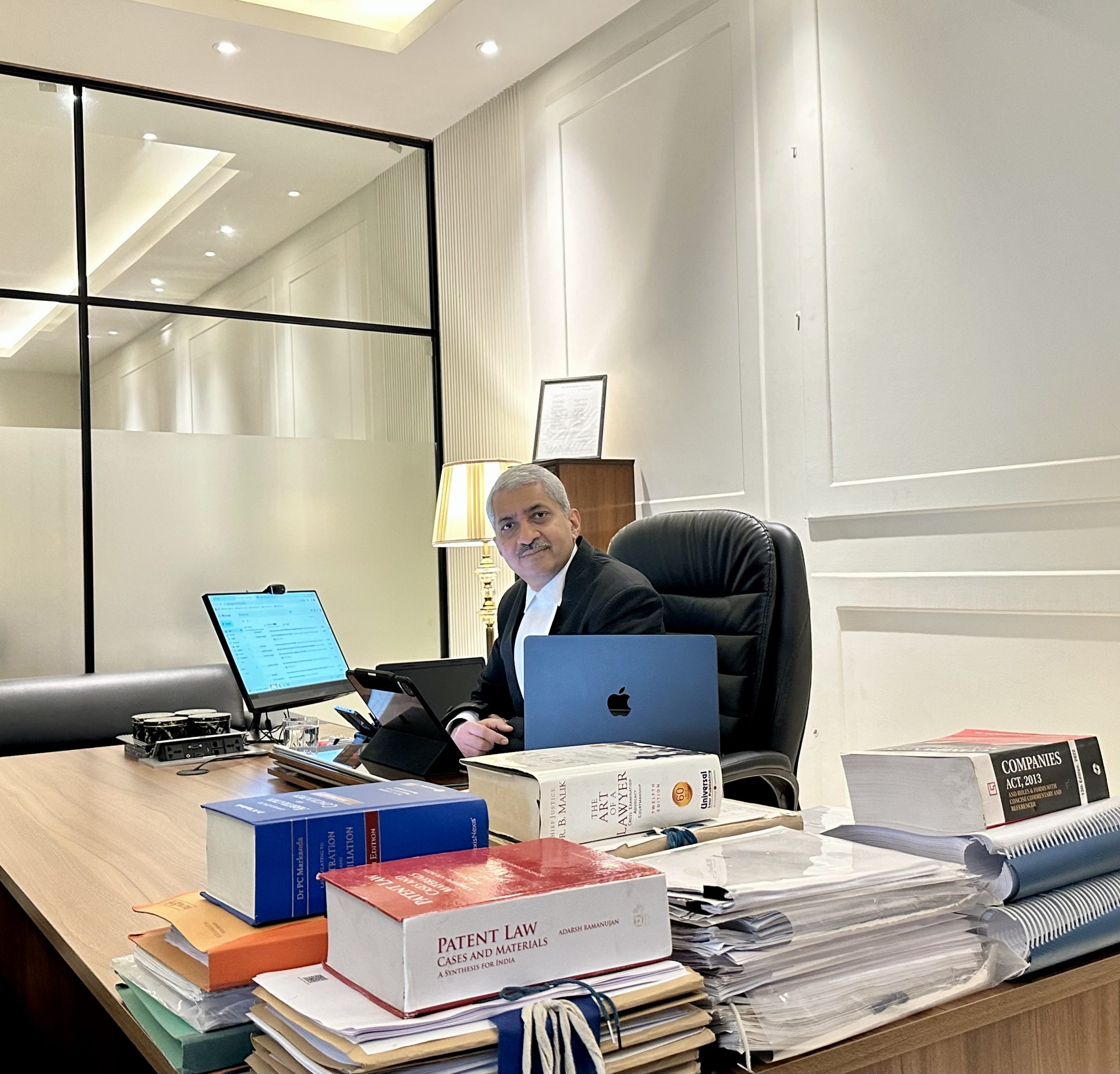
  • “Continuous learning and knowledge sharing are vital in navigating the complexities of the legal landscape. Understanding one’s strengths and finding the right career path requires introspection and exposure to different experiences.” – Awanish Srivastava, Managing Partner & Founder of Naks & Associate (Advocates & Solicitors)

    “Continuous learning and knowledge sharing are vital in navigating the complexities of the legal landscape. Understanding one’s strengths and finding the right career path requires introspection and exposure to different experiences.” – Awanish Srivastava, Managing Partner & Founder of Naks & Associate (Advocates & Solicitors)

    This interview has been published by Namrata Singh and The SuperLawyer Team

    Before we delve into your remarkable career journey, could you please introduce yourself to our readers, sharing a bit about your background, your passions, and what drives you professionally and personally?

    I am Awanish Srivastava having experience of more than 22 years in Corporate & Core Litigation, Corporate Law, Agro Litigation, Intellectual Property Management, Contract Management and Corporate Consultancy.

    I am Founder & Managing Partner of NAKS & Associates (Advocates & Solicitors), a Pan India Law firm. I am also a Fellow member of Institute of Company Secretaries of India and Regional Council Member, currently holding the post of Treasurer of NIRC of ICSI. I am Law graduate from Delhi University, Master in Law, Post Graduate in Commerce and M.B.A. (Finance). I am an active member of the ICSI, Bar Council of Delhi, Supreme Court, Delhi High Court Bar Association and NCLT Bar Association.

    My journey has been driven by a passion for justice and the belief in law as a tool for societal improvement. Professionally, I am driven by the challenge of navigating the complex legal landscape to deliver solutions that not only serve our clients but also contribute to the legal profession’s evolution. Personally, I am motivated by the impact we can make through our work, in both the corporate sphere and community initiatives like Pink & Blue.

    You’ve played a significant role in defining new standards of legal services in India through your firm, NAKS & Associates. What motivated you to establish NAKS with such a unique vision of operating as a Corporate Law Firm in a Retail Concept?

    The vision for NAKS & Associates stemmed from recognizing a gap in the legal services market – the need for accessible, reliable corporate legal solutions across India. The Idea of Pan India Litigation came into my mind when I was working with a future group where we, as In-house Counsel, were struggling to hire lawyers in small cities and at Taluka level. In the Year 2012, we started Naks as PAN India law Firm with the aim of providing one stop solutions to our clients. 

    This initiative really created a platform for Corporate at one end and Lawyers in small cities at the other. Further, this platform makes legal assistance more accessible and also allows us to reach a wider level, ensuring that businesses, regardless of size, have access to top-notch legal counsel. Our System helped small Cities Lawyer to handle Big Corporate Clients.

    Your work with Pink & Blue- A Symbiotic Living initiative is commendable. Can you tell us more about the initiative and how it’s making a difference in society?

    Pink & Blue – Symbiotic Living (A unit of Chamber of Professional (CoP)- A Registered NGO) is a team of expert professionals, working for welfare of Working Women and Prevention of Sexual Harassment at Workplace and this is very close to my heart.

    Pink & Blue is operating with the aim of creating awareness among each and every member of society about the ill impacts of Sexual Harassment and the means to prevent & redress the complaints of Sexual Harassment. We have taken a pledge to give Free training and Support to Maximum People for the betterment of the Society and promoting Happy & Healthy Co-Living Workspaces.  We are a team of expert Company Secretaries, Advocates, HR Professionals & Social Workers.

    We have conducted more than 200 Training sessions so far and trained and empowered more than 2 Lakh People. We have trained and certified more than 140 Posh Trainers who are CS, CA, Advocates and CMA.  Our Trainers have successfully conducted training in more than 500 organisations. 

    Our work is making a difference by educating employers and employees alike, fostering environments where everyone can feel secure and respected. This initiative is a reflection of our commitment to social responsibility, aiming to enact real change in society through education and awareness.

    Handling cases involving complex corporate litigation and intellectual property management requires a unique skill set. What are some of the key challenges you’ve faced in your career, and how have you overcome them?

    One of the key challenges in handling complex litigation and intellectual property cases is staying abreast of the rapidly changing legal landscape. Keeping updated with the latest laws and judicial precedents requires continuous learning and adaptability. In today’s era, where litigation and judiciary is taking turns frequently, one cannot make distance with reading or upgrading himself with legal knowledge even for a slightest of time period.

    I’ve overcome these challenges by fostering a culture of ongoing education, Reading, making notes and knowledge sharing within our firm, ensuring that we remain at the forefront of legal upgradation and best practices.

    You’ve served in senior positions as in-house counsel for prominent Corporate like Videocon Telecommunications Ltd. and Future Group. Could you share some insights into your experience in these roles and how they have influenced your approach to legal practice and corporate consultancy?

    My career took an airlift when I joined Future Group as Junior Manager. I was responsible for the Supervision and Monitoring of Legal & Liaisoning team of 12 members of PAN India for Legal, Contract Management, Regulatory, Liaisoning and Compliance related issues/matters. I was awarded Best Employee at Future Group for 2 (two) consecutive years and an Appreciation Award from CEO for my performance in supervising PAN India Legal & Liaisoning Team.

    Thereafter, I joined Videocon Group as Deputy Manager, Videocon Telecommunication Ltd. and I was responsible for Litigation and Contract Management. I have handled highly reported 2G Litigation matters in Videocon.

    Working with Future Group and Videocon Telecommunications Ltd. was a defining period in my career. These roles taught me the importance of aligning legal strategies with business objectives. 

    This experience has been instrumental in shaping my approach to corporate consultancy, where the focus is not just on legal compliance but on facilitating business growth and protecting intellectual assets in a strategic manner.

    Your firm, NAKS & Associates, operates in more than 700 districts in India, which is quite impressive. What strategies have you implemented to ensure such extensive coverage and maintain high-quality legal services across different regions?

    With the increase in technology and awareness in the small Cities, the litigations against the companies are also increasing day by day. Due to increase in consumer cases, Civil Cases, Criminal Cases and others litigation, big corporates are facing the problems of appointing counsels at various places in India including small cities to represent them even at the remote locations. I faced similar kind of difficulties when I was working in Future Group and Videocon and these difficulties motivated me to start Naks in this concept to provide Pan India Litigation services support to our clients where they get representations even at far reaching locations. 

    The strategy for achieving extensive coverage while maintaining high-quality legal services hinges on leveraging technology and building a strong network of legal professionals. We’ve implemented robust training programs to ensure uniformity in service quality and employed technology to manage cases efficiently across different regions. This blend of human expertise and technology enables us to serve our clients even in far corners of the country with a high standard of legal assistance.

    As a Fellow member of the Institute of Company Secretaries of India, what advice would you give to young professionals aspiring to build a successful career in corporate law and litigation?

    For those aspiring to build a career in corporate law and litigation, my advice is to join the Company Secretaryship Course. 

    A ‘Company Secretary’ is a senior, strategic-level corporate professional who plays a leading role of a Key Managerial Personnel (KMP) entrusted with the responsibility of the company’s Corporate Governance. Corporate Governance is more than just complying with laws, regulations, standards and codes; it is also about creating a culture of good management practices. The position of a Company Secretary as the KMP comes close to that of the Chief Executive Officer or the Managing Director and underlines the importance of the role played by him in the company. 

    After completing Company Secretary course, one has enormous opportunity to become KMP, Secretarial Heads, Head Contract Manager, Compliance Head, Regulatory heads, General Counsel, Practicing Company Secretary, Insolvency Professional, Registered valuer, Appearance before various tribunals. 

    Young professionals can build successful careers in corporate law and litigation by continuous Learning and Practice. The legal field is ever-evolving, and success requires not just a solid foundation in law but also an understanding of business principles and technological advancements. Focus on building a diverse skill set that includes legal expertise, business acumen, and emotional intelligence.

    Balancing a successful legal career with social responsibility and community service can be demanding. How do you manage to juggle these responsibilities effectively?

    Balancing a demanding legal career with social responsibility involves setting clear priorities and being passionate about your social initiatives. For me, initiatives like Pink & Blue are not just additional responsibilities but integral part of my professional identity. Effective time management and a supportive team are crucial in managing these dual aspects seamlessly. Decentralising decision making at execution level, wherever necessary and having established a tried & tested reporting system helps minimizing any unfortunate incident of error in the system which indirectly helps me spare some moments for initiatives like Pink & Blue.

    Given your extensive experience and expertise, what are your thoughts on how the current generation can better understand their strengths and identify the right career path for themselves, especially in the legal profession or corporate world? Do you have any advice on discovering one’s true calling and leveraging their strengths effectively?

    Understanding one’s strengths and finding the right career path requires introspection and exposure to different experiences. I encourage the current generation to seek mentorship, engage in diverse internships, and participate in community service to gain a broader perspective. Discovering your true calling is a journey of exploring your passions and how they align with your professional aspirations. Embrace opportunities to learn and grow, and don’t be afraid to chart your own path in the legal profession or any field you’re passionate about.

    Get in touch with Awanish Srivastava-

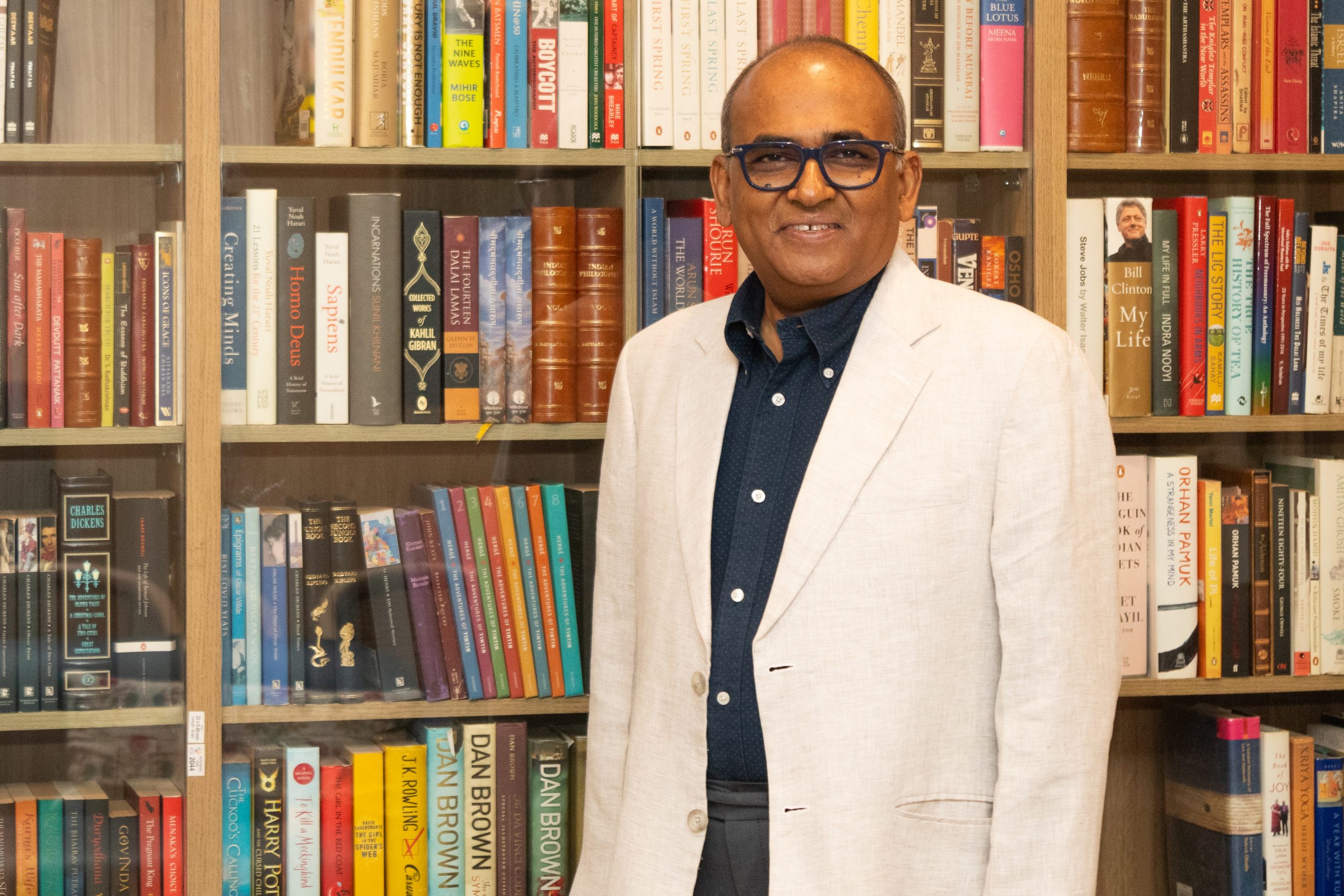
  • “Educate yourself, stay updated, gain practical experience, network, and consider ethical implications. By following these steps, aspiring individuals can position themselves for success in the dynamic field of cyber law.” – Shōnan K Mahajan, Founder of Wizcyber 

    “Educate yourself, stay updated, gain practical experience, network, and consider ethical implications. By following these steps, aspiring individuals can position themselves for success in the dynamic field of cyber law.” – Shōnan K Mahajan, Founder of Wizcyber 

    This interview has been published by Namrata Singh and The SuperLawyer Team

    Your career trajectory took a fascinating turn from working in operations management at an Air Hostess Academy to pursuing law. What inspired or motivated this shift in your professional focus, and was there a specific event or realization that sparked your interest in this field?

    My shift in professional focus from operations management to law was motivated by a desire for intellectual challenge and a deeper engagement with the legal system. The decision to pursue law was not precipitated by a single event, but rather a gradual realization of my passion for justice, advocacy, and the complexities of the legal framework. However, my fascination with legal principles and their diverse applications burgeoned during my involvement with Lawrato, where I partnered with Mr. Rohan Mahajan in managing backend legal operations. It was during this time that the decision to pursue a career in law crystallized for me. I delved deeper into understanding the legal landscape, I found myself drawn to its intricacies and the potential to make a meaningful impact through legal practice.

    Ultimately, the transition to law represented a natural evolution of my career aspirations, aligning with my values of fairness, integrity, and a commitment to serving others. I am excited about the opportunities that the field of law presents for personal and professional growth, and I am eager to contribute my skills and experiences to this dynamic and rewarding profession.

    Your initiative, WizCyber, aims to promote cyber safety and awareness globally. What inspired you to establish this platform, and what impact do you hope to achieve?

    The inspiration behind establishing WizCyber stemmed from witnessing the increasing prevalence of cyber threats and the profound impact they have on individuals, businesses, and society as a whole. Collaboration with Col. Sanjeev Relia (Retd.) in this initiative we recognized the critical need for proactive measures to address these challenges, I felt compelled to take action and contribute to the collective effort in safeguarding digital environments.

    As technology continues to advance rapidly, so do the tactics employed by cyber criminals, making it essential for individuals and organizations to stay informed and equipped with the necessary knowledge and tools to protect themselves. WizCyber was founded with the vision of empowering people with practical cybersecurity guidance, resources, and educational content to navigate the digital landscape safely and confidently.

    After been appointed as Empaneled Faculty  with  Institute of Secretariat Training and Management, Government of India, driven by a passion for mentoring and guiding students and aspiring professionals, conducting campaigns in Various schools and corporates globally. Our primary goal is to make a tangible impact by raising awareness about cybersecurity best practices, providing actionable insights to mitigate risks, and fostering a culture of cyber resilience across diverse communities worldwide. Through collaborative partnerships, educational initiatives and advocacy efforts, we aspire to create a safer online ecosystem where individuals and organizations can thrive securely.

    We believe that by fostering a proactive approach to cybersecurity and empowering individuals with the right knowledge and skills, we can significantly reduce the incidence of cyber threats and their associated impacts. Our ultimate aim is to contribute to a safer and more secure digital future for all.

    With your experience in handling various cases on cybercrime, could you shed light on some common misconceptions people have about cyber threats?

    One prevalent misconception is that only large corporations or high-profile individuals are targeted by cybercriminals. In reality, cyber threats do not discriminate based on size or status; individuals, small businesses, and organizations of all types are vulnerable to attacks. Cybercriminals often exploit vulnerabilities in software, weak passwords, or unsuspecting users to gain unauthorized access to personal or sensitive information.

    Another misconception is that antivirus software provides complete protection against all cyber threats. While antivirus software is an essential component of cybersecurity, it is not a foolproof solution. Cyber threats continue to evolve, with sophisticated malware and social engineering tactics bypassing traditional antivirus measures. Therefore, it’s crucial for individuals and organizations to implement a multi-layered approach to cybersecurity, including regular software updates, strong password management, and user awareness training.

    Additionally, there is a misconception that cybersecurity is solely a technical issue and not a human one. While technology plays a significant role in mitigating cyber threats, human behaviour also contributes to cybersecurity vulnerabilities. Factors such as phishing scams, social engineering tactics, and careless handling of sensitive information can pose significant risks. Therefore, raising awareness and educating users about cybersecurity best practices is essential in minimizing these human-related risks.

    Lastly, some people believe that cyber threats are isolated incidents and not a continuous, ongoing threat. However, cyber threats are persistent and constantly evolving, with cybercriminals adapting their tactics to exploit new vulnerabilities and technologies. Therefore, cybersecurity should be approached as an ongoing process rather than a one-time solution, with regular assessments, updates, and training to stay ahead of emerging threats.

    By addressing these common misconceptions and promoting a better understanding of cyber threats, we can empower individuals and organizations to take proactive steps towards enhancing their cybersecurity posture and reducing their risk exposure.

    As a mentor to students and professionals, what advice would you give to the current generation aspiring to pursue a career in cyber law or cybersecurity?

    For those considering a career in cyber law or cybersecurity, I would offer the following advice:

    Educate Yourself: Begin by building a solid foundation of knowledge in both law and cybersecurity. Pursue relevant educational opportunities, such as degree programs, certifications, and workshops, to develop expertise in these areas.

    Stay Updated: The field of cybersecurity is constantly evolving, with new threats and technologies emerging regularly. Stay informed about the latest developments, trends, and best practices through continuous learning and professional development.

    Gain Practical Experience: Seek out opportunities to gain hands-on experience in cybersecurity through internships, volunteer work, or entry-level positions. Practical experience will not only enhance your skills but also provide valuable insights into real-world challenges and solutions.

    Network: Connect with professionals in the field of cyber law and cybersecurity through networking events, industry conferences, and online communities. Building relationships with experienced professionals can provide mentorship, guidance, and potential career opportunities.

    Develop Soft Skills: In addition to technical skills, cultivate soft skills such as communication, problem-solving, and critical thinking. Effective communication and collaboration are essential for success in both cyber law and cybersecurity roles, particularly when interacting with diverse stakeholders.

    Ethical Considerations: Aspiring professionals in cyber law and cybersecurity must also consider ethical implications and responsibilities. Uphold ethical standards, respect privacy rights, and prioritize the ethical use of technology in your work.

    By following these pieces of advice and remaining dedicated to continuous learning and growth, aspiring individuals can position themselves for success in the dynamic and rewarding field of cyber law and cybersecurity.

    Given your extensive experience, could you share some key trends or emerging challenges in cyber law that professionals should be aware of?

    As the digital landscape continues to evolve, several trends and challenges are shaping the practice of cyber law and requiring the attention of legal professionals:

    Cybersecurity Incident Response: As cyber threats become more sophisticated and prevalent, organizations are increasingly experiencing cybersecurity incidents such as data breaches and ransomware attacks. Cyber law professionals must be well-versed in incident response protocols, breach notification requirements, and legal obligations to mitigate the impact of cyber incidents on their clients.

    Cybercrime Prosecution: The rise of cybercrime poses significant challenges for law enforcement and legal professionals. From cyber fraud and identity theft to cyber espionage and online harassment, prosecuting cybercriminals requires specialized knowledge of digital forensics, jurisdictional issues, and international cooperation frameworks.

    Artificial Intelligence and Automation: The integration of artificial intelligence (AI) and automation technologies presents both opportunities and challenges in the realm of cyber law. Legal professionals must grapple with complex legal and ethical considerations surrounding AI algorithms, autonomous systems, and liability for AI-driven decisions.

    Regulation of Emerging Technologies: Emerging technologies such as blockchain, Internet of Things (IoT), and cryptocurrency present novel legal issues and regulatory challenges. Cyber law professionals need to anticipate regulatory developments, advise clients on compliance strategies, and navigate legal uncertainties associated with these technologies.

    By staying informed about these key trends and emerging challenges, legal professionals can effectively navigate the complex and rapidly evolving landscape of cyber law and provide valuable guidance to their clients.

    Apart from your work in cyber law, you’ve also assisted various startups. How do you think entrepreneurship intersects with cybersecurity, especially for new ventures?

    Entrepreneurship and cybersecurity are closely intertwined, especially for new ventures that are navigating the complexities of the digital landscape. As startups innovate and develop new products or services, they must also prioritize cybersecurity to protect their assets, data, and reputation. Here are some key points to consider:

    Risk Management: Cybersecurity is a critical aspect of risk management for startups. New ventures often have limited resources and may be particularly vulnerable to cyber threats due to their innovative technologies or lack of robust security measures. Therefore, entrepreneurs must proactively identify and mitigate cybersecurity risks to safeguard their business operations and intellectual property.

    Investor Confidence: Investors and stakeholders increasingly consider cybersecurity readiness as a factor when evaluating startup opportunities. Demonstrating a proactive approach to cybersecurity can enhance investor confidence and differentiate a startup in a competitive market landscape.

    Customer Trust: Building and maintaining customer trust is paramount for startups. Strong cybersecurity practices reassure customers that their data is protected, fostering long-term relationships and loyalty. Conversely, a data breach or security incident can severely damage a startup’s reputation and credibility.

    Cybersecurity Culture: Cultivating a culture of cybersecurity awareness and responsibility is vital for startups. Employees should be educated about cybersecurity best practices, trained to recognize and respond to potential threats, and encouraged to report security incidents promptly.

    Partnerships and Collaboration: Startups can benefit from partnerships and collaborations with cybersecurity experts, industry associations, and government agencies. Engaging with the broader cybersecurity community can provide access to resources, expertise, and support to strengthen cybersecurity posture.

    Overall, entrepreneurship and cybersecurity are complementary aspects of building a successful startup in today’s digital economy. By integrating cybersecurity into their business strategies and operations, entrepreneurs can mitigate risks, enhance trust, and position their ventures for sustainable growth and success.

    Despite your extensive experience and accomplishments in the field, what inspired you to pursue a Ph.D. in Cyber Protection Management at this stage of your career?

    The decision to pursue a Ph.D. in Cyber Protection Management stems from a combination of factors, including a deep-seated passion for advancing knowledge in cybersecurity, a commitment to lifelong learning, and a desire to make a significant contribution to the field.

    Despite my years of experience and achievements, I recognize that cybersecurity is a rapidly evolving and multifaceted domain, continually presenting new challenges and opportunities for innovation. A Ph.D. program offers a structured environment to delve deeper into specialized areas of cybersecurity, conduct original research, and develop expertise that can contribute to addressing pressing cybersecurity issues.

    Moreover, pursuing a Ph.D. aligns with my long-term career goals of becoming a thought leader and subject matter expert in cybersecurity. By engaging in rigorous academic inquiry and scholarly discourse, I aim to broaden my understanding of complex cybersecurity concepts, refine my analytical skills, and develop innovative solutions to real-world cybersecurity challenges.

    Additionally, earning a Ph.D. opens doors to opportunities for teaching, mentoring, and disseminating knowledge to future generations of cybersecurity professionals. I am passionate about sharing my insights and experiences with aspiring cybersecurity practitioners and contributing to the education and training of the next wave of cybersecurity leaders.

    Ultimately, pursuing a Ph.D. in Cyber Protection Management represents a natural progression in my career journey, allowing me to deepen my expertise, expand my professional network, and make a meaningful impact on the field of cybersecurity.

    With such a dynamic and demanding career, how do you unwind and recharge outside of your professional endeavors? Could you share some of your favorite hobbies or relaxation techniques that help you maintain balance amidst your busy schedule?

    Balancing work and personal life is essential for maintaining overall well-being and productivity. Here are some of my favorite hobbies and relaxation techniques that help me achieve balance amidst my busy schedule. Spending time outdoors with my kids and pet allows me to disconnect from technology and reconnect with nature. Whether it’s hiking in the mountains, cycling along scenic trails, or simply taking a leisurely walk in the park, being outdoors helps me clear my mind and rejuvenate my spirit.

    Reading: Reading is one of my favorite pastimes and a great way to unwind after a long day. Whether it’s fiction, non-fiction, or professional literature related to my field, immersing myself in a good book helps me relax, gain new perspectives, and expand my knowledge.

    Exercise and Fitness: Physical activity is essential for maintaining both physical and mental well-being. Whether it’s hitting the gym, practicing yoga, or going for a run, regular exercise helps me relieve stress, boost my mood, and increase my energy levels.

    Quality Time with Loved Ones: Being a mother of twins I love spending time with my children and my pet, it is invaluable for maintaining work-life balance. Whether it’s sharing a meal, watching a movie, or simply having meaningful conversations, connecting with loved ones helps me recharge and cultivate a sense of belonging and support.

    Mindfulness and Meditation: Practicing mindfulness and meditation techniques helps me cultivate inner peace, reduce stress, and improve focus and clarity of mind. Taking a few moments each day to practice mindfulness allows me to center myself and approach challenges with a calm and balanced perspective.

    By incorporating these hobbies and relaxation techniques into my routine, I am able to maintain a sense of balance and well-being amidst the demands of my professional career.

    As a cyber law expert deeply involved in cyber safety initiatives, could you share some practical tips for our readers on how they can protect themselves from cyber threats or cybercrime in their daily lives?

    Here are some practical tips for protecting oneself from cyber threats or cybercrime in daily life:

    Use Strong, Unique Passwords: Create complex passwords for your accounts, using a combination of letters, numbers, and special characters. Avoid using easily guessable information such as birthdays or pet names. Consider using a password manager to securely store and manage your passwords.

    Enable Two-Factor Authentication (2FA): Whenever possible, enable two-factor authentication for your online accounts. This adds an extra layer of security by requiring a secondary form of verification, such as a code sent to your mobile device, in addition to your password.

    Keep Software Updated: Regularly update your operating system, web browsers, antivirus software, and other applications to patch security vulnerabilities and protect against known threats. Enable automatic updates whenever possible to ensure timely protection.

    Be Wary of Suspicious Emails and Links: Exercise caution when opening emails or clicking on links from unknown or suspicious sources. Be vigilant for phishing attempts, where attackers impersonate legitimate entities to trick you into revealing personal information or downloading malware.

    Secure Your Devices: Use encryption and security features such as device passcodes, biometric authentication (e.g., fingerprint or face recognition), and remote wipe capabilities to protect your smartphones, tablets, and computers from unauthorized access.

    Practice Safe Browsing Habits: Be cautious when accessing websites, especially those that require you to enter personal or financial information. Look for HTTPS encryption and reputable security seals. Avoid downloading software from untrusted sources, as they may contain malware.

    Protect Your Personal Information: Limit the amount of personal information you share online, especially on social media platforms. Be mindful of the privacy settings on your accounts and consider what information you make publicly available.

    Monitor Financial Accounts Regularly: Regularly review your bank and credit card statements for any unauthorized transactions or suspicious activity. Report any discrepancies to your financial institution immediately.

    Backup Your Data: Regularly backup important files and data to a secure external hard drive, cloud storage service, or backup solution. This ensures that you can recover your information in the event of data loss or ransomware attacks.

    Stay Informed and Educated: Keep yourself updated on the latest cyber threats, scams, and best practices for cybersecurity. Attend cybersecurity awareness training, read reputable cybersecurity blogs or news sources, and share knowledge with friends and family.

    By following these practical tips and adopting a proactive approach to cybersecurity, you can better protect yourself from cyber threats and minimize the risk of falling victim to cybercrime in your daily life.

  • “Your attention is your most valuable asset, Focus on mastering corporate law and industry knowledge; it’s the cornerstone of expertise in handling complex cases.” – Tanu Priya Gupta, Advocate-on-Record at the Supreme Court of India and Founding Partner of Sarvagya Legal

    “Your attention is your most valuable asset, Focus on mastering corporate law and industry knowledge; it’s the cornerstone of expertise in handling complex cases.” – Tanu Priya Gupta, Advocate-on-Record at the Supreme Court of India and Founding Partner of Sarvagya Legal

    This interview has been published by Namrata Singh and The SuperLawyer Team

    Can you take us through your journey from college to becoming an advocate-on-record at the Supreme Court of India? What inspired you to pursue this path and take the Advocate on Record exam, and what challenges did you encounter during the initial stages of your career?

    Law was not an obvious choice, and in fact, I didn’t really fully comprehend what it entails when I opted to study law at CLC, Delhi University. My friend’s father was a sitting judge in Tis Hazari Court. His encouragement to take the DU Law entrance, along with my active involvement in DU student politics, paved the way for my legal career. After this, I can say that I pursued my career in law with the utmost loyalty, and the journey has been fulfilling and enriching so far. 

    College internships provided practical insights into the legal profession and a glimpse of courtroom procedures. While my peers gravitated towards the lucrative corporate world, I naturally gravitated towards traditional litigation. After completing my law degree, I joined reputed litigation firms, where I had the opportunity to work on diverse cases and regularly and independently appear before courts and tribunals. In late 2016, I decided to go on my own and continued so until last year, when I, along with two other partners, decided to join hands and form a law firm.

    Regarding my decision to become an AOR, I can confidently say that almost every lawyer, including myself, aspires for the privilege to appear before the highest court of this country. As my professional trajectory advanced, I decided to become an AOR so that I could independently represent my client and do the filings in my own name.

    As far as encountering challenges in the initial stages of my career, I must state that working in law firms has its own set of advantages. Consequently, apart from meeting deadlines and managing court cases with diligence and effectiveness, I encountered no typical initial challenges, especially those concerning sustainability. Having said that, there are challenges that are inherent to this profession, such as the constant need to perform, obtain relief, look out for your client’s best interests, and strive for legal excellence. These challenges are timeless, and I still face them today, every day, and in every matter. 

    As a co-founder of Sarvagya Legal, what inspired you to establish your own law firm, and what unique perspective do you bring to the table?

    I have come from a law firm culture and have always felt most at ease in an environment where people collaborate, a structure is in place, roles are defined, and responsibilities are shared.

    After going independent and facing some initial resistance and hiccups, I was able to establish a comfortable practice. However, I still missed the camaraderie and support network that come with being part of a firm. This led to the need to look out for my comrades. Besides this, I have first-hand witnessed the difficulties that individual lawyers face when navigating legal matters. This experience, together with my personal preferences, strengthened my resolve to have a firm that unites like-minded people who prioritise legal excellence and professional ethics. Sarvagya Legal is all I really hoped for. Plus, Mr. Abhishek Birthray and Ms. Reeta Mishra, my partners, have a great deal of experience and expertise. Though Sarvagya Legal is only a year old, I believe the noteworthy standing of its partners is the reason our Firm has already gained a lot of credibility in the fraternity, and I couldn’t be prouder. 

    One of the unique perspectives I bring to the table is a rational approach to legal representation. I believe that the integration of legal proficiency, client-centricity, and a practical mindset leads to successful outcomes. 

    With your forte in infrastructure and construction arbitration, could you share a memorable case that taught you significant lessons about navigating such disputes?

    For me, each case was memorable and had its own set of learnings and takeaways. One case taught me that in construction arbitration, which is primarily document-driven and involves admitted inordinate delays and cost overruns, a thorough cross-examination of cost overrun claims can reveal duplications and discrepancies. This, in turn, can aid in the huge reduction of overrun claim amounts.

    Large-scale construction arbitrations generally involve a multitude of documents and contributory breaches by parties. There, the devil lies in the details. Thus, familiarising oneself with this multitude of documents is crucial. 

    I have also realised that even though in arbitration one is able to extensively introduce and argue its case and cite innumerable documents, it is a story that sticks. Therefore, introduce your case as a story and then substantiate it with supporting documentation.

    Being an advocate-on-record at the Supreme Court of India, what challenges do you face in representing clients before such a prestigious institution, and how do you overcome them?

    The first and foremost challenge is that there is intense pressure to secure a favourable outcome for your client, as it is generally the last resort. Clients often have high expectations when their cases reach the Supreme Court. It’s important to manage client expectations realistically and communicate clearly about the legal process and potential outcomes.

    The Supreme Court has high standards of advocacy. Every minute that the Supreme Court provides is valuable. Thus, keeping arguments persuasive and succinct is often challenging, especially considering that a case that has already travelled this far involves complex issues and a gamut of facts. 

    To overcome this challenge, I ensure that I have a thorough understanding of the facts and legal principles involved, so that I can crystallise relevant issues in the simplest form possible. In addition, I attempt to mentally prepare myself to respond to difficult inquiries by practicing potential answers.

    You’ve been actively involved in academia, speaking at law colleges and conducting online courses. How does this blend of academic engagement enrich your legal practice?

    Maintaining a lifelong commitment to learning is critical, and being actively involved in academia helps me achieve it. Engaging with law students and professionals from non-legal backgrounds allows me to delve deeper into legal propositions from different perspectives. Moreover, these engagements allow me to contribute to the profession in my own little way.

    Given your extensive experience, what advice would you offer to young lawyers aspiring to build a successful career in corporate-commercial litigation?

    Your attention is your most valuable asset. So pay attention to developing a solid understanding of corporate law and industry knowledge. This foundation will serve as the basis for your expertise and confidence in handling complex cases.

    Pay attention to the facts and legal principles involved in the matter. Precision and accuracy are crucial in corporate-commercial litigation, where even small errors can have significant consequences.

    Pay attention to maintaining high ethical standards, and remember that trust and respect in the fraternity will be your professional legacy.

    Lastly, pay less attention to the noise around you, and remember that there is no strait jacket formula for success; there is no singular definition of success. We all have different paths; what matters is whether we gave it our all.

    Could you share a pivotal moment or mentor who significantly influenced your journey as an advocate-on-record?

    It’s difficult to narrow down any particular pivotal moment or mentor who significantly influenced my journey. However, I have been fortunate enough to work closely with brilliant professionals and legal luminaries. Their wealth of experience, strategic insights, and dedication to the profession left a lasting impact on me. Their guidance continues to influence my journey, reminding me of the profound impact mentorship can have on one’s career in law. Perhaps that is one of the reasons that I actively dedicate my time to the world of academia.

    With your involvement in various government organizations and public sector units, how do you navigate the intersection between legal intricacies and bureaucratic procedures?

    While representing government organisations before constitutional courts is a matter of prestige, it comes with its own set of challenges owing to bureaucracy. Therefore, navigating this intersection requires a nuanced approach that involves understanding the organisational workings and a realistic approach, keeping red tapism and bureaucratic barriers in mind. Over the years, I have come to understand that maintaining records of everything in writing, effective communication, and conducting consistent follow-ups are the most effective approaches.

    Considering your role as a guest faculty member, what fundamental skills or knowledge do you believe the current generation of law students should focus on to excel in their careers?

    I believe the current generation of lawyers is far more committed to the profession, which helps them hit the ground running right after their law college. I was recently extended an invitation to serve as a judge in an international moot, and the calibre of advocacy exhibited by law students was tremendously impressive. Even in my engagement with law students as a guest faculty member, I can see how their legal acumen has evolved given their access to a huge digital database. Considering the availability of such an abundance of information, my advice would be to stay inquisitive and think critically and analytically. Also, read and understand Bare Acts first before delving into the ocean of articles, blogs, research papers, reels, etc.

    Beyond your professional endeavors, what personal hobbies or interests do you pursue to maintain balance and rejuvenate?

    Outside of my professional endeavours, I prioritise maintaining a healthy work-life balance. As I prefer to start my day at least by 6 a.m., my constant endeavour is to finish my work by 7-8 p.m. Morning strolls, reading literature from different genres, listening to podcasts, and travelling allow me to unwind. Whether it’s a weekend getaway to a nearby destination or an international adventure, I believe that experiencing the world outside of my professional sphere enriches my overall well-being and keeps me motivated.

    Get in touch with Tanu Priya Gupta–

  • “When I started to study law, I felt that this is one of the most organic educations, which not only deals with actual problems but also provides real solutions for real problems.” – Saurabh Anand, Senior Counsel (IP and Technology Law) at Akamai Technologies

    “When I started to study law, I felt that this is one of the most organic educations, which not only deals with actual problems but also provides real solutions for real problems.” – Saurabh Anand, Senior Counsel (IP and Technology Law) at Akamai Technologies

    This interview has been published by Namrata Singh and The SuperLawyer Team

    What inspired you to pursue a career in law, and can you walk us through your journey from being a science graduate to becoming a notable practitioner in intellectual property and technology law? Who or what influenced your decision to transition into the legal field?

    I often call myself an “Accidental Lawyer”. I come from a background where my parents were doctor and teacher respectively. Hence, like any kid from a Tier-III city, my ultimate aim was to either clear the entrance examinations for medicals or otherwise complete my graduation in order to become eligible for UPSC examination. But, destiny had some other decisions for me. 

    When I could not crack any medical entrance examination, my parents enrolled me in B.Sc. Life Sciences at Kirori Mal College so that I can prepare for the medical entrance examination during the first-year college. To achieve this, they got me admitted to a coaching institute as well and for the whole 1st year of my graduation, I was doing both. However, till that time my interest in medical examinations started to dwindle and I gradually gravitated towards the world of science. I would like to highlight here that since beginning, I was not the one who can walk on a conventional path. Hence, during my graduation, a non-conventional course, B.Sc. Life Science and a motivating mentor, Professor Rajni Gupta, helped and guided to get a scholarship from Government of India, under the name of Kishore Vaigyanik Protsahan Yojna. While working on my research, during the third-year of my graduation, I got exposed to the very first concept of “patents” which kind of fascinated me. Everyone in the college was super sure that I will continue to work in the field of science and then came a second change in my academic career. 

    My father, a retired Government servant, guided me to sit for UPSC, however I was not prepared for that. Then came my all-time mentor, my mother in the picture, who supported me in my madness and supported my decision. With the sole intention to be around UPSC aspirants, I gave the entrance examination for Faculty of Law, University of Delhi and I still don’t know how I cleared it. All said and done, within a month from a research scholar in science, I became an UPSC aspirant in the first year of my LLB. When I started to study law, I felt that this is one of the most organic educations, which not only deals with actual problems but also provides real solutions for real problems. This shift kind of stuck with me and gradually I decided to give it a try with all my energy and dedication. This was the first time I became aware of Intellectual Property Rights and how I can actually weave my science degree with law. 

    I started to gain more experience by way of internships and gradually landed with Singh and Singh, where I got an opportunity to work with some of the best legal minds in the field of patents. My mentors there guided me as to how my science background can be utilized in the legal profession. Thereafter, I got an opportunity to work with K&S Partners, which not only provided me with a platform to work on allied areas of Intellectual Property Laws but also provided experience of working in multi-jurisdictional courts and with multi-jurisdictional counts. Needless to mention, colleagues at K&S Partners, and primarily Mr. Ravi Bhola, were always supportive of my non-conventional ways of approaching any problem. With this exposure, my interest gradually tilted more towards allied areas of Intellectual Property Laws, which in general parlance, we call it Technology Laws and then I got an opportunity to work with Akamai Technologies, where I am currently working. 

    In short, I would say circumstances, my mentors and to some extent my non-conventional mindset, are key contributors in my legal journey so far. 

    As a Senior Counsel at Akamai Technologies, you’re dealing with cutting-edge issues in cloud computing, and intellectual property. What are some of the most exciting aspects of working in this field, and what challenges do you often encounter?

    The most exciting part of my job at Akamai is the opportunity which I get to solve real business problems. As Akamai operates in different jurisdictions across the world, it becomes equally important for us to be at least aware of the law of the land which can be applicable on our services. As I primarily look after Technology Law issues, it becomes all the more important for me to understand how law is shaping up in relation to our existing or any prospective product set. Hence, I would sum up the exciting part of my job as under, as opportunities to:

    1. understand business;
    2. understand a business problem;
    3. to learn and apply legal varies areas of law to solve a business problem.

    Having said that, it is very difficult for me to docket challenges at my current job, because I see these challenges as an opportunity to grow, which further satiates my non-conventional mindset. However, I do want to call out some operational challenges, like working across multiple time-zone issues, which everyone will face while working for a multi-jurisdictional organization. But, this is something which varies from organization to organization. I am glad that at Akamai, it is never an expectation to remain available across multiple time zones and all the colleagues constantly endeavor to remain available in a time-zone which is less cumbersome for the other. 

    You handle various transactional documents and engage with law enforcement authorities globally. How do you stay updated with the rapidly evolving legal landscape, especially in the realm of technology and data privacy?

    Yes, as a part of my job, it is an unsaid rule, that although I have educational background in Indian laws, it is an add-on, if I have a working knowledge of the legal landscape of other jurisdictions as well. My first source of truth for understanding legal requirements outside India, are my colleagues, who are trained in laws for that jurisdiction. One need to understand here that you cannot gain or remain updated with ever changing legal requirements across the globe without having collaborative working relationships with your peers in those jurisdictions. Hence, before doing desktop research, I always rely on the expertise of my colleagues and one should always follow this. In today’s era, where information is accessible at your fingertips, I have seen individuals giving knowledge on laws of other countries. But, I always follow the differentiation between theoretical and practical knowledge, because it is the practical application of any law which will give you a solution and not the theoretical knowledge. 

    Having said that, for an individual’s growth and to quench my thirst for knowledge, I always try to read comparative analysis of any law across the globe with Indian laws. This helps me in identifying the differences and those differences are the key to understanding any legal landscape around the world. One can always refer and reply to comparative analysis prepared by good law firms or think tanks, to begin with.  

    As a registered Indian Patent Agent, what are some common misconceptions or challenges that an applicant/patentee often faces regarding intellectual property rights, and how did you address them while you were litigating?

    There were two critical issues which always used to come while I was doing patent litigation. First and foremost, was whether a patentee is inviting revocation proceedings by suing the other party. Second one was, how to assess damages before initiating any litigation, so that a patentee can do cost benefit analysis well in advance. 

    For the first issue, my response was pretty simple. I always used to advise my client that if you have taken a business decision to apply for a patent, that decision should also include the decision to defend that patent for its lifetime. Because a patent, whether sitting  idle or going to be enforced, will remain vulnerable to get challenged during its entire lifetime. 

    For the second issue, my advice was to at least get a presumptive idea of loss which they are facing, because of the infringing activities and gather clear and cogent evidence to substantiate the same. Reason being, granting damages are within the jurisdictional realm of court and our duty is to give clear and convincing evidence to the court to assist the court in arriving at a particular decision. 

    Considering your extensive expertise in intellectual property laws, what advice would you offer to the current generation of law students aspiring to build a career in this field?

    My advice to the student would be to first focus on developing a strong grasp over concepts of law and the same can be done by not only reading the statutes but also understanding how a statute was applied to solve a real time issue. A law student in his/her journey should do two things: read judgments with the mindset as to how a statute/legal principle was applied to solve the issue at hand and secondly, to gather experience by way of internships. I would like to highlight here that I am aware that getting internships is not an easy cakewalk for all the law students from different law colleges, because I faced the same issue. But in today’s world there are organizations like LawSikho who are actually guiding and helping students. Having said that, I always believed that actual application of law can be best understood in Courts and this is something which I did when I was a law student. I did not wait to hear back from an organization on my internship application, I simply went and knocked the doors of multiple practicing advocates in the Trial Court, and most of them helped me in understanding practical nuisances of law. I am ardent believer of this phrase:

    “You will never know what is there on the other side of the door, until and unless you knock and ask. At the best you will get a clarity, which door to knock later and which door should be avoided”

    Looking ahead, what are some emerging trends or legal challenges in the field of IP and technology law that you believe will shape the future of legal practice, both in India and globally?

    IP and technology law evolves with evolving technology. With the current set of technology in place, based on my set of expertise, I would bet on Artificial Intelligence, which has the potential to be evolved as a separate area of practice in law. 

    You’ve authored several articles and publications on intellectual property rights and patents. What motivates you to share your insights and knowledge with a broader audience, and how do you approach the process of writing on complex legal topics?

    Writing articles is my way of keeping myself abreast with the evolving areas of law. I have been an ardent believer of the logic that when you write, you learn more. And the beauty of writing articles is that you get feedback from either your peers or from someone who has more experience than you. 

    Before writing on any subject, there are two things which should be kept in mind: whether the topic is relevant in the present set of circumstances and who your audience is. Once you have cracked this, it is your responsibility to state the correct facts and for which I am very stringent to only rely on trusted sources, like the statute itself, or the judgment itself. 

    You transitioned from your role as a Senior Associate at K&S Partners to an in-house Counsel. Can you share with us what motivated this transition and how it has impacted your approach to legal practice?

    My motivation for this transition was to keep myself in pace with the changing legal landscape. While litigating, I was exposed to certain issues which was mostly relevant from the applicability of Indian laws. However, when working with clients from different jurisdictions, I became aware as to how other jurisdictions are looking at similar issues with a different legal angle which I was looking at from Indian legal requirements. This quest to learn more on multi-jurisdictional approaches, helped me to make this switch. Needless to mention here that at this stage of career you cannot take such decisions without the support of your family. Here, I would like to give a shout out to my wife, Meghana, who herself specializes in IP litigation, in supporting my non-conventional decision here.  

    My decision has definitely impacted my approach to legal practice, because in India, we often see in-house Counsel as an intermediary between client and its outside counsel. However, after joining Akamai, this myth got broken for myself, because the role of an in-house counsel is to understand the business requirement and give a legal solution for that requirement. 

    Having transitioned from roles in litigation to that of an in-house counsel, what notable differences did you find in the nature of work, challenges faced, and overall professional satisfaction? How did these experiences shape your career trajectory and approach to legal practice?

    While I think I have captured the issues around the nature of work and challenges faced in my earlier answers, I can probably focus here more on professional satisfaction. For me, the definition of professional satisfaction keeps on changing because I always understand and foresee a legal career as an organic career, which keeps on changing with the changing issues in society and technology. I joined Akamai with the sole interest to understand the application of intersection of multi-jurisdictional law on the evolving technologies. This still remains relevant for me with the present set of affairs. In a nutshell, I was fortunate to shape my career based upon my experiences and one should always remain open to changes.   

    Apart from your professional pursuits, do you have any personal hobbies or interests that you find equally fulfilling? How do you balance your passion for law with other aspects of your life?

    In my circle, I am known for my passion for driving. While this may not be considered as a hobby or interest, for me somehow it helps in clearing my head. While I am not quoting from the famous series, “the Lincoln Lawyer”, driving is something which has stuck with me from the very early ages of my life and is still continuing. While some people confuse this with the passion for new cars, this is not the case. I enjoy driving with whatever I have, I have and what I aim to have (off course keeping in mind the budgetary constraints ☺).

    For me there is no requirement to balance my passion for law with other aspects. Like driving is a passion for which I will not compromise on anything, similarly for learning new legal nuisances, I do not have set boundaries to learn. I believe that you tend to balance and make time for things which you are forced to do. For your passion, you should not be balancing your time with other things in life. While there are priorities in life for which you need to give time, but whenever you have time give priority to your passion, whether for law or for driving or for anything else. 

    Get in touch with Saurabh Anand–

  • “Education knows no bounds – Specialization has its strengths, but exploring diverse branches enriches one’s legal knowledge” – Neeraj Malhotra, Senior Advocate at Supreme Court of India

    “Education knows no bounds – Specialization has its strengths, but exploring diverse branches enriches one’s legal knowledge” – Neeraj Malhotra, Senior Advocate at Supreme Court of India

    This interview has been published by Namrata Singh and The SuperLawyer Team

    Reflecting on your college days, what prompted you to pursue a career in law, and could you share some fond memories or experiences from your time as a law student? Also Can you share with us some pivotal moments or experiences that shaped your career, especially during your early years of practice? 

    My decision to pursue Law and become a lawyer was not planned. Upon completion of my matriculation from Delhi Public School, R.K. Puram, New Delhi, I opted for the Commerce stream as I had intended to pursue Chartered Accountancy and become a Chartered Accountant. In furtherance of the same, I took up the B.Com (Hons.) course in Delhi University in 1986 and persuaded the same till 1989. During the said period, I came in contact with another student in my college, whose father was a practicing advocate in the District Courts and the Delhi High Court. During my frequent visits to my friend’s residence in that period, I also had the occasion to communicate and interact with my friend’s father and he encouraged me to pursue a career in law and become a lawyer. That shaped the trajectory of my career and I  decided to travel the path towards becoming an advocate. 

    Talking about my time as a Law Student in the Campus Law Centre, Delhi University makes me feel all nostalgic. The three year period was filled with excitement, hard-work and also the apprehension about the future which the legal profession would hold for me. I was anxious and happy at the same time. However the entire period of my graduation in law was very informative, enriching and satisfying wherein I was taught by best legal brains and scholars in multifarious subjects of law, which included Professor Upendra Baxi, Professor Mata Din, Professor Tahir Mahmood and Professor M.P. Singh. As a student, I was always zealous to learn and gain knowledge. I remember an instance when Professor Upendra Baxi did not come to the college on a particular day. Determined, not to miss a class and the passion to learn , I attended another class which was being taught by Professor Mool Chand Sharma, despite the fact that I was not a student of Professor Sharma’s class. I am also reminded of the fact that during that period we had wooden benches and tables in our classroom and had a small canteen, unlike a café today, where I used to have my tea during the Class breaks, along with some of my batchmates. We hardly had any moot courts at that point of time. My travel used to be in a DTC Bus on a monthly pass of Rs. 12.50 and the journey to and fro my residence and my college is still fresh in my mind. 

    During my initial and formative years as a Lawyer, I learned invaluable lessons from my seniors. I had the benefit of being mentored and guided by two seniors viz Mr. Justice Sanjay Karol, an incumbent Supreme Court Judge, who was a practicing advocate at that point of time and Mr. Sanjay Jain, Senior Advocate and ex-Additional Solicitor General of India. They taught me to be work centric and being meticulous in my work. I was asked to prepare my cases at least a week in advance of their hearing dates. I was also briefed about the manner in which case notes were to be prepared and how to undertake and execute quick and effective legal research qua any particular subject of law and dig out the most appropriate legal precedents . I also learnt the invaluable lessons of being “all ears to one’s clients”, to read the relevant statute(s) before venturing out to draft any pleadings, to be respectful towards the judges and practice ethically in the profession. 

    One instance which I would like to share with my readers relates to a judgment which had been passed by the Delhi High Court against one of our Clients. My Senior asked me to assail the same but without specifying whether the same should be done by means of a Review Petition or an Appeal. I drafted and filed an Appeal and when the same was listed for hearing , I apprised my Senior that I had drafted and filed an Appeal before the Division Bench of the High Court. After reading the judgment under Appeal , my Senior pointed out that the appropriate remedy was a Review Petition and not an Appeal. Though I attempted to convince him legally that an Appeal was the appropriate remedy instead of a Review, he was apprehensive that the Appeal would not be entertained and asked me to appear before the Appellate court. I appeared reluctantly and argued the Appeal for Admission . The Division Bench on the first hearing itself allowed the Appeal in our favour and disposed of the matter . The reward was prompt and my Senior took me out for lunch the very same day.  

    ​​Your expertise spans across various branches of law including Arbitration, Capital Market, Electricity, Environment, Insolvency, Insurance, Intellectual Property (specially Patents) and Telecom. What inspired you to diversify your practice, and how do you manage to stay updated with the ever-evolving legal landscape in multiple domains?

    I had the advantage of undertaking myriad and multitudinous cases for drafting, research and arguments in different Courts and Forums including the Supreme Court, High Court, MRTPC, NCDRC, Press Council of India, CAT, DRAT, DRT, CLB , during my initial years of practice , as my Seniors practice spanned over multifarious courts and Tribunals.  I owe my knowledge and expertise in the niche subjects of law to the work which  was entrusted to me during my period as a Junior Advocate / Associate and also to my decision to be acquainted with varied branches of law, instead of specializing in one branch which would have curtailed my legal knowledge. Specialization in a particular branch of law comes with its strengths but also has its disadvantages. It ultimately depends on the personal choice of a lawyer as to whether he wishes to attain specialization in a particular branch of law or specific branches of law or explore all branches of law. I chose to specialize in some upcoming and niche branches of law and to delve in other branches of law also. 

    After the grooming in my formative seven (7) years as a Junior Lawyer / Associate , I decided to venture out on my own and resultantly I joined hands with another lawyer and expanded my practice in diversified branches of law which included Arbitration Law, Banking Laws, Commercial Laws, Capital Market Law, Competition Law, Corporate Law, Criminal Laws, Electricity Law, Environmental Laws, Indirect Taxes, Insolvency Law, Insurance Law, Intellectual Property Rights related laws, Mining Law and Telecom Law, whereafter I was designated as a Senior Advocate in 2017. 

    It is very important to keep oneself abreast of the latest developments in all branches of laws including the amendments in various statute(s) and the latest judicial pronouncements on various branches of laws . Since I am an avid reader, I have subscribed to various online legal softwares besides different legal journals , which keeps me updated about the latest developments in law. Besides the above , I also read books and commentaries on various subjects of law in which I specialize . Legal Conferences also give me an insight to the latest developments as well as the changing trends around the globe and I actively participate in Indian and International Conferences. Additionally, I also run through articles on different subjects of law and articles which critically examine the interpretation of various judgments. 

    Your contribution to the development of competition law in India, especially through challenging the levy of pre-payment penalties by banks, is noteworthy. Could you share some insights into the challenges you faced during such landmark cases and how they have influenced your approach to similar matters?

    Answer: In the year 2009, I filed a Complaint in my name under Section 19(1) of The Competition Act, 2002 against various Banks and the Indian Banks Association. My Complaint alleged that various banks were indulging in the practice of imposing prepayment penalty charges for the premature closure of housing loans which was ranging from 1 – 4 % , either on the entire principal amount of the loan or on the outstanding balance of the loan and this practice was creating a deterrent to a borrower from switching over and migrating to another Bank offering a lower rate of interest which could enable a borrower to avail of a reduced rate of interest and thereby a cheaper loan (also called refinancing the loan) from the other Bank . This practice was thus anti competitive and anti consumer as the same indirectly determined and controlled the price of the services and also created a barrier for new entrants in the market. Thus as per my Complaint, the Banks were contravening the provisions of Sec 3(1), 3(2), 3(3) (a) and 3(3) (b) and Sec 4(1), 4(2) (a) (i) of The Competition Act, 2002. My complaint was numbered as Case No. 5/2009 and was titled as Neeraj Malhotra, Advocate V/s Deutsche Post Bank Home Finance Ltd. & Ors.

    The Commission after hearing me as the informant and considering the information and the documents filed by me arrived at a prima facie finding that a case of appreciable adverse effect on Competition existed against the Banks as mentioned in my Complaint and ordered investigation by the Director-General, CCI (DG) vide its order dated 10.09.2009​.

    The DG in his report recorded the finding that the allegations pertaining to the Banks imposing prepayment penalty/charges were found to be correct . Further, concerning my allegations of violation of Section 3(3) (a) & Section 3(3)(b) of the Act, the DG recorded his finding that Section 3(3) (b) of the Act was violated. The DG investigation further revealed that in the context of Section 19(3) of the Act, levying of prepayment penalty created a barrier to a new entrant in the market in a way that if the new entrant was providing competitive/lower interest rates, better services etc, the borrower of  the existing banks could only avail the services of the new entrant by incurring an additional cost in the form of prepayment charges. The levy of prepayment penalty by banks made the exit expensive and thus acted as a deterrent to the borrower. It was further stated by the DG in his report that the group of banks (under the IBA) had come together and taken a collective decision to limit market competition and to generate fee-based income. The said collective decision of the bank was beneficial to the banks but on the contrary, was anti-consumer and anti-competitive. Given above, the DG came to a finding that levy of prepayment charges by the banks violated the provision of Section 19(3) (a) (c) and (d) also.

    However, by a majority judgment of 4:2 pronounced on 02.12.2010, the Commission held that there was no contravention of Sections 3 and 4 of the Competition Act. The minority decision however dissented from the majority judgment and held that the Banks could not enter into any agreement for charging the above prepayment penalty. 

    I think the major takeaway from the above case was that after the passing of the above judgment, the Reserve Bank of India took up the said issue and clarified that the Banks and NBFCs could not impose prepayment penalties on loans sanctioned to individual borrowers.,  After the same, a substantial number of Banks waived off the prepayment penalty. 

    The biggest challenge faced by me while researching and drafting the above case was the collection of data pertaining to the banks which were levying the prepayment penalties, the rates of the penalties, the extent of loans  availed of by the borrowers who intended to switch over to other banks ,the percentage of such borrowers etc. In addition to the same the law which was prevalent in other jurisdictions across the Globe pertaining to levy of prepayment loan penalty had also to be unearthed . During the stage of arguments , the tough queries put to me by the 6 member bench of the Commission , which consisted of experts on the subject , were also very challenging.         

    Being an avid writer and reader, how do you think literature and the habit of reading have enriched your legal practice? Are there any particular books or authors that have had a profound impact on your professional journey?

    I have always been a very avid and a keen reader and devote a substantial part of my time on reading books relating to law. I believe that all of us, irrespective of being lawyers or not, must inculcate a habit of reading in any form whatsoever. Literature, viz. Written works are a form of human expression and have a high and lasting value on a human mind, be it Classical Literature, Modern Literature or Legal Literature. The benefit of reading enables a reader to understand the form of expressing an idea and also to improve one’s vocabulary and his manner of speech. Speaking about myself, I can say that the habit of reading has immensely contributed to my development as a lawyer. I attribute a significant part of my proficient drafting and oratory skills to my habit of reading . Literature has also contributed to my learning the art of cross-examination and I take pride in the fact that I am one of the few lawyers who have and are being engaged specially to cross-examine witnesses , including expert witnesses in highly complicated and high value disputes , before courts and in Arbitrations.  

    I have in the past two decades focused on books primarily pertaining to conducting cross examination, law lexicon with maxims, conducting civil and criminal trials besides books discussing aspects of articulating arguments, the thinking of judges, the idea of justice and the due process of law. In addition to the above, the autobiographies and biographies of various Legal Eagles including Nani Palkhivala, Fali S. Nariman, Moti Lal Setalvad, Justice Rajinder Sachhar have also been my favourite reads. 

    My favourite authors have been Lord Alfred Denning, Fali S. Nariman, Bhawani Lal, Moti Lal Setalvad, M.K. Gandhi, Richard A. Posner and Micheal S. Lief. Some of the books, which have contributed to my successful legal journey, include –  My Life – Law & Other Things, How Judges Think, The Articulate Advocate, The Idea of Justice, You Must Know Your Constitution, The Due Process of Law, Courtroom Genius, The Devil’s Advocate and Extraordinary Trials. 

    You’ve authored a handbook on the Capital Market Laws. What motivated you to undertake this initiative, and what insights have you covered in this book?

    Answering: My association with the Capital Market Regulator viz. Securities & Exchange Board of India (SEBI) relates back to the year 1997 when I got empaneled with SEBI and started conducting cases for SEBI in the Delhi High Court. Due to my proficient handling of their cases, I was assigned further matters by SEBI in other courts and Tribunals in the following years and my scope of work increased. I was one of the few lawyers who was handling important and sensitive matters of the Capital Market Regulator before the High Court of Delhi , Special Criminal Court, Central Information Commission , Company Law Board etc. 

    Due to my long and continuous association with SEBI, my expertise in the said Branch of Law and on account of my frequent appearances before the Delhi High Court, I was asked by one of the sitting judges of the Delhi High Court in early 2016 to author a  handbook on SEBI for a better and holistic understanding of the law pertaining to the Securities Market, as the same was a Specialized branch of law. Taking a cue from the same and also considering the fact that knowledge was meant to be disseminated for the benefit of the Institution ,  I ventured on the job of penning down a basic hand-book on SEBI which I titled as “Securities & Exchange Board of India – A Broad Overview – 2016”. 

    The said hand-book  gave a broad overview of the Securities Market Regulator wherein I traced the origin of the Securities Market in India, dealt with the history of the regulator of the securities market prior to the birth of SEBI viz, the Controller of Capital Issues, elucidated SEBI’s objectives, duties and powers, cited the key Regulations governing the securities market, touched upon other statutes which are interconnected with the SEBI Act, referred to the  significant developments in the securities market, adverted to some important legal precedents and finally culled out the notable achievements of SEBI since its inception. 

    After printing the said hand-book , I presented a copy of the same to all the sitting judges of the Delhi High Court.

    With the legal profession undergoing rapid changes, especially in the digital era, what advice would you give to aspiring lawyers looking to build a successful career in today’s dynamic legal landscape?

    The legal profession is very challenging and equally competitive. In the past two decades, the legal profession has witnessed a large number of aspiring as well as practicing lawyers going abroad for studies to hone their knowledge in the legal field. The aspiring lawyers should realise that the legal profession has benefited immensely from the advancement in technology in the last two decades and the accessibility to the legal software on the mobiles and laptops has enabled them to be more aware and informed about the latest developments in law while being on the move and they should take advantage of the same . Aspiring lawyers  should participate in moot courts and take up regular internships so as to build up their confidence and also get more exposure to real time practice in Courts and Tribunals. They should also make the optimum use of legal softwares and develop a strong aptitude for legal research. They should also endeavor to host webinars on different legal subjects by calling reputed lawyers from diversified fields of law. They should   participate in legal conferences and widen their legal spectrum. They should be mindful of their objective and interests while  choosing a Seniors chamber and should endeavour to associate themselves with a Chamber which aligns with the areas and branches of law of their interest and the courts/ forums where they intend to practice in the future. They must watch and observe the manner in which their Senior addresses arguments in the courts. They should remember that there is no substitute to hard work. They must be strong, be determined , be focused and be ethical. 

    Balancing a successful legal career with personal interests and hobbies can be challenging. How do you manage to maintain this balance, and are there any activities or hobbies that you find particularly rejuvenating outside the courtroom?

    It is very important but equally difficult to balance one’s professional career, his hobbies and family commitments at the same time. The balance attains importance in view of the facts that a lawyer cannot put his professional guard down and has to be dedicated to his professional career. At the same time, he has to devote ample time towards his family and also has to cull out time for himself to pursue his hobbies in   his areas of interest. 

    I balance my work, my hobbies and my family time to the best of my abilities. I ensure that I wind up my work by 9.00 PM and thereafter I spend quality time with my family till 11.00 PM. Hereafter again I read my briefs till around 1.00 AM. I manage to rise by 7.00 AM and thereafter go out for my walk / jog or play badminton. What I find very rejuvenating is to go out on a small vacation for 3-4 days and spent a relaxing time during the said sojourn by going out for walks or simply by reading my favourite books. 

    Your involvement in addressing sitting Judges from various High Courts on different aspects of law is commendable. Can you share some insights from these experiences and how they have influenced your perspective on legal education and awareness?

    Answer: I have had the occasion to address sitting judges from various High Courts in the National Judicial Academy, Bhopal on more than one occasion. The first address by me was on the law pertaining to the Capital Markets and the said address was co-chaired by me along with Mr. U.K. Sinha, the then Chairman of SEBI. The second address was on the law pertaining to the Partnership Act, which I co-chaired along with Justice (Retd.) Sanjay Kishan Kaul, an erstwhile judge of the Supreme Court of India. 

    The experience of addressing sitting High Court Judges was very unique and interesting. The fact of a lawyer being on the dias and speaking on a branch of law in front of sitting High Court Judges actually reverses the role of a judge and  lawyer , as otherwise the judges usually address lawyers on legal issues in legal conferences and seminars. The experience in the Academy was very meaningful inasmuch as the sitting judges actively participated in the session and put various queries to the Speakers. This was a manifestation of the fact that  law is ever evolving and one is always a student of law, be it a lawyer or a judge . It should be understood that there are always areas to be explored in different branches of law and one can never be a jurist unless he reads, listens , queries and explores. The informal interaction by the sitting judges after the session was over was very encouraging and equally heartening as the judges praised the speakers for their in depth knowledge of the particular branch of law . This further evidenced the simplicity of the judges and their openness to become aware of the specialized branches of law. As the saying goes – Education is not subject to the law of diminishing returns. 

    As someone who has mentored and guided numerous aspiring lawyers, could you share your perspective on the importance of internships for law students? What advice would you give to students seeking meaningful internships to enhance their legal education and practical skills?


    There is no substitute for hard-work, dedication and commitment in the legal profession. If you are focused on your work, you will succeed. An aspiring lawyer must have the zeal and enthusiasm to train oneself and emerge as a formidable lawyer. The stream of practice and the chamber which a lawyer joins, determines the trajectory of the career of lawyer. 

    Internships are a very important facet in the career of a lawyer. Internships give an aspiring lawyer a real feel of being on the job. Aspiring lawyers should prefer undertaking online internships instead of offline and should juxtapose legal research along with  attending courts and observing court proceedings during their internships. During this period, they should also emphasis on writing legal articles on different aspects of law, which would enable them to improve their thinking, writing and research skills. They should be part of the conferences which takes place between their Seniors and Clients so as to learn the art of dealing with and handling of, the clients. They must have a full overview of the case before they go to the Court and should observe how their seniors argue in the Court. During their entire college tenure, they should endeavor to undertake internships in different chambers viz; with an individual lawyer, a designated senior lawyer, a law firm and also with Arbitrators,  so as to have a myriad experience of different chambers of law . 

    Get in touch with Neeraj Malhotra–

  • “As a first-generation lawyer, building my practice from scratch was indeed a challenge, but it was also a journey filled with rewarding milestones.” – Sanjay Jain, Senior Advocate and former ASG of India

    “As a first-generation lawyer, building my practice from scratch was indeed a challenge, but it was also a journey filled with rewarding milestones.” – Sanjay Jain, Senior Advocate and former ASG of India

    This interview has been published by Namrata Singh and The SuperLawyer Team

    Starting as a first-generation lawyer, you faced the challenges of building your practice from scratch. Can you share a turning point from those initial years that significantly impacted your professional trajectory? Could you share some insights into your early school days and college life journey, the struggles you faced during your studies, and what motivated or inspired you to pursue a career in law?

    As a first-generation lawyer, building my practice from scratch was indeed a challenge, but it was also a journey filled with rewarding milestones. We all know that the legal profession was not very rewarding for beginners, particularly in the 1980s, resulting in a significant number of lawyers leaving the profession within five years of joining it. Naturally, I, too, needed a turning point to stay put in the profession. In 1989, in the aftermath of a long-drawn lawyers’ strike in Delhi Courts, I was in two minds about continuing my independent practice. Then came a phase when, within a period of a few months, in three different matters in Delhi High Court, I received appreciation from the Bench for my performance as a lawyer in open court. Encouraged by the same, I banished all thoughts of quitting the profession and kept looking for opportunities to improve myself as a lawyer of substance. In my free time, I would prefer to go and sit in any courtroom randomly and watch the proceedings. Many tools in the kit that I possess as a lawyer today were picked up from watching other lawyers, which later got chiselled with experience.

    In terms of professional growth, the next level turning point came in years 1993 when a few MNCs, particularly, American Express Bank’s Card Division, gave me a retainer, whereafter, by the grace of God, I never looked back and I was able to augment my practice not only in terms of volume of work but also qualitatively and geographically. The trajectory gradually gained width, and I started getting briefed for matters in courts spread all over the country.    

    Reflecting on my days as a student, I believe that all the credit for my development as a person and particularly my acquiring a taste for reading books on different subjects would go to my teachers, who encouraged me to participate in extracurricular activities and encouraged me to be a bilingual debater. To prepare for my debates, I would read more and more books, and visit all public libraries in Delhi and perhaps, in one of these moments, the Almighty God scripted my destiny, which eventually led me to a profession where reading is quintessential. 

    As regards struggle, I had my own share of it, in plenty. The students in my days, even those hailing from well-to-do families, by and large, were not loaded with deep pockets, and socialism in its true sense could be seen when almost everyone would be running to board a crowded DTC bus. Thus, a sort of existential struggle was part of life, notwithstanding the fact that family support secured basic needs for most of us, including me. Since in my entire family, be it from my mother’s side or my father’s; nobody was in the profession of law or judiciary, I cannot say that I was angling to be a lawyer at the time when I joined the Law Faculty. Options were wide open. Inspiration to become a lawyer came from the Dean of Law Faculty, Professor Ponnuswami, with whom I had regular interaction as the President of the Student’s Union. I would not know what he saw in me, but he was very sure that my place was in the Courts and in one of the meetings in his office on the DU Campus, he told me that the straight road from his office goes to Tis Hazari Court and that I should be walking on that road without wasting any further time.  

    Once again, it was my teacher who helped me in choosing my career, and it is the collective blessings of all my teachers in school, lecturers, readers and professors at the University of Delhi that have shaped my life, professional as well as personal. I am particularly indebted to Mrs. Sunanda Roy, an Advocate, who referred many high-profile individuals in my first phase of practice, enabling me to find my feet and to Mr. Arun Jaitley, Senior Advocate and later, a Minister in the Union Government, who guided me at those crucial moments in my professional life, which proved decisive and helped me to elevate to the next level.

    In simple words, I would say that motivation and inspiration are part of a constant dynamic process, and one has to draw them through an honest introspection of one’s abilities, strengths and quotient of enjoying a particular field of work. Speaking for myself, I applied the method of elimination and over a period of time, I realised that given my strength as a speaker, my ability to analyse situations in an objective manner and the fact that I enjoyed the situations where academic knowledge and practical solutions could be blended, law was best suited for me as a profession and I have never found myself lacking in motivation to continue in this profession.     

    During your college years, applying for internships and gaining practical legal experience was a crucial step. Could you share some insights into how you navigated the process in an era before online applications? What challenges did you face, especially in securing internships with renowned firms or senior advocates?

    In the 1980s, there was no structured system of internships in Delhi. Even at the university level, there was no such initiative or program whereby the students were encouraged to take up internships. Any student interested in exposure to courts would have to use his personal contacts, in as much as there was no practice of applying in a formal manner. Ordinarily, first-generation lawyers would not get opportunities to intern, barring a few whose parents were in a position to secure it for them. Speaking for myself, I did not do any internship while pursuing my LLB course. The mode of teaching law at Delhi University was case law based, and the classes were highly interactive and illuminating, particularly with some extraordinary gentlemen teaching us as lecturers, readers and professors, and we were generally in good pace with the latest judgments pronounced by the Supreme Court. The classroom discussions and the discussions in the canteen and corridors did not make me feel the need to go for an internship involving court visits or visiting a lawyer’s office. Besides, my extra-curricular activities in the college and my involvement in the students’ politics, blended with the fact that I took my classes seriously, left me with no time for internships.     

    In your journey, you’ve been involved in high-profile cases, including intellectual property laws and family partition disputes. Can you share a particularly challenging case and how you approached its resolution?

    As regards family partition disputes, I would not like to speak much as they are essentially confidential in nature and are close to the emotions of the individuals who were forced by circumstances to be litigants. However, I can take pride in the fact that as a lawyer, I handled family disputes with a conciliatory approach, not by questioning the conviction of the clients because the clients are highly emotional in the truth of their version. Therefore, the strategy that I would adopt was to elevate the level of the contest both by way of pleadings and/or cross-examination, so that the opposite party would feel the heat and prefer to come to the table for settlement. I personally believe that in all property matters involving family members, whether it is a suit for partition or a dispute of succession, the settlement is the best conclusion of litigation.  

    I had the good fortune of representing top MNC brand owners in trademark litigation, mostly from the plaintiff’s side, courtesy of the trust reposed on me by two major IP Law Firms in Delhi, Remfry & Sagar and K&S Partners. In one such case, when I was engaged for the plaintiff, the Application for grant of ad-interim injunction was pending for a long time since no ex-parte relief was granted, despite highly reputed seniors appearing for the plaintiff. A challenge before me was to get the case heard, for on each date the matter would be adjourned due to the weight of the volume of the brief and the perception of the Court that the arguments would take long. I decided to take a risk, albeit taking my briefing firm in confidence, by keeping my opening arguments lucid, without compromising the contents and touching all points in a brief and succinct manner and to deal with the contentious points in the Rejoinder arguments. The strategy worked and, in a case, where the plaintiff was without interim orders for several years, was able to get one within two hearings. The point I am making is that as a Senior Advocate, one cannot rest on the basis of briefing alone in a ritualistic manner, but in each matter, there is a need to make value addition and above all, there is a need to strategize the arguments and if possible, to make a plan B to meet contingencies in the Court.    

    Returning to independent practice in 2023 after serving as the ASG for the Supreme Court, what aspects of your independent practice are you most excited about, and how do you plan to leverage your experiences in your current role?

    Resuming independent legal practice in 2023 after serving as the Additional Solicitor General for the Supreme Court of India is a momentous step in my career and I am truly enjoying it. This transition brings a renewed sense of excitement and purpose, especially given the wealth of experience and insights, that I have gained during my tenure as the ASG. The prospect of handling a varied and challenging caseload is particularly exhilarating. I am confident that my new innings will enable me to delve deeper into complex legal issues and encourage me to learn new nuances and perspectives of the legal issues. It will also give me an opportunity to learn from the colleagues, whom I missed facing/working with during my tenure as ASG.

    I am particularly excited about the new dimensions of legal practice, particularly the regulatory practice before specialized tribunals such as the Competition Commission, NCLT, NCLAT, PNGRB, APTEL, CERC, Lokpal etc. I am also enthused about the advent and growth of white-collar litigation in the criminal law field. I am also looking forward to upgrading myself in the fields of IP Laws, Information Technology and Telecom Laws. 

    Reflecting on your extensive experience in litigation, what are your thoughts on the field, and what suggestions would you offer to students aspiring to pursue a career in litigation? Could you share insights into the challenges you foresee or personally faced during your early days of practice that would be valuable for them?

    The legal profession is intertwined with challenges at each stage; only the nature of the challenges can differ. The challenges that I and my contemporaries faced during my early days were primarily existential in the sense that we were all looking for work, in order to continue our existence in the profession, coupled with the challenges as a breadwinner for the family. Since then, the diversification of the profession has infused more work, both in terms of quantity and quality, but at the same time, the advent of five-year law courses has intensified the competition with a very large number of lawyers joining each year.  Now, the challenge is to carve out a niche for oneself, or else, one may get submerged in the deluge of lawyers, who have shown greater alacrity in reacting and grabbing the opportunities. 

    It is the quest to carve out a niche that is the biggest conundrum for a young lawyer and to resolve the same, s/he would need the guidance and insight of seniors. The first question that confronts a young lawyer desirous of pursuing litigation as a chosen field in the legal profession is to take a call if she wants to gain foundational exposure to legal practice at the trial courts, tribunals, High Courts, Supreme Court or one or more combination thereof. Once a call is taken on this aspect, the next question is whom to join or where to join. In my view, both the questions are inseparably linked. It is a hard fact that every lawyer would not have the luxury of picking up the place of joining or the practice profile. Therefore, the ideal situation would be to internally prepare a list of preferences and look for opportunities accordingly. 

    The bottom line is patience, for one must remember that Rome was not built in a day; and that there are no shortcuts if a young lawyer wants to become a lawyer of substance. Therefore, a young lawyer should not get inspired by a rapid-fire success story of a particular lawyer; for all one knows, it may be short-lived, it may be a fluke; maybe such a lawyer whose success gained in a short time looks attractive is actually a windbag juxtaposed to a lawyer of substance. The stories worth emulating are only those where a lawyer, taken as a role model, has built up her body of work with hard work, exemplary court demeanour, following ethics, maintaining integrity and exhibiting skills based on domain knowledge and comprehensive research. I would suggest that even in the choice of senior or a firm, the above factors should always be weighed. In my view, it is extremely important to how a young lawyer conducts herself in the court in terms of observing the dress code, which in my view includes footwear, in terms of leadership and communication skills, in terms of maintaining decorous behaviour in the court and courtesy exhibited in the interaction with the colleagues including opposite counsels.  

    Most of the tools which an arguing counsel must possess are developed and chiselled in the courtrooms only because the court craft cannot be taught in law schools. A young lawyer needs to learn when to start, when to pause and when to end. Voice modulation, submissiveness and calculated aggression are priceless tools that need to be keenly observed at the Bar and then inculcated into one’s system, not by copying but by blending the same into one’s own strengths and qualities. An eye for detail is highly recommended. Seeing is believing should be the philosophy before relying upon a document received from clients. Above all, it must be understood that more often than not, a client would not be in a position to assess or may not be voluntarily willing to part with the necessary information or documents required in the best interest of his/her litigation. A lawyer has to develop a skill to elicit information from clients to anticipate the documents that would be required for the case and to insist that those documents are collated and supplied. 

    Last but not least, familiarity with the court building and the court procedure, where one practice is a sine qua non for the success of a litigation lawyer. In my view, a young lawyer may call herself a dispute lawyer, which is the term in vogue, only when she passes the above stage and is able to deliver for the client and at the same time, is able to inspire confidence in clients, colleagues and courts.      

    Your college days at Delhi University seem to have played a pivotal role in shaping your diverse interests, including your art collection, your extensive library, and your love for both vocal and instrumental music. Can you shed light on your non-legal life during those days and how these interests continue to enrich your personal journey?

    My college days at Delhi University left a lasting impact on my diverse interests outside the legal sphere. During those years, I immersed myself in a world of cultural and artistic exploration that continues to enrich my personal journey to this day.

    One of my enduring passions from my college days is the art collection. The vibrant cultural scene in Delhi, especially within the university, exposed me to a wide range of artistic expressions. I found myself drawn to various forms of art, including paintings, which eventually contributed to the art collection that I currently have. Collecting art has been an enjoyable journey, filled with inner peace, spirituality and the ability to view things from diverse perspectives. 

    My extensive library includes books, not only books from different parts of India but drawn from all parts of the world, written in different languages. I have admired the beauty of the classics, drawn inspiration from autobiographies and travelogues, gained knowledge from historical narratives and interpretations, widened my understanding of different genres of fiction writing, mythological stories, critiques, both social and political, broadened my wisdom and comprehension by reading religious and philosophical writings and have truly enjoyed the comics.

    My love for both vocal and instrumental music also has its roots in my college years. Delhi University’s rich cultural heritage exposed me to the vibrance of music from different traditions. I developed an appreciation for classical and folk music, often attending music concerts.

    As a bibliophile, can you recommend a book that has significantly influenced your perspective, either personally or professionally, and why?

    In my formative years, I read a variety of literature. I was hugely inspired by the vernacular literature comprised of the writings of Munshi Prem Chand, Dushyant Kumar, Jaishankar Prasad, Maithili Sharan Gupt, Ram Dhari Singh Dinkar, Mahadevi Verma, Rabindra Nath Tagore, Vijay Tendulkar, Mohan Rakesh, Dharma Vir Bharati, besides translated works of many regional giants, who have graced the landscape of literature in Indian languages. I also enjoyed the monumental works written by the stars of BhaktiKal / RitiKal, such as Goswami Tulsidas, Kabir, Rahim, Bihari and Surdas. I immensely enjoyed the translated works from Sanskrit, Persian and Urdu. 

    However, if I have to point out one book that left an indelible imprint on my thought process in my growing years, which surely must have impacted my personality subconsciously, it is The Fountainhead by Ayn Rand. The underlying message of the book, departing from its various complex interpretations, which I personally absorbed for myself, was that in the ultimate analysis, it is me only who is responsible for my actions and that, therefore, there is nothing wrong in flaunting a bit as regards my instinct for preserving my self-respect even if it is construed as ego by others and as regards my efforts to watch my self-interest, as distinct from selfishness for the simple reason that unless I watch my self-interest I cannot be of any use to others in the society. The ultimate takeaway of the book was that each person has to respect himself/herself in order to grow as a person, and it is this realisation alone which is the fountainhead of human progress.  I have taken the message of the book as I have construed it in my own way and have followed it invariably. In fact, in Hindi, I prefer to call this element of self-respect “Asmita”, which is also the title of the collection of my poems.

    Balancing a legal career and personal interests can be demanding. Do you have any specific routines or rituals that help you maintain this balance and stay inspired in both your professional and personal pursuits?

    I personally believe that where there is a will, there is a way. I also believe that I do not have to throw my weight around, and I need to retain my humility. I always remember that after the game of chess is over, the king and the pawn are packed in the same box. Therefore, I have been able to manage the balancing act with reasonable ease, and the reasons for the same as I see it are that I enjoy my professional work, and do not perceive it as a burden or something in conflict with my other interests. With that bend of mind, I seamlessly transit myself to the experiences of other interests of mine, be it movies, books, theatre, concerts, travel or other aspects of my life. It is correct that in terms of time, my profession consumes most of it, but it is always possible to make the most of the remaining time. The key is how one organises one’s life and how well the time is utilised with a bit of multi-tasking and an uncluttered mind. Above all, I have a full realisation that I am unique, hence incomparable; that I need not know unnecessary information about others; that I cannot be a character in every story, so let it go.    

    You’ve received an Honorary Doctorate in acknowledgement of your contributions to the legal domain. Could you share with us how such a significant recognition influences your sense of responsibility and commitment to the legal profession? In what ways do you perceive this honour shaping your future endeavours and the impact you aspire to make within the legal community?

    Receiving an Honorary Doctorate as a recognition of my contributions to the legal domain is an incredibly humbling and gratifying experience. This significant recognition brings with it a heightened sense of responsibility and commitment to the legal profession, which influences me in several profound ways.

    Firstly, this honour reaffirms my dedication to upholding the highest standards of legal practice. It serves as a reminder of the impact one can have through diligent and ethical work. In response, I feel an increased responsibility to continue contributing positively to the legal community, maintaining integrity, and striving for excellence in all my professional endeavours.

    Additionally, this recognition motivates me to further engage in mentorship and education within the legal field. I see it as an opportunity to inspire and guide the next generation of lawyers. I aim to share the knowledge and experiences I’ve gathered over the years more actively through teaching, writing, or speaking engagements. By doing so, I hope to play a part in shaping a future legal community that is skilled, ethical, and dynamic.

    The honour also strengthens my commitment to pro bono work and access to justice. It reminds me of the importance of using my skills and knowledge to serve those who may not have easy access to legal assistance. I feel a renewed drive to contribute to causes and cases that can bring about social change or aid individuals in need.

    Furthermore, this recognition broadens my perspective on the potential impact of my work beyond the courtroom. I’m inspired to engage more deeply in legal research and policy-making, areas where I can contribute to the evolution of law and its practice. This could involve working on law reform, participating in think tanks, or advising on policy initiatives.

    Lastly, receiving an Honorary Doctorate fuels my desire to continue learning and evolving. The legal field is constantly changing, and this honour is a reminder that one’s education and development in the field never truly ends. I’m encouraged to keep abreast of new legal developments, technologies, and methodologies to ensure my contributions remain relevant and impactful.

    Considering your extensive legal career, what advice would you offer to the current generation of aspiring lawyers regarding the choice between gaining practical experience through internships and pursuing higher studies, particularly the prospect of doing an LLM abroad?

    When considering the choice between gaining practical experience through internships and pursuing higher studies like an LLM abroad, it’s important for aspiring lawyers to first understand their career goals. If you aim to specialize in a specific area of law, engage in academic research, or pursue a career in academia, then an LLM from a prestigious international university can be highly beneficial. Such a degree can provide in-depth knowledge and a global perspective, which can be invaluable in certain legal fields. It’s also an opportunity to develop a network of international legal contacts and gain exposure to different legal systems, which can be particularly advantageous if you’re interested in cross-border legal work or international law.

    On the other hand, the value of practical experience gained through internships cannot be overstated. Internships offer a real-world understanding of legal procedures, client interaction, and the day-to-day workings of the legal system. This hands-on experience is crucial for developing practical skills that you cannot learn from textbooks or in a classroom. It also helps in building a professional network, which is essential for a successful legal career. Internships can provide insights into how law firms operate, the challenges of legal practice, and can help you determine the specific areas of law that you’re most passionate about.

    It’s also worth considering a combination of both paths. For instance, you could pursue an LLM abroad to gain specialized knowledge and international exposure and then focus on internships or practical legal work to apply and further develop these skills. This approach can offer the best of both worlds – the advanced knowledge and prestige of an LLM, along with the practical skills and real-world experience gained from internships.

    Finally, remember that each path has its unique set of advantages, and your choice should align with your long-term career aspirations and personal circumstances. Some legal careers benefit more from advanced academic credentials, while others prioritize practical experience. Reflect on where you see yourself in the legal field and make a decision that aligns with your professional goals and personal growth.

    Get in touch with Sanjay Jain-

  • Humility, Combined with expertise, is the key to successful client interactions in the legal profession. – Nandita Khurana’s evolution from Litigation to International Corporate Leadership, Sr. Partner (Public Policy and Regulatory Matters), Anhad Law

    Humility, Combined with expertise, is the key to successful client interactions in the legal profession. – Nandita Khurana’s evolution from Litigation to International Corporate Leadership, Sr. Partner (Public Policy and Regulatory Matters), Anhad Law

    This interview has been published by Namrata Singh and The SuperLawyer Team

    We would love to know about your journey from the college days in Delhi University to becoming a senior legal other than that  you are in the leadership role with  companies. So please share your journey and how you reach there. And what were your learning’s?

    Yes, my journey began in Delhi, where I spent a significant part of my early life due to my father’s service in the income tax department. Although we moved around a bit, we eventually settled in Delhi. After completing my education at Convent of Jesus and Mary, I joined St. Stephen’s College and later pursued law at Campus Law Center, predating the establishment of National Law Schools.

    I graduated in 1984 with honors in English from St. Stephen’s and then pursued a full-time law course at Campus Law Center, completing it in 1987. The career landscape in those days was limited to professions like engineering, medicine, and law. Considering my passion for communication, I briefly explored the possibility of entering the field but eventually focused on law, drawn to its capacity for expressing opinions and views.

    During my law studies, I engaged in extracurricular activities such as hosting state shows and working as a radio jockey. After graduating, I joined the Supreme Court and gained valuable experience representing the State of Gujarat. The supportive environment of the judiciary at that time encouraged young lawyers like me to present cases confidently.

    Following my time with Mr. Shroff, where I also contributed to legal aid work, I moved on to work with Rani Jethmalani and gained exposure to commissions, primarily MRTP (now Competition Commission). After a brief stint in an independent law firm, life happened, and personal priorities led to a temporary pause in my legal career.

    As India opened up, I joined law firms such as IILC and later Singhania and Company, gaining experience in mergers, acquisitions, and foreign funding. Despite enjoying criminal law, I found myself increasingly involved in women-centric matters due to gender biases prevalent at the time.

    However, by 2005, I reached a point where I realized I had my fill. The joy of being in courtrooms had waned, and I felt that continuing was a futile investment of my time.

    Making the decision to prioritize my enjoyment and satisfaction, I acknowledged that my heart was no longer in the legal battles. Fortunately, I’ve been blessed with unwavering support from my family—especially my husband and children—who have consistently encouraged my pursuits in life.

    In 2005, I decided it was time for a change. Returning to the legal sphere, I joined Kochhar & Co. and immersed myself in corporate law once again. This period, spanning about one and a half years, proved to be a rejuvenating experience as I rediscovered my enthusiasm for the intricacies of corporate legal matters. Subsequently, I ventured into in-house counsel roles, including a significant stint with Michelin in Singapore, where I served as General Counsel for India and Australia. The role expanded to overseeing the legal aspects of a billion-dollar factory setup in India.

    Upon returning to India, I continued to evolve within Michelin, eventually taking on the role of Regional General Counsel for Africa, India, and the Middle East. The company’s culture of constant growth and challenges suited my evolving professional aspirations.

    In 2016, I embraced the additional responsibility of Public Affairs Director. This dual role continued until my departure in August 2022, marking around 14 years with Michelin—a period where I found satisfaction and continuous learning.

    Post Michelin, I transitioned back to the legal side, collaborating with the law firm Anhad Law as a Senior Partner. Additionally, I contribute to the legal education sector by teaching LLM at IILM, a private law university known for its MBA programs.

    My life extends beyond the legal profession, and I find fulfillment in various pursuits, living a well-rounded life beyond being just a lawyer.

    I’m eager to delve into your roles as an independent director and consultant in legal and public affairs. Could you elaborate on your approach to these responsibilities? Furthermore, what guidance would you offer to someone seeking to comprehend these roles? Additionally, could you shed light on why it is imperative for businesses to actively engage in social cooperation?

    Certainly, you’ve presented several questions simultaneously, and I’m considering the best order in which to address them. For now, let’s explore the significance of ethical organizations.

    When we talk about ESG (Environmental, Social, Governance), it encompasses policies that underscore our responsibility towards the environment and future generations. Establishing a robust governance system is crucial for ensuring sustainability. This awareness has gained traction globally, with a notable surge in the last few years, emphasizing the three Ps—People, Profit, and Planet.

    The growing emphasis on responsibility towards the planet is a response to the evident repercussions, as we witness the environment reacting to our actions. People are increasingly demanding that organizations be socially conscious and considerate in delivering projects and services. Consumer consciousness has played a pivotal role in shaping corporate practices.

    In the past, companies focused solely on profitability when relocating production to countries like China, often overlooking environmental and labor conditions. However, this paradigm has shifted. The impact of consumers’ demands for ethical practices has led to a change in how companies operate globally.

    For instance, let’s consider the tire industry, where I have substantial experience. Michelin, as a tire company, has long prioritized the production of “green tires,” considering environmental aspects in its processes. This commitment to ethical production not only contributes to environmental sustainability but also aligns with the consciousness of consumers. People are now more inclined to avoid products that are perceived to harm the environment or have unethical production processes.

    This shift in consumer behavior has prompted corporations, governments, and semi-governments to establish ethical processes and systems. While profit remains a driving force, companies have realized that ethical practices contribute to better profits. This movement has evolved into a self-sustaining cycle.

    As we discuss this, it’s essential to acknowledge a sense of righteousness that comes with contributing to positive change. There’s a shared responsibility among companies, employees, and consumers. Establishing transparent, visible, and easily accessible systems is crucial. Companies must educate their employees, align their ethics with societal expectations, and constantly work towards building a sustainable ecosystem.

    For someone starting their career, I would advise thorough research before accepting an offer. Young professionals today play a significant role in shaping the future, and making ethically aligned choices can lead to a fulfilling and prosperous career. It’s about more than just chasing money; it’s about contributing to a sustainable and responsible future.

    Could you elaborate on the intricate dynamics between antitrust, corruption, and compliance? Additionally, what proactive strategies do you believe businesses should employ to navigate through the prevalent legal and ethical challenges, especially considering the contemporary norm where discussions on ethics, technology, compliance, and ethical standards have become commonplace? How do you perceive this affecting companies directly and, consequently, their profits, their personnel, and the broader impact on the planet?

    You’ve likely heard the saying, “No point bolting the stable door after the horses have bolted.” This essentially means that addressing issues only after they occur is not effective. When we discuss critical topics such as ethics, privacy, competition, and other impactful considerations for organizations, it’s clear that consequences can be severe. Every organization is naturally concerned about repercussions and seeks to address issues proactively.

    However, waiting until after an incident has occurred to take action is insufficient. Organizations have learned, often from the experiences of others, that by the time they start addressing a problem, it might be too late. It’s crucial to establish systems and processes beforehand. Successful organizations, whether global or socially responsible entities with a long-term vision, have robust risk management systems in place.

    Creating a risk map involves defining top risks across various categories, such as legal, technical, regulatory, and financial risks. For legal risks, compliance with laws, antitrust concerns, and data privacy are often significant considerations. Identifying major risks is just the beginning. To effectively allocate resources, organizations must differentiate between higher and lower risks.

    Key management personnel or directors often face direct penal or significant financial risks. Once high risks are identified, working with teams to develop a risk mitigation process is essential. This process includes implementing policies, providing education, conducting regular internal audits, and periodic external audits.

    By conducting a comprehensive risk mitigation exercise, organizations are better equipped to handle potential issues when faced with regulatory authorities. While mistakes and slip-ups may still occur, being well-prepared significantly improves an organization’s ability to navigate challenges. This proactive approach not only benefits the organization but also provides peace of mind to its consultants, advisors, and external teams who want to see the organization thrive. It emphasizes the importance of performing these exercises long before trouble arises, as once a crisis hits, control may already be lost.

    When we are dealing with complexities in international legal cross border transactions and other aspects.How do you see yourself focusing on that? Because when we start we do not realize that it’s only legal issue. So How have you learned that combination thing, and What would be your views as in when you are trying to explain these things to the Newbies. How to Be focused, find a calling, and then only get into a job or get into a work. But how does that work? How do you suggest that can work for them.

    When delving into international legal compliance’s, understanding your client goes beyond viewing it merely as a legal matter. It’s crucial to comprehend your client’s business thoroughly. While legal issues, especially involving contracts, have transitioned to digital platforms with the advent of technologies like ChatGPT, It’s becoming a lot easier while contracts is a big part of what you, as a lawyer in any organization international or national, will do.

    The first step for any lawyer, even external consultants, is to ask pertinent questions and gain a deep understanding of the client’s business. Drawing from personal experience working in-house and collaborating with international players, it became evident that understanding the client’s business is paramount. International consultants often visited factories, observed processes, and interacted with various teams, not just the legal department. This holistic approach provided diverse perspectives.

    To be effective in the legal field, one must adopt a business-centric mindset. Understanding the larger picture involves grasping the culture, values, and driving force of the business. Lawyers are integral, but they must recognize their role as a part of a more extensive machinery. It’s not about preventing actions; it’s about guiding clients on how to navigate within legal boundaries.

    This approach is essential for lawyers to add substantial value. Whether in-house or external, spending time to understand the client’s business creates a lasting partnership. Lawyers become invaluable advisors when they align legal advice with the client’s business objectives. Rather than hastily providing answers, the emphasis should be on asking the right questions and comprehending the nuances of the client’s business.

    For aspiring lawyers, the message is clear: be patient, ask the right questions, and understand the client’s business intricately. The goal is not to dictate terms but to collaborate effectively. The tendency for some lawyers to have an inflated opinion of themselves and talk down to clients is discouraged. Humility, along with expertise, is the key to successful client interactions in the legal profession.

    In your role, how do you actively foster awareness and cultivate values of humbleness and humility within the legal community? Particularly, while instructing LLM courses and other legal programs, How do you ensure that students grasp the significance of simplicity, humble conduct, and the avoidance of the traditional tendency among lawyers to assert authority over clients? Could you share your motivation behind these efforts and the strategies you employ in this regard?

    I wouldn’t term it as a specific strategy. To be completely transparent, when I teach, I’m fortunate to have a class of professionals, all of whom are qualified lawyers. I encourage them not only to express their thoughts but also to question and challenge not just me but the established norms. I urge them to bring innovative perspectives to the table because this generation, although confident, is incredibly intelligent. They respond well to friendly conversations and are open to embracing new ideas and challenges, more so than previous generations. I try to nurture their curiosity and inclination to question, making them more open-minded.

    Allow me to share an example. In one of the courses I teach, “Law and Justice in a Globalized World,” we delve into legal theories, which can often be perceived as dull. However, during the class, I observed an enthusiastic group of students. Recognizing differing opinions, I transformed it into a debate, providing a safe space for them to challenge each other on sensitive topics like religious freedom. I encouraged open discussion, allowing them to express their views, whether positive or negative, as a form of catharsis. The outcome was fascinating, with diverse theories emerging, and it turned out to be an enriching experience.

    By exposing today’s students to such humbling and learning experiences, I believe they become adept at considering various perspectives. It’s crucial for them to grasp that their opinions may not always be the only correct ones. These experiences instill humility and a continuous thirst for learning. While I can guide them in the classroom, life remains the ultimate teacher, and maintaining a questioning and curious mindset is vital for personal and professional growth.

    What do you believe are the key qualities that make a successful person an entrepreneurial leader? And how do you see? how do you think that you can instill this kind of win-win environment in your own leadership style? And we can learn from that particular thing? How did you do that for yourself?

    I have consistently maintained an open and transparent communication style, coupled with a genuine enthusiasm for acquiring new knowledge. A fundamental aspect of my approach is the pleasure I derive from collaborating with individuals and functioning as a team player. Throughout my journey, I’ve come to realize that the learning process is perpetual, and I humbly acknowledge that there is always more to explore. I firmly believe that working together with others is the most effective and rewarding way to achieve common goals.

    Maintaining open lines of communication is crucial. Respecting others and acknowledging that they possess knowledge and perspectives I may lack fosters a positive working environment. Taking responsibility for actions or inaction’s is another vital aspect. While some may feel hesitant or scared, building confidence, even if it requires a bit of false bravado, is important, especially in leadership roles.

    Confidence, coupled with knowledge, tends to get recognized. It’s about accepting the role as someone capable and being open to new ideas. Many individuals, despite their intelligence, often undersell themselves. I’ve observed that even highly intelligent people may hesitate to articulate their thoughts or needs. Soft skills, including effective communication and public speaking, are essential for success, and I believe there should be more emphasis on developing these skills in our educational and professional journeys.

    Given your experience in fostering relationships with CXOs, clients, and government departments, what role do you believe effective communication plays in the success of a legal professional, both in and out of the courtroom?

    First and foremost, a solid understanding of your subject is imperative. Attempting to navigate without a thorough knowledge is not a strategy. It’s crucial to recognize that the individuals on the other side of the conversation are likely well-versed in the subject matter as well. Therefore, thorough preparation is key, and it’s a form of respect towards those you’re engaging with. Honesty plays a pivotal role in effective communication.

    Being forthright and transparent is essential. Some might withhold information for various reasons, but effective communication requires openness. Whether interacting with C-level executives or individuals at lower organizational levels, the approach should remain consistent. Transparency, honesty, and respect should be extended to everyone, regardless of their position.

    Moreover, active listening is paramount. Responding to questions appropriately and addressing concerns reflects attentiveness. People want to be heard, and effective communication involves not just expressing your thoughts clearly but also genuinely listening to others. It’s a two-way street, and understanding the questions posed is crucial for maintaining the flow of the conversation.

    Is there a particular achievement or project in your career that you are especially proud of, and would like to share with our readers? Also what advice would you offer to the upcoming generation, Specially the generation one, because they always have this feeling that if I’m Gen.1 there is a possibility we would not get that pampering.

    Absolutely, there’s no denying the presence of nepotism in the legal industry, just as it exists across various professions. While it might be more accessible for second or third-generation lawyers, I can personally attest to the fact that being a first-generation lawyer isn’t an insurmountable hurdle. I come from a lineage where my father studied law, but never practiced, and my grandfather’s experience with the legal system predates my active involvement.

    Breaking into the field might not be instant, but with hard work and sincerity, opportunities will come your way. It’s essential to discover your passion within the legal landscape—whether it’s litigation, in-house work, or exploring the expanding realms of quasi-legal roles in public affairs and regulatory domains.

    Today’s legal professionals have a plethora of opportunities beyond traditional roles, providing a chance to find a niche that truly resonates with their interests. It’s crucial to experiment, explore, and identify what brings genuine happiness because longevity in the profession requires fulfillment.

    As for my own achievements, every milestone, no matter how significant at the time, pales in comparison to the long-term success of overseeing the establishment of a billion-dollar factory in India. Commencing in , this venture involved navigating complexities, securing approvals, addressing corruption issues, and developing comprehensive legal frameworks. Witnessing the first product roll off the production line was a moment of immense pride.

    Beyond financial victories, I consider creating an ethical and compliant organizational culture as one of my most substantial achievements. This involved instigating change, imparting global corporate norms to local teams, and fostering an environment where individuals could thrive without compromising personal ethics. The recognition from the government, acknowledging our entry into India without financial obligations, stands out as a testament to the success of building this ecosystem.

    While I can recount various legal cases and wins, the real excitement lies in the trans-formative projects that contribute positively to society and business.

    Get in touch with Nandita Khurana-

  • It is not necessary to know everything about what a transaction entails in your initial years, but you should either find answers to or have the will to ask questions regarding aspects that are introduced to you-Pranav Gadi, Founder – Gadi & Associates

    It is not necessary to know everything about what a transaction entails in your initial years, but you should either find answers to or have the will to ask questions regarding aspects that are introduced to you-Pranav Gadi, Founder – Gadi & Associates

    This interview has been published by Priyanka Karwa and The SuperLawyer Team

    Can you walk us through your journey and share what led you to pursue a career in law, particularly with a focus on corporate mergers and transactions? 

    Many decide their career paths while they are about to enter Class 10 in school. While my mind was always inclined to take science and pursue a career in medicine, destiny took me to Accountancy in my 11th and 12th. Blessing in disguise, as it felt that I got into the subject where I belong. So my journey started there. With the preliminary learning of accountancy, I decided to pursue a career in commerce and took admission in B.Com (H) in Delhi University. It was around the end of 2008, where I was still wondering whether it would make sense to do an MBA (like my peers) and move on to joining a bank or a consultancy in finance, but then again I was destined to be introduced to a subject called ‘Corporate Law’ during my 2nd year of B.Com. It was fascinating as I was always keen to learn about companies and their functioning, given that we grew in the era of blooming joint ventures, international tie ups and growth of Indigenous businesses in India. I was intrigued to know how much running a company is driven by accounts and mathematics, and thus, that’s where it all began. I chose to pursue a career in law. However, maybe I wasn’t prepared enough, and I failed my first attempt into Delhi University (Law Faculty) in the entrance exam. It was 2009, peers had found their place and here I was wondering what I should do now. I decided its time to drop a year, work with a financial advisory company and reattempt the Law entrance exam. I joined Law Faculty in 2010 and graduated in 2013 with a degree in B.Com (H) and LL.B. During my student days at the Faculty I continued interning with different law firms in New Delhi, NCR. My most memorable internships were at J. Sagar Associates (my first job). I was given an opportunity to join JSA in August 2013 and I continued working there for a while before I moved onto other law firms such as Shardul Amarchand Mangaldas. My focus area in all these firms was corporate-commercial and I was given an opportunity to assist team members in ongoing live transactions ranging from business transfers, joint ventures, private equity, and other general corporate advisory services. I believe that if I wasn’t given this chance, life would probably have been very different. Thus, if at all I can say that I have gained knowledge in the field of law, the credit truly goes to those seniors who gave me the opportunity to learn. Thus, through this medium I would like to thank Mr. Jyoti Sagar (Chairman and Founder) and Mr. Upendra Nath Sharma (Partner, JSA).

    After years of learning from different lawyers and gradually taking steps to lead transactions and advise clients, in 2020 I set up a small law firm – Gadi & Associates (GnA). It was tough and challenging to make this decision but I believe that sometimes as a lawyer you have to take steps that are beyond your comfort zone to ensure that you give the soundest and best legal advice. Thus, while keeping that thought in mind, I took this decision and set up a shop (a table and a chair in my house and a banner on the window). The shop was now open. I have primarily gained experience in corporate law and so my first instinct drew me to help Clients in contractual matters. It’s not uncommon that once you disassociate with bigger brands, Clients take time to get that confidence in you, but I am grateful to my initial clients who had that faith in me and gave me my first assignment.

    2020 was the birth year of GnA with a single member team and today I run a law firm with a strength of 25 (all inclusive).

    Given your extensive experience with tier 1 law firms and now as the founder of Gadi & Associates, what motivated you to establish your own legal practice in New Delhi? 

    The key motivation to establish GnA and to take on this journey was to challenge myself in an environment with cut-throat competition. I genuinely feel that every lawyer has his/ her own way of expressing opinions and assisting clients, so one shoe doesn’t fit all. The key was to demonstrate to clients that my style of thinking and my approach to matters is unique and could yield results which they probably wouldn’t expect. While I never discount my learning years, I did feel that it was time to practice in a style and manner as I independently wished to apply, rather than aiming to make a change in the existing set up of other law firms. Having said that, establishing from scratch without any legacy in the industry did throw its own challenges and sometimes made it difficult to work, but I always kept repeating this to myself – ‘Don’t be ashamed if you fail, be ashamed if you fail without trying’. So I kept at it and kept trying. GnA came into existence and grew bigger and bigger in size, with its first office in 2021 and with now a new office in 2023. What back then in 2020 felt would be impossible, started becoming a reality and now is being lived each day with the focus to make other impossibilities a reality. So I can say this with all conviction that it was not easy to start and was surely not easy to continue, but now when I look back I say to myself that it was not that difficult too. My other motivation  was to try and bring a different approach to corporate matters. While as counsel we typically work on agreements and assist clients in negotiations, I try to understand the financial modelling behind each transaction or commercial tie up. Definitely I do not give any opinions on accounts but given my background and keen fondness to learn different aspects of accountancy, it helps in understanding and advising best legal resources and positions to have in such matters. Needless to say that a commercial tie up or a strategic alliance are primarily driven by the accounts behind it, so as a commercial lawyer it is our job to understand that relationship and advise accordingly.

    You’ve been involved in a variety of high-value transactions, including representing a global private equity fund in a multi-billion-dollar acquisition. Can you share some insights into the challenges and strategies you employed in such a complex deal? 

    It wouldn’t be fair to give any critical details in the public domain, but it a few aspects that I would like to share are: (i) Commercial Sense – When I got introduced to the transaction I was only trying to figure out in my head the commercial sense behind the matter and if the deal at that particular value made sense. That gave me an opportunity to learn something new that I hadn’t been introduced to earlier, and that was the economic benefit of the future. Many times I have heard people use the phrase ‘does this make any commercial sense’, even by me while discussing the matter with colleagues. However, I did get the answer to this question in a manner that I hadn’t expected. It wasn’t necessary to see the commercial sense of the matter in the present but rather what it would be in the near future or within a period of time being envisaged by the acquirer. While doing the matter, we get involved with the details of the matter but somehow miss seeing the macro approach of the said industry vis-à-vis other industries. So it wasn’t necessary for just this business to grow but to see how it is important for other industries to flourish and grow at the same time to ensure that the growth of this business continues and eventually that commercial sense comes to light. (ii) Due Diligence – If there is something that helps in undertaking transactions or ensuring that a lawyer is doing his/ her job, it is important to take note of the criticality of due diligence. It is not merely a report, but an action item that can change or mould the frame of the transaction. We do hear of different forms of due diligence reports, but at the end the critical aspect is ‘due diligence’. I believe my key learning here was to be a part of the due diligence team and understanding the different forms of compliances and key requirements to put together one list of critical aspects. If there were any findings that showed any legal issues then it is important to also find the recourse to such legal problems and assist in implementing the solution. We did find a few critical legal challenges here as well, but given the experience of the team I was working with, it was easy to help in implementing the correct solution and take the transaction forward. So in a nutshell as a strategy to a transaction, due diligence is key and must be undertaken with great importance.

    Your role involves advising multinational companies, startups, and family-run businesses. How do you tailor your approach when dealing with such diverse clients, each with its unique set of challenges and priorities? 

    Truly, this journey started with GnA. Prior to starting GnA it was mostly assisting large scale companies in their matters including transactions, general corporate advisory, compliance, etc. It is only when I started GnA that I understood the importance of being a ‘Generalist’. While I do say that my key focus area in law is corporate – commercial, I started branching into other aspects of law and advising diversified clientele in a variety of matters. While the category of clients in question still seem to be hinting more on corporate work, in reality it entails a number of legal aspects such as promoter relationship, family lineage planning with succession plans, asset management under different vehicles for betterment of operations, etc. This may also at times include undertaking real estate transactions, preparing wills and settlements and also managing the operations of smaller set ups in terms of division of roles. One key aspect here to note is that it is not limited to operating out of one vehicle for family businesses, our laws give us many ways of undertaking such plans. For instance a division of businesses is not merely to be driven by settlements, it could be that we divide businesses by way of demergers, slump sale, etc., and the meaning behind these transactions are completely different than what we generally do for other corporations. In the case of start ups, it is critical for a lawyer to understand the drive of the promoter(s). As lawyers it is important to understand that a promoter(s) does not generally know about compliance and applicable laws. It is the duty of a lawyer to ensure that the start up business becomes compliant with all laws while ensuring that the Promoter(s) can stay on course with the project that they initiated.

    Having assisted in the acquisition of a refractories plant and the fund raise for a logistics company, could you highlight the key considerations and legal intricacies involved in transactions within the manufacturing and logistics sectors? 

    The former was an asset purchase transaction, different from the typical slump sale transaction. In an asset purchase the key factor is identified: purchase price of the assets and transfer of each individual asset be it a plant, machinery, equipment, land, etc. Frankly, while the entire transaction was similar to any other asset purchase deal, the critical aspect of this deal was the transfer of real estate. This was probably the first time experiencing a transaction with respect to real estate where my involvement was not limited to preparing the definitive document but also to assist the client in the entire registration process. This experience was beneficial and educational as it helped my journey to start working on more real estate transactions and today at GnA we have a full real estate practice where we help with sale, leasing, mortgage and joint development transactions. The latter was a large-scale private equity transaction, where I was a part of the team that represented the company and the promoters. What was critical here was the fact that the business that we represented was becoming the growing need of the ever-evolving logistic sector of the country assisting ecommerce. As I have said earlier that not many times do you get the commercial sense from the transaction itself, but when you apply it with other sectors that are supportive sectors and see the immense opportunity there, you can co-relate as to why this sector would grow too and therefore, investments in such companies became the growing need. Although as a counsel, I did work on the investment document and assisted in the effective transaction closure in a timely manner.

    In addition to your transactional work, you’ve also assisted clients in matters relating to disputes. How do you decide to diversify from corporate to litigation? 

    Well, as I mentioned, GnA was the reason I thought it was best to be a ‘Generalist’. Where I could have decided to remain a part of other firms and continued working only in corporate law, I did choose the other path and started GnA. Given this decision it became even more important to see the world of law in the Court of Law. Thus, it all started with a simple legal notice in the case of an employee dispute. I was approached by one of my existing clients to pursue a case against an employee involved in embezzlement. This was something that in my other organisations I would have passed onto my colleagues, but at GnA I chose to take this up as my very own and moved on with the mandate. As the matter progressed and went on, I started learning this aspect ‘on the job’. It’s been roughly 3.5 years since that first notice and today I engage in large scale dispute matters ranging from arbitration, company law petitions, insolvency matters, recovery matters, etc. In fact, starting a disputes practice gave me a better understanding of how words in a contract could have different meanings in different situations. Therefore, now drafting a contract makes it critical for me to examine each provision/ clause with such combinations that maybe wouldn’t have been the case if I wouldn’t have stepped into the world of litigation. I sincerely believe that each lawyer (corporate or litigation) should gain experience of both worlds as they are complementary in nature and not as alternate professions.

    With a wealth of experience, what advice would you give to law graduates aspiring to specialize in corporate law and mergers and acquisitions? 

    To the aspiring law graduates who wish to enter the field of corporate law whether for M&A, PE, VC or general corporate advisory, it would help if you start from the basics. It is not necessary to know everything about what a transaction entails in your initial years, but you should either find answers to or have the will to ask questions regarding aspects that are introduced to you. In practice, many seniors use terms and abbreviations which any aspiring law graduate/ intern may not understand (the same happened with me), which makes it even more difficult to comprehend the entire discussion which is taking place. Thus, an on-the-job experience makes it even more important to learn such aspects by either spending time to find the answers or questioning the seniors. A senior colleague of mine once said to me ‘sometimes I forget that my junior colleague has not read this in his life’, which basically means that seniors do know that you are new to this world and will take your own time to learn, but it still will demand your full involvement in the matter by being inquisitive and focussed. A great way to get a kickstart in the field of corporate law is by doing internships with corporate law teams of firms that generally undertake transactions. As a law student who still has a couple of years left before he/ she graduates, if you are keen on becoming a corporate lawyer, you should find data about transactions and the partners of firms who undertook those matters and then try and get internships with those partners to ask them questions about the transaction. Having said that, law is a journey that involves never ending learning and every lawyer has something to share for you to learn.

    Get in touch with Pranav Gadi-

  • A legal luminary whose career transcends boundaries, and whose story inspires the next generation of women leaders in the legal arena. “Priya Mamgain : Crafting Legal Excellence and Corporate Success – A Journey Beyond Boundaries”

    A legal luminary whose career transcends boundaries, and whose story inspires the next generation of women leaders in the legal arena. “Priya Mamgain : Crafting Legal Excellence and Corporate Success – A Journey Beyond Boundaries”

    This interview has been published by  Priyanka Karwa and The SuperLawyer Team

    Your career journey reflects a mix of corporate dynamism and legal finesse. Can you share a defining moment or experience that led you into the world of law and compliance?

    Well, thank you for putting it so nicely.  In 2011, I joined the compliance team of India bulls right after completing my graduation from Sri Venkatestwara College, University of Delhi. However, my academic tryst with the Law started much earlier in 2008 when I decided to pursue Company Secretary professional course which primarily introduced me to legal world of corporate law as this course involves an intensive study of different branches of laws namely taxation, finance, business ethics, labor, costing, capital market and securities laws, etc which regulate different stages of a  business entity viz. incorporation, operations and expansion, merger and amalgamations, infusion of capital, liquidation and winding-up. 

    While doing my CS internship, I chanced upon an opportunity to review a NDA, instinctively I expressed my interest in vetting other contracts and my superior guided my way through it and encouraged me to study IPR laws and take the DU law entrance exam. Thus, study of one branch of law led me into another and ultimately to the realm of general corporate advisory. 

    Managing a team at Saga Legal, leading corporate advisory, and handling compliance – it sounds like a lot on your plate! How do you maintain work-life balance, and what’s your go-to stress buster outside the legal realm?

    I wish that it is not seen as an endorsement of the 70 hours week rule in any manner whatsoever, having said that being occupied is my ZEN. Honestly, I really do not find my work stressful though meeting deadlines can be overwhelming at times. But what fun life would be without a hustle!

    Also, apart from hitting the sack, setting out on a retail therapy/street food hopping/reading are my next best stress busters.

    You’ve been recognized for your achievements at HCL, Airtel, and beyond. Could you share a particularly rewarding moment or accomplishment in your career that brought a smile to your face?

    Like any other individual, awards and rewards always cheer my heart up and work as a shot in the arm to strive harder to do better than the best.

    It is not every day that you wake up going to receive a gold medal. I really thank my stars to have got one from the Indian Law Institute for earning a diploma in IPR Laws.  

    Awards and recognition become extremely special when you get them at the time when you least expect it and you are quietly doing your good damn job.

    Having said that, I do not want to sound less grateful to any of the opportunities or accomplishments that have come my way in the past 12 years of my work experience.  Every “thank you” email /text from a colleague or  a client, every town hall meet, every R&R session counts.  I always believe and say BEST IS YET TO COME!

    Your articles at Bar & Bench showcase a depth of legal analysis. Can you take us through your writing process? What inspires your choice of legal topics, and how do you balance the technical aspects for a broader audience?

    Interestingly, topics of all these articles so far have been influenced by the real time legal problem statements which I have encountered during my current advisory practices vis a vis latest legal development impacting the same.  It is important to write relevant and informative articles. 

    I put my best efforts in order to ensure that articles are structured in the most lucid way possible. The preface and conclusion usually are drafted in a manner which can be understood by a business and legal person both. The body paragraphs are mainly where the techno-legal analysis is captured, which exhibit insights from domestic as well as international laws, judicial precedences and commercial and economic factors and impact of the issues in hand. 

    Beyond the legal realm, your education includes a diverse range of experiences, from Commerce to Company Secretaryship and Law. How has this interdisciplinary background shaped your approach to legal problem-solving, and do you see any unexpected connections between these fields that have proven valuable in your career?

    Absolutely, having a multi-skill set always helped me in approaching the legal problems in a more holistic way.  My interdisciplinary background has equipped me to adopt a threefold approach to arrive at commercially viable and compliant legal solutions for our clients.

    Risk Identification: My foremost concern is to identify risk for the organization (legal, commercial, financial, regulatory) attached to the transaction. 

    Commercial Impact: Once risk is identified, approach is to eliminate/mitigate any terms which can substantially affect the organization commercially/financially.

    Compliance Cost Management: As a compliance professional, I always keep an eye open for compliances attached to terms to be agreed under an agreement. Cost of compliance should never exceed the ROI.

    In addition to your legal expertise, you’ve volunteered at the Commonwealth Games in 2010. Can you share a memorable experience from that time, and how do you think volunteering contributes to personal and professional growth?

    If I can recall it correctly, our country got this opportunity to host CWG 2010 with great effort after beating Canada in one of the bids. I consider myself fortunate to have participated in a historic event like this. I was put to a screening process in Feb, 2010 and got selected along with other 20k odd volunteers. My general and role specific training were organized at Amity University Campus by some of the distinguished personalities. As a volunteer, I was trained for various aspects like medical support, disaster management, gender sensitivity and protocols (VVIP’s, media and athletes protocol).

    During my volunteer experience at R.K. Khanna Tennis Stadium, I organically picked up the skills of project management, prompt decision making, creating and rotating a mix of individuals with right skill as well as will to get the show running no matter what.

    Talking about experience, for me as a college student back then, it was surreal to witness national as well as international tennis sensations practicing and playing on the ground teaching the importance of resoluteness, consistency and constantly up-skilling one’s game.

    Cherry on top was to see our country’s players win the game that evening and the tunes of the national anthem playing in the backdrop.  A memory of this event is still so fresh in my mind and I fondly remember the people I met and the positive transformational impact it had on my approach to deal with life personally and professionally.   

    You’ve been recognized as one of the “Top 10 Best Women Leaders in Legal Consultants 2023” by Women Entrepreneur India. How does it feel to receive such accolades, and what advice would you give to aspiring women leaders in the legal profession?

    It feels really awesome to be adjudged and be put next to my contemporaries and senior colleagues in the fraternity who constantly amaze and inspire me with their exceptional work and leadership. My life motto is She who dares, wins.  So I would urge aspiring women leaders in the legal profession not to limit themselves to a mere box of existing ideas and ideologies and keep pushing the envelope. Be enterprising enough to command and create a healthy and safe work environment full of nothing but merits and sheer talent.

    Get in touch with Priya Mamgain –