Tag: dispute resolution

  • Chasing Questions, Not Glory: Crafting a Global Legal Career  – Dr. Argha Kumar Jena, International Disputes Lawyer and Advisor.

    Chasing Questions, Not Glory: Crafting a Global Legal Career  – Dr. Argha Kumar Jena, International Disputes Lawyer and Advisor.

    This interview has been published by Anshi Mudgal and The SuperLawyer Team

    Your academic journey includes a full-scholarship Ph.D. in International Law and Economics from Rome and an LL.M. from Berlin. How has this interdisciplinary training influenced your understanding of economic analysis in the development of international legal norms and dispute resolution mechanisms? 

    Public international law in general requires deep academic insight considering that the efficaciousness of the ‘rule of precedents’ (if any) is volatile in practice. When it comes to International Economic Law (as we like to call it), issues in dispute concern not only economic treaties but its complex interactions with the branches of applicable national laws as well as commercial realities. In such instances, having cultivated the habit of interdisciplinary thought processes can certainly help in strategizing efficiently. ISDS being a form of dispute resolution where effects of economic policies are often subject to adjudication by international tribunals – requires one to understand macroeconomic impacts of such policies and/or measures and also analyze it within the contours of the facts. Dispute resolution mechanisms flowing from treaties are a herd of unicorns within the fields of law. Hence, having a wider field of intellectual vision that one may acquire through interdisciplinary academic pursuits and exposure to multiple legal systems can certainly help. However, I maintain that institutional education is not the only way of going about it. My journey is the consequence of my choices, that I remain happy about. 

    You pursued your Ph.D. in International Law and Economics while working full time, a challenge few take on. What was that experience like, and how did you manage the demands of both academic research and professional responsibilities?

    This again was a consequence of one of the choices that presented itself to me. Applying for Ph.D. Scholarships is a full-time job in itself, and I understood that from the failures of my initial attempts. Identifying a research gap, crafting a proposal and a plan of execution, having it critiqued from experts, choosing a Supervisor, shortlisting universities with appropriate departments, and then making it within the deadlines – all of these mandatory steps to begin a Ph.D. are time-consuming and require dedicated efforts. Luckily, during my stint at a boutique law-firm in Berlin, I had come to be professionally acquainted with a leading expert in the field of international economic law, Prof. Steffen Hindelang. Having already started to work with him part-time, while still at the law firm – allowed me to ease into the process. With time, I was exposed to several complex questions of law and started to learn approaches that experts take while opining on a matter of international economic law. My association with the Professor put me into a network of an intelligentsia, whose sharp and unfiltered critique helped me work on the list of what to do. As I continued to assist him in several of his engagements as an expert in several international forums and arbitrations, my ability to gain context expanded. Before trying to solve a problem, I got to understand a wider gamut of the field within which the solution was to be proposed. This led me to choose a Ph.D. theme that lay in the intersection of what I was working on, and what I could develop it into i.e., “Fate of Protectionism in International Investment Control: A Sustainable Development Perspective”. After 6/7 months of refining my proposal, I found the opportunity in Rome i.e., a rare interdisciplinary Ph.D. programme in economics and law – where I applied with my proposal and ended up getting selected. While the scholarship required me to move to Rome, I continued my role with the Professor that expanded over time as well. As my research and work were largely in the same field, both complemented each other. Being in Rome, allowed me the opportunity to work on a novel project on investment contracts at UNIDROIT. All of it together was indeed a demanding endeavour, but the symbiosis between all the engagements rendered it possible. Of course my mentors, supervisor, and university enabled me to travel and engage adequately to participate in forums of exciting discussions that kept me motivated. It was the ecosystem that made it possible for me.   

    With close to a decade of experience across Germany, Italy, and India, how has your cross-border legal practice informed your strategy in advising global clients, especially in high-stakes commercial arbitrations and international contract negotiations?

    A multi-jurisdictional exposure with the fortune of having hands-on experience throughout – is essentially a professional upbringing narrative. Having been successful at surrounding myself with people smarter than me in several instances has taught me much. As we all know, Civil Law and Common Law – being the two distinct forms of legal systems co-exist with characteristic differences whose intricacies one can experience better while working on cases that necessitate grappling with them. In my limited experience, understanding of differences in procedural and substantive law of contrasting jurisdictions is a non-negotiable for lawyers who want to work on matters ‘international’. So indeed, I now take into account more things in my analysis of facts and law, including cultural and systemic differences of jurisdictions. And most importantly, it helps me delineate the questions that I need help with, when corresponding with my colleagues outside India.  

    In terms of stakes – one must understand that in cross-border disputes, stakes are usually high by default. The process is complex and expensive for the parties concerned, hence is resorted to when stakes are generally high.   

    Your path to becoming a Principal Associate at DMD Advocates has been anything but conventional. What were some key turning points in your journey, and how did they prepare you for your current leadership role? Also, in your role at DMD Advocates, you lead advisory work on cutting-edge issues like crypto-assets and artificial intelligence. How equipped do you think the Indian legal system is in comparison to other jurisdictions to address the legal complexities emerging from digital assets and algorithm-driven systems?

    As key turning points, I would list three of them, (i) having had the opportunity to work and learn under an academic lawyer, that showed me a novel career path that I can tweak for myself, is possible; (ii) moving to Rome, that allowed me to be close to UNIDROIT and get acquainted with some experts who advise on matters concerning Digital Assets; (iii) deciding to move back to India for the opportunity at the Ministry of Finance, which allowed me to apply whatever I learnt to matters of economic treaties on a daily basis. 

    As for my role in DMD Advocates, I am a part of the dispute resolution and litigation team. Here I work on matters concerning both Indian law and International law. Working cultures differ across continents and countries, but it is usually inconsequential to engage in comparisons. However, my style of collaboration with colleagues (including my juniors), as I like to think it, is a blend of German directness in terms of giving and taking feedback, Italian tendency to ease into things unless necessary to do otherwise (I detest fake emergencies) and the signature Indian adaptability in making the best of what is available. 

    In terms of advisory in new technologies, a lawyer’s take is necessitated by the fact that the legal framework applicable doesn’t immediately change, instead it often may need to evolve. Hence, identifying gaps in the legal and regulatory frameworks and advising on account of realities, is a primary need of the hour. However, given the pace in which the digital economy of the world is changing, new challenging questions requiring interdisciplinary approaches are becoming increasingly common for those of us who are active in space. In terms of how prepared the Indian legal system is to adapt to new technologies, I think we have enough smart brains in the country to do the needful. The contextual regulatory landscape is evolving across the world, and India is no exception. It is the age of geoeconomics after all.       

    Having represented clients from the EU, Asia, and the Middle East in arbitration and contract-related matters, what recurring legal risks or contractual pitfalls have you observed in cross-border commercial transactions? Could you share a case study that was most interesting yet challenging for you?

    In terms of pitfalls in international contracts, there are many that I am aware of, but recurring ones include, (i) a uniform and well drafted choice of law/applicable clause across the master contracts and sub-contracts; (ii) lack of explicit referencing of the terms and conditions to a (cross-border) purchase order; and (iii) lack of well drafted hardship and/or force majeure clauses. While any of the three things that I have mentioned may seem elementary to contracts, they have observably caused several complexities that allow dispute resolution to be consequently delayed, albeit for justifiable reasons. 

    It would be difficult to provide a case study in the amount of detail that would be useful for students, but here is something that seems novel but is not. In major construction projects, the contractual framework consists of the master contract, several sub-contracts and also sub-sub-contracts. An arbitral award was passed against an Indian entity (a sub-contractor in such a project) in an international commercial arbitration. However, by the time the award was rendered, the award debtor was declared insolvent by the NCLT. As the lawyers advising the award creditors (who were European), one had the option of following the traditional route of participating in the insolvency proceedings as one of the creditors. However, rather than merely accepting the limited recovery prospects of traditional insolvency proceedings, one may identify alternative enforcement strategies leveraging the complex contractual architecture typical of major construction projects. Subject to the impact of applicable laws, an option could be pursuing parent company guarantees or performance bonds that were likely executed as part of the master contract arrangements. However, we ended up using several indemnity and guarantee clauses in the contractual framework to get the main contractor and the investors in the insolvent company to settle with us on a reasonable quantum.  

    Your experience spans both private and public international law, from assisting European governments in ICSID proceedings to advising the Indian government on WTO and UNCITRAL matters. In your view, what is the future of international investment law amid rising protectionism, digital sovereignty, and shifting geopolitical alliances?

    Investor-State Disputes, and their backgrounds vary greatly in the contexts of the countries involved. So, oversimplification of such complex constructs would be bordering on generalization – that is rather impressible in my profession. However, I can safely say that international investment law is at its adolescence. The procedural reform efforts to ISDS triggered in 2017 at the best of the UNCITRAL Working Group III, have made significant progress in some areas, especially in the context of procedural and crosscutting issues and instruments designed with a focus on mitigation of disputes. One must appreciate that while international investment law principles become seemingly sophisticated, the dispute resolution mechanisms contained in treaties also appear to evolve with time. While ISDS as a method of dispute resolution amongst sovereigns and private entities – is here to stay, the intricacies of its processes and the nature of the disputes themselves are bound to evolve, in light of the new technologies. The typology of policies that may come to be challenged under such a characteristic legal regime would certainly expand. New technologies (including Crypto-currency and Artificial Intelligence) have the potential to creep into the fact patterns of investment and trade disputes.          

    You’ve taught at institutions ranging from Uppsala University to UNIDROIT and South Asian University. Based on your global academic engagements, what do you see as the biggest pedagogical gap in training future international economic lawyers, and what resources or practices would you recommend for staying ahead?

    One of the most visible differences in Indian and European academia, at the graduate and post-graduate level is the student-teacher ratio, which is of course smaller/narrower in Europe. In my estimation, that difference can manifest in terms of student output, if the teaching methods are not curated well. In India, the number of students is higher, so a Professor’s workload will inevitably increase if old teaching methods are retained without integration of new technologies. I would imagine that post-graduation programmes (especially LL.M.s) in India can be modulated to compete with the quality in Europe, UK or USA. Given that most lawyers wouldn’t pursue Doctorates, a post-graduate degree program (like an LL.M.) would be the last stint in institutional education for many future lawyers. We should do our own parts to finish it well! 

    Some European universities use in their post-grad programmes a Problem-Based Learning (PBL) method, where every day’s lectures are accompanied by an application-based exercise and group activities. Indian universities also implement several of such methods, albeit in variance. However, some Eruopean testing methods include an examination for each module (which is always partly or fully open book) and an essay on a topic of their choice guided by Professors. For this to be effective in India, would need significant heavy-lifting by the Professors to design such open-book examinations and their grading methods that accounts for the behavioral patterns of Indian students. The pedagogical gaps, if any, I believe are (i) the lack of curated courses that necessitate post-graduate students to think in terms of real-life problems in examinations that they care about; (ii) lack of automated grading/marking in examination design that aim to test descriptive knowledge or memory retention. 

    As an enthusiast of international economic law, I believe staying atop geopolitical and new technologies news starts as difficult, but after a few months of regular reading becomes easier as one learns to drown the noise. The ORF Newsletter, CSIS Geoeconomics Bi-Weekly Newsletter are good places to start if you cannot read daily. The Economist and Economic Times, manages to keep pace with developments. However, one must cut to the source of the regulation or law concerned to form their own opinion. For investment arbitration news, popularly there is GAR, IAReporter, and Kluwer Arbitration Blog. For AI Research the newsletter from LORE, is quite insightful, I think. While several independent media sources can also be insightful, recommendations may vary according to areas of interest. 

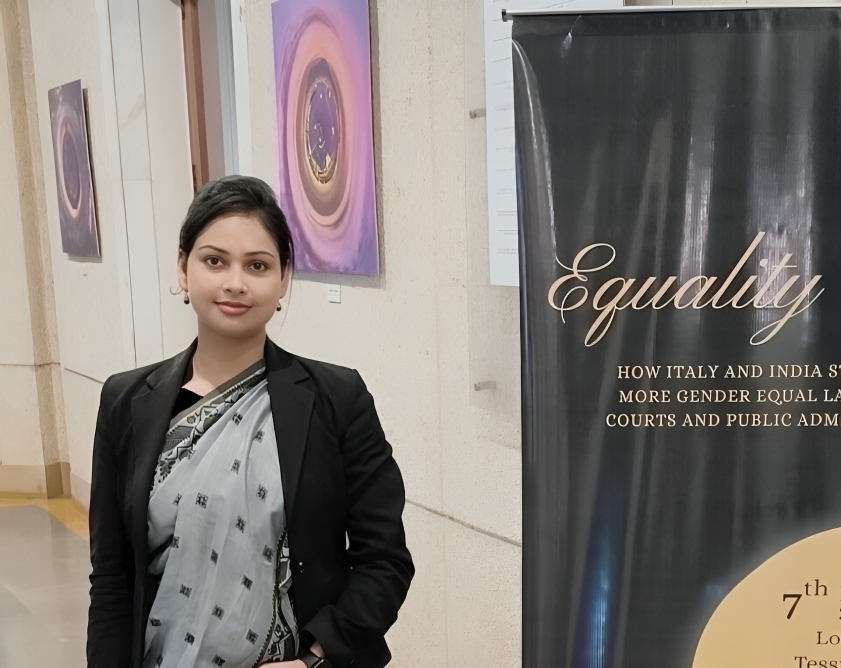
    Get in touch with Dr. Argha Kumar Jena –
  • “The future belongs to companies that proactively manage risks, draft robust agreements, and embrace arbitration as a tool to secure their interests.” – Abhijeet Gathraj, Founder of Gathraj & Co.

    “The future belongs to companies that proactively manage risks, draft robust agreements, and embrace arbitration as a tool to secure their interests.” – Abhijeet Gathraj, Founder of Gathraj & Co.

    This interview has been published by Anshi Mudgal and The SuperLawyer Team

    Sir, you’ve built an impressive and diverse practice, spanning corporate, commercial, and dispute resolution matters. What inspired you to establish your own firm, and what has been the most defining challenge in leading it?

    The decision to establish my own firm was born out of a deep conviction that law should be practised with independence, integrity, and an unwavering focus on client trust. I always envisioned creating a practice that was not only about providing legal advice but also about becoming a trusted partner in my clients’ journeys, helping them navigate complexities with clarity and confidence. This dream was not easy to pursue—it meant stepping out of my comfort zone, taking risks, and proving myself in a market already dominated by established players and multi-generational professionals.

    The most defining challenge was earning credibility in those initial years. With limited resources and no big name to lean on, every client I secured was through persistence, sleepless nights, and consistent delivery of results. It was a struggle marked by countless rejections, long hours, and sacrifices. Yet, these challenges shaped me into the professional I am today—resilient, determined, and deeply committed to excellence.

    You dropped out of Chartered Accountancy after giving 4 good years to it before pursuing law. What motivated you to transition into law, and how has your strong commerce background shaped your perspective and strategy in handling complex commercial disputes? 

    Dropping out of Chartered Accountancy (CA) was a nightmare for my family. After giving 4 long years pursuing CA, one fine day I decided that my calling is into Dispute Resolution and the very fact of appearing in court, preparing arguments and representing the other side of the dispute motivated me to transition into law. Accountancy background gave me a strong foundation in numbers, corporate structures, and financial regulations, but I realised early on that the “why” behind every transaction lay in the law. I wanted to go beyond balance sheets and immerse myself in the world of contracts, disputes, and advocacy, where strategy and persuasion could alter outcomes. The transition was not easy, but it felt natural. I was drawn to the dynamic nature of legal practice, where every case presented a new challenge and an opportunity to make an impact.

    My commerce background has been invaluable in my legal career, and pursuing one of the toughest accountancy courses prepared me for the hard work that is required in the legal profession. It allows me to see disputes not just as legal problems but as business realities. When handling complex commercial matters, I can dissect financial nuances while aligning them with legal strategy. This dual perspective gives me an edge in cross-border disputes, shareholder conflicts, and regulatory advisory, where understanding the commercial heartbeat is as crucial as the legal framework.

    In the early phase of your career, which experiences were most formative in laying the foundation of your practice, and what advice would you offer to students who are in that phase?

    The early phase of my career was defined by struggle, humility, and relentless hard work. I vividly recall handling matters that brought in little financial reward but demanded every ounce of preparation and commitment. Those small victories—whether drafting pleadings late into the night or representing clients who had no one else to stand for them—taught me the real meaning of responsibility and the power of trust people place in their lawyer.

    To students, my advice is simple: there is no shortcut to success, and neither is there any alternative to hard work. Never cheat your client and always be honest. Believe in yourself, focus on building your skills and resilience in the early years, rather than chasing titles or monetary gains. The foundations you build now: discipline, diligence, and the ability to think critically, will carry you throughout your career. 

    This profession rewards patience and persistence far more than instant success.

    As an empanelled attorney for multiple foreign consulates and high commissions, you handle roles that require immense precision and discretion. How do you balance these legal nuances, and what challenges have you encountered in representing such esteemed clients?

    Being empanelled with a few of the foreign consulates, high commissions, and foreign missions in India itself is an honour and privilege, as very few practising advocates and firms get this opportunity and not all. Representing NRI clients in their legal disputes itself is challenging and a responsibility that goes beyond routine practice. Every communication, every piece of advice, has to be meticulously crafted, knowing that the stakes often extend beyond the client to international relations and reputation.

    The greatest challenge has been balancing urgency with accuracy. Foreign clients and NRIs operate on strict timelines, and there is no room for error. I have often worked overnight to deliver outcomes that meet both the legal requirements and the client expectations. These experiences, though demanding, have shaped my ability to remain calm under pressure and deliver with unwavering focus.

    Having made significant contributions to dispute resolution and commercial law, what emerging trends do you foresee in cross-border disputes and arbitration involving Indian companies over the next five years?

    In the coming years, I foresee arbitration becoming the preferred mode of dispute resolution for Indian companies engaged in cross-border business. The global push for speed and enforceability, coupled with India’s growing recognition as an arbitration hub, will make this trend even stronger. I also anticipate a rise in disputes around technology, data, and e-commerce as businesses continue to expand into digital markets.

    Another trend will be the increasing need for companies to become contract-conscious. Too often, businesses treat contracts as formalities rather than safeguards. In cross-border contexts, this can be catastrophic. The future belongs to companies that proactively manage risks, draft robust agreements, and embrace arbitration as a tool to secure their interests.

    Your commitment to legal education through judging moot courts and client counselling competitions is commendable. Which skills do you believe law students should prioritise to stay future-ready and uphold the high standards expected in today’s profession?

    The profession today demands much more than just knowledge of statutes. The most future-ready lawyers will be those who can think critically, research deeply, and communicate with clarity. In a world where technology is advancing rapidly, adaptability and tech-savviness will be key. Students must be prepared to embrace new fields such as fintech, AI, and compliance law, while still mastering the fundamentals of litigation and arbitration.

    Above all, integrity is the cornerstone of this profession. Skills can evolve and be learned, but values remain constant. A lawyer who is trusted for their honesty, dedication and commitment will always stand apart, regardless of the changes the profession undergoes.

    Looking back at your career, could you share one of the most challenging cases you’ve handled so far? What were the key complexities involved, and how did you navigate them?

    One of the most challenging cases I have handled in my career involved a transnational child custody dispute, where I was appointed by a City Council in the UK to represent the interests of a 14-month-old child who was placed under foster care. The case was uniquely sensitive—not only did it involve intricate questions of international jurisdiction and child welfare, but it also carried an immense emotional weight. My role was to secure an interim order for the safe transit of the child to India, which required balancing legal precision with humanitarian urgency.

    Convincing the District Court of First Instance to hear the matter on an urgent basis was no easy task. The odds were against us—procedural hurdles, the complexity of cross-border custody laws, and the natural caution courts exercise in such delicate matters. I vividly recall preparing the case under extraordinary time pressure, knowing that every moment’s delay had real-life consequences for a child’s future. The hearing was conducted on a working day between Diwali and the New Year, a period when courts are generally overburdened, which added another layer of difficulty.

    What made this matter truly defining was the responsibility it placed on me—not just as a lawyer, but as a human being. I had to persuade the court that this was not just another legal dispute but an urgent humanitarian concern that required immediate judicial intervention. Ultimately, the case taught me that persistence, empathy, and the ability to rise above procedural roadblocks are what define a lawyer in moments of true challenge. It remains etched in my memory as a reminder of why I chose this profession—to make a tangible difference when it matters the most.

    As a registered trademarks attorney, your expertise in intellectual property is widely recognised. How do you see IP laws evolving in India and globally, and what guidance would you give students aspiring to excel in this dynamic field, both in terms of skills and professional values?

    Intellectual property is one of the most dynamic areas of law today, both in India and globally. With the rise of digital markets, I foresee stronger frameworks for online infringement, greater protection of trade secrets, and increasing international harmonisation of IP laws. India, too, is rapidly maturing in this space, and the opportunities for young professionals are immense.

    For students aspiring to specialise in IP, my advice is to go beyond statutes and cultivate an understanding of industries like technology, pharmaceuticals, and media. IP law is about protecting innovation, and one cannot protect what one does not understand. At the same time, cultivate patience and precision—IP is often a long game where persistence and values matter as much as knowledge. Read landmark judgments on IP laws and get a hold of the principles decided by the courts in such judgments.

    Reflecting on your journey from studying law at Gujarat University to becoming a trusted advisor for consulates and leading corporates, you’ve taken on highly varied and demanding roles. How do you balance these professional responsibilities while maintaining your personal life and well-being?

    Balancing professional responsibilities with personal life has been one of my greatest struggles. In the early years, work consumed every waking hour, and personal time was a luxury I could not afford. But over time, I realised that sustainability in this profession requires more than just hard work—it requires balance, discipline, and self-care.

    Today, I consciously prioritise three things: utmost discipline in managing my time, delegation to empower my team, and detachment to ensure I don’t carry every professional battle home. My family has been my strongest anchor, reminding me of the importance of perspective. At the end of the day, success has meaning only when it is achieved without losing oneself in the process.

    Get in touch with Abhijeet Gathraj –

  • “Courtroom practice teaches you quickly that law is not just about theory but about how you apply it in real, practical situations.” – Shubhnit Hans, Founder & Managing Partner at Hans Law Associates.

    “Courtroom practice teaches you quickly that law is not just about theory but about how you apply it in real, practical situations.” – Shubhnit Hans, Founder & Managing Partner at Hans Law Associates.

    This interview has been published by Anshi Mudgal and The SuperLawyer Team

    Having over a decade of experience now, what were the initial years of your practice like? What inspired you to choose law as a career, and how did law school help shape the foundation of your professional journey?

    It’s been 10 years in this profession, yet the early days feel like just yesterday, when I was practicing in Delhi and learning to navigate the world of black and white. It didn’t take long to realize that this profession is far more about practicality than pure theory. Knowing the law and mastering your case file is essential, but equally important is understanding the judge, not personally, but in terms of their courtroom approach: their patterns, reactions, and preferences. From the very beginning, I developed the habit of sitting in court and observing judges closely. That practice, simple as it may seem, has proven invaluable throughout my journey as an advocate. 

    I come from a small town in Haryana called Karnal, where I completed my schooling. After that, I pursued my law degree at Amity University, Noida. My legal journey began with a litigation office in New Delhi, where I practiced for almost four years. In 2018, I moved to Chandigarh to start my own practice. As a first-generation lawyer, it was important for me to establish my name in my hometown, where I felt more connected and grounded. It wasn’t easy, there were no set plans, and no one in my family had a legal background. It all started when a cousin suggested corporate law while I was preparing for my 12th boards in 2010. I gave the entrance exams, got selected at Amity, and the rest unfolded from there.

    You began your career as an associate, handling a wide range of civil litigation and domestic arbitration matters. How did this early exposure influence your approach to complex disputes, and what key skills proved most valuable in the formative years of your practice?

    In the initial years of my practice as an associate, I was fortunate to be exposed to a wide range of civil litigation and domestic arbitration matters. This diversity of work taught me very early on that no two disputes are ever alike. Each case requires a tailored approach in terms of a legal strategy. What shaped me the most was learning how to balance theory with practicality. The law may be uniform, but its application depends on the facts, the forum, and often the perspective of the judge or tribunal. Observing court proceedings, understanding patterns of arguments, and seeing how small details could shift the direction of a case gave me a very grounded view of dispute resolution.

    As a first-generation lawyer, what motivated you to establish your independent practice? What vision did you have when you started, and how has it evolved over time?

    As a first-generation lawyer, what motivated me most to establish my own practice was the desire to build something independent, driven purely by merit, hard work, and client trust. Starting out, I had no legacy to rely upon and that became my greatest strength. It pushed me to focus on credibility, consistency, and results from the very beginning. My initial vision was quite simple: to create a practice that delivered practical, solution-oriented advice rather than just theoretical legal opinions and dragging each and every client to Court even if it could be settled outside the court. That was when Hans Law Associates was established. Over time, that vision has evolved into building a full-service firm where teamwork, innovation, and long-term client relationships are at the core.

    You have represented clients before the Punjab and Haryana High Court, consumer forums, RERA, and various tribunals. How has this diverse litigation experience enhanced your understanding of dispute resolution across different legal platforms?

    Representing clients before the Punjab & Haryana High Court, consumer forums, RERA, and various tribunals has given me a broad perspective on how dispute resolution functions across different platforms. Each forum has its own procedure, pace, and expectations, for instance, the High Court demands sharp legal reasoning and precedent-based arguments, while consumer forums and RERA focus more on quick, pragmatic relief to aggrieved parties. Ultimately, this cross-forum exposure has made me a more versatile advocate, able to approach disputes not just from a legal standpoint, but from a strategic, client-centric perspective.

    You have handled matters before the Haryana Real Estate Appellate Tribunal, the Haryana Real Estate Regulatory Authority, and several other tribunals. What unique challenges have you encountered in this specialized field, and how do you navigate them effectively?

    Handling matters before the HREAT, HRERA, Pkl, and other tribunals has been both challenging and rewarding. Real estate law, especially under the RERA framework, is indeed a booming area of practice. With rapid urbanization and increasing consumer awareness, disputes in this sector are growing both in volume and complexity. The unique challenges I’ve faced include balancing the interests of buyers and developers, staying updated on any recent precedents as it is a very new law and most importantly, ensuring enforcement of orders. While RERA was designed to be consumer-friendly, practical hurdles often arise in execution. I’ve found that navigating this space requires not only sound legal knowledge but also adaptability and persistence. This blend of legal precision and pragmatic follow-through has allowed me to add real value to clients in this fast-growing field.

    As a mediator at the Punjab and Haryana High Court, how do you see ADR evolving in India? In your experience, what advantages does mediation or arbitration offer compared to traditional litigation?

    As a mediator at the Punjab and Haryana High Court, I have witnessed how Alternative Dispute Resolution (ADR) is rapidly evolving in India. With rising pendency in courts, ADR is no longer an alternative but an essential tool for timely and effective justice.

    The recent “Mediation for the Nation” drive initiated by the Hon’ble Supreme Court reflects this growing recognition. By encouraging parties to resolve disputes amicably, the judiciary has underlined mediation’s role in reducing litigation, promoting harmony, and ensuring quicker resolutions. I myself have seen a rise in settlements after the said initiative.

    In my experience, mediation preserves relationships and empowers parties to design their own solutions, while arbitration offers efficiency, confidentiality, and subject-matter expertise. Both provide speed, practicality, and satisfaction compared to traditional litigation that may take years. With institutional support and initiatives like Mediation for the Nation, ADR in India is poised to become a truly transformative mechanism for access to justice.

    You have drafted agreements for a variety of clients, including music and production companies as well as professionals like psychologists. What key challenges do you see in the entertainment sector, and how can these be addressed proactively through careful contract drafting?

    Drafting agreements in the entertainment sector brings its own set of unique challenges. Unlike traditional contracts, these often deal with creative rights, intellectual property, royalties, confidentiality, and moral rights, all of which can be highly sensitive and prone to disputes if not defined clearly. One of the biggest challenges is the ambiguity around ownership of content, whether it lies with the creator, the producer, or the platform. Another is the lack of awareness among artists and professionals about the long-term implications of exclusivity clauses, revenue-sharing models, and termination rights. Proactive solutions lie in clear, precise, and balanced drafting. 

    What advice would you give students aspiring to enter the legal profession, and what resources would you recommend to help them stay ahead in a constantly evolving field?

    My advice to students aspiring to enter the legal profession is to focus on fundamentals and be patient enough to adapt. Courtroom practice teaches you quickly that law is not just about theory but about how you apply it in real, practical situations. Developing habits like observing proceedings, reading judgments daily, and sharpening communication skills goes a long way. It’s a never ending learning process. I see a lot of individuals backing out from the profession as it may not satisfy you monetarily but once you understand the responsibilities that come with it, I am sure we are ready to go a long way. I’d also recommend building a mentor network and learning from senior advocates and peers. In a constantly evolving field, the ability to keep learning, unlearning, and relearning is the best resource you can carry with you.

    Balancing a demanding legal career with personal life can be challenging. How do you manage stress, maintain focus during high-stakes matters, and create balance between your professional and personal responsibilities?

    Balancing a demanding legal career with personal life is indeed challenging, but I’ve learned that discipline and perspective makes the difference. During high-stakes matters, I manage stress by preparing thoroughly as confidence in your case reduces anxiety. I also practice detachment after court hours, giving time to family, fitness, and spirituality, which keeps me grounded. For me, balance isn’t about strict separation but about ensuring that both professional duties and personal responsibilities get the attention they deserve. This balance not only helps me stay focused but also makes me more effective in my practice.

    Get in touch with Shubhnit Hans –

  • “To be a lawyer is to fight for justice, stand for truth, and give strength to those who cannot fight for themselves.” – Dr. Milap Narayan Chopra, Deputy Government Counsel, Government of Rajasthan.

    “To be a lawyer is to fight for justice, stand for truth, and give strength to those who cannot fight for themselves.” – Dr. Milap Narayan Chopra, Deputy Government Counsel, Government of Rajasthan.

    This interview has been published by Anshi Mudgal and The SuperLawyer Team

    Your academic credentials span law, commerce, business, and company secretaryship, culminating in a Ph.D. in Law. How has this multidisciplinary education shaped your approach to legal practice, especially at the intersection of law, business, and corporate governance?

    From the very first day of my law school, I carried a clear ambition to become a world-class corporate lawyer being inspired by Jim Carrey’s story, who wrote himself a $10 million check for “acting services rendered” and carried it as a reminder of his vision and by the mid-1990s fulfilled that vision through belief and intense hard-work. Motivated by this, I wrote my own paper slip in 2010 to myself; “Dr. Milap Chopra (Gold Medallist), B.Com., LL.B. (Hons), CS, MBA, LL.M., Ph.D.” and carried it in my wallet as a visualization and constant reminder of my ambition to become a world-class corporate lawyer. With that goal in mind, I carefully structured my academic and professional journey. Alongside my law degree, I pursued the Company Secretaryship (CS) course, completing both simultaneously to strengthen my understanding of corporate law and governance. I interned at India’s leading-top law firms including Amarchand, JSA, AZB, Anand & Anand, among others, gaining exposure to top-tier corporate practice across the metro cities. Throughout the academic journey of law school, I consistently maintained meritorious performance, ultimately graduating as the Gold Medallist and batch topper of Institute of Law, Nirma University.

    Yet destiny had a different plan. During the last semester of law school, my father, himself a practicing lawyer at the Bikaner Sessions Court, was elected as the First Citizen of Bikaner i.e., the Mayor of the city. He encouraged me not to take up a corporate job or join a law firm, but to pursue litigation. Respecting his guidance, I set aside the offers of a job I had received and began practice at the Rajasthan High Court, Jodhpur, as an associate in the chambers of Shri Mahendra Singh Singhvi, Senior Advocate. That experience was not just training or learning; it was an immersion into the craft of litigation, teaching me the temperament, discipline, and holistic approach required for meaningful legal practice. I am deeply thankful to God for that turn of events, because it helped me realise that true legal practice requires temperament and an inbuilt nature — qualities essential for anyone who wishes to pursue litigation meaningfully. Law is not just a profession; it is a noble calling. It remains unique in its ability to serve the public interest at large, where one’s work can directly benefit society through precedents, judgments, and observations/outcomes.

    After starting practice at the Rajasthan High Court, Jodhpur, I enrolled for Masters in Law at the prestigious Government Law College, Bikaner. This required remarkable dedication as in the first year, I travelled overnight every Tuesday from Jodhpur to Bikaner to give my six exams of the first year on every Wednesday; however, destiny had other pivotal moments as well, a life-threatening road-accident during that period became a blessing in disguise which forced me to pause and reflect, doctors advised me to pursue a desk job, and for a short while, my unfulfilled corporate dream seemed to materialize and I got the opportunity to work with the PwC at Gurugram, one of the world’s Big Four Consultancy firms wherein I soon realised I was not made for the corporate world. My temperament fit litigation, not a corporate desk. During my PwC days, I also pursued an MBA, completing it under tough circumstances, often writing three back-to-back exams of three hours each on weekends, as leave was nearly impossible in corporate life. That job experience further strengthened my resolve to practice at Jodhpur and added yet another dimension to my academic journey.

    Through it all, one firm belief and that paper slip has always guided me that extra qualifications add extra dimensions to one’s legal career. That conviction drove me to explore law, commerce, business, and company secretaryship, before finally pursuing a Ph.D. in Law. Today, this multidisciplinary foundation allows me to approach issues at the intersection of law, business, and corporate governance with a rare balance- offering solutions that are legally sound, commercially viable, & ethically responsible. And, finally, in July 2024, after 15 long years of academic and career journey, I added the “Dr.” prefix to my name, completing the journey I had envisioned on that first day of law school on a slip of paper. Through belief, conviction, hard work, and the courage to dream, every challenge i.e., exams, travel, job, courtroom battles, became part of the story. That slip was never just a piece of paper; it was a promise to myself, a compass that guided me to become the well-qualified lawyer I aspired to be, and a reminder that dreams nurtured with patience and perseverance truly come alive and I hope that anyone who reads this feels inspired to keep their own slips of hope alive.

    Pursuing CS and Law simultaneously is both ambitious and demanding. What advice would you offer to students who are considering this path? Are there any specific strategies or resources that helped you manage both effectively and could benefit others looking to do the same?

    Pursuing Company Secretaryship alongside a law degree is ambitious and demanding, but immensely rewarding if approached with purpose and discipline. From the very start of my law school, I aligned every step i.e., internships, academics, and extra qualifications with my goal of becoming a world-class corporate lawyer.

    My advice would be to treat both the programs as complementary, not competing. Law builds your legal reasoning and litigation skills; CS gives deep insight into corporate governance, compliance, and business operations. Today, modern litigation often involves complex corporate matters, and understanding both legal and corporate dimensions allows a lawyer to craft strategic, holistic solutions.

    Ultimately, my journey shows that combining CS and law not only prepares you for corporate practice but also enriches litigation skills. A modern litigating lawyer increasingly needs to understand business structures, governance frameworks, and compliance requirements to provide nuanced advice, anticipate challenges, and craft effective legal strategies. For students willing to embrace the challenge, the payoff is a multidisciplinary foundation that sets them apart and equips them to thrive in both courtroom and corporate boardroom settings.

    In your role as Deputy Government Counsel for Rajasthan, you’ve managed cases across diverse departments like Transport, Tourism, and Water Resources. Could you share a particularly challenging case or policy issue you handled, and how you approached its legal complexities?

    As Deputy Government Counsel for Rajasthan, one of the most challenging aspects has been handling cases that cut across diverse departments, from Transport and Tourism to Water Resources, Higher and Medical Education. Each case brings its own legal complexity, but the real challenge often lies in creating a channel of cooperation among multiple officers in charge of different departments and ensuring that a timely, coherent reply is filed before the Hon’ble Court. Unlike private practice, here you appear from the respondent’s side, where the responsibility is not only to defend but also to uphold the policies and decisions of the State.

    In matters like appointments, recruitments, examinations, policy changes, or large bunch-transfer cases, the pressure can be immense because of the far-reaching implications for both the government and the public at large. That is why I believe success depends on three things: having a good team of associates, valuing the effectiveness of court clerks or munshi’s, and maintaining proper updation of files and continuous monitoring of case status. These seemingly small practices are actually the backbone of timely and effective representation before the Court.

    My multidisciplinary background in law, commerce, business, & corporate governance has helped me approach these issues with a structured, solution-oriented mindset. Rather than being daunted by the complexity, I focus on building cooperation, managing deadlines under pressure, and ensuring that the State’s position is presented in a legally sound, precise, and persuasive manner. In many ways, these challenges mirror the lessons I’ve carried since law school that discipline, teamwork, and a holistic outlook are key to navigating the most demanding cases.

    What inspired you to establish Law Compass LLP? What were some of the early challenges you faced in building the firm, and what long-term vision do you hold for its role in the Indian legal ecosystem?

    The inspiration to establish Law Compass LLP came from my belief that the legal profession is not only about advocacy but about navigating people toward the best possible solutions. That’s why our firm carries the tagline: “Navigating you to the best possible legal solution.” As a co-founder, along with my Jaipur-based partner, Pranjal Singh, and our Delhi-based partner Siddharth Acharya, Advocate-on-Record, we envisioned a practice that offers clients both litigation and non-litigation expertise under one roof. Our diverse backgrounds allowed us to position Law Compass LLP as a one-stop solution for multifaceted client needs.

    The early challenges were the ones most young firms face i.e., building trust, managing resources, and delivering consistent results while ensuring timely compliance. But my multidisciplinary journey, coupled with our team’s strength in corporate law, governance, and litigation, gave us the foundation to bridge gaps effectively. We worked consciously on building a system that valued teamwork, proper updation of files, responsiveness, and a client-first approach, even under the extreme pressures that litigation often brings.

    What sets us apart is our functioning model. We focus not just on winning cases but on ensuring effective, time-bound relief, transparent communication, and value-driven fee structures. Like the big law firms in India, we are building a culture of professionalism, research-oriented strategy, and holistic solutions, but our boutique size allows us to remain nimble, personalized, and accessible. In this way, we hope to complement the Indian legal system by reducing delays, improving efficiency, and delivering justice in a way that clients find both approachable and dependable.

    Our long-term vision is to make a meaningful difference in the Indian legal ecosystem by providing solutions that are legally sound, commercially practical, and socially responsible. We aspire for Law Compass LLP to grow into a boutique firm that is known not only for legal excellence but also for its role in strengthening trust in the system itself — making the law work better for those it is meant to serve.

    You’ve represented a wide range of clients from banks and PSUs to co-operative societies and educational institutions. When handling government-related matters, what unique challenges arise, and how do you tailor your strategy to ensure effective and compliant representation?

    When it comes to government-related matters, the challenges are very different from private representation. The most unique difficulty lies in the volume of cases and the strict timelines within which replies and arguments must be prepared. The pendency of cases directly impacts the smooth functioning of governance, so the responsibility of a government counsel is not only professional but also systemic.

    To handle this, I firmly believe in the strength of a structured ecosystem which includes an effective court clerk/munshi, a reliable team of associates, regular updation of files, complete coordination with the OIC’s and constant monitoring of case status. Every stage i.e., from gathering factual reports, to preparing replies, to filing in the registry, to finally arguing with a well-prepared note ensuring that no matter goes unheard before the Hon’ble Court. For this, the cause list has to be noted with precision every single day, and it is the duty of a government counsel to make sure that not a single case is missed being represented. Even one lapse can have serious consequences for governance and public interest. Without that structure, government litigation can easily get derailed under its own weight.

    Fortunately, under the able leadership of our Hon’ble Chief Minister Bhajan Lal Sharma ji, the State of Rajasthan has made government-side litigation comparatively smoother and more systematic. We regularly hold meetings with the Officers-in-Charge (OICs) to review pendencies, address bottlenecks, and ensure that the State’s representation before the Hon’ble Rajasthan High Court is effective and timely. This cooperation between counsel and departments allows us to tailor our strategy in a way that is both compliant and efficient, ensuring that justice is not delayed for the people we ultimately serve.

    With such a strong academic foundation, do you believe that continuous scholarly engagement should be a part of every legal professional’s journey? How has your own academic work enriched your practice?

    Absolutely. On the very first day of my law school orientation, Senior Advocate Shri P.M. Thakkar told us that “a lawyer is always a student” that one must remain in constant learning mode, curious to know the “why” and committed to finding solutions through knowledge. That message struck me deeply. Inspired also by Jim Carrey’s story, I wrote on that slip of paper (which I have carried since my first semester) that I would remain a learner till the last day of my life.

    That conviction has shaped my journey. Even after completing my Ph.D. in Law, I regularly enroll in online courses, workshops, and other academic engagements. Today, my scholarly pursuits have come full circle, I now travel across institutions to deliver lectures, judge moot court competitions, and being a government counsel participate in government meetings and each of these experiences further refines my practice.

    For me, scholarship and practice are not separate but complementary. Continuous learning sharpens my arguments, broadens my perspective, and keeps me adaptable in a fast-changing legal landscape. In essence, my academic work has not only enriched my practice but also kept me aligned with the belief that law is a living discipline and to practice it meaningfully, one must always be willing to learn, unlearn, and relearn.

    Balancing a high-pressure legal practice with deep engagement in social leadership roles such as Founding Trustee of BEST Foundation Trust, Vice Chairman of JITO Youth Wing etc. is no small feat. How do you manage this balance, and what continues to motivate your commitment to social transformation alongside your legal career?

    Balancing law with social leadership has never felt like a burden; it has always been a calling. Two incidents, in particular, have shaped this approach for me.

    The first comes from my political legacy. My father, a deeply honest politician, always taught us that if society has given us everything, we must find ways to give back. That value has been a guiding principle in my life. With this conviction, I founded the BEST Foundation Trust “Better Education for Social Transformation”. Through this initiative, we work to make education accessible and meaningful by paying the school fees of underprivileged students, providing scholarships to meritorious ones, and creating opportunities for educational growth etc.

    The second defining moment was far more personal. During a life-threatening road accident, I was in a coma for 67 hours, and I lost a dear friend in that tragedy. That experience shook me and instilled a deep realization that we only have one life and the only way to honor it is by living with purpose & making a positive difference in society.

    So, even while managing the pressures of a legal practice, I consciously dedicate time and energy to social causes, supported by an effective team. What keeps me motivated is the belief that law and leadership must go hand in hand, one upholds justice in the courtroom, the other nurtures transformation in the community.

    You’ve been actively involved in initiatives focused on youth empowerment and educational access. What advice would you offer to aspiring legal professionals who wish to follow a path like yours? What mindset and resources do you believe are essential for building a meaningful legal career today?

    My advice to aspiring legal professionals is simple yet profound; always stay curious, always stay disciplined, and never forget to ask yourself the basic question: “Why Me?”

    Whether you are arguing before My Lords, preparing for a job interview, or even praying to God to fulfill your dreams, just pause and ask, why should this relief, this opportunity, or this blessing come to me? If you can honestly satisfy yourself with an answer, if you have worked hard enough to justify it, then trust me — it will be you.

    In my own journey, this mindset has been a compass. From managing rigorous studies in law, CS, MBA, LL.M. and Ph.D., to working with top firms, to practicing in court, to representing the State of Rajasthan as Government Counsel and even balancing social leadership, the “Why Me?” principle has kept me grounded and accountable. It pushes you to prepare better, to think deeper, and to act with integrity.

    So, to young professionals — build your career not just on ambition, but on clarity of purpose, a commitment to continuous learning, and the courage to answer that “Why Me?” every single day. That’s what transforms a legal career into a meaningful journey.

    Finally, what guiding motto or philosophy has carried you through your legal journey? And looking back, what inspired you to pursue a career in law in the first place?

    My guiding philosophy has always been that law is not merely a profession, but a noble calling; a lifelong duty to the Constitution and to society at large. A lawyer is entrusted with the privilege of defending rights, upholding justice, and ensuring that the rule of law prevails over fear, power, or influence.

    The inspiration to pursue this path came at a defining moment in my eleventh standard, when I had to choose my stream of study. At that time, the choices were clear — science for engineers, biology for doctors, commerce for accountants. Unsure of where I belonged, I asked my father what I should pursue. His answer changed the course of my life. Looking at my extrovert nature, my speaking skills, my temperament, and the qualities he believed reflected a good lawyer, he said to me:

    “You should become an Advocate and prepare for CLAT which has only recently been introduced. And then he said something that stayed with me forever: A lawyer is not just a professional, he is the guardian of rights and the defender of the Constitution. Law is supreme; it bows before no one, and neither can a true lawyer ever be bowed or broken. To be a lawyer is to fight for justice, to stand for truth, and to give strength to those who cannot fight for themselves. If you truly wish to live a life of meaning and difference, become a good lawyer because a good lawyer can never be silenced, never be tamed.” 

    Those words struck me to the core. They gave me a vision of law as a higher calling, a life of service through justice. And from that day onwards, I knew this was the journey I was meant for. As a strong believer in karma, destiny, and God, I have also realized that one must remain calm, patient, and consistent. If your deeds are sincere and your conviction unwavering, everything else eventually falls into place. Life has its own rhythm, and faith in that process gives you the strength to persevere even through the toughest trials.

    Looking back now, every academic pursuit, every courtroom battle, every social initiative I have undertaken has been guided by that conviction. For me, the practice of law is not just about winning cases — it is about carrying forward a legacy of courage, compassion, and constitutional duty. That is the motto that continues to carry me forward.

    get in touch with Dr. Milap Narayan Chopra –

  • “In my view, not every conflict calls for the rigours of litigation, many can be effectively  resolved through dialogue and a planned, structured settlement process.” – Ankita Sarangi, Advocate-on-Record and  IMI Accredited Mediator.

    “In my view, not every conflict calls for the rigours of litigation, many can be effectively  resolved through dialogue and a planned, structured settlement process.” – Ankita Sarangi, Advocate-on-Record and  IMI Accredited Mediator.

    This interview has been published by Anshi Mudgal and The SuperLawyer Team

    Looking back at your formative years and legal education, what early experiences  shaped your perspective towards law and inspired you to pursue a career in  litigation and dispute resolution? 

    Born and brought up in Delhi, I completed my schooling at DPS RK Puram, studying  from nursery to 12th grade, with the initial years up to Class 5 spent in the junior wing  of the school. 

    I belong to the pre-CLAT era, when each law school conducted its own entrance  examination. At that time, choosing a college also meant carefully evaluating both its  location and the professional opportunities that followed. I had intentionally decided  against taking multiple entrance exams, but a trusted recommendation persuaded me to  attempt the entrance for the National University of Advanced Legal Studies (NUALS).  I was later formally informed that I had successfully cleared the entrance exam and was  eligible to secure admission to NUALS. However, after passing the entrance exam for  Indraprastha University (Amity Law School), I chose to enrol there, as its location in  Delhi-NCR and its ranking in the top ten law colleges in India, were rather significant  factors in my decision at the time. 

    My decision was primarily driven by the fact that Delhi provided a far more conducive  environment for pursuing a career in law, particularly in litigation, which was my area  of interest. However, with the benefit of hindsight, I now believe that institutional  rankings are of limited consequence in the long run, especially for those committed to  a career in litigation since law is a profession that transcends classroom learning and genuine mastery can only be forged through practical application and real-world experience. 

    While the school provided a solid platform, it was the inspiration I drew from my  parents, both of whom had worked with the government and were highly accomplished from an early age, that set a high benchmark for me and encouraged me to take my  academics seriously while also pursuing co-curricular activities such as debates and  beyond. I was always drawn to writing and was made aware that I had a natural ease with language. Outside the school curriculum, I found joy in exploring a variety of non  fiction books and articles, driven by a curiosity to better understand how the world  works. I was particularly drawn to topics in psychology and neuroscience, which still continue to captivate me. I believe this reading has also quietly shaped me in becoming more empathetic, a quality that proves valuable particularly in mediation. I’ve always  found satisfaction in tackling problems and working toward practical solutions, and was  grateful that others felt comfortable seeking my advice. Through helping them resolve  personal conflicts and find common ground, I developed a sincere interest in  Alternative Dispute Resolution. 

    During my academic years, I remained actively engaged in co-curricular activities,  including parliamentary debates, Model United Nations, coupled with several extra  curricular such as taking part in inter-school competitions, winning as a solo singer in  important music competitions as well as inter school level athletics which I believe does give one confidence and discipline while also encouraging prompt, judicious thinking  under pressure, and embrace competition. In my opinion, extra-curricular and co-curricular activities teach early on that winning and losing are both part of the game,  something I came to appreciate through sports and other competitions in these formative years, and which continues to shape my approach as a lawyer. 

    During your time at Law School, you undertook intensive internships with leading  law firms, arbitration centres, and the offices of Additional Solicitor General. How  were they transformative, and how did they influence your career path?

    Internships were not mandatory for students at that time, unlike the current practice in  most colleges, following the BCI notification. The primary reason to pursue them for  me, was to gain exposure to the profession at an early stage. I was very keen on  exploring a wide range of laws, including unconventional areas such as Sports Law and  TDSAT matters, which were not commonly taken up. I enjoyed the process of securing  internships through my own effort which has also helped me become independent. I  actively went for interviews, followed up with offices, and treated the process as a  learning experience in itself. Alongside this, I also participated in many inter-college  and intra-college moot court competitions as a speaker and was fortunate to secure good  positions and awards. After graduating, I have been invited to judge college moot  courts, which often reminds me of my own time as a speaker and participant, recalling  the long hours and sometimes several months of preparation that went into each round.

    One experience from the internship days that stands out for me is when I wanted to  intern with the office of an ex-ASG, which was very coveted, and very few students  would get selected or allowed to intern at the office at a time. I pursued the application  consistently, without using any references, and was ultimately offered the chance to  intern. When he later realized that my family was acquainted with him, he asked why I  had gone through the entire process, but for me, the satisfaction lay in doing it  independently. Similarly, I secured internships at several law firms and at DIAC (at the  time known as Delhi High Court Arbitration Centre), again through persistent  applications and interviews. At DIAC, I gained early exposure to institutional  arbitration and was introduced to how such proceedings are conducted in practice. 

    It’s worth mentioning that all my internships, except one, were unpaid and I never had  any reservations about that. It was generally understood that internships were about  learning rather than stipends; payment, if offered, was considered a bonus, not an  entitlement. The one exception was at a law firm where, at the time of joining, I was  clearly informed that I would be paid a fixed amount for the duration. If an internship  is undertaken mainly or solely for financial reasons, it is important that this be  communicated at the outset, since paid internships carry a very different set of  expectations. Raising monetary demands midway is neither fair to the seniors nor  consistent with professional conduct. Any agreement regarding payment should,  therefore, be clearly confirmed in writing, preferably over mail. 

    Each firm I interned with also gave me insights into its specialized practice areas, which helped me appreciate the finer aspects of the profession and further helped me  develop a sense of independence very early on. I believe internships are extremely  important for law students, as they offer a practical glimpse into what lies ahead after  law school. During my internship, I often worked long hours, staying back even after  the associates had left to complete the work they had assigned, often under strict  deadlines, and was usually among the first to arrive each morning, not with the intention  of being absorbed in the firms, but simply to absorb as much as possible and maximize  the learning experience.

    You began your professional journey assisting the Additional Solicitor General at  the Delhi High Court, where you were exposed to high-profile government  litigation at a very early stage. Soon after, you worked with an Advocate-on Record at the Supreme Court. Looking back, what lessons did you draw from  these formative experiences, and how did they shape your understanding of  appellate practice and prepare you for eventually qualifying as an AOR yourself? 

    Immediately after graduation, I joined as an associate with the then ASG and had the  opportunity to work on high-profile cases, including the “Nirbhaya” case among others. My time in the office gave me practical exposure to handling government matters,  understanding the functioning of such offices, and working in a fast-paced environment  where cases often arrived late in the evening and required the four associates to read  files and prepare briefs within tight deadlines for the next day’s listing, which was quite  demanding and often required working late into the night. While attending meetings  and briefings was an interesting learning experience, starting the career in a designated  senior’s office has its limitations, particularly in drafting, which is an essential skill for  any litigating lawyer. Seeking more substantial drafting experience, I decided to join  an AOR in the Supreme Court with whom I was already familiar. This arrangement  allowed me to pursue my own private practice before lower courts and tribunals part time while working in the office, where I would take initiative to draft SLPs and  government-side Counters, as the office was on the panel for the State Government. 

    While this may not hold true for everyone, I had recognized that taking the AOR exam  would be professionally significant, yet I could not have anticipated the profound  impact it would have on my career once I qualified. I was aware that becoming an  Advocate-on-Record, particularly in the current generation, carries significant prestige, responsibility and accountability. Most who qualify today have amassed significant  experience across various courts and tribunals before reaching the appellate stage  practice, which equips them with a deeper understanding of the nuances of such  practice, a perspective that is harder to acquire when starting directly at that level.

    By 2014, you had taken the bold step of establishing an independent practice.  What were some of the challenges you faced and how did you navigate them? 

    When I began my independent practice, my work was mainly in lower courts, service  disputes before the CAT, and High Court litigation, and much of it non-contentious. Initially, I dedicated time to working on several pro bono cases. One of the turning  points came when I was empanelled with DLSA/DSLSA for the CAT panel, where I  was one of the five advocates and was selected on merit through a shortlisting and  interview process. It is often assumed that legal aid is confined to the economically  weaker sections, but under The Legal Services Authorities Act, children, women, senior  citizens, disabled and socially backward classes are equally entitled irrespective of  income. This gave me exposure to clients from very diverse backgrounds and allowed  me to develop the ability to handle people and their concerns at an early stage. 

    What made the experience especially meaningful was the trust it created. The  beneficiaries who appreciated my commitment towards their cause and work, often  referred me to their acquaintances, and I would also receive referrals from some  unexpected sources, such as court staff in some courts and other professional networks.  The referrals have not been confined to service matters, but I have also been entrusted  with their personal matters, including criminal, property, and matrimonial cases, among  others. These acknowledgments strengthened my belief in sincerity and perseverance  as the foundation of practice.  

    On a more personal note, I come from a family of high achievers and accomplished  individuals, most of whom have pursued structured and conventional career paths. 

    Except for my grandfather, who had earned great respect in his time as a prominent  lawyer, I had not personally heard of anyone establish an independent practice and face  the unique challenges that come with it, though I often wish he had still been practicing  when I entered the profession as he was a great inspiration and influenced my decision  to pursue law. I grew up hearing stories of how clients valued his exceptional legal  acumen and how he consistently achieved favourable verdicts. 

    Choosing litigation, and doing so as a self-made woman lawyer, brings its own set of  hurdles, but it also gave me resilience, confidence, and the satisfaction of building a  practice on my own merit. I believe it is important for anyone to have some support  system, and for me, that strength came primarily from my grandfather and parents, who  consistently encouraged me to pursue my dreams without being bound by the  conventional expectations of society.  

    You’ve dealt with a wide spectrum of cases in the Supreme Court as an Advocate on-Record, a few of which resulted in reportable judgments. How do you see these  experiences contributing to your professional and personal journey? 

    While my work in the High Court and lower courts has spanned matters, including appearances both for the government and for private parties, much of my work in the  Supreme Court has involved representing predominantly private parties, including  matters against different State Governments. What I’ve really valued about being an  AOR is the chance to engage with a wide variety of matters, all under one roof in a  short span. Over the years, I’ve handled cases touching on GST, Customs, SEBI,  statutory appeals from NCLAT, Service disputes, Transfer Petitions, and criminal  matters including bail, with some of them resulting in reportable judgments. Among  those, most recently, I argued a batch of cases concerning compassionate appointments,  where the Hon’ble Apex court upheld the High Court’s decision in favor of my clients,  granted the relief we sought, and issued important directives to the State. 

    On the professional and personal front, it is truly the vagaries of litigation that will shape you the most over time. There are days when I appear for a Petitioner/Applicant on a particular issue, and almost immediately thereafter, I may find myself defending  the Respondent on the same point in another matter. This frequent transition between perspectives necessitates not only a versatile approach to advocacy but also enhances the way one navigates difficulties in life, while also serving as a reminder that the law  is never unidimensional. 

    Your work as a mediator accredited by the International Mediation Institute  reflects a strong commitment to alternative dispute resolution. Alongside  mediation, you also have substantial experience in arbitration. In your view, how are these mechanisms evolving in India, and what role do you see them playing in  the future of dispute resolution? 

    In my view, not every conflict calls for the rigours of litigation, many can be effectively  resolved through dialogue and a planned, structured settlement process, a perspective  also endorsed by several sitting and retired judges across different courts. This line of  thought naturally steered me towards arbitration and mediation, reflecting an  inclination I had held from early on.  

    The journey for me in mediation began with intensive training of 120 hours initially with an international institute based in Germany, which involved regular simulations  and close interaction with participants from diverse jurisdictions. This foundation  gradually opened opportunities to mediate international disputes alongside colleagues  from different countries, many of whom became professional associates during the  course of training. I became involved in this sphere when mediation was still at its  nascent stage, much prior to the establishment of a statutory framework and I was aware  that it was a burgeoning field with great potential in future. Referrals followed naturally,  leading to further exposure and practice. I would like to think of mediation, by its very  nature, as an inherent skill while also one that is refined through experience and  continuous practice. Once qualified as a mediator, one need not wear the mediator’s hat  at all times. The profession demands the ability to know how to switch hats, as the skill  set of a mediator differs fundamentally from that of an advocate. 

    During mediation training, we are introduced to several techniques, which come in  handy, one of which is the classic ‘Orange parable’, it illustrates how two daughters  quarrelled over an orange; one wanted the fruit to eat, the other the peel to bake a cake.  By simply dividing it in half, each lost half of what she truly needed, but had the mother  asked why they wanted it, both could have received 100% of what they sought. The  story highlights how exploring underlying interests, rather than positions, often creates  outcomes that add value at no extra cost. 

    My interest in arbitration began during college while preparing as a speaker for a  prestigious international arbitration moot court competition. The research and learning  involved sparked a deep curiosity about the entire process. This led me to apply for an  internship with the DIAC, where I spent a few months gaining first-hand exposure  while still in college. Gradually, I began handling arbitration matters and found the process very engaging, particularly the intricacies of cross-examination, which require  precision and technicality rather than generic questioning, given that its appreciation in arbitration differs from that in a trial. A few years later, I found myself as an arbitrator  in a matter that was successfully steered towards settlement. Over the years, I joined  several national and international arbitration organizations through paid annual  memberships. While these affiliations offer valuable professional connections, I believe  the primary focus should remain on steadily building meaningful work in the field as  accumulating memberships alone, without gradually building substantive work, may  not serve a deeper purpose in advancing one’s practice or the profession. 

    It is becoming increasingly clear that ADR is not merely an alternative but represents  the future of dispute resolution. With technological advancements enabling Online  Dispute Resolution (ODR) and the legal framework evolving accordingly, it is  especially being recognized as the way forward for cross-border disputes. Even for that matter in domestic arbitration and mediation, the ability for counsels and parties to  participate remotely is a convenience that was virtually unknown until recently and with  that convenience comes a greater willingness among people to engage in the process, leaving fewer excuses to avoid it. 

    Beyond your work in courtrooms, you have also been invited to various forums  and platforms. Could you share how such opportunities have enriched your  professional journey? 

    My longstanding interest in subjects extending beyond law such as international  relations/foreign affairs, which I have actively explored by writing articles on diverse  topics that were published in reputed newspapers and journals, I believe for me, has  opened doors to unique opportunities beyond conventional legal practice. These  engagements have allowed me to be invited to various forums, media platforms and  different Embassies, participate in discussions on cross-border issues, and build  meaningful connections with diplomats and professionals in the field and beyond. Such  interactions also help to enrich your professional outlook.

    Alongside your independent practice, you serve as a Senior panel counsel for  prominent government bodies like MTNL, NDMC, MCD, DDA and others. How  different is it to represent government and public sector entities compared to  private clients, and what unique responsibilities come with it? 

    Representing government and public sector entities presents challenges and  opportunities that are distinct from a private practice involving private parties. The  outcomes in public sector matters often have far-reaching implications, potentially  impacting public funds, policy decisions, or matters of governance, rather than just  individual or corporate interests. The process of receiving and executing instructions  often involves multiple layers of guidance and approvals, requiring both patience and  clear communication as directives pass through several officials. There is also an  increased sense of accountability, as being a lawyer for the government involves  safeguarding the public interest in addition to advancing the client’s position. Timelines  and strategies can be shaped by the internal institutional protocols and procedural  requirements, yet the obligation on the panel counsels to maintain the highest  professional standards is unwavering. It requires not only a certain level of legal  expertise, understanding of the court craft but also a balanced approach that respects  both the letter of the law and the wider societal stakes involved. At the same time,  private practice from the private Petitioner and Applicant’s side offers unique rewards.  The chance to work closely with clients, shape the strategy of a matter, and see the  tangible impact of your work makes the experience deeply satisfying, while each setting  brings its own distinct professional lessons.  

    It bears mention that I have often encountered conflict of interest, since many  individuals approach me for matters involving the same departments where I am  empanelled. This highlights a limitation one cannot afford to put all their eggs in one  basket. In fact, empanelment is sometimes perceived as the ultimate goal for many  freshers, whereas in reality, it should only be meant to an end. The real challenge lies  in the dynamics of whether matters are actually assigned which has numerous variables  at play that are not always apparent to individuals aspiring for empanelment. In my  view, empanelment is valuable only if one has a reasonable prospect of leveraging them  over the long term, since more often than not they come at the cost of opportunities in  private practice that one has to forgo.

    With constant changes in legislation, regulatory frameworks, and commercial  practices, how do you stay updated on the latest legal developments? What advice  would you offer to students and young lawyers who aspire to build successful  careers in litigation and dispute resolution?

    First and foremost, I believe it is important to discover one’s own “Ikigai” , a concept  beautifully articulated in the book by the same name, which speaks of finding one’s  true purpose. For me, law was never about money or wealth, it goes much deeper. 

    At the same time, conviction alone is not enough, the law demands continuous learning,  and purpose finds its true meaning only when matched with consistency and diligence. To stay current with the constant changes in legislation, regulatory frameworks, and  commercial practices, I rely on a blend of traditional resources and contemporary tools.  I am subscribed to reputed legal journals and follow bi monthly if not weekly updates  from regulatory bodies. If a particular webinar or conference interests me, I make it a  point to watch the sessions or recordings whenever time permits, as they invariably  provide practical perspectives that go beyond what one finds in print. 

    On a more practical level, I find some WhatsApp groups to be useful for timely updates  though one must be selective, as some are driven by informal exchanges rather than  substance. I have also maintained paid subscriptions to legal databases, and whenever  possible, I even like to read international publications such as The Economist and The  Guardian to keep a more rounded view. In litigation, time management is extremely  critical. There is always too much to read and absorb, so the key lies in prioritizing  credible sources and ensuring that learning remains consistent, even if not exhaustive. After all, there are perhaps only a few professions/roles that demand knowledge across  a vast spectrum of disciplines and engagement with society at large namely those of a  judge, a civil servant and an advocate. Therefore, as a lawyer, the reading cannot be  confined to judgments alone. 

    For students and young lawyers aspiring to build careers in litigation and dispute  resolution, my advice is to not follow someone else’s path just because it worked for  them. Your journey is unique, so find what resonates with you and let it guide your  growth in this dynamic field.

    Get in touch with Ankita Sarangi –

  • “I truly realized that law was my calling when I began to understand how the legal system serves as a tool to help individuals identify and secure their rights, while safeguarding their interests.” – Vrinda Daga, Founder at VR LAW.

    “I truly realized that law was my calling when I began to understand how the legal system serves as a tool to help individuals identify and secure their rights, while safeguarding their interests.” – Vrinda Daga, Founder at VR LAW.

    This interview has been published by Anshi Mudgal and The SuperLawyer Team

    With over a decade of experience spanning litigation, arbitration, and corporate advisory, what inspired your transition from an academic background in economics to a full-fledged legal career? What drew you to the practice of law?

    Anyone who chooses to pursue a challenging or demanding field must first ask themselves a fundamental question about their motivation and commitment. For me, the transition from Economics to Law was shaped by a single, thought-provoking evening discussion with my mentor, who questioned me about my future career path while I was in the second year of my undergraduate program. Unlike many of my peers who found Economics dry and difficult subject to grasp, I had a different perspective. Economics not only deepened my understanding of fundamental commercial principles, such as demand and supply, but also sharpened my analytical thinking and ability to evaluate situations rationally. I truly realized that law was my calling when I began to understand how the legal system serves as a tool to help individuals identify and secure their rights, while safeguarding their interests.

    You’ve represented clients in high-stakes civil and commercial disputes. Could you share one of the most challenging cases you’ve handled so far, what made it particularly demanding, and how did it shape your approach?

    Maintaining the confidentiality of parties is essential to preserve their dignity and integrity. One such instance involved a family dispute where the daughter-in-law claimed rights over the assets of her mother-in-law based on a Memorandum of Family Arrangement executed among the family members. The mother-in-law and daughter-in-law were residing in the same house, while the son (and husband of the daughter-in-law) was living abroad.

    The mother-in-law, who had inherited both movable and immovable assets from her deceased husband, was dependent on the court’s intervention to access and utilize these assets for her daily maintenance. However, due to the COVID-19 outbreak, court proceedings were delayed, disrupting the entire legal process. Eventually, through the intervention and mutual discussions facilitated by the legal representatives of both parties, a settlement was amicably reached.

    The family settlement not only resolved long-standing disputes and differences but also brought much-needed relief to the family members, allowing them to move forward amicably in their respective lives. Personally, this case gave me immense satisfaction, as the elderly mother-in-law finally found peace and solace in her old age, gaining relief from what could have been an unending cycle of family disputes and disagreements.

    This experience was one of the most significant family settlements I have been involved in, and it changed my approach to handling family disputes. Since then, I have consistently advised my clients to consider amicable resolution and mutual settlement wherever possible, rather than engaging in prolonged and indefinite litigation.

    In your advisory work with startups on legal compliance and employment law, what are some of the common legal pitfalls you’ve observed? How do you tailor your guidance to meet the unique needs of early-stage businesses?

    Each startup venturing into the development of its unique business model in today’s competitive market is not only driven by innovation but also holds confidential and proprietary data and information. At inception, the intent is almost always to build the business in an atmosphere of complete confidentiality and discretion. However, due to a lack of awareness regarding legal requirements and compliance frameworks, many startup founders inadvertently overlook key statutory obligations.

    When a startup founder or their associate seeks legal advice, I make it a priority to first educate them on the bare minimum legal and compliance requirements necessary to establish their entity in a structured and compliant manner. I then advocate the importance of legal structuring to ensure smooth and sustainable business operations.

    In my view, guidance is not a one-time exercise—it is a continuous process. However, the role of a legal advisor extends beyond merely offering guidance. Accessibility and consistent availability are equally critical in enabling early-stage businesses to remain legally compliant and to gradually manoeuvre independently with confidence. A legal advisor must act not just as a consultant, but as a reliable partner throughout the startup’s journey, ensuring that the foundation is strong and the business is equipped to navigate complexities on its own over time.

    I firmly believe that it is an advocate’s professional and ethical responsibility to provide clients—whether a startup or an individual—with clear interpretations of the law, as well as a thorough explanation of their roles, responsibilities, rights, and duties. This, to me, goes beyond a moral obligation; it is part of our code of conduct as legal professionals.

    Having worked both as an independent practitioner and within a law firm, how would you compare the dynamics, responsibilities, and client expectations in each setting? What motivated your decision to establish a law firm?

    In my view, independent practice and firm practice are two sides of the same coin. As an independent legal practitioner, the focus is largely on litigation matters, including Alternative Dispute Resolution. On the other hand, firm practice generally offers a broader scope—you cater to both litigation and non-litigation matters.

    That said, if a firm intends to maintain a more focused approach, it can adopt a boutique law firm model, which specializes in a limited set of core areas. This ultimately depends on individual choice and the vision one has for their practice.

    At VR Law, we follow the boutique law firm model. We handle a mix of litigation and non-litigation work, such as general commercial litigation and contracts, while consciously narrowing our focus to ensure depth and quality. Our primary intention is to deliver optimum outcomes to our clients.

    Now, if I were to compare firm practice with independent practice, I would say it’s not a matter of one being better than the other—they simply operate differently. In firm practice, there is more structured client interaction, compliance, documentation, and continuous updates to clients. It also requires being consistently aware of amendments, circulars, and procedures in order to provide prompt and accurate solutions.

    Independent practice, of course, carries responsibilities as well, but compared to firm practice, the quantum of compliance and client management is relatively lighter. In the end, both have their own value depending on what a lawyer seeks in their professional journey.

    Your legal practice spans a wide range of sectors from real estate to intellectual property catering to a diverse clientele. How do you keep yourself abreast of changing regulatory frameworks and sector-specific legal developments?

    This is actually a tough one, but I believe there is one thing common to all lawyers—whether attorneys, counsels, or legal practitioners—and that is reading. Regardless of the format or medium we adopt in our daily routine, reading is a must. Like most budding and practicing lawyers, I make it a point to read or listen to the latest judgments, legal updates, circulars, or notifications.

    There are times when professional or administrative responsibilities take over, and I may not be able to keep up on a daily basis. But I always make sure to go back, revisit, and update myself. Thanks to social media platforms and digital resources, access to legal updates has become much easier.

    That said, I firmly believe that nothing can replace the bare act. I make it a habit to go back to the law itself—read the provisions, understand the legislative intent, and refresh my interpretation at regular intervals. What’s interesting is that each time you read a bare act, your understanding of a concept deepens, and your perspective evolves, allowing you to apply it in a more refined and effective manner.

    Most importantly, I would like to share an advice given by my senior, Mr. Chaitanya Mehta (Managing Partner, Dhruve Liladhar & Co.) in the early years of my practice i.e.‘Whatever you read in life never goes wasted.’ This advice has always stayed with me and continues to guide my approach to learning and paving my journey as a lawyer.

    You’ve contributed to legal education through seminars and guest lectures. What drives your commitment to academic engagement, and what is your idea to bridging the gap between classroom theory and real-world legal practice for aspiring lawyers?

    As a first-generation lawyer, my curiosity and drive to learn have always pushed me to attend seminars and lectures that broaden my understanding of different areas of law. Over time, I realized that while these forums provide valuable insights, the information is often presented in a complex and highly technical manner. So, when I got the opportunity to conduct sessions myself, I made it a point to simplify the content, weave in real-life professional and personal experiences, and make it relatable for aspiring lawyers.

    To bridge the gap between classroom theory and real-world practice, I focus on making law relatable and practical. Beyond seminars and guest lectures, I also got opportunities to mentor juniors/budding lawyers. Along with sharing case experiences, I encourage juniors to read and critically evaluate the law, and whenever possible, I give them opportunities to appear and represent clients. 

    This combination of theory, mentorship, and hands-on exposure not only motivates them but also builds their confidence as aspiring lawyers. For me, academic engagement is not just about transferring knowledge—it’s about empowering young lawyers to connect theory with practice and grow into confident professionals.

    Looking back to your early years in the profession, what were some of the initial hurdles you faced as a young lawyer? Now, with a diverse practice in place, what vision do you have for your future and that of your firm?

    The challenges faced as a young legal practitioner vary for each individual. When I began my career as an independent lawyer, I quickly realized that building a practice from scratch extended far beyond courtroom appearances. Key initial hurdles included:

    • Establishing a Professional Network: Building meaningful relationships with fellow colleagues, including senior counsels and peers, was critical to gaining credibility and support in the legal community.
    • Client Accessibility and Trust: Ensuring clients could easily approach me required consistent availability, clear communication, and regular updates on their cases to build trust and confidence.
    • Staying Updated with Legal Developments: Keeping abreast of the ever-evolving legal framework, including new provisions, amendments, and modifications, demanded continuous learning and adaptability.
    • Balancing Multiple Roles: As an independent practitioner, I had to manage not only legal work but also administrative tasks, client consultations, and providing well-reasoned legal opinions.

    When I transitioned from my independent practice to establishing my boutique law firm, the scope of responsibilities expanded significantly. Beyond administrative duties, new challenges emerged such as :

    • Team Management: Leading a team of juniors, associates, and interns involved reviewing their work, discussing their perspectives on cases, assigning clients, and fostering a collaborative environment through team-bonding sessions.
    • Feedback and Growth: Providing constructive feedback to team members while also seeking their input was essential for creating a supportive and dynamic workplace.
    • Self-Evaluation: Continuously assessing my own performance and behavior as a leader and colleague ensured I maintained strong relationships within the team and the broader legal community.

    Hurdles in a legal career never truly disappear; they evolve with time. However, these challenges become more manageable with a supportive team and a strong professional network. My vision for the future of my practice and firm is rooted in growth, collaboration, and excellence by Building a Resilient Team, Expanding Client-Centric Services, Contributing to the Legal Community and Personal and Professional Growth.

    With the unwavering support of my family, colleagues, and team, combined with divine blessings, I was and am still able to navigate challenges and achieve my vision as a lawyer.

    What advice would you offer to students aspiring to enter the legal profession? Are there any resources, reading materials, or experiences you would recommend to help them build a strong foundation?

    Although I personally believe that I am still in the process of maneuvering and exploring the dynamics of legal studies and practice, I firmly believe that one must continuously focus on Learning, Reading, and Adapting.

    Learning goes beyond textbooks—it is about broadening one’s knowledge through practical exposure, observation, and critical engagement with real-world issues. Reading, on the other hand, does not merely mean going through books, judgments, or case studies; it also means reading between the lines, evaluating facts, analysing circumstances, and interpreting the unstated aspects of a situation. Adapting is equally vital—it requires embracing the ever-evolving dynamics of law and thoughtfully adopting them into one’s practice.

    One of the most important lessons I have imbibed and also share with aspiring lawyers is this: always place yourself in the situation first, and then prepare your legal framework. This approach not only safeguards the client’s interest but also enables a lawyer to anticipate potential challenges and assess the possible adverse implications of any act or deed.

    Today, we are surrounded by umpteen sources of knowledge—both in print and digital media. Yet, the strongest foundation for any lawyer lies in the habit of reading bare acts thoroughly. This means not just skimming through provisions, but studying them holistically—from the long title, statement of objects and reasons, and definitions, to the substantive provisions, explanations, and even the repealing and saving clauses. At the initial stage, the significance of this practice may not be apparent. However, as one delves deeper into the subject, it becomes evident that every word in a statute carries its own weight, purpose, and interpretation.

    With the growing judicial backlog in India, ADR mechanisms are increasingly being viewed as effective alternatives. How do you foresee the evolution of ADR in India, especially in light of recent legislative reforms and institutional developments?

    Alternative Dispute Resolution (ADR), particularly arbitration, has fundamentally changed the

    approach to dispute resolution in India. Increasingly, parties—especially in small and medium-sized businesses—are making it a practice to include arbitration clauses in their contracts, reducing judicial dependency and facilitating resolution through neutral third parties.

    The enactment of the Mediation Act, 2023 has given further impetus to ADR by providing statutory recognition to mediation as a structured process, thereby enabling early resolution of disputes and further reducing the burden on courts but at a preliminary stage. Alongside this, the shift towards institutional Arbitration and Mediation is a development we should accept with open arms. Institutional mechanisms ensure greater consistency, procedural discipline, and credibility, in contrast to ad hoc practices which often lead to delays and inefficiencies.

    That said, the evolution of ADR in India will require time and investment in capacity building— whether in terms of institutions, trained professionals, or awareness among litigants. Encouragingly, the interest of the younger generation of lawyers in ADR is growing rapidly. Coupled with legislative reforms and judicial support, these developments are poised to revolutionize India’s dispute resolution framework, making ADR a central pillar of justice delivery in the years ahead.

    Get in touch with Vrinda Daga –

  • “Over the past decade, legislative and judicial developments have demonstrated a clear intent to make India a more arbitration-friendly jurisdiction.” – Soma Hegdekatte, Legal Consultant at Department of Economics Affairs, Ministry of Finance, India.

    “Over the past decade, legislative and judicial developments have demonstrated a clear intent to make India a more arbitration-friendly jurisdiction.” – Soma Hegdekatte, Legal Consultant at Department of Economics Affairs, Ministry of Finance, India.

    This interview has been published by Anshi Mudgal and The SuperLawyer Team

    What motivated you to pursue the LL.M. in Comparative and International Dispute Resolution at Queen Mary University? 

    While I was very satisfied with my Cornell experience, my LLM at Cornell was a general program. After working for a few years in the field of international dispute resolution, I felt like I wanted to do a specialized LLM in the field. I had by then worked on construction and energy related arbitrations, and felt the need to have more specialized knowledge. At QMUL, I took courses like ‘International Arbitration and Energy’ and ‘International Construction Contracts and Dispute Resolution’, which were specialized courses designed to equip one to work on high-stake arbitrations. 

    Interestingly, I had also, at that point, never taken a full- fledged course on investor-state arbitration. I describe it as interesting, because by then I had already worked on four investor-state cases, written articles and my Cornell thesis on the subject. While working on two high profile investor- state arbitrations, I realised that at times I didn’t know some basics because most of my knowledge was self-taught. Hence, I felt the need to go back to school. 

    How did your experiences at QMUL and at Cornell Law School together shape your understanding of international arbitration and dispute resolution?

    My LLM experiences not only taught me the law of two major jurisdictions but also taught me their distinct approaches to dispute resolution, legal drafting and style of argumentation. Together, these experiences gave me a comparative lens and also trained me to adapt my drafting, argumentation, and advocacy to different styles- an essential skill when working in cross-border disputes involving counsel and parties from diverse jurisdictions. 

    As a dual-qualified legal professional in India and England & Wales, how has this cross-jurisdictional qualification helped you?

    I believe being dual-qualified in India and England & Wales has helped me be taken more seriously as an international lawyer. Passing the two SQE exams is no easy feat and really trains you on effective written and oral advocacy. This is something law firms across the world acknowledge. In my personal experience, my profile was assessed more seriously by international law firms after I became dual-qualified. Further, with a qualification from England & Wales, you become eligible to work on cases across common law jurisdictions, significantly broadening the scope of your work. 

    What were some pivotal experiences that helped lay the foundation for your arbitration career?

    A pivotal experience that helped lay the foundation for my arbitration career was in my second year- I had participated in a moot called Frankfurt Investment Arbitration Moot Court Competition. I remember making my submissions during the quarter final rounds and thinking- I could do this for the rest of my life! From that moment onwards, I tried everything in my capacity to be in the field, which led me to different countries and a wide range of work. I believe each experience of mine, be it an internship or a summer course, added something to my journey and led me down a certain path. For example, it is because I had participated in the Frankfurt Investment Arbitration Moot that I was given investor-state work in my internships. It is because I did investor-state work in those internships that I was hired by law firms to work on investor-state cases. And it is because I worked on investor-state cases that I got hired to work on bilateral investment treaty negotiations. Each step helped lay the foundation for the next step. 

    You’ve handled arbitration matters under UNCITRAL and ICSID rules across sectors like energy, banking, and construction. How do you approach disputes involving sovereign states, and what are the key considerations in such cases specially in the energy sector?

    I have mostly worked on disputes where I represented a State. When developing arguments or defences for a State, it is important to keep in mind that, unlike private entities, decisions by a State are policy-oriented. It is important that you not only understand the policy perspective to the dispute but to effectively convey it in your pleadings. 

    As for disputes in the energy sector, it is important to remember that energy sector disputes are usually complex and involve a lot of technical jargon. However, that is precisely what makes it interesting to work on these cases. In my opinion, a key consideration while working on such cases is to make an active attempt to understand, to the extent possible, the technical aspects involved. I believe that greatly helps with legal part of the case as well. 

    Having studied and worked in various legal systems including India, the U.K., U.S., France, Germany, South Korea, and Hong Kong what differences do you observe and which system do you find most effective in dispute resolution and ADR?

    Studying and working in so many different jurisdictions has been an invaluable experience. I now have a better understanding of cultural and social nuances, which helps me be a better lawyer. There are several differences I have observed, particularly, I have found the approaches of common law jurisdictions and civil law jurisdictions distinct. While I wouldn’t say that one system is inherently superior to the other, I have observed notable efficiency in dispute management in jurisdictions such as South Korea, Hong Kong, and Germany. These are models from which our own system could draw valuable lessons.

    You’ve worked across major arbitration hubs such as Hong Kong, Frankfurt, and Seoul. How did you identify and secure these opportunities, and what advice would you offer to students and young lawyers aspiring to pursue an international legal career?

    There is no easy path to pursue an international legal career. It involves a lot of luck and a lot of trying. My advice to young lawyers and students is to be brave and slightly shameless and take risks in their initial years. It’s the best time to take risks. All the places I worked, I applied to these places mostly through unsolicited emails. I didn’t have the courage to approach people in networking events for internships, but I would recommend it. Don’t be afraid of facing a rejection or worried that you will appear desperate. As far as you don’t harass someone with persistent emails, it is totally fine to write to someone unsolicited. They may reply or they may not, but it is your job to try. Also, do not hold back from applying for a vacancy because you don’t meet all the criteria. Recruitment processes have a huge element of luck. I have seen people with many years of work experience struggle to land something and I have also seen people with no work experience get a job offer. You just never know. Hence, don’t ever reject yourself by not even trying. 

    With the evolving landscape of international arbitration, how do you see its future shaping up in India? What steps do you take to stay abreast of legal developments and global trends in this field?

    The arbitration law in India is ever evolving, with each amendment to the law inculcating the real-time issues arbitration lawyers face. Over the past decade, legislative and judicial developments have demonstrated a clear intent to make India a more arbitration-friendly jurisdiction. We are also seeing more Indian lawyers returning to India after gaining experience with international law firms, and bringing with them global best practices in arbitration. This, coupled with the growing business links between India and foreign counter-parts, makes me very positive about the future of international arbitration in India. 

    I regularly follow newsletters and forums that track recent developments, emerging trends, and case law to keep myself abreast with legal developments. I also find following people working in the field on LinkedIn to be quite useful. Academicians and practitioners in the field regularly post either legal developments or their own writings on their LinkedIn feed. This is an easy way to keep yourself updated. 

    Given the demands of a high-intensity legal career, how do you maintain a healthy work-life balance? Are there any personal interests or activities that help you unwind and recharge?

    I am very grateful for the fact that throughout my career I have gotten to do interesting and cutting-edge work. However, the drawback of a high intensity legal career and doing cutting-edge work is that maintaining a healthy work-life balance becomes incredibly hard. One way I try to maintain my work-life balance is trying as much as possible to take vacations and not working on the weekends. During a working day, I recharge by making sure I get adequate sleep every night. No matter how busy my schedule is, I try my level best to get enough sleep. I truly believe it is really important that all of us put in active effort into eating and sleeping well, no matter our workload. It’s an everyday battle where you win some days and lose some days, but it’s important to actively create that boundary. 

    Get in touch with Soma Hegdekatte –

  • “To young lawyers, I say: do not enter this profession only to earn, but also to serve. Cultivate empathy, resilience, and a deep understanding of constitutional values.” – Abhishek Kumar Choudhary, Advocate at Delhi High Court & Supreme Court of India.

    “To young lawyers, I say: do not enter this profession only to earn, but also to serve. Cultivate empathy, resilience, and a deep understanding of constitutional values.” – Abhishek Kumar Choudhary, Advocate at Delhi High Court & Supreme Court of India.

    This interview has been published by Anshi Mudgal and The SuperLawyer Team

    You have built a 14-year legal journey rooted in public service and constitutional values. What inspired you to pursue a career in law, especially as a first-generation advocate coming from a commerce background?

    My foray into the legal profession was driven not by legacy, but by purpose. I come from a humble background, having topped my Commerce stream at Kendriya Vidyalaya, Ghaziabad with 90% marks overall. I then pursued B.Com (Hons.) at a reputed college under Delhi University. While most of my classmates were preparing for Chartered Accountancy in what felt like a rat race, my journey took a sharp turn during my final year examination.

    One particular incident changed my life. During the final B.Com (Hons.) exam, a mischievous student in our college was caught using unfair means. When the flying squad arrived, he threw the cheating material near an innocent girl student. The squad presumed her guilty and began disallowing her from writing the exam. I was a direct witness to the episode and immediately intervened, raising my voice against the injustice. I requested the squad to verify handwriting and narrated the true sequence of events. One of the senior officials sarcastically asked, ” Kya aap vakeel hain is ladki ke? ” That statement, although meant mockingly, ignited something deep within me.

    From that day, my classmates teasingly began calling me “Abhishek Vakeel,” despite my not even holding a law degree. What was meant as a joke became a badge of honour. It planted the seed that an advocate is the one who defends the innocent when no one else does.

    This awakening found further support in my elder brother, Vivek Choudhary—a Class I Central Government Officer and currently pursuing MBA from IIM Ahmedabad on Government sponsorship. He’s my role model. He took me to visit the Supreme Court, where I witnessed top lawyers arguing passionately, fearlessly answering judicial queries, and defending public causes with intellect and grace. That night, I couldn’t sleep. I dreamt of standing in those very courts, giving voice to those silenced by systemic oppression. My brother recognized this spark, and he invested his income and emotional support to help me pursue law. He is my hero, and I owe the advocate within me to his belief in my purpose.

    Many of your Public Interest Litigations have addressed significant socio-economic challenges. In your view, what role do PILs play in strengthening democratic values and public accountability in India today?

    Public Interest Litigations (PILs) are not merely judicial tools—they are the constitutional lifeline for the voiceless. They provide hope to the one standing last in the queue for justice. To many, courts are like the moon—visible but unreachable due to cost, complexity, and lack of legal awareness. But PILs create a bridge to that lunar surface.

    A PIL is like Ganga Jal—pure and accessible. Like Bhagirath brought the Ganga down for mankind, a bonafide petitioner brings the concerns of the unheard to the court. PILs install fear in law-breakers and deter corporations and individuals with malicious intent. They make the powerful pause and re-evaluate when they see justice knocking at their door on behalf of the powerless.

    The beauty of PILs lies in the fact that no locus standi is needed. Anyone with a genuine concern for public welfare can approach the court. It democratizes justice by empowering individuals to act as the conscience of society. For me, PILs are not cases—they are missions. Whether it’s securing food for paramilitary forces or demanding healthcare for the underserved, PILs are my way of translating constitutional values into real-world action.

    Having had such immense experience over the years, could you share a particular case that was especially challenging for you personally and how you navigated it?

    Every case has its own challenges, but the fight for Martyr Status for Paramilitary Forces stands out. Despite their sacrifices, paramilitary personnel were long denied the dignity of being recognized as martyrs. I had to battle bureaucratic indifference and convoluted policy frameworks. But more than that, I carried the emotional weight of families whose pain had long been ignored. That PIL wasn’t just a legal win—it was a tribute to sacrifice.

    Over the years, I have filed over 36 successful PILs without charging a single rupee, with not one attracting adverse court remarks.

    Another notable case was when Delhi Metro officials held a train hostage at Dwarka Metro Station over a dispute with CISF. Commuters, including students and senior citizens, were locked inside for 45 minutes. I filed a PIL the same day in the Delhi High Court. The result? 56 officials were suspended, and Delhi Metro was declared an Essential Public Service. That PIL sent a message: public inconvenience cannot be held hostage to internal disputes.

    In another instance, I filed a PIL demanding identity protection for brave jawans whose families were endangered due to media interviews revealing names, schools, and addresses. I pleaded with the court to mandate blurring of faces and anonymizing sensitive details.

    I have also sought a special law on road rage, after witnessing its terrifying consequences in Delhi, where innocent commuters are assaulted over minor incidents by muscle-wielding individuals.

    These cases aren’t just files—they are lived experiences of pain, injustice, and eventual hope. And they reaffirm my belief: law can be a healing force.

    In matters such as the Ola-Uber drivers’ strike and the regularization of DTC contractual workers, you have represented often-overlooked issues. What do you see as the key legal and structural challenges addressing issues relating to contractual workers under labour law?

    The biggest issue lies in the legal ambiguity of contract-based employment, which often serves as a loophole for employers to bypass fair wages, job security, and benefits. In the DTC matter, drivers were being paid on a per-kilometer basis. To earn a livelihood, many drove buses for days without rest, leading to fatigue-induced accidents and loss of innocent lives. It was exploitation under the garb of employment.

    Contractors earned crores by billing “minimum wages” under their name, while the actual drivers received only a fraction. There was no social security, no medical aid, and no dignity.

    During the Ola-Uber drivers’ strike, I realized that app-based economies further compound this problem by designating workers as “partners,” removing all accountability for welfare.

    We need enforceable parity, not just legal jargon. The system must acknowledge the humanity of the worker, not just their productivity.

    You have described law as a responsibility toward humanity. What advice would you give to young lawyers aspiring to pursue pro bono or public interest litigation, and what values and skills should they instill in themselves for the next generation of legal professionals?

    To young lawyers, I say: do not enter this profession only to earn, but also to serve. Cultivate empathy, resilience, and a deep understanding of constitutional values. Pro bono and PIL work may not always bring monetary returns, but they enrich your character and sharpen your advocacy skills in unmatched ways. Build your credibility through hard work and sincerity. Learn to listen. Be patient with the system, yet persistent with your purpose. The next generation of lawyers must embody not just knowledge but also compassion and courage.

    In India, a single citizen is directly or indirectly touched by around 3,500 laws—yet ignorance of law is no excuse in our country. Even a rickshaw puller breaking a rule cannot claim he did not know the law; that is where the true responsibility of a lawyer begins: to serve those who do not have the privilege or resources to know the law. Law is like an ocean—vast and deep—and the lawyer must be the boatman for those who cannot swim through its complexities.

    Being the voice of the voiceless is the highest calling—just as only a mother understands the silent cry of her child, a lawyer must develop the instinct to hear the unheard and stand as the voice of the powerless. Trees cannot come to court when they are cut illegally; the air of Delhi cannot file a petition when it is poisoned. It is we, lawyers with vision and a sense of ownership for our nation as our own home, who must stand up. If there is dust in our house, we do not wait for the neighbour to clean it—we clean it ourselves. Similarly, if you see injustice in society, do not wait for someone from America or London to come and fix it. Be the cure yourself.

    Don’t be disheartened if you stand against a senior or well-known counsel. For your client, you are their Ram Jethmalani, because you are the only one they can afford. Treat each client—paid or pro bono—as your most important one. Remember: a single satisfied client becomes your unpaid ambassador to a hundred more.

    As Swami Vivekananda rightly said, “All power is within you. You can do anything and everything. Believe in that.” These are the words I always speak to my juniors, associates, and interns—my office has produced many brilliant legal minds who now carry this spirit forward.

    As a first-generation lawyer, what were some of the key challenges you faced early in your career and how did you overcome them while building a socially driven legal practice?

    Lack of mentorship, limited networks, and financial uncertainty were significant hurdles. Unlike peers with established family chambers, I had to create my own space. After graduating from Campus Law Centre, Delhi University, I initially prepared for the judicial services exams at Mukherjee Nagar. But while my heart was always with litigation, half-hearted preparation could not yield results. After an unsuccessful year, I enrolled for my LL.M. and decided to apply for law researcher positions before Hon’ble Judges of the Delhi High Court.

    Each interview, however, started with the same question: “Who is an advocate in your family? Is there any judge?”—a question that always kept me outside the door. I faced rejection after rejection while seeing my juniors and batchmates being selected. I stopped applying altogether—until I heard that Hon’ble Justice Rajiv Shakdher, then of Delhi High Court and later Chief Justice of Himachal High Court, needed a Law Researcher. I applied again. There were 10-15 candidates that day, but Justice Shakdher asked me only questions related to my legal knowledge—and selected me on the spot. He never asked the question I dreaded.

    My mentor, my Guru, saw not my background but my potential. Justice Shakdher brought out the best in me. During my training under him, I found my calling as a PIL activist. I still remember reading Ghalib’s poetry books from his chamber—a hobby I cherish to this day. I carry with me his wisdom: Abhishek, when your case is strong on merit, you need not argue loudly. But when it is weak, you cannot afford to stay quiet.” His guidance shaped my understanding of the law and the role of the press too “The role of the press is like a mirror—it tells the king when he is naked.”In this profession, a senior’s role is crucial. If your master is Krishna, you will surely become an Arjuna. My mentor was my Krishna—he picked a small-town boy with no connections and made him an advocate for the unheard voices of this nation.

    As panel counsel to various government bodies and PSUs, including NDMC, what kinds of matters do you typically handle and what are some unique challenges that come with representing public authorities?

    I handle a wide spectrum of matters—ranging from service disputes, contractual enforcement, regulatory compliance, to urban development and infrastructure litigation. Representing public authorities like NDMC or Indraprastha Gas Limited means you must defend government action with integrity while ensuring legality, fairness, and public interest remain paramount.

    There is always public scrutiny, frequent bureaucratic hurdles, and complex policy frameworks to navigate. It demands a deep understanding of administrative law and an ability to harmonize governance with justice. I remember a unique matter while representing Indraprastha Gas Limited—where a pipeline connection for residents had to pass beneath the Chief Minister’s official residence in Civil Lines, Delhi. Security protocols disallowed digging there. But by taking the plea of larger public welfare, we convinced the Hon’ble Court to direct the CM’s Secretariat to allow the underground pipeline work so that adjoining residents could get gas connections. This demonstrated how, in matters of genuine public interest, even the Chief Minister’s house can be dug up—because the law always serves the people first.

    You have received recognition for your contributions to socially impactful cases, including improving food quality for paramilitary forces and advocating for alternate employment for UPSC interview-qualified candidates. What motivates you to take up such causes?

    I am deeply motivated by the belief that law must uplift the vulnerable and forgotten. After graduating from Delhi University’s North Campus, I did my coaching for judiciary at Mukherjee Nagar, where many of my friends cracked the UPSC and now serve as IAS and IPS officers. Through them, I learned the harsh reality—sometimes, a candidate misses the final merit by just one mark and, out of despair, takes their own life. I have always felt that any candidate who reaches the UPSC interview stage—clearing the world’s toughest preliminary and main exams—has immense worth. Why should they not get an alternative government job from the pool of interview-qualified candidates?

    Similarly, when I discovered that paramilitary officers and lower ranks were eating food of vastly different quality, I filed a PIL for uniform food standards—because the motherland does not feed one son better than the other. In a family, when a mother cooks food, it is served equally to the elder and the younger. The same must be true for our forces.

    These cases chose me as much as I chose them. They remind me daily that justice delayed is justice denied. I am driven by conscience, not convenience. The path is long, but its impact brings dignity, hope, and change for countless lives.

    Managing a demanding public interest and litigation practice can be intense. How do you maintain personal well-being and avoid burnout amidst such diverse responsibilities?

    Balance is critical, though not always easy. I believe in compartmentalizing my work and carving out moments for reflection and rest. Staying connected with nature, spending time with family, and celebrating small victories keep me grounded. My hobbies—poetry writing, painting, cooking vegetarian food, listening to songs, and playing cricket—recharge me. I even captained my batch’s cricket team at Campus Law Centre.

    Beyond courtrooms, I find purpose in acts of compassion. In Noida and Greater Noida, I noticed stray cows suffering in the scorching summer heat without water. I took the initiative to install water tubs for them and donated these to the Noida authorities. Today, thanks to this step, many cows are saved from thirst and heat waves every year. I have received awards and recognition from NGOs and news channels for this effort, and several housing societies have now adopted similar practices by installing water bowls for stray cattle and animals.

    At the end of the day, when your work is rooted in service, it ceases to feel like a burden. But yes—rest, reflection, and self-care are vital. Only a healthy advocate can truly fight for justice.

    Closing Note

    Thank you, SuperLawyer and LawSikho, for this thoughtful opportunity. If my journey can inspire even one young lawyer to choose justice over convenience, I will consider it time well spent. Law is not just a profession—it is a mission. May we never forget that.

    Get in touch with Abhishek Kumar Choudhary –

  • “The allure of working at the apex court and daydreams of arguing before a Constitution Bench inspired my aspiration to become an AoR.” – Shivank Pratap Singh, Advocate on Record at the Supreme Court of India.

    “The allure of working at the apex court and daydreams of arguing before a Constitution Bench inspired my aspiration to become an AoR.” – Shivank Pratap Singh, Advocate on Record at the Supreme Court of India.

    This interview has been published by Anshi Mudgal and The SuperLawyer Team

    Becoming an Advocate-on-Record is a notable milestone. How has this role influenced your practice, and what added responsibilities and opportunities has it brought with it?

    At the felicitation event for the Advocate-on-Record (AoR) cohort I was part of, one of the office bearers remarked on how many current Supreme Court judges and successful senior advocates once held the AoR designation. I fully agree, it is indeed a significant milestone. From the very beginning of my legal career, I have been involved in matters before the Hon’ble Supreme Court. Even as a law student, while interning with a Senior Advocate who was then the Additional Solicitor General of India, and another renowned Advocate-on-Record, my interest in practicing at the Supreme Court grew substantially. The allure of working at the apex court and daydreams of arguing before a Constitution Bench inspired my aspiration to become an AoR. Professionally, becoming an AoR has had a profound impact on my practice. A significant portion of my clientele comprises corporates, PSUs, and government bodies, many of whose matters ultimately reach the Supreme Court. Knowing that I am an AoR provides them the assurance that I can seamlessly handle their cases from initiation to conclusion. Furthermore, the AoR designation has opened new avenues, particularly access to appeals originating from courts outside Delhi, which make up a large portion of the Supreme Court’s docket. This has allowed me to engage with unfamiliar legal terrains, such as matters relating to mining or religious endowments, that are not commonly litigated in Delhi, thereby broadening both my exposure and expertise.

    You began your career with some of the top law firms in the country. What were some of the most impactful experiences during that time that significantly shaped your professional trajectory?

    Looking back, I feel quite lucky to have started out at some of the leading law firms in India. Making the shift from law school to a Tier-1 firm was a bit of a shock to the system at first. One day you’re attending lectures and the next you’re handling serious matters for big companies, many of them multinationals with huge stakes involved. There was a real sense that everything had to be perfect from the get-go, especially when it came to drafting and research. As a junior associate, that kind of pressure can either rattle you or sharpen you.

    In my case, I think it did the latter. The fast-paced, high-stakes environment taught me to be meticulous and put in the work, right from day one. That habit stuck, and it’s something I still carry with me, no matter what kind of matter I’m dealing with.

    One memory that stands out from those early days was when I was asked within my first week to brief Mr. P. Chidambaram, Senior Advocate, on a writ petition related to service tax. I won’t lie, I was nervous. I stayed up most of the night going over every detail of the case so I’d be ready. It was a trial by fire, but somehow, it went well and gave me a real boost of confidence.

    Beyond individual moments, what really shaped me was the overall work culture particularly during my time at AZB & Partners and Cyril Amarchand Mangaldas. I got to work with international clients and interact with foreign lawyers, which gave me a fresh perspective. One thing that really stood out was how structured and transparent their approach was; frequent updates, clear timelines, and detailed billing were the norm. I’ve tried to bring some of that structure into my own work now, and it’s definitely helped in building better client relationships.

    Having worked with both reputed law firms and Senior Advocates, what key differences have you observed in terms of work environment, nature of responsibilities, and overall approach to legal practice?

    The common aspect of both law firms as well as senior advocates is that as associates/juniors there is an expectation of high level of professionalism. Working in a dispute resolution team at a law firm entails a lot of team work and coordination. Law firms also have a hierarchical structure and within a few years an associate upon getting promoted is expected to lead, guide and train junior members of the team as well. It is also noteworthy that in full service law firms we often worked with lawyers from corporate, transaction and tax teams where their clients got into matters of litigation. This is an advantage of working at full service law firms where even though you may be in a litigation team, there are instances where you get to experience and work along with peers from different practice areas which broadens your horizon. In contrast, when you are working with a senior advocate, there is no hierarchy as such and juniors are expected to directly assist the senior. In turn, however, you get to learn directly from the senior who has decades of experience in the field. There is also no expectation or requirement to lead or supervise other chamber members as each of them would assist the senior in their individual capacities. As far as the responsibilities are concerned, there is a clear distinction in role one plays as a lawyer at a law firm in contrast to a junior in the chamber of a designated Senior Advocate. Most of your readers would already know that Senior Advocates do not engage with litigants directly and the solicitors are their clients essentially. Further, Senior Advocates chambers do not draft pleadings and do not file matters. The aforesaid tasks are to be executed with great sincerity and precision in a law firm. I was lucky to have incredible mentors like Ms. Roopali Singh, Former Senior Partner AZB and Partners and currently the head of dispute resolution at Vritti Legal. I learnt the basics and nuances of drafting under her tutelage. In the initial years of practice at law firms, all filing related tasks are handled by the junior members of the team in collaboration with the court clerks. It is an art to file a petition with minimal or no defects and in cases which are time sensitive and urgent in nature, it can be a make or break thing. I think my experience in law firms also helped me gain proficiency in filing procedures dealing with the registry which is often overlooked as a rudimentary task. 

    In contrast, working with a senior advocate is totally focussed on mastering the facts and the law of the case and working with the Senior to bring out the most impactful and precise arguments for addressing the court. My Senior, Mr. Prashanto Chandra Sen, Senior Advocate is a product of Dr. AM Singhvi’s chamber and the first thing I learnt from him was a particular style of preparing a note for arguments which he had learnt from his senior, Dr. Singhvi. This consists of a list of relevant dates, submissions and response to contra points. I still follow this format for matters that I argue on my own and even for briefing other Senior Advocates in my matters. Working in a senior’s chamber also means more number of cases to deal with on a daily basis for hearings as compared to a big law firm where the number of hearings per day would be significantly lesser. 

    With a background in Computer Science (BTech), what inspired your transition to a career in law? How did your experience in law school shape your journey, and in what ways has your engineering education contributed to your legal practice? 

    A career in law was never on my list. I had started preparing for MBA exams like CAT in my final year of engineering and scored well in my first attempt. I decided to improve my score to get into a top IIM and dropped a year after completing Btech to reappear in CAT. In the meanwhile, on a friend’s suggestion, I gave the Delhi University, Faculty of Law entrance and cleared that. I enrolled and started attending classes out of curiosity. As fate would have it, I liked what was being taught in law college and jettisoned the plan of doing the MBA, leading to a switch in a career to law. 

    The Delhi University 3 year course experience is quite different from 5 year BA LLB residential programs. Even though we had excellent professors, there was a lack of guidance regarding career options post law school. So I decided it was best to intern as much as possible and get a taste of different practice areas and offices. Being in Delhi helped because there were several options from law firms to reputed chambers where one could look to land an internship. After interning extensively in various offices, I felt that being a first generation lawyer, the best option for me was to join a law firm preferably a tier one firm which pays well ;). I was lucky to intern a couple of times at the AZB and Partners Delhi Office and had offers to join the capital markets team and dispute resolution team. Given my interest in litigation I chose the latter. That was the formal start of my journey in litigation which I thoroughly cherish. 

    My science and engineering background has helped me immensely in practice. This was felt particularly while working on matters of interstate river water disputes where I was on the legal team from the State of Andhra Pradesh, led by Mr. R Venkatramani, Sr Adv and presently Attorney General of India. Water disputes require advocates to understand highly technical concepts related to hydrology, cropping etc. which in my humble opinion can be grasped better, faster and deeper by a student of science and technology as compared to someone who hasn’t received training and education in sciences. Even in my construction arbitration practice I have reaped the benefit of my science background, particularly on disputes arising out of issues relating to design and specifications in a construction contract. 

    You’ve advised and represented construction and project management firms in high-stakes arbitration involving contractor and subcontractor disputes. What are some of the recurring challenges in such matters, and how do you approach them to secure effective outcomes?

    A lot of claims in construction and infrastructure disputes arise out of delays. Delays can be on many accounts,  Invariably, when there is a dispute between a private party and government entity, it is the latter who is blamed to cause delay. Delays could arise on various counts such as lack of statutory approvals, late handover of site, change in scope of work and delay in delivery in drawings and designs, which are out of the contractor’s control. On the other hand, if a contractor defaults in its obligations and causes a delay, claims for liquidated damages (if already specified in the contract) or damages for breach can be made against the contractor by the principal. These are situations which should be handled tactically at an early stage before an aggrieved party precipitates the issue to become a legal dispute. A lot of these disputes can even be avoided by careful drafting of contracts which eliminates ambiguity. Proper contract management and risk mitigation is another aspect that parties must consider to avoid and reduce potential liabilities in the event a dispute arises. Once a dispute has been referred to arbitration, the first thing I would try to achieve, in case I am representing a claimant, is to identify if there are special equities in its favour which might result in getting interim relief in the form of stay on bank guarantees and forfeiture of security deposits. This is extremely difficult, albeit, not impossible and can go a long way in securing some level of financial relief for a party at the very inception of a dispute. I also believe that bringing on board experts can prove critical for the outcome in complex arbitration matters. The impact that experts make is greater in cases where there is a sole arbitrator who is trained judicially as a judge or an advocate. Expert reports along with oral testimonies can often bring the desired clarity to an arbitrator’s mind which can tip the scales in such disputes. 

    Another great challenge that counsels may face is the ‘Arbitrator’. Today we have a lot of talks, conferences and events centred on the arbitration practice. Every month something would be organized where lawyers, judges, in-house counsel, people from the law ministry come and give speeches about making India a hub for international arbitration, how challenge to awards and court interference should be limited etc. However, a topic which is often overlooked is the quality of arbitrators we have in our country, particularly with respect to their integrity. Unfortunately, if a party is pitted against an arbitrator who is deciding the matter for extraneous reasons, an effective immediate solution may not always be on the cards. In such cases it may be wise to come to a reasonable settlement. 

    Representing the Union of India and UPSC before various judicial forums, including the Supreme Court, involves complex litigation. How do you manage the legal and strategic dimensions of handling high-stakes public and service law matters on behalf of the government?

    In my humble opinion, the most important part about litigating on behalf of the government is to get proper instructions from the concerned officers. I have been lucky to have worked with incredibly competent and energetic officers during my tenure as a panel counsel with various government entities which has helped me in effectively representing them before Courts. In the Supreme Court, the critical cases involving the Union of India are led by the Additional Solicitor Generals, the Solicitor General and the Attorney General. Briefing such stalwarts on matters which involve questions of interpretation of the constitution, issues related to national security, legality of policy decisions which has implications of thousands of crores is like doing a masters of law on these subjects with real life implications. Working closely with these Seniors on 300 + matters in the Supreme Court, often handling 5 fresh cases a day has helped me develop an instinct to identify what is most important in a petition to highlight and show to the Court. This experience has helped me with the skill to manage client expectations and offer better advice regarding the reliefs that are likely to be granted in their favor, rather than what is initially requested and prayed for. This is an essential part of advocacy whether you are representing the government or a private party. Sometimes our instincts may not be accurate enough, and the client may benefit from providence and get the relief they expected rather than the conservative outcome predicted by their advocate, however, such victories also taste sweet. 

    Looking back, what has been one of the most challenging cases in your career so far, and how did you approach and resolve the complexities involved?

    Well, every case is challenging and has a certain degree of complexity involved, we wouldn’t be in Court otherwise ! I will, however, talk about a couple which came first to my mind when I read this question. This is a recent one where I was appointed as an amicus by the Supreme Court for an accused to whom notice could not be served and accordingly, he didn’t appear before the court. As we know, criminal matters cannot proceed ex parte, so I was appointed to assist the court on behalf of the accused. The allegations in this case were very grave which attracted provisions of POCSO. The challenge here was that I was representing a client who I never interacted with, which was a first for me. Upon thorough and meticulous examination of the trial court record, I successfully presented a defence that was accepted by the Court, resulting in the confirmation of his acquittal against the prosecution’s case.

    A second very challenging case was one where I appeared on behalf of the revenue authorities before the Supreme Court and the question of interpretation of a customs and excise circular was involved. The other side was represented by Mr. Arvind Datar Sr Adv. After Mr. Datar’s arguments were concluded, the bench was convinced that I had no case, in fact the question put to me was – “what is left to argue now ?”. It is only because I had extensively prepared the matter, made a comprehensive note for arguments which had all the relevant page numbers cross referenced and had a compilation of judgments which was again numbered with an index which indicated the relevant paragraphs, that I could persuade the court to consider my submissions which lasted for around 45 minutes. It involved rigorous grilling from the bench as well. The judgment was reserved and the opposite party got the relief sought, but the experience I gained was something remarkable and gave me the confidence to have faith in myself irrespective of the stature and calibre of the counsel on the opposite side.  

    Given your diverse expertise across litigation and arbitration, what guidance would you offer to young lawyers who are just starting out, especially those aspiring to build a robust career in litigation?

    Today a fresh graduate who wishes to pursue litigation has 3-4 different kinds of workplaces to start out. It could be the chamber of an advocate or senior advocate, a law firm, an in-house role where substantial litigation work exists or as a research associate/law clerk with a High Court or Supreme Court Judge. Out of these, 3 roles are transitory and one cannot continue in that position or establishment for their entire career. Law firms are one such place where you can start as an associate and rise up the ranks in a fairly structured and predictable manner. I would suggest someone who is a first generation lawyer without significant financial support from their family who does not have a great appetite for risk and uncertainty (which is certain in private practice), should try and join a law firm. It will give them financial stability, reasonable exposure to courts along with other advantages of working in law firms which I have already touched upon in some earlier questions. People who are passionate about law and want to build their own practice in the future should join a busy chamber and then look for a good senior’s chamber to polish and sharpen their skills further. Another thing worth noting in litigation is that one should be ready and available to work everyday of the week for long hours on a consistent basis under mentors and bosses who are strict and demand the highest standards. Going through such rigours is the best thing that a budding litigator can do for themselves. A quote attributable to a great figure- Abraham Lincoln may give my suggestion more context, which goes – “You can’t sharpen your razor on velvet”

    Is there a core philosophy or guiding principle that you’ve followed throughout your legal career? Looking ahead, how do you envision the growth of your practice in the evolving legal landscape in India?

    I have been a lawyer for a decade now. A core philosophy or guiding principle which has been there through and through is absent as far as I am concerned. But along the way I have learnt a few things which guide me now and I view them as beneficial generally. 

    There is one quote that I picked up from a book called “The 38 Letters from JD Rockefeller to his Son”. In one of the letters JD Rockefeller tells his son that – “To eat an elephant, you need to eat one bite at a time. The same goes to when you are doing something. If you want to accomplish everything in one go, you will only let the opportunity slip away.”  

    So, this field is a big elephant, you have to eat it one at a time. We cannot be an expert in every field of law or build a great network or have a great team or accomplish several other things which are essential for a successful practice, all at once. If we attempt that, there will be chaos which would lead to anxiety and nothing will be accomplished. Therefore, my 2 cents on an approach to a career in law would be to gradually advance, be patient, and take actions which are planned, structured and precise. This will slowly build into something very impressive and worth cherishing.  

    The second would be to be bold and ready to get outside your comfort zone. When I observe, read and hear about the great individuals who have been in this profession, the thought which comes to my mind is that if they could do it, why not me. This thought keeps me going when the chips seem to be down and doubt arises. 

    Third and last one is – to prioritise learning and upskilling. Look out for the latest trends and take the first mover advantage in this highly competitive market. 

    We are a rapidly growing firm led by two partners and one tax consultant. Apart from the conventional practice areas we are also looking at the future and emerging fields such as law and regulations surrounding AI, its impact on intellectual property, cybersecurity, energy law and data privacy. These fields are interesting from an academic as well as practice stand point. Jurisprudence on these subjects will rapidly develop in the future. As I have said before, there are opportunities for the early entrants which is golden for new firms like ours as the entry barriers are less. It goes without saying that we will build upon our strengths and continue serving our existing clients with top notch tier one level service in a cost effective manner, while we strive to grow by expanding our teams and clientele.  

    Get in touch with Shivank Pratap Singh –

  • “Over the years I have learnt that litigation is one field where a woman can balance things, be the boss on her own terms!” – Garima Sachdeva, Senior Panel Counsel for Union of India at Delhi High Court & Armed Forces Tribunal.

    “Over the years I have learnt that litigation is one field where a woman can balance things, be the boss on her own terms!” – Garima Sachdeva, Senior Panel Counsel for Union of India at Delhi High Court & Armed Forces Tribunal.

    This interview has been published by Anshi Mudgal and The SuperLawyer Team

    Coming from a lineage of four generations in the legal profession and having been raised in both legal and military environments, what pivotal experiences or influences led you to pursue law as your career? In what ways has your military background shaped your legal perspective and practice?

    To be honest I was also one of those confused teenagers who couldn’t decide what direction to steer towards, one day I wanted to become an archeologist and the other day I wanted to become a fashion designer. But when you have so many lawyers in the family, that’s usually the safest option since you have someone to fall back on. I still remember the day my grandfather suggested to my dad that bring her to Law, and since my dad was the black sheep amongst the lawyers in the family, granddad had a sense of pride to have convinced me to pursue law as a family tradition. Being an Air Force kid, born in Bangalore and being brought up all over, I have lived and breathed the blue uniform life, from changing 9 schools in 12 years of school life, I was also taught to adjust and adapt to change almost every 2 years. I started my practice in 2014, with a military upbringing and a legal legacy I somehow felt the need that both had to be utilised to its max potential, and as if the universe had a plan all laid out, I started practice in an office which did military law and service laws as a major field of practice, and 11 years down, there has just been no looking back! Earlier I was fighting for the faujis against the fauj and now I’m proud to be fighting for the fauj instead, from private practice to being a Senior Panel Counsel for the Union of India. 

    What inspired you to pursue an LL.M. in International Humanitarian Law and Human Rights at Europa-Universität Viadrina in Germany? Could you share how your academic experience there enriched your understanding of law and influenced your professional journey?

    The subject of Humanitarian law encouraged me to pursue my masters in the middle of my practice, in 2019. I suddenly took the decision to step aside and study, with an intention to gain experience on an international level and for self growth. Learning International law and understanding its applicability in your country gives you a macro prospective of what you do in court rooms daily, specially in military law, learning how the military law functions internationally changes your prospective and brings a better geopolitical understanding of your country. For a subject like this, I picked a university which is one of the oldest University of Germany, it has seen all the major wars of the world from the Napoleon War to being the centre of the World Wars, the university in fact became a shelter for refugees during the world war, so it could not have been any better than this for a subject like this, with professors from all across the globe, it has certainly had a great influence on both my professional and personal life. 

    During the initial phase of your career, you worked closely with a senior who later was elevated as the Delhi High Court Judge. What were some formative experiences or lessons from that time that helped build your legal foundation and sharpen your skills as a practitioner?

    Every boss teaches you legal expertise but one of the main lessons that I learned from my senior, was the balancing act. We were all women in the office being led by a woman senior, as a lot of people say that a career driven woman usually loses sight of her homebound responsibilities,  no matter what women have to cater to work, home and self.. I personally do feel it is a woman CAN do it all! Over the years I have learnt that litigation is one field where a woman can balance things, be the boss on her own terms, be the boss at home and also be your own boss! We were not only taught to be efficient at work but also to be responsible back at home and at the same time celebrate every small accomplishment which is needed for one’s sanity, and I still live by the same and try passing that on to my associates and even interns. 

    What motivated you to establish your independent practice in 2017? What was the vision behind taking that step, and how has the journey unfolded since then?

    I guess, in litigation one has to take that leap of faith and jump, starting your practice is the ultimate milestone, sooner or later one has to just take the plunge and swim without the life jacket. It was a tough call, especially during covid, it was difficult to sustain and build the clientage, but I guess most of us went through the same struggle. 11 years in practice this year, every day is a new day, with a variety of matters on hand, it’s been all about brainstorming and eventually counting accomplishments, and thus, there has been no looking back! 

    As the Senior Panel Counsel for the Union of India at the Armed Forces Tribunal, Principal Bench, what types of matters do you typically handle? How do you approach cases that involve high levels of confidentiality and complex military legal issues?

    So Armed Forces Tribunal has a variety of military related issues it caters to, I have personally been handling cases related to the Disability pensions of officials in forces, matters pertaining to policy decisions of the forces, Cases of NOC and early discharge from service, Agniveer being one of the newest cadre in the forces has its own challenges which has been a part of my expertise before the AFT. I was recently handling a case filed by an Agniveer who was denied appointment due to a criminal case against him before a Juvenile justice court, and we dealt with it in accordance with the Agniveer recruitment rules. Some matters which are filed against the Court of Inquires and General Court Martial proceedings are extremely interesting, where you are not just dealing with procedural aspects but also dealing with the very personal acts and actions of the person involved in the said COI and GCM, now these are matters which may bring in a bit of complexity due to its nature. On the private side I remember dealing with cases involving sexual harassment at workplace by women in uniform in the paramilitary, those issues involve military laws and dealing with the disciplinary inquiries while also making sure the women before the courts are given the due respect they deserve being in women in military fighting for their own protection. 

    You’ve handled matters involving the Indian Air Force, Navy, Army, and Para-Military Forces, including inquiry proceedings and policy-related issues. What are some of the unique legal and procedural challenges in dealing with cases related to the armed forces, particularly concerning Short Service Commissioned Officers?

    One of the most important matters that I truly will always be grateful to be a part of are the right to Permanent Commission to women Short Service Commissioned officers of the Army and Indian Air Force. I joined the profession in 2014 when this legal battle was ongoing in various legal forums and I had the opportunity to assist my senior in these landmark matters and eventually take these matters ahead. We had several designated (rather legendary) seniors who led the show in the Apex court to restore the right to women in forces. When it comes to matter pertaining to the forces, the larger issue might remain common, however the policies around it keep changing, with regards to PC matters in the IAF, I was the first to challenge the 2019 policy for grant of PC to SSC officers, this policy incorporated all that had happened in courts up to date, with  new avenues to challenge, in fact in the midst of covid I remember running pillar to post from AFT to Delhi High Court seeking relief for an IAF lady officer, who was denied PC and was to be released from her service while the courts were on a winter break, and I still the remember the feeling when the matter was heard by a vacation bench in HC and the judgement was stayed, we had 2 days in had before our release, and suddenly at 11 in the night the next day, i got a call from the court staff saying her release had been stayed and the order is uploaded online, she was to hang her uniform the very next day. Another such empowering issue was in the initial years of my practice, when I was approached by a young girl who came from a conservative muslim family, but was very passionate to join the paramilitary forces, due to the struggle to convince her family she was delayed and was denied entry to the forces, and I can never forget J Hima Kohli, (who headed the service db in Delhi High Court that time) felt every emotion and passion of this young girl and directed the forces to grant her a joining, and that, was my first reported judgement and my first news article, certainly a major motivational boost for a young counsel. I was also appointed an amicus curiae just 2 years into practice in a matter which laid down the law on delay and latches with respect to the Right to Information Act.

    Since 2022, I have been a senior Panel counsel for the Union of India at both the Delhi High Court and the Armed Forces Tribunal, the switch from being against the Union of India to representing the Union has been quite drastic yet full of gratitude, representing the forces and defending them holds a different meaning for me (being a fauji kid). I have been representing the forces in a mixed bag of cases, from issues related to the disciplinary proceedings against officials, which involve Court of Inquiry proceedings and Court Martials which are intense yet interesting at the same time. Recently, I argued a matter before the HC which related to the fast track  promotions through a special exam conducted by the UPSC of a para military force, and it was basis a legal opinion I had made, that the entire rule position of the said force changed and assented to by the highest authority, now in implementation. I have been grateful to have been a part of another landmark matter which relates to the disability pension to the personnel of the forces, there are many more policy and disciplinary matters which I have been truly glad to have handled. 

    What advice would you offer to young lawyers who aspire to work on legal matters related to the Armed Forces? Were there any specific habits, values, or resources that played a significant role in shaping your professional growth in this field?

    The advice for young lawyers wanting to enter the AFT practice would be to firstly understand your defence forces’ uniforms, its important to learn their ranks, understand the hierarchy of these ranks and most importantly feel the pride of our country’s forces. Its genuinely upsetting to see the youngsters not even recognising the colours of the uniform of their armed forces, one should just begin with this value and respect, rest the seniors of the profession will teach you. 

    Legal practice is often incredibly demanding, requiring long hours and intense focus. Given your active involvement in public speaking and participation in DHC Bar Elections, how do you manage to balance these professional responsibilities with your personal life? Are there any routines, habits, or strategies you follow to stay grounded and maintain your focus?

    Honestly there is no one way of doing this, elections were a taxing few months, balancing election campaigns, work, and home, did take a toll on me on some days, but I kept telling myself that I need to do it because I CAN do it! Winning or losing was never on the charts, the process of elections changed me in so many ways.. it got me so close to so many seniors, colleagues, juniors which would have not been possible without this process, it’s all win-win by the end of it. Litigation is one profession, where the same set of people who have seen you step into this Black & White life will also see your rise and fall both professionally and personally. The same set of people are also going to be with you in your good and bad phase of life.. I really appreciate how the entire Bar reaches for your weddings, your kids’ weddings, your designation celebrations and they even stand by you in your hard times.. we meet them everyday for years.. this family is here till your last day in practice.

    Get in touch with Garima Sachdeva –