Tag: disputes lawyer

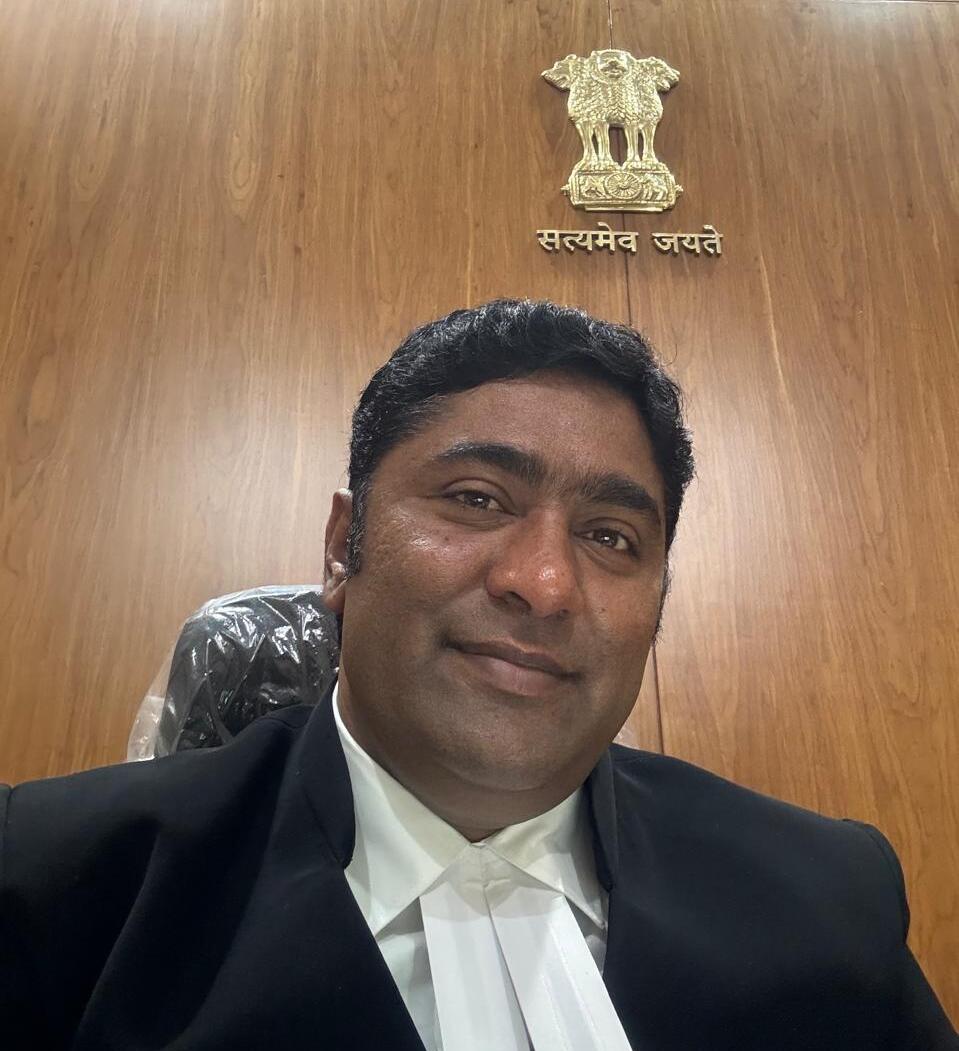
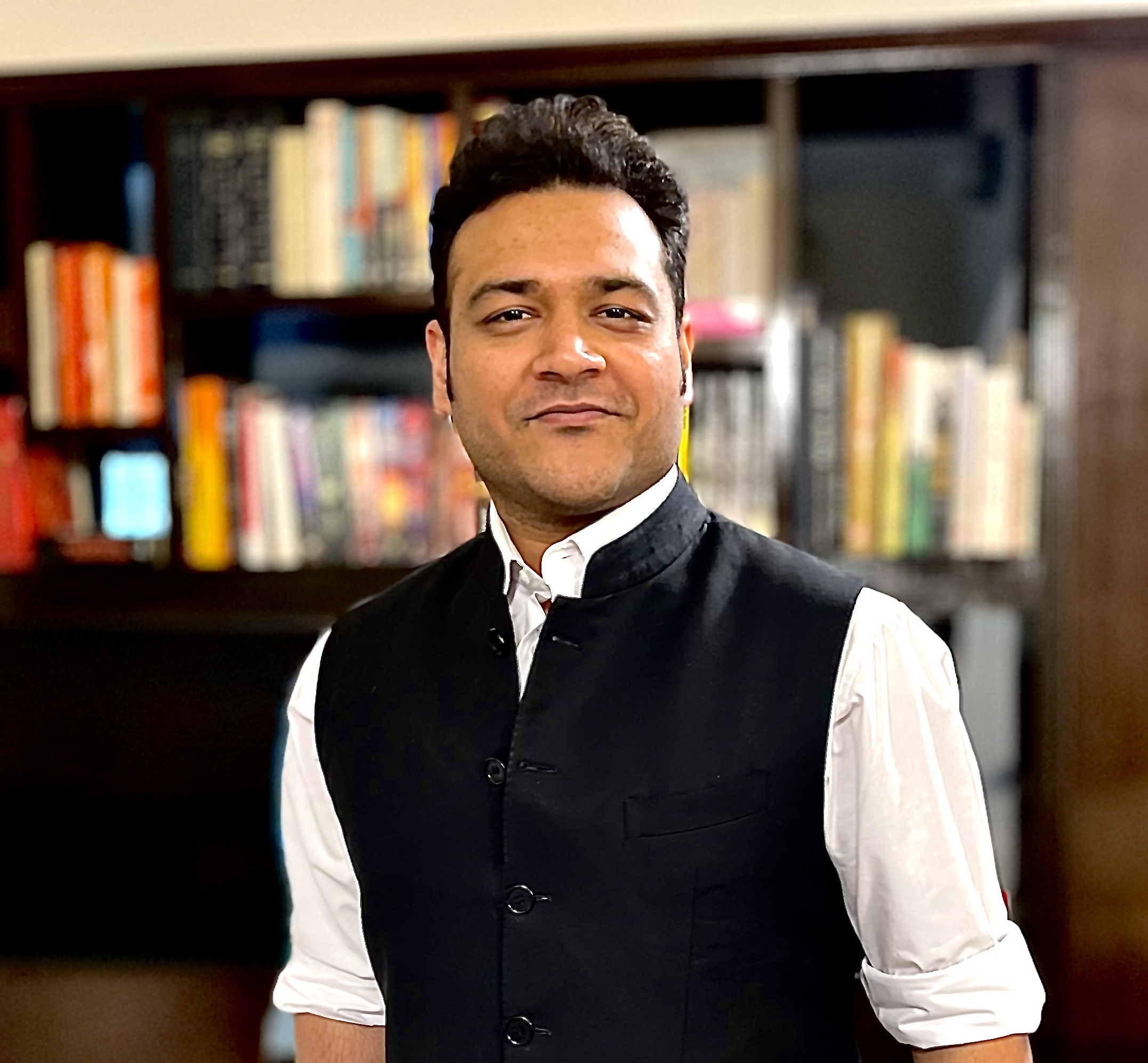
  • “Whether arguing corporate disputes, pursuing PILs, or handling sensitive criminal trials, every brief is a trust placed in my hands, to be discharged with integrity and dignity.” – Shashank Singh, Founding Partner, CTS Partners LLP.

    “Whether arguing corporate disputes, pursuing PILs, or handling sensitive criminal trials, every brief is a trust placed in my hands, to be discharged with integrity and dignity.” – Shashank Singh, Founding Partner, CTS Partners LLP.

    This interview has been published by Anshi Mudgal and The SuperLawyer Team
    How did you transition from your early years in litigation to regularly appearing before the Hon’ble Supreme Court, the Delhi High Court, and various other forums across the country? What were some key early learning experiences that laid the foundation for your practice?

    My transition from the early years of litigation to regularly appearing before the Hon’ble Supreme Court, the Delhi High Court, and other forums across the country was not sudden but a steady climb. I began in the trial courts of Delhi, handling matters where stakes for clients were immediate and personal. Those formative years taught me that advocacy rests on preparation, precision, and respect for procedure. Drafting pleadings instilled discipline, cross-examination taught patience, and interim applications honed the ability to think on my feet.

    Gradually, I began assisting in matters before the Delhi High Court. The shift required a different skill: structuring arguments with clarity and economy so that cases could survive preliminary objections. As clients entrusted me with appellate work, I appeared before various High Courts and Tribunals, while also briefing senior counsel in complex matters, learning how to condense large records into strategic briefs.

    The opportunity to appear before the Hon’ble Supreme Court followed naturally. It began with assisting in Special Leave Petitions and transfer petitions, and over time, I began appearing independently in interlocutory and final hearings. The guiding principle, instilled in me early on, has remained the same: never step into court without absolute command over your brief.

    Looking back, the lessons that shaped me did not come from one case or one forum but from consistently engaging with diverse matters, from trial disputes to appellate work and public interest litigation. Each stage built upon the last, creating a practice grounded not in chance but in cumulative discipline.

    As the Founding Partner of CTS Partners LLP, how do you balance leading the firm’s litigation and advisory verticals, and what vision do you have for the firm’s growth in an evolving legal market?

    Balancing litigation and advisory is less about dividing time than ensuring both strengthen each other. Litigation shows how contracts hold up when tested, while advisory allows disputes to be anticipated and avoided. At CTS Partners, we built our practice on this philosophy. Our litigation work is rooted in preparation, advocacy, and navigating complex forums, while our advisory practice focuses on precise drafting, foresight, and regulatory clarity, sharpened by lessons from court.

    As Founding Partner, I ensure insights flow between the two. A dispute in arbitration refines our contract reviews, while advisory on transactions always factors potential litigation risks. This constant feedback loop is what makes us effective across both fronts.

    My vision for CTS Partners LLP is to be recognised not only for competence but for partnering with clients through the entire lifecycle of their ventures, from inception and compliance to disputes and enforcement. In a rapidly evolving legal market shaped by technology and sectoral change, we aim to combine the rigour of the traditional bar with innovation in delivery. With a deliberate focus on sectors like Aviation, Biotechnology, Renewable Energy, and Infrastructure, we seek to build a firm that creates enduring value for clients while shaping standards in emerging industries.

    Your grandfather, Hon’ble Mr. Justice K. N. Singh, was a towering figure in the legal fraternity. How did his guidance shape your professional philosophy and influence your career choices?

    Law in my family has never been just a profession, it has been a legacy of values passed across generations. My great-grandfather was a judge, my grandfather, Hon’ble Mr. Justice K. N. Singh, served as the 22nd Chief Justice of India, and several of my uncles and cousins have served on the Bench. Growing up, the lessons came not from books, but from conversations with my grandfather where governance, justice, and human dignity were discussed as naturally as daily affairs.

    The principle he impressed upon me was simple: “You may choose to earn or choose to learn. If you choose to learn today, Lady Law shall ensure you never have to worry about the other.” From him I learned that credibility rests on preparation, judgment, and integrity, not just oratory. Even after holding the highest judicial office, he valued respectful disagreement if it was backed by logic and research. That humility before the law left a lasting mark on me. I still recall my first matter, a bail application under the Official Secrets Act. Nervous as I was, I narrated every detail to him afterwards. His focus was not the outcome, but the strategy, questions of law, and procedural nuances. The lesson was clear: never enter a courtroom unprepared.

    These principles have remained my compass. Whether arguing corporate disputes, pursuing PILs, or handling sensitive criminal trials, every brief is a trust placed in my hands, to be discharged with integrity and dignity. My family’s service to the law is not a pedestal for me to stand on, but a standard to live up to. Legacy, in my view, lies not in offices held, but in the work you do case by case, client by client, cause by cause.

    You have worked extensively in the aviation sector, including regulatory compliance, aircraft leasing, and contractual review involving sovereign obligations and global norms. What are the sector specific challenges you encounter, and how do you balance domestic legal frameworks with international regulatory requirements?

    My work in the aviation sector began with PSUs such as Air India Engineering Services Ltd. (AIESL), where every matter sits at the intersection of domestic law, international treaties, and operational realities. Whether it is a long-term aircraft lease, an MRO agreement, or a procurement contract, the advice must be technically sound, commercially viable, and compliant with sovereign obligations.

    The sector’s foremost challenge is reconciling India’s regulatory framework with global commitments. For instance, an aircraft lease must satisfy the Cape Town Convention while also meeting the Directorate General of Civil Aviation’s requirements. Counsel must draft provisions that withstand scrutiny in Indian courts yet remain recognisable abroad. The PSU context adds another layer, requiring compliance with General Financial Rules and vigilance norms, often at odds with international market standards. Bridging this gap without diluting compliance or commercial feasibility is where legal strategy becomes critical.

    Aviation also evolves faster than legislation. Engine configurations, safety protocols, and maintenance cycles change constantly, making flexibility in drafting essential. This requires working closely with engineers, procurement teams, and regulators so that legal language keeps pace with operational realities.

    Balancing domestic and international frameworks comes down to identifying the non-negotiables: statutory mandates, governmental approvals, and compliance procedures on one hand; treaty obligations, OEM standards, and global safety norms on the other. Once these are secured, agreements and dispute strategies can be structured to preserve both sides. In aviation, the cost of error is never just financial – it touches reputation and safety. That is why I approach every matter with the objective of delivering solutions that are watertight in compliance, workable in execution, and defensible before both domestic regulators and international counterparties.

    You have worked on plant genetics and environmental sustainability. How do you see biotechnology law evolving in India, especially in light of climate change and sustainability concerns?

    My engagement with biotechnology law has been rooted in real-world solutions. A case in point is my intervention before the Hon’ble Delhi High Court on the city’s air pollution crisis, where I proposed structured plantation of tissue-cultured Bamboo developed through plant genetics. This variety grows at nearly 1.5 feet per day, reaching 40 feet within two years, is non-invasive, requires minimal maintenance, and has one of the highest carbon absorption capacities among terrestrial plants. Its significance goes beyond ecology—it is also a raw material for CNG, ethanol, and electricity generation, aligning environmental goals with renewable energy targets, employment generation, and revenue creation for the State.

    This experience reflects the direction in which biotechnology law in India must evolve. Our current framework, spanning plant variety protection, patents, biosafety rules, and biodiversity obligations, largely operates in silos, whereas real biotechnology projects cut across them. As climate change accelerates, the law will need to shift from merely managing risk to actively enabling innovation with measurable environmental and social value.

    Three changes are critical. First, integrating climate and sustainability targets into sectoral approvals so projects with clear ecological benefits face streamlined pathways. Second, creating predictable and time-bound regulatory clearance systems that allow innovators to move from laboratory to field efficiently. Third, balancing commercial exploitation with safeguards for biodiversity, soil health, and community rights. My experience shows that when legal strategy is integrated at the inception of a scientific plan, both compliance and commercial viability are far more likely. The future of biotechnology law in India lies in anticipating regulatory concerns early while enabling science to deliver climate resilience, food security, and economic opportunity.

    In the media and entertainment industry, you have handled intellectual property rights, contractual enforcement, and content regulation. How do you approach safeguarding creative rights in an age where digital content is expanding at an unprecedented pace?

    Safeguarding creative rights today requires more than reactive enforcement. With content created and distributed at unprecedented speed, the law must be embedded from the inception of a project. Contracts need to be precise and anticipatory, covering ownership, attribution, territories, and protection across emerging platforms, including streaming, interactive media, and AI-assisted formats.

    Infringement now extends beyond copying to unauthorised adaptations, derivative works, and misappropriation of concepts. My role is to anticipate these risks and ensure that protective clauses and enforcement mechanisms are in place upfront. Globally, frameworks like the US Digital Millennium Copyright Act provide structured procedures for takedowns and intermediary liability. India, however, still relies on broader provisions under the Information Technology Act, which were not designed for AI-driven content or mass online distribution. This absence of a dedicated framework, especially for AI training on copyrighted material, creates significant gaps for creators.

    In this environment, I adopt a proactive approach: contracts that are both jurisdiction-specific and internationally aware, active monitoring of infringement, and swift enforcement across forums. Protecting creative investment requires foresight and adaptability. My objective is to ensure creators can innovate and share their work with confidence, knowing their rights remain secure even as technology evolves.

    What has been one of the most challenging cases in your career, and how did you navigate the legal and personal complexities involved?

    In the course of practice, we encounter matters that test our interpretation of law, our procedural skill, or our ability to strategize under pressure. Then there are cases that demand far more, cases that place you directly before the rawest realities of human cruelty and compel you to carry forth with both the composure of an advocate and the compassion of a human being.

    One of the most difficult matters I have ever handled involved grave offences under Sections 376 and 377 of the Indian Penal Code, along with offences under the POCSO Act. The accused included the father of the victims, a young girl and her brother along with his associates. Representing the children in such circumstances is not merely about applying the statute. It requires a trauma informed approach, where every interaction is measured, where every question is weighed against the risk of inflicting further pain, and where the dignity of the victims is the paramount consideration. The courtroom in such matters is not just a place of law, it becomes a place where emotional safeguards are as vital as legal safeguards.

    What made this case uniquely difficult for me was how close it felt to home. My own nieces and nephews are of the same age as the victims. In the conference, as I listened to these children speak about their lives, their words were those of any child – school, friends, small joys, yet behind them lay a history no child should have to bear. In their eyes I could see my own kin, and that realisation was unsettling. It is one thing to know the facts as counsel, and quite another to feel them through the lens of your own family. The challenge was to channel that proximity into determination rather than distraction. The law required me to be measured, precise, and unwavering in court, while the human reality urged me to protect them as if they were my own. Every procedural choice, every submission, had to preserve the strength of the case while ensuring the children did not have to relive the trauma unnecessarily.

    In the end, what stays with me is not just the legal conclusion but the resilience of those two young lives. Despite their ordeal, they bore themselves with a quiet strength that left an impression far deeper than any verdict could. For me, this case was a stark reminder that advocacy is not only about securing justice on paper, but also about ensuring that those we represent are met with dignity, protection, and faith in the process.

    From environmental issues to governance reforms, your PIL work has addressed causes of broad public significance. In your view, what role will PILs play in shaping India’s legal landscape over the next 20 years?

    Public Interest Litigation has been one of India’s most transformative judicial innovations, allowing citizens to seek structural remedies for systemic wrongs. Its strength lies in a legacy built on landmark interventions: from Kesavananda Bharati’s Basic Structure doctrine which expanded judicial responsibility, to M.C. Mehta’s environmental cases that introduced CNG in Delhi’s transport fleet, to Vishaka which created an entirely new framework against workplace harassment. These cases show how PILs can reshape governance where legislation lags.

    When I intervened in Delhi’s air pollution crisis, I sought not rhetoric but a science-based solution: structured plantation of high-yield tissue-cultured Bamboo with extraordinary carbon absorption capacity and multiple commercial uses in clean fuels. The aim was to confront ecological, economic, and employment concerns in a single implementable measure.

    Looking ahead, the frontier of PILs will broaden to issues like climate change, cross-border crimes, digital privacy, and algorithmic governance. With India yet to enact a comprehensive AI law, it is conceivable that the first major questions of AI ethics and accountability will reach the courts through PILs. The challenge will be to preserve credibility by ensuring PILs remain grounded in research, evidence, and workable outcomes rather than quick, media-driven filings.

    If pursued with rigour and foresight, PILs will remain one of the most powerful levers of systemic reform, holding the State accountable, shaping public policy, and safeguarding constitutional values for the next generation.

    You have been active in mentorship and legal aid. What advice would you give young lawyers who aspire to appear in higher courts and work across diverse legal domains?

    The first thing I realised in practice is that there is no shortcut in law. This profession is not a place for instant gratification. The cases that test you, the seniors who challenge you, and the long hours of research for a matter that may be over in two minutes in court, all form part of the process that shapes a lawyer’s instinct.

    For those aspiring to appear before the Hon’ble Supreme Court, the High Courts, or even specialised tribunals, it is essential to understand that higher court practice is not built on clever argumentation alone. It rests on a solid command over facts, procedure, and precedent, as well as the ability to anticipate the bench’s concerns and respond with clarity. This requires discipline in preparation, not just reading the brief but living with it until every argument becomes second nature. Equally important is the ability to listen. Sometimes, knowing when not to speak is as strategic as knowing what to say.

    In my own journey, one of the most formative experiences was working with Hon’ble Mr. Justice R. S. Endlaw, Retired Judge of the Delhi High Court. He not only taught me how to carry myself in court but also encouraged me to observe the craft of Senior Advocates who argued complex matters before him. He would remind us that the art of advocacy lies as much in how an argument is presented as in the law that supports it. From him, I also learnt the discipline of research, not simply gathering material, but knowing what to look for, how to sift through competing strands of law, and how to present it with clarity. Perhaps most importantly, working under him gave me perspective on how a Judge, not one from my own family background but from outside, views a matter. To this day, I try to place myself in that position, to imagine how a Judge thinks, reacts, and weighs an argument. That training continues to guide me.

    In terms of practice, I feel that the wide range of matters I have handled—from aviation and energy to medical science and biotechnology, has been a real advantage. Some of these areas are highly technical, but that is precisely what the profession demands: the ability to absorb, adapt, and make sense of disciplines far outside one’s own training. The law, by its very design, pushes you to step beyond comfort zones and to develop the capacity to present almost anything with clarity and conviction. In India, this adaptability is becoming even more important. With a rapidly expanding Bar, seniors with decades of experience, and the recent entry of foreign law firms, competition is only going to get more intense. Against that backdrop, being multifaceted is not simply a matter of choice but of survival and effectiveness, since clients increasingly expect lawyers who can handle diverse and often overlapping fields. This is not to suggest that there is anything wrong with focusing on a single specialised field. But in our system, cultivating breadth in the early years gives a young lawyer resilience, perspective, and the confidence to meet very different kinds of challenges.

    Lastly, I believe it is important to never lose sight of the fact that law is a profession of service. Mentorship, legal aid, and pro bono work are not optional extras. They are reminders of why many of us entered the field in the first place. Whether representing a corporation in a regulatory matter or a victim in a criminal trial, the lawyer’s role is not just to safeguard rights but to protect dignity and trust. If one carries that ethic forward, higher courts will not only be places to appear in, but arenas where a lawyer can contribute meaningfully to the living fabric of the law.

    Get in touch with Shashank Singh –

  • Choosing Law, Living Justice: A Woman’s Stand for Change in Indian Courts – Niyati Sharma, Founder of NS Solicitors.

    Choosing Law, Living Justice: A Woman’s Stand for Change in Indian Courts – Niyati Sharma, Founder of NS Solicitors.

    This interview has been published by Anshi Mudgal and The SuperLawyer Team

    Let’s understand why and how you chose to pursue a career in law while you had already completed your Bachelor’s in English from Delhi University?

    It’s a very interesting question though. I never thought of becoming a lawyer, but I had this idea in my mind that I wanted to do something which has a larger public interest.
    It was my father who wanted me to become a lawyer. I was a UPSC aspirant and I used to say, this time I’m sure that I’ll clear UPSC. And he used to say that you will become a very good lawyer.
    So it was his inspiration and the journey when I entered into law. And when I did my first internship, it was at the Delhi Commission for Women.
    I had goosebumps when I went there for the first time. And for the first week, I could not sleep. I used to say to my mom that I never thought that women are in such a bad condition. What I was seeing was a nine-month pregnant lady saying that her husband pushed her back, threw her out of the house, and beat her so much that she ran away. Another female was raped by ten men. She had married one, and he just captured her in her home, and she was being raped daily by ten people.
    She said that she had just run out of that place. So that sort of complaint was coming from very basic people who never knew what law was, who never knew what resort they had or where they could go and complain. And when I saw that this power a lawyer has, this knowledge a lawyer has, any female lawyer or a male lawyer can deliver this justice or help in taking that path, this internship changed my outlook. And this was the reason that I decided I will not go for judiciary, I will not go for UPSC, but I will go for litigation.

    During the very early stages of your legal career, what kind of experiences do you see have shaped your thoughts in relation to the kind of practice that you want to take forward because you are doing something very unusual? Why? Because your points towards bringing in that social justice in society are very different. And I really would request you to bring in those aspects which were so inspiring for me. And I really don’t want to push anything, but I just want to understand how you came to that thought process because it’s not easy for anyone to just give up something so big and plan something to do for society that easily.

    So basically, I had a plain paper when I entered into litigation. No one from my family, no one from my in-laws, no background from lawyers or litigants to the nearest or the far more relatives I could see. I had never experienced or listened to any lawyer or their experience. I just did law and I came as a practitioner.
    But as soon as I came, I realized that this is the only field which is gender neutral. Gender neutral in the sense that the hard work a male has to do, the same a female has to do.
    You have to earn your client on your own. You have to work on your own. Suppose I say today that I want to practice in the field of IPR or I want to practice in the corporate field, but I want to be in litigation. That means I should have my own clients. But then I’m getting divorce cases, I’m getting property disputes, depending on the social exposure that I have or the client base or the people who know me as now becoming a lawyer. So the first and foremost thing I realized after becoming a lawyer is that you cannot choose your profession, the profession chooses you.
    That means the field you can’t choose, the field will choose you. Otherwise, in a job in various law firms, you can apply for a job in which you are interested. But becoming a proper advocate, practicing independently as a litigant, you have to wait for your clients. Then, when I say it is a gender neutral process, a client comes to you, a client doesn’t bother if you are not feeling well, you are married, you have shifted to a new place, you have kids, you don’t have kids, you’re pregnant, you’re not pregnant. Doesn’t matter.
    For them, they need the delivery of their work. Doesn’t matter whether you’ve eaten or not. And the same things apply to a male. They don’t bother if there’s some mishap in the family, if they’re struggling with something, or if they don’t have people to come. Whatever the problem a male faces, the same problem and even more a female has to face. So I understood that I can’t cry like a crybaby. I have to make sure that I have my own setup.
    I have my own work culture. I have to set my own standards, and I have to start working the way every second person in this profession is working. Every colleague is working with the same passion that I am working with. What difference do I have to offer to my clients? I should trust them.
    I should be loyal to their work. I should be readily available to them. These are very important points. It’s very unfortunate that I’m saying this, but clients come to me with this problem that their lawyer is not picking up the call. It is very shocking because taking a case means taking the whole life of an individual. So this moral social obligation that we as lawyers have, ethics also, we know what our ethics say. But fortunately or unfortunately, whatever the circumstances are, I can’t comment on that.
    But these are three to four very essential things as a lawyer irrespective of whether you are a male or a female, you have to face.
    But when I went to the court, I saw that actually the condition, the infrastructure is very poor.
    I strived in the chamber for almost four or five years. I worked from the chamber, and what I realized was that there were no basic amenities, no washroom facilities. If a female is pregnant, then she might have some medical condition if she’s using those washrooms on a daily basis. And when it comes to hygiene, it was very bad. And with respect to females, there’s another factor of hygiene. It was very bad. And with respect to females there’s another factor of regular day-to-day monthly hygiene and basic facilities and amenities, but all of them were lacking.
    I realized that one of my colleagues, she started practicing with me. She got married, she was blessed with a baby girl, and then she was nowhere to be seen in the court. I asked her, why aren’t you coming?
    So she said that my baby is too small, and coming to court means you have to start by 9 in the morning, and you don’t know whether you will be reaching back by 8 or 9 or 10. The time is not limited. And I can’t leave work. There is no facility in the court where I could come with the baby and use a creche facility, leave her, do my work, and go back. And this is not about the Honorable Supreme Court or Honorable Delhi High Court. The basic infrastructure at the district court level, where most of the females are working and being independent lawyers, they get cases, independent cases, that means they have their own client base. So they have to first start with district court only. Nobody will give you a direct SLP of the Supreme Court.
    So they have to struggle for that. And with the gap of the maternity time period, their family also says that you can’t take the child, what are you earning? It doesn’t make sense because those first five years are pretty hard for every lawyer, either male or female. And when we see that there are females of 20 to 25 years, 30 years of age groups from 20 to 30 years, and then you see females from roughly around 40 and above because in those 10 years, most of the females are engaged in their household activities.
    So for that, I observed that in order to sustain in this field, every female has to find a way out. First, it’s better to establish yourself, and it’s very important that as a female you have a better family who understands you, after marriage and before marriage, who understands your work, respects it, and helps cater to those four to five years of growing up and understands your development and growth.
    So the challenges of being a female lawyer are very interesting, and it’s very deep. And I enjoy those challenges. And then I see myself that I have actually come out of it, so I feel that it’s worth living.

    My next question would be, how do you see all these kind of challenging impacts help you either get better perspective towards law or help you get clients or help you do the networking, because all of these things at the end of the day end up either having a better network which will bring in a long term of change or have better clients who may or may not bring in that particular change.

    So how do you see your practice moving towards a specific area of such sorts which actually points out such important things that are not there. That is basic infrastructure, just to practice. So how do you see yourself in times to come?

    See, what future to predict I don’t know, but what I can say is it has made me a better human being in that perspective because being a lawyer, being from a well off family, or a family who promotes females to get educated and also in my next family where I am married. They also promote females to be educated, to go out and to have work.

    She’s struggling that there are no washrooms in the capital of Delhi in the main courts where almost five to ten lakh people are coming on a daily basis. And again, I’m not talking about Honorable Delhi Court and Honorable Supreme Court. They have very good facilities.

    But when we come to district court, I can’t say what Uttar Pradesh, Rajasthan, Punjab, Haryana district courts are to offer to the lawyers. But when I see that there’s no creche facility, no washroom facility.

    I can feel that a female who’s not empowered, who’s not having that support from the family, who is not educated, now they have to face daily life problems.

    Their husband might die and they might end up in domestic violence disputes with their in-laws.

    Or they have husbands who are not supportive. Or the family, they got married and she has to run off and she might be facing some other issues from the family or a girl who has taken a step out and she got married but it doesn’t work the way she had thought. And now she wants to explore legal remedies.

    So, since India has so much population, and the population has so much thought process and every individual is different, I feel that this experience which I had in my past five, six years, it not only evolved me as a person but also gave me a thought process that how much a female or a male or a person on daily basis is struggling every day going out and earning for the family and then facing legal issues, what all they have to experience. So when I look down on myself for the next five to ten years, I see that I have to make sure that those people who are actually loyal to their work, who are actually loyal to the system, who actually look at justice as God. They get what law has provided in its books, and it should not be just a book, it should be a delivery system. And we being the representative, we should deliver it to those people.

    So, my journey as a whole has started from district court and then High Court and then Supreme Court. If I had gotten a golden plate, I would have started from Supreme and I could have not seen what cross examination is. I could have never seen what evidence is, what are the documents that need to be added in the file, what all evidence I need, and what is the written statement that I have to file.

    Or what are the basic ingredients that plaint should have. This is what I have learned from my clients. They have told me that, you know, this document needs to be added because it has this relevance. But when I look into SLPs what I see is down paper trail. Oh, in district court, this paper was not there. Now our case is weak.

    So a well learned, educated lawyer should come to district court, they should practice there, and then they should proceed to Honorable High Court, to Honorable Supreme Court, and this should be the step. But nowadays, the generation is that as soon as they do law, they feel that we are lawyers of suits and we just have to jump into some lavish kind of practice. We will get some fame. I don’t know what they think of it.

    Actually, they should come to district court and they should understand what a life of a lawyer and clients are.

    How does the court function? Very interestingly, I would say, I was in the Rouse Avenue Court. We had one argument in the CBI matter and one of the senior advocates from Maharashtra was there, and I was addressing readers of some work and I said I’ll ask Alhmad. So the senior advocate said, who’s Alhmad? So I said that there is this person who looks into the court’s day to day activity. So he said, but in Maharashtra we don’t call him Alhmad. So how does the court practices vary from state to state?

    Even I would not know. I go to a new place, what a reader is called, and when we go to Ghaziabad court, a reader is called Babu.

    But being an independent practitioner, I should be aware of all these practices. Even if my clerk would come to me and say that, you know, this much is the cost, I should know that I have gone through all these things. I know how much it may cost. So a lawyer should be the clerk first, then should be an intern, and then should be a litigant.

    And this is what I have learned through my journey till now.

    Let’s move on and understand certain challenges that you may have encountered while you were dealing with sexual harassment complaints or administrative inquiries during your representation of plans or universities per se, especially University of Delhi.

    How have you strategized that and how have you overcome those kinds of challenges?

    So I’m not specifically talking about any university per se, but we have to understand the importance of the POSH act. Unfortunately, most of the people are not understanding what POSH act is about and why the POSH act was born.

    So in that case, what happens is females are using it, first of all, and also misusing it. So in every sort of institution, administration, these are first and foremost important things that we make sure to understand the genuineness of the case. Secondly, the males are offensive in that case, what they say is, we’re also harassed, this is what I face in most of the training sessions. What the male’s outlook is with respect to the POSH act. We are also being harassed. There are fake female complaints. There are administrative issues with respect to promotions and with respect to work culture, with respect to the hours that they have to work and they do not feel like working.

    They file a complaint under ICC, so even males are not understanding where that line is being crossed and it becomes a case of POSH act.

    Third and the foremost thing is the ICC committee itself, they’re not even aware what is procedure first of all, they feel they are not even comfortable with the environment that, if a complaint has come how it should be dealt with. Either they panic. What I have observed in most of the corporate companies, what they do is without getting into investigation, they suspend the accused or the respondent. And this is a very dangerous situation. Just in order to prevent your name, your company’s name, you suspended a person without getting to know what has actually happened, without even investigating.

    So what’s important is the awareness. Training of POSH is a very fundamental and important aspect that is ignored by most of the institutions until and unless there are complaints which have come. Then they will recommend their final finding that POSH sessions are recommended.

    But it is not similar to any gender committee. It’s not similar to any disciplinary committee. It has its legal liability. It has its legal obligation that has to be complied and the birth of the POSH is because of Bhavari Devi case and Nirbhaya rape case.

    That is to be understood. It cannot be compared with a male harassment or disciplinary committee harassment. It’s very different perspective and it evolves around that definition of sexual harassment only and those points only determine the complaint. So these are the challenges which I have faced while dealing specifically with the POSH act and the complaints before ICC most of the time.

    I would now like to ask you about establishing your law firm at such an early stage. You have made NS Solicitors and after working for such a short span of time, you have built a name for yourself. What do you see or what plans do you have as a mission and vision for your firm, along with the kind of causes that you are fighting for, or you are bringing in those topics, which are absolutely required.

    So how do you plan to take forward your law firm, along with the passion that you have for social causes?

    One thing which I feel as a lawyer is that a law firm is mandatory for me.

    All the juniors, all the associates associated with me, I feel that they should be independent and their independence is not in association with me. Whenever associates or an intern come to me, first and foremost I say you are not here as a permanent member.

    You have created your own practice. How can I help you? You have to take my help. You have to go out in public. You have to create your own face. This is how I started. This is how my seniors helped me, and this is how I should help you. This is my obligation that you are being associated with me.

    And I should make sure that you have your own life ahead. So the concept of a law firm for me is that all the associates with me, I am associate and they are also associates. I never call myself a founder. I never call myself head of the team. If I am working on a case, I make sure one associate with me is working so both are equal at the stage. I never named my law firm as Niyati Sharma and Associates because not all of us are associated with my name. If they as a lawyer are dealing with their client, they have my office, they have their law firm name, and they can have their card made, they can use their file which has NS Solicitors, and they have their own name on their card.

    They’ve got their name on their file. They feel independent, they don’t need infrastructure, they don’t need money for that. So, the idea of a law firm is only for that. Another reason for the law firm is that I have different sects of corporate, civil, criminal, and we all have the head of all the sects and specifically with the IPR. So, I had one of my associates who started his practice from a very early stage. But he was not sure where he had to go and how he could explore cases, how he could get more cases.

    So for him specifically, we highlighted a few aspects that were he’s coming from, where his family belongs to, what sort of work he’s into. So what we used to do is, I used to give them Saturday off and they have Sunday off. So on Saturday, they had to go to their gatherings.

    They had to meet people and then distribute their cards and tell them that I have my office at this place and if you have any issues with respect to your work, you can let me know. It took him six months. And those regular practices like going on weekends, going to some meetings, some family gatherings, social gatherings.

    What I have seen usually is nine to eight associates working, no Saturday or only Sunday off, and it’s a packed job. But whenever my associates touch wood as of now, if they ask for a leave, I make sure they have to inform me beforehand. So, we designed their work in such a manner that it took him six months and one year or so, and gradually his first case came.

    And, whenever a first case comes, we make sure we have a cake cutting ceremony or we distribute sweets for our associates. And then randomly another case came, and then another case came. Now that the associate has his own office in Delhi, but he is again associated with us till now.

    So, this is how I feel. I do not want to restrict any newcomer. They have their own life. They have their own family. They have their own perspective of looking into society and why should that perspective be limited to my office only.

    So I’ll have 10 offices, then it would not be only my single office. So, this is the way I function my law firm, and today I’m proud to say that I have associates and juniors from all over India. From Kolkata, from Nagaland, from Haryana, from Delhi. Those who can obviously travel to Delhi and want to work.

    I am open to every sort of work culture just because of the reason that everyone should get equal opportunity and they should get that scope of practicing in Delhi. And they should not be held back that I don’t have anyone, I do not have anyone in Delhi, where should I go. So this is how I want my law firm to be. Today also, when I see interns, I make sure that not specifically Delhi, I have students from different, different parts of states. If they’re applying to me through email, I very proudly welcome that. Just because of the reason that they’re doing so much hard work that they’re finding out the advocates online, and then they’re applying. They’re not coming through their father’s call or through their uncle’s call or through someone. So this is how an experienced advocate who has seen all the journeys should treat youngsters.

    Such a positive and noble gesture that you are imparting on so many people. It is already bringing in a lot of change and I feel like it’ll be bringing in a lot more change if everyone whosoever is associated with you, expands their services and their purpose. It’ll be very influential for social causes as well as the practice itself.

    So, do you think in doing all of this, has social media contributed in any way, bringing in these kinds of changes, bringing in your awareness aspect in front of the society? And how has that helped you establish even more authority and authenticity in your practice?

    Let me say that social media and online practices have evolved a lot. When I started there was no social media. Post Covid, there was actually the beginning of online virtual hearing. And I do remember that when I was in the early phase of my pregnancy, I had an abortion though. During that time, I was running to court and I was sweating and I was out of breath.

    And I felt that I might have to end my practice here because I can’t come for another few months in such a conducive environment where I have to run and reach the court. I have to park my car and have to run, move fast and my items are about to reach, this is how lawyers are working, you know, very fast, super fast, but then gradually after 2021, by the end of 2021. There was a transformation to virtual hearing.

    And this empowered mostly females who are having maternity issues, who are having health issues, who are having their young ones, and they cannot travel that often that a male advocate can. Obviously, they can go to their office for a few hours and then come back home but they have virtual hearing. If the child is not feeling well, if their husband is not feeling well, if someone in the family is not feeling well, they can take that time, which is involved in traveling and through virtual hearing, they can do that. So the litigation has empowered females a lot via virtual hearing.

    Specifically, those females who are around the age of 25 to 40, they can establish their litigation. They can have their family. They can have their clients. Even a female in one room setup at their home can establish her litigation with a virtual hearing setup. She need not go to the chamber, she need not go to office, she need not join another person’s office just because she does not have her own setup.

    So, the virtual hearing has increased the participation of women. So. I have this data which says that only 15% of the females used to practice when there was no virtual hearing, but after virtual hearing, the participation of females has increased a lot. Now, a female doesn’t take a break of even six months. So virtual hearing has evolved so much that it has empowered the females.

    When it comes to social media, we see that there are so many reels that advocates are making these days, so when I say that while I was starting my practice, I had one case in a month. And another 29 days, I had nothing to do. I used to call people or talk with my friends, or I used to think of it. Now I don’t have time. But when I see those youngsters who have just done their law or are into practice, they started developing their social media to that level. Now they have thousands, lakhs of followers.

    And gradually they’ll get work from that space. So, now the client base is not just limited to your near and dear ones. The client base has now changed to social media also.

    You get a lot of work from social media and this has empowered those who might not have a circle where they might get a case, but they have that idea where they can deal with artificial intelligence, they can deal with space law, they can deal with environmental law, they can deal with sports law, which is not a common practice when it comes to civil or the criminal sort of work.

    So, social media, I guess this is the way it has impacted.

    So while you were talking about all these burning issues, I would say, they bring in a lot of food for thought, especially for young lawyers who are starting not only their career, but their lives as well. What is your take on maternity leaves or rather parental leave or paternity leave? How do you see that will bring in more workforce back if one gets ample amount of leave after having a baby?

    So this issue was raised by one of the advocates, before the Honorable High Court of Delhi. And it was observed thereby that advocate is a professional-based service and therefore there is no need for maternity leaves. But I would like to add to that, that it’s not just the professional-based services, rather for a female who’s an independent advocate, who is appearing before the court and having a good amount of attendance. The bar should take that criteria in that if you are having supposedly 20 appearances in a year and you have to take maternity leave. So the bar should give a stipend of let’s say 5 thousand, 10 thousand, so that she can take care of herself and her baby during those six months when she’s off from her work. Even the family won’t say that you are not getting anything, being a lawyer.

    If you would’ve got a government job, it would’ve been a better position, what are you getting from being a lawyer? So in that case, a small support from the bar will help the females to get out of the six months phase, and then gradually she can start the practice. But when as a female we see that we do not have any support, even if taking leaves, then the gap from going out of career and the line of going out of career starts.

    So I think maternity for females is an important aspect, which I think the bar should take that decision just like they had helped in COVID providing stipend to those young advocates who were not doing that good and required some basic stipend. Similarly, those females who are not from that well-off family or they need support to establish their career, they can have this six months stipend. A specific amount should be decided and they should have an attendance prior to practicing or they should have an attendance continuously so that they are eligible for the maternity leaves or the parental leave, let’s say.

    You mentioned the bar’s role during COVID, how do you see bar associations, both state and national, contributing to the lives of lawyers in India, especially in promoting gender equality? Given the lack of basic amenities like toilets and maternity support, what role should the bar play, and how does this compare to international bar practices?

    So I think now the bar has also become a very strong, opinionated platform where the lawyers and the youngsters are getting into.

    Let me tell you, with respect to the Delhi High Court elections, this time there were more recorded voters than ever before. So the participation of advocates is increasing. Similarly, the youngsters are coming into the bar elections. So now the perspective of the bar has changed a lot and the bar has a very important role to play with respect to the basic amenities, the facilities, the outlook, the perspective of lawyers, and what are the challenges the lawyers are facing. It is the bar that takes it up. So, when it comes to the international community how they make sure that the facilities are there,

    The perspectives are there. I must tell you, it is the first time that female reservation in the bar came up this time. So the role of the bar has evolved because there were no females, so there were no requirements, there was no urge. So we are at a revolutionary stage with respect to the bar also.

    The representation of females has increased. The candidates you may see there are so many females now coming up. In campaigning, there are so many females involved. So now the bar has an important role to play with respect to the basic amenities, the facilities. And now the bar is coming online through social media and telling that these are all the things we have done in the court.

    So very interestingly, I’ve seen the president of Delhi High Court or the elected bars of Saket Court, let’s say Dwarka Court. Now they are coming up with what they have done.

    Just on the first day of their bar being elected, they come and say that these are the things that we have done. They’re now accountable to lawyers through the social platform also. So that is the reason I’m saying that only the bar can take this issue ahead with respect to maternity and paternity leaves.

    Since we have already discussed all these things, all the advice that you have given, we would request you to impart some more wisdom and give some golden nuggets for the aspiring law students who want to build such a kind of social impactful legal career as you are making.

    Particularly in the kind of fields that you are interested in that is gender justice, legal policy, public interest litigation, and other social causes which will bring in long-term change.

    I would like to say to my young fellows who are now entering into the field or will enter into the field very soon.

    I have always seen a few female advocates and a few female judges who had all the things in their life, all the comforts, all the facilities, but they dedicated their life to social work. I might point out a few judges whom I really admire Justice Swarna Kanta Sharma, she has published so many books.

    She actually works for the justice of the females. She has worked from Delhi courts to Delhi High Court, and she’s now continuously working for the females. Justice Bela Trivedi, she has worked so much for the cause of females. So I would like to say that first, you have to empower yourself. If you feel that you want to contribute to society,

    The first and foremost thing is to make sure that you have your hold on your profession, and through your profession, you have to deliver into society. And this is how all the successful males and females in this field are working. And secondly, you have to target your career and divide it in three-year spans. First three years, you should have a target, next three years, you should have a target. First three years, you should have a target that people should know you. After people should know you, after three years, those people should get back to you. You have to make sure that if there is an advocate, your name should come to their mind.

    And then comes the golden phase next three years and you will not know how, after 10 years, you are into those top 10 lawyers. But you have to make sure as a litigant, it’s not a piece of cake that you are entering with lavish gowns, flowing and photographs. This is a very beautiful way to display your profession, but your objective should be clear, your target should be clear that first three days all my people should know that I’m an advocate. You should not expect anything else more than that. And once you’re an advocate and people are coming back to you, then you’re a lawyer. You have established yourself in your field. So this is my message to all the young generation. See what all successful people have done, learn from their mistakes, and then decide how you will be taking your five years ahead.

    And one thing more as an advocate, when I started, people used to say it’ll take you five years to establish. I used to say they’re very slow people. They don’t know how to establish themselves. But when I came into this field, I understood why they used to say five years. It is not that you won’t get work till five years. You will get work.

    The pace of the work will be very slow. You’ll have to go through a lot of patience and then things will fall into place.

    Get in touch with Niyati Sharma –

  • “In the coming years, I aim to contribute significantly to both the academic and practical discourse on international arbitration through publications, speaking engagements, and participation in global forums.” – Abhilasha Vij, Associate at Allen Overy Shearman Sterling LLP, Germany.

    “In the coming years, I aim to contribute significantly to both the academic and practical discourse on international arbitration through publications, speaking engagements, and participation in global forums.” – Abhilasha Vij, Associate at Allen Overy Shearman Sterling LLP, Germany.

    This interview has been published by Anshi Mudgal and The SuperLawyer Team

    Coming from a commerce background, what inspired you to transition into law as a career? Were there any specific experiences or moments that steered you in this direction and set you on this remarkable path?

    During my later years at school, I was inclined towards commerce and economics. However, once I started pursuing a Bachelor of Commerce degree at the University of Delhi, I realised that I was particularly fascinated by business and company laws. I delved deeper into the subject and spoke with individuals who were pursuing careers in law. It was then that I knew this was the field I wanted to study. 

    In the second year of my LL.B. at the Faculty of Law, University of Delhi, I encountered arbitration for the first. While interning at a law firm in Delhi, I was asked to assist with an ongoing arbitration case. Beyond providing access to an early resolution of commercial disputes, arbitration offered systematic and streamlined processes and neutrality. I was immensely impressed by the concept of an alternative forum for dispute resolution, especially in a country like India where the courts are burdened with pending litigation. This initial experience sparked my interest in becoming an arbitration practitioner.  

    With guidance from my mentors, I gained further experience in this field and began working as a disputes lawyer at Luthra & Luthra Law Offices.  

    You completed a degree of Master of International Economic Law, Business, and Policy from Stanford Law School, USA. How has this specialized education enriched your career? What aspects of the program at Stanford were particularly valuable for you, and did you encounter any challenges during your studies? How would you describe your overall experience there?

    When I applied for an LL.M. at Stanford, I saw it as an option to broaden my horizons. I did not want to limit my exposure to only international arbitration. I had read about a variety of innovative courses at Stanford, such as International Business Negotiations, Regulating Artificial Intelligence, Data: Privacy, Property and Security, Facilitation, etc. I wanted to take these courses in addition to the traditional subjects and have a well-rounded experience. I am glad that my instincts paid off. For instance, International Business Negotiations involved teams from Stanford and another law school in a simulated corporate transaction over a period of three months. As an arbitration practitioner, I had never experienced the negotiation aspect of a transaction. This course provided insight into the commercial aspects of the contractual clauses that I regularly encounter in my work.  

    In addition to offering versatile courses, Stanford’s small class-size offered numerous opportunities to engage in rich and meaningful discussions with a brilliant set of individuals and learn more about their experiences in their respective jurisdictions. However, it was also challenging to be there. When surrounded by brilliance, it is natural to experience self-doubt at times. Fortunately, Stanford has an excellent faculty and counselors who helped me navigate these challenges. 

    Overall, my year at Stanford was the best investment of my life. I thoroughly enjoyed being on campus, attending classes and guest lectures, socialising with peers, and occasionally taking small trips to the beautiful parts of California!

    In the early stages of your career, you worked as an associate with various firms in India. What key learning experiences from that time played a pivotal role in shaping your career trajectory? Can you recall any specific instance that was especially impactful for you?

    A great benefit of studying law in Delhi was the access to full-time and part-time internships throughout most of the year. I interned at several law firms during my LL.B., which taught me many skills that are highly valued in junior lawyers. While education is crucial, having the right mentor is equally important. I was fortunate to be mentored by some of the nicest and most talented lawyers in Delhi. 

    I began my career as an associate with Mr. Gaurav Bahl, an excellent mentor who significantly shaped my professional path. Working with him prepared me for the next step in my career: joining a law firm. I joined Luthra & Luthra Law Offices and worked with the disputes team for the next three years. During this time, I handled arbitration matters, commercial litigation cases, and occasionally argued smaller cases in court. While it was fascinating to work on a variety of legal issues in office, it was exhilarating to argue cases before judges. Sometimes, hard work paid off in the form of favourable judgments and orders. At other times, there were invaluable lessons. To this day, working in the field of law brings me immense joy, and I would not trade it for the world.

    One of the most enriching experiences at the law firm was when my partner encouraged me to handle an appeal before the Supreme Court in a matter involving complex securities law. Before addressing the legal issues, it was crucial to work closely with technical experts to understand the intricacies of the futures and options market and the role of their business. Looking back, I vividly remember how much I enjoyed working outside my comfort zone on complex legal issues and resolving them. However, achieving a favourable judgment would not have been possible without deep diving into the commercial aspects of the case. As a disputes lawyer, I believe the best results for your client can be achieved by understanding their needs and the needs of their business. Whenever I get a new case, I invest a considerable amount of time in understanding the client’s business and what a desirable outcome looks like for them.

    After your time in India, you transitioned to an international practice, working with Freshfields in Dubai. How did you manage the cultural shift and navigate the complexities of international law, especially in the realm of dispute resolution? How do the legal environments in Dubai and India differ, particularly in handling arbitration and cross-border disputes?

    During my LL.M., my career counsellor at Stanford encouraged me to explore global opportunities alongside my job search in the United States. The US market is challenging, and only a few firms are interested in international law graduates. I connected with several professionals, meeting arbitration practitioners over coffee in San Francisco and New York, and through virtual meetings via Zoom. During one such interaction, I came across Freshfields’ six-month trainee programme. I applied and was accepted after a couple of interviews. The programme served as a springboard for my international career.  Freshfields sometimes hires from their pool of trainees, and that’s how my six-month stint turned into a full-time associate position.

    Dubai is truly an international legal market. The international arbitration team comprised lawyers from different parts of the world and advised clients from several jurisdictions. The style of working was unlike what I had experienced in India, but I was fortunate to find kind and patient mentors and teammates. I worked on multi-jurisdictional arbitrations, which offered the opportunity to collaborate with local counsels from India, England, the Middle East, Australia, and other regions. On several matters, the teams included colleagues from different jurisdictions, making networking and collaborating within the firm quite easy. 

    It was a challenge to unlearn the traditional Indian style of drafting and embrace the US-style simple and succinct legal drafting. Moreover, the scale of the matters necessitated the use of technology, so I learned how to utilise emerging legal-tech tools to make my work more efficient. I believe it was important to approach my job with an open mind – it really makes your life easier.

    A great aspect of working with an international law firm was that my work was not limited to commercial arbitration. From time to time, I engaged in investment arbitration, investigations, and non-contentious legal work. My favourite part, though, was working as a tribunal assistant in several alternative dispute resolution cases involving the International Tennis Integrity Agency and the Basketball Arbitral Tribunal.   

    Currently, in your role at Allen Overy Shearman Sterling LLP in Germany dealing in International Dispute Resolution, you handle complex international commercial arbitration and cross-border disputes. What do you find to be the most challenging aspect of managing such disputes, and can you share a specific case that stands out as a significant learning experience?

    I have been working at A&O Shearman since February 2024. My decision to move to Germany was motivated by personal reasons, and it was a difficult choice. I was seeking to join a team with an international practice, not limited to commercial arbitration. Over the past 14 months, I have already worked on post-M&A disputes, energy disputes, investor-state issues, and investigations. 

    A challenging aspect of working in the German legal market is dealing with the German language. Many contractual disputes are governed by German law, and important commentaries and case law are only available in German. Moreover, Germany is a civil law country, and the concepts can be quite different from common law. Therefore, as an arbitration lawyer, I work closely with German law experts. This collaboration provides me with an opportunity to dive into a different legal system and learn more about civil law. It is quite fascinating! 

    Recently, I advised on claims under a warranty and indemnity insurance in an M&A transaction. This has been a great learning experience, as I had not dealt with this issue before. It is an emerging area of disputes, and there is only limited literature on its practical aspects. As a lawyer, you must read all you can and trust your instincts. I am doing that, and it is helping me develop expertise in a niche area of law.        

    As someone who has built an illustrious career in international arbitration, what advice would you give to young professionals aspiring to follow a similar path? How can they position themselves early on to excel in this competitive field, and are there any specific resources or strategies you would recommend for deepening one’s knowledge of international arbitration?

    First and foremost, I highly recommend gaining internship experience during your LL.B. Reading books and writing exams at law school is very different from how law functions in practice. My internships helped me realise that I wanted to specialise in dispute resolution, with a focus on arbitration. 

    Then, pursuing an LL.M. is a significant financial commitment. It should be viewed as an investment that may or may not yield immediate results, so it is important to remain open to all possibilities. I cannot emphasise enough on the importance of networking during your year abroad. An LL.M. is not just about studying law; it is also about developing and refining skills that will help you grow as a professional. Invest considerable time in researching law schools to find the one that meets your individual needs. 

    For students, I would highly recommend participating in moot court competitions. There are several arbitration-specific moot courts held both in and outside India (e.g. VIS Arbitration Moot, Frankfurt Investment Arbitration Moot, Sports Arbitration Moot). These competitions not only provide an opportunity to learn about arbitration in practice, but also to network with students and professionals from other cities and countries. 

    For young professionals, the easiest way to deepen your knowledge of international arbitration is by reading journal articles and blog posts on arbitration cases (e.g., Kluwer Arbitration, GAR) and staying updated with the developments in this field. Attending lectures and conferences on arbitration is also highly beneficial – not only for learning more about the law but also for engaging in meaningful conversations with arbitration practitioners. LinkedIn often features opportunities and scholarships to attend conferences abroad, offering a great chance to broaden your horizon before committing to an LL.M. or a job with a law firm abroad. 

    Given your demanding role, how do you maintain a healthy balance between your professional and personal life? Are there any hobbies or activities you engage in to relax and recharge?

    Maintaining a work-life balance is a significant challenge in the legal profession. As a young professional, I often overlooked this crucial aspect. However, in recent years, I have started to take it more seriously. I greatly appreciate the work culture in Germany, where there is strong emphasis on both physical and mental well-being. This supportive environment has encouraged me to take better care of myself while continuing to excel as a lawyer. 

    For relaxation, I enjoy reading fiction and listening to music. Occasionally, I take holidays and plan weekend trips with family or friends to the mountains or other European cities. I also try to exercise regularly and eat healthy. Most importantly, I ensure that I take a break on weekends, unless an urgent matter requires my attention.       

    With such an impressive and diverse career, what do you see as the next challenge or opportunity you would like to pursue? How do you envision your career evolving over the next few years, and what legacy would you like to leave in the field of international arbitration?

    As an India-qualified lawyer working with international law firms, I have had the privilege of navigating diverse legal landscapes and engaging with a variety of complex cases. The next challenge I am eager to pursue is acting as an arbitrator. In the past, I have thoroughly enjoyed being a tribunal assistant, and I am excited to experience the decision-making aspects once again. 

    In the coming years, I aim to contribute significantly to both the academic and practical discourse on international arbitration through publications, speaking engagements, and participation in global forums. Additionally, I aspire to mentor young lawyers, particularly those from underrepresented regions, and provide training to help them navigate the complexities of international arbitration.  

    Get in touch with Abhilasha Vij –

  • “Master your craft, stay updated with  evolving jurisprudence, and above all, uphold the integrity of the legal profession.” – S. Ismail Zabiulla, Additional Advocate General Government of Karnataka at High Court of Karnataka.

    “Master your craft, stay updated with  evolving jurisprudence, and above all, uphold the integrity of the legal profession.” – S. Ismail Zabiulla, Additional Advocate General Government of Karnataka at High Court of Karnataka.

    This interview has been published by Anshi Mudgal and The SuperLawyer Team

    With almost two decades of experience in law, what inspired you to pursue  this profession, especially considering your background in an agricultural  family? Could you share your law school experience and how it shaped  your path in the legal field?  

    My journey into law was driven by a combination of personal ambition, resilience, and the  unwavering support of my family. Coming from an agricultural background, legal studies were  not a conventional path in my family. However, after facing setbacks in my early academic  pursuits—particularly in my 12th-grade science exams—I took it upon myself to carve a new  path. The decision to study law was not one of convenience but of deep-seated aspiration,  coupled with an innate sense of justice and advocacy.  

    Being the first in my family to enter the legal profession required me to step out of my comfort  zone. I left my rural hometown and moved to Bengaluru, where I pursued my law degree at  Al-Ameen College of Law. My time at law school was transformative; it provided not only  theoretical legal knowledge but also practical exposure that helped me understand the  intricacies of the judicial system. Through academic rigor, moot courts, legal aid camps, and  interactions with seasoned advocates, I developed a strong foundation in jurisprudence,  constitutional principles, and litigation strategies.  

    More importantly, law school instilled in me a sense of discipline and perseverance—qualities  that have been instrumental in shaping my career. The experience taught me that law is not  merely about statutes and case law but about understanding human rights, justice, and  the profound impact that legal decisions have on society. This realization further fueled my  passion for the profession and set me on a path of continuous learning and advocacy.  

    How did your early years in practice shape your approach to law? Having  worked in esteemed roles, such as with ARK Usmani & Associates, KN  Subba Reddy & Vivek Subba Reddy Associates, and the Government of  Karnataka, how did each position contribute to the development of your  legal expertise?  

    The early years of my legal career were instrumental in shaping my approach to law. I firmly  believe that the foundation of a successful legal practitioner lies in practical experience,  mentorship, and an unwavering commitment to learning.  

    I began my legal journey at an early stage, immersing myself in internships, drafting,  pleadings, and court procedures. Under the guidance of seasoned advocates at ARK  Usmani & Associates, I learned the fundamentals of litigation, client counseling, and legal  documentation. This experience provided me with firsthand exposure to the nuances of civil and  criminal law, including how to build strong legal arguments and navigate complex case laws. 

    Working with KN Subba Reddy & Vivek Subba Reddy Associates further honed my litigation  skills, particularly in high-stakes matters. Here, I developed a deeper understanding of  procedural laws, cross-examinations, and trial advocacy, all of which proved invaluable in  my subsequent roles.  

    My tenure with the Government of Karnataka marked a significant transition, as I shifted from  private practice to public law. This role allowed me to understand the workings of the  government, its legal framework, and the intersection between public policy and the judiciary.  Engaging in government litigation, regulatory compliance, and policy interpretation  broadened my perspective and helped me refine my expertise in constitutional and  administrative law.  

    Each position I held played a crucial role in shaping my professional identity. They collectively  reinforced my commitment to justice, legal precision, and ethical advocacy, ultimately  guiding me toward a distinguished career in public service and independent practice.  

    With your experience across areas like Constitutional Law, Civil Law, Criminal Law, Corporate & Banking Law, and more, what was your experience like working as the Central Government Counsel at the High  Court of Karnataka from 2015 to 2019? Could you share some key lessons  or challenges faced during that period?  

    Serving as Central Government Counsel at the High Court of Karnataka from 2015 to 2019  was one of the most intellectually stimulating and professionally enriching phases of my career.  Representing the Union of India (UOI) in complex legal matters required an in-depth  understanding of constitutional provisions, statutory interpretations, and public policy  frameworks.  

    One of the most significant aspects of this role was understanding and advocating for the  government’s standpoint behind legislative actions and administrative decisions.  Government litigation is unique because it does not only involve individual disputes but often  concerns matters of public interest, governance, and national policy implementation. This  role deepened my understanding of quasi-federalism, the intricate relationship between the  Union and State governments, and the legal disputes that arise between them.

    Key lessons from this period include:  

    1. Strategic Litigation & Policy Advocacy – Representing the government requires not  just legal knowledge but also strategic thinking. I had to ensure that legal arguments  aligned with the broader policy framework of the Central Government. 

    2. Balancing Judicial Review & Governmental Authority – A major challenge in  government litigation is navigating cases where government policies are challenged  under judicial review. Balancing the principles of legislative intent, constitutional  validity, and public welfare was a crucial aspect of my role. 

    3. High-Stakes Litigation – Many cases I handled involved issues of constitutional  interpretation, statutory challenges, and administrative law disputes. These  matters required meticulous research and well-articulated legal submissions.  

    Overall, my tenure as Central Government Counsel provided me with a macro-level perspective on governance, public administration, and the critical role of legal professionals in  shaping public policy through judicial processes.  

    As the Additional Advocate General for the Government of Karnataka,  you’ve likely handled diverse cases. Which case has been the most  rewarding for you in this role, and what strategies did you employ to  manage such a complex matter?  

    Every case assigned to me by the Advocate General of Karnataka has carried its own significance and set of challenges. As Additional Advocate General, I have had the privilege of handling cases that impact public policy, constitutional interpretation, and fundamental rights.  

    One of the most rewarding aspects of this role has been the opportunity to argue cases that  directly influence governance and legislative frameworks. Whether it involves challenges to  state policies, high-value litigation, or cases concerning the rights of citizens, each matter  requires a strategic, well-researched, and legally sound approach.  

    My strategy in managing complex cases is based on the following principles:  

    1. In-Depth Legal Research – Every case demands an exhaustive understanding of  relevant precedents, legislative intent, and judicial interpretations. Research forms the  foundation of any successful litigation.  

    2. Calm & Composed Advocacy – Courtroom advocacy requires not just legal acumen  but also the ability to present arguments persuasively, counter opposing counsel  effectively, and maintain composure under intense judicial scrutiny.  

    3. Team Collaboration & Case Management – Handling government litigation requires a  coordinated approach. I work closely with government departments, legal teams, and  policy advisors to ensure comprehensive representation. 

    4. Strict Adherence to Legal Ethics – As a legal representative of the government, I  uphold the highest ethical standards, ensuring that justice is served while  safeguarding the interests of the state.  

    In summary, each case I handle is a learning experience, a test of legal acumen, and an  opportunity to contribute to the legal system in a meaningful way.  

    Final Words  

    Law is not just a profession—it is a responsibility, a commitment to justice, and a continuous  journey of learning. Throughout my career, I have learned that perseverance, dedication, and  ethical advocacy are the hallmarks of a successful lawyer.  

    For aspiring legal professionals, I always emphasize: “Master your craft, stay updated with  evolving jurisprudence, and above all, uphold the integrity of the legal profession.”    

    I Would like to thank my colleague Advocate Mohammed Nawaz Shariff, for his valuable  assistance rendered in completion of the interview.

    Get in touch with S. Ismail Zabiulla –

  • “I believe that studying not only briefs but also judgments, articles, and legal news helps clarify concepts, improve vocabulary, and enhance drafting skills.” – Navin Kumar Jha, Advocate at Delhi High Court.

    “I believe that studying not only briefs but also judgments, articles, and legal news helps clarify concepts, improve vocabulary, and enhance drafting skills.” – Navin Kumar Jha, Advocate at Delhi High Court.

    This interview has been published by Anshi Mudgal and The SuperLawyer Team

    You completed your law degree in 2015. Was pursuing a career in law something you had always planned, or did it develop as an interest over time? What early experiences solidified your decision to pursue a legal career?

    Interest towards law developed during secondary school when we were  introduced to Political Science where we studied about the Constitution and rights.  Since then I have had a keen interest in law. Although at that stage we lacked  information regarding different laws viz. civil laws, criminal laws however I  wanted to dig more into the subject and gain knowledge beyond the syllabus. I  opted for science in my high school but It was only after high school, I decided  to pursue law as a career. 

    Regarding experiences that solidified my decision to pursue law as a career would  more be attributable to the fact that back in late 2000s, engineering was getting  very popular and engineering was the most common career choice. I did not want  to pursue engineering and pursuing law as a career made me stand out from the  general inclination towards engineering. Moreover it was more of a practical  decision to choose law as I believed that engineering as a career had reached its  saturation. 

    In the early stages of your career, you worked as a legal executive. How did this experience shape your understanding of the law, and in what ways did it contribute to your professional growth and career trajectory?

    I joined Sand Legal Services Pvt Limited and we provided compliance services  to our clients. The scope of work was client oriented where in we had to navigate  through the business of the client and understand what statutory compliances are  to be observed by the client so as to avoid any penal repercussions upon the client.  At Sand Legal Services, I understood the importance of due diligence and  compliance for the smooth functioning of any business. At Sand Legal, I had the  first experience of catering to the needs of client myself being a lawyer. Since  the stakes were high, any omission could not be afforded and an eye for detail  developed. At Sand Legal, other developments also happened viz improvement  in communication skills which is an essential part in modern advocacy especially  when you are dealing with corporate clients. At Sand Legal as part of job, I read  bare acts such as Factories Act, Shops and Establishment Act, Legal Metrology  Act, Payment of Wages Act etc line by line and their corresponding state rules.  A habit of reading bare acts and applying the law into the realm is what I would  say was a take away from Sand Legal.  

    I would say my first job at Sand Legal gave me a first hand experience in the field  of law and I was fortunate that my superiors were present to correct my mistakes  but eventually I learned that mistakes while dealing with law are costly which  was handy in my future roles.

    After working in an in-house legal capacity, you transitioned to litigation with a law firm. What motivated this shift, and what cultural differences did you observe between working in-house versus within a law firm environment?

    I had gained two years of experience in due diligence and compliance at sand  legal, although for a subject which is so vast, two years of experience is  negligible. However while working at Sand legal, I had made up my mind that it  would be better for me to build a career around litigation. 

    It would not be possible for me to effectively differentiate my experiences at Sand  Legal and in a Law firm dealing in litigation. Even at Sand Legal, the role was not  purely in-house but more of client-oriented which is as of any law firm. The  striking difference is only that in a Law Firm, focus shifted on litigation, rather  than due diligence and compliance. The Setup at law firm and Sand Legal was in  principle alike. Both the organisation endeavoured towards client services. On one hand where Sand Legal attempted due diligence and compliance which  play a key role in avoiding litigation, at law firm litigations were handled. The  stakes are much higher in litigation as litigation is the last resort, I would say and  therefore the advocates are in a better position to command the strategy and path  for safe exit of the client from the legal conundrum. 

    After gaining valuable experience with several legal entities, you chose to establish your own practice. What inspired you to take this step, and did you face any significant challenges when founding KPNJ LEGAL?

    Starting my own practice had been my objective since the beginning of my career. It was important that I train myself under able guidance so to begin my law firm KPNJ Legal. 

    There were difficulties initially and continue even today. For any person who wishes to start his own setup in any profession or business, finance is the biggest  concern. A profession like law may not need a high capital investment as  compared to any other profession, however for a young advocate who wishes to  setup his own office, he/ she must bear in mind that he may continue bearing  expenses towards his office rent, juniors without any inflow of money and that  may last for months until you land clients who graciously pay. Another challenge  is that landing clients should be regular because you have to maintain an office.  

    The role and focus of a litigator shifts from only being a student of the law to different other roles viz he has to work towards networking so that clients keep  coming and secondly he steps into managerial shoes where he has to manage  affairs of his office, the deputation of his juniors, clerks in various courts etc.  These challenges do not end with time but keep on growing with time if you are  on the right track and if you have a growing practice.

    How do you approach civil litigation cases, especially those involving recovery, damages, and rent control issues? Could you share some of the most notable challenges you’ve faced while handling injunction and declaration suits?

    First thing first, in any case involving civil, criminal or any other sort of litigation  is that I have to get my facts right. By the phrase get my facts right, I mean that I should understand the unfolding of events in chronological order. If only I understood the facts, I would be able to contemplate the relief that I desire from  the courts. Facts and relief are the backbone of draft in civil litigation. Knowledge of law plays along in the process of drafting. Questions such as whether I have  taken adequate measures to curve out the cause of action, court fees, limitation, jurisdiction and whether the relief I am seeking is tenable in law are to be  addressed and envisaged in the draft itself. The challenge is that your case should  not be dismissed for any of the aforesaid reasons. 

    Regarding injunction and declaration, I would narrate a very recent case which is  still ongoing in a civil court in Delhi. Some person whose application for interim  restraint was dismissed approached me and I was given the brief to file an appeal  for the same. The trial court had observed that the possession of the person over  property qua which restrainment order was sought is not prima facie clear. Our  ground of appeal was that the trial court erred in observing that the possession  was not clear. Ultimately the order of the trial court was overturned and interim  stay was granted. Now in this case, the trial court has come up with another issue  that is in regard to its jurisdiction. Since the reliefs are constrained to injunction  and declaration and fixed court fees have been paid, the trial court has questioned us regarding the value of suit for the purpose of jurisdiction. When it comes to recovery cases, damages, rent control where a certain liquidated amount is in  play, the jurisdiction of courts become very clear but with the case in hand which  seeks injunction and declaration, the value of the suit for the purpose of  jurisdiction is to be satisfied to the court. 

    In your arbitration practice, particularly with cases before DIAC, what common issues do you address, and what strategies do you employ to ensure successful resolutions for your clients? 

    DIAC has a large panel of wonderful arbitrators who are competent enough to  understand the complex nature of commercial transactions and adjudicate upon  it. The Infrastructure at DIAC is again State of the art. The deputy counsels are  prompt. The information system regarding dates and orders are also functional.  Overall the dispute resolution experience at DIAC is wonderful. 

    However a major issue which I believe at DIAC is its fee structure which I would  say is on a higher side. When there is a dispute between two corporate giants, they  have budgets to pay the DIAC fees but on the other hand proprietorship firms, 

    MSMEs who prefer Arbitration outside the scope of MSME Samadhan,  individuals, and small businesses may find it difficult to pay the fees at DIAC. No  wonder to maintain a world class centre such as DIAC, enormous money has to  be spent, but then again the purpose of ADR which should be quick and cost effective  resolution is being defeated. 

    The other major issue is that there is no effective way to compel the Defendants  to pay the DIAC fees. In case defendants do not pay his part of fees, the claimant  is burdened to pay the same to keep his case going. Later the claimant can execute  the decree and recover the fees but the fact that a person already in distress has to  pay for the cost of another party seems unfair. 

    Sadly no strategy can be adopted to overcome this situation. However, since you  ask, I would narrate a recent incident at DIAC where the claimant had approached  DIAC and I, being from the defendant side, appeared before the DIAC. Settlement  was reached between the parties and the arbitrator was informed of it. The Arbitrator  ordered that a claim petition should be filed and accordingly consent decree was to  be passed. The claim petition had to be invited to ascertain the DIAC fees. The Claim petition was filed, the DIAC fees was ordered to be paid but subsequently  now the claimant has stopped appearing before the DIAC. The matter is still  pending. It would be interesting to see what methods are adopted to recover the  fees. 

    As global compliance becomes increasingly important, how do you ensure compliance with international legal standards? Could you share an example where global compliance considerations had a significant impact on a case or transaction?

    Global Compliance has several verticals viz ESG Standards, Whistleblower  policy, privacy policy, anti-corruption and bribery policy etc. A corporate should  ensure that he has a functional and well documented policy for all the above. It  should be ensured that the policies are strongly implemented. As an advisor, my  duty is to keep my clients updated of the changes/ updates in the compliance  sector. Framing of policy is a one time thing but keeping the policy updated is a  continuous practice wherein my role becomes significant. Ensuring that the  policies are implemented in letter and spirit is also a continuous process.  Compliance audit is an effective way to ensure compliance. 

    In practical scenarios, a balance has to be drawn between companies’ operation  and growth that sometimes may not align with ESG standards. 

    Balancing a demanding career and leadership responsibilities is challenging. How do you personally maintain work-life balance? Additionally, what steps do you take to foster a healthy work-life balance within your team, while still driving professional success?

    It’s true that leadership responsibilities shift focus from the core nature of work  that is to study and practice law. The focus shifts rather to team members  performing well but it has a positive aspect. We are as good as our team. A well  groomed team makes things simple. 

    To me personally work life balance has never been an issue. Time management and plans made well in advance avoid chaos at the last moment. Yes there are  times when an unplanned meeting comes up or an exigency erupts, court hearings  elongate etc and then I need to prioritize things which may be difficult sometimes 

    The same goes with team members. However a strong team keeps things moving despite challenges and individual  absences. I believe that work is a part of life and one should not draw rigid  boundaries between them. If there is an exigency during the office hours, I would  not see the pending works and the same goes the other way that if there is midnight  call at work of importance, I should attend to it. 

    However such situations are rare and with efficiency, time management and  planning one may need not to bother about work life balance. 

    What advice would you offer to aspiring lawyers looking to make a meaningful impact in diverse areas of law, as you have? Are there any resources or strategies you would recommend for staying current with the constantly evolving legal landscape?

    I am still a young and aspiring lawyer, I would say. But yes, few things have  worked for me which I can share. First of all, study. Not only the brief we have at  hand but also some articles, some judgement, legal news etc which are published.  Read Judgments. That would clarify the concept of law, increase your vocabulary  and enhance your language which will help in drafting. When it comes to artistic literature, there is a popular saying that if you read one thousand lines, you would  be able to write ten lines. Same goes with the profession, If you read, then only  you can draft, either it be a contract or petition. 

    Live law and Bar and Bench are great platforms to know and remain updated with  things happening in Indian Courts. 

    Get in touch with Navin Kumar Jha –

  • “The ability to shape my own legal practice, work directly with clients, and create a culture that reflects my values has been incredibly rewarding.” – Aditya Ganju, Counsel at AG Chambers.

    “The ability to shape my own legal practice, work directly with clients, and create a culture that reflects my values has been incredibly rewarding.” – Aditya Ganju, Counsel at AG Chambers.

    This interview has been published by Anshi Mudgal and The SuperLawyer Team

    You’ve had an impressive legal journey, from working with prestigious firms like Khaitan & Co. to establishing AG Chambers. What inspired you to pursue law?  

    I have been incredibly fortunate to have had the privilege of working in some of the most respected legal organizations, each of which has played a pivotal role in shaping my career. My legal journey began at Fox Mandal, followed by an enriching experience at the chambers of a senior advocate, and then a significant tenure at Khaitan & Co, where I eventually became a partner… 

    Each of these roles offered a unique set of challenges and learnings. The exposure to varied legal fields gave me the opportunity to refine my legal acumen and develop a holistic approach to problem solving. Yet, despite the growth I experienced in these firms, I eventually felt the calling to chart my own path—one where I could bring together my accumulated knowledge, my passion for law, and desire to provide clients with more personalized and agile solutions. It was this realization that led me to take the leap and set up my own chambers..

    The decision to pursue law was something that came to me naturally. My father, a senior counsel, was my role model, and I had the unique privilege of watching him work tirelessly through his briefs, preparing for court hearings, and discussing cases with his colleagues. The dinner table often turned into an impromptu courtroom, with legal discussions filling the air. These experiences, though subtle, sparked an early interest in the law.  

    With over 14 years of experience in the legal field, what are some key lessons you’ve learned through handling high-stakes disputes? How can younger lawyers incorporate these lessons into their practices?  

    High-stakes cases are often characterized by their complexity, both in terms of the factual details and the legal intricacies involved. These cases rarely follow a straightforward path, and the stakes are usually high, meaning that every decision made can have a significant impact on the outcome. In such scenarios, a legal team is typically required to work tirelessly, leaving no stone unturned to protect their client’s interests and to ensure the best possible result.

    The first step in managing such complex cases is mastering the facts. One must be thoroughly familiar with every aspect of the case. This often involves sifting through large volumes of case materials and identifying key pieces of information that could make or break the case. It’s critical to stay on top of the facts because they are often the foundation upon which the entire legal strategy will be built.

    However, the mere knowledge of facts is often not enough when the case involves specialized technicalities or industry-specific knowledge. In these instances, it is highly advisable to consult with industry experts. These experts can provide crucial insights that go beyond what is written in the case papers, offering a deeper understanding of the technical or sector-specific issues at play. 

    Additionally, client representatives—especially those working on the ground—can offer a wealth of information that may not be immediately apparent from the case documents. Their firsthand experience can provide unique perspectives on the practical realities of the situation, allowing the legal team to craft a strategy that is both legally sound and grounded in real-world considerations.

    As a young professional, handling such high-stakes cases can feel overwhelming at times. The responsibility of navigating complex disputes and managing all the details can be daunting, but it is also an invaluable learning experience. In these situations, it is essential to lean on the support of more experienced colleagues. Their guidance can help clarify the approach to take, provide insight into potential pitfalls, and offer strategies that may not be immediately apparent. Collaboration within a team is key and makes the process of tackling challenging cases much more manageable and strategic.

    After years of being a partner at Khaitan & Co, what motivated you to set up your own chambers? What differences in work dynamics and opportunities have you experienced since establishing AG Chambers?  

    Transitioning from a partner at Khaitan & Co. to setting up my own chambers was driven by a desire for greater autonomy, flexibility, and the opportunity to shape a personal brand that aligns with my professional aspirations and personal values. While my time at Khaitan & Co. provided invaluable experience and exposure, I recognized that to truly explore specific areas of law that resonated with me and to engage with clients in a more meaningful way, I needed the freedom to build something of my own. 

    One of the most rewarding aspects of running my own chambers has been the ability to cultivate more direct, personal relationships with clients. This deeper engagement has allowed me to gain a more nuanced understanding of their needs and challenges. Rather than focusing solely on legal issues, I am now able to take a more holistic approach, offering solutions that take into account both the legal and personal aspects of each case.

    Additionally, there is now a greater sense of responsibility, particularly in the area of business development. Now I am involved not only in legal work but also in the growth and strategic direction of the practice. This responsibility has been both challenging and fulfilling. There is also a constant drive to innovate and diversify the areas of work we handle, ensuring that the practice stays relevant and offers comprehensive services to our clients.

    Ultimately, it has brought a renewed sense of satisfaction. The ability to shape my own legal practice, work directly with clients, and create a culture that reflects my values has been incredibly rewarding. It has given me the opportunity to work on projects that I am passionate about, collaborate with a talented team, and continuously grow both professionally and personally.

    Your transition from being a Partner at Khaitan & Co. to setting up AG Chambers must have been significant. What challenges did you face in establishing your own practice, and how did you overcome them?  

    Stepping away from a prestigious firm like Khaitan & Co. to establish my own chambers certainly came with its own set of challenges. Starting from scratch—essentially restarting my practice—required not only a clear vision but also meticulous planning, resilience, and an unwavering determination to succeed. 

    Running a legal practice involves much more than simply practicing law. From securing office space and setting up the infrastructure, to managing IT systems, accounts, and day-to-day operations, there are many moving parts to consider. Building a team that shares the same commitment to excellence and values is crucial. In addition to internal office management, I also had to convince both existing and potential clients to take a chance with a new establishment. 

    Fortunately, I was able to ride over the hurdles along the way by leveraging my work experience and network which I have developed over the last 15 years in the profession. I have also been fortunate enough to stitch together a strong, talented and active team, who share my vision and are passionate about the legal profession. 

    I am quite pleased to say that AG Chambers has in a short span of time, grown rapidly and developed a sizable client base.

    Legal practice, especially in high-stakes arbitration and commercial disputes, can be incredibly demanding. What are some of your favorite ways to unwind and maintain a work-life balance amidst such a fast-paced career?  

    A lawyer’s life, by nature, comes with its fair share of professional hazards. The unpredictable nature of the job means that court matters and deliverables often clash, urgent briefs may arrive late into the night, and clients may impose tight, sometimes steep deadlines. This constant pressure can make it feel as though the work is never-ending.

    However, the key to managing these challenges lies in effective prioritization and, perhaps more importantly, knowing when to call it a day. It’s easy to fall into the trap of working continuously, but the reality is that the work will always be there. Learning to set boundaries and manage your time efficiently is essential not just for professional success, but for personal well-being as well.

    Ultimately, taking care of oneself is crucial. I believe it’s important to make time for activities outside of work that help you recharge. For me, that often means diving into a good book, unwinding with a Netflix show, or enjoying a meal out with friends or family. These moments of leisure allow me to decompress and return to work with renewed energy and focus.

    Get in touch with Aditya Ganju –

  • “I think the 2 most important skills that a lawyer needs, in order to thrive in the fast evolving legal environment, is preparedness and humility.” – Sugyata Choudhary, Principal Associate Dhaval Vussonji & Associates.

    “I think the 2 most important skills that a lawyer needs, in order to thrive in the fast evolving legal environment, is preparedness and humility.” – Sugyata Choudhary, Principal Associate Dhaval Vussonji & Associates.

    This interview has been published by Anshi Mudgal and The SuperLawyer Team

    With a decade of experience in commercial disputes, what initially inspired you to pursue a career in law, particularly in the area of dispute resolution? 

    So I did not really have it all figured out for me initially when I was making a career choice. Like most teenagers, I was confused and didn’t even know what I wanted to do. I had done 11th and 12th grade in the Science stream and at that point of time I had never fancied a career in law. I was more inclined towards doing either medicine or any other para medical field. Due to some family circumstances at that point in time, I was unable to pursue medicine and had to fall back on the next best career choice. The confusion did not end here. I saw both law and journalism as reasonably good career options. While the power that came with being aware of our rights inspired me to pursue law, I was equally enticed by the power to make a mass impact that came with being a journalist. I wanted to be able to make some sort of impact in what I did, so I secured admission in a journalism college on the same day when the first merit list at GLC was to come out. But as life would have it, something made me realise that I can make an impact even by pursuing law. So I left the admission secured in journalism and signed up for the five year law course instead. That was how I began my journey in law.

    After earning your degree and being designated as a Solicitor, how did your early experiences in litigation at various law firms help shape your approach to handling complex commercial disputes? What were the key lessons you learned during this period? 

    While in my 4th year of college I made an unconventional but conscious choice of signing articleship for 3 years for qualifying as a Solicitor with a small boutique law firm in Mumbai which was primarily into dispute resolution. Even after qualifying as a Solicitor I continued working at this firm for a couple of years before I moved to a bigger firm. I was fortunate to be exposed to some very sensitive matters at this time including arbitrations, suits and writ petitions that were both complex and high value. So right from the start I was directly put into the hot tub and had to find my way into understanding complex commercial disputes and finding ways to resolve them. I believe that it was the training that I received during this time which set an extremely solid foundation for a decade of my career in dispute resolution that lay ahead. Many litigation lawyers are often given the advice that you must start practicing with the smaller courts, because this is where you actually learn the nitty gritty of trial and procedure. I did quite the opposite. I started my career with litigation in the Bombay high court and even supreme court, and quite honestly, I think it worked out beautifully well for me. The precision that is required for handling complex disputes in the higher courts forced me from the very start to pursue accuracy in whatever I was doing. Since the stakes in every matter that I was handling were high, there was very little room for error, which forced me to check, and re-check my work which was, I think, an extremely essential skill that one needs to develop in this profession. As far as nitty gritty of procedure is concerned, in my experience, I did handle a fair amount of disputes in the lower courts as well, and to be honest, I felt that the higher courts followed a more precise way of following the procedure with lesser adjournments and delays and more precision in interpretation of the law. Another key lesson that I learnt in my initial years at law firms was how to handle clients. Client counseling is a skill that is extremely crucial for the purpose of understanding a dispute and then effectively resolving it. Exposure to different kinds of clients, both corporate and individuals, understanding the dispute, understanding what exactly is the remedy that they are seeking, these things were extremely important. A client himself can make or break his own case and to get the right information out of the client is sometimes a very underrated skill. So these were some of the key learnings that I had during my initial years.

    You have significant exposure to both domestic and international arbitration. Can you share how these two spheres differ in terms of legal approach and challenges, and what has been your strategy for effectively navigating both?

    I believe, earlier on, while institutional arbitrations were not as popular in India, and ad hoc would be the natural first choice of parties, there was a vast difference in the way arbitrations were conducted in India and Internationally. Thankfully, the UNCITRAL and CIArb have done so. Post the 2015 amendment and the increasing pro-arbitration jurisprudence in India, the gap has narrowed down quite a fair bit . For example, something as simple as fast track arbitrations or document-only arbitrations was a concept India was oblivious to until recently. Fair to say that on interpretation of the law, there were not much difference in the approach, however International arbitrations have their own challenges when it comes to costs of arbitration. However, more than the arbitration proceeding itself, the major difference, which I believe will always exist, is in the system of the courts of various jurisdictions in challenges to the arbitration award or the arbitration procedure. The best strategy to effectively navigate both kinds of arbitration is to be open to learn, no matter how experienced you are in the profession, to be flexible in your approach to learning and most importantly to be observant of the smallest details.

     As a Fellow at the Chartered Institute of Arbitrators, how has this designation enriched your skills and approach to arbitration? 

    I had taken the Accelerated Route to Fellowship, from CIArb London and I must say it went a long way in widening my knowledge of arbitration. The standards of procedure and conduct of international arbitration was meticulously explained by CIArb and the method adopted to teach during the course was key in building skills which are absolutely essential for a successful career in arbitration. The study was a rigorous one, which contained case study based, and unconventional questions, which forces one to think out of the box and present solutions. It ended with a rigorous award writing assessment, which further trains the mind to think from the arbitrator’s perspective and balance equities in a dispute. CIArb is also an internationally acclaimed standard and exposed me to a network of some of the brightest minds in Arbitration. I highly recommend budding arbitration practitioners to pursue the fellowship from CIArb to widen their knowledge and network. 

    In your current role, you focus on banking/real estate litigation and advisory relating to enforcement of security by Financial Institutions . What are the most common challenges faced by financial institutions in these areas, and how do you tailor your legal strategies to meet their needs?

    In my current role I work on complex matters relating to recovery of stressed assets by financial institutions as well as Banking and real estate related litigation. I have come across cases with large amounts of money which turn into non-performing assets for these financial institutions due to the default of the borrowers. Most commonly, the challenges faced by these financial institutions comprise of dealing with fraudulent transactions made by the defaulting borrowers like multiple sales of their security, siphoning of monies and even forgery. Another major challenge faced by these institutions are the legal complications that arise due to the interplay of various laws in the country like RERA, SARFAESI, Transfer of Property Act, Slum Rehabilitation Law and general laws that sometimes form an impediment in enforcing their security effectively and delay the recovery process. My job in my current role is to work on effectively designing the best legal strategies for helping the clients achieve fast recovery of the stressed assets in the most efficient manner, and thereafter to implement that strategy, which may contain a combination of remedies. The most effective way of doing this is to keep myself abreast with the latest legal developments in banking and real estate related law and applying the latest law to the peculiar circumstances of the given case in order to come up with the best way forward. 

     Given your diverse background, what do you think are the key skills and qualities a lawyer needs to thrive in the fast-evolving legal environment, particularly when dealing with multi-jurisdictional disputes or complex financial matters? 

    I think the 2 most important skills that a lawyer needs, in order to thrive in the fast evolving legal environment, is preparedness and humility. I always believe it is extremely essential to know your brief like the back of your hand. Preparedness in law is a tool that can make a lawyer formidable. This must be coupled with humility. As our senior Mr. Fali Nariman put it, I quote : “The moment you say, you know everything, I’m afraid, that’s the beginning of your downfall.”

    In addition to your demanding legal practice, how do you maintain a healthy work-life balance? Are there any personal habits or practices you find particularly useful in maintaining focus and achieving long-term success in your career? What strategies do you use to remain calm in high-pressure situations? 

    I am sometimes unable to stay consistent, but I do follow some sort of physical exercise for half an hour in the morning. It could be home work outs or yoga or just stretching exercises. Physical movement works wonders to keep the mind balanced and cope with stress. I also try and make it a point to travel whenever I get the opportunity. Also, meditation and spending time with Animals or in nature goes a long way to give the mind the much needed pause and refuel back into action. I read this somewhere and I believe it is so important for everyone in the hustle culture to know this- “Rest is not taking the foot off the gas, it is putting fuel in the tank” .  

    What advice would you offer young lawyers who wish to specialize in arbitration and build a successful practice similar to yours? 

    Few things: 1. Never be lazy to read. Know the difference between just reading something mechanically and understanding what you read. 2. Organise your brief well. We often underestimate the impact organisation has on productivity and when dealing with voluminous papers and proceedings, organisation can sometimes make or break your case 3. Cultivate the practice of updating yourself with the latest judgments. Arbitration as a practice area is evolving very fast with jurisprudence changing almost every day. Keeping abreast with the latest law makes a huge difference when it comes to advising clients.

    Get in touch with Sugyata Choudhary –

  • “Our mind learns a lot by observation, sometimes without us even being aware of it; and there is no better place to see the law actually play out than in the trial courts.” – Aman Vijay Dutta, Arbitration & Disputes Lawyer at Chambers of Aman Vijay Dutta.

    “Our mind learns a lot by observation, sometimes without us even being aware of it; and there is no better place to see the law actually play out than in the trial courts.” – Aman Vijay Dutta, Arbitration & Disputes Lawyer at Chambers of Aman Vijay Dutta.

    This interview has been published by Anshi Mudgal and The SuperLawyer Team

    With nearly a decade of experience across various areas of law, do you feel that law was always your intended path, or were there specific factors that guided you towards this profession?

    Strangely, the practice of law was the last thing I thought of as a child. I was never very studious and never really sat down to think of what I wanted to pursue as a career. My mother, who is a scientist, was insistent that I must obtain a professional qualification. And it was my father, who is a businessman, who first suggested I study law; he’s in the business of real estate and saw potential in the practice of law. In a nutshell, both my parents were of the view that I obtain a professional qualification, and then do whatever I deem fit, provided it was constructive. And I’ve seen that, law or anything else, this emphasis on professional qualification is arguably one of the most important things that a child can be directed towards in the absence of any pre-disposition or pre-existing plan. But after joining law college, and seeing students work as hard as they did with moots, debates, research papers, and internships, I began to lose interest; it seemed like a lot of work. In fact, around the 3rd year in law college, I even toyed with the idea of leaving the law all together with a BSL Degree. I didn’t realise it back then but, sub-consciously, my plan was to join my father’s business. It seemed like the easy way out. I even did an internship of sorts with his firm – he was a task master and I was a complete misfit because of my indiscipline. Once I saw that I’d have to work equally, or maybe even more hard with him, I decided to give law a shot. 

    In other words, I was a very dull and unambitious student until my 4th year; it was only around this time that I began to consider giving things a shot; I began to read and participate in moots. That changed a lot for me. And the moment I surrendered myself to the law, I couldn’t imagine going back. In hindsight, I can’t see how I’d been doing anything but practicing law. This profession has re-moulded me in ways that were so necessary but impossible anywhere else.

    You began your career in the Litigation team at a law firm. What were the key learning experiences during that time that shaped your legal perspective and influenced your career path?

    The first key learning was that come what may, the trial courts offer learnings that no other forum can offer in litigation; trial work is trial work. My first year of law practice (at Hariani & Co.) was exclusively restricted to trial courts, or tribunals of first instance. While it got boring at times, it was the most enriching overall experience. The reason for this is simple: Our mind learns a lot by observation, sometimes without us even being aware of it; and there is no better place to see the law actually play out than in the trial courts. That one year set a solid foundation in my mind about what the practice of law was at its very essence; facts first, procedure next, and then, the substantive law. 

    The second learning was that the more time you spend with a matter (mentally), the more you seem to get it. I have no doubts that –although my foray into arbitration was not to happen until 2 years after– I would not have gotten into this space, had it not been for my time at Hariani & Co., Pune. My time there, also showed me the tremendous potential that lay in establishing a trial practice, contrary to popular beliefs. When it came to civil law, everyone wanted to be in the Higher Courts or in the Big law ecosystem, perhaps, because they haven’t seen the plus sides of a career as a trial lawyer. And a lot of your baselining of what the future might hold, takes place during your first two or three years. So it’s important that your environment during these first few years gives you hope. There was not a single big case in the city that the firm wasn’t involved in. I was lucky that way. Hariani & Co., ingrained a think big mentality of sorts in my mind.

    During your time at AZB & Partners, you worked on a significant arbitration case against a Japanese conglomerate. What were some of the unique challenges you faced, and what strategies did you employ to successfully navigate those challenges?

    The things I learnt whilst working on that matter were probably my biggest learnings in practice until then. While it did concern a foreign entity, the opponent in the matter was an Indian subsidiary of that foreign entity – so it was a domestic arbitration through and through; that’s for context. What made that case challenging was the sheer volume of the records; the matter revolved around disputes between a contractor and sub-contractor over civil and mechanical work done at India’s largest thermal power plant. Although up to that point, I had worked on cases where the monetary stakes were even higher than those involved in this arbitration, the volume of the records in the previous cases was nowhere close. So the biggest challenge for me was to get a grip on the documents and the facts. I remember my boss repeatedly laying emphasis on the list of dates being as accurate as possible. It was overwhelming and I found myself lost almost every day. So the biggest takeaway from that arbitration was the importance of organizing your brief, getting a grip on facts, and your thoughts. In one sentence, I’ve learnt that the only strategy to focus on in any case, is to simply have a command over the facts. If you do that one thing right, the rest of it somehow seems to fall in place almost automatically. If you’ve done a good job with organizing and presenting the facts, transparently (emphasis added), to a Judge or an Arbitrator, then you have done half the job. If you’ve been honest and precise in your presentation, the decision maker’s work load is considerably reduced. They need not spend as much time ascertaining or weeding out each and every fact; that frees up mental space for them to apply the law accurately. The output will almost always depend on the input. 

    After working with two prestigious firms, you chose to establish your own practice. What motivated you to take this step, and what were some of the initial challenges you encountered while setting up your practice?

    I was always clear that if I practiced law, in the long term, it was going to be on my own; else, I’d give up practicing all together. I couldn’t see myself being a transactional lawyer or sitting in house, or only briefing other counsel. To do it any other way, was not something I could get myself to do willingly. It isn’t like I didn’t try to restrain myself and stay a little longer within the law firm ecosystem. But it was not in my DNA, and I was not doing justice to the jobs at hand; it was either leaving that ecosystem or leaving the law altogether. I decided to leave the former, albeit on an impulse, and initially regretted the decision a lot. But it is, in hindsight, the best thing that I’ve done. Initially after commencing independent practice, fear was the motivation. But I was fortunate that I got good work and opportunities from almost the first week, if not day, of my independence. Plus, I had no responsibilities and my parents were there to support me in every possible way. I could wax lyricals about “struggle” or challenges but there wasn’t any; there was a lot of self-doubt, many long hours, a lot of being alone as opposed to having colleagues, and so on. But that’s just nitpicking; I had work, my clients were fair, my parents were supportive, and I had no responsibilities. So no challenges. I only had to show up, and the rest somehow took care of itself. 

    Since launching your independent practice in January 2019, you have represented clients in various courts and arbitration tribunals. Could you share one of your most memorable or impactful cases, and what valuable insights did you gain from handling it?

    Come to think of it, strangely, it’s not an arbitration matter. I’ve had some extremely memorable experiences: my first argument – before a Small Causes Court; my first arbitration in which I was part of a team that appeared before 3 retired judges of the Supreme Court, against some of the finest arbitration lawyers of the country; my first ever cross examination – against a prominent German automobile manufacturer, an arbitration I won, albeit not as thumpingly as I’d like; representing Rapido against an obstinate State Government; my first brief as an arguing counsel. But the matter that stands out is a case that I did before the National Green Tribunal against an environmental clearance granted to a slum rehabilitation scheme which was being constructed by a prominent developer and the Pune Municipal Corporation. My client had challenged this clearance and other permissions and, incredibly, had lost before every forum including the Supreme Court; that is when he came to me. I spent months on the case and managed to pull out one seemingly small but actually significant violation which had not been agitated before or adjudicated by any court or tribunal. We managed to succeed based on the law laid down in the Forward Foundation. After the matter was disposed off, my opponent became my client. I could think of no better end to that litigation. That will always be special. 

    You have represented Roppen Transportation Services Private Limited in multiple forums. Could you describe the key complexities of this case and the challenges of representing a transportation company in such matters? How did you approach the legal strategy?

    What made this case peculiar was that something new kept happening almost every day. I’m based out of Poona but was practically living in Bombay for almost three whole weeks – afternoons were usually spent in my car at Horniman circle, waiting for the next call while populating the ever expanding list of dates. Before you knew it, you had to file something before the State Transport Appellate Tribunal, the Regional Transport Authority, and the Bombay High Court – things were on extremely short notice. Plus, there was some FIR or the other being registered against new employees every day. Added to that was the volatility of autorickshaw drivers. I was even threatened once. It was exciting and intimidating at once. 

    The matter hinged on the Motor Vehicles Law in Maharashtra, the Constitutionality of the State Government’s prohibitive actions, and Roppen’s right to ply in the absence of specific regulations for bike taxis; the complexity was owed to the fact that the grievance that Roppen had, on first blush, was more to do with policy making which is almost exclusively within the domain of the executive. All the same, there was no express embargo on plying of bike taxis. In fact, the central government had recognized the right to use motorcycles as contract carriages, as far back as in the year 2004. But the state government had nothing in place; and this being a concurrent list subject, the State maintained that it had absolute dominion to call the shots. All the same, there was an aggregator’s policy in place in Maharashtra but the Government kept insisting that bike taxis were illegal. It was a mish mash of law, both for and against us. 

    The strategy was simple: ensure compliance of the aggregator policy, and exhaust all alternative remedies before approaching the High Court and finally mounting a challenge to the constitutionality of the state law. We worked on the issue as a whole for almost a whole year, and in November 2022, even managed to convince the High Court to set aside an order of the RTO Pune, without having gotten into the merits. The matter was primed for us to move with this part of the challenge – the constitutionality, coupled with the fact that the government of Maharashtra had not obtained presidential assent to do away with the central law. But at the last minute, the clients decided to refrain from mounting this challenge on advice of other counsel, who had different ideas and took a different route; Roppen was ordered to shut down on 13 January 2023.. But the state government has finally come up with a policy; that was a relief. 

    The experience was incredible because I was the lead Advocate for the longest time. Drafting representations, appeals, petitions, overall strategy, understanding the views of the GCs, the stakeholders, and even appearing in a few matters and briefing Senior Counsel in others. It was a lot to take in. A different kind of learning. 

    As a guest lecturer at several universities, including your alma mater, what do you find most rewarding about teaching? How do you incorporate your practical experiences into your lectures, and how do you foresee the future of Alternative Dispute Resolution (ADR) evolving with the rise of technology in the legal field?

    The satisfaction of seeing someone understand a particular point or provision of law based on your expression of it, is the most rewarding aspect of teaching. Added to that, is the fact that if you’re serious about doing a good job as a professor, you need to be thoroughly prepared and really understand the subject deeply. This, in turn helps in expanding your own stock of knowledge, which is key to a good law practice. Teaching that way is a win-win for all concerned. I am of the firm opinion that any practicing / litigating Advocate cannot be at his or her best without being in constant touch with his or her academic or theoretical –some might even say– impractical or idealist side. I make it a point to explain threadbare the details of cases I’ve handled, while explaining a particular issue and I try to correlate the case with the provision we are studying; trying to draw out as many parallels as possible. I’ve found that to be one of the most effective ways of reaching into the minds of the students or recipients. As far as technology in ADR goes, of course, we aren’t at par with many foreign jurisdictions. And even things like virtual hearings and email filings have come into the mainstream in India, only post the pandemic. So while there is certainly a lot going on in that space, I don’t think India is ready yet. A lot of legislative groundwork needs to be laid before we can think of using advanced technology in India’s ADR ecosystem. 

    You have expressed a strong interest in philosophy, psychology, and history. How do these interests influence your approach to law and contribute to your professional growth? Do you find these subjects shape your views on justice and conflict resolution?

    My interests in philosophy and psychology stemmed from my need to find myself answers when I’d hit a rough patch. I was lost and miserable, both, personally and professionally. I’m glad that that happened very early on in my career. I think self-awareness is key for persuasion skills; one can only try to understand others, if they’ve looked within and understood their own self. Plus, it helps you deal with negativity a lot more effectively. I also think cognitive biases and heuristics should be taught in every school; things like the Pygmalion effect, the Confirmation bias, the Sunk Cost fallacy, and so on. These are aspects of everyday life, both in and out of court. And unless we understand the fallacies which are inherent in our thoughts as human beings, we can’t do justice to our jobs as Advocates. It also helps to keep the ego in check. All things equal, I think that an Advocate with a better stock of knowledge on psychology, has an edge over another with lesser of it. Philosophy is more to keep yourself on course when you’re despondent or face a setback, whether in or out of court. 

    I’ve always been interested in history. And, again, I don’t think there’s a better way to understand the future than by first understanding the past. They say every thought or idea that you might have, has already been thought of by someone else. That, in and of itself, should answer to its significance. And if that isn’t enough, even in our work as Advocates, we’re guided by case law – which is another piece of history. I’ve learnt that history also improves your Court craft in an unexplainable & intangible way. I can’t point out exactly how, but it does. 

    What advice would you give to young lawyers aiming to specialize in arbitration and build a successful practice like yours? Additionally, what resources or strategies would you recommend to help them stay updated on the latest legal trends?

    I think that inherent within the idea of being updated, is the presumption that we know what the law was or has been. I think therefore that staying updated on the law, begins with going back to its very origins. The history of the law is what will help you effectively understand the present. And so, focus on reading law reports (they’re freely available on ESCR now); the further into the past you go, the easier it becomes to keep up with the latest developments. 

    Coming to building a law practice, I don’t think I’m successful, given where I’d thought of getting by now, when I was a student. But yes, given where I began, I’m satisfied; much more than that actually. This is to say that I don’t think I’m qualified enough to  talk about building a successful practice, just yet. What I can offer, however, is advice in the form of a few eternal truths that I’ve come to know,  not understand. Know. 

    1) Your ability to succeed at anything is no small measure, directly proportionate to your ability to stick it out. There’s a reason they say that a rolling stone gathers no moss. 

    2) The more you read, the luckier you get. Especially the bare text of the law. 

    3) Procedure and Evidence are the keys to any door when it comes to civil and commercial work; and,

    4) You are your biggest resource. Never sell yourself short.  

    Get in touch with Aman Vijay Dutta –

  • “Continuous legal updates and the empowering ability to make firm decisions were the most   effective strategies that contributed to my personal growth in becoming a partner and leading my practice areas.” – N. Raja Singh, Partner at UKCA & Partners LLP

    “Continuous legal updates and the empowering ability to make firm decisions were the most   effective strategies that contributed to my personal growth in becoming a partner and leading my practice areas.” – N. Raja Singh, Partner at UKCA & Partners LLP

    This interview has been published by Namrata Singh and The SuperLawyer Team

    Mr. Singh, can you please share with us how you began your career in corporate and commercial law and the journey that led you to become a partner at UKCA & Partners LLP? Please allow us to walk you through your journey from choosing law as a career to being a partner.

    I have had a delightful journey to read law and an arduous hike in my career until I made Partner at UKCA and Partners LLP. My dream to become a lawyer started in school when my teacher advised me to study political science to become a good lawyer. 

    In 1999, I embarked on a five-year integrated BA LLB (Hons) course. My professor, who taught me contract and company laws, highlighted the importance of and encouraged me to take up commercial and corporate law practice in Delhi. This set the course for my choices in law. 

    Post-graduation, I had the opportunity to practice under the mentorship of Dr. U.K. Chaudhary, Senior Advocate and founder of UKCA. Initially, I had to work hard to understand the jargon of commercial and corporate laws. With sincerity and hard work to cope with the pressure and deadlines, I learned the ropes. 

    As a mentor and guide to young lawyers, what specific qualities do you believe are essential for a successful career in law, and how do you nurture these qualities in your mentees?  

    One of the most rewarding aspects of my journey is the opportunity to guide and mentor many junior lawyers, helping them navigate the complexities of the legal field and develop their organizational skills. I am particularly drawn to the potential and dynamism of young lawyers. The key qualities for a successful legal career, as I have learned, includes a profound understanding of case facts, the ability to draft and interpret legal provisions, and the skill to construct a robust case or defence. As a mentor and guide, I engage young lawyers in reading the case files multiple times until the facts become second nature to them. When they come to brief me on the facts, I often find that they need to read the case file more thoroughly. This is when I read along with them, ensuring they understand the facts. I then guide them in applying the facts to the legal issues, navigating the various aspects of legal intricacy involved in the case. I also lead them in extensive legal research using all modes of study related to the case. Once they have a clear understanding of the law involved in the case, they are confident enough to draft the pleadings and present them to the court.  I also strongly encourage them to present the case before the Hon’ble Judges of various courts in India, fostering their confidence and skills and supporting their growth as legal professionals. My mentees remember me and continue to call me for any legal issues. Several of them started their own law firms, and while a few are working in-house, most are working with law firms pan-India. This is a testament to the growth potential in the legal profession and the bright future that awaits them.

    You have represented clients in some high-profile arbitration cases, including one of the biggest challenges in India. Could you tell us about the complexities and learnings from handling such significant cases?

    During my tenure at UKCA, I successfully managed a wide array of high-profile arbitrations. These cases spanned diverse sectors such as construction, investment, subscription, defence, hotels, malls, papers, and more. This breadth of experience showcases my ability to adapt and handle complex cases across various industries.  

    The MS Shoes East Limited case, a pivotal arbitration matter, was a significant milestone in my career. It involved complex laws relating to an undersubscribed Initial Public Offering (IPO). I represented over 100 underwriters who played a crucial role in MS Shoes’ IPO subscription.

    While handling MS Shoes Arbitration, I honed my skills further in SEBI law and regulations, circulars, and notifications, mainly relating to IPOs.   I also learnt the art of negotiating and dispute resolution strategies with the opposite party to bring them to the negotiation table. I have also learnt to handle pressure and the volume of documents involved in arbitration proceedings.   

    Arbitration is a key part of your practice. How do you see the role of arbitration evolving in the Indian legal landscape, and what advice would you give to young lawyers interested in this field?  

    Arbitration, an efficient alternative to the routine court judicial process, is immensely significant in swiftly resolving disputes between parties relating to civil, commercial, construction, investment, etc. 

    Amendments made in 2015 and 2019 to the Arbitration and Conciliation Act of 1996 paved the way for the evolution of arbitration in the Indian legal landscape, making it more efficient, transparent, and time-bound to complete. Additionally, India has aligned its legal framework with global best practices, so foreign investors have shown increasing trust in the Indian arbitration system. 

    The evolution of arbitration in India is not just about legal changes. It’s also about embracing technology. The COVID-19 pandemic, while disruptive, has been a blessing in disguise, accelerating the use of technology in arbitration and enabling arbitrators and parties to conduct proceedings from anywhere in the world. Further, the establishment of two institutional arbitration centres, the Mumbai Centre for International Arbitration (MCIA) and the Delhi International Arbitration Centre (DIAC), has led to a shift from traditional ad-hoc arbitration to these centres.

    I would like to advise young lawyers who want to practice arbitration to look for a trainee or associate position with a law firm that practices arbitration. They should inculcate the habit of extensive research and documentation, practice legal writing skills, and be well-versed in communication skills.  

    You’ve advised clients on antitrust investigations concerning price-fixing and bid-rigging. Can you share an example of a particularly challenging case and the strategies you employed to address it?

    The challenges that I encountered while advising the clients on antitrust investigations concerning price-fixing and bid-rigging are the mere allegations based upon circumstantial evidence such as proxy bidders, identical bids, communication patterns, and also frequent communications between bidders can be misinterpreted as collusion. Further, even the IP addresses and call detail records can be technical and challenging to dispute, and sharing price information, even if it’s publicly available, can be misconstrued if it appears to affect market competition. Furthermore, legitimate parallel pricing behaviours can be mistaken for collusion, requiring detailed justification.

    I advise industries to keep comprehensive and transparent documentation of bidding and pricing activities and establish and enforce internal policies to prevent anti-competitive behaviour. Providing robust evidence of independent business justifications for bids and prices and constantly monitoring and archiving communications to ensure they comply with competition laws are all important. 

    However, it’s equally crucial to understand the compliance requirements. This knowledge gives you control over your actions and ensures you are always on the right side of the law. Engaging legal and digital forensic experts to counter circumstantial evidence, cooperating with the investigating authority, and proactively addressing potential concerns are all part of a comprehensive strategy.

    As an Alternate Chairperson and Local Commissioner appointed by the court, what responsibilities do these roles entail, and how do they complement your work at UKCA & Partners LLP?

    In 2010, the Hon’ble Delhi High Court appointed me as an alternate Chairperson in a Court-convened meeting in a merger case. My role was to oversee the court-convened meeting, including following the agenda, ensuring adherence to procedural requirements as per the Companies Act, 1956, and maintaining minutes of the proceedings. I also ensured that votes and resolutions relating to the merger were thoroughly documented, conducted voting on resolutions, and ensured that resolutions were passed with due legal compliance. After the meeting, I meticulously prepared a comprehensive report detailing the proceedings and the resolutions passed and submitted it before the Hon’ble Court. 

    Again, in 2009, the Hon’ble DRT-II, Delhi, appointed me as a local commissioner to recover a hydraulic excavator from Barabanki, Uttar Pradesh. My role was to strategize a plan with the banker to locate where the excavator was stationed. After it was located, I visited the place and engaged local police with some personal security guards to maintain law and order, remembering that I had to recover the excavator from the road builder from the highway construction site. I managed to recover the excavator and parked it in the stockyard after preparing a list of inventories with the banker, preparing a detailed report, and submitting it before the Hon’ble DRT.      

    Acting as an Alternate Chairperson and local commissioner, I gained invaluable knowledge and skills, such as strategic decision-making, leadership, and procedural expertise, which I now apply in my regular practice. I also share my experience with my colleagues and associates, complementing the firm’s work. The experience and skills I acquire enhance my professional growth and our firm’s reputation and improve client satisfaction through better advisory and representation.  

    Given your experience in domestic and international arbitration, how do you navigate the differences in legal systems and practices across borders, and what challenges have you encountered?  

    Understanding the legal systems and practices in different jurisdictions is critical to effective arbitration. It ensures you are well-informed and prepared for any new legal developments impacting your arbitration proceedings. Thorough research on how similar disputes have been handled in different jurisdictions is essential. Mastering these differences necessitates clear communication, which is a fundamental aspect and the cornerstone of fair arbitration. 

    I have faced these challenges while enforcing arbitral awards in China, which presents challenges through various legal, procedural, and practical considerations. Chinese courts have the power to review foreign arbitral awards. Local protectionism can play a role, especially if the award is against a regional party with significant influence or importance in the region. Local courts may be reluctant to enforce awards against local companies. While China is a signatory to the New York Convention, recognising and enforcing awards from certain foreign arbitral institutions may encounter resistance. Further, locating and seizing assets in China is another significant challenge due to the lack of transparency and the ability of debtors to hide or rapidly transfer assets. 

    Continuous learning and adaptability are beneficial and essential in international arbitration. By embracing these strategies and anticipating challenges, arbitration professionals can effectively navigate the complexities of cross-border disputes.

    In your journey to becoming a partner and leading your practice areas, what personal growth strategies have you found most effective, and how do you apply them in your daily life?

    Continuous legal updates and the empowering ability to make firm decisions were the most effective strategies that contributed to my personal growth in becoming a partner and leading my practice areas.

    I apply the strategies daily by getting up early in the morning, playing sports , meditating, and reading legal news and updates. I also engage in deep reflection on myself and areas for improvement. After that, I set my goal to accomplish the task. 

    When applied daily, these strategies serve as stepping stones in my journey towards becoming a partner and leading in my practice areas.        

    How have recent global events, such as economic shifts or geopolitical changes, influenced the legal landscape in which you operate, and how do you adapt your strategies accordingly? 

    Global recent events, such as the penetration of information technologies, especially after the COVID 19 pandemic, have changed the way of litigation, including courtroom appearances, hearing, and filing of cases. 

    Filing in Courts/ Tribunals is mandatorily being done through e-filing and digital signatures. Submissions of hard copies and paper-book are dispensed with. Court and Tribunals are connected online for hearing on both ends fitted with cameras, microphones and LCD display units. Inspection of court files are available online in the High Court of Delhi and other Tribunals. All these facilities have enabled advocates to take up cases from different jurisdiction and to appear online for hearings simultaneously for different High Courts and Tribunals.

    Economic shifts have also resulted in changing the nature of cases apart from traditional civil and criminal matters. We represent parties in arbitration matters where government bodies are one of the parties. Disinvestment policies of the government and the public-private model of industries have changed the nature of disputes altogether. Now we have cases of shareholder disputes in joint-venture entities where one of the parties is a government body, e.g. Govt. of NCT of Delhi or SAIL or the Ministry of Defence. So, we are changing our strategies for litigation or arbitration accordingly.

    Outside of your professional life, what hobbies or personal interests do you pursue, and how do they help you maintain a balance in your demanding career? 

    I enjoy swimming and playing sports. Additionally, I am dedicated to supporting my community by helping residents with their difficulties and spending quality time with friends. These activities contribute to my positive outlook and help me maintain a healthy balance alongside my demanding career.  

    Get in touch with N Raja Singh-

  • “As you evolve as an in-house legal counsel and chart your way towards the GC roles, it is important to pick up the best from your previous experience and apply it at your current workplace to amplify the learnings”- Abhijit Yadav, Legal Director, IndiaColgate-Palmolive (India) Ltd ·

    “As you evolve as an in-house legal counsel and chart your way towards the GC roles, it is important to pick up the best from your previous experience and apply it at your current workplace to amplify the learnings”- Abhijit Yadav, Legal Director, IndiaColgate-Palmolive (India) Ltd ·

    This Interview has been published by Pragya Chandni and The SuperLawyer Team

    Can you share with us the pivotal moments or experiences that led you to pursue a career in law, particularly in the FMCG and Pharma industries?

    • I grew up in a small town in Ratnagiri district in the Konkan area known as ‘Chiplun’. Despite my father being a practicing advocate I never wanted to be a lawyer in the first place; in fact I had taken a vow that I will be anything but a lawyer. One of the reasons for my aversion to pursue law was his unavailability for us due to his active law practice and socio political activities. He is revered and respected for the kind of work he has done for the poor litigants and for uplifting the life of people at our ancestral village. However  during my childhood days I did not have full understanding and always ran away from the thought of following his footsteps. 
    • During school days I always used to be part of the class which used to be known as ‘good’ or having kids which are generally above ordinary. However there was nothing spectacularly great about myself. This continued till class 12 wherein I followed the herd mentality and did what was considered as ‘good’ and ‘intelligent’ but not necessarily ‘my calling’.
    • The pivotal moment came after my 12th Standard exams (which I pursued from science stream with both biology and mathematics as preferred subjects to do what was popularly known as keeping doors open for both medical and engineering courses). After my 12th exams I happened to read an extremely good article which emphasized building on your core strengths rather than weaknesses. The article mentioned about Sachin Tendalukar; how not everyone can be like him but at the same time how we can be ‘Sachin Tendulkar’ of our own field. Suddenly things became clear to me and forced myself to do honest introspection. I accepted the reality that I was not cut out for science stream and in fact had leanings towards language based subjects which I either did not realize or accept as a reality since it was not a very popular choice in the circle I used to feel I was part of. 
    • I decided to pursue law and applied for a five year LLB course at the only law school I had visited till that time during one of my previous summer vacations in Mumbai…the legendary Govt Law College, Mumbai in the year 2002.
    • Life changed 360 degrees after getting into law school. I loved my subjects and they loved me back..this had never happened during my science stream subjects. This further opened up my thought process and I naturally ended up putting more effort not only in my studies but also in extra curricular activities such as Moot courts. I was part of the Moot Court committee as well and participated actively in organizing National & International Moot Court Competitions. 
    • Transition from Chiplun to Mumbai was not easy in the initial days but I was fortunate to have formed some really good friendships which helped me settle down in Mumbai comfortably. After more than 2 decades those friendships have only grown over a period of time like an old wine.
    • Another pivotal event happened in the year 2007 during the campus interview rounds in our college. That year luckily we had companies like HUL and Marico participate in the placement rounds. To try my luck I participated in the placement rounds and was shortlisted for interviews by both these companies. I was selected by Marico and I happened to be the only one from that year’s batch to have been picked up by Marico. That was a very surreal moment in my life and I still remember the reactions from my family and friends who were really happy for me. That’s how my career in the FMCG industry started. 
    • Just like the way I was fortunate to get into pursuing law; I believe I was blessed to have started my in-house legal career with Marico. I learnt some of the best lessons needed to be learnt by a fresher regarding the profession and business both. After spending almost 4 years with Marico; I moved on to join L’Oreal as I was keen to have work exposure in a global MNC at that time.
    • With almost 10 years in the FMCG industry having dealt with Food and Cosmetics in detail, I was keen to explore and broaden my horizons. At the same time I did not want to explore a completely different sector from the perspective of  building my long term credentials in the Industry and hence when Sanofi approached I took up the opportunity as Pharma always appealed to me due to the complexities that a legal professional gets to handle. 

    With over 16 years of experience, you’ve navigated through various legal landscapes within the Indian Sub-continent. How do you approach the unique challenges presented by each industry you’ve worked in?

    • The legal landscape in each of the industries I have been associated with has been varied and full of its own unique challenges but doing the right thing at the right time with the right amount of effort has worked for me throughout my career so far. Not just the legal landscape but the working cultures have been different in each of the companies I had the opportunity of working… Indian, European and now US. 
    • All of us have a unique way of doing things but when we are working in a culturally and ethnically diverse organization, quick adaptability is important along with emphasis on putting organization interest at the forefront always. 

    Throughout your career, you’ve held significant roles in notable companies such as Colgate-Palmolive, Sanofi, L’Oreal, and Marico. How have these diverse experiences shaped your perspective on legal counsel within the corporate environment?

    • I consider myself fortunate to have started my career with Marico and not just that but with a legal team that was led by Mr Amit Rai (Director Legal- Bennett Coleman & Co- Times of India Group). Amit set the tone for my journey as an in-house legal counsel who works closely with business to understand its pulse and in fact works like a business lawyer. 
    • As you evolve as an in-house legal counsel and chart your way towards the GC roles, it is important to pick up the best from your previous experience and apply it at your current workplace to amplify the learnings. 
    • Luckily in all my stints so far I always got the opportunity to work on the most difficult transactions and situations which have helped me sharpen the saw with each set of experience I have had.   

    Given your extensive involvement in contract drafting, negotiations, and litigation management, could you share some strategies or best practices you’ve developed to ensure effective legal support for business operations?

    • Attention to detail is non negotiable for a lawyer. As an in-house counsel and especially in the FMCG space there are always too many things happening one at the same time. This is a very potent ground for missing the key details and hence mastering the artwork of prioritization and stakeholder expectation management is essential.
    • Building your own network of reliable lawyers and firms is extremely critical in high stake matters and situations.
    • There are a lot of things that we do not learn in law schools, drafting and negotiation skills are one of them which are extremely critical for good in-house legal counsel. There is a reason why our profession is termed as ‘practice’ for independent professionals and personally I do not consider myself any different when it comes to possessing these skill sets. We have to keep practicing and learning to ‘sharpen our saw’.    

    As someone who believes in working with an entrepreneurial mindset, how do you balance legal compliance with fostering innovation and growth within your respective organizations?

    • Focus on ‘doing the right thing’ for the organization and ‘zero tolerance for non-compliance’ helps you set the boundaries. Once you know your boundaries, understanding the opportunities to stretch your boundaries becomes much easier. 

    You’ve been instrumental in various initiatives such as setting up joint venturentities, launching new products, and resolving long-standing legal disputes. Can you walk us through a particularly challenging project or situation you’ve faced and how you approached it?

    • As an in-house legal counsel in the FMCG and Pharma industry you are always dealing with some or the other crisis. However I would like to share one of the experiences which really helped me shape my thought process very early during my career.
    • During my Marico days I was responsible for Food Adulteration Act (Now known as Food Safety Act)  Cases in the West And South region of India. There were multiple litigations and we needed concentrated efforts to close them. As a young lawyer I traveled to remote corners of Andhra Pradesh and Orissa (at times traveling through Naxal infested areas without even knowing about it). I learnt that at some of these places local lawyers were actually struggling or avoiding final hearings due to the sensitive nature of the PFA matters. We helped these lawyers with updated case laws and argument notes. As a result we were able to close at least 5 litigations in a year’s time. 
    • This experience taught me very early in my career about the value add we can bring as an in-house legal counsel in the litigation matters and since then I have always adopted this approach to work with my local lawyers across the country. 

    Throughout your career, you’ve received several recognitions and awards for your contributions, including the Chairman’s You Can Make a Difference Award and being recognized as a Game Changer. How do you stay motivated and continue to excel in your role despite the inevitable obstacles and setbacks?

    • I love what I do and hence the quantity of work load does not really bog me down. This is very interesting because at one point of time I seriously hated the thought of being a lawyer. My take away from this is that whatever happens in life happens for good and this attitude helps me keep a positive framework of mind and work better especially during challenging situations. I work with the principle of ‘deliver to delight’ which I learnt in Marico. My focus is to give my best in any given situation and my organizations have been kind enough to recognize my efforts. Last year I received 40 Under 40 by Legal Era and the award was picked up by my wife as I was traveling for work. My family is my biggest cheerleader and the one which keeps me grounded as well. My father is most difficult to please and has set very high standards for professional excellence.     

    Lastly, with your wealth of experience, what advice would you offer to law graduates aspiring to follow in your footsteps, particularly those interested in pursuing careers in corporate law within the FMCG and Pharma industries?

    • First and foremost; enjoy the 5 or 3 years of your law course..they are never going to come back again in your life.
    • Spend time on understanding your subjects; if the foundation is good the building can get taller and taller.
    • It’s better to spend time in the library than doing an internship for the sake of it.
    • People know where you stand on the subject matter expertise in the first 2-3 mins of your conversation. Spend time on building your expertise and your communication skills. That’s your bread and butter for life as a lawyer.
    • Lastly, I would like to share that we are all unique in our own ways. We should strive to find that unique quality and build on our strength rather than weakness.  

    Get in touch with Abhijit Yadav-