Tag: Featured Insights

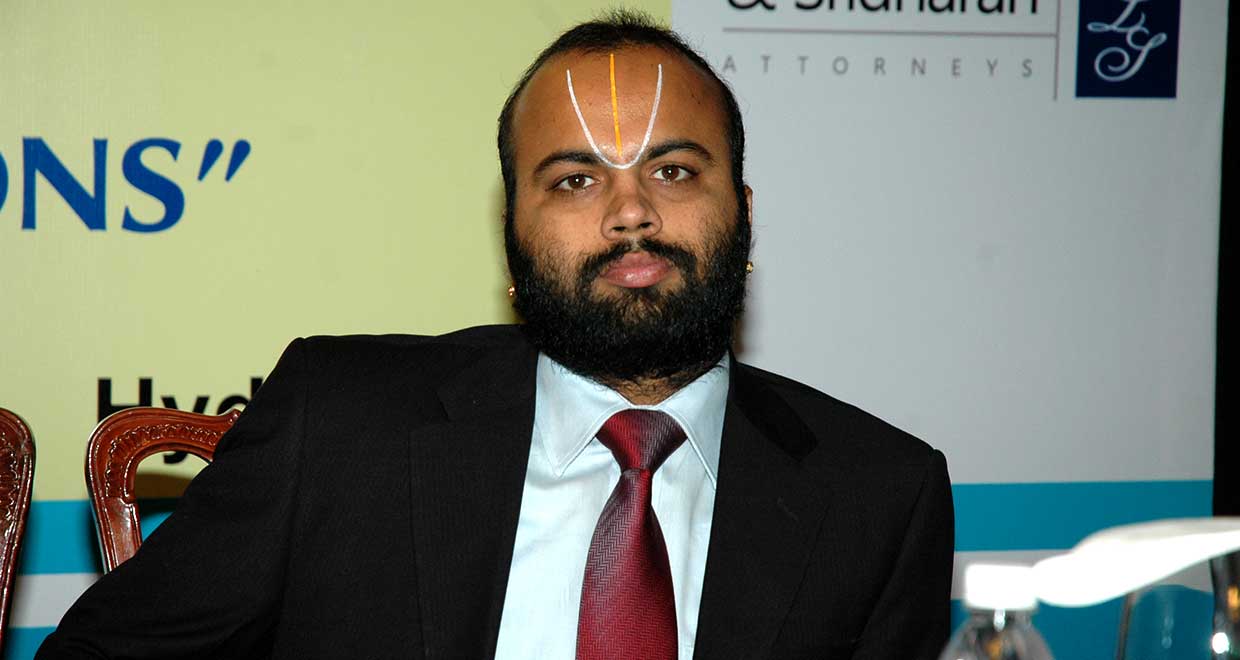
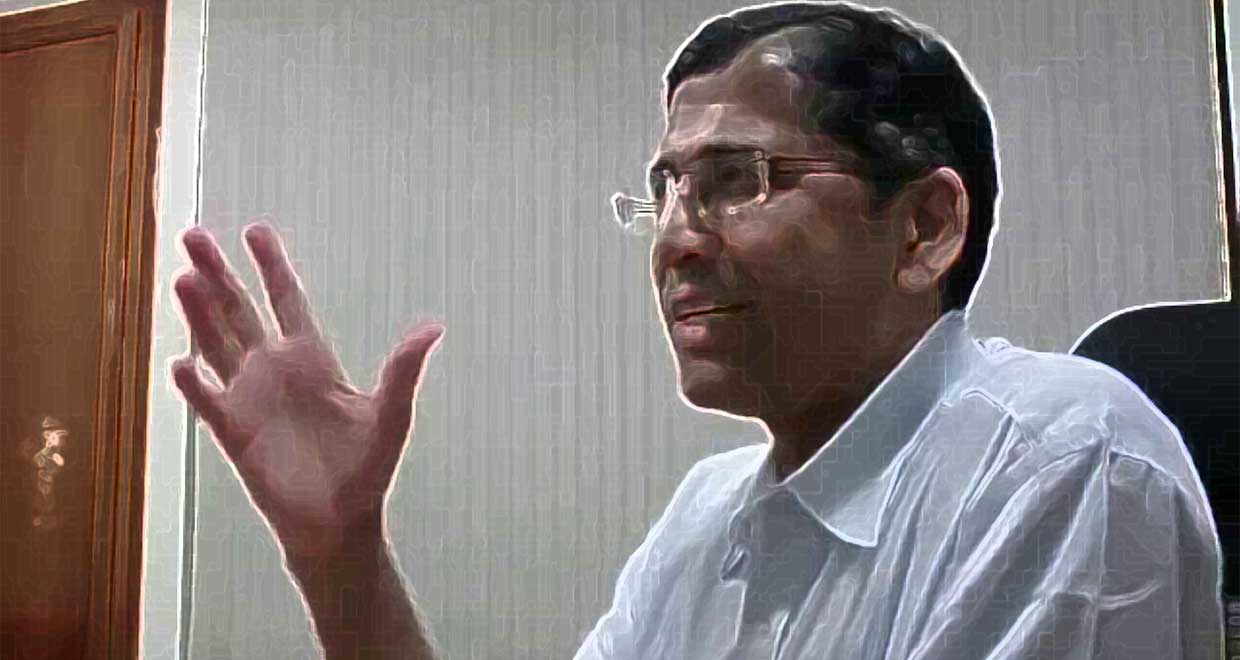
  • K K Sarachandra Bose, Senior Corporate Lawyer and Civil Rights Activist on the ‘Caste Eradication Bharat Yathra’ and value of social work

    K K Sarachandra Bose, Senior Corporate Lawyer and Civil Rights Activist on the ‘Caste Eradication Bharat Yathra’ and value of social work

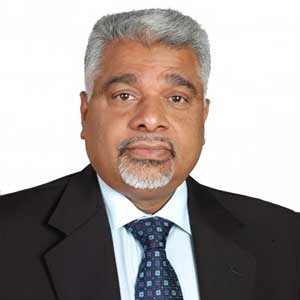
    K K Sarachandra Bose is a corporate lawyer with experience in Dubai and various other jurisdictions over the last three decades. A member of the International Bar Association, he studied law from R.L. Law College Belgaum, Karnataka, and graduated in 1976. Currently he is a partner at Dal Al-Adalah Advocates & Legal Consultants at Dubai, and Bose & Bose & Nair at Cochin.

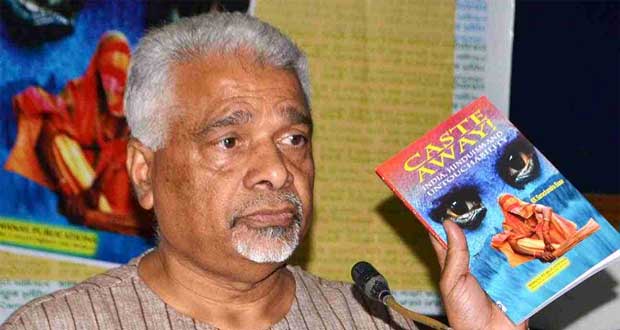
    Between all his commitments of being a lawyer, he has found out time and energy to pursue a very noble mission: Eradication of caste system in India. He plans to achieve this by effecting a paradigm change in Indian law through constitutional reforms. He is the author of the book “Caste Away – India, Hinduism and Untouchability.”

    In this interview he tells us about:

    • What prompted him to spread social awareness in India for 54 days and travel across 18,500 km.
    • Eradication of Caste Discrimination in India.
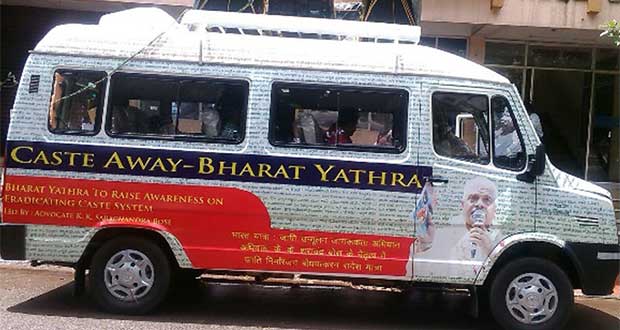
    • His second Bharat Yathra, i.e. the ‘Caste Eradication Bharat Yathra’ which starts today.
     

    kk-bose-4

    Our site is directed at law students and lawyers. How would you like to introduce yourself to our readers?

    I am a corporate, commercial and contracts lawyer practicing in Dubai and other jurisdictions for the last over 36 years; a member of the International Bar Association, visiting professor in International Business Law, legal columnist in several publications, addressed over 100 law seminars as a guest speaker; Chairman of Global Dialogue Foundation, and Unity in Diversity under the auspices of the United Nations Alliance of Civilizations since its inception in 2007 till date.


    Tell us about your years before law school. Were there particular childhood incidents that proved to be an inspiration for you?

    My childhood was all thrilling. Being born in a very rich family and my father being a Gandhian politician gave away almost all our wealth for the welfare of the society. We lost almost all our wealth and my mother had to sell her land to pay for my college fee. My father took care of the society but not his family and children. This prompted me to first take care of me and my family and then the society. I witnessed low and high caste among human beings during my childhood in my own house when my father served food to field workers, few workers were in an enclosed place and the rest, the vast majority in the open field in pits dug and leaves inserted. I was really pained to see that my own playmates were ill-treated.


    What inclined you towards legal education?

    I was good in mathematics and got admission for Engineering after passing pre-degree (12 grade) but though the college fee was paid, I left Engineering and got a job and then pursued BA as an external student and then law as an internal student in R.L. Law College Belgaum, Karnataka.


    What would you say were the instrumentalities of law school which helped to frame your career?

    I was a studious student, though a college gunda, in the words of my college principal. When our University Vice Chancellor cancelled the Carry Over Benefit (COB) without giving any prior notice, I took the lead and got his order reversed by the State Governor, Chancellor of the University.


    Our readers would be keen to know any specific incident which has driven you to become a social activist.

    From my childhood, I feel the pain if another person is hurt. While in Dubai during 1977 – 1990 period, I used to visit the labour camps with journalists and highlight to the government the pathetic living conditions of the labourers.


    What prompted you take up social activity and spread awareness for any grave social cause in a full time manner?

    (KK Sarachandra Bose is a corporate lawyer by profession and a partner at Dal Al-Adalah Advocates & Legal Consultants at Dubai and Bose & Bose and Nair at Cochin.)

    In the legal profession, I believe my clients like me so much and my opinion on corporate and contract matters are well sought by corporates of the highest order. But I always say, legal profession is for my bread and butter, my blood is social activism for the benefit of the society as a whole.


    Tell us about your whole journey/social drive in your own words.

    (He travelled across India for 54 days to promote the cause and covered around 18,500km along with his 30 member team and distributed books, free of charge, across the country.)

    My 54 day Jathi Nirmarjana Bodhavatkarana Sandesa Bharat Yatthra – 9 June to 1 August 2014 – was really a thrilling one. I visited the entire Shri Mahabharat including the North Eastern states which people say normally nobody visits. I could see and witness the ill effects of the evil caste system in my country. While in Rajasthan, I was told, by some local people considering themselves as low castes there, not to speak about the caste system as the upper caste people may come and harm me. I increased my volume and told very loudly that this is my country and nobody will dare stop me. Some people told me that they want to make the savarna people avarna and paint the buildings in Delhi with the same brush and paste that they are forced to carry every day to clean lavatories. I enjoyed huge support not only from the so-called lower caste people, but from the upper class who hates the caste system. In Tripura, the Buddhist Sangha there promised full support to eradicate the caste system from India.
     

    kk-bose-1

    You have authored a book “Caste Away – India, Hinduism and Untouchability”. What message did you intend to give to your readers through your book?

    My book “Caste Away – India, Hinduism and Untouchability” is the result of my 40 years of research, studies, discussions and conviction on the subject, caste system in India. I have gone through our history beyond the Vedic period, or to say, prior to Vamana avatar. I have seen, as if I were there, that we had a great past prior to the Vedic period and that was exactly the Brahmanism – Sathyamvada, Dharmamchara, Athidhi Devobhava. This Brahmanism has been killed and murdered in our country for the past over 5000 years and I am re-introducing it and I am asking everyone to adhere to it.


    How far would you say it is possible to eradicate the caste discrimination among Hindus and other religions from India?

    It is very easy to eradicate the caste discrimination among Hindus and other religions from India. We should understand that there was no caste system before 5000 years, there was no caste system before 300 years. Similarly, there was no Hinduism before 5000 years and there was no Hinduism before 300 years. Caste system which is an offshoot of Hinduism, in the words of our Hon’ble Supreme Court, originated during the British India rule and not before. We had colour system in India, the black skinned Adivasi aborigine people and the fair or white skinned aggressors. When I say, aggressors, please do not get confused as they are also our brothers and sisters from the same grandparents, Manu and Satrupa or Adam and Eve as called in the Western world. The whole issue in the world is the two skin colours, black and white skins. Slavery originated in our country 5000 years ago as the fair skinned aggressors enslaved the black skinned Sri Mahabharatvasis. Slavery went out from our country and spread as an epidemic in the whole world. Once caste system is abolished in the Hinduism which is the breeding ground of slavery, then all those who left and became untouchable Dalit Buddhists, Dalit Jains, Dalit Sikhs, Dalit Christians, Dalit Muslims etc., will all become Brahmins in its sense – Brahmjnane iti Brahmana.


    What type of feedback you were you receving from the people at large?

    Feedback from the people at large is tremendous. No one has ever told me that either he or she wants the caste system to continue. There are several letters of support in my file.
     

    kk-bose-2

    What are the main social causes in your priority list which you intend to promote through your second Bharat Yatra?

    (He is all set to start his second Bharat Yathra, ie, the ‘Caste Eradication Bharat Yathra’ which is commencing today on 9th May 2015.)

    In the Caste Eradicatin Bharat Yathra commencing on 9 May 2015, I will be conducting mass upanayanas in public in the presence of the five headed creator God Bhramadev representing the five elements of creation by priests well versed in pre-Vedic rites declaring all as Brahmins and thus remove that feeling of lowness in the minds of the people.


    Do you follow the ideologies or philosophy of eminent leaders like Mahatma Gandhi or Raja Ram Mohan Roy in regard to eradicate caste system?

    No, I do not follow ideologies or philosophies of any leader. I follow my heart and I have developed my own ideology. For instance, Shri. Mahatma Gandhi wanted to abolish untouchability by retaining the caste system. While Article 17 of our Constitution abolishes untouchability, several other articles in the Constitution reintroduces untouchability through the caste system. How can I follow such a tricky ideology or philosophy? That is why, I have loudly said, quoting several judgments of our Supreme Court, that our Constitution is tricky and there is fraud in our Constitution and it must be amended.


    Did you get any reply from The Centre or do you think the government will take any serious steps or preventive measures regarding the eradication of caste discrimination from India?

    (He also sent a notice to the Indian Government regarding the abolishment of caste system or to banish the caste system from India.)

    I did not get any direct reply to my notice from the Government. But I received several indirect replies and reactions from the Government such as, Janardan Dwivedi’s comments to stop caste based reservations and introduce economic based reservations and Sonia Gandhi’s rebuttal thereto; Mohan Bhagavat’s call to eradicate the caste system; world religious leaders calling for eradication of the Indian caste system by 2020; International Bar Association supporting me; Supreme Court lawyers supporting me; hurried Ghar Vapasi by some Hindu orgainzations in bringing the escaped people back to their earlier low caste or slave status; etc.


    Do you think you will be successful in complete eradication of poverty and casteism from India?

    I am a doubtless person. I will see the end of the caste system in the very near future. Government, I mean the Indian society, will have no option but to amend the Constitution and abolish the caste system.


    Did you get any positive response from there supporting your cause?

    (He has also organized seminars for Indians who visit Dubai and deliver lectures to help them understand the laws, rules and regulations of the country.)

    I am getting support from all quarters.


    Do you think every lawyer should devote some time towards any social cause and work on it?

    I do think that every lawyer should devote some time towards social causes. The lawyers unlike other professionals or businessmen, have the knowledge of the law and also have interaction with the laws, law makers and the law courts. When a layman is also not exempt from the knowledge of the law as law is considered universal, a lawyer has the privilege not only to know the laws but also to counter the laws if found unsuitable.


    Last but not the least, would you like to leave any message for our readers?

    I wish all your readers understand the basic human values and treat another human being as a human being, not as an animal as in the caste system based on the skin colour of the people.
     

  • Munish Mehra, Partner, Saikrishna and Associates, on specialising in IPR, changes in career, tips to associates and interns

    Munish Mehra, Partner, Saikrishna and Associates, on specialising in IPR, changes in career, tips to associates and interns

    Munish Mehra belongs to the first batch of NLIU, Bhopal (Batch of 2003). After graduation he joined AMSS as an Associate for 9 months before switching to Anand and Anand where he subsequently became a Managing Associate. Thereafter, he joined Luthra & Luthra Law Offices as a Managing Associate. In January 2014, he joined Saikrishna and Associates and within 11 months, he was promoted to Partner. In this interview he talks about:

    • Academics and specializing in IPR Laws
    • Working at full service law firms and boutique law firms
    • Tips on converting internships to a PPO


    What brought you into studying law? Was it fate or plan?

    My foray into studying law was totally unplanned as I do not come from a legal background and am a first generation lawyer. I heard of the National Law School at Bangalore for the first time in 1998 through a friend who happened to be studying there. As luck would have it, the National Law Institute University was set up at Bhopal in the same year that I graduated from school i.e. 1998. I gave the entrance exam for the university, got through and things moved ahead from there.


    Please tell us a little about your law school days at the National Law Institute University, Bhopal? How were you at academics?

    As a part of the first batch of NLIU, Bhopal, I think all of us were a little sceptical about how the university would develop in the future. I still remember the first day of the academic session in September 1998 when we started from a premises which had been rented by the Government for the University and we set up the tables and chairs ourselves in a little classroom and got down to studying law. What helped in the initial trimesters was the inclusion of various BA subjects such as sociology, history etc which helped us to get into the groove so to speak before moving onto hardcore legal subjects. I was a relatively good student through my years at the University and finished in the top five of my class when we graduated.


    How important do you say is a good CGPA for an illustrious legal career?

    The importance of a good CGPA has increased over the years with the advent of numerous law schools coming up in various other states. However, I firmly believe that to have a good career in the legal profession, a good CGPA is just one element which plays a part in the making of a good lawyer.


    You have specialized in IPR law. What made you interested in the same? How do you say one can gain expertise in IPR Law? What does it take to be a good IPR lawyer?

    In the first couple of years at the University, a few seminars and moot courts were organized focusing on IPR law which played a major part in me developing an interest in IPR law. We had not yet studied IPR law till then as they were a part of the 4th year subjects. I then did two internships with Anand & Anand at the end of my 2nd and 3rd years which give me an insight into how IPR law actually works in the real world. The process of gaining expertise in IPR law or becoming a good IPR lawyer is no different from any other branch of law and requires one to be able to grasp the issues involved in the case at hand which forms the basis of your claim or defence, as the case may be, and presenting a well drafted and argued brief before a Court.


    You started your career at AMSS as an Associate. How did you secure your appointment? How would you describe your experience working there?

    I was recruited by AMSS pursuant to the first campus placement which happened at the University at the time the first batch was about to pass out. In fact, AMSS was the only law firm which came for the placement of our first batch and two people were recruited by the Firm. Working at AMSS was an interesting experience as even at that time it was considered to be the best full service law firm in India. My area of work involved general corporate commercial advisory and transactions. I think the biggest takeaway from my tenure at AMSS was that it made one realise that there is a sizable difference between studying subjects theoretically in law school and their application in real world deals and transactions as there are so many practical facets and situations which one is not exposed to while studying subjects in law school.


    After 9 months of work at AMSS, you switched to Anand and Anand as an Associate and later worked as a Managing Associate there. You also had the oppurtunity to work at Luthra & Luthra Law Offices as a Managing Associate. Please share your experience at both these place.

    It was a conscious decision to make the shift from AMSS to Anand & Anand as after a while I realised that my real interest lay in practising IPR law even though the initiation into the real legal world through AMSS held me in good stead in the coming years. I worked at Anand & Anand for nearly six years during the course of which I led the anti-piracy and anti-counterfeiting practice at the firm and had a wonderful time doing so. Luthra & Luthra posed a new challenge in terms of setting a new practice area from the ground up and it was an interesting experience to go back to a full service set from a boutique firm.


    Also, was there any difference in the work environment of these two law firms, considering the fact that Anand and Anand mainly deals with IPR law whereas Luthra & Luthra is a full service law firm?

    The work environment of a full service and boutique firm does vary to a large extent. The environment in a boutique firm tends to be more informal and due to a lesser number of individuals, helps in developing interpersonal relationships faster. A full service firm environment on the other hand is much more regimented and necessarily so because of the sheer number of people working there. Therefore, it does take some time to get used to it if you have joined from a smaller setup.


    What qualities do you think helped you for promotion to Managing Associate at Anand and Anand & Luthra and Luthra Law Offices?

    It was a combination of factors such as developing an expertise in my practice area and being able to handle matters competently and independently relatively early in my tenure at Anand & Anand. Most importantly, it helped that I was able to develop a rapport with the clients I worked with regularly so that when the time came for elevation to Managing Associate, clients were more than happy with me leading their matters on a regular basis without requiring a supervising partner. Consequently, my team reported directly to the Managing Partner of the firm.


    You were made a partner at Saikrishna and Associates in just Eleven months of work. What would you say helped you to join the ranks of a Partner?

    In January, 2014, I joined Saikrishna and Assciates as an Of-Counsel and within 11 months, I was promoted to the ranks of a Partner. So to say, yes, I was made a partner in Eleven months.

    Well I was a lateral hire from Luthra & Luthra having spent three years independently handling my own team and servicing the clients which had given me work when I shifted from Anand & Anand. I guess the ability to service clients professionally, train a team from the ground up, manage them and independently run successful campaigns on behalf of various clients were factors which led to me being elevated at a Partner at Saikrishna & Associates.


    munish-mehra-3

    What kind of effort should a young Associate put in to work to get it appreciated? What distinguishes an Associate with a Partner when it comes to work?

    At an associate level, the requirements are relatively simple in terms of being totally aware of the factual matrix of the matter, doing diligent and through research, being reasonably acceptable at drafting and being disciplined at the work place. If an associate is able to display the abovementioned qualities, any firm would be more than happy as nothing more is expected. The deliverables as expected from a Partner are totally different as he or she is expected to provide strategic advice and guidance to a client on a particular matter or campaign, monitor and supervise the work done by associates, and also ensure that billing targets as given by the Firm are met by his team and recoveries happen in a timely manner.


    What does a Partner at a Law Firm like Saikrishna and Associates do? What falls within the scope of your responsibility? Tell us about a typical work day.

    A Partner at Saikrishna & Associates is responsible for supervision of matters handled by his or her team, appearances before various Courts, providing strategic advice in relation to matters, reviewing opinions and memos as required by clients from time to time on various legal aspects, ensuring that billing targets are met by the team and also developing and bringing new work into the Firm. A typical day involves either going to Court for matters as listed, or coming into the office and handling various miscellaneous work such as reviewing opinions, legal pleadings, client meetings and telecons. The Firm does a lot of outstation matters which usually involves travelling to various courts across states and either a Partner or Senior Associate/Associate does that depending upon the importance of the hearing and the complexity of the matter.


    How important is it for a Partner of a law firm to be good at business development, or are great lawyering skills enough to become a partner? What separates the people who become Partner from those who don’t?

    Different people have different skill sets and not every Partner in a law firm is a rainmaker. It is of course beneficial for a Partner to be good at business development as that helps in the overall growth of a Firm but at the same time it is important to have senior people in the Firm who are able to handle the day to day supervision and functioning of their respective departments thereby contributing to the overall efficiency and quality of work done by a Firm. I think the ability to handle and supervise complex matters, manage teams independently, provide strategic but practical advice to clients and having the ability to develop long standing relationships with clients which generate revenues for the Firm is what separates people who become Partners from those who don’t. That is not to say that other individuals are not equally important as human talent and expertise is the most valuable resource of a law firm and that is what gives a firm its “reputation”.


    munish-mehra-1

    How is the work culture at Saikrishna and Associates? If an Associate commits a mistake or an error what course of action do you follow?

    Saikrishna & Associates has a great and innovative work culture which is quite different from the regimented schedules which some firms insist upon. The focus of the Firm is on “client delivery” and empowering individuals to be responsible for their work product. The result is that you find Associates as well as Partners being happily available to clients 24/7 which is much appreciated. I think the way a Firm deals with a mistake by an Associate is reflected by how its senior people deal with such a situation and in that sense the Firm has preferred to explain the error rather than “shout” at an Associate for committing a mistake.


    What are the other areas of study which you think that a law student wanting to excel as a professional in the field of IPR should be proficient in?

    I think it’s important for a lawyer to keep abreast of as many developments in law as possible as you never know on which facet a client may need urgent advice. An IPR matter may involve a taxation or royalty aspect one day or a criminal law aspect another day. Therefore, it’s very difficult to pinpoint any other branch of law which a lawyer must focus on to be proficient in the field of IPR.


    What changes has being a Partner brought into your life, do you ever feel that there is excess of work load on you? How do you manage to strike a balance between your personal and professional life?

    Being a Partner does bring added responsibility as you are ultimately responsible to the client for the work product turned out by your team. A Partner, as mentioned earlier does have to make efforts to bring in new clients into the Firm for its overall growth and development. The culture of the workplace makes a huge difference in being able to maintain a balance between work and personal life while a lot of firms may say that they place a great emphasis on the work life balance of their lawyers, our Firm does actually walk the talk so to speak.


    The trend is now on gathering various internship experiences at different places. Was the scenario same while you were pursuing law? How is internship helpful for a law student?

    The number of internships as done by students now, are a lot more as compared to when I was in law school. It’s not uncommon to find ten to twelve internships on a CV these days while we used to do one internship a year. An internship is very useful for a law student as you are exposed to so many practical facets of actual legal practice which is impossible to experience in law school. However, it is important to focus on the type of internships which a law student does during his law school years as the quality of internships are more important than the quantity on a CV.


    What is the procedure to apply for an internship or recruitment at Saikrishna and Associates? What are the qualities which they look for in their prospective employees?

    We have a Partner who is in charge of internships at the Firm. Prospective internees send their resumes to our HR department pursuant to which the Partner decides the internships to be granted for a particular period. We take special care not to overstuff the firm with a lot of interns at any given time to ensure that all interns get quality exposure to the work being done at the firm.


    What do you feel makes an intern stand out and is very important for him to do to have a chance of getting a call back or even a PPO? How do you think interns can get noticed in a positive way in the limited time they have?

    It’s important for an intern to be diligent and disciplined at his or her work. Reasonable oral and written skills, a decent knowledge of first principles and the ability to research properly is what makes an intern stand out from the crowd so to speak. It’s also important for internees to do at least a one month internship to enable the Firm to assess their capabilities as a 10 or 15 day internship, which some students do today to increase their tally of internships doesn’t really help in them either learning anything about the Firm or increasing their chances of getting a PPO.


    What would you suggest to someone who is preparing to work with an IPR law firm? What are the basic subjects which one should read and have understanding of before sitting for an interview?

    If an individual is interested in working for an IPR boutique firm then it’s advisable to be aware of the “first principles” and basics of IPR law in relation to Copyrights, Trademarks, Patents etc. An awareness of recent developments in the field of IPR is also very helpful and there are various online blogs and commentaries which regularly report such developments and recent case law.


    The question that whether one should specialise in a particular area of law or be more of a general lawyer often comes up before law students. What is your opinion on the same?

    It depends on the type of practice an individual wants to do. As an independent practitioner, it’s necessary to be conversant with various areas of law be it civil, criminal or even company/corporate law litigation and advisory. A lawyer in a law firm will typically specialize in a few areas and will be known in the profession for his expertise in those areas. I have come across very few lawyers working in law firms who can claim to be masters in all fields.


    Is there anything you would like to have done differently?

    I think every experience and decision teaches you something new which makes you a better person and professional. So to sum it up, I really would not have done things differently. There is still a long way to go and lawyers never retire anyways!!


    Where do you see yourself ten years down the line? Do you aspire to be like somebody from this field?

    Ideally sitting on a beach and relaxing!! On a more serious note, one would like to be someone known in the profession as an individual who is dependable, experienced and sought after. Every lawyer likes to be well known and let them not tell you otherwise. I really don’t aspire to be like someone. I would rather be known as myself ten years down the line.


  • Zameer Nathani, Director-Legal, Raymond, ex-Head-Legal of Balaji Telefilms on being an in-house corporate lawyer

    Zameer Nathani, Director-Legal, Raymond, ex-Head-Legal of Balaji Telefilms on being an in-house corporate lawyer

    Mr. Zameer Nathani is one of the most notable legal luminaries within the corporate fraternity. He holds a Master’s Degree in Law and Certifications from World Intellectual Property Office Academy, United Nations.

    Zameer’s corporate career began when he joined Mallar Law Consulting right after graduation. Thereafter, he was the Digital Businesses Associate Vice President-Legal at Reliance Entertainment. He later joined Balaji Telefilms where he worked as Head-Legal. In the meantime he has managed to pursue an Executive MBA from NMIMS.

    While at Balaji, he had personally handled the case for the movie “Dirty Picture” and won before Bombay High Court making it a landmark judgment on brand name, a judgment in the film industry after 1977 Movie “Sholay”.

    Zameer is currently the Director-Legal at Raymond Limited and is also the Honourable Chairman of Entertainment and Media Section at Indian National Bar Association.

    In this interview he talks about:

    • Pursuing an executive-MBA from NMIMS
    • A career in corporate law as an in-house counsel
    • Working at corporates like Reliance, Balaji and Raymond


    Given that most of our readers are law students and young lawyers, how will you introduce yourself to them? What motivated you to choose law as a career?

    My inspiration, that which made way for my decision to choose law as a career was marked by a small yet significant incident, whereby my father made me sign a contract at the age of 21 years for a business property and it made an everlasting impression on my mind of just one sentence that “Everything is about Law”.

    I then decided to pursue a career remarkably different from my family business and that has made me the ‘self-made’ man, I am today. I started working at an early age of 25 and marked the beginning of my career timeline with a lauded law firm and facilitated legal assignments for clients across diverse industry categories.


    Tell us something about your college life? Which activities did you participate in? How did you go about developing expertise and knowledge in your areas of interest?

    Apart from academics, I have had a flair for extracurricular activities always. I used to participate and have won awards for the best speaker in moot court competitions at different levels, best organizer in various inter-college moot courts, quiz contests and compeered college festivals. Developing expertise comes through practice and expediency, and it has been no different for me.


    zameer-nathani-1

    Generally the first year after graduation is the most defining time for a fresh law graduate. What would you suggest a fresh law graduate?

    Be dynamic, you have to push yourself to make sure that you grow in the profession. Be wise, learn to prioritize and distinguish between what is relevant and irrelevant. Be patient and success and growth will come gradually.


    What led to your shift from Mallar Law Consulting to Reliance?

    It is not that I wouldn’t prefer working in a company. Once you have grown as an external counsel, you can have a good role as an In-House Counsel. It is a different business environment with different challenges, but you still deal with the legal affairs of that Company.


    Thereafter you joined Balaji Telefilms as Head-Legal. What does it take to get the position of Head-Legal at that stage?

    When you have a challenging role in India’s conglomerate, you are able to pursue new challenges and thereby seamlessly take care of legal affairs as Head-Legal.


    Recently you have joined Raymond Limited as Director-Legal. What qualities do you think helped you to achieve this status?

    I would take the liberty to shorten it into three words, which are: Experience, knowledge and expertise.


    We would love to hear about your work profile. Tell us about the nature of work you’re entrusted with at Raymond.

    I work towards growth and dynamism in managing the legal affairs of this iconic and the historic group, which is the day to day management. My work profile is to supervise and manage legal affairs of Raymond Limited and its Group Companies.


    What changes has being Director-Legal brought into your life? How do you manage to strike a balance between your personal and professional life?

    I join any corporate considering the opportunities and challenges, and I love that. Work is at par with positions till date. I get up at 4:30 am, meditate and maintain a healthy life and food with a morning walk and begin the day very early for work to be completed by 8 p.m. or 9 p.m. I do not let lethargy set in and come in the way. However, I schedule a vacation once a year with my family. I even organize office outings once in six months where we socialize and have team building exercises.


    What are the primary essentials of a good corporate lawyer? How do you say a fresh graduate can work on building these skills?

    Be prepared to face challenges that come your way. Always absorb challenges and face problems as opportunities.


    Have you ever considered litigation or starting up on your own? Would you say the opportunity a firm provides for a young lawyer is worth the trade off in building a reputation?

    I have been a litigation lawyer in the past, which gives me an experience even when I am in the corporate fraternity in strategy making and arguments. No plan right now to start my own law firm.

    But yes, a reputation in my law firm earned me a job at Reliance- ADAG at a young age.


    In the meantime, you managed to pursue Executive MBA from NMIMS. How do you think an MBA can prove to be useful in a lawyer’s career in the current as well as future market?

    The importance of MBA is to know business management, financial management, team management and alignment of your leadership skills to team up with business.


    So for you, why did you feel MBA is a good option for a lawyer and why now?

    Because understanding overall management skills and functioning is necessary, especially when you are at a leadership position.


    Would you recommend Management and Marketing professionals to learn the law?

    Some knowledge of law is essential for every professional in business management.


    What would be your message to our readers who are budding lawyers and law students?

    Get your law education from good Indian and/or foreign Universities (U.K, U.S.A etc). Be dynamic, upright, and energetic. Get knowledge from wherever you can. Pertaining to local and international laws, attend seminars organised by Lex Witness, meet new people, and get on international forums for discussion on various laws (local and foreign), and I am sure growth and success shall follow.


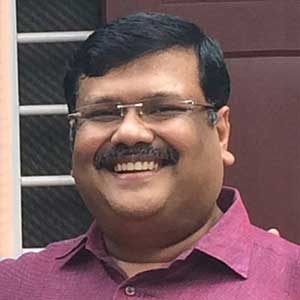
  • Raghavan Ramabadran, Partner, Service Tax & VAT matters, Lakshmikumaran & Sridharan, on being a Chartered Accountant and Lawyer

    Raghavan Ramabadran, Partner, Service Tax & VAT matters, Lakshmikumaran & Sridharan, on being a Chartered Accountant and Lawyer

    Mr. Raghavan Ramabadran is a Partner at Lakshmikumaran & Sridharan. He currently heads the Service Tax and VAT practice of the Chennai and Hyderabad branches of LKS. He pursued a C.A. degree while simultaneously pursuing a B.Com course from Vivekananda College. His interest in taxation led him to join LKS after qualifying as a C.A. He further pursued a law degree from Law Centre II of Faculty of Law, Delhi University (“LCII”) while working at LKS itself.

    In this interview he talks about:

    • The LL.B and C.A. combination
    • Pursuing a law degree while working
    • Work of a Partner of Lakshmikumaran & Sridharan


    Where did you grow up and attend school? How did you decide to pursue C.A.? Please tell us a bit about yourself.

    I did my schooling in Chennai. I belong to a family full of Sanskrit scholars. In fact, my grandfather is a President’s awardee for excellence in Sanskrit. As a kid I was taught Sanskrit and Vedas. I had in fact completed my Vedic education by the time I finished my XII standard. Though I was always good in Mathematics, Science was not a subject which interested me and hence I chose to pursue a career in accountancy and enrolled myself in the C.A. course while simultaneously pursuing my B. Com course from Vivekananda College. I was always interested in taxes and once I completed my C.A. course, I applied to L&S. After joining L&S I realised how important it is to learn law to fully understand and work in taxes. Mr. Lakshmikumaran and Mr. Sridharan were very kind to me and took me to the Delhi Office for better exposure which also enabled me to attend the evening law course in Delhi University.


    After qualifying as a C.A., you joined Lakshmikumaran & Sridharan. How did you decide to join a law firm instead of practicing as a C.A.?

    As I said, I was always interested in taxes and one of my friends (who is also a C.A.) had already joined L&S. So I knew it was a great firm doing excellent service in the field of taxes. Hence, the choice was easy. I had applied to the firm. I was interviewed by Mr. Lakshmikumaran. The interview happened over several rounds and I was also asked to present a paper on Transfer pricing and the GATT Valuation Code.

    The firm already had the practice of hiring non-lawyers and therefore I was not an exception. Mr. Lakshmikumaran encouraged me to do law and explained to me how the scope of a C.A. is restricted as he cannot practise in High Courts.

    I realised that though a C.A. can render excellent advice, it is ultimately a lawyer whom he has to engage to sustain his advice before a court of law.


    What did your work profile at LKS consist of, before you were a lawyer?

    I was doing a lot of drafting which includes opinions, replies, appeals, writs, SLPs, etc. I used to do research and brief seniors in matters. Study sessions are a part of L&S culture and I was a regular in attending those. I was initially absorbed in the Customs team of L&S. Later when L&S started its practice in VAT, I was moved to the VAT Team. I was working in the VAT team till I became a lawyer.


    Tell us about your law school experience.

    When I look back at my years at LC-II, they were perhaps some of the best years of my life where I came across many intelligent and dynamic batchmates. The professors were very engaging and the curriculum was rigorous and very demanding. Everyday offered a new perspective on one’s approach to appreciating the law. Whatever I say about LC-II and its quality of education and the faculty, will be very little as its reputation speaks for itself.

    Perhaps, it would be interesting to mention here that the courses taught at law school helped me at the workplace too. At the time when the seminal BSNL case was being argued at the Supreme Court, in which L&S was substantially invested, I could appreciate and contribute to the table some of the finer aspects concerning the constitutionality of the provisions that were being debated upon.


    Is there anything you would like to have done differently?

    There is nothing that I would have liked to do differently. Looking back, I think what matters the most is how you allow the experience to enrich you and not overwhelm you. The sheer diversity of the people you meet and the insights you develop on life allow you to become a more practical individual, in a manner of speaking.


    raghavan-ramabadran-1

    How did you manage to eke out time for a regular three-year LL.B from LC-II while working at LKS? Please share with us.

    If you don’t have time in the day, steal it from night. Needless to say, switching back and forth from office to college was a demanding affair indeed. The tight schedule would otherwise be a strain on a normal individual. But maybe, it was the hunger for experience and knowledge that kept me going those years.

    The daily schedule involved coming in to the office by 7:50 A.M. From 8 A.M.-10 A.M. I would attend sales tax study sessions chaired by Mr. Sridharan himself. This was a ritual I stuck to for one and a half years, and it paid off greatly. Regular work would follow this until evening when I would scamper off to college and again head back to office to take care of pending work. Many a times, in fact most often, I would sleepover at the office lobby. Suffice  to say, this was occasionally tiring but never did I feel flushed or demotivated.


    You have more than a decade of experience in handling litigation relating to Service Tax, VAT and other areas of indirect taxes before various forums. What were the differences in your experience as a CA and as a lawyer?

    Completely different. As a lawyer, you can rely on yourself to sustain your interpretation. For a CA, there would be a two-step process to take a legal point across, one to the arguing counsel and the final one to the judge. Whereas for a lawyer, there is only one level to convince, the judge and not the arguing counsel.

    As a C.A., our exposure to law was oriented to the extent of appreciating the application of the law. However, being a lawyer one can delve into the correctness, spirit of the law and formulate its ethics and justifiability. As a C.A., we could hardly acknowledge the fine line of difference between a rule and provision. While studying law, the questioning spirit came alive.


    Currently, you head the Service Tax & VAT practice of the Chennai and Hyderabad branches of LKS. What are the best and worst parts of being a partner at one of the most successful tax law firms in the country?

    The best part easily is the bench strength at the firm. A multitude of good clients, refined nature of the tasks, variety in the kind of deliverables, priority on ethics are some of the traits that would easily attract anyone to the firm. The knowledge chest that L&S has is in its people, be it in excise law or patent prosecution. Other than this, the resources in the form of a heavily standardized information technology system, books, journals, credible physical infrastructure offers one an experience worth its weight in gold.

    The challenging part, and definitely not the worst part, is that the benchmark is very high. There are a lot of expectations to be met. Arguably though, this is something that is expected with the responsibility of being a partner at a leading law firm.

    Pondering over mystical questions like “work life balance” takes a back seat as these are questions that I do not find myself philosophically qualified to answer. Other than this, there are always the clients who keep calling at unexpected hours, which is why I am always nervous whenever my phone battery runs out, lest I miss out on an important call. The work profile for a partner is expectedly very demanding as one has to always stay sharp and alert. But all of this being said, we relished it and continue to do so.


    raghavan-ramabadran-3

    What is a workday like for you? Has work settled into a predictable pattern or are there new challenges every day?

    For a litigating lawyer, I can say that being officers of the court, we are at the mercy and behest of the court. There is no method to this madness, Ha Ha!

    On a serious note, it is always unpredictable. Appointments given to clients during the evening materialize, but where I commit to a meeting during the daytime thinking I may be able to fend some time for it, such is never the case, Add to this the usual rigours of urgent briefs, shuttling between various courts. They tend to take a toll on the body at times.

    The highlight is that being in L&S, repeat matters don’t come. The scope and dimensions of the work is new and it is a treat to get one’s hands on them. Challenging matters are a staple affair and therefore it would be fair to say that there is a negligible chance of having a predictable pattern in terms of work coming in.


    How important would you say are business development skills at such higher roles in a corporate law firm?

    Very crucial. Clients always have alternatives.


    What do you and other partners at LKS measure success by? What must interns and attorneys at LKS do in order to get noticed and/or promoted?

    Show spark. Season that with clarity of thought. L&S encourages an open-door policy and there is complete freedom to speak and express one’s views. The only touchstone that someone’s worth is judged by is sheer merit and hard work. We don’t expect interns and fresher attorneys to be ready for the work profile that comes with working at L&S. Which is why we lay emphasis on training in our daily class-room lectures. We encourage interns and juniors to bring fresh and novel thinking to the table. With commitment and analytical skills to show for it, success can definitely be achieved.


    What advice would you give to law students who wish to pursue C.A. or, alternatively, C.A. students who wish to pursue law?

    While you focus on your areas of interest, make sure you pass all the subjects. Ha Ha!

    What I meant to say is that if you intend to be a lawyer in the future, pursue those subjects in CA in which you plan to make a living in. C.A. background for becoming a lawyer is very useful. Accounting knowledge and commercial understanding of the transaction are traits that come in very handy in both transactional practice and tax litigation. My view is that such an academic profile is a potent combination, especially when it comes to leaving a mark in the realm of commercial laws.


    Lastly, what would be your advice to law students and young lawyers reading this interview?

    What you learn as a student stays in your mind forever. It is important as a student to try and understand the basics of every subject. With experience, we realize that no law is difficult if our basics are strong. Great lawyers are those whose basics are phenomenal and they never commit mistakes in basics. Rather they win complicated cases with basics.

  • Santhosh Mathew, Standing Counsel, Calicut University, on how he built his litigation practice

    Santhosh Mathew, Standing Counsel, Calicut University, on how he built his litigation practice

    Santhosh Mathew is an alumnus of the NLSIU, Bangalore of the 1995 graduating batch. He focused on litigation right from the beginning. A first generation lawyer, he started his practice at Dandapani Associates in 1995. He became independent and co-founded a litigation firm in 2004. He is currently a Standing Counsel for the University of Calicut. His practice areas are in Writ Petitions, Telecom, Media laws, Banking Laws, Company Law and Service Laws.

    In this interview he tells us about:

    • His first few years after graduation
    • Role of mentors in litigation
    • Work of a Standing Counsel
    • Necessary skills for the legal profession


    Tell us a bit about your pre-college years. What motivated you to study law?

    My grandfather was a District Sessions Judge at the time of his retirement in 1964. My father after graduating in law from the Government Law College, Ernakulam, joined ‘Malayala Manorama’ which is a leading Vernacular Daily, as its Personnel and Administration Manager. He used to take care of the Company’s legal matters His classmates from GLC, Mr. K.P Dandapani (A former Judge of the Kerala High Court and the present Advocate General of Kerala) and Mrs. Sumathi Dandapani were very close family friends.

    After completing my 10th Standard like any other youngster at that time I joined for pre degree (equivalent to present day higher secondary) and took Physics, Chemistry and Biology along with Mathematics to pursue a career in Medicine or Engineering. In time, Mr. Dandapani came to know about the National Law School of India University, Bangalore and bought an application form for me. When the entrance results came out, I was in the waiting list and hence joined ILS Pune which has an awesome campus. After two weeks, my admission at NLS Bangalore was confirmed and finally, I landed up at the “Harvard of the East” in 1990 with Roll no: BLIJ 189. The classes back then used to be held in one of the three car sheds which were converted to class rooms later on. That was the beginning of a wonderful journey in my legal Career.


    Tell us about your objectives while in the preliminary years of Law College. What were your plans after graduation?

    In my preliminary year my intention was to clear courses without getting too many repeats. Since I was not a very hard working student I was happy with my B+ grades! I studied the notes prepared by my Classmates Mr. Piyush Joshi and Mr. V. Umakanth. In my first year I interned with Adv. P.C. Abraham in the District court at Kottayam. I feel it is very important that all students start by doing an internship with a lawyer who practices in the lower courts and learn to draft Civil Suits and Criminal Complaints first. Merely by walking along with the Court Clerk will teach you the filing procedure.

    From the Second year onwards I used to do my internship with Mr. & Mrs. Dandapani who used to entrust me with various matters to do research and also with drafting of pleadings. My internships helped me to make up my mind to be a litigator. My appeal to all the law Students reading this is to use all the opportunities you get during your internship to decide what you want to do after graduating. Nobody will entrust you with any responsibility unless you volunteer. Only if you display a passion to take up responsibilities, the seniors with whom you intern will have the confidence or inclination to entrust you with more work. I understand that some lawyers don’t pay the interns. My appeal to those lawyers would be to loosen their purse strings a bit and pay a stipend which will at least cover their expenses.


    santhosh-mathew-2

    Looking back, how significant do you think that your legal education was? When did you happen to experience the learning curve?

    I sincerely regret not being a serious law student. Since I was not a very ambitious person I was more involved in co-curricular activities and did not spend too much time participating in Moot Courts other than the mandatory ones which were required as part of the curriculum. Since we had a fine group of students from all over the country I got to learn about various cultures and made some great friends. The projects done every trimester helped us to learn about different research methodologies and made us better equipped to do legal research.

    By the time we graduated we had a clear idea as to how case law could be worked up. This helped me tremendously in my career as a lawyer. So to all the law students out there, my appeal would be to try and identify a topic you can relate to and do an honest work with all earnestness. During my LL.B. course I ended up doing a lot of absurd projects which on hindsight makes me wonder, “Why on earth did I do those projects?” Please remember that you will be the sole beneficiary of your project and if you do a shabby work, you will be fooling no one but yourself.


    Do you feel that there is a difference in the court atmosphere between now and when you started practice? Has it become easier or more difficult for a young lawyer to establish himself?

    I believe the present day judges are much more accommodative of junior lawyers. In Kerala the Judges never had a fascination for Senior Lawyers from outside. So the local lawyers received great exposure which resulted in improving the quality of such local lawyers. My seniors Mr. K.P. Dandapani and Mrs. Sumathy Dandapani were always encouraging and permitted the juniors to take up their own matters which helped us to build up our careers apart from being a major boost to our self esteem.

    In fact all the juniors who have been mentored by Mr. & Mrs. Dandapani have made a mark for themselves after becoming independent. I was with Dandapani Associates for 9 years from 1995 till 2004 when I set up independent practice with my wonderful partner Mr. Sathish Ninan who is my friend, philosopher and guide. So it is very important to find a good office and work with a senior for a decent span of time. Court crafting is something you don’t acquire over night. It is very important that you don’t compromise on your integrity for monetary gains. If you get a bad name in this profession, you are DOOMED.


    Please tell us about your experience with regard to your first few sessions in court. Has it become more difficult for a fresher to achieve success?

    In my first year of practice there was a complaint filed by the then Chief Minister Mr. E.K. Nayanar against ‘Malayala Manorama’ before the Press Council of India. The complainant had instructed Senior Counsel Mr. Rajeev Dhavan. We had instructed Mr. Gopal Subramanium. Justice Sawanth was the then Chairman of the Press Council.

    When the matter was taken up, Mr. Rajeev Dhavan started arguing and Mr. Gopal Subramaniam became unavailable as he had to go to the Supreme Court for some urgent matter. When our turn came up, “yours truly” had no other option but to argue the matter and with God’s grace we got a favourable verdict. My client was so happy that they celebrated my victory by publishing my photograph in the ‘Malayala Manorama’ newspapers by celebrating it as a victory by a young David over Goliath.

    On a lighter note, a lot of my friends at the Bar after seeing my snap in the newspaper thought I had met with an accident! This was a big boost to my budding career. Thereafter there have been numerous opportunities in the last nineteen years of my career where I have been at the right place at the right time.

    For instance, when Mont Blanc came out with the ‘Mahatma Gandhi pens’, we filed a PIL in the Kerala High Court against the sale of those pens in India alleging violation of the provisions of Emblems and Names (Prevention of Improper Use) Act, 1950. As a result, Mont Blanc undertook before the High Court of Kerala that it will not sell the ‘Mahatma Gandhi series’ pens in India.

    We have conducted a lot of cases before the High Court relating to issues relating to health hazards from Telecommunication Towers. We have been successfully representing most of the major cellular operators and Telecom infrastructure providers in Kerala before the various Courts. We have represented various educational institutions challenging the unreasonable restrictions imposed by the State Government which adversely affected their minority rights guaranteed under the Constitution of India.

    God has been extremely kind to me. One must have the self confidence that he or she can handle any matter that comes his/her’s way. If we don’t know the subject matter in detail, we should study extra hard and consult the seniors who are experts in that field. The legal profession is a unique profession where seniors are willing to go out of their way to guide a junior counsel in need. While arguing a matter if a judge asks a question to which you readily don’t have an answer, have the humility to admit that fact and be assured most of the judges would be more than happy to grant you time to work up and make your submission. Remember Bench and Bar are two sides of the same coin and you have a duty to our client to win a case but you have a bigger duty as a responsible officer of the Court to assist the Court to arrive at legally correct judgments. Therefore, never mislead the Court.


    What was the role of mentors in your case? How important do you think a mentor is in the field of litigation?

    I was extremely lucky to have wonderful seniors like Mr. K.P Dandapani, Mrs. Sumathi Dandapani and Mr. Jaju Babu who are all designated Senior Counsels who mentored me and had tremendous confidence in my abilities. This motivated me to reach office at 7.30 AM and work till late night until the work entrusted was finished completely. They paid me handsomely which was also a very important factor as far as a junior lawyer is concerned. It is very important for a young lawyer to have a mentor to guide him/her just like a toddler during infancy.


    Please tell us about the requisite soft skills which are essential for a young lawyer to build a successful career?

    There is no substitute for hard work. Try to get a good mentor. Be ready to take whatever assignment that is given and never shirk away from responsibilities. Learn to respect your colleagues and opposite side lawyers. Invest in proper infrastructure. Don’t be concerned about money. Always be courteous to the judges. You don’t win any case by picking up a fight with a presiding officer! You will only succeed in losing not only that case but other matters too till the judge gets tired of dismissing your matters! It’s good to have aggression and self confidence but over confidence would land you in trouble. Always be prepared and never go to argue a case without preparing properly. Always take the relevant statutes and the latest case laws on the point when you go to argue a matter. Never underestimate the opposite side.


    How did you build up your client base? How many years of practice would you say it requires to build a firm clientele?

    There is no hard and fast rule for this. Work hard and put in your best effort when a client comes to you. Satisfied clients will in turn, get you more clients. Legal profession is a unique profession where you cannot build up a client base through marketing gimmicks. One needs a lot of luck to be at the right place at the right time. There are so many learned lawyers who have vanished due to lack of opportunities. I genuinely feel that not all are capable of being leaders. There is a lot of space for everyone here. The lawyers who are incapable of building up a client base on their own must find good senior or like minded lawyers and form a firm and learn to manage things. Some are good in impressing clients but may not be effective lawyers. These two categories can form a common platform. Gone are the days of individual practitioners. A group of like minded lawyers providing a one stop shop would become the order of the day in the future.


    What has been your experience of being a Standing Counsel? How is the work pressure and what are your responsibilities like?

    Being a Standing Counsel of an institution like the University of Calicut was purely providential. It was a huge responsibility. In June 2011, nearly 4000 case files were brought over to my office and I didn’t know where to start with. Within three years, I have with the support of my able colleagues Mr. Arun Thomas and Mr. Jennis Stephen, disposed off nearly 2500 cases. I consider it a huge opportunity to help students who have a genuine cause to have their grievance redressed.

    A lot of old service matters could be disposed off. The High Court judges who dealt with the jurisdiction are very efficiently disposing off matters. The biggest challenge was to build a good working relationship with the client and to get instructions on time. Giving timely legal advice and getting instructions from the various departments of the University were all difficult in the beginning but over a period of time it started functioning smoothly like a well oiled bicycle. One must learn to respect the representative of the client who comes to instruct you.

    I was fortunate to have a great team right from the Vice Chancellor till the Assistant in the Legal Department who would be ready to render all possible support and assistance. Each day was a new learning experience. Being a Standing Counsel of a prestigious institution increases your visibility and gives you tremendous exposure. You get to argue cases against the best lawyers in the field. You get to learn the subject in extenso.


    When you hire lawyers, what kind of skills and profile do you look for? What kind of a profile suits best to the profession?

    All the lawyers we have hired have been recommended by my friends. We have been extremely lucky to have a set of sincere hardworking colleagues. I personally feel that young associates must be delegated work depending on their potential. Over burdening a junior lawyer with work he/she cannot do will only help in demoralising them. At the same time I hasten to add that each one should be pushed to their optimum to make them good lawyers and better individuals.

    Right from the time of internship in their first year, law students must try out different options like NGOs, Law Firms, Individual practitioners etc. and by the time one completes the third year he/she must have a clear idea about where they want to be after graduating. As a junior lawyer one must not be bothered too much about the monetary aspect. For the first five years it really helps if one has a generous and understanding father.

    I was really privileged to have a great father who ensured that all my needs were to be taken care of so that I could concentrate in my work. If you are serious about the profession, you must be ready to put in long hours at work. Be assured after some time in your career those long hours you have put in as a young lawyer will definitely help you in your journey. I have seen a lot of youngsters in my time. Some of them have started their blogs, websites, entrance coaching centres etc, taken up theatre and even marriage photography mainly because most of them eventually got fagged out after learning “Law” for five years and this prompted them to do something out of the box.


    Do you think that achievements such as having a landmark judgment to your credit can change one’s recognition drastically?

    I don’t think so. I strongly believe each day is a new day and you have to consistently deliver your best. There is no place for complacency in this profession. You cannot afford to rest on your laurels. In fact some of my important cases which we won did not actually get the client the relief which they ultimately wanted. They were classic cases of “operation successful but patient dead”. It definitely feels nice when your peers send you a text in appreciation of your efforts after reading a reported judgment which you have argued.


    Do you feel that there are differences between students of ‘elite’ law schools and students from other law colleges and traditional universities?

    Frankly it is difficult to generalise. The students from the ‘elite’ law schools have a structured curriculum which makes them better equipped. I guess one gets a 5-10% head start if you graduate from a good law school. But if any student feels that he is superior in any way to his peers who have graduated from other law colleges he is a FOOL.

    Once you enter the profession if you don’t work hard, others will catch up and before you realise it, they will run over you. It is high time and the scheme and syllabus of all law colleges are also structured in a similar fashion which will do away with artificial barriers. With the right kind of opportunities and a proper level playing field, anyone with a passion will be able to make a mark in this profession.


    What are your views on the future of Indian legal education? How would you suggest that a law student manages to stay ahead?

    It is high time the three year courses are stopped. After retirement persons must not be permitted to enter the profession as a litigator. They could be permitted to practise in non litigation areas. The State Bar Councils must provide for a stipend for young lawyers from economically weak backgrounds to survive for at least 5 years after graduation. All lawyers have a duty to contribute to that corpus. Courses which gives more in depth exposure to applications should be evolved and incorporated into the curriculum in place of those which require mugging up and reproducing what you have memorised. An opportunity must be provided to young first generation promising law graduates to get a placement with a successful lawyer. All of us have an obligation to reach out and do our little bit for our young brothers and sisters who join the profession with all earnestness to become “social engineers”.


    What would be your advice to young law students? How do you think that they should approach their career?

    Don’t be an arm chair critic who looks down on everything in life. Learn to appreciate the good things in life. Equip yourself and make yourself marketable. Be ready to work hard. Be practical in what you want to achieve. Everybody cannot be a Harish Salve, K.K. Venugopal, N.R. Madhava Menon, or a Cyril Shroff. India is one of the biggest populations in the world. Everyone has a legal requirement at least once in his/her lifetime. If we can make a qualitative difference to at least one person due to our expertise we can make the world a better place to live in. Ours is a noble profession.

    Let us collectively restore its lost glory. Wish you all a Merry Christmas and a Happy New Year!

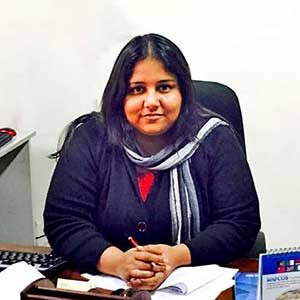
  • Sucheta Chatterjee, Indian Foreign Service Officer, on the UPSC and work experience at SEBI

    Sucheta Chatterjee, Indian Foreign Service Officer, on the UPSC and work experience at SEBI

    Sucheta Chatterjee is a graduate of WBNUJS, Kolkata (2007 Batch). Soon after her graduation she joined SEBI as a Legal Officer and had been working there for six long years, before challenging herself to the formidable UPSC.

    For her, taking the UPSC was more of an aspiration to serve the nation as an IFS Officer. She had determined that she would either serve India in the Foreign Service or continue in SEBI.

    In this interview she shares with us:

    • Work experience at SEBI
    • Deciding to take the UPSC plunge
    • Taking the UPSC prelims and the mains
    • Training period and posting


    How would you introduce yourself to our readers who are mainly young and enthusiastic lawyers?

    I would firstly like to congratulate them for taking up law as a career. As far as introductions go, I’m a law graduate from the National University of Juridical Sciences, Kolkata, and I subsequently worked in SEBI in the very niche field of capital markets and securities law, specifically in enquiry and adjudication matters. Thereafter I stumbled into the Indian Foreign Service. My first posting abroad will be in Moscow.


    What inclined you towards the field of legal education? Did anyone among your family and friends suggest you to choose alternate career options?

    Growing up as an adolescent in Calcutta’s politically charged atmosphere left me well coloured with a burning idealism and a fierce intolerance of injustice. At eighteen, I felt as if I could change the world and fight for the rights of the underprivileged and [sociallocker]marginalized. Therefore, I joined law school with starry eyes and I was rather disconnected from reality.

    My family and friends were very supportive and never tried to impose any course of action upon me. I remain grateful to my parents for their unflinching support even in the face of some unconventional decisions that I’ve made.


    How was your experience at NUJS? What activities were you involved in apart from the regular academic curriculum?

    NUJS was a wake-up call in many ways. My years there taught me some very hard lessons about the legal system. My very first encounters with the bureaucratic mode of functioning happened in NUJS, leading to several bitter-sweet incidents. All things considered, it was a very extensive learning experience that enriched my life and I feel a sense of gratitude towards my alma mater. I would specifically like to mention Professor D. Banerjee who was always an inspiration in my life. He had always told me that he felt that the civil services would be the best option for me and that he was confident that I would get selected.  I kept telling him that I couldn’t possibly get selected. Had he been alive, he would have been very happy. I miss him so much.

    As far as co-curricular activities are concerned, I can only remember a controversial monograph I’d written about the AFSPA in Manipur, which won me the first prize, to my greatest astonishment. Otherwise, I was essentially a loner and did not participate in any activity if I could help it. I was rarely in the campus after class hours and spent most of my time reading really amazing books (borrowed from the library) that had nothing to do with our academic curriculum.


    After graduation, you joined SEBI (Securities and Exchange Board of India) as a Legal Officer. How did you go about the appointment? Please tell us about the recruitment process at SEBI.

    I was selected by SEBI through the campus recruitment programme. I chose SEBI over law firms because I felt that working in the government sector has certain specific advantages that are not available in the private sector.


    You have worked with SEBI for a considerably long time as an Assistant Legal Advisor. Please tell us about your experience there.

    I worked at SEBI for about six years! SEBI is an outstanding employer. My years there were a continuous learning experience, albeit in a very niche sphere. SEBI, and especially my colleagues there, will always remain special to me. I will always feel a sense of gratitude to them for making my debut into the legal world such an enjoyable experience.


    sucheta-chatterjee-2

    When and what inspired you to appear for UPSC after having a secured career at SEBI?

    Will you believe me if I tell you that I appeared for the UPSC exam because I wanted to get away from my boss?! That was indeed a major factor.

    Another reason was pure wanderlust and I felt that joining the Indian Foreign Service would be a great way to live in various parts of the world, immersed in alien cultures. The fact that I have always been keenly interested in international affairs further strengthened my resolve to give it a go.


    When did you start preparing for the exams? When should a person ideally start preparation for the UPSC exam?

    I had severe time constraints because I was handling a full-time job while preparing for the exam. I started practicing a lot of mathematics about a few months before the preliminary examination. I focused entirely on mathematics because I felt that my performance in the quantitative aptitude part of the paper would make or break my attempt to clear the civil service exams. I studied for the main examination only after the results of the preliminary exam was declared and I was sure that I had qualified for the main exam.

    I suppose ideally a person ought to start preparing a year in advance but then I firmly belong to the school of thought that maintains that the amount of time you study is irrelevant. How you do it is what counts.


    Did you enrol in a coaching institute? How valuable do you think coaching institutions can be for UPSC preparation?

    No, I did not enrol myself in a coaching institute because of time constraints. Thus, I am not competent to opine about the value of coaching institutions.


    How many hours did you put in for your preparations every day? Is it important to have a fixed schedule or weekly targets important according to you?

    It varied from two hours to none at all. I did not maintain a fixed schedule and studied in fits and starts.

    I am sure fixed schedules and monthly targets are useful for those inclined to study in that manner. It is important to know what suits you as an individual and to create your own style of preparation. I don’t believe there is a fixed formula for success.

    What did you do to keep yourself abreast of all domestic and international current affairs? How did you study for static GK?

    I relied on The Hindu and the Indian Express to give me a fair idea of how events were playing out in local and international politics. But this isn’t something that can be started a year before the exam. It is a lifelong process and one has to keep reading all the time. I strongly believe that in the UPSC, it is accumulated knowledge that makes all the difference.


    Did you regularly read newspapers? How did that help you? How should one strategically use newspapers for preparation?

    I have always read newspapers regularly. It has become a habit. With time, one can instinctively pick out what’s important and what is of relatively less importance. My personal favourites are the editorial section and the opinion page. It is a mistake to cram up facts because the pattern of the UPSC paper is heavily analytical.


    Which books/materials did you rely on while preparing?

    A CSAT book published by Tata McGraw Hill on quantitative aptitude helped me to conquer my fear of mathematics to an extent. For the mains, NCERT textbooks were my bible, so to speak. I also highly recommend The Economic and Political Weekly as well as The Frontline magazine. Wikipedia should also not be underestimated, no matter what the pundits tell you. It also helps to choose one’s own subject for the Main Exams as it saves the trouble of learning an entirely new subject. The myth that some subjects are more “scoring” than others has effectively been busted. I stuck to my strengths – law and political science.


    Lakhs of people attempt the UPSC prelims and only a thousand get selected for the main written exam. Which are the prime skills and expertise required to crack the prelims?

    I will spare you a lecture on hard work and dedication because that would be an insult to lakhs of candidates who studied very hard with tremendous dedication and still did not make it. The role of chance is a big factor that is seldom mentioned by successful candidates. You have to do your best and hope that by chance you get to attempt questions which you have prepared for.

    Besides, those who have good time management skills have an obvious edge over those who do not.


    Please share with us your insight of attempting the prelims.

    You are interviewing me more than two years after I appeared for the preliminary examination. I cannot remember much except for the fact that most of the multiple choice questions were very tricky and designed to make one choose the wrong answer so I attempted only those questions that I felt reasonably sure about in order to avoid negative marking.


    What kind of posts had you opted for in the UPSC enrolment form? How do you want to serve the nation? Didn’t you think of applying for the IAS?

    In my DAP (detailed application form), I chose the Indian Foreign Service as my one and only option. I could have easily got IAS with my home cadre but I was determined to join either the IFS or remain with SEBI.

    As a diplomat, I would like to contribute to the formulation of a rational, enlightened foreign policy in consonance with the spirit of the constitution and the ideals of Panchsheel.


    How would you rate the main exam question paper on difficulty?

    The main examination paper was rather difficult, at least by my standards. The GS papers especially had some very tough questions that compelled a lot of thinking and planning before writing, leading to a time crunch.


    Did you appear for mock interviews? What are your views on taking mock interviews?

    No, I did not appear for mock interviews. So, I can’t comment on that too.


    Any specific strategy you would recommend us for the interview?

    I decided to be frank and forthright in my interview and not pretend to be someone I am not. The board members were all experienced bureaucrats who could easily see through all attempts at falsehood. Therefore one should respect their intelligence and not try to fool them. I was asked several highly controversial political questions and I answered all of them with candour and made no attempts to be evasive. Thankfully, I was also asked a lot of legal questions. There was one question to which I did not know the answer and I admitted my ignorance.

    “Bullshitting” is absolutely useless in the UPSC interview. Interestingly, I was even made to recite some Bengali poetry and sing a few lines of Rabindra Sangeet. I am sure the board members regretted asking me to sing the moment I opened my mouth!


    sucheta-chatterjee-3

    How would you describe your training period? Please share some memorable moments of your training programme with our readers.

    The training at Lal Bahadur National Academy of Administration, Mussoorie, was a saga of never-ending hardship for a laidback, unorganized person like me because there is a lot of emphasis on discipline, order and method. The fun parts were the treks, village visit and weekend parties in the Officers’ Lounge. But apart from having to get up at 4:30 a.m. in the freezing cold for P.T., I think we all had a stellar time.

    The training provided at the Foreign Service Institute was excellent. We especially enjoyed ‘Bharat Darshan’, the attachments with all three wings of the armed forces and the mission attachment at Dhaka. It is a cliché to say that training is the best part of the service bit it is very true, nonetheless.


    After the training period, where was your first appointment?

    At present, I am undergoing desk attachment at South Block in the Eurasia Division. My first posting will probably happen around August, 2015 in Moscow, Russian Federation.


    Please tell us a little about your work profile working as a Foreign Services officer. What are the responsibilities you are entrusted with?

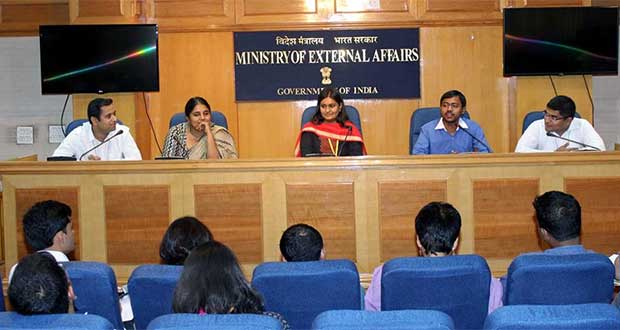
    As a Foreign Service Officer, we are entrusted with nearly everything that involves a foreign relations component, from writing concept papers, to vetting treaties and MoUs to organizing visits of heads of states etc. Our division successfully handled the recently concluded Indo-Russia Annual Summit in New Delhi. We get to learn something new every day and compared to other services, political interference in the IFS is minimal.


    How is a typical workday like? How has your experience of being an IFS officer been so far?

    A typical workday involves getting up early and rushing to South Block by 9, dealing with little mountains of files, attending numerous phone calls and meeting a wide variety of people from all over the world. While working abroad, the experience is bound to be different.


    What would be your message to law students and lawyers who aspire to become a civil servant?

    It is always an asset to the civil service to have legally literate officers and I personally believe that law students and lawyers have an edge over others in the civil service exams because of the five years of rigorous training that we undergo at law schools. So if you think that the civil service is where you aim to reach, there is absolutely nothing to stop you! All the very best!

     [/sociallocker]

  • Neeraj Arora, Expert Investigator, Cyber Crimes, Delhi Police on building a career in Cyber Law

    Neeraj Arora, Expert Investigator, Cyber Crimes, Delhi Police on building a career in Cyber Law

    Neeraj Arora started working in the Delhi police as a sub-inspector in order to support his family, while studying B.Com. Thereafter he did his LL.B from Delhi University.

    After graduating and continuing work in the police force, he developed an interest in cyber crimes and law and took up a variety of certificate courses and diplomas in India and abroad to further his knowledge in the area. Eventually, he started up his own law firm, Hazen Legal Associates which specialises mainly in cyber law and offences.

    Presently, he is a designated Expert Investigator and he has investigated a large number of cases relating to E-mail related crimes, Web-Server/System/Wireless Network Hacking, BPO Data theft, Online Auctions Website Frauds, Obscenity, E-mails/SMS Spoofing, Phishing Frauds etc. for the Delhi Police. He serves as a guest faculty member and a guest lecturer of ISACA, NICFS, Indian Law Institute, Directorate of Enforcement, Indian Institute of Corporate Affairs and many other prominent institutions. He is also an Arbitrator for NSE, ICADR and MCX in online trading matters.

    In this interview we asked Neeraj to share:

    • His initial decisive moments during graduation
    • Being a part of the Delhi police and his work in the Cyber Crimes Cell
    • Doing a number of extra diplomas and certificate courses in Cyber Law and Digital Forensics
    • Being a Consultant for the World Bank
    • Being appointed as an Arbitrator of the National Stock Exchange
    • His experience of starting up his own law firm, Hazen Legal Associates


    Please introduce yourself to our readers and tell us a bit about your college life days. Did you have lawyers in your family?

    After doing my 12th, I started working and took my first job as an Accounts Assistant because my family circumstances required me to earn for my family. I joined B.Com (H) at the School of Correspondence Studies, Delhi University, while continuing my job. I also took up part-time writing work, filing of Income Tax/Sales Tax returns and tuitions to support my family. I am a first generation lawyer in my family.


    You are a Commerce (B.Com) Graduate and a Cost Accountant by qualification. What prompted you to make the transition to law?

    After completing B.Com, I joined ICWA as I intended to join the accountancy profession. Meanwhile, due to my financial troubles, [sociallocker]I joined the Delhi police as a Sub-Inspector. I also continued with ICWA and completed my final in 1996.


    You have pursued PG Diplomas in Arbitration and Drafting long after graduating in LL.B. What prompted you to take up these diplomas?

    I did my LL.B. from Delhi University in 2001 and pursued a PG Diploma in Arbitration & PG Diploma Drafting of Legislation, Treaties, International Agreement & Contracts from 2008 to 2010. I pursued the extra diplomas because the topic fascinated me as it upgrades existing skills and enables one to reach new heights in life as well as the legal profession. After resigning from the Delhi police in 2008, I decided to explore my career in Arbitration which is an upcoming and rewarding career. In 2008, I was appointed as an Arbitrator with the MCX Exchange and to augment my skill in the field of International Arbitration, I joined and completed these two part-time courses, PG Diploma in Arbitration, Drafting of Legislation, Treaties, International Agreement & Contracts.


    You have been practicing cyber law for almost eight years now. How did you become interested in cyber law?

    In 2005, I was transferred to the Cyber Crime Cell of Economic Offences Wing (EOW) of Delhi police and at the time I didn’t have much knowledge of computers. I treated the posting as a punishment, but took it up as a challenge as I foresaw huge potential in the area. I did a number of trainings on cyber offences from various police academies: CBI, CDTS and also did a Certificate Course in Computer Forensic from IP University, Cyber Crime Investigator Course from Asian School of Cyber Law, PG Diploma in Cyber Law from Indian Law Institute (ILI), Delhi, PG Diploma in Cyber Security from Asian School of Cyber Law and MBA (Information Technology) from Manipal University. Consequently, that is also how I became one of the prominent Investigators of the Cyber Crime Cell of the Delhi police.


    neeraj-arora-2

    You are associated with Delhi Police as a Cyber Lawyer & an Expert Cyber Crime Investigator. Please share few interesting experiences of your investigation with our readers and tell us more about these issues.

    On being equipped with knowledge on Information Technology, I got opportunities to investigate a large number of cases relating to E-mail related crimes, Web-Server/System/Wireless Network Hacking, BPO Data theft, Online Auctions Website Frauds, Obscenity, E-mails/SMS Spoofing, Phishing Frauds etc.

    In all the cases, I prepared the mirror images on the spot, collected relevant digital evidence, arrested a number of hackers, filed the charge-sheets in the court, etc. The investigation of cyber offences was quite challenging as there were no precedents, standard operating procedure and no one to guide us. I have collected the requisite information from the internet, various books and journals on digital forensics and by 2008, I was awarded the status of an expert cyber crime Investigator.


    You are a Certified Forensic Computer Expert and an empanelled member of IACIS for more than two years now. What is your job as an expert at IACIS? What kind of issues do you deal with?

    The IACIS (International Association of Computer Investigative Specialists) is the top most organization in the world which specializes in the field of computer forensics. The Certification, “Certified Forensic Computer Examiner” (CFCE) is one of the top most certification which is also recognized by the Forensic Specialities Board of U.S.

    In order to augment my skill and also to gain an in-depth knowledge, I joined the Certification and attended two weeks Hands on Training in Orlando, U.S. and after that I worked hard for another year and passed the six exams which involves analysis of mirror images to find out the Window, Internet and other Artifacts of the Crime.

    The Course was a big challenge as this is the only Certification which requires extracting the evidence without using Forensic Software. The only Software which can be used is Hex Editor and for doing one need to have good knowledge of FAT File System, NTFS etc. as the Data/Artifacts has to be extracted manually by finding the location of data from FAT/MFT Table.


    You have vast experience as an Investigating Officer of CBI, Cyber Crime cell and Economic Offences Wing of Delhi Police and you are also associated with Justice K. Venkataswami Commissioner of Enquiry (Tehelka) for more than a decade. Please share your experience.

    I joined the CBI as Inspector on Deputation and got the opportunity to investigate the huge and technically complex cases of Economic Offences going into hundreds of crores of rupees. My skill and knowledge in the field of Finance, being a Cost Accountant, enable me to investigate these cases and to book the fraudsters. As an Investigating Officer with Justice K. Venkataswami Commissioner of Enquiry (Tehelka), I got the opportunity to investigate the huge scam and I received an award for outstanding investigation in the said assignment.


    You have trained many professionals at Police Organisations, Indian Law Institute, CBI and also at IACIS. Please tell us about your training programme.

    The arena of cyber forensics comprises of three domains namely Computer Forensic, Network Forensic & Mobile Forensic. These domains are inter-connected and integrated in such a manner that the knowledge of three domains is required to handle the Digital Evidence. I have been continuously sharing my knowledge of these domains by way of training. The training I provide is an integration of Bit & Byte, Debit & Credit with investigation and procedural and substantive laws.


    neeraj-arora-3

    You have also delivered a couple of lectures on cyber law. How do you prepare yourself before any presentation or delivering any lecture? Please give some tips to our readers.

    My competence in integrating computer forensics with digital evidence, e-commerce, procedural/substantive laws gives me a unique edge in delivering training in the field of Cyber Crime/Cyber Law/Computer Forensic/Financial Forensic when it is connected to the ground realities of investigation, analysis and presentation in a court of law. I am able to provide a solution to the various gaps in the investigation, collection, analysis, presentation & cross-examination on the digital evidence and integrate it with the applicable principles of digital investigation, digital evidence, cyber laws and other procedural/substantive law.


    From your profile it can be seen that you have strong exposure, knowledge and specialization in Arbitration law. How did you gravitate towards this discipline?

    Arbitration is one of the upcoming fields which require skills of legal procedure, proceedings, appreciation of evidence and discovery. The academic domain, knowledge and experience plays a major role in acquiring these skills and since the entire world is moving to ADR for dispute resolution, this is the most growing field with opportunities increasing exponentially.


    As an Arbitrator and Mediator for NSE, ICADR and MCX what kind of disputes do you deal with? What is the normal time period of disposal of an arbitral proceeding?

    As an Arbitrator on various exchanges, I am adjudicating the disputes relating to the Online Share/Commodity Transactions between the Members of Exchanges (Brokers) and their clients.

    As a member of IGRC on various exchanges, I conduct conciliatory proceedings to resolve disputes relating to the online share/commodity transactions between the Members of Exchanges (Brokers) and their clients. This mechanism provides an opportunity to the litigant to resolve their dispute with the help of Conciliator/Mediator.

    The normal time period of disposal of such dispute is 3-6 months. The disputes are resolved by conducting the proceedings as per the bye-laws and exchanges and the procedure prescribed in Arbitration & Conciliation Act, 1996.


    You were also appointed as a Consultant of World Bank for four years. How did you get associated with the World Bank?

    I was appointed as a Consultant to the World Bank for analysing the contractual issues relating to the projects of World Bank.


    You have started your own firm – Hazen Legal Associates. What were the primary challenges you faced?

    I have started my own firm as the various skills in the field of law, finance & cyber offences gave me an edge. I got a lot of work in the field of criminal laws, cyber offences and consultancy relating to cyber offences. The only challenge was to bring together so many technical and legal aspects, which I did with the help of my colleagues and associates.


    What are the practice areas at Hazen Legal Associates? Do your firm emphasize more on cyber law than other areas of law?

    The main practice area is confined to criminal trials in the field of economic, cyber & anti-corruption cases. Due to heavy demand in the field of cyber law, we are now specializing in consultancy and compliance with cyber law as required by ISO 27001, storage/maintenance of digital evidence, handling cases relating to cyber crimes, cross- examination on digital evidence, handling of cyber security, etc.


    What is the application procedure for interns at HLA? What do you look for in a prospective applicant?

    We keep 3-4 interns at all times. The application procedure requires the applicant to send the detailed profile at on cyber.nk@gmail.com, we shall then follow it up by an interview. The skills required are knowledge of computer and research in the legal field. The networking and programming knowledge adds to the priority for the applicant.


    In spite of having so many involvements in various organizations apart from managing your own law firm, is it easy to have a work-life balance?

    It’s always a challenge but with the support of good colleagues and associates, one can maintain a work life balance.


    How should one go about starting his/her own cyber law practice in India? Please name a few institutes to study cyber law in India. How important are procedural laws in this discipline?

    A good knowledge of computers is a must. A Diploma in Computer Networking is required to understand the Cyber Offences and any further qualification in the field of Computer, Network or Mobile would add to the success of individual in this arena. There are various Institutes which provide courses like Indian Law Institute, NALSAR, IGNOU etc.

    Procedural laws have a very important aspect in Cyber Law, one should have knowledge of Criminal Procedure Code/Civil Procedure Code/Evidence Act. Without a good knowledge of these procedural laws, success in the field of cyber law cannot be achieved because the implementation would be only through these procedural laws.

    The other important aspect is that the Cyber Law caters to only 20% of the Cyber crimes whereas 80% of all Cyber crimes get covered under the IPC and other Laws.


    What would be your advice for aspiring cyber lawyers?

    The aspiring cyber lawyer should develop their skill in the field of procedural laws and Internet Technology at the same time. Later, these practitioners may not get the time/opportunity to develop skills and therefore, I recommend that aspiring legal practitioners should acquire maximum technical skills parallel with their L.L.B which would give them an edge later on.

    In the Europe, U.S., etc. most of the cyber lawyers have a background in technology like B.Tech etc. Now, integrated Course of B.Tech + L.L.B. (5 Years) have been introduced in various Universities/Colleges and pursing these courses would ensure the success in the field of cyber law. It can be said that candidates with such qualifications will dominate the cyber world in the near future.[/sociallocker]

  • Aditya Sondhi, Senior Counsel, Karnataka High Court, on building a career in litigation

    Aditya Sondhi, Senior Counsel, Karnataka High Court, on building a career in litigation

    Aditya Sondhi is an alumnus of the NLSIU, Bangalore. He graduated from NLSIU in 1998, and had thereafter independently set up his litigation practice, ‘brick-by-brick’. He was recently (in June, 2014) designated a Senior Counsel at the Karnataka High Court.

    In this interview, he reckons his first hearing at the court and shares with us his in-depth experience of advocacy. There is so much to learn from here. Read on!


    Please tell our readers what motivated you to take up legal studies?

    I was an accidental lawyer. One had heard of the NLSIU at Bangalore in the early 1990s, and when the entrance exam came along, I sat for it just for a lark. My plans were to go to England after my 12th standard. As it turned out, I cleared the Law School exam and ended up staying on in Bangalore.


    Have the NLUs been able to produce socially relevant lawyers? What is your take on this, given that many chose to take up firm jobs?

    Quite so, because those who have taken up social-action practice have made their mark. There is a saying in Hindi – Sau sonar ki, ek lauhar ki (For a hundred blows of a goldsmith, a single blow of the blacksmith). Despite many NLU alumni taking up corporate law at firms, the few who have taken up socially relevant lawyering have [sociallocker] more than made up for their tribe. Like my classmates and friends at the ALF.


    aditya-sondhi-2

    How was your law school experience at NLSIU? Are there any memorable moments which you would like to share?

    I was fairly nonchalant about being in NLS and hence didn’t necessarily get very deeply influenced by the ethos of the place. Equally, my contribution to the institution as a student was negligible. I do, however, vividly remember our founder-director Dr. Madhava Menon at the orientation programme in 1993, clearly mentioning that the object of the Law School was to contribute purposefully to the Bar. For me, that was a clarion call of sorts and helped me take up litigation once I graduated without even an iota of doubt.


    How do you say a law student can shape up his profile for litigation while still in law school? Do moots and academic writing help?

    Moots and academic writing scarcely help one shape up for practice. Though moot courts may give a mild flavour of what it is like to prepare and argue a brief, the lack of accountability to a real client or a real cause makes the experience artificial. Academic writing in fact makes it difficult to adjust to pleadings for court, which are meant to be concise, uncomplicated and largely factual. Even the legal grounds that are pleaded are expected to be scholarly, yet pithy. Closer attention to research and strenuous litigation internships can surely muster up a skill-set that comes handy in the long run. Most importantly, law students must stay clear of the anti-litigation propaganda that goes around and make up their own minds about practice.


    How were the first few years after your graduation? Would you say law school prepared you for the real world practice of law?

    They were the toughest years of my life. Simply, because I realized how ignorant and wet behind the ears I was. It was more a case of trying to survive in practice, rather than succeed. This was due to the fact that one knew so little and experience could only be gathered the hard way. Law School did not prepare me for this episode, as the culture in NLS was generally removed from litigation and concentrated more on academia and corporate, in-house practice. Of course, the few professors who had shown us glimpses of the real world outside, like Dr. Lalit Kumar Rao (may he rest in peace), were valuable mentors.


    Please tell us about how you decided to pursue litigation. What were the other opportunities you were considering?

    As I said earlier, Dr. Menon’s message stayed with me. This, coupled with the fact that I was offended by very senior professionals coming down for pre-placement talks and simply selling their firms to the students. I always wanted to work in an environment where I would be inspired by my seniors. Not be seduced by them to join them. That changes the entire grain of how you approach your life ahead. A robust placement in my fourth year with Mr. Dipankar Gupta in the Supreme Court and in the final year with Mr. Udaya Holla clinched it for me.


    Did you have a mentor while in your formative years of your practice? How was your experience arguing at the court for the first time?

    Not directly, but Mr. Holla shaped my career tremendously by simply giving me opportunities to argue matters in the High Court from the day I enrolled. His style of mentorship is quite stringent and effective – to throw you in the deep and let you swim for yourself. Something he has done himself with remarkable élan. On the evening that I got my sanad, when I offered my senior some sweets, he reciprocated by offering me two files for the next day to argue in Court!

    One was a writ petition before the legendary Justice R V Raveendran, in which former Advocate General Mr. B V Acharya appeared for the petitioner, and I could not get to open my mouth for the respondent! Not so much out of fear, but more because I had over-prepared for the case and did not know where to begin. (Fortunately for me, the other case allotted to me was adjourned!).


    What was the attitude of judges towards new advocates? Has it changed over the years? Are there any specific challenges to be faced on the first day?

    As I recounted my first hearing above, I can say that soon enough I became confident to argue more assertively and calmly in Court, and tribute here must be paid to some wonderful judges at the time who were most encouraging to juniors. I can recall Justice Dattu, Justice Rangavitalachar, Justice P V Reddy, Justice Mohan Kumar, Justice Thakur, Justice PatriBasavangoud and Justice Rajaratnam, among many others. Some of them were tough task-masters but at the same time, never bullied or discouraged juniors. This brings out the best in junior advocates – knowing they need to be fully prepared and that the Court will hear them impartially. The greatest challenge in the beginning is the mind-block that one has with the system – uncertainty as to how the Courts will treat a new entrant. Good seniors and judges help you keep the faith.


    How do you say we can boost the fiduciary relations between clients and us? How many years of practice would you say is required to build a firm clientele?

    One good performance is sufficient to build faith in the party. Clients, generally, only expect their Counsel to be prompt in their filings, honest to the T and to give it their best when the case is heard. Of course, the unethical practice of soliciting clients makes it very difficult for solo, first-generation practitioners who stay true to their code of conduct. I would say, my clientele was never as large as many other lawyers. However, it was built brick-by-brick, and that takes years.


    What all does a Senior Counsel have to do? Please tell us about a typical work day.

    Seniors have the benefit of not having to worry about mundane, micro-management of cases and are only required to argue their matters to the best of their ability, after being briefed by the advocate on record. However, the very fact that one is a designated Senior mandates greater preparation, better submissions and total fairness to the Hon’ble Court. Typically, a day entails briefings by Counsel on record and interaction with juniors to prop up the research. Thereafter, it’s a question of waiting your turn in Court and arguing the brief. Evenings are at Chambers, where briefings and reading continue.


    aditya-sondhi-1

    What are your core areas of practice? How do you say one can find his domain?

    I’ve always maintained that litigation is a speciality in itself and thereafter one may or may not concentrate on any core area of law. I would say my work broadly covers commercial and constitutional law, on both the civil and criminal side. Having said that, there is a great thrill in arguing newer areas of law, where one is outside his / her comfort zone and where one must work doubly hard to do justice to a brief. Unless one already knows what area of law he should practice in, it is best to free-fall and discover the areas of interest as one goes along.


    What is the transformation from being a Counsel to Senior Counsel like? Are business development skills mandatory at such higher roles?

    A designated Senior Counsel at the time of his / her designation must already be made of the stuff that is expected of a Senior. If that is so, the transition is not so sharp, though one does face several practical changes in terms of retiring from pending cases, avoiding direct client interaction and so on.

    I’m afraid, that the words ‘business’ and ‘practice’ do not go together in the profession. The skills are professional and entail the entire gamut of skills required for better advocacy. Not least, a high degree of ethics, which one must constantly strive to uphold. And which is no easy task.


    How did you take time out for pursuing higher studies? Would you say higher studies are necessary for a career in litigation?

    I got my masters’ in political science through correspondence and thereafter a PhD, while I was practising. This I did only because I missed the academic side a little. Otherwise, neither did I intend to pursue an LL.M nor do I think one can afford to take much time off from practice to pursue higher studies. Particularly, if you are a first-generation lawyer and have to stay at it from day one.


    What are the skills that you look for when you hire juniors under you? How do you reckon that law students should develop these skills?

    The hunger to learn and the modesty to know that they know very little. My chambers are ill-suited for juniors who are smug and all-knowing. These are not so much skills as they are an attitude. And that attitude needs to be developed by introspection.


    When you accept interns under you, what kind of qualities do you look for? How do you say interns should go about their work so as to get noticed in a positive way in the limited time they have?

    I find it quite difficult to screen interns considering the number of students who apply. And I get all sorts. Really good, keen interns and others who are there as a formality. Interns clearly need to slog and make the most of their time in Court, without waiting to be spoon-fed assignments. Internships are meant to get a feel of what Courts are like, and that effort has to come from the interns themselves. A lot of them sit around hoping I will do the needful for them. And they are usually disappointed.


    Having mentored quite a few students have you found any difference between NLU and Non-NLU students? Do you think law schools have a role to play in one’s career trajectory?

    Non-NLU students show a greater hunger to learn, especially non-NLSIU ones. There is no chip-on-the-shoulder and there is an eagerness to show the world that one’s aptitude does not necessarily depend on the law school that they come from. In any case, NLSIU alumni do not choose to work with me and I have had all of two NLSIU products work with me in all these years! My best juniors have come from the local law colleges. My first junior, Nidhishree, was a gold-medallist from the ULC, Bangalore and has proved to be fine advocate with a bright future ahead of her.


    Is there any other suggestion you would like to give to our budding lawyers?

    The Law is an amazing universe – with diversity and depth, with unsolved mysteries and with room for everyone who accepts it whole-heartedly. But, as they say in cricket, no one is bigger than the game.

    [/sociallocker]

  • Robin David, Equity Partner at Dua Associates on career in corporate litigation

    Robin David, Equity Partner at Dua Associates on career in corporate litigation

    Robin David is currently a Partner at Dua Associates, Delhi. He graduated in B.Sc from Loyola College and thereafter completed his LL.B from Bharathiar University in 1989. Right after his graduation he joined the Bar and had been independently litigating. His practice areas included Contracts, Company Law, Competition Law and other corporate matters.

    With an in-depth expertise in various corporate matters and prior experience of 12 years in litigation, Robin joined Dua in 2002 and had since been working there. With his formidable experience in litigation he was quickly elevated to the rank of a partner in 2004. In 2013, he was made an equity partner.

    We took this opportunity and requested him to share:

    • His experience of litigation as a fresh law graduate
    • Building reputation and clientele in litigation
    • The role of higher education in building an illustrious career
    • The journey from a law student to becoming a partner at one of the leading law firms in India


    How would you introduce yourself to our readers who are primarily budding lawyers? Did you belong to a family of lawyers?

    I am a practicing lawyer for about 25 years. Legal practice is a great and exciting challenge. The legal profession gives one the opportunity to learn and to adapt. Most importantly lawyers have a great opportunity to do justice. I believe that lawyers have a significant role to play in the justice delivery system. I am the first lawyer in my family.


    You are a B. Sc. (Physics) graduate from Loyola College. Could share with us any specific incident which motivated you to pursue law as a career?

    I initially wanted to study engineering or science. However, since my childhood my mother told me that I would make a good lawyer. She implanted and reinforced confidence in me. So I applied for law more out of [sociallocker]my faith in her belief. I qualified the entrance examination. After few years of practice I realised how right she was because this profession is definitely for me.


    Being a science graduate, did you face any difficulties in law school? A lot of students from science stream pursue law after their 12th and face a lot of difficulties in studying subjects related to law. Can you share with us certain tips to overcome this issue?

    I do not believe being a science graduate is a disadvantage to pursue legal studies. Nor do I think that students from arts/humanities will have a considerable edge over science students while studying law. The study of science encourages analytical thinking, which in my opinion is one of the vital ingredients for legal studies and practice. The most important phase of learning for a litigation lawyer is during the first few years in practice.


    robin-david-1Did you do any internship during the course of your studies? What kind of work did you come across during your internships?

    I did not have an opportunity to intern as a student. This was probably because there was no mandatory requirement to intern at that time.

    However, I believe internships today are important. Internships provide an opportunity for students to learn about the application of law and get insights into the legal profession. Interns will be well advised to take their internships seriously. Ideally, interns should be willing and open to learn and know more about legal practice.


    You were also in the cricket and hockey team of your college. How important is it for one to engage in other activities apart from academics and professional interests?

    I started paying cricket from the age of 2. I have always been interested in sports and sporting activities. I played a bit of cricket, hockey and table tennis during school and college. Now I play cricket for my firm. I play golf as well. I believe it is necessary to engage in sporting activities and activities apart from academics and professional work. Being physically fit is crucial. Lawyers would do well to invest time on fitness and physical well being.


    Did you ever think of joining the civil services after graduating? Which career options were available to a law graduate in 90s?

    Civil services did cross my mind albeit not seriously. As far as I can remember the openings/options available to young lawyers were mainly to:

    • work as a junior lawyer (with little or no pay)
    • to join as law officer in any organisation/bank
    • join civil services
    • go abroad for LLM or to study LLM in India


    When you started your practice in 1990, how was the court atmosphere? How did the judges respond to young and new lawyers like you? What were the major challenges faced by you in the initial years of your practice?

    The courts are much more crowded now. The first challenge was to decide where to start work. Another challenge was learning the court procedures and practical aspects of legal practice. I was fortunate to commence work in the Delhi High Court. All seniors and judges were generally encouraging and helpful. However, the process of learning procedural law and how to face the Court is something every practicing lawyer will have to figure out on their own. The legal community is based on the seniors wanting to teach and the younger members of the Bar being open to learn. The junior lawyers were always respectful to the seniors and the institution. I also faced financial challenges because I was initially given a small stipend but I believe that such hardships actually help and motivate aspiring lawyers to work harder and be better advocates.


    How did you build up your clientele? How many years of practice do you say it would require to build a firm clientele?

    I am not aware of a formula to build a clientele nor can you stipulate a time line. I do not believe there is a formula to build up clientele. However, I have learnt that building clientele requires hard work, honesty, time, result oriented thinking and several other factors. In my experience I have found that the clients trust honest and sincere counsel. Knowledgeable lawyers do have an edge, however they are expected to be sincere to the cause and be honest. Lawyers should build up a good reputation for themselves.


    You have experience in litigation of around 25 years. Can you share with us your experience as a practising lawyer?

    Lawyers are trustees of the legal system. A lawyer is responsible to act with integrity and maintain public confidence in the judicial system. To be a successful litigation lawyer one must belong to a court in addition to knowing the basics of law. Counsel must be aware about their court and keep themselves abreast of the changes and developments. Counsel must be involved in Bar Association and participate in the court and association activities. Counsel should contribute to court related activities such as legal aid, arbitration, mediation, etc. I have had the good fortune of working with some great lawyers. I have also been a lawyer for the Delhi High Court Legal Services Committee since 2008. Learning from watching and observing court proceedings is an essential part of being a good lawyer.


    As a practising lawyer how did you manage to learn the basics of court room practice? Did you have anyone to guide and mentor you during the initial days of your practise?

    No doubt one learns from the seniors and colleagues whom you work with. I leant a great deal from observing others and noticing the reactions from the judges.

    I believe a lawyer requires to have a mentor not only during the initial years of practice but also later on. Initially mentoring is done by seniors but later you have to become your own mentor. A very important aspect of legal practice is the ability to evaluate yourself. Even the Bar Council of India recommends mentoring and training by lawyers.


    If someone does not go to a top law school, would you say he still has a shot at a great career in law? What should such a person do to develop necessary skills and profile?

    Going to a top school per se does not make you a good lawyer. Honest effort and hard work make a good lawyer regardless of the school.


    How did you get an opportunity to work with Dua Associates? How is your work at Dua Associates different from your independent practice?

    I began my association with Dua Associates in 2002. At that time I put in about 12 years of hard work as a legal practitioner and was already known for my work as a litigating counsel.


    Having been at Dua Associates since 2002 as a manager in the litigation team, you were promoted into the equity partnership; what qualities do you think helped you to achieve this status?

    Though I joined as manager in 2002, I was made partner in 2004. I was made equity partner in 2013. It involved sincere hard work and time.


    When you hire interns under you, what kind of qualities do you look for? What should an intern do to get noticed in a positive way?

    Honesty, hard work and commitment to work are important qualities in interns. I see interns who are there only for the sake of putting it on their CV.


    What changes has being a partner brought into your life, do you ever feel that there is excess of work load on you? How do you manage to strike a balance between your personal and professional life?

    Ever since I have started work as an advocate I have put in many hours of work every day. Becoming partner did not have any significant change to my professional working style. Have realised the importance of team work and have the need to contribute to the larger cause. Law is a calling and not a job.


    Do you feel that great lawyering skills are sufficient for a person to become a partner? What separates the people who become partner from those who don’t?

    Partners’ skills should complement one another. Ideally, if one is good at business development then the other partner would be good in other set of skills. Further skills can be learnt. Though, in my opinion a law firm needs persons having different sets of skills. Partners are those with great sets of skills and also those who show commitment to the growth and development of the firm.


    Do you feel that higher education helps a person to have a successful legal career? What would be your word of advice to students who wish to go for higher studies?

    It would depend on what you are looking for. For an advocate, LL.B is sufficient because practical knowledge can only be gained on the ground.


    How is the work culture at Dua Associates? If an associate commits a mistake or an error what course of action do you follow as a partner?

    A partner is responsible. In Dua Associates the Partners are the team leaders and oversee the work of the team. For example, if a plaint is drafted for a client the draft would be carefully seen by a Partner before it is sent to the client.

    Associates who repeat mistakes or stop learning will at least be talked to.


    What qualities do you think one should possess to carve out a niche for himself in this field?

    I believe hard work, honesty and sincerity are important qualities. Always be ready and willing to learn. Additionally one must be aware of the system and surroundings.


    What would be your message to our readers who are budding lawyers and law students?

    • Justice is important. Lawyers have a great opportunity to play a role in the justice delivery system. Many prominent lawyers have played important roles and contributed to the Indian freedom struggle. Lawyers can have significant involvement in society and can set the standards. Legal practice is a calling and not a job.
    • Honesty and sincerity in counsel are traits that are always respected by the judges, clients, briefing counsel and even opposing counsel. A lawyer must conduct himself with dignity.
    • Building a good reputation is necessary. A lawyer should carefully guard his reputation.
    • A lawyer should always be conscious of his/her role as officers of the court.
    • Young court lawyers should read the briefs and be well prepared. Know your facts. I have seen many young lawyers who are in a hurry to go up the ladder and look for shortcuts to grow. There are no shortcuts.

     [/sociallocker]

  • Arvind P. Datar on the job of a Senior Advocate, taxation law and writing authoritative law books

    Arvind P. Datar on the job of a Senior Advocate, taxation law and writing authoritative law books

    Arvind P. Datar is a prominent Senior Advocate at Madras High Court and one of the finest lawyers in South India. He graduated from Dr. Ambedkar Government Law College, Chennai. He is also known for his books ‘Nani Palkhivala: The Courtroom Genius’, ‘Datar Commentary on Constitution of India’ and ‘Guide to Central Excise Law and Practice: With Accounting Practices’.

    We requested him to share his deep insights on:

    • Being a Senior Advocate
    • Establishing one of the finest litigation practices in taxation
    • Being the author of leading book on Central Excise and Constitution
    • Advice to young law students and lawyers


    Please tell us a bit about your pre-college years, you as a student, your ambitions as a kid. Did you have lawyers in your family or among close relatives?

    After my schooling in Pune, I completed my graduation from Bombay University. Initially, I wanted to join the merchant navy but I was medically disqualified due to a surgery. Thereafter, I continued my science degree and completed B.Sc (Hons.) in Physics and Mathematics. I was very active in debates at Bombay and decided to take up law. Accordingly, I returned to Madras and joined the Madras Law College. My grand -father and great grandfather were lawyers in Pune several decades ago. In the recent past, there have been no lawyers amongst my close relatives.


    What were your objectives when you thought about law while still in the preliminary years of Law College?

    After I joined the law college, I really enjoyed the subjects. We had wonderful set of lecturers in the first year. On account of the Emergency, [sociallocker]there were no strikes and classes were conducted regularly.


    What were your plans after graduation? Did you think of joining the Civil Services ever?

    I decided to specialize in taxation from the first year itself and, therefore, enrolled myself for the course in Cost Accountancy. I had law lectures in the morning and cost accountancy classes in the evening. I thought that this would help me in my tax practice and, indeed, it has proved to be immensely useful.

    From the first year, I had decided to practice as a tax lawyer and have not wavered even once I never thought of taking up any job or joining the civil service even once.


    How valuable would you say your legal education was? When did you actually experience the learning curve? What is your opinion when people say that all that they have learnt is in their years of practice?

    My first year in the law college was very useful and, till this date, the lectures on contract law and transfer of property are still fresh in my memory. In the second year, the emergency was lifted and the Janata Party came to power. Once again, we began to have strikes frequently. In the final year, we had hardly 50 days of college. For example, in constitutional law, the lecturer did not even commence Part III which was fundamental rights starting from Article 12. Therefore, the last two years of Law College were totally useless. Therefore, barring the first year subjects, all the students from my college were self-taught.


    How was the court atmosphere before, as distinguished from how it is now? Did judges take kindly to new orators? How was your experience in the first few sessions of the court? Do you think it has become more difficult for a fresher to be successful?

    There is no great difference in the court atmosphere prevailing in the 80s and now. Most judges are kind to juniors and encourage young lawyers who are well prepared and make an earnest effort. I was very nervous in my first few appearances but gradually this disappeared. It is not difficult today for new comers. In fact, there are far more opportunities now because of different and newer branches of law, regulators and tribunals.


    arvind-datar

    You have a long and illustrious career as one of the most reputed advocates in India. What are the primary soft skills necessary in order to have a successful career in the legal profession?

    I think no one is successful by accident in any professional career, whether law or medicine or architecture: The essential skills are: a thorough knowledge of the subject of specialization, the ability to work very hard, the courage not to take short- cuts, the patience to wait for opportunities to come our way and, finally, the ability to seize the opportunities when they appear.

    It is also essential to carefully set individual goals and then devise a plan of action to achieve them. It is necessary to have clearly defined goals and carefully plan the manner in which these goals will be attained. For a lawyer, a mastery of the English language is an invaluable asset. We have to acquire skills that are necessary to achieve our goals. For example, if one wants to specialize in taxation, a knowledge of accountancy is very helpful.

    Lastly, the most important thing is the ability to say no. To say “no” to activities that are not in tune with your long-term goals. It will be far more rewarding if one relentlessly pursues the long term goal by systematically attaining short-term and mid-term goals that are congruent with our long term goal. It is also necessary to have just one or two goals and not plan for too many things. Once, the long-term, mid-term and short-term goals are set, it is necessary to periodically review them to determine whether we are on the right track.


    People have an impression that it is important to know the judge more than the case. How much truth would you say lie in such a statement?

    This is basically wrong and there is too much loose talk and baseless gossip. There may be exceptional instances where this statement may be true but this is really rare.


    The judges are known to have a pre-conceived disposition towards being socialist, rightist, etc. How do you say young lawyers can argue for a matter which is against such disposition?

    If a judge has a strong pre-conceived disposition towards a particular ideology, it would be wrong to bring these notions to the Bench while hearing a case. Unfortunately, this does happen and socialist / leftist / rightist notions do influence the thinking of judges on the bench. Not only young lawyers but even senior lawyers will find it difficult to argue before a judge who has strong pre-conceived notions. It will require great skills of advocacy to persuade the judge not to allow his notion or ideology to influence the outcome.


    What were the landmarks of your career which led to your designation as a Senior Advocate? Please share with us the challenges and achievements you came across on your journey from being a fresh graduate to a Senior Advocate?

    There have been several cases which were stepping stones that eventually led to my designation as a senior advocate. I had specialized in taxation and company law and I argued a number of cases before the High Courts, Tribunals and Company Law Board. Further, my articles, books on Central Excise and my editing of Ramaiya’s Book on Company Law also helped to substantially increase my practice particularly in the Company Law Board. Eventually, I was appearing in a number of important company law, tax and commercial cases and this led to my designation as a senior advocate.

    The initial challenges were financial in nature and it took me 11 years to buy my first second-hand car. To supplement my professional income, I took to writing of articles, books and also being a part-time lecturer. This, indirectly, helped in building up my practice as well. By writing and giving lectures, one get’s known in corporate circles and this also increases your practice.


    How is it being a Senior Advocate? Do you think titles like this can change one’s recognition drastically? Does it enhance the responsibility? How has your work profile changed as a Senior Advocate?

    A senior advocate has great responsibility. The client and the advocate on record place all their trust in you. In most cases, the advocates on record and instructing counsel prepare the case very well and the senior advocate has then to plan the strategy for presenting the case. This has to be done after detailed examination of the facts, the case-law and the statutory provisions.

    My working profile drastically changed as a senior advocate. I was able to argue in a number of cases outside the area of my specialization. This also helped me to learn several new areas including arbitration, environmental law mining and intellectual property.


    You have several best-selling legal books like ‘Nani Palkhivala: The Courtroom Genius’, ‘Datar Commentary on Constitution of India’ and ‘Guide to Central Excise Law and Practice: With Accounting Practices’ to your credit. How important is writing for you?

    Writing is extremely important for me. In the earlier years, writing of articles and then writing of a book on Central Excise was critical in building my practice. The writing of books forced me to carefully study the statutory provisions and case laws. You have to understand the entire Act and the relevant subordinate legislation. You have to always keep in mind the object or purpose of the enactment. This understanding will not come even if we prepare extensively for a case. The writing of a book helps to understand the structure of a particular statute. One has to compare similar provisions in other enactments and development of law over several years.

    I have always told young lawyers that they must write a commentary in the area of their specialization.


    What do you look for in your interns when they apply for a position to work with you? If there is someone who wants your guidance, what should he/she do?

    Since substantial part of my practice relates to taxation, I insist that the interns should have completed a course in taxation. If they do not have a basic knowledge of taxation, their internship will not be fruitful. Whenever younger lawyers wanted my guidance /advice, I have always tried to help the young lawyers to the extent possible.


    There have been quite a few booms and busts in the legal industry. What do you think about the future of legal education in India? How do you say a student can manage to stay ahead of the ‘rat race’?

    I think that the future of legal education is not bright because there are too many law colleges and very few lecturers. It is not possible to have competent lecturers for all these institutions. Earlier, many lawyers were part-time lecturers. We had a number of successful lawyers who taught in the morning or in the evening. This excellent practice has unfortunately been discontinued. There must be a complete halt to any new law college as the supply far exceeds the demand. There must also be a strict entrance exam so that a minimum qualification standard is maintained.

    Students can stay ahead of the rat-race by constantly reading books, keeping abreast of the latest developments. Students must also make full use of their internship so that they can decide their area of specialization.


    What would be your advice to young law students? Whether they should join a firm or practice at bar? How should they approach the legal career?

    Young lawyers should join civil offices where there is extensive trial work. In my view, the best thing is to work for one year in civil office and another year in an office specializing in criminal work. This will give young lawyers an excellent foundation in basic civil and criminal laws. Thereafter, he can specialize in any subject. They can choose to become solicitors or focus on chamber practice. Alternatively, they can go into litigation. The two years spent in civil / criminal practice, will be very useful in dealing with a wide variety of cases and should be treated as a long-term investment.
    [/sociallocker]