Tag: Featured Insights

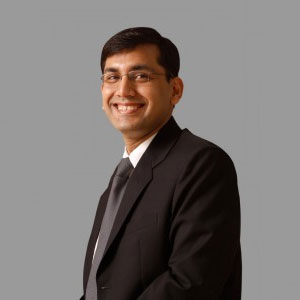
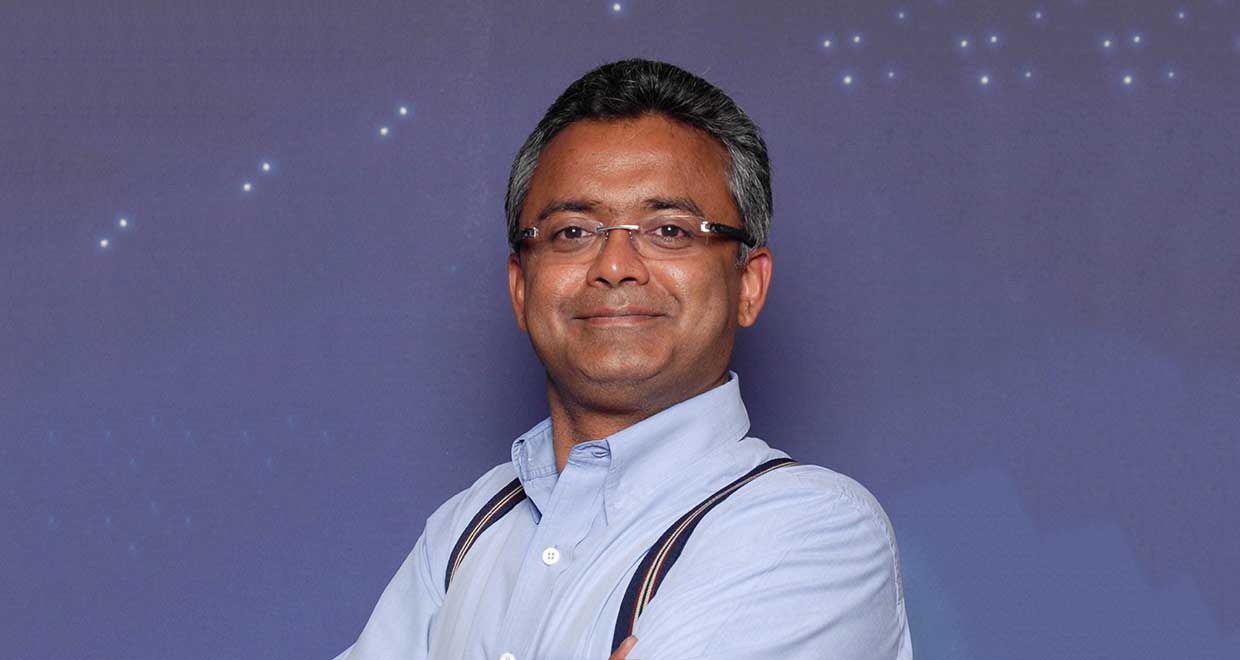
  • Abhijit Joshi, Founding Partner, Veritas Legal, Ex-AZB Senior Partner on starting up with Veritas

    Abhijit Joshi, Founding Partner, Veritas Legal, Ex-AZB Senior Partner on starting up with Veritas

    Abhijit Joshi is a founding partner of Veritas Legal, Advocates and Solicitors, and is also a qualified member of the Law Society of England and Wales. Abhijit graduated in Commerce and qualified in law from Mumbai University. Over the course of his career he has worked at Amarchand Mangaldas, Dua Associates and AZB Partners. In this interview he talks to us about:

    • How he selected law and his early career.
    • Criteria for selection of associates while recruiting.
    • His formative years as a lawyer and his time at Amarchand and AZB.
    • Veritas Legal and its rapid expansion as well as advice for our readers.


    How did you decide to pursue law as a career option? Were there other lawyers in your family?

    My father passed away very young and what is not untypical of Indian families all our properties went into disputes. As a result at a very young age (school days) unfortunately I had to interact with lawyers along with my mother. It probably had a counter effect, i.e. me not wanting to take up law! So while I studied law, I never intended to become a lawyer. After trying my hand at a few things, I realized that the unplanned training I got during my childhood, had probably made me more attuned towards the profession and ultimately I decided to pursue it as a career. There is no one in my family who was ever a lawyer and I was told that this might be a serious impediment. Needless to say, I realized that if you have merit and are willing to work hard, there are no real impediments.
     

    abhijit-joshi-2

    Tell us about your schooling and college life before you graduated. Any fond memories or anecdotes that spring to mind that you would like to share with us?

    School days were great, but at the age of nine I lost one of my parents. It had an effect, but I coped well. I then went to Sydenham College for Commerce which was then a premier institution. There are lots of fond memories. I excelled at academics, I excelled at extra-curricular activities, I became the youngest chairperson of the Students Union. I found the love of my life, my wife. I probably learnt my early lessons on the importance of networking at the college.


    Were you always interested in corporate work? Did you have other areas of law that interested you? How did you ultimately choose your field of work?

    Corporate work has a buzz and I guess a lot of young minds would like to be associated with it. Even today, I see the same trend. I had planned nothing. I had applied to Mr. R. A. Shah at Crawford Bayley as he was the pioneer of international corporate work in those days. I was not accepted. I applied at AmarchandMangaldas and they were kind enough to take a risk on me. There were 5 to 6 lawyers in their Mumbai office in those days other than the family. I quickly realized that destiny had made the right choice for me.Amarchand was at the cutting edge of India’s economic evolution and I got to work on many of the firsts. For example, the first Euro issue, the first Cola war , etc. The firm’s orientation was towards corporate law and I eventually got interested in it and continue even today.


    How important is CGPA for a law student? While hiring, are you primarily looking at the academic record of the candidate or other areas like extra-curricular activities too?

    This is a good question. When you are judging a candidate by her resume, academics is going to form a lopsided part of consideration. However, I believe that in addition to academics other aspects of the personality of the candidate is what will give him/her the winning edge. I would assume that everyone is going to be hardworking, but it is important to know who has the “spark”. Personal interviews go a long way in getting a “gut” on the candidate. After having recruited for many, many years, it somehow comes to you within the first 5 minutes of the interview whether there is potential or not. But often this has not been fair to the candidate and this has to be validated by more scrutiny. For example, when you see extra-curricular activities, you see whether the candidate has all-round development. I would typically see what games the candidate has played. Is he a cricketer or is he a tennis player? In other words has he/she excelled at team games or individual games, is he/she a team player or a solo player.These are only aides, but I would admit that in a situation where there is not much to judge from, academics will have a very heavy weightage.


    abhijit-joshi-3

    You started your career at Amarchand Mangaldas and moved on to Dua before joining AZB. How did your initial years in practice shape your outlook?

    My initial years shaped me. My senior Mr. Cyril Shroff has left a deep impression on my work and my style of work as that is what I observed very keenly and closely during my formative years.I remember he once told me to never close the right side of a chart when you are developing options because mentally when you close it, you will feel there are no other options and you will start thinking within the box. He taught me how sound knowledge of law needs to be applied with innovation in thinking. The initial years have left an imprint on me.


    You have been associated with AZB for a number of years – you started as one of their first partners before being made CEO of AZB. How do you look back on your time at AZB?

    AZB holds a special place in my life and career. I got to observe another giant, Zia Mody. Both at Amarchand and AZB , I was around in their initial days of evolution and therefore I had the privilege of working very closely with both Mr. Cyril Shroff and Ms. Zia Mody. We were around 11 to 15 people when I joined AZB (then known as CZM) and the sheer joy of growth and the adrenaline was unparalleled. Working with Zia and Bahram was delightful as not onlywere they good lawyers, but also great human beings. I look at AZB very fondly. It has shaped me.


    Less than a year ago, you left a comfortable job to start out on your own at Veritas Legal. What prompted this move and what role do you envisage for yourself at Veritas Legal?

    I can only quote Robert Frost as an answer to this question. “The woods are lovely, dark and deep, but I have promises to keep and miles to go before I sleep.” I guess I enjoy the growth phase. I enjoy constructing. Both at Amarchand and AZB, I really enjoyed that portion of the journey. In the last decade of my career I guess I wanted to venture out and feel the excitement once again. My decision has nothing to do with any grievances about the past.It was all about the possibilities of the future. My role at Veritas Legal is dynamic at this stage. However, I do not intend to be around forever. Keeping this in mind, I did not use my name or surname in the firm name.This should never be an issue for senior talent aggregation. We have got very experienced resources. In time, I am sure they will step up and I will ease out. But before that, I would like to implement a lot of what I have learnt- what should be done and equally what should not be done. There are a lot of ideas that float in my mind. A lot of initiatives that I could not take up earlier. I intend to live each one of them. I see cultural integrity as a core part of the value system. I see value systems as the only cohesion at work place. I see that only these values will allow resources to flourish and bring excellence at their work. I hope that these will stay central to our growth and we will make all endeavors to see that these are not compromised at the altar of growth or success.


    How did large corporate deals come your way and what do you feel for your firm’s success?

    (In its relatively short period in existence, Veritas Legal has already completed around 27 transactions in the field of M&A and private equity. These include transactions for Recipharm in the acquisition of Nitin Lifesciences which is the second largest deal in India in the injectable space and Evonik acquisition of Monarch Catalyst.)

    We have more than 200 filings in various judicial fora. These have come from various sources and from all directions. I am more than pleased at the firm’s performance in the first year. But I take cognizance that the 2nd year will be more challenging than the first. We are determined to work hard and stay focused on our beliefs and hopefully better times will follow.


    Do you think the firm might perhaps be growing too fast or is hiring based on the amount of work you have to handle?

    (From having started with just two members, the firm has grown in strength to over 35 people with 25 lawyers in such a short period of time.)

    Yes, I think we have grown faster than we would have liked. However, we have not gone out and recruited anyone. The resources have been referred to us and we have recruited selectively. As matters kept coming, we kept increasing our strength to ensure that there is no burn in the system. Therefore, the growth is more a reflection of the thrust of the economy as opposed to a planned one. In fact, we have no numbers in mind. We have only quality in mind and whatever number is necessary to support the quality will be achieved.


    What do you expect from first year associates or interns from law school who wish to work for your firm?

    I do not have any eligibility criteria for interns. How do I put criteria on a student who is himself/herself discovering life? There are only basic attributes of hard work and inquisition. I love working with curious minds. I guess this is inherent and if the resource has it, it will show.


    Where do you see yourself and your firm ten years from now?

    Ten years is a long time. However, I hope that we are known for the job we do. We do not necessarily need to do everything, we do not necessarily have to be a size, but we necessarily have to be a happy place to work in and we necessarily have to be excellent at our work. I have a journey in mind with these values. The destination will reveal itself in good time.


    You are a member of the Law Society of England & Wales and qualified as a solicitor in England. How does one qualify as a solicitor in England and what advantages do you think it poses?

    Degree as such has a limited value. The knowledge you derive in gaining the degree is invaluable. Having a solicitor’s degree from England to my mind has limited value if you are practicing in India. It is not a “must have”, it is “good to have”.


    Finally, what is your parting advice for our readers?

    When I started my career, someone gave me a quote which went as under “Don’t learn the tricks of the trade – learn the trade”.I do not think that I can summarize my advice any better.


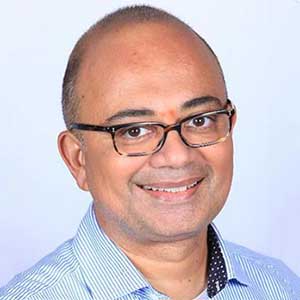
  • Gopal Sankaranarayanan, Advocate, Supreme Court of India, on building a career in litigation and on legal writing

    Gopal Sankaranarayanan, Advocate, Supreme Court of India, on building a career in litigation and on legal writing

    Gopal Sankaranarayanan is an advocate at the Supreme Court of India. He graduated from NLSIU, Bangalore in the 2001 batch, immediately after that he went for a Masters in Criminology from the London School of Economics. A prolific writer in various journals and leading dailies, a co-founder of Care For Air, an independent, volunteer organization and a successful practitioner of law, Gopal speaks to about:

    • His college and university experiences.
    • Mooting – the culture and its importance.
    • Helping Bhutan draft its Constitution
    • Legal writing, research and his new project Care For Air.
    • His views on Section 498-A and his advice for being successful in both personal and professional spheres.


    Could you please introduce yourself to our readers?

    I am a son, husband, father and friend. I am also an Advocate of the Supreme Court.


    You graduated from NLS Bangalore in 2001. How was preparation for the entrance exam like then?

    The entrance exam in the mid-90s was very different from what it is now. There were fewer candidates taking it then – a few thousand or so – and the questions were fairly straightforward Math, English, GK, Logic and Legal Reasoning. With time, they have become more complex, and with the advent of the CLAT, fairly random, inconsistent and thoughtless, which is why I am helping my friend Prof. Shamnad Basheer in his challenge to its arbitrary nature which is pending in the Supreme Court.

    Preparation for me when I took the exam was interesting. I took it twice, in fact. The first time in 1995 with less interest, a week after a teenage romantic heartbreak and which led me on to the NLS waiting list and then St.Joseph’s College in Bangalore for a year. That was probably my best year of College – I travelled the country for literary fests, I bunked classes to have beer at Brigade Road and investigated kabab roll joints across the city.

    The second time the following year I spent a week reading that godforsaken Competition Success Review and flipped through the equally mammoth Manorama Yearbook to figure out who had won the Padma Vibhushans and to understand what GATT was. It didn’t help. But what did was the fact that a friend was in NLS and she gave me a few ideas, most important being to finish all the questions. I weaselled my way in, though if the faculty had any idea, they would have nipped it in the bud!


    How was your time at NLS – could you share your experience with us?

    My time at NLS was a lot like life. It was a microcosm of India – girls and boys from across the country from a variety of backgrounds all thrown into this melting pot– there was competition, pettiness, talent, imagination and insecurity. I tried my best not to change who I was (which wasn’t a great idea because I have a prickly personality!). As a result, I tried everything, giving academics the least priority. I played a lot of sports, and was most partial to Cricket and Hockey. I mooted nationally and internationally, helped co-found and convene our annual fest LeGala led by the wonderful Meghana Abraham, participated in literary and cultural events across the country from all the IITs to BITS Pilani’s unparalleled Oasis, sat in dive bars in Nagarbhavi, did all-nighters with cigarettes and dumb charades, danced and sang, choreographed fashion shows, and loved my internships with K.K.Venugopal, Zia Mody and Karanjawala. Subject wise, I fell in love with Constitutional and criminal law and fortunately, that affair continues.

    I made some very dear friends at NLS – many for life, and I am happy that their interactions have made me richer, while not necessarily enriching them! One of those collegemates now shares her life with me, though she claims she barely noticed me then.

    On the flip side, I had my share of controversy and run-ins with the faculty, a few of whom completely lacked the emotional maturity to deal with young people. There were others, like Prof.N.L.Mitra who probably saw some potential in my rebellious streak, and when I objected to the undemocratic manner of NLS student elections, he allowed me to form a Committee to revise our Constitution. That effort thankfully bore fruit largely due to the efforts of P.M.Thimmaiah and Nandan Kamath.

    In my entire tenure at NLS, there were very few members of the faculty who really had what it took both academically and emotionally – A.K.Rai and V.S.Mallar were the exceptions, and the blame for this lies at the doors of a series of Vice Chancellors who were insecure and lacked the imagination to encourage young academics to truly flourish.


    You did your Masters in Criminology in the London School of Economics. Tell us a little about your time there.

    I guess the fact that I didn’t seem like a nerd appealed to LSE when I applied seeking to enlarge my passion for theoretical criminology. At the time, LSE was still a part of the University of London and we had multiple faculty across King’s, UCL and SOAS taking a single subject. I knew Nicky Lacey was at LSE, and that’s why I applied, but to have the erudite Robert Reiner and the accomplished Ben Bowling (now Deputy Dean at King’s) teaching us about feminist theory, stop-and-search and media manipulation was fantastic. The rigour they expected and the inputs we got from international students made the subjects so much more attractive. As we could opt for a non-specialized subject as well, I chose International Law of Armed Conflict & Use of Force, which was helmed by Prof.Christopher Greenwood (now a judge at the ICJ). Greenwood to me sums up everything a Professor ought to be – charming, informed, witty, humble and extremely disciplined. While he taught us, he was also a Queen’s Counsel, advising the British Government on the invasion of Iraq (this was shortly after the September 11 attacks), editing the ILRs (with Lauterpacht Jr.), churning out a series of articles in the top International journals, appearing before the ICJ and also taking 4 other courses on law. Teaching one course at the Masters level can be exhausting – to do all this is superhuman. Along with Greenwood, giants like Christine Chinkin and Rein Mullerson (Gorbachev’s former Advisor) brought into sharp perspective the practical real-life experience that is so necessary for a good academic. I could probably bore you to death about how the approach of teachers in the UK ought to be emulated here – so that they give you some respect and treat you as equals, or at least sentient beings.

    Apart from the classes, which after a long while, I truly enjoyed, I also played Hockey for LSE’s First XI team, and won medals for the Universities League and Championship that year. We trained under the shadow of the iconic Battersea power station and I will never forget freezing my butt off while running around on this Pink Floyd pitch.


    What is the value addition of a Masters in your career?

    I think if you are curious and you like to learn, you should always step beyond our shores to try and experience that world. For me, my Masters was always just going to be knowledge for the sake of it, as I had no plans of working in London and was coming back to practice. I have almost never used the actual lessons or the subject matter of what I was taught in my practise, but the tools of research, of pithy presentation, of verification of sources, of comparison, of context I apply on a daily basis.


    What has been the role of sport in your college days and thereafter? What role do you think sport plays in getting a postgraduate seat?

    I was and continue to be passionate about sports. I still play tennis, badminton, basketball and golf as time permits, and whenever Amit Sharma remembers, I will turn out for a day-night cricket match! As the great American broadcaster Heywood Broun said – “Sport doesn’t build character. It reveals it.” If you allow it, it can be the most defining aspect of who you are. Sport has taught me passion, camaraderie, leadership, sharing and loyalty. It has given me perspective about everything else I do because it is so inclusive and rewarding. You don’t have to play it, you don’t have to be good at it, you don’t even need to understand it to actually be moved to tears when something great happens. I haven’t seen anybody crying enraptured by a great argument in court or a wonderful contract clause. If I were unwell, I would probably skip Court, but I have stepped onto a cricket field with one hand in a cast, and shared a 45 run partnership for the last wicket with Siddharth Agarwal, who now knocks it out of the park in Delhi’s criminal courts.

    During my years as a lawyer, I have been happy to see the seniors at the bar readily reach for their cheque books when I approached them to donate for Shiva Keshavan’s luge at the last Winter Olympics, and my own recent experience as Secretary of the Lodha Committee has been very rewarding in helping formulate policy at the highest levels of one of the world’s most watched sports.

    As far as your applications question is concerned, I can imagine sport playing a big role if you apply to Universities that have strong sports agendas (Duke, Michigan, etc.) or if the evaluator is partial to sport. But if you are unfortunate to have your exquisite essay read by a serial academic topper who frowned at such frivolities, you are up the creek without a paddle.


    What are some of the important observations you have found regarding the moot culture in India in recent years, when you have acted in the capacity of judge?

    I have had varying experiences. I know it’s very tough to know what to prioritize before which judge – some prefer citations, some (like me) love to go into the facts and work the angles, others just want to show how much they know. There are, however, 3 basic things I tell mooters –

    (1) Dont interrupt the judge, but please don’t be obsequious;

    (2) Stick the moot problem on your bedroom door and read it a hundred times – it always throws up something new;

    (3) Use real life examples to illustrate your point and make it simpler to understand (this is actually the Mukul Rohatgi staple!)


    What role do you think mooting should play in a law student’s life?

    I think it has its place. It shouldn’t be an overarching priority because there is so much else on offer in your 3 or 5 years at college. For most young people, this is your last free stretch before responsibilities overtake you. If you can, enjoy it by doing other stuff and meeting new people. This might be the time to walk over and talk to that girl or guy who sits quietly in the second last row without interacting with anybody. Go over, have a coffee together and figure out what makes them tick. Not as a social experiment, but just because it is what humans ought to do.


    Will you give us a brief recount of the time you helped the Kingdom of Bhutan draft their Constitution?

    This really happened by chance. I was in the Chambers of K.K.Venugopal, Sr.Advocate [KKV] and he was approached by the erstwhile King of Bhutan, Jigme Singye Wangchuk to advice on a Constitution. He is quite a forward thinking man, and as a monarch, realized that a Constitutional set-up would be a progressive one. There were many interactions with the Law Minister and the Chief Justice of Bhutan, accompanied by their advisors. Their initial draft was a mish-mash of the UDHR, the ICCPR, the US and Indian Constitutions. KKV spent hours reworking it while I researched the areas that required special attention and suggested alterations where necessary. This was not an easy task for two reasons: One, it required me to fully understand the development of South Asian constitutional law, and Two, KKV almost always asked me questions to which I had no answer! Eventually, the Constitution came into force, with KKV playing the role of Bhutan’s Ambedkar and B.N.Rau rolled into one, while I visited Thimphu in 2008 and sat in their Parliament watching their most polite legislative proceedings.


    You have several publications to your credit. Tell us a little about writing legal articles and research in a lawyer’s career.

    Research is compulsory. Articles are voluntary. Just as with moots, I spend several hours reading caselaw, online articles and books to come to terms with a legal point. If it is a considerable one which I believe the public would like to know about, or an anomaly, or something which is just patently unfair, then I feel compelled to publish. I write from the heart, and I know that often candour is unappreciated, but it also corrects an incorrect impression that people may have. I believe legal writing should be so exhaustively researched that there can be no doubt that it is original and that also there is something novel to say. Also, anyone interested in writing should attempt to have their work spread across multiple publications so that there is no suspicion of nepotism or partiality.


    Is there any habit or skill you picked up over the years that you believe is critical to a lawyer’s success?

    Integrity. If you try to mislead the court or try pulling a fast one on a colleague, the ephemeral pleasure will ruin your reputation for life. Before you know it, judges and lawyers put you down as someone whose word cannot be trusted, and their displeasure starts dampening your performance. While hard work and application are important, they are meaningless without the respect of others.


    gopal-sankaranarayanan-2

    Tell us a bit about your love for Constitutional law and work experience.

    As I mentioned earlier, this was something born out of some invigorating classroom discussions we had in Law School with Profs. Mallar and Vijayakumar.

    When I came into practise, I started assisting KKV in some Constitution Bench cases and I realized how much reading it involved. A turning point came when Mr.Fali Nariman, after seeing me assist KKV in a matter recommended me as his junior counsel for the 9-Judge Constitution Bench hearing the scope of the Ninth Schedule [I.R.Coelho]. I was overwhelmed by his generousity, and later by the fact that preparing for it meant I had to read Golak Nath and Kesavananda cover to cover! It was a brief 5 day hearing under the strict gaze of Chief Justice Sabharwal, and we subsequently succeeded, but even if we hadn’t, it was a personal achievement – to spend hours brainstorming critical aspects of our Constitution’s fundamentals and then to assist one of our finest minds in putting it across.

    Subsequently, I spent 4 continuous months on the reservation challenge in Ashoka Kumar Thakur and learnt that nothing about Constitutional law is easy or brief. It requires rigour and reading, and while it takes time for an opportunity to come your way, it invariably will. I was thus fortunate to address the Constitution Bench concerning the postponement of reportage [Sahara v. SEBI] and to successfully challenge Section 6-A of the Act setting up the CBI [Subramaniam Swamy]. Recently, my arguments on vagueness and liberty were accepted by the Bench that heard the challenges to Section 66-A of the IT Act [Shreya Singhal] and also struck down Section 118-d of the Kerala Police Act.

    At NLS, we were taught one trimester by the late Justice A.M.Bhattacharjee, whose unique grasp of the subject is best reflected in his book “Equality, Liberty & Property” [now out of print]. I remembered his Chapter on Privacy when we were doing the AADHAR case earlier last year, and it was this little bit of stray reading which allowed us to have the case referred to the Constitution Bench, doubting the correctness of how Kharak Singh had been followed. So, you never know when a little extra can come to aid!

    Outside of its use in the Courts, I was always fascinated that while the Constitution was our most important textual document, we had little general knowledge about it. How many Indian homes have a Constitution? But many have the Gita, Bible or Koran. The more I realized how Indian courts have made the Constitution such a dynamic instrument of social change, I felt something needs to be done to increase its reach. An early suggestion to Sumeet Malik from the Eastern Book Company to have a coat pocket edition of the Constitution bore fruit, and the slim leatherbound volume of which I am the proud editor is now in its ninth edition. It is an endeavour to have it in every home soon – our entire Indian cricket team have personal copies and this was what was presented by the President to Arvind Kejriwal when he visited him on the occasion of his election last year.

    I also conceived of an Oral History project which was implemented by Rainmaker, where we conduct and upload free on YouTube hour-long video interviews with the doyens of the legal profession so that those who might otherwise not have a chance to interact might have access to their lives. Soli Sorabjee, Iqbal Chagla, Harish Salve, Gopal Subramaniam, Ashok Desai, Raju Ramachandran, Goolam Vahanvati, and several dozen more have shared their life stories.

    Things like this, apart from actually arguing in court, are way more fulfilling, as they allow your countrymen to slowly become aware of their Constitution and their rights.


    What are your views on Section 498-A and the realities of its application?

    I think, much as the Supreme Court itself has, that this provision is being abused often. In some States there are police advisories not to automatically arrest the accused in such cases and to be cautious. Marital discord is usually irreparable once you reach this stage, and the deepset rancour coupled with the lethargy of our judicial process eventually leaves the victim (husband or wife) with no way out of an unhappy situation. Based on my Note, the Supreme Court recently laid down guidelines in Arnesh Kumar, but I don’t know how it is being implemented in the respective States.


    How do you manage your professional life and personal life? Do you keep both separate?

    Actually, I don’t. I am thankful that my wife Haripriya Padmanabhan (also a Supreme Court advocate) is such an excellent multi-tasker – she does her Court work (much better and more thoroughly than me), she manages our three kids, she cooks wonderfully and she discharges her role as the Secretary of the school PTA, so that all I really have to manage is my own practise!

    One of the things Haripriya and I agree on is that family is more important than anything. Thus, we have our office a mile away from home so we can be close to the kids, but we don’t work on anything together. We have our distinct practise areas (she is more into commercial litigation, education and civil law) and we never discuss law at home. Our work grants us the flexibility to be home with the children during the day and when there is pressing work, we work into the night after they sleep.

    It’s not easy, especially when you come into Delhi from outside and you don’t have grandparents around, but with patience, luck and friendship, you will always find a way.


    What do you do in your free time? Have you continued activities related to literary and debating (as you were given awards for the same in college)?

    I love films, books and music. The arts have always been my weakness and I collect what I love. Travelling Wilburys, Billie Holliday, Sam Cooke, Guru Dutt, Stanley Kubrick, Wong Kar Wai, Watchmen, Sandman – I love them all.

    Recently, a more grim issue has taken up my time – air pollution. It is something that is slowly enveloping our cities and making India unliveable, particularly affecting the very young, the pregnant and elders. A few of us have founded Care For Air, [www.careforair.org] an organisation aimed at raising awareness about the problems and solutions regarding the toxic air. We make presentations to school and residential communities and continue to spread the message.

    L&D-wise, one of the things I do on an annual basis is to host MyLaw’s A Question of Law, a quiz on law for lawyers, law students and the general public on Law Day (November 26th). Its light hearted and fun, which is evident from it being conducted at Monkey Bar! We just finished 5 years of that, and it is a lot of fun with several hundred participants and regular rounds of tequila shots.


    Do you have any parting advice for all our readers out there?

    Just one: tomorrow, you could be hit by a truck, so don’t keep worrying about your majestic long-term goal. Keep small workable milestones which have nothing to do with your peers and where they have reached in their lives. Make time for sport or music or painting or language or whatever you enjoy. Try and travel, even to small places nearby. Don’t let work come in the way of your important relationship moments (weddings, birthdays, anniversaries, even funerals). If you have a partner or a child, try and be there for his or her doctor’s appointments or school performances or shows. When you’re 55 with an empty nest, you won’t remember which case you were arguing when your daughter was winning the relay.

    As the windows of Chartres Cathedral will tell you, as long as we are on the shoulders of the giants who came before, we will always be okay.

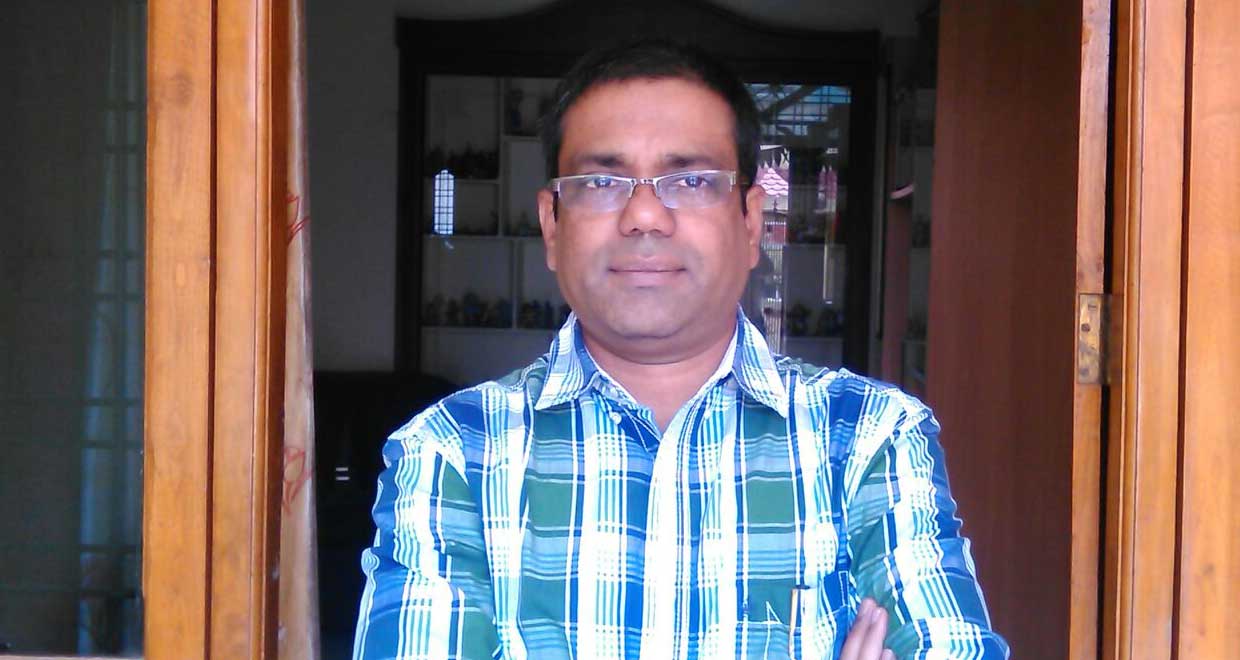
  • Vaishnavi Bhaskaran, Partner, Spectrum Legal, on advising startups and Corporate Law

    Vaishnavi Bhaskaran, Partner, Spectrum Legal, on advising startups and Corporate Law

    Vaishnavi Bhaskaran graduated from National Law University, Jodhpur in 2010. She is currently a partner at Spectrum Legal where she heads the Corporate-Commercial and Employment Law Practice. In this interview, she talks to us about:

    • Her experience at NLU, Jodhpur and decision to pursue law
    • Her view on internships and augmenting a CV
    • Her professional journey and founding ‘The Little Black Coat’
    • Spectrum Legal and her views on the field of law in the contemporary context


    What incident, influence or interest prompted you to think of law as a career? If not law, what other options would you have considered for a career?

    I have wanted to be a lawyer since the beginning of my teenage years. The idea (somewhat clichéd) first came to me after I had read a series of John Grisham novels in quick succession. Of course, the reality is vastly different from what one reads about, and I realised that soon after I entered law school. Fortunately for me however, the reality was not unpleasant. I had briefly toyed with the idea of journalism, but in the end, it was to be law.


    What would you like to say about your experience with college admissions and competitive exams?

    I was very clear that I wanted to attend one of the top-ranked national law schools, and I was very fortunate to have found a place at NLU Jodhpur.


    How would you describe your life while studying at NLU Jodhpur? What activities did you tend to favor?

    My time at NLU was undoubtedly one of the best periods of my life, and has gone a long way in shaping me, both as a professional and as a person. While at NLU, I had a clear vision of what I wanted to do once I graduated, and I focussed on doing things that would get me closer to my goal. I tended to focus on subjects that I thought would help me once I started practising, and pursued internships that would further my goals.


    Were you always clear on corporate-commercial law as your field of expertise or were you drawn towards it while studying there?

    It was after my very first litigation internship that I realised that litigation wasn’t my calling. Like most law students who start off thinking they will graduate and pursue litigation, I did initially pursue a couple of litigation internships. After I completed my second year however, I found an internship opportunity where I was given both litigation and non-litigation related work, which is when I realised that I wanted to be a corporate lawyer. Subsequently, I chose to pursue the corporate law honours course that NLU offers, in my fourth and fifth years.


    Beyond academic experience what would augment CVs of law students and make them better candidates for the same?

    Obviously, being from a good university and having a good GPA will more often than not, help you secure a good job in the legal field. However, even internships can open up doors in most organisations, if one is found to be hardworking, resourceful, knowledgeable and eager to learn.


    What kind of internships would you recommend law students opt for to start building the sort of versatility and widened range of law that you are well versed with today?

    Most small to medium law firms in Bangalore do not have the precise demarcations when it comes to areas of practice, as many larger firms do, and as a result, most lawyers tend to have wide exposure within the broader boundaries of their chosen specialisation.

    In my experience, interning with small and medium size firms provides interns an opportunity to learn a wider range of subjects.


    vaishnavi-bhaskaran-1

    Krishnamurthy & Co. (K Law), an established corporate commercial law firm, was your first placement directly after college. How did your experience there help you add to your understanding and practice of law in India?

    Immensely. In my opinion, K Law is an excellent place to start one’s career. During my time there, I worked on a very wide variety of issues and was very fortunate to have been given a high degree of responsibility at a relatively early age. Both these factors were instrumental in helping me start Spectrum Legal.


    What prompted your shift from K Law to Poovayya & Co., Advocates & Solicitors in 2011?

    At that point, I was keen to acquire more exposure and see how other firms functioned. I had interned with Poovayya & Co. previously, and had found the experience very rewarding and enjoyable.


    What went into founding The Little Black Coat in 2013? What were your motivations for the same and how did it affect your perspective on legal startups?

    Even while I was in law school, it remained my ultimate objective to set up my own law firm. At the time when I took the decision to go independent, the startup ecosystem in Bangalore was booming, and it was only a matter of time before they all needed lawyers.


    What did you learn from your experience with startups while running The Little Black Coat?

    Working with startups is a completely different experience from working with bigger and more established entities. Established companies tend to be business savvy and typically require only legal advice. Working with startups however, requires you to do a great deal of handholding and walking them through business and financial issues, in addition to providing them with legal counsel.


    Tell us what drove you to set up Spectrum Legal with Chinnappa and Co.

    By that point I had developed a small client base, and while being an independent practitioner was extremely satisfying, it is also limiting because you cannot service your clients’ needs beyond your area of practice. Additionally, being only one person, you also face issues because of a lack of bandwidth. At that point, setting up a law firm seemed the natural and logical step, and when I met my partners, I found the team a good fit to take that step with.


    What was the motivation behind creating a law firm that aims to provide all types of legal services across different fields of law in the same firm?

    Like I said above, when you practise only one area of law, it can become difficult to service a client in a complete manner. A full-service law firm brings with it a unique synergy and the ability to meet all the legal needs of a client in-house, which was the motivation in creating a firm that provide a broad spectrum of legal services.


    Working for a firm, corporates especially, is generally seen as a time intensive lifestyle which leaves little room for much else. How true would you say this is from your own experience?

    There is a great deal of truth in that. Law is indeed a time-intensive profession, but so are most careers these days. In order to succeed, one must be prepared to put in the hard work. Having said that, I think as one becomes older and more senior, there comes a time when an individual can decide what his or her priorities are, and accordingly devise a schedule in keeping up with those priorities.


    What are your thoughts on the traditional ideas of specialization in singular core areas of law as opposed to the contemporarily broader approach to a wider field of law with multiple specialties?

    In my opinion, this is a result of the market where clients are faced with multiple legal issues. When it comes to law, most of the learning happens while one is working, and as such, a specialisation develops when one has been working for a while. I personally prefer a wider area of functioning, as I find this variety exciting and challenging.


    What would be your parting message to the readers?

    Before you graduate, and during the initial stage of your career, the choices one is faced with and the possibilities can be overwhelming. However, you’re in for the long haul, and it’s imperative to never lose the joy that comes from practising law. Initially, one’s focus should be solely to learn and attempt to master one’s field, everything else will follow at its own pace.

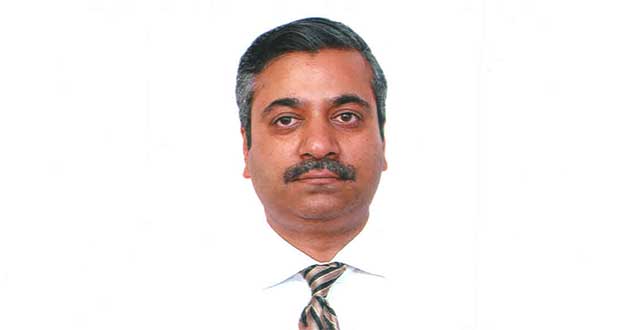
  • Puneet Bansal, Managing Partner, Nitya Tax Associates, on being a CA + Lawyer and practice in Indirect Taxes

    Puneet Bansal, Managing Partner, Nitya Tax Associates, on being a CA + Lawyer and practice in Indirect Taxes

    Puneet Bansal graduated in B. Com. from Hansraj College, Delhi University in 1998 and thereafter he acquired an LL.B degree in 2007 by eking out time for the evening classes of Campus Law Centre of Delhi University. Over the course of his highly successful career he has worked as a Partner at Lakshmi Kumaran & Sridharan as well as BMR Associates. He is at present a Managing Partner at Nitya Tax Associates.

    In this interview he tells us about:

    • Chartered Accountancy – his time in college, the contours of the course and tips to ace the entrance exam.
    • The work in an advisory practice, his law degree and experiences as a Partner at two firms.
    • The importance and convergence of law and taxation, advice for Tax Law enthusiasts, his views on the GST and setting up Nitya Tax Associates.


    How would you introduce yourself to our readers? Please tell us about your family and childhood.

    I was born and brought-up in a middle class family. My father is a business man and mother is a house maker. Being in a middle class household, my upbringing was normal. I was a pretty average student till Class X.


    Were you always clear about your career plans considering you pursued commerce in senior secondary and went on to graduate from Hansraj College, Delhi University in B.Com?

    Never. I choose Commerce in Class XI as I was not interested in Science and Arts. It was in Class XI that I developed an interest in studies and started doing well. Since my marks in Class XII were good, I joined Hansraj College. I didn’t have any career plan till then.


    How did you manage college with your CA preparations?

    One of my uncles filled the Chartered Accountancy form and that’s how I started doing CA. Indeed, CA used to be a tough course earlier as well. I used to go to college in the first half and come back to the CA firm in the second half when I was interning. It was a tough 3 years of managing both studies and internships.


    Please tell us about your CA Articleship. What was the application procedure? How competitive was it to secure an Articleship? What was the work assigned to you?

    I did an internship in a medium-size CA firm. My senior in the CA firm was a family friend so I got the internship with ease. I did accounting, company law and Income tax related work during the internship. Importantly, I was not at all exposed to indirect taxes during my internship which is my area of profession now. The period of my internship was a thorough enjoyment and was my first chance to peek into the professional services space.


    You graduated from Hansraj College in 1998 and finished your CA course in 1999 with an All India Rank. Please enlighten our readers with some valuable tips to ace the CA examinations.

    I cleared all CA exams in the first go and was the All India 27th rank holder in the CA final. I have followed one rule for preparation for CA exams, and in fact, now as well when I am practicing on my own I abide by it and that is ‘whatever you do, do with passion and then everything will fall in place. Otherwise do not do it’. I was always interested in understanding concepts rather than clearing exams. The conceptual clarity in all the CA final subjects only helped me in clearing the exams.


    puneet-bansal-2

    Our readers would like to know about your initial days as a CA professional. Could you share with us any interesting anecdotes?

    When I became a CA, I thought that life henceforth would be easy. But I was confronted with reality soon and realized clearing CA is the start of struggles in one’s professional career. Clearing the CA exam only opens the gates to the professional world. At each stage of our professional lives, we need to prove ourselves with hard work and competence.


    Was it difficult for you to shift to a new place of work, which was primarily a law firm? Please tell us about your work experience at L&S.

    (Puneet joined Lakshmikumaran & Sridharan in 2003 as a Chartered Accountant in their indirect tax litigation practice.)

    Indeed. I was working in Maruti Udyog and suddenly decided to shift to L&S. My family was stunned and couldn’t understand my decision. Also, the decision to shift from an Industry to a Law firm was a big change in my career. Working at L&S was a great experience. It was a close knit family environment comprised of competent professionals. Initially I did litigation, and later, set up their advisory practice. It was 9 years well spent in my career.


    In 2004, you joined Delhi University to pursue law. What was the driving force behind this decision?

    As I was working in L&S and wanted to make a career in litigation, I decided to do law. The admission procedure at the Delhi University required clearance of an entrance test. Clearing the entrance test was not tough.


    Please tell us about your law school days. Did you participate in any student activities? How active were you in other college activities?

    I did law from the Campus Law Centre, Delhi University evening batch, so I used to attend the classes and write the exams. As I was working full time in L&S, I didn’t participate in student or college activities during my law school days.


    How helpful was your law degree in terms of the added legal perspective to your existing knowledge? What career advantages did it bring?

    (Puneet qualified in Law in 2007, after that he continued with L&S.)

    The law degree really helped in giving me perspectives on the Indian Constitution and various other Commercial laws. I would recommend it as a “must do” if one needs to practice tax. Further, the law degree opens an opportunity for you to appear in the High Court and Supreme Court.


    What work does advisory practice include? What were the added responsibilities as a partner of one of the leading firm in indirect taxes?

    (After establishing the advisory practice of L&S, Puneet headed this team as a partner from 2010 to 2012.)

    The advisory practice involved advising clients on Indirect Tax issues involving legal interpretation, structuring business models etc. As a Partner of a large law firm, I was responsible for advising leading corporates of India. I also had the responsibility of managing a team of 10 – 12 professionals.


    Please share with us your work experience at BMR.

    (In 2012, Puneet joined BMR & Associates LLP as a partner.)

    My professional journey wouldn’t have been complete without joining BMR. It was a totally different way of practicing when compared to a law firm. The advisory practice was more focused on bringing legal, practical and implementable solution for clients. Furthermore, I really liked the professional practices in BMR. Overall, it was a great experience.


    How important is taxation as a subject for law students? What advice would you give our readers to consider taxation as an area of practice?

    Taxation is a very important subject for law students especially if one is focused on commercial laws. Taxation plays a key role in business transactions and has the effect of making and breaking the business. The current times are most exciting times for tax professionals with so many things coming up or growing up, be it GST, Transfer Pricing, International Taxation etc. This is right time to be in the taxation field.


    What issues did you face while setting up Nitya Tax Associate? Our readers would love to know about the significance of “Nitya” in the firm’s name.

    (Puneet recently founded an independent indirect tax boutique “Nitya Tax Associates” at New Delhi.)

    The decision to start Nitya was an attempt to create something on our known outside a framework of large firm. In professional services firm, only two things are important – clients and people. Some of the leading corporates have reposed faith in us and the going has been good till now. There were initial challenges on getting good people but now, we have a good team.

    The name ‘Nitya’ has its origination in the Sanskrit word and stands for ‘continuity’ / ‘eternity’. The name is a reflection of our belief and commitment to be available to our clients.


    Please introduce us to your team. What plans do you have to take forward Nitya Tax Associates, in terms of workforce as well as setting up branches in other major cities of India?

    We have a good team with some members with experience ranging from five to eight years. Kulraj Ashpnani, Deepak Suneja and Gaurav Narula have worked in large and reputed professional services firms. As of today, we are twelve professionals -a mix of Accountants and Lawyers. As of now, our focus is on NCR though we continue to cater to clients in other parts of India. For the next one, two, years, we plan to operate from Delhi and to strengthen our foothold first.


    What are your views about the upcoming GST regime?

    The GST will significantly simplify the indirect tax regime. During the first few years, it will open a floodgate of opportunities for professionals be it accountants or lawyers.


    What are the preferred legal issues you like to work on? Do you have any hobbies that help you unwind after a long day at work?

    Working on complex Indirect Tax issues for large manufacturing clients is my favorite as of now. I also enjoy doing litigation. Spending time with my kids and watching Hindi movies really helps me unwind.


    What would be your parting message for our readers?

    It does not matter what career you choose, but whatever you choose, do it in the most exemplary way and then everything will fall in place. Success is not a destination; it is a never-ending journey.


  • Sajai Singh, Partner, J. Sagar Associates, on work profile and experience in Corporate Commercial Practice

    Sajai Singh, Partner, J. Sagar Associates, on work profile and experience in Corporate Commercial Practice

    Sajai Singh graduated in B.Sc from St. John’s College, Agra and later qualified in law from Delhi University in 1990. Sajai is currently a partner at J. Sagar & Associates and the Chairperson of the firm’s Corporate Commercial Practice. Having experience spanning over more than 25 years, Sajai is an acclaimed transactional lawyer. Sajai has been the President of the International Technology Lawyers Association and is a member of the American Bar Association. In this interview he shares with us:

    • His college life, education and becoming a partner at JSA.
    • His experience as the past president of International Technology Lawyers Association, and also the field of Technology law.
    • The work entailed in his position and the field of corporate law dealt with.


    How would you like to introduce yourself to our readers, most of whom are aspiring lawyers?

    I am a first generation lawyer. My growing up years were spent moving from one cantonment to another as my father was in the Indian Army. Growing up in the army background bought a sense of discipline and commitment in me. I changed schools every two years if not earlier and my first exposure to living in a big city was when my father was posted to London and I joined him after completing my 12th Board exams, for one year.


    Could you tell us a little about your college life and why you decided to pursue a legal career?

    In college I studied Science. Chemistry was my favourite subject. Post College I studied Business Management and had an interest in International Trade. As I read more about International Trade, I realised the interplay and the key role played by Law.  It was the glue that made business possible in an organised and harmonious manner. Without the principles of law governing every aspect of business, a business transaction, like may others, would be anarchic. We had to keep referring to the ‘rules’ to answer any response to a ‘why’, a ‘how’ or a ‘what’. This was interesting, and at the same time intriguing.  That’s when I got interested in study of Law. Subsequently, I joined the Campus Law Centre, Delhi University.


    You completed degrees in B.Sc and PGD Business Management before pursuing law. Have these courses helped you in your work?

    Not just my qualification in Science and Business Management but also my secondary education in the Kendriya Vidyalaya system helped my overall growth and awareness, eventually assisting my study and practice of Law. Science taught me technical skills, while my Business Management background developed my analytical skills. My multidisciplinary exposure helps me understand the needs of my corporate clients better.


    What kind of activities did you take part in while at law school?

    Writing has always been a passion for me. While studying Law in the 80’s, mooting and debating opportunities were fewer compared to today. We made the most of the opportunities that came our way. Students today are blessed to have far more opportunities and avenues open to them. And they are not limited by geography.


    Did you do many internships while at law school? In retrospect, how important were these internships in shaping your career?

    Internship opportunities were few during my Law School days. I was, however, working while studying law. My passion for writing got me an opportunity in a leading advertising agency and I used to work in the copy department of the same. I also did part time work at Doordarshan and All India Radio. From the money I earned, I paid my rent and met my other needs. While the money I earned was not much, things were simpler, choices were scarce and my needs were simple. It were these life experiences that helped me realise the value of hard work.


    Having participated in a number of international programmes and workshops, what would you say were you biggest take-aways from each?

    I feel international exposure not only builds confidence for people from developing nations but also allows one to understand how to function in a flat world. The learning is both ways between developing and developed economies; between modern and ancient cultures; and between different professions. I have been lucky to have done courses in Wharton and with the Euromoney Institute. But the single most impactful experience for me was with the Centre of International Legal Studies/(CILS) Austria. I did a Certification Program in International Practice with them. This program took me to Dallas, where I spent 4 months working with the US law firm, Jackson & Walker. This time was an eye opener and prepared me for my forth coming move to set up open and run the Bangalore office of JSA in 1996.


    sajai-singh-1

    You have worked with J. Sagar & Associates (JSA) for 23 years now. Can you tell us the best and worst things about working in a corporate environment in general, and JSA in particular?

    I started my career as a Litigator. I moved to Corporate Law after 2 years of Litigation and Arbitration practice. I would recommend all future corporate lawyers to have some exposure to Litigation and the Court system before they shift work exclusively in the Corporate Law field. My tip on this point for aspiring lawyers would be to spend as much time in the Court Registry as they can. This exposure is key to understanding process and how the backbone of the justice system works. Contentious work develops quick thinking, contextualising and research ability, which is very useful for a Corporate Lawyer. While exciting in its own way, it may take time for Corporate Law work to replace the adrenal rush of arguing a matter before judge.

    My Experience in Corporate law field is limited to JSA. Therefore, I would not be able to comment in general about corporate law firms. JSA has been a very International, forward looking and broad canvas exposure for me. Its institutional character, ethical rooting and transparent interactions make it a very happy and comfortable environment to practice law in.


    As the Chair of JSA’s Corporate Commercial Practice, how do you recall your career traversed to bring you to your current position? What is your current work profile like?

    Since 1992, when I joined JSA, some months after it started, I worked extensively for multinational clients setting up business in India. Those were the years when India was slowly liberalising its economy and JSA was working closely with its overseas clients to try and maximise value for them as a part of their India entry strategy. Other than foreign exchange regulations, the other laws that I initially worked with were Company Law and Contract Law. With years of focus on these statutes I had a background which led to me being made the Chair of JSA’s Corporate Commercial Practice. It is my endeavour to continuously expand this practice including in areas that I am passionate about and feel will become strong practice areas in their own right very soon. These are Employment Law, Anti-corruption Law, Data Protection & Cyber Security. I am doing a fair amount of work in both these areas. In terms of my work profile, in addition to doing billable work, I am also expected to create a business development strategy, training schedules and curriculum, recruitment and HR needs and implement them for the overall growth of the practice.


    Please tell us how do you approach work with regard to management and delegation.

    As with any progression it is important to nurture the younger generation and allow it to grow develop and play a larger role. I follow the same principle in my practice. I have always been surrounded by brilliant young lawyers who have worked closely with me in delivering extraordinary service to clients. I believe in delegation. I believe in trusting my colleagues and their ability. At the same time I do feel a challenging is a good way to obtain the best performance. Unless a matter requires involved supervision or is evolving with time, I tend to keep my role limited to supervision and emerging essentials.


    Tell us about an interesting case you handled recently. What is your favourite part in the life cycle of a given matter or case?

    One of the recent anti-corruption investigations, that I worked on, involved out-of-the-box time critical thinking. Most of the challenges came from the human element rather than from a law or a regulator. And it is the ingenuity of the human mind that emerges as the most fascinating aspect of any transaction. Unravelling and anticipating this aspect is my favourite part. Using technology as an able tool has proven to be a wonderful experience.


    How did you develop an interest in Technology law?

    (Sajai was the immediate past-president of the International Technology Lawyers Association, which is a first for any Asian.)

    I have always been interested in new areas of law, which evolve with the development of Society. Be it Television Broadcast Law, Cable Television Law, Copyright Law, or information Technology Law, I have seen all of them evolve before my eyes and these have been fascinating experiences. I am sure there will be other and newer areas of law that will grab my fancy in the coming years. I look forward to that.


    Please give us some practical insight into the Information Technology sector in India juxtaposed with the same in the global context.

    From being the back office of the world, India today provides the world cutting edge consulting and advisory support. I see entrepreneurs come up with new ideas and technological breakthrough on an encouragingly frequent basis. I do hope India would evolve into an IT product, Software and Patent creations hub in the near future.


    Could you please provide us with some context in regards your long standing association with the American Bar Association?

    Since most of my clients were American Corporates doing business in India, I had to closely work with US lawyers and US General Counsel. These interactions led to me being invited to speak at several Seminars and Conferences, including those organised by PLC, IBA and ABA. These and many other associations welcomed me and my thoughts into their fold.

    ABA seemed a natural fit for my practice as it helped me understand the US legal landscape. My clients operated in this space and I had to keep abreast with it if I wanted to adequately service my clients, Thus began my association with ABA.


    Please tell us a bit more about the Private Equity and Venture Capital Committee that you are the Chair of.

    As a part of my leadership of the PE/VC Committee, I collated International experiences, regulations and understanding to what may be considered a cross border phenomenon – PE/VC investments. These collated thoughts, updates and experiences were presented to the Committee members at meetings and online.


    You conducted skill development courses on Negotiation and Transactional skills at the NLS Bangalore. What is the structure and curicula of this course?

    I like to teach and work with students. They have so many new ideas and life is looked at with different perspectives. As a part of this interest I taught at the National Law School, University of India Bangalore. Now due to time constraint I’m only able to conduct shorter skill development programs and not teach semesters as in the past. My Negotiation Skills and Transaction Skills Courses were focused on practical development of the students rather than on teaching theory. I wanted to provide my students with an opportunity to understand how negotiations are conducted in practice and the life cycle of a transaction with several live examples exercises and fact patterns. My students got an opportunity to role play in a controlled environment which I hoped would prepare them for the practice of corporate law.

    I also conduct legal workshops in different universities across the world as a part of my education initiative for ITechLaw. The recent ones that I conducted were in Colombia, Ecuador, Peru and Chile. I hope to conduct one in Cuba next year.


    What advice would you like passed on to an aspiring lawyer?

    My advice to any aspiring lawyer is to remain curious, ask questions and try to learn one new thing every day!

  • G R Srikkanth, Vice President – Legal, RP Sanjiv Goenka Group on a decade long experience as In-House Counsel

    G R Srikkanth, Vice President – Legal, RP Sanjiv Goenka Group on a decade long experience as In-House Counsel

    GR Srikkanth studied law from Osmania University and graduated in 1996, after pursued LL.M. at the same place in 1998. Currently the Vice President – Legal at RP-Sanjiv Goenka Group, Srikkanth is a rank holder in Labour Laws and IP Laws. His prior assignments include a near-decade experience at HUDCO (Govt. of India) and Govt. of AP.

    In this interview, he tells us about:

    • His decision to do two diplomas in Intellectual Property Laws
    • His experience as a Legal Manager at Housing Urban Development (HUDCO)
    • His advice on drafting infrastructure agreements
    • His achievements and landmark moments at RP-Sanjiv Goenka Group


    Did you have lawyers in your family?

    I have done my schooling and college education in Hyderabad. There are no lawyers in my family, I was very much interested in joining politics and LLB was a natural choice.


    How did you choose to do Cost Accountancy?

    (Srikkanth initially started as a commerce graduate with cost accountant qualification)

    Law was my first choice, but I also enrolled in cost accountancy to gain some accounting knowledge.


    How instrumental was Osmania in shaping up your legal career?

    (Srikkanth studied law from Osmania University and scored 1st division in the year 1996. Thereafter, he did his LL.M. from Osmania in the year 1998 and ranked 9th in the entire university)

    Osmania University’s eminence is unparalleled to any other institution in the country and it is the epicentre to many movements. It taught me a practical approach to looking at things. OU’s environment has always instilled confidence in all its students.


    Tell us about your courses. Share any incident from that time.

    (Srikkanth has done two courses i.e. Diploma in Intellectual Property from WIPO (UN) 2006 and PG Diploma in Intellectual Property Laws – IIT Kharagpur.)

    When IIT KGP started Law School and commenced PGDIPL, I took some break from work and enrolled there. Being in first batch there, we faced some short term issues similar to any new venture. But overall, the experience was enriching. A memorable incident was drafting an invention disclosure for a chemical product. Being a commerce graduate, it took much more effort on my part to complete the project.


    Please tell our readers about what your work experience was like at HUDCO. What did an average day of work look like?

    (Right after graduation, Srikkanth worked as Manager of Law in Housing Urban Development (HUDCO) (a Government of India enterprise) for nearly 9 ½ years)

    I appeared for HUDCO’s exam and got through and this is how I started my career with HUDCO. Primarily, the job involved appraisal of various projects in real estate, and various infrastructures like utility, social, urban infrastructure project.  HUDCO is a leading player in techno financing; it makes feasible studies about the project and finance. I was lucky that major projects commenced in my jurisdiction I got to work in many places across India which helped me learn various local revenue laws and regulations.  Major contribution was drafting of letter of comfort in lieu of State Government guarantee, when there were restrictions in issuing State Government Guarantee due to over borrowings of the State Government. This instrument was even vetted by RBI as a valid document for financing and it’s a first of its kind.


    Share with us the major points one should concentrate on, while drafting agreements on infrastructure projects?

    While drafting infrastructure projects, one needs to contemplate all kinds of risks that may be associated with the project and take a detailed brief from other functionaries like civil, environmental, structural engineering and finance team.  List out all the possibilities and make a provision regarding them in the agreement. Similarly, list out all the applicable laws and appraise the provisions with reference to the project whether they have any impact on the same. Also, address the issues fit-out period, concessions, compliances under labour and corporate laws, insurances and assignments etc. If the lawyer/in house counsel is involved in drafting terms and conditions from the tendering or RFP, then he/she will be in a better position to draft instead of merely vetting the agreements.


    How fulfilling were the last 10 years both on the professional and personal fronts? How challenging and grueling were the difficulties and how did you overcome them?

    (After HUDCO Srikkanth joined RP Sanjiv Goenka Group as Chief Manager Legal and has now been promoted as Vice President Legal.)

    Retail Industry is most challenging and complex in terms of legal and regulatory issues.  Every product whether, food or non-food, is covered under some law or regulation, a Hypermarket where 30,000 products are sold attracts dozens of legal and regulatory issues. For example, retailers need licenses even to sell products like mosquito repellents, cosmetics, etc. Every day is different and there is a need to address issues instantly. Over a decade, I have been able to learn many things.


    Would you kindly share your accomplishments and job specifications at RPSG Group?

    I have been awarded Chairman’s TOP GEAR award in 2008 for best performance in resolving legal issues, I have also been nominated for the Best In-House Counsel for Asia Pacific Award by International Law Office for the year 2012 – 2013. I have managed these laurels with the immense support I get from my wife and son.


    Please tell us a bit about your award by Retail Association of India.

    Retail Association of India (RAI) is an apex body which represents modern retailers and works towards growth for modern retail in India. www.rai.net.in. RAI has various committees representing the functions of Retail. Advocacy Committee spearheads the legal and regulatory issues of Retail Industry. Over the years advocacy committee has successfully liaised with various State Governments and Central Government to address legal and regulatory issues.
    I being a member of advocacy committee have contributed towards facilitating various changes in the field of labour laws, essential commodities laws, insecticide Act, Food Safety and Standard regulations etc., in recognition of these services RAI felicitated me with the award for excellence in Legal and Regulatory services in Retail Trade in India.


    g-r-srikkanth-2

    Kindly share your experience as a Member of the Taskforce on Food and Regulatory Issues and Advocacy Committee of Retail Association of India (RAI).

    Our advocacy committee at RAI is very active and we coordinate with various State Governments and the Central Government on legal issues, especially with reference to retail sector. We have made noteworthy contributions in this regard, for example, exemption from weekly closure, keeping of records in electronic form, changes in food laws and legal metrology.  The primary objective of the committee is to address the issues of the industry and facilitate the members.


    Tell our readers what needed to be done to ensure fair trade practices and what suitable measures are needed to promote the growth of infrastructure and retail sector.

    Major challenges for both the industries are approvals and clearances from various authorities due to which the projects over run and the costs increase. There needs to be a time bound clearance. It will be better to have deemed provisions which are designed such that if there is a failure to accept or reject the projects within a certain period of time, then they are deemed to be approved.


    What are your plans for the future? What advice would you give to those law students wishing to pursue a career in infrastructure and retail sector?

    I advise the young lawyers and students who wish to pursue these sectors to understand the entire process of the businesses and spend considerable time on the project viz., physically visiting the generation station, road project, airport and taking notes and understanding the processes and make the list which can impact the business and how to address the same in the communications/agreements. Keep reviewing various literatures pertaining to the domain in which you are interested.


    Would you like to see yourself in the the role of a lawyer or a facilitator?

    I would like to remain an In House Counsel, as the role of counsel is “more for less” and this function has evolved as a facilitator over time rather than merely being that of a litigator.


  • Huzefa Ahmadi, Senior Advocate, Supreme Court, on an illustrious career in litigation and work experience at Magic Circle

    Huzefa Ahmadi, Senior Advocate, Supreme Court, on an illustrious career in litigation and work experience at Magic Circle

    Huzefa A. Ahmadi graduated from Law Center-II, University of Delhi. He joined the Bar Council of Delhi on 6th September ’91 and started litigating before High Courts and Tribunals. He briefly went abroad and worked with Clifford Chance on a work experience placement.

    Huzefa came back to join litigation in India. He practices before the Supreme Court of India in matters concerning Constitutional Law, Administrative Law, Tax, Civil and Criminal Law. A third generation lawyer, law came naturally to him and he never considered any alternate career choices at all. Huzefa has been designated as a Senior Advocate in November, 2012.

    In this interview, he talks to SuperLawyer about:

    • Being influenced by his father, who retired as the Chief Justice of India
    • Experience as a law student at Delhi University in the early 1990s
    • Importance and minimum requirement for the designation of Senior Counsel
    • Entry of foreign law firms in India and its impact upon Indian lawyers


    When did you get inclined towards law?Tell us a bit about your family.

    I had decided to do law while I was doing my graduation. I am a third generation lawyer. My grandfather was a judge in the subordinate judiciary under the erstwhile State of Bombay. My father retired as Chief Justice of India.


    Did your father motivate you to pursue law? How did you come to study law?

    My father did not try to influence my decision as to the vocation I would like to pursue. In hindsight, I feel that my lineage did subconsciously goad me to take up law.


    huzefa-ahmadi-1

    Which stream did you pursue your basic graduation in? Was the five-year course available to you?

    The five-year course was not introduced when I studied law. I did my B.A. with Psychology. I had no other plans but worked for a short time with HCL and sold computers for some extra pocket money.


    How was the environment in Delhi University in the early ’90s? What student activities were you a part of? How about internships?

    I did my law at the Evening Centre at Mandir Marg (CLC-II). Some professors were good but overall the course was neglected. You required an upper second in graduation to get into the law course. There weren’t too many student activities happening at the Evening Centre but classes were frequently disrupted by union activities. Most students were in Government service or over 40 years of age and did not seem interested in active practice of law.

    Internships weren’t introduced at that point of time. Internships now help in getting a broader insight of the profession. A lot depends on how keen the intern is towards the profession.


    Could you tell our readers about the first time that you appeared in court?

    (Huzefa began practicing at various High Courts and Tribunals soon after graduation)

    You always get a mixed bag of judges. Some were very helpful to young lawyers. I was fortunate to be in a chamber where I got a lot of opportunities to argue cases. My first appearance was before the C.A.T. where I argued the case of an Excise Superintendent against whom there was a disciplinary proceeding.


    Who were your mentors?

    Mr. M. Chandrasekharan, Senior Advocate and Mr. Maheshwer Dayal, Senior Advocate were my mentors in my initial days of practice. I was also inspired by my mother and father whose advice and guidance served as a beacon of light in the profession.


    Did you ever have any other plans other than litigation? What are your views on LL.M.? Do you think Indian Legal Education needs to improve?

    I never had any alternative plans.

    I think LL.M. helps in building a jurisprudential base. Legal education needs to improve at the middling level. There is a huge gap between the five-year courses and others.


    How did you get to work at a Magic Circle firm? When did you decide to come back to India?

    (Huzefa worked at Clifford Chance on a work experience placement)

    There was some work that I had done in India which led to my joining them on a work experience placement. The exposure was good as I saw the scale and expanse of an international law firm. I returned because I wanted to practice litigation in India and did not want to work with a corporate law firm.


    How does one become a Senior Advocate? Is there a lot of work owing to the designation?

    (Huzefa was designated as a Senior Advocate by the Supreme Court of India in 2012)

    It is necessary that you practice purely as a counsel at least for about 5-7 years before you apply to be a Senior Counsel. Designation can sometimes be a boon and sometimes a curse. If you are not up to it and aren’t briefed for the strangest of reasons you will be without work. As a Senior Advocate you get very less time to prepare as you are invariably briefed on the previous day.


    What are your views on the possibility of foreign law firms entering the Indian market?

    I think they should be allowed to enter but on a reciprocal basis. Their entry will ensure better terms for young lawyers.


    What would be your message and advice for our readers?

    Work hard and stay focussed on the profession. Have a hobby and other interests because there may be long periods of time when you may not have work despite doing your best.


  • Stephen Mathias, Partner, Kochhar & Co., on being a pioneer in Technology Law and work experience

    Stephen Mathias, Partner, Kochhar & Co., on being a pioneer in Technology Law and work experience

    Stephen Mathias graduated from NLSIU, Bangalore in 1995. He pursued a diploma from the College of Law, York as a Chevening Scholar. Thereafter he joined Arthur Andersen, and worked there for three years. Later he moved on to the Bangalore office of Kochhar and Co., a leading law firm with which he has been associated since 1999 and is currently the Partner-in-charge. He is also a co-chair for the firm’s Technology Law Practice, which is a first of its kind in India.

    In this interview he talks to us about:

    • His initial interest in Law and the subsequent formulation of his career goals
    • His experience at Arthur Andersen
    • His experience as a Partner at Kochhar & Co. in Bangalore
    • The development of Technology Law Practice


    You started your legal education in 1990, can you tell us “why law”?

    I did not have any close relatives who were lawyers. I was generally interested in Economics, Political Science, etc. and law seemed to be closely allied. Moreover, National Law School had opened in Bangalore and I thought it was worthwhile to give it a shot. I wrote the entrance exam and got in. After that, I did not hesitate to join.


    Tell us a bit about your time at NLSIU.

    Looking back, it was truly a revolutionary approach to legal education. There were some special moments. For example, while learning criminal law, Prof. Joga Rao would choose a case that brought out the intricacies of the ingredients of a section, get two students to argue for one side and two students to argue for the other side. It was great fun, far more so than watching even an engrossing Law TV series. The focus was on thinking, arguing, logic, rather than on mere rote learning. Our batch was also the first in NLSIU to experience open book exams. For the first one, we all went in, rather cocky, thinking it was going to be a breeze only to come out shocked having encountered long and confusing fact situations that required us to think, navigate through the facts and figure out the relevant from the irrelevant portion. I also enjoyed Prof. Devidas’s explanations on concepts of Constitutional Law, especially his focus on equality. I would say that though the institution was not at its best on commercial law subjects like Contracts, Company Law and Taxation at that time, I think Dr. Menon was truly a pioneer in his different approach to legal education. And I’m grateful to many of the faculty members who sacrificed a lot to teach us.


    What career goals did you have in mind while studying at NLSIU?

    In my third year, I encountered Corporate Law and took to it immediately. I felt I had found my field. Later on, when we had our pick of electives, I always chose topics that were allied to Corporate Law. There was a ‘Computer and Law Society’ in law school but I did not take to the subject until after I had practiced for a couple of years. I started writing articles in my 3rd year and by the 5th year, was writing on various law related topics for the Deccan Herald and also became the editor of the students’ law journal. I remain greatly interested in writing and have written for the Economic Times in the past on law and technology.


    How was your experience working with Arthur Andersen upon your graduation from NLSIU?

    In those days, there was no campus recruitment. Andersen sent word that they were interested in hiring. I applied and got in. I was recruited at Mumbai, which I didn’t mind as I had planned to start my career in Mumbai anyway. I had a job offer from RA Shah at Crawford Bailey as well. However, Andersen was paying me 3 to 4 times more and I found it to be a more exciting opportunity. Standards were extremely high. There was a huge emphasis on client servicing. I learnt how to communicate in simple business language, coupled with a logical flow. I realized that in Corporate and Commercial law, to be a successful lawyer, one has to possess strong commercial acumen. Almost everything you do, every transaction, has a tax implication. I learnt a bit about tax while I was there. I enjoyed Bangalore more than Mumbai though, because there was no separate legal team in Bangalore due to which I got to work a lot with the accountants.


    You did a diploma in European Law from The College of Law, York. How was that experience?

    I applied for the course and received a Chevening Scholarship. It involved 6 weeks in York pursuing a diploma on European Law and 6 weeks in London working with a law firm. It provided me a chance to get some international exposure. In York, there were classes every day, but there were no exams. Most of us didn’t take it too seriously. In London, there was not much work given to me at the law firm I worked at, Wilde Sapte. I discovered an amazing city with every kind of attraction imaginable – the history, gardens, plays, musicals, museums, walks. I made it a point to experience London in some new way every single day. I had a total blast and I have to admit, it was more like a paid holiday. If the aim was to expose Indian lawyers to British culture, my participation in the scholarship was a resounding success!


    What prompted your move to Kochhar & Co. in 1999?

    Andersen closed down its legal practice in 1998. I took a small break and a bit of time to find my feet again. Kochhar & Co. were looking for a new partner for their Bangalore office/chapter. I met Rohit Kochhar and was instantly impressed. He emphasized on client servicing and I felt that he was closely aligned to my way of working and the Andersen philosophy. When I was selected, I decided to join instantly. I spent a month in Delhi initially and I found working with Rohit Kochhar and his attitude to achieving success to be quite inspirational.


    stephen-mathias-3

    Being a pioneer of technology practice you represented reputed international clients and engaged in high stakes work right from 1999. What has your experience been like as a partner heading the office in Bangalore?

    The initial years involved a lot of hard work. Rohit Kochhar gave me a great platform and freedom to build the practice. Through our tech practice, we built a clientele of international tech companies. Managing an office involves dealing with substantial non-legal work like strategy, accounting, HR, etc.

    In more recent years, our partner Suhas Srinivasiah has played a substantial role in growing the practice and has been the backbone of so much of the work that we have done.


    You set up the Technology Law Practice. How did that come about?

    When I was in Andersen, paradoxically, for Bangalore, I did a substantial amount of securities work. It has continued to be a small part of my practice. But I did a lot of work in IT Contracting. I found that there were many international tech companies who needed specialized tech lawyers. I jettisoned Securities Law, concluding that I had no future with it in Bangalore. We set up the Technology Law Practice the moment I joined Kochhar & Co. and did a lot of research on Technology Law. Those were the incredible days of the ‘dot com boom’. Internet law was changing in the US literally every week.


    What does the technology law practice really comprise of?

    There are two parts to it really.  There is general commercial work we do for tech companies.  This could be corporate compliance, employment, real estate, regulatory.  Employment and real estate are particularly large practices because a large software development, BPO or call centre unit will have a large office and a huge workforce.  Then there is the tech work – licensing, outsourcing, e-commerce, privacy, telecom, IP.  There are some more specialized areas like virtualization and voice over IP implementation which is the biggest part of the Technology Law Practice.


    Voice over IP seems to be a somewhat unique practice. Tell us a bit more about it.

    India has many restrictions on the use of voice over IP (VoIP), in terms of it being used only by persons within the same group, prohibition on inter connectivity with PSTN, etc. Then there are issues around the use of the same PBX for IP and PSTN, call managers in the cloud and overseas maintenance of voice mail and recording of calls. Every large company would have implemented a VoIP based voice communication network. They want a seamless system whereby you can use your soft phone no matter where you are, whether in office or at home or whether in India or overseas. Indian law prevents this and there is a fair amount of structuring in terms of what is permitted and what is not. Then there are separate provisions for call centres which can have IP and PSTN inter connectivity. But these undertakings are subject to numerous restrictions as well. I think I enjoy this work because it satisfies my need to be more than just a lawyer. At the same time, it is very challenging and it’s essentially a lawyer practicing within an environment of technology professionals.


    What are the key areas of technology law today?

    Internationally, technology law has never been more exciting than it is today. You have cloud computing and the ability to provide services remotely. Different applications like email, social media, e-commerce, mapping, etc. are increasing connectivity leading to huge privacy concerns. The sharing economy and the likes of Uber and Airbnb are challenging traditional ways of doing business and concepts of law. In India, there is a fair amount of unrest within traditional hardware distribution channels over the discounting of pricing by e-commerce platforms. These throw up issues relating to foreign investment regulations and competition law. At the moment, the start-up scene in India is truly exciting.


    What are your areas of work outside technology law?

    I do some amount of corporate work. I have been more active in employment law of late. A key focus for me is risk management. I help clients and other partners navigate through difficult situations, helping them understand what the different options are, the risks under each and that an optimal solution is one that balances risks and the needs of the client best. I have recently been doing work in the field of renewable energy which I find most interesting. I also spend time helping to grow different practices.


    stephen-mathias-2

    You have an interest in public policy. Tell us a little about that.

    I am terribly dismayed by the direction the regulatory environment in India has taken in the last few years. The era of liberalisation of the 1990’s has passed. India is a highly over regulated market. Many of my international clients are taken aback by the extent of restrictions and conditions to doing so many things in India. India badly needs a strong dose of right-libertarianism. There needs to be a focus on finding an optimal level of regulation so that the needs of public policy and freedom to do business are better balanced. Every restriction, every condition must be questioned and there must be a justification for the curtailment. I also feel that the expertise of corporate lawyers, as opposed to senior Supreme Court lawyers to contribute to government policy making has largely been unexplored. Corporate lawyers are closer to the clients and have a better sense of how regulations affect businesses. I’d like to see the government appoint corporate lawyers to help with reforms.


    Can you give us a few examples?

    Take the Companies Act, 2013 for example. It is a terribly retrograde legislation. There are restrictions on so many things such as your financial year, how to issue shares, transfer of shares, related party transactions and so on. Apart from that, there are still limits on voting rights for preference shares, buybacks are still difficult. To add to that, the MCA has come out with a plethora of regulations with the result being that the total volume of company law regulation in the country has increased, not decreased. I was doing an ESOP plan for a private company recently – there are regulations on private companies as to minimum vesting period, limits on promoters receiving ESOP’s, acceleration of all options in the case of death or disability, etc. This is completely unnecessary and an interference with management. The current company law has largely taken us backwards, making doing business in India much harder while creating too much uncertainty in the system.


    What do you think of the new government’s focus on ease of doing business? Would you say the bureaucrats are ‘trigger-happy’?

    The one positive thing I would say about the current government is that their sentiment is in the right place. But we were hoping for change that is transformational and we have not got it yet. There have been some changes in Company Law that have reduced some of the restrictions imposed by the new statute.

    We were looking at the new industrial relations code recently. It is largely a combination of several laws without much change in the laws. In fact, some changes make life more difficult for employers. Do we still need a law that requires a business to take permission from the government to retrench an employee? Some changes to the proposed Land Acquisition Amendment do not make complete sense and have not been properly explained, even though the key changes are absolutely essential. I get the feeling the bureaucracy is not on board with the idea of liberalising India further.


    What is life like outside of law?

    The days are full with little time to myself. I like working out at the gym. I enjoy listening to a mix of jazz, blues and country music. When I travel I map where the concerts are and try to attend some that fit my schedule. I follow the world of the internet and changes in technology and Technology Law closely. Looking after my kids takes up a large part of my weekend and spending time with family is a truly enjoyable part of life.

  • V. Mohana, Senior Advocate, Supreme Court of India, on the AOR exam, life in litigation and role of a Senior Counsel

    V. Mohana, Senior Advocate, Supreme Court of India, on the AOR exam, life in litigation and role of a Senior Counsel

    V. Mohana graduated from Coimbatore Law College (now GLC, Coimbatore) in 1988, India’s first batch of the five year law course. She joined the chambers of Mr. M. Panchapakesan as a junior after graduation, where she had also interned in her final year. Thereafter, she moved to New Delhi and worked with Ms. Indu Malhotra and Mr. C.S. Vaidyanathan, enriching her expertise in litigation. After successfully passing the Advocate on Record examination in 1996, she has been practising independently in the Supreme Court, Delhi High Court, National Consumer Commission, etc.

    She has worked on matters with eminent seniors like Mr. Kapil Sibal, Mr. K.K. Venugopal, Mr. P. Chidambaram, Mr. Arun Jaitley, Mr. T. Andhyarujina, et al. She was also a Panel Lawyer for the Government of India. She was designated as a Senior Advocate by the Full Court of the Supreme Court of India on 23rd April, 2015.

    In this interview, she talks about:

    • Being a first generation lawyer: college life, internships and interest in litigation
    • Moving to New Delhi and establishing her practice
    • Cracking the Supreme Court Advocate on Record examination
    • Her wide range of practice encompassing various courts, tribunals and as a Panel Lawyer
    • Being one of the few women Senior Advocates of the Supreme Court


    Please introduce yourself to our readers. Were you always interested in pursuing law? Are there any lawyers in your family who motivated you to join law school?

    I am a first generation lawyer, and I have been practicing for the past 27 years. From my school days, I was interested in debating, public speaking, theatre etc. I took an interest in law during my higher secondary education. The sole credit behind my motivation to do law goes to my Mother. There were no lawyers in our family until I finished law. Now there are more than three, and a few more in the making.

    You are a student of the very first batch of the five year integrated law course, introduced for the very first time in India. We would love to know about your college. Was there any confusion/mismanagement, considering it was a new concept?

    Yes, I belong to the very first batch (1983-88) of the 5-Year integrated law course after higher secondary, introduced for the very first time in India in the year 1983. Our college those days (Coimbatore Law College, Bharatiar University, Tamil Nadu) was run in a rented premises. There were very few classrooms during the first year since we were the only batch and the rest of them were three year law students. We had a small library and a very small room for sports activities.

    Our syllabus was structured similar to the present syllabus, but it was not very detailed. We also studied subjects like Sociology, Economics, Legal History, History and Legal Language & Legal Writing etc. during the first two years. The rest of the three years we had subjects like Family Law, Transfer of Property, Constitutional Law, Income Tax, Insolvency, IPC, Evidence Act, CPC and Cr.PC along with Drafting, Pleading and Conveyancing.

    There was no confusion or mismanagement and, of course, the infrastructure was limited. There were few teachers and we had hardly two to three classes a day and only one session either morning or afternoon. There was no hostel for girls and there were very few girls in the class.

    Were there any student activities and opportunities such as debates, moot courts et cetera? What was your typical day like? Did you also pursue any hobbies?

    There were activities and opportunities such as debates, dance competitions, quizzes, etc. which were conducted by other Arts & Science colleges in which we all participated. There were a few moot courts competitions as well that were conducted by colleges outside the city and state, so participation was difficult. Our typical day was very relaxed and had only two classes/lectures. We had a lot of free time to pursue any extra-curricular activities, but we did not have many opportunities. I was in a working women’s hostel and our timings were very restricted. I used to give tuitions for school children in my free time.

    Did you do any internships? What was the work allotted to you like?

    The concept of internships was not in vogue back then. However, we were regularly going to court in the morning since we had classes only in the afternoon. During my final year, I myself went and joined a Senior Civil Trial Lawyer Mr M. Panchapakesan who is one of the doyens in the Civil Bar in Coimbatore. After a short interview and after checking my aptitude, he agreed to take me as an intern and I started going to his office and court in the morning and after college hours. The work I was initially asked to do as an intern was to note the case diary maintained by the office clerk which reflected the entire list of cases on a day-to-day basis for the whole year. Every day we had to note down the date of the particular case in the diary and maintain it regularly so that we get ready in advance for a trial. This habit is something I follow to this day. Apart from that, my senior would dictate legal notices, plaints and written statements which would be taken down by the juniors. I was asked to re-write the same in big font with triple spacing on white sheets of paper and give it to the senior for his correction and editing. By this method, I learnt a lot about drafting and pleading. There was no concept of stenographers in our office those days. Every pleading, application and written submission used to be dictated to juniors. I got the benefit of directly taking the dictation from my senior very soon after I joined as an intern, due to the fact that I could write fast and my handwriting was legible.  I have acquired maximum advantage in profession due to this practice of taking dictation.

    How did you manage the internship with studies? How did the practical exposure compliment the theoretical knowledge imparted to you in college?

    My internship never disturbed my studies. It rather helped me in learning what was taught theoretically in college. For example, we had papers such as CPC, Cr.PC, Drafting, Pleading & Conveyancing in the final year. I feel that these papers should be taught only in the final year. Since I was going to the trial court in my final year and taking dictation in my office, I could practically learn the application of CPC, Transfer of Property, Partnership, Filing Suits, etc. due to the personal practical experience. Even today, it is that training which is helping me. The art of drafting sale deeds, lease deeds etc also helped me in my conveyancing exam.

    Did you consider pursuing higher studies after graduation? How important is it for a lawyer to go for higher studies? Were you inclined at any time, towards the civil services?

    Honestly, we could not think of pursuing higher studies after doing law. Those days, even a five year law course was a luxury and we could not afford to think of any further education, coming from a big family. It is good to go for higher studies if one can get a good scholarship or afford it. However, it is not compulsory if one is planning to do litigation in India. Of course, higher studies abroad gives you wide exposure and analytical approach so it is very helpful. I never thought of civil services at any point of time since I always wanted to practice in a court of law.

    You joined the office of Mr. M. Panchapakesan upon completion of your law degree, with whom you had interned as well. What was the scope of work?

    On completion of my law degree, I continued to work in the office of Mr M. Panchapakesan. Initially, the scope of work was the same as it used to be during my internship. Eventually, he would ask me to prepare notes for trial and involve me in discussions with clients and in taking down depositions of witnesses while it was recorded in the court room, in order to review it in the evening. We also drafted plaints in simple suits and some applications. The working hours used to be 8.00 a.m. to 8.00 p.m. He would allow us to go home on Friday evenings. On weekends we would work full days on Saturdays and half-days on Sundays. It was a pleasure working there and he would always take good care of us. All other juniors were elder to me and they would take very good care of me, being the only girl in the office. They were all like my elder brothers and till date we are in touch like a family.

    How was it to appear in the court for the first time? Can you recall any specific incident?

    It was quite comfortable for me. I was not nervous at any point of time since I have always been confident and had no stage fear even while in school. Of course, whenever my senior was likely to be present in court, I would get nervous. The courts were also very congenial even in those days. I have great respect and regards for courts and judges but I never got scared. Once, I was moving a temporary injunction with a very senior lawyer opposing me. When he was not getting his way, he started saying things like women should not be seen raising their voices in court and that their place is in the house, to which I replied by saying that if he has any point in the case he can argue and that such statements are quite immaterial to the merits of the case. The trial judge also took exception to what he said, but I never got annoyed or lost my temper. I succeeded in the case. He was a fatherly figure and a great lawyer. After a few days, he became very affectionate to me and we both developed a very cordial relationship at the Bar. I only feel that one should never lose their temper in a court of law and one should always respect one’s opponent. After all we are not fighting our personal cases!

    How did you decide to move to New Delhi? What difficulties did you face initially? Would you say Delhi provides more opportunities than any other cities?

    I was in the trial court till the summer of 1992. I had just then started getting a few cases of my own, but it was difficult for women in those days to get cases of their own, especially in small cities. At that time few of my married sisters and two elder brothers were living in Delhi and my senior advised me that if I wanted , I could try my hand in Delhi and was welcome to join him back at any time if I felt uncomfortable. At that point of time my parents also thought that since my sisters and brothers were in Delhi, it would be easier for me. I had no difficulties in Delhi, though I came very reluctantly. Through my very best friend and his contacts I joined the office of Ms. Indu Malhotra, Senior Advocate (then an Advocate-on-Record).

    Delhi provides lots of opportunities, definitely better than any other city. Because you have trial courts, high court, administrative tribunal, MRTP commission (now Competition Commission, Competition Appellate Tribunal), CESTAT, Army Tribunal, etc. and of course the Hon’ble Supreme Court of India. So there is a varied practice and scope for every field.

    How was the experience of working with Ms. Indu Malhotra? How did it feel to interact with and brief some of the best seniors of those days?

    It was a great experience working with Ms. Indu Malhotra. She was one of the busiest Advocates-on-Record doing a lot of private work from Tamil Nadu, Kerala, Maharashtra, Punjab & Haryana, Himachal Pradesh etc. She was also the then Standing Counsel for the State of Haryana in the Supreme Court. That gave me a lot of exposure and I learnt how to draft Writ Petitions and Special Leave Petitions, do research work and brief Senior Counsels. We used to get a lot of appearance in court and that gave me ample opportunity. It was great to interact with and brief some of the best seniors of those days: Mr Kapil Sibal, Mr. Arun Jaitely, Mr P Chidambaram, etc. All these seniors would normally allow us to give our view points in every briefing and also discuss the strategy to be adopted while arguing the case. It gave me lot of confidence and exposure.

    In fact, once in the beginning, I had briefed a senior counsel where we were to oppose a stay in a Special Leave Petition as caveators, and the petitioners were represented by a batch of seniors. Those days, a caveator would never get a Passover when matters are called if the advocates for the petitioner are present. Even today many courts follow this practice. When this matter was called, the battalion of seniors were present for the Petitioner and I was seeking a Passover for our counsel since he was in some other court. Ms. Indu Malhotra was also busy in another court. But, the Passover was refused and the petitioner argued the matter for the interim relief. Due to the conference and guidance of the earlier day, I was successfully able to oppose the petitioners’ counsel and averted an interim order. This instance gave me a lot of exposure and it was only due to the experience of working with Ms. Malhotra.

    You then joined the chambers of Senior Advocate Mr. C.S. Vaidyanathan. What prompted this shift? Was there a change in the kind of work that was allotted to you?

    In August 1993, I joined the office of Mr. C. S. Vaidyanathan, Senior Advocate. Though I was learning a lot and getting to appear in court, I thought I had learnt Drafting to some extent and I needed to sharpen my skills in complete legal research and counsel work. I wanted to work under a Counsel so I could learn how to prepare arguments and improve my research skills.. So, I shifted from Ms. Malhotra’s office to that of Mr. CSV. The nature of work was different in the sense that there was no work involving the drafting of SLPs, going to the registry and briefing other counsels etc. Instead, we had to read files, which would come for the Senior Counsel engagement from different AORs, and prepare notes for the case and do research. We would participate in the conferences and prepare a list of dates and events and case law notes. Sometimes the briefs would arrive at the last minute also, so it was a learning of a different kind.

    Could you share with us any interesting case that you were a part of? How did you strike a balance between family and work?

    Mr. CSV is a fantastic and an amazing Senior Advocate. He is quick in his uptake, has wide knowledge and is a brilliant lawyer. There were several reported cases between 1992 to 1996 that he had appeared in, when I was working under him. There were several interesting cases. Amratlal Prajivandas case (SAFEMA case: 9 judges matter), Mc Dowell case etc., Jain commission after the death of Rajiv Gandhi were all good  and interesting matters where I got opportunities to learn.  I got married in the meantime, so I had to balance both family and office work. But, our working hours were not so bad and we had the flexibility to adjust our office working hours. My husband helped me a lot in all domestic work and so I was able to manage in office and at home.

    Did you require any preparation to appear for the Supreme Court Advocate-on-Record examination? How was the experience? What would be your advice to lawyers appearing for it?

    Yes. One has to plan and prepare for the AOR exam. I had put in a few hours of study every night for a period of about three months. I was not able to study on all days or do it at a stretch. In fact my son was born in 1994 and he was very small when I started preparing for the exam, therefore, it was difficult to concentrate and study. So I feel that a long time planning for few hours everyday will help one to pass easily. I was appearing for exams after a gap, so I was nervous while sitting in the first exam. Thereafter, I became comfortable. My advice to all the lawyers who want to write that exam is to read regularly and attend the classes conducted by the Supreme Court for this purpose prior to the exam. Answer all questions carefully and you can easily pass.

    What was your experience like, to practice in the newly established disputes redressal system under the Consumer Protection Act, 1986? How was it different, in terms of procedure et cetera from practicing in the Supreme Court and the High Courts? Which other tribunals do you appear before?

    I started getting cases in the National Consumer Disputes Redressal Commission. This is the apex commission which has now the jurisdiction for complaints more than Rs. 1 crore and also for appeals from State Commissions and Revisions. This has a summary procedure and evidence in original complaints are by affidavits only. It gives a quick remedy in respect of consumer disputes. It was a very good experience for me. In exceptional cases, they do send interrogatories. It is very easy to practice there if you are thorough with the Consumer Protection laws and related subjects. I used to appear in MRTP (Now Competition Commission, and Appellate Tribunal), CAT, and CEGAT (Now CESTAT).

     You seem to have been a part of cases involving sensitive issues like custody of children of warring parents. Could you share with us any experience?

    I have done a few custody cases. But, as a Mediator in the Supreme Court I have handled these more. They are very difficult to resolve and are usually fought bitterly. In matters of custody between husband and wife, the welfare of the child is always the paramount consideration.

     What responsibilities did you have as a panel lawyer for the Government of India? What exactly does a panel lawyer do? What kind of cases did you handle as a panel lawyer?

    I have been in the panel for the Central Government for many years. The nature of work differs from one panel to the other. There are drafting panels and appearance panels, and I am in the Senior appearance panel. We get the matters and we have to always be ready to appear. In case the law officers are not able to attend we will have to argue. I have handled various subjects like civil, service, criminal, narcotics, prevention of corruption cases, and constitutional law matters etc. It gives a great exposure and wide range of work experience.

    Could you tell our readers about the pro bono and socio-legal work that you have done? Do you also have any academic interests?

    I have been a panel lawyer for the Supreme Court legal services committee and did a lot of matters during 1996-2013. Now, I appear pro-bono for accused in the criminal matters concerning murder appeals, etc. I have been appointed as an amicus curiae by the Hon’ble Court in several matters-both civil and criminal. Other than that, I am a mediator in the Supreme Court. I attend cases in mediation for resolving disputes when they have been referred by court. These are all pro-bono.

    I like to read a lot. I used to be an honorary editor for the Supreme Court Reports (SCR) earlier. Now they have their own editors.

    You were recently designated Senior Advocate by the Supreme Court. Please tell us a bit about the appointment mechanism for our curious readers.

    I was designated as a Senior Advocate by the Full Court of the Supreme Court of India on the 23rd of April, 2015. As far as I know about the mechanism, we have to apply stating our experience and range of practice in sufficient copies to be circulated to the Hon’ble Judges. Then there is a mechanism by which applications, which have some minimum number of recommendations from the Hon’ble Judges, are taken to the Full Court meeting. Then there is a voting procedure by which it is determined.

    What all do you think led to your appointment as a Senior Advocate? Are there any specific benefits of being a senior? Is there a radical shift in the workload?

    I think hard work, sincerity, dedication, and consistency are some of the essential requirements. You also need a lot of blessings from the Almighty, your parents and elders. J There are no specific benefits of being a senior. In fact the responsibility is even more now. Of course, the nature of work is very different. Now, I neither need to do any drafting, nor write letters to clients! My nature of work is to prepare and argue cases, give opinions, settle pleadings etc. Sometimes briefs come in the last minute, so work pressure varies.

    There are very few women Senior Advocates in the Supreme Court. What are your views?

    Yes, there are very few women seniors in the Supreme Court. I feel that the general tendency has changed now. People have started recognising women lawyers and their good work. But there should be more designations and elevations from the women’s section. Women should also work harder and continue to work with sincerity and dedication. I am sure there is scope for everyone with hope, hard work, consistency and dedication.

    How can students wishing to intern under your valuable guidance get in touch with you? What qualities will you look for in an intern?

    I encourage interns and they can always write to me on my email if they need an internship. I look for interns with positivity, willingness to learn and work hard and with some basic knowledge of the subjects which have been taught in college so far. Honesty and sincerity are some of the essential attributes I look for in any intern/lawyer.

    The quintessential question: the NJAC or Collegium for appointment of judges?

    I will not be able to answer since I have been a part of the team on behalf of the Central Government in that matter and the judgment is awaited.

    What is your message for our readers, especially those who aspire to do counsel practice? What hurdles should they expect and what are your tips to tackle the same?

    My message to the readers is: Learn your lessons in college well. Read regularly. Read law related books and articles whenever you get time. Work hard and be sincere. Develop your communication skills and improve your vocabulary.

    Being argumentative does not mean that you will be a good lawyer. You have to be clear in your thoughts, talk only when needed in court, read latest case laws and developments in the law. Be good to all colleagues and be respectful. Dressing well does not mean dressing expensive. Make a good appearance, be healthy, and maintain discipline. There is no short cut to success. The legal profession is highly competitive. In case one is very serious and hard working there is a lot of scope.

    More than winning the cases one has to be honest and sincere to the client, and the court, work hard and suggest the best possible solution for the clients. People don’t come to us overnight. It takes many years, so be patient. Even if there is only one case, one has to take it seriously and do their best. There is a lot of work out there and if one wants to excel there is ample scope.


  • Sajan Poovayya, Senior Advocate, Supreme Court and Karnataka HC, on Poovayya&Co., managing a firm, higher studies, and litigation

    Sajan Poovayya, Senior Advocate, Supreme Court and Karnataka HC, on Poovayya&Co., managing a firm, higher studies, and litigation

    Sajan Poovayya is a graduate of the 1996 batch of NLSIU, Bangalore. Thereafter, he went on to finish his LL.M. from LSE by 2000. Sajan took the plunge and started up with a law firm Poovayya & Co. right after graduation from NLSIU. After 18 years of looking after the growth and developing the firm Sajan quit his role of Managing Partner in 2012 after being appointed as a Senior Advocate. A former Additional Advocate General for Karnataka he has also served as the Chairman of Karnataka State Council, and the Federation of Indian Chambers of Commerce and Industry (FICCI).

    In this interview, he talks to us about:

    • Experience as a student at NLSIU
    • Foreign masters, internships and meetings
    • Setting up a firm after college and taking charge of its expansion and development
    • Experience as the Additional Advocate General for Karnataka and Senior Advocate in the Supreme Court
    • Advice to those wanting to set up their own litigation practice


    What influenced you to choose law as your profession?

    Although my father is a lawyer and his court room advocacy inspired me early in life, I aspired to become a neurosurgeon, as medicine fascinated and continues to fascinate me. During my 12th standard (second year Pre-University Course as it was then known in Karnataka), I had devoted considerable time for preparation to sit the medical entrance exam. It was in the latter half of my 12th standard that I was brain washed by my father, not so much to consider law as a profession, but to consider the National Law School at Bangalore as an institution to study at.

    My father was inspired by the wonderful work done by Dr. N.R. Madhava Menon, the founder director of National Law School and he used every bit of that to convince me to sit the National Law School of India University (NLSIU) entrance exam. My elder brother was already a student at NLSIU, having entered the institution inthe school’s first batch of students. At that time, NLSIU had no campus or infrastructure facilities whatsoever and operated literally out of a few sheds in the City’s Central College campus. Despite these odds, Dr.Menon had pulled a rabbit out of the hat by building an institution which, by the end of the 1980s, had gained considerable popularity.

    During my occasional visits to the Law School to meet my brother, I had seen Dr. Menon in action. His approach was to deal with every situation hands on and decisively. I was tremendously influenced simply by watching Dr. Menon in action. Clearly, my father’s brain washing skills and Dr. Menon’s personal aura influenced me to choose NLSIU over any medical school. I sat the exam and secured admission. Once in, confusion in my mind remained for some time, but it took me little less than sixty days during the first trimester to realize that law is the profession for me. Love for the law, although not instant, was strongand I must say has remained stable.


    Please tell us a bit about your father’s practice and your initial exposure to law.

    My father has had and continues to have an extremely positive influence on me. He continues to be a very active trial lawyer at Coorg despite completing 55 years at the Bar. He is a very soft spoken person but is voracious and vigorous in court. I would, as a high school student in Coorg, accompany my father to the District Court during school vacations. Many a time, I accompanied him in what he did; as his driver, clerk, stenographer, and at times, simply as his chaperon. His court room advocacy certainly inspired me and many others.

    Although a high school student, I would be tasked with transcribing plaints, completing paraphernalia in dockets to make them ready for filing, etc., which exposed me to the practice of law in the mofussil courts. Law was not abstract to me anymore. I realized that I liked what I saw. My early interest in the law was certainly instilled and inspired by my father’s practice, though I continued to aspire to be a doctor until I saw Dr. Menon in action, building NLSIU.


    How was life as a law student at NLSIU? What was the University’s role in shaping you into the individual you are today?

    For me, life as a student at NLSIU was fantastic in every sense of the term. I owe every bit of what I am today to the Law School. When I entered NLSIU it may not have had infrastructure but it certainly had attitude. It had built a culture of academic excellence, healthy but not intense competition, and above all, a holistic approach to the study of law. It is the inter-disciplinary approach to legal education that enamoured me the most. NLSIU did not just induct me into legal studies but also shaped my character and changed my personality completely. I had the benefit of having a wonderful group of teachers at NLSIU and each one greatly influenced and motivated me. I continue to thank them at the end of each day for what they have done to me.

    My peers at NLSIU influenced me even more. They completely changed my personality from being an introvert to becoming not only an extrovert but a fighter too. I found everything that I needed at NLSIU; academic excellence, personality development, strong sense of right and wrong, and above all, true love. I have spent the last 24 years with Sanjanthi, my best friend and wife, who I would possibly have never met but for NLSIU.


    Many believe graduates from an NLU have it easier in kick-starting a legal career. How truthful is this belief? Does it make any difference to one’s litigation practice?

    It is a myth that a graduate from a National Law University will find it easier to kick start a legal career. Another astounding myth is that graduates from NLUs are always better than graduates from other law colleges. Extraordinary jewels of the legal profession have emanated and continue to emanate from local law colleges. At the same time, not all graduates from NLUs make a mark in the profession.

    I firmly believe that while institutions can equip you for your journey and provide you with good shoes, what you achieve is not dependent upon the shoes you wear but the steps you take. Being a graduate from an NLU certainly helps inasmuch as NLUs do instil an analytical approach to the study of law and a greater degree of capacity to undertake legal research. To that extent, I believe, it will make some difference in one’s litigation practice, but only that far and no further. If one has to excel as a litigator, one should continue to be determined, to provide his or her best to each brief that comes his or her way. Each brief is akin to a step for you to achieve a higher threshold in the legal profession. It is for you to take those steps, firmly and evenly, lest you trip.


    How important do you feel are moot court competitionsfor a law student who wishes to pursue litigation?

    Whilst academic and research oriented activities are very helpful in instilling in a student the capacity to work hard and dig deep to find the essence of every legal matter,moot court competitions sharpen the analytical ability and skill sets of a student. Students should participate in moot court competitionsasmuch as possible. As a student, I have enjoyed every moot court competition that I have participated in and I have emerged a better law analyser therefrom.

    Whilst moot courts necessarily do not expose you to the practicality of real life court room situations, they do provide you with some flavour as to how litigations are contested or defended. To be a successful lawyer, consistency and hard work are necessary ingredients. Hard work does not commence post enrolment at the Bar, but from the very moment you seek admission in a law school.


    What kind of internships did you undertake as a law student? Which was the most enriching internship experience for you?

    I was clearly inclined towards a career as a litigator. I therefore chose to do every internship of mine with litigators. From my second year at NLSIU, I regularly attended the chambers of my senior and guru in the profession, Mr. S. Vijay Shankar, Senior Advocate and Former Advocate General for Karnataka. I clerked in his chambers on a daily basis, post school hours, through my years at NLSIU. It enormously exposed me to the practice of law in the High Court of Karnataka. The four years of clerking for Mr. Vijay Shankar had sufficiently equipped me to deal with many nuances of drafting, filing and registry processes in the High Court. Mr. Vijay Shankar is one of the most methodical and disciplined lawyers I have known. His methodical approach indeed equipped me with sufficient skill sets. It was clearly one of the most enriching experiences for me.

    That apart, I interned with litigators in the Supreme Court during my summers through law school. One of the most enriching internships in Delhi was with Mr. V.R. Reddy, Senior Advocate and at that time the Additional Solicitor General of India. His capacity to portray some of the most complex legal propositions in the most simplest of terms amazed and inspired me.


    What challenges did you have to overcome in setting up a firm soon after graduating from law school?

    (Soon after graduating from NLSIU, Sajan established the firm Poovayya & Co. in Bangalore)

    I graduated as a gold medallist from NLSIU and late Dr. A.P.J. Abdul Kalam handed over the degree tome in the convocation. I was on cloud nine. I had to go through a year’s compulsory post qualification internship before enrolling at the Bar as per the prevailing rules(which fortunately have been changed today). No sooner did I complete my post qualification internship, Poovayya & Co. was established with enormous support from my senior Mr. Vijay Shankar and my father Mr. M. K. Poovayya. It was unusual for lawyers to set up independent chambers or law firms immediately after enrolment at the Bar. When I expressed my desire to do so, my Senior and my father did not once discourage me, they in fact supported me in this venture. I plunged into the profession for I knew in the back of my mind that my father would continue to be a safety net, not so much in terms of finances but in terms of guidance.

    The initial years for Poovayya & Co. were extremely hard but never depressing. It was hard to gain the confidence of clients and the Bench. Hard work continues even today and enormous travel across courts in the country makes it harder. But therecontinue to be happy days and never have I gone home sad at the end of the day.

    I am glad Poovayya & Co. began its journey from Bengaluru and not any other city. Bengaluru, as a city in the mid-1990s, was going through a metamorphosis with corporatization being the buzz word that helped the firm garner quite a lot of work quickly.

    The Karnataka High Court is possibly the best High Court in the nation for a young lawyer to commence a career in litigation. Through my initial years, judges were extremely encouraging. It is for a young lawyer to make the best of such encouragement and aim forhigher thresholds of excellence in the profession. It is a myth that it is hellish for a litigator during the initial years.Hard work is a requirement, no doubt, with lesser amounts of monies compared to corporate non contentious lawyers, but the sense of achievement is extremely gratifying.


    Do you still get reminded of your first case and first hearing?

    I do recall my first argument in Court. I enrolled at the State Bar Council at 11.30 am and was out for lunch with Mr. Basavaraj, my immediate senior at the chambers of Mr. Vijay Shankar. Duringlunch, he encouraged me to argue a matter in the Chief Justice’s Court post lunch at 2.30 pm. I knew the matter well on account of my continuous clerkship at the chambers of my Senior.

    Mr. Basavaraj sat beside me in Court as a fulcrum of encouragement. The matter involved a question of incorporation by reference in a legislation. I argued for about forty five minutes, my first ever as a lawyer. I lost the case but received compliments fromthe Bench headed by Mr. R.P. Sethi. A few members of the Bar enquired with Mr. Basavaraj, if I was a Counsel from another High Court, specifically briefed to argue the matter. Failure in the first case was not only sugar coated for me but also became a stepping stone to get here and go on further.


    Is it important to have prior connections within the legal field to successfully manage this?

    Prior connections in the legal field are unnecessary and many a time, can be detrimental as well. Prior exposure to the legal field is very necessary and this can be achieved with the help ofinternships and/or clerkships. Prior exposure certainly better equips you to deal with the vagaries of the profession whilst prior connections may not necessarily do so.


    What made you choose London School of Economics and Political Science (LSE) for your masters in Information Technology Law? How has your Masters from the prestigious LSE affected your career in the long run?

    I would always recommend a stint at reputed universities abroad, not so much for the quantum of law that you will learn but for the enormous exposure such stint affords you. I have been a fan of LSE since the time I read the works of Bernard Shaw and also for the fact that Dr.Ambedkar, at one point of time, was associated with the institution. I obtained a Master’s degree and thoroughly enjoyed my time at LSE. The fact that I received a fat scholarship which took care of not just academic fees but also expenses for a comfortable living in London was an added incentive. I pursued the solicitor’s programme in parallel and was admitted to Law Society of LES as a solicitor of the Supreme Court of England and Wales.


    I realized that the thresholds of academic excellence at NLSIU were as high, if not higher than LSE. Therefore, more than the academic exposure, what I gained most during my stint at London was exposure to how barristers work in the city. I was associated with a few barristers and I would regularly attend hearings (as a visitor) at the Royal Courts of London. Those experiences further reinforced my decision to remain and continue as a litigator.


    After having completed your masters in a foreign university, what made you come back to India, instead of setting up a career in the UK?

    India offers one of the most vibrant platforms in the world for a litigator. The quantum and diversity of litigation in India far exceeds anything that UK can offer. I had no doubts ever in my mind that I wanted to litigate and that too in my home country. While I did receive job offers from a few London law firms, they made no sense to me in light of what I always wanted to be, i.e., a litigator. Coming back to India to litigate was therefore a natural choice for me and I am very glad I did.


    How was your experience working as the State Government’s lawyer?Would you consider taking up such work in the future?

    (Sajan was the Additional Advocate General for Karnataka from November 2012 to May 2013)

    I officiated as an Additional Advocate General for Karnataka for about a year and was the sole Additional Advocate General for the State of Karnataka for good part of the tenure. I thoroughly enjoyed my tenure. What made it even more special for me was that my chamber senior Mr. Vijay Shankar was the Advocate General, officiating for the second term. Sixteen years prior thereto, in 1996, he had commenced his first term as the Advocate General for Karnataka during which time I was his chamber junior and had closely worked under him in many matters of importance. The opportunity to work with him again and that too as his Additional Advocate General was indeed a wonderful experience.

    I firmly believe that all litigators should, at some point of time in their careers, work for the State or the Union. The dimensions of work that you experience as a senior law officer for the State or Union far transcends the exposure that private practice can offer. Representing the State or Union as a senior law officer in the midst of multiple bureaucratic constraints makes you not just a better lawyer but a more mature human being. For a successful private practitioner, occupying such position also affords the opportunity to contribute to the profession and give a little back to the society. An efficient lawyer as a law officer can make an enormous difference to the State and consequently to the society. I will certainly consider taking up such positions as and when, and if at all, they are offered to me.


    What would be your advice to recent law graduates when they are faced with the choice between joining law chambers of a Senior Advocate, or working with an up-and-coming new lawyer?

    It does not matter whether you join the chambers of aSenior Advocate or work with an up-and-coming new lawyer. As a young lawyer, fresh off mint, one should join a chamber which has a wide variety of work. It is extremely important for a litigator to experience a wide area of contentious practice, rather than restrict oneself to a particular specialized vertical. The greater the exposure to a variety of legal work, better will you emerge as a lateral thinker. The key aspects that a lawyer should look for in a chamber are therefore: (i) variety of work; and (ii) opportunity to handle litigations completely, however minor they may be.


    sajan-poovayya-1

    Should one start out at the Trial Courts before proceeding to the High Court if one has no connections in the legal arena? Or would you recommend joining a litigation firm instead?

    Practice as a trial lawyer is crucial and sets the foundations for a successful practice. One cannot aspire to become a successful appellate counsel sans any trial experience, although there may be exceptions. I find many lawyers starting out directly at High Courts which do not have original jurisdiction or even in the Supreme Court. Whilst that may work for a few, it is not the most desirable path to tread. It is not necessary for a few years to be exclusively devoted to trial work. It has been my experience that a good blend of trial and appellate practice simultaneously helps in the overall development of a litigator.

    For youngsters who are determined to climb the vertical of litigation practice, I would highly recommend joining a reputed litigation firm which has considerable trial and appellate work.


    How would you encourage students to keep their determination to enter litigation alive instead of joining corporate firms, owing to the lack of financial stability in the former?

    Gone are the days when it was tough surviving the first few years in the litigation arena. Young litigators no more receive merely subsistence allowances. Almost all law chambers offer a fairly adequate remuneration for a young junior counsel. When I entered the profession, a thousand rupees per month for a junior was considered a princely sum, as most chambers typically offered less than half of that.

    Juxtapose to the present day, where junior litigators are paid sufficiently to maintain a decent lifestyle if not a luxurious one. Certainly, litigation initially offers far less, in terms of financial rewards, as compared to corporate law firms. However, the sense of achievement and satisfaction is unparalleled. What you need therefore is the determination to survive as a litigator. The growth curve in litigation is so steep that in a few years, a diligent litigator will not just surpass his peers in corporate law firms but also achieve far greater thresholds of professional success (and financial success too).


    How do you prepare for a good case? What would be your tips and advice to young lawyers?

    There are no good or bad cases. There are only good or bad lawyers. When one begins preparations for a brief, one should never pre-judge the matter. The case is what it is and it is for you to extract the best out of it and weave sound legal arguments around it. My candid advice for young lawyers is to prepare every brief as if there is no tomorrow. ‘Complete Preparation’ is the mantra. It is certainly not sufficient for you to prepare your arguments on what you believe are the merits of your case. The mantra for success is in being prepared with as many arguments against your proposition and in finding counters to each of those, such that you will ultimately emerge victorious. Young lawyers should also bear in mind that many a time, litigations are lost on procedural issues despite substantial merits in the matter. Never ignore procedure. I have found thirty minutes’ preparation for every minute of submission in Court to be a fairly helpful yardstick. In complex matters, however, the yardstick can extend to an hour’s preparation for every minute’s submission.


    Do you have plans for the future expansion of Poovayya & Co.? Are business development skills necessary when it comes to running a firm nation-wide?

    Pursuant to my designation as Senior Advocate, I quit the law firm Poovayya & Co. Whilst there exists debate around the question as to whether a Senior Advocate can or should continue as partner in a law firm, I have always maintained that once designated, Senior Advocates should not hold direct interests in or control law firms. It is extremely difficult for a Senior Advocate to disconnect himself from clients and client aspirations, if he continues to hold equity or proprietary interests in a law firm.

    When I quit Poovayya & Co. and demitted offices as the firm’s managing partner, I was reasonably certain that the firm has matured to a level that it would continue to grow without me. The firm’s existing partners have done a splendid job in continuing its growth in each of its four offices. Poovayya & Co. as a firm has continued to prosper with significant year-on-year growth, independent of me. Whether to expand the firm further with newer offices in other cities is for the firm’s existing partners to decide.

    On the question of business development skills, I have a slightly non-traditional view. Having run a law firm for almost 18 years, I believe that it is your work which should be your brand ambassador and the best marketing partner you can ever have. Almost the entirework being undertaken by Poovayya & Co. has come from the previous and existing clients’ references. I therefore believe that capacity to market is irrelevant for building a successful law practice.


    What do you look for when you hire lawyers under you? Can academic experience replace work experience and the ability to deliver?

    What I would see in a young lawyer during the recruitment process is the following: (i) capacity and inclination to work hard; and (ii) rational & analytical thought process.

    Academic excellence, at times, demonstrates the candidate’s capacity to work hard. It is impossible to compare or choose between academic excellence and work experience. One does not substitute the other. What you need is a combination of both.


    Do you find it easy to maintain a work-life balance? How do you unwind after a hard day’s work?

    The concept of work-life balance has been hyped in India and sometimes discussions around it are unnecessary. The debate on ‘work-life balance’ pre-supposes that you do not enjoy your work and therefore do not see ‘life’ in it. For a lawyer who enjoys his work, a lot of his life is woven around his work. If you enjoy what you do as a lawyer, you may be tired at the end of the day but are never stressed. My work keeps me packed for a good part of the day and the night. Travels between the Supreme Court and various High Courts makes it a little worse in terms of time management. That said, I do find sufficient time to spend with my family and I cherish every moment of what I get with them. The best form of relaxation is to spend time with your family and loved ones.

    I also collect and restore old automobiles and that passion helps me unwind. Strumming Carnatic classical tunes on the mandolin is another way for me to unwind.  Music is a great way to de-stress. Lawyers should plan their work in such a manner that they have sufficient time to do things other than law and spend time with their loved ones.


    What is the one advice you would like to give our readers?

    Never underestimate the power of ‘here’ and ‘now’. When at work, give all of what you have to it, in terms of sincerity, labour, time and attention. Always have an eye for detail. When you are at work, switch on ‘work’ and switch off the ‘world’.  When you are not working switch off ‘law’ and switch on the ‘world’. Doing things other than law will invariably make you a better lawyer!

    To be a superlative litigator, you should be a maverick with a strong moral fibre.