Tag: Featured Insights

  • Devesh Juvekar, Partner, Rajani Associates, on litigation, ADR, and his diverse experience

    Devesh Juvekar, Partner, Rajani Associates, on litigation, ADR, and his diverse experience

    Devesh Juvekar graduated from K C Law College, Mumbai University, in 1995. Devesh Juvekar started his career with M/s Gagrat & Co in 1995 and went on to work with Hariani & Co, Dua Associates, Khaitan & Co and Kalpataru Ltd prior to joining Rajani Associates. He has an experience of twenty years at the Bar in traditional and alternate dispute resolution. He has handled, a wide array of matters such as Commercial Arbitrations, Recovery proceedings, Intellectual Property issues, Conflict of Laws, Product Liability cases, Writ Petitions and General Commercial Litigation. Devesh has appeared as well as briefed Senior Counsels, in numerous fora including at the Supreme Court of India, High Court of Bombay (Original and Appellate Side), various High Courts in India, City Civil Court, Small Causes Court, Sessions Court, Metropolitan Magistrate’s Court, Debt Recovery Tribunal, Company Law Board, Securities Appellate Tribunal and various other tribunals and quasi judicial authorities.

    In this interview we speak to him about:

    • His current role as Partner
    • The evolution of the legal industry from then to now
    • His experience in litigation and ADR


    How would you like to introduce yourself to our readers?

    I always perceived myself as a social creature first, lawyer next. I believed, and still believe in dealing directly with the person, rather than the facts and figures – it just makes more sense to me.

    Though my days in law college is a chapter best left unexplored, I do still fondly think back to those stray occasions where I attended classes and enjoyed subjects like contracts and constitutional law. It was a different world for our profession when I was still in law college – a world without seven figure salaries for fresher (articled clerks used to vie for stipends of ninety rupees), or competition among firms for poaching talent. While we didn’t wend our way through law college worrying about internships and letters of recommendation, we had our own worries. For one, it was difficult enough finding a job back then, much less a “paying” job! 

    Even without the scores of technological advances in communication, we made our connections with batch mates and stayed in touch with them during and after law college and those contacts helped.

    Presently, I am a partner at Rajani Associates, Mumbai based law firm and head its dispute resolution practice. 


    What  propelled you to pursue law as a career?

    In my days as a law student, law as a major was almost taboo – a major reserved for the trouble-makers, chronic flunkers and the aimless. It took a considerable bit of haranguing and begging back home to even get in. But law was something I knew I wanted to do, simply because I did not want to be a run-of-the-mill engineer or doctor or a chartered accountant that everyone else was looking to be. I guess it was more a choice from negation than an active preference, in that sense.


    What was the legal profession like back in the day?

    Like I said before, it was a very different profession back when I was in law college. National law schools were yet to make a mark and create the hiring heaven for law graduates that it has now. I had my heart set on becoming a Solicitor, and had even signed my articles with erstwhile Gagrat & Co., under the tutelage of Mr. P. A. Jani and started working towards it. A series of unexpected personal setbacks, however, compelled me to discontinue it. I do not regret the decision, however – it was an experience that enriched me while it lasted.

    Law practice in Bombay (as it then was), was steeped in traditions dating back to the nineteenth century – you slog in underpaid anonymity to become a Solicitor and earn the respect of your peers, or you slog it in unpaid anonymity as a Counsel till you find a sure footing in the Courts.


    What type of skills should a law student strive to develop while in a law school?

    Learn as much law as you can. But bear in mind that for every hour you put in law college, you will still need to put in an additional hundred once you get into the profession, simply into learning. I think reading is the most important skill for a law student which one should strive to develop while in law college. It makes the understanding of law easy and helps one in drafting too, both of which are immensely important for a lawyer. 

    Do not listen to those hundreds of people saying litigation is the way to go for bright students; it isn’t necessarily so. Litigation is something that requires hard work, commitment, and a willingness to emulate the Counsels – slogging away in unpaid anonymity. A lawyer who wishes to litigate would need to develop a lot of resilience – against irate clients, obdurate opponents, and (more often than not) a well intentioned judge who just won’t get your point. It is a long term commitment – one that cannot be taken idly and one that cannot be given up so easily.


    What were the difficulties you faced in the early days of your practice?

    Finances, of course, are the biggest difficulty that any budding lawyer would face in the early days and my case was no different. Articled clerkship was especially notorious for the stipends (or lack thereof) that came with it. My experience, even otherwise, was not very different from what you would normally hear from any lawyer growing up in the nineties – finding work, finding a good senior to guide you, making a mark with (and at) the bar, and trying to keep your head afloat through all this.

    I come from an era where internet was a luxury and mobile phones were only for the opulent. Research meant book/commentary unlike today where one has plethora of options on the internet and the information is just a click away.

    Building and maintaining a client both require hard work and utmost care towards them. Beside work of precision, maintaining harmony between good work and good relation is quite vital. Thus, I think, its good work alongwith being updated on various laws and not number of years is which bring in good clientele. Besides, good recommendation also adds to one’s list of client.


    Could you tell us about the atmosphere in each of the places you have worked at?

    (Erstwhile) Gagrat & Co.As one knows,to get a breakthrough in Gagrat was extremely difficult. For me, beginning my journey with such a reputed law firm was indeed special. Gagrat was an old school firm which gave me a very strong foundation with the help of supportive colleagues and superiors.

    Due to the old school style working of Gagrat, the court clerks also played a vital role in each matter. I still remember taking guidance from court clerks on the technical aspects for which they guided me swiftly.

    Hariani& Co.: Even though Hariani, was then, a mid-size law firm, it gave me tremendous exposure in variety of litigation. Besides free hand in various assignments, working under strict timelines was essential at Hariani. This gave me immense confidence in my field.

    Dua Associates.: It was during Dua that I started concentrating more on dispute resolution and arbitration. It was a leap towards next level in my career.  

    Khaitan & Co.: I worked in Khaitan & Co for more than six years. Thus, one can imagine how pleasing it was to be associated with Khaitan & Co for such a long time. I grew along with Khaitan, which gave me the key to handling various top notch clients.

    Rajani Associates: My present work place, Rajani Associates has a very homely environment with every one closely bonded to each other. I think this makes Rajani Associates a comfortable place to work, which, I must add, has a positive effect on the work. I have dedicated team members and each one of them are hard working.

    Different law firms have different style of working and so does the environment vary.  Work environment plays a very vital role for ones success at any work place. I think one should analysis how compatible one would be with the environment he/she is about to enter. Nonetheless, monetary consideration and nature of work one wishes to pursue also requires to be kept in mind.

    Please tell us a bit about your work profile Rajani Associates?

    As I said, I head the dispute resolution practice of Rajani Associates and you can find me in courts/tribunal or in arbitration, more than in office. My profile also includes lot of advisory work where corporates are apprehending or proposing litigation. Beside, we even do a lot of opinion oriented work.


    How was your work at Khaitan and Co.?

    I joined Khaitan & Co as a senior associate of their dispute resolution practice and was soon promoted to rank of a principal associate. I was involved in various types of litigation at Khaitan& Co be it property, commercial, admiralty or company court matters.

    Since Khaitan was involved in variety of corporate transactions, it also had challenging company related matter. I was involved in quite a number of company scheme matters which were complex and time bound.

    How has your transition from litigation to alternate dispute resolution been?

    It could hardly be said to be a transition – it is but the same institution in just a different container. Litigation and ADR (alternate dispute resolution) have always been interpolated and connected with each other.

    Of course, in the past ten years there has been a shift from court to ADR, corporates or for the matter, even individuals, off lately, are getting inclined towards arbitration as a method for dispute resolution. One can see, each agreement containing an arbitration agreement which speaks volume of the transition. Though we doubtless enter ADR with a markedly different mindset – with a focus on brevity in proceedings – it can hardly be said that the shift was so considerable as to consider it a transition. It was more a matter of re-alignment – of thought, strategy, focus, and endgame.

    ADR is making its mark – especially with the Government making a big push for it now, with the amendments to the Arbitration and Conciliation Act, 1996. But let us be clear on this: any litigator who is worth his salt in court should handle the shift comfortably enough.


    Is mediation a better option than litigation in India?

    Mediation is definitely an option to explore before initiating any litigation. It cannot, however, be regarded as an alternative to litigation per se – certainly not in every case. The idea behind mediation is to attempt to find a middle ground between the parties, and save everyone the resource outlay needed for a long drawn litigation. One rarely finds this in commercial litigation – where strategies are often fine tuned for multiple eventualities arising during an ad-interim hearing. 

    I must, however, add that the institutionalisation of mediation is definitely a step in the right direction – in terms of the statute. All that is left is for us to wait for the institution itself to catch up in terms of infrastructure, penetration and training the mediators. Even though, parties in India engage themselves in mediation process, thanks to the contract or the court intervention, personally speaking, it seldom ends on a positive note. I also believe for a mediation to become successful, parties have to be open-minded and should not remain adamant on their demand. Only then can the entire process of mediation succeed.  


    What are your comments on the current state of Arbitration Law in India? 

    I think with the amendments in the arbitration law, particularly the 2015 amendment to the Arbitration and Conciliation Act, 1996, it has come at par with the international arbitration laws. I have seen the shift from the 1940 act to the 1996 act and it is a whole new era for the Indian arbitration. Court interference, in an arbitration, has become less, while earlier courts used to, or if in can say, was required to intervene considering the structure of the prevailing extant laws.

    However, I think there is still scope for further smoothing the process of arbitration. Few of the examples which still require better clarity are as follows:-

    • Whether the 2015 amendment applies to all the on-going proceeding (arbitral proceeding or proceeding related to arbitration) or only to arbitration proceeding initiated after October 23, 2015? This controversy is pending before the Apex Court and presently different High Courts have had divergent views.
    • Execution of foreign awards are still halted for technical reasons.
    • The schedule of fees prescribed for the arbitrator in the 2015 amendment is strictly not followed.


    What advice would you have for law students who wish to take up Arbitration as a career option?

    Arbitration and conventional litigation go hand in hand, so don’t assume you’re going to evade one by choosing the other. Attend as many internships while in law school/college – the experience matters a lot for yourself (and not necessarily to your recruiter, I’m sorry!). Read judgements – as many of them as you can. Master the art of reading judgements, because you’ll need to do it a lot, and fast, especially in your foundational years. If at all possible, learn patience, for you’ll need a lot.


    What are you recommendations for making alternate dispute resolution more popular and common in India?

    More institutionalised arbitrations, better infrastructures for the institutions, and a greater impetus from the Government is definitely the way to go. I think arbitration is already quite popular in India with certain caveats.

    One cannot ignore the role to be played by lawyers in advising their clients to opt for ADRs, but I believe it would certainly follow once a certain assurance can be had that costs, time schedules and issues won’t escalate. The 2015 Amendments are definitely a step in the right direction for that, but one now needs to see how the implementation occurs. As ironic as it may sound, the Courts will be key in safeguarding ADR laws!

    I also think mediation particularly needs a shot in the arm to become as popular as arbitration. I believe mediation process has great potential. However, as said earlier, the perception about mediation of individuals/corporates need to change in order for mediation to become a success.


    Certain international commentators have seen and argued that the host state should keep an eye on functioning of the judiciary. What are your views?

    Courts in India have held that the executive, the legislature and the judiciary are required to function independently without each other overstepping their limits. In fact, Judiciary even has the power to declare laws made by legislature as unconstitutional or ultra vires if they are in conflict with the fundamental rights of a citizen. I believe it is very important that Judiciary is left independent and the function whereof should not be interfered by the state.


    Is there any skill or secret you picked up over the years that you believe is critical to a lawyers success?

    Patience. I see youngsters itching for a promotion barely two years into a team – sometimes actively campaigning for it. It was unthinkable of, in my early days, to even ask our boss whether we’ll be paid for working in his chamber. A lawyer’s retainer is something that he commands, not demands and that will take its time arriving, one needs to be patient for that.


    What would be your parting message to all the law students?

    Don’t miss the wood for the trees in this profession; it is all about the people. Facts, figures, precedents, legal acumen, an eidetic memory – these will get you far, don’t get me wrong but, connect with the persons you meet along the way. Listen, empathise, be eager to learn, develop contacts and make your impression. That’ll take you much further than just the skills.

  • Thayananthan Baskaran, Partner, Zul Rafique & Partners, on ADR, and practice in Malaysia

    Thayananthan Baskaran, Partner, Zul Rafique & Partners, on ADR, and practice in Malaysia

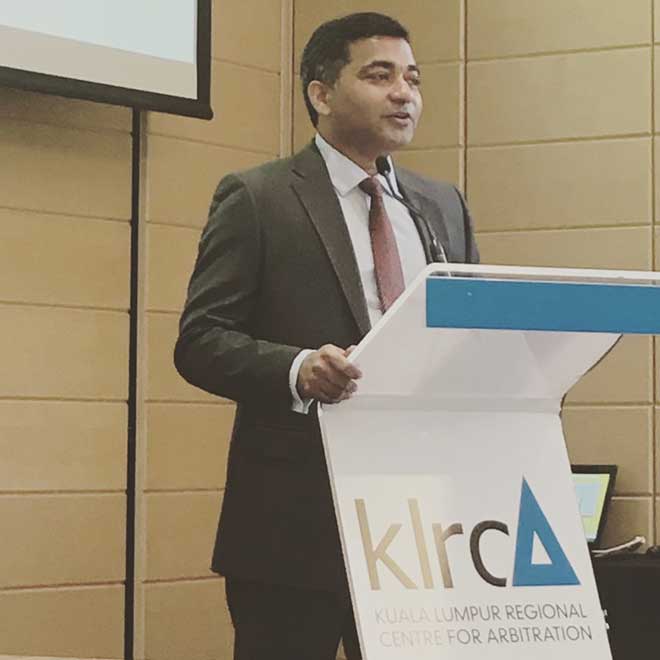
    Thayananthan Baskaran graduated in law from King’s College, London, in 1998. Presently, is a Partner with Baskaran, Kuala Lumpur, and an associate member of Crown Office Chambers, London.

    Thaya’s primary area of practice is construction law. He drafts various building and engineering contracts, advises on disputes arising from such contracts and appears as Counsel to resolve these disputes.

    Thaya is a co-author of The Belt and Road Initiative: Legal Risks and Opportunities Facing Chinese Engineering Contractors Operating Overseas published by Kluwer Law International in 2019. Thaya is an editor of Construction Law International, the magazine of the International Bar Association’s International Construction Projects Committee. Thaya was also the President of the Society of Construction Law Malaysia (2016-2017).

    In this interview we speak to him about:

    • Practice in Malaysia
    • His experience in arbitration
    • His expertise in construction law

    How would you like to introduce yourself to our readers?

    I am an advocate and solicitor based in Kuala Lumpur with chambers in London.  My primary area of practice is construction law. I draft various building and engineering contracts, advise on disputes arising from such contracts and appear as Counsel to resolve these disputes.  I also sit as an adjudicator, arbitrator and mediator.


    Share with us some of your experiences as a student of law at King’s College, London.

    I read law at King’s College, London, almost twenty years ago.  I enjoyed studying criminal law and jurisprudence in College and particularly recall writing an essay on how rape should be regarded as a form of heinous assault or bodily injury.  I would like to have studied human rights law but was wary as there was no textbook on the subject at the time.  Apart from the College, I very much enjoyed my time in London.  London remains one of the great cities of the world, and I spent a lot of time at the bookshops, galleries and theatre.


    What advice would you give students about avoiding a decision paralysis?

    My advice would be to start practice after completing the bachelors degree and being called to the Bar.  Once you have started practice and decided on the area you would like to specialise in you can consider doing your masters in that area.  Practice is quite different from theory, so it is perhaps best to practise first before deciding to specialise in an area.


    Have you always been keen on a career in contract and ADR?

    When I started practice in 2000, the metro rail was being completed in Kuala Lumpur.  I was involved in advising on disputes arising from this project.  Like most construction lawyers, one project leads to another, and before you know it you have specialised in the area without actually having consciously decided to do so.

    The standard form construction contracts used in Malaysia and internationally provide for the resolution of disputes by arbitration.  So, from advising on these disputes, it was a natural progression to appearing as Counsel in arbitration.

    Later, I was appointed as an adjudicator, arbitrator or mediator to determine these types of disputes, as well as more general commercial disputes.


    What was your path to being empanelled on several prestigious arbitration centres like? 

    As mentioned above, my area of practice to some extent naturally led to my sitting as an adjudicator, arbitrator or mediator.  There are certain key persons who have encouraged me to pursue this.  Firstly, I must mention Datuk Professor Sundra Rajoo, the Director of the Kuala Lumpur Regional Centre for Arbitration, who encouraged me to sit for the Chartered Institute of Arbitrators examinations and be empanelled with the KLRCA.  Once I had become a Fellow of the Chartered Institute of Arbitrators, been empanelled with the KLRCA and sat as an arbitrator in Kuala Lumpur I was able to apply for and be accepted at various international arbitration centres.  I must also mention Dr Cyril Chern, a barrister at my chambers, Crown Office Chambers, and the author of Chern on Dispute Boards, who encouraged me to pursue contractual adjudication and was instrumental in having me elected a Fellow of the Dispute Board Federation Geneva, which led to my being on their Expert Panel.  

    It has always surprised me to some extent, from my experience as an arbitrator, that people, disputes and the basic principles of law are the same around the world.  Despite the apparent divide between the civil and common law traditions, I believe there is more in common in principle than there are differences.


    Could you please share with us some of the key nuances of good drafting and how rookie mistakes can be avoided?

    The key to drafting construction contracts is to firstly thoroughly understand the model that the client intends to use.  There are many models in the construction industry, such as conventional contracts, design and build contracts, design build operate contracts, and so on.  There are also the newer and more innovative models such as partnering and alliance type contracts.  Secondly, once the model has been understood, it is perhaps always best in the construction industry to start with a standard form contract that suits the selected model and the division of risks between the parties.  The standard form may then be amended to reflect the particular needs of the client.  These amendments should be of a minimally invasive nature so as to prevent affecting the structure of the standard form.


    What are the key attributes that one must develop in order to excel in the field of arbitration and mediation? 

    I would highly recommend doing the Diploma in International Commercial Arbitration offered by the Chartered Institute of Arbitrators.  This provides a solid theoretical basis for future practice.  In terms of practice, one should set aside sufficient time before the hearing to read the papers thoroughly, to enable clarification of matters during the hearing.  Most arbitrations are decided on the facts, which are, in turn, largely reflected in the documents.

    As to mediation, again it is best to start with some formal training.  I was trained at the Singapore Mediation Centre, which offers an excellent course in Asia.  Loong Seng Onn, the Executive Director of SMC, plays a leading role in the training, which provides an understanding of the skills required of a mediator.  These skills are quite different from those of an arbitrator.  Here, the key really is to keep an open mind and determine the common interests of the parties that will facilitate a settlement.  Once these interests are identified, from my experience, even if a settlement is not reached at the mediation it is likely to be achieved soon after.


    Having worked in Kuala Lumpur, Singapore and London, what are the cultural differences that you find in the legal environments of these countries? 

    There is more in common between us than there are differences.  English and the common law system are used in all these jurisdictions, which helps.  Having said that, there is always much to learn from other jurisdiction.  The skilful cross examination of barristers in England is a pleasure to attend and may be adapted in Kuala Lumpur.  The efficiency of solicitors in Singapore is well known and can serve us as a benchmark for practice.


    As a Partner at Zul Rafique & Partners, what does a typical work day look like for you?

    I’m afraid I don’t really have a typical work day, as my work is so varied.  It depends whether I’m in court or at an adjudication, arbitration or mediation or whether I’m in Kuala Lumpur or overseas.  Much of the pleasure of my practice is the varied nature of the work and the travel it involves.


    In your opinion, has Alternate Dispute Resolution fulfilled the role of administering speedy justice while ameliorating the heavy backlog of cases in the courts?

    Again, I’m sorry, or rather, I’m delighted to say that there are no backlogs in the courts in Malaysia after the reforms initiated by The Right Honourable Chief Justice of Malaysia Tun Zaki Tun Azmi.  Cases in the High Court are disposed of within six to nine months and appeals are disposed of within three months.  The challenge now is to justify arbitration to clients.  In international contracts, arbitration is more easily justified as the award may be enforced almost globally under the 1958 New York Convention.  In purely domestic contracts, arbitration is now justified more in terms of the expertise of the arbitrator, the confidentiality of the proceedings and the relative informality of arbitration, as compared to the courts.  However, domestic arbitration will have to keep up with the speed of the courts.  Parties will have to explore more innovative forms of arbitration such as, documents only arbitrations and chess clock hearings to reduce time and cost.  These innovations are becoming more common in practice.

    Apart from arbitration, statutory construction adjudication in Malaysia does have an advantage in terms of time and cost over court proceedings.  Generally, these adjudications only take three months and are determined solely on documents.  They have proved very popular.  However, the adjudication decisions are only temporarily binding.


    Could you tell us a little about your upcoming book? 

    My book is essentially a commentary on the Malaysian Arbitration Act 2005, which is based on the 1985 UNCITRAL Model Law on International Commercial Arbitration.  The commentary includes judgments by the courts of Malaysia on the Act as well as reports and analysis by the UNCITRAL.  Writing the book, while being in active practice, has involved managing my time I try to write every night after work.  I have a substantial library in my house, which I am able to refer to and work from.  Writing the book has been one of the greatest pleasures of my practice and I look forward to its publication later this year.


    What books, judgements that you have read, have played an integral role in shaping your legal philosophy as a lawyer?

    In terms of arbitration, I have very much enjoyed reading the works of Professor Emmanuel Gaillard, in particular the Legal Theory of International Arbitration.  Professor Gaillard’s ability to transform what is essentially a very dry subject into compelling reading is really incomparable.  

    In terms of judgments, the ground breaking and yet simple and lucid judgment of Lord Atkin in Donoghue v. Stevenson never fails to amaze me.  It should be read and reread in terms of how to be quietly revolutionary.


    How do you manage to maintain a work-life balance as a busy legal professional?

    I don’t attempt to maintain a balance, as I do not see a distinction.  I enjoy my work very much and do not, in that sense, see it as work.  The words of the Bhagavad Gita on duty come to mind in this regard:

    It is better to do thine own duty, however lacking in merit, than to do that of another, even though efficiently.  It is better to die doing one’s own duty, for to do the duty of another is fraught with danger.


    How do you keep yourself abreast with all the daily news, happenings and legal developments in the world?

    I read journals.  Recently, I have discovered that the Supreme Court of the United Kingdom has some important judgments read out and recorded.  These recordings are available on their website and have become my favourite ‘movies’.


    What advice would you like to give our readers, who are mostly law students and young lawyers?

    Enjoy your work, it will be much of your life.


    LAST UPDATE MADE ON 28.07.2021 BY ISAM KABIR  AND THE SUPER LAWYER TEAM


  • Iqbal Khan, Partner, Shardul Amarchand Mangaldas, on his time in LSE, his diverse experience, and plans for the future

    Iqbal Khan, Partner, Shardul Amarchand Mangaldas, on his time in LSE, his diverse experience, and plans for the future

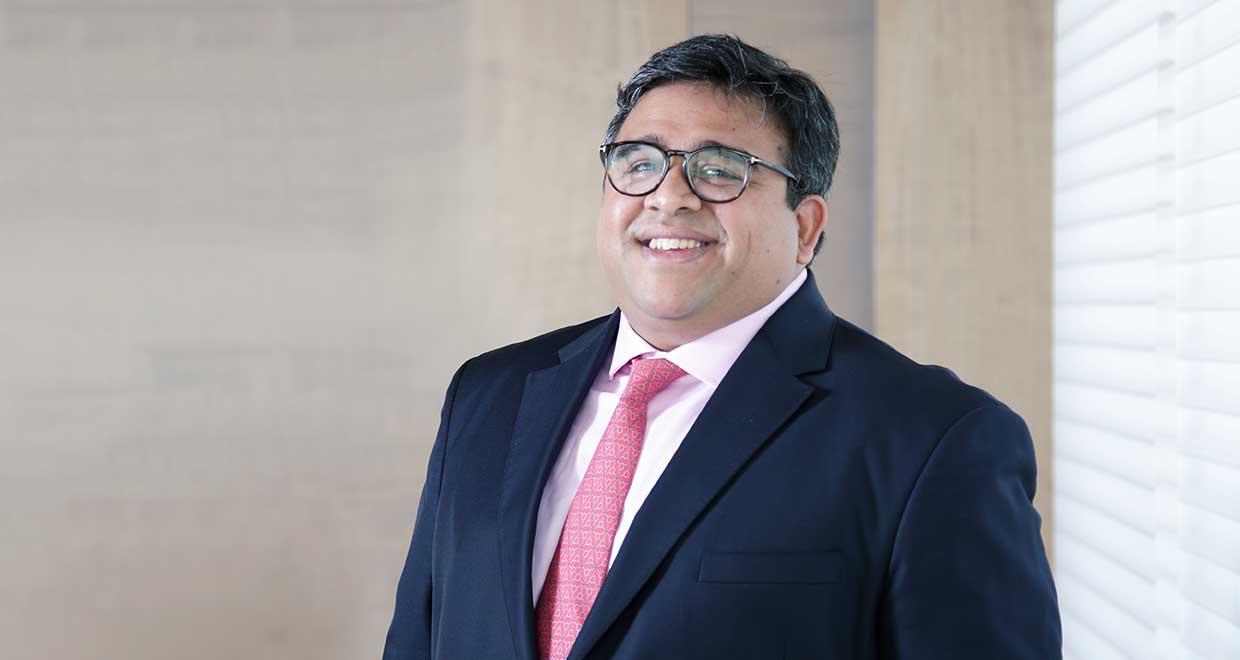
    Iqbal Khan graduated in law From London School of Economics and Political Science in 2006. Prior to that he had attended DePaul University, where he pursued his Bachelor’s Degree in Computer Science. Following his graduation in law, he went on to pursue his JD from Columbia School of Law as a GradeHarlan Fiske Stone Scholar. He is currently Partner at Shardul Amarchand Mangaldas, where he is member of the Private Equity and Mergers & Acquisitions Practice Group. He advises some of the largest sovereign wealth funds, global private equity funds and strategic corporates, and specializes in private equity investments, mergers and acquisitions (both domestic and cross-border), joint ventures, advisory on foreign investment laws and corporate and commercial laws. His experience also includes advising on franchising and restructuring laws.

    In this interview we talk to him about:

    • Transitioning from science to law
    • Working for international and Indian firms
    • Striking a work-life balance

    How would you like to introduce yourself to our readers?

    I can best describe myself as an M&A / PE deal junkie with a passion for cricket, food and Bollywood films. I am currently an equity partner at Shardul Amarchand Mangaldas. My work primarily focuses on M&A and PE investments.


    What motivated you to switch from science to law?

    (Iqbal transitioned to law after completing his B.Sc. in Computer Science from DePaul University.)

    At DePaul, which then had one of the best computer sciences programmes in the U.S., I completed my four year degree in less than three years and then started consulting for Cambridge Technology Partners and Microsoft, respectively. While on a flight to a client’s office, I found a book, Barbarians at the Gate – The Fall of RJR Nabisco in my seat cover. This book changed my life. Barbarians at the Gate details the story of the leveraged buy-out of RJR Nabisco (a must read for every aspiring M&A / PE lawyer).  This book was a turning point in my career and inspired me to change direction, and pursue a career in law with a focus on mergers and acquisitions and private equity investments.

    In fact for all their many differences, law and computer science are surprisingly similar disciplines. They both train you to make decisions and to articulate a framework for managing exceptions. My background in computer sciences had given me solid analytical skills and these were indispensable in my study of the law. Hence, my biggest challenge, as we lawyers like to say, was not substantive, but procedural.

    Pursuing a law degree also meant placing on hold other opportunities for career development.  So I declined several promising roles with start-ups and consulting firms; and in retrospect I am happy with the decisions I made. Law school also meant a significant financial commitment and at the time this was challenging though I was fortunate to have a great deal of moral support in pursuing the degree in spite of the fact that it seemed more attractive to continue working at the time.


    Tell us a bit about your time studying law at LSE. 

    The LSE, in my opinion, is one of the best educational institutions in the world.  If we ever have kids and if they ever decide to study abroad, I would recommend that they go to the LSE.  Its teaching philosophy is modelled after its moto — rerum cognoscere causas, a line taken from Virgil’s Georgics meaning “to know the causes of things.”  I have fostered relationships at the LSE, both with academics and students, each of which I value deeply, and hopefully, when I am even more established and successful, I would like to give back to the LSE – both financially and with my time.

    In terms of activities, while I was a student at the LSE, I was on a very tight budget because I was self-funding my education then. So I enjoyed London – a colloquial for I walked everywhere and ate what I could afford.  And this helped me, at in my view, become a more humble man.  And therefore, I believe the LSE gave me a great education in law, and life at the LSE, gave me a great education in life!


    What are the parameters that must be considered in deciding what the next step should be after graduation?

    I place a great deal of value on work experience at a law firm and I would consider this to be the best step to pursue after graduation.  Joining a law firm helps young graduates develop and refine their own logical framework of addressing legal issues and this is critical in the practice of law.

    As a young associate, students also have the opportunity to work with multiple Partners and across a range of complex transactions. This builds important skill sets, including the ability to manage clients, your immediate boss and to prioritize competing deadlines.  As a young associate you’ll learn a great deal from each transaction, and each experience is an important building block in informing your strategy for your next deal. Law firms also tend to be less bureaucratic for young associates. If you’re willing to work hard, you can navigate your way across different types of transactions so you make the most of your experience.


    Do you try to consciously build a specific body of work?

    Over the past few years the role of senior lawyers has changed.  We are no longer called on only to execute an agreed upon term sheet.  Instead we are seen as critical collaborators for our clients when the deal is in its most nascent stage.  Clients frequently bring me in to advise on the strategy for the transaction and not just its execution.

    For me, my transactions give me an opportunity to extend the firm’s relationship with the client; new or vintage. This is a business where reputation matters, and it is always a moment of pride for us at SAM when our existing clients bring in new clients to the firm.  It’s a testament of how much they value the advice, expertise and trustworthy relationship that we bring to the table. I have a clinical approach to choosing transactions. I tend to work on deals where I can best leverage my expertise in advising on strategy for complex transactions. I also enjoy working on deals, which allow me to draw on my international experience to find new and creative ways to structure a transaction. This has been my approach to building my practice.


    Tell us about your early professional experiences at Paul, Weiss, Rifkind, Wharton & Garrison LLP and Kirkland & Ellis LLP?

    My wife used to call Paul, Weiss my first love, because I spent more time at work, then at home with her.  Both Paul, Weiss and Kirkland are exceptional legal institutions, and instilled in me the work ethic and the commitment to clients; both of which are essential to a successful legal career.  Beyond the deals (and both firms have been at the helm of major transactions) and the 2 am sushi dinners at work, both firms introduced me to a formidable set of mentors and collaborators, and I am privileged to count them among my most trusted friends and colleagues.

    The sheer breadth of experience and diversity of transactions at both firms was a key strength for me in my early years as a lawyer.  While at Paul, Weiss, I was part of the team that represented Apollo in what has been designated as one of the key material adverse change cases – Huntsman v. Hexion.  At Kirkland, I what part of the team that did the largest leverage buy-out transaction in India – Apax’s PIPE in iGate for acquisition of Patni.

    All in all, I have been very fortunate for these opportunities, and my own practice in India is modelled after the ethical values I learned at these institutions – that of respect and of immaculate client service.


    How did you come to work with Khaitan & Co.? 

    I moved to India in 2013 on account of family reasons.  When I left Kirkland in New York, I had just worked on the Apax-iGate-Patni transaction with Khaitan, as the Indian counsel on the transaction.  Therefore, even though I had offers from some of the top Indian law firms then, I decided to move with Khaitan because of my comfort level with the team there.

    At Khaitan, I fostered some very good relationships, but the ones which I value the most are with RBJ, Sid, Bijal, Bhatta, Moin, Niren, Jean, Chemburkar and Vaishali (now at Agram, and my rakhi sister) – all very good lawyers (except for Jean and Chemburkar – they are exceptional BD professionals) in addition to being wonderful friends. Also, a special shout out to Shankar – the cafeteria manager – for amazing unda pav and missal pav!


    How did you make the transition from working at international law firms to an Indian one? 

    There is great deal of a difference between international law firms and Indian ones, and then among Indian law firms.  I can probably write a book on this topic, so let me talk about one or two key difference.  International law firms, at least the ones I have worked for, are very particular about the kind of transactions / cases they choose from and they do not shy away from declining a matter for any number of reasons, including when it comes to fees.  In addition, lawyers at international firms – from a first level associate to the senior most of partners – are always accessible 24×7 to their clients.  Also, I remember my Paul, Weiss induction course till this date where every member of the incoming class was taught by the senior leadership to never compromise on your ethical value systems and to never disrespect your colleagues – ever!  Finally, another element that I miss the most are the support services at some of these firms.  For e.g., from subsidized gourmet cafeterias and gym memberships to 24×7 word processing services.

    SAM is modeled after a top-tier international firm (minus the gourmet cafeteria and free gym memberships).  For e.g., even when I travel, I am always reachable thanks to SAM’s technology and infrastructure team.  Further, neither do we encourage nor do we tolerate disrespectful behaviour at the firm.  Finally, Shardul sir, Pallavi ma’am and Akshay have been very clear regarding maintaining the integrity of the firm and regarding never diluting the value of our letter head.


    As Partner at Shardul Amarchand Mangaldas & Co, what does a typical working day look like for you? 

    Law is a demanding career, and the long hours are a common feature irrespective of seniority. Regardless of how busy my days are I try and keep a balanced schedule, which includes an hour of meditation at 4:30 am and a late night walk on marine drive. Irrespective of my schedule these two components add stability (and sanity) to my days and are an indispensable source of strength and peace of mind.

    I am an early bird, and I like to get into work by 7:30-8:30 AM before the calls and the meetings start, as I do most of my drafting and reviewing work in the morning.

    Between noon and early evenings on most of my day, I am either on calls or in meetings – with my team on various matters or client meetings. My days usually end at 10:30 PM on average though hours are deal sensitive and when we have a signing / closing, there really isn’t a hard stop to my day.  I am not a believer in face time, so unless there is a live deal, my teams don’t work crazy hours and can work from home late at night depending on the pace of each transaction. I have seen a number of associates burn out early in their career, so it’s important for me, and I also encourage my team, to retain a balance and sense of perspective.


    What advice would you give to lawyers who aspire to develop a proficiency in Corporate and Commercial Laws?

    Just one – read, read and read, and when you are tired of reading, read some more.  Reading case laws, transaction documents, statutes and scholarly articles will help you grow your repertoire, and then will come a time, when this will become second nature!


    Did you have a mentor or guide during the formative years of your career?

    Mentors have a formative role across careers, and law is no exception. I have been fortunate to have benefited from the guidance of a formidable set of mentors, including professors at the LSE and at Columbia, senior partners at Paul, Weiss and Kirkland and of course Shardul sir and Pallavi ma’am at SAM.  My own view is that while there is a lot of attention devoted to finding mentors, there is much less attention focused on making yourself mentor-worthy.  Mentors are great sources of collaboration and advice, but engaging and retaining a mentor is hard work and requires discipline, focus and a commitment to excellence in your field.  If you bring this to the table, you will find mentors happy to encourage, advise and even collaborate with you.

    At the LSE, Professor Martin Loughlin played a very important role in my development as a law student.  Followed by Igor Kirkman and Tervor Norwiz (both partners at Watchell) at Columbia who taught me how to dissect an M&A agreement at lightning speed and how to negotiate – a key skill set for every M&A lawyer.

    I am also very grateful for the mentorship and friendship of Ariel Deckelbaum at Paul Weiss.  The same credit extends to Sri Kaushik at Kirkland.  In addition, a special shout out to Bob Schumer, Tarun Stewart and Justin Hamill at Paul, Weiss for teaching me, by example, the qualities of an exceptional lawyer, and to Leo Greenberg for the same at Kirkland.

    I honestly believe that as lawyers we continue to learn from our mentors, and even today at Shardul Amarchand, I am floored by the humility and the legal acumen of Shardul sir and Pallavi ma’am. I consider them both as my mentors as well.


    What are the key attributes that one must develop in order to excel in this industry?

    There are two types of attributes: those based on aptitude and another set, based on attitude. So all lawyers need to check off the boxes in terms of knowledge of the law and adherence to the cardinal principle of attorney-client privilege. But these are simply the attributes of a good lawyer.

    Good lawyers are defined by knowledge. Great lawyers are measured by the trust their clients have in them; and trust is a function of excellence and personal integrity. These two attributes define success in law (as they do in most other fields as well).

    As a lawyer, it is also critical to appreciate your client’s requirements while addressing complex and challenging issues and to build your relationship with each client. At the end of the day clients need to know that their case has your individual and personal attention. In terms of my own practice, I have built it on both depth and breadth, i.e., working on new matters with existing clients as well as taking on new matters from new clients. Both in my view are critical to building out a Michelin 3-star type practice.


    How do you manage your time between your professional and personal interests? 

    I am a very religious man – if you, like me, designate cricket as a religion.  Besides watching cricket (and doing the Govinda dance every time Virat slams the ball across the boundary) and tennis (go Federer!), I enjoy watching Bollywood movies.  I have deep affinity for everything Indian – from the Indian Cricket team to my favourite cuisine – Indian; and much of this is based on the fact that I have spent a better part of my life outside India. So the connect to all things Indian has been strong.

    I also have an interest in cars (vintage rules), art (both Renaissance and modern) and architecture. Volunteering is a passion and both my wife and I are actively involved in voluntary capacity with the institutions and agencies of the Aga Khan Development Network.


    Where would you like your career to take you five years down the line?

    At the end of the day, career trajectories are all about excellence. The notion that you’ve “arrived” or “made it” is misleading because when you reach what used to be your milestone, another one appears over the horizon. I would say simply this that I wish to build my career in pursuit of excellence and that means continuing to have one of the best M&A / PE practices in the country and ensuring that SAM continues to be one of the most well respected firms in the field.

    Given the dynamic nature of the field you practice in, how do you keep yourself updated about the latest developments in the law?

    Law and perhaps medicine are two fields where continuing education is critical to survival. Because law doesn’t function in a vacuum (and depends on political, social and economic context, among other factors), advising clients on structure and interpretation can be complex in a rapidly changing environment. SAM is fortunate to benefit from an amazing CLE team that provides daily deal and regulatory updates.

    Within my team we are also required to write articles (which therefore means we need to stay updated) and discuss key issues each week.

    For e.g., we’ve discussed everything from arbitration provisions (and the issues involved from a private equity investor point of view) to various transaction structures and their implications.  To attend and to be part of the CLE curriculum – at a firm level and at a team level – is an absolute requirement for all my team members.


    What advice would you like to give our readers, who are mostly law students and young lawyers?

    My advice would be to twofold: the first that students invest in quality education and target only the best possible schools for their law degree.  

    The second that they invest in continuing education as well. Law is a complex and rapidly evolving field and frequent changes both in substance and interpretation require that students invest in continuing education throughout the course of their career.

    Overall, neither of these are possible unless you love the field of law. Good lawyers are defined by knowledge but great lawyers have a passion for the law. Pursuits based on passion bring success!

  • Siboney Sagar, Founder, Resolve, on studying in NLSIU, qualifying the NY Bar, and her diverse experience

    Siboney Sagar, Founder, Resolve, on studying in NLSIU, qualifying the NY Bar, and her diverse experience

    Siboney Sagar graduated from NLSIU, Bangalore, in 1998. She then went on to pursue her Master’s degree from Columbia Law School, with a focus on Corporate Law, International Law and International Affairs. She has worked in the Chambers of (then) Attorney General of India, Advocate Soli J. Sorabjee. Since then she has worked with AMSS as Associate, GE Consumer and Industrial as General Counsel and later as Vice President-Legal and Compliance. In 2015, she founded her own firm, Resolve, a dispute resolution forum, where she’s Managing Partner.

    In this interview we speak to her about:

    • Working under Advocate Soli J. Sorabjee
    • Her illustrious career and diverse experience
    • Founding and managing Resolve

    How much of your success would you owe to your alma mater, NLSIU?

    The education curriculum and delivery at NLSIU has been geared for understanding and experiencing the rigors and breadth of lawyering. I benefited from the tight schedules and deliverables but most of all from the fraternity and the size and comfort of the community.


    Did you moot, or engage in any extra curricular activities? 

    I engaged in the legal services clinic, on the editorial team for publication and was very active in the Sports and Cultural Committees. Extra-curricular of both, related to law and otherwise, are most relevant. The legally oriented activities open a window to the world ahead and the non-legal activities allow us to engage and collaborate with persons other than our immediate peers.


    Tell us about pursuing your Masters from New York’s Columbia University. 

    Columbia has been a very defining experience. I used the opportunity to engage in many different courses and also expanded my view of the legal profession.


    Can you give us some clarity on the application process?

    I applied to the universities that had separate LLM classes along with options to study with complementary schools and courses. The university looks at grades, statements and experiences that realistically define your personality to fit with their goals and aspirations for their graduates.


    How did you prepare for the New York State Bar?

    The New York (NY) Bar is a rigorous exam and there are professional companies for preparation of the same. I attended BAR BRI and had a wonderful group of frats for study work. The NY Bar is one of the most challenging exams for the sheer size of the material.


    What did your role at Soli Sorabjee’s entail?

    When I joined the chambers of Soli J. Sorabjee, he was the Attorney General for India and the work was very diverse. While working with the counsel representing important matters for the Union of India, the teaching in Soli J. Sorabjee Chambers has helped not only the formative years but until today the great lessons of research, organisation and approach to an issue are invaluable and useful in different ways.


    How was your stint at AMSS? 

    I loved my stint at AMSS. I worked with the Infrastructure Corporate Team during my time there. The quality of clients as well as the resources were very relevant to support my venture being a commercial attorney.


    Tell us about what makes a good lawyer in a corporate setting.

    (Siboney was the General Counsel at GE Consumer & Industrial (India), and has been duly recognized for your efforts.)

    A good lawyer in a corporate setting is benefited by using their client-counselling skills along with always expanding their commercial and service their understanding.


    How would you say work as an in-house counsel was different than that of a law firm?

    An in-house counsel carries the responsibility for the execution of the legal advice further than an attorney advising or assisting from a law firm. In addition, an in-house counsel is required to almost always extend their capacity and creativity to manage commercial expectations while balancing the rigor of compliance.


    Can you elucidate further on the in-house options for law students? 

    Today in-house lawyers function like large law firms which gives lawyers many opportunities after graduating. In case you plan on working in-house, it is a good opportunity as it creates and develops subject area expertise along with the position and designation of legal skills.


    What motivated you to start ‘Resolve’?

    (Siboney has founded ‘Resolve’ which is an initiative geared towards encouraging and catering to private mediation in India.)

    Resolve is a forum for developing conflict resolution and conflict negotiation capacities as the backdrop to panels of practioners of mediation, conciliation and arbitration. A whole series of serendipitous events have led to the evolution of Resolve. My experience as a General Counsel with the status of execution, implementation and the viability of litigation and the balance with commercial realities have shaped my perspective so much. Further, the personal learning toward productive, creative and viable solutions, with the tendency to look for the most utilitarian and commensurate options, shaped my negotiation style in conflicts. Also, the skills discovered and developed really allowed me to appreciate the varied uses of the legal, analytical and creative process. The result has been the development of Resolve which is in its initial years of finding the appropriate space.

    I truly believe in advancing stages of negotiation, collaboration and mediation which will be most relevant as the world shrinks.


    How do you manage a work-life balance?

    If life takes a back-seat then that’s where we will find ourselves. In the back seat!

    I practise yoga and teach when possible, travel to discover myself and others, and try to keep myself in the front seat as far as my breath and brain go!


    Being eligible to practice both in India, and in New York, what are the notable differences of being a lawyer in both these jurisidictions?

    I have worked as a commercial lawyer in different jurisdictions. As I have not practiced before the courts in New York, I cannot comment.

    As commercial lawyers, counsel from different cultures bring that nuance to their style and approach, while the commerce dictates the functional attributes of the lawyering at any court.


    What are you currently working on?

    Nurturing and providing direction to Resolve has been the mainstay while developing personal practise as mediator, conflict speacialist, coach and counsel.

    I am teaching a course on negotiation and conflict at NLSIU, Bangalore this year. I have also taught at ISB, Hyderabad to train corporate leaders as well as counsel in adavanced negotiation, conflict management and effective dispute resolution.

    It’s an exciting and daunting time to develop some ideas, curriculum and skill enhancement workshops for us at Resolve.


    Would you have some words of advice for our readers, who are mostly prospective lawyers themselves?

    Practice! Practice! Practice! Whatever it is you are doing at this time, put your energy to it even it is devastatingly boring. Anything you do with intent gives you a lesson that is useful anytime especially in the diverse practice of law.

    Allow the creative streak to develop as it’s a misnomer that lawyers are only intellectually inclined. You have many avenues to best use lawyering skills (so spare the friends and family from arguments)!


  • Bhumesh Verma, Partner, Link Legal India Law Services, on commercial law, his teaching experience, and the art of writing

    Bhumesh Verma, Partner, Link Legal India Law Services, on commercial law, his teaching experience, and the art of writing

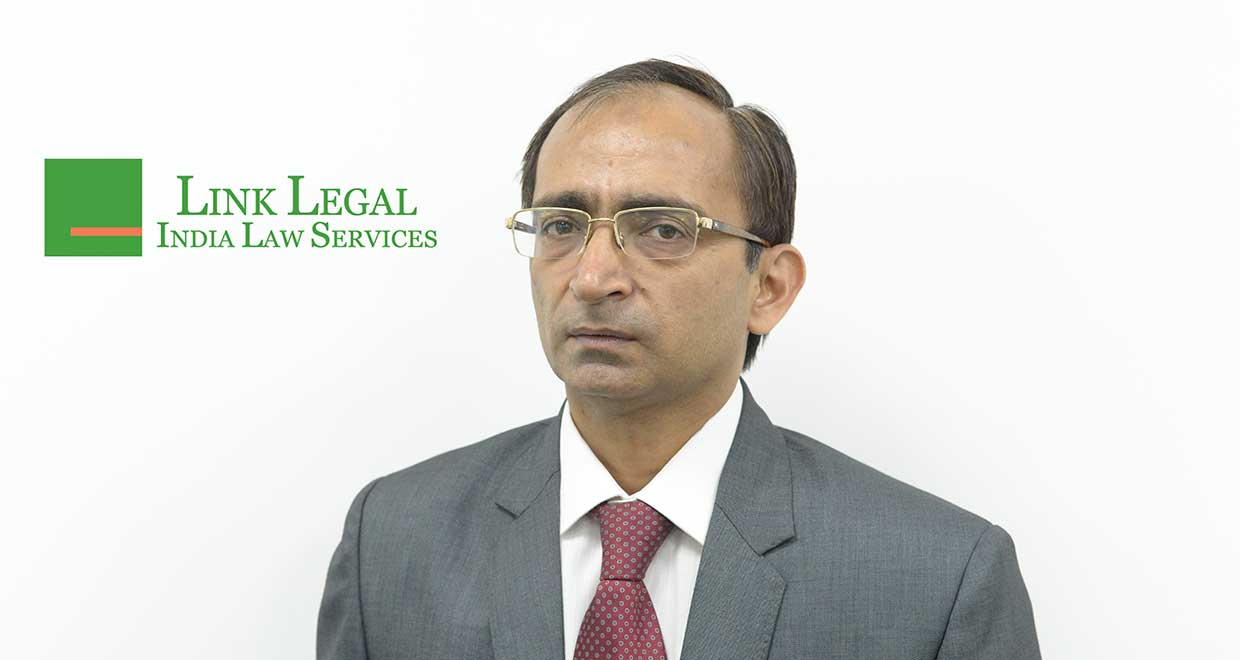
    Mr. Bhumesh Verma graduated from Delhi University in 1994. He was selected as a Chevening Scholar in 2000 by the UK government. During this scholarship, he studied at the College of Law at York and worked with Ashursts in London. Mr. Verma is currently a partner in the corporate and regulatory practice team of Link Legal India Law Services, New Delhi. He began his career at Ajay Bahl & Co. (now part of AZB & Partners) and went on to become a partner at Khaitan & Co and PKA Advocates before joining Link Legal. Mr. Verma has 22 years of experience in domestic as well as international corporate and commercial matters.

    In this interview we speak to him about:

    • His illustrious career, and his diverse experience
    • His passion for teaching
    • Engaging in academic writing

    How would you like to introduce yourself to our readers?

    I am a law student. Having spent some time in the profession with wonderful lawyers and clients, I may know a bit more about law and business than some young law students or lawyers, but that’s about it. In the legal profession, one is always learning and updating.


    What inspired you to take up law? 

    STEM disciplines have always been most popular among parents and even majority students. Being a school topper, I too was expected to pick up science. Maths was one of my favourite subjects. However, I had no interest in medicine, engineering or any other technical course. I picked up commerce and went on to pursue B.Com (Hons) from Delhi University. During my graduation, I got acquainted a bit with business laws.  It sounded interesting and challenging, so I thought pursuing law would be good option for me.

    I come from a humble, salaried class family. There was absolutely no one in my family, nor a friend in the legal profession (I don’t think even today is, besides me). My family never even knew a lawyer. To add to it, immediately after my graduation, I landed up a job as Accounts Executive with a good NBFC. So, all these circumstances were conspiring to drift me away. However, family being sure of my conviction and track record in studies till then, gave in.


    How would you contrast your time as an undergrad at Delhi University with your experience at College of Law, York, England?

    Campus Law Centre, Delhi University used to be among Asia’s top law schools in 1990s. Studying there was fun in those days. Even getting the admission makes it a funny story now. Ours was the first batch for which an entrance exam was introduced in Delhi University. We had absolutely no syllabus, no workbooks, no coaching classes, no preparation. Just appear in an entrance exam one Sunday morning and wait if you are in or not. This is how the first batch got in.

    The classes were held in typical old-school style – black board, chalk and talk. There were no computers or gadgets to help, no online searches available. We had to use the library a lot. Some smaller roadside help books called ‘Dukkis’ were also available and some students used it for last-minute cramming.

    College of Law at York was a different ball game altogether. Use of PPT, computers, interactive sessions, negotiation role-play, drafting skills workshops, interaction with local practicing lawyers, visits to Courts in London, Edinburgh and Employment Tribunal in Leeds to observe the actual atmosphere. It all made a big change in my understanding, perception and presentation skills.

    Although I was already working with foreign lawyers on international assignments before the scholarship, access to foreign educational institution, courts, foreign lawyers’ offices, working in a foreign law firm was a welcome experience. This gave me an insight about ‘where they are coming from’ and bridging the gap between what they expect and what Indian lawyers think they expect.


    What were you areas of interest during your legal education?

    I was always interested in Corporate laws so took up Business laws, labour laws and tax laws as my optional subjects. After joining Ajay Bahl & Co. (now part of AZB Partners) after passing out from college and working on FDI related transactions, incorporating companies, getting into secretarial, statutory, tax compliances etc., providing opinions on corporate law issues, drafting commercial contracts, etc. my conviction about my suitability for corporate practice strengthened. My supervising partners also saw value in my being part of the corporate practice vertical in their firm.


    What are the causes you feel strongly about? 

    I can only speak about the corporate laws perspective. Being transparent in all business deals, optimum compliance with law of the land and expeditious resolution of any issues arising out of non-compliance or otherwise are very close to my heart. Throughout my career, I have been advising clients to adhere to sound legal principles and not take recourse to “fixing”, “managing”, “manipulating” or brushing aside legal issues. As professionals, our stake in any matter is very minimal in terms of money, but immense in terms of reputation. Am proud that I have had the privilege of working with some of most reputed and ethical professionals in the country, who have been insistent on refusing a brief rather than compromising on principles. This is more important in case of foreign clients entering India. The laws pertaining to anti-corruption are more codified and enforceable outside India so we have to be doubly careful while advising foreign clients and not suggest short-cuts or unethical solutions.  

    Could you tell us about the internships you took up, and what you learnt from those experiences?

    Internships were not as structured in my college days as they are now. During my college days, I took up internships with litigation lawyers, learnt about of court practice, drafting, representation in the courts and so on. It helped me learning the basics from a grass root level. Since I had no relation or godfather in the profession, I had to work doubly hard.


    What advice would you give students in avoiding a decision paralysis? 

    On the contrary, I do not see much decision paralysis. In fact, I feel many students have pre-decided what area they wish to pursue even before joining a law school driven by the “packages” their senior friends or family members have got or the numbers they read in economic newspapers or some other sources.

    By the middle of your law course, majority of students are clear about what they wish to pursue. Litigation and corporate practices are complementary to each other but require different soft skills. Some students are very passionate and clear about their respective practice field – i.e., IP, environment, international laws, etc. one should pursue the line what feel confident about and is passionate about. Every practice area is rewarding, but it takes hard work. Some practice may sound remunerative from the first day, but it could saturate if you are not good at it.


    Could you please share with us how you came to be awarded with the prestigious Chevening Scholarship? 

    The British government used to provide scholarship to young Indian lawyers with few years’ work experience to get a feel of UK legal education and work culture. One of my senior colleagues had already been awarded this scholarship, so I was aware of the programme. Out of about 400 applications received in 1999, I was among the sixteen selected for this prestigious scholarship. The competition was so tough that year that instead of normal intake of twelve, they had to take sixteen!

    Scholarships are great means to enhance one’s knowledge and vision. Students should look at scholarships which could be useful in expanding their horizon in totality. One should not limit her quest to finding a job in the country wherein you get the scholarship. I don’t think more than one or two people in my batch would be abroad today. All of us came back with enhanced knowledge, exposure, contacts and confidence and are doing very well.


    What did you enjoy most about studying at College of Law, York?

    As I mentioned earlier, the teaching methods, education tools and exposure was very different. Being foreign students, we were pampered a lot while strictness on attendance and discipline was there. The teachers there were more of friends, unlike the strict and typical guru-shishya system in India.

    We did a lot of interaction based studies, role play for negotiation, drafting skills workshops presentations before the faculty on comparison of Indian vs UK laws, went to various courts within UK, and so on. At the end of the teaching programme, we were placed with law firms in Central London. I worked at Ashursts.

    From a law student to a lawyer, how will you describe the transition?

    I don’t think it is any different from any other profession. As a student, you just study and write or otherwise convey your opinions and views in exams and presentations. You can get marks or grades for providing your opinion one way or the other.

    Once you are out with a degree and registration as a professional, the reality hits you. The buck stops here. Whatever you say or do, has to be very carefully crafted and drafted – be it a pleading, argument, opinion. Your client getting bail or jail depends on your skills. Your clients’ millions in a new project or success in negotiating a deal depends on your skills. So, now the onus starts falling on you. It makes you more careful and responsible.

    Could you take us through the process you adopt while writing?

    There is too much of information available these days. Each one of receives so many phone calls, emails, updates and newsletters that we are sick of it.

    I enjoy tracking developments in corporate and investment laws of India. By now, I have too many professional contacts worldwide and it is very difficult to discuss any new developments with them on a one-to-one basis, nor do I wish to spam anyone not interested. Hence, I thought of formulating useful information in the forms of articles which anyone could read without obligation or interference on my part seems interesting. Now, people who are interested in these topics read, comment, compliment, criticise at their own free will.

    What I do is I track news and developments which in my view could be useful for my contact base and other professionals. I try to put it in simple language so that non-lawyers could also grasp the intent with basic and useful information. For more details and specific advice, the readers can always approach me directly. Due to the simple language I use in my blogs and articles, sometime Indian and international websites request me for republication thereof, which I happily agree to.


    Where does you passion for teaching come from? 

    (Mr.Verma started initiatives to impart legal knowledge and experience to younger lawyers and students at firms where you have worked. He has also been a guest lecturer at various national / international institutions.)

    Unlike money, knowledge increases by sharing. I enjoy sharing my knowledge with younger lawyers and students, so whenever there is an occasion, I am available for mentoring, be it CLE at the firm or guest lecture at an institution or a presentation at a seminar.

    The first professionals a kid has interaction with are doctors and teachers, isn’t it ? Kids are scared of doctors for obvious reasons, so they tend to pick up a teacher as their first role model. I think that has stayed with me forever. I have utmost respect for teaching fraternity and am thankful to the role of all my teachers for shaping me into whatever I am today. Within me too lies a teacher as well, so as and when there is an opportunity to go back to college, I am too happy to oblige. I keep getting offers for writing books and joining as guest faculty, so never know what lies ahead.


    Did you have a mentor or guide during the initial phase of your career?

    I have been very lucky and privileged to have worked with some of the best professionals of our times during last two and a half decades, be it Mr. Ajay Bahl, Ms. Lira Goswami, Mr. Pinto Khaitan, Mr. Paras Kuhad or Mr. Atul Sharma. There are some common traits to all these legendary and successful people. The more experienced and knowledgeable you are, you tend to be more approachable, humble, down to earth and open to new ideas. I am thankful to all these wonderful people for guiding me through my career and still rely on them for guidance. Besides legal acumen, you tend to learn so much from great professionals in terms of ethics, solution-centric attitude and so on.

    So, the importance of a good mentor cannot be underestimated, particularly in the initial phase of one’s career.


    Given the dynamic nature of the field you practice in, how do you keep yourself updated about the latest legal developments?

    Read and discuss.


    What advice would you like to give our readers, who are mostly law students and young lawyers?

    There are no short cuts or free lunches in life. Work hard. Be humble. Be serious about studies and work, but live and enjoy life too.


  • Dr. Anindya Sircar, Intellectual Property Professional, on getting two doctorates, his journey from science to law, and the scope for IP law

    Dr. Anindya Sircar, Intellectual Property Professional, on getting two doctorates, his journey from science to law, and the scope for IP law

    Dr. Anindya Sircar has a unique distinction for holding two Ph.Ds, one in science and the other in law. He got his doctorate in Intellectual Property Law from NALSAR, Hyderabad, in 2007. After pursuing a doctorate in industrial microbiology, Dr. Sircar had a long stint heading the Intellectual Property Department at Biocon Group, which he was also instrumental in setting up. He is currently engaged in consulting, strategizing, teaching and conducting training programs in the field of Intellectual Property management. His last employment was as AVP and Head of IP with Infosys Limited where he was responsible for all IP activities of Infosys Limited and its subsidiaries. Additionally, he is visiting faculty on Intellectual Property to several universities and law schools.

    In this interview we talk to him about:

    • His journey from science to law
    • The scope and prospects for intellectual property law in India
    • His teaching experience and what he would like law schools to do differently in their approach to IP law


    You were deep rooted in science and got into the field of law for your Ph.D. How did you manage to acquaint yourself with legal terms and processes after being in the field of science for so long?

    I had started off my career in scientific research after my Ph.D in Microbiology. In fact, I had joined the API research unit of Biocon Limited. Exposure to Intellectual Property at that stage was limited to only reading and understanding patents. Moreover, IP was not looked upon as a viable career option in India in the late 90s. It was at that time that the company got involved in an IP issue with another leading pharmaceutical company and I was asked by the CMD to handle the case with the help of external counsels. That was the first time I got an insight into the world of IP. The heat of the case died soon but my passion for IP continued to only grow.

    I went ahead and started an in-house IP Department for the company. I had spent a lot of time with leading IP practitioners of the west. I stared reading relevant stuff and also took up courses, which finally ended up in my 2nd Ph.D. – in Law, specializing in IP. It was around that time Indian had joined the PCT and so there was some buzz in the air. The transition to IP had been quite smooth and my background in science has always been an added advantage in handling complex technical issues that often arise when dealing with IP. In fact it has been a lovely journey and the journey is still on.


    After being involved with Chemistry and Microbiology at the graduate and post- graduate level, at what point did you decide to go for a Ph.D in Intellectual Property?

    I had been heading the IP Department of Biocon at that time and was also teaching in leading law schools and management schools. My days used to be completely engrossed with different facets of IP, both business and academic. Additionally, my reading habits continuously kept feeding me with the recent developments in IP. At this stage, I happened to see an admission notice for Ph.D. and decided to go for it. The then Vice-Chancellor and Registrar of NALSAR were both extremely helpful and in fact the former ended up as my research guide.


    You received your doctorate in Intellectual Property in the year 2007. We are in 2017 now. Can you see significant developments in this area over the decade?

    There has been tremendous development in the field of IP both in India and rest of the globe – more so in India. In India at the policy levels there have been several amendments to existing Acts, compliance with TRIPS, India becoming an ISR, the IP Policy, CRI Guidelines and many more. Needless to say, numerous workshops, conferences and awareness programs focusing around IP have taken place. The most encouraging fact is that today many students are coming forward to study and specialize in IP and there are several courses available too. The biggest achievement in India is that today people consider it a viable professional choice and the field is being sought after.


    If Intellectual Property must be properly understood, what are the factors that one must necessarily have knowledge of? For instance, in studying law, politics plays an important role. Is there any such thing that goes hand-in- hand with Intellectual Property and Patents Law?

    In today’s world there are several super-specializations in Intellectual Property – prior art analysis, drafting and prosecution, analytics and intelligence, infringement studies, audits and due diligence, opinions, free and open source management, contracts, M&As, litigation and a few more. The requirements are really not the same for each of them. A proper blend of scientific and technical understanding and relevant legal knowledge can always prove beneficial. There is enough scope and space for representatives from both scientific/technical and legal fraternities to coexist.


    You are visiting faculty to a number of law schools and you have also had the experience of working in corporate companies at top positions. What is the difference between the academic learning of IP and Patents and its practical application?

    Most law schools have now incorporated IP in their curriculum. This is very encouraging but several needs of the industry in terms of skills do not get adequately addressed. Internships, which are mandatory in law schools, are an effective means of bridging some of these gaps. Some law schools run specialized courses in addition to the regular undergraduate and postgraduate degrees focusing on some of these skills. Many of the sessions in such courses are taken by industry representatives and practitioners. I am personally connected to some of them and strongly feel that some of the skills needed by the industry get taken care of. But requirements of the industry are obviously much higher.

    There might be disputes between companies that are incorporated in different countries. Where does adjudication of the matter happen in those cases?

    This is primarily as per the statute or as governed contractually.


    Do disputes arising out of IP & Patents Law violations resolve through negotiation and arbitration predominantly?

    Statistically, most of these IP disputes land up in the court. Some may get settled out of court, similar to litigation in other areas. Arbitration however is not very common in IP disputes.


    A purely academic question- what are the grey areas in the framework of IP & Patents Law in our country that need immediate attention and rectification?

    The framework and the statute for IP in India have been constantly evolving and more so in the last decade. Although, the CRI Guidelines are out, there are several ambiguities in the document. Additional clarity is desired, the faster the better. This will be of immense help for the ICT and related industries.


    Students of law typically prefer working in corporate law firms or decide to get into litigation. How does the application of Intellectual Property differ in these career platforms?

    There are numerous Corporate Law firms which deal in Intellectual Property. In fact there are several firms which specialize in IP and handle only IP matters. Corporate Law firms mostly deal in all aspects of IP, including litigation. However, the main focus for IP Law firms remains IP prosecution and IP management. Litigation involving IP in India currently is not very high. There are quite a few trademark cases but those involving patents or copyright are low. Additionally, corporates too employ a sizable number for their in-house IP departments.


    You were AVP and Head of IP Cell at Infosys, and have earlier been Global Head – IPR at Biocon Limited. What responsibilities do these roles entail?

    There could be a detailed JD made available for this. Primarily as a head, one is responsible for the overall and complete IP management of the company and its subsidiaries. In layman terms, this involves – IP Value Management, maximising the IP value for the company, and IP Risk Management, minimising the IP risk for the company. I was lucky that in the organizations that I worked, I always had a brilliant team which not only made my work easy but interesting too.

    Assuming that you have to make hiring decisions for in-house or ad-hoc roles, what do you look for in a lawyer’s profile?

    This will primarily depend on the role for which the hiring is being considered as the work scope and expectations will differ greatly. More than academic records I am keen on the internship learnings when it comes to a fresher. Another aspect which influences me is the ability, and more so the interest to learn. There is no room for short-cuts.


    As part of your work profile you must have had to talk to practising lawyers on IPR. Did the thought of practising law ever cross your mind?

    I have been interacting with several practising lawyers for the last two decades and in fact many of the leading lawyers of the country have become good friends. I find the world of IP very absorbing and challenging and never thought of practicing law yet. Now that you have asked this question, I may start thinking.


    What would be your message to our readers who are mostly young law students and lawyers?

    Decide which branch of law you would like to practice, make an early choice, and stick to your choice. Choice of branch should be only on liking and passion and not any other criteria. You can’t do well in something if don’t love the same, hoping that you will be practising that branch every day for the rest of your life. Growth and success are bound to come. And most importantly, there is no short-cut to reach the top.


  • Yogendra K. Batra, Retd. Commissioner of Income Tax , on teaching at ILNU and on building a successful career

    Yogendra K. Batra, Retd. Commissioner of Income Tax , on teaching at ILNU and on building a successful career

    Mr. Yogendra K. Batra retired as Principal Commissioner of Income Tax, Ahmedabad, in 2015, and is currently teaching at the Institute of Law, Nirma University, Ahmedabad. From heading all the top posts in the Income Tax Department to teaching undergraduate and postgraduate students, his expertise in the field of income tax law is unparalleled.

    In this interview he talks to us about:

    • His decision to join Income Revenue Services (IRS) over IPS
    • His views on the current tax laws in India and their implementation.
    • His decision to take up teaching post retirement and his experience thus far
    • His views on the Institute of Law, Nirma University, its teaching methods, and its students


    How would you introduce yourself to our readers?

    I consider myself a learner and seeker of knowledge and that is how I would like people to know me.


    Can you tell our readers a little about your illustrious career?

    I started my career as a Lecturer of Economics at DAV (PG) College, Bulandshahr, and subsequently joined SSV (PG) College, Hapur. In my pursuit for excellence, I kept preparing for Civil services and UP PCS exams. In 1983 I was selected in UP PCS (Accounts) and in 1984 I was selected for the Civil Services and obtained a rank of 206. I joined the Indian Revenue Service and after a training of almost twenty months at the Lal Bhadur Shastri National Academy of Administration, Mussorie and the National Academy of Direct Taxes, Nagpur I joined the Income tax Department in Delhi and in the very first year itself I was posted as the Assistant Commissioner of Income tax (Investigation Circle) wherein I was assigned the work relating to assessment of cases where search seizure operations were carried out. I also acted as Under Secretary, Tax Policy and Legislation under the Central Board of Direct Taxes and contributed to four financial bills (1991-1994). I retired as the Principal Commissioner of Income tax, Ahmedabad, in the year 2015. I have now taken up the role of teaching young minds and mentoring them in their pursuit of excellence.


    You chose the Income Tax Department over the Indian Police Service. What motivated this decision?

    I got the 206th rank in Civil Services Exams of 1983 and was more than eligible for Indian Police Services. I preferred Income tax (IRS) because I wanted a career free from political interference. Since I was a lecturer of Economics, the field of taxation was not unknown territory to me. I enjoyed every bit of my time at the Income Tax Department.


    Having chaired and headed almost all the top posts in the Income Tax Department, what are your views on the current tax laws and their implementation procedure in India?

    I started my career as Assistant Commissioner (Investigation Circle) in New Delhi. This was a very demanding and a very sensitive job considering my experience in the Department. Subsequently I was posted as Assistant Commissioner of Income Tax, Central Circle, Delhi, wherein I assessed group cases of big business houses. Subsequently I was selected as Under Secretary, Tax Policy and Legislation in the Central Board of Direct Taxes, the apex body of Income Tax Department. There I worked for more than three years and contributed to four finance bills, i.e. 1991 to 1994. Incidentally, these were the initial years of economic liberalization in the country and a number of amendments were made to the Income Tax Act. Then I came to Ahmedabad as Deputy Commissioner (nowadays, Joint Commissioner) and worked in various capacities. As Commissioner of Income tax I worked as Appellate Commissioner, Director of Income tax (Investigation), Commissioner (Audit), Commissioner TDS and Principal Commissioner.

    The Tax Laws in India have been simplified over the years.  The tax rates have been reduced and they are comparable to most of the developed countries. The tax regime in India is more taxpayer friendly now. However, a lot is required to be done on the administrative front. It is said that you cannot tax a person and keep him happy simultaneously. Therefore a lot of work is required to be done in order to educate taxpayers about the advantages of taxes and the ill effects of evading tax. A close review of the efforts made by the government on this through media and publicity has yielded desired results. The tax payers are gradually understanding their responsibility  and more taxes are being garnered through voluntary compliance.


    You opted to teach post retirement, despite receiving numerous offers from leading companies. How does this role fit into your overall career goals? How would you describe your ideal job?

    As I mentioned earlier, I am a seeker of knowledge, be it any profession or job I undertake. Teaching has always been close to my heart, since it gives me an opportunity to continuously learn, research and interact with the younger generation- the future of India. It gives me great pride to be a contributor, albeit a small one, in mentoring our future generation. As far as an ideal job is considered, I believe it is different for different individuals, varying according to their aspirations, priorities and specialties. For me, what I do is ideal, and therefore I do with full passion and commitment.


    How would you define good teaching? What do you think are the greatest responsibilities of a good instructor?

    I would like to call myself an educator instead of an instructor. An educator needs to be current in his/her subject, have clarity of concept and thought, be open to new ideas and developments in the subject. Above all, a good instructor should be able to generate interest and curiosity in a student.


    What are your views on the Institute of Law, Nirma University, and its students? What do you think about the pedagogical model being followed at the institute?

    The Institute of Law, Nirma University, is a professional institute where students get enrolled on the basis of their CLAT scores. These aspiring lawyers are well versed in the theoretical as well as practical aspects of the law. There are several specializations available, such as criminal law, taxation law, etc., so that the students can make an important career choice early on. Advocates, legal experts and judges are called for lectures so as to help students get acquainted with a hands-on experience of the vocation. Students are also provided with a state-of-the-art digital library so that they can hone their skills.


    From heading the income tax department to teaching undergraduate and postgraduate students, what are the things you enjoy, and what are the things you would like to to change about your current position?

    Nirma University is a pioneer institute which is grooming a generation of lawyers to come. The institute is improving its nationwide ranking continuously which indicates the high standards the university is constantly aspiring to. The institute is endowed with rich library resources, a dedicated faculty and an exciting campus. The curriculum has been designed immaculately so as to provide an excellent mix of theoretical and practical elements.  However, one must not lose sight of the fact that ultimately, it all boils down to the students’ performance and how they utilize the resources that are made available to them.

    My job as Principal Commissioner of Income Tax was quite different as compared to my teaching role. As a bureaucrat you have to perform your duties within a stringent framework of regulations. Teaching on the other hand, gives you room to innovate and experiment. There is nothing as such which I dislike about my present role. However, a lack of enthusiasm among the students worries me a lot.


    From your experience, what would be your suggestions to the new generation of students? How would you say their education and way of life is different from yours as a student?

    My only suggestion to them is to follow your passion. Identify your strengths and interests first, then set your goal and follow it with commitment and perseverance. The Universe will be at your doorstep- have the courage to ask for it, work for it and believe in yourself.

    This generation has a lot of opportunities, avenues and facilities made available to them, which we did not have in our time. However, they also have a lot more competition and struggle compared to us. Nevertheless, Darwin’s theory, survival of the fittest, is so far apt for all ages and generations. Since the students are in a professional institute they cannot behave like students of a regular college and settle for only routine understanding of any subject. The have to develop a desire for knowledge and have to read beyond what has been discussed in the class.


    Finally, what would be your suggestion or advice to anyone who aspires to have a successful career? What are the dos and don’ts for ensuring success in any field?

    There is no replacement of dedication, commitment and perseverance for anyone wanting to succeed in their career. Strive for excellence in whatever you do and you shall succeed. Give your 101% to what you do because a little bit extra effort makes all the difference. The following mathematical equation is proof that a little extra effort each day can go a long way.

    1.01365 = 37.8
    0.99365 = 0.03

    Students should read at least one case law a day because staying abreast with current affairs is absolutely essential for any lawyer.

  • Vikram Raghavan, Lead Counsel, World Bank, on work experience and authoring legal books and articles

    Vikram Raghavan, Lead Counsel, World Bank, on work experience and authoring legal books and articles

    Vikram Raghavan graduated from NLSIU, Bangalore with eight gold medals in diverse fields of law in the year 1997 and then went to pursue his masters from New York University. Right after that he started work as an attorney at O’Melveny & Myers, an international law firm in New York City.

    Currently Vikram is currently a Lead Counsel at the World Bank in Washington, DC, and he advises on conflict, fragility, refugees, and macroeconomics. Among other things, he provides legal advice about military coups; United Nations sanctions; debt relief; and loan conditionality. He has authored a book titled Communications Law in India (LexisNexis, 2006) and co-edited a volume of essays: Comparative Constitutionalism in South Asia (Oxford University Press, 2013). His articles are reflected in The Hindu and Economics and Political Weekly.

    In this interview he talks to us about:

    • Choosing law as a profession and his experience at NLSIU, Bangalore and New York University;
    • The art of managing life at law school and to develop interests in different curricular activities;
    • His formative years as a lawyer and his time at O’Melveny & Myers, New York City.
    • His early life at World Bank as a counsel and moving ahead and becoming the lead counsel at the World Bank.


    What made you opt for law as a career?

    Well, I was always interested in argumentation. My father was a lawyer and my grandfather was a lawyer as well. But the family profession, so to speak, influenced my decision only so much. When I was about thirteen years old, I read Prashant Bhushan’s book “The Case That Shook India.” I always wanted to do what he did and what he described about the court room drama.

    However, it wasn’t an easy decision because at that time law was not considered to be a prestigious profession. The National Law School had just started and not even a single judge had graduated. So, there was a lot of uncertainty about it and ultimately, the fact was I didn’t want to do science. I had taken commerce and my only options were doing economics, commerce or something else entirely. So, law looked like an attractive idea because NLSIU had just started. I gave myself a year to see if law suited me, if it had not- I guess I had an option of coming back to economics.


    Could you tell us about your life before you joined college? Where did your interests lie during your school days?

    During school, I was a stamp collector first and foremost. Philately, as a hobby, shaped my interest in world events and in general knowledge. I also obtained a lot of confidence in public speaking by speaking at the South India Philatelists Association’s second Sunday meetings in Madras. Everyone who attended had to speak. So it was a nice way to get rid of adolescent stage fright.


    What curricular and extra-curricular activities did you participate while being in university?

    Well, it was an intense period of five years. The schedule of studies, as you would know, at any National law school is quite demanding. There are deadlines for something or the other, every other week — project submissions, moot courts, mid-terms, and end terms. So I spent most of time by trying to catch up and be on top of the different deadlines that would come.

    Of course, when I was in college, there was no proper Internet. The campus itself did not have many facilities besides the library, which closed at 6.00 p.m. And you could borrow only three books. So I couldn’t say I was very productive. But during those five years, I tried my hand at different things. In my first two years, I did judo at the Sports Authority of India campus near the Law School. I tried my hand at quizzing, but there were much better quizzers at the law school than me. To be sure, there were other extra-curricular activities at NLS like sports and debates. But then again the school was filled with many talented students from the best schools in India. I simply did not have the background or training in high school to compete with them.

    The incentive system in the law school was also skewed in favour of mainstream academic excellence. There were three big things you did if you wanted to be noticed: moot courts, grades, and articles. So, basically I spent those five years trying to get good grades. And you know I don’t regret those five years. What I am today is due to those five years of hard work.


    vikram-raghavan-2

    Could you tell about your internship experiences? What sort of internships did you prefer and what learning experiences did you gain from it?

    Well, I did four internships in those five years. The first one was an internship with  R. Gandhi, which involved working on a lot of constitutional law matters. Among others, I worked with T. Sivagnanam, who is currently a judge at the Madras High Court and on the law school’s governing council as well I think. I also interned with N. Paul Vasanthakumar, the current chief justice of Jammu and Kashmir as well Ravi Chandra Babu, who is also now a judge. These judges were the three lawyers who I worked most closely with during my first internship. The second internship was in the Madras High Court focusing on criminal law under N.T Vanamamalai, a senior advocate. In my fourth year, I worked with K.K. Venugopal and in my fifth year I went to Sri Lanka to work with the Tamil leader, Dr. Neelan Tiruchelvam on the constitution-making process.


    Straight after your under-graduation you went abroad to pursue masters at New York university. What was your experience at NYU and what all differences did you notice in quality of education at NLSIU and NYU?

    Well, obviously the facilities over NLSIU were rudimentary. New York University had a lot more facilities. The library was out of this world and the NLS library in those days was still getting built. In those days, we didn’t have the internet so, you know things were different. Also American law schools are rigorous. They put a lot of effort into preparation before class. So, if you don’t read up and come to class then it would be difficult for you to follow.


    Could you please tell us about the skills and preparation needed for the moots, building arguments and the way to read a judge’s mind and what are the criteria’s a judge chooses to mark the participant?

    (Vikram has represented India at Philip C. Jessup moot court competition and he also served as the executive council member till the year 2011.)

    Mooting is something that I strongly recommend because I think it really helps in court craft and you it helps you dig deep into a legal subject. When I was a law student there weren’t so many moots like you have today. More number of moots are opportunities for people to learn and explore. Eeveryone at NLS has to compete internally first for it, and the internal competitions were in itself very intense. These competitions conducted across the different classes, which meant you had to argue against the seniors who know more law than you do.

    This was a good process, because it forced you to basically go out of your comfort zone and learn new things very quickly. Participating in the Jessup, no doubt, enhanced my interest in international law. Probably my career today is based on that experience.


    You have been an associate at O’Melveny & Myers LLP, An International Law firm. Could you please tell us the experience there?

    That was just after NYU. I spent three years at O’Melveny. I worked on corporate and transactional work and also some litigation, basically international arbitration. It was a very intense experience, because U.S Law firms practice law in a way that is very demanding.  I think the main thing for me was to be able to practice law with very smart lawyers and clients.


    You were the editor of NYU Journal of International law and politics. Could please tell us the role you played and what all things did you achieve during your tenure as an editor?

    I wasn’t the editor. A friend of mine was an editor. I was just a graduate editor. If you look at the cover page it has many editors and editor is mostly just a title. I was involved in proof reading some of the articles. I don’t know what the editorial process is like now in Indian law school but it was certainly different from what we did at NLS. At NYU, a lot of care and attention was taken to ensure that the articles are selected properly and carefully formatted and cross-checked. It is a very rigorous exercise.


    Could you please tell us about your recruitment at the World Bank and initial days of work? Is it possible for a law student to get an internship at the World Bank?

    (Vikram started at World Bank as a counsel and now he is the lead counsel of operational policy at the World Bank.)

    After three years at a law firm, I applied for and got hired as a counsel at the World Bank. When I came first here, I was given Sri Lanka and Nepal and later Afghanistan and Iraq. That experience was really worth in a way shaped my profile at the bank, working with conflict prone countries, and more unstable countries. I think it was an exciting portfolio for any lawyer to do because it has a mixture of law and policy. Working on a World Bank project is, in itself, a very challenging and rewarding thing. Sadly, we don’t offer regular internships at the World Bank’s legal department. Most of our interns come from institutional partners like NYU who pay the students a stipend. The World Bank does not have the budget nor can we take unpaid interns.


    Could please tell us how to develop writing skills to our readers who are mostly law students?

    (Vikram has authored a book on communications law in India and co-edited volumes of essays on comparative constitutionalism in South Asia, his articles are reflected in the editorial columns of The Hindu and Economic and Political Weekly.)

    I would recommend students read the work of Bryan A. Garner. He advocates writing simply and elegantly. Read his work. And you will write very differently. I guarantee it.


    How did you to continue to maintain the love for history, economics and law, despite such hectic schedule in life?

    It is always a challenge. Every day, every minute you have to find time to do different things.


    What would be your message to the young law students and budding lawyers?

    Well keep working hard, and I believe whoever keeps working hard basically succeeds. It doesn’t matter what school you go to or what grades you get, your hard work helps you. Gain expertise in the subjects that interest you. Build a brand for yourself.

  • Shashikala Gurpur, Director, SLS Pune on choosing academics, securing scholarships and higher education

    Shashikala Gurpur, Director, SLS Pune on choosing academics, securing scholarships and higher education

    Dr. Shashikala Gurpur graduated in law from Mangalore University in 1988, she is currently the Director of Symbiosis Law School, Pune and Dean of Faculty of Law, Symbiosis International University. Dr. Gurpur is a recipient of the Fulbright Fellowship as well as the Legal Education Innovation Award of SILF-MILAT in 2011, in addition to being the recipient of many other such prestigious accords since then.

    Dr. Gurpur had been the winner of many distinctions and awards which she received throughout the length of her law studies. Today, she holds the reputation of having held office as member of the Law Commission of India and having taught at the National University of Cork, in addition to having co-authored two academic books and carried the role as constituent of Editing Boards of various foreign/ international journals.

    In this interview, Dr. Shashikala Gurpur will be talking about

    • Choosing law and academics and a professional line
    • Legal education in India today in a comparative context
    • Community Legal engagement in SLS Pune and beyond
    • Contemporary professional prospects and requirements


    How do you feel about receiving Lexis Nexis’ 100 Legal Luminaries Of India?

    Thank you, I feel that sincerity and hard work always get noticed and honoured. I dedicate this honour to my parents, mentors, my family, the team, students and management of SLS, Pune as well as the institutes and the generation of students I have been engaged with.


    How would you like to introduce yourself to our readers?

    The choice of law as an educational avenue is I believe a deep calling unto healing the evils of society and to serve the mission of justice. So, praise yourself if you have made that choice. However, getting into a good law school requires planned preparation right from high school itself. I had completed my high school education in vernacular medium at a municipal school; my primary school was strongly national with the undertone of largely Gandhian values. While still in my early childhood and college years, I had already gotten a taste of politics and implications of communal violence, untouchability and feudalism.  A particular sensitivity to nature and society were cultivated in me from my household and ancestry. My paternal grandfather was a herbal healer for no fee. My maternal grandfather was a village chief. My maternal grand uncle ran a tribal residential school. My father ran a one person justice mission preventing and resolving disputes and protecting the meek. Nevertheless, taking the route of law and legal education was actually thrust upon me by my family property mired in litigation.


    gurpur-maam-picture-1

    You have taken lectures and seminars at famous institutions abroad. What must be done so that our own legal education system can be at par with global standards?

    At the present moment, the gap seems to be narrowing. Legal education systems in the advanced law schools of the world are profound in corporate, qualitative higher education as well as in prioritizing knowledge creation and student transformation, but the top Indian law schools are also nearly there now. In India, constant check should be maintained to see that the gap between ideal and real remains adequately compensated. Changes are on the anvil. Our different strata or tiers must be uniform. The top and the bottom in the ranking band of the west have one to three percent difference. In India, the top ten have a total of 45% difference in scores.


    Your vast experience in legal education in India and abroad must have brought in new ideas for SLS Pune. How would you describe the environment that the institution fosters?

    SLS Pune inculcates the values of hard work, fraternity, excellence and public service. When we received the prestigious Herbert Smith Freehills Community Engagement Award this year, for an institutional body such as our own with the overarching erroneous perception as an ‘elite’ law school, it felt the same as winning an Olympic medal. At SLS Pune, we always have close monitoring of quality and excellence. We believe in fostering human and national development using legal education as a tool. Our university’s vision and mission and our Founder’s life and philosophy stand as testimony and inspiration to that end.


    Which among the following do you think is important for instilling legal knowledge – practical knowledge and/or theoretical knowledge?

    A judicious mix of both with competency, courage and collaboration along with profound core ability to stand up and defend would seem to be the perfect requisites for a holistic legal personality.


    gurpur-maam-pic2

    A strong alumni community being one of the most crucial factors behind an institution’s success, how closely do you think SLS Pune works with the alumni and in what ways?

    Every year, we arrange a meeting of our alumni at least twice. They even engage as employers, work buddies, mentors, teachers, clinical trainers, mock judges, advisors, and role models, moot and overall mentors. They consider the institute as their friend in need as well as an extended family.


    What is your opinion on start-ups and new business ventures as an alternative to traditional litigation and corporate jobs?

    Start-ups throw up great possibilities as well as provide better time allocation for quality work-life balance, in addition to enhancing innovation. At SLS Pune itself, we have had an Entrepreneurship Cell created just recently in the year 2014. We have at least a dozen start-ups created in the last three years and a host of alumni specialising as start-up consultants. This year, with support from the university as well as from the Symbiosis Institute for Business Management (SIBM), we are hoping to further scale up such efforts.


    What message or advice do you want to pass on to those who are passionate about vocations in human rights and policy research as opposed to landing corporate jobs?

    It depends very much on how you hold on to this work over the years and what skills you acquire. My advice would be that you develop a profound array of skills and abilities and that you maintain your deep passion and drive towards such aspirations.


    How did you choose to pursue a career in academics over practice? How would you advise law graduates and lawyers about this comparatively less charted path?

    I had made this choice by compulsion, by reason of being a first generation lawyer in a farming family and the first female graduate in generations. Women were not encouraged in education or career in my ancestral past despite being owners of land and the existence of a matrilineal culture. Another reason was that my aspiration of practicing/choosing litigation had already gotten fulfilled by the time I graduated by way of my engagement in our familial property disputes, which were settled out of court due to my informed initiative. We have a dearth of proficient teachers nowadays. Quite apparently, the law school demand has gone up in recent years, hence teaching now pays reasonably well. On the other hand, the value of teaching has always had a manifold yet discreet effect in shaping the generations of legal leaders.


    What according to you are the necessary skills the lawyers of tomorrow need to possess in order to make a mark in the practice or to place a job in the current scenario?

    To carve out a niche for oneself, especially in the present scene, one must be possessing competencies in several areas, predominantly in thinking out of the box, possessing problem-solving capacity, oral and written communication abilities, research skills and advocacy skills. The right internship is ultimately about aligning opportunity with one’s career/professional goal and not simply accounting for association with top names in one’s CV. True mentorship is what can help you to change or transform yourself.


    How do you think a law student can build up his or her profile to attain scholarships or get admissions at the premier universities abroad?

    Build your profile in accordance with the criteria of the respective universities/institutions of your choice. Ensure academic excellence with a minimum 3.5 CGPA. Be among the top ten to fifteen percent students. Enrich your CV, indicating profound legal engagement. Show research experience with a minimum of five standard publications. These will win you scholarships which may ultimately help reduce the cost of your LLM programme.


    How do you manage your academics and work life balance? What keeps you motivated to keep working for the betterment of your institution and the legal profession?

    Well, let me confess here that I was quite often thrown completely off balance! The X-factor you mention would be definitely taking one’s job as a service to humanity and the nation (and in my case to my loving son and my students). In brief, it is about seeing the universal mother’s manifestation in every deed and seeing dharma or balanced order as an unfinished endeavor of justice.


    Please share with us an experience from your life that makes you feel that it was definitely of utmost worth in choosing law as a profession and teaching as a career?

    In the early days of my career, I spent 50% of my time helping the poor to get access to justice. I introduced students to community based law reform. One especially memorable instance of our reach-out efforts was when we guided an agrarian worker woman to admit her intelligent daughter to a college; she would later scale to a much higher social status as a competent business woman. When the poor and helpless look up to you as credible source of support, when a gleam of truth touches upon you as you journey with your students in class to a higher level of learning, when the alumni of your institution write and recall such inspiring moments, and when you see your junior colleagues or students surpassing and outgrowing your achievement, those are the times when you can fully appreciate the legal profession for what it is and what it is capable of achieving today, and I have experienced all of these moments.


    What message do you want to pass on to the readers (aspiring lawyers, legal professionals or anyone related to the law)?

    Take your work in the form of a service to your fellow human beings and as contribution to the greater universal design. Align your life’s overall purpose with what you do as a profession and always keep the spirit of dharma or duty burning in your heart.


  • Ramanand Mundkur, Managing Partner, Mundkur Law Partners, on building his career in corporate law

    Ramanand Mundkur, Managing Partner, Mundkur Law Partners, on building his career in corporate law

    Ramanand Mundkur graduated from National Law School of India University (1989-1994). He is the managing partner of Mundkur Law Partners, and heads its corporate, M&A and life science practices. He has over twenty years of international work experience, having previously worked with the International Monetary Fund in Washington DC, the United Nations in Geneva, and Arthur Andersen in India before setting up MLP in 2007.

    Ramanand won multiple academic gold medals when graduating from India’s leading National Law School, and also holds a master’s degree from Harvard Law School, where he was a Langdon E. Gammon fellow and a Myer and Etta Dana scholar. He is qualified to practice law in India and New York.


    In this interview he talks to us about:

    • His areas of interest in law.
    • His experience at International Monetary Fund in Washington DC.
    • How his experience at Harvard prepared him for a life of academic prestige and professional success.
    • What he looks for in a typical cover letter and CV.


    How would you like to introduce yourself to our readers?

    I’m a corporate and transactional lawyer, based out of Bangalore.


    What led you to choose legal profession?

    I entered law school entirely by accident. A friend suggested me to appear for the NLSIU entrance exam and I got in. But after the first class at NLSIU (which I still remember vividly, with Dr. Menon repeatedly asking us “What is law?” and no answer being complete or satisfactory), I was hooked. I can’t think of any other subject or profession that provides the intellectual fulfillment that law does.

    So while I might have chosen law school by accident, I chose the law as a profession very deliberately. I suppose we were incredibly lucky to have been around when NLSIU was just set up, and to have that fantastic group of teachers who kindled our passion for the law.


    What were your areas of interest in the law? Did you engage in extracurricular activities while in college?

    One of my greatest difficulties has been identifying one or two “areas of interest” in the law—I found them all fascinating. I probably chose corporate law and public international law because they offered economic stability fairly early in my career and because the other areas of law e.g., constitutional law, criminal law, property, evidence, etc. didn’t appeal to me.

    Being part of the first few batches of NLSIU, I was lucky enough to be able to participate in pretty much all the extracurricular activities on offer: mooting, debating, quizzes, theatre, music (a bunch of us euphemistically called ourselves a band), cricket, football and whatever else was available to us.


    You have worked with the International Monetary Fund in Washington DC. Please share your experience.

    The Fund is a fantastic place to work at and I miss both the people there and the work I did. As a lawyer, I initially worked on the legal aspects of Fund relations with member countries (both borrowing countries as well as other Fund members). Over time, the scope of work widened to cover issues such as the Fund’s internal governance rules (including quotas, voting rights, criteria for recognition of new sates and representation) and technical assistance to certain member countries.


    As a Managing Partner of the firm, what is an average day at work like?

    It’s not as attractive as I hoped it would be. A large part of each day is spent on purely administrative issues. Moreover, because we’re a boutique firm, one has to wear many hats—advising clients, bringing in new work, ensuring we stay current with changes in the law, dealing with HR issues, managing firm finances, dealing with firm IT issues, all the way through to being “chief bottle washer” whenever required.


    How well did your experience at Harvard prepare you for a life of academic prestige and professional success?

    Harvard is probably the finest example of an enabling environment. As a student there, you’re surrounded by extremely bright, self-motivated individuals and achievers, with infrastructure and resources that are the best in the world. The faculty is outstanding and their areas of work and research are invariably cutting edge or path breaking. At times I felt one could learn and grow just by being there.


    What do you want to say to the next generation lawyers? Which are the growing areas of law where a new law student or young lawyer can focus and distinguish himself?

    Questions like that tend to be a little depressing (and ageist)—I’m definitely in no position to take on the role of an avuncular eminence grise—advising “the next generation” of lawyers. One bit of experience I would share with law students, though, is to not chase “growing” areas of the law or the next big thing. Instead, and this is pretty obvious: if you do what you enjoy, you’ll find that you enjoy doing what you do!


    Do you take interns? What do you look for in a typical cover letter and CV? How can interns manage to get positive feedback in the limited time they have?

    Yes, we do have an active internship program that works directly with certain law schools. The law schools that we work with in this regard send us CVs of suggested candidates from their senior batches, and we offer internship slots to those candidates through the law schools. As a result, we often find we don’t have slots available for individual applicants, who haven’t applied through their law schools. We encourage law schools to sign on to this program, and the schools’ placement officers can write to us at careers@mundkur.com for this purpose.

    With regard to cover letters and CVs, we look for candidates who have a consistent and reasonably strong academic, and who demonstrate that they’ve spent some time thinking about why they want to apply to our firm, and why our firm might benefit from hiring them.


    What would be your advice to our budding lawyers?

    I think this question has been answered. And it also reminds me of one other piece of advice I got early in my career and I’m happy to share with budding lawyers: it’s very important for a lawyer to know when to stop speaking.