Tag: Featured Insights

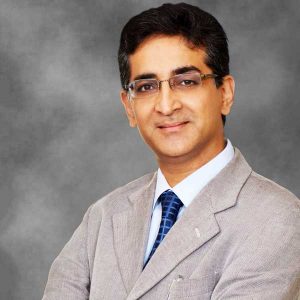
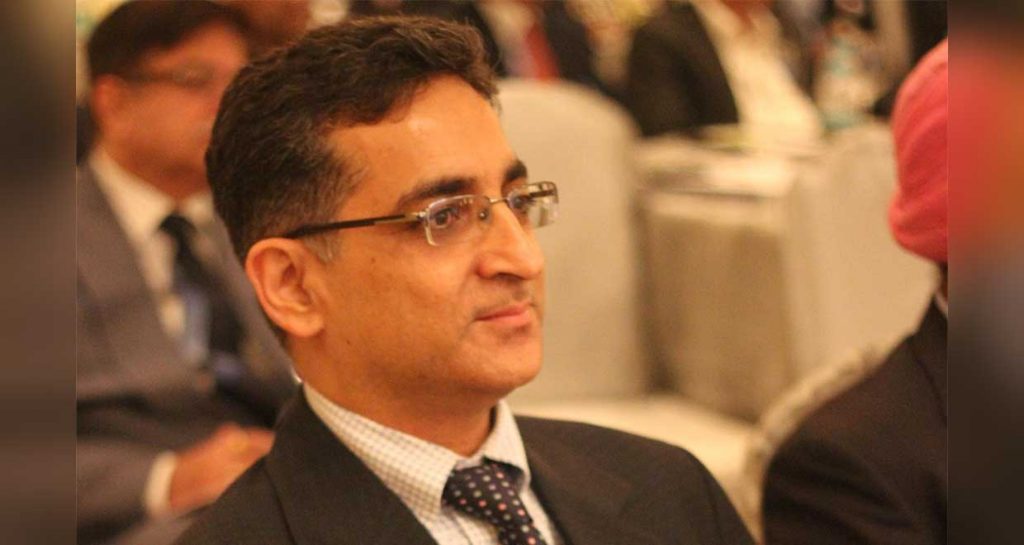
  • Satish Kumar, Global Head – Legal, Ramco Systems, on a career as an in-house counsel

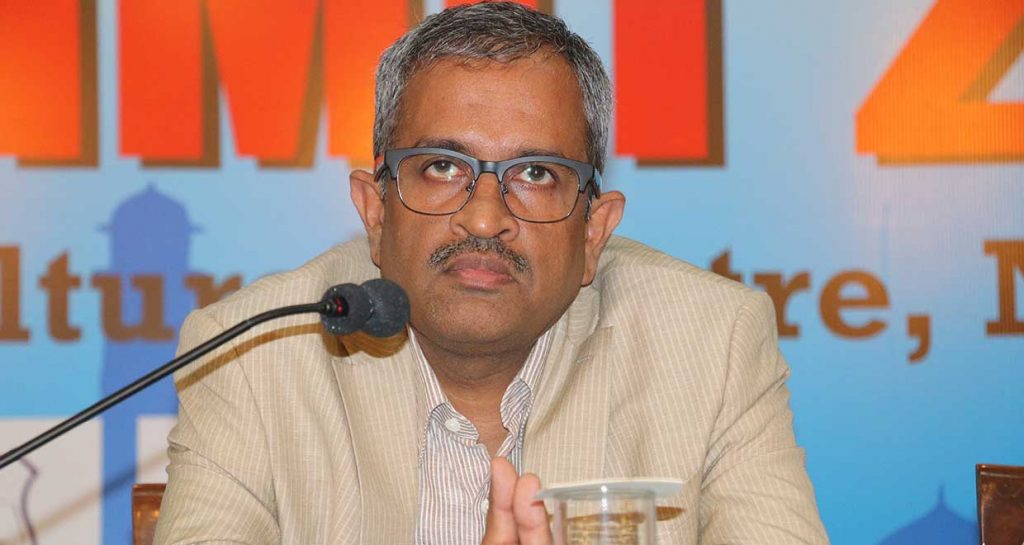
    Satish Kumar, Global Head – Legal, Ramco Systems, on a career as an in-house counsel

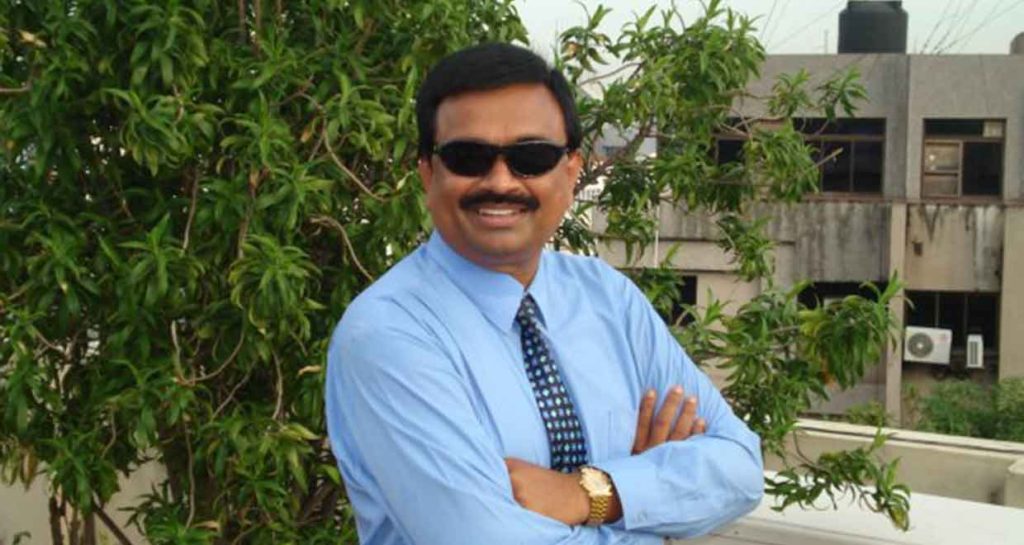
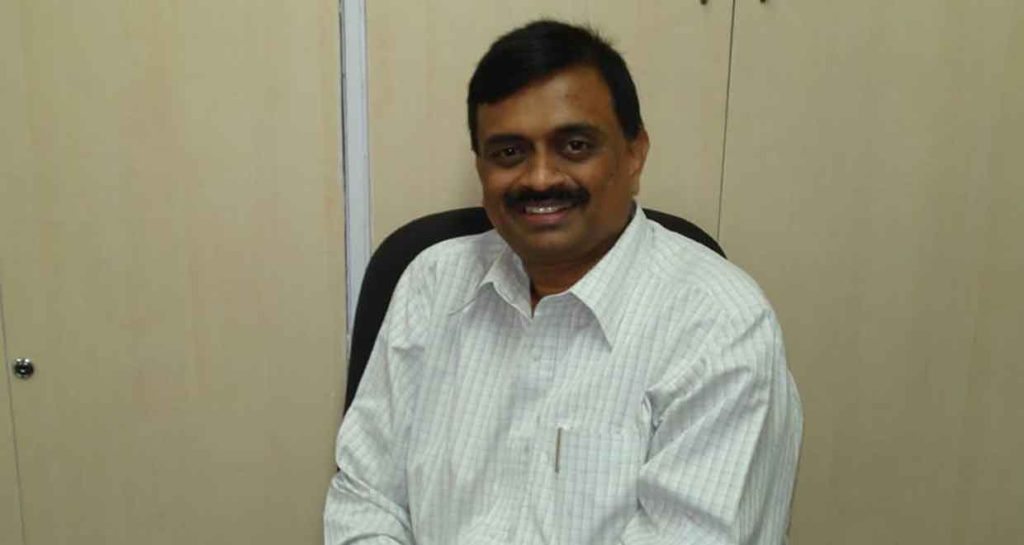
    K Satish Kumar graduated in B.Com and thereafter qualified in law in 1995 from Sambalpur University, he is also a Certified Management Accountant from ICWAI. Having worked at multiple corporate bodies as an in-house legal counsel, Satish is currently the Global Head – Legal at Ramco Systems in Chennai. Satish additionally has several publications to his name and has done much work in the way of Pro Bono activities to give back to society.

    In this interview, Satish talks to us about:

    • His introduction to the legal profession, and his experience as a lawyer since then.
    • His plethora of publications, and his advice on the best way to go about writing and publishing articles
    • Pro Bono work, giving back to society, and the ways in which he keeps up to date with the ever-changing subject that is Law


    How did you choose Law? Did you always know that this was what you wanted to do?

    In fact my choosing law was not deliberate and intentional. I started my career as a Finance Professional after completing my ICWA (currently known as CMA). I had parallely completed my Law Degree as well. However, Finance and Legal being closely related, I found out that I had a good aptitude for Law. That is when – even after starting my career in Finance – I switched over to Law, and with God’s grace, I am doing well and creating a niche for myself in the Legal Profession.

    In any organization, the Legal Unit are always regarded as the “Deal Makers”. You also resort to Legal when you have to be bailed out of any crisis. Legal plays an important role in “Crisis Management”. So the Legal Unit becomes most important either way – be it bringing revenue to the organization or pulling it out of some crisis. These are some of the selfish reasons which made me swing sides to Law.


    You have a lot of work experience, from working at a vast array of places. Can you tell us a little about your career graph up to this point?

    satish-kumar-4Yes, I carry more than 20 years of rich working experience in multiple MNC’s. I am very passionate about Law and that is what made me a Successful Professional.  I have working experience from Fortune 10 companies to Indian grown or growing companies like, HCL Technologies, Polaris Financial Technology (later on the product division split to Intellect Design Arena Ltd), Ramco Systems Ltd. I was fortunate to get the right breaks at the right time. I also carry some critical experience working abroad. So truly, I became a Global and a Cosmopolitan Professional.

    However, initially I started off my professional working in few indigenous companies in India. But I was fortunate to work with some industry trendsetters.  My desire to learn new businesses and passion to explore all new possibilities has helped me in my career growth progression.


    You have received lot of awards in your career. Can you please tell the young lawyers few things about it, please?

    Yes, I am the proud winner of many awards during the progression of my career, both abroad and in India. I have successfully negotiated and closed many contracts, structured and finalized joint ventures, cross border investments etc. I was also successful in closing many litigations. There was a time when my colleagues used to call me “the person with Midas’ touch”. In Polaris I was also called “The Deal Maker”.

    For all the achievements mentioned above and others, I was the proud winner of awards like


    • Konark Excellence Award
    • Gem Award
    • America’s Most Wanted Person by US Sales Team
    • Annual Excellence Award
    • Person Making a Difference


    You have a great deal of publications to your name. Do you write about things you think are relevant and have scope for research, about things that interest you personally, or is it a blend of the two?

    Yes, this is a very interesting question. I am happy to have many publications to my credit. I love writing – writing on relevant current Legal topics. I have written on Risk Mitigation, Open Source, Rent Control Act, etc. Some of my writings are also published in National and International Business Journals. Someday, I am sure my wish of publishing my own book on Legal topics is going to come true. Some of the links to my publications are given below.

    • Article on “Software companies can hedge against risks, with insurance cover.” Published in Business Daily “Business Line” dated April 6, 2009


    http://www.thehindubusinessline.in/ew/2009/04/06/stories/2009040650090300.htm


    • Article on “Closure of Business Deals” Published in Business Daily “Business Line” dated August 20, 2007


    http://www.thehindubusinessline.in/ew/2007/08/20/stories/2007082050100300.htm


    • Article on “Open Source Software – sans the risk” Published in Business Daily “Business Line” dated November 19, 2007


    http://www.thehindubusinessline.com/ew/2007/11/19/stories/2007111950090301.htm


    Could you also please tell our readers interested in publishing their own work what you think the best way to go about the same is?

    You should first start writing on subjects that is of interest to yourself. Writing on things you are passionate about will help further to strengthen your grasp of the subject. One may start first writing blogs and over a period of time these blogs can be converted to articles and reports in business journals. You should take care of the following while writing.

    As a first step you should select a topic that interests you, and focus on it for at least a week or two. Write a rough draft, including everything that you can think of. Stay loose, avoid getting analytical and enjoy the process of sharing what you know. You will then be surprised to see that you have a rough skeleton of the draft that you proposed to write.

    As a second step you should address your audience’s needs. You already have a skeletal draft. Now change sides and think of yourself as the reader of the draft piece of work that you had written. You should pick few words to describe the audience you want to address. For example, “young legal professionals”. Now, as a young legal professional, what are the questions you would like to ask? Note down these questions.

    As a third step you should start doing research. Now start doing a research to get the answers for all your questions noted down above. You should collect everything you have gathered and put it in a folder, or an electronic document, a notebook. You may also want to note the track of the sources so that you may refer them in future when you need it.

    As a fourth step you should refresh your draft. Now you may sprinkle the research in the draft that you have already drafted for the right audience. You may just want to revise what you have as you proceed, retaining a nice conversational tone by directly addressing your audience.

    As a fifth and final step you should review your draft. You should read, revise and repeat the process a couple of times after giving yourself some time in between the repeat processes. You will be surprised at what you have written and the changes that you keep making to the draft while re-reading it. Publishing the writing in the journals will be tough initially but once you start publishing the process will be set in your mind and it will be easier for you to write and publish in future.
     

    satish-kumar-3

    You strongly believe in spreading legal awareness to both laymen in the field of Law, as well as the younger generations of upcoming professionals in the legal field. Could you tell us a little about why Legal Awareness is so relevant?

    We usually ensure that our wealth gets transferred to our next generation through whatever way possible, like filling nomination in our Bank accounts/insurance accounts, Will writing, settlement deeds etc. But seldom do we think of transferring our intellectual wealth to the next generation. If the intellectual knowledge of Aryabatta and Einstein were transferred now to the next generation then we would be sitting rich on various inventions and patents and the world would be completely different now with many more such Aryabattas and Einsteins. But that is not the real scenario. Hence, it is very critical that our intellectual knowledge also gets transferred to the next generation. This is only possible if you transfer your learnings to your teammates and other budding professionals in the field. There are many nuances that we learn from experience, and it is worthwhile to transfer this to the next generation so that the profession becomes richer and more valuable with the passage of time.


    Tell us a little about your Pro Bono Activity. You have amassed a huge followers for the same. What kind of queries do you usually address?

    We derive a lot of benefit from this society. The society has made us what we are today – experienced professionals. We have an obligation towards the society. Everyone in their lifetime has one or other legal problem. But everyone may not be able to afford the best lawyers in the world. That is where we can step in and make a difference. A piece of genuine advice, counselling, direction, opinion will make a world of difference to these people. For me it doesn’t really cost much. But it gives me immense satisfaction when I see the smiling face at the other end after my counselling or legal advice.

    But I have to reach the people. That is when I decided to reach people through social media. Facebook, Linkedin, Twitter, Google+ were some of the mediums which I adopted to reach the people. I was surprised at the response levels. In a very short period, I had a fan following club of over 6000 people. People approached me with different problems. Some wanted to know the process to adopt a child, some wanted to reconcile with their spouse, property disputes among legal heirs, child abuse, work place bullying or abuse, sexual harassment etc. I ensure that just as I give some time to my family, I also give some time to the society. This has given me a lot of moral satisfaction.

    Pro bono makes me happier. Participating on such activities also provide opportunities to make personal connections with people who share your interests. Indeed, social connection is the greatest predictor of happiness.

    The very purpose of pro bono work is to assist those who desperately need help with something that’s really important, but for which they have no resources themselves. We are fortunate to be lawyers. We are among the lucky few to survive all the obstacles of becoming (and staying) lawyers. We are among the few who can make the legal system work for people who have nothing to give us but their gratitude.

    It helps to pursue my own interest and passions while helping others.

    During my early phase of career such pro bono legal work provided me a training ground. I was a junior lawyer earlier and did not have much autonomy for several years. Such Pro bono work in the initial phases of my career provided early opportunities for depositions, building client relationships, arguing motions, first-chairing trials and other valuable work experience to build skills and confidence.

    Charitable and pro bono legal work provides me opportunities to meet people with very different backgrounds and interests whom I may not otherwise meet in my daily life. Fundraising for charities, serving as a board member for a nonprofit organization and the like connected me with local business leaders and lead to new friends.
     

    satish-kumar-2

    How do you stay updated with the happenings not only in the world at large, but also with the relevant happenings in the legal field?

    I have joined many legal professional associations both in India and international levels. These associations are large number of similar professionals who are successful in their own fields. Interacting with them is very useful in developing ourselves.

    I have also subscribed to various legal bulletins. Laws are constantly changing and what was right yesterday could be illegal today. I keep myself updated reading legal decisions, and legislative and regulatory news and changes. They help me a lot to keep up to date with the dynamic legal field.

    There are various E-law tools which publish their own exhaustive law guides. The E-Laws Advisor tool simulates the interactions that a client might have with a professional. I can ask questions and it provides answers. I have privileged access to such E-laws tools.

    I also attend conferences across the globe. I interact with various professionals from Legal and other fields. This is a constant learning process and helps me understand their views too. The key benefit of attending this kind of conference is that I will be able to network and interact with key legislative decision makers and can make my views known to them.

    There are range of resources and communication channels for any professionals in order to both familiarize themselves and remain up to date with current law and trends. New technology is making it possible for this to be accessed on demand via the internet or “pushed out” to professionals via newsletters or tweets or other social media. One should only have desire to learn and keep the mind open. I make it a point to learn at least one new law every day.


    In your opinion, what should young students of Law prioritize as they lay the foundation for their career?

    Fresh law graduates and young students must, first of all identify the career of their interest before initiating actions in specific direction. For example, judiciary might interest some students and some might be interested in being in corporate working as a legal consultant or in-house legal officer; others might be interested in opting for litigation as a professional career. Hence, it is very important to find out what career path attracts one the most.

    Another crucial thing is to identify the area of their interest: it is very important for a student to know  which specific field of law is most suitable for them, based on their level of understanding in particular subjects. Some students might be very good in understanding criminal laws whereas comparatively weak in understanding commercial and business laws. Such students must consider their incline towards criminal law while choosing career options for themselves. Such students may opt for litigation or working under a lawyer who deals with criminal law. While students who have better understanding of taxation laws, company law, labor laws, intellectual property laws, etc. should prefer working in corporates or as an IP attorney or under a corporate lawyer.

    Once after a student has decided the chosen field of law and to start his / her professional career, he / she must join an organization or a lawyer with which / whom he / she can get enriching professional experience. First work experience is very important specifically for a legal professional as it implants the roots of one’s entire professional career. Student must give first consideration to the quality of work his/her chosen career option can provide. Further professional developments majorly depend on one’s first career decision and the learning experience during initial years of one’s career.

    From a different perspective, students should also be aware and mentally prepared of the fact that theoretical understanding and practical application of law widely differs. It is very usual for a law professional to come across dicey situations every single day. Thus, it is necessary for a student to develop a habit of thinking in order to find an amicable solution of any problem keeping in mind both legal acumen and practical feasibility. In this aspect, a few internship experiences in addition to legal studies from a reputed institution can be an added advantage.


    What kind of audience do you typically see at your seminars? What kind of awareness do you usually direct at them?

    (Satish actively participates in Legal Seminars conducted in various cities all over India in an endeavor to bring awareness to the young generations of lawyers and other professionals in the field of Law.)

    Yes, I am regularly invited by “The Associated Chambers of Commerce & Industry of India” (ASSOCHAM), “Confederation of Indian Industries” (CII), other Legal bodies to spread disseminate legal knowledge among the next generation lawyers.

    This is also a good platform to identify young and bright lawyers who require mentoring. I can easily identify the desire and passion in them as they keep coming to me with various intelligent questions and try to enrich themselves. Such bright lawyers should be given an opportunity to grow – to take advantage of all the experience that I have developed over the years.

    I also get an opportunity to interact with inventors, industrialists, scientists, authors, businessmen, investors, financiers, etc and get different viewpoints on the same topic.  This helps us to re-look, re-think and reposition ourselves on any topic which has various stakeholders. I learn through this process of interacting with top professionals. In order to keep ourselves abreast of new developments, we have to constantly learn. Such seminars play a useful role and are beneficial to me too.


    In your opinion, what are the most important skills any young lawyer should cultivate?

    As a young lawyer, when you are just starting your career in law, it can be a challenging to stay on top of everything. There seems to be an endless list of new skills and information that you need to learn. It is in fact all about getting back to basics.

    As a young lawyer, you should be a good listener. When given instructions by a client or another member of your team, listen carefully. It is important that you understand what you have been asked to do. You may ask plenty of questions, take detailed notes. This may help in giving a proper response.

    As a young lawyer you should develop a good communication skill: The success of a lawyer depends on the communication skill. You are as good as you communicate. You should develop good written and oral communication, paying attention to details, listen while others speak, professionalism, using office technologies like email and word processing, critical reading and comprehension, synthesizing facts and law, legal reasoning, organizational skills, interpersonal skills, working within established time constraints, issue spotting and finally decisiveness.

    As a young lawyer you should learn to maintain written records. Keeping good written records can save you in times of trouble. So it is a vital discipline to learn to maintain written records.


    What are the biggest challenges faced by the modern day lawyers?

    The legal profession is a competitive one. Yes, it always has been, but these days—with rapid changes in the way we practice law, it seems to be even more so. The integration of worldwide financial and commercial markets has occurred at an astonishing speed over the last couple of decades. Market participants now routinely lend, borrow, invest, trade, hedge and pledge and do business in jurisdictions other than their own. They expect their lawyers to tag along with them in these global adventures.

    For the lawyers, compulsory cosmopolitanism can be discomforting. It isn’t just that laws and judicial procedures differ from one jurisdiction to another. It is something more subtle. Lawyers trained in different legal systems may approach legal problems, client relations, professional etiquette, ethical questions, legal drafting, and correct professional demeanor in remarkably different ways.

    Nowadays, the clients’ expectations are more than ever sky high and on-demand. Access to the internet provides potential clients with access to legal information at their fingertips. They are empowered by technology, and they expect that their attorneys will be proactive in finding ways to be efficient and offering options and solutions in terms of results. This can strain relationships between lawyers and their clients, which puts additional pressure on lawyers to find ways to meet these expectations.

    With the access people have to information today it’s becoming more common for legal clients to have done research on their own prior to speaking with their lawyers. This has changed the role of the lawyer to educating the client in new ways like sorting through reliable and unreliable information the client may have found in their research.

    Technology has also allowed for the creation of various cheap legal service providers from paralegal. There is a gross oversupply of law schools and this glut still plagues the legal profession today.

    These paralegal have cropped up all over the internet, city, offering low-cost legal services at very attractive proposition for those seeking what they know can be costly services.

    Globalization and competition are another challenge that the lawyers face.

    In today’s global economy, lawyers may face barriers in expanding practices overseas.

    Countries around the globe are asking themselves if easing rules for attorneys to practice in foreign countries is helpful or hurtful. There’s no clear answer, and countries are handling it in various ways.

    New regulations and laws constantly come. Law is an evolving subject. Lawyers have to constantly update themselves so that they are not left behind.


    What is the future of Legal Profession?

    Law is a dynamic field. The practice of law is changing, but it has always been changing. In the 19th century, there was a major transition from small sole practitioner type of firms with law clerks to the beginning of the modern larger firms that specializes in certain areas. With the development and invention of technology like typewriter and telephone, computer etc, the profession of law also developed in equal pace. Now modern technology allows all sorts of legal matters at one’s fingertips. A good computer with access to legal research is a great leveler.  But, this world of informational technology has taken away the quality of life from many lawyers. Lawyers are bombarded with emails and other types of electronic messages from clients 24 hours a day. Going on vacation becomes almost an impossibility—at least on a vacation where one gets away from their work. Essentially law is a 24/7 practice with emails coming in day and night, on all holidays, weekends, etc. This massive and useless over-communication takes a huge amount of time, and at the same time is unproductive.

    With the technology, the nature of the practice of law has begun to shift. What the future of law will look like in the next 50 years remains unknown. The fear is that it will driven by technology and not the human side. Will law remain a profession, or will law change to be a business driven by technology? Only time will be able to answer this question.


    What message would you like to leave our young readers?

    Be open and try to absorb and learn as much as possible. The early phase in your career is a learning phase and later on you can only get better. The more you learn, the more experience you gain. You should also try to get a good academic record and in parallel maintain good extra-curricular activities. Try to get good internship experiences.

  • Dr. J. S. Patil, Vice Chancellor, NLUJA, Assam, on a career in legal academics, role of a professor and research work

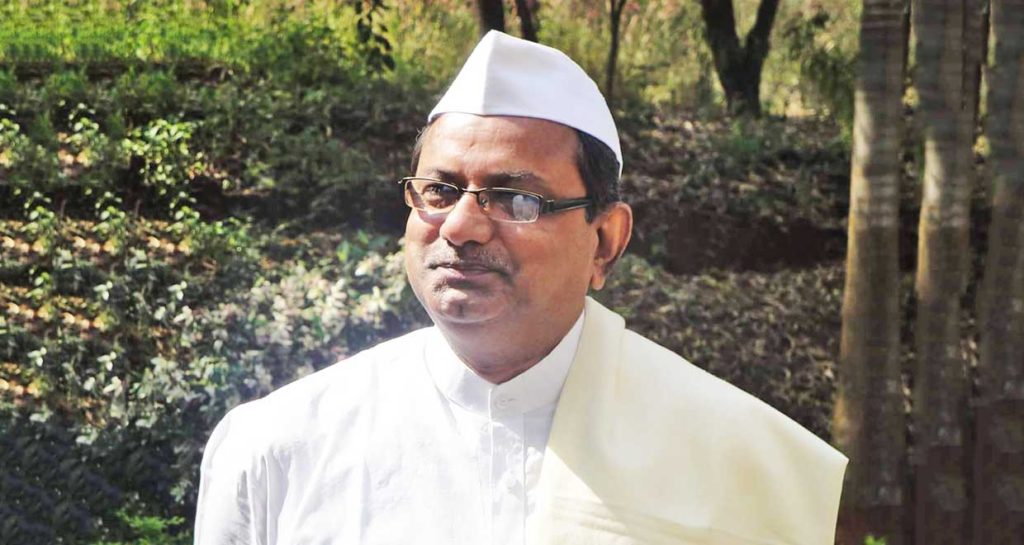
    Dr. J. S. Patil, Vice Chancellor, NLUJA, Assam, on a career in legal academics, role of a professor and research work

    Dr. J.S.Patil qualified in law from Karnataka University, Dharwad in 1977, and thereafter went on to pursue further studies from University of Mysore, and earned his Masters in 1979. In 1997 he also finished his Ph.D studies from Saurashtra University, Rajkot.

    Dr. Patil served as a professor in the department of post graduate studies and research in law at Gulbarga University from 1995 and had deputations to other colleges including his stint from 2009 to 2013 as the Vice Chancellor of Karnataka State Law University. He is currently the Vice Chancellor of National Law University and Judicial Academy, Guwahati.

    In this interview, he talks to us about:

    • His love for the law and positive changes he has witnessed in the evolution of law
    • The challenges he faces as the Vice Chancellor of NLU Assam and those that he faced in KSLU
    • Advice on various facets of the legal profession and on acing law school
    • The divisions he believes exist between NLUs and other law colleges
    • His vision for legal education and NLU Assam


    Tell us a bit about your childhood. Looking back, what are the most important lessons that you learnt as a young student that shaped your personality.

    My school days were very important days of my life. There was a small government primary school in my locality known as Konapupet in a small town called Manvi in the Raichur District of Karnataka, where I had an excellent head master always dressed in a sherwani and fur cap, known for strictness and discipline. His personality influenced me to a great extent especially in meticulous dressing. When I was in the 4th Standard in middle school, I was chosen to deliver a short speech on Independence Day on 15th August 1964. My oration started from then onwards. In high school, I had some excellent teachers who were responsible for shaping my personality and future. All the schools I studied at were government schools, but satisfactorily qualitative with committed teachers. I was one among five students out of 150 who passed SSLC or 10th Standard in 1970. It was so difficult to clear the matriculation during those days, passing matriculation was taken as a prestigious one. My parents were very pious and humble and their dream was to provide maximum education to their five children. They were from the lower middle class strata of society; they were unlettered and farmers, yet because of their commitment, four of their children could get a good education. This has taught me a great lesson – to work hard and worship work. They were my greatest teachers and my inspiration in my childhood. Along with my elder brother, I established a small library of Kannada literature at home, especially novels from Kannada litterateurs. I was fond of reading novels and lent the books to others by charging ten paise per day and buying books with the revenue. We were able to build a culture of reading among our friends in the mohalla by this initiative.


    Why did you decide to opt for the profession of law? As a young student, which aspects of the law fascinated you the most?

    When I joined the law course, I had no clarity in my mind as to career. Coming from a rural background, it was difficult for me to take decisions as we (my brothers and I) were the first generation educated people in our family. I joined law only because my other friends had also joined colleges for law. But later on, during the course of my study, I realised the importance of legal education. As a young student, I was deeply influenced by my principal and wanted to be a teacher like him and also an administrator like him. Teaching became my passion over a period of time.


    Sir, you have pursued your law at Karnataka University. What were the highlights of your journey as a law student? Which legal subjects did you enjoy studying the most?

    To study under great teachers like Professor G. V. Ajjappa, Principal, University College of Law, Dharwad and other very eminent teachers in the college was a memorable and privileged aspect of my life. As I was deeply influenced by the imposing personality of the Principal, his favourite subject, Jurisprudence, was an obvious choice as a subject I loved the most and continues to be so even today. I was an average student at the LL. B. level. When I moved to the Department of Studies and Research in Law at the Manasagangotri Campus, University of Mysore, I took to studies seriously and was often described by my teachers and library staff as a model student on campus. My serious commitment to legal academics during those days transformed me into a law teacher.


    Did you ever have doubts back then about your ability to stand out in the legal profession? What, in your view, are the qualities that a law student should strive to possess in order to raise a notch above the rest?

    j-s-patil-1When I came to Dharwad from my native place to prosecute higher education in 1970 for PUC, I had an inferiority complex. I was able to get over it during my LL.B. studies. I could not enrol as a lawyer due to economic problems. I got an LL.M. seat in the University of Mysore and joined. The problem of inferiority set in again as there were very good students with backgrounds of having ranks and other laurels to their credit, while I had none. Slowly I was able to get over it and developed confidence. I had very good classmates who encouraged me and helped me in my studies. We were like one family and had an excellent atmosphere in the Department. Because of my dedicated hard work and support from friends and the faculty, I could come out with flying colours, by getting the first position with a first class in the international law branch and getting the second rank in the entire department. That was the beginning of my academic career and I never looked back after that.

    The legal profession demands hard work, regularity, punctuality, research, updating, good language and drafting skills, good communication and other soft skills, adaptation of modern IT tools and of course social and professional networking. Every law student should try to inculcate these qualities that will go a long way in building an excellent legal career.


    How should law students go about selecting topics for research publications?

    j-s-patil-4UGC regulations require a law teacher to take 18 hours workload of teaching. This takes away much of their time for teaching. Research takes a back seat as a consequence of this. Quality research has become a scarce commodity in the legal domain due to many reasons. The major reason, in my opinion, is the difficulty we are encountering in decolonising our consciousness. This problem is seriously interfering in understanding legal problems that we face in our country. Teachers need good training in customised research skills in the domain of law rather than routine research methods. Research and legal writings will become meaningful only if these are of relevance in providing justice to the common man. Competition to publish, due to the UGC requirement of API score, has encouraged law teachers to write and publish in research journals. It has also given rise to commercialisation and mushrooming of research journals raising question marks on the quality of research articles published in some of these journals. More attention to attend seminars and conferences, present papers, write research papers and publish have added to the overall personality of law teachers. It is also providing them with that additional input necessary to bring dynamics in their teaching.

    Students must select research topics based upon the hard realities of the need of the time, the problems our people face and difficulties they encounter in their lives vis-à-vis legality. Problems taken up for research need not be big and impressive but they must be pragmatic and practical. Solvability of the problem should be the hall mark of research topics.


    What are the biggest challenges that you have had to grapple with as the vice chancellor of NLU, Assam as well as KSLU? What have been the biggest successes so far?

    I have just started my innings in NLUJAA, Guwahati. The faculty and students here are wonderful. An urgent issue that I have had to deal with is shifting the University to the new campus. This will take a couple of months. The administrative building and law school building are ready for occupation. The construction of the Boys’ and Girls’ hostels is nearing completion. Construction of the Library, Judicial Academy and other buildings is also being taken up.

    j-s-patil-3

    We need to customise some of the course content to reflect regional aspects of the North East. We have to use A-VIEW (Amrita Virtual Interactive E-learning World) in our class rooms for more effective teaching and to ensure transparency. We have to launch some regionally relevant research projects on local cultural laws, the Brahmaputra River water management system, Legal regulation of mega biodiversity, legal regulation of petroleum and other energy resources. An ambitious project that I have in mind is the reconstruction of Indian Jurisprudence based on Indian experiences since the inception of the Indian civilisation. Consultation with stalwarts in the field like Professor Upendra Baxi and Professor G.V.Ajjappa has already been initiated to build the project.

    At KSLU the greatest challenges that I faced as the founder vice chancellor, were to acquire land, prepare the master plan and construct buildings. The other challenges were to bring 95 law colleges affiliated to various universities in Karnataka under one umbrella of KSLU and build a uniform curricula, examination system, etc. I have been able to do all these things successfully. Innovative steps taken at KSLU include the introduction of Khadi uniform on every Monday and singing of the national anthem every day in the morning before commencement of the classes and administrative activities of the University. This is to realise the dream of transforming KSLU into the peoples’ university with the punch line ‘Indian roots and global heights’.


    Do you feel that the legal profession has significantly changed from when you decided to study law? What are some of the changes that have positively impacted the profession and legal academia in your opinion?

    There have been some important changes in the legal profession since I started studying law. When I joined law, the legal profession was limited to civil and criminal practice. As time passed, there has been a tremendous expansion in legal professional activities in a variety of new and emerging areas like corporate and business laws, intellectual property rights, information technology law, entertainment and sports law, press and media law, environmental law, bio-diversity law, wild life and forest law, family law, consumer protection law, human rights, women and child rights, vigilance practice, legal process outsourcing, etc. The Legal profession has become one of the most sought after professions today. Every establishment needs to have a legal cell and recruit legal professionals. The union and state government departments, banks, corporates, NGOs, associations and unions, cooperatives, entertainment houses, press and media, etc. are establishing their own legal departments to address legal issues. The practice of law has gradually shifted from advocate chambers recruiting juniors to LLPs and LLCs and young lawyers joining these firms as employees or partners rather than juniors.

    There is a massive change in legal academics as well. We witnessed the introduction of a five year LL.B. programme, which runs parallel with the three year LL.B. programme. The introduction of semester (trimester in some national law schools) and choice based credit and grades points system have brought significant qualitative change in legal education. Introduction of new teaching-learning IT tools and e-library have added new impetus to legal education. NAAC accreditation is an important step that forces law colleges and universities to document their activities systematically and to conform to the requisites reflected in seven domains of NAAC proforma. This process is helping in activating activities in legal educational institutions.

    There are many types of legal educational institutions in our country. National law universities, Indian Law Institute, state law universities (Tamil Nadu and Karnataka), private law universities (O P Jindal), Law Schools in IITs, Law schools in private universities, government law colleges, university law colleges, private aided law colleges, private unaided law colleges and autonomous law colleges. With the establishment NLSIU in Bangalore and other law universities in the country, legal education has become a sought-after education for students. The competition among various players has contributed to the enhancement of quality in legal education. At the same time, it has also led to commercialisation of legal education which cannot be undermined.


    As a law student, you consistently excelled in academics. What are the most important tips that you would like to share with law students for consistently excelling in academics?

    One has to be regular to classes, punctual, hardworking, and complete the portion covered by the teacher that day itself. A student has to actively participate in moot courts, debates and other competitions. He should be in the library after class hours for studies and make effective use of e-library. He should regularly consult teachers for clarifications without shying away. He should promptly refer to dictionaries and encyclopaedias for understanding difficult words. He should not proceed further without understanding the sentence or paragraph he is reading. He should make notes and make periodic revision of the areas he has already covered. He should work with reputed lawyers, judges and firms as an intern. He should be active in the class, with friends, peers, teachers and everyone connected with law. These are tips to students to excel in academics.


    j-s-patil

    Do you feel that there are differences between students of ‘elite’ law schools and students from other law colleges and traditional universities?

    There is a gap between students in elite law schools and others. However, this is not to overlook some of the excellent students in other law colleges. Most eminent lawyers and judges of the country are from traditional law colleges. Students of elite law colleges have many advantages. They have good infrastructure, faculty, library, opportunities to participate in moot court and other competitions, etc. Their elitist background and environment also helps them in performing better. Sometimes this background itself may become a disadvantage. There is a possibility of elitist students becoming overconfident and slipping into undesired activities.


    What are your views on the future of Indian legal education? How would you suggest that the legal fraternity manages to stay ahead?

    There is a wide scope for legal education in India not only for our students but also for those coming from abroad. India has become an education destination for students coming from third world countries. The legal fraternity is required to build and continuously work on various areas of legal education by updating curricula and pedagogy, updating of library, honing professional skills, building vibrant professional networks on social media and professional online platforms, building a network of alumni and professionals, entering into collaborations and MOUs with reputed institutions and above all, to keep continuously working on every aspect of legal academics to stay ahead in this highly competitive world.


    What would be your advice to young law students? How do you think that they should approach their career?

    Law students in India are becoming more and more smart and career oriented by making good use of e-libraries and internet. Every student should have a clear perception about his career. He must develop alternative plans (Plan-A, Plan-B, etc.) so that frustration does not creep in. In the new e-environ, they should not forget to read physical books and write and keep their reading and writing skills intact. This will take them into their careers in a better manner. Students should strive to get into litigation as a first priority so that courts get qualitative lawyers. As many NLU products are opting for corporate jobs their latent talent and skills are not expressed fully. Furthermore, they stagnate in their career after some time leading to frustration. Therefore, entering jobs should be the next priority. They can also think of establishing law corporates by finding venture capitalists and angel investors and think of working in ADRs, LPOs and many other para-legal domains. Students should do independent research, take counselling from peers and teachers and inputs from their friends before making any decision. Of course, at the end of the day, the decision must be theirs.


    You have worked both in NLU’S and NON-NLU. Can you share your advice “How a law student can bridge the gap between NLU’S and NON-NLU”.

    There is a typical status and aura about NLUs in the country. There is a separate test, CLAT, for admission into NLUs, paving way only for the creamy layer students to enter into these institutions. Expenses also forbid others from entering NLUs. Hence, NLUs have become elitist legal education centres and islands of excellence (not all of them of course). Others are essentially non-elitist; but there are some very good law colleges in this sector also, not just competing with NLUs but also marching ahead of some of the NLUs. Newly emerging private universities are posing a big challenge to NLUs. Pace has already been set with regard to tough competition between NLUs and some of these other legal education institutions. The real gap is between NLUs (along with other elitist law schools in the urban) and the other law colleges (including the ones in rural areas). This gap can be plugged by using the benefits available under projects like NME-ICT (National Mission for Education though Information and Communication Technology) and NKN (National Knowledge Commission). These projects of the central government are launched to bridge the gap between rural and urban educational institutions by establishing virtual class rooms, weekly discussions, retrievable AV content, etc.


    Any time management tip for Law students?

    Students should build timeline for their studies, get up at 4 or 4.30 in the morning, do some exercises and yoga to keep the body and mind fit for the day, jot down the tasks for the day, earmark a minimum of six to eight hours to study, use with restraint mobile phones and social networks, spend more time online in perusing legal professional networks and platforms, develop effective online reading skills, spend some time with friends, faculty and peers, involve in sports and cultural activities so as to develop total personality. While going to bed in the night reflect whether the tasks jotted down in the morning are completed.


    What is your vision for NLU Assam? Where would you like to see NLU Assam 10 years down the line?

    NLUJAA is a young and emerging institution with some unique advantages. Its campus location is wonderful with the Brahmaputra River flowing on one side and an imposing mountain with woods on the other side providing a serene atmosphere to conduct academic activities and also to develop it into a green campus. Another unique feature is that National Law University Assam has Judicial Academy Assam on its campus providing an additional advantage to the faculty and students to interact closely with the judges and judge trainees.

    My vision of NALUJAA is to build it into a world class legal education institution with an avowed objective of leading from the front multi-task projects aimed at transforming Assam and the north eastern India into a legally conscious society and develop an atmosphere of respect for rule of law. Towards achieving this, the University will make all efforts to provide quality legal education at under graduate and post graduate level; and build an army of law graduates who will dedicate themselves in building India as a legalitarian-egalitarian society, by putting service before self wherever possible. Various law centres (17 of them are already established in the cutting edge knowledge of law) established in the University will undertake research projects in the focussed areas in the concerned discipline of legal knowledge and work in close liaison with public institutions, NGOs and civil society with the commitment to provide legal knowledge and legal literacy to the people of north eastern states in particular and the country as a whole in general. The University aims at building customised research projects that are socially relevant for the north eastern region such as Brahmaputra water management and regulation, legal protection of mega-biodiversity of the region, local cultural laws, Indian jurisprudence, regulation of petroleum and natural energy resources, legal protection of indigenous knowledge through intellectual property rights, issues relating to promotion of regional international business, trade and commerce, issues relating to labour and child labour specially in tea estates, problem of child trafficking, legal aid and legal literacy, etc.

    Our dream is to build a vibrant national law university that caters to the law and justice needs of people in the north eastern region in particular and the country in general by providing qualitative legal education through usage of the most modern IT tools to access legal knowledge domain.


  • Ramakant Gaur, Partner, Ace Jurix, on work experience in litigation at Ace Jurix

    Ramakant Gaur, Partner, Ace Jurix, on work experience in litigation at Ace Jurix

    Ramakant Gaur graduated from Chaudhary Charan Singh College, Meerut in 1995. He is a game changer, defense lawyer for the complex litigations of Economic-Corporate-real estate disputes involving the criminal laws. He examines the matters closely like an investigator; ponders the prosecution’s point of view and then envisions the strategy for the defence, with his substantial experience.

    He has excelled in prosecution cases instituted by the Indian Dept. of Customs & Central Excise, Directorate of Revenue Intelligence (DRI), Directorate General of Central Excise Intelligence (DGCEI), Central Economic Intelligence Bureau, Enforcement Directorate, Economic Offense Wing and Crime Branch of Multi State Jurisdictions, Income Tax dept. etc. He has efficaciously pleaded as defence attorney, in the cases involving prevention of money laundering laws, Corruption laws & anti-drugs laws.


    In this interview he talks to us about:

    • The ways in which money laundering takes place.
    • Laws before and after Prevention of Money Laundering Act, 2002.
    • Lessons to be learn from various financial scams in India and abroad.
    • Role of national and international agencies to curb issue of money laundering.
    • Preventive measures taken to curb the flow of black money.


    What are the ways in which money laundering takes place? 

    Money laundering is a way to filter and convert ill-gotten money and conceal its illegitimate source so that it appears that the original source is a legitimate one. It is prevalent in many forms world-wide such as Hawala transactions, shell companies, terror financing, smurfing, etc. The scamsters or the money launderers generally follow these three steps, firstly, Placement of the proceeds of crime into the financial system, followed by Layering or doing away with the original source of illicit funds, and then Integrating the same into the financial system.


    What are the laws before and after Prevention of Money Laundering Act, 2002? What major amendments took place?

    Until 2002, several authorities under IT Act, Benami transactions Act, etc. adjudicated over the issue of money laundering, but with the alarming rate of transnational criminal financial activities, a need for holistic legislation gave way for the enactment of PMLA 2002. It has the provisions for the confiscation of tainted properties and was amended thrice, first in 2005, then in 2009 and then 2012. The PMLA (Amendment) Act, 2012 has enlarged the definition of money laundering by including activities such as concealment, acquisition, possession and use of proceeds of crime as criminal activities. Some other features are as follows: The amendment has introduced the concept of Corresponding law to link the provisions of Indian law with the laws of foreign countries and to provide for transfer of the proceeds of foreign predicate offence committed in any manner in India. It also adds the concept of ‘reporting entity’ which would include a banking company, financial institution, intermediary or a person carrying on a designated business or profession. The Prevention of Money Laundering Act, 2002 levied a fine up to Rs 5 lakh. The amendment act has removed this upper limit. The act has provided for provisional attachment and confiscation of property of any person (for a period not exceeding 180 days). This power may be exercised by the authority if it has reason to believe that the offence of money laundering has taken place. Part B of the Schedule in the erstwhile Act included only those crimes that are above Rs 30 lakh or more whereas Part A did not specify any monetary limit of the offence. The amended act has brought all the offences under Part A of the Schedule to ensure that the monetary thresholds do not apply to the offence of money laundering.


    What are the objectives of Prevention of Money Laundering Act, 2002? 

    The Act was introduced in order to combat and deal with the menace of Money Laundering and incidental activities in the nation in lines with India’s international obligation under the UN General Assembly’s resolution adopted in its Political Declaration and Global Program against Action. The Act majorly provides for the confiscation of the property obtained out of the proceeds of crime. It also imposes various obligations on banks, financial institutions and intermediaries to maintain records of all cash transactions. As the basic principles of evidence say that the burden to proof is on the part of the prosecution to prove the, this is the only statute where the onus lies on respondent to prove the legit source of income.


    Please share with us the success story of PMLA so far in the light of judicial pronouncements. Highlight some scandals and case studies.

    The PMLA has played undoubtedly played a deterrent role when it comes to combat/curb the menace of money laundering. The Enforcement Directorate, with the vigilant efforts made by FIU, CBDT, CBI, RBI and SEBI has confiscated crores of movable and immovable properties in the span of few years which were allegedly obtained from the proceeds of crime. It has spared absolutely nobody. From two tier-city businessmen to  top-notch names have find a mention in the hit-list of ED such as Vijay Mallya, Chagan Bhujbal, Subhrata Roy to name a few. As per the statute, ED has also attached properties situated abroad. The latest highlights being Augusta Westland case, Kingfisher fiasco, NSEL case, Kartik Chidambram and many more. ED has been absolutely ruthless in cracking down these alleged people.


    What are the lessons to be learnt from various financial scams in India and abroad? 

    To name any financial debacle in particular, would be an understatement. India has seen the infamous Hawala transactions, Satyam scam, chit fund scams, Ketan Parikh and Harshad Mehta, to name a few. They admonish towards the fact that banks and financial institutions have to be brought under the radar of regulatory and enforcement agencies. The cash transactions also have to be dragged under certain threshold limits.

    The success of RICO Act of USA, originally used to prosecute US Mafias US involved in organised crimes during 1980s, led to number of trials and convictions. It has a strong harmonious network with various enforcement agencies. On similar lines, creation of SIT on black money as a watchdog has taken a leap in investigation of black money in and out of India. As per the latest report of SIT, the data provided by the enforcement authorities shows that there are gaps in monitoring trade flows which are used by unscrupulous elements to take out precious capitals outside the country and thus damaging the fabric of the Indian economy and in order to deal with the same, the SIT has asked RBI to establish an institutional mechanism to track illicit financial flows and share data with other law enforcement agencies such as ED,DRI and CBDT and from the said data base various agencies can gather the relevant information for taking early appropriate action. This is so since the data available with one agency can be relevant to action expected to be taken by other law enforcement agency.


    What is the role of national and international agencies to curb issue of money laundering?

    Various special courts have been set up by the virtue of this Act for the purpose of trial of scheduled offences. The Enforcement Directorate has been responsible for the investigation and Prosecution of cases under PML. The Financial Intelligence Unit India (FIU-IND) is the nodal agency for the dissemination and analysis if the information pertaining to the suspicious financial activities. Apart from these, RBI, SEBI, CBDT, Police have been active at different levels to look into flow of Black money.

    At the international level, with the initiatives of UN Financial Action Task Force (FATF) was formed in 1989 to set standards and formulate policies to combat money laundering. It is today one of the most efficient organization working towards this directions, especially on Combating the Financing of Terrorism (CFT).  UN and many .other nations have enacted stricter laws on money laundering as well.


    What preventive measures are taken to curb the flow of black money? 

    Government enacting Black Money Act 2015 has been seen showing light at the end of the tunnel from where undisclosed foreign income enters into Indian system as it has stricter penalties for offences since it was the need of the hour. Also India has signed many Double Tax Avoidance Agreements, SIT has been setup to investigate this issue, and Income Declaration Scheme 2016 have been introduced, strict KYC norms to be followed by banks, Tax Information Exchange (TIE) Agreements are proposed and many other precautionary measures have been taken.

    SIT has been proposing several recommendations in this regard such as a ban on cash transactions above Rs. 3 lakhs and restricting cash holdings with individuals upto Rs. 15 Lakhs; then it has suggested to establish KYC registry; prior detection of the shell companies with the help of intelligence gathering and entrusting Serious Fraud Investigation Office (SFIO) to regularly mine the MCA 21 database for certain red flag indicators; to check upon the misuse of Participatory notes through KYC norms so as to detect the beneficial owner with the help of PAN card number. It has also suggested that all the cases pertaining to trade-based money laundering should be shared with ED by DRI so as to initiate investigation under PMLA. Therefore, our law-makers have set up the panacea to the problem of black money but its effective enforcement will be testified over the time.


    What are the loopholes in the current legal regime in India? 

    So far as prevention of money laundering is concerned it has been fairly able to do justice, but still it has certain grey areas. Real estate sector, jewellery and bullion, and NGOs are the most vulnerable sectors for occurrence of illicit financial transactions. Inadequate scrutiny structure for cash transactions, inefficient system to preserve confidential financial system and liberal attitude towards the non taxpayers are a few areas where our legal system is lagging behind.

    As, a defence lawyer of prevention of money laundering cases, it has been observed that the process of attaching properties of the accused by ED has ,mostly been done even before filing of any criminal complaint or a chargesheet been filed and thus infructuous. There is a lot that has to be done by all the vigilance authorities other than targeting big names and getting affected by media trials. The present situation demands major amendments in the grounds/process of attaching the properties under PMLA as till date this process has turned out to be absurd.


    What were the challenges you faced in shaping up your career as it stands today?

    There is no competition or challenge in the space whereas there are challenges, struggle and obstacles on the road. I preferred to create a space and develop a niche, reign of the economic loss. I had beaten the competition or challenge through strategy executed with the support of a flamboyant team.


    What would be your parting message to our readers?

    There is no shortcut to the success except hard-work. Before entering into the professional reign, study the market. No client looks for the ordinary lawyer. Start your career as a champion and excel.


  • Srinath Sridevan, Founding Partner, HSB Partners, on leaving Magic Circle and starting up

    Srinath Sridevan, Founding Partner, HSB Partners, on leaving Magic Circle and starting up

    Srinath Sridevan is the founding Partner of HSB Partners, Advocates & Solicitors, Chennai. Srinath graduated with a Gold Medal in Law from Madras University in 1996 and then went on to pursue his masters from New York University in 1997. After graduation he got an offer from Allen and Overy, London and started working there. Later he moved back to India & started out with a new Law office, named – ‘HSB Partners’ at Chennai in the year 2004. He possesses an experience of over twenty years in the legal Industry with specialization in different aspects such as mining law, arbitration, corporate law etc.

    In this interview he talks to us about:

    • Choosing law as a profession and his experience at New York University.
    • His formative years as a lawyer and his time at Allen and Overy, London.
    • Experience of establishing his own firm with his friends.
    • Criteria for selection of associates while recruiting.
    • HSB Partners and its rapid expansion.


    What incidents, influences or interests prompted you to think of law as your career and what other options would you have considered for your career?

    srinath-sridevan-1I am one of the fortunate people who came from a family of lawyers and therefore Law was something apparent to me since I was in school. I also had an interest in science and astronomy especially, and I suppose if I had not gone into law I would have gone into astronomy. I had studied BSc(Physics) before I got acceptance from Madras Law College.


    Tell us about your experience in Dr. Ambedkar Law University.

    See, that time it was Madras University it was not Dr. Ambedkar University. The college itself is a century old institution and therefore, the building is spectacular, the library has books which we only dream of. For example I have seen with my own eyes a two hundred year old copy of the Hedaya by Bailee, which was one of the most classical texts in Muslim law. But unfortunately the university suffered due to government laps and negligence. Therefore, classes were conducted in a haphazard fashion. In such a situation you are forced to learn for yourself and that’s what I did.


    Could you tell us about your experience at New York University? What all were the differences that you found the Indian form of legal education and the other form of legal education?

    Everything was different. I don’t even know where to start In the Indian form of teaching specifically at Madras Law College, the professor would come in, cover their portions and leave at the end of the hour. Some professors took a little bit more interest and tried to make the class more interesting, so it was only the frontbenchers who really gained anything, because we used to study out of our own interest, and also used to take notes in class. But at New York University, the scenario was completely different. The entire class was completely participative. The professor started a discussion and he guided the discussion. So, at the end of the hour the entire class would participate in the discussion. So as a result the entire portions were covered. And apart from that there would be seminars. So, in a semester you had one hour of discussion per week with a professor, where you would jointly research on some of the subjects. The amount of learning you got in these seminars was unbelievable. Of course, the quality of the professors at New York University was also very high. Some of the professors I learned from are known the world over. So, you really can’t compare the two. The experience at NYU was quite amazing.


    You received a scholarship for applying to New York University. What factors should be kept in mind while applying for LL.M in different foreign universities?

    First you have to look at what you actually want out of your LL.M. Students go overseas for masters degree for different reasons. Some of them are extremely focused and they see a masters degree as a stepping-stone for a further career progression. Some students do a masters degree simply because their friends are doing it. Some people do it because they want a year before the reality of life hits them. So, it depends on what you want out of it. Let’s take the first category, the people who are extremely focused. They need to think about what they want to do after their Masters. If one thinks of working at the UN or some international body, then you need to apply to those universities like George Washington, NYU, and Columbia etc., which have very strong relationships with international bodies. And if you do your Masters there, it is easier to get positions and fellowships from international bodies. So, that’s one. Similarly, if you are looking to work at a law firm in the US, then you should look at the universities in those states of the US, where you are permitted to take the Bar exam with just a masters degree. So, for example you choose a State like New York, or California, where you actually can consider taking a job after taking the Bar Exam in the US. In the UK, you have to look at the universities that give you best access to QLTT.

    The second and third categories of people are those who are going for an LL.M because they can, or because they want to discover themselves, or something like that. They need to choose a city that enables them to enjoy life there to the fullest. If funding is an issue then you need to choose the universities that are really rich and which are able to give large R.A.s and T.A.s or fellowships.


    srinath-sridevan-5

    You have interned at Deacons, a foreign law firm and you have been an associate at Allen and Overy. How your experience there was and what differences did you find between foreign law firms and Indian law firms?

    I was very young when I interned in Deacons, so everything was new to me when I was there. So, on a couple of occasions, when I got to work directly with the partner that was like a high for me that lasted for the entire day. Therefore, since every experience was new, the internship itself was an eye-opener for me. What I got out of it I cannot say but it was a life changing experience for me. You learn how large these firms are. I was three years into the profession when I got an opportunity to work at Allen and Overy. So, I was more settled and I had clearer legal views. At Allen and Overy what interested me was my access to global transactions and global working practices. So, I learnt a lot there as well.

    Coming to the Indian law firms, in the last five years, they have got most of the good practices that these foreign law firms have. So, you have well established drafting and conveyancing techniques, clearer career paths for the Associates etc.


    The Government of India is planning to allow foreign law firms to enter into India. Do you think the Indian law firms will be confronting to fight with the tough competition foreign law firms entering into India?

    You, have to understand that you are asking this question to a law firm based in Chennai. I do not believe that law firms based outside of Delhi and Mumbai will be affected at all, because whoever is in Mumbai or Delhi will always need local legal support from a good law firm in Hyderabad, Bangalore or Madras. So I personally do not think that a law firm in Chennai will be affected at all.

    Further, even as per what I have read, foreign law firms will be permitted to enter only for the purpose of advising on foreign laws aspects of transactions.


    It is a general assumption that the fresher graduates have to struggle a lot during the initial years. What was your experience?

    Look, you use the word struggle as something bad. From my first year, I spent all my free time reading Bare Acts and judgments whether I understood them or not. The first few months, especially the first three months, were quite boring and it was really difficult to sustain the interest. But at some point of time the interest kicked in. Once the interest comes in, it’s a matter of pleasure to keep learning. Even now when I am bored, I pick up a law book and read. It’s not a “struggle”. I find it very pleasurable.


    srinath-sridevan-4

    What made you to venturing into a law firm than setting up an independent practice?

    All the three partners at HSB are all the same age. We all hail from families of lawyers. After we finished our bachelor’s degrees, we all went to the US for our Masters’ degrees. I went to NYU, and my partners went to Northwestern. After we finished our respective degrees, my two partners worked in Chicago and New York respectively, and I went to work in London.

    Over the next few years we kept in touch through e-mail. We were always talking about returning to the motherland and being with our parents.

    By 2002, one of my partners, Harishankar, and I started a firm and we commenced working together.

    By 2004, we spoke to Bhaskar and informally we joined together.

    And on first of April, 2005 we formally united as HSB partners.


    How was your journey during the initial days of HSB? Why do you think that HSB has won the best law firms award in the year 2012 in corporate and commercial laws?

    These awards do not matter much. You can get one every year from someone or the other. I personally don’t give much importance to these awards.

    The initial years were very exciting because it’s great to be working with your friends. There was a lot of sharing of knowledge. You know every day me Hari, Bhaskar and I used to discuss our respective cases. So, that was extremely exciting.

    We also got to learn transition from being the sole proprietors of our family firms to actually being one single firm like HSB.


    While hiring lawyers, what kind of skills you look for in their CV?

    srinath-sridevan-3Speaking for myself, I look for three things.

    The first being the university where the candidate has studied; whether it is a recognized one or not. I look for academic scores.

    Then I look for the places that this person has worked or interned at and the kind of work the candidate has done.

    Most importantly I look at the extracurricular and co-curricular activities because that is the real test of character and if I see something interesting there then I usually invite the person for an interview.


    What do you expect from a first year associate or an intern?

    I usually take interns from their second year. I ask them minor questions to see if the candidate shows interest. If a candidate shows initiative, then I give more responsibility.

    So from my perspective, I give as much work to a person as that person wants. Each person depending on how much interest they show can grow.


    What do you find admirable in present generation of lawyers compared to that of your generation?

    They are lot more prepared, prepared in the sense, bold and willing to state their opinions. For example: when I was in my fourth year of law school I don’t think I could have expressed my views as boldly and candidly as many of the interns do nowadays.


    What is your thought about the traditional ideas of specialization in single core areas of law as opposed to the contemporary broader approach with wider field with multiple specialties?

    I am biased because I myself have several areas of interest. So obviously I will say it’s better to have a broader field of knowledge. I don’t think you can be an effective lawyer if you know only one very narrow vertical.

    You can be an effective lawyer only if you know the general principles of all laws and you have a very wide-ranging interest in other fields of life as well.


    Do ever want to be a senior counsel or judge?

    Senior counsel: Yes, that is something I would like. When, I don’t know. The rules in Madras High court for designation of lawyers by senior counsel have now been changed. Now, it’s only by invitation. So, that may arise if and when am invited.

    Judge, probably not.


    What kind of internship would you recommend for a law student to opt for, to start building versatility and a wide range of law that you are well versed with today?

    I would recommend a litigation internship with lawyers or a firm that has a very substantial practice, that too when a court is in session. This is what will expose an intern to the widest possible range of laws in a shortest possible time. Unfortunately, most of the applications for internship are for the months of May and December when the court is not in session. So, those interns don’t get very much out of their internships. So to get the broadest ranging experience, I would recommend interning under a very busy lawyer or a very busy firm when the court is in session.


    What would be your advice to the budding lawyers?

    Nothing but Enjoy yourself.


  • Lawrence Liang, Human Rights Activist, on academic legal research and co-founding Alternative Law Forum

    Lawrence Liang, Human Rights Activist, on academic legal research and co-founding Alternative Law Forum

    Lawrence Liang graduated from National Law School of India University, Bangalore in 1998 and has been the co-founder of Alternative Law Forum. He is based out of Bangalore, and is widely known across the legal fraternity for his campaigns on issues of public concern, especially on conflicts of Intellectual Property and medical accessibility.

    Soon after his graduation he received the Chevening Scholarship and did a Masters in Law and Development from the University of Warwick. He holds a Ph.D in Film Studies  from Jawaharlal Nehru University and a Post-graduate Diploma in Cultural Theory from Centre for Study of Culture and Society, Bangalore. Over the course of his career he has immersed himself in human right issues, media law and legal writing. He is currently a visiting faculty fellow at Yale.
    In this interview he talks to us about:

    • His time at NLSIU and Warwick and his educational qualifications
    • His various experiences as a Fullbright Scholar, Henry Hart Visiting Faculty Fellow, and the Hughes Visiting Scholar.
    • Alternative Law Forum
    • His work with iCommons, the Sarai Institute and Public Access Digital Media Archive (Pad.ma) and Indiancine.ma.
    • How he combined media and law
    • His experience as a member of the Drafting Committee of the Colombo Declaration on Free Speech and Media in 2008
    • His views on human rights advocacy


    What could be a short introduction of yourself?

    Hi, my name is Lawrence Liang and I am a legal researcher and writer based in Bangalore. I was one of the co-founders of the Alternative Law Forum, a collective of lawyers working on public interest issues and I have been involved with ALF for around 15 years. I left ALF in 2015 and I am currently a visiting faculty fellow  at Yale.


    You received an English Honours in English Literature from St. Joseph’s College, Bangalore before graduating with a law degree from NLSIU. What prompted the choice to study law?

    An early fascination with law – possibly prompted by popular culture – drew me towards law, but more than a clear idea of wanting to do law, I was clear that I had no inclination towards the sciences and at that point of time pursuing my first love – literature – didn’t seem like a feasible career option. Also it was the time that the National law school had just been set up and we started encountering a number of the NLS students in the quizzing and debating circuit and they seemed like some of the brightest people we had met. On inquiring further we figured that the law school was an an incredible experiment to revamp legal education and appeared to be the most exciting place that one could be in. My English Honours was actually alongside my time at law school. This was at St. Josephs’ where the department used to offer English Honors programs open to all, and in many ways doing this alongside the law shaped many of my subsequent interests in inter disciplinary studies, and in law and literature. While we we were studying subjects like copyright in law school, we were also being exposed to critical theory at Josephs, and one could start seeing the connections between ideas of authorship which were so central to copyright but being differently interrogated by thinkers like Michel Foucault and Roland Barthes. It convinced me of the need to have a wider approach to the law than just legal formalism.


    What work did your masters in Law and Development involve in Warwick?

    The Law in development program was attractive to those of us interested in a critical perspective mainly because Prof. Upendra Baxi taught there, and his scholarship had been very important to us. Warwick has a wonderful history of a engagement with law from a global south perspective and while there, my main learning was to develop a sharp ideological understanding of law and political economy especially in the way that it impacted questions of justice.


    As a recipient of the British Chevening Scholarship, what opportunities did that open up for you? Was there a process for application for the scholarship?

    The Chevening scholarship was literally the only way I could have afforded doing a Masters in the UK and we were lucky at that time that they had two scholarships for people interested in law and development. There was an application and interview process and the interview was a bit of a disaster, so I was rather lucky that I actually managed to get the scholarship. My time at Warwick helped shape an interest in activist lawyering and I started thinking about the need to set up a space after returning. I also took the opportunity to do courses that allowed me to dive into the continental philosophical tradition which significantly shaped my intellectual and political outlook.


    You were the Best Outgoing Student at Warwick! What activities did you engage in there besides academics?

    It is amazing that I got any work done there actually considering it was also a year of being passionately in love. But since cross border romances are best conducted under the shadows of culture I managed to watch many art house films and plays which I did not get to see in India, and the summer was one long cricket match rudely interrupted with thesis and course work breaks.


    You have a Ph.D from the Jawaharlal Nehru University Film Studies Dept. and a PG Diploma in Cultural Theory from Centre for study of Culture and Society as well. How did you come to cultural studies? Did it have an impact on your approach to law?

    Strangely enough while I turned to cultural studies and film studies from a boredom with law, they also enabled me to return to the law with renewed interest, but with a slightly modified perspective. My interest in cultural theory allowed me to read the law not merely from within its internal logic of rules and norms, but through a symbolic register where one could read law as culture. In recent times it is the discipline of anthropology which has been most exciting for me and the work of legal anthropologists like Pratiksha Baxi, Annelise Riles, Perveez Mody in domains as varied as rape law, international finance and the Special Marriages Act have been very exciting and inspiring for anyone interested in the workings of the law both in theory and practice.


    As a Fullbright Visiting Scholar in Columbia University at the Anthropology Department, what did your work entail?

    My time at Columebia offered me a chance to finish work on my doctoral thesis, and being at the anthropology department was to be a part of a fantastic intellectual community which allowed me to interact with many people whose work I have admired over the years. Brian Larkin who has worked on an ethnography of media piracy is a kindred spirit and he was my host while I was there. In some ways anthropology has emerged as the intellectual refuge for many disciplines and the number of law graduates who have becomes anthropologists is a good indication of what a fertile field it is especially in a country with as complex a legal system as India where numerous legal traditions and temporalities coexist and collide with each other.


    Now you are the Henry Hart Visiting Faculty Fellow, at Yale Univ. for the academic year 2016-17. What do you focus your teaching on?

    I am teaching two courses, one is a cinema course where I look at the social life of cinema in India moving beyond the cinematic text to focus on spatial and technological histories, fan clubs, labour histories etc. The second course I am teaching is on the Trial and its public effects in India where I look at key trials that captured the public imagination in India in the colonial and postcolonial context. I move between cases like the Tilak trial, the INA trials to the Nanavati case and the Arushi trial as a way of looking at the public life of law in India, and the way that trial becomes a critical event that recalibrates ideas of politics and public morality. It also becomes a story about the intersection between law and media since these very public trials become a theatre of justice constantly mediated by different technologies of mass media and legal trials become an effective site for the staging of dramaturgies of justice.


    As the Hughes Visiting Scholar, Centre for South Asian Studies, University of Michigan University in 2014, were there any interesting conclusions to your work then, that you could share?

    Michigan was a brief stint in which I got to test out some of the ideas that I had been working on at the time especially on ideas of forensic imagination and the rise of forensics in legal process. I was interested at that time in the idea of the doctored image, narco analysis etc and my friend Joyojeet Pal who teaches at Michigan is also interested in information politics so there was a superb synergy. I was there just after the Polar Vortex which meant that the extreme cold ensured that you just lock yourself up and do your work without any distraction. Ann Arbor represents the best and worst that a life in ideas could represent- the Ivory tower you are confined in because it is just too snowy to step outside but where you keep warm in good intellectual company.


    You were a Co-founder of ALF. How did the idea develop to start that?

    lawrence-liang-2ALF was both the result of many years of conversations with friends as well as strangers who were as excited about the possibility of the experiment. Most of us had done some time with human rights lawyers or organizations, and while we were inspired by the legacy of critical lawyering India, we also felt the lack of a space that brought together litigation, activism and academic research. ALF was born out of a belief that there was a need to bring together these in a way that broke the barrier between theory and practice, and to a certain extent we were successful even if this was not without its attendant difficulties. The temporal nature of litigation and activism is always about the immediate and the urgent while research has a longer durée, and sometimes these can be in conflict with each other. But at ALF I was lucky to be in the company of extremely passionate and committed people, and I learnt that one’s political stances are not just learnt from the outside world but equally in these small experiments at collective living and working. To believe in an abstract idea of the right to equality is one thing, to actualize it in your practice is much more difficult, but in trying to do so you learn more about the abstract value as well.


    What work does ALF focus on? Is there a unique work culture that volunteers or employees are expected to adhere to or anything in particular that is expected from them?

    ALF works in a variety of areas from access to the criminal justice system, the politics of intellectual property, sexuality, labour etc. From the start we were committed to the idea of a non hierarchical workspace which was organized on the basis of collective responsibility- again much easier in principle than in practice- but I think an informal ethos and a respect for each other’s work is what attracted people towards ALF. Given the relatively modest salaries that we were offering, what made ALF attractive for many people was that it offered a vibrant intellectual and political environment, a collegial space underwritten by friendship and the chance to do work which you could see had some impact at least  on the lives of people.


    What impact has working at ALF had on your life outlook?

    This one will probably need more space than I have, but one simple one is a recognition that while the law is often a leaky umbrella, often it is the only one we have. And the real challenge of an ideological critique of the law is not to disavow it, but to deploy as effectively as possible using its own logic to work for those whom it normally works against. Apart from the professional side, it has shown me via the words of Neil Gaiman that inside everyone are strange and surprising universes and to work together is to be invited to universes that one would not normally be a part of.


    Tell us a bit about the Public Access Digital Media Archive (Pad.ma) and Indiancine.ma.

    Pad.ma is an online archive of video and documentary footage. It seeks to create a visual archive of densely annotated clips and Indiancine.ma tries to do the same for Indian films. These are collaborations with a fantastic group in Berlin, Pirate Cinema and Camp in Mumbai. They arise from a simultaneous interest in visual culture as well as in the radical potential of open access.


    You have shown remarkable commitment to a variety of causes over the years. What are the major causes you espouse? Did you always know what issues you wanted to work on or did that happen with time?

    While one always has a vague sense of values that one is committed to, the commitment to specific issues often arises from a particular context. For instance while I was generally interested in media laws, it was through the process of working with Vikalp (A group of documentary film makers who came together to fight censorship) that you are then forced to dive into and in some sense try and master a particular field. Similarly with issues of access to knowledge, the specific context of the DU photocopy case both confirms the importance of a politics of knowledge even as it refines the political stance you had through the technical prism of law. To be simultaneously committed to things you believe in even as you remain open to contingent forces that change or alter your politics is both exhilarating and inspiring. There is a lovely saying that revolutions should be born out of joy not sorrow, and I think we often derive out vitality from the energy of those we see around us, who in the face of extreme injustice are still defiantly hopeful for a better world.


    Tell us how you have managed to combine media and law?

    We live in a mediatized world where it is difficult to imagine any aspect of our lives which are not touched by media. From cinema to the internet, media occupies and shapes our consciousness, so it no coincidence that the world of law becomes crucially enmeshed with that of media. In a narrow sense that would mean the regulation of media, but in a broader sense it also means the transformation of law itself where law also becomes mediatized. The emergence of sting operations, the prevalence of trial by media are crucially media effects even as they are legal events, and to think of the contemporary is to think of media. Ravi Sundaram whose work has been very influential for me has a book which theorizes India ‘after media’ and in a sense he posits that everything changes after media and as a legal scholar you are bound to account for what that means in the legal world.


    What is you role in iCommons? What do you strive to achieve there?

    The Creative commons movement was a very important moment that showed us the possibility of what an alternative imaginary to the closed world of copyright could be. It expressed a philosophy of sharing and the creative potential of it contrasted with the diminishing of the public domain by strong IP regimes. It was also beset by its own limitations being enshrined within the idea of liberal legality, and for someone coming from India, where you could see the democratizing potential of illicit practices such as piracy, my own role was to contextualize what something like the CC movement meant in the global south, but also to nuance the debate with an understanding of the social and cultural worlds of knowledge sharing beyond the law.


    What work have you done in collaboration with Sarai?

    Sarai was one of the most exciting and important media and cultural spaces that emerged in early 2000’s which opened up all kinds of possibilities in the public discourse around art, media and urban space. It was set up jointly by the Raqs media collective and faculty members of CSDS and they supported the most cutting edge work in theory and practice for many years. The range of fellowships they offered, the legacy of the work they supported (from artists to graphic novelists) has been phenomenal. I started collaborating with Sarai in 2002, and it was a combination of boldness and generosity on their part which also helped ALF in its formative years. They saw a bunch of passionate and smart lawyers who wanted to try something new and supported us (intellectually and financially) helping us set our foundations. In 2005 we organized a global conference on intellectual property called Contested Commons and Trespassing Publics which I think made a significant impact on the global discourse on IP. We also co organized an event called World Information City that brought together artists and theorists thinking about idea and politics knowledge era as they played out in the lives of cities. My conversations with Jeebesh Bagchi, Ravi Sundaram, Ravi Vasudevan, Shuddhabrata Sengupta and others opened up ways of thinking from the diverse worlds of art, cinema and technology. Sarai, I think, allowed for us to see the various expressive forms that thought can take, and the traditional academic form of scholarship was both something they showed the limits of even by pushing the boundaries of how scholarship could be creatively and energetically expanded.


    You have several publications to your credit! How do you choose when to write about what? Do you think research and publishing is very important for a law student?

    Sometimes you choose to write because you are following an intuition, a curiosity and an intellectual itch. Other times a specific areas chooses you by virtue of its immediacy. At any rate for academics to write is to think and even though the act of writing is often a painful process every once in a while in the midst of writing you realize you are expressing thoughts you didn’t even know you had. So yes writing is crucial for law students, and I am grateful for the endless projects that we had to do as law school. I don’t think law school really teaches you law, what it does teach you is how to think about the law, how to forage for research material and how to put together an argument. What I do think is important is to fight the very real possibilities of writing becoming a painful drudgery (often the case with academic writing) and to experiment with different forms which retain the joyfulness of writing. For me writing in a range of forums from art journals, newspapers and academic spaces has been the key to maintaining my sanity since the joy of writing can easily be assassinated by footnotes. But more than a writer I think of myself as a reader, and writing for me is often is an excuse to make sense of what I am reading and to have imaginary conversations.


    Please tell us about your experience as a Member of the Drafting Committee of the Colombo Declaration on Free Speech and Media in 2008?

    This was a considerably difficult period in Sri Lanka, the civil war was at its peak and one of the immediate casualties was free speech. Journalists and editors were being targeted – often killed by the state as well as the LTTE. It was humbling to learn of the incredibly difficult circumstances under which journalists were doing their work and as members of the drafting committee we were privy to a remarkable set of testimonies. It reminded me of Foucault’s idea of parhessia- an idea that preceded the idea of free speech and referred to fearless speech- reminding us of the high stakes involved in speaking truth to power, and the small role that lawyers can play in nurturing a safe home of fearless speech. The experience really shaped my understanding of free speech laws in India and to appreciate the relatively good jurisprudence that exists on free speech in India. All the more crucial in these days when sedition charges are thrown about like cheap change and when shrill blood hungry media anchors become the greatest dangers to free speech.


    What changes do you hope to see in human rights advocacy in India over the next decade?

    With the mushrooming of law schools all over India, I hope that we in addition to producing lawyers for law firms, we also produce a generation of lawyers who continue a critical tradition. The law students I meet today are remarkably bright- certainly smarter than we were- they are born digital and command an enviable ease with all kinds of online research skills, and what would be fantastic is to have more lawyers who are able to engage with human rights issues not just in a generic sense of political empathy, but to deploy their legal skills in understanding and critiquing mainstream areas of law. What the human rights movement needs are more lawyers who know corporate law, insurance, taxation etc. In other words we need lawyers who understand the belly of the beast but also understand that the beast preys upon those who are most vulnerable and to be an effective human rights lawyer means internalizing Part 3 of the constitution, but also understanding how corporate governance can affect the same Part 3.


  • Sanjay Hegde, Senior Advocate, on building a legal practice, arguing on landmark cases and on legal journalism

    Sanjay Hegde, Senior Advocate, on building a legal practice, arguing on landmark cases and on legal journalism

    Mr. Sanjay R Hegde, is a Senior Advocate at the Supreme Court of India. He began his illustrious career back in 1989 while working as a lawyer with M/s Mulla & Mulla & Craigie Blunt & Caroe Solicitors. He gained his LL.M while at work and thereafter moved to Delhi to practice in the Supreme Court in the Chambers of Senior Advocate Mr. G. Ramaswamy. During this period he worked on several high profile cases, appeared for the Government of Indian before an international arbitral tribunal and from 1996 to 2004 was on the Union of India’s arguing panel before the Supreme Court. He also worked for a decade as the Advocate on Record for the State of Karnataka and thereafter focused on private practice. He has frequently engaged in legal journalism including appearing on television panels and writing as a columnist for newspapers.

    In this interview, he talks to us about:

    • His career choices and the reasoning behind them.
    • His experiences in the various roles and offices he has assumed over the years.
    • His opinions on miscellaneous topics – the importance of mooting and writing for students, ADR in International Law and legal journalism.
    • His advice to law students while studying, practicing and moulding their careers.


    Please elaborate on the motivating factors which helped you in choosing legal studies.

    I assume you mean, why did I decide to study law? Well, in our days, choosing a career in law, was not a matter of choice but circumstance. Often one did not set out to become a lawyer, but did drift into the profession after exhausting most other avenues. My father was a lawyer as was his uncle and grand-uncle. So as the first of five children, of a not very successful lawyer, a legal career, while available was not necessarily a first choice. I did law, while working in a computer company and studying for the civil services examination. I also did an LL.M simultaneously while working with Mulla & Mulla.


    Please tell us about how you decided to pursue litigation. Were you considering any other opportunities?

    I got selected by the UPSC for a non-IAS service, which I kept on hold for a couple of years, while I started out in the Supreme Court with the then attorney general Mr.G.Ramaswamy who was my guru in court-craft. I had been a debater and a quizzer in my times, so a quiet life behind my desk in a solicitor’s firm (that’s what we called corporate law then), did not appeal to me. It had to be courtrooms or nothing in my case.


    How were your years in college? Did your study prepare you in any way for real-life practice in Courts?

    When I see kids in law schools these days (my son included), prepare so hard with presentations and papers, I am reminded of how little I did in college. I did spend good time in my law college in Bombay (K.C.Law) making friends and eating sandwiches from Ramesh Sandwichwala. My life as a law student, was evening classes after work in my computer company’s administrative job. I attended classes which had good teachers and neglected other subjects. I passed the examinations with undistinguished marks and often found that I scored badly in subjects which I knew well by studying original texts. In those days, examiners had got used to answers mugged up from guides (three test papers) and original stuff may have fazed some of them. Suffice to say, the course did not prepare me for life in court, but I did learn a bit by tagging along with my father and his friends.


    What should a law student do, in your opinion, to shape up his profile for litigation?

    Practice simple things like public speaking and elocution. You would be surprised to see how badly some people express themselves in court, and how judges are grateful to any lawyer who can clearly state the problem, before attempting to persuade them to his side. Some experience of dramatics and the stage are also useful. Both Kapil Sibal and Rajeev Dhavan, had experience in theatre which went a long way towards making a courtroom presence.


    How important do you think Mooting and Academic Writing are for a Law Student aspiring to become an Advocate?

    Both are very important. Mooting helps you deconstruct issues, prepare memorials and briefs and present them to trained minds. Writing is even more important. An ability to clearly express oneself in writing, in simple sentences, is the hallmark of a good mind. While taking people on board, I am more likely to choose, someone who can give me a quick written note, than someone who can turn a wonderful phrase in conversation.


    After your enrolment at the Bar in 1989, you worked in Mumbai for a period of three years. How did these formative years mould you as a lawyer?

    They taught me about handling corporate client problems, and how to turn around work reasonably quickly. More importantly they taught me the value of friends in the profession and the constant peer-review that always accompanies life at the bar.


    You have a rich experience of working under Mr. G Ramaswamy, Senior Advocate and former Attorney General. You have also assisted several distinguished Senior Advocates at the Supreme Court. Please tell us about your work under them.

    Each senior advocate addressing the court, is essentially a performing artiste. At the end of the day, he is not so much concerned with the judgment which is the judge’s job. He is concerned that his performance was the best that could be summoned from within him and that it best expressed all the points in his client’s favour. Mr Ramaswamy had an amazing depth of knowledge and experience, which enabled him with a bare instruction on facts, to argue for hours and place a case in its entire legal perspective. He had the ability to hear a whispered phrase as an instruction from the advocate by his side, and to know exactly what was meant and what needed to be said. In other words, an amazing pickup on the fly. I find the same ability in Sibal and Rohatgi, as well as Salve and Fali Nariman. The latter two also share the breadth of learning that GR had, and Mr Nariman particularly is almost oracular in his wisdom. Among the others I have instructed Mr Sorabjee, stands out for his ability to hit all the right notes without making it seem too heavy, Mr Ashok Desai’s ability to paint a picture and scrap through to a conclusion without angering anyone is a gift to be envied. The late Goolam Vahanvati must be mentioned for his understated, efficient manner of delivery and his incredible ability to turn around written submissions and pleadings in a very short time.


    Many students aspire to practice at the Supreme Court and High Courts. Should a student first practise at the Trial Court to learn the nuances, or is it fine to start at a High Court itself?

    I’d say go wherever there is enough work to keep you occupied. Do not get hung up because you hang around the superior courts, do not feel low in the lower courts. A good grounding in the trial courts, stands you in good stead thereafter. Mr Ramaswamy spent 11 years in the trial courts before moving to the Madras High Court and his base in civil and criminal law, gave him an advantage over his peers who had been appellate court lawyers throughout.


    What are the differences that you see between a practice in a High Court and a practice in the Supreme Court?

    The Supreme Court has greater turnover and greater mortality. In the Supreme Court, you prepare a lot, only to see it destroyed in a two minute performance. High courts are more relaxed but more time consuming.


    What is your opinion on the recent judgement of the Supreme Court which upheld the ‘Collegium’ system?

    (Mr Hegde had appeared for Union of India In Re: Special Reference 1 of 1998 i.e. The Third Judges’ Appointment Case).

    I did assist Mr Sorabjee the attorney general in the Third Judges case. That judgment and the current one, all revolve around independence of the judiciary. Can we have independent judges, if their appointments are made by politicians? The court is part of the political system in a manner of speaking, how far can you keep routine politics away. Has insulating judges, resulted in the creation of a self-perpetuating jurocracy? My personal opinion is that the striking down of the NJAC, is a good blow for judicial independence, especially in an era of majoritarian politics.


    How effective, in your opinion, are Alternative Dispute Resolution mechanisms in International Law?

    (Mr Hegde has appeared before an International Arbitral Tribunal for the Union of India.)

    Well my case was the Government versus Suzuki Motor Corporation which was essentially a private contractual dispute. But in public international law, in the absence of pre-decided judicial forums, alternate dispute resolutions are often the only options available.


    sanjay-hegde-2

    Could you elaborate on your experiences as an AOR for Government of Karnataka?

    (Mr Hegde has been an Advocate-on-Record for the Government of Karnataka at the Supreme Court for a period of ten years, during which he handled many sensational and landmark cases, like the Kaveri and Krishna Water Disputes, Rajkumar Kidnapping case, Swami Shraddhananda case etc.)

    It was personally exhausting, tough and immensely educative all at once. As long as one was not bothered about being adequately paid for the effort, working for the state made me the all-round lawyer that I am. I learnt Criminal law and indirect taxation on the job. A wealth of memories include a chief minister being hauled up for contempt, a chief secretary’s perjury prosecution being stayed, a godman or two being kept in jail for a long period of time. I remember early on Rajkumar being kidnapped and the state preparing to release his associates, till Justice Bharucha yelled, “If you can’t govern constitutionally, then quit”. A few years after the incident, some of the same associates, got death sentences in appeal, where the TADA court had given life imprisonment. So many memories require a book and not a question.


    Other than the Supreme Court, you have appeared before various fora, how is a practice before these Tribunals different? What is your opinion on “Tribunalisation”?

    (Mr. Hegde has appeared before many such tribunals as CESTAT, TDSAT and NGT.)

    Tribunals are more specialised areas and often the monetary impact is much heavier than normal courts. I do think that tribunalisation is the way to go, though courts have increasingly frequent misgivings. After all judges can’t know everything about complicated technical decisions, but experts in these fields can make decisions if judicial members control the fairness of the process.


    You are a designated Senior Advocate of the Supreme Court of India. How is the life of a Senior Advocate different from a normal Advocate? How do you manage the responsibility?

    A senior advocate is a bit like a taxi for hire, for day and date only. If the ride is not smooth he is unlikely to be hired again. But flippancy apart, the biggest responsibility is to give the client and the briefing lawyer, a pre-view of how the case is likely to be appear to the eyes of a judge. A good senior will in all probability leave you with a forecast of how the game will play out in the court and should advise you on your best options, including the negotiating of a settlement if one is possible. Unfortunately people come to seniors at the last minute to try for a win but not for the available reasonable option, of a realistic assessment of their chances in court.


    You are a well-known newspaper columnist and Television Panelist on pressing legal issues. What, in your opinion, is the future of legal journalism as a career, for aspiring people?

    There is a great demand for people who can decode legal processes and put it in simple terms that an ordinary viewer or reader can understand. We still have to develop a culture of great legal reporters in the mould of an Adam Liptak, a Joshua Rozenburg or a Dahlia Lithwick. Indian reporters, out of fear of contempt laws, often tend to get into bare bones reporting of fact, without too much accompanying analysis.


    Students tend to take up plush Corporate Firm jobs, as they find the prospect of an initial struggle at the Bar scary. What would be your message to them?

    They are right to choose whatever makes them comfortable. After all many of them are first generation lawyers, who have spent fortunes on their education and need to start earning as soon as possible. However a law school must provide you with the ability to make decisions and see them through to fruition. If litigation is your thing stick by it, keep working away, offer your services free if needed, to lawyers who are too busy or too tired to attend hearings. If you keep pegging away, cracks will appear in seemingly closed doors and you will make it. Keep going without getting disappointed or turning to drinks and the like, and you will find your niche from which to grow.


    What advice would like to share with our readers who are mostly young lawyers and law students?

    Be curious, read a lot, keep writing from time to time, but argue everything, every time, even if it is within yourself. For a lawyer, the unargued life is not worth living. Have fun and stay within the boundaries of truth. The world will accept you and find a use for you.


    This interview was taken by: Shreesha Kailankaje, IV year, GNLU, Gandhinagar

  • Sangeeta Lakhi, Partner, Rajani Associates, on leading a practice in Capital Markets

    Sangeeta Lakhi, Partner, Rajani Associates, on leading a practice in Capital Markets

    Sangeeta Lakhi qualified in Law in 1993 and possesses an experience of over 20 years in the legal industry. She has worked as an Associate at Crawford Bayley and is at present a Partner at Rajani Associates. She has been handling the International Capital Markets practice of the firm since 2004 for which she has been recognized as a ‘Leading Lawyer for Capital Markets’ by Legal 500.

    Sangeeta has recently completed 105 issues of GDRs, FCCBs and QIPs, each of them full-fledged transactions, handled by her. Each transaction has been unique and no one transaction has been the same as the other. Sangeeta has handled these issues for companies in almost all sectors, whether they be pharma, textiles, oil, manufacturing, service, etc.

    In this interview, she talks to us about:

    • Choosing law as a profession and changes in the legal sphere since she graduated in 1993.
    • Her career decisions.
    • Working in the corporate sector and her specialization.
    • Advice to students about the Corporate Sector and prioritizing.


    How would you introduce yourself, given that most of our readers are young law students & young lawyers?

    I am a happy lawyer. I love my work and am constantly looking out for more challenges.


    What incidents, influences or interests prompted you to think of law as a career? If not law, what would you have considered for a career?

    At first I was not serious about law and just wanted to study some more. However, after I started working at a law firm and on assignments, I developed a liking for the field and the challenges that each assignment contains and the satisfaction that I get upon their completion. I love to travel so if I hadn’t become a lawyer, I would have been an air hostess!


    What has your experience with legal education in this country been like and how relevant do you feel it has been to your profession after attaining your LL.B in 1993?

    The legal education in our country is improving and I am very proud and happy about it.  I am happy with my education and what I’ve achieved before I started work in 1993. I did my B.Com and then did an MBA and law, not to mention other small courses along the way. All of these have shaped my career and outlook towards people and the world.


    How competitive would you say the legal profession was when you entered it, has it changed since then?

    Not very! A lot has changed now. We hear of new law firms springing up every month and it is constantly getting more and more competitive.


    What led you to a practice in Capital Markets as your area of speciality?

    In 2004 when the market was booming, I chose to work on international capital markets, in which I have completed 105 issues. When the markets fell in 2008 and deals in international capital markets became scarce, I went back to what I was doing prior to 2004, i.e. corporate work.


    sangeeta-lakhi-1

    Did you always prefer corporate practice what thought do you have for litigation?

    Although, I have done some litigation, my preference has always been on the corporate side.


    Please tell us a bit about your time at Crawford and Bayley.

    My years with Crawford Bayley & Co. were very good and taught me many things, not just law. My senior, Mr. Suresh Talwar was the best teacher I could have asked for, and I have learnt a lot from him.


    What prompted the shift from Crawford Bayley to your current Firm?

    I guess I was looking for a change of work. For Rajani it was just the idea of supporting and growing the firm from its inception.


    What were the biggest obstacles and challenges faced by the firm during the initial days?

    At the beginning we were a start-up and did not have a brand which motivated us to prove ourselves with our hard work and dedication and win clients’ confidence and appreciation.


    Were there any trade-offs?

    None. I am a workaholic.


    How do you balance your professional life with your personal life given the heavily demanding working hours of the profession you have chosen?

    It is just a matter of priority. I ensure that both my professional life and my personal life get due attention.


    In dealing with clients within and beyond the domestic markets, what do you personally believe have been your greatest accomplishments through the 105 issues of GDRs, FCCBs, and QIPs you have dealt with so far?

    Each transaction has been unique and has had its own challenges. In dealing with the number of clients, merchant bankers and lawyers across the globe, I have made new friends and we receive, as well as, provide referral clients to each other.


    What are your plans for your career path in the future both presently and in the long term?

    To continue to work hard and be recognised as one of the Magic Circle Law Firms in India.


    What would be your advice to law students and young lawyers looking forward to make a mark in the industry?

    This field is not easy. It requires a lot of hard work and dedication. You must be serious about your career and be ready to deal with various kinds of clients.


    What would your parting advice be to our readers?

    Don’t forget to enjoy life!

  • Amit Cowshish, Partner, Dua Associates, on practicing in Defence Law and serving as a Financial Advisor (Acquisition) in the Ministry of Defence

    Amit Cowshish, Partner, Dua Associates, on practicing in Defence Law and serving as a Financial Advisor (Acquisition) in the Ministry of Defence

    Amit Cowshish, served the Indian Defence Accounts Service in various capacities and retired in 2012. Having studied M.A. and M.Phil in Political Science from the Jawaharlal Nehru University, and qualified in Law from Delhi University, Amit had also received a Diploma in Alternative Dispute Resolution from the Indian Law Institute.

    amit-cowshish-2Amit went on to serve on deputation with the Ministry of Defence, first as Under Secretary and later as Additional Financial Advisor & Joint Secretary and Financial Advisor (Acquisition) & Additional Secretary. He also served as Commissioner for Departmental Inquiries on deputation with the Central Vigilance Commission. He is a presently a Distinguished Fellow with the Indian Institute for Defence Studies and Analyses, and is presently a Partner with Dua Associates, Advocates and Solicitors.

    In this interview, he talks to us about:

    • Working in the arena of Public Administration;
    • His work with the Defence Accounts Department;
    • His responsibilities with the Minsitry of Defence; and
    • His post-retirement transition to a life in corporate law.


    What influenced you to choose law as your profession? Where did you pursue the same?

    Law runs in the family. My father was a lawyer, and so was his father. Both my daughters are lawyers, as well. I had great admiration for the profession right from my early days in school. Destiny took me elsewhere, but after retirement I have returned to the fold, as it were.

    I studied law at the evening centre of the Delhi University while I was in service.


    You hold a pre-degree diploma in the Russian and Persian languages. How did you develop an interest in learning languages?

    Apart from Hindi and English, we were taught Punjabi at school.  I picked up Urdu as it was the language used by a large segment of the local population, and used in the courts. That got me interested in languages. So, when I got an opportunity, I decided to learn a couple of foreign languages as well.


    What steered you into the area of public administration?

    These are institutes where serving government officers are sent for mid-career courses. I was fortunate to have been sent for the courses run by IIPA (Indian Institute of Public Administration) and NDC (National Defence College).


    Do tell us about your journey as part of the Defence Accounts Department.

    I got the opportunity to serve at different stations; travelled far and wide within India; gained vast experience in financial management in defence.


    What were your main responsibilities as the Controller of Defence Accounts?

    Controllers of Defence Accounts are responsible for various functions related to accounting, payment, audit and financial advice in relation to the military establishments located within the jurisdiction of the organizations they head.


    What was the biggest challenge you faced in your role?

    Being a finance person is, in itself, the biggest challenge in any organization!


    What were the different tasks involved in the posts of an Under Secretary, Additional Financial Advisor & Joint Secretary, and Financial Advisor (Acquisition) & Additional Secretary?

    As Under Secretary, I was responsible for matters related to pension policy for the armed forces. As Additional Financial Advisor, my work was related to financial matters concerning the organizations assigned to me as well as defence planning and budget.

    As Financial Advisor (Acquisition), I was associated with all capital acquisitions for the armed forces and the Indian Coast Guard.


    How did you come to be associated you with the drafting of the Defence Procurement Manual 2009? Did having a legal qualification help with the same?

    This task was assigned to me, probably because at that point of time I was associated with revenue procurements. Yes, my legal qualifications did help.


    amit-cowshish-1

    How is it that you came to join Dua Associates as a Partner?

    I joined Dua Associates after my retirement from the Indian Defense Accounts Service in 2012, to keep myself engaged in meaningful work.


    Was it difficult to adapt to a corporate firm after having worked for long in public administration?

    The transition was smooth; I did not face any difficulty.


    Defence being a very niche sector what would be your advice to young lawyers working in defence matters?

    There is not much of a difference as regards keeping abreast of the latest developments whether one is handling the defence sector or any other sector. To make a beginning, one has to develop general familiarity with the subject, study the existing policies and procedures, follow the developments reported in the media and law journals, keep an eye on the official announcements, and pay special attention to the judgements concerning one’s areas of interest. Attending seminars and other events related to defence matters also helps.


    Do you work only on defence related projects at Dua?

    No, the work I do is not confined to defence related projects.


    amit-cowshish-1

    Would you consider taking a few lectures on Defence law and material procurement if invited?

    Certain statutes like the Army Act, the Air Force Act, the Navy Act and the Armed Forces (Special Powers) Act are specific to the armed forces. There are other statues, rules and regulations like the Industries (Development and Regulation) Act, the Companies Act, and policies concerning FDI and exports, etc., which also have a bearing on legal issues concerning the defence sector. However, there is no specific law concerning defence procurement/acquisition by the Ministry of Defence. Defence purchases are primarily governed by the Defence Procurement Procedure and Defence Procurement Manual.

    I would be happy to talk on defence procurement policies and procedures of the Indian Ministry of Defence.


    Being a very niche sector what would be your advice to young lawyers working in defence matters?

    Broadly, legal professionals can contribute with regard to service and contractual matters. It is important that those who are interested in these areas not only keep themselves updated about the applicable laws, rules and procedures, but also acquire a good understanding of the organisational ethos of the armed forces, coast guard, border roads, etc., as well as acquaint themselves with the functioning of the defence industry.

  • Jyoti Singh, Partner, Phoenix Legal, on experience in Banking and Finance Law

    Jyoti Singh, Partner, Phoenix Legal, on experience in Banking and Finance Law

    Jyoti Singh studied law at Maharshi Dayanand University and graduated in 2000. She worked for a while at Dhir & Dhir Associates as a Principal Associate and is now a Partner at Phoenix Legal.

    In this interview Jyoti talks to us about:

    • The reasons behind her career choices
    • Her experiences and learning curve while working with Mr. Jugal Wadhwa and Dhir & Dhir Associates.
    • Her views on the current legal education system


    How would you introduce yourself, given that most of our readers are law aspirants, lawyers-in-the-making & young lawyers?

    I am a lawyer who hails from Sonipat, a small city in Haryana, and currently a partner at a well-reputed firm thanks to my self-confidence, hard work, sincerity, and dedication.


    Which incidents, influences or interests prompted you to think of law as a career? If not law, what other options would you have considered for a career?

    My father currently practices in Sonipat and I have always seen him working very hard. He still wakes up at 4:00 a.m. and reads his briefs. His lifestyle used to fascinate me. But frankly, I had science as my subject in my 12th Standard. While I was taking up exams for pursuing a career in medicine, but after a detailed discussion with him about my future plans and career choices he ended by telling me that, “You argue so much, I feel you will make a good lawyer”. I laughed it off. But today I surely am a lawyer, though still trying to be a “good one”.


    jyoti-singh-1

    How would you describe your academic career while at M.D.U, Rohtak? What made you want to pursue an LL.M after your graduation from the same?

    I was one of those students in M.D.U., who probably never bunked a class but still had my own share of fun at hostel. I used to take part in debates and essay writings etc. I pursued a LL.M because I like studying, and frankly while choosing “Winding up by Courts” as a topic of my dissertation I never imagined that one day I would be ranked as a leading lawyer in Dispute Resolution and Insolvency (Ranked by Chambers and Partners 2015 and 2016).


    Did you indulge in any co-curricular activities such as debating or mooting while there?

    I participated in debates and moot parliament etc.


    What made you target a litigant’s practice straight out of law school?

    My father was and is my inspiration, he is a litigator so it came to me naturally.


    What would you say are the greatest learnings from your time spent with Mr. Jugal Wadhwa?

    In terms of law and procedure, it was an enriched legal experience where his knowledge of the same helped systematically build my foundations of law. While practising in the district courts and the High Court of Delhi, it exposed me to both the procedure and the original side of litigation itself.


    How did first-hand exposure to the legal system in all its glory affect or influence you?

    The deeper I went into the profession, the more I was convinced that this is what I want to do all my life.


    What prompted the shift to Dhir & Dhir Associates? How did your experience there differ from your earlier experiences?

    With Mr. Jugal Wadhwa, I gained a lot of experience in civil and criminal litigation after which I wanted to shift to a law firm. At Dhir & Dhir, I worked with a team specialising in proceedings at AAIFR and High Courts, and slowly started looking after work at various High Courts. The travel intensive nature of my work there increased my exposure to the same.


    Why the special interest in Banking and Finance Litigation with a special focus on proceedings under SICA and Insolvency proceedings?

    Dhir and Dhir has been a leading Firm in that area of law, hence it was only natural to have focused on SICA and insolvency proceedings.


    Again, when and why did you decide to join Phoenix Legal in 2010?

    Phoenix started in 2008 with a set of very dynamic professionals. I wanted to join a firm where I could grow with the Firm. I joined Phoenix, Mumbai office, in October 2010 as a Counsel and was made partner in April 2011.


    How did your previous experiences help you or influence you through the same?

    It helped be set up and grow through a litigation practice.


    Your current profile seems fairly commercial and finance-centric under a larger purview of corporate law, how did you come to chose the same as your area of interest?

    I would say that I started as a general litigator and I still do a fair bit of civil, contractual pre-litigation strategy and litigation/ arbitration. But, corporate, banking, and finance have been my core strength due to my extensive experience in these fields (be it advisory or disputes/ recovery).


    What has your experience in dealing with foreign companies been like? How do they differ, if at all, from local clients?

    Foreign companies are more professional in their approach but now the local companies are also reaching there.


    What would you describe the work atmosphere as? How does the same play out in terms of work load and cooperation among those working with you?

    Work atmosphere plays a very important role because you spend a majority of your time at the workplace. If your colleagues are helpful and seniors are motivating, then it surely acts as a catalyst in facilitating the growth of any individual and the organisation as well, because I believe that “Happy and successful Employees make a Happy and successful Organisation”.


    How taxing would you describe your work as, does it afford time for a life outside the office?

    I love what I do and I can’t see myself doing anything else. I am passionate about my work and hence it’s not taxing at all. I am an early riser, so I get my share of “me” time and remain much contended with that.


    Looking back, how different would your experience have been if you were at a national law university?

    Education systems makes a lot of difference. Surely there would have been a lot of value added.


    What is your opinion of the current legal education system for law students given the internship and material intensive five or three year programmes? How does the same affect your hiring policy?

    I really like the current education system. I see interns at my firm. Some of them “are very good lawyers in making”. We, in fact, sometimes absorbs interns as associates because we have first hand experience of their ability and attitude. I personally, in my team, have a few such examples of individuals who had interned with me and are/were working as associate.


    If you were a law student today, would you do anything differently? If so, what would it be and why?

    Yes, certainly. I would have done internships during my law course because getting exposed to practical side of law while gaining knowledge of the theory acts as a stimulant in becoming a good lawyer.


    What would your parting advice be to our readers?

    Work hard! Read Hard! Make books your best friend!

  • Prem Rajani, Managing Partner, Rajani Associates, on building a firm practice and experience in corporate law

    Prem Rajani, Managing Partner, Rajani Associates, on building a firm practice and experience in corporate law

    Prem Rajani graduated from Government Law College in 1990 and is now the Managing Partner of Rajani Associates which was established in 1999. In this interview he talks to us about:

    • His time in law school and how facets of the profession have evolved with time.
    • The importance of moots, debating and internships.
    • Building a corporate law firm profile.
    • Working in Structuring and M&A deals.
    • Advice for young lawyers today.


    How would you like to introduce yourself to our readers, most of whom are university going law students in India?

    Currently I am the Managing Partner of Rajani Associates. Rajani Associates is a full-service law firm based in Mumbai and established in November 1999. The Firm has been involved in domestic and international practice in nearly all fields of corporate law as well as commercial litigation and property law. The Firm closely works alongside firms in the US, Europe, Middle East, South East Asia and Australia to meet the needs of our global clients. Our areas of practice are Corporate & Commercial, Mergers & Acquisitions and Competition Law, Banking and Finance, Domestic and International Capital Markets, Private Equity, Corporate Litigation and Arbitration, fund Formation, Real Estate & Trusts, Projects and Project Finance, Technology, Media & Telecom and Intellectual Property rights, Corporate Debt Restructuring, Structuring, Anti-Bribery and Corruption.


    Tell us about your life before you joined law school. What made you gravitate towards law?

    Immediately after finishing with school and college (commerce faculty from Jai Hind College) I joined Government Law College. The paramount factor that made me take up law was my father’s business that had a lot of dependency on solicitors for preparation of legal documents. Alongside my studies, very early on, I started assisting my father with his business and as a result often met many solicitors. The manner in which solicitors conducted themselves fascinated me. I started getting drawn to legalities and the documents that were being prepared. There came a point that I became so passionate about the profession that I had no doubt left in my mind that a solicitor is all I wanted to be.


    You graduated from GLC in 1990. How were the days? What would you advise our readers is the ideal things to look to get out of university, other than a degree?

    During my time law firms did not retain interns for summer/winter training and as such work training for most of us did not happen till we joined a law firm as an article for solicitor examination training. Most of us therefore very seriously attended college and read books from the library. Today the trend has changed. Young students are getting a chance to intern at a variety of established law firms giving them a chance to know and practice law outside of books and may be college attendance has taken a backseat. However I don’t necessarily mean that in a bad way. I only do wish to suggest to the younger generation that along with collecting work experience they must spend more time reading Bare Acts and established commentary books rather than simply relying on test papers to clear examinations, because after all knowledge of Law is paramount and irreplaceable. The opportunity to participate in moot courts as a student is also great and every student must to his or her best ability try and participate in them, whether as the research team or on the argument team. Lastly, irrespective of which branch of Law one wants to profess, it is my sincere belief and advice that every law student must spend the first two-three years of his or her career practicing hardcore litigation.


    What were your areas of interest in the law? Did you engage in extracurricular activities while in college?

    During my college days my areas of interest were predominantly the Transfer of Property Act, Income Tax Act and a few other substantial laws (such as the Contract Act, Trust Act, Sales of Goods Act, and Negotiable Instrument Act). Somehow, I was not very inclined towards the constitution of criminal Laws. As mentioned above, in my opinion moot court competitions, mediation competitions and debates are extremely important both in terms of gaining knowledge and to get over stage phobia. I used to stand up and address the judge as well as counter the opponent quite comfortably, all of which assisted in my overall development.


    How must a law student decide on choosing his internships?  What criteria did you follow if any?

    As I stated earlier, during the initial days a student must try to do more of litigation and property Law and accordingly select law firms established in these practice areas. In my opinion, an understanding of these Laws builds a good foundation for the general practice of Law. However if a student is already decided and is highly focused on a specific branch of Law (such as IPR) then the student must select a law firm accordingly.


    Tell us about your internship experiences while at university. How did they aid your development?

    The concept of internship did not exist during my college / university days. What existed and what I did sign up for was articleship (a specialized training programme required to pursue the examination of solicitors). I for one had a wonderful experience during my articled days. I was fortunate to have not one but three brilliant seniors. The experience and exposure I received was unmatched and changed my entire perception towards how Law is understood, applied and practiced. During my articleship days there was no access to computers or search engines (life without which is unimaginable by many youngsters today). All research was based on the traditional style of referring to books and a physical library and most often but not self-interpretation. It helped us lawyers from those days to hone our research skills, develop our sense of interpretation and most of all gain an all-round knowledge on various topics of Law.


    What led you to gravitate towards Structuring and M&A practice? What opportunities may one find in this area?

    During 1990 private equities and IPOs did not exit much and as such the corporate world mostly comprised M&A activities. Structuring became a natural choice (and is now a hobby) considering the complex Laws, most of which keep changing from time to time and the fact that no single transaction can be considered  keeping in mind only one single statue. M&A transactions at all points require the analysation of various Laws. For instance issue of a convertible security must be analysed under the Companies Act, the FDI Policy, SEBI Regulations (for a listed company) and Income Tax Act and in certain cases special statutes such as the Banking Act, Insurance Act etc.


    Prem-Rajani-2

    You were well placed after graduation with the then new Foreign Exchange laws coming in post 1991, an area you focus on. Having seen the law evolve and various sectors open up, how did this first-hand experience prove valuable?

    I am perhaps one of the few fortunate lawyers who saw the evolution of FDI from 1991 till date. Not only was I amongst those lawyers practicing the Law in 1991 but was also amongst those few who were then working in a corporate law firm. There has been a material shift from what Laws were in 1991 and what the FDI Laws are in 2016. One good aspect has been that during the past 25 years despite several Governments coming up no Government has reversed the FDI Policy. If at all, each Government has systematically liberalised the policy. The current Government has also been quite active and liberalised the policy significantly within the last 2 years. However, liberalisation at each stage has been well guarded and though one may find that there are still some restrictions, under the given economic situation of the country and the globe at large, personally I feel some of the restrictions and regulations are necessary in the interest of the nation.

    As for my personal experience, I have first hand witnessed the initiation and then the journey of FDI in this country. It has given me the advantage of knowing and understanding each stage of liberalisation. I have had the chance to follow why a certain sector was so heavily guarded and why certain sectors have slowly and gradually been liberalised together with the thought process for each change. All of this has made my journey as a lawyer very exciting.


    You have been ranked by Chambers and Partners and IFLR1000 as a leading lawyer for M&A in India. Could you tell our readers more about what this practice entails, for anyone who may be interested in taking it up?

    As stated earlier M&A is an interesting field of Law and one needs to have an overall 360 degrees view and knowledge of the various direct and ancillary Laws involved. For instance, in case of acquisition of a listed company by another listed company one needs to analyse the applicable provisions of the Companies Act, SEBI Takeover Regulations, Insider Trading Regulations, Listing Regulations, FDI Policy (in case there is a significant foreign shareholder) Competition Act, Income Tax Act, Stamp Act and in the event the target company is engaged in any specific sector (viz Banking, Insurance) then those specific statutes also need to be studied. Along with all of this, there is also always a complex grid of transaction documents to be drafted or reviewed. All of this needs proper synchronization amongst various service providers to ensure that both parties to the deal eventually get what they have bargained for.


    You founded a law firm that is doing very well today. What challenges do you think someone who wishes to start a firm or independent practice is likely to face? What would you advise them to do to mitigate such circumstances?

    The challenges faced by me when I started this law firm in November 1999 are different then what are faced by start-ups today. During 1990s, in a year only two or three new firms were registered or formed, while currently there are almost twelve to thirteen new law firms coming up each year. During 1990s, most founders /partners would usually have 10 to 15 years experience before starting their own firm; but of late I have seen that there are some of the law firm’s with partners having 5 to 7 years of experience. Some of the young law firms start out on the promise or assurance of a handful of clients and that is exactly where these law firms should be cautious, in as much as one cannot start the law firm on the strength of 4-5 clients promising some business. Also all clients at the end of the day expect quality work and at no cost should that be compromised on due to inexperience or the lack of a team.


    prem-rajani-1

    Rajani Associates has consistently been ranked at the top in dealing with Asia-Pacific M&A. Has there been a specific push towards this sector and how have you remained the best?

    We are thankful that we continue to be ranked in the top in dealing with Asia-Pacific M&A. There is no specific push towards this sector. It is just that our work speaks for itself backed by the good wishes and recommendations of our clients and occasionally the counter parties in a transaction.


    As Managing Partner of the firm, what is an average day at work like? We would love to hear about the day-to-day responsibilities that need to be handled by someone in your position.

    I am usually in the office by 9:30 -9:45 a.m. and leave around 10:00 p.m., which is nearly 12 hours in the office. Though the Managing Partner, I still enjoy hands on work in any transaction, more particularly transactions that involve conceptualisation and structuring (whether Corporate or Litigation) and at times negotiations. During the day, in addition to working on some transactions, I also need to devote time to meet clients as well as discuss office related issues with the partners and occasionally also spend time with some associates. All of this goes towards grooming budding lawyers that are the future. No doubt there is a support staff, but there are occasions when some decisions do need my intervention. In addition to all this I enjoy speaking at Seminars (which requires me to spend more time reading and updating). And above all is the updates in Law. I spend my weekends reading the latest in Law, be it judgements or reforms in statutes or policies.


    What advice do you have for fresh graduates who are entering law firms as an associate? What can they be expected to be judged on?

    As I stated earlier, my advice to the fresh graduates is that they must spend at least the first two – three years in pursuing a litigation practice and amongst other substantial statutes they must read and understand Transfer Property Act, Sale of Goods Act, Trust Act etc. These mother Acts form the basic foundation of knowledge which sadly most of the young generation of lawyers are choosing to skip in the lure of directly studying and practicing the specialised statutes. Specialised statutes are very important but without the basic knowledge of substantial statues, young lawyers will find interpretation and drafting a legally enforceable document a bit challenging.


    Finally, what is your parting message for our readers?

    Unlike some of the other professions (Medical, Engineering, MBA) that have a high entry barrier requiring extensive hard work even before graduation, the legal profession has fewer entry barriers. Challenges for lawyers begin after they pass Law. The statutes keep changing from time to time, new judgements keep updating interpretations from time to time and more importantly one’s own ability to interpret Law develops from time to time. A lawyer is required to read and update himself or herself on a daily basis and throughout his or her professional career. A lawyer must have the passion for reading and must be open for different views or interpretations.