Tag: Founder

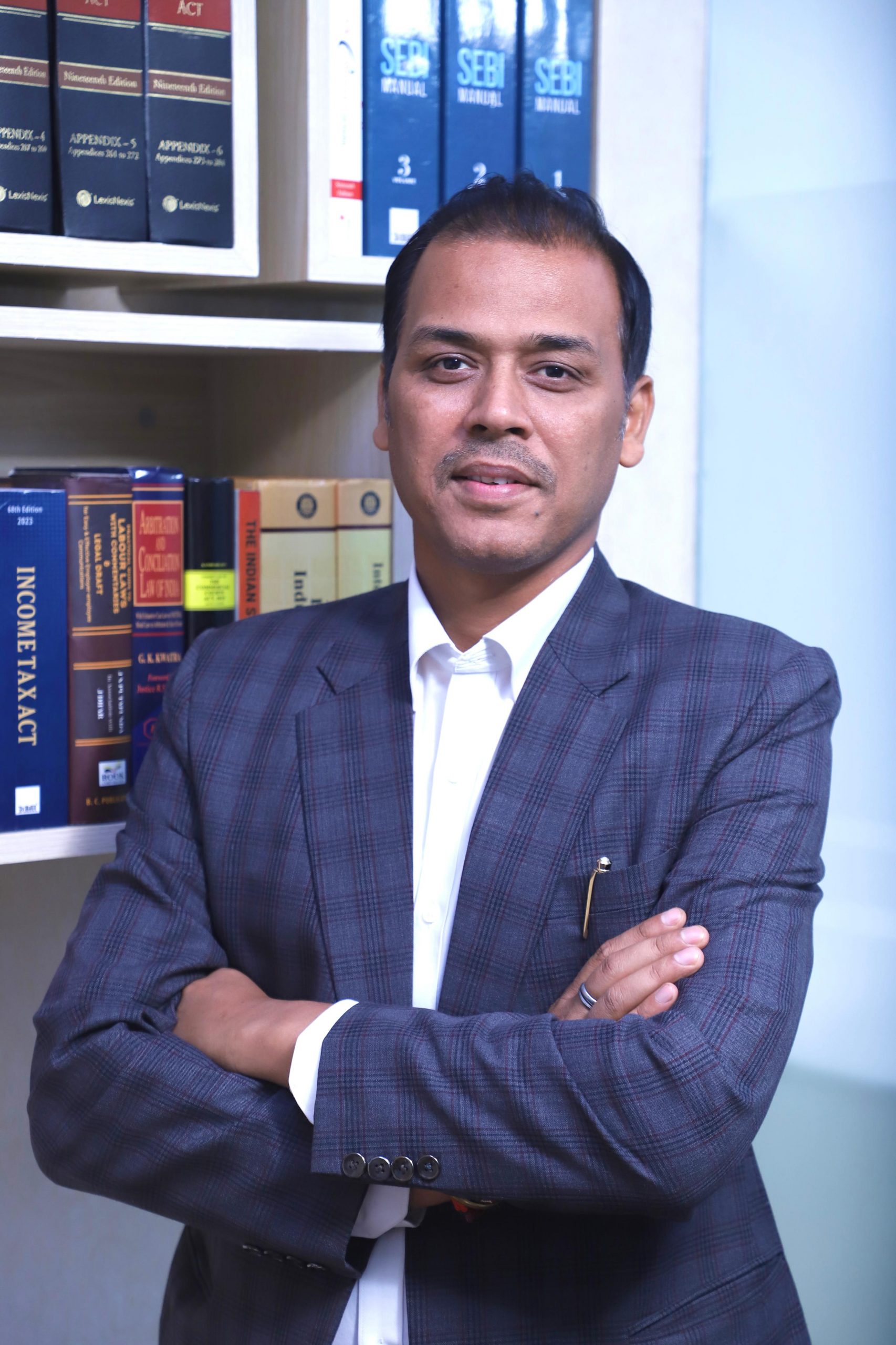
  • “Immigration law in India is still underdeveloped, which is why I focused on it. My goal is to educate and empower migrant laborers who often face exploitation, fraud, and other challenges.” – Jose Abraham, Advocate-On-Record at the Supreme Court of India

    “Immigration law in India is still underdeveloped, which is why I focused on it. My goal is to educate and empower migrant laborers who often face exploitation, fraud, and other challenges.” – Jose Abraham, Advocate-On-Record at the Supreme Court of India

    This interview has been published by Namrata Singh and The SuperLawyer Team
    Hello, and welcome to yet another episode of SuperLawyer YouTube channel. Today, we have with us esteemed advocate, Jose Abraham, who is Advocate on Record as well. And we are excited to hear his journey, who has authored five books alongside his booming practice and the kind of the connections he has built and the way he represents his clients. Thank you so much for joining us here. Hope you’ll enjoy the interview. Sir, let’s start with the very, very first question and an interesting one I would say that we want to hear your story from your school days till now, the kind of learnings, the kind of pivotal moments that you have gone through in the making of the Advocate on record and the author of five books, Jose Abraham, sir please.

    First of all, Namaskaram to all the viewers of SuperLawyer, and I would like to sincerely thank SuperLawyer for giving me this wonderful opportunity to interact with all of you. The first question is about my journey, from my school days to today.

    I am originally from a remote village in Kerala called Madampam, which is in the Kannur district. It’s a very remote area, and I attended a government school, which was a Malayalam-medium school. The reason I am mentioning this is because, nowadays, people might assume that one needs to come from an elite background or have a convent school education to succeed. So, I want to be honest and share my true background, as it might resonate with some of you and be of help.

    Coming from a remote area and attending a regular school, I am also a first-generation lawyer. During my school years, I developed an interest in reading books and newspapers, which made me aware of the significant role played by the judiciary and the legal profession. This became my motivation, and by the time I was in the 9th and 10th standards, my aim was very clear: I wanted to enter the legal profession.

    For my 11th and 12th grades, I chose humanities, and later pursued my law degree from Government Law College, Kozhikode, which is also in the northern part of Kerala. During my final years of law school, I considered preparing for the civil services. With that ambition, I moved to Delhi.

    However, after a month of civil services coaching, I had a realization. I felt that if a lawyer has the potential to be a civil servant, then a lawyer can contribute even more effectively than a civil servant. This realization came to me very quickly, and I decided to focus on my legal career.

    I began practicing at the Supreme Court, but I didn’t limit myself to just the Supreme Court. The office I joined handled cases from trial courts, high courts, and various tribunals in Delhi, which is a hub of legal opportunities. I took on cases in all these forums and even handled small matters, such as paying fines for traffic challans. These are cases where a lawyer might not even be necessary, but that’s how I started my journey.

    Wow, sir! You knew your passion from childhood. It’s rare to meet someone who decides at such a young age what they want to become and actually achieves it. You’ve been an Advocate-On-Record for over 16 years now. How has the legal landscape in India evolved during this time, and what new challenges have you or your colleagues faced? With the rapid advancements in technology and the constant introduction of new laws, we’d love to hear your thoughts on these changes and how they have impacted the legal profession.

    I would like to divide these 16 years of my practice into two periods: pre-COVID and post-COVID, because COVID has changed everything, including our legal profession. Yes, pre-COVID, there were challenges at that time as well. But after COVID, the whole system has changed. Of course, challenges remain, but I prefer to look at it from a positive perspective. New doors have opened for the legal fraternity.

    Now, a lawyer sitting in a remote place like Rajasthan can attend matters in the trial court, the High Court, and even the Supreme Court, all thanks to COVID and advancements in technology. Nowadays, lawyers can manage multiple cases simultaneously, sitting in their chambers with several devices in front of them. That’s one of the greatest advantages COVID and technology have brought to us. It’s one of the most positive changes I’d like to highlight.

    I also recognize that many law students or newly practicing lawyers might be listening. Virtual streaming is now available, and all courts are on YouTube or other specific platforms. I would like to request all young lawyers and law students: whenever you have time, please watch court proceedings. You can learn a lot by simply observing how things work.

    During my initial days, we would go to court just to see how senior lawyers like Nariman Sir, Arjun Sir, and other legal luminaries addressed the court, persuaded judges, and secured favorable orders. Back then, to witness these events, we had to be present in the Supreme Court, and it was rare to see them in High Courts. Today, however, everyone can watch how the Supreme Court’s constitutional bench handles matters. You can see the top lawyers arguing various cases.

    COVID has, in fact, given us many opportunities along with advancements in technology. There are numerous platforms now. For instance, SuperLawyer, which I believe is a more recent creation, is a result of technology. We are getting more opportunities, more platforms where we can interact and gain a wealth of knowledge. That’s what the present era offers us.

    Sir, beautifully said. The SuperLawyer YouTube channel is a relatively recent addition, but SuperLawyer written interviews have been conducted for over a decade now. This has actually helped us transition to more video interviews, as people often feel more comfortable speaking on camera rather than writing their responses. So, it has been beneficial for us as well.

    With that in mind, sir, I would first like to ask: how do you find the time to write such amazing books? One book, in particular, I’d like to discuss is Indians and Immigration Laws: Concerns and Remedies, which addresses the critical issue of migration in Indian society and explores the legal framework surrounding it. Could you elaborate on your thought process while writing this book and perhaps share some insights into the cases you’ve encountered related to Indian migration laws?

    Yes, as a first-generation lawyer, to establish a successful practice, we need to do multiple things. One of these things is writing books, as it gives the impression that we may be an authority on a particular subject. That’s why many choose to author books. This helps us gain recognition within the legal fraternity.

    I would advise participants and viewers to start writing whenever possible. You can begin by publishing articles in newspapers or journals—there are many available now. Take advantage of these opportunities as they can give you an edge and increase your visibility. Writing, especially authoring books, is one of the best ways to present yourself to your fraternity and potential clientele. It is essential for establishing a solid practice.

    The first book I authored is on immigration. Immigration law may be a well-developed area in most developed countries, but in India, unfortunately, it is still underdeveloped. Very few lawyers focus on this area. I realized that this was an untapped field, so I decided to concentrate on it and write a book about it.

    A large number of Indians migrate to foreign countries for jobs or studies, and this is covered under the Indian Immigration Act of 1983. There are laws and systems in place governing immigration, but the common person may not be aware of how the entire process works. I authored this book as a way to educate and empower ordinary people migrating abroad, particularly migrant laborers and domestic workers heading to the Middle East. Many of them face exploitation on multiple levels, such as fraudulent recruitment agencies, high fees, human trafficking, and bonded labor.

    I wrote this book to help NGOs and society as a whole, particularly those working in the field of migration. It also addresses the broader issues surrounding the migration process. Many cases are now emerging in courts related to recruitment fraud and other issues. When something happens to an Indian citizen abroad, it is often the responsibility of the Indian Embassy to intervene and provide legal support. The high courts can also entertain petitions regarding the kind of legal assistance Indian missions and embassies are supposed to provide if they fail to do so.

    What a beautiful area and as you rightly said that there are very few who are practicing this particular immigration laws in India. Outside India, especially developed countries, they have developed their own immigration system, which is more prominent.

    Sir, given all of this and your connection with NGOs and you being the global president of Pravasi Legal Cell, what inspired you to establish this particular NGO? And what unique legal issues do you actually encounter while dealing with the cases that are related to NRIs?

    In 2009, I was fortunate to have the opportunity to establish an NGO, Pravasi Legal Cell, aimed at providing legal assistance. I came to Delhi in 2007 to start my practice, and despite India being one country, the vast differences in languages and cultures across states made my initial years challenging, particularly as I am from the southern part of India. These early struggles inspired me to create an NGO that would offer pro bono legal aid to migrants, who often face similar challenges.

    That’s how Pravasi Legal Cell was founded. Initially, we focused on providing legal support to migrants in Delhi. At the time, a significant portion of these migrants were nurses from Kerala, who were subject to severe exploitation. There was a bond system in the nursing field that was prevalent between 2009 and 2011. Even though the Constitution abolishes bonded labor and specific legislation exists to prevent it, the bond system persisted in the nursing sector. Nurses, after completing their education and joining a hospital, were forced to sign a bond that required them to work for the hospital for three to five years. If they broke the bond, they had to pay a hefty compensation, sometimes as high as five to seven lakhs.

    In 2009, I filed a Public Interest Litigation (PIL) on behalf of one of these nurses. The Honorable Delhi High Court ruled that such bonded labor practices were not permissible in the nursing profession. The court directed the Nursing Council to issue proper guidelines and circulars to address this issue. Later, we filed another PIL in the Supreme Court, which led to a national resolution of the matter.

    This case was one of the first significant issues Pravasi Legal Cell tackled. Afterward, we gradually expanded our reach to other countries. We started with the Middle East and now have offices in almost all major countries in the Middle East, Europe, and the U.S. Pravasi Legal Cell has established chapters worldwide, and our primary objective is to provide legal aid to those in need and to advocate for policy changes related to immigration.

    What an accomplishment, sir! It’s truly amazing to hear about the changes you’ve brought forward. The kind of discrimination that was prevalent and the way you’ve addressed it is remarkable. I sincerely hope we have more dedicated individuals like you in this field, and that many more will follow. These changes are not only necessary but crucial for ensuring that India becomes one of the best countries on the global stage, both for work and immigration. This is something we constantly face, and addressing it is vital.

    Sir, considering you’re also an avid writer, how do you view the intersection of education and law, particularly the teaching aspect? As the Chairman of Paideia Institute in Delhi, how do you feel legal education in India has improved? Is it paving the way for a better future, and how are we working to make it even more competitive on an international level?

    What are your thoughts on ensuring that our legal education system becomes even more globally compatible than it was before?

    Yes, I have seen a lot of changes and improvements in the legal education system over the last decade, especially with the establishment of national law schools in multiple locations. This has significantly enhanced the quality of legal education in India. During my own law graduation, a systematic education was lacking. There were many law colleges that existed only on paper, and by spending some money, anyone could obtain a law degree. I had heard about many such instances at that time.

    However, as you rightly pointed out, the system has changed. Now, we can see a more structured approach to legal studies. Students who approach us for internships today are highly qualified. The standard of legal education has improved dramatically, thanks to various authorities, including the Bar Council of India and the State Bar Councils. Additionally, multiple orders from the Supreme Court have helped streamline legal education. Now, like IITs and IIMs, law schools are also offering campus placements, and bright students can secure high-paying jobs straight out of college.

    This is a very encouraging scenario. I am also heading an institute called Paidiea Institute, where we provide extensive training focused on capacity building, particularly in areas like POCSO, POSH, and RTI. RTI is one area where we have done a lot of work in spreading awareness about the Right to Information Act. In fact, we filed a PIL before the Supreme Court last year, which led to an order directing all High Courts and state governments to establish online RTI portals. Now, citizens can file RTI applications online, making the process more accessible.

    Paidiea Institute aims to provide training and capacity building to empower ordinary citizens.

    What has your experience been like while practicing in the Supreme Court, the High Court of Kerala, and other High Courts? What differences have you observed in the legal processes? And what are the challenges between these two levels of the judiciary? There seems to be a misconception among people who don’t fully understand the legal system. They often feel scared or think the case could have been resolved earlier, without moving to the Supreme Court. It’s difficult to explain to clients why a case had to escalate to the Supreme Court. How do you handle such questions, and how do you ensure your clients are satisfied with the solutions you find for them?

    In our legal system, we have multiple jurisdictions. At the district level, we have trial courts, at the state level, we have High Courts, and at the top, we have the Supreme Court. The skill set required to practice in these courts can differ significantly. For example, the skills needed in a trial court are different from those required in a High Court, and at the Supreme Court, it’s even more refined.

    In the Supreme Court, especially on an admission day, the court may hear around 80 to 90 petitions in just three to four hours. A lawyer only gets two or three minutes to present a case, and within that time, the court decides whether to admit the case. This requires a very specific skill set to handle such cases at the admission level.

    However, in a High Court, especially in its original jurisdiction, the process is not as fast-paced, and there is more room to present the case. So, yes, different courts require different skill sets. You also mentioned clients who question why a case wasn’t resolved at the first level itself, or why it had to move to the appellate level.

    As lawyers, we can only do our part, but for various reasons, justice may not be achieved at the first instance. That’s why we have a robust legal system with appellate jurisdictions. If there has been a misunderstanding or misapplication of the law, we can seek correction from a higher court. This is the beauty of our legal system.

    Yes, different platforms may require different skill sets, but my personal opinion is that it’s crucial to gain experience at the trial court level. The trial is the heart and soul of litigation, the foundation. If a lawyer can gain trial court experience early in their career, they will have a better understanding of the legal system—how to draft a plaint, how to file a complaint, how to conduct examinations and cross-examinations.

    This trial experience makes the transition to practicing in the High Court or even the Supreme Court much easier. I’ve seen some very talented colleagues in the Supreme Court, but because they lack trial experience, they sometimes feel a sense of incompleteness. On the other hand, a lawyer who has trial court experience often carries a higher level of confidence. That has been my experience.

    There are many aspirants for the AOR exam, but they often don’t know the right approach to prepare or understand the importance of being an Advocate on Record. We would request you to share some of the key details about the kind of preparation one should do, the resources they can use, and the strategies you followed that helped you become an Advocate on Record at such an early stage in your career.

    An Advocate on Record (AOR) is a designation given by the Supreme Court, allowing the advocate to file matters before the Supreme Court. This designation is an added advantage for getting cases in the Supreme Court. Yes, clearing the AOR examination requires significant preparation and effort. The passing percentage is around 10 to 15%, which shows that it requires thorough preparation to succeed.

    Most of the questions or syllabus for the AOR examination are related to the practical aspects of drafting, practice, procedure, and leading cases. These can be mastered through at least one year of practice in the Supreme Court, which will equip you with the skills needed to draft Special Leave Petitions (SLPs), Article 32 petitions, and transfer petitions before the Supreme Court.

    The key to passing the AOR exam is developing practical skills rather than relying solely on theoretical knowledge. Understanding leading cases is also crucial, as it equips you to draft well-supported petitions with settled laws or authoritative pronouncements of the Supreme Court.

    Additionally, knowledge of practice and procedure will inform you on when to file or approach the Supreme Court and how it handles matters under Article 136, Article 32 petitions, or even original jurisdiction cases. The Supreme Court can sometimes entertain original suits directly. These are all practical aspects of litigation in the Supreme Court.

    A year of sincere preparation will certainly help in clearing the AOR examination. The Supreme Court’s website provides access to previous question papers, materials, and the syllabus for the exam. There is a dedicated AOR section with a separate link where all this information can be accessed. I believe even interviews and other helpful resources may be available on other websites or in similar repositories of information.

    Now, I would like to move on and talk about work-life balance, which is such an important topic nowadays, especially when it comes to mental and physical health. How do you balance all of this with the kind of busy schedule you have with your cases? Is it just about hobbies and interests outside of law, or how do you make sure to carve out time for your family as well? I believe that’s one of the most important things, and we’d love to hear your perspective on it. Additionally, I’d like to ask about your views on mental health, especially for lawyers, as we are definitely under a lot of pressure.

    That’s a very interesting and relevant question. A balanced life is essential for any professional. Of course, all of us aim to be successful lawyers, but at the same time, we should also strive to be successful fathers, sons, and brothers. A balanced life enables success in all areas—personal, professional, and community life.

    You see, there are many “super lawyers” with wonderful practices, but some struggle to maintain their family relationships because they can’t make time for their loved ones. There are also lawyers who, by the time they reach 40 or 45, may have impressive careers but are physically weak due to neglecting their health. So yes, Divyaji, your question is very important. We must learn to balance our personal, private, and professional lives. Only then can we truly achieve success. There’s no point in sacrificing one for the other.

    Regarding mental health, it is indeed a growing concern, even for young children. The COVID pandemic gave us opportunities but also challenges, especially with technology. The increase in screen time has reduced personal interactions, whether with family or friends. While technology has its advantages, we must use it wisely to maintain a balanced and successful life. A content and happy life, in essence.

    Beautifully said, sir. Yes, screen time has definitely increased, and there are many perspectives we need to keep in check as the world, and India, continues to evolve. As a successful advocate, what advice would you give to first-generation lawyers who are just starting their practice? What kind of challenges do you think independent litigators face, and how can young lawyers stay motivated? Because often, we have a tendency to give up too early. You didn’t give up and made a name for yourself. Could you share your insights on that?

    Divyaji, it’s always a bit uncomfortable to talk about oneself. And I don’t claim to be a “successful” lawyer, but as a student of law and someone who has been in this profession for 17 years, I can offer a few observations.

    To succeed in this noble profession, certain skill sets are essential, and those can be developed through a committed and dedicated lifestyle. If you are sincere in your profession, it will reward you. Don’t worry if you’re a first-generation lawyer or come from a humble background. These factors don’t matter. A lot of young lawyers come from families with judges or senior lawyers, which may help them in the initial stages, but even for them, this profession requires continuous dedication, hard work, and commitment.

    This is a wonderful profession. Every day brings new challenges—new cases, new judges, new legal issues. The legal system is constantly evolving, so we must update ourselves regularly. Being a successful lawyer requires a unique set of skills, including excellent communication, both in drafting and oral arguments. It’s important to learn how to draft effectively and argue convincingly.

    Maintaining a good relationship with your clients is another key skill. There will be a lot of pressures—financial, familial, and emotional—but you must be able to manage these while staying focused. This profession, which deals with human issues like family matters and disputes, not only shapes us into successful professionals but also helps us become better human beings. That’s one of the most fulfilling aspects of being a lawyer.

    Thank you, Divyaji, for giving me this opportunity to share my thoughts. You’ve asked all the right questions in such a way that I felt comfortable sharing my experiences. Thanks again.

    Thank you so much for your humility and for agreeing to join us, sir. On behalf of the SuperLawyer team, Namrata, and myself, we sincerely thank you. You’ve shared your story so beautifully, even though we often hesitate to talk about our personal lives and motivations. I believe that those watching this video will learn so much from you—how to better themselves in life and in this profession. Once again, thank you for your time.

    Thank you very much, Divyaji, for giving me this opportunity. You are doing such important work by supporting young professionals. Please keep it up. You’ll always have my support, and best wishes to all the participants. Thanks again.

    Get in touch with Jose Abraham-

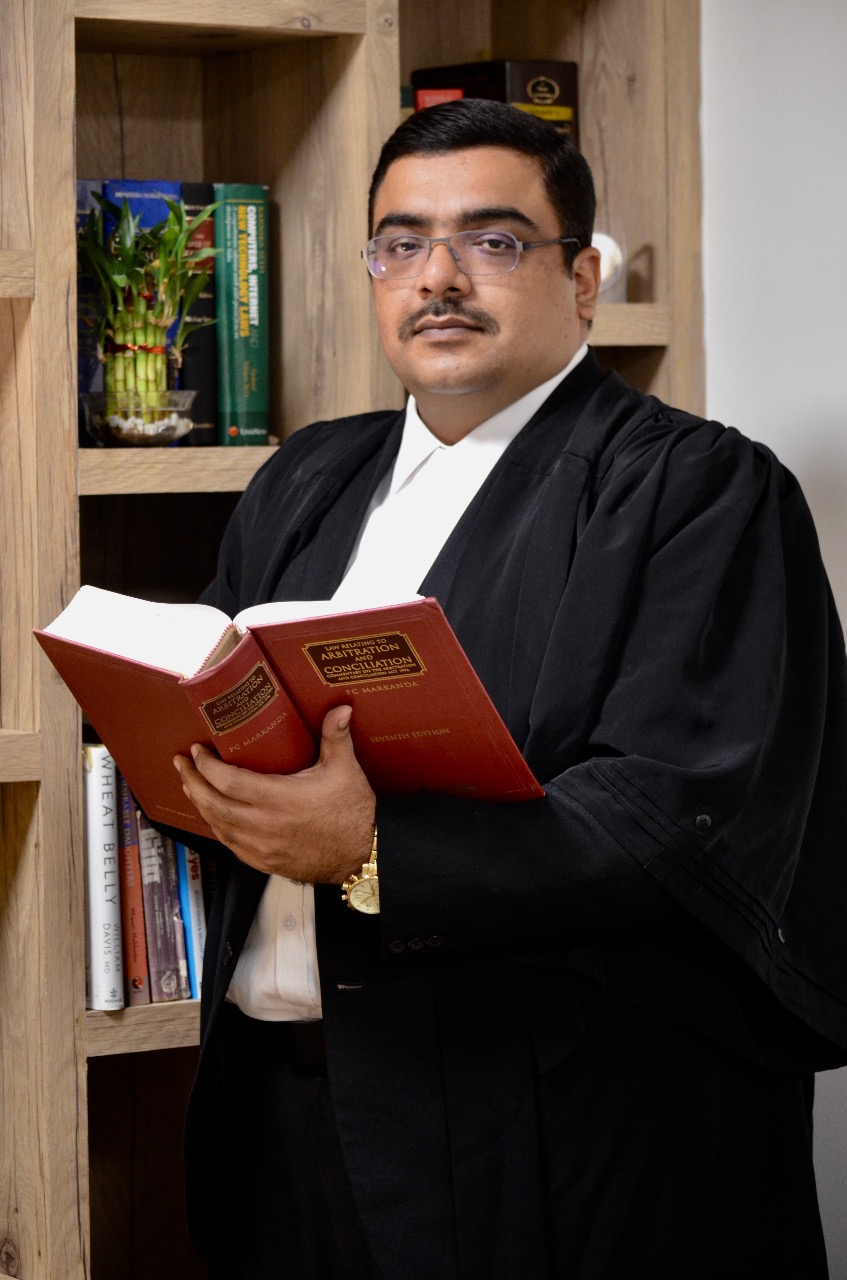
  • “Navigating the complexities of fintech, from structuring digital payment platforms to protecting intellectual property, has been one of the most dynamic and rewarding aspects of my practice.” – Suman Kumar Jha, Founding & Managing Partner -Corp Legex (Advocates & Solicitors)

    “Navigating the complexities of fintech, from structuring digital payment platforms to protecting intellectual property, has been one of the most dynamic and rewarding aspects of my practice.” – Suman Kumar Jha, Founding & Managing Partner -Corp Legex (Advocates & Solicitors)

    This interview has been published by Namrata Singh and The SuperLawyer Team

    Can you tell us about the beginning of your career in law? What inspired you to pursue this field and how did you navigate the initial challenges?

    I’d be happy to share. My interest in law began at a young age when I interacted with a corporate lawyer in Delhi during my civil services exam preparation. He told me that if you wanted to be recognised as a good corporate lawyer, then you must have a Company Secretary degree along with an LL.B degree from a reputed law college. After having this dual qualification you may advise businesses and become an essential part of running them, which intrigued me. Being a first-generation lawyer without much guidance was challenging, but my passion drove me forward.

    I studied BA History (Hons.) and thereafter decision to pursue the law and Company Secretary course was unconnected to my domain however my passion and dedication made it easy for me. Additionally, I pursued a Company Secretary (CS) course, deepening my interest in corporate law and governance. Law school was both challenging and rewarding. I specialized in corporate law and was drawn to courses like mergers and acquisitions.

    The steep learning curve and balancing work-life demands were significant challenges, but internships provided invaluable practical experience. My first significant step was an internship with a prestigious law firm, where I gained practical insights and faced the realities of the legal profession. Mentorship from senior colleagues was crucial, helping me develop my skills and confidence.

    You have both a CS qualification and an LL.B degree. Was Company Secretary your first choice, or did you always plan to pursue law? How do you integrate the knowledge from both fields in your practice?

    Initially, I pursued a Company Secretary (CS) qualification to gain a comprehensive understanding of corporate regulations and governance, which I knew would complement my legal education. Law has always been my primary passion, and the CS course deepened my interest in corporate law and governance.

    Having both a CS qualification and an L.L.B degree has been incredibly beneficial in my practice. The CS qualification provides me with a solid foundation in corporate law, regulatory frameworks, company management, financial part of transaction and business aspects. It also enhances my ability to analyse financial statements and other relevant documents of a company. This knowledge is invaluable when advising business clients on legal matters related to corporate restructuring, as it allows me to understand and navigate the complexities of corporate law more effectively.

    Integrating knowledge from both fields enables me to offer holistic advice to clients. For instance, when working on mergers and acquisitions, my legal expertise helps in drafting and negotiating contracts, while my CS background ensures that all regulatory, compliance, and financial aspects are thoroughly addressed. This dual perspective enhances my ability to provide comprehensive solutions, making me a more effective and versatile legal advisor.

    How has your journey been from a Management Trainee at Ashiana Housing Limited to founding Corp Legex? What key experiences shaped your path?

    My journey from a Management Trainee at Ashiana Housing Limited to founding Corp Legex has been both challenging and rewarding. At Ashiana Housing, I gained invaluable insights into the real estate industry and corporate law. This hands-on experience in managing compliance and corporate affairs was instrumental in shaping my understanding of the practical applications of law.

    A pivotal experience during my training was working on a major merger matter. This exposure to complex regulatory and legal challenges significantly piqued my interest in corporate law and mergers. Additionally, I observed that many in-house counsels outsourced their legal needs to law firms, which sparked my interest in the potential of creating a firm that could offer integrated solutions.

    The combination of these experiences solidified my desire to specialize further in corporate law and establish a firm like Corp Legex. My goal in founding Corp Legex was to offer comprehensive solutions that combine legal expertise with corporate governance insights, helping businesses navigate complex regulatory environments. Throughout this journey, mentorship from industry leaders and continuous learning has been crucial, reinforcing my commitment to providing strategic, client-focused services through Corp Legex.

    With extensive experience in corporate restructuring, what do you believe are the most critical elements to consider during such processes to ensure a successful outcome?

    Successful corporate restructuring hinges on several critical elements. First and foremost, a thorough understanding of the company’s current financial health and operational structure is essential. This involves conducting a detailed analysis of financial statements, cash flow, and market position to identify the core issues that need addressing.

    Secondly, clear communication with all stakeholders is paramount. Ensuring that employees, shareholders, creditors, and other relevant parties are informed and engaged throughout the process helps maintain trust and support. Transparent communication also aids in managing expectations and mitigating resistance to change.

    Legal compliance is another crucial factor. Restructuring often involves complex legal considerations, including regulatory approvals, contract renegotiations, and potential litigation risks. Ensuring all legal aspects are meticulously addressed minimizes potential obstacles and delays.

    Lastly, having a strong leadership team to drive the restructuring process is critical. Effective leadership ensures that the restructuring efforts are aligned with the company’s long-term vision and strategic goals, fostering a successful and sustainable transformation.

    Fintech is an evolving field with unique regulatory challenges. Can you share your experiences dealing with fintech companies and the specific legal issues they face?

    Absolutely. Working with fintech companies has exposed me to a range of unique legal challenges that are intrinsic to the sector’s rapid innovation.

    One significant legal issue is the structuring of complex financial transactions. For instance, I’ve been involved in drafting and negotiating agreements for new digital payment platforms and blockchain-based solutions. These transactions often require careful legal structuring to address the intricacies of new technologies and ensure that all parties’ rights and obligations are clearly defined.

    Intellectual property is another critical area. Fintech companies often develop proprietary technologies or algorithms, making it essential to secure patents and protect trade secrets. I’ve worked on securing intellectual property rights for fintech innovations and handling disputes related to technology licensing and patent infringement.

    Additionally, navigating contractual relationships between fintech companies and traditional financial institutions involves addressing unique legal concerns. Drafting clear, enforceable agreements that account for the innovative nature of fintech services is crucial.

    Having started Corp Legex just five months ago, how are things progressing so far? What are some of the initial challenges you are encountering, and how are you addressing them?

    Starting Corp Legex has been an exciting and challenging journey. The progress so far has been encouraging. We’ve been able to establish a solid client base and our team has been working diligently to deliver high-quality services. However, like any new venture, we are facing hiccups, but our collective energies are moving ahead day by day. Ensuring that we have the right team in place has been crucial. We’ve been actively recruiting talented professionals who share our vision and can contribute to our growth. Additionally, we’ve invested in training and development to ensure our team is equipped to handle complex client needs efficiently.

    We’ve established robust processes for continuous learning and internal collaboration to stay ahead in these areas. Additionally, we leverage advanced technology to streamline our legal research and analysis, ensuring that we provide precise and informed guidance on our services offered to client. This approach allows us to offer comprehensive and strategic legal support tailored to our clients’ needs.

    Overall, while there have been challenges, we’ve tackled them head-on with a proactive and strategic approach. The response from the market has been positive, and we are optimistic about the future as we continue to grow and refine our offerings.

    You co-founded Unmukt Udaan, focusing on child education and development in rural areas. How has this initiative shaped your perspective on the importance of education and legal awareness in underserved communities?

    I come from very humble background and understand how access to quality education can transform lives. Unmukt Udaan is an initiative to give shape to my belief and hope to spread education to all corners of the nation. It’s not just about academic learning but also about empowering individuals with the skills and confidence to pursue opportunities and advocate for their rights.

    The Initiative has highlighted the critical role that legal awareness plays in these communities. Many families lack basic knowledge about their rights and the legal resources available to them. This gap often exacerbates their challenges and limits their ability to address issues like land rights, access to social benefits, and protection from exploitation.

    Our efforts to integrate legal education into our programs have shown that when people understand their rights and legal frameworks, they are better equipped to make informed decisions and improve their circumstances. This experience has reinforced my belief in the intersection of education and legal awareness as fundamental tools for societal development and empowerment.

    With your extensive experience, what advice would you give to young legal professionals who are just starting their careers? How can they develop a strategic and business-focused approach to law?

    For young legal professionals, my advice is to cultivate a blend of technical expertise and strategic thinking. Start by mastering the fundamentals of the law and continually seek opportunities for practical experience. This will build a solid foundation and help you understand the nuances of various legal issues.

    Simultaneously, develop a business mindset. Understand your client’’ industries, their strategic goals, and how legal decisions impact their business objectives. Engage in conversations with clients about their broader business challenges and look for ways to align your legal advice with their strategic needs.

    Networking is crucial. Build relationships with mentors, colleagues, and industry professionals to gain diverse perspectives and insights. Stay updated on industry trends and regulatory changes, as these can significantly impact legal strategies.

    Finally, embrace a problem-solving mindset. Approach each case or issue with a focus on finding effective and innovative solutions rather than just legal answers. This will help you become a valuable advisor and contribute to your client’’ success, thus enhancing your own career growth.

    How do you balance your professional responsibilities with your personal interests and hobbies? What activities do you engage in outside of work to maintain this balance?

    Balancing professional responsibilities with personal interests is crucial for maintaining overall well-being. I prioritize managing my time effectively by setting clear boundaries between work and personal life. This involves scheduling dedicated times for both work-related tasks and personal activities.

    One of my key hobbies is cricket, which I find invaluable for maintaining balance. I try to play on a regular basis and stay physically active, it provides a mental break from work. Cricket helps me in recharging and improving my focus and productivity when I return to work.

    In addition to sports, I make time for other personal interests such as reading and traveling. These activities offer me a change of scenery and a chance to unwind. Regularly disconnecting from work and pursuing these hobbies helps me stay refreshed and motivated, ultimately benefiting both my professional performance and personal satisfaction.

    Having worked with both domestic and multinational companies, what differences do you observe in handling legal issues across different jurisdictions?

    Working with domestic and multinational companies has revealed distinct differences in handling legal issues across jurisdictions. Domestically, the legal environment tends to be more predictable, with established regulations and a clear framework for compliance. This allows for more straightforward legal strategies and risk management.

    In contrast, multinational operations introduce complexities due to varying legal systems, cultural norms, and regulatory requirements across countries. This necessitates a more nuanced approach to legal issues. For instance, navigating different regulatory frameworks requires careful coordination and understanding of each jurisdiction’s specific rules, which can impact compliance strategies and operational decisions.

    Multinational companies also face challenges related to cross-border transactions, such as differing standards for data protection, intellectual property, and labor laws. Addressing these issues requires a comprehensive approach, often involving local legal experts and tailored strategies to ensure compliance and mitigate risks in each jurisdiction.

    Overall, handling legal issues in a global context demands adaptability, thorough research, and effective coordination with local legal teams to address the diverse regulatory landscapes effectively.

    Get in touch with Suman Kumar Jha-

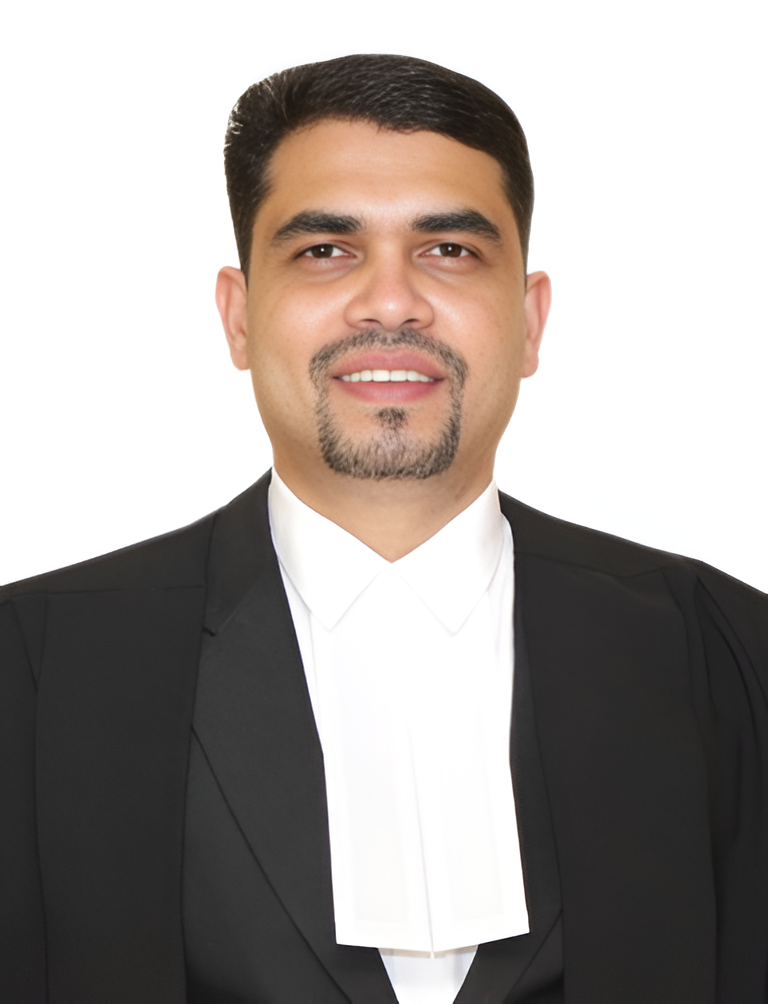
  • “Each failure pushed me harder to succeed, and that resilience shaped who I am today.” – Sumit Garg, Founder of Alpha Corporate Legal.

    “Each failure pushed me harder to succeed, and that resilience shaped who I am today.” – Sumit Garg, Founder of Alpha Corporate Legal.

    This interview has been published by Namrata Singh and The SuperLawyer Team

    Hello and welcome to the new episode of the SuperLawyer YouTube channel. Today we have with us Sumit Garg sir, who’s the founder of Alpha Corporate Legal and an experienced lawyer with a qualified CS degree, with a demonstrated history of working in the legal service industry for over 18 years now. He is skilled in matters related to mergers and acquisitions, corporate governance, SEBI, NBFC, regulatory and white-collar crime matters.

    Welcome, sir. And thank you so much for agreeing to be with us here. it’s an honour. Thank you so much, sir.

    Thank you, Divya. It’s a pleasure for me to get an opportunity to come on this platform and share my experience with budding professionals and fellow professionals as well because I believe that encouraging someone in turn encourages yourself. So, thank you so much for this opportunity. Let’s take it forward and I’m looking forward to an engaging session. Which I believe will add value to the budding professionals and my fellow professionals.

    Rightfully said, sir. Thank you so much.  Let’s start with the very first question when did you decide to pursue law or why did you decide to pursue law?  Even better, who inspired you to pursue law and what challenges did you face during the initial stages of your career? How was your journey? Please do share your experience.

    So, Divya, to answer that question, first of all, I never aspired to be a lawyer.

    I originally aimed to become a company secretary (CS) of a listed company. The inspiration for that came when I was in 12th grade, reading a newspaper. I’m from Meerut, and at that time, the trend was to read newspapers regularly. Being in 12th grade, I was more conscious about which stream I should choose.

    I had taken commerce in 11th grade, so I knew I was heading into the commerce field, but I was still confused about whether to pursue CA, CS, ICWA, MBA, or something else. Especially in my situation, where no one in my family or extended family was a lawyer—everyone was either an engineer, businessman, or MBA, managing their own businesses. There was no one to guide me, or perhaps, I didn’t seek out guidance actively.

    Then one Sunday, I picked up the newspaper and in the career section of Dainik Jagran, I read about the role of a company secretary. It explained what a CS does, how they function within a company, and the one thing that really resonated with me was the fact that in a listed company, there’s only one CS, who works closely with top management, assisting the company in every business decision—compliance with laws, disclosures, governance, and feasibility.

    That aspect of being a key decision-maker in the company attracted me to CS as a career. Later that evening, my eight friends and I—who had also read the same article—decided that we would all pursue CS together. And so the journey began in February 1998.

    We registered provisionally with the CS Institute, and I still remember the day when the eight of us traveled by bus from Meerut to Delhi. Reaching the CS Institute on Lodhi Road was quite a challenge, as we were all new to Delhi, despite Meerut being so close.

    That was the starting point. As we progressed through our CS Foundation and later the CS Intermediate, we encountered various laws that sparked my interest. It was during this time that I thought, “Why not also pursue law?” This could help me earn a little extra by working as a legal head in a company and expose me to more laws in practice.

    At that time, the MRTP Act and the Consumer Protection Act were prominent. These laws helped me understand legal nuances early on, like the difference between “flat 50% off” and “up to 50% off,” and the meaning behind the asterisk we often see with “T&C apply.” These details sparked my interest in law.

    After completing my B.Com from Delhi University and while pursuing CS, I decided to pursue law as well. I qualified as a lawyer in 2005, although I finished my CS in 2006.

    In 2007, I got enrolled with the Delhi Bar Council. Interestingly, I joined an office in January 2007 where I got the opportunity to work on mergers and demergers, but I was still unsure about whether I should get enrolled as an advocate. Even though I visited the High Court regularly, wearing the black tie (though without the band), I hadn’t fully committed to enrolling.

    It was in May 2007, after gaining more exposure to law and realizing it was my true calling, that I finally enrolled as an advocate. I had the knowledge, but practicing as an advocate—going to court—was what gave me the real practical experience.

    That’s how I became a lawyer and a practicing advocate, which is why I call myself an accidental lawyer.

    Beautifully said, an accidental lawyer who has made a name for himself in many kinds of legal worlds where the corporate world starts and ends at that particular space. You have actually merged both of these things and used both company secretaryship and bachelor of law degree in combination so beautifully that you have built a whole sphere around you and you also have founded Alpha Corporate Legal.

    Would you care to share your challenges or stories behind starting this particular company for your legal firm, and how has CS and law both helped you building that particular empire for yourself?

    I think, as much as I became engrossed in practicing law and corporate matters, I got more and more connected with it, or rather, it became ingrained in my blood. As I shared, I am a first-generation lawyer, and for me, it was really tough to make a mark in the legal industry or even find a suitable job.

    But, as luck would have it, I started working in January 2005, before I qualified as a CS or completed my law degree. One thing that gave me the strength to venture into law with perseverance, without ever doubting my decision, was my repeated failure in my CS examinations. I still remember that I couldn’t qualify for my CS Intermediate Group 1 in three attempts. It was only on the third attempt that I finally cleared it. Similarly, at the final level of my CS, I cleared Group 2 on my fourth attempt. It took me about eight years to complete my CS, but I am not shy about it.

    I openly share this because, despite the failures one may face in life, each failure should motivate you to push harder and succeed. In this regard, it would be unfair not to mention my teachers, Mr. Bhupesh Anand, who still teaches Direct Tax and Financial Management to CS students, and Mr. S.P. Rao, who taught Indirect Tax. I went to them when I couldn’t pass my exams, and I used to travel back to Meerut for my CS exams.

    I would impart the knowledge I gained in coaching classes to my fellow friends who were also pursuing CS, and they would clear their attempts, while I kept failing. One day, I went to Mr. S.P. Rao and told him that I wasn’t cut out for CS. It wasn’t happening.

    He told me, around late 2005 or early 2006, to write on a piece of A4 paper: “I will qualify my CS in the June 2006 attempt,” and put it on the wall where I studied. I did exactly that. He also told me to follow this, and meet him after the exams in June 2006. He gave me a piece of advice that I still follow today. He said, “Whenever you face a problem or can’t solve a question, make a fist, tell yourself that ‘I can do it, I have to do it,’ and try again.” I still follow that advice, and it really helped me.

    Despite the syllabus changing during my last attempt, I sat for all eight or nine papers consecutively, and I cleared my CS in the June 2006 attempt. His belief in me filled me with conviction that I had the ability to do it. It was just a matter of time and persistence. That belief in myself kept pushing me forward, shaping my career.

    In January 2005, I began working as a Secretarial Executive in a private limited company that provided secretarial services to its clients. It was there that I met Mr. Anil Goyal, a Chartered Accountant, Company Secretary, and a rank holder in both. He was a self-made man, and he recognized the potential in me. At that time, he was the auditor for a listed entity, and he referred me to work there. I went for the interview, got selected, and that’s how I started working for a listed company that had the second-best IPO of 2005.

    I told myself I wasn’t going to miss this chance at any cost. I learned a lot while working there, but I realized that my true calling wasn’t in working for a listed company because, even after completing my work, I had so much free time that I kept craving more.

    However, I stayed with the company because I was still pursuing my CS, and it gave me enough time to study. I remained there until I qualified, and, being fair to them, I didn’t leave without seeking employment as an Associate Company Secretary.

    As luck would have it, the main Company Secretary got an opportunity to work with a firm dealing in mergers and demergers, but he passed on that opportunity to me. I spoke to Mr. Anil Goyal, and he said, “Sumit, this is the best opportunity you can get.”

    At the same time, I was offered a much higher salary by a reputed company to join as their Company Secretary, but I chose the opportunity to work in the M&A domain with Mr. Deepak Deewan. I’m forever grateful to him for making me his first associate in his office, which exposed me to the world of mergers and demergers.

    In my first year, I handled my first scheme for a listed entity. It was a demerger where the real estate division was demerged and bogged into an SPV, which we got listed under the Securities Contracts Regulation Act without going through an IPO. Overnight, after the order passed, the person had another listed entity in his group, and that gave me immense satisfaction.

    I stayed with Mr. Deepak Deewan for almost four years, during which I worked on 50-60 schemes of mergers and demergers, including about 15 listed entities. Some of the names include Spentex Industries, Jindal Drilling, Maharashtra Seamless, Ansal Group Companies, DLF, and more.

    During my time there, I encountered unique cases. One was a scheme proposed by the shareholders of two listed entities involving two brothers with a family arrangement. Usually, it’s the company that proposes the scheme, but in this case, the shareholders were proposing it. It took me two hours to convince the Delhi High Court Registry that there were no transferee companies in this scheme.

    Another case was the merger of a real estate company involving farmlands and farmhouses around the airport area. After the merger was completed, the client came to us because their sale deeds were impounded by the sub-registrar of Kapashera. We approached the Delhi High Court, and I researched a pre-independence notification under the Indian Stamp Act of 1937. After months of effort, I found the notification, which was ultimately upheld by the Delhi High Court in the Delhi Towers Limited case. This became a highlight of my career at that nascent stage when the order was passed in December 2009.

    Although this order had far-reaching implications, I had fulfilled my duty to my client by exonerating them from paying stamp duty. Following this, the Delhi government withdrew the notification, and mergers and demergers in Delhi became subject to stamp duty. Other states followed suit.

    So, I may have deviated from your original question about setting up ACL, but all these events in my early professional career really solidified my commitment to the law. Or rather, I got married to the law because of these experiences.

    Yes, it is very difficult for people to accept that there have been failures in their career as well. But it’s commendable that you are accepting it with open arms. And you are sharing your learning from those failures. What I believe or what I have understood till now in my life, that yes, if you accept your failures, you will be more successful than what you would have imagined. And I guess that is the reason why you have such amazing clients also who tend to forget the parking charges for their planes, where you have saved them crores and crores of rupees.

    How do they compliment you with all these kind of things? And how do you keep yourself so aware that you get to understand that these all nitty gritties are also there and you help them in saving them their not only money, but their faces as well. How have you done that?

    Divya, there’s more to it. While I was working with Mr. Diwan, I was quite young at that time—still young at heart—but back then, I was young physically as well. I decided to go solo, and certain things happened. It was right after my marriage in November 2010 that I decided to work independently for about six months.

    Handling these matters boosted my confidence immensely. I felt like I could conquer the industry, so I thought, “Let me start on my own.” However, I soon faced reality and realized I was lacking experience.

    A lawyer is a lawyer to the world, whether you’re a corporate lawyer, criminal lawyer, or IPR lawyer—these distinctions come much later in your career. When I faced the reality that I couldn’t serve my clients properly due to a lack of experience, I accepted it.

    I couldn’t approach other friends, colleagues, or seniors for help because I believed that if I was working for a client, it was my responsibility. It changes your attitude toward work when you take ownership. It’s like buying a car—you look at every detail before making a decision. Similarly, how can anyone be lax when working for someone else? This attitude of treating my client’s work as my own pushed me to go the extra mile because, ultimately, if my client is happy, I’m happy—and I’m progressing.

    So, when I realized this, I joined DMD Advocates. At the time, it was known as Dutt, Menon, Dunmorr Sett. I’m really thankful to Mr. Rashi, the corporate head there, and to Ms. Anuradha Dutt, with whom I had the opportunity to work later in my career. These two individuals taught me what law truly is—how to read, analyze provisions, and much more.

    Mr. Rashi had recently returned to India after working in the US for 16 years, and he instilled in me the traits of being a true professional—true to your work, your clients, and yourself. I’ll always be indebted to him, Ms. Dutt, and DMD, as well as all my colleagues there. They believed in me and gave me the opportunity to work for their clients. After that, there was no looking back.

    I was with DMD for almost 11 years, and it gave me the confidence that if I ever decided to go independent, I wouldn’t fail. Many juniors at DMD started their own firms and are successful today. That’s the kind of training I received there, and I will always be grateful. Without my time at DMD, I wouldn’t have thought about setting up ACL.

    Like everyone, I had my highs and lows at DMD. I’m not shy to admit that at one point, I didn’t complete my appraisal form because my performance wasn’t up to the mark that year. But I was determined, and I’m thankful to Mr. Rashid for believing in me and giving me another opportunity. I bounced back, and for the next three years, I received the highest increments in DMD and was promoted to principal associate.

    I worked on numerous matters for MNCs, regulatory issues, and represented clients before SEBI, Enforcement Directorate, CBI, and RBI. That gave me a platform to hone my skills as a lawyer. Over time, I learned that a lawyer never gives up, and that’s why this profession is one of the strongest in the world.

    In July 2021, I finished a major assignment—part of a larger global disposition—and that gave me time to reflect on what I wanted to do. While I had no complaints about the quality of work, remuneration, or culture at DMD, I wanted to do something more. Working at a law firm doesn’t give you the time to pursue those extra things. So, I took a sabbatical.

    Interestingly, on 13th July 2021, my last day at DMD before my sabbatical, an old friend called me out of the blue. He asked what I was doing, and I told him I was going on vacation. He said, “I’m hiring you as my outside general counsel right now, and I’ll pay you this much.” I told him I was on vacation and didn’t want to work for the next 15-20 days. He insisted, saying, “Your retainer ship starts today, but I won’t disturb you during your vacation.” And just like that, I got my first client.

    During the vacation, I discussed things with my wife, who is a crucial part of my life. At the time, our son was about to start school, so it was a critical juncture. My wife asked, “Are you mad? How will we pay our bills and EMIs if you leave DMD and start your own firm?” I told her I had saved enough money to survive for a couple of years, even if I didn’t earn anything. She gave me one year to prove that I could sustain our family without denting our savings.

    That’s when I started thinking about what to name the firm. I didn’t want my name on the board—Sumit Garg & Associates or SD Advocates—because I wanted to create an organization where anyone could contribute without feeling it wasn’t their office. I wanted to be at the top of our game, the “alpha males” of the industry. So, we named it Alpha Corporate Legal. I called a friend in IT, got the domain registered, and started working from home.

    That’s how ACL came into existence. It’s still a proprietorship because I’m looking for the right person to partner with—someone who shares my commitment to clients. My associates, the ones who started with me, should eventually step up and become partners. That will give me the ultimate satisfaction—that my colleagues are now my partners.

    I tell them all the time, “This is your office, not mine. You decide what’s best, plan policies, take on client work, but always be available, accountable, and responsible to your clients. If you’re late on a deliverable, own it, reach out to the client, and explain. Never let the client chase you.”

    I’ve noticed, after almost 20 years in the profession, that many lawyers dodge their clients when they’re delayed on something. It’s wrong. You should be proactive. Clients will respect you more for being honest and forthcoming. That’s what I tell my colleagues and anyone who seeks guidance on how to progress in their career.

    These are traits I’ve learned the hard way, but if I can impart them to others, why not? That’s my philosophy when I say I want to give back to society and the profession. And that’s what this journey with ACL is all about.

    I would like to ask about your involvement with Startup ventures, because I guess you are very much involved into helping them as well. But major question there would be to understand the psychology of the young aspirants or aspiring entrepreneurs who regarding to the legal aspect they try and take more risk in terms of not having absolute legal team ready for them from the very start and later they suffer because of that.

    So how do you adjust to this particular thought process of startups and how do you help them or train them in case they have come in the start and once they have gotten into some trouble and come to you at a later stage.

    So, Divya, you’re absolutely right. This generally happens not because anyone wants to cut costs, but because entrepreneurs want to focus on their business. That’s their passion, their vision – to grow the business. However, some entrepreneurs have a broader vision and believe, “Whatever I’m doing, I need to do it right.” For them, having the right team is the most important thing. I personally believe that setting up the business team is crucial, and the second most important thing is setting up the legal compliance team.

    If my business or the way I conduct it is not in compliance with the applicable law, there won’t be a business for long. There’s been a paradigm shift in the mindset of entrepreneurs compared to 10, 15, or 20 years ago. Now, they don’t see the legal team as a cost center; they see it as an integral part of the business and invest in it. Because when the business is new, there are numerous challenges – managing the team, setting it up, and money is usually tight in the beginning as you’re seeking funding.

    Sometimes, promoters or entrepreneurs try to cut down on legal costs by not hiring a legal expert or not seeking legal advice. In fact, just last night, I was on a call with a foreign client who had set up a company in India a few years ago. While they weren’t hesitant to spend money, they didn’t bring the right people on board to advise them properly.

    This acts as a checkpoint for Indian entrepreneurs because when funding happens, the investors, who are putting their hard-earned money into a startup, want it to succeed. It’s up to the promoter to find the right person – a lawyer or corporate legal expert – who can guide them through legal processes so they can focus on the business while ensuring that all aspects are legally sound.

    My advice to entrepreneurs is always to hire the right person to support them in all legal decision-making, ensuring that their business decisions will stand the test of time and law, if required in the future. Secondly, I advise them to be transparent. In business, it’s not necessary to make 100% right decisions all the time. Sometimes wrong decisions are made, but if they are, own up to them, learn from them, and be honest with your investors. Explain why the decision was made, what changed, and what corrective steps you’re taking to rectify it.

    Another key point I want to highlight is that many professionals focus solely on problems. Few look at solutions. We have to be solution-oriented in life. If one door closes, we must look for the other five doors that have opened for us. Transparency is key – with business partners, employees, vendors, customers – everyone. It is essential to grow and scale up your business.

    Moreover, it’s important to form bonds of friendship. An employee is not just an employee; they are a vital component of the business. They become family. Unfortunately, some businesses merely pay lip service to this idea. But real success only comes when you truly create a family out of your team. Without the support of your team, it’s difficult to achieve anything.

    I always tell entrepreneurs not to cut corners on legal and compliance budgets. One wrong compliance move could become a major obstacle for future fundraising or obtaining licenses for the business. Maintaining high levels of integrity is critical if you want to create a scalable business.

    Once these aspects are covered, the rest comes down to passion. If you have the right passion, you will build and scale the business and make a name for yourself. I particularly remember a client I served in 2012, who had built a well-established brand in the F&B sector with a major Indian conglomerate in consumer goods. He sold his minority stake in the company and started his own F&B business, where he was the 100% owner.

    With a proven track record and a passion for food, he scaled his startup in just three years. He secured funding of ₹18 crores, followed by ₹100 crores a year later, and then another ₹50 crores after another year, eventually reaching ₹100 crores again. He built 10-15 dominant brands in the F&B sector, with restaurants in India and abroad. We even did a master franchise agreement for him at a global level.

    He was true to himself, his investors, his employees, and his partners, which is why he could scale his business so rapidly. I’m still associated with him, and I take pride in being part of that organization. It gives me a different level of satisfaction because, for me, earning isn’t everything. Building relationships and achieving a sense of satisfaction is far more important. And that’s what I try to instill in my team as well.

    Taking all of these kinds of learnings, I would like to move forward and ask you about your experience related to educating people, giving them lectures, interacting with students, new entrants.

    What are your observations about the upcoming generation of legal professionals and the kind of challenges probably they are going to face with the kind of technologies that are upcoming and the way law is also changing in relation to the kind of disruptive tech which we are now seeing, it has taken shape?

    And how do you see when you guide them or when you lecture them, how do you convince them that they can make a name for themselves? Along with being truthful and honest, what all are your guidance to them and how do you make sure that they do not get disheartened by big names and try and make a name for themselves?

    Divya, I always share my failures more than my successes because, as professionals, we know that platforms like LinkedIn, blogs, and podcasts are filled with success stories. There’s a lot of digital content available online these days, but merely going through it mechanically doesn’t give you that zeal, and it often doesn’t resonate with you.

    That’s why I prefer face-to-face interactions over virtual ones. However, we have to keep up with technology and the times, so I’ve adapted to virtual hearings, interactions, and everything else. Still, my first preference remains physical, face-to-face meetings.

    The biggest strength I see in today’s younger professionals is their clarity of thought about what they want to pursue in their careers. When I started law in 2007, I worked on everything—corporate M&A transactions, general corporate, IPR-related matters—because IPR is crucial to any business. When you’re negotiating corporate or M&A agreements, significant time and effort go into negotiating the IPR aspects. It took me 6 to 8 years to figure out what I really wanted to focus on. But today’s youngsters know exactly what they want to do, whether it’s corporate law, IPR, criminal law, civil commercial litigation, or family law. They have that clarity, and I think a lot of it comes from the immense content available online, which gives them deep insights into career paths and specialized fields.

    However, my suggestion to them is that in the first five years of your career, do everything that comes your way. Get a sense of the various practice areas before deciding which one suits you best. Only then can you make an informed decision based on your skills and experiences.

    Another strength they possess is that they have their priorities right. When we interact with young lawyers for hiring purposes, they aren’t shy about asking practical questions like, “What are the office timings?” or “What are the working days?” In the four or five interviews I’ve had in my life, I never dared to ask such questions. My objective was always to secure the job. But I respect that they ask these questions, and I even encourage them to do so because if they’re comfortable with the work culture and conditions, then we move on to technical evaluations. Otherwise, there’s no point in wasting anyone’s time.

    These are some of the strengths I’ve observed in freshers entering the industry. I believe everyone should ask these questions because work-life balance is important. I know many colleagues who burned out in the first five years of their careers. If you’re running a marathon, you have to train for it. It’s not a sprint. We need perseverance, conviction, and the endurance to finish the marathon, not leave it halfway.

    Youngsters have a lot of questions, and what I’ve learned is to ask as many questions as you can. If you’re asking questions, it shows you’re eager to learn. The problem arises when you’re not asking questions—either because you’re shy or because you think asking might invite trouble. Maybe your reporting partner or senior will ask, “If you had this question, how did you finish the work already?” Some people avoid that interaction and think, “If the work is done correctly, I’m good. I’ve managed to hide my shortcomings.” But you can’t rely on luck every time.

    I used to wonder, back when I was with DMD, how my reporting partners instantly caught things I missed in a document. Now I know that after 15 to 20 years of experience, you can immediately tell how much work has gone into a document.

    Since you brought up the aspect of work-life balance, being such an accomplished professional, how do you manage to maintain that balance? If possible, could you share any personal experiences, hobbies, or approaches you use to handle this? Work-life balance has become such a pertinent issue, especially with burnout becoming more common, as you rightly pointed out. How have you managed it so far, and how do you ensure your team learns from your example?

    My hobby is singing and playing the guitar. Although I haven’t played the guitar in a long time, I never miss the opportunity to sing whenever I can, whether it’s at social gatherings or other events. Even if it’s just a couple of lines, I enjoy it. There’s another aspect I consider important, and that’s spirituality. I believe it plays a crucial role in everyone’s life. We may not realize its significance when we are young, but as time passes, spirituality brings calmness and the wisdom to understand what’s happening around us.

    I was fortunate to be introduced to Nichiren Daishonin’s Buddhism through my wife, who was practicing it even before we got married. It’s a Buddhist philosophy that I’ve been following ever since. This practice has helped me achieve a sense of spirituality in my life and taught me how to take responsibility for everything that happens to me. The philosophy is based on the concept of cause and effect—what I do today will shape the outcomes I experience tomorrow. It keeps me grounded, humble, and gives me the strength to keep moving forward.

    This philosophy emphasizes accountability and highlights the importance of happiness. It teaches that once you achieve happiness, it’s your responsibility to spread it to others, regardless of their social status—whether it’s the security guard in your building, your domestic help, the cook, your driver, colleagues, wife, kids, or mentors. Gratitude is at the core of this practice, and it has become a guiding principle in my life.

    My Buddhist faith was a significant factor in establishing ACL, and it helps me bring a humanistic touch to all my interactions—whether with clients, colleagues, or family. It keeps me grounded and level-headed. I also devote a lot of time to Buddhist activities and encourage my colleagues to learn about it as well. I believe no philosophy can harm you—you can always take what resonates and leave the rest.

    This philosophy is not just my hobby or passion; it influences my work and personal life, allowing me to do good for my clients, associates, family, and friends. It helps me stay connected to the human nature that exists within all of us, but which we sometimes forget in the fast pace of life. I strongly believe in being humane to everyone because if you don’t like something happening to you, it’s likely the other person won’t like it either.

    This belief is what inspired me to ensure a healthy work-life balance at ACL. That’s why we operate on a five-day work week, unlike the seven-day trend in many law firms. Of course, when necessary, we do work on Sundays or overnight, but that’s a rare occurrence at ACL. I believe if work is managed efficiently, there is no need to work overtime or on weekends.

    Another principle I’ve instilled in the work culture at ACL is respect for personal time. If someone is on leave, we don’t call or email them. We don’t disturb them because it’s important for everyone to spend time with their families and recharge from the demands of being a lawyer.

    Sir, would you care to share some thoughts about ACL? Are you planning to expand it? How do you envision bringing more people on board, and what are your future plans for the firm?

    Given the philosophy you’re promoting; many people would be eager to join a firm where they have the freedom to take leave without interruptions. It would be fantastic to hear more about this approach, and it’s inspiring to know that such firms exist.

    let me clarify one thing. When I said that we don’t disturb, it’s only when it’s absolutely urgent that we contact our associates. Otherwise, I avoid disturbing them when they’re not working. I feel the same way about not being disturbed while I’m with my family. It’s a two-way street; it cannot be one-sided. As I mentioned earlier, I’m not in a rush to expand ACL. I often see LinkedIn posts like, “We now have 500 lawyers in our office” or “We’re growing at a 2x pace” or “We’ve opened this office and that office.” And while that’s great and encouraging for people like us, when it comes to ACL, I’m not in a hurry to grow because I believe in expanding with a humanistic approach, gradually, not instantly. I’m here for the long haul. It’s a marathon, not a sprint, and I don’t want to be a fly-by-night operator.

    At ACL, God has been kind, and I want to express my deepest gratitude to our clients, those who entrust us with such intricate tasks and believe in us. Securing clients for a relatively small office is no easy task, neither for me nor for the clients. But thanks to my experience in the industry and the work I’ve done, word-of-mouth has been spreading at a good pace. Recently, we completed three years at ACL. During these three years, we’ve worked on notable assignments, such as the acquisition of a listed entity by one of the top five Indian groups, representing media companies in their acquisition through the SEBI route, and navigating the SEBI takeover code. This was one of the first listed company assignments we handled at ACL.

    Also, because of my long-standing relationships with clients I had served during my time at DMD, some of them wanted to connect with me as soon as I started ACL. But having spent nearly 11 years at DMD, I learned invaluable lessons in integrity from the people there. So, even though I hadn’t signed any non-compete agreement with DMD, I decided on day one that I wouldn’t take on any client I had worked with at DMD for at least six months. That was my way of honoring the place where I learned so much. I didn’t want to give anyone the impression that I was poaching clients. However, there was one particular client who was adamant that if I left DMD, they wanted to move with me. Incidentally, I had been the one to introduce that client to DMD, and my managing partner was gracious enough to let me take the client with me, encouraging me to do my best for them.

    For this client, I represented them before the Securities Appellate Tribunal (SAT) against penalties and debarment orders, where a penalty of ₹10.25 crore had been imposed, along with a five-year debarment not just on the company, but also on its promoters and directors. We successfully got the penalty reduced to just ₹25 lakhs. This was the first company to receive relief from SAT in GDR-related matters, out of 70-80 similar cases pending with SEBI and SAT. This level of commitment is what builds lifelong connections with clients, not just for a single transaction, but for life.

    Some of those clients have returned, and I continue to work with them, having signed engagement letters only after the required time period. Since then, our client list has only expanded.

    Another significant client we gained was a listed entity in the travel sector, which entrusted us with acquiring a majority stake in three domestic companies. With a team of just three people, we successfully completed these transactions, which involved drafting definitive agreements, negotiating with selling shareholders, and structuring the deal. What made this transaction unique was that there was no cash consideration involved. The listed company acquired the majority stake via a share swap, issuing its own shares as payment.

    The next stage was to obtain in-principle approvals from the stock exchanges for the listing of the newly issued shares, which we successfully secured. We then applied for the listing and trading approvals from the stock exchanges, which were also granted. This is how we successfully closed that transaction for the listed entity. Impressed with our approach, availability, and commitment levels, the client entrusted us with three more overseas acquisitions.

    I take immense pride in how we approach our assignments. We work on a lot of SEBI-related matters. Recently, we represented an individual who couldn’t afford our fees, but we took him on anyway, offering him a substantially discounted fee and the flexibility to pay when he could. I believe even if you charge a nominal fee, it helps the client retain their self-respect while valuing the work you’ve done for them.

    I’m proud to say we represented him, and after several hearings with the whole-time members, we managed to get him exonerated from all the allegations. The satisfaction that comes from such outcomes is immense. In this case, one of my team members, who had worked with me on the assignment, had left ACL due to health issues. I made it a point to call him and inform him that we had won the case and achieved a fantastic result.

    This is how I plan to grow ACL—by ensuring that every person associated with us brings a human touch to everything they do, offering the highest level of commitment to clients, colleagues, and the office.

    What a wonderful thought, sir: aiming not only to grow your organization organically but to make it more human and client-centric. After all, we are here to serve our clients. Your honesty in this interview was truly refreshing. The beauty of it lies in your openness about both your failures and successes, without any hesitation.

    I’m genuinely thankful that Namrata brought you in for this interview and that you graciously accepted. I thoroughly enjoyed this candid conversation. Thank you once again for being with us at SuperLawyer. It has been an amazing experience today.

    Thank you so much.

    My pleasure! I feel a responsibility towards my fellow colleagues and the new generation entering the legal profession. This is the reason I engage in these conversations; it gives purpose to my life. While we live for ourselves and our families, we should also live for others. This is a lesson I’ve learned from my practice of Nichiren Daishonin’s Buddhism.

    I am deeply grateful to the Buddhism I follow, to my wife, and to my parents who have always supported me through both challenging and happy times. If in the future you think my input might be valuable, I am more than willing to help. It would be my pleasure to assist and be available for my fellow colleagues.

    Get in touch with Sumit Garg-

  • The real success of a merger or acquisition lies in the integration that follows completion of the transaction.” – Vasanthika Srinath, Founder Partner of Kosmos Partners

    The real success of a merger or acquisition lies in the integration that follows completion of the transaction.” – Vasanthika Srinath, Founder Partner of Kosmos Partners

    This interview has been published by Namrata Singh and The SuperLawyer Team

    Could you share with us your journey into the legal profession? What sparked your interest in law and led you to specialize in international privacy law and corporate law specifically?

    I started working as a business journalist in 1994, after graduating with a degree in commerce and economics from Bombay University (as it was called then). A chance meeting with a friend convinced me to study law, as I believed that it would improve my skills and help me become a better business journalist.  (The Stock Market was still reeling from the effect of the 1992 scam and knowledge of various corporate and business laws would help.) So I enrolled to study at the prestigious Government Law College at Church gate, mostly, because it was close to my workplace and early morning classes allowed us to work all day. I signed up for a moot court competition within a few months of classes and I immediately knew that this is what I want to do in the long run!  So I eventually quit journalism a few months later to focus on my law studies. 

    There were no privacy laws then – and my favourite subjects in college were the law of Torts, Contracts, Interpretation of Statutes and Private International law. I eventually joined Desai & Diwanji, where I was introduced to corporate commercial law, property law and commercial litigation. I wanted to become a counsel, so I joined the chambers of Snehal Paranjape and started my practice as a Counsel in the Original Side of the Bombay High Court. After a year and half I relocated to Bangalore, and as I did not know Kannada then (I am fluent now), I went back to doing corporate work and then moved in-house.

    I worked for a few companies, setting up their legal function and then became the General Counsel of some large IT / ITES companies. Contracts and negotiations are the life blood and most important aspect for any corporate lawyer, and as the legal head, I was also responsible for supporting growth of the business across countries, mergers and acquisitions and compliance, apart from everything else that comes with the role. When I was the General Counsel of Minacs, the Company was acquired by Concentrix, and I set up the Compliance function at Concentrix. That’s about when GDPR happened and I was one person in the company who had no conflict of interest in taking up the role of the Data Protection Officer (DPO). So I learned all about Data Protection and Privacy and set up the privacy function. Gradually, we saw the introduction of Artificial Intelligence where the laws are even more challenging. I was also responsible to ensure that we had a framework in place to ensure ethical and responsible AI design.  I learnt a lot on the job and it was very exciting and enriching for me.

    In December 2023, I joined hands with my old friend, Rashmi Sharma, and we set up Kosmos Partners together.

    So this is my career trajectory in a snapshot – property, corporate advisory, litigation, back to corporate transactions (this time in-house – mostly tech laws), corporate compliance and data protection and privacy, AI regulations and finally – back to practice.

    You’ve had an impressive career spanning over 25 years, with significant roles in various organizations. How have these experiences shaped your understanding of international privacy law and corporate legal practices?

    One can never understate the value of experience. Each and every transaction, incident, case or matter comes with its own learning. I was extremely fortunate to be at the right place at the right time and to handle the kind of matters I got to do. I was very fortunate to have the opportunity to handle quite a few mergers and acquisitions independently right at the start of my in-house career and that was a great learning. I negotiated a couple of very challenging multi-jurisdictional contracts with large corporations, who are known to be very rigid and unwilling to bend on some key terms, but we still managed to get excellent terms from them based on how we positioned ourselves. Some of these learnings taught me how to break up a problem into smaller pieces to solve it better, how to take a step back and understand the big picture, how to bring value to the table and demonstrate that, especially while negotiating.

    I travelled extensively to negotiate contracts with large clients and also, as part of my role as the Compliance leader.  This exposure taught me a lot about the laws and legal practices of many other countries, their cultures and also helped me understand the data protection, privacy and cyber security laws and practices in various countries.  I also began to appreciate how law and privacy are closely linked to the local culture. I think it is necessary to understand the history and culture of the other country before negotiating a contract or working on compliances or data privacy requirements of that country to be more effective.

    One of the biggest challenges is to try to help the business create business processes that comply with the laws of multiple jurisdictions without making it too complicated for the business.

    I also learned how important it is to understand the business and its challenges before we try to teach them the law. Once we understand their challenges, as lawyers, we should partner with the business and help solve their problems in a more practical way, rather than preaching to them. Raising awareness of the laws and regulations among business teams is also very important for business lawyers. 

    Given the dynamic nature of data privacy laws globally, how do you stay updated with the latest developments and how do these changes impact your clients?

    The only way to stay updated is to read, read and read. There are quite a few free online legal subscriptions that one can subscribe to, so one is updated of the latest regulations. Also, consider joining online groups and WhatsApp, which are good at information sharing, many of them are rather helpful too.   

    Could you walk us through a challenging case or project you’ve handled in international privacy law? How did you navigate through it and what were the key takeaways?

    One of the most challenging project was during the outbreak of the COVID-19 pandemic, and having to support the business teams in moving to work from home in a very short time. We barely had time to understand what was happening and we needed to move all equipment to employees’ homes in multiple countries around the same time. These had privacy and compliance implications, which we had to deal with for each country separately. Not only that, every country / city / state kept coming out with various regulations and notifications, which a couple of us were closely tracking real-time.

    Soon enough, the tech teams had to come up with tools to protect the security of the data that was to processed by employees from their homes, which had even more privacy challenges. Our challenge was to walk the fine line between protecting the company and its client data and confidential information and to ensure cyber security on one hand, while on the other hand, ensuring that we do not violate privacy rights. We had a great team that rose to the challenge very well. We had to understand the needs of the business, the proposed solution, its impact on privacy and then map it against the laws of each country, so we could then work with the teams on implementing a viable solution. The biggest takeaway from such projects was the importance of team effort.  Understanding the laws, of course, was important, but none of these challenging projects are successful unless everyone comes together as a larger team. 

    In your opinion, what are some of the most common misconceptions clients have about data privacy laws, and how do you address them in your practice?

    The largest misconception clients have about data privacy laws is that they are fully compliant since they are GDPR compliant. GDPR is considered as the gold standard in data privacy, but one does not need to implement GDPR across board indiscriminately. Some clients take pride in doing that. But the Indian privacy law is more focused on a consent driven approach, and if you needlessly implement GDPR for Indian data principles, you will anyway have to take a look at everything once again.

    Transitioning to corporate law, what are some of the most rewarding aspects of advising on mergers and acquisitions or structuring financial transactions? Could you share a memorable experience from your career in this field?

    I have handled and led quite a few mergers and acquisitions as the legal head. Though mergers and acquisitions are long, complex and challenging transactions, they are just the beginning. The real success of a merger or acquisition lies in the integration, that follows completion of the transaction.  And to ensure that the integration is complete and thorough, one must ensure that the due diligence was as complete and thorough. More often than not, sadly, due diligence is left to junior lawyers, who may not even understand the challenges in the documents they have been checking.

    One very memorable transaction for me, very early in my career was a deal where we were acquiring a company headquartered in the US with a subsidiary in India. The founder had passed and his wife was unable to run the business and hence selling it. There were quite a few challenges in the deal right from the start. We found tax issues and litigation in the due diligence, both in US and India. The seller wanted to retire and did not want to be saddled with any of the issues, especially in India, so she wanted us to buy the stocks in the holding company and take care of everything, while we wanted only to buy out all the assets so we did not have to deal with their tax matters. The negotiations, led by our CFO almost came to breaking point as we could not agree on the transaction structure.

    Finally, we went to our CEO and I will never forget how he broke down the transaction into smaller parts and suggested why don’t we take the stocks of the Indian company as we can deal with their litigation here since we are local and set up a new company in US and buy out the assets there, and leave the Seller to clean up the tax issues in US since she was a local there, which was acceptable to her too. We had to look at the key pain points for both parties and resolve that, and it suddenly became a win-win for both parties.  The same transaction also saw the Seller sacking her CA in the middle of the transaction. She had retained the CA to negotiate the transaction as well as vet the contract for her, but it turned out that he was not really providing her much support on the contract piece. After some time, she ended placing so much trust and faith in me that she would sign any document only if I confirmed that I have seen it and it is ok for her to sign. I had to remind her that I do not represent her, but she still reposed so much trust and faith in me to draft a fair document. That was a very overwhelming experience, and something I can’t forget.

    As someone who has held leadership positions in legal departments of major corporations, what advice would you give to young professionals looking to advance their careers in corporate law and privacy law?

    Young professionals should try to develop an understanding of the business and develop a strategic outlook.

    For in house counsels, focus on developing a deep understanding of the company’s business objectives. This involves not only knowing the law but also understanding how it impacts the bottom line. Additionally, cultivating strong interpersonal and communication skills is crucial. The ability to build relationships with colleagues across different departments, and to articulate complex legal concepts in clear and concise terms, is invaluable.

    Privacy lawyers, should necessarily try to develop some technical expertise. Beyond technical expertise, develop a strategic mindset. Anticipating legal risks and providing proactive solutions is essential for career growth. Seeking out opportunities to take on leadership roles, even at an early stage, can accelerate professional development.

    Also, do seek out a mentor, take their advice, and learn from their experience. Later, as you grow in your career, please do mentor juniors. It is our duty to keep grooming younger lawyers and build a legacy.

    Finally, considering your extensive experience and success in the legal field, what advice would you offer to fresh graduates aspiring to follow a similar path in international privacy law and corporate law?

    This is a very exciting time for fresh graduates – especially with the rapid changes to technology that we are seeing and will continue to see. The most important thing is for them to work on building a strong foundation and develop a deep understanding of the core legal principles and business fundamentals. Secondly, build a global outlook. Both privacy and corporate laws transcend borders nowadays, so it is important to stay updated on the legal and regulatory developments worldwide. Last, but not the least, as lawyers, we have to be committed to a lifetime of learning. Although Continued Legal Education is not mandatory in India, it is something we owe to ourselves. In addition, it is necessary to build a good professional network, and develop skills in legal writing, drafting, negotiations and communication and try to align yourself with a field of law that you feel passionate about. Don’t do something because it appears to be the cool thing to do. Otherwise, it will eventually wear you down. Enjoy your work and you will continue to cherish it. 

    Get in touch with Vasanthika Srinath-

  • The law was being developed in real-time, & I thrived on navigating its nuances. This dynamic environment, where I could apply the word & spirit of the law & provide practical, often creative solutions, was something I thoroughly enjoyed and loved.” – Aditi Sharma wadhwa, Founder & Partner at WSA Legal

    The law was being developed in real-time, & I thrived on navigating its nuances. This dynamic environment, where I could apply the word & spirit of the law & provide practical, often creative solutions, was something I thoroughly enjoyed and loved.” – Aditi Sharma wadhwa, Founder & Partner at WSA Legal

    This interview has been published by Namrata Singh and The SuperLawyer Team

    Can you share with us your journey into the field of law? What initially inspired or motivated you to pursue this career path?

    My journey into law was less about being a lawyer pr pursuing a career in law and more about pursuing something that I thought might be interesting and engaging to study. And here I was not wrong.  While I was unaware of what the practice of law entailed, I was fascinated by the study of it! I took it up as a challenge and as a way to study something I enjoyed while I took the time to find my “true” career. My love for the field and its practice developed later, as I began to study more and engage with the subject matter in a more practical manner.

    I discovered that I thrived on navigating the nuances of law and developed an analytical outlook on issues. I also found that I would get easily bored when things become monotonous, which is not the case with legal practice. 

    I’m always on the lookout for new challenges and the field I started my law career in (IPR) just happened to be one where things are constantly evolving. I also got to be at the forefront of new technologies and legal issues arising from them. The law was being developed in real-time as real-world problems from compliance and business issues emerged. 

    This dynamic environment, where I could apply the word and spirit of the law and provide practical, often creative solutions, was something I thoroughly enjoyed and loved. This passion has driven me forward for the last 16 years, keeping me engaged and motivated in a constantly evolving legal landscape.

    You’ve had an impressive career trajectory. Could you walk us through some of the key milestones or experiences that shaped your journey in the legal profession?

    Over the years, I have had the chance to explore various fields of law. My outlook as well as my career has been shaped by these diverse experiences and have significantly contributed to my growth as a legal professional. While the initial years of my journey were at a law firm, I have since worked in-house for several years as well. 

    Being at a law firm was quite a rigorous experience in the intellectual and purely legal aspects of my field. This is where I developed technical legal skills, gaining deep insights into Intellectual Property Rights (IPR) and understanding how it applied to different fields. 

    The transition to an in-house counsel role was, on the other hand, transformative. It required not only a shift in mindset but also your approach to problems. Working closely with business teams, I learned to integrate legal advice with business objectives, which in my opinion can only make you a more well-rounded practitioner. 

    This experience was incredibly rewarding as it allowed me to view legal issues through a business lens. The opportunity to collaborate with teams from diverse business areas and on multiple projects broadened my understanding of multifaceted legal issues. 

    These experiences naturally steered me in the direction of establishing WSA Legal, a niche practice focusing on IPR, technology, media, and data protection. Additionally, I have a keen interest in legal tech and developing processes that utilise legal acumen to make technological advancements in law. This has led me to work with the brilliant team at Curated LegalTech on developing some amazing legal-tech products. 

    These cumulative experiences have provided me with a broad perspective on the legal field and expertise, but also keep me engaged and fascinated. 

    Many people view law as a challenging and rigorous field. What were some of the challenges you faced early on in your career, and how did you overcome them?

    The practice of law is both challenging and rigorous. Early in my career, one of the primary challenges I faced was the steep learning curve and the demanding nature of legal work. Handling large volumes of work with a high degree of intellectual engagement requires significant time management skills. You need to shift from looking at problems as hurdles and instead embrace a growth mindset.

    Balancing physical and mental well-being in such a demanding field is also important and for most of us, not as easy as it sounds. In this, the role of mentors cannot be understated. They can help you thrive and achieve results even when you doubt yourself. I have been fortunate to have a strong and capable set of mentors and friends to guide me at all stages of my career – whether or not they come from the legal background.

    Again, the change in outlook necessitated shifting to an in-house role was also quite challenging initially. Unlike before, my viewpoint had to expand and incorporate an understanding of business processes and goals into legal advice. You are called upon to be precise in answering complex questions and decisive in the way forward that you guide business in. You need to be engaged with your stakeholders and clients and can overcome these challenges if you grasp the business side and can communicate and collaborate with diverse teams. 

    Your expertise spans across different areas of law. Could you tell us about a particular case or project that you found particularly impactful or memorable in your career?

    One of the most impactful projects in my career involved navigating the complexities of AI and its use by business in a specific area of operation which was earlier broken down into multiple steps and tedious and expensive review. This area was particularly challenging because the law is still in its nascent stages, and there were practically no precedents to guide new practices.

    We had to innovate and provide resolutions, trusting that our advice would stand the test of time. The project required us to create a comprehensive framework, and SOPs and integrate risk mitigation for AI-driven solutions, ensuring compliance with existing laws while anticipating future regulatory developments. This meant developing novel legal strategies and creative solutions from scratch.

    Working on AI from such an early stage was challenging but also incredibly rewarding. This experience also reinforced the value of integrating legal expertise with business strategy and working closely with technical experts, demonstrating that innovative legal solutions can drive business success even in uncharted waters.

    In your opinion, what are some of the essential qualities or skills that aspiring lawyers should cultivate to succeed in today’s legal landscape?

    Aspiring lawyers should cultivate strong analytical skills to navigate complex legal issues, excellent communication abilities to interact effectively with clients and colleagues, adaptability to respond to rapidly changing legal environments, a thorough understanding of technology and its implications on law, and a commitment to continuous learning to stay updated with evolving legal trends and practices.

    The legal profession is known for its continuous evolution. How do you stay updated with the latest developments and trends in your area of expertise?

    Staying updated on legal developments is crucial, but what I find truly enriching is engaging with individuals from diverse fields and gaining their perspectives, regardless of their connection to law. This fosters an open-minded approach and helps anticipate and adapt to changes that keep you at the forefront of your field. These interactions also cultivate a mindset that is innovation-enabling. Additionally, I believe it’s important never to be too proud to seek the guidance of mentors, whose insights and experience can provide invaluable direction in navigating complex challenges and seizing opportunities.

    As someone with substantial experience in the field, what advice would you give to recent law graduates who are just starting their careers?

    I would advise recent law graduates to focus on building a strong foundation of legal knowledge and skills through practical experience. Seek out mentors who can provide guidance and insights based on their experience. Stay curious and continuously seek opportunities to learn and grow professionally. Interacting and building relationships within and outside the legal profession can also be crucial for career development. Lastly, maintain a strong work ethic, integrity, and a commitment to delivering high-quality work—it’s often these qualities that set apart successful lawyers in the long run.

    Get n touch with Aditi Sharma Wadhwa-

  • “Justice should not only be done, it should also be seen to be done” – Vishal Khattar, Founder at Patine Law Offices, Additional Advocate General, State of Haryana

    “Justice should not only be done, it should also be seen to be done” – Vishal Khattar, Founder at Patine Law Offices, Additional Advocate General, State of Haryana

    This interview has been published by Namrata Singh and The SuperLawyer Team

    Hello and welcome to another episode of Super Lawyer. Today, we have with us esteemed advocate Vishal Khattar, who is the founder of Patine Law Offices in New Delhi. He is also the Additional Advocate General for the State of Haryana at the Supreme Court of India. Welcome, sir, to our episode. Thank you for accepting our invitation and for being here.

    Let’s start our journey of questions and answers in a more conversational manner. Sir, I would like to begin with a very basic question. When you decided to become a lawyer, how was that journey? What kind of challenges did you encounter when you started focusing on this career for yourself?

    Just a small correction: the office goes by the name of Patine Law Offices. Now, I understand it’s a unique name. I attended a school where the alumni are called Patines, so out of dedication and affection for my school, I decided to name the office after it.

    I’ve been a debater throughout my time in school and college, participating in several debates and declamation competitions. I earned some good distinctions and ranks in those competitions. As a result, one day, my principal—Mr. BBS Pathania, a great man—told me, “You will become a good lawyer.” However, being from a small town, the challenge was that I scored high marks in my matriculation exams, and since I was among the top students in the state at that time, my father’s expectations shifted. He wanted me to become a doctor.

    I was a medical student in school, but despite my best efforts, I couldn’t make it to medical college. There were three colleges in my city, Rohtak: one for B. Pharmacy, one for MBA, and one for law. To avoid wasting a year, I applied to all three. When I didn’t get into medical college, I was accepted into all three of these institutions. Initially, I planned to pursue an MBA, but after discussing it with my principal, who advised me to go to law school, I decided to study law. He assured me that I wouldn’t regret the decision, and I believe he was absolutely right.

    So, I chose to study law because I had an interest in it from the beginning, and it turned out well. I completed my five-year law degree at Maharshi Dayanand University in Rohtak. From my third year, I started interning in Delhi, and since then, I’ve been working here.

    Sir, it definitely worked out for you. It seems the path was paved by your faculty, but you’ve made a huge name for yourself.

    I was fortunate to be taught and guided by such learned teachers, my professors, and lecturers. I frequently visit my college to mentor students. They often ask, “Vishal, why don’t you come here more often?” I jokingly reply, “It’s because of all the extra blessings you’ve given me that I’m so busy. If you reduce your blessings, I’ll start coming more often.”

    I did my final-year internship with a very good organization—sometimes called the most preferred employer in the world—General Electric (GE). They have a finance division here called GE Countrywide, and after my internship, they offered me a job. At that time, it was quite rare for my college to receive such offers, so it was a big deal.

    In fact, it was the first campus placement offer received by our department. I joined GE as a legal analyst, though it was a contractual position. During one of the court proceedings, I was noticed by a professional who referred me to ICICI Bank. Early in my career, I joined ICICI Bank as the State Head Legal for Punjab and Chandigarh.

    I gained experience with corporates, working at ICICI Bank and later with Tata Capital, where I was responsible for their North India legal operations. However, I never intended to pursue a lifelong career in the corporate sector, so I eventually decided to return to practice.

    Sir, with such a trajectory in your career, when did you decide to start Patine Law Offices? What was the inspiration behind its establishment? What exactly sets it apart from others in the legal landscape? Additionally, if possible, we would request you to share some of the challenges and successes you’ve encountered.

    See, If I talk about motivation, it always comes when there is a loophole in the system that you want to fill or a need in the industry. In the legal fraternity, we don’t use words like ‘market’ or ‘industry,’ but obviously, the driving and limiting factors are the same. However, I always believe in focusing on the positive aspects. There were good things happening, and we were part of those good things. So, we wanted to start something good on our own. It’s time that we should get independent. I should get independent.

    So, we decided to start Patine Law Offices. The name ‘Patine’ and the email ID for Patine Law Offices were things I had already created during my final year. It was clear in my mind that every lawyer wants to be independent. We were just waiting for the right time, when we had some clients who could entrust us with work.

    We started Patine Law Offices with a small 300 square foot office. Slowly, we have been able to serve clients from both corporate and non-corporate. We have a reasonable number of practice cases from non-corporate clients, as well as from corporates. In the corporate sector, we are involved in finance, banking, Fintech, and then also in the automobile industry. We have some e-commerce clients, and now we’ve started working in FMCG as well. Being a first-generation lawyer, I had to hustle for every client and for every bit of learning.

    About six months ago, we started some operations in the UAE as well. We’re working for two clients in Dubai—one is a Fintech client, and the other is in renewable energy. So, we’ve started working for them as well. Every benchmark we’ve reached has been a story of hustle for us.

    But I believe every first-generation lawyer has to go through that. You have to keep learning, reading, and seeking references every time. You’ll face rejections because clients tend to go for big names. This is a trend in our industry.

    It’s like when you want to go for a bypass surgery, you’ll always ask who’s the best doctor. No one asks for a doctor who’s available; they want the best. The same principle applies to some extent in our profession—clients want big lawyers. But you have to find those who can trust you.

    We were fortunate to find some clients who trusted us. Some corporate officers who had worked with me at that time knew how I performed, and somehow, things worked out.

    So, sir, given this fact, you are holding currently, a very esteemed office of being an Additional Advocate General for the state of Haryana, at the Supreme Court of India, which in itself is one of the very prestigious things.

    We would request you to shed some light on this particular role and the insights related to the responsibilities and how do you face the challenges, what kind of things do you do over there because that also will become an aspiration for learners as well.

    For a litigation lawyer, it’s a very important milestone to have the opportunity at some point in their career to work for a public undertaking or the government.

    When we talk about government panels or government cases, the documents, orders, laws, working methods, protocols, and hierarchy—these are things you can only learn when you start working for them. Like any other litigation lawyer, I was also looking for such opportunities.

    So, when this position was advertised, I applied for it. I was fortunate enough to be appointed as one of the nine Additional Advocates General (AGs) for Haryana. My role involves handling cases in the Supreme Court.

    So in these cases, in government work, there is a well-organized structure. Duties are well-defined, protocols are clear, and there is a very detailed bureaucratic structure. The protocols, documents, and their implementation are all clearly laid out. This makes it a great learning experience for any litigation lawyer working on a panel. Every case comes with its own challenges.

    Sometimes, students or juniors who are close to us ask very genuine questions. They often ask, ‘What is the main challenge? How long will it take for me to become a good lawyer? How long will it take to become an independent lawyer?’ I remember something I learned from a senior at the Delhi High Court.

    When I used to sit in the canteen, feeling worried, he would come up to me. Once, I remember discussing my concerns with him. He asked me, ‘What happened? You look very upset. What’s on your mind?’ It was 5:30 p.m. at the Delhi High Court. I told him, ‘I’ve been working so hard for two years, and though I’m earning, it’s not what I hear from seniors—about getting many cases, high fees, and having a good office.

    He told me, ‘Look, our legal profession is not like an aircraft; it’s like a train. In a train, you have to stay on track. There’s no provision for overtaking. If you try to overtake, you’ll have an accident. There’s no going faster than your schedule, because if you do, you risk an accident. And if you slow down, someone will hit you from behind. All you can do is stay on time and keep moving. This is how a train operates, and this is how our profession works too.

    Every day, you need to start at the same time, reach the courts on time, meet your clients properly, meet your deadlines, and do your research timely. If there’s a new law coming in, give extra time to study it. You need to keep improving. If you follow this schedule, just like a train, that’s how you’ll succeed in this profession.

    And believe me,’ he said, ‘believe me, Khattar, every station will come. If you stay on track, you’ll reach every station.’ From this, I understood that perseverance is essential in this profession. You need to be consistent, regular, sincere, and disciplined. Whatever benchmarks are set for any professional lawyer, you will achieve them.

     You know, my first mentor in Delhi was a Special Public Prosecutor. He used to speak to me in Punjabi and would say, ‘Khattar, you should know how to work, and then you should get work too. So these are the raw standard things we have learned from our seniors.

    Absolutely beautiful standards and tried-and-tested tracks. The way they have taught you— ‘Kaam aana bhi chahiye aur kaam milna bhi chahiye’—is an absolute gem. Even running like a train is fascinating. But sir, you were ready to accept that as well, which is very important when someone is teaching or guiding you.

    You took it as a challenge to follow this, and I believe that has probably been a key factor in your success. Sir, with all of this in mind and knowing that you specialize in constitutional law, what kind of thought process do you observe in the current generation? Since you encounter many individuals joining you as interns or juniors, how do you guide, train, or mentor them to contribute meaningfully to legal reforms and societal progress, particularly through constitutional law matters?”

    Over time, as we began receiving more work related to commercial and marketing law, our main focus shifted to handling contractual and commercial cases—what we often refer to as ‘bread and butter.’ However, constitutional law has always been my favorite subject.

    Whenever we receive a brief involving a constitutional issue or aspect, I make sure to keep that brief on my table and not delegate it to anyone else. This is a very good question and one of my favorite topics of discussion with new joiners in my firm. This perspective is something I learned from one of the great mentors I had.

    He once quoted some lines from the Bhagavad Gita, telling me, ‘You are part of a bigger system. This bigger system means you are contributing to something larger.’ Let’s consider it in a straightforward way: A person whose rights have been infringed—whether by a family member, a government agency, or a private company—is unable to get what he rightfully deserves. He goes to a lawyer, and what does the lawyer do? The lawyer ensures that his case is presented correctly before the judge, and that justice is delivered to him. And not just justice, but meaningful justice—justice that is also executable.

    As they say, justice should not only be done; it should also be seen to be done. So, justice shouldn’t only be on paper. This is what a lawyer does for such a person. If society is suffering from injustice, it is you who are ensuring, through your professional advice and service, that justice is imparted.

    When justice is imparted, it restores balance. A society only survives and sustains itself when balance is maintained. Without balance, society will not survive for long; it will become chaotic. Therefore, young lawyers must understand that you are not entering this profession solely for its glamour or money.

    You are not entering this profession just to become a good advocate. You must also realize that you are becoming part of a bigger system, and you will contribute to maintaining balance in society. The key to that balance, in this country, is our Constitution. You need to have trust in our Constitution.

    You need to have trust in your country. Cursing the Constitution or the country won’t help. What helps society is having trust in the Constitution. The best thing the Indian Constitution provides is balance in society.

    For the weaker sections of society, it strengthens them. For those who wish to speak for themselves, it empowers them. For those with different opinions, it empowers them as well. For state authorities and bodies that wish to work, it gives duties to the citizens toward those authorities.

    It is a balance: you have rights, and you have duties. So, trust the Constitution. If you are able to work on and win some constitutional cases in the form of writs or public interest litigations, and make a difference through the orders you obtain from these petitions, you will be performing your duties in a more meaningful way.

    Unlike many other constitutions that focus primarily on rights without emphasizing duties, ours strikes a balance. I may be wrong, sir, but that’s my understanding of our Constitution. The passion you’ve shown is overwhelming for me, especially when you discuss these matters with young lawyers. They also need to connect with societal progress as you do, giving back to society.

    Sir, how do you involve or engage young lawyers, and how do you advise them on handling cross-border litigation or cross-border cases? Since you are involved in many domestic and international cases, I’m sure there must be some learnings that differ from how we work in India compared to how international entities operate in the legal field.

    What insights or learnings would you like to share with the learners?

    One thing I always make clear to anyone joining my firm is that you’ve entered a profession where, mark my words, the hard work required is extraordinary. When I say extraordinary, it is extraordinary. So if you want to run away, run away now, because you will never like yourself to be a kind of lawyer, wherein you will be spoiling cases of your clients, or him suffering losses because of your mistakes.

    You might recall the recent NEET issue where memes were circulating about doctors who graduated that year making such mistakes. You don’t want to become that kind of lawyer. So, the first thing I make them realize is that today is your first day, and this is your first file.

    There is no point keeping them busy for another year, just doing research, so that by the time they are in actual practice, they’re 28 or 29 years old and considering switching careers to pursue an MBA or GMAT. No, the only practice that we do here is different from other firms, and I have been a junior in many other firms also, so we allocate cases on day one only.

    If not the entire case, then at least a part of it, so they have something to work on right from the start. Every day, you’ll find all my associates attending court, either virtually or physically, carrying the files. We are a pure litigation firm.

    Another thing that I felt was missing in my previous experience with firms is the lack of interactive sessions. My associates expect me, as their mentor, to guide them on how a case should be handled. While I can’t do every time, I make sure that every seven to ten days, or every two weeks, we sit down together. I pick up one case or a specific issue, and we all gather in the conference room. I then explain the case, discuss how it’s being handled, and how it should be handled, along with some standard rules of drafting, pleading, and convincing—essentially, how these cases should be done.

    Sometimes, I do this on an individual basis as well. This kind of one-on-one teaching and interactive session was missing during my junior ship at other firms. I always felt that if I’m working with a successful lawyer, I should benefit fully from their experience, rather than just being impressed by their performance.

    So that’s what we are doing. And one thing we’ve noticed across all litigation firms is the new kinds of assignments we’re receiving. Corporates have now started thinking that since we are the lawyers handling their cases in court, where their agreements, contracts, and other documents are being interpreted by the honorable courts, we should be the ones drafting those agreements as well.

    I believe it was around six years ago when we received an assignment from one of our leading passenger car manufacturers. They asked us to come to their office in Pune, stating that the redrafting of their agreement had to be done there. We were surprised because such assignments typically don’t come to us; they usually go to specialized drafting lawyers. But they explained that what needs to be included or excluded in the agreement is something we only learn in court. Since we’re the ones who defend and argue these points in court, they felt we should be the ones drafting the agreements as well. So, we conducted a two-day workshop and began the drafting process.

    Now, this has become an additional task for my associates, who, while primarily focused on litigation, are also learning the art of drafting contracts.

    And believe me, with both drafting and litigation coming under one banner, the outcome will likely be fewer litigations in the future. If you have a well-crafted agreement, it leads to fewer disputes, which will directly and positively impact the health of businesses in the country. This approach will also help reduce the burden on the courts.

    As a small, first-generation law firm, we are committed to this idea. I believe there isn’t a single associate in our firm who doesn’t have a client assigned to them. Each associate handles at least one client, either independently or as part of a team of two to three people.

    Wow! Sir. You are such an amazing law firm and the strategy is so good. Actually, the thing which you are talking about is absolutely innovative and it will rise to a standard where there will be lesser litigations related to it.  You being so busy with all of these commitments, professional, and obviously your office commitment, then being an AAG as well is a bigger commitment.

    How do you recharge yourself or unwind yourself from this kind of commitment centric approach?  And are there any hobbies or activities which you keep on doing with your law office as well? Because obviously everyone is going through some of the other stress for sure. So how do you unwind yourself?

    What kind of activities do you follow?

    The way our schedule is, ma’am, this is a tricky question to ask a lawyer. Most of us might tell you that we play golf, but honestly, we don’t even have time for that. Let me share an incident I learned from one of my principal associates, Vandana. That day, someone was accompanying me, and I had a sudden change in the timing of a meeting.

    I was back from court and was supposed to meet someone at 12:30 PM. The meeting got rescheduled to 2:00 PM, and this associate of mine was with me. When she returned, she was asked, “What does he do when sir’s meeting gets postponed by an hour?” She replied, “He goes to Connaught Place, takes a full round on foot, and buys some books.” The person then asked, “What happened? Why do you ask?” She said, “He took me with him, and we went walking for a full round.”

    So, that’s what I do. If a meeting gets delayed and I have some time, I go to Connaught Place, take a full round, and visit some bookshops. It’s also a learning experience for young lawyers.

    Read as much as possible. You never know when a topic will come up, and if you’re well-read, you’ll be ready with a response. The more confidently and content-rich you respond, the more it adds to your personality as a lawyer. The more books you read, the better you’ll evolve in your career.

    In my free time, I read books. I still prefer older authors—I’m yet to be impressed by any new ones—and I hardly get any time. Although I have plans for the future, I’m not sure if they’ll happen. The best way to cool your mind and relax is to meet some friends at the High Court lobby and talk about this and that. After some time, we’ll end up talking about our children and how they’re growing up.

    Other than that, we mostly talk about watches and pens.

    Absolutely amazing and honest answer from your side.Yes, reading should be a favorite pastime for everyone. It’s a very new thing that everyone talks about everything around books. But if all of us will start sharing those wisdoms as well, it will help the people who work with us, although we talk about it, but somehow the books are not there in hands and I feel like that is something which I see only in High Courts and Supreme Courts that all our learned friends, they definitely carry books now. Earlier also it was the reality and now also. 

    Sir, given this particular inclination towards books and you’re always interested in reading and finding new books, many a times juniors or the new entrants, they have this particular point that we do not have this much to invest in this. How should we go ahead and do it? Sir, I would request you to answer this because we all have gone through this particular phase where we do not have enough to immediately buy so many books.

    So how can we garner that particular reading habit? Probably you will be able to guide us through that as well.

    When I started reading, I was in school and had access to a library. Later on, I realized that I could ask the librarian for a book I had heard about, even though there was no Google at that time.

    All the new books’ information used to get published in Hindustan Times usually on the second or third page. I would tell my librarian about the book I wanted, and he advised me to write an application to the principal requesting it. When I went to university, I had access to a much larger library.

    Then I began studying international law, but there wasn’t enough material in the central library at my university. So, I started coming to Delhi. I would take a bus from Rohtak to Delhi or a train that dropped me at Tilak Bridge, and from there, I would walk to the Indian Society of International Law (ISIL), which has an excellent library for international law. I also had friends who helped me access the Indian Law Institute (ILI) library. Delhi has some great libraries, and although books can be quite expensive, libraries are invaluable resources.

    You know, if you start buying 10 books, for example, I can read around 10 books over a period of one to three months, it can cost around 3,500 to 4,000 rupees, which is not feasible for a young lawyer. We have WhatsApp groups, so why don’t we have a system for sharing books? My daughter does it.

    I’ve noticed that my daughter, even though she’s a growing teen and doesn’t share everything with me, but I’ve seen that she shares books with her friends. Though there is an old saying, my father used to tell me in Punjabi: One who lends the book is a fool.

    The one who returns that book is an even bigger fool. So, if you truly want books to be your friends, you have to follow one rule. I can’t recall the author’s name, but he once said, ‘Before buying a new coat, buy a new book.’ I think youngsters should understand this old-fashioned diversion of funds. If they grasp its importance, it will significantly benefit their careers. Especially considering those Gen Z slangs—they’re getting into them, and I wonder where these slangs will be useful. God bless them all

    Books offer a profound way to understand the art of storytelling and the essence of contentment. They teach you how to balance a paragraph, a line, and how to learn from experiences that took place thousands of kilometers away from where you live. When you choose an author with the skill of storytelling, you can feel those experiences as if you were there. You can realize that this is so much richer than the 10- or 20-second reels or shorts we often watch, which are only made perfect after 20 or 30 retakes, right?

    And the beauty of learning a language can bring so much. You’ve learned the language, you bought all the beads and threads from the market, and you made a necklace out of it. This is how a book is written. The author or the writer learns the language, gains experience, and talks to people. You know, writers are a different kind of species.

    So they do wonderful things, beautiful things. If you get to see that beauty in a book, then let it imbibed inside you. Tomorrow, you will start performing more effectively because of those books. This proves the saying: before buying a new coat, buy a new book.

    Sir, this brings me to ask you about your views related to technology. How is it helping us and our future grow in terms of legal practice considering everyone is skeptical about the disruption that technology has brought in. It has reduced our reading time and everything about technology’s impact on us is questioned.

    How do you see it affecting legal practice as well? And what kind of future do you foresee that may help us grow? How do you get acquainted with technology better?

    As far as litigation and other allied services in the legal industry are concerned, we have tried most of the technologies, including ChatGPT and research tools, as well as references provided by some companies. However, I have yet to find a satisfactory solution. I share this opinion with many of my friends and colleagues as well.

    We have yet to find a truly helpful technology that would effectively bring about or disrupt this industry. The reason, I believe, is that a more humanely touch is required in handling matters and preparing briefs. Initially, when we started using ChatGPT, we realized that the volume and number of contracts processed even in a particular region are so vast that even an AI might fail. The main issue is that if you cannot properly customize a contract for a client, it is of no use. Even one small mistake can turn the entire agreement into a disaster.

    The same goes for drafting your cases as well. So when it comes to technology, particularly the technology that is often discussed, I believe the real game changer is yet to come, if it is coming at all in the future. I have spoken to many AI lawyers and some AI experts, and it seems the transformative impact is still awaited. The good thing is that we started using resources like Manu Patra and SCC since college.

    This paperless approach, which has emerged, has significantly reduced the burden of maintaining a law office. My office is almost paperless. As for law reporters, the new generation of lawyers never really used physical law reporters or books. Our fathers, who were not lawyers, had different practices.

    So we never inherited those practices from them. The only difference I now see is that when we used to do research from books, we often ended up reading something extra as well. However, if a new associate or lawyer adapts to this modern method of research and also does extra research in their free time, these tools like Manu Patra, SCC, and other websites are very nice, well-organized, and their search functions are excellent. They are also widely accepted in courts. Technology helps everyone—it helps you, it helps me. We saw during the COVID days how technology kept the courts functioning. Now, we take all our briefs on our iPads and tablets, and we have many software tools that help us with note-taking.

    As a practice, we often hold a pencil rather than a pen. But one thing, I don’t know why sometimes I think if, in another four or five years, when the next junior associates come to us, they might call me old school. However, believe we should not leave the habit to write, read, and read randomly also, anything.

    Somehow, I have this belief in my mind that if you are using technology, you should not leave the habit of writing. Whenever a client comes, we take notes, we have journals. Even today I keep a journal in my own handwriting. So new lawyers who are joining this profession or are very much new to this profession should know, do not lose the habit of writing.

    Do not lose the habit of reading and do not lose the habit of maintaining a file also if it is required. Let technology grow. I believe that tomorrow it can help us even more because today it’s only partly helping us.

    Thank you, sir, for taking us back to that era of reading, writing, and taking journals. Sir, we are already towards almost the end of the interview.

    We would request you, sir, to share some of your insights that you believe are essential for the new entrants or the interns who are seeking opportunities at Patine Law offices as well as others. And if you could share some insights as well about characteristics or attributes that you prioritize while selecting or taking the candidates to join your team.

    One thing I always tell them is that lately, as you’ve also noticed, a lot of law colleges have emerged. I don’t know whether I should say this or not, but if you look at the quality of teaching, it has declined in these law colleges. You need to inform a law student about what the profession will look like so that they can start preparing themselves accordingly.

    Students will come to us after completing 12 internships, and then I would ask them 10 questions, but they cannot answer 11 of them. The reason is that the idea being circulated to these students is that they need to do an internship at a prestigious place, but they are not asked what they have actually learned. Whenever I ask, they just say they’ve done an internship with this or that judge.

    So what did you learn? They never used to tell us anything. If you don’t have anything to share, don’t include it on your resume. The first question I ask anyone applying to my firm is, How much did you score in your matriculation exams? Now, people will tell me, even my daughter, why marks are important? But they are important. It’s not that the subjects of matriculation and 12th grade are important.

    What’s important is whether you were able to work hard and move forward. The academic performance you show us will help us understand if you can perform when given an assignment or not. A student who scored 65 percent in 10th grade but achieved 75 percent in 12th grade is more impressive to me than a student who scored 90 percent both times, because it shows that the student was able to improve and turn things around.

    This is what he will be doing in this profession as well—interacting with police officers, district-level judges, high court judges, bureaucrats, and public prosecutors. He should not, however, say that he can only communicate with certain types of people and not others.

    All students should understand that academics are very important. The second thing is that you need to work on both your written and spoken language skills. This is a profession where you cannot compromise at all. When I say language, I mean both Hindi and English. When you are talking about working in North India, you cannot compromise by saying I don’t know how to read Hindi Just because you learned in a convent. We have been taught by ex-army and navy officers. But one thing we know is that every language has its own glory and you have to learn it. Even today, there will be many drafts which will be coming across which will be in Hindi. So you cannot come tomorrow and say, I want an English version of it. 

    This is how I make the assessment for any associate or a young student who is applying for an internship or a job with our firm.  I want this message to go to all young students: stop saying academies do not matter. The people who are motivating you on Instagram or those featured in shows like Shark Tank are often from IITs and IIMs.

    You are law students, and IITs and IIMs are often the first choices for many. If you are starting in this profession, remember that it requires extraordinary hard work. You have to read extensively, work diligently, and be consistent. You also need to take care of both your mental and physical health. If you can manage all this, you are entering one of the world’s most wonderful professions.

    From any point of view—whether it’s learning, building confidence, or earning—this is the best profession you can be in. The only condition is that the hard work required will be extraordinary. There is no compromise. It’s a railway track: you cannot overtake it or jump over it

    Thank you for such an honest opinion and a beautiful enriching experience we have had so much learning today. Thank you, sir, once again, for being here and accepting our invitation at SuperLawyer I hope our learners will understand the critical importance of you saying all these things that you can not only depend on online learning, you have to get into the field and you have to be like railways where you cannot jump and race. 

    You just have to be on time and keep on moving. That’s the best possible advice you can get. Thank you so much, sir. Thank you once again.

    Thank you!

    Get in touch with Vishal Khattar-


  • “Spending hours in a counsel’s chamber helps you develop a unique relationship with each counsel, learn their craft, and eventually shape your own style of argument.” – Sanchari Chakroborty, Founder and Partner at SC&A Legal

    “Spending hours in a counsel’s chamber helps you develop a unique relationship with each counsel, learn their craft, and eventually shape your own style of argument.” – Sanchari Chakroborty, Founder and Partner at SC&A Legal

    This interview has been published by Namrata Singh and The SuperLawyer Team

    Reflecting on your journey from your early days, could you share what inspired you to pursue a career in law? Additionally, what were some of the challenges you encountered during your initial days in the legal profession, and how did you overcome them to carve your path to success?

    Looking back, I can’t claim to have been an exceptional student in school or college. I couldn’t take my studies very seriously and often missed classes due to chronic asthma. My long absence from classes owing to my health conditions made it challenging to keep up with my studies. As I grew older and my health improved, my academic focus increased.

    I pursued humanities instead of science because of my health issues, and my parents never pressured me academically. Despite my humanities background, I always wanted to pursue a professional course. In 2004, during school counseling, I was introduced to the idea of a career in law. The growing importance of corporate law and the growing diverse role of lawyers made this path even more appealing.

    Around 2004 and 2005, the changing landscape in the Indian industry and the shift in macroeconomics globally led me to consider law as a career. Furthermore my personal experiences with family legal issues highlighted the need for proper legal guidance and the challenges faced by the common man. This motivated me to specialize in litigation.

    Starting my legal practice was challenging since I came from a family with no lawyers. I realized I had to actively seek opportunities rather than wait for them. I conducted research online to begin my journey. I listed around 10 to 15 law firms in Kolkata to approach driven by my anxiety before our final exams. Coming from a state university and with no guidance in this filed, starting a career in litigation can be befuddling.

    Alarmed by the situation, I realized it was time to take action. I started knocking on the doors of various law firms, forwarding my CV, and requesting internship opportunities. Among the 14 to 15 firms I approached, one offered me a full-time internship for a month or two in the year 2009.

    I wanted to start with District courts since most litigations in India take place there. I took two months of training in the district courts of West Bengal. In August or September of 2009, I secured an internship at Victor Moses & Co. a reputed law firm in Kolkata, where I would eventually spend seven years and assist the Senior-Most Partner, Mr. D.N.Mitra, who had been a great force behind me always.

    The initial challenge, as a first-generation lawyer, was turning the internship into a job opportunity. It’s crucial for young interns to understand that internships are the chance to demonstrate interest, perseverance, and resilience. During my internship, I sought out work, often staying until 7:30 or 8:00 PM, sometimes even later. It was about becoming an integral part of the firm and getting involved in important projects. This approach turned my internship into an opportunity to work in that Firm.

    As by litigation practice commenced, one of the most initial challenges we encountered revolved around timing. We had to attend late night conferences for the next day matters which often started at 10 .00 PM at the night and went on till late. The absence of modern conveniences such as Uber or Ola, coupled with the lack of a family vehicle, rendered late-night commutes a formidable task. Nevertheless, confronting these adversities served to fortify our resolve. Presently, the advent of technology and the prevalence of virtual conferences (VC) have considerably alleviated such difficulties. In fact Virtual Platform has become the norm today for late night conferences, however, during our time, such luxuries were non-existent, thereby instilling within us a profound appreciation for industriousness.

    Carrying physical copies of briefs, sometimes 10 to 12 volumes, and multiple books was another challenge. Nowadays, an iPad can hold all the necessary documents, but back then, it wasn’t an option. But I feel  these experiences made us tougher and erased any fear of hard work. The challenges we faced then make current tasks seem easier by comparison.

    Another advantage of those early days was building unique relationships with each counsel and their juniors and  clerks in the chambers. Spending hours in a counsel’s chamber allowed us to learn closely from their unique styles of argument and advocacy. This exposure to various schools of advocacy became a foundational stone for later success. It helped in developing my own skillset and the methods that my firm now uses in litigation.

    The initial grind in the litigation industry is a preparation phase that tests resilience and determination, which are essential for surviving in a dispute resolution profession. Once you pass through this phase, it becomes a journey of continual progress.

    As a member of various prestigious institutions like the Confederation of Indian Industry (CII) and Indian Women Network (IWN), how do you think being part of such networks has influenced your professional growth and the growth of SC&A Legal?

    As a lawyer and the founder of a law firm specializing in commercial litigation, staying updated on emerging policies, industry news, and trends is crucial. We must also understand new rules, regulations, and their economic rationale to guide our clients proactively. The Confederation of Indian Industry (CII) plays a significant role, offering a platform for lawyers to engage with key stakeholders across various industries. CII organizes events, conferences, and seminars, facilitating meaningful discussions with business leaders, policymakers, and fellow professionals, which fosters collaboration and knowledge exchange. Additionally, CII’s research reports and policy advocacy efforts keep us informed about emerging trends, regulatory developments, and business opportunities. This enables us to better serve our clients and stay ahead in a dynamic business environment. CII has significantly contributed to our professional growth, helped SCA expand its client base, and kept us updated on industry-specific challenges and opportunities.

    Furthermore, the Indian Women Network (IWN) wing of the CII has been instrumental in connecting me with inspiring women leaders who make exceptional contributions across various industries. As an entrepreneur, facing isolation in your growth path is common, and during such times, support from a community of motivators and inspirers is invaluable. Under the leadership of Sujata Guin, Senior VP of Apeejay Surrendra Park Hotels Limited, and Smita Chatterjee, CEO of Centreax, IWN is reaching new heights and positively influencing many lives.

    SC&A Legal specializes in dispute resolution. How does your firm differentiate itself in this competitive landscape, and what unique strategies do you employ to ensure client satisfaction?

    SC&A Legal believes that the first step in serving our clients is identifying potential disputes because litigation does not begin in the courtroom. It starts in your office, from the moment the seeds of litigation are sown, such as when you enter into a contract, a commercial transaction, or a deal. As specialists in commercial litigation, SC&A Legal’s uniqueness lies in our strategic partnership with clients. We advise them at every step, helping to build their case even when they haven’t yet identified the disputes. Our expertise and leadership in the industry allow us to recognize the early signs of potential conflicts.

    The sooner you identify potential disputes or causes of action, the easier and more effectively you can resolve them. We do not view litigation as an end in itself but as one of many strategies to resolve disputes. Whether through conventional litigation, mediation, or arbitration, our goal is also to give you a stronger bargaining position and achieve better settlements or deals in commercial matters which can be resolved without always burdening the Courts or waiting for the entire litigation span to be over.

    At SC&A, we prioritize complete transparency in our strategies. From day one, we plan the end game with our clients, providing clear information about timelines and costs. Our primary aim is to deliver cost-effective and timely resolutions to our clients’ disputes.

    With offices in Kolkata, Delhi, and Bhubaneswar, how do you ensure seamless coordination and communication among your team members across different locations, especially in the context of complex legal cases?

    I would like to express my gratitude for the advancements in technology and the global acceptance of video conferencing and virtual platforms, especially after COVID. This shift has greatly facilitated seamless handling and coordination among our three offices. Whether dealing with courts, clients, or councils, everyone has become increasingly comfortable with virtual platforms.

    We have conducted numerous arbitrations across various forums and cities in India and abroad using these platforms. Even arbitrators are now more open to holding witness sessions virtually. The litigation industry has experienced significant benefits from technological growth, allowing lawyers to manage multiple offices, litigations, and dispute resolution projects with ease and complete coordination.

    With your involvement in the Incorporated Law Society of Kolkata, how do you contribute to aspiring lawyers’ legal education and professional development? Are there any initiatives or mentorship programs you’re particularly passionate about?

    As a member of the Incorporated Law Society of Kolkata, I actively participate in various initiatives aimed at enhancing legal education and professional development for aspiring lawyers. This involvement not only contributes to the growth of the legal community but also fulfills my passion for encouraging new talents to join the fields of litigation and dispute resolution.

    With your background in real estate and infrastructure law, how do you foresee the legal implications of future urban development projects, especially in the context of sustainable growth and environmental conservation?

    Future urban development projects will likely face increased scrutiny and regulation concerning sustainability and environmental conservation. As awareness of climate change and environmental issues grows, there will be a stronger emphasis on integrating sustainable practices into urban planning and development.

    From a legal perspective, this implies stricter compliance requirements related to environmental impact assessments, zoning regulations, land use planning, and building codes. Lawyers specializing in real estate and infrastructure law must stay updated on evolving environmental legislation and regulations to ensure their clients’ projects meet these standards.

    Additionally, a greater focus will likely be on incorporating renewable energy sources, green building technologies, and eco-friendly design principles into urban development projects. Lawyers will play a crucial role in negotiating contracts, securing permits, and navigating regulatory frameworks to facilitate the implementation of sustainable practices.

    Furthermore, legal challenges and disputes may arise from conflicts between development interests and environmental conservation efforts. Lawyers will need to provide strategic advice and advocacy to resolve these conflicts while balancing the need for economic development with environmental protection.

    As a woman leader in the legal industry, how do you advocate for gender diversity and inclusion within your firm and the broader legal community? What strategies do you employ to ensure equal opportunities for all professionals regardless of gender?

    As a leader, I firmly believe that actions speak louder than words. Therefore, we actively encourage our female associates and team members to assume pivotal roles within our firm. We strive to provide them with a flexible environment that allows them to maintain a balance between their professional responsibilities and personal lives, while also ensuring they remain motivated to look forward

    Our female associates are remarkable advocates when it comes to representing our clients. We not only encourage them to engage in vigorous argumentation and advocacy before various competent forums, but they consistently deliver outstanding performances in these arenas.

    In your experience, how does cultural diversity impact dispute resolution, especially in cases involving multinational clients? Could you share a memorable cross-cultural negotiation experience and the valuable insights gained from it?

    Cultural diversity holds considerable sway over the course of dispute resolution, particularly in scenarios involving multinational clientele, as it inherently shapes communication dynamics, negotiation strategies, and conflict resolution methodologies. The comprehension and adept navigation of these cultural nuances stand as imperative prerequisites for achieving efficacious dispute resolution.

    To surmount these cultural disparities and foster a fruitful negotiation environment, it is paramount to engage in the process with a blend of sensitivity and adaptability. Typically, in these cross-border negotiations, we invest the necessary time to grasp the cultural heritage, communication predilections, and underlying motivations of each involved party. Furthermore, we employ an array of techniques, including active listening, reframing issues through a culturally attuned lens, and seeking common ground, all aimed at cultivating trust and rapport amidst the negotiating factions.

    Through the virtues of patience, empathy, and a readiness to tailor our negotiation methodologies to accommodate cultural variances, we have consistently achieved mutually beneficial resolutions that effectively address the interests and apprehensions of all involved parties.

    With the demanding nature of your profession, how do you unwind and maintain a work-life balance? Could you share some of your favorite ways to relax and recharge outside of your legal endeavors?

    As my years of experience have accumulated, I’ve come to appreciate the significance of practicing detachment in both personal and professional spheres as a means to fostering a balanced life. When engrossed in litigation or a project, dedicating undivided attention and focus is imperative. However, upon its conclusion, regardless of the outcome’s favorability, it’s essential to gracefully transition forward. Recognizing that life is an ongoing journey, we must refrain from being swept away by triumphs or dwelling on setbacks. Each new day presents fresh challenges to conquer.

    Moreover, it’s crucial to incorporate periodic breaks, during which one can fully disconnect from professional obligations and engage in pursuits unrelated to work. This allows for the replenishment of energy and enthusiasm, enabling us to approach tasks with renewed vigor each time.

    Given your journey from a young professional to founding SC&A Legal, what advice or key points would you share with students and young professionals who are just starting their careers in the legal field?

    My first advice to every young law graduate would be to definitely garner experience in a dispute resolution law firm, as that will give you a deeper understanding of various streams of law and thus build a strong foundation for a lifetime. Secondly, never give up on yourself. The legal profession will also give you back your rewards; it’s just a matter of time. Have faith and patience; you will succeed.

    Get in touch with Sanchari Chakroborty-

  • “If you understand that you follow the reporting protocols and are clear about when you need to accelerate a matter to a more senior person or when to take a matter off the table of a senior person and put it into junior hands, you help yourself a lot”- Roma Bhagat, Founder, Roma Bhagat Associates

    “If you understand that you follow the reporting protocols and are clear about when you need to accelerate a matter to a more senior person or when to take a matter off the table of a senior person and put it into junior hands, you help yourself a lot”- Roma Bhagat, Founder, Roma Bhagat Associates

    This Interview has been published by Pragya Chandni and The SuperLawyer Team

    Can you share with us your journey into the field of law? What inspired you to pursue a career in this domain, particularly focusing on such diverse areas as civil and criminal law, intellectual property, disability rights, and more?

    As a child, I visited a lot of courtrooms with my father and it seemed like a natural progression to find my way there as a qualified Lawyer. My journey, thereafter, in the legal field was just an accident. As I grew older one thing I realized was that law is a profession that didn’t offer me only diversity but also Independence, and I liked it. I joined an Intellectual Property Law Firm in order to gain experience in the field that my father did not practice in. After a point when I realized that it would take me very long to become independent in this field of law, I shifted to Civil Law practice. Along the way, I became associated with an office that was dealing in matters relating to customs, excise, para, and the like. I think I have a very low threshold of boredom and enjoy diversity. So I have done almost any and every matter that has come my way. I recognized as a very junior lawyer that law is nothing but knowing where to find what you need and the old-added seek and ye shall find actually works.  

    I was essentially a civil lawyer till one of my clients got arrested in a customs matter. For some reason, he declared that he would stay in jail rather than be represented by anyone else even though I didn’t practice criminal law. This weight of responsibility made me dive into criminal Law and after that, I didn’t look back. Falling into sports law was also an accident. I had a client who was very passionate about sports and was suffering greatly. I took some matters to Court for him. Before I knew it, I was handling a lot of sports matters. I think my journey in sports law was also helped by the fact that I was a trustee in the Special Olympics for 7 years and as a litigation lawyer I had a distinct advantage in knowing both sides of the system.

    You’ve been deeply involved in advocating for persons with disabilities, working on legal aid, policy advocacy, and training programs. What initially drew you to this cause, and what are some key challenges you’ve encountered in this area of practice?

    Disability is very close to my heart. I have severely impaired vision myself. And I understand disability up close in person, as they say. I think the twin challenges of disability are attitude and awareness. When I was in 9th standard and opted for humanities, my school wanted to know why I wasn’t taking science because I was “a good student”. When my parents informed them that my eyesight precluded me from taking science subjects because I wouldn’t be able to do the required experiments, my school started talking about careers in basket weaving and pottery. In my case, I consider myself lucky that their attitude didn’t influence me or my parents. But in my interactions with disabled persons and the mainstream world, I find this attitude is a two-way street that diminishes the person with a disability and impacts their ability to negotiate their environment.  

    I believe that only concentrating on macro-level cases in disability is problematic. Class action writs, or individual writs for that matter, are necessary to access rights. Stopping short at that is discriminating, in itself. I believe that a disabled person cannot be identified only by their disability. They therefore should have proper representation for cases relating to mainstream law such as property, inheritance, contract, criminal justice, and family. Hence, the legal aid. 

    The importance of training is something that I cannot emphasize enough. And it was for that reason that I will always try and make time for them. One small but telling incident comes to mind. An autistic boy was being questioned by the police and it was a frustrating experience for both. I observed that the police officer would start his questioning by saying “I am going to ask you one to two questions”. The autistic boy would respond to two questions and then wonder. I explained to the police officer that when this “one or two questions” is stated to a non-autistic person, the understanding would be that it would translate to a “few questions”. However, the autistic person would take it as a specific number

    and after two questions will think that the questioning was over. By simply modifying the statement to say that I have some questions to ask, we managed to get the necessary information. This incident, though funny, is also revealing of the fact that if we are able to modify the environment keeping in mind the requirement of a disabled person, things move a lot more smoothly.  

    As someone who has worked with a range of clients from domestic to international corporate houses, what do you believe are the essential qualities or skills that make a lawyer successful in navigating such diverse legal landscapes?

    I think the most important ingredient is inspiring confidence in your client that you will do the job to the best of your ability and it will be a “good best”, that is because you will do your homework. Law is such a vast field that no one person can know it all. It’s good to be aware of this fact and be clear with your client that while you will not have the answer, you have the capability to find it and the acumen to know where to look for it. One of my best clients was the person whose first case I lost. Then when he appeared with another matter, I asked why have you come back to me when I lost your case, and then he replied that I followed you in every step of the case. If anyone would have won it, you would have. It was a bad case but it didn’t stop you from fighting. One thing I’ll add is that clients are clients, national or international, rich or poor, the differences between them are personality-based and cross-cutting. Some clients simply unload their troubles on you and others want to micro-manage and that has nothing to do with what they are paying you. As far as corporate clients are concerned, it is necessary to remember that every company has a certain hierarchy and a way of functioning. If you understand that you follow the reporting protocols and are clear about when you need to accelerate a matter to a more senior person or when to take a matter off the table of a senior person and put it into junior hands, you help yourself a lot.

    Your involvement with organizations like the National Human Rights Commission and the National Trust reflects a commitment to broader social issues beyond legal practice. How do you balance your legal career with your advocacy work and community engagement?

    I believe if you learn to balance your priorities, you can always find time for things you really want to do. Effective time management and assistance of able juniors has always helped me sail through these commitments.  

    You’ve been part of various committees and expert groups focusing on legal reforms and housing policies. Could you shed some light on the role of legal professionals in shaping legislative frameworks and policy decisions, particularly in areas like land reforms and housing?

    When it comes to drafting Bills that eventually translate into Acts, or Policies for that matter, Lawyers have a mind that is already trained to read legal statutes and decode them. Furthermore, people come to the Lawyers with their problems, looking for solutions/effective remedies that would “solve” their problem[s]. Over time, a Lawyer’s mind is trained to analyze a set of facts so as to conceptualize the actual problem, look for the root cause and then offer an effective and efficient solution. This analytical bent of mind, coupled with domain specific expertise, goes a long way in assisting in formulating or shaping Legislative Reforms/frameworks (to cure any mischief) and policy decisions. Furthermore, Lawyers, particularly those who practice in diverse fields, have the capability to assess and understand domain-specific facts in so far as they are material to the matter in hand and be able to use it in that fashion. In my case, my past experience in the domains such as Disability Law and Social Housing and related Land Reforms etc came to my assistance and we were able to bring in targeted reforms.  

    Given your experience in arbitration proceedings, both as an arbitrator and counsel, could you discuss the unique challenges and advantages of alternative dispute resolution methods, especially in international work contracts?

    If conducted properly, arbitration is an extremely efficient way of dealing with dispute resolution. I think the key for me has been due process. If due process is followed then arbitrations move on a fast track. It saves time, stress, and in the long run, opportunity cost. Another advantage of the Arbitration process is having Domain/technical experts as Arbitrators, specifically in the cases of competitive and technical work contracts. I can particularly think of quite many instances where the Arbitrators, being qualified domain experts, understood the

    technicalities of the matter immediately and the proceedings were concluded in record time, with most effective resolutions to the disputes. In the matters relating to International Work Contract[s] sometimes u have conflicting jurisdictions, and in such circumstances, accessing the Domestic Courts and obtaining an Executable Decree can be a challenge. Arbitration overcomes that hurdle. 

    Some of the challenges of Arbitration Proceedings relate to the question of Interim Relief[s] and the enforceability of Awards. I have personally never encountered a situation where an award wasn’t honored, but should that be the case I would imagine there could be issues arising out of the complex nature of the interactions between different sets of, perhaps clashing, domestic Laws .

    Finally, what advice would you offer to law graduates who aspire to build a successful and impactful career in the legal field, considering your wealth of experience and expertise?

    The first piece of advice I have to offer is to recognize and grab every opportunity. The second is to do your homework and be prepared. Thirdly, be organized. You have one shot at the Arguments, be prepared. Fourthly, mistakes will happen. A good lawyer looks for a way to rectify those mistakes, so damage limitation is very important. If you are a civil lawyer then cultivating the ability to think laterally is extremely important, because in civil law there are no straightforward answers. There could be multiple solutions to the same problem. Lastly, seek and ye shall find. Keep working hard and smart. 

    Get in touch with Roma Bhagat-

  • “I have always wanted to be in a profession that is more society-centric and has good opportunities to meet people from different walks of life.” – Manish Gaurav, Founding Partner at Lexspectrum

    “I have always wanted to be in a profession that is more society-centric and has good opportunities to meet people from different walks of life.” – Manish Gaurav, Founding Partner at Lexspectrum

    This interview has been published by Namrata Singh and The SuperLawyer Team

    Could you take us back to the beginning of your career journey? What inspired you to pursue law, and can you share any pivotal moments or experiences that shaped your decision to enter this field? Additionally, what were some of the challenges you faced when starting out, and how did you overcome them to establish yourself as a prominent figure in the legal profession?

    I have always believed that God has bestowed grace upon me. Importantly, my parents have always encouraged me to make decisions and have provided enough freedom and information to make an important decision that has a long-term impact on my life.

    I have always wanted to be in a profession that is more society-centric and has good opportunities to meet people from different walks of life. In this context, law as a profession was an obvious option for me. I consulted many of my friends/seniors and some reputed lawyers before taking this decision to pursue law. Their encouraging words (along with challenges in the profession that they mentioned) encouraged me to pursue my career in this field.

    Since I am first generation lawyer, there were plenty of difficulties. I was very clueless in my initial days (after completing my law degree) about my next step and other related aspects. But, there is always someone to help me or guide me in such difficult situations. They were either friends/colleagues or strangers (as well). I am thankful to all of them.  

    Lexspectrum is known for its comprehensive legal services. What inspired you and your partner to establish this firm, and what sets it apart from others in the field?

    I have always believed that there is enough space for new law firms in the sector that can be more focused (handholding approach) towards clients. Additionally, having experience of a certain number of years, acted as an asset for me in this endeavour.

    Importantly, I sought feedback from various clients/friends to provide their suggestions regarding setting up a new law firm. In most the cases, I got very positive and encouraging suggestions/responses that helped me make such a decision.

    Your bio mentions you’re recognized as a recommended lawyer for Corporate and Mergers & Acquisitions. What advice would you give to young lawyers aspiring to achieve similar recognition in their careers?

    Well, such recognitions are always welcome. It gives a sense of satisfaction and improves confidence. In my opinion, consistency with quality work is key to success in the field. It is important for a young lawyer to be very consistent with quality work to achieve their professional goal.  

    In your opinion, what can the current generation do to carve out successful careers in law, especially in a field as dynamic as yours?

    The current generation of lawyers should focus (in addition to basics) on the changes which is taking place in the field of law. For example, legal practice in the field of data/AI/the international context of multi-party disputes/PE/VC transactions was not so common a few years ago but now it is very much mainstream practice. Hence, it is imperative that a lawyer should pay adequate attention to the development/changes in the legal field wherein such lawyer is practising.

    Additionally, quality of work and timely response to clients is imperative. I have noticed that these days clients are well informed about the existing legal provision(which affects them) and their expectation from the lawyer is not only to be better informed about applicable legal provisions but also to have good understanding of the case which such a lawyer is handling. Hence, a lawyer should be much more attentive to the case/assignment that they are being entrusted with. 

    Outside of your professional life, do you have any hobbies or interests that you’re passionate about? How do you balance your personal interests with your demanding career?

    Typically, I do not get much time to pursue my hobbies which has changed with time. I love travelling with my family and friends and I try to do the same whenever it is possible. Being with family and friends is always a wonderful experience. 

    With the constantly evolving legal landscape, how do you stay updated with industry trends and changes, and how do you ensure your team at Lexspectrum remains ahead of the curve?

    We, as a firm, have weekly sessions on the legal updates on the matter concerning the current assignments and generally related to the subject matter of practice area. Additionally, we encourage our team members to write articles/updates regularly to get a better understanding of the subject matter. We also encourage our team to participate in relevant conferences to be fully updated.

    There is always an emphasis that we as Lexspectrum should be well aware of the subject matter which we are dealing with. There is also an emphasis on having a good understanding of the sector in which such client is engaged.

    Being recognized as one of the highly recommended lawyers in Mergers & Acquisitions is a remarkable achievement. For students aspiring to excel in this field, what specific skills or knowledge areas would you recommend they focus on during their education and early career to position themselves for success in M&A transactions?

    Typically, I have noticed that law schools have a higher degree of inclination towards litigation than corporate matters. Likewise, law students have better exposure to litigation matters. Hence, it is imperative that law students must participate in all relevant events /seminars (typically organised by Investment banking firms/law firms/CA firms) to get exposure to the subject matter.

    Additionally, various blogs/research paper are being published by law firms that should be referred regularly. Having internships in law firms with maximum exposure to corporate matters will be very helpful. 

    Could you share with us the experience of the first time you stepped into a courtroom to argue a case? What was going through your mind, and how did it shape your approach to advocacy?

    I consider myself lucky in this respect wherein my senior permitted me to argue a matter when I was just 4-5 months into the profession. My senior mentored/guided me well on the said case. However, it was a bit shaking moment for me till I started making submissions to the Hon’ble Court. Once, I started, it became relatively normal for me.

    Courtrooms often witness intriguing moments and unexpected twists. Can you recall any particularly memorable anecdotes or moments from your time practicing law that stand out to you?

    On several occasions wherein the Hon’ble judge and/or opposite counsel has agreed to deviate from the established norms keeping the larger interest of the litigants in mind and the same has served very well in the interest of justice. On one such occasion, a key witness has arrived here in India for a minimal time period. Such a witness was critical to the matter. On our request, the Hon’ble court and opposite counsel agreed to complete all procedural aspects concerning such witness on the same day which is not so common.

    On several occasions, we are informed about certain documents/events on the day of the hearing which is critically important.  Such events on many occasions require us to immediately make suitable changes in our strategy/submission. Due to confidentiality, I will not be able to delve into this any further.

    Get in touch with Manish Gaurav-

  • “Although you climb up the professional ladder, you continue to study and learn all throughout your career just like you did in your first year of practice”- Dr. Kanika Arora, Founder & Managing Partner at Nirka Law Advisory

    “Although you climb up the professional ladder, you continue to study and learn all throughout your career just like you did in your first year of practice”- Dr. Kanika Arora, Founder & Managing Partner at Nirka Law Advisory

    This Interview has been published by Pragya Chandni and The SuperLawyer Team


    Can you walk us through your journey from studying Oil and Gas Law to pursuing a Doctorate in Business Administration? What inspired this transition?

    Having studied at the University of Reading, by the end of the degree I was amply clear that I wanted to pursue a specialised LL.M. degree right after. After having done thorough research, I narrowed down to doing a majors in Oil & Gas Law, which touched upon policy as well as commercial learning with regard to the industry vertical. In fact, despite the fact that I was the youngest out of my batch of LL.M. students, I ended up acquiring the first rank at the end of the year. It was a subject-matter that I was passionate about right from the beginning, owing to the fact that I had grown up in the Middle East and had been exposed to the industry from an early age.

    Once I had completed the degree programmes in the UK, I was at the juncture of deciding where I wanted to practice and that is exactly when I took the leap of faith and moved to Mumbai- the commercial hub of India. I spent a couple of years practising on various domestic and international arbitrations- gradually and eventually building my expertise in construction, infrastructure and energy arbitrations.

    Deciding to go ahead with a Doctorate in Business Administration was motivated partly by taking my academic qualifications a notch higher and also coupled with the fact that the profession of law is hugely infused with the education of business and commercial skills. The degree added value to my already existing portfolio, and in fact, helped me to strengthen my business foundations.

    With experience in both legal practice and business advisory roles, how do you see the intersection between law and business, especially in your area of expertise?

    Absolutely- without a doubt. Once you move ahead of your formative years in practice where you acquire experience in research and drafting, you are then exposed to the next level of the legal industry, being the business of law. Just like any other industry, the legal profession also demands one to be fluent enough with commercial sensibility and business development skills.

    In fact, in my opinion, it is important to understand another perspective. Clients share a fiduciary relationship with their lawyers wherein they confide in them to understand that their case possibly involves a huge financial responsibility. Sometimes only legal knowledge does not suffice. Any commercial case would also require one to apply basic financial understanding, technical understanding of certain claims and strategizing the most effective and efficient way of closing the case for the client.

    You’ve worked in various legal positions across different regions like the UK, UAE, and India. How have these diverse experiences shaped your approach to law and business?

    Looking back, I’m very fortunate to have been exposed to multiple markets and jurisdictions. Especially today, when we see that commercial players in India are a part of few of the biggest transactions taking place globally. Since I have focused on construction and infrastructure arbitrations, both domestically and internationally, having exposure to multiple markets has made it simpler to deal with complex cross-border cases. It also makes it easier to understand client mentality and procedures of courts.

    As the founder of Nirka Law Advisory, could you share some insights into the challenges you faced while establishing your own firm and how you overcame them?

    I think I have been lucky enough to have had a range of mentors to look up to and gain inspiration and advice from, which made the process a lot more simpler. This was the ultimate target and I am glad that it worked out in time and just in the way our team had planned for it.

    Initially setting up shop in any industry vertical demands time, money and effort – relentlessly. Unlike employment, the entire burden of ensuring that quality of work generated remains uncompressed, clients are satisfied, the team is well-equipped and happy with the work being done, etc. all lies with the founders. However, having a team and compartmentalizing duties and responsibilities has helped immensely. We have hand-picked our team to provide optimum quality services, and we are thankful to have retained our clients through our quality of work.

    What motivated you to specialize in Oil and Gas Law, and how do you see this sector evolving in the coming years, especially in the context of global energy transitions?

    The conventional energy sector has for decades been a dynamic and interesting sector to study and work in. For someone who wants to gain insight into it, I always recommend watching the documentary, ‘Story of the Seven Sisters’. The sector is vast and ever evolving, that at no point would the learning stop. Yes, the non-conventional energy sector has picked up at a rapid pace in the last couple of years, however, in my opinion we are still largely dependent upon conventional sources of energy and that would be the case even for the next couple of decades.

    Throughout your career, you’ve held roles ranging from Legal Intern to Partner. How have these different positions contributed to your professional growth and perspective?

    I think this is the basic life cycle of any lawyer. It’s a slow yet promising transition. Although you climb up the professional ladder, you continue to study and learn all throughout your career just like you did in your first year of practice. The profession comes along with this.

    Could you highlight some key lessons or insights you gained during your time at Advani Law and AZB & Partners that have been particularly valuable in your current role as a Managing Partner?

    I think all the firms that I had worked with have contributed to my learning curve in one way or another. With Advani Law LLP, I gained a lifetime mentor, Mr. Hiroo Advani who I would all the credit to for making me the professional I am today. The firm worked more like a chamber practice and when I had first arrived I was absolutely clueless about what practice would really entail. The firm taught me everything that I know about being an arbitration lawyer, because I had the best arbitration lawyer in the country as my teacher. AZB & Partners gave me an insight as to how the top law firms in the country work, which is vastly different from how boutique firms run. The learning involved working with a much larger team and the expectations were very different in terms of timelines and performance.

    Finally, considering your journey from law school to founding your own firm, what advice would you offer to recent graduates aspiring to build a successful career in law and business?

    The best thing that a law graduate can do is to get themselves the right mentor at the very beginning of their career. Secondly, it is all about persistence. The learning curve is not just for a couple of years, but for the entire life of a lawyer’s career. Lastly, take risks. Step out of the comfort zone and take the initiative to think out of the box.

    Get in touch with Dr. Kanika Arora-