Tag: Founder

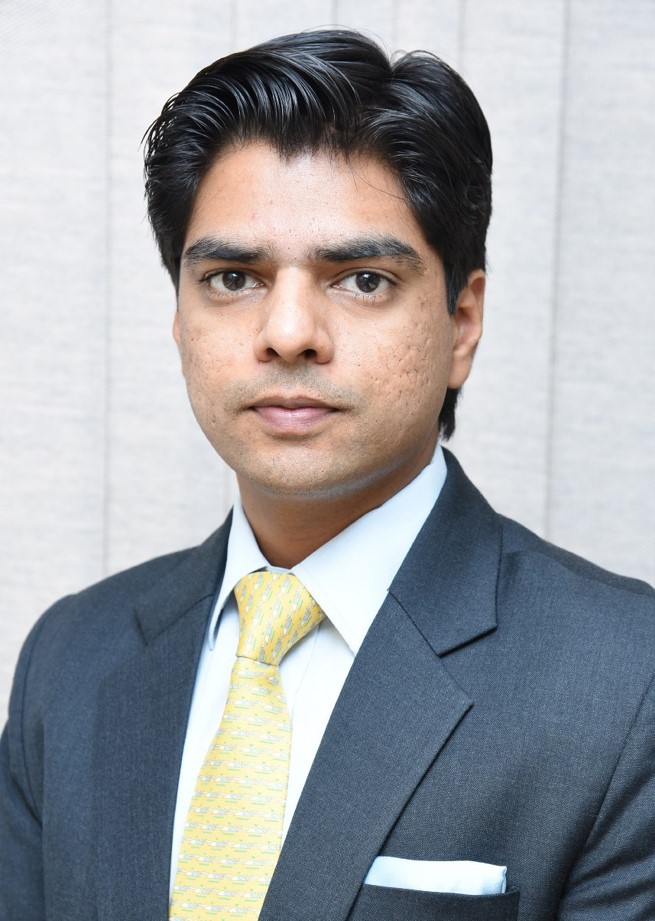
  • “Dream big so that you work hard to achieve the life you want, but in the meantime, don’t forget to live.” Encouraging young legal professionals to approach their careers with positivity and resilience – Karan Bindra, 𝗙𝗼𝘂𝗻𝗱𝗲𝗿 𝗮𝗻𝗱 𝗣𝗮𝗿𝘁𝗻𝗲𝗿 𝗮𝘁 𝗞𝗜𝗔𝗔 𝗟𝗟𝗣

    “Dream big so that you work hard to achieve the life you want, but in the meantime, don’t forget to live.” Encouraging young legal professionals to approach their careers with positivity and resilience – Karan Bindra, 𝗙𝗼𝘂𝗻𝗱𝗲𝗿 𝗮𝗻𝗱 𝗣𝗮𝗿𝘁𝗻𝗲𝗿 𝗮𝘁 𝗞𝗜𝗔𝗔 𝗟𝗟𝗣

    This interview has been published by Namrata Singh and The SuperLawyer Team
    Can you share insights into your journey from college to becoming the Founder and Partner at KIAA, LLP? What were the pivotal moments or experiences that shaped your decision to establish your own firm?

    Like every law student, I too have had my share of carefree days in college but as I progressed into senior years, the zeal of doing something started to kick in. In the early year of 2011, after the completion of our law degrees, the members of KIAA LLP (as they are today) found themselves taking divergent paths in the legal profession. Some ventured into roles as in-house counsels for corporations, while others worked with seniors in the field, gaining valuable exposure and experience. However, as we navigated our journeys, it became evident that establishing one’s presence in the legal field required more than just exposure. While working with seasoned professionals sure helped us create a space for our own in the industry, the opportunities that we had created for ourselves in that space needed to be tapped in time.

    Realizing this, I engaged in discussions with like-minded colleagues, Ankur and Chayan, who shared similar perspectives on the importance of creating a niche for ourselves in the legal arena.

    Fortuitously, our discussions culminated in a collective decision to join forces and establish KIAA LLP in early 2012. This marked the inception of our law firm, where we aimed not only to leverage our individual experiences but also to pool our strengths and work collaboratively. The firm was founded on the belief that client satisfaction using correct knowledge, providing the right information, and ensuring accessibility of service to our clients even if located in the remotest part of the country. Hence, that got us a name for our perspective, KIAA LLP- Knowledge Information Access Associates Limited Liability Partnership.

    Given your involvement in pro bono services for organizations like Malala Funds and Trust Law, how do you balance commercial legal work with contributing to social causes?

    So, it’s not about balancing at all. It’s about aligning your principles of  life with your work, and what is a man without principles?

    I was born and raised in a Sikh Family with the teachings of the Gurus. I want to take this opportunity to refer to a verse from Shri Guru Granth Sahib Ji which has immortalized words of Guru Nanak Dev Ji – “One who works for what he eats, and gives some of what he has in charity, O Nanak, he knows the path to fulfilment.” Taking inspiration from which, we have always been inculcated with a habit of doing ‘Sewa’ which can be either through  ਮਨ,  ਧਨ (tan (physical service), man (mental/emotional service),  or  dhan (financial support)).

    My intention of working for social causes has always been that of giving something back to society in terms of my time and efforts. So, I utilise my knowledge and expertise to earn my livelihood through commercial matters, and I consider myself privileged to be able to utilise some of it for a social cause.

    KIAA, LLP has received numerous awards and recognitions. What do you attribute the success of the firm to, and what sets it apart in the legal landscape? 

    I attribute the success of the firm to my team- my co-founders, associates and every other member of our staff who do not hesitate to work around the clock if need be. It is also about the work culture at KIAA LLP that we have all built through the years. I have always said that we measure our success not by trophies, awards or cheques but by ‘Client Satisfaction’. I think, our ‘Client First’ attitude is our USP!

    You’re a member of various legal associations and clubs. How has being part of these networks enriched your professional life and influenced your perspectives on law?

    To be very honest, networking is very important in our profession and being part of the legal associations and clubs is a great way to socialise and build a meaningful network. I have benefited greatly from it, not only because I met many of my prospective clients through these clubs but I met people from various walks of life including law, seniors & juniors having different experiences.

    These kinds of experiences widen your horizons as a lawyer. The job of the lawyer is to understand the perspective of his client, and the Court both. We all know how dynamic and subjective human nature is. Being a part of these clubs helps you enhance the emotional quotient- the greatest asset of our profession!

    You’ve served as the Central Government Counsel at the Delhi High Court. Could you shed some light on your role during that time and share any experiences or cases that left a lasting impact on your professional journey?

    Certainly! I was pleased to be appointed as Government Pleader in the year 2012, and I remained on the list of empanelled lawyers with the Central Government Litigation branch at the Delhi High Court until 2017-18.

    This six-year period was most significant in shaping my professional journey. It exposed me to the intricacies of handling multi-faceted and high-stakes government matters.

    One of the distinctive aspects of appearing on behalf of the government is the sense of responsibility and accountability because your actions and advice can have a direct impact on the general public. It goes beyond individual client representation, as you are entrusted with safeguarding the interests of the larger public and the government as a whole. That’s the combination of power & responsibility that a government counsel bears on his head.

    A set of experiences that seemed cumbersome to my 10-year younger self but had the most impact on my professional journey was the manual filing process prevalent at the time. Unlike today’s E-filing systems, we used to stand in queues before filing counters with strict deadlines to meet. This hands-on experience taught me the importance of time management, meticulous preparation, and adherence to court procedures.

    Now, the agility and clarity with which a court case needs to be handled comes as a second nature to me. I guess, now I truly understand the meaning of this phrase “The more you sweat in peace, the less you bleed in war.”

    Can you tell us a bit about the talented team at KIAA, LLP? How do you nurture and support your team members, and can you give us an idea of the size of your team or the number of interns involved in the firm’s operations? 

    First things first, I think every person at KIAA, LLP knows their job well and my co-founders & I give our Associates a free hand to conduct the matters. Of course, we discuss each proposition together and work on possible solutions but flexibility is the key.

    We believe people can work better if they are not micromanaged. We allow them to work freely while standing strong and tall as their support should the need arise. We are a happy, hardworking and fun-loving bunch of about 15-17 people including our clerical staff.

    You’ve expanded KIAA, LLP into a multi-service law firm. What inspired this diversification,  how do you ensure the team provides practical legal solutions to clients?

    I’d rather say, WE have expanded KIAA, LLP into a multi-service law firm. Naturally, when we started the firm, we were a boutique firm working only on the matters that our clients got to us. Over time we realised that most of our clients (largely business & commercial houses) face similar problems, and we thought why not have an end-to-end solution for all these problems starting from compliance to representation in appropriate forums?

    That’s how we undertook expansion and diversification. Just as Rome wasn’t built in a day, we also took our time, took one department, one specialisation at a time. Categorised various departments and hired associates having specialised knowledge in that department. KIAA, LLP as you see today is years of hard work, late nights, early mornings, sweat & blood.

    We have only one mantra of providing legal solutions to our clients- WE PUT OUR BEST PERSON ON THE JOB!

    In addition to your legal expertise, you’ve delved into blockchain and cryptocurrency, as seen in your certification from Berkeley Law. How do you see emerging technologies influencing the legal landscape, and how is KIAA, LLP adapting to these changes?

    Well, the emerging technologies can influence the legal landscape in many ways or they have already started influencing the system, I’d rather say. With Smart Contracts, Live Streaming of court hearings, E-Filings, E-tokens etc. It would come as no surprise when there will be an official cryptocurrency being used as legal tender! Maybe there will be dedicated law firms for Crypto Law Practice in the future, who knows!? The possibilities are endless!

    We are talking about two things that are highly dynamic- Law & Tech! An impact on one industry will definitely impact the other.

    Outside of your busy legal career, can you share a personal interest or hobby that might surprise our readers and provide a different dimension to your personality?

    I love travelling! I find immense joy in exploring new places and immersing myself in different cultures. It’s not just about leisure; I often plan my trips strategically, making the most of the court summer vacations to indulge in this personal interest. Whether it’s a serene beach destination, a historic city, or a picturesque mountain retreat, I appreciate the diversity our world offers, and I make it a point to experience it firsthand. It helps me unwind, gain fresh perspectives, and recharge for the challenges of the profession.

    Another hobby that adds a different dimension to my personality is playing golf. I find solace in the greens, it helps me strike a perfect balance between relaxation and skill, offering me a chance to clear my mind while engaging in a sport that requires focus and precision.

    Not many would know but I am also an avid collector of watches and antiques. I appreciate art & craftsmanship. Each watch or antique item tells a unique story, and helps me travel in the era bygone!

    Having navigated through diverse legal challenges, is there a piece of advice or a valuable lesson from your career that you would like to share with the upcoming generation of legal professionals as they embark on their journeys in the legal field?

    I would say to my young colleagues & fellow persons: – Dream, Work & Live! Dream big so that you work hard to achieve the life you want but, in the meantime, don’t forget to live. That would mean allowing yourself to make mistakes, they would teach you lessons no law school and mentor can teach. Keep moving and be positive about your work because like a wise man said-

    ‘A pessimist makes nothing not even a mistake!’.

    It would be most appropriate to end this conversation with a saying of Steve Winwood, “The finer things I feel in me, the golden dance life could be.”

    Get in touch with Karan Bindra-

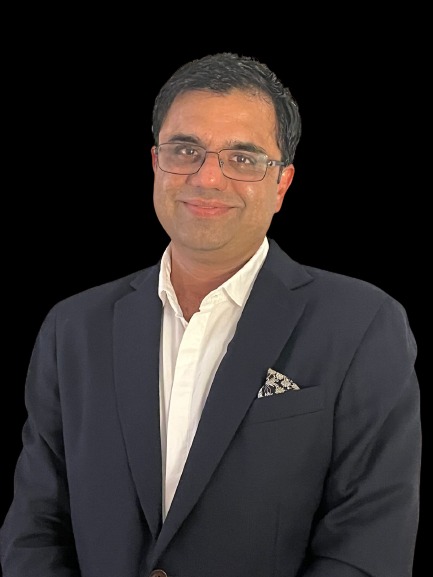
  • “I always believe that litigation is akin to a game of chess where you must anticipate three to four steps of your opponent’s preparation accordingly”-Gaurav Varma, Founding Partner – Integricon Law Offices 

    “I always believe that litigation is akin to a game of chess where you must anticipate three to four steps of your opponent’s preparation accordingly”-Gaurav Varma, Founding Partner – Integricon Law Offices 

    This Interview has been published by Pragya Chandni and The SuperLawyer Team

    Can you share some insights into your journey in the legal profession and how you decided to specialize in dispute resolution, particularly in areas such as arbitrations, insolvency, and regulatory practice?

    Being the fourth-generation lawyer in a family of reputed criminal lawyers, it was clear that I will build my career in dispute resolution. During internships at various prestigious law firms in Delhi, I had the opportunity to work in various areas of practice in litigation, including Arbitrations, Company Law and  Securities Law, which eventually opened new horizons for me. I began to realise that with increasing tribunalisation and diversification of the legal field, one cannot have a short-term vision. I believe that in our legal profession, initial three to five years are most crucial for self-development and therefore, in order to gain as much practical exposure as possible in my initial years, I ventured in all practice areas by associating with senior professionals specialising in different areas like Civil Trials, Company Law, Arbitrations, White Collar Crimes, Telecommunication Law, Electricity Law, Securities Law, Service Law and Constitutional Law.             

    You have extensive experience representing clients in various high-profile cases before different courts and tribunals. Could you highlight a case that you found particularly challenging or rewarding, and what lessons did you learn from it?

    Many of the cases, argued by me, have been widely reported by news and legal journals, ranging from landmark judgments in Arbitration, Insolvency and Commercial Law issues to the judgments granting bail in Delhi Riots case and establishing the principle that ‘holding weapon is not a fundamental right’. I have worked on numerous high-profile cases, including those involving leading FMCG companies, real estate developers, hospitality group, electricity transmission cos., 2G spectrum allocation trial proceedings, challenging constitutionality of provisions of Companies Act, as well as cases related to SFIO, EOW, ED prosecutions involving hundreds of crores, and SEBI and FEMA violation cases. Each of these cases has been a different learning experience, particularly, in forming strategies to build the case in a manner that achieves the desired relief. 

    I always believe that litigation is akin to a game of chess where you must anticipate three to four steps of your opponent’s preparation accordingly. With time, I have also learned the importance of identifying the “fulcrum of the case”, that one crucial point in the brief around which the case needs to be built. Proficiency in drafting and research is invaluable in devising the right strategy. However, it’s important to emphasize that in my philosophy, I do not discriminate between cases or compromise my level of commitment based on factors such as monetary value or property valuation, or the stature of the individual / organisation involved.  

    Your career includes handling SFIO, EOW, ED prosecutions involving hundreds of crores and SEBI and FEMA violation cases. How do you navigate the complexities of economic offences and regulatory issues while dealing with such cases?

    I have handled economic offences, regulatory violation proceedings and white collar crimes ranging from alleged Ponzi Schemes to alleged manipulation of accounts, incomplete disclosures to regulatory authorities and the 2G spectrum allocation process, where the alleged quantum is in multiples of hundred of crores based on initial investigations., These cases are unique as they require an understanding of accounts, commercial law, criminal intent and ultimate loss or injury caused. Additionally, one must gauge the aggrieved party’s nature of loss or injury caused and accordingly analyse the case. When representing clients in such cases, I adopt the simplest approach of assuming the client is placed at the weakest point and start self-questioning regarding the alleged act as presented, level of involvement shown, possible intent and natural consequences or repercussions on others as well as on the client.  

    Having worked with various senior advocates and legal luminaries, how has that shaped your professional growth and influenced your approach to legal practice? 

    In the past 16 years, I have been fortunate to work closely with many legal luminaries, senior advocates, namely Mr. Mukul Rohatgi, Dr. Abhishek Manu Singhvi, Mr. Sudipto Sarkar, Mr. Amit Sibal, Mr. Amarjit Singh Chandhiok, Mr. Dhruv Mehta, Mr. Neeraj Kishan Kaul, Mr. Arvind Nigam, Mr. Ashwini Kumar Mata, Mr. Mohit Mathur, Mr. Vikas Pahwa, Mr. Tarun Gulati, Mr. U.K. Chaudhary and my mentors Mr. Meet Malhotra, Mr. Vivek Kohli and Mr. Sumeet Pushkarna.  

    From my interactions and close work with all these respected senior advocates, I have learned that one must be a master of the facts of their brief. The entire facts, pages and interconnection of different documents must be mapped in your mind so clearly that you can anticipate the questions from the Bench and opponents and be ready with references in the case file instantaneously. While arguing in Court, you cannot leave grip of the facts because sometimes, you need to frame the argument thinking on your feet. Clarity of thought while preparing the case and explaining the case or arguing in Court is the most crucial aspect to be learned.   

    You have worked with government departments such as the Central Government, State Government, departments like Delhi Electricity Regulatory Commission, Delhi Transport Corporation, Delhi Jal Board, Employees’ Provident Fund Organisation. How has your experience with these government bodies influenced your approach to handling cases and managing client expectations?

    Working with Government Regulators and Departments has been an enriching experience for me. I have had the opportunity to handle a variety of issues, ranging from defending constitutionality of Acts / Rules / Regulations to defending discretion in approvals, licensing, allotment of tenders, as well as intent and implementation of policies & schemes and also dealing with service law related issues. 

    Being a government lawyer is a position of utmost responsibility. It requires careful handling of confidential files and also defending executive actions, each of which is taken after detailed deliberation and approvals at different levels within the concerned department and ministry. I must commend government departments for their diligence in adhering timelines granted by Courts for preparation of pleadings or compliance with any interim or final decisions. In recent times, government departments have significantly ramped up recruitment of legal officers, leading to an overall improvement in case management at departmental level. 

    As an Advocate-on-Record with a significant presence in the Supreme Court, could you share some insights into the dynamics of presenting cases before the highest court in India? How do you approach advocacy in such a distinguished forum?

    As an Advocate-on-Record, when filing pleadings or presenting cases before the Hon’ble Supreme Court, it is paramount to be thoroughly knowledgeable about the subject matter of the case. Being well-read extends beyond understanding the legal issues at hand, it also entails being familiar with judicial precedents and legal developments pertaining to the relevant statute. 

    The Hon’ble Supreme Court plays a pivotal role in the ongoing process of evolution of law, adapting to changing societal norms and refining legal complexities. This includes redefining principles of bail, fundamental rights, shaping jurisprudence of economic offences or commercial laws. Therefore, it is imperative to possess a strong foundation of legal knowledge when assisting the Bench.   

    Considering your extensive experience, what advice would you give to law graduates who are entering the legal profession today, especially in terms of specialization and adapting to the ever-changing legal landscape?

    As I mentioned earlier, the initial three to five years in the legal profession are extremely crucial for professional development. Certain good practices, such as reading judgments, if cultivated since the beginning, prove invaluable in the long run. When I refer to “reading”, I don’t mean merely skimming legal news or excerpts of judgments available on various portals but reading the entire judgment – the original text. 

    Learning should not be confined to assignments alone. It’s only when you immerse yourself in reading and compiling research subject-wise that you can not only identify your areas of interest but also be well-prepared to adapt to the ever-changing legal landscape in any field of law.     

    Get in touch with Gaurav Varma-

  • “Legal compliance is not just a requirement; it’s a commitment to ethical practices and client trust.” – Explore the symbiotic relationship between luxury real estate and legal expertise, Rohit Chopra, Consultant & Founder of South Delhi Prime and Goa Prime.

    “Legal compliance is not just a requirement; it’s a commitment to ethical practices and client trust.” – Explore the symbiotic relationship between luxury real estate and legal expertise, Rohit Chopra, Consultant & Founder of South Delhi Prime and Goa Prime.

    This interview has been published by Namrata Singh and The SuperLawyer Team

    Congratulations on your remarkable 27+ years in the real estate industry! Looking back, your educational journey reflects a focused approach towards real estate from an early age. Can you share what inspired you to choose real estate, and did you always know this was the path you wanted to pursue?

    Real estate as an industry has excited me since early childhood. There’s no exaggeration if I say that I decided to become a realtor while I was still studying in school. As I completed my high school education and stepped out to become a realtor, I consumed every little detail about the market (South Delhi) I wanted to specialize in. This happens to be the area I grew up in and to some extent knew inside out. In the days to come, I realized that demand for luxury homes around the area was skyrocketing and there was immense scope to expand my services across different locations so yes the approach was always focussed.

    That’s when I decided to partner with locational experts and take my business https://southdelhiprime.com/ to an all-new level. In fact, I’ll say I always enjoyed and still enjoy influencing friends to join real estate

    Starting a company is a significant undertaking. What were the most challenging aspects you faced during the startup of South Delhi Prime, and how did you overcome them? Any lessons you learned that you would share with aspiring entrepreneurs, especially from the current generation?

    For the 27-odd years that I have been in the shoes of a realtor, not once have I felt intimidated to take the lead. I will credit all the stakeholders who made me feel at ease while crediting myself for putting in the backend work. However, if I have to list one challenge, I’d say it has to do with helping every team member find their purpose while making room for their personal growth and satisfaction.

    To achieve this objective, I feel it is necessary to encourage dialogue, mostly 1:1 interactions wherein the leader can understand the teammate’s state of mind and suggest accordingly. Being in the business of selling super luxury homes, managing the art of frustrations and disappointments, having supreme self-belief, and trusting in the process is of paramount importance, thus when every team member is on the same page, I believe can organizations walk collectively in the direction of fastened progress to become a dominant leader in the business. I’d like upcoming startup founders to take note of this.

    Given your involvement in luxury real estate, what unique challenges and opportunities do you find in dealing with high-value transactions, and how does your educational foundation in Law aid you in addressing these challenges effectively?

    Since we run a 100% referral business there are no major challenges as such because the person approaching us already has the required faith and belief that we’d be able to help them find their dream luxury property. However, there is one realization I have developed in the process, which I believe can act as a great opportunity of success too, which is to be a continuous learner. Also I feel delegation and moving away from micromanagement has helped us in being fully available to our clients – right support at the right time ideology.

    In terms of my educational foundation in law, this degree surely complements my role as a realtor by enabling precise contract drafting, ensuring terms are clear and favorable. It aids in compliance with regulations, safeguarding clients from potential pitfalls. Familiarity with property laws and zoning regulations enhances the ability to identify viable investment opportunities and mitigate risks, which can eventually be optimized in the interest of our clients. Furthermore, during deliberations regarding the property’s title chain with either the Seller, the Buyer, or their legal representatives, I am equipped to offer guidance and advice concerning the accuracy of the title, while also facilitating the provision of necessary legal remedies.

    You’ve mentioned that South Delhi Prime is the digital arm of ‘SanD Advisory Pvt Ltd.’ How has technology, especially legal tech, played a role in shaping and enhancing your real estate advisory and transaction processes?

    I’d like to believe legal tech has revolutionized the real estate landscape by streamlining processes and enhancing efficiency. For instance, automated contract management has helped improve the accuracy and speed of closing transactions and reduced overall administrative burdens. In fact, online platforms always come in handy to provide quick access to property laws, zoning regulations, and market trends, a must-have for realtors and clients alike. Blockchain technology and E-signature tools are other interesting legal tech alternatives, I believe can change the face of the real estate market. I’d conclude by saying that in today’s digital age, what is real estate without legal tech?

    As a principal consultant and entrepreneur with a focus on start-ups in the real estate domain, how do you believe your educational background in law has equipped you to make strategic decisions, and what qualities do you consider essential for individuals venturing into entrepreneurship in this industry, especially when navigating the initial legal challenges?

    I’d say my educational background in law has helped in shaping my strategic mindset, which I believe is vital for navigating the complex legalities in the real estate landscape. The ability to interpret intricate regulations and negotiate contracts is paramount, something my law background helps me with tremendously. Moving ahead, the essential qualities I believe real estate entrepreneurs need to possess are adaptability to the ever-evolving legal frameworks, a keen analytical eye, and effective communication. Moreover, to be able to navigate initial legal challenges, resilience, proactive compliance measures, and a commitment to ethical practices become mandatory. 

    With the rise of legal tech solutions, how do you see technology continuing to influence the legal and real estate sectors? Are there particular innovations that have significantly benefited your practice or streamlined operations?

     From what I have noticed the surge in legal tech has helped shape the legal and real estate landscape by ensuring efficiency and precision. Innovations like AI-powered contract analysis fasten transactions, while blockchain ensures secure and transparent property deals. Virtual reality enhances property showcasing from the comfort of our homes. For our business per se, digital platforms for market analysis and e-signature tools have been of significance to streamline our luxury real estate business, saving time and enhancing client experiences, which happens to be the ultimate goal of our business.

    Considering your proficiency in law, are there specific legal trends or changes in regulations that you believe will significantly impact the real estate landscape in the near future?

    As a luxury realtor, who has been around for almost 3 decades now, having explored the traditional way of working to now getting a taste of the best of the digital world offerings,  I anticipate several legal trends taking the real estate space by a storm. I’d like to believe increasing emphasis on sustainable and green practices may end up influencing property development regulations. Similarly, data privacy laws shall become vital in handling client information securely, a non-negotiable in today’s times. Zoning regulations could eventually accommodate flexible workspaces. Additionally, emerging technologies, like blockchain, can revolutionize property transactions. These are just some of the many trends I can immediately think of.

    With your extensive background in sales and marketing, how do you ensure that legal considerations are seamlessly integrated into the overall strategy of acquiring and selling real estate assets for your clients?

    I would say exercising rigorous due diligence precedes each transaction at South Delhi Prime and now Goa Prime, which helps with mitigating risks and placing client interests on the pedestal. Similarly, practicing transparent communication on legal nuances proves equally integral in client interactions, eventually instilling trust. We also make it a point to tweak our sales and marketing strategies in line with the legal frameworks, thus optimizing property positioning. With this approach, we have been able to maximize asset value, safeguard client interests, and set a standard of excellence in the luxury real estate domain.

    What made you choose the South Delhi Market? Do legal dimensions change in real estate based on the region and if yes to what extent?

    Like I said earlier, having grown up in South Delhi and having known the region inside out was one of the pivotal reasons behind me fixing my mind on the South Delhi luxury real estate market. South Delhi is home and with South Delhi Prime we wanted to make our clients feel at home.

    To answer the second part of the question, yes, legal dimensions in real estate do vary significantly based on regions. In fact local laws dictate property rights, zoning regulations, and transaction procedures. From land use policies to contract requirements, regional nuances play a crucial role, making it crucial for realtors to develop a deeper understanding of specific legal frameworks and eventually navigate related complexities.

    Balancing the demands of a thriving real estate business with your personal life can be challenging. Tell us more about what your day looks like.

    Work days are extremely busy for me. Being a realtor, most of my business associations ride on relationships. To build these relationships, it is necessary for me to step out in the field, go meet people, pass on information, note down their requirements, and ultimately help them with their dream property. One word to describe my routine is Hustle-Continuous Hustle day in and day out.

    On starting my day, I tend to finish any e-meets that may be scheduled. Then I drive either to work or the client’s/prospect’s home/office. Breakfast usually happens between meetings. At work, I get done with all that is a priority before again moving to the field to keep in touch with the happenings. Usually, my days are very busy but I have no complaints.

    I always dreamt of becoming a successful realtor and today living my dream is what gives me a different kind of high. All the team members share their schedule for the day and I try to join them wherever I am needed and wherever I can. For more than 27 years I have been following one motto – I have to do the most productive thing possible in any given moment. Had read it somewhere and it has stayed with me since🙂

    In your experience, how crucial is legal expertise in the real estate industry, and what advice would you give to aspiring entrepreneurs about navigating legal complexities in this field?

    I’ll say legal expertise is paramount in real estate as it heavily influences transactions, contracts, and compliance. For aspiring entrepreneurs, I’d suggest understanding local laws, contracts, and staying abreast with the evolving regulations is crucial. Similarly, whenever possible investing in legal education, consulting with experts, and prioritizing compliance to mitigate risks is equally critical to long-term survival and success. A solid legal foundation ensures ethical practices, builds trust, and is instrumental in establishing a successful and sustainable real estate venture, which is why I’d encourage entrepreneurs to not shy away from acquainting themselves with legal knowledge and avoid fearing related complexities.

    Ultimately, when acquiring a real estate asset, you are purchasing not only the physical structure or land but also the associated title papers. The integrity of the title papers is paramount, as the real estate asset represents a legacy asset, necessitating legal precision and correctness at 100% each time and every time. 

    Get in touch with Rohit Chopra-

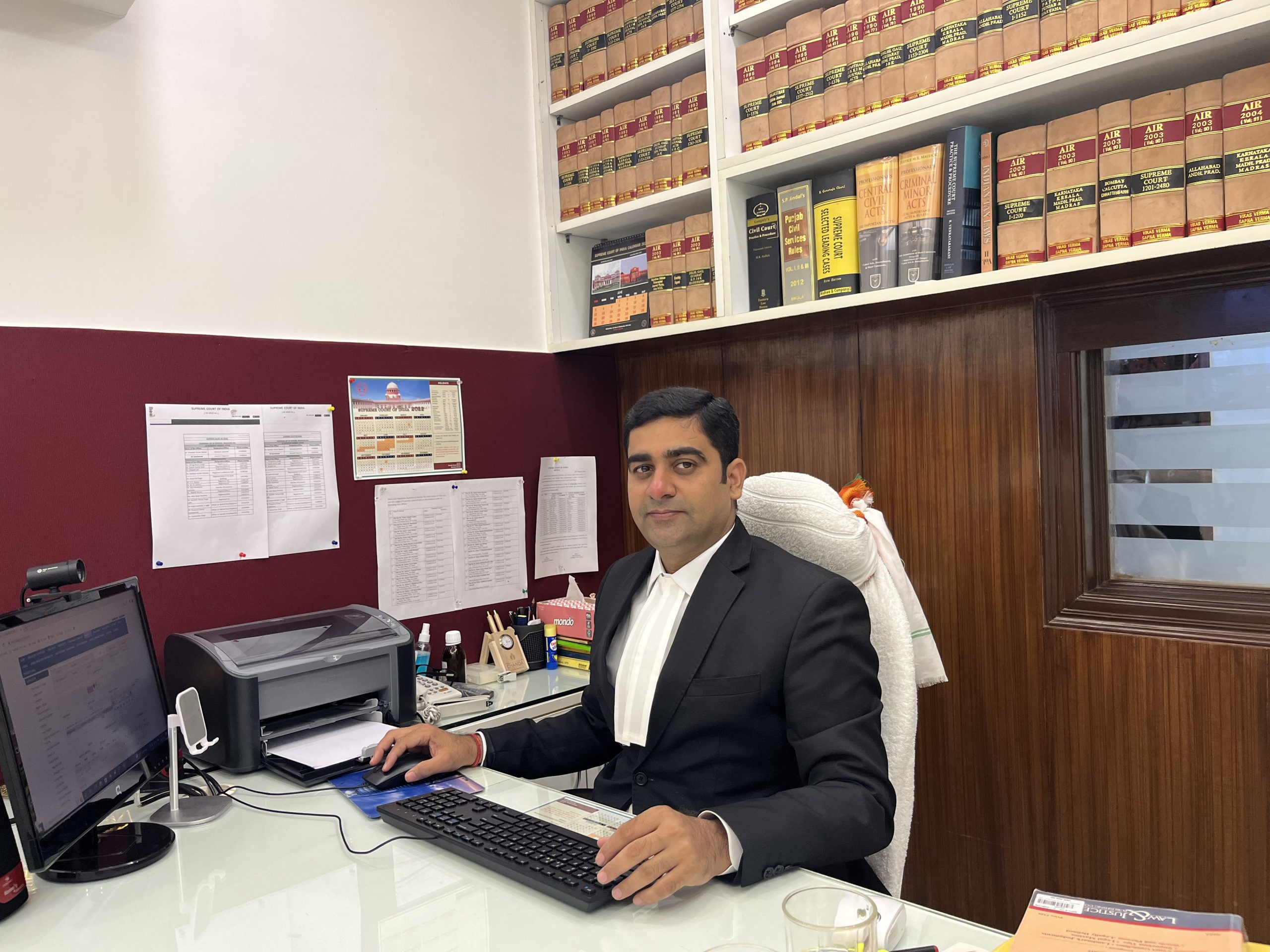
  • “Advocacy is a blend of dedication, strategy, and continuous learning, and I believe in mastering every facet of this noble profession.” – Vikas Verma, Advocate-on-Record at Supreme court of India & founder of KMS Law Firm

    “Advocacy is a blend of dedication, strategy, and continuous learning, and I believe in mastering every facet of this noble profession.” – Vikas Verma, Advocate-on-Record at Supreme court of India & founder of KMS Law Firm

    This interview has been published by Namrata Singh and The SuperLawyer Team

    What initially sparked your interest in pursuing a career in law, and could you share the motivation or experiences that led you to take the Advocate-on-Record (AOR) exam after already having an extensive 15-year career in the legal field?

    From the initial stage of my career, legal profession was passion for me, after passing my LLM, I was involved in Judiciary Coaching, then after that I was appointed as Assistant Advocate General by the Government of Haryana from 2011 to 2014, but I feel that Advocate-on-record is a prestigious position in the Supreme Court and has its own charm.

    Establishing and leading KMS Law Firm is a significant accomplishment. Could you share some insights into the challenges you faced during the initial stages of starting the firm and what motivated you to embark on this entrepreneurial journey in the field of law?

    At KMS Law Firm we have a research-oriented approach and highly experienced team which ensures a quality assistance with an assortment of legal business solutions, ranging from complex transactions. I started my journey with dedication & Hard work. 

    As the Co-Chairman of the All India Lawyers Forum, you likely engage with a diverse legal community. What initiatives or activities do you find most rewarding in fostering connections among the legal professionals across the country?

    As Co-Chairman of AILF, I have organised about 40 webinars during lockdown on different topics of law which were most significant for legal fraternity with sitting and former judges of the Hon’ble Supreme Court of India. I learnt a lot from the experiences from different speakers/guests who gave valuable insights on legal topics. 

    In your role as Emeritus Assistant Advocate General for the Government of Haryana, what are some of the legal and constitutional issues you advised on, and how did they contribute to the governance of the state?

    As the Assistant Advocate General of Government of Haryana, I was a younger officer of the court in the State of Haryana. I attended and presented before the constitutional court and divisional benches and dealt with different types of cases of Government during the tenure. I took an active part in proceedings of court in state matters.

    As the Managing Partner of KMS Law Firm, you’ve been involved in a diverse range of legal areas, from criminal law to constitutional Law. Can you share a case or experience that stands out to you, something that was particularly challenging or rewarding in your career?

    It was a great experience when I dealt with the most difficult cases of NDPS and argued before the Supreme Court and Justice Indira Banerjee gave good judgement on reducing the sentence and even waived off the fines also. 

    As a firm has a Research-Oriented Approach, could you elaborate on how this approach translates into delivery quality legal assistance to clients? How does the firm ensure its team stays well-informed and updated on legal developments?

    The firm boasts of a Highly Qualified Team to assist the clients with the legal and regulatory framework. The mindset of our team is a special mix of integrity, intelligence, energy, and strategy which is the backbone of our firm. It is this conspicuous character that makes our associates different from others. It is what enables us to be the best for our clients, – their guiding star, and their trusted legal advisor.

    In your extensive experience navigating litigations across various high-profile forums, including the Supreme Court of India and the High Courts, can you share a situation where the courtroom dynamics were particularly challenging, and how did you navigate through it to secure a positive outcome for your client?

    When I dealt with a civil case regarding a land dispute before the court of Hon’ble The Chief Justice of India and the court had made up its mind to deliver the verdict that the land could be divided amongst the parties to the suit. Even our case was on strong footing as the order of the lower court was in the favour of my client, but I tried to give my best before the court and the court finally passed an order in favour of my client.

    For law students aspiring to intern in the legal field, what suggestions would you give them to make the most out of their internship experiences? Additionally. Could you share insights into the types of internship your firm, KMS Law Firm, typically offers and skills you look for in potential interns?

    During the internship experiences, students should do research work and discuss the file, read the bare acts with interpretation and should attend court proceedings so as to know the practical nuances of law. Good communication and drafting skills is what we seek in our prospective interns.

    Balancing a career in law can be demanding. How do you unwind or pursue personal interests outside of your legal commitments? Any hobbies or activities that you particularly enjoy?

    Social Engineering is the best theory in the legal field. I am involved in yoga & Meditation which I enjoy after work. Generally, I like to visit new places for holiday breaks.

    Considering your extensive experience in the legal field and as a mentor to aspiring lawyers, what advice or suggestions would you offer to the coming generation of legal professionals? In your opinion, what can they do differently or better to thrive in the dynamic legal landscape and contribute meaningfully to the field?

    Seven lamps of advocacy are the most significant for every lawyer i.e., honesty, courage, wit, industry, eloquence, legal judgement and fellowship. One should always try to master these all. Also, with the advancement in technology in research work and filing it is necessary to be conversant with the developments in them and use them for one’s progress. Also reading judgment and discussing with seniors gives immense jurisprudential understanding of law. 

    Get in touch with Vikas Verma-

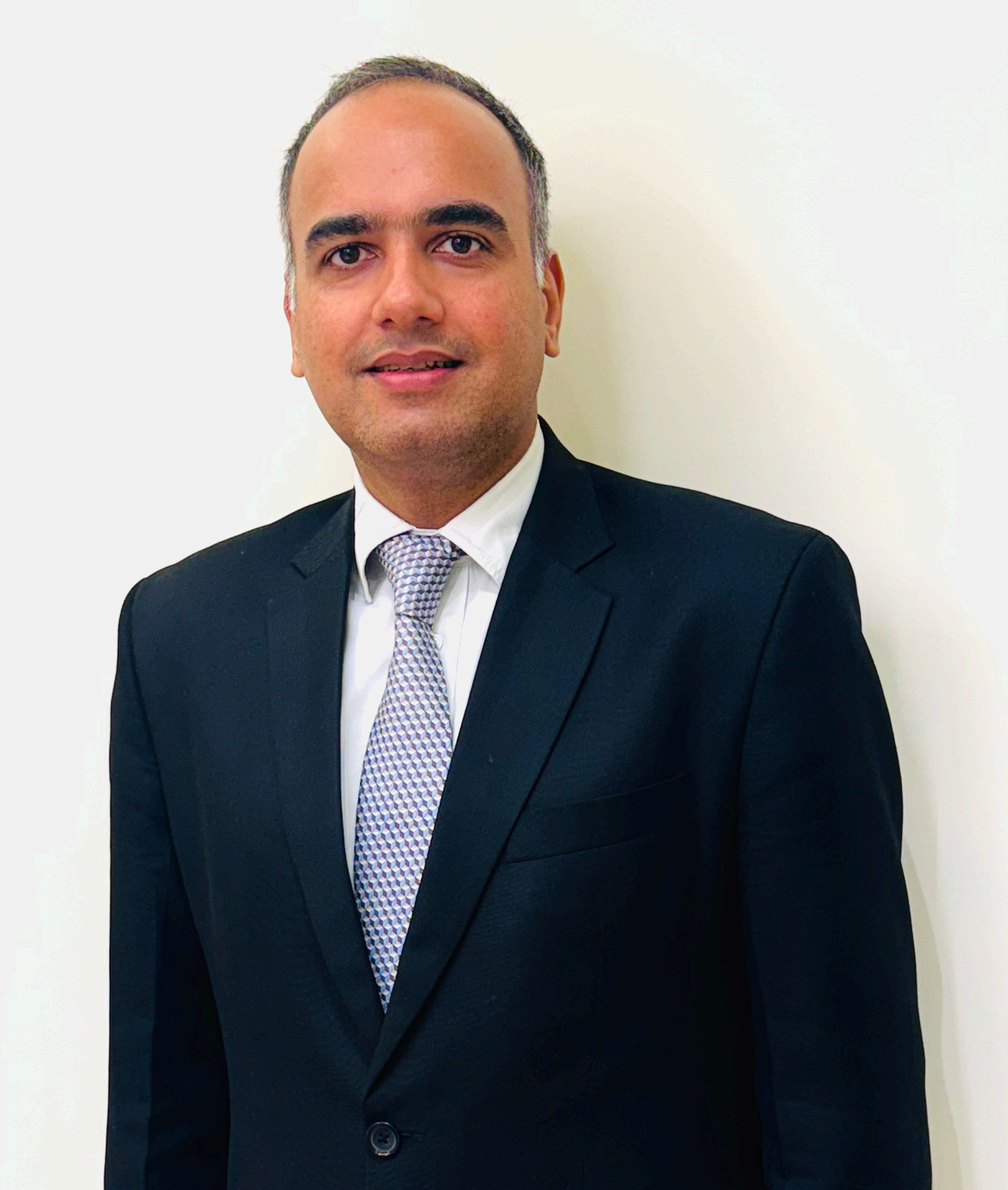
  • “Every client, every cross examination, every meeting, every briefing in itself presents a new experience and contributes to one’s growth”- Priyanka Sethia, Founder of the Chambers of Priyanka Sethia

    “Every client, every cross examination, every meeting, every briefing in itself presents a new experience and contributes to one’s growth”- Priyanka Sethia, Founder of the Chambers of Priyanka Sethia

    This Interview has been published by Pragya Chandni and The SuperLawyer Team

    Ma’am, can you please provide a brief introduction about yourself and your journey into the field of law?

    Hi. I am Priyanka Sethia and I have been practicing at various Courts and Tribunals across India, as an advocate for over 10 years. 

    I graduated in the field of law in 2013 and got an LL.M. in Corporate and Financial laws in 2021, while being in the profession and gained further certifications as opportunities presented themself.

    I am a certified negotiator accredited by London School of Economics & Political Sciences [2022] and a certified POSH (Diversity & Inclusion) Trainer [2023].

    I started my own law chamber – Chambers of Priyanka Sethia, in 2021 and we take up civil and commercial matters for various individual and corporate clients as well as deal in corporate practice.

    With over 10 years of experience, you have established yourself as a prominent figure in the legal fraternity. What inspired you to pursue a career in law and eventually become an advocate?

    I have shared this before, but this story never gets old for me. So, my career in law wasn’t really a given from the very beginning and I am a first generation lawyer. My roots find themselves etched in a very traditional business family. It so happened that one day, I was late to school by a few minutes and the Head of Department, Accounts who was in charge of the School Assembly that day, asked me to go back home as I was late!

    It was however only my first late show and I was aware of the finely printed school rules and regulations, set out in our Daily Academic Planner that permitted a student three late shows before being sent back for the day. With great respect, I politely took out the Academic Planner from my bag, opened the rules section and read it out to the said school teacher which stated that I had to be given three opportunities/warnings, before I could be sent back home for being late. I certainly could attend school that day but only saw disdain in that teacher’s eyes for me, on all days thereafter. Thankfully it was my last year in school and I then realized the power of Laws and Rules framed thereunder and the joy of knowing and abiding by it and of course realized my interest in reading the fine print.

    Decision to pursue law came organically to me but the decision to choose between Litigation vs Corporate Law never comes easy for anybody. While the heart wants to be in the courts and explore the passion of arguing vociferously for the clients and their cause, the mind seeks to showcase the drafting skills. So now, my Chamber is trying to strengthen both its litigation team and its corporate practice team, by continuously levelling up with diverse certifications, hiring new talent and continuous practice. At the moment, I head both the verticals and with a recent certification in POSH (Diversity & Inclusion) Training, I hope to offer various training to Corporates, in this arena.

    You founded the Chambers of Priyanka Sethia in 2021. Could you share the motivations behind starting your own law chambers and the vision you have for it?

    I have worked with some of the most incredible seniors in Profession who have mentored me throughout and continue to handhold me through difficult situations. After assisting them for about 8 years, I realized that I was ready to explore legal practice from my own perspective. 

    And so, post the Covid scenario, with experience that I had gathered from my seniors and mentors, and a postgraduate degree in my choice of practice area, I delved into independent practice and started Chambers of Priyanka Sethia in November, 2021.

    My vision for the chamber is to render exceptional legal services to our clients while being on an upward trend in the number of fresher hirings. I take pride in the fact that I welcome freshers with 0-6m experience and it’s lovely to draw inspiration from their passion and exuberance. On the work front, the chamber is striving to strengthen both its Litigation Practice and Corporate Practice. 

    You are a certified negotiator accredited by the London School of Economics & Political Sciences. How has this certification influenced your approach to negotiations, and what role does negotiation play in your legal practice?

    While engaging in Corporate Practice, often we find ourselves negotiating terms of the contract on behalf of our clients. Many-a-times, the other party is situated outside India and has a completely different approach towards the drafts/agreements compared to the Indian scenario. Being sensitive to their background, ethos, laws and culture is the key. My certification in negotiations has helped me in bridging that gap and comes in handy especially while dealing with International Corporates and has added an edge in fostering new relationships, executing contracts, and arriving at settlements. 

    Your experience covers a wide range of legal areas, including corporate practice, commercial litigation, alternative dispute resolution, and more. Can you highlight some key experiences that have significantly contributed to your growth as an advocate?

    Every case is a new learning. One cannot limit their learnings to the law. I strongly believe every person we meet is a new experience, we become wiser with each interaction. Every client, every cross examination, every meeting, every briefing in itself presents a new experience and contributes to one’s growth.

    Your expertise extends to regulatory compliance and privacy laws. How do you approach these complex areas, and what challenges do you typically encounter in ensuring compliance for your clients?

    To cite one instance, often we find that the law enforcement agencies are not well trained to understand and implement the law at the grassroot level. Recently, while dealing in a legal metrology matter, we observed that the department officer had no exposure to a couple of years old amendment in the law and required sensitization. Routinely issuing notices just to meet targets is a norm and needs to change. 

    You champion the cause of women emancipation. How do you integrate this advocacy into your legal practice, and what initiatives have you undertaken to contribute to diversity and inclusion in the legal profession?

    I believe having freshers on board or having non NLU advocates in the team is the biggest inclusion point in our profession. I am open to having good talent on board without any preconceived notions or unconscious biases.

    Besides, I take up matrimonial matters for marginalized women pro bono and ensure that they are taken to a logical conclusion.

    Considering your successful journey in law, what advice would you give to fresh graduates aspiring to pursue a career in law and make a mark in the legal profession?

    Success is a subjective term. On the work front, my request to fresh graduates aspiring to pursue a career in law is to be consistent. Do not give up without giving it a fair shot and some time.  Also, there is a great demand for lawyers with expertise in niche areas. One could also choose their practice area earlier on in their career and proceed further in that direction. 

    And, Pursue a hobby alongside the profession. This helps in keeping sane as well as sticking through. 

    Get in touch with Priyanka Sethia-

  • “The IBC is a significant reform and its successful implementation can bring resolution to the stress situation in the country’s financial system”- Puneet Yadav, Founding Partner- Samaya Law Chambers

    “The IBC is a significant reform and its successful implementation can bring resolution to the stress situation in the country’s financial system”- Puneet Yadav, Founding Partner- Samaya Law Chambers

    This Interview has been published by Pragya Chandni and The SuperLawyer Team

    Could you share a bit about your journey into law and how you decided to pursue it as a career, especially with your educational background at National Law Institute University and Symbiosis Law School?

    My father played a significant role in guiding me to pursue law considering my personality. Then, I was always keen to pursue law since my school days and at that time law was not sought for profession as it is now. We did not have CLAT in the year 2003 and had to fill up individual forms for each college. I was fortunate enough to get through B.A.LL. B course in Symbiosis Law School, Pune. I was inclined for post graduate education and thereafter, I appeared for CLAT LLM and I got through National Law Institute University, Bhopal. It’s a wonderful experience to independently live in a hostel which makes you a confident individual to deal with every situation in your life without the support of family. I not only got to polish my legal and individual skills at the law schools but also got to make great friends during both the courses who are budding colleagues and make the legal practice feel like home.  

    You’ve had a diverse experience, from working in top legal firms to founding your own practice at Samaya Law. What inspired you to take the entrepreneurial route, and how has this journey been for you?

    I am thankful to all the law firms, their partners, and senior advocates who I worked with through my journey. I got immense experience and guidance from them which helped me build my independent practice. Since beginning, I always wanted to have my independent practice as it gives a sense of accomplishment to me, however, working in a firm setup can be equally beneficial considering the fact that the initial few years of independent practice take a toll on you mentally and financially. I was lucky enough to have my own set of clients who trusted in me and helped keep afloat in initial years of practice which is significant to keep you going. The journey of independent practice is full of peaks and valleys as its both demanding and rewarding profession. You have a thrill of victory which is unmatched and gives you a sense of pride and satisfaction and doing public interest litigation can give added satisfaction by making a difference in the lives of people. The downfall being the stress and expectation not only towards yourself but also to Clients and Judges. However, this profession can teach you resilience, perseverance and the importance of hard work which makes you a valuable legal professional.

    Your practice involves appearing before various courts and tribunals, including the and the National Company Law Tribunal and Supreme Court of India. Could you highlight a memorable or challenging case you’ve handled and the key takeaways from that experience?

    After my stint with law firms, I started my independent practice and after a few years started our law firm Samaya Law along with my partner Sourabh Gupta, Advocate and we  completed 10 years in June, 2023. We appear before all courts, tribunal across India. However, being based in Delhi gives an opportunity to physically appear before the Hon’ble Supreme Court and Appellate Tribunals. Although, now the Supreme Court also works on Hybrid mode which helps all the counsels across India to get remote access to appear and argue their cases. We recently argued a case under the maternity benefit act wherein the Petitioner was being denied maternity benefit as her contract with the government body had come to an end. In a landmark judgment, a three Judge bench of the Supreme Court in Dr. Kavita Yadav v The Secretary, Ministry of Health and Family Welfare Department & Others (17 August 2023) held that if a woman has worked in an establishment for 80 days, she would be eligible for full maternity benefits, even if such benefits exceed the term of contract. We also made a significant petition for post-graduate doctors during the COVID-19 period when they were being sent across states for their practical examination as per National Medical Commission and Diplomate of National Board guidelines. The Supreme Court intervened and directed the NMC and NBE to conduct examinations within the state so that the post graduate doctors do not have to cross state as per directives of the government of India. This brought relief to more than 1 lakhs doctors who were appearing for the examination. Each forum has its own way of working, before the Supreme Court you only get 2-3 minutes to explain your brief at the admission hearing so you need to prepare your list of dates and synopsis thoroughly and be precise with your arguments on factual and legal aspects to catch the eye of the  Judge.

    With a significant focus on drafting and vetting petitions across different legal domains, could you share some insights into your approach to crafting effective legal documents and the importance of precision in this aspect of your work?

    My advice would be to keep your focus on the facts of the case because facts forming part of the pleadings can never change and highlighting relevant facts of the case can bring life into a dead brief. It is crucial to draft pleadings that are short, persuasive, point blank and not overstated. It’s best to work on all kinds of pleadings before the trial court and High Court in the initial years of your practice which can be beneficial when you handle matters before the Appellate Courts and Supreme Court. Most part of building up a case happens at the trial court and if the pleadings are not drafted, covering the facts accurately can bring significant damage to the case as it becomes difficult to introduce new facts or legal grounds in support of the brief at appellate stage of the proceedings. The pleadings should ensure that all the relevant facts are covered on the issues to be framed and lead evidence on the said issues to support your case. In a case done by us the Hon’ble Delhi High Court in a suit (CS(OS) No.553 /2016 order dated 21.05.2019) dealing with recovery of possession of an immovable property and a counterclaim for recovery of over Rs. 5 crore had due to lacuna in the drafting and not claiming the relief for recovery of possession made an observation “This is a classic textbook case of, how not to draft a plaint, which should be taught in law colleges and to young lawyers so that such bloopers in drafting of pleadings, damaging to one’s own client, are avoided.”. The pleadings have to be factually fortified and legally formulated to bring forth your best case. 

    Having engaged in extensive research across civil, criminal, and commercial laws, could you discuss a specific area of law that you find particularly intriguing or challenging, and why?

    The latest insolvency and bankruptcy code, 2016 has brought a fresh dimension to the insolvency law including bringing new questions of law which need to be answered both by the Lawyers and Judges. The fact that the code has been modified five times in the last five years including several judgments which have been passed by the Hon’ble Supreme Court itself shows the way it is evolving and which makes it challenging. The IBC is a significant reform and its successful implementation can bring resolution to the stress situation in the country’s financial system. We constantly support the Insolvency Resolution Professionals and companies on advising them on the intricacies of the Code and its implementation. 

    Your involvement in arbitration, both domestic and international, is notable. Can you share a bit about your experiences with arbitration cases and any unique challenges or differences you’ve encountered in handling international arbitrations?

    With the introduction of Arbitration and Conciliation Amendment Act, 2015 the arbitration proceedings must be completed within a time bound manner and which has brought drastic improvement in the overall process of arbitration. The constant queries of the clients as to the time limit within which dispute would be resolved has been answered by way of the said amendment and also by bringing in Schedule IV with the amendment of 2015 the fee being charged by an arbitrator has been regulated making the whole process efficient and cost effective for the client. Thus, we advise clients to keep arbitration clauses in the agreement so that the disputes, if any, can be resolved in an efficient and timely manner. However, it is particularly important where the parties (or their assets) are in different jurisdictions or where the disputes might give rise to complex and technical issues. We recently did an international commercial arbitration under the ICC rules where the seat of arbitration was Narobi, Kenya. The arbitrators in such arbitrations are chosen by the arbitration rules which provide for a method of appointment of arbitrators in case the agreement does not name the arbitration. The cost between a sole arbitrator and three arbitrations can vary considerably in international arbitration including the efficiency within which arbitration can be completed as there is lesser need for coordination between the arbitration. However, high value and complex arbitration would be better with the panel of 3 arbitrators as they can give more insight into the decision-making process. The timelines set in the international arbitrations are strictly adhered to and any deviations are subject to high cost awarded against the defaulting party including closing their rights if no reasonable reasons have been given by the parties. In choosing the seat of arbitration, the parties should consider the effect that this might have upon the conduct of the arbitration and the potential enforceability of the ultimate award and selecting a state which is party to the New York Convention as the seat of any arbitration, provides parties considerable scope for the enforcement of their awards.

    Given your wealth of experience, what advice would you offer to law graduates who are just starting their careers in the legal field? What key lessons have you learned that you believe could benefit those embarking on their legal journey?

    I would advise all the young graduates to learn the basic skills of drafting and research in their initial years along with arguing matters before the courts whenever they get an opportunity. The key would be to accumulate as much knowledge as possible from your seniors, arguing counsels and observing proceedings before the courts. In addition, always keep yourself abreast of the times by reading the latest judgments and updates of law in every field. Always be nice to your opposite side, you will have to face them every day in court and not the clients. Never lie to the court, better lose a client than your respect and trust before the court. Lastly, always take care of your health and follow stress management by having work life harmony.

    Get in touch with Puneet Yadav-

  • “The legal profession is a triangle where you have only one edge, while the other edge is the opposition lawyer, and ultimately, the judicial system, which ultimately takes its time and decides finally”- Hitesh C Soni, Founder & Managing Partner at Hitesh Soni & Associates

    “The legal profession is a triangle where you have only one edge, while the other edge is the opposition lawyer, and ultimately, the judicial system, which ultimately takes its time and decides finally”- Hitesh C Soni, Founder & Managing Partner at Hitesh Soni & Associates

    This Interview has been published by Pragya Chandni  and The SuperLawyer Team

    Can you share with us the journey that led you to pursue a career in law, and what specific experiences or influences played a role in your decision to become a lawyer?

    I am a first-generation lawyer and hail from Mount Abu, the only hill station in the state of Rajasthan. While my childhood was spent playing soccer and exploring the wilderness of my town, little did I know I would be becoming a lawyer. Well, I can say the first thought ever came to my mind to become a lawyer was in 8th grade when my father, a businessman, once bought the constitutional book for his simple curiosity of reading it. No, he never wanted to become a lawyer, nor did he understand the legal text, but his choice to bring that book changed my life forever. Of course, television plays an important role in seeing court functions and, most importantly, seeing a duty on a lawyer to fight for someone he or she didn’t know. Another reason that motivated me to become a lawyer was my connection with the wilderness. When you’re close to nature, it is very obvious that you would be very philosophical, and I firmly believe that those encounters with nature were another quite solid reason for me to dream of becoming a lawyer. I was very curious, and the next thing I did was wonder how I could achieve this dream of becoming a lawyer. There was none who could guide me, but I also believe a path searched and chosen by oneself is the one where you do not get lost. I succeeded and joined a law college in Jodhpur.

    Establishing a law firm at the age of 26 is quite remarkable. What motivated you to take on such a significant endeavor at such a young age, and what were some of the challenges you faced in building your own legal practice?

    When you have clarity of thought and are able to take risks in life, things become achievable. Though it does not guarantee success, it warranties you, assures you to keep going, and when you feel down, it gives you hope to continue. I never followed the crowd collecting the internship certificates and academic accolades. I knew that law books are the same for everyone, and a degree from Harvard or Oxford is no guarantee of success in life. Though worthy degrees can give you placement, they can never give you a sense of satisfaction, especially when your dream is only to become a lawyer who practices law in the real sense and nothing else. Therefore, during my law school for the entire five years of my law, I joined a permanent internship with Rtd Chief Justice Rajesh Balia and majorly interned with Sr. Advocate Vikas Balia in Jodhpur. Since Jodhpur was not my hometown, I still had a choice to choose my life wisely. Bombay was next, a city that changed my life. It not only changed my life but also gave me a platform to show my merit. Immediately, shifting to Mumbai in the month of June 2017 with no background and only after a year of experience was a tough choice, which I never regretted. At the beginning, I faced very common issues like shelter, food, and survival, but God rewarded me with the risk. I was standing tall with limited earnings from individual briefs. I started my law firm, M/s Hitesh Soni & Associates, on November 27th, 2017, with no surety of covering the expenses in the future. I was always confident that if I had merit, I could do it every time. I never looked back then.

    Congratulations on receiving the ‘Mahatma Gandhi Lifetime Achievement Award’ at such a young age. How did it feel to be recognized with such a prestigious honor, and how do you believe your work contributed to earning this lifetime achievement award?

    Thank you. At first, it sounded like a dream and more of a fear with the title, as it is a precept to give to someone who wishes or thinks that he or she is going to retire from his or her profession, but after interaction with the award presenter, Smt. Meira Kumar, former Speaker of Lok Sabha, and noted personalities like Shri Lal Thanhawla, former Chief Minister of Mizoram, my perception proved wrong. I received the award at the age of 31, when I had just completed six years in the legal profession and five years at Hitesh Soni & Associates. I was the only young awardee in the field of law. Well, from the beginning of my practice until I received this award, I worked in a diverse field of law. This honor is more focused on how I started in a place like Mumbai, with no background, established something, and continued the same spirit, which must have contributed, and the rest are cases I worked on that I feel I should not discuss.

    Your expertise covers a wide range of legal areas, including constitutional law, corporate and commercial law, international trade, customs law, immigration law, and white-collar crime. What drew you to these specific fields, and how do you manage to excel in such diverse areas of law?

    These practices can never start with the practice of law, but the root is somewhere else. In my case, it is related to my law school days. I never studied for law exams only, but I interpreted the text as if I was going to deal with such cases in the future, and that’s the key. Reading is the key, and reading in a way not just for examination, is to keep in mind. Simply put, I never had any extra interest in any particular subject of law, but I was inclined and interested equally. In fact, if I can share more candidly, you have to be an expert in all subjects; what’s your next case? You never know.

    Being featured in the “2023 Annual Guide to the World’s Top Lawyers” and receiving various awards like the International Achievers’s Award and the Rashtriya Gaurav Award is truly impressive. How do these accolades impact your approach to your work, and what do they mean to you personally and professionally?

    Thank you. These recognitions bring a great deal of sense of maturity, integrity, and responsibility, specifically when justice in India is not always served hot. Actually, it is also another wrong perception; laymen think urgent reliefs are not justice. The legal profession is a triangle where you have only one edge, while the other edge is the opposition lawyer, and ultimately, the judicial system, which ultimately takes its time and decides finally. In the midst of this lies the other skill of a lawyer: to calm his clients and keep giving them hope, but more than simply giving them hope, you have to keep making consistent attempts for your client because, for you, it may be one of hundreds of cases, but believe me, for your client, that’s the only case and it matters a lot for them. I take it that way, and it helps me a lot. These awards remind me that when I saw a dream of nature somewhere, a prayer for my success was heard and answered. Though there is a lot to be done, it is just the beginning of a lifetime.

    Your law firm, Hitesh Soni & Associates, has expanded its presence to multiple locations, including Bombay, BKC, and New Delhi. What challenges did you encounter while expanding your firm, and how do you ensure consistent quality and service across these different locations?

    Mumbai was and will always remain a base for Hitesh Soni & Associates; after all, this is the place where my dream took flight. I am not so frequent, but I am a decent visitor to the Supreme Court of India. Whether it is related to our firm client or any other brief, Delhi is something you cannot avoid, not only the highest judicial body but also many other authorities, tribunals, and whatnot. We started the firm in New Delhi last year, in June 2023. The initial challenge for me was handling it without any partners there. Our firm is primarily operated and run by me and my wife, Adv. Vaishali H. Soni, and we are based in Mumbai, so it is a challenge for us to find a team of trustworthy individuals. I believe any law firm cannot go beyond the quality of minds that make it up. Thus, yes, it is challenging to look for like-minded individuals who can understand your value to the firm.

    As the founder of an award-winning law firm, what role do you believe innovation and adaptability play in the legal profession, and how do you incorporate these elements into the services provided by your firm?

    After international law firms came to India, good things happened, boosting innovation and adaptability for Indian law firms. Like ours, we have to keep adapting to innovation. Innovations for me are not just adopting AI and software but also matching the international industry standard for staff, juniors, and interns, who are ultimately India’s upcoming legal faces. Thus, it has a great role to play; without it, a law firm becomes outdated, and in these changing times, no one can afford to be that.

    Given your extensive experience and success in the legal field, what advice would you offer to law graduates who are just starting their careers and aspiring to make a significant impact in the legal profession?

    If you read my story, you would have experienced the challenges and had an idea of how I have done it, but to all fresh law graduates and aspiring lawyers, I advise you that it is immaterial how you started, where you started, and how you are going to start, but what is important is to remember that you are never going to feel down when you do not get an internship or a job; you do not get upset when you lose a case or a client backfires on you; and always remember that nothing can force a sun to set for a lifetime. Believe me, you are a sun, and the next sunshines are yours. Wait for your dawn to come. All the best.

    Get in touch with Hitesh C Soni-

  • “Crafting legal solutions is like composing a symphony – each note, each contract, contributes to the masterpiece. Proud to bridge the gap between music and law.” – K P Sivaramakrishnan, Founder at Sivaramakrishnan Law Offices

    “Crafting legal solutions is like composing a symphony – each note, each contract, contributes to the masterpiece. Proud to bridge the gap between music and law.” – K P Sivaramakrishnan, Founder at Sivaramakrishnan Law Offices

    This interview has been published by Namrata Singh and The SuperLawyer Team

    You made a transition from a career as a musician and music producer to practicing law, specifically specializing in Intellectual Property Rights. Can you share the pivotal moment or realization that led you to shift your focus to law, and how has your background in music influenced your approach to your legal practice?

    Firstly, I did not have a career as a musician. I started playing the keyboard when I was 12 (all thanks to my father), and later taught myself how to play the piano. Eventually, I started writing and composing. I even wrote during my board exams, just letting out my thoughts and experiences on paper. While I wanted to become a musician back then, my parents were clear when they said ‘get a degree’ and then to follow my passion. So, music really did not have anything to do with me pursuing law. Just wanted a degree.

    When I was in college, I started playing in a couple of local concerts and worked on a few documentaries/short films for my friends. The two worlds of music and law came together when I was interning in 2012 in Bangalore, and I read about Entertainment and Media Law. The logic was, law is in everything around us, so why not in music? I started finding case laws, scope of the field and how to make a career as a Media and Entertainment Lawyer. I got support from my then senior I was interning with, Mr. Harikrishna Holla, who without a moment of thought, gave me case laws to begin with. Over the next 3 years of my bachelors, I interned at renowned IP firms, with a specific focus on Media and Entertainment.

    To be honest, the process of writing, composing, producing music, watching my friends direct, edit or write scripts gave me the behind the scenes experience. This really helped in understanding contracts, and how Copyright works. Today, when I am advising an artist, or just talking to them about their music (because why not), I understand it much more than a few of my contemporaries. The Artists also like it when I do not ask them to explain technical terms.

    There’s nothing to complain about, as I am living the best of both worlds and finally I am able to do what I always wanted to do.

    As the founder of SIVARAMAKRISHNAN LAW OFFICES, what principles guide your approach to providing legal solutions, particularly in the realms of Business and Intellectual Property Rights?

    Before starting my own practice in 2021, I had worked with law firms and media companies. I dealt with both Indian and international clients/entities and when I decided to go independent, I found my place in working with start-ups and individual businesses. I figured that there are start-ups/small businesses with less than 5 employees, and have freelancers or consultants on board serving them in their day-to-day activities, so they might not need a law firm with many lawyers on board.

    Thus, I started pitching my services as an IP and Business lawyer, who will not only take care of their IP portfolio or streamline it, and will draft/review contracts for them at a cost which is nominal. Even the businesses understood that there is a lot that can be taken care of with a minimal team and less resources.

    One principle I stand by till date is, giving time to the clients. Working with law firms, I saw that the business decisions in big companies are taken internally, and the work that was sent across was limited. On the other hand, small businesses suffer as they do not have anyone on board, thus, I proposed I will attend internal meetings, conduct negotiations for the clients, and advise them based on their vision and future prospects. Till date there are a few clients who take note of this and want my presence or time as if I am part of their management team.

    Lastly, most businesses run away from the thought of reaching out to a lawyer. It has a lot to do with the costs they will incur, and the stereotype image of a lawyer/advocate. So it’s better to make them comfortable with the thought that lawyers are essential and bring value to the table. I also tell them that if they start their business properly, the likelihood of them running into any kind of problems when they grow or have an exit, reduces.

    All my clients and those who approach me, know how I work. So if anyone is in line with my thoughts, they will stick around. Just give them something extra.

    Your experience covers various industries, including entertainment, packaging, FMCG, healthcare, and finance. Among these diverse sectors, is there a particular type of case or client that stands out as the most memorable or challenging for you, and why?

    One case does stand out for me, and is still very close to my heart. When I was working with a law firm, I worked on a proposition i.e. ‘Registration of geographical marks’. During the registration process of that geographical trade mark, it was challenging to explain to the Trade Marks Examiners that the mark applied for was eligible and entitled to registration. A similar matter was being heard before the IPAB for the similar proposition, and I was working on that too. Unfortunately, the order was unfavourable and we had to file a writ petition before the High Court of Delhi. With little to no experience in handling a litigation matter, I was given the task to draft it, and research for the proposition.

    I still remember I researched the changes in the Indian Trade Marks Law from the 19th Century till then, and also learnt how the common law developed internationally. I struck gold when I found a similar case which was decided by the UK Intellectual Property Office. It felt amazing to have found at least an explanation to the proposition, and then began the process of drafting the Writ. We finally filed the Writ Petition and got a decently favourable order based. That was my first litigation experience.

    My key takeaways from this experience were; 1) that part of being a lawyer/advocate is to think out-of-the-box most of the times, and that’s how the law remains dynamic for the times to come; 2) I learnt how a matter is filed and presented before the Court; 3) gave me confidence in dealing with challenging work. Today, because of that amazing experience, I am advising other Advocates in IP matters as an external counsel, and also helping businesses solve their issues from management structures to business proposals.

    For me, the major credit goes to my seniors who had my back at that time.

    Congratulations on being credited as the legal advisor for the feature film “Chitrakut” (2022). Can you share your experience working on this project and any unique challenges you faced as a legal advisor for the film industry?

    Thank you, I ticked it from my bucket list. The film had already premiered at a film festival, and the Producer/Director of the film reached out when they were editing the film for the big screen. That’s where I worked closely with the production team on their rights and interests in various assets of the Film. We negotiated and entered into various film distribution, music distribution and rights management agreements, among other things.

    The best part was it was the Producer’s debut film, and so was mine (as a lawyer. There were back to back meetings and research that I had to take up, to ensure that the project sails smoothly. It was an amazing experience to see my name up on the big screen, and I still thank them for allowing me to be a part of it. That opened the doors for similar projects.

    I think if I have to pin on something as a challenge, it would be the fact that I worked on it alone, independently. I had only been independent for 2 months before I began with the project, so this was a good boost. I am surely waiting for more projects.

    You’ve worked closely with Bollywood singers, musicians, and publishers. In your experience, what are the current challenges and opportunities for artists in the music industry, especially concerning royalties and benefits?

    It’s unfortunate that the term ‘Royalty’ has been glorified so much that the artists feel that’s the only point of concern for them. They can’t be more wrong, as royalty is only one stream of revenue for them.

    India has thousands, if not lakhs of artists in India, who are day in day out writing, composing, producing music, collaborating with other artists, but I bet majority of them do not think of it as a business. Sadly, many of them are not even registered with the IPRS (Indian Performing Rights Society). I personally believe many of them believe in fame or celebrity status, or want to be signed by a which is not wrong, but only a tip of the iceberg. If history has shown us anything, it all fades away, for most of them.

    How does one resolve this? Artists need to start learning and understanding the concepts of publishing, revenue share and most importantly about their rights. I am pro towards curriculum which teaches artists about the music business, but many of them are still unaware of the insights. I have been working with artists who come from small towns, and they had never dealt with contracts. Some even started using ChatGPT and don’t have any idea about what they are signing.

    Today, there are many YouTube channels, podcasts, articles, etc. which share a lot of information on ways to scale your music career. I even know artists in my peers who have taken up certificate courses in media and entertainment law. Even if someone cannot learn due to their limitations or circumstances, there are lawyers, managers, freelancers, and even senior artists who are ready to assist them with their issues.

    Lastly, there are associations such as MCAI – The Music Composers Association of India, IMI (Indian Music Industry), ISAMRA (Indian Singers And Musicians Rights Association), among many others, who are not only providing information to artists, but they will get access to a community.

    I have coined my 3C’s, 1) Create; 2) Contract; 3) Collect.

    As someone who believes in making an IP conscious India, how do you break down complex legal concepts to make them more accessible, and what steps do you think are crucial for increasing awareness of intellectual property rights in the country?

    Since the time I was introduced to IP in my second year of law school, I saw the world differently. I always say this, ‘IP is in everything’, whether it’s the phone, website, content, chair, to medicines. And how many people would actually know that they have created IP? Do they exploit it effectively?

    In the past 3-4 years I have uploaded and written content on specific topics on social media. I answer questions on Quora, and don’t look at it as a platform for lead generation. There are some very interesting questions that are posted there by people, which shows how aware they have become about their rights. I see a lot of informative content from my contemporaries on social media.

    I never intended to make an IP conscious India on my own. It’s impossible and foolish to think that I could. So it becomes important that the future generation of lawyers know the kind of opportunities that lie in the field. I have taken up opportunities to conduct workshops/seminars in colleges, both offline and online, where the students get a hang of what they can do in the world of IP. Even if I am able to make an effect on 2 out of 100 students, I consider it a job well done. Some of the students who interned with me have gone out and shared knowledge and information to others around them.

    Effective resources and courses for non legal businesses are important. IP Law is already part of many creative education programs, but there needs to be more conversation on them. Conferences, online seminars, interviews, Q/A rounds, etc. are being done and have to be conducted by many more people.

    In addition to your legal practice, you’ve conducted seminars in colleges to provide a unique perspective on IPR. What motivated you to engage with students in this way, and what message do you aim to convey to the next generation of legal minds?

    I learnt and perceived law in a different way. I was not academically strong, and I would give credit to the places I interned and worked for what I have learnt. My approach to law was defined by the practical aspects. I understood music so it became easier to understand the process of creation and distribution of the songs. I focussed on what was happening in the media and entertainment industry, understood the business before I advised a client.

    Most of the students, till date, think that one has to become an Advocate to have a decent career in law, which is so not true. I have hardly done any litigation, and I have found so many avenues to curate my practice today. I am an advisor, consultant to the management, personal manager to artists, and even deal with their royalties. So why not share the way I did?

    Time to time I have spoken at webinars, seminars and workshops for colleges, and I aimed to share information on practices which are not commonly heard of. To keep things interesting, I share cases or instances which the students can easily relate to, which eventually peaks their interest. My advice to young minds has always been to look beyond what they see. Again, law is in everything, so definitely there is something for everyone. You could be an artist manager if you’re into music, or work with production houses if you’re a movie buff, book readers can review scripts (yes, lawyers do that), people with an inclination to managerial positions can be part of a company and fix it from the inside. It’s just a matter of time before they figure out their interest and start working towards it.

    Your journey involves working with renowned law firms and companies, including your tenure at Showbox and 1 Sports. How has your experience working in these different environments shaped your understanding of the legal landscape, especially in the media and entertainment sectors?

    I saw a stark difference between the practices lawyers have to take up when they are at a law firm or at a company. I feel that in the field of IP, the experience in a law firm is dependent on the portfolio that you are alloted  whereas, at a company you’re like the legal part of a brain. At the law firm, I got to work on different kinds of trade mark matters for clients from various industries. But at the company I got to know the internal decisions of brand creation, as I got to work with various departments. It helps a lot and gives one an edge when they work closely with the business. Some are in fact able to achieve it working at law firms.

    At Showbox, I could interact with industry professionals such as A&R (a concept I came across for the first time), and worked on creation of different IPs for the channels. At 1 Sports, I got to work on Distribution deals for the channel along with broadcasting agreements. In short, I not only understood and drafted , but saw most of them practically happen in front of my eyes.

    The icing on the cake was to meet artists.

    Looking ahead, you mentioned working on a model for IP Asset Management. Could you provide a glimpse into how this model aims to benefit individuals and businesses in effectively managing their IP portfolios?

    In the past two years I have come across clients with different sizes, revenue, and approach to business. But there was one thing common in most of them. They don’t understand the difference between ‘registering a trade mark’ and ‘creating a brand’. That’s where I bring my expertise and resources.

    A business might already have an IP attorney on record, but creating a brand is an internal process, and usually a lawyer is not engaged by the company except during coining the trade mark. But, have they determined their IPs? In most cases, no. So, this becomes my chance to become a consultant for the Company, for a short period of time, where I would shortlist their IPs, make sure appropriate applications have been filed, rights and ownerships are in place, and finally, they are streamlined so their regular lawyer can take care of it.

    It’s purely an IP analyst kind of a position, with no intent to solicit clients. I have already done this for 3 clients last year, and that’s how I came across this idea. From what I see, this is beyond the generic IP registrations services. The whole process to build a deck on it is still pending, but the work has already started for my regular clients.

    On a lighter note, outside of your professional life, do you have any hobbies or interests that you find particularly rejuvenating, and how do you balance your work with personal pursuits?

    I have a piano at home, which I would switch on and start playing random songs, latest or old ones. Sometimes good compositions come out of it by accident. I write poems too.

    As a kid I was a bookworm, which I couldn’t keep up when I started working. But for the past two years I have managed to finish around 15 books each year. I know it might not seem like a lot, but I am glad I could catch up on that childhood interest. Past 6 months I have read a few non fiction books, which have really helped in my management, negotiations and people skills too.

    Being a sole practitioner, I have some freedom and control over my time. I can decide the clients I onboard. Sometimes I push the brakes on a random weekday, only to watch a movie and not work. I hope my clients don’t read this!

    But there are consequences of habits too. My family might complain that I sit late at night to work, while I have the day to keep things light. Now, as I am growing older, I have realised that health is important and there has to be a system to keep everything from work to life in check.

    Everything is fine till it’s kept under control.

    I would really like to thank Team Superlawyer, especially Namrata for reaching out. It has been a pleasure answering the interview questions, which have been well crafted. I think I can take this off of my bucket list!

    Get in touch with K P Sivaramakrishnan-

  • “Embrace change, stay open to new technologies, and be willing to pivot when necessary to meet the evolving needs of clients and the legal profession”- Prerna Oberoi, Founder at Lex Mores Law Firm

    “Embrace change, stay open to new technologies, and be willing to pivot when necessary to meet the evolving needs of clients and the legal profession”- Prerna Oberoi, Founder at Lex Mores Law Firm

    This Interview has been published by Pragya Chandni and and The SuperLawyer Team

    Ma’am, could you please share with our readers how your journey into law began, and what inspired you to pursue a career in the legal field?

    Certainly! My journey into the field of law began with a strong desire to have a voice and advocate for what is right. Growing up in India, like many others, I experienced the challenges of a patriarchal society. Having a voice at the right time and articulating oneself intelligently became incredibly important to me.

    The legal field stood out as the perfect avenue to channel my passion for justice and equality. It offered the tools and knowledge to not only understand the intricacies of the legal system but also to actively participate in shaping and influencing it. Law, to me, was a means to effect positive change, challenge stereotypes, and work towards a more just and equitable society.

    The inspiration to pursue a career in law came from witnessing the power that legal professionals have to make a difference in people’s lives. Whether it’s advocating for the minorities, upholding the principles of justice, or fighting for the rights of individuals, the legal field holds immense potential to drive meaningful change.

    I was particularly drawn to the idea of using the law as a tool for social justice and empowerment. My journey into law has been a journey of self-discovery, growth, and a continuous commitment to making a positive impact on the world. It’s a field that allows me to stand up for what I believe in and contribute to a fairer and more equitable society.

    In summary, my journey into law was inspired by the desire to have a voice and articulate myself in the right manner, working towards a more just and equitable society where the principles of justice and equality prevail. It has been a fulfilling and purpose-driven path, and I remain passionate about the transformative potential of the legal field.

    Given your diverse experiences as a Lawyer at various organizations, what were the key factors that led you to establish Lex Mores as a global law practice?

    Pursuing my Masters in Law at Osgoode Hall Law School, York University, in Toronto, Canada, and gaining diverse experiences in both India and Toronto played a pivotal role in leading me to establish Lex Mores as a global law practice.

    During my time abroad, I recognized the global perception of law as a noble profession, where clients seek ethical and moral legal guidance. This understanding deeply resonated with me, and it became a top priority to uphold ethical standards in my practice. Hence, I chose the name Lex Mores, which signifies “law with morality.”

    My experiences abroad also exposed me to legal ecosystems designed to discourage litigation. Measures such as higher court fees and an informed consumer base facilitated swift dispute resolution. This contrasted with the mindset I encountered upon returning to India, where the focus was often on resolving legal issues rather than preventing them. Here, the importance of legal guidance and establishing clear obligations at the outset of business ventures was frequently underestimated.

    My tenure working with one of Canada’s largest retail chains, combined with my Masters in International Business Law, allowed me to draw parallels between business practices in Canada and India. I came to realize the profound impact of legal awareness on business operations. This revelation motivated me to educate my clients, especially startups and MSMEs, about the crucial role of legal counsel right from the inception of their businesses.

    While larger companies in India understood the need for corporate legal advice due to their higher stakes, startups and MSMEs often overlooked this essential aspect. I firmly believed that instilling in these smaller businesses the significance of legal guidance from the outset could enable them to structure their operations more effectively and reduce the risk of disputes with partners, employees, vendors, and other stakeholders.

    In essence, my international experiences and legal knowledge fueled my passion to establish Lex Mores as a global law practice. My overarching goal has been to empower businesses, especially startups and MSMEs, with the legal insights they need to build well-structured enterprises and contribute to the reduction of litigation in India.

    In your role as the Founder and Managing Partner of Lex Mores, how do you navigate the challenges posed by market disruptions and ever-evolving legal landscapes?


    As the Founder and Managing Partner of Lex Mores, with over a decade of experience in the legal industry, I have come to appreciate the positive impact of evolution. Change is a constant in life, and I firmly believe that market disruptions and the ever-evolving legal landscape are not challenges but opportunities.

    At Lex Mores, we have taken proactive measures to navigate these changes effectively. We understand that disruptions can bring us closer to our purpose, which is to make corporate law accessible and beneficial to startups and MSMEs. To achieve this goal, we entered the realm of Legal Tech through Lex Mores Tech Pvt Ltd, leveraging technology to raise awareness about the importance of corporate law among our clients.

    In addition, we have developed a platform called “www.contractbazar.com,” which facilitates proactive legal work conveniently and offers transparent pricing and standardization. This platform is specifically tailored to cater to startups and MSMEs, making it easier for them to establish robust businesses in India.

    With the changing dynamics of society, businesses are becoming increasingly aware of the need for the right legal advice. Technology plays a pivotal role in enabling businesses to work with lawyers without the burden of heavy infrastructure investment or exorbitant fees associated with retainers.

    In essence, we view disruption as an opportunity to enhance and innovate our services. By embracing technology and adapting to the evolving legal landscape, we can better serve our clients and empower them to thrive in the dynamic Indian market.

    Having worked in legal roles across different countries, how do you leverage your global experiences to provide solutions in both developed and emerging economies?

     
    Having worked in legal roles across different countries, I have gained a deep appreciation for the need to adapt to diverse legal systems and cultures. This global experience equips me to better understand the needs, desires, and problems of my clients, allowing me to provide comprehensive solutions to clients operating in both developed and emerging economies.

    I leverage my insights from various jurisdictions to offer well-rounded strategies that are not only legally sound but also culturally sensitive. By drawing on the best practices I’ve encountered, I can tailor solutions to address the specific challenges presented by each economy.

    In essence, my global experiences enable me to bridge the gap between different legal landscapes and guide clients toward successful outcomes in both developed and emerging markets.

    Can you share a memorable or challenging experience from your work experience, either abroad or in India, that has significantly contributed to your professional growth?

    Certainly, I have a significant and memorable experience from my legal career, which occurred during my tenure in Canada while working at a law firm. I had the privilege of learning from a senior lawyer while we were providing legal counsel to a small startup entangled in a contractual dispute with a much larger corporation. The founder of the startup was incredibly passionate about his business and was resolute in protecting its interests.

    In our initial meeting, the startup founder candidly expressed his concerns, objectives, and the emotional toll the dispute had taken on him. As we delved into the legal complexities of the matter, it became evident that the issue transcended mere contractual terms; it was intricately tied to his dream and vision for his company.

    Rather than immediately delving into legal jargon and tactical strategies, my senior chose a different path. He decided to empathize with the founder’s predicament, and we listened attentively, not only to the words but also to the emotions underlying them. This approach allowed us to genuinely comprehend the founder’s ultimate goal.

    My senior advised that instead of pursuing litigation, we should explore mediation as a remedy. This approach might require some concessions, but it would help save the company without disrupting its operations, which could have been a possible outcome if the case went against us. This solution served the bigger purpose for the client.

    Through this experience, I came to realize that while the legal aspects were undeniably important, what mattered most to our client was not just winning the legal battle but preserving the essence of his startup. It was about safeguarding the dreams and aspirations of his team members who had poured their passion and dedication into the venture.

    This experience significantly influenced my understanding of the importance of fulfilling our clients’ expectations as lawyers. However, the professional satisfaction I gain as a lawyer from working in the right manner with my clients and mastering the art of empathy became even clearer when I read the book “Think Like a Monk” by Jay Shetty . The book underscored the concept that true fulfilment comes from meeting the needs of others and highlighted the synergy between “Varna” (passion and skills) and “Sewa” (understanding the needs and serving others). Together, these principles contribute to one’s “Dharma” or purpose in life. This philosophy has since become an integral part of my approach to both my legal career and life as a whole.

    As the legal profession increasingly integrates technology, how do you employ cutting-edge legal technology to assist clients in overcoming challenges in today’s economic system?

    In today’s evolving legal landscape, technology plays a pivotal role in enhancing the services we offer to our clients. We harness cutting-edge legal technology to efficient and cost-effective solutions. Our focus extends beyond the traditional legal advisory role; we aim to empower clients to make informed business decisions right from the inception of their ventures.

    At www.contractbazar.com we are developing solutions that help clients gain a clear understanding of their business needs, enabling them to make strategic decisions. By engaging with corporate lawyers early in their business journey, clients can navigate potential legal challenges with foresight and confidence.

    By embracing these technologies, we ensure that our clients are well-prepared to navigate the intricacies of the modern economic system, ultimately helping them achieve their goals effectively and efficiently.

    You pursued an LL.M. in International Business Law at York University – Osgoode Hall Law School and then passed NCA exams to be a lawyer in Canada. How has this additional qualification enhanced your capabilities and influenced your approach to handling global legal challenges?

    Pursuing an LL.M. in International Business Law at York University – Osgoode Hall Law School and clearing the NCA exams to become a lawyer in Canada has significantly enhanced my capabilities and greatly influenced my approach to handling global legal challenges.

    In-Depth Understanding of International Law: The LL.M. program provided me with a comprehensive understanding of international law, trade, and business regulations. This knowledge is invaluable when dealing with cross-border legal issues and international transactions.

    Cultural Sensitivity: Studying and practicing law in a diverse and multicultural environment like Canada has heightened my cultural sensitivity. It has taught me to approach legal challenges with an awareness of cultural nuances, which is crucial when working on global matters.

    Multi-Jurisdictional Expertise: The NCA exams and subsequent qualification as a lawyer in Canada equipped me with expertise in Canadian law. This dual qualification allows me to navigate legal issues involving multiple jurisdictions with ease and confidence.

    Global Network: During my studies and legal practice in Canada, I had the opportunity to build a global network of legal professionals. This network is a valuable resource for gaining insights, collaborating on international cases, and accessing legal expertise from around the world.

    Client-Centered Approach: My international legal education and experience have reinforced the importance of a client-centered approach. Understanding the unique needs and goals of clients from diverse backgrounds is essential in providing tailored legal solutions.

    Risk Assessment: Handling international business law matters requires a keen ability to assess and mitigate risks. My additional qualifications have honed my risk assessment skills, allowing me to provide proactive legal advice to clients entering global markets.

    Adaptability: Dealing with international legal challenges often involves adapting to varying legal systems, languages, and business practices. My education and experience have made me adaptable and resourceful when encountering unfamiliar legal terrain.

    Global Perspective: I now approach legal challenges with a broader global perspective. I consider how local and international factors interplay in legal matters, enabling me to provide comprehensive advice that takes into account the bigger picture.

    In conclusion, my additional qualifications have not only expanded my legal knowledge but have also shaped my mindset and approach to handling global legal challenges. They have equipped me with the skills, expertise, and perspective needed to navigate the complexities of international business law effectively and provide top-notch legal solutions to clients operating in the global arena.

    Considering your journey from being a law student to the Founder of Lex Mores, what advice would you like to give to law students or fresh graduates aspiring to thrive in a dynamic legal environment?

    My journey from being a law student to the Founder of Lex Mores has been a rewarding experience filled with valuable lessons. To law students and fresh graduates aspiring to thrive in today’s dynamic legal environment, I offer the following advice:

    1. Embrace Lifelong Learning: The legal field is constantly evolving, and it’s essential to have a thirst for knowledge. Never stop learning, whether through formal education, professional development courses, or staying updated on legal developments.
    2. Develop Soft Skills: While legal knowledge is crucial, soft skills such as communication, negotiation, and problem-solving are equally vital. Focus on honing these skills, as they will set you apart as a well-rounded legal professional.
    3. Build a Strong Network: Networking is key in the legal industry. Cultivate relationships with mentors, peers, and professionals in various legal sectors. A strong network can provide guidance, opportunities, and support throughout your career.
    4. Seek Practical Experience: Practical experience is invaluable. Look for internships, clerkships, or pro bono opportunities to gain hands-on experience and understand how legal theory translates into real-world practice.
    5. Be Adaptable: The legal landscape is dynamic, and adaptability is essential. Embrace change, stay open to new technologies, and be willing to pivot when necessary to meet the evolving needs of clients and the legal profession.
    6. Ethics and Integrity: Uphold the highest ethical standards in your practice. Trust and integrity are the foundation of a successful legal career.
    7. Pursue Your Passions: Find your niche within the legal field that aligns with your passions and interests. Specialization can lead to a more fulfilling and impactful career.
    8. Persistence Pays Off: Success in law often requires persistence and resilience. Don’t be discouraged by challenges or setbacks; they are opportunities for growth.
    9. Balance Work and Life: Achieving work-life balance is crucial for long-term success and well-being. Make time for self-care, family, and personal interests.
    10. Stay Visionary: Have a clear vision of where you want your legal career to go. Set goals, both short-term and long-term, and work diligently towards achieving them.

    By embracing these principles, you can not only thrive in the dynamic legal environment but also make a meaningful and lasting impact in your legal career.

    Click below for the link tree of Prerna Oberoi-

  • “Working across the country on various contracts and projects requires not only a better understanding of the task but also a team effort and leadership”- Archana Mishra Kaul, Founder, Vicis Corpus Juris

    “Working across the country on various contracts and projects requires not only a better understanding of the task but also a team effort and leadership”- Archana Mishra Kaul, Founder, Vicis Corpus Juris

    This Interview has been published by Pragya Chandni and and The SuperLawyer Team

    Can you share the story of how you embarked on your career in law? What initially drew you to corporate commercial law, litigation, and alternate dispute resolution?

    The prompt cause of getting into the legal profession is associated with my father who drew my attention towards this profession in my childhood. While I was growing up I witnessed my father working hard while being always surrounded by his clients and juniors, studying case files, researching All India Reporter, and giving dictation to his typist of cases till late at night. I think those were the facts that played a pivotal role in developing my deep interest in the legal profession.

    Immediately, after completing my law from Banaras Hindu University, I started practicing Criminal law before the Hon’ble High Court of Allahabad, at Allahabad Bench, and with the grace of God and my mother’s well wishes I soon presented my very first case and secured the desired order in the form of Direction given by the Hon’ble High Court of Allahabad which boosted my confidence as a lawyer and the journey never stopped after that. While I was practicing in Allahabad High Court, I had opportunities to handle a few corporate matters before the Apex Court which made me realize that I needed to explore my practice to other aspects of law which led me to practice in various Delhi Courts where I explored my practice into the Corporate side of law and matters related to Dispute Resolution since these are new in demand in our industry and becoming primary option of corporates. 

    Your profile reflects an extensive background in various legal domains, from real estate litigation to corporate litigation at the Supreme Court. How did you navigate these diverse areas, and what motivated you to explore such a wide range of legal practices?

    What best worked for me as motivation, is my willingness to learn which I have had from my childhood and I still have so much to learn and I am quite sure that learning will take me to a whole new level of my practice. The pursuit of learning and exploring different aspects of the law have kept me open to the matters of other different dimensions in my law practice where I could deal with the various nature of work including corporate matters such as finalizing Tender with government bodies including RFP/RFQ, LOI, Agreement assimilation, Criminal, Civil, RERA, Consumer matters, matrimonial cases, matter of NDPS, ARMS Act, Environmental issues and especially my Pro Bono works for the Labours. 

    With a core expertise in winning cases for your clients, can you highlight a specific instance or case that you consider a significant achievement in your career so far?

    There have been multiple significant cases that I consider as achievements in my career so far in the duration of the last 10 years, however, I would like to share one of my experiences which has been a milestone case for me till present. I once had the chance to represent a husband who was a victim of false charges under section 308 of IPC and was not able to get released on bail for a long time. Wherein I had the opportunity to Argue before the Hon’ble High Court, extensively based on the medical report of the informant elaborating Medical Jurisprudence related to the Court, and successfully secured the release of my client from jail by filing 3rd Bail Application. Another enthralling experience in the journey of my law practice so far has been pro bono cases that I have been doing across the country for construction laborers whose daily wages are illegally kept by their contractors and sometimes by their principal employer. 

    Balancing legal management, risk analysis, and project delivery across the country is no small feat. How do you manage such a diverse set of responsibilities, especially when it comes to litigation and arbitration for the company?

    I have been blessed with Balancing different dimensions of work with the help of my team in different roles and liabilities as per the requirement of the client. Working across the country on various contracts and projects requires not only a better understanding of the task but also a team effort and leadership. I would say, more than an individual, it is always a collective skill of my team who channelize their expertise and capabilities into their assigned task of legal management and risk analysis of various projects. 

    Reflecting on your journey from the Bar Council enrollment to your current role, how has your education, including LLB from Banaras Hindu University, contributed to your professional growth?

    A lawyer’s journey from the Bar Council Enrollment is always a roller coaster and mine as well is no different as it’s been more than a decade that has passed in this journey which has given me millions of experiences, be it better or worse, complex or simple, all it does is adds up value to my profession as more and more I polish myself into this profession. I still remember being a second-generation lawyer. I started practicing law with nothing in my hand and I kept struggling relentlessly for cases but I made it all meaningful when I got my first case. Even at present, I feel bound to give my best ever effort to every single case I represent before the Court. I would say most lawyers would actually agree when I say that what we study as law students in Law Schools is completely different from what we experience in reality but what remains embedded and enclosed to us during our entire professional journey is the spirit of being a lawyer that has brought us to this journey.    

    Throughout your career, you’ve worked on diverse cases, including real estate litigation and criminal matters. Can you share a challenging experience that provided valuable lessons and shaped your approach as a lawyer?

    In a decade’s journey of practicing law, I would say a few cases were challenging to the level that completely impacted my perspective. I had the opportunity to witness the remarkable change in the Consumer Protection Act while experiencing massive real estate exposure with cases against the Supertech Builders which started from NCDRC with only one client as a home buyer and ended up with a huge bulk of them against the builder before the Hon’ble Supreme Court leading the landmark judgment against Supertech.  

    Another challenging experience I would say was a pro-bono case when I was approached by a poor laborer for a matter of recovery of his daily wages that were maliciously kept on hold by the Contractor. I took on his case but later on, I started receiving requests from a massive group of laborers for the same issue which made me act on their behalf against not only one big-shot company but a lot of reputed construction companies which were beyond my expectation. Then I realized that the labor class needs representation before big companies for their grievances to get resolved by someone prudent at the ground level because not everyone can gather the courage to file a case before the court and contest it. As a lawyer, I deeply felt it is a big challenge for our fraternity to contribute our service to those classes who are important parts of our society and building our houses but are unable to feed their own family because of lack of knowledge and forced hunger on them.  

    Drawing from your experiences, what advice would you like to give to fresh law graduates aspiring to build successful careers in law, considering the diverse landscape of legal practice and the dynamic nature of the profession?

    Considering the diverse landscape of my legal practice, the only advice I would pass on to the fresh law graduates is that along with building their careers in the legal fraternity they must build up their personalities which reflect their smart work and prudency of the legal knowledge along with its better usage in the society. 

    Get in touch with Archana Mishra Kaul-