Tag: General Counsel

  • ATUL JUVLE, GENERAL COUNSEL AT SCHINDLER INDIA PVT. LTD, ON CHOOSING A CAREER IN LAW, WORKING AS A GENERAL COUNSEL AND HIS ADVICE TO LAW STUDENTS & LAWYERS

    ATUL JUVLE, GENERAL COUNSEL AT SCHINDLER INDIA PVT. LTD, ON CHOOSING A CAREER IN LAW, WORKING AS A GENERAL COUNSEL AND HIS ADVICE TO LAW STUDENTS & LAWYERS

    This interview has been published by Maaz Akhtar Hashmi and The SuperLawyer Team.


    You completed your master’s in finance from the University of Mumbai and went on to pursue an LLB from the same institution. What prompted you to choose law as a career?

    It was a result of push and pull – my inherent abilities and passion to work on complex issues prompted me towards the legal sector. Legal matters carry different facts/backgrounds, which makes it challenging to find the solutions we wish. During the 80s, the economy was static and not dynamic as today, so the comparatively opportunities were less in other sectors.  IPO boom in the decade of 1990 and my basic qualifications Law with CS, worked well for me to taste entry-level success quickly.   I can never forget those days when I was used to getting at least 2/3 interview calls in a month.

    While pursuing your M. Com and LLB from Mumbai University, you were employed as an Executive with a premier public sector bank, the Bank of India. How did you balance work and academics?

    If you wish, you can find time and a way to balance anything.  My willingness to work for extended hours, coupled with my attitude to never deny any kind of professional work, gave me enough elbow to keep going on both fronts. I kept working the extra mile regularly with honouring commitments that genuinely kept me in the good books of my superiors and also the customers of the Bank of India. I take the liberty to thank all my bosses and colleagues at the Bank of India, who encouraged and supported me in that growth struggle.

    It is known to very few people that you have fought tough health battles growing up, can you share with our readers how you overcame these personal challenges?

    It was a bad phase of three years of my early life. It started when I was in the seventh standard.  I was a victim of ill-medical treatment. Everyone, including my father, lost hope of my recovery.

    However, with the strong moral support of my mother and late Dr. Phadke, I could survive and bounce back. My grades during those periods were below good, though I ensured passing every year. This recovery made me internally strong and never-loosing-hope personally.

    You studied at the Institute of Company Secretaries of India (ICSI) post-college and became a Company Secretary. Could you tell us about your experience and why you chose to become a CS?

    Everyone dreams of reaching the TOP. CS is one of those toughest but shortest routes, which allows you to attend Board Meetings with Directors. Though I was a qualified banker, the lesser opportunities forced me to think out of the box.  All this led to my joining and completing my CS Degree. Though I completed CS, I had to work initially on financial work more than CS.  The habit of long working hours, with a helping attitude, enabled me to finetune and convert my fortunes as General Counsel & Compliance professional. I must agree that the CS degree helped me catch my missing bus of destination to Top, which I missed during my twenties.

    You started working with one of the biggest conglomerates of India (TATA) International Limited as a Divisional Manager in their legal team. How did your training in law and finance help you during your stay at the company?

    Working with TATA introduced me to pan-India legal working and also globally accepted ethics standards. My professional experience expanded geographically to cover pan India and south Asia. I thoroughly learned universally accepted governance and ethics during that period.

    Atul Juvle: There is nothing like NO-GO, it’s always KNOW & GO.

    You successfully completed two joint venture – what was your learning experience with the same?

    While leading the M&A function, I was able to optimize my commercial and financial knowledge. I could improve my people handling / negotiation skills. Active responsibility and involvement in both the joint ventures from concept to closure enabled me to acquire people management and negotiations skills, besides honing legal aspects in M&A.

    You went on to work at a Private Life Insurance company, where you were the Vice President for Legal and Compliance. Could you tell our readers the charter of legal duties associated with an insurance company?

    Insurance and banking companies are highly regulated companies. I had an exciting experience of interpreting and adjusting the compliance system with the changes. Just to explain to you the compliance dynamism, during the year 2010-11, there were more than 60 circulars, which effected changes in compliance provisions related to Insurance companies. I was able to manage the responsibilities only with the help & support of a capable and work-hungry team.

    You have also worked as Legal Head for Agro-base company. How was that decision to switch from insurance to an agribusiness company rewarding on a personal as well as the professional front?

    On the professional front, I moved on to another highly regulated industry under food safety-FSSAI regulations and metrology provisions.  But the major difference between the two regulations was the penalties for violations, majorly imprisonment and financial penalties. So, compliance becomes more serious compared to insurance. I learned to implement system-based compliance for a majorly unorganised sector.

    The experience was rewarding on a professional front, as was able to change the perception of the legal department and build a dynamic legal team.

    You moved to Schindler India Pvt Ltd., serving as the General Counsel for India and South Asia. Could you explain what kind of work a General Counsel entail? Can you walk our readers through a typical workday?

    Overall compliance of all the applicable laws to business, factory, CRD & overseas distributors.  Legal- advisory, litigations- filing/defending. Code of Conduct- training, audits, investigation. Company secretarial compliances.

    A typical workday begins with refreshing with legal updates for the first half an hour and then moving on with the tasks identified for the day.  Normally the number of identified tasks doesn’t go beyond three. It doesn’t mean that every day, I will always have three tasks.

    Sometimes it can be one also. But such buffer time is used to work on long-term projects and review three-year horizons to keep the legal department future-ready. The other part of a typical day is catching up with the scheduled digital meetings on open tasks or business operations requests. Before the end of the day, the stock is taken on pending activities, new tasks and the calendar for the week’s balance is appropriately amended.

    You have been enlisted as Top General Counsel (GC) in the Forbes Legal Power List of 2020 and ranked in the Top 100 GCs-2020 list published by Business World Legal. What value do these titles hold on the personal and professional front? Are these a parameter of success or a checkpoint?

    Recognition is fuel to success, but before that, it also acts as a checkpoint. When one goes through the questions for nomination, he/she understands – are we performing with Industry standards or not. So, the process acts as a checkpoint as well as an eye-opener. I started filling and dreaming of recognition for the last decade, but the first success I got after failing for 5 years. During the intermittent time, I kept on introspecting, improving, and raising the bar of my professional achievements before making myself self-deserving for recognition. This process automatically tremendously improved my performance in my company internal responsibilities. Benchmarking with the industry always gives a bigger idea of improvements. These titles create legacy value on the personal as well as professional front.

    Your team has been named as one of the Top 100 performing teams by Legal-500 UK. How do you endorse the idea of creating a strong culture of teamwork?

    Promotion is possible in two ways- one way is you perform, and the other way is your team performs. When both the ways work together seamlessly, one can achieve spectacular performance. It’s an amazing journey of the last seven years with Schindler India, building a strong, dynamic team, where each player has its own specialities, but he/she is an all-round performer. Transparency, trust and a win-win attitude are three important requirements to build a team. Transparency includes personal discussions, understanding each other’s expectations, receiving and giving feedback, creating synergies and, most important, keeping commitments. All this leads to the creation of the trust. Win-Win attitude building is slightly difficult, as each one competes with growing, but creating a synergy of individual aspirations makes it easier.

    What are your views on the prospects of the legal industry in the coming decade? Will the face of the legal sector undergo a drastic change, keeping in view the challenges entailed by the pandemic?

    Let me start by thanking the pandemic for pushing the legal industry into digital mode. The changes planned over 5-8 years were brought to the desk in April-May 2020.   

    Prospects for the legal & compliance industry has tremendous potential for the next two decades, as India is poised to grow to 3rd or 2nd level in world GDP countries. This also means the country’s journey towards reaching the destination of developed countries. Legal is required to start, close and also for running business smoothly. All this sounds very well for the legal & compliance industry.

    The legal industry’s future will gradually see 60/70 % of activities done online through machine learning or artificial intelligence. The compliance system has already moved online, and now it’s a turn of legal. With the courts becoming comfortable working on the digital platform, the day is not far when the majority (if not all) litigation activities, including all types of ADRs, will move to the digital platform. Eventually, majority litigation is expected to move to objective arguments & resolution. Efficiency and efficacy of working will improve multifold. The speed and accuracy of artificial intelligence are amazing. Depending on cost-benefit analysis, I feel there may be two classes- big set-ups will have their systems in-house, and small & medium set-ups may use external service providers.  Large legal departments will need to have one tech-savvy counsel.

    Lastly, how do you take time out for your hobbies and family with multiple responsibilities under your belt? What would be your advice for young law students and lawyers?

    I am a strong believer & follower of Stephen Covey- 7 Habits of Highly Successful People. I always plan my professional schedule considering 5 days a week, with 3 major tasks per day, which entitles me a bonus of 2 additional days every week. These two days take care of my overrun of the project in the first five days, if any and hobbies, work-life balance, and becoming ready with full energy for next week. My hobbies include spending time with family, watching movies every week, which keeps me updated with the social environment and also more motivated in life sometimes, new learnings – the habit of at least one certification a year, karaoke singing, Zumba, walking etc.

    To young lawyers & colleagues, I can only share what worked well for me. Planning 5 days a week with 3 major tasks per day helped me a lot in clocking success on professional as well as personal fronts. Planning and staying committed to the plan is rule no.1. The most important aspect of life we always keep in the backseat is taking care of health. I never took sick leave after my childhood three years long health-episode. That doesn’t mean I don’t fall sick, but I take of it at first level and don’t delay or neglect it. Health is person-specific, so one must monitor himself/herself and take care proactively before the doctor prescribes it. If one is not fit, the value of all other qualities normally fades. All successful professionals are student life long, so one should keep learning, relearning, and upskilling to remain relevant in current times and keep oneself future-ready. I learned from my female teammate, who said one should celebrate a birthday only if he/she has learned or achieved something new. I follow this regularly.


    Get in touch with:

  • Roop Loomba, Co-founder and Managing Partner, Loomba Legal Services, on being General Counsel and her diverse experience

    Roop Loomba, Co-founder and Managing Partner, Loomba Legal Services, on being General Counsel and her diverse experience

    Roop graduated in law from Punjab University Campus Law School in 1999. She has over seventeen years of experience in Legal Operations encompassing Legal Strategy Planning, Litigation, Business Partnering, Compliances, Business Divestment, Integration, Demergers, Factory Compliances, etc. She is well versed with Civil, Criminal & Commercial Laws, Corporate Laws, Food Laws and Constitutional Law of India, Legal Metrology Laws, Labour Laws, Sales tax Laws, Competition Law etc. She holds the distinction of administering legal operations across the Indian sub-continent including South Asian countries Like Sri Lanka, Bangladesh, Nepal, and Bhutan.

    In this interview we speak to her about:

    • Her time at Castrol India Limited, HUL, and Philips Electronics.
    • Her role as General Counsel
    • Her experience thus far

    Given that most of our readers are law students, how would you introduce yourself to them?

    Hello, I am lawyer by passion and I was just like any other student in college or University having stars in the eyes and dreams to fulfill. I always dreamt of becoming a successful and a respected lawyer. If you have a dream you will automatically work to fulfill it. So dream big and work hard to redeem it.


    What motivated you to pursue a career in the legal field? Do you come from a family of lawyers?

    I found Law as the most enabling, liberating and powerful profession. I always wanted to pursue a degree which enabled me professionally and  which empowered me not to depend upon a job to fulfill my professional desires.This is the one of the few careers which enables you to become an entrepreneur in your field. This profession also empowers you to secure other’s rights and do justice to the society which is very satisfying. I belong to the family of first generation lawyers, so have been a self starter and self driven.


    Can you share some memorable experiences from you time at law school?

    In our time, unlike these days, we did not have any structured internships. Hence, this deprived us of true mentorship. I participated in moot courts as I liked to prepare legal  propositions and argue the case. After passing out of Department of Law, Panjab University, I joined a chamber of a criminal lawyer in Chandigarh. I learnt some basics of court procedure from him.


    What was your first job out of law school? 

    I started as a practising lawyer and I quickly became a standing counsel of four Government corporations. I thought that a successful practice is a combination of Government litigation as well as your private clients. However even though I came up on panel of four Government corporations I was given meager work as nobody reposed trust in me as a youngster, I was constantly denied opportunities. The more struggle I faced more determined I became. I represented some private clients at the High Court level and my arguments were appreciated. I started teaching the Police officers on IT laws and IPR Laws in Bureau of Police research and development. This made me learn a lot. This also enabled me to develop a never say die attitude. My biggest learning in the profession has been dream big, work hard towards your dream and never lose hope. On the professional side the learning is give the best even in a weak case. If your opposite lawyer is a seasoned lawyer without being arrogant never get over -awed by his presence and use your presence of mind, that really works in courts.


    Can you recall your first time appearing in court, or a time you have argued a significantly important matter? 

    I recall many such events. The first time I appeared in a court was before the Hon’ble High Court of Punjab and Haryana. It was my senior’s matter and a bail matter under NDPS Act. The moment I faced the Judge I got very nervous even though I had prepared the brief I got blank. It was only after two to three minutes that I regained my composure and my flow of words and started addressing the queries of the Hon’ble High court. The bail was granted and I was extremely happy.

    I remember two writ petitions that I argued. One was under article 14 of Constitution of India where I argued the concept of equity and good conscience before Hon’ble Mr. Justice JL Gupta. I also argued a matter under Representation of People’s Act, for lowering the voting age in local bodu elections from 21 years (it had still not been lowered) to eighteen years. The matter was listed before the Hon’ble first bench and since the election process had already started, the Hon’ble court declined to interfere, this is when I used my presence of mind and argued that the Hon’ble court may interfere prospectively and not retrospectively. There was a packed courtroom. The Hon’ble first bench very graciously agreed and issued a notice instead of dismissing the same. They also had a word of praise for me which propelled my courage and morale. When I stepped out of the courtroom many of my seniors and seasoned colleagues complimented me for displaying good advocacy and saving the case from dismissal.


    How did you secure an appointment with Castrol? 

    During my practice days I had also ventured successfully into IP practice as one of the verticals of my Law practice. It was during this time that my Delhi based cousin sent me an advertisement for an IP Lawyer in Castrol. The advertisement had been published in Ascent of Times of India. Initially I declined as I was very passionate about my own legal practice. However, I still decided to appear in the interview and I cleared it. There were close to eight rounds of interview in Delhi and Mumbai as I was the first woman who was being hired for this role which was considered as a challenging role as I was responsible for driving the anti counterfeit strategy in the North region. There are organized counterfeit gangs. It was not an easy role however I would like to highlight a strong support from my seniors which was instrumental in performing my role successfully. One more thing worth highlighting here is a strong support from the family. Both my parents gave me rock solid support during challenging times and my extended family in Delhi which consisted of my cousins never let my morale dip. During testing times one has a tendency to quit and go back as I was putting up alone in Delhi and my family was in Chandigarh. However I decided to hang in and after some time I saw a smooth road ahead.


    How did your appointment at Hindustan Unilever happen?

    My name was referred in HUL as a very informal conversation that happened between two erstwhile colleagues at the airport. Apparently HUL wanted to appoint a lawyer in IP for head office in Mumbai, and one of my colleagues in Castrol referred my name stating that here is a lady who is good in IP. I think my name was referred on Tuesday and I was called to HUL office in Gurgaon for an interview on Thursday of the same week. My interview was conducted by none other than Mr. Saswata Dhar. However unfortunately somehow even though I was liked by the interview panel and was about to be selected the position went on a hold for some time. I was really excited about joining HUL and had also informed my family of my decision of shifting to Mumbai. I got very demoralized and disillusioned. However sometimes things happen only at the time they are destined to happen. In October of the same year (2007) I again got a call from HUL and I was interviewed by the Regional Legal manager and the Executive director Legal and the offer letter was rolled out.

    Joining HUL was like going back to the University as the learning curve was very steep. My job involved assisting the Regional Legal Manager, overseeing close to nine factories for their compliances and litigation, support to the regional leadership team.

    I think working on few issues with Mr. Rajesh Bagga, Mr. Saswata Dhar, Shantanu Sinha was a great learning experience. I owe my knowledge in Labour Laws to Shantanu, my overall approach to work to Mr. Rajesh Bagga (I still remember his advice, “Do whatever you do to the best of your ability and leave your mark in your work, you will be proud of yourself when you work hard and gain knowledge and success.”). I owe my learning in marketing claims cases to Mr. Saswata Dhar. Working with these people was inspiring and which further lead me to try to adhere to their advice as far as possible. The big organisations have many complexities in work and equal challenges for an in-house counsel, you are expected to ensure enablement of business and at the same time compliance with Laws. Also you need to work with speed and accuracy, hence you need to be on top of things. You are also expected to lead the external lawyers and not to be lead by external lawyers. My aspiration to grow and gain exposure in different industries made me take a decision to move from HUL. However I am still in touch with my erstwhile seniors.


    How did you secure a position at Phillips?

    During your professional career you make a lot of friends. This can only happen if you mean well for others and have clear intentions. Also if you are good in your job, your reputation spreads. I got only one job in my career through a job consultant. All my other jobs have been through a word of mouth for my work and domain knowledge. I was referred by a friend in Philips. Joining Philips in 2011 was a liberating experience. I was responsible for giving support to their Consumer Lifestyle vertical of business. I was responsible for giving overall Legal advice to the sector, for their compliances, for integration of the newly acquired company down south. I was also introduced into making Government representations for amendment of Laws by my senior. I owe  lot to my senior who was heading legal department Mr. Rajiv Wani, for polishing my performance as a senior counsel.


    You were involved in a demerger of a major company. Can you describe this process and the challenges you faced?

    Demerger of business was a learning experience and it was highly complex. The entire exercise involved separation of close to ten thousand contracts, obtaining various licenses timely across states and ensuring the continuity of business. I was involved in Demerger along with other responsibilities and was handling other projects, negotiations also. It was a high pressure job. However the management was very generous in appreciating and recognizing my work.


    Can you tell our readers about the general nature of work and responsibilities of a general counsel? 

    (Roop has been listed in the Powerlist of top 100 General Counsel list by Legal 500 for India.)

    In today’s world a General Counsel is expected to wear different hats at different times. You are expected to play a diverse and vital strategic role as opposed to some years back where a General counsel was expected to play only a role of a Legal advisor. Apart from being a key legal advisor for the company, today a General counsel is expected to have a keen business knowledge and is expected to play a role of business enabler along with being strictly responsible for over compliances. A General Counsel is also a member of many corporate committees and is expected to drive many other business strategies apart from just being a legal person.

    To be a successful General counsel one needs to have a very good domain knowledge because if you have domain knowledge then you can speak with depth. You can have a good domain knowledge only if you read a lot . You need to be practical and have logic. You need to be a strong individual and not a people pleaser. A General Counsel should always have the ability to stand up for things. A good GC always thinks out of box and does not toe the line. Above all a good GC should not often be falling back for advice from external counsels but should have adequate domain knowledge to lead things himself/herself. Last but not the least a GC should be upright, ethical and a person of words.

    My advice to young lawyers is to develop good domain knowledge, have curiosity of mind, be strong in approach , upright, and have a clarity of thought and a fearless approach.


    What made you decide to take the path of being a general counsel as opposed to working in a law office? 

    I was more inclined towards a legal practice than taking up a job because I am a fiercely independent person. However, as in my initial days, I was struggling to get business in practice, I had to switch to jobs. However I do not regret the decision even once. I have learnt a lot from all the orgaisations that I worked for. I met some very wonderful people who had a very positive impact in shaping me into an good individual and a professional.

    When you do your own practice you need to be on top of things as there is never a second chance. In a job you may still get a third or fourth chance of survival. In a job you are driven by a company’s strategy. In your own practice you are more entrepreneurial in your approach and way more creative. As an in-house counsel you think more diversely and dynamically than external lawyers to enable business. You clearly know where the business standpoint is coming from and you tend to understand business more.


    Did you ever consider pursuing higher education?

    If I was not employed with Castrol I was going to Glasgow for higher education. I think higher studies helps you to gain more knowledge. However, in my opinion, nothing can replace your learning on the job. Your professional career is steered to the extent of 80% by your on-the-job learning and only twenty percent by your higher education.

    However, each individual should exercise his free will in doing what he wants to do. No decision is bad, it is upon you to make your decision work. Only indecision is bad both for your health and for your career’s health. Always take a decision, own it and make it work.


    How do you remain updated with all the new developments in your fields of interest and practice?

    I have a very curious mind and unless I get into the root of a thing I just keep reading. For a lawyer curiosity of mind and reading habit keeps him updated. 


    Can you give our readers some advice on how they can improve the quality of their articles and generally increase their chances of getting published?

    I think one should be very structured in one’s thought when one starts writing. You can be structured in your thoughts if you have clarity of mind and thoughts. Hence, if you pick up any subject in law to write about, draw up a structure in your mind or a notebook, to ensure that one para logically flows from the other and there is no disconnect. Be objective and precise. It is all about clarity of expression and the rest is magic. Lastly, you must enjoy writing.


    What advice do you have for our readers who are primarily college students?

    I was also a student some years back, who came from Chandigarh without any formal experience, but I still made it. Key takeaways from my experience in life are be fearless in approach, clear in intentions with a good heart, never give up, there is always a smooth road after a road bump. Help others as always positive energy comes back to support you.

  • Mekhla Basu, Senior Compliance Counsel, Intel Technologies, on Regulatory Compliance, the importance of higher education, and her experience

    Mekhla Basu, Senior Compliance Counsel, Intel Technologies, on Regulatory Compliance, the importance of higher education, and her experience

    Mekhla Basu graduated in BSL LLB from I.L.S Law College under Pune University in 2005. She is a qualified legal & compliance professional and senior executive with experience in advising top multinationals on operating procedures & business practices for legal & compliance requirements in the Greater Asia Region. In her professional experience, Mekhla has proficiently provided corporate consultancy to management & board of directors in top multinational companies in her career spanning over a decade; has in-depth competence in anti-trust & competition law, Intellectual Property and cyber/ e-commerce laws, privacy & data security, labour & employment, alternate dispute resolution, corporate governance & ethical landscape,  risk mitigation and other complex legal issues applicable to multinational companies across industries like FMCG, Medical & Pharma and IT. Mekhla has been one of India’s youngest Regional GCs, and widely known in the industry for her core competence. Mekhla has also served as country Vice-Chair with Business Software Alliance (“BSA”) in a non-profit role.

    In this interview we speak to her about:

    • The Legal Compliance regime in India
    • Her time at Unilever, GE Healthcare, IBM, and Intel
    • Being one of the youngest General Counsels in the country

    Given that most of our readers are law students and young lawyers, how will you introduce yourself to them?

    I come from a family of business and engineering. In fact, I would like to point out that no one in my extended family has even studied, let alone practised, law. My interest in law started when I was very young. I come from a family of illustrated freedom fighters, including both my grandparents. Since childhood a sense of self respect, freedom and empathy towards human misery was instilled by my family and one of the ways they cleverly did that was by introducing me to reading, very early in life; in fact by the time I started school, I was already home taught to read. A voracious reader as a child, many of the inspiring characters, political thinkers, statesmen of the world were lawyers and I started viewing this profession as a noble one and one where I could help others by standing up for their rights.

    What was it that got you interested in the legal field?

    As I said earlier, my interest in the field of law was purely ideological. I had excellent grades in school, which had offered me an opportunity to pursue any stream – and at one point I did seriously consider studying medicine because psychiatry was another subject that intrigued me (and still does). I have always had a bit of a rebellious streak. In my generation, most bright young people with great grades were pursuing science. I had always loved reading, especially history, sociology, psychology and politics outside of my school curriculum, which had given me enough wisdom to conclude, even at a young age itself that one needs to pursue passion over trends. Even at the cost of criticism from my teachers and well-wishers I took up humanities with pure mathematics as my +2 subjects so I focus on what I want to do next- i.e. law. Through all this, I had unconditional support from my parents on the freedom of choice!


    How was your experience in law school? Do you think law school prepared you for the real world practice of law? 

    My five years in law school was a rewarding experience; partly due to the fact that my education was self-propelled, partly because I had excellent school mates with gifted and curious minds. Debating with class mates over a cup of tea at the famous ILS canteen, or even seniors on jurisprudence was one of our favourite ways to pass time We had very good faculty as well; I still remember Mrs. Jathal and Mrs. Bhadbade who were iconic figures. It was a pleasure attending their classes. However, legal education in India is very theory centric and nothing prepares you for the fast paced, psychotic, dynamic business environment, especially as an in-house counsel that you find yourself landed in, few years hence. I must say however, internships, really help. My interest in extra-curricular was more inclined to human –rights and I had spent a couple of months doing volunteering work during the Gujrat riots, in the violence stricken city of Ahmedabad, especially helping women victims of heinous crimes find their legal rights. As a young adult, this volunteering experience propelled me toward accepting the real, politically tumultuous world we live in. I have also written extensively in books relating to the subjects of women’s rights and violence against women.


    What were your areas of interest in law school? How did you recognise and cultivate such interests?

    My top interest were women’s rights, intellectual property and governance related issues. All of the fields, I have had the good fortune to work in real time. I developed interest in these fields through reading, mostly and they being intrinsic subjects of relevance and interest.


    What are your views about the importance of higher education?  

    I have considered higher studies and to be honest I still am considering. Nothing replaces the power of education and exposure to fellow brilliant minds. My suggestion will be, even though you have scholarship merit or have the means to rely on parental resources—hold-off your masters as long as you can, till you are sure about your interest in the field of law. Also, once you acquire extensive work experience, it is not necessary that an LLM will continue to interest you—getting a degree in management or finance or strategy/ leadership or even risk mitigations are all great avenues for future growth and brand building. Do this outside of India, if you can. Exposure to a foreign culture opens your mind, beyond means you can imagine. Most students use LLM degree to get the ideal job at a mid-career level. Trust me, if you are that lethal combination diligence, resilience and brilliance, you will land great jobs with great companies, anyway. Rather use your PG/ Ph.D or M.Phil degree to enhance your career and the brand you!


    What was your first job after college and how did you secure it? 

    My first job after college was with the biggest IP law firm in the country. I had a fabulous boss who was a senior associate. She taught me the importance of having an eye for detail—the single most important skill that can be acquired through practice and this helps me in my day to day job.


    Do you recall your first time appearing in court?

    There is no end to preparation when it comes to Court appearances. Standing real time, in front of a judge, for a complex IP matter with an equally intimidating oppositing counsel had given me butterflies. However, once I appeared and started arguing my case, my confidence came back—thank god to the power of a thorough homework and doing a lot of research on the client’s business!


    What caused you to move to being an in house counsel from working at a law office? 

    Frankly, I found the experience in law firms a bit limiting and political. Not to criticise anyone, I had excellent mentors in the law firms I had worked and they are still my close friends and confidants in personal/ professional life. I am talking more about the general culture of insecurity and politics and the lack of abject professional attitude with which Indian firms operate. I am extremely to the point and objective by nature who appreciates & deserves fast tracked growth and real accountability—this is where the decision to switch to a multi-national company occurred.


    How did your appointment at Unilever happen? 

    This is an interesting story that reiterates the power of networking—which I am normally very bad at. I had applied to Unilever way back in 2006 but no suitable opportunities were offered. Incidentally, my college mate’s family friend was a senior legal Director in Unilever and during one of my work visits to Mumbai, I went across to meet him. I believe he was very impressed and encouraged me to apply again. I did so after six months, in 2007 in a suitable opening and was called for an interview. I went through five rounds of interview, including one with Executive Director, Legal and was able to impress the senior panelists with my pragmatic sense and foundations of first principles. I was being interviewed for a position in the branch office but post the interview, was told that I will be joining the head office directly, in super interesting newly created role– that of a marketing lawyer. That started my life long journey of being a generalist with an inclination for cutting edge legal issues like competition, privacy, advertising disputes and high value transaction negotiations. Ten years ago, these were very niche fields and very little to fall back on, but I’m truly glad about the trust Unilever reposed on me and having met some fantastic mentors like Mr. Rajesh Bagga and Mr. Saswat Dhar who are almost institutions in the legal fraternity. It goes a long way, when you learn from the best minds.

    How did you secure a position at GE Healthcare? 

    Except for Unilever, in all my jobs, I have been head-hunted. For a personal reason, I needed to move to Bangalore from Mumbai. It was a risk, but one worth taking, hence I took it anyway. Healthcare as an industry is highly regulated and especially in GE the Healthcare division had several sub-divisions like equipment manufacturing, life science, pharma and health care technology. Each of these divisions had their own regulatory as well as ethical challenges and a tight-rope walking to manage the compliance as well as business profitability is a huge challenge for any lawyer in the health care segment.


    How did you secure a position with IBM? 

    Through a leading head-hunter in Asia. This was my first role as a Compliance Officer and the switch I made from a General Counsel to a compliance role. Idealistic, as it may sound, I was tired of making money for the corporations I worked for. I wanted to do something more- make a real difference. Not by doing something drastic like taking up activism, but creating value in the corporate world itself. The role of a Compliance Officer, offers an individual that ability. Just as the nomenclature suggests, appointment as IBM’s Trust and Compliance Officer, made me responsible for the overall ethical and cultural compliance of the company employing over 100,000 people in India alone. Subject area wise, my realm was good governance; anti-corruption; anti-money laundering; employee best practices; in-house forensic investigations and risk identification, analysis and mitigation. As part of the management team, a Compliance Officer has a voice on how to run the company and ensures good governance. There is as much power in this role as there is responsibility.

    Could you tell us how your appointment with Intel happened?

    My appointment with Intel as Intel’s South East Asia Compliance Officer happened earlier this year- again through a head-hunter. In addition to my portfolio in IBM, at Intel, I am responsible for good governance and anti-competition compliance in over 16 countries of operation. The first and foremost challenge is of course- logistical- working across the different time zones, tele-commuting to maximise presence in all the different country’s management teams and establish oneself as a credible leader in Asia. Next, of course, are the differences in legal structure—while a Singapore is very sophisticated and compliant, we have India and Vietnam that are perceived to be corrupt and chaotic markets. Third and the most significant one are the cultural differences that one needs to be mindful of-  not just in the Company but also the eco-system for eg. re-sellers, vendor, distributors partners etc.


    What do you find interesting about Compliance and what are the top compliance concerns in India? 

    Let’s cut a long story short; a company will not go out of operation if there is a mistake in a transaction or if they lose a case in the Court of law, they might go out of operation however, if the employee or even a vendor pays a bribe. We are living in an age where adherence to compliance is increasingly under scrutiny—it helps companies build and retain their brand value, ensures business sustainability and looks after share-holders interest, not only in the country of operation but globally. In the last few years, how many names of companies have you heard that have come under the scrutiny of regulators for unfair business practices, insider trading, unduly influencing Government stakeholders.  Many companies are recruiting top talents from the legal field to join as their chief compliance officer. As a compliance officer, you are acting more like a lawyer to the legal team, a senior executive responsible for the operation of the company at par with CFO or the COO. There is a misconception that compliance is boring, in fact it is exactly the opposite. In how many departments will you get the opportunity to conduct legal and forensic investigations to come to a root of the matter. My advise to young students will be that you consider this field, after a few years into the profession. You cannot however become a good compliance officer unless you are a brilliant lawyer.

    In India there are several compliance related issues that keep me awake at night. Recruiting and integrating lateral hires, into the culture of the company and setting expectations of right conduct. Balancing immense business pressure with ethical demands, is another. Working with third parties who represent the company in the market; expecting them to and ensuring they follow similar ethical standard is a big challenge. Last but not the least, ensuring that there is right tone from top management level and example setting is yet another.

    If I were to list in order of priority, top MNC Tech companies are plagued with privacy and sovereignty of data issue. Along with that comes the challenge to structure innovative distributorship and resell channels, given our burgeoning anti-trust legislation. Many companies hire contract workers, management of contractual workers is also a big issue to be watchful about. Last but not the least, our taxation system is complex and requires much time and resource to manage and simplify.


    How do you stay up to date about the recent developments in all the fields you work in and have an interest in? 

    Read, read, read. Nothing replaces the power of reading and constantly updating what is happening around the world. There is a new trend in the industry to attend several conferences and even at times be a part of panel discussions etc—personally I find that less rewarding and overtly generalised. These days, the largest and the most powerful companies are one that have big data, so imagine what a difference big data can make to personal skills.

    Having said that, in today’s time there is just too much to read and it is important to stream-line one’s interest or goals. But above all, what is happening around the world politically or socially is also strongly connected to the changes in legal field. An example- Brexit is a truth of our generation, can we then delve deep to understand what will be the future of merger control laws? Similarly, if one has an interest—what are the legal implications of self-driven vehicles? There is just too much out there- my suggestion would be to choose your topic in line with your interest and deep dive– this will continue to reward you personally and professionally.


    Can you give our readers some advice that would help them improve their chances of getting published?

    The only advise I have for students or young lawyers when you are looking at publishing is treat your subject like a university dissertation. Three things should come across very clearly- The exact moot point, the analysis- both for and against and a clear, objective conclusion. I read so many article that are pointless and worse still, generic. Please remember, through your article, you are showcasing your intellect and the last thing you want is to show-case is a generic mind. These days there are multiple venues of publications—many online forums. I’m extremely critical about choosing the right medium. Also, if writing is your passion, don’t wait for a forum, start your own legal blog.


    How is being a general counsel different from working in a law office? 

    (Mekhla has been one of India’s youngest General Counsels.)

    Thank you and yes I do feel immensely fortunate in my career to reach an apex point at a young age. I truly believe- you do not need gray hair to show your gray cells. In this entrepreneur and start-up driven world, boards are full of twenty and 30 somethings and it is time large corporations recognise that and value millennials for what they bring to the table- passion, empathy, collaboration, critical thinking, ability to ask probing questions and cultural navigability.

    I get asked this question very often- what makes a successful general counsel and there are no top 5 or 10 qualities. It is, in fact, an amalgamation of a few. A GC should be a fast thinker and a good listener. A GC should have the fragile balance of empathy and assertion. It is important for a young GC to establish quick credibility and in this case, there is no replacement for hard work. I read somewhere, that an average CEO reads 60 books a year—a GC should read more and be totally abreast of legal, social, financial and political issues. I have spoken about eye for detail earlier, this needs to constantly worked on—be that Sherlock Holmes you always wanted to be- your role as an in-house counsel offers you the unique opportunity to be that!

    All these great qualities however are of no use without a reasonable and balanced mind- give yourself regular breaks, spend time with people you value and care and create your own board of directors and supporters within and outside the organisation, who not only vouch for you professionally but as a good person; as a good leader. Look out for your team- they are your family.

    Be kind and be brave.


    What advice do you have for our readers who are primarily college students?

    This may sound professorial, but please constantly self-actualise to see what drives you. Is it the adrenaline rush to appear before court, the sense of fulfilment to stand up for the underprivileged or the fast paced, action packed life of the corporate world. Please experiment and please switch, if it does not suit your personality and aptitude. It is a given that most law students will have an above-average IQ, but do not ignore your building on your EQ. Do as much internships as possible and please do not cast your mind in stone- be adaptable. Please remember, in the end, you will be known for the difference you make in the world and not what your first take-home salary was.   

  • Rajendra Misra, Senior VP-General Counsel, Taj Hotels Palaces Resorts Safaris, on IPR, and his diverse experience

    Rajendra Misra, Senior VP-General Counsel, Taj Hotels Palaces Resorts Safaris, on IPR, and his diverse experience

    Rajendra Misra graduated in law from University of Calcutta, in 1991. After successful stints at Indal, Dunlop India Limited, ITC Limited, and Hindustan Unilever Limited, he is currently Senior VP-General Counsel at Taj Hotels Palaces Resorts Safaris. Mr. Misra is the chief legal advisor to the CEO and Board, advising on legal implications of business issues, proactively spotting prospective legal issues, counselling the executive management on legal and regulatory aspects etc. His role encompasses Strategic Litigation planning, Litigation management, selecting and supervising outside counsel, driving strategic initiatives to achieve business objectives while also ensuring adequate protection of legal rights of the organization, building strategic partnerships and alliances with outside counsel and attorneys, Risk minimization and Risk management, developing a Compliance culture, Corporate governance, process improvements, using technology as a tool for efficient management of the function, and developing and managing the team.

    In this interview we speak to him about:

    • His role in ushering in crucial reforms at Taj
    • Receiving accolades such as “GC Powerlist: India 2016″, “Trailblazers: India’s Finest In-house Counsels” by the Indian Corporate Counsel Association, among others
    • His illustrious experience spanning 26 years

    Given that most of our readers are law students and young lawyers, how will you introduce yourself to them? 

    I come from a family of lawyers. My father started his law practice in Kolkata. My sister is a practising lawyer at the Calcutta High Court. I have several relatives as well practising law. I consider myself to be a student of law. I have spent 26 years in the legal field; however, the field is vast, law is ever evolving, and every day one is learning new things. The quest of knowledge is unending, and I am always keen to learn more.


    What was it that got you interested in the legal field? 

    Even before I could understand its true meaning, the expression “Possession is nine points of law” fascinated me! I probably heard it from my father. I think it is the discussions between my father and my sister on legal issues which got me interested in law. Gradually, as my interest in law grew, I decided to make it my career. And once I made the decision, I pursued it seriously.

     

    How was your experience in law school? 

    We were one of the initial batches of the integrated five year law course. Typically, the law schools teach you basics of law, laying the foundation. The other thing which you are introduced to is analytical thinking, debating etc., all of which help one later in life. During law school days, Constitutional Law, Contracts and Conveyancing were my subjects of interest. I believe it is extremely important for the students to supplement the knowledge from law school with practical experience gathered through internships. Even as I was studying law, I used to regularly attend the chamber of a Senior Advocate in Calcutta as a trainee. I used to make it a point to attend college, and then attend court post lunch, followed by attending chamber in the evening. Watching the proceedings in court was a great learning. Carrying on research work at the chamber was also a learning experience. I learnt early on the merits of being precise while drafting, that it always pays to say less and be precise, rather than say more and be rambling. Even before completing my law course, I had the privilege of assisting my senior in a case of copyright infringement. I had not read up on copyrights earlier and IPR was not in our curriculum. I researched the subject and found it interesting – very different from the regular property, inheritance and other civil cases. I think that exposure resulted in my interest in Intellectual Property Rights later.


    Was the decision to work as an in-house counsel as opposed to working at a law firm a conscious one? 

    I was always interested in a counsel practice, as opposed to working at a law firm. As such, I never really considered the option of working in a law firm. I firmly believe that the decision whether to work in a law firm, or as a counsel or as an in-house counsel is an individual decision, and each one should decide on the basis of his/her interests.

    So how did the movement from counsel practice to in-house counsel happen? Fairly early in my law career, Indian Aluminium Company, Limited (Indal) was looking to recruit an in-house counsel to handle their major legal cases. My father suggested I should consider applying. While initially I was a bit hesitant, he encouraged me to explore. I must say that I had never done an internship in an in-house legal department, and as such this was like walking into the unknown, taking a leap of faith. But I did take the plunge, and have never regretted it. It perhaps helped that Indal wanted me to handle its major legal cases. Therefore, I was never far away from litigation, courts and counsel. Gradually, of course, other aspects of the in-house counsel role also grew on me.


    You undertook the Hawkesmere course on IPR in London, and have a Postgraduate Diploma in Patent Law. Can you tell our readers about this course?

    Both these courses were part of the effort to continuously upgrade professional knowledge, and were extremely relevant at the respective point of time.

    A couple of years into my career in ITC, I was given additional responsibility of supervising the IP Cell. Following this, I had gone to London for the Hawkesmere Course on International Intellectual Property Law. Hawkesmere used to conduct such courses aimed towards Continuous Professional Development of executives. This was a two day intensive course, and gave a great insight into various aspects of international IP law, which was very relevant at a time when the IP laws around the world were evolving following the TRIPs agreement.

    Around 2005-06, ITC began diversifying into the Personal Care business. While I was heading its IP Cell, we were mainly into Trademarks and Copyrights. But with the diversification into the Personal Care business, we also began filing patent applications. So I decided to take up the Post Graduate Diploma in Patents Law course of NALSAR. This course was a mix of proximate education and on campus sessions. It was a wonderful way of undergoing training in patents law while working. The faculty was good and experienced. One got a great insight into patents. We had to research and submit two papers on patents as part of the PG Diploma course. The tough part, of course, was balancing work and learning. That was compounded by the fact that I was taking up studying nearly twenty years after having left college. Our professors had sound words of advice for those of us who were taking up studies after a long time – apart from training us on patents, we were also advised to practise handwriting, because twenty years after college, one tends to lose the practice of writing by hand, and it is not easy to write a two hour exam without first building up writing speed!


    What got you interested in the field of IPR?

    My introduction to the world of IPR was through a copyright infringement case on which I assisted my senior during my internship. We did not have Intellectual Property law as part of the law curriculum, and hence, this was then a totally alien field for me. But I enjoyed researching and working on this case. Later, when I began heading the IP Cell of ITC, my interests in this field of law grew further. The late 90s and early 2000s were momentous years for Intellectual Property Law in India, with India overhauling its IP laws after acceding to the TRIPs agreement. This is when the IP law really evolved in the country, and companies began putting greater focus on management and protection of their intellectual property. This field of law is really fascinating. Protecting brand names and logos is now extremely common place. However, with the new Trademarks Act, the ambit of trademarks has really expanded, and it is possible to protect sound, 3D marks, colour combinations etc. as trademarks. There is enormous scope to do innovative work in this area, and I believe that the potential of unconventional trademarks is waiting to be realised, particularly for FMCG companies, media organizations etc. who are extremely focussed on protection of their IP. Another interesting area is of Geographical Indications. I had a great exposure to this subject several years back in ITC when we were embroiled in a litigation relating to the GI Darjeeling, where the plaintiffs tried unsuccessfully to stop a hotel lounge by the name Darjeeling. The awareness of this new area of IP is increasing day by day, and recently I was delighted to find that a society of weavers in Kasaragod had registered a GI for Kasaragod sarees! The other area of IP which has great potential is patents. However, a good grasp of scientific knowledge gives a distinct advantage in this field. We must remember that at this point of time, the Indian economy has the potential to become the world’s third largest economy by the next decade, and one of the two largest economies by mid-century. The International Monetary Fund describes the Indian economy as the “bright spot” in the global landscape. As the economy grows and businesses expand, IPR will continue to become more and more important, and this will give tremendous opportunities to lawyers and law students.
     

    What would be your advice to our readers undecided about pursuing higher education? 

    Life is a process of continuous learning. My advice would be not to lose any opportunity of learning. If there is an opportunity of pursuing higher education in a field of interest, I would earnestly urge the readers to avail it. Particularly, if you get it before the start of, or early on in the career. I acknowledge that it may not be easy to pursue higher education later in the career. But, as they say, if there is a will, there is a way. My courses undertaken in mid-career were extremely relevant to my roles, and hence, I benefited greatly from undergoing the courses. I guess the key in such cases is relevance and interest.

    What was your first job after law school? 

    Even as I was attending law school, I used to attend the chambers of a senior counsel in Kolkata, interning and learning the ways of courts. So post qualifying, I commenced going to court. In 1993 however, Indian Aluminium Company, Limited (Indal), a subsidiary of Alcan, Canada was looking for a legal resource to handle their major legal issues, which were till then being handled by a Dy. Company Secretary, who was due for retirement. I remember going for the interview in the most casual manner – straight from court without any preparation and wearing only a jacket and no tie – only to find to my horror several candidates immaculately dressed in suits and ties, seriously reading business newspapers and waiting to be called for the interview. I don’t know what my interviewer and future boss saw in me, because out of the many candidates, he chose a greenhorn like me for the assignment. God bless him for that choice, because thus began my journey as inhouse counsel in some of the topnotch companies.

    It was a blessing in disguise that a few months after my joining, a library-full of files landed on my head – all relating to the major legal cases of Indal. These were high value litigations relating to electricity laws and mining laws. The best of legal brains of the country were appearing for Indal in these matters, and very early in my career I came to interact with them, initially with a sense of awe, but followed quickly by confidence, even as I saw and learnt from their discipline for this great profession. Several months down the line, Indal went for a Euro issue, and that pitched me in front of US lawyers, defending the major litigations of Indal and assuring them that all was under control and that Indal had good merits in these cases – something which I did with confidence, earning the Managing Director’s special award in the process. I handled my first merger transaction at Indal, when we merged a power generation company, which was a subsidiary of Indal, with the parent company.

    Given that Indal was my first job, apart from learning about corporate law, I also learnt corporate language (very different from the language used in pleadings!), corporate behaviour and corporate dynamics at Indal. The early experiences in Indal transformed me from a counsel to a corporate lawyer. I learnt the importance of dispensing with legal jargon and talking/writing in simple language which is understood by business/non-lawyers. The Indal stint also introduced me to the fact that as in-house counsel, I should be looking at the business aspect of an issue apart from its legal aspects – the fact that legal manager has two facets – ‘legal’ and ‘manager’ – and the in-house counsel has to consider both legal and business aspects in order to arrive at a fine balance, serving the business interests of the organization while remaining within the boundaries of law.


    Can you tell us about your time at ITC?

    It was during 1997 that ITC was looking to augment strength in their Legal Department. I was then based out of Kolkata, and for any legal professional in Kolkata, ITC was a dream job. Therefore, when they offered to recruit me, without batting an eyelid I joined them. The ITC journey was a tremendous one. Fairly early in my ITC stint, I began partnering the Tobacco business, the largest business of ITC. Over time, as they spun off newer businesses, I got the opportunity of advising the newer businesses as well, helping them find their feet the right way, ensuring legal compliance even as the businesses grew, acquiring new brands, manufacturing facilities and companies for the organic and inorganic growth of the new businesses. Thus began my association with the Foods business, the Personal Care business, the Lifestyle Retailing business, the Matches & Agarbatti businesses, and the Stationery business – very diverse businesses. Even while doing so, I continued to partner the Tobacoo business, which had its own set of challenges, Tobacco being a heavily regulated industry.

    ITC takes IP management very seriously, and it was my privilege to lead their IP Cell too. While during the Tobacoo/Foods/LRBD days, management of Trademarks and Copyrights was the dominant theme, the advent of Personal Care business also brought with it experience in handling Patents management. The most interesting thing was that with newer businesses being spun off, we also learnt on the job. Overall, it was a great time, with huge learnings. In many ways, we used to operate as an in-house law firm. We used to do a lot of drafting in-house – agreements as well as pleadings. We also used to do a lot of research in-house, and ITC had an excellent library of legal journals, law books, as well as legal research software like Manupatra, SCC Online, Excus, PTC, etc. to enable research. And, we used to take an active part in briefing counsel in our legal cases. With our drafting and research, we used to support our counsel and solicitors in a big way, something which was well appreciated by them.

    The Tobacco business came up with innovative ways of advertising – it was the role of the Legal function to ensure that the business always remained within the four corners of law. Being a highly regulated industry, the Tobacco business took compliance with legal requirements extremely seriously, and the Legal voice was heard with respect. With the new businesses, I got the opportunity of creating and protecting new brands, acquiring new brands, negotiating and closing with new manufacturing facilities, sometimes buying new manufacturing facilities. The best part was the acquisition of a bio-technology company which was into production of seed potatoes, with manufacturing facilities in multiple countries. Due diligence in multiple jurisdictions, and structuring the transaction was extremely challenging. I distinctly remember the night prior to Closing, when we stayed up the entire night finalizing the transaction documents, to seal the deal at 10 o’clock in the morning. It was a tremendous experience.

    As the years went by and my responsibilities increased, so did my levels. I moved on from being Asst. Manager – Legal to Asst. Solicitor to Associate General Counsel. From a solo start, the ITC stint gave me the experience of managing a team. I had a great time working with fantastic business leaders, excellent mentors, fine peers and a great team. Finally, after spending 14 years in the organization, I had a feeling that I had done all that was to be done in Kolkata and in ITC. I got an urge to spread the wings and fly away out of Kolkata, all the way to the western shores of the country – to its commercial capital. I was looking out when HUL called. And that was a dream assignment, too difficult to refuse.
     

    How did your appointment at HUL happen?

    Unilever is a great organization. It is the king of marketing in the country. In 2011, HUL was looking for a senior legal resource for heading its legal team partnering the personal care and homecare businesses, the largest of its businesses, representing more than 75% of its turnover. It was my privilege that they selected me for the role. I became a part of the HUL Leadership team and the Legal Leadership team. Unilever is a powerhouse of great leaders. It would not be wrong to say that Unilever “manufactures” leaders, some of whom occupy some very senior positions across the industry today. It was a great time at Unilever, working and collaborating with some of the finest brains in the business today.

    Over time, my role in Unilever grew. In addition to leading the legal team partnering the personal care and homecare business, I also got the charge to supervise the Legal team of Lakme Lever Ltd., a subsidiary of HUL. Later, the Water business and Kimberly Clarke Lever Ltd. also got added to my profile. Over time, in addition to my above responsibilities, I also became the Global Legal Counsel for Lifebuoy and Fair & Lovely, two iconic brands of Unilever, apart from discharging the role as Brand Development Counsel for the entire South Asia region. I must say that I thoroughly enjoyed my role in Unilever. The learnings were immense. Interacting with the best legal brains across the Unilever universe, one picked up global best practices, and came to learn about new and upcoming fields of law. The business teams in Unilever are demanding and one has to be nimble to manage them, and it was a joy working as a team. One of the most important things which Unilever experience brought out was the risk-taking appetite, something extremely crucial for the business. The best part was that Unilever gives you complete freedom in your job profile – the canvas is yours to paint. Another fantastic thing was that I had a young, energetic and dynamic team. Interacting with such a young and dynamic group was great and challenging at the same time. It kept you young and contemporary, but at the same time you also had to be several steps ahead of them. It was a joy mentoring these bright young legal minds.

    At Unilever, I had the opportunity to look at, frame and defend some cutting edge product claims and advertising. The most memorable was a comparative advertising, where we showed the competitor’s product and claimed that our product was better than theirs. It was risky, but it was a calculated risk we took, and one which was worth taking, given that our product was truly cutting edge and better than competition. Therefore, the claim was factually correct, through it ran the risk of a competitive challenge. During the planning stage, I advised the business group that we should expect the competitor to take the battle to courts. I made intelligent guesses, and was able to accurately anticipate the court where they could file the legal challenge, and prepared counsel in advance so that we were in a position to defend our claims. My forecast proved correct, and we got locked in a fierce competitive battle with the competitor. We succeeded in defending our claims and in keeping the comparative advertising going for a long period of time despite the competitor’s attempts to shut us out. This campaign is a landmark in the history of comparative advertising in the country.

    The other memorable piece of work was acquisition of a natural ayurvedic medicine brand and product for Unilever. With the rise in demand for natural products, and growth of new competitors in this field, Unilever set about acquiring this natural ayurvedic medicine brand and product line, and I was in the thick of due diligence and negotiations with the promoters of the product/brand, and we worked out a great deal for the company. Unfortunately, before we could ink the deal, I quit to move on to Taj, but it gave me immense satisfaction when the deal was finally concluded soon thereafter. It is a matter of pride to see the product on the shelf. Incidentally, this was not the first brand/product line purchase for me. I had done quite a few in ITC as well. And, today when I see these products on the shelf in retail stores, I feel immense pride in having been associated with these acquisitions, and have great stories to tell about them to my children.

    Towards the end of 2015, Taj was looking to appoint a Senior Vice President – General Counsel on its Executive Committee – the highest executive body just below the Board of Directors of the company. When Taj gave me an offer to join their Executive Committee, reporting to the Managing Director, and overseeing the Legal & Secretarial functions, it was a great offer. During my professional career, I have always valued professionalism and high moral standards in an organization. Both Unilever and ITC are extremely professional companies, with high ethical standards. Taj and the Tata group are universally admired for their great professionalism and high ethical standards. Therefore, the organizational profile was a perfect fit. The role was also very interesting and challenging. Apart from supervising my function, sitting on the Executive Committee also gives me a great experience in understanding and analysing business issues, appreciating legal issues in a business context, prioritizing legal issues accordingly, and taking risk calls for business growth. Therefore, I decided to take the plunge and join Taj – a decision which I haven’t since regretted. Today, apart from being a member of the Executive Committee of Taj, I am also a Director on the Board of TajGVK Hotels & Resorts Ltd., a listed company which is a joint venture between Taj and GVK group.


    Can you give our readers some insight into the reforms you brought in Taj during your time there?

    At the Taj, we deal with a lot of contracts, under which we have valuable rights in respect of our 100 plus hotels. Contract management is an important area for us. In the modern world, contracts tracking on Excel sheets is sub-optimal and does not work. With advancement in technology, it was important that we use technology to our advantage in managing our important contracts. Hence, I deployed a Contract Management software at Taj. It serves as an archive of all our hotel management contracts and other important contracts, and also tracks contract renewal dates and auto-generates alerts for the team, ensuring timely renewals, and risk mitigation.

    The next issue was ensuring uniformity of contracts across the organization. My team is spread over multiple locations. It is crucial that everyone in the team follows standardized contract templates, instead of digging into personal drives and using different contract formats. Hence, I constituted a Task Force to standardize about 25 of our main contracts. We spent a lot of time discussing and debating the changes to these contracts. And, we did this inhouse because we believe that being closest to the business, we were the most equipped to standardize our contracts keeping in mind our business requirements and challenges. Once standardization happened, we uploaded the standard versions of the contracts on the Contract Management software so that everyone uses the same format, regardless of location. This ensures consistency of contracts, and has minimized risks for the organization.

    Laws impact everyone in the organization, and increased legal awareness leads to greater compliance and lesser risk exposures; hence, it is important to spread legal awareness within the organization. Here again, I decided to use technology to our advantage. We have developed e-learning modules (Learning Management System or LMS) for our employees on five crucial subjects – Data Privacy & Protection, POSH, Competition Law, Insider Trading, and Related Party Transactions. These are interactive e-learning modules which will explain legal topics in very simple terms and with examples for the non-legal employees.

    The Taj group had deployed a Compliance Management system at its units. I have now commenced Gap analysis, which is in the nature of an audit that will help us identify and fill up gaps, if any, in the compliance management by individual units. This will further strengthen the compliance management within the organization.

    Similarly, Taj was in the process of deploying Litigation management software and Intellectual Property management software. We went full throttle in order to operationalize them on priority basis. All Taj litigations and IPR have now been uploaded onto the Litigation management software and the Intellectual Property management software, leading to better management of litigations and IPR.

    I believe that with all the above measures, people in the organization can sleep better, assured that we are doing the right thing, in the right way and that our risks are getting minimized.

    You pioneered an initiative which led to the Taj Mahal Hotel building in Mumbai being India’s first building to secure a trademark for the image of the hotel. Can you tell our readers about how you achieved this?

    The image trademark registration was a result of a combination of many factors, my fascination with unconventional trademarks being one. The other was the constant feeling of what more one can do to protect the rights of my organization, and how can I ring fence it better. Yet another was the desire to create value for the organization, because I believe that the Legal Department is not just a cost-centre, it can also create value for the organization. The Taj Mahal Palace, Mumbai is the iconic flagship of Taj Hotels Palaces Resorts Safaris, and is a defining structure of Mumbai’s skyline. The distinctive red-tiled Florentine Gothic dome of the hotel, which crowns the elegant Indo-Saracenic arches and architraves of the iconic hotel, sits 240 feet above street level. Since 16th December, 1903, when the hotel first opened its doors to guests, its striking dome has been the triangulation point for the Indian Navy to guide them in the harbor. It is widely recognised as the temple of hospitality. I do not need a signboard on this iconic property for the public to know that it is the Taj hotel. One look at the property and you know that it is The Taj Mahal Palace, representing the finest in Indian hospitality traditions. To my mind, that is exactly what a Trademark is. Therefore, I went about securing this image trademark registration. After conceiving this idea, I presented it to the Managing Director and my peers at the Executive Committee, who enthusiastically supported it. We got the trademark applications filed through Anand & Anand, the top notch intellectual property law firm in the country. The applications were pursued on top priority, and we were able to secure the registration in 7 months. I must say that a stellar role was played by the Trademarks Registry and by Anand & Anand in prosecuting the applications and securing the registrations. Often, people who are part of a historic moment do not realise that they are creating history, and I daresay that most of the people who participated in the process may not have realised the significance of the moment. But history it certainly was – we had become the first Indian building to have secured image trademark registration. Only a few iconic buildings across the world have been able to secure such registration – the Empire State Building, the Chrysler Building and the Sydney Opera House to name some. With this image trademark registration, the iconic Taj Mahal Palace, Mumbai became a member of this unique and elite club – the first Indian building to do so. As an Indian, that swells my heart with pride. As an employee of The Taj group and Tata group, it makes me immensely happy that I have been able to get such a unique protection and status for our legendary hotel. This is a very unusual and unconventional trademark, and the outcome of a pioneering effort. Many organizations register brands and logos as trademarks. However, the scope of “trademark” is much beyond mere brands and logos. Sound, images, colour combinations, 3D images etc. can also be registered as trademarks. Such unconventional trademarks can create great value for organizations, representing its USP. And, being beyond the conventional, they can become great talking points for organizations.


    Can you tell our readers about IBHA’s role in the industry? 

    (Mr. Misra has been the chairman of Indian Beauty and Hygiene Association.)

    IBHA is the premier industry association representing reputed personal care/beauty/FMCG companies in the country, viz. HUL, P&G, L’Oreal, Marico, Dabur etc. IBHA plays a key role in advocacy on behalf of the industry with the government. I was Chairman of the Legal Committee of IBHA, and used to play a very active role on various industry issues. We made representations to the government on various issues impacting the industry. I strategized and handled several legal issues/litigations on behalf of the personal care industry. In my capacity as the Chairman of its Legal Committee, I was the Legal advisor to the Executive Committee of IBHA, which comprised of the Personal Care Director of HUL, COO of L’Oreal, MD of Godrej Consumer Products, CEO of ITC’s Personal Care business etc. It was most wonderful interacting with these industry captains, advising them on the legal issues impacting the industry.


    You have often been recognised as one of the finest in-house counsels in India. What are the qualities required to succeed as an in house counsel? 

    It has been an honour to have got recognition from such leading organizations as The Legal 500 and the ICCA. To succeed as an in-house counsel, one needs several qualities. First and foremost, one needs to have an analytical mind, and should be capable of making dispassionate analysis of issues. Together with legal knowledge, one should have a good understanding of the business of the organization. Risk-taking appetite is an extremely important quality which an in-house counsel should have. An in-house counsel should be solution-oriented, providing the business with solutions to their problems rather than raising the red flag on everything. It is also extremely important that he should be able to speak out his mind without fear or favour, keeping the interest of the organization and all stakeholders over everything else. Above all, an in-house counsel should have the ability to balance the business and legal aspects, and achieve the optimum balance which will ensure that the organization achieves its business objectives without compromising on legalities.


    What are the challenges you have faced in building your career as it stands today?

    One issue which readily comes to mind is the growth challenge in Kolkata. As I mentioned earlier, after 14 years in ITC, I had a feeling that I had done everything possible in ITC and in Kolkata. I was born and brought up in the city, and always worked there. However, at that point of time, I was faced with the situation that if I had to grow my career further, I had to leave my city of birth and move to unknown pastures. Having spent 40 years in a city, that is not an easy decision to take. However, I took the bold decision to quit my job at ITC, and leave my city of birth to move to HUL in Mumbai. At that point of time, it was very unsettling. However, in retrospect, I am glad that I took the decision to move out. My movement to different organizations has given me the opportunity to expand my knowledge and experience. Over time, I have learnt that change is a constant. There is always risk in change; however, as they say, “A ship is safe in harbour, but that is not what ships are meant for.”


    How do you stay up to date about the recent developments in all the fields you work in and have an interest in?

    It is extremely important to stay updated about the latest developments in the legal field. I once came across the statement ,“If the rate of change outside is greater than the rate of change inside, then you become redundant”. That to me underlines the importance of keeping oneself updated with the latest. The world today is changing faster than ever, with new developments coming about everyday. It is important that our knowledge keeps pace with this fast-paced development all around us. Keeping oneself updated also enables one to correctly analyse a situation and advise in any given scenario. Latest changes in the legal field can be gleaned from various sources, viz. the media, professional social media, legal journals, Manupatra alerts, Google alerts etc., as also from participating in various professional knowledge-sharing groups. I also attend conferences and seminars on topics of interest in order to keep myself updated.


    What advice do you have for our readers who are primarily college students?

    A career in law is a great one to take up. Knowledge is the most important asset of professionals. My advice to college students would be to keep increasing their bandwidth of knowledge. Do internships at good organizations and keep gathering new experience.
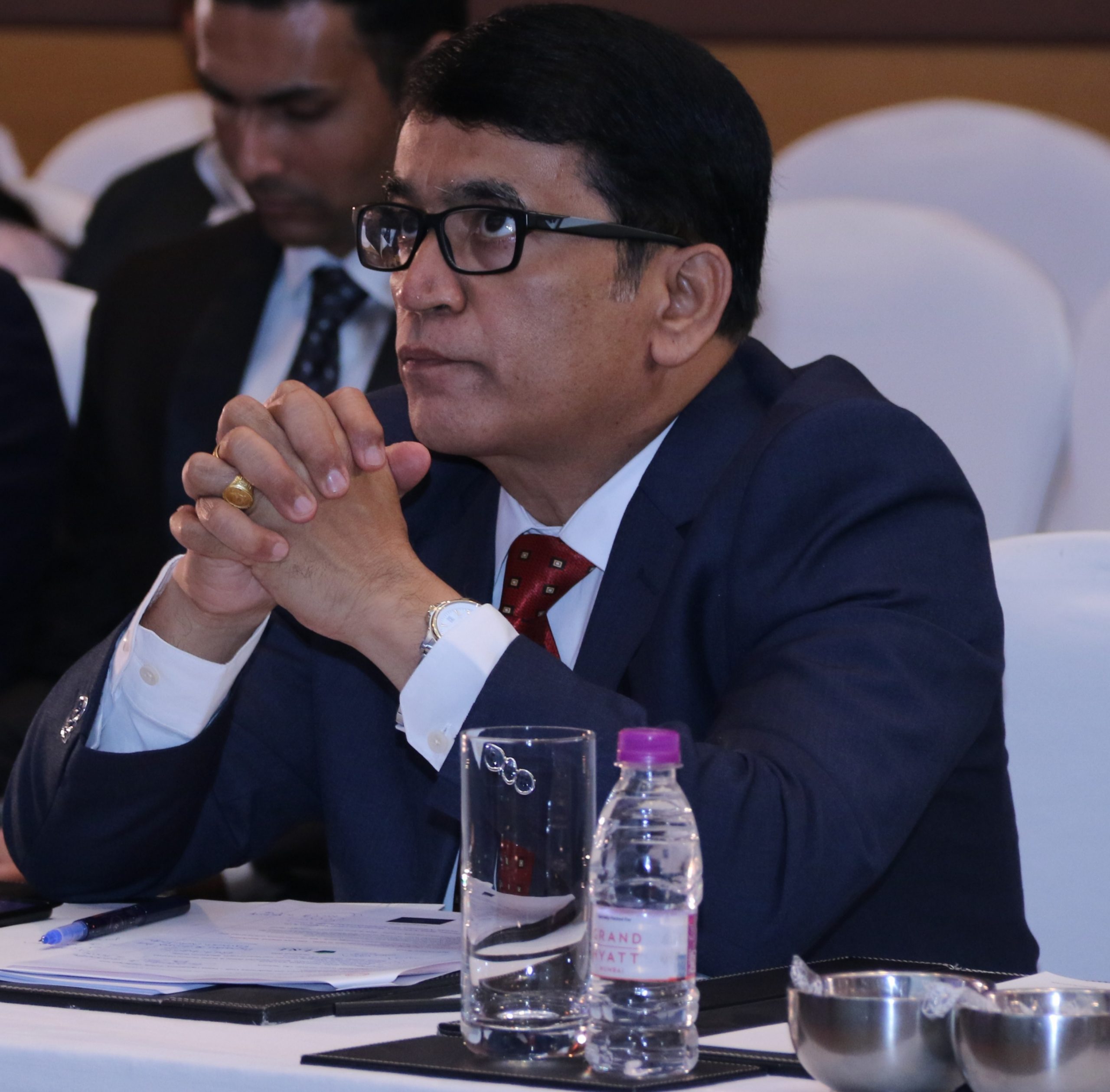
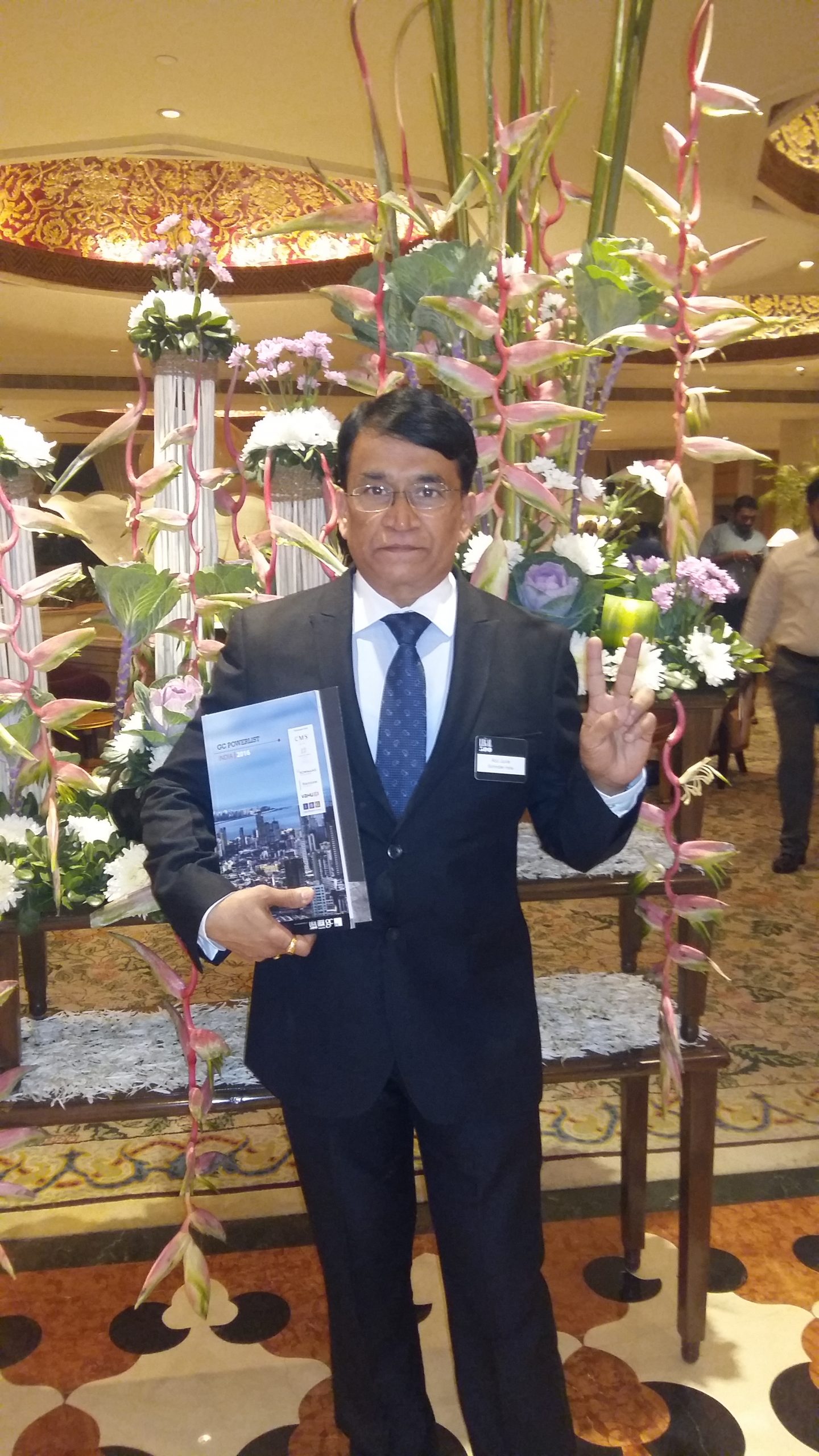
     

  • Nikhil Patel, LL.M. from University College of London, on being a Senior Legal Counsel for DSM Sinochem Pharmaceuticals

    Nikhil Patel, LL.M. from University College of London, on being a Senior Legal Counsel for DSM Sinochem Pharmaceuticals

    Nikhil Patel graduated from Symbiosis Law School, Pune in 2010. He has worked with business teams, as a legal expert, in multiple jurisdictions, including India, Malaysia, South Africa on a variety of corporate and commercial issues. He has also managed litigation in civil, criminal and labour related matters in both India and South Africa.

    Recently, he moved from being the Chief Legal Officer of Cipla Medpro in Cape Town, South Africa to Senior Legal Counsel for DSM Sinochem Pharmaceuticals in the Hague, The Netherlands. He has an LL.M. in Corporate and Commercial Law from the University of London and currently pursuing M.B.A. from the University of Warwick, both through distance learning courses.

    In this interview he talks to us about:

    • Biggest hurdles in the early days of his career.
    • Role of an in house/general counsel in India.
    • Advise for law students on maintaining a good academic profile.
    • What recruiters look for in law graduates.


    How would you like to introduce yourself to our readers?

    I’m a 2010 graduate of Symbiosis Law School, Pune. I’ve worked with Suzlon, Biocon and Himatsingka in the past, and recently moved from being the Chief Legal Officer of Cipla Medpro in Cape Town, South Africa to Senior Legal Counsel for DSM Sinochem Pharmaceuticals in the Hague, The Netherlands. I have an LL.M. in Corporate and Commercial Law from the University of London and am currently pursuing my M.B.A. from the University of Warwick, both through distance learning courses.


    What motivated you to pursue this field?

    I knew I wanted to be a lawyer from a relatively young age, although it was the allure of litigating in court at that point. This quickly changed during my time at college, where I found the intersection between business and law, particularly contract negotiation and creative problem solving, were much more attractive to me. This was particularly evident during my internships, since I enjoyed the in-house internships the most.


    What do you think were the biggest hurdles and challenges in the early days of your career? How did you deal with them?

    The biggest hurdle for me was about Law school is great for giving you theoretical knowledge, however it doesn’t prepare you very well for the practical side of being an in-house counsel. This meant a lot of late nights working on drafting styles, negotiation tactics and strategies and most importantly a superior that is willing to invest in training you, which is especially difficult in a typically underfunded and understaffed support team. I can’t stress enough on how important it is to find people in positions above you that are willing to spend time giving you context, exposure and knowledge.

    Practical legal training aside, there were some skills that I needed to learn (and/or bad habits that I needed to unlearn) like empathetic listening, a risk evaluation and mitigation approach rather than risk avoidance and having a thorough knowledge of the business behind the legal agreements I was negotiating.


    nikhil-patel-2


    What did your work profile at Cipla Medpro consist of and what do you now do at DSM Sinochem? What is the role of an in house/general counsel in India?

    My profile at Cipla Medpro included contract drafting and negotiation, litigation strategy and settlements, labour law, strategic advisory and transactional structuring, competition advice, corporate restructuring, compliance and a little IPR with a strong focus on the pharmaceutical sector in South Africa. The pharmaceutical focus continues at DSM Sinochem, though as a global role rather than limited to a particular geographical area.

    The in-house counsel is first and foremost a generalist. This means that you tend to do a little bit of everything and are expected to have knowledge (a working knowledge, at minimum) of everything. This means that you have to spend a lot of your time being up-to-date on not only the latest business updates of the industry sector, but also on legal updates pertinent to that sector. You play a vital role in the on-going business of your company – through contracts up and down the supply chain – as well as the future of the company by giving input on the strategic direction and advising on risk management and mitigation. Particularly with the rise in costs of external counsel (and reducing legal team budgets), companies are giving more and more responsibility to their in-house counsels, making the role more dynamic and exciting.


    What advice do you have for law students on maintaining a good academic profile?

    A good academic profile gives you a ‘foot in the door’. After that, it is up to you to make a great impression in the interview and ensure that you work hard to learn and add value to the place that you work. Of course it always helps that a good academic profile should indicate that your knowledge base is sound.


    What do recruiters look for in the current crop of law graduates?

    If you are a law graduate fresh out of college most recruiters will test your basic knowledge to ensure that you understand the fundamentals of the law. However, by far the most important aspect, at least from my experience, is attitude and ability. One of my previous superiors once commented while we were interviewing to fill a legal position that everything but attitude and ability can be taught and that those were often the hardest to find.


    When and how did you decide to pursue masters? Was it a professional requirement or an endeavor out of academic interests?

    I pursued my LL.M. simply because at the time I was working on a large number of agreements that were international and I wasn’t sure that I knew everything that I needed to know while I was drafting them. While it was difficult to manage my obligations and my studies, the LL.M. was fantastic in my opinion. It focused on teaching me how to apply the legal principals I was learning, and since I was working while I was studying the LL.M., I was able to put this into practice immediately.

    More recently I realised that if I wanted to grow further in the corporate world, purely legal knowledge is insufficient and that you also need an understanding of how HR, Finance, Marketing, Strategy and the other functions within a company operate. This realisation, coupled with the great experience of the distance learning LL.M. led me to begin the Distance Learning M.B.A. from Warwick Business School.


    What would be your advice to our budding lawyers?

    My advice would be, once you have decided that you want to practice law (whether in-house, at a law firm or as a litigator), make sure it is something that you truly enjoy doing. You’ll find that makes all the difference in whether you excel at it.

  • Ramanuj Gopalan, General Counsel, SAIF Partners on being one of the youngest GC in India and work experience

    Ramanuj Gopalan, General Counsel, SAIF Partners on being one of the youngest GC in India and work experience

    Ramanuj Gopalan graduated in the year 2007 from the West Bengal National University of Juridical Sciences. He got a Pre-Placement offer from Amarchand & Mangaldas & Suresh A Shroff & Co, Delhi, and was part of the M&A and Corporate Advisory Teams. He was made Principal Associate in 2013, after working there for six years. During his career, he has also published articles relating to FDI in major publications. Currently, he is one of the youngest General Counsels in India, at SAIF Partners. SAIF Partners is a venture and growth capital fund invested in helping Asia’s exceptional companies grow from concept to IPO.

    In this interview he discusses:

    • His time at AMSS and his perception of the field
    • The reasons behind his success at AMSS
    • His shift from AMSS to SAIF, India
    • The scope and nature of his responsibilities as General Counsel


    How would you like to introduce yourself to our readers?

    I am a commercial lawyer presently working as general counsel with SAIF in India. In terms of background, I was born and brought up in Kolkata. I did my schooling in Don Bosco School, Park Circus and did my law from WBNUJS, Kolkata. I received a pre-placement offer from Amarchand, Delhi and joined its M&A and General Corporate Advisory team in 2007, worked there for 8 years and then joined my current position.


    What motivated you to pursue this field? Are there any lawyers in your family?

    I am a completely first generation lawyer. No one in my family is a lawyer.

    My introduction to law was mainly from American novels, movies and serials which both my sister and I used to like. Lawyers such as Atticus Finch and the ones in Grisham’s novels fascinated me. I was a science student in school, and while engineering and medicine were popular choices in my region, I was not too interested to pursue these as a career. In fact I had taken the form for JEE but did not give the exam. The plan to study law however, was not fixed till my last year of school. This was when WBNUJS had just opened in Kolkata under Dr. Madhava Menon. While I was not very sure of my chances as I had not prepared very hard or taken any coaching for the exams, I was very happy when I got through as it gave me an opportunity to stay in the city and be with my family.


    Tell us about your experience at NUJS, Kolkata.

    College and staying in a hostel were life changing experiences for me. There was good exposure and guidance in core academic and co-curricular areas such as publications, mooting etc. The experience of staying independently away from home and interacting with people from diverse backgrounds and cultures in college and hostel was also invaluable.

    We had a very vibrant student body at least in our first few years when Dr. Menon was there as Vice Chancellor and Professor Shiju as warden. In the last couple of years, because of the pressure of placement and recruitments this tapered off a bit.

    Since I was from Kolkata, I used to stay in the hostel and go home during weekends or holidays, so in that sense I had the best of both worlds. Of course it was easier for me compared to students from other cities who may have found it difficult initially away from home. Our college is located very centrally and it is very easy to go around the city. Apart from academics I was part of the Recruitment and Placement Committees and also the Constitutional Law Society.


    What advice do you have for law students on maintaining a good academic profile?

    I find students today to be a lot more focussed and clear about their career goals so not sure I am the best person to be giving advice on this! In terms of academics I was never the type to study a lot. However, what I found helpful was to listen attentively in class and take notes as that helped in absorbing what the teachers said and was also helpful to study before the exams.


    You have published many articles in the field of business laws. What advice do you have to give students on how to go about writing publishable articles?

    ramanuj-gopalan-2There are several publications today that are looking for good articles on topical issues. For business related articles the key is the topic selection. It must be relevant and preferably bring some new perspective on the issue. The other important area is that it has to be comprehensive but still concise. The difference with pure academic articles is that the article must be presented in a reader friendly format and not become too technical or legalistic as your audience would lose interest.


    How did you decide on this particular field of expertise? Did your internships help in shaping your current career trajectory?

    Yes, to an extent. The other big factor was career certainty. In my view at least till a certain level a law firm (and a corporate job) is certainly more merit based and democratic than private practise. While private practise also interests me, I feel it is very difficult to find your feet in litigation practise initially and there is very less financial security. So for someone from a middle class background and without any family connections in law like me, a law firm or corporate job was ideal. Corporate law also has its own nuances and constantly challenges you so it is not difficult to remain motivated.


    Tell us about your time at AMSS, Delhi. Did your perception of the industry change in the eight years you spent with them?

    I had a very good time in Amarchand and worked with Mr. Shardul Shroff and some great team members during my time there. I was fortunate to have worked on a lot of interesting and headline deals which gave me great exposure to different areas of law and sectors. One advantage with working in a firm like Amarchand is that you work on larger and more complex deals involving issues from different areas of law, including other practise groups such as IP, Competition, Tax etc. The corporate team, by project managing the deal, has a 360 degree view of the issues involved. Another big advantage is of course the network effect in working with leading lawyers in the country. Systems, infrastructure, training and knowledge management within the firm was much organised. It helps in building a strong base.

    On the second question, yes of course. A large part of what we do develops with practise and experience. When we are new graduates, while there is enthusiasm and energy there still exists a big learning gap which only gets overcome through experience. With increasing liberalisation of the economy the legal field as well as perception of lawyers has also changed for the better over the years.


    What are the secrets to your outstanding performance while you were at AMSS, Delhi? What must one keep in mind before joining such an organisation, especially immediately after graduating?

    Well I guess the first question is subjective but I performed to the best of my abilities and the firm was kind enough to recognise and appreciate my efforts. I feel what is critical in practising commercial law is not just spotting issues but to also find solutions to those issues. One must be keenly aware of what the business requirements are. In general terms, like in any field, there is a lot of hard work and commitment required. Since law firms are in the service industry there must be absolute dedication to the client who is paying a premium for your service. Be eager to learn and committed and have good attitude is what I would advise young lawyers before joining.


    What falls within your scope of responsibility as a General Counsel?

    All legal matters essentially from beginning to end and during the life of the investments. These include fund structuring, investments and exits in companies, litigation and disputes, review of ongoing legal issues, advising portfolio companies, advising directors, sectoral review, coordinating with and managing external counsel and advisors.


    ramanuj-gopalan-3

    What prompted your shift to from handling headliner deals at AMSS, Delhi to becoming General Counsel at SAIF India? How different is the nature of work and the challenges you face?

    While I had very good growth in Amarchand, SAIF presented a fantastic opportunity so it was in a sense moving because of the role. Working as a General Counsel for a fund like SAIF gives me an exposure which would have been difficult in Amarchand at the position I was in.

    The nature of work is very interesting. Handling transactions not just from start to finish but also during the life of companies gives a very unique perspective. It is in a sense putting theory into practise. The people both within my organisation as well as outside I deal with are very dynamic since that is the nature of the fund and the investments. I have to work alongside the deal team and business teams on the transaction, keeping in mind what is required for the transaction/business. Except for the requirement of business development, my work is as challenging (if not more) as was in Amarchand.

    In terms of challenges nothing specific per se but of course the level of support that one has in a large firm both in terms of peer group support, legal infrastructure and databases, domain knowledge is not something that can be found in-house.


    You were with AMSS, Delhi for Eight years. Was it difficult to handle a change after such a long time? What helped make the transition smoother?

    Moving out was really difficult as in a sense you are moving from the really close relationships you have built in the firm over time. Then I had to shift from Delhi to Gurgaon so there was the whole shifting process and adjustment process which my wife and I had to handle. In terms of work there was some learning curve to adjust to the documents, thinking and existing advisor relationships of SAIF. The SAIF team was very helpful so the shift was smooth in that sense.


    Given that you are one of the youngest General Counsels in India, is age a factor, either positive or negative?

    In the venture capital space I would say age is a definite positive as the thinking is very dynamic and hands on and the overall team is also young. It is also easier to learn and adjust at a younger age. In more traditional sectors as well as litigation practise being older would probably be a positive.


    What do recruiters look for in the current crop of law graduates?

    I would say good attitude and commitment are very important. The law school one belongs to, CGPA and co-curricular activities also matter, especially early on and help in getting interview/PPO opportunities. One must be confident and articulate with good communication skills.


    What would be your advice to our budding lawyers?

    Be good in what you are and you will definitely get results. A lot of opportunities are there for lawyers and the legal market in India is also maturing. Keep abreast of technology as I feel legal practise both on the corporate side as well as litigation will increasingly embrace technology in the next few years.

  • Ketan Mukhija, Senior VP at SREI, on role and skill sets required to work in an in-house position

    Ketan Mukhija, Senior VP at SREI, on role and skill sets required to work in an in-house position

    Ketan Mukhija graduated from NALSAR, Hyderabad in the year 2007. He has worked in foreign law firms like Jones Day and Herbert Smith. Thereafter, he returned to India and worked with two Indian law firms at responsible positions. At present, he works as the Senior Vice President (Legal) of SREI Infrastructure Finance Limited, one of the largest infrastructure financing firms in India.

    In this interview Ketan talks about:

    • His career trajectory from working in US & UK and then to India
    • Working in an in-house position as a career option for young lawyers
    • Structure of an in-house legal team in a large company
    • Role of an in-house counsel
    • Skillsets required to work in an in-house position

    Click here to read our earlier interview with Ketan.

    Please share with us your journey so far.

    It is has been a fascinating journey so far.

    After graduating from NALSAR, I started working in the western hemisphere and slowly and gradually, moved towards the eastern. I commenced my career with a firm called Jones Day which is an International Law Firm (ILF) based out of the United States, and has multiple offices across the world. I was working as part of the Merger & Acquisitions and Strategic Alliances team there. Thereafter I moved to Herbert Smith Freehills (HSF) in London. I got a dual qualification to practice as a solicitor in England & Wales within the United Kingdom.

    At HSF, I was working with Equity Capital Market Division, and got an excellent opportunity to work on big transactions. I was involved in the acquisition deal of Land Rover and Jaguar by Tata, which was a tremendous experience. While working for HSF, I had also advised Bradford and Bingley, which is UK’s biggest buy-to-let lender. The recession had just set in, so we represented and advised Bradford and Bingley on tracing of capital, drafting of prospectuses and related documentation.

    Thereafter, owing to personal reasons, I had to shift to New Delhi where I worked for a relatively short stint with two firms, Vaish Associates and Luthra & Luthra Law Offices in senior positions. It was a good experience because working for Indian clients was different where the work areas are generaI as far as the corporate area is concerned. In US and UK, we have very focused and super-specialized areas. In Indian firms, you pretty much pick up a generalist experience and set of transactions. Accordingly, the major areas that I worked on included corporate restructuring, PIPE transactions, private equity, banking finance and energy infrastructure. Overall, I got a good all-round experience at both firms following which I got the opportunity to work with SREI Infrastructure Finance Limited as the Sr. Vice President (Legal, Corporate Strategy and Planning).

    SREI Group is one of the largest infrastructure financing conglomerates in India, having assets worth USD3 billion approx under its management and with almost over hundred entities as sister concerns. It is a huge group which is being held and managed under the auspices of the Kanoria Foundation.

    Many young lawyers want to become in-house counsels and are opting to work as in-house counsels directly after law school. How do you see this as a career path?

    There are a few things which we have to bear in mind. There is some form of uniformity and inconsistency in terms of working in law firms. On the other hand, an in-house counsel has to be flexible according to the organization he/she wants to work with. In the M&A division or capital markets division of any other big firm, the type of work is somewhat on similar lines, depending on the transaction at hand. However, each company has a different structure. The philosophy of a company, organization, structural configuration and the hierarchy will be very different from that of a law firm. Before I shed some light on the content side or the method side, a word of advice for people who aspire to be an in-house counsel, they should do some background research on the type of company they want to work for. In the past, companies used to look for a person who had 15-25 years of experience in the same industry. However, that is changing. Young lawyers are being recruited by companies who are creating immense value and changing the traditional setup.

    It is important to note that, as an in-house counsel, you must know that your role will be more than just a legal adviser; you will be given a much-diversified responsibility which may not be strictly legal in nature. Here, the client is your financial team, commercial team and you are not catering to the entire world but ensuring that there is organic or inorganic growth within the organization, and you undertake the roles of a dispute preventor, cost controller and the right business partner in the literal sense. So, you should keep all the aforementioned points in mind before joining a company as an in-house counsel.

    If you want to generalize the structure of an in-house legal team in a  large company, how will you do that?

    With the caveat, that no two organisations have the same structure. I would like to give an example from the structure in the SREI Group. Under SREI Group, for every legal entity, there is a corporate legal and corporate compliance at each level because the regulator mandates these. A listed company needs to comply with several regulations by different regulators. There is constant interaction with Security Exchange Board of India (SEBI), which supervises all major activities of a company. If there is an acquisition or a potential change in the management of a listed company, everything has to be regularly and periodically intimated to SEBI and the stock exchange where the company is listed. Therefore, the compliance divisions ensure the conformity with the regulators and the RBI. The SREI Group is regulated by the RBI as an infrastructure finance company (IFC). So, we have a lot of interaction with the RBI on fairly regular basis. It is crucial to have a compliance division to ensure that we comply with the existing legal and regulatory framework.

    Almost all companies have a risk management team. The risk management team usually takes the form of an internal audit or a legal audit division. As a company with multiple associate/subsidiary entities, it has to ensure that the internal contractual arrangements and shareholding is managed properly, and there exists a system of checks and balances between the various entities at all levels to ensure that you are minimizing risks at every stage. So, the risk management division assumes a lot of importance.

    There is also a corporate legal at each entity level. On a daily basis, in an operative contract division, there are employment contracts, non-disclosure agreements, term sheets, securities documentation, memorandum of understanding and collaboration agreements which the corporate team needs to look at and thoroughly negotiate with the counterparties.

    A financial institution has many recovery matters, possession matters, civil matters, DRT matters, risk management, compliance, internal audit, etc, so it is important to have a robust litigation division.

    Moreover, at the group level, you have a strategy and planning team that drives and co-ordinates with all the aforementioned divisions.  It is the strategy team which drives the processes substantively across these 4-5 teams. The set up is mature in our organization but it varies with every organization, but this is typically what I have seen in Indian multinational corporations.

    What is the role of an in-house counsel in an organisation? How is it different from working in a law firm?

    The role of a general counsel is in the nature of a true business partner who works as a i) preemptive risk mitigator, ii) cost controller for legal expenses and iii) remedy agent in case there is a legal issue. A General Counsel has a role which is similar to a general physician, who would identify the issues in hand and should be able to guide the business functions in a right direction in case of any legal issues, rather than implementing every function himself/ herself.

    It is important to understand what the scope, ambit and role of an in-house counsel look like. There can be various divisions and verticals in the legal department. You have to involve yourself in the strategic decision-making process of the organization and for that, you need to know the legal risks and help streamline the processes within the organization to ensure that the key issues and the legal matters are being monitored and scrutinized. Then you have to take the strategic decisions keeping in mind the philosophy and the interests of the organization. So one of the key things is actual to be in coordination with the management of the company or the business heads of the company to ensure that all the decisions are taken by keeping in mind the legal risk that can potentially arise. You have to work on commercial transactions with external counsels and law firms to help us on an ad-hoc or retainer basis. If you have a defined skill set, you have to wear the business hat and think like a business head and try to create value at each step. It is important that as an in-house counsel, you should have the ability or skillsets required to set up the right structures to achieve a high level of operational efficiency and continuous improvement of organization and business, the methods ensuring incorporation of the best practices, creating awareness, development of functional centres of excellence and the ability to work under pressure. As an in-house counsel, you should be in a position to handle critical issues which are sensistive or confidential in nature. You have to be fully equipped, informed and in a position to handle that. So the idea is to integrate the legal advice with the business requirement and create value for the organisation. A person has to be a generalist, must have good grasping power, has to be flexible because litigation can change colors tomorrow. Working in an in-house role can be very different from working in a law firm. In a law firm, you might work on one area of law throughout your life, but the variety of work in an in-house function is extremely wide. You have to be very flexible and good to learn and grasp so that you can learn about the collaboration between the corporation office and various group companies optimizing the value of the corporate entity.


    What are the skills sets required to become an In-House Counsel?

    The skill sets have to be both technical and soft skills. You must have the judicious amalgam of the soft skills as well which is very much required because you will be dealing with very stringent timelines and some unexpected kind of pushbacks. When you are dealing with non-lawyers and people from other departments, you will have to be slightly more versatile and more efficiency oriented to ensure that they understand the tone of your language. It is important that you understand both their business requirement and you convey your legal provisions. This is one of the key skillsets that one must possess if they want to work in an in-house role.

    The organization will go on forever, and no person is indispensable in an organization. So it is important to standardize the procedure and processes in line with the business requirements to ensure efficiency and seamless delivery of advisory legal opinion. It is important to have standard points, or starting points or denominators or basis, wherein the position or philosophy of the company is clearly laid down. Those philosophies guide the operations and decision making over the years. So standardization and uniformization are very important.

    It is also crucial to have the ability to drive the processes, because deriving economic value and savings for the organization by bringing in the subject matter expertise and skill sets can only make meaning when you have a high level of operational efficiency.

    For example, if a company wants to embark on an M&A transaction, the law firms will be doing a set of documentation, the technical team and other teams will be doing their own due diligence and submit their report. Everybody has his or her compartmentalized job of work customized to the transaction. However, as a sole point of contact with all stakeholders, you as an in-house counsel should be able to soak all the information from everyone, give it the right shape and ensure that they mold and cast well in the framework that you want.

    You need to stay updated with the latest changes in the position of law so that you can give the best perspective advice from a commercial perspective to the top management.

    What should be the role of a legal head in case of a regulatory vacuum/ grey areas in law?

    While advising the business verticals to act on areas where there are regulatory vacuum or grey areas, a general counsel has the role to pre-empt the risk in a calculated manner and put the same before the business verticals. However, in cases where the existing legal framework is inadequate or fails to meet the current market scenario, it will be important to put forward the problem with the government agencies, either through industry bodies/ associations like ASSOCHAM or individually. Whenever a new law is proposed, generally the government provides a window period of 60-90 days during which the stakeholders can voice their concerns about the new law. It is important that the problem or concerns are clearly identified and proposed solutions are put forward in such cases. These solutions can be based on industry best practices around the world or based on ground realities or the market sentiments.

    Please give your views about the trend in the Indian companies on having a large in-house legal team.

    The trend is towards having a robust in-house function as well. The mantra of any firm is to increase their revenue and decrease the cost. I think having a robust in-house team works much better for me than hiring a law firm every now and then because that is an expensive affair. If you have a good in-house team, then the cost can be curtailed quickly and to a large extent. Because, when you talk about International Law firms, for a simple agreement they will charge you huge amounts. Now, if you have equipped lawyers who have global exposure and are good negotiators, I think they can play a role both in increasing revenue as well as cost preventers to a colossal extent. It is important to have in-house experts in finance, investment, taxation laws who can form the right opinion. One can take help of external consultants, when the volume is huge or when the work needs to be done at different locations, and it is not possible for the internal team to be present at different places. The idea should be to ensure that the person understands the business because that is where it adds value. Consultants will come as an outsider, but here you know the aspirations and expectations and can lead the best optimal advice. So I think the trend is very encouraging, fruitful and also sinks with the simple market logic. It aligns the incentives and disincentives of the promoters. So it is a market-driven kind of move.

    Is there any other aspect you would like to add on to the discussion?

    The role of a General Counsel or a Senior Corporate Counsel is also that of a behavior analyst of the corporate systems. Now there are so many rules to manage the entire litigation, rules to manage the complete compliance kind of platform, rules to administer the contracts. You have to make use of the technology, behavioral skills, core competencies, evolve right system of checks and balances within the organization, and I think that’s the requisite kind of skill sets. and I can probably end by saying that today’s evolving business scenario in the changing market, the role of a corporate counsel is very meaningful in the sense that they are becoming the true partners of the business unit and the company and, to drive the strategy towards higher growth, development, higher bottom lines and top lines. The role of a General Counsel is critical because he work at every stage with CFO, CIO, CMO, and CTO and acts as the point person for the top management. It is important that he gives the right advice to the top management which would drive the strategy for the company. In today’s scenario the role of a general counsel looks very promising.


  • Rajesh Singh, Legal Advisor, on pursuing a career as a Managing Partner of R&S Associates

    Rajesh Singh, Legal Advisor, on pursuing a career as a Managing Partner of R&S Associates

    Rajesh has more than 19 years of versatile and enriching international experience advising corporate clients, CEOs, management members, boards, and business heads. He has worked in the role of General Counsel (South Asia) at 3i Infotech, Associate General Counsel at Capgemini. He has been legal adviser at senior levels in various MNCs, SMEs, and SSIs. He has been instrumental and trusted adviser in various assignments dealing with M&As, NeGP(PPP), international arbitration, dispute resolutions, Private Equity, M&A integrations issues, Labour unrest and unions matters, various matters at Ministry/EOW/Custom/DRI/ Authority, Company formation and registration (Singapore, ME & other Asian countries), data protection/privacy laws, Antitrust/Competition laws, litigations and advisory services for his organization in association with Amarchand&Mangaldas, DLA Piper, DH Law, JayeshAshar, Somandy and Associates,  Little and Company and so on.

    In this interview he talks to us about:

    • His decision to pursue law.
    • His views on career choices.
    • His experience as a corporate lawyer.
    • His advice to go for higher studies.

    How would you introduce yourself, given that most of our readers are law students, law aspirants or professionals in the legal arena?

    For my fraternity, I am one of their fellowship members consistently learning to strike a differentiator when had to compete with each of you at any stage of my life. When it comes to consolidating my energy, effort, and experience, I would like to be called as an astute corporate lawyer with 2 decades of exposure to fortunate opportunities of some international experience. My consolidation of knowledge primarily came from legal-advisory exposures on various corporate and legal activities that governed various businesses, industry, and geography, for the sake of brevity coined as “LexAdvisory”. Today, individually gaining core expertise in all aspects of LexAdvisory is practically not possible for an individual, so it is important to have a team of experts to stand behind an individual under the umbrella of an international advisory firm, like mine RSAA GLocalLexAdvisory Group….remember this is just a beginning.

    You are a B.Com graduate from the University of Mumbai. How did you decide to pursue LL.B.?

    To be frank, in those days of my initial career, my intention was to be part of management hence had immediately done Diploma in Business Management from Indian Merchant Chambers. I had no path to have a career in law. My work, assignments, and some personal and organizational challenge compelled me to do law, further to add, my attitude to have control over the assignment. I found, major snag was legal issues and challenges surrounding the assignment, so completed my law with my employment…

    How well did your experience in Mumbai prepare you for a life of academic prestige and professional success?

    Now, at this stage, after meeting law aspirants from various parts of globe, including the rural, remote and less fluent English speaking areas, I believe being in Mumbai or any similar city will always be to your advantage as the exposure to real-life incidents, ready infra, and occasions of deliberations always going to be a rich experience. Major change in me happened when I started working for global MNCs, because the perspective of life, changes when you enter into a multi-cultural environment. It grooms you differently, by influencing your thoughts, communication, stature, and appearance. It gives a different outlook to yourself and imbibes things to see the world through glass of multi-cultural professional approach, knowledge composition, and personal attitude towards clients (including internal clients) and also “Altitude”, I coined a new personal feature because I felt a point of difference in opinion of astute lawyers of different country not due to legal knowledge but the point of reference from where they see the applicability and feasibility, due to our respective knowledge-peak heights achieved in our respective legal jurisdiction or cultural and environmental sphere each of us belong to; or society that we belong that either regarded smaller issues in one country as high while another country discarded it low, e.g., Data protection laws are different from different countries and seriousness varies accordingly.

    What were the influences on your decision to pursue MBA in Human Resources? Why didn’t you opt for MBA after graduation?

    I was holding all portfolios jointly in a corporate support function and to pursue  highest qualification in Human Resource would help me count as qualified all round. During those days, I was dealing with massive industrial and personnel issues which were unnecessarily chewing away my time. I felt I lacked in understanding issues of management and personnel and at many times could not authoritatively provide solutions to blue-coloured and white-coloured differences. My intention was to stand as an adviser to the management board to tackle all corporate and legal issues; personnel issues were bothering me. I could not stand differentiator in my personal view while convincing management with a workaround was not making me happy.

    What are your views on career choices other than mainstream corporate or litigation streams such as teaching, etc.?

    Today, the corporates have started eying on lawyers to move in the business stream and contribute to business growth and expansion due to their legal analysis, meticulous practice, and advisory skills, taking risk stands minimized at the decision level itself far away to reach this stage but the world is progressing towards the same. Alternately, every individual should get involved in other streams of a career like teaching, etc., may be after gathering some work experience at corporate, law firms and independent practice because that will help relating knowledge with reality and make teaching more attractive and attentive for law students. The legal field itself is so broad that there is no need to move outside the legal stream.

    You have been a corporate lawyer for most of your career. What prompted you to take up corporate law? Share with us any experience which helped you to shape your career choices.

    In my view, corporate lawyer enjoys the power to advise business heads and largely is in a position to influence a decision of management wherever legal and compliance issues are a concern. Surprisingly, amateur corporate counsel also gets an opportunity to advise business heads in most of the corporate structure due to our ability to understand the law better than them and also professional independence is given in our day to day activity. It is your personal inquests and quests that helps you to choose the legal area that you would like to specialize in. The majority of corporate work largely deals with contract drafting and managing litigation in most of the organizations. Few organizations do have an opportunity to go into IPR, M&A, IPO, Financial Arrangements, etc. I have been fortunate to get all of these opportunities at strategic and compliance level, making my knowledge-base versatile, penetrative and probing.

    What falls within the scope of your responsibility? Tell us about a typical work day.

    In addition to above, as managing partner of international law firm, typical work day goes on strategic and management decision to structure the organization, improve the quality of service, monitor the vision and mission, inculcate good practices, motivate the team to support clients and give spontaneous advice to management or CEOs or Managing Directors of the organizations identified as a core clients. In personal observation supervise crucial and critical litigation to get appropriate knowledge and experience to tackle proceedings legally and administratively.

    What is the most challenging or stressful part of being a Partner at one of the most successful law firms in the country? Is it easy to have a work-life balance?

    Obviously, stress is part of your life be as an associate or as a partner because success of a law firm depends on how your conduct is with your client?; what knowledge and experience that you can bring to the pleadings, drafting and arguments? Besides, the challenge of face value in the court, unheard urgencies, few seconds to decide your interim success or failure may discourage your client to count on you even if you have the best army to succeed in a long run. All set and done, if you love your work, you can enjoy the challenges and heal your frustration through your internal mingling and by a sip of tea/coffee or by breathing out the failure and breath in the next moment to move towards your next achievement. Many times, time does not permit you to enjoy your success or cry on your failure as the clock of cyclic success and failure is so much inconsistent that you cannot carry one emotion for long.  Work-life balance is not a myth; you can achieve if you can start your day early and follow a disciplined method to retrieve your information and knowledge.

    What kind of effort should a young associate put into work to get it appreciated? What distinguishes an associate from a partner when it comes to work?

    There is no limit or difference in the effort; your contribution decides your fate and success as an associate. More the partner relies on your work and effort; the less the partner will supervise the associate work. Almost everything is expected to be done by the Associate under guidance and supervision of Sr. Associates, Partner or Sr. Partner. Largely, the scope is drafting, analyzing facts, and research the relevance to withstand weakness and strengthen merits of your matter.

    How important would you say are business development skills at such higher roles in a corporate law firm?

    Knowing the business is very advantageous at any stage of your career, because as a corporate lawyer, the more you know your business higher is the chance of bringing an appropriate solutions or advice. The business heads or management appreciates such corporate lawyer who can bridge law and business on a platter in such a way that both corporate lawyers and business can understand their perceptions and perspective. Besides business skills, the corporate lawyer should also work towards improving its Interpersonal skills, simplified and crisp communication skills. Team Spirit plays a vital role in large. And complex assignments as a collaboration of work is crucial to complete the larger picture as expected by the management within an expected timelines and quality.

    When you hire lawyers under you, what specific skills and profile do you look for?

    Already covered above, to broadly mention, drafting, knowledge seeker, independent in thoughts, out of box thinker, ready to work with right attitude, have excellent and simplified method of communications, ability to demonstrate and express his thoughts in clean and clear way, negotiation skills, etc

    If I want to be a legal advisor how would I go?

    Every aspirant should identify and understand legal and statutory compliance of the industry that you are focussing on. Gather relevant knowledge, team of business and legal experts working on challenges of the Industry, and form part of a forum that can either influence industry legislation or influence legislators by your thoughts, suggestions, recommendation, and actions. Once you have initiated in the above manner, invest your time to peruse legislation affecting such industry and observe live court proceedings in this regard. Peruse case laws and FAQs available on the websites of court and authority (you can refer various other means to get case research materials), to understand regular challenges faced and dealt by that Industry. This kind of development will help you to mature your understanding in respect of business nuances, court’s perspective (Ratio decidendi of the decision taken by various courts or counter arguments placed by other pleaders to understand the strength of your pleadings) and market dynamics. Focus one industry at a time. Target another similar industry, which is logically a business extension of the industry you focused on e.g. ITeS to IT, BPO to LPO, IT to Software Technology then Mobile Technology. Similarly, the logical expansion, in the process of knowledge gathering, is to experience litigation through Business Contracts by way of handling disputes under Alternate Dispute Resolution (eg Arbitration or mediation forming part of Contract; you can further deep dive in this area covering domestic and international arena of every country your organization operates its business); further to add, Contracts, generally, branches out to various legislation or points out to foreign legislation by way of its terms and conditions, hence, review of such clauses should be analysed in the light of such legislation to assess the risk and recommend mitigation plan or compliances there under.

    What would be your advice to students who wish to go for higher studies?

    Industry or legal area focussed diplomas or courses will help recruiter acknowledge your intent to practice in particular industry and legal areas. In India, degree in law, master degree in business administration (if you intend to practice as an in-house corporate lawyer) or master degree in law for practice in court; and any other diploma or courses will always be an added advantage. The student should work during their studies to ensure that business and practical sense is developed while studying and most of the reading will settle in your mind as your wisdom or knowledge.

    What would be your message to our readers who are budding lawyers and law students?

    Budding Lawyers and Law Students should be sincere, hardworking, knowledge seeker, opportunist, aggressive in work and humble in approach and communication; ethical and professional in conduct and approach, good listener, preach what you practice, and finally should have ability to convey your thoughts. Never believe that what you lost after your sincere attempts are the last opportunity for your life.


  • G R Srikkanth, Vice President – Legal, RP Sanjiv Goenka Group on a decade long experience as In-House Counsel

    G R Srikkanth, Vice President – Legal, RP Sanjiv Goenka Group on a decade long experience as In-House Counsel

    GR Srikkanth studied law from Osmania University and graduated in 1996, after pursued LL.M. at the same place in 1998. Currently the Vice President – Legal at RP-Sanjiv Goenka Group, Srikkanth is a rank holder in Labour Laws and IP Laws. His prior assignments include a near-decade experience at HUDCO (Govt. of India) and Govt. of AP.

    In this interview, he tells us about:

    • His decision to do two diplomas in Intellectual Property Laws
    • His experience as a Legal Manager at Housing Urban Development (HUDCO)
    • His advice on drafting infrastructure agreements
    • His achievements and landmark moments at RP-Sanjiv Goenka Group


    Did you have lawyers in your family?

    I have done my schooling and college education in Hyderabad. There are no lawyers in my family, I was very much interested in joining politics and LLB was a natural choice.


    How did you choose to do Cost Accountancy?

    (Srikkanth initially started as a commerce graduate with cost accountant qualification)

    Law was my first choice, but I also enrolled in cost accountancy to gain some accounting knowledge.


    How instrumental was Osmania in shaping up your legal career?

    (Srikkanth studied law from Osmania University and scored 1st division in the year 1996. Thereafter, he did his LL.M. from Osmania in the year 1998 and ranked 9th in the entire university)

    Osmania University’s eminence is unparalleled to any other institution in the country and it is the epicentre to many movements. It taught me a practical approach to looking at things. OU’s environment has always instilled confidence in all its students.


    Tell us about your courses. Share any incident from that time.

    (Srikkanth has done two courses i.e. Diploma in Intellectual Property from WIPO (UN) 2006 and PG Diploma in Intellectual Property Laws – IIT Kharagpur.)

    When IIT KGP started Law School and commenced PGDIPL, I took some break from work and enrolled there. Being in first batch there, we faced some short term issues similar to any new venture. But overall, the experience was enriching. A memorable incident was drafting an invention disclosure for a chemical product. Being a commerce graduate, it took much more effort on my part to complete the project.


    Please tell our readers about what your work experience was like at HUDCO. What did an average day of work look like?

    (Right after graduation, Srikkanth worked as Manager of Law in Housing Urban Development (HUDCO) (a Government of India enterprise) for nearly 9 ½ years)

    I appeared for HUDCO’s exam and got through and this is how I started my career with HUDCO. Primarily, the job involved appraisal of various projects in real estate, and various infrastructures like utility, social, urban infrastructure project.  HUDCO is a leading player in techno financing; it makes feasible studies about the project and finance. I was lucky that major projects commenced in my jurisdiction I got to work in many places across India which helped me learn various local revenue laws and regulations.  Major contribution was drafting of letter of comfort in lieu of State Government guarantee, when there were restrictions in issuing State Government Guarantee due to over borrowings of the State Government. This instrument was even vetted by RBI as a valid document for financing and it’s a first of its kind.


    Share with us the major points one should concentrate on, while drafting agreements on infrastructure projects?

    While drafting infrastructure projects, one needs to contemplate all kinds of risks that may be associated with the project and take a detailed brief from other functionaries like civil, environmental, structural engineering and finance team.  List out all the possibilities and make a provision regarding them in the agreement. Similarly, list out all the applicable laws and appraise the provisions with reference to the project whether they have any impact on the same. Also, address the issues fit-out period, concessions, compliances under labour and corporate laws, insurances and assignments etc. If the lawyer/in house counsel is involved in drafting terms and conditions from the tendering or RFP, then he/she will be in a better position to draft instead of merely vetting the agreements.


    How fulfilling were the last 10 years both on the professional and personal fronts? How challenging and grueling were the difficulties and how did you overcome them?

    (After HUDCO Srikkanth joined RP Sanjiv Goenka Group as Chief Manager Legal and has now been promoted as Vice President Legal.)

    Retail Industry is most challenging and complex in terms of legal and regulatory issues.  Every product whether, food or non-food, is covered under some law or regulation, a Hypermarket where 30,000 products are sold attracts dozens of legal and regulatory issues. For example, retailers need licenses even to sell products like mosquito repellents, cosmetics, etc. Every day is different and there is a need to address issues instantly. Over a decade, I have been able to learn many things.


    Would you kindly share your accomplishments and job specifications at RPSG Group?

    I have been awarded Chairman’s TOP GEAR award in 2008 for best performance in resolving legal issues, I have also been nominated for the Best In-House Counsel for Asia Pacific Award by International Law Office for the year 2012 – 2013. I have managed these laurels with the immense support I get from my wife and son.


    Please tell us a bit about your award by Retail Association of India.

    Retail Association of India (RAI) is an apex body which represents modern retailers and works towards growth for modern retail in India. www.rai.net.in. RAI has various committees representing the functions of Retail. Advocacy Committee spearheads the legal and regulatory issues of Retail Industry. Over the years advocacy committee has successfully liaised with various State Governments and Central Government to address legal and regulatory issues.
    I being a member of advocacy committee have contributed towards facilitating various changes in the field of labour laws, essential commodities laws, insecticide Act, Food Safety and Standard regulations etc., in recognition of these services RAI felicitated me with the award for excellence in Legal and Regulatory services in Retail Trade in India.


    g-r-srikkanth-2

    Kindly share your experience as a Member of the Taskforce on Food and Regulatory Issues and Advocacy Committee of Retail Association of India (RAI).

    Our advocacy committee at RAI is very active and we coordinate with various State Governments and the Central Government on legal issues, especially with reference to retail sector. We have made noteworthy contributions in this regard, for example, exemption from weekly closure, keeping of records in electronic form, changes in food laws and legal metrology.  The primary objective of the committee is to address the issues of the industry and facilitate the members.


    Tell our readers what needed to be done to ensure fair trade practices and what suitable measures are needed to promote the growth of infrastructure and retail sector.

    Major challenges for both the industries are approvals and clearances from various authorities due to which the projects over run and the costs increase. There needs to be a time bound clearance. It will be better to have deemed provisions which are designed such that if there is a failure to accept or reject the projects within a certain period of time, then they are deemed to be approved.


    What are your plans for the future? What advice would you give to those law students wishing to pursue a career in infrastructure and retail sector?

    I advise the young lawyers and students who wish to pursue these sectors to understand the entire process of the businesses and spend considerable time on the project viz., physically visiting the generation station, road project, airport and taking notes and understanding the processes and make the list which can impact the business and how to address the same in the communications/agreements. Keep reviewing various literatures pertaining to the domain in which you are interested.


    Would you like to see yourself in the the role of a lawyer or a facilitator?

    I would like to remain an In House Counsel, as the role of counsel is “more for less” and this function has evolved as a facilitator over time rather than merely being that of a litigator.


  • Saugata Chakravarty, General Counsel, Siemens South Asia, on experience as lawfirmite  v. legal counsel

    Saugata Chakravarty, General Counsel, Siemens South Asia, on experience as lawfirmite v. legal counsel

    Saugata Chakravarty graduated from South Calcutta Law College, Calcutta University in 2001. Thereafter he went to pursue Masters from Cardiff University. He started his career as an Associate at Gagrats and co. where he worked for two years. He joined Siemens in 2007 as a Legal Manager and in February, 2013, he was promoted to the rank of General Counsel. He is currently working there as a General Counsel of South Asia cluster.

    In this interview, he talks about:

    • Law school experience at Calcutta and Cardiff University
    • Work experience at Gagrats
    • Induction at Siemens
    • Journey from Legal Manager to General Counsel


    Given that most of our readers are law students and young lawyers, how will you introduce yourself to them? What motivated you to choose law as a career?

    Firstly, since you mention that most of your readers are law students and young lawyers I would like to say to them I do not have many grey hairs myself – at least that’s how I like to feel! I am currently General Counsel of Siemens Ltd, South Asia cluster, but how I got here is quite interesting.

    Secondly, when I was considering which career to pursue while studying at the Kendriya Vidyalaya at Bilaspur the two professions which really fascinated and attracted me was medicine and law, since I felt I could really touch people’s lives in either field – and make a difference.  I finally opted for medicine and even took the medical entrance test, but didn’t get in. But that did not discourage me as I had my Plan B ready– and turned to Law.


    Tell us something about your college life? What all activities did you participate in?

    I studied Law at the South Calcutta Law College. It was a five-year course. However, the teaching hours were not so usual – 6:30am to 10:30am. So you had the rest of the day free! I utilised this time to go to the local courts – esp. the High Court. Besides the courts, I also was an active participant in various college events and also inter-college cultural events. Moot courts and college fests were important events where I spent lot of time networking.


    How important do you think that extra-curricular activities are to a law student?

    Extra-curricular activities are important for all students, not just law students! As I mentioned earlier I participated in many moots. I was also active in college affairs – and even became elected as General Secretary for two years. This position gave me my first experience in interface with management – since I as general secretary was representing the student body to the management of the college. This gave me my first exposure to working in a team and dealing with many diverse ideas and viewpoints.


    Do you believe that excellent CGPA is absolutely necessary for success?

    No, not at all. How you make the most of your scores is important. So many very successful people hardly had what could be termed excellent grades either in school or college – not only in law but other professions as well. So determination, drive and a go-getter attitude are very often the propellants for success. I would consider that a good CGPA is necessary – but not sufficient condition for success.


    When and how did you decide to pursue Masters? Was it a professional requirement or an endeavour out of academic interests?

    India was liberalising, the economy was being opened to foreign investment. In the emerging scenario I felt it was imperative to gain an in-depth understanding of global commerce and finance and when the opportunity presented itself I immediately opted to do a Masters in Commercial Law. While a Masters is not a professional requirement a person with a Masters would definitely have an edge over others, all other things being equal.


    You have done your LL.M. from Cardiff University. Can you please share your experience at Cardiff?

    It was a wonderful experience! The method of teaching was also quite different. Firstly, our course was taught by practising lawyers – which made a huge difference if you wanted to practice law. That was not so in India. The taught modules made you learn the subject as if you were going to apply that knowledge. So a thorough understanding of the content of the courses was very important.


    Looking back, how significant do you think that your legal education was? When did you happen to experience the learning curve?

    The learning curve continues – more so in a field like law. Legal education in India needs more practical emphasis.

    Many years ago, the Bar Council of India had come up with an apprentice system under a lawyer with more than a decade and half in the profession – 16 years to be exact. This unfortunately never saw the light of day, due to legal challenge mounted from various quarters and was ultimately struck down by the Supreme Court on some technical grounds.

    A couple of years ago, an All India Bar Exam was introduced for all lawyers passing out from various law schools – who had to take this exam in order to practice. I think this an excellent step in the right direction.


    Please tell us about your experience with regard to your first two years of work as an Associate at Gagrats & Co.

    When I joined Gagrats as an associate, it was the first time I was working in a big law firm. The two years I spend there was a very rapid learning experience in a very wide variety of commercial and corporate law. I closely worked with the partner – Jehangir and Rustom Gagrat. At that time the firm was undergoing a split – in fact had already undergone a split – and when I joined there was a fair amount of uncertainty (and excitement!). I took that challenge to continue and prove my worth.


    After two years of work at Gagrats, you joined Siemens as a Legal Manager. What led to this shift?

    Siemens got in touch with me as there was an opening available.  I readily accepted their job invitation and joined as a manager. The reason for this shift was that I wanted to experience working in-house in a large transnational corporation and I was quite curious  to know what happens to the opinions you give in law firms – how are they dealt with by the recipient of the advice. So in a sense I was crossing over to the other side and seeing it from their perspective.


    You currently work as a General Counsel – South Asia Cluster there. What qualities do you think helped you to achieve this status?

    Well, I guess ability to lead and get along with and pull together people from diverse backgrounds while at the same time interacting with management, and I guess my passion for my work! The main qualities I think would be helping advance the business goals of Siemens and in protecting the Company’s reputation for integrity and leading and developing a fairly large team when I was lead lawyer of a couple of business divisions.


    Many lawyers would say that the actual learning takes place in the years of practice. How far would you say it is true?

    There is a lot of truth in that. At the same time, you could start gaining the actual learning while still at law school if you spend your vacations and spare time in the courts or in the chambers of experienced lawyers or at law firms.


    What is a workday like for you?

    No day is like the previous day! And in large multi-national company’s legal department work never follows a settled pattern – despite various conscious attempts to standardise the work of in-house counsel. Challenges occur each day. And unlike a law firm your duty does not stop at the point of only giving advice – but also ensuring that it is followed!


    What kind of legal work is there?

    We get work encompassing diverse branches of law – which is different from our core areas of advising on projects and infrastructure.  Despite that, very little work is outsourced to external firms – other than actual litigation in the courts. We have quite a sophisticated system of selecting external firms.


    Would you say that there exists a difference in the working environment of a law firm and legal department of a company?

    Yes, and as already mentioned, giving advice is one part, discussing the same and implementing it with all stake holders is altogether a different kettle of fish!


    Would you say the opportunity a firm provides for a young lawyer is worth the trade off in building a reputation?

    All depends on a particular individual. People with entrepreneurial flair generally tend to strike out on their own. I find I enjoy working with challenges – both in workload and timelines. Building a reputation to gain success requires good, solid hard work and years of dedication – and many a times a stroke of luck. I don’t see any trade off – at least in the initial formative years. Since working in a firm or on your own – you are still on the lower rungs of the career ladder and what reputation you will garner will of course depend on how the initial years go.


    What are the primary essentials of a corporate lawyer? How do you say a fresh graduate can work on building these skills?

    Good domain expertise – knowing the law, solid analytical abilities, ability to communicate well and of course hard work!  A fresh graduate could look for a mentor….who could either proactively guide the young lawyer or the fresh graduate closely observes how the senior goes about with her/his work – and extract and internalise from observing. The latter is usually the case in learning the ropes since seniors rarely have the time to do individual mentoring, as they might be overseeing many other young employees or fresh recruits.


    How do you manage to strike a balance between your personal and professional life?

    The balance is still being perfected! Once I have struck that balance, I will let you know.


    How important would you say are business development skills at such higher roles?

    For law firms it is getting to be quite important. GCs are not only trusted business advisors but also business enablers. So we not only partner with Business, standing shoulder-to-shoulder, but are also business enablers – ensuring the business goals of the Company are reached by ensuring effective legal risk management utilising all the opportunities presented by law.


    What is your opinion on generalisation v. specialisation?

    There are good arguments for both. Of course if you specialise then you should take your specialist skills to a place where some use is made of it. Otherwise don’t bother – you can carry on fine being a generalist. You might be interested in knowing, I have set up a platform in Siemens legal department whereby people with expertise in a particular area of law can collaborate with others who can gain invaluably from such expertise and experience – expertise which they may not be aware was existing in the Legal department since most of us sit at diverse locations and do not meet very often in person. The name of this grouping is SMEG – Subject Matter Expert Group – and this is the first place to look for support in a specialised area of law.


    Is there anything you would like to have done differently?

    I feel I have done things differently and loved every moment of it….maybe in hindsight I could have done my Masters after I had gained a couple of years experience as a lawyer.


    Does Siemens Group take interns? What is the process for same?

    Yes we do. Your readers could contact our HR for the same. The job description for every opening is quite detailed – being good at your work is obviously a given. And then of course the usual other “must haves” like “soft skills”, etc. I also wish to let you know that once a person is recruited in Siemens legal department, the Company provides a myriad of opportunities for further career development. We have learning colloquiums, centres of excellence, leadership development centres, advanced management centres all aimed at grooming employees so that they realise their full potential.


    What would be your message to our readers who are budding lawyers and law students?

    Hard work focused sensibly and utilising all opportunities that come your way, no matter how slight, will always get you results and help you achieve your dreams! So please go for it!