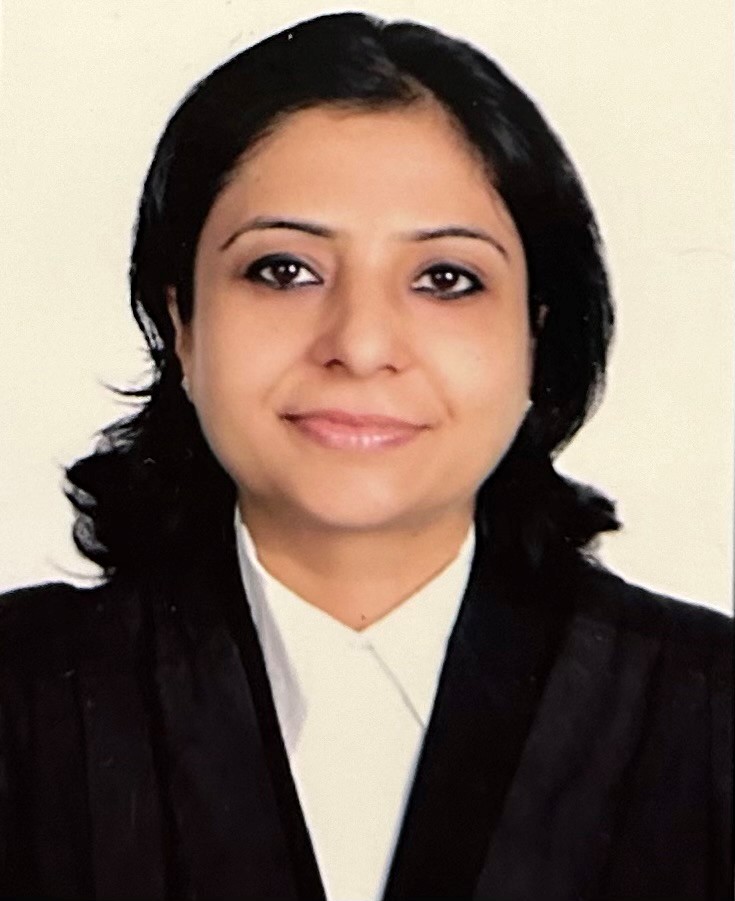
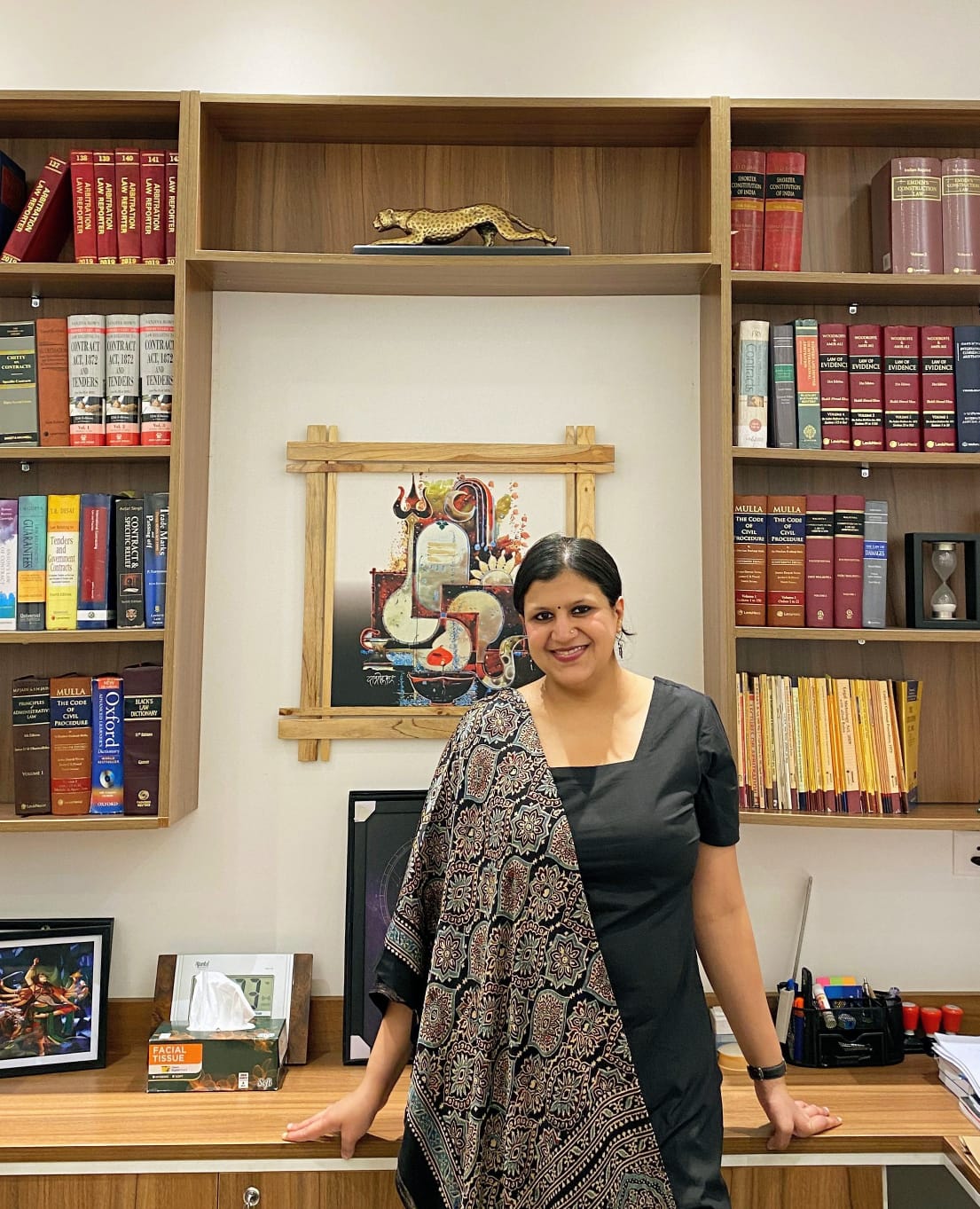
Tag: General Litigation

  • “The ability to work hard, good recollection capacity, vivacity, positive attitude are what I feel some of the most important qualities for a litigation lawyer” – Nishant Kr. Srivastava, Advocate-on-Record at Supreme Court of India and the Founder & Managing Partner at Actus Legal Associates & Advocates.

    “The ability to work hard, good recollection capacity, vivacity, positive attitude are what I feel some of the most important qualities for a litigation lawyer” – Nishant Kr. Srivastava, Advocate-on-Record at Supreme Court of India and the Founder & Managing Partner at Actus Legal Associates & Advocates.

    This interview has been published by Anshi Mudgal and The SuperLawyer Team
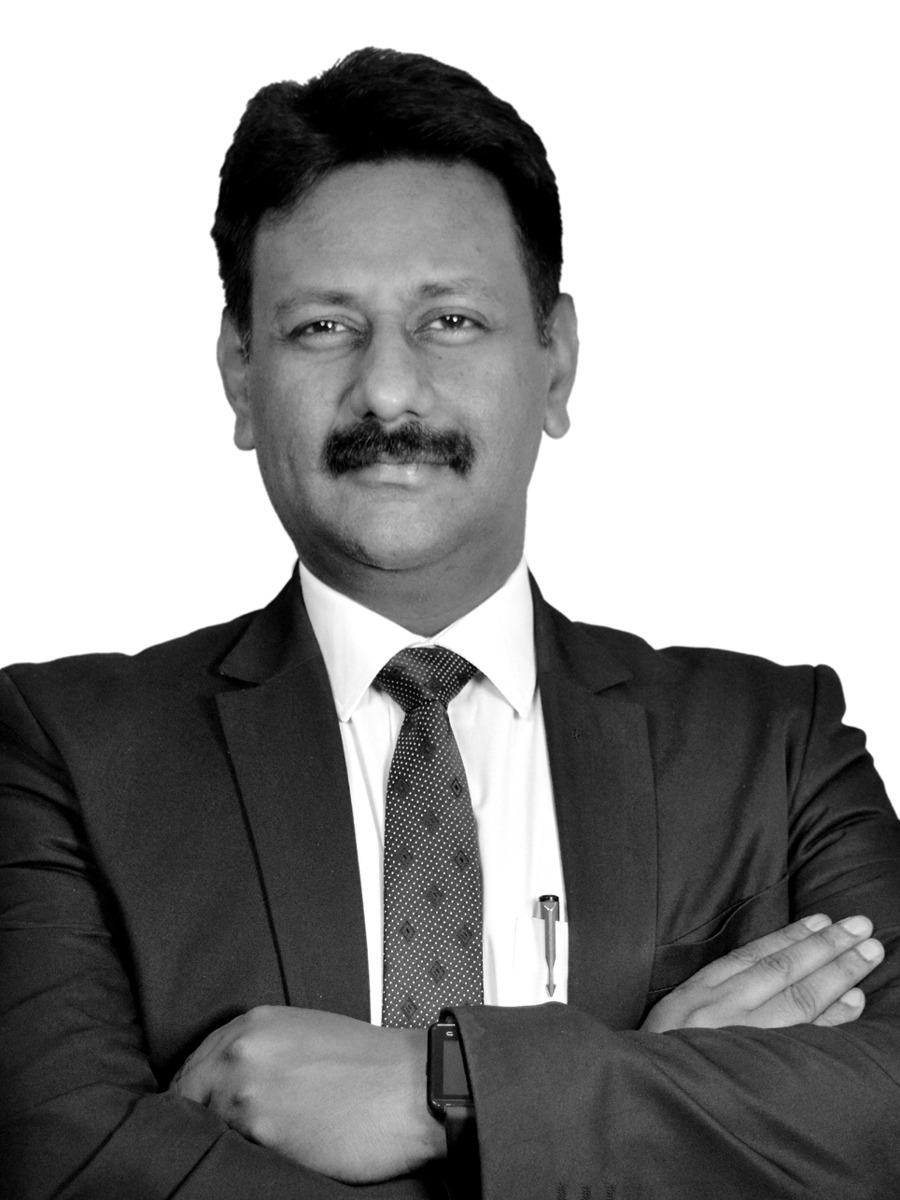
    As an Advocate-On-Record (AOR) and with over a decade of experience in the field of law, what initially inspired you to pursue a career in law, and how did your passion for the legal field evolve over the years?

    Honestly speaking, it was destined for me to become a lawyer! I had been a Civil Services aspirant after my Graduation and had also reached till the Interview stage the Civil Services Exam (CSE) conducted by UPSC. In 2005 I joined Law Centre-II (at that time evening classes at Atma Ram Sanatan Dharma College) of the Faculty of Law, University of Delhi, Delhi during the later period of my CSE preparations. However, in the same year I once again cleared the Prelims and had to write my UPSC Mains and the dates coincided with my First Semester Law exams and I had to make a choice. I chose the UPSC Mains over the law exam and so did not attend the law classes resulting in shortage of attendance and my not being able to fill the form and appearing in the exams. 

    Later on in 2009, I again joined the Faculty of Law, but this time the Campus Law Centre (CLC), Faculty of Law, University of Delhi, Delhi. 

    Coming from a relatively small city i.e., Gorakhpur (UP), I, for the first time, realised during my preparation period in Delhi that law is just not only a respectable career option, but also Delhi is the best place for anyone who has no other support system/ a first generation lawyer, apart from her/his own hard work and competence. 

    Also, from the college days, my friends used to tell me that I was good at communication- both oral as well as written, and once my attempts at CSE were over in 2006, I was faced with a grim situation and I was required to find a career option, where I could utilise my strengths to support my choice of career. And at this time law as a carrier option looked to me as the best career option, looking at my ability to study for long hours (honed during my CSE preparation days) and a good communication skills, especially in English, and having my earlier small brush with the study of law made the decision to pursue law as a career option a forgone conclusion. 

    In the early stages of your career, you worked with trial court seniors and also managed your independent practice, handling cases across all the three tiers of the courts in Delhi-trial, High Court and the Supreme Court of India. What were the most valuable lessons you learned during this phase that helped shape your career path?

    In my 2nd year at the CLC became the Student Convenor of the Seminar & Discussion Society of the CLC, apart from being one of the Student Editors of the Delhi Law Review (DLR), the renowned Journal published by the Faculty of Law, University of Delhi, Delhi, and I was also one of the Student Convenors of the Legal Aid Society of CLC. This gave me enough exposure and opportunity to meet and initiate an informal conversation with some of legal legends and top jurists of the country. It was during those discussions and interactions, I realised that being a first generation lawyer, I must know the basics and go for an organic growth and progression in my career- from trial works to appellate works. When all my Batchmates were planning to join some of the top lawyers and chambers in the Supreme Court and the High Court, I was searching for a good trial court senior, by the time I completed my course.

    Building a career in litigation can be challenging, especially as a defense lawyer dealing with white-collar crimes. What were the initial obstacles you faced, and how did you navigate and overcome them to establish yourself in this competitive field?

    Usually in any case involving allegations of a white collar crime, the accused is a well to do person having all the facilities, including a battery of lawyers. In such a scenario, initially it was difficult to make such risk aversion taking people to convince that I can handle their case well and have the requisite competence and skills, however I think what worked for me was the fact that in the courts whenever I was acting as a defense counsel, even in smaller cases, I used to give my 100% and used to put more hard work than many of the established lawyers would have put. This became noticeable not only to the Presiding Officers, Additional Public Prosecutors, Niab Courts and the police officials, but also to the litigants waiting for their cases to be called. This gave me visibility. Also, I enlisted myself with the South District Legal Aid Society (DLSA-South) in the initial days and rendered my services to the best of my abilities  as a Legal Aid Counsel (LAC) in those matters where the poor accused persons, because of lack of wherewithal, were unable to get good representation in the courts. 

    When handling both ad-hoc and institutional arbitration cases, what core skills and strategies do you rely on? Can you share an example of a particularly difficult arbitration case that you were able to resolve successfully?

    I would honestly say that Arbitration is akin to an exalted Civil Trial. And if one doesn’t have the experience of conducting trials, especially in civil cases starting from drawing up the case from the scratch and skill in cross-examination of witnesses, that is going to be a big handicap for the lawyer intending to succeed in the field of arbitration. Fortunately, I started my career in the beginning years in trial courts, apart from frequent appellate and HC/ SC/ NCDRC works. And this decision to start from the trial courts was only because I was fortunate enough to interact with the stalwarts and who and who of the Indian legal system during my Law Faculty days as the Student Convenor of the Seminar & Discussion Society of the CLC. It was one unanimous piece of advice, as a student of law, I had received from them, i.e., to know the basics and to learn the trial works, especially being a first generation lawyer and an outsider in Delhi. 

    In my first Arbitration case, the seat of which was in Kolkata, West Bengal, before the Ld. Sole Arbitrator Sh. Sushanta Chatterjee (who recently passed away), former Judge Calcutta High Court, where the Respondent had, citing a big theft at their site because of the alleged deficiency of service and dereliction of duty on the part of my client (a Manpower Supplier), had withheld payments of my client. Much depended on the veracity of the story of theft as alleged by the Respondent. At that point of time, my first-hand experience at cross-examination stood in good stead in Kolkata and I was able to show/ expose that the alleged theft never took place and it was a just ploy on the part of the Respondent to not to pay the dues of my client. This clinched the case in my favour and I won the Award for my client.

    In defending clients in cases involving economic offenses, such as those handled by the EOW, CBI, or ED, what do you believe are the key considerations in crafting an effective defense strategy? Could you highlight a case that was particularly interesting to you?

    Usually, and if I may say, invariably, the EOW and CBI has a penchant for filing voluminous chargesheet and enlist 30/50/85 witnesses, if not more. And here there is enough scope of contradictions and loopholes. As a defense lawyer representing an accused, I am not required to prove that my client is innocent beyond reasonable doubt, since the same is the burden of the Prosecution and not the accused. A careful reading of the chargesheet and statements particularly of the key witnesses, gives sufficient points and opportunities to show to the Court that there is difficulty in accepting the case of the prosecution and there are doubts and contradictions and there are two views possible and after that I leave the rest to the Court to decide. In fact in many EOW cases, I have got my clients discharged at the initial stage itself. Obviously, the knowledge about the latest judgment is something, inter alia, which clinches the decision in your favour. In an interesting case being tried u/s 420 IPC, the CBI has summoned on a single day a number of witnesses. The trial had started almost 6/7 years after the case was registered. By that time many witnesses were not traceable and those who had come had shifted to different places outside Delhi and had travelled to Delhi from distant places. That very day, due to the sheer number of witnesses (complainants) and the heavy board of the court concerned, matter was getting adjourned. The witnesses showed reluctance to come again for the examination in chief and cross-examination. At that point of time, I was able to get them to compromise and get their statements recorded. On that single day most of the witnesses compromised with the accused and the case became very weak. Later on, in the cross examination of the few remaining witnesses, I was able to show that the prosecution was not able to prove its case beyond reasonable doubt.

    You are highly regarded for your expertise in matrimonial disputes and family law. How do you view the changing landscape of women’s rights in matrimonial cases, and what are the major challenges you come across while dealing with matrimonial cases?

    Unfortunately, matrimonial disputes are one of the fastest increasing legal disputes in India, at least in Metropolitan cities like Delhi. The ability to adjust and let go of certain things, which at the first place should not have been an issue at all, I am sorry to state, has become more and more scarce these days. Intervention of the family members, especially because of the instant calls and the tendency of the people to “create evidence” has weekend the mutual trust and faith a couple ought to have for any marriage to work. I am happy to see that the Courts in Delhi have become more and more gender neutral, especially in the matters instituted under the various provisions of the Hindu Marriage Act, 1955. The same is the situation in cases instituted under s.144 of the Bhartiya Nagarik Suraksha Sanhita (BNSS) (old s. 125 CrPC). Over implication of the relatives and distant relatives in DV Act matters by the aggrieved are being frowned upon by the Judicial Magistrates. 

    The major challenge, I think, is the lack of cogent and convincing evidence in matrimonial disputes, since most of the allegations pertain to something which had happened within the four walls of the matrimonial home. And this many a time, gives opportunity to a party to level baseless and sometimes ridiculous allegations!  I am also especially sad to see how the children suffer due to the mutual fight between their own parents. I strongly  feel that any lawyer handling such matrimonial cases must be a sensitive person herself/ himself because that is the only thing which might help the litigating couple who are blinded by their mutual distrust and hate towards each other and who would go to any extent to prove that the other person was wrong and he/she has been wronged. 

    As the founder and managing partner of Actus Legal Associates, how do you effectively manage a team of 7-10 lawyers while ensuring consistent performance and a steady flow of work across the firm?

    I believe in self-control and believe that no one can help a person who is not willing to help herself/ himself. So, I always try to make my colleagues and juniors realise that they have to take responsibility and deliver the results. Litigation, among other legal areas of practice and when compared with other areas of practice in law, is very demanding. Only highly motivated people can survive in litigation. 

    I believe in situational leadership and delegation. Once the expectations are clear and one is clear with the facts of the case at hand, I trust my team to deliver the results. Discussions and deliberations and constant evaluation of the progress of the cases we are handling through our own internal mechanism, I think helps us to ensure consistent performance and steady flow of work across the firm.

    For young lawyers aspiring to specialize in litigation, arbitration, or criminal defense in India, what advice would you offer? What key skills and personal qualities do you believe are essential for success in these areas of law?

    Your this question is precisely the same question, which as a law student and the Student Convenor of the Seminar & Discussion Society of the CLC, I used to ask the Legal Luminaries, since I was one coordinating and inviting those Supreme Court and High Court Judges and the doyens of the Bar to the CLC for events, lectures and conferences and many a time, I used to get some free time with these seniors in the profession. Since many of them were alumni of CLC, the chats were pretty friendly. I was told invariably by everyone I had put this question, that I must know the basics and spend some initial years learning trial work, both civil and criminal and this is what I will advise the young lawyers aspiring to specialize in litigation, arbitration or criminal defense in India. 

    Inter alia, the ability to work hard, good recollection capacity, vivacity, positive attitude and what I feel are some of the most important qualities for a litigation lawyer, I also feel that a litigation lawyer must be ready and be there in the court much before the court starts. Being before time, gives sufficient time to once again go through your file, talk to the client and be abreast with facts of the case at hand. Many times, your ability to keep an open mind and not acting only as per your strategy made last evening, just being alive to the requirements and queries of the court, carries the day for you. Ability to network with people outside your profession is also one of the important skills and qualities, I believe are essential for success in these areas of law.

    Looking back at your career, what has been your most fulfilling case, and what were the learning experiences that you’d like to share with us?

    In one of the matrimonial disputes cases, where both the parties had married with each other after their unsuccessful first marriage and had a baby born out of this second marriage, I played a crucial role to ensure that the matter is settled through mediation in which there was no intervention of the families of both the parties. Actually, I sensed during the initial days of my engagement as a counsel for one of the parties that the real culprit for the impasse were the parents of both the parties and the couple were having almost cordial relationship and it was only because of the unintended but damaging interference by the parents from both the sides, the relations had become strained to the extent that one of them had filed a petition for divorce on the ground of cruelty. I impressed upon the Ld. Family Court to send the matter (despite I having been drafted the WS and carrying the same in my hand to the Court) to the Mediation Centre and be taken up under the supervision of the most experienced Mediator and the parents of both the parties be strictly barred from entering the Mediation Room. That worked! The moments the parents were barred from interfering, the couple was able to come to an amicable settlement and resolve their grievances. I am happy to inform you that as on date those warring couples are living happily together with their beautiful child. 

    The experience which I gained here was that a lawyer must also be a good listener, especially in family matters and the best way to resolve a matrimonial dispute is amicable settlement. Dehors the din, usually matrimonial matters are more about small issues generally connected with adjustments and if one is able to point out and target and resolve those small issues, many families may be saved from disintegration and ending up in divorce.

    Get in touch with Nishant Kr. Srivastava –

  • “For anyone starting out in this legal profession, my advice would be to choose a mentor, not just a workplace. If the right balance is hit, you get a family, and not mere bosses and colleagues.” – Dhrupad Das, Partner at Panda Law.

    “For anyone starting out in this legal profession, my advice would be to choose a mentor, not just a workplace. If the right balance is hit, you get a family, and not mere bosses and colleagues.” – Dhrupad Das, Partner at Panda Law.

    This interview has been published by Anshi Mudgal and The SuperLawyer Team

    With over 15 years of experience in law, did you always envision a career in this field? How was your experience studying law at Symbiosis Law School, Pune?

    This is one of those questions that comes up in almost every interview—whether I’m answering it or asking it of others. And I think it’s because it goes to the heart of how focused and dedicated a person is when embarking on a career in law. Law, unlike many other professions, requires an immense amount of internal motivation to push through the tough times.

    To answer your question: no, I did not always envision myself as a lawyer. However, I knew from a young age that my strengths lay in words, speaking, reading, and intellectual work. I felt confident in these areas and knew they would guide me toward a suitable profession. But where exactly they would take me remained unclear for a long time.

    The closest I came to consciously choosing a profession was when I dreamed of becoming a marine biologist. I loved the ocean and was enchanted by the idea of swimming with whales and other large sea creatures—probably inspired by watching numerous nature shows. But once I discovered that marine biology required studying sciences after the 10th grade—subjects like physics, chemistry, and biology—that plan was quickly abandoned. I raised my hands in surrender and asked my parents for guidance.

    The second career I considered was becoming an IAS officer, like my father. However, my father dissuaded me for reasons that are beyond the scope of this interview. Eventually, after family meetings and discussions, a consensus emerged: I should become a lawyer. The reasoning was that law is a “platform profession,” offering a wide range of opportunities and avenues. My family believed I had the temperament and acumen for it, and they also felt that if I ever wanted to change directions later, law would provide a solid foundation.

    I’m grateful for the support and wisdom of my family in steering me toward this profession. They made a great call on my behalf because, in hindsight, I’ve never wanted to do anything else. Being a lawyer has not only worked out for me but has also intellectually stimulated, motivated, and nourished me in ways I couldn’t have imagined.

    As for my time at Symbiosis Law School, Pune, I can only speak positively about it. It was a significant learning experience and, in many ways, transformative. It marked the first time I stepped out of the dual bubbles of home and boarding school—I had studied at Mayo College for nine years. Living on my own in Pune, alongside friends (several of us from Mayo landed there at the same time), was an entirely new experience.

    I would describe my time in Pune with words like fun, educational, and maturity-inducing. It made me independent and helped me understand the value of friendships. We used to joke that ‘Symbi taught us law, but Pune taught us life.” I wholeheartedly agree. Spending half a decade in one place gives you the opportunity to discover yourself—how you want to identify, behave, and respond to both pleasant and unpleasant experiences.

    Of course, it wasn’t without its ups and downs. You get into trouble; you get out of trouble. You make mistakes and grow from them. You learn to navigate relationships, conflicts, and emotions. But that’s the beauty of the experience—it’s all-encompassing.

    On the academic side, Symbiosis did its part as well. Classes were organized well, and while the attendance rules were fairly relaxed (which can be both a blessing and a curse), I think they struck a balance. In the end, I believe the institution delivered, as evidenced by the success of its alumni. Pune and Symbiosis shaped us into who we are today, and I’ll always be grateful for those formative years.

    Your time at the Chambers of Sh. Arun Kathpalia must have been formative. How would you describe your overall experience working with a Senior Advocate and what were some key lessons you learned under his mentorship?

    You’re absolutely right—my time with Mr. Arun Kathpalia was immensely formative. Coming out of Symbiosis, I didn’t have a concrete plan for my legal career. I was clear about what I didn’t want to do—I didn’t want to join a firm (ironic in hindsight) or work in-house at a company. Joining a chamber felt like the natural choice, and I was fortunate to have been introduced to Mr. Kathpalia through my school history teacher.

    I interned with him during law school, and the experience was both enlightening and gave me the confidence which I never realized I was lacking. It was after that internship I fully embraced the fact that I was going to be a lawyer. This was probably because he was kind, knowledgeable, and approachable.

    On the professional front, the biggest lessons I learned from him were many, but let me just list the top few:

    1. Be thorough: Always read your files, know the facts, and leave no stone unturned.
    2. Research is key: He emphasized researching through commentaries and books for deeper conceptual clarity. He was always sceptical of the “Ctrl + F” approach.
    3. Know when to speak and when to remain silent: Discretion is the better part of valor, and knowing when to keep quiet can be as important as knowing when to make your argument.
    4. Know thy judge: Understanding the judge is critical for any case.

    Beyond professional skills, he emphasized the importance of balance. He made time to play tennis regularly, regardless of his workload, which inspired me to prioritize my health as well. He also fostered a positive office culture. He was patient, understanding, and always ready to teach. While he is an exceptional lawyer, I often say he is an even better teacher—and that’s saying a lot.

    He also has a phenomenal memory. He could recall case details effortlessly and recite works of literature—like Oscar Wilde’s Lady Windermere’s Fan—from memory. I vividly remember verifying one of his recitations and finding him word-perfect. His love for English literature and language was something we shared, and I think it shaped both his personality and his practice.

    He encouraged intellectual curiosity beyond the law. During my time there, I explored topics like blockchain, climate change, synthetic biology, Austrian economics, etc., and he was always open to engaging in discussions that went beyond the profession. This approach showed me that being a well-rounded human being makes you a better lawyer.

    Some lessons were smaller but equally profound. For example, after my first car accident, he said, “Now you can truly enjoy the car—until the first scratch, you’re always afraid of it.” His advice on fashion was equally memorable: “Don’t dress so well that people look at you twice, and don’t dress so poorly that they look at you twice.”

    In sum, my time with Mr. Kathpalia was about mastering the larger game that is life. He wasn’t just a boss; he was a mentor. For anyone starting out in this profession, my advice would be to choose a mentor, not just a workplace. If the right balance is hit, which in my case it was, you get a family, and not mere bosses and colleagues. The right mentor can shape your career and your character, and for me, Mr. Kathpalia did both.

    After working with a Senior Advocate for nearly a decade, what inspired you to start your own practice? What challenges did you face in the early stages, and how did you manage to overcome them?

    Starting my own practice was both a push and a pull. In Mr. Kathpalia’s chamber, it was always clear that working there wasn’t a permanent arrangement—it was meant to be a stepping stone for growth. I saw my senior colleagues transition out to start their own practices, and I knew I’d have to take that leap eventually. Law, at its core, is an entrepreneurial profession; sooner or later, you have to go out on your own. For me, that realization came naturally over time.

    Web3 was the perfect opportunity to make that leap. Back then, it was mostly referred to as cryptocurrency, and terms like blockchain and distributed ledger technologies (DLT) were just starting to gain traction. I became deeply interested in the space, and that interest eventually led to work referrals from Dubai. These clients needed a firm—not just an individual—to handle their matters, and that’s what pushed my friends and me to come together to form Panda Law. It was a humble beginning, but a meaningful one.

    Of course, starting a practice came with its share of challenges. The first and biggest was finding clients. When you’re in a chamber, your focus is purely on the work—clients and payments are handled for you. But starting from scratch means building everything yourself: finding clients, setting up billing cycles, paying your team before paying yourself, and relying on your savings to get through the lean days. Financial insecurity was a real struggle in the beginning, and the uncertainty weighed heavily on me at times.

    The trust and support of my partners made all the difference. We were friends before we were partners, and that foundation of mutual respect and collaboration helped us navigate the tough times. It’s hard to overstate how valuable friendship and trust are when you’re building something from the ground up.

    Running a firm also meant adapting to roles I wasn’t used to. Apart from delivering high quality legal work, I had to train and retain associates, manage cash flow, ensure clients paid on time, and sometimes even take loans to keep things afloat in the short term. Balancing the operational demands of running a firm with delivering high-quality work was a steep learning curve. And keeping the team motivated while juggling all of this? Definitely not easy.

    Starting your own practice is, above all, a lesson in humility. You face rejection, financial strain, and setbacks, and it forces you to become collaborative and interdependent. Lone-wolf strategies simply don’t work when you’re building a practice from scratch.

    One unique challenge we faced was establishing our firm in Guwahati. There was this persistent belief—often reinforced—that there wasn’t much scope for corporate lawyers or advisory practices there. Ignoring naysayers, especially when they’re people you respect, and carving out your own path is its own kind of challenge.

    That said, the rewards of running your own practice are immense. While the outside world often sees only the successes, the real journey is a test of trust, self-belief, and determination. My advice to anyone considering this path is to speak to someone who’s done it before. I had a conversation with Mr. Kathpalia about what to expect, and his insights and advice have stayed with me ever since.

    With over 15 years of experience in civil-commercial disputes, what has been one of the most complex cases you’ve handled before various judicial and quasi-judicial forums?
    I’ve always found that cases in new jurisdictions or with unfamiliar subject matter tend to be inherently more complex—there’s no well-trodden path to follow. By that measure, one of the most challenging cases I’ve handled was right at the onset of COVID-19.

    We were representing a publicly listed, well-known electronics manufacturer with a factory on the outskirts of Guwahati. The factory was leased, and for commercial reasons, the client decided to terminate the lease and relocate. The landlord, however, was not happy. He claimed to have made significant investments to customize the property for our client and decided to retaliate by physically blocking the removal of their highly valuable manufacturing machinery.

    These machines weren’t just critical to their operations—they were incredibly sensitive. Moving them required specialized cranes provided by the manufacturers to meet strict insurance and warranty requirements. Mishandling them could result in massive financial and operational losses. Understandably, the client was reluctant to take any hasty action and turned to us for help.

    We triggered the arbitration clause in their lease agreement and secured favourable orders from the local court directing the landlord to allow the removal of the machinery. But just as we were gearing up to enforce the order, things took an unexpected turn.

    The landlord continued to resist, so we involved law enforcement. In the middle of all this, the district administration declared the entire factory premises a COVID-19 containment zone. It was converted into a makeshift quarantine centre, and COVID-positive patients started arriving.

    This threw a wrench into everything. Even though we had a court order in our favour, the realities of the pandemic, disaster relief efforts, and public health priorities added layers of complexity. We had to get creative and act fast.

    To resolve the situation, we brought everyone—the landlord, our client, the district administration, and local law enforcement—to the table. The goal was to balance the immediate need for public health safety with our client’s right to retrieve their machinery. After intense negotiations and careful coordination, we reached a settlement that allowed the machinery to be removed without disrupting the quarantine centre’s operations.

    This case stands out for its sheer complexity. It involved multiple stakeholders, high stakes, and a rapidly evolving crisis. It was also one of the first cases I handled in the Northeast, shortly after opening our office in Guwahati. Navigating a new jurisdiction, unfamiliar courts, and a high-profile client under such unprecedented circumstances was a real test. In the end, resolving it successfully was a testament to the power of collaboration, quick thinking, and proactive problem-solving.

    You’ve represented major publicly listed companies such as Tata Steel and Havells India. How do you manage the legal complexities when advising such large-scale corporations on corporate governance and compliance?

    The secret to managing legal complexities for large-scale corporations—whether publicly listed giants or fledgling startups—is the same: a structured approach, clear collaboration, and a deep understanding of what the client truly wants.

    First up is corporate governance. It’s crucial to align all stakeholders—directors, management, investors, shareholders, employees, and even users or community members where applicable—with shared incentives and secure documentation. This alignment minimizes disputes and lays the foundation for the corporation to thrive. The principle applies to both large and small entities, but the stakes and complexity are much higher at scale.

    Compliance comes next. There’s a simple rule here: if you think compliance is expensive, try non-compliance. Compliance is non-negotiable. Larger corporations often have the resources and systems to handle it, but for startups, it can be a challenge—and sometimes a barrier to entry. Regardless, getting compliance right is critical because the consequences of non-compliance are almost always worse than the costs of doing it properly.

    Understanding the client’s business is just as important. To give meaningful advice, you need to deeply understand their goals, align with their vision, and anticipate challenges before they arise. Proactive solutions are always more effective than reactive fixes, and they can save clients from a lot of trouble down the road.

    Teamwork is the final piece of the puzzle. Large corporations like Tata Steel and Havells typically have smart, driven General Counsel teams who know their businesses inside out. Collaborating with these teams is not only productive but also smooth—when our team is in sync with theirs, it solves half the problem right there.

    Ultimately, all legal advice should aim to give clients peace of mind, reduce risks, and drive efficiencies. The goal is to create strategies that minimize disputes and help the business thrive.

    You’ve worked with Web3 companies like Kucoin, Hike Pvt. Ltd., and others. What are the primary legal considerations when advising startups and businesses in the space, particularly around areas like intellectual property, privacy, and data security?

    When advising Web3 and emerging technology clients, our go-to legal strategy is what we call the GRID framework: Governance, Regulation and Compliance, Intellectual Property, and Disputes. It’s a systematic approach that helps us tackle the unique challenges these entities face in an ever-evolving and often ambiguous legal landscape.

    It all starts with governance. The first step is understanding how these entities want to be structured and managed. Who are the key players—the team, the management, the founders? Are there ultimate beneficial owners? Are we dealing with a DAO, a protocol, or an application? How centralized or decentralized are they? Where do they sit on the decentralization spectrum? These are foundational questions that guide how we set up the corporate structure.

    Most Web3 entities aren’t simple setups—they tend to have complex, internationally spread-out corporate structures. Think HoldCos (for IP or other purposes), DevCos, and OpCos, often housed across various jurisdictions. These roles can be fulfilled by a mix of corporate vehicles, from foundations and DAO LLCs to trusts, exempted companies, and more. It’s a balancing act because every jurisdiction has its own legal requirements, and when your operations span multiple countries, things get even trickier.

    In many cases, we also act as the client’s internal GC team, stepping in to provide comprehensive advice until they’re ready to build their own legal team. At that point, we seamlessly hand over the reins to ensure continuity.

    Next up is regulation and compliance. This area is deeply tied to governance and influences how and where the entity should be set up. For instance, if a protocol is issuing tokens and aiming for decentralization, it’s critical to avoid jurisdictions with restrictive laws on token issuance. And it’s not just about tokens—privacy, data protection, data localization, and industry-specific rules (whether gaming, financial services, or art-based) all play a big role. The regulations of each jurisdiction where the entity operates—or plans to operate—must align with its business model.

    Intellectual property is another big focus. Web3 businesses are constantly creating substantial IP—brand names, software, algorithms, copyrights, trademarks, patents, you name it. While open-source practices are a big part of this ecosystem, centralized entities often hold IP close to their chest. It’s our job to craft robust strategies for IP protection and monetization, whether that’s choosing the right jurisdictions, drafting airtight agreements, or setting up effective IP frameworks.

    And then we have disputes. The aim of the GRID framework is to avoid disputes whenever possible. But if disputes do arise, we ensure there’s a clear dispute resolution mechanism in place—usually arbitration—that can be handled efficiently and remotely. For Web3 businesses, disputes often involve balancing the interests of community members with the stability and security of the entity itself.

    What really sets Web3 businesses apart from legacy businesses is how they view their stakeholders. Legacy businesses typically see their customers as users or consumers. Web3 businesses, on the other hand, view them as community members. This shift changes everything—from governance to operations to how disputes are handled. It’s a new way of doing business, and governance mechanisms are evolving to reflect this shift.

    Given your broad experience, from corporate advisory to litigation, how do you foresee the intersection of traditional legal practice and emerging technologies in the next 5 to 10 years?

    This is a fascinating question and one I’ve given a lot of thought to. Over the next 5 to 10 years, I see emerging technologies overhauling legal systems in ways we’re just starting to grasp. Using my GRID framework—Governance, Regulation, Intellectual Property, and Disputes—let me explain.

    Governance is already being disrupted. For over a century, corporations have been the go-to model for organizing economic activity, but now technologies like large language models (LLMs), distributed oracle networks, and blockchains are reshaping how businesses operate. These tools enable real-time collaboration, transparency, and efficiency.

    We’re also seeing the rise of Decentralized Autonomous Organizations (DAOs), which are becoming the digital-age equivalent of corporations. Jurisdictions are starting to recognize DAOs as legal entities, and I believe they’ll play a major role in the future of governance. Lawyers, in turn, will need to adapt to automation in areas like compliance and governance, with technologies like RegTech taking over many traditional tasks.

    Regulation is heading toward automation. Oracle networks and blockchain systems will streamline compliance, flagging issues in real time and easing regulatory burdens. This shift will free lawyers to focus more on advisory roles and shaping new regulations for emerging tech.

    Disputes may see the most dramatic changes. Blockchain’s ability to record immutable truths and execute smart contracts will reduce ambiguity and human error, cutting down on disputes. When conflicts do arise, automated dispute resolution systems will handle many cases before they even reach a human arbitrator.

    LLMs will also transform how lawyers approach disputes, making research, drafting, and other tasks faster and more accessible. For smaller firms and solo practitioners, these tools are game-changers, allowing them to compete on par with larger firms.

    Overall, the legal profession is at a tipping point. Emerging technologies will make it more efficient, automated, and accessible, but they also demand that lawyers stay informed and adaptable. Those who embrace these changes will thrive, focusing on strategy, ethics, and solving complex problems—ensuring lawyers remain indispensable in a tech-driven future

    The legal profession is at a tipping point, with automation and emerging technologies set to redefine how lawyers operate. Tasks that once required large teams may now be handled by fewer individuals with the aid of AI and LLMs. This presents both a challenge and an opportunity. Lawyers must stay informed and adapt to these changes, as those who embrace technology will thrive in this evolving landscape.

    Given the demanding nature of your work environment, how do you manage to balance your professional and personal life? What activities or practices help you unwind and recharge?

    Balancing work and life are essential in this profession. Without it, things can go south quickly—burnout, ill health, and lack of focus don’t help anyone. So, the big question is how to maintain that balance. For me, it comes down to focusing on three things: exercise, sleep, and diet.

    I stay active by mixing strength training, yoga, and occasional runs. I also try to make my daily life more active—taking the stairs, walking while waiting in court, or just being outdoors. It’s less about squeezing in a workout and more about weaving activity into the day.

    On diet, I keep it simple. I follow intermittent fasting, stick to a few healthy meals, and avoid sugar as much as possible. It keeps me sharp and energetic.

    Sleep is the most underrated but critical factor. I stick to a consistent sleep schedule, avoid late-night meals, and prioritize rest. When I get this right, everything else just flows better.

    I also make time for routines that recharge me. Reading before bed is a must—it helps me unwind. Gardening is another favourite; spending time with nature and doing something as simple as pruning plants is surprisingly therapeutic.

    And, of course, friendships are key. Lawyers are naturally social, especially in court, but maintaining a strong personal network outside of work is just as important. It keeps me grounded and connected.

    Lastly, I’m not a fan of the “cult of overwork.” Overwork isn’t a badge of honor—it’s a fast track to burnout. If you’re overwhelmed, talk to your mentors or managers and find the support you need. It’s all about working smarter, not harder, and building a life that works for you.

    What advice would you give to young lawyers interested in specializing in emerging technologies, given your experience working at the intersection of law, technology, and business?

    If you want to specialize in emerging technologies, the first thing I’d say is this: make sure you’re genuinely interested in the subject. Technology is technical—it’s in the name. You need to have some curiosity about how it works, why it works, and where it’s headed. Without that interest, it can feel like a chore.

    The best way to develop an understanding and explore your interests is to get your hands dirty. Use the technology, especially when it’s still rough around the edges—before it’s hyped and polished. The messy, early stages of a technology’s life cycle can teach you so much about its evolution. Watching how it changes and grows over time gives you a deeper, more nuanced perspective than just jumping in after it’s all figured out.

    Next, read. Read everything you can get your hands on—books, papers, articles. Whatever’s out there. Understanding a technology intellectually complements the practical experience you get from using it. Together, they give you a solid foundation to build on.

    Then there’s the community aspect. Every emerging technology has its own community—on Discord, Farcaster, Reddit, or wherever. Join these spaces, participate in discussions, and get involved in projects. Emerging tech projects are usually in early stages and always need extra hands. This is your chance to dive in, take on responsibilities, and grow your reputation within the space. Plus, being part of the community is invaluable—it gives you a front-row seat to the latest developments and a network of like-minded people.

    Get in touch with Dhrupad Das –

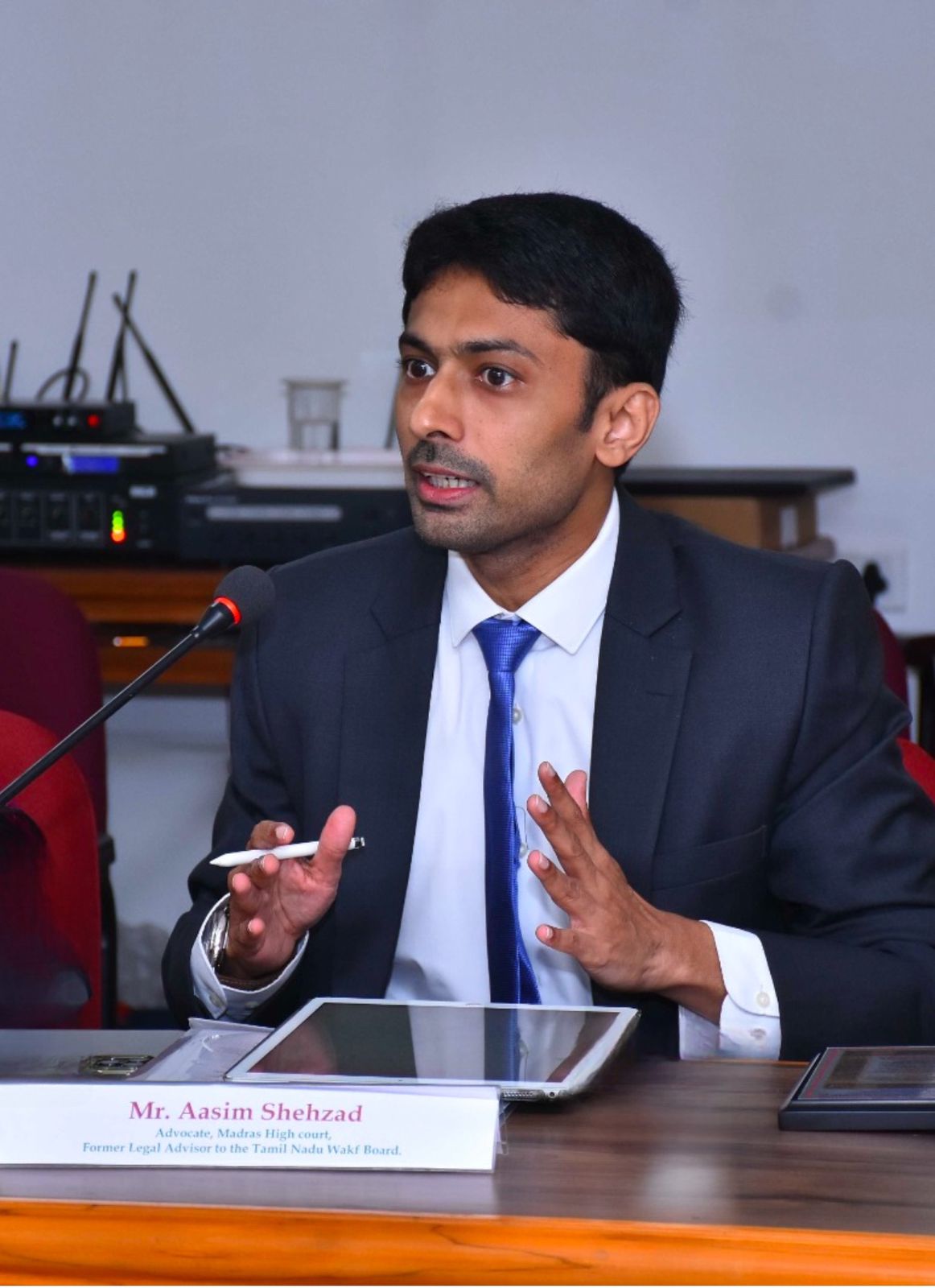
  • “The legal profession is not just about personal growth but also about service to society. Uphold the rule of law, work for the right cause and contribute positively to the legal community and the society at large.” – Aasim Shehzad, Founding Partner at BFS Legal and Counsel at Madras High Court.

    “The legal profession is not just about personal growth but also about service to society. Uphold the rule of law, work for the right cause and contribute positively to the legal community and the society at large.” – Aasim Shehzad, Founding Partner at BFS Legal and Counsel at Madras High Court.

    This interview has been published by Anshi Mudgal and The SuperLawyer Team

    With over two decades of experience in various areas of the law, looking back, was law a planned career path for you and what inspired your practice specifically in Arbitration & Constitutional Laws?

    Law has always been a deeply personal and deliberate career choice for me—a passion that took root when I was just 10 years old. My fascination with the legal profession was sparked by moments such as seeing my father in his lawyer’s robes and observing advocates gathered outside the District Court, which I passed by daily on my way to primary school. Reading landmark judgements featured prominently on the front page of the newspapers and the role played by the lawyers further motivated me. The courtroom’s dynamic nature—the challenge and intellectual rigor of the adversarial process inspired me to imagine myself as an advocate. These early experiences left a profound impression on me, fostering a deep admiration for the sense of purpose and justice inherent in the practice of law. My parents (Mr.K.M.Shafeeq Ahmed & Mrs.T.Akthar Sultana) deserve a mention for providing their unwavering support and encouragement which gave me the confidence to pursue my passion, ultimately transforming a childhood dream into a lifelong vocation.

    When I enrolled and started my legal practice in 2003, Arbitration caught my interest as it emerged as a growing field offering effective and efficient alternative dispute resolution mechanism. It was a welcome change to witness a system that allowed resolution of disputes outside traditional courtrooms, in a manner that preserved fairness, saved time and resources and proved highly effective when compared to the conventional mode of dispute resolution.

    As for constitutional law, a deep understanding of the Constitution is indispensable for any lawyer. It serves as the foundation of our legal system- not only safeguarding fundamental rights but also acting as a benchmark to test the validity and vires of other laws, rules and regulations.

    Having appeared before various forums from Supreme Court of India to High Courts at Allahabad, Delhi, Hyderabad and Madras, Principal District & Sessions Courts, Armed Courts Tribunal, Company Law Board, Central Administrative Tribunal etc., can you share with us the journey that led you to founding BFS Legal? What were the initial challenges you faced when establishing the firm?

    The journey to founding BFS Legal is a testament to perseverance, professional growth and the importance of teamwork. It all began with a strong foundation laid during my initial years of practice under the guidance of Mr.J.Sivanandaraaj (now a designated Senior Counsel) whose mentorship exposed me to a diverse range of branches of law and instilled key values of discipline, professionalism and ethics. The early exposure to branches like Arbitration, Constitutional Law, Commercial Litigation, Company Law and Business Crimes clearly shaped my professional interests and trajectory.

    My extensive experience briefing eminent Senior Counsel and arguing cases across various jurisdictions greatly refined my legal acumen and advocacy skills. This journey was firmly rooted in my formative years as a mooter, representing Dr. Ambedkar Government Law College, Chennai (formerly Madras Law College), at prestigious international competitions such as the Willem C. Vis International Commercial Arbitration Moot in Vienna and the Stetson Environmental Law Moot Court Competition in Florida, alongside numerous domestic moot court competitions.

    The transition in 2007 when my senior decided to merge his practice with a firm having pan India practice became a pivotal moment, sparking the creation of BFS Legal. My determination to retain my identity as a litigation lawyer and the camaraderie with my colleagues, Mr.P.V.Balasubramaniam (now a designated Senior Counsel), Mr.D.Ferdinand and Mr.Akhil Bhansali were instrumental in this decision.

    Establishing BFS Legal, however, was not without its challenges. Identifying a suitable office location and setting up infrastructure within a tight timeframe was a significant hurdle, especially during the court vacation period. Yet, our collective resolve and resourcefulness enabled us to overcome those initial obstacles, setting the stage for BFS Legal to grow into a successful and respected firm, it is today. This journey underscores the importance of a strong professional foundation, collaboration and the courage to take risks to achieve one’s vision.

    You’ve argued several precedent-setting cases before the Madras High Court. Could you share one of the most significant cases you’ve worked on, and the impact it had on your career or the legal landscape?

    One of the most memorable and challenging case that I worked on involved filing an appeal against the dismissal of an application under Order 6 Rule 16 of the Civil Procedure Code (CPC) by a Single Judge of the Madras High Court. The appeal was heard by the First Bench, comprising the Chief Justice Ms.Indira Bannerjee and Mr.Justice M. Sundar. The primary issue was the maintainability of an intra-court appeal against an order that was not final in nature, as such orders are generally not appealable.

    For two days, I had the privilege of arguing before the Hon’ble Judges, presenting comprehensive arguments on how the provisions of the CPC risk becoming ineffective if litigants were compelled to endure a protracted trial when the outcome was evident due to inherent flaws in the pleadings. The Bench rigorously examined and grilled me on my submissions, challenging every aspect of my reasoning. This experience was invaluable in deepening my understanding of how appellate courts test appeals and interpret statutory provisions and the thoroughness of the judicial process.

    This case is memorable for me because it sharpened my ability to articulate complex procedural issues and strengthened my confidence in handling challenging legal questions under rigorous judicial scrutiny by the sharpest minds. On a broader level, it underscored the importance of procedural fairness and judicial efficiency in civil litigation. Arguing the case before a bench that subjected me to intense questioning right from the word go had a profound impact on my professional journey, reinforcing my belief in the transformative power of well-constructed legal arguments and the ability to think on the feet to withstand intense questioning by the Judges.

    Your expertise in arbitration has been recognized by your appointment as an arbitrator at the Madras High Court Arbitration Centre. How do you see the evolution of arbitration in India, and what role do you think it will play in the future of dispute resolution?

    Arbitration in India has come a long way, evolving significantly over the years to address inefficiencies and delays. Historically, litigation in India has often been criticized for being time-consuming, leading to the adage, “Process is the punishment.” Alternative Dispute Resolution (ADR) mechanisms such as Arbitration, Conciliation and Mediation have emerged as a critical solution to mitigate these delays and provide efficient avenues for dispute resolution.

    Legislative amendments to the Arbitration and Conciliation Act, particularly in 2015 and 2019, have been instrumental in enhancing the arbitration process. By introducing stricter timelines for pleadings, arguments, and the delivery of awards, these reforms aim to ensure that arbitration remains an efficient alternative to traditional litigation. The treatment of appeals under Sections 34 and 37 as special proceedings, distinct from regular civil appeals, further reflects the judiciary’s intention to preserve the expeditious nature of arbitration as contemplated by the Parliament.

    The institutionalization of arbitration centres, such as the Madras High Court Arbitration Centre under the auspices of Madras High Court, is another significant development. These centres promote professionalism and ensure adherence to timelines, thereby increasing the credibility of the process. As an arbitrator, I have witnessed firsthand how these changes have streamlined proceedings and enhanced the experience for litigants.

    As businesses demand quicker resolutions to maintain continuity and reduce costs, arbitration offers a viable path. Additionally, the integration of technology, online dispute resolution platforms and the increasing emphasis on mediation and conciliation as complementary processes will further strengthen the ADR ecosystem. Looking to the future, arbitration will play an increasingly dominant role in dispute resolution, particularly in commercial and cross-border disputes.

    However, the ultimate success of arbitration in India depends on a continued focus on minimizing judicial intervention, ensuring uniform standards for arbitral awards, and fostering trust in the system. With these advancements, arbitration is well-positioned to become the preferred mode of dispute resolution in India, balancing efficiency with fairness.

    You have acted as legal advisor to the Tamil Nadu Wakf Board and also have had a unique opportunity to work on public interest litigation matters. Can you tell us about your experience in this area, and your preparation for approaching such cases?

    Working as a legal advisor to statutory body like the Tamil Nadu Wakf Board and engaging in public interest litigation matters has been a deeply enriching experience, marked by unique challenges and opportunities. It requires balancing the legal intricacies of governance with a commitment to justice and public welfare.

    Representing statutory bodies involves navigating several hurdles, primarily arising from systemic constraints. The sheer number of ongoing cases can be overwhelming, and prioritizing urgent matters demands effective time management. Due to staff shortages and administrative bottlenecks, panel lawyers often receive incomplete or delayed information, which can hinder case preparation. Lawyers frequently need to take the initiative to gather and verify data to ensure accurate representation. This involves persistence and innovative problem-solving to piece together the required context. Panel lawyers often have to devise innovative strategies to collect and corroborate data, ensuring that the responses are both accurate and comprehensive.

    Handling Public Interest Litigation (PIL) cases requires a thoughtful and strategic approach, as these cases often involve matters of broad social significance, addressing the rights of marginalized communities or issues that affect public welfare. Here are key steps to approach PIL cases effectively:

    1. The issue should affect a larger section of the population, not just a specific individual or group.
    2. The case must have a legitimate public interest element, such as a violation of Constitutional Rights, Public Health, Law & Order, Environmental Protection, Human Rights, Law & Order or those affecting public at large.
    3. Thorough Research and Legal Grounds requires
    4. Examining the relevant statutes, constitutional provisions, and precedents.
    5. Clearly identifying the legal violations.
    6. The petition should speak for itself setting out clear facts and the legal grounds in order to make a compelling argument. Emphasis should be on how the issue affects a large section of the population or public welfare. It is imperative to highlight the urgency for judicial intervention.
    7. Ensure that you rule out alternate remedy that may be available for achieving what you seek through PIL.
    8. Consult with affected communities to bring out the practical side of the issue.
    9. Judges often scrutinise whether issue is being brought before the court in good faith or for seeking publicity.
    10. Courts may want to know a clear remedy. Therefore, one should be ready to offer practical solutions for the Court’s consideration.

    Ultimately, representing a statutory body or addressing public interest issues have not only deepened my understanding of the law but also reinforced my belief in its transformative power to address systemic challenges and serve the greater good.

    You’ve been a guest lecturer at Tamil Nadu Dr. Ambedkar Law University and judged several national and international moot court competitions. What advice would you give to young law students and aspiring lawyers today?

    For young law students and aspiring lawyers, I’d emphasize these key principles to guide their journey in the legal profession:

    1. Choose a Senior of Repute & Knowledge: My primary advice to young lawyers is to focus on building a strong foundation by working with a senior of repute and expertise in your chosen area of law. A knowledgeable and respected mentor can provide invaluable guidance, help refine your skills, and expose you to diverse facets of legal practice. Learning under such a senior not only sharpens your understanding of the law but also instils discipline, work ethic, and professionalism—qualities essential for long-term success in the legal field.

    2. No Substitute for Hard Work: The legal profession demands immense dedication, and the effort you put in during your formative years will shape your career. Stay disciplined, dive deep into your studies and refine your skills tirelessly. Never forget that there are no shortcuts to success and consistent hard work is the foundation of a strong career.

    3. Stay Focused: In a world full of distractions, focus is your greatest ally. Set clear goals, prioritize learning, and avoid shortcuts. Success in law is a journey, not a sprint.

    4. Integrity is Non-Negotiable: Trust and Integrity are the cornerstones of a lawyer’s reputation. Never compromise on these values, as they are your greatest assets in earning respect and building lasting professional relationships. Always uphold honesty and integrity, both with clients and in court.

    5. Never Mislead the Court: Credibility is everything. Judges and peers respect advocates who present their cases truthfully and ethically.

    6. Learn by Observation: Courtrooms are classrooms. Observe how experienced advocates present their cases, frame arguments and handle judges’ questions. There is immense value in observing and learning from others.

    7. Have an Alternate Argument: Always be prepared for contingencies. A backup argument demonstrates your understanding of the case and readiness to adapt.

    8. Chase Excellence, Not Money or Fame: Focus on becoming the best in your field. Success, Recognition and Rewards are the by-products of excellence. Focus on mastering your craft, and everything else will follow.

    9. Challenge Your Limits: Instead of fearing challenges, embrace them. Use every obstacle as an opportunity to grow and continuously push yourself to improve. The legal field is vast, and the more you stretch your boundaries, the more you’ll achieve.

    10. Look for Opportunity in Adversity: Challenges often bring hidden opportunities. Approach setbacks with a problem-solving mindset and use them as stepping stones to success.

    11. Being Good Pays: Kindness and professionalism go a long way. Treat everyone with respect and courtesy.

    Lastly, remember that the legal profession is not just about personal growth but also about service to society. Uphold the rule of law, work for the right cause and contribute positively to the legal community and the society at large.

    What motivates you to provide pro bono legal services to those in need and how do you see the role of lawyers in social justice? How important is espousing larger cause through Public Interest Litigation?

    Pro bono work allows lawyers to challenge injustices, advocate for marginalized communities, and harness the power of law to drive social change. I firmly believe that lawyers play a vital role in promoting social justice. As officers of the court, we are uniquely positioned to bridge the gap between the legal system and the public, ensuring that justice is not a privilege for the affluent but a fundamental right accessible to all. Public Interest Litigation (PIL), in particular, exemplifies this ethos. It enables lawyers to address broader societal issues—whether it’s environmental protection, safeguarding fundamental rights, public health, law and order or rectifying administrative failures. The impact of such work often extends beyond individual clients, influencing policies and creating precedents for a better society.

     Given the demanding nature of your obligations at work and your commitment to social justice and pro bono work, how do you manage to maintain a balance between your professional obligations and personal well-being?

    Maintaining a balance between professional commitments, social causes and personal well-being is undoubtedly challenging, but it’s essential for long-term sustainability in a demanding profession like law. Here’s my framework to approach such balance:

    1. Starting the Day Early with a Clear Plan: Beginning the day early allows me to plan effectively and approach my professional obligations with focus and clarity. A well-structured day ensures that no time is wasted, enabling me to stay productive and efficient.

    2. Setting Clear Boundaries: Defining specific work hours and creating time for personal activities helps maintain a boundary between professional and personal life.

    3.Prioritizing and Delegating: Identifying tasks that require my direct involvement and delegating those where my absolute involvement is not required ensures that my energy is spent on what truly matters.

    4.Exercise for Body and Mind: I start my day with exercise, which helps keep my body healthy and my mind sharp. Physical activity is essential to stay energized and manage the stresses of a demanding schedule.

    5.Aligning Work with Purpose: When professional work resonates with personal values, it can become a source of emotional contentment.

    6.Practicing Time Management: Efficiently managing time by breaking tasks into smaller, actionable steps helps avoid mind blocks and burnouts.

    7.Family Time: Spending time with family is non-negotiable. It provides a sense of balance and fulfilment, even amidst a busy schedule.

    8.Commitment to Social Causes: Allocating some time in a week for social causes is important. Contributing to society through these efforts is both rewarding and a meaningful extension of my professional life.

    9.Reflecting and Adjusting: Regularly reflecting on what’s working and what’s not can help recalibrate commitments to ensure they’re sustainable in the long term.

    10.Reading and Traveling: Reading books on diverse subjects and traveling are vital for broadening perspective and providing mental rejuvenation. They inspire me and offer a much-needed break from routine.

    By maintaining this balance, I ensure that I can meet my professional obligations while also nurturing my physical health, personal relationships and social commitments. This harmony sustains my productivity and passion in every aspect of life.

    Get in touch with Aasim Shehzad –

  • “The road to success in law is rarely quick or easy. It is a journey that is built brick by brick, requiring dedication, resilience, and a constant commitment to justice.” – Avishkar Singhvi, Advocate at Supreme Court of India and Delhi High Court.

    “The road to success in law is rarely quick or easy. It is a journey that is built brick by brick, requiring dedication, resilience, and a constant commitment to justice.” – Avishkar Singhvi, Advocate at Supreme Court of India and Delhi High Court.

    This interview has been published by Anshi Mudgal and The SuperLawyer Team

    Was pursuing law a deliberate choice for you, or did it evolve into your chosen career over time?

    Pursuing law was the result of an evolving journey shaped by both destiny and conscious choice. Coming from a family of legal stalwarts, I grew up immersed in the world of law. Intense debates—ranging from courtroom strategies to ethical dilemmas—were a regular feature of our dinner-table conversations. While these discussions planted a seed of curiosity, I wasn’t immediately certain that law would be my path. My early years were marked by explorations in diverse fields, from economics to business, as I searched for a career that combined intellectual stimulation with a meaningful societal impact. It was during this exploration that I realized the unique power of the law. It offered not just a way to understand the complexities of human behavior and governance but also a means to address injustice and drive positive change. 

    Your career includes training under Mr. Harish Salve in 2012 and working with Sr. Adv. Shyam Divan from 2012-2015. How did these varied experiences shape your approach to legal strategy and advocacy? What key lessons from these roles have influenced your current practice?

    Working with legal stalwarts like Mr. Harish Salve and Mr. Shyam Divan was akin to being immersed in a legal crucible—intense, demanding, and transformative. Under Mr. Salve’s mentorship, I had the privilege of witnessing some of the most intricate legal battles, including the Vodafone tax case. Watching him distill the complexities of international tax law into a compelling narrative taught me a foundational truth: advocacy is as much about storytelling as it is about precision. The ability to craft a persuasive argument lies in presenting the law as a relatable, logical story.

    With Mr. Divan, the experience was equally inspiring but with a different focus. He emphasized the ethical dimensions of advocacy, championing causes like environmental protection and public interest. His approach reinforced the idea that law isn’t just about winning but about serving a larger purpose. These formative years grounded me in the importance of not just skillful argumentation but also principled advocacy.

    In 2015, I joined Agarwal Law Associates and had the privilege of working in the High Court team under Mr. Rishi Aggarwal. This role gave me a hands-on understanding of the complete lifecycle of a case-from meticulous drafting to effective courtroom strategy. It was a masterclass in building cases from the ground up and developing the confidence to tackle complex legal issues.

    My time as Additional Standing Counsel for Government of NCT which began in 2023 has been starkly different yet an equally enriching chapter. It requires navigating the delicate balance between policy-making and legal frameworks. This role has sharpened my sense of diplomacy and pragmatism, as it often involves reconciling competing interests while staying within the boundaries of law. It has also taught me the value of adaptability—essential for a litigator handling varied and dynamic challenges.  

    While litigation demands technical expertise, it also requires understanding the human element—the psychology of clients, the mood of the courtroom, and the pulse of a judge. Recognizing these subtleties has been crucial in my practice. In essence, these varied experiences have not only shaped my approach to legal strategy and advocacy but have also instilled in me the humility to learn, the courage to innovate, and the discipline to strive for excellence every single day.

    Anyone starting off must get all different kinds of flavours before charting out their own journey either as corporate, litigating advocate or an In-house counsel. I guess it’s a matter of identifying your strengths and weaknesses and personality traits and chart upon your own journey – As they say one man’s vulgarity is another man’s lyric!!

    As the Additional Advocate General for Karnataka, you represent the state in significant legal matters before the courts. Can you share some challenges you have faced in this capacity, and what your approach is in complex constitutional or administrative matters?

    Representing a state is an overwhelming responsibility. It transcends the goal of securing legal victories and focuses on safeguarding the public interest while upholding the fundamental principles of the Constitution. Every case carries weight, but some test the limits of your expertise and commitment. Among the most challenging matters I’ve handled was an essential policy dispute that put the delicate balance between federalism and state autonomy to the test. The stakes were monumental, and the case required a comprehensive examination of constitutional provisions, a thorough study of historical jurisprudence, and an acute understanding of the potential societal and economic ripple effects our stance could create.

    In tackling such high-stakes issues, my approach is deeply rooted in preparation and collaboration. It begins with an exhaustive analysis of the legal framework, ensuring that every aspect of the matter is understood in its entirety. I place great emphasis on engaging in intense, constructive discussions with my colleagues, leveraging their perspectives to build a stronger case. Anticipation is key—I work tirelessly to predict and prepare for potential questions or arguments that may arise, whether from opposing counsel or the judiciary. 

    The stakes in such state matters are undeniably high. Yet, the challenges come with an unparalleled sense of fulfillment. Contributing to the larger public good, shaping the course of policy, and upholding the ideals of justice are not just professional achievements—they are deeply personal rewards. This is what fuels my passion and dedication to the role, even in the face of its inherent complexities and pressures.

    After gaining experience with prominent figures in the legal field, what motivated you to establish your own practice? What challenges did you face in the early stages of building your own practice?

    Starting my own practice felt like jumping off a cliff with the hope of building wings on the way down. The motivation? A burning desire to step out of the shadows and craft my own identity in the legal world. I wanted the freedom to choose my battles, shape my approach to justice, and make a meaningful impact on both public and private interests. I’ve always relished diving deep into the complexities of law, even when it meant hitting roadblocks that tested my patience and resolve.

    The early days were a whirlwind of excitement and uncertainty. Earning the trust of clients was daunting—people place their faith in your expertise, and you have to prove your worth every single day. Building a competent team was another challenge; finding individuals who shared my vision and drive took time. Then there was the steep learning curve of managing finances and the logistics of running a practice—it felt like constructing a skyscraper, laying one brick at a time with no blueprint in sight.

    But every challenge taught me something invaluable. I learned resilience, adaptability, and the power of persistence. Those early struggles also revealed the importance of collaboration, mentorship, and an unwavering commitment to excellence. Gradually, what started as a daunting endeavor evolved into a fulfilling journey. My practice became more than just a professional commitment—it became a platform to explore complex legal issues, fight for justice, and pursue both commercial and public interest work.

    In hindsight, those early challenges weren’t just obstacles; they were stepping stones. They shaped me into a more nuanced and versatile practitioner, giving me a deeper appreciation for the law and its potential to transform lives. Starting my own practice wasn’t just a career move—it was a leap of faith that helped me grow in ways I never imagined.

    As an independent private practitioner, you specialize in a range of areas such as commercial disputes, company law, IP, and insolvency matters. How do you prioritize cases across such diverse fields, and how do you manage the intricacies of each area in your practice?

    Managing a practice that spans diverse legal fields is like orchestrating a symphony—each area has its distinct tempo and complexity, but success lies in achieving harmony. Prioritizing cases depends on several factors: urgency, the potential impact on the client, and the complexity of the legal issues involved. For example, commercial disputes often require quick, strategic interventions to minimize business disruptions, whereas insolvency matters demand meticulous analysis of financial details and legal frameworks to ensure equitable outcomes.

    My approach blends specialization with adaptability. Each area brings its own challenges—intellectual property law requires creativity and a nuanced understanding of innovation, while company law involves intricate knowledge of corporate governance and compliance. The key is to immerse myself fully in the specifics of each case, tailoring my strategy to the unique demands of the matter at hand.

    To manage such a dynamic practice, I maintain a disciplined workflow. This includes leveraging the expertise of a talented team, continuously updating my knowledge of legal developments, and maintaining a client-focused approach. Staying informed about the latest rulings, legislative changes, and industry trends is non-negotiable—it allows me to provide solutions that are not just legally sound but also practically effective.

    Ultimately, this multidisciplinary approach ensures that I can navigate the intricacies of each field while delivering cohesive, impactful results for my clients. It’s this balance between specialization and versatility that defines my practice and keeps me motivated to tackle challenges across the legal spectrum.

    Your practice spans both private commercial litigation and government representation. How do you approach preparing and arguing cases for the government, especially in sensitive constitutional matters or PILs? Can you share a particularly challenging case with us?

    Preparing for government cases requires carefully balancing social, legal, and policy considerations. Take, for instance, petitions involving land acquisition and compensation issues. The core challenge lies in reconciling public interest with the protection of individual rights. These cases demand not only a deep understanding of constitutional safeguards but also a keen awareness of the socio-economic implications of governmental policies.

    In such matters, my strategy revolves around crafting nuanced arguments that respect individual rights while emphasizing the broader public good. This involves meticulously analyzing legal precedents, assessing the societal impact of proposed actions, and ensuring that the state’s position aligns with constitutional principles. These cases push you to think beyond the technicalities of law. They require engaging with the larger societal context, understanding the effects of policy decisions, and striving to find solutions that uphold justice for all stakeholders. It’s this interplay between law and societal concerns that makes such cases both challenging and profoundly fulfilling. 

    I have been privileged to contribute to causes that hold immense significance, including public health, environmental protection, and the prevention of animal cruelty. These endeavors have given me a deep sense of pride and fulfillment, allowing me to serve as a responsible and conscientious citizen of India.

    That said, public interest litigation is a powerful tool but one that is often misused. It must be exercised sparingly and only in truly exceptional circumstances where the cause is both genuine and pursued with unwavering sincerity, passion, and integrity. PILs should always prioritize the ultimate beneficiary—public interest—and must never be driven by personal motives or frivolous intentions. When used responsibly, they can be a transformative force for justice and societal progress.

    You’ve been involved in pro bono work, particularly in areas like animal welfare and environmental law. Can you discuss your motivation and how you balance such work with your high-profile commercial litigation practice?

    Pro bono work is not just a professional obligation; it is a personal calling. Causes like animal welfare and environmental conservation resonate with my belief in the law as an instrument of social change. These cases often demand creativity and passion rather than resources, and the satisfaction they bring is unparalleled. Balancing this with commercial litigation is a matter of discipline and prioritization. I view pro bono work as an opportunity to give back to society, and it fuels my sense of purpose even amidst the rigors of high-stakes litigation.

    Having worked on several high-profile cases involving major corporations, how do you approach the strategy for such complex matters, particularly those with significant commercial implications?

    High-profile corporate cases are a testament to the art of legal strategy, demanding both precision and adaptability. Each case begins with a critical step: deconstructing intricate transactions and factual matrices into manageable and comprehensible components. The ability to simplify the seemingly convoluted comes with experience and continuous learning—a process I embrace daily. The sheer exposure these cases offer is a remarkable opportunity to deepen one’s understanding of the law and its real-world applications.

    Once the foundation is clear, the focus shifts to identifying potential legal risks, predicting opposing arguments, and crafting a strategy that not only protects the client’s interests but also aligns seamlessly with their commercial objectives. This requires a deep dive into the nuances of the case, backed by meticulous research and a robust understanding of the relevant legal framework.

    Collaboration is another cornerstone of my approach. High-profile matters often span multiple disciplines—finance, technology, regulatory compliance, and more. Partnering with domain experts ensures that every angle is considered, enabling the development of innovative legal solutions tailored to the client’s needs. For instance, in cases involving regulatory complexities, understanding the finer details of compliance is as crucial as interpreting the law itself. Equally important is clear communication. In high-stakes matters, ensuring that clients, stakeholders, and the legal team are aligned is paramount. Breaking down legal strategies into actionable insights allows clients to make informed decisions, fostering trust and confidence.

    Above all, my approach is guided by an unwavering commitment to ethical standards. Protecting the client’s interests is always the priority, but it must never come at the expense of integrity or the larger principles of justice. The intersection of law and business in such cases is both challenging and rewarding, offering the opportunity to create meaningful and impactful outcomes.

    Given the high demands of your legal career, how do you balance your professional responsibilities with personal obligations? What strategies do you use to recharge and stay motivated in your work?

    The idea of a perfect work-life balance in the legal profession is, in many ways, a myth. As a litigator, the demands are relentless—requiring an unwavering commitment of passion, intellect, and hard work. There are times when family commitments inevitably take a back seat. Let’s be clear: the profession isn’t for the faint-hearted. It calls for sacrifice, and the stakes are high.

    That said, it’s not all about unyielding work. I make a conscious effort to find pockets of time to recharge, especially during court recesses or when the case load allows for a break. These moments, though brief, are invaluable. I use them to reconnect with loved ones, dive into a good book, or engage in enriching conversations that allow me to step away from the legal grind and reset mentally.

    The motivation to keep going despite the pressures lies in the profound impact of the work I do. There is an undeniable sense of fulfillment in knowing that my efforts contribute to justice, the rule of law, and societal progress. This sense of purpose is what fuels my passion and drives me forward, even when the demands are at their peak.

    Ultimately, while work-life balance may be elusive, the positive influence of my work serves as the ultimate form of professional satisfaction, and that is what keeps me motivated and committed to my craft.

    You have been involved in training sessions with Senior Advocates and Judges. How do you approach mentoring young lawyers, and what advice would you offer to aspiring lawyers who hope to achieve success in the legal profession?

    Mentoring young lawyers is one of the most rewarding aspects of my career. I view it as both a responsibility and a privilege. In my mentorship, I encourage young lawyers to embrace the challenges that the profession presents. Every case, every legal question, is an opportunity for growth. I stress the importance of developing strong critical thinking skills and cultivating a deep, insatiable curiosity for the law. It is this curiosity that drives innovation and fuels the passion necessary to succeed in such a demanding field.

    For aspiring lawyers, my advice is straightforward but vital: never stop learning, stay persistent, and, above all, practice with humility and integrity. The road to success in law is rarely quick or easy. It is a journey that is built brick by brick, requiring dedication, resilience, and a constant commitment to justice. The legal profession rewards those who approach it with patience and diligence, knowing that each case and each experience contributes to a greater understanding of the law.

    Looking ahead, I also believe that technology, particularly AI, will play an increasingly significant role in the legal field. Just as technology has already transformed legal research and case management, I’m confident that AI will continue to aid lawyers in refining their practice. Lawyers who embrace these advancements and use them effectively will not only enhance their own productivity but also improve the quality of service they provide to their clients. The key is adapting to these changes and harnessing the power of technology to make the most of your time and expertise.

    Ultimately, mentoring is about instilling young lawyers and colleagues with the belief that success is not just about winning cases but about making a meaningful impact, continuously learning, and striving to elevate the practice of law to its highest ideals. We are constantly learning on a daily basis, knowledge must be imbued and absorbed with great hunger and passion.

    Get in touch with Avishkar Singhvi –

  • “From Humble Beginnings to Independent Practice: A Litigator’s Reflection on Hard Work, Mentorship, and the Road to Success” – Nitish Bagri, Founder & Managing Partner at NBA Legal Consultants.

    “From Humble Beginnings to Independent Practice: A Litigator’s Reflection on Hard Work, Mentorship, and the Road to Success” – Nitish Bagri, Founder & Managing Partner at NBA Legal Consultants.

    This interview has been published by Anshi Mudgal and The SuperLawyer Team

    Given your over a decade of experience, how do you reflect on your journey when you look back? What key insights or experiences stand out that you would like to share?

    I was a weak-kneed student of science & math and was moderately okay with economics and at the same time, was argumentative & good with logics. This coupled with the fact that I have a history as my family was into the legal fraternity. Therefore, the path of law came naturally. I was intrigued by the procedures & day to day hearings, which I got to know in my early age. That is why I chose the path of law.

    I joined Bharati Vidyapeeth’s Law College in Pune in 2006 under the mentorship of the then Principal Late Mr. Mukund Sarda Sir and Head of the Department Ms. Ujwala Bendale ma’am, who had immense love and affection over me during my college days. They had given the opportunity to me to participate & represent in moot court competitions, both at national and international level and that gave me a sense of belonging in the field of law, as well as help me choose specifically litigation as my career path.

    And thanks to my internship in AZB Partners, PKA Advocates and with Senior Advocate Mr. PP Rao, which gave me a sense of belonging that I want to pursue litigation as my career path. So that is probably the way I entered this profession and God has been kind to me for the last decade. It has been a very good ride working in this profession.

    I would say that it is a roller coaster ride on a daily basis. I wouldn’t say that it was a set path because every person has his own way of looking into the field of law and it has its ups and downs. It has its pros and cons. But certainly, it is, for me, one of the most interesting fields which I could have chosen as my profession.

    Having had the opportunity to work with prominent advocates such as Mr. Virender Lodha and Mr. Sajjan Singh, what were some of the most valuable lessons you learned during your formative years, particularly in the context of litigation for government corporations, that you believe should be shared with aspiring learners?

    When I graduated in 2011, I joined the chambers of Mr. Sajjan Singh Rajpurohit at Jodhpur. It was one of the most reputed civil law chambers at Jodhpur. And having joined his chambers, he had given me immense opportunity to argue, appear, draft, and deal with the clients on the civil side. Very interestingly, five days into joining the chamber, he had given me an opportunity to argue ‘an admission with stay’ matter belonging to a real estate issue, a writ petition before the single bench of the High Court. So that was the kind of freedom and the confidence my senior had bestowed upon me to argue those kinds of matters in the initial days of profession.

    For two years, I’ve worked with Mr. Sajjan Singh ji Rajpurohit at Jodhpur. Thereafter, I shifted from Jodhpur to Jaipur and joined the Chambers of Mr. Virendra Lodha, Senior Advocate at Rajasthan High Court, Jaipur. The chambers basically dealt on the constitutional, commercial and the service side of the litigations.

    He was on the senior panel for many Government Authorities & corporations. So, while working in his chamber, I was doing service matters, large stake arbitration and commercial matters. Being associated with him and earlier with Mr. Sajjan Singh ji, has given me three basic principles that are good for being in the profession i.e. perseverance, patience and consistency. These are the three principles which I’ve followed in my career path.  I’d seen them working for 18 hours a day, from morning 7 o’clock to mid-night they’re dealing with clients, they are getting brief, preparing for the next day and having followed them and closely worked in association with them allowed me to gain extensive experience. At the primitive stage, it might look that you’re working 18 hours a day but truth remains that It is a very demanding & hardworking profession.

    Thankfully, working for long hours with my seniors subsequently helped me to start my own chambers in 2015.  The hard work which they had made me do at that particular point in time helped me in sourcing the clients for myself. I’m very thankful to my seniors, both Mr. Sajjan Singh ji Rajpurohit and Mr. Virendra Lodha Ji for making me do all the good work in the chamber.

    I’ll quote an incident that when I was working in the chamber of Mr. Virendra Lodha Ji, there was a call from a briefing counsel at 11.30 pm that there is an urgent brief coming up for Admission – Stay matter and he needs to be briefed for defending on behalf of Respondents. So, at 11.40 in the night the conference was fixed. Sir had called me back in the chamber to prepare for this matter. The briefing concluded at 12.30 in the night.

    In Rajasthan, during summer season we have Morning Courts where courts hours are from 8.00 AM up till 1.00 PM. The next day in morning at 6.30 am, he was sitting in the chamber preparing for that matter, which was to be argued. So that is the kind of hard work he has done and he has also made me do it. So, I’m very thankful to him for all the opportunities he has given me in his chamber.

    Over the course of your career, you’ve appeared in numerous cases across various areas of law, particularly constitutional law. Is there a specific case that, when you first took it on or started preparing for it, you never anticipated would have such a profound impact on you, either personally or professionally, for a longer period of time?

    Yes, I remember one such case. When I was in the chambers of Mr. Sajjan Singh ji Rajpurohit at Jodhpur which was related to change in land use and master plan of the city. At that point of time, it seemed to be just another litigation in which we were representing one of the parties, and we had to put the best interest of the client.

    But subsequently, post a couple of years after I had left office, that became one of the landmark judgments of the State of Rajasthan, which specifically laid down that there cannot be a change in land use against the master plan and guidelines in relation to the change of land use. The landmark judgment goes by name of ‘Gulab Kothari V. State of Rajasthan’.

    After working with senior advocates for a brief period of four years, you transitioned to starting your own practice with NBA Legal Consultants. What challenges did you face during this shift from a structured environment to running your own practice? Additionally, what key insights or advice would you share with those looking to start their own legal practice?

    When I was working in chambers of both Mr. Sajjan Singh ji Rajpurohit and Mr. Virendra Lodha, they had encouraged to take independent brief other than the office briefs so that you have independent work.

    In 2015 when I took the decision to start my own chambers and get independent from the office, the first transition, which I felt was necessary as an independent litigator is sourcing of work.  When you are working under a mentorship, the work is already there in the office and you have to research or argue or draft or assist your senior in the chamber but when you have your independent practice, the first thing is how would you get clients? How would you justify your fees when you are getting the work? And obviously, when you see from the client’s perspective, having trust or faith in an independent lawyer with two years – three years’ experience is a little difficult because something like property, service career and if there is a criminal case, then someone’s life is at stake. So that trust has to be built.

    Another important aspect is that you need to retain clients and give them appropriate results coupled with the fact that you have to be honest about the case because in a general mindset of the client, they always have the best case and as per them there is so much wrong which has happened, however, this may not be the case when it comes to the law. Law may have a different perspective. The case may not be as good as what the clients think. So, you have to give them a clear picture with the fact that you have to give the best performance for the client so that they retain you for their future litigation or future work. 

    Also, when you’re working under some mentorship, there is a fixed set of work. So, when I used to work in the chambers, I was dealing on the issues of litigations or my core work was litigation but when I started my chambers, I was given Non – Litigation work also.  Despite my limited experience of such work, I had taken up the issues and thankfully was successful in delivering to the requirement of clients.

    When you get independent, you cannot be very sure of the kind of work you’d be getting. You must be prepared. You must be open to all kinds of work which you may receive. For Example: You probably might not have drafted a criminal complaint in a chamber but when you get start your own practice you will come across such situations that you have to file an FIR and if the police authorities are not registering an FIR, you have to file a Criminal Complaint before the Magistrate Court.

    What I intend to say is that you must be prepared for transitioning when you get independent. The experience must be taken with open arms, and initially you should not restrain yourself to one practice of law.

    You have extensive experience in dispute resolution, particularly within the real estate and EPC sectors, handling a wide range of industry-specific disputes. Given your background, how do you approach delivering innovative solutions and identifying the best outcomes for your clients in these areas? Could you share some key traits or strategies that are essential for success in this type of work?

    Every industry has its own difficulties, and every difficulty comes with a problem and the answer to the problem is always different. When you represent EPC companies, they have a contractual dispute, bidding dispute which may go for an arbitration or a writ petition in the concerned high court.  But when you represent a news media company, essentially the disputes are related to either that of defamation as some news article is published, which may or may not align with the facts. Then they have labor disputes as the workers have legitimate expectations, but the financials of the company cannot fulfill those legitimate expectations which in turn create dispute between them. During negotiations with unions, you have to put forth the best interest to find a middle way in resolving the disputes

    When you represent real estate companies, essentially disputes are of following natures:

    1. There is a builder-buyer dispute, the appropriate forum is consumer courts under Consumer Protection Act or Permanent Lok Adalat under Legal services Authority Act, authority or Authority under The Real Estate Act 2017. This on a large scale covers builder – buyer dispute.
    2. There is a dispute relating to the landowner which generally leads to specific performance suit or an arbitration coupled with criminal litigations alleging cheating and its alikes.
    3. Dispute with the government in relation to the allotment or nature of land. Example: The original nature of land was that of Charagah which cannot be usually converted for any other purposes except specified and that has been allotted and subsequently say a third right has been created leading to some construction that has happened. So, the ‘legitimate expectation’ of that real estate company which developed the land will come into picture.
    4. Dispute with government may arise in relation of GST, Labour cess, compliance of Local Self Governments (Municipal Corporations etc.),   

    These are widely the set of litigations or the problems the industriy faces. I feel that before initiating litigation, it is always good to go for mediation. Litigation in the current times, is an expensive procedure. There are court fees, advocate fees and time consumption.  So if there is a middle way out, or the problem can be resolved through mediation, it should be the first preference. Even if you have to forgo some of the rights which you think are legitimate but if that closes the dispute you should opt for it. This is my take on alternate dispute resolution.

    Whatever I have suggested is not the thumb rule but only a generic advice. The problems come with its own game play. I strongly suggest that a lawyer should always be open to hearing the client’s view.  You should be open to a recourse, which the clients suggests but at the same time try to figure out a way which could avoid litigation and get the business going.

    In cases involving sensitive information and confidential matters, building a high level of trust with the client is essential, and ensuring their satisfaction is a key priority. How do you strike the balance between maintaining client privacy and meeting legal requirements? What approach do you take when handling these types of discussions, and could you share your insights on how you navigate this delicate process?

    That is a very good question. I believe on the very first instance, the client will never share the critical or confidential information. And, until and unless you have dealt with certain issues of the client in the past, they will not be ready to divulge confidential secrets.

    Initially they would give you litigation, which might not involve such complexities, but subsequently, if that client has retained you or has given you regular work, they have built a confidence on you that whatever information they have shared is in good hands and shall not be misused. Thankfully, the Indian legal system under the Advocates Act 1961 protects the confidential information which is given to the advocate by the client. As a lawyer, you must keep the professional standard high so that your client has enough confidence in you to share all such information which may be sensitive in nature but generally is always useful in building the case.

    I would like to add one more thing that when the client comes up with a problem, he might come up with a particular mindset. They must have heard that resolution lies in arbitration or a writ petition or to approach a particular forum under a statute, but then you must give them a realistic picture that this position or adjudication methods might not be very helpful to you in your case as the set of facts on which this litigation will go is different. Sometimes what happens is that a client has an eagerness to do litigation or go into a dispute resolution process, but might not be aware of its side effects. So, they must be informed about that also. Example:  When you go into this litigation, you must be ready with those counterblast adjudicatory processes, which the client may not presume will happen. So, you must be honest in your opinion to the client. It may be harsh and rude, but you must be honest in your opinion to the client.

    At the end of the day, your first opinion which you give to the client after hearing the issue at hand will always be in his mind. You may win or you may lose the dispute, but that first opinion will always be in his mind so be truthful about the same.

    With your extensive experience at the Bar, having worked in both tier 1 and tier 2 cities, how do you envision the future of the legal profession, including law firms, lawyers, and litigators, particularly in tier 2 cities? Given the growing trend of work shifting from tier 1 to tier 2, what advice would you offer to new entrants in these cities to build a successful career and establish themselves professionally in their local markets?

    Yes, the transitioning in relation to the work from tier 1 to tier 2 is happening. Earlier, the best of litigation or the best of mind in the legal fraternity were restricted to tier one cities. But over the period, it been growing to tier 2 cities as well. You would see some brilliant legal minds joining in tier 2 cities and obviously if you are resident of that city, you know the comfort of home is always there.

    There are some good opportunities in Tier 2 cities. So, over the period specifically after 2014, tier 2 cities in India have seen a tremendous growth in terms of business, in terms of real estate, in terms of expansion of big companies. The major sectors of the country have gone out of their comfort space of working only in the tier 1 cities to shifting to tier 2 or tier 3 cities which has helped legal professionals in expanding the work.

    My take is that tier 2 cities have a brilliant future in the coming times & these cities will see a very good growth.  The new entrants would have enough diverse work in future.

    I’d like to combine two questions: First, what challenges did you face while establishing NBA Legal as a brand, and how did you navigate through those difficult times? Second, given the demands of building a business, how have you managed to maintain a balance between your mental health, personal life, and professional responsibilities? Balancing all three is never easy, how have you approached it?

    During my time in senior’s chamber, I worked on the private as well as the government side which has helped me in positioning myself to provide legal services, which includes corporate advisory, litigation, drafting of contracts, due diligence in relation to the solar and real estate companies. The work which I’ve done has helped me in sourcing clients.

    In litigation, I’ve always maintained that I need to be very truthful about my opinion. If you feel that client have good case or a bad case, be very truthful to the client.

    In Non-Litigation work, establish clear communication about scope of work, be specific & realistic about the timelines and deliverables. 

    Coming to second part of the question, I will say that take your vacations very seriously. Go out, travel or do your hobby activities, whatever you like, but get out of your normal work life to do something which you cannot do in a regular work time.

    I try that whenever there is a long weekend or otherwise a time off, I would do activities of my choice. I would go out, meet my old friends, watch probably a good Netflix movie or series and when the time permits travel to new places.

    For mental wellbeing, one thing that helps me is that you should meet your old friends. So, they keep you in order. They have been with you for long period, and they know what kind of person you are and what kind of work pressure you are dealing with and will always be happy to support you in tough times. Burnout is common in our profession. Setting boundaries and maintaining personal hobbies or interests outside of work helps rejuvenate your mind and boosts professional efficiency.

    What advice would you offer to aspiring lawyers or those early in their careers, especially when facing challenges like not having the right senior guidance? Many struggle to find the right fit, as not everyone is suited for litigation or corporate law. How should they maintain a positive mindset, stay focused, and identify the right career path for themselves? Any key tips or guiding principles you’d recommend?

    In my view there is no strict checklist, but I would say that there must be consistency in whatever work you are doing i.e. either in the law firm or getting work from your mentor or as an in-house counsel, there should be consistency.

    Secondly, you need to be updated with the latest position of law. You cannot stop reading. You must be updated about what is the position of law, what is the judge’s perspective on this issue. There are multiple judges hearing rosters, what are their views on a particular subject which will help in crafting the arguments. Stay proactive about your learning. Read landmark judgments, legal commentaries, and case studies. Online courses and certifications in niche areas can help build expertise and open new opportunities.

    For Non-Litigation work, you need to be active in networking, be updated on the ever-changing requirements of the industry. While passion for law is essential, practical considerations like work-life balance and job satisfaction are equally important. Align your career decisions with both your heart and your head.

    I would request you to give us some golden nuggets for us as well as the new learners and even the seniors, because sometimes, yes, our profession makes us a little overthinkers, but sometimes it’s the humbleness which helps us grow?

    See as they say that the word is ‘Legal Practice’. So, it is a practice because it’s constant learning on a daily basis. The law is a dynamic field. Whether you are just starting or are a seasoned professional, continuously update your knowledge. Stay informed about recent judgments, amendments, and global legal trends.

    A humble approach towards clients and colleagues fosters trust and long-lasting relationships. Empathy enables you to truly understand the concerns of your clients and advocate for them effectively.

    While overthinking can be a tendency in the legal profession, balancing it with structured critical thinking helps you stay productive. Use frameworks to analyse cases and focus on practical solutions. Encourage collaboration with peers. Sharing insights and discussing cases with others can lead to innovative solutions and fosters camaraderie within the legal community. The profession can be challenging, with setbacks being inevitable. Resilience and persistence are key to overcoming obstacles and achieving long-term success.

    Get in touch with Nitish Bagri –

  • “Commitment to continuous learning and professional development drives success in the legal field. Aim big, do bigger tasks, explore territories where you were never before.” – Devendra Joshi, General Counsel(Vice President-Legal) at Crystal Crop Protection Limited.

    “Commitment to continuous learning and professional development drives success in the legal field. Aim big, do bigger tasks, explore territories where you were never before.” – Devendra Joshi, General Counsel(Vice President-Legal) at Crystal Crop Protection Limited.

    This interview has been published by Anshi Mudgal and The SuperLawyer Team

    With over two decades of experience across various areas of law, what initially motivated you to pursue a legal career, especially coming from a science background?

    After passing my Law Exam from GPG College Gopeshwar Uttarakhand, I began my journey as a lawyer in 1998. My path into law was driven by a deep-rooted curiosity and a desire to make a tangible impact on society. As a very social and emotional person, I have always been keen to see the world as a happier place. Coming from a science background, I was trained to think critically and solve complex problems. However, I soon realized that many societal issues required not just scientific understanding but also a framework for justice and advocacy. This realization led me to enroll in a law course.

    During my B.Sc. days, I actively participated in debates, wrote poetry, was student editor of college Magazine, I was also involved in the Separate Uttarakhand Movement at that time. Some untoward incidents during this movement were a turning point for me, highlighting how legal systems could drive change and protect rights. Witnessing these events firsthand solidified my belief in the power of law to effect positive change.

    As technology and computers advanced, I became increasingly inspired by cases where law intersected with technology and environmental issues. These areas allowed me to leverage my science knowledge to address complex legal challenges. This blend of science and law offered a unique opportunity to contribute to meaningful advancements and uphold justice.

    My journey into law has been shaped by a combination of personal experiences and professional aspirations. The intersection of my scientific background with legal practice has enabled me to approach problems with a unique perspective, ensuring that I can make a significant impact in both fields. This multidisciplinary approach continues to drive my passion for law and my commitment to creating a just and equitable society.

    You began your career as an associate lawyer before transitioning to the corporate sector. What inspired this shift, and how does working in-house at a corporation differ from private practice?

    After Coming to Delhi, I started my Journey from Patiala House Courts at New Delhi. I have done my Private Practice for almost 9 Years. Although my transition from private practice to the corporate sector firstly was solely driven by a desire to earn livelihood but later it was converted for a more integrated role within a business environment. As an associate lawyer, I enjoyed the intellectual challenge and the variety of cases I handled. With the passage of time in Delhi, I was keen to see the broader impact of legal decisions on a company’s strategy and operations and was very much willing to be part of entrepreneurial Journey.

    I am very fortunate that I have started my journey very closely with Late Sh. DC Jain Ji, who was promoter of AKUMS DRUGS & PHARMACEUTICALS LTD which is the largest Contact manufacturing Company of Medicines in India. He honed my skills as a person, changed my perspective to see life, and gave me liberty to work as I am the owner of my organization. As you know, working in-house offers a unique perspective. Unlike private practice, where the focus is often on specific legal issues, in-house counsel are involved in the day-to-day business decisions and long-term strategic planning. This role allows for a deeper understanding of the business, fostering a proactive approach to legal risk management and compliance. Additionally, being part of a corporate team provides the opportunity to collaborate closely with various departments, contributing to the overall success of the organization.

    I am fortunate that my promoters always gave me liberty to think out of the box and always believed me, as a result in every organization where I worked I have tried to do maximum work inhouse so that legal cost can be curtailed and ownership can be elongated.

    Now a days Both Private Practice and Inhouse roles are becoming the same, and as far as I am concerned In-house roles are of more onus than Private Practice, however in Private practice you can have more flexibility of time, money and autonomy. 

    Your career includes a range of leadership roles. How have these experiences shaped your approach to legal practice, and what key lessons or insights continue to guide you today?

    When I joined the AKUMS Group, the Legal Department was initially managed by individuals without a legal education background. However, as the industry grew, the visionary approach of Mr. Jain and his sons, Sanjeev and Sandeep, led to the establishment of a dedicated Legal Department within the group. At that time, it was uncommon for Indian companies to have a formal Legal Department, with Company Secretaries often leading legal functions. Mr. Jain’s proactive approach provided me with the opportunity to establish and lead the Legal Department.

    In my current organization, Crystal Group, I found myself in a similar role. Under the mentorship of our Chairman, Mr. N.K. Aggarwal, and the leadership of our Managing Director, Mr. Ankur Aggarwal, I received full support in my endeavors.

    My leadership roles have profoundly influenced my approach to legal practice, instilling a blend of strategic thinking, empathy, and adaptability. Leading teams has taught me the importance of clear communication, collaboration, and fostering a supportive environment where every team member feels valued and empowered.

    One key lesson I’ve learned is the significance of proactive problem-solving and leading by example. In leadership, anticipating challenges and addressing them before they escalate is crucial. This mindset has translated into my role as GC, where I prioritize risk management and strategic planning to mitigate potential issues.

    Another insight is the value of continuous learning and adaptability. The legal landscape is ever evolving, and staying abreast of changes is essential. My leadership experiences have reinforced the need to be flexible and open to new ideas, ensuring that my legal strategies are innovative and effective.

    Lastly, empathy and ethical integrity are cornerstones of my approach. Understanding the human element behind legal issues and maintaining a strong ethical compass guide my decisions and interactions, ensuring that my practice not only serves the business but also upholds justice and fairness.

    My experiences have taught me to trust my team, give them challenges, approach tasks with an entrepreneurial mindset, and always lead by example when they seek guidance.

    Given your extensive experience in civil, criminal, and commercial litigation, which type of case do you find most challenging? Could you share a particularly complex case you’ve handled and how you navigated its challenges?

    Among civil, criminal, and commercial litigation, I find criminal cases to be the most challenging. The stakes are incredibly high, often involving someone’s freedom or significant societal implications. As a legal professional, whether it concerns the top management of the company or an employee, each case holds equal importance to me. In pharmaceutical or agrochemical companies, sample matters are particularly significant. The complexity of criminal law, combined with the need for meticulous attention to detail and the emotional weight of these cases, makes them especially demanding. Nowadays, matters related to the CBI, PMLA, FEMA, or other authorities are equally important.

    While I would not like to disclose details of any specific case due to the privileged nature of lawyer-client communication, I can elaborate on my approach to handling such situations. In promoter-driven organizations, the most complex scenarios often arise when top management is accused of a serious offense. These cases are further complicated by extensive media coverage, which adds public pressure and potential bias. Navigating this requires a multi-faceted approach by the legal team, who do internal investigation in the matter, communicate with relevant stakeholders, gather documents, mitigate risk by strategic communication with outside stakeholders, taking expert legal advise, giving hope to Client, which is in our case our management; to give them hope that ultimately all is well.

    Ultimately, our comprehensive approach often leads to favorable outcomes, highlighting the importance of diligence, strategic planning, and empathy in handling complex criminal cases.

    Besides criminal cases, I have a strong interest in intellectual property rights (IPR) matters, including trademarks, patents, and copyrights. As for commercial litigation and contracts, these are routine matters in my practice.

    With the ever-evolving legal landscape, particularly in areas like commercial law, IPR, and mergers & acquisitions, how do you stay updated with changes in the law? What strategies do you use to ensure continuous professional development?

    To stay ahead in the ever-evolving legal landscape, particularly in commercial law, IPR, and mergers & acquisitions, I employ a multifaceted approach to continuous professional development. I leverage advanced legal research software and databases to access the latest case laws and statutes. Reading two newspapers daily keeps me informed about current events and legal trends, ensuring I stay updated.

    I believe that true knowledge enhancement often happens outside office hours, so I dedicate time after work to study new legal developments, attend webinars, and participate in online courses. Collaboration is key; I actively seek insights from colleagues and engage in discussions to gain diverse perspectives. Delegation is another strategy I embrace, as it allows me to focus on strategic tasks while empowering my team.

    Professional development programs, workshops, seminars, and conferences are integral to my growth, providing opportunities to learn from experts and network with peers. Mentorship from seasoned professionals offers invaluable guidance, helping me navigate complex legal issues. Staying adaptable and open to new ideas ensures my strategies remain innovative and effective. Networking is crucial for success in any field.

    By combining these strategies, I ensure continuous learning and professional excellence, enabling me to provide top-notch legal services to my organization. I would like to take this opportunity to thank my boss, Ankur Aggarwal, Managing Director of Crystal Crop Protection Ltd, who gave me the freedom and opportunity to be part of the Deal Team. I am happy to share that in my journey of over four years with Crystal Group, I have been part of five deal transactions. Commitment to continuous learning and professional development drives my success and effectiveness in the legal field.

    With your wealth of experience in drafting commercial contracts and agreements, how do you see legal technology impacting case management, contract drafting, and legal research? What tools or innovations have you found most helpful in your practice?

    There is no doubt that Legal technology is revolutionizing case management, contract drafting, and legal research, significantly enhancing efficiency and accuracy. Advanced software like Manupatra, Mykase, Mikelegal, and Complinity are some tools I use for case management, organizing and tracking details, deadlines, and documents. I do not use Automated contract drafting tools as every organization requires Customisation and we do it without help of software. Legal research platforms like Manupatra and Casemine provide access to vast databases with powerful search, delivering relevant results swiftly. For IPR we are using Mikelegal, software is beneficial, allowing us to focus on strategic thinking. The new generation is very tech-savy and embracing these innovations is essential for staying competitive and delivering high-quality legal services. However, I strongly advise against total dependency on software. While technology offers incredible tools, it is our unique human qualities of critical thinking and imagination that truly drive innovation and effective problem-solving. These abilities should be nurtured and strengthened, not allowed to weaken or become extinct. Balancing the use of technology with our innate human insight ensures we leverage the best of both worlds, maintaining our creative and analytical edge in the legal field.

    Can you outline your responsibilities in your current role? Given the demanding nature of your career, how do you manage to maintain a balance between your professional obligations and personal well-being?

    In my capacity as the General Counsel (Vice-President) and Head of Legal at Crystal Crop Protection Ltd, I am entrusted with a broad spectrum of legal and strategic duties. My primary responsibilities include overseeing litigation, intellectual property rights (IPR), and contract management. Additionally, I am an integral part of the Deal Team. I manage litigation cases, represent the company in legal disputes, and safeguard the company’s interests in court. Ensuring regulatory adherence is crucial, so I ensure compliance with all pertinent laws and regulations, including those related to the CBI, PMLA, FEMA, and other regulatory bodies. I provide strategic legal counsel to the board and senior management on various business initiatives and transactions, and identifying potential legal risks and formulating strategies to mitigate them is a key part of my role.

    In contract management, my team and I draft, scrutinize, and negotiate various agreements such as Contract Manufacturing Agreements, Principal to Principal Agreements, Loan-License Agreements, and Confidentiality Agreements. Most of the IPR matters, especially trademarks, are handled in-house. Additionally, I lead and mentor the legal team, fostering a collaborative and efficient work environment.

    Balancing a demanding career with personal well-being requires a strategic approach and effective time management. Earlier in my career, I used to seek validation from others, but now I focus on myself. If you are honest, you don’t need validation from others. In my organization, we believe in the FITECS values (Family, Integrity, Trust, Entrepreneurship, Customer-centricity, and Sustainability), and adopting these values in daily life helps achieve work-life balance.

    Remember, we are all ‘musafirs’ (travelers) in this journey called life. Be a traveler, not a tourist; enjoy every moment of #thejourneyoflife. Prioritizing my personal well-being by setting boundaries and ensuring I have time for family and personal interests is essential for maintaining long-term productivity and job satisfaction.

    What advice would you offer to young aspiring lawyers who are eager to excel in the field of law? What key qualities or practices should they focus on to build a successful career?

    For young aspiring lawyers eager to excel in the field of law, all I can say is, work hard, do not procrastinate, try to learn new things, do not be afraid of life, what will happen tomorrow? Aim big, do bigger tasks, explore territories where you were never before. This is the best profession in the world, you are king here, explore your kingdom. For inhouse lawyers my advice is treat your job as if you are running your own company. Approach every task with dedication and responsibility. Face each challenge with the precision of a trial, avoiding procrastination and leaving your ego aside. Continuous learning is essential; stay updated with the latest legal developments through research tools, journals, and newspapers. Dedicate time outside office hours to study, attend webinars, and take online courses. Collaboration and networking are vital for success now a days. 

    One thing I strongly wish to communicate is that you decide early whether you wish to pursue an in-house role and as Practicing Lawyer? Because confusion will take you nowhere and you will suffer. Prioritize personal well-being by setting boundaries and ensuring time for family and interests. Surround yourself with friends who are more intelligent than you, more visionaries and having big dreams. Always Remember that you are an average of 5 persons around you. Lastly whatever you achieve in life remember that best is yet to come, “Abhi Udaan Baki hai”

    Lastly, Commitment to continuous learning and professional development drives success in the legal field.

    Get in touch with Devendra Joshi-

  • “There will be challenges in the core litigation initially especially for the first generation lawyers but ultimately by investing the initial most  productive time you are building your permanent asset as an independent  practitioner.” – Shantanu Jugtawat, Advocate at Supreme Court of India and Senior Public Prosecutor at National Investigation Agency, GOI.

    “There will be challenges in the core litigation initially especially for the first generation lawyers but ultimately by investing the initial most  productive time you are building your permanent asset as an independent  practitioner.” – Shantanu Jugtawat, Advocate at Supreme Court of India and Senior Public Prosecutor at National Investigation Agency, GOI.

    This interview has been published by Anshi Mudgal and The SuperLawyer Team

    What initially inspired you to choose law as your career path? Was there  a particular moment or individual that influenced your decision, and how did  your journey begin at National Law Institute University, Bhopal?  

    I was a student of Science-Mathematics, so initially I wanted to  become an engineer. In my 11th standard I came across an edition of India Today which talked about Country’s top advocates. I was deeply impressed by their  prowess and authority, most importantly their contribution to the political and  legal development of the Nation. It created a subtle effect in my subconscious  mind and gradually I started inclining towards the legal profession. 

    After which I cleared the entrance test of National Law Institute University,  Bhopal and joined NLIU. At NLIU I have been exposed to different approaches to  legal interpretation for example case based approach to see how the law  has evolved over a period of time. It helped me immensely in my future litigation  especially in constitutional and Service matter cases. 

    The initial exposure which I received at NLIU was commendable, for example the  lectures delivered by the Supreme Court and High Court Judges and designated  Senior lawyers. I am quite grateful to the support which I could gather from my  Seniors at law school, for example my Senior Mr. Faizee got me an internship at  the chambers of Additional Solicitor General of India, Late Mr. Amrendra Sharan  in 2007 and eventually, I joined his chamber only. Moreover through the Clerkship programmes by NLIU at Jabalpur High Court I could observe the  minute intricacies of core litigation arguments. 

    When I joined NLIU, I was not clear about my priorities. But then the lectures of  the leading Supreme Court advocates and the Judges created fascination towards the core litigation. But I made sure to have enough exposure to the  corporate side , which was probably the dominant idea in NLIU at that time so I  did internships in almost all the top law firms in corporate areas. Gradually I became convinced to the core that my inherent interest lies in the Core litigation  as in Constitutional and Service matters. Being a first generation advocate, had  no guidance in the legal field, had to create my own path.

    You were associated with the cases like Bar Council of India Vs A.K. Balaji  and Kantaru Rajevaru Vs Indian Young Lawyers’ Association and other landmark  judgments by the Supreme Court. How do such cases shape new legal  dimensions, and what key insights did you gain from working on them? 

    Bar Council of India v. AK Balaji underscores the importance of  regulating the entry and practice of foreign lawyers in India. The judgment  reaffirms the restrictions imposed by the Advocates Act, 1961, on foreign  lawyers practicing law in the country. By upholding these regulations, the court  aims to preserve the ethical standards and integrity of the legal profession in  India while allowing for limited engagement of foreign lawyers in specific legal  activities such as providing legal advice on foreign law and participating in  international arbitration proceedings. This decision strikes a balance between  promoting legal exchange and collaboration while safeguarding the interests of  Indian advocates and maintaining the sanctity of the legal system. 

    Whereas in Sabrimala Case (Indian young lawyers Association versus Union of  India), the Supreme Court upheld the concept of constitutional morality, where  the judiciary interprets the Constitution in a manner that upholds its core values  and principles and went on to clarify that in case of Conflict between  Constitutional morality and Social morality, the objective standards of  Constitutional morality will prevail.  

    While working on these case I have realized that these Landmark cases often  have a profound impact on society, influencing public policy and societal norms,  for example Sabrimala decision allowed the female’s entry into the temple with  in age group of 10-50, hence redefined the standards of social morality in  accordance with Constitutional morality. 

    These cases provided me with deep insights into judicial reasoning and the  interpretative methods used by judges. In fact these cases provided me with  insights which not only enhanced my legal acumen but also contributed to a  broader understanding of mine as to how the law interacts with society and  evolves over time.

    Tell us about your legal journey and mentorship at the Supreme Court of  India. How did that experience shape your foundational years, and how have  those early lessons influenced your practice today? Could you please walk us  through your journey?  

    After my graduation from NLIU I joined a law firm for a brief period but  soon lost interest in law firm culture. I also appeared for Delhi Judicial Services  2010, where I secured 34th rank.  

    Then I joined the chambers of Late Mr. Amrendra Sharan Ji , Additional Solicitor  General at Supreme Court of India, at that time. It helped me a lot in terms of  exposure, especially on the Govt side. As A juniors at his chamber I assisted him  in drafting legal opinions for different government departments, assisted in  arguments before the Supreme Court and drafted replies on behalf of the  government. I have briefed him on many occasions. Later on when I became the  Standing Counsel for the State Govt of Rajasthan, this experience helped me a  lot. He passed away on 12th August 2019. He was a person of eminence, mentor  and guide to many including myself. He will be remembered for his lucid  arguments and his pleasant demeanor at the Court and outside the Court. He  may not be with me physically today but his teachings will always be there. His  gentle demeanor, his smile, and caring disposition will always be missed. 

    My second innings of advocacy started with Senior advocate Mr. Mahabir Singh  Ji at the Supreme Court. A plainspoken man of substance and humility. I was  always amazed at his diversified legal acumen. I have briefed him in my  independent matters also. The biggest learning from briefing him is, to hear  briefs patiently and carefully. Even though he himself is an authority on legal  subject matters, still he would always take briefings very patiently and  accommodate the viewpoints of juniors. The teachings learned at his office  helped immensely in my future practice at the Supreme Court of India.  

    After that I started my own independent practice with Mr. Mukesh Kumar singh, who is now the executive member of SCBA. Together we worked upon many  landmark reportable judgements pronounced by the Supreme Court like Richal  versus Rajasthan Public Service Commission, Employees provident fund  organisation versus Sunil Kumar, Kantaru Rajeevaru versus Indian Young  Lawyers Association ( Sabrimala case), Satyama Dubey Versus Union of India (  Hathras Rape case ), Saurav Yadav versus State of Uttar Pradesh, related to  Vertical and Horizontal reservations in public services etc. to name a few. An  overwhelming sense of pride surges within me as I witness Mr. Mukesh Kumar Singh growing in practice and stature in the legal profession as recently for the third time  he has been elected as Executive Member of Supreme Court Bar Association. I owe him greatly in terms of establishing my private practice at the Supreme Court  of India. Till date we both work as a team.  

    With your extensive experience in handling tax, constitutional, and service matters, could you share your key roles as Standing Counsel for state and national bodies and highlight some important legal opinions you’ve provided? Also, could you explain some settled principles of service law jurisprudence?

    By the grace of Goddess Sh. Karni Ji, I got enough opportunity to defend  the state as well as various Corporations and other national bodies. 

    I have been appointed as Standing Counsel for the Department of Finance  (Commercial Taxes). In that capacity I defended cases for the Department of  Finance, Govt of Rajasthan. In such Writ petitions, Sales Tax Revisions dealing  with GST, VAT, I got them dismissed at the very outset, on preliminary grounds  like not exhausting the alternative reliefs available. 

    Also appointed as Standing Counsel at National Consumer Dispute Redressal  Commission at Delhi for Govt of Rajasthan, National Company Law Tribunal and  NCLAT Delhi for Govt of Rajasthan, Standing Counsel for Department of Stamp  and Registration for Govt Of Rajasthan, Standing Counsel for Rajasthan State  Ganganagar Sugar Mill, Rajasthan State Beverage Corporation Limited.  

    While defending the Corporations I have learned the intricacies of Service  Matter Jurisprudence. In such matters successfully defended the corporations  from being compelled to regularize the services by persons working for a  placement agency. I ensured that we get a categorical order from the Court in  such Service matters directing the petitioners to provide an affidavit proving the  existence of employer – employee relationship between them and the  corporation. This again reinforces the settled legal position that regularization cannot be sought without a clear master- servant relationship. 

    I have drafted the legal opinions as a Standing Counsel for the finance department,  Rajasthan Govt in the matters of Commercial Tax Officer versus M/S Larsen  Toubro Ltd., Apollo Pipes Pvt. Limited Vs Tonk Water Supply Limited, Kishna Grit Udhyog Vs State of Rajasthan and Ors. Drafting legal opinions involves high  responsibilities as depending upon your opinion, the state will adopt a future Course of action. Hence the legal opinion should always provide clear and concise  conclusions and it must answer the legal question posed at the beginning while discussing all the relevant statutes, case laws and legal principles which apply to  the issue. 

    Recently you have been appointed as Senior Public Prosecutor for the National Investigation Agency by the Ministry of Home Affairs, Union Government,  this role will be entirely different from core litigation in Constitutional or Service  matters, so in that capacity what will be your role and challenges? 

    My appointment as a special public prosecutor for the National  Investigation Agency (NIA) involves handling cases related to national security  and terrorism. The NIA is India’s primary counter-terrorism law enforcement  agency, and it investigates and prosecutes offenses affecting the sovereignty,  security, and integrity of India. 

    In this capacity, I would be responsible for presenting the NIA’s cases in court,  ensuring that the prosecution is robust and that justice is served. This includes  preparing legal documents, presenting evidence, and arguing cases in court. This  work often involves high-profile and sensitive cases that require a deep  understanding of both national and international law. 

    In the initial years of my practice I always ensured that I gave myself enough  exposure at the Session Courts, especially Criminal side. I have argued criminal  cases on behalf of the accused especially in POCSO and Session trials. I have also  succeeded in keeping a high acquittal rate for my clients in that capacity. But this  time as Public Prosecutor at NIA my role will be from the State side and I would play my level best to prosecute the accused, ensuring that justice is served and the accused gets conviction beyond any reasonable doubt. 

    How do you manage the workload and pressure from these diverse roles and what strategies do you use to maintain a balance between your professional  and personal life?  

    Definitely many a time the litigation becomes hectic and stressful due  to high Stakes involved and demanding nature of the profession. With the  increase in workload I have deployed a team of junior lawyers and started  allocating them specific work. Since I have to maintain my private practice at the Supreme Court so I made myself available at Supreme Court in the matters  which required my direct involvement. At the same time I started delegating work  at the High Court to my juniors, they helped me a lot. I am thankful to  Sudeep Lakhotia, who helped me immensely in Commercial Tax Litigation  matters at Jaipur High Court. I trusted my team and delegated tasks that don’t  require my direct involvement.  

    In fact the post COVID phase brought tremendous changes to the core litigation. Now a lawyer sitting at any remote place can attend the litigation at the  Supreme Court quite easily. All thanks to COVID and advancements in  technology. It has enabled me to manage multiple cases very easily simultaneously, sitting at one place and giving time equally to diverse legal forums.  

    As an experienced lawyer, do you actively mentor young advocates or law students? What is your approach to mentoring, and what values do you aim  to instill in the next generation of legal professionals?  

    In fact I am an advocate by profession and teacher by passion. I am  always very keen on taking lectures over Constitutional Law of India and its  evolution over a period of time. Many of my students of Constitutional law and  Indian Polity have successfully cleared Civil Services and Judicial Services Examinations. I take immense pride in their Success. I have been associated with  Government initiatives for providing free education to the students of Civil  Services. 

    In fact, for the last 15 years of my practice and teaching students, I am learning  from my students. Students are the most effective teachers of their teachers. I  owe a lot to them for keeping me younger and updated. Every batch  of students brings refreshing vibes and intellectually stimulating energies.

    I always ensured that my students first develop an interest into the discipline,  knowledge and its application will be the by-products automatically. It’s the  interest into the discipline which will ensure the application part and will  subsequently help them, cracking the questions. Students have always  appreciated my teaching methodologies, especially when they have cracked the  judicial or civil services and went into the field. They could successfully connect  the theory with practice. Without knowing the practical application, theories are  meaningless. While teaching the students I always emphasized the importance of integrity, honesty and ethical behavior in all professional activities. 

    For fresh law graduates aspiring to pursue a career in litigation, what  would your advice be—should they start at the district courts or aim for the High  Court or Supreme Court early on in their careers. Especially what is your advice  for law students from law schools where the dominant idea is always in favor  of joining corporate law firms? 

    It is always advisable to start practice at the District and lower courts  where one will learn basic advocacy, nuances of conducting a trial and client  handling which eventually help him in the long run in the career as an advocate. In fact for a brief period I was also associated initially with the Session Court  where I argued in the POCSO cases and Session trials. After that one can move  to the High Court or Supreme Court. 

    My suggestion to current NLIU students will be to break their comfort Zone which is being provided by corporate law firms in the initial years after their graduation. There will be challenges in the core litigation initially especially for the first generation lawyers but ultimately by investing the initial most  productive time you are building your permanent asset as an independent  practitioner. In most of the law firms after a certain point the growth becomes  stagnated.  

    In this context it’s also important to identify your inherent interest in the field, I  mean it’s highly a subjective question. I personally felt that at NLIU there was  always a dominant trend in favor of corporate law firms, even I was perplexed  many a time but then ultimately it’s your inherent inclination which is bound to  supersede every other consideration. Don’t give too much importance to the  monetary considerations initially because these years are the most productive years  in which you can construct a business for yourself.

    Having been part of many landmark judgments, can you throw some light over your pro bono work in terms of teaching law students or at litigation where such work not only impacted the society but also changed your personal  perspective of profession?  

    I have been part of pro bono work at both the levels as in litigation as  well as teaching law students especially the Constitutional Law of India. 

    At the level of litigation my first Pro Bono case pertained to an employee of  Hindustan Salt limited and Samber Salt Limited, ( A Government enterprise ) for  revising the payment scale and releasing the arrears and other emoluments.  

    At the level of teaching I have taken many lectures on Constitutional law of India on a pro bono basis, many of such students have also been successful in Judicial Services as well as Civil services. Nothing can be more satisfactory than  enabling the students to understand the intricacies of the complex legal  principles. Engaging in pro bono teaching helps law students develop practical skills that are essential for their future careers. They gain exposure to real-world  legal issues and learn how to apply theoretical knowledge in practical settings. 

    Pro bono teaching allows students to explore different areas of law and develop  competencies they might not encounter in the classroom. This experience can  be invaluable in shaping their career paths.

    Get in touch with SHANTANU JUGTAWAT-

  • “Stay focused in all your endeavours and distance yourself from people and environments that don’t respect you. Never compromise your integrity.” – Sheffy Bhatia, Head Corporate Legal at Law Veritas : North.

    “Stay focused in all your endeavours and distance yourself from people and environments that don’t respect you. Never compromise your integrity.” – Sheffy Bhatia, Head Corporate Legal at Law Veritas : North.

    This interview has been published by Anshi Mudgal and The SuperLawyer Team

    You have extensive experience in handling multiple legal sectors including insurance, electricity distribution, healthcare, financial services, and corporate law. How would you describe your professional journey until now?

    My professional journey has been exhilarating! I’ve been fortunate to explore the legal intricacies of diverse sectors like insurance, electricity distribution, healthcare, financial services, and corporate law, each with its unique challenges and legal complexities. Embracing change whenever new opportunities arose has been the key to my growth and success. This journey wouldn’t have been possible without the unwavering support of my parents, who gave me the courage to move forward and face each challenge head-on.

    To start at the beginning, was studying law a pre-decided career path for you? What was your motivation behind growing within the legal field?

    Studying law was never a pre-decided career path for me. I initially aspired to become a veterinary doctor but was destined to become a lawyer. Once I began my legal journey, I realized that law is like a vast ocean—how much you explore depends on your commitment to integrity and hard work.

    My journey from Faculty of Law, University of Delhi, to becoming a Senior Partner at Law Veritas: North has been one of constant growth and learning. After completing my studies, I was drawn to law for its potential to positively impact society, inspiring me to contribute to the legal framework and serve justice.

    You have headed various legal departments of different companies and managed legal and compliance matters and now are the Senior Associate Partner and the Head of Corporate Legal & Litigation at Law Veritas North where being client centric is one of the fundamental values. How do you ensure a smooth workflow and a collaborative and supportive environment within your team?

    Ensuring a smooth workflow and fostering a collaborative environment begins with empathy. Being empathetic costs nothing, yet it builds trust and mutual respect within the team, which is essential for a cohesive work culture. I believe in empowering my team rather than micromanaging. Tasks are delegated equitably, with clear deadlines and responsibilities, allowing each member to take ownership of their work.

    I also implement work rotation to keep things dynamic and encourage skill development. Additionally, we hold fortnightly knowledge-sharing sessions, where team members present case studies, fostering an environment of continuous learning and collaboration. This not only sharpens our collective expertise but also reinforces a supportive and client-centric approach, aligning with our core values at Law Veritas North.

    With 25 years of comprehensive legal expertise across various sectors of law. What is your work day like and how do you balance your personal commitments with a demanding career?

    With 25 years of comprehensive legal experience across various sectors, my workdays are typically fast paced and demanding. When I’m in the office, time flies as I manage complex legal matters, client consultations, and team collaborations. However, balancing personal commitments with a demanding career is essential for me. Once I’m home, the digital ecosystem plays a significant role in maintaining this balance. With most tasks accessible via smartphone, I can manage urgent work issues efficiently while still making time for my family. This flexibility allows me to stay connected professionally without compromising on quality time with the loved ones.

    Your expertise in structuring legal frameworks that align with business goals of your clients is commendable. What are the key instances in your professional career that you’d credit to have shaped your career?

    Key factors that have shaped my career are integrity, hard work, and adhering to promised timelines. Maintaining integrity has helped me build long-lasting relationships with the clients, while hard work has been the foundation of every success I’ve achieved. Sticking to deadlines, no matter how challenging, has allowed me to gain trust and credibility with both clients and colleagues. Over the years, I’ve also had the opportunity to work on complex legal frameworks that align with clients’ business goals, and these experiences have not only sharpened my skills but also strengthened my commitment to delivering best results.

    In your experience negotiating complex contracts and handling high-stakes litigation for insurance and financial institutions, what has been one of the most challenging experiences for you that you’d like to share with us?

    One of the most challenging experiences I’ve faced in negotiating complex contracts and handling high-stakes litigation is aligning all stakeholders. It can be incredibly time-consuming and mentally draining to ensure everyone is on the same page, but it’s crucial for achieving a successful outcome and maintaining strong professional relationships throughout the process.

    Your contributions to the legal field have been widely recognized and you have received several prestigious awards and accolades. How do these recognitions motivate you in your career?

    While I appreciate the recognition and awards, I’ve received, they don’t significantly motivate me. My true drive comes from the work itself, the challenges I face, and the positive impact I can make in my clients’ lives. Focusing on results and client satisfaction is what truly inspires me.


    What advice would you give to the younger generation, especially women lawyers who aspire to excel in the field of law?

    Stay focused in all your endeavours and distance yourself from people and environments that don’t respect you. Never compromise your integrity. The legal field is vast and ever-changing, so it’s essential to keep up with the legal developments. Manage your finances wisely and invest early. Finally, maintain a strong support system at home and delegate time-consuming tasks to ensure a balanced and productive life.

    You are also involved in various CSR activities, including cancer awareness camps and vaccination drives for children in rural areas which reflects your commitment to social responsibility. What drives you to be involved in such activities and are there more such activities that you’re involved in?

    As citizens, we have a moral obligation to give back to society in any way we can. Participating in CSR activities, such as cancer awareness camps and vaccination drives, not only supports those in need but also enhances our sense of purpose and fulfilment. This commitment to social responsibility inspires us to strive for greater positive impact in our communities.

    Get in touch with Sheffy Bhatia-

  • “Your attention is your most valuable asset, Focus on mastering corporate law and industry knowledge; it’s the cornerstone of expertise in handling complex cases.” – Tanu Priya Gupta, Advocate-on-Record at the Supreme Court of India and Founding Partner of Sarvagya Legal

    “Your attention is your most valuable asset, Focus on mastering corporate law and industry knowledge; it’s the cornerstone of expertise in handling complex cases.” – Tanu Priya Gupta, Advocate-on-Record at the Supreme Court of India and Founding Partner of Sarvagya Legal

    This interview has been published by Namrata Singh and The SuperLawyer Team

    Can you take us through your journey from college to becoming an advocate-on-record at the Supreme Court of India? What inspired you to pursue this path and take the Advocate on Record exam, and what challenges did you encounter during the initial stages of your career?

    Law was not an obvious choice, and in fact, I didn’t really fully comprehend what it entails when I opted to study law at CLC, Delhi University. My friend’s father was a sitting judge in Tis Hazari Court. His encouragement to take the DU Law entrance, along with my active involvement in DU student politics, paved the way for my legal career. After this, I can say that I pursued my career in law with the utmost loyalty, and the journey has been fulfilling and enriching so far. 

    College internships provided practical insights into the legal profession and a glimpse of courtroom procedures. While my peers gravitated towards the lucrative corporate world, I naturally gravitated towards traditional litigation. After completing my law degree, I joined reputed litigation firms, where I had the opportunity to work on diverse cases and regularly and independently appear before courts and tribunals. In late 2016, I decided to go on my own and continued so until last year, when I, along with two other partners, decided to join hands and form a law firm.

    Regarding my decision to become an AOR, I can confidently say that almost every lawyer, including myself, aspires for the privilege to appear before the highest court of this country. As my professional trajectory advanced, I decided to become an AOR so that I could independently represent my client and do the filings in my own name.

    As far as encountering challenges in the initial stages of my career, I must state that working in law firms has its own set of advantages. Consequently, apart from meeting deadlines and managing court cases with diligence and effectiveness, I encountered no typical initial challenges, especially those concerning sustainability. Having said that, there are challenges that are inherent to this profession, such as the constant need to perform, obtain relief, look out for your client’s best interests, and strive for legal excellence. These challenges are timeless, and I still face them today, every day, and in every matter. 

    As a co-founder of Sarvagya Legal, what inspired you to establish your own law firm, and what unique perspective do you bring to the table?

    I have come from a law firm culture and have always felt most at ease in an environment where people collaborate, a structure is in place, roles are defined, and responsibilities are shared.

    After going independent and facing some initial resistance and hiccups, I was able to establish a comfortable practice. However, I still missed the camaraderie and support network that come with being part of a firm. This led to the need to look out for my comrades. Besides this, I have first-hand witnessed the difficulties that individual lawyers face when navigating legal matters. This experience, together with my personal preferences, strengthened my resolve to have a firm that unites like-minded people who prioritise legal excellence and professional ethics. Sarvagya Legal is all I really hoped for. Plus, Mr. Abhishek Birthray and Ms. Reeta Mishra, my partners, have a great deal of experience and expertise. Though Sarvagya Legal is only a year old, I believe the noteworthy standing of its partners is the reason our Firm has already gained a lot of credibility in the fraternity, and I couldn’t be prouder. 

    One of the unique perspectives I bring to the table is a rational approach to legal representation. I believe that the integration of legal proficiency, client-centricity, and a practical mindset leads to successful outcomes. 

    With your forte in infrastructure and construction arbitration, could you share a memorable case that taught you significant lessons about navigating such disputes?

    For me, each case was memorable and had its own set of learnings and takeaways. One case taught me that in construction arbitration, which is primarily document-driven and involves admitted inordinate delays and cost overruns, a thorough cross-examination of cost overrun claims can reveal duplications and discrepancies. This, in turn, can aid in the huge reduction of overrun claim amounts.

    Large-scale construction arbitrations generally involve a multitude of documents and contributory breaches by parties. There, the devil lies in the details. Thus, familiarising oneself with this multitude of documents is crucial. 

    I have also realised that even though in arbitration one is able to extensively introduce and argue its case and cite innumerable documents, it is a story that sticks. Therefore, introduce your case as a story and then substantiate it with supporting documentation.

    Being an advocate-on-record at the Supreme Court of India, what challenges do you face in representing clients before such a prestigious institution, and how do you overcome them?

    The first and foremost challenge is that there is intense pressure to secure a favourable outcome for your client, as it is generally the last resort. Clients often have high expectations when their cases reach the Supreme Court. It’s important to manage client expectations realistically and communicate clearly about the legal process and potential outcomes.

    The Supreme Court has high standards of advocacy. Every minute that the Supreme Court provides is valuable. Thus, keeping arguments persuasive and succinct is often challenging, especially considering that a case that has already travelled this far involves complex issues and a gamut of facts. 

    To overcome this challenge, I ensure that I have a thorough understanding of the facts and legal principles involved, so that I can crystallise relevant issues in the simplest form possible. In addition, I attempt to mentally prepare myself to respond to difficult inquiries by practicing potential answers.

    You’ve been actively involved in academia, speaking at law colleges and conducting online courses. How does this blend of academic engagement enrich your legal practice?

    Maintaining a lifelong commitment to learning is critical, and being actively involved in academia helps me achieve it. Engaging with law students and professionals from non-legal backgrounds allows me to delve deeper into legal propositions from different perspectives. Moreover, these engagements allow me to contribute to the profession in my own little way.

    Given your extensive experience, what advice would you offer to young lawyers aspiring to build a successful career in corporate-commercial litigation?

    Your attention is your most valuable asset. So pay attention to developing a solid understanding of corporate law and industry knowledge. This foundation will serve as the basis for your expertise and confidence in handling complex cases.

    Pay attention to the facts and legal principles involved in the matter. Precision and accuracy are crucial in corporate-commercial litigation, where even small errors can have significant consequences.

    Pay attention to maintaining high ethical standards, and remember that trust and respect in the fraternity will be your professional legacy.

    Lastly, pay less attention to the noise around you, and remember that there is no strait jacket formula for success; there is no singular definition of success. We all have different paths; what matters is whether we gave it our all.

    Could you share a pivotal moment or mentor who significantly influenced your journey as an advocate-on-record?

    It’s difficult to narrow down any particular pivotal moment or mentor who significantly influenced my journey. However, I have been fortunate enough to work closely with brilliant professionals and legal luminaries. Their wealth of experience, strategic insights, and dedication to the profession left a lasting impact on me. Their guidance continues to influence my journey, reminding me of the profound impact mentorship can have on one’s career in law. Perhaps that is one of the reasons that I actively dedicate my time to the world of academia.

    With your involvement in various government organizations and public sector units, how do you navigate the intersection between legal intricacies and bureaucratic procedures?

    While representing government organisations before constitutional courts is a matter of prestige, it comes with its own set of challenges owing to bureaucracy. Therefore, navigating this intersection requires a nuanced approach that involves understanding the organisational workings and a realistic approach, keeping red tapism and bureaucratic barriers in mind. Over the years, I have come to understand that maintaining records of everything in writing, effective communication, and conducting consistent follow-ups are the most effective approaches.

    Considering your role as a guest faculty member, what fundamental skills or knowledge do you believe the current generation of law students should focus on to excel in their careers?

    I believe the current generation of lawyers is far more committed to the profession, which helps them hit the ground running right after their law college. I was recently extended an invitation to serve as a judge in an international moot, and the calibre of advocacy exhibited by law students was tremendously impressive. Even in my engagement with law students as a guest faculty member, I can see how their legal acumen has evolved given their access to a huge digital database. Considering the availability of such an abundance of information, my advice would be to stay inquisitive and think critically and analytically. Also, read and understand Bare Acts first before delving into the ocean of articles, blogs, research papers, reels, etc.

    Beyond your professional endeavors, what personal hobbies or interests do you pursue to maintain balance and rejuvenate?

    Outside of my professional endeavours, I prioritise maintaining a healthy work-life balance. As I prefer to start my day at least by 6 a.m., my constant endeavour is to finish my work by 7-8 p.m. Morning strolls, reading literature from different genres, listening to podcasts, and travelling allow me to unwind. Whether it’s a weekend getaway to a nearby destination or an international adventure, I believe that experiencing the world outside of my professional sphere enriches my overall well-being and keeps me motivated.

    Get in touch with Tanu Priya Gupta–

  • “Eat well and stay fit – don’t be 50 at 35. No matter how successful you become in life – always respect the Bench.” – Shiv Sapra, Partner at Kochhar & Co.

    “Eat well and stay fit – don’t be 50 at 35. No matter how successful you become in life – always respect the Bench.” – Shiv Sapra, Partner at Kochhar & Co.

    This interview has been published by Namrata Singh and The SuperLawyer Team

    Reflecting on your journey, could you share some insights into your college days at ILS Law College, Pune, and the initial struggles you faced in the early days of your career after graduating? How did those experiences shape your resilience and approach to the legal profession?

    Law School is where you formed your foundations, be it education or friends. ILS Law College was, and remains, one of the most prestigious institutions in Law. It was an incredible learning experience as you came together with aspiring lawyers from all over the country. It was evident from the beginning that the legal profession professed immense competition and that one needed to do more than what was ‘required’ in order to stay ahead of the curve. Whilst at Law School, our version of finding a job was finding an ‘internship’! There was immense competition, if for nothing else, then for bragging rights – which was an undeniable reality. These early experiences were a lesson for later years – that life wouldn’t be easy, or fair. 

    Your legal career spans over 17 years, with a wealth of experience in civil/criminal litigation and commercial arbitration. Can you share a memorable moment or case that significantly shaped your approach to legal practice?

    It was in my second year in the profession where I was faced with the occasion of having to argue a high stakes matter before the Delhi High Court in an arbitration case. As my senior was on his legs at that moment (as is very common), I sought the customary Passover. However, the Hon’ble Judge insisted (read: encouraged) that I present the arguments. Reluctantly, I proceeded with the arguments. My senior arrived mid-way but the Hon’ble Judge insisted I continue. After the hearing, my senior encouraged me to lead the matter, of course, with his support in whatever way needed. We went on to win the matter.

    The takeaway: Judges will always be there to inspire and encourage you, but the hard work will have to be yours alone. You must be able to cash in on opportunities through thorough preparation, of law as well as facts. Your Seniors will also be there to mentor and guide you, but you must win their trust – again, through your work. These are privileges, which must never be misused. 

    I was extremely fortunate to have found the support from my senior during my early years who was pivotal in my learnings, especially that there is nothing like a big or small matter. Every matter is equally important for a lawyer because it carries the trust of a client, which must be reciprocated with competence and responsibility. Also, you either know an answer or you don’t – never faff! Your duty to your client is always first and sacrosanct.

    As a Partner at Kochhar & Co., you handle disputes related to arbitration, insolvency, and commercial litigation. What aspect of your current role do you find most fulfilling and challenging?

    Keeping abreast with the ever evolving concepts of law is one of the most crucial aspects for any practice, be it Arbitration, Insolvency, or any other field. Clients look for solutions from both legal as well as commercial perspectives. Striking a balance between the two remains the most challenging and satisfying aspect. Your skillset must include the ability to provide out of the box solutions. 

    Beyond your legal expertise, you’ve been associated with various publications. What inspired you to write articles?

    As a lawyer, you are constantly exploring ways to hone your skills, especially reasoning and conveyancing. When you write an article, you are free to express your own views on a subject after understanding the jurisprudence and evolution of said subject. But it is not just about sharing your views, rather how to grasp the attention of the reader. This requires a fair amount of research and formulation of opinions based thereon. To articulate and convey your views independent of others is the biggest privilege a lawyer has. 

    Your bio mentions a deep passion for the legal profession, passed down through a family of lawyers. How has this familial connection influenced your journey, and what does the legal profession mean to you on a personal level? 

    Growing up, we were privy to numerous stories and anecdotes emanating from the legal profession. This definitely had an impact on the decision to pursue law, but said decision was never owing to expectation or pressure. We were always free to choose our career path and were always supported in that. From the beginning, we were motivated to make it on our own and not through whom you knew. Case in point: my father refused to consider my candidature for his organization unless I had garnered at least 3-4 years of experience!  

    I have always considered the legal profession as a noble profession. I learned very early that representing a client was an enormous responsibility which could only be shouldered through your understanding of the law and a thorough appreciation of the issues involved. On the other hand, you are also an officer of the Court, which comes with its own set of responsibilities. There must be a sense of pride when you don the gown, but never arrogance.   

    Having been associated with both DSK Legal and Luthra & Luthra Law Offices, what unique aspects of each firm have contributed to your professional growth, and how do these experiences influence your approach as a Partner at Kochhar & Co.? 

    Both organizations had very distinct and unique characteristics.  

    While at Luthra, I was fortunate to have been a part of a wonderful set of lawyers, and human beings alike in a very close knit environment. Our senior colleagues were always ready to help and mentor, which every newcomer looked to. A lot was learnt in the ways of mentorship and on how to hone your skills as a lawyer. In many ways, I learnt my core professional values whilst at Luthra. It taught me the importance of not only learning to deliver quality, but also of the need to guide and assist youngsters. 

    DSK Legal further encouraged you to go beyond the role of a Partner and to grow as an individual. It is with the combined experience garnered from both organizations that I look to assisting my present organization in its visions ahead.

    From your time at The Doon School to being a School Athletics Captain, how do you think your early experiences and leadership roles in school have shaped your professional journey?

    Doon has played a pivotal role in my journey. I was primarily a long distance runner which entailed two main requirements: keep breathing, and keep going – a trait most often needed in today’s profession in many ways! Doon inculcated a strict sense of discipline and leadership from a very early age. These characteristics have been essential to me through the years in the profession. 

    In addition to your legal expertise, you’ve authored articles and judged Moot Courts. How do you balance the roles of an author, mentor, and litigator, and how do these activities contribute to your overall professional satisfaction? 

    All these roles are interlinked. It is crucial to invest in mentoring and undertaking extracurriculars beyond work. Time has always been a constraint but one needs to find the time as these are investments you make in yourself as an individual. Moot Courts are an excellent way to interact with budding lawyers and to get a feeling on how they perceive the law and present themselves. The coming generation is extremely sharp and intelligent, and they certainly offer a fresh perspective, which is often much needed.

    Apart from your professional commitments, how do you unwind and relax? Are there any hobbies or activities that you particularly enjoy in your free time? 

    Travelling has been the best way for unwinding and finding a break from the regular vigour of life. I found my ultimate Xen in Scuba Diving many years back, which I pursue religiously.  

    AI is fast taking charge in developing times. How do you see AI impacting the legal industry?

    Technology has always been a powerful tool in a lawyers arsenal. Online research, though not a substitute for conventional modes, has certainly been a boon over the past many years with access to legal databases merely a click away. Now with the advent of AI, the landscape of the profession is fast changing. Numerous Corporates have already started using this for their professional needs. There is thus a dire need for lawyers to adopt and adapt, lest you miss the bus. 

    AI is well poised to reduce (and in cases, even remove) the reliance on different sources, be it drafting or research. Although human logic and ingenuity is difficult to be substituted, Generative AI is certainly a stiff competition in the field. What will be the endgame in the vista, time will tell. For now, AI is certainly the most powerful tool available to us and its potential must be capitalized. 

    Would you like to share any suggestions or advice for the upcoming generation of lawyers?

    • Read, read, and read! There is no shortcut to hardwork. Every lawyer is unique. 
    • Cherish your relationship with your Mentor, but maintain respect and independence. Read “Letters to a Young lawyer” by Alan M.Dershowitz for more insights.
    • Invest time in networking early – this will be your biggest asset in the later years.
    • Always look out for yourself – you alone will be responsible on setting the trajectory of your career. Don’t let anyone dictate your choices. Have confidence in yourself.
    • Eat well and stay fit – don’t be 50 at 35.
    • Lastly: no matter how successful you become in life – always respect the Bench.

    Get in touch with Shiv Sapra-