With your broad experience as an AOR in the legal field, what first inspired you to pursue a career in law, and what continues to ignite your passion for it today?
The law was not my first love, but like all great romances, it found me when I least expected it. Growing up in a small town, I saw justice as a distant grand ideal, often out of reach for those who needed it the most. At a very young age, I was able to observe and acknowledge the invisible establishments that do not allow equality to breed in society. What keeps me drawn to this profession is how justice is truly poetic, not just in its finality but also in the journey that it takes to get there. Justice, like a perfect poem, is not merely written but felt, its weight resting in the space between reason and longing. I grew into the law much like one grows into the rhythm of an unfamiliar but haunting melody. It wasn’t love at first sight, but somewhere between its Shakespearean tragedies and Wildean wit, I found my art, one that demands precision, patience and the perfect closing.
After completing your law degree, you went on to pursue a Master of Laws in Advanced Studies in Public International Law, specializing in International Criminal Law, at Leiden University. What led you to choose this specific university and specialization? Could you share some highlights from that experience with our readers?
Leiden University has a rich history in international law, and its faculty includes some of the most distinguished names in the field. My decision to specialize in International Criminal Law stemmed from my deep interest in justice beyond national borders. I developed a keen interest in the evolution of this specialised field of law that addresses mass atrocities, often referred to as “crimes of crimes”. Leiden University was therefore, the only University where I had applied for my Masters as it also offers an insight into the practical aspects of international criminal law in action aided by its proximity to most of the international criminal tribunals. One of the highlights of my time there was studying under Prof. William Schabas and Prof. Carsten Stahn who was also my thesis supervisor. The experience not only deepened my understanding of legal principles but also broadened my world view on justice and accountability.
Early in your career, you had the opportunity to intern in various insightful environments, domestic and international. Could you reflect on some of the most memorable experiences from these internships and jobs that helped shape your understanding of the law? Are there any key lessons from that time that have stayed with you?
Early in my career, I was fortunate to intern in diverse and intellectually stimulating environments, both in India and internationally, each shaping my understanding of the law in unique ways. Working with Mr. J.N. Mathur, Senior Advocate and then Additional Advocate General of Uttar Pradesh, exposed me to the complexities of constitutional and administrative law, while my time with Ms. Indu Malhotra, Senior Advocate at the time and who later became a Judge of the Supreme Court of India, deepened my grasp of arbitration and commercial litigation. Under the guidance of Late Mr. Pawan Sharma, erstwhile Standing Counsel (Criminal) for the State of NCT, Delhi, as well as under the guidance of Ms. Manisha Bhandari, I developed an understanding of criminal law, both at the trial and appellate stages. Beyond the courtroom experiences, I had the rare privilege of being awarded the Spic Macay Scholarship that led me to working with the Tibetan Government in Exile in Dharamshala, where I engaged with human rights and international law issues and had the profound honor of meeting His Holiness The Dalai Lama. This was also a unique and humbling experience as I stayed with the monks in H.H. The Dalai Lama’s monastery in Dharamshala during my tenure there.
Perhaps one of the most defining experiences of my early career was my time at the Office of the Prosecutor at the United Nations Special Tribunal for Lebanon, where I had the invaluable opportunity to contribute during a pivotal moment – the commencement of the Ayyash Trial. Being witness to the transition from the pre-trial stage to the trial stage and participating in the first day of the trial was an extraordinary learning experience, offering firsthand exposure to international criminal proceedings. These experiences collectively shaped my legal perspective, reinforcing the importance of meticulous preparation, intellectual curiosity, and a commitment to justice.
Over the years, you’ve represented clients in landmark cases like the Nithari Killings and the IPL spot-fixing case. What were some of the distinct challenges these cases presented, and how did you approach them from a legal perspective?
Working on cases like the Nithari Killings case and the IPL spot-fixing case reinforced a fundamental truth for me – that there are no shortcuts to thorough preparation. I first worked on the Nithari Killings case as an intern at the office of Ms. Manisha Bhandari, who was representing Mr. Moninder Singh Pandher, and over the years, I progressed from being an intern on his case to representing Mr. Pandher as an Advocate on Record in the Supreme Court of India. This case has been a continuous source of learning, and I was fortunate to be led and guided by Mr. R.S. Sodhi, Senior Advocate, Ms. Manisha Bhandari, and Mr. Omkar Shrivastava, who not only allowed me to be part of their defense team but also taught me how to navigate a high-intensity, high-stakes matter. One of the greatest challenges in this case was the media and public’s tendency to arrive at unfounded conclusions long before the courts rendered their verdicts. Managing the crumbling spirits of a client who had spent years in jail, awaiting justice, was another formidable challenge. Jail visits during such a prolonged litigation are emotionally taxing, as one cannot help but feel for the client who loses hope with each passing day. The slow churn of justice, especially in death sentence cases, is a heavy burden. Each passing year is not just time lost but a test of endurance, where hope flickers like a candle in the wind, struggling to stay alight.
You’ve been deeply committed to pro bono work, advocating for marginalized communities. What motivates you to focus on these vulnerable groups, and how do you manage balancing this crucial work with high-profile criminal cases?
Justice, to me, is not just about legal arguments or courtroom victories. It is about who gets to be heard. Too often, the most vulnerable are the least represented. Their stories are lost in a system that moves too fast for those without power. My pro bono work is driven by a simple belief that access to justice should not depend on privilege. Balancing this with high-profile cases is not a challenge but a responsibility. The law is at its best when it serves everyone, not just those who can afford it. And if I have the skills and opportunity to make that balance possible, then that is exactly what I must do.
Criminal law is a constantly shifting field. How do you stay updated on recent developments and emerging trends, particularly in cases related to white-collar crimes or cybercrimes?
The law is a living, breathing entity, constantly evolving to meet the demands of an ever-changing world, and to stay ahead in the dynamic realm of criminal law, especially in areas like white-collar crimes and cybercrimes, one must embrace learning not just as a practice but as a discipline of vigilance. It is not enough to master how the law may be used. One must also understand how it is misused, manipulated, and twisted to serve those who seek to undermine justice. For instance, in cases involving unscrupulous elements, such as the land mafia, the challenge is not merely legal but systemic, as the police machinery is too often found to be not just complicit but, at times, an extension of the very forces the law is meant to curb. To be effective, one must stay immersed in legislative developments, judicial pronouncements, and global trends, ensuring that the law is wielded as a scalpel against injustice rather than a shield for those who corrupt it.
Passing the Advocate-on-Record (AOR) exam is no small feat. What aspects of the exam did you find the most challenging, and what strategies or preparations helped you succeed in this prestigious exam?
The AOR exam is an arduous test, demanding not only a deep reservoir of legal knowledge but also the ability to think critically and apply the law with precision. Its true challenge lies in the depth of one’s understanding of the principles laid down by the Supreme Court. There is no room for superficiality. My approach was rooted in disciplined reading, where I meticulously analyzed leading judgments, unraveling their nuances to grasp the core principles. Drafting, however, is a skill honed over time and refined through constant practice. Some of the most valuable lessons in Supreme Court drafting come not just from the theoretical understanding of the structure of a draft, but from the process of eliminating and curing defects, ensuring that files are cleared for listing by the registry. Ultimately, success in this exam is not just about intellect, but about practice, perseverance, and the invaluable experience gained along the way.
Outside of law, you’re passionate about poetry, music, and surfing. How do these creative pursuits influence your personal development and help you maintain a balance in managing the demanding nature of your legal profession?
Poetry, for me, is a way of making sense of the world. It is where I find my voice beyond the courtroom, where I explore life not through statutes but through metaphor and rhythm. Law, much like poetry, allows for interpretation in the face of ambiguity.
Music is another language by itself. As a DJ, I know that a well-placed beat can shift an entire room’s energy, just as the right argument, delivered at the right moment, can turn the tide of a case. Mixing music is an art of timing, of intuition, of knowing when to hold back and when to let go. It is a lesson that applies just as much to advocacy.
And then there’s surfing. The ocean is the greatest teacher of all. It humbles you. No matter how skilled you are, the waves have the final say. It teaches patience, resilience, and the art of surrender. You can’t fight the sea. You learn to move with it and to respect its rhythm. In many ways, law is the same. You don’t control justice, but you learn to navigate its currents, to read its shifting tides, to time your movements with precision. Each of these pursuits ground me and add balance to what happens to be a highly stressful profession.
What advice would you offer to young law students or aspiring lawyers, particularly those interested in criminal litigation, who are hoping to follow a path similar to yours?
Be relentless in your pursuit of knowledge, but never lose sight of the people behind the cases. Litigation is not just about statutes and precedents, it is also about understanding human behavior, motivations and social realities. Read voraciously, observe experienced lawyers in court, and take on challenging cases even when they seem daunting. Most importantly, swear by the thumb rule – “when in doubt, ask.” One must not hesitate to seek guidance when in need of it.
Reflecting on your extensive experience, what inspired you to pursue a career in law, despite not coming from a legal background? What motivated your decision to choose the Army Institute of Law for your studies? How did your time there shape your understanding of the law, and how did the integration of Army discipline with legal education influence your approach to practicing law?
The charm of uniformed service is unmatched. My grandfather was in the Police, and my father was in the Army. Litigation provides an opportunity to wear the band and gown, with no retirement age, and experience the thrill of a duel in an arena while cross-examining a witness, advancing final arguments, and even playing war games with the applications filed in a case! I was inspired to have such a way of life.
Army Institute of Law (AIL) offered a 5 year integrated law course. It was a residential Institute with a focus on sports, extracurricular activities, internships, and studies. Being from an Army background, I was certain AIL would nurture the students well.
I was told in the first year itself that one is wedded to law! Being a residential institute, the Professors acted as our guardians and guided us in all walks of life. We were asked to develop the habit of going through the latest law journals which made us understand the divergent views argued and a reasoned judgment on the subject. Moot Court Competitions were another aspect that was extensively undertaken in AIL.
The study of law with its application makes it more interesting. Discipline is a common feature in the Army and Law and AIL made us disciplined. The basic traits of being punctual, and being courteous to the Judge as well as the opposite counsel aids in daily practice. The art of advancing arguments is to throw light, not heat, which I learned from the Moot Court Competitions.
During your time in law school, you completed numerous internships. What were the most valuable lessons you learned from these experiences, and how did they help you build a strong foundation as you transitioned into real-world legal practice?
Internships are important to enable the student to see the diverse fields of law, be it litigation, working in a law firm, or taking teaching as a profession. Internships are a distinct feature on a CV and may enable a student to secure a placement.
My internships provided great learning experiences and helped me build valuable connections. My first internship was under Mr. R. Venkatramani who is the present Attorney General of India. I had the opportunity to witness the hearings in the Supreme Court during my first internship.
However, to gain exposure, I also interned with Titus and Co., Lall and Sethi, Singhania and Co., Juris Consultants, and the “Indian Society of International Law”.
What were your early experiences like working at a top-tier firm? What key lessons did you learn there, and how did those experiences shape the direction of your career?
I was fortunate to get placed in one of the best law firms, Remfry & Sagar. Late Dr. Sagar, the founder of the firm, valued the time of associates, and the firm’s working hours were 9 AM to 5:30 PM, with weekends off. The associates focused and worked diligently during this time rather than the practice in some firms where late evenings are usually spent in the Office.
It was a great experience to work with foreign clients and MNCs, I recall Japanese clients being the most punctual in conferences and responding to queries immediately. Needless to say, such clients expected a similar swift response.
I realized that the best a lawyer can ensure is punctuality and diligence toward the case entrusted by the client. Even in case of an adverse order, many clients retain the same lawyer to challenge the impugned order or judgment because they have witnessed the lawyer’s diligent work.
What motivated your decision to transition from working at a top-tier firm to starting your own independent practice? Given the stability of your previous role, what factors influenced this significant decision? Additionally, litigation is often described as thrilling and unpredictable. What aspects of litigation excite you the most, and how do you prepare for its inherent unpredictability?
It was a good experience to sit comfortably in the Ivory Tower and work for foreign clients. I learned a lot about Intellectual Property Rights. Mr. Ashwin Julka, who was the Managing Partner of the firm, trained me well both in the field of law and the art of dealing with clients.
However, I missed the thrill and charm of going to the Court on a daily basis and dealing with different subjects of law. I felt that a lawyer, just like an actor, should not confine themselves to limited roles! One should seek challenging roles as well and the focus should be on learning diverse subjects of law.
I started my Advocate-on-Record (AoR) training under the Late Mr. Satya Mitra Garg and Mr. Ashok Panigrahi who had worked in the Chamber of Venkatramani Sir previously. You may just consider how immense internships maybe even after several years of practice.
The thrill of a gladiator in litigation comes with some uncertainty. However, the law of averages aids a lawyer, and with grit, strategic patience, and proper networking, one can overcome the cloud of uncertainty.
How did your training under various Senior Advocates equip you for the demanding role of an Advocate-on-Record (AoR)? What were some of the major challenges you encountered in the early stages of your practice, and how did you navigate those obstacles?
In my training days, I drafted petitions concerning diverse fields of law which were either argued by the AoR or a Senior Advocate. As a lawyer, one realized that once a petition is filed, the scope of argument is limited to the grounds raised, and hence drafting a petition well was crucial, and annexing relevant annexures was important. That apart, it was essential to be privy to the Supreme Court Rules, leading cases as well as the latest Supreme Court Cases.
The challenge faced in the initial days of independent practice relates to getting clients. I realized that an invisible highway must be built for cases to flow from the respective High Courts and Tribunals. I built a decent network of connections – from lawyers who graduated from AIL to people I interned with. I was helped by Justice Manmeet Arora (then a lawyer), Abhijat Sir, and Ronny Sir in the initial years of my independent practice.
What led you to specialize in Arbitration, and what makes this area of law distinct in terms of its challenges compared to others? Could you share an example of a particularly challenging arbitration case you worked on, and how you prepared for it?
The time frame for making the Award under the Arbitration and Conciliation Act, 1996 is one year from the date of completion of pleadings and the scope of appeal is limited. Therefore, the Arbitration clause is one of the essential elements incorporated in most of the contracts between the parties inter se. Time is of the essence when filing and conducting cross-examinations in arbitration cases, and seeking an adjournment is akin to committing a sin!
One of the important Arbitration cases was regarding the denial of payment and the imposition of huge penalties which were imposed clandestinely. Since the other side failed to appoint an Arbitrator, the High Court appointed an Arbitrator.
It is said that “The truth is often shielded by layers of lies”. The other side filed an application seeking that the claims were fraudulent and hence it was out of the purview of the Arbitration proceedings. We countered by relying upon the wide definition of Section 17 of the Indian Contract Act, 1872 which encompasses the alleged fraud as well. The judgment of Avitel Post Studioz Ltd. & Ors. v HSBC Pi Holdings (Mauritius) Ltd. was relied upon by us. The Arbitrator was pleased to dismiss the application with costs.
Interestingly, extensions of the contract were given by the other side. On this aspect, the concerned witness from the other side was cross-examined in detail. After some detailed cross-examination, the concerned witness admitted that extensions were due to the satisfactory services and after compliance with the terms and conditions of the contract. Concerning the issue of penalty, the other side was directed to produce the computation of the penalties as not even a Show Cause Notice was issued. We were able to demonstrate that the other side acted as an emperor with scant regard for the principles of natural justice. Furthermore, the quantum of penalty, though stipulated in the agreement, was excessive, burdensome, coercive, and against the principles of law contained inSection 74 of the Indian Contract Act, of 1872. The judgments of Fateh Chand v. Bal Kishan Das and Kailash Nath Associates v DDAwere relied upon by us.
The Arbitral Tribunal was pleased to award the amount due without any penalty along with interest and legal costs.
Being an AoR and handling your Chambers, you must carry significant responsibilities. How do you manage these responsibilities, and what strategies do you employ to unwind and relax after a long, stressful day?
An AoR has to be present in all the proceedings and even the SLP and applications are signed by the AoR, barring the affidavits. The SLP and applications have to be read diligently before filing and I ensure to attend all the proceedings. This has become easier with the online hearings and even the filings are online.
I am an avid golfer and do happen to meet different players on the Golf Course. Golf is a social game, so networking is natural. An opponent or a teammate in a game today turns out to be my client tomorrow! I would advise lawyers to pick up any one sport. Apart from health, it may be good for wealth, too!
Making the transition to litigation, especially after having a stable job, requires great courage. What advice would you give to law students who are currently navigating their legal journey and aspire to excel in the field? Furthermore, what resources would you recommend to keep them updated on the latest developments, particularly in arbitration law?
I concede that the initial days in litigation do not appear stable. However, in the long run, the life of an Independent lawyer is stable with no fear of losing a job! If that invisible highway is maintained well, cases are bound to travel from the respective High Courts.
My advice to students is to undertake diverse internships and start building connections from their first internship. Secondly, reading the latest law journals is another habit that would aid. In the field of Arbitration, the Indian Contract Act, of 1872 may be studied in detail and one may witness the proceedings in a Commercial Court.
Looking back at your journey from law school to becoming an Advocate-on-Record in the Supreme Court, how would you describe your evolution as a legal professional? What key qualities do you believe a law student should possess if they wish to become an AoR and succeed in litigation?
One has to be agile to adapt to the changing times in the legal profession. The online filings and online hearings sounded unreal pre-COVID time but have now become the norm. In the initial days, all the cases were undertaken by me but now one may weigh the cases and stop counting. In the legal profession, having a student mentality is essential and I don’t hesitate to learn something from my colleague or an intern who has researched well on the subject.
With sincerity, focus, and training for one year, it is not difficult to become an AoR. To excel in the legal profession, develop deep and unwavering commitment. Being an independent lawyer is a superpower – you would be a master of your time!
Lastly, Litigation is like planting a mango tree, which requires time for the tree to bear fruit. Do not compare such a tree with a plant whose flowers bloom within a month and wither away in a few days! Furthermore, the field of litigation is like a pyramid with limited competition at the top! With sincerity and focus any lawyer may reach the top.
Not being from a legal background, what motivated you to pursue a career in law? Was there a particular factor or experience that led you to this profession?
Entering the sphere of law was a culmination of several reasons and some factors which did influence my ultimate decision. The reasons influenced my decision by chance but the factors influenced my decision by choice.
The reasons of chance, which I mentioned above, were instrumental in aiding my decision. This was a prolonged litigation involving a close relative’s property, which dispute had been on-going for over 20 years. This was rather paradoxical for me, since, in my formative years, the elusiveness and unpredictability associated with the field dissuaded me from even considering it. Perhaps, the age old adage “tareek pe tareek” was not inspiring for a young school boy.
But my interactions with a school senior, who was at the time pursuing law and a third generation lawyer, somewhat redirected my focus to discern the importance of applicability of law to societal intrigues especially in the Indian landscape. “Tareek pe tareek” has a much deeper connotation in a legal system like ours, where justice is dispensed on the principles of equity, good conscience and after affording sufficient opportunity of hearing.
Additionally, I may highlight the factor which enabled me to exercise my choice for pursuing this field. I completed my high school education at the Sanskriti School, New Delhi. Sanskriti is a civil services school and the predominant student pool belonged to the services background. Naturally, growing up there was an innate sense of contributing to the society by pursuing a profession having elements of public discourse and service. The first choice was to pursue the administrative/police services which involved studying various subjects including law.
As time progressed and my understanding developed, I sensed a natural affinity towards the field of law, both in terms of an academic disposition as well as the practical nuances. This etched my curiosity further and although I had the option to enrol myself for a bachelor’s in political science degree at a prestigious college under the Delhi University, I decided to take the plunge. The relevance of law to shape the Indian democracy, whether in terms of administration, economy and society and my enthusiasm for contributing to the public in aggregate could be an arguably strong reason in retrospect.
I also keep a healthy regard for acting and used to think to myself whether I could pursue the profession of acting. Being a lawyer however, helps in putting up a sincere act.
Having spent nearly a decade with the same organization and being a first-generation lawyer, what were some of the key learning experiences early in your career that helped shape your understanding of the law and have had a lasting impact on your professional journey?
The inter-play of law with every facet of life must be understood in its right context in order to garner a profound interest for the field. I believe, the yearning to acquire knowledge about diverse subject matters, businesses, industries, and economies broadens perspective and assists in hyperlinking and interlinking bringing conceptual clarity. Law does not operate in a vacuum and spreads across different spectrums. The ability to earnestly apply the flexible nature of law to the proposition requiring resolution can be developed through awareness of the entire spectrum.
I have always taken discipline very seriously and have come to realize that discipline as an attribute takes precedence over everything else if one endeavours to meaningfully contribute to the profession. Overall discipline is a practice and must be consciously cultivated till it becomes a way of life. I lay emphasis on discipline since the profession can be daunting at any stage of one’s professional journey if the foundational structure is frail and that is bound to happen in the absence of discipline. While I can credit myself for being disciplined from the inception of my professional journey, I must express gratitude to the Seniors whom I have worked with/assisted in channelizing the discipline for shaping me into the professional I am today.
Doctrine of precedents is a fundamental principle of judicial decision making in India. Therefore, assisting the Court through precedents applicable to the factual matrix is an extremely integral skill in Advocacy. The manner of reading a judgment and sifting through it to examine what constitutes the ratio decidendi of the case and what is obiter may sound elementary, but it is often overlooked for being so elementary.
I have been privileged to receive guidance from all the Senior Counsels I have briefed and the Senior Partner (Mr. Sumeet Lall), I was and am currently working with on the various aspects of advocacy. Every sentence in a judgment, pleading and document must be carefully examined, orbitally analysed and tactfully applied within the acceptable framework of the statute in question. Every word carries weightage and it can be overlooked not at your peril but at the peril of the party you may be representing. Training in Insurance law taught me that even a punctuation must be heeded to, since it can alter coverage of an insurance claim for an insured and deny it indemnity.
Illustratively, some invaluable teachings which I have imbibed from Senior Counsels and my mentor in the profession are fairness while assisting the Courts, mastering the facts so that research of the laws and precedents is expansive and detailed, articulating submissions in an uncomplicated manner while balancing the in-depth research, measured pleadings without any casual averments and a penchant for finding novel propositions supported by research and provisions which could aid in overall development of the law.
What led to your decision to remain with CSL Chambers, despite the opportunity to pursue an LLM at prestigious universities abroad? How do you believe this decision has influenced your career path?
My admission to various universities for an LLM in the field of dispute resolution/arbitration was in the year 2020/2021. Incidentally, this was during the onset of COVID-19. It created an extremely complicated situation for me and reminded me of the book, the Road Less Travelled. The uncertainty of pursuing higher education in a different country across the world during a global pandemic and the complexities associated with staying back at CSL Chambers, where I had planned my transition for over 6 months was unsettling.
I was in the 4/5th year of my practice and the time was ripe to pursue an advanced academic disposition with an aim to immerse myself in examining cross-border issues through a specialized masters’ program. The decision was a well thought out one since I had spent considerable time and focus on a particular field of law i.e. dispute resolution/arbitration. The uniquely structured courses, the quality of education, integration with academicians and foreign practitioners are some of the illustrative reasons which formed my belief to pursue an LLM. Knowledge is liberation and thus, higher education would have contributed significantly to my professional journey.
Sunlight is the best disinfectant. I decided to confide in the Firm’s Managing Partner about this quandary I was facing. I was cognizant of receiving advice having a negative bias against proceeding for an LLM since a familiar resource of the Firm should be retained. However, I received extremely dispassionate and neutral advice which brought clarity for me to pursue the graver challenge. It was a question of whether pursuing the LLM at that juncture would significantly contribute to my professional journey or could I cultivate my on-going professional journey to make an impact greater than I would, had I pursued an LLM, since ultimately I would come back and pursue my practice in dispute resolution.
I decided to defer my admission to all the Universities and some even obliged by granting a year to year deferment. COVID-19 brought with itself myriad challenges to businesses, economies, personal and professional lives. Strictly from a professional standpoint, I viewed it as an opportunity to make meaningful contributions towards the Firm’s growth story and service Client needs. As an example, I started writing articles on vexed issues related to COVID-19, which ranged from issues of force majeure, impact on commodities trading covered by trade credit insurance and business interruption claims under insurance to name a few. These articles attained relevance for individuals/corporates operating in different spheres, which led to significant support being rendered by the Firm on their legal requirements.
The pandemic years had an adverse impact on the litigation landscape, although there was a rise in the number of cases. Policies of work from home, transitioning into virtual systems and the innate sense of conservation of resources led to challenges of remaining relevant in the field as well as sustaining practices. Navigating some of these challenges with the Firm during the pandemic helped me develop a sense of responsibility, leadership and an ability to craft legal solutions in innovative ways. Perhaps, an LLM would have aided my understanding on an academic level, but to assist with steering the Firm and its Clients and assisting Courts respectively during this period has matured my appetite to understand the finer prints and operation of various laws.
The decision to stay back with the Firm has been enriching both in terms of personal growth and professional advancement. Given the circumstances over the 4 years from the on-set of the pandemic, I have been able to meaningfully contribute to the development of law while augmenting my knowledge through learnings at the bar while assisting Senior Counsels, continuously researching on legal propositions and making an endeavour to seamlessly assist Courts. In fact, staying back helped me find my passion in assisting Courts as counsel. Additionally, I have been privileged to be a part of some of the landmark decisions in the field of arbitration, insurance, insolvency and SARFAESI on novel points of law.
You’re widely recognized for your work in the field of arbitration and insurance. Could you share your experience working on the landmark case GMR Energy Limited v Doosan Power Systems India Private Limited? What were the main issues, and how did you approach and strategize to resolve them?
The Doosan decision passed by the Hon’ble Delhi High Court was a pathbreaking decision at the time in the year 2017. It involved intricate issues of law which were far from settled by any Court. Some of the issues which were decided by the Court were whether two Indian parties can be referred to arbitration outside India, joinder of non-signatory to an arbitration including the power of a Tribunal to join such non-signatory and the scope of Section 45 of the Arbitration Act.
We successfully represented Doosan before the Delhi High Court as the parties were ultimately subjected to arbitration in Singapore. The decision of the Delhi High Court in Doosan has been subsequently upheld by the Supreme Court on various occasions while adjudicating similar issues and settling the law.
Our arguments were led by Mr Nakul Dewan, whose approach to the case was inspiring to say the least, on all levels of advocacy and strategy. This was a case which involved interpretation of laws of different jurisdictions, since there were no direct precedents in India which had examined or settled the propositions emerging in the facts of the case.
Developments in the case took place rapidly and any step being taken by a party in one jurisdiction would have a bearing on the rights and contentions of the respective parties’ in the other jurisdiction. Time was extremely scarce as the hearings were taking place daily. As someone with 2 years’ experience at the time and assisting with a case of that magnitude as the only junior from the Firm, I had to embrace my discomfort and lack of experience. One could feel lost in the initial years when everything is happening on a larger scale and the expectation is able assistance without fetters. Therefore, taking the next step in the supply chain is very important i.e. apply yourself and attempt to contribute to the best of your ability. Rely on the Seniors once you have diligently done your homework. An attempt at developing a submission/proposition even if it may not work is always welcomed by Seniors provided the background work has been sincerely carried out. I immersed myself completely in carrying out extensive research of legal principles, case laws, commentaries across jurisdictions and prepared notes with an endeavour that they could be relied upon for arguments. This would lead to enriching feedback from the counsel, where further propositions would emerge and those propositions would then advance our case. Here was a case where the law on the issues highlighted above was unsettled and thus, reference points and text in India was scarce.
Nevertheless, handling the case in terms of managing correspondence with the Tribunal in Singapore, drafting and filing pleadings overnight and assisting with day to day arguments ensuing before the Court with 2 years of practice, was an extremely enriching experience which provided innumerable lessons and learnings for life. The judgment of the Delhi High Court examined judgments from the US, Singapore and England in finally deciding the lis between the parties.
What challenges have you encountered when advising clients on the enforcement of foreign arbitral awards in India, and how do you assist entities in overcoming these challenges?
Over the years, the Indian Judiciary has taken pains to pass seminal judgments settling various issues arising in enforcement of New York Convention awards in India. While there are only 7-8 material provisions which govern the enforcement of foreign awards regime, it is a complex subject within itself with its own set of challenges for Clients and Courts.
An immediately identifiable issue is exercise of jurisdiction by the concerned Court in India while dealing with challenge to enforcement of foreign awards. This is often a moot question since the language dealing with jurisdiction of a Court under Part II leaves room for ambiguity, although judgments of different High Courts have expressed views to clarify the issue. CSL Chambers successfully represented a foreign award holder before the Hon’ble Delhi High Court where this issue of jurisdiction was raised by the judgment debtor and exhaustively settled by the Hon’ble Court.
Another area in the realm of enforcement of foreign awards which is highly litigated is the issue of withholding tax on a foreign arbitral award once it is recognized as enforceable. I was fortunate enough to be a part of the judgment passed by the Hon’ble Delhi High Court which settled the issue holding that once a claim merges into a decree of the Court, it transcends into a judgment debt, the decree should be executed according to its tenor and no deductions or adjustments are permissible except those permissible under the Code of Civil Procedure, 1908.
The two broad issues have been highlighted above since these go to the very root of realizing the fruits of a foreign award. Therefore, the approach for resolving the issues needs to balance the internationally followed practices and customs as well as testing the legitimacy of challenges mounted to the enforcement of foreign awards within the narrow pigeon holes provided under the Arbitration Act.
At the first blush, recent precedents could suggest that armed with a foreign award, a party is duty bound to succeed in its endeavour of enforcement. However, the statutory in-built safeguards to object to enforcement of foreign awards still posit novel issues and complexities which require extensive study of transnational text and foreign precedents which must be presented before the concerned Courts for further shaping the arbitration landscape of the country.
It is difficult to summarize the nature of assistance to the Clients in helping them navigate challenges faced in enforcing foreign awards. However, as a suggestion, one must have regard to foreign commentaries, prevailing institutional rules, statutes and precedents for gaining perspective which can bolster seamless operation and development of the domestic law. Needless to state, foreign precedents can only aid in arriving at a decision where there is no existing domestic precedent but it is not the only tool to be considered as the Arbitration Act is a self contained code. This field is such that considering the novelty of propositions and untested propositions, lawyers must be always ready with proposed solutions through research to better assist the Courts when examining issues under part II of the Arbitration Act. Perhaps, that is how BALCO came to shape the arbitration landscape.
What advice would you offer young lawyers who wish to specialize in arbitration and build a successful practice similar to yours?
One must bear in mind that as lawyers, we are serving the interests of third parties and espousing the larger cause. There is significant trust reposed by Clients as well as the Courts in lawyers for aiding the process of justice dispensation. Naturally, the only way to honour this trust being reposed is to step up and take full responsibility with sincerity. There must be a sense of ownership for every task being performed and a transparent approach. One should always remain curious to learn and enhance their knowledge base, both practical and academic. Remaining abreast with the latest developments in law, case laws and activity in Courts must be inculcated in the daily routine till it becomes a subconscious habit.
Your own comfort and ease come last, always and every time. The concept of work life balance may have diverse connotations. However, if one is passionate about and honest to the profession and willing to immerse themselves without regard to the self, then equanimity transcends the struggles associated with the demanding nature of our profession. The search for work life balance may limit productivity and skill development since our profession is extremely dynamic and requires us to constantly remain ahead of the curve. Balance can be achieved when work is not designated as “work” but discharging a duty which inspires others to strive for equity and justice. Mental and physical discipline goes a long way in balancing the requirements of the profession.
Always approach any proposition, problem or case without any bias or prejudice. A clean slate approach, which brings out novel dimensions for problem solving through application of existing principles of law. Short circuiting the long, laborious hard work route will catch up and reflect somewhere in the scheme of things. It could then erode the confidence of third parties which was reposed in you. One must follow and learn through the journey, experience and immeasurable hard work of Senior Lawyers in the profession, who possess great clarity and problem solving abilities due to their proclivity for learning the law every day.
Ultimately, the path which one adopts is personal but the customary teachings about the profession and resilience required to sustain in the profession continue to remain relevant till this day and age. In the words of the great Late Fali Nariman, once a student of law, always a student of law. Law being a practice, one can never think they have understood, acquired, or known it all. As an example, a provision under a statute could be interpreted in so many ways and therefore, in my view, a good lawyer is always a student of law. In this regard, it is also very important to remain in Court and sit in Court to observe arguments in other on-going cases for the day since the propositions emerging therefrom could be applied and be relevant for some of your own cases. It also adds to the knowledge bank in terms of identifying judgments on different issues.
You have a strong passion for writing and contribute to various legal publications. How do you manage to balance your demanding legal practice with writing updates, analyses, and insights on judicial pronouncements?
Reading and understanding judgments in a vacuum contributes in a limited way to professional development. The essence lies in linking the observations in a judgment, the ratio, obiter to the proposition, case or issue which one is dealing with. This interlinking helps developing new arguments or further provides the scope to appreciate the operation of a statute from an untested standpoint which could ultimately become another precedent. One way of building this expertise is through summary writing since it entails distilling the entire case law into a short piece for readers who may or may not be lawyers.
Therefore, it is very important to appreciate the text of a judgment holistically and apply it in the context of your existing on-going matters. Alternatively, holistic reading of a judgment contributes immensely for a new case with varied propositions.
Articles, publications and other academic contributions are a significant tool for acquiring knowledge, understanding the finer nuances of legal principles and gaining experience on the approach of Courts in adjudicating cases. Articles and publications are also important means to disperse knowledge to the concerned audience since it assists with streamlining the dispersed legal developments in a consolidated form. It is also an integral tool for connecting cross border practitioners who may be looking at the Indian jurisdiction as a destination for dispute resolution.
Frequent articles or contribution to publications helps build a repository of information which can be utilized and relied upon in the future as reference for a case which one may be involved in. Therefore, more than a balancing act, it is a branch of Advocacy which only supports and stabilises the pyramid.
Could you walk us through your educational path from Gujarat National Law University to your LL.M. at the National University of Singapore and Master’s at the Graduate Institute in Geneva. What inspired you to pursue these advanced degrees, and how were you able to secure full scholarships at these prestigious institutions, if you could share with our young readers?
My legal journey started with a degree in law and commerce from GNLU, Gandhinagar. 5 years in Gujarat were incredible for me thanks to the people I met. I learned a lot and also developed a fondness for Gujarati language. My law school journey revolved a lot around mooting and internships. I got my first taste of international arbitration through a moot in Frankfurt in 2011. I graduated from GNLU with an all-rounder scholarship and joined the bar. Alongside law school, I had worked with some leading senior counsel including Mr. Mihir Thakore, Mr. Soli Sorabjee, Mr. Siddharth Luthra and Mr. Ram Jethmalani. However, I was guided by my mentors to join a junior counsel office upon my graduation where I would learn written and trial advocacy.
So fresh out of law school, I had the privilege of being a junior for two incredible lawyers Mr. Debesh Panda and Ms. Amrita Panda. While they are both married and work together, their styles are very different. In addition to their own stellar training as a junior to some of the greats like Mr. AK Ganguly, Mr. Rajshekhar Rao and Mr. Satish Manishinde, both of them had gained advanced academic exposure overseas and this showed in their finesse. I also worked closely with my colleague Mr. Naman Maheshwari who was senior to me and patiently guided me on practical nuances. Inspired by the journey of my seniors, I applied to the MIDS program in Geneva and was fortunate to get awarded a full scholarship to attend the same.
Living and studying arbitration in Geneva was amazing. The experience at MIDS is unmatched and the cohort, faculty and alumni go the extra mile in ensuring it. MIDS truly broadened my horizons and made me feel that I had unlocked new levels in a game that I had barely understood before. The chance to study under giants of arbitration like Gabrielle Kauffman-Kohler (my thesis supervisor), Emmanuel Gaillard, Zachary Douglas, Lawrence Boisson de Charzounes, Albert Yan Van Den Berg, George Bermann and others was a sumptuous treat. The learning from other members of the cohort is also enormous. After my time in Geneva, I got the opportunity to continue my education at The Hague Academy of International Law and the National University of Singapore (NUS) on full scholarships. At NUS, I got the chance to study arbitration under leaders like Lucy Reed and M. Sornarajah, and also study subjects like Oil and Gas law.
In my view, the key to cracking scholarships is demonstrating a balance between ability and inability to contribute. Ability to contribute positively to the cohort and the larger ecosystem if such an opportunity is given to you; as well as inability to contribute economically to access such an opportunity without assistance.
Your career has evolved from starting as an Advocate before the courts at Delhi to key international roles including at Drew & Napier LLC in Singapore. What motivated this transition, and how have these diverse experiences shaped your approach to dispute resolution and international arbitration?
My stint at Drew & Napier (DN) happened by chance. While I was at NUS, I was working with Dr. Michael Hwang as an intern. He suggested that I also try to gain some experience at one of the leading disputes teams in Singapore. I reached out to my first choice, DN and fortunately got assigned as an intern to the Chairman Mr. Jimmy Yim, SC. I assisted Mr. Yim and his stellar team on a few matters including an arbitration trial. In the middle of a hearing at Maxwell Chambers, Mr. Yim took me out during the lunch break to a nearby restaurant and graciously invited me to join his team full-time after NUS. I was initially hesitant as I had a practice in India to return to but, the world has seen very few charmers like Jimmy Yim.
And thus after NUS I joined DN under Mr. Jimmy Yim, SC who was leading the disputes practice. Mr. Yim is one of the fiercest advocates and a master strategist. He is gifted with an unparalleled understanding of people. I think that the incisiveness with which Mr. Yim cuts through to the relevant facts from a bundle of files should be a spectator sport for amateur lawyers. His presence in a room, be it a court, arbitration or simply a meal is unmatched.
I also worked under Mr. Mahesh Rai, the youngest ever equity partner in DN’s 130+ year history, and for good reasons. His journey is truly inspirational and I have never seen someone who can handle such large volumes of complex work with such regal finesses, and yet be a good boss and colleague.
Even till today I often prepare arguments thinking how would Mr. Yim argue this or think what would Mahesh say if he reviewed this draft of mine. I have tried to train my own team at Skywards Law based on much of what I learned from colleagues at DN.
During your time at Drew & Napier LLC in Singapore, you dealt with international arbitration and the laws of various countries. Can you share an interesting case or project from that time and how you think the Arbitration landscape in Singapore differs from that of India?
DN is one of the citadels of disputes practice in Singapore. While I was an International Lawyer at DN, I had the chance to do a variety of matters across sectors like commodities, construction, shipbuilding, oil and gas, aerospace, aviation, hospitality, entertainment and others.
I fondly recall being the associate in a 4-member team for an international arbitration against an Indian PSU. Our team which was led by Mr. Jimmy Yim, SC and Mr. Mahesh Rai, acted for a South Korean Chaebol in the matter and the quantum was upwards of 200 million USD. The opposite side was represented by Indian counsel and the tribunal was a mix of retired Indian supreme court judges and a leading British QC (now KC). The arbitration was seated in Singapore, governed by UNCITRAL Rules and Indian Law. The similarities and differences of Indian and Singaporean legal traditions in the background of an intense trial being held in Maxwell Chambers came to the fore repeatedly during that trial.
There is much similarity in the letter of Indian and Singaporean arbitration law (both are common law and model law following countries). However, there is a huge difference in the spirit with which it is practiced by lawyers and arbitrators. In my view, Singaporeans have a beautiful pragmatic way of approaching commercial dispute resolution. Everyone conducts their job with military discipline and is respectful of the fact that they are charging by the hour to provide exceptional quality and dedication to the mandate. Timelines are very short and everyone puts their heart into delivering exceptional work within truncated timeframes.
Perhaps some of it is also a result of their post degree legal education system. Singaporean legal training is far more rigorous at the start of one’s career than India, and it is an ongoing process throughout one’s professional journey. Their system of admission to the bar is far longer and rigorous than India. Moreover, their CPD points system ensures that lawyers keep up with advancements in the field every single year.
Another memorable experience is when Mr. Yim and I supported a client in the entertainment industry in securing a multi-million dollar naming rights agreement i.e. agreement for the name of a theatre, from a leading real estate company.
Your internship under Dr. Michael Hwang, the former Chief Justice of the DIFC, is a noteworthy achievement. How did working with such a distinguished figure impact your professional development, especially in international arbitration? Can you give an example of how this mentorship influenced your approach to subsequent arbitration cases?
I had the chance to work under Dr. Michael Hwang for a short while in 2017. My internship was the event that turned my distant admiration for his work into a personal rapport. My learnings from him, over the years, have had a profound impact on my life.
Dr. Hwang, who is today one of the most celebrated thought leaders in arbitration, has also been a fierce advocate, an exceptional judge (in Singapore and Dubai), a prolific writer, a teacher of the law and a philanthropist. He is also one of my absolute favorite legal war-story-tellers.
In addition to unparalleled credentials, his love for the development of arbitration law is something I resonate very closely. From writing seminal articles which were the genesis of terms-of-art in arbitration (like Guerilla-Tactics), to establishing the Michael and Laura Hwang Chair in International Arbitration at NUS. His actions have truly inspired generations of lawyers, judges and academics, and his singular impact on the practice of international arbitration is outsized.
For me, just spending quality time with MH (as he is fondly known in his alumni circles) is a growing experience that shapes perspectives on all cases that my team and I handle. Even till date, I speak to him on videocalls and try to catch an exceptional meal with him every time I am in Singapore. Further, his lessons in written and oral advocacy are ones that have helped our journey the most. We try to emulate parts of his style in the small and big elements of our drafting and speech.
Recently, I have had the chance of extending the privilege of Dr. Hwang’s guidance to members of my own firm and my class at NLU, Delhi. Dr. Hwang took the final class of my 55-hour seminar course on the topic Advocacy: The Arbitrator’s Perspective.
As a Partner at Skywards Law, you lead Dispute Resolution and represent clients in complex multi-party and cross-jurisdictional arbitration cases. Could you discuss your strategy in handling one such high-stakes case?
Skywards Law is a boutique law firm. Our strategy in every case and situation is bespoke. However, every strategy has to be grounded in a deep understanding of the facts and circumstances. In many cases that also includes developing an understanding of the underlying technical aspects. A mix of our training, experience, teams and specialized technology help us to pre-empt issues and resolve legal matters efficiently.
In a recent arbitration involving a coal-related international transaction where we acted for a Singaporean entity, a dispute arose on various issues. The agreement, which provided for a three member tribunal, was governed by Singapore Law and SIAC rules. Upon digesting the facts and numbers we understood the need to balance costs with quantum. So we first got the proceedings converted to an expedited proceeding before a sole-arbitrator. Thereafter, we conducted the procedural hearings virtually and a final physical hearing in Kuala Lumpur (instead of Singapore). Using a few other strategies, we were able to get a favorable award within less than a year at a lower cost than initially estimated with substantial legal costs awarded to the client in the final award.
How do you foresee the future of international arbitration in the Indian legal landscape?
In my view, the future of international arbitration in India appears to be exceptionally bright. As the country emerges as a business hub with massive import and export of capital, goods and services, the preference of companies for arbitration (for international disputes) is clear due to its flexibility and efficiency when compared to alternatives. It is however, an imperfect system with much scope for tactics and abuse.
A key driver of this progress is the pool of exceptional lawyers who are not only acting for Indian clients but for global entities, who are acting as arbitrators, leading institutions and becoming thought leaders. Their expertise and dedication is building confidence in India’s arbitration ecosystem and making it increasingly attractive.
Legislative and judicial efforts towards bolstering India’s position have played a key role. For example the Arbitration and Conciliation Act has been amended multiple times with a view to fine-tune it and create a robust framework. The appellate courts have pro-actively supported the development of a judicial ecosystem that respects arbitration.
The ecosystem is further supported by the efforts of the bar and prominent Senior Advocates such as Mr. Gourab Banerji, our Attorney General and Solicitor General, Mr. R. Venkatramani and Mr. Tushar Mehta respectively, Mr. Gaurav Pachananda, Mr. Shashank Garg and many more.
While India is far from achieving its goal of becoming a global hub for international arbitration, I believe that it is much closer to this goal than it was just a few years ago. The proliferation of thought-leadership events like the Delhi Arbitration Weekend, the mushrooming of arbitration institutions and the wealth of jurisprudence and literature being developed on the topic are clear indicators of this growth.
In 2024, you were appointed as an Honorary Professor at the National Law University, Delhi. Could you kindly share insights about your academic journey with our readers?
Academia and the progressive development of the law have a special place in my heart. I have been teaching law for over a decade. I started teaching short courses on Investment Arbitration at my alma mater GNLU. I was also involved with some practitioner-oriented sessions at NUS and NALSAR. However, I started dedicating more time to academia after I moved back to India and set up Skywards Law.
Initially I taught a 40-hour seminar course on arbitration at the National Law School, Bangalore. Since the last few years, I have been teaching law on Friday evenings at National Law University, Delhi (NLUD) in alternate semesters. I teach a 55-hour seminar course titled “Practical Aspects of International Arbitration”. It is offered to advanced students who have studied arbitration as a subject previously.
The University, under the leadership of Dr. G.S. Bajpai was kind enough to appoint me as an Honorary Professor alongside some leading names from India and around the world. In this role, I try to be a catalyst to the University’s broader vision of developing a favorable academic ecosystem for arbitration, business law and international law. I also get the chance to support their thought-leadership initiatives and assist with innovative teaching experiments aimed at grooming young lawyers for the journey ahead.
What advice would you offer to young lawyers aiming to excel in International Arbitration, and could you recommend any resources to help them stay updated on the evolving landscape of the field?
My foremost advice to law students and young counsels is to have fun and enjoy the process rather than fixate on a future destination. International disputes practice is a highly competitive field in the practice of law. In the long run, this is a game of resilience over brilliance. Life is full of ups and downs, focusing on long term progress instead of short term gratification and optics. Focus on ‘doing’ over ‘being’. Excellence is the eligibility criteria for the higher echelons of the game and being a well-rounded personality will help you sustain your journey.
However, international disputes is a dynamic field with much scope for value addition and innovation in the short term. Young counsels should embrace this spirit and always seek opportunities, however small and try to do their best in it. Another advice would be to find good mentors and build long-term relations.
Young counsels can consider gaining practical insights from summer schools such as the Paris Arbitration Academy, Geneva Summer School, Basel Winter School, the Hague Academy of International Law etc. An LL.M. is not essential but goes a long way in building and boosting one’s career by getting you a seat on exclusive tables. Though these courses come with a significant financial commitment, there are various ways to secure funding. In my view, getting into elite programs is often more challenging than securing the funds for it.
Given your demanding career and professional obligations, how do you unwind and maintain a healthy work-life balance?
Maintaining a healthy work-life balance is integral to sustainability in a demanding profession. Temperament and balance are very important for a lawyer to remain objective and efficient. I believe that taking breaks and pauses help a lot. I also believe that philosophical concepts like joie de vivre and pursuit of happiness are very important and thus I intersperse my work life with experiences beyond the law that bring me joy and happiness.
As an avid traveller, I try my best to take multiple trips every year. Some of these are vacations, some are weekend getaways and some are just extensions to work trips. So far, I have travelled to over 30 countries and over 200 cities. I look forward to exploring more destinations in the Americas and Africa in the near future. I enjoy travelling alone, with my wife (who is a former travel journalist) and with friends and with family.
Music is another constant companion in my life. I have a deep love for exploring new musical creations across genres and artists from around the globe. The creative genius in music continually amazes me, reminding me of the boundless possibilities of human expression. Audiobooks have also become an essential part of my routine, especially as they fit seamlessly into busy schedules. Whether I’m driving, waiting for a meeting or at the airport. Skilled narrators made the process of consuming books easy and incredibly relaxing.
I also get to maintain a balanced life due to my stellar associates (gratitude shoutout to Eshan Chaturvedi, Arijit Sanyal and Arundhati Kale), and colleagues from other teams at Skywards Law who accommodate my schedules with patience and optimize my time efficiently.
With over a decade of extensive practice, what initially inspired you to pursue a career in law and what factors led you to choose this profession?
My father, Mr. Rameshwar Totala, who is practising at Bombay High Court since 1985, inspired me to pursue a career in law. Since my childhood, I have seen this profession very closely. Since my school days, I accompanied my father and his juniors to courts and spent evening time at his office, so choosing this career came very naturally to me.
What was your area of specialization during your LLM at Bharti Vidyapeeth University, Pune, and what motivated you to choose that particular field of study?
During my LLM at Bharti Vidyapeeth University in Pune, I specialized in Corporate Law. I recognized that expertise in Corporate and Commercial Law would not only enhance my professional capabilities but also allow me to assist clients effectively in navigating complex commercial disputes, making it a strategic choice for my career development especially when you are practising at the financial capital of the country, Mumbai.
Following law school at ILS Law College, Pune, you interned and worked with several prominent advocates and law firms. Could you describe your formative years and the key lessons and experiences that influenced your career path?
My formative years at Law School included internships with esteemed advocates such as Shri Harish Salve, Senior Advocate, Supreme Court of India and Shri Vineet Naik, Senior Advocate, Bombay High Court. I also got an opportunity to intern in my final semester at Lakshmikumaran & Shridharan firm, Delhi, which specialises in indirect taxation. I also actively participated in moot court competitions and got the opportunity to represent ILS Law College both nationally and internationally. I was also an active participant in cultural events during college in drama and music, which also helped me connect with students from 1st year to 5th year and I am proud that I have friends today from college, not only my batch but throughout all the batches of 2005 to 2010. All these experiences were instrumental in opening a new horizon for me in the legal profession. Working closely with the best professionals in the world allowed me to gain practical insights into various legal strategies and the nuances of litigation, which have been invaluable throughout my career. I have been in touch with all seniors and colleagues whom I met during my internship even today, who helped and guided me during my formative years and I take it as my responsibility to pass on the same learnings, tips and methods to the interns and juniors who intern and work at our chambers.
You’ve been an independent counsel for almost a decade and what challenges did you face during this transition after you switched from a law firm?
My journey from working as a Legal Associate at Vidhii Partners, Mumbai after ILS Law College from 2010 to 2011, then working as a Junior Counsel with Shri Chetan Kapadia, Senior Advocate, Bombay High Court from 2011 to 2017, and then to an Independent Counsel at RT LEGAL chambers since then has been both demanding and deeply fulfilling and I am eternally grateful to my seniors, because of whom, I am able to litigate effectively in courts and tribunals across the globe. I was always sure since beginning that I wanted to be a litigating lawyer and be in the Courtroom throughout my Career. I was fortunate to work at Vidhii Partners after college, where I got the exposure to work at every possible court and tribunal at Mumbai thereby understanding the procedural niceties and the said experience helped me throughout my career till today.
Given your extensive experience in arbitration, how do you prepare for representing clients in arbitral tribunals, particularly in international commercial and contractual disputes?
Preparing for representation in arbitral tribunals involves comprehensive case analysis and strategic planning. Our aim is to have the client bring us all the minute details, which may be either in the form of documentary evidence or oral evidence and then we try to understand the factual scenario after keeping ourselves in the shoes of our client. This fact discovery exercise with the client, prior to initiation of legal proceedings is very important, to avoid any surprises from the other side during the course of trial. In the evolving global landscape, arbitration throughout the globe has become the “new normal” for resolution of disputes and I try and keep myself updated with the best international practices in order to effectively represent my clients. Also, my first effort is to try and convince the client to mediate, if that is an option in the given facts and circumstances. In the last 24 months, despite initiation of Arbitral Proceedings in multiple cases, we have been able to effectively settle half a dozen cases through mediation for our clients to their utmost satisfaction. Out of court settlement brings respite to the client and reduces the litigation at all future stages, thereby saving the burden on our judicial system which is already reeling under the pressure of pendency.
What do you consider to be the primary challenges companies face when dealing with Insolvency petitions and liquidation matters, and how do you assist them?
I have represented and advised several companies in Insolvency and Liquidation matters. The primary challenge faced by the companies, who find themselves in such a position, is lack of legal awareness. I assist these companies by providing tailored legal advice which helps them navigate their rights and obligations under the law so that further damage could be controlled and if required, options for restructuring or liquidation of such companies while ensuring compliance with relevant regulations could also be worked out. I have been fortunate enough to have worked on several large insolvency cases which the country has witnessed since 2017.
What advice would you offer to law students aspiring to build a successful career like yours? Are there any resources or tools you regularly refer to while navigating the legal profession?
For law students aspiring to build successful careers, I recommend seeking diverse experiences through internships and actively networking within the legal community. They should explore different areas of practice in Law before choosing a niche area of practice. Engaging with mentors can provide invaluable guidance. Staying updated on legal developments through journals, books, online resources is also crucial for continuous professional growth. The field of law is vast and offers numerous opportunities. Through internships, students can explore and determine their preferred career paths, whether it be litigation, corporate law, serving as In-House legal Counsel, being a part of Judiciary or pursuing a career in academia. Last but not the least, litigation is a marathon race, in which you will succeed only if you stick around. After COVID, Virtual hearings are the new normal and most of the courts have also begun to live stream the proceedings. It is a great opportunity for the law students and lawyers to regularly witness these proceedings virtually in the comfort of your home/office and follow the cases, which are of national importance or involve an interesting question of law.
With the demanding nature of your career and responsibilities, how do you manage to unwind and maintain a healthy work-life balance? What strategies or activities help you cope with stress and stay focused?
Our work often demands frequent travel to different cities for court hearings, client meetings, or case preparations. Amidst the relentless pace of this profession, I strive to carve out moments to unwind. Music, one of my cherished hobbies, becomes a sanctuary where I can momentarily escape the pressures of legal battles. It allows me to slow down, regain my composure, and reconnect with myself and approach my responsibilities with renewed focus and energy. If I would not have been a lawyer, I surely would have been in the music profession.
Reflecting on your extensive experience of over a decade, what initially inspired you to pursue a career in law, and what was your journey like during law school at NLU Jodhpur?
I’ve always been fascinated by how the law shapes societies and protects individual rights. Growing up, dinner conversations always revolved around legal and political issues. My father’s stories about his day at Court or a case often left an impression on me. However, it was not until Class 12, that I finally decided to pursue law. Preparing for the Common Entrance Test with Mrs. Sheela Reddy, who trained a handful of students pro bono, cemented my interest in law. She followed a Socratic method of teaching which I came to appreciate even more when I was at UC Berkeley. She would often quip that training with her, we had already covered all the subjects that would be covered till the third year of law school. She was not entirely wrong.
Choosing NLU Jodhpur was a turning point—it was challenging, exciting, and rewarding in equal measure. The curriculum was rigorous, and opportunities like mooting and journal editing pushed me to think critically and hone my legal acumen. Brief Writing for Moot Court Competitions gave me an opportunity to really experiment not just with legal writing but also with legal research. Although, when I look at those Briefs now, they seem silly, they have played a huge role in exposing me to various facets of advocacy. I was always clear that I wanted to pursue Litigation, probably because that is all that I had seen growing up.
Having completed your LL.M. at UC Berkeley, California, what led you to choose this institution and specialize in areas such as Constitutional Law and International Commercial Arbitration? How did the teaching methodology at Berkeley differ from what you experienced in India?
Berkeley popularly is known for its IP program. However, I wanted to study with Professors like Erwin Chemrinsky and Neil Popovich who are well known in the fields of Constitutional Law and International Commercial Arbitration respectively. During my time at Berkeley I also opted for some IP course which focused on Federal Litigation which helped me a great deal when I later worked in the US. One Senior Advocate I worked with used to refer to Constitutional Law as the divine law. I agree with him. For me the genesis of any legal system flows from its constitution and constitutional theory. Even during law school, constitutional philosophy appealed to me a lot. The socratic approach of dissecting seminal Constitutional Law cases at Berkeley, gave me new insights into constitutional philosophy and the critical approach to reading any case law. I also had the opposite to explore the field of Administrative Law, an offshoot of Constitutional law during my time at Berkeley. Comparing the evolution of Administrative Law in India and the US gave me a new perspective about how Indian Courts dealt with this subject. The compare and contrast approach along with the socratic approach, I believe has a lasting impact on anyone who studies as such institutions. The exposure the Institution offered is unparalleled. The multi national perspective you get to experience aids one in thinking from different perspectives as well.
As a dual-qualified lawyer in both India and California, how has this qualification shaped your practice? How do you handle multi-jurisdictional disputes, particularly those involving private international law?
Being qualified in both jurisdictions allows me to work seamlessly on matters in both jurisdictions and also cross-border matters, especially in cases involving overlapping jurisdictions. Like Courts in India, most Courts in the US have also gone digital during the COVID-19 pandemic. That change has further helped me appear virtually in matters in the US. Doing cases in both jurisdictions simultaneously offers me a unique way to compare both the systems, the laws, the manner of interpretation, and the approach. This has helped me in doing multi-jurisdictional matters as well. I am able to anticipate how different aspects could play out in the two jurisdictions.
Managing each multi-jurisdictional dispute is unique. For instance, in a corruption case involving Indian and foreign entities, understanding the nuances of both legal systems was crucial. Managing such disputes often involves coordinating with subject experts, local counsel, and understanding the differing legal frameworks. One has to anticipate how any stance taken in one jurisdiction may impact the other jurisdictions.
In your litigation practice in India, you’ve worked on intricate cases in Administrative Law, Company Law, and Constitutional Law. Could you share an example of a particularly challenging case and how you navigated it?
I was fortunate to work on a few white collar offences and was successful in defending the independent directors of the Company. However, as an offshoot of the main offence, the SFIO had initiated proceedings before the NCLT against all the directors. Ultimately, it took us close to 14 years to have the matter resolved. All through this period, the case was heard by different benches of NCLT – some time in New Delhi and then in Hyderabad. Navigating the voluminous record running into several thousand pages each time we had to argue the matter and then to have the matter placed before a different bench was initially disheartening. Several other directors, considering the time it was taking, admitted their guilt and agreed for the punishment. However, we advised our client not to take such a plea and to fight it out. Ultimately, our client was the only one who was successful in defending the charges and the case was dismissed against him. The case was a learning experience not just on the skill of advocacy but also on the overlapping legal issues between criminal law and Company law.
Transitioning from the Indian legal system to the U.S. must have presented its challenges. What were the key differences in litigation practices between the two systems, and what were the most difficult aspects of passing the California Bar exam?
While I noticed a lot of similarities between the two systems, the biggest difference I noticed is the approach to Litigation. All the stake holders in a dispute, including the Lawyers and Judges always try to settle the matter either before going to court or before trial begins. The attempt to settle disputes is not limited to civil matters but extends to criminal matters as well in the form of plea bargains. The other aspect that I noticed is the time it takes to get a dispute / case heard. There have been occasions where we would complete a trial in half a day and the judgement is also delivered immediately.
The most difficult part about the Bar exam, especially for foreign lawyers, is to be able to study for 14-16 hours a day for at least 50-60 days. That is the amount of time it takes to go over the 14 odd subjects that you get tested on. Most courses for the preparation are designed keeping in view this requirement. If one were to put in the long hours without giving into exhaustion, then clearing the exam is not that difficult. I think lawyers with some amount of practical training fare better in the exam because they are able to compare and contrast the systems to make it easier to remember a large amount of information.
In both the corruption case and shareholder dispute you handled, you faced complex, multi-jurisdictional issues. How do you manage the intersection of domestic and international law in such cases?
These cases require a fine balance between understanding the specifics of domestic law and the broader implications of international treaties or foreign regulations. In one of those instances, we had to attend court proceedings in three different jurisdictions carefully monitoring the stand being presented to avoid adverse results in any other jurisdiction. Trying to coordinate with lawyers from two other jurisdictions was very enriching in the sense that it gave us an opportunity to understand how they viewed and dealt with such disputes. Sometimes, the discussions would see no end as we differed on the strategy to be adopted in each jurisdiction. Thankfully those were very few instances.
Can you elaborate on your role and the specific challenges you face while representing institutions like the Tirumala Tirupati Devasthanam (TTD) before the Andhra Pradesh High Court?
While representing institutions like TTD a nuanced approach is required that takes into account the complexities of the case and the specific context of religious institutions. One of the primary challenges is balancing the legal aspects of the case with the deep religious sentiments of the millions of devotees associated with TTD.
When addressing legal issues, it’s crucial to be sensitive to the cultural and spiritual importance of TTD, as any decisions made can significantly impact the faith and emotions of the community. This requires not only legal expertise but also an understanding of the social and religious dynamics at play.
Additionally, I focus on looking at the larger picture. This means considering the long-term implications of legal decisions, not just for TTD, but for the broader community and the heritage it represents. It’s important to advocate for solutions that not only resolve immediate legal challenges but also promote the greater good and ensure the continued functioning of the institution in a way that respects and upholds the values of the devotees.
Overall, navigating these challenges requires a careful balance of legal strategy, cultural sensitivity, and a commitment to the wider implications of our work.
What advice would you give to law students and professionals who aspire to build a career like yours, with a focus on international practice and successfully clearing the California Bar Exam?
I believe that going forward there would be a globalisation of the legal industry. Lawyers with training in other jurisdictions are needed in all fields of law. For instance, when we represent Indian origin clients in the US, the client and the lawyers there prefer to have an Indian lawyer on the team. This would ensure a more robust representation for the client. I think multi-jurisdictional careers are going to be the norm. It is very doable and in fact some jurisdictions in the US enable foreign trained lawyers to apply to the Bar without further education. California is one such jurisdiction.
For those preparing for the California Bar, practice is key—focus on understanding patterns and writing concise, analytical answers. Legal writing is what most candidates find difficult.
With your numerous professional commitments, how do you manage to maintain a balance between your personal life and your demanding legal practice?
Balancing a demanding legal practice with personal life is indeed very difficult. One of the key strategies I employ is setting clear boundaries. This means making a conscious effort to separate work from personal time, ensuring that I dedicate specific hours to my legal practice while also carving out time for my personal life and family.
Additionally, I maximize my time in court. Court appearances can be time-consuming, but I use that time efficiently. By preparing thoroughly and organizing my schedule around court dates, I can minimize the amount of time spent on related tasks outside of court, which helps free up more time for my personal commitments.
Overall, while the challenge of maintaining this balance is significant, being disciplined about boundaries and strategic about my court-related time helps me manage both my professional responsibilities and personal life more effectively.
As a highly experienced legal professional with over 12 years in the field, what initially inspired you to pursue law, and how did your early years shape this decision? Kindly reflect on your time at law school.
My decision to pursue law was driven by a strong sense of justice and a desire to help people understand their legal rights in a system that can often feel overwhelming. Growing up in a family where my grandfather was a police officer and my father an advocate, I witnessed situations where legal awareness and timely assistance could have made a difference. This understanding inspired me to become an advocate. My early years were marked by an interest in understanding human conflicts and resolving disputes fairly.
However, my experience at the law school was transformative. My professors played an important role in cultivating my curiosity for constitutional and dispute resolution matters, which remain central to my practice today. Looking back, I can say the early learnings and guidance shaped my analytical abilities, sharpened my understanding of the legal system, and introduced me to the practical side of the law. Indeed, the experience served as a foundation that gave me the knowledge and the confidence to enter this profession.
How did working with Senior Advocate Mr. Sunil Sethi impact your early career, and what key lessons did you learn?
Working with Senior Advocate Mr. Sunil Sethi was a defining period in my career. He taught me how to develop a meticulous eye for detail and the importance of presenting a case with clarity and conviction. He has a very calm personality, which has influenced my attitude towards life and my profession significantly. Under his guidance, I learned to build strong legal arguments rooted in logic and evidence, which proved invaluable in courtrooms.
Mr. Sethi’s dedication to his clients and ethical practice further taught me the significance of trust and professionalism in the legal field. Additionally, watching him handle complex cases with precision inspired me to adopt a similar approach in my independent practice.
What inspired you to establish Meridian Law Chambers in 2022, and what were your main goals for founding the firm?
After years of experience in independent practice and working with senior legal stalwarts, I founded Meridian Law Chambers in 2022. I started the venture with a vision of creating a law firm that offers effective legal solutions while maintaining personalised client attention. When I began, I wanted to build a team capable of addressing modern legal challenges across sectors like infrastructure, banking, real estate, and defence. However, my primary goal was to address the gap between specialised legal services and a client-centric approach. Today, I am proud to bring the vision to reality. The team has been adept at leveraging expertise across litigation, arbitration, and advisory to deliver tailored solutions to all our clients.
How do you balance leadership responsibilities with your advisory and consultancy roles as Head of Meridian Law Chambers?
During my journey, I have learned that balancing leadership and legal roles requires an effective time management strategy and a collaborative team structure. This insight encouraged me to ensure that responsibilities are well-delegated within the firm so that every case and client receives undivided attention. I oversee major cases personally while empowering my associates to handle specific aspects of litigation, advisory, and due diligence.
Over the years, by maintaining open communication, mentoring my team, and prioritising strategic matters, I have tried to balance my leadership responsibilities alongside my advisory roles. Hence, you can say that the journey so far has been about trusting the team while staying deeply engaged with the firm’s overall direction.
Can you describe your role as Standing Counsel for the Reserve Bank of India in Jammu & Kashmir and Ladakh and the challenges you face?
As Standing Counsel for the Reserve Bank of India, my role involves representing the RBI in key litigation matters, protecting its interests, and ensuring compliance with changing financial and regulatory frameworks. The primary challenge I often face pertains to addressing complex financial disputes and the need to stay ahead of changing legal and economic landscapes.
Throughout my career, my go-to approach to face these challenges has been through proper research and clear advocacy. I have always believed that it is vital to understand the nuances of financial regulations and their interplay with the judicial process to defend a client’s interest. The approach continues to help me uphold the institution’s interests and its beliefs successfully.
What are the significant legal challenges faced by hydropower and infrastructure projects in India, and how do you ensure compliance as a consultant?
Historically, hydropower and infrastructure projects in our country face several challenges, particularly those related to regulatory clearances, land acquisition disputes, environmental concerns, and contract enforcement issues.
Additionally, delays in obtaining permits and disputes over compensation often create hurdles for such projects. As a legal consultant, it is my duty to ensure compliance by conducting comprehensive due diligence, analysing risks, factoring in evolving environmental laws, and advising clients on regulatory frameworks. This approach has helped me draft contracts that account for contingencies to mitigate risks while maintaining compliance with legal and environmental mandates.
Could you share your approach and strategies in the case pertaining to the termination of the Chairman of Jammu and Kashmir Bank?
In this particular case, I had the opportunity to represent the Reserve Bank of India, which is a proud and significant assignment. Since the matter pertained to the termination of the chairman of a reputed bank, it was a high-stakes case for me with wide-reaching implications. Typically, in high-stakes litigation, there is little to no room for errors. So, I had to be extra cautious with my approach.
I focused my strategy on the legal and regulatory framework governing the case and combined the findings with detailed research. However, I made sure my strategy inclined more towards presenting a clear and factual argument for this sensitive case without jeopardising procedural and substantive legal principles.
What advice would you give aspiring lawyers to succeed in today’s competitive legal environment?
My advice for aspiring lawyers is to be confident about your abilities and focus on three core principles: first, master the basics like how to start legal research, draft documents, and conduct court procedures. Next, you must stay informed about the legislative changes and legal trends. Lastly, remember that work ethics, integrity, and perseverance are non-negotiable and key to building trust with clients. Above all, I advise them to be open to challenges and learn from both success and failure to ensure a successful career in the legal profession.
How do you maintain a healthy work-life balance, and what motivates you to write alongside your busy practice?
To be honest, it is quite challenging to balance work and personal life in this profession. However, I try to prioritise spending quality time with my family and indulge in activities that help me rewind and recharge. Over time, maintaining clear boundaries, delegating tasks, and managing time efficiently have helped me strike a much-needed balance in my life.
Writing and researching contract law, consumer law, and cyber law is my passion, which I take seriously. However, what excites me the most is that my insights and contributions to legal discourse could help others understand their legal struggles better.
Having graduated from Hidayatullah National Law University, Raipur, what was your experience of getting into an NLU, and was law always the career path you envisioned for yourself?
I got into a NLU in the pre-CLAT era (2005-06) so it was a very different experience back then. Hailing from a small-town, there was a lot of misinformation as to what a 5-year course was like. I remember telling my parents that I want to do law and their reaction was “why would you want to do that. You are good at studies and law is for people who cannot do anything else.” However, I was somehow able to convince them and then came the most difficult part, applying to the institutions. At that time each institution used to have their own selection process. A different exam for each institution. I remember giving at least 12 exams in one season (April-June). I am sure I missed many others.
As regards the exams, most were MCQ based, except a few. And what I realised was that I was a good student mainly in the eyes of my parents. Despite giving 12 exams I got into only a handful and none of the top few. Thankfully, I got into HNLU which happens to be in Raipur which in turn happens to be my hometown too. In a way I was fortunate to enjoy both the campus life on weekdays as well as home-cooked food on weekends.
When it comes to law as a career option, I was (like any other kid in their school days) mostly confused about my career. I was brought up in a joint family so I had already seen some of my siblings/ cousins pursue their careers in medicine, engineering and management. However, none had pursued law by that time. As usual I was mostly inclined towards a career in Engineering (was already pursuing PCM in school), but I’d blame the destiny for my career in law. In my 12th Std. I fell seriously ill (was on bed-rest for almost 5 months) and could barely give my board exams. So naturally I could not even prepare for any competitive exams. During my bed-rest I had a lot of time to read which led me down the path of exploring various aspects of our lives including law. Fortunately or unfortunately, I used to ask a lot of questions, was very opinionated and liked arguing unnecessarily and that’s when someone jokingly suggested that I should pursue a career in law. And again, fortunately or unfortunately, I took that as advice. In hindsight, it turned out to be a good decision.
In the early stages of your career, you worked with various law firms specializing in Customs, Trade Remedial Measures, Service Tax, VAT, and CENVAT Credit. How did these experiences contribute to shaping your legal career?
Initially in my college days I was fortunate to have some opportunities of participating in International Trade Law moots which ultimately laid the foundation for my first job which was in International Trade Remedies. This experience was highly enriching as it got me firsthand experience in not just the legal aspects but also from a cost accounting perspective. To give you an insight – in order to avail these trade remedies, the ‘domestic industry’ (which is suffering at the hands of below cost imported products) was required to prove that there is an injury to it due to the imports. This required a lot of research and analysis into the cost of production (and export to India) for the exporters. Once we established that the imports into India were significantly below the cost, we used to prepare a memo for representing before the nodal agency (current Directorate General of Trade Remedies aka DGTR) mixing it up with the legal principle for determining the injury to the domestic industry. This paved the way for me to do “number-crunching” which most advocates dread.
Over time as I developed some understanding of the numbers, it became easier for me to get an entry into the world of taxes. That is when I got an opportunity in BMR Advisors, Mumbai, which was a consulting stint for me. Being a CA firm, BMR had a different way of working than a law firm and that was also an immensely enriching experience. While the work hours were erratic, it gave me exposure at a level which is incomparable to any. By this time I had become a full-time indirect tax professional getting to work on not less than 35 legislations (pre-GST era) across the country and having a list of marquee clients.
After gaining experience in several law firms in Delhi and Mumbai, you transitioned to corporate practice. What inspired this career shift, and how did the work culture differ between law firms and corporate environments?
While consulting gave me the most extensive exposure into indirect taxes, the work-life balance was not as great for me. Like many lawyers, I hit a burn-out phase, couldn’t keep up with long working hours and also faced some health issues. This led to an introspection and I took a sabbatical from work.
While I was taking a step back, I was also trying to figure out what I want in life as a whole, figuring out the bigger picture. This is when I got an offer from Godrej’s Corporate Legal Team. It was an exciting opportunity, primarily because it gave me an opportunity to continue my passion of practicing taxes and at the same time allowed me some work life balance. Even more interesting was the ability to work on different clientele, as the corporate team in Godrej used to cater to multiple companies under the banner of Godrej Industries and Allied Companies.
Though, there is a general perception that in-house lawyers have it easy when it comes to the work pressure or for that matter the gravity related to it, when I started working I realised the stark difference in the way you have to approach any problem sitting in-house vis-à-vis consulting. Consulting it seems (though I may be wrong) is more focussed and less business-driven. In-house practice requires much more involvement from a business perspective and even more important is a solution-based approach. I was no longer a mere legal consultant but a business partner too at Godrej.
One of the most stark difference in the way of working in an in-house role was the greater autonomy that I got. Unlike a consulting role there is a lesser hierarchy and one gets more room and time to give out a deliverable, although it did come with its own set of accountability. However, this played a pivotal role in shaping my career and the choices I made in the time to come.
Over the four year period that I worked with GILAC I not only got opportunities to work in indirect taxes but other areas as well like general corporate, regulatory/ licensing matters, environment, etc. This broadened my expertise in law and also provided me an insight into the myriad issues that a business has both at macro and micro levels. These four years trained me in being a better lawyer by thinking more like a business person and less like a lawyer. Godrej also gave me a lot of opportunities to travel and develop a network of some great individuals across the country, who helped me later in my career.
Following your role as Manager at Godrej Industries Limited and Allied Companies (GILAC), where you spent four years as part of the corporate legal team, you decided to establish your own practice. What motivated this move, and what challenges did you encounter during the transition?
GILAC and the Epiphany
The role as Manager, GILAC was a very fulfilling role. But everyone outgrows their work and work environment sooner or later, it is a natural progression. This came for me in the form of an epiphany: around 2017 when GST was about to be implemented, I was offered a few roles back to consulting (mostly from law firms and big-fours). However, at this stage I had already had experiences in both these kinds of work environments, I was aware of the ways and the work. This somewhere discouraged me from going back on the same track. However, I had a gut feeling, I knew it was time for me to make a move – where? I did not know.
This brought me to my next pivotal juncture. Between 2017 and 2018 I did my second round of soul searching, figuring out my place in the bigger picture. I had always wanted to set-up something of my own. But how would that happen, I had not a single clue about it. For almost a year, I prepared myself to take that leap of faith. With some guidance from my seniors and colleagues I closed down on litigation. But the road ahead was difficult.
Preparing for litigation
Like in a video game the difficulty keeps increasing with every level, so in life difficulty keeps increasing as one grows. In order to start my career in litigation I had prepared a lot. For me (so I thought) it had to be a calculated risk. Foremost, since it had already been 7 years for me in my career, I could not have relied on anyone else for my sustenance. Hence, I set up a capital fund for myself. Unfortunately, there are no PE/ VC Fund or angel investors in the litigation space.
Next I reduced my liabilities to almost nil, except for my day-to-day expenses. This meant that I could not afford a new car or buy a home for the next few years. This also meant that I live as frugal a lifestyle as possible. Having your own practice is like running a full-fledged business, alone. Club that up with living in the most expensive city (Mumbai) in this country, you have a recipe for disaster. So it was clear to me that the longer I could sustain myself on that capital I had saved, the better are my chances of succeeding. However, all of this was easier said than done.
Creating something of your own is like learning to become a potter from scratch. Even if you know what you need to do, there still is a huge learning curve. During the past 6 years of my independent practice, the one thing I have learnt is – you can never stop learning. There is learning both on the professional and personal front. As lawyers we see a lot of personal trauma and injury – nothing prepares us for the same. Most days, stakes are so high that even the stress level is off the roof. But rarely does anyone prepare you for the same. It is a journey we figure out on our own. For me personally meditation has done wonders and I always advise my juniors to practice daily to have a better life.
Game of Survival
A newly launched car in the market, trying to gain a market share, requires a good deal of marketing and promotion. But what do you do when you don’t have a budget for the same? Well, you don’t sell cars, you sell the next best thing. While starting out when I faced my fair share of rejections, I started taking up all kinds of matters (next best thing), because ultimately it was my own survival at stake. I was away from home, burning cash on a daily basis with limited to no support from elsewhere. Thus, from filing a Section 125 maintenance application to arguing Section 9 applications under IBC, I went for anything and everything. I was no longer just a tax lawyer, I had become an ‘advocate.’ In hindsight, it is this resilience and hunger for survival which ultimately defines one’s existence.
But more than this there is one more thing which played a pivotal role in my survival. It is generally said that it takes a whole village to raise a child, same goes with a law practice. It takes a whole lot of support from a great number of generous people to believe in you enough to give their cases in your hands. I guess I just got lucky enough to have too many of these kind people. Initially one does feel that it’s your fight and you have to fight it alone, but along the way you do find a few great companions having their own fights and looking for and even ready to lend support. Couple that with a little bit of hard-work and you have a recipe for something sustainable.
Only one more learning in my journey so far – “the only way humans have ever figured out of getting somewhere is to leave something behind.” This very important dialogue from a very famous movie, helped me realise my full potential. Most days I was too worried where my next sustenance is going to come from, but it was those really adventurous days when instead of thinking about my sustenance, I cared more about the kind of work that I was doing. I took risks in terms of letting go of work which didn’t fit well in my value system or even my aspirations, though it may have brought in some easy money. Thus, most days it was a mental fight with oneself, marred by self-doubt. How I overcame that, is the story of my life.
As a Counsel at the Bombay High Court, you handle a diverse range of litigation, including tax, corporate-commercial, IP, and constitutional matters for well-known clients. Could you share an example of the most challenging case you’ve worked on and the preparation involved?
It is sometimes said in Hindi: “Mauka milta har kisi ko hai, jazbaat ye hain ki mauke ki tayyari me aapne kya kiya?” (Opportunity will knock on your doors, it is up to you whether you’re ready for it or not) Something similar happened with me when a govt. agency approached me to file a Section 9 Application under IBC before the Hon’ble NCLT in Mumbai. The Application was to be filed against a company which had defaulted in payment of certain dues to the agency under a contract. Prima facie it was a simple case but the remedy for the same was not under Section 9. There were multiple disputes to the claim and I had already informed clients that chances are bleak. Still upon their insistence, we proceeded with the filing of the application and as was expected the same was dismissed.
As already highlighted earlier, there are a lot of generous people out there who are willing to bet on you. One such person was a counsel representing the agency, who despite losing the matter placed his faith in me and requested me to carry out a research as to what can be an alternative remedy. The matter involved an issue of high commerce involving thousands of crores of public money. I took that as a challenge and embarked on one of the longest running and almost awe inspiring litigation journey so far in my life.
Upon deeper study I realised that the agency had contracted with the company to collect some kind of taxes on its behalf and when the company defaulted, there were various coercive mechanisms available with the agency (as with any tax collector like Income Tax Dept. or GST, etc.) which it could have adopted to recover the same. The only hurdle was that the assets of the company against which such coercive recovery could be implemented were not within the jurisdiction of the agency.
A law researcher is like a seeker in a game of Quidditch (Harry Potter), one can’t lose sight of that Golden Snitch, that proposition of law. My focus was to extend the jurisdiction of the agency to the location of the Company and its assets. And the answer I found was in a 130 years old legislation which is still in force – which allowed the agency to request the collectors, in the jurisdiction where the Company and its assets lie, to act on its behalf for the recovery of any dues in the nature of ‘land revenue.’ I know, pretty colonial.
However, up until this point it was simply a prologue and the real battle started now. The actions of the agency were first not accepted by the collectors and were therefore marred by inaction. This led to rounds two of litigation seeking mandamus against the govt. functionaries. Once the govt. functionaries sprung to action upon directions by the Hon’ble Bombay High Court, the defaulting company challenged the validity of recovery. To be honest it was not an easy task to defend a 130 years old legislation which was based on colonial ideas. However, we still gave our best and obtained 4 back-to-back favourable orders (two of which even got reported). This took almost two years.
In the third round of litigation, the issues went up to the Hon’ble Supreme Court and here was a real test of the legal principles which had found some favour with various benches of the Hon’ble Bombay High Court. By this time we were in the third year of this matter’s litigation journey. Defending an already settled position (by a high court) never seemed like an uphill task like it did this time. Endless hours of conferences with not one but three senior counsels, endless volumes of research and from that was derived crisp arguments which should hopefully sit well with the Hon’ble Judges. Every time a senior counsel played the devil’s advocate, we had to recount our steps from the beginning, rethink the proposition of law from the start. However, the hard-work paid off and we got at least two favourable orders from the Hon’ble Supreme Court, upholding the law laid down by the Hon’ble Bombay High Court.
While this should have been a personal victory it felt more like providence. For the first time in my life I understood the meaning of this term which almost every well know lawyer in this country believes in.
But this was not the end; at the beginning of this year, we were back to square one, when just before the auction of the attached assets of the company could be carried out, the company underwent CIRP and Section 14 moratorium was put in place. Remember, we had already lost that battle in the very first round? The matter is now still sub-judice with various other dimensions being opened, including lifting and reverse lifting of corporate veils.
Although, there are other matters which have brought much more fame as well as remuneration to me than this matter, still I feel this matter deserves more to be mentioned in response to this questions than others.
What are the key challenges you have faced while dealing with compliance and disputes under highly specialized regulations like the Drugs & Cosmetics Act, the Insecticides Act, or the Legal Metrology Act?
Most specialised legislation are highly technical as they need to regulate various technical and scientific products. While dealing with such legislation one doesn’t just read the law but also about the products and the science relating to the same. This although is very challenging but it also very interesting and stimulating.
In most cases involving first time registration under such acts, there mostly is an overlap of various IP protection laws (mostly patents). One of the primary concerns of the clients in such cases becomes the protection of their IP when the idea is still undergoing IP registration process and yet it needs to be converted into a product-market fit (PMF), by obtaining relevant licensing and registrations.
Another important aspect of these legislations is the product liability. Under all the recent legislations like FSSAI, Drugs & Cosmetics, Insecticide & Fertilizers, Legal Metrology, etc. there is a concept of default attribution whereunder it is incumbent upon the companies to designate a specific officers who may be held responsible for various defaults which may occur under the Acts. At times the responsibility is even affixed on Managing or Executive Directors of the Company, creating a huge gap in terms of the risks. This is even more aggravated by the fact that while the licensing/ registration requirements under these Acts may be centralised at State/ Union level, but their enforcement is very decentralised. Meaning that when there is a default the same is mostly identified by an official generally at local level in some remote location. An apt example of this is the Maggie (Nestlé) case which started out in Barabanki District in Uttar Pradesh.
As India is growing as a global exporter, especially, in food and pharma sectors, the exposure has become manifold. A number of Indian companies from the pharma sector are on the edge of facing even class action suit due to product liability. In order to mitigate such exposure we are advising a lot of Indian companies to rely on insurances in the form of Commercial General Liability (CGL), Product Liability, D&O, and E&O policies to cushion their exposure.
You have provided advisory and litigation support to startups across various sectors, including Fin-Tech, Agri-Tech, and Edu-Tech. What specific challenges do Agri-Tech startups face in India?
Food security is one of the biggest growing concerns world over and the answer to the same lies in the marriage of technology with agriculture. A huge number of tech companies world over are working towards this much needed collaboration. The five primary aspects of agriculture – soil, water, seed, nutrition and protection – all have seen major technological research being undertaken to improve the quality and quantity of food. Food safety being the biggest concern, there is a lot of emphasis on sustainability and organic production.
Some of the major challenges that Indian Agri-Tech space is seeing in the current times:
Funding: While innovation in a lab can be easily created, replicating it into a commercially successful product is much more difficult. Especially, keeping in mind that agriculture is dependent on various other factors like weather and irrigation. Thus, mere effectiveness of any product is not a guarantee for its commercial success. This result has caused the funding ecosystem to develop unevenly in the Agri-Tech space. A lot of sustainable and organic technologies are facing the brunt of it.
IP Protection: Most start-ups working in this space lack the basic understanding of the IP protection laws. Further, since a lot of research is funded by the govt. (like through agriculture institutes (ICAR) or KVKs in collaboration with some private players) not enough attention is given to this aspect. One more deterrent is the affordability. Since agriculture in India is still very fragmented and individual driven, to make the newer products affordable is a challenge.
Awareness: Making an Indian farmer learn about a new technology or product is likely talking to them through a grapevine. The conventional or rather traditional approaches have marred the efforts of Agri-tech companies in achieving a decent level of adaptability. While the govt. does come out with various schemes from time to time to promote such technologies (e.g. promotion of Integrated Pest Management, bio-gas production, etc.), the sector is so unorganised that it is still difficult to generate adaptability on a large scale and information moves mostly through the word of mouth.
Regulatory: The next aspect is the regulatory issue which plagues the start-up space in general and agri space in particular. Since most of the products used in application of agriculture have a direct impact on the quality and safety of food, there are high levels of regulation. While regulation itself may not be as much of a problem, the difficulty arises in implementation of those regulations. There are primarily three reasons for the same:
Lack of clarity in the laws themselves which lead to confusion. For example, the govt. keeps coming out with notifications making changes to various laws like Fertilizer Control Order in order to cover new and evolving bio-fertilizer and growth promoters. But most of the times such notifications are ad-hoc and badly worded leading to more confusion than clarification.
Lack of understanding amongst the implementing agencies. As already highlighted, the enforcement of these laws is decentralised and at a local level where the resources implementing the same have limited understanding or knowledge about the product at times leading to harassment. Should this happen in a remote location, the problem is aggravated even more.
Agriculture is a space which is already dominated by big corporations working in the chemical fertilizer and pesticide space which tend to try and retain their market share by adopting (not so apparent) predatory practices. This has led to suppression of innovation in sustainable technologies. Agri-tech start-ups coming out with newer and sustainable ways to deal with older problems, may result in displacement of already existing products, which may or may not be as profitable for existing players. However, there are no regulatory frameworks or for that matter incubatory eco-system to address the same.
What advice would you give to young lawyers and law students who aspire to excel in legal practice, based on your own journey and experiences?
This question treats me like a wise old man, which let me assure you, I am definitely not. In terms of knowledge & experience, I may very well be comparable to any other young lawyer. So the best I can share is my learnings:
Patience: The most important aspect of anyone’s life is patience. Whether it be litigation or any other form of employment patience forms the bedrock for achieving anything in life. Be it professional or personal, having patience makes a lot of things easier. But having patience itself is not an easy task, it definitely requires a concerted effort and making up your mind on a daily basis, convincing yourself every few moments.
Basics: So far as the field of law goes, there are certain basic concepts which every law student and any young lawyer should know. Unless you have your basics clear, you will always be far from excellence. I was fortunate to have amazing seniors in college to lead us along a path which started with learning the basics of law. Every student should know the laws on jurisprudence, interpretation of statutes and constitution at the least. Further, there are a body of rules in the form of legal methodology which come in handy whether you know the law itself or not. I always advise students and young professionals to always read a book called “Learning the Law” by Glanville Williams.
Reading: The next in the checklist is a habit of reading. I guess all known and reputed lawyers of the past have recommended this and so shall I. It is a sine qua non to have a regular reading habit. Not just about law but all aspects of life in general. Law is something which regulates every aspect of life and therefore, it doesn’t harm knowing about its various aspects. Bottom line – READ.
Compounding: Warren Buffet describes compounding as building a little snowball and rolling it down a very long hill. As the snowball rolls down the hill, it collects more and more snow until it becomes a huge snowball. This is not just true about money but also about knowledge and experience. As we progress in our careers, we see the effects of this compounding, when we keep practicing our skills and arts. But why am I discussing compounding? Because I see a lot of young lawyers running after easier ways to earn money, focussing more on remuneration than vocation. But what we fail to understand is that Vocation is that very long hill which gives results over time.
I believe the basics of life remain the same wherever we are, whatever we do. There may be a difference in pace and the scenery while we roll down that very long hill.
With such a diverse range of practice areas and an extensive clientele, how do you effectively manage the constant demands of your professional workload while maintaining a healthy work-life balance?
To be honest, I feel that I have not been able to manage my professional workload as effectively as I would want to. However, I must still credit a great team of colleagues who are there to support me and at times even lead me wherever necessary. The best way to manage my work that I have realised is to continue working with my junior colleagues, who grow out of their roles in my chamber. I continue to collaborate with them as peers and at the same time help them achieve their own aspirations.
In terms of the work-life balance, I feel the legal fraternity as a whole is not maintaining enough balance. But I still try to keep things simple by following these mantras:
10,000 steps a day
6 Hours of sleep a day
2.5 litres of water a day
Half an hour of meditation a day; and
At least 2 hours of family-time a day.
Again, easier said than done. Still we can all strive for it, although we can never achieve it – perfection and our tryst with it. I attribute much of my ability to maintain a balance to my family who not only hold me accountable but also support me through thick and thin.
With over 13 years of experience in various courts, including high courts NGT and Supreme Court as well. What were the personal experiences that may have influenced your decision to build your career in the legal fraternity and how was the path? How did you intend to follow it and how have you built your practice around it?
My journey in the field of law honestly started purely by chance. I was never supposed to be in the field of law, but it happened purely by chance. And as soon as I got into it, I started developing interest. In fact, I would say I’m more a product of reverse engineering than anything else, where my interest developed as I started working in the field. I predominantly come from a business family and as every person born in the business family, your first inclination is towards the family business. But as I started working in the field of law, as I started interning and thereafter, once I graduated and I started working with some law firms and some senior lawyers, it set out this kind of a feeling in me that I could work in this field and I could succeed in it. And it also enabled me to create my own niche, to create my own identity. And the rest is, as they say, is history.
You have also done MSc in management from Bradford University. What was the motivation behind doing this degree after law? And how has management degree or management education helped you in not only running your law firm, but actually working in the business operations field?
Because usually we have hardly seen lawyers doing management degrees. So how has it turned out for you?
As I came from a business family, I needed something to fall back upon because, you know, I joined the five year law course. So, obviously I had no knowledge about our business administration per se, apart from the practical side of things, which I saw how my family business was being run. So I believed that I needed some backup. Just in case my legal career doesn’t take off, I should have something to fall back upon. But, to be honest, my decision to do an MSc in management, and especially from the UK has reaped amazing rewards for me in my legal field, simply because, you know, when you are into corporate advisory or you work closely with companies.
A lot of times as lawyers, it is very difficult to understand the mindset behind doing business. And you normally would only look at the business or you would look at the company from the purview of what the statute says or what the law says. What the MSc basically helped me do is to differentiate and understand the business of my clients better. And, hence the advice that I would give them was more in terms of enabling them or rather giving them a better footing for them to do their business and to also help them create a more solid foundation while doing business. As lawyers, a lot of times we tend to be a little pessimistic towards things that’s an occupational hazard I would say.
That being said, if you are able to understand your client and your client’s requirements, especially somebody who has either got a startup or is well established entity, you are able to guide them in the proper manner and basically just enable the law to become more like a safety net for them rather than being an impediment. So, that’s how the MSc has really helped me.
Sir, before starting your career you have worked with several advocates, senior advocates as well. How was that journey helpful in shaping your career as well as if you could share some key learning experiences from the time when you were practicing with them, learning the nuances of the trades. Also, before you started your own practice, how did you make up your mind? Or how did you decide that now I can go independent?
I started interning with a senior lawyer here in Pune and what he helped me understand is that when you’re in practice, every little task that is given to you is of great importance. As I always tell even my juniors who work with me, my first task was, for the first maybe two or three months, not only stapling the notices, but also how the staple should be done, and how the letter should be folded. These are little little things. Then when it comes to the aspects of court, a lot of times you have to make applications which are handwritten. How the paper needs to be folded, how those decreases need to be done. All these little, little things were taught to me. So, law requires a lot of patience and I was lucky that I had mentors like the seniors that I had, who basically enabled me to understand the final nuances of law. See, when you are practicing, especially in the field of litigation, you come across various aspects. Simple things like, you are in court, you need to file a particular bunch of applications or a bunch of documents. They have to be threaded or you have to drive that thread through the top corner of how do you do that?
How do you go about it? A lot of times, you know, you’re privileged if you have a clerk with you, but if you don’t, how do you fend for yourself? And these smaller nuances helped me a lot. Even today if you leave me alone in my office, I can still operate on my own without anybody’s help. So, learning all these final nuances. Then came the aspect of the art of advocacy, how to present yourself in court. One of my seniors would often tell me this, that lawyers are like stage actors. The courtroom is your stage and everything that you do is noticed. Every word that you speak, everything that you cite, it gets you your attention.
Ensure that you’re well prepared with what you’re doing. You know what you’re saying. You can’t just go blabbering what you want over there. So even simple things like the way you would appear in court or your entire getup, whether you’re well taken care of. How your coat is, how your band is, if your shoes are polished or not. For men, if you’ve shaved or not, these are little, little things that even matter because at the end of the day, you’re creating an impression.
You’re creating an impression in the eyes of the judge, you’re creating an impression with the opposite side lawyer, and you’re creating an impression, not just with your client, but also with the other members of the fraternity. So, learning these little, little things is very important. I see a lot of times, the newer generation does not have the patience, they want to get from point A to point B in a jiffy. So law doesn’t work like that. It’s a process. You have to experience every element of that process. And if you are able to enjoy that process, the field of law really ensures that you’re well taken care of. If you start getting impatient, you will realize that a lot of people leave the field of law or they get into things like corporate practice or they get into things like joining some company. Litigation is tough, but it’s fun. And you have to enjoy it. You have to enjoy being in the court. You have to enjoy every moment of being in court. Just as is when it comes to non litigation practice. It also requires a lot of patience because you are restricted to your office. You have to understand what your client requires.
You have to understand how the market is behaving. You have to understand the field in which your client is currently operating. How does that field operate? What are the global ramifications of what you’re doing? So you have to understand all these nuances while applying the various facets of law to a particular document. You have to be well aware about everything around you. See you learn from every person that you meet. So it’s not just your seniors. I think I’ve learned a little bit from everybody that I’ve either seen in court or I have come across during my entire 13, 14 year journey. But yeah, my seniors have played a massive role in shaping me as to where I am today. And I credit them for that.
What was the inspiration behind establishing Regulus Advocates & Consultants after years and years of practice, what factors actually influenced you or your decision to start your own practice? And how was it that you built the resources for the same?
When I decided to go independent, it was a very tough decision because what happens is when you’re working with a senior, you’re living a life in a cocoon. Even if you make a little mistake, you know that you have somebody who’s covering up for you.
You know that a little here and there is fine because your senior is going to take care of it. But when you’re breaking out on your own, you are the whole and soul of whatever you’re doing. You’re responsible for every action that either you or your juniors are doing. So that being said. A lot of people find it tough going independent one is predominantly because, especially if you’re in the field of litigation, that work comes in slowly, and the gratification for that work comes in even later.
So a lot of times, you will have lawyers who work for minuscule fees just so that they can get to work, but that doesn’t mean that it keeps their cash flows going. And a lot of times it’s like working at a loss, but you do it for the experience. Going independent is like diving into the deep ocean. The moment you feel that, yes, you’re well equipped intellectually and with a little bit of experience to back you up, that’s the time you should start thinking of going independent. And so far as starting Regulus was concerned. I am a strong believer in the fact that consolidation is very important.
If you can bring various people together and work as one unit, it helps serve the purpose better than working as a lone wolf. You can’t behave like an individualistic person, when it comes to this, you have to think that collectively what you can offer to people. And that is what Regulus is all about.
We basically believe in providing a one stop shop solution for all our clients. So a lot of times we have clients who come to us with a particular legal requirement. And during the course of handling that client. The client itself realizes, Oh, I have another issue that needs to be taken care of. Now, they need not go out to any other lawyer because they know that my office is well equipped to take care of that. So that is what was the thought process behind starting Regulus. And, we’ve been able to do that to a large extent, I would say we’ve been able to do that. Where we helped clients in various walks of life, whether they’re individual clients or whether they’re companies.
So we’ve really been able to help them, secure them, and that’s how we want to keep working. So even whether it’s me or whether it’s my partner, our singular focus is to ensure that we don’t treat law like a business, but we treat law as something that we are passionate about. And through that passion is what we generate business. So it doesn’t work the other way around.
You have been involved in many cases at the Supreme Court as well. If you will be able to share or shed some light on the particular airline ticket refund case which has had bigger implications, what strategies did you follow or how was it that you planned and you had that particular favorable outcome for yourself and your client obviously? Also, how has your management degree helped you in building that particular strategy over here in this particular case?
To be very honest, I was the second lead on the matter. I was not leading the case. This case predominantly was happening during the lockdown and post lockdown scenario during Covid, it was in 2020 when the government had basically put a stop on all air travel. And when that happened, you had a lot of people who were either passengers or travel agents, facing tremendous losses because they had paid for their tickets for the travel during those months when the airlines had stopped operations and they were unable to get their money back.
And there was a notification by the central government saying how the money will be returned back to the passengers and things like that. Now, there was a petition that was filed by one organization. In the Supreme Court. I happened to be representing a travel agents association and it was tasked upon me to see whether we could intervene in this particular case.
I was lucky that I had the guidance and support of a very senior lawyer in Delhi. Who today is a sitting judge of the Bombay High Court, Dr.Neela Gokhale who was basically engaged by us to lead the entire matter. Now, interestingly, what happened was there were two other senior lawyers who were representing other organizations and then the airlines came all guns blazing with creme de la creme of the legal field where you had people like Hari Salve, Arvind Dada, Mukul Rohatgi and you know, the works. And you obviously had the Solicitor General also appearing for the Union of India.
Honestly, for me, that was extremely intimidating because I had never appeared in the matter where you had such a star studded opposition and people who I have looked up to in this field. So, it so happened that on the day of the arguments, Dr.Neela Gokhale’s mic couldn’t work and that was the only opportunity we were given for arguments. And it was absolutely magnanimous on her part where she said, look, you know, the case, just go ahead and argue. And I argued and I was plain lucky that the bench of the Supreme Court heard me out in detail. And see what happened was till date, till that case, The element, or rather, who is a travel agent was never really explained to any other court. But travel agents were always treated like a middleman or a dalal, as you would say.
But I basically went forward and explained the role of a travel agent and how that entire thing worked which struck a chord somewhere. And when the judgment came, the court basically put down all the suggestions and all the points that I had argued as a part of the judgment, which was tremendous. I mean, for me, that was incredible because the court mentioned my name in that, that because I have stated.
So it was a wonderful experience. And, I would say it’s a feather in my cap because it ended up being a reported judgment, and which was the only reported judgment right now that I have to do my entire work.
Over the years of your experience, how have you seen the legal landscape change and take shape, especially when it comes to corporate advisory or tech law or all these fields which are very emerging ones and how have you worked around your own role and how do you think all these technologies are going to play any role in future of your legal practice and of others, keeping in mind the way it is changing?
I would say that you have to look at law or rather any field for that matter in a pre COVID vis a vis a post COVID scenario, because what the pandemic really did was it changed the landscape of how work is done across the world.
Now, if you were looking at a pre COVID scenario, this interview would be happening face to face. I don’t think any of us were even aware about a platform called Zoom or Webex or any of that nature till before the pandemic came into play. I mean, I remember only using platforms like Skype. I was completely unaware about things like Zoom till the pandemic really came about.
And in the legal field, what it did was, It brought about a sizable revolution in so far as how the courts function. So a lot of the courts, like the High courts and the Supreme courts, the NCLT or the NGT for that matter are going virtual. I remember during that time we would appear in the NCLT in various matters.
And we would be appearing in various cities. So I would be sitting in my office in Pune, appearing in the morning, maybe in Mumbai, in the afternoon session, maybe in a place like Ahmedabad or Delhi. So what they did was that enabled people like me sitting in places like Pune to appear across India.
Even that Supreme Court case that I could handle, it was a virtual case, all the councils were appearing virtually. So what they did was it brought about a revolutionary change. Also, it brought about something which is known as e-Filing. Like all documents which are filed in the court are e-Filed today. Where in the past we would, you know, go and submit everything in the court. Now, it is all uploaded onto a platform and it is submitted there. So what happens is, it brings in technology to a large extent and it helps various people from various walks of life to also be involved in this field.
Now in the state of Maharashtra, you have the Bombay High Court, which is located in three places. You have it in Mumbai, you have it in Aurangabad, in Nagpur and then you have also one in Goa. But let’s keep Goa aside for the moment, we look at these three places. Now, each of these three benches have certain districts which have their jurisdiction to the Bombay High Court.
A lot of these people who are from these districts which are far away from Mumbai or from Aurangabad or from Nagpur have to travel every time to the respective places to attend the matters. Today, what happens is I’m able to sit in Pune, or the lawyer is able to sit in a place like Kolhapur or in Solapur, attend the matter in Mumbai virtually, without having the trouble of traveling all the way there.
So it is less time consuming, it is more productive. And it also enables a person who’s sitting in a remote place to have the experience of appearing before the High court. So, what technology has done is, it’s broken down the entire monopoly of certain lawyers in certain places that If it is a matter in the High court, only those lawyers will handle it.
That’s not the case anymore. So technology is making way for the Superb revolution in the field of law. You’re seeing it even in business and it is also bringing about a lot of complications with it. It has its advantages. It also has its disadvantages. You’re seeing cybercrime, you’re seeing all these things happen.
But that is also enabling a new generation of lawyers to come into play who are focusing more on these activities. We had the Information Technology Act, which was passed way back in the year 2011 2012, or even before that. But the actual implementation is actually happening now. In a post COVID scenario, you are seeing cybercrime, you’re seeing scams happening over using information technology, you’re seeing all these things happen.
And law is playing a huge role in that lawyers are playing a huge role in helping agencies understand how to work on it. Till about three, four years ago, you would not have any lawyers in India understanding what the GDPR guidelines were. But now you have a lot of lawyers who are understanding that, taking courses in that, and working in that field, advising companies on those fronts.
So, the post pandemic scenario has been, I think, great for the field of law. Yes, for the older generation, it has been quite a setback because they’ve had to unlearn a lot of things and relearn a lot of things, but it has helped them to a large extent as well because they have engaged juniors who understand the usage of technology. But for the newer generation, it’s become like a cakewalk.
There are skepticisms that there are chances that AI will take over all the work, we will not be left with much of the work. How do you see that particular fear and how would you like to suggest some ways of overcoming that fear and making sure that even if technology is coming in head on, still we have better chances of not only surviving, but thriving in those practices?
The way technology is an advantage, it’s bringing its disadvantages hand in hand. Now, you have a lot of the newer generation of lawyers or this newer generation of clients who come to you with solutions that they find on platforms like chatGPT. Now, even if you put an input on Chat GPT that drafts me an entire petition, it does that for you in a matter of seconds. You tell it, give me a case law on a particular subject. It gives you about 5, 10 case laws on a particular subject. But the problem lies in how much reliance do you base on it?
See finally, you can use these tools as mere reference points rather than being your primary source of information, they can be used as enablers of making your work simpler than being used as a primary source of drafting or creating a document. And unfortunately, I’m seeing a lot of people doing that. I’m seeing a lot of people using it in a manner in which they’re so reliant on that platform, on AI, which is not the best thing to do. For a simple reason is because the AI is also still learning.
It is, I would say, still at an infancy stage, it is also learning, it will take its time for it to understand what inputs and what it’s supposed to really give out as an output. But that does not take away from the fact that as a lawyer, your primary source of information has to be the books of law.
It has to be the statutes that are there available, and they have to be the commentaries and the various precedents set out by the various courts in the country. Yes, it is going to create a scenario where future generations of lawyers may have to face certain hardships. But I always say this, that when you look at it not as a problem, but you look at it as an opportunity. It also brings about various elements of opportunities to do different types of work. And you should use AI to work on a global stage then. You have to then aim higher and AI is only there to enable that for you. If you can do it, that’s the best, you should.
You actually juggle in your legal practice, then your firm management, then also with your social contribution with Drishaan Charitable Trust. How do you actually prioritize your responsibilities? How do you have that work life balance? And how do you make time for yourself? How do you make sure that you are in absolute perfect shape for your practice for yourself as well?
So far as my philanthropic work is concerned, that is something that I started about 15 odd years ago. So even before I got into the field of practice of law, I had started my organization and we’ve done a lot of work since then. Obviously, prior to me getting into the field of law, the amount of attention and work I could do in the field was much greater than what I can do today.
But that being said, our primary focus today is to ensure that we are able to provide financial assistance to anybody, any underprivileged child out there. Whether he or she requires medical aid or whether he or she requires educational help. So we are working towards that.
We’ve helped a lot of kids. In fact, just a couple of days ago, we conducted a massive eye camp just on the outskirts of Pune with the assistance of another organization, where we treated close to about, 4 and a 1/2, 5, 000 people, students, basically from the underprivileged backgrounds. And we did free eye checkups and we gave glasses off to whoever required it. So, this is something that we do. The reason we keep doing this or rather I keep doing this is basically it helps me have a different perspective about how the world is. That’s number one.
Number two, it also enables me to get my mind off the regular work kind of things. And, it is extremely satisfying. As I always say to my friends that you know, it is something that gives me a massive kick and I do it for that. But when you talk about things like mental health, a lot is said about it these days.
I think my generation or the generation before that were not really so bothered about our mental health and things like that, because we were made to grind our teeth to the very core and because we were made to work extremely hard, you know, there was nothing like saying no to any task.
So because of that, this element of feeling entitled to a particular thing never really arose for us. I feel a lot of the newer generation of the students that I see are always in this entitlement trap and because they feel that they are entitled to a particular thing and when they don’t get it, it starts putting a mental pressure on them.
Yes, there are a lot of people out there who work in some toxic places where they’re made to work, where the remunerations are not as good and the entire environment is not really good. Yes, in such places, there are cases of mental breakdowns, but at the same time, what the field of law really does is if you really grinded your teeth well enough, it toughens you out. And it helps you take on the world like no other profession can because see what happens, especially if you’re in litigation, you learn the art of talking to the lowest person in the court to the highest person who is the judge.
If you have to get your work done, how do you convince the lowest person in that, from say the person who calls out the case to the bench clerk, to anybody else, how do you work around it? That’s also an art. And it teaches you this, it enables you to learn these things. So people understand, human resource understanding is something that gives you a lot of insight.
All that is not that easy as well the way you were saying that even people do understand that we have to work hard but sometimes the work itself takes a different kind of toll. Don’t you think?
Yes, But to these people I’ll always say that you need to have a hobby that you can pursue, whether it is music, whether it is sport, anything else.
I mean, there are people who just like to take maybe a Sunday off and just go drive somewhere or cycle somewhere or take the motorcycles and go somewhere. You need that little bit of me time that you need to give yourself. And that is quite a lot to rejuvenate your mind and body. And it is important that you stay away from unnecessary vices.
I’m not saying you should not have a vice, but you stay away from the unnecessary ones. So, that will also help you keep your mind alert and be focused. Like, you know, I have a simple rule that if I’m going to be socializing over the weekday, I will ensure that I will never have any alcoholic beverages. It’s a rule because it can unnecessarily tamper with your mind. So you need a little bit of self discipline as well. And that nobody else can do for you that only that individual can do for himself.
What kind of key skills or mindsets that you emphasize while you are mentoring the young law students or your interns or your juniors and what kind of advice do you give them in order to make sure that it helps them stand out in the kind of competitive environment and the legal market that we are currently in?
The most important aspect for any young lawyer or any lawyer, I would say, young or old, new or experienced is the ability or the thing that you have to read, if you are averse to reading, then you’re not meant for this field. So even whether it means, reading the statute, whether it is reading the case law or whether it is reading your case file, a young lawyer or any lawyer has to have the ability to read . The second thing is reading between the lines is very important. So a lot of times you’ll come across documents which are running through thousands of pages. But how to have a quick read, how to read in a jiffy yet grasp and understand what is said in there so that you can give your inputs on it and give your advice on it in the proper manner.
That is most important. Another skill that I always emphasize upon is the use of technology. So, basic things like how to use your Microsoft Words or Excels or PowerPoint presentations, these are very important. Your command of the English language, especially if you want to practice in the higher courts is very important. In fact when you’re practicing in law, you need to have command all the languages that you either speak, but having knowledge and command over English is very important because if you get an opportunity, especially if you’re practicing in the lower courts and you get an opportunity to practice or conduct a matter before the High court or the Supreme court, you should have the to speak over there.
That also goes for, if you get a job or an opportunity to work with a law firm, and you’re going to be drafting contracts, your contracts are going to be in English. And therefore your command over that language is very important. That being said, the command over your native language is also important, because when you practice in the lower courts, which is the trial courts, A lot of times you will use your native language, which is like in Maharashtra, you’ll use Marathi or up North, you’ll use Hindi, down south, you’ll use any of those four or five languages that they speak there.
But if you’re going to be living in those places and practicing in those areas, you need to know the language there for sure. So that is another skill set that is very important and the most important aspect of it all is the, I won’t say the ability, but rather the desire to work hard. So if you can work hard, you can definitely excel in this profession.
While reading about you and the kind of work which Drishaan has done. How did you pick up that you have to work in the eye department because you started with Drishaan Charitable Trust in order to make sure that you work for not only students, but also those who need help with the eye and it’s not very easy for a non doctor to organize such big camps. How did you do that?
You don’t need to be a doctor or you don’t need to be equipped with that particular skillset to do that kind of work, to be very honest. I was all of 18 years old when I started doing this work, and it started off by me, to be very honest, using the money that I had collected during my 18th birthday, and I decided that I will utilize it to help one child get their eyesight back.
How I came to work on the aspect of the blind is predominantly because the college that I was studying in at that time would have these blind students there, and I would often see their struggle. So I said that if I can help one, maybe I can help start something with that. What happened was, when I did that particular activity, and I did it purely for myself, I didn’t do it for publicity, I didn’t do it for anybody’s attention.
It so happened at the hospital that I helped this child get operated in and things like that, they informed the local newspaper and that newspaper kept asking me to do an interview, which I rejected for a very long time until the editor in chief himself gave me a call one day and said that, look, I would like to speak to you regarding what you’ve done.
And it so happened that by then my next birthday had come up, I’d again helped another child. So they said, look, you want to know who you are and what you’re doing. So I went there for a regular chat. And I just spoke about what I’m doing and why I’m doing what I’m doing. Interestingly, without me knowing, he actually wrote an entire editorial about me in the local newspaper and that paper got circulated in various parts of Maharashtra and it created a position for me where I had people from across the state of Maharashtra coming to see me.
And meet with me and basically contribute to what I was doing. And that basically laid the foundations for Drishaan because by then I’d collected so much money from so many people that I could not obviously retain that money for myself. So then I formed a trust and through that trust since 2010, we’ve restored the eyesight of over 150, 175 odd kids till date. We’ve conducted various eye camps.
So what happened was we started working in this field and we realized that there is a disease called rubella. So, I started doing my own research on this. And then I started understanding that there is nobody who’s really working towards this. And it so happened that I realized that there’s no immunization program for it as well.
So I started writing to the government and I was writing to various authorities saying that they should start immunization programs. So that we can eradicate this disease out of India. Interestingly, in 2014, when the present dispensation came into power, I happened to write to the Honorable Prime Minister and in about three, four months, I got a response from the Ministry of Health saying that whatever I have stated out is being forwarded to the nursery departments and they are working on an immunization program.
So, that was extremely satisfying. And since then, because I also got busy with my work and things like that. My fieldwork reduced and my focus changed toward more of, helping kids or rather the underprivileged kids by way of financial help. So in order to do that we conduct small little programs where they’re more like fundraisers and things like that.
And it also creates awareness amongst people. And my logic behind it is simple, so in Hindi, as we say, “sirf drishti nahi drishtikon dena hai” That’s how we are doing it. So, what we are doing is, we are working with the underprivileged children, on one side, and at the second side, we are also now, we started a new program, where we’re calling various thought leaders to come and speak on certain subjects, because we want to change and imbibe the feeling of nationalism and patriotism in the youth.
So we are working on that as well now, slowly. So we recently did a program in the month of March or April, where we had various speakers come and speak on the subject of Savarkar. So we’re going to organize more programs in the future to speak about various other people and basically instill a sense of nationalism and patriotism in the youth.
What that also does is that also inspires them to carry on the work that I’m also doing because finally what we are doing is helping the children of the nation. And we are creating them for tomorrow.
Your extensive experience and diverse areas of practice are highly admirable. What motivated you to choose a career in law, and what factors influenced your decision to pursue this profession?
Choosing a career in law was a decision driven by both inspiration and a deep sense of purpose. Over the years, my journey in this profession has only deepened my appreciation for its intellectual rigor and dynamic nature. The legal field is an ever-evolving landscape, and even after a decade of practice, I find myself constantly learning and adapting. Whether it’s interpreting new statutes, analysing evolving precedents, or crafting arguments, the law demands a mindset that embraces lifelong growth and curiosity.
What continues to motivate me is the unparalleled opportunity to think critically, solve complex problems, and make a meaningful impact on society. The challenges posed by each case remind me of the importance of staying engaged, asking questions, and honing my skills. This profession is not just about mastering the law but about continuously striving to better understand its nuances and applications in a changing world. For me, the beauty of being a lawyer lies in the constant pursuit of excellence and the privilege of contributing to a profession that holds justice at its core.
After completing your Law degree, what led you to choose the University of Glasgow for your LL.M. in Intellectual Property and Digital Economy? What aspects of this specialization interested you, and how did the university’s teaching approach stand out to you?
After completing my 5 year course from Institute of Law, Nirma University, I started practising before the Rajasthan High Court and gained some valuable experience. It was during this time that I realised that it was the right time for me to devote some additional time towards academics. Since Intellectual Property was my major subject in law school and I had developed a peculiar interest in it I decided to look for universities offering post graduate degree course in this subject. A few major considerations for me while deciding the university were firstly of course the curriculum and the professors but as I started with my list of universities, apart from the above the next few considerations which came were the cost of living and the expenses to be incurred apart from the tuition fee. While I got offers from University of Manchester, Edinburgh and Warwick, I finally selected the University of Glasgow for it having the most advanced course module which dealt with Intellectual Property in Digital Economy. My course included subjects of brand protection, moral rights in copyright which was also the subject of my thesis at the University.
As far as the teaching pedagogy of the University of Glasgow I should admit that I was literally taken aback in the initial weeks as the classrooms were more of discussions where students coming from different backgrounds used to share their insights and their understanding of the subjects. The professors used to share articles and course materials beforehand and the classes usually happened in a manner where the floor was left open for discussion on the understanding of the subject and for sharing the analysis of the material. A significant part of the discussions in the class was having students from different backgrounds where they would shed light on the laws as in their respective countries. I had the privilege of discussing the Indian IP laws and I should say that some of our judgments particularly on fair use of copyrighted material specially course books and patents applications for generic medicine were quite a hit amongst the class. I believe the type of teaching approach followed at the University was absolutely outstanding as in most of the discussions there were no wrong answers, just observations, analysis and critiques by students which helps in gaining a new perspective, something which cannot be done if the classes are merely discussing the views of the authors.
As you were starting your career, what were some key experiences that served as valuable learning moments and have stayed with you throughout your journey?
When I had just begun my practise, a very kind senior of mine told me that as a lawyer, its your duty towards the client as well as the Court that you should always be thoroughly prepared, you should know the facts of the case, the applicable substantive and procedural laws and the relevant judgments on the subject. This commitment to diligence has been my guiding principle. One of the most valuable lessons I’ve gained is that no two cases are alike, and each case presents an opportunity to learn and grow. Whether it’s through direct mentorship, observing senior counsel in court, or engaging in discussions with colleagues, every experience has contributed to honing my legal acumen.
These experiences, coupled with the guidance from mentors, have shaped the lawyer I am today, and I continue to carry them with me in every matter I handle.
What inspired you to establish your own practice, Arcas Law? What were some of the early challenges you faced, and how did you overcome them?
This is something I believe every first generation lawyer dreams of the moment they enter the profession. I have been blessed to have worked with some of the most brilliant minds in this profession who were kind enough to not just help me grow but also taught me the nuances of practice of law and more than anything the art of advocacy. I truly and most humbly believe that having a good senior by your side is the single most important thing in this profession. There are numerous occasions where you just want someone to guide you to the right direction and that is what inspired me. I have been closely associated with people who I have seen working very hard in established law offices and firms and I have seen them set up their own offices and that just lit a spark in me that I too wanted to follow their path. Now that I think of it, I just wanted to be like them because I admired them so much.
Initially, yes there are few things which need attention and once you make the switch from being in an office to having your own office it is only then that you figure them out. I was lucky that my colleagues and staff were very accommodative and adjusted well to the change. From day one in our office we had a few ground rules which I carried forward from my previous office where the work is aptly delegated and divided amongst the staff, we have regular meetings to discuss the ongoing work and to also discuss about the functioning in the office, and all of which helps in streamlining and getting work done at the right pace.
With your extensive experience as an AOR before the Supreme Court of India and representing high-profile clients such as Mahindra & Mahindra and ICICI Bank, is there one case that particularly stands out as memorable? If so, could you share your experience dealing with that case and how you prepared for it, with our readers?
I have always believed that no matter is ever big or small and that every case or brief deserves the same amount of respect and dedication. As a matter of practise at our office we always strive to strike a balance between the type of cases that we take up, so on one hand while we are dealing with matters relating to commercial interest of companies and other matters involving substantial transactions, on the other hand we also have matters which we take up on pro -bono basis and more often than not that it is the latter type which always stands out for me in terms of being memorable.
I can tell you about a few recent ones that our office dealt with and I am very happy to share that in one of them the Hon’ble Supreme Court settled the law with respect to the offense of abetment vis-à-vis the offense of bigamy. In this matter we were appearing for the wife whose husband allegedly got married for the second time. However, the Hon’ble High Court allowing the petition filed by the relatives of the second wife held that bigamy is not an offense of wider amplitude and thus there can be no question of its abetment and allowed the Petition thereby setting aside the summoning order. Interestingly, the Petitioner in this case first approached the Legal Services Committee which rejected her case saying that there are no grounds to interfere with the judgment of the High Court as it is on sound principles of law.
When the Petitioner approached us we ran through the papers and found that the observations of the High Court were completely uncalled for. We decided to take up the case pro bono and during its preparation our entire office was busy collating judgments and going through commentaries on abetment and bigamy and once we were done we had judgments ranging from 1902 to 2024 covering the subject. We argued our case before the Hon’ble Apex Court and the Bench of the Hon’ble Chief Justice was pleased to note that the observations of the High Court on bigamy were in teeth of the judgments of this Court and further also set the principle that the offense of abetment to bigamy is applicable and can be imposed when conditions are met.
Similarly we had another case where we were appearing pro bono for a deaf and mute person and our challenge was that the disability of the person cannot be used as a ground to deny him his basic rights. In order to research for the same we went through a lot of literature on sign language and even the different types of symbols & signs and also learnt how the same sign used can have different meanings as this sign language varies in regional languages. I would say it is always the preparation of these cases that is the most memorable part for me.
Given your specialization in Intellectual Property law and the growth of e-commerce and technology-driven businesses in India, how do you envision the future of intellectual property protection in the digital economy?
Every industry player, be it in any kind of industry, wants to make sure that their product or service be associated with their name or mark or their brand and that the customer should not come looking for the service or the product but should come for the name. This is where the role of intellectual property comes in. It is a very vast subject and the implications it can have on one’s business are huge.
The digital economy is characterised by its global outreach which involves innovations at a rapid pace and places huge reliance on intangible assets. Thus, having a robust and strong IP presence is at the heart of every business strategy.
In this dynamic environment, the most important thing that people or consumers look for is authenticity and trust. Intellectual property is literally the backbone of these attributes as it creates a foundation that allows business to distinguish themselves in this crowded digital marketplace.
A strong mark creates that bridge of trust between a business and its consumers which is more relevant than ever in the e-commerce era and technology driven sectors as the physical interaction with the product is almost zero and the decision hinges particularly on the reputation and goodwill associated with the brand.
But when we talk of the future of IP in this digital economy it hinges on and is intrinsically tied to the ability of stakeholders to adapt to new challenges. On one side we have the global reach of the digital marketplace but we also need to keep an eye on the amplified risks associated with IP infringement in the digital space and as we witness the evolution of AI, there is no dearth of methods that can be used to exploit the gaps in IP protection. I would say that any business that takes Intellectual property as a strategic asset will not only be in a position to safeguard its innovations but will also be able to cement its place in the digital economy.
In your experience with real estate law, what do you believe is the biggest challenge facing developers and homeowners in India today?
I think the aspiration of owning a home contributed a lot towards the development of real estate laws. In fact there was a time when everyday the newspapers used to be filled with advertisements of new housing and commercial projects coming up which would boast about their spacious apartments, extra facilities like gyms, spas, and landscaped gardens. Homebuyers and investors, lured by these promises, poured significant resources into these projects, often viewing them as secure and high-yielding investments.
However, the real estate market is not immune to macroeconomic factors. Over time, rising inflation, increasing construction costs, and growing interest rates created a ripple effect that significantly impacted the financial ecosystem of this sector. One of the most critical challenges that emerged was the cyclical nature of defaults. A delay or default in payments by homebuyers often strained the liquidity of developers, causing them to default on their financial obligations, including project completion. Conversely, when developers failed to deliver on time, homebuyers faced financial distress, particularly those servicing home loans.
The result is a pervasive sense of mistrust and financial instability, which has triggered a flood of legal disputes between developers and homeowners and the same has thus manifested across various legal forums like consumer commissions, RERA and even NCLT.
A key challenge that becomes a major issue in the real estate sector is the financial interdependence of buyers and developers. Sometimes delays in payment can cause a domino effect and the entire project suffers. Additionally this sector is also exposed to certain broader economic and policy issues such as land acquisition, inflation, market fluctuation which add to the complexity.
Another key challenge for developers is navigating the different regulatory frameworks. While legislations such as the Real Estate (Regulation and Development) Act, 2016 (RERA) aim to ensure transparency and accountability, compliance can be burdensome, particularly for smaller developers. On the other hand, homeowners often face the challenge of enforcing their rights in the face of delays, substandard construction, or outright abandonment of projects. For many, the legal process can be daunting, time-consuming, and financially draining.
What advice would you offer to young lawyers who aspire to have a successful career like you as an AOR? How can they best prepare for success in these fields, and what challenges should they anticipate?
The transition from law school to practice can be very overwhelming. Early in the career, lawyers may often feel that the financial returns are not to be commensurate with the effort that is being put in. To all the young lawyers and students reading this I would say patience and perseverance are very crucial in this phase. Litigation demands unwavering commitment, discipline and adaptability. A litigation office often operates like a fire brigade where unexpected challenges arise and immediate action is required. Litigation often involves juggling multiple cases with overlapping deadlines. Time management and prioritization are critical.
As an AOR, drafting pleadings and petitions is a significant part of your role. Meticulous research and clear, concise drafting can make or break a case. Cultivate the habit of reading judgments critically and understanding the reasoning behind them. At the same time, young lawyers need to work hard to familiarise themselves with the emerging technologies and be savvy with legal research platforms, case management software, e-filing systems, and virtual court proceedings.
To build a successful career as an AOR or as a lawyer preparation and persistence are key. While preparation will always remain first, the art of presentation is as important. Pay attention to how senior lawyers argue their cases in court. Learn the art of persuasion, and work on your confidence and communication skills.
Given the demands of your profession, how do you manage to unwind and maintain a healthy work-life balance?
The profession has its perks. Many would agree that as lawyers, we are fortunate to have the benefit of scheduled vacations—once during the summer, once in the winter, and a handful of breaks throughout the year. While our work philosophy is firmly grounded in the “work comes first” principle, we are also mindful of the challenges posed by such a demanding profession. Balancing personal well-being alongside professional responsibilities is essential.
For me personally, travel plays a significant role in unwinding and recharging. I’ve discovered that I am more of a “lazy traveller,” someone who eagerly looks forward to new destinations but ends up spending most of the vacation relaxing, sleeping, and taking it slow. This approach allows me to truly disconnect from the pressures of work and focus on re-energizing myself. Whether it’s exploring a new place or simply enjoying a change of scenery, taking time off helps me return to my practice with a renewed sense of purpose and clarity.





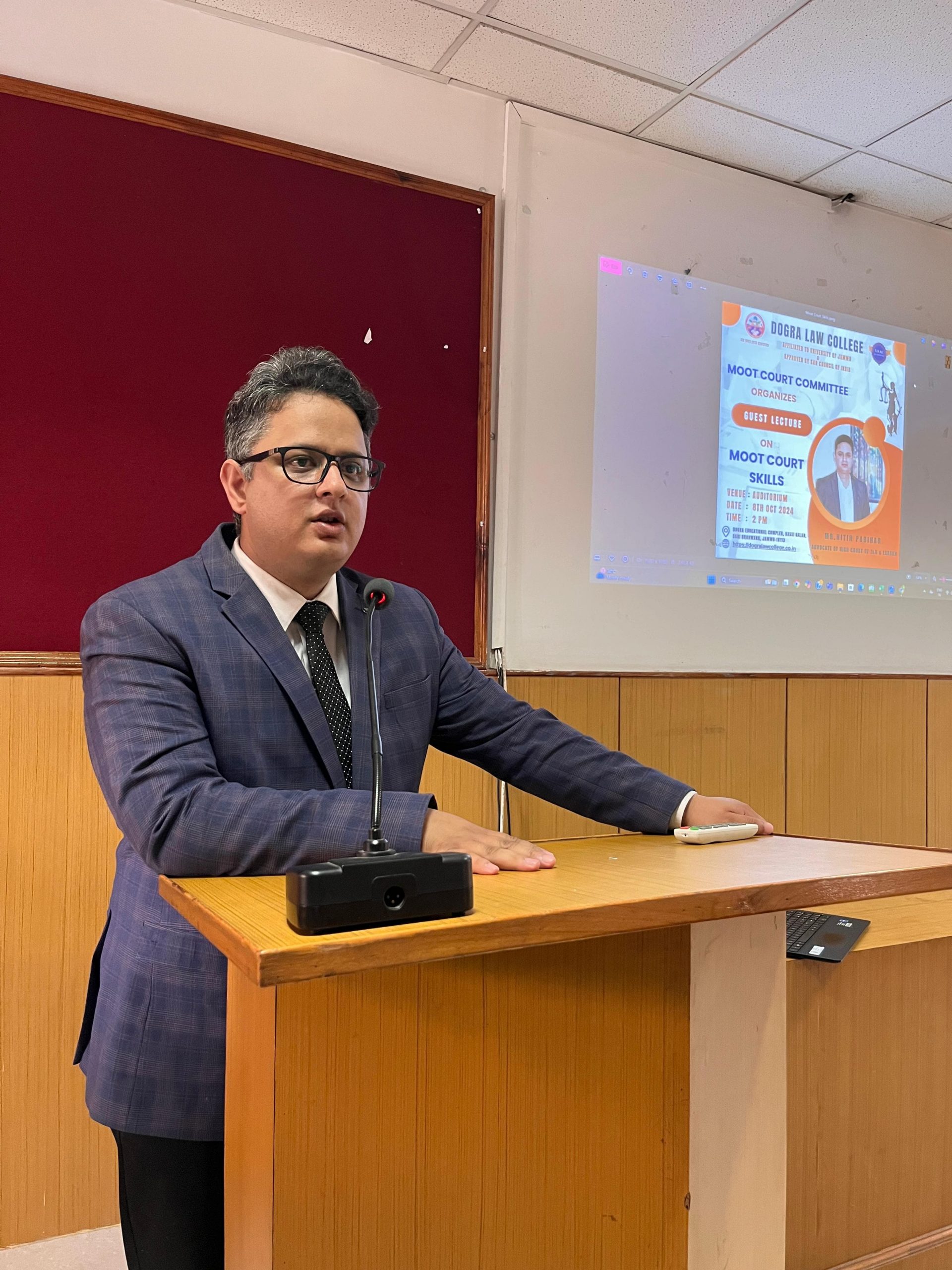




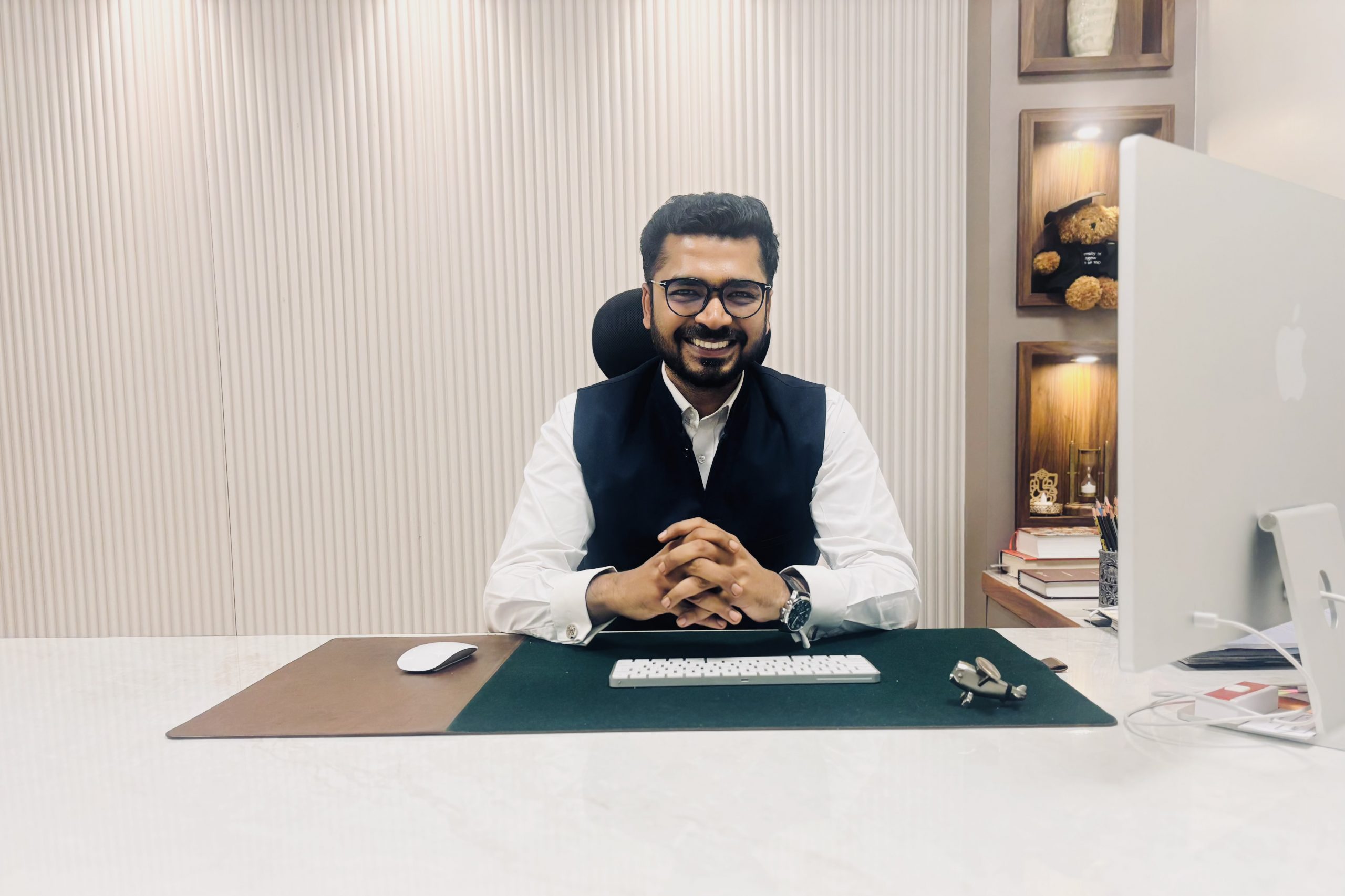


 Allow notifications