Tag: Harvard

  • “Marrying Facts and Law for Practical Counsel & understanding the intricacies of business alongside legalities ensures effective client execution and success in today’s dynamic market.” – Nayantara Devaya, Founding & Managing Partner of Catkin Legal

    “Marrying Facts and Law for Practical Counsel & understanding the intricacies of business alongside legalities ensures effective client execution and success in today’s dynamic market.” – Nayantara Devaya, Founding & Managing Partner of Catkin Legal

    This interview has been published by Namrata Singh and The SuperLawyer Team

    You’ve had an impressive journey from working in prestigious firms like Khaitan & Co and AZB & Partners to founding Catkin Legal. Could you please walk us through your journey and share how each phase of your career contributed to your growth as a legal professional and entrepreneur?

    AZB & Partners and Khaitan & Co, are important institutions in my growth as a professional. It provided me with the experience and finesse that a corporate lawyer requires to navigate the era where lawyers are considered valid in board rooms and business transactions, other than just court rooms. While I was working with the firms, they provided me with opportunities to work on some important transactions in the business world. The firms gave me an idea of acceptable global standards and exposure to global working environments. The pedigree I got from the firms has shaped a lot of how we do business in Catkin Legal.

    Given your extensive experience in Corporate & Commercial laws, what unique challenges have you encountered in advising companies on Information Security Privacy Law and Cyber Risk Management amidst the digital surge in various industries?

    AZB We are seeing a surge in the relevance of lawyers in the new business era. Business heads are recognising the importance of working with lawyers on a day-to-day business to ensure smoother operations of their businesses. While old business houses are passing on hands to the new generation new leaders are very encouraging of legal support to their business teams in closing transactions and operational issues. While real time businesses are going digital sensitizing leaders on the security of information they are procuring, and the importance of certifications is increasing.

    As a strong advocate for mental health, how do you integrate initiatives for well-being within Catkin Legal, and what impact do you believe it has on the overall performance and satisfaction of your team?

    At Catkin, we propagate mental health and well-being. Our employees may avail of mental health leave once a month for a day which can be extended. The associates do not need to cite their reason for being on MHL. Additionally, the partners are very aware of not overburdening our associates with manic hours. Associates have the freedom to tell their leaders that they need a break. As leaders, we are responsible for the work but not for deciding when one need a break. The career is very demanding, and we want our associates to run long not fast.

    Considering your multifaceted experience, what advice would you give to aspiring legal professionals aiming to build a successful career that transcends traditional boundaries and embraces new dimensions of law and business?

    With the energy and enthusiasm the young blood brings to the profession, I would always advise not just new but any lawyer to marry the facts and understand how the business or product runs along with the law. If this does not happen the advice we are dispensing to the client becomes redundant as they cannot execute it on the ground. Due to this gap, there have been numerous judgements that are impossible to implement.

    Mentors often play a crucial role in one’s professional development. Could you discuss the influence of any mentors or role models who have inspired and guided you throughout your career journey?

    My career is basically me being a living proof that I have had the most amazing mentors. They have helped me navigate the legal profession and understand how to manage teams and clients. But more importantly in their understanding of the law, people management skills, negotiating skills, and life skills

    Founding Catkin Legal marked a significant milestone in your career. What motivated you to establish your own firm, and what were some of the initial challenges you faced in setting up and establishing its reputation in the legal industry?

     I think starting my own law firm was always a goal. My parents- who have always been the wind beneath my wings were very encouraging of starting my own practice even though I do not come from a family of lawyers. Believing in my goal every day in the last 15 years and working on that goal every day and working on myself made me start my firm. One of the key challenges we face is to keep being relevant. We keep upgrading our skill set and recrafting our working models to ensure we are a relevant and sustainable firm

    Building a clientele and reputation from scratch can be daunting. Can you share some strategies or initiatives you implemented in the early days of Catkin Legal to attract clients and differentiate your firm in a competitive market?

    Balancing multiple responsibilities as a managing partner, legal advisor, and advocate for mental health advocacy can be demanding. How do you prioritize your time and commitments to ensure both professional excellence and personal well-being? I think all these roles are interdependent. I try and understand the urgency and support required for each situation on a weekly basis and set my priority on a need basis. I believe in a physically fit and mentally healthy life, so for me, that comes first. I do not work alone. I have teams for all tasks and project- Home-work -or anywhere else where I want to contribute. Creating and cherishing capable leaders and individuals within or teams, helps us go a long way.

    Your career has seen transitions from working in prestigious law firms to in-house legal roles and eventually founding your own firm. Could you share your experience of navigating these transitions and highlight the differences in working environments between law firms, corporate settings, and running your own legal practice?

    Law firms and business houses systems are already in place. You come in and integrate into an already existing system and grow with the system. Starting a law firm or any business involves starting or creating systems that others can integrate into. As a business owner, the biggest challenge is not creating that ecosystem but ensuring its sustainability. A huge part of my role is troubleshooting to ensure the ecosystem of catkin remains healthy and sustainable in all areas.

    With your busy schedule and diverse professional engagements, how do you unwind and recharge outside of work? Could you share some of your favorite relaxation techniques or activities that help you maintain balance and rejuvenate your energy?

    A good cardio workout and yoga is my favourite kind of unwinding. I try to pack in this at least six times a week. I enjoy a good movie. I like to read, but we read a lot at work and usually, it becomes my last option. Oh, recently I’ve been enjoying reading storybooks to my two-year-old son.

    Get in touch with Nayantara Devaya-

  • “Figure out your purpose in life, have a larger vision and chase that, you are more than your job, your accomplishments and your possessions”- Kudrat Dutta Chaudhary,  Commissioner, Immigrant Rights Commission, San Francisco, California, United States

    “Figure out your purpose in life, have a larger vision and chase that, you are more than your job, your accomplishments and your possessions”- Kudrat Dutta Chaudhary, Commissioner, Immigrant Rights Commission, San Francisco, California, United States

    This Interview has been published by Pragya Chandni  and The SuperLawyer Team

    Ma’am, can you please share the pivotal moments or experiences that led you to pursue a career in law, especially focusing on your journey from studying at the Army Institute of Law to earning an LL.M. at The Fletcher School of Law and Diplomacy?

    I always had a justice oriented personality and the choice was either between Law or Journalism for me when I was growing up. I also was very clear since very early on that I wanted to work in the field of women’s rights and gender based violence and with that I decided that Law would be a path best suited for me. At 22,   I published a novel on the human trafficking of women in Nepal to India after the Nepal earthquake and after completing Law from the Army Institute of Law I went on to study at the Fletcher School where I focussed specifically on gender based violence and International Law. I wouldn’t say that there was one moment that defined my trajectory but I’d say that just the conviction that  my aim in life is to use my education, privilege, knowledge and expertise to help women led me from Law School to graduate school to the positions I’ve held thereafter. 

    Your LL.M. focused on International Laws, and you received the Honos Civicus Award for Civic Engagement. How did these experiences shape your perspective on the intersection of law and civic engagement, and how do you see it influencing your current work?

    I feel both Law and civic engagement have a symbiotic relationship for example it was Raja Ram Mohan Roy’s advocacy against ’Sati’ to legally put an end to it in the 1800’s and today we see the role of civic engagement in creation and abolishing of laws over matters important to the current times. For me, being active and participating in the community, advocating for one’s community and influencing positive change is my mantra and I live these beliefs by being involved in groups and advocacy over issues that I am most passionate about like women’s rights and immigrant rights. 

    As a law clerk specializing in asylum law and gender rights at the Law Office of Robert B. Jobe, can you elaborate on how your work has involved strategizing refugee and asylum claims based on gender-based persecution? What challenges and successes have you encountered in this role?

    In my previous role, I worked with battered women who were fleeing persecution that they suffered in their home countries and it involved documenting their persecution, highlighting issues that were in tandem with the theory of their case. My journey with a client often started from building rapport with them which sometimes can be hard when they have suffered immense trauma in their lives, to creating a safe space where they can feel comfortable in expressing themselves and sharing their stories. One challenge with this work is that sometimes the other person is not open to seeking therapy or doesn’t live in a community that would help them work through their trauma; I learnt how to tackle this bump over the years and I feel the more you grow as a professional and person, there are different approaches you can use to understand their resistance to therapy while also giving them other suggestions to seek support from a place of empathy. 

    You’ve engaged with governmental organizations like USCIS and the Executive Office of Immigration Review. Could you share how these partnerships have contributed to your work in supporting vulnerable populations, and what impact your stakeholder engagement strategy has had on your cases?

    My engagement with EOIR and USCIS as a Law Clerk was limited to the work I was doing but given my position as the Vice Chair of the San Francisco Immigrant Rights Commission, I have more freedom to persuasively raise and inquire about immigrant issues with USCIS that impact immigrant population of San Francisco. That said both EOIR and USCIS are Federal bodies and stakeholder engagement with them happens at the Federal level that hopefully I am a part of at some point in my life.  

    Serving as a Commissioner for the San Francisco Immigrant Rights Commission, you’re involved in developing strategies for human rights and labor rights for immigrants. How do you balance your advocacy work with the practical aspects of implementing policies and programs to address these issues?

    San Francisco Immigrant Rights Commission works on conducting special hearings to make recommendations to the Mayor and Board of Supervisors on Immigrant rights issues which span from creation of employment for asylum seekers to housing for immigrants to taking a stance on H1B layoffs to standing in solidarity with DACA recipients whenever the country fails them. Once we have a special hearing, we review the recommendations, debate them and then forward them. This debate is often rich and detailed with every commissioner bringing practical questions to the mix and we also have the San Francisco Attorney’s office and Office of Civic Engagement and Immigrant Affairs to help us through the procedure. At the end of the day, the aim is to be an accurate representation of the issues of the immigrant community and should there be a gap between the recommendations and the practical implementation of policy, the Mayor and the Board of Supervisors may reject it. 

    Your role as the Chair of Women’s March San Francisco involves designing and implementing human rights programs. Can you provide insights into the specific programs you’ve developed, and how collaboration with government and grassroots organizations has played a role in advancing these initiatives?

    The Women’s March San Francisco is an inactive group right now but in the past I have worked on organizing First Amendment Marches in San Francisco on reproductive rights and have collaborated with different initiatives like we have co-hosted panels on equal pay for women followed by a movie screening (on the discrepancy of pay between the men and women’s football teams in the US) and we led a workshop on how to be active beyond the marches. The beauty about a group like WMSF is that it is an all volunteer group founded by women who are epitomes of  ’stand up fight back’ and has been around since 2016. WMSF has also amplified the work of other grassroots organizations for years and has provided support (whenever possible) if needed.

    As a Research Assistant for Prof. Dyan Mazurana on the topic of child brides in humanitarian settings, how did your work contribute to addressing evidence gaps in child marriage during crises, and what lessons did you draw from this experience?

    My work as a Research Assistant was to assist with a literature review on the topic and then identify key stakeholders who possess experience and practical knowledge in the field of child brides in humanitarian settings so that they could be interviewed and their insights could be recorded by Prof. Mazurana. As my first assignment as a graduate student, a lot of my work revolved around planning logistics for interviews and communicating with the interviewees from INGO’s and governments around the world and I definitely learnt a lot in this process. 

    Lastly, what advice would you give to fresh graduates aspiring to make a positive impact in the legal and humanitarian spheres based on your journey?

    Figure out your purpose in life, have a larger vision and chase that, you are more than your job, your accomplishments and your possessions. AND give back to your community!

    Get in touch with Kudrat Dutta Chaudhary-

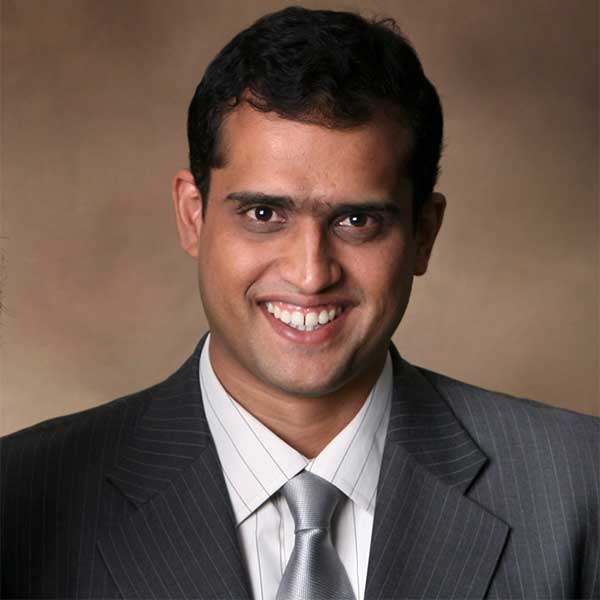
  • Satvik Varma, Litigation Counsel, on establishing Independent practice, studying LLM from Harvard Law School, and authoring a book

    Satvik Varma, Litigation Counsel, on establishing Independent practice, studying LLM from Harvard Law School, and authoring a book

    Satvik Varma is a Litigation Counsel and Corporate Attorney. Prior to setting up his private practice, Satvik was a partner at India’s premier law firm, (undivided) Amarchand Mangaldas and also served as the Vice-President and Counsel in the corporate law group at Lehman Brothers (2003-2005) headquarter in New York. Satvik started his career as a litigator (1998-2001) at the Supreme Court of India and the High Court of Delhi. While practicing in Courts, Satvik had the opportunity to participate in and argue various constitutional laws, insurance and family law related cases.

    Satvik holds a Bachelor of Arts (with Honours) in History and a Bachelor in Law (LL.B.) from the University of Delhi. He earned a Master of Law (LL.M.) from Harvard Law School, where he was a part of the South Asian Lawyers Association. He is dual qualified and licensed to practice in both India (1998) and the State of New York (2003).

    Satvik is a frequent speaker at various panels, seminars and workshops and is often featured on television debates for his views on legal matters. He writes regularly on corporate governance, legislative matters, economic and trade policy and current legal affairs for most of India’s leading business newspapers, magazines, and journals.

    In November 2017, Satvik released an anthology of his essay’s titled “Yes, I’m Opinionated” – “Musings of a Lawyer on Governance, Law and Policy” published by Lexis Nexis. The book has received advance praise from sitting judges of the Supreme Court of India and the Delhi High Court and leading Senior Counsel in India. 

    Satvik has a keen interest in global and regional affairs and serves on the advisory board of the Asia Society India Centre, a United States not-for-profit. He has been selected from amongst many as an Asia 21 Young Leader, where he actively engages with others from the Asia-Pacific to discuss issues of common interest to the region. He is also a member of the Young Indians, an initiative operating under the aegis of the Confederation of Indian Industry (CII), to help motivate the youth to shape the economic and social agenda of India. Recently, he was selected from a very large and diverse group of candidates as an Aspen India Leadership Fellow and is cohort of the Aspen Global Leadership Network.

    In this interview we speak to him about:

    • Challenges of setting up his independent firm
    • Experience of studying at Harvard Law School
    • Importance of Internship
    • Being a prolific writer and authoring several articles and now a book
    • Maintaining a work life balance


    HOW WOULD YOU LIKE TO INTRODUCE YOURSELF TO OUR READERS? PLEASE SHARE YOUR ACADEMIC AND PROFESSIONAL BACKGROUND

    I am a litigation counsel and corporate attorney based in New Delhi. My practice focusses mainly on corporate commercial litigations, shareholder and company disputes, breach of contract and specific performance disputes, competition law and telecom/satellite law related litigation and domestic and international arbitrations.

    I also regularly contribute to most leading Indian newspapers on topics related to law. Recently, I released a book- “Yes, I’m Opinionated” – Musings of a lawyer on Governance, Law & Policy. I am addicted to current affairs and a keen observer of politics.

    I graduated from Campus Law Centre, Delhi University in 1998 and immediately joined the chambers of Mr. Kailash Vasdev (currently Senior Advocate). In fact, I had been associated with Mr. Vasdev’s chambers for some time and had worked there through most of my LL.B. days. While at Mr. Vasdev’s chambers, I would often share notes with my brother who was working in the financial sector in London and would hear about M&A and Joint Ventures and Securities, all of which were topics I knew nothing about. So in 2001, I decided to make the transition from Litigation to Corporate law and joined, for a very brief period, Dua Associates in their Corporate Transactions/M&A team. Prior to joining Dua, I had already applied for an LL.M. overseas and went on to pursue my Master in Laws at Harvard Law School, graduating as the Class of 2002 or what was then termed as the 9/11 Class. This was because in the “normal” preceding years, of the 150 students that graduate HLS, well over a 100 students would get a job upon graduating. But in our batch only around 8 students got placements, in what was termed as the “foreign lawyers program”, for a brief stint in the States followed by them returning to their home country to work with the same firm. Regardless of not having secured employment I decided to write the New York State Bar Exam which, admittedly, was one of the most gruelling experiences of my life. Like most students, one enrolled for the BARBRI classes, which lasted through the day and then there was homework to be completed before the next day. On an average, preparing for the Bar was a 16-18 hour day and one was often reminded of the low pass percentage for first time takers. I was fortunate and blessed to have passed the Bar in the first attempt, but still didn’t have a job. In fact, in 2002, there were very few entry level positions available in New York and I didn’t even manage to secure a single interview in over seven months. I was adamant to work and live in New York and hence I persisted. I still remember a particular time when I was called to an interview and spent the day with the recruiter distributing flyers for an attorney who was contesting for a Selectman’s post (equivalent to municipal councillor) and those were the first $40 I earned in America. Eventually, I got lucky when the legal head of TCS, who I had been introduced to by a dear friend and had kept in touch with through the Indo-American Lawyers Association, referred me for a temporary lawyers position at the investment bank of Lehman Brothers that had just signed up an outsourcing agreement with TCS and Wipro. Like most Wall Street positions, I went through five rounds of interviews (the first I had had since graduating HLS seven months prior) and was eventually hired as a temporary lawyer for an eight week assignment. I was lucky that five weeks into my assignment, I was confirmed in the position and given the title of Vice-President Corporate Law at Lehman Brothers. Asides from the title, I was delighted to have a huge office on Park Avenue in New York and went on to work for Lehman for a few years before eventually returning to India.

    Upon my return, my former partner from Dua Associates had just moved to Amarchand Mangaldas (undivided) and proposed I join his team. I was slightly undecided at what to do as it was my initial desire to start my own litigation practice but eventually decided to join Amarchand as a Senior Associate in the M&A & Private Equity team. I eventually rose from amongst the ranks at Amarchand and was announced as Partner in 2010, at which time I decided to start my own private litigation practice. Many people thought I was foolish to be giving up such a lucrative position and the comfort of being under the umbrella of India’s premier law firm. But I was exhilarated with my decision to return to litigation practice and being back in Courts was something that excited me.

    Since 2010, I have been developing my practice as an arguing counsel in Courts and Tribunals all across India focussing primarily on corporate- commercial disputes, and I have to say that I have loved each and every day since setting up my own law chambers.


    HAVE YOU ALWAYS BEEN INCLINED TO A CAREER IN LAW? ARE YOU A FIRST GENERATION LAWYER?

    I am actually a fourth generation lawyer with many in the legal profession both from my mother’s and father’s side of the family. In fact, my paternal grandfather was amongst the first lawyers from Bihar to have relocated to the Supreme Court and was, what was then called, an “agent” of the Supreme Court of India. He was one of the 23 agents present at the inauguration of the Supreme Court of India on 28.01.1950. But there was never any pressure on me to pursue a career in law especially since my older brothers first degree is in law, but he’s always worked in the investment banking and finance sector. Consequently, while my interest to pursue law has been influenced by my family background, the real inclination stems from my compelling desire to work amongst people, to help “resolve” matters and to play a role in helping shape policy and the legal landscape in India. Now, after being admitted for almost 21 years I can say without a doubt that practising law is not just my profession, it’s something I’m extremely passionate about, it excites me and its something I greatly enjoy doing.


    TELL US A BIT ABOUT YOUR TIME STUDYING LAW AS AN UNDERGRADUATE STUDENT AT THE UNIVERSITY OF DELHI

     Having earned an Honours degree at Hindu College I was very familiar with North Campus and, in many ways, Campus Law Centre was an extension of that joyful experience of being at Delhi University. We had some excellent professors at CLC but really the emphasis was on the discussions outside classrooms and the interaction amongst the students. During my time pursuing an LL.B. there was no requirement for internships, however I had started attending Mr. Vasdev’s chambers from my second year and was, hence, able to comprehend the practical application of what was being taught at Law Faculty.


    WHAT WERE YOU AREAS OF INTEREST DURING YOUR LEGAL EDUCATION? HOW DID YOU DECIDE THE FIELD OF LAW THAT YOU WANTED TO SPECIALISE IN CAREER-WISE?

     The late 1990’s were when the period of liberalisation really accelerated and one was seeing more and more international businesses set-up in India. One was were constantly reading about trade and investment policy developing in the country. As a consequence, at Law Faculty, I was drawn towards Law of Contracts, Law of Torts, Constitutional Law and Criminal Law. My initial many years were spent primarily at the Supreme Court of India and hence my interest in Constitutional Law grew. But ultimately, given my professional experience of having worked both as a litigator and a corporate lawyer, I developed a great interest for corporate-commercial laws. I find this area of law challenging, exciting and forever developing, remoulding itself to the changing economic scenario in the world. It’s also the field where I am able to make meaningful contributions having worked on both ends of the spectrum.
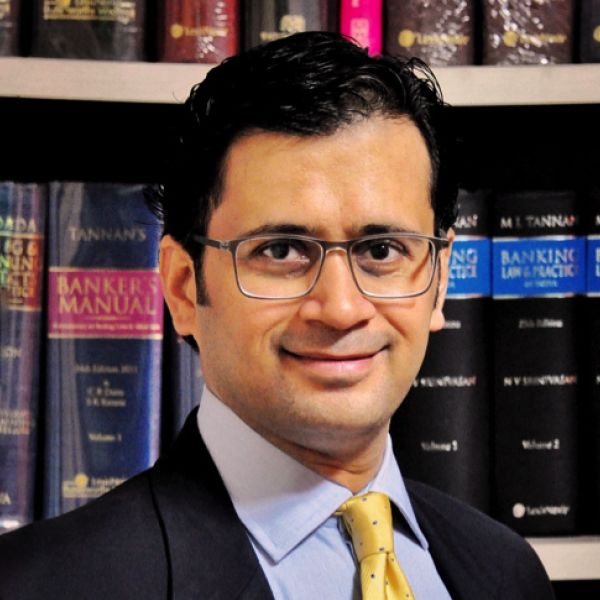
     

    INTERNSHIPS PROVIDE STUDENTS WITH THEIR FIRST EXPOSURE TO THE PRACTICAL ASPECTS OF THE LEGAL PROFESSION. COULD YOU TELL US ABOUT THE INTERNSHIPS YOU TOOK UP, AND WHAT YOU LEARNT FROM THOSE EXPERIENCES?

     The curriculum at Law Faculty did not prescribe mandatory internship, hence one took up internships voluntarily. I had started working from my second year at Law Faculty, i.e. 1996, and one of my greatest takeaways from working at a chambers was the need for lawyers to have an attention for detail. In 1998, the Bar Council introduced the compulsory apprenticeship program for law graduates, which eventually got overturned. During that period I had the chance to hear senior members of the Bar present to the Constitution Bench and was fascinated by the practical examples which lawyers presented to juxtapose the law with its application. It has been my attempt to carry forward and apply both of these early experiences in everything I do.


    LAW GRADUATES ARE FACED WITH HAVING TO CHOOSE FROM SEVERAL CAREER OPTIONS AND THE CHOICE OF STUDYING FURTHER. WHAT ADVICE WOULD YOU GIVE STUDENTS IN AVOIDING A DECISION PARALYSIS?

     Many of the choices available to law graduates today didn’t exist 20 years ago, but it’s absolutely fascinating to see these young lawyers opt for different career paths, where their law degree can be used. For example, I recently met a lawyer with just a few years of experience who had joined a think-tank to work on policy papers. This was not an option when I had graduated, but it’s a great development and also a testament of how the core skills acquired while studying law are transferable skills and can be utilised across a variety of professions.

    Law graduates need to be patient, and not jump the gun to hastily back-pedal from any decision they may have taken if they don’t seem immediate results. The legal profession is more like a cricket test match, with two innings, and not a T20 game where one need to score on every ball. Take a decision and stick by it because too many changes reflect badly on your resume.


    PLEASE SHARE WITH US YOUR LLM EXPERIENCE AT HARVARD LAW SCHOOL. HOW WOULD YOU SAY YOUR PRIOR EXPERIENCE AS AN ADVOCATE AIDED YOU IN YOUR MASTER’S DEGREE?

     My experience at Harvard and then working on Wall Street has in many ways shaped my professional discipline, my work ethic and lawyering skills. Most good law schools today require at least two to three years of work experience before they will even consider your application and I believe that prior work experience in many ways will prepare you for a fairly rigorous and intensive 1 year Master’s program.

    Personally, I strongly urge all young lawyers to pursue an LL.M. and explore ways of studying overseas. Aside from the international exposure, and learning from experiences of those from across the world which adds to one’s overall personality development, the LL.M. program also exposes one to many areas of the law that one doesn’t study in India. For example at Harvard I took a course called Analytical Methods for Lawyers which included Game Theory, Statistics, Accounting and Decision Analysis in Contracting matters which I found fascinating. I also studied other topics I had no exposure to in India like Entertainment and Media law, Alternative Dispute Resolution methods and got an opportunity to study Negotiations from the Gurus of Negotiation Theory – William Ury, Roger Fisher, Bob Mnookin etc.


    WHAT ARE THE CHALLENGES THAT YOU FACED STUDYING AT ONE OF THE PREMIER UNIVERSITIES FOR LAW IN THE WORLD? HOW DID YOU KEEP UP WITH HARVARD’S ACADEMIC RIGOUR?

    While the academic schedule at Harvard, and for that matter in most LL.M. Programs, is quite intense, it’s also a lot of fun and at the end. What is paramount is what one wants to take away from the program. At Harvard for example, some of the greatest discussions took place outside of the classroom; at student events or informal discussions. As a place of learning Harvard encourages that, so one doesn’t really face any “challenges” in such a structured program. The program allows one to pursue other interests and activities across all Harvard campuses and that is a good way to balance the academic schedule along with the non-academic activities on campus.

    I would also like to share that while I was at Harvard Law School, my older brother was at Harvard Business School and if I remember correctly, we are the third or fourth set of brothers to have graduated Harvard University on the same day, at the same time but at different ceremonies. So on graduation days my mother was at my ceremony and my father attended my brother’s ceremony.

    HOW DID YOU COME TO TAKE UP A POSITION WITH LEHMAN BROTHERS? WHAT ARE THE MAIN TAKEAWAYS FOR YOU FROM THIS EXPERIENCE?

    As I mentioned above, my introduction to Lehman Brothers was made by the General Counsel of TCS Americas. It was the only interview I got after graduating from Harvard and I started as a temporary worker and was made Vice-President Corporate Law in five weeks of working with them. In this role, I was supporting the global procurements team on all their contracts and handled everything from negotiating the bank’s Bloomberg Data contract to the acquisition of Private Jets that were undertaken. I also worked very closely with the Benefits team and worked on re-negotiating the global health benefits and insurance program for 14,000 employees. My greatest take-away from working at Lehman was how to understand the business and commercial interest of your client, in this case the bank itself, and balance those interests with the law to make sure the deal goes through. I was also able to put to immediate use the negotiation skills I had acquired while at Harvard and see them bear results. That is something that has held me in great stead in all my client dealings.


    WHAT MOTIVATED YOU TO JOIN AMARCHAND MANGALDAS? COULD YOU TELL US ABOUT YOUR JOURNEY TO BECOMING A PARTNER AT ONE OF INDIA’S LEADING LAW FIRMS?

    Upon my return to India, my former partner from Dua Associates had joined Amarchand Mangaldas (undivided) and while I was keen to start my private practice, he asked me to join and it was an offer I found very tough to refuse. In retrospection I am thrilled to have accepted that offer as I learnt immensely from working at India’s premier law firm. Amarchand had a great brand value and I remember when I shared with my Harvard colleagues that I had joined Amarchand, almost everyone had heard of it in their home country. During the time at Amarchand, it was in the process of charting out its course for further growth and I really enjoyed being a part of the journey which eventually led to my selection as a Partner at the firm. This was an especially happy moment for me as I was one of the 19 Partners at the Delhi office. It would be my strong recommendation to junior lawyers to, at some stage, work at a large law firm to understand the mechanics of an Indian law firm and only post that experience decide their long term career goals.


    WHAT ARE THE CHALLENGES AND LEARNING OPPORTUNITIES THAT YOU ARE FACED WITH IN YOUR INDEPENDENT PRACTICE?

    Independent practice is an all in one process – you’re the originator of the work, the executor, the teacher and mentor, the researcher and sometimes also the office manager! But it’s a lot of fun and while I recognise that independent practice may not be for everyone, I would not trade independent practice for anything else. One of the most difficult things for me while returning to litigation and independent/private practice was to try to re-establish my brand, which one had to do from scratch. Amongst the best things about private practice is the freedom to do all kinds of different things and work across various practice areas, which one is not able to do while in the structured confines of a law firm. As a result, one is constantly evolving and learning something new every day which makes independent practice a lot less monotonous or repetitive.


    GIVEN THE DYNAMIC NATURE OF THE FIELD YOU PRACTICE IN, HOW DO YOU KEEP YOURSELF UPDATED ABOUT THE LATEST DEVELOPMENTS IN THE LAW?

     One of the best ways to stay updated about the latest developments in the law is through leading law journals and the various other online law portals which come up with an analysis and bring to one’s attention the developments in the law across the country. Given that I write almost every week and invariably choose topics outside of my area of work, I always learn through the process and make it a point to read the latest Court decisions. Despite the latest cases being available at the press of a button, I urge all young lawyers to maintain their personal case journal and update the same regularly.

    Additionally, the entire chamber eats lunch together on Saturdays and we have a rule where one of my Juniors is expected to have read up on a case and is required to share details of that with the others. We do this in a relaxed environment not to make it overly burdensome and keep it fun, yet not lose sight that it’s a work assignment.


    WHAT DOES A TYPICAL WORKING DAY LOOK LIKE FOR YOU?

    Most litigators and more so those in private practice work 7 days a week. Weekends tend to be the busiest as one is catching up on drafting, vetting drafts and settling pleadings. On most days I’m in office till past 10 pm. But the advantage of private practice is that post Court hours one is the master of one’s own schedule and can plan one’s day accordingly. So on most days, I would try to get back home to be with my Son during his dinner time and also try to eat with my wife and then come back to office to work late into the night.


    HOW DO YOU MANAGE YOUR TIME BETWEEN YOUR PROFESSIONAL AND PERSONAL INTERESTS? WHAT ARE YOUR INTERESTS OUTSIDE LAW?

     I’m extremely fond of art and fashion, love food and travel and greatly enjoy listening to new-age jazz and lounge music. There is often music playing in the office. I am also fond of photography and many photos taken by me adorn by chamber walls. I also have a great interest in theatre and drama having worked for many years at India’s leading professional theatre group. So if there’re any plays in town, I make it a point to try and see them. The good part is that in private practice one is able to manage one’s own schedule and create one’s own personal- professional work life balance. I equally urge all my Juniors to definitely engage in some sporting or other activity on a daily basis.


    WHAT WOULD BE YOUR PARTING MESSAGE TO OUR READERS WHO ARE PRIMARILY LAW STUDENTS AND YOUNG LAWYERS?

    Today, a law degree offers many alternative career options for law students. My parting message both to law students and young lawyers is – Choose wisely, the career path you’d like to pursue, but then follow it with dogmatic determination. Follow your dreams, chase your heart and be passionate about your work doing it with utmost honestly and all sincerity. Don’t draw comparison with your peers or classmates and don’t jump-ship just because you feel your friend is ‘doing better’ or is ahead. Once you’ve chosen a path, give it lots of time and all your energies. The practice of law, whether at a law firm or as a litigator requires one to put in a lot of hard work and long hours. One must have the mental strength and resolve to deal with 14-16 hours days. Even if they don’t produce immediate results, its like making a deposit in a bank, all those hours will eventually yield results. As a U.S. Supreme Court Judge said “The law is a jealous mistress and requires a long and constant courtship. It is not to be won by trifling favors, but by lavish homage.” But above all, , remember to have fun along the way, its not always the destination, but also the journey that matters.


  • Pinky Anand, Additional Solicitor General of India, on studying at Delhi University and at Harvard, and on the formative years of her career

    Pinky Anand, Additional Solicitor General of India, on studying at Delhi University and at Harvard, and on the formative years of her career

    Dr. Pinky Anand is considered one of India’s top lawyers. She is the current Additional Solicitor General of India and a Senior Advocate. An alumna of the Campus Law Centre at Delhi University, she went on to pursue her LL.M from the prestigious Harvard University on an Inlaks scholarship in 1980. She recently came out with the much acclaimed book, Trials of Truth which is available on Amazon. In conversation with Manushi Desai, she shares her experience as a lawyer and the formative years.


    How were the formative years which resulted in such a strong yet warm personality?

    My parents were married very young. My mother’s sensible nature has rubbed on me and so has my joint family’s sharing and caring nature. I have grown up in the streets of Old Delhi and have fond memories of sharing everything with my family which is my support system and I greatly believe in the idea of balance which my family taught me. I further studied in a convent school and the values of discipline and good virtues were inculcated very firmly in my outlook. I endeavoured to participate in all extra curriculars, especially during the law faculty days where I was the student leader within BJP as well.


    How was your Harvard experience?

    It was an ambition to go to Harvard and I achieved it by providing a systematic approach. I was inspired by the movie Paper Chase based on Harvard. I applied for Rhodes actually, I did not get the Rhodes, however, the Rhodes committee recommended me to the Inlaks foundation and that’s how I got into Harvard. Years later, I was called back to Harvard to give a lecture which is when I stumbled across my thesis in the Harvard library archives which is a must read even now to know more about the concept of public policy in arbitration.


    How were the initial years as a lawyer?

    I am a first generation lawyer. After marriage, circumstances were different since my husband is a lawyer, my father in law is a lawyer, but the intial years were not the same. I did not have any benevolent hand in that sense which is quite a necessary part. However, I did not have as bad a struggle as I should have is because my friend Geeta Luthra, who is a senior advocate now and I started practice together. It was very unknown of women partnering with each other in the profession.


    How did you join politics?

    My tryst with politics started when I joined ABVP as a law student and contested the prestigious Delhi University Students Union (DUSU) elections. However, when I went to Harvard and later partnered with Ms. Geeta Luthra, politics took a back seat. This changed later when I headed the BJP National Legal Cell as the first woman convenor which gave me a chance to change people at a grassroot level.


    You have risen high in your domain and have even been named as India’s top influential women in a book. How was the struggle been?

    The principle struggle is not being a part of the old Boy’s club. There is also a prejudice against engaging women counsels. However, beyond a point when you prove yourself, you actually were acknowledged. You have to continue to be twice a man. So the demonstration effect and the visibility or your proving your mettle is something which has to be done at the first degree level. Having done that, you need to have people who kind of support you. My family is a very big support, my in-laws are very supportive and I think that’s a very important feature too, because professional life is a tough one.


    What was the tipping point in your career?

    I fondly state my tipping point to be the retainership we had from a Marwadi business group through which I got exposure to various kinds of cases. It proved that you learn far more on your feet than you learn from any text book. We got a wide exposure to wide variety of cases from that group not only in Delhi, but in various parts of Delhi. We used to go to various even district courts and in fact I think even trial courts.


    Why practice in trial courts when you could, as a Harvard graduate, have easily started in the Delhi High Court or Supreme Court?

    Trial courts are great fun! I think you learn the most there and you have to understand the set up of what law is about and how law is made. For young lawyers, you are trusted far more with the trial court cases than you are with Higher Court cases- so it was a relation you build- you go up the ladder. The ladder is a very slow one, like snakes and ladders – you go up and then you sometimes come down.


    What is the secret sauce to your success?

    I believe in confidence and determination apart from the support of your loved ones. There is constant juggling of the work life balance but it is important to set goals and challenges and strive to achieve them as well.


    This interview was taken by Manushi Satyajeet Desai. Do read her blog at desaimanushi.blogspot.in and follow her on @manushidesai on twitter and instagram.

  • Rackhee Trust, Transformational Coach and Holistic Healer, Ojas, on working with Cyril Amarchand Mangaldas, and finding her spiritual calling

    Rackhee Trust, Transformational Coach and Holistic Healer, Ojas, on working with Cyril Amarchand Mangaldas, and finding her spiritual calling

    Rackhee graduated in law from Government Law College, Mumbai, in 2011. After a successful stint with Cyril Amarchand Mangaldas as Senior Associate, Rackhee discovered her passion for spiritual healing, and left a lucrative career in law to purse her calling. Rackhee Trust is a transformational coach and holistic healer who works with individuals, corporates, children and groups to facilitate breakthroughs in all areas of life. in 2016 she founded her independent venture, Ojas, which offers personal development, spiritual advancement and holistic well being workshops, coaching for private individuals as well as corporates, Reiki classes and one-on-one sessions all over the world.

    In this interview we speak to her about:

    • Her time as Research Assistant at Harvard
    • Working for Cyril Amarchand Mangaldas
    • Pursuing a career in spiritual healing


    What would you like to say to our readers in the manner of introduction?

    We have become very accustomed to introducing ourselves in professional terms. Over the years, I have come to realise and experience and that each one of us is far more than just that job, just that role or just that career.

    That said, I am simply a seeker. A seeker of the Self. One constantly discovering more about who I am, my purpose here and what life has to offer.We take up several roles to give us an identity and often lose ourselves in this role itself. My journey has been riddled with several such instances. One such milestone being my short stint of five years as a lawyer. Just as they say you can take a girl out of Bombay but can’t take Bombay out of her, you can take me out of law but can’t take law out of me. I cherish the wisdom and skills law gave me as I continue on my path to everlasting learning, seeking and inner work


    What influenced you to do your undergraduate course in International Relations at Tufts University?

    The need to take up an academically challenging subject that proves to be an asset in my career as a lawyer drove me to majoring in International Relationships during my undergraduate at Tufts University, Boston. Naïve and not realising that pure passion should drive these decisions, I allowed my mind to make a logical decision and yet thoroughly enjoyed my years there.


    Tell us a bit about your time studying law at GLC, Mumbai. 

    I was driven to make the most of my time as a law student and gain as much practical experience and exposure during this time. I worked my entire three years during my studentship at GLC, interning in several law firms. I realised even as early as then that this wouldn’t be where I’d end up all the way at the end of my career but it seemed like the right thing to pursue in that moment.


    Could you tell us about the internships you took up, and what you learnt from those experiences?

    My internships were very varied and I am very grateful for that. I strongly urge students to take up diverse internships to explore the different opportunities the law has to offer. Often what we think to be our passion translates into something very different in reality. Getting first hand experience of all those aspects of the law that we know to be of interest or not to be of interest to us can be quite an eye-opener.

    My internships ranged from litigation with a very small home office to a clerkship with a very respected justice of the Hon’ble Bombay High Court, followed by M&A, real estate and banking and finance experience across several prestigious law firms in the city.


    What are the parameters that must be considered in deciding what the next step should be after graduation?

    Given my experience both as a lawyer and law student struggling with a “decision paralysis” as you accurately term it, all I can say is follow your heart. We often make the wrong decision of choosing what is “safe”, “logical”, what will make zyx happy or proud of you. This may not be as easy at it seems because you may need to introspect a lot to really get in touch with what you’re most passionate about or what your heart really wants. However, when you get in touch with your heart you will realise that you also get in touch with the mighty potential deep within you to make that possible.

    The parameters to be considered once you graduate are really: (i) what really makes happy? (ii) for a moment if money didn’t matter what would you be doing? (iii) are you choosing xyz role/job for the money/lifestyle/freedom/independence or something else? (iv) what is really driving your decision? (v) what else can you do to achieve happiness and also the money/lifestyle/independence/something else that you’re looking for?

    If you can answer these questions truthfully to yourself, you will have made the best decision for yourself. Trust that decision and follow through.


    Could you share with us your experiences as a Research Assistant at Harvard’s Center for Public Leadership?

    It was a great experience working as an RA at Harvard’s Centre for Public Leadership, if you like doing research. At this stage, I wasn’t in touch with what I love doing most. The learning experience was wonderful and it definitely honed my research skills which come handy as a lawyer. I encourage all law students to take up as many opportunities to work on their research skills as possible. Not all law schools provide the environment to do so, GLC definitely did not. You may struggle as an intern/lawyer without knowing how best to research.


    Tell us about your early professional experiences at Naik Paranjpe & Company.

    This was quite natural for me as I was accustomed to working when this transition took place. In fact I had been working with Naik Paranjpe & Company for over a year before I graduated. The bonus was the associate pay when I did finally graduate! That’s the only real transition.


    From being a Senior Associate at Amarchand Mangaldas, what inspired you to take the leap in beginning your career as a transformational coach and holistic healer?

    Honestly, doing what I currently do has always been my calling. Sometimes it takes many turns and twists to realise that you landed up where you started off and that is truly who you are. I have been a Reiki practitioner for over eighteen years and the foundation of who I am lies in my spiritual journey and practice which began at the very young age of three when I met my spiritual master and Guru, Swami Chidvilasananda. My life has been riddled with experiences where I have constantly sought the answer to several questions surrounding Who am I? What is my purpose in life, why am I really here? and so on. This introspection and constant questioning lead me on my spiritual journey which has eventually culminated in my following my heart and making a life out of it. Taking this so called leap came very naturally as the time was right and the opportunities simply presented themselves. Like I teach my students now, when you open yourself to the universe, everything simply flows as you are aligned with the flow itself.


    What are the challenges and learning opportunities that you were faced with in establishing Ojas? 

    The challenges I faced were self created obstacles. Obstacles of my own limiting beliefs and as I overcame them with the work I do I began realising the power of what I do itself. My obstacles presented me with the opportunity to overcome them for myself before I could be instrumental in others overcoming their obstacles. So be it in their career, personal life (relationships) or physical/mental/emotional health, I experienced that the answer lay deep within ourselves. In fact, the root of the problem too lies within, although often it may seem to be externalised in the form of a situation, pattern, person, experience, consequence or decision. My biggest challenge was attracting clients who didn’t want to pay or didn’t have the money to pay for what I did. My first two weeks in my new role was the most challenging. I remember sitting down with this and working on myself one late night and there has been no looking back since then. Today I am humbled and grateful to say I earn more than what I earned as an associate leaving Cyril Amarchand Mangaldas, and the earning is effortless.

    The outcome of this experience was the realisation that each of our challenges are presented to us merely as an opportunity to discover what lies beyond it. When we tune in and get in touch with what really lies at the heart of this challenge, it feels like the opening up of a Pandora’s box. Suddenly, everything opens up and before you know it that challenge itself is not there anymore (or is not a challenge any more!). This is what my learning in establishing Ojas brought me to. A very deep understanding of who I am and what I really do.

    Ojas seeks to touch lives. To bring every seeker to a space of Self Empowerment through Knowledge of the Self. Healing, coaching, etc. are very limited labels. At Ojas we simply come together as seekers of knowledge, the Self and the truth. The journey reveals the rest.


    What courses did you take up in preparation for your job as a transformational coach?

    The biggest course has been the learning as a result of my journey through life. Each experience has given me so much that it has added to my unique skill set. No two people who go through the conventional “courses” or “training” will come out the same because each one’s life journey will mould their individual ways.

    That said, I have been through extensive international training in various paths that lead to the healing of the subconscious mind which carries the key to all our suffering and challenges. I am a Reiki Grand Master and practice Reiki while also teaching it. Other than that I am an internationally certified Emotional Freedom Technique (EFT) practitioner, Matrix Reimprinting Practitioner, Neurolinguisitic Programming Pracitioner, Breakthrough Coach, Magnified Healing Practitioner & Teacher, Bach Flower Therapy Teacher and Practitioner, Angel Healing teacher and Practitioner (among a lot else).


    Did you have a mentor or guide during the formative years of your career? 

    I have had several mentors along my journey. The list is endless and I am very grateful to each of them for the role they have played. This is a question that has almost haunted me all my teenage years because I wondered whether it was essential to have one guide, as I never did. Over the years, I realised that there had been several role models and as I evolved they too kept shifting. So in my experience it is very important to keep having more and more mentors or role models for different aspects of ourselves (as we are multi-faceted individuals and not linear) as we continue to evolve. This allows for our evolution to take place consistently without stagnation and in an all round manner.


    As the Founder at Ojas, what does a typical work day look like for you?

    Every day is very unique and that is what I love about what I do. My day usually begins with some self-work in the form of meditation or some such inner practice. Then my day is typically studded with client appointments all across (beginning as early as 6 am and concluding no later than 6 pm). In between I’m busy writing course material for the several courses I deliver and am continuing to develop. Reading, writing, reflecting, sharing, growing and relaxing typically encompass every day in the life of me. I have a beautiful and constantly growing set of students and clients across the world and we reflect and share and grow on a daily basis. This keep my inner work in check on a daily basis and my inner growth continues to take place thanks to each and every one of them.

    Please share with us the initiatives, workshops and projects that Ojas takes up?

    At Ojas we take up several projects, initiatives and workshops ranging from ones offered to individuals, groups as well as corporates and uniquely created to cater to their goals and needs. There is no cookie cutter approach to anything we do because each individual is unique and so what we have to offer to is needed to be such. Our initiatives and workshops range from Reiki classes, manifestation workshops, stress busting initiatives (that work at the level of the subconscious mind), targeting relationship blocks through various tools, trainings on effective speaking, meditation and heartfulness trainings, teaching about Angels and different realms of energies, monthly meditations, Bach Flower Therapy courses and tons more.


    What are the key attributes that one must develop in order to excel in stressful workplaces in the legal profession? 

    My work has brought me to a state of complete stressfreeness. It is an inner journey to get here really. I can say for all my clients and students that they have achieved this or are getting there and there are no “key” attributes that will get anyone there because each one is wired so differently that the remedy for each will be unique.

    That said, the key to each one’s stress lies in the subconscious and when we deal with what’s deep seated within the subconscious mind, a state of stress-free freedom arises spontaneously. Doctors, therapists, counselors etc. are trained to treat surface level issues. Each symptom is treated in isolation. In the work we do at Ojas, each individual is looked at as one whole comprising of all that which makes up who they are.

    The healing takes place deep inside at the level of the root cause (of all surface level issues). Often the root cause lies in some situation, emotion, event, memory etc. that took place several years or even moments ago. That leads to thoughts, feelings, emotions, beliefs, habits, actions, decisions, choices, patterns and personality which eventually manifests in the form of that which is troubling us (as disease, relationship issues, money/finance/career related struggles etc.). When the root cause is healed, the surface level issue disappears spontaneously. This is the answer to releasing stress at your workplace and in life in general and experiencing waves of joyful abundance through a life that may seem dry and regular. Each one of you can have this experience, the question is whether or not you are ready for it!


    How do you manage your time between your professional and personal interests? 

    There is no difference and yet they are balance. My professional and personal interests are one and the same. I am very blessed to have a partner who loves what I do and so what we do is part of our lifestyle. I believe only when you truly are what you do can you enjoy both personal and professional as one and the same.


    What are the challenges you have faced in building up your career as it stands today?

    We are steadily moving in the direction we had envisioned. We are blessed to be moving forward at a faster pace than we envisioned. I don’t believe in planning and envisioning in as much detail (as a five year plan) because even our vision can limit the limitless possibilities. All I know is that Ojas is on to something very big, a universal revolution. It will take us places as also each individual associated with us in any form.


    What advice would you like to give our readers, who are mostly law students and young lawyers?

    Follow your heart. Listen to your inner voice. You know what really makes you happy. You know what YOU really want. Go for it. Life is a miracle, anything is possible. Believe in this. You are capable of achieving far more than you can even imagine. Just trust in the universe a little more than in your own fear and insecurities and watch where all you end up! Enjoy the journey!

  • Shweta Bharti, Senior Partner, Hammurabi & Solomon, on management, studying at Harvard, and her diverse experience

    Shweta Bharti, Senior Partner, Hammurabi & Solomon, on management, studying at Harvard, and her diverse experience

    Shweta Bharti graduated in law from the Faculty of Law, University of Delhi, in 2002. She then went to Harvard Business School to pursue the Executive Education Programme. Shweta is currently Senior Partner at Hammurabi & Solomon and possesses experience of close to fifteen years in dealing with litigation and dispute resolution.

    In this interview we speak to her about:

    • Marrying law with management
    • Being Senior Partner at Hammurabi & Solomon
    • Taking time out for pro bono work

    How would you like to introduce yourself to our readers?

    A learner of law with an insatiable hunger to learn and excel and give my heart, soul and energy to all the matters that are being dealt with by our firm. I have been trained as a litigator and have handled crucial legal battles on behalf of clients based out of India and abroad. Being a first generation lawyer and having been thrown into an ocean of opportunities, I have learnt to swim against the tide and have thoroughly enjoyed the journey so far.

    What are your areas of specialisation and how did you go about choosing these fields?

    My interest in law developed while doing my B. Com (H) from Indraprastha College for Women, Delhi University, where I got exposed to certain areas of law, viz. Contract Act, Companies Act and Income Tax Act. I found the subjects intriguing and decided to pursue law as a career option, and also decided to do my Masters in Business Administration (since I was already working as a Executive-Business Development). As luck would have it, I got married to a lawyer who not only encouraged me to complete my course but also advised to start working as a paralegal in order to learn the basics of law while studying the subject, which would enable me to have a better understanding of the applicability of certain laws. I thereafter left my job and devoted my time pursuing law. It was then that I decided to pursue litigation, idolizing my senior colleagues, looking at the manner in which they convinced the Judges and moulded the judgments in their favour. That inspired me to opt for litigation and since then the journey has been long and interesting.

    The passion for dispute resolution developed over a period of time after attending to a few matters which gave opportunity to analyse the subject in further detail. The informal set up of resolving critical disputes with arbitrators to pursue parties to resolve the disputes in an expeditious manner was the key to dispute resolution. However, over a period of time, it is also a fact that Dispute Resolution mechanisms were only used by scrupulous litigants to buy time. While domestic arbitrations have been a huge learning, the maximum learning came from the ICC Arbitrations where the Arbitrators are particular about timelines, precision and detailing of filing the paperbook and where the expeditiousness along with quality delivery is the key.


    How were the first few years after your graduation?

    The initial years after coming out of Law College were extremely challenging with exposure to various facets of law which were alien to my knowledge and curriculum. I was trained to understand law but the implementation of that understanding was something that was new and challenging. While law college taught me the nuances of law, the real training came from the years I spent as paralegal, where I was involved in critical matters and got to observe how the law was to be interpreted and presented before the Court of Law, also developed research and drafting skills which enabled me shape my career as Lawyer.


    How do you think your managerial education has helped in furthering your career in law?

    (Shweta has engaged in a fair bit of managerial studies, from reputed institutions like Harvard Business School.)

    Being a  lawyer in today’s time also requires strategic knowledge and expertise besides the legal skills. In this age of globalization, to have the combination of law and management can hugely enhance one’s career prospects. Also considering the demand for combination skills, it definitely has its perks to have a degree in both, law and management. While managing your law firm, the business skills are of utmost importance, though it is hugely undermined by law schools and colleges. We are prepared and trained to be lawyers, but we are not prepared to be managers. Being a Senior Partner of a law firm requires you to be a Manager having the ability to handle organizational challenges, which can be as varied as Human Resource Handling, Business Development, Finance and Billings and Recoveries, etc. The art of managing an organisation is not necessarily an inherent skill, and the same has to be developed over a period of time. The managerial education enabled me to acquire those abilities.

    In the earlier times, lawyers considered it below their dignity to seek/solicit work from clients and they believed that if you have the skill set, the clients shall walk up to you on their own. Further, if you notice, the pouch behind the lawyers’ gown was meant to put whatever fees the client deemed appropriate considering your arguments advanced before the Hon’ble Courts. However, as ways of conducting business changed, the culture of running multinational companies trickled down to law offices as well. Now lawyers are akin to entrepreneurs where they need to hone their organisational skills as well and if required hire specialists in their organisation to handle the various organisational facets. However even in such circumstances, it has become imperative to have the managerial knowledge in order to ensure achieving the desired results.

    What is the ideal time for a student who’s looking at pursuing an MBA after their legal education–right after law school, or after a few years of practice?

    It is best to pursue your MBA after a few years into practice of law, since it is only at a higher rung in the ladder that you are expected to deliver both your legal as well as the business/entrepreneurial skills. It is necessary to mention here that not all the lawyers have managerial skills, which is a completely different ball game. Also with the demand for in-house counsels rising, having a management degree gives you a competitive advantage. Many such in-house counsels are also now taking up the role as the CEOs of the companies.


    Are there institutes in the country that offer joint degrees in law and management?

    (With IIMs in India being harbours for IIT graduates and with a bare minimum legal crowd, their courses and entrances are also being structured for engineering students.)

    Presently there are only a few institutions offering LLB-MBA degree. NALSAR is one of the pioneers to offer a combination of law and business qualifications. NLU, Jodhpur offers an MBA (insurance), and is amongst the first ones in the country to offer the combination of business and law. There are a few universities offering BBA-LLB degree but still the offering is a far cry as compared to the present day need.

    Do you offer internships at Hammurabi & Solomon?

    We do offer internships at Hammurabi & Solomon and have had interns from various law schools. We also have a Fellowship Programme, where the final year students can engage themselves with the firm full time for a period of six months and upon their successful completion of thep rogramme, are inducted into the team as lawyers. They are paid a stipend during this period and I have personally found this Programme to be a win win for both the learners as well as the firm since we are able to understand the potential of a candidate while the learners get the opportunity to learn on the job the nuances of law and its practical application.


    What does a regular day look like for you?

    My average working day as Senior Partner requires me to fulfill both my roles, as a lawyer as well as manager efficiently while creating a balance between both the critical aspects. Any dereliction in either responsibility has its own downfall and thus creating the right equilibrium is the key to success. My daily working has its unique challenges and thus am compelled to set my priorities for the day straight early in the day. The targets are set and thereafter I get rolling with completing my assignments one after another. There are days of high adrenaline when the deadlines are super imposing and there are cheat days when I do get some time to read something interesting I have been postponing for a while. The day is a mix of team meetings, Court/Arbitration hearings, Client meetings and thereafter also handling the day to day administrative challenges related to Human Resources, Finance and Billings, Recoveries, Business Developments etc.


    What is your success mantra which has helped you balance your hectic professional life with your social life? 

    (Shweta is also a very active member at various international forums including the International Bar Association (IBA), Organization for Economic Co-Operation and Development (OECD), Inter-Pacific Bar Association (IPBA), Society of Indian law Firms (SILF), I-Tech Law, Legal & Tax Summit of Indian Power Producers Association of India (IPPAI) on Nuclear Liability Bill, International Academy of Law on Competition Law, International Indian Bar Association on new business laws of India to name a few. Shweta is also writing a contribution for a German Federal-News- Publisher –‘Bundesanzeiger verlag’ regarding the compliance laws in India. She is also acting as the External Female Member of the Complaint Committee formed by various organisations pursuant to the Vishakha Guidelines laid down by the Supreme Court of India, in order to put in place a grievance redressal mechanism against sexual harassment of women.)

    Our profession is extremely demanding and leaves very little room for any other engagements. However as we grow in the profession the ideologies with which we are brought up also demand satiation. That was the motivating factor to get engaged with causes related to societal impact including women empowerment. My understanding is that the real success is in making the lives of others better in whatever manner we can. As lawyers we have developed a skill which can be utilised to make the lives of those downtrodden women for whom law is unaffordable a little better by fighting for their rights. Our pro bono works have been much acclaimed and we aim at continuing our good work for the betterment of our society. The only mantra is hard work. There are no short cuts in this profession. The more hard work we put into the profession the better is the outcome. Also the hunger to excel is a huge driving force and keeps us striving for doing better. I am hugely inspired by the legal luminaries and reading through their biographies, I have noticed a common thread running through their successes and that is the attitude of giving back to society. All of us are duty bound to give back to society from which we gained so much. That is a huge motivation in itself and keeps me going through the tough and challenging times.


    What is your message to our readers?

    My message is short and crisp, endeavour to excel in whatever you do. Patience, perseverance and persistence always pays, and the only shortcut to success is hard work.

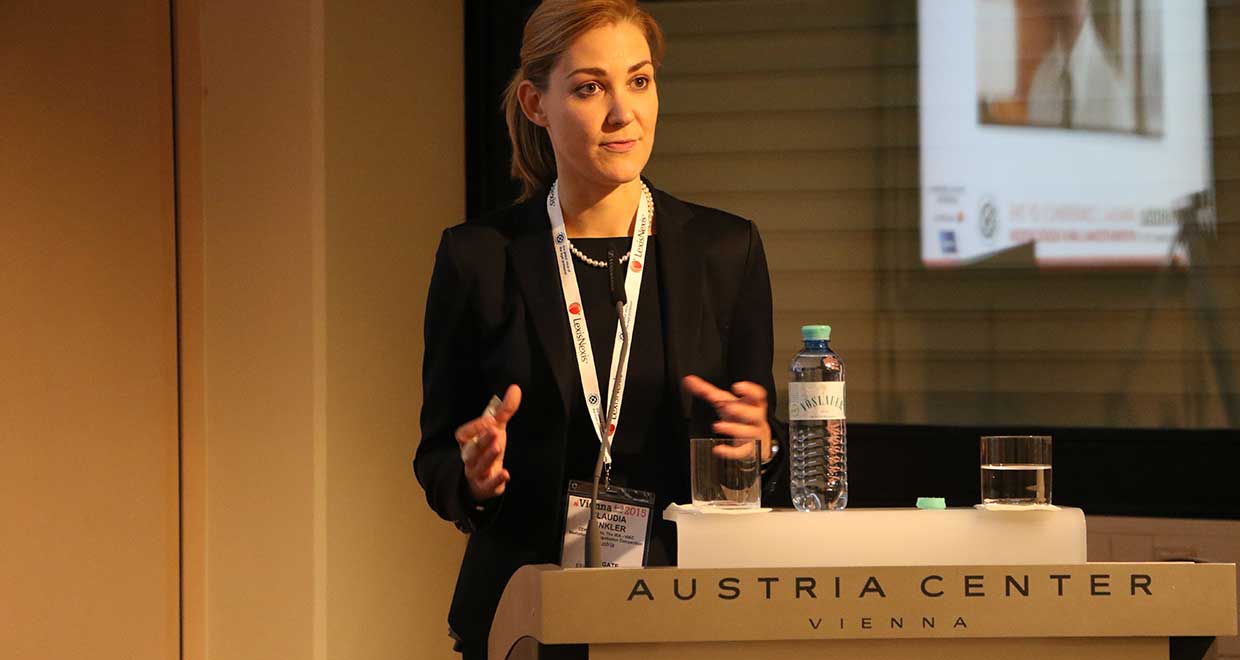
  • Dr. Claudia Winkler, Negotiation Trainer, on studying in Harvard, being a Fulbright Scholar, and the future of negotiation

    Dr. Claudia Winkler, Negotiation Trainer, on studying in Harvard, being a Fulbright Scholar, and the future of negotiation

    Claudia Winkler is a negotiation and mediation trainer, the Director of the IBA-VIAC CDRC Vienna Mediation and Negotiation Competition and the General Counsel of SMART Recruiting Technologies. Claudia received her Master’s and Doctor’s degree in European and international law from the University of Linz and her LL.M. from Harvard Law School. Her professional experience reaches from law to government, non-for profit, start-up, university and international institutions. She has worked as the ADR development coordinator with the New York International Arbitration Center during her time as a Fulbright scholar and is a licensed Mediator in New York. As a trainer Claudia has worked with law firms, businesses, associations and universities in the United States, Europe, Africa, Asia and Australia. You can find out more about her work at www.claudiawinkler.net.

    In this interview we speak to her about:

    • How long term planning helped her to achieve big goals like a PhD, a Fulbright Scholarship and a degree from Harvard Law School
    • How coffee meetings can be the best tip for your career advancement in ADR and
    • How negotiation skills will determine your legal career in the 21st century.


    How would you describe yourself in one line?

    Hopeless optimist, careful strategist, curious explorist? Is that one line? If I could summarize myself in short I would describe myself as a negotiation enthusiast who stubbornly has set out to bring change to the way lawyers across the world resolve conflict, negotiate with their counterparts and work with their clients.


    What motivated you to take up law?

    I am a first-generation lawyer, coming from a family of wineries (which I hated when I was young but comes in pretty handy now that I enjoy their wine). At the age of fourteen, I started working internships with different law firms every summer and immediately became fascinated with the incredible tool law provides to make a difference in people’s lives. I decided at that age that I would study law and set to my mind that I had to make it into Harvard Law School.


    How did you balance your academics with your co-curriculars? 

    (Claudia has graduated summa cum laude from both her Master and Doctorate at JKU, Linz.)

    Haha, to be honest, when I didn’t study I either slept, ate or did sports. I was a nerd. But I never worked on weekends or holidays, and finished all my degrees below minimum time so I guess it was time efficiently spent without sacrificing any of my relationships and friendships.


    Tell us what got you into negotiation training in the first place.

    (As a negotiation trainer, Claudia has trained lawyers all over Europe, the US, Africa and Australia.)

    After my semester with the negotiation program at Harvard Law School, which got me fascinated in negotiation, I moved to New York to spend my Fulbright time working with the New York International Arbitration Centre. Being in New York I quickly made friends with all the law schools there to audit and later guest lecture negotiation courses there. Every step of the way more and more resembled my passion for working with people, teaching and developing new skills. Once back in Europe I was convinced to have found my calling, quit my tenure tack offer and at the age of 27 set sail to navigate the negotiation oceans from thereon forth.


    Could you tell us about the internships you took up, and what you learnt from those experiences?

    I did a wide variety of internships, from big law firms to small law firms, national to international firms, international organizations like the EU Commission, to teaching English classes in Vietnam. I wanted to make sure to know what the various fields of work are like to be able to decide what I wanted to do by the time I graduate. My biggest learning was to see what environment I thrive in most and where I can apply my skills best. I believe that we can only be our best in fields we truly enjoy, so I used internships to search.


    How does one secure prestigious scholarships?

    (Claudia has received the prestigious Fulbright Scholarship and the Harvard Boas Scholarship in International Legal Studies.)

    There is no magic formula but what certainly helped me was my long-term planning for excellent grades, diverse educations, early connections with great mentors and diverse extra-curriculars and work experiences. In my first year at law school I sought out the professor who also was a Fulbright scholar and Harvard alumna and started working with her wherever I could, including later for my doctorate. My entire studies I focused on gathering the right experiences, credits, credibilities and connections that would later help me achieve my goals. I believe that great visions paired with obsessive planning, great mentors and hard work lead to great success. The earlier you start to plan out our educational steps or career, the better you can work towards gathering the right “assets” that will eventually get you where you want to be.


    Please share with us some of the learning experiences you have had during your LLM at Harvard.

    There was a lot of personal development I took away from being surrounded by so many inspiring people there, many of which have remained close friends and have influenced me over many years after. It is an interesting paradox that, despite the many world- class legal courses, my personal biggest learning was that in the end better negotiation and communication skills give you leverage over better legal skills any time. The most successful lawyers don’t stand out because of what they know but because of HOW they use it.

    What advice would you give students in avoiding a decision paralysis?

    The best way to avoid decision paralysis is to do as many internships in as many different fields as you can. Once you see what various field are like it will be easier to find the right one. Even if you only know what you DON’T want to do, that’s already a great start. Keep being true to yourself and not doing what you found wasn’t the right thing for you.


    In what ways can more awareness about ADR be brought about in countries with higher litigation numbers? 

    Building awareness for a new approach to resolving disputes requires time and needs to start from the next generation. While many senior advocates are well versed in applying alternative methods to resolve disputes, it will be up the generation that is graduating in  the next years to bring the required mindset and awareness to elevate consensual dispute resolution mechanisms like mediation and negotiation to the level of “default go to” they need to become.

    My personal focus in the last few months in India was to, with the help of the network of International Law Students (NILS), train hundreds of law students in Delhi, Mumbai, Chennai and Bangalore, ensuring that they have access to the core skills of negotiation and will approach Dispute Resolution from the right perspective right off the bat. I also spend much of my time providing negotiation trainings to partners and associates in law firms and major conferences like the International Bar Association, helping them to fine tune their negotiation skills and manage the shift to consensual dispute resolution. In this role I have trainer lawyers, judges, public defenders and entrepreneurs across Europe, the US, in Africa, Australia and Asia.

    Can anyone learn to become a great negotiator?

    YES! It is a common misconception that great negotiators are born. Some might be, but most are indeed made. Like any other skill, negotiation can be learned with the right framework, practice and feedback – for sure by an eager student who is truly interested in learning it.

    How do you manage your time between your professional and personal interests? 

    As a self-employed professional I take my work everywhere so it gets difficult to put it away for too long. Over the years I had to learn to balance my ambition and professional goals with keeping a healthy amount of free time. The way I do this is setting fixed schedules and routines. I put personal matters in my calendar – anything that is not in the calendar it’s not happening. My partner and I go sport climbing and enjoy cooking sessions with friends, and yes, they are in the calendar too.


    Why is it so important for lawyers nowadays to learn negotiation skills?

    The time where law was about legal battles is over. The new paradigm in law is problem solving. Today’s lawyer has a new job description: cooperative problem solver, client interest focused adviser, business and law savvy partner to corporations.

    Lawyers are hired just as much for their capabilities to overcome business hurdles for clients, skillfully grow business opportunities and quickly solve challenges as they are for their legal skills, which are considered a given. Negotiation skills are at the very core to all these requirements. Without fine tuned negotiation skills lawyers can simply not live up to today’s client expectations.


    How is teaching negotiation in India different from other countries you have taught?

    Negotiation is part of India’s DNA, it happens everywhere. As a result of the fierce competition between law firms and law graduates AND the vast backlog of cases in court negotiation skills are more crucial to any lawyer’s success than ever before. Within this newly emerging reality teaching law firms across India is particularly stimulating and rewarding – because lawyers here are aware of these major shifts and bring great curiosity, experience and excitement to my workshops.

    What recommendation do you have for young lawyers that want to make it in the ADR, Mediation or the negotiation field?

    It’s hard to start a purely Mediation or Negotiation related career right out of law school since there is no set career path and most of the (rare) jobs need a certain, age-connected, experience and credibility to become accessible. While you often can’t start with a job in this field you can do many things to get you there quickly. Go to trainings, attend conferences, shadow mediations, assist with trainings, publish papers, volunteer in mediation centers, join mediation organizations that have young mediator platforms and most of all continuously meet people that are working in the field. Make it a point to meet at least one interesting new person a week for coffee. Email people that you admire in your field, tell them what you are up to, share what you admire about them, and ask if they would be available to talk to you over coffee to share some of their career insights and learnings with you. You will be surprised how many people will actually write back and be happy to meet you. The learning and network is invaluable. You last sentence in every meeting should then always be “is there anyone that you think would be interesting for me to talk to?”.


  • Charitha Shashiraj, LL.M Candidate, Harvard Law School, on all about Harvard and Magic Circle Traineeship

    Charitha Shashiraj, LL.M Candidate, Harvard Law School, on all about Harvard and Magic Circle Traineeship

    Charitha Shashiraj graduated from NALSAR, Hyderabad in 2014. She went for a Vacation Scheme at Linklaters and Allen & Overy and thereafter, secured a job at Linklaters, London. However, she chose to pursue an LL.M from Harvard Law School over the Magic Circle job.

    In this interview she talks about:

    • Application and the admission process at Harvard Law School
    • Faculty, facility and opportunities at Harvard
    • Application process and importance of vacation schemes in Magic Law Firms


    How did you choose law as a career option?

    I’m a first-generation lawyer in my family and when I was in school, like most people I harbourednotionsof lawyers as peoplewho milled around in courts in billowing black robes.So law was not something I had planned to doinitially, I was more of a math-and-science-freak. A friend of mine who was a year up in school convinced me otherwise after joining NLS.

    I think it was CLAT that brought home the point that law was as much about logic, reasoning and creativity as the sciences. And when I was cleared to go to one of the best law schools in the country at the time, I took it as a sign.


    charitha-shashiraj-2

    How was your NALSAR experience?

    NALSAR gave me opportunities that I know I would have found nowhere else and I cannot emphasize how grateful I am for it.

    I went to Singapore for an exchange programme in my third year, mooted at national and international moots, wrote papers, chaired editorial boards, taught the junior batches, interned at every opportunity and so much else, and did well at almost everything only because NALSAR gives us the resources and support to excel not just at academics, but at other things as well. Throughout law school, I learned to open my mind and question established norms in society. Activism and social change is a huge dimension of NALSAR’s education and while I might not always have been an active participant, I never failed to appreciate that it was the best part of law school. Ultimately, we had the best of everything- intellectual discussions peaked, top tier law firms in the country vied to take us, Magic Circle firms from London came down for interviews and the best universities in the world opened their gates for us.


    Tell us a bit about the Entrepreneurship and Business Law Diploma online programme from NUJS. How did it help you?

    The EABL course attracted my attention primarily because something of this nature was almost unheard of in Indian law schools. Law students are often heard complaining that there’s not much we draw from classes on corporate law when it comes to actually working in a law firm. In that respect, the EABL Diploma course was bound to be an immediate success- directly hearing from practitioners in the field and working through problems based on real transactions, that’s the only possible way learning in theory can transition into practice. I distinctly recall accessing some of EABL’s documents when I was working on a Banking problem in AMSS, to understand what related laws I should be looking into. The reading material was really impressive- it was concise and organized, yet comprehensive. It was incredibly helpful and I’d highly recommend it to anyone who’s looking to make a mark in the corporate law sector.


    Which firms did you apply to? What is the selection process in Linklaters and what does the firm expect from an Indian law student?

    I sat my interviews for Linklaters and Allen and Overy in the penultimate year of law school and eventually chose to go to Linklaters. That’s where I’ll be headed in September to start as a Trainee Solicitor. The key to securing a place in these firms is to think on your feet. The application process is much like your LL.M applications, but the interviews really test how fast and how creatively you think. Be prepared to answer HR questions that aimto test your skill set, which you will be asked to exemplify using various examples from your life. More important though is the technical interview, which would entail a basic working knowledge of how an M&A transaction works and what purpose a Due Diligence Report serves. Linklaters has a series of logical reasoning tests that you have to go through, the kind that CLAT tests you on. And a simulated exercise where you have to answer a set of emails within a stipulated time that gauges how you would, as a Trainee, respond to different and difficult situations in the firm. A&O has a similar exercise that requires you to peruse a DD Report in a particular time frame and answer questions about the transaction. The questions are definitely more logic than knowledge based but it does assume a basic understanding of corporate law. You also need to have some basic knowledge about the firm itself, its offices and some of the transactions that are currently ongoing.


    Please tell us a bit about your vacation scheme experience.

    In my personal experience, these Vacation Schemes were significantly different from Indian Internships. They genuinely care about giving you the best possible training and the entire internship is very structured and organized to the last possible detail. It is as much about you choosing them as they choosing you and they make every effort to impress you. You sit with the supervisor assigned to overlook your work throughout, so help is available at any and every point in time. Senior trainees and associates are more than willing to make time for you if you approach them for help, even if they have their hands full with their own work. Trainees do a lot of the paperwork once the decisions have been made, editing and sometimes even drafting the supplemental agreements, especially in the smaller groups. We attend conference calls and client meetings as well. There is plenty of opportunity to relax and catch up with colleagues during team activities, retreats and over evening drinks. You might have to put in some long hours on some days, but I think it’s worth the effort.


    After that, you went on to pursue LL.M. from Harvard Law School. What were the other universities of choice?

    Honestly, I was unsure whether I should continue to study further since I already had an offer from Linklaters. I decided that I would opt for an LL.M only if it was one of the best in the world and so I applied only to Oxbridge and Harvard, given their unparalleled reputation. Yale and Columbia would probably have been my other choices, if I had to choose more.


    Did you consider taking up a job in the USA itself? What were the opportunities available to you?

    I wanted to keep my options open, but most legal positions in the US require you to take the Bar Exam. There are certain basic courses that are pre-requisites to take the Bar but these cut significantly into the credits available for the academic year and prevented me from diversifying into courses that I was really interested in. Eventually, I decided that I didn’t want to forego the rare opportunity that Harvard afforded me – to study thought-provoking courses with stellar professors who in many cases are the world’s foremost experts on the topic. I was fairly secure since I had a job lined up already and in any case I preferred London’s more refined lifestyle to the American way of life. It was a hard decision I made at the time, but I think all in all a good one.


    What was the admission process for securing a seat at Harvard Law School?

    The admissions process for the Harvard LL.M proceeds in several stages. Applications are usually due sometime in November-December. Once the completed application is submitted, applicant’s recommenders receive emails requesting them to upload their recommendations to a secure web portal. Applicants will not be at liberty to view the recommendations but it is upto them to ensure that the recommendations are uploaded directly by the recommender withinthe specified deadline. Like most US institutions, you can use the LSAC services to send the required documents to Harvard. The LSAC is basically an integrated service that several top US institutions subscribe to. For a small fee, you can avoid having to mail/courier documents separately to each institution. The documents can (in some cases, have to) be sent to LSAC, where they will be vetted and sent out to the institutions of your choice.


    What do the selectors expect from an application of a law student at Harvard?

    The application itself is fairly straight-forward, divided into easily understandable sections that require the applicant to furnish personal details and highlight their personal achievements and work experiences. Needless to say, it demands a high level of competency and is a holistic review of your achievements right from high school tolaw school and any work experience gained subsequently. Ensure that you do a thorough job on the application andtake time to think through every major activity/achievement of your formative years. One thing worth mentioning in the application is the part that requires you to list the subjects you are potentially interested in studying at Harvard. Remember that it is no marker of what you might eventually end up studying once accepted into the program. My advice would be to think strategically and build an application based on an area that you have already worked and excelled in that would support your credibility when you evince an interest in pursuing an LLM.So an ‘area of expertise’, if you will, rather than an area of interest. For instance, I was interested in both Corporate Law and Gender Studies but had no significant experience in the latter. I think (though I might be mistaken) that chances at success would have been considerably lesser if I had indicated an interest in Gender Studies while my entire application screamed corporate law. Eventually, despite having had no previous exposure in that area, once I was accepted I chose to pursue Gender Studies. They want to see a carefully crafted application. And most importantly, they want to see what drives your decision to do an LLMso its imperative that you give them a compelling reason for wanting to do the LLM in the first place.Focus every aspect of the application on one area- it is also an indicator of how focused and organized you are as a person.

    Perhaps the most important part of the application is the essay that has to be written on a contemporary matter of the applicant’s choice. I would say that this should preferably be something related to what has been indicated as your area of interest. It should be creative, concise, cohesive, relevant and structurally sound. It might be this alone that sets you apart from the other applicants to Harvard, all of whom are assuredly high-achievers.


    How far do you think Harvard grants financial aid to foreign students? What is the procedure for obtaining such an aid?

    Should the applicant wish to apply for financial aid, there is a separate application that has to be filled and this would require the applicant to submit not just their financial status but also their parents’ financial details. Harvard is very generous with their financial aid, which can be in the form of a loan (not interest-free), a grant or a combination of both. Their aid is need-based, not merit-based like scholarships in general.


    What opportunities does Harvard provide to foreign students?

    The variety in the courses on offer at Harvard is unimaginable- there are over 400 courses to choose from- which are as broad as ‘International Law’ to niche topics like ‘Law and Neuroscience’. There are fascinating courses associated with literature and the arts, which can be extremely fun to explore, such as ‘Justice in Shakespeare’s Plays’ or ‘Music and Digital Laws’. There are theory-based courses for the thinkers and practical skill-based ones for the shooters. In addition to this, the LL.M allows you to cross-register with prestigious institutions like MIT or Fletcher as well as the other Harvard schools as a substitute for law school credits, a remarkable opportunity to reach out to non-law friends. LL.Ms generally opt for courses with a more international scope, but many of them looking to work in the US do prefer US-centric courses, both options are well catered to at Harvard. We sit our classes with the JD students; there are no courses that are exclusive to LL.Ms alone. Once again, this provides us with the chance to interact with a wider circle, and learn from the best of our contemporaries. Hands on experience can be gained through a variety of co-curricular and extra-curricular activities, including societies, lunch talks, guest lectures, demonstrations, clubs and most importantly clinics, where legal practitioners in both private and public services recruit students to engage in real ongoing deals. The most common refrain I’ve heard from every LL.M is that the nine-month course is bursting with activities that are far in excess of what its possible to do in that short period so make no mistake, it’s going to be a chaotic year.

    It’s not all studies either. There’s plenty of opportunity for day trips during weekends, and longer ones during the spring break. Sports, mooting, music and every other activity you can think of happens everyday. Harvard also sponsors activities like a wine-tasting club. So trust me when I say that anyone and everyone, no matter what your interests or inclinations, will find what they love at Harvard, academics or otherwise. It might seem overwhelming at times, but at any given point there are at least six people, including previous LL.Ms and current SJDs who have been officially assigned who you can approach for advice in any matter, not to mention plenty of other people who are always eager to help. Talk to people, make friends. Use the year well and “you will never again find a place in the world where you would have to seek out a hotel” – that was the first thing we were told during the orientation.


    Please tell us about how the classes are conducted in Harvard, what method of teaching is followed by teachers and what other things that makes Harvard distinct from other law schools?

    Classes can be in the form of courses (group of 80-100 students), seminars (group of 20 or so) or reading groups (groups of 12). The smaller classes understandably tend to be more intensive in terms of readings and discussions and they run into more depth in terms of subject matter. The bigger classes generally test you on exams, which can be both in-class and take-home, whereas the smaller ones expect everyday participation and daily/weekly reports and papers. You are also required to write an original 25/50 page LL.M dissertation to complete the course.

    It goes without saying that the professors and teaching methods are top-notch. Readings are more theory and case law based, and there’s very less statutory law relied upon. Most professors follow the Socratic method of teaching, something you rarely encounter in Indian law schools. Very few professors opt for lecture style teaching, most only lead ‘discussions’ in class. This means having to read what could possibly be hundreds of pages before every class and being prepared to answer questions on it if called upon. In my experience this tends to generate a more productive discussion, not only because students are more involved but also because I found their views are sometimes more refreshing and insightful than the professors. You would not expect JDs who have no law background to be so sharp, but their observations are fascinating- just to see the way they have been taught to think was incredible. If there is something I most admired about Harvard, it’s the liberty and free-thinking that it allows and encourages, something you tend not to find often in Indian law schools.


    charitha-shashiraj-3

    How does an LL.M degree help you after you graduate from Harvard?

    To be honest, the LL.M does not do much for your CV if you are looking primarily for a job in India, particularly in the corporate sector. Most people who pursue a Harvard LL.M are already experienced and accomplished and are looking to take a break from work or attempting to break into the US legal sector/international organizations. That said, Harvard is worth it even if purely for the experience and you learn a lot more in terms of life skills than academically. For me, Harvard was an intellectual pursuit, and suffice it to say that I couldn’t be more grateful that I made the decision to apply for it; my fellow classmates were undoubtedly the brightest minds in the world and every conversation, whether within or outside the classroom adds something of valueto your knowledge.

    There’s no doubt about the fact that Harvard opens up a world of opportunities. Most people subscribe to the NY Job Fair where top-tier law firms from all over the world interview candidates for various positions, similar to placement day in Indian law schools, only on a larger scale. I know a friend who sat 12 interviews in one day (still don’t know how he managed to do that). I’m limited in my knowledge of placements because I didn’t sit for one at Harvard. But I can assure youthat from the very beginning of the admissions process the Consultations Office at Harvard takes proactive measures to ensure Harvard students are aware of every opportunity available to them. If there is one thing you can be sure of, it is that no stone will be left unturned in trying to find you a suitable job. There are two offices that help students seek out jobs and they send frequent updates on openings in both private and public positions. Studentsgot placed at the World Bank, the UN, and every other premier institution onecan dream of.


    What made you opt for Gender Studies at Harvard? What all did you learn out of the course?

    My primary focus was on Gender Studies, with related courses in Constitutional Law to supplement it. I can’t say there was any particular incident that drove my decision, but law school in general had piqued my interest in this area. We generally study for 23-27 credits in the entire term. I took courses on Feminist Legal Theory, Sex Equality, Family Law, Comparative Constitutional law and the Fourteenth Amendment amongst others, all with a gender specific focus. Perhaps my best experience was with Sex Equality where I had the privilege of being taught by Prof. Catherine MacKinnon, a legend in the feminist movement who is considered world over as the pioneering figure in radical feminism. However, as far as my intellectual pursuit went, I think I was most passionate about Feminist Legal Theory, taught by Prof. Janet Halley who also supervised my LL.M thesis on the Hindu Joint Family. The course was wildly liberating, her brand of feminism is starkly different from usual accounts and I found myself questioning a lot of the previous assumptions I had about it. Having never had any formal education in feminist literature previously, I was amazed at how much there was to it.

    Apart from the usual courses for credits, we also have the opportunity to sit in on classes just as an observer and that’s a real advantage. With the prior permission of the instructor, we can learn from the entire gamut of famous Harvard professors. Not to mention the multiple guest lectures that happen on an everyday basis, with famous personalities like Mitt Romney, Justices Elena Kagan and Scalia, and Justice Albie Sachs in attendance amongst others. To hear them speak and learn from them first hand was an unforgettable experience.


    Do you intend to do pursue higher studies at any point of time?

    At some point I also intend to study further, and do a PhD. Harvard offers you the opportunity to do an SJD which is the equivalent of a PhD but it is a five-year course as against the usual 3 years in the UK. It is however, extremely selective and niche since the candidates are chosen largely from the previous LL.M batches. I was keen to continue with the same and my supervisor was equally eager but eventually, I thought the time commitment seemed too much. Having never had any significant work experience before I thought it’s high time I gain some exposure now. I will probably apply to Oxford or Cambridge for a PhD soon.


    Would you like to leave some message for our readers?

    Try to do the best at whatever you do. Most people suggest that you should find and follow your passion, but throughout my life I’ve learnt to be passionate about anything I do; whether it is something I really wanted to do has been a secondary concern. Accept that you will not always get what you want, so its important to not be disillusioned by this; rather, take every opportunity you getand work at it with the same zeal you would have for your dream. I’ve always lived by this principle and I think I’ve been the happier for it.


  • Nandan Kamath, Founder, LawNK, on building an illustrious career in Sports Law and IPR and being a Rhodes Scholar

    Nandan Kamath, Founder, LawNK, on building an illustrious career in Sports Law and IPR and being a Rhodes Scholar

    Nandan Kamath traded his dream of being a professional cricketer for a life in law, and since then, there has been no looking back for him. A graduate of National Law School of India University (NLSIU) in the year 2000, Nandan has been a recipient of the Rhodes Scholarship. After completing his BCL in Law and M.Sc. in Economic & Social History from Balliol College, University of Oxford in 2002, he went on to pursue his Masters in Harvard Law School.Soon after graduating in 2003, he joined as an Associate with Davis Polk & Wardwell, where he worked for three years. On returning to India, he founded his own law firm, The Law Offices of Nandan Kamath (Law NK), which is one of the leading law firms in the country in the field of Sports, Media, Technology and IPR Laws.

    With this interview, he opens up to students about:

    • The importance of hard work, dedication and discipline in the field of law;
    • His dual Masters in law from Oxford University and Harvard University;
    • His experience of working at an international law firm;
    • Working in close connection to a field close to his heart – Sports


    You are a law graduate from NLSIU, what motivated you to pursue Law, especially from NLSIU?

    I was a law student by chance, rather than by design.  In my teenage years, I was a sportsman first, and a student next.  I had my eyes set on a professional career in cricket, and chose my pre-university college purely on the strength of its cricket team.  The first time I heard of NLSIU was when they sent a volleyball team to participate in our college sports festival, and I remember seeing the players’ jerseys and only thinking, at the time,that N-L-S-I-U was quite an odd jumble of letters put together. The next introduction to the law school was when the college cricket team I was on, ended up playing against (and beating) the NLSIU team. As thoughts of needing a proper college degree began to loom, I heard from a classmate about the NLSIU entrance test. Being interested in word games, puzzles and logic, I thought it would be an interesting experience for its own sake. I looked over a couple of past test papers the night before the exam, took it, and surprised myself by making it through. Although things were certainly not as competitive then as they are now, getting through the entrance exam convinced me that I might have some aptitude for the law. At least the examiners thought so!


    Tell us about your time at NLSIU, what were your career plans after graduation?

    Life at NLSIU didn’t get off to a particularly auspicious start. Dr. Menon made it very clear at my entrance interview that I had to choose to either pursue cricket or law studies (but not both), as the institution only had space for full-time students with strict attendance requirements.  In the pre-IPL days, the odds were stacked against making a career out of cricket, so it wasn’t really much of a choice. Having made that trade-off, I put my head down and took my academics quite seriously for the first time in my life. It seemed like the right thing to do – to make full use of the opportunity if, in order to pursue it, I had given up something I was good at and enjoyed.  I found that the institution was an excellent place to become aware of various national and international issues.The regularity of project work and exams enforced a level of discipline which I was quite happy to adopt. At the same time, it was quite challenging, in various ways, to be at an institution with students from all over the country, each asserting and debating different identities, perspectives and ways of thinking. It gave me a broad and useful platform in the study of law and people in general.  I also met some of the smartest people I know during my five years there. In terms of career plans, I was fortunate to be selected for the Rhodes Scholarship at the beginning of my final year, so my immediate plans were made for me.


    nandan-kamath-5

    After Graduation you went on to pursue BCL from Oxford as a Rhodes Scholar. Please tell us about the course and your time at Oxford.

    The BCL was a very rigorous, jurisprudence oriented course, and the academic standards were very high. I did courses on intellectual property and transnational commercial laws.  The perspective was very different, with the focus being on why laws are the way they are and how they have come to be, rather than the descriptive study of the law I had been used to. It needed a fair bit of adjustment to think more analytically and to have an opinion and a view on the law, rather than being required to know what it was. In my second year at Oxford, I did my Masters in economic and social history with a focus on the history of networks and technologies, and found it very interesting. Overall, my time at Oxford was idyllic with a great mix of sports, social and academic activities.  I met an internationally diverse group of people during my time there, each person with multiple interests and skills.  My time at Oxford broadened my perspective and my horizons, both socially and academically.


    You did not end your academic streak at Oxford, but went further and pursued LL.M from Harvard. What was it like to get into, and study at Harvard Law School?

    I applied to Harvard Law School after having completed my BCL, so that probably strengthened my application. Being at Harvard Law School after two years at Oxford involved moving from a multi-disciplinary social setting, to the company of hundreds of highly-charged law graduates,most of whom had never stood second at anything they had done. It was a very competitive environment and not particularly easy going. Nonetheless, I found the LL.M. was very helpful as preparation for law practice.The weekly reading load was huge, and overall, the courses were intense and challenging (befitting the atmosphere). I found the analytical frameworks used by the teachers quite fascinating and very practically relevant, whether it was the economic analysis of law, legal realism, or anything else. It gave me a new lens to look at the law with, and added nuance and process to my thought process.


    How do your dual Masters in Law help you in your current work profile? Do you plan to go for any further studies?

    I believe that one’s law studies and degrees are only as valuable as the lawyer they produce. My studies have certainly given me a lot in terms of perspective, ways of thinking and analysis, and that is very valuable.Other than that, I don’t think the tags of being from a particular university help me that much in the work I do, other than perhaps leading to a (rebuttable!) presumption that I am not completely inept.  As for further studies, I think the phase of my life involving formal academic study is probably behind me –I can’t really see myself going back to the classroom, exams and dissertations. But I’ll never say never – I may just surprise myself if something really excites me.


    nandan-kamath-4

    Given your academic record, were you ever interested in pursuing an academic career?

    I do enjoy teaching a few classes here and there, alongside my law practice. However, pursuing an academic career was never on my agenda.  I didn’t feel I had either the intellectual firepower, or the patience required to master an area of law sufficiently to teach it repeatedly, consistently and engagingly.


    After your LL.M from Harvard you joined Davis Polk, a global law firm.How did you get recruited there?

    I had met one of the senior partners of the firm during an internship in Mumbai at ICICI Bank,while still in law school, and had managed to stay in touch. A few years later, when I finished at Harvard Law School, I got back in touch, was called for an interview and made it through the process. It wasn’t a very hot job market at the time and I consider myself very lucky to have got the opportunity.


    What is it like to work in a big and global law firm?Please tell us something about the kind of work you did there.

    I worked for three years at the California office of Davis Polk in the intellectual property and global technology group.  The work involved intellectual property and corporate advisory, especially in relation to mergers and acquisitions, and capital markets transactions.  It was the perfect first job for me.  It was challenging both substantively and in terms of work hours and it forced me to up my game, and push my limits. I found a number of mentors among the partners there.  The importance of attention to detail, personal responsibility for (and pride in) work product and client orientation were my main takeaways. I also saw that it is possible to create an open, friendly and informal work environment without compromise on work product and quality standards.


    You left Davis Polk after three years, what were your reasons to do so?

    When I started my studies abroad, I had set myself a target of being back in India in 5-6 years.  The end of this period also coincided with some plateauing in my learning and it was becoming clear that the big law firm trajectory was not the best one for me. I left Davis Polk after a brief stint in Hong Kong and Mumbai,and moved back to my hometown Bangalore, where I wanted to live and work.  I didn’t have a specific work plan but was happy to put down roots and figure things out.


    nandan-kamath-2

    You set up LawNK – The Law Offices of Nandan Kamath after you left Davis Polk, what was the motivation behind going independent?

    My father is a Chartered Accountant who started his own practice from scratch, worked hard, and succeeded off his own steam.  Watching him from close quarters helped me recognise the many advantages of independence.  It also inspired me to chart my own course, without too much fear or doubt coming into the picture.  Having the opportunity to choose what I was going to work on was a big luxury, and I was determined to work in an area I loved – sport.  With a view of working on sports law, I went about meeting a number of athletes, coaches and others working in the nascent sports industry.

    Every one of them made it quite clear that there was little value a lawyer could add at that point, given the lack of structure and professionalism in the field.  That feedback temporarily set back my plans to establish a sports law practice. I involved myself in other ventures in sport and athlete representation, which gave me a ground level view of issues Indian athletes were facing and the state of play overall.  Over time, I started getting requests for legal assistance from others who were making their way in sport business and I began advising them as a sole practitioner.  The game changer came in 2008 with the IPL. The professionalization of sports through the league brought sports contracts into the mainstream in India.  This is when things took flight, and the firm has grown organically since then.


    LawNK – The Law Offices of Nandan Kamath specialises in Sports, Media, Technology and IPR Laws.How did you build your client base, especially since you spent your formative years outside the country?

    Over the years, our clients have found us rather than the other way around. A well-defined focus in terms of practice areas, and a team that is knowledgeable and passionate about the work, are our greatest strengths.The client base has built through word of mouth, and it is not something I have ever actively worried about. We focus on our work, and know that interesting work will find us when the time is ripe and the opportunity is right.


    You are also a Trustee at GoSports Foundation.Tell us a bit about it and your role therein?

    GoSports Foundation (www.gosports.in) is a non-profit that I co-founded in 2008. The organisation’s vision is to empower young athletes and enable them to achieve their Olympic and Paralympic dreams. Being quite aware of the state of Indian sports, we started GoSports Foundation to contribute our bit to the growth of an athlete-centric sports ecosystem in non-cricket sports. Our quest is to bring professionalism and positivity into athletes’ journeys and to ride with them through ups and downs, providing financial support, mentorship, access to expertise and career advice. As Managing Trustee, I play an active role in the administration of the organisation, and support the executive team wherever needed in the programmes. It also provides me the opportunity to work with our Board of Advisors, which comprises of Abhinav Bindra, Rahul Dravid and P. Gopichand, in thinking about Indian sport and making meaningful interventions.  It is work that I love and an organisation I am proud being a part of.  I have met fascinating people along the way, and my work with GoSports Foundation has opened doors to a wide variety of experiences – from hosting a TV sports show, to designing national talent support schemes, working with childhood heroes, being on selection panels and drafting state sports policies. While it is often challenging work and requires lots of self-belief, I have received far more from it than I have given.


    Rahul Dravid on extreme left and Nandan Kamath on extreme right.
    Rahul Dravid on extreme left and Nandan Kamath on extreme right.

    Who form your clientele? Could you please share with us any representation you are particularly proud of having worked on?

    Our sports practice advises a wide range of governing bodies, franchises, players and sports brands.  Cricket and football have been the primary disciplines but we are now seeing more in tennis, badminton and golf, and the new professional leagues are also mushrooming. Other areas of our special focus have been advertising and marketing laws, e-commerce, privacy, food and beverages law, and medical law. I am particularly proud of our team for being empanelled by the ICC as the official law firm for the Cricket World Cup hosted in India, Sri Lanka and Bangladesh in 2011. It was a great honour and privilege, and watching India win the finals was the icing on the cake!


    Do you think playing sports has helped you as a lawyer?

    I have always believed that playing serious sport is excellent preparation for professional life. With the benefit of many years of experience now, I think this is even more so for the law.  Competitive sport provides early exposure to the adversarial process.  It also requires one to make real-time decisions based on dynamic, unstructured data –which is only possible to do competently if you have prepared thoroughly, and practised hard.  All this is not too different from law practice! Also, sport teaches you that although it is primarily your own individual pursuit, you are almost always playing in a context – representing someone or something else (a team, institution or even a country). Similarly, it is a client and/or a cause that makes one an advocate, and that is always good perspective to carry. Finally, you learn from sport that you are only as good as your last innings, but I’m going to ignore that for now because my last one was a duck.


    Many of our readers would be interested in having a career in sports law and representing celebrity sport stars. What would be your advice to them?

    If it is truly a substantive area that you are interested in, it is a field worth investing time and energy into.  The glory and glamour fade away quite quickly, so it is important to have the right motivations – that will help you stick it out through the early days and mature and stay passionate about and interested in the work.  Other than that, the best advice I got as a young lawyer was to become a good lawyer first before attempting to add any prefixes (such as ‘sports’ lawyer), and to focus first on learning the tools of the profession – in transactional law, that includes things like client communication, drafting, time management, multi-tasking,organisation, attention to detail, and finding one’s own methods and practices.  If you have built a strong practice toolkit, adding new substantive areas to the repertoire is actually not that difficult.  Sports law is not rocket science and it is an interest that can be pursued at any point by a skilled lawyer.


    What do you look for when you hire lawyers to work with you?

    We look for self-motivated young lawyers who have also demonstrated their interest in our practice areas.  Our firm has graduates from NLSIU, NALSAR, Symbiosis, ILS, GNLU and NUJS, so it is quite a diverse set.  A few have come through our internship process, which is a good outcome for all concerned.  I am very proud of the lawyers in our firm, and have enjoyed seeing them grow steadily as professionals.  From what I see, today’s young law graduates are better trained and prepared than I was when I finished law school.


    Do you provide for internship opportunities? Where should a law student apply if he/she wants exposure in sports law?

    Yes, we do have an internship programme.  We accept only one or two interns at a time to make the experience meaningful, so spots are limited.  It is a chance to give law students exposure to the types of work we do, and our work environment. There is an online form (http://www.lawnk.com/home/) that interested applicants can complete for more information on the process.


    It is a dream to work in the subject we love for most of us. What do you have to say to those who didn’t end up doing what they love the most?

    As one steadily moves up Maslow’s hierarchy of needs (I told you that NLSIU left a lasting impact!), beyond security and the need for external recognition and validation, I feel that the journey ends up becoming about two things – the pursuit of mastery and the pursuit of engagement.  Mastery brings the joy of excellence; engagement brings the joy of working on things one cares about.  It is only the lucky few whose pursuit of both mastery and engagement unify in their daily work, or even converge on a regular basis for that matter. I feel the rest of us must remain open to tapping different and diverse outlets and sources if we are to simultaneously experience both of these pursuits.  For whatever reason, not everyone might get engagement with things one loves at the workplace. But it is still possible to find an outlet for this, maybe through hobbies, volunteer work or even by innovating within the limitations of the workplace.  Life is too short and you are already very fortunate if you know what you truly love!


    What would be your parting message for our readers?

    Have a clear career plan in mind, but leave enough room for chance to play its part. Also, stay open to being inspired.

  • Abhilasha Nautiyal, Senior Associate, IPR and Competition Law, Anand & Anand, on LL.M from Harvard and job experience

    Abhilasha Nautiyal, Senior Associate, IPR and Competition Law, Anand & Anand, on LL.M from Harvard and job experience

    Abhilasha Nautiyal graduated from Army Institute of Law, Mohali in 2010. While in law school, during her internship at Anand and Anand, she was offered a job which she accepted and started working there after graduation. Thereafter she went to pursue Masters from Harvard Law School. After coming back to India, she again joined Anand and Anand but this time as a Senior Associate. Currently she practices IP and Competition Law at Anand and Anand.

    In this interview, she talks about:

    • Law school experience at AIL
    • LL.M from Harvard
    • Career in Intellectual Property law
    • Work at Anand and Anand


    Tell us about your profile and how did you decide to study law?

    I work with Anand and Anand and practice IP and competition law.

    Law was a fortuitous choice, and going to AIL was also a matter of chance – I was preparing for med school when a friend introduced me to the idea of going to law school. Being from an army background, Army Institute of Law seemed like a law school I could realistically get into.


    What has been your experience on the NLU and Non-NLU divide?

    Yes, there is some truth in that. Luckily for me, I interned and now work at a firm that doesn’t differentiate amongst its resources on an NLU/Non-NLU divide.


    After graduating from AIL, you joined Anand and Anand as an Associate. How did the appointment take place?

    I was offered a job at Anand and Anand during an internship. As an associate, I assisted senior members of the litigation team. The learning curve of a litigating lawyer is steep and there is of course a lot to catch up with in terms of what the law is and how the legal machinery actually functions as opposed to what one thinks of the legal system in law school.


    How would you describe your experience while studying Masters from Harvard Law School?

    I always wanted to have a more fulfilling academic experience, hence an LL.M. I have come across people in the profession who feel that an LL.M. has very limited value for a litigating lawyer. In my experience, the LL.M. year opened my mind to diverse ideas, which I believe is a great ‘value addition’ for a lawyer irrespective of the field of law he or she is practicing. The LL.M. year is not just about academics but is a great opportunity for personal growth.


    After coming back from Harvard you were offered the position of a Senior Associate at Anand and Anand. How would you say the LL.M affected your career?

    There are several factors involved in the process – time at the firm and ability to handle individual responsibility are examples of criteria the firm may look at. I was directly offered the rank of Senior Associate after my LL.M from Harvard.

    An LL.M., at the very least, does refine ones thinking, which is a great boost. My responsibilities at Anand and Anand have increased over the years. One must bear in mind that foreign education comes at the price and must be prepared to make such an investment.


    Tell us a bit about work culture at Anand and Anand and the life of a Senior Associate.

    I am happy to be working with people who are as passionate, if not more, about the law. We enjoy our work and team work is our strength. I handle matters in consultation with the partners. My responsibilities include handling day to day requirements of clients, advisory work, appearances in court and taking forward the competition law practice of the firm.


    abhilasha-nautiyal-2

    How did you build up your expertise in IPR? Tell us about your work experience.

    I learnt a lot during internships and on the job. Like I said before, there is a huge gap between what we study in law school and how we actually practice law. It is important to bridge that gap – a headstart in college by focusing on quality internships is very important. The role of an IP lawyer may involve several facets like transactional work, consultancy, prosecution or litigation. The key is to do your job and to do it well. Attention to detail is a quality that can help one go a long way in this profession.

    I most enjoy working on matters at the cusp of IP and competition law. This includes FRAND and compulsory licensing problems. At the risk of sounding clichéd, I feel there is no substitute for hard work (and good strategy!)

    If you are passionate about IP, life will be much simpler as an IP lawyer.

    Mistakes happen – it’s fine as long as you learn and move on. As I have learnt over the years, it important to try because most mistakes can be corrected.


    How are internships helpful for a law student? What are the other options available for someone interested in IP?

    Internships are a must. Diligence is well appreciated during internships.

    It’s always helpful to have an idea of the relevant substantive and procedural law. General awareness of burning issues in your field of interest will help.

    Working with start ups, or having your own legal start up, may be a lucrative option in some cases. Alternatively, teaching, clerking with courts, or working for a government agency are other options to explore.


    abhilasha-nautiyal-3

    How do you maintain your work-life balance?

    This is a tough one. My husband is also a lawyer so both of us work long hours. The trick is to take benefit of any break, long or short, that comes our way.