Tag: Harvard

  • Aditya Gupta, Senior Associate, Anand & Anand, on an LL.M in IPR from Harvard Law School and a career in Intellectual Property

    Aditya Gupta, Senior Associate, Anand & Anand, on an LL.M in IPR from Harvard Law School and a career in Intellectual Property

    Aditya Gupta is an intellectual property litigator and currently works as a Senior Associate at Anand and Anand. He graduated from NLU, Jodhpur in 2010 and is a gold medallist. He has been a recipient of the prestigious Microsoft Intellectual Property Rights Scholarship, 2009.

    Soon after graduation, he started working as an Associate at Anand and Anand and after three years of works, he joined Harvard Law School to pursue Masters in Intellectual Property Rights.

    While at Harvard, he worked as a Research Associate to Professor William W. Fisher III for a period of six months. After coming back to India, he again joined Anand and Anand but this time as a Senior Associate. He has also been a Visiting Faculty at National Law University, Delhi for a semester and taught a seminar course on Practicing IP law’ to students pursuing undergraduate degree in law.

    In this interview, he talks about:

    • His decision to chose NLU, Jodhpur
    • His experience of working with Anand and Anand
    • His days at Harvard Law School and LL.M experience in IPR
    • The skills of an Intellectual Property lawyer


    How would you like to introduce yourself to our readers who are mainly law students and lawyers?

    I am a litigator with a keen interest in intellectual property law and new ventures. I am currently working as a Senior Associate at Anand and Anand.


    When and how did you decide to study law? How did you settle for NLU, Jodhpur?

    My decision to study law was not a planned one. I was preparing for pre-medical examinations till late into my XII standard when I suddenly realized that I did not want to be a doctor. For one, I did not have the patience to study for twelve years! Anyhow, purely on instinct and gut feeling, I decided to pursue legal studies. It was decision fraught with risk, especially since I am a first – generation lawyer. As I was quite late into the application process, I only applied for NLU, Jodhpur, NALSAR, NLS and Amity Law School. NLU, Jodhpur was the highest ranked law school that I could get through and that’s why I settled for it!


    After graduating from NLUJ, you joined Anand and Anand as an Associate. How did the appointment take place? What comprised your work at Anand and Anand?

    I had interned twice at Anand and Anand during my third year and had received positive feedback. In my fifth year, I applied for a job at the firm through the HR department. I was called for a personal interview with the Head of Department and a few days later I was told that I had been selected. Since I was in the litigation department, during my first two – three years, a lot of my work comprised of drafting court documents, research work and assisting seniors within the firm and Senior Advocates during arguments in Court. I was particularly lucky to work on some high-profile cases with very high stakes which exposed me nascent and as yet undeveloped areas of law.


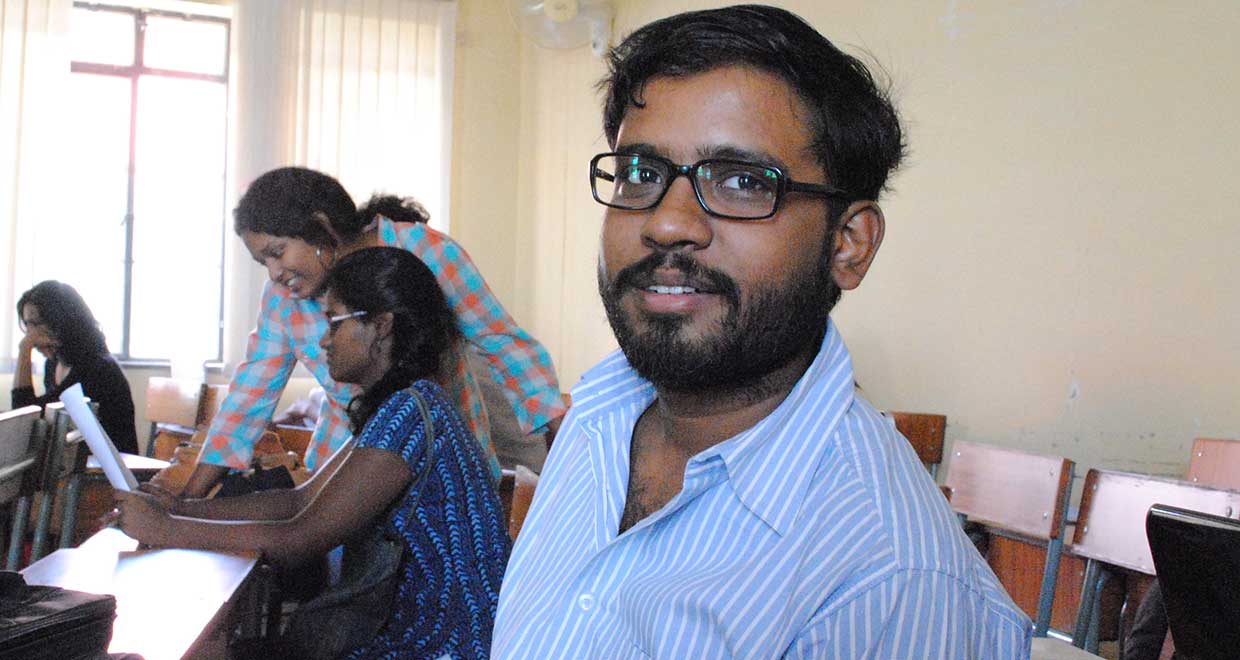
    aditya-gupta-2

    How difficult were the first few months of Anand and Anand given that it focuses mainly on a specific field of law?

    I did not find the initiation period very difficult since I had taken a keen interest in IPR ever since third year of college and had interned at IP firms, took courses related to IP at NLUJ and written papers on intellectual property. The quantum leap that one takes after joining the profession is not on substantive law but the way the Courts function and the realization that substantive law is a tiny (though of course important) part of legal practice. Thus while I felt reasonably confident of my ability to handle areas of substantive IP law, I did find that the practice in Courts requires skills in addition to reading and understanding the law, which students are not exposed during law school.


    You have specialized in IPR. What made you interested in the same?

    Innovation and creativity are, in my view, the two most awe–inspiring facets of human life. While intellectual property litigation may appear to be a battle between large corporations it is, at its heart, about protection of the innovative/ creative genius of an individual. That intellectual property law endeavours to foster this genius generated my interest in the subject and practicing this field of law for the past three years has only fuelled my passion for it.


    Thereafter you went on to pursue Masters in Intellectual Property law from Harvard Law School. Was it a professional requirement to enhance more in your career?

    I had decided that I will pursue a master’s degree in law during my undergraduate studies itself. I wanted to be exposed to the pedagogic methodologies in foreign universities and always dreamed of being taught by the top professors in the world. Once I chose IPR as my career choice, it made even more sense for me to pursue a master’s degree since IPR in India borrows several concepts from IPR across the world.

    The experience at Harvard was everything that I had imagined and much more – libraries providing access to nearly every book in the world, the opportunity to interact with world-class professors who know their subject (and much more) inside out and forming bonds with students from over 60 countries – I think it helped me broaden my horizons both as an individual and a professional.


    While at Harvard, you worked as a Research Associate to Professor William W. Fisher III. What kind of work you were entrusted with?

    I worked with Professor Fisher on a specific project that pertained to a multi-jurisdictional analysis on the role that intellectual property law plays in the fashion industry from a policy perspective. Since the project is ongoing, I would not like to discuss much about its details.


    After coming back to India, you  rejoined Anand and Anand, and this time as a Senior Associate. What does it take to be appointed as a Senior Associate?

    The firm pre-defines the expectations from members at a particular designation level and consistent performance across various metrics is assessed by the management before taking the decision on whether to promote an ‘Associate’ to a ‘Senior Associate’. Unlike many other firms, the number of years in the firm is not the only criteria and other factors such as interpersonal skills and ability to handle pressure are equally important in determining one’s progress in the firm.


    What are the primary essentials of an IPR lawyer? How do you say a fresh graduate can work on building these skills?

    I think keeping abreast with the latest case-law is absolutely critical for practicing IPR. Unlike many other areas of the law, IPR is fast-developing and Courts are exploring new doctrinal areas on a very frequent basis. An Intellectual Property lawyer must also understand the space IP enjoys within a particular company – for instance, IP may form the core of the business for a music production company but it may not be so for an e-commerce company (though of course most e-commerce companies also rely heavily on their brand valuation). It is becoming increasingly important for lawyers to appreciate the business of their clients and clients appreciate lawyers who act as facilitators of their business rather than merely providing a legal opinion.

    Since IPR is a technical subject, it is also important for fresh graduates to understand the basics so that they are able to communicate with their clients in a language which they can understand – without legalese.


    Tell us a bit about work culture at Anand and Anand and the life of a Senior Associate. What is your current work profile like? Please tell us about the responsibilities you are entrusted with.

    The work culture at Anand and Anand is very excellent – it not only fosters free and independent thinking but in fact rewards people with fresh and creative ideas. The firm is ambitious and one is driven by this constant desire to deliver a world-class work product. Though the learning curve is very steep, the senior members of the firm are supportive and they help you grow as a lawyer.

    My current work profile involves developing litigation strategy, interacting with clients on a daily basis, arguing matters in Court and assisting others in arguing matters and client management and development.


    What has been your strategy to deal with errors and mistakes? How would you suggest a young associate to deal with them?

    I believe that errors and mistakes are a part and parcel of providing any service. Mistakes happen and while one should not keep moping about them, it is important not to have a lackadaisical approach. It is absolutely critical that you learn from each error/ mistake and not to repeat them.


    People often complain about the highly skewed work-life balance at the top law firms. What is your usual workday like?

    I am still figuring this one out! For me, I enjoy my work a lot and I do not recall the last time I woke up in the morning and did not want to go to work.

  • Sannoy Das, Advocate, Calcutta High Court, on LL.M from Harvard and career experience in independent litigation

    Sannoy Das, Advocate, Calcutta High Court, on LL.M from Harvard and career experience in independent litigation

    Sannoy Das graduated from NLU Jodhpur in 2011 with a B.Sc.LL.B (Hons.) in Business Laws. His achievements during law school include winning the North India Rounds of the Phillip C. Jessup Memorial International Moot Court Competition in 2010. He was also a student volunteer at IDIA. After graduation, he was placed at Majumdar & Co., Mumbai, where he worked for a short period before switching to practising as an Advocate at Calcutta High Court. After three years of practice, he successfully applied to Harvard Law School, where he is currently a student. In this interview he talks about:

    • Mooting experience at Jessup
    • Shifting from a law firm job to litigation
    • Law school experience at Harvard Law School


    Please introduce yourself to our readers. How did you decide to take up law?

    At different times, I’ve called Mysore and Kolkata home; for a tiny bit, even Delhi. I started going to school in Mysore, and finished most of it in Kolkata, at M.P. Birla. As for law, it might have been accidental, but it’s been a while ago, so I’m a little foggy. A good friend of mine was preparing to take the exams (many back then), and I went along with her. If I hadn’t studied law, I’d have probably taken up political science.


    You graduated from NLU Jodhpur in 2011 with a B.Sc.LL.B(Hons) in Business Laws. How was your law school experience?

    It’s impossible to have a coherent strain of thought running through five years of law school. I’m sure I did a lot of things wrong, but I’m sure I left more happy than sad. I wish I had digested a few more books at the library, but one is always wiser in hindsight. Of course, as far as lessons in life go, five years at a residential law school are about as good as you will get. I also met my wife at law school. And they gave me the VC’s gold medal to go with it! So pretty good overall!


    You had Honours in Business Laws. Tell us about the Honours program at NLU-J. What other co- curricular and extra-curricular activities were you involved in, in law school?

    I think the Honours programs at NLU are pretty well designed. I think the idea of concentrations in different areas of law is a good one, and to say the least, the courses at NLU-J are well conceived. I could crib that at times, the courses weren’t well facilitated, but that seems to be a common complaint across our law schools. I think it’s also somewhat unfortunate that the overwhelming majority chose the business law concentration. I’m certainly guilty of having followed a crowd in that. Again, hindsight! I think for the Honours programs to make a good impact on a student, foundational courses have to be well-taught, and well imbibed. I think there’s a chance that at times, we slip on that count.

    As for other activities, I think I spent much more time on those than I’d consider prudent. Moot courts took up a lot of time. Even now, I don’t think I have had enough of them. I spent a few years on the moot court committee, finally as its joint convenor. I also took to debating (the parliamentary style) in college. Also, I played some badminton.


    You and your team won the North India Rounds of the Philip C. Jessup Memorial International Moot Court Competition in 2010. What are the important skills and knowledge one must possess in order to be a good mooter?

    Winning the North Rounds felt like a big deal. It was. We had to get over a very formidable NUJS team which had my good friend Deepak on it. We lost at the octa-final stage at the world rounds to Columbia. Till date, I’m sore about it. I think the months that I indulged in Jessup were the best months I spent at the University and I cannot stop gushing about it. Only recently, my team mate Manu Sanan said that Jessup now is a warm fuzzy memory. It really is; replete with an insane number of terribly lousy internal jokes. I only have good things to say about that experience. The team became great friends and still are. Not to forget our amazing coaches Giriraj and Yakshay.

    In mooting, as in everything, I suppose practice makes (somewhat) perfect. I had to go at it round over round. Of course, the love for research is very important. It’s more than just skill. Everyone on our team had a zealous drive to read one more article, one more book and one more case. As for speaking, I imagined I wasn’t too bad it, but it took many rounds of grilling to deliver some decent performances at the competition. I quite enjoyed picking up the best speaker awards at the India rounds. Even the world rank wasn’t too bad!

    Jessup continued to be a love affair thereafter. I’ve coached a few teams with varying degrees of success (but mostly disappointment). In my fifth, I enlisted as advisor to the NUJS team that year. They did a fantastic job at the international rounds.


    sannoy-das-2

    What internships did you do as a law student? What were your reasons for doing each of them and how was your experience?

    I was quite conservative about picking internships. I wouldn’t advise that any longer. I suppose an internship each at AMSS and AZB improved the chances of landing a job at a law firm, but I no longer find that an attractive idea. I have very little to talk about those internships, although I did decent work during most of them. I think I got lucky getting assigned to good partners each time. If I had to give a word of advice about picking internships, I’d strongly recommend getting a variety of experiences, at different courts and different sorts of firms.


    Upon graduating, you started working at Majmudar & Co., Mumbai as an Associate. How did you secure your appointment? Please describe the interview and induction procedure for a fresher?

    I was recruited to Majmudar on the first day of our recruitment process. Majmudar, back then, had the best recruitment procedure, which involved a three stage gruelling process – quite like big firms in other countries. The fact that their process was so thorough made me want to take the job. Also, the fact that it was a mid-sized firm meant that I was likely to shoulder more responsibility than a typical first year associate. That again, was an important factor in accepting their offer. I can’t say what it is to be inducted there now, it’s been a while since I left; but it’s certainly a good place to go if a fresher is willing to be at the business end of things in a short span of time. One tends to get baptized by fire there.


    OLYMPUS DIGITAL CAMERA

    You worked at Majmudar & Co. for six months. What did your work and responsibilities consist of? What were your reasons for leaving within such a short span of time?

    I have no complaints about the work I got at Majmudar. I had plenty of it, and that kept me happy. And I had enough time to savour Mumbai; all the good food and drink (in generous measure). So, maintaining the balance certainly wasn’t my problem. I advised on some corporate issues but most of my work was concentrated around huge sets of cases that we were handling across courts in India, and at the Bombay High Court in particular. I really cherish the exposure I had to high end litigation work in the earliest days of my career.

    Why did I leave? I had some reasons to go back to Calcutta. Also, the litigation bug bit me pretty strong while at Majmudar. Being at the Bombay High Court gave me a push to the ‘other’ side. So I packed my bag and imagined making forceful arguments every day at the Calcutta High Court.


    After leaving, you started practicing in Calcutta as an Advocate. Did you work under a senior lawyer or start your own practice? What were your reasons for moving from a corporate setting to litigation?

    Calcutta maintains the traditional solicitor-barrister/counsel divide. I cast my lot on the side of counsels, joined the bar library club and attached myself to the chamber of Mr. Samit Talukdar, one of the most prominent senior advocates of the court. In about three months, I had a few briefs trickling in. Then I had quite a few. As I said, the sheer attraction of arguing from the bar had drawn me to litigation. I lived some bit of it in the three years at the High Court. I had moved from wearing a tie to wearing a gown, but I was essentially practising a lot of company and commercial law. Even so, the sort of research that goes into preparing to write a brief or argue a case was infinitely more challenging than anything I had done before. It was like doing Jessup every day, at high speed. It was thrilling to be in the midst of volumes of case reports, treatises and piles of petitions. Very soon, my room at home, which I doubled up as an office, looked like a godown. Doing good litigation delivers great satisfaction, but mostly it’s a humbling experience, as I realized every day how much more there was to learn. I worked on a few matters with the top counsels of the court (and indeed of the country), and the challenge of being a worthwhile junior on a matter was quite great. I think I didn’t do too badly. Every once in a while, I heard a word of appreciation that made me dizzy with delight.


    After three years of practice, you decided to study further. What were your reasons for doing so, especially when the general notion is that for a career in litigation one requires practical experience more than an LL.M?

    It’s a somewhat correct notion that an LL.M. isn’t the best idea right in the middle of growing practice. I’d be lying if I said I wasn’t advised against it, and that came from quarters whose wisdom I have no reason to doubt. My seniors at the bar quite correctly advised me to be circumspect about making the decision. And I was. I don’t think I really made up my mind till pretty late. If I am to be really pragmatic, I doubt this LL.M. can have anything to do with setting up a better practice; at least not in Calcutta. If anything, having lost a year at a time when my practice was picking up, means having lost momentum. Fortunately, I did not make the decision of doing this LL.M. pragmatically. I did it because I simply felt some sort of an intellectual thirst, if you will. Not to suggest that working on cases can’t quench it, but I was craving to be theoretical, and was interested in taking liberties that I couldn’t have done while remaining committed to a client!


    Please tell us about your decision to pursue an LL.M at Harvard Law School. Please share some advice on acing the application requirements and procedure for Harvard.

    I’ve always gushed at the name Harvard. I’ve been here a while, and I still do. Not because it’s a reasonable thing to do, but I don’t espouse being reasonable all the time. As I said, I hadn’t decided about actually taking the year off to study when I applied. But when the admission letter came along, I think it was quite hard to look away. It also coincided happily with my wife’s career plans, and she was quite sure about taking her place up at the Chicago Law School. I think I’ve made a few decisions that don’t sit well with rationality. I wouldn’t advise following suit, as a matter of reasonableness. But I would advise it as a matter of principle, because I think it’s quite silly for us to be tied to decisions that we make when we’re all quite young. Not marriage of course. That one is forever!

    Applying to an LL.M., whether at HLS or elsewhere, requires some amount of dedication in crafting the materials. The key is just to start early in the admission cycle – get the referees to send in their letters and the universities in India to send in the transcripts etc. After that, it’s about writing a solid essay. I think the essay requires some good imagination more than anything else. I wrote my application on issues of private international law, because at that time I was quite committed to thinking about rules that govern conflict between jurisdictions. I think the essay requires the demonstration of both a clear understanding of a particular legal issue and a reasonable framework for thinking about solutions.


    It’s a dream for many law students to get through to Harvard Law School. What would be one thing they should necessarily do as a law student?

    They should necessarily study hard. It’s sine qua non to be reasonably well grounded in the laws of the jurisdiction one hails from. I can’t imagine what the factors are, that determine the selection process; I’m just lucky to be here. But if I were to hazard a guess, I think the admissions people at the top law schools are able to discover if the candidate has some real intellectual thirst.


    What were the subjects you were specialising in at Harvard? How has your experience been? Did you indulge in extra-curricular and co-curricular activities there?

    I came in imagining that I’d study a set of subjects that are useful in cross-border litigation. Instead, I’ve spent the year studying international and comparative law, international trade and legal theory. The LL.M. dissertation is focussed on an issue in international trade law (which for selfish reasons, I shall keep to myself). For the most part, I’ve been excited taking classes at HLS. I think the distinguishing feature of the experience for me has been the compulsion that I have felt to think critically, not only about existing regulation, but also about the existing normative views.

    HLS is abuzz with opportunities outside the classroom framework, and I’ve delighted myself attending a host of talks, conferences and symposia. Unfortunately, an LL.M. lasts only a year, and one can’t have everything. I’d have liked to do a lot of things in this one year – be a research assistant, work at the library, join a journal. I’ve managed none of that. Except Jessup. I enlisted as a coach to the team from HLS. Unfortunately, we didn’t make it past the semi-finals at the Northeast Regionals. Till now, one of the highlights of the HLS year has been a fellowship with the Salzburg Cutler Program, which is an awesome conference on all things about international law. It was my first taste of what it is like to defend a paper at a really serious academic workshop.


    Tell us about the faculty and facilities at Harvard. Please share with us a memorable incident from Harvard.

    One can’t have enough of being in awe of the faculty at Harvard. Everyone I’ve encountered is brilliant. I have special regard for my supervisor, Professor Mark Wu. But generally, it’s an environment where the intellectual stimulation is beyond anything I’ve experienced before.

    Watching six feet of snow accumulate over a week is pretty memorable. Otherwise, having studied under (the quite legendary) Duncan Kennedy, now in his year before retirement, is something worth writing in a diary.


    Going forward, how do you see your LL.M qualification would add to your career? Do you think of working abroad ever? Will you return to litigation?

    This is a question I’m not fully equipped to answer. I can make absolutely no prediction of how my career will be affected by this LL.M. I’m certainly not looking to work in a law-firm here. I can’t say further about litigation because I’m yet to sit down and make some hard choices. I am hoping to do some international trade related work.


    Please share with us your experience in litigation. What is one thing that gives premier law school students an edge over others in litigation?

    I’ve already spoken as to what my experience was as a counsel at the High Court. I enjoyed the work that I did at the High Court, and the challenges that came with doing that work. I think the second bit of this question is ill-conceived. I eschew the premier law school tag, and I think it’s an undeserving badge. Many of my contemporaries at the Calcutta High Court didn’t attend these so called ‘premier’ institutions, but were more competent than I could pretend to be. I suppose rigorous academic training makes a difference, but that’s certainly more up to the student than the institution. If on a general review, we could say that some law schools train students better than some others, then there’d be some advantage starting off; but, it gets quickly eroded in practice. I don’t think law schools train students to be practitioners, and I don’t think it’s their job to so. I think the real advantage rests with those who can learn the law as it gets applied in courts, quickly, along with court-craft and litigation strategy.


    Does the Calcutta High Court environment get stressful? What would be your suggestion to a fresher who is graduating this year and would join Calcutta High Court?

    I don’t know of any workplace where the environment causes absolutely no stress. Sure, there’s a fight for space and recognition, but it isn’t a place that a reasonably robust individual cannot survive. I was certainly privileged in the sense that I got to join a really good chamber and my senior was invested in my career. Also, I had plenty of financial muscle from my family to hold me up. Therefore, I don’t think my experience can be representative of the struggle that some others might have to go through, and I don’t intend to paint a picture that is rosier than reality. Having offered that as a caveat, I do think that the High Court is a good place to start (and continue) a great career in litigation. Of course, the court isn’t as active in the commercial space as the courts in Delhi and Mumbai, but there’s still enough work to be done. I think it’s important to have spent some time at the court before making the decision, and a graduating student would at least need to know who the best (and the most indulgent) seniors are.


    How much politics would you say is involved on the Calcutta High Court premises? How do you say one can possibly keep oneself away from this?

    If you are talking about factions in the profession, then my answer would be – yes, there are some and people get invariably implicated. Also, depending on the affiliation that a lawyer has (bar association/bar library club/incorporated law society), a degree of factionalism is almost impossible to avoid. I suppose a generally conscientious person can manage the fine line between good association and vile politicking. Also, I think the affiliations make for good cricket tournaments and the like!

    If you are talking of a political atmosphere, then I think it’s only fair that legal professionals have political views and are engaged in lawyering to achieve political ends. I think lawyering is a way of expressing ourselves as political beings and I certainly wouldn’t be shy in doing that.


    Who are your mentors and/or guides you look forward to for advice?

    I feel quite blessed because of the number of people who have advised me well during various stages from law school to the profession. I often turn to Justice N.N. Mathur, our former Vice Chancellor whenever I need to talk about career ideas, as also some of the senior advocates I worked with – my chamber senior Mr. Talukdar, Mr. S.N. Mookerji and Mr. Jishnu Saha. And my professors here at HLS – particularly, Mark Wu. However, I think the list is much longer and I must repeat myself in saying that I am indebted to more than a few people for having been mentors and guides.


    Lastly, what advice would you like to give our readers?

    I’m not going to pretend to have seen enough to dole out any meaningful advice. But to law students, I’d stress on the importance of being grounded in studying law at law school, and then making career decisions after seeing a wide spectrum of possibilities. I think there is considerable pressure exerted in law school to pick certain career paths, and while those are often excellent choices, they don’t work out so well for everyone.


  • Shalaka Patil, Senior Associate, Nishith Desai Associates, on work in Dispute Resolution and LL.M from Harvard

    Shalaka Patil, Senior Associate, Nishith Desai Associates, on work in Dispute Resolution and LL.M from Harvard

    Shalaka Patil graduated from Government Law College, Mumbai in 2009. She started her legal career as an Associate at Bharucha & Partners. Thereafter she went on to pursue Masters from Harvard Law School. She has also been a Rajawali Fellow at the Ash Centre for Democratic Governance, Harvard University, John F. Kennedy School of Government. Thereafter she worked as a Foreign Associate at Pestalozzi, Zurich. Currently, she works as a Senior Associate at Nishith Desai Associates and her main practice area is Dispute Resolution.

    In this interview, she talks about:

    • Law school experience at GLC, Mumbai
    • Choosing to pursue higher studies over job
    • Bagging the Rajawali Fellowship
    • Work at Nishith Desai Associates as a Senior Associate


    How did you decide to pursue legal studies?

    It was fortuitous. I wanted to become a journalist since I had been writing for a number of publications in Bombay from the age of 16. I thought I’d specialize in law so I could report niche cases. But once I enrolled in law, I never looked back!


    shalaka-patil-2

    Did you take part in moots while at GLC, Mumbai or indulge in academic legal writing? Do you think that these activities should be left to the discretion of students or made mandatory?

    I don’t think anything should be mandatory in law school other than your curriculum and avenues that allow you to test your analysis skills. Some people prefer mooting while others like writing, law counselling or projects. I did a few moots until my third year (such as ITAT and DMH) which really helped in engaging with a legal problem and honing my research skills. From the 3rd year though, I wanted to focus on legal writing and getting as many quality publications out as possible.

    I worked with this aim in mind and I also joined the college Students’ Council and Law Review committee. I participated in and won a few legal essay writing competitions as well during this time. In my view, the work that went into research, critically thinking through and defending problems through legal writing went a long way in building a strong foundation during my formative years. I would recommend it to law students who want to pursue a career in academics or even law firms. Mooting helps you think on your feet, writing helps you take a step back and think through the entire problem and give it your own perspective / defence.

    Other than this, I’d say doing a broad variety of internships helped me eliminate what I did not want to do and focus on areas that interested me (even though this area was quite extensive then). So all through law school I worked largely with disputes firms (I started at Bharucha as a trainee and before that I had interned at other law firms as well in Bombay). In addition, I was keen to gain some experience in the area of public policy as well and accordingly I worked at the Indian Parliament with an MP, at a think tank in Delhi and interned at the Law commission as well as an NGO. All of these opportunities gave me a first-hand experience of how the field really works and how policy translates outside of what I had read.


    Right after graduating, you worked for a year at Bharucha & Partners as an Associate and then went for LL.M. Why did you decide to go for higher studies?

    I wanted to study international arbitration and public law. I knew this right from my second year at GLC and I was determined to pursue this goal single-mindedly. The LL.M. was a means to study at a premier institution in an international environment (and one to which I had had limited exposure until then.) I also knew that other than teaching me the nuances of international arbitration and providing me with an excellent network of professionals and academicians, I would also be growing as a person with an exposure to best practices from around the world. The LL.M. proved to be all these things and more.


    Tell us something about your LL.M year at Harvard Law School. How did this influence your career?

    It taught me a number of things I know today and love about international arbitration. It gave me the opportunity to work with international law firms. It introduced me to the writing of experts such as Gary Born, Martin Hunter, Jan Paulsson and an opportunity to meet many of these stalwarts. I also studied and learned to view dispute resolution itself as a field outside of the traditional approach of Bombay High Court litigation that I had known until then. I was introduced to (and now love) investment arbitration and the world of Bilateral Invest Treaties. As a student, I was always interested in international law but knew that working in the field has limited opportunities. International commercial arbitration and investment arbitration allowed me to marry my interests of international law with commercial dispute resolution through arbitration.

    At Harvard I took very unique courses such as “Disputes System Design” where we studied ways of customising and designing dispute resolution systems for work places or companies keeping in mind their problems. I also took the popular ‘negotiations workshop’ in the spring semester where we negotiated through a series of problems whether local or international. Through this I was learning the new language of dispute resolution which was as important to me as court briefs and arguing.  My other interest was (and remains) public law / policy and I had the opportunity to engage in this as well through courses at the Kennedy School on the US Congress and law making.

    Needless to say Harvard is a place where at any given time a number of activities are going on and it is a melting pot where one gets to listen to various significant people and interact with leaders across various fields. I think this multi-disciplinary approach has really shaped my thinking as a lawyer.

    Lastly, not everything was nerdy and I did go out a lot too and met people from various countries and with cultures very different from mine!


    You were a Rajawali Fellow at the Ash Centre for Democratic Governance, Harvard Kennedy School.  Could you tell us about the experience?

    Kennedy School was a phenomenal experience. My research was focussed on political accountability at the Indian parliament. I interacted with a number of other MPP and MPA candidates. One really fun experience was a class I took with Professor David King on campaigning in the US. Here we studied about campaign finance, super PACs and even campaigned for a local election in Boston where one of the candidates was from HKS. The previous year I had done a class on US Congress so this was a good follow up from there. In any case, I am always keenly following new developments in world politics (the Middle East conflict being my current area of interest) and this class was a stepping stone.


    Currently you are working as a Senior Associate at Nishith Desai Associates. How has that experience been?

    I work in the area of disputes (with a focus on arbitration including international arbitration). NDA has given me the opportunity to work with a number of clients across various fields such as infrastructure, oil and gas, private equity and the service sector. It has deepened my understanding of business in these sectors and given me a flavour of trial work (my absolute favourite) since we run our arbitrations independently mostly. At NDA, I started working at the Delhi office and then moved to the Bombay office. Thus, I have had the opportunity to work at various courts other than the Bombay High Court right from the Supreme Court to trial courts in Delhi. NDA has an outward looking focus since a large part of its clientele is international. This is something I always wanted from my career. I was also seconded for a short time to Singapore to another top Singapore law firm which was also a fantastic experience. Having run a few international arbitrations at NDA with institutions such as SIAC, I envision this area of dispute resolution only growing in the coming days.


    What’s a typical day at work like? How do you strike a balance?

    A typical day is usually very busy with urgent deliverables, client calls and hearings and sometimes court work. But the rush of deadlines is what makes it exciting. But one has to just put one’s head down and power through the work. Long hours and lost weekends are a part of the process but as lawyers we all know what we sign up for so when you get some free time you should take it wholeheartedly!


    What do you feel makes an intern stand out and is very important for him to do to have a chance of getting a call back or even a PPO?

    Hard work, the ability to do a thorough job, thinking through questions and excellent research skills. It helps if you have read the latest decisions in your area of interest and are abreast with the latest developments.


    What would be your message to our readers who are budding lawyers and law students?

    Enjoy the process, don’t sweat the small stuff, think big and give it your all.


  • Rwitwika Bhattacharya on work at the World Bank, authoring books and founding Swaniti

    Rwitwika Bhattacharya on work at the World Bank, authoring books and founding Swaniti

    rwitwika-bhattacharya-1Ms. Rwitwika Bhattacharya graduated from Harvard University, Kennedy School of Government. She has previously worked as an Associate at the World Bank and is the founder and currently the CEO of the Swaniti Initiative, a non-profit that delivers development solutions to elected officials in India.

    In this interview, we asked her about:

    • working with the World Bank;
    • authoring two books;
    • her work through the Swaniti Initiative; and
    • the involvement of lawyers in her start-up organization.


    Could you please introduce yourself, professionally and academically, to our readers?

    I am the Founder and CEO of Swaniti Initiative, a non profit that delivers development solutions to Members of Parliament in India. Our goal is to provide them with either knowledge insight or implementation support on development issues. Prior to Swaniti, I was working at the World Bank and UNFPA. I have a Master’s in Public Policy from Harvard and Bachelor’s in political science and economics from Wake Forest University.


    You have considerable exposure when it comes to working at the World Bank. How was your experience of working at the World Bank? What was your area of work there? Was there any particular reason for your deciding to leave?

    The World Bank is a phenomenal place to work and I was very fortunate to have gotten this opportunity. The reason that the World Bank is so great because you are surrounded by problem solvers who are academics and practitioners, working on complex issues. To be a part of an environment where you find such driven people, you begin to also focus on understanding potential ways to solve problem. My area of work was labor economics and I ended up doing a lot of research work on job creation. I was lucky enough to co-author two books during my time at the Bank. The reason I left the Bank was because I was passionate about working on governance and polity in India. When I saw there were no such organizations within the World Bank, or even in India, I started one.


    You have co-authored two books during your stint at the World Bank. Can you elaborate on the two books written by you?

    Sure. My first book was on Frontiers in Development Policy where I had written a chapter on political economy and development. Basically the chapter focuses on seeing how politics can be a catalyst in bringing development. We looked in to the Mauritius case study where we saw how a focused political leadership was keen on revamping the economic system and how this completely transformed the economy. My second book was ‘A Primer on Labor Policies’ and this looks in to the complexity of job creation. You see, job creation is not the result of one thing going the right way but of many things working out together: a strong education system, solid infrastructure, access to capital and stable government are few of the many things.


    One of your books ‘Frontiers in Development Policy’ looks to foster discussion amongst policy makers on growth and development. Would you say this is possible and if yes, to what extent? How far do you think the insights provided by you in your book have been incorporated?

    Absolutely! Even the smallest decisions by our policy makers have an exponential effect on development and growth. Let me give you a substative example: on Gandhi Jayanti we saw the Prime Minister pick up a broom. It was a phenomenal example because the ripple effect was almost every single one of my friends also picking up a broom and taking the oath to keep their city clean. Now, this is illustrative of how even the smallest step by senior policy makers can transform communities.


    You are currently the CEO of the Swaniti Initiative, an initiative of which you are the founding member. How did you come about setting-up this Initiative? Why did you feel the need to do so?

    Back in 2009, when elections were taking place in India, my friends are I started thinking about the electoral process. During our conversation we realized that even though so many of us were keen to contribute to strengthening governance in India, there were too few channels of entry for young Indians to work with elected officials in supporting them in supporting them in governance. This was ironic because independently some of us (including myself) had worked with elected officially, specifically MPs and Ministers, to realize that there was a strong demand to have a demand for knowledge and human capital from the side of the elected official. Then it was only natural realizing that there is a demand and there is a supply so why not connect them. Thus Swaniti was founded. We launched our first pilot in 2009 and since then we have continued to grow.


    Could you elaborate on the kind of work you are involved in through this Initiative?

    We are focused on providing two kinds of support to Parliamentarians and elected officials:

    a) knowledge insights on key developmental programs and/or

    b) on the ground implementation support.

    On Knowledge Insight we distribute a series of knowledge products like briefs on government schemes, insights on innovative projects and updates on developmental progress.Additionally we also connect with MPs through one-on-one meetings to provide them with insights on specific knowledge queries they might have (for example we have MPs who are keen to know about specific government programs). ‘On the ground implementation’ consists of programs where we travel to the constituency to study a problem and provide solutions to them. Our goal here is to not just provide solutions but also help implement them.


    Keeping in mind the administrator : people ratio, do you think that the high difference in the ratio is the main problem leading to all the developmental problems or are they other factors that contribute to the problems India is facing?

    If we were to solve any problem we would see if the bottleneck is in terms of financial resources, human capital or lack of ideas. In India’s case, it’s not that we are a poor country (look at the size of India’s budget and the amount provided in grants and aid by international and domestic agencies) and we certainly don’t have a dearth of innovative ideas. The issue comes in implementing these ideas and programs and this is primarily because we have lack of implementors. There are very few government officials and those who are there are overburdened. How do we strengthen the system in this case? We see MPs and elected officials are a rung of government who are keen to bring ground level change, however they lack either the knowledge or the human capital support. Thus, we work on providing both.


    In what manner are the education levels, of elected representatives and people, and poverty factoring in the development process?

    India is in a state of flux. Are citizens are getting more educated and exposed to development, their expectations from elected officials are also increasing. Subsequently the delivery of goods and services from MPs and MLAs is also needing to increase. I think the Modi-wave in the last election is indicative of how people’s voting behavior is changing: very few people would have predicted so many people voting for a focused policy change.


    The Swaniti Initiative provides opportunities to work with MPs and MLAs. Have the people, who have applied, been from a diverse array of vocations or there is some concentration from a few particular fields?

    Yes, we have had people ranging from architecture to business to law work with us. We are particularly excited when we see lawyers because they have a keen understanding of policy issues and a linear way of thinking. Some of our stellars Fellows have been lawyers.


    In your opinion, what is the kind of experience lawyers would be exposed to if associated with the Swaniti Initiative?

    We are currently looking for Fellows and research associates within Swaniti. For lawyers working with us we can assure you an opportunity to work not just from a policy research perspective but also to interact with policy makers and explore how programs get implemented on a ground level. For those looking to work at the nexus of research and program implementation, Swaniti is the place to be!


    What are the different ways in which lawyers can contribute to the Swaniti Initiative? Can the opportunities provided be said to be challenging for lawyers?

    Yes. We have an incredible team and we are proud of our team members. We feel like that the work and the company will be rewarding for incoming lawyers.


    Lastly, what would be your message to law students and young lawyers who want to pursue a career in the entrepreneurship or their own start-up?

    I would say that the hardest decision for any individual seeking to be an entrepreneur is to take the ‘plunge’ and begin something. We are often nervous about prospective failures and therefore vulnerable to steering away from entrepreneurship. However, I can tell you from personal experience that starting something by yourself is one of the most rewarding things you could do! So just take the dive, head first.

  • Amit Singh Chauhan on LL.M from Harvard, diploma course from NLSIU and LSE

    Amit Singh Chauhan on LL.M from Harvard, diploma course from NLSIU and LSE

    Amit Singh Chauhan graduated from Delhi University in Economics and Law in 2009. Thereafter he worked at the chambers of Gopal Subramaniam for 2 years and then went on to pursue an LL.M from Harvard.

    He has cracked the New York Bar Exam and is currently working as an associate at the chambers of N. Hariharan.

    In this interview we asked him about:

    • Experience of diploma courses from NLSIU and LSE
    • LL.M from Harvard and cracking the NY Bar


    Tell us a bit about your childhood and pre-college life as well as educational background. Did you have lawyers in your family?

    I did my schooling from St. Columba’s School, New Delhi.  After the class X boards, I was offered a scholarship by CBSE for securing an almost perfect score (99/100) in science and also received the Vedanta Mehra Memorial award for the same. I chose to pursue science with economics and later on, went on to do B.A. (Hons) Economics from the University of Delhi. Apart from this, I was actively involved in various extracurricular activities. I represented my class in swimming, cricket, quizzing and have also played chess at the state level.

    I do have lawyers in my family. My father, Mr. Ram Singh Chauhan, is a practising advocate in the Delhi High Court and Supreme Court of India and I am also married to a lawyer.


    Tell us a bit about your work life, your dreams and aspirations?

    I am presently working with Mr. N. Hariharan, Sr. Advocate and practicing mainly criminal law with him before various judicial forums in Delhi. He ensures that his juniors burn the midnight oil. An average working day for me is 14-15 hours. Whatever little time I get when the courts are on vacation, my father ensures that I help him with Civil Litigation and Arbitrations. Overall, I am a pretty ambitious person. My aim is to be a leading arguing counsel in this country and I ensure that I put in the effort required to be one.


    How was your experience of studying in a college that has churned out many eminent lawyers, judges and academicians?

    In one word it was ‘great’. The professors are highly accomplished and recognized nationally as the best in their respective fields. They are easily accessible and always willing to help. Apart from academics, there are a lot of extracurricular activities on offer like mooting, legal aid clinics etc. Further, you are encouraged to participate in social, political and cultural activities which the Delhi University has to offer. I believe all of this helps in the overall development as an individual and in becoming a better lawyer.


    After completing your LL.B, you pursued Diplomas from NLSIU and LSE. According to you, what value addition do diplomas do to a law student/lawyer?

    I pursued these Diplomas while I was pursuing my LL.B.  At NLSIU, I pursued a post-graduate diploma in Intellectual Property Rights and at LSE, I attended the summer school for Introduction to Corporate Law & Governance and Intellectual Property Rights.  These Diplomas, apart from providing you an edge in terms of employment, are greatly helpful if you intend to specialise in a specific field.

    My aim in pursuing these Diplomas was a bit different. I always knew that I wanted to be a litigator. I believed that I should be adequately equipped to argue or assist in any and all  kind of matters. It is for this reason I pursued these Diplomas.


    You also worked in the chambers of Mr. Gopal Subramanium for more than 2 years. How was the experience of working under such an eminent advocate?

    Working closely with  Mr. Gopal Subramanium, former Solicitor General of India  in advising and representing the Government of India, State Governments in India and major public sector undertakings involved in the Power Sector, Oil and Natural gas, Mining and Extraction, Telecommunication, Insurance and Finance etc., has helped me acquire sound knowledge of different laws and regulatory frameworks in India and abroad. Mr. Subramanium is a great mentor and ensures that his juniors are constructively employed while they are a part of his chamber. He is easily accessible to his juniors and goes out of his way to help them. I consider myself very lucky for having been granted an opportunity to work with him so early in my career.


    It is often said that classroom education and college mooting is totally different than actual court practice. What are your views in this regard?

    Classroom education and college mooting are essential in acquiring the basic understanding of law and practice. However, it is also true that Classroom education and college mooting gives you only a bird’s eye view of what actual practice is like. The pressures, stakes, strategies and technicalities of real practice are far more complicated than Classroom education and college mooting.


    amit-singh-chauhan-1After that, you went on to pursue LL.M. from Harvard Law School? How did you choose the universities that you applied to? What were the other universities of choice?

    After working with Mr. Gopal Subramanium for over two years I went on to pursue my LL.M. at Harvard Law. I wanted to pursue a General LL.M. so  I chose the universities in the following order: by their rankings, the subjects which I intended to study, and the faculty. In the UK I had applied to Oxford and Cambridge, and in the United States, I had applied to Harvard, Stanford, Cornell, Columbia, UPenn, and NYU. My advice to people who intend on applying for a LL.M. is that not only the subject you intend on studying matters but also, the overall reputation of the university.


    How was your experience and what courses did you study at Harvard?

    From day 1, Harvard was overwhelming in terms of academics and the sheer amount of activities which were on offer. You would wake up in the morning with emails from different societies and departments informing you about the events/guest lecturers for the day. Even if I wanted, I still could not attend to all which I wanted to. My only regret is that I did not have more time at Harvard.

    I studied courses on Constitutional Law, International Arbitration, Mergers & Acquisition and  White Collar Crimes amongst others. The teaching methodology involving mock transactions, trials and investigations greatly enhanced my abilities in understanding the finer points of a legal transaction. I went on to receive Honors in my International Commercial Arbitration class and my Paper on White Collar Crimes.


    Did you consider taking up a job in the USA itself? What were the opportunities available to you?

    I was always keen on coming back to India and practice. However, the only time I did consider taking a job in USA was after the Bar exam, which by all standards was late.  I did manage to get interviews with a couple of leading law firms in New York and Washington, D.C..

    LL.M. students have the New York job fair in January. However, most are looking to hire from countries whose legal market is open unlike India. For an Indian, it is double the effort if he/she is looking for a job and even after that there is no surety.


    You have also done B.A. in Economics (Hons.) from Delhi University? Has this specialization in Economics helped you in any way in your legal studies?

    Yes, I have. It was particularly helpful to me while developing or considering policies/laws and their impact on individual and society while working with the Solicitor General.  It also comes in handy from time to time, when I am involved with Banking, Finance or other commercial matters.


    You have recently cleared New York Bar Exam, it is said to be the world’s toughest bar exam. How strenuous would you say it was preparing for the exam? What are the rules and strategies you followed in order to crack the exam?

    It was quite strenuous especially as I started late and I knew it was my first and final shot at it. Further, it becomes more strenuous by the fact that you have about 50 days after you graduate to prepare 56 subjects/topics. I would actually give credit to my wife, Shikha, who was there to support me and ensured that I kept my cool.

    To prepare for the Bar I took classes offered by Barbri. There are others like Kaplan etc. who offer preparatory classes for the Bar. I followed their schedule as much I could and also, ensured that I had enough time for left for self study.  Since, I started my preparation later than others I had to put in 14-16 hours a day to prepare for the Bar. People who are serious about the Bar should start preparing immediately after the exams to ease the pressure.


    What are the minimum educational qualifications for an Indian to be eligible for the New York Bar exam? What are the job opportunities available after clearing it?

    I believe a year of education from ABA accredited institute is the minimum qualification for an Indian. Also, you are required to study specific subjects and have a minimum number of credits before you can sit for the Bar. I think people interested in taking the NY bar should check the New York Bar website for the pre-requisites.

    (The requirements could have changed. Kindly check with the NY Bar/website for the exact requirements)

    Your chances of securing a job improve greatly. However, this does change the fact Law firms prefer J.D. students and international students from countries whose market is open. Thus, for Indians it will still be difficult.


    What would be your advice to law students from traditional universities who want to do well in their career?

    I am going to keep it short as I am too young to advice anyone. My advice would be to work hard, work smart and be creative in your approach. Test your limit every time you think you have done your best.


  • Jeet Shroff, Associate, Allen & Overy, on judicial clerkship, and an LL.M from Harvard

    Jeet Shroff, Associate, Allen & Overy, on judicial clerkship, and an LL.M from Harvard

    Jeet Shroff graduated top of his class from GLC, Mumbai in 2010. Soon after graduating he joined AZB Partners as an Associate. In 2012 Jeet joined Harvard Law School where he pursued a general LL.M. and served as Senior Editor on the Harvard Business Law Review.

    He has now joined Allen & Overy’s international arbitration practice at its Hong Kong office.

    In this interview we speak to him about:

    • Studying at Harvard
    • Getting recruited at firms
    • Judicial clerkships


    jeet-shroffHow would you like to introduce yourself to our readers?

    I graduated from Government Law College, Mumbai in 2010. At GLC I won the Y.V. Dalal Prize ’10 awarded for the best graduating student and the Best Student Prize for the years 2006-07, 2007-08 and 2008-09. I had also served as student-editor of the GLC Law Review for all five years, won several national moot court competitions and assisted with the editing of Wadhwa’s commentary on Insurance Law. I interned with judges at the Bombay High Court and at the Supreme Court, with a senior counsel at the Bombay High Court and worked as a Para-legal at AZB & Partners, Mumbai while at law school. After graduating from GLC I accepted an Associate position at AZB where I worked on matters involving M&A and post M&A disputes, general corporate advisory, securities litigation and international arbitration.

    In 2012 I joined Harvard Law School where I pursued a general LL.M. and served as Senior Editor on the Harvard Business Law Review. I will now be joining Allen & Overy’s international arbitration practice at its Hong Kong office. I publish regularly in leading newspapers and journals in the country. My academic interests include the Legal Profession & Ethics, Corporate Governance, Corporate Social Responsibility, International Arbitration, Constitutional Law, Judicial Review and Constitutional Design Theory.


    Why did you decide to study law?

    I wanted to be a lawyer since my final year in school; but I wasn’t confident enough to pursue it because I had a terrible stammer and I was very bad at public speaking. When I got good grades in the 10th ICSE Board, I didnt have the confidence to back myself for a career in law. My parents wanted me to be a doctor and I went with their vision. I actually appeared for the Maharashtra medical entrance examination and thankfully, I did so badly that I would only have gotten a paid seat in a dental college in Aurangabad. My father wanted me to reappear for the exam. But by then I was sure I didn’t want to do medicine.So I decided to take up what I liked doing. I hadn’t appeared for any of the N-school entrance examinations and I could only apply to Mumbai law schools because they took you on the basis of the 12th HSC Board results where I had done fairly well. I lost my stammer in my second year at GLC after exposing myself repeatedly to public speaking in the moot court eliminations at GLC in my first year.


    What were your areas of interest during your graduation?

    I didn’t have any areas of expertise as such. GLC doesnt have any concentrations. I was deeply interested in Constitutional law and politics. I followed it up with moot court participation, law review membership, authoring articles, interning with judges at the Bombay High Court and the Supreme Court and generally reading up on it over and above course-work. That apart, I was interested in traditional court litigation, securities litigation and corporate disputes. I pursued an internship with senior counsel Mr. Janak Dwarkadas at the Bombay High Court, which I would rate as amongst my best experiences so far. That internship really inspired me to consider a career as an arguing counsel. Finally I was lucky to get placed at AZB where I ‘grew up’ in a sense because I spent my last year as student and the first two years as a full-time practitioner there and I think those years really shape you and teach you the crucial skills you need to imbibe when you have just started.


    What was your motivation behind doing an LL.M. abroad?

    I didn’t think the LL.M. in India would be of much use to me. It’s not as rigorous. It’s a two year program which I think is too long even if you aim to become an academic. And it’s not rated highly in comparison with foreign LL.M. degrees which are now par for the course given the volume of Indian lawyers that spend a year studying aborad. My motivation behind the LL.M. was to experience academic life at a top institution, acquire a US / UK degree which may have its uses in the future, qualify to practice in another jurisdiction and if possible, land a job with an international firm. I was looking to spend a year experiencing a different life and I hoped that this would in turn broaden my horizons and allow me to experience a different culture. I felt it would help me grow, professionally and personally.


    When did you decide that you wanted to do a Masters?

    I decided in my third year at GLC. I hoped to land a scholarship and in fact I turned down an offer from NYU in 2010 because it didn’t come with funding. I took loans to finance the LL.M. eventually.

    It is financially taxing and people question its efficacy given the cost. But if you plan to be a lawyer and if you are keen on studying further for whatever reason, the LL.M. is your degree of choice. That said, I can now think of other degrees that may be more useful for lawyers transitioning to a career in say policy-making, academia or management. But for lawyers with a thirst for further studies, I think there isn’t a substitute for the LL.M.


    How did you choose the universities that you applied to?

    I applied to the top LL.M. programs. That included Harvard, Columbia, Oxford, NYU, Stanford and Yale. These colleges pick themselves. They are acknowledged as top choices for the LL.M. and most are Ivy League as well. To this list I would add Chicago, U.Penn, Cambridge and LSE. I didn’t apply to a larger number of schools because I was working and simply didn’t have the time.


    Did you decide on a course first or the University first?

    I’d say I picked the University first because I wanted to pursue a general LL.M. with a focus on arbitration law, corporate law and constitutional law. Harvard, Oxford, NYU and Yale have excellent courses in each of these areas. Stanford and Columbia are better known for corporate law but since that was an interest area I sent out applications to these two as well. If I had had a specific focus such as say environmental law, I might have applied to Berkley as my first choice but I wanted the flexibility of a general LL.M. with the option of creating my own course structure and choosing how much I would take on in which semester.


    What did you study at Harvard?

    I pursued a general LL.M. with a focus on corporate transactional law, international arbitration law and constitutional law. I split my three semesters between these three areas. My course choices were a result of my interests. I wanted to learn US Corporate Law and litigation so I took up a course on Delaware litigation taught by Chancellor Strine of the Delaware Court. I wanted to try and work in the international arbitration space, hence a course on arbitration. And I have a deep interest in Constitutional law and politics which informed my decision to study the 14th Amendment and the Comparative Politics of Law by Duncan Kennedy.


    Tell us about the faculty and facilities.

    I’d rate my year at Harvard as the best one I’ve had so far. It was a vibrant, fulfilling, fun and demanding year that went a lot faster than any of us in the program might’ve wanted or anticipated. Its thrilling to take courses by professors who are that driven and that accomplished. The campus is beautiful and Cambridge town is very very student friendly. I’d do it all over again, despite the cost and the present exchange rate of the US Dollar.

    The faculty at Harvard is sterling. Although you take a restricted number of courses (a maximum of 27 credits), you have a chance of much wider faculty interaction because of your LL.M. paper. There are Research Assistantships that you can take up and there is the option of doing courses in other Harvard schools as well. The facilities are top class. The Law Library is an iconic building, stacked with books on every topic from every country. You are encouraged to use every facility on offer and there is a genuine sense of pride in how the library is organized and run. The recently constructed Wasserstein Center is obscenely well equipped for any conceivable student / academic need. But I think it’s the attitude that set Harvard apart. It was fantastic to be part of a culture that was incredibly open and liberal, intellectually engaged, so passionate and driven and yet, unfailingly courteous and polite.


    How was the Indian fraternity over there?

    The Indian community at Harvard isn’t that cohesive. There are too many of us to really feel the need to be tight-knit. The LL.M. batch had twelve Indians, the second highest number from any single country after China which contributed sixteen LL.Ms.


    How is the recruitment for overseas students?

    US recruitment for LL.Ms was poor in 2013. Most people landed temporary foreign associate positions – not permanent US attorney positions. Indians did particularly badly with only one student securing a foreign associate position with a top US firm. Of the seven who were looking for law firm jobs, only three managed to secure them. Unless you have over four years of work experience or a personal connection with a law firm partner, I suspect two factors determine your placement chances: 1) How much India work there is at that point in time, which is determined by the volume of big-ticket India deals and which in turn seems to be affected by the state of our economy; 2) Whether vacancies have arisen in the limited number of associate seats allocated for India-lawyers in top US firms. Connections and contacts always help, and in fact could be decisive in a market which isn’t too India-educated or India-enthused. Positions in New York’s dispute-resolution practices are hard to come by for any non-US lawyer.


    How was the academic schedule?

    The US LL.M. is a very flexible program. You can decide how rigorous or otherwise your year will be. I had a very rigorous year indeed – I was doing the maximum number of course credits allowed, editing a journal, serving as Research Assistant, authoring a Long Paper, applying for jobs and travelling the West Coast, New England and New York. Fortunately, I never felt overwhelmed because I had a great support network of friends.


    What about the accommodation?

    I stayed at North Hall which is one of the costlier on-campus dorms because it’s a hotel turned into a campus accommodation. It proved to be a good choice. Cambridge winters can be brutal and we found ourselves in the midst of one of the worst snowstorm in recent years. By the time Snowstorm Nemo was done with us, we had snow almost reaching the first storey of our dorm building. North’s heaters kept us warm and safe. It helped that many LL.M.s chose to live in North, turning it into the de facto LL.M. hub.I formed some close, lifelong friendships with my fellow residents there.


    Does the institute offer any scholarship?

    No, Harvard doesn’t have LL.M. or India specific scholarships. Most Indian students struggle to find adequate funding or scholarships. Inlaks, Sekhsaria and Tata scholarships offer partial and complete financial aid but it’s an uphill task.


    What does a paralegal’s role entail?

    (Jeet has worked at AZB & Partners as a paralegal for a while.)

    I’m not sure what role other para-legals played but as a para-legal I was given the opportunity of being involved in matters full-time and was basically treated as a semi-associate. The idea was to make use of the fact that I was at GLC and could attend office on a full time basis for the entire duration of the year save two breaks of six weeks. So I would end up doing research, drafting, client calls, counsel briefings as well as filing, making lists, indexing etc. I was very lucky that my internship with Mr. Dwarkadas led to my stint at AZB which in turn led to a placement at AZB once I graduated.


    Is the practice of hiring paralegals widespread in the Indian legal industry?

    I’m not sure what the trend is but I had certainly not heard of Paralegals until I joined AZB. I think it’s a great position and it’s especially useful for GLC students. Unlike N-schools, we are located ten minutes away from the Bombay High Court and from all the law firm offices, the college timings are 7 am to 10:30 am and its a two semester as opposed to a trimester system. All of this really helps GLC students work on a full-time basis even while we are still in our third/fourth year of law school and it’s the only way we can narrow gap with the N-schools which admittedly are far superior in terms of their teaching, batch quality and public perception. So as a GLC alumnus, I am a big supporter of this trend. It augurs very well for students from my college and I think firms might gain from it as well. If you have someone you have trained for one or two years before making her an associate, you already have someone who understands how a law firm works, has made all the connections with the seniors and partners and can integrate very easily.


    How was your experience as a judicial clerk?

    I clerked only with one judge at the Supreme Court actually. I clerked with two judges at the Bombay High Court. I think the most important thing I learnt through the clerkships was to understand how a judge’s mind works, what the pressures of the job are and what they are looking for. If you are a first generation lawyer, you tend to be a bit starry-eyed about the judicial office. I think the clerkships helped me place judges in perspective. If I do argue before a court, hopefully those stints might help me be a better counsel. I did them at the time because I was curious about how judges work.


    How can a law student apply for a judicial clerkship?

    The Supreme Court has a straight-forward application process where you send your CV through your college and the Registry places you with a judge who is willing to mentor a trainee. At the Bombay High Court too there is a similar process.

  • Rahul Bajaj, Undergraduate Student, Nagpur University, on being an Indian Delegate to Harvard, battling visual impairment, and braving all odds

    Rahul Bajaj, Undergraduate Student, Nagpur University, on being an Indian Delegate to Harvard, battling visual impairment, and braving all odds

    Rahul Bajaj is currently studying at  Dr. Babasaheb Ambedkar College of Law, Nagpur. Rahul interned with us for sometime, and he did exceptionally well. He is visually impaired from birth. Rahul scored 97 per cent in Class X and 95 per cent in Class XII, for which he was awarded the Dhirubhai Ambani Scholarship from Reliance Foundation and another scholarship from the Director of Higher Education, Govt. of Maharashtra.

    In this interview we speak to him about:

    • Braving the odds
    • His connection with Harvard Law School as an Indian Delegate and a student of HarvardX outreach program.
    • Future plans regarding his career


    How would you like to introduce yourself to our readers?

    I am a nineten-year-old law student and am currently in the second year of my law course at Nagpur University. I also happen to be blind since birth, with a rare retinal condition called Leber’s Congenital Amaurosis (yes, that’s quite a mouthful).
    I studied in a mainstream school and junior college in my hometown, Nagpur. I enjoy reading books, learning new languages, travelling and learning about different cultures.


    Why did you decide to study law? What were other options you were considering?

    As I am blind since birth, I realized the importance of self-advocacy at a very early age. And, once you learn to advocate for yourself, the logical thing to do after that is to learn to advocate for others. After my 10th board exams, like most other students, I began seriously considering my future options. I belong to a family of doctors – everyone in my family is, or wants to be, a doctor. I have always admired doctors but have never wanted to be one myself (ironic much?). I opted for the commerce stream in junior college; most of my friends were planning to pursue the chartered accountancy course and many people persuaded me to do the same. However, nothing appealed to me the way the legal profession did – I have always been fascinated by the power of the law to empower even the most powerless.


    What kind of study schedule do you follow?

    This might sound cliché, but I have always believed in maintaining consistency. Therefore, I generally allocate a few hours every day for studying. If you study regularly in a diligent manner, you can do very well in academics. I cannot emphasize enough the importance of maintaining a healthy balance between one’s academic and other pursuits; I don’t see any point in excelling in academics to the exclusion of all else. In fact, one of the primary reasons why I decided not to study in a national law school was because I believe that most national law schools, notwithstanding their brilliance, stifle creativity and do not allow students to focus on other things apart from figuring out how to stay in the rat race.


    How do you organise the entire activity of learning something, producing academic content and preparing for exams?

    I use an application known as a screen reader on my computer – a screen reader reads aloud the text that is given on the screen in a human-like voice. I scan all my study material onto my computer and then read it with a screen reader, so I highly rely on assistive technology. In addition, we have appointed two readers who read the study material to me and even help me to learn it.


    How do you write exams?

    I write all my exams with the help of a scribe who reads out the questions to me and writes the answers as per my instructions. Normally, I have to take several mock tests with the writer in order to build good coordination. As this is an arduous process, I get twenty minutes per hour extra for solving all my papers.


    As a visually impaired student, do you come across additional challenges, while studying in law school?

    Yes, I do have to encounter myriad challenges. Blindness permeates everything that I do, so it is always a force to be reckoned with. My uniform experience has taught me that the biggest challenge is dealing with the attitudes of those who believe that blind people are mere objects of charity and sympathy. People often have a fixed mindset, and it is very hard to convince such people that I can compete on a footing of equality with others. Lack of access to study material in an accessible format, finding a good writer for writing my exams and lack of access to important material for preparing for moot court competitions, research paper competitions, etc are some of the biggest challenges. The challenges are not just limited to law school, but also extend to other professional and social settings. During my internships, for example, I am always the elephant in the room, at least for the first few days. Most people do not have any past experience of interacting with a visually impaired person, so they do not know how they should engage with me. As a result, despite your best efforts, you do sometimes stick out like a sore thumb. That being said, I have generally had very positive experiences and have realized that people are more than happy to make reasonable accommodations if you tell them what you precisely require.


    Did you find the legal education system in general and your college in specific to be sensitive to the needs of the visually impaired students?

    All my professors have always been very supportive and encouraging; they always try to help me in whatever way they can. Forgive me for my lack of modesty, but I am mindful of the fact that this can also be attributed to a large extent to my good academic record. It is difficult for an average disabled student to thrive without asserting his/her needs. A lot still needs to be done to make legal education more accessible to the disabled in India.


    Would you encourage visually impaired high school students to pursue law?

    Law can certainly be a great profession for a visually impaired person, but I wouldn’t advise anyone to go for law just because he/she is visually impaired. My approach has always been to first decide what I want to do and then to figure out how to deal with the challenges that my visual impairment entails. This approach, in my view, is better than doing something just because it would be comparatively easier for a visually impaired person.
    That being said, if you are genuinely interested in the field of law, you should definitely go for it! I earnestly believe that the battle to compete in a world which has largely been designed to cater to the needs of the sighted greatly enhances our problem solving skills and the ability to think out of the box and every lawyer needs to have these skills in order to succeed in this profession. Moreover, like have I said before, as a visually impaired person, you do always stand out whether you like it or not. This can be a blessing in disguise, as it affords you an opportunity to change people’s perceptions, forge good friendships and above all, it allows you to have a more enriching experience than an ordinary student.


    How can other visually impaired students increase their academic performance?

    The most important thing is to learn to believe that you are not a blind student, but a competent and intelligent student who happens to be blind. In other words, you should not allow your disability to define you. It is also essential to set high goals – if you have mediocre goals, you will only end up being mediocre. The society generally has very low expectations from visually impaired students and visually impaired students often end up inadvertently internalizing these messages. You have to wholeheartedly believe that you can achieve anything that you set your mind to. I know that this is easier said than done and I sometimes still struggle to maintain this level of self belief, but you have to try. As T.S. Eliot once said, “Only those who will risk going too far can possibly find out how far one can go.”
    Contacting other visually impaired people in India and abroad who have excelled in the same course is another useful way to learn many small but significant things. Once you find out that there are other people who have overcome similar hurdles, you realize that you can do it, too.


    You are a Delegate at The Harvard Project for Asian and International Relations. Please tell our readers about it.

    The Harvard Project for Asian and International Relations, or HPAIR as it is popularly known, is a conference conducted by Harvard University which seeks to bring together roughly 500 delegates from all Asian countries to discuss contemporary socio-economic challenges relevant to the Asia-Pacific region. The conference is conducted twice a year – once at Harvard University and once in an Asian country. The conference for which I have been selected will be conducted in Tokyo in August.


    How did you become a delegate for this Harvard project?

    Actually, a couple of my friends attended the last HPAIR conference and told me that it was an amazing experience. So, I decided to test my luck and applied for the Tokyo conference. Much to my surprise, I got selected for the interview, which was conducted over Skype, and, the rest, as they say, is history. On another note, the application window for the Tokyo conference is still open. Those who are interested in applying for the conference should go to hpair.org.


    You have also been selected for a Copyright Law programme by Harvard Law School. How did this happen?

    Harvard Law School, through its HarvardX initiative for distance education, conducts an online course on copyright law every spring. Around 525 students are selected from across the globe for this course. One striking feature which sets this course apart is the fact that all the students are divided into 21 sections, and each section, roughly consisting of 25 students, has weekly online meetings and discussions. Personally speaking, this is certainly the most intellectually stimulating course that I have attended so far. The course not only allows you to learn copyright law from the best in the business, but also affords you an opportunity to acquire a deeper understanding of what it actually means to study at Harvard Law School, which is something that I have always dreamt of doing.


    What are your future career plans?

    My aim is to work as a transactional lawyer after completing my education. I would like to work in a Magic Circle firm in the U.K. or in a Tier-1 law firm in India. The main reason for the choice is that transactional lawyers are able to prevent disputes from occurring, whereas litigating lawyers essentially have to prevent an already bad situation from getting worse, so I believe that this would suit my personality well.


    What message would you like to share with our readers?

    We all have our unique flaws – some are more apparent than others. So, we should learn to appreciate and celebrate diversity instead of cringing away from someone who is not like us. However, you can learn to appreciate someone else’s flaws only once you learn to accept your own flaws. You should never stop believing in yourself, because if you don’t back yourself, who will?

  • Rohit Pothukuchi, Affiliated Fellow, Harvard, on Standard Indian Legal Citation, work with White & Case, and speaking at UNESCO

    Rohit Pothukuchi, Affiliated Fellow, Harvard, on Standard Indian Legal Citation, work with White & Case, and speaking at UNESCO

    Rohit Pothukuchi graduated from NALSAR, Hyderabad, in 2013. Subsequently he went on to pursue his Masters from UC Berkley School of Law. He is the Founder and Chief Editor of Standard Indian Legal Citation (SILC). He serves as an Affiliate Student Research Fellow, Harvard Law School Program on the Legal Profession. He will soon be joining White & Case LLP as an associate in NY. In 2013, Rohit was invited to speak as a panelist at UNESCO headquarters in Paris. Rohit will speak to us about:

    • Founding and being Chief Editor for Standard Indian Legal Citation (SILC)
    • Speaking at the UNESCO
    • Joining White & Case, NY as an Associate
    • Serving as an Affiliate Student Research Fellow, Harvard Law School Program on the Legal Profession


    How would you describe your childhood, pre-college life and educational background?

    I spent most of my high school years in Kodaikanal, TN, where I attended the Kodaikanal International School. When I was accepted to NLSIU Bangalore and NALSAR, I chose to attend NALSAR, primarily to spend more time with my family, parents and grandparents. Law and policy have always interested me. Although I almost chose to pursue a career in medicine or finance, I chose law because its such a versatile subject,and it affects so many aspects of society.


    What are your responsibilities as the Chief Editor and the Founding Editor of the Standard Indian Legal Citation (SILC)?

    (Rohit has been a pioneer in creating and promoting our own Indian citation format. SILC now has registered users at over 85 law schools, numerous firms, and courts across India. )

    There was a strong requirement for an Indian citation system. Researchers were frustrated with the difficulty of finding appropriate citation standards for Indian legal sources, most of which are not covered by foreign citation systems. Foreign manuals could be hard to find, expensive, and were just not tailored for India. You have to keep in mind, most of these foreign systems were created for their respective countries (the UK, the US, etc.)—it was time for a change. Debanshu Khettry, Shambo Nandy (the other two founding editors), and I first started discussing this idea when we were doing our B.A.LL.B. At first the task looked very daunting, and even impossible. Convincing the Indian legal community—a group of some of the most argumentative individuals I know—to change their practices is by no means an easy looking task. I didn’t think we could reach a wide enough audience.

    However, I felt it was the right thing to do and that we should put in our best effort. I took leadership as Chief Editor. We have truly been lucky to reach the nation -wide audience that we have, and I am so thankful to all of the practicing lawyers, faculty members, and students who have started using SILC and have taken the initiative to join us in this national movement. SILC has truly been a team effort, Before I speak about my responsibilities, I would like to acknowledge the efforts of our entire team of hard working editors from across India and our phenomenal advisors. SILC would not have taken off without them.

    I especially acknowledge Vikrant Pachnanda, Akshay Sreevatsa, and Megha Mathur, senior editors of SILC, who have put in tremendous efforts and bounds of time to make this citation system a reality. As Chief Editor I was responsible for overseeing all aspects of the citation system. Particularly, setting a vision, building a team, being involved with drafting the citation system, and the daunting task of getting this to a nation-wide audience. I had to think of ways to build an India-centric citation system that was easy and appropriate for a variety of uses and user groups ranging from practicing lawyers to law students to even non-lawyers reading legal material. Seeking the right guidance and building the right team were critical aspects in doing this. As a recent graduate, you can only possess so many skill sets. But in the aggregate, as a team, you can put together the skills needed to create an appropriate citation system. Once our core team of senior editors came together we were able to do this. I reached out to some of the nations leading lawyers and academics to try and get insights on how to make this citation system practical and useful for India—many of them were kind enough to join our advisory panel. Subsequently we added editors from across India who had great experience with journals at their law schools and with legal research.

    I came up with the name “SILC”, because it was catchy and appropriate. Almost everyone I spoke to loved the name, and we stuck with it. I first created the logo on Microsoft word, and eventually ended up providing rough sketches and designs for most of the web-site to our web developers. Our entire team of editors and advisors unanimously wanted a citation system that was not exclusively built and just put online. We wanted this to be a movement of lawyers and students across the nation who are choosing an India-centric citation system that is more suited to the nation’s needs.I hope we have made a move in this direction. We launched a “working draft”, precisely because we wanted to get input from as many practicing lawyers, faculty members, and students as possible. This is, after all, a system built for the Indian legal community, and we wanted to hear from that community before a version 1. Additionally, we wanted this to be accessible to everyone—some foreign citation manuals really can be expensive for Indian audiences and hard to find—cost should not be one of the reasons that deters a student from research.

    If you are interested in learning more, I have spoken about SILC in a podcast/interview with MyLaw, which you can listen to here: http://blog.mylaw.net/a-new-citation-system-for-uniquely-indian-legal-material/


    What is the vision going forward?

    The “working draft” is in circulation and we are getting input from as many students, faculty, and practitioners as possible. I am also conducting a survey for some research, its not directly related to SILC, but is related to citation practices across India and will help us understand areas where citation standards needs to improve. I am thankful to everyone who is able to take it. It can be accessed here.


    What has been the most gratifying moment for you with regard to SILC?

    I think the first few days, launching the citation system, and getting such a fantastic response was frankly a very very happy time for me. I never would have expected registrations from across the country, and such a positive response from academics, students, and practitioners alike. Students from more than 40 law schools registered in the first few days, and we got so many great responses. It’s truly a wonderful feeling to see your vision come to reality. I have to say, I was very nervous before the launch. We still have a long way to go, and our team is committed to working very hard to make this the best it can be.
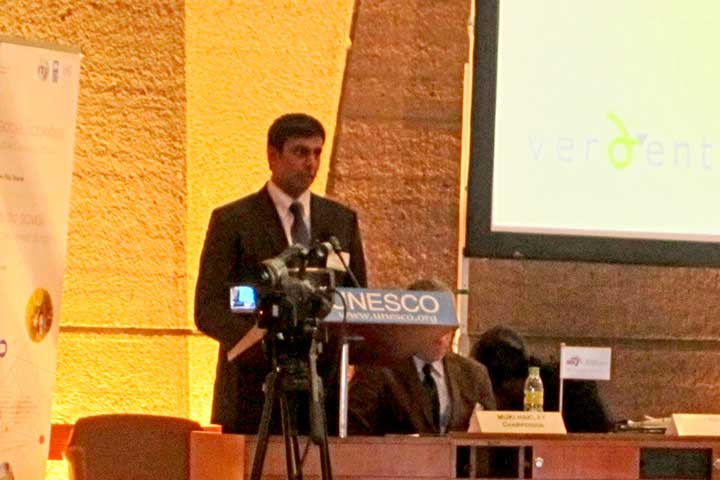
     

    rohit-pothukuchi-2

    How was the experience of being invited to UNESCO headquarters to speak as a panelist at the World Summit on the Information Society Review Committee Meeting?

    It was an incredible honor and one of the greatest experiences of my life. The World Summit on the Information Society meetings took place in 2003 & 2005, and came about after the UN General Assembly approved resolution 56/183 resolving for the need for such a summit. The summits were the major effort of the UN to discuss the global information society, access to the internet, the growing digital divide, communication policy, and other issues, amongst nations of the world. The Summits have lead to the establishment of the Internet Governance Forum, and in a sense have helped develop the global vision ahead for dealing with the internet and technology—Wikipedia has a nice summary.

    The Review Committee Meetings which take place pretty much every year look at the issues and upcoming trends as well as developments after the summits. I spoke at one of these Review committee Meetings. A very senior official at UNESCO learnt about some of my work, and subsequently, I received an invitation to speak. Frankly when I saw the email I couldn’t even believe it. I spoke about e-science trends in India, and about Verdentum a non-profit social network I will be launching in Fall this year, which hopes to connect policy makers with students around the world. A portion of my presentation at UNESCO can be found on the UNESCO web page here.

    More information on Verdentum can be found at www.verdentum.org . I never thought I would be invited to give a talk to an audience that would be simultaneously translated into several languages while I was speaking. I kept looking at the translators—I was absolutely baffled. I was a bit nervous, and one of my personal role models, the former head of the Intergovernmental Panel on Climate Change was in the audience, which made it worse! He was speaking on a related panel. Thankfully, I had very positive responses, and I think the talk was well received. Of course, it was such an amazing experience, and I was very very lucky to have been flown there, put up, and have had this opportunity. Paris is a wonderful city.


    How is White & Case different from  top-tier Indian law firms?

    It has been thrilling working with White & Case at three of their offices. The work is some of the best I have seen in any of my internships and experiences–it is truly international, cutting-edge, and exciting. I think there are very few places where, as an intern, you get to help with multi-billion-dollar deals involving 5 or 6 different jurisdictions, and some of the worlds leading corporations, banks, and government bodies. This was especially true at the Abu-Dhabi office, a relatively smaller office, where I had the chance to be involved with the project finance, capital markets, and M&A groups and some of their transactions. Just being able to read through some of the documentation, and having lawyers who care about teaching you the dynamics behind a deal, one can learn so much.

    I thoroughly enjoyed being able to meet and interact with extraordinary, industry-leading lawyers. I never thought I would get to meet some of the lawyers who have truly shaped areas of law, or whom I had read about because of their involvement in prominent deals and transactions. White & Case has an incredibly open culture, most of the doors are open, and even senior associates and partners are really happy to talk about their work, and guide you. I think being in such an environment inspires one to be more involved with his work, and take the extra step. Being at the NY office was an experience in itself, you really cant beat walking into a sky-scraper next to Times Square every morning. I feel incredibly lucky to be joining such a fantastic firm, and to have had these unique experiences. I think the volume of highly international work at White & Case differentiates it from any other firm I know of.

    With that said, the firms I have had the privilege of interning with in India have been outstanding, and I have learned a great deal from being at those firms for even brief periods of time.


    Can you give us advice on applications and interviews, especially with foreign law firms?

    I think that it’s important to tailor one’s application specifically for each separate firm or organization. Many students provide relatively similar or generic answers to most applications. Read through the firm’s web site and identify their core values and principles, ask yourself if your application is in line with those; tailor your answers specifically.

    I think it’s also helpful to ask the question “do I fit into this organization?”—take a look at the lawyers there, their careers, and their achievements, I think that reveals a wealth of information about what the firm is looking for, and what you need to do/work-on to be there. Another piece of advice: build relationships. Don’t just expect to apply one day and get a job, continue to intern there, work with lawyers there to genuinely learn more in fields that interest you, do some research if possible, and have a positive attitude in whatever work you are given. I have interviewed with White & Case, a magic-circle law firm in London, and several international companies/ organizations. I would say do some thorough research about the firm and the deals they are involved in. This information is not easily revealed through the firm’s web-site all the time. Sometimes it helps to talk to lawyers at the firm.

    Know how the firm you are interviewing with is different from other law firms. They will usually have an area of law where they are the absolute best, or particular cases where they have distinguished themselves. Be familiar with the firm’s strategy and vision for the future if possible, ask yourself how you fit into that. I learnt that it really pays off to know a bit about the lawyers interviewing you—the major deals and areas they have worked on. These areas could occasionally come up in your interview.

    Know your CV thoroughly; be ready to answer questions about internships, and research that you have worked on. Additionally, be pleasant and be respectful of your interviewers’ time. Another note: It’s ok to say that you don’t know sometimes. You can’t know the answer to everything, and I don’t think you are expected to always know the answer. Additionally, try to stay positive. The application and interview process can be difficult, and everyone gets at least a few rejections (in my case I got many). As much as there are very low points in this process, learning from those experiences and bouncing back with improved applications is important.


    How did you go about applying for and getting these foreign internships?

    (Rohit has interned with numerous organizations in 5 different countries such as Oracle in Australia, the California Earthquake Authority, Worley Parsons; in India, AMSS, Tatva Legal, SKS Microfinance, and numerous other places.)

    It was very hard getting internships, especially abroad. I had a lot of difficulty. I was an ordinary law student from India, and I didn’t have any contacts who could help me. I had to work very very hard. You are up against candidates who are better suited, are usually graduate students with more experience (because you study law after an undergraduate degree in the US), etc. When I tried getting an internship abroad during an exchange program at Santa Clara University in my 3rd year I think I got rejection letters from most large law firms with offices in the bay area, and most small law firms I applied to as well. Im pretty certain I had at least 30 to 40 rejection letters in my inbox at some point. A litigation-oriented law firm in San-Francisco’s financial district finally gave me a chance.

    The lawyer who gave me the internship was one of the nations leading plaintiff’s attorneys, and truly an inspiring figure, she guided me with my work and we continue to stay in touch today. I’m very thankful for the chance I was given. For the first time I got the feel of a US litigation environment. I got to do hands on work and be involved with real matters. I have to add—it was so awesome working in a sky-scraper in downtown SF. I worked as hard as I could, I tried to catch up on relevant law. I used to travel about two hours by public transport to SF, early in the morning and two hours to come back go to class, and then study till late in the night. I tried to work on research in different areas I was interested in during my second-third year in NALSAR and I tried to seek the guidance of professionals that were in those fields I was interested in.

    Slowly but steadily my internship opportunities increased, and I was very lucky to get the kinds of opportunities I had. I really wanted to travel and see different work environments around the world, and I was able to get foreign internships that paid me enough that I was able to do that. It is possible, it requires perseverance and hard work. My advice is to work hard, build relationships with people and firms that are focused on areas you are interested in, and be perseverant. I have had several mentors from my internships who over the years have given me incredible guidance. Im thankful for their kindness. I think students should seek out mentors who can give them the right advice. If you have a positive attitude and a willingness to work, I think people will help you. I got so many rejection letters, again and again and again, but I kept at it.


    Could you tell us about your current research program at Harvard?

    Headed by Professor David B. Wilkins (Vice Dean for Global Initiatives on the Legal Profession), the Harvard Law School Program on the Legal Profession is a research think-tank which seeks to make a substantial contribution to the modern practice of law by increasing understanding of the structures, norms and dynamics of the global legal profession. As part of it is major, multi-national, multi-diplomacy research on Globalization, Lawyers, and Emerging Economies (GLEE), PLP is actively engaged in examining and understanding the Indian legal profession.

    The GLEE India research team is comprised of scholars from a host of leading universities, research institutions, and law firms in India, the United States, United Kingdom, and Singapore. The GLEE India research team is pursuing the first comprehensive set of studies examining the changes in the Indian corporate legal sector and its effects throughout the legal profession. This includes studying Indian and foreign law firms, in house counsel, legal process outsourcing, trade law capacity and capacity building, senior advocates, legal profession regulation, legal education, the role of gender, small town lawyers, diversity concerns, and pro bono and public interest lawyering.

    Using surveys, interviews, participant observation, and archival research, GLEE’s India research contributes to a richer and more textured understanding of the substantial changes to the corporate sector of the Indian legal profession as well as its relationship to the developments in the legal professions in Brazil, China, and other emerging economies. You can learn more about GLEE – and all of PLP’s research projects – on its website. My current research is focused on citation practices and experiences of lawyers and law students in India, I am currently circulating a survey for my research, the survey can be accessed through this link. I would be thankful to any members of the legal community willing to fill it out. I intend to expand my research to more areas in the future.”


    Tell us about your editorial experience and how it has benefited you as a lawyer.

    (During his time at NALSAR Rohit helped establish the ADR Review and Media Law Review, and served as the highest ranking student editor of two journals simultaneously.)

    I have indeed learnt a lot from this process. As far as the future is concerned I can say that our editors who are in charge are working hard and continuously improving the journals. We are looking at the growing importance of the blog, digital formats, and involving more practitioners. We want to make these journals as relevant as possible to a modern Indian audience. Of course it’s tough getting journals off the ground, but getting experts in the relevant fields to write and being perseverant is really important.


    How were these teams built and what draws students to write an editorial board test for these two journals?

    (Both journals have a truly impressive board of editors that have included winners of prestigious moots such as VIS, Oxford Media Law, etc., associates at leading law firms abroad and in India.)

    We follow a very different approach at the ADR Review & NMLR when it comes to journal leadership and governance. There is hardly any hierarchy. Our editors stay on for the entire period of time at law school. It’s very difficult to be selected, we have a very small intake, but our editors take their job seriously. We also believe in a holistic approach towards selecting editors. As much as the ed-board test plays an important role, we care about leadership and initiative, and people who care about the journals and the subjects—not just people who want to put things on their CV. We strongly believe that it’s difficult to learn enough about a subject and editing in a 1 year period—which is the time span many journals in India continue to keep their editors. We also encourage editors to creatively be a part of the management process and try to actively improve the journals. We are still pretty young, but I believe we have a bright future ahead. We are planning to initiate a mentorship program for editors of our journals, with alumni editors who have graduated, so they can get guidance early on and have access to more career resources in India and abroad.


    How did you manage extracurricular interests with academics?

    (Rohit was a finalist of the Habitat National Geographic Young Visionary Award in your 2nd year, getting through the semi-finals at IIT Chennai.)

    I was pleasantly surprised to have made it through, some of my ideas were climate-change related. I was lucky to be a national finalist. I believe the competition and Award have been discontinued in recent years. I served as the Moot Court Committee Representative to the NALSAR Student Bar Council in my 1st year. I was a bailiff for so many moots, that I never wanted to enter the moot court hall again!

    Well, I guess it’s important to work on what you like. I always did stuff I enjoyed, so it didn’t feel like a lot of work. I had awesome friends through law school. And with some bias I have to say the graduating batch of 2013 is THE best batch NALSAR ever has had and ever will have!! I’ve also gotten to know so many great juniors and seniors. So, spend time with friends. It was a lot of fun taking trips and wasting countless afternoons at local dhabas, driving around the city aimlessly, eating bhajjis on the side of the road, etc. — you need to make time for these kinds of things.

    Also, I would say plan ahead. Just know what you want to do and where you want to be and make schedules (I have to admit I didn’t always do this, but wish I had). You will find that you are hitting your targets and doing what you want to do. Additionally, I tried not to let go of some of my hobbies. I think a lot of people do this, they love to play an instrument or sing, or do something else, and this disappears when they get to law school. Hang on to your passion and continue with it. I tried to continue painting and this really kept me happy. I completed a series of sixteen pieces titled “Shattered Perspectives 1-16”, which are mixed media on paper. I created them for the Disability Law Center at NALSAR, and they are now a permanent installation there. The series of pieces portray the importance of law in piecing together the “shattered perspectives” of society towards persons with disability.


    What would be your message to students who wish to pursue a legal career in a top-tier U.S. law firm?

    I don’t think I’ve come far enough in my career to provide this advice. However, I would say: Start thinking about your goals very early on and seek the right guidance. I wish I had done this earlier. As early as the end of 1st year. I think by the time you reach your 3rd year you realize you’ve lost a lot of valuable time that you could have used towards internships, experimenting in different areas of law, figuring out what you like. Do this early on. Talk to seniors and graduates, find the right mentors, and work on what you love. I think that will take you where you need to be.

  • Kartikey Mahajan, LLM Candidate, Harvard, on mooting, practice at the Supreme Court, and plans for the future

    Kartikey Mahajan, LLM Candidate, Harvard, on mooting, practice at the Supreme Court, and plans for the future

    kartikey-m1Kartikey Mahajan graduated from NLU, Jodhpur in 2011. He has been practicing as an Advocate at the Supreme Court of India, after a stint at Luthra & Luthra. Recently he got admitted into an LL.M. programme at Harvard Law School, with a 50% tuition waiver.

    We took this opportunity to ask him about:

    • Being among the Top Five Oralists at the  World Finals of Stetson Environmental Moot Court
    • Practising as an advocate at the Supreme Court of India
    • Pursuing an LL.M from Harvard Law School


    How would you like to introduce yourself to our readers?

    I did my schooling from Delhi Public School, Mathura Road, New Delhi. Thereafter I decided to pursue law as a career and joined National Law University, Jodhpur. Law school provided me with a platform to participate in a number of moot court competitions and be a part of different committees in various capacities. Law school also made it possible for me to intern with some of the biggest names in litigation and as well as the biggest law firms of the country. These opportunities exposed me to different facets of law and also helped me develop a deeper understanding of our society. It also exposed me to various sectors of our economic functioning. After law school, I joined the Project Finance team of Luthra&Luthra Law Offices, Delhi that was one of the coveted teams to join in the country for corporate law at that time. At Luthra&Luthra, I worked on high profile transactions as well as did a lot of policy work for Planning Commission of India in terms of drafting model PPP documents. After Luthra&Luthra, I joined the chambers of Additional Solicitor General of India where I worked on government matters before the Delhi High Court and Supreme Court of India. The ASG allowed me to take my own private briefs which also helped me learn a lot about handling the matters without anyone else’s supervision. Now I am leaving for my masters at Harvard Law School this fall and intend to concentrate on litigation and arbitration related subjects during my LL.M.


    Did any of your family members motivate you to pursue a legal career?

    Both my father and mother are doctors in New Delhi. My father is in private practice and my mother is with a government hospital. I believe a legal background always helps a lawyer in his early days be it any field of law. Although, I didn’t even remotely have a family member in the legal field, my father always wanted me to become a lawyer.

    In litigation particularly, the benefit of having a legal background becomes more tangible early on, as you can land few clients or have an established office space. However, with respect to any field of law a having a legal family background helps understand the law better, as a person can always take help of his/her family member’s experience to understand the nuances of law. But I am strongly of the opinion that in the long run it’s the individual’s hard work and determination, which helps him. Any person can get those easy breaks when he has a legal background but to sustain it over a long period of time and establish oneself as a reputed lawyer, it is always the competence of that person alone.


    How did you manage being an all rounder in school?

    (Kartikey was awarded the Academic Excellence Award Scholarship in school and was also awarded various awards for playing guitar and drums.)

    Well quite frankly I will not call myself an achiever in school. I hardly used to study in school until 9th grade and I was always involved in extra-curricular activities like playing guitar, drums and being part of cricket and basketball teams. It was only during 9th grade that I started paying attention towards studies as the board exams were due next year, therefore my father asked me to pull up my socks. I consequently, started excelling in studies, which helped me secure Academic Excellence Award Scholarship for the next three years. By the time I started concentrating in studies, I had already acquired the skills of playing sports and recreational activities like guitar and drums, which enabled me to continue these activities without spending that much time which one usually requires for learning a skill. So being an all-rounder came quite gradually over a period of time and just required a little bit of time management. It is this time management skill, which I can say that I learnt at school, which is still helping me engage in multiple activities at the same time.


    Were your sure about pursuing a career in the legal field from the beginning?

    I was always fascinated with doing something different from my parents. Initially I started preparing for medical entrances in 11th grade and since I really enjoyed science, I used to excel at the exam preparation courses at Akash Institute in Delhi (an Institute which helps you prepare for medical examinations). But like I said I was always fascinated with doing something different from my parents, which always made me think about exploring different options and law was certainly one of the options which I had in mind. Then in the beginning of 12th grade my school organised a mock moot court for the students and I participated in the same as a speaker. It was during the preparation of that competition that I realized the thrill and excitement associated with the field of law and I knew that a career in law was right for me.


    Tell us in detail about your time at NLU–J.

    During law school, I participated in a number of moot court competitions like Vis East, Stetson Environmental Moot, Henry Durant and ICC Trial. Mooting was one activity, which I extremely liked during law school and I always wanted to perform better every time I participated in a moot. Besides mooting, I published a number of articles in leading national and international journals and as well as periodicals. Whenever, I got time, I also played basketball and cricket to unwind.


    What skills did you acquire while serving various committees at NLUJ?

    I was fortunate enough to be selected in a number of student committees by the faculty at NLUJ for various important positions. All these roles and positions helped me grow as a professional and as well as an individual. This is because working in any committee always involves coordinating and organising important events. This makes you more patient while dealing with your peers and as well as the University staff and outside organisations. Working for events also enables you to handle pressure without taking too much stress. This is true of every committee whether be is Sports, Cultural, Academic Support, Moot Court etc.

    Well I think my fondest memories of working in any student committee were during my fourth year when I was the Secretary of Legal Aid Committee. During the short stint of one year we organised numerous awareness camps on legal issues in nearby villages of Jodhpur. Rajasthan as you would know is a very conservative state, which has practices of dowry, female foeticide etc. prevalent almost in every part of the state. Before my stint at the committee, I always saw those problems from only an academic point of view. My involvement with the committee was the first time that I saw these sensitive issues up close.  These events certainly had a lasting impact on me and really helped me while dealing with the pro-bono cases at the Delhi High Court Legal Services Committee. I would say that I really absorbed a lot of practical nuances when it comes to common societal problems during my stint at the Legal Aid Committee which made me more sensitive towards these issues of dowry death, child rape etc.


    What difference did you find in the Indian and the world rounds?

    (Kartikey was awarded the Fifth Best Oralist Prize at World Finals of Stetson Environmental Moot Court Competition and also the third best oralist at Northern Rounds of Stetson International Environmental Moot Court Competition.)

    There is a marked level of difference in the judging standards of Indian and world rounds. While at the Indian rounds you will routinely find judges who are alumni of the law schools who tend to grill you on the legal points. So they basically tend to give marks based on your legal knowledge. I have been a judge in few competitions like Jessup, Stetson etc. post law school and I have noticed this tendency amongst the Indian judges to mark the students on the basis of their legal knowledge. Basically if you are good in legal knowledge then mostly you will get higher marks in other sections of the scoring sheet like style, etiquette etc. However, in the international rounds of any competition, the emphasis is mostly on the speaker’s speaking style and his ability to answer the questions with poise and clarity. While legal knowledge is relevant during international rounds, but other sections become equally important.

    Well during the World Finals of Stetson, my team members who were in the Indian rounds could not manage to come with me to Florida due to Visa and Financial issues. So ten days before leaving for the World Finals, I had to speak to the national and international organisational members of the competition to amend their rules and allow me to induct a new member from the University who had a valid US Visa. When the permission was granted, I managed to induct a new partner (Rashi Ahooja) for the World Rounds and she prepared everything in just five days and managed to secure the 6th Best Speaker at the World Finals. The entire period after the Indian rounds until the culmination of the World Finals was an exciting period which involved a lot of challenges and made me learn a lot of things like acting under pressure and petitioning the organisations to amend their rules.


    Can you give three essential tips to our readers who wish to ace the oral rounds of an international moot?

    The First tip would be to know your proposition, memorials and the relevant legal issues thoroughly. You cannot not know the above things. A person should equally devote a substantial amount of tine writing down the structure of his arguments and rehearsing them until you master them. In any moot court, a judge would try to deviate you from your structure but a good mooter would always come back to his structure of arguments after answering the judge’s question. Lastly, always remember to speak slowly when it comes to arguing before international judges, as Indian accent tends to be really fast which the judges may not understand. I essentially followed all the above rules while preparing for any round.


    What kind of internships did you do in your law school?

    During law school, I managed to intern at many different places like law firms, counsels, consultancy firms and corporate organisations. This helped me get exposure to different realms of law and different work environments.

    There used to be institutional support for procurement of internships at law school from third year onwards. However, I always managed to secure an internship for myself without relying on the Placement and Internship Cell.


    Did you plan out the course of your internships?

    I did plan out my internships as initially I interned with counsels to try and understand the basic fields of law like contracts, constitution and procedure statutes including arbitration. Then from third year onwards I interned in law and consultancy firms to get an experience of corporate laws.

    I think it is extremely important for a law student to plan the course of his internships as certain internships like a corporate law related internship can be understood better only when one has read and worked on contract law related issues. So basically doing a corporate law internship in the beginning of second year will not make much sense for a law student. Also, if a person is thinking of applying for LL.M, then he must undertake internships, which will help him show his focus towards the field of law that he wishes to pursue in LL.M.


    Can you give us a few tips to ace the art of paper writing?

    Well there is no tip for writing a paper as such. One just needs to start writing and the person becomes better with time. What I would say is that a person should always pick up a novel topic to write, as there is no point writing on something on which already a lot has been written. I have always picked up topics on which I can add to the scholarship of the subject by highlighting my own original viewpoints.


    Tell us how has moot court participations and paper publishing helped you in acquiring skills that are important for a successful legal career?

    They certainly have. Moot courts made me develop the requisite confidence to appear before a judge in litigation. Although many would say that moots are not at all like a real case, to which I would agree as well, but moots give you a style of presentation and help you being thorough. I am so used to appearing in Court without looking much into my file as I acquired this habit while preparing for moot courts. I have also handled an international arbitration in Singapore and I must say that my mooting experience at Vis moot was extremely relevant for that arbitration interms of my presentation style. Legal writing although did not seem to have contributed to my drafting skills, but it helped me develop thought process and delve deeper into certain legal issues.


    How did you manage your academics, curricular and co-curricular activities?

    Well… I was always interested in basketball and cricket, but it was mostly in my first and the last year that I played these sports on a regular basis.

    Like I said before, time management came naturally to me from school itself and it was never hard to manage all these activities at law school.


    Tell us about your experience at Luthra&Luthra?

    I was offered a job at Luthra&Luthra through campus placement. The experience was very interesting as I got to work in one of the most exciting teams in the country for Project Finance. I worked on few huge transactions, which helped me realise the need of a lawyer to pay attention to detail. Also, the experience helped me read very long documents in lesser time and improve my drafting skills by the end of my stint at Luthra&Luthra.


    Why did you switch from a corporate job to a job of a practicing lawyer?

    (After working in a law firm Kartikey started working as a practicing advocate under Mr. Rajeev Mehra, Additional Solicitor General of India.)

    I switched because I always wanted to pursue litigation and arbitration and argue before the courts. I started with Luthra&Luthra because I wanted to save some money to help me tide over the initial years of litigation and at the same time become familiar with commercial documents.

    The initial major challenge was to remain physically standing by the end of the day. Litigation unlike corporate work, involves a lot of running around the courts and even outside the court to conduct client meetings etc., so after working in a corporate firm one looses touch at being that physically active. Then obviously making new clients is always challenging in litigation as clients usually don’t place confidence in young lawyers to handle their cases. I must say that everyday in litigation is a challenge, which comes with its own set of thrills and excitement. You never know what problem can crop up like a small mistake in filing because of which the registry doesn’t put up your matter, like managing multiple courts on the same day, tackling judges on their bad mood days etc. So basically the uncertainties increase in litigation manifold and it was basically understanding that these uncertainties were very much possible on an everyday basis was the initial challenge.


    Tell us about your work at Supreme Court of India.

    I have majorly handled cases at the High Court and then at the Supreme Court. This is because I was associated with the chambers of Additional Solicitor General of India. The government work is really interesting and at the same time very time consuming not allowing you to find enough time for your private matters. So basically I used to handle atleast 8-10 matters a day for the ASG, which also sometimes turned out to be 15-20 matters per day. Obviously not all of them came up for arguments, many had just small applications or asking times for filing rejoinders/counters etc., many had adjournment motions or many required usage of court craft to ensure that the matter was passed over or put at the end of the board so that it can be rolled over to the next day. But what all these matters put together tested was the organisation and coordination abilities of the juniors as we had to coordinate with the government departments and as well as the Standing Counsels for their instructions. Many a times a 500 to 1000 page brief used to arrive in the office at 9 pm with instructions to appear next morning (We all know how disorganised and lethargic government departments can be). So this helped me read the files faster and understand what the relevant points can be in a short span of time. Whenever I used to have a private brief, then I had to face the additional problem of managing my workload.


    Why did you choose Harvard Law School?

    (Kartikey was awarded Jagdish Bhagwati Fellowship (Columbia Law School) Willams Papsworth Studentship (University of Cambridge) Graduate Dean Award (New York University School of Law), all of he declined to pursue an LL.M at Harvard Law School.)

    All these scholarship applications are basically included in the application procedure for the LL.M Programme. Cambridge had a separate scholarship question in which you basically had to state your reasons for applying for a scholarship. NYU had a question on describing a legal issue facing a country or the world and proposing solutions to address the same. As far as Columbia was concerned, it did not have any separate question.

    Harvard has also offered me a tuition waiver of almost 50%, its just that its not a named scholarship like that of Columbia, Cambridge or NYU. I chose Harvard primarily because it has the best faculty for the courses that I am interested in, like Constitutional Law and Policy. Also, candidly speaking, I intend to return to India post LL.M to continue pursuing dispute resolution for which a Harvard LL.M offers intangible benefits over the other LL.M programs.


    What are the necessary traits required to bag a scholarship?

    I think it’s not only about law school but your overall profile. Curiously, I am still not sure as to what did the admissions committee like about me at every college that I got so many scholarships. I think this question is best suited for admission officers to handle.

    But I would like to say that if I have to think of some factors which would have helped me then I would say a good rank at law school (top 2% is a must), international awards at moots, international publications and both government and corporate work experience would be the factors which could have probably helped. But like I said before, I am not even myself sure to give two cents about this.


    kartikey-m4

    Tell us what motivated you to go for a master’s programme?

    I always harboured a desire to do an LL.M since law school. Its just that I didn’t know what I wanted to study during an LL.M. So that’s why I think that work experience is really important for most people as they get better clarity interms of what they want to study and how they want to utilize their time at LL.M which is just for 9 months.

    The reason why I didn’t opt for an LL.M at Indian University is because I have already studied at one of the best law schools of the country and I didn’t think that pursuing an LL.M at another good Indian law school would enhance my skill set or knowledge base. I think an international LL.M programme always helps you develop different perspectives about a particular legal topic as there is a presence of diverse viewpoints of people from around the world. Additionally, studying your interest areas from the best professors of the world and not that of one country, obviously helps you delve deeper into that subject area.


    What is your area of study at Harvard?

    I intend on pursuing Constitutional Law, Negotiations, Civil Procedure, International Commercial Arbitration and other litigation related courses. I also intend to get involved with trial workshops/clinics and learn the American way of litigating.

    From what I have heard from my friends who are Harvard alumni, I think the educational culture at HLS is really intense and demands a lot of time. This is chiefly because of the Socratic method of teaching which is followed at all US Law schools that involves a lot of reading up before coming to class and the class itself involves only discussion with the professor. Lets not discount the fact that a classroom at Harvard would be filled with some of the brightest minds so you can obviously expect a lot of cross-exchange of indepth analysis of legal issues. I think that’s where the fun lies.


    What are your plans after LL.M.?

    I intend to continue with my Litigation and arbitration practice. As far as a job in corporate sector is concerned, that is definitely not cut out for me. Although, I certainly love corporate laws and I intend on continue doing commercial litigation.


    Lastly, what would be your message to our readers?

    I don’t think I am in a position to offer any advice or a guiding principles to anyone at this time. However, I have always tried to follow what my father used to tell me since I was a child which was that one should pursue whatever he or she feels like. There is no set career path for anyone whether be it litigation, law firms or corporate organisations or NGO’s etc. If one really likes whatever he does, he will never get bored of it. People should ask whether they are willing to get up every day and do that kind of work that they are doing. If not then Quit! If yes then I feel possibilities are limitless.

  • Iram Huq, Juris Doctor Candidate, Harvard, on interning at the UN, working pro-bono, and working in the US

    Iram Huq, Juris Doctor Candidate, Harvard, on interning at the UN, working pro-bono, and working in the US

    Iram Huq is a graduate from WBNUJS, Calcutta, batch of 2011. She was a top ranker as an orator at the Phillip C. Jessup International Law Moot. She is currently a Doctor of Law at Harvard University, where she is also student of the Moot Court Board (2013-2014).

    In this interview, we speak to her about:

    • Getting a JD from Harvard
    • Interning at the United Nations
    • Taking time out for pro-bono human rights cases

    Tell us a bit about your life before college.

    I went to La Martiniere for Girls in Calcutta and was in the school’s debate team. That inspired me to write the law school entrance exams. I had studied science in plus two, and I liked Physics and Maths. Occasionally, I wish I had taken those subjects more seriously. I really enjoyed them conceptually, but I never saw myself as having a career related to either of those subjects.

    I think that my debating and science background helped me to develop a more objective view of the world. I appreciate the subjective aspects of the law, but I can’t help feeling that our legal system tends to reward sophistry and obfuscation instead of real analysis. I do not have lawyers in my family.


    What motivated you to choose law as a career?

    I wasn’t really paying attention to what people thought would be an ‘acceptable’ career. My parents were very encouraging, and my teachers also thought that law would be a great choice, given my skill set. It helped that a lot of people graduate from national law schools with excellent, respected jobs.

    I think middle-class Indian parents tend to be very conservative in estimating what careers are satisfactory for their children. However, I have learned that it is very hard to be successful at things that you do not enjoy. I am glad I was never pressured into choosing some other career.


    iram-huq3

    Did your debating skills help you at Jessup?

    Yes, that is absolutely correct. Debating is a great platform to learn public speaking. Once you understand how to put forward an argument in a clear and convincing way, you can apply that skill to any number of activities, including moot court. My father was also in debate teams of La Martiniere and St. Xavier’s so he was a great help. We had a teacher to coach us in school.

    I will say my ‘mentors’ for moot court were my friends and teammates, Deepak Raju and Rukmini Das, who helped me understand the basics of moots and coached me during the initial auditions for the moot court team. (They were both excellent mooters before I had even considered moot court). I also learned a lot from my experience in Vis Vienna, and could apply those lessons to Jessup. Deepak and I were on a debate team together, and that’s how we started working with each other. It was a pretty organic process, and I would like to believe that all three of us learned a lot from each other. I am not a fan of hierarchical team structures where the senior mooters mentor the junior mooters: the best teams are those consisting of friends.


    iram-huq4What are your thoughts on activities like mooting and article writing for journals?

    I think that writing for journals is a wonderful educational activity, if you can do it. Unfortunately, I was always too bored of academic articles to attempt to write them (but that was a personal preference). I liked mooting because, in addition to the academic part, it allowed me to travel and work on a single, practical project. Jessup (and Vis, Vienna) helped me understand how the rest of the world views different aspects of international law, improved my analytical and writing skills, and taught me how to network in professional settings. I definitely think that law students should try either mooting or writing for journals, if not both.


    Did you get any institutional support for internships from your college?

    No, I did not. NUJS was remarkably reticent when it comes to helping its students get good jobs or internships. It left everything in the hands of students, which was a good thing since the administration was both languid and incompetent. I did network with some of my seniors in law school, who recommended places where I applied and later interned. On two occasions, I secured internships through personal contacts. Young students should not be ashamed of using their contacts to secure internships. It is a perfectly natural process. If you don’t believe me, watch this TED talk


    How well do you think your education at WBNUJS prepared you for real world practice of law?

    Honestly, I think we could do with less compulsory classes and more optional classes in law school. It is absurd to think that someone who only wants to be a securities transactions lawyer should be required to study jurisprudence or intellectual property. We were required to study so many things that were absolutely useless to me when I finally began clerking at the Supreme Court. And yet, I never had the opportunity to learn subjects that would become really important in my job, like lower-court trial procedure.

    Additionally, our subjects were often taught in a completely academic manner, devoid of any instruction on how the law actually worked in practice. Finally, we never had clinics or any other option to learn through practical work. If not for moots and internships, my law school experience would have been completely inadequate.

    I do have to say that I had some excellent professors, and their teachings proved to be very useful for me later on in my work. I think law schools need to work on rewarding quality professors.


    iram-huq2

    Do you think being from WBNUJS helped your career in any way?

    Yes. Even though I complain a lot about NUJS, I have to say that I was surrounded by very intelligent students and studied under some wonderful professors. Compared to other law schools in India, NUJS has an institutional presence that reinforces an academic spirit and encourages its students to learn the law. I’m very grateful to my peers for challenging me and helping shape the direction of my legal career.


    Tell us what factors contributed to your decision to purse Juris Doctor from Harvard?

    I did not want an academic degree, like the LL.M. I was certain that I wanted to work in a law firm in the US. I was applying at a time when the rate of legal hiring was depressed (it still is), and so I concluded that the JD degree was the best option.


    iram-huq1What is the application procedure for a JD from Harvard?

    Applicants have to sit for the LSAT, and submit a couple of essays (a personal statement, a diversity statement, and any other essays they want the admissions officer to consider). Needless to say, successful applicants usually have good LSAT scores and compelling essays. Quite a few people have asked me similar questions, and it’s hard for me to explain what constitutes a ‘compelling essay’. But there is a lot of information available on the internet and on LSAC.

    I do not think that anyone can ‘hack’ their way into Harvard. My only suggestion is that applicants should be able to demonstrate a real vision of what they want to do with their Harvard Law degrees once they graduate. I do not think my own essays were particularly good, but I was able to make up for it during the phone interview. That is why I think that some imagination goes a long way.

    The application also requires at least two recommendation letters. Applicants should make sure that they get letters from teachers/employers who really know them and are willing to bat for them. But some institutional weight is also a good thing. I had a letter from Justice Patnaik, for whom I was clerking at the time I made my application. I highly recommend that graduates clerk after law school. It’s a great opportunity to learn how judges and the justice system works. And if you do good work, you’ll have a recommendation letter from a high court or supreme court judge, which is invaluable.

    As for scholarships: I am on a need-based grant at Harvard. Harvard Law does not have academic scholarships, as far as I know. Once you get in, you have to submit a lot of documents about your parents’ income and assets, and they assess a grant package. The whole process is very transparent, and applicants can find all the information on the Harvard Law website.


    Do you plan to have a career in the USA?

    Yes. I am currently working as a summer associate at WilmerHale’s New York City office. I hope to secure a job offer by the end of my internship, if everything goes well.


    You have been a Chayes Fellow for 2013-14. What does the fellowship entail?

    The Chayes Fellowship is awarded to first-year Harvard Law students who travel internationally for public service work. More information can be found at Chayes international public service fellowship


    As part of your Chayes fellowship you were an Intern at United Nations Assistance to the Khmer Rouge Trials. Please share your experience of working at Cambodia.

    Yeah, that’s what I did last summer for ten weeks. It was a great experience—I enjoyed working for the UN in Cambodia. I was working on the prosecution of senior Khmer Rouge leaders. I wrote a blog post about it: Blogs.law.harvard.edu


    I gather that most of your internships have been concentrated in and around Human Rights organisations. Is it planned or they just happened?

    I was looking for internships where I would get real experience in research, drafting and filing. It just so happens that large law firms in India rarely let interns shoulder much responsibility. Working for human rights organizations gave me a sense of purpose and also the opportunity to be far more involved in the projects to which I was assigned.

    The firm where I work at present is WilmerHale; it has a large pro bono practice with substantial human rights work. One of my projects is an asylum case. WilmerHale’s pro bono practice allows younger lawyers to shoulder greater responsibility and learn the art of appearing in court. No firm can afford to provide these opportunities in high-stakes litigation, and so human rights work is a great way for younger lawyers to acquire this experience.


    How do you manage Human Rights activities alongside the corporate world?

    I am committed to Human Rights work, but I am not a fulltime Human Rights lawyer. My goal has been to work in the corporate world for quite some time now (I have to say that I joined NUJS hoping to be a human rights lawyer). I guess I am privileged, because a few US law firms allow you to do corporate litigation work while still fighting Human Rights cases. I do not think that the two goals have to be mutually exclusive: many US law firms are very profitable even though they allow associates time for different kinds of pro bono work.


    Lastly, what would be your message to law students who want to pursue a career in human rights?

    I would say that they should go for it. Personally, I find the Human Rights ‘world’ to be a little oppressive: there is a constant sense of urgency and sadness associated with Human Rights work which interferes with my ability to objectively go about my work. But God knows we need more people dedicated to this field. I respect Human Rights lawyers for their courage and tenacity in the face of all odds. I will acknowledge that money is important, and there is not much of that in the human rights world. But we would be wrong to conflate wealth with success. If there are people who are willing to dedicate themselves to this field, we need to respect their legal skills and talent even as we respect rich and powerful lawyers.