Tag: HNLU

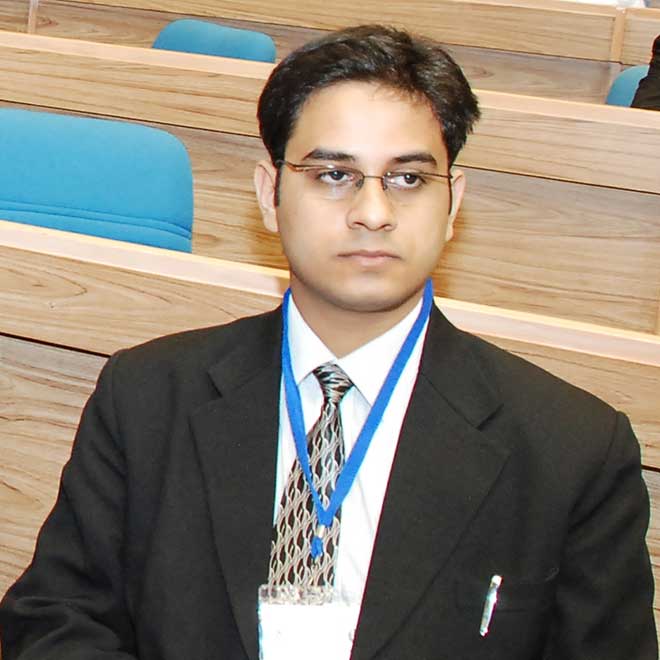
  • “Since Insolvency Law is still at a fairly nascent stage, every case brings with it a new set of challenges giving you the opportunity of contributing towards the Insolvency Jurisprudence as a whole”- Himanshu Chaubey, Partner, Edictum Law & Co.

    “Since Insolvency Law is still at a fairly nascent stage, every case brings with it a new set of challenges giving you the opportunity of contributing towards the Insolvency Jurisprudence as a whole”- Himanshu Chaubey, Partner, Edictum Law & Co.

    This Interview has been published by Pragya Chandni and The SuperLawyer Team

    Can you share the journey that led you to pursue a career in law, starting from your education at Hidayatullah National Law University? What motivated you to choose law as a profession?

    Honestly speaking I stumbled upon law by chance. I was always interested in humanities and social sciences but took up a Science in my plus 2. But I soon realised  that I was not very good at it. A friend of mine then informed me that there are these institutions called the National Law Universities and people graduating for these institutions are getting well-paying jobs. It was the first time that CLAT was being conducted for admission to these colleges. I did some research and thought that it might suit my interest. So I must admit candidly that I chose law to avoid doing Engineering and was lured by the promise of a Fat Pay Cheque .  

    As an Advocate-on-Record at the Supreme Court of India, you’ve handled matters of constitutional and national importance. Could you discuss a specific case that stood out to you, and how it shaped your perspective on legal practice?

    Ans. As an AOR one matter which really stood out for me was a case wherein My Client, who is an RTI Activist, was not being allowed to reside within the confines of a District on the basis of false FIR’s registered against him. The FIR’s were registered by the same people against whom action was being taken on the basis of representations made by My Client. The Supreme Court while allowing the Appeal observed and reiterated that the fundamental right of Free Movement and Residence across the Country cannot be curtailed on flimsy grounds. 

    Your experience involves representing clients in various High Courts, dealing with matters related to the Arbitration and Conciliation Act, 1996. Can you share insights into the challenges and strategies you often encounter in this area of law?

    Ans. An Arbitration is nothing but a trial being conducted by a judge chosen by the parties and as per rules chosen by the parties. Therefore every Arbitration has to be approached in the same manner as one would approach a Trial before a Court of First Instance. As is the case with any Trial, even in Arbitration, it is of utmost importance that all the documents and facts, which are essential for establishing the claim, are brought on record. Even though it is said that one should not hide any facts from a doctor and a lawyer, however it is also a part of Human Nature to narrate only those facts which are beneficial to us. Therefore it is our job as lawyers to even extract those facts and documents, which are harmful to us so that we are not blindsided by them during the Arbitration. If you are thorough with your facts then all other challenges are manageable.  

    In your independent practice, you’ve represented clients before the National Company Law Tribunal and drafted appeals before the National Company Law Appellate Tribunal. How did this experience contribute to your understanding of corporate law and insolvency matters?

    As a firm our primary focus is towards commercial litigation and naturally that includes litigation before the NCLT and the NCLAT. Since Insolvency Law is still at a fairly nascent stage, every case brings with it a new set of challenges. That also gives you the opportunity of contributing towards the Insolvency Jurisprudence as a whole. One case that stand out for us, which also then became a landmark judgment with respect to powers of NCLT under the IBC, is the case of E.S. Krishnamurthy v. Bharath Hi-tech Builders Ltd.  We handled that case from the NCLT uptill the Supreme Court and therefore it is very close to our Hearts. 

    As an Associate at Gohil and Singh Law Chambers, you were involved in drafting and researching on petitions before the Supreme Court. Can you share a memorable case and the legal issues you tackled during that time?

    Mr. Pradhuman Gohil, has played a big role in my development as a lawyer. I worked with him for four years and extensively worked on matters before the Supreme Court. There were several cases which helped me to hone my skills as a lawyer. However one case which stands out was a Criminal Appeal in which we were defending a person convicted for murder. The case was based purely on Circumstantial Evidence and primarily based on statements of witnesses. We prepared for that matter for over six months and the hearing went on for 3 weeks. That case had all the issues can can think of a in a Criminal Case, ranging from importance of a Statement under Section 313 CrPC, Completion of Chain in a case of Circumstantial Evidence, Veracity of the testimony of a Hostile Witness, etc. 

    During your association with the office of Mr. Ajit Kumar Sinha, Senior Advocate, you were involved in researching matters before the Supreme Court and High Courts. Can you elaborate on the types of cases you worked on and the legal principles you engaged with?

    Mr. Ajit Kumar Sinha is my mentor in the profession. I did majority of my internships under him and eventually started my career with him. I worked under his guidance for 2 and a half year. During my time with Mr. Sinha, I had the opportunity to work on matters pertaining to mining laws, service laws, Land Laws, Tender Matters etc. I also had the opportunity to assist him in the Coal Scam Matter and the NJAC matter. 

    Given your diverse legal background, from constitutional matters to criminal law and commercial transactions, what advice would you offer to recent law graduates aspiring to build a versatile legal career and those interested in practicing law at a high level and dealing with matters of constitutional significance?

    My Advice to recent law graduates to not restrict themselves to practising only in one area of Law. The Beauty of the profession lies in its diversity and therefore one must try and grab onto all the work that comes their way. One must be a jack of all trades, because that goes a long way at retaining clients. The aim has to be that for your Client you should be the one stop shop. 

    Every person has a different journey and one advice that a friend of mine once gave me is to not compare my journey with that of others. Law, and especially litigation, demands perseverance. You just need to stick around and give your hundred percent, and at the cost of sounding preachy, I must say that there are no short cuts.

    Get in touch with Himanshu Chaubey-

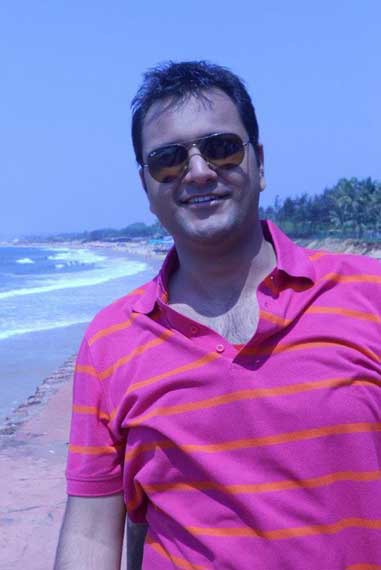
  • “I appeal to the young lawyers to have an empathetic and humane approach with integrity towards the downtrodden and poor litigants for whom lawyer is the only hope to fight for justice for him/her”- Sudeep Vijayan, Independent Legal Practitioner

    “I appeal to the young lawyers to have an empathetic and humane approach with integrity towards the downtrodden and poor litigants for whom lawyer is the only hope to fight for justice for him/her”- Sudeep Vijayan, Independent Legal Practitioner

    This Interview has been published by Pragya Chandni and and The SuperLawyer Team

    Can you share with us your journey into the field of law, from your decision to pursue it as a career to your experience at Hidayatullah National Law University and GGSIPU for your LL.M. and your recent decision to enrol for a Ph. D. program with IIULER?

    First of all, I would take this opportunity to thank Superlawyer for this interview and convey my deep appreciation for this endeavour as it could offer your young readers some valuable insights while planning their life around law as a career. 

    Addressing  the first part of your question on deciding to pursue law as a career; I would like to tell you that  I was a student of Physics, Chemistry and Biology up to 12th standard; and had no family member into active  legal practice, but I think my flair for languages and my father’s inspiration who despite being a serving Army officer ; pursued Law. Since my scoring in languages had remained stable throughout my school career, the orientation classes helped in getting an insight into the field of law. Thereafter, after completion of my 12th Std, I cleared entrance examinations for Hidayatullah National Law University, Raipur (HNLU) and Army Institute of Law, Mohali (AIL) in the year 2003. I decided to continue with HNLU. HNLU was established in the year 2003, and I could become a part of its 1st Batch having passed out in the year 2008. The State of Chhattisgarh was established in the year 2001, so our batch had a unique distinction of being from a new university in a newly established state, which had its own challenges but, it soon turned into opportunities for all my batchmates. 

    Now coming to the second part of the question; I would like to say that the professional work environment of a career in law is quite dynamic which entails frequent changes in laws, new legislations, delegated legislations etc. I have always believed that life in general and Law in particular is an ongoing process of learning; one needs to keep a tab on new developments to keep oneself updated and the grasp the diversity of knowledge. I, thus, completed my LL.M in Corporate Law from USLLS, IP University, Delhi during 2014-16 and currently pursuing a Ph.D. from India International University for Legal Education & Research, Goa (IIULER), on the topic of ‘Food packaging and food Contact materials’ and its Regulatory & Legal Standards in India’. IIULER is designated as the 1st International University for Law in India and is an initiative of Bar Council of India Trust-Pearl First.    

    You have a diverse career path, including working with ZEUS Law Associates, KPMG, and the Ministry of Finance. How did these experiences shape your expertise in tax law and advocacy?

    Law as a profession has always intrigued me with its depth and ambit and I have always wanted to explore the diverse verticals that it encompasses. During the final stages of college education, drawing inspiration from revered names in law practice i.e. Sh. Nani Palkhiwala & Sh. Harish Salve had both started their respective careers in the field of taxation. I was deeply inspired to take-up tax as a career option despite the general trend being to opt for court practice, corporate practice or capital markets. Despite being involved in matters of significant constitutional issues having national and international repercussions, they are still considered doyens of tax practice. My professional journey commenced with the tax team at Zeus Law Associates, New Delhi followed by KPMG. Both these stints gave me incredible insights into tax as an area of practice coupled with much desired cross-country work exposure. I had also learnt the importance of working with professionals from different disciplines, since it involved working with Chartered Accountants, Company Secretaries, Architects etc. These interactions gave me immense insight into overall working of ‘business transactions’ and added incredible value in my growth as a lawyer. From early part of 2013, I had ventured into independent practice and started to take-up matters in other areas of law in addition to my continued work in tax. Hence, I would encourage young graduates to bear in their mind that life shall always give you avenues to earn and learn. As long as you are able to identify those avenues which can catapult you and enhance your own sense of individuality, you should choose them over anything else no matter what the costs. I don’t intend to sermonise this but, if one were to practically see within the legal profession and perhaps medical profession too, there are no defined career progression or milestones which more or less exists for other professions. It’s all upto an individual about how one intends to lead his life. Hence, as and when one is able to identify an avenue of personal growth, one must prioritise it and seize the opportunity and work towards enhancing one’s skill set. Please understand that, skill set doesn’t really mean ‘legal skills’ alone it also means honing-up ‘life skills’ and can be as simple as one’s ‘ability to listen’, ‘time-management’, ‘language’ etc. It is for a reason that, law as a career lacks any entry age or retirement age as in life there is no specific age or stage for learning.  

    Could you tell us more about your role in formulating key proposals and legislative drafting for the Ministry of Finance? What were some of the most significant challenges you faced in this role?

    I have had the opportunity to work as a Consultant with the Ministry of Finance, Department of Economic Affairs, Govt. of India in 2016-17. This assignment entailed exploring the arena of legislative drafting and policy making for the said Department. This entailed attending stakeholder’s consultation process, undertaking research, preparing notes from legal standpoint, and drafting of statutory legislations, amendments, circulars etc. as desired by the said Department.  I can definitely say that it was quite an enriching experience. It gave me a bird’s eye view regarding the functioning of various securities laws in India and how policy making by the Departments tries to respond to challenges and concerns faced by the stakeholders and the public at large.        

    Co-founding Integricon Consultancy Services (ICS) is a significant milestone in your career. Can you share the motivation behind starting ICS & ILO and how it has evolved to offer comprehensive consultancy solutions?

    The basic idea behind ICS is to bring the concept of seamless cross-practice experience to clients. As a result, myself and two other partners were able to establish ICS in the year 2020 as a one stop consultancy service solution for clients. So as to provide these consultancy services, we have a bouquet of professionals from myriad walks of life viz., bureaucrats, lawyers, chartered accountants, cost accountants, economists, engineers, technocrats and company secretaries. ICS engages with various Companies, PSU’s etc. for meeting their consultancy, research and training needs.  

    In addition to the same, we had established Integricon Law Offices (‘ILO’) as a full-service Law firm for legal services and as a think tank for research and legal services. The think tank works on various vacuum areas of anticipated legislation world over and elucidates various situations from a legal standpoint involved.  On the legal services side, the ILO focuses on litigation practice, corporate practice and tax & regulatory practice. I personally look after the tax and regulatory practice including Food Safety and Standards Act, Legal Metrology Act, NMC Act & related Rules etc.      

    As someone with extensive experience in the legal field, what advice would you offer to fresh graduates who are just starting their careers in law? What skills and strategies do you believe are essential for success in the legal profession?

    All fresh graduates should journal their life and professional experiences. This would not only assist them to traverse through a career in law but also make them mindful of their respective professional/ life environment that they are a part of. This would allow them an opportunity to evaluate their respective strengths and weaknesses. Law offers myriad career choices. Thus, in addition to these career choices, a graduate should also try and develop a sectoral focus by integrating technical knowledge and expertise and not merely restrict to the nature and kind of work coming their way. After all, apart from professional journey it’s a life journey as well hence, both needs separate prioritising. In a lighter vein, I can only say that in this world of T20 cricket, a career in law practice is a like that of a Test Match wherein after surviving a few testing sessions the playing conditions are bound to get better. Hence, it’s all about staying put on the crease while trying to be the best player version of oneself alongside. 

    It is famously said about lawyers that they have this unique capacity to do what common people might find boring. Therefore, so as to answer your question, fresh graduates who are at the stage of commencement of their careers need to really hone up their capacity to pay attention to details. Moreover, no work should yield satisfaction unless there is an internal assessment of whether one has performed to the best of their capacity on a given day. Late Nani Palkhiwala had mentioned that, graduates coming out of law colleges should not be ‘ethical literates’ and they should inculcate a greater sense of understanding about public good hence, it is important for graduates to develop a public character while pursuing a career in law.

    For the lawyers/ young law graduates who aspire to take to court practice, my only advice is to be a keen practitioner who can challenge and alter his/her own thought process every day on settled legal propositions as per human and societal needs because that helps civilisations grow into a certain direction. Also, I appeal to the young lawyers to have an empathetic and humane approach with integrity towards the downtrodden and poor litigants for whom lawyer is the only hope to fight for justice for him/her. 

    In the end, I would like to once again thank Superlawyer for their initiative which has afforded me an opportunity to try to put my perspective on law as a multifaceted profession before the younger lawyers of the country.  

    Get in touch with Sudeep Vijayan-

  • I think the only thing that any legal professional can do is to be open to new learnings, think outside the box and adapt to the changing regulatory landscape- Anubhuti Mishra, Partner at P&A Law Offices

    I think the only thing that any legal professional can do is to be open to new learnings, think outside the box and adapt to the changing regulatory landscape- Anubhuti Mishra, Partner at P&A Law Offices

    This interview has been published by  Priyanka Karwa and The SuperLawyer Team

    Please tell us about your educational background and the path that led you to pursue a career in law, particularly specializing in competition law?

    I have always had a keen interest in economics and competition law. I studied an optional paper on competition law while pursuing B.A. LLB (Hons) at Hidayatullah National Law University, Raipur and participated in a few antitrust law moot court competitions. I graduated in 2013. During the first couple of years post my graduation, I was working across general corporate and project finance. But even during this period, I was closely involved in adjudicating competition law moot court competitions and academic writings related to the field. So eventually, I decided to pursue a specialized post graduate degree course in competition law in order to switch to this practice area.

    What motivated you to focus on competition law, and how did your LLM in Competition Law from King’s College, London contribute to your expertise in this field?

    As I mentioned, I was always interested in competition law as an academic stream and a practice area. I had interned in various competition law teams during my undergraduate degree and I had worked with the alumni from King’s. I also researched about the faculty in various universities offering an LLM in Competition Law and the faculty at King’s seemed to be a remarkable group of full time academicians, practitioners and ex-members of competition regulators from various jurisdictions. I had an offer from a few other universities in London and in the USA, but I ultimately decided to go to King’s. I would always encourage people to check the particular department they are interested in before deciding on a university, as this is directly related to the kind of exposure you would get and the type of people you will be networking with. This will decide the kind of opportunities you will likely encounter post your degree. Given the diverse academic and professional background of the faculty at King’s, I feel studying at King’s not only offered me a good insight into the practice of competition law in mature jurisdictions like the UK, EU and USA, but also helped me understand varied perspectives on the subject – that of academic scholars, practitioners and people who had been involved in policy making. Such understanding and exposure helps shape your own approach towards the practice area and definitely contributes immensely to your learning curve.

    Could you share some of your experiences and highlights from your work as a Partner at P&A Law Offices, especially in the area of merger control? What are some notable cases you have worked on and the outcomes you achieved?

    I have had the opportunity of working on some challenging combination filings as well as gun jumping cases, during my stint at P&A. One case that stands out is the Amazon-Future Retail case, where the Competition Commission of India (CCI) has passed an order keeping in abeyance an approval granted by it more than two years ago. This case is currently pending in appeal before the Supreme Court. It is one of the most interesting and challenging cases I have worked on not only because it involved a lot of economic analysis during the filing and review of the notification itself, but also because it involves a lot of important questions around the interpretation of the CCI’s powers of review in relation to combinations and the threshold for establishing a case of gun jumping and non-disclosure or misrepresentation in combination filings.

    In the field of enforcement and litigation, you have represented major companies like Tata Steel and Amazon. Can you discuss a specific case where you successfully defended a client against allegations of cartelization or unfair trade practices?

    I have personally worked on a cartel investigation against the Bearings Division of Tata Steel and I would consider that case to be a success as well, because despite the fact that the investigation was initiated on the basis of two leniency applications, no penalty was ultimately imposed on the opposite parties. It was quite an interesting case as it involved a lot of economic analysis of challenges faced bythe industry as such as well as examination of the evidence on record to prepare our defense. I have, in the past, successfully represented Amazon in some informations that were dismissed by the CCI at the prima facie stage itself. However, with the shift in regulatory focus since the publication of the market study on e-commerce in India, digital markets are facing increased scrutiny and it is immensely humbling and rewarding, at the same time, to have the opportunity to work on cases which will set the regulatory standards for e-commerce in India.

    As an advocate, you have also been involved in coaching and adjudicating various moot court competitions. How have these experiences shaped your understanding of competition law and its practical application?

    I have always believed that the learning of law transcends the classroom and moot courts are definitely one of the best ways to achieve conceptual clarity and test your skills of interpreting the law. This is more so in the case of Indian competition law, as the regime itself is barely a decade old and the body of jurisprudence is still evolving. And given the underlying economic and commercial analysis that is inherent to this field of law, mooting can certainly provide budding competition lawyers with the necessary skillset of legal analysis, research, procedural nuances and interpretation which can help them in the actual practice of the law.

    Apart from your legal work, you have also published articles on topics related to competition law and commercial dispute resolution. Can you briefly discuss the key points of one of your publications and its significance in the context of the Indian legal landscape?

    I think one of my first publications in the field of competition law was an article on the approach taken by the CCI in 2015 in relation to online marketplaces like Amazon, Flipkart and Snapdeal and highlighted how the CCI affirmed the principle that competition law is for the protection of the market as such, and not individual competitors. The e-commerce sector was still evolving at that time and the regulatory intervention was limited. In fact, it is serendipitous that my dissertation during my LLM was on merger review standards for multi-sided platform markets and I eventually went on to work on such cases involving digital markets. And now the regulatory focus is changing in light of the evolution of e-commerce in India in the last few years and the need of the hour is to balance the incentive for innovation while protecting competition.

    In your opinion, what are the emerging trends and challenges in the field of competition law in India, and how do you think the legal profession can adapt to these changes?

    I think these are some exciting times for practitioners of competition law, given the review of the last decade of enforcement of the Competition Act and the new amendments that have been introduced (and some of which that are yet to come into force). Both the merger control regime as well as the enforcement regime are set to undergo significant changes, both procedurally as well as substantively. Recent and proposed changes such as the introduction of confidentiality rings, green channel combination filings, settlement and commitment mechanisms, etc. are yet to be tested on ground, against the unique Indian commercial reality. This is already making businesses as well as legal practitioners recalibrate the conventional approach that was carefully developed over the past decade. I think the only thing that any legal professional (not just competition law professionals) can do is to be open to new learnings, think outside the box and adapt to the changing regulatory landscape. Learning is always a continuous process in the legal profession and that is the way to cope with evolving legal systems.

    Can you share any memorable experiences or lessons you have learned throughout your career that have had a significant impact on your professional growth?

    I believe you can always find something to learn from every new case and from every new person that you come across. It’s tough to choose any one experience which has shaped my professional growth. But if I have to cite one instance, then it would probably be working on a writ challenge that we had filed on behalf of a client against an ex parte prima facie order issued by the CCI, directing an investigation against our client. We were before the Karnataka High Court and Mr. Gopal Subramanium was leading us in the matter. The admission stage hearing went on for three consecutive days and we eventually got an interim stay. But those three days were harrowing as well as exciting. I personally believe, that I learnt the most – in terms of statutory interpretation, legal analysis, preparing for briefings and just a general sense of grit and resilience that this profession demands. Of course, working with Mr. Subramanium is a cherishable experience in itself. But I believe those three days shaped not only my knowledge of law but also my work ethic itself.

    What are your future goals and aspirations in the field of law, and what steps do you plan to take to achieve them?

    I have always admired the confluence of academia and practice in the education system abroad, in countries like the UK and USA. Being taught by both practicing lawyers and academics certainly gives you a more holistic perspective of the subject you are studying. I don’t see that as a very common practice in India and I personally, would like to get into academics at some point, along side my practice. I have been involved in a few guest lectures from time to time over the last couple of years, but I would like to be more involved in academics going forward. For which I need to manage my own time better, and I guess I shall focus on that this year.

    Finally, considering your extensive experience in the legal field, what advice would you give to law students or fresh graduates who are interested in pursuing a career in competition law?

    It is a challenging as well as rewarding area of practice. While it can be exciting to be a part of a niche practice area and an evolving system of jurisprudence, it can be equally challenging, as it will push you to push your own boundaries. While an LLM/specialization in this subject will help you connect with like-minded peers and professionals, it cannot replace hands-on learning. As I have said earlier, the learning curve is much steeper outside classrooms – in moot courts and internships. So if you are interested in this area of practice, you should focus on building your publications in this subject, participate in moots concerning this subject, intern with competition law teams to acquaint yourself with the law as well as individuals practicing this law.

    Get in touch with Anubhuti Mishra-

  • Jeevan Ballav Panda, Principal Associate, Khaitan & Co., on Dispute Resolution, Environment Law, and his diverse experience

    Jeevan Ballav Panda, Principal Associate, Khaitan & Co., on Dispute Resolution, Environment Law, and his diverse experience

    Jeevan Ballav Panda graduated from Hidayatullah National Law University, Raipur, in 2008 with Distinction in Environmental Law and Intellectual Property Rights. He has experience handling litigation and arbitration proceedings including interaction with clients, liaising with clients/ counsel, undertaking legal research and formulating strategies, drafting and preparing pleadings, briefing and assisting counsel, regularly appearing and arguing matters before the Supreme Court of India, Delhi High Court, National Green Tribunal (Principal Bench, New Delhi), National Company Law Tribunal (Principal Bench, New Delhi), Debt Recovery Tribunal, Delhi and Arbitral Tribunals (both domestic and international).  He has also appeared before Calcutta High Court (Original Side & Appellate Side), Goa Bench of the Bombay High Court, Jharkhand High Court, National Green Tribunal (Southern Zone, Chennai), City Civil Court, Calcutta, District & Sessions Courts, Magistrate’s Courts, Labour Courts/ Industrial Tribunals, Consumer Forums, Trade Marks Registry and other administrative/quasi-judicial authorities.

    In this interview we speak to him about:

    • His time at HNLU
    • Dispute Resolution and Environment Law
    • His experience thus far


    How would you like to introduce yourself to our readers?

    It is indeed my profound pleasure and privilege to give this interview. I would like to thank SuperLawyer for giving me the opportunity to help its followers in whatever possible manner.

    I was from the science stream and was supposed to be a medical aspirant but destiny had some other plans and it was by chance that I ended up pursuing law in the first batch of HNLU. The five years of Law School saw a complete metamorphosis of my personality from an introvert and reserved individual when I joined in 2003, to pursuing Dispute Resolution practice after graduating in 2008.  Being in the inaugural batch of the university gave me much needed exposure and I thoroughly enjoyed the five years in law school by participating as a speaker in some of the most reputed Moot Court competitions across the world, participating in about a dozen seminars/ conferences, publishing about twenty articles, being the first in the university to do a foreign internship, first in the university to get a pre-placement offer (PPO) and ultimately  working in one of India’s oldest and leading full service law firms for the last nine years or so.


    What motivated you to opt for legal studies after school?

    As I said earlier, I was from the science stream and was supposed to be a medical aspirant, considering the fact that that was the most conventional career choice at the time. Law was never considered as a preferred career option then and was looked down upon and perceived to be pursued by those who did not have any future in engineering or medicine. Though I came from a family full of engineers including my father, sister, cousins and later my wife, I was personally never keen on pursuing engineering. I have always been fascinated with cars so my heart at some stage wanted me to pursue Automobile Engineering but my mind deterred me from doing so because even this field required studying some common subjects like other Engineering courses. I was also not confident of pursuing Medicine as a career option.

    It would not be out of place to admit that right before my class 12 examinations, a discussion with my maternal grandfather Mr. Bisweswar Purohit (who is well known and a leading Advocate in Western Odisha) and whom I hold in high esteem really convinced me into pursuing law. My maternal grandfather who recently stopped practising after about 55 years of practice, was a self-made man and as a child I was always attracted towards the respect he commanded in society and the unlimited scope of emoluments the profession provided on being successful. As luck would have it  I did not score good ranks in the Medical or Engineering entrance examination and around the same time someone told my father in his office that with the advent of the five years integrated law course from National Law Schools, law has a great scope in the near future. On enquiry it transpired that the due date for appearing in the National Entrance Test (NET) of the then existing five National Law Schools were over. I was not interested in losing out a year by preparing for any course. Coincidentally my sister found a Newspaper Advertisement for commencement of HNLU and that the NET was scheduled two days after. I appeared in the NET by travelling to Raipur the very next day and when the results were out I was pleasantly surprised to have been shortlisted. That’s my journey of landing in a National Law School.


    Give us a brief overview your HNLU experience.

    In my opinion, five years of law school is a great opportunity for each student to experience the wide range of extra-curricular activities that it offers apart from the courses offered as part of the academic curriculum. When I graduated in 2008, an NLU tag possibly had more significance because NLUs were considered to be equivalent to IIMs or IITs for law and it gave you a good platform. Needless to mention, you still had to make good use of the platform and prove yourself. However, today with NLUs mushrooming across various states and several private and other law schools doing equally well in terms of exposure, faculty, and facilities, I do not think that not having an NLU tag is in itself a set-back, if otherwise the student is passionate about law and focused. The private and other law schools these days have discipline in their management and a wide variety in their course curriculum with mandatory attendance for classes, internships made compulsory and student exchange programmes with universities abroad providing excellent exposure and opportunities.

    Being in the first batch of HNLU was in fact a blessing in disguise since it was a small batch of about 50 students from different corners of the country. We had the advantage of being taught by some of the most experienced and brilliant legal minds from across the world and also were usually the first choice for being considered for representing the university in any competition or forum. Moot Courts gave you popularity amongst the junior batches, even more than topping the semester and I realised it very soon. Apart from that, the in depth research and team work that it brought in motivated me to participate as a Researcher in the Surana & Surana Corporate Law Moot Court Competition in the second year of law school itself. Thereafter, I participated as a Speaker in various other Moot Competitions like Henry Dunant, Commonwealth, Murdoch University International Maritime Arbitration and Willem C. Vis International Commercial Arbitration (West) and gained experience which immensely helped me during my initial days as a qualified lawyer to cope up with the pressures of a matter. I participated in various seminars and conferences as a Speaker on contemporary issues/ subjects both in India and abroad.  I converted my project papers into articles and got them published at various national and international books and journals.

    I utilised my extensive research work done at the Indian Society of International Law (ISIL) Library for the Murdoch University International Maritime Arbitration Moot Court Competition by applying and obtaining a month long Internship at Cocks Macnish, Perth, Australia before being joined by my team for the Moot Court Competition.


    In your opinion, what are the activities that you would recommend as necessary experiences for every law student?

    Internships, moot courts, client counselling, publications, seminars/ conferences, etc. are equally important as scoring good grades in the semesters. In my view, one should not lose out on the opportunities that the law course provides to a student because each activity has a significant role to build and shape significant skills like researching abilities, legal reasoning, analytical skills, confidence level, personality building, public relations, etc. which are indispensable in one way or the other for a successful advocate.


    From your experience in legal writing, please share with our readers the kind of topics that one must write on if they hope to get their work published in reputed journals?

    Writing is not something which came naturally to me. I tried to gradually improve this. In law school, I chose my project topics very carefully considering its relevance and wrote them after thorough analysis and research. Hence, it was easier to convert them into articles and make them worthy of publication. Writing article helps one to keep abreast with latest developments.

    Even now, I continue to write articles and choose topics of contemporary relevance like the significant decision of the Supreme Court or a High Court on a particular issue, ambiguous/ conflicting legal position, absence of legislative framework or implementation mechanism in a particular field, comparative legal position across jurisdictions, change in law and implications thereof, etc.

    For writing a good article to generate interest in the readers, originality, thorough analysis of the existing legal position and clarity of expression of views/ thoughts/ opinions are a must, apart from identifying the targeted readers. One should also consider his/ her own areas of interest before choosing a topic to write an article.


    What kind of internships did you undertake during your student years?

    I started interning with my maternal grandfather in the first year, followed by internships with the Senior Advocate in the Orissa High Court, Sandersons & Morgans, Kolkata, Khaitan & Co, Kolkata, Cocks Macnish, Perth, Australia and Zeus Law Associates, New Delhi. I did not have any references and managed to get confirmation for all my internships on the basis of personal application and calculated follow ups. With some contacts/ references maybe that I could have secured few more internships in other Tier I Firms, however there are no regrets.

    I think these days securing a good internship is getting more and more difficult as the internships one gets is more to do with the contacts/ references one has. With a small legal fraternity and the increasing demand of students to pursue law, mushrooming law schools, the competition for securing an internship is increasing day by day with very limited number of slots left for internship through the internship coordination committee.

    Choosing places for internship has got more to do with variety in the first three years of law school, such as NGOs, District Court, High Court/ Supreme Court and Company and narrowing down the choices in the fourth and fifth year depending on whether one is inclined towards Dispute Resolution or Corporate practice.

    I still feel that one should make the most out of the opportunities that comes his/ her way. If one has options to choose from, then of course you can strategize and choose the internship that best suits your interests and profile in the longer run. I feel each internship opportunity is a chance of proving yourself and have an edge over others interning along and get noticed by the firm/ organisation. It is as good as giving an interview for securing a job on a continuous basis, with each day of your internship tenure giving an opportunity to exhibit your skill sets.


    What are your areas of specialisation and how did you go about choosing these fields to specialise in?

    In law school, our course curriculum BA LLB (Hons.) required us to choose two subjects as Honours/ Specialisation papers so I chose Environmental Law and Intellectual Property Rights. The choices were unconventional as majority of my batch mates chose Corporate Laws or the like. On the basis of my internships and inclination towards pursuing Dispute Resolution practice, I decided not to go with the herd mentality and saw lot of scope and potential in Environmental Law and Intellectual Property Rights in the near future. I could also secure Outstanding and Distinction Grades in both the Honours papers I chose. It is very important that one understands the relevance of a specialisation subject for himself/ herself and chooses the subject accordingly and not just for the sake of it or just because the majority is choosing it.

    At what stage in one’s law school life must one pick a specialisation?

    In my view, in law school one must aim at learning and understanding the basics right. After completion of third year, on the basis of internship experiences one can make a broad choice of whether he/ she has an inclination towards Dispute Resolution practice or Corporate practice. The specialisation/ Honours papers, if any, may be chosen accordingly. The internships for the fourth year and fifth year should also be streamlined and planned in such a way.

    In my view, after graduating irrespective of whether one has chosen Dispute Resolution or Corporate practice, it is important to build up a strong set of basic skills. Dispute Resolution practice and handling Court matters gives you that much needed exposure. However, most of the firms do not give you that exposure and in the event you are hired for Corporate or Real Estate or Tax practice, you are trained for such specialised area of practice from the first day of joining. Some firms do have a rotation policy by which freshers are given exposure to different areas of practice including Dispute Resolution for a year or two. I strongly believe that for every law graduate it is important to do Dispute Resolution practice on general laws and make the basic and foundation strong in first two to three years of their career. This is very important because once you have your basics right, it is easier to pick up a specialisation.


    Who was your mentor, or main source of inspiration who/which motivated you all along the way?

    While my maternal grandfather Mr. Bisweswar Purohit has been my mentor and continues to be my constant source of inspiration, different people at different stages have played a pivotal role in providing me the right guidance and advice. Needless to mention that a mentor can only show you the path and what is right and wrong but to ensure that the path is followed and the suggestions are effectively implemented is still to be carried out by oneself only.

    In my association with Khaitan & Co., I have had the privilege of assisting stalwarts of the legal profession like Mr. Ram Kishore Choudhury, Mr. Pradip Kumar Khaitan, Mr. R.N. Jhunjhunwala and Mr. Padam Khaitan, and directly working under their supervision, guidance and advice. Their experience and expertise inculcated in me deep rooted traditions of integrity, the ability to handle complex situations in life and in profession with ease, discipline, humility, meticulousness and how to continue hard work irrespective of your position and stature because there are no shortcuts in life and no substitute to hard work. Mr. Pradip Kumar Khaitan and Mr. R.N. Jhunjhunwala being the senior most Partners of Khaitan & Co. have been like family and all along led me as my guru, philosopher and guide. Presently, I have the pleasure of assisting Mr. Ajay Bhargava and Ms. Vanita Bhargava, who have two decades of experience in handling complex litigation in diverse fields of law and have their unique ways of approaching a legal issue. Their success and popularity at such a young age is motivating and inspiring.


    What does it take to make the cut and land a Tier-I job?

    Ownership and belongingness towards the firm, combined with hard work, dedication, and responsibility in what is entrusted to you is important to make the cut. Hard work, discipline, honesty, integrity, sincerity, loyalty and willingness to learn are the quintessential attributes of a lawyer which are indispensable for a prospective candidate, whether it is a Tier I Firm or any organisation for that matter.


    What is the level importance given to a student’s Grade Point Average with respect to recruitments at Tier-I firms?

    Grade Point Average may definitely give the student an edge over others on Day Zero to be shortlisted or interviewed by a Tier I Firm. However, mere Grade Point Average according to me is not adequate if the rest of the CV of the student does not reflect the overall outlook and personality required for the profile. An average student with better exposure in terms of internships and learning in those internships, moot courts, seminars/ conferences, publications, etc. may fit in to a role better than a topper of the batch with good Grade Point Average but no real exposure in terms of extra-curricular activities. I believe as a student of law it is important to be a Jack of all trades.


    How do you say interns should go about their work at a firm like Khaitan, so as to get noticed in a positive way in the limited time they have?

    Exhibit initiative and willingness to learn and having solution driven approach in the work assigned rather than sitting over the same work for days or weeks together without any progress. The four to six weeks tenure one gets as an intern is a golden opportunity to prove yourself and your skills every single day and project yourself to be better than the rest. Acclimatize to the working style and environment quickly, get involved with the work assigned, show ownership, responsibility and belongingness towards the legal issues and try to come out with high quality research and solution/opinion, as the case may be. Consider your internship as a now or never opportunity to get noticed (not only in terms of your talent but your behavioural skills as well) and secure a Pre-Placement Offer. I am sure such approach will have a lot of positive impact and definitely help in the longer run.


    What does a regular work day look like for you?

    In hindsight, I seem to have taken my school’s (DAV Public School) motto of “Work is Worship” quite seriously. I am a workaholic and passionate about what I do. As a Dispute Resolution lawyer the day usually starts with early morning conferences, appearances before Courts preceded/ followed by discussions/ interactions with counsel/ senior counsel or other legal professionals in Court while waiting for matters or after that, dictating matter updates for clients, arbitrations in the afternoon/ evening followed by drafting pleadings/ opinions/ preparation for the next day matters.

    I enjoy the presence of the firm, complexity of the matters, court appearances, dealing with high profile clients and matters that it provides but at times it does affect your work-life balance, which one has to cope with and sometimes accept.


    Is there any other suggestion you would like to give to our budding lawyers?

    Be honest and sincere to yourself and understand your strength and weaknesses. Take your decisions rationally and not impulsively. Self-motivation and self-confidence is very important. Learn to stay grounded and lie low with humility irrespective of whether you are flying high or passing through a difficult phase in life. Everything is temporary and change is the law of nature. Be passionate about what you do and do it like no one else can do it better than you.


  • Kinat Sisodia, Legal Manager, Star India, on being a media and entertainment lawyer, and work at Radio Mirchi

    Kinat Sisodia, Legal Manager, Star India, on being a media and entertainment lawyer, and work at Radio Mirchi

    Kinat Sisodia graduated from Hidayatullah National Law University, Raipur, in 2008. After spending years with Shemaroo Entertainment and Radio Mirchi, Kinat has recently shifted to Star India in capacity of Manager – Legal for its channels Life Ok, Star Jalsha, and Jalsha Movies.

    In this interview, we speak to him about:

    • Working for radio and television
    • The Indian entertainment law regime
    • Striking work-life balance

    What motivated you to choose law as a career?

    My family as most other families laid emphasis on education with freedom for each member to pursue their own educational interests. My father studied pharmacy, which was an unconventional choice of education at his time, and my elder brother went on a completely different tangent to opt for hotel management later. In a similar way, my calling for law came with the opening of National Law University in my hometown Jodhpur. I researched on the changed scenarios for law as a growing choice for a profession and then followed my family tradition of pursuing my own education path.


    How did you come to join Universal Legal?

    I was introduced to Universal Legal by my mentor Mr. Venkatesh Prabhu, with whom I had the honour of undertaking an internship during my final year of college. Under his able guidance and advise I interviewed with Universal Legal’s offices at Delhi and was shortlisted to join. But due to recession, the hiring got frozen. I was later given an option to join their Chennai offices, which I happily availed and joined the firm in February 2009.


    You left a lucrative law firm job and had joined Shemaroo Entertainment as an in-house counsel. What prompted this switchover?

    My move from Chennai was majorly based on sentimental grounds of being away for too long from home, folks and friends. I never planned to make a switch from a law firm to an in-house role, but the chance to be part of glamour and Bollywood was part of the initial appeal for me along with the option of staying close to family and friends.

    After joining Shemaroo, I realized the workload as an in-house counsel demanded almost similar timelines like a law firm. The major practice areas there were contractual drafting and to devote a time and focus on understanding copyright aspects for such drafting.


    How did you get inducted into an FM Radio company?

    (After working with Shemaroo for almost a year Kinat joined Radio Mirchi.)

    Media industry lacks lawyers and therefore with my one year of media experience I started getting couple of job offers. Amongst those offers, I got intrigued by an offer to experience and be part of the events business as part of Radio Mirchi. This gave me a chance to be part of organizing large scale events, viz. Mirchi Music Awards and Spell Bee school competitions to name a few and handling various intellectual property aspects in relation to organizing events.


    What were your primary responsibilities as Senior Manager – Legal at Radio Mirchi?

    I started my stint at Radio Mirchi as part of their events business. Then I also worked for the core FM Radio business for routine compliances, music licenses while negotiating and drafting several different commercial deals. I was also majorly involved in advising and representing the company’s concerns before various forums and courts in relation to changes in the legal system with the introduction of the Indian Copyright Act, 2012.

    With experience in establishing the legal implications for the FM Radio business, I, along with my senior, were also asked to help a sister company for building the FM radio model on the evolving internet radio broadcast business.


    kinat-sisodia-1

    Tell us about your venture into TV.

    That’s a standard interview question I have faced at several times in my career so far. I believe my journey in the media industry started from dealing copyright content (by way of (acquiring/ creating/ licensing) at Shemaroo; later as part of my work at Radio Mirchi I was helping in exploitation of copyright content on the FM Radio and internet platforms on an audio only mode. The logical next move for me therefore was to move towards a platform for exploitation of copyright content on an audio-visual basis and hence television.

    This belief was fueled in the right direction when I was approached to move from top of the FM Radio players to be part of India’s top television network for its relatively new channels Life OK and Bengali channels Star Jalsha and Jalsha Movies.


    How different is the experience of working with a television conglomerate as compared to a FM Radio Company?

    It’s actually a very short time to make any comparisons since I am barely three to four months old at STAR. The significant difference I feel for now while working for television is to be involved in larger projects which have a larger impact on the audience. Also, the functioning and processes for a television conglomerate are many folds since the broadcast happen simultaneously in the entire country as opposed to FM radio where each city has its separate localized broadcast.


    How do you distinguish your role and responsibility as an associate in a law firm and as that of an in-house counsel?

    Working in-house for almost 4 plus years, I have realised that being in-house, lawyers are required to understand the exact requirements of the company not only from immediate legal point but also from a long time business perspective. This becomes a little different for lawyers in law firms since they cater to requirements of multiple clients across different industries on a regular basis. Further, growth for an in-house lawyer is not only on basis of legal knowledge but on an overall understanding of company’s business to support the company’s visions.


    Do you think courts in India are equipped to handle entertainment and media law cases?

    The High Courts of the country are witnessing unique intellectual property cases these days and are dealing them in a commendable way. However, a nation-wide understanding on similar approach remains desirable to effectively mitigate the new intellectual property issues that keep arising.

    The major concerns for all digital platforms are monitored and effectively dealt by a special designated tribunal in India, the Telecom Regulatory Authority of India (TRAI). TRAI not only provides regulatory framework for all digital platforms, but also takes inputs of the stakeholders from such digital platforms to effectively protect the concerns for each platform.


    How do you maintain a work-life balance?

    I feel it can all be handled well if you are able to segregate your work time and family time. It may be little difficult to practice this in the early stages of your career, but it is very important not to carry any work stress once you leave your workplace. In fact, I am pretty sure all of us have handled time crunch in our college lives as part of project deadlines or exams. None of those things bothered us much then because we didn’t carry the stress back, and the same approach needs to be adapted to work life.


    What are your long term objectives? Where do you see yourself by the end of five years?

    Honestly, I didn’t plan my career path to move in any particular way, but here I am after five years in the media and entertainment industry. Nevertheless to answer your question, I would like to make a point that I have been involved in giving suggestions before the passing of the Indian Copyright Act, 2012 in the beginning of my media career. With the way the Indian Copyright Act, 2012 is now being interpreted, I foresee a lot of excitement and challenge to keep me engaged in the media and entertainment sector for the next 5 years hopefully.


    Lastly, what would be your message to an Indian student pursuing a law degree?

    Law is an amazing field and has a plethora of opportunities for everyone. Just maintain your focus for what opportunity you want to aim for and not just because the majority is doing it. Hard work and dedication will take you where you will be content in the long run.

  • Nitendra Tomar, Civil Judge, Hoshangabad, on cracking the MP Judiciary exam, and posting as Judicial Magistrate

    Nitendra Tomar, Civil Judge, Hoshangabad, on cracking the MP Judiciary exam, and posting as Judicial Magistrate

    nitendra-tomar-1Nitendra Singh Tomar graduated from HNLU, Raipur in 2009. After preparing for sometime, he secured the 35th rank in the Madhya Pradesh Judicial Service Examination, 2012.

    We have taken this opportunity to ask him about:

    • His experience as a law student at the Hidayatullah National Law University.
    • Importance of coaching for competitive exams.
    • Circumstances that prompted him to prepare for Judicial Exams for 3 years
    • Tips on clearing one of the toughest examinations in the country.


    Given that most of our readers are law students and young lawyers, how will you introduce yourself to them?

    Hello friends, I am Nitendra Singh Tomar, a 2009 law graduate from HNLU Raipur. Presently posted as Civil Judge Class-II/ Judicial Magistrate at Hoshangabad, Madhya Pradesh.


    How did you gravitate towards law and what was your motivation behind attempting for judicial exams? Why and when did you decide to go for MP judiciary?

    I had never planned to pursue law until I passed the twelfth standard. To be very honest, getting admitted into Hidayatullah National law University was just by chance. When I completed my twelfth in 2004, there was hardly any competition for entrance to NLU’s as compared to that for the IIT’s or PMT. Being a Bhopal resident, where NLIU is situated, I had heard a bit about NLUs. So I applied for a few NLUs and secured a seat in HNLU.

    Once I got admitted there, I realized that unknowingly or knowingly I had taken a good decision. Public sector has always charmed me, as my father is also a government servant. Apart from this, the security, respect and eminence attached to the judicial service had always allured me to move forward in this direction. . Being a resident of Madhya Pradesh, M.P Judicial Services had been always a first choice for me. I did apply to other states, but fortunately I cleared MPJS before getting through any other state. During the initial years of my graduation, I wasn’t very sure about my career plans, but gradually at the end of the final year of B.A.LLB, I had decided to go for the Judicial Services. After graduating in 2009, I appeared for MPJS in 2010, 2011 and finally got selected in 2012 and secured Rank 35.


    How did you prepare? What did you do differently in 3rd Attempt, which enabled you to crack it?

    Yes it was indeed. Well there wasn’t any special strategy for the third attempt. But definitely, I devoted more time and attended to my preparation with dedication and sincerity. So I can say that I prepared with more conviction in my third attempt. Also the experience that I gained in my first two unsuccessful attempts helped me a lot.


    What sort of internships did you do while in college? How have they helped you get to where you are now?

    I have done internships in almost every forum, whether be it district court, high court, Supreme Court, NGO, Litigation Firms, Corporate Firms and other governmental organizations dealing with the law enforcement. It helped me a lot as I realized during my internships that the private sector is not my cup of tea. Internships at the various courts also gave me the inside picture and the realization that the courts are quite different as are portrayed in the cinema. So you can say that I took it as a challenge to see myself on the other side of the dais.


    People have a tendency to ignore moots, debates and other extracurricular activities if they want to go into judiciary or civil service exams. What do you think about this?

    Extracurricular activities like moots and debates helps a lot in developing one’s over all personality and should not be ignored at all. If we talk about a Judge, S/he is supposed to be a good listener rather than a speaker, but being a judge is not just about sitting on the dais and delivering judgments, other administrative tasks are also attached to the post you hold. So such extracurricular activities help you a lot in every walk of life.


    When did you start preparing for the exams? When should a person ideally start preparing for the judicial services exam?

    There is no such set time frame to start preparations. Once you have decided to go for it, start preparing from that day itself. In my case, I started preparing by the time I passed out from the College. How many hours did you put in for your preparations every day? Is having a fixed schedule or weekly targets important, according to you? I never had any fixed timetable or schedule for the preparation. I prefer making subject or topic based targets.


    Which were the easiest and the toughest part of your preparation?

    Generally in most of the competitive exams, preliminary screening test is based upon objective type questions where questions are asked about the specific bare provisions and section numbers. I found that part the toughest, but I must mention that in the recent years, number of such memory based questions has decreased and now most of the questions that are asked are concept based. I found the interview part of the whole selection process to be the easiest.


    How did you divide your preparation schedule among the different subjects? Did you take coaching classes?

    Yes, I did take coaching classes. Coaching classes help you a lot in pointing out the important areas of the syllabus. Marking out the important portions of different subjects plays a vital role in preparation as the syllabus, especially for the judicial services, consists of 15 to 20 different subjects and reading each and every topic and remembering it isn’t practically possible. So in that case one can take help of coaching classes. Apart from this, important areas can also be marked out by referring to the previous year’s question papers. It is also important to mention here that the pattern for every state’s judicial service examination is different and the types of the questions are also different, so before starting one must thoroughly go through at least questions of the previous 10 years to have a fair idea about the scheme of the examination and the weightage of different subjects.


    What is the importance of CGPA for law students, especially for judiciary aspirants? Does it make any difference during the interview?

    CGPA isn’t a criterion for selection, but yes, in the interview having a good CGPA gives you an edge over other candidates. Basically your CV consisting of good grades and internships gives a good first impression to the interviewer, but at least you need to answer their questions correctly and smartly to score good marks in an interview.


    Tell us about your interview? What kinds of questions were asked by the interview board?

    Well the interview board consisted of three Hon’ble Justices of the Madhya Pradesh High Court. Most of the questions asked of me were related to the procedural laws and the Constitution. Apart from this, the focus was on the overall personality of the candidate and the knowledge about the practical aspects of different subjects.

    Basically the purpose of the interview is not to check your knowledge as the same was thoroughly tested in the preliminary and mains exam. Interview is all about the personality check and up to an extent for testing practical skills in applying the knowledge in a given situation. The key to get good score in the interview is to not to panic and be calm and composed during the same. In my case I wasn’t able to answer a question based of some substantial law so I panicked a bit, but I was provided then and there with the bare act and was asked to explain the provision, which I did correctly.


    After the training period, where was your first posting? Can you tell us about your experience at your first posting?

    In Madhya Pradesh, field training is also imparted in addition to training in the academy. So I got posted as a Trainee Judge at Hoshangabad District of Madhya Pradesh from day one. Here I also got a separate Trainee Board with a lesser number of files as compared to regular board. Overall experience was very good as the members of the bar and the bench were very supportive and motivating.


    What advice would you give to judicial aspirants? Any message you would like to be passed on to the law students reading this?

    According to me, preparation for judicial services is much easier as compared to any other kind of civil services, but one needs to be consistent while making preparations if you really want to succeed. The three tier process of selection at times becomes irritating and monotonous, so one needs to maintain mental peace and calm.

    First of all, before planning to appear for the judicial services, one must visit lower courts so as to get acquainted with the working culture and the atmosphere out there. Many of the aspirants have the simulated image of the lower courts and after getting into the services the real picture horrifies them. There are lower courts at the tehsil level, also where there are more than a few problems relating to the basic infrastructure.

    Getting into the services and continuing the service are entirely two different things. So before putting in the hard work for the examinations one must make up his mind with full conviction. As per my experience, the very nature of this profession is such that there will be job satisfaction to the fullest.

    Being an active member of the Justice Delivery System gives a feeling of eternal pleasure that can’t be expressed in words. At last I would just like to give a useful tip to the judicial aspirants that the last hour revision plays a vital role as you will fetch a few extra marks by doing this especially in the prelims. Best wishes to all.


    Contributor – Ms. Deepa Chansoliya

  • Sudeep Das, Civil Judge, Odisha Government, on working at Jindal Steel and cracking the Odisha judicial test

    Sudeep Das, Civil Judge, Odisha Government, on working at Jindal Steel and cracking the Odisha judicial test

    sudeep-das-2

    Sudeep Kumar Das graduated from Hidayatullah National Law University in 2009, after which, he spent a year and a half working at Jindal Stainless Steel Ltd. However, he decided to quit his comfortable lifestyle and join the judiciary instead.

    We have taken this opportunity to ask him about:

    • His experience as a law student at Hidayatullah National Law University
    • His time as an employee at Jindal Stainless Steel Ltd
    • Tips on clearing the Odisha judicial entrance test


    Tell us a bit about yourself.

    I come from a middle class family. My father is a government servant and my mother is a home maker. I did my schooling from Bhubaneswar and went on to join HNLU after that. I am presently posted as Civil Judge-cum-Judicial Magistrate First Class, Koraput.


    What were your ambitions before joining the law college?

    Yes, I am a first generation lawyer in my family. For as long as I can remember, I wanted to be an IAS officer – mainly because my father was in the administrative services. In fact, I was never inclined towards law, until after my class 12 exams, when my father brought me law entrance exam forms to fill up.I wrote exams for NALSAR, Symbiosis, HNLU and GNLU. On the day of the Symbiosis exam, I was in Kolkata on holiday and my father sprang a surprise on me and handed me the admit card, I went ahead, took the exam, and cleared it – along with HNLU and GNLU. I joined HNLU at the age of sixteen and, even then, the only thing I wanted was to live the ‘law school’ life, make friends, and have fun – a far cry from any real inclination towards law. However, it was destined.


    How was your college life?

    My college life was beyond great! HNLU will always be the best thing to have happened to me. Students with different linguistic backgrounds, cultures, traditions and customs, gathered and shared their views and opinions. That, in many ways, shaped my life and broadened my horizons. For a boy from a small city, the experience of living away from home, and meeting and interacting with new people was a challenge. I was an average student. I was never into serious stuff in college. I always had the notion that college life involves enjoying and living life to the fullest. Even on the last day of HNLU, I never thought of entering into judiciary. Like many of us who study law, a decent job with good money was all I thought about. The realisation of an actual career came only after I joined the corporate sector.


    When did you decide to get into judiciary?

    During my law school career I had interned with almost all the top law firms like AMSS, Khaitan, Luthra & Luthra, JSA, S&R, Karanjawala etc. But I never wanted to be in law firms as I had to prepare for the civil services examination. So I joined Jindal Steel with a thought that working in a company would provide me time to prepare for the civil services. But this thought went out of the window, the day I got my first salary. I lost focus and was swayed. With good money coming your way and living in the capital city with your best friends, people generally lose their aim of life. But after a few months I realised this is not what I wanted to do my whole life. Life is much more than sitting behind a desk, doing some research and briefing advocates. Life is to create your own name however small it may be. Further, being in the company I was never going to give anything back to the society. I wanted that each day when I go to sleep, I could tell myself that today I did something satisfactory.


    What motivated you most to be part of Orissa State judiciary?

    Judiciary is one of the most respected and revered institutions of our country and the backbone of our democracy. I always wanted to serve the people. For me, judiciary and executive are the only institutions in this country where you directly come in contact with the society at large and deal with their problems. People demand justice. There is no better service than being a part of the justice delivery system and imparting justice to people. As the judicial exams are conducted by State Public Service Commission and I was not conversant with Hindi, which is a mandatory requirement for Judicial Service Exams in other states, I opted for Orissa Judiciary.


    How did you remember the sections of the Acts in your syllabus and leading case laws on varied areas of law?

    Firstly, the idea of doing well in the field of law has nothing to do with remembering the sections of Acts. The Judicial Services Exams test not your memory but your knowledge. For instance, the kind of questions we faced were:

    Which article of the constitution includes the right to environment etc.?
    (a) Article 19 (b) Article 21 (c) Article 51 (d) Article 48

    Now, any person who has merely read the bare provisions will not be able to answer this, since the fundamental answer that the examiner is looking for is that the candidate is aware of Supreme Court’s interpretation of Article 21 to include the right to environment. People get confused, look into DPSP and fundamental duties, and get the answer wrong. The test is to determine an adequate knowledge of the constitution, which only comes by having a holistic view of constitutional law. Clarity of the basics overrides the need to memorise provisions. Case laws can be taken care of by reading commentaries and newspapers. Furthermore,the questions are generally regarding landmark cases, which every law school student is usually aware of.


    How did you prepare for the exam?

    Daily routine was not my cup of tea. So, I planned my preparation on a weekly basis and set deadlines to finish the syllabus.For the preliminary examination, bare acts are a must, but they won’t help if fundamentals are weak. I relied on Universal’s guide for preliminary examinations, as well. Also, note-making is one way to prepare for the main examination. They helped me greatly with quick revision. Good commentaries on each subject are essential for a basic understanding and for clarification of doubts. For example, for constitutional law, I referred to D.D.Basu. In fact, I found that the books we referred to in law school were enough to crack the exam.


    Would you say an exam like this requires coaching classes?

    No, not necessary at all.


    How did you prepare yourself for the interview?

    My interview was mostly on the subjects I opted for in the main examination like the Indian Penal Code, Contract Act, Torts, Negotiable Instruments Act etc. The interview board consisted of a Judge of the Hon’ble High Court and two members of the Orissa Public Service Commission. As for questions, I was asked about the difference between murder and culpable homicide not amounting to murder. The members asked about current affairs and recent Supreme Court decisions.

    I would also like to highlight that in judicial examinations, the major focus is on the Criminal Procedure Code, Code of Civil Procedure and Evidence Act, as these are the provisions which a judge will be applying in day-to-day activities. However, in national law schools these subjects are not given due importance as most of the focus is on corporate law and intellectual property law.

    In the interview session, one needs to be calm and focused. Even if the candidate does not know the answer,he/she should not panic. The interview is not to test your knowledge;that has already been done in the main examination. The interviewer wants to analyse whether you are fit to be a judge. Various practical situations will be put to you and your reaction to these situations will be the basis of your selection. For example, if an advocate in court makes irrelevant submissions in the court, what should be a judge’s reaction? A judge must have patience and needs to be composed. Furthermore, sudden reactions to submissions are not warranted from a judge. A judge needs to analyse law and all submissions – however irrelevant they may be – and pass a reasoned order.


    Tell us about your time at Orissa Judicial Academy?

    In law school, we learn the law, but in the academy, we learn the application of law in the justice delivery system. We are taught to write reasoned judgments, orders etc. The subordinate judiciary is where litigation begins. The root must be strong enough to hold the system. We are trained to record evidence of the witnesses and apply the procedures properly in day-to-day proceedings in consonance with the recent amendments and decisions of the Honourable Supreme Court and High Courts.


    Do you feel the extent of training at Orissa Judicial Academy for giving decisions is adequate to meet the real world’s needs?

    The training imparted at the judicial academy is adequate enough to meet the needs presently. Also, during training, we have interactions with judicial officers across India. The problems faced by judicial officers are discussed and the solutions are provided. The academy also provided special training on finger prints, brain mapping, counterfeit currencies, revenue laws etc., which are generally not taught in law schools. Also, we visited parts of Orissa to provide legal literacy to the people. This training helped us discharge our duty more efficiently. After all this, it has become clear to me why it is said that judges are “experts of the expert”.


    After the training period, where was your first posting?

    I was first posted as Judicial Magistrate First Class, Cuttack. Within months of my first posting, my court was declared as a Special Court to deal with Negotiable Instruments Act. That experience was immensely enriching. Moreover, there has been a lot of interpretation of provisions of the Negotiable Instruments Act recently by the Honourable Supreme Court. Therefore, one has to be equipped with knowledge of recent judgments and their application. As the negotiable instrument cases are compoundable, I convened many sittings with the complainants and the accused persons for amicable settlement of disputes and dispose of the same in the Lok Adalats.


    How has your experience of being a judge been so far?

    A judge’s day starts in court at 10:30 in the morning by going through various registers of the court and maintenance of the diary. A trial court in India has huge pendency of cases and lots of cases are posted each day. In the first hour of the court, the trial judges record the evidence of the witnesses, mark the exhibits etc. In the second hour, generally, we hear the bail matters and arguments. After that, we write judgments. As of experience, it is beyond description. While on the dais, one feels he is doing something for the people, for the country. A lot of people are deprived of their rights, and the judiciary is the last resort for every individual in this country. The faith of the people and the sanctity of this institution should not be compromised in any manner.


    What do you think of the Indian judicial system?

    The judicial system in the country is well-balanced and it has provided great judges to this country who have upheld the ideals of the Constitution. However, the infrastructure in the subordinate judiciary is not adequate and needs to be improved. Moreover, a higher budget allocation must be done by the government for the judiciary. Inadequate staff in the subordinate judiciary is also a major concern. Judiciary is one of the four pillars on which our democracy survives and the government needs to address its concerns. Secondly, the All India Judicial Service Exam must become a reality. The All India Judicial Service will foster national integration, improve the tone of judicial administration in the country, attract meritorious persons to judicial services and create confidence among them.


    Given a chance to turn back the clock would you have done anything differently from what you’ve done in life?

    A person would do different things given a chance, only if he has regrets about his past. I have no regrets. Every experience in life makes you a better and stronger person.


    In the end, what advice would you give to judicial aspirants?

    First of all, one should be honest about the reason for joining the services. Patience and perseverance will help in cracking the exam. In judicial services, you have a restricted life, and a large amount of time is spent in reading extensively, so make up your mind before opting for it.

  • Abhishek Srivastava on moots, requisites of arbitration work and experience at KLRCA and LCIA

    Abhishek Srivastava on moots, requisites of arbitration work and experience at KLRCA and LCIA

    abhishek-srivastava2Abhishek Srivastava graduated from HNLU, Raipur in 2010. After having explored his options at being an in-house counsel, working with a firm and a litigating lawyer, he joined Kuala Lumpur Regional Centre for Arbitrationas a Case Counsel (KLRCA). He then went on to become the Deputy Registrar at the London Court of International Arbitration, India (LCIA-India).

    Most amazingly, his is not the usual path of success, of a brilliant CGPA and high profile internships, but of learning in life as it comes and then acing  it with all the dedication and go-getter attitude that is asked for.

    We take this opportunity to ask him about:

    • The utility of having participated in moots in his profession
    • Working for two major arbitration institutions, i.e. KLRCA and LCIA-India
    • Requisites for making a career in the field of arbitration


    Given that most of our readers are law students and young lawyers, how will you introduce yourself to them?

    I had graduated with a CGPA of 5.1 from HNLU, and thereafter I have been employed in varied job profiles, ranging from an in-house counsel for ETA Star Properties, to working under a lawyer, then working at Kuala Lumpur Regional Centre for Arbitration, and currently being appointed as the Deputy Registrar of London Court of International Arbitration, India.

    I want law students to know that even with this score, I could make it this far. Having said this, I’d like to give out the message that all the people with round about similar CGPA, should never feel that that it is even remotely the end of making a good career in this discipline. CGPA will not be the criteria to determine your success in this field, as long as you are ready to offer the best of your services. One might be an 8 pointer, and that could give him a head start with AZB & Partners or AMSS, but if he doesn’t have the calibre, there is no way he will be able to survive that place beyond six months or one year.


    Why did you decide to study law? Did you consider the conventional options of medical studies or engineering?

    At the very outset, I would like to mention, that studying law happened to me because it was recommended by a school friend — Vidisha Nandi. She was the one who  enlightened me about the potential of this field. And, I knew that had I done engineering or medical, I would not have had the caliber to go further in these domains, because my Maths was weak, and Biology was even worse. Honestly, I wanted to enroll for the flight steward programme, but got confused upon being advised to take up law.

    My father thought it was better to go for law, wherein my mother was still considering the old age adage–people who are not able to make their mark elsewhere, take up law. It took a lot of effort to convince them to allow me to pursue this field, and get an opportunity to explore my options. As a result when I started, I did not have much knowledge about this particular field. I had first applied to Mumbai University, since I had no clue about any of the conventional law colleges or NLSIU and the likes.this was also during the time when there was no CLAT, but  separate entrance tests for each of these colleges instead.

    Amidst all this exploring, just six months down the line, I was already considering giving up on this field. It was around that time, that I happened to read about the entrance exam to be conducted by HNLU, and thus started my journey in this realm. It was after joining HNLU, and interacting with teachers like Professor Shantakumar, and Professor Uday Shankar, that I could realize what law was all about, and what was expected out of me in this profession. This was how I developed an interest in law, and the Jurisprudence classes further went a long way in helping me comprehend this field better.


    Being a first generation lawyer yourself, do you think it is a disadvantageous position to be in? What would be your advice to other people who are similarly placed?

    My grandfather and father, both pursued the course of LLB, but none of themwent on to practice law. In the beginning, I thought that even I would be carrying forward this tradition of just studying law, and not looking back at it thereafter. Now, I feel that even they should have pursued law further, as it would have definitely provided me with many more opportunities. However, I am glad that I have been able to figure it out for myself, and realize that this is my true calling.

    However, there are a few things that a first generation lawyer should keep in mind, right from the time he begins to think about this profession. In my several interactions with CLAT aspirants, I have come across students who are passionate about taking it up, but give higher preference to factors like staying back in the home city, not having to stay in hostels etc., while choosing a college. If one is not ready to compromise on suchsmall things, then he should not take up law at all, for the struggle after graduation is going to be much more than this.

    Also, for the convenience of all the first generation lawyers, I must mention, that whatever be your area of specialization, in order to excel in this field in India, one must be ready for multi-tasking, and not just stick to your one field of specialization. For example, if one wants to make a career in arbitration, he should be well versed with Corporate Law, requisites of litigation etc. as well.


    How did you go about your journey of job-hunting after graduation? How did Kuala Lumpur Regional Centre for Arbitration happen?

    With the kind of CGPA that I had, and  not a great number of good internships as a result thereof, there was only one way to secure a job—getting out in the field and treading the hard way. Hence, right after my graduation, I came down to Delhi, and used to walk into all the law offices that I could get to know of, with my CV. There were only a few good offices that actually entertained this, and were kind enough to conduct interviews. At the same time, I was still confused between taking up a corporate job, or litigation, orexploring many other options that this field could offer.

    In the process, I approached Ramni Taneja, who was associated with Little & Co. at the time. She forwarded my profile to one of her colleagues Mr. Jithesh Thilak, who was the then head of ETA Star Properties in Dubai. Thereafter, I started with my first job as in-house counsel for their company in India, and had to move to Dubai for the required training. It would be interesting to mention over here, that my interview for this job was conducted in a personal meeting with Mr. Jithesh Thilak at Khan Chacha Rolls, when he had come down to India, due to paucity of time on his end.

    Subsequently, I took up my second job under a lawyer, Dr. Adish C. Aggarwala. Coincidentally, it was then that I found my way to KLRCA. He had gone to adjudge the Law Asia Moot Court Competition, and upon his return from there, was carrying a huge compendium. In that compendium, I happened to find the business card of Professor Datuk Sundra Rajoo, Director of KLRCA. It gave me the idea of exploring this new field, and I decided to send across my CV to him.


    What was the application and interview procedure that you had to follow for KLRCA? What did your work profile as a Case Counsel at KLRCA consist of?

    After I had sent across my CV, to my utter surprise, I received a reply from him the very next day. He  told me about the available vacancies in KLRCA, and that they were interested in taking in people. Thereafter, I was interviewed through Skype. I was selected on the basis of this interview, after which I was told to come down to Malaysia immediately.

    As a Case Counsel, I was entrusted with the task of managing the international arbitration cases, which involved one Malaysian party and other international party/ parties. Accordingly, I had to look after things like—the requisite authorities before which the case had to be presented, and routing of funds from the parties etc. Even though I was looking after international arbitrations, I had to be extremely thorough with the Malaysian Arbitration Act.

    Along with this, I was also closely involved with their product development exercise, which required me to assist the Head of the Department in making the fast track rules for the institution. I was also involved in comparative analysis of arbitration procedures worldwide, and the marketing activities of the institution. This provided me a very well rounded job, rather than just being at a 9 to 5 desk job.
     

    abhishek-srivastava

    How did the huge leap to becoming the Deputy Registrar of the London Court of International Arbitration happen? How is it different from working at Kuala Lumpur Regional Centre for Arbitration?

    I had applied to LCIA-India in accordance with a vacancy notified by them. Thereafter, I was interviewed by the then Deputy Registrar, along with other candidates. Accordingly, candidates were shortlisted on the basis of this interview, whereafter the shortlisted candidates were again interviewed by the Director General of the London office. The final selection for the post was done on the basis of this interview.


    Having been an avid mooter throughout your college life, do you think it assisted  you in this field?

    I believe mooting helped me a great deal, and played an immense role in my performance at different levels. For example, the first opportunity wherein I got to speak in public, apart from law school, was at KLRCA. I strongly believe that while speaking in front of so many arbitration experts, the only thing that aided me in knowing what to say, and the manner of delivery, is my thorough participation in moots.

    So, in order to know the soft skills required during written or oral conversation, I strongly believe that participation in moots goes a long way.

    Specifically, in my case, I was able to project my interest in arbitration to KLRCA, on the basis of two of my moots—International Maritime Arbitration Moot Court organized by Murdoch University, and Willem C. Vis International Commercial Arbitration Moot in Hong Kong. Since I had not taken up any specialization in arbitration, or an LLM, my thorough knowledge in arbitration during interview came from these two moot courts.


    What are the internships that law students can take up, if they want to make a career in arbitration?

    To be able to make a career in this field, one must know what arbitration is all about, which includes—the bare provisions of the Arbitration Act or procedure, and how the entire arbitration process starts, proceeds and ends.

    In order to be able know these intricacies, one can intern with an arbitrator, or with an institution, say KLRCA, LCIA etc., or with an arbitration lawyer, or with a firm having an arbitration department. These internships will help you know about the procedures of arbitration, like request for arbitration, its processing, and when do the actual hearings come into play.

    Also, as one will start working at the aforementioned places, misconceptions about arbitration will draw away, like—arbitration is similar to litigation, except that it happens outside the Court. There are arbitrations where hearings do not take place, instead everything is decided on the documents itself, which does not leave any opportunity for the arbitration lawyer to argue at all.


    What advice would you give a law student who wants to pursue a career in your field? Since you are now on the other side of the table, can you give us the “recruiters’ point of view”, as to what they are looking for in a potential hire?

    What would be looked in for a potential hire in this field is, how well they can project their interest, which could be by way of thorough knowledge of the field during interviews. For example, my question to all those who claim to be interested in the field is – Have you read the BALCO judgement?

    To start with, a potential employee must know the basics of international commercial arbitration, like compositeur, doctrine of separability, etc. And since we are from India, he must also be clear about the basics of the Indian arbitration, especially the landmark judgements.

    Other ways of reflecting interest in the field is by taking up suitable specialization at graduation and post-graduation level. One could pursue an honours in International Commercial Arbitration at graduation level. At the same time, one could also pursue various courses being offered by Chartered Institute of Arbitrators (CIArb), which entails one to membership of the institute in capacity of an associate, a member, or a fellow, depending upon the course that one pursues. Since I had pursued their course in Malaysia while working with KLRCA, I had the opportunity of being taught by some of the best faculties from around the world.

    After graduation, one could pursue an LLM in International Commercial Arbitration, which could open doors directly into the Permanent Court of Arbitration, Singapore International Arbitration Centre, and other similar institutions.


    Where do you see yourself ten years down the line? Do you aspire to be like somebody from this field?

    I would want to be actively working as an arbitration lawyer, arguing before the arbitration panel on behalf of my clients. I would then be able to use my intensive knowledge of rules and procedures of arbitration that I have gained from my current recruitments.

    Also, having worked with these arbitration institutions, I have witnessed a lot of amazing foreign lawyers incorporating some really ingenious methods, while arguing before the panel. So, I will be able take all of that along with me.

    Very humbly, I would want to be like Professor Jan Paulsson. He is one of the leading authorities in the field of arbitration. If one aspires to be an international commercial arbitration lawyer, one must follow him diligently. If somebody has read his works thoroughly, there are absolutely no chances that they would have missed out on anything.

     

  • Vini Singh, Advocate, on being a Company Secretary, studying in London, and taking the Judicial Services

    Vini Singh, Advocate, on being a Company Secretary, studying in London, and taking the Judicial Services

    Vini Singh graduated from HNLU, Raipur, in 2012. She then went on to pursue her Masters from UCL. During her time as an undergraduate she has interned in the Chambers of Mr. P.S. Koshy, Multiple Action Research Group – MARG, been a Judicial Clerk to Justice S.K. Sinha, High Court of Chhattisgarh, interned at Chambers of Mr. Shanti Bhushan, Sr. Advocate, Supreme Court of India, Chambers of Mr. K.T.S. Tulsi, Sr. Advocate, Supreme Court of India, Chambers of Mr. K.K. Venugopal, AZB & Partners, and AMSS. She is also a Company Secretary. 

    In this interview we speak to her about:

    • Getting an LL.M. from UC, London
    • Being a Company Secretary
    • Taking the Chattisgarh Judicial Exam

    Tell us about your life before college.

    I did most of my schooling from Indore except for the final three years which I completed in Raipur since my family had moved here. I was a science student and very keen on becoming a doctor like my father. After I finished my schooling, I took a year off to prepare for pre-medical exams and appeared for many of them at the end of that year. Never in my dreams had I thought of choosing law as a career, but a few of my friends convinced me that I should have a back up plan and there was no harm in giving an entrance exam. So I filled up the entrance exam form for HNLU and appeared for the exam with just two weeks preparation. To my surprise, more than 50% of the question paper contained exactly what I had studied, and not only did I clear the exams, I secured 4th rank as well.

    Meanwhile, I was also offered a seat in a medical college, but since their sessions start late, I decided to give HNLU a go. I attended classes for almost a month and it would be wrong to say that I chose law; I would rather say that law chose me.


    How will you describe your college life?

    My college life was a lot of fun. I had a great group of friends, we studied together, went on a lot of trips, celebrated birthdays and festivals, occasionally played badminton etc. Apart from academics, I participated in a few activities and competitions organised by various committees, helped organise conferences as a part of legal and social services committee and worked for the library and academic committee.


    vini-singh2How would you say a student can go about studying and having distinction in a few subjects?

    (Vini has bagged gold medals in Constitutional Law, Economics and Political Science. These are invariably some of the most lengthiest and difficult papers.)

    I am someone who has never adopted a certain strategy to tackle coursework or a gain a certain percentage of marks. I would say that I was able to do well academically only because I really wanted to learn. If I found something worth a read I went for it, irrespective of the fact whether it was prescribed material or not, which is why I ended up reading a lot of additional stuff such as Plato’s allegory of the cave or Dworkin’s Law’s Empire. All this additional reading eventually helped me a bag outstanding grades and those gold medals.


    How was your experience interning with SC lawyers?

    (Vini has worked as an intern for two great SC lawyers – Mr. Shanthi Bhushan and Mr. KTS Tulsi.)

    It was great working with such eminent SC lawyers, both internships gave me an opportunity to closely observe the pros and cons of litigation as a career choice. Mr. Bhushan is very approachable; one can discuss anything with him right down from movies to politics to any complicated legal question. My internship with Mr. Tulsi was even better because I got to work on not only criminal cases but also on arbitration matters and I also learned a lot from his team. I was placed with Mr. Bhushan by our Internship Coordination Committee, so I just had to send my resume to him for securing the internship. I applied to Mr. Tulsi’s office personally by approaching one of his juniors and requesting him to give me an internship opportunity.


    What did your work at AZB & Partners entail?

    Working with AZB Partners was a really good experience. I got work on a variety of matters since they do not assign interns to a particular team. So, if my morning began with say a research on FEMA, my night ended with verifying documents for an arbitration matter. However, as I was really interested in Competition law, I took initiative and more often than not sought work from that team. They were filing the then recently introduced Form I of the Combination Regulations at that time and I learnt a lot while working with them.


    What inspired you to pursue an LL.M?

    The academic experience was one my major reasons for pursuing an LLM, besides that I really wanted to challenge myself, that is why I decided to go for higher studies.

    I had to write a letter of purpose as a part of my LLM application explaining why I wished to pursue an LLM and what my expectations were. I believe that my application successfully convinced them that I was a deserving candidate, which is why I was given a seat in the programme. I think that it is really important convey a genuine interest in pursuing further studies to get selected in any LLM programme.

    While selecting a college to pursue my LLM, I considered the courses offered, the faculty and the total cost of my education. I chose UCL because they offered good courses in the areas I wanted to study.


    Why did you choose to go for UCL?

    As I mentioned earlier, my prime consideration for choosing UCL was the courses I wished to take, apart from that the reputation of the university was also a major factor. I did consider other colleges in UK such as Kings, LSE and Queen Mary, but I did not consider Indian colleges because I wanted to experience life abroad and I did not wish to spend two years pursuing a masters.


    Tell us about the accommodation, financial requirements and campus life at UCL?

    UCL is located in Central London and has very good accommodation facilities for the students including facilities offered by the University of London. However, if someone does not wish to stay in university accommodation one can always get a flat share in areas nearby the university at decent rates. Campus life at UCL is fantastic, there are several activities and plays that are always going on, there are a lot of places to eat, drink, hang around, karaoke, kickbox etc. The university has also got its own gym facility for people who are conscious about their fitness. I did find a lot of people from the Indian fraternity and we also had an Indian society that held many events, cricket match screenings whenever India played and celebrated various festivals such as Navratri and Diwali.

    Apart from the tuition that has recently increased and the accommodation costs that come around to 150 to 250 GBP per week, one can easily enjoy London at 500 GBP per month, plus it is not very difficult to find and manage a part time job, so it is not very costly. Plus UCL automatically considers you for many scholarships including a scholarship offered by the Chief justice of India.


    Tell us about the academic pressure and the faculty at UCL.

    The academic environment at UCL is very different from our law schools. There the classroom is a place for discussion and not the place to learn basics. If a student is not up to date with his/her readings, it will be very difficult for them to get anything out from the class and they may even have to face embarrassment.

    The reading list is huge, if one does not follow a proper schedule, it can be almost impossible to deal with the course load at the end, so even though I was not very regular in my studies here, I had to force myself to change this habit and only then did I manage to cover my course material.

    Faculty at UCL is very cooperative and they are usually available to clear any doubts and discuss issues in person as well as online by mail or by UCL’s electronic platform moodle.


    How is the recruitment/ placement for overseas students?

    The placement scene for overseas students is not very good at present. I would not deny that the tag of a prestigious university does open doors but if you are already qualified in your country, and you do not have many years of experience with you, it is very difficult to get a job. Plus you would also have to clear QLTS at your own expense since your law degree is considered as non law in the UK.

    It is comparatively easier to secure a training contract, if you have not yet qualified in your own country, however, you still need to write an exceptional application and clear six or seven rounds of assessment to get through.


    What do foreign universities look for in applicants?

    Excellent academics is definitely a must, however foreign universities do look for other qualities in their candidates such as any contributions to their society by volunteering etc, organisational skills, publications and sometimes achievements that distinguish you such as maybe your exceptional capability in a dance form.


    Tell us about the Chartered Institute of Arbitrators Award for Best Performance in International Arbitration that you received.

    As a part of my LLM programme, I undertook a course on International Arbitration. This course is recognised by the CIArb, therefore they give an award for excelling in the course in association with the Faculty of Law. I was given this award for securing a distinction and I suppose the highest marks in the course.


    What were your subjects in LL.M. and what made you choose them?

    I decided to choose my subjects based on my interest rather than any commercial advantage. I studied a mix of commercial and public law subjects so while on the one hand I took up International Arbitration, Cross Border M&A and Comparative US Antitrust v. EU Competition Law, I also took courses like Comparative Constitutional law and Principles of media Regulation. My dissertation focused again on International Arbitration, since I find that area interesting.

    I am currently litigating; however I do plan to get some experience in the areas I have specialised in.


    How was the Summer School at London School of Economics?

    Summer School at LSE was fantastic and very hectic at the same time. I studied EU Competition Law there and the course really helped me lot in my undergraduate Competition law course and also during my post-graduation. However, I would only recommend such a course to someone who is already a bit familiar with the basics and ready to burn the midnight oil for those two months. I was visiting London for the first time hence I was more interested in sightseeing, but still, I did attend all classes, if not tutorials and got a lot out of it.


    How has the Company Secretary course helped you as a lawyer?

    The Company Secretary course has been very helpful thus far. My concepts of corporate law, taxation law, securities and finance are a lot more clear since I undertook the course. Also I think that a little bit of company accounts and management studies can do no harm to a lawyer. So, I would definitely recommend this course, if not much, you do get another degree with just a little bit more effort that you are already putting in for law school.


    How was your experience writing the Judicial Services Examination in Chhattisgarh?

    I recently gave Judicial Services Examinations in my state. I did not have to prepare much as I had already studied all the core subjects in depth for the bar examination. So for my preparation, I revised all the key concepts again and studied local acts prescribed in the syllabus.

    The exams however turned out to be a huge disappointment as there were hardly any questions in the exam paper that required application of any legal concept. Most of the questions were regarding the dates on which a certain Act or amendment came into force, the number of sections or chapters in a certain Act, or the chapter no. of IPC or Evidence Act that contained so and so provisions. So unfortunately my preparation strategy was not very helpful. However, after having a look at question papers of other states, I can say that it is important that your concepts are clear in order to succeed in such a competitive exam.


    What would be your message to our readers who aspire to go for an LL.M. abroad?

    Dear friends, all I would say is please do not chase grades, aspire for knowledge instead, be curious to learn, the grades and success would automatically follow.

  • Mayank Mishra, Founder, TeamResearch, on working in Private Equity and starting up with TeamResearch

    Mayank Mishra, Founder, TeamResearch, on working in Private Equity and starting up with TeamResearch

    Mayank Mishra graduated from HNLU, Raipur in 2009. Long before graduation he had received a PPO from Paras Kuhad & Associates. Later he moved on to Pathak & Associates and at present he is an attorney at Caspian Advisors. Mayank has also started TeamResearch.in, a platform for lawyers and law students to convene and exchange ideas.

    We take this opportunity to ask him about:

    • Studying law and managing internships from HNLU.
    • Working at two major law firms and then moving to Caspian Advisors; and
    • Starting up with and building TeamResearch.in


    How would you like to introduce yourself to our readers?

    With honours in corporate and intellectual property laws, I graduated from Hidayatullah National Law University, Raipur (HNLU) in 2009 and was awarded the Chancellor’s Gold Medal for overall achievement in my law school.

    After graduation, I joined Paras Kuhad & Associates, New Delhi (PKA) and worked for two years with litigation and corporate teams. I shifted to P&A Law Offices, New Delhi (P&A) as a corporate law counsel where I advised domestic and offshore clients for structuring their investments in India. For the last one year I am associated with Caspian Impact Investment Adviser Private Limited, a Private Equity (PE) fund in Hyderabad and handle all its legal matters. Also, I have co-founded www.TeamResearch.in – an online legal research portal meant for lawyers, professionals and law students.

    I have also secured the Post Graduate Certificate in Management (PGCM) in Finance from All Indian Management Association (AIMA), New Delhi and planning to pursue MBA soon.


    How did you gravitate towards law?

    I remember those days when almost every other friend of mine was either preparing for JEE or C-PMT. Being a mathematics student, by default I was a part of the rat race and was getting trained to somehow manage a seat in one of the IITs. The journey to IIT was difficult and I always wanted to opt out of it, but without an alternate career it was difficult to convince my parents. What came to my rescue was an article I read in Hindustan Times by Ms. Pervin Malhotra, a career counsellor who then predicted law as a rewarding career and compared it with IITs. I was quite impressed by the article and was happy to discover a career which was as good as an IIT. After a thorough research on National Law Schools, course curriculum and job potential, I opted for law over engineering and got admitted to HNLU.


    Tell us about your internships.

    Internships are important part of law school life. All together I have interned for more than 300 days in NGOs, District Courts, High Courts, Supreme Court and leading law firms. Despite begin a member of my batch internship committee, all my internships were secured on my own. Unfortunately, I never had those uncles or bhaiyas who could fetch me an internship over a phone call. For many of my other batch mates, HNLU internship committee played a vital role in getting the internships with NGOs, senior counsels and law firms.


    Do you think law schools prepare students adequately for on the job experience?

    During my internship days I always thought that my law school training was sufficient enough to take all possible assignments during my internships. Thanks to that belief and the so called self confidence, I could take various internships and perform to the best of my caliber. However, on hindsight I believe that it’s not about delivering an assignment but the manner in which an assignment is performed matters most in an internship. Hard work which is the bare necessity will be appreciated only if it is coupled with a correct and smart approach. Soft skills including small things like how to write an email or a memo to clients are never made part of a law school curriculum. The projects which we use to submit or the research we did for moots were far away from the real world assignments. After being five years in the profession, I believe that there is a serious disconnect between a law school teachings and what profession actually demands. TeamResearch.in which is my venture is devised to bridge this gap and equip 3rd to 5th year students get a sense of real world experience in their law school. It is my firm belief that one day TeamResearch.in will play a key role in helping students to be better professionals.


    Tell us about the life at HNLU.

    In HNLU I participated in various moot court competitions, debates, extempore, Mock-UN and other customary co-curricular activities. Thanks to the well devised academic calendar, I could get more than twenty articles published in national and international journals and simultaneously have sufficient time to be a part of cricket and football teams of my batch. The idea of TeamResearch.in, which is now a reality, has taken its roots in HNLU. On personal front, HNLU got me more than a few good friends and the life partner. Taken all together, life at HNLU was anything but hectic and monotonous.


    Do you subscribe to the belief that certain NLUs are more elite than the others?

    With the number of law colleges mushrooming every year, lack of experienced faculty members and the poor education quality I believe students of certain ‘elite’ and established NLU’s have a much easier time in kick-starting their career as compared to law students from other colleges. The best example is to compare a final year student of any one of the new NLUs with a NLSIU student. On an average top 5% of NLSIU grads will either have a scholarship from a foreign university or a trainee contract with magic circle firms. However, even after years of inception, toppers of new NLUs struggle hard to secure a job with tier one law firm. However I have always believed the famous saying “It isn’t where you came from; it’s where you’re going that counts.”


    After graduating from HNLU you directly joined Paras Kuhad Associates. How did the appointment take place?

    In the final year of my law school when recession was at its peak I interned at PKA, when I received a pre placement offer. I accepted the offer and opted out of my college recruitment drive. After graduation, I joined the firm and actively worked in both litigation and corporate teams. I was fortunate to personally work with Mr. Kuhad, who is now designated as the Additional Solicitor General of India and learn intricacies of law from him.


    mayank-mishra2What prompted the switchover from PKA to Pathak & Associates Law Offices?

    After working for two years at PKA, I wanted to broaden my learning curve and consensually decided to work with a corporate law firm. One of my senior from HNLU who was then working with P&A helped me to get an interview with Mr. Pathak. The interview went well and I joined P&A.

    In terms of clients and work environment, the two firms were quite different. At PKA we had majority of Indian clients, whereas at P&A we use to serve foreign clients. Likewise while working at PKA, I use to make plans for dinner with my friends, but at P&A I could only manage to get last movie show of the day once in a fortnight. In terms of work quality both these firms were fantastic and helped me to grow as a professional and a person I’m today.


    You thereafter left P&A to start working at Caspian Adviser. What led to this shift?

    Working for P&A was certainly my first choice but starting a venture of my own was something which I always wanted to do. In the midst of love and quest for passion, I decided to shift to Caspian Adviser – a Hyderabad based private equity fund and took a break from demanding law firm’s life. At Caspian, I’m responsible for management of all legal matters. The scope of work includes liasioning with law firms and key managerial personnel of our investee companies, attending board and committee meetings, making periodical presentations to the board of directors, drafting and negotiations of transaction documents and advising the senior management on structuring of domestic and cross border debt and equity transactions.


    mayank-mishra3

    Please tell us about your venture TeamResearch.in.

    TeamResearch.in is India’s 1st professionally managed and most reliable online legal research assistant. With an extensive market analysis and experience gathered, the venture has been designed to effectively assist the lawyers, hard pressed associates in law firms, in-house counsels, professionals and entrepreneurs, in performing the complex legal research on varied areas of law. If I have to summarize in one sentence, TeamResearch.in is designed to redefine the way legal research is being conducted. I endeavour to provide my clients a tailored and most reliable and authentic legal research assistance which they can rely upon.


    What is the overall model of TeamResearch.in?

    I personally ensure simplicity and credibility remains the virtue for TeamResearch.in. The mode of TeamResearch.in is as simple as one can comprehend. The entire venture is divided in following 3 steps:

    One – Lawyers, associates in law firms, in-house counsels, professionals or entrepreneurs (Client/ Query Seeker) who wish to avail services of TeamResearch.in are required to visit our website and post their query online. Once a query is received, we send an email to the Client/Query Seeker confirming the delivery schedule and our bank account details for processing the payment.

    Two – The query is sent to at least two meritorious researchers who are registered with TeamResearch.in and one qualified lawyer of TeamResearch.in.

    Three – All responses are then compiled, reviewed, crosschecked and authenticated by an independent experienced lawyer. Thereafter, a final research note is prepared and delivered to the Client/Query Seeker in a time bound manner. For clarifications and questions, we also arrange on call support services.

    For further details, please refer to http://teamresearch.in/How-it-Works.htm


    How will you ensure the quality of research by students?

    To maintain quality of research note, all queries are independently researched upon by at least one qualified and experienced lawyer of TeamResearch.in. Additionally, TeamResearch.in closely monitors and reviews every research note which it sends out to the Client/ Query Seeker.


    Who do you think will take services of TeamResearch.in?

    The services of TeamResearch.in will be availed by all those individual lawyers who wish to follow their passion, enjoy weekend getaways, spend ‘that’ extra hour with family and friends and more importantly have dearth of capable juniors and resources to conduct exhaustive research on their own. Additionally, small to mid-sized law firms and in house counsels who look forward for reducing their operational cost, will take the services of TeamResearch.in. We also expect budding entrepreneurs and start-ups with financial constrain to take services of TeamResearch.in.


    Apart from your clients, how do you think student fraternity will be benefited by TeamResearch.in?

    Students who are and will be associated with TeamResearch.in are trained to handle work pressure and equip themselves with research skills. Further, TeamResearch.in gives a flavour of gaining real world work experience which a student just can’t get in his/her classroom. Furthermore, TeamResearch.in financially rewards its researchers and pays them for every successful research assignment.


    Where did you get the inspiration for this venture?

    The idea of TeamResearch.in developed its roots during my law school life, where I discussed the idea with my roommate and the co-founder of TeamResearch.in Mr. M. Srinivas. As a student, I have got various opportunities to intern with a broad range of organizations and leading law firms. During my internships I was expected to extract information, research for relevant case laws and process them into a fine deliverable, which formed the basis for answering queries to structuring transactions and arguments in court rooms. I realised the necessity of having a capable and well groomed intern throughout the year and not just during the semester breaks of law schools. As the academic curriculum of most law schools demand high classroom attendance, I visualized making an intern available all round the year on a virtual platform.


    Why will you succeed where so many others have not made the cut?

    (It seems that other competitors have tried this business model earlier and have not been much successful in evolving a revenue stream. Grayscale and Lexbiosis come to our mind.)

    It would not be wise to comment on success or failure of Grayscale and Lexbiosis but certainly the substratum of TeamResearch.in is completely different than its predecessors. Unlike a typical undergrad initiative, TeamResearch.in is an organization which is lead by professionals and meant for professionals. Our core team comprises of qualified lawyers who are well versed with the requirements of legal fraternity. The reason for our success is the effective pricing of our services and credibility of the research assistance.


    How are you financing the business?

    The initial funding came from my personal savings and a portion from Srinivas. With the fantastic pace TeamResearch.in is growing, I believe it should reach its break-even point very soon. After reaching the break-even point, we will be looking for an angel investment to take our start-up to a whole new level. Meanwhile, I wish to recruit a few lawyers in order to cope up with the growing spree of TeamResearch.in.


    You are a corporate professional and also have started-up at the same time. How do you manage these two different involvements?

    I firmly believe that if one deploys his time wisely, managing a venture along with routine professional life is not difficult. Yes, at times I feel pushed but my team is always available for rescue.


    If I want to start up on my own someday, what would be an ideal time in my career to take such a risk?

    As Walt Disney said “The way to get started is to quit talking and start doing.” If the idea is good and one can financially sustain the venture for at least 24 months, any time is a good time. Do remember it’s always good to try than to cry.


    Who all are associated with TeamResearch?

    Apart from Srinivas and my wife Ruchi who is also a lawyer and a member of TeamResearch, we have retained a part-time IT engineer for managing the TeamResearch.in web portal. Presently, we have a database of approximately one-hundred researchers from almost all NLUs and law colleges, an advisory group comprising of fifteen associates/senior associates from leading law firms and one practicing company secretary to handle secretarial compliance. In past, we have also taken services of several experienced lawyers for drafting of petitions and corporate agreements.


    What qualities or factors should one look at while selecting a co-founder?

    I believe that there is no definite mantra. It’s not you but the idea which identifies a co-founder on its own. Compatibility and trust are the two important factors which one must look while selecting a co-founder. I am fortunate to have Srinivas as a co-founder of TeamResearch.in.


    Tell us about the biggest challenge you faced while starting up and how you solved them.

    The biggest challenge which I faced was to come out of my comfort zone and start TeamResearch.in. To overcome the myth that one cannot start a venture while working as a legal professional was difficult to crack. It took me 4 years to make TeamResearch.in a reality. Thanks to Srinivas and Ruchi for the constant support which has helped me to get TeamResearch.in where it stands today.


    Where do you see yourself five years down the line?

    Five years is a very long period. I see TeamResearch.in as a consultancy firm in a few years which will not only help lawyers across the country to identify correct legal position or a case law but also assist fresh graduates from law schools to understand the profession better. I want TeamResearch.in to groom students in their law school life and make them marketable for the real legal world. Just like, moots, publications and courses, I want TeamResearch.in to be a de facto part of every law student’s life.

    Also, we are going to add new services which include drafting of agreements, petitions, preparation of study materials for workshops and conferences and providing research assistance to students who are pursuing higher studies.