Tag: HNLU

  • Avani Bansal, Advocate, District Court, Harda, on studying at Oxford and Harvard, and litigation

    Avani Bansal, Advocate, District Court, Harda, on studying at Oxford and Harvard, and litigation

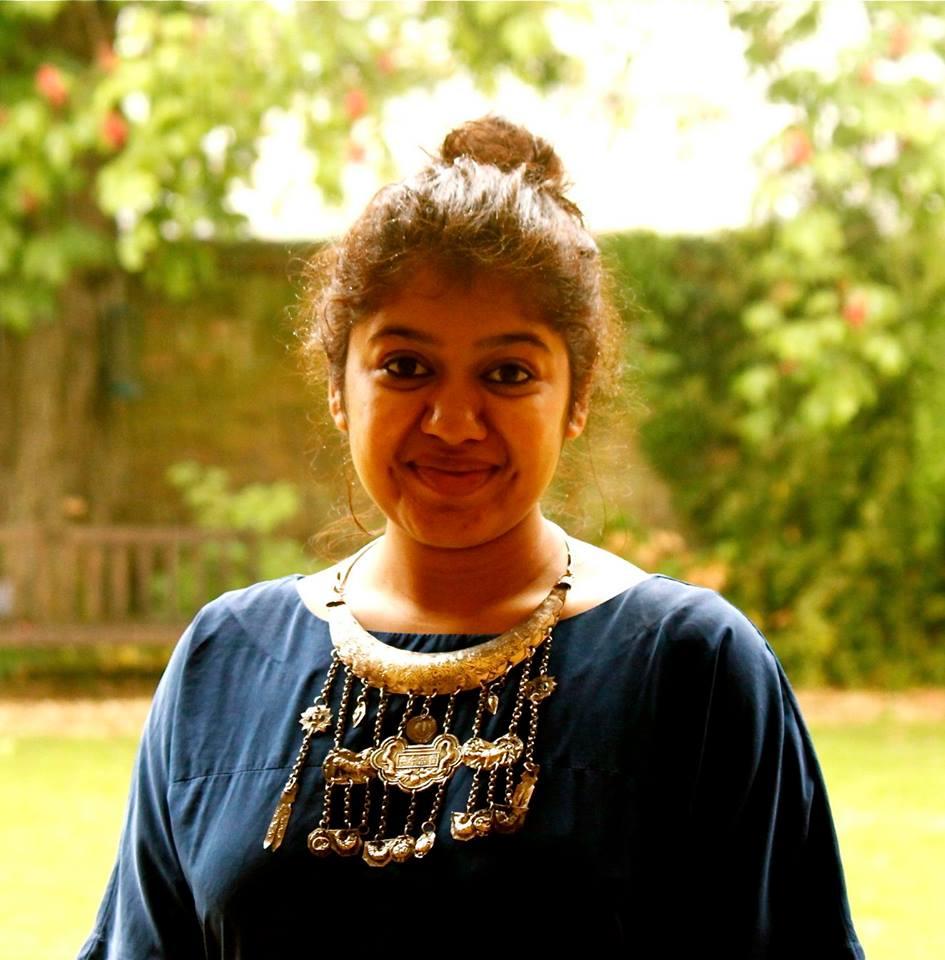
    avani-bansal3Avani Bansal is a graduate from HNLU, Raipur, batch of 2011. Upon graduation she was awarded eight gold medals in different subjects. Thereafter she pursued the BCL programme at Oxford and later the M.Phil programme. She left a fully paid scholarship programme for her D.Phil from Oxford, to return to India, and started practising in her home town, Harda, Madhya Pradesh.

    In this interview we speak to her about:

    • Being an overachieving student
    • Her experience as a judicial clerk under Justice Dalweer Bhandari and in International law
    • Coming back to India to start litigation practice at District Court of Harda, MP


    Tell us about your life before law school.

    The story of my life: I was born and raised in a small district – Harda in Madhya Pradesh. I went to a boarding school, the Daly College, Indore for the final two years of schooling. Thereafter I decided to pursue law and topped the entrance of HNLU. After spending five great years at HNLU, both personally and professionally, I decided to try my luck at my dream law school. It worked and I was admitted to the BCL (LL.M) programme.

    A year well spent, passed by quickly than I imagined and I decided to continue for another year at Oxford, this time pursuing M.Phil in International and Environmental Law, and thereby hoping to earn a specialisation, hone my research skills and add another unforgettable year to my life. It went as planned and then came the crucial moment when I found myself at crossroads. I was one step away from realising my childhood dream – to earn the highest degree in my chosen field (a D.Phil). Pursuing a D.Phil (Ph.D) without scholarship was not an option.

    I tried as hard as I could and to my utter delight and surprise, I managed to get both an offer and more importantly a scholarship to cover for my D.Phil expense, even thought the latter came at the very last hour. I signed the offer for the D.Phil and then when the path seemed all clear, I paused to ask – if I really want a D.Phil which comes at the cost of the next three –four years.

    If entering academia is not what I want, was the pursuit of a D.Phil, only to get the golden letters ‘Dr.’ added to my name? After some mindboggling conversations with friends, family and ‘myself’, the little voice inside spoke. I quit the D.Phil, with apologies to those who helped in making the offer a reality and decided to come back to India to pursue my dream. As I write, I am on my desk at Harda, practicing in the Harda Trial Court with eyes full of dreams and passion for building a career in legal practice in India.


    How did you decide to study law?

    I was always inspired by the idea of making a difference. Law appealed to me because it spoke directly to social issues. As a lawyer I needed to be aware and sensitive to the society – from the bigger picture to the life of the autowallah. So, I hoped to learn tremendously without any restrictions of a ‘specialised field’. With law I thought I could continue to be interested in everything and thereby make a profession of living intensely. Besides, my passion for speaking did go well with my image of a lawyer. Finally and perhaps most crucially the person who inspires me the most – my father did his law degree, though he never practiced for lack of an English education. He saw a dream and I was thrilled to learn that we share that dream. Hence, pursuing law looked like the destined path, looked at from all counts.


    What was it like representing your school at the International Conference of Round Square?

    It was the year 2005 and Daly College, Indore (my school) was chosen to represent itself at the International Conference of Round Square, which is an annual conglomeration of the best schools around the world. If our presentation was to be successful, we were promised a permanent international membership of the Round Square International. A team of three students including me along with our Principal Dr. Sumer Singh and our Round Square Director Madam Badwar went to Melbourne with our hopes high. It was my first international trip, and so I was doubly excited to venture in a new and unfamiliar world. Making a presentation in front of the heads of schools from around the world was a life-changing experience.

    We won the international membership and friendship around the world.  I remember going on a bike tour in Melbourne as part of the adventure day and bruised my knee as the bike tumbled a 360 degree. But I was still all smiles. Sometimes venturing into an unknown world makes us realize the existence of some deeper worlds inside and gives us a greater knowledge of ourselves. It was from Australia that I first saw both India and myself in a new light, challenging the usual way of life that I was accustomed to. The ring of ‘no worries’ in the market place touched me deeply as I was seeing a society which was very warm and hospitable. Melbourne left deep impressions on me, like all firsts do!


    How did you strike a balance between academic and non academic pursuits?

    I was always a person with varied interests and I was very clear as I stepped in law school, that my aim was to work towards a well-rounded personality. Therefore I tried my hand at all possible opportunities that HNLU presented me with, both academic and non-academic. The academic pursuits such as mooting, publications, internships, conferences etc. were a natural extension of my will to explore the different aspects of a law school. But taking the five years at law school as an opportunity to work on myself as a person, I continued to participate in the non-academic pursuits as well.

    I was a dancer at school and so performed in different cultural functions at college. Debating, dramatics I could explore only in a limited way. The lack of sports infrastructure at HNLU during my days meant that physical fitness was a neglected area. However, after the first year, mooting really did take over all my other interests and I enjoyed every moot thoroughly as it left me much more confident of myself. My eight semester saw me handling three different moots, with two international moots.  I remember a friend asking me if I wasn’t always into too many things at the same time but perhaps as I explained then, I was always a person who could manage better with more things on my plate. I love to fill my day with different and varied tasks and that alone makes me productive.


    Tell us about your experience interning at the Ministry of External Affairs and ISIL.

    My fascination with trying to understand the bigger picture drew me slowly towards developing an interest in public international law. Participating in Stetson, Henry Dunant and Williem C. Vis and Jessup only fuelled the fire. Interning with MEA was inspired by trying to take a closer look at the working of the Ministry. Though that didn’t happen but the internship was a useful one as it exposed me to a rich material on public international law and state diplomacy. The ISIL internship came with multiple advantages.

    I could browse through several books and unheard journals on different subjects related to public international law and work on the upcoming moot simultaneously. Being at Bhagwan Das Road, next to the Indian Law Institute, with chai stall in the vicinity had it all for a perfect one month educational break. The application procedure for both these internships was standard. I wrote to the concerned person and got accepted. Though at ISIL, a reference through a teacher did expedite things.


    What was your stint in judicial clerkship like?

    (Avani has interned with the National Judicial Academy and Justice Dalweer Bhandari’s office.)

    My internship decisions were based on a desire to experience the variety of roles that I could take up on graduating. So, I wanted to explore what the different worlds entailed – that of litigation, academia, judiciary, media house, corporate firm etc. National Judicial Academy is a great place and interning there did help me push my intellectual boundaries. Since the place had some of the best academics, learning from their feedback proved very useful in the longer run. Also to see how an organisation such as the NJA works gave me insights into the training of the judiciary and the need for it.

    Its location and the beautiful premises were a very welcome change from the otherwise lack of attention on aesthetics at work-places. As for the judicial clerkship, I had applied through college and was allotted an internship with Justice Dalweer Bhandari amongst other judges on a purely random basis. But it proved to be a great stroke of luck as I learned tremendously at Justice Bhandari’s office. I had the opportunity to brief Justice Bhandari every day during my internship.

    The experience of reading several files in a day and discussing them with a seating judge of the Supreme Court, taught me about a judge’s perspective and way of functioning.  It also made me realise that a judge’s task of ‘finding the truth’ in the light of law is not an easy one and entails great responsibility on his/her part. Most importantly it helped me realise the importance of judiciary in the Indian legal system. His office was a very welcoming place to work and so it turned out to be a really good experience.


    How did you apply for your internship under Mr. Fali S. Nariman?

    I applied for an internship with Mr. Fali S. Nariman whilst at Oxford. He asked for a recommendation from the dean of the law faculty, Oxford, receiving which the internship was confirmed for my winter break. It took me a while to soak in the feeling that I was watching Fali from close quarters as I had been in awe of him from early days at law school. The work at his office was not very different from other litigation offices. I worked on the matters that I was given. Perhaps it was an internship that was crucial more from an experiential viewpoint than from a practical one.


    What was your time interning at law firms like?

    (Avani interned with Amarchand Mangaldas & AZB & Partners in her penultimate year of law school.)

    My decision to pursue a variety of internships meant that I didn’t have the opportunity to intern at a mid-size firm. So, when I went to these big ones in my fourth year, I was all prepared to do every kind of work. But to my surprise, I got very intellectually stimulating work and didn’t have to complain about just lifting files or printing as some of my colleagues had complained while working at other law firms. I was working with the litigation team at Amarchand and got an opportunity to work on some remarkable matters whilst there. At AZB, I did a variety of work which made me feel very confident about the breadth of practice that I could be looking as future prospects.


    Would you say your law school prepared you for the practical work which you had to do at your internship?

    I am not sure any law school can prepare someone for the practical work during internships. But if one’s theoretical foundation is strong and one is adept in basic research skills, with the right set of attitude, it’s not difficult to make the most of one’s internship. Internships, I think are not just an opportunity to showcase your talent but also to develop it further. The traditional notion of pursuing a law firm internship only in the later years at law school is not necessarily correct.

    As long as one is giving one’s best and is willing to learn, all internships can be fruitful.

    The bottom line to remember is that “No one out there teaches you a thing! It is upto you to see what is it that you can learn.” Based on this, it is difficult for me to say that one internship was better than the other for they all helped me in different ways and sharpened different skills. But if I have to be honest, my first internship with RLEK – Rural Litigation Entitlement Kendra (NGO), Dehradun stood out for me. They took us to tour the villages in Uttarakhand and as a first year law student, observing the lives of people in mountainous villages struck more chords with my soul than an internship at any other place did.

    The best experiences are those where we cannot point out what it was about them that made them special. But a group of law students, talking law to the people in villages in their language, understanding their perspectives on life, law and other things, and all this set in inexplicable natural beauty was an experience that I can never forget.


    How was your experience representing the Indian delegation at the G-8/G-20 Youth Summit?

    I represented the Indian delegation as the Environment Minister at the G-8/G-20 Youth Summit, Paris, France from 29th May-4th June 2011. There was a formal selection procedure for the G-8/G-20 Youth Summit which entailed filling an online form, shortlisting and final interview.

    Each ministry had a different agenda. The Environment Ministry Agenda included ‘Governing and financing global environmental protection, integrating environmental issues in our global rules’ and ‘Adapting the use of resources with social and economic issues’ as broad themes. The conference was a simulation of the real G-8/G-20 Summit and to our delight the final communique which emerged was sent to the world leaders attending the G-8/G-20 Summit. The conference was a great insight into the working of international negotiations.


    What was your motivation behind pursuing BCL?

    I was quite keen from the very beginning of the law school that I would want to go for higher studies if given an opportunity. I had a mixed bag of reasons motivating me for the same. Before settling into practice, I did aspire to see one of the very best law schools around the world from close quarters. Such an opportunity, I thought and rightly so as confirmed later, has great experiential value. Learning the legal subjects from the world authorities on them and an opportunity to discuss the legal concepts with them pushes one’s intellectual boundaries. Besides, being part of a culturally diverse society, brings important lessons lasting a lifetime.

    All these reasons culminated in my decision to pursue LL.M. I had applied only to five law colleges and got accepted through three of them. The offer from Oxford was the most attractive one on all counts. Besides it was a place where I felt I would fit it. So the choice was not difficult at all and I don’t regret it one bit looking back.


    How did you choose Oxford over the others?

    I think it is a personal decision based on several factors including the availability of the courses one intends to pursue, the list of professors that one hopes to interact with, the rank and prestige of the university, the place and the city that the university is in, career options etc. I wanted a quintessential ‘university’ experience. I didn’t have many people guiding me but from what I knew of Oxford, it seemed like a place away from the city buzz, a world in itself which could give me time for study and reflection in quietude.

    Besides, Oxford is known for its focus on strengthening the theoretical base and on a ‘go-deep’ versus the ‘go-wide’ approach. So, even though I could read only four subjects as part of the BCL, they came with tremendous work load and I did feel the advantage of specialising in those subjects without narrowing down my options too much.


    What are the scholarships Oxford provides for students from India?

    There aren’t any specific scholarships at Oxford for law students from India except for the Mrs. Ambriti Salve Scholarship at Exeter College. The major scholarships to look out for are the Rhodes, the Commonwealth scholarship, Inlaks and Felix.


    What were the objectives of different societies you worked with at Oxford?

    To begin with the number of options one has as a student at Oxford to engage in student run societies is mindboggling. Oxford has a student run society for every activity under the sun including social service, adventure, sports, cultural, theatre – you name it. In the first week at Oxford itself, one can find all about them at the Student Fair and register for them. Even though they are student run, they are managed extremely professionally.

    I participated in the student societies to engage with the issues they were working on and to develop an understanding of their approach. Oxford is very well connected to the leading people working in different segments and therefore had a huge advantage as working with these societies meant that one could meet and talk with people who were at the helm of affairs in the chosen field. The number of events of interest on any given day and the diversity is hard to match with any Indian institute.


    What challenges did you face as editor of the Oxford University Commonwealth Law Journal?

    Indian law schools do not pay any separate attention on developing editing skills unless one chooses to participate in the running of a magazine or a journal. So, I joined Oxford University Commonwealth Law Journal to hone my editing skills. It was great learning and the attention to the detail is a useful skill I picked up while at work.


    Did you undergo a rigorous academic schedule?

    The academic schedule was beyond comparison from the undergraduate years. Even though most subjects had only a two hour class in a week, there were week-long readings which one was expected to read before the class. One of my four subjects was Juriprudence and Political Theory which had three different seminars in a week and thereby almost thrice the workload in comparison to the other subjects.

    The basic difference from the undergraduate classes was that the objective behind the classes was to clarify one’s doubts as regards the conceptual issues rather than seeing the classroom as a place to learn the basics. Therefore, every student was expected to have covered the basics through readings before attending the classes and participate in discussions.


    What is the process of application for the Roy Goode Scholarship?

    (Avani pursued an M.Phil in Law at University of Oxford as a Roy Goode Scholar.)

    The application procedure for M.Phil was standard and required filling a form along with statement of purpose and references. BCL students had the option to submit previous references. The most crucial element of the M.Phil application procedure was the M.Phil proposal. It was on this that the application decision was primarily based. For the scholarship too, there was a standard procedure, the details of which are available on the Law Faculty of Oxford’s website. Along with the Roy Goode scholarship, I also received Graduate Assistance Fund Award. For more details visit law.ox.ac.uk.


    What was your topic of research for M.Phil?

    My topic of research for M.Phil was the need for a World Environment Organisation (WEO) and embedding the WEO debate in International Environmental Law. I am interested in the interface between International Governance and International Law and an institutional proposal such as the WEO works at this interface. Besides I was interested in a topic which has practical significance and the WEO along with other governance proposals are being actively considered by the international community to reform International Environmental Governance.


    What was your experience assisting Professor Timothy Garton Ash?

    (Avani assisted Prof. Ash, a world renowned academic, on the ‘Free Speech Project.’)

    The Free Speech Debate Project intends to further the cause of freedom of speech and expression by bringing together issues of free speech around the world on one portal. The multi-linguality of the portal is a unique feature as it hopes to get information and opinions on free speech issues accessible to one and all. I was assisting in the capacity of a blogger and a translator.


    What were the objectives of the society ‘Oxford Lawyers Without Borders’?

    (Avani was President of the society as well.)

    Oxford Lawyers Without Borders (OxLWOB) is a part of its parent organisation Lawyers Without Borders (LWOB) and works on promoting human rights issues across borders. When I first joined OxLWOB, as the panel leader of West Papua panel, we were focussing on building a legal case for the self-determination of West Papua and presented it before the Annual meeting of the Parliamentarians for West Papua.

    In the second year, as the President my task was to co-ordinate the different panels of OxLWOB and work towards building the society as a platform for students at Oxford to contribute to social causes. It was primarily due to my work for OxLWOB that I was given an ‘Honourable mention’ as part of the Vice Chancellor’s Civic Award scheme, 2013 and was the first law student to be recognised so.


    How was your experience as a foreign exchange student?

    (Avani traveled to Germany as part of an academic exchange programme with Max Planck Institute.)

    Max Planck Institute for Comparative and Private International Law, Hamburg has one of the finest collections on international law in general and private international law in particular. Also it hosts some of the finest academics working in this area. So the opportunity came with several perks including working on papers, meeting professors and was also my first trip to Germany, which I thoroughly liked.


    How was your experience interning at UN High Commissioner for Human Rights.

    Honestly everything about the internship with the UN High Commissioner for Human Rights (OHCHR) was different from the other internships I pursued. The quality of legal research that I was given, the international culture of  the institute, the work atmosphere, the friendships I made, and above all my supervisor – Cecil Aptel, who was the senior legal officer at OHCHR, was the best boss that one could hope for. Most importantly, it was an internship where I could see my work having a lot of practical significance and being used directly for the human rights issues around the world.


    Tell us about practising at District Court, Harda?

    As I mentioned earlier, I quit taking the D.Phil offer because I heard the call of duty. I intend to start my own law firm with the aim that for every matter we do for profit, we will do another matter for non-profit. A lot of young people I know enter law school because they want to make a difference. But then when they are about to finish law school, they find themselves at cross-roads. If they are serious about contributing to the society, they have limited options of litigating which practically means no money at least for the initial few years, or joining a Human Rights organisation which implies one cannot practice as a lawyer any longer or joining an NGO, whereby one is branded an activist more than a lawyer. So, I ask – why can’t one do corporate law and still contribute to the pro-bono cases one intends to work on? Since greed has no limit and every extra penny in the law firm can be used to further the business prospects, there is indeed a need for a law firm/organisation which as a matter of principle contributes towards pro-bono and does not restrict its pro-bono activities to a few cases to pay lip service to it.

    Furthermore, being interested in a variety of things such as policy making, litigating and activism, I couldn’t find a law firm/organisation that lets me explore all of these dimensions, so I have decided to create one. I don’t want to wait till I am 40 or 50 to start on my own. I want to commit my own mistakes and learn my own lessons and in the process call for individuals who share my feelings and intend to co-create such an organisation. I am calling for applications soon. The idea is to work out the team in Harda, MP, India (my hometown) for few months and start the first office in Jabalpur before the end of this year. Starting from Harda gives us an opportunity to start from the bottom. It’s an experiment but isn’t life itself one?


    Lastly, what would be your parting message for our readers?

    Whatever you do, be true to your own soul! The rest will follow. And remember as someone once said: “Whatever you think you can do or dream you can, begin it for boldness has genius, magic and power in it!” So more power to you, dear reader!
     

  • Aakanksha Kumar on winning 15 gold medals, LL.M. from NUS and a career as a researcher & teacher

    Aakanksha Kumar on winning 15 gold medals, LL.M. from NUS and a career as a researcher & teacher

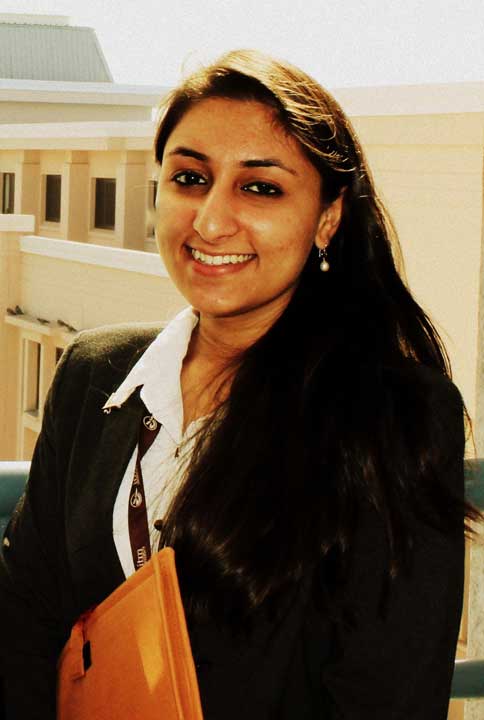
    aakanksha-kumar3Aakanksha Kumar graduated from HNLU in 2012, as an exceptional scholar, winning 15 gold medals in various subjects. Thereafter she pursued an LL.M. from the Faculty of Law, National University of Singapore. She had joined ITM University as a Research Associate last year and she shall be joining NLU Jodhpur as an Assistant Professor in July 2014. In this interview she talks about:

    • Getting higher grades and winning 15 gold medals
    • Selecting a university for higher studies
    • Scholarships, Academics and research experience at NUS
    • Experience as a Research Associate at ITM University
    • A career in teaching and research


    Most of our readers are law students and young lawyers. How will you introduce yourself to them?

    I am your everyday nerd in love with the law, and the best possible way to spread the love for the law, I believe, is to teach it effectively. I come from a north Indian family, currently based out of Bhilai, Chhattisgarh and am a Dipsite. I finished my B.A.LL.B.(Hons.) at HNLU, Raipur in 2012 and completed my Masters in International and Comparative Laws from  the Faculty of Law, National University of Singapore in July 2013. I have been teaching full-time on a research associate position, at the School of Law, ITM University, Gurgaon since July 2013 and I shall be joining the National Law University, Jodhpur w.e.f.  July 1, 2014 as Assistant Professor (Law). My teaching specialisations include Arbitration & ADR and Comparative Competition Laws, along with research interests in IPR and World Trade Law.


    How did you gravitate towards law? Why law and not engineering or medical studies?

    Well, I do have the regular “influenced by the parents” story behind my choice of pursuing a career in the law. My father, though not a lawyer, completed his LLB when I was in IX standard and I used to love reading his course books. I was always interested more in the social sciences, but since our school did not have an option to move to the Humanities stream after the X standard, I did pure sciences till XII standard and then appeared for 9 different law entrance exams, and chose HNLU over NUJS and ILS Law School, Pune. Engineering or medicine were never even remote options as I was horrible at Math and Chemistry and was looking for the first chance to give those up. Little did I realize that I will find Patent laws easier and be specializing in IPR eventually, only because my school science studies helped. The other options I had considered were in fact English Literature and Journalism.


    You were one of the most exceptional students at  HNLU. It’s not every day that someone bags 15 gold medals! Please give us a few actionable tips on managing higher grades.

    Thank you! They sure came as a welcome surprise, but I don’t really dwell on that glory, though they do add considerably to the number of pages on my CV 😉

    I was asked this question on another interview and my answer remains the same.Since Day 1 of law school, I knew I was studying law to be able to eventually teach it.  Hence the study method adopted by me was to cater to my ultimate goal – I would study first and then revise again by teaching my other batch-mates.

    Unlike the clichéd “I study for X number of hours in a day”; my study pattern varied a lot. I honestly never studied for more than 4 hours in a day. Instead, my success mantra was – undivided attention to class-room teaching and self study of the same topics that very day after classes. Hence I was able to relax when end-term exams approached, knowing that I would manage to study and revise what was taught. I had different study methods for different subjects, given their level of difficulty, or the extent of extra study required. Regular taking down of notes during classes also helped a lot in later self study. Moreover, the aim was never about getting the highest grade. It was about being so in love with the law, that one automatically wrote an answer so thorough, that the examiner couldn’t fault it.

    Also, the trick on really securing higher grades is sometimes to get inside the head of the teacher, and understand what they want in an answer. I always tell my students to carefully follow the classroom discussion, as often there may be hints on how to attempt exam questions.


    What was your motivation behind pursuing LL.M.? When did you finally decide that you need to do masters?

    Like I mentioned earlier, I knew I was studying law to be able to teach it. And one cannot do that without a Masters degree. I come from a very strongly academically oriented family. Both sets of grandparents are or have been teachers or professors. My maternal grandfather; who continues to remain a source of inspiration, is a nuclear physicist and was also the Dean of the BHU Science Faculty. My mother is an English teacher, with  Masters in both Pharmacy and English. I thus like to believe that being academically inclined is in my genes. And completing an LLM to cater to my academic pursuits was the next logical step to take.


    How did you choose NUS over others? How should one go about choosing a university?

    I had applied to mostly schools in the UK [UCL, King’s, Queen Mary’s] and NUS. I  was always looking at NUS as my top choice, given the popularity and worth attached to their International Law LLM, as well as given considerations of costs and proximity to India. Under Prof. Simon Chesterman’s (Dean, NUS Law) able guidance, the NUS International  and Comparative Laws LLM has carved for itself a special place in international legal academia. Since NUS is known to value academic excellence above all else, I was hopeful about getting in, given my CGPA and rank.

    When choosing a law school, one must not just look at the overall reputation of the school, but also at the reputation of the courses offered vis-a-vis one’s own interest areas. E.g. One chooses King’s London, to generally pursue a Competition Law specialisation Masters, or Rotterdam (Erasmus Mundus) for the Economic Laws LLM. The next very important consideration is obviously the tuition plus living expenses, and available scholarships. Other considerations include accessibility of the city and if one plans to settle down abroad, then, future employability concerns. Another important thing to remember is that an LLM abroad, while being a wonderful opportunity to network with like minded people from all parts of the world, is also not a joy ride. It’s a huge undertaking with a pretty hefty study load, and thus one must make up one’s mind thoroughly before applying. Also, one must structure one’s LLM CV to show experience – either in work, internships or research, in the chosen area of Masters Specialisation.


    Does NUS provide students with scholarships? Are there any other institutions which provide scholarships?

    Every application to the Masters Programme in NUS Law is automatically considered for scholarships, though their selection criteria is not very transparent or anywhere on paper. From the trend in the past couple of years, it is usually people [strictly applicable to Indian students] with tier 1 law firm work experience for atleast a full year, with amazing references, that get the Faculty Graduate Scholarship. So, I know of peers who had experience at Nishith Desai Associates, or at AMSS whose reference letters were written by  SC Judges or law firm managing partners, who bagged the scholarship.

    So if aiming at a scholarship at NUS, do not pursue an LLM immediately after law school, and build a credible list of referees.

    Most law schools and universities do have their own scholarships for the Masters programmes. There are also other more popular scholarships – the Fullbright for study in the US, The Commonwealth Scholarship etc. There are several institutions who offer financial aid and bursaries for foreign LLMs but I am not the right person to detail those as I didn’t research too much when I applied. For Indian Students especially, I know of UCL offering a special Chief Justice Scholarship and LSE Offers a Marchant Foundation LLM Scholarship. And all scholarships require a very well written personal statement.


    What was your topic of research for LL.M? Why did you choose that subject for research?

    At NUS Law, one need not necessarily take up the Directed Research Dissertation. One can choose to do a full course for credits instead. I,  however chose to drop a full course module and did the UROP-DR [University Research Opportunities Programme – Directed Research] for 4 credit points.

    My research thesis is titled – ‘The Taking of Evidence in International Arbitration: A New Legal Regime’ which was supervised by Prof. Gary F. Bell, who is an Associate Professor at  NUS Law and a Fellow of the Chartered Institute of Arbitrators, Singapore. I chose to complete my research project in a conflict of laws aspect of international arbitration as I was “precluded” from studying the course on International Arbitration at NUS, having completed an optional specialisation at HNLU in the same. Further, international arbitration both as a substantive field of legal study as well as its procedures, has always intrigued me, given the high level of independence and flexibility in this method of alternative resolution of disputes.

    Moreover, I always wanted to teach ADR and International Arbitration eventually, and given the mindset of Indian law school faculty selection committees, an LLM thesis in the area gives me an added advantage.


    Did you undergo a rigorous academic schedule? How was that different from your under-graduate course?

    NUS has a very demanding curriculum, that requires you to complete a total of 40 credits in the academic year. Of these 40 credits, 24 must compulsorily be of those subjects that are on the list of your chosen specialisation, and the remaining 16 can be from other specialisations. I did 32 credits of International and Comparative Laws and 8 credits of IPR. I also did one full 8 credit course on World Trade Law that was very demanding. Unlike one hour lectures, 5 days a week in India, the NUS contact hours differ. The 4 credit courses are taught once a week for a rigorous three hour seminar that is conducted in the Socratic method of teaching- learning. This meant that if one was unprepared with the assigned readings for that day’s seminar, one had to be ready to face the embarrassment. However, classes were always extremely interesting as they were more discussion based, and our professors were brilliant! Since I was anyway used to putting my nose to the grindstone even when at HNLU, the NUS curriculum didn’t come to me as a “culture shock” personally. Also, when one sees the dedication of the undergrad students who generally take the same classes, one is motivated to be as good as them, if not outshine them in class.

    What is unique to NUS, is the concept of “intensive courses” that are taught in the first three weeks of a semester, for 9 hours in a week [3 hours * 3 days], usually from 6:30PM to 9:30PM. These courses are taught by experts and stalwarts in the area and are specialisation papers. Masters students are to take one intensive course in each semester. A 6 – hour take home exam is then conducted in the 7th or 8th week of the semester for this course. So one basically completes a subject specific specialisation in just 2 months! Extremely demanding but also very fulfilling. I took the courses on EU Private International Law taught by Prof. Franco Ferrari from NYU and Comparative Competition Law and Economics taught by Prof. Roger van den Bergh from Rotterdam [Erasmus Mundus] – both very practical as opposed to theoretical papers and it was in a way, somewhat surreal to learn from and discuss with people who actually wrote the laws that were being studied.


    You also worked under Prof. Irene Calboli as a research assistant. Please share some insight on your research topic.How was your experience working with her?

    Prof. Calboli is “God” on IPR. She’s the most amazing, wonderful human being I have ever encountered in my life.  She was my course teacher for the module on International Trade and Intellectual Property Laws and I secured the highest grade in the subject, which helped me bag the coveted RA spot under her. She was extremely patient with my over exuberance and always encouraged my out of the box interpretations and suggestions, and I still continue to be in touch with her and assist her in whatever manner I can.

    My research work for her included completing and editing a chapter she was doing then on the Cultural and Economic Advantages of Geographical Indications and enhanced protection for them. The Chapter is now complete and is available on SSRN

    I also did some work on GI protection and Sustainable Development in Asia and did a compilation of GI success and failure stories from Asia, that helped her in a paper she was planning in May last year. The same eventually materialized as her presentation at the ASLI Annual Conference in Malaysia last weekend.


    NUS is well renowned for its brilliant faculty. How was your experience with the faculty?

    LLM from Singapore was a blessing and the law school is a ‘learner’s paradise’. I learnt not just about learning, but also learnt about “teaching”, which is what I had set out to do. Every single one of the professors I learnt from were brilliant and exceptional in their respective fields of expertise. Each had their own peculiar teaching methods, that were effective in their own special ways. I learnt how to handle a huge classroom from the likes of Prof. Weiler, who was the perfect person to be teaching World Trade Laws, I learnt how to be effective when teaching IPR from the likes of Prof. David Tan, who also happens to be a fashion photographer, and how being simple is the best when it comes to understanding complexities of the UN, from Prof. Chesterman. Also, unlike in India, where faculty is often, unfortunately unapproachable and passive, teachers at NUS are the most approachable, amicable and available at even odd hours to cater to your academic and research queries.


    How difficult was studying abroad in terms of finding accommodation, finances and settling in?

    Singapore was a cakewalk, given that my parents have friends there and I had visited the country before. Plus Singapore is extremely comfortable for Indians, given the vast Indian population and accessibility to Indian food, and is so so well planned that one cannot help but feel a little spoilt. In terms of finances, the country is a little heavy on the pocket as the standard of living is like being in any other European city, but I was very lucky to have bagged a seat in the University housing offered by the NUS LKY School of Public Policy which is a seven minute walk to the NUS Law Faculty, through the national heritage botanical gardens. So I ended up saving a lot on travel, and food as I was able to cook most of my meals myself. Singapore is a small, clean, very safe and beautiful country to be in.


    How was your experience at WIPO Summer School? What was the application procedure for the same?

    The WIPO Summer School again, was another experience of a lifetime. After I completed my LLM exams, I had some time to kill until Commencement so, along with research work for Prof. Calboli, I applied to the WIPO Summer School. The summer school luckily that year was happening for the first time in Singapore in association with the IPOS and the IPA. The application is to be completed online, within the deadline slots given and once selected, each student is required to complete the DL 101 General Course on IPR. Since I had already completed the DL 101 in November 2010 and had also effectively completed an LLM, I was exempt from the course. The Summer School was spread over two weeks and we had special sessions on niche areas of IP – Patent Valuation, GI Protection, Trade Mark and Merchandising, Domain Names etc taken by subject matter experts from both in the government in Singapore and from academia in both Singapore and abroad. The most fun part was the assignments especially the TM Protection – Negotiation simulation conducted by Mr. Mendes from Opteon, Australia. The student crowd was also a great mix of both lawyers and engineers and I was certainly enriched with greater knowledge upon completion and also made some great friends.


    You worked as research assistant at Centre for International Trade and Economic Laws, JGLS How was your experience as a Research Assistant there?

    CITEL was unfortunately a very short stint, but nonetheless I learnt a lot about how trade policies of our neighbours influence our own economic and trade policies. I was given the task of preparing the Trade Policy Monitoring Reports of China for Q3, 2012 as a research intern and I also assisted with research for a submission to the IIFT on Energy Subsidies in India. Prof. James Nedumpara is a very keen and able mentor to work under, and we sure did have NUS LLM stories to exchange too.


    Glitz of a corporate job often blinds a law studentand he fails to look at different career opportunities. Were you in double minds before taking up the teaching job? Why did you prefer the teaching profession over other jobs?

    At the cost of being repetitive, I did always want to end up teaching. However, I  also completed my share of regular law school internships and did intern at two tier 1 firms, in my final year for a PPO.  Also, I got a call from one, the day I sent in my NUS acceptance. I had earlier declined an IPR Litigation job offer. I would be lying if I said that I didn’t try my luck again at firms, upon my return to India, but  I eventually realized, that my calling lay in teaching and it is what I am best at.  And this also came after continued encouragement from my peers in law school, who were also happy to act as my students right before exams when I did quick syllabus recaps for them.  I also took up the teaching seminar in fifth year at HNLU, and enjoyed every minute of being in a classroom.

    I love my job, and take it very seriously. And nothing beats the sense of accomplishment one gets when an otherwise below average student in the beginning of a semester, ends up writing a brilliant paper in the end term exams.  And that is the best  personal validation and the major perk of being in this profession. Moreover, I have seen my own teachers – some were truly brilliant, the others, merely hiding behind the façade of having qualified the UGC NET. I wanted to be the teacher to future lawyers, that I didn’t have. I still am taking baby steps, and am getting there, gradually. One gets to keep learning on the job, and I have always subscribed to the policy that one learns better while teaching.


    Financial security is a major concern for law graduates who aspire to take up teaching jobs. Did you face similar concerns? What challenges did you face while working as research associateat ITM University?

    Financial security was never a concern, especially at ITMU, as ITMU pays really well to an RA, and even better to a UGC NET qualified Assistant Professor, i.e. higher than the UGC Scale of pay. However, being  in a private University, the work-life balance is a little hampered and one is expected to work for a minimum of 8 hours a day on not just classes and academics but also don several other administrative roles. So we mentored moot teams, organized guest lectures, conferences, seminars, and had additional charge of the Internship Cell, given the relatively nascent stage that the law school is in. That I think is the problem with law teaching in India. The UGC expects a certain level of research and academic output for the API Scoring. On the other hand your employer expects fulfilment of multiple administrative responsibilities, and thus, being in at a faculty position in a law school becomes a 24*7 job, sometimes work hours being worse than those at law firms.

    But if one learns to love and enjoy ones’ job, the whole drill seems worth your troubles as the perks – both financially and otherwise [student feedback] are great.


    Recently you took up a job at NLU Jodhpur as an Assistant Professor. What are your plans for the future?

    I shall be joining NLUJ w.e.f. July 1, 2014. I have been given charge of teaching Constitutional Governance and ADR. I  see NLUJ as a long term plan and hope to begin my PhD by early next year, hopefully at NLUJ itself. A book chapter is also in the pipeline. It is otherwise too soon to be taking ambitious career steps and I am just looking forward to being back in an environment I believe I am more suited to – an NLU.


    Lastly, what would be your message to people who want to take up a career in teaching?

    Though barely a year old to teaching, I do have a few observations from watching most of my family in the profession. Please do not taking up teaching because it’s the only alternative. Take it up because you want to do justice to the profession and because that’s where you know your calling lies. As a teacher, one must never shy from admitting mistakes or saying one does not know something, rather than telling one’s students the wrong thing. Also, one must treat the job with the sanctity it demands. The returns in the teaching profession do not lie in increased popularity with the students or in the amount of attention one gets from them outside the classroom. Strive to be that teacher who the students will miss when they leave, because of the knowledge they gained and retained from the classes and interactions, and not for the number of internships they bagged or attendances marked with a “P”. The returns lie in seeing one’s students do well – both inside the class and elsewhere in the world.

  • Mohit Singh, Advocate, Supreme Court of India, on being an entrepreneur, his internship experience, and his mooting achievements

    Mohit Singh, Advocate, Supreme Court of India, on being an entrepreneur, his internship experience, and his mooting achievements

    Mohit Singh is a graduate from HNLU, Raipur, in 2013. During his time as an undergraduate, he has interned with Ravindra Shrivastava, Senior Advocate, Supreme Court Of India, Justice Manindra Shrivastava, Chhattisgarh High Court, Justice A. K. Patnaik, Supreme Court of India, and at firms such as India Vision Foundation, Haresh Jagtiani & Associates, Phoenix Legal, Scrioboard, Wadia Ghandy & Co., and Amarchand & Mangaldas & Suresh A. Shroff & Co. 

    He is currently an Advocate at the Supreme Court of India, and his past experience includes working in the chambers of Advocates-on-Record, Arjun Garg and Rahul Narayan.

    In this interview we speak to him about:

    • A very detailed guidance on how to start preparing for moots and drafting memos
    • His entrepreneurial bent of mind and starting ventures such as ‘Lexcetera’, ‘Law School Tips’ and ‘1, Law street’
    • His diverse internship experience


    How would you like to introduce yourself to our readers?

    I have graduated in BA., L.L.B. (Hons.) from Hidayatullah National Law University, New Raipur with Corporate Law and Intellectual Property Right being my Honours subjects. I had finished my schooling from Delhi Public School, Bhilai, where I was a science student. At present, I am practicing law in Delhi, working with an Advocate on Record. I am the first lawyer in my family.


    Why did you decide to study law?

    I was actually a science student at school and always had aspired to be a web-designer. I was busy preparing for engineering entrance exams for two years, but ended up doing law after clearing the first ever CLAT. A reason for choosing law was my love for political science since childhood. My parents had left the final decision of choosing my career on me, and I chose law.


    mohit-singh3

    Tell us about your mooting experience.

    (Mohit has been a runner up in national rounds of Jessup and even participated in international rounds.)

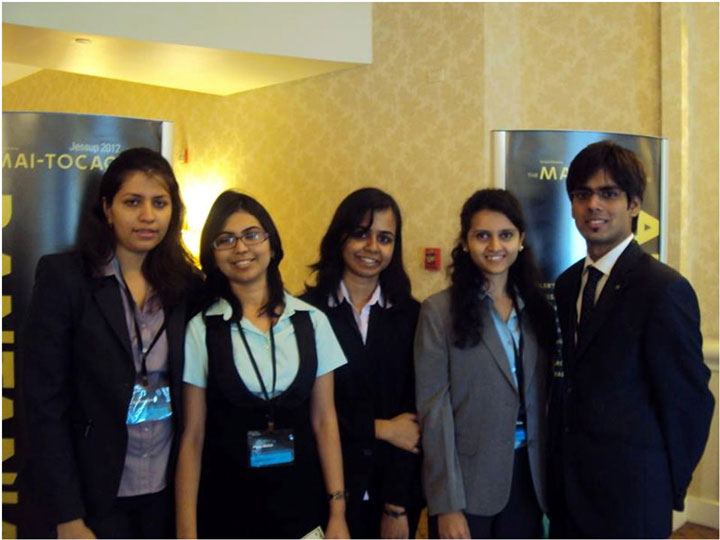
    All my moots had been pre-planned with the exception of Jessup. After the release of Compromis (It is a compilation of agreed upon facts about the dispute that is submitted for adjudication to the International Court of Justice (ICJ), the primary judicial organ of the United Nations), my friend along with whom I was a speaker, discussed about doing Jessup and I affirmed the proposal. In the next one week we chose rest of the members of our five-member team and started the work. First challenge was to face a strong University team in the internal rounds. We succeeded there and started preparing for National Rounds. We had a little difficulty in finding research material on some legal issues for which secured resources from ISIL library. At the National Rounds in January, 2012, we finished as Runner Up. Thereupon we had to participate in the World rounds for which our visas etc had to be prepared in a short time. But thankfully we passed all the hurdles smoothly.

    If I may point out the biggest challenge, it was to face Mr. Rishab Sancheti as a Judge in the quarterfinal rounds. He was probably most prepared for the moot than any other participant.


    When you faced the moot problem, what are the first three things you did?

    The first thing to do would be to go through the problem at least three-four times. I would then chalk out the issues (if not already given) and then do a general research and jot down the possible arguments which can be used to support the contentions in each issue. The issues and works are generally divided amongst the team members, however I always feel that if time permits, each member should work a little on each issue because everyone has a different perspective of looking at legal issues and it might help the team with additional points on the already dealt issues.


    mohit-singh2Describe the entire process of memo writing for beginners.

    The mode of research and drafting vary considerably from person to person. Personally, I do some research and if I find some content which is worth being incorporated in the memorandum, I write these down and then continue with the research. Once I am done with some good research and have enough data to begin, I  start giving shape to the memorandum. This is followed by re-phrasing and re-shaping of the content. Dividing contentions into
    sub-contentions makes it easier to research and drafting and also helps the speakers to deal with issues in a better and clearer manner. But again, everyone can have a different approach.

    The research should not end with the end of the drafting. One should keep reading, as for a moot, one should be ready for the worse. Some judges won’t even let you finish a quarter of your contention and use rest of your time to just grill you with their questions. One thing we specifically did for Jessup was to keep handy, the answers for a lot of basic questions. To cite an example, compilation of definitions of legal principles and the cases where International Court of Justice had relied on or had observed them. This really helped. This can be done by the researchers of the team after memorandums have been submitted and while speakers are preparing for the oral rounds. I have always gone to moots with compilations of documents and case laws (Compendium). Some judges like them while some completely have an aversion to them.

    It’s very necessary to have a good team. Lack of understanding and co-ordination may bring in lots of issues. For Jessup, I am really grateful to the team members who were really very supportive.


    What is the importance of mooting?

    There can be two very different answers. Yes and No. Mooting is quite different from lawyering. One may often come across people saying that one gains nothing from mooting. However, I feel that the best research works that I have done in my college life were for drafting my memorandums. Mooting definitely sharpens one’s research skills. So, I would say that mooting does contribute a lot. Mooting helps to build confidence and the skills of putting forth your arguments, being selective  and convincing others on those issues.


    mohit-singh1How did you balance mooting with other important stuff like college assignments?

    Compromis/Moot Problem was out in mid-September and we had our University internal rounds in first week of November, a couple of days before our
    end-semester were to begin. Internal rounds were a little challenging, but probably that compelled us to work harder which finally paid in the national rounds. One can manage mooting with studies. One can often use the moot research work for writing articles and getting them published (though I always planned so, I personally remained too lazy to do this). But there are times when deadlines clash, but then few days of less sleep can help. Our deadline for submission in Jessup was first week of January and I and my teammates were interning during entire December. We were running out of time and I was forced not to sleep for continuous 40 hours before personally handing over the memorandums at Amity University where moot was going to be hosted. But then as there are lots of things to do in a Law School, one needs to be selective.


    According to you, what should law students expect from mooting as an activity?

    As I said, mooting definitely helps to sharpen one’s research skills. But it’s not a case that without mooting one cannot get that. My college juniors often ask if the law firms where I had interned value moots or not. I personally feel and have seen that it depends on the person evaluating one’s curriculum vitae. But if a person is planning for LL.M from abroad, moots especially the ones like Jessup, Oxford moots and Stetson carry a lot of weight. Moreover, one gets to visit universities across India and also abroad.


    If I have never mooted in my life, but I want to – how should I get started?

    Pick up any moot, preferably a national moot; make your team and just start and first year is not too early to do it. You may fail, but it’s not something that doesn’t happen to even the best of them. Research on your own and never put the blame on your teammates that they are not working.  Rather take it for granted that you are going to face this situation. Divide the issues amongst team members. Do not mind being a researcher initially or even later. But if you are confident that you can speak better than the rest, stand up for being a speaker.


    What was it like to attend an international student event? You must have met many international law students. Any interesting stories to share?

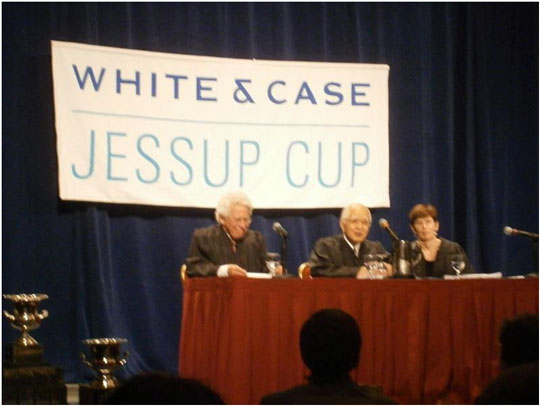
    In my personal opinion, international rounds of Jessup is probably one of the best things that can happen to a law student. The event takes place at Capitol Hilton which is at a walking distance from the White House. One gets to meet the best teams selected from over 600 teams from over 90 countries (as of 2013). The parties, especially the National-go-Ball, where teams come in their traditional dresses, are just awesome! Meeting people from across the world at the same place is very exciting. We also interviewed the winning teams of the World Rounds for Lexcetera. We are still in touch with the friends we made there.

    Judging is very different there as compared to India. To cite one  example, they are generally not involved in just grilling you unlike few who just love doing so.

    We also met one of our college senior, who was doing his LL.M at Harvard. He was invited as a Judge.


    According to you what are the qualities that make a good lawyer?

    As I am very new at the Bar, I probably would not be very suitable to answer this question. But however in my opinion, the most basic quality is to maintain a rationale and logical reasoning for everything you think and do. This helps not just a lawyer but also a lay man. Choose the best argument and give it your best.


    What were your areas of interest during your graduation?

    My Honours subjects in the University were Corporate Law and Intellectual Property Rights. Cyber Law was my favourite optional subject. As I was into web designing and also otherwise, I was always interested in computers, I  developed a liking for Information Technology. I took Corporate Law from the market need point of view and I took Intellectual Property Right as I liked the subject. Love for political science has also kept me close to Constitutional Law.

    International Law led me to do International Moots. I have worked a lot on this subject and like it a lot.


    What are “Lexcetera” and “1, Law Street”? How did you get the idea in the first place?

    Things began with ‘Lexcetera’. When I started to moot, there was no database of moots or even a calendar or a list which would tell me that which moots I should participate in and which suited my academic calendar. I and a friend of mine, Hansa Sinha (who was also my co-speaker at Jessup) decided to compile information in this regard. Later on ‘Legally India’ launched its ‘Mooting Premier League’ where I voluntarily worked for their wiki database – ‘Legallypedia’. Subsequently in August 2011, I and Hansa, with help of three other juniors launched Lexcetera which had a sort of exhaustive repository of the details of the Indian Moots and of International Moots, where Indians teams are eligible to participate. We maintained it for two good years and are deeply grateful to law students for their response to the website. But after we entered our last phase of law school, priorities changed and it became quite difficult to save ample time for it.


    How did Law School Tips start?

    Facebook has been playing a very important part in lives of most of us. Law school was something which connected law students to the law school life at Facebook. The founding of page was very random. ‘Lexcetera’ had already started in 2010. A year and half later, I was watching the Republic Day Parade on TV when randomly it struck me that the whole essence of celebrating this day was that we got our Constitution on that day. So this day is technically a landmark day for lawyers. I do not know what led me to think more on this on very different angles but, one thing led to another. I needed something to vent it all out. So, I gathered few ideas and at the midnight of 31st January 2012, and I launched the page.

    The posts were a series of things which happen in law school. From mooting to love and from teachers to end semesters, there were posts which students could relate themselves with. The Tips are less now and posts these days are not specific to law students but generally to those involved in law.


    How did you go about finding good content for the page?

    For ‘Lexcetera’, along with co-founder Hansa Sinha, we had four other college juniors to whom I shall always be grateful. Law School Tips, I manage on my own.

    I feel finding content is sometimes very easy and at times very difficult. The page has got weekly reach as high as five lakhs to as low as six thousand. Sometimes I love things which interest even lay men a lot and sometimes doesn’t even interest to lawyers. I try to be active on social medias and regularly keep a tab on other legal websites. I try to keep original ideas as being different it what attracts a larger crowd.


    How did Lexcetera become so popular on Facebook?

    After its launch at midnight of 31st January, 2012, with the help of night owls like me, page was followed by around 100 people by 7 AM. By night it had over thousand followers and within a week follower mark crossed 3000. Slowly it had crossed twenty thousand followers mark. I did not promote it through Facebook ads or kinds but thanks to the kind followers, when they like or share the contents, it shows up on their profile and the page gets promoted. I really had no idea that the page would get so popular and also, thank you for calling it ‘popular’.


    What are your future plans with 1, Law Street and Law School Tips?

    As of now I have to earn my bread and butter, I get less time, but I plan to involve my college juniors and work again for this. As I have plans to re-launch ‘Lexcetera’ together with ‘Law School Tips’ as ‘1, Law Street’. I also plan to do something which lawyers are generally interested into. Let’s see, how it happens. Fingers crossed!

    ‘Law School Tips’ has definitely not been very active as before, but I hope in future, it engages with legal people to get an even larger share of their love.


    What are you currently doing? Why did you choose this career?

    I am currently working with an Advocate-on-Record at Supreme Court, who has been kind enough to teach basic nuances of drafting and litigation. He even lets me argue some matters. I was about to work in Corporate Sector but, thankfully I chose litigation as my career path and I plan to continue in this field.


    How important do you think is to have a mentor to guide you in the formative years of a practice at the SC?

    It is very necessary to have a good mentor in the initial years of practice because the concepts of law studied at law school give you only an insight of the vast field of law and then again the actual practice of courts is quite a different world in itself. While being in litigation, other than learning the nuances of law, one also needs to know and understand the process of filing and essentials of drafting. Several times at an appellate level, we come across cases where due to minor mistakes made in the fillings at lower level, a case may be lost even though it may be strong on merits. Therefore to have a good mentor who teaches the details and intricacies of the entire process is very necessary.


    How is it like to start one’s litigation practice at Supreme Court?

    Being in law school, it appears very fancy to hear about working at Supreme Court though practically speaking it is not the case. Many people do not recommend starting up the practice directly at Supreme Court. I would always recommend a person joining litigation to start at a place where he or she can get to work at a variety of forums. Narrowing one’s work at Supreme Court, one shall miss learning the process of drafting and filing process at lowers courts which shall cause a little trouble when one tries to get independent. Starting practice directly at Supreme Court is not wrong but knowledge of the litigation process at lower forums is very necessary.


    How difficult would you say it is to set up a practice at the apex court?

    Normally when a lawyer start getting independent, he may not choose to fix the forum where he may decide to continue the law practice. After five to six years of getting a law degree, one becomes eligible for appearing in an Advocate-on-Record examination. Being an AoR is necessary for filing a vakalatnama on behalf of a client but this does not mean that a non-AoR one cannot argue a matter before the Supreme Court. An AoR may do the filing but any other person who is legally authorised by him can argue it. On this note, this judgment is worth referring to Re Rameshwar Prasad Goyal AoR.

    It is a dream of every litigating lawyer to start his own practice. However it is difficult to give a straight answer to the question asked as it may depend on various factors, a family background in law, years of practice in law, forum of practice being few of them. Chambers and firms where one has worked and the level of contacts one has built also matter because building contacts are helpful in bringing clients to you. There are firms which put a restriction on their lawyers to entertain individual clients. Hence, more the time is spent at such firms, the more time it would take for that person to establish his own practice. Even if one has good experience and has good knowledge and understanding of law, yet it would not be possible for him to start his own practice if he is not able to draw clients to himself.

    Setting up one’s own practice is of course difficult, and it takes time and efforts, but there is no other option. I am perhaps a too junior member of bar to answer this.


    Where do you see yourself five years down the line?

    I would be very happy if I myself had an answer to this question. Till last year, I had no plans of joining litigation but now that I am into it, I do not plan to leave it. A foreign LL.M. has always been on my bucket list but now that I am into litigation, I am having second thoughts about it, though I am still not crossing it off from there. To be frank I am not certain of the answer though a possible happy situation five years down the line would be that either I have already started my own practice or perhaps be close to it.


    What message would you like to share with our readers?

    For the law students, I will say that law school life is often a roller-coaster but stay focussed and work hard. Try not to miss any part of the law school life. Friends you make there, generally remain with you throughout your profession and hence life. Most of the law schools in India have some or the other short-comings but a lot can be managed without depending on them for that. But definitely do not MISS the fun part of law school!

    And as I am involved in litigation, I would say that if you are interested in litigation but do not plan to practice just for the fear of initial hiccups, please do not let the money and family factor let you decide what you have to do for rest of your life. There are initial money issues but slowly you can fair better than others.

    Keep communicating with others as this profession is all about that.

  • Guneet Kaur, Masters Candidate, UC Berkeley, on human rights, studying in California, and plans for the future

    Guneet Kaur, Masters Candidate, UC Berkeley, on human rights, studying in California, and plans for the future

    Guneet Kaur graduated from HNLU, Raipur, in 2012. Subsequently, she went on to become a Research Affiliate for the Project on Armed Conflict & People’s Rights, at the Haas School of Business, University of California, Berkeley, before deciding to pursue her Master’s Degree in Human Rights in Conflict Zones, from the University of California, Berkeley. 

    In this interview we talk to her about:

    • Her interest in human rights
    • Being a judicial clerk
    • Her curriculum at Berkeley


    Why did you decide to study law?

    I grew up in a Sikh family listening to stories from my parents about 1984, Operation Bluestar and the disappearances in Punjab during the insurgency. But it was after the riots of 2002,that I realized the true extent of what my parents told me about state complicity and mass atrocities. So, I decided then that I wanted a career where I will have the power to be vocal when injustice happens. And, Law was not a difficult choice.

    guneet-kaur2HNLU  has been very shabbily treated by the state government and its consecutive administrations. While resources and infrastructure have drastically improved over the last two years, but times were quite tough during the tenure of my batch and batches senior to us. Every law school analyst had written us off. Law Firms were not very interested in coming to our campus.  However, all of this made the student body at HNLU exceptionally strong and hard working. Lack of resources wasn’t an acceptable excuse. We went on a hunger strike to get our new campus. If law firms weren’t coming to campus, we worked really hard to secure PPOs.

    We would spend our vacations working in the law libraries in Delhi because our law school library then didn’t have most of the books we needed. My team won Henry Dunant when the library at HNLU only had one book on international humanitarian law in 2010. The story was pretty much the same for most other mooting teams but that didn’t stop us from making our mark in mooting or academic publishing. In a way we all inspired one another. By the time we were in the last semester we had not just bounced back to existence; we were in fact doing really well and still are. Those five years on the whole have been a very important life lesson.I will look back to them whenever I need inspiration.


    What motivated you to work with the ICRC and the Alternative Law Forum?

    People working in the field of human rights can be doing different kinds of jobs in different set-ups. There is research, advocacy, scholarship, litigation and then the combinations of any two or more. I wanted to explore the different platforms available to figure out my comfort zone. So, I interned with different number of organizations and people.

    ICRC generally does not take LLB students for internships but my teammates and I won the Indian and South Asian rounds of Henry Durant Moot and we were runners-up at the International Red Cross Moot. That formed a very close association with the organization and I eventually convinced them to give me a chance. It was a research based desk internship that paid well.

    Alternative law Forum was one of my dream law school internships. I was always fascinated by the work that these young group of lawyers were doing in Bangalore. ALF has an application procedure, which I filed and got through. ALF actually uses pretty much all the tools in human rights work, which makes the whole experience very productive.


    Tell us about your experience being a judicial clerk.

    (Guneet has worked at the offices of Trideep Pais and Justice S.S. Nijjer.)

    Every day in Litigation is packed with a new drama and excitement. Internships spent in courtrooms have been my favourite part of law school. I interned under Trideep Pais thrice and I also interned under Nitya Ramakrishnan and Akshay Bhan. As a matter of policy, I always chose small and mid-sized litigation offices. All three of them were very approachable and never made me feel like an intern. I got a lot of quality work and was appreciated. Junior counsels at all these offices were relatively young. So there was normally no hierarchy and I was treated like a peer, which, personally for me, made learning very easy.

    Mr. Pais is a very humble man and a very intelligent lawyer,who takes a special interest if he finds the intern is quite interested in learning. His practice is very diverse and spreads across different levels of courts in Delhi. I have worked with him preparing strategies for cross examinations, sat through conferences with senior advocates, drafted SLPs, filed and inspected documents etc. Even if I was just researching for a particular matter, in case of a briefing to a senior counsel, I would be asked to speak in the conference or if the client liked the point Mr. Pais would make it a point for the client to know that the particular legal point was found by me. I think this kind of environment, wherein, the intern is so involved in major office work and everybody in the office acknowledges his/her work is very rare for a litigation office in India. I have enjoyed every minute that I have worked there.

    Under Nitya Ma’am, I got a chance to work on some high profile human rights matters, such as the Salwa Judum case and the American Center firing case. This was in a way my first internship in a litigation office, and reading about the cases one is working on in the newspapers can be a source of great happiness for a second year dreamy-eyed law student.  But I guess the main take-away from that internship was that in Nitya Ma’am, I found a role model that I really needed. While conversations with her during as well as after the internship have been very memorable but it was observing her go about her work that had its impact on me.

    I think one-month judicial clerkships don’t contribute much to one’s learning curve or one’s CV. If someone is interested in clerking for a judge for a longer term, then a one-month clerkship makes sense to get an idea. I may be wrong but I think there is not much to learn by preparing bench memos all day long or simply observing court proceedings.


    guneet-kaur3When did you finally decide that you need to do masters?

    I went to Oxford for a diploma in international human rights law before the beginning of my fourth year.  I had already been volunteering for civil society organizations in Chhattisgarh. Till that point I had not really given LL.M a serious thought but in Oxford I realized that to work in insurgency zones and talk about conflict related violence, I needed better knowledge and understanding of international human rights tools and a vocabulary that the LL.B programme didn’t teach at all.  And I realized I needed an LL.M.


    How did you choose the university/college?

    I was looking at schools with a well-established human rights clinic that was open to LL.Ms. I knew I really needed a human rights clinical education programme to achieve the learning goals I had set for myself out of an LL.M. Harvard, Columbia and Berkeley were the only three law schools that offered clinical programs to LL.Ms. Berkeley being the world’s best public university with its legacy of social justice movements was my dream school as a kid. I was also working with the Armed Conflict project at Berkeley as a research ex-tern at that time and I wanted to continue it.  Additionally, Harvard sent me a very sweet rejection letter. I think before applying for LL.Ms, you need to be very clear about your reasons for doing an LL.M and what you want to get out of it.  Every school will offer certain specializations. Once you are clear about what you are looking for, you need to find out what different law schools are offering. Picking up schools becomes easy after that.


    Does University of California provide students with scholarships?

    There is some partial aid but being a public university, Berkeley does not have major financial aid programs for LL.Ms. There are many institutions that provide scholarships like Inlaks, Microsoft scholarship, Fulbright scholarships etc.


    Share some insights on the topic Armed Conflict and People’s Rights.

    The project is working for armed conflict resolution in conflict zones of South Asia and is developing protocols for observance of human rights and humanitarian law in the conflict zones.  I began working for the project as a research extern in my fourth year. As an extern I was collecting documentation concerning human rights violations in South Asian conflict zones and preparing memos based on that data. Once I shifted to Berkeley, I was promoted as a project research associate wherein my task was analyzing how transitional justice mechanisms worked in Latin American countries and preparing research memos.


    Did you undergo a rigorous academic schedule?

    There was a lot of flexibility given to students for choosing the number of credits they wanted to at Berkeley. It depends on the student how much academic load s/he wants to take. All US law schools use a Socratic method for teaching, wherein unlike the lecture method in India, the professor is not going to give a lecture but facilitate a discussion. A proportion of the grade is allocated for class participation and if you haven’t done the readings then you won’t be able to participate. Besides, all the discussions are so interesting that you really don’t want to sit clueless listening to everybody else. I had taken the maximum credits allowed and therefore, my schedule was very packed from Monday through Thursday. I had an average of 500 pages to read on a given school day and some school days would start at 8 a.m. in the morning, ending with the last class at 8:30 p.m.


    Prof. Alexander Coward’s mail inspired thousands of students all over the world. How was your experience with faculty?

    Prof. Coward’s e-mail wasn’t that well received within Berkeley. Coward’s message was that students should concentrate on their ‘education’ by attending their classes and not joining their peer graduate student instructors who were demanding a minimum wage, but in Berkeley, ‘education’ has never been just about classroom education. Berkeley holds a very important place in US history with its student moments coming out and protesting against segregation, homophobia, restrictions on free speech etc. and that’s what Berkeley’s education legacy is identified for. I think at least at Berkeley Law, it was understanding of societal injustices through these movements on campus that Berkeley Law graduates like Earl Warren or Ted Olsen later in their professional lives wrote new chapters in world civil rights history.

    Most of the subjects that I took at Berkeley Law have an outstanding faculty. I was taught by very learned people whose academic and professional undertakings have gotten them an international repute and these included a sitting judge of the California Supreme Court, the former head of American Civil Liberties Union, former executive director of Physicians for Human Rights who is an international experts in war crimes investigations, a pioneer in human rights clinical education, etc. Besides, there would often be guest appearances in our classes by professors experienced in war crime and torture psychiatry, anthropologists who investigate mass graves, petitioners in some path breaking cases and prominent academicians.


    How difficult was studying abroad in terms of finding accommodation, finances and settling in?

    Being in a foreign country, in an intense program like Law, can be quite overwhelming. Unlike undergraduate programs, one does not have the luxury of time to “figure it out” or seniors to guide you.  I was lucky to have a cousin who is enrolled in the undergraduate programme at Berkeley. So, I had some guidance in finding accommodation.  However, it can be taxing too. Finances will govern a lot of your expenses. However, most campuses also have student jobs. So one can also earn while studying.

    I think for a successful LL.M experience, one needs to realize at the beginning itself that s/he has nine months and set her/his priorities straight. For example for someone whomight be doing an LL.M to take a sabbatical, which is fair enough, taking too many credits is not a good idea. For someone who wants to settle in that country, it is important that the person is going for all the networking events and is doing internships at relevant places during those nine months. For people looking for jobs in International organizations, networking becomes very important.


    Is there time enough for non academic pursuits?

    Depends on how you define non-academic pursuits. I used to do some pro-bono work for the National Lawyers Guild (NLG) and California Asylum Representation Clinic in Berkeley. That can be a non-academic pursuit in a way. Although I always learnt a lot from the time I spent with these two organizations. While time was limited for other stuff but I knew that those nine months would never come back again. So, I usually used to reserve one night in the week to party and one weekend a month to explore California. I did not travel much beyond California because of financial considerations but whatever time I got, I used it to go around. I also had a host American family I would hang out with and have loads of fun.


    Tell us about your volunteering experience while studying in HNLU.

    Of the many reasons I consider myself lucky for getting HNLU, one of them is HNLU’s location in Chhattisgarh. It really helped me in developing an understanding of state sponsored human rights violations in conflict zones. While Raipur itself does not have any trace of the insurgency, but being in the capital, one cannot be indifferent to it.  Some time in my second year, the trial court convicted Binayak Sen. It was a very flawed judgment and I felt helpless that being in a law school in Raipur, I wasn’t able to do anything about it. While HNLU was a very politically active campus, once the Raman Singh government came to power, administrations were changed and our students became very insular to the happenings in the state. So there wasn’t much I could do from within HNLU. I wrote e-mails to a couple of people in People’s Union for Civil Liberties and they immediately responded. Thereafter, I started attending PUCL meetings and protests regularly. Through PUCL I met some really inspiring and learned people like BinayakSen, Sudha Bharadwaj etc. While personally PUCL was a very enriching experience, it also proved very fruitful professionally. Since I was working for PUCL, a lot of other organizations like Center for Social Justice and HRLN approached me if I wanted to volunteer for them. My work with all these organisations was the reason that I got selected for an externship with the Armed Conflict Project at Berkeley.  Additionally, I learnt a lot of professional skills like drafting, fact-finding, approaching a client, making representations to NHRC etc., from the time I spent volunteering.

    After my first semester, I realized that even if I was at the top of my game in law school, there was nothing guaranteed and since my aim wasn’t to bag a corporate job, I wasn’t proving much to anyone or myself. Law schools in India expect you to cram the existing law and vomit them in the exam sheets. I wasn’t interested in cramming the existing laws; I was interested in evolving them for a more just society. Besides, I figured that a night before the exam and overnight paper writings were keeping me afloat. Luckily, my grades didn’t matter for Berkeley but my volunteering did get me in. I guess my answer would have been probably different had I not gotten through anywhere.


    Going forward, how do you expect your experience at Berkeley will influence your career?

    It already has. When I left I had no clue what I was going to do once I was done with it. Reading subjects like “Transitional Justice” and “Perpetrators, Victims, Bystanders during Mass Atrocities” and working with the International Human Rights Clinic, I realized there is so much scope for working for the realization of human rights in India especially in conflict zones. There is an absolute dearth of a human rights vocabulary and a lack of understanding of tools available to the victims and advocates.

    Having grown up in Punjab and then spending five years in Chhattisgarh, state human rights abuses in conflict zones, have kind of been my call within human rights. For now I will be working on a fellowship with the Jagdalpur Legal Aid Group in Bastar. The idea is to understand the dynamics of different conflict zones such as Manipur, Kashmir, Punjab, Gujarat and Chhattisgarh for a while before venturing on my own. I want to eventually get into legal-policy and advocacy that solely focuses on transitional justice and human rights investigations in conflict zones of India.


    Lastly, what would be your message to people who want to have a career in human rights?

    I have not reached a stage wherein I can give a message to anyone but I will steal a line from the speech given at my Berkeley Law graduation by David Boeis. He asked all of us not to forget the reason why we joined law school. I will probably say the same thing to anyone interested in a career in human rights. A lot of us decided to go black and white, because that attire had an idea of justice attached to it. Somewhere mid-way through law school, we see our classmates running after fancy jobs and our reasons for joining law school take a back seat. Don’t let that happen to you.