Tag: Insolvency Law

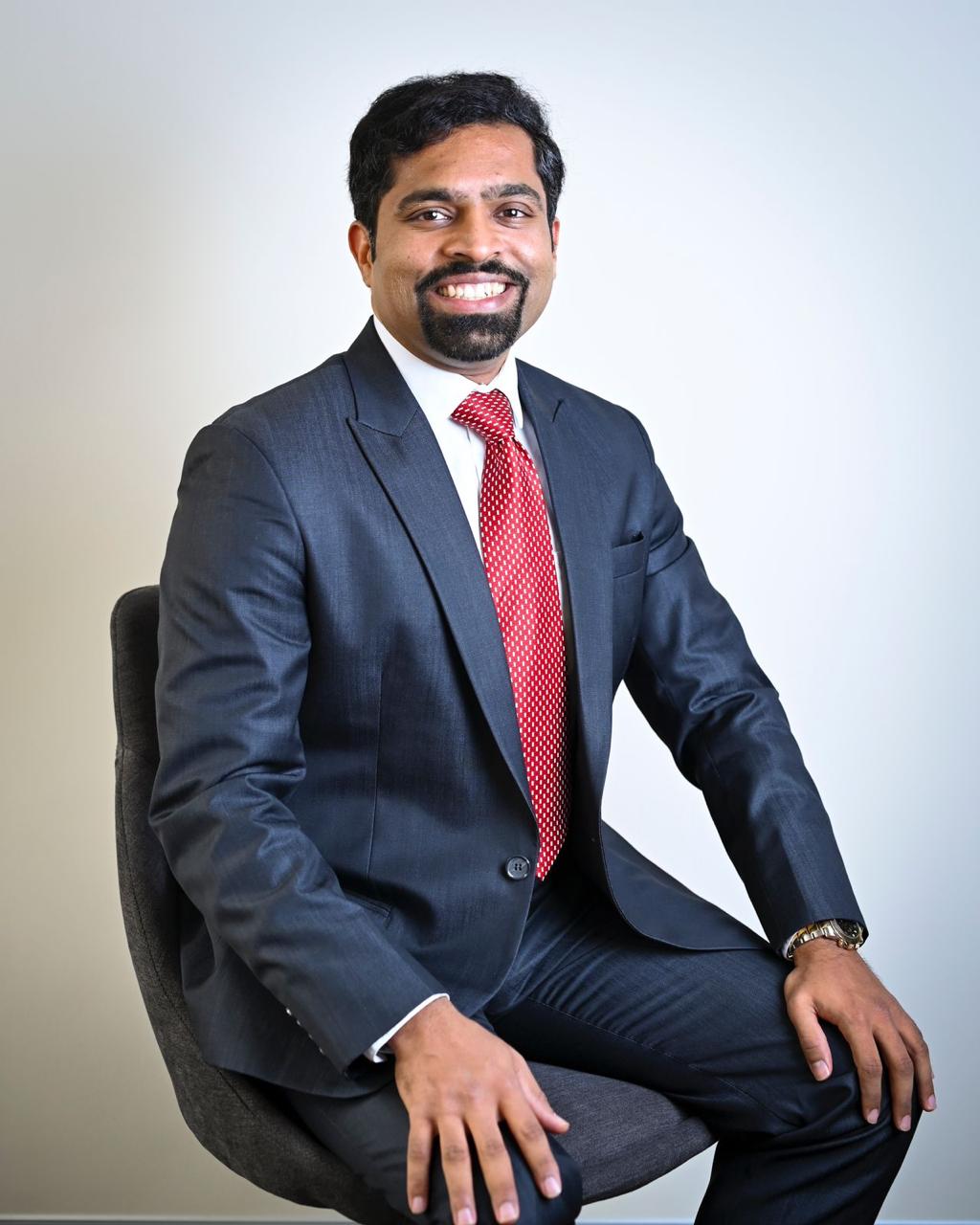
  • “The legal profession requires tireless dedication in the first five years, but it rewards you with identity and success that cannot be easily taken away,” – Nattasha Garg,  Independent Practitioner & Special Counsel for Enforcement Directorate

    “The legal profession requires tireless dedication in the first five years, but it rewards you with identity and success that cannot be easily taken away,” – Nattasha Garg,  Independent Practitioner & Special Counsel for Enforcement Directorate

    This interview has been published by Namrata Singh and The SuperLawyer Team

    How did your journey into law begin? Please walk us through your journey from college to where you are. What were the challenges you faced along the way?  And what inspired you to specialize in disputes and commercial litigation? 

    I hail from a small town, Siliguri in West Bengal and from a business family. While exploring career options after 12th Board exams, I wanted to pursue a career in journalism, given my love for reading and writing. My father however wanted me to study law. He believed in my capability to become a lawyer and nudged me to join ILS Law College, Pune. As luck would have it, I got through the merit list at ILS Pune. 

    In my initial months in Pune, I was quite intimidated while interacting with students from big cities of India and abroad. In fact, almost 60% of my colleagues were from a background of lawyer/ judge families and civil servants. Albeit, right after the first semester results, I started finding my feet, confidence and good friends. 

    Throughout college, I aspired to join the fancy corporate law firms and practice corporate laws. In fact, I participated in most mooting events as a researcher and a compiler to hone my corporate drafting skills. I even joined Khaitan & Partners, Delhi in their Banking and Project Finance Team. I had not thought about becoming a litigator.

    Initial years of practice is all about being open to learning and working on different aspects and subjects of law. I was also open to learning. In fact, when joined as an associate in LakshmiKumaran & Sridharan, I was a common associate for three teams- Corporate and Regulatory Advisory as well as the Litigation Team. I took up every kind of assignment that three partners in the firm were working on. I dawdled between subjects like FEMA, Legal Metrology, Companies Act, SEBI and at the same time assisted the litigation team. Interestingly, my first two litigation assignments were what sparked my interest and love towards litigation. The first matter was an outstation matter before Gujarat Electricity Commission in Ahmedabad where we secured a landmark favourable order and the second one was a heavily contested banking finance litigation before the Delhi High Court. It was while working on the litigation side that I realised that this was where I belonged. 

    As an expert in commercial law, white-collar crimes, and insolvency laws, what trends do you foresee shaping the legal landscape in the coming years?

    In 2016, there was a major overhaul with the introduction of insolvency code, RERA and the commercial courts act and changes in the arbitration act. It was around this time that the ED- money laundering also started becoming active. It is very interesting how these amendments and legislations have completely changed the face and speed of deciding commercial disputes. These changes being relatively new, they have been developing and updating at an astronomical pace. 

    I believe earlier, there were mainly three choices of practice- Criminal, Civil and Corporate Law. Over time, commercial law practice has become a homogenous mix of all of the above, since these legislations include criminal prosecution of directors. Commercial laws, especially insolvency laws have blurred the gap between civil/ criminal since they also entail criminal prosecution and even trial for procedural defaults. For instance, corporates and their management are facing civil and criminal prosecution, money laundering and SFIO proceedings in respect of loan default cases, construction default cases and so on. The same companies are also undergoing insolvency.  The gap therefore has been bridged. 

    Courts are also more accessible to business houses as well as individuals since IBC allows individuals to approach the NCLT for every grievance over their claims, without any pecuniary threshold. Homebuyers for instance are more aware of their rights under law, they have become very powerful in exercising their remedies across forums and manipulating insolvency of big corporates. The High Courts and the Supreme Court have also aggressively promoted these changes, as a result, the Tribunals have become powerful. A lot of jurisprudence is being developed at the Tribunal level. 

    Your educational journey includes both LLB and Company Secretary qualifications. What inspired you to pursue Company Secretaryship alongside your legal career, and how do you believe it has enriched your practice as a lawyer?

    While in college, I aspired to become a corporate lawyer and engage with a fancy law firm. I therefore utilised my time after college to pursue Company Secretaries and certain diplomas in business and cyber laws. Any additional degree, especially something as in-depth as Company Secretaries, always adds up to the otherwise textbook knowledge that is gained in college education. In my case, the fundamentals regarding companies compliances, checklist compliances, basics like examining forms under legal provisions to understand the scope of the provision, really helped me gain better understanding of commercial laws. Eventually, it all added up since it helped me do a lot of FEMA, SEBI and Companies advisory work in the early years of my practice. Even now, while examining the role of companies in money laundering matters, I find it helpful to examine the statutory filings from the MCA and check the relevant forms with the registrar of companies. 

    Beyond your professional achievements, what are some personal interests or hobbies that you’re passionate about? What advice would you give to the current generation looking to pursue a career in law, especially in your specialized areas?

    I love reading books on history, fiction, fantasy and recently added genres- mythological fiction. Lately, I have developed a keen interest in reading the Bhagwad Gita by Devdutt Pattnaik.  I also take time to travel. 

    I believe that the habit of casual reading really helps in loving the profession as well. I always advise my younger colleagues to read newspapers. This one habit- not only helps a lawyer keep updated, but subconsciously keeps the curiosity and hunger that is needed in the profession, going. 

    As opposed to my earlier days, the new generation has it easier on account of law files and entire offices having become digitised, one does not have to carry huge files and journals around, they can read from the comfort of homes, be better prepared because of access to material online. Zoom meetings have made conferences more efficient and less time consuming. With things becoming easier and accessible, the current generation that I have come across, is taking more for granted. 

    I believe that our legal profession requires tireless first five years and intense hard work, long nights and discipline. I would advise freshers to join the profession with this in mind and thereafter, the legal profession rewards with identity and success that cannot be easily taken away. 

    Can you share a memorable moment from your career that reinforced your passion for advocating justice? 

    Recently, the Delhi High Court passed a landmark order, allowing my clients, a group of 250 retired members of the BSF Army, to get possession of their units in a Tower, on as-is-where-is basis from a Company undergoing winding up, instead of them waiting for the liquidator to take steps and then go through the entire payment mechanism under the Companies Act. In doing justice to these set of allottees, the Court exercised its extraordinary jurisdiction in a winding up matter, giving homes to 250 retired persons who had spent most of their life savings for their retirement houses. It has been one of the most fulfilling matters I have done, where not only professionally but personally I have been able to secure justice to ones who deserve.

    I started finding my profession immensely fulfilling when people around me- my domestic staff, their neighbours and my neighbours started reaching out to me for legal aid out of hearsay. I became aware of the power and social responsibility attached and it was deeply satisfying to be able to help them. I strongly believe in the wise words of Justice Ruth Bader Ginsburg- “If you want to be a true professional, do something outside yourself.”

    Your work often involves representing various entities before different courts and tribunals. What key differences do you find while representing different courts and tribunals, and could you share some nuances or insights you’ve gained from navigating these diverse legal arenas?

    Besides the Supreme Court and the High Court, Delhi also is the headquarters for various Tribunals and quasi-judicial bodies. Each of these Tribunals have their own systems in place, filing procedures, and hearings which are peculiar to such Courts.  

    As I have said earlier, a great deal of jurisprudence is being developed in Tribunals because the High Courts and Supreme Courts are rigorously promoting the development of law at this stage and have reduced their interference with orders passed by them. The Tribunals also are focussed on a special kind of law. The preparation for matters before Tribunals is vastly different and much more detailed from the higher courts owing to the uniqueness of process and procedure before each Tribunal.

    Watching the court proceedings, studying the precedents and views taken by the said Tribunal on a subject before approaching them and enquiring from counsels regularly appearing there does go a long way in addressing them better. Over time, it is good to specialise in a few Courts to sharpen the skills and presence in certain courts and Tribunals.  

    Transitioning to independent practice can be a significant milestone in a lawyer’s career. Could you share your experience of practicing independently and shed some light on the challenges one might encounter in this path, along with any key insights you’ve gained along the way?

    As a young lawyer not having any base or family in Delhi, I had never imagined I would get the chance of starting my independent practice and it looked too far-fetched and incredible. The day I took this decision, it was a mixture of uncertainty, turmoil, self- doubt yet some inner voice giving me strength. 

    The first year is often easier, because one has no great expectations with oneself, the struggle begins once you have surpassed your own low expectations- to maintain and to grow.

    Practising independently is a whole new challenge than working in Chambers and law firms. It is a totally uncharted territory whether it is basic day-to-day administration in running the office, or dealing with clients coupled with the uncertainty of a regular monthly income. The same work that one has been doing while working under someone, when done as an independent practitioner, seems like a lot more challenging as the accountability is much more. I have spent days initially, just wondering what fees to quote for a matter. 

    As an independent lawyer, the biggest handicap I face is engaging good juniors to join and retaining them. This is because graduates are always aspiring to join big firms with higher remuneration or some other reason. There is high attrition for that reason. I also believe that clients are much more demanding with independent lawyers in terms of deadlines and bargain hard on payments. 

    Having said this, two things I also credit to the legal fraternity- one that it always gives opportunities to ones who are willing to take on the task and second- I did not face any gender discrimination at least in getting opportunities. By and large, most of the people I have worked with have been extremely encouraging and never fail to put in a good word.

    Among the multitude of cases you’ve handled, could you share with us which one stands out as your personal favourite? One that presented significant challenges yet provided a rewarding experience in your career journey?

    The most memorable dispute which I hold close to my heart was a family dispute arbitration between Ajanta family. I was relatively young and had no experience of arbitration laws and procedure, much less briefing very strict and seasoned senior advocates like Mr. Dushyant Dave, Mr. Gopal Subramaniam and the likes. This matter was a heavily contested litigation, which led me to frequently travel, helped me learn drafting, filing, carrying out a cross examination, handling contempt matters and conducting overall arbitration. The seniors were very patient and kind to me and even the Ld. Arbitrator, Late Justice RC Lahoti appreciated my work and efforts in the Award. 

    Given your extensive experience, what qualities do you look for when hiring interns to join your practice, and how do you nurture their growth and development during their time with you?

    I look for two main things in new joinees- one is their curiosity and passion to learn and explore the legal subject. The second is the effort they are willing to take to quench their curiosity. 

    I have learnt that the legal profession is not just for nerds, it is also for the street-smart. Although I belonged to the former category, I greatly admire smart workers as long as they can get the job done. 

    I always advise my younger colleagues to work with passion, but also have a hobby outside of the office. I also encourage them to have a social network of lawyers, it allows exchange of legal anecdotes, assistance and exchange of information which overall helps in development as a good well informed lawyer. 

    Get in touch with Nattasha Garg-

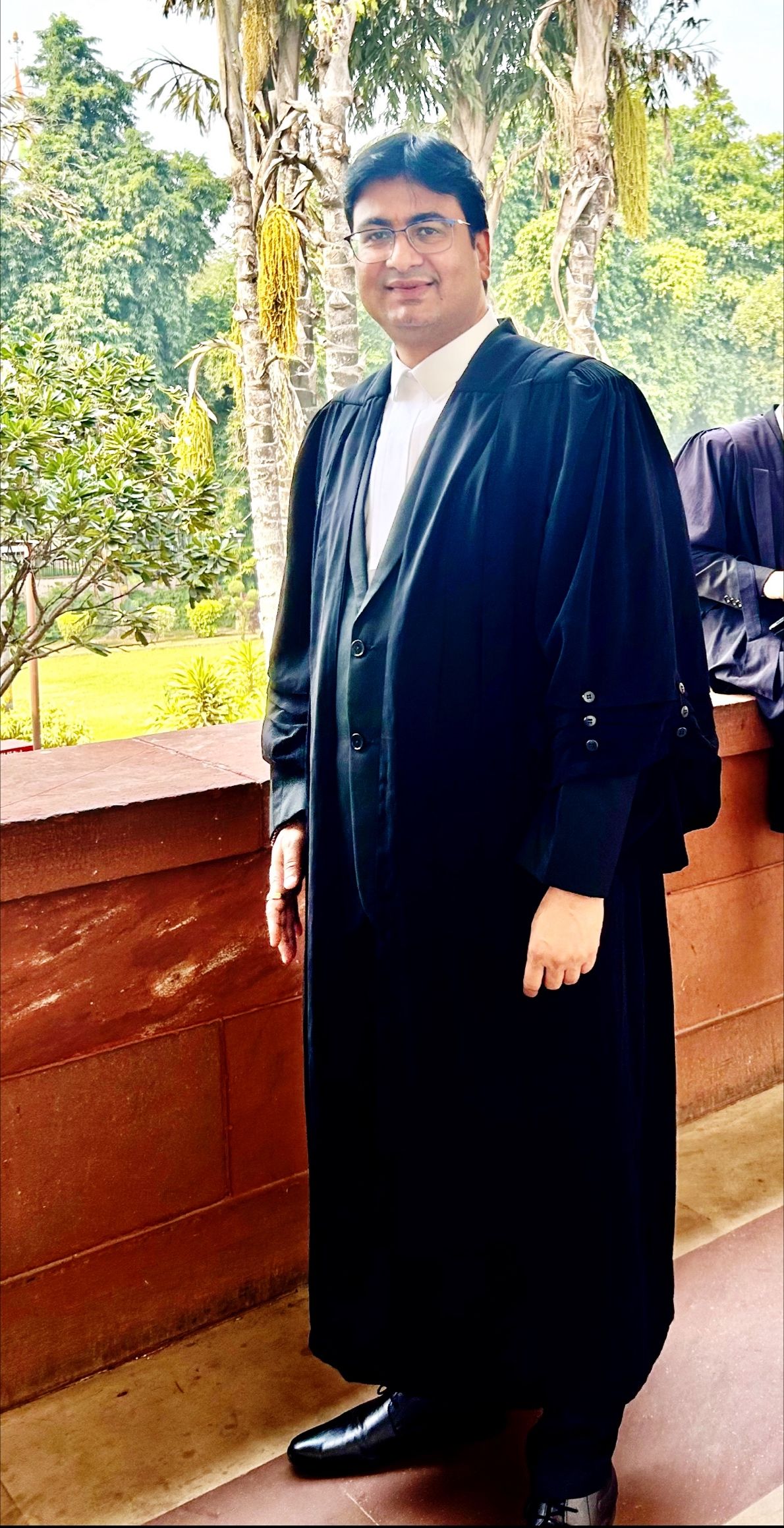
  • “There is more professional satisfaction in actually resolving a dispute rather than letting it linger in Courts for years together.” – A First Generation Lawyer’s Journey to Success, Mahesh Arkalgud, Partner at ATV Legal

    “There is more professional satisfaction in actually resolving a dispute rather than letting it linger in Courts for years together.” – A First Generation Lawyer’s Journey to Success, Mahesh Arkalgud, Partner at ATV Legal

    This interview has been published by Namrata Singh and The SuperLawyer Team

    Reflecting on your journey, could you share with us how you embarked on your career in law and what inspired you to pursue this profession? Additionally, what significant milestones or experiences along the way have shaped your trajectory and approach to the practice of law?

    In my childhood, I just went with the flow and as was the trend in the early 2000’s, I took up science in my 10+2. Having seen my elder siblings venture into Engineering studies, and having myself studied science in 10+2, I was clear that I was not cut out for that kind of studies and work. I was greatly influenced by the words of my father to look at law as an option. My father had obtained a law degree, but never practised. He went on to become a Civil Servant. He shared a lot of his experiences in his work, which was inevitably interspersed with the legal system. 

    Once I began my legal studies, there was no looking back. I took on legal studies like a duck to water. I must say I was at peace with myself and really enjoyed reading legal literature. During my college days, I took up internships largely with a view to understand which area of law to practise in. I did internships with law firms as well as chamber lawyers and was very keen to understand how a lawyer’s life would be. In every place I have interned, I would pick the brains of the seniors in that firm from every vertical of the practise, to understand how actually their work was. The guidance from the Partner in the last law firm I interned, whom I eventually regard as my mentor in the profession, enabled me to firm up my mind to be a litigator. I eventually joined that firm’s litigation practice.     

    As is the case with most litigators, the initiation was extremely rough with quite a few bitter experiences and novice mistakes in Court. Fortunately, my senior colleagues were very supportive and encouraged me. I always felt that I had more to offer than was being asked of me by my firm. I was quite restless and impatient to make a mark. 10 months into the practice, I got my first big opportunity. Due to various factors, I was the only person from the litigation team that was available in office, when a case in which we were on caveat, for a premier client of the firm, came up and we were required to appear. I grabbed the opportunity, channelised my restlessness and desperation well, and ensured that the Partner would have no reason to put any other person onto that matter. There onwards, I was looked upon as a reliable hand in litigation matters and my confidence grew day by day. 

    After moving on from established law firms, you started your own firm and later moved on and partnered with other lawyers. Can you reflect on this journey of yours?

    I was with two law firms in a period of five years after starting off. There afterwards, along with three other lawyers we started our own law firm in 2015. It was a leap of faith. An exciting phase of establishing a practice. Each of us knew that we had the potential to build a practice. The first few months were spent in establishing connections and meeting a lot of people. Most of the connections initially made, continue to result in referrals and work. It is crucial to meet people and network with them. Sincere and truthful efforts will always yield good positive results. Proud that some of the referrals that come about now are multi-tier referrals, which means that the word of mouth has travelled far and wide. Presently I have joined hands and partnered with a bunch of lawyers, who were all peers in my first law firm. We all have been through the growth curve and survived the rigors of the profession and now have similar career trajectories. 

    Given your diverse expertise, particularly in construction and commercial arbitration disputes, what common misconceptions do clients often have about this area of law, and how do you address them?

    In most construction disputes the construction company would inevitably want to make claims for damages. While the construction company feels shortchanged with the manner in which the owner of the project would have treated it, I find that claims are made for the sake of making it, with hope that at least a part of the claims come through. Same is the case in some commercial matters. I think it is extremely important to think through the claims and build a robust foundation for the claims which are in the nature of damages. It is critical to evaluate evidentiary value of what a client believes to be ‘evidence’. We should not encourage a client to just dump their files and expect the lawyers to churn out magic. It is important to educate a client about law and on how things will actually pan out before a Court/Tribunal. I believe that keeping the client fully in sync with the legal process and proceedings helps to bring the best out of the client as well as the lawyer. I have often found that a hands-on client is able to provide quality inputs and results in better output from the litigation.    

    In your extensive experience, what would you consider the most effective strategy for resolving disputes outside the courtroom? Could you share an example where alternative dispute resolution methods yielded exceptional results?

    An out of court settlement is achieved through negotiations and eventually mediation. I find that a large number of disputes are a result of frail egos or personal grudge. There are also the opportunistic litigations. In any event, it is imperative to understand every aspect of the dispute and all things that resulted in the creation of the dispute. If one is able to delve into the core of a dispute and unearth its origin, everything including that which is not stated on paper, one can actually do a good counselling job on the client to see how to proceed with the dispute. It is also important to set the expectations right and let a client know the best case and worst-case scenarios by explaining the law. 

    Such out of court settlement also depends largely on the psyche of the client. A recent case was where a client wanted a larger payout from a defaulting tenant. In the very first meeting the client said that they were willing to go up to the Hon’ble Supreme Court. I spent quite some time understanding the client and also on why the client was so passionate about fighting the tenant. As the client felt comfortable with me, they opened up and explained the entire history and the backstory. Upon several rounds of counselling, the matter was eventually resolved with the issuance of a lawyer’s notice. There is more professional satisfaction in actually resolving a dispute rather than letting it linger in Courts for years together.  

    As a first-generation lawyer, what advice would you give to aspiring legal professionals who are just starting their careers, especially those aiming to make a mark in the competitive legal landscape?

    While I agree that having someone who has been there and already done that helps, especially in the litigation vertical, it is not impossible to carve out a space for oneself being a first-generation lawyer. The challenges start from finding the right office to start off with; to getting the right leads for building a practice. One needs to be proactive and extremely alert to the opportunities and possibilities. I was fortunate that I found a great mentor to start my practice. Once you commence, it is important to be relevant and display the eagerness and hunger to learn. Resilience and adaptability are crucial traits to forge ahead. One needs to keep evolving with the times and stay abreast with new developments. At the beginning of a litigation career be ready to do all kinds of work and work in all jurisdictions. It helps you in the long run, especially when you venture out on your own. A lot of my learning has happened through witnessing other lawyers in action. While it is good to catch up with a friend in the corridors, it is extremely important that one does not waste the time while waiting for their turn in the Court. Inspirations are aplenty in Courtrooms and one must not miss such opportunities.     

    With your experience appearing before different High Courts and tribunals across the country, what key differences have you observed in legal proceedings and judicial interpretations, and how do you adapt your strategies accordingly?

    Every tribunal or forum has its own characteristics in terms of the process or presiding officers or the legal practitioners appearing therein. It is crucial to understand and respect the local practices and adapt quickly. Lawyers from Delhi are very assertive and persuasive, they go about their brief with extreme focus, while lawyers from Mumbai are highly efficient and meticulous. I find that lawyers from these two jurisdictions are thoroughly prepared and come with the go getter mentality. These days, with virtual appearances possible, it is indeed a great experience to appear in different jurisdictions. Each appearance in a different forum enriches one’s exposure immensely.    

    Continuous learning is essential for professional growth. How do you prioritize ongoing legal education and skill development within your firm, and what resources or platforms do you find most valuable for staying updated with legal developments and best practices?

    These days information is available in plenty and in various modes. The judicial precedents laid down by courts is the most important legal education for practising professionals. New legislation and amendments in our area of practice is something which we keenly keep an eye out for. Various portals reporting the Court rulings and publishing articles on various legal aspects, become the first point of reading about the developments. One tends to get busy with the cases on hand and at times stop reading other than for a case on hand. Therefore, it is a goal to publish articles and analyse new developments and roll out newsletters. That way not only are we keeping ourselves updated, but also enlightening clients on new developments. Needless to mention that for a litigator, the Courtroom remains the ultimate place to learn best practices. 

    With the demands of a challenging legal career, maintaining a healthy work-life balance is crucial. Could you share some of your favourite ways to unwind and recharge outside of work, and how do these activities contribute to your overall well-being and effectiveness as a legal professional? 

    It is important to give attention to oneself, family and the work. While in the initial stages of a career it is inevitable that work takes precedence over anything else, one should not completely kill any other passion for the sake of work. The earlier that one is able to obtain a work life balance, the quality of life would be better. Drawing up boundaries on each aspect of life and respecting those boundaries would help immensely. I am passionate about fitness and nutrition and end up doing quite a few activities on that front. While in pursuit of such endeavours, I meet people from different backgrounds and that too enriches my personality. Lately I have taken a liking to learn to play a musical instrument. It is a good way to unwind and quite relaxing. The cliched statement that if one makes it a priority, they will find the time to do it is very true. 

    Get in touch with Mahesh Arkalgud-

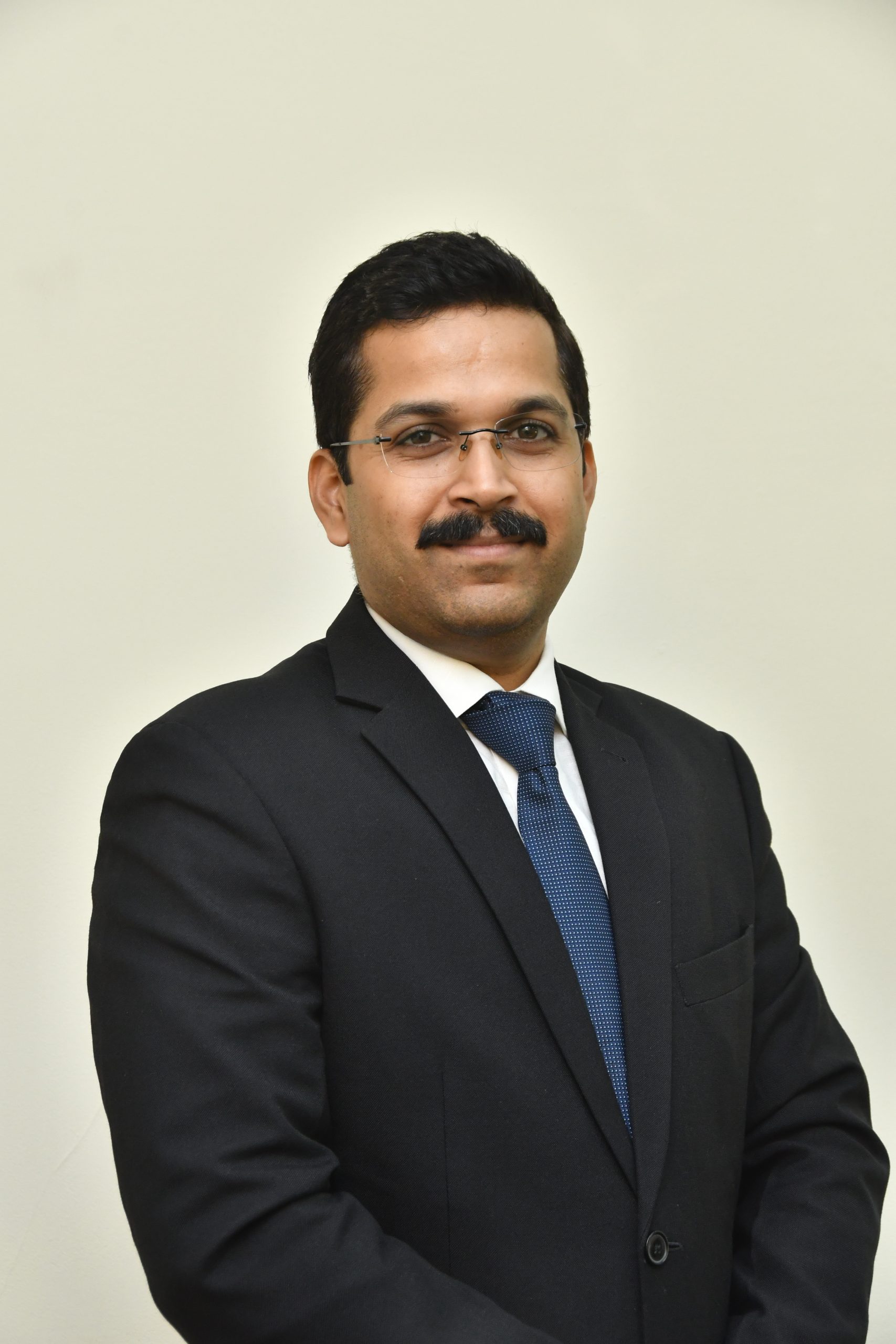
  • “As Inhouse counsel, I have learnt how to mitigate the Legal risk, and started thinking like a Business man so that transactions can be materialized in a legal framework, also Team handling is a major learnings which came over the period of time”- Akhilesh Kumar, General Counsel at MBD Group

    “As Inhouse counsel, I have learnt how to mitigate the Legal risk, and started thinking like a Business man so that transactions can be materialized in a legal framework, also Team handling is a major learnings which came over the period of time”- Akhilesh Kumar, General Counsel at MBD Group

    This Interview has been published by Pragya Chandni and The SuperLawyer Team

    Can you share with us your journey into the field of law? What motivated you to pursue this career path, particularly focusing on corporate and securities laws?

    It was continuously new learning every day and at every stage of my journey in the field of Law. After my law college and enrolment at Bar Council my first Guru is Sr. Advocate Mr. Kamal Nayan Choubey. He is one of the best Sr lawyer and legal luminaries practicing at Patna High Court. I have learnt a lot from him. He taught me court crafting and also taught me how much dedication is required to practice the law. During Practice I have also worked as Advocate Member at Mobile Lok Adalat under Bihar Legal Services Authority, also while practicing as a junior advocate associates with Sr Advocate Mr. K.N. Choubey I was thinking and dreaming about the in-house counsel’s/Legal Managers role in the corporate houses who earns well and dresses well, although my senior K.N Choubey ji was not in favour me to join any corporate houses.. as he used to say and pass comments on me jokingly that what In house counsels earn monthly you can earn more than that daily. But I had decided to join corporate house so started as Legal Manager at Pacific Development Corp Limited (Pacific Group, Delhi),  then joined Treasure World Developers Pvt Ltd at Indore M.P, then returned to Delhi again and joined Omaxe Ltd. as Chief Manager Legal, then GM Legal as SGS Group and presently working as Head of Legal at a large conglomerate MBD Group, it is clarified here that while you work as Head of Legal team then you have to have good knowledge in all field of Law, not specific. However, during my journey additionally, I did LLM in Corporate and Securities Law, Diploma in Cyber Law, PG Diploma in Human Rights, which helps me while dealing with the matters pertaining to the respective laws.              

    With such a diverse educational background ranging from botany to law, how do you think your interdisciplinary knowledge has influenced your approach to legal practice, especially in the realms of corporate law and litigation management?

    In the initial days, after my 10th I wanted to become a Scientist who has knowledge of plants/medicines so that I can formulate life saving drugs and Plant tonics, hence in 12th course taken Biology and thereafter in graduation Botany Hons. However, a litigation in my family changed my journey from Scientist to Lawyer/In House Counsel. Certainly the knowledge of Science always helps me in thinking systematically and with utmost patience in finding the right solution to any situation, because study of science requires a systematic approach and patience for the end result.      

    You’ve worked with various esteemed organizations in different capacities such as GM-Legal, Corporate Counsel, and Chief Manager-Legal. Could you elaborate on how each role has contributed to your growth as a legal professional?

    Fortunately , I always got the lead role in the Legal Team in my past organizations since starting as Legal Manager in Pacific till Legal Head in MBD, but yes each role has contributed to my skills and experience whatever I have at present time. Every organization has its own working style/process and each organization teaches something new, Like, while I was appointed first time Legal Manager then I learnt how to work in the corporate culture which is altogether different from working with a law firm or designated Sr Advocate. Nature of work is also different. As inhouse counsel you work as a Client who knows the Law/court procedure and deals with the matter through external counsel. As Inhouse counsel, I have learnt how to mitigate the Legal risk, and started thinking like a Business man so that transactions can be materialized in a legal framework, also Team handling is a major learnings which came over the period of time.    

    Having handled litigations across a wide spectrum including commercial disputes, arbitration, consumer forums, and more, what do you consider as the most challenging aspect of litigation management, and how do you navigate through it effectively?

    I have learnt that for proper management of any litigation of any nature the main thing is the collating the documents and relevant information pertaining to the case, management of case files, means one should must have grip on the facts of the matter and complete documents handy in the court , what and when to be presented before the court that is called court crafting and handling of litigations. Proper management of facts and documents increase 80% chances of winning the case and 20% merit in the matter. You do not require to explain to the Court what is Law but require to present your matter/facts events wise with all the supporting documents/information.   

    Your expertise extends to drafting a myriad of legal documents and agreements. Could you walk us through your approach to drafting and vetting contracts, ensuring clarity and legal compliance?

    I personally enjoy drafting, vetting and negations on the terms of the Agreement and drafting/vetting of the Legal Documents. It is an art and comes gradually when you practice more and more. While drafting I start visualizing the events and consequences of the things not covered in your drafting. For example, if I draft any Construction Agreement on behalf of the Owner who desires to build a building on his plot, then I place myself in the place of Owner and think like Owner and start visualising the consequences of not covering in the Clause of the specific events which eventually shall take place.         

    As a legal head, you’ve been involved in mergers, acquisitions, and other corporate transactions. What strategies do you employ to ensure smooth legal processes in such complex endeavors?

    I try to understand the exact requirement of the Management/Stakeholders and then start collating the data/information and documents. Thereafter we make a team of professionals who shall perform the work in a legal framework and achieve the desired goal.        

    Over your 16+ years of experience, what have been the most significant shifts or developments in corporate law and litigation management, and how have you adapted to these changes?

    There are several changes taken place and still going on day by day, like some Acts/Law changed such as Company Law, amendments in Arbitration, RERA law introduced, forum changed like Company law board to NCLT,  new RERA and Tribunal introduced, also some new Acts introduced like Insolvency and Bankruptcy Code and for litigation management changed from manual management to digital management. Legal profession requires regular updates and demands one should be always adaptive with the changes either in law and technology.  

    Finally, considering your vast experience and achievements, what advice would you offer to fresh law graduates aspiring to embark on a similar career path in the legal field, particularly focusing on corporate law and litigation management?

    I would suggest being dedicated and focused on the subject, because it is not a part time job. He or she has to read apart from basic course materials all the subject related to corporate/commercial such as Company Law, Contract Act, Securities Law, SEBI Guidelines, Consumer Law, Arbitration, Competition law, IT Act, Data Protection Law, Cyber Laws, Partnership Act, Specific Relief Act, Bankruptcy & Insolvency Law, SARFAESI,  Tax Laws, Employment Laws, T.P Act, RERA, PMLA, etc.    It is also pertinent to mention herein that during study of law at least basic requirements of this profession should be well prepared.. such as command over the English language, knowledge of basic computer knowledge, knowledge of words, excel, power point, video conferencing ..means he or she should prepare him/herself to be well versed with the Technology/tools and systems used in the court proceedings.  Reading habits of Judgements/orders and case study shall help in increasing the understanding of the delivery of judgement/order and thinking of the court on the subject matter. One should also visit the court to understand the business of courts.    

    Get in touch with Akhilesh Kumar-


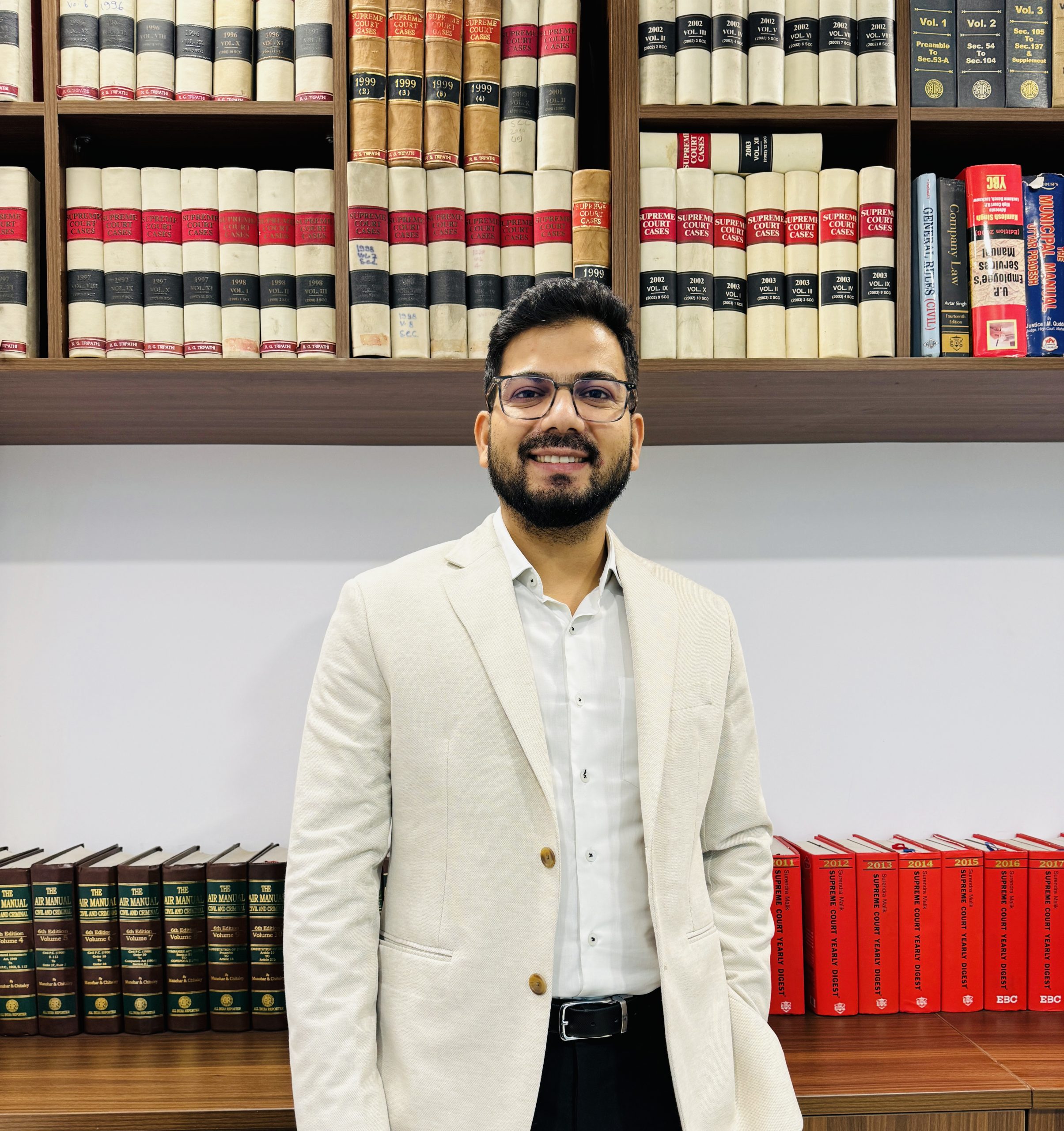
  • “Drafting legal documents and notices requires meticulous attention to detail and a keen understanding of the relevant legal principles”- Astha Nigam, Managing Associate at Luthra and Luthra Law Offices

    “Drafting legal documents and notices requires meticulous attention to detail and a keen understanding of the relevant legal principles”- Astha Nigam, Managing Associate at Luthra and Luthra Law Offices

    This Interview has been published by Pragya Chandni and The SuperLawyer Team

    Could you share a bit about your journey into the legal profession and what inspired you to specialize in Arbitration, White Collar Crimes, Company, and Insolvency Laws?

    My journey into the legal profession was deeply influenced by my upbringing in a family that valued justice and integrity as I have seen my grandfather perform his duties as a High Court Judge. As a first-generation lawyer, I was inspired by the power of law to effect positive change in society. My interest in arbitration, white-collar crimes, company law, and insolvency laws stemmed from a desire to navigate complex legal landscapes and provide strategic solutions to clients. These areas not only challenge me intellectually but also allow me to contribute meaningfully to corporate governance, dispute resolution, and ensuring compliance with regulatory frameworks.

    With over 9 years of experience, you’ve handled a diverse range of cases from representing individuals against gambling regulations to corporate disputes worth billions. How do you navigate such varied legal landscapes?

    Indeed, my experience has been diverse, spanning from advocating for individuals facing regulatory challenges in areas like gambling to handling high-stakes corporate disputes worth billions. To navigate such varied legal landscapes, I rely on a combination of thorough research, collaboration with experts in specialized fields, and a deep understanding of legal principles. Each case presents unique complexities, but by staying adaptable, keeping abreast of legal developments, and leveraging my interdisciplinary skills, I’m able to provide effective representation tailored to the specific needs of my clients, regardless of the legal terrain

    You’ve had significant experience in representing companies before various courts and tribunals. What are some key strategies you employ when handling high-stakes cases, particularly those involving complex contractual disputes or insolvency matters?

    When handling high-stakes cases, especially in corporate matters, several key strategies come into play. Firstly, thorough preparation is paramount. This includes comprehensive case analysis, anticipating potential challenges, and developing robust legal arguments. Secondly, effective communication with clients is essential to ensure alignment on goals and expectations. Thirdly, strategic negotiation and alternative dispute resolution methods are often explored to mitigate risks and achieve favorable outcomes outside of court. Additionally, building strong relationships with opposing counsel and maintaining professionalism in all interactions can help in navigating complex legal proceedings. Ultimately, my approach revolves around a combination of meticulous preparation, strategic thinking, and proactive communication to safeguard the interests of my clients in high-stakes scenarios.

    Given your extensive experience in drafting legal documents and notices, could you walk us through your process for ensuring accuracy and effectiveness in such critical tasks?

    Drafting legal documents and notices requires meticulous attention to detail and a keen understanding of the relevant legal principles. My process begins with a thorough review of the relevant laws, regulations, and case precedents to ensure accuracy and compliance. I then work closely with my clients to understand their specific needs and objectives, tailoring the language and content of the documents accordingly. Throughout the drafting process, I employ rigorous quality control measures, including multiple rounds of review and peer feedback, to catch any errors or inconsistencies. Additionally, I prioritize clarity and precision in language to ensure that the documents effectively convey the intended message and stand up to scrutiny in legal proceedings. By combining legal expertise with a methodical approach to drafting, I strive to deliver documents that are not only legally sound but also strategically crafted to achieve the desired outcomes for my clients.

    In your experience, what are some common challenges or misconceptions clients face when dealing with arbitration proceedings, especially in complex commercial disputes?

    In my experience, clients often face several challenges and misconceptions when dealing with arbitration proceedings, particularly in complex commercial disputes. One common challenge is understanding the intricacies of the arbitration process itself, including the selection of arbitrators, procedural rules, and the enforceability of awards. Additionally, clients may underestimate the time and cost involved in arbitration compared to traditional litigation. Misconceptions about the finality of arbitration awards and the ability to appeal decisions also arise frequently. Furthermore, navigating multi-jurisdictional issues and enforcing awards across borders can pose significant challenges in international arbitration cases. To address these challenges, I prioritize proactive communication and education, ensuring that my clients have a thorough understanding of the arbitration process and its implications. By providing strategic guidance and advocating for their interests effectively, I help clients navigate arbitration proceedings with confidence and achieve favorable outcomes in even the most complex disputes.

    Your expertise extends to navigating the intricacies of criminal law, including cases involving white-collar crimes. How do you approach defending clients in such cases, balancing legal strategies with maintaining their reputation and integrity?

    When defending clients in cases involving white-collar crimes, I approach each situation with a dual focus on legal strategy and reputation management. Firstly, I conduct a comprehensive analysis of the legal aspects of the case, examining evidence, statutes, and precedents to formulate a robust defense strategy. This may involve challenging the prosecution’s evidence, negotiating plea deals, or presenting compelling arguments in court.

    Simultaneously, I prioritize protecting my client’s reputation and integrity. This involves proactive communication with stakeholders, including the media, investors, and the public, to ensure transparency and maintain trust. I work closely with my clients to craft messaging that emphasizes their commitment to ethical business practices and compliance with the law.

    Throughout the legal proceedings, I remain vigilant in safeguarding my client’s rights while also advocating for fair treatment and due process. By balancing legal strategies with reputation management, I aim to achieve the best possible outcome for my clients while minimizing the impact on their personal and professional integrity.

    You’ve been involved in high-profile cases ranging from extradition proceedings to representing leading manufacturers and exporters against allegations of corruption and money laundering. How do you handle the pressure and public scrutiny that often accompanies such cases?

    Handling high-profile cases, whether they involve extradition proceedings or allegations of corruption and money laundering against leading manufacturers and exporters, certainly comes with its share of pressure and public scrutiny. To effectively manage these challenges, I rely on a combination of resilience, professionalism, and strategic communication.

    First and foremost, I prioritize maintaining a steadfast commitment to upholding the principles of justice and due process. This serves as the foundation for my approach to every case, regardless of its profile or complexity.

    Additionally, I recognize the importance of proactive communication and transparency in managing public perception. By keeping clients informed and involved in strategic decisions, and by being accessible to address concerns from the media and other stakeholders, I aim to foster trust and confidence in the legal process.

    Moreover, I surround myself with a supportive team of legal professionals who share my dedication to excellence and integrity. Collaborating with experts in various fields enables us to leverage diverse perspectives and resources to mount a robust defense or pursue legal remedies effectively.

    Ultimately, I draw strength from my belief in the power of the law to bring about fair and just outcomes, even in the face of intense pressure and scrutiny. By remaining focused on the merits of each case and maintaining a commitment to ethical conduct, I strive to navigate high-profile cases with integrity and professionalism.

    Finally, as someone with considerable experience in the legal field, what advice would you offer to fresh law graduates looking to establish themselves in the industry, particularly those interested in pursuing a career path similar to yours?

    For fresh law graduates aspiring to establish themselves in the legal industry, especially those interested in a career path similar to mine, I offer the following advice:

    1. *Continuous Learning:* The legal landscape is constantly evolving, so never stop learning. Stay updated on changes in laws, regulations, and industry trends to remain relevant and effective in your practice.

    2. *Build a Strong Foundation:* Invest time in honing your foundational legal skills, such as research, writing, and critical thinking. These skills form the bedrock of a successful legal career and will serve you well across various practice areas.

    3. *Find Your Niche:* Explore different areas of law to identify your interests and strengths. Specializing in niche practice areas, like arbitration or white-collar crimes, can set you apart and open up unique career opportunities.

    4. *Network Strategically:* Cultivate professional relationships with mentors, peers, and industry professionals. Networking can provide valuable insights, opportunities for collaboration, and referrals for potential clients.

    5. *Embrace Challenges:* Don’t shy away from challenging cases or opportunities. Embrace them as learning experiences that will help you grow and develop as a legal professional.

    6. *Maintain Integrity:* Uphold the highest ethical standards in your practice. Integrity and professionalism are essential for building trust with clients, colleagues, and the broader legal community.

    7. *Stay Resilient:* The legal profession can be demanding and unpredictable. Develop resilience to navigate setbacks and challenges, and remember to prioritize self-care to maintain your well-being.

    By following these principles and staying committed to your professional development, you can lay a solid foundation for a successful and fulfilling career in the legal field.

    Get in touch with Astha Nigam-

  • “Challenges in insolvency proceedings are prevalent, but restoring client faith amid delays is essential. Legislative amendments offer hope for a brighter future.” – Unveiling the Journey of Shikha Goenka Ginodia, Partner at ANM Global

    “Challenges in insolvency proceedings are prevalent, but restoring client faith amid delays is essential. Legislative amendments offer hope for a brighter future.” – Unveiling the Journey of Shikha Goenka Ginodia, Partner at ANM Global

    This interview has been published by Namrata Singh and The SuperLawyer Team

    Shikha, could you tell us about how you began your journey in law and what motivated you to pursue this career path? What were some of the initial challenges you faced, and how did you overcome them to establish yourself in the legal profession?

    I don’t recall as to why, but as a child, I wanted to be a Judge. Then, post my 12th grade exams, like everyone else, I had to decide my career path and I chose law as may career path ahead. I distinctly remember some of my relatives advised my father that if I do law, then it will be difficult to find a groom for me. This increased my determination further to go ahead with law as my career path. Being a girl and belonging to a Marwari family, it was not an easy choice. However, fortunately, my parents supported my decision. That said, I didn’t have any guidance or a shoulder to fall back on for my journey in law. One thing which helped me to survive the various challenges in this otherwise fruitful journey was my passion. I guess somewhere that dream of mine to become a Judge, helped me to hang in there.

    Your journey from in house to law firm and also from litigation to corporate restructuring and insolvency practice is quite intriguing. Can you share what inspired you to transition into this field and how your previous experiences have shaped your current expertise?

    Yes. It has been quite a rollercoaster rise. I am among the few who has gone from a law firm to an in-house and then back to a law firm. My journey of Corporate Restructuring & Insolvency Practise started when I was with Piramal Capital & Housing Finance Limited.  I was fortunate to get the best team and guidance and support. I still remember, my senior at Piramal, guiding me that as an in-house counsel, how one has to wear both the hats – business and legal and keep shuffling between them. At Piramal, I was part of some of the high-profile real estate resolutions and saw the entire cycle of restructuring, pre-insolvency strategy, CIRP process and settlement. It also helped me to have a business enabler mindset rather than just a legal mindset. So, my experience with Piramal Capital really helped me to shape the current expertise of mine.

    In your current role at ANM Global, you’ve been involved in advising creditors and representing resolution professionals in insolvency matters. What unique challenges do you face in this area, and how do you overcome them?

    The biggest challenge which I am seeing is that creditors have somehow lost the faith in insolvency proceedings given a lot of delay in hearings at NCLT because of vacancy in the benches. The vacancy has now been filled and various positive amendments are being passed by legislature. Hence, when we speak to our clients, we inform them about these developments and are hoping that sooner or later their faith will be restored.

    Looking back at your journey so far, what’s one piece of advice you wish you had received when you were starting your career?

    When I see back, I feel none. I strongly feel each of my experiences in my entire journey and the challenges were a milestone rather than a stumbling block. Absence of any of those challenges would have made the journey less memorable. Looking back, I also feel that not having any godfather, so to say, helped me even more to get more out of each of my challenges on the way.

    What is your view on internships and early stages of a law career?

    Internship is a really good opportunity at the start of one’s career to understand areas of interest while at the same time, I would say that enjoy the college life as well as I strongly believe those days never come back again. During early stages of law, I would suggest one to work as diligently as possible as that is the time when one can create a strong base in law which is important to shape the career in the long run.

    You’ve been involved in various high-stakes cases throughout your career. Can you share a memorable success story where your strategic approach led to a favorable outcome for your client?

    I believe, the strategy should start right at the time of entering into any agreement or contractual obligation. Being always on litigation side, I knew how are the clauses interpreted and what are the things which should be taken care of at the time of entering into contracts and during the life of the contracts. Accordingly, we have a White Paper listing out statement of procedure (SOP) to be followed while executing the documents as well as during the transaction. We discuss this with our clients so that proper steps can be taken right at the documentation stage itself. The SOP tremendously helps in resolving the complicated matters.

    Besides that, from time to time, once the matter goes into litigation, we understand the end solution required, devise a strategy and then work towards it. This exercise done by us in each of the matter really helps us to get better results for our clients.

    Though I have been part of some of the big real estate resolution and dispute resolution where our strategy really worked for our client, there is one matter which I had in my initial days of legal practise and which remains close to my heart. We were briefed by an individual client wherein he had a huge property in South Mumbai and he had learnt that one of his relatives, has fraudulently filed some litigation in it and is about to take absolute possession on the next day in Bombay High Court. We devised the strategy on the same day, drafted the application overnight, filed the matter in morning, mentioned it and got a stay on the process of handing over the keys, all within a period of 24 hours.

    You have chosen Insolvency and Bankruptcy Law, litigations as your area of specialisation? Any specific reason behind it?

    Litigation was always my passion. Hence, even after completing my CS, I never pursued the same. I find Insolvency & Bankruptcy Law logical and versatile. The best part is that it keeps on evolving on a daily basis which makes it challenging as well as interesting.

    Apart from your legal career, we hear you enjoy cooking and playing badminton. How do you balance your professional life with your personal interests, especially with a young child?

    Yes. I love playing badminton with my husband and son. Whenever possible, I also play board games with my son and cook food for the family. These are stressbusters for me. For me, my career and my family has to go hand in hand and I try my best to spend my early mornings and weekends with my family. 

    Given your extensive experience, what advice would you offer to young professionals aspiring to build a career in law, particularly in the fields of corporate restructuring and insolvency?

    I believe today’s young professionals have become impatient looking for instant gratification. To all of them, I would suggest to show some perseverance and hang in there. As they say, Rome was not built in a day! All you need to do is continue working hard, focus on process and results will follow. With regards to Insolvency practise, my suggestion would be to try to understand it logically and keep yourself updated.

    What would be your one piece of advise for women practitioners?

    To the young women practitioners out there, I would just advice, be yourself. Don’t compete yourself with anyone. At times, in order to manage everything, we get too harsh with ourselves. I would say, learn to let go and enjoy your journey. It is the journey which makes the destination beautiful!  

    Get in touch with Shikha Goenka Ginodia-

  • “Success in law is not just about individual achievements but also about working together and lifting each other.” – Aviral Kapoor, Co-founder & Partner at Alagh & Kapoor Law Offices

    “Success in law is not just about individual achievements but also about working together and lifting each other.” – Aviral Kapoor, Co-founder & Partner at Alagh & Kapoor Law Offices

    This interview has been published by Namrata Singh and The SuperLawyer Team

    Starting your career as a first-generation lawyer, can you share a bit about your journey and what inspired you to pursue law as a profession?

    My fascination with the legal profession stemmed not from its prestige or the challenges it posed, but from the unique chance it gave me to explore the complexities of various businesses and industries. Each case was a new puzzle, and every law was a gateway to understanding a different aspect of the world through a legal perspective. Embarking on this path as a first-generation lawyer was both thrilling and intimidating. With no precedents in my family to guide me, I relied on my determination and adaptability to overcome academic and professional obstacles. The journey was tough, yet rewarding, as every legal concept I understood and every case study I examined deepened my knowledge and love for the law.

    Along the way, I was fortunate to encounter some of the most supportive and insightful lawyers in the field. Their willingness to share knowledge, encourage my pursuits, and guide me through the legal landscape was invaluable. Their mentorship not only inspired me but also highlighted the importance of community within our profession. It taught me that success in law is not just about individual achievements but also about working together and lifting each other. This sense of belonging and mutual support has been a fundamental part of my journey.

    As a co-founder of Alagh & Kapoor Law Offices, what unique approach do you bring to providing legal solutions for companies, and how do you deal with legal hurdles strategically?

    At Alagh & Kapoor Law Offices, our distinctive approach is deeply rooted in a partner-focused model, where each client’s case is meticulously overseen by a partner. This method goes beyond merely addressing the issue at hand; we immerse ourselves in understanding the entirety of our client’s business. This comprehensive insight allows us to devise strategies that are not only tailored to solve immediate legal challenges but are also aligned with the broader business objectives of our clients. By integrating this deep business understanding with our legal expertise, we ensure that our solutions are both effective in the present and beneficial for the client’s future, enabling them to navigate their industry’s complexities with greater confidence and legal foresight.

    You’ve worked with top law firms in India before co-founding your practice. How has this experience enriched your legal perspective, and what lessons did you carry into your own law office?

    Working with top law firms in India prior to co-founding Alagh & Kapoor Law Offices has been an invaluable part of my professional journey, significantly enriching my legal perspective. One of the key lessons I’ve brought into our practice is the importance of transparent and comprehensive communication with our clients. We’ve adopted a unique approach of updating our clients through recording emails, which detail the entire proceedings before a court. This method has been particularly appreciated by our clients, as it ensures they are well-informed and engaged with the progress of their cases.

    Additionally, my tenure at these esteemed firms instilled in me the ability to perform under high-pressure situations. This skill has been instrumental in shaping the ethos of our own law office, where we emphasize resilience, adaptability, and the capacity to deliver exceptional legal services, even under the most demanding circumstances. These experiences have not only enriched my legal perspective but have also been pivotal in defining the values and operational excellence of Alagh & Kapoor Law Offices.

    Being empanelled with prestigious organizations like South Delhi Municipal Corporation and NBCC, how do these affiliations contribute to the breadth and depth of your legal practice?

    Being empanelled with prestigious organizations like the South Delhi Municipal Corporation and NBCC has significantly enhanced the scope and depth of our legal practice. These empanelments have not only broadened our exposure to a variety of legal matters but have also been instrumental in building a strong reputation in various courts. Regular appearances in court, as a result of these affiliations, have allowed me to develop a familiarity with different benches. This familiarity is crucial as it fosters a level of trust and understanding; judges tend to recognize and appreciate lawyers who are consistently present and demonstrate a commitment to their profession. It’s important to note that this recognition is not about bias but rather about the confidence that comes from seeing a lawyer’s consistent performance and understanding of legal nuances over time. These opportunities have thus been pivotal in enhancing our credibility and expertise, allowing us to serve our clients more effectively and contribute meaningfully to the legal community.

    Your legal practice encompasses diverse areas, including technology law, insolvency, and debt recovery. How do you navigate the unique challenges and nuances of each domain, and what skills do you find most crucial in maintaining proficiency across such varied legal landscapes?

    Navigating the diverse realms of technology law, insolvency, and debt recovery requires a dynamic and informed approach, emphasizing the importance of staying current with the latest laws and judgments. In my practice, a strong focus on research and continuous learning is paramount, as these enable me to understand the intricacies of each domain thoroughly. Beyond diligent research, attending seminars, workshops, and conferences plays a crucial role in my professional development, offering fresh insights and perspectives on evolving legal issues. Networking with fellow lawyers and industry professionals further enriches my understanding and approach, allowing me to exchange ideas and strategies that enhance my proficiency. This combination of ongoing education, active engagement in the legal community, and a commitment to thorough research equip me to navigate the unique challenges of these varied legal landscapes effectively, ensuring I can provide high-quality legal services to my clients.

    Internships play a crucial role in a young lawyer’s development. How does Alagh & Kapoor Law Offices engage with interns, and what opportunities do you provide for them to gain practical experience and exposure within the firm?

    At Alagh & Kapoor Law Offices, we deeply value the role of internships in shaping the future of young lawyers. Being a boutique law firm, we offer a unique advantage for interns to engage directly with partners, fostering an environment where they feel comfortable seeking clarifications and engaging in meaningful discussions. Our approachability ensures that interns are not just observers but active participants in the legal process. We maintain a vibrant office culture, including social events that interns are encouraged to join, further integrating them into our team. Interns are considered an integral part of our office, held accountable for their contributions and encouraged to grow professionally. To facilitate this growth, we require interns to present on a topic they’ve worked on during their internship, allowing them to refine their research, analysis, and presentation skills. This hands-on experience, combined with our supportive and inclusive environment, equips interns with practical skills and exposure, preparing them for successful careers in law.

    Beyond your thriving legal career, what activities or hobbies do you enjoy in your free time? How do you unwind and find balance outside the courtroom?

    Beyond the courtroom and legal documents, I find solace and balance in the world of cinema, music, and open roads. As an avid movie enthusiast, I rarely miss any film, often spending my weekends catching a late-night show. This passion for movies offers a delightful way to recharge. Along with my love for movies, music is also a big part of my life. I often play the guitar to relax and find peace in the middle of my busy work as a lawyer. Additionally, I have a profound love for driving, though I steer clear of Delhi’s traffic. During court vacations, I’ve embarked on drives to Leh and Ladakh, Manali, and other serene hill stations. These hobbies not only help me unwind but also keep me connected to the creative and adventurous aspects of life, providing a harmonious balance to the rigor of law.

    Given your diverse practice areas, including criminal law, insolvency, and consumer law, what advice would you give to law students and young lawyers looking to build a versatile legal career like yours?

    For law students and young lawyers aspiring to build a versatile legal career, I’d suggest embracing the unique journey that lies ahead with patience and perseverance. Understand that law school is not just about academics; it’s a golden opportunity to forge connections that can last a lifetime. Internships offer a practical glimpse into the legal profession, so seize them to gain as much real-world experience as possible. Give yourself time to explore and immerse in various fields of law during the initial 5-7 years of your career before deciding to specialize, if at all. Remember, patience is key—there are no shortcuts, and there’s no substitute for hard work. It’s about finding what resonates with you and leveraging that to carve out your niche, ensuring a fulfilling and successful career in law.

    Get in touch with Aviral Kapoor-

  • “The legal landscape has undergone some of the most significant changes in recent years, due to technological advancements and subject-specific specialization.”- Prashant Kumar, Advocate-on-Record, Supreme Court of India and Principal Associate at Dua Associates

    “The legal landscape has undergone some of the most significant changes in recent years, due to technological advancements and subject-specific specialization.”- Prashant Kumar, Advocate-on-Record, Supreme Court of India and Principal Associate at Dua Associates

    This Interview has been published by Pragya Chandni and The SuperLawyer Team

    Sir, could you please share your journey of how you ended up becoming an Advocate-on-Record at the Supreme Court of India and a Principal Associate at Dua Associates? What motivated you to pursue a career in law?

    The starting point of my journey with law was a matter of chance. During my school days I never imagined myself studying law, however, when I look back today, I think that joining law school was one of the best decisions which I took. I got through Gujarat National Law School, Gandhinagar in the year 2005 and started my journey in the profession in the year 2010 under the able guidance of Ratan Kumar Singh, Senior Advocate. Thereafter, I joined Kapil Sapra & Associates in the year 2012 where I dealt with multifarious works. Being a small set up, work was of different kinds, and the exposure there helped me understand the finer nuances of corporate commercial laws. In the year 2016, I joined Lakshmikumaran & Sridharan, where I dealt with high stake arbitration matters amongst others. Therefore, the exposure at this firm was of a completely different nature. In the year 2020, I joined Dua Associates as a principal associate and continue to work in this firm. I firmly believe that one must keep upgrading his skill sets to be relevant in the legal field. This belief led me to write Advocate-on-Record examinations and I cleared the same in my first attempt. I have enjoyed and learned immensely from different stints in the legal profession.

    With a specialization in commercial/civil litigation, insolvency laws, and alternate dispute resolution, can you discuss a particularly challenging or significant case you’ve worked on? What lessons did you learn from that experience?

    Every case presents a different set of challenges. Therefore, as a lawyer one must understand each case of its merits and treat the same accordingly. I started my practice with a strong foundation of civil, commercial and arbitration laws, which has helped me in dealing with other laws as well. With the advent of insolvency laws, the options available with the parties have increased manifold. Therefore, the first challenge which a lawyer faces today is to decide the right course of action in the given facts and circumstances. Whilst I have worked on various cases which have been challenging or significant, I have been recently involved in a matter before the National Company Law Tribunal, where I represented the financial creditor, in an application filed by the homebuyers, seeking to commence insolvency proceedings against a real estate developer, to which the financial creditor had lent money. Whilst the law is fairly settled, and in case the homebuyers meet the threshold and there is a default, insolvency proceedings should be commenced. However, I argued that the tribunal should not act mechanically and should see the financial health of the company, in addition to the intent behind the filing of the application by the homebuyers which can be fraudulent. I also argued that the interest of homebuyers who are not before the tribunal should also be considered before arriving at a final decision. The tribunal is yet to pass an order, however, this is significant because law is all about being creative within the realm of judicial precedents and legal principles. 

    As someone who appears regularly before various courts and tribunals, can you shed light on the dynamics of practicing law in different forums? How does your approach differ when dealing with cases in the Supreme Court compared to other fora?

    Every forum presents a different set of challenges, and a lawyer should be flexible to deal with such challenges in case one intends to practice before a different forum. By flexibility I mean adapting to the situation at hand. A lawyer who regularly appears before a district court has a particular way of dealing with the cases, however, the same may not be applicable with higher forums. Similarly, a lawyer who practices before the higher forums, will find it difficult to practice before the district courts. That’s why a lot of lawyers choose forums and stick to it. My approach is different because I have been associated mostly with chambers and firms. I started with district courts, tribunals and gradually shifted to high courts and supreme courts, and therefore had the benefit of knowing finer nuances of various courts practice. The best approach according to me is to stick to the basics, i.e., mastery over facts, reliefs sought and an understanding of the forum where the matter is listed. 

    Given your extensive experience in handling commercial disputes and arbitration matters, both domestic and international, could you highlight some key trends or changes you’ve observed in the legal landscape over the years?

    The legal landscape has undergone some of the most significant changes in recent years, due to technological advancements and subject-specific specialization. In addition, the legal profession is also moving towards a multidisciplinary approach, where there is an integration of legal services with other disciplines, such as technology, finance, and business. The areas which have seen significant change include information technology related laws, cyber laws, environmental law, arbitration law etc. In order to cater to the evolving laws and changing trends, a legal professional is required to be updated and focus on specialization. 

    Having dealt with cases across diverse sectors such as Oil & Gas, Infrastructure, Telecom & IT, Banking & Finance, etc., how do you stay updated on the intricacies of different industries? How important is industry-specific knowledge in your field?

    It’s very essential for a lawyer to be updated with latest legal developments and changes, especially in the areas in which he/she works. The way in which I stay up to date is by regularly reading legal updates online and offline. These days there are various newsletters being issued by firms, organisation which contains useful industry specific updates. In addition, I also attend to webinars and conferences, whenever the time permits in order to stay updated. Industry-specific knowledge is very essential in my areas of practice since different industries have different styles of operation. For example, a banking and finance industry has a different style of operation if one compares the same with an oil and gas industry. Therefore, it becomes imperative for a legal professional to deal with every industry after understanding and analysing the basic difference. Once there is a clarity on the basics, one can deal with the issue at hand with ease. 

    What role does advisory work play in your practice? Can you share an instance where your advice made a significant impact on a client’s case or decision-making process?

    Advisory assumes a great importance in my practice areas. Advisory does not only mean a written/oral legal advice, but it includes the day to day dealing with clients, and answering the queries, and extending support to them in the usual course as and when required. One of the opinions which according to me made a significant impact on a client’s case or decision-making process, relates to an analysis of attachment orders issued by district collector, pursuant to the recovery certificates issued by National Consumer Disputes Redressal Commission, and suggesting the future course of action. Pursuant to our thorough analysis and opinion, the attachment orders were quashed and the same was a big relief for the clients. 

    With over 13 years of experience in the legal field, what advice would you give to fresh graduates aspiring to pursue a career in law, considering the evolving nature of the legal profession? What qualities or skills do you believe are crucial for success in this field?

    My advice to a fresh graduate aspiring to pursue a career in law is to focus on the basics first. One can excel in the field and do specialization only if the base is strong. Secondly one has to be humble and have a humane approach. The legal profession is a noble profession wherein we have to deal with various human beings on a daily basis, therefore being humble is very essential. In addition, being sincere and meticulous also helps a lawyer in the long run. Also, having a commercial bent of mind is also important for a lawyer, especially for lawyers who deal with commercial disputes, arbitration, insolvency, corporate laws, and others. Constant upgradation of skill set is also required for a lawyer who wants to succeed in the legal profession. Lastly, one must be solution oriented and should have clarity of thought. This can only come through continuous learning and adapting to the situation at hand.  

    Get in touch with Prashant Kumar-

  • “I feel each role contributes to your overall growth and helps in your evolution, if performed with full dedication”- Anjali Jain, Partner & Head – Insolvency & Restructuring Practice at Areness

    “I feel each role contributes to your overall growth and helps in your evolution, if performed with full dedication”- Anjali Jain, Partner & Head – Insolvency & Restructuring Practice at Areness

    This Interview has been published by Pragya Chandni and The SuperLawyer Team

    Can you please share the journey of how you ended up specializing in Insolvency and Restructuring practice, considering your educational background in Constitutional and Criminal Law?

    I always had a keen interest in Business, Economics, Finance and Commerce. I started my education with a B.Com (H) from Lady Shriram College, Delhi University and followed it up with LLB from Delhi University itself. While I had delved into Constitutional and Criminal Law for my Masters, my interest continued towards how law affects the economics of businesses and country as a whole, my post-graduation further strengthened my research and interpretation skills. The Insolvency Law in India has taken a rebirth in the year 2016 and post completion of my Masters, the newly enacted Insolvency & Bankruptcy Code, 2016 proved just to be the perfect practice area for me. IBC is one of its kind laws in India, more of a revolution. As I had already groomed myself on how to focus on a specific domain of law, specialising in Insolvency was only a path to be chosen. What really intrigued me about the Code, was how the law was laid from scratch with no baggage or burden of its previous laws and limited subject jurisprudence as well, I had the freedom to explore the various facets of law in light of statutory interpretation, legislative intent and judicial outlook. Also, lastly, I feel that building a practice in such a new law with hardly any precedents, skills developed in my Masters in Law from NLU – Delhi did help a lot. 

    What would you say has been the most challenging case you’ve encountered, and how did you navigate through it?

    Perhaps, every case brings with its own challenges, expectations, anticipations, and anxiety. To be honest, I am not a litigation practitioner, however, as a subject matter expert, we do participate in devising legal strategies. Sometimes the matters are at a very nascent stage where we get ample time for a 360-degree evaluation and then there are those cases where you have to prepare your front-facing team members for split second decisions. Each case brings with it its own experiences and learnings. If you have to ask me the most challenging case, mentioning one would be too unjust for the others, for reasons unknown to me so far, we are more often than not engaged in very typical particular matters only!

    As a member of INSOL International, you’ve been part of various national and international forums. Could you tell us about a specific instance where you felt your participation made a significant impact or contribution to the discussions on Insolvency, Banking, and Corporate Affairs?

    I have been very privileged to have been a part of discussions on law. What started as a resource person for law colleges, went onto being called for forums of policy discussions. Initially, it was more of an academic role with me professing how IBC works to law students. I also am actively involved as an industry resource for the Graduate Insolvency Programme at the Indian Institute of Corporate Affairs. Some time back, I was invited by State Bank of India as a part of a training session of its Law Officers on IBC and its inter-relations with the Banking sector. In one of my most memorable discussions, a global conference held on Insolvency in December 2020 where I discussed the future of IBC, especially in the post CoVid era. Lately, I have been involved in policy discussions at ASSOCHAM.

    Your professional journey involves managing a team, devising legal strategies, and handling financial planning. How do you balance the legal and managerial aspects of your role, and what advice do you have for aspiring legal professionals aiming to take on leadership positions?

    When you transition from a technical or a professional role to a management role, there is a high probability of dilution of your technical skills. For me, it came as a matter of no choice to be honest to you. If I look back, I feel it was also my interest which motivated me to assume responsibilities of Management. As I mentioned earlier, I am really passionate about the Insolvency Law and the Management responsibilities are an additional charge for me. Luckily, I am able to devote time on Practice as well besides the Management, I feel it helps me in my continuous growth and evolution. What has helped me throughout has been a very supportive team. I have also learnt a lot from attending short term Management courses as well as reading Management books. 

    My advice for aspiring legal professionals is to actively participate in various functions at their organisations such as client interviews, research, events, team management, etc. A sense of belonging towards your organisation, zeal to constantly learn and grow, participation in team meetings, events, etc., the leadership journey requires perseverance and persistence and there are countless minor unnoticeable steps which you have to climb to reach that leadership level. But not to miss out, invariable, leadership is a crown of thorns.

    Given your involvement in numerous workshops for legal officials of PSBs, including SBI, what key insights or lessons have you gained from these sessions that you think are crucial for professionals in the field of Insolvency and Banking?

    What I feel today’s times call for super-specialisation in any domain. In our interactions with officials of PSBs, what I have felt is lacking is perhaps being too overburdened with Managerial roles that professionals with such roles fall short of time for upscaling themselves on the subject. A law such as Insolvency is a very fast paced one. Not just the process, but the judicial pronouncements, policies, regulations and rules are almost updated every few days. I feel adequate time has to be devoted by every professional towards keeping himself/ herself updated on the latest developments of law.  

    You’ve been recognized as a Rising Star in 2021 by Legal Era. What do you believe are the key attributes that contributed to this recognition, and how do you continue to stay at the forefront of your field?

    I am not sure I can ever have an answer for that. I believe in simply delivering my responsibilities towards the best of my abilities regularly. However, if I have to answer that, I can only repeat that I push to keep myself updated on the law and the industry. What may have also worked for me is a complete client – centric approach which helps me start with the end in mind when I am assigned with any case, opinion or draft by our clients.

    In addition to your legal practice, you’ve authored several publications and columns. How do you manage to balance your role as a practicing advocate with your commitments as a columnist and resource person for various platforms?

    Balance is my life’s driving motto. I feel each role contributes to your overall growth and helps in your evolution, if performed with full dedication. I will give you an example here. For me, every column and publication gives me an opportunity to read in-depth on a particular proposition which I may not have in our daily professional commercially driven responsibilities. Likewise, every event where I participate as a speaker or a Resource Person, I read through comprehensively to ensure consistency and correctness. In a lot of our research reports, I get an opportunity to gain knowledge from a vantage point. So, you can say, every event, every publication or column also betters me and assists me in delivering my responsibilities as a practising advocate better. Also, it keeps the monotony at bay!!!!

    As someone who has been actively involved in legal education, what advice would you give to fresh law graduates entering the field today, particularly those interested in Insolvency and Restructuring?

    Though I feel it is still early days for me in this profession, still if I have to advise, I will only recommend law graduates to read a lot. As they say, there is no shortcut to success, likewise as much I promote advancement in technology and its use in the field of law as well, however, for a professional, responsibility is magnanimous. In the legal profession, we use our knowledge and skills for our clients at times, as officers of courts at others and for the public as a whole as well. Every judgment I have read through as a whole has helped me learn a lot more than giving me a solution for the matter at hand. Barring those who perhaps prepare for judiciary services, I find few actually even going through the entire statutes. Blogs and tools like ChatGPT can offer quick solutions when there is dearth of time, however, in early years, I would just advise young law graduates to read as much as they can. Lastly, I would say that in the initial years of your career, try to gain as much knowledge as possible and try to strengthen an overall understanding of how law works and over the years, choose a specific domain of law and build expertise in it.

    Get in touch with Anjali Jain-

  •  “I have come to the conclusion that in the intensely dynamic environment that we live in where the laws are revolving on a constant basis, it is imperative to have at least the bare minimum knowledge of all fields of law, so as to best advise your client” – Shashwat Tripathi, Advocate on record at the Supreme Court of India

     “I have come to the conclusion that in the intensely dynamic environment that we live in where the laws are revolving on a constant basis, it is imperative to have at least the bare minimum knowledge of all fields of law, so as to best advise your client” – Shashwat Tripathi, Advocate on record at the Supreme Court of India

    This Interview has been published by Pragya Chandni and The SuperLawyer Team

    Can you share with us how your journey in law began, and what inspired you to pursue a career in litigation and dispute resolution?

    Specialization and Expertise: Commercial Litigation, Insolvency and Arbitration. 

    To be honest, I belong to a family of lawyers, my father and my elder brother are both lawyers, although both have worked/work in starkly different fields. One (my elder brother), being a hardcore IPR expert and the other (my father) who has seen the growth of litigation in the once colonial town of Allahabad and been actively involved in service matters before various High Courts. 

    As they say, you sooner or later become a victim of your surroundings. However, in my case, it worked for the best and I can turn the statement around and say, “I am a true by-product of my enriching and encouraging surroundings”!

    I would often as a child accompany my father to the court or interact with his colleagues and associates at home as well as in social spheres. In my opinion (of course as lawyers we are bred in a manner to specify our opinions !) my liking and fondness towards the profession began then itself, in my formative years. Thereafter I saw my brother go to law school as well, which is when my intentions to pursue a career in law solidified and I was sure that I wanted to become a lawyer. 

    My decision to pursue litigation is however a result of my internships and work experiences at various law offices. The irony is that my first job offer and might I add, with a hefty pay in a big firm, was NOT in litigation but the General Corporate  team. However, even then, I refused to take up that opportunity and decided to start all over with the process so long as I was given Litigation. Thus, inherently, my brain and heart were always drawn towards litigation. 

    With expertise in civil and commercial disputes, arbitration, intellectual property, and more, what specific aspects of law drew you in, and how did you develop such a diverse skill set over the years?

    My personal favourite has always been the constitution, which is why I was driven to even appear for the Advocates-on Record examination, which I successfully cleared in the year 2022!

    However, over the last couple of years, I have come to the conclusion that in the intensely dynamic environment that we live in where the laws are revolving on a constant basis, it is imperative to have at least the bare minimum knowledge of all fields of law, so as to best advise your client. Let’s say you have a client who approaches you for a simple case of corporate fraud, your advice however will start on the basic provisions of companies act in the north pole and span to filing a criminal complaint in the south pole. For the naked eye, one is a civil remedy and one is criminal, but for me, both are equally important. Thus, I feel, skill sets also develop over the years based on the kind of matters and briefs you receive or work on as well as the happenings  and trivia in the legal fora, which in my view, every budding lawyer should keep pace with. 

    Establishing your own law firm is a significant accomplishment. What motivated you to form Aeddhaas Legal, LLP, and how has the experience of working with accomplished legal professionals influenced your approach to legal practice?

    From the time I decided I wanted to pursue a career in litigation, I had my eyes on like a hawk!! on opening my own law firm and setting up my practice. 

    I was fortunate to have met people who I connected and bonded well with, who echoed the same feeling as mine, and thus, we all got together and created Aeddhaas. 

    One thing I learnt the most from all the stalwarts at the bar as well as all the accomplished legal professionals I have worked with is the golden rule of always being prepared. One thing I preach to every lawyer is that you must always read your brief to the fullest  (of course over time you learn the art of swiftly navigating ) as well as prepare your draft after a detailed research to seal any/all loopholes. A good draft in my opinion is not one which runs into 100 pages but one which briefly summarizes the issue in question. At the same time, a good argument is not the one which involved showing to the court every document (in most cases pleadings exceed 10000 pages!!), but one where the advocate runs through the essentials, to touch the heart of the case. 

    I also learnt the benefits of team work and how to be calm and patient even in the time of an urgency to take the right decisions. 

    Thus, Aeddhaas for me is the final dish, of all such ingredients, hard work, team building, patience (most important virtue of a lawyer) and attentiveness! 

    Your experience in handling matters under the Insolvency and Bankruptcy Code is extensive. Can you share insights into the complexities involved in such cases and the strategic considerations one needs to keep in mind?

    Insolvency and Bankruptcy code is now one of the most commonly invoked statutes in our country. I have always had an affinity towards commercial laws and hence, once the code was published, I was naturally drawn towards the same. 

    To be frank, as it is still fairly new as a law in our country, it still keeps evolving. It’s an extensive statute with various regulations and rules made thereunder. 

    I would recommend that to be abreast, the best way is to read the recent judgments and monthly updates released by various legal media. Nowadays live law and bar and bench upload updates even before the judgments are released online! Life has become easy because of them. So, we must use these mediums to our benefit. 

    For handling matters under the IBC, strategy planning with regard to the end goal at the very initial stage, whether you are for the corporate debtor or the creditors, goes a long way.  

    With a focus on arbitration matters, including those related to construction contracts and commercial agreements, what role do you see arbitration playing in resolving disputes, and how has the landscape evolved during your career?

    Arbitration is the need of the hour. In my opinion an arbitration clause has become as important as a confidentiality clause in any agreement/contract and there has been a paradigm shift worldwide towards arbitrating disputes viz entering into long drawn litigation battles, which in case of international commercial contracts is a nightmare, be it in the initial stages of overcoming the hurdle of jurisdiction or seeking the enforcement of a decree. 

    Having said this, even though the Indian Arbitration Act was enacted to be time bound, today, realistically speaking the Appellate courts are burdened with appeals and challenges to the awards passed by arbitrators, leading to a delay in execution. All in all however, the interim reliefs and ease of dispute management are unparalleled with arbitration. 

    Unlike courts that are often overwhelmed with a high volume of cases each day, comparatively, arbitration provides parties with more time and opportunities to present their arguments. In arbitration proceedings, parties have more flexibility in scheduling hearings and presenting evidence, which can result in a more efficient and streamlined resolution of disputes. This is because arbitration is a private and confidential process, and the parties have more control over the proceedings, including the selection of the arbitrator (who can be a specialist in case of subject matter being technical in nature). As such, arbitration can be a more attractive option for parties seeking a faster and more cost-effective resolution of their disputes.

    Reflecting on your career, what would you consider as the key milestones or turning points, and how have any challenges or setbacks contributed to your growth as a legal professional?

    Well I am fortunate to not come across any setbacks as yet and I hope it continues to be the same. My journey so far has been exactly the way I thought it would be. Turning point is of course setting my own practice and qualifying the Advocates-on Record examination.

    The transition from working for someone else or a law firm to establishing one’s own practice presents numerous challenges beyond just completing tasks. In addition to securing new clients and meeting their expectations, there are other obstacles to overcome such as financial management, marketing, and building a reputation in the legal community. These challenges can be overwhelming, but successfully navigating them is a significant milestone for any lawyer.

    As a legal professional, it is my duty to provide my clients with the most effective solution within a specific timeframe. So far, I have been doing justice to my work and that I think the actual growth one should be aiming for.

    As someone with a wealth of experience, what advice would you offer to law graduates entering the field today, especially those aspiring to build a successful career in litigation and dispute resolution?

    Law is a dynamic field. You could be making policies sitting in the parliament  or  challenging their implementation. You could be the mastermind behind a watertight contract or the person whose job is to find ways to read into the clauses. You could be the one because of whom we resonate a tick to Nike and an apple to Apple) or the one because of whom an acquisition or merger failed.

    My advice is simple, whatever it is that you intend to do, be it corporate, litigation (civil or criminal), be it IPR or policy, one should begin planning their way forward the day you step foot in law school. I am sure there are days when confusion is bound to occur, however, the sooner you surpass that, you will be way ahead of many others by the time you graduate. You would get the advantage of taking up internships in the specific field and building your CV, additional courses, writing papers and attending conferences in the field of your preference. This way, by the time you graduate out of law school, you are not a ripe student looking for direction, but someone who would add value to the place which hires you.

    Get in touch with Shashwat Tripathi-

  • “Like a game of chess, dispute lawyers must anticipate their opponent’s every move and try to remain a few steps ahead.” – Angad Varma, Partner at Dua Associates.

    “Like a game of chess, dispute lawyers must anticipate their opponent’s every move and try to remain a few steps ahead.” – Angad Varma, Partner at Dua Associates.

    This interview has been published by Namrata Singh and The SuperLawyer Team

    Your journey from Symbiosis Law School to becoming a Partner at Dua Associates is quite impressive. Can you share a memorable experience or lesson from your early legal career that has shaped your approach as a dispute resolution lawyer today?

    A career in law interested me, however, I had little idea as to the enormity of what it would entail. At the time I did not have any family or friends practicing law, so I did not have much guidance either. I was always told by my educators that I had an aptitude for a career in Law. I joined Symbiosis Law School at the age of 17 and have never looked back since. I was an active mooter and debater in law school and having interned with a few reputable legal firms and lawyers, I realized I truly enjoyed the experience of being in Court which led me to choose Dispute Resolution as a career.

    It is no secret that passion, hard work and perseverance are the keys to success in any sphere and dimension of life, however, the extent and proportion are not something I had ever imagined. My biggest lesson so far has been that there is a learning in every experience so long as you are open to doing everything that comes your way. I never shied away from doing any task that was assigned to me no matter how little I knew of it or what I thought of it, and my sole purpose was to ensure the job was done. This determination and characteristic have seen me through and brought me where I am today. There have been days that I have singlehandedly attended to tasks otherwise assigned to associates, para legal, court clerks and even stenographers, all while being a Partner, and such days, though challenging, leave me most fulfilled. 

    With such a diverse range of legal areas you handle, from insolvency to property law, is there a specific area of law that you find particularly challenging yet rewarding to navigate?

    Times have changed since I started practicing in 2007. In this era of specialization, I have been extremely fortunate to experience diverse legal areas, all of which I have covered in some depth which include wide-ranging commercial disputes, property law, labour and employment law, company law, transactional work and now insolvency law. In Law the devil is in the details, so every subject requires a fundamental understanding of the nuances involved and then applying such understanding to practical situations.

    The law is ever-evolving, requiring all lawyers to remain updated with the latest precedents. The last decade has also seen the emergence of new statutes. As for me, I had no background in insolvency laws, the Code was enacted in 2016 long after I had graduated from law school, therefore, it was all about self-educating. Although, challenging this practice area has been extremely rewarding for me.

    You’ve been instrumental in developing and scaling the Insolvency and Bankruptcy practice at Dua Associates. What drew you to specialize in this field, and how do you see the landscape evolving in the coming years?

    The Insolvency and Bankruptcy practice is one of the fastest-growing practice areas across law firms. This has more to do with the economy as a whole and the object of the statute. While the statute and the accompanying infrastructure have some distance to travel to realize its true potential, however, there have been several positives such as the revival of mismanaged and indebted corporate persons, securing the interests of creditors, check of corporate frauds, timely resolution of insolvency process amongst others.

    There was no intended or conscious effort towards specializing in this area. I along with a very competent team was entrusted with a good amount of work in this area, through which we honed our knowledge and became more and more familiar with the intricacies involved. We have been fortunate to do a lot of work in this space over the last 5 to 6 years, where we have represented all categories of stakeholders in several marquee matters. Dua Associates as a firm has been very supportive enabling me with all the tools to develop and scale up the Insolvency and Bankruptcy practice.

    You spent several years as Vice President at HSBC before joining Dua Associates. How was your experience transitioning from a role in a large multinational corporation to your current position as a Partner at a law firm? Are there aspects of your time at HSBC that significantly influenced your approach or perspective in your current role?

    Transition is never easy, you will have to walk out of your comfort zone and challenge yourself. I love a challenge; it makes me more determined.

    As I look back now, my role at HSBC was diametrically different from what I do today, with its own set of rigours and challenges. Working in-house is attached the misconception that life is easier in comparison to a law firm. Understanding business and your stakeholders/clients is not only key for an in-house profile but is also an absolute must for every lawyer. This is a skill set neither taught in law school nor in any law firm.

    Today working as a Partner with a law firm, my outlook on any problem and its consequent solution is viewed from the prism of my client’s business. Understanding the client’s business, personnel, culture and risk appetite is crucial for the legal advise I offer them, which perhaps is my biggest carry-forward from my HSBC days.  

    Apart from your legal expertise, you’re known for finding innovative solutions to complex issues. Can you share an example where thinking outside the box led to a positive outcome for your client?

    Every client is concerned with the end outcome; the process is for the lawyers to take care of suitably. For dispute resolution lawyers, the significance of strategizing is understated and this in my view separates the good from the best. Like a game of chess, dispute lawyers must anticipate their opponent’s every move and try to remain a few steps ahead.

    As a team, we have achieved many favourable outcomes before various forums, where our out-of-the-box approach led to protracted litigations being successfully shortened and sizable settlements attained for our clients.

    You’ve authored articles on the evolving jurisprudence of insolvency laws. Are there any upcoming changes or trends in the legal landscape that you find particularly noteworthy or anticipate having a significant impact?

    The issue of project-wise corporate insolvency resolution process for large real estate sector companies is currently under consideration before the Hon’ble Supreme Court and is likely to have a significant impact in my view. Under the existing legal framework, to factor in the interest of a variety of stakeholders and facts peculiar to each case may weigh heavily before a final decision is pronounced.

    We’ve heard about your interest in arbitration and mediation. How do you see alternative dispute resolution methods evolving in India, and what role do they play in your practice?

    Alternate dispute resolution has always been of keen interest to me. Given our population, our infrastructure and particularly our Courts are overburdened. The underlying purpose of alternate dispute resolution was to reduce the burden on the Courts, through a formalized and time efficient process of resolving disputes outside of the Court.

    In my view, the acceptance of such a process and outcome by the parties involved is key. However, the complexities of the process, timelines, high costs, the acceptability of the final outcome and subsequent rounds of litigation has diminished the value of alternate dispute resolution.     

    Beyond the courtroom, what’s a passion or hobby that helps you unwind from the intricacies of legal matters?

    Given the constraints of time and our hectic life, it is very important for lawyers to pursue activities outside of the workspace. I personally enjoy travelling and sports.

    Travelling to see new places, experience different cultures and meeting new people is something I particularly look forward to in my free time.

    For aspiring lawyers entering the field of dispute resolution, what advice would you offer based on your own journey?

    I believe that being a dispute resolution lawyer is a constant process of evolving, where you are dealing with new challenges, unforeseen circumstances and a wide array of people. It is essential to remain in the present with an eye on the future and keep moving forward one step at a time. Also, every day is a fresh start so never sit on your laurels or let your failures bring you down, they are both equally important parts of your professional journey.

    Get in touch with Angad Varma-