What motivated you to pursue the LL.M. in Comparative and International Dispute Resolution at Queen Mary University?
While I was very satisfied with my Cornell experience, my LLM at Cornell was a general program. After working for a few years in the field of international dispute resolution, I felt like I wanted to do a specialized LLM in the field. I had by then worked on construction and energy related arbitrations, and felt the need to have more specialized knowledge. At QMUL, I took courses like ‘International Arbitration and Energy’ and ‘International Construction Contracts and Dispute Resolution’, which were specialized courses designed to equip one to work on high-stake arbitrations.
Interestingly, I had also, at that point, never taken a full- fledged course on investor-state arbitration. I describe it as interesting, because by then I had already worked on four investor-state cases, written articles and my Cornell thesis on the subject. While working on two high profile investor- state arbitrations, I realised that at times I didn’t know some basics because most of my knowledge was self-taught. Hence, I felt the need to go back to school.
How did your experiences at QMUL and at Cornell Law School together shape your understanding of international arbitration and dispute resolution?
My LLM experiences not only taught me the law of two major jurisdictions but also taught me their distinct approaches to dispute resolution, legal drafting and style of argumentation. Together, these experiences gave me a comparative lens and also trained me to adapt my drafting, argumentation, and advocacy to different styles- an essential skill when working in cross-border disputes involving counsel and parties from diverse jurisdictions.
As a dual-qualified legal professional in India and England & Wales, how has this cross-jurisdictional qualification helped you?
I believe being dual-qualified in India and England & Wales has helped me be taken more seriously as an international lawyer. Passing the two SQE exams is no easy feat and really trains you on effective written and oral advocacy. This is something law firms across the world acknowledge. In my personal experience, my profile was assessed more seriously by international law firms after I became dual-qualified. Further, with a qualification from England & Wales, you become eligible to work on cases across common law jurisdictions, significantly broadening the scope of your work.
What were some pivotal experiences that helped lay the foundation for your arbitration career?
A pivotal experience that helped lay the foundation for my arbitration career was in my second year- I had participated in a moot called Frankfurt Investment Arbitration Moot Court Competition. I remember making my submissions during the quarter final rounds and thinking- I could do this for the rest of my life! From that moment onwards, I tried everything in my capacity to be in the field, which led me to different countries and a wide range of work. I believe each experience of mine, be it an internship or a summer course, added something to my journey and led me down a certain path. For example, it is because I had participated in the Frankfurt Investment Arbitration Moot that I was given investor-state work in my internships. It is because I did investor-state work in those internships that I was hired by law firms to work on investor-state cases. And it is because I worked on investor-state cases that I got hired to work on bilateral investment treaty negotiations. Each step helped lay the foundation for the next step.
You’ve handled arbitration matters under UNCITRAL and ICSID rules across sectors like energy, banking, and construction. How do you approach disputes involving sovereign states, and what are the key considerations in such cases specially in the energy sector?
I have mostly worked on disputes where I represented a State. When developing arguments or defences for a State, it is important to keep in mind that, unlike private entities, decisions by a State are policy-oriented. It is important that you not only understand the policy perspective to the dispute but to effectively convey it in your pleadings.
As for disputes in the energy sector, it is important to remember that energy sector disputes are usually complex and involve a lot of technical jargon. However, that is precisely what makes it interesting to work on these cases. In my opinion, a key consideration while working on such cases is to make an active attempt to understand, to the extent possible, the technical aspects involved. I believe that greatly helps with legal part of the case as well.
Having studied and worked in various legal systems including India, the U.K., U.S., France, Germany, South Korea, and Hong Kong what differences do you observe and which system do you find most effective in dispute resolution and ADR?
Studying and working in so many different jurisdictions has been an invaluable experience. I now have a better understanding of cultural and social nuances, which helps me be a better lawyer. There are several differences I have observed, particularly, I have found the approaches of common law jurisdictions and civil law jurisdictions distinct. While I wouldn’t say that one system is inherently superior to the other, I have observed notable efficiency in dispute management in jurisdictions such as South Korea, Hong Kong, and Germany. These are models from which our own system could draw valuable lessons.
You’ve worked across major arbitration hubs such as Hong Kong, Frankfurt, and Seoul. How did you identify and secure these opportunities, and what advice would you offer to students and young lawyers aspiring to pursue an international legal career?
There is no easy path to pursue an international legal career. It involves a lot of luck and a lot of trying. My advice to young lawyers and students is to be brave and slightly shameless and take risks in their initial years. It’s the best time to take risks. All the places I worked, I applied to these places mostly through unsolicited emails. I didn’t have the courage to approach people in networking events for internships, but I would recommend it. Don’t be afraid of facing a rejection or worried that you will appear desperate. As far as you don’t harass someone with persistent emails, it is totally fine to write to someone unsolicited. They may reply or they may not, but it is your job to try. Also, do not hold back from applying for a vacancy because you don’t meet all the criteria. Recruitment processes have a huge element of luck. I have seen people with many years of work experience struggle to land something and I have also seen people with no work experience get a job offer. You just never know. Hence, don’t ever reject yourself by not even trying.
With the evolving landscape of international arbitration, how do you see its future shaping up in India? What steps do you take to stay abreast of legal developments and global trends in this field?
The arbitration law in India is ever evolving, with each amendment to the law inculcating the real-time issues arbitration lawyers face. Over the past decade, legislative and judicial developments have demonstrated a clear intent to make India a more arbitration-friendly jurisdiction. We are also seeing more Indian lawyers returning to India after gaining experience with international law firms, and bringing with them global best practices in arbitration. This, coupled with the growing business links between India and foreign counter-parts, makes me very positive about the future of international arbitration in India.
I regularly follow newsletters and forums that track recent developments, emerging trends, and case law to keep myself abreast with legal developments. I also find following people working in the field on LinkedIn to be quite useful. Academicians and practitioners in the field regularly post either legal developments or their own writings on their LinkedIn feed. This is an easy way to keep yourself updated.
Given the demands of a high-intensity legal career, how do you maintain a healthy work-life balance? Are there any personal interests or activities that help you unwind and recharge?
I am very grateful for the fact that throughout my career I have gotten to do interesting and cutting-edge work. However, the drawback of a high intensity legal career and doing cutting-edge work is that maintaining a healthy work-life balance becomes incredibly hard. One way I try to maintain my work-life balance is trying as much as possible to take vacations and not working on the weekends. During a working day, I recharge by making sure I get adequate sleep every night. No matter how busy my schedule is, I try my level best to get enough sleep. I truly believe it is really important that all of us put in active effort into eating and sleeping well, no matter our workload. It’s an everyday battle where you win some days and lose some days, but it’s important to actively create that boundary.
From graduating top of your class at NALSAR to training with Allen & Overy in London and Prague, how did your early international exposure shape your approach to dispute resolution and arbitration in India?
It was transformational. The vacation scheme (akin to an internship) at Allen & Overy (now A&O Shearman) felt like an introduction to a whole new world back in the day. So naturally, I was very excited when I got selected as a Trainee Solicitor at A&O in 2012, straight out of NALSAR, Hyderabad. As a Trainee Solicitor, you had to work for six months each in different practice areas. I had a great time working with the best legal minds in banking law and corporate law. In particular, I learnt and enjoyed the most while working on international commercial arbitrations under the guidance of Angeline Welsh, (now Kings Counsel) at the London office and investment treaty arbitrations under the guidance of Matthew Hodgson at the Prague office.
Being exposed to such complex disputes, multinational clients and the best solicitors and barristers in the field of arbitration, at the very start of my career, was an amazing learning experience for me. I am grateful to this day for the training that I received at A&O, especially under someone as brilliant as Ms. Welsh. The excellence and professionalism with which we worked at A&O is something that has stayed with me till today. I approach all my matters with the same vigour, professionalism and discipline. It is because of this training that I am confident of advising my clients in India and across the globe independently on international commercial arbitrations. My international arbitration practice in India is built on the early exposure I had at A&O. In later years, with referrals by former colleagues and seniors from A&O, I have been fortunate to assist foreign law firms in some international commercial arbitrations, on matters arising under Indian law.
What inspired you to transition from a global law firm environment to establishing your own chamber practice in Delhi? What were some of the key challenges you faced during that shift?
The transition from A&O to my own chamber practice has been a rather interesting journey with challenges aplenty. I quit A&O due to a combination of personal and professional reasons. I had already qualified as a Solicitor of England & Wales in 2014 and there were various job opportunities offered to me by A&O at their other overseas offices. However, I knew that my heart was in litigation so I decided to take the plunge and come back to India with a vision to someday have my own Chamber.
The challenge with this decision was that I was entirely clueless of what the right way forward was, after coming back to India. I started off with Amritsar District Courts since I belong to Amritsar, Punjab, and later joined a lawyer’s office in the Punjab and Haryana High Court. Soon thereafter, I felt compelled to try the final frontier of litigation for me – Delhi. I came to Delhi with no job in hand and applied relentlessly to all the top lawyers and disputes practices I knew. Most of them rejected my application. But I knew I had to make it work and there was no going back. I may have lost confidence by so many rejections, but I never lost hope. I knew I was meant to be in Delhi and I just needed to wait. Within a few days, I found an office that would form the foundation of my future practice. I started working with HMJ Manmeet Pritam Singh Arora in 2015 and I cannot express in words my gratitude to her as she made me the lawyer I am today. In litigation, if you find the right mentor and you have the hunger to succeed, nothing can stop you from growing. With encouragement and support from her and Mr. D. S. Narula, Sr. Adv., I set up my own Chamber in 2018.
I realised that while setting up your own Chamber practice is one challenge, the bigger challenge is maintaining your client base, and the biggest challenge is growing your practice, given the tough competition in Delhi. That is where impatience kicks in because growing your practice happens at a consistent but gradual speed. The remuneration commensurate with your effort, also comes in much later. In the age of instant gratification, that can seem very disheartening especially if one falls prey to comparisons with other colleagues who may be growing at a much faster pace. However, if there is one thing that I steer clear of, it is comparison to others. I have come to realise that everyone is fighting their own battles at their own pace and all one can do is be sincere and diligent in their own efforts without comparing their circumstances to others. No two people will have the same background, or education or opportunities or capability or intelligence or luck even. You can only control your life and your actions. I have seen my cause list / clients grow organically and there is no greater joy in seeing your growth on your own terms, with hard work, sincerity and integrity. This growth would of course not have happened without my team. While different associates have come and gone, I am extremely thankful to my clerk, Naved Khan, who has been with me since Day 1 and who singlehandedly manages all the back-end administrative tasks for the Chamber letting me focus entirely on my legal practice.
I must add here that the support I have got from the Judges and the bar at the Delhi High Court has been phenomenal. This Court has encouraged me and given me room to grow and that is all I could have ever asked for as a first generation lawyer. The Hon’ble Judges have appointed me as a Sole Arbitrator, Amicus Curiae, Local Commissioner / Court Auctioneer in several matters. If the Court where you are practising is entrusting you with matters, that is the biggest encouragement you need as a first generation lawyer with no legal pedigree.
Having said that, there still exist biases in litigation and arbitration, especially towards women. The legal community needs to acknowledge that and take steps to promote more women in this profession, especially as Senior Advocates, Arbitrators and Judges. The profession can also feel exclusionary and elitist at times, and we need to do more to promote diversity and inclusion in our profession.
I have been lucky in as much as I have had great mentors in this profession who have held my hand during my most difficult times, especially when I have doubted myself. Destiny also was kinder to me in Delhi as I met the love of my life, Arshiya, within a few days of moving to Delhi. So all in all, despite the hardships, everything worked out when it had to. All I needed was some patience and faith. I continue to need it, as I work on growing my practice.
You represent PSUs and government organizations on sensitive matters including constitutional issues. What are some challenges unique to working with public sector entities?
Representing PSUs is highly rewarding, but can also get frustrating at times. For instance, for me, I am a panel counsel for Delhi Development Authority (DDA). Since I was not raised in Delhi, this panel provided me with the unique opportunity to learn about land related issues that are peculiar to Delhi, since DDA is one of the largest land owning agencies in Delhi. With this panel, I have had the privilege and opportunity to appear and argue complex arbitration matters, and constitutional matters as well. The biggest challenge in working with public sector entities is getting clear instructions, which sometimes may not come timely. You have to then be ready to bear the wrath of the judges and also work extra hard to make the case yourself from the limited information you have. Notwithstanding these challenges, I would highly recommend working with a Government / PSU panel because of the sheer variety of cases that you get exposed to and the learning and confidence that comes with the said experience.
Through your involvement with the Quarterly Bar Review, Delhi High Court as well as a Research Editor with the Milon K Banerji Arbitration Centre, MKBAC, NALSAR you regularly write and research on issues of legal significance. How do you believe academic writing strengthens legal practice?
Writing brings clarity of thought and conversely, if you have clarity of thought, you will make a good writer. Academic writing in any particular field of law definitely strengthens your legal practice. For one, you will be seen as a sector expert and it will be easier for clients to reach out to you on issues you have regularly written about. Second, to write an academic article, the level of research you do, enhances your knowledge and builds your confidence in that field. Third, it helps build connections with your peers and lastly, it greatly improves your drafting skills. It is very difficult as a practising lawyer, especially given the long hours we work, to find time to write academic articles. But it is certainly something that I aspire to do more often and encourage all young lawyers to as well.
You’ve been a vocal advocate for LGBTQ+ rights and speak on panels addressing the community’s legal concerns. How do you see the legal profession’s role in pushing for more inclusive rights in India?
Being a member of this community, it is my duty to speak and educate people on LGBTQ+ issues and legal concerns in this country. If I cannot fight for my own rights, how will I ever do justice and fight for my clients’ rights! The legal profession, by its very nature, being the upholder of human rights, ought to be inclusive. The majority of legal professionals I interact with, are keen to see the community grow and are keen to take the fight for equality forward. The lawyers who were representing the petitioners in the Supriyo batch matters are continuing to do a phenomenal job in raising awareness on LGBTQ+ issues and working towards legal solutions for the benefit of the community. I am excited to have joined hands with them.
Among the many matters you’ve handled, could you share one particularly challenging case whether due to its legal complexity, or procedural hurdles and how you navigated it?
What I love about litigation is that every day and every case is a new challenge. In my practice, I have worked on some really complex property disputes as well as given legal opinions on a couple of complicated international commercial arbitrations. What I have learnt is that even the most complicated matters, sometimes have their answers in first principles. Therefore, I always start from first principles and then navigate the development of the law in that area. My most challenging case is still ongoing and I will write about it when we have a judgment, hopefully, in our favour.
Being a poet and an avid badminton player, how do these creative and athletic pursuits contribute to your personal and professional growth in a demanding field like law and how do you manage your personal life with the professional pursuits?
Law is demanding and sometimes too serious a profession. There was no work life balance in my initial years in litigation. However, that is because I chose to work long hours, as I was driven by the desire to learn and open my own Chamber practice. I did not find time to either write poetry or play badminton then. It is only after about 8 years of rigorous hard work and long hours that I have finally come to a place where I can balance my personal life with my professional pursuits. However, I do firmly believe one has to find time and ways to destress beyond work else the profession can burn you out early on. Playing a sport helps your mental health and also makes you more disciplined with your physical health. Being both, physically and mentally fit, makes you more efficient and energetic at work. Spending quality time with your family and friends is very important for your mental health. I am blessed to have a partner and two families who have supported me in my journey so far and will, no doubt, support me in the longer journey ahead. It is my priority now to balance work in a way that I get to spend time with my loved ones, including my dog. I also love travelling and litigation gives you ample opportunity to travel and take good breaks during Court vacations.
With your experience across jurisdictions and forums, what advice would you offer to young lawyers who wish to build a meaningful career in arbitration and civil litigation?
I certainly feel that young lawyers today (although I do not consider myself too old to be giving this advice!) need to work harder because there is way more competition today than there was 10 years ago. While there may be more technology to assist them, at its core, civil litigation and arbitration require conceptual clarity. You have to understand what you are doing, why you are doing it, read bare acts, and not mindlessly follow formats or read only one line in a judgment and be happy with it. There are no shortcuts in this profession. Also, it is very easy to get swayed these days by social media profiles of legal influencers or the glamour reported at the top tier in the profession, especially in international arbitrations. That is not the reality. Reality is in the daily grind, in turning up day after day without fail, in being prepared for a matter even if it is the last matter on the list, in never giving up, despite the odds being stacked against you. Rewards will follow, but you have to put in the hard work. You have to be committed to your own growth on your own terms while never losing sight of the fact that you hold great power and responsibility as a lawyer. So be passionate, be diligent, be smart and run your litigation marathon with sincerity, humility and integrity. Surround yourself with people who will be happy with your growth. Most importantly, always be your biggest cheerleader.
Having gained intensive experience and developed commendable expertise in dispute resolution, what initially inspired you to pursue law as a career? Could you share some insights from your law school journey that helped shape your path?
When I was deciding what career to pursue, I knew that I wanted to do something that was stimulating and intellectually challenging – and law fit the bill perfectly. Growing up, my dinner table conversations often revolved around legal issues, thanks to my father being a lawyer himself. So early on, I got front-row tickets to watch him in action which undoubtedly influenced my decision to pursue law. His anecdotes and insights into the legal world were like fascinating stories that gradually drew me into the profession.
Law school was a whirlwind of case studies, moot court competitions, and sleepless nights. The mentorship I received was instrumental in shaping my career path. Academic learning apart, what helped me immensely was the chance to get an insight into all areas of law, whether through internships or moots, that finally helped me decide my calling. Participating in moot court competitions gave a taste of the adversarial nature of legal practice, while internships provided practical insights into the real-world workings of the legal profession. While you leave law school one day, it is the friends you make and the professors you meet along the way that stay, who I continue to learn from and consult from time to time.
Reflecting on my journey, I realize that every step—from those dinner table conversations to the academic pursuits—played a crucial role in my development as a lawyer.
What motivated you to pursue a Master’s in International Commercial Law at University College London? How do you believe your experience at UCL differed from other institutions offering similar programs, and in what ways has it broadened your perspective and enhanced your practice?
I chose UCL for my Master’s because of a few things that really stood out to me. The biggest draw was the unique composition of their faculty. Unlike many institutions where professors are primarily theoretical scholars, UCL’s program was taught by professors who were actively practicing. This made a huge difference because everything we learned was based on real cases and situations they were dealing with, not just textbook theory. The insights I gained were immediately relevant to the challenges I would face in practice, giving me a significant advantage.
What I also loved about UCL was the flexibility to pick and choose courses that interested me. As someone just starting out, I was not sure exactly which area of law I wanted to focus on, so I took courses in arbitration, commercial law, and corporate finance. That mix turned out to be perfect—today, when I am reviewing financial documents for clients, I am able to quickly comprehend what I am looking at because of that corporate finance background. It helped me figure out that arbitration and commercial law were really my thing, and those subjects form the core of my practice today.
The alumni network has been incredibly helpful too. UCL has a really strong presence in India and internationally, and I have found that UCL alumni are genuinely willing to help each other out. When I get a case that involves foreign law—I often reach out to UCL graduates practicing in those countries for advice. Plus, being in London was amazing because it’s basically the hub of international arbitration. I could attend industry events, see how things actually work, and meet people in the field while I was still studying. Those connections and that exposure to the real arbitration world have been invaluable.
Looking back after six years of practice, choosing UCL was definitely one of my best decisions. The experience taught me to think beyond just Indian law and spot international issues that other lawyers might miss. I believe that my clients benefit from this broader perspective, especially when their businesses have cross-border elements.
You’ve worked alongside several prominent lawyers and leading law firms early in your career. Could you share some of the most formative or memorable experiences during that time, and how they laid the foundation for your current practice?
I was incredibly fortunate to work with some of the most respected names in Indian law early in my career, and honestly, those experiences shaped everything about how I approach the profession today. Getting a chance to observe and work with stalwarts like Mr Sibal and Mr Jethmalani was inspiring beyond words. Each day was genuinely exciting—I don’t think there was a single day I came home without being amazed by how productive and intense their work was. Watching them up close taught me that there’s absolutely no replacement for hard work in this field, and the level of discipline it requires is something you can only truly appreciate when you see it in action.
What struck me most was their work ethic and attention to detail. These weren’t just naturally gifted lawyers coasting on their reputation—they were putting in the hours, preparing meticulously, and constantly pushing themselves. That observation really drove home the point that success in law is not just about being smart or having good arguments; it’s about the relentless effort you put in behind the scenes. That lesson has stayed with me throughout my career, and I try to bring that same level of commitment to every case I handle.
After that experience, I moved to a premier law firm in India, and that’s where I really learned the art of legal writing. My mentors there were incredibly particular about quality drafting—they taught me how to think through legal arguments systematically and then put them on paper in a way that was clear and compelling. I’ll be honest, at the time, the constant revisions and re-revisions of drafts often felt unnecessary and frankly exhausting and I remember thinking some of the feedback was nitpicking − but looking back now, I can see what a huge difference that process made in developing my drafting skills – a crucial skill as a lawyer.
You’ve handled high-stakes arbitrations across diverse industries such as energy, chemicals, aviation, and mining. When it comes specifically to the energy sector, what are some unique legal or regulatory challenges you’ve encountered?
The energy sector is one of the most challenging areas I work in because energy arbitrations can get incredibly technical and complex. As lawyers, we can’t just rely on legal knowledge—we really need to understand the commercial perspective, and of course, the science behind these projects to grasp the facts properly and apply the law correctly. I’ve spent hours trying to understand power generation technologies, transmission systems, and renewable energy processes because without that foundation, you’re essentially preparing your case in the dark.
Another unique challenge is how many different laws and regulations intersect in energy disputes. You’re dealing with contract law, environmental regulations, power sector reforms, electricity acts, renewable energy policies, and often state-specific regulations all at once. The research becomes much more extensive because each regulatory framework can significantly impact your case strategy. What makes this even more complex is that the energy sector is extremely important for the government given their emission targets and climate goals, which means they’re constantly revising regulations and policies. This dynamic regulatory environment can be challenging, but it’s extremely important to stay abreast of these developments to properly represent your clients. When foreign clients are involved, you’re also navigating FDI regulations and FEMA compliance, which adds another layer of complexity.
Energy arbitrations are also extremely document-heavy, with tons of technical documentation that can be overwhelming. What’s crucial is having strong communication with clients who can distil these technical points into simpler terms that we as lawyers can then convey effectively to a tribunal.
Being qualified to practice law in both India and the UK is a notable accomplishment. How has your dual qualification influenced your strategy and perspective in handling cross-border disputes?
Having dual qualification in both India and the UK has been really helpful in my practice, especially when dealing with cross-border disputes. The biggest advantage is when I’m working on arbitrations that involve English law—I can understand English law concepts much more easily because of my UK qualification rather than having to rely entirely on expert opinions or academic research.
When you’re dealing with English law governed contracts or English legal principles in international arbitrations, having that background makes a huge difference. I can read English case law and understand the nuances in a way that feels natural, rather than struggling to interpret concepts from an outside perspective. This helps me structure arguments better and anticipate how English law points might be argued by the other side.
The dual qualification also helps when I’m coordinating with English solicitors or barristers on cases. There’s a common understanding of how things work, which makes collaboration smoother. I can communicate more effectively because I understand their legal framework and approach, and they don’t have to spend time explaining basic English law concepts to me.
Overall, it’s made me more confident in handling international disputes where English law elements come up, which happens quite frequently in commercial arbitrations. Instead of feeling like I’m working in unfamiliar territory, I can approach these cases with the same comfort level I’d have with Indian law matters.
Among the many significant matters you’ve handled, which case stands out as the most complex or strategically demanding, and how did you approach resolving it?
While confidentiality prevents me from discussing specific details – generally speaking, arbitration disputes can get quite complex when there are parallel proceedings in multiple jurisdictions. Each proceeding can have an impact on the other, with laws differing in each jurisdiction, and overall, often can be too much to track at the same time – that can be quite challenging.
I recently worked on an arbitration, followed by set aside proceedings before Singapore Courts and enforcement proceeding in the US, which was very interesting and complex. Earlier last year, I successfully represented a major oil and gas giant against its downstream purchaser relating to non-supply of gas – that led to a contentious Section 9 before the Delhi High Court. Then, some of the arbitrations I am working on are a bit technical, and they can be quite demanding but equally interesting.
The way I approach these disputes is to adopt a methodical approach and distil complex issues into simple fragments, making it easier to understand. And then, I align the strategy overall to have a unified approach. There is no substitute to hard work – and the more time I spend on understanding the matter, and going through the material – the easier it becomes to strategize and form arguments.
What guidance would you offer to young lawyers aspiring to build a practice in international arbitration? What resources would you recommend to them to stay updated on the latest legal developments?
Start with substance before specialisation. If you master the fundamentals, then transferring those learnings and skills to a specialisation such as international arbitration becomes easy. The glamour of international arbitration means nothing without a rock-solid foundation. My strategy has been simple, do all kinds of work that come your way early on – each experience teaches you something that will be useful later.
For staying current, I would suggest reading arbitration blogs, such as Global Arbitration Review and Kluwer International Law – they are goldmines for understanding trends and recent decisions. Attend webinars and events hosted by organisations like Young ITA, SIAC, ICC etc.
As an arbitration lawyer one needs to develop commercial awareness – understand your clients’ businesses. In my experience, the best arbitration lawyers are not just great with legal knowledge, they are strategic advisors who understand how legal outcomes can affect business objectives. To achieve this, read the newspaper. Every morning, read the newspaper, specifically the financial section. If you prefer digital means, get a subscription like Magzter that will get you access to most publications.
Looking ahead, how do you foresee the field of international arbitration evolving over the next five years, particularly in the context of emerging technologies like AI and shifting geopolitical dynamics?
According to me, the next five years will likely see a significant evolution. AI will revolutionise document review and legal research but, in my view, will not replace the strategic thinking that disputes require. We are already seeing firms adopt AI models which has been a blessing for combing through volumes of data. While the existing AI models offer better support to corporate work, I am confident that models that are better suited for disputes will also come soon. I am also hopeful for more technological integration in arbitration – we have already seen virtual hearings being normalised – a trend that is making arbitration more accessible. The adoption of such dispute resolution platforms will make arbitration more accessible, allowing parties to resolve disputes remotely and reducing costs associated with travel. Additionally, the integration of robust cybersecurity measures and compliance with global data protection standards will become paramount as reliance on digital technologies increases. Arbitration rules and procedures will keep on evolving to accommodate these changes, with updated guidelines for digital evidence and flexible procedural frameworks.
The geopolitical shift is where the things get interesting. Geopolitical tensions, like the Russia-Ukraine conflict and shifting alliances, are fueling a rise in disputes—especially in energy, infrastructure, and sectors affected by sanctions. Now with tensions increasing in Middle East as well, it is possible that we see an increase in disputes in that area as well. With these developments, the enforcement of arbitral awards may face new challenges as geopolitical tensions affect cooperation between jurisdictions. Specifically, investment arbitration will be impacted by changes in international trade agreements and policies.
With such a demanding professional life, how do you manage to maintain a work-life balance?
The absolute game changer for me has been to have a well organised calendar and better planning. I block out time for everything – client calls, research etc. That helps me plan my day better and find time for things except just work. Start your day with a to-do list and plan your day accordingly. Better planning = better control over your day.
Try your best to set realistic timelines with your seniors and your clients about response times – a concept that might seem shocking at first, but more often than not, if you make a reasonable request to your client / senior, they will likely understand.
To sustain this ‘life’, it’s important to find pockets of sanity throughout the day. Maybe it is a proper lunch, a quick walk, a session of pickleball or just an episode of ‘Friends’. Sooner or later, everyone realises that physical and mental health directly impacts your ability to serve your clients well, so always remember to take care of yourself.
Of course, the nature of the profession is that you will pulling all-nighters or eat out of a cardboard box some days, or perhaps weeks. But the idea is to try and disconnect when the work becomes manageable and then come back rested and focussed.
What keeps you motivated, and is there a personal philosophy or motto that has guided you through your journey?
As cheesy as it might sound, I genuinely love what I do. Every dispute that I work on is like an intellectual challenge that teaches me something I didn’t already know. One week I am trying to figure out how electrical plants work and then the next I am knee deep in a mining dispute. The thrill of being intellectually tested in completely different ways keeps me on my toes – which is very exciting.
What really drives me is ambition and the hunger to get better. The goal is to keep improving at what I do and constantly grow. Each case is an opportunity to push myself further than the last one, to understand something new, to develop a skill I didn’t have before. There’s something incredibly satisfying about looking back at cases from a year ago and realising how far ahead I have come and how my approach has improved. I am always trying to level up.
With a practice that spans commercial litigation and international arbitration, and a skillset that cuts across multiple domains, how do you stay motivated amidst such professional breadth? What drives your sustained commitment to engaging across disciplines, jurisdictions, and complex legal systems?
Someone I worked with once told me that they looked for three criteria in an attorney: are you decently smart, are you sincere, and do you have a fire in your belly to learn. Keeping that ambition is important, particularly in disputes. Commercial litigation and international arbitration require a high level of grit, because in addition to being passionate about your work, you require sustained patience to be good at what you do. Learning to write storytelling briefs, legal research, and being comfortable appearing before judges all require immense dedication and passion to this profession. It’s simply a longer learning curve than most other specialized areas of law. My motivation lies in knowing that there’s no real end to this learning curve, and there’s always space to grow.
Engaging in different jurisdictions and legal systems allows you to move away from a myopic view of learning. While India and the US are both common law systems, they have different legal principles and more importantly – cultural dynamics. Taking the time to understand both markets (culturally and legally) and being curious has kept me committed to serving clients in both jurisdictions.
You recently completed an LL.M. in International Economic Law, Business, and Policy from Stanford Law School. Why did you pick Stanford over other law schools, and how did this academic experience shape your perspective on the intersection of international law, economic policy, and business? You also received the prestigious J.N. Tata Endowment Scholarship and Gift Award, what was that experience like, and what advice would you offer to students looking to apply?
Choosing to attend Stanford Law was one of the best decisions I ever made. I was fortunate to get admission to a few other prestigious law schools, but I ended up picking Stanford because I felt like it was the best personality fit. While picking schools, we tend to make a pros-and-cons excel sheet with what we tend to think are objective criteria: reputation, financial aid, faculty, depth of courses etc. I tried using this approach and didn’t feel comfortable using it. At some level, I felt like I could overcome these objective criteria – I could get a loan, take courses outside the law school, learn online if I needed to – but I couldn’t possibly change my personality to fit into a school. Universities in the United States have a personality too, and it’s important to check if their personality brings out the best in you. I didn’t want to choose a university on a transactional front; I wanted to pick a place where I felt I was a genuine fit and could thrive without having to be anyone but myself. Stanford embodies an entrepreneurial spirit, where despite being highly competitive, there’s a sense to collaborate and create. I’ve always enjoyed building things, and to be given a platform to embrace this side of my personality was pretty life changing.
Stanford undoubtedly changed the way I approach international law, economic policy, and business. While the faculty were obviously great in terms of subject matter expertise, they taught me new ways to think by constantly forcing me to ask questions and teaching me to be comfortable with not finding answers. Doubt is key to learning, particularly in law where we learn to question everything. It was truly a drastic change to move from being a senior associate at law firms where “I don’t know” isn’t an acceptable answer (since it’s your literal job to know!), to once again being comfortable in uncertainty. I essentially had to unlearn many things and be open to relearning what looked like was obvious to everyone around me. I specifically recall when I was explained the Stanford Duck Syndrome. The Stanford Duck Syndrome is the idea that while a student may appear relaxed —like a calm duck gliding across a fountain — they’re actually furiously peddling underneath the surface. The idea was to help students overcome the imposter syndrome and learn to accept that there is a learning curve to getting acclimatized, particularly for international attorneys. It’s safe to say that after a few months in Stanford, I wasn’t a duck.
The J.N. Tata Endowment Scholarship and Gift Award was truly a blessing. Shortlisted applicants need to clear a technical round, followed by an interview round, where you’re questioned not just on technical expertise but given hypothetical scenarios to understand the way you think. I would strongly encourage students to apply for this scholarship. The scholarship is not only prestigious and gives you financial freedom, but it also gave me the privilege of time; I was able to put in time and effort in other extracurriculars at Stanford (particularly when I was running the Stanford International Arbitration Association) which I would have otherwise spent working part-time on campus.
You’re admitted to practice in both India and the State of New York. Could you walk us through your preparation for the New York Bar exam, and how this dual qualification has expanded or enhanced your legal practice?
The New York Bar exam was definitely an experience. I was a practicing lawyer for several years, with court appearances, cross-examinations, and negotiated settlements under my belt, so you wouldn’t think learning law was new to me. But Stanford runs on the quarter system, so everything moves at lightning speed. You’re taking classes, working on assignments, participating in extracurriculars till mid-June — all while preparing for an exam that tests multiple subjects in depth over two days in July. What saved me was accepting early on that this wasn’t a test of brilliance, but rather a test of discipline.
I remember creating a simple rule: read everything, be patient, and practice. I didn’t aim to master each topic right off the bat but just focused on becoming comfortable with concepts. Eventually, through hours of repetition and simulation, and weeks of practice tests, I managed to do okay. I also began viewing bar prep as a tool to better understand New York law— and that made it far more engaging than rote memorization.
Being dual-qualified in India and New York has helped me approach client problems with a comparative lens. It signals to clients that I can bridge the gap across jurisdictions, not just on paper, but in lived experience. For instance, when advising an Indian client on a U.S. motion to dismiss, I might explain it through the framework of an Order 7 Rule 11 application (similarities and differences considered). But beyond procedural translation, what makes a real difference is understanding the cultural texture beneath the law — the instincts, expectations, and communication styles that shape how clients perceive risk. That kind of fluency doesn’t come from textbooks. It comes from having practiced and appeared in courts in both systems. Being dual-qualified, to me, isn’t just about knowing two sets of laws. It’s about being able to speak about two legal cultures, and everything in between.
You’ve represented a diverse range of clients from state governments to technology and gaming companies, and you’ve appeared in multiple courts. Could you share an especially compelling case in or matter that stood out to you in India, and how you approached it?
I can share a few I handled, but unfortunately most of the arbitrations are confidential. The ones that strike my mind are a public interest litigation before the High Court of Karnataka in India, a negotiation which I handled for a founder leaving a poker company, and an international ICC arbitration.
The public interest litigation in India concerned the non-implementation of the Karnataka Preservation of Trees Act, 1976. The object of the Trees Act is to prevent indiscriminate felling of trees and maintain ecological balance by establishing a strict procedure and mandating compensatory afforestation. To cut a tree in the State of Karnataka, an application is to be submitted to a Tree Officer, who must assess if there is a genuine requirement to cut a tree and direct the applicant to conduct suitable compensatory afforestation. By filing several right to information requests with the statutory authorities, we discovered that organizations had failed to follow due procedure, and large-scale permissions were being granted to corporates causing a heavy loss of tree cover in the city of Bengaluru. We filed applications to direct government authorities to conduct a tree census in the city of Bengaluru and engage a company to develop an application to make this data publicly available and obtained an order requiring all permissions and applications to be uploaded on an official government website for the first time since the enactment of the Trees Act in 1976. I had the chance to argue a few applications before the Chief Justice of High Court of Karnataka against the Additional Advocate General and very well-known senior counsel, and these moments reminded me why I chose to be an attorney in the first place.
I also led a mandate of advising two founders on a heated exit from a leading online poker company. The negotiation took almost two years to complete, and I was working directly with the founding partner of my firm and the client on this mandate. We ultimately negotiated favorable terms for the founders’ exit with some assets of the company. This was a lesson of patience, and the client continues to be a good friend.
My most memorable arbitration was when I was a lead associate on a London seated ICC arbitration involving a construction dispute where we were able to secure a comprehensive victory for our clients, with costs. We had to draft urgent pleadings, reports and submissions, prepare for a trial by working with fact and expert witnesses, and I assisted the partner with conducting cross-examination and hearings. The expert was so impressed with our work that we got more referrals for arbitration mandates.
Your writing and conference portfolio spans topics such as international law, international arbitration and contract termination, all in prestigious journals or sources. How do you select the themes you write about, and what role do you believe legal scholarship plays in informing or influencing real-world legal practice?
I wish I could say I had a grand plan when it comes to selecting writing or panel topics. But most of my writing is sparked by curiosity or a moment of friction in practice. Something doesn’t sit right. A client asks a deceptively simple question. Or I notice a growing silence in the literature around an issue that’s rapidly evolving. That’s usually my cue to pause, dig deeper, and ask: “Why is no one talking about this?”
For example, I recently wrote two articles for Bar and Bench and Law360 on the growing legal business need in India, and how foreign firms tend to view these markets. It’s not a typical “law article,” but it does answer a lot of questions that I get from international students who want to make a career in the US regarding how foreign firms make decisions. It also helps foreign firms understand a market that is otherwise considered “tough to crack.” Similarly, when I wrote on contract termination during insolvency, it was because I had dealt with the real-life consequences of clients being caught in the grey zones between regulatory change and contractual rigidity. These were not abstract ideas, but live wires in the matters I was working on.
As for the role of legal scholarship, it can be a place where practice meets pause. The courtroom is fast, reactive, and adversarial, but writing allows you to reflect, to breathe, and even occasionally critique your own assumptions. More importantly, it helps shape the scaffolding of what tomorrow’s disputes might look like and acts as an informative guide to clients, judges, policymakers, students and even practitioners. For me, writing is a form of contribution. It’s how I participate in the growth of the field — not just as a practitioner, but as a member of a global legal community asking itself how to do better.
You’ve continued to judge international moot court competitions such as Oxford-Price Media, ICC and Jessup and often participate in and organize international arbitration panels. Why do you continue to do this, and how important do you feel it is to participate in panel discussions? What are other ways that young professionals can get involved in the arbitration community?
Mooting was a big part of law school for me. International moots taught me the application of law, advocacy skills, brief writing and teamwork; all of which continue to serve me today. I continue to judge some of these international moot competitions to try give back to students what was given to me.
Panels are a great way to naturally network and meet people in international arbitration. It’s a field where there are multiple conferences every year, and you have the privilege to select panels which interest you. When I was elected as one of the Presidents of the Stanford International Arbitration Association, I used that opportunity to organize panels on interdisciplinary topics that were not commonly discussed in international arbitration, e.g., international arbitration and corporate governance disputes. I also managed to organize a one-of-a-kind panel on US-India disputes during the California International Arbitration Week, where some panelists flew in from India. I was also invited to a wonderful AAA-ICDR panel on how silence can be interpreted in arbitration, with each person on that panel having a broad international perspective. Those panels allowed me to meet many fantastic international practitioners, who were then mentors and are now great friends. The arbitration community is small, and it helps to have a trusted group of friends.
I would strongly urge students and young practitioners to join organizations that resonate with them. For instance, I’ve been an active member of CalArb since I moved to the US and have continued to attend the California International Arbitration Week as a moderator for the last two years. I’m also a steering committee member of IWIA and a Peer Reviewer for the GNLU SRDC-ADR Magazine. Being at the helm of organizations really helps you naturally connect with your peers in the arbitration community.
From GNLU to Stanford and your extensive work across litigation, arbitration, and academia, what advice would you offer to young Indian lawyers aspiring to build a global legal career? What mindset or skills do you believe are essential to thrive in international legal settings?
Many young lawyers reach out to me with the same question: “What’s the path?” And my honest answer is that there isn’t one path. But if there’s one mindset I think is essential, it is that it’s okay not being the most knowledgeable person in a room. When I moved from India to the U.S., I had already argued in courtrooms, cross-examined witnesses, and led client negotiations. But in the US, I was always surrounded by excellent — and far better— peers, both at my law school and my current law firm. I was always told not to be afraid of being the least experienced person in the room, because that just means you’re in the right room. Second, detach your identity from titles. I’ve been an associate, a senior associate, a student, a tribunal secretary — and each role taught me something profoundly different. The point isn’t to climb a ladder, but rather to try to expand your vision. Finally, be willing to fail. And more importantly, be willing to fail better. One of the most liberating shifts in my mindset was realizing that failure is not static but rather directional. If you’re failing at things that matter and learn from that ‘failure’, you’re probably moving closer to being excellent at the work you’re meant to do.
A global legal career is built on persistence, perspective, and an openness to being reshaped by the world you’re trying to serve.
Reflecting on the early years of your professional journey, what were some of the most formative experiences that shaped your understanding of the law and motivated you to pursue an international trajectory?
Looking back, I think it was a very natural but not direct progression. I was always inclined towards political science and economics in school, gravitated toward spaces where people debated and defended their ideas, and heavily participated in Model UNs (from Harvard to Doon); all of which gave me a glimpse into how power, diplomacy, and language interact. At law school, I started applying law to defending ideas and participated in international moot court competitions. Jessup and ICC were particularly transformative because they are immensely immersive simulations of international law. I remember spending nights untangling treaties, piecing together arguments on state responsibility, and realizing how layered global law could be. It was also easy to draft briefs because I was simultaneously learning to review drafts while being on editorial boards at journals. Mooting taught me precision and encouraged me to apply for international opportunities.
An international opportunity that stuck out to me was working at the International Law Commission in Geneva for the Chairman of the Drafting Committee. My law school was also very helpful and awarded me a scholarship once I was selected. Sitting in on discussions where international rules were being drafted, I saw first-hand how legal systems tried (and often struggled) to build consensus. That experience gave me the quiet conviction that I wanted to be in rooms like that, where the stakes were high, but there was a strong intent to collaborate.
Those early years weren’t always linear. But they were rich — and they planted the seeds for everything that followed.
You’re a certified Classical Spanish Guitarist, an extraordinary pursuit alongside your legal career. How do you manage work-life balance, and has your engagement with music influenced your approach to stress management, creativity, or sustained focus in high-pressure legal environments?
I don’t think I’ve ever liked the phrase “work-life balance.” It feels like a scale you’re constantly failing to calibrate. I follow Indra Nooyi’s thoughts on this: it’s not about doing it all—it’s about prioritizing what matters most today.
Having hobbies is important not just to reduce stress but also to help you forcibly take a pause. The classical guitar has always been my little escape. It requires discipline, concentration, and most importantly, to enjoy the music you’re playing. You can’t rush through a Bach prelude — your fingers won’t let you and the music makes no sense. Playing music trains your mind to be fully present, to respect silence, and to pay attention to your notes.
In law, especially in high-stakes litigation or arbitration, we’re constantly managing pressure, deadlines, and expectations. It’s easy to lose yourself, and needless to say that your family and friends play a huge role in feeling like you have a solid support system. My mom (who was a fantastic business leader in her own right, much like most women I know), had a huge influence in my life growing up and continues to do so. Luckily, neither my mom nor many close friends are attorneys, and their perspective helps me view work from a less “all-encompassing” lens.
After over 13 years of experience in representing clients in disputes, through arbitration and court proceedings, can you tell us what initially inspired you to pursue a career in law? What motivated you to establish your professional journey in this field?
My initial outlook towards law was fraught with ignorance – in school, one never saw it as an option. Law opened up as a career when I fortunately received admission into National Law University, Jodhpur and decided to join on my parents’ insistence. As time passed and as my studies progressed, having already been a voracious reader, I became drawn to the intellectual challenges and problem-solving aspects that the legal profession offers. I realised that law pervades almost every aspect of life and society which leads to learning new and interesting things every day. Once I graduated, the satisfaction of being the means for clients to secure their rights provided (and still provides) the drive for my legal practice..
Having gained substantial experience at law firms such as Phoenix Legal, and Tuli & Co., how has your approach to dispute resolution evolved over time? What unique perspectives have you brought to Revera Legal in your current role as Partner?
Over the years, my approach to dispute resolution has evolved from a purely academic and legalistic approach to a more holistic and practical one. I have come to realize that effective dispute resolution requires not only a deep understanding of the law but also a keen awareness of the commercial and practical realities facing my clients. I believe in taking a proactive and solution-oriented approach, working closely with my clients to develop strategies that not only achieve their legal objectives but also align with their business goals. At Revera Legal, I have brought this perspective, along with my extensive experience in handling complex commercial disputes, to provide our clients with comprehensive and commercially sound legal advice and representation.
You’ve handled high-profile arbitration cases, including disputes in an LCIA-administered arbitration. What legal strategies did you employ to address the complexities of fraud and misrepresentation allegations in international arbitration, and how do you navigate challenges arising from differing governing laws and jurisdictions in cross-border disputes?
Proving fraud requires demonstrating that the person committing fraud acted with intent to deceive, which can be difficult to establish through evidence in a civil trial. Fraud cases often involve intricate fact patterns and transactions, making it challenging to present a clear and concise case to the arbitral tribunal. In arbitrations involving fraud and misrepresentation, I therefore focus on building a strong evidentiary foundation. This includes meticulous document review, financial analysis, and engagement of forensic experts if needed. I also carefully analyse the arbitral tribunal’s procedural rules and the applicable law to tailor my arguments. In cross-border disputes, navigating jurisdictional and governing law issues requires a thorough understanding and crafty application of conflict-of-laws principles. In fact, as I speak, we are currently preparing for a potential dispute which presents an interesting conflict between Indian and US jurisdictions
In the case of National Insurance’s claim against Chubb European Group under a reinsurance policy, what challenges did you face when representing the insurer before the National Consumer Disputes Redressal Commission?
The National Insurance case presented a unique challenge as to whether the scope of consumer disputes includes reinsurance disputes. To address this, our team at the time. I focused on demonstrating that the reinsurance policy in question was not being used for commercial purpose but rather a means for National Insurance to protect itself from significant losses that may affect its bottomline in the event that it settles a large insurance claim. The challenge was that to an untrained eye it would appear that an insurer, being in the business of providing insurance, was simply leveraging its reinsurance cover for receiving heftier premia in its insurance policies. We drafted submissions based on the specific terms of the policy and reinsurance notes, IRDAI regulations governing reinsurance in India, industry practices, , and relevant case law to show that obtaining a reinsurance policy is not used for generating profit but rather acts as security for unforeseen losses to the insurer. A final decision in the matter is pending I believe and I hope that the foundation that we created in the case years back, leads to the Hon’ble Commission ruling that an insurer is a consumer of reinsurance coverage and therefore can file a consumer complaint against its reinsurer.
Drawing from your experience in providing pre-arbitration strategic advice for a FIDIC-based contract with the Ministry of Defence, what are the critical considerations when preparing the client for such disputes and future arbitration proceedings?
A fundamental strength of FIDIC contracts is their emphasis on clearly defining and allocating risks between the employer and the contractor. When advising on FIDIC-based contracts, I first emphasize proactive contract management to mitigate potential disputes. This includes ensuring clear documentation of all project-related communications, adherence to contractual timelines and procedures, and prompt identification and resolution of any ambiguities or disagreements within the framework provided by the contract. However, should the case proceed to arbitration the focus always remains on building a strong case file, which needs in depth identification, analysis and organization of evidence much prior to invocation., Successful claims (or counter-claims) in such an arbitration and often depend on lawyers efficiently and accurately synchronizing and linking timelines, technical evidence and contractual provisions before formulating the statement of claims or defence.
Your commitment to fostering diversity within the legal profession is admirable. How do you ensure that aspiring lawyers receive the mentorship and opportunities needed within your firm? What key qualities do you look for when mentoring young lawyers, and what guidance do you offer them as they navigate their legal careers?
At Revera Legal, we are committed to fostering a diverse and inclusive work environment. We provide aspiring lawyers with mentorship opportunities, training programs, and challenging assignments to help them develop their skills and advance their careers. When mentoring young lawyers, I look for qualities such as intellectual curiosity, strong work ethic, and empathy with a client’s position. I encourage younger lawyers to develop a deep understanding of the law, cultivate strong communication and advocacy skills, and maintain a high level of professionalism in their practice. Irrespective of personal or professional difficulties throughout their career, lawyers must foremost ensure that their client’s best case is presented.
Given the demands of your career and leadership position, how do you personally manage to maintain a work-life balance? Additionally, how do you encourage your team to prioritize a healthy work-life balance while excelling in their professional roles?
Maintaining a work-life balance is crucial for both personal well-being and professional success. Though this appears to be a difficult endeavour in the practice of law, which requires constant attention, reading and mental exertion, do attempt and encourage proper time management, and distribution of responsibilities amongst the team to the extent possible. Lawyers are always doing a lot of heavy lifting, whether in court practice or transactional negotiations. In such a situation, having a flexible work environment, rewards and recognition for achievements and drawing boundaries between work and personal life ensures sustainable growth in the profession.
In your view, what role will technological innovation play in shaping the future of the legal profession, particularly in the areas of arbitration and dispute resolution?
Technological innovation is transforming the legal profession as I knew it at the inception of my career, and I believe this trend will continue to accelerate. In arbitration and dispute resolution, we are seeing the rise of online dispute resolution platforms, the use of artificial intelligence for document drafting and review as well as the adoption of virtual hearings by courts throughout the country. I also see that several lawyers and esteemed judges have altogether stopped using paper, instead using tablets and laptops in court, all of which are helpful in organizing, reviewing and carrying voluminous files, and are certainly friendly to the environment. In fact, I believe even notarial services are now being offered online, which are helpful when parties are located in far flung jurisdictions or locations. These innovations have the potential to make the dispute resolution faster, more efficient, cost-effective, and accessible. I am excited to embrace these advancements and leverage them in my firm and practice.
Was there any particular experience or realization that solidified your commitment to pursue a legal career?
Let’s just say that there have been moments in my life as well as in the lives of the people I hold closest to me where we could have benefited from having someone advocate for us.
After completing your law degree, you went on to pursue a Master’s at The University of Edinburgh, a highly respected institution. Could you share some insights from your time there and elaborate on why you chose this particular university over others? Additionally, being a recipient of both the University of Edinburgh’s International Masters Scholarship and the R.D. Sethna Memorial Trust Scholarship is an impressive achievement. How did these scholarships impact your academic journey?
I was considering two schools, Columbia and the University of Edinburgh. Both their LLM programs in IPR were being run by people who I thought were at the forefront of Copyright law, Jane Ginsburg and Charlotte Walde respectively.
I opted for the Edinburgh LLM program because I was granted the University’s scholarship for India which together with the RD Sethna scholarship covered tuition. At the time my father who is a veteran of the Armed Forces had just retired from service and honestly without the assistance from these scholarships further studies would not have been possible at all.
You were a law clerk in the Bombay High Court. What are your takeaways from your clerkship at the Bombay High Court?
My clerkship period taught me how important it is to have good people in high office. Ultimately, the justice delivery system is a human agency and as a law clerk in a High Court you will see how immense and immediate an impact it has on the lives of people.
After your Masters, you joined the chambers of Senior Advocate Dinyar D. Madon. Describe chamber life and how that period influenced your practice?
I remember as if it were yesterday walking into Mr. Madon’s Chambers with just my C.V. in hand – no appointment and no references. It was a few days before Courts were to resume after the Diwali vacations and in Mr. Madon walked with his assistant Sanjay bhai carrying his freshly dry cleaned monkey jacket and gown. While I waited for an opportunity to speak with him, I had my first interaction with Cyrus Ardeshir (now himself a Sr. Advocate), his most senior junior at that time. I recall Cyrus stopping the dictation of a draft and speaking to me for a good five to ten minutes. I didn’t know it at the time but I think now that was ‘the interview’. When I finally had a meeting with Mr. Madon, it was less than a minute and Mr. Madon told me he couldn’t take me in because chambers was full, he told me he had just taken on two more juniors just days before. I asked him to keep my C.V. but resigned myself to this being another rejection. In all, I was probably rejected by 20 chambers across the city most refusing to even see me.
A couple of days later, however, I got a call from Mr. Madon asking me to join from coming Monday. I couldn’t believe it, I later learned it was Cyrus putting in a good word for me that convinced Mr. Madon. I treat that moment as the first door that had been opened for me in the profession, every opportunity that I have had thereafter could only have been possible because Mr. Madon and Cyrus took a chance on a young stranger. There was no reason for Mr. Madon to call me back, I was a nobody and had no references to speak on my behalf. But this is who he is at his core, someone who helps. I wish more people knew this about him he is immensely charitable.
I know a lot of people probably think Mr. Madon’s chamber is too strict or old fashioned. Chambers had a strictly ‘no stubble’ policy. Interns have been sent away from work for breaking this rule. If we were leaving court for chambers it was bands off and ties on. Ties were mandatory in chambers. I wish I could tell you this was difficult for me, but I come from a very disciplined background, my father is a veteran, his brothers are veterans and his father was a veteran. My grandfather on my mother’s side was also a veteran. I loved it! In a lighter vein being clean shaven came easy for someone who till this day can’t grow a proper beard, so I may have gotten away with just shaving every other day.
I think I was very fortunate to join Mr. Madon at that particular phase of his career. He was absolutely flooded with work and would have anywhere between 20 to 40 matters on board on any given day. It was not unusual for evenings to have as many as 10 briefings. Then there was also Cyrus’s work. The juniors in Mr. Madon’s chamber shared a common work area and I think I learned how to draft just by listening to Cyrus dictate his drafts. I probably found my regular briefing attorneys through Cyrus as well who would ask me to fill in if he couldn’t it make it for a matter. All in all the exposure was immense. Chambers had a great library managed by Jairam a savant at whom you could literally throw any random proposition and within minutes he would just magically show up with the citation or source you needed.
If you haven’t worked with Mr. Madon, let me tell you he reads vertically and not horizontally and he does this super-fast. Most people think he is just flicking pages until he corrects them about the contents of an Affidavit or pleading. Working with him caused you to develop “coping” or “keep up” abilities that benefit me till this day. For me initially, this meant working very long hours and so I was entrusted with the keys for chambers. I locked up almost every night I was at his chambers. I think my key takeaway however from my period in Chambers was how important it was to develop your first principles. These principles if readily at your disposal are definitive of the fate of a proceeding and obviously also your career.
The immense exposure at chambers helped me realise my own strengths, weaknesses and interests. Just being associated with chambers gave me my first opportunities as an arbitrator. Judges knew that I was from his chamber and that everyone from his chambers had both ability and integrity the most important attributes of an arbitrator.
With over 50 trials and a breadth of experience across multiple legal domains, what advice would you offer to young lawyers aspiring to develop a diverse practice similar to yours? Which specific skills or qualities do you believe are essential for success in such a competitive and multifaceted field?
Trial advocacy is story telling. It is the skill of bringing out what really happened. This principle is true no matter the nature of the dispute. Once you understand this things start falling in place. The skills required are actually fairly achievable, I do not personally subscribe to the belief that this is any form of mysterious craft or skill. The ideal trial lawyer builds an understanding of how things should have been or were intended to be and works out the anomalies in the case before them from this understanding. A good trial lawyer should also work on building their intuitive powers, because understanding who they are examining and how those persons think and behave is vital. They will accordingly do well to learn to identify ‘tells’, traits and patters in people as this will help them in any trial.
In handling intricate trademark infringement and passing-off cases, you demonstrated remarkable expertise. Can you walk us through your approach in addressing complex issues like packaging similarity, particularly in the context of pharmaceutical products?
In these kind of cases, one is really presenting to the Court the likely perceptions of an imperfect and average human being as grounds for granting or refusing relief. Understanding this standard is definitive of success in this area of law.
Tell us something about the journey involved in setting up your own chambers and your decision to specialise in ADR?
I think setting up one’s independent chambers is fairly universal in the city of Mumbai. The more difficult question is probably the decision to specialise. This requires both introspection and courage. For me mediation and arbitrations fit well into my core skill sets. I think I am a good listener, I actually enjoy listening to people more than I do speaking. I love writing and it is something I think I do well. Over time I think I have developed a very distinct identity in my writing style as well. Writing is the most core ability an arbitrator can possess. Ultimately the entire arbitration is about the arbitrator’s award/order and if this output is lacking the process is meaningless. The fact that the Supreme Court has a constitutional bench mulling over the need for adapting an award is testimony to the importance of a well written award.
Balancing a successful legal career with personal life is undoubtedly challenging. How do you maintain this equilibrium? What strategies or routines do you employ to ensure both your professional commitments and personal well-being are well-managed, especially considering the demanding nature of your career?
I wish I could tell you I have the perfect life. But that would be a lie. I have always wanted to be a “sports and extracurricular dad”. My most recurring dream is me teaching or watching my child learn the sport of their choice. But that dream hasn’t worked out for me.
That failing aside, I do have very many interests outside of law and I have no hesitation or shame in saying I am not a slave to the profession. I do not believe law is a jealous mistress. Because I know lawyers benefit from knowing things outside of law! I actively engage with a network of friends outside of the profession. I am always curious to know from them how their businesses’ work and how they deal with variable situations as and when those may arise in their respective fields. This network of friends has given me unimaginable insight into varied areas of commerce and trade. One I could never have obtained from just reading briefs or limiting my interactions to just other lawyers.
I am an avid mountaineer and have done several expeditions and treks both solo and through organised treks. My earliest memories are of camping in the Himalayas with my father of learning to pitch a tent probably at the age most kids learn to tie their shoes. I am extremely fond of landscape and architectural photography and have had my photographs featured in exhibitions around the world.
Over the last 7 years I have actively invested in learning and becoming proficient in Olympic weightlifting and powerlifting. I have done two accreditation courses as well, though I have no intention of teaching anyone other than myself. This activity in particular is what keeps my health both mental and physical well managed. I wish more lawyers understood the benefits of strength training. It is literally a lifesaving and life enhancing activity. I think most of the stresses lawyers encounter and even the insecurities lawyers have about themselves would disappear if they explored a more healthy life. I have also studied nutrition and follow a good sustainable diet and have a very healthy relation with food.
But the number one thing that brings me peace and happiness is spending the weekend with my parents. Every night before I sleep I thank god for my parents, they are truly remarkable people who have overcome such tremendous odds to become extremely well respected and loved people within their community. My father is a renowned oncologist and my mother is an adored educator. Trust me if you knew the circumstances they came from this shouldn’t have been possible. There is pure magic in their spirit. It is such a fortuitous conspiracy that they are my guides in this world. They gave me every opportunity they did not themselves have.
As a sole arbitrator in more than 100 arbitral proceedings and a member of several prestigious panels, including those of HKIAC, SIAC, and ADGM, how do you envision the future of Alternative Dispute Resolution (ADR) in India, particularly in relation to complex commercial disputes? How do you see the evolution of ADR in comparison to global institutions?
I see ADR as the only hope for private dispute resolution in India. The court system is incapable of meeting India’s needs to resolve private disputes efficiently. The court system should in my opinion be limited to a scrutiny of citizen-state actions. The proposed introduction of arbitration appellate tribunals and recognition of emergency arbitrators is a great step towards developing an appropriate eco-system for private dispute resolution. What also needs to be done is to provide a separate execution mechanism and robust measures such as contempt and criminal prosecution against bad actors, both users, lawyers and arbitrators functioning within this private dispute eco-system.
Having successfully navigated the Bar Standards Board application process in the U.K. and being granted exemptions based on your experience, how has this international qualification enhanced your legal practice both in India and the U.K.? Furthermore, how has your accreditation as a mediator influenced your dispute resolution strategies and the way you approach conflict in your legal career?
Becoming a barrister was an ambition I had to put aside for a while as I had to return home after my Masters for personal reasons. For fate to conspire and to later be made a barrister through the accelerated process with full exemptions from all academic and vocational training components was a miracle. Being called to bar at Lincoln’s Inn by none other than the Master of the Rolls was a surreal moment one that is etched in my memory and one I will cherish forever. Being dual qualified now allows me to not only receive instructions as counsel in multiple jurisdictions but to also act as arbitrator in disputes where English law applies.
My decision to undergo formal mediation training was born out of past experiences. I have seen far too many likely settlements fail both as counsel and arbitrator to not recognise an underlying failing within me as cause thereof. I am not one to let such failings persist.
The mediator training course at the Royal Society of Mediators taught me path breaking techniques that I apply subtly all the time as counsel and arbitrator. I think I am now always silently working away at a likely mediated settlement. When I function as a neutral the pure joy of using these techniques to bring people to a principled dialogue is by far the most satisfying part of my legal practice. To be honest, it has helped me immensely in my personal life as well. It is finely tuned my instincts and improved my communication abilities. An earlier version of me listened to respond and the new me listens to understand.
What initially motivated you to pursue a career in law? Could you share your experience at NLIU and what inspired your early interest in Alternative Dispute Resolution (ADR)?
I knew by the 8th grade that I wanted to be a lawyer. Initially, I aspired to be a corporate lawyer (blame shows like Suits), but my law school internship in the dispute resolution team of a law firm, shifted my focus towards dispute resolution.
NLIU played a crucial role in shaping my career as this pivotal phase provided me with an opportunity to interact and collaborate with brilliant minds from various backgrounds, an experience that not only enriched me personally but also broadened my perspective as a budding legal professional. I actively participated in co-curricular activities, including parliamentary debates, where I realized I enjoyed adjudicating more than debating. My participation in an investment arbitration moot sparked my interest in international arbitration, a path I have professionally reconnected with in recent years.
My first mediation competition in my third year was a turning point, when I won my first individual mediator award in INADR Boston, and later represented NLIU in three more international mediation competitions in INADR London, INADR Chicago, and ICC Paris. These experiences, coupled with internships at leading law firms, cemented my passion for ADR. I was also deeply involved in NLIU’s ADR Cell and later served as its Co-Convenor.
What were the most impactful experiences from your early years as an associate, and how did they shape your legal career?
Starting my career at M/s Federal & Rashmikant, a boutique law firm (dissolved in 2018), was a transformative experience. I had the privilege of being mentored by highly sought after senior professionals with over 40 years of expertise, which gave me invaluable early exposure to handling complex disputes. I later continued working as a Senior Associate with Rashmikant and Partners. The firm is renowned for handling high-stake and complex disputes where I was exposed to a diverse range of legal matters, from civil and commercial litigation to ad hoc arbitration and mediation, even delving into the intricate realm of financial disputes and white-collar crime.
Very early-on in my career, I was entrusted with significant responsibilities of handling clients, briefing senior counsels, and managing cases independently under partner supervision. I learned the importance of every step in dispute resolution, from drafting the first correspondence, seeking inspection and discovery of documents, to developing strategy, and ultimately securing the final order. This hands-on experience instilled in me a detail-oriented yet practical approach to legal problem-solving, which has guided my career ever since.
What motivated you to pursue an Advanced LL.M. in International Dispute Settlement and Arbitration at Leiden University? What challenges did you face during the admission process, and how did the program shape your career?
Before applying, I ensured that I knew what I wanted to study and why. I was certain I wanted a specialized LL.M. in international dispute settlement rather than a general LL.M., which helped me streamline my choices.
Leiden University stood out due to its well-balanced curriculum providing the perfect blend of Public International Law, International Investment Arbitration, International Commercial Arbitration, as well as Negotiation and Mediation, all taught by leading experts in the field. This coupled with the university’s proximity to international organisations, courts and tribunals in The Hague offered unparalleled opportunities for practical insights and networking.
The application process was competitive, requiring a strong academic and professional profile. My time at Leiden University significantly shaped my career, exposing me to diverse legal professionals as peers and professors who helped me in building a strong foundation in international dispute resolution.
How did you manage the transition from an Indian legal background to an international career? What challenges did you face?
For an Indian dispute resolution lawyer, transitioning internationally often starts with an international master’s degree. Hence, I researched my options and pursued a specialised master’s. Building an international career has undoubtedly been the most difficult challenge in my legal profession thus far, as there is no red carpet laid out for Indian disputes lawyers. The competition is fierce, and the international market is often saturated and full of international professionals with intimidating profiles.
The only factors that I had on my side were hard work, persistence and a strong support system in the form of my family and friends, who stayed by my side while I made hundreds of applications and dealt with innumerable rejections. In order to continue upskilling myself and in line with my passion for meditation, I obtained an accreditation from ADR ODR International Ltd. as a Civil/Commercial Mediator. I also ensured that I engaged in networking both in-person and virtually with professionals across Europe, United Kingdom and Asia. Additionally, I offered legal services independently while I looked for positions which helped me to keep testing my legal skills and broadened my industry connections. Lastly, I kept myself abreast with the legal updates, which does not necessarily have to come from paid platforms.
How has working across multiple jurisdictions—India, the UK, the Netherlands, and Singapore shaped your approach as a legal professional?
Growing up in Indore, a city in central India which is rich in diversity and tradition, I naturally developed an ability to adapt to different cultures and environments. This adaptability has been instrumental in navigating the complexities of working across multiple jurisdictions.
Working for five years in the Indian dispute resolution market has undoubtedly given me a strong foundation to build on. At WilmerHale, I gained firsthand experience at a top-tier international arbitration firm, working alongside some of the biggest names in the field of international arbitration. In the Netherlands, I worked independently, deepening my understanding of both common and civil law traditions. Each jurisdiction has its own legal framework, procedural nuances, and cultural approach to dispute resolution. For me, the most compelling aspect of international dispute resolution is that it provides the opportunity to delve into different legal jurisdictions, giving an insight into different ideologies and view-points of international professionals and parties from different nationalities.
Now, at the Permanent Court of Arbitration, I’ve transitioned from private practice to an intergovernmental organization, which required a shift from an adversarial approach to a more neutral and institutional perspective. This transition has been a process of both unlearning certain practices and acquiring new skills to adapt to a more balanced and procedural role in dispute resolution. Every step in this journey has broadened my perspective, reinforcing the importance of adaptability, cultural sensitivity, and a deep understanding of international dispute resolution mechanisms.
What advice would you give to aspiring lawyers seeking to make an impact on the international legal stage?
Beyond academic credentials, one must actively develop skills that align with international legal standards and help you stand out. Networking, gaining practical exposure, and continuously upskilling are crucial. Every Indian-origin professional that I’ve met, who successfully transitioned internationally has had a unique journey marked by rejections, hard work, persistence and resilience.
Stay informed about emerging legal trends through academic journals, online courses, and professional seminars. Network strategically by connecting with professionals in positions you aspire to be in, and learn what skills are in demand. Be proactive in gaining experience.
Unfortunately, there is no cookie-cutter formula to this. At the risk of sounding like a broken record – it is only a commitment to keep growing and the willingness to adapt.
How do you see technology evolving in dispute resolution, and what impact will it have on efficiency and accessibility?
Technology is revolutionizing dispute resolution, making it more efficient, cost-effective, and accessible. The rapid adoption of virtual hearings, AI-driven legal research, and online dispute resolution platforms has eliminated geographical barriers and enhanced access to justice.
COVID-19 accelerated this transition, normalizing virtual court hearings and international arbitrations via video conferencing. AI now assists in legal research, document review, and predictive analytics, allowing lawyers to develop stronger arguments faster. However, technology also brings challenges, including cybersecurity concerns and the digital divide, particularly in developing countries.
Ultimately, while technology enhances accessibility, dispute resolution will likely follow a hybrid model. In-person hearings will remain crucial in certain cases, such as family mediations, where personal interaction is essential. Legal professionals must stay adaptable and embrace technology while ensuring it complements, rather than replaces, critical legal judgment.
Given the demanding nature of your career, how do you maintain a healthy work-life balance? How do you encourage your team to do the same?
Work-life balance is one of the biggest challenges for legal professionals worldwide. It’s unrealistic to expect a perfect balance every day. What matters is prioritizing effectively and being fully present in whatever you’re doing.
I make time for personal life, even in small ways – whether it’s a morning coffee ritual, reading during my commute, or setting aside dedicated time for family and friends. I also enjoy playing the ukulele time to time. Some days work demands more, and some days personal life takes priority, but balance is an ongoing process rather than a daily equation.
Having a hobby, as simple as reading, playing music and writing helps maintain personal well-being. Most importantly, building a strong support system is key. The legal profession is demanding, with inevitable highs and lows, and a reliable support network of family, friends, and peers is what sustains you through it all.
With over a decade of experience now, what initially sparked your interest in pursuing a career in law? Was it a deliberate decision to enter the legal profession, or was there a specific event or experience that inspired you to take this path?
I never had to look for inspiration beyond home. My father, Justice Ajay Kumar Tripathi, was a first generation lawyer, who in turn was encouraged to pursue law by Prof. N. Madhava Menon, the architect of modern legal education in India. Watching my father burning the midnight oil in preparation for matters, and listening to his stories about particularly challenging days in court was always fascinating. Even as a child I could glean that here was a career that encouraged inculcating intelligence, quick thinking, and an ongoing quest for knowledge coupled with an element of public service.
By the time I was at the cusp of entering college, my father was elevated to the bench, which gave me fresh and unprecedented insight into the gruelling demands of the profession, not only as part of the Bar, but even on the Bench. Having an innate inclination towards humanities over the sciences, I loved studying history and political science and ultimately, decided to appear for the law school entrance exams.
During my time at NUJS, Kolkata I endeavoured to gain a broad spectrum including during internships. In my penultimate year of law school my elder sister, also a lawyer, advised that I apply for an internship with Amarchand & Mangaldas & Suresh A. Shroff & Co., New Delhi (now Shardul Amarchand Mangaldas/SAM). I interned with the Litigation and Disputes Resolution practice area at AMSS. I assisted the associates in active matters with research and drafting. It was exciting and challenging, and led me to realise that litigation was my true calling. Having liked my work, AMSS recruited me while I was still in my 5th year.
Having worked with several distinguished legal chambers and law firms, how did these early experiences shape your approach to legal practice? Are there any key lessons or insights that you gained from these experiences that continue to inform your work today?
My litigation journey started with the Litigation and Disputes Resolution Team at AMSS. AMSS is one of India’s top-tier law firms, while you feel fortunate to be a part of the organization, life at a law firm is gruelling. The long hours, in a high pressure environment is ‘baptism by fire.’ However, working at one of the leading law firms of the country, I learnt to emulate the industry’s best. Law firms give you great exposure, both at a professional and personal level. Handling high stakes matters, I inculcated critical thinking, which makes for a good lawyer, and as a solicitor, I also mastered skills like time and client management. The most important skill I imbibed at AMSS was attention to detail. Another learning from Mrs. Pallavi S. Shroff, the Managing Partner was to always be prepared with the brief, even if you are the junior-most lawyer on the matter. She guided young lawyers to learn every aspect of the matter, including the most fundamental things like ensuring no typographical errors, correct pagination of briefs, preparing proper case compilations, and brief management. Even now in the era of digitisation, these skills continue to serve me well and have set high standards for my final work product.
Wanting to be in courts more regularly, I joined the Chambers of Mr. Paras Kuhad, Senior Advocate and Former Additional Solicitor General of India. The experience at a senior’s chamber after a law firm was equally if not more challenging and demanding. The most important insight Mr. Kuhad provided was that as a litigator one has to marshall the facts of a brief. Arguments may be subjective, depending on the side you are defending, but not the facts. In court, I frequently see Judges calling upon young counsels to apprise them on the facts of a petition. Judges are always encouraging of juniors who are well prepared. As a young counsel, to receive a compliment from the court is an unparalleled feeling, and goes a long way in building your confidence. This also instils a sense of ownership towards the brief.
I also had the privilege of being a part of Mr. P.S. Narasimha, Senior Advocate’s chamber (as he then was). While the volume of work made it a high pressure work environment, it was also the most ideal office, with an exceptionally congenial atmosphere. The biggest insight I garnered during my time there was that – with the right attitude and guidance, people thrive and are encouraged to show up and give their 100% every day. As a part of Mr. Narasimha’s office, I worked on matters, which engaged the attention of the nation. Observing Mr. Narasimha, I learnt that keeping your composure, no matter the complexity of the brief, is the touchstone of a good lawyer, and also of a good human being.
Undoubtedly, the common thread running through all the offices I have been a part of is that there is no substitute for hard work in our profession.
After gaining experience with various legal entities, you chose to establish your own practice. What motivated this decision, and what challenges did you face in the early stages of building your independent practice?
While mentorship under a Senior Advocate helps lay the foundation to your foray into the practise, it is still a bubble. I had already received a taste of solicitor practise, and realised I enjoyed being a litigator more. Therefore, instead of going back to a law firm, I dove into the deep end.
I decided to go independent while the world was still overcoming the rigours of the pandemic. It was daunting, and there were difficult days. Work was slow and sporadic. After being accustomed to working at a 100 miles an hour, 7 days a week, for close to a decade, this was a new normal. I had to make peace with a different pace. As a silver lining, I got time to prepare for the Advocates-on-Record Exam, which I cleared in 2022.
The idea is not to get disheartened. Litigation is a patience game, and the patient are surely rewarded. 4 years later, slowly yet steadily, work and clientele has grown, and life has come a full circle. The familiar hectic nature of the practise, 7 days a week is back. I have come to relish it as I now get to work on my own terms.
Being an Advocate on Record, what are some of the most challenging legal issues you have encountered? How do you approach representing the Government in the Supreme Court, and can you share an example of a significant matter you handled for the Union?
The Advocate-on-Record is a bridge between the clients and the court, ensuring compliance with legal formalities and maintaining the integrity of the judicial process. Managing client expectations along with the strict scrutiny from the Court is a fine balance to be struck on a daily basis.
As Panel Counsel for Union of India, the challenge arises from the multifaceted nature of litigation involving the Government of India. Representing the government requires a nuanced understanding of both legal and administrative issues, with the added pressure of ensuring that the legal positions are consistent with existing policy and legislative frameworks. In cases involving matters of national significance — such as land acquisition, criminal laws, or fiscal regulations — the government’s stance must be defended without compromising on constitutional principles. One dons two hats in such cases, i.e., that of a counsel and also an officer of the court. The responsibility and care when drafting on behalf of the government is also greater. This demands an in-depth grasp of public law, detailed preparation, and an ability to respond swiftly to dynamic legal developments in a high-pressure and high-stakes environment.
My approach to high-stakes matters involves meticulous preparation and intelligent strategizing. One has to be ready for all possible questions that fall from the Bench. By being proactive, I work towards achieving favourable outcomes even in the most complex issues and questions of law.
You represent a variety of public-sector organizations. How do the legal challenges differ when representing government-owned entities compared to private clients? What strategies do you employ to address complex issues, particularly when public interest is at stake?
The most significant challenge is striking a balance between the rights of individuals, the existing policy framework and the larger public interest, especially in cases that involve public welfare or environmental protection. In such cases, stakes are often high, and the outcome can have far-reaching consequences. Additionally, interpretation of laws, particularly in unchartered questions of law and in evolving social and political landscapes, add a layer of complexity that requires constant adaptability and precision.
You have represented clients in arbitration cases involving significant monetary stakes. Can you elaborate on your approach to high-stakes arbitration and the strategies you employ to achieve favourable outcomes? Additionally, how do you navigate the complexities of cross-border disputes, especially those involving international arbitration bodies?
In high-stakes arbitration, my approach centres on a deep understanding of the legal nuances, the facts of the case, and the business interests of my clients. With significant monetary stakes involved, my priority is to build a strategy that is both legally sound and strategically astute.
First, I focus on thorough case preparation. This means not only understanding the applicable law in-depth but also conducting a meticulous review of the evidence, the contract terms, and any prior communications that could impact the dispute. I always anticipate potential challenges and prepare pre-emptive responses. At the same time, I try to understand my client’s broader goals—what outcome they are hoping for beyond just the legal victory—and this informs how I present the case.
A key part of my strategy is identifying and leveraging early opportunities for settlement or negotiation. Arbitration, while a powerful tool, can be a time-consuming and costly process. If we can settle on favourable terms, I pursue that route, ensuring my client secures a win without unnecessary delays. I assisted Mr. Narasimha in drafting the Mediation Bill under the aegis of the Supreme Court Mediation and Conciliation Project Committee. In the course of the same, I realised the merits of Mediation in assisting clients finding speedy resolutions to their disputes, while the courts grapple with pendency. However, when arbitration is the only viable option, I embrace it fully and leave no stone unturned in presenting the case at its strongest.
In terms of navigating the complexities of cross-border disputes, especially involving international arbitration bodies, I recognize that each jurisdiction has its own unique set of rules and procedural nuances. My approach to cross-border disputes is based on a clear understanding of both the international arbitration framework and the local legal systems at play. This includes knowing the procedural rules of the institution governing the arbitration, anticipating enforcement challenges, and managing any potential jurisdictional issues that arise.
International arbitration requires a blend of legal expertise and global perspective. I pay careful attention to jurisdictional choices, as these can have a profound impact on the outcome. A robust understanding of public international law, private international law, and the evolving trends in international dispute resolution ensures that I can effectively navigate the complexities of cross-border disputes and craft arguments that resonate with international tribunals.
Finally, I focus on maintaining effective communication with all stakeholders involved, including clients, opposing counsel, and arbitrators. Building trust and confidence in my representation is critical, especially in high-stakes matters where the pressure is intense.
Looking back, what has been one of the most interesting or difficult cases you have handled? How did you approach and navigate the complexities of that particular matter?
While every case presents its own complexity, in the past couple of years, I have had the privilege of being part of legal teams appearing before Constitution Benches of the Supreme Court. It is incredible. The matters that stood out for me are – the Ayodhya Ramjanmabhoomi Dispute, In Re: Article 370 (the abrogation of Article 370), and the Aligarh Muslim University Minority Status dispute. Apart from being some of the leading cases of their time, these matters also provided the unique opportunity to assist and learn from some of the finest legal minds of our time.
The learning curve in such cases is undoubtedly steep. In such matters, I learnt that one has to navigate two aspects of the matter – One is the preparatory aspect. Each of these matters were highly contentious, with voluminous pleadings, running into thousands of pages. The facts as well as the dispute itself, in each of these cases also presented the unique challenge of spanning decades. There was also the challenge of tight timelines. While the sheer size of the pleadings can initially feel very daunting, it is important to understand that to be able to effectively assist a Senior Counsel in trimming down all the weight to come up with the best arguments, one’s role as a briefing counsel assumes great significance. The briefing counsel has the task of setting up the foundation for the arguments to be put forth by the Senior Counsel. Here, one gets the opportunity to be creative and come up with novel arguments in support of the brief. For this, one has to be well-versed with the matter including facts, arguments, documents and pleadings – both in support of and against one’s case.
It may seem like an oversimplification but in my experience, the only way to do that is to take it head on and get into the depth of the brief. The devil is in the details. The preparatory part of the matter can be gruelling with long hours of research, reading, refining and reshaping of arguments. Of course, it helps that the courts have become committed to going paperless and that makes handling the records in such cases much easier.
The second aspect is the hearings. Constitution Bench matters pose the challenge of being time-bound, which means the matters may be heard on a day-to-day basis, often spanning many days, from morning to evening. As a briefing counsel, one not only has to keep up with the arguments of the day, note the questions and observations falling from the Bench, but also prepare for the next day, alongside assisting the senior in refining arguments as the matter progresses. Cases of such magnitude and public importance, help develop promptness, lateral thinking and the ability to handle pressures.
Having worked in both private practice and public sector legal roles, how do you view the evolving landscape of Indian legal practice, particularly in fields such as arbitration and regulatory disputes? How do you see the role of legal practitioners evolving with the advent of technology into the sector?
The most striking facet of the Indian legal landscape is its dynamism and constant evolution. The ease with which we have been able to navigate hearings before Constitutional Benches of the Supreme Court, such as the ones I mentioned before, is evidence of our profession’s adaptability and the efficacy of going paperless.
The Indian legal sector is undergoing a period of rapid transformation, driven by both domestic shifts and global developments, and I see this as a golden opportunity for young practitioners like myself.
In arbitration, India has become an increasingly attractive hub for both domestic and international arbitration, with courts taking steps to reduce delays and create a more favourable environment for dispute resolution. Government of India’s focus on strengthening arbitration laws through reforms, has been vital in this evolution. I also believe that the growing emphasis on institutional arbitration, alongside India’s position within global arbitration networks, will elevate the country’s standing as a leading arbitration venue.
Regarding regulatory disputes, India’s economic growth and regulatory framework are becoming more complex. Areas like competition law, antitrust, and environmental regulations are seeing increasing levels of scrutiny. Government initiatives to streamline regulations through digital platforms, like the Ease of Doing Business reforms, have also led to a surge in litigation, especially involving corporate governance, compliance, and tax matters. These regulatory shifts require legal professionals to stay ahead of developments and offer creative, proactive solutions to clients who are navigating these dynamic environments.
In my view, the role of legal practitioners in India is evolving in exciting ways due to the integration of technology. Legal tech tools, artificial intelligence (AI), and data analytics are already reshaping how we research, draft, and even negotiate. The use of AI for contract analysis, predictive legal outcomes, and managing case precedents is quickly becoming standard practice. For young lawyers, this means we need to become proficient with emerging technologies to stay competitive.
At the same time, technology provides opportunities to streamline processes, reduce costs, and improve the efficiency of legal services, which can be particularly valuable in high-stakes disputes and regulatory matters where timelines and costs are often significant concerns.
Furthermore, technology is also facilitating greater access to justice, especially through platforms that enable online dispute resolution (ODR). This is a significant shift in the way legal services are being delivered, and I think it will greatly benefit sectors such as arbitration, where parties can engage in virtual hearings, consultations, and settlements. From a strategic perspective, these technological advancements allow legal practitioners to work more effectively, handle higher volumes of work, and cater to a more global client base.
While technology will drive efficiency, I firmly believe that the need for human judgment, creativity, and expertise will always be central to legal practice. The ability to navigate complex regulatory environments, understand nuanced legal principles, and build persuasive arguments for arbitration cases or regulatory disputes cannot be replaced by technology. As such, the evolving role of lawyers will likely involve leveraging these technological tools to enhance their practice while continuing to hone traditional legal skills.
What advice would you give to aspiring legal professionals looking to build a career similar to yours, particularly those interested in litigation, arbitration, and constitutional law? Are there specific areas of law or skills they should focus on to thrive in today’s legal environment? Additionally, could you recommend resources to help them stay informed about the latest legal developments?
It’s heartening to see the competitiveness and acceptability Law as a profession has achieved. It is also wonderful to see the diverse avenues available to law graduates these days, as compared to the time when I went to law school. But I believe with respect to some aspects of the profession, the more things change, the more they remain the same. This is especially true for litigation as a preferred choice of career for young legal professionals. I believe an inherent interest and love for the Law, coupled with deep reserves of patience is an absolute essential if choosing to pursue litigation.
A career in litigation is like a 5-set tennis match. It is important to remember that it is a marathon and not a sprint. To win, one needs to invest time and hard work, while keeping in sight the larger picture. While you may win or lose a particular point, you have to move on and continue to play the next point to win the game, the set and the championship. Similarly, each brief that a client comes to you with, each order, favourable or adverse is a lesson and the building block for sharpening your skills and honing your court craft. The learning never stops. Recently, Mr. Sidharth Luthra, Senior Advocate, happened to see me during arguments. He met me after and gave me very sound advice – the outcome of a matter is a combination of many factors, and it does not matter whether you win or lose. The important thing is to be on top of the matter and give your best. Hence, one must remain committed to putting in the hard yards and give your best shot at every juncture.
Another advice I would like to give to aspiring legal professionals is to initially try and gather as much varied experience as possible. In the initial years it is better to be a jack of all trades. Many young law graduates these days on being asked what their preferred career trajectory is, tend to answer that they would like to pursue a full-time career in one field of law such as arbitration, intellectual property, technology law, etc. While an interest in a specific field of law and clarity in the early years is great, however, the legal arena is ever-expanding. For a well-rounded development as a good litigator, it is advisable to have a general approach so as to learn as much as possible.
As for keeping oneself informed, about the latest legal developments, there is no dearth of information, especially in the era of social media and dedicated portals that update latest legal pronouncements and developments in real time. That being said, one must guard against falling prey to the tendency of the “3-second attention span” and scrolling culture. The idea is not only to be aware but well-informed. Therefore, it is important to read, not just the news flashes but the very judgments and reflect on the same. I am somewhat old school that way and have found in my experience that books and commentaries are great allies when wanting to understand the evolution of the law, and achieve greater clarity on principles of law.
With your career balancing both high-profile legal work and professional responsibilities, how do you manage your work-life balance? What strategies or practices help you maintain personal growth and stay motivated to excel in such a demanding and fast-paced field?
Managing work-life balance in a demanding career requires a combination of personal discipline and regular self-reflection. The hard truth is, the practise of law is not for the faint-hearted. Personally, the concept of work-life balance has eluded me throughout the better part of my career. That being said, court vacations provide a welcome opportunity for respite, offering precious time to reconnect with family and loved ones. Beyond these breaks, I believe it is essential to cultivate at least one hobby or interest outside of work. My mother encouraged me to take up gardening. Spending time in my garden is my favourite way to destress. I also find travel rejuvenating. It helps to reset perspectives and makes returning to the demands of the daily rigmarole more manageable. I also try to catch up on reading. Not just the law books, but good old literature. Sports is also a great way to get centered. I love to swim, play tennis and practice yoga. I try to be regular, even on working days. I recently picked up ballroom dancing. While one’s career is undeniably important, it is only with a healthy body and a healthy mind that one can give their best.
You’ve had an impressive legal journey, from working with prestigious firms like Khaitan & Co. to establishing AG Chambers. What inspired you to pursue law?
I have been incredibly fortunate to have had the privilege of working in some of the most respected legal organizations, each of which has played a pivotal role in shaping my career. My legal journey began at Fox Mandal, followed by an enriching experience at the chambers of a senior advocate, and then a significant tenure at Khaitan & Co, where I eventually became a partner…
Each of these roles offered a unique set of challenges and learnings. The exposure to varied legal fields gave me the opportunity to refine my legal acumen and develop a holistic approach to problem solving. Yet, despite the growth I experienced in these firms, I eventually felt the calling to chart my own path—one where I could bring together my accumulated knowledge, my passion for law, and desire to provide clients with more personalized and agile solutions. It was this realization that led me to take the leap and set up my own chambers..
The decision to pursue law was something that came to me naturally. My father, a senior counsel, was my role model, and I had the unique privilege of watching him work tirelessly through his briefs, preparing for court hearings, and discussing cases with his colleagues. The dinner table often turned into an impromptu courtroom, with legal discussions filling the air. These experiences, though subtle, sparked an early interest in the law.
With over 14 years of experience in the legal field, what are some key lessons you’ve learned through handling high-stakes disputes? How can younger lawyers incorporate these lessons into their practices?
High-stakes cases are often characterized by their complexity, both in terms of the factual details and the legal intricacies involved. These cases rarely follow a straightforward path, and the stakes are usually high, meaning that every decision made can have a significant impact on the outcome. In such scenarios, a legal team is typically required to work tirelessly, leaving no stone unturned to protect their client’s interests and to ensure the best possible result.
The first step in managing such complex cases is mastering the facts. One must be thoroughly familiar with every aspect of the case. This often involves sifting through large volumes of case materials and identifying key pieces of information that could make or break the case. It’s critical to stay on top of the facts because they are often the foundation upon which the entire legal strategy will be built.
However, the mere knowledge of facts is often not enough when the case involves specialized technicalities or industry-specific knowledge. In these instances, it is highly advisable to consult with industry experts. These experts can provide crucial insights that go beyond what is written in the case papers, offering a deeper understanding of the technical or sector-specific issues at play.
Additionally, client representatives—especially those working on the ground—can offer a wealth of information that may not be immediately apparent from the case documents. Their firsthand experience can provide unique perspectives on the practical realities of the situation, allowing the legal team to craft a strategy that is both legally sound and grounded in real-world considerations.
As a young professional, handling such high-stakes cases can feel overwhelming at times. The responsibility of navigating complex disputes and managing all the details can be daunting, but it is also an invaluable learning experience. In these situations, it is essential to lean on the support of more experienced colleagues. Their guidance can help clarify the approach to take, provide insight into potential pitfalls, and offer strategies that may not be immediately apparent. Collaboration within a team is key and makes the process of tackling challenging cases much more manageable and strategic.
After years of being a partner at Khaitan & Co, what motivated you to set up your own chambers? What differences in work dynamics and opportunities have you experienced since establishing AG Chambers?
Transitioning from a partner at Khaitan & Co. to setting up my own chambers was driven by a desire for greater autonomy, flexibility, and the opportunity to shape a personal brand that aligns with my professional aspirations and personal values. While my time at Khaitan & Co. provided invaluable experience and exposure, I recognized that to truly explore specific areas of law that resonated with me and to engage with clients in a more meaningful way, I needed the freedom to build something of my own.
One of the most rewarding aspects of running my own chambers has been the ability to cultivate more direct, personal relationships with clients. This deeper engagement has allowed me to gain a more nuanced understanding of their needs and challenges. Rather than focusing solely on legal issues, I am now able to take a more holistic approach, offering solutions that take into account both the legal and personal aspects of each case.
Additionally, there is now a greater sense of responsibility, particularly in the area of business development. Now I am involved not only in legal work but also in the growth and strategic direction of the practice. This responsibility has been both challenging and fulfilling. There is also a constant drive to innovate and diversify the areas of work we handle, ensuring that the practice stays relevant and offers comprehensive services to our clients.
Ultimately, it has brought a renewed sense of satisfaction. The ability to shape my own legal practice, work directly with clients, and create a culture that reflects my values has been incredibly rewarding. It has given me the opportunity to work on projects that I am passionate about, collaborate with a talented team, and continuously grow both professionally and personally.
Your transition from being a Partner at Khaitan & Co. to setting up AG Chambers must have been significant. What challenges did you face in establishing your own practice, and how did you overcome them?
Stepping away from a prestigious firm like Khaitan & Co. to establish my own chambers certainly came with its own set of challenges. Starting from scratch—essentially restarting my practice—required not only a clear vision but also meticulous planning, resilience, and an unwavering determination to succeed.
Running a legal practice involves much more than simply practicing law. From securing office space and setting up the infrastructure, to managing IT systems, accounts, and day-to-day operations, there are many moving parts to consider. Building a team that shares the same commitment to excellence and values is crucial. In addition to internal office management, I also had to convince both existing and potential clients to take a chance with a new establishment.
Fortunately, I was able to ride over the hurdles along the way by leveraging my work experience and network which I have developed over the last 15 years in the profession. I have also been fortunate enough to stitch together a strong, talented and active team, who share my vision and are passionate about the legal profession.
I am quite pleased to say that AG Chambers has in a short span of time, grown rapidly and developed a sizable client base.
Legal practice, especially in high-stakes arbitration and commercial disputes, can be incredibly demanding. What are some of your favorite ways to unwind and maintain a work-life balance amidst such a fast-paced career?
A lawyer’s life, by nature, comes with its fair share of professional hazards. The unpredictable nature of the job means that court matters and deliverables often clash, urgent briefs may arrive late into the night, and clients may impose tight, sometimes steep deadlines. This constant pressure can make it feel as though the work is never-ending.
However, the key to managing these challenges lies in effective prioritization and, perhaps more importantly, knowing when to call it a day. It’s easy to fall into the trap of working continuously, but the reality is that the work will always be there. Learning to set boundaries and manage your time efficiently is essential not just for professional success, but for personal well-being as well.
Ultimately, taking care of oneself is crucial. I believe it’s important to make time for activities outside of work that help you recharge. For me, that often means diving into a good book, unwinding with a Netflix show, or enjoying a meal out with friends or family. These moments of leisure allow me to decompress and return to work with renewed energy and focus.
With nearly a decade of experience in civil litigation, arbitration, and related fields, what initially motivated you to pursue a legal career, especially in the area of dispute resolution?
My initial motivation came from my neighbours in my hometown. Literally, every house has a name board with an Advocate written on it and this used to fascinate me a lot. Moreover, I honestly always thought that this is some kind of an easy money-making profession, I was clearly mistaken. I always thought that resolving conflicts through a structured framework inside a court room will be very exciting. My parents were very supportive when I told them that I want to be a lawyer. They supported me in my decision to move out and start a fresh life in Delhi as well. Initially it was a little tough for me, as coming from a small city with no background in legal fraternity, I had to face some challenges.
After a couple of years in the profession, I was curious to know more about Alternate Dispute Resolution and this intrigued me because it not only requires a grasp of the law but also strategic thinking and negotiation skills to achieve amicable solutions. I witnessed situations where unresolved disputes led to prolonged challenges and dirty legal battles so I think Dispute Resolution is one of the best ways for a peaceful settlement.
Having earned your Master of Laws (LL.M) in International Dispute Resolution from King’s College London, with a focus on International & Commercial Arbitration, how did this advanced education influence your approach to handling complex international disputes? Additionally, what were the key criteria for admission to this prestigious institution, and what made you choose it over other options?
Pursuing LL.M in International Dispute Resolution from King’s College London significantly enhanced my ability to analyse complex international disputes. It gave me a lot of confidence in life personally and professionally as well. The program’s curriculum, exposure to diverse legal systems, and interactions with global legal practitioners and intellectual minds helped me develop a well-rounded perspective. I strongly feel that going for a Master’s that too after some work experience was one of the best decisions I ever made. Since I had some professional experience, I was able to relate more and indulge more in discussions with students from around the globe.
Admission to King’s required a good academic record, a compelling personal statement, and a clear vision of professional goals. To some extent my work experience and letters of recommendation from my mentors also helped a lot. I chose King’s over other institutions for its unparalleled reputation in Law, especially in Dispute Resolution and obviously I didn’t want to miss out the opportunity to study in a city that serves as a hub for international legal practice.
Starting your career in 2015 and accumulating over nine years of legal experience, what weresome of the challenges you faced in the early stages of your career? Could you share specific experiences that significantly contributed to your growth as a legal professional?
Being a first-generation lawyer with no background in the legal fraternity, I had to face a few challenges that too in a city like Delhi where I hardly knew anyone in the profession at that point of time. I think the biggest challenge was to survive with minimal resources at a salary of INR 12,000/- per month. It was all very new and overwhelming for me. I had no idea how this profession is going to treat me and how am I going to survive on my own. However, God has always been kind and I truly feel blessed for getting some great helping hands during the initial days of my career. As far as growth in this profession is concerned, I realised that you can only grow in the legal field if you start being honest to yourself, start respecting your seniors and stop comparing yourself with others in the profession. These three key points should never be neglected by young lawyers. Of course, having a good drafting or communication skills, networking etc. helps but realising your own worth by not comparing yourself and by being honest with yourself and by giving respect without any expectations will surely take you to heights.
On a lighter note, reading your files properly and being punctual in court will also help you grow in the profession.
In your current role, you manage high-stakes cases for various significant clients. What is your approach to handling complex litigation matters, and how do you strategize for optimal client representation? Additionally, what do you believe is the most important skill for law students to develop if they want to pursue a career in litigation?
While handling high-stakes cases, I prioritize a deep understanding of the client’s objectives and the legal landscape. My approach involves deep research, anticipating opposing strategies, and clear communication with clients to align on tactics. I also strongly feel that discussing all aspects of the matter internally with your team helps a lot. A junior most lawyer in your team can also give you one of the best advices, which is why discussing with the team and involving your team members while stargazing your next move is highly recommended.
For aspiring litigators/young lawyers, I would suggest to be very patient, calm and diligent reader. Reading with a calm mind can solve most of your issues as it will give you clarity and understanding of what needs to be done and what you need to avoid. Getting into a habit of reading judgments, research papers, articles etc. can be of a great help. Apart from this, I think being vocal in a polite way is also very important in the profession. This will upgrade your confidence and increase your participation in various discussions which will ultimately help you in enhancing your court skills.
You manage a team of senior advocates and advocates, how do you ensure a consistent workflow and minimize burnout? Additionally, what key values do you prioritize when selecting team members?
I treat everyone in the team equally and make sure that we work together as a team on the assigned matters. I prioritize establishing clear processes and maintaining open communication to ensure consistent workflow. I avoid acting like a senior and create unnecessary urgencies. I usually begin by understanding the unique strengths and expertise of each team member and assign tasks accordingly. This ensures that each team member is working in their area of proficiency.
Additionally, we encourage the team to maintain meticulous documentation of their work, ensuring continuity even when team members are unavailable due to court appearances or other commitments. By fostering a collaborative culture, we ensure that the workload is evenly distributed, and knowledge-sharing becomes a norm. I believe that a healthy work environment is crucial for delivering quality results consistently. To achieve this, it is important to encourage family/personal time and equal distribution of work among all team members. I also encourage the team to maintain work-life balance by respecting personal time and being flexible with deadlines whenever possible.
To create a positive and motivating atmosphere, I make it a point to recognize and celebrate accomplishments, both big and small.
While building a team, we should prioritise integrity, collaboration, and a strong sense of responsibility. Integrity is non-negotiable in the legal profession as it directly impacts our credibility and the trust of our clients. One needs to be respectful towards seniors in the profession in order to make it big in the profession. It often makes me wonder why the sense of respect and integrity we had earlier is now missing in the young lawyers. I strongly feel that it is high time for them to realise the importance of working respectfully as a team so that they can individually grow professionally and personally both.
Given your expertise in arbitration, what do you consider the most crucial challenge while dealing with complex commercial or international disputes? How do you think the Indian dynamics are changing when it comes to arbitration in disputes?
The most crucial challenge in arbitration is ensuring enforceability of awards, especially in cross-border disputes and emergency arbitration. Another significant hurdle is managing jurisdictional complexities while balancing client interests. In India, arbitration is undergoing a transformation with legislative reforms and increasing reliance on alternative dispute resolution mechanisms. These changes are fostering a more arbitration-friendly environment. India still has a long way to go especially when it comes to enforceability issues, but I am sure we are on the right path and we will soon be known for our laws on dispute resolution.
In your opinion, what are the major challenges faced by Indian lawyers seeking to specialize in international dispute resolution? What advice would you offer to those aiming to pursue a similar career? Also, could you recommend any resources you use to stay updated with legal trends in this ever-evolving field?
Indian lawyers specializing in international dispute resolution often face challenges like limited opportunities for global exposure and the need for in-depth understanding of foreign legal systems. Indian universities have very less focus on international laws and not everyone can afford to study abroad. When I was in college, I had no idea of the New York Convention or International Settlement of Investment Disputes. All this was introduced to me only when I started working and when I did my research on the international dispute resolution while deciding to go for an LL.M. My advice to all young lawyers looking forward to a career in international dispute resolution is to seek internships with firms involved in international arbitration, build a robust network, and pursue certifications in international law. Attending various webinars and reading about development in international laws can also help a lot in your personal and professional growth.
With a career that blends legal practice and involvement in high-profile legal matters, how do you balance professional responsibilities with personal growth? What keeps you motivated to excel in such a demanding and fast-paced field?
Balancing professional responsibilities with personal growth requires disciplined time management and prioritization. I dedicate time to self-reflection and continuous learning through reading and networking. One should always know where to draw a line and should not raise any false expectations which may become a hurdle in your professional growth. What keeps me motivated is the knowledge that my work contributes to shaping fair and just outcomes, alongside the intellectual challenges and dynamic nature of the legal field. Even after a little more than 9 years of experience, I still learn something new everyday and my mind gets more curious to know about other facets of law and I think this is one of the best things of our profession.

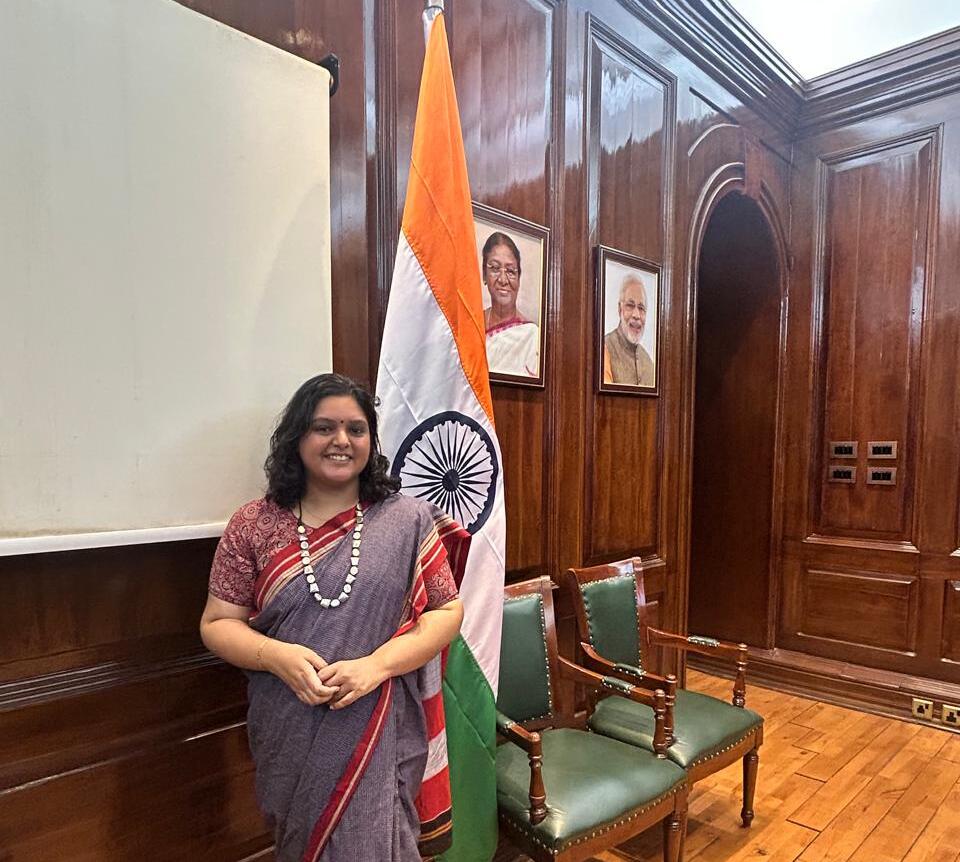

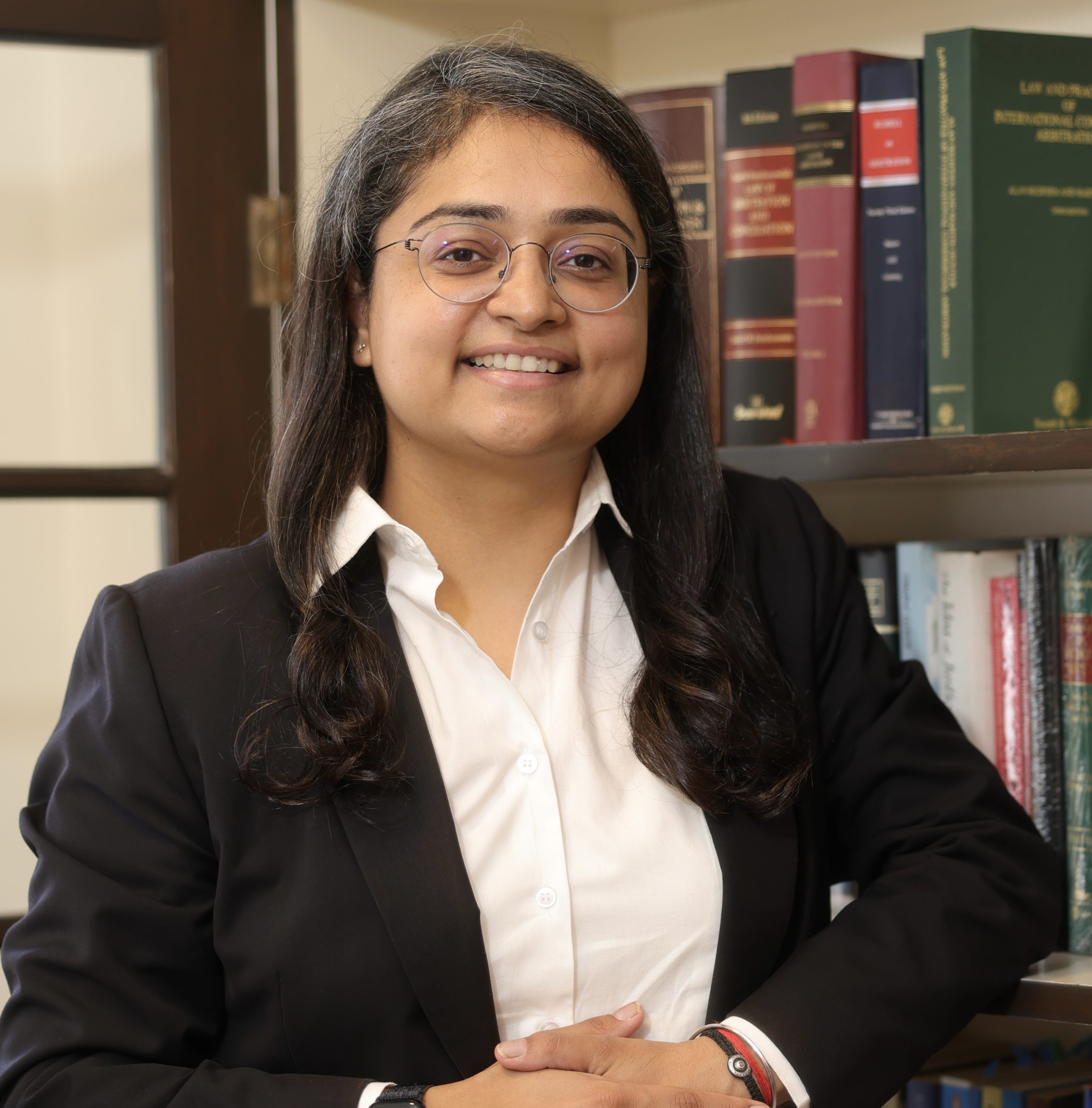



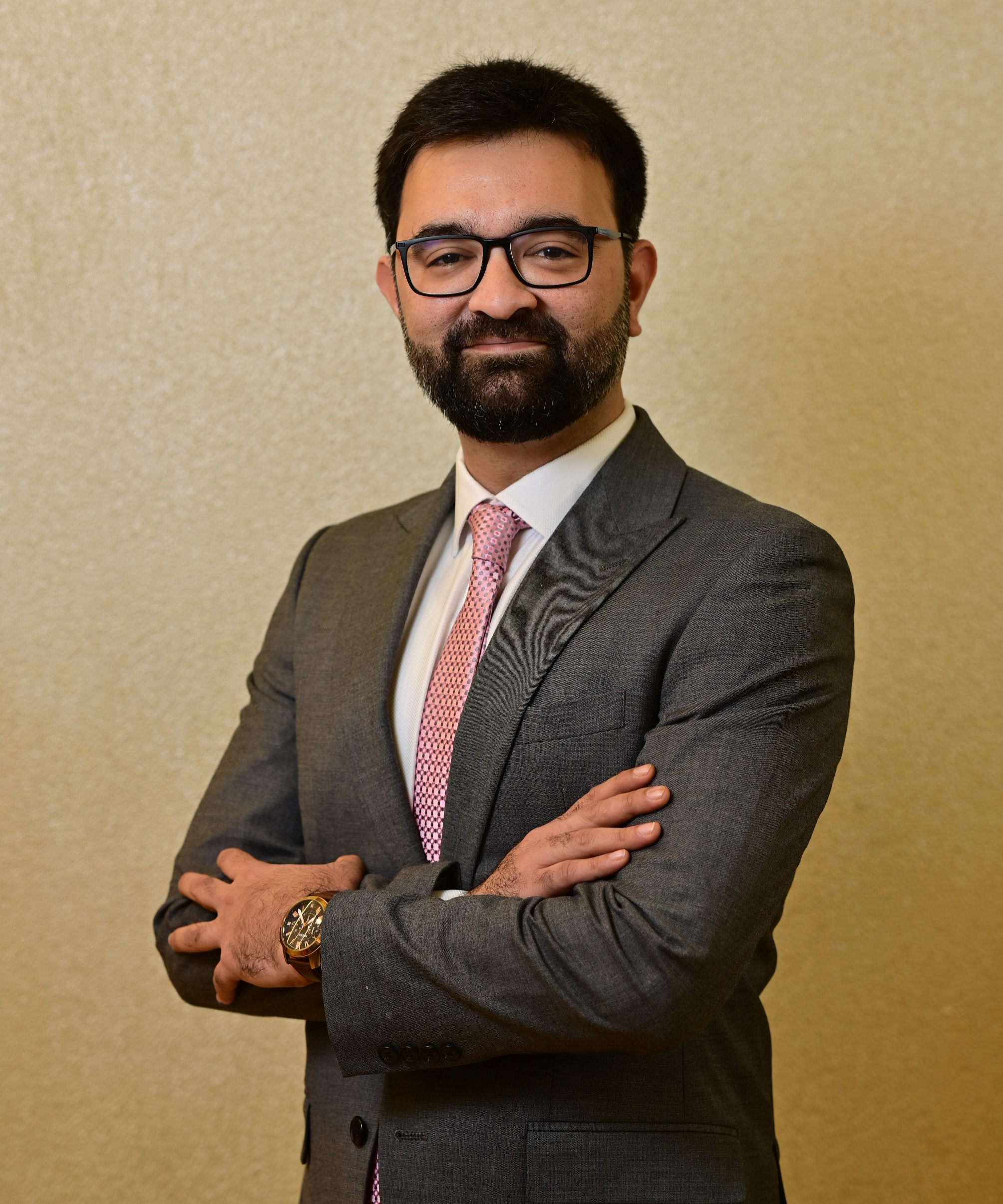

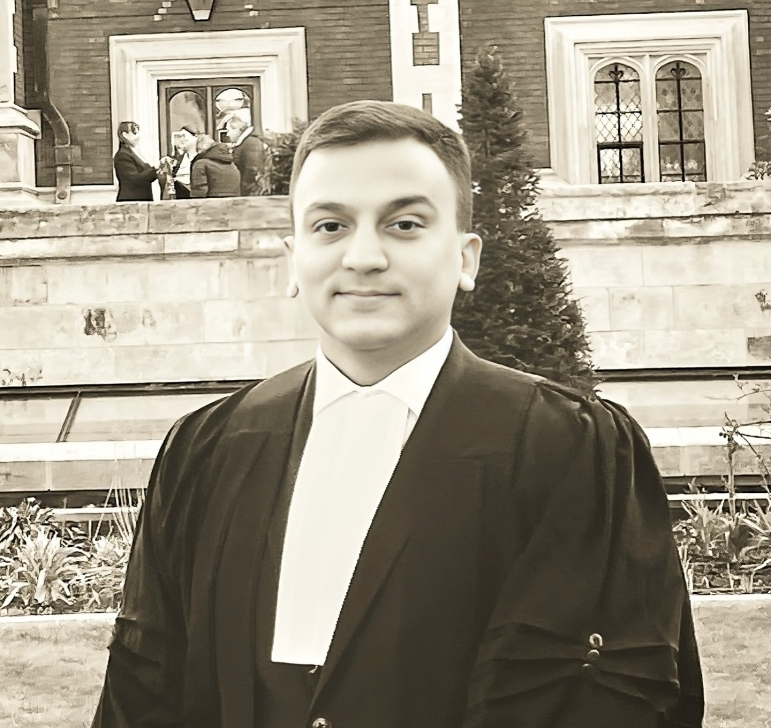








 Allow notifications