Tag: KIIT

  • Bhagavath Krishnan, Associate, HSB Partners, on work experience in litigation at HSB Partners

    Bhagavath Krishnan, Associate, HSB Partners, on work experience in litigation at HSB Partners

    Bhagavath Krishnan is a 2013 graduate of KIIT Law School. During the course of his education, he interned with several reputed firms including Wadia Ghandy & Co., AZB Partners, Kocchar and Co., Vichar Partners, Iyer and Thomas, Blue Cross and APSHRC. Immediately after graduation he joined the litigation team at HSB Partners as an associate.

    In this Interview Mr. Bhagavath talks to us about:

    • His time at law school
    • How he chose his various internships
    • How to climb the ranks in a litigation firm
    • Working as an associate of a litigation team


    How would you like to introduce yourself to the legal fraternity?

    A small time, happy-go-lucky Vakil with big dreams.


    Why did you decide to choose law as a career? Is there anyone in your family who motivated you to opt law?

    My father was a lawyer. He doesn’t practice now, though.

    So, when I was a kid, I would hang out at his office after school and would act as if I am the senior there. My morning chore was to check the cause list for him and underline wherever his name appeared. I would take his books and mark as if I am correcting an exam paper and sometimes I would just sleep on his lap when he is in the middle of a meeting.

    Naturally, when I had the option to choose a career, I wanted to do what my dad did for a living. He didn’t like my choice of profession though. But I want to be better than my father in his own game. That is why I chose law.


    How was your life at KIIT School of Law? Did you find that your law school education prepared you for your current life?

    Oh yes! Life at KIIT was the best I could ask for. I was part of a very lucky batch which was privy to some fantastic professors. I still remember how Prof. Ajjappa taught us how to write a citation! Constitution classes by Mr. Mustafa with his Urdu couplets (with translations from my friends) are unforgettable. I believe when you are in classes where such stalwarts are teaching, your tool-kit is in place.

    But I think more than the classes, the people I met changed the way I think. There were students from all over the country. From the interactions [academic – 10% or otherwise – 120% (brilliant math!)] with them, I understood that a lawyer’s best tool is to gauge what the other person wants.


    How did you choose your internships? Are there any such specific things that one should keep in mind while applying?

    bhagavath-krishnan-2My boss has always told me that one should always have an end-game. My idea was very simple. I always knew I would be practicing in Chennai. I had to muscle all the contacts I could. So I made sure I did most of my internships in Chennai.

    I was very lucky to meet so many lawyers (including my current boss) who guided me. I am grateful to all those who gave me work when I stood near their cabin/cubicle asking “Sir/ Madam, is there anything I may work on?”.


    How would you advice a law student if one has to start on to preparing for a career while in college?

    To be frank, I am not the best person to advice someone. I think everyone has their own way of working their career out. There is no straight jacket formula. The fun part in this profession is that you can chart your own path. So, one heads-up (not advice!) I would like to give to law students is to be sincere at work. I still churn out wrong drafts, but I am sincere at correcting it and getting it right the second time.


    Could you tell us a bit about your internship experiences?

    I think I enjoyed my Internships more than the actual classes. All my internships were very interesting. I think I was very lucky that I interned with lawyers who were very patient with me. They taught me how to research, how to draft. Most importantly, I learnt how Madras High Court works.

    Like I said earlier, internships are very important and I made the most of all of them.


    You had interned in HSB Partners, Chennai in second year of law school. From an intern to associate at HSB Partners, how did it happen? What are the important attributes for a fresher to work on?

    I manage to do most of the litigation work because I love doing it. I just happen to work alongside a great team of lawyers who are good colleagues.

    My HSB experience cannot be explained in words. My boss, Mr. Srinath Sridevan is someone I admire and look up to. Although there have been many instances where I have wandered off, he has helped me focus. The opportunities that he gave me changed my life.

    HSB is a place where you can learn a lot. So as a fresher, you can make the most of it. My colleague advised me in my first year not to restrict myself to one field. He told me that as a fresher, one can work on anything one wants to. Luckily, HSB provided me with all the opportunities I asked for.


    Being head of the litigation team, how do you manage the Court schedules and office work? What all methods do you adopt to deal with the clients?

    I don’t think it is difficult to manage court schedules and office work. I agree that at first, you will be overwhelmed by the situation and the days’ work. But one will get used to it after sometime.

    With respect to clients, I understand that most of them are anxious and nervous when they come with the brief. So, I found that they appreciate it if you tell them the plan of action and how it is going to be carried out. There is no point fighting with them – after all they came to you because they have a problem. I try not to add myself as a problem.


    With these hectic schedule at work, coming to office at the earliest and leaving the office last, how do you balance your work and life?

    I appreciate that you have gone through the office register.

    Also, the work I am doing now is just half as much as my seniors (at HSB and others) did in their initial years. I just hope I get to do more work. Everything else will fall in place. So, I just give my best.


    Are you planning to pursue your higher studies sooner or later?

    No. I don’t think I can take a break from going to Court. I am used to the Ten-Thirty Tension. So, that’s not my cup of tea for now.


    What would be your parting advice to our readers?

    Heads up. Life as a lawyer is fun. It is best experienced when you are not scared of failure. So go ahead and give it your best.

  • Ankur Mishra, Associate Attorney, on how to draft patent specifications for Indian, Malaysian and Canadian Patent Office

    Ankur Mishra, Associate Attorney, on how to draft patent specifications for Indian, Malaysian and Canadian Patent Office

    Ankur Mishra graduated from KIIT University, Bhubaneshwar in 2013. At present, he is an Associate Attorney at KAnalysis Legal, New Delhi.


    He has an experience in drafting patent specifications for Indian, Malaysian and Canadian Patent Office. He drafts responses to objections in patent applications and conducts patent prior art search and trademark search. He also prepares Patent application, Trademark application, Copyright and Design registration applications.


    In this interview he talks to us about:

    • The importance of Science background for patent drafting and prosecution.
    • The importance of choosing honors in IP during LL.B. course.
    • The strategy before drafting and filing a patent application to avoid potential infringement.
    • Obtaining patent protection in foreign countries.


    Most of our readers are young lawyers and law students. How will you introduce yourself to them?


    Current Association: Associate Attorney at KAnalysis Legal, New Delhi. I graduated in B.Sc. LL.B (Hons. in IP) from Kalinga Institute of Industrial Technology (KIIT) University, Bhubaneswar in 2013. It is very important for a law student to decide the interested area of law in which they feel interested and comfortable to pursue their career. Since I opted for B.Sc.LL.B with biotech as a major subject in B.Sc., interest for Patents and general I.P developed in me. During the second year of the course, the students should focus on the interested area of law which they decide for their career. I decided to honors in Intellectual Property Law after the second year during my LL.B course. I interned at several I.P Law firms in their patents and trademark department which provided me the opportunity to learn the practical aspects of the I.P Law and then I was able to appreciate the theoretical knowledge with practical skills required for patent drafting and strategy for I.P rights. After completion of my LL.B course, I have been associated with I.P law firm in New Delhi and working in the areas of Patents, Design, and Trademarks law since 2013.


    Why is Science background necessary for patent drafting and prosecution?


    Science background is important for the drafting of a patent application and prosecution because generally the patent applications comprise of scientific terms. The drafter should have a sound knowledge of the scientific terms in order to draft an excellent patent application and provide the best disclosure without any confusion in the minds of the examiner examining the application. If the drafter understands the scientific terms, then he/she is able to appreciate the invention much better throughout the specification. Science background helps you appreciate the different compositions, parts, components or methods of the inventions. An invention may comprise of various scientific knowledge, methods or components which the inventor has disclosed to you along with the invention, but they all cannot be claimed, having a science background here will help you to highlight the portions of the inventions to be claimed. Science background helps you in preparing your submissions before the examiner during prosecution of the patent application. It helps you differentiate your invention from the other already existing prior arts.


    What is the importance of choosing honors in IP during LL.B. course?


    IP is an emerging field; IP plays an important role in today’s competitive world. A company with strong IP rights can flourish with a tremendous speed in the market. Companies, industries, and commercial organizations are becoming more diligent about protecting their IP rights and hence there is, and there will be demand for IP professionals in the legal field too. Choosing for honors in IP will provide students gain much deeper knowledge than the general IP course because in IP honors almost all the areas of IP are taught elaborately which will help during practical implementation. Since IP law is an emerging area in the market, those who are opting for IP honors will always be preferred in the IP industry.


    What is the importance of internships at IP Law firms?


    Internships in IP law firms provide the students to learn the practical aspects of IP Law. Internships provide the basic practical knowledge and skills required for starting a career in IP Law. Internships in IP law firms provide the student to learn the rules and regulations to draft and prosecute the IP applications. There are several forms which need to be filled and filed along with the IP applications in compliance with various Rules; internships provide exposure to those Rules and forms.


    What should be the strategy for drafting and filing a patent application to avoid potential infringement?


    The attorney should run extensive prior art search in order to determine the novelty of the invention. Sometimes it happens that the invention thought to be a novel by the inventor is available in the prior arts. If the invention is similar to already patented inventions, then it will result in infringement of the already existing patent. Analyzing the prior arts prevents the applicant from the huge loss of money and time if the invention is not novel because litigation and attorney fee may cause a huge expenditure to the applicant in case of infringement. So it is advisable that the applicant must always ask the attorney to do a detailed prior art search and provide an analysis of the similarities and differences between their invention and the prior arts. The applicant must analyze the Prior Art Report provided by the attorney and accordingly decide the future course of action.


    When should I begin investigating the patentability of my idea?


    The moment the inventor develops the idea for invention he\ she should immediately start searching for the relevant prior arts and determine the novelty of their invention. Delay in investigating the patentability may result in losing time and money to the inventor.


    What is the first step to obtaining a patent?


    The first step to obtaining a patent is to file a provisional patent application as soon as possible and then work on the invention thoroughly to file a complete specification within 12 months from the date of filing the provisional application.


    How long does it take to get a patent?


    It takes around three to four years in India and US to obtain a patent.


    Someone else is making or selling my patented device. What should I do?


    There are few steps required to be taken before determining the actual infringement by another party. First, you should compare your patent with that of the infringer’s products. It sometimes happens that the infringing product or method might seem to be the same as the patented one but they might very well different in the technical aspects. Secondly, the patentee should compare his/ her claims with infringing products or methods; then the patentee has options to proceed legally against the infringer. The patentee can send a ‘cease and desist notice’ to the infringer demanding immediate withdrawal from manufacturing and selling the products. The patentee may then offer the infringer to enter into patent licensing agreement. If the infringer agrees to enter into a licensing agreement, then it will benefit the patentee regarding royalty. If the infringer does not comply with the cease and desist notice then, in that case, the patentee has the right to file in an infringement suit against the infringer and claim monetary damages as well as an injunction.


    I would like to obtain patent protection in foreign countries. How should I proceed?


    For obtaining patent protection in foreign countries, the inventor should file foreign application within 12 months from filing the initial patent application which the applicant wants to take as a priority. The inventor can also file a single patent application under the Patent Cooperation Treaty (PCT Application) and take it as priority application to file a patent in signatory countries. The applicant after filing PCT application should file a national application in signatory countries within 30 months from the date of PCT application (31 months in a case of European Patent Office). The inventor can also directly file a foreign application with the respective Patent Office of any country where he/ she desires to obtain patent protection.


    What is the proper way to use a trademark?


    Before adopting any mark as a trademark for any product or services the applicant should first determine the availability of the mark to be used as a trademark. The applicant should request the attorney to conduct a search for the similar trademarks already applied, registered or is already being used by another party. If the mark is not being used, applied or registered by anyone then in that case the applicant should immediately file the trademark application. The applicant should use the applied mark extensively and if possible, should show the prior use of minimum three years before filing the trademark application. However, the applicant can also file a trademark application comprising any mark, logo or device which is proposed to be used by the applicant in future.


    Who can register a trademark?


    Any person including organization, associations or company who has been using the mark or intent to use the mark in future may apply for trademark registration.


    What are the steps to trademark registration?


    Steps to trademark registration are:

    (1)  Filing of a trademark application with a prescribed fee of Rs.4000.

    (2)  Issuance of an application number by the registry.

    (3)  Examination of the application.

    (4)  Issuance of an examination report comprising objections of the registry.

    (5)  Filing written response to the objections raised by the registry.

    (6)  Appearing in hearing. The applicant may also file an affidavit of use with supporting documents during the hearing.

    (7)   If the application is accepted, the registry will issue Letter of Acceptance and publish the mark in official trademark journal. The trademark application is open for the opposition after publication; the opposition should be filed within four months from the publication date. If there is no opposition, then the registry will issue the registration certificate.


    What guarantee is there that an application won’t be rejected?


    There is no such guarantee. There are several grounds prescribed under the Trademarks Act for refusal and removal of a trademark. If the trademark application abides by all the conditions and rules required for registration then, in that case, there are 100% chances of registration.


    What should be your advice to our readers?


    Intellectual Property Law is an emerging area as a career for law students. One who wishes to pursue IP as a career must be focused and shall study specialized course in IP. If a student possesses science background, then it becomes a bit easy for him/ her to draft and prosecute patent applications. Trademarks, Designs, and Copyrights are other IP areas which do not require much technical background, knowledge of general IP laws will help. Students should pursue internships in IP law firms to get practical knowledge about IP applications and their prosecutions.

    Individuals and corporates should be very diligent about their IP rights and should take all the measures to protect them because in today’s world ‘everything is IP and IP is everything’.


  • Siddhant Mishra on founding Aap Vakeel Hain and lawsheet.com

    Siddhant Mishra on founding Aap Vakeel Hain and lawsheet.com

    Siddhant Mishra is  a final year student at School of Law, KIIT University, Bhubaneswar. During his law school days, he founded the popular Facebook page, Aap Vakeel Hain and lawsheet.com, a website for law students.

    In this interview, Siddhant talks about:

    • His journey through law school and the internship experiences.
    • Founding Aap Vakeel Hai and lawsheet.com
    • Challenges faced in his entrepreneurial journey

    Could you share with us for deciding to study law? Did you have lawyers in your family?

    My foray into studying law was unplanned as I do not come from a legal background and am a first generation lawyer.

    You know you are a law student when math’s is..!

    I choose Humanities as my study stream for my plus two boards; initially graduation in Arts was the only formidable option left with me. It was more by chance than by choice that I got into the Legal Profession.

    How did you choose KIIT as the law school to attend?

    Not being able to get through CLAT, I prepared for KLSAT and joined KIIT. KIIT helped in gaining exposure in an array of fields, here we learned through experimentation and from our own mistakes. On academics, we had a robust curriculum, and the standards are pretty good which helped in getting introduced to the world of legal practice. Campus has a cosmopolitan crowd & I made some of the closest friends, learnt new things (good and bad).

    What co-curricular activities have you partaken in your law school years so far?

    Being a member of committees and societies helps in building one’s personality and career; it taught me the skill of networking that is terribly underrated in our system. At KIIT I was associated with committees conducting in-house and national events which helped me stay motivated and added a good blend of work with fun.

    siddhant sl 2

    Can you talk about your internships, and how they helped you?

    Internships were a rewarding experience for me. I was fortunate enough to flavor different kinds of work experiences, having got the opportunity to work with Law firms, NGO’s, Publishing House & in the chambers of some eminent practitioners; all this helped me learn researching and drafting. I learnt time management and prioritizing, which, I believe, hold equal value in our profession. Working as an intern in the chambers of Shri Mohan Parasaran (Ex- Solicitor General of India) made me realized that my interest lies to work as a litigant or to start with something of my own & that I was never interested in working in a corporate structured firm. In my opinion internships give a wider approach to the law students.

    You’re a prolific blogger, and you run a website ‘AapVakeelHain’. Can you tell us why you started both?

    The very idea of starting a rostrum for law students came in the second year of my college when I realized the dynamic transition i.e an online interface which is about to change the legal industry; but I was confused as which model will hand in glove and build a strong community for law students . Facebook was the answer! Being a student of second year I felt I will sound mindless if discussed this idea with anyone, so I started the work by my own.  I created a page with the name “Aap Vakeel Hain” which prospected me as spellbinding and start uploading sketch works commonly referred as “memes” depicting the subtle and overt hilarity of Law School.

    “A Law Student who loves to write & marketize”

    I started writing and blogging for few websites on my propositions where I get some good replies, met with few excellent mentors and worked hard in crafting my skills, later few of my write-ups got projected in the local newspapers &it’s from here when I decided to transmute the idea of a Facebook page into a Website.

     How was ‘AapVakeelHain’ been received by the legal fraternity so far?

    Surprisingly it went in an year time, with the sketch works being liked & shared from hundreds to thousands & website blogs started receiving fair traffic in a year time. Aap Vakeel Hain is currently running with the highest followers (30k+) in this segment and has a strong and growing online presence. We have built a good name, strong networks and hosted series of events in collaboration with Law Schools across the nation. Journey so far is really good.

    What do you hope to be the future of ‘AapVakeelHain’?

    “The best way to predict future is to create it” at present I’m tied in creating a team that will be looking for the upcoming plans. Aap Vakeel Hain will be registered as a company in the near future and will be enduring many marketing & networking programs which will help in solving legal education with online solutions on which I’m active on. I wish the future comes one day at a time.

    How has a strong and growing online presence helped you? What are the major challenges you face?

    A strong online presence has developed an advanced networking skills, I have led multiple projects; developed and implemented new policies and procedures.

    Starting a website requires little money which my father pooled in, he was hopeful and happy to hear my purpose & so were my friends Aqib Alam ( Content Creator),  Nishant , Snehil, & Akshay.

    Aap Vakeel Hain was initially run and managed single-handedly which at times become troublesome in striking a balance with other ongoing work, as you have to update it daily or else the readers will lose their pursuit and page will weak its reach. I tried to find few potential administrators but then it didn’t work out and it came on my head all again.

    There came a time when I was not too sure to expand this whole Idea, thankfully I had few good tie-ups which helped in administering the tasks swiftly.

    Aap Vakeel Hain is a self sustaining and profit earning entity now.

    What are your plans after post-graduation? Is a masters in the pipeline?

    I will go for LL.M which will allow me to further specialize in Criminal Law and thus prepare me better for my career as a litigant.

    SuperLawyer.in serves the best when it comes on sharing the career insights, (specially the detailed interviews discussing about the LL.M programs & fellowships) browsing the website directory will be of great help for law students.

    Can you tell us about your new venture lawsheet.com?

    “Lawsheet.com” A website by law students for law students, is an upcoming project which runs parallel with Aap Vakeel Hain; designed with a vision to help you through Law Schools.

    This website will be maintained and written by several different law students from different schools and in different years of their studies.

    Aside from offering their tips, advice, and experiences, the bloggers will be able to use it as a sort of outlet and stress reliever from their hectic law school schedules.

    You plan to help law students with greater visibility through lawsheet.com. How do you plan to achieve it?

    • Lawsheet, among many other things, will depict entries about current events, technology and social networking as it relates to law.
    • Lawsheet aims in sharing how to decide if law school is best for you while offering what must-haves you are going to need and how and what you need to prepare for important exams.
    • Lawsheet will talks about everything – from eating habits, to studying habits, to writing papers and case briefs!

    We are on it, hopeful to launch in the coming months.

    What motivated you towards the entrepreneurial initiatives you’ve taken?

    Primary motive is the desire to start something of my own. I’m not sure what’s coming down the curve but it is a thrill. We all have that one idea running in our mind of which we are sure of, what’s required is to implement it.

    While I was scripting for my Interview I took a break and watched TVF Pitchers (an Indian Comedy Drama Series) in which Naveen (Played as CEO of a upcoming venture) highlights the difference that exists in the European and the Indian model of Entrepreneurships, where in Europe they will ask “WHAT is the Model” in India they will ask “WHY Entrepreneurships”

    This difference in the support and attribution systems requires a reformation.

    What are the unconventional career alternatives for law students out there?

    A degree in Law doesn’t guarantee you a career in Law!

    • Entrepreneur- A degree in Law will help in understanding and negotiating contracts related to the business.
    • Politics- Both house of parliament are filled with politicians pioneering a degree in Law. Few even managed with fake degrees!
    • Journalism/Writing- I have a name “Tanuj Kalia” founder of Lawctopus and a graduate of WBNUJS wrote a book “Law as a career” you may start scripting yours.
  • Pratyush Nath Upreti, Advanced Masters, (LL.M) Intellectual Property Law & Knowledge Management at Maastricht University, on pro-bono work and the KIIT Law School experience

    Pratyush Nath Upreti, Advanced Masters, (LL.M) Intellectual Property Law & Knowledge Management at Maastricht University, on pro-bono work and the KIIT Law School experience

    Pratyush studied law from KIIT Law School, Bhuvaneshwar, he graduated in 2013. Being a citizen of Nepal, he chose India to pursue B.Sc. LLB. After the successful completion of his bachelors, he is pursuing Advance Masters (LLM) in Intellectual Property Law & Knowledge Management from Maastricht University, Netherlands on a scholarship. He had interned extensively through the years of law school and published nearly 30 articles in The Kathmandu Post. In this exclusive conversation with Pratyush, we talk about:

    • Education and experience at KIIT Law School.
    • Selecting the appropriate publishing companies for his journals.
    • Interning at Asian Network for Free Elections (ANFREL), Bangkok,
    • Being a Member of New IP Lawyer’s, a wing of School of Law and its research centre called SCule (Science,Culture and the Law) under the University of Exeter, United Kingdom.
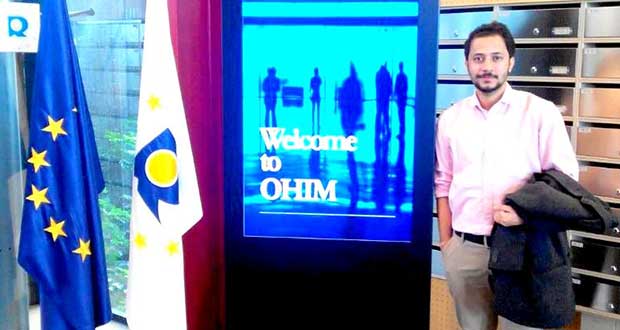
    • Undergoing exchange programmes at The Office for Harmonization in the Internal Market of European Union (OHIM), Spain
    • Pursuing LLM in Intellectual Property Law and Knowledge Managment from Maastricht University, Netherlands.


    Tell us a bit about your pre-college life. How did you choose to study law that too in India? Did you have lawyers in your family?

    I come from the Biratnagar, city of influential leaders in Nepalese politics. Being the youngest child of my parents, I began the journey of my student life by following my elder sister’s footsteps to one of the most prestigious schools of the city. In school, my inquisitive mind as a young student ran into almost all nooks and corners of the colorful life. I was not a great student but lived my life into the realm of education.

    When I finished my intermediary, civil war in the form of a Maoist insurgency ended with the signing of the comprehensive peace agreement and formation of a Constituent Assembly. Nepal was in transitional phase(still in transitional phase), we were taking the first step towards building a constitutional democracy. During the phase, many friends opted to go abroad for higher studies which were never an option for me.

    When I decided to peruse law there were very limited option in Nepal. Moreover, India is also not far away from Nepal, it was a convenient option. I was also attracted by the unique integration of law and science. So, I decided to join the B.Sc.LLB(Hons) stream in KIIT Law school, a newly born law school with a colourful dream, like that of mine of marking a mark of its own in the highly competitive legal arena.

    Yes, I belong from a legal background, my father is a senior advocate practicing in Nepal and my grandfather served as a Judge of Nepal. I think I represent the third generation of lawyers in my family.


    While in KIIT Law School you selected B.Sc. LL.B as your stream. What would be your advice to law aspirants about choosing a stream? Did it give you an edge over B.A. LL.B graduates? Does it have a long lasting effect?

    In recent years, legal education has rapidly changed. The unique integration of law and science is an attractive career option. The law and science offer plenty of opportunity in the sector of forensic science and Intellectual property law. During my short working experience, I have felt that there are high demands for lawyers with scientific/technological backgrounds. Anyone interested in B.Sc.LL.B should keep in mind the course structure of the college offering the course. Make sure they have good science faculty and if you are interested in taking biotechnology as a major then well-equipped laboratory is important. I was the first batch of B.Sc.LL.B(Hons) course in my college, but I had some laboratory works. Fortunately, My university had separate well-equipped Biotechnology faculty which was an additional advantage for me. Since, there is not much of crowd of lawyers with knowledge of both the field, a B.Sc.LL.B(Hons) graduates do have an advantage from a job perspective.


    pratyush-upreti-1

    If I were a young law student who never wrote an article, how would you advise me to get started given that you yourself wrote a lot?

    To be honest, I never pre-planned to write an article. Most of my articles are the outcome of my project which I did during law school or internship. Choosing a topic which is contemporary is important for publishing an article. I suggest law student to identify contemporary legal issues and continue as a project for the course. If you do your research honestly, then certainly you will end up publishing.


    How would you select a specific journal and approach them for publication? What are the things you look for in a journal before sending them your article for publication? Can you tell us the steps involved in researching and structuring an academic paper?

    Selecting a Journal is not easy, there are two important things, which I look before sending an article. Firstly, the journal timeline for a review process. When you research honestly, you get ambitious about the project and really want to publish in good Journal. But sometimes, a long review process of the journal is really frustrating. There were few Journals who replied me after a 15 months. It was really painful! But as a student you should never be discouraged by rejection or late replies. Before sending your article, it is important to know about the Journal well( just email and ask about timeline for review). Secondly, I see the focus area of a journalif your topic matches those area’s or related contemporary issues than your acceptance chances are really high.

    There are generally accepted ways of researching and structuring the paper. For me research is important, I try to gather as much of information from various sources like books, Journal, reports, internet etc. Once I gathered information, I tried to find contemporary issues/problem involved and put my thoughts in a logical way and roughly draft a research outline which will help not to divert from focus area. For any writing may be a newspaper or academic journal structuring is important. Your writing must reflect you thoughts and every section need to clearly link. Mostly importantly for academic writing reference/bibliography/footnote is very important. Generally, accepted standard structure includes Abstract, Introduction, research question, discussion (arguments advanced), conclusion/recommendation and bibliography.


    How did you plan your internships and how did you go about applying for these internships?

    (Pratyush has interned quite extensively through his 5 years at law school. Some noteworthy mentions are Anand and Anand; Asian Network for Free Elections (ANFREL), Bangkok, Thailand; Singh & Associates, Advocates and Solicitors; Sycip Salazar Hernandez & Gatmaitan Attorney At-Law, Philippines; The Ministry of Home Affairs, Parliamentary Affairs, Constituent Assembly and Culture, New Delhi, India; Enviro Legal Defense Firm, New Delhi, India and other places as well.)

    Early planning is very important to secure a good internship. Mostly, I planned my internship at least a 6-8 months before. This is important because, you can never depend on one organization or law firm. You need to file a several application. The application process depends completely on the institute which you intend to apply. Most of the organizations where I interned had similar recruitment pattern, I just applied online with a short cover letter and resume.


    What kind of work did you typically find yourself doing as an intern? Did your experiences vary significantly with the internships?

    I had a diverse internship experience. My task and workload as intern completely depend upon where I was interning. In law firms, I had long working hours and mostly I ended up doing a lot of draftings, research on several issues and assisted litigation team. Some of the research which I did in the law firm was published in law firms in-house Journals. On the other hand, in an organization you mostly do research work, they will make you involved in the ongoing project. During my school, I was fortunate to do two international internships. First, at Sycip Salazar Hernandez & Gatmaitan Attorney-At-Law, one of the biggest law firms in Philippines where I was involved in commercial and Intellectual property division. I mostly assisted the team with the prosecution of trademark, patent registration, review of technology transfer arrangement, franchise and distributorship agreement etc. Second, at ANFREL, I researched on several electoral issues and assisted drafting team of ‘Bangkok Declaration of Free & Fair Elections’. During my stay, I also got an opportunity to observe the election. It was a great learning experience.


    What comprised your work profile as a Legal Researcher at the “Forum for Protection of Public Interest (Pro-Public)”? Please share with our readers.

    Forum for Protection of Public Interest (Pro-Public) is one of the reputed organization in Nepal. It has a long history of contribution to socio-legal development in Nepal. Pro-public gives an opportunity a law student to voluntarily associate with the organization in different capacities. I was fortunate enough to associate myself with the organization during law school.

    During my undergraduate, I had an experience of research work. At law school, I worked as research assistant in University Grant Commission (UGC) main project titled “ Use of Forensic Science in Criminal Justice System: A futuristic Project”. Similarly, I did some research work for Cobalt Business Counsel Professional Corporation, Ontario, Canada for few months. Furthermore, my research internship with Enviro Legal Defense Foundation, Nepal Law Commission, and The Ministry of Home Affairs, Parliamentary Affairs, Constituent Assembly and Culture, was largely based on legal issued related to Nepal. Maybe this gave me an edge than other candidates during the recruitment process.


    Thereafter, you have joined Asian Network for Free & Fair Elections (ANFREL) as their Legal /Liaison Officer. Do you think, it became easier to get appointed because you have interned earlier at ANFREL?

    I don’t think so, internship experience helped me to get the position at ANFREL. ANFREL is a professional organization, they have transparent and heavy recruitment process. I came to know about the vacancy through a Newspaper. I did go through a screening process and had a very long interview by ANFREL Secretariat. Luckily, I got through the interview.


    pratyush-upreti-3

    What kind of work does ANFREL do? Please brief us about the nature of work and responsibilities you were entrusted at ANFREL.

    The Asian Network for Free Elections (ANFREL) was established in 1997, as Asia’s first regional network of civil society organizations focused on elections and election monitoring. It strives to promote and support democratization at national and regional levels in Asia. Since it was founded, it has served towards strengthening the democratization of countries such as Sri Lanka, Nepal, Thailand, Malaysia, Cambodia, Pakistan, Bangladesh, East Timor and Indonesia.It is one of the most trusted and reliable International Election Observation Group globally. They mostly focus on three area: (i) Election observation (ii) capacity building (iii) campaigns and advocacy.As Legal/Liaison Officer, I was involved in providing legal assistance to the ANFREL Election Management/Observer team. During my tenure, I reviewed national electoral law and assisted the ANFREL team in making Observation manual and reports. In addition, I was also involved in organizing and co-ordinating meeting with several stakeholder, civil societies, and politicians and also observed Constituent Assembly Election. I must say, I had a wonderful experience working with ANFREL. They have great working culture and ethics.


    Right after ANFREL, you went for LL.M. Why did you decide to go for higher studies?

    Initially, I wanted go right after my graduation but later decided to take a break of a year. There is no reason as such, I always wanted to continue my studies and then focus in practice.

    How did you go about choosing which college to go to for your LL.M. and did you ever consider Indian colleges? Was it the course or the university which mattered for you?

    I was very clear that I want to do LLM in Intellectual Property Law from abroad. Since, I have spent five years at law school in India so I didn’t want to have similar quality of education. So, never considered Indian colleges. The First thing I did was listing of colleges which offer LLM in intellectual property Law. I applied to three universities; School of Law University of New Hampshire (formerly known as the Franklin Pierce Centre of Intellectual Property) USA, Queen Mary University of London, UK and Maastricht University. I was accepted in all three. I got the scholarship from Franklin Pierce and Maastricht University and opted later.


    Tell us about your LL.M year at The Maastricht University, The Netherlands which you are currently pursuing.

    I am doing Advanced Master in Intellectual Property Law and Knowledge Management. It is a unique master program for lawyers, non-lawyers, and those with a degree in science of technology. It is popularly known as IPKM. The Advanced Masters IPKM are fully accredited by the Accreditation Organization of the Netherlands and Flanders (NVAO). The IPKM MSc is furthermore accredited by the European Patent office (EPO) for EQE remission. In addition, IPKM is a member of the European Intellectual Property Institutes Network (EIPIN) and a founding member of the Pan-European Seal Professional Traineeship Programme.

    Maastricht University is known for the problem-based learning environment where students are personally responsible for their academic education. The IPKM is taught in a very closed group, where the student analyzes the problems through discussions, exchange knowledge. The programme is taught in socratic teaching, often using real-life cases, mock trials and assignment (mind it, it’s not a piece of cake, it will dig you into the subject matter which we need to submit before class). The tasks are further discussed and analyzed along with lectures during class. Basically, it was fun working within a diverse class, amazing study visit. To conclude, IPKM provides a lot of opportunity for learning and networking. If you want to excel in Intellectual property, IPKM is the right choice! Go for it!!


    How difficult was studying abroad in terms of finding accommodation, finances and settling in? Are there any scholarships for studying at the Maastricht University?

    Not at all! Particularly, at Maastricht we have a very friendly student service center (SCC) which helps the international student in finding accommodation if needed. I didn’t have a problem as such, I found accommodation through online. There are facebook pages which provide information on accommodation, and most of them are very reliable. Maastricht University do provide Scholarships for International Students which are available on University Official website. I was lucky enough to get a UM High Potential Student Scholarship, which really made my life easy.


    How is the faculty & academic schedule (your typical day) at Maastricht? Given your experiences how would you pit Indian students with their foreign contemporaries?

    The faculty staff in the IPKM are very diverse and immensely supportive. It includes professor and practitioner from different jurisdictions, most notably Europe, Asia, and the United States of America. We had a very intense module on US Copyright Law taught by Professor Edward Lee, Director of the Program in Intellectual Property Law, Chicago-Kent College of Law, United States. Similarly, some of module was taught by Professor of Queen mary University, the University of Nottingham, and few class were taken by European Patent attorney etc. In addition, we have series of IPKM expert lectures by practitioner’s which enlighten us on contemporary IP issues. My day starts with waking up, and riding to the library, preparing for classes and assignments. There is always a number of readings for class, which are expected to be discussed in class. Generally, I return very late from the library in fact library is my sanctuary) and then I have to try and cook which I really hate.


    Was there time enough for non academic pursuits at Maastricht? How did you find the study-life balance to be?

    Not really! IPKM is very hectic!! (That’s what you expect from competitive course) we get few days off in Christmas. But Maastricht is a beautiful place, there are several things to do besides academic. On balancing study-life, I am the right person to answer that, I always struggle.

    Tell us about the course structure of an Advanced Master (LLM) Intellectual Property Law & Knowledge Management at Maastricht University.

    The Advanced Masters in Intellectual Property Law and Knowledge Management (IPKM ) offered at Maastricht University Faculty of Law are designed to train graduates to work as legal practitioners or management in knowledge-intensive industries and research institutes. The IPKM offers two distinct degrees:

    (1) A LLM degree focusing on comparative IP litigation and/or entrepreneurship, valorization and IP management

    (2) A MSc degree for graduates of science and technology aspiring to become IP specialists, knowledge managers, or patent attorneys.

    The IPKM course is designed in three main pillars

    (1) the common course for both LLM and MSc student are taught together

    (2) mandatory course for both LLM

    (3) mandatory MSc track.

    Some of the intensive modules offered is Intellectual Property in USA and Asia, patent drafting, IP enforcement, Intellectual Property & Life science among others.

    For more information, you can visit

    (http://www.maastrichtuniversity.nl/web/Faculties/FL/AdvancedMasterInIntellectualPropertyLaw).


    How did you benefit from the different programmes you took up after admission to IPKM?

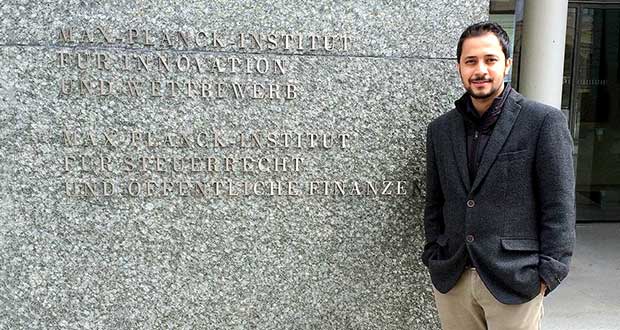
    (Pratyush underwent a couple of training and exchange programmes after he had secured admission at Maastricht University, some of which are Module on Community Trademark at The Office for Harmonization in the Internal Market of European Union (OHIM), Spain; Study visit at European Patent Office, Hague, Netherlands; Attending Congress of European Intellectual Property Institute Network (EIPIN) organized at Maastricht University and Max Planck Institute for Innovation and Competition.)

    IPKM as well designed course which aims to provide plenty of learning opportunities for the student. I had one module in University of Alicante in The Office for Harmonization in the Internal Market of European Union (OHIM), Spain, it was a great experience. The modules were taught by European trademark/design examiner and practitioners. Similarly, Congress of European Intellectual Property Institute Network (EIPIN) held at Maastricht and Max Planck Institute for Innovation and Competition/European Patent Office were two days intense discussion on contemporary Issues of Intellectual property Laws. In both, the event sessions were addressed by scholars from Europe and The United States. Personally, I really enjoyed these events, you get to know emerging issues in IP Law and also an opportunity for networking.


    Please share a few words about you being Member of New IP Lawyer’s, a wing of School of Law and its research centre called SCule (Science,Culture and the Law) under the University of Exeter, United Kingdom.

    New IP Lawyer’s is a network of young academic and practitioner in IPR. It is the initiative of Ph.D. student at the University of Exeter and have network representative at the University of Oxford. The network aims to encourage and facilitate discussion of the issues related to IP law both by lawyers and non-lawyers. Recently, the network successfully held the first annual conference: who owns the Arts and Sciences? At the University of Exeter where renowned academic like Professor Lionel Bently(University of Cambridge), Professor Charlotte Waelde among others were key speakers. The Newtork is relatively new, in a very less time it has received overwhelming support. New IP Lawyer’s is also aiming to organise seminar series and several academic event. Stayed tuned at http://newiplawyers.wix.com/newiplawyers


    Is writing is your hobby? How do you manage to write for newspaper on various issues beside your LL.M studies and other engagements?

    (Pratyush has published approximately 30 newspaper articles till date at The Kathmandu Post& among others, on various issues.)

    I enjoy writing it connects me with readers. I never took writing as a hobby, I started writing during my undergraduate. When I was studying in India, I always wanted to involve in socio-legal issues and give my opinion on such matters. The newspaper was the perfect forum to share my thoughts and involved in several issues happening in Nepal. After law school, I continued writing and still I regularly contribute on socio-legal/political issues in Nepal. It makes me happy when readers send feedback or point of disagreement on issues and it also helps to improve writing. I never take writing as a burden, whenever we come across interesting issues we always have an opinion, just that I gather my thoughts and write. Most important, writing gives me a lot of pleasure; I feel a sense of freedom.


    What is your responsibility as a student member of Maastricht University for European Intellectual Property Institutes Network (EIPIN).

    IPKM is a member of the European Intellectual Property Institutes Network (EIPIN). Every year few students are selected to represent as a student member of EIPIN where we get the opportunity to attend EIPIN congress and participate in the group projects. I was assigned with team project which consists of five student from Queen Mary Intellectual Property Research Institute(University of London), Munich Intellectual Property Law Center (MIPLC), Centre for International Intellectual Property (CEIPI) University of Strasbourg, Magister Lvcentinvs (University of Alicante). My team has already submitted our research project titled “Permitting Transformative Use and Copyright Law: The Case of Parody as Innovation” to EIPIN committee. It had a great time working together with fellow students.


    What are your future plans? How do you plan to use the experience and the knowledge gathered at Maastricht?

    I successfully defended my thesis, just winding up my course at Maastricht. Most probably I will be returning home in August, and practice litigation. Although, Intellectual Property regime is not very well developed back home which makes it more challenging to take IP as a career but again it give an opportunity to participate in the process to develop the field. The experience and knowledge gathered at Maastricht surely have given me in-depth knowledge about global IP practice which will surely help in instituting policy reform in Nepal.


    And any word of advice for all the young law students out there?

    Learn, question and make the most out of the law school. Make sure you enjoy your student life as well. Good luck!


  • Somrita Ray, Legal Counsel, ICICI Lombard, on research papers and job experience

    Somrita Ray, Legal Counsel, ICICI Lombard, on research papers and job experience

    Somrita Ray graduated with a BBA.LL.B.(Hons) degree from KIIT Law School in 2014. As a student she has been quite active and participated in many parliamentary debates, moot court competitions, MUNs and conferences. She also has an excellent series of internships including UU&AP, Samvad Partners, Tata Motors and Fox Mandal. She also has multiple publications to her name. By the time she graduated, she had received a job offer from ICICI Lombard General Insurance Company Ltd. and is currently working there.

    In this interview she shares with us:

    • Importance of co-curricular activities and internships
    • Extensive experience in Research papers
    • Recruitment and work at ICICI Lombard


    Our readers consist of law aspirants, law students and young lawyers. How will you introduce yourself to them?

    Hi, it’s indeed a pleasure for me to introduce myself to everyone on this forum. I’m a 2014 law graduate from School of Law, KIIT University, Bhubaneswar. I am from Calcutta and was born and brought up there. Presently, I am based out of Mumbai and work for ICICI Lombard General Insurance Company Ltd. as an in-house legal professional.


    Tell us about your pre-college life? When did you decide to take up law as a career? Did you have lawyers in family?

    I did my schooling from Ashok Hall Girls’ Higher Secondary School, Calcutta. By the end of my 10th Standard, I was more or less convinced that pure mathematics and science were not meant for me. I took up Commerce after 10th. However, I did not want to pursue CA or CS. Instead, I wanted to pursue something that would challenge my ability to reason but at the same time would allow me to be creative and flexible. Thus, law appeared to me as the best possible career option.

    I come from a family of Chartered Accountants and Engineers. I am a first generation lawyer.


    somrita-ray-2

    What motivated you to choose law as a career? How did you get through to School of Law, KIIT University?

    The sole motivation to choose law was my innate conviction and the hallmark of prestige attached to the legal profession. A career in the legal profession is both intellectually challenging and personally fulfilling. Besides, no other subject allows you so much dynamism, creativity and flexibility. My admission to the five year Integrated B.B.A LLB (Hons.) program happened post clearing the common all India entrance test organized by KIIT University (KLSAT) in the year 2009.


    As a law student which activities did you participate in? Did you have any guidance on how to go about your academics and co-curricular activities?

    Besides participating in parliamentary debates, I represented the University as a speaker in few all India moot court competitions. I also participated in various workshops, seminars and conferences. Balancing both academics and co-curricular activities at the same time was pretty challenging. However I was lucky to get significant guidance and support from the faculty members and my seniors who happily extended their helping hand at the time of need.


    Our readers would be quite curious to know how you went about securing your internships. Please share your internship experiences.

    (Somrita has interned with Udwadia Udeshi & Argus Partners, Samvad Partners (formerly Narasappa, Doraswamy & Raja), Tata Motors Limited, Fox Mandal Associates, Tata Motors Finance Limited, PUCL.)

    To be honest, besides making timely personal applications, I always remained active on LinkedIn which helped me securing internships at firms like Udwadia Udeshi & Argus Partners and Samvad Partners. LinkedIn is an excellent forum for professional networking and if explored and utilized wisely, it can work wonders. Besides this, I believe a well drafted and tailored CV plays a significant role in fetching an internship. Further, getting an internship through personal application requires one to prepare a well drafted cover letter and vigilant follow up.

    My internship experience with corporate houses and with a law firm was different from one another. During my law firm internships, I was mostly allotted research work relating to company law, securities law, banking law and labour law. Besides, preparing case law dossiers, I had been involved in due diligence exercises being undertaken at these firms and preparing memos on various legal issues. Internships with a Corporate like Tata Motors provided me with a better understanding of the company’s operational aspects. It gave me an insight to the specific legal issues peculiar to the Company and the industry/sector to which it belongs and learning to mitigate the same keeping in mind the need of sector regulator, community and other relevant stakeholders.


    How relevant did you find your law school education with the kind of work you were required to do at law firms?

    I believe what we study at law school more or less forms the basis of the kind of the work that we are expected to do at law firms. However, the practical scenarios that we face at internships are far different from the theoretical situations taught to us at law school. At internships, we are required to look into practical application and interpretation of laws besides the theoretical basis of the same. While at law school we learn the theoretical aspects of law, at internships we inculcate the legal-analytical approach and hence enrich ourselves with the practical application of law. Moreover, internships immensely contribute towards developing a pragmatic approach of a “professional” which alone law school education might not guarantee.


    You have had published papers in various prestigious journals. Can you give us a few tips to ace the art of paper writing?

    The best and the easiest way would be to work sincerely on the projects that one submits as a part of the curriculum or internships. Two of my publications are a result of the topics that were allotted to me during my internships to research on. A well written project can be easily converted into a paper by adding the desired amount of research and structure as per requirement. This can be a good start for the students who have not yet ventured in the field of writing. For those who have already tried and tested their writing skills, they may identify topics of their interest having legal relevance and then pursuing or taking the same to its logical end.

    Some handy tips for writing a paper:

    • Having a thorough understanding of the topic coupled up with proper research
    • Customizing and structuring the flow of the paper
    • Working on areas like grammar formatting and spelling
    • Writing and editing through several drafts to perfect the final piece


    How has your mooting experience been?

    It has been a great learning experience! It helped me think like a lawyer (smiles). I thoroughly enjoyed putting those extra hours and spending those sleepless nights cracking the moot problems and preparing memorials. Mooting tested me on a number of skills like researching, drafting, arguing and keeping my cool under pressure. I would not be able to put in words all that I gained from this experience but among other things it taught me how to work with a team with differing expectations, and unequal levels of execution and opposite countenances.


    You have been a member of multiple committees while in law school. Do you think these enhanced your skill-sets? Please share a few of your memorable experience.

    Definitely it did! Being an active participant in these committees not only helped me to develop an all-round personality and improve my interpersonal skills but also helped me refresh my burdened mind. Talking about few memorable experiences, I thoroughly enjoyed myself planning, structuring, and executing events as a part of the events committee during my law school fest. Besides having fun, I also learnt the importance of team work and the art of management. I was also part of the training and placement committee of my law school and the entire process was immensely rewarding in terms of the quality of interaction, sharing of ideas, discussion on strategies, etc that I had with the prospective recruiters.


    somrita-ray-3

    Soon after graduation, you joined ICICI Lombard as a Legal Manager. How did you go about bagging this job?

    I managed securing a job with ICICI Lombard through the campus placement exercise in December 2013. I believe three simple things worked for me in securing the job…

    • Knowing the basics well
    • Confidence and composure
    • Being sincere in what I was trying to convey


    Please tell us about the recruitment process at ICICI Lombard?

    The recruitment process at ICICI Lombard was quite well structured. In my case, we had a campus recruitment exercise wherein six candidates were shortlisted for the final interview. Based on the interview, the final selection was made.


    How was the job interview? Do you remember any of the questions asked to you? Please give our readers some tips to nail an interview.

    The interview was smooth. As a part of the HR round, I was asked about myself, my strengths and weaknesses and what I knew about the Company. In the technical round, majority of the questions that were asked to me were based on my CV. However, I was also asked certain general questions from the Procedural Laws, Indian Contract Act, IPC, Negotiable Instruments Act, and Arbitration & Conciliation Act.

    Answering your last question, I suggest all job aspirants out there to take time to prepare for an interview. It should not be kept aside for the last day. Next, one should be absolutely through with every single detail mentioned in their CVs to avoid being caught off guard. Lastly, having a well defined, yet simple career narrative in mind is a must, the rest usually follows.


    How tough were the first six months at your workplace?

    Honestly speaking, I was lucky enough to have a very welcoming and a warm team. It did not take me much time to get comfortable as ICICI Lombard has a very positive, supportive and friendly work environment. A year back when I had joined this organization, I had few of my college seniors still working in here. Thus, with them around and with a helpful and well-informed team, things weren’t difficult at all. Right from the start my manager motivated me to deliver my best and he helped me immensely to get better on the job. That’s how within the first 2-3 months I was already in the thick of things.


    What are your day-to-day responsibilities? What is the most challenging aspect of your job? How is the experience so far?

    My day-to-day responsibilities involves assisting the team in monitoring and ensuring compliance by various internal departments as per the compliance program on an ongoing basis; conducting compliance audits and compliance reviews; ensuring regulatory filings within deadlines; providing opinions and clarifications to business divisions on queries pertaining to Anti Money Laundering and other IRDAI mandates; circulating RBI and IRDAI circulars/guidelines/discussion papers/exposure drafts to respective business groups, participating in setting up of new processes/amending existing processes and reviewing business practices in the light of changes in regulations or instructions from IRDAI and vetting Telemarketing scripts, Proposal Forms, Renewal Forms/letters and other form of solicitations by the Company to the customers, clients, intermediaries etc. However, this is a very general version of my routine here, since not every day is same – each day brings new challenges and exciting opportunities to my desk.

    In my view, the most challenging aspect of my job is time management and handling multiple assignments and audits simultaneously without compromising on the quality of delivery.

    By far it has been a great experience. I have learnt what is expected out of a “manager”! (Smiles).


    Are there new challenges everyday or has work settled into a predictable pattern?

    Work at ICICI Lombard is never short of excitement as the challenges keep on changing on a regular basis as each day the nature of issues dealt with and work undertaken are different and hence I would say there is absolutely no scope of feeling stagnant. As to challenges, every day is welcomed by a new challenge!


    What are the primary professional ethics you follow while at work? What has been your strategy to deal with errors and mistakes?

    As a primary professional ethic I ensure to have good working relationship with my colleagues as it helps to maintain healthy working environment. Mistakes and errors are part and parcel of life. It is important to own up to your mistakes, learn from them and to ensure that they are not repeated in the future.


    How do you manage the workload and your personal life?

    While I do enjoy the thrill of leading a fast paced life in Mumbai, I admit that it does get taxing at times. Moreover, in a huge organization, the working protocol which involves multiple layers of review often makes the entire process tedious and time consuming and hence, late hours. So, whenever there is time for a breather between my work, I usually cut-off and have a small conversation over a cup of tea/coffee with my colleagues. Apart from that I unwind by watching movies and listening to music. I am also a big foodie and I try venturing out as often as possible to various eateries and restaurants all across Mumbai. Occasionally, I attend social gatherings and find myself enjoying meeting and networking with people from diverse backgrounds.


    How do you keep yourself abreast with latest industry news and trends?

    I do so by perusing through standard industry journals and following relevant blogs and web portals. Social media today is so strong that it is not at all difficult to reach the nook and corners of latest industry news.


    Does ICICI Lombard take interns? Please tell us about the procedure of same?

    Yes, ICICI Lombard does take interns. Interested candidates can get in touch with the HR for the same.


    What would be the one misconception you’d say you’d always held about real life legal work till the time you were an intern but changed once you started working as a lawyer?

    Two major changes: Sense of responsibility and taking the onus of the work I put forth and team work. Whilst doing my internship I was assigned with limited responsibilities which changed drastically once I started working. Now I am responsible for the work I do whether working with my team or working independently, leaving no scope for errors. I also learnt the importance of team work and that a working as a team helps to deliver any assignment efficiently and accurately.


    If you could re-live your five years in Law school, is there something you would do differently?

    Looking back, I believe that I have always been very headstrong and that I am where I am today because of the choices and decisions that I have made so far. Having said that, I wouldn’t really want to turn back the clock and change a single thing.


    So what’s next for you?

    Well, to be honest, I’ve just started and I a long winding road to travel. I want to simply go with the flow! (Smiles)

  • Kunal Kashyap, Legal Counsel, Mahindra & Mahindra Financial Services, on writing essays, on bagging a corporate job and law school experience at KIIT

    Kunal Kashyap, Legal Counsel, Mahindra & Mahindra Financial Services, on writing essays, on bagging a corporate job and law school experience at KIIT

    Kunal Kashyap graduated from KIIT Law School in 2014. He has interned at various top law firms and corporate like Udwadia Udeshi & Argus, DSK Legal and Tata Motors to name a few. During college, He also had the opportunity to work as a Research Assistant at Centre for Disability Studies, NALSAR University of Law and Indian Council of Social Science Research, Gangtok.

    As a law student he has been quite active and participated in various co-curricular activities. He has also won various essay writing competitions including KIIT University NSS Essay Writing Competition and fourth position in Essay Writing Competition organized by the Comptroller and Auditor General of India. By the time he graduated, he had received a job offer from Mahindra and Mahindra Financial Services Ltd. and is currently working there as a Legal Manager.

    We have taken this opportunity to ask him about the several decisive moments in his career amongst other things including:

    • Law school experience at KIIT Law School
    • Internships and co-curricular activities
    • Winning essay competitions
    • Recruitment and work at Mahindra


    How would you introduce yourself to the legal fraternity?

    Warm Hello to all the readers of this wonderful initiative SuperLawyer! I am a corporate lawyer born and brought up in Siliguri, the gateway to the Queen of Hills – Darjeeling. I attained my law degree from School of Law, KIIT University with a specialization in Business Law. I am presently associated with Mahindra Finance as an in-house lawyer for the past 1.6 years. Besides, my interests also flow in areas related to blogging, reading and owning a startup.


    How did you decide to choose law as a career?

    Law in particular was never a path for me to reach my goals which have always been guided by creativity. It all began to fall into place when I was in my 12th standard and this “law firm with huge financial remuneration” bug hit me.  Once I got into the law school, I started understanding the nuances of this field. I saw that I could be creative in this sphere of education and at the same time be independent on its completion, and this is what motivated me to the core.


    As a graduate of School of Law, KIIT University, have you faced any bias? What would you say to the future legal graduates of KIIT?

    I feel bias is a subjective expression, and use of such term is far away from reality. I was placed at the beginning of my final semester.

    The brand NLU gives an edge to students from NLU’s but that has to be looked with positivity and hence, a non-NLU student should always be on his/her toes and become a ideal material for industrial recruitment. The resources available are similar for both sets of recipients and one need to grab the best from them.


    What were your areas of interest during your graduation?

    My area of interest during graduation and still is anything related to the Business of Law. The commercial impact of the application of law is what excites me. I always try to keep myself updated in this area and try to build an opinion on such kinds of news.


    You have worked for Udwadia Udeshi & Argus Partners, Tata Motors, DSK Legal, TRAI, Transparency International India etc. as an intern. Our readers would be quite curious to know about the work you had to do there.

    Internships are an integral part of the development of a law student to a lawyer, and I was very particular about it. Thanks to the great bunch of seniors I interacted with! My internships with such known brands were a result of planned approach and a continuous analysis of what could be good for me.

    You will find my internships at array of areas, which was mainly because I wanted to have a feel of where my interest would ultimately lie. While the work at Udwadia Udeshi gave me a hang of the compliance activity, I gained an experience of drafting and litigation at Tata Motors & DSK Legal. TRAI was more about sharpening my research skills and also to understand how regulatory authority works.

    Every internship had its importance as they were done with a lot of passion & dedication to learn and so was the experience at Transparency International India wherein I worked on the eradication of corruption at PSU’s and on the laws involving the same. (I was also offered a lifetime membership at TII, on starting a successful initiative called “ALAC – Advocacy & Legal Advice Centre” which aims for social empowerment through Legal Awareness).


    You’ve also worked at Centre for Disability Studies, NALSAR and Indian Council of Social Science Research, Gangtok as a Research Assistant. Please tell us about the application process and your experience at both these places.

    Working with CDS, NALSAR under the guidance of eminent Professor Amita Dhanda was one of the best activities that I could do in an around 2nd Year of my law school. I had applied through email, on which I was selected post interview and was a part of a team that assisted in the drafting of First Country Report on the Convention on the Rights of Persons with Disabilities (CRPD).

    Working as a research assistant at ICSSR was more of an inter-college selection wherein I was selected to conduct a survey for the Government of India in the city of Gangtok to understand the functioning and the role of the police machinery and its impact on the common public. It was a great fun and a learning experience.


    Did you find that your law school education had prepared you sufficiently for your internships and job?

    I completely believe that everything I could do or achieve was all because of the kind of training we received at our law school. All thanks to the set of experienced faculty line up that we had and the seniors along with our friends who have become an integral part of the extended family by now.


    Please give our readers few tips on acing essay writing competitions.

    (Among other competitions, Kunal managed to secure the first position in KIIT University NSS Essay Writing Competition and fourth position in Essay Writing Competition organized by the Comptroller and Auditor General of India.)

    I have always loved expressing myself through write-ups. To ace competitions like these, one has to understand the target audience and the most important tip is to be creative while remaining original. It should be an opinionated piece which tends to bring a new thought process and not just re-surfacing the material already published and calling it research.


    How important do you think are mooting, debating, etc. in shaping the legal career of a law student?

    I consider all these activities as confidence-building measures. I believe the skill sets come with time and experience, which is the maturity to handle various situations. I believe what is more important is to have an attitude & passion towards learning. The more one gets into all these activities full throated, the sharper and skilled one becomes and what better place to try than in a Law School!


    kunal-kashyap-1

    How did you go about bagging your job of a Legal Manager at Mahindra and Mahindra Financial Services Ltd? Please tell us about the recruitment process at M&M?

    I was taken at Mahindra Finance through the process of campus recruitment. We had two rounds of interview. In the 1st round we had a situation given to us to check our skill-sets and the 2nd round was more on the confidence element and the attitude to learn. Fortunately, my answers clicked with the recruiters and I bagged the job in my 1st Campus Interview itself.

    We at Mahindra Group have a stable HR Policy. All applications for internship & recruitment are to be routed through the HR Team to the concerned department.


    What kind of legal work do you get there? What is the most challenging aspect of your job? How is the experience so far?

    I believe I represent the most important department of my organization that has a very dynamic role for an In-house Lawyer. My daily activity is to advise the best practices for conduct of businesses and minimise the number of legal risks against the company through an informed legal advice.

    In the company we also look after a portfolio comprising of stressed assets and try to close them through legal tools. This is the most challenging and the interesting part of our role. There is not a single day when we don’t have a new and challenging assignment.


    Many lawyers say that the first year after graduation is the most difficult year. How has been your first year after graduation?

    Frankly, yes it is difficult because it is not easy to change gears from a law student to a potential game changer employee. I was blessed to have my seniors who showed a lot of patience and gave me a chance to learn by myself so that I could explore and find a niche area within the framework which could be my forte.

    The biggest challenge as an in-house lawyer was to understand the culture of an organization and to suggest best legal practices within the framework which was a Win-Win situation for all.


    If you could re-live your five years in Law school, is there something you would do differently?

    The expectations and dreams are never ending phenomena and they will always remain under-achieved. Having said that, frankly speaking, on a personal level, if one thing if I could do differently, that would be to have more FUN.


    Where do you see yourself a few years down the line? Do you aspire to become someone you look upto?

    That’s a difficult question. Ten years down the line I would see myself as an established In-House Lawyer and trying things at something new and exciting as always.

    I don’t aspire to be like somebody but I do believe in continuously analysing my strengths and weaknesses and working hard towards them and becoming a better human being.


    What is your message for our readers?

    Finally, to all the young and dynamic readers mainly law students I would like to say that it was not long ago that I was on the other side of the line. Guys have fun, enjoy and live the moment. Analyse your capabilities and live your life with passion and dedication. Never forget that you are what you are because of your parents. Show some gratitude and try to be as good as them.


    Signing Off! Cheers!!

  • Jeet Soni, Associate, Gnarus Partners, on being an Arbitrator for Willem C. Vis, and his internship experience

    Jeet Soni, Associate, Gnarus Partners, on being an Arbitrator for Willem C. Vis, and his internship experience

    Jitendra (Jeet) Soni graduated from KIIT Law School in 2013. During this time he has interned with Dr. Tamara Relis, External Grant Researcher, The London School of Economics and Political Science, Dr. Rajeev Dhavan, Senior Advocate, Supreme Court of India, Hon’ble Dr. Justice Vineet Kothari, Judge, Rajasthan High Court, and with firms such as AMSS, Trilegal, Wadia Ghandy & Co., among others. He is currently Associate at Gnarus Partners. 

    In this interview we speak to him about:

    • Experience as a participant and as an Arbitrator at the Willem C. Vis Moot
    • Work experience at Gnarus Partners and being featured as a rainmaker in legal media
    • His diverse internship experience

    What motivated you to pursue law?

    To be honest, I can’t remember an isolated incident or a point when I decided to study law. So far as I can remember, I always knew what I did not want to do (for instance, joining family business or engineering!) instead of knowing what actually I wanted to do. Going by your question, if there had to be a point, I think it must have been the day I joined coaching classes for law entrance exams. Because after that, I don’t remember even a single day when it dawned on me that ‘let’s try something else’.

    I have had a brilliant journey back there during law school – both personally and professionally. My whole personality underwent a drastic change during my college life and I feel good about myself. Made a lot of friends, committed mistakes, learnt from them, failed a lot more than I succeeded and infact, I did every sort of thing that one can imagine about his/her college days.


    What does it take to write a great moot memo?

    (Jeet won the Best Memorial Award at Commonwealth International Law Moot Court Competition during his first year itself.)

    Despite the fact that I achieved early success in moots and was tagged as the best researcher by my gregarious peers, I don’t consider myself as any authority. I’m a hard core believer of individuality and I believe every individual has something worth contributing and sharing. I consider this as a wonderful opportunity to share all little things that I have learnt by virtue of being on both sides of the bench in moot courts. To begin with, never consider any of your piece of writing (be it a memorial, an article or otherwise) as a mere collection of words and research on an A4 page of Microsoft Word. Rather, make an attempt to see it as a ‘living person’ which has to be meticulously brought into existence by using a perfect mix of ‘a well-structured skeleton’ and ‘comprehensive research based flesh and blood’. Not to mention, you should dress it well by using several in-build features of Microsoft Word. In the words of Harvey Spector (from Suits), “people respond to how one is dressed”, so like it or not, this is what you have to do.

    I would club the required skills for writing a good memorial into three broad categories:

    1. Reading and researching
    2. Drafting
    3. Formatting

    The starting point of reading would be the moot problem. Not just once, but several times. Be as curious and inquisitive as you can about the existence of every word, full stop and comma used in the problem. Because there is and there has to be a reason behind it. On research part, always start with the basics and then move deeper into it. If you are reading a relevant case law, book or an article, don’t just jump through pages, instead swim through every word and sentence. Keep noting down the phrases and sentences which you subjectively consider as being useful at drafting stage. If you research online, don’t get impatient if Google doesn’t give you a relevant hit during initial searches. Be patient enough to reach till the last page of Google when it says ‘no more results’ (bad luck, if you have to go so far!). Use every damn keyword (by permutation and combination) that you can think of while using Manupatra, Westlaw or any other research databases. The idea is not to miss out on anything that is of even least relevance.

    Once you are ready with your understanding of facts and research, prepare a skeleton of broad arguments (table of contents essentially). On one hand, it would define the broad contours in which your arguments will operate while on the other, it will give the reader an easy understanding of your thought-process behind the entire memorial. On drafting part, never forget to keep a systematic flow in each and every sentence and argument that you write. To put it simply, it should be one, two, three, so on and so forth, rather than one two, nine, four, and so on. Ideally, you may want to put one line each on the extant law, judicial interpretation followed by its precise application on the set of facts and logical conclusion.

    Always draft your memorial in plain and simple English and be very selective in making a phrase or word ‘italics’ or ‘bold’ within a paragraph. Trust me, you don’t want to grab unnecessary attention of the reader or judge on an argument or phrase which doesn’t feature in your top-four arguments. Not to mention, know everything about a case law before you cite it or an author before you rely upon his commentary. Discuss and even argue passionately with your teammates on every little aspect of the memorial.

    Just because you have found a relevant or a convincing argument in a book or an article, that doesn’t necessarily make the author reliable or authoritative. Conduct a background check, how far that author has been cited by the Courts, if not, read the preface of his book to understand why he should be relied upon. I remember having an in-depth heated debate with my partner-in-moot, Kanad on whether we should cite the article written by a particular author or not! This is what I am talking about.

    Now that our living being is in existence, we should talk about dressing it up! Master the features of Microsoft Word. It is an assurance from a person who has himself learnt from the ‘Help’ option of Microsoft Word that once you have grasped these features, you will be able to format memorials (both sides), within 25-30 minutes at ease. The time you will save here, can be productively utilized for research and drafting.

    I would suggest you to start learning from the basic shortcuts to intricate functions like in-built table of content, cross referencing, in-built table of authorities, styles, multilevel lists, controlling widow/orphan, etc. Once you are comfortable with these features, start using the ‘paragraph marks’ feature (appearing in paragraph on home tab with this sign – ¶) to be more vigilant about unintended formatting errors in the document.


    jeet-soni2

    How was the experience participating in Willem C. Vis International Commercial Moot Court Competition in Vienna as a participant in 2011 and as an arbitrator recently?

    Vis has always been brilliant – back then and now as well. Vis Moot gives a wonderful opportunity to meet the other teams, coaches and arbitrators from across the jurisdictions with the best part being – you meet and greet all while enjoying a glass of fine Austrian wine and finger food. The most glamorous and enriching experience was to be accompanied by Prof. Martin Hunter during the oral rounds in Vienna, under whose overall guidance we had prepared for the Vis.

    Indeed, it was a breath-taking experience to be on both sides of the bench. Being on the participant side – I certainly find myself lucky enough to be a part of a team whose chemistry and bonding was unparallel (and our ties continue to grow even when each one of us is in different jurisdictions). During the memorial drafting days, we used to engage quite more than often in ‘verbal riots’ on an argument of the moot (although as a rule, such altercations used to get settled with delivery of a Dairy Milk as a settlement!). While at the time of submission and sending the e-mail with memorial copies, we would keep our whiskey glasses ready for a night-long celebration. The kind of motivation and all ancillary support (including finances) that we received from college was overwhelming and to this very date, we remain grateful that they all believed in us! Specifically answering your question, Vis continues to be my finest exposure till date.

    Being on the other side of the bench this year was altogether a (renewed experience). It was rather exciting to refrain from asking questions and conduct the proceedings at par with those of international commercial arbitration. This was indeed in sheer contrast with the Indian mooting scenario where (with all due respect and as far as I have observed and heard), judges ask questions with a sole purpose to test whether the students have understood the problem and the law or to make the oral arguments ‘interesting’ or to ‘showoff’ one’s knowledge.

    My personal opinion is that such questions are not appropriate for moot courts that attempt to simulate a real-time dispute. Whatever limited understanding I have gathered about judging a moot is that as a judge, you should strongly refrain from questioning to the extent you refrain in a real time litigation/dispute resolution proceedings. That is the thin line of difference that I learnt as an arbitrator at Vis, which I believe gives maximum space of learning to people on both sides of the bench.


    How helpful do you think is mooting for a law student?

    I think this should not even be a question. To understand the real issue myself, I have not only read the opinion of past interviewees on this website but I have also interacted with my juniors and a few interns at our firm on the issue. From what I understand is that the scenario amongst the law students is characterized by rather a ‘polarized debate’ between the proponents and opponents of moot court competitions, with each positing themselves on opposing extremes of the spectrum on this point. That apart, I remain confident that mooting is much more than being a ‘list of extra-curricular activity’ on your CV.

    I have been passionate about mooting and continue to be so till date! It is rather a deceiving thought that mooting belongs to those who intend to litigate. From my assessment and experience, a person who has workedon a moot with dedication and has derived the maximum learning out of it, can use such experience in any field s/he would take, whether litigation, corporate or otherwise. I mooted back then and today I am a transactional lawyer (often working on complex M&A deals involving a range of document drafting) and believe me or not, till date, I remain thankful to moots for giving me all these skills. You learn to be comprehensive in research.

    You learn to put out your best research in precise words on a document. You learn to adhere to timelines. You learn to critically analyze whole range of issues left out by the statutes, courts and authors failing to clarify and/or thinking beyond the ‘conventional’ realms of thinking. You learn the sophisticated document management skills including drafting and formatting the document at professional level. Tell me, are these skills only relevant for a litigating lawyer? I am sure they aren’t and that’s why I think, there is a need to reclassify this debate itself. From the above points that I made, it is clear that mooting can give you much more than mere a CV-showcase, provided you have a direction in your efforts and approach.


    You have won a Best Article Award and also have had a number of other great publications. How important is it to publish articles being in a law school?

    Very, very important! Tell me, what is an article all about – is it only about words that we write? Or is it a collage of the time-consuming research that we did? Answer is a BIG NO. An article in simple terms is your way to contribute to the legal academia, using your own analytical thoughts based on the fallouts of the existing literature. Something more than what exists already on Google or any legal database. As a law student, when you write (even writing without the intent of publishing) or publish an article, you showcase that you are constantly engaging in brain activity and are inquisitive towards the unsolved issues and in the process, you also make a remarkable impact on your CV.

    At the end of the day, it is a call which we have to make – whether we want to fiercely cite the opinion we took on a certain legal question or to quote, every time what has been quoted since centuries in all textbooks, case laws and by every Tom, Dick and Harry.


    How should one get started about publication?

    Fortunately, we are law students who are required to research and write papers as a part of our curriculum or during internships as a part of the work that we have been assigned. Start from that! Always remember to retain your research and notes on any hot-topic that you prepared during your assignments, moots or internships. Whenever you find time, start with that as the base and take that to its logical end. That’s the easiest way to pile up the publications!

    It never took me more than a week since all the publications that I have, are solely based on the work that I did either as a part of my curriculum, moots or internships.


    What procedure did you follow to apply to the law firms you worked with?

    I have no qualms in admitting the unspoken rule of law firms in India (generally but not always!) that there is much emphasis on the tangible factors such as ‘institutional name’, ‘CGPA’, ‘uncles and contacts’, etc.. These factors sadly but inadvertently dominate the decision-making process for granting internships. Having said that, being a first generation law student from my family (with absolutely no nexus in the legal fraternity) and hailing from a young institution which was in the process of establishing itself in the market, it was very difficult for me to secure an internship. It was disheartening to see constant rejections at a stage when I desperately needed an exposure in my area of interest (corporate law).

    My story of first law firm internship is rather a bit unconventional – it was through LinkedIn that I got in touch with Mr. Aditya Prakash Rao, the then Senior Associate at AMSS, under whom my friend, Kanadhad interned. Based upon his performance during that internship, Aditya was more than willing to put me in the process of internship and eventually, I secured my first law firm internship. At this stage, I suggest the readers to be active on LinkedIn and build as much of a professional network as they can. It can help you in securing guidance of the professionals and sometimes internships too. It worked for me and I am positive it might work for you as well!

    Once I got the much needed opportunity, I made sure to make the most out of it. I was on my toes all throughout. Going forward, during every subsequent internship, I made it a point to set and break my own precedents of working standards. And rest is history now!


    What does a normal workday at Gnarus Partners entail?

    I can’t recollect a single instance during my tenure at Gnarus which can be remotely categorized as ‘normal’ or ‘routine exercise’. It would not be too abstract to say that my role in the firm has been much beyond the conventional contours of my appointment letter. When you decide to join an established institutional framework, you are aware well in advance about the responsibilities that you will undertake there. Everything is set, you just have to get in and make yourself comfortable there. But the challenges accumulate and the story gets interesting, when you decide to join an institution in the making.

    Before I could even absorb my role and responsibility there, I was entrusted with a role which I could have never imagined. Within my first month, I got the opportunity to sit in the board room of one of the biggest media houses in the country, and conduct the ‘closing’ of an acquisition transaction. Well, if I think about that moment in retrospect, I feel embarrassed about knowing nothing at that point of time. What gives me a great deal of satisfaction today is the role that ‘moment’ played in shaping my mind and to know my place in the firm.

    Slowly and steadily, I think I have come down to know my role in the firm very well and today I don’t consider this as an entity anywhere distinct of me. In my 1 year of experience with Gnarus, I am proud to admit that I have not lived the same day twice! (Oh, yes!). I have witnessed a variety of matters. Some of them were indeed quite related to my comfort zone and many others – I knew nothing and by the end of the day, I walked with a great deal of satisfaction of having learnt something. Apart from leading the firm upfront with Rishi in transactions, negotiations and other drafting work, I also had my own share of experiences of being an IT guy (fixing internet bugs in office), HR person (fixing up internships) and a few times in the capacity of a plumber and electrician too!

    Ever since I joined Gnarus, my introspection has reflected in my growth both in terms of a learner as well as a thinker. However, whenever I think in retrospect today, it gives me immense satisfaction to see myself to have mirrored the evolution of the institution, having had the opportunity to contribute to it in my own modest way.

    Before joining Gnarus, I had worked in the capacity of an Assistant Manager (Legal) at Kotak Mahindra Bank for roughly around 2 and half months. At Kotak, I essentially dealt with the cases in relation to SARFAESI Act and other related matters. I could never relate myself to the work which I was undertaking there and precisely that was the reason I decided to make an early move to do what I really wanted. That apart, till date I enjoy a very strong bond with my mentor at Kotak, Mr. Manish Kumar Gupta who heads the Delhi office.


    What is your take on working at a smaller law firm in early years of career rather than working at a very big law firm?

    To clear the shades of doubts, let us be clear on one thing – the size, name or repute of an organization are all irrelevant considerations in determining the kind of exposure you will get. In my personal opinion, at the cost of being a little cliché, it is the effort and willingness of your mentor with whom you work that matters the most. At the cutting edge of the profession where one is looking for opportunities and challenges, one should be at a place and with a person who will provide one with interesting and varied workload that will guide him to push boundaries and set new standards. That will surely involve a constant motivation on one hand and constructive criticism of your performance on the other by your mentor. The level of interaction with this type of mentor shall range from teaching you the very basics to pointing out mistakes from your work which you believes is your 100%. This mentor will always strive to guide your thought process and invoke your hidden analytical skills, rather than giving you external ‘directions’. Without any penumbra of doubts on your capabilities, he will make you work in your own sphere, reason with you, and not discard your suggestions unceremoniously. I am glad that I have found everything which I could have asked for in my mentor, Mr. Rishi Anand.

    Needless to mention, I am not advocating for either sides, rather I am of firm opinion that opportunities lie across the spectrum (both in big law firms and the start-ups) and students need to think more broadly as to where do they actually belong. It might not be always necessary that after graduation, every student shall be well aware of his areas of interest. For them, it is far more important to engage in as many experiences and choices as they can which will help them immensely in exploring and locating their niche. But what is most important is the person with whom you shall be working!


    Does the entire team go through brainstorming sessions for transactions and deals that the firm does or does your Partner finalize everything and tell you what you have to do?

    Well, if I had to give it a ratio, I would say 99 percent of what goes into the transactions is his experience and knowledge, with the best part being our involvement at every stage of decision that he takes. The great thing about Rishi is that he knows that the associates (at early stage of their careers) are not as confident or convinced about their subject, as the Partner is. To fill up this gap, he makes a point to explain us the intricacy of each transaction and strategy to deal with it and at the same time, he keeps his own decision open for discussion. We work as a team and we argue, debate and discuss, but we never forget that we are working towards a common goal. Yes, I admit we have creative differences, but it’s not like ‘it’s my idea’ and ‘it’s his idea’ in our firm. The idea or the approach that works for the client is the best idea. So, either he convinces us or we convince him, but the communication line is open. We work freely with Rishi with no ego at play, neither a Partner’s nor a Senior’s. It’s only about work! In my limited years of experience I have never seen anyone so deeply involved with his team. He sees a part of him in us and try to build up us every single day. Any other Partner would just tell his associates, get this work done. But Rishi takes our views and it’s our excitement to take up that responsibility that drives him. He knows we can carry out any transactions, no matter how big or small it is, only if all of us are equally devoted. That’s what teamwork is all about and that’s how we have been working since Day 0 till now.


    Do you accept interns at Gnarus Partners? How does one apply?

    Yes, we do accept interns on rolling basis throughout the year. Our internship program has been designed consciously to reach out to the ‘bright and unexplored talent’ (as clichéd as it may sound) we all know but no one admits that within the internship process that exists and operates, there is an over-emphasis on tangible factors. The overall result of this ‘sad state of affairs’ is that, numerous brilliant legal minds out there who are not in favourable positions are excluded to even get a platform to perform.

    It was our conscious decision to make our firm accessible to such talent and once they join, making the firm inclusive. For these reasons, we have fostered an inclusive work environment where interns are treated at par with Associates from the day they arrive, where they are encouraged to think critically and where their reasons are heard patiently. Acting against the Indian convention, we have developed an open door policy which ensures that interns are treated as an integral part of the firm. Be it a quick question on interpretation of law or drafting, or if they need any informal advice, at Gnarus, you will find the entire team more than willing to exchange their thoughts with you.

    The process to apply for an internship at Gnarus is pretty simple – send your CV via e-mail with a cover letter to delhi@gnaruspartners.com and CC it to jitendra@gnaruspartners.com (which is me), at least three months prior to the period during which internship is being sought. Shortlisted candidates shall be invited to complete an ‘internship questionnaire’ followed by a quick response from our side. The factors that we consider while evaluating a person’s candidature do not start and end with his/her résumé and tangible academic results. Rather, we look for qualities which reflect beyond these. We believe that there exists certain parameters which cannot be objectively verified yet constitute an integral part of one’s intellect. With this background, we have specifically designed our internship and recruitment policy to enable us to learn more about the applicant as an individual.

    We are an entrepreneurial firm that expects people joining us to be brimming with ideas, innovation and energy. In addition, we look out for people who have a wide range of experience and interests outside the legal arena as well. We require our prospective applicants to have highly effective communication skills to advise our clients on sophisticated legal and commercial issues in simple terms. Other core skills which we deem as fascinating and essential in our prospective applicants include, amongst others, a good sense of humour, commercial awareness and independent thinking.

    We truly understand that applying for a job or internship at a law firm can be daunting and time-consuming. At Gnarus, we assure our participation at all levels to ensure smooth sailing of application. Once we receive applicants at Gnarus in accordance with the terms of our recruitment policy, we make it a point to read each and every application with utmost care and strive to communicate our decision at the earliest.

    It is our understanding that the applicant will gain more out of the process if they have a clear cut understanding of the values of our firm and their future aspirations. Afterall, selection is a mutual process whereby they decide whether we are right for them and we reciprocate.


    What would you consider as an exceptional internship performance?

    Frankly, I do not know what exactly is exceptional, but I can surely share the ingredients which are likely to make one’s internship quite exceptional. Always be an ‘innocent learner’. As I have always conveyed to our interns, it is a good thing to know ‘nothing’. It is not a traumatic thought, rather it is a sign that you are open to learning. The day you make yourself believe that you know ‘everything’, you shut down your avenues of learning and growth. If you don’t know about a particular subject, admit it and try to read, discuss and know everything about it. Never try to proclaim that you know things, when you don’t. You can’t fool them forever; they are professionals who are much more experienced than you. Today or tomorrow, you’ll encounter the reality. In case of doubts, never be afraid to approach the supervisor and clear the same at its very inception rather than sitting and sleeping over them. Try to focus on doing your work in the most diligent manner and by putting your own original thoughts. Existing literature or resources are there to guide you and not for (Ctrl+C) (Ctrl+V) purposes. And lastly, your contact with your supervisors and colleagues should not be limited during the duration of your internship only. Rather, keep your supervisors in the loop. Trust me, you will need them – not as a ‘fancy contact’ in your smartphones but to guide you throughout your career.


    You were featured in various top-notch deals that were published on popular legal portals such as Legally India, Bar & Bench, etc. How do you feel about it?

    One of the most important things about this profession is that you are required to not only work hard round the clock, but also to remain constantly visible in the market. Your career graph won’t take a leap if you remain dormant in the market with least interaction with the people in the industry (physically or virtually). I am not suggesting that one should work solely for the purposes of getting featured on portals. In my opinion, publication merely symbolizes the amount of hard work and risks that one has undertaken in the background. However, the point that I want to highlight is that it is not something one should waste his time craving for.

    Coming to your question, indeed, it is a great feeling to feature on these popular portals whose reader base is humongous within our legal fraternity. But I have never worked keeping this as an end. What fascinates me? It is the genuine feedback of clients that gives me more satisfaction than surfing the internet and viewing these news items. Again, I would not have featured outside the contours of ‘LinkedIn’ and ‘Facebook’ if I were not working with Rishi and at Gnarus. As I mentioned earlier, Rishi believes in sharing everything that our firm achieves with the entire team, therefore, when I saw my name out there along with his name, I was not at all surprised.


    Lastly, what would be your advice to the law students interested in going into the corporate world?

    It has been my constant endeavour throughout this interview to share my experiences with generous helpings of both bluntness and candor. I would advise all the readers out there to be original in their approach, not let their ‘raw talents’ be overshadowed by mindless status quo. Before approaching any assignment, put your thought in it and try to create something of immense value without prejudicing any part of your originality. Stick to it! Novel things are always appreciated. Set your previous work as a benchmark for yourself.

    If you have not worked earlier on that assignment, then keep the best product available as your benchmark, and try to raise the level of the current work from your existing/previous work. Imbibe this habit so deep down inside you that your tolerance to mediocrity lowers to minimum. Keep your work and yourself open to criticism, never consider yourself as ‘born smart’. Patience and perseverance shall ultimately take you to the heights which you can never fathom.


  • Sourav Dan, Associate, AZB & Partners, on Intellectual Property Rights, and working for Govt. of Maharashtra

    Sourav Dan, Associate, AZB & Partners, on Intellectual Property Rights, and working for Govt. of Maharashtra

    sourav-dan2Sourav Dan is a graduate from KIIT Law School, batch of 2013. He has deep rooted interest in national and international Intellectual Property laws. He has worked in IP law for top notch law firms and in a very short period of time after graduation he has been appointed as a member of the Drafting Committee of Govt. of Maharashtra due to his expertise in the sector of IP laws. In this interview we asked him a few questions about:

    • Enduring interest and research work in IP laws
    • Work at Anand & Anand and in the IPR wing of AZB partners.
    • Being selected as a Drafting Committee member of the Govt. of Maharashtra

    Tell us about your life before college.

    Being the only child of working parents, a major part of my childhood was spent in a crèche. I studied at the Assembly of God Church School in Calcutta and was an average student.  With my inclination towards Biology, the obvious choice was Science in 10+2. Initially, I wanted to be a doctor and even cleared the entrance exams, but I also gave the law entrance exams just as a fail-safe. However, as the saying goes: “Man proposes and God disposes”, I ended up being a lawyer, just like my parents. My father was an IP Attorney and my mother even though a law graduate never practiced until she retired from banking services.


    How does a B.Sc. LLB differ from a B.A. LLB?

    My Father was an IP Attorney. When he learnt that I have been called for the counseling program at KIIT, he advised me to opt for the B.Sc. LL.B. program as it would help me to understand the scientific background present in patent related issues. Academically speaking, it did give me an edge in understanding the patent cases taught at law school in the IP curriculum. Further, it also helped me in my IP (Hons.) Specialization. Given the scientific background, I was able to grasp the chemical structure, mathematical formulas and biological nomenclature easily. I would advise law aspirants to choose a stream keeping in view their professional aspirations. Given, the fact that many law schools provide options in choosing the stream, a proper understanding and knowledge of the course structure, faculty, infrastructure coupled with industry requirements shall prove beneficial in choosing a particular stream like BSc. LL.B, B.A. LL.B. or B.B.A. LL.B.


    sourav-dan4What motivated you to start writing?

    It all started when I came across an essay competition organized by GNLU while I was in the field of IPR.  The essay competition caught my eye as even five years back; it was hard to find essay competition dedicated to IP. It was vacation time and I literally had to write the essay all without any guidance or review. All I had was couple of books borrowed from the Law School Library and handful of articles from Westlaw. The only help I got was from my jurisprudence teacher, Mr. Ahmad Ali Khan who made me sit down with him and taught me the art of applying footnotes according to the Blue Book Edition. Even today, I remember most of the rules of Bluebook style of formatting (laughs). Quite surprisingly, I was adjudged as second in the essay competition and was called upon to receive the prize in the first convocation of GNLU. I believe it was this win, which propelled me to pen down more articles. There was no looking back after that. The best advice to get started in writing articles is to read more articles particularly from the reputed journals. I won’t single out any specific ones because the journal might contain articles which might be so complicated, that a young law student might not read it till the end and leave halfway disinterested and disgruntled. The safest bet is to choose articles on topics which one likes, it can be on any subject and read them. As you would read more, one would come across the underlying issues and then research more to find a solution to the issue and pen down the thoughts.


    How would you select a specific journal and approach them for publication?

    The more you read articles on a specified area of law, the better you know which journals are held in high regard. Primarily, I have seen the reputation as well as the editorial board of journals before sending them for publication. Often there was call for papers and I had happily send them my write ups for publication. Sometimes it was selected, sometimes not. But I never stepped back from trying. I used to work on my project topics diligently and transform them into articles. Structure of any article remains the same as we are taught in schools, introduction, body and conclusion. The only thing, which changes is the number of paragraphs and the style of writing. It can be giving solutions to an already existing problem or highlighting the issues and then giving solutions or it can even be a comparative approach on the topic. It’s about your contribution to that area of law. As I said earlier, the more you read, the more you know and the more you know, the more you understand what the field lacks and hence your research is to be directed to that path. It can be your interpretation also on any particular issue. Any issue is just like a prism, there are various angles to see through it and analyze the same. Hence, the various solutions one can reach.


    What got you interested in IP and internet law?

    My father being an IP Attorney, discussed a lot about brands with me since my school days. I got bitten by the IP bug back then. Once in law school, I used to read mostly on IP developments around the world. I became so engrossed that I started subscribing to the any blogs I found on IP. I am still subscribed to them! My professor at law school, Dr. Tabrez Ahmed always encouraged me to read on the subject. Internet laws is a strange bed companion with IP, particularly with Trademarks and Copyright and hence my exposure to the same. My association with Mr. Rodney D. Ryder fuelled my interest on data privacy laws, encryption technologies and internet laws. I did learn a lot from him apart from law. He is a gem of a person and is friendly to the core. You can discuss with him anything starting from literature to law. I believe that after passing away of my father in 2011, Mr. Ryder and Dr. Ahmad mentored me a lot of credit goes to them for my interest in this field. I would also like to add the very nature of IP laws is very intriguing. This area of law is fluid, dynamic and dependant on lot of external factors like economics, development, policies, human rights and many others. It’s one law which can be so abstract and yet so determinate at the same time. The best part is you always have the best of reasons to take a side and pursue or argue. I think if one is interested in one particular area of law, he/she is bound to devote more time into it. I would not say it gives expertise, but definitely more knowledge for sure. I am not competent enough to say whether it is important or not but I can claim, it does help a lot in moulding one’s career and choices.


    sourav-dan1

    How well do you think your education at law school prepared you for real world practice?

    According to me, it did prepare me well, if not fully. It provided an adequate foundation or one can say a platform and I think that is the purpose of education. Law is an applied science and can’t be learnt theoretically alone. The gap is the well known conundrum; law in theory – law in practice dichotomy. Internships provides the best and the unique opportunities to put the theories to test in a controlled environment. The best part of internships is you don’t set to lose anything (apart from making grave mistakes and listing yourself down) and you can gain immense exposure from the exercise. Internships are the best opportunities to apply the law school teaching into an arena. It provides the perfect platform to understand the dynamics of law.


    Do you think being from a non-NLU law college impeded your career in any way?

    Honestly speaking, I didn’t get replies from many law firms which may be due to my non-NLU tag. Personally, I don’t think so it impeded in any way. I joined the best IP law firm of the Country even before I passed out and currently I am working with one of the best law firms of India. However, I think that NLUs provide a better launch pads than non-NLUs and hence pushes one ahead in the race. From there it’s a solitary journey to long winding road and only the best reach the goal.


    How important are grades if one takes a long term view of one’s career?

    Almost all employers have a CGPA cut off for calling for interviews and hence the obsession for higher grades. Additionally, higher the CGPA, higher is your rank and as most employers interviews a number of candidates for a particular position, higher ranking do play a major role in selecting one. Further, an employer has limited time to interview each candidate to understand their potential and unless one is Sigmund Freud, high CGPA and ranking do provide an easy criteria for selection and is often the safest bet also. Just like a higher price tag on an item makes us believe the item as exquisite, better than others and exclusive, the quest for higher grade follows the same logic. Answering your second question, I would say it’s the rule of nature; survival of the fittest and hence the fittest shall survive and prosper the long, windy road of a legal professional. Hard work, Patience, determination and courage are the key words for a legal career; there is no overnight success. It comes slowly by practice, only the well-equipped ones survive, and hence one needs to have patience to learn, adapt and grow in this field. Don’t expect to become Harvey Spectre in your first year.


    How do online courses help a student?

    The online courses enhanced my knowledge and understanding of my area of law many folds. They supplement and complement the knowledge on any domain of law. In my case, the online courses from WIPO provided me a better understanding of IP laws in general. More so, the courses of WIPO are country-neutral and provide you with an international/global outlook of the IP laws including the treaties, which are often skipped in law school’s curriculum. It also provided me with an opportunity to interact with students from all over the world and I was quite surprised to find many working professional as students of these courses. The best part about these courses are you get to know as to how the world or your peers thinks about that thing which can be case, treaty or even a provision of law. I do believe that these courses help in the training of working professional. Now, even in India Continuing Legal Education (CLE) is being taken seriously and these online courses provides one of the best ways to keep yourself updated and to discuss freely with your peers from around the world. You not only get additional knowledge but you also get a comparative view on the topic. It’s priceless!


    How did you secure your internships?

    The mantra is to apply early aka first mover advantage as in summer and winter law firms are flocked by law students. Secondly, keep following up by email or by phone. I planned out my internship based on the complexity of the matters handled by the firm. For e.g. my first internship was in a full service law firm which handled a sizeable number of IP matters. I learnt the basics there, basic case laws on trademarks and slowly progressing to specialist law firms which handles the most complicated matters. As my interest focused on IP laws, it was easier for me to isolate boutique IP firms and apply during summer and winter slots. All my e-mails to the law firms was followed by follow up emails and phone calls just to make sure my name is on the loop. It worked often.


    What kind of work did you typically find yourself doing as an intern?

    I was fortunate enough to get research oriented work during all my internships. Generally research ranged from isolated topics to case law research for litigation.  These helped me to learn the art of creating propositions in litigation and manipulate the same depending on the facts of the case. I wouldn’t say it varied significantly on the type of work but yes, it varied on the complexity of the matters in which I was able to assist the team. I distinctly remember my internship experience with K&S Partners, when one fine day a senior associate called me up to find a case on a principle of administrative law which he intend to rely on during an IPAB proceedings scheduled for hearing two hours hence. It feels great when someone entrusts you with a job just because of his/her faith on you.  But personally my internship with Anand and Anand was my best internship so far. The sheer complexity of the matters, the research propositions which were nerve wracking and the litigation strategies that were circuitous enough to make you draw flow charts on your notebook to just understand the scenario better. It is at this place, I learnt that for every offence in your litigation strategy, you should have defence ready and you should be able to comprehend the counter attack way before you battle it out in Court. Inspired from Art of War, I believe.


    Any tips for crafting the model CV and facing an interview?

    First rule: do not make it more than two pages. Nobody reads entirely. Prioritise the biggest achievements as the reader might lose interest by the time he reaches the end of the page. Preparation for a interview takes time and is a process. And it is better not to be kept till the day. Barring the obvious tips, I would say read your CV thoroughly. You don’t want to be caught off guard while answering something which you have done in your second or third year. If your CV mentions lot of articles, make it a point to know at least the summary of the each article. The interviewer might be interested in knowing what you wrote on that article


    What myths about the legal industry did your internships help dispel?

    I always had the notion that a lawyer works alone in a matter. As soon as I started working I realized that it’s all about a team play. Each lawyer plays his/her part and a good team leader handpicks his team based on the requirements and expertise. The team works like a clock and a good team leader makes it comfortable for everyone to wrap up the work accurately and efficiently.


    sourav-dan5What is a regular work day as Associate at AZB & Partners like?

    As I stay quite far from the office, I start my day with a long one-hour train journey in Mumbai’s iconic local trains (giggles), accessing e-mails or reading news. But mostly, I have spent it reading e-mails from the multitudes of IP Blogs I have subscribed for keeping myself updated about the recent developments happening in India and worldwide. I don’t want to be surprised by my client informing me about the recent inclusion of any trademark as a well-known trademark on the list. A normal workday entails replying to e-mails, clearing up the pending-work list and managing deadlines and if any urgent work comes in finishing it on a priority basis.  As I am the junior most in the team, my work is often reviewed by at least two seniors before sending it off to the client.


    What is the procedure for applying for an internship at AZB?

    The procedure is simple and standardized. Apply via the standard ID mentioning the requisite details along with the time frame for internship.


    How do you think interns can get noticed in a positive way in the limited time they have?

    Imagine a place with more than a hundred lawyers and couple of interns, all eager to leave a mark but, more or less, all of them do the assigned work. So, the question is how one cuts above the rest given a limited time frame. I think here is where your interest, creativity, desire to learn and speed with accuracy comes into consideration. Show interest and your desire to learn as these are the indicators of your desire to grow as a lawyer. As law firms are always on a time crunch, timely delivery of good work is always praised and acknowledged. Add on some curiosity to learn and you score well in your limited time. Personally, I always believed that the phrase ‘Curiosity killed the cat’ is restricted to cats only (No offence intended).


    What is work-life balance like?

    At times I have left office at 4 AM. It does get taxing sometimes due to either complicated issues on which opinion is sought or a tight deadline. The work-life balance is often shaken but, I think it is not impossible to maintain. The initial days are the hardest as one does not only the work assigned but is also on a mission to create an impression on the management. In a corporate setting the illusory competition to leave an expression of a work horse drives most to unsettle the work-life balance. Additionally, in a huge organization, the working protocol which involves multiple layers of review often makes the entire process tedious and time consuming and hence, late hours.


    What does your role as member of Drafting Committee of Govt. of Maharashtra entail?

    At the outset, I would consider myself lucky to be appointed as a member of the Committee at this stage of my career. Primarily, it involves providing legal support to the committee in drafting the Maharashtra Clinical Establishments Bill. The responsibilities includes attending the drafting committee meetings, highlighting the inconsistencies with the Central Act, legal research on provisions of the Bill, thorough vetting of the provisions of the Bill for legal complications and also providing legal solutions to the multiple problems which often arises in inclusion or deletion of provisions of the Bill. Personally, I have gained an immense exposure to the dynamics involved in framing a legislation and got a live example of the oft-applied concept of ‘intention of the legislature’ thorough my association with the Committee.


    Lastly, what would be your message to a law student aspiring to excel at work?

    I will say that do not waste your five years of law school time thinking about where you would be after five years. Try not to miss the moments, which can give you the best days of your life time. Even bunking and lazing in your hostel room can be fun (done it umpteen times). Make friends, enjoy and keep in touch with them as these will be the very same people whom you can trust and rely. Just know no matter how much bland the law books are, Law is fun. Have fun with law. Probably no other subject allows you so much creativity and flexibility. Life has its own way of settling things down. In the end, believe in yourself and in your dreams.

  • Deya Bhattacharya on academic publications, Femin Ijtihad & LL.M. from Central European University

    Deya Bhattacharya on academic publications, Femin Ijtihad & LL.M. from Central European University

    Deya Bhattacharya is a graduate of 2013 batch from KIIT, Bhubaneshwar. She has mainly interned at Human Rights Foundations and is currently pursuing an LL.M.  in Human Rights from the Central European University. She is a Senior Legal Researcher at the global women’s rights intiative Femin Ijtihad

    In this interview she talks about:

    • Publications and top 3 things while writing a research work
    • Internships at Human Rights Organisations
    • Work at Femin Ijtihad as a Senior Legal Researcher
    • Intricate details of an LL.M. in Human Rights from Central European University


    Most of our readers are law students and young lawyers. How will you introduce yourself to them?

    If there’s a percentage of your readers who didn’t want to take up law, but did so for whatever reason, then I will safely introduce myself as a lawyer who became one by chance. Legal studies grew on me slowly – I am, at present, a postgraduate student in Human Rights and International Justice, particularly fond of women’s rights issues and democratic transitions.


    Why did you decide to study law? Tell us about your college life.

    There is a funny story behind this. Towards the end of class eleven, a school friend and I decided to chart out our career options. I never really decided to study law. I was never interested in the pure sciences. I had always wanted to study English, and she wanted to be a lawyer. We both began preparing for law school entrances. However, as fate would have it – she studied English and is now an educational consultant and I ended up in law school.

    I loved International History and English, and my parents gave me the option of doing what I wanted to, and law somehow happened (I saw this with equanimity now; it wasn’t the case always – in the beginning I was not happy that I had chosen law).

    The first couple of years in college, though formative in many ways, were quite forgettable. I drifted from class to class, internship to internship, pretty unsure of whether what I had chosen was, in fact, good enough. Thankfully, there were a few very supportive professors who managed to help me channel my interests in a certain direction. In the latter half of college life, I became more assertive because at that point I was almost confident about what I wanted to do.


    You graduated from KIIT. Tell us what your law school experience was like. Also, what do you have to say about the supposed ‘elite’ tag attached to certain law schools? Do you believe branding is something that’s very relevant/important at any stage in a law student’s career?

    The first two batches of KIIT almost always tell you that law school, in the first couple of years, is splendid. We had brilliant professors. The quality of debates in class was remarkable. In the first three years of law school, the professors made sure that there were discussions and dialogue amongst the students; we could approach them whenever we liked, even after class hours. In fact, one of the professors (he has long left KIIT) sat me down and helped me chart out my resume and taught me how to footnote one afternoon over cups of tea.

    I was not interested in law firms (where, I have heard, the elite-tag is of consequence). So during internships it didn’t matter to me whether I was from a national law school or not. It bothered me in my fifth year during two international scholarship interviews – in one, the panelists had not bothered to read my personal statement before they called me in and asked me loose questions about everything except what I wanted to pursue; and in the second one, I was intimidated about my research work (women’s rights/transitional justice – I was told Indian lawyers aren’t really concerned about it!).

    But no, I do not think branding is the most important thing in a law student’s career. It certainly makes life comfortable – you don’t have to build walls around yourself everytime you go to a conference or a moot court. However, let’s not forget – if you’re from an elite law school, you’re expected to be better than most others.


    You have had a variety of publications mainly in Women’s rights. How did you settle for this issue?

    I am not sure why one would settle for something? I don’t like settling for things I am not interested in. KIIT offered specializations and while I saw most people in my law school taking the oft-travelled path – Corporate law, I took to International Law (something that is hardly viewed as concrete in the Indian law sphere). Anyhow, this was in my third year, and I was aching to do something along with my regular coursework.

    So, I applied to Femin Ijtihad (now, Strategic Advocacy for Human Rights or SAHR) for an unpaid online internship during that time for a Women’s Rights Case Law Project in India, and this deepened my intrigue in Women’s rights issues. The project was a minor one at that time but starting work at FI/SAHR has been both the inception and the center of my career choices. Later, I wandered from Women’s Rights proper to Women’s rights in transitions but that is a different and a much longer story.


    deya-b4What are the top 3 things you keep in mind while compiling a research work?

    I am sure different people have various ways of accumulating research.  The top three things I do while I am compiling research:

    1. I move myself away from everything and everyone else when I am working. I turn on some instrumental music and I do not liking talking when I am researching/writing.
    2. Secondly, I like my documents organized. I can spend hours and hours on this, worrying I might lose my sources. I keep them on Dropbox and segregate folders on the laptop, colour-coordinate, highlight and stick post-it notes on the hard copies that I arrange by topic. Thankfully, there is a software called Zotero that helps you keep track of your bibliography by saving your sources into a personal-library of sorts (I highly recommend this while writing papers, really helps). I also think OneNote/EverNote are excellent pieces of software to keep your article/thesis notes arranged.
    3. Lastly, the writing bit. For me, it can get excruciating to find a perfect starting point when I am beginning an article (sometimes even an assignment). I have seen when I put myself through stress, extreme unimaginable stress (please don’t try this at home!) I write better and more effectively. Another thing that I do (but may not recommend) is that I do my footnotes/endnotes in the end, after my writing is done. It can get difficult to alternate between forming cohesive arguments and doing something so clerical like footnoting, at the same time.


    Your have interned at the PUCL, PILSARC & ORF starting with reputed advocates. Please tell us if these internships were pre-planned? What did you gather from your experiences at these places?

    None of my internships were really pre-planned. I was going to do the usual NGO-court-law firm internship drill, when I realized I couldn’t follow the oft-beaten path. PUCL happened after a string of e-mails and calls. It was my first internship, and possibly, my first tryst with human rights work. They had a tiny office-space and much of our work was field work in the harsh Delhi heat. The internship introduced me to the delight of working with the grassroots, how legal ethos is an interaction of legal theory and practical work. I fell seriously ill after my first ever internship (I think I should have taken the hint and left law school for good!) Laughs…

    PILSARC, under the aegis of Dr. Rajeev Dhavan, happened at a time when I was sure that I wanted to pursue Human Rights. One of the senior researchers at PILSARC actually augmented my intrigue towards transitions and democratization, and I think I will always be grateful to her for her lecture on Pinochet’s trial, Charles Taylor and all the hybrid and international tribunals. Back home, I still have the sheet the paper somewhere, where I had scribbled about them while she spoke.

    ORF was my last internship in law school. I did a lot of conflict-related research there, but I wish it had come at a better time. I was grappling with my university applications then and I don’t think I did it much justice.


    From your experience at internships, do you think the various law schools across India prepare a student for the world outside their campus?

    To tell you the truth, I don’t. Internship breaks are between the semesters and continue for thirty to fifty days? I don’t think that this is enough time for a law student to properly understand the work culture, ethics and the like. Most law students would probably do the routine internships– first year, NGO/think tank; second year, district/high courts; third year, Supreme Court and fourth and fifth year, law firms.

    And these internships go on for a month, maximum six weeks, and by the time, you’re comfortable and have understood the nature of the work (and, decide whether or not you like it), your internship is done, you’re given the certificate and they bid you farewell.

    I think our internship programmes should be like the ones in medical schools. An entire year or two of doing what you are actually interested in, instead of numerous internships just to decorate the resume.

    Besides internships, I think knowing and understanding the vagaries of legal writing also helps. It is a much underrated skill in our community.


    You have interned largely only with human rights institutions. What inspired you to pursue human rights?

    Call it being irrational or simply only just a character flaw, I don’t like doing what everyone else is running after. Maybe I’d be great at a law firm, but I did not want to intern in any law firms because everyone from my class was doing that. This made me build a permanent mental block against law firms, and commercial law. I also avoided studying the mandatory corporate law course back in KIIT, but I had a very resolute professor who made me study it.

    Anyhow, I think this mental block coupled with the fact that I wanted to do something with people (I took up humanities in high school purely because beakers, cutting open cockroaches and atoms don’t do much for me) inspired me to pursue Human Rights. In 2011, during the Arab Spring, while scanning for news from the Middle East and the revolutions, I was almost certain that this was where my passion lay.


    You worked for two years at Femin Ijtihad as a Senior Legal Researcher. Share with us the work environment over there and the work you handled? How did you apply to them for a researcher’s post?

    As I have mentioned before, I began working with FI/SAHR as an intern. What began as an internship slowly moved towards more concrete work. I began drafting arguments for cases in the Afghan legal system, drawing up strategy papers and training manuals for strategic litigation for women’s rights in Afghanistan. In 2011, Natasha Latiff, the founder-director of SAHR offered me a position in the Executive Board of FI/SAHR as a Senior Legal Researcher, and I happily accepted.

    We have been working pro bono for a long time, and FI/SAHR believes in bridging the gap between academic and activism in women’s empowerment issues. I don’t think I’d ever refuse the position! In the last few years, we have received the FRIDA (The Young Feminist Fund) grant and the SOAS Best-Student Volunteering Projects.

    We are a team of several women from four different continents, whom I have never met! But the amount of camaraderie between us is phenomenal. I always write to Natasha whenever I am in trouble and she always makes sure she sends a positive audio-note and almost always with a solution to my problem! I am grateful to Natasha, Anna, Sara and Sarah for always being there to brainstorm on my (sometimes ridiculous) ideas.

    The work I have done here is mostly linking women’s rights to post-conflict/conflict areas. I have also assisted in strategic litigation, drafted arguments, concept notes and training modules for child custody, rape, and domestic violence issues. A project that brought us accolades is a research we (Sarah Jones, Sara Bergamaschi and I) conducted in Libya, interviewing Libyan activists on the right of political participation of women after Gaddafi’s fall. The research was published and presented in plenty of international conferences.


    deya-b3You are now pursuing an LL.M. in Human Rights from the Central European University. Tell us about the entire application process and any available scholarships to study at this university?

    The application process at Central European University, Budapest is three-fold. By the applicable deadline, you send them your application documents (résumé, statement of purpose, research essay, certificate of English proficiency, transcripts, and recommendations). Then, there is an online examination within a stipulated time limit (I think it was problem-based!). The last stage is a Skype/telephonic interview.

    CEU has a plethora of scholarships and fellowships – ranging from only tuition waivers to fellowships that take care of your tuition, lodgings, insurance and provide you with a stipend for your living costs (remember those days when we dreamed of being paid to study? This sounds almost ideal, right?). If you perform exceptionally well in your first term there, they sometimes double your stipend, as an incentive.

    Since most of my classmates here have had prior work experience or exceptional internships/volunteer work, I am almost certain that the admissions committee prefers that the students are in touch with human rights work.


    How did you decide to go for CEU over others? What other universities were you considering?

    Besides the two scholarships (Rhodes and Commonwealth), I had applied to the University of Toronto (the LL.M. program offered specific fellowships in women’s rights, human rights and transitional justice), New York University Law School (the LL.M. program offered what I really wanted to pursue: perspectives of human rights in the Middle East, and had a clinical programme in constitutional transitions), School of Oriental & African Studies (research-based programme with a concentration on women’s rights and Middle East), Cambridge University, the Graduate Institute of International and Development Studies, and CEU.

    After disappointing interviews for Rhodes and Commonwealth, Cambridge and Graduate Institute both sent me overly polite rejections (Graduate Institute sent me one in French!). The scholarships that Toronto and NYU had given me were not really enough. I received the Master’s Scholarship at SOAS, but I would have to have to pay for my own living costs. CEU gave me a full scholarship, which was my primary reason to come here. There are not a lot of financial concerns when almost everything is covered and therefore, it’s easier to concentrate on what I am really here for.

    Another reason why I chose CEU was the program – the International Justice specialization under the Human Rights LL.M. has had all the courses I have wanted to pursue (international criminal law and transitional justice related). I also did a unique internship in an archival institution – dealing with using archival evidence for human rights violations – something that I don’t think I’d do anywhere else!

    deya-b2

    How is the faculty, students and overall experience there? Please share any memorable moment which has struck you.

    The experience at CEU has been very different from my experience in KIIT. The schedule has been rigorous and back-breaking. The course is divided into six modules: each module lasts about six weeks, at the end of which there are term papers, examinations, take-home examinations. The number of credits you have to take for grade is pretty strict; you may also audit courses you are particularly interested in. In between, there is a research/internship break when you can intern or apply for a grant to go to a library/research institute for thesis research. I did everything in an attempt to get a hang of things and the turned schedule more chaotic for myself.

    The students are from diverse backgrounds and countries so during classes (and even outside) it is great to hear different experiences. The faculty is brilliant and immensely supportive! Unlike back in India, the faculty here will treat you like one of them, like an equal, which is something I’ve begun to appreciate. One of the things I like about the course (and the faculty) here is the utilization of the Socratic method in classes. It facilitates a whole range of opinions about a particular subject, instead of a group of students just blindly copying notes while a professor lectures on.

    About memorable experiences? In the beginning during the welcome week, I scared a professor (of Indian ethnicity) when I asked her quite vehemently if she could cook Indian food! After this incident, I have tried to mellow down.

    Very recently, I had long-winding discussions about my thesis with Judge Richard Goldstone, the former Chief Prosecutor of the International Tribunal for Yugoslavia. He told me he was very impressed with my interest and dedication for the subject (he is taking a course based on international criminal law) and most importantly, during our last discussion, told me I am “good stuff” and kept my thesis outline with him. What could be more exciting? I think I am going to take this experience to my grave.


    deya-b5
    Was it the course or the brand name which mattered for you? Do you hope to continue with research work or enter law practice after completing your LL.M?

    Of course. I wanted to specialize in aspects of transitional justice and international criminal law and this course provided for exactly that. (Also, CEU is just two minutes from the Danube, and Budapest is such a beautiful city to live in.)

    I complete my LL.M. in a month, but that is only the coursework. I still have my thesis to write. So, I am going to concentrate on that before deciding what I want to do hereafter. I’m very sure I will be primarily involved in research, though I wouldn’t mind exploring a combination of both research work and litigation.


    How difficult was studying abroad in terms of finding accommodation, finances and settling in? Tell us about a typical day you spent over there? Did it allow you to engage in extracurricular activities as well?

    I was certain that I wanted to do my LL.M. after law school since I was in my third year so, I was prepared to face all sorts of difficulties. I think, in my case, the difficulties occurred during the application phase – I wanted to draft perfect personal statements for each of the universities instead of writing one and using them for all the applications. That was pretty hectic. Then, deciding that I would be giving up brand-names like SOAS, Toronto and NYU for CEU (a lesser known university) because I wouldn’t have been able to afford them.

    At CEU, accommodation was a part of my scholarship along with a small stipend that is just about enough to survive. Settling in is not that complicated – the university staff helps as much as possible to help you find your way around the university as well as the city. Living alone can be slightly unnerving at first but it grows on you, and you begin to love it.

    Owing to the module structure, it is quite difficult to plan your day around it. But we get by. My day starts with waking up, taking the metro to the university, and going to class. There is always a stipulated number of readings for class, which one is expected to mandatorily complete. After classes (some ending as late as 7 pm), I come back, speak to my family and engage in either my thesis work/readings for next day or other research work.

    Sometimes, I decide to cook for the entire week to lessen my burden, and those evenings are a pandemonium. I am a night owl so I get most of my work done after dinner. I cannot sleep unless I read so there are nights when I grapple the idea whether I should go to bed or finish reading a book.

    Because this is a taught programme and the schedule is rigorous, co-curricular activities become a hassle – I have not written an abstract for a call for papers in ages! I am not a big fan of sports; the only extracurricular activity I am bothered about is to finish reading novels and that is possible! For sports enthusiasts, the bar in the dormitory airs important football matches, has a pool table and organizes regular sports events.


    What would be your message for law students wishing to pursue a future in the field of Human Rights?

    Since I am only just starting out, I have some borrowed but clichéd (though, very effective) advice: patience, and passion. Human rights, whether advocacy and research or litigation, is neither fast nor easy. It could take decades to stretch out, amend and modify the Human Rights discourse, and one will often feel intimidated by it, especially because the seniors in the field (there are exceptions, of course) will often disregard taking on younger people or ignore their ideas altogether. You will feel like abandoning everything because things do not work on a finely charted timeline, but don’t!

    As Natasha from FI/SAHR recently told me – “… keep doing your work with passion but be detached from its results.”

  • Jaya Godhwani, LL.M. candidate, Maastricht University,on pursuing forensic science, and her internship experience

    Jaya Godhwani, LL.M. candidate, Maastricht University,on pursuing forensic science, and her internship experience

    Jaya Godhwani pursued a science and law combination degree from KIIT, Bhubaneshwar, batch of 2013. She is currently pursuing a masters in law from Maastricht University, specialising in forensics, criminology, and law.

    In this interview, we speak to her about:

    • Interning with Senior Advocate Ram Jethmalani
    • Critical details for a career in Forensic Science
    • Her LL.M. experience from the Maastricht University.


    Tell us about your life before college. Did you have lawyers in your family?

    Ah! I feel nostalgic. Well, when I was a child the world seemed to be a place of joy and happiness to me. There was nothing to worry about. I am the youngest child in my family. Since my childhood years I have been very active. My mom and my school teachers say that since my schooldays I have leadership qualities in me. I was determined and very hard working during those days as I am now. I was always keen to participate in the debates, recitations, and other extracurricular activities. I represented my school in many inter school debate competitions and brought laurels to my school by winning few of the competitions.

    My whole family is into business. I was the first child to step out of my hometown to do something different. Subsequently, I inspired my other young family members towards this profession. My younger cousin is pursuing BB.A. LL.B. from KIIT University.


    Why did you decide to study Law?

    I still remember this one instance in my life very clearly when I made up my mind to study and pursue my career in law.  In 2006, when I just cleared my 10th Standard, I had to fill a form in which I had to choose my subjects for class XI. I never wanted to choose Science/Biology because I saw my elder sister working day in and out on those bulky botany and zoology files, and the dissections which she used to do. On the 7th of May 2006, my dad made me read an interview of a girl who did her BSc. LL.B. from NLU Jodhpur and Prof. NL Mitra’s view on B.Sc. LL.B. and its booming career in India. Second page of the newspaper had some information about Forensic Science and its relation with law, how it’s used in courtrooms, and the dilemma faced by judges with respect to its admissibility in the cases. Those newspaper articles sparked my interest, as it was really challenging to work and gain in depth knowledge in those dimensions of legal sphere which were untouched, unheard and fascinating. In those fractions of a second I just opted for Science/Biology as a subject for my Class XI. It was then, in 2006, I decided to pursue B.Sc. LL.B.


    What have your internship experience been like?

    When a student enters a law school he/she is not much aware about different sectors related to law. He/she learns from their seniors and teachers how to play the cards and learn the rules of the game slowly. Same thing happened to me. When I entered the law school I had no idea about internships and how to get them. My college formed a placement and internship cell in 2008 when I entered the law school. I was chosen as a member of that placement and internship cell. It was then I learned from my mentors about internships in law firms and in the litigation sectors. I wanted to explore both areas so as to decide for myself where I wish to head.  Therefore, all the decisions with respect to internships were taken very rationally and cautiously because I was warned since day one that these things play a vital role in framing Resume. So after talking to many people around, and most importantly not forgetting my area of interest, I decided my internships majorly in litigation sector.


    jaya-godhwani2How did you get the opportunity to intern at the Chamber of Senior Advocate Mr. Ram Jethmalani?

    Grabbing an internship under eminent criminal lawyer Mr Ram Jethmalani was my dream since 2006, when I decided to pursue my career in B.Sc. LL.B. You can say it was like a miracle for me to get internship under him. He used to come to our college to deliver lectures during the International Law Weeks. During one of his visit to my college, I approached him personally and spoke to him about my interest in Forensic Law and expressed my desire to intern under him. He asked me a few questions related to Forensic Law, and personally offered me an internship. My happiness knew no boundaries; I wasn’t able to believe that I actually laid my hands on my dream internship in the third year of my law school.


    Our readers would be keen to know how you went about securing your internships.

    The first rule taught to me by my dad and teachers was never narrow down your scope. A lawyer should know everything. So I worked in that direction. My faculty and seniors helped me build my blocks. I chose to explore NGOs, Law Firms, and Sole Practitioners to observe closely their working patterns. Apart from Forensics, I gradually developed an interest in Intellectual Property Rights due to Professor. Dr Tabrez Ahmed, one of the most intellectual teachers in the IPR Field.  Therefore, under his guidance I started targeting all the top firms which worked in those sectors, because I knew, I would willingly give my best in those internships. After securing enough of good internships, my other teacher Mr. Kumar Kartikeya and Mrs. Parimita Dash pushed me to explore the world of mooting, because according to them, a law student should also know how it feels to plead before the Honourable judges.

    The most important thing according to me, which I kept in mind while framing my CV, was maintaining an adequate balance in all the areas, i.e. internships, moot courts, publications and extra-curricular activities.


    How did you develop an interest in Forensic Sciences?

    Since my early years in school, I loved to take up challenges. After reading an article in the newspaper which talked about forensic science and related issues confronted by Indian Judiciary System, which inspired me to opt forensic law. DNA test, Fingerprints, Saliva test and other areas of forensics, sounded fascinating and interesting. The decision to pursue my career in this particular field, strengthened when I interned in the Directorate of Forensic Science.

    Forensic Law is at a very nascent stage in India.  Therefore, according to me, many lawyers are not much aware about this particular field of law. As far as my knowledge goes, I don’t think so many people pursue this course.


    Tell us your experience interning at the Directorate of Forensic Sciences.

    Indeed, it was amazing experience. I worked in the Ballistic department, where I examined the firearms so as to determine the nature and type of weapons used in the crime, linked fired bullets/ cartridges with the suspect weapons.

    I also worked in the Chemistry department, where I was assisting an expert in a dowry death case, in which I examined the burnt clothe samples. Different questions, like whether kerosene or something else was used to burn the lady, and I also learnt about  chemical  analysis of exhibits such as the viscera, biological fluids, trap cases, dowry death cases, acids and various others exhibits referred by the Investigating Agencies. Viscera including biological fluids are examined for poison detection in cases of homicides and suicides.

    Finally, I along with my other co interns made a report on the status of forensic laboratories in India.

    Overall, my experience at forensic laboratory was eye opening, as I learnt how it gave new dimensions to criminal justice system, by unfolding the truth.


    What is the procedure for an internship application with the Directorate of Forensic Sciences?

    I raise my serious doubt if one can get an internship directly under Directorate of Forensic Science. There are no specific guidelines regarding framing of application for this internship. In my case, University Grants Commission (UGC) was looking for motivated students, in 2009, to work and prepare a report on the current status of Forensic Science Laboratories in India. So, some of the students from my course applied and we were fortunate enough to get an opportunity to work for that research project. As a result, I was offered an internship in the Directorate of Forensic Sciences.


    Are there any opportunities to study the subjects you chose to specialize in your LL.M. in India?

    Well, NLU, Jodhpur offers an LL.M. in Forensics, Criminology and Law in India and some of the Government Institutes also offer the same course. After working in the Directorate of Forensic Science and after learning that, Scandinavian countries are the world’s best when it comes to forensic law, which motivated me to study abroad.

    Additionally, the lack of knowledge about the subject in Indian legal sphere intrigued me more towards foreign university. I really wanted to explore how they are different from us and what we have to do to come to their level. Moreover, I wanted to know the reason, why serious crime rate is so less in these countries. I found out that the Netherlands is one of the countries in the world which has the lowest crime rate because of their stringent forensic law and use of advanced technology to curb the crime. This urge of knowing and learning things brought me to the Netherlands to study Forensics, Criminology and Law.


    How did you go about choosing which college to go to for your LL.M. and did you ever consider Indian colleges?

    It is one of the most important decisions in one’s life to choose the right college and program for your higher studies. If you don’t do that properly, then you don’t enjoy it and you end up in no men’s land.

    As the trend goes, I spoke to my seniors who already got themselves enrolled in Master’s Programs. I think they are the best persons to guide you about these things because they have a pretty fair idea what went wrong with their applications or what better they could have done. So, I started hunting for colleges on www.LLMguide.com which suited my area of interest and shortlisted few of them. I made few friends from abroad when I represented my college in International Youth Forum 2011 in Russia; I spoke to them about those universities which were there in their hometown. Furthermore, I also looked at the faculties, the structure, the library and the guest lecturers of the universities. I got in touch with the alumni of those universities through social network sites, and inquired about relevant information and then shortlisted universities. Frankly speaking, I never wanted to pursue LL.M. from India so I never considered any Indian college as an option for my post graduate studies.

    For me, Maastricht University was the best as it met all my desired criteria. Of course, like for every student, the university and course both matter, same goes for me. After learning that Maastricht University is ranked 6th among the top 100 best young universities worldwide, my decision became more firm to pursue my master from Maastricht. The course offered by them was the best when compared to the other universities in which I applied. It was exactly what I wanted to do. So, the course coupled with University ranking were the factors which played major role in deciding the college.


    Are there any scholarships for studying at the Maastricht University?

    I was lucky enough to get a UM High Potential Student Scholarship at Maastricht University. So I didn’t face any difficulties in terms of finances and other things. Regarding accommodation, Maastricht University has their own website where you can easily find accommodation if you have a subscription.

    There are scholarships available for Non-European students at Maastricht University. For further details on the scholarship you can visit the scholarship page at the Maastricht University official website.


    How is the faculty & academic schedule at Maastricht?

    I am really impressed by the faculty of the Maastricht University. All the staff members are engaged in highly qualified scientific research programmes and incorporate the findings of their research activities in the different courses.  The connection with real life cases is also enhanced by means of apprenticeships and guest lectures. They are just not into purely academics; some are Directors of Forensic Laboratory, Attorneys, Public Prosecutors, Young Lawyers, and Honourable Judges of the Supreme Court. Therefore, they teach us the applicability of law in practical world. So apart from theoretical insights they emphasise on real world practice.

    The Maastricht University has an innovative problem-based learning approach. It is a student centred instructional method widely used at the University. In all courses we have a tutorial group where we prepare, discuss and formulate learning goals for next session. The student reads and discusses all the literature in the tutorial and the tutor (instructor) acts as a catalyst, rendering help when and where it is required. This allows us to develop an independent approach and enhances our research skills. Moreover, it helps us to think in a new dimension.

    So my typical day starts like any other student in Maastricht. I grab a Bun and head towards university, for my tutorial or lecture. When it is a tutorial session, the whole week I have to study more than 3000-5000 pages to prepare myself for class discussions. Sometimes, I have to submit assignments every week, which make my routine more hectic. Lectures sessions are always pretty relaxed as compared to tutorials as I have fewer pages to read.

    Frankly speaking, personally in India, I didn’t at all prepare anything before the classes, I used to sit and listen what the teacher said. But here things are the other way round, I have to understand the literature first, on my own, and then in tutorials I have to share and express my views and thoughts about the same. If at all my way of thinking is wrong or different than my fellow students, they share his or her view and the tutor at the end use to address in general about the things. So according to me, in India things were pretty relaxed and flexible.


    What more do you believe Indian Universities should provide to the students?

    I am really impressed by the teaching method adopted by the Maastricht University. Especially the tutorial sessions, where though we don’t have any background or knowledge about those new subjects, but still we are asked to prepare for tutorial sessions. We then discuss the texts we have read and then it ends as a productive and interactive session. Here, we learn from other fellow students as well as from the teacher. So the learning process which takes place here is unparalleled. I think Indian Universities should also adopt these kind of approaches, which will help students to read, learn and think independently and in a different dimensions altogether.


    Was there time enough for non academic pursuits at Maastricht?

    I think one should always learn to balance things in life. In legal profession, you need to have contacts and socialization/networking is the best method. So, yes I do take out time from my busy schedule to hangout with my classmates. In fact, I also organised two Indian Events at Maastricht with the help of the Dutch Municipality. One of the events which I organised was Holi Festival for my foreign classmates. I think it is always good to showcase your culture to your international friends; this is how they will learn about your culture and vice versa.

    So after hectic weekdays we do organise some or the other class events on the weekends, just to relax and know a bit more about each other.


    Do you think higher studies are a necessity for a successful legal professional?

    According to me, the more knowledge you gain the better it is for you. I was always determined to go for higher studies. So well, in my case I do agree that it was necessary for me as I wanted to gain in-depth knowledge in such complex areas of law. I do wish to pursue my career in criminal law therefore, I thought a Master Degree would be more helpful as I wished to know how to read and interpret forensic reports in criminal cases.

    My suggestion to law students would be – if you think your area of interest demands more research in that field, then definitely you should go for higher studies. Exploring new dimensions and expanding the horizons is always beneficial. Afterwards, one can always get into good law firms first as a trainee and then as an employee. If not that, then a PhD in law is also good option, as it would be wonderful to have young and bright intellectuals in the academic sphere.


    What are your future plans? How do you plan to use the experience and the knowledge gathered at Maastricht?

    I would love to work in a Forensic Science Laboratory in the Netherlands but it is not so easy to get through because of the confidentiality and national security clauses of the country. Meanwhile, I am working on a project related to forensic science, which I hope gets approved by the European Union and the Indian Government, in near future. So by the end of August things will be clearer to me.

    In the future, I would love to come back to my country and practice in the criminal law field.


    And any word of advice for all the young law students out there?

    I don’t think so it is possible to do something without dreams. So, dream high and work hard to achieve your goals. Dreams do come true. Make as many contacts as possible during your life journey, you never know when and how somebody can help you to turn your dreams into reality.