
Tag: KIIT

  • Kanad Bagchi, LL.M. candidate, Europa-Institut Universität Des Saarlandes, on being a DAAD scholar and plans for the future

    Kanad Bagchi, LL.M. candidate, Europa-Institut Universität Des Saarlandes, on being a DAAD scholar and plans for the future

    Kanad BagchiKanad Bagchi graduated from KIIT, Bhubaneswar, in 2013. He has earned the Founders’ Gold Medal for this same reason. He won the Students’ Achiever Award also for raising the issue of the right to self-identification of third-gender with Mr. Navin Chawla, the Chief Election Commissioner at that time, along with a few of his colleagues at KIIT. He is also a DAAD Scholar and is currently studying LL.M. at Europa-Institut Universität Des Saarlandes.

    In this interview we speak to him about:

    • Securing internships at top-notch law firms
    • Studying at Europa-Institut Universität Des Saarlandes and recruitment opportunities there
    • Details for application to the DAAD Scholarship


    What was your motivation behind pursuing law?

    I was a very estranged student during my school life and I couldn’t quite fit myself anywhere. I had a background in science but could never get myself to study it. Instead, I loved to read newspapers and write poems. I remember myself to be an avid debater in school. My teachers fondly used to tell me that I should be a lawyer. Little did I know then, that I would unknowingly get into something, I would grow to love so much.

    So I could not make it to any of the entrance exams for engineering and I did not want to drop a year. KIIT Law School was the next best option (I could not make it through CLAT either) and I decided to give it a shot, thinking that I would appear again for the entrance exams next year. However, by the time it was next year, I was so engrossed into the law, that, this seemed like a conclusion rather than an experiment. At that time there was pressure from home that I re-appear for CLAT. Nonetheless, I was convinced that a new institution like KIIT law school would provide me an opportunity to grow along with it and to contribute in a much larger capacity. In retrospect, I believe it was one of the finest decisions that I ever made.


    What kind of internships did you pursue as a student?

    All kinds! I think it is important, at least for someone who is not absolutely certain as regards which field and area of law he/she would want to pursue, to do as many different kinds of internships as one possibly can. Five years is a long time for one to explore and I think this time should be made use of. So I tried my hands at litigation (Dr. Rajeev Dhavan & Rajshekhar Sir), corporate (AMSS), Shipping &Maritime law (George Rebello), Think Tanks (Observer Research Foundation & PILSARC), NGOs (HRLN & PUCL) etc. In the hindsight, all my internships were fascinating in different ways. Clearly, one month is not enough for you to know all about the area and the work, but you definitely get a feel of the environment. There is always something you can contribute to and take home with you.

    Remarkable experiences have been many and more often than not, first time experiences. However, I think what has been truly remarkable for me is that; instead of mere one or two month’s periodic internships, I have built relations with my seniors and colleagues, which I continue to nurture. Some of them are very senior and established in their own fields and it is overwhelming to know that you have their unrelenting support and advice even after you leave.


    How does one secure Tier I firm internships?

    (Kanad has interned with formidable names such as Amarchand and Chambers of George Robello.)

    I completely understand and identify with this concern. Back then KIIT Law School was in its formative years, and hence there was a lack of institutional backing from the University. We did not have a placement or an internship committee either, nor did we have the national law school tag. However, that certainly did not stop any of us.  In fact, I would like to think that it made us more headstrong and determined. Although I would admit that we all had our own phases of despair and desperation, nonetheless, we were constantly on the lookout, for every little opportunity that we could get our hands on. Getting your first internship is always the most difficult one and it is advisable that you don’t aim only for the top tier I firms and put all your eggs in the same basket. Also, we began streamlining our internships according to our inclinations in law school. Post third year, we sent out applications with a lot more thought, purpose and planning. I started small and worked myself up the ladder. One thing that I learnt is that, once you are in and you perform well (not doing so was not an option for me), you will be recognized. People are more than willing to hire somebody who knows his stuff and is eager to work hard. So do not lose hope and do not be afraid to apply!

    Rest everything remains the same. You apply early, follow up (read pester) with them, see to it that you explore all connections established from the previous internships. There is nothing like networking coupled with determined efforts, both during an application and the concerned internship.


    Tell us something about the preparation that went into winning the Founder’s Gold Medal for outstanding all round and academic performance.

    Frankly, I did not envisage it happening and neither did I consciously work towards it. Recognition is just a matter of time and will come, sooner or later, if you continue to work hard. It is not the starting point and neither is it an end in itself. At some level it is important to remember that you just do not work for yourself but also for people around you. Try and take them along with you. See if you can help your juniors, assist your teachers and participate in the institutional building of your university. In retrospect, I do not think I did anything extraordinary than to do things (sometimes over -did it) that a student is ideally supposed to do. Study! Study hard and study everything. Every lecture and every class discussion, howsoever insignificant it may seem to you, is important. I think the idea is to win the trust of your teachers and colleagues. For me law and legal studies has never really been a subject, but a living object. I live it every day and I look forward to it every day, to learn something new, to read a funny case law or share a little quip from a great biography.


    You have also won Student’s Achiever Award for raising the issue of the right to self-identification of third-gender. How did you start working for such a novel cause?

    The work on this issue began when I was in my first year trying to grapple with issues of constitutional law while working on a moot, along with my colleagues Alimpan Chatterjee and Prerna Dhoop. The central issue, I remember, was on the constitutional validity of Section 377 of the IPC. While delving deeper into the problem, we learnt that the ‘transgender’ were one such community who were severely affected by the above provision. That apart, our research indicated that there were various facets of life and society from which they were excluded. For instance, we learnt that they had to compulsorily register themselves as either ‘male’ or ‘female’ while availing voter-identity cards, passports etc, which was direct attack on the self-identity of their community, which considers itself as neither male or female. Therefore we raised the issue with the then Chief Election Commissioner, Mr. Navin Chawla, while he was on an official visit to our university. We later met him in his office in Delhi and he assured us that he will look into the matter. And well he did!! After a couple of months we got the news that the election commission, in a far reaching move has allowed the transgender and Eunuchs to register themselves as “others” in their voter id card. Whenever I recollect that evening, it fills me in with a sense of purpose and real achievement. However, this journey would not have been possible had it not been for the support of my colleagues and also our founding Director Prof. Faizan Mustafa, who stood by us all throughout. I think this incident also goes a long way to show that, some, if not all our civil servants are rather sensitive about issues around them and are determined to make a difference and improve lives.

    It is heartening to see that finally good sense has prevailed on the government and they have extended a similar provision for passports as well (http://infochangeindia.org/human-rights/news/third-sex-finds-a-place-on-indian-passport-forms.html). Recently, as you all may know, the Supreme Court has also rendered a decision recognizing the transgender as “third gender” with consequential benefits.


    What are the challenges you faced while working for the Right of Identification of the Third Gender?

    One major problem, at least till a couple of years ago was the stigma that was attached with such issues. People around you are not very forthcoming when it comes to discussion or debate on this topic. Even amongst the educated lot, I have noticed a sense of disdain for the LGBT community. However, that is changing in a positive way. There is more and more research that is coming up on LGBT issues which is very encouraging to see.
     

    kanad-bagchi6

    What was your motivation behind doing an LL.M. abroad?

    I have built a tremendous passion for the law over the years. I have practically dreamt of doing nothing else but the law. Path-breaking works of academia have always inspired and motivated me. For instance, during my studies on jurisprudence, I read with great interest the works of Newcomb Hohfeld, Matthew Kramer, Martha Nussbaum, Ronald Dworkin and the likes. I imagined an opportunity to work under them at some point, to write and research and teach, to build and to create. At some point, I started feeling a little distant from the way legal education is imparted in the country. I am certainly not saying that it is not good or not upto the mark (there are many honorable exceptions), but there is definitely a sense of vision which is lacking. Original research output in the legal field has remained almost stagnant. From my various interactions with professors and lecturers from different universities, I could gather a very grim impression of the world of academia, where you never graduate from being a teacher to a scholar. I see a very big difference between the two. A teacher is confined to imparting education in a classroom, whereas a scholar does not teach, he professes. His audience is much beyond the students in the classroom. He does not simply distribute information, but builds ideas. That’s why probably they say that good law schools teach you the law, but great law schools simply teach you to think. I could not find an environment back in law school, which could satisfy my hunger and passion for research and critical thinking. I wanted to experience a world where academics is a very serious affair and attracts the best minds in the profession.  The above reasons essentially motivated me to apply for an LL.M. abroad.

    Of course the immediate first instinct is to go for the big brands that exist out there. But to my mind, that is not a very appropriate approach. I looked at the program, the length, the number of years it has been in existence and the reputation of the same. I looked into the faculty profile, profile of current students and the alumni. I shot out emails to the administration and the faculty members asking for their opinion. I also looked at the industry support and connections that the university has built, the conferences they organize and the kind of contribution they have made to legal academia.
     

    kanad-bagchi5

    How did an LL.M. at Europa-Institut Universität Des Saarlandes happen?

    Contrary to convention, for me, the University happened because of the Scholarship (DAAD). The DAAD scholarship allows you to choose amongst three universities. The Europa-Institut, Saarland University, the Europa-Kolleg Hamburg and Freie Universität Berlin. Since I was more inclined towards the study of EU law, Europa-Institut was an easy choice. However, the dilemma then was that I had been offered admission in two other Universities. I was offered a full fellowship at the Central European University, Budapest for an LL.M. in Comparative Constitutional Law. I was also offered a place at NYU. I declined the offer at CEU because I was more inclined towards accepting a named scholarship like the DAAD rather than a departmental fellowship from a University. Also by then, I had numerous interactions with previous DAAD scholars, which only added more firmness to my thought. I had to reluctantly let go of NYU as it would have been a huge financial burden on my shoulders. No scholarships were on offer there.


    Tell us about the application procedure for the DAAD Scholarship.

    The idea of pursuing an LL.M. grew to be more concrete since my fourth year at law school. I was actively on the lookout for scholarships as I was not very keen on funding it all by myself. The start was rather staggering, because I did not have the slightest clue as to where to begin. It’s a process and I must say it can get rather exhausting. I did not have seniors who had been through the process before, other than Mr. Alipak Banerjee, from whose experience I benefited greatly. Nonetheless, I was fortunate to have colleagues like Mr. Jitendra Soni (Jeet) and Rudrani Banerjee (Rudrani) who were constantly with me throughout the process, from its initiation till its end.

    The DAAD scholarship application is a two-step application process. First stage is the submission of documents consisting of your grade transcripts, CV, statement of motivation (SOM) and recommendation letters. The most important is of course the SOM. It can take days together to write a good SOM. It helps if you have a clear idea as to what you wish to study, where and why. I remember having numerous discussions with both Jeet and Rudrani regarding the questions that I should address in the SOM and their possible responses, which added much clarity to my thought. Further, it is very important to be precise and clear in your drafting. There should be a logical link flowing through every line that you write. Every comma and every full stop matters! I had the benefit of running several drafts through both of them before I finally sent it out. The second stage is the interview rounds. You are grilled by a panel of three or four judges, comprising of both German and Indian professors and members from the DAAD. They would mostly be interested in your research proposal and how you plan to go about with it. Also, make sure that you know your CV in and out. Different things work for different people. What worked for me was that the German judges were quite impressed with my knowledge of the German legal system and especially German constitutional law, which I had studied in detail under Prof. Kartikeya in this course on Comparative Constitutional law.

    What I had initially imagined of the scholarship was completely different from how it turned out to be in reality, in a very positive way. From the website, one only gets to know the details regarding the waiver of tuition fee or stipend and the like. It is only when I arrived here that I could really appreciate the prestige and stature of the scholarship. For LL.M. students it is not so much the DAAD scholarship but it’s the Dr. Angela Merkel Scholarship which makes all the difference. I had the blessed opportunity to have received an invitation from the Chancery building to meet with the foreign security advisor of Ms. Merkel. I have also interacted with a number of MPs from the Bundestag (German Parliament). Moreover, DAAD organizes an annual scholar’s meet where other DAAD scholars pursuing different streams are brought together under one roof for various events. It is fascinating to meet so many different scholars from different fields across different continents and to talk to them (not to mention all the arrangements are made by DAAD). Further, I would like to mention that the DAAD team responsible for India is simply superb. They take care of everything, from your visas to your safe arrival, accommodation and German language training for the first two months, help you out with settling down, getting your residence permit, practically everything and anything that you may need. DAAD is a very well know organization in Germany and is extremely resourceful. So even in an alien land, you are in safe hands. Lastly, the stipend that they pay out is quite generous.


    What is the recruitment for overseas students like?

    I would say that the recruitment prospects for overseas students is challenging. The biggest barrier for an overseas student in Europe is language. Recruiters, invariably look for English along with a high degree of proficiency in German, Spanish, Italian or French. However, the good thing is that the DAAD scholarship offers you two months introductory course in German language which you can further work upon throughout the year in your respective university. If you really take the language issue seriously and work towards it, you have a good chance.

    Having said that, I have different plans and I am not looking for a job in Germany at the moment.


    How was your experience at Europa-Institut?

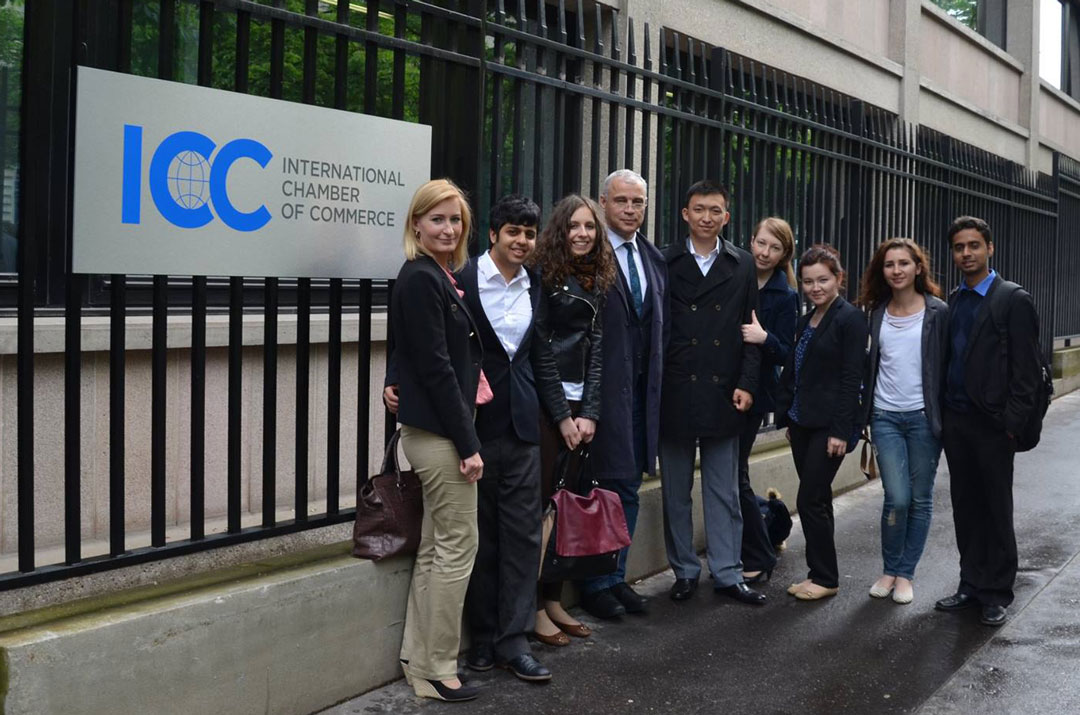
    Simply Splendid! Europa-Institut has its own special place in the context of European Integration. It attracts scholars from all across Europe and is considered to be a center of excellence in EU law. As a matter of fact this year it received the prestigious Jean Monnet Chair for European Law and is now being headed by our current director Prof. Thomas Giegerich. We have faculty members drawn from all over the world and that provides a stimulating environment inside the class. We have a very nice mix of both practitioners and academicians, which really completes your learning. Some of our Faculty members like Prof. Martin Selmayroccupy very high positions in the European Commission and it is interesting to study the practicalities of policy making in Europe from an expert hand. I must also state that most of our faculty members are very passionate about their subjects and some of it actually gets rubbed onto you. I am here, in an alien jurisdiction, studying European law and I have never been more fascinated. The advantage of having lecturers from such institutions is that you can objectively seek to know things that you will never find in your books. The administration at the Institut is very friendly, helpful and remarkably organized. Europa-Institut makes it a point to augment your classroom readings with real life exposure. Drawing from its vast pool of faculty connections, it regularly organizes conferences and workshops at different forums like the European Court of Justice, the European Court of Human rights, the European Commission, the European central Bank, the WTO and the likes. For instance, just last week, I was in Paris presenting a paper on Arbitration at the International Chambers of Commerce. I also made an embarrassing attempt at skiing for the first time in my life, while I was in Italy for a conference organized by the Europa-Institut. Further, I was selected to represent the University at Eurosim, 2014 held in Netherlands. It was a wonderful experience to simulate the work and practice of European Institutions.

    I simply love the library here. It is big enough for someone to literally get lost in it. It contains a huge variety of collections and is not just limited to the law. I was presently surprised to see an extensive collection of Indian Constitutional law in one of the sections. The Master’s and PhD thesis section containing research papers by different scholars for over four decades really allows you to see the evolution of EU and International law from the perspective of students and researchers. Further, we have subscriptions to practically all online databases that one can think of and you can access them personally even from your home by using your login id and password.

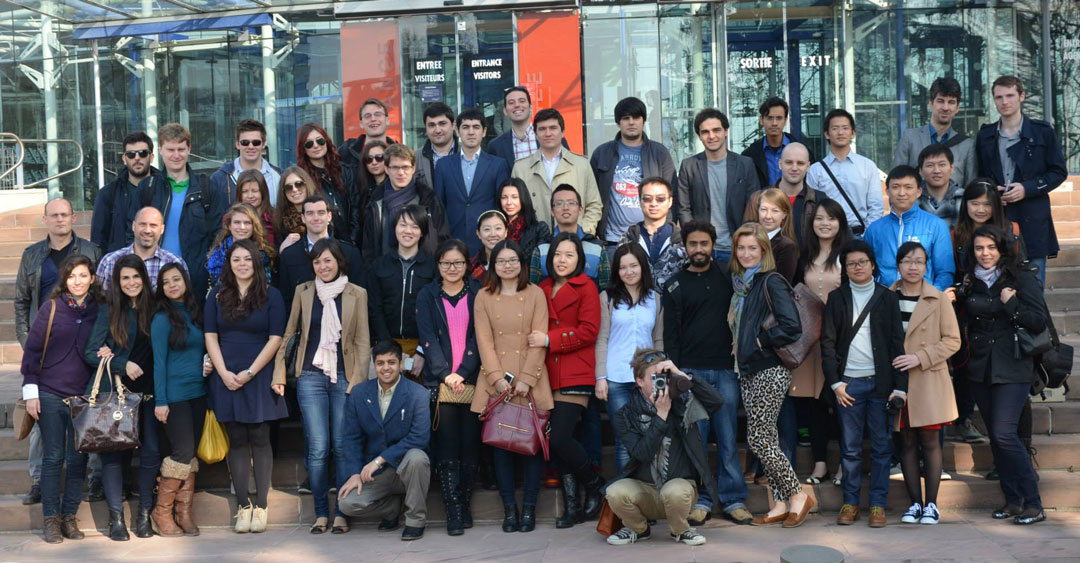
    The highlight, however, I would say is the diversity of my batch. I have colleagues from thirty eight different countries and all continents being represented. It really brings in an array of divergent opinion and thoughts while mentioning matters inside or outside the classroom. You have students from law, political science, international relations, economics, social sciences and engineering. Everybody brings in something unique onto the table and you can go back home, more aware and more educated. Even amidst this diversity, I have felt togetherness. On a lighter note, I had never imagined that I would be able to enjoy an India-Pakistan cricket match on TV with a Pakistani student from Karachi, Ambreenor for that matter an Israeli and Palestine student sharing rooms together. Such experiences make you realize that problems among nations are always at a different level and are never really personal.

    In essence, I wish I could do this one year all over again.


    How was the academic schedule?

    Quite hectic! Most of the days we have classes from 9 AM to 5 PM. Then you most certainly have to go the library to prepare for the next day’s lecture. You are invariably flooded with assignments, presentations, seminar papers, case studies and exams. So yes, there is lot of work to be done on a daily basis. I think it’s good, because it keeps you on your toes all day long.


    What were the subjects you chose?

    I am doing an LL.M. in European and International Law with a heavy concentration on European Institutional law, EU competition, banking and monetary law. I had always been fascinated by how Europe has keep twenty eight nations together under the same roof, in pursuit of similar aims and in the face of conflicting interests. The European Integration project as it stands today is not just a legal, political and economic union, but a union of destinies. So therefore it was interesting for me to study this mammoth creation, while living in the heart of Europe. I studied monetary law, primarily because of my inclination towards economics. I was excited to delve deeper into the issues relating to the Sovereign debt crisis in Europe. To my mind, there was no better prospect of studying about the EU Debt crisis, at a time, when it was in its full swing, happening in a region where you are living and taking lectures from people who have literally been at the centre of things during the crisis. It was a strategic decision to study EU competition law because as you might already know, competition practice in India has been greatly influenced by the rules and regulations in EU and USA.


    How’s the Indian fraternity over there?

    Yes, Germany hosts a large number of Indians, spread out quite evenly throughout the country. I have two Indians in my LL.M. program and lot many more in the University. The Indian community at the University regularly organizes dinners and cultural nights. Therefore, I don’t as much miss my daal bhaat. They also organize trips to various places in and around Europe.


    What are your future plans?

    Although, having spent almost a year here at the Europa-Institut, studying a whole range of subjects, I still find myself, in an indecisive position. One thing that I can safely say is that, the appetite in me to study further has only grown. I am ever more fascinated towards European Studies and I remain excited to explore further and dig deeper. Notwithstanding the fact that I am still relatively untrained to the idea of European Integration, the lectures here at the Institute, was a throwback to similar structures, issues and solutions. I could see myself applying the concepts and mechanism that I had learnt back in law school. Also, my training in the common law traditions has been huge advantage. For now, I am working towards the completion of my course and hopefully by then, I will be a little more certain about my future goals.


    What would be your advice to law student interested in going for higher studies from India?

    First and foremost, be sure of the fact that you want to pursue an LL.M. after your graduation. An LL.M. is a huge investment in terms of time, effort and also money (if not on scholarship). Ask yourself the question as to why do an LL.M.? What is it that you are trying to achieve out of this? How would it benefit your case? You career and your personality? The first step in an LL.M. application is to convince yourself that you would want to pursue it. Talk to your seniors, your teachers, your colleagues. Think hard, think deep and introspect. Once you have crossed that stage, it is important for you to think about which area of law would you like to specialize in and why? Deeply analyze your key areas of interest and to shortlist courses/universities on the basis of the same. Every college would require you to demonstrate an unwavering commitment to the field you are interested to pursue. Moreover, you have to be clear whether you want to practice law or enter academics. Choice should also be influenced by the country you want to study, or (if possible) work in and the value of that country’s LL.M. programme in India, in case you intend to return.

    Once you have a definitive course and list of universities you are applying, then you need to focus on two things simultaneously, the procedural part (deadlines, required documentation, payment of application fee, etc.) and substantial part (SOP and Reference Letters). Statement of Purpose (popularly known as SOP, SOM, etc.) is the most essential document of all, which would determine the strength of your application. It is a very popular and lucrative approach to make your statement of purpose a replica of your resume. However, it is advisable that you refrain yourself from doing that. Rather than focusing on ‘what’ you have ‘done’, spend some thought on penning down ‘how much’ and ‘what’ have you ‘learned’. Try and build a link between your past, present and future.


    What’s your take on work- life balance? How do you go about it?

    I am not the best person to answer that question. I think a big chunk of my life is my work and voluntarily so.

  • Anubhab Sarkar, KIIT, on his research experience with Prof. Martin Hunter, and internship at Freshfields

    Anubhab Sarkar, KIIT, on his research experience with Prof. Martin Hunter, and internship at Freshfields

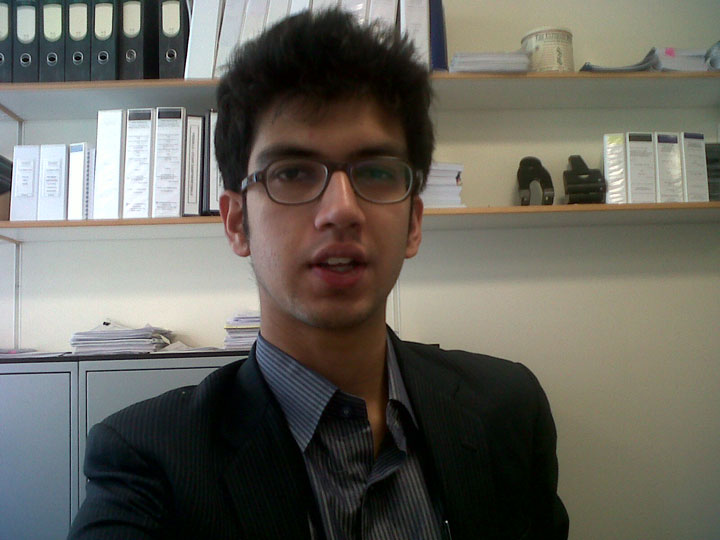
    Anubhab Sarkar is a student of KIIT, Bhubaneswar, batch of 2015.  Anubhab had the rare opportunity to work with Prof. Martin Hunter at Essex Court Chamber in London. He had also interned with Freshfields Bruckhaus Derringer. He keeps a keen interest in International Law and has also served as the president of the International Law Society at his university.

    In this interview we speak to him about:

    • Procedure for internship application to top law firms
    • His research experience with Prof. Martin Hunter
    • The difference between a UK based law firm and an Indian firm


    Why did you decide to study Law?

    I was introduced to law pretty early in my life as my mother is a lawyer, as clichéd as it might sound; though I never liked the idea behind this profession as an adolescent as it kept my mother away from me for long hours. While pursuing my secondary education I was firm that I had no other option of career other than being an engineer. I owe a lot to Mr. Rajneesh Singh who was instrumental in making me believe that law would be the perfect career option for me, he is undoubtedly the first pillar of my legal career. My parents were instrumental in making me gather the courage to take up law. My father used to visit NUJS to get an idea about how a modern day law school functions. I started taking a ‘crash course’ at IMS where I figured that this could something might be able to do; by that time I had seen enough documentaries of Mr. Jinnah, Mr. Gopal Subramaniam (his love for T.S Eliot, Shakespeare and how he creates a nexus between law and literature often excited me), Mr. Nariman and other great legal luminaries and was fascinated by their oratory skills, I was almost convinced that it was something I would like to do for a living. I have always been ardent public speaking enthusiast and thought it would be wonderful if I could put it to use in my daily life. The nail in the coffin was when I found a movie called Paper Chase and happened to watch it; I then realized why an institution imparting legal knowledge is called a law school and not a college. Use of logic and oratory to persuade people, bring a change, however small it might be and of course wearing suits (that never hurts!).


    Tell us something about being President of the International Law Students Association chapter at KIIT.

    I have been inclined to International Law since the very first year at law school; I of course owe it to a couple of seniors of mine. This prompted me to join the International Law Society (affiliated to ILSA Washington DC) which was student run society in law school. The basic idea behind this was to enhance the aura of International Law, increase quality research, impart proper mooting training, host lectures and events of such sort. When I was elected as the President for the term 2013- 2014, I decided to bring a certain change.

    The first event I organized (of course with the help of my committee members) was the 1st KIIT International Law Quiz Competition. The main reason behind this is to make sure there was proper awareness in the sense of general sensibility, quizzing is a passion and what better way to carry out an event to confirm and analyze the awareness. I was quite amazed to see out of all the teams that participated, the winner was not from a law school, rather two engineering students.

    We also have future events coming up like the 1st Ian Brownlie Moot Court Competition (which will be on the mooting schedule soon), a conference which will include speakers from each of the continent thus giving us a quality panel debate as to the status quo of the present situation in each of the continents regards to the beginning of a ‘World Court of Human Rights’. The ideology of quality research has also not been forgotten, we keep hosting lectures and our first news letter is due to release soon. It is just a passion which I am trying to carry forward as long as I can. The KCIA (KIIT Center for International Arbitration is a thought child of my senior, who when confided in me the ideas made me more than intrigued. I am sure it will be a great success.


    Tell us about your experience in legal editing and publishing?

    (Anubhab has been the Honourary Editor of the Sancalp Journal and co-researched and edited a book of international arbitration in addition to presenting some papers as well.)

    I believe that a law student grows mentally every day. It was a pleasure being the editor of the Sancalp Journal, it was quite an arduous task to determine and differentiate quality of research and argumentation of papers. I thoroughly enjoyed that experience. Judging others research skills meant that I had to be well read on the themes myself. I took a month just to be well versed with the themes, recent case laws and other scholarly writings so that I can appreciate the analysis of the research of the author. Editing of a book is almost a similar task but its more ‘status quo’ oriented i.e the present status regarding a doctrine, what are the case laws in relation to that doctrine, whether the case law has been over ruled and such other specifications had to be kept in mind.

    The degree of challenge was more in this regard as there was no room for error. These activities in a nutshell gives you the quality of thinking critically (quite critically I must say). You can analyze argumentations and put forth the best, you realize what is exactly required of you in a research contention, and you grow a normal understanding of comparing ideologies and then analyzing them as per your rational thinking.


    How important is mooting, really?

    I must say this has always been a sensitive issue, mooting has always been a passion for me since my first year at law school. According to me mooting cumulates the holistic growth of a law student, the amount of research and reading a participant has to put in enormous. It makes you think critically on your feet, teaches you how to answer judges, duck questions. Suppose you have four arguments for contention, it makes you decide your strongest argumentations as there are word limitation (in a memorandum) and time limitation (in oral rounds). It is very hard to judge your own work and this is the biggest challenge you face in a moot.

    I have done several moots and placed in few of them, one thing one must keep in mind while mooting is that research is of course the key but one of the most important aspects of mooting is confidence, you just cannot argue with your temperament down, you have to be up for it and make sure you will give it your best. One advice I would like to give aspiring moot enthusiasts (speakers) is that don’t get too worked up about speaking in front of judge as daunting as it might look, the whole idea is to analyze the judge and respond to him accordingly. You have to understand that the judge will not everything, you will have to know your strengths and play them accordingly.

    A very good advice I had received before my first moot was that a speaker should not try taking the burden on him (figuratively) but one should try and have a ‘formal learned conversation’ with judge in order to convince him/her. The judges will try everything to shake your confidence, it is mandatory to keep yourself calm and composed during the whole process. These traits are mandatory for a lawyer and thus mooting according to me way more than a CV addition.

    I have seen in foreign universities, how much importance mooting is given. The amount of resources available, coaches and research facilities are unbelievable. For example a Vis Team in University ‘X’ is selected and mentored since their first year and then they compete in the competition in their 3rd year. It is phenomenal the amount of training they get. I have seen in that the major London law schools also get moot court training from the top city law firms. Some of these law firms also host the mock Vis hearings before the actual rounds in Vienna, Austria.

    Tell us about your internship experience.

    (Anubhab has interned at PUCL, Fox & Mandal, Amarchand Mangaldas and with the Additional Solictor General in India.)

    It would be improper to rank these internships as each of these internships have been pivotal in my career, each of these internships are organizations carrying out very different activities. At PUCL, it was a dream as a first year law student having read so many landmark judgments this organization has been a part of, Fox Mandal gave me an idea as to the working of a top tier law firm. It was a challenge to prepare research notes perfectly so that the Associate would add your research to the memorandum.

    The internship with the Additional Solicitor General was a different experience altogether, this internship made me aware of the glamour present in the profession. Entering the Supreme Court with a legal legend in a Mercedes or BMW, researching on top notch celebrated cases, attending arbitration hearings at fancy hotels; it was a dream and it also told what you can achieve if you have proper and just dedication towards the profession.

    Whereas, Amarchand (which is arguably the best law firm in India) was almost living the life of a transactional lawyer. You knew you had to enter office by 9 AM but you did not have any clue regarding when you would leave for home. It was a different challenge, you had more than one task in your hand at a given time and it was mandatory to maintain deadlines. It was a fascinating experience for you’re almost treated as an employee when it comes to work. All these internships have been progressive to my development to whatever I am.  I have always been very selective towards my internships and one things that I have learnt is that it is the quality of the internships that matter, not the quantity.


    How did you apply for internship at the ASG’s office? What is the procedure?

    The application for an Internship at the ASG’s office is a very simple one but the selection is very limited. You will have to try and play your cards to your advantage. The normal application consists of a cover letter and your CV to the person in charge, but this does not ensure your selection. I had called him up personally and introduced myself and my zeal to work with him. I made sure I called his personal assistant once every week and kept my name around in loop. I was lucky that one evening I got a call from the ASG himself and he stated that he had come to Orissa High Court for a matter and if I wanted I could go and meet him at his hotel. You have to be persistent if you want something, it counts. Dedication and persistence has no replacement.


    How was your internship experience in London different from the ones here?

    (Anubhab has interned at the Essex Court Chambers, London, and at Freshfields Bruckhaus Deringer, London.)

    Essex Court Chambers and Freshfields Bruckhaus Deringer both belong to the elite league of chambers and law firms, called the ‘magic circles’. Working at Essex Court Chamber can be compared to an amateur actor working with the Oceans 13 cast. It was a dream; I was working under the tutelage of Prof. Martin Hunter. My work usually consisted of researching on note points, assisting in research papers, participating in the Kings College London lectures, arranging modules and assisting him. The most amazing part of Essex Court was sharing elevators with luminaries like Malcolm Shaw, Toby Landau and other such greats, leaving aside working with Prof. Hunter himself. Freshfields was undoubtedly one of the best experiences I have ever had, arguably the best law firm in the world. The exposure an intern gets in a firm or chamber like this is unparalleled, an intern is made to be a part of client meetings, and there are separate sessions for interns enlightening them about social responsibility in a law firm. Pro bono work on a Friday was a must (also Fridays were dress down days, such that you could wear informal clothes to work, which was amazing); it consisted of assisting the homeless in London with  legal matters and other such activities. Socials were a frequent occurrence, where we could interact with any and everyone in the firm at a personal and professional level over drinks.

    The mentors were to take the interns out for lunch once a week to a nearby restaurant. These little things gives a different perspective to interns in regards to the working of a law firm and getting to know your mentor well adds to the understanding. I remember I was asked to draft a part of a memorandum along with a ‘summer associate’ from the New York office of Freshfields. You do enjoy the amount responsibility and the exposure was impeccable, managing time differences and sharing research and getting the work done. It was satisfying.


    What was the procedure you followed for your applications to the big shot law firms?

    Application to top shot law firms require a lot of patience, sending a mail with your CV is of course not enough. You will have to know how to sell your strengths and eclipse your weaknesses. While applying to Indian top tier firms I have often called the relevant HR first and tried to sell my strength in relation to a possibility regarding an internship in that firm. The HR will get annoyed if you push too much, you will have to be very confident and brief in what you say, once you do that, if you have done marginally well in convincing her she will ask you to send your CV. Once you do that you can place reliance on your CV for the rest to work out. In reality a HR in a top tier law firm gets almost 100 applications a day during the internship period. That conversation will surely create a mark and for the rest you can rely on your credentials. It has worked for me, the key I believe is patience and persistence, what is very important is that you have to know the limit so that it doesn’t work against you.

    Foreign Law firms on the hand have a very open process. You can apply only at a certain period and the application procedure consists of certain questions analyzing your career and character. These questions have a very critical word limit. For example, I once had faced a question which read such, ‘Mention all your achievements in school and law school, academically and co-curriculars’  the word limit was 250 words, you might think it is impossible to answer this question within 250 words but there lies the challenge of being precise and using simple English and sticking to the word limit. These simple things amount to qualification to the next round which is generally a logical reasoning test followed by an interview. Firms like Allen and Ovary, Herbert Smith and Clifford Chance has provisions for Indian students to work with them, more Indian students should avail these opportunity, even if you don’t qualify, the application procedure to these law firms teach you a lot of things. It’s quite a daunting task and an enriching experience.


    How important are grades?

    I believe CGPA does play an important role but only to a certain extent, one should maintain a CGPA of above 70 percent and then he/she can rely on his/her credentials to pull them through the rest. It is understood that a law school curriculum demands a lot of attention to many different things i.e. mooting, research papers, internships. It’s mandatory that you have a decent CV so that you can pull through the rest on the credibility of your CV. Everyone must be aware that Indian scenario of internship often depends on contacts but it is not that it can’t be done without contacts.

    I have believed in a simple model such that the networking you do in your first internship should open the gateway to your second and subsequently it will go on. Networking is an art, an art of dealing and mixing with people so it is essentially your work that ends up bearing results.


    Was your typical workday during your internships in India any different from your workday abroad?

    My normal work day in London would start with a fifteen minute walk by Chancery Lane to 64, Fleet Street (heard of legal London). At Freshfields, all the interns were supposed to meet for coffee at 9 AM the office café (Café 65) discussing our practice as we belonged to separate teams (some in arbitration, some in anti-trust etc.) . Our mentors came and picked us up and we were briefed about that days routine on our way from Café 65 to Whitefriars, the day would consist of general research work, briefing our mentor and other such activities like attending social drinks, team lunches/dinners, mentor lunches etc. The best part about interns and employees there is if your work gets over at 4 pm, you leave at 4 pm you don’t have to stay back to impress anyone for that doesn’t impress anyone. In India, though I have thoroughly enjoying working here an intern is bound to certain restrictions, an intern naturally can’t work into the office of a partner. I have noticed abroad there is no such guideline; anyone can walk in anywhere with a valid query or even for a casual chat if the person is free. There are some ideological differences but I think that doesn’t hamper the quality of work here.


    What were the prime difficulties you encountered interning abroad?

    To be frank there weren’t any difficulties as such (England being a common law country, there is lot of similarity with our system), in the beginning you were often unaware the standard of work/research you were expected to deliver, but my colleagues were more than welcoming and helpful. Though there were certain things which I wouldn’t call ‘difficulties’, for example my English colleagues over lunch would often humorously discuss various English Judges (like we would do, for example regarding Justice Singhvi’s Section 377 judgement) and deep threaded ‘English political occurrences’ which is not general knowledge to an Indian. I essentially had to keep track of legal developments in England and such other happenings as this a part of work environment ethos but there is no such significant ‘difficulty’.


    How are law firms abroad different from the ones at home?

    As I mentioned before, there is a lot more liberty for the interns in a law firm abroad. I think this is because of their intensive application procedure the holistic quality of the interns is above average, hence the exposure and responsibility given to interns is way more than that is given in Indian law firms. There is no hierarchical treatment there, you’re considered to be ‘worth it’ of you are working there. The level of responsibility is very satiating.


    How has your experience been working closely with such a legal luminary like Prof. Martin Hunter?

    It was living a dream to be working with a person like him. Who other than being a legal great is also a great human being. His approach to mentoring is not the traditional way, it was more like a mid way between practical and theoretical approach, it would make you think on different perspectives. One would realize along with law you learned a lot more, you learned about life. It was indeed an enriching experience, something I will remember all my life.


    anubhab-sarkar3Lastly, what are your plans for the future?

    I plan to do my LL.M. from Stanford University as it has been a dream; the professors and the course structures are unbelievable. The course on legal philosophy can be taken with the International Arbitration module, I have been working steady towards it hoping it will realize. I won’t be shocked if I squeeze in a couple of years of work post my graduation in order to neutralize some of the fees towards my LLM, in case of unavailability of additional funding.

    Internships are very important, it gives you a practical aspect of what you want to do in the future. Choose your internships very carefully it helps a great deal in analyzing your future chart. I have been very selective about my internships, of course this approach doesn’t often help because the place you want to work in might not have a vacancy, for such reasons it is mandatory to have a strong sense of determination. Even if you come 50% closer to your dreams, trust me it is a good run.

    Never be afraid dreaming, dreams shape us. Be optimistic, there is no replacement for hard work but that doesn’t mean you don’t have your share of fun. Don’t be a part of the rat race; keep an eye on the rat race from far away. You will get to know what you ‘don’t’ need to do. Moreover, always remember it is the noblest profession that you are in, as the greatness of a man depends on the number of people you serve, not the number of people who serve you (Something which I had picked up during my brilliant twelve years at St. Xavier’s Collegiate School). Lastly keep close to your friends; they are one of your greatest supports, I am glad to have a fantastic set of friends who I have grown up with in school. They help you channel yourself for the best!

  • Aishvary Vikram, Winner, BCI Moot, 2013, on being a 4th generation lawyer, his mooting experience, and plans for the future

    Aishvary Vikram, Winner, BCI Moot, 2013, on being a 4th generation lawyer, his mooting experience, and plans for the future

    Aishvary Vikram is a fifth year student of School of Law, KIIT University, specializing in comparative constitutional law. His team was adjudged  the best team at the 29th All India Inter University Moot Court Competition, 2013,  where he bagged the award for best speaker. He has participated in seven moots at the state and national level.

    In this interview he speaks to us about:

    • How to start preparing for moots
    • How to draft memos
    • His internship experience


    Why did you want to study law?

    Law was never my first preference but ultimately it became my last choice. For a science student there have traditionally existed only two career choices after class 12, either engineering or medicine. Despite being the 4th generation in my family with a formal training in law, I never got the opportunity to see the law in motion. My great grandfather was a lawyer who later became an MLA but I never got to meet him; my grandfather was a judge but his death prevented me from benefiting from his experience once I had joined law school; my father studied law but never practiced it, so I never got a chance to see what the practice of law is. People usually study law to enter into practice seeing their parents or relatives, and later end up in law firms. Or they are inspired by great legal luminaries, or fictional characters such as Alan Shore or Danny Crane (From the Boston Legal TV series), or at best they want to serve society. This was however not to be my story. I gave the entrance exams for law due to my father’s continuous insistence. Not being able to get through CLAT, I appeared for KLSAT and joined KIIT.


    What internships have you done so far? Did you receive any assistance regarding this from your college?

    My track record with internships is really poor. Lost in my own ideology to learn from internships rather than collecting certificates, I have spent a lot of time at BHU, the Allahabad University and the faculty of law library for which certificates were however not provided. Nevertheless, I have done a total of seven internships. Out of these internships, one was under an NGO in my first year, two in a district court in my second year, two in High Courts in my third year, one under Prof. Faizan Mustaffa, Vice Chancellor of the NALSAR in my fourth year and the last under a senior advocate in the Hon’ble Supreme Court in my fifth year. The college has always provided us with great assistance in getting internships and now it has opened various programs to provide internships to the students in accordance with the fields they are interested in.


    Which internship experiences will be right at the top and why?

    I have very little to say about my internships due to my inexperience. I find myself an incompetent person in this regard. However, as a piece of advice I would like to say that I have always disliked the working style in law firms due to the non-participatory nature of work where one is only asked to find the law and given no opportunity to relate it to the facts. Sitting on a chair the whole day and finding material is like being Google, which has never interested me (this is my personal opinion and people reading this, are free to discard it).
    aishvary-vikram


    Tell us about your mooting accomplishments.

    The first page of the BCI moot chapter started with a phone call from my friends Nitesh Ranjan and Navneet Sahey. Both were in college and were planning to take part in the 29th BCI Moot court competition. Unfortunately their third team member Satyabratha Das was at home, planning to come a little late due to her internships. The 29th Bar Council Moot was something I never planned for. Really, being in the fifth year, people don’t do this moot at this stage. But no other team was ready to do this moot as our vacations had just ended and the date for the open challenge was not suitable. So we made a plan to do this moot just to pass a month, as very little was there to study and our friends were not back from their internships. After the problem was released, we realized that it is far more difficult to research. We had actually done many moots earlier, but for the first time we realized how tough it is to research for four moot problems in a month. We divided the four problem in three groups— Nitesh Ranjan, the lead researcher was to deal with the first problem with Neha Tripathi, an additional researcher provided by our college, Navneet Sahey was to deal with the second problem with Vikash Chandra Shukla, another additional researcher, and I was to deal with the third and the fourth problem. This is how our memorials were prepared. The biggest contribution to our success was from our friend, Abhinav Gupta, who not only assisted us in drafting but did the formatting of the moot memorials, even though he was the convener of the First KIIT Conference on Intellectual property rights and Bikash Shaw, who was always there with us online, downloading the cases even when we were in MITS giving our orals. This moot was more than a moot; it was a litmus test for the bond of friendship we have. Knowing the fact that only participants will get the certificate, our friends as our additional researchers were always with us. The moot experience in terms of orals was extremely good. The teams we faced were well prepared. In preliminary rounds we faced Christ Law College; in he quarters we faced BHU; in the semis we faced NLSIU and finally we faced NLU Bhopal. All the teams were excellent and well prepared. This success wouldn’t have been in our hand if our lead observer, Akshay Rajpurohit was not with us. From printing the compendium, compiling it to bringing snacks and cold drinks, he was always there with us.


    What factors do you think contributed to this success?

    My senses are too weak to see the whole picture of support and contributing factors towards my success. My words of appreciation about their contribution would be such a small  description of their help that it will be an insult to the sources. Therefore, without specifically narrating all the assistance I got, I will generally thank my teachers and friends for always assisting me and my parents for always holding my hand.


    What separates a great memo from an average memo?

    I will give due credit to my law professors for this, as unlike traditional law universities, our professors have always prepared a course structure taking into consideration laws and practices of different countries to the extent that it doesn’t affect the basic structure. Specifically our Constitutional Law general and specialised papers conducted by Prof. Kumar Kartikeya has taken a further step by incorporating not only the foreign principles or case laws referred to by the Indian judges but has designed the structure in such a way so as to give us a short idea of the constitution in four countries, namely US, Australia, India and unwritten constitution in UK. Due to this comparative approach it was easier for us to research and find case laws and statutes in various countries. If one refers to our memorial, specifically the third and the fourth memorial, one would find foreign case laws and doctrine, which I failed to find in the memorials of other teams in the semi-finals and finals.


    Speaking skills or knowledge of law, what is more important?

    It is important to marry the two. The knowledge of law is like an armour which one may use to protect his case while, speaking skills are a spear to rupture the judges’ sarcasm and leave a long time impression on a judge’s mind.


    When you get the problem, what is the first thing you would do?

    Read it (I believe this satisfies this question literally), but on a purposeful note, one should read the problem until he is aware of the purpose of each and every single line. It may happen that a part of the problem may seem to be introduction, but later on one realises that even though the particular fact instigates no law finding but, is of peculiar importance to support the formulation of arguments or argues on the basis of the fact.


    Share your formatting secrets. 

    A mooter must prepare multiple arguments amalgamating reason and logic. Prepare multiple arguments, so that you may never run out of options. Using rational and convincing arguments with the spirit of law is of utmost importance. Instead of quoting a number of case names or details of the cases and presenting a thesis, one must try to formulate reason, practical and theoretical as to why his argument must be accepted by the court. I have seen people whose memorials consist of hundreds of cases and thousands of authorities but lacks reason or logic. Merely taking a particular statement from various books without knowing the reason or its relevance is of no use. If one may cast a look on best memorials in international moots, one will find my observations true.


    Why is mooting important? 

    Actually, I have not yet tasted the flavour of advocacy so I hardly know how it will contribute to my skills as a lawyer. Mooting has been an accident for me. When a colleague could not make it to a moot, my best buddies Vikash Shulka and Abhinash Barik approached me and convinced me to moot with them. So from the first year itself our mooting started and slowly it engulfed me in its charms and beauty. From first year till now, we have done a number of moots. The incentive to start off my mooting carrier goes to my friends but the continuation of this goes to my seniors and my parents who were always there to help me and always motivated me to carry this extra load.


    What is your opinion on your intra-college mooting system? 

    The intra moot court system in our college is really good. Thanks to my friend Abhinash Barik, my teachers, Asst. Prof. Kasturi Bhagat and Asst. Prof. Kumar Kartikaya whose imaginative thinking has brought various changes to the system of mooting. There is no favouritism, nor can anyone dominate the moot court society and this includes the Director as well. The moot court competitions are divided into two segments, all national moots except the Bar Council of India and B.R Sahany moot are allotted according to the results of the intra moot court competition and the international moots and the two moots listed above, are open to open challenge. The transparency and student welfare is the fabric of our moot court society, which leaves me with no comments for improvement.


    If I have never mooted in my life, but I want to, how should I get started?

    Getting started is really simple as there is no competitive written exam which one needs to qualify to call oneself a mooter. Trying out for national or international moots is also mooting, but continuing the academic practice of mooting is very difficult, as there is always a tilt towards running away from the extra burden a student has conferred upon oneself. Every attempt may not bear a fruitful result and add to that, the extra burden of college good reputation which is a constant pressure for the team, which may bring efficiency but in many cases forbids creativity. One has to have a strong determination if he so intends to enter into the arena of mooting and use his creativity, as judges in various moot courts are not always looking for the case laws in support but the extent of artistry and understanding of law that has been put to the problem. Further, one thing must be really clear before one even attempts to call himself a mooter that mooting is not always among the equals, there is no Article 14 application here. It has always been between students irrespective of their institution, quality of teachers and extent of their support, the year in which one is, no consideration is given to these facts. The thing which every mooter possesses is the moot problem, the library and his creative mind which one has to solely amalgamate and, support of teacher may serve as a catalyst but can never be the basic foundation.


    How important is the role of a researcher in a moot team vis-à-vis the speakers?

    Well, in our team, all were researchers seven days prior to the moot and it is only after the preparation of the memorials that we decide who all will be the speakers. The role of speakers and researchers are equally important but I also feel that speakers have a slight edge above the researcher in oral presentations and in sharing the fame, if they so win a moot. There is no “I can do better or it’s not good for me” game in mooting, there is always “What is good for the team and who can better serve the team in orals.” It’s very rightly said that if one wants to travel faster he may run alone but if one wants to survive longer, walk with someone– try to apply this in mooting as well.


    What message would you like to share with our readers?

    My inexperience and little knowledge will to some extent make my views premature and short sighted but nevertheless, some of the things I learnt are:

    1. In moots don’t go for law in the strict sense, always try to use creativity and imagination, don’t see the judgement but look behind the judgement and try to focus on jurisprudence than on case laws.
    2. Prepare the brief and arguments and take notes of the judge’s name and para number to some extent, to show your level of preparation.
    3. Try to formulate multiple arguments for the same proposition.
    4. Avoid difficult words.
    5. Show respect for the judges but no flattery.
    6. Be confident and never emphasise on a wrong proposition for the sake of argument.
  • Alipak Banerjee, Masters candidate, University College of London, on being from the maiden batch of his college, his high-profile internships and plans for the future

    Alipak Banerjee, Masters candidate, University College of London, on being from the maiden batch of his college, his high-profile internships and plans for the future

    Alipak Banerjee had graduated from KIIT, Bhubaneswar, in 2012. During his years as an undergraduate he has interned at the Rural Entitlement and Litigation Kendra, Kerala, Aarohi Bhalla and Sujata Kurdukar, Solicitor and Advocate on Record, Supreme Court of India, Dua Associates, London Court of International Arbitration, Amarchand Mangaldas, among others. He then went on to pursue his masters from University College of London, with a focus on Cross Border Mergers and Acquisitions, Corporate Insolvency, International Trade Laws, and International Arbitration. 

    In this interview he speaks to us about:

    • Being part of the first batch of his college
    • Securing a series of high profile internships
    • Studying in London, his curriculum and plans thereafter


    You’ve probably been asked this before, but why law?

    Law was more like an option rather than a choice. But I fell in love with the subject and when I look back I am glad that I decided on law.


    If you had to describe your college life in one word, what would it be?

    I have learnt a lot from the founding faculty members at law school. Being a member of the first batch was never easy as I had to start from scratch. I must tell you that not having any precedent was my potential opportunity as I got the chance to shape the law school. I presented papers in conferences, wrote articles, represented universities in moots (including Jessups, VIS Vienna), and I had about eight good internships when I left my college. In general college life was fun. It is home away from home. I had an amazing moot team and I continue to be best friends with my team members.


    Do you think being from a non- national law school caused you any problem?

    There are two aspects: is it an issue and how you decide to deal with it.

    Yes, it is an issue as it affects your peer group, quality of faculty and possibly your self-esteem. Being in a NLU is akin to the USA immigration presumption – deemed to be an immigrant unless you proven contrariwise. On the other hand, non-NLU students are deemed to be average, unless proven otherwise. However, how you deal with the issue is your choice. It is a challenging experience to put your best, but I quite enjoyed it. If you know your subject, it’s great to face challenges. I did the same and my university, and my friends and family supported me.


    You have interned with all leading firms. Can you tell us about the experience?

    (Alipak has interned with the likes of Mangaldas and Amarchand and the London Court of Arbitration, to name a few.)

    I am afraid getting a good internship is not easy. You have to start your hunt early. If you have a four week internship – first three weeks you should work really hard and in the final week you should make arrangements for your next internship. If you don’t know people talk to the associates in the present firm you are interning, they will have friends in other firms and if they have liked your work – they will help you.

    A librarian at a lesser known firm helped me get an internship with a top tier firm in Delhi. You have to make the best use of resources available. There isn’t any point writing reminder mails to the HR – the response is not going to be different. Instead, pick two partners and read the articles they have published. Mail them asking them about their views or opinions about something from their field. Demonstrate your curiosity for their subject, from a purely academic standpoint. And with time you can always request them for an internship.

    In the year 2010, I interned at LCIA, London and with Freshfields Bruckhaus Deringer LLP, London. At LCIA, at that time, they didn’t have any provision for interns. I was an unpaid intern for one month. The process has changed now. They have a six months paid internship programme. They have two intakes now. Please check their website for more details. Also, FF offers great opportunities in their Paris office in IAG group (international arbitration group). Typically, the internships are for six months.


    What was it like working as Research Analyst for RSG?

    (RSG is the research partner to the Financial Times for the Innovative Lawyers reports. RSG’s research findings feature in various international press)

    I was aware of RSG`s India rankings since my law school days. I was delighted to participate as a researcher in the RSG 2013 India report. I have spent some time at their London office during my winter vacation. Initially I was sceptical as I thought it was not my forte (as the research didn’t involve legal skills). However, I was convinced that at the end of the research I would have a renewed perspective about the market which would ultimately help me to decide on a suitable law firm for employment.

    I interviewed 60 legal purchasers (typically General Counsel). I now understand the market expectations – turnaround time, the quality of work, expert opinion, issues regarding billing so on and so forth. As a budding lawyer, I will be selling my services to my clients. Hence, if I know about their requirements it would help me in medium to long term to cater to my clients.


    Congratulations on doing your Masters from University College of London. How did that happen?

    I was keen on pursuing masters after completion of undergraduate study. At UCL, I studied international trade law, international arbitration, financial restructuring, liquidation and consequences and mergers and acquisition. I was taught by the best in the field. Prof. Ian Fletcher taught me the paper on liquidation and subsequently, I am writing my dissertation under his supervision. Regarding financial restructuring, Mr. Andrew Wilkinson taught us the course – he is the European Director at Goldman Sachs for financial restructuring. I think this is the greatest advantage of a London college over Cambridge/Oxford – if you have to study papers in the commercial domain, any city university (especially UCL) will give you practical insights as the teaching is done by practitioners. And I was not surprised when UCL was ranked ahead of Cambridge and Oxford by Guardian this year.

    I got a bit of funding from TATA. My research experience with RSG, Prof. Hunter and also Lord Lawrence Collins (British Judge and former judge of Supreme Court of United Kingdom) has helped me procure partial concessions.


    Tell us something about your life as an LL.M student.

    I must tell you about Goodenough College. It is a residential college located in central London. It attracts 800 masters and Ph.D students from more than 100 countries spread across different streams. I had a lovely time being a part of the college community and I have made good friends with people from different walks of life.


    Currently you are research assistant to Prof. Martin Hunter. How is a typical day at work like?

    It is more like a research experience. I am assisting him in revising the 6th edition of Redfern and Hunter, which is due next year. I have also assisted him in his teaching assignments, case work. I am also co-authoring an article with him.


    What are your future plans?

    I am returning to India in September. I will be joining a Tier-I firm in Mumbai in October.


    Any message for young or aspiring lawyers?

    Work hard. Be sociable. Be marketable. Believe in your abilities.

