Tag: Law Firm

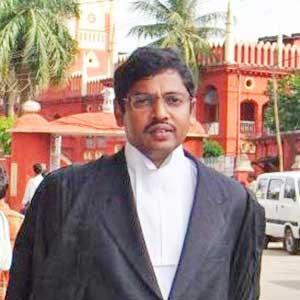
  • Robin David, Equity Partner at Dua Associates on career in corporate litigation

    Robin David, Equity Partner at Dua Associates on career in corporate litigation

    Robin David is currently a Partner at Dua Associates, Delhi. He graduated in B.Sc from Loyola College and thereafter completed his LL.B from Bharathiar University in 1989. Right after his graduation he joined the Bar and had been independently litigating. His practice areas included Contracts, Company Law, Competition Law and other corporate matters.

    With an in-depth expertise in various corporate matters and prior experience of 12 years in litigation, Robin joined Dua in 2002 and had since been working there. With his formidable experience in litigation he was quickly elevated to the rank of a partner in 2004. In 2013, he was made an equity partner.

    We took this opportunity and requested him to share:

    • His experience of litigation as a fresh law graduate
    • Building reputation and clientele in litigation
    • The role of higher education in building an illustrious career
    • The journey from a law student to becoming a partner at one of the leading law firms in India


    How would you introduce yourself to our readers who are primarily budding lawyers? Did you belong to a family of lawyers?

    I am a practicing lawyer for about 25 years. Legal practice is a great and exciting challenge. The legal profession gives one the opportunity to learn and to adapt. Most importantly lawyers have a great opportunity to do justice. I believe that lawyers have a significant role to play in the justice delivery system. I am the first lawyer in my family.


    You are a B. Sc. (Physics) graduate from Loyola College. Could share with us any specific incident which motivated you to pursue law as a career?

    I initially wanted to study engineering or science. However, since my childhood my mother told me that I would make a good lawyer. She implanted and reinforced confidence in me. So I applied for law more out of [sociallocker]my faith in her belief. I qualified the entrance examination. After few years of practice I realised how right she was because this profession is definitely for me.


    Being a science graduate, did you face any difficulties in law school? A lot of students from science stream pursue law after their 12th and face a lot of difficulties in studying subjects related to law. Can you share with us certain tips to overcome this issue?

    I do not believe being a science graduate is a disadvantage to pursue legal studies. Nor do I think that students from arts/humanities will have a considerable edge over science students while studying law. The study of science encourages analytical thinking, which in my opinion is one of the vital ingredients for legal studies and practice. The most important phase of learning for a litigation lawyer is during the first few years in practice.


    robin-david-1Did you do any internship during the course of your studies? What kind of work did you come across during your internships?

    I did not have an opportunity to intern as a student. This was probably because there was no mandatory requirement to intern at that time.

    However, I believe internships today are important. Internships provide an opportunity for students to learn about the application of law and get insights into the legal profession. Interns will be well advised to take their internships seriously. Ideally, interns should be willing and open to learn and know more about legal practice.


    You were also in the cricket and hockey team of your college. How important is it for one to engage in other activities apart from academics and professional interests?

    I started paying cricket from the age of 2. I have always been interested in sports and sporting activities. I played a bit of cricket, hockey and table tennis during school and college. Now I play cricket for my firm. I play golf as well. I believe it is necessary to engage in sporting activities and activities apart from academics and professional work. Being physically fit is crucial. Lawyers would do well to invest time on fitness and physical well being.


    Did you ever think of joining the civil services after graduating? Which career options were available to a law graduate in 90s?

    Civil services did cross my mind albeit not seriously. As far as I can remember the openings/options available to young lawyers were mainly to:

    • work as a junior lawyer (with little or no pay)
    • to join as law officer in any organisation/bank
    • join civil services
    • go abroad for LLM or to study LLM in India


    When you started your practice in 1990, how was the court atmosphere? How did the judges respond to young and new lawyers like you? What were the major challenges faced by you in the initial years of your practice?

    The courts are much more crowded now. The first challenge was to decide where to start work. Another challenge was learning the court procedures and practical aspects of legal practice. I was fortunate to commence work in the Delhi High Court. All seniors and judges were generally encouraging and helpful. However, the process of learning procedural law and how to face the Court is something every practicing lawyer will have to figure out on their own. The legal community is based on the seniors wanting to teach and the younger members of the Bar being open to learn. The junior lawyers were always respectful to the seniors and the institution. I also faced financial challenges because I was initially given a small stipend but I believe that such hardships actually help and motivate aspiring lawyers to work harder and be better advocates.


    How did you build up your clientele? How many years of practice do you say it would require to build a firm clientele?

    I am not aware of a formula to build a clientele nor can you stipulate a time line. I do not believe there is a formula to build up clientele. However, I have learnt that building clientele requires hard work, honesty, time, result oriented thinking and several other factors. In my experience I have found that the clients trust honest and sincere counsel. Knowledgeable lawyers do have an edge, however they are expected to be sincere to the cause and be honest. Lawyers should build up a good reputation for themselves.


    You have experience in litigation of around 25 years. Can you share with us your experience as a practising lawyer?

    Lawyers are trustees of the legal system. A lawyer is responsible to act with integrity and maintain public confidence in the judicial system. To be a successful litigation lawyer one must belong to a court in addition to knowing the basics of law. Counsel must be aware about their court and keep themselves abreast of the changes and developments. Counsel must be involved in Bar Association and participate in the court and association activities. Counsel should contribute to court related activities such as legal aid, arbitration, mediation, etc. I have had the good fortune of working with some great lawyers. I have also been a lawyer for the Delhi High Court Legal Services Committee since 2008. Learning from watching and observing court proceedings is an essential part of being a good lawyer.


    As a practising lawyer how did you manage to learn the basics of court room practice? Did you have anyone to guide and mentor you during the initial days of your practise?

    No doubt one learns from the seniors and colleagues whom you work with. I leant a great deal from observing others and noticing the reactions from the judges.

    I believe a lawyer requires to have a mentor not only during the initial years of practice but also later on. Initially mentoring is done by seniors but later you have to become your own mentor. A very important aspect of legal practice is the ability to evaluate yourself. Even the Bar Council of India recommends mentoring and training by lawyers.


    If someone does not go to a top law school, would you say he still has a shot at a great career in law? What should such a person do to develop necessary skills and profile?

    Going to a top school per se does not make you a good lawyer. Honest effort and hard work make a good lawyer regardless of the school.


    How did you get an opportunity to work with Dua Associates? How is your work at Dua Associates different from your independent practice?

    I began my association with Dua Associates in 2002. At that time I put in about 12 years of hard work as a legal practitioner and was already known for my work as a litigating counsel.


    Having been at Dua Associates since 2002 as a manager in the litigation team, you were promoted into the equity partnership; what qualities do you think helped you to achieve this status?

    Though I joined as manager in 2002, I was made partner in 2004. I was made equity partner in 2013. It involved sincere hard work and time.


    When you hire interns under you, what kind of qualities do you look for? What should an intern do to get noticed in a positive way?

    Honesty, hard work and commitment to work are important qualities in interns. I see interns who are there only for the sake of putting it on their CV.


    What changes has being a partner brought into your life, do you ever feel that there is excess of work load on you? How do you manage to strike a balance between your personal and professional life?

    Ever since I have started work as an advocate I have put in many hours of work every day. Becoming partner did not have any significant change to my professional working style. Have realised the importance of team work and have the need to contribute to the larger cause. Law is a calling and not a job.


    Do you feel that great lawyering skills are sufficient for a person to become a partner? What separates the people who become partner from those who don’t?

    Partners’ skills should complement one another. Ideally, if one is good at business development then the other partner would be good in other set of skills. Further skills can be learnt. Though, in my opinion a law firm needs persons having different sets of skills. Partners are those with great sets of skills and also those who show commitment to the growth and development of the firm.


    Do you feel that higher education helps a person to have a successful legal career? What would be your word of advice to students who wish to go for higher studies?

    It would depend on what you are looking for. For an advocate, LL.B is sufficient because practical knowledge can only be gained on the ground.


    How is the work culture at Dua Associates? If an associate commits a mistake or an error what course of action do you follow as a partner?

    A partner is responsible. In Dua Associates the Partners are the team leaders and oversee the work of the team. For example, if a plaint is drafted for a client the draft would be carefully seen by a Partner before it is sent to the client.

    Associates who repeat mistakes or stop learning will at least be talked to.


    What qualities do you think one should possess to carve out a niche for himself in this field?

    I believe hard work, honesty and sincerity are important qualities. Always be ready and willing to learn. Additionally one must be aware of the system and surroundings.


    What would be your message to our readers who are budding lawyers and law students?

    • Justice is important. Lawyers have a great opportunity to play a role in the justice delivery system. Many prominent lawyers have played important roles and contributed to the Indian freedom struggle. Lawyers can have significant involvement in society and can set the standards. Legal practice is a calling and not a job.
    • Honesty and sincerity in counsel are traits that are always respected by the judges, clients, briefing counsel and even opposing counsel. A lawyer must conduct himself with dignity.
    • Building a good reputation is necessary. A lawyer should carefully guard his reputation.
    • A lawyer should always be conscious of his/her role as officers of the court.
    • Young court lawyers should read the briefs and be well prepared. Know your facts. I have seen many young lawyers who are in a hurry to go up the ladder and look for shortcuts to grow. There are no shortcuts.

     [/sociallocker]

  • Richa Parasher on securing a job from Amarchand and being an ideal student

    Richa Parasher on securing a job from Amarchand and being an ideal student

    Richa Parashar is one of the most diligent and illustrious scholars of the 2015 batch of NLIU, Bhopal. She has a noteworthy academic, mooting and debating record. Her diligence and mettle at work was recognized when she bagged a job offer from Amarchand & Mangaldas & Suresh A Shroff & Co., during campus placements. We asked her to share her experiences paths taken as a student over the years.

    In this interview, she tells us about:

    • Securing top-notch law firm internships
    • Her journey from an intern to getting job offer from AMSS
    • Importance of academics, internships, debates and moots


    Why and when did you decide to do law? What interested you most about the subject at the time?

    I decided to take up law when I was in class twelfth. I was fascinated by the diverse areas of practice and the fact that it’s one of the most dynamic fields. My uncle and my elder brother, who are also in the profession, were an influence as well.


    One can find it difficult to manage continuous evaluation through trimester exams, projects etc. in a law school. How did you manage to keep up your grades?

    Trimester system can get hectic, yes. There have been times when we’ve given exams just three weeks after we’d be done with the previous ones. But, the good thing is that the syllabus is never too expansive. I generally pay attention during classroom lectures and prepare notes regularly in order to maintain my grades.


    Your internships at law school have all been with top tier firms. Our readers would be quite curious to know how you went about securing these internships.

    I always applied for my internships well in advance and followed up regularly. It’s also important to keep your CV updated. Our university has a highly competent placement coordination committee which takes care of applications of registered candidates from third year onwards.


    Did you learn any skills while interning? What are these skills and how did you acquire them?

    Internships are probably one of the most enriching experiences that a law student goes through. Besides researching and drafting, I learnt time management and prioritising, which, I believe, hold equal value in our profession.


    What are the things you consider sine qua non for positive feedback from an internship?

    I think sincerity assumes importance over everything else. Besides that, one must be particular about the finer details like formatting, good presentation etc. These are things which can set you apart from the other interns.


    You have participated in various moot court competitions. Tell us how important is mooting and what effect does it have on one’s CV?

    Mooting is probably the most fun activity in a law school. It tests you on a number of skills like researching, drafting, arguing, keeping one’s cool under pressure etc. Every law student should moot at least once. Moot victories definitely add value to your CV. However, it doesn’t mean that if you don’t moot, you can’t have a good CV. There are lots of other things like grades, internships, paper publications, debates, mediation competitions that add up to a good CV.


    richa-parashar-1Recently, you bagged a job offer at AMSS. How did you go about achieving this?

    I have interned twice in AMSS. During both of these internships, I did my assignments sincerely. In my second internship, I prepared a corporate law PowerPoint presentation. In AMSS, the presentation holds a lot of weightage when it comes to recruitment. Therefore, it’s important to prepare it with diligently. For the interview stage, I brushed up my CV and basic concepts of corporate law, contracts etc.


    How was the experience of your AMSS internship and how was it different from other internships? Please tell us about the recruitment application process at AMSS?

    I had the finest experience in AMSS during my internships. Besides the excellent quality of work, I loved the atmosphere in the office. The seniors were really helpful and encouraging which is rare in the corporate world. For recruitment, one needs to fill out an extensive questionnaire. Apart from the CV, the interviewer may also ask questions based on what the candidate has written in the questionnaire.


    How did you go about preparing for your interview? What kinds of questions were asked to you?

    Honestly, one mustn’t frame their opinion about interviews based on what others tell them. The reason is that every interview is unique. You may be asked the most unusual and unconventional questions and must know how to keep your cool in such situations. However, be thorough with your CV, and basics of corporate law, contracts, property law, banking etc. I was asked questions based on my CV, general corporate law and a couple of HR questions as well.


    How do you think one should go about writing a CV when one is applying for a job?

    A CV should be crisp and accurate. One must ensure that there aren’t any blunders like incorrect spellings or dates. These things give the worst impression possible.


    There is a phenomenal obsession amongst law students with maintaining a very high CGPA. How important according to you is this in securing a job?

    Grades are extremely important in getting good placements. However, a number of other factors like internships, co-curricular and extra -curricular activities also add up. Therefore, one must try to be an all-rounder rather than just focusing on grades.


    If you could re-live your 5 years in Law school, is there something you would do differently?

    I’d visit the library more often. Also, I’d take part in more moots and utilize the trimesters optimally.


    Lastly, what would be your message to our readers?

    Try everything that you possibly can, in these five years – participate in competitions, write research papers, volunteer for events, go for fests. Explore all that your university has to offer. And that includes the gym! But, make sure that you maintain your grades.

  • Robin Quadros on handling corporate M&A, work at a litigation firm and a typical corporate workday

    Robin Quadros on handling corporate M&A, work at a litigation firm and a typical corporate workday

    Robin Quadros graduated from National Law Institute University, Bhopal in 2012.. He has thereafter worked at Rohit Das & Associates and MLS Vani & Associates. He is currently working as an Associate at Desai and Diwanji, Mumbai.

    We asked him to share his journey from being a law student to being a corporate lawyer.


    Given that most of our readers belong to the legal fraternity, how would you introduce yourself to them?

    Hello everyone. I am Robin Quadros. I was born and brought up in Mumbai and I have graduated from National Law Institute University, Bhopal in 2012. I am an Associate at Desai & Diwanji, Mumbai.


    How did you gravitate towards law? Why law and not engineering or medical studies?

    The thought in relation to a career in the legal industry was always fascinating. I believe that the work as an engineer or a doctor is a bit mechanical. The same kind of work is required to be performed almost every day. The degree of the problem may vary, but not the solution.

    I believe that everything or every action to be carried out from below the earth such as mining, oil exploration, etc. and everything above the earth including space is covered by laws. The work of a lawyer has more scope than working as an engineer or doctor, because an engineers and doctors are more or less restricted to their specialisation. I have always been keen on corporate law, which in itself is vast, yet I am not prevented or precluded from practicing in media law, space law, international law, taxation or any other field of law. Life as a lawyer is different every day. In case of litigation matters, all cases differ from each other. In case of corporate matters or transactions, the requirements of different clients vary. The fun part for the lawyer is that her/ his mind is always at work. This is the reason I had considered being a lawyer and had no other second thoughts. It is the most exciting career option for anyone.


    How would you describe your legal education? Did your legal education prepare you for the real world practice of law?

    Being a student in any National Law University is always difficult. There is always constant pressure due to the hectic schedule. The trimester system at NLIU, Bhopal made life a bit trickier. Every student has her/ his own way of working/ studying and so did I. I believe if a student’s mind is clear in terms of career options for the future, they can work/ study in a particular manner in order to achieve that goal. I was not a topper in my law school though I always believed that knowledge is power. I tried to keep abreast with current affairs as law is ever changing and hence along with regular college studies as a student, it is quintessential for a student to be updated with new laws or new interpretations of the existing laws.

    Life as a law student has surely helped me prepare for the “real world practice of law”. Every experience, whether good or bad, is a good “learning” experience and will always help me in my career. I would suggest that every law student should be ready to face as many difficult situations and challenges as possible. If you face a difficult or tricky challenge in future, the confidence to face it will flow from your past.


    As a law student which activities did you participate in?

    As a law student I was quite keen on mooting. I believe that mooting is the best manner to prepare a law student for the real life practice. Mooting hones the skills of the law student in research, drafting the memorial, arguing in front of the judges as well as being street smart and being quick on the feet. I have also presented few papers at conferences which assisted me in my drafting, research as well as presentation skills.


    robin-q-2Tell us about your law school journey from the 1st year till your final year. Did you have any guidance on how to go about your academics, co-curricular activities and internships?

    I did not take any guidance in terms of academics. Every student is different and so is their way and manner of working. A student must always follow the path which helps them the most. I decided to balance my academics with other interests such as extracurricular activities and internships. I always focussed on learning, be it academics or other activities. I would like to credit my seniors at NLIU for their guidance in terms of internships and co-curricular activities. I also had some close friends from other National Law Schools who would help, advice and guide me as and when required.


    What kind of internships did you do while you were a student? Any remarkable experiences during your internships that shaped your career choices later?

    I had interned at NGO’s, an LPO and various law firms. I decided to intern at NGO’s and an LPO solely with an intention to understand the kind of work carried out by such organisations. I had already decided on my career choices before joining NLIU, so the internships only assisted me in achieving my immediate career objectives.

    As I had already decided to work in a corporate law firm, I decided to have diverse work experience through my internships. Through my internship experiences I gained knowledge in banking, real estate, general corporate and project finance matters amongst others, which till date is helpful in some manner or the other. As I was a law student during the recession period in 2009, through my internship experiences I realised that I must gain experience in as many areas of practice as possible. For example, if the markets and economic situation of the country is weak, the amount of work received by the law firms in capital markets and securities and possibly the number of acquisitions in the country may be lower.

    The work at a law firm is largely dependent on the political and economic situation of the country. In a country like India, I believe that the focus of a lawyer may be on a particular practice area, but the lawyer must not shy away from other practice areas. In case of a bad economic situation in the country, the knowledge gained by the lawyer in other practice areas will help them survive till the markets are stable. This was something that I identified through my internships which according me was important.


    Did you find that your law school education had prepared you sufficiently for the many tasks you were required to execute during your internships and later at your job?

    Education always prepares you for the challenges in future. However, that is just the first step. Good education from a good law school is a stepping stone. One must never forget that law is ever evolving. The process of learning never stops. Law school education helped me prepare the basics. There are many new laws that are enacted. The courts also keep interpreting the existing laws which a lawyer is required to be aware of. My law school education played a major role in executing my work during internships.

    However, the work that I received at law firms during my job and the queries from clients were more complex and required much more research and analysis. It is always a different situation when you have to read a question and answer during exams as compared to advising a client in a litigation matter or a transaction. The advice given by the lawyer to the client should be good because one wrong piece of advice could affect the client in an adverse manner. The pressure faced by the lawyer in advising the client is much more than answering a question paper.


    How has your mooting experience been?

    To be honest, I will not term my mooting experience as “successful”, but personally, the experience has been “satisfying”. I believe that no one will have faith in you, if you do not have faith in yourself. I always liked to challenge myself where it has been possible and compete against others. I do feel sad and regret that I have not won a national moot and a best speaker award where it has been possible. I won the second best speaker in my first ever intra batch moot in my law school, which I will not consider as success, as there could have been more that I could have achieved in my mooting career.

    But mooting has instilled a lot of confidence within me and has helped me till date, including personal appearances in the Hon’ble Bombay High Court and especially in a particular case that was decided in my clients favour. Mooting has also helped me improve upon my research abilities in corporate and litigation matters. I would encourage every law student to moot at least once in their life.

    Everyone who participates in moots and takes up that challenge up front as a law student in their first year is always a winner. I have seen at least hundreds from various law schools who prepare for moots till the last moment and then back out. So everyone who participates is a winner in their own way, compared to those who back out due to low self-confidence.


    After graduating from NLIU you directly joined Rohit Das & Associates. How did the appointment take place?

    I had two internships at Rohit Das & Associates (“RDA Legal”). As RDA Legal at that time did not have an office in Mumbai, I had interned at RDA Legal, Bangalore in my 3rd year and RDA Legal, Kolkata in my 4th year. RDA Legal (then PXV & Partners) had visited the NLIU campus on “Day Zero” for recruitment but I could not sit for the placement due to personal problems. I had received an offer from a reputed litigation firm in Mumbai after graduation. As I was keen on corporate law, I spoke to Mr. Rohit Das over a call expressing my interest and intent to join RDA Legal. He decided to meet me and after a fruitful conversation during the meeting, I was offered a job by Mr. Rohit Das. Another good law firm in Mumbai had expressed their interest in recruiting me after I was offered a job at RDA Legal, which I declined due to strategic reasons.


    You left RDA and had joined MLS Vani & Associates. What prompted this switchover? Would you say that the work environment at MLS Vani was significantly different from RDA?

    This is a tricky question to answer. I had joined RDA legal as it was a start up and wished to be a part of RDA Legal’s growth as well as contribute towards the growth of the firm. However, there were certain administrative problems in the firm, which I do not wish to state now, due to which I could not continue in the firm any longer. The switchover was smooth and I am sure Mr. Rohit Das understood my actual reasons for resigning.

    The work environment at MLS Vani & Associates was way different from RDA Legal. I had joined a litigation firm from a corporate firm. I had to regularly appear in courts, had regular meetings with clients in office. I was responsible for whatever happened in the courts, so my personal responsibility and accountability in drafting as well as appearances was much more. MLS Vani & Associates was a much smaller firm in comparison to RDA Legal but was as professional as any other good law firm irrespective of the size. I was a part of some good matters in the banking and real estate area. The appearances in the courts was hectic but  fun, especially being part of the team against a few top tier law firms and working with a good litigation firm such as Dutt Menon & Dunmorrsett.


    You’ve recently joined Desai & Diwanji. What prompted this move?

    Though I had joined a litigation firm like MLS Vani & Associates, my interest was always to be a part of corporate transactional matters, especially Mergers & Acquisitions. After leaving RDA Legal and joining MLS Vani, I did miss being a part of M&A transactions and working on corporate matters. As Desai & Diwanji is one of the best law firms in terms of M&A and General Corporate it was not that difficult a decision to switch.


    How did you approach Desai & Diwanji for this job?

    Well, I did not have any contacts, so it was the normal procedure. The HR of Desai & Diwanji had always been honest in terms of requirements of the firm. I had called the HR a year back (in 2013) and she specifically informed me that the firm is looking out for a lawyer with litigation experience of at least 7 years. As I had an experience of only one year in general corporate, I obviously did not fit in to the requirements. I tried the same procedure in 2014. I called the HR and expressed my intention and interest to join Desai & Diwanji.

    The HR inquired about my work experience and informed me that a particular team was looking out for a lawyer with experience in litigation and corporate. The interview was scheduled with the concerned partner and after clearing the interview I was a part of this team at Desai & Diwanji. I currently handle 3-4 litigation matters and assist my team in corporate matters including legal opinions, due diligence and transactions such as M&A.


    How does your typical workday look like?

    I generally work from 9:30 am till around 9-10 pm average. The work atmosphere is really good. Being a part of a law firm with so many lawyers is always an advantage. Even if I work for 12 or 15 or 18 hours a day, I do not feel any physical or psychological exhaustion as the other associates in the firm always provide constant strength and support to each other. My suggestion to law students is that the work in a law firm is always hectic and you must choose it if you prefer that kind of work and feel you are made for it, but not just on the basis of money you will receive at the end of the month.


    Many young lawyers at corporate firms complain about the work being too exhausting, and that maintaining a work-life balance is just not possible. Could you share any advice on this?

    As you sow, so shall you reap. The efforts which I put in today will bear fruits tomorrow. Well, I have worked for even 15-18 hours a day, for quite a few continuous days in my short stint at Desai & Diwanji till date and even had a similar schedule at a previous job. This situation in relation to work hours is not only limited to Desai & Diwanji, as lawyers in other top law firms also work long hours continuously which at times extends to two or three days. I would love to learn, make mistakes (and learn), work hectic hours, as long as I achieve what I desire in life. Many young lawyers do complain.

    Working in a good law firm is not everyone’s piece of cake. I have been working crazy hours for a while, but I remove time for family, friends and loved ones. It may be a weekend or a late night. I always like to surprise my close ones and they do appreciate my efforts. Where there is a will, there is a way. If you enjoy your work and your close ones support you, life will always be easier. The lawyers who complain are probably in the wrong field or job. Work is about enjoying, not complaining. If a client requires a particular task to be completed within a particular time, it has to be completed. This is the situation existing at all top law firms. If you are having sleepless nights, so is your client! My simple advice is that, if you feel something is not right for you or not working out for you, you are probably at the wrong place!


    If you could re-live your 5 years in Law school, is there something you would do differently?

    I do miss my 5 years at NLIU, Bhopal dearly. It was never fast moving and hectic like my life in Mumbai. But life is all about how you live it. Bhopal was not as fast moving as Mumbai was, but I ensured that I made my 5 years at NLIU, Bhopal as fruitful as possible in my own way. I enjoyed and studied in my 5 years at NLIU, Bhopal, and I doubt I would do anything differently now. Life is all about balancing work and living.


    Where do you see yourself five years from now?

    Probably in a corporate law firm. Hopefully handling M&A and other corporate transactions and in a more responsible position.


    Lastly, what would be your message for our readers?

    I have noticed a lot of law students fear the efforts which go into the preparations for a moot. I would like to remind law students of the saying “Survival of the fittest”. Your loss is some other students gain. If you wish to be a lawyer, you should be prepared to take on all challenges that you come across. Mooting is the easiest of all those challenges you may face as a lawyer and in your life. It is not always about winning. As I stated above, every experience will help, whether good or bad.

    Another message, for law students or young lawyers, irrespective, is that many try to seek jobs in “top tier law firms”, whether for status or money but being blank or unaware about their area of interest. Identify your area of interest. I have asked many final year law students on their future plans, with the answer being “Let’s see. I am trying at all top tier law firms.” When I ask them their area of interest and their reason to apply at that “top tier law firm”, I get a blank reply. I have also come across many law students and lawyers depressed that they did not make it to a top tier law firm. If you do not get your desired job today, prepare yourself in such a manner that you might get it tomorrow. Some lawyers who make it to a top tier law firm complain about work-life balance and how difficult life is! There are many boutique firms practicing in specific practice areas, some paying as high as or higher than top tier law firms, considering that the lawyer is worth the price. Experimentation is fine during internships, but experimenting jobs is not cool! You may lie to the whole world, but you can never lie to yourself. Choose your career wisely at the appropriate time. Making it to a top tier law firm is not bad, but only if you feel you can handle it and if that is what you desire.

    I think I will end with an appropriate dialogue from the movie 3-Idiots for current law students. As many seem to have forgotten it, I quote, “Do not run behind success, but try to achieve excellence. Success will be achieved through excellence”.

  • Talha Salaria on founding ‘Lawyers at Work’, expertise in Corporate Law and building a career

    Talha Salaria on founding ‘Lawyers at Work’, expertise in Corporate Law and building a career

    Talha Salaria graduated from NLSIU, Bangalore. She has been a corporate lawyer for most of her career. She is the founder of Lawyers at Work.

    In this interview, we asked her about:

    • Her experiences as a founder of ‘Lawyers at Work’
    • Her experiences of practicing as a corporate lawyer.
    • Internship experiences and their importance in a student’s career


    When did you decide to take up law as a career?

    I didn’t choose law – I think law chose me. While I do have a few lawyers in my family, most of them went on to join the bureaucracy as IAS officers.

    I studied in Welham Girls High School, Dehradun. Since we were living together as boarders, we used to hear about various opportunities that are available for higher studies. I knew that I wanted to do a professional course and hence applied for the entrance exam of NLSIU, to have another option.


    You have been a corporate lawyer for most of your career. What prompted you to take up corporate law? Share with us some experiences which helped you to shape your career choices.

    When I started working I wanted to be financially independent. Unfortunately, litigation did not offer that opportunity since at that time (and maybe even now), it did not pay much, atleast initially. Moreover, I really enjoyed the atmosphere of corporate law firms. Most of my internships were with JSA where we were a small team, very focussed and yet we had a lot of fun. It was a great atmosphere and a very good platform for learning – I wanted to be a part of it.


    You started your career at J.Sagar Associates where you worked for six years. Thereafter, you co-founded MMB Legal. Were you always keen on having your own establishment?

    I was not keen on having my own establishment as such but over a period of time, I felt I had the risk appetite and the confidence to be able to do it. I do not necessarily make detailed long term plans but when I see an opportunity, I make sure that I respond to it immediately. The markets were good, the adrenalin was high – there was nothing stopping us!


    Almost five years after co-founding MMB Legal, you established your own law firm named “Lawyers at Work”. What prompted you to make this choice and what made this shift possible?Any specific reasons why you chose the name “Lawyers at Work”?

    I wanted to push myself to the limit – it is very challenging to set up on your own and it was a challenge that I wanted to explore.

    Choosing the name took a long time – I did not want to name the firm after myself – I was very clear about that. After much thought, we stumbled on a name that sounded good and exciting.


    Please tell us something about “Lawyers at Work”. What is a workday like?

    The key aspects that we focus on is learning and being a facilitator to the business of our clients rather than a cog in the wheels – therefore, we are very quality and timeline driven. At the same time, we like to ensure that everyone gets their weekend’s off and some personal time on a daily basis. There are very few rules – the idea is to take ownership of the work and also your conduct so that people come together as a team rather than based on hierarchies.


    What were the initial challenges you faced setting up “Lawyers at Work”? Having established a law firm earlier would you say it was easier for you the second time?

    It was definitely easier to set up the second time. Infact, MMB Legal was a great learning experience and a stepping stone for setting up L.A.W. The main challenge that we have faced right from the start is getting good people and attracting good talent. Our clients have been very supportive and we have not had any concerns regarding getting work, which is the typical concern for a start up.


    What is the most challenging or stressful part of being a founding partner of a law firm? Is it easy to have a work-life balance?

    The challenging part is to play so many different roles in a given day – administrator, rainmaker, mentor, lawyer – just to name a few. It keeps you on your toes. Given the fierecely competitive environment, especially in the Bangalore market, one needs to be constantly up to mark and creative in ensuring that you build yourself up brick by brick. I have a great work-life balance through it all – it is possible to have one with good time management and multi-tasking.


    Please share your experience starting up with a law firm for the benefit of law students and young lawyers who want to start up on their own.

    I would strongly urge young lawyers to focus on learning for the initial 10 years. The legal profession is a lot about experience and expertise which cannot be learnt in 1 or 2 years. Ideally, the young lawyers should litigate for atleast a couple of years and if they are in a corporate set up, they should focus on learning rather than aiming for the big figure salaries. Once the foundation is set, it is easy to set up and build on it later.


    The trend is now on gathering various internship experiences at different places. Was the scenario same while you were pursuing law? How is internship helpful for a law student?

    This trend was there even at our time. Internships are what you make of them. We have had interns who have come only for the sake of recording the internship on their resume and others, who, with the focussed work that they have done, have treated it as a rich learning experience. I remember when I was interning, I did my first due diligence and it was an eye opener for what was to come in future.


    Does your law firm take interns? If yes, then what is the application procedure? What do you look for in a prospective applicant?

    Yes, we take interns. The applicant can write to admin@lawyersatwork.in. We generally take one intern at a time to ensure that it is a fulfilling experience for the person.


    What would be your parting message to law students who want to be successful in corporate law?

    Hardwork, dedication and the right attitude will go a long way in being successful, and this applies to a career in corporate law as well.


  • Apeksha Mehta on trimester system at NLIU, tips on C.V. and work at LKS

    Apeksha Mehta on trimester system at NLIU, tips on C.V. and work at LKS

    apeksha-mehta-2Apeksha Mehta is a graduate from National Law Institute University, Bhopal (Batch of 2014). She has participated in various co-curricular activities and has multiple publications to her name. Her diligence paid off when she received a job offer from Lakshmikumaran & Sridharan (LKS) in her 5th year of law school. Currently, she is working as an Associate there. We asked her to share her experiences and strategies she used over the years.

    In this interview, Apeksha talks about:

    • Trimester system at NLIU
    • Importance of co-curricular activities
    • Few tips on framing CV
    • Securing a job at LKS


    Tell us about your pre-college life as well as educational background. Why did you decide to study law?

    I belong to Ratlam in Madhya Pradesh and I completed my schooling from the same place. I have always been an average student. However, I think I managed fairly well, despite my sluggish attitude towards studies. I am a first generation lawyer in my family. My interest in law developed gradually when I started exploring the options I  had after 12th standard. I researched about law schools, the subjects, design of the five year law course and the opportunities it bestows thereafter and found it akin to my liking.


    First year of law school usually determines a lot about how the rest of the four years will be. It can also be very challenging. What was your experience?

    I will not prefer to call it challenging. Law school or for that matter any professional degree course is a start of a new phase in a student’s life. It is different, it amuses you and you are more than ready to go with the flow. First year of law school actually determines very little about the coming four years. But, it anyways builds your foundation. It teaches you how to go about the rest of the college life. Every year is a new experience in itself. I scored decently in the first trimester which developed a sense of fear regarding the coming trimesters as to keeping the score constant since every trimester introduced heavier subjects than the last trimester.  But the first year of law school I think is the best amongst all the years as there is comparatively less pressure and far less competition.


    One can find it difficult to manage continuous evaluation through trimester exams, projects, submissions, etc. in a law school. How did you manage your studies?

    Many people from other colleges think that a trimester system is difficult to manage. However, if you get into the routine of studying in a trimester system, it isn’t very difficult at the end of the day. It might get exhausting at some point of time, but it doesn’t entirely tire you out. All you need to have is interest in what you are pursuing and the rest follows.


    How much time does it take to manage academics properly in a law school like NLIU, especially in light of the trimester system?

    According to me, it should take you two trimesters at the most. Everything is new for a student in the first trimester. But, by the end of the first trimester itself, you start understanding how much more you need to put in to score good, or how frequently you need to participate in the co-curricular or extra-curricular activities. Of course, such realisation strikes only if you make the effort of planning out your schedule for the coming trimester.


    How would you describe your time at NLIU-Bhopal? What are the co-curricular activities you took part at NLIU?

    NLIU brought about a lot changes in how I perceived things before joining college. I got a lot more disciplined towards my studies. As a law student, I became more aware and more responsive towards my surroundings. National Law Schools offer ample of opportunities to explore one’s area of interest within law. I was more inclined towards paper publications and presentations. I have presented a paper entitled ‘Fairness Opinion of Independent Directors in Takeovers’ at a conference on independent directors at NLU, Jodhpur. I have also written an article entitled ‘Dumping: It’s Fair Unless it’s all Politics’ published in the A38 Journal of International Law.


    Which internships that you have pursued will you consider to be right at the top and why? Tell us about some interesting internship experiences.

    My internship experience at Nishith Desai Associates is what I would describe as the best. The variety of work and the work culture that I got to experience there was amazing. Besides Nishith Desai Associates, Jyoti Sagar Associates and Link Legal were also very good learning experiences. The appreciation for good work that you get as an intern boosts your morale. Internships also polish your research skills. While interning at Link Legal, I was asked to research on execution of a high court order in case of a merger. The client did not want to go ahead with the merger despite the order being passed by the court. I researched and found some noteworthy cases which helped save the client thus putting me in the good books of the partner and also helped me secure a call back.


    What are the skills you learned from internships? How did you ensure that you get noticed during internships for the work you do?

    Apart from a drastic improvement in your research skills, internships bring you a lot closer to how law works in real life. You apply the law to real life facts and hence, it helps you to learn to read between the lines and deduce the point of law which the client may have missed or may have misinterpreted. It also teaches you that sometimes there is no solution to the client’s problem and brings you out of the fantasy world of Mike Ross and Harvey Spector who always manage to find a solution for the client. Internships teach you a lot about the benefits of socialising, networking and also how do you deal with the expectations of a client. The best part about interning is that it keeps you posted regarding the industry.


    What brought you towards Tax Law?

    When my fifth year started and the time for placements was near, I decided I will not narrow down my choices to some particular areas of law. I knew I want to start my career with a law firm job and that was my sole aim. I had a previous internship experience with LKS and so I had an idea of the kind of work they do. Nothing about tax was new to me as such and hence, I did not mind giving myself a chance to work in this area.


    You secured a job at Lakshmikumaran & Sridharan (LKS) in your 5th year of law school. How did you go about achieving this?

    If you know what the recruiter expects from the person sitting in front of them, it gets a little easier to crack the interview. At the time LKS came to our campus, they had a 5 day lecture series scheduled, which gave us a fair idea about the working of the firm, work culture, the areas of law they deal in and what do they expect from freshers who join them. I also had the advantage of an internship experience at LKS, so I think I was in a better position as compared to others to decipher the expectations of the recruiter.

    LKS basically doesn’t expect you to know the tax law at length. What they expect is that you know the basic law and you have enough sincerity to join the firm. I studied the basics of indirect and direct taxation apart from whatever else was there on my CV.


    How many times did you intern at LKS before you bagged the job offer? Please tell us about the recruitment application process at LKS?

    I interned at LKS once at the end of my third year. I got recruited through the campus recruitment program in our college. The campus recruitment program at LKS involves shortlisting of CV’s of candidates who are desirous to sit for the interview. Thereafter, an interview is conducted with each of the shortlisted candidates.


    What kind of questions were you asked during the interview with LKS?

    They started off with making me comfortable by asking me about my city and family. Eventually, they started asking questions from the LKS internship and other internships. The majority of questions related to indirect taxation (sales tax, service tax and excise law) from my LKS internship, SEZ/EOU related questions, a few IPR related questions and FDI related questions from my other internships. They also asked me questions related to the certificate courses I pursued in Maritime Law and Legal and Financial Services.


    How do you think one should go about writing a CV when one is applying for a job?

    One should definitely very clearly mention the work done during the internships. Recruiters pay a lot more attention on the variety of work that the candidate has undertaken. A diversified CV is an interesting CV. Internship is not a time for you to select one area of law or practice and continue interning in the same. The idea is to explore and keep exploring until you find what interests you. Also, from my personal experience, if you are keen on getting through a law firm at the starting of your career, you should start interning in law firms right after your second year. Getting a job also depends a lot on the grades that you score. You need not be the topper of your batch, but a decent grade might also sometimes help you land a job interview.


    Many law school students struggle to secure a job. What do you think they are doing wrong, from your observations?

    A majority of students look at big law firm jobs as a matter of social eminence. This is a wrong approach and a totally inappropriate attitude for a person who is just starting his/her career. If it is difficult for you to determine your area of interest right at the start, have patience and slowly move towards something which allures you. If you know what attracts you then go ahead and grab the job that you think is fit for you. There are a number of mid-tier law firms which are excellent in their respective areas. Try to look beyond big names. Apart from this, the way you present your CV especially the cover letter makes a lot of difference. If all this is fine, then it totally depends on how your interview goes.


    Lastly, what would be your message to our readers?

    After having spent 4 months in the professional sphere soon after college, I realise there should be an alteration in the way students usually study at law schools. Trimester system or no trimester system, what is needed is a strong foundation to be built. So, even if you are being taught only case law ‘x’ in the classroom, make sure you have knowledge of what the status of the case was right when it came before the court. I know it is easier said than done. But, you will realise the importance of a strong foundation when you start working. I am stressing on the need of a strong foundation because any place you join after college expects you to know the basics. They make sure you turn into excellent lawyers, but they will only recruit people who have got their basics right.

  • Pratika Shankar on bagging a PPO from WadiaGhandy, winning Best Student Advocate at Stetsons and importance of academics

    Pratika Shankar on bagging a PPO from WadiaGhandy, winning Best Student Advocate at Stetsons and importance of academics

    pratika-shankar-2Pratika (pronounced “Prateek”, as he puts it) is a graduate of the 2013 batch of RGNUL, Patiala. He is a working as an associate at Wadia Ghandy & Co., Bombay. He has a noteworthy academic, mooting and debating record and has gone about achieving things on the sole basis of his merit.

    In this brash, honest and gripping interview, he sheds light on, inter alia:

    • His journey from an intern to an associate
    • Getting recruited at Wadia Ghandy & Co.
    • Importance of academics, moots and debates


    Tell us a bit about your pre-university life. Did you have lawyers in your family? Why did you decide to study law? What inspired you to do so?

    I was born to a teacher-mother and an advocate-father- a genetic profile looking at which, one might completely dismiss my childhood to have been immersed in the deep sea of books and knowledge. But thankfully my parents knew better and let me make the most of my childhood, which was filled with all the quintessential colours of masti, shararat, mohobbat and cricket. From gully cricket tournaments to getting thrashed by school teachers arguably every single day (and mostly in front of my mother, being a teacher in the same school), to writing my first love letter in the sixth standard (and being thrashed again, by my father this time), I have been there, done that.

    Ironically, all ingredients forming the recipe of a good lawyer were missing in me all through my childhood, i.e., love for the books, clarity in thought and focus, etc. I was an avid debater, actor-director in plays, tabla player and a poet who dreamt of getting into the National School of Drama (“NSD”) one day. But then, childhood is like a honeymoon- a short but wonderful, memorable phase of life, which is immediately followed by the shock of reality and responsibility. And that how NSD gave way for the entry of law in my life- suggested to my mother by a colleague and passed on to me as a lucrative career opportunity in the 21st century India. At first I was dismissive as I had grown up watching my father stare at piles of papers containing gibberish every single day and knew for sure that this was not my cup of tea. But then, I saw Damini. Sunny Deol (the actor) shouting “tareekh pe tareekh” (the dialogues) in a full- house courtroom (the theatre) and winning the case (applause of the audience) – the decision was almost instantaneous.


    How would you describe your time at RGNUL Patiala? Also, please tell us one thing about your university days you regret the most, and one that gives you immense joy.

    My time at RGNUL, in one word, was an ‘experience’. It expanded the horizon of my world from one of the most backward states of the country to one of the most prosperous ones. I met people from different parts of the country, lived in a hostel, shared a room with a stranger, made new friends, got to understand the different (read drunk and bhand) states of human behaviour, engaged in petty batch politics, ego clashes with batch mates (and thus cold wars)- all of this and much more, all by myself. There were innumerable experiences, and each one of them had a lesson. I sincerely believe the transition from a child to a man is incomplete without spending some time in a hostel.

    Time spent in university was an altogether different set of experiences. There was stiff competition in the academics as well as co-curricular activities which I learnt to cope with. At the macro level, there were several institutional challenges. We got over some of them through our efforts, learnt to live with some in a matter-of-fact-way. My most enriching experience on the campus came from a third kind of institutional challenge we faced- which could be overcome with some effort by the authorities, but what I saw instead was tremendous lack of will. I was quite often reprimanded by the authorities for asking the right (read wrong) questions, and that also brought me face-to-face with certain harsher realities of the world we live in.

    One Regret- I did not channelize my time and energies at the right places and spent too much time regretting the choices I had made in life. This complex led me to create a superiority bubble for myself in the mediocre world that I lived in on which I kept floating it on the shallow waters for as long as I could. Had I come of out my bubble and dived into the deep ocean of knowledge and learning, I would have been a better person today.

    Biggest source of joy- I could write a book on this one, but let’s just say that amidst all the ups and downs of my stay at Patiala for five years, there was one perennial source of joy- not in Patiala but 67 kilometres away, in the city of Chandigarh. No matter what, I shall always rejoice my stay at RGNUL for as they say there is always a blessing in disguise- she is mine!


    You were the “Best Student Advocate” in Stetsons 2010 and a part of the 3rd-best team. Also, you were a part of one of the top 5 teams at Henry Dunant. Please share with us the relevance of moot courts and what you’ve learnt from it.

    I feel mooting is one of the most important events in the journey of a law student en route to becoming a successful lawyer. Most of my fellow colleagues would say that mooting is important only if one wants to pursue litigation, or to make the CV look fancy as you also pointed out. Here, I beg to differ with my learned friends. If you noticed in the first sentence, I have used the word ‘lawyer’ and not ‘advocate’ for a reason- I personally believe that success in moot courts are not only about your oratory skills, or a neatly formatted memorial. Rather, moot courts are a test of how much life you can pump into hypothetical facts and events and how many different vantage points you can create to interpret what is otherwise written in black and white. To accomplish this, one needs to (i) have thorough knowledge about the legal position; (ii) develop an out-of-the-box approach; and finally (iii) put it across to the other person (the judge) confidently, better than anyone else. I feel that these three qualities can be very effective armoury, be it in a courtroom, a negotiating table or a structuring meeting of a corporate transaction. Having given you all of this gyaan, let me also admit that my prime motivation behind mooting, and mooting well (remember my bubble?) was that it does look fancy in the CV!


    You were also an avid parliamentary debater. What about it made it one of your passions in university? Do you believe good speaking skills are beneficial for a lawyer even if he’s not going to litigate in the court?

    Well, debating was not a passion I developed in my university days. I was an avid debater during school as well, and thanks to the constant encouragement by my parents, I had already participated in around a couple of dozen inter-school competitions before being admitted to RGNUL. However, I was introduced to the world of parliamentary debating only at RGNUL and frankly, it was an altogether different level of experience and joy (credits due here to my teammates Nitin Sharma and Sourabh Rath).

    What drove me to debating since childhood? My love for speech, my desire to make myself heard and the sense of accomplishment I felt when my point of view prevailed over all others that were presented. I feel very sad that debating is always treated inferior to mooting and other co-curricular activities; it always plays second fiddle to the star ‘mooting achievements’ column on one’s CV. As per me, a good debater needs to possess the same qualities I mentioned earlier in case of mooting- knowledge over a wide range of issues and events; an out-of-the-box thinking; and confidence to present your point of view better than your opponent. Additionally, one thing which differentiates debates (and probably makes it even more difficult) from moots is lack of time. In a parliamentary debate, you get a total preparation time of 20 minutes to prepare 3 sets of speeches on a topic you may not know jack about. It might sound scary, but what is does is that it teaches you to think on your toes. You have to keep evolving and re-inventing your arguments, and mostly during your speech. And needless to say- you better possess these skills before entering a negotiation room rather than your opponent possessing them and putting it to good use to counter everything you say.


    Throughout university you managed to maintain an excellent GPA. How did you do it and how did it help you in your career?

    Firstly, I don’t think that being able to maintain a respectable GPA is any achievement to boast about; rather it should be the primary focus of every student. I mean, isn’t that why we went to the law school in the first place?! Honestly, in my own eyes, all the extra-curricular achievements would have counted for nothing, had they come at the cost of academics. Having said that, to be very frank, I was never one of those nerdy types you would find mugging books in the library every evening. But the desire to do well in academics was always there, because I was clear that if there would ever be one thing which would always speak for itself throughout my professional career, it would be the first heading on my CV, i.e., ‘Academic Credentials’.


    On a much more serious note, for my academic success, I would like to duly credit my effeminate handwriting and the constant support of Gautam Bhargav (Roll No. 320) and Aditya Ranjan (Roll No. 322) during every single paper, every single semester, which motivated me and ensured that I attempted each and every question asked in the paper!


    To my knowledge, you’ve never used ‘jugaad’ to secure your internships. What was your method of networking as a law student? What was the procedure you followed to apply for internships with leading law firms?

    In my view, when you apply for an internship riding on your CV without any jugaad, the kind of response you get is highly driven by two factors- the name of your institution and your luck (your CV must reach the right inbox at the right time). While nothing much can be said or done about the luck element here, I certainly hope and believe that with the students of the so-called lower grade law schools doing tremendously well in whatever limited internship opportunities that they get, in the coming years, the internship selection procedure will become institution neutral. This would serve two purposes- one, it will ensure that the best of the candidates are chosen to get trained at the best of the places, irrespective of how they had performed in an entrance examination three / four years ago; and two, it will eliminate the infamous jugaad element to a large extent, which has led to many students (including me) feeling highly demoralised and demotivated during their college life.

    As for how I could manage some of the good internships on my own, well, at first there was luck which created an opportunity for me, and then it was my hard work during a particular internship which led to better ones. You will appreciate the fact that the world we live in (especially law firms) is a very small place and networking is not that difficult if you actually give it some appreciation. Having said that, I also firmly believe that the only sustainable networking methodology is the one built on the foundation of your efficiency, and topped up by your confident, yet humbled and polite approach (never read that as a sycophancy- that is arguably the single most detested thing ever) while interacting with your seniors.


    You interned at Wadia Ghandy & Co. (“WG”) and then bagged a job offer. Please tell us about this journey from being an intern to becoming an associate. Any tips on how to crack a law firm interview?

    I interned at WG only once and for a period of three weeks with the banking and finance team. Honestly, this internship was a real eye opener for me in terms of how little I knew about the law and how hard I still needed to work in order to find a place for myself as an associate at a good law firm. So, I never really expected to be called for a job interview or for that matter even a second internship.

    However, towards the end of my ninth semester, I applied to WG and requested for an interview slot, which to my surprise, I was instantaneously granted. For me, it looked like the battle half won. However, with that frame of mind, I was in for a bumpy road ahead (a tip here is to always remember that that the real test is not procuring a slot for the interview, but the interview itself). Accordingly, the first round of interview was full of rigorous questions and answers (read questions and very few short answers). While I did somehow manage to advance to the next round of interview, a word of caution was thrown at me that my performance in the first round was not at all satisfactory and I needed to pull up my socks. In the second round there were lesser questions and lengthier answers and the interviewers were happy with my performance. Before I could jump up in joy for having procured a job offer, I was told that there would be a third round of interview, and this time with the big boss- Mr. Ashish Ahuja, the Managing Partner of WG. I was in serious doubt- given that I have already cleared the technical interview, would this be a personality evaluation round, or would there be more questions, difficult questions. Sensibly though, I prepared for the latter. Actually, it was not an interview at all. Rather, it was Dale Steyn charging at you on a WACA pitch with a swinging new ball and continuously bowling for five full overs with you having no idea after each ball as to what the next ball would be! The questions were not difficult, but absolutely unpredictable. I mean who could expect a question on Muslim succession laws straight after having terribly negotiated a question on renvoi?! But after getting hit on the body for quite a few times, I finally decided to do it the Rahul Dravid way- (i) Don’t flash at every ball and know your limits; (ii) Confidently play the balls within the hitting zone; (ii) Even more confidently leave alone the ones outside the off stump of your mind. You might score slowly, but you will also have fewer edges, and therefore the risk to get dismissed.

    Apart from a tactful approach during an interview, you also need an approach for the interview.  There are three suggestions that I would offer here:

    (i) rather than delving too much into understanding the fancy sounding jargons like hedge funds / private equity / project finance, focus on three core areas around which most of the questions are built- Transfer of Property Act, 1882, Indian Contract Act, 1872 and the Companies Act, 2013;

    (ii) keep yourself abreast with the day to day happenings in the legal world, including any latest statutory enactments and judgments; and

    (iii) always remember that no interviewer expects you to know all answers, simply because you cannot. But it is important that every word written in your CV (from your assignments during your internships to your hobbies) and all related questions along with their best possible answers should be dancing in front of your eyes for all times during the interview.

    One last thing- do not lie during an interview; trust me, you will get caught!


    How has your experience been so far with Wadia Ghandy? Please talk to us about the work culture in Wadia Ghandy and Mumbai in particular.

    My experience at WG has been very enriching. I have been working in the general corporate laws team led by Mr. Ashish Ahuja and it has been my good fortune to have worked directly with him on several matters. Particularly, I feel lucky to be working with seniors who not only give me good matters to work on, but provide a congenial work environment with a good work-life balance, which are things, as I have often heard, generally missing in a law firm setup, largely attributed to the tremendous work pressure and cut throat competition. I firmly believe that while the kind of work we get is very important for career building, the right work environment is equally important to ensure maximum efficiency. After all, if you ask an ISRO scientist to monitor the Mangalyaan while sitting in a fish market, I am not sure how that well would turn out to be.


    Please share with us a few things you’ve learned after spending a year as a corporate lawyer, which you believe the young aspirants out there ought to know before they step into the real world.

    More often than not, I hear the present interns and future lawyers say- ‘one automatically gets to learn most of the associates’ work while interning at multiple law firms for multiple times’. Please allow me to bust this myth for you. Whoever feels this way is living in a fool’s paradise because honestly, you can never learn to work like an associate unless you have actually worked as an associate. And the reason is expectation, or in fact the lack of it. As an intern, you might be over enthusiastic about an assignment you have gotten from a partner (and you should be, too) but when you look at the same assignment from the eyes of the partner who gave you the assignment, you will be amazed to see where it stands on the weight of expectations. The quality of your work will always be judged as a student of law, and not as a lawyer. And going a step further, if you think that “wo associate gadha hai. Partner to uska kaam bhi mujhe de raha hai” it shows nothing but your naiveté. I have taken assignments as an intern, and now I give assignments to interns. And after being on both the sides, I can tell you- the qualities which will make you stand out as an intern at a law firm are dedication, diligence, humility and politeness (again, never read politeness as sycophancy- you will get the most-creepy-intern award at the end of your internship). Lastly, always try and be as professional as you can. I don’t think I need to give any gyaan on the ‘real world’ after college- you will know it when you get there. Till then, no need to stress too much.


    Thank you for giving me this wonderful opportunity to share my experiences. I am truly humbled. And allow me to end the interview in the words of our own rock star Prime Minister- “May the force be with you!” “Namoste!”

  • Kriti Kalyani, Associate, LKS, on tips for interviews and building a profile

    Kriti Kalyani, Associate, LKS, on tips for interviews and building a profile

    kriti-kalyani-2Kriti Kalyani is a graduate from National Law Institute University, Bhopal, batch of 2014. Her diligence paid off when she received a job offer from Lakshmikumaran & Sridharan (LKS) in her fifth year of law school. Currently, she is working as an Associate there.

    In this interview, Kriti talks about:

    • Importance of Internships
    • Preparing for job interviews
    • Securing a job at LKS


    Tell us a bit about your pre-college life.

    I have a theory. I wish to do everything possible, so I don’t have any regrets in life. I am grateful to my school for providing the opportunities and giving ample recognition to students. Studies, co-curriculars like Student Council, debates, elocutions, dances, poems and essays to name a few things I did. I belong to the generation where people judged you if you took Commerce. So I did exactly that and proved them wrong. And fortunately, I love where I am today.

    I am a first generation lawyer in my family. So law was not an easy choice. But in a way, it was good, since there were no standards to match up to.


    Why did you decide to study Law?

    Frankly, there was no inspiration. No Perry Masons, no Boston Legal. I wanted to do something different and Science was out of the mix. I love reading and talking. Being a lawyer pays me to do exactly that. What more can one want in their profession!


    How practical do you think are the shows like The Practice, J.A.G., Boston Legal, Suits, etc. and movies like 12 Angry Men, Philadelphia, etc.?

    These shows miss out on the important details and the unglamorous parts of the profession. But their aim is entertainment and not to raise awareness if the profession, so we cannot really blame them.


    How would you describe your time at National Law Institute University, Bhopal?

    As much as we crib and complain while we are at it, I miss every moment I spent there. NLIU made me what I am today. A college expands your horizon in terms of the people you meet, the work you do, and makes you the person you eventually become. It’s not about what your college gives you but what you take from it. Studies, Moots, Asian Debate Championship, London Mediation Competition, Cultural Events, Sports Fests, are just a few things which I did in college. I managed the mess for a year, and stayed up nights to organize events which our college hosted.  If you do something each day, that your future-self would thank you for, then you have done a good job!


    Do you think mooting is beneficial for Law students or is it just to make your CV look fancy?

    Yes, mooting is beneficial. But in my opinion not to per se make one’s CV fancy. It teaches you to research smart, gives you the argumentative technique, teaches you the importance of paying attention to details and to withstand the judges’ grilling sessions. Not to sound preachy, I had actually quit mooting in my 2nd year, after being a participant in a moot that was fixed. I did one moot as researcher, in 5th year, and our team won it. It reinforced my faith, that it would probably be okay if someone did not moot.


    How did you secure internships with top tier firms?

    Most of the internships, including the last one at Lakshmikumaran & Sridharan, Delhi were through personally sending mails and following up. Nishith Desai and Associates, Bangalore was through College Placement Committee. I consider myself lucky because I never had to pester HRs and got confirmations based on my mails. What worked for me was the cover letter and to understand and similarly modify one’s approach based on the firm one is sending their CV to. Do NOT send a bcc to all firms in one go! Putting in mails well in advance and following up is a must.


    How relevant did you find your law school education with the kind of work you were required to do at law firms?

    Law school education is like how Sheldon in The Big Bang Theory learns to drive a car, sitting in his living room, knowing the physics of it, and learning to drive through a computer simulation. We all know how that would pan out if he were to drive on a busy road.

    My plan was to know the options that the field had to offer before choosing one. I wanted to know what I would like and what I wouldn’t. My internships were 50% plan of what I want, and 50% chance of what I’d get. I have interned at a PSU, a corporate law firm, a litigation firm, an IPR firm, and a tax firm. I finally decided that I liked tax enough to make it my profession. Also, because we are not extensively taught tax in our curriculum, there was more curiosity and eagerness to learn.


    What do you have to say about the advisability of law students pursuing internships at firms alone?

    Corporate law firms are just one part of what this field offers. I agree that it’s probably the most glamorous part in terms of money, but money won’t sustain you in it for long, interest will. So ensure that you like your work before you decide to pick it up. A possible way to go about it could be by way of elimination of available areas of practice. Some people wish to pursue UPSC and Judicial Exams. Corporate law firms wouldn’t really help them much.


    You have been a member of multiple committees while in law school. Do you think these enhanced your skill-sets?

    It’s one of those underrated and creditless things that you do in college. I think it’s equally important to learn the administrative work and to have the ability to make others work. I worked hard for every cell I was part of, for every event I volunteered. Eventually, I became Convener of the Cell for Studies in Intellectual Property Rights (CSIPR) which publishes its Annual IPR Journal. Dealing with college administration, correspondences with authors, ensuring work to be done on time, etc. made me more patient. The clerical and at times monotonous work is a huge part of a lawyer’s life. Trust me, paperwork never leaves you, and the Cell gave me enough experience to not throw papers in somebody’s face!

    I was also part of the Sports Committee for a good four years. Organizing Virudhaka-2013 was an amazing experience and this September-October, I am even getting nostalgic!


    You secured a job at Lakshmikumaran & Sridharan (L&S) in your fifth year of law school. How did you go about achieving this?

    I had applied via mail to L&S for my Summer Internship, and fortunately I got through. My previous internship at Nishith Desai Associates, Bangalore helped. At L&S, the presentation which the interns made in the end was the deciding factor. I read a lot of cases, lot of opinions, prepared a chronology of judicial pronouncements and even prepared the pattern of the mindset of the Tribunal and High Court judges. The presentation was well liked and my mentor put in a good word for me. I got a call back, but L&S came to campus before my scheduled internship and I got placed!


    How many times did you intern at L&S before you bagged the job offer?

    L&S usually follows a policy of 1 call-back and then a PPO. I interned at L&S in June and got a call back for October. However, they came to campus in September and I was recruited.


    How did you go about preparing for your interview?

    My senior had told me, not knowing something which is mentioned on your CV is a criminal offence! So I did my CV well. That means reading up on all recent changes in the topics you did three years ago! Apart from that I brushed up my tax basics. L&S usually does not ask a lot of HR questions, so did not do those much. I was asked Class 12th Accountancy in my interview as well, so there isn’t a 1-2-3-step formula. You can only do so much. Be confident and trust all that you have learnt in five years.


    How do you think one should go about writing a CV when one is applying for a job?

    DO NOT lie on your CV. If you’re going to lie, be smart about it. Add topics/subjects which you know about. Do not add something which you won’t be able to answer in an interview.


    Where do you see yourself five years from now?

    Well, that’s a difficult question. As of now, it’s been three months at L & S, in the service tax litigation team, and so far it has been an amazing experience. I cannot plan too far ahead, so as of now I am learning the tricks of the trade, and it’s good. LL.M. is a distant plan, if at all.


    If you could re-live your five years in Law school, is there something you would do differently?

    If I could re-live the five years, I’d probably try and get an article published. I’d pray for the patience to write one!


    Lastly, what would be your parting message for our readers?

    All life philosophy apart, enjoy your time while you can. As easy-going and independent work life feels, it isn’t! It has its perks, but nowhere close to being in college. Coming back from work, and having just enough time to pick up a book and read one chapter is a luxury. So, make the best of it while you can. Make it count!

  • Animesh Sinha, Partner, Animesh Sinha and Partners, on independent practice, mooting, and his experience

    Animesh Sinha, Partner, Animesh Sinha and Partners, on independent practice, mooting, and his experience

    Animesh Sinha graduated from Amity Law School, Delhi, in 2008. He started practicing right after graduating from law school. Currently he has his own team at Animesh Sinha and Partners for the last two and a half years. In this interview, we asked him about:

    • His mooting experiences in his law school days
    • His experiences as a founder of a law firm
    • Internship experiences and their value in a law student’s career.


    Tell us a little bit about your childhood and your background.

    I have been practising law since 2008 after graduating from Amity Law School, Delhi. I started my career with Karanjawala & Co.. After that I went independent and founded Accendo Law Partners. In 2011 I joined Advani & Co as an equity partner. Presently I have my own team at Animesh Sinha & Partners for the last two and a half years.

    My father is in a transferable job and I finished my schooling over many schools. I was a good student throughout. Thanks to the efforts of my family consistent good grades allowed me to jump a batch ahead of my batchmates. I was heavily inclined towards extracurricular activities and actively participated in several international and national level debate competitions, science fests and sports events. I was also the president of many clubs and my house contingent in school. I am also very proudly a Rashtrapati Scout. I come from a normal middle-class family and my childhood included the ordinary activities of cricket, vacations, parental push for excellence and other such activities.


    What prompted you to take up law as a career?

    I am a first-generation lawyer. It is difficult to identify what prompted me to choose law as a career. I was headed towards engineering but was not too excited about it. I believe my father gauged that and considering my background in debating he decided that I write for some law schools. By the time this decision was taken it was too late and I could only apply for GGSIPU (to which Amity Law School is affiliated) and NLS, Bangalore. Even then my primary attention and preparation was for the engineering entrance exams. When the results were out my father suggested I take up law instead. I guess it was my destiny.


    As a student were you only focused on academics?

    I was good at academics. But academics did not constitute more than a quarter of my time at law school. While I continued to get good scores I grew disillusioned with the system of evaluation at the University. I would like to thank my classmates Ankit Khushu and Bikram Chaudhury for ensuring that I did not let my grades slip.

    I spent a lot of time at law school mooting and debating. But what I enjoyed the most was the opportunity to read law without any deadlines and purpose. I spent a lot of time in law school reading law without any immediate objective. This allowed me to read more and develop a good grasp of first principles. I did not realise the benefit then but I deeply cherish it today.


    What extra-curricular activities did you take part in that helped you shape up your career?

    My grounding in extracurricular activities from school automatically prompted me to continue with extracurricular activities in law school as well. I was an active debater and participated in debates through most of law school. A major chunk of my time at law school was consumed with moot court related activities. I participated in several moot court competitions including Philip C. Jessup, Manfred Lachs, Commonwealth and Heanry Dunant. The experiences and the recognition that moots brought played an important role in developing the lawyer that I am today. These experiences are not limited to legal skills alone but it taught me life lessons on teamwork and human behaviour. Even today I stay in touch with moot courts judging competitions across the country, drafting moot court problems and generally interacting with moot court teams.

    I do not believe excellent CGPA is the key to ALL success but I believe it is important to respect any evaluation system as it ensures you do not slacken.


    What is your mantra for success in academics?

    (Animesh has received the best student award at Amity Law School, Delhi for two consecutive years.)

    I do not think it is possible to cast any mantra in a mould. It may sound cliched but then the key components for success in academics according to me are passion for the subject, hard work, diligence and particularly in these times of digital distractions good time management skills.


    What were your areas of interest during your graduation?

    In law school I just fell in love with some subjects. Contract law was the first legal paper I studied. I was so excited that I coaxed my father to purchase the practitioner’s commentary by Mulla. Till today it is one of the most prized possessions in my library. Almost all the moot courts that I participated in were on public international law. Naturally it became my favourite subject. I even chose international law on outer space as the topic for my dissertation. I still crave to study public international law. However it has become difficult with court practise. Now I look forward to invitations to judge moot court competitions on public international law. It is a great stress buster.

    To develop expertise and knowledge in any area one must read voraciously and take some time out to analyse the law and visualise how it applies to practical situations. It is important to provide a context to what you read.


    How did you manage to excel in both studies and mooting which seem to eat into each other’s time?

    (Animesh has received several prizes and accolades in international moot court competitions including Manfred Lachs, Commonwealth and Philip C. Jessup.)

    I do not think they eat into each other’s time. If you plan well there is enough time for both and other activities. I think what helped me most was prior preparation. The memorial submissions for the Commonwealth Moot Court Competition coincided with examinations. We could foresee this and we studied for the examinations in advance. I would also have to credit my friends in law school for helping us out in such times of conflict. But what is most important is that there must be a push to excel. I believe if you have the will to do it you will make things work.


    What do you look for in a good mooter?

    (Animesh recently drafted as well as judged a recently held National Moot Court Competition.)

    Lots of things. It will be difficult to exhaustively enlist all of them here. What I like most are well prepared mooters. I believe the difference between a good mooter and a mooter who wins is prior preparation. A winning mooter will always imagine and rehearse for different situations from beforehand. This prior preparation alone can help a mooter present accurate answers, maintain calm, be aware of material at hand and be better equipped to deal with different kind of judges; amongst dealing with other trials and tribulations faced by mooters.

    I have recently written a chapter for a book on moot court which is due to be published by end of this year. It may be helpful if mooters are looking for an exhaustive answer to this question.


    How did you muster the courage of starting independent practice at 24?

    I confronted myself and reconciled with the fact that it is good to have jitters. I do not think they completely go away. And I believe the jitters keep lawyers on their toes. So it is a good thing and does not require to be fought.

    I must concede that my background in mooting and debating helped me a great deal. Mooting taught me the importance of prior and in-depth preparation. It is also important for me to acknowledge what I learnt at Karanjawala & Co. While at Karanjawala & Co I got invaluable experience of observing some of the finest senior advocates at the bar. There was just so much to learn.


    Tell us about your experiences of starting your own firm.

    My first endeavour to start a law firm was at Accendo Law Partners. We eventually merged Accendo Law Partners with Advani & Co. I started Animesh Sinha and Partners in 2012.

    It is an exhilarating experience setting up your own firm. It brings with it several challenges. Infrastructure of the office needs to be developed; you need to be able to hire, retain and pay for lawyers and staff; manage the administration; build and maintain clientele; and above all deliver good quality work. For those wanting to set up their own firm I would like to share some key points. First of all, be sure why you have decided to set up your own firm. The commitment of having your own firm has to survive through tough times and temptations. Secondly, be patient for things to develop. Infrastructure, resources, lawyers, clientele and ability to run your own firm comes over time and with experience. Thirdly, be sure of what kind of services your firm would deliver. This is particularly difficult for young lawyers who are still finding their grounding. For law firms with young teams the burden to work hard is very high and it is very important to have preset goals and a vision for the firm. I would like to encourage students to think ambitiously and develop and sustain the energy and ability to realise their ambitions.


    What does a day at work look like for you?

    ASP (Animesh Sinha & Partners) is a multidisciplinary law firm. We have considerable experience in dispute resolution, contract preparation and corporate advisory. We particularly specialise in insurance and construction. Our network of clients includes several public sector undertakings, corporate houses, small and medium enterprises and individual litigants. We are a young team of lawyers who are enjoying the process of finding a place in the profession.

    A day at work entails attending court and arbitration proceedings and working on different assignments once in office. Running an office demands time for business development and administrative work – sometimes it is drudgery, sometimes exciting.  We are very passionate about law and often engage ourselves in academic activities at conferences, law school events and executive training programs.

    I would say being a founding partner of a law firm is quite interesting. It can be challenging and stressful at times and different factors may contribute towards it. To identify some- its challenging to sustain work quality; take care of the aspirations of your team; and maintain probity and clear communication with clients. It provides immense opportunity for learning varied things. There is so much more to law than the law itself.

    I would like to believe I am maintaining a good work-life balance. Having said that I often have family and friends complain that I am stuck at work. Law as a profession consumes a lot of time. It is important to enjoy it. It is also crucially important to periodically reward oneself with family time, hobbies and fun. I always advise lawyers younger than me to maintain timesheets. It is a good tool to assess work input and it also helps maintain a good work-life balance.


    How is the work culture at ASP?

    It is natural to commit mistakes. We all do. Fresh graduates often find themselves at the wrong end of the stick for mistakes which seem downright silly and obvious. A lot of this happens because of poor instructions from seniors or because it is the first time a fresh graduate works on a particular kind of assignment. We believe in careful review and revision before we send out any work to the client. It becomes particularly challenging when the time deadlines are stiff. It is important to be patient and mutually complement each other’s strengths and weaknesses. It certainly does not help to browbeat or yell at anyone.


    How is internship helpful for a law student?

    Internships do help tremendously. My belief is more in favour of interns seeking long-term assignments with fewer offices rather than seeking many short-term assignments with different law offices. This is because long-term assignments allow an intern to learn more, leave a deeper impact and increase one’s chances of being absorbed.

    Internships provide invaluable experience regarding several aspects of working in an office including working on real legal assignments, office mannerisms, time discipline et cetera. With every year of added legal knowledge internships provide a scale to judge oneself on one’s ability to analyse and apply the learnt legal knowledge on real-life assignments.


    Does ASP take interns?

    At the moment we are not taking interns. However we strongly believe in internship programs. I have personally been in charge of internship programs at all the offices I have worked previously. We hope to continue our engagement with interns by resuming the internship program shortly.


    What would be your message to law students who dream of having their own law firm one day?

    It is very important to continue to dream. Meet your dreams with hard work and dedication. This may sound clichéd but then there are no shortcuts. What is important is to deliver credible and qualitative legal services and not just start an office. Today not every graduate is getting absorbed at law offices of their choice. Consequently, a lot of them claim to be independent. I believe to be able to have a firm of your own it is important to first learn how to work on assignments and deliver credible and qualitative output. Building an office of your own is not about independence of time and independence from command – on the contrary you may find yourself crunched for time trying to bring in work as well as delivering it. It is therefore very important to have a good grounding in the profession first. My message would be to work hard, follow your dreams and continue to work hard and learn for the sake of your dreams.

  • Ashok GV, Managing Partner, CorLit Legal, on pro-bono work and striving for success

    Ashok GV, Managing Partner, CorLit Legal, on pro-bono work and striving for success

    ashok-gv-1Ashok G.V., a graduate from Bangalore Institute of Legal Studies in 2011. He is currently a Managing Partner at Corlit Legal. He is involved in a lot of social work being the Co-Founder at Crisis Prevention and Survivor Support Centre. He has coordinated cross border trade mark litigation in the United State of America. He has also dedicated himself as a Member of the Ethics Committee, Apollo Hospitals, Bangalore.

    In this interview we speak to him about:

    • His time as an undergraduate
    • His pro-bono and humanitarian work
    • His diverse experience


    How did you gravitate towards law?

    I always held a keen interest in writing and debating. During my high school days, I spent a large amount of time debating on the UNICEF Voices of Youth Forum on the internet. All that time spent debating issues of socio-economic interest, made me realise that I enjoyed making an argument. Plus, my father, Mr. G.K.V. Murthy, is a very accomplished Advocate practising in the High Court of Karnataka for more than two decades. I had some confusion as to whether I should pursue journalism or law, but seeing the kind of impact my father had in the lives of his clients convinced me that law is where I wanted to be.


    Being from BILS, do you think that a non-NLU made any difference to your career?

    I was always particular about my subject, never about the university. Be it BILS or National Law Universities, they all come with their own strengths and opportunities and one has to try and make the best of what one has.

    At BILS, my faculty members were always very encouraging and supportive of all my initiatives. I found a fantastic business partner with whom I could start CorLit Legal in BILS. Plus, it was only because of BILS that I was able to find the latitude to garner practical work experience of close to five years.  If I had to instead spend five years in a NLU, I would have been confined for the most part to campus life, leading to loss of exposure to the real world of law. That five years of work experience, gave me the skills, experience, platform and network necessary to start CorLit Legal along with my partner Sourabh.

    Of course, some of my friends from various National Law Schools managed to go abroad for prestigious moot court competitions and international internships. I might have lost out on those opportunities. So it does not matter. BILS or NLU, you can still do just fine as long as you are willing to define your priorities properly and make decisions you can live with.


    How important is mooting and what effect does it have on one’s CV?

    (Ashok has participated in various moot court competitions like the Raj Anand Intellectual Property Moot and the Philip C. Jessup International Law Moot Court.)

    I have always loved litigation. Moot Courts were the only respite in a course that largely emphasises on theory. Participating in Raj Anand Intellectual Property Moot and the Philip C. Jessup International Law Moot Court gave me exposure to IPR and International Law and helped me understand what problems in these fields look like. I learnt how to research well from these competitions, a skill that comes in handy for my career now. However, litigation in real life is far more challenging and stimulating than moot court competitions. I would urge law students to look at moot court competitions as purely a learning exercise.


    Tell us about your earlier association with Global Law Inc. and Meta Yage IP Strategy Consulting.

    I have found virtually every field of law interesting. Intellectual Property Rights holds a special place, because my first internship was with an IP Consulting Firm, Meta Yage IP Strategy Consulting. One of my assignments there involved drafting portions of a Patent Application and my work received very encouraging feedback. It was the first time I felt confident that I could make a career for myself in the field of law. I continue to remain very good friends with the folks from Meta Yage.

    After I completed my internship at Meta Yage, I went on to work as a Junior Associate at Global Law Inc. My senior there, Mr. M.S. Srinivasa, is arguably one of the sharpest Indirect Tax Attorneys in the country today. I spent a good eighteen months working under him in the field of Indirect Tax Litigation where I picked up critical skills such as drafting and goal oriented research. But the most prized skill from that experience was learning the extent of clerical work that goes into each case and the amount of diligence required to execute it.

    The diploma course was very insightful as it gave us considerable insights into the practice of Intellectual Property Law. The course was designed beautifully and did not waste any time dwelling into irrelevant things. The legal fraternity would be wise to learn from such courses, to make their own syllabus more useful and relevant to a Law Student’s career.


    Tell us about the kind of work you do as the Consulting Partner at Startup Amigo.

    Startup Amigo is a platform designed to advise and assist businesses, from the stage of ideation to the launch of the product or service portfolio. It is the brain child of my good friend, Abhishek Raju who has been one of my biggest sources of support and encouragement since the time I entered law school. In the short span of time since its inception, it has forged impressive partnerships with some of Asia and Europe’s leading management institutions and trade bodies. Its sector specialisation includes Space Technology, Water Resource Management, Health care and Defence Consulting, just to name a few.

    My role as a consulting partner, is to help Startup Amigo’s clients understand the sociological context and regulatory framework which exists in India and to help them evolve customised business strategies for the Indian Market. My engagement includes one on one consulting assignments and delivering lectures on relevant areas of law, during seminars and workshops organised by Startup Amigo and its partner organisations.


    What does your role as Managing Partner of Corlit Legal entail?

    CorLit Legal is a full practice law firm with practice areas encompassing Intellectual Property Rights, Taxation, Company Law and Food and Beverage Legislations. Besides Sourabh and I, who are its Founding and Managing Partners, we have six other Advocates with over twenty years of experience who came on board as Domain Partners. Clients are usually referred to us by someone we know. There is no secret to be honest. We have tried to get to know people, for the sake of knowing them and we never spoke to anyone with the intention of seeking any business. If the relationship translates into an Attorney-Client relationship, great! If not, we have managed to make new friends who can teach us something about their field of experience. CorLit Legal was never about the money. It has always been a personal journey to become more relevant and useful to the world we are part of.


    You are a part of the Ethics Committee, Apollo Hospitals, Bangalore. What are your primary responsibilities as such?

    The Ethics Committee is a body which reviews proposals for clinical research involving new medicines and therapeutic processes. Its primary duty is to ensure that the subjects who have volunteered for clinical research are adequately protected and ethical considerations surrounding the same are fully addressed. I was appointed primarily on account of my experience in the field of human rights and my responsibility is to inject that perspective into the deliberations of the Committee.


    Our readers will also be curious to know about your publications and your love for writing.

    (Ashok is the author of Harmonizing Internal Policy and Trade Mark Law and Losing Focus-An analysis of the Justice Verma Committee Report. You also have your own blog.

    Writing has been a very helpful companion. I don’t even consider it a hobby, because like how I need to breathe, I feel compelled to write. As an amateur writer, I published mainly in a women’s magazine called Eve’s Times, which provided a platform to unknown writers like myself. Writing has been an introspective process for me and largely responsible for all the progress I have made as an individual. No matter how tiring the profession gets or how demanding of my time it is, I will perhaps never give up writing.


    How does it feel to be recognized for the social initiatives taken by you?

    First of all, the ethical obligations for a lawyer make it incumbent upon us to devote some time to pro bono activities. Therefore, I wish to clarify that we are doing what we are duty bound to do as Advocates. Sourabh and I always knew that CorLit Legal was going to be a body that would leverage its business law practice, for the purpose of creating a sustainable pro bono program. We were lucky to find Enfold Proactive Health Trust, with whom we have collaborated to work in the field of helping survivors of sexual violence.

    Having said that, the activists that we have worked with, be it at Enfold or Dr. Ravindranath Shanbhag or Sinu Joseph or Ramesh at the Forward Foundation, they are the heroes who deserve recognition because they have gone above and beyond their professions and duties. Many of them in fact are well known and Sinu was even featured on “Chai with Lakshmi” and Ted for her work in the field of Menstrual Hygiene. Our associations with our clients and these activists are the highlight of our work at CorLit Legal. We are happy to support them however we can, although our contribution, when compared to theirs, fares poorly in comparison. As regards the recognition, Sourabh and I could care less whether CorLit is recognised or not. It’s always about the client and the work, and never about us.


    How did you get the thought of forming Crisis Prevention and Survivor Support Centre?

    Sexual violence is violence with a lot of power and control dynamics associated with it. After reading the works of John Douglas and Roy Hazelwood, I knew I wanted to do some work in that field and wrote extensively for internet based publications on the same subject. In 2011, we were approached by someone I knew, stating that she was assaulted and being stalked. By that time, I had a friend, Sahu who is a fantastic counsellor. We both worked together in helping the client and she eventually managed to stand up to her perpetrator and successfully warned him off. We later got in touch with Dr. Shaibya Saldanha at Enfold with the idea of creating a platform where survivors of sexual violence can find legal, counselling and medical intervention in one place free of cost. We have been working together since then.

    It is important to temper down our idealism though. India has a fantastic legislative framework, but lacks the infrastructure, manpower and attitude to implement it. The law can always become better; no doubt, but it’s also quite up to the job even now. On the other hand, the attitudes of the people on the ground are more difficult to deal with.  I don’t have any dreams or illusions about being a change maker. For us, it’s just about doing what we can do to make the life of that one survivor a little less anxious and difficult.


    Do you take interns for your firm?

    Well given I myself come from a humble academic background, I would go less by a person’s resume and more by the person. I usually have a chat with students who wish to intern and if I think they will be a good fit at CorLit Legal, I would be more than happy to provide a “call back”. The difficulty for us is how we make the intern’s time worthwhile for him or her. When we are dealing with an intern, we are very conscious of our responsibility to ensure they go back feeling less ignorant and more enlightened about the profession. But with so much of time spent at Court, it becomes a difficult process. So if a candidate shows initiative and respect for his or her own time, it would earn him or her, a brownie point for sure.


    Where do you see yourself in the long-run?

    I want to teach. Not just law, but perhaps even the humanities. Therefore, higher studies are definitely part of my plan. I joined the profession, only because I felt this experience would make me a better faculty for my students. 10 years from now, I hope to spend more time on research, writing and teaching.


    What all do you consider in making strategic career moves?

    I never planned any of my moves nor did I ever strategise. I have a supportive family and I managed to find the right people at the right time by sheer luck, thanks mostly to being at BILS where I found my collaborators at both CorLit Legal and Startup Amigo. Building relationships based on sincerity and mutual respect is the most important goal for any professional, including a lawyer.


    What would be your message to our readers who are faced with decisive choices?

    If I have to dish out advice, then do not follow the herd. Make decisions based on your own introspection and not because of someone else’s advice. Have an open mind. Most importantly, don’t succumb to the fear psychosis that tells you to freak out or get left behind the competition. As my good friend Abhishek at Startup Amigo told me, “Collaborate and don’t compete”. Be nice to everyone, for the sake of civility and you will be just fine. Lastly, remember that Law Practice is a humbling experience. It requires endurance and demands resilience. It’s a 24/7 engagement and the situations you encounter can make you feel profoundly ignorant all the time. Therefore, it’s always important to be open to learning and never assume that one is the best at what he or she does.

  • Sameer Jain, Partner, PAMASIS Law Chambers, on working at Goldman Sachs and the challenges of starting your own law firm

    Sameer Jain, Partner, PAMASIS Law Chambers, on working at Goldman Sachs and the challenges of starting your own law firm

    Sameer Jain graduated from NLU, Jodhpur, in 2008. While still in college he had the opportunity to work as a Summer Employee at Goldman Sachs and after graduating he started working at Ernst & Young as a Consultant and later joined Luthra & Luthra Law offices as an associate. With all his work experience and expertise garnered from law firms in India and abroad he  started his own corporate law firm, PAMASIS Law Chambers.

    We asked him to share his thoughts about:

    • What he learned from mooting and looking for sponsors
    • Coming from a family of lawyers
    • Getting a job with Goldman Sachs

    Tell us a bit about your childhood.

    My childhood was somewhat nomadic. Since my father was in a transferable job, we changed cities every three years. That meant new school, new friends and new surroundings. It was exciting to experience so many changes in the early days of my childhood. These experiences made me more acceptable and adaptable to change.

    I have many lawyers and judges in my family. My father is a judge, my mother is a lawyer and my elder brother is also a lawyer. My cousins are also practising law. Apart from them, both my grandfathers were lawyers too.

    That said, I would be lying if I told you that I always wanted to become a lawyer and nothing else. My earliest fantasy was to join the Indian Army and serve my country, but that couldn’t materialize due to some reasons. Besides, I was quite fascinated by technology and doing something in that field was also on my mind. At one point in time, while I was studying in the commerce stream in classes 11th and 12th, I was also participating in various other competitions, such as robotics.

    How I decided to do law is an interesting story as well. Though consciously even till the last year of my school I had not decided to become a lawyer, but there was something about it which always fascinated me. I remember once going to the High Court with my mother and watching this lawyer argue an Intellectual Property matter very eloquently. He was extremely thorough with both the law and the technology involved. That was the day I decided to become a lawyer. Rest is history!


    Do you think having family members or mentors with a legal background help in this profession?

    [sociallocker] It certainly is helpful in the initial years, of both law school and the profession. At the law school, being surrounded by lawyers can be rather helpful as the terminology and the procedures being taught are already imprinted in the mind. Moreover, one has a subtle edge over the others since he/she is able to discuss the finer points of his curriculum in an informal environment, with the people who have the practical experience of the field. However, this is just a minor advantage. It is a lot more complicated on the professional front. At the end of the day, it becomes necessary for every student to burn the midnight oil to excel in studies.

    Merely having family members or a mentor with a legal background may not be of much assistance. For example, if someone chooses to work with a professional law firm through college recruitment process after graduation, a family background in law may not help. You will have to go through the same gruelling schedule as anyone else who does not have a similar upbringing. On the other hand, if you choose to litigate, having someone who is already established in the profession and is a senior would only help you to get that initial push to get referral matters.

    Furthermore, in this era of super specialization, having someone from a completely unrelated background may also be of no assistance to the new professional. I, for example, with a specialization in Taxation and Land Acquisition, have not benefitted from the fact that I have a number of lawyers and judges in my family.

    However, I firmly believe that, irrespective of your background, what makes you succeed in this profession in the long run is your grit, determination, eye for detail and eloquence.


    Tell us about your law school experience. Share some highlights from your college days that shaped you as a lawyer.

    My five years at National Law University, Jodhpur were the most enjoyable and important years of my life. Apart from teaching me the fundamentals of law, my term at law school also taught me how to research, moot, debate, finish work within extremely tight deadlines, think on my feet, face challenges and also run for my life, if need be!

    Jokes apart, half the things I learnt at law school, and which played a crucial role in my becoming what I am today, were not all part of the curriculum.

    Compulsory moot courts in every law subject taught us how to conduct research on legal points, apply the case laws and argue even the weakest of matters. By the time I graduated, I had presented over 60 moot courts.

    At NLU, Jodhpur, it was mandatory for everyone to make projects in every subject. This really groomed my research and drafting skills. Also, what I developed was an art to find information at the right place and in no time.

    Crunching mid-term exams, snap tests, projects, moot courts, paper presentations and leisure in a short span of time not only taught me how to manage my time, but also enhanced my skills of multi-tasking, working in a team and being happy during hard times.

    During my five years at law school, I was lucky to get many opportunities to travel around the world as well in within India to present papers and participate in moot courts. Travelling overseas required a lot of money and coming from not a very affluent background, it was obviously not affordable. Therefore, we resorted to requesting for sponsorship. The whole team approached lawyers, government and corporate houses and requested them to fund our trips. This exercise was particularly very important since it taught me four lessons:

    1)      Putting forth your point in the shortest possible manner and time, since senior lawyers did not have time to read or attend to long calls from a law student;

    2)      Art of approaching the otherwise seemingly unapproachable people. I remember faxing a request for sponsorship to the then Hon’ble Chief Minister of Rajasthan and following up with a call to her office every evening for three days. Finally, the Hon’ble Chief Minister did not only return my call and spoke to me she also sponsored our entire trip to Geneva. I realized that sometimes the difference between success and failure is that one step that one should never fail to take;

    3)      Art of persistence: getting a sponsorship was a long process and you had to be gracefully persistent with seniors till you got a final answer; and

    4)      Taking rejection in a stride. Ninety per cent of our calls/e-mails bore no fruits!


    Do you think participating in extracurricular activities helps a student in the long run?

    Yes, most certainly they do! I strongly encourage every law student to participate in as many conferences, debates and moot courts as he/she can. Not just for the academic gains that it brings, but also for expanding one’s network and wealth of experience.

    At every conference, debate or moot court competition you meet people from different backgrounds, countries, ethnicities and age groups discussing/arguing on the same matter. It is fascinating to learn about the different interpretations in which a proposition can be given.

    I, along with a friend, participated in a paper presentation competition organized by the TATA Institute of Social Sciences, Mumbai. The topic for that year’s paper was ‘Spaces’. It was amazing to see how the word ‘Spaces’ was differently interpreted by lawyers, management students, engineers and social sciences students.

    These activities help to expand your horizon considerably.


    What are the best internships that you did, and how did they help you to develop as a lawyer?

    My best internship was at Goldman Sachs’s Legal Department in Bangalore. There were several things about that organization that made my stint most memorable and enriching. The legal team there was relatively new when I joined them for internship. There were only five members including the Vice President, Legal. Each member of the team supported the Goldman offices in the USA and EMEA region on specified areas, such as Commercial Contracts, ISDA Derivative Contracts negotiations, etc. I was hired to support the internal legal team and work directly under the VP, Legal. My role included drafting and vetting commercial contracts, researching on various laws such as labour laws, taxation and narcotics, and to support the business in any off-hand legal query that would arise.

    What initially appeared to be a very regular legal internship turned out to be the most enriching three months, because my boss entrusted me with a lot of responsibility. I was independently sent for discussions with the CFO and the MD. I was given the opportunity to not only sit through live negotiations, but even encouraged to equally participate in them. I was also given a lot of freedom to undertake many tasks. But, most importantly, I got along rather well with the other members of the legal team — I made great friends. That helped me get a deep insight into their work and understand the broader scheme of things. Sometimes I also assisted them by working overtime. My internship was extended and I was called back to work with them once again as a ‘Summer Employee’.

    Furthermore, apart from their legal work, Goldman is also known for its strong HR culture. They believe in developing human capital. Therefore, the organization goes an extra mile to take care of their employees irrespective of their role, position, responsibility or tenure. They treat you like a King/Queen — gourmet food, pick-and-drop service, separate security desk, lavish office, and a very handsome stipend!

    By the end of my internship I realized that, as an intern, it is best to choose to work in a small team, as the learning opportunities are immense and you can take on more responsibility. However, in a big team, if you are not experienced you may just end up pushing papers and researching on case laws. A small team and the increased responsibility give you a chance to prove yourself, make mistakes and learn. You also end up making better interpersonal bonds.


    How important do you think is an LL.M. for a lawyer who wants to practice as a corporate lawyer?

    Doing an LL.M. does add to one’s educational qualification, understanding of the subject and networking, but I would not say that doing an LL.M. is an absolute necessity for everyone.

    Though, I have observed a trend where students pursue an LL.M. course immediately after graduation. I think that it may be a wrong move. Doing an LL.M. soon after graduation may not yield the same result since it merely becomes an extension of the three/five year course. The purpose of an LL.M. is to give a specialized insight into the subjects of one’s choice. A fresh graduate may not be fully aware of his interests immediately after graduation. I recommend that an LL.M. course should be opted after gaining some years of work experience. The experience would help in making a more informed decision regarding the subjects one wishes to study further. I have seen instances where students have completed an LL.M. in Intellectual Property Law immediately after graduation and ended up practising Corporate Law once they started working. In such a situation the time and money spent in doing an LL.M. goes waste. Therefore, to avoid this, one should always make a decision only after gaining a few years of experience and then choosing the LL.M. course and college on the basis of the subject and area of law they wish to specialize in, from their career perspective.

    I have still not done an LL.M. As explained earlier, I have consciously hopped from a corporate house to a consultancy firm to a law firm and then finally to doing litigation. I have explored all the avenues that the profession of law has to offer and zeroed down on the one most suitable for me. I now know which areas of law I would like to specialize in and from where. I may take up an LL.M. course in Dispute Resolution, whenever time permits.


    Tell us about your first job.

    My first recruitment after graduation was in the Tax and Regulatory Department of Ernst & Young Private Limited. My work there was very intense and gruelling. My manager loved his work and was addicted to perfection. I remember often working for 36-40 hours at a stretch, handling client meetings, making memos, and then attending tax classes in whatever time remained.

    It is very different for a lawyer to work in a predominantly accounting firm. The team at E&Y comprised both chartered accountants (CAs) and lawyers. CAs are naturally great with numbers, and that meant working twice as hard to learn both law and accounting.

    My stint at E&Y was a great learning experience. It was, single-handedly, responsible for shaping me as a professional and as a tax lawyer. I owe it completely to the strict regimentation of my manager and the then Tax Head.

    The biggest challenges that I faced during this transformation were to learn the art of punctuality, approaching an issue from a practical and commercial standpoint, drafting and putting work before personal chores.


    You are currently a Partner at Pamasis Law Chambers. How was your journey from a Law student to a Partner.

    My journey from a law student to founding PAMASIS Law Chambers was like a rollercoaster ride. As I said before, I consciously chose to experience every role one can experience as a lawyer — as an in-house counsel, a consultant, in a law firm, an associate and a litigation lawyer. Playing all these roles helped me make the informed decision to do what I am doing today. There is nothing in my career which, I could say, happened by accident.

    The milestones from being a law student to Partner, PAMASIS Law Chambers are as under:

    • Internship and then summer employment at Goldman Sachs: This gave me a taste of working with one of the world’s best organizations very early. It helped me develop my professional skills even before graduation.
    • Tax Consultant at Ernst & Young: My stint here shaped me as a thorough professional and taught me every detail about the subject. It also helped me realize that presentation and drafting is as important as knowing about law.
    • Associate at Luthra & Luthra: This gave me an experience in both litigation and advisory role. It helped me choose what I love the most, i.e., litigation.
    • Guest Faculty at Institute of Chartered Accountants of India: Teaching helped me feel liberated. The sense of sharing is very satisfying.
    • Starting PAMASIS Law Chambers: All the above experiences made me decide that this is what I want to do — starting my own firm and using all the knowledge from these institutions to build an organization that is focused on providing great legal solutions.


    How does one prepare oneself to be a lawyer at Goldman Sachs?

    Goldman Sachs’s Legal team has one of the toughest selection procedures. Sometimes, interviews go on for as long as six months involving upto eighteen to twenty rounds with different people.

    The first step is to apply for an open position, which is normally advertised on their website. If you pass the pre-screening, you will get a call from the HR for the first round of interview. After that, depending on the position you have applied for, there will be a mix of personal, audio-visual and telephonic interviews.

    First and the foremost, prepare yourself well for the subject area for which you are giving the interview. Second, Goldman Sachs gives a lot of importance to thinking on the feet and, therefore, a lot of thought-provoking questions will be thrown at you. For example, why a manhole cover is round or how many petrol pumps are there in the New York City. They also ask a lot of analytical and probability-related questions, since that relates to the business of investment banking, such as: If I toss a coin 99 times and I get Heads all 99 times, what is the probability of getting Tails at the 100th toss. Most people get it wrong. It is called the Gamblers fallacy. Studying things like these would be an added advantage. Lastly, be thorough with the working of the organization, the latest happenings, deals, etc., related to the organization.


    You left one of the finest law firms in the country and started your own law firm in 2012. What made you take this decision?

    It wasn’t a very hard decision to leave Luthra & Luthra to start PAMASIS Law Chambers. The organization gave me a lot of experience and insight into the practice of law. The key is to make up your mind; but once that is done, acting on your decision is not easy. The journey will not be a cakewalk; but handling the situation with a firm mind can make the obstacles appear less difficult and less frustrating.

    Starting my own practice was a decision that was taken over a long period of time. Everything was thought through and discussed with a lot of people.  My family was extremely supportive and encouraged me throughout the journey.


    What are the top three challenges of setting up your own law firm?

    The top three challenges in setting up your own law firm are as under:

    • Building a new client base: The biggest handicap of starting up a law firm is that you cannot advertise or engage in any kind of social media marketing. Thus, spreading the name of the firm is the biggest challenge. The firm is independent of the partners and has to develop its own independent image. That brand-building during the initial days is tough.
    • Managing the processes: The processes that are in place in an already established firm are absent in a new setup, and it is a challenge to establish everything along with the other more important tasks, such as bringing in clients, executing the work, etc. Processes like new matter opening, filing, billing, etc., are crucial but often take a backseat during the initial few months.
    • Accounting and Recovery: Setting up a new law firm involves a completely different system of accounting compared to an individual lawyer. During the initial days of establishment, this aspect remains completely ignored since billing is relatively less and the specialized manpower has not been hired. One realizes that invariably there will be one or two minor violations in the process. The trick is to focus on these as early as possible and rectify at the soonest. Recovery of invoices is another issue which a start-up faces. Normally, there is a separate desk to follow up on unpaid invoices, which is not present in a start-up law firm — one is always pulled between building fresh, long-lasting relationships and getting a bill paid. Recovery calls made by the same person who has executed the work becomes somewhat awkward for a start-up.


    Do you take interns?

    We do take interns. The most important qualities that we look for in an intern are: he/she should be a leader, problem-solver, self-motivated and daring. A good knowledge of law is something that can be acquired over a period of time.

    An intern should send us an email at info@pamasis.com with a cover letter specifying the duration of the internship that is being sought for. We encourage an intern to apply at least 3-4 months in advance.


    What would be your advice to our young readers who may be aspiring to start their own law firms one day?

    My advice to all the young readers who wish to start their own firm is not to rush into it just because you see a successful example in front of you. Give it a serious thought, chalk out a plan, think where the revenue will come from and save for at least a year with zero-revenue sustenance. I am not saying that do not take any risks. Take a calculated risk. Also, gain substantial experience before starting a firm. Obtain specialization in at least one area of law. Remember that once you have started a firm you will be at the top of it. There will be no one to review your work and make edits before sending it out to the client. This is a huge responsibility. Make sure you are equipped and experienced enough to send out documents and advice independently.

    My last advice is very important. I received it from a close friend and it has come really handy. He told me to keep the fixed expenses at the minimum in the initial years. The most basic tendency is to immediately rent a fancy office, buy a bigger car and keep more staff as soon as the first stream of revenue starts flowing in. It is advised to curb this for the first two or three years. There are bound to be downturns; it is a service industry. Sustaining when the chips are low is the key to success in this business. Therefore, increase your fixed expenditure only when you are absolutely sure of the minimum revenue stream.

    [/sociallocker]