Tag: Law Firm

  • Aditya Parolia on being a partner at PSP Legal, LL.M. from NUS and transition from associate to partner

    Aditya Parolia on being a partner at PSP Legal, LL.M. from NUS and transition from associate to partner

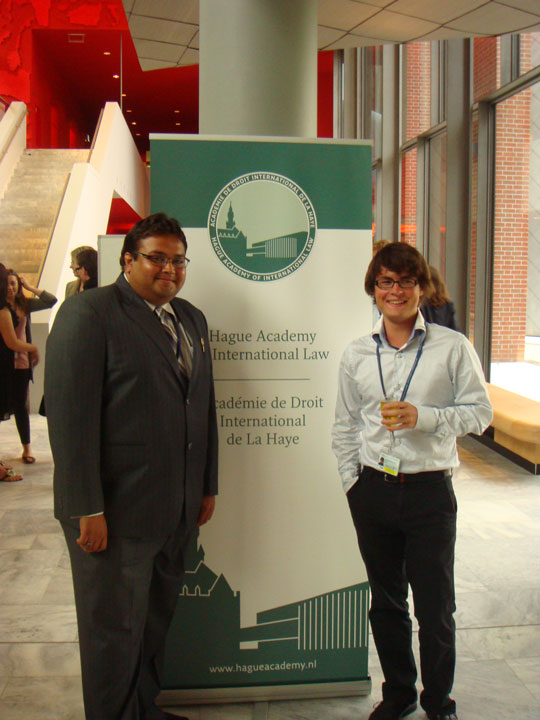
    Aditya Parolia graduated from Guru Gobind Singh Indraprastha University, Delhi in 2011. Thereafter he pursued an LL.M. in Corporate and Financial Services from National University of Singapore. Later, he had worked as an associate at Advani & Co., and at present he is a partner at PSP Legal.

    In this interview we asked him about:

    • Faculty and academics at NUS
    • Transition from an Associate to Partner
    • Requisite skills for a successful legal career


    Tell us a bit about your childhood and pre-college life as well as educational background. Did you have lawyers in your family?

    I did my schooling from St. Peters College, Agra in Science & Computers, where I was more inclined to pursue my career as a Bio-tech Engineer. During my school days I was an average student, however, I tried my best to pay equal heed to academics, sports, debates, quizzes and other extra-curricular activities. I always had that inquisitiveness to learn something new, which turned out be a major reason for me to pursue law.

    Sports and extra-curricular, were really helpful for me when I chose to pursue law, because as a lawyer and a law-student I was not only required to have a mugged up knowledge of law but be spontaneous, a team-player, social, curious to learn and many other things which you can only grab if you have been active in other spheres as a student.

    I am a first generation lawyer and I am thankful for that, if there were lawyers in my family knowing myself I can say I could have been complacent and would have restrained my ability to think out of the box.


    What motivated you to choose law for a career?

    Always being more inclined towards science and computers, law as a career option never crossed my mind. Also, Agra not being a metro city did not show much promise for law as a profession and more importantly there was hardly anyone to guide students to various options that are available to them post matriculation. The trend was more towards engineering or medicine.  A lawyer for me, as a child was so stereotyped that it only meant a person wearing a black coat, sitting under an umbrella with a type writer. Law schools were revamping them self and Nationals Law Schools have just entered the academic regime and not many knew about five year law courses.

    Luckily my father had to shift to Delhi for few months, when I was just done with my 12th board exams; there I got to meet a few lawyers who gave me an insight towards law as a profession and five year law course. I always had interest in Political & Social Sciences and the close nexus between law and these subjects made me interested and everything else just fell into place.


    Tell us about your internships experiences. Were they all meticulously planned or did they just happen to you as you went through law school?

    Well, being in a law school in Delhi turned out to be very advantageous for me. I got an opportunity to work with many law offices/firms during my LL.B., which included tier one law firms in the capital, Solicitor General of India, two Additional Solicitor Generals, Senior Advocates, and a Judge of Supreme Court of India. This gave me a good insight about various areas of practice in legal industry and most importantly it introduced me to some practicalities of the profession. Additionally, as an intern you get to share and learn from other interns a lot, this I must say is very important part of internship, which is mostly ignored by students. I am thankful to many of my co-interns of introducing me to possible internship opportunities, law journals, online-courses, higher studies and many other such things. Internship is very important and must for law students, if not for being introduced to laws but at-least for being introduced to the profession.

    My plan all along was not to give any particular practice area priority but to gain as much experience as I could from these internships and then reach any conclusion, if possible. As for planning internships I always tried to apply at least 8-9 months in advance so that I have options to choose from as per my convenience.


    Did you have an opportunity to study the subjects you chose to specialize in your LL.M. when at college in India? What influenced you to study abroad?

    You never know what will make you change your decision in life, you can have all planned but then you may be introduced to something in absolutely different direction that will make more sense. I found myself in a similar situation, I chose all those subjects which I had studied before so that it would be comparatively easier for me and I could easily grasp their global perspective.

    But I thank my Dean Prof. Simon Chesterman for giving wonderful introductory speech and explaining us why not to choose subjects we have already studied, I ended up taking subjects like Aviation Law, Construction Law, Negotiation and Drafting of Commercial Contracts and Mergers &Acquisitions  which were absolutely new to me.

    I was out of my comfort zone I had to work hard and be prepared before every seminar/lecture. This required daily hours in the library reading some of the best authors on these subjects, which brought the best out of me. Also, after reading these subjects I can claim to have gained a new area of practice.

    Well I cannot say I had lack of influence to go for higher studies abroad, I always wanted to do so. But yes I have few of my seniors from law schools to thank for guiding me to my way there, especially Mr. Shashank Garg.

    However, we cannot ignore the lack of guidance in India for a law student who wants to pursue his/her higher studies abroad. People misrelate higher education abroad as an opportunity to find a good job there or in India, it is a misconceived notion. LL.M.s are purely academic in nature, they enhance your knowledge of law and give you different perspective to practice law.


    aditya-parolia1

    How did you go about choosing which college to go to for your LL.M.? Did you ever consider Indian colleges for LL.M.?

    Initially I chose colleges and jurisdictions where I wanted to pursue law followed by expense that was to be incurred for pursuing them. For example, I did not apply to any college in US, for sole reason that it was not in my budget. You need to know where you stand and then weigh pros and cons. As I said, LL.Ms are not something you do to get a better job, you do it to do better in your job.

    When I got an offer letter from NUS, I decided to accept it immediately and reject others, for many reasons.

    The major reasons were:-

    If you want you can read Indian laws; NUS has options like Indian Business Laws, Indian Penal Code, and Contemporary Indian Laws to name a few.

    It is commercially viable as compared to UK and States.

    The legal industry is open and promising for Indian Lawyers. Nearly half of our batch, including me, had offer letters in their hand before the final results were out.

    Also, since NYU was also offering LL.M. course in collaboration with NUS we got to read many modules provided by NYU and learn from many renowned NYU professors.

    I wanted to learn arbitration and Singapore being a major centre for Indian parties showed lot of promise. Further, studies in arbitration at NUS give huge importance to Indian practice & case laws etc. And not to forget that they have Professors like Mr. Gary Born, Mr. Lawrence Boo and Mr. M. Sohanrajha to teach the subject.

    No no doubt it is one of the top most universities in the world and has an excellent dedication towards the students. I can write pages to explain this dedication of NUS.

    No, I did not consider Indian Colleges for LL.M., no disrespect to them but it time that we revamp our higher education system. Indian Colleges rather than focusing on specialized/ super-specialized areas are still majorly focusing on subjects being taught in LL.B. The approach has to be changed, it’s not like we do not have good teachers or law schools. We have alumni who are not reputed lawyers of the country and will be more than happy to contribute.

    For instance, I was taught Mergers & Acquisitions by Prof. Umakanth Varottil at NUS, he is an NLSIU alumnus, former partner of AMSS, ranked as a leading corporate/mergers & acquisitions lawyer in India by the Chambers Global Guide and no doubt an authority on the subject.  I have seen students, in a three hour seminar, willing to stand throughout and learn from him. I had no inclination for M&A and today it’s only because of him that I am advising companies on the subject. It is simply the method and atmosphere that International Universities create that grows that willingness in a student to learn something new.


    How difficult was studying abroad in terms of finding accommodation, finances and settling in? Are there any scholarships for studying at NUS available to Indian students?

    I was working for a while before leaving for NUS and since studies at NUS was not that expensive finances was not much of a trouble though I had seek some help from my parents for the second semester.

    NUS has recently come up with a state of the art residential campus, UTown, for international students, which is fully equipped with all the required amenities, including shopping centres, food courts, restaurants, sports complex and not to miss excellent education resource centre. Also since Singapore has huge population of people of Indian origin you do not feel away from India, every food court mandatorily has an Indian food stall and shops are full of Indian food supplies. If one is applying to NUS I will advice that one should apply for hostels provided by NUS they are comparatively affordable and has transport facilities linked to them.

    Every student selected for NUS gets automatically eligible for the university scholarship. To my knowledge NUS awards three from each batch and same it communicated at-least a month before the session starts. I am not aware if there is any scholarship specifically available to Indian students.


    How was the faculty & academic schedule at NUS? Was there time enough for non-academic pursuits at NUS? How did you find the work-life balance to be?

    You can find authorities on the subjects teaching at NUS, like Gary Born, M. Sonarajha, Simon Chesterman, Umakanth Varottil, Stephen Girvin, Alan Tan, Franco Ferrari, to name a few. It will be wrong for me to even explain their credentials. The manner in which the faculty communicate and reach the students is unheard of. Then within the especially dedicated campus of NUS Law School you have LKY School of Public Policy, where you find lectures delivered by eminent world leaders every other day. We had opportunities to hear lectures and interact with renowned personalities like Mr. Pascal Lamy, Mr. SashiTaroor, Mr. Henry Kissinger, Mr. Kofi Annan and many others.

    The methodology adapted by NUS in their academic schedule is quite innovative. You generally have 5 subjects a semester, having a three-hour seminar for each subject a week. You are given academic calendar and class-schedule prior to your selection of subjects. So if one wants he can have just 2 or 3 days a week of classes, based on his selections, and rest of the week can be used by the student as he wants. In my batch that we traveled throughout Southeast Asia during our studies and it was hardly a burden on our academic schedule.

    However, since for each subject you have to write an article you will have to put hours in library from these non-class days and manage accordingly. Yes if you ask me that if you can pursue a part time job that is not possible. The modules are very demanding you need to be prepared before sitting for each lecture. The classes are also very interactive you cannot simply go unprepared. NUS had developed special software IVLE to provide students all the required readings for a lecture at-least a week in advance. The Integrated Virtual Learning Environment (IVLE) is a NUS’ custom designed and built course management system for the NUS community. It is designed to facilitate and supplement teaching at the NUS.


    Do you think higher studies help shape a successful legal professional? What would be your advice to law students who plan to go for higher studies?

    Yes I believe they do to a huge extent. I cannot say all that I learnt during my LL.M. has been put to test in practice, but surely it enhances you as a person and a lawyer. The way you see or study a subject and write on it changes to a great extent. Further, since you have to settle quickly in an alien land you become more independent and responsible.

    For me, it was a correct decision. Had I not been there I would have never shifted from my orthodox approach of law and have stayed just a litigation lawyer. Thanks to LL.M. that I now advice companies in FDI, Aviation and M&A apart from appearing in courts.

    Well I can just advice that if you are going for higher studies don’t think that you will land up getting a big job there or here in India, one might get it but that is not the purpose of higher studies. One should go for LL.M. to learn new possible approach towards law, how other legal system implement their laws, what can be possible changes that we can bring in legal system. The purpose of doing LL.M. should purely be academic and self-growth.

    Since today we have major multi-nationals coming in our country, they are very demanding and require you to work as per international standards. Until we have that experience it will be difficult for us to meet their expectations.

    Also, if I may suggest please choose few subjects which you have never studied before, it will be worth it. I should also warn that if you are thinking that LL.M. will be cake walk please be aware that you are absolutely wrong, rather it is very demanding and have high expectations.

    Plan well in advance. To start with, prepare your documents and references at least during April/May and make sure to choose your colleges wisely. Seek advice only from people who have gone for higher studies as I don’t believe it will be proper for someone to be a critic of something without experiencing it first.  If possible, work for couple of years and then go for higher studies, you will be on a better footing.


    aditya-parolia2What kind of effort should a young associate put into work to get it appreciated? What are the major differences between a young associate with a partner?

    A young associate is required to be sincere and hard working, nothing much. It will be wrong to say that he should have deep knowledge of laws and procedure, this is not possible; you get to learn them eventually, books and practice rarely co-relate in fact. But, yes you need to be aware of things and development in laws, ignorance cannot be an excuse.

    Being a partner you will have to be more responsible and a team leader at all times. Your juniors’ mistake is your mistake you cannot at any time use your juniors as a shield. As a partner you have additional responsibilities which might affect the speed of your delivery but these are essential for the job, like socialising, management, delivering lectures et.al.

    I believe responsibilities make you grow as a person, the earlier you have them the better.


    When you hire lawyers, what kind of skills and profile do you look for? Are the attributes different for working lawyers and fresh graduates?

    We just require few things in a candidate, sincerity, willingness to learn and ability to think out of the box. Candidate’s marks or which college he graduated form does not matter to us.

    Of course experienced professionals have to be scaled separately; you cannot have a set formula. If one is adding value to the firm he/she is always welcome.


    Do you offer internships at PSP Legal? What is the application process and what do you look for in a cover letter and CV?

    No currently we are not offering internships. Recently our work has grown well and our lawyers are keeping busy meeting the deadlines.  It’s not that we do not offer internships, it’s just that we have closed it for this summer.

    We believe if we have interns it is our responsibility to provide them enough exposure and give adequate time to their queries and explain them the work process. We make it a point to deliver a lecture for them, at-least once a week, explain to them about the profession.

    However, we might soon put up notification on our website for internship opportunities.


    Given a chance to turn back the clock would you have done anything differently from what you’ve done?

    You learn from your mistakes and then they become experiences in life. Experiences are said to be the most valuable things, why would you take a chance to lose it.

    And as for me, I do not really know what and how things have worked for me till now, the pieces just seemed to have fallen in right places.

    So, I am not sure that I would like to change something from past.


    Lastly, what would be your message to a student pursuing a law degree?

    Whether you are are from a NLU or not doesn’t have any bearing in your long term legal career. All that matters is your hard-work and sincerity. You have to build your own path, just keep your eyes and ears open and keep learning. Every time you put yourself out of that comfort zone you gain/learn more and emerge as a winner.

    Lastly, try to be as active as possible in extra-curricular activities it’s not about winning a moot or debate, you learn a lot in the process. This displays your ability to try things.

  • Sandipan De, NALSAR, on commercial law, his diverse internship experience, and bagging a Training Contract with Allen & Overy

    Sandipan De, NALSAR, on commercial law, his diverse internship experience, and bagging a Training Contract with Allen & Overy

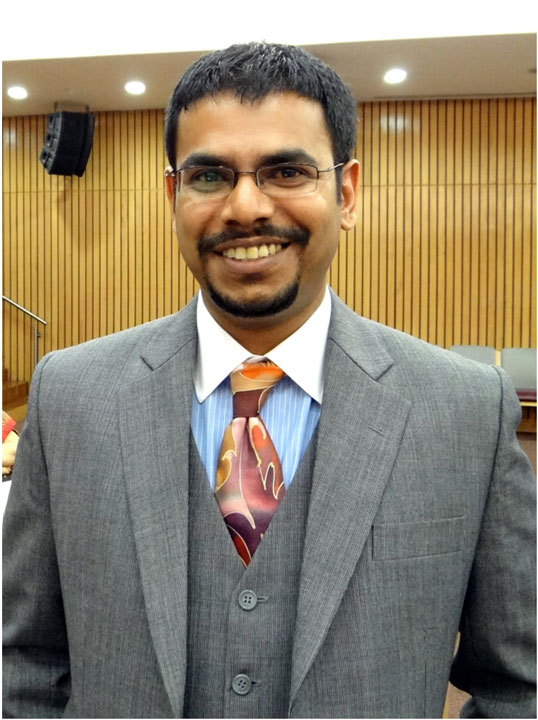
    Sandipan De is a student of NALSAR, Hyderabad, batch of 2015.  He has earned three gold medals through his years of B.A. LL.B. He has secured internships with the likes of PwC, Khaitan & Co., CNBC TV 18, Argus Partners (formerly Udwadia Udeshi & Argus Partners), Talwar Thakore & Associates (Indian 'best friend' firm of Linklaters LLP)Talwar Thakore & Associates, and AZB & Partners. He also received  the opportunity of signing a Training Contract with Allen & Overy, London. In this interview he talks about:

    • Taking up varied internships and developing specific interest
    • Securing a contract with Allen & Overy
    • A typical workday at a Magic Circle law firm


    Why did you decide to study Law? What inspired you to do so?

    I was interested in commerce and business from a very early age. I remember I used to read the Economist, BusinessWeek and preferred the Economic Times over a normal daily. I think that built up my interest in the commercial world. The choice was between doing something finance related or commercial law. I had a flair for the language and logical reasoning. I thought law would best marry both my interests. Thus, law school happened.


    What do you have to say about mooting at law school and legal writing for journals?

    I have done only one moot- Vis. I think I might not be best suited to air my views about mooting but I genuinely feel that mooting as an activity is over hyped in Indian law schools. During my exchange semester at Santa Clara I figured that Indian law schools seem to privilege mooting over other activities but the sort of help, coaching and resources in foreign law schools is unmatched here in India. You should definitely try your hand at mooting but it isn’t the be all and end all of law school. The experience and learning is great but it isn’t something you can’t do without. I think legal writing and editorial positions are possibly very important. The sort of skills you develop there are extremely relevant and the reason why I tried my hand more at legal writing was because it let me delve into any area I wanted- topics that interest me as opposed to the confines of a set problem.


    Tell us about your internship in the chamber of Senior Advocate, Saha & Ray Associates & IMS Learning Resources.

    Well a bit of both to be honest. I wanted to try out the experience of litigation and see how a small law firm worked. I liked the experience and helped me decide that I did not see myself in litigation. Transactional practice was what I wanted. I have been teaching at IMS since my second year of law school. I really like this, as it keeps me in touch with the law aspirants and I enjoy teaching really bright students and try to advise them in making informed decisions.


    Coal India Limited & CNBC TV 18 are unconventional internship choices. What went behind making those decisions?

    I have to admit that by this time I was sure that I wanted to be in commercial law and had a sort of idea of what I wanted to do. I planned to see commercial law in action from every different facet possible. Commercial litigation, a behemoth PSU, etc. I interned with the only show that dealt with corporate law in India, while at CNBC, and that possibly was one of the best experiences during internships because of its unconventional nature.


    What kind of exposure did you gain with PwC?

    I worked with the in-house counsel’s team which was in the risk management vertical. Working with a Big Four was a different cultural experience and the risk management team was a whole new experience- it was about one client and trying to ensure best practices and the best risk management policies. I am not at liberty to divulge the sort of work I did but it was really interesting, tested your mettle and understanding of the business and involved coming up with best practice policies to guard against present and future liabilities.


    What is a typical day like working at law firms?

    AZB is still freshly etched in my memory. It was brilliant work. The work hours were exceptionally long but I enjoyed the thrill of working on India’s biggest transactions. It involved everything from simple research work to even trying your hand at drafting documents. I have to accept that the work I got from seniors was top-notch, they relied on you, gave you responsibility, expected you to put in the long hours but appreciated you for it. UU Argus was a relatively smaller environment and I really enjoyed the personal touch and the individual attention I got. Possibly, this is where I had completely made up my mind on transactional practice.


    You were selected in the Winter Vacation Scheme of Allen & Overy. Our readers are very keen to know how the entire application process works and what they look for in a student when making selections?

    After you get selected for the vacation scheme A&O is the only firm which gives Indian students the option of going for a winter scheme as opposed to the conventional summer scheme. The Magic Circle and Silver Circle firms come down to a select few law schools in India and interview the candidates for their vacation schemes (which are akin to an internship) after having shortlisted students on the basis of the application form which is released in July of fourth year through the RCC.  Some law firms have more rounds after the application form including but not limited to critical reasoning and verbal reasoning tests. The interviews are usually sometime in September.


    How was your experience in the UK working at Allen & Overy? How did you manage the finances and accommodation?

    Finances and accommodation including travel are paid for by the firm. On top of that the firm pays you a weekly stipend. London is not just a great city but a financial, cultural and political capital. It is a thrilling experience to be working in the City of London (which is the financial district) and enjoying the thriving cultural life that London offers which is truly unparalleled. You are working in the world’s greatest financial centre on the biggest and best of deals- transactions that are FT headlines. A&O is a great place- possibly the friendliest of the Magic Circle firms, offers great quality work, exposure and training. Possibly, that is true for all of the MC firms but what really sets A&O apart is that they treat you as an individual, really care about you as a person, your career, future and training and the work atmosphere is collegiate. I never felt like ‘just an intern’. It was the best experience I had had and I was sure that if I was offered the TC A&O and London is where I wanted to be.


    Tell us about your typical working day and the sort of work you were expected to do? How were your fellow co-interns?

    I am presuming that you are asking about the A&O work during the vacation scheme. A standard day involved a commute on the famous London tube to work and reach ingoffice by 8:30 a.m. Put in half an hour of personal work (glancing through the FT, reading up on the topic for the client pitch exercise, mailing a couple of people to benefit from their expertise on a particular area, etc.). I would then carry out the tasks delegated to me by my Trainer, possibly meet my fellow vac schemers for coffee at eleven on the rooftop restaurant which gives you possibly one of the best views of the City and catch up on where we are with our client pitch exercise. Go back to my desk and continue with my allocated tasks. Usually there would be a networking lunch with different people drawn from diverse practices of the firm to know more about the practice areas and the firm in general. We would typically have a couple of talks scheduled by the HR, Partners, etc. during the afternoon which we would need to attend. Following that there would be that surprise drinks counter at the inhouse bar called Lavanda where you would grab a couple of drinks with your fellow vac schemers and catch up on the latest, know more about each other’s work in different departments and then head off to your accommodation unless you had a dinner or social event to attend. The dinners are usually at top-end restaurants and the social event would be really exciting stuff like ice skating at the Tower of London where you would be accompanied by your Trainer buddy and other young trainees at the firm with whom you can informally interact and they would give you informal advice and buy you a couple of drinks after a hard days’ work. You then get back to your accommodation and prepare for your interview or research for your group exercises and then try to catch some sleep to prepare for another exciting day ahead.


    You are joining Allen & Overy after graduation. How did this work out? What would be your advice to those law students who want to secure such a contract?

    After the vacation scheme you fill up a form for the Training Contract application and appear for an interview with a Recruitment Partner on your last day. Once you get back to India the HR will let you know the outcome within a week’s time. Be yourself. There is no one sort of personality that they are looking for. Technical competence is a given. The HR can look through if you are feigning interest and thus I would suggest that you venture down this road if you are really interested in commercial law and you know that this is your calling. Try your hand at everything in law school but keep yourself focussed. Be commercially aware. Very very aware. Do you apps very well so that your real personality is communicated through it. At the interview stage do not try to be a person you are not. I remember that a few people mentioned two so-called ‘tests’ that you need to pass- one is the client test and the other is ‘can we work with you test’. The latter is self explanatory and the former essentially points to whether the firm can put you in front of a client and can you hold your own. The other difference I have to highlight is that the foreign firms value a more holistic approach rather than just technical knowledge. As I said, technical competence is a given, client context and permeating a legal solution through a commercially viable idea is what is expected.


    Any tips for an intern who wants to get noticed at work by dint of her performance?

    Again, be yourself. Don’t try to be someone you are not. Work hard and network with people. Talk to people. Never be afraid to walk through someone’s door and ask for work. The worst that can happen is that person telling you that there is no work at present to delegate and you should ask someone else. Lawyers are a very intelligent crowd. Be a person whom people can work with. I would say know your politics, current affairs, music, etc. At the end of the day you need to be a person with whom everyone enjoys working with. You can spew all the jargon you want but hitting up a conversation with a person on a topic he is keenly interested in would cast a far deeper impression than knowing a particular SEBI regulation. Of course that too is important. (Remember the ‘can we work with you test’)


    How well do you think your education at law school prepared you for real world practice? What do you feel about 5th year in the B.A. LL.B course at NLUs? Is it sufficiently utilized or needs a huge revamp?

    I think the new academic model at NALSAR and the practical and industry oriented courses have really gone a long way in helping us prepare for the real world of practice. I have to thank the seniors and the informal mechanisms at NALSAR which are a sine qua non. I think all that forms a part of the legal education package. I like the idea of fifth year. Lot of partying to look forward to. I can’t speak for all NLU’s but the new model at NALSAR with single credit optionals on such varied subjects along with interesting opportunities like Teaching Assistantships are really exciting and I look forward to the last year of law school. I am TA-ing for Contracts and can’t wait to get back to college.


    You were part of the RCC at your college. What prompted you to volunteer for it?

    I am part of the RCC which is a peer-elected body as the placement process at NALSAR is completely student run. I wanted to run for the RCC because securing your job is important but if you can play a small part in facilitating your batchmates’ jobs- people whom you have literally lived with for the four years in law school- there is no satisfaction like that. The work involves negotiations with organisations, facilitating on-campus interviews, working in a team and trying to secure jobs for all. Involves drafting documents, making pitches, interacting with industry honchos, strategising and not so glorious tasks like running around getting tea, arranging desks and chairs, moving beds to arrange for interviews, etc. The experience is definitely worth it. I work with a great team of people in the RCC. I think the excellent Day Zero figures from NALSAR are a testament to that. I am proud to have a batch where everyone is behind the RCC and don’t just retire into their rooms and let the RCC do all the work. Plus, we have an extremely proactive and excellent administration who always have your back. My sincere hope is to see all my classmates placed as soon as possible.


    Does being from one of the top three NLUs really come with additional perks?

    Well, this might be controversial but I do believe that the top NLUs do have it better for their students. I think it is about getting an edge over others. However, it is not something that one can’t make up.


    How important are grades in securing a job?

    It is definitely important. It does get your foot in through the door but CGPA isn’t the only thing. At the end of the day once you are inside that interview room or in that internship it is your competence that matters and not just your gradesheet.


    Any advice you would like to give to law students aspiring for a job at top law firms?

    Go for it only if you really like commercial law. Try to understand the business and commercial angle to things. That makes it really interesting. Try to learn as much as you can. Contrary to the popular gyan on the topic no task is unimportant- even if you are doing a proofread you are getting the chance to see a document which you would have otherwise never seen. I would say put your mind to it try to understand the transaction, the clauses, ask questions. No one will mind if you are interested and ask questions about the work that they are doing. I think you should rather prepare from your first two years. Try to figure out early in the day where your interests lie. Whether it be commercial law, policy work, social justice or opening a restaurant- figure out early and work towards it from the beginning.


    Lastly, what would be your message to our readers?

    I had a great time at NALSAR over the past four years and made friends for a lifetime, had seniors that I would look up to forever, some of the greatest professors to whom I would be indebted to forever. Don’t lose yourself over CGPA and the proverbial ‘CV building’. Surely that is important but do enjoy law school. It is a unique experience. Very few careers in India offer you the sort of opportunities that law school does. Pay homage to the Old Monk, be intensely loyal to your university, make great friends, and have the time of your life.

  • Arjya Majumdar an NUJS grad on his LLM at the Tulane Univ Law School, work as senior associate at 2 major law firms and teaching at JGLS

    Arjya Majumdar an NUJS grad on his LLM at the Tulane Univ Law School, work as senior associate at 2 major law firms and teaching at JGLS

    Arjya traces his life from his unlikely admission to NUJS, his internships throughout and his growth as a person during his LLM. He makes most interesting observations on the fundamental similarity between the work at a law firm and academia as making different sets of people aware of the law with certain differences that were small but are all that matter at the end of the day.


    Most of our readers are law students and young lawyers. How will you introduce yourself to them?

    I’m assuming you know my name. For a full description of my education and work life, please refer to my linkedin profile. What won’t be mentioned there is that I love singing and I crack bad jokes. Really bad jokes.

    In a nutshell, former corporate lawyer- now turned professor, aging hippie and slightly intolerable.


    arjya-mWhy did you decide to study law? Tell us about your college life.

    In many ways, this decision was made for me. I originally wanted to be a journalist. My mother came home one day with an application form to a completely unheard of NUJS. I decided to give it a shot, just for a lark. Didn’t study at all. Landed up at the exam centre half an hour late. Managed to clear it. That was when I realized that the people who administer the entrance test must think of my answers as worthwhile enough to teach me to be a lawyer. These people had been (presumably) teaching law for many years and therefore knew better than I did. I gave up on my journo dreams. The rest is history.

    College life was mostly fun. For the first couple of years, I learnt about stuff I didn’t know existed (coming from a science background in 11-12, studying Rousseau and Hobbes was scary). Getting into a groove in my latter years, I managed to devise a personal pattern of attending classes, studying and fun and games which allowed me to get by with regard to CGPA. Like many others, I fell in love and out of love- the standard ups and downs. Had my share of substances that shall not be named and fights with people who will also not be named.


    NUJS, now and then. How would you describe the change?

    Major changes. As one of the first few batches, we were instrumental in our own successes and relied less on teachers. As a new national law university we had a point to prove to NLSIU and make ourselves known. We won international moots without any mentoring or help whatsoever. This kind of enterprising behaviour has, in my opinion, died out over the years.

    On the flipside, I know it’s become tougher to survive. With more national law colleges, the competition, and not just for jobs, has become fiercer.

    I do wonder though, whether NUJS is still as chilled out a place as I remember it to be. I have made friendships which will last for life. I do hope the same applies to present students of NUJS.

    Not going to comment on the recent developments concerning the NUJS administration.


    What kind of internships did you do while you were a student? Any remarkable experiences during your internships that shaped your career choices later?

    I did the standard NGO, trial court, appellate court and law firm internships. Mind you, it was one internship a year and not two or three as I see happening presently. Two internships stand out. One was with the WWF where (along with dear friend Sagnik Ghose) I visited fish markets in Calcutta to find out if turtles (a Bengali delicacy) were being sold. Trading in turtles is generally illegal. We managed to rescue one turtle from certain death and released it in Alipore zoo. We also managed to tip off the local police regarding these illicit activities.

    The second internship was with Mulla and Mulla in Bombay. Mr. Shardul Thacker was most encouraging and allowed me to work on matters that would usually be given to first or second year associates. Of particular note was an opinion on software technology parks which gave me the inspiration for an article “Taxation in BPOs” published by ELT and later on, a book titled “Special Economic Zones: Policy and Procedure” published by CCH India.

    Both of these internships inspired two very important aspects of my career- one, a love for the environment and two, a love for legal academic writing.


    Right after graduating, you worked for three months in a law firm and then went for LLM. Why did you decide to go for higher studies?

    Somewhere down the line at NUJS, I got interested in Maritime Law (possibly because my father was a sailor). I must have written about 4 or 5 projects in maritime law and did maritime law based internships (including at Mulla). I wanted to learn more about the subject. Hence the choice to opt for higher studies.


    Tell us something about your LLM year at Tulane University Law School. How did this influence your career?

    As a lawyer, it didn’t influence my career at all. At least not professionally. A degree in maritime law has no place in a corporate law firm where you’re working on M&A and Capital Markets.

    But it did influence me in many other ways which I found to be invaluable in my career. A foreign degree forces you to stay in a foreign land, to understand and appreciate customs other than yours. I was staying in a town steeped in conservative American and black culture and the university had possibly 10 students from India. You learnt something new every day. As a result, I became more open minded, I gained an ability to walk up to and talk to complete strangers. More importantly, it broadened my horizons and sociability.

    It was also tough. Having to fend for yourself in a foreign land (where you might be misunderstood) is not easy. That, plus working part time and studying was a novel experience at the time.

    I’d say everyone should live (and not visit) abroad for a year. It gets you out of your comfort zone and makes you learn things about other countries (and more importantly, yourself)


    Any memorable experience you would like to share?

    I was working part time as a cashier at the university grocery store. A lady customer, upon noticing that I wasn’t white, black or hispanic, asked me if I was from India. When I affirmed her assumption, she asked me if we all rode elephants to work and had charmed snakes as pets.

    I still don’t know if she was joking or was for real.


    You worked as a senior associate at two major law firms. Tell us something about that.

    It takes a while to learn the ropes. You need to be able to put in the long hours and the constant attention to detail. Your boss also plays a huge role in your life. How he/she allocates work and how much you can learn from him/her will decide your bonuses and career in the firm. I am and will forever be grateful to Mr. Som Mandal, a number of former partners at FML, and some present partners at D&D.

    I also realized along the way, how important it is to create an image of excellence for yourself. Like the saying goes “Justice must not only be done, it must also appear to have been done”. This plays a huge role in law firm politics which I have unfortunately been witness to from time to time.


    How is a typical day for a senior associate in a law firm?

    Depending upon whether you have a deadline that day, life in a law firm varies on a daily basis. You work on your transaction, consult with your partner on a point on which you are stuck, read up on it, revise your document accordingly. If you have been diligent in your work, it should pass your partner’s review and the client should be happy. If not, you do get screamed at (not necessarily literally) and its back to the drawing board. All this is fairly par for the course.

    Sometimes a client will come back and express his appreciation for your work or will come to you (and not the partner) for a new mandate. Somedays you get to scream at an investment banker or a merchant banker. Those are the days which are worth recalling with a smile.


    Currently, you are teaching at Jindal Global Law School as Assistant Professor. Why this switch?

    About two years into FML, I realized that I didn’t want to spend the rest of my life drafting and negotiating on the same standard agreements, chasing after new clients for mandates and old clients for pending invoices. I knew I loved teaching (ask any of my former interns or colleagues) and had a flair for academic writing.

    Unfortunately, academia in India doesn’t pay as much as a law firm. Given the vast sums of money transferred to my bank account at the end of every month, it was difficult to tear myself away from the comfortable lifestyle I had built. However, JGLS salaries are at par with law firm standards and when the opportunity came, I took a leap of faith.


    Life of a law firm associate and a professor, what do you think are the major differences between the two?

    There aren’t too many differences. As an associate, your job is to make your clients aware of the law. As a professor, your job is to make your students aware of the law. As an associate you are expected to research and provide answers to questions of law in the form of a legal opinion. The same applies to being a professor, where instead of an opinion, you publish a paper.

    The only difference is that as a professor, you get to choose what turns you on intellectually. You choose what you want to research on and not what the client wants. You develop your own understanding of the research questions and are not expected to adhere to the understanding of your partner. And this makes all the difference in the world.


    Please describe a typical work day of yours at JGLS.

    Since classes haven’t started yet (it’s been less than a month that I’ve joined), much of my work is preparatory in nature. Preparing course modules and lists of possible research topics which my students will write projects on, consulting with the administration on university policies, studying for my own course (which I remember very little of) takes up most of my time.

    A lot of time is also spent in researching on ongoing projects which will hopefully be published or presented sometime soon.

    When classes start in August, I suppose a lot of time will be devoted to teaching, mentoring and guiding students and reading up on the next day’s class.


    How would you compare the JGLS of today with the NUJS of your time?

    I have seen NUJS during its fledgling years and am seeing JGLS during its early years now. I’d say the infrastructure at JGLS is far better than that at NUJS at the time. The faculty is younger, and therefore a lot more attuned to the needs of students (I feel that as students, we didn’t always connect with old, but very respected teachers such as Prof Menon, Prof Konar and Prof Banerjea).

    As I mentioned before, the competition has gone up. I see JGLS students applying for and presenting papers at conferences and publishing papers. While all this has happened during my time at NUJS too, I think the need to stand out in the crowd has become even more imperative now.

    One interesting difference I see is the student demographic. While at NUJS, you had a fair cross section of society in terms of economic class. At JGLS, that demographic is slightly skewed upwards, although you do have a large number of very deserving scholarship holders.


    arjya-m2What’s your take on work- life balance?

    Extremely important. You need to have the courage to refuse work if you think you have too much on your plate. Either that, or devise a way where you can work quickly without sacrificing accuracy. I have personally followed this through my years and it has ensured my sanity for many years. Singing at a rehearsal for a Broadway musical or an opera after a bad day allows you to get back to work the next day with a smile on your face.


    Last but not the least, what would be your message for law students?

    Don’t take law school too seriously. CGPA and class ranks, like old friends and enemies, will be forgotten. Learning the law isn’t important, anyone can learn the law. What is important is that you learn how to learn the law. Other than that, chill (while you still can).

  • Esha Shekhar on being a legal correspondent for Bloomberg TV & moving back to the world of corporate law

    Esha Shekhar on being a legal correspondent for Bloomberg TV & moving back to the world of corporate law


    Esha graduated from WBNUJS, Kolkata in 2012, instead of applying for mainstream corporate jobs, or pursuing a career in litigation, she applied for jobs in the legal journalism. She worked at Bloomberg as an anchor for quite a span of time, and is currently an associate at Dua Associates. Let’s talk with her about her experience in the legal journalism sector.


    Most of our readers are law students and lawyers. How will you introduce yourself to them?

    An apt introduction would be law student turned journalist turned advocate.


    Please tell us something about your college life. Why did you want to study law?

    I was preparing for medical entrances, but a lack of interest in science made me give that up. I saw the law school entrance question papers and an aptitude based test seemed like an interesting option 🙂 Law is very logical, and that was the first thing which drew me towards it.

    I graduated from National University of Juridical Sciences, Kolkata. The five years spent in NUJS and Kolkata was truly an experience. Apart from academics, which of course is the staple of any college life, a good circle of friends, and gaining the independence to do what I wanted to do is what I give the college credit for.


    When you were in college, what were your thoughts on career? What kind of internships did you do?

    When I first came to college, becoming a corporate lawyer was the thing everyone aspired for, and naturally, I believed in the same. Gradually, I started questioning whethercorporate law was what I wanted to do. The bad thing was I had very little idea about the other options I had. The good thing was lot of seniors from NUJS, even current students had started exploring new career options, which took off some pressure from me.

    My internships were varied. It was a conscious decision to work with as many diverse organizations as I could manage, to gain perspective on my career options. I interned with Down to Earth magazine (the flagship bi monthly magazine by Centre of Science and Environment) where I wrote for them for two months, litigating lawyers, a multinational company, Jharkhand State Electricity Board (to gain some experience with a government body), a boutique IP firm and of course the customary top corporate law firms.


    You worked with Bloomberg TV India after graduation. Don’t you think this is an unusual career choice for a law graduate?

    I would say it is not the usual career choice for a graduate from a five year law school. Legal journalism is an option many students from 3 year law colleges, especially CLC opt for. A major chunk of journalists who report from Supreme Court and High Courts are law graduates since they are supposed to be equipped to understand the legal jargons and give a clear understanding of what the Court said in a particular matter. Also, a court accredited journalist needs to have a law degree. So it is not an unusual choice per se. I was interested in journalism from the beginning because of my interest in writing. I worked with and ran the in house NUJS magazine, Writer’s Block for some time. Working with Down to Earth magazine gave me an understanding of print media. But yes, working with a TV channel was entirely a different ball game altogether.


    esha-shekharWhat motivated or encouraged you to join Bloomberg? Was this a campus placement? Did you consider other media companies at that time?

    Bloomberg was a classic case of being at the right place at the right time. When I didn’t get through the top law firms’ interviews, I was very dejected initially, but a bit of thinking made me realize that it was more because of peer pressure rather than the actual loss of a coveted job. I stopped applying for such jobs, started applying to print media houses and I was getting favourable replies from some of them. However, I didn’t know that TV channels were an option.

    Bloomberg was not a campus placement. I happened to be in Delhi at the time when a college professor sent a batch mail saying his friend was working with a business news channel, who were looking for law graduates to work for a new legal show. I applied, got a call for interview and was really skeptical about it. But it was the first interview where I actually meant whatever I said, vastly in contrast with my other numerous ‘lost attention in 5 minutes’ law firm interviews. That was something which encouraged me to join Bloomberg.


    What were your primary responsibilities in Bloomberg?

    My responsibilities were two fold – daily news reporting and working for the weekly legal show. As a legal correspondent of a business news channel, my responsibility was to report all the corporate related legal news from the courts. Since I was the only person assigned to the legal beat, I ended up covering corporate legal news coming from all courts in Delhi. This includes Supreme Court, Delhi High Court, District Courts, Company Law Board, Appellate Tribunal for Electricity, Competition Commission of India, National Green Tribunal, Income Tax Appellate Tribunal among others. So a major part of my job was to be in Courts from 10 to 4, report the news, talk to various lawyers and figure out their next step of action in all such high profile matters.


    You worked on their show The Courtroom. What did you do for the show?

    The Courtroom was launched last June, when I joined. The entire idea behind it was to make a half hour news show of important corporate legal news of the week. We at Bloomberg discussed how there were so many important legal stories/judgments coming from the courts, specially High Courts which either didn’t get noticed, or were given a ‘five line space’ in newspapers. The judgments had a much bigger impact if analysed properly.

    My job was to identify such judgments/ stories which had a bigger impact, and provide an analysis of the same explaining the larger picture. This involved writing the script for the segments, talking to lawyers and taking their opinion and putting up a segment together for the show.


    You were involved with content analysis and editing of the show, The Courtroom. What does that exactly mean?

    The format of the half hour show was top legal news headlines followed by three short segments on analysis of the top judgments of the week. Content analysis involved brainstorming about the headlines, and the content of the three short segments. Identification of the story/judgment is just the first step. Writing the script was the toughest bit. The script was for a layman’s understanding, so I had to forget being a lawyer, and focus on explaining legal jargons in the simplest way possible, without losing the essence of the story. It was initially very difficult, but my boss, who is the Associate Editor in Bloomberg was a good teacher who taught me how to do the scripting.

    So the script for one segment was ready on paper. Two or three lawyers’ opinion was taken on record to give an expert insight. To make it a seamless story for TV viewership, editing came in. I worked along with the editing team. I would record some part of my script (Voice over),figure out the videos which  would come along with voice over, edit/shorten the comments of the lawyers (bytes), put it in place, record a small bit where I would conclude the analysis (reporter’s link) and place it all together to make one segment of the show.


    How is the place to work at? Were there other lawyers?

    It is a great place to work at. I really enjoyed my work experience there. The USP of the place was that being a young news channel, it gave a lot of space to its reporters to identify their beat (the area which they would cover), build their contacts and identify a story. There is intense pressure on the reporters in other news channels, specially other business news channels to break one news story every day. That was not there in Bloomberg, and they pay a lot of attention on the news content. One thing which I learnt was that breaking the news was not priority, breaking the correct news was. So if I heard something in court which I knew was important but was not sure of, even though every other reporter was rushing to report the same, I was taught to get a confirmation before I reported on the story.

    No there were no other lawyers. I was the only lawyer reporting legal news among the business news channels.


    What was the work environment like?

    The Delhi Bureau of Bloomberg TV India has around 8- 9 reporters. The news content is policy based because of Delhi being the centre of power. I learnt a lot about policy because the news reported from Delhi were mainly from Finance, Aviation, Telecom, Commerce, Coal Ministries among others. Being a part of the newsroom is interesting, as it is not only about a reporter’s knowledge but how he/she handles the pressure of getting confirmation about an important news from a source, verifying it, putting on make up to appear presentable onscreen and then reporting the news live as calmly as possible. It’s about knowing your topic well, in case the teleprompter stops working. Bloomberg’s work environment is good. There is constant pressure to report news, but the bosses didn’t make life hell for losing out on a story, and that’s saying a lot for a news channel.


    Young professionals almost inevitably hit rough patches in the career. How do you think they should handle such situations?

    I think it’s all about understanding what would work for you. A lot of us end up looking at a situation from another person’s view point, rather than looking it from one’s own. What would work for your friend may not work for you. It may sound straight from a self help book but it helped when I was going through a lot of stress with my law firm interview rejections – keep faith in yourself.

    Also, I think one should not postpone something they want to do for later. In college, my plan was to work with a law firm for a year and then try my hand at journalism. Exactly the opposite happened, and in retrospect it was better that way, andnowI am much more confident about my decisions.


    You recently shifted and started working for Dua Associates. What made you change jobs?

    Yes, I shifted recently to the litigation team in Dua Associates. After college, I knew I didn’t want to quit law altogether, but I also knew that I did not want to be on the corporate side. In law school, litigation is seen to be pursued by someone who has a lawyer in the family, or as a poor cousin of the corporate side. But in reality, it’s a much more satisfying experience for a lawyer. When I started reporting for Bloomberg, I was in courts from 10- 4 everyday, and it was fascinating. I interacted with many lawyers, including senior advocates across all courts because of my work and that made me learn a lot how litigation works- in both good and bad ways. I covered many high profile court proceedings, including SEBI- Sahara dispute, Presidential Reference (of 2G spectrum issue), Uninor dispute, Bellary mining, Novartis patent dispute in Supreme Court. Hearing the senior advocates argue the matters was quite exciting. One prominent lawyer told me that even if there are hundreds of adjournments you face, one chance to argue a matter in court is worth the hassle.


    How does working at Dua Associates compare with Bloomberg TV India?

    They are different in a lot of ways. There was a constant pressure in Bloomberg to report news/break news or constantly be in touch with lawyers to get information. Plus there was the additional pressure of brainstorming for each episode of the show every week. Dua is more relaxed that way. I don’t get to see all the high profile litigation matters in court. But now the pressure and priority is about either researching or reading for drafting petitions, applications, and written submissions for the matters you are handling or preparing for filing the same in court. It seems like I am back in college, except that I am studying much more than I did there 🙂


    The working environment of a legal firm must be different than working with network television. What does it take to make a shift like that?

    For me, it was not much about the shift, as it was about figuring out what would work for me. I trained to become a lawyer, and I knew I wanted to be one. Litigation is what I have realised would work for me for now. The experience with network television made me get out of my comfort zone, and experience something which was very new. I have become more confident in my interactions with people, and once you start doing live news, everything seems easy in comparison. Bloomberg experience helped me get familiarized with courts, court jargons, proceedings etc. I could make a more informed decision about my current job. So if you are working somewhere, and get a new opportunity, you need to make weigh the pros/cons and understand what kind of learning curve you’ll get.


    Lastly, where do you see yourself in the future, in say another 5 years? Any chance that you may get back to journalism?

    I will be litigating hopefully. I don’t see myself getting back into journalism per se, but I plan to start writing for newspapers or magazines soon. As much fun as my TV stint was, with the thrill of appearing on TV and talking to the camera, I don’t see myself returning to news channels as a journalist.