Tag: Legal Advisor

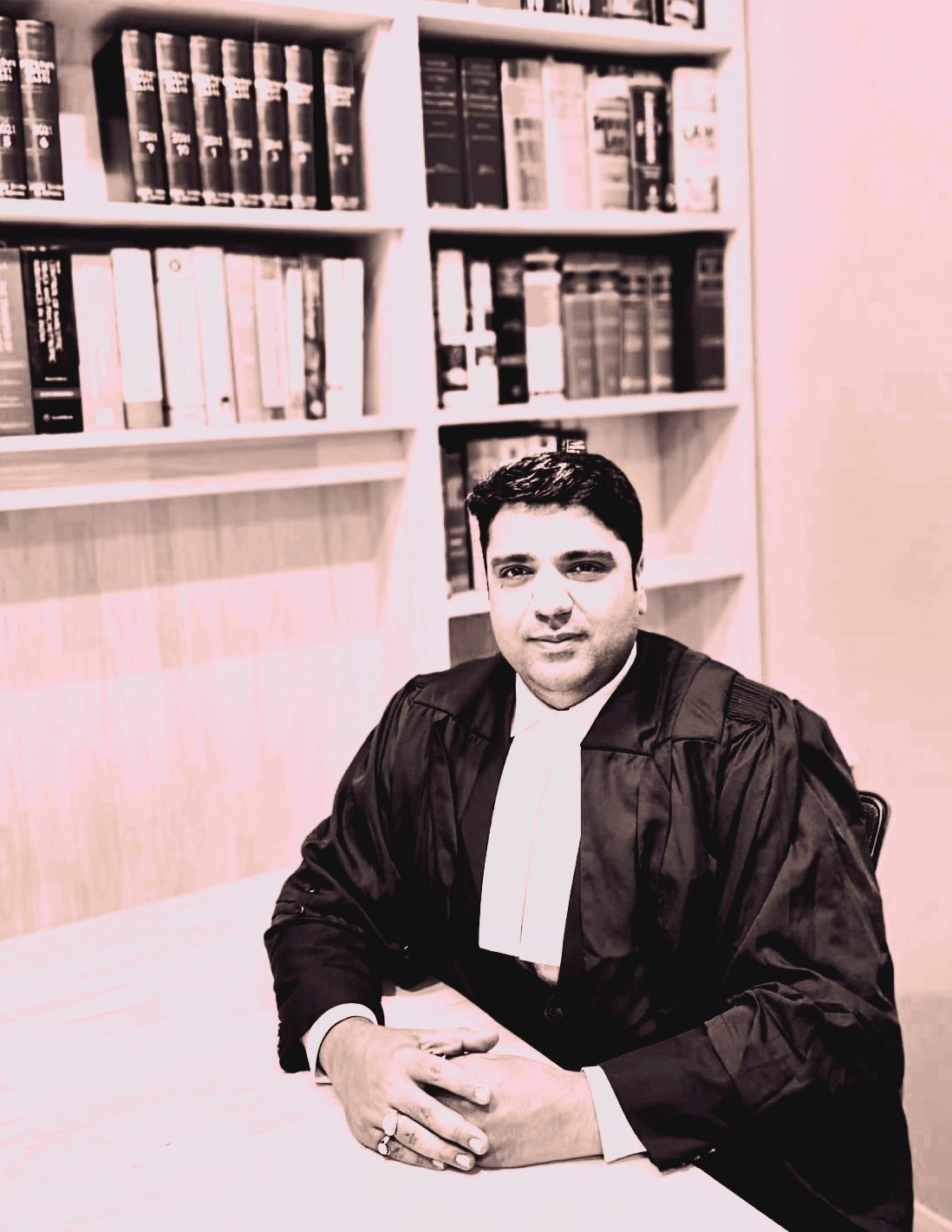
  • “From Small Town Dreams to Supreme Court Realities: A Candid Conversation with Neelmani Pant, Advocate-on-Record”. Gain insights into the distinct responsibilities and pride associated with the role of a “friend of the court.”

    “From Small Town Dreams to Supreme Court Realities: A Candid Conversation with Neelmani Pant, Advocate-on-Record”. Gain insights into the distinct responsibilities and pride associated with the role of a “friend of the court.”

    This interview has been published by  Priyanka Karwa and The SuperLawyer Team
    How do you end up pursuing a career in Law? 

    I belong from a small town Ajmer, Rajasthan, my father is a lawyer in the same town, and I grew up watching him dress in black and white attire every day. We have a small office in the home where the clients used to come and share their cases in his office. Listening to them hiding behind the doors and watching my father helping them in every possible manner would always attract me towards this profession and here I am. 

    You graduated from M.S. Ramaiah College of Law, Bangalore in 2013. How does it feel being from (Non NLU) Law college – could you share your experience with us.

    Before joining this college I did give entrance exams of various National Law Colleges in 2007 (as CLAT was introduced in 2008) but was not selected in any.

    It was late mid-June when almost all the college admissions were closed and after rejections from all the national law colleges, I chose to travel alone by train from Ajmer for almost 42 hours to reach Bangalore in search of a good college.

    I made a list of reputed law colleges and decided to visit each one of them to try for a seat. The first on the list I visited was M.S. Ramaiah College of Law. At the entrance of the college, a big board was fixed displaying “admissions closed”. Not to lose hope I still managed to push myself and enter into the building walking towards the administrative room.  I swiftly entered the room where the manager had just ended a landline call by putting the receiver down and in a low voice I said “I want admission”. I was told to wait and have a seat, while the administrative persons had a meeting among themselves. After some time I was told by the manager that 80 seats of this academic year are full, however, a moment ago one candidate refused to join and now we have a single seat, are you carrying all your documents with you and the rest is history. This is the day when I learned the value of at least giving it a try and not giving up.

    It is true in today’s life various offices and firms judge based on the name of colleges, however, I would like to add that in my opinion being from NLU or non-NLU College does not make much difference, if you are sincere and are passionate about your work. In fact, being from Non-NLU in my case had only benefitted me for making me strong enough to face the challenges of a litigating lawyer as a career. 

    Not being the icing on the cake will only make you the bottom part of the cake which is hard and filling, meaning thereby stronger and in a way fruitful for your future if you want to pursue a career in litigation which is itself full of challenges. A will to learn and zest for life will never depend on what college or institute you belong to. Face the challenges and enjoy the journey.

    You graduated, Coming from a small town then working under an Advocate-On-Record at the supreme Court of India to becoming Yourself an Advocate-On-Record, How was the journey? 

    Being a lawyer is not easy, it demands lots of hard work, dedication and devotion. Especially, when you do not belong to this city that is in itself challenging. You have to live away from home starting from scratch. It almost seems like a never-ending struggle. After my graduation, I came directly to Delhi and shared a flat with my immediate seniors at Law College who were kind enough to give me some guidance. 

    I worked at various law offices where I was fortunate to be given the responsibility to handle matters individually. I used to draft, type and prepare it for filing and thereafter visiting courts for filing, everything right from:- 

    • page numbering,
    • attestation,
    • notarizing, 
    • court fees 
    • Photocopies etc, 
    • waiting in the queue for submission of the case at filing counter
    • curing defects
    • getting it listed and 
    • arguing before the court 

    While deciding a case in the court of law there is an abbreviated form of Latin Maxim de minimis non curat lex, “law is not concerned with small things.” However, in the practice of law, it works the other way round .i.e. “the practice of law is concerned with each and every small thing”. Until and unless you learn how in litigation the small and minute things work you will find it difficult to deal with major things.

    While digging the ground I never stopped looking at the sky. At the Supreme Court, I used to sit inside the court watching the proceedings in and out, observing the Hon’ble Judges their reactions and how learned advocates and senior advocates argue their cases and present themselves before the Court. Making notes, and learning the process and it is only a decade into 2023, with never to stop trying attitude and as they say “When there is a Will there’s a way” I cleared my Advocate-on-Record Exam.

    Your work involves a mix of civil, criminal and corporate matters. If you had to choose, which type of case do you find more thrilling and why?

    As recently Hon’ble Justice L. Nageswara Rao said:

    There Is No Profession Thrilling Than Legal Profession”

    Well practice of the Supreme Court does require mixed knowledge of every subject, there is a CASE LAW paper in AOR Exam where one has to study all case laws around 64 judgments right from KESAVANANDA BHARATI SRIPADAGALAVARU VS. STATE OF KERALA & ANR. (Doctrine of Basic Structure Case) or LALITA KUMARI V. GOVTOF UTTAR PRADESH (Registration of First Information Report) to INDORE DEVELOPMENT Vs. MANOHAR LAL (Land Acquisition Case).

    Either Civil, Criminal or Corporate matters, the recipe is the same .i.e. mastery of facts, relevant statutes, research, and application of law/judgments, only the taste changes .i.e. the result.

    The thrilling part is not the subject, but the journey and the relief for which the client has engaged you and trusted you with the responsibility of seeking justice. When you give your best in the matter and present your true capabilities, knowledge, ideas, and skills of your experience, only then the whole process right from the first meeting with client up to the final argument stage the journey as a whole will thrill you and no matter what the subject is, your inner soul will always give a sign that yes you have done something worth for.

    Balancing a career as an Advocate-on-Record with various high profile cases, you must have some unique strategies for managing stress. What do you do outside of work to unwind and recharge?

    I am a son, a husband, a brother, and a friend. I am an old-school guy, I love being close to nature which keeps me calm and soothing and I also love to spend time with my family. Whenever I get time I travel back to my hometown and spend most of the time with family. In the morning I do give time to myself for at least 20 to 30 minutes, where I practice yoga, stretching, meditating, and gardening and relax with myself.

    In my opinion, there are no unique strategies for managing stress, in reality, there are not any because the simpler you live the simpler your life will be. In these hectic times of the world, people have stopped realizing that we work to stay away from these so-called words like stress, tension and problems etc., so how come working would give you stress. I am not denying that these issues don’t exist but once you are doing your work with true passion and dedication and have opted for the right profession that keeps you motivated you will automatically ignore the unwanted things in your life and would focus on improving yourself every single day.

    Being an Amicus Curiae in a service matter is an interesting role. How is the experience  compared to your usual courtroom battles?

    Well, it is a privilege and a great honour to be appointed as amicus by the Hon’ble Supreme Court of India and I am fortunate enough to play this role in my small legal career. As the Service matter is still pending consideration before the Hon’ble Supreme Court it would not be possible for me to discuss it.

    However, in comparison to usual courtroom battles, there is definitely a different sense of pride within you when the court recognizes you and shares the burden of responsibility on your shoulders. As an amicus you have to act as a “friend of the Court” and your endeavour must be to guide the court with all the facts and laws to reach every possible way of finding the right solution both for the Court and the litigant.

    Your journey involves work with a diverse range of legal matters. If you were to give advice to your younger self starting in the legal profession, what would it be, considering both the professional and personal aspects of your career?

    OBSERVE THE COURT:-

    I still remember in my initial days I attended a chamber matter before Hon’ble Mr. Justice Amitava Roy. My matter was listed as Item No. 12 and all the matters that were listed were for the reason of not curing the defects, for that reason the matters were pending in the registry.

    During Item 1 to 10, I observed that in every Item Your Lordship was asking how much time you need to cure the defects and the Advocates were asking for 6 weeks, some asked for 4 weeks or 3 weeks time, the court was strictly taking Action against the advocates for not curing the defects timely and in almost every matter your lordship were passing order “as a Last opportunity counsel is given 2 weeks to cure the defects, failing which the Special Leave Petition will stand dismissed”

    In item 11 your lordship had again asked “how much time” counsel replied “4 weeks”, and the Court said “2 weeks and failing which the Special Leave Petition will stand dismissed” with a comment “pull up your socks”.

    When item 12 was called out I walked towards the desk and was asked by Your Lordship “Yes sailing in the same Boat, how much time do you need” I replied It is my fault for not curing the defects timely and I leave it to my lords any time as would be directed I would cure the defects” and in response, an order “6 weeks’ time granted to cure the defects”, without any condition of dismissal. 

    In short, it is very important to read the mind of the court and decide in what manner you can drive the court in your favor.

    BE PATIENT:-

    My message to the readers is: Be patient, and be diligent as this profession does not give any overnight success stories. This profession sometimes also demands sacrifices, as I can relate with those who come from outside the city in the hope of fulfilling their dreams, “you might lose many things but believe me you will achieve everything”. In the end I can only share the slogan by Great Swami Vivekananda:

    उत्तिष्ठत जाग्रत प्राप्य वरान्निबोधत,क्षुरासन्न धारा निशिता दुरत्यद्दुर्गम पथ: तत् कवयो वदन्ति |

    Arise! Awake! Approach the great and learn. Like the sharp edge of a razor is that path, so the wise say—hard to tread and difficult to cross.

    Get in touch with Neelmani Pant –

  • Handling intricate matters of Family Law, especially matrimonial disputes, demands a high  degree of sensitivity, discretion, and compassion- Mitali Arora, Founder of MAK Law Firm

    Handling intricate matters of Family Law, especially matrimonial disputes, demands a high degree of sensitivity, discretion, and compassion- Mitali Arora, Founder of MAK Law Firm

    This interview has been published by  Priyanka Karwa and The SuperLawyer Team

    Could you please share your journey and the pivotal moments that led you to pursue a career in Intellectual Property Rights and Corporate Law, especially considering your diverse experience and background?

    I am a first-generation lawyer and belong to a through and through business oriented family.  So it would be fair to say, Business instinct runs in my genes. My journey in law began with a  genuine passion for understanding the intricacies of business and innovation. Throughout my  educational years, I was deeply intrigued by how businesses evolve, and the role intellectual  property plays in safeguarding creativity and fostering innovation. Those formative years  allowed me to delve deep into the nuances of Intellectual Property Rights. It’s not just about  trademarks or patents; it’s about safeguarding the very essence of an individual’s or a  corporation’s innovative spirit.  

    Corporate Law, on the other hand, appealed to my analytical side. It provides a framework for  businesses to operate, grow, and expand. I was particularly interested in how businesses  navigate the complex regulatory landscape, make strategic decisions, and ensure compliance  while still being competitive and innovative. Over the years, with my diverse experience, I’ve  come to appreciate the nuances, the intricacies, and the beauty of both these fields. They might  seem poles apart for some, but to me, they are two sides of the same coin – both essential for a  business’s growth and protection. 

    How has your global academic exposure shaped your perspective and approach in  law? 

    Pursuing my education from the University of Torino and WIPO was a transformative  experience that deeply influenced my approach to the legal landscape. The University of  Torino, with its rich academic traditions and its location in Italy—a hub of art, culture, and  innovation—offered a profound understanding of the historical and contemporary nuances of  IP law. This foundation was complemented by WIPO’s expertise, which is the Mecca of IP.  The synergy of these two esteemed institutions offered a unique blend of academic rigor and  practical insights into the global IP landscape. 

    Interacting with a diverse group of peers, professors, and industry experts, I gained a holistic  view of legal frameworks across various jurisdictions. This experience not only sharpened my  technical acumen but also cultivated a global perspective in me. Today, when I advise clients  or engage in multifaceted legal cases, I frequently draw upon this reservoir of international  knowledge, ensuring that the counsel I provide is both globally informed and locally pertinent. 

    In fact, this was not just an academic endeavor; it was an opportunity to be part of a global  community of legal professionals. This rich network that I cultivated during my L.L.M has  since become an invaluable asset in my practice back in India. With this international network  at my fingertips, I can confidently assist and represent my clients on a global stage. It ensures  that they receive not only locally tailored advice but also benefit from a wealth of international  insights and collaborations. 

    What prompted you to start your own journey and launch your Firm in 2019?  

    After years of working in the bustling legal environment of Delhi, life took an unexpected turn  and led me to relocate to Dehradun in 2019, owing to personal circumstances. Having been  deeply rooted in a corporate framework for most of my career, I felt a distinct void in  Dehradun’s legal landscape. Rather than viewing this shift as a setback, I saw it as an 

    opportunity – a chance to create the very ecosystem I thrived in. It was a confluence of this  need, my passion, and years of experience that drove me to establish MAK LAW. Launching  my own firm wasn’t just about continuing my profession; it was about recreating the dynamic  environment I was so accustomed to and contributing to the legal community in Dehradun. 

    Although launching it single-handedly, especially as a first-generation lawyer, presented its  own set of unique challenges, I was not alone in this journey. The wonderful support and  guidance of my family, friends, colleagues, mentors, and even my professors were instrumental  in helping me take this bold step. Every challenge faced, every hurdle overcome, served to  solidify the foundation of MAK LAW, making it the reputable law firm it is today.  

    Could you shed light on some of the most significant cases you’ve handled, and the  complexities or challenges they presented? 

    Among the cases that deeply resonate with me, the one involving a seasoned Silicon Valley  professional with over three decades of experience, engaged our firm in a multi-faceted case  encompassing violation of contractual obligations, IP infringement, and theft of intellectual  property between his company and two other entities. 

    The case was particularly challenging due to its international scope, requiring adept handling  of both Indian and US laws. However, what sets this case apart was not just the complexity but  also the swiftness with which it was resolved. Within a mere span of two months since  initiation, we managed to settle the case for an impressive amount of 200 million dollars against a prominent US company. Achieving such a settlement in a short time frame was a testament  to our meticulous strategy, transparent communication, and relentless pursuit of our client’s  best interests. It’s cases like these, where the stakes are high and the complexities manifold,  that truly underscore the essence and importance of the legal work we do at MAK LAW. 

    You also practice Family Law along with IPR and how does that intersect in your  practice, and what inspired your involvement in both areas? 

    In my practice at MAK LAW, I’ve had the privilege of delving deeply into both Intellectual  Property Rights (IPR) and Family Law. While they might seem worlds apart to many, I  approach them with equal commitment and passion. My foray into Family Law began  organically, initially assisting on pro bono cases and extending a helping hand to friends and  family. Over time, this transformed into a specialized vertical within our firm. 

    Handling intricate matters of Family Law, especially matrimonial disputes, demands a high  degree of sensitivity, discretion, and compassion. At MAK LAW, we’ve tackled some of the  most challenging familial disputes, always prioritizing the well-being of the aggrieved parties.  Being a woman-led firm, I’ve emphasized an approach that is empathetic, yet ensures fairness,  striving to offer relief without any gender bias. We are known to have settled family disputes  effectively in shorter spans than the usual legal scenarios.  

    What are the challenges you faced while floating your own law firm and how has that  journey been for you? 

    Launching MAK LAW was both a dream realized and a massive challenge, especially as a  first-generation lawyer. Establishing a new law firm in a market already populated with well entrenched firms was not easy. I was resolute that MAK LAW would not just be another firm 

    but would stand for ‘Legal insight. Business instinct’. Our initial struggles ranged from  convincing potential clients to entrust their legal matters to a relatively new firm was a hurdle.  However, our emphasis on strong relationships and transparency gradually solidified our  reputation in the market. The most difficult to handle was personal pressure: Being at the helm  meant my successes were the firm’s successes, but so were my failures. The weight of  responsibility, especially in the initial years, was immense. 

    Despite these challenges, the journey has been immensely rewarding. Each time we win a case,  we win a client’s trust, and we solidify our base automatically. The testimonials from satisfied  clients have been constant reminders of why I embarked on this journey. It has truly been a path paved with lessons, growth, and sheer hard work. 

    Given your background and expertise, what do you believe are the most significant  challenges and opportunities in the field of Intellectual Property Rights and Corporate  Law today, and how do you see it evolving in the future? 

    At MAK LAW, we pride ourselves on navigating the complex arenas of IPR and Corporate  Law with meticulous precision and dedication. That said, practicing these domains hasn’t been  without its challenges. With technology evolving at a lightning pace, keeping up with IPR  changes to safeguard digital creations and inventions has been a continuous effort. Especially  in fields like AI, IoT, and blockchain, where the line between innovation and IP often blurs. 

    Representing clients with global portfolios has meant grappling with diverse IPR laws across  countries. Each jurisdiction has its nuances, making it essential to continuously update our  knowledge. On top of that, the digital age, while presenting opportunities, has also been a  breeding ground for copyright and trademark infringements. Monitoring digital platforms and  swiftly acting against violations remains a consistent challenge. Especially in M&A or joint  ventures, ensuring IP assets are correctly valued, transferred, or protected can be intricate. 

    It’s a delicate balance of safeguarding IP while also looking at the broader corporate picture. I  envision the realms of IPR and Corporate Law becoming even more intertwined in the future.  As businesses increasingly rely on their IP assets for growth, corporate strategies will need to  be framed with IP protection and monetization at their core.  

    In future, I foresee an increased emphasis on digital IP rights, sustainable business practices,  and more collaborative, international legal frameworks to address the challenges posed by a  globalized business environment. We are continually preparing and adapting for this future,  ensuring we remain at the forefront of these evolutions. 

    Finally, what is your Advice for aspiring law graduates stepping into the legal world? 

    For those stepping into the legal world, my advice is multifaceted – 

    – Stay curious, passionate and keep pace with the evolving legal landscape – in short read, read and read the relevant laws and new developments, especially in the world of  Artificial intelligence – create your niche.  

    – Building and cherishing relationships should be paramount; they are as invaluable as  your legal skills.  

    – Engage in continuous internships, stay actively connected with your alumni, and  network diligently. Especially for first-generation lawyers, embrace every opportunity  and task, no matter how daunting.  

    – Additionally, never underestimate the importance of your academics and participation  in moot courts. They provide the foundational bedrock upon which you’ll build a  successful legal career.  

    Remember, in this profession, the combination of a solid academic base and a strong network often determines your net worth. While at it, please also remember to have fun – this profession is already notorious for being taxing!

    Get in touch with Mitali Arora

  • Deborshi Barat, Counsel at S&R Associates In a Discussion With SuperLawyer On Current Demands And Importance Of Practical Skills In The Legal Profession

    Deborshi Barat, Counsel at S&R Associates In a Discussion With SuperLawyer On Current Demands And Importance Of Practical Skills In The Legal Profession

    This interview has been published by Prabhjot Singh, Priyanka Karwa and The SuperLawyer Team

    What motivated you to take law as a career and how has been the decision so far?

    Law was appealing at the level of ideas when I was young. In law school, like at NUJS, said ideas tend to get affirmed (absent extraordinary circumstances). For those of us who didn’t grow up with lawyers in the family, some self-selection invariably occurs. Since law wasn’t part of the Indian board curriculum in my time, certain proxies, such as affinities for logic, language, argument, etc., informed the decision-making process. I’m not sure if these proxies are useful, let alone representative, but we do rely on them disproportionately at that stage of life, given informational and experiential scarcity.

    It’s been a pretty good journey so far. I’ve lucked out over time with regard to being able to dabble variously, and I enjoy diverse aspects and manifestations of the law. I look forward to more learning.

    Your internship experiences are filled with renowned firms and other reputed people, was there any roadmap for the same or all did was in flow? How would you guide students in choosing internships?

    I suppose these things are part of an organic trajectory, perhaps steered by a latent sense of purpose. Things do happen in a flow, but we ultimately end up navigating viable paths. Curiosity helps. I see students these days choose internships based on niche interests and very specific practice areas. I admire such clarity, especially at that young an age. While it’s difficult to know yourself completely in law school, elimination is useful. However, I still think that sampling from a large spread is a good idea before marrying into the unknown.

    Could you shed some light on your journey in the topmost university, Fletcher? I’d love to know the flashbacks.

    Fletcher was a cherished destination. Even when I first joined S&R Associates (where I currently work), I had an idea that I might want to explore a specialization later, preferably in a different country. I liked Fletcher because of many things, but most of all for the flexibility and eclectic environment that it offered. The crowd is truly diverse and international, and my ways of looking at the world changed fundamentally when I came out.

    The best memories are perhaps the simplest ones, the quiet neighbourhood, the bucolic surroundings, the redbrick buildings, hours spent inside the ‘Harry Potter Room’, trudging to Harvard amidst the first snow of winter, and endless cups of coffee with friends. Add to that, the opportunity to genuinely engage with people from various walks of life, from various parts of the world, from contexts wildly different from yours: that kind of exposure is irreplaceable.

    Deborshi, among all the specialisations, i.e., in MALD, LLM, and Ph.D. Fletcher’s programme, what do you find the most interesting to you? How far did you use all this expertise in your practical areas of work?

    I liked the Master of Arts in Law & Diplomacy (MALD) program because it gave me the chance to keep law as a base and build on that substratum by adding disciplinary layers to it, including those involving public policy, political economy, international relations, comparative politics, global history, research methods, national security, foreign policy, international organizations, transnational business, and others. The MALD remains Fletcher’s keystone graduate program, and for good reason.

    Also, it’s a 2-year program, as opposed to the 1-year LLM. I’d heard from others before me that a year’s duration often feels too short from a learning perspective, and I wanted a more immersive experience.

    I received two awards as a student under the MALD program: the William L. Blue and Joan R. Blue Scholarship, and the Alfred P. Rubin Prize – awarded by the Fletcher law faculty to the ‘outstanding student of international law’ in a given year. Other than my core specializations at Fletcher, I also cross-registered with the Harvard Law School (HLS) for a semester-long seminar on law and politics.

    Accordingly, I decided to apply for the LLM thereafter. The LLM is a distinctly curated program, comprising smaller cohorts, a very close-knit community, regular exchanges with faculty and peers, periodic events and updates, and some amazing international law professors.

    The career trips to New York and DC pivot away to interactions with partners from global law firms, rather than with policy thinktanks and international organizations alone, such as in the MALD. For instance, Prof. John Burgess, then partner of WilmerHale, was the Director of the LLM program during my stint there.

    His insights on international M&A and cross-border financial intricacies were deeply valuable. At the same time, cross-listed faculty like Profs. Jeswald Salacuse and Ian Johnstone brought with them multi-disciplinary perspectives on investment law, arbitration, the UN, the World Bank, along with constructivist approaches and sociological constructions of the law.

    The PhD, of course, is a very different animal. It’s a self-driven process, especially after you finish your coursework, clear the comprehensive exams, and defend your proposal. That’s when the real research begins, and it’s easy to get lost en route. Besides, life happens. Managing things and people in the course of the PhD – which, in a US curricular perspective, remains an immensely trying, albeit templated, process with several discrete milestones – is one of the bigger challenges.

    Going through your background information, it seems you’re always up for learning something new. Even though you worked independently in the Calcutta High Court, after obtaining MALD and LLM degrees, you indulged yourself in teaching a self-designed elective course in “Law and Public Policy.” So, Deborshi, was that challenging or thrilling for you, and how?

    Being from NUJS myself, I wanted to offer a course there. This was before my PhD coursework began. However, by that time I’d already decided to adopt a more ‘law and policy’ approach to work. That way, offering such a course at NUJS was a culmination of many things, including my interest in weaving together miscellaneous disciplinary paradigms into mainstream legal analysis.

    How about your experience with Harvard LIDS, Boston, and working with ? What do you think is the most exciting part you would like to share with our readers regarding the same?

    From the perspective of personal evolution, these stints were hugely significant, where I wanted to push myself to try new things, especially in the context of applying my learning to situations on the ground. For instance, ‘law and development’ was one of my main focus areas. Working with the Law and International Development Society (LIDS) at Harvard thus provided a great opportunity in respect of putting to use some of the theoretical constructs I’d learnt across real-life problems and circumstances. We worked with the secretariat of Transparency International about the possibility of reparations for victims of ‘grand corruption’ in international criminal proceedings.

    Further, ‘international negotiation, mediation, and conflict resolution’ was one of my other specializations. I was taking a course on mediation with Prof. Eileen Babbitt. Around this time, I joined MWI, a company in Boston working in the ADR space, specializing in dispute resolution for companies through ombudsman, negotiation, consulting, arbitration, facilitation, and mediation services. I worked with instructors at the Harvard Negotiation Project of HLS, learning from their experience of negotiating with Fortune 500 clients and vendors. As part of my training, I mediated a few cases in Massachusetts district courts as well, particularly in south Boston.

    Similarly, I was working with Prof. John Cerone on matters of international criminal law and humanitarian law, which culminated in representing Fletcher for the Model International Criminal Court Moot held at Krzyżowa, Poland; serving as editor for the Journal of Humanitarian Assistance; and joining the Fletcher Human Rights Practicum, pursuant to which a small group of us had the opportunity to collaborate on drafting amicus briefs for the Committee on the Elimination of Discrimination against Women (CEDAW), a body of independent experts that monitors implementation of the corresponding treaty.

    This last experience came in handy because I’d already been working as Supervising Lawyer with Femin Ijtihad – Strategic Advocacy of Human Rights (SAHR) – a 501(c)(3) nonprofit organization. Accordingly, I continued working with SAHR until 2017 as its Global Legal Counsel using lessons from such experiences.

    As Global Legal Counsel at SAHR, I developed best practices and drafted model laws for the purpose of legislative reform, designed judges’ and lawyers’ training workshops, and advised individuals, organizations, and local lawyers/judges in various jurisdictions, including in the US, Afghanistan, Iraq, and Nigeria.

    Later, during the formative stages of my PhD, when I first got interested in the legitimacy of dispute resolution, I worked with my advisor, Prof. Salacuse – an ICSID-empanelled arbitrator and a leading expert on negotiation theory – with the Judicial Leadership Project conducted by the National Center for State Courts at the Harvard Kennedy School of Government.

    I also taught a lot during this stage and worked on several consultancy, research, and training assignments, including in terms of: taking foundational classes on International Law for undergraduate students of the Political Science Department at Tufts University; teaching introductory courses on American Politics, Sociology of Race & Ethnicity, and Globalization & Social Change under the School of Arts and Sciences at Tufts University; updating Prof. Salacuse’s book on “The Law of Investment Treaties” (3rd edition) for Oxford University Press and another book on “International Business Planning: Law & Taxation (U.S.)”; coordinating and teaching a course called “Debates in Economic and Political Relations” conducted by the Horizon Academic Research Program, New York for exchange students from mainland China; and serving as coordinating instructor for the Tavitian Scholars Program in Public Policy – conducted by Fletcher for diplomats and officials from the Foreign Service of the Government of Armenia.                    

    So far we’ve seen lawyers not focusing on their mental health because of work pressure and tight deadlines. Please shed some light on this issue, any tips that can make the situation better?

    We develop our own coping mechanisms over time. If there is meaningful work to be done, there will be appurtenant pressures and timelines within which one needs to deliver. I can’t speak for others, but I like to treat work as an extension of self. Accordingly, it’s very important to me that I enjoy the work that I’m doing, to be really invested in it. When that happens, I think a couple of things coincide: you end up being better at your job, and the pressure stops being a bother. In fact, the pressure might become a thrill in itself.

    I’m deeply aware that mental health is an important issue for all professionals, including for lawyers. Modern-day work ends up creating high-pressure situations for everybody. We ourselves as clients and consumers in quotidian contexts demand fast, efficient service. It’s not so much fun, perhaps, when the boot is on the other foot.

    Work-life balance is what everyone talks about, presumably as an ideal. I’m not big on that myself. I don’t mean that we should sacrifice life, or the pursuit of happiness, at the altar of work. But when work goes beyond a set of itemized chores, or when work means more than something one has to do out of a sense of compulsion or duty, it starts creating a balance of its own. Life gathers around work. Personally, I like that kind of life.

    If, on the other hand, work starts feeling like a lot of work – an ordeal, a terrible burden, etc. – then maybe one needs to move things around. I realize that this view reeks of some kind of privilege that many are ill afford to harbour, on account of variegated factors ranging from family, finances, health, and sundry responsibilities. Having said that, I was diagnosed with Multiple Sclerosis (MS), an incurable and debilitating autoimmune disease, in 2006 when I was in my third year of law school. At that time, I had no idea what MS was, or what to expect from it over the long-term.

    I remember thinking that it sounded pretty awful when the neurologist looked at my MRI and pronounced his verdict. Some other doctors suggested that I leave studies altogether and focus on maintaining my health, let alone maintain hopes of building a career, legal or otherwise. It’s been an interesting journey ever since, for sure. I’ve had incidents of relapse during internships at JSA and NDA. I’ve been tempted to give up many times, because simple things that others take for granted, or tasks that ‘normal’ people do on an everyday basis, get very difficult to complete at times. Since I have the relapsing-remitting kind of MS, there are good days and there are bad days, and some phases of relapse, along with a progressive accumulation of disability over time.

    With that qualification, however, I know that I have been very lucky to have had the kind of support from family, friends, doctors, physiotherapists, gym instructors, peers, colleagues, bosses, and employers that allowed me to continue – be it at Tufts, Fletcher, AQUILAW – where I worked during my PhD, Jindal, or S&R.

    We have to reach out for support when we need it. It sounds simple, but it’s very difficult to do. This realization itself goes a long way in taking care of oneself.

    We have heard that most law schools don’t focus on practical skills, and the current demands as well, what are your thoughts on the same, and how law students and other professionals can upskill their game?

    I was teaching at the Jindal Global Law School before re-joining S&R Associates as Counsel. I think that educational institutions (and the wider pedagogical culture that such institutions uphold) undergo some learning over time and adapt themselves to new dynamics, especially in order to remain competitive and relevant. Compared to my time as a student, law schools these days need to, and do, focus a lot more on practical skills, including actively seeking out legal practitioners to conduct sessions where stories from the trenches are shared to give students a better idea of how things work in the real world.

    At least that’s what my first-hand takeaway was, from my 3-year stint at Jindal – where as an Associate Professor, I offered courses on contract law, investment law, M&A and PE, etc. I myself used case-studies and real-life examples to familiarize students with the commercial law aspects of the courses I taught. The idea was to provide a holistic and ‘practical’ learning experience for all students. The Bar Council of India, too, has introduced various new curricular requirements that focus on such practical skills in keeping with the times.

    Lastly, any 5 best pieces of advice for our readers?

    I honestly doubt that my ‘advice’ will find resonance across the board. Nevertheless, here goes:

    1. Make plans. These are building blocks of your future.

    2. Expect said plans to go awry. Bad things happen, none of us is special. Be prepared to improvise.

    3. Keep an open mind, and keep learning. Staying relevant and curious is half the battle.

    4. Stick to your strengths and build on them.

    5. If possible, have fun meanwhile. Life is short. No point making it more painful than it needs to be.


    Get in touch with Deborshi Barat-

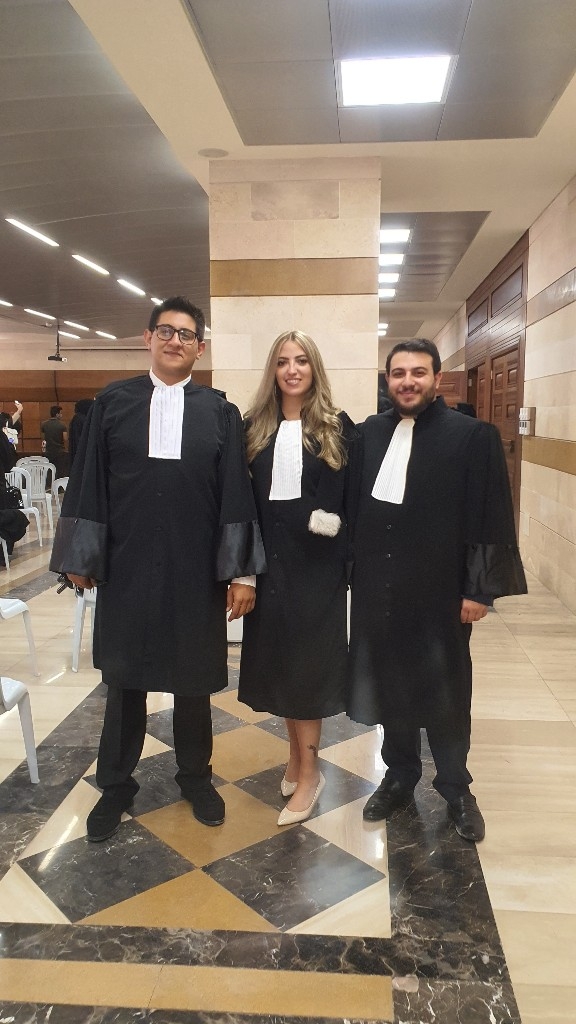
  • In Conversation with: Jessica Zakhour, Legal Counsel at Roger Najjar Law Firm and Member at United Nations Association of Lebanon

    In Conversation with: Jessica Zakhour, Legal Counsel at Roger Najjar Law Firm and Member at United Nations Association of Lebanon

    This interview has been published by Prabhjot Singh, Priyanka Karwa and The SuperLawyer Team

    Could you please share with us about your inclination towards law, when you were passionate about literature, how did you decide to make a career out of law?

    As I was growing up, discovering myself and watched my personality develop, and being an empathetic person in a world full of injustices, I found out at a very early age that Law was and still is an excellent match for my personality and strengths.

    I have a great memory, excellent communication and argumentation skills, I am also extremely ambitious, I tend to strive to always get what I want and have a strong moral codex; all of which I believe to be a good combination for any lawyer.

    I am an ecumenical abuser and enjoy talking to people, especially from the Tech world, and what made me decide to make a career out of law, besides my personality and passion for the law, is that I strongly believe in what was said by the Human Rights Watch in 2016 : “The same rights that people have offline must also be protected online”. That is why I am specializing in Cyber Law and Cybercrimes.

    How did you envision your career while you were at law school and how did that turn out?

    Every Law student strives of becoming partner at a top firm, daydreams about saving the world, thinks that the practice of law is all about nice suits and good office views. That is exactly how I had envisioned it when I was a law student.

    It turned out to be quite disappointing and yet fulfilling at the same time: The world cannot be saved in a day, month, or year. The most basic human rights are being violated right before our eyes and the journey to change the world into what we believe in and want to fight for is a long way ahead.

    But, the journey to getting there is the most fulfilling. I surely worked hard, but clearly had not foreseen to be filling big seats at such a young age and having many accomplishments.

    That means I am where I need to be, and that I am each and every time one step closer to reaching what I am fighting for and what I believe in ever since I was “that” law student back then. 

    You are a young generation lawyer, you must have enjoyed your graduation. Would you like to share any “funny-legal” memories of student life?

    Law school passed on by pretty quickly. I did a lot of studying, made lifelong friends, and have innumerous fond memories.

    But my funniest-legal memories would be in practice, at court hearings I would say: The best one that comes to mind was when I was at a hearing as an appointed lawyer and the plaintiff’s counsel had asked a witness the following question “What is your relationship with the defendant?” to which the witness answered “he is my son” and then counsel asked “was he your son on August 8th, 2018?” – The entire courtroom burst out laughing.

    How crucial it is for a legal professional to learn different languages, does it really help in one’s professional growth?

    Oh, I think it is extremely crucial for a legal professional to learn different languages, especially for the ones who want to become consultants on an international level.

    Attorneys who only choose litigation do not see learning different languages as a must.

    But in my personal opinion, whether in the legal profession or not, I think languages are extremely important to one’s self growth, because with languages, you are at home anywhere.

    A different language is a different vision of life, it’s another way of thinking, it’s another sign of bravery and it is also another way of helping people.

    What differences do you see practicing in Lebanon as compared to Brazil? Is it an easy sail or more of a challenging role?

    There are a lot of differences between practicing in Lebanon and in Brazil. For instance, Brazil is a federal country, and Lebanon is a unitary multiparty republic with a parliamentary system of government.  

    Lebanon is a mixed legal system based on a combination of civil law, Islamic, Ottoman legal principles, and the Lebanese Legislature, highly inspired by the French civil law, as where Brazil is based on civil law “sprinkled” with common law.

    Lebanon is a confessional country, which a lot of laws are highly based on confessionalism, whereas Brazil isn’t.

    When the rules of law are different, the practice of law reflects on that too.

    What are the main functions of the United Nations Association in Lebanon? 

    The main functions of the United Nations Associations in Lebanon are first and foremost, collaborating with the UN and its agencies to achieve their goals, producing activities and studies that relate to the code of the UN, working to help achieving international peace and understanding on the basis of justice, equality and respect of human rights, cooperating with other NGOs for economical and social progress.

    Since members of UNA of Lebanon share the same aims and principles of the UN charter and work on fulfilling them; they cooperate with UN agencies and organizations and with other NGOs that share the same goals to spread their beliefs.

    As cybercrimes are on a rapid increase, what steps do you think are considerable to control them?

    They say that sometimes the answer to a question is right in front of you. And that is what I believe applies to cybercrimes.

    The answer to that question is based on some of the most basic steps that need to be taken: Collecting data, spreading awareness, promoting cyber peace and implementing laws, especially in matters of collaboration between states.

    Last, what piece of advice would you like to give to our young legal commanders? 

    The most important career advice to young legal commanders is to take risks. At this point, the old model – joining the firm, sticking to it for seven years, making partner, then working there until you die- has to be essentially gone for most graduates. Your career as a lawyer can go a million different ways. The only way you’re going to find true happiness and fulfillment is to take chances and pivot when necessary.

    You may start your legal career as a prosecutor, then decide that you really enjoy child support enforcement cases and pivot to family law.

    Or you may start as a litigator and realize that you really prefer deal making and would rather get involved with transactional work.

    Or maybe, you will create the next great legal startup. Give yourself time, don’t be afraid to take risks, and most importantly, enjoy the ride !


    Get in touch with Jessica Zakhour-