Tag: LL.M

Abroad LL.M., Foreign University LL.M, Law school, study abroad, master of laws,

  • Sumeet Malik, Director, EBC, on studying at Franklin Pierce, the publishing business, and his experience

    Sumeet Malik, Director, EBC, on studying at Franklin Pierce, the publishing business, and his experience

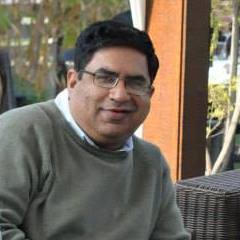
    sumeet-malik-2Sumeet Malik graduated from NLSIU in 1999. Thereafter he worked briefly for nine months in Mr. K K Venugopal’s chamber and then decided to pursue an LL.M in Intellectual Property from Franklin Pierce. With his legal training and specialisation in Intellectual Property Law, he joined his family-run Eastern Book Company. Currently he is the Director at EBC and manages overall Content and Editing for EBC. We asked him about:

    • Graduating from NLSIU and from Franklin Pierce
    • Work and typical day at EBC
    • Integration of a ‘lawfirmite’ in a publishing house


    Tell us a bit about your childhood and pre-college life as well as educational background.

    I did my schooling from La Martiniere College, Lucknow, an over 150 year old institution. Law was very much in my blood – I was born in a law publishing family. My grandfather, Shri P.L. Malik who was educated only till class X, had by the dint of hard work and perseverance, compiled a book called ‘Industrial Law’ in 1950. It is today the most authoritative book relied on by Industries and Industrial houses in India. My father completed his law from the law faculty, Delhi as a gold medalist and went to do his LL.M. from Columbia University, New York. So yes, there was quite a lot of law in my background.


    The image of a lawyer back in ’94 was neither inspiring nor attractive for most students. What motivated you to choose law for a career?

    Coming from a law publishing background one would imagine studying law to be the choice, but it was an informed decision.


    How was your experience in NLSIU?

    It was a great learning experience. I met many wonderful people but everyone whom I interacted with taught me something. It would not be out of place to mention Prof. Menon and Prof. NS Gopalakrishnan to have had the most influence on me. My biggest academic takeaways from law school were my ability to research the law and how to think like a lawyer and this is what I try and tell all law students today. The law that you study while in law school will change but if you have the skills I mention then you are prepared for the rest of your life.


    Right after graduating from NLSIU you went for an LL.M. in Intellectual Property from Franklin Pierce. How was your experience with faculty and academics there?

    Actually, I worked in Mr KK Venugopal’s chamber for nine months before I went for my LL.M. Those nine months too were a great learning experience. Franklin Pierce has a great faculty. The teaching style is a little different from NLS. There is a greater emphasis on writing papers and class room discussion. The level of academics is quite high in Franklin Pierce. I would say most definitely so. My class had so many people from all over the world and I think I learned from all of them, some a little, others more.


    Would you recommend an LL.M. from Franklin Pierce to people who want to work in the Legal Publishing Industry?

    I think doing an LL.M. or a Masters programme helps in the overall development of a person. You gain a lot of exposure. An LL.M. at Franklin Pierce or any other US law school should be an added bonus for working in the Legal Publishing Industry.


    What does a Director at a publishing house like EBC do?

    EBC is a family run and managed business so each of us have our own responsibilities. My most important responsibility is content development, so whether it is enhancing content for SCC Online or co-ordinating with Authors for new titles. I edit/compile/write fifteen books in a year. Human resources for one division of the group is also looked after by me. It’s a little difficult to tell you about a typical day since each day brings different challenges. In the last year I have also travelled extensively, so there is something new that happens daily.


    What are the top three challenges you faced as a Director of EBC?

    I think that the greatest challenge is in the implementation of systems. Other challenges include the hiring and retaining of the right talent. There is a lot of expectation from the EBC group for making available high quality legal resources and quickly too. So it is important to meet those expectations.


    What would you say are the primary similarities between a conventional law firm and a publishing house?

    I would think that there is little similarity between a conventional law firm and a publishing house. The pace, expectations and deliverables are completely different. A lawfirmite can integrate into the EBC work environment but they will have to readjust all three – the pace, the expectations and the deliverables. Each project on which legal editors work has something new to offer. Learning and personal satisfaction and fulfilment are placed at a premium when working at EBC.


    When you hire law graduates, what kind of skills and profile do you look for?

    When hiring law graduates it is important to gauge their compatibility to the work i.e. of being a legal editor. Good analytical and research skills are needed to work as legal editors and since English is the medium through which this knowledge is communicated good English skills are a must. Some of the requirements are part of a person’s nature and others can be developed through practice and effort.


    What kind of effort should a young associate put in to work to get it appreciated?

    It’s hard to point out the kind of effort required to be appreciated, but honest hard work cannot remain unnoticed for long, so the emphasis should be to complete the task to the best of one’s ability and for the personal satisfaction of one’s self. No one can ever take that away from you. A young associate will usually perform tasks that have been allotted to them and a director will usually be involved in policy formulation and implementation of that policy.


    What is your impression of the current crop of young lawyers?

    There is a lot of casual attitude towards the learning process. A lot of students believe that having got into a prestigious law school is enough to land them a job or success in their lives. That’s not how it works. Develop your legal research skills. The law is ever changing. Also, get the basics right. Always think in first principles.


    Do you offer internships opportunities at EBC?

    We welcome internships at EBC. Those interested can send in their CVs to hr.manager@ebc-india.com. For us if you are willing to learn and utilize the internship for learning you are welcome to EBC.


    What would be your message to a student aspiring to join a publishing house?

    My advice to all such law students shall be: Take your learning seriously.

  • Tushar Kr. Biswas, Doctoral Candidate, NUJS, on getting published, and his passion for academia

    Tushar Kr. Biswas, Doctoral Candidate, NUJS, on getting published, and his passion for academia

    Tushar Kumar Biswas is presently a Ph.D candidate at West Bengal National University of Juridical Sciences, Kolkata. He has numerous books and publications to his name, he therefore speaks to us about the importance of research in a lawyer’s life. He tells us how to identify a field of law to write upon and how to go about the tough task of finding and chosing a publisher for your book.

    Key takeaways:

    • How to select area of interest before starting to write
    • How to choose a publisher for your book
    • Importance of co-authorship
    • Importance of publications in legal career


    How would you like to introduce yourself to our readers?

    I am a PhD Candidate at the West Bengal National University of Juridical Sciences, Kolkata. I have studied at the International Academy for the Arbitration Law, Paris and The Hague Academy of International Law, Netherlands (Private International Law session). I am a member of the Young International Council for Commercial Arbitration (ICCA) and the Young International Arbitration Group (YIAG). I am a former Visiting Fellow at the Jindal Global Law School, Haryana, NCR Delhi.


    Why did you want to study law?

    I do not have direct descendants who are lawyers as my father is a teacher and grandfather was a doctor by profession. One of our close family associates who is a renowned lawyer motivated me to study law. To be honest, when I started to study law, little I knew that the horizon of the legal profession is so vastly expanded and there are numbers of things one could do which perhaps may not be possible in other professions.


    What were your areas of interest during your graduation?

    During my graduation, I developed interest in number of areas such as human rights law, information technology law, constitutional law and international commercial arbitration. I kept on reading a lot in these areas and subsequently wrote a number of articles in various world reputed journals. What interested me more is the conflict dimension of various and seemingly divergent branches of law, whether we are talking about human rights or commercial law.


    Did you do any internship during your graduation? Did you receive any assistance regarding this from your college?

    Yes, I did a number of internships right from lawyers’ chambers to the legal department of a company. I got assistance from the University only once and the rest of the time I applied on my own and got through.


    What was your motivation behind doing an LL.M.?

    I have done my L.L.M primarily to gain more knowledge of some specific fields that were of interest to me. However, it was also at the back of my mind that opportunities follow from every higher degree. I knew that this would open up an avenue for getting into academia without jeopardising other opportunities. I also got to learn a lot about legal research tools and presentation techniques in a way that complemented the research and practice skills I had developed through prior studies and work experience.


    Tell us about the process of getting published.

    As a student, I gradually started to gain interest in legal writing and was successful in publishing some articles. I frequently used to visit Prof. D.N. Bannerjee (Founder-Chairman of Central Valuation Board) who first generated the idea of writing a book. We had planned to co-author a book on property law, but eventually I started writing on my own.


    When did you start writing? How much time did it take?

    I started writing the book during my L.L.M studies. It took more than three years of full time effort to complete the task.


    Please give us the highlights of your best work.

    I have written a ‘Guide book on Good Governance for Law Institutes in India’ pursuant to my long standing association with the Institutes of Rural Research and Development (IRRAD). I had the opportunity to publish articles in some of the world reputed law journals such as International Company and Commercial Law Review, Sweet & Maxwell, London; International Arbitration Law Review, Sweet & Maxwell, London; International Sports Law Review, Sweet & Maxwell, London; Asian Journal of International law; Asia-Pacific Journal on Human Rights and the Law, Martinus NIJHOFF Publishers, (Leiden-Boston); The Computer Law & Security Review – The International Journal of Technology Law and Practice (Elsevier); Commonwealth Law Bulletin, London, the flagship publication of the Legal and Constitutional Affairs Division (LCAD); Journal of Medicine and Law, World Association for Medical law (WAML), Israel; Computer and Telecommunications Law Review, Sweet and Maxwell, London.

    I also got invited to join the team of authors for ‘European Encyclopaedia of Private International Law’ and presently I am editing a book on ‘Arbitration Law from Comparative Perspectives’.


    How did publishing affect your legal career?

    A career in law is all about research (if I am allowed to say so). If one can establish oneself as a researcher by publishing quality writings, it surely will have a positive effect in securing jobs not only in academia but also in other fields. Having said that, I want to see a day when the question is reversed, young lawyers are asking the question will we be able to keep on writing if we get into the job? The value of legal research exists independently devoid of other considerations.


    How do you identify and decide on a topic or area of law to write on?

    The identification process varies. For writing an article, one may choose to look at the conflicting decisions of various courts/tribunals in any particular area or conflict in theories and even one may consider doing situation analysis. Some may choose to write in an area where already plenty of works have been done and there is still scope of development whether from a different angle or same angle. At the same time, once sufficient knowledge is acquired, one may go for inter-disciplinary research.


    Is it a good idea to find a co-author?

    It depends. If you find someone who operates in your field, you may choose to do so, but the co-author must have the same sense and same understanding about the intended work. These can prevent any potential conflict. At the same time, there are some inherent practical risks of having a co-author such as the free rider problem.

    I wrote this book alone. However, I would not mind working with a co-author in near future.


    How does one find a publisher, and at what stage of writing?

    That’s a very good question. Finding a good publisher and convincing that publisher about the whole work is perhaps one of the most difficult tasks, especially if you are an emerging writer or just beginning your writing activities. This is because, unlike an established writer, the publishing house and more importantly the targeted audience would probably not know you.

    In order to find an appropriate publisher, one needs to do some initial research. However, it is also judicious to keep in mind the best available alternatives because there may be situations where your priority may not work out. One can approach the publisher either before finishing writing or after the completion of writing. However, if you are an emerging writer, it is always advisable to approach the publishers before you finish writing to alleviate avoidable risks.


    How did you choose one publisher over another?

    Well, it depends primarily upon the field of law you are writing on. There are some publishers who operate only in some selective fields and others may be operating in multiple fields. For example, if you choose to write on ‘Arbitration Law’, then probably ‘Kluwer Law International’ is the best known name in the legal world. Similarly, if you write on some other area, there you may choose to find some other reputed publishers operating in that field. However, merely choosing the best publisher is not enough. What is important is to deliver quality writings in the targeted field.


    Is there any success mantra that you follow which you would like to share with our readers?

    Dedication and hard work matter. From the point of view of a writer or a legal researcher, it is equally important to develop analytical skill along with these two elements mentioned earlier. However, in order to achieve success, it is important to analyze the constraints of getting success.


    Please find here a detailed article on how to get an ISBN Number.


  • Shezin Hussain on comparative Legal Practice of Bangladesh and India and organising Women’s T20

    Shezin Hussain on comparative Legal Practice of Bangladesh and India and organising Women’s T20

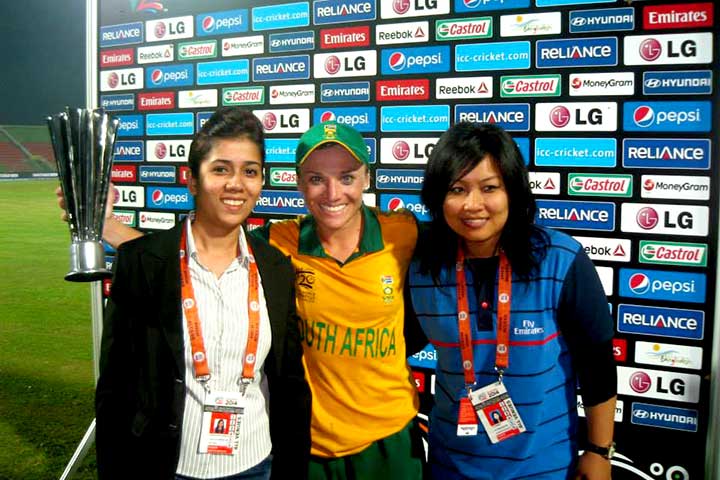
    shezin-h4Shezin Hussain graduated from NUJS, Kolkata in 2009. Being a Bangladeshi citizen educated in India she has the insights of the legal systems of both the countries. After graduating from NUJS, she completed her LL.M. from Southeast University, taught as a guest lecturer at Metropolitan University, Sylhet, and has been a practicing lawyer at the Judges’ Court at Sylhet.

    She has also been an Investigation Officer for BRAC which is the largest NGO in the world. Most amazingly being a passionate sportsperson she has had the opportunity of organising the latest ICC Women’s T20 World Cup 2014 among all her commitments.

    In this interview she has talked about:

    • Life at NUJS and interning at places in India and Bangladesh
    • LL.M. from Southeast University, Dhaka
    • Organising the ICC Women’s T20
    • Being an investigation officer at BRAC
    • The comparative legal practice of India and Bangladesh


    Our readers mainly consist of young lawyers and law students, how would you like to introduce yourself to them?

    Hi, I am Shezin W. Hussain residing in Sylhet, Bangladesh. Currently I am practicing as an Advocate at the Judge’s Court, Sylhet. Apart from that I’m working as guest Lecturer for the Department of Law & Justice, Metropolitan University, Sylhet and a political fellow for Democracy International, a USAID Agency.


    You finished your schooling in India. What prompted you to pursue your education in India? How were your formative years as a school student? Did you partake of all activities in school?

    It was solely my parent’s decision to send me to India to complete my schooling. Both my parents were involved (Mom is still involved) in politics, due to which they couldn’t spend much time on me and my siblings, hence they sent us away to boarding schools for better education.

    During my early school days, I focused more on my academics; hence I worked on my grades instead of concentrating on other activities. Eventually, when my grades started soaring upwards, I started participating in various co-curricular activities.


    How did the thought of pursuing a career in law cross your mind? Did you have lawyers in your family who motivated you to pursue a career in the legal field?

    I never thought of entering the legal profession, it was my dad’s decision that I take up law as a subject after I had completed ISC in 2004.

    My grandfather was a practicing Advocate in the Judge’s Court, Sylhet but I had lost him while I was in Standard VI, so I wasn’t actually motivated by him. It was more of my dad’s decision. Now that I don’t have my father to see me pursuing my career, I feel lucky to have had a father who anticipated the potential in me and asked me to tread the path of the legal profession.


    What prompted you to consider NUJS, Kolkata for your legal studies? How did you get to know about it? Which other universities were in your shortlist?

    My mother, while visiting Kolkata in November 2003, came to know about this University in some newspaper. She had visited the University and collected the application form, which she later posted me. I was preparing for the ISC exam, scheduled in March 2004, I was asked to fill up the application form and post it back to the University. This was the first and last University I had applied for. I didn’t consider looking for any other Universities.


    Please share some of your memorable experiences at NUJS, Kolkata. What made your college life exciting? How well do you think your education at NUJS prepared you for the real world practice of law?

    Securing a place along with other meritorious students made me wonder how I ended up there.

    Initially life in NUJS was hectic, nerve wrecking & challenging. I was not a brilliant student but more of a mediocre student; hence I had to struggle with the study pressure in the beginning. Eventually, when I had settled in, things started to fall into place. My grades stabilised and I could engage in other extra-curricular activities.

    The years I spent at NUJS have been the best 5 years of my life, I made wonderful friends, discovered the vast arena of legal education, and ventured the city of Kolkata in every possible way. Overall, it was a great experience.

    The legal education that I received from NUJS, has helped me imparting knowledge to my students during my teaching experiences. It has also equipped me to deal with the legal complexities of litigation.


    Tell us about your internships. Any remarkable internship experience which shaped up your career? How would you recommend students to go about choosing their internships?

    I have done several Internships, under the Advocate on Record of Supreme Court of India, Kanga & Company, Jyoti Sagar Associates, Mumbai, Senior Advocates of Judge’s Court in Sylhet, Bangladesh. All, these internships have given me an opportunity to experience different aspects of the legal profession. Corporate culture, litigation gave me an opportunity to decide what kind of a career I’d like to pursue. Unfortunately, in my country, there isn’t much scope for students to carry out internships. The sole reason is that the corporate culture in Bangladesh is still developing and  the universities in the country don’t emphasise on Internships, due to which many students are unclear about their careers after graduation. Indian students already know what they’d like to pursue after completing their graduation but  it is important to focus on law firms that you’d like to work with in the future while choosing your internships. A good internship definitely reflects well on your C.V. while recruiters hire you.


    What was your motivation behind pursuing LL.M.? Was it a personal endeavour or a professional requirement? Why didn’t you opt for Indian Universities?

    I wanted to pursue LL.M from the U.K but due to personal anomalies I couldn’t do so. Later, pursuing LL.M was more of a professional requirement than a personal endeavour. I didn’t opt for Indian Universities as they don’t offer specializations in subjects; plus, since the duration is of 2 years, it didn’t seem very encouraging to me.


    You completed your LL.M from Southeast University, Dhaka, Bangladesh. What all did you consider before choosing your subject for Masters? What are the differences you found between Southeast University and NUJS?

    As I said, since it was more of a professional need to pursue LL.M, I opted for Southeast University. Since there was no specialization, it was a general LL.M, and hence I didn’t have the option to choose any subjects.

    There are numerous differences between NUJS and South East University. I cannot compare NUJS with any Private University. If I ever get an opportunity again, I’d like to pursue my LL.M in a foreign country.


    shezin-h3

    You were closely associated with the ICC T20 Women’s World Cup 2014 and the South Asian Games 2010. How was your experience organising these events? Have you been a sportsperson? What draws you to sports?

    I was the MC for the South Asian Games 2010. It was definitely a great experience. That was the first time I faced thousands of people. This experience has definitely added as a boost to my experience during the ICC T20 Women’s World Cup 2014. I worked as a Local Coordinator for the women’s teams along with being the MC for the player of the ceremony after each match. Dealing with ten teams was super challenging and hectic. The event was scheduled for more than a month. It was an eye opening experience as I came in contact with hundreds of officials and employees of the International Cricket Council, the Bangladesh Cricket Board, famous players and match officials. I feel extremely lucky to have been a part of such a stupendous event.

    I was more into sports during my school day and college life. I have played almost all kinds of sports and was a part of the football team and cricket team while at university and the basketball, hockey teams during school days. It’s rejuvenating and I enjoy playing sports.


    You worked as an investigating officer at the Gender Justice & Diversity Section, BRAC, Dhaka, Bangladesh. Tell us what your job profile was all about, what comes under the responsibility of an investigation officer?

    The job as an Investigation Officer in Gender Justice & Diversity at BRAC was interesting and challenging. Basically this job profile was focussed on working with sexually harassed men/women at work place. A grievance cell was created whereby those working with BRAC if they faced any sexual harassment at work place could launch complaint with SHARE Unit, (Sexual Harassment Elimination Unit). After receiving complaint from SHARE, two investigation officers are given the task of visiting the place of occurrence and carry out investigation. After returning back from investigation, report has to be prepared and handed over to the Team Manager. Later Team Manager along with the head of SHARE Unit would decide upon what action to be taken. The punishment could range from termination, temporary suspension and warning. An aggrieved person if not satisfied with the awarding sentence could approach to Ombudsman. The decision of the Ombudsman is final.

    So, as an investigation officer, I had to investigate the matter by visiting the place of occurrence, take statement of the victim, accused and witnesses. It was very challenging job because sometimes the accused would turn hostile, the witnesses would refuse to meet. Most importantly basing on my report following actions would be assigned. So since it was sensitive issue dealing cautiously was essential.

    BRAC’s GJ&D had formulated Sexual Harassment Elimination (SHE) Policy in 2004, following which BRAC was committed to follow the High Court Division’s Guideline against sexual harassment that was promulgated on May 14, 2009.


    Given the Law firms where you interned offer a lucrative pay package and a prestigious career, how did you decide to return back to Bangladesh and start practice? Have you always thought of litigating from your days of being a law student?

    It was simply my father’s decision that I come back to Bangladesh and start working here. Since 1994, I have been in India for education purpose, hence my father wanted me to return back just as I had completed my graduation in 2009. I didn’t think of taking up litigation while I was a law student. The circumstances lead me to opt for this path.


    You are currently working as an advocate at Judge’s Court, Sylhet, Bangladesh. How is the court atmosphere in Bangladesh? Can you share some of your experiences in the first few sessions of the court?

    The Judge’s Court scenario is pretty much different. Though initially I didn’t like the atmosphere but gradually over time I got used to. The first few sessions of the court was challenging as most of the time while appearing for any matter, I am facing a senior opposing counsel. I was nervous at the beginning but over time I have grown confident and hesitation don’t take over me.

    Also, immediately after graduating in 2009 I couldn’t start practice straight away. In the legal system of Bangladesh one has to pass the bar examination before practicing as an Advocate. Passing the bar exam is really challenging as one has to face more than 15,000 or more examinees from all over Bangladesh every passing year.


    Can you tell us about a few highlights of the legal system of Bangladesh? Do you find any major differences between India and Bangladesh?

    The legal System in Bangladesh follows the Common law. The Judiciary is independent. The Supreme Court of Bangladesh is the Apex Court with two divisions, The Appellate Division and the High Court Division. Appellate Division hear and determine appeals from judgments, decrees, orders or sentences of High Court Division. High Court Division has both Appellate and Original Jurisdiction. It hears appeals from orders, decrees and judgment of subordinate courts and tribunals.

    The laws and acts are all most similar except that amendments have made certain changes. The personal law is different than that in India. Also, unlike the Indian System, one has to qualify the bar examination in order to practice in the Judge’s Court in Bangladesh. For enrolment in High Court, minimum two years practice in lower court and if the candidate has LL.M that he /she can sit for enrolment examination of High Court.


    What are the primary requirements of a practicing lawyer in Dhaka? Is it possible for an India educated lawyer to start practice in Dhaka and vice-versa? Do you consider practicing law in India ever? How would it be for you to adjust your career in a city like Delhi or Kolkata?

    Primary requirement for a practicing lawyer is that he/she has to be enrolled after passing the Bar Council Examinations. It is not possible for an Indian Lawyer to practice in Bangladesh unless he/she is a citizen of this country and vice-versa. I had considered practicing in India but since I am not an Indian Citizen, hence I cannot practice. If I would have the opportunity I would comfortably adjust my career in Kolkata, as I’m accustomed to the life in Kolkata after staying there for 5 long years.


    shezin-h1

    Is legal practice in Dhaka as lucrative as in Kolkata? What are the primary challenges in establishing an illustrious career there?

    If you consider the High Court practice, then I would say both Dhaka and Kolkata are on same footing. Even though primarily it’s very tough to build up this career in litigation but with time one can blend in.

    The primary challenge in litigation is being a woman. If the family is not supportive than pursuing litigation, maintaining family could be pretty challenging. Though now days the families are less conservative so this makes the chances a bit better to opt for litigation. And of course competition is there considering clients prefer Barrister-at-Law than other Advocates. This trend has been since there after independence and till date it continues. People have the notion in Bangladesh that if you become a Barrister you are much more qualified than ordinary advocates who are in practice for long years. The trend is changing though, after realising that not all Barristers are worth the penny.


    You have worked in India as an intern in various law firms and under various famous advocates, do you find any difference in the working cultures of India and Bangladesh? How different are both the countries in terms of work culture?

    The work culture is much more different in Bangladesh in comparison to India. The education I got from NUJS has given me an upper hand. In comparison to other graduates from certain private universities and public universities in Bangladesh, I think I had a great exposure in this profession. The experience that I have gained has pushed me ahead in my profession. As a result, I am pursuing litigation along with teaching and also being a political fellow for Democracy International, a USAID agency. Also, the corporate culture is not yet full-fledged in Bangladesh unlike India. It will take another few more years to form the corporate culture like that of India. Also the political instability has direct influence in our legal system, so that works to as a barrier for companies coming in and investing in Bangladesh.


    Lastly, what would be your message to a law student who wants to excel in the legal profession?

    For the law students, please utilise your time wisely while studying and try selecting the good law firms for internships. The internships reflect a lot in what you are capable of pursuing as a lawyer while you will enter professional field. Most importantly, let your heart follow what you want to pursue, don’t follow anyone because making your own identity will always lead you ahead in life no matter what you chose. Good wishes to all the upcoming lawyers.

  • Aman on pursuing BCL from Oxford, working with International Organisations and getting higher grades

    Aman on pursuing BCL from Oxford, working with International Organisations and getting higher grades

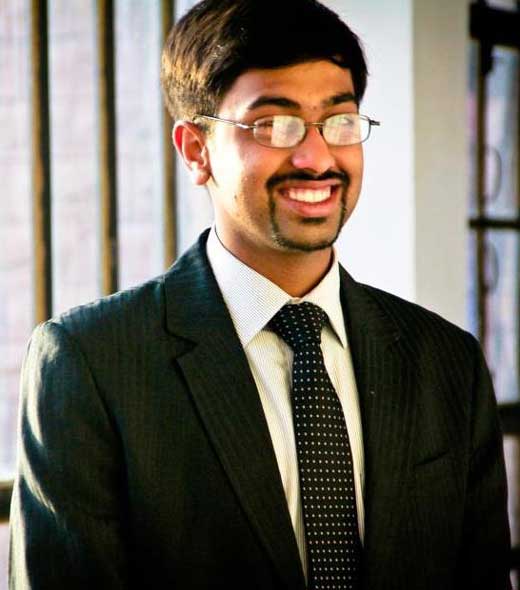
    aman-cb-4Aman, a graduate of National Law University, Jodhpur, of the 2012 batch, talks about his spectacularly awe-inspiring journey as a Law student. Not one to be charmed by the glamour of law firms, as most University-toppers admit to be guilty of, Aman chose to pursue his academic instincts further, by completing his BCL degree from Oxford University, with a focus on International Law, and then moving onto complete a prestigious internship at the International Criminal Courts, The Hague. All set to join Palestinian Center for Human Rights in Gaza, he shares with all Law Students, the following :

    • What went into winning the Trilok Chand Mangilal Sancheti Gold Medal.
    • The importance of balancing academics, moot courts and extra-curricular activities
    • The significance of choosing the appropriate internships
    • Why one should choose to pursue higher education
    • The experience of studying at Oxford, and of interning at the ICC.


    Most of our readers are law students and young lawyers. How will you introduce yourself to them?

    I am yet to figure out a good response to this question! Anyway – going the conventional way – I finished my undergraduate studies in law and policy sciences from the National Law University, Jodhpur in 2012. Pursuant to that, I proceeded to Oxford where I completed my BCL with a focus on Public International Law, Equality Law, Jurisprudence and Political Theory. Post Oxford, I had been interning at the Trial Chambers at the International Criminal Court, The Hague till March this year. I am preparing to join an organization called the Palestinian Center for Human Rights in Gaza this month.


    How did you gravitate towards law? What interested you most about the subject at the time? Is that interest still intact?

    I have grown up in an environment – both at home and school – where I have been exposed to and sensitised about various social issues. I wanted an education that helped me do something about such issues. Law was one such option (along with Medicine and Journalism)! However when I decided on pursuing Law, I did not have a very clear understanding of how the study of law would be directly instrumental in working towards the issues that motivated me. It was perhaps the interest in gaining more familiarity with social policies and laws; the attraction of the inter-disciplinary approach to legal education that the five year law schools promised; and discussions with a few people who studied/were studying law that convinced me to pursue it.

    The motivation is intact today (though the focus is on fewer issues!). In fact, the interest is much stronger since I have grown to know how the study and the practice of law, through litigation, policy and academia, help in dealing with a variety of problems plaguing the society.


    You have won the Trilok Chand Mangilal Sancheti Gold Medal. Surely a lot of effort must have gone into coming first in BA.LL.B (Hons.). Please provide us with some actionable tips on how to get good grades.

    To be honest, to top the class was never a primary motivation and the effort was never directed towards that. I really enjoyed what I did and, possibly, that was the reason I put in effort in making projects, working on court room exercises, and making assignments/presentations. There were also moments where I did not sit for tests, missed classes (and consequently lost marks that used to be allocated for classroom attendance in the first few semesters at law school) to work on things/participate in events that I enjoyed! Though it did cost me a few grades, I don’t regret it. I just feel it’s best to put in effort and explore the things that we enjoy – the results will automatically follow!


    How did you keep your law school life exciting? Share some memories with us.

    Luckily, I was involved with a lot of things in law school and never really sensed the monotony some of us complained about. Besides dealing with regular tests and assessments, extra-curricular activities like mooting (both as a participant and as an advisor), debating kept me busy. From my first year, I was involved with college committees and editorial boards which also kept me occupied. With time, the responsibilities in these committees also increased! I also found myself actively involved in the organisation of intra university sports fest, literary fest, and cultural fest and moot court competitions at the University. There were also a couple of initiatives by some of us – some of which I had to discontinue my association with because of the time crunch! Basketball was an excellent source of recreation – especially in my fifth year! I also enjoyed taking part in the regular cultural, literary, sports events organised in college.


    You have participated in moot competitions as a participant, advisor and even as a judge. How do you feel a student should go about a moot in order to reap the maximum benefit from it?

    From the time I had been introduced to moot courts, I found it to be an excellent learning experience. Not only does it help one in getting a good grasp over the area of law on which the moot proposition focuses but it also helps one develop researching, drafting and advocacy skills. It won’t be incorrect to say that being a participant at moot court competitions was probably the most rewarding experience! It is perhaps the things that I picked on the way as the participant – through my experience or the wisdom of others – that helped me serve as an advisor or judge moots now! Even as an advisor or a judge I continue to feel the same about moot court competitions and still find it to be a learning experience for me!

    As to how students should go about moots – I am not sure if I am in a position to suggest anything but I always felt that one should take up a competition if they are really keen on mooting. It is definitely not something that has to be mandatorily done in law school. However, if one picks it up – it is essential that one takes it up with all sincerity and gives the proposition the due time it demands – for research, drafting and oral practise. By my experience, I also feel that having someone to guide you in the area of law, drafting and for the oral rounds also helps a lot.

    I also did a bit of debating and played a bit of basketball.


    As an undergraduate student, you have done a variety of internships. Did these happen by chance or did you consciously choose to pursue such internships?

    No, all of the places were consciously chosen. However the guidelines of the placement cell (i.e. to work with X institution at the end of Y semester) was kept in mind. HRLN was an obvious choice when I was looking for NGO options to work around home at the end of the first semester. The internship here introduced me to the MGNREGA. The legislation sparked a lot of interest in me and was the reason that I participated in the said survey under the supervision of Professor Jean Drèze and Dr. Reetika Khera.

    At the end of my third semester, I was keen on working with an advocate practising in appellate courts and ended up working with Mr. Prashanto Sen in New Delhi. The choice of a relatively small office was again a conscious one – it helped me get exposed to a variety of matters and be directly involved at every step. Despite my age back then, the internship helped me gain a great familiarity with the work of a practising lawyer.

    I was also keen on working with a judge at an appellate court and hence the clerkship. Since I stay in Allahabad, the working of the Allahabad High Court was also something I wanted to see.


    You had worked as a Student Teaching Assistant and later with Professor Jean Drèze. These were definitely a bit unconventional. How did your experiences at these places help with your skill development and shaping you as a person?

    I was always very keen about teaching and have given it very serious thought as a long term career option. In fact, the revival of the Student Teaching Assistant Programme in college was with the efforts of some of us. I really enjoyed the experience of teaching public international law to my juniors. This also helped me realise some of the challenges one can face as a teacher in a law school like mine!

    Working with Professor Jean Drèze again was very rewarding. Post my internship with HRLN, I had developed an interest in the Right to Food Movement. After law school when I got the chance to work on a study related to Pubic Distribution System (of food grains), I readily took it up. This involved a field study on the drawing up and the management of BPL lists used for distribution and also focused on the problem of the leakage of grains. This greatly helped me understand some of the problems at the ground level; and the reach, working and the shortcomings of PDS in dealing with hunger. This is one area that I really wish to continue working on!


    When and how did you decide to pursue higher studies?

    I was very keen about pursuing higher studies right from the beginning of law school. I had heard that it opens more avenues – which I later found to be true. Like most people, I was also attracted to the prospects of studying in some of the dream institutions! However, it was only by the end of my third year that I gave it a very serious thought. By then, I had a discovered my inclination for public international law and some areas of public law; I also had some sense of what I wanted to do in life (academics, policy, diplomacy, politics and developmental work). These factors necessarily led me to consider higher studies. By this time, I also had an idea about which institutions were reputed for the courses I was eyeing.


    aman-cb-2

    What was your motivation behind pursuing BCL? Would you say the purpose was well served?

    As I pointed earlier, I was very keen on developing stronger foundations in the areas of law that interested me. Oxford was definitely one of the places high on my list considering the extensive focus BCL offers in the four courses one chooses to study through the year. This was a great motivation and I was very happy to have studied courses like equality law, international law and armed conflict in such detail. Also, as I mentioned earlier, I was looking at postgraduate course with the hope that it would openavenues that were not open or visible to me otherwise. This purpose was also duly served as I do not think it was possible to know of/get internships at the ICC or the PCHR without Oxford. In fact, grants/awards by Oxford Law Faculty also helped/are helping in funding these internships.


    Many law students would want to pursue higher studies from abroad. What would be your suggestions to them?

    If one is interested, I feel it’s good to start considering the LL.M. option at the start of the penultimate year of law school and also take a call if one wishes to apply in the final year (or subsequently). A good way is to talk to seniors who are pursuing/have pursued higher studies abroad and read about the Universities one wishes to apply to. This gives a good understanding about i) the law school – renowned faculty and courses, prospects pursuant to an LL.M from a particular University; ii) what the selection entails and how should one go about the specific application for a particular University; iii) any specific requirements like TOEFEL etc.;  iv) and even scholarship opportunities.

    As for what it takes to get in – it’s difficult to give suggestions! Every LL.M. candidate I met had different experiences and approach towards the application. Perhaps the connecting factor would be a good academic background! Speaking for myself – besides maintaining decent grades, I put in effort in doing all the things I enjoyed all through law school.  I tried to reflect the same through my application. I guess, broadly, every person tries to do the same.


    Does Oxford provide students with scholarships? Are there any other institutions which provide scholarships?

    Oxford offers a couple of scholarships – some are offered by the University, some by the Law Faculty and some by the Colleges at Oxford. A list of such scholarships is available on the website of the law faculty (click here).

    Besides the ones by Oxford there are a few other funding avenues. The popular ones like Rhodes, Felix, Inlaks and Commonwealth are known to all. There are a few less known options which give partial scholarships/ soft loans which one should also explore. These include – KC Mahindra Scholarships for Postgraduate Studies Abroad, Aga Khan Foundation Scholarship, Narotam Sekhsaria Scholarship, Oxford and Cambridge Society of India Scholarship. One must research more on these funding avenues – especially the smaller ones!


    Did you undergo a rigorous academic schedule? How was that different from your under-graduate course?

    Yes, BCL was very demanding. Unlike most classes during my under-graduate course, one had to necessarily prepare for the classes which involved completing a reading list assigned for the said class/seminar. It is difficult to appreciate, and at times follow the discussions in the class hours if one does not complete one’s readings (thus making the limited amount of class hours futile). Besides the regular preparation for the seminars, we also had tutorials spread through the three terms. These were sessions beyond the regular class hours where students discussed their essays/ specific topics with their tutors and a small group of students who had also taken the course. Though it was difficult to work on these tutorials along with the regular readings for class, these tutorials were academically rewarding. Also, unlike law schools back home, Oxford grades depend solely on an end-of-the-year, closed-book examination which makes the preparation for it quite rigorous. In fact, I never felt that there was a concept of a break – as one is busy with reading during both term breaks!


    Oxford is well renowned for its brilliant faculty. How was your experience with the faculty?

    One of the primary motivations to study at an institution like Oxford was to get the chance to interact, and even brainstorm with some of the most renowned scholars in the areas you are studying. Besides the interaction in classes, I greatly benefitted from the one-on-one interactions during tutorials, or the feedback received on my work from my teachers like Dr Dapo Akande, Prof. Sandra Fredman, Prof. John Gardner, Dr. Nicos Stavropoulos, Dr. Tarunabh Khaitan and Dr. Antonios Tzanakopoulos. It was also great to see how they received my ideas and encouraged me. Some of the faculty members had also helped me take some career decisions!


    How difficult was studying abroad in terms of finding accommodation, finances and settling in?

    Not to sound intimidating, but all three were indeed a bit difficult for me.

    I had not got College accommodation and was slightly apprehensive about finding a place in the beginning. Eventually, I did manage to find a great place offered by the University Accommodation Offices (the next best alternative to on-site college accommodation) before the start of the term, but it was slightly far off from the Law Faculty.

    Finances were another issue. Since I could not manage a full scholarship, I had to rely on a student loan.

    Settling in was not that big a problem as compared to the other two. However, it took me some time to adjust with the academic pressure, weather, lifestyle, and also to get used to cooking etc.


    What difference did you find in the pedagogy of Oxford relative to an NLU?

    There is a huge difference! As mentioned earlier, one was expected to read extensively for the seminars – which were more discussion oriented. At NLU the focus was more on class room lectures as opposed to discussions. However, I find the comparison a bit unfair. Though I have my reservations about the way legal education is administered in many Indian law schools, I feel the focus of undergraduate education is to develop an interest in law and should involve more lecturing and it’s not very wise to expect all students to read as much for classes as we were expected to at Oxford. A postgraduate course like BCL is designed on the premise that the candidates have an interest in the study of that area of law and aims towards developing an advanced understanding of the chosen area. That said, it would be nice if the reading component is given some focus which is largely absent in many law schools today.


    How do you think the BCL programme will help you in your career?

    It is difficult to predict how it will help me in my career! I can just say that I feel that I have developed a stronger foundation in some of the areas that interest me and will definitely help me if I am to pursue a career that involves an understanding and application of these areas. BCL has also helped in developing my analytical and writing skills – something that will be useful in whatever I choose to pursue. Besides academic foundations, I also feel that Oxford has made visible, and, in situations, accessible, options that were not visible/accessible otherwise – be it international firms or international courts and originations. For example, it would not have been possible to get an internship at the Trial Chambers ICC without BCL, where I had taken up specific courses on dispute settlement and armed conflict.


    There has been a recent trend amongst Indian law graduates to pursue higher education abroad. Why do you think this is happening?

    Another tough one! There could be multiple motivations. However, I feel that to some extent it’s a result of the exposure that students get these days. A few years back, pursuing LL.M was not really a well-known/advertised option. With more people opting for it, a lot many get exposed to the prospects of an LL.M, and now think of it as another feasible option after their undergraduate studies. Also, the breaking of the myth that an LL.M. is necessarily for those who wish to pursue academics has led many to aim towards specialisation in their practise areas. Many of my friends intend to take up higher studies for this very reason. Some are also interested in exploring opportunities abroad.


    You have recently completed a clerkship at the International Criminal Court, Hague. How did you get it and what prompted you towards it? How was the experience?

    I had applied for this clerkship while I was at Oxford. Desirous of building a career in international dispute resolution, I was looking at some international courts/tribunals back then. Besides the ICC, I had also applied for the ‘ICJ Traineeship Programme’ that is offered to graduates from of a select few universities around the globe (Oxford being one). However, I was unable to get the final offer despite making it to the final shortlist from Oxford. The other option was the ICC. Having taken up a course on International Law and Armed Conflict at Oxford, I was especially keen on working there.

    For the same, I had to make an application which involved completing the application form available on their website. I was also required to send a sample of my written work, a statement of purpose, a copy of my resumé and arrange for two referees who had to send their recommendation letters. This was followed by an interview by the Judge who I eventually worked with.

    I really enjoyed my stay at the ICC. I worked with Judge Eboe-Osuji (Trial Chambers) and the set of legal officers assisting him. While I was at the Court, I assisted the Judge in drafting a number of decisions and separate opinions; prepared memorandums; assisted in the preparation of witness summaries; and helped the judges and the legal officers in other trial procedures. Besides the feedback on my work, I greatly benefitted from the discussions with my judge and the legal officers.


    You have recently taken a series of lectures at NLU, Jodhpur in the subjects of Jurisprudence and Constitutional Law. Can we say you may gravitate towards an academic career in the future?

    I am quite keen! As I mentioned earlier, I was always very keen about teaching and have given it very serious thought as one of the options I wish to pursue in future.


    You are joining the Palestinian Centre for Human Rights in Gaza. Tell us something about this.

    The Centre is a non-profit company, dedicated to protecting human rights, promoting the rule of law and upholding democratic principles in the Occupied Palestinian Territory. It also supports all the efforts aimed at enabling the Palestinian people to exercise its right of self-determination.

    I am expected to be assigned to the International Unit at PCHR which has experts on international law, fundraising and advocacy. The Unit supports other Units of the PCHR in carrying out their work as well as producing reports, position papers and press releases.  Staff in the Unit are often involved in conducting field-visits as part of their advocacy programme or field-research as part of the research programme, and are involved in building relationships between Palestinian, Israeli and international NGOs who work on human rights issues.  The International Unit also produces interventions to international bodies – including the UN. Interns are involved in all these tasks. Considering the small size of the organisation and my background, I am informed that I might also be involved with the work of the Legal Unit (composed of a team of lawyers who give free legal aid and counsel to individuals and groups, especially Palestinian prisoners in Israeli or PNA custody), Democratic Development Unit, Economic and Social Rights Unit and Women’s Unit.

    However, things are still in the pipeline. Though I have been offered the position, I am still waiting for all the clearances that are needed to enter Gaza. I hope things work out soon!


    What are your long term objectives? Where do you see yourself in 5 years’ time?

    It is very difficult to say whereI see myself in 5 year’s time! I am quite keen about pursuing a career in a number of areas and am not blocking any option at this stage. However, if I am to broadly categorise – there is a good chance that in the long run I will be associated with academics, policy making, diplomacy, politics, developmental work, international/domestic dispute settlement or even a combination of a few of these. A lot depends on the opportunities that come my way!


    What would be your message to law students who want to pursue a BCL from Oxford?

    There is not much that I can say to people who wish to go to Oxford! They probably know about the place and all that it has to offer. I suppose it is best for this motivation to stay alive (right till the application stage which can be pretty daunting!) while one continues doing whatever they enjoy doing, with all sincerity!

  • Medhavi Singh on winning Best Oralist at Leiden Sarin and LL.M. from NYU

    Medhavi Singh on winning Best Oralist at Leiden Sarin and LL.M. from NYU

    Medhavi Singh talks about her journey as a Law Student of National Law University, Delhi. She had been awarded the Best Individual Oralist at the Leiden Sarin Air & Space Law Moot Court Competition. She has recently been accepted for a Masters in International Business Regulation, Transnational Litigation and Arbitration at New York University.

    In this interview, she tells us about:

    • The essentials of mooting every Law Student should keep in mind
    • What goes into excelling an International Moot
    • The importance of an LL.M from a foreign University
    • The application process for an LL.M in the U.S.


    How would you like to introduce yourself to our readers? Tell us a bit about your childhood, your hometown and your pre-graduate life as well. What motivated you to choose law as a career?

    I am a student of Delhi Public School, RK Puram. Originally, I am from Patna City, Bihar but have been brought up in Delhi. It was in Grade 7 that I first came across abook written on the subject of law. It was “The Colour of Law” by Mark Gimenez. The protagonist of the book was so inspiring that when I finished reading the book, I immediately knew I had to become like him. Of course, I think differently now since his practice in the book was criminal, but yes, that was my first ever motivation to pursue law as a career. Having this in mind, I took up Humanities with Maths in class 11th and 12th. I knew that subjects such as History and Political Science are tested in the National Law School exams and thought that taking these subjects would definitely be advantageous, which they actually turned out to be! For example, taking up Political Science was extremely helpful in understanding the political system of India as well as the Constitution of India, which is an integral subject from the view point of the entrance examinations.

    None of my family members are lawyers and I didn’t even know anyone who was a lawyer at the time I had decided to take it up. Thankfully, my family gave both my sister and me enough freedom to decide what we wanted to do with our lives, so they were pretty content with my career-goal.


    How did you gravitate into mooting? When did you decide to take up mooting seriously as a law student?

    At the outset, I would like to say that there is probably nothing more fun than mooting when you’re in law school. It’s hard work, for sure but the excitement it brings to a person at law school is absolutely unparalleled. I’m not sure how I ‘gravitated’ into mooting but I guess it’s something that most of the people in law school try anyway! I liked it so much after my first try that I couldn’t stop even when I was in my fifth year! For me, mooting was always a serious activity. It was fun but only as long as the results were positive, for which you needed to be serious about your work.

    I got drawn towards mooting especially when my team reached the finals of the KK Luthra Moot Court Competition on International Criminal Law in 2011. I remember being extremely nervous about not making it to the next round right from the first round but thankfully, it worked out well for us. Arguing in front of distinguished judges, finding loopholes in settled law as well as arguing on and learning about contemporary issues with no settled law seemed extremely exciting!


    medhavi-s2

    You have been the Best individual Oralist at the prestigious Leiden Sarin Air & Space Law Moot Court Competition held in Romania in March this year. Please tell us about your overall experience there regarding the competitors, the judges and other ancillary things.

    This moot was the best experience possible. I had been attempting to go for this moot since the second year of college and for some reason or the other, I couldn’t go until my last year – either I didn’t make the cut or the moot wasn’t included in the list. But anyway, I finally managed to go!

    This moot was special to me because I was very fond of Aviation Law as a subject of law. It was a field of international law that was always on the ‘move’. I must commend the Leiden-Sarin Organisers on the judges that had been called for the moot. During the entire moot, not once was I asked to state the facts and the questions that were posed to my teammate and me were precise, to the point and relevant to the problem at hand. What was more exciting about this problem was that it was based on a topic which has not yet been resolved, which meant that there was scarcity of material on the topic, which in turn helped us to make innovative and new arguments, applying not only to Aviation Law but also to different facets of International Law.


    How much preparation did you require for this success? Did you burn the midnight oil to excel in this moot? How much dedication and hard work was necessary for to ace Leiden Sarin?

    I’m not going to make it sound easy because I don’t think that’s honestly possible. Preparing for this moot was insanely hard. NLU-Delhi has a policy that all students must remain on campus through the week, even if you are from Delhi and I was known to be the one going home all the time for some reason or the other. I can vouch that it was during the time that I was preparing for this moot that I stayed the longest on campus, that too in the December-January winters. So yes, it’ a lot of work, but I am not complaining. I actually enjoyed myself, minus the sleep deprivation!


    What would you say differentiates between the best oralists and the rest? What are the top three things you consider sine qua non for being a great oralist?

    I think the most important criterion for being a great oralist is to be able to read the judge and understand what they’re looking for. We all do our homework in the sense of learning pleadings, facts, authorities etc. but ultimately, it comes down to how you can satisfy the bench before you. A judge may or may not know the problem very well, so it’s extremely important to answer his/her questions in a satisfactory manner, otherwise you end up losing the rapport that you’ve built with him/her. So according to me, on the top it would be understanding what the judge is asking for – for example, either answering questions in a precise manner or a detailed manner-and delivering the same.

    Secondly, I would want to emphasise on the importance of using relevant and contemporary real-life examples to back your case. It’s extremely important to let the judges know that what you’re arguing is in fact being practised at that very moment. I think it creates a huge impact on them.

    Thirdly, it is undeniably important to focus on you mannerisms. When it comes to mooting, most people will have the same amount of knowledge as you do and the only edge that you’ll ever have is to be able to display that knowledge and deliver your arguments effectively and differently by enhancing your mannerisms.

    For the most time that I was practicing my pleadings for the Leiden-Sarin Moot, I was concentrating on speaking slower (owing to the fact that all the judges were going to be from a foreign land) and remaining composed while answering questions. The best way to remain composed is to think of the whole procedure to be a meaningful conversation between the judges and yourself and to not let yourself get intimated by them; you probably know more than them about the problem at hand if you’ve done your research well!


    What prompted you to apply for an LL.M. abroad? Does it help given the career you have chosen? Why didn’t you opt for an LL.M. from India given that now we have 1 year LL.M as well?

    I experienced dispute resolution on an international scale for the first time at the Global Young Leadership Conference held in the US, where I was selected to represent India. Here, I was exposed to the tactful methods of negotiation rendered by people in addressing world issues. To further delve into the realm of international dispute resolution, I took part in Model United Nations, representing different States in various committees. I believe both these events formed the initial basis of my interest in dispute resolution on an International scale.I was drawn to International Law right from the beginning when I took part in the KK Luthra moot and ultimately by the fourth year narrowed down my liking to transnational litigation and international arbitration.

    The reason why I applied to foreign universities as opposed to an Indian one is definitely the courses that were being offered by the foreign universities as opposed to the one that were being offered in India. NYU was one University that offered a course on International Business Regulation, Transnational Litigation and Arbitration. I was excited to apply for this course because it befitted my aspirations perfectly and I wasn’t getting such an option anywhere else.


    You have got through to an LL.M. programme at the New York University. What do you think clicked in your favour during the selection process? How did you plan your Statement of Purpose for NYU?

    I think what worked for me was the clear picture that I had in my head with respect to what subjects I wanted to study as well as what benefit I would derive out of studying those subjects and how I would be able to apply the knowledge acquired by studying those subjects to fulfill my career-goals. My SoP had clear indications of what inspired me to choose this field, how I have already started worked in this field by means of internships, research papers etc. and how studying it would help me achieve my future plans.

    I know for a lot of people, LL.Ms are just ‘further studies’ but I think it’s much beyond that. I know it’s not a pre-requisite for any activity that you would want to undertake after law school but I feel that sometimes, it is quintessential to get expertise in niche areas, especially when you want to specialise in the same.

    Building up on your profile from the view point of an LL.M is essentially maintaining excellent grades through law school. The competition can get to you sometimes but it’s not impossible. Other activities could include mooting, debating, writing papers and even being members of relevant groups at your law school.


    For an LL.M you needed to have a student VISA. What are the requirements for a successful VISA application? As a lot depends on the VISA application did you prepare for the interview?

    The Visa application is a long drawn one month procedure. I can answer this question for the US Universities since that’s the procedure I am privy to. You need to first apply for your I-20, for which your University will provide you with details. The US University would then send you a hard copy of your I-20 which you must keep extremely carefully. After having done that, you must pay a fees online called the SEVIS fees and must keep multiple receipts of the same. Then you have to fill out the DS-160 form and make the visa application fees in cash to the specified banks (Axis or PNB). At the bank, they would generate a number for you which you have to use to schedule an appointment with the US Embassy. Once you have received your I-20 and paid the SEVIS fees, the visa application becomes easy and there’s not much you can do. My interview was a one line question where I was asked why I was going to NYU and which subjects I was specialising in. I was asked to pick my passport up with the visa the very next day! So no, not much preparation is required for the interview. But it’s always safe to carry all the documents with you just in case you’re asked for them.


    What would be your message to law students who look forward to an illustrious law school life?

    I would say it’s about maintaining excellent grades in law school and having a clear picture about what you want to study and why. It’s important to ask yourself these questions to be able to figure out whether you really want it or not. Apart from this, I would recommend all of you to have at least three teachers in mind, who have credibility and are somewhat renowned in their respective fields, who would be willing to help you out with your letters of recommendation. These letters have a huge influence on your application and must not be taken lightly! The whole application procedure seems daunting and you could feel lazy at times but trust me, in the end, it’s definitely worth it!


  • Ashitha Bhagwan on being an Attorney at Royse Law Firm, LL.M. from NYU and the American Legal Industry

    Ashitha Bhagwan on being an Attorney at Royse Law Firm, LL.M. from NYU and the American Legal Industry

    Ashitha Bhagwan graduated from University Law College, Bangalore in 2007 and subsequently completed an LL.M. from New York University. After working in India and Singapore, she is currently practicing in California. Being a dual licensed corporate attorney focusing on start-ups and mid-market companies, she regularly counsels on a wide range of corporate issues such as formation, equity structure, employment, general corporate governance, intellectual property protection and commercial transactions for domestic and international clients.

    We took this opportunity to ask her about:

    • Her experience at New York University
    • Work atmosphere in the U.S.
    • Working as an attorney at Royse Law Firm


    “Law school”, have become synonymous with the NLUs. Have you faced any such bias during your career? What would you say to the future graduates of ULCB regarding this?

    You will realize as you grow into the profession that what matters is what you made out of the school that you graduated from. And as you are well aware, opportunities that present themselves to the legal student community are open to all students, irrespective of the school. The school that you graduate from cannot really hold you back – you are at liberty to be as involved in this profession as you would like to be.

    I didn’t let the comfort of life at law college get to me while I was completing my course. I used every opportunity I got to explore and build an identity beyond the shadow of my college. The legal community is a closely knit profession so it’s important that you network among your peers, focus on your courses and make the most of the internships/moot courts that you are given an opportunity to participate in.


    After graduating from ULC you had taken up a Post Graduate Diploma in Intellectual Property Rights from NLSIU. What attracted you to this course? How has it impacted your overall career trajectory?

    [sociallocker] I wanted to get some background and insight into Intellectual Property (IP) laws since I was interested in corporate laws, and IP and corporate laws intersect at various junctures. I completed this course alongside my ULC degree, so it was twice as much pressure but I managed to learn quite a lot from the course. It helped me master the basics of IP laws which have proven imperative in my day-to-day practice.


    Of all the internships that you have done, which ones do you think really enhanced your chances of getting admission in such a prestigious University? How would you recommend students to go about choosing their internships?

    The thing about internships is that it is not so much a single stint that will lead to your LL.M admission, as it is a holistic view of your entire career as a law student. I enjoyed all my internships since each one gave me an opportunity to explore a new facet of law. In the end, it became clear to me what I wanted to pursue in future.

    Since most students in India are enrolled in the five year course, they have at least 8 breaks (short and long) in which they could potentially intern. It is important that you show for these times when you are not required to be in class, and they all add up to your end goal. You could certainly spend a break or two doing something you like, unconnected to your end goal, but for a post graduate degree, it is important that your resume tell a story that leads up to the LL.M.


    How did you decide upon New York University School of Law for your Post-Graduation, from the plethora of options available in the United States?

    It was a really simple choice – I had applied to 6 schools (in US and UK) and got admitted in 5, and NYU was simply the best of them all. It was located in NY (which is the financial hub), the faculty was awe-inspiring (we had professors coming in from all over the world, even legal luminaries that I had only read about as a student), and it was in the top 3 when I enrolled. Also, I knew that I would have the most fun living in NY.


    How did you get through the selection process of NYU? What would you say increased the probability of your candidature? What are the things one should do while at law school to have to sail through these selection processes?

    As any other potential post-graduate student, you need to show that your application is different from the thousands that the school receives that year. What helped me was top grades, a solid set of internships, publications, and victories at national level moot court competitions.

    Make sure that your 5 years in law school count – pursue internships/clinics that are of interest to you, participate in moot courts, write articles, work with your professors (if possible) on articles they may need research assistants for, and, most of all, make sure your grades don’t slip. Universities generally look for well-rounded individuals to mould into lawyers – if you can show that the natural next step after your time in law-school leads up to the LL.M., I think you would have better chance.

    Also, you should tailor your resume/application for the specific school – some prefer work experiences, some are more academic oriented so, keep that in mind while preparing an application.


    How was your time in NYU School of Law? How is the academic workload there?

    I enjoyed it! Workload was heavy, takes getting used to, but you learn pretty quick when you’re there – the adrenalin and the need to catch up is pretty high, so you will be fine. Prepare to study hard, and party harder!


    How difficult was it for you, as a student who had theretofore been used to the Indian education system, to adjust to the environment of a US University?

    It was very different from what I was used to, but as I said, you become a quick study when you are there. I suppose you learn to swim when you are thrown in the water! You also have a lot of flexibility (with courses, timings etc.) which gives you the opportunity to be creative with your courses.


    Corporate Law is oft seen as a dry arena of Law, sometimes with humongous workload. What made you gravitate towards this field?

    It is all about perspective. The way I look at it is that I have an opportunity to facilitate deals. One of the things which makes it very interesting for me is that I have the opportunity to work with entrepreneurs working on exciting products and help those products reach markets where it might have never reached a few years ago. My clientele is primarily from the technology sector and being part of the ever-changing advancing landscape of technological innovations in the Silicon Valley is a great opportunity.


    ashitha-bhagwan1Before starting work as an attorney you had to clear the Bar exam at California. Given that it is one of the toughest bar exams what was your experience?

    The California Bar Exam is the toughest exam that I have ever taken. It required my undivided attention and focus, and I am so glad it is over! If you are planning to crack this exam, remember that you have to give it your all – one hundred and ten percent. I know of people who have attempted this multiple times and failed. The volume of material is overwhelming but tackle it in small sections and you will be able to get through it.


    Which events led to your induction into Royse Law Firm? Were there any interviews or selection processes?

    I have always been looking for opportunities where I would not be stuck to a desk, but be able to meet new people and interact with clients on a regular basis. The Royse Law Firm presented itself as the perfect opportunity. It happened by being at the right place, at the right time. After meeting with team I was convinced that there was a great potential for me here, and I have enjoyed my time here ever since I joined.


    What is it like working in a law firm? How hectic is it? Are there new challenges everyday or has work settled into a predictable pattern?

    As a lawyer, there is never a dull moment. It is pretty busy – entrepreneurs always have interesting challenges and it’s our job to come up with even more interesting solutions. Being innovative is part of the job, and I love that I have the opportunity to do that.


    Tell us about your work at Royse Law. Can you tell us about a few of the most challenging problems you have faced thus far?

    I work with start-ups and mid-market companies. Since my practice encompasses cross border transactions, I am often required to reconcile the different jurisdictional implications of a single transaction. We work on strategizing the best way to ensure that the product can be accessed in the same way in a foreign jurisdiction, as it would be in the US. What I love is that I get to oversee a well-rounded perspective of working across multiple jurisdictions – tax, IP and corporate all of which are an integral part of a corporate lawyer’s career.


    How different is the work environment in the USA, from that in India?

    One thing I have noticed is that there is a clear line between your professional and personal life in the US. I find that that line in India is a little blur. Other things that are more specific to the US work environment are that it is more formal (people love setting up meetings), a little impersonal and is extremely professional.


    What are your plans for the next 5 years in the various fields of Corporate Law?

    Corporate Law is a broad term, and I have had the opportunity to explore various facets of it. I will probably be in the corporate law practice in the foreseeable future.


    What would be your word of advice to Law Students who want to practice law in the US?

    Read. Be well informed before you make any decision. Information today is very easily accessible and there is no reason that you should not make use of that.

     
    If you would like to reach Ashitha Bhagwan, Esq., feel free to connect with her on LinkedIn, alternatively you can also email her at abhagwan@rroyselaw.com

    [/sociallocker]

  • Manan Bhatt, Advocate, on studying in Westminster University, his internship experience, and litigation

    Manan Bhatt, Advocate, on studying in Westminster University, his internship experience, and litigation

    Camera 360

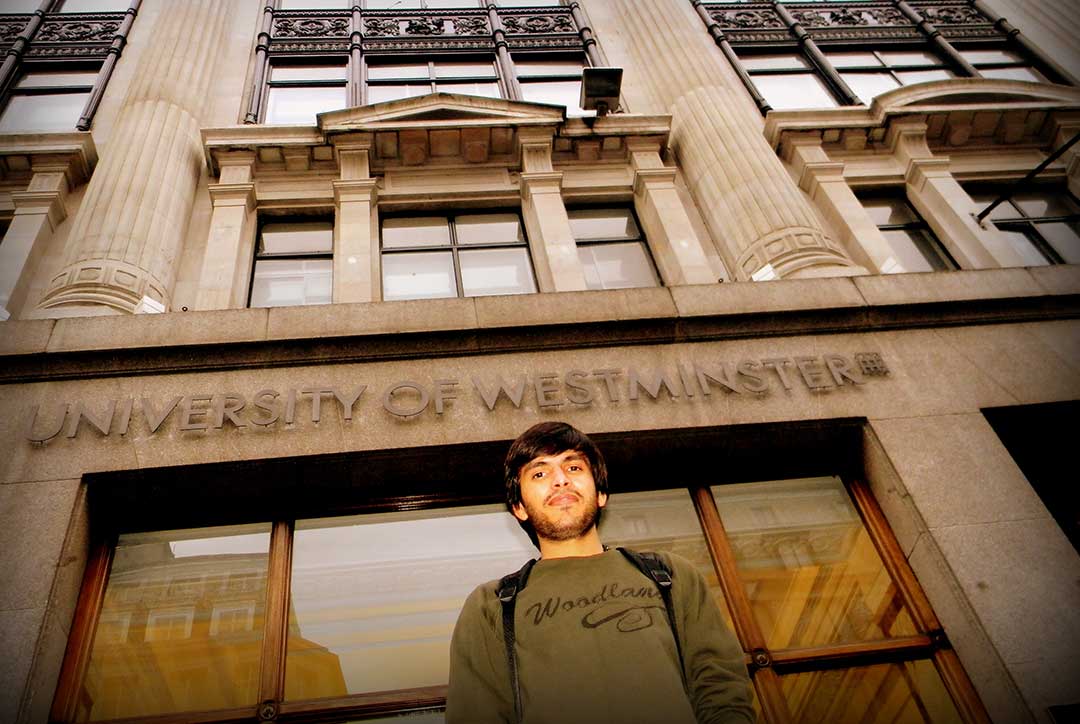
    Manan Bhatt graduated from Maharaja Sayajirao University of Baroda in 2010. Thereafter he went for an LL.M. in International Commercial Law to University of Westminster. He practises as a litigator and is registered as an Advocate. He also had the opportunity to judge the 10th Willem C Vis Arbitration Moot.

    In this interview he talks to us about:

    • Days at MSU and differences between MSU and Westminster
    • Comparison between an Indian LL.M. and an LL.M from the UK
    • LL.M. experience, faculty, facilities and overall academics from Westminster University.


    How would you like to introduce yourself to our readers?

    Hello, you are reading an interview of a person who is experiencing the field of law since 2005 and actively learning the Law since 2010. I did my undergraduate in Law (B.A, LL.B) from Faculty of Law, Maharaja Sayajirao University of Baroda. In 2010 I graduated and my name has been entered in the roll of advocate of Bar Council of Gujarat. I started my practice as an Associate with the Chamber of Hriday Buch which has its presence in High Court of Gujarat. After practicing before High Court of Gujarat for more than a year and a half, I went to UK to pursue LL.M in International Commercial Law from University of Westminster. Currently, I am honing my Legal acumen under the guidance of Mr. Asim Pandya.


    What motivated you to pursue law?

    One or the other reasons did not allow me to stay in the same school for more than three years. I got good exposure by having education from various different schools situated in different areas of Gujarat. My primary education was from Government Primary School, Kheda. Then my father relocated in Gandhinagar and I got secondary Education from Mount Carmel High School, Gandhinagar. I successfully finished my XII – Commerce from Sheth C. N. Vidhyalaya, Ahmedabad. In this manner, I consider myself very fortunate that I have lived, experienced and seen rustic life as well as City life in a very early age.

    I am the ‘first-generation’ lawyer. My entire family is from the education field. So, it was a difficult task to choose a career path. Though, my mom always inspires me to be a lawyer as she believes I am good at arguing (being a victim of my argumentative skill!). Jokes apart, I always believe to be in a field where I can get opportunity to communicate with people and observe every sphere of the Society.

    In fact, I scored very well in XII – Commerce even I got full marks in Business Math in my Board Examination. So, many of my relatives and well wishers impressed upon me that I should become CA. unfortunately, I did not fall prey to their choice of career and got myself admitted in St. Xavier College, Ahmedabad for F.Y. B.A. (Psychology). In the same year Maharaja SayajiRao University announced five year integrated Law course and I opted in. In a sense, I can’t say that law has been my career choice from the beginning at the best I can say that I have inclination towards law from my early years of the school.


    What kind of internships did you do while you were a student?

    From the very first year of our under graduation we required to attend court proceedings as a part of our academic calendar. I did various internships at various different organisations that include Chambers, NGOs, MNCs, Solicitor firms, etc. It helps me to gather first hand information of the legal field. Being a first-generation Lawyer internship is the only source to get to know about the profession. I have read a few autobiographies of Law Legends, but I could have not known the profession and its true color had I not done internships.

    When I was doing my internship with Mr. Majumdar a lawyer and Public Prosecutor in Ahmedabad district Court, I was given an assignment to draft an Appeal for Consumer Matter. I suppose it was a Pro bono brief. One fine day that client came to get the copy of his Appeal. He thanked Mr. Majumdar for his help. Mr. Majumdar called me in his chamber and told the client that he has drafted your Appeal. In a literal sense the client touched my leg and thanked me. This was happened when I was in my second year, I was so embarrassed and at the same time happy to see the happiness engraved in the eyes of that client. From this incident I learnt a lesson in life that the lawyer’s duty is not just give his client a best possible professional advice but, it is also the duty of every lawyer to generate sense of confidence in his client so that he can feel that he is in the safe world.


    How did you go about securing internships under people like Mahesh Jethmalani?

    Faculty of Law, M. S. University gave a large number of legal doyens to the profession. In the year 2005, as many as nine Justices were alumnus of Faculty of Law, M. S. University. It also gave many Chief Justices to various High Courts. Even many of its alumni have been elevated to Supreme Court of India. So, the brand name ‘MSU’ plays very important role to secure Internship in good organisations/chambers/firms.


    What stark differences did you find between MSU and Westminster University?

    We are the first batch of Baroda School of Legal Studies. Being a first batch of Five Year Course has its own merits and demerits. I believe infrastructure was the biggest hurdle in MSU. Though, we had renowned faculty member. There were many practicing lawyers who came as a visiting faculty and which helped us immensely.

    The stark different between MSU and UoW is infrastructure and library. In UoW, we have library which runs in five floors. Not only books but we also have a facility to borrow laptops from our library. We can access full version of many web portals such as WestLaw, LexisNexis, HeinOnline, Jstor, etc. We do not need to visit the campus just to renew the books which we have borrowed three weeks back. This helped me a lot while I was making my dissertation. In MSU you are constantly in a pressure to find out the sources for your research. Expensive books are not available and if available then only for the reference purpose. This all have very bad impact in your research quality.


    What was your motivation behind doing an LL.M. abroad?

    This is the question which I have answered zillion times. Invariably, every person asks this question why not an LLM in India. The answer is simple. I was convinced that I am litigation material and hence, I want to expand my knowledge base that too in a short span as I want to rejoin the profession again. In India at that time LLM courses were of two years. And in UK it does not consume more than 9 months. This is the first reason.

    I am not a ‘DEGREE CENTRIC’ person. I want to expand my knowledge more particularly; I like courses which require intensive research and a more independent approach to working towards DEGREE without the constraints of attending timetabled lectures. In India, we are obsessed with attendance and ‘text book–based–examinations’. This is what I hate the most and hence I decided to pursue LL.M from UK.


    How did you choose the universities that you applied to?

    Actually, I had three countries in my mind for pursuing my LL.M i.e., UK, USA and Singapore. Then I contacted many LLM students through LinkedIn that helped me massively to zero down on UK.

    After I decided that I will be going UK, the task became easy and I surf, read, research and talk with many people. Here, I would like to give an unsolicited advice don’t hire any agent for a help to make your research and application. DO NOT believe what they say; use your own mind and do your own research. Contact Admission Office of any of the universities of your choice and ask every single query your mind has cultivated.

    As I said earlier I want to join some Research University. I have applied in SOAS, Kings College, Queen Mary, Durham, Leeds, and Leicester. I received offer letter from Kings College, Queen Mary and Leicester University.


    How did LL.M. at University of Westminster happen?

    It all happened very hurriedly. I decided to go for higher education in May 2011 when we have Summer Vacation in the High Court of Gujarat. Though, I have already made research on ‘LLM -IN –UK’. Hence, I knew that I was late in applying. I have applied University of Westminster through UKPASS. I was in touch with the Admission office of UoW. They guided me with my application process.


    How is the recruitment for overseas students?

    I personally, do not believe that ‘Foreign – LL.M’ improve my chances of employability. At the same time, recruiters do call you for an interview by acknowledging your foreign degree mentioned in your CV. After all it’s all about Confidence and rapport you share with your interviewer which might help improving your chance to employability. Miss Swethaa Ballakrishnen has written a paper viz. “Homeward Bound: What Does A Global Legal Education Offer The Indian Returnees?” on chances of employability of an LL.M holder. I recommend all the aspirants to read this paper. It will provide crucial insights regarding LL.M and Employability.


    How was your experience in Westminster?

    One of the main reasons I chose UoW is its faculty members. John Flood, Reza Banekar, Richard Earle, Joseph Tanega, Adam Samuel, Simon Newman to name a few, are our faculty members. They are reservoir of knowledge, very active and attentive, ready to help and they are the Professor in its true sense and spirit. They respect knowledge and talent. They made me strive for knowledge.

    I could not find a single reason for which I can say that paucity of resources in UoW hampered the quality of my research/overall outcome of my result. We have good library. The central library system in UK allows me to visit any library situated in UK. In fact, I used to visit LSE’s library for research. They have online database. Prompt reply from faculty members is the rule. So, there is nothing for which you can blame UoW for your bad quality of research. They help you in settling up interviews if your research demands interviews of various stake holders of the society. These all facts make you to concentrate on research only. The administrative side has been looked into by UoW. This helped me a lot.


    manan-bhatt3

    What do you suggest one should necessarily do while at the Westminster University?

    The Cinema in Regent Street London is the part of UoW.  You are not an alumnus of UoW if you have not experienced the Cinema. “Walking Tour of the Neighbourhood” guided by Adam Samuel should not be missed out. One should join Adam Samuel to know food joints around the neighbourhood and history of the neighbourhood.


    What did you specialise in?

    I did my LLM in International Commercial Law. Foundation in International Commercial Law is a mandatory module for the Student of LL.M-ICL. International Commercial Arbitration, Comparative Commercial Arbitration: Law and Practice, Research Theory and Practice, International Commercial Litigation And Corporate Social Responsibility Issues in Business and Law are the other modules which I had opted for and successfully cleared.

    My first love is Litigation rather, Dispute Resolution. Arbitration and litigation is therefore, natural preference. I took Research Theory and Practice because I thought and which also became reality, that it will help me to make my research more effective. The selection of these modules paid well in terms of marks I secured 65 marks in the dissertation. I wrote my Dissertation on “Interim Measures of Protection in International Commercial Arbitration and its Practice in India.” Corporate Social Responsibility module had been chosen just because I find the name of the module somewhat fascinating.


    How was the academic schedule?

    Our Course is based on 180 credits. 60 credits for Dissertation and rest of 120 credits are divided in to twenty credits per subject that comes to six subjects in an academic year. I studied five subjects in the first semester of my post graduation. I must admit that the first semester was more hectic than the second one as in the second semester I have only one subject and Dissertation. But, in the last it helped me because in second semester. I got ample time to set my focus on Dissertation. So, the academic work depends on how you choose your modules.


    How’s the Indian fraternity over there? Are there many Indian students?

    There are many Indian students and if we count south Asian students then I believe they are more than English students! My course had three Indian Students including me. So, around the university there were many Indian students but in my course we have not that luxury to have 75% Indian Students unlike Queen Mary or Kings’ College.


    What about accommodation?

    I have not stayed in a hostel or dorm. I was staying in Private accommodation. Private Accommodation is economical.


    Where do you see yourself in five years’ time?

    Five years down the line I would be more mature in terms of Law as well as life.


    How has your life been after the LL.M. from UoW?

    After LL.M I got the occasion to represent a client in International Arbitration. It was an ICC Arbitration held in Geneva. I was invited to judge/arbitrate Tenth Willem C. Vis (East) International Arbitration Moot held in Hong Kong on 11th – 17th March, 2013. I was invited to judge 3rd ILNU International Moot Court Competition 2014. At present I am working on various domestic Arbitration brief.


    What would be your advice to law student interested in going for higher studies?

    Do your research by yourself, Cross check what you read online. Get your priority straight. Define your purpose for higher studies. If the only purpose is to open up more avenues then think twice. If you want to do pure legal work in other Jurisdiction. Better you give Bar Examination i.e. In UK QLTT, LPC or GDL; USA New York Bar Examination etc. It is economical and it will increase your chance of employability.


    Lastly, what would be your message for law students?

    Read. Re-read. Analyse. Think. Write. Listen. Pay Attention. Observe. Speak.

  • Dwijen Joshi on being an exceptional scholar, LL.M. from NUS and a career in International Arbitration

    Dwijen Joshi on being an exceptional scholar, LL.M. from NUS and a career in International Arbitration

    Dwijen Joshi is an exceptionally meritorious student of 2013 batch of GNLU, Gandhinagar. He has been a gold medalist in Arbitration. His interest in arbitration and litigation led him to pursue an LL.M. from National University of Singapore. He talks about the Arbitration proceedings in Singapore and he has a lot to say about the opportunities there.

    We asked Dwijen about:

    • Winning a gold medal in Arbitration and scoring well in exams
    • Studying LL.M. for a career in International Arbitration
    • Faculty, Finances and overall academics at NUS
    • Developing interest in Arbitration and ADR
    • Scope of Indian Lawyers in Singapore


    Most of our readers are law students and young lawyers. How will you introduce yourself to them?

    I completed my under graduation from Gujarat National Law University in 2013. Immediately after completing my undergraduate studies I headed to National University of Singapore to pursue Masters in Corporate and Financial Services Law. Within the broad legal sphere I have carved out my interest for Arbitration Law. Other than Law, I am very passionate about Music. I have been learning/playing Tabla since my childhood. During my time in GNLU I was part of a talented bunch of musicians in the Music Club.


    How did you gravitate towards law? Why law and not engineering or medical studies?

    I chose Law as I think there is no other field that has a convergence with all walks of life. I never saw myself as doing anything else other than being a Legal Professional. This is a profession, which tests your assertiveness and sensitivity to the aspects of society, which requires some attention or examination. I believe law is as much about contemplation and thinking as much as it is about voicing out your stand.

    It is the most dynamic profession that gives you the liberty and tools to question things that would not seem obvious to someone not trained in law. Though there are different branches of law dealing with two main building blocks of society – Government and Corporations, there is one general theme running in the undercurrents and that is of ‘fairness’. I have always been fascinated by this word.

    My family background also influenced my decision to study law. At a very young age, I began to understand the nuances of Law from my father and grandfather. Though, I always had family support in whichever field I joined, learning law was a very natural process and I took the plunge.


    You were one of the most exceptional students at GNLU. It’s not every day that someone bags gold medals! Please give us a few actionable tips on managing higher grades.

    Thanks for a very generous description! I am very grateful to GNLU for awarding me the ‘Late Mr. Milon Kumar Banerji Gold Medal’ for Alternative Dispute Resolution (Arbitration). It is a very heartening recognition.

    As far as studies are concerned it is a very personal thing so what worked for me may not be best for others. Therefore my advice is very holistically directed. I think hard work is sine qua non for good grades. Life in law school is like a marathon you have to keep running till the last semester and closely watch your pace throughout the five years.  I believe that higher grades are the by-products of the grit and passion that you show towards learning and therefore, learning should be the goal and not the grades. This will make studying enjoyable.

    I always preferred to study from my own notes as it narrows down your area of focus and can be helpful for revisions during the exams. It is very important to maintain a good mental outlook throughout the whole process. Also, I would say smart work is more important than hard work. Try to identify more relevant areas and focus on them. Regular studies will help manage your time better throughout the semesters.

    To save myself from falling into nerdy bracket, in my defense, I believe five years is a golden period to enjoy to the fullest. For some it will be the last few years as a student. So it is more important to have fun, engage in extra-curricular activities and have a balanced routine. I have been fortunate to meet amazing people here and forged relationships for lifetime.


    What was your motivation behind pursuing LL.M.? When did you finally decide that you need to do Masters?

    The decision to pursue LL.M. was the most important decision that I made in last two years. It was in my fourth year of undergraduate studies that I felt I still had one more year of student life left and took the decision. Therefore, I did not get myself registered with Committee on Recruitment Affairs (CRA) for placements. My motivation to pursue an LL.M was to have an exposure of studying law in a top ranking International Law School. It was a risky decision as it was an investment of time, energy and money. And I had again exposed myself to academic judging for sixth year in a row. But it was my passion to experience the intellectual rigour of a Law School such as NUS, which kept me driven.

    I had planned to build specialized knowledge base and skill set through an LL.M, which was not possible through an undergraduate degree. An LL.M provided me with a head start into such complex legal concepts which otherwise would be possible only after two or three years of practice.


    How did you choose NUS over others? How did you go about choosing a university?

    I followed bottoms-up approach while making the applications. I sorted out my areas of Interest and my expectations from an LL.M in terms of knowledge and skill-set. Then I went about choosing the universities, which are reputed I was interested in. Finally I had short-listed only five universities where I eventually sent my applications. All were UK based except for NUS.

    I chose not to apply to US, as pursuing LL.M there is little expensive affair. In London-based universities one gets to study four modules throughout the LL.M. whereas NUS requires completion of total 40 credits, which means one has to study 10 modules of four credits each. I chose to go to Singapore also because of my interest in Arbitration Law and increasing popularity of Singapore as a Hub of Arbitration in Asia.


    Does NUS provide students with scholarships? Are there any other institutions, which provide scholarships?

    NUS does provide for scholarships. The criterion for selection is competitive. I am not sure if they have instituted scholarships especially for Indian students. There are some scholarships awarded by British Council for UK universities. Felix and Inlaks scholarships are also very famous amongst law students. The former is only for UK universities. Ministry of HRD also has some scholarship schemes that keep changing so one has to look for it constantly.


    Did you undergo a rigorous academic schedule? How was that different from your under-graduate course?

    Life in NUS was rigorous in comparison to the under-graduate course. Time management is the key to grapple with the demands of the respective modules chosen. The faculty will expect you to go through the reading materials before each class. For some modules the assigned reading for each seminar may be painfully long and may run up to nearly hundred pages or more. The class hours are also very long. One Seminar will be three hours long.

    The class contains a very diverse group of people. Some of them will have had experience of working in law firms in their home jurisdictions on the issues being discussed in the class. So for some modules the faculty recommends to have some foundational understanding. The assessment patterns for the courses are diverse. The assessments are split across the semester and the submissions may fall within close dates. Evaluations include class presentations, research paper submissions, group exercises – I also had a chance to appear in an Arbitration moot for one of my courses.


    NUS is well renowned for its brilliant faculty. How was your experience with the faculty?

    The NUS law faculty consists of professors who have established an international repute for their contribution intheir respective areas of expertise. The best part of NUS is that it invites professors from different universities across the world to come down and conduct intensive courses in NUS itself. Intensive modules last for about three weeks. I had an opportunity to undertake Word Trade Law seminars conducted by Prof. Joseph Weiler. He is currently President of European University Institute, Florence. He is a world-renowned academician in the field of Trade Laws. He is also a distinguished panel member of World Trade Organization. I took a module on International Investment Law taught by Prof. Loukas Mistellis. He is the Director of International Arbitration at Queen Mary University, London.

    Some courses have very high demand and usually oversubscribed including the Mergers & Acquisition course conducted by Prof. Umakanth Varottil. He is an ex AMSS partner who is revered for his expertise in Corporate Law. The way stalwarts like them conduct the seminars sometimes becomes very exhilarating. As, some may follow Socratic method of teaching. In Prof. Weiler’s class it is suicidal to go unprepared. His random questions thrown at you compels you to spontaneously frame complex legal arguments and make you think on your feet. An unanswered question may bring embarrassment. It is this unique learning experience, which helps one develop exceptional skill-set necessary for an international lawyer to be. Some professors prefer lecture method of teaching and the class aura is cool with such professors.


    How difficult was studying abroad in terms of finding accommodation, finances and settling in?

    Finding an accommodation is not an issue at NUS. The university has built state of the art accommodation infrastructure called UTown. It is situated at Kent Ridge campus that is few metro-stations away from the Bukit-Timah campus where the law school is situated. The policy of NUS is to give preference to research students pursuing a doctorate and exchange students while allocating accommodation. Nevertheless, many people are able to successfully get accommodation within the university accommodation itself.

    NUS provide internal bus service to shuttle students between Utown to law campus.  Other than that, there are private hostels, which are just walking distance away from the law campus. Two such places popular amongst LL.M students coming to NUS are Evans Hostel and Singapore International Campus. I was putting up at College Green Villas, which was just a stone’s throw away from the law campus. As for finances my parents supported me.


    You were involved in a Bilateral Investment Treaty (BIT) case last year. What was this all about? How did you get to work on this? What did your job entail?

    International Arbitrations can be broadly classified into International CommercialArbitration and Investment Treaty Arbitration. India is signatory to several Bilateral Investment Treaties (BIT) with various countries. A foreign investor from the country, which is Signatory to a BIT with India, can invoke Investment Arbitration against India under such treaty. This is a developing area of Arbitration and the law is still in formative stage. The issues pertaining to jurisdiction and enforcement are most likely to come-up in such cases. I knew of a law firm in Delhi – Dutt Menon and Dunmorrsett that dealt with the famous Vodafone Tax case. They provided me an opportunity to work with them on a BIT arbitration issue. It was a very exciting opportunity and a constructive engagement before heading back to NUS.


    What are the internship opportunities in Singapore?

    It is possible to get internships in Singapore-based law firms provided the applications are sent at the right time to the right firm. For those coming to NUS for LL.M it will be helpful to them if they prepare a list of the firms where they want to intern before coming to Singapore. During the course of the semester managing internship applications alongside the usual coursework tasks, becomes little edgy.


    How did you develop interest in Arbitration? Where do you see yourself by the end of the coming five years?

    I had an interest in Dispute Resolution especially litigationeven before joining law school. At that time I did not know much about arbitration. My first initiation into the subject was when I chose to write a paper on it in my first year of Law School itself. Gradually with internships, interactions with the experts in the area and of course with formal initiation into the subject in GNLU, I realized that I have a knack for this area. Five years down the line I see myself as a counsel involved in Litigation as well as Arbitration. In the long term I see myself as working in Dispute Resolution practice area of an Indian Law firm. Moreover I see myself as an Indian lawyer qualified to practice in UK and Singapore after having cleared QLTS (Qualified Lawyer Transfer Scheme) and FPE (Foreign Practitioner Examination) for the respective jurisdictions.


    Do you think that Singapore is gradually becoming the hub of Arbitration in Asia, especially for Indian Arbitrations? What are your thoughts on this? What are the opportunities for Indian Lawyers?

    Singapore is becoming a favorite destination for the Arbitration Practitioners across Asia including India. The number of Arbitration agreements involving Indian parties, stipulating Singapore as a seat of Arbitration is increasing. A lot of sophisticated Indian Arbitration disputes are being settled in Singapore International Arbitration Center. It is a preferred destination also for ad-hoc arbitrations as Singapore courts have adopted a very favourable arbitration policy. Many Indian companies have their investments in Singapore so it becomes easy to enforce the award. In Singapore, Foreign-qualified lawyers who pass the Foreign Practitioner Examinations (FPE) can apply for a Foreign Practitioner Certificate (FPC) from the Attorney General to practice in permitted areas of Singapore law.


    Lastly, what would be your message to people who want to take up a career in Arbitration?

    I will say it is an exciting career option.  It is also very challenging at the same time. Arbitration and Litigation are two sides of the same coin. So if one enjoys spending more time arguing cases outside the office comforts, this is where they should see themselves. The skill set required for a counsel arguing before a court and before an Arbitration Tribunal is same. Except in the case of International Arbitration, the style of arguments differs if the Tribunal consists of experts trained in Civil Law in which case the style of arguments is substantially different from what Common Law lawyers like us are trained to use.

    Lastly, I will say for those who do not have a legal background in their family and want to pursue litigation as a career option, just go for it if that is your calling. There will be hardships in the beginning, the incentives are less but in the end it is your passion, which will drive you forward towards success – so that in the end you can proudly say ‘And that has made all the difference’.

  • Aakanksha Kumar on winning 15 gold medals, LL.M. from NUS and a career as a researcher & teacher

    Aakanksha Kumar on winning 15 gold medals, LL.M. from NUS and a career as a researcher & teacher

    aakanksha-kumar3Aakanksha Kumar graduated from HNLU in 2012, as an exceptional scholar, winning 15 gold medals in various subjects. Thereafter she pursued an LL.M. from the Faculty of Law, National University of Singapore. She had joined ITM University as a Research Associate last year and she shall be joining NLU Jodhpur as an Assistant Professor in July 2014. In this interview she talks about:

    • Getting higher grades and winning 15 gold medals
    • Selecting a university for higher studies
    • Scholarships, Academics and research experience at NUS
    • Experience as a Research Associate at ITM University
    • A career in teaching and research


    Most of our readers are law students and young lawyers. How will you introduce yourself to them?

    I am your everyday nerd in love with the law, and the best possible way to spread the love for the law, I believe, is to teach it effectively. I come from a north Indian family, currently based out of Bhilai, Chhattisgarh and am a Dipsite. I finished my B.A.LL.B.(Hons.) at HNLU, Raipur in 2012 and completed my Masters in International and Comparative Laws from  the Faculty of Law, National University of Singapore in July 2013. I have been teaching full-time on a research associate position, at the School of Law, ITM University, Gurgaon since July 2013 and I shall be joining the National Law University, Jodhpur w.e.f.  July 1, 2014 as Assistant Professor (Law). My teaching specialisations include Arbitration & ADR and Comparative Competition Laws, along with research interests in IPR and World Trade Law.


    How did you gravitate towards law? Why law and not engineering or medical studies?

    Well, I do have the regular “influenced by the parents” story behind my choice of pursuing a career in the law. My father, though not a lawyer, completed his LLB when I was in IX standard and I used to love reading his course books. I was always interested more in the social sciences, but since our school did not have an option to move to the Humanities stream after the X standard, I did pure sciences till XII standard and then appeared for 9 different law entrance exams, and chose HNLU over NUJS and ILS Law School, Pune. Engineering or medicine were never even remote options as I was horrible at Math and Chemistry and was looking for the first chance to give those up. Little did I realize that I will find Patent laws easier and be specializing in IPR eventually, only because my school science studies helped. The other options I had considered were in fact English Literature and Journalism.


    You were one of the most exceptional students at  HNLU. It’s not every day that someone bags 15 gold medals! Please give us a few actionable tips on managing higher grades.

    Thank you! They sure came as a welcome surprise, but I don’t really dwell on that glory, though they do add considerably to the number of pages on my CV 😉

    I was asked this question on another interview and my answer remains the same.Since Day 1 of law school, I knew I was studying law to be able to eventually teach it.  Hence the study method adopted by me was to cater to my ultimate goal – I would study first and then revise again by teaching my other batch-mates.

    Unlike the clichéd “I study for X number of hours in a day”; my study pattern varied a lot. I honestly never studied for more than 4 hours in a day. Instead, my success mantra was – undivided attention to class-room teaching and self study of the same topics that very day after classes. Hence I was able to relax when end-term exams approached, knowing that I would manage to study and revise what was taught. I had different study methods for different subjects, given their level of difficulty, or the extent of extra study required. Regular taking down of notes during classes also helped a lot in later self study. Moreover, the aim was never about getting the highest grade. It was about being so in love with the law, that one automatically wrote an answer so thorough, that the examiner couldn’t fault it.

    Also, the trick on really securing higher grades is sometimes to get inside the head of the teacher, and understand what they want in an answer. I always tell my students to carefully follow the classroom discussion, as often there may be hints on how to attempt exam questions.


    What was your motivation behind pursuing LL.M.? When did you finally decide that you need to do masters?

    Like I mentioned earlier, I knew I was studying law to be able to teach it. And one cannot do that without a Masters degree. I come from a very strongly academically oriented family. Both sets of grandparents are or have been teachers or professors. My maternal grandfather; who continues to remain a source of inspiration, is a nuclear physicist and was also the Dean of the BHU Science Faculty. My mother is an English teacher, with  Masters in both Pharmacy and English. I thus like to believe that being academically inclined is in my genes. And completing an LLM to cater to my academic pursuits was the next logical step to take.


    How did you choose NUS over others? How should one go about choosing a university?

    I had applied to mostly schools in the UK [UCL, King’s, Queen Mary’s] and NUS. I  was always looking at NUS as my top choice, given the popularity and worth attached to their International Law LLM, as well as given considerations of costs and proximity to India. Under Prof. Simon Chesterman’s (Dean, NUS Law) able guidance, the NUS International  and Comparative Laws LLM has carved for itself a special place in international legal academia. Since NUS is known to value academic excellence above all else, I was hopeful about getting in, given my CGPA and rank.

    When choosing a law school, one must not just look at the overall reputation of the school, but also at the reputation of the courses offered vis-a-vis one’s own interest areas. E.g. One chooses King’s London, to generally pursue a Competition Law specialisation Masters, or Rotterdam (Erasmus Mundus) for the Economic Laws LLM. The next very important consideration is obviously the tuition plus living expenses, and available scholarships. Other considerations include accessibility of the city and if one plans to settle down abroad, then, future employability concerns. Another important thing to remember is that an LLM abroad, while being a wonderful opportunity to network with like minded people from all parts of the world, is also not a joy ride. It’s a huge undertaking with a pretty hefty study load, and thus one must make up one’s mind thoroughly before applying. Also, one must structure one’s LLM CV to show experience – either in work, internships or research, in the chosen area of Masters Specialisation.


    Does NUS provide students with scholarships? Are there any other institutions which provide scholarships?

    Every application to the Masters Programme in NUS Law is automatically considered for scholarships, though their selection criteria is not very transparent or anywhere on paper. From the trend in the past couple of years, it is usually people [strictly applicable to Indian students] with tier 1 law firm work experience for atleast a full year, with amazing references, that get the Faculty Graduate Scholarship. So, I know of peers who had experience at Nishith Desai Associates, or at AMSS whose reference letters were written by  SC Judges or law firm managing partners, who bagged the scholarship.

    So if aiming at a scholarship at NUS, do not pursue an LLM immediately after law school, and build a credible list of referees.

    Most law schools and universities do have their own scholarships for the Masters programmes. There are also other more popular scholarships – the Fullbright for study in the US, The Commonwealth Scholarship etc. There are several institutions who offer financial aid and bursaries for foreign LLMs but I am not the right person to detail those as I didn’t research too much when I applied. For Indian Students especially, I know of UCL offering a special Chief Justice Scholarship and LSE Offers a Marchant Foundation LLM Scholarship. And all scholarships require a very well written personal statement.


    What was your topic of research for LL.M? Why did you choose that subject for research?

    At NUS Law, one need not necessarily take up the Directed Research Dissertation. One can choose to do a full course for credits instead. I,  however chose to drop a full course module and did the UROP-DR [University Research Opportunities Programme – Directed Research] for 4 credit points.

    My research thesis is titled – ‘The Taking of Evidence in International Arbitration: A New Legal Regime’ which was supervised by Prof. Gary F. Bell, who is an Associate Professor at  NUS Law and a Fellow of the Chartered Institute of Arbitrators, Singapore. I chose to complete my research project in a conflict of laws aspect of international arbitration as I was “precluded” from studying the course on International Arbitration at NUS, having completed an optional specialisation at HNLU in the same. Further, international arbitration both as a substantive field of legal study as well as its procedures, has always intrigued me, given the high level of independence and flexibility in this method of alternative resolution of disputes.

    Moreover, I always wanted to teach ADR and International Arbitration eventually, and given the mindset of Indian law school faculty selection committees, an LLM thesis in the area gives me an added advantage.


    Did you undergo a rigorous academic schedule? How was that different from your under-graduate course?

    NUS has a very demanding curriculum, that requires you to complete a total of 40 credits in the academic year. Of these 40 credits, 24 must compulsorily be of those subjects that are on the list of your chosen specialisation, and the remaining 16 can be from other specialisations. I did 32 credits of International and Comparative Laws and 8 credits of IPR. I also did one full 8 credit course on World Trade Law that was very demanding. Unlike one hour lectures, 5 days a week in India, the NUS contact hours differ. The 4 credit courses are taught once a week for a rigorous three hour seminar that is conducted in the Socratic method of teaching- learning. This meant that if one was unprepared with the assigned readings for that day’s seminar, one had to be ready to face the embarrassment. However, classes were always extremely interesting as they were more discussion based, and our professors were brilliant! Since I was anyway used to putting my nose to the grindstone even when at HNLU, the NUS curriculum didn’t come to me as a “culture shock” personally. Also, when one sees the dedication of the undergrad students who generally take the same classes, one is motivated to be as good as them, if not outshine them in class.

    What is unique to NUS, is the concept of “intensive courses” that are taught in the first three weeks of a semester, for 9 hours in a week [3 hours * 3 days], usually from 6:30PM to 9:30PM. These courses are taught by experts and stalwarts in the area and are specialisation papers. Masters students are to take one intensive course in each semester. A 6 – hour take home exam is then conducted in the 7th or 8th week of the semester for this course. So one basically completes a subject specific specialisation in just 2 months! Extremely demanding but also very fulfilling. I took the courses on EU Private International Law taught by Prof. Franco Ferrari from NYU and Comparative Competition Law and Economics taught by Prof. Roger van den Bergh from Rotterdam [Erasmus Mundus] – both very practical as opposed to theoretical papers and it was in a way, somewhat surreal to learn from and discuss with people who actually wrote the laws that were being studied.


    You also worked under Prof. Irene Calboli as a research assistant. Please share some insight on your research topic.How was your experience working with her?

    Prof. Calboli is “God” on IPR. She’s the most amazing, wonderful human being I have ever encountered in my life.  She was my course teacher for the module on International Trade and Intellectual Property Laws and I secured the highest grade in the subject, which helped me bag the coveted RA spot under her. She was extremely patient with my over exuberance and always encouraged my out of the box interpretations and suggestions, and I still continue to be in touch with her and assist her in whatever manner I can.

    My research work for her included completing and editing a chapter she was doing then on the Cultural and Economic Advantages of Geographical Indications and enhanced protection for them. The Chapter is now complete and is available on SSRN

    I also did some work on GI protection and Sustainable Development in Asia and did a compilation of GI success and failure stories from Asia, that helped her in a paper she was planning in May last year. The same eventually materialized as her presentation at the ASLI Annual Conference in Malaysia last weekend.


    NUS is well renowned for its brilliant faculty. How was your experience with the faculty?

    LLM from Singapore was a blessing and the law school is a ‘learner’s paradise’. I learnt not just about learning, but also learnt about “teaching”, which is what I had set out to do. Every single one of the professors I learnt from were brilliant and exceptional in their respective fields of expertise. Each had their own peculiar teaching methods, that were effective in their own special ways. I learnt how to handle a huge classroom from the likes of Prof. Weiler, who was the perfect person to be teaching World Trade Laws, I learnt how to be effective when teaching IPR from the likes of Prof. David Tan, who also happens to be a fashion photographer, and how being simple is the best when it comes to understanding complexities of the UN, from Prof. Chesterman. Also, unlike in India, where faculty is often, unfortunately unapproachable and passive, teachers at NUS are the most approachable, amicable and available at even odd hours to cater to your academic and research queries.


    How difficult was studying abroad in terms of finding accommodation, finances and settling in?

    Singapore was a cakewalk, given that my parents have friends there and I had visited the country before. Plus Singapore is extremely comfortable for Indians, given the vast Indian population and accessibility to Indian food, and is so so well planned that one cannot help but feel a little spoilt. In terms of finances, the country is a little heavy on the pocket as the standard of living is like being in any other European city, but I was very lucky to have bagged a seat in the University housing offered by the NUS LKY School of Public Policy which is a seven minute walk to the NUS Law Faculty, through the national heritage botanical gardens. So I ended up saving a lot on travel, and food as I was able to cook most of my meals myself. Singapore is a small, clean, very safe and beautiful country to be in.


    How was your experience at WIPO Summer School? What was the application procedure for the same?

    The WIPO Summer School again, was another experience of a lifetime. After I completed my LLM exams, I had some time to kill until Commencement so, along with research work for Prof. Calboli, I applied to the WIPO Summer School. The summer school luckily that year was happening for the first time in Singapore in association with the IPOS and the IPA. The application is to be completed online, within the deadline slots given and once selected, each student is required to complete the DL 101 General Course on IPR. Since I had already completed the DL 101 in November 2010 and had also effectively completed an LLM, I was exempt from the course. The Summer School was spread over two weeks and we had special sessions on niche areas of IP – Patent Valuation, GI Protection, Trade Mark and Merchandising, Domain Names etc taken by subject matter experts from both in the government in Singapore and from academia in both Singapore and abroad. The most fun part was the assignments especially the TM Protection – Negotiation simulation conducted by Mr. Mendes from Opteon, Australia. The student crowd was also a great mix of both lawyers and engineers and I was certainly enriched with greater knowledge upon completion and also made some great friends.


    You worked as research assistant at Centre for International Trade and Economic Laws, JGLS How was your experience as a Research Assistant there?

    CITEL was unfortunately a very short stint, but nonetheless I learnt a lot about how trade policies of our neighbours influence our own economic and trade policies. I was given the task of preparing the Trade Policy Monitoring Reports of China for Q3, 2012 as a research intern and I also assisted with research for a submission to the IIFT on Energy Subsidies in India. Prof. James Nedumpara is a very keen and able mentor to work under, and we sure did have NUS LLM stories to exchange too.


    Glitz of a corporate job often blinds a law studentand he fails to look at different career opportunities. Were you in double minds before taking up the teaching job? Why did you prefer the teaching profession over other jobs?

    At the cost of being repetitive, I did always want to end up teaching. However, I  also completed my share of regular law school internships and did intern at two tier 1 firms, in my final year for a PPO.  Also, I got a call from one, the day I sent in my NUS acceptance. I had earlier declined an IPR Litigation job offer. I would be lying if I said that I didn’t try my luck again at firms, upon my return to India, but  I eventually realized, that my calling lay in teaching and it is what I am best at.  And this also came after continued encouragement from my peers in law school, who were also happy to act as my students right before exams when I did quick syllabus recaps for them.  I also took up the teaching seminar in fifth year at HNLU, and enjoyed every minute of being in a classroom.

    I love my job, and take it very seriously. And nothing beats the sense of accomplishment one gets when an otherwise below average student in the beginning of a semester, ends up writing a brilliant paper in the end term exams.  And that is the best  personal validation and the major perk of being in this profession. Moreover, I have seen my own teachers – some were truly brilliant, the others, merely hiding behind the façade of having qualified the UGC NET. I wanted to be the teacher to future lawyers, that I didn’t have. I still am taking baby steps, and am getting there, gradually. One gets to keep learning on the job, and I have always subscribed to the policy that one learns better while teaching.


    Financial security is a major concern for law graduates who aspire to take up teaching jobs. Did you face similar concerns? What challenges did you face while working as research associateat ITM University?

    Financial security was never a concern, especially at ITMU, as ITMU pays really well to an RA, and even better to a UGC NET qualified Assistant Professor, i.e. higher than the UGC Scale of pay. However, being  in a private University, the work-life balance is a little hampered and one is expected to work for a minimum of 8 hours a day on not just classes and academics but also don several other administrative roles. So we mentored moot teams, organized guest lectures, conferences, seminars, and had additional charge of the Internship Cell, given the relatively nascent stage that the law school is in. That I think is the problem with law teaching in India. The UGC expects a certain level of research and academic output for the API Scoring. On the other hand your employer expects fulfilment of multiple administrative responsibilities, and thus, being in at a faculty position in a law school becomes a 24*7 job, sometimes work hours being worse than those at law firms.

    But if one learns to love and enjoy ones’ job, the whole drill seems worth your troubles as the perks – both financially and otherwise [student feedback] are great.


    Recently you took up a job at NLU Jodhpur as an Assistant Professor. What are your plans for the future?

    I shall be joining NLUJ w.e.f. July 1, 2014. I have been given charge of teaching Constitutional Governance and ADR. I  see NLUJ as a long term plan and hope to begin my PhD by early next year, hopefully at NLUJ itself. A book chapter is also in the pipeline. It is otherwise too soon to be taking ambitious career steps and I am just looking forward to being back in an environment I believe I am more suited to – an NLU.


    Lastly, what would be your message to people who want to take up a career in teaching?

    Though barely a year old to teaching, I do have a few observations from watching most of my family in the profession. Please do not taking up teaching because it’s the only alternative. Take it up because you want to do justice to the profession and because that’s where you know your calling lies. As a teacher, one must never shy from admitting mistakes or saying one does not know something, rather than telling one’s students the wrong thing. Also, one must treat the job with the sanctity it demands. The returns in the teaching profession do not lie in increased popularity with the students or in the amount of attention one gets from them outside the classroom. Strive to be that teacher who the students will miss when they leave, because of the knowledge they gained and retained from the classes and interactions, and not for the number of internships they bagged or attendances marked with a “P”. The returns lie in seeing one’s students do well – both inside the class and elsewhere in the world.

  • Aditya Parolia on being a partner at PSP Legal, LL.M. from NUS and transition from associate to partner

    Aditya Parolia on being a partner at PSP Legal, LL.M. from NUS and transition from associate to partner

    Aditya Parolia graduated from Guru Gobind Singh Indraprastha University, Delhi in 2011. Thereafter he pursued an LL.M. in Corporate and Financial Services from National University of Singapore. Later, he had worked as an associate at Advani & Co., and at present he is a partner at PSP Legal.

    In this interview we asked him about:

    • Faculty and academics at NUS
    • Transition from an Associate to Partner
    • Requisite skills for a successful legal career


    Tell us a bit about your childhood and pre-college life as well as educational background. Did you have lawyers in your family?

    I did my schooling from St. Peters College, Agra in Science & Computers, where I was more inclined to pursue my career as a Bio-tech Engineer. During my school days I was an average student, however, I tried my best to pay equal heed to academics, sports, debates, quizzes and other extra-curricular activities. I always had that inquisitiveness to learn something new, which turned out be a major reason for me to pursue law.

    Sports and extra-curricular, were really helpful for me when I chose to pursue law, because as a lawyer and a law-student I was not only required to have a mugged up knowledge of law but be spontaneous, a team-player, social, curious to learn and many other things which you can only grab if you have been active in other spheres as a student.

    I am a first generation lawyer and I am thankful for that, if there were lawyers in my family knowing myself I can say I could have been complacent and would have restrained my ability to think out of the box.


    What motivated you to choose law for a career?

    Always being more inclined towards science and computers, law as a career option never crossed my mind. Also, Agra not being a metro city did not show much promise for law as a profession and more importantly there was hardly anyone to guide students to various options that are available to them post matriculation. The trend was more towards engineering or medicine.  A lawyer for me, as a child was so stereotyped that it only meant a person wearing a black coat, sitting under an umbrella with a type writer. Law schools were revamping them self and Nationals Law Schools have just entered the academic regime and not many knew about five year law courses.

    Luckily my father had to shift to Delhi for few months, when I was just done with my 12th board exams; there I got to meet a few lawyers who gave me an insight towards law as a profession and five year law course. I always had interest in Political & Social Sciences and the close nexus between law and these subjects made me interested and everything else just fell into place.


    Tell us about your internships experiences. Were they all meticulously planned or did they just happen to you as you went through law school?

    Well, being in a law school in Delhi turned out to be very advantageous for me. I got an opportunity to work with many law offices/firms during my LL.B., which included tier one law firms in the capital, Solicitor General of India, two Additional Solicitor Generals, Senior Advocates, and a Judge of Supreme Court of India. This gave me a good insight about various areas of practice in legal industry and most importantly it introduced me to some practicalities of the profession. Additionally, as an intern you get to share and learn from other interns a lot, this I must say is very important part of internship, which is mostly ignored by students. I am thankful to many of my co-interns of introducing me to possible internship opportunities, law journals, online-courses, higher studies and many other such things. Internship is very important and must for law students, if not for being introduced to laws but at-least for being introduced to the profession.

    My plan all along was not to give any particular practice area priority but to gain as much experience as I could from these internships and then reach any conclusion, if possible. As for planning internships I always tried to apply at least 8-9 months in advance so that I have options to choose from as per my convenience.


    Did you have an opportunity to study the subjects you chose to specialize in your LL.M. when at college in India? What influenced you to study abroad?

    You never know what will make you change your decision in life, you can have all planned but then you may be introduced to something in absolutely different direction that will make more sense. I found myself in a similar situation, I chose all those subjects which I had studied before so that it would be comparatively easier for me and I could easily grasp their global perspective.

    But I thank my Dean Prof. Simon Chesterman for giving wonderful introductory speech and explaining us why not to choose subjects we have already studied, I ended up taking subjects like Aviation Law, Construction Law, Negotiation and Drafting of Commercial Contracts and Mergers &Acquisitions  which were absolutely new to me.

    I was out of my comfort zone I had to work hard and be prepared before every seminar/lecture. This required daily hours in the library reading some of the best authors on these subjects, which brought the best out of me. Also, after reading these subjects I can claim to have gained a new area of practice.

    Well I cannot say I had lack of influence to go for higher studies abroad, I always wanted to do so. But yes I have few of my seniors from law schools to thank for guiding me to my way there, especially Mr. Shashank Garg.

    However, we cannot ignore the lack of guidance in India for a law student who wants to pursue his/her higher studies abroad. People misrelate higher education abroad as an opportunity to find a good job there or in India, it is a misconceived notion. LL.M.s are purely academic in nature, they enhance your knowledge of law and give you different perspective to practice law.


    aditya-parolia1

    How did you go about choosing which college to go to for your LL.M.? Did you ever consider Indian colleges for LL.M.?

    Initially I chose colleges and jurisdictions where I wanted to pursue law followed by expense that was to be incurred for pursuing them. For example, I did not apply to any college in US, for sole reason that it was not in my budget. You need to know where you stand and then weigh pros and cons. As I said, LL.Ms are not something you do to get a better job, you do it to do better in your job.

    When I got an offer letter from NUS, I decided to accept it immediately and reject others, for many reasons.

    The major reasons were:-

    If you want you can read Indian laws; NUS has options like Indian Business Laws, Indian Penal Code, and Contemporary Indian Laws to name a few.

    It is commercially viable as compared to UK and States.

    The legal industry is open and promising for Indian Lawyers. Nearly half of our batch, including me, had offer letters in their hand before the final results were out.

    Also, since NYU was also offering LL.M. course in collaboration with NUS we got to read many modules provided by NYU and learn from many renowned NYU professors.

    I wanted to learn arbitration and Singapore being a major centre for Indian parties showed lot of promise. Further, studies in arbitration at NUS give huge importance to Indian practice & case laws etc. And not to forget that they have Professors like Mr. Gary Born, Mr. Lawrence Boo and Mr. M. Sohanrajha to teach the subject.

    No no doubt it is one of the top most universities in the world and has an excellent dedication towards the students. I can write pages to explain this dedication of NUS.

    No, I did not consider Indian Colleges for LL.M., no disrespect to them but it time that we revamp our higher education system. Indian Colleges rather than focusing on specialized/ super-specialized areas are still majorly focusing on subjects being taught in LL.B. The approach has to be changed, it’s not like we do not have good teachers or law schools. We have alumni who are not reputed lawyers of the country and will be more than happy to contribute.

    For instance, I was taught Mergers & Acquisitions by Prof. Umakanth Varottil at NUS, he is an NLSIU alumnus, former partner of AMSS, ranked as a leading corporate/mergers & acquisitions lawyer in India by the Chambers Global Guide and no doubt an authority on the subject.  I have seen students, in a three hour seminar, willing to stand throughout and learn from him. I had no inclination for M&A and today it’s only because of him that I am advising companies on the subject. It is simply the method and atmosphere that International Universities create that grows that willingness in a student to learn something new.


    How difficult was studying abroad in terms of finding accommodation, finances and settling in? Are there any scholarships for studying at NUS available to Indian students?

    I was working for a while before leaving for NUS and since studies at NUS was not that expensive finances was not much of a trouble though I had seek some help from my parents for the second semester.

    NUS has recently come up with a state of the art residential campus, UTown, for international students, which is fully equipped with all the required amenities, including shopping centres, food courts, restaurants, sports complex and not to miss excellent education resource centre. Also since Singapore has huge population of people of Indian origin you do not feel away from India, every food court mandatorily has an Indian food stall and shops are full of Indian food supplies. If one is applying to NUS I will advice that one should apply for hostels provided by NUS they are comparatively affordable and has transport facilities linked to them.

    Every student selected for NUS gets automatically eligible for the university scholarship. To my knowledge NUS awards three from each batch and same it communicated at-least a month before the session starts. I am not aware if there is any scholarship specifically available to Indian students.


    How was the faculty & academic schedule at NUS? Was there time enough for non-academic pursuits at NUS? How did you find the work-life balance to be?

    You can find authorities on the subjects teaching at NUS, like Gary Born, M. Sonarajha, Simon Chesterman, Umakanth Varottil, Stephen Girvin, Alan Tan, Franco Ferrari, to name a few. It will be wrong for me to even explain their credentials. The manner in which the faculty communicate and reach the students is unheard of. Then within the especially dedicated campus of NUS Law School you have LKY School of Public Policy, where you find lectures delivered by eminent world leaders every other day. We had opportunities to hear lectures and interact with renowned personalities like Mr. Pascal Lamy, Mr. SashiTaroor, Mr. Henry Kissinger, Mr. Kofi Annan and many others.

    The methodology adapted by NUS in their academic schedule is quite innovative. You generally have 5 subjects a semester, having a three-hour seminar for each subject a week. You are given academic calendar and class-schedule prior to your selection of subjects. So if one wants he can have just 2 or 3 days a week of classes, based on his selections, and rest of the week can be used by the student as he wants. In my batch that we traveled throughout Southeast Asia during our studies and it was hardly a burden on our academic schedule.

    However, since for each subject you have to write an article you will have to put hours in library from these non-class days and manage accordingly. Yes if you ask me that if you can pursue a part time job that is not possible. The modules are very demanding you need to be prepared before sitting for each lecture. The classes are also very interactive you cannot simply go unprepared. NUS had developed special software IVLE to provide students all the required readings for a lecture at-least a week in advance. The Integrated Virtual Learning Environment (IVLE) is a NUS’ custom designed and built course management system for the NUS community. It is designed to facilitate and supplement teaching at the NUS.


    Do you think higher studies help shape a successful legal professional? What would be your advice to law students who plan to go for higher studies?

    Yes I believe they do to a huge extent. I cannot say all that I learnt during my LL.M. has been put to test in practice, but surely it enhances you as a person and a lawyer. The way you see or study a subject and write on it changes to a great extent. Further, since you have to settle quickly in an alien land you become more independent and responsible.

    For me, it was a correct decision. Had I not been there I would have never shifted from my orthodox approach of law and have stayed just a litigation lawyer. Thanks to LL.M. that I now advice companies in FDI, Aviation and M&A apart from appearing in courts.

    Well I can just advice that if you are going for higher studies don’t think that you will land up getting a big job there or here in India, one might get it but that is not the purpose of higher studies. One should go for LL.M. to learn new possible approach towards law, how other legal system implement their laws, what can be possible changes that we can bring in legal system. The purpose of doing LL.M. should purely be academic and self-growth.

    Since today we have major multi-nationals coming in our country, they are very demanding and require you to work as per international standards. Until we have that experience it will be difficult for us to meet their expectations.

    Also, if I may suggest please choose few subjects which you have never studied before, it will be worth it. I should also warn that if you are thinking that LL.M. will be cake walk please be aware that you are absolutely wrong, rather it is very demanding and have high expectations.

    Plan well in advance. To start with, prepare your documents and references at least during April/May and make sure to choose your colleges wisely. Seek advice only from people who have gone for higher studies as I don’t believe it will be proper for someone to be a critic of something without experiencing it first.  If possible, work for couple of years and then go for higher studies, you will be on a better footing.
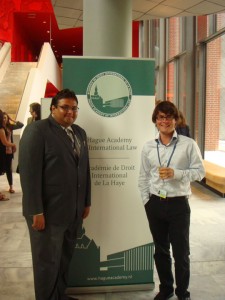
     

    aditya-parolia2What kind of effort should a young associate put into work to get it appreciated? What are the major differences between a young associate with a partner?

    A young associate is required to be sincere and hard working, nothing much. It will be wrong to say that he should have deep knowledge of laws and procedure, this is not possible; you get to learn them eventually, books and practice rarely co-relate in fact. But, yes you need to be aware of things and development in laws, ignorance cannot be an excuse.

    Being a partner you will have to be more responsible and a team leader at all times. Your juniors’ mistake is your mistake you cannot at any time use your juniors as a shield. As a partner you have additional responsibilities which might affect the speed of your delivery but these are essential for the job, like socialising, management, delivering lectures et.al.

    I believe responsibilities make you grow as a person, the earlier you have them the better.


    When you hire lawyers, what kind of skills and profile do you look for? Are the attributes different for working lawyers and fresh graduates?

    We just require few things in a candidate, sincerity, willingness to learn and ability to think out of the box. Candidate’s marks or which college he graduated form does not matter to us.

    Of course experienced professionals have to be scaled separately; you cannot have a set formula. If one is adding value to the firm he/she is always welcome.


    Do you offer internships at PSP Legal? What is the application process and what do you look for in a cover letter and CV?

    No currently we are not offering internships. Recently our work has grown well and our lawyers are keeping busy meeting the deadlines.  It’s not that we do not offer internships, it’s just that we have closed it for this summer.

    We believe if we have interns it is our responsibility to provide them enough exposure and give adequate time to their queries and explain them the work process. We make it a point to deliver a lecture for them, at-least once a week, explain to them about the profession.

    However, we might soon put up notification on our website for internship opportunities.


    Given a chance to turn back the clock would you have done anything differently from what you’ve done?

    You learn from your mistakes and then they become experiences in life. Experiences are said to be the most valuable things, why would you take a chance to lose it.

    And as for me, I do not really know what and how things have worked for me till now, the pieces just seemed to have fallen in right places.

    So, I am not sure that I would like to change something from past.


    Lastly, what would be your message to a student pursuing a law degree?

    Whether you are are from a NLU or not doesn’t have any bearing in your long term legal career. All that matters is your hard-work and sincerity. You have to build your own path, just keep your eyes and ears open and keep learning. Every time you put yourself out of that comfort zone you gain/learn more and emerge as a winner.

    Lastly, try to be as active as possible in extra-curricular activities it’s not about winning a moot or debate, you learn a lot in the process. This displays your ability to try things.