Tag: LSE

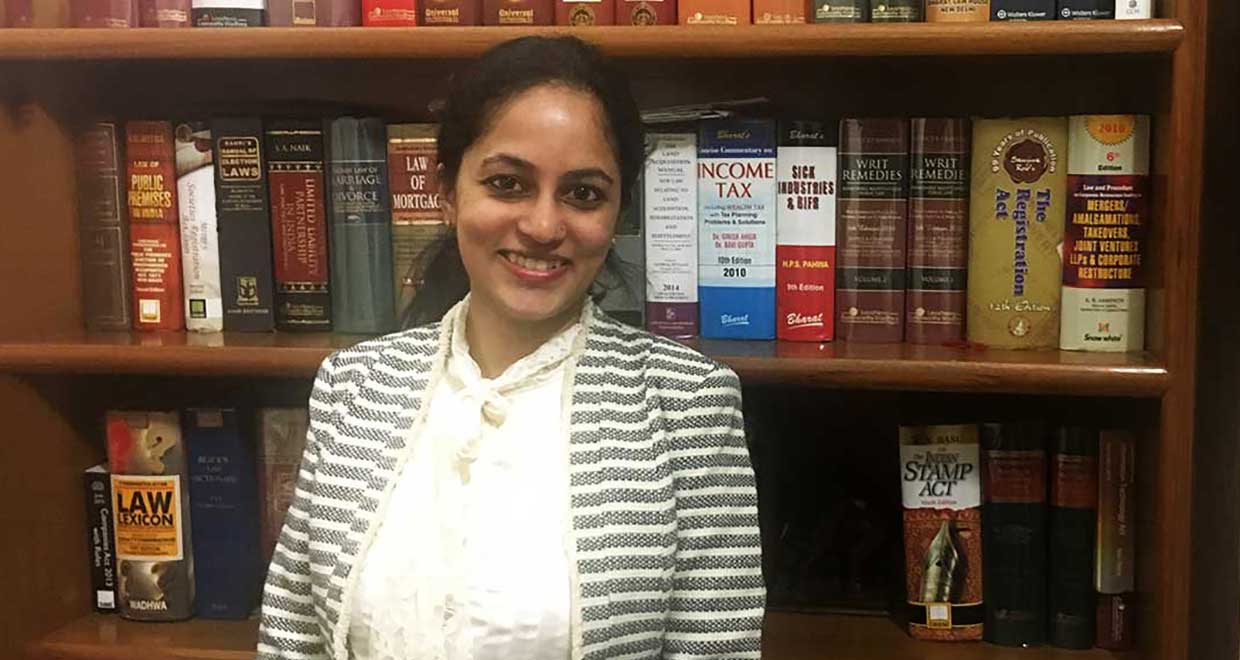
  • Poornima Hatti, Partner-Dispute Resolution, Samvad Partners, on studying in London, her association with the UN, and editing her book

    Poornima Hatti, Partner-Dispute Resolution, Samvad Partners, on studying in London, her association with the UN, and editing her book

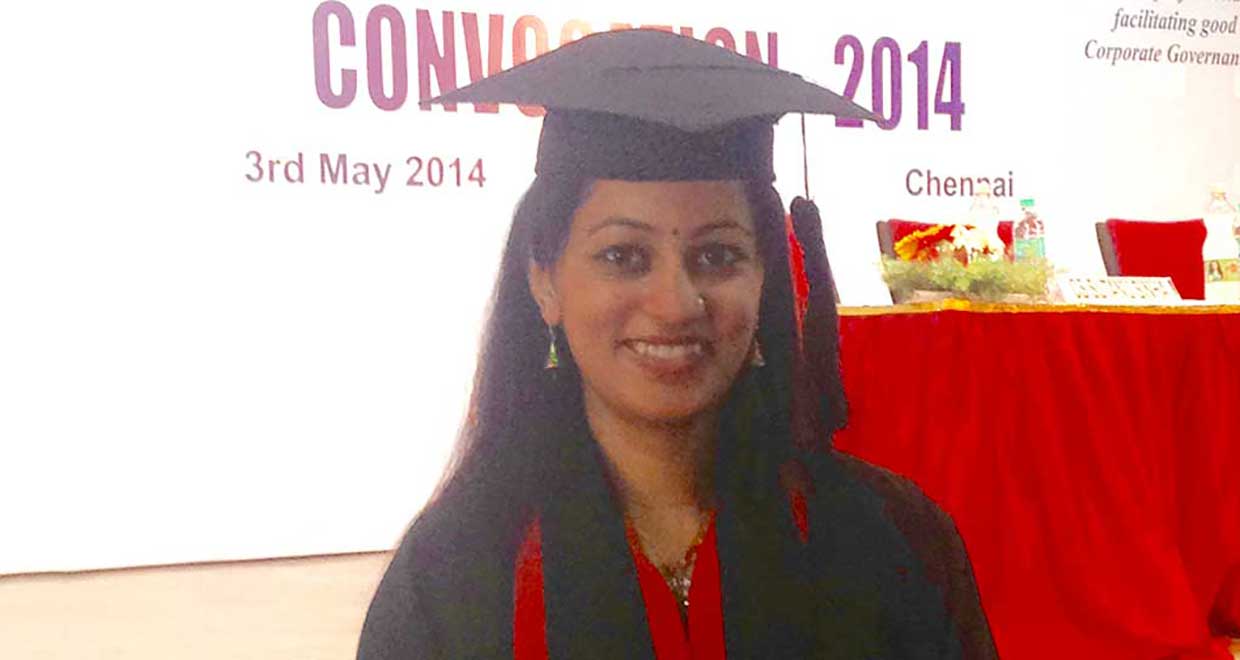
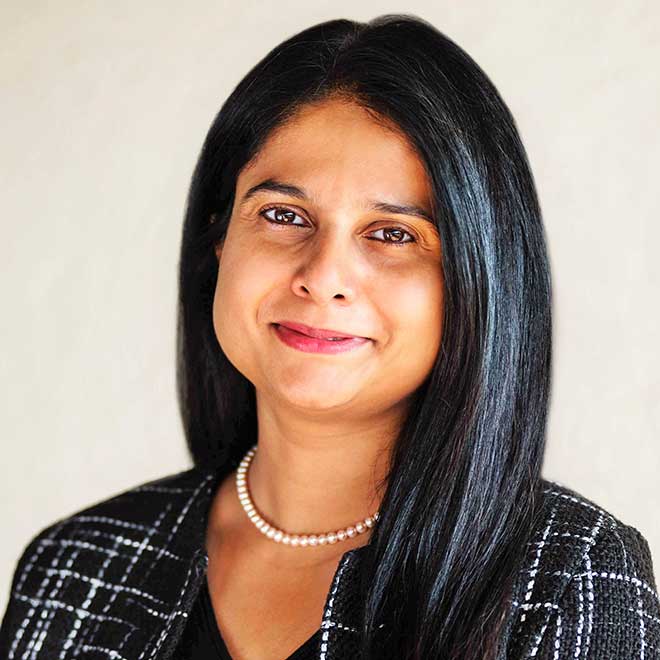
    Poornima Hatti graduated from NLSIU, Bangalore, in 2003. She then went on to pursue her Masters in 2005 from London School of Economics. Her repertoire includes associations with the likes of Amarchand Mangaldas and Herbert Smith. She is currently Partner-Dispute Resolution at Samvad Partners. Poornima also has strong expertise as an anti harassment professional particularly in relation to anti sexual harassment issues at the workplace. She sits as an external independent professional on a number of enquiry committees. She is also a trained mediator. She works with various public interest organisations particularly on matters of urban planning and growth on a pro bono basis.

    In this interview we speak to her about:

    • Her time at NLSIU
    • Her experience at Tier-I firms
    • Her pro bono work

    How would you like to introduce yourself to our readers?

    I would like to believe I am a thinking lawyer who believes that law can bring about change. My practice lies in dispute resolution and in related advisory.


    Why did you choose to pursue a degree in law?

    My parents are lawyers, so black robes and AIR manuals were not alien to me. I was therefore extremely aware of law as a profession and the wide ranging work that could be done as a lawyer. Looking back, in 1997, a lot of my peers were also very excited about the prospect of learning law at the National Law School (NLSIU). As I learned more about the institution and the people involved in the new “legal experiment”, I was very interested in getting admission at NLSIU. If I had not gotten through to NLSIU perhaps I would have looked at becoming a doctor.


    Give us a brief overview of your life at NLSIU.

    I enjoyed all aspects of my time spent at the NLSIU. I can truly say that I met some amazing and very intelligent people, both in terms of students and faculty, many of whom are now lifelong friends. The institution taught me to write and to think independently and shaped my political and ideological beliefs. For the first time I understood what dissent was and how dissent should be respected. It gave me the confidence to believe in myself and truly allowed me to explore the myriad opportunities a young law student has within her reach.

    I am not sure whether there is a “NLU culture”. Institutions are often shaped by the people who lead them. I know that there are non NLU universities in India where very interesting courses that are being taught and where the environment is truly conducive for a holistic legal education. Every institution should do all it can to be true to its own idea of why it came to be.


    What are the subjects that you took particular interest in, during your law school days?

    I was interested in the humanities, particularly in political science. Constitutional law was also very exciting and this led me to look more closely at constitution theory at the London School of Economics where I studied later. I even came back and taught it at NLSIU as a seminar course. At times the subject itself may be appealing and at other times the people who teach a subject can make you very interested in it! I was clear that criminal law was not for me! I was always clear that I would be a disputes lawyer, courts were always more inviting to me. Even today it is difficult to predict how events can unfold in Court, you may be hoping for a dull day, only to be surprised later.
     

    What activities, both academic and non-academic that you engaged in as a law student?

    In a fairly small group of students in a university, you can try your hand at most things and I did! I was not very good at sports and even broke my ankle trying to high jump in my first year, but still won a medal. I did debate, quiz and participated in a number of student bar association activities, primarily the legal services clinic. I was also elected as president of the student bar association in my fourth year and I learnt many things about working with people in this role. I was late to the mooting scene and only did so in my fifth year and participated in the Bar Council Moot and the International Maritime Arbitration Moot in Brisbane.

    I cannot stress how important it is to be involved in non academic activities at your institutions. These activities allow you to engage with your own peers in different contexts and allow you to build skills which will stand you in good stead in whatever path you choose later. You will learn to engage with the “real world” in many ways.

    Even as partners, we do work with Chambers of Commerce and other institutions that interest us or that we are passionate about. I would love for mediation to be used more actively and so I am part of the Centre for Advanced Mediation Practice here in Bangalore.


    What kind of internships did you engage in during your student years?

    Almost all my internships were connected with dispute resolution as an area of practice. I interned with non governmental organisations who were involved in litigation, like the Environment Support Group and Human Rights Law Network. I later interned with the National Human Rights Commission, with the then Attorney General’s office and finally clerked with a Supreme Court judge. Each internship taught me valuable skills and perspectives. It also gave me the opportunity to meet with some wonderful people. Looking back, each person I worked with taught me something new in terms of working with people, approaching clients or looking at a solution for a problem. I would say choose your internships carefully and work hard. There is someone always watching.


    Would you say higher studies are absolutely essential for a career in law?

    No, an LLM is not essential for a practising lawyer. However, it does give you perspective on theory and practice and it gave me, a more rounded view of the world. During my time in London, I also did some mini pupillages at a few Barristers’ Chambers and this gave me an insight into the working of the law outside of India.

    Which is the ideal time to do an L.L.M?

    I would strongly recommend working for a few years. Personally, I appreciated the class room better, made better use of my time as a student both academically and in terms of peer interaction, as I had learned to value my personal time. One also approaches law differently, after one has seen it being practised. You want to solve a problem, and you think out of the box.


    What are your areas of specialisation in law?

    I have always been a disputes lawyer. Today I am a commercial disputes lawyers, although we do undertake a few pro bono matters which are public law matters. As a disputes lawyer, other than the procedural laws that are essential, one learns to look at various issues in the context of different disputes. It could be a projects/infrastructure dispute or a complex shareholders disputes or an intellectual property dispute, most practising dispute lawyers handle all kinds of disputes. Of course there are specialist IP disputes lawyers and maritime lawyers but most disputes lawyers work across the spectrum.

    Every dispute teaches me something new.  My advice to law students would be not to specialise too early. Try and get adequate exposure to as many types of law as possible and then you can choose to specialise. A well rounded lawyer can also be prepared for issues that may arise across practice areas and may not be pigeon holed one way or another.


    How were the first few years after your graduation?

    I was fortunate enough to not be surprised by law in terms of the substantive aspects of law when I started working. The practise of the law is a completely different thing, one needs to understand client expectations, time management and one needs to learn a whole lot of people skills along with substantive law. A lot of this is not taught at law school and often internships do not offer real responsibility in terms of communication with all parties involved. As you grow senior, you will realise that people skills will stand you in good stead. Often clients tell me, that they chose to work with people they like and not always because they are fantastic lawyers. To be fair, law schools cannot prepare you for the real world practice, that is where the first few years are important. Young lawyers need to understand where and how they can be trained with rigour and opt for those places to work.


    Give us some insights on the qualities that Tier-I firms look for in prospective candidates.

    I think the focus should be for young lawyers to work with good people and where they can be busy. If you wish to work on diverse areas of law or a particular kind of law, then choose accordingly. Importantly, there should be an opportunity to learn and think. In terms of what does a law firm look for in a prospective candidate, I think any good law firm, even we at Samvad, look for a good work ethic and enthusiasm. There is nothing more refreshing than a young lawyer thinking ahead of his senior and adding value to the case at hand. These are things that can be seen in the context of an internship, so again, young lawyers should make the most of their internships.  I have seen this at Amarchand, at Herbert Smith LLP (as it then was) and here at Samvad.


    Tell us about your association with the UN.

    (Poornima has worked with the Executive Board of UN women where she has worked on equal pay and other women’s rights issues across the South East Asia region.)

    I was part of the Executive Committee at UNIFEM (now UN Women) in Singapore. As Singapore is a high income country, the group worked on issues relating to women across South East Asia, which included raising awareness of the UN Convention for Elimination of All Forms of Discrimination against Women (CEDAW), working with local non governmental organisations on issues of violence against women, be it in Indonesia or Cambodia. We also focused on ensuring that domestic help/maids employed in Singapore would get a day off during their work week and ensuring that payments were made properly. We even worked on a shadow committee report for the UN as part of Singapore’s CEDAW obligations. UN Women was and is a vibrant and active space where I learnt a lot about women’s right in practice and the tough role that one has to play to achieve them.


    Tell us about your role at Samvad Partners.

    While the partnership at Samvad Partners continues to grow, it is still quite close knit and very collegial. While I am primarily based out of Bangalore, as part of my disputes role, I work across offices be in Chennai, Hyderabad, Mumbai or Delhi to ensure that if there is something that needs to be addressed on the dispute resolution front, it is effectively addressed. The average day includes client work (be it meetings, attending hearings, building and strengthening relationships with clients) as well a fair share of administrative work, which could be resolving HR issues, putting new systems in place or just figuring out if we need revamped stationary. It is exciting to be part of  a relatively young and diverse group of partners and to shape strategy and growth of a legal practice together.


    How important are grades, in your opinion?

    Call me old fashioned, but I think grades are important. If someone has consistent good grades, it demonstrates a certain level of hard work and knowledge of the law. On the contrary, if there are students with consistent low grades, it would be difficult to explain why that is the case. I believe that Indian legal education has taken a great leap forward in the past decade. There are more people interested in teaching the law and different types of subjects are being taught. The fact that there are so many young people interested in learning the law is itself a pointer that things are moving ahead. I am optimistic about the future.


    Tell us a little about the book that you are currently co-editing, on role modelling and mentoring at the workplace.

    A lot of us have often wondered about the lack of positive and focused mentoring in the legal profession, be it at the Bar, at law firms or at law schools. This led to a wider quest and the book was shaped by that. Interestingly, it’s not a law book, although my co-editor Shruti Vidyasagar and I are both lawyers. The book is part of a larger series on leadership at the workplace and is to be published by Palgrave McMillan and should hit the stands by next year.


    What is your message to our readers?

    There is no substitute for hard work and enthusiasm. Do both. Read and keep abreast of everything happening around you. Look beyond the law, too often as lawyers we do not look or make friends outside the law, we must. It keeps us balanced and makes us more relevant. You should want to get out of bed and get to work everyday, else its time to rethink what you want to do.

    Many thanks for giving me the opportunity.
  • Iqbal Khan, Partner, Shardul Amarchand Mangaldas, on his time in LSE, his diverse experience, and plans for the future

    Iqbal Khan, Partner, Shardul Amarchand Mangaldas, on his time in LSE, his diverse experience, and plans for the future

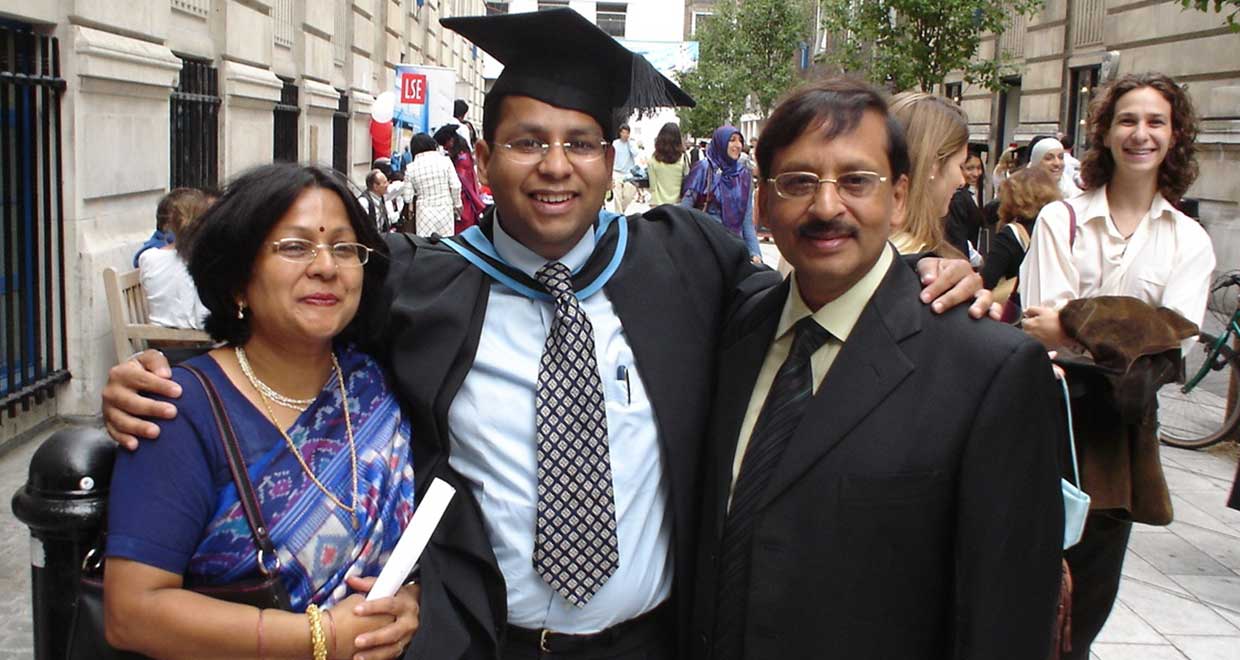
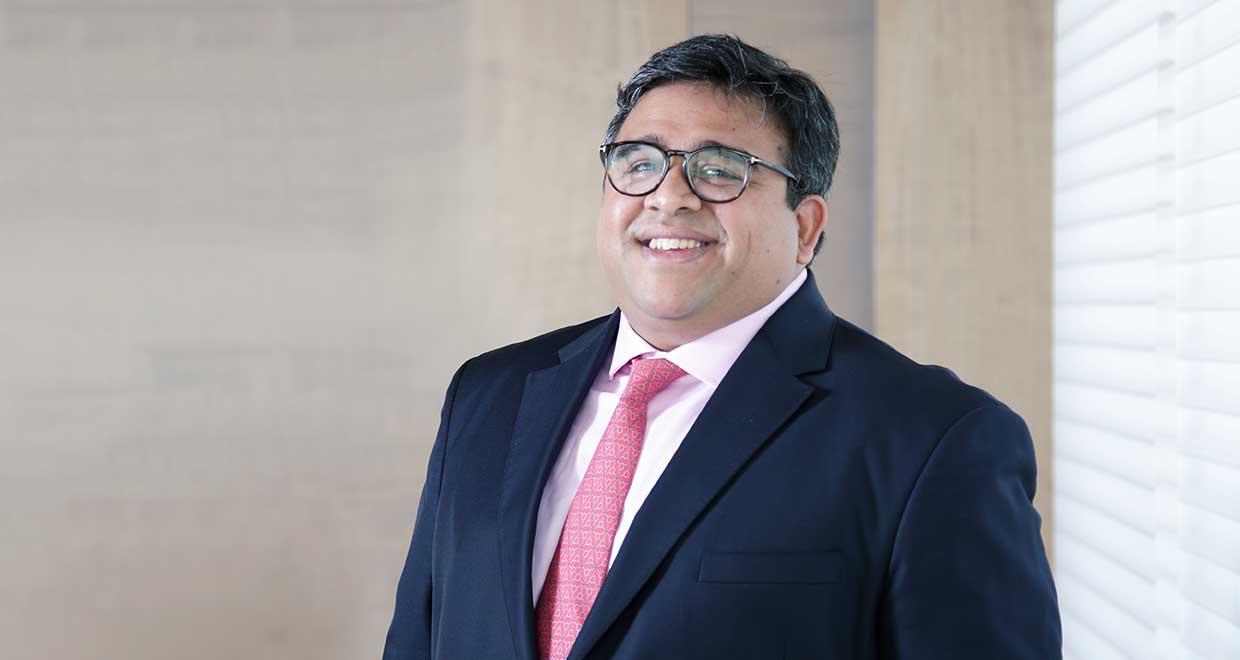
    Iqbal Khan graduated in law From London School of Economics and Political Science in 2006. Prior to that he had attended DePaul University, where he pursued his Bachelor’s Degree in Computer Science. Following his graduation in law, he went on to pursue his JD from Columbia School of Law as a GradeHarlan Fiske Stone Scholar. He is currently Partner at Shardul Amarchand Mangaldas, where he is member of the Private Equity and Mergers & Acquisitions Practice Group. He advises some of the largest sovereign wealth funds, global private equity funds and strategic corporates, and specializes in private equity investments, mergers and acquisitions (both domestic and cross-border), joint ventures, advisory on foreign investment laws and corporate and commercial laws. His experience also includes advising on franchising and restructuring laws.

    In this interview we talk to him about:

    • Transitioning from science to law
    • Working for international and Indian firms
    • Striking a work-life balance

    How would you like to introduce yourself to our readers?

    I can best describe myself as an M&A / PE deal junkie with a passion for cricket, food and Bollywood films. I am currently an equity partner at Shardul Amarchand Mangaldas. My work primarily focuses on M&A and PE investments.


    What motivated you to switch from science to law?

    (Iqbal transitioned to law after completing his B.Sc. in Computer Science from DePaul University.)

    At DePaul, which then had one of the best computer sciences programmes in the U.S., I completed my four year degree in less than three years and then started consulting for Cambridge Technology Partners and Microsoft, respectively. While on a flight to a client’s office, I found a book, Barbarians at the Gate – The Fall of RJR Nabisco in my seat cover. This book changed my life. Barbarians at the Gate details the story of the leveraged buy-out of RJR Nabisco (a must read for every aspiring M&A / PE lawyer).  This book was a turning point in my career and inspired me to change direction, and pursue a career in law with a focus on mergers and acquisitions and private equity investments.

    In fact for all their many differences, law and computer science are surprisingly similar disciplines. They both train you to make decisions and to articulate a framework for managing exceptions. My background in computer sciences had given me solid analytical skills and these were indispensable in my study of the law. Hence, my biggest challenge, as we lawyers like to say, was not substantive, but procedural.

    Pursuing a law degree also meant placing on hold other opportunities for career development.  So I declined several promising roles with start-ups and consulting firms; and in retrospect I am happy with the decisions I made. Law school also meant a significant financial commitment and at the time this was challenging though I was fortunate to have a great deal of moral support in pursuing the degree in spite of the fact that it seemed more attractive to continue working at the time.


    Tell us a bit about your time studying law at LSE. 

    The LSE, in my opinion, is one of the best educational institutions in the world.  If we ever have kids and if they ever decide to study abroad, I would recommend that they go to the LSE.  Its teaching philosophy is modelled after its moto — rerum cognoscere causas, a line taken from Virgil’s Georgics meaning “to know the causes of things.”  I have fostered relationships at the LSE, both with academics and students, each of which I value deeply, and hopefully, when I am even more established and successful, I would like to give back to the LSE – both financially and with my time.

    In terms of activities, while I was a student at the LSE, I was on a very tight budget because I was self-funding my education then. So I enjoyed London – a colloquial for I walked everywhere and ate what I could afford.  And this helped me, at in my view, become a more humble man.  And therefore, I believe the LSE gave me a great education in law, and life at the LSE, gave me a great education in life!


    What are the parameters that must be considered in deciding what the next step should be after graduation?

    I place a great deal of value on work experience at a law firm and I would consider this to be the best step to pursue after graduation.  Joining a law firm helps young graduates develop and refine their own logical framework of addressing legal issues and this is critical in the practice of law.

    As a young associate, students also have the opportunity to work with multiple Partners and across a range of complex transactions. This builds important skill sets, including the ability to manage clients, your immediate boss and to prioritize competing deadlines.  As a young associate you’ll learn a great deal from each transaction, and each experience is an important building block in informing your strategy for your next deal. Law firms also tend to be less bureaucratic for young associates. If you’re willing to work hard, you can navigate your way across different types of transactions so you make the most of your experience.


    Do you try to consciously build a specific body of work?

    Over the past few years the role of senior lawyers has changed.  We are no longer called on only to execute an agreed upon term sheet.  Instead we are seen as critical collaborators for our clients when the deal is in its most nascent stage.  Clients frequently bring me in to advise on the strategy for the transaction and not just its execution.

    For me, my transactions give me an opportunity to extend the firm’s relationship with the client; new or vintage. This is a business where reputation matters, and it is always a moment of pride for us at SAM when our existing clients bring in new clients to the firm.  It’s a testament of how much they value the advice, expertise and trustworthy relationship that we bring to the table. I have a clinical approach to choosing transactions. I tend to work on deals where I can best leverage my expertise in advising on strategy for complex transactions. I also enjoy working on deals, which allow me to draw on my international experience to find new and creative ways to structure a transaction. This has been my approach to building my practice.


    Tell us about your early professional experiences at Paul, Weiss, Rifkind, Wharton & Garrison LLP and Kirkland & Ellis LLP?

    My wife used to call Paul, Weiss my first love, because I spent more time at work, then at home with her.  Both Paul, Weiss and Kirkland are exceptional legal institutions, and instilled in me the work ethic and the commitment to clients; both of which are essential to a successful legal career.  Beyond the deals (and both firms have been at the helm of major transactions) and the 2 am sushi dinners at work, both firms introduced me to a formidable set of mentors and collaborators, and I am privileged to count them among my most trusted friends and colleagues.

    The sheer breadth of experience and diversity of transactions at both firms was a key strength for me in my early years as a lawyer.  While at Paul, Weiss, I was part of the team that represented Apollo in what has been designated as one of the key material adverse change cases – Huntsman v. Hexion.  At Kirkland, I what part of the team that did the largest leverage buy-out transaction in India – Apax’s PIPE in iGate for acquisition of Patni.

    All in all, I have been very fortunate for these opportunities, and my own practice in India is modelled after the ethical values I learned at these institutions – that of respect and of immaculate client service.


    How did you come to work with Khaitan & Co.? 

    I moved to India in 2013 on account of family reasons.  When I left Kirkland in New York, I had just worked on the Apax-iGate-Patni transaction with Khaitan, as the Indian counsel on the transaction.  Therefore, even though I had offers from some of the top Indian law firms then, I decided to move with Khaitan because of my comfort level with the team there.

    At Khaitan, I fostered some very good relationships, but the ones which I value the most are with RBJ, Sid, Bijal, Bhatta, Moin, Niren, Jean, Chemburkar and Vaishali (now at Agram, and my rakhi sister) – all very good lawyers (except for Jean and Chemburkar – they are exceptional BD professionals) in addition to being wonderful friends. Also, a special shout out to Shankar – the cafeteria manager – for amazing unda pav and missal pav!


    How did you make the transition from working at international law firms to an Indian one? 

    There is great deal of a difference between international law firms and Indian ones, and then among Indian law firms.  I can probably write a book on this topic, so let me talk about one or two key difference.  International law firms, at least the ones I have worked for, are very particular about the kind of transactions / cases they choose from and they do not shy away from declining a matter for any number of reasons, including when it comes to fees.  In addition, lawyers at international firms – from a first level associate to the senior most of partners – are always accessible 24×7 to their clients.  Also, I remember my Paul, Weiss induction course till this date where every member of the incoming class was taught by the senior leadership to never compromise on your ethical value systems and to never disrespect your colleagues – ever!  Finally, another element that I miss the most are the support services at some of these firms.  For e.g., from subsidized gourmet cafeterias and gym memberships to 24×7 word processing services.

    SAM is modeled after a top-tier international firm (minus the gourmet cafeteria and free gym memberships).  For e.g., even when I travel, I am always reachable thanks to SAM’s technology and infrastructure team.  Further, neither do we encourage nor do we tolerate disrespectful behaviour at the firm.  Finally, Shardul sir, Pallavi ma’am and Akshay have been very clear regarding maintaining the integrity of the firm and regarding never diluting the value of our letter head.


    As Partner at Shardul Amarchand Mangaldas & Co, what does a typical working day look like for you? 

    Law is a demanding career, and the long hours are a common feature irrespective of seniority. Regardless of how busy my days are I try and keep a balanced schedule, which includes an hour of meditation at 4:30 am and a late night walk on marine drive. Irrespective of my schedule these two components add stability (and sanity) to my days and are an indispensable source of strength and peace of mind.

    I am an early bird, and I like to get into work by 7:30-8:30 AM before the calls and the meetings start, as I do most of my drafting and reviewing work in the morning.

    Between noon and early evenings on most of my day, I am either on calls or in meetings – with my team on various matters or client meetings. My days usually end at 10:30 PM on average though hours are deal sensitive and when we have a signing / closing, there really isn’t a hard stop to my day.  I am not a believer in face time, so unless there is a live deal, my teams don’t work crazy hours and can work from home late at night depending on the pace of each transaction. I have seen a number of associates burn out early in their career, so it’s important for me, and I also encourage my team, to retain a balance and sense of perspective.


    What advice would you give to lawyers who aspire to develop a proficiency in Corporate and Commercial Laws?

    Just one – read, read and read, and when you are tired of reading, read some more.  Reading case laws, transaction documents, statutes and scholarly articles will help you grow your repertoire, and then will come a time, when this will become second nature!


    Did you have a mentor or guide during the formative years of your career?

    Mentors have a formative role across careers, and law is no exception. I have been fortunate to have benefited from the guidance of a formidable set of mentors, including professors at the LSE and at Columbia, senior partners at Paul, Weiss and Kirkland and of course Shardul sir and Pallavi ma’am at SAM.  My own view is that while there is a lot of attention devoted to finding mentors, there is much less attention focused on making yourself mentor-worthy.  Mentors are great sources of collaboration and advice, but engaging and retaining a mentor is hard work and requires discipline, focus and a commitment to excellence in your field.  If you bring this to the table, you will find mentors happy to encourage, advise and even collaborate with you.

    At the LSE, Professor Martin Loughlin played a very important role in my development as a law student.  Followed by Igor Kirkman and Tervor Norwiz (both partners at Watchell) at Columbia who taught me how to dissect an M&A agreement at lightning speed and how to negotiate – a key skill set for every M&A lawyer.

    I am also very grateful for the mentorship and friendship of Ariel Deckelbaum at Paul Weiss.  The same credit extends to Sri Kaushik at Kirkland.  In addition, a special shout out to Bob Schumer, Tarun Stewart and Justin Hamill at Paul, Weiss for teaching me, by example, the qualities of an exceptional lawyer, and to Leo Greenberg for the same at Kirkland.

    I honestly believe that as lawyers we continue to learn from our mentors, and even today at Shardul Amarchand, I am floored by the humility and the legal acumen of Shardul sir and Pallavi ma’am. I consider them both as my mentors as well.


    What are the key attributes that one must develop in order to excel in this industry?

    There are two types of attributes: those based on aptitude and another set, based on attitude. So all lawyers need to check off the boxes in terms of knowledge of the law and adherence to the cardinal principle of attorney-client privilege. But these are simply the attributes of a good lawyer.

    Good lawyers are defined by knowledge. Great lawyers are measured by the trust their clients have in them; and trust is a function of excellence and personal integrity. These two attributes define success in law (as they do in most other fields as well).

    As a lawyer, it is also critical to appreciate your client’s requirements while addressing complex and challenging issues and to build your relationship with each client. At the end of the day clients need to know that their case has your individual and personal attention. In terms of my own practice, I have built it on both depth and breadth, i.e., working on new matters with existing clients as well as taking on new matters from new clients. Both in my view are critical to building out a Michelin 3-star type practice.


    How do you manage your time between your professional and personal interests? 

    I am a very religious man – if you, like me, designate cricket as a religion.  Besides watching cricket (and doing the Govinda dance every time Virat slams the ball across the boundary) and tennis (go Federer!), I enjoy watching Bollywood movies.  I have deep affinity for everything Indian – from the Indian Cricket team to my favourite cuisine – Indian; and much of this is based on the fact that I have spent a better part of my life outside India. So the connect to all things Indian has been strong.

    I also have an interest in cars (vintage rules), art (both Renaissance and modern) and architecture. Volunteering is a passion and both my wife and I are actively involved in voluntary capacity with the institutions and agencies of the Aga Khan Development Network.


    Where would you like your career to take you five years down the line?

    At the end of the day, career trajectories are all about excellence. The notion that you’ve “arrived” or “made it” is misleading because when you reach what used to be your milestone, another one appears over the horizon. I would say simply this that I wish to build my career in pursuit of excellence and that means continuing to have one of the best M&A / PE practices in the country and ensuring that SAM continues to be one of the most well respected firms in the field.

    Given the dynamic nature of the field you practice in, how do you keep yourself updated about the latest developments in the law?

    Law and perhaps medicine are two fields where continuing education is critical to survival. Because law doesn’t function in a vacuum (and depends on political, social and economic context, among other factors), advising clients on structure and interpretation can be complex in a rapidly changing environment. SAM is fortunate to benefit from an amazing CLE team that provides daily deal and regulatory updates.

    Within my team we are also required to write articles (which therefore means we need to stay updated) and discuss key issues each week.

    For e.g., we’ve discussed everything from arbitration provisions (and the issues involved from a private equity investor point of view) to various transaction structures and their implications.  To attend and to be part of the CLE curriculum – at a firm level and at a team level – is an absolute requirement for all my team members.


    What advice would you like to give our readers, who are mostly law students and young lawyers?

    My advice would be to twofold: the first that students invest in quality education and target only the best possible schools for their law degree.  

    The second that they invest in continuing education as well. Law is a complex and rapidly evolving field and frequent changes both in substance and interpretation require that students invest in continuing education throughout the course of their career.

    Overall, neither of these are possible unless you love the field of law. Good lawyers are defined by knowledge but great lawyers have a passion for the law. Pursuits based on passion bring success!

  • Goda Raghavan, corporate-commercial practitioner, AK Law Chambers, on being a lawyer, company secretary, author and illustrator   

    Goda Raghavan, corporate-commercial practitioner, AK Law Chambers, on being a lawyer, company secretary, author and illustrator  

    Goda Raghavan graduated in law from University Law College, Bangalore in 2010. She went on to pursue her Masters in Law from the prestigious London School of Economics, batch of 2011. She is also a qualified company secretary and was awarded the gold medal for securing the highest marks in the foundation examination from the state of Karnataka. After working with GMR Infrastructure Limited, Bangalore, as their management trainee for two years and with HSB Partners, Chennai for four years, she quit to set up the corporate-commercial practice at AK Law Chambers. Additionally, she is also a freelance illustrator. She draws a comic strip called “Pickles & Lota” and has illustrated several strips on legal humour.


    In this interview she speaks to us about:

    • Her courses and curricula at the London School of Economics
    • Managing being a company secretary alongside with being a lawyer
    • Her experience working with diverse firms in India and abroad, and building corporate-transactional practice


    You said you’re a third generation lawyer? What was it like growing up in a family with so many lawyers and how has that influenced your career and practice?

    Being a third generation lawyer brings with it a lot of advantages as well as a lot of responsibilities and extremely high expectations. You are judged on a daily basis and quite easily written off for even small stumbles. Yet I am fortunate to be carrying on the family ‘tradition’, if I may call it. My grandfather Justice K.R. Gopivallabha Iyengar was a judge and my father Mr. K.G. Raghavan is a designated senior counsel of the Karnataka High Court. To say that I wasn’t influenced to take up law and that this was a completely independent decision would be a lie. On the contrary, it was a positive influence on me. Immediately after the 10th standard board examination, I specifically opted for commerce to benefit from the courses in economics and business studies to assist me in the five year law program thereafter. As luck would have it, I married Anirudh, who is also a litigating lawyer. It was only then that I decided to focus on transactional work, an attempt to not “duplicate resources” within the family.

    You have a publication “Breach of Representation and Warranties in M&A: A Buyer’s Guide” to your credit? What role do you think writing and research have played in your career? Did you write many papers when you were in law school?

    According to me writing is a very crucial part of being a lawyer – be it writing in the form of drafting or writing for research articles. My schooling has added vastly to my skill in the use of words to convey my thoughts and that has greatly benefitted me in drafting agreements, opinions and pleadings as well. While I presented several papers on corporate laws for the legal and secretarial group meetings that were held monthly, during my training period at GMR Infrastructure, I was hardly left with any spare time between balancing my courses and exams at law school and the company secretary course. I believe that the most important skill of a lawyer lies in articulation- written (be it drafting a pleading or an agreement) and oral.

    What were your priorities during law school? Did you always know which area of law you would set up a practice in or did you decide later?

    During law school, I focused a lot on internships and also on completing my company secretary course. To this effect, I interned at various offices and companies and got an idea of the various kinds of work involved. At the end of five years, I also successfully completed my CS course.  When I started off at law school, the only area that I was exposed to was litigation because of my father. It was only when I began my course at the LSE — by which time I had finished by company secretary course — did I realise that I might be interested in pursuing a career in corporate transactional work. Backed by my experience at GMR Infrastructure, I joined HSB Partners, Chennai, which I believe has one of the best transactional practices in the city. Mr T.K. Bhaskar is a fantastic mentor to have. The exposure to direct client interaction at HSB is a huge advantage and boosts your learning curve and confidence. The interplay of law, finance and business while working in this area intrigued me. All of this led to my decision to set up corporate practice at AK Law Chambers.

    Tell us a little about your course in LSE, please. What are your views on both, pursuing an LLM and studying abroad for Indian law students, from a career point of view?

    At the LSE, I took courses on dispute resolution, project finance, contracts, international business transactions and trademark law. I was particular about taking courses that teach the law as a jurisprudential concept and not courses that are legislative specific to that region. While a one year program does not enhance one’s knowledge of the law drastically, there are three invaluable skill sets that one picks up, especially while studying in one of the best institutions in the world: One is the method in which you approach the situation on hand as taught by the some of the most qualified professors in the world at the university, two is the way in which fellow students from various jurisdictions, who are all top of their class at their universities, approach the same situation, and three is the drafting skill. In addition to the education, the program encourages you to live independently, manage your own finances and travel. All of this adds to the overall personality of a person and this shows in the way one handles a client, their drafting and presentation skills. Even though I went to the LSE straight after college, I would believe that pursuing an LLM after a couple of years of work experience would be a lot more beneficial.

    You interned at Allen and Gledhill LLP, Singapore. How did you choose and apply for that internship and how do you think it shaped your perspective?

    During my term at law school, I had interned with Mr. Uday Holla at the advocate general’s office, the National Human Rights Commission, New Delhi and Crest Law Partners, Bangalore. After working with offices that engage in different types of legal practice and gaining exposure to a variety of domestic legal work, I was keen on working with a foreign law firm to get international experience. Mr. Nakul Dewan was kind enough to accept me as an intern at Allen & Gledhill LLP, Singapore on their dispute resolution team. It was the first time that I lived by myself and worked outside the comfort of my home country. The internship taught me the work culture of a foreign firm, their attention to detail, the meticulous manner in which documentation is done and their focus on specialization.

    What work did you do at HSB Partners?

    At HSB Partners, over a period of four years, I worked in Mr. T.K. Bhaskar’s team. I was involved in private equity transactions, advising promoters and funds, joint ventures, mergers and acquisitions and also general corporate advisory work across several sectors including e-commerce, seaports, automobiles, technology and manufacturing services.


    You are a certified company secretary. What prompted you to pursue the degree?

    I had a fractured leg and was lying in bed when my father brought me a few forms and asked me to sign on it. Few days later he handed me some books for the company secretary course and said that the classes would start in a couple of days. That was how my tryst with the course of company secretary began! I believe that my CS qualification strengthens my knowledge on procedure and secretarial compliance of the companies act, SEBI, etc., which is an aspect that is often not delved into adequately by litigating lawyers.


    Tell us a little about AK Law Chambers.

    AK Law Chambers, a boutique law firm set up in the year 2013, focuses on litigation, arbitration and real estate work. I am now building the corporate-transactional practice. AK Law Chambers comprises fifteen lawyers and four partners, with offices in Bangalore and Chennai.


    Do you have any insights you would like to share with law students on a general or specific note, with respect to getting through law school?

    The most important thing during law school and early years of your career is to keep an open mind and focus on learning everything you can. Give every opportunity its fair share of time. Don’t let preconceived notions come in the way of learning.


  • Gopal Sankaranarayanan, Advocate, Supreme Court of India, on building a career in litigation and on legal writing

    Gopal Sankaranarayanan, Advocate, Supreme Court of India, on building a career in litigation and on legal writing

    Gopal Sankaranarayanan is an advocate at the Supreme Court of India. He graduated from NLSIU, Bangalore in the 2001 batch, immediately after that he went for a Masters in Criminology from the London School of Economics. A prolific writer in various journals and leading dailies, a co-founder of Care For Air, an independent, volunteer organization and a successful practitioner of law, Gopal speaks to about:

    • His college and university experiences.
    • Mooting – the culture and its importance.
    • Helping Bhutan draft its Constitution
    • Legal writing, research and his new project Care For Air.
    • His views on Section 498-A and his advice for being successful in both personal and professional spheres.


    Could you please introduce yourself to our readers?

    I am a son, husband, father and friend. I am also an Advocate of the Supreme Court.


    You graduated from NLS Bangalore in 2001. How was preparation for the entrance exam like then?

    The entrance exam in the mid-90s was very different from what it is now. There were fewer candidates taking it then – a few thousand or so – and the questions were fairly straightforward Math, English, GK, Logic and Legal Reasoning. With time, they have become more complex, and with the advent of the CLAT, fairly random, inconsistent and thoughtless, which is why I am helping my friend Prof. Shamnad Basheer in his challenge to its arbitrary nature which is pending in the Supreme Court.

    Preparation for me when I took the exam was interesting. I took it twice, in fact. The first time in 1995 with less interest, a week after a teenage romantic heartbreak and which led me on to the NLS waiting list and then St.Joseph’s College in Bangalore for a year. That was probably my best year of College – I travelled the country for literary fests, I bunked classes to have beer at Brigade Road and investigated kabab roll joints across the city.

    The second time the following year I spent a week reading that godforsaken Competition Success Review and flipped through the equally mammoth Manorama Yearbook to figure out who had won the Padma Vibhushans and to understand what GATT was. It didn’t help. But what did was the fact that a friend was in NLS and she gave me a few ideas, most important being to finish all the questions. I weaselled my way in, though if the faculty had any idea, they would have nipped it in the bud!


    How was your time at NLS – could you share your experience with us?

    My time at NLS was a lot like life. It was a microcosm of India – girls and boys from across the country from a variety of backgrounds all thrown into this melting pot– there was competition, pettiness, talent, imagination and insecurity. I tried my best not to change who I was (which wasn’t a great idea because I have a prickly personality!). As a result, I tried everything, giving academics the least priority. I played a lot of sports, and was most partial to Cricket and Hockey. I mooted nationally and internationally, helped co-found and convene our annual fest LeGala led by the wonderful Meghana Abraham, participated in literary and cultural events across the country from all the IITs to BITS Pilani’s unparalleled Oasis, sat in dive bars in Nagarbhavi, did all-nighters with cigarettes and dumb charades, danced and sang, choreographed fashion shows, and loved my internships with K.K.Venugopal, Zia Mody and Karanjawala. Subject wise, I fell in love with Constitutional and criminal law and fortunately, that affair continues.

    I made some very dear friends at NLS – many for life, and I am happy that their interactions have made me richer, while not necessarily enriching them! One of those collegemates now shares her life with me, though she claims she barely noticed me then.

    On the flip side, I had my share of controversy and run-ins with the faculty, a few of whom completely lacked the emotional maturity to deal with young people. There were others, like Prof.N.L.Mitra who probably saw some potential in my rebellious streak, and when I objected to the undemocratic manner of NLS student elections, he allowed me to form a Committee to revise our Constitution. That effort thankfully bore fruit largely due to the efforts of P.M.Thimmaiah and Nandan Kamath.

    In my entire tenure at NLS, there were very few members of the faculty who really had what it took both academically and emotionally – A.K.Rai and V.S.Mallar were the exceptions, and the blame for this lies at the doors of a series of Vice Chancellors who were insecure and lacked the imagination to encourage young academics to truly flourish.


    You did your Masters in Criminology in the London School of Economics. Tell us a little about your time there.

    I guess the fact that I didn’t seem like a nerd appealed to LSE when I applied seeking to enlarge my passion for theoretical criminology. At the time, LSE was still a part of the University of London and we had multiple faculty across King’s, UCL and SOAS taking a single subject. I knew Nicky Lacey was at LSE, and that’s why I applied, but to have the erudite Robert Reiner and the accomplished Ben Bowling (now Deputy Dean at King’s) teaching us about feminist theory, stop-and-search and media manipulation was fantastic. The rigour they expected and the inputs we got from international students made the subjects so much more attractive. As we could opt for a non-specialized subject as well, I chose International Law of Armed Conflict & Use of Force, which was helmed by Prof.Christopher Greenwood (now a judge at the ICJ). Greenwood to me sums up everything a Professor ought to be – charming, informed, witty, humble and extremely disciplined. While he taught us, he was also a Queen’s Counsel, advising the British Government on the invasion of Iraq (this was shortly after the September 11 attacks), editing the ILRs (with Lauterpacht Jr.), churning out a series of articles in the top International journals, appearing before the ICJ and also taking 4 other courses on law. Teaching one course at the Masters level can be exhausting – to do all this is superhuman. Along with Greenwood, giants like Christine Chinkin and Rein Mullerson (Gorbachev’s former Advisor) brought into sharp perspective the practical real-life experience that is so necessary for a good academic. I could probably bore you to death about how the approach of teachers in the UK ought to be emulated here – so that they give you some respect and treat you as equals, or at least sentient beings.

    Apart from the classes, which after a long while, I truly enjoyed, I also played Hockey for LSE’s First XI team, and won medals for the Universities League and Championship that year. We trained under the shadow of the iconic Battersea power station and I will never forget freezing my butt off while running around on this Pink Floyd pitch.


    What is the value addition of a Masters in your career?

    I think if you are curious and you like to learn, you should always step beyond our shores to try and experience that world. For me, my Masters was always just going to be knowledge for the sake of it, as I had no plans of working in London and was coming back to practice. I have almost never used the actual lessons or the subject matter of what I was taught in my practise, but the tools of research, of pithy presentation, of verification of sources, of comparison, of context I apply on a daily basis.


    What has been the role of sport in your college days and thereafter? What role do you think sport plays in getting a postgraduate seat?

    I was and continue to be passionate about sports. I still play tennis, badminton, basketball and golf as time permits, and whenever Amit Sharma remembers, I will turn out for a day-night cricket match! As the great American broadcaster Heywood Broun said – “Sport doesn’t build character. It reveals it.” If you allow it, it can be the most defining aspect of who you are. Sport has taught me passion, camaraderie, leadership, sharing and loyalty. It has given me perspective about everything else I do because it is so inclusive and rewarding. You don’t have to play it, you don’t have to be good at it, you don’t even need to understand it to actually be moved to tears when something great happens. I haven’t seen anybody crying enraptured by a great argument in court or a wonderful contract clause. If I were unwell, I would probably skip Court, but I have stepped onto a cricket field with one hand in a cast, and shared a 45 run partnership for the last wicket with Siddharth Agarwal, who now knocks it out of the park in Delhi’s criminal courts.

    During my years as a lawyer, I have been happy to see the seniors at the bar readily reach for their cheque books when I approached them to donate for Shiva Keshavan’s luge at the last Winter Olympics, and my own recent experience as Secretary of the Lodha Committee has been very rewarding in helping formulate policy at the highest levels of one of the world’s most watched sports.

    As far as your applications question is concerned, I can imagine sport playing a big role if you apply to Universities that have strong sports agendas (Duke, Michigan, etc.) or if the evaluator is partial to sport. But if you are unfortunate to have your exquisite essay read by a serial academic topper who frowned at such frivolities, you are up the creek without a paddle.


    What are some of the important observations you have found regarding the moot culture in India in recent years, when you have acted in the capacity of judge?

    I have had varying experiences. I know it’s very tough to know what to prioritize before which judge – some prefer citations, some (like me) love to go into the facts and work the angles, others just want to show how much they know. There are, however, 3 basic things I tell mooters –

    (1) Dont interrupt the judge, but please don’t be obsequious;

    (2) Stick the moot problem on your bedroom door and read it a hundred times – it always throws up something new;

    (3) Use real life examples to illustrate your point and make it simpler to understand (this is actually the Mukul Rohatgi staple!)


    What role do you think mooting should play in a law student’s life?

    I think it has its place. It shouldn’t be an overarching priority because there is so much else on offer in your 3 or 5 years at college. For most young people, this is your last free stretch before responsibilities overtake you. If you can, enjoy it by doing other stuff and meeting new people. This might be the time to walk over and talk to that girl or guy who sits quietly in the second last row without interacting with anybody. Go over, have a coffee together and figure out what makes them tick. Not as a social experiment, but just because it is what humans ought to do.


    Will you give us a brief recount of the time you helped the Kingdom of Bhutan draft their Constitution?

    This really happened by chance. I was in the Chambers of K.K.Venugopal, Sr.Advocate [KKV] and he was approached by the erstwhile King of Bhutan, Jigme Singye Wangchuk to advice on a Constitution. He is quite a forward thinking man, and as a monarch, realized that a Constitutional set-up would be a progressive one. There were many interactions with the Law Minister and the Chief Justice of Bhutan, accompanied by their advisors. Their initial draft was a mish-mash of the UDHR, the ICCPR, the US and Indian Constitutions. KKV spent hours reworking it while I researched the areas that required special attention and suggested alterations where necessary. This was not an easy task for two reasons: One, it required me to fully understand the development of South Asian constitutional law, and Two, KKV almost always asked me questions to which I had no answer! Eventually, the Constitution came into force, with KKV playing the role of Bhutan’s Ambedkar and B.N.Rau rolled into one, while I visited Thimphu in 2008 and sat in their Parliament watching their most polite legislative proceedings.


    You have several publications to your credit. Tell us a little about writing legal articles and research in a lawyer’s career.

    Research is compulsory. Articles are voluntary. Just as with moots, I spend several hours reading caselaw, online articles and books to come to terms with a legal point. If it is a considerable one which I believe the public would like to know about, or an anomaly, or something which is just patently unfair, then I feel compelled to publish. I write from the heart, and I know that often candour is unappreciated, but it also corrects an incorrect impression that people may have. I believe legal writing should be so exhaustively researched that there can be no doubt that it is original and that also there is something novel to say. Also, anyone interested in writing should attempt to have their work spread across multiple publications so that there is no suspicion of nepotism or partiality.


    Is there any habit or skill you picked up over the years that you believe is critical to a lawyer’s success?

    Integrity. If you try to mislead the court or try pulling a fast one on a colleague, the ephemeral pleasure will ruin your reputation for life. Before you know it, judges and lawyers put you down as someone whose word cannot be trusted, and their displeasure starts dampening your performance. While hard work and application are important, they are meaningless without the respect of others.


    gopal-sankaranarayanan-2

    Tell us a bit about your love for Constitutional law and work experience.

    As I mentioned earlier, this was something born out of some invigorating classroom discussions we had in Law School with Profs. Mallar and Vijayakumar.

    When I came into practise, I started assisting KKV in some Constitution Bench cases and I realized how much reading it involved. A turning point came when Mr.Fali Nariman, after seeing me assist KKV in a matter recommended me as his junior counsel for the 9-Judge Constitution Bench hearing the scope of the Ninth Schedule [I.R.Coelho]. I was overwhelmed by his generousity, and later by the fact that preparing for it meant I had to read Golak Nath and Kesavananda cover to cover! It was a brief 5 day hearing under the strict gaze of Chief Justice Sabharwal, and we subsequently succeeded, but even if we hadn’t, it was a personal achievement – to spend hours brainstorming critical aspects of our Constitution’s fundamentals and then to assist one of our finest minds in putting it across.

    Subsequently, I spent 4 continuous months on the reservation challenge in Ashoka Kumar Thakur and learnt that nothing about Constitutional law is easy or brief. It requires rigour and reading, and while it takes time for an opportunity to come your way, it invariably will. I was thus fortunate to address the Constitution Bench concerning the postponement of reportage [Sahara v. SEBI] and to successfully challenge Section 6-A of the Act setting up the CBI [Subramaniam Swamy]. Recently, my arguments on vagueness and liberty were accepted by the Bench that heard the challenges to Section 66-A of the IT Act [Shreya Singhal] and also struck down Section 118-d of the Kerala Police Act.

    At NLS, we were taught one trimester by the late Justice A.M.Bhattacharjee, whose unique grasp of the subject is best reflected in his book “Equality, Liberty & Property” [now out of print]. I remembered his Chapter on Privacy when we were doing the AADHAR case earlier last year, and it was this little bit of stray reading which allowed us to have the case referred to the Constitution Bench, doubting the correctness of how Kharak Singh had been followed. So, you never know when a little extra can come to aid!

    Outside of its use in the Courts, I was always fascinated that while the Constitution was our most important textual document, we had little general knowledge about it. How many Indian homes have a Constitution? But many have the Gita, Bible or Koran. The more I realized how Indian courts have made the Constitution such a dynamic instrument of social change, I felt something needs to be done to increase its reach. An early suggestion to Sumeet Malik from the Eastern Book Company to have a coat pocket edition of the Constitution bore fruit, and the slim leatherbound volume of which I am the proud editor is now in its ninth edition. It is an endeavour to have it in every home soon – our entire Indian cricket team have personal copies and this was what was presented by the President to Arvind Kejriwal when he visited him on the occasion of his election last year.

    I also conceived of an Oral History project which was implemented by Rainmaker, where we conduct and upload free on YouTube hour-long video interviews with the doyens of the legal profession so that those who might otherwise not have a chance to interact might have access to their lives. Soli Sorabjee, Iqbal Chagla, Harish Salve, Gopal Subramaniam, Ashok Desai, Raju Ramachandran, Goolam Vahanvati, and several dozen more have shared their life stories.

    Things like this, apart from actually arguing in court, are way more fulfilling, as they allow your countrymen to slowly become aware of their Constitution and their rights.


    What are your views on Section 498-A and the realities of its application?

    I think, much as the Supreme Court itself has, that this provision is being abused often. In some States there are police advisories not to automatically arrest the accused in such cases and to be cautious. Marital discord is usually irreparable once you reach this stage, and the deepset rancour coupled with the lethargy of our judicial process eventually leaves the victim (husband or wife) with no way out of an unhappy situation. Based on my Note, the Supreme Court recently laid down guidelines in Arnesh Kumar, but I don’t know how it is being implemented in the respective States.


    How do you manage your professional life and personal life? Do you keep both separate?

    Actually, I don’t. I am thankful that my wife Haripriya Padmanabhan (also a Supreme Court advocate) is such an excellent multi-tasker – she does her Court work (much better and more thoroughly than me), she manages our three kids, she cooks wonderfully and she discharges her role as the Secretary of the school PTA, so that all I really have to manage is my own practise!

    One of the things Haripriya and I agree on is that family is more important than anything. Thus, we have our office a mile away from home so we can be close to the kids, but we don’t work on anything together. We have our distinct practise areas (she is more into commercial litigation, education and civil law) and we never discuss law at home. Our work grants us the flexibility to be home with the children during the day and when there is pressing work, we work into the night after they sleep.

    It’s not easy, especially when you come into Delhi from outside and you don’t have grandparents around, but with patience, luck and friendship, you will always find a way.


    What do you do in your free time? Have you continued activities related to literary and debating (as you were given awards for the same in college)?

    I love films, books and music. The arts have always been my weakness and I collect what I love. Travelling Wilburys, Billie Holliday, Sam Cooke, Guru Dutt, Stanley Kubrick, Wong Kar Wai, Watchmen, Sandman – I love them all.

    Recently, a more grim issue has taken up my time – air pollution. It is something that is slowly enveloping our cities and making India unliveable, particularly affecting the very young, the pregnant and elders. A few of us have founded Care For Air, [www.careforair.org] an organisation aimed at raising awareness about the problems and solutions regarding the toxic air. We make presentations to school and residential communities and continue to spread the message.

    L&D-wise, one of the things I do on an annual basis is to host MyLaw’s A Question of Law, a quiz on law for lawyers, law students and the general public on Law Day (November 26th). Its light hearted and fun, which is evident from it being conducted at Monkey Bar! We just finished 5 years of that, and it is a lot of fun with several hundred participants and regular rounds of tequila shots.


    Do you have any parting advice for all our readers out there?

    Just one: tomorrow, you could be hit by a truck, so don’t keep worrying about your majestic long-term goal. Keep small workable milestones which have nothing to do with your peers and where they have reached in their lives. Make time for sport or music or painting or language or whatever you enjoy. Try and travel, even to small places nearby. Don’t let work come in the way of your important relationship moments (weddings, birthdays, anniversaries, even funerals). If you have a partner or a child, try and be there for his or her doctor’s appointments or school performances or shows. When you’re 55 with an empty nest, you won’t remember which case you were arguing when your daughter was winning the relay.

    As the windows of Chartres Cathedral will tell you, as long as we are on the shoulders of the giants who came before, we will always be okay.

  • Vineet Shingal, Associate Partner, Khaitan&Co. on the role of a partner and in-depth law firm experience

    Vineet Shingal, Associate Partner, Khaitan&Co. on the role of a partner and in-depth law firm experience

    Vineet Shingal graduated in B.A. (Hons) Philosophy from St. Stephen’s College, Delhi University and later completed his law from LSE in 2006. He secured the LSE Undergraduate Scholarship on merit and, in addition to being a lawyer registered with the Bar Council of Maharashtra & Goa, is a non-practising Solicitor of the Law Society of England and Wales.

    He briefly worked with Nagashima Ohno & Tsunematsu, Japan on a secondment as a visiting attorney. Post the secondment, he was promoted to Senior Associate at Amarchand Mangaldas. Vineet later moved to Khaitan and Co., Bangalore and is currently an Associate Partner.

    In this interview he talks about:

    • Studying law post a degree in Arts
    • Securing the LSE Undergraduate Scholarship on merit
    • Becoming a non-practising Solicitor at the Law Society of England and Wales
    • His work experience with Nagashima Ohno & Tsunematsu, Japan
    • Responsibilities as a Senior Associate at Amarchand and Associate Partner at Khaitan.


    Could you tell us a little about your family and personal background? What were your ambitions as a child, what did you dream about your future?

    I have had the privilege of a diverse and a sound academic and non-academic background largely due to my upbringing in a family that put so much stress on all-round development of the personality. While my paternal grandfather was a lawyer, some of my other family members, including my father were bureaucrats. My mother is a qualified teacher but gave up teaching to look after me and my younger brother.

    From the very beginning, the atmosphere I was raised in had always been one where learning, participation and contribution were strongly emphasized. Academically, I did very well in school, and at different stages of my school and college life, I wanted to do a myriad of things without limiting my career choices. I grew up listening to and participating in discussions on legal and political issues from quite a young age and was naturally inclined so. As such, I decided to read law when I was in college.


    University of Delhi is considered as one of the best universities in India in terms of education, culture and overall atmosphere. Please tell us a bit about your time at Delhi University.

    I read Philosophy at St. Stephen’s College in Delhi and was privileged to be a part of such an elite academic institution. We were a small batch and had three professors who taught us right through college. Professors used unconventional teaching methodologies and at times a non-classroom environment for having discussions on esoteric topics, which certainly made for effective learning and added to the pleasant memories I have today.

    I also participated in a number of extra-curricular activities including dramatics. Besides reading Philosophy at college, I also pursued chartered accountancy and worked part time as an articled clerk during my college years, which gave me a good background of corporate, accountancy and tax laws.


    What made you choose law after finishing your Bachelor of Arts? Do you have lawyers in your family?

    Studying Philosophy gave me the opportunity to apply principles of logic in a wide range of contexts, including both ethics and metaphysics. The study of Philosophy also helped me assimilate and synthesize a large amount of written material in a relatively short period, which is a great asset in the legal field. I had also gained some knowledge of corporate and tax laws because of the chartered accountancy course that I pursued. My paternal grandfather was a lawyer and greatly influenced my life and as such I decided to take up law.


    You were awarded the LSE Undergraduate Scholarship on merit, please tell us more about how you got this? How can a student go about the admission procedure?

    In 2002, the LSE admission process required us to fill a UCAS form, with one recommendation from a college professor and a statement of purpose. While I was admitted to the law course by the LSE, it was dependent on my securing an overall first class in my Philosophy course, which I did.

    Once the admission process was over, I had to fill out a separate form for an undergraduate scholarship. The scholarships were awarded partly on merit and partly on need. Post an interview with the academic council, I was awarded a tuition fee waiver. I am not sure if the admission and scholarship process still remains the same.


    vineet-shingal-2

    What all would you recommend to a law student who has an opportunity to study at LSE?

    London is a financial and cultural center and LSE (The London School of Economics and Political Science), being located in the center of London, had access to professionals from leading law firms, accounting firms, and other financial intermediaries, who would often visit the institution to mentor, and also to participate in seminars and conferences.

    LSE is an interesting mix of nationalities from all over the world and you can learn about so many different cultures. My class had 180 students from 50 different nationalities. The Socratic method of teaching, an encouraging atmosphere, and interaction with so many people from across the world broadened my horizons and led to a holistic development of my personality.

    LSE is a world class teaching institution and I would definitely recommend people to take up the learning opportunity at LSE, if they get one.


    Do tell us the procedure involved in becoming a non-practising Solicitor at the Law Society of England and Wales.

    One of the ways of qualifying as a solicitor of England and Wales is to complete two years of work experience as a lawyer and write the Qualified Lawyers Transfer Test (QLTT). This two years’ experience could be completed in India as it follows the English common law legal system. I completed the two years’ of practical experience working in an Indian law firm and then passed the QLTT.

    If a solicitor is not practicing the law of England & Wales and has not obtained a practicing certificate, such a lawyer can apply for and continue to be on the rolls of the Law Society as a non-practicing solicitor, which I currently am. I understand that the test has recently undergone some changes including the work experience requirement.


    Can you tell us a little about your experience at the law firm, Nagashima Ohno & Tsunematsu, in Japan? What was it like to work there as a visiting attorney?

    The Japanese are the most welcoming and polite people. Their deep rooted traditions, respect for each other and an honest desire to learn sets them apart.

    I was at NO&T, Tokyo for an eight week secondment program. There were four non-Indian law students and another non-Indian lawyer from a law firm in the same program. It was a good mix of cultures where we exchanged knowledge of our respective legal systems and procedures with each other as well as our host lawyers. Our host lawyers also introduced us to their legal system and working styles as well as their culture and traditions. All in all, it was an amazing experience.


    vineet-shingal-3

    What diverted you towards the field of corporate law? Share with us any experience which helped you make your career choice.

    While I was at the LSE, I took up tax and corporate law as my specialist subjects. I also had the privilege of interacting with lawyers from diverse practice backgrounds (litigators, solicitors, in-house counsels) while in London and in India through my internships.

    I had the first-hand experience by interning at barrister’s chambers, law firms and with legal departments of companies. This gave me a broad idea about each practice area and the type of work each is involved in.

    In India, I interned at AMSS and really liked the energetic work atmosphere and working on cutting-edge legal issues and deals. I wanted to be a part of it and applied for a corporate job there.


    As a Senior Associate in Amarchand & Mangaldas & Suresh A. Shroff & Co., in Mumbai, what was the work experience that you gathered?

    I started with the securities markets team but made a shift to the M&A/ corporate team very early in my career. A lot of my time in my early years was spent in legal data rooms undertaking due diligences.

    I was fortunate to work with and be mentored by some of the best legal brains that the industry had to offer. There was an unending flow of transactions, ranging from corporate advisory work to very complex M&A transactions. With seniority comes more responsibility and one has to learn to manage time efficiently.


    Presently you are an Associate Partner at Khaitan & Co., what are the main areas of law that you deal with? What does a partner have to do at a big law firm like this? What is a typical workday like?

    I focus mainly on corporate advisory, M&A and private equity investments. While execution capabilities and good technical skills are a given, a partner has to really focus more on business development, client handling and financial management.

    Keeping the team motivated and ensuring that the juniors get a good mix of work and training is also important. Mentoring thus becomes a very important aspect of a partner’s role. A typical work day would include reviewing advice, structuring and negotiations on transactions and business development meetings


    What skills and qualities do you think have helped you achieve your current position and stature?

    I can largely attribute my achievements to certain moral codes that I hold on to in life. Foremost, the values of honesty, integrity and uprightness in professional life and every day conduct have helped me observe the distinction between right and wrong, and question and reason out why things are often not as they ought to be. I would add determination, hard work and perseverance as some of the other qualities that have helped me in pursuing my goals.


    What are the skills a law student should try to imbibe to successfully carve out a niche in the corporate world? Could you give our readers some tips on acing the professional realm?

    Pursuit of knowledge and to truly enjoy what one is doing. This is true for any profession. It is also very important to be sincere and hard-working as people are competing with some of the best legal brains that the law schools have to offer. Commercial awareness as well as good communication and social skills would definitely be an asset.


    vineet-shingal-4

    Many young lawyers at corporate firms complain about the work being too exhausting, and that maintaining a work-life balance is just not possible. Could you share any advice on this?

    There have been times when I worked three days in a row with just two hours of sleep but there have also been times when I have left office at a decent hour. It is definitely important to have a work-life balance.

    I have seen a lot of people getting burnt out very early in their career and quitting. The HR and the senior management do realize that it is important to retain good talent and not let people quit due to over work.

    Khaitan & Co has a wonderful atmosphere for a work-life balance and lawyers do get their annual holidays and the time-off. There are obviously times where people have to put in the long hours due to the dynamic nature of the work we do but with good training and effective time management, it can all be managed very smoothly. Being in office for 14-16 hours on a regular basis is really not the norm any more.


    While hiring, what skills do you look for in a prospective employee? What qualities should a law graduate possess to be successful?

    A candidate should demonstrate willingness to learn, adapt and an ability to think out of the box. While CGPA is a determining factor, we also look at the overall personality and problem solving approach within a candidate besides the various extra-curricular activities that the student has participated in.

    It is important to have developed a holistic personality. It is also essential to have a strong grasp of basic subjects like contracts and company law besides keeping abreast of the legal developments taking place.

  • Sajan Poovayya, Senior Advocate, Supreme Court and Karnataka HC, on Poovayya&Co., managing a firm, higher studies, and litigation

    Sajan Poovayya, Senior Advocate, Supreme Court and Karnataka HC, on Poovayya&Co., managing a firm, higher studies, and litigation

    Sajan Poovayya is a graduate of the 1996 batch of NLSIU, Bangalore. Thereafter, he went on to finish his LL.M. from LSE by 2000. Sajan took the plunge and started up with a law firm Poovayya & Co. right after graduation from NLSIU. After 18 years of looking after the growth and developing the firm Sajan quit his role of Managing Partner in 2012 after being appointed as a Senior Advocate. A former Additional Advocate General for Karnataka he has also served as the Chairman of Karnataka State Council, and the Federation of Indian Chambers of Commerce and Industry (FICCI).

    In this interview, he talks to us about:

    • Experience as a student at NLSIU
    • Foreign masters, internships and meetings
    • Setting up a firm after college and taking charge of its expansion and development
    • Experience as the Additional Advocate General for Karnataka and Senior Advocate in the Supreme Court
    • Advice to those wanting to set up their own litigation practice


    What influenced you to choose law as your profession?

    Although my father is a lawyer and his court room advocacy inspired me early in life, I aspired to become a neurosurgeon, as medicine fascinated and continues to fascinate me. During my 12th standard (second year Pre-University Course as it was then known in Karnataka), I had devoted considerable time for preparation to sit the medical entrance exam. It was in the latter half of my 12th standard that I was brain washed by my father, not so much to consider law as a profession, but to consider the National Law School at Bangalore as an institution to study at.

    My father was inspired by the wonderful work done by Dr. N.R. Madhava Menon, the founder director of National Law School and he used every bit of that to convince me to sit the National Law School of India University (NLSIU) entrance exam. My elder brother was already a student at NLSIU, having entered the institution inthe school’s first batch of students. At that time, NLSIU had no campus or infrastructure facilities whatsoever and operated literally out of a few sheds in the City’s Central College campus. Despite these odds, Dr.Menon had pulled a rabbit out of the hat by building an institution which, by the end of the 1980s, had gained considerable popularity.

    During my occasional visits to the Law School to meet my brother, I had seen Dr. Menon in action. His approach was to deal with every situation hands on and decisively. I was tremendously influenced simply by watching Dr. Menon in action. Clearly, my father’s brain washing skills and Dr. Menon’s personal aura influenced me to choose NLSIU over any medical school. I sat the exam and secured admission. Once in, confusion in my mind remained for some time, but it took me little less than sixty days during the first trimester to realize that law is the profession for me. Love for the law, although not instant, was strongand I must say has remained stable.


    Please tell us a bit about your father’s practice and your initial exposure to law.

    My father has had and continues to have an extremely positive influence on me. He continues to be a very active trial lawyer at Coorg despite completing 55 years at the Bar. He is a very soft spoken person but is voracious and vigorous in court. I would, as a high school student in Coorg, accompany my father to the District Court during school vacations. Many a time, I accompanied him in what he did; as his driver, clerk, stenographer, and at times, simply as his chaperon. His court room advocacy certainly inspired me and many others.

    Although a high school student, I would be tasked with transcribing plaints, completing paraphernalia in dockets to make them ready for filing, etc., which exposed me to the practice of law in the mofussil courts. Law was not abstract to me anymore. I realized that I liked what I saw. My early interest in the law was certainly instilled and inspired by my father’s practice, though I continued to aspire to be a doctor until I saw Dr. Menon in action, building NLSIU.


    How was life as a law student at NLSIU? What was the University’s role in shaping you into the individual you are today?

    For me, life as a student at NLSIU was fantastic in every sense of the term. I owe every bit of what I am today to the Law School. When I entered NLSIU it may not have had infrastructure but it certainly had attitude. It had built a culture of academic excellence, healthy but not intense competition, and above all, a holistic approach to the study of law. It is the inter-disciplinary approach to legal education that enamoured me the most. NLSIU did not just induct me into legal studies but also shaped my character and changed my personality completely. I had the benefit of having a wonderful group of teachers at NLSIU and each one greatly influenced and motivated me. I continue to thank them at the end of each day for what they have done to me.

    My peers at NLSIU influenced me even more. They completely changed my personality from being an introvert to becoming not only an extrovert but a fighter too. I found everything that I needed at NLSIU; academic excellence, personality development, strong sense of right and wrong, and above all, true love. I have spent the last 24 years with Sanjanthi, my best friend and wife, who I would possibly have never met but for NLSIU.


    Many believe graduates from an NLU have it easier in kick-starting a legal career. How truthful is this belief? Does it make any difference to one’s litigation practice?

    It is a myth that a graduate from a National Law University will find it easier to kick start a legal career. Another astounding myth is that graduates from NLUs are always better than graduates from other law colleges. Extraordinary jewels of the legal profession have emanated and continue to emanate from local law colleges. At the same time, not all graduates from NLUs make a mark in the profession.

    I firmly believe that while institutions can equip you for your journey and provide you with good shoes, what you achieve is not dependent upon the shoes you wear but the steps you take. Being a graduate from an NLU certainly helps inasmuch as NLUs do instil an analytical approach to the study of law and a greater degree of capacity to undertake legal research. To that extent, I believe, it will make some difference in one’s litigation practice, but only that far and no further. If one has to excel as a litigator, one should continue to be determined, to provide his or her best to each brief that comes his or her way. Each brief is akin to a step for you to achieve a higher threshold in the legal profession. It is for you to take those steps, firmly and evenly, lest you trip.


    How important do you feel are moot court competitionsfor a law student who wishes to pursue litigation?

    Whilst academic and research oriented activities are very helpful in instilling in a student the capacity to work hard and dig deep to find the essence of every legal matter,moot court competitions sharpen the analytical ability and skill sets of a student. Students should participate in moot court competitionsasmuch as possible. As a student, I have enjoyed every moot court competition that I have participated in and I have emerged a better law analyser therefrom.

    Whilst moot courts necessarily do not expose you to the practicality of real life court room situations, they do provide you with some flavour as to how litigations are contested or defended. To be a successful lawyer, consistency and hard work are necessary ingredients. Hard work does not commence post enrolment at the Bar, but from the very moment you seek admission in a law school.


    What kind of internships did you undertake as a law student? Which was the most enriching internship experience for you?

    I was clearly inclined towards a career as a litigator. I therefore chose to do every internship of mine with litigators. From my second year at NLSIU, I regularly attended the chambers of my senior and guru in the profession, Mr. S. Vijay Shankar, Senior Advocate and Former Advocate General for Karnataka. I clerked in his chambers on a daily basis, post school hours, through my years at NLSIU. It enormously exposed me to the practice of law in the High Court of Karnataka. The four years of clerking for Mr. Vijay Shankar had sufficiently equipped me to deal with many nuances of drafting, filing and registry processes in the High Court. Mr. Vijay Shankar is one of the most methodical and disciplined lawyers I have known. His methodical approach indeed equipped me with sufficient skill sets. It was clearly one of the most enriching experiences for me.

    That apart, I interned with litigators in the Supreme Court during my summers through law school. One of the most enriching internships in Delhi was with Mr. V.R. Reddy, Senior Advocate and at that time the Additional Solicitor General of India. His capacity to portray some of the most complex legal propositions in the most simplest of terms amazed and inspired me.


    What challenges did you have to overcome in setting up a firm soon after graduating from law school?

    (Soon after graduating from NLSIU, Sajan established the firm Poovayya & Co. in Bangalore)

    I graduated as a gold medallist from NLSIU and late Dr. A.P.J. Abdul Kalam handed over the degree tome in the convocation. I was on cloud nine. I had to go through a year’s compulsory post qualification internship before enrolling at the Bar as per the prevailing rules(which fortunately have been changed today). No sooner did I complete my post qualification internship, Poovayya & Co. was established with enormous support from my senior Mr. Vijay Shankar and my father Mr. M. K. Poovayya. It was unusual for lawyers to set up independent chambers or law firms immediately after enrolment at the Bar. When I expressed my desire to do so, my Senior and my father did not once discourage me, they in fact supported me in this venture. I plunged into the profession for I knew in the back of my mind that my father would continue to be a safety net, not so much in terms of finances but in terms of guidance.

    The initial years for Poovayya & Co. were extremely hard but never depressing. It was hard to gain the confidence of clients and the Bench. Hard work continues even today and enormous travel across courts in the country makes it harder. But therecontinue to be happy days and never have I gone home sad at the end of the day.

    I am glad Poovayya & Co. began its journey from Bengaluru and not any other city. Bengaluru, as a city in the mid-1990s, was going through a metamorphosis with corporatization being the buzz word that helped the firm garner quite a lot of work quickly.

    The Karnataka High Court is possibly the best High Court in the nation for a young lawyer to commence a career in litigation. Through my initial years, judges were extremely encouraging. It is for a young lawyer to make the best of such encouragement and aim forhigher thresholds of excellence in the profession. It is a myth that it is hellish for a litigator during the initial years.Hard work is a requirement, no doubt, with lesser amounts of monies compared to corporate non contentious lawyers, but the sense of achievement is extremely gratifying.


    Do you still get reminded of your first case and first hearing?

    I do recall my first argument in Court. I enrolled at the State Bar Council at 11.30 am and was out for lunch with Mr. Basavaraj, my immediate senior at the chambers of Mr. Vijay Shankar. Duringlunch, he encouraged me to argue a matter in the Chief Justice’s Court post lunch at 2.30 pm. I knew the matter well on account of my continuous clerkship at the chambers of my Senior.

    Mr. Basavaraj sat beside me in Court as a fulcrum of encouragement. The matter involved a question of incorporation by reference in a legislation. I argued for about forty five minutes, my first ever as a lawyer. I lost the case but received compliments fromthe Bench headed by Mr. R.P. Sethi. A few members of the Bar enquired with Mr. Basavaraj, if I was a Counsel from another High Court, specifically briefed to argue the matter. Failure in the first case was not only sugar coated for me but also became a stepping stone to get here and go on further.


    Is it important to have prior connections within the legal field to successfully manage this?

    Prior connections in the legal field are unnecessary and many a time, can be detrimental as well. Prior exposure to the legal field is very necessary and this can be achieved with the help ofinternships and/or clerkships. Prior exposure certainly better equips you to deal with the vagaries of the profession whilst prior connections may not necessarily do so.


    What made you choose London School of Economics and Political Science (LSE) for your masters in Information Technology Law? How has your Masters from the prestigious LSE affected your career in the long run?

    I would always recommend a stint at reputed universities abroad, not so much for the quantum of law that you will learn but for the enormous exposure such stint affords you. I have been a fan of LSE since the time I read the works of Bernard Shaw and also for the fact that Dr.Ambedkar, at one point of time, was associated with the institution. I obtained a Master’s degree and thoroughly enjoyed my time at LSE. The fact that I received a fat scholarship which took care of not just academic fees but also expenses for a comfortable living in London was an added incentive. I pursued the solicitor’s programme in parallel and was admitted to Law Society of LES as a solicitor of the Supreme Court of England and Wales.


    I realized that the thresholds of academic excellence at NLSIU were as high, if not higher than LSE. Therefore, more than the academic exposure, what I gained most during my stint at London was exposure to how barristers work in the city. I was associated with a few barristers and I would regularly attend hearings (as a visitor) at the Royal Courts of London. Those experiences further reinforced my decision to remain and continue as a litigator.


    After having completed your masters in a foreign university, what made you come back to India, instead of setting up a career in the UK?

    India offers one of the most vibrant platforms in the world for a litigator. The quantum and diversity of litigation in India far exceeds anything that UK can offer. I had no doubts ever in my mind that I wanted to litigate and that too in my home country. While I did receive job offers from a few London law firms, they made no sense to me in light of what I always wanted to be, i.e., a litigator. Coming back to India to litigate was therefore a natural choice for me and I am very glad I did.


    How was your experience working as the State Government’s lawyer?Would you consider taking up such work in the future?

    (Sajan was the Additional Advocate General for Karnataka from November 2012 to May 2013)

    I officiated as an Additional Advocate General for Karnataka for about a year and was the sole Additional Advocate General for the State of Karnataka for good part of the tenure. I thoroughly enjoyed my tenure. What made it even more special for me was that my chamber senior Mr. Vijay Shankar was the Advocate General, officiating for the second term. Sixteen years prior thereto, in 1996, he had commenced his first term as the Advocate General for Karnataka during which time I was his chamber junior and had closely worked under him in many matters of importance. The opportunity to work with him again and that too as his Additional Advocate General was indeed a wonderful experience.

    I firmly believe that all litigators should, at some point of time in their careers, work for the State or the Union. The dimensions of work that you experience as a senior law officer for the State or Union far transcends the exposure that private practice can offer. Representing the State or Union as a senior law officer in the midst of multiple bureaucratic constraints makes you not just a better lawyer but a more mature human being. For a successful private practitioner, occupying such position also affords the opportunity to contribute to the profession and give a little back to the society. An efficient lawyer as a law officer can make an enormous difference to the State and consequently to the society. I will certainly consider taking up such positions as and when, and if at all, they are offered to me.


    What would be your advice to recent law graduates when they are faced with the choice between joining law chambers of a Senior Advocate, or working with an up-and-coming new lawyer?

    It does not matter whether you join the chambers of aSenior Advocate or work with an up-and-coming new lawyer. As a young lawyer, fresh off mint, one should join a chamber which has a wide variety of work. It is extremely important for a litigator to experience a wide area of contentious practice, rather than restrict oneself to a particular specialized vertical. The greater the exposure to a variety of legal work, better will you emerge as a lateral thinker. The key aspects that a lawyer should look for in a chamber are therefore: (i) variety of work; and (ii) opportunity to handle litigations completely, however minor they may be.


    sajan-poovayya-1

    Should one start out at the Trial Courts before proceeding to the High Court if one has no connections in the legal arena? Or would you recommend joining a litigation firm instead?

    Practice as a trial lawyer is crucial and sets the foundations for a successful practice. One cannot aspire to become a successful appellate counsel sans any trial experience, although there may be exceptions. I find many lawyers starting out directly at High Courts which do not have original jurisdiction or even in the Supreme Court. Whilst that may work for a few, it is not the most desirable path to tread. It is not necessary for a few years to be exclusively devoted to trial work. It has been my experience that a good blend of trial and appellate practice simultaneously helps in the overall development of a litigator.

    For youngsters who are determined to climb the vertical of litigation practice, I would highly recommend joining a reputed litigation firm which has considerable trial and appellate work.


    How would you encourage students to keep their determination to enter litigation alive instead of joining corporate firms, owing to the lack of financial stability in the former?

    Gone are the days when it was tough surviving the first few years in the litigation arena. Young litigators no more receive merely subsistence allowances. Almost all law chambers offer a fairly adequate remuneration for a young junior counsel. When I entered the profession, a thousand rupees per month for a junior was considered a princely sum, as most chambers typically offered less than half of that.

    Juxtapose to the present day, where junior litigators are paid sufficiently to maintain a decent lifestyle if not a luxurious one. Certainly, litigation initially offers far less, in terms of financial rewards, as compared to corporate law firms. However, the sense of achievement and satisfaction is unparalleled. What you need therefore is the determination to survive as a litigator. The growth curve in litigation is so steep that in a few years, a diligent litigator will not just surpass his peers in corporate law firms but also achieve far greater thresholds of professional success (and financial success too).


    How do you prepare for a good case? What would be your tips and advice to young lawyers?

    There are no good or bad cases. There are only good or bad lawyers. When one begins preparations for a brief, one should never pre-judge the matter. The case is what it is and it is for you to extract the best out of it and weave sound legal arguments around it. My candid advice for young lawyers is to prepare every brief as if there is no tomorrow. ‘Complete Preparation’ is the mantra. It is certainly not sufficient for you to prepare your arguments on what you believe are the merits of your case. The mantra for success is in being prepared with as many arguments against your proposition and in finding counters to each of those, such that you will ultimately emerge victorious. Young lawyers should also bear in mind that many a time, litigations are lost on procedural issues despite substantial merits in the matter. Never ignore procedure. I have found thirty minutes’ preparation for every minute of submission in Court to be a fairly helpful yardstick. In complex matters, however, the yardstick can extend to an hour’s preparation for every minute’s submission.


    Do you have plans for the future expansion of Poovayya & Co.? Are business development skills necessary when it comes to running a firm nation-wide?

    Pursuant to my designation as Senior Advocate, I quit the law firm Poovayya & Co. Whilst there exists debate around the question as to whether a Senior Advocate can or should continue as partner in a law firm, I have always maintained that once designated, Senior Advocates should not hold direct interests in or control law firms. It is extremely difficult for a Senior Advocate to disconnect himself from clients and client aspirations, if he continues to hold equity or proprietary interests in a law firm.

    When I quit Poovayya & Co. and demitted offices as the firm’s managing partner, I was reasonably certain that the firm has matured to a level that it would continue to grow without me. The firm’s existing partners have done a splendid job in continuing its growth in each of its four offices. Poovayya & Co. as a firm has continued to prosper with significant year-on-year growth, independent of me. Whether to expand the firm further with newer offices in other cities is for the firm’s existing partners to decide.

    On the question of business development skills, I have a slightly non-traditional view. Having run a law firm for almost 18 years, I believe that it is your work which should be your brand ambassador and the best marketing partner you can ever have. Almost the entirework being undertaken by Poovayya & Co. has come from the previous and existing clients’ references. I therefore believe that capacity to market is irrelevant for building a successful law practice.


    What do you look for when you hire lawyers under you? Can academic experience replace work experience and the ability to deliver?

    What I would see in a young lawyer during the recruitment process is the following: (i) capacity and inclination to work hard; and (ii) rational & analytical thought process.

    Academic excellence, at times, demonstrates the candidate’s capacity to work hard. It is impossible to compare or choose between academic excellence and work experience. One does not substitute the other. What you need is a combination of both.


    Do you find it easy to maintain a work-life balance? How do you unwind after a hard day’s work?

    The concept of work-life balance has been hyped in India and sometimes discussions around it are unnecessary. The debate on ‘work-life balance’ pre-supposes that you do not enjoy your work and therefore do not see ‘life’ in it. For a lawyer who enjoys his work, a lot of his life is woven around his work. If you enjoy what you do as a lawyer, you may be tired at the end of the day but are never stressed. My work keeps me packed for a good part of the day and the night. Travels between the Supreme Court and various High Courts makes it a little worse in terms of time management. That said, I do find sufficient time to spend with my family and I cherish every moment of what I get with them. The best form of relaxation is to spend time with your family and loved ones.

    I also collect and restore old automobiles and that passion helps me unwind. Strumming Carnatic classical tunes on the mandolin is another way for me to unwind.  Music is a great way to de-stress. Lawyers should plan their work in such a manner that they have sufficient time to do things other than law and spend time with their loved ones.


    What is the one advice you would like to give our readers?

    Never underestimate the power of ‘here’ and ‘now’. When at work, give all of what you have to it, in terms of sincerity, labour, time and attention. Always have an eye for detail. When you are at work, switch on ‘work’ and switch off the ‘world’.  When you are not working switch off ‘law’ and switch on the ‘world’. Doing things other than law will invariably make you a better lawyer!

    To be a superlative litigator, you should be a maverick with a strong moral fibre.

  • Divyam Agarwal, Senior Associate, J. Sagar Associates, on higher studies from LSE, cracking the AOR exam and experience in Litigation

    Divyam Agarwal, Senior Associate, J. Sagar Associates, on higher studies from LSE, cracking the AOR exam and experience in Litigation

    Divyam Agarwal graduated from Amity Law School in 2007 and went on to do a Master’s from The London School of Economics and Political Science (LSE) in 2008. Today, he is a Senior Associate at J. Sagar Associates and has extensive experience in Commercial & Civil Litigation matters as well as commercial arbitrations.

    A qualified Advocate-on-Record of the Supreme Court of India, in this interview Divyam shares with us:

    • The importance of learning the art of advocacy in law school through moot courts
    • His take on how to apply for Master’s at the prestigious LSE
    • Experience of working at a Tier-I law firm
    • The method of preparing for the difficult AOR Exam


    Please share with us how you chose to study law. Do you have lawyers in your family?

    While growing up, I had no specific inclination towards taking up law as a profession. With the passage of time and after closely observing my maternal grandfather who was a reputed taxation lawyer in UP as well as my father who is a chartered accountant, I realized that a person having knowledge of law thinks rationally and objectively in not only professional situations but also in day to day affairs of life. Though I was initially hesitant, after joining my law course, I developed a keen interest in law subjects, particularly those pertaining to dispute resolution. One thing led to another and I found my calling.


    How was your experience at Amity Law School?

    Studying at Amity Law School was a great experience. Apart from the regular course structure, we were given ample opportunities to participate in several moot court competitions and other such events. Another advantage of studying at Amity Law School was the fact that the college was based in Delhi and I got several opportunities to intern with practicing lawyers and well-known law firms.


    Could you tell us about the internships you undertook during this period? How do you believe one should structure their internships during law school to provide the maximum exposure?

    My internships were spread out evenly in the corporate sector as well as litigation. Even though my interest all along had been to pursue dispute resolution, in order to make a reasoned and well informed decision, I decided to intern in a corporate setup, so as to assess work involved therein and my inclination towards the same.

    It is advisable to evenly spread internships and gain exposure in maximum possible areas of law. This helps in identifying the right practice area. Another way for maximizing the benefits of internships is to link the internships with the nature of subjects which one is being taught concurrently in college.


    You were an avid mooter in law school. Please share with us your achievements and experiences in mooting.

    All law students must hone their oratory skills by regularly participating in moot court competitions. I represented my law school in many competitions and was fortunate to win several accolades. I was part of the team that won the national rounds of Stetson International Environment Law Moot and we represented India at the World Rounds held at Florida, USA. At the World Rounds, our team made it to the quarter finals and I was declared the third best oralist. My love for mooting continued even during my stint at LSE. I was part of the team that represented LSE at Willem C. Vis Moot held at Vienna. Mooting not only aided me in overcoming any possible unease in presenting my thoughts in an effective manner but also improved my inter-personal skills and confidence.


    What was your motivation to go abroad for higher studies? How should one go about applying for premier foreign universities like LSE?

    (Divyam pursued a Master’s from the prestigious LSE)
    Although it is a common perception that lawyers intending to practice in the dispute resolution sphere do not necessarily require higher qualification than LLB degrees and higher qualification is often considered to be a means for personal gratification, I have always been of the view that to truly understand the ethos and ever evolving dynamics of any subject, law or any other, it is imperative that one should refine their knowledge by pursuing higher education in their chosen field.

    LSE being one of the premier institutes was a logical choice. I was really impressed with the quality of the faculty for my area of interest. Also, from my research I noted that at LSE the emphasis during classes was on discussions and deliberations regarding practical application of theoretical concepts. This difference in approach was one of the key factors which made me opt for LSE. On a lighter note, the fact that I had been awarded the K.R. Narayanan Scholarship for my Master’s course at LSE made the decision a no brainer!

    Applications at LSE are considered strictly on academic merit. It is imperative to have a good aggregate coupled with mooting and internship experience. Aspirants should concentrate on preparing a focused Statement of Purpose and also obtain Letters of Recommendation from legal luminaries and academicians whom they have been associated with.


    How did you zero in on Arbitration as your specialization for your Master’s?

    Arbitration as an alternate dispute resolution mechanism has always fascinated me. In my law school days, courts were shaping the arbitration law at an alarming pace. Substantial advances had been made in foreign jurisdictions especially in the United Kingdom and the principles of alternate dispute resolution and arbitration were well established there. As such, when it came to my Master’s degree, understanding the nuances of international commercial arbitration was a natural choice.


    How was the experience at LSE? How do you think it has helped you?

    As clichéd it may sound, at LSE I had the best experience of my life. The whole spirit of LSE –taught by brilliant minds, sharing space with exceptional students from around the world and the overall vibe of the city– was really an enriching experience.

    I found my time at LSE to be both inspirational and essential formy future career. It has given me a broad understanding of the world from a legal perspective which I have found relevant to everything from work in the office to chats in the pub.


    Students wishing to pursue Master’s should prefer a chance abroad or in India?

    I believe every law student, given the opportunity, must go for Master’s abroad. The transnational exposure and interaction with lawyers/law students from other jurisdictions helps one in gaining invaluable experiences. It is definitely worth pursuing Master’s from abroad. It changes you in the way you think about everything around you.


    How did you proceed after your Master’s?

    In my final year of law school I had interned at J. Sagar Associates. During my internship, I was fortunate to receive a placement offer from the Dispute Resolution team. After the completion of my Master’s, I approached the firm and was given an opportunity to work with them. That’s how my journey with JSA began.


    How has the experience of working for the Dispute Resolution Team of a Tier I law firm been?

    (Divyam is currently a Senior Associate at J. Sagar Associates)

    Working at JSA has been an enriching experience. I have recently completed 7 years with the firm, yet each day I continue to learn something new. Each day possesses a different challenge and I look forward to the same. Initially, it was challenging to match the high standards of the organization. However, over the years I have been able to fit myself in and now I strive towards achieving JSA’s vision and mission.


    In a profession known to take its toll on one’s personal life, how do you manage to find time for yourself?

    Dispute Resolution is one of the most demanding practice areas. My day is a mix of court appearances, drafting, research work, client meetings and briefing senior counsels. The key lies in effective time management. One trick I have learnt and have followed over the years is to monitor my sleep cycle and squeeze some time either late in night or early morning and finish some chores at home. This allows me greater flexibility throughout the day and a window for attending to my family life. As Thomas Edison once said and I quote “Most people overeat 100 percent and oversleep 100 percent, because they like it. That extra 100 percent makes them unhealthy and inefficient”.


    Do Indian law firms value an LL.M. from abroad? Does the lack of an NLU tag hurt one’s chances?

    I feel in India you don’t get enough recognition or weightage for having obtained higher qualification. However, of late the trend has started to shift towards recognizing such higher qualifications, which bodes well for future aspirants who wish to pursue LL.M. from abroad.

    In so far as the lack of an NLU tag is concerned, I have not experienced any such discrimination. Unlike some firms around, JSA has a very open and acceptable culture towards other law schools. Here it is all about merit. You don’t get any extra stars for carrying an NLU chip on your shoulder.


    What suggestions would you have for aspirants looking at clearing the notoriously difficult AOR exam of the Supreme Court of India?

    (Divyam recently cleared the AOR exam and got the 4th rank)

    Be aware of the current legal position. There are so many legal initiatives which regularly notify us with new developments. Questions are often inspired by recent developments in law. Also it would be helpful to have practical exposure. Take time out and visit the Registry and Listing Branches of the Supreme Court with your office clerk and witness how court filings are actually done. This will really help you in understanding and appreciating the procedural aspect. And of course do not miss the lectures which are organized by Supreme Court Registry and Supreme Court Bar Association. They are very helpful.


    It is being debated whether there actually is a need of the AOR system in the Apex Court. What are your views on the necessity of the AOR system in the Supreme Court?

    AORs play a vital and constructive role in the justice delivery system. The court system being pyramidal in structure makes the Supreme Court as the Court of last resort, so it is imperative to have effective representation by an Advocate, who is trained and well equipped to deal with the niceties and requirements of the Supreme Court.


    Where do you see yourself a decade down the line?

    I live by what excites me in life. Presently, I am happy with what I am doing. The work continues to excite me and thus, I believe I see myself growing with the firm.


  • Kanan Dhru, Founder, RFGI, LawToons, LawForMe, on being a Social Entrepreneur and work experience in Policy Research

    Kanan Dhru, Founder, RFGI, LawToons, LawForMe, on being a Social Entrepreneur and work experience in Policy Research

    Kanan Dhru graduated in B.Com from Gujarat University in 2003, thereafter she pursued Bachelor of Laws from the prestigious London School of Economics and graduated by 2006.

    With her qualification in law, she started her versatile work life full of enviable achievements like being a member of a Prime Minister’s advisory body, consultant for Members of Parliament, and, interestingly, practising advocate at the Gujarat High Court.

    Finally, the social entrepreneur in her motivated her to found the Research Foundation for Governance in India (RFGI) in 2009. RFGI is a think-tank that is working on legal and political reforms in India. Kanan is dealing with issues like backlog of cases, education for lawyers as well as engaging youth in governance through her work in RFGI.

    Recently, she has founded LawForMe (an app that guides people to the answers to their legal queries with the help of flowcharts) and Lawtoons (a cartoon series on the basic laws of India). LawForMe has won the Innovating Justice award of the Hague Institute for the Internationalisation of Laws, 2014.

    A successful woman social entrepreneur with a string of achievements at a very young age, Kanan talks about her thoughts, ideas, experiences and advice to young social entrepreneurs and law students.


    Please introduce yourself to the readers telling us a little bit about your childhood and your background.

    I come from a traditional Gujarati family. Our family is one of the old families of Ahmedabad. My grandmother’s grandfather has been instrumental in starting the Gujarat Law Society. The importance of arts and culture has been instilled in me since my childhood. My parents made a conscious decision to put me in C N Vidyalaya, a Gujarati-medium Gandhian school which stressed on simplicity, self-reliance and authenticity as the way of life. Children are taught to spin the wheel (and make Khadi cloth by themselves), agriculture, carpentry. In fact, our uniform was also made of Khadi!

    A certain percentage of students came from nearby villages and their parents were farmers, daily labourers and the like. At the same time, there were students who came from well-to-do families and I grew up seeing inequalities all around me.


    You studied Law after B.Com from Gujarat University. Was studying law an event of chance or an effect of a deliberate plan? What inclined you to choose law?

    I always wanted to be a lawyer. Since I grew up questioning our unequal society, I wondered where did the answers lie and where does the buck stop? I saw that all our leaders were lawyers and that by getting the education in justice delivery, I can help create a fairer society.


    You have completed your Bachelor of Laws from the prestigious London School of Economics. How different is the style of teaching at LSE? Do they focus more on the practical aspects of law as compared to the NLUs?

    My exposure to the education system at NLUs has come from my younger sister, who studied at one of them. At LSE, the teaching methodology is highly analytical. Emphasis is put on the nature and need of law in the society and the ingredients of rule of law. The black letter law becomes the focus only after graduation – just before the graduate decides to take up the path of becoming a solicitor or a barrister.


    Why did you choose a foreign university to pursue Law instead of an Indian law school?

    While I was very clear about pursuing law, my parents wanted me to study law from a good university. I did apply for NLUs after my 12th standard, but at that time, the application system was different. Every university had a different application system. I only applied to NLSIU and NALSAR and frankly, did not make it to either.


    Tell us about your time at LSE. How was the academic pressure? Tell us about campus life at LSE. How difficult was it for you to adjust to a U.K. based education system?

    My time at LSE was fabulous – my horizons were expanded manifolds. Of course, the delivery of lectures and communication during the classes was very different and I had to adjust to the change in the teaching methodology.

    Along with studies, I slowly started involving myself in the extra-curricular activities on campus. I became the editor of the law society’s legal journal, started SPICE (Society for the Promotion of Indian Culture and Ethos) and also founded India Week – one of the prominent celebrations on the LSE campus – where we hosted Professor Amartya Sen and involved the Indian Embassy in the founding year. I was awarded the ‘Honorary Studentship’ by the LSE Student Union – which is awarded to 20 students in the graduating batch every year.


    What kind of internships did you do while you were an LSE student? Are there any remarkable experiences during your internships that shaped your career choices later?

    In the first year, I interned at Nishith Desai Associates in India and in the second year, I interned with the World Health Organisation (WHO) in Geneva.

    Honestly, the WHO experience was quite significant since I was able to meet and interact with a very different set of people, mainly health professionals, and I was able to have very in-depth conversations with them. There were many people from the USA, whom I found really open and friendly.

    At WHO, I was able to see how an international organisation functions and how it is able to create dialogue across stakeholders. I also saw how different countries could get themselves represented at the international platforms. This fascinated me and made me start thinking about policy work in India.


    How did you secure your appointment at the NKC? What was the nature of your work at the NKC?

    (After graduating from LSE, Kanan came back to India and worked at the National Knowledge Commission for a year. The NKC is one of the Prime Minister’s Advisory body.)

    After coming back to India, I was still looking at different options. My father encouraged me to apply for the National Knowledge Commission. However, I wondered how could I secure a place at such a prestigious institution? I wrote an email directly to Sam Pitroda (then head of the NKC) with my CV and to my surprise, he replied positively the very next day!

    Working at the NKC was an extremely enriching experience. I was able to travel across the country and work with a team of highly accomplished individuals driven towards the development of the nation. I worked on issues such as library development, entrepreneurship and traditional knowledge. It was at the NKC that I realised that in order to create a sustainable impact through any policy, law played a crucial role. I decided to start practicing law then.


    You left NKC and started your independent practice as an Advocate at the Gujarat High Court. Do you think that was the perfect time for you to go independent?

    Practicing law fascinated me. I believed that by gaining exposure to litigation, I would be able to see how law was actually implemented in the society. This became clearer after my NKC stint.

    I did not strategise the timing. It just felt like the right thing to do!


    How did you overcome your initial jitters in a courtroom full of experienced lawyers and judges? Tell us about the highs and the lows.

    The atmosphere in the court is indeed quite overwhelming and intimidating for any youngster. However, people around me constantly kept on asking me why I joined litigation after a law degree from LSE! There were also those who asked me whether I was actually serious about litigation or whether I was there to find a suitable partner for marriage.

    As a junior, I was lifting files and running around the courtrooms, keeping time for my senior lawyers lest their case comes up. I was quite disappointed at the fact tht this was how I had to start gaining the exposure.

    I was even more disappointed to see that ‘justice’ was so slow to attain – the entire machinery to deliver justice seemed quite inefficient and I saw how so many people had to wait for years to obtain justice. It was a question of their lives and they were going from pillar to post, and still they did not know what their rights were!

    There were so many different kinds of lawyers! I met lawyers who were part-time tailors or rickshaw-drivers and then there were those who owned a Mercedes or a BMW and had really fancy offices. Were their clients equally represented?

    I kept wondering why things were not moving faster. Did we really need all these difficult jargons and procedures for fairness to prevail?

    My experience in the court made me realise that something drastic had to be done to change the way the legal machinery operated and that’s how RFGI was born.


    Please tell us about your experience with your first few sessions in court. Has it become more difficult for a fresher to achieve success nowadays?

    How and when you get a chance to appear in the court depends on a lot of things. It depends on who is your senior lawyer – is he/she your relative? – if that’s the case or if you have good relations with your senior, then your chances to appear would be higher. Else, you might have to push the files for quite a while before you are actually entrusted with a matter. Usually the judges are quite encouraging to youngsters.

    The first case I got to argue was a case of the year 1982 where a bus conductor had sued the state bus company, because of whose negligence he had to get his leg amputated. The amount claimed was around Rs. 14,000 plus interest. I put forward my argument and got the judgment in the favour of the bus conductor, but when I tried to inform him about the outcome, I realised that he had passed away a few years ago.

    All these factors led me to start taking my work at RFGI seriously.


    Tell us about your “Management Matters Project’’. What was your role and responsibilities in this Project?

    (Kanan undertook this Project at London School of Economics, McKinsey & Co. [New Delhi] and also at Stanford University)

    When I was at LSE, I got through a project between LSE and McKinsey & Co. to assess the management practices of manufacturing companies across different countries. It was a fascinating project and I learnt a lot about management and what factors contributed to better management practices across geographies. I also saw how the national regulatory and physical infrastructure had an important part to play.

    When McKinsey wanted to roll out this project in India, I got involved and spent time in their Gurgaon office to help set up the initial team. Similarly, even at Stanford, I was invited to help train the first batch of analysts.


    kanan-dhru-3

    Tell us about the story behind RFGI. What challenges did you face to establish an institution like RFGI? What does RFGI do and what is your job profile in the think-tank?

    (Kanan went on to establish and head a think-tank called “Research Foundation for Governance In India’’. RFGI today consists of 3000 members, working on legal and political reforms in India.)

    As I mentioned before, it was my experience at the High Court that led me to create a platform to raise a voice about needing a change within the legal systems, which took form in the shape of RFGI.

    However, initially the idea was to bring together youngsters who wanted to create a change within the governance systems in India and the mandate was quite open ended. Youngsters from different backgrounds started getting involved on a variety of issues. We started organising public debates and conducting research studies on issues such as entry barriers to litigation (which was to understand what are the barriers junior lawyers face to establish themselves in litigation), understanding the status and need for inner party democracy in political parties, analysing the status of legal education among others. We started collaborating on projects with Accountability Initiative (at Centre for Policy Research), with some of the professors at IIM-A, Government agencies and also started to work with a large number of young political party representatives across party lines. Along with this, we started hosting interns from different parts of the world.

    RFGI became a hub of different thought processes and discussions on governance in the city of Ahmedabad and we started gaining accolades from various corners. We started going to different schools and interacting with children on laws and rights.

    Our work profile was to work on research, awareness and consultancy on legal and political reforms related areas in India and to involve youngsters in the process of governance. The entire organisation was working in the spirit of volunteerism.


    Besides working on RFGI, you have contributed your knowledge set as a consultant for members of Parliament of India. Please tell us about your time as their consultant.

    Our work at RFGI and our profile as lawyers wanting a change in the society got us to work with a Member of Parliament on drafting of a legislation. In fact, after my work at the NKC, I was involved with the Education Department of Gujarat in drafting of several bills and ordinances. Our work with the Member of Parliament was to draft a couple of private members bills. It was fascinating work and the impact that we could create with drafting of laws was far reaching.


    What prompted you to take an offer of teaching in spite of working full time for RFGI? What was your teaching methodology there?

    (Kanan taught Ethics in Business and Business Law as a Visiting Faculty to final year Business students in Ahmedabad University.)

    When I was approached specifically to teach ‘Ethics’, I was intrigued. The subject sounded fascinating and I thought it might be a great chance to learn something. Teaching Ethics really changed me. As a teacher, I have always believed in encouraging class participation instead of preaching. The boundaries of ‘right’ and ‘wrong’ that Ethics forces us to delve upon makes you start questioning many of your pre-conceived notions. I challenged the thought premises of my students and tried making them better in tune with themselves.


    In between, you have also pursued Masters in Public Administration from IGNOU. What was the reason behind pursuing this course? Tell us about the course structure and the utility of this course.

    Since I was working in the field of governance, I wanted to have knowledge of the theoretical aspects of policy making and administration. Masters in Public Administration felt like the most relevant degree for me.

    Honestly, I was dabbling between an MBA (to understand how to grow a social enterprise) and an MPA. I also got the Fulbright Fellowship to pursue an MBA in USA but could not take up that offer due to unfavourable circumstances.


    Our readers would be keen to know about your recently started websites “LawForMe’’ and ‘’LAWTOONS’’. What led to the foundation of these two websites? What advantage can law students get from these two websites?

    I can’t express it in fewer words. I would request the readers to read: https://www.facebook.com/notes/579275265508546/ and here’s a brief about Lawtoons: http://www.hindustantimes.com/art/lawtoons-a-comic-series-to-teach-children-their-rights/article1-1281611.aspx


    kanan-dhru-2

    How does it feel to be well recognised at such an early stage in career? And how has your journey as a Social Entrepreneur and Legal Innovator been so far?

    (Apart from being an Acumen India Fellow, Kanan has won the Innovating Justice Award, (2014) and was also selected as an ‘Indian of Tomorrow’ by India Today (2012))

    Acumen’s India Fellows Program is addressing the country’s most pressing social issues by supporting a new generation of Indian leaders willing to challenge broken systems and develop new, inclusive solutions to create impact. Each year, the India Fellows Program brings together up to 20 emerging leaders from different regions, sectors, and socio-economic backgrounds in India. I am honoured to be selected as one of the 20 fellows this year.

    My journey as a social entrepreneur and legal innovator has been quite fascinating and often introspective. As they say, when you are on a journey to create a better society, it may also be a pathway towards your internal journey and vice versa.


    Starting RFGI and winning the Innovating Justice Prize are some of the milestones in your career. Tell us about your success mantra.

    Perhaps what has worked for me is that I focus on what work is to be done and not what I will get out of it. ‘Focusing on work as an end in itself’ is my mantra.


    Please tell us about your two books and how do you get time to pen for the daily newspapers and blogs?

    (Kanan is a regular blogger and columnist for The Huffington Post, Femina Gujarat, Daily News & Analysis and were a former columnist with Times of India (Gujarat). Kanan has also authored two books ‘Kanan Chan in Japan – Diary of an exchange student’ (2003) and authored a book of poems ‘Amara Manma’.)

    Since childhood, I have always loved reading and writing. Writing is a very introspective process and it makes me really happy when I write. It is easy to find time for something that you love! Plus, Ahmedabad being a less happening city, it leaves one with a lot of time to pursue their hobbies and interests!


    kanan-dhru-4

    How do you think knowing law benefits an entrepreneur? What are the prime hurdles that a non-lawyer entrepreneur is likely to come across?

    Being an entrepreneur is all about the will and the aptitude. Being a lawyer or a non-lawyer has little role to play. Of course, a lawyer is more attuned to understanding the regulatory process or has in-built analytical thinking. After that, it is the business acumen and the communication skills that create wonders. Introspection is also an important trait for any self-starter.


    What are your thoughts about raising capital for RFGI? Have you approached any Foundations?

    We believe that our work has potential to make significant impact. While money isn’t really a great motivator, we believe that through social entrepreneurial ideas such as Lawtoons and LawForMe, we will be able to sustain our work.


    When you hire people under you, what kind of skills and profile do you look for? How can law students or marketing students go about developing these skills?

    At RFGI, we usually invite anyone who has his/her heart in the right place. It is a platform to do good work and everyone is welcome! However, over time we have realised that most interns join because they want a certificate, which is such a shame. Now we have become far stricter in looking for the right fit.

    For legal interns, we look for interns who know the law and who respect deadlines. What is fundamentally important is that the person should have a belief about bringing a change in the legal system and creating innovations in law – to have his/her heart in the right place. Rest all can be taken care of.


    What does it take to be a Social Entrepreneur and Legal Innovator? What are the three great skills of an entrepreneur according to you? What differentiates the best from the rest?

    Honestly, I have always followed my heart and did what I thought was the right thing to do. It has not always been easy – but it has been worth it. Three great skills of an entrepreneur according to me are:

    • Knowing one’s self well (knowing what you stand for, your likes and dislikes and the non-negotiables as well as your limitations)
    • Knowing that you can be wrong too (humility)
    • Knowing that your dreams will come true


    How has the journey been for you as a woman entrepreneur?

    Somebody once told me that the value of RFGI is also because it represents the voice of a young female on governance and legal system. I consider this an honour. I think my journey has been exciting and full of interesting ups and downs. Being a woman entrepreneur has been both positive and negative.

    At times, I wonder what my journey would have been if I were a guy? Perhaps I would have been taken more seriously in our society, perhaps I would not have so many social pressures to fit into a specific box, perhaps I would have been a lot more aggressive in my work, perhaps my life would have been easier.

    But then, I feel that it is because I am a woman, I need to do what I do – even with more enthusiasm and self-belief.


    Your main object is to work towards legal reforms in India through Research Foundation for Governance in India, Lawtoons and LawForMe. Where do you want to see yourself five years down the line?

    5 years down the line, I see Lawtoons and LawForMe as flourishing entities, making laws and legal processes simple and easily understood. RFGI would of course be the umbrella organisation facilitating dialogue and discussion on access to justice.

    I also aim to see many more legal start-ups in India and a thriving ecosystem providing access to justice in India.

    I don’t know much about myself but about the legal system in India, I have so many dreams! I want to see a legal culture in India where justice is a primary value, respected and enforced fairly and efficiently. I want to see a culture of legal aid actively provided to those in need and where efforts are being made to make people aware about laws and rights. I visualise the legal climate where with the help of technology, access to justice has become easy, process faster and transparency is taken for granted. I don’t know if 5 years is too short a time for this dream to materialise but my efforts will continue in this direction for sure.


    Is there scope for legal internships in RFGI? If so, what is the process of application?

    We are highly selective about the interns we take. Please email info@rfgindia.org for internship opportunities.


    Tell us a bit about mountaineering. Did you take any hard-core training before climbing? Why have you chosen this hobby which needs maximum tenacity and mental strength?

    (Kanan has scaled Mount Kilimanjaro in 2012 and has travelled over 30 different countries.)

    While I am very passionate about my work, I am also thoroughly interested in traveling, sports (yes, I love playing tennis!) reading, knowing about different cultures and outdoor adventures. Being with nature is so important! Work is important but it is equally important, if not more, to grow as a person. The extra-curricular activities do make you a stronger and more composed person. Over time, I have also grown very curious about understanding human nature and I keep reading about it every now and then.

    I have travelled over 30 countries and have gathered so many interesting experiences. In fact, on my Japan trip alone, I have written a book called ‘Kanan Chan in Japan’! Perhaps Super Lawyer should do another interview with me to capture those insights! J


    What is your message for law students who aspire to be Social Entrepreneurs one day?

    “Follow your heart and take risks. You only live once.”


  • Sidhartha Peddinti, Startup Lawyer & Business Consultant at GlobalQuest Ventures LLC, on being a business lawyer and strategy adviser

    Sidhartha Peddinti, Startup Lawyer & Business Consultant at GlobalQuest Ventures LLC, on being a business lawyer and strategy adviser

    Sidhartha Peddinti graduated in Law from University of London through an unique programme through London School of Economics, in 2011. A graduate of Business & Economics from University of Toronto, he is currently a Startup Lawyer & Business Consultant at GlobalQuest Ventures LLC.

    He started working in the Immigration Law Offices of RAK at USA. Thereafter he went on to become partner at California Law Services where he handled immigration and bankruptcy work. He describes himself to be a lawyer with an entrepreneurial mindset.

    In this interview he talks about:

    • His choice to become a lawyer even after specialising in economics;
    • The options for a lawyer to become an entrepreneur;
    • How he joined LSE and his experience at the institution; and
    • His journey as an entrepreneur.


    Tell us about yourself. Since when are you living in US? Where did you get your primary education from?

    I am a real international citizen, in that I was born in Dubai, raised all over the Middle East, then spent three years during middle school at an international boarding school called Rishi Valley in India, moved to Toronto with my family in high school, obtained a bachelors degree from Toronto, a law degree from London, and then another advanced law degree from Los Angeles. So, my varied experiences and vastly different background has shaped my mentality, my attitudes, and my interests to be a hybrid of an Indo-Canadian-Middle Eastern, rounded up with an outdoor Californian lifestyle. I have been in the US since 2011, and have been an attorney since the past year and a half, i.e. January 2014.


    You did your bachelors in Business & Economics from the prestigious University of Toronto, tell us something about the course, the school and why you choose business & Economics?

    A pivotal moment shaped the way I thought about business and my career was in high school. I read a book called ‘Rich Dad – Poor Dad’ which I bought at a garage sale for $5. It explained the difference between (what the author referred to as the 4 quadrants) employees and self employed persons who fall in quadrants one and two, business owners and investors fell into 3 and 4. 1 & 2 work for their money – they don’t show up to work – they don’t get paid (even most lawyers fall in here – no client, no money). 3 and 4 found a way to be involved in multiple avenues and still accumulate wealth, while they are busy doing other things with their time or managing multiple assets they own.

    I wanted to understand more about how I could end up in the sectors 3 and 4 – where I can get my money to work for me, a state where, through my acquired and vested interests in companies, homes, stocks, and other assets, I could receive multiple sources of income. This was the start of my interest into economics, and business – I simply had to understand the way different business models worked, how the market worked, and how to operate a business. After getting accepted into the best University of Toronto – the number 1 University in Canada, it was a real no-brainer that I had to pick this school. It was over 175 years old, and in the top 25 best universities in the world. The courses were very challenging, but it was rewarding to complete the degree and understand how market cycles worked, and how each industry was affected by these cycles.


    A degree in Business and Economics is often enough to land anyone lucrative job at a big company. Why did you choose to do Restructuring through CAIRP, and then choose law after that, rather than accounting, finance, investments – the natural course for business majors?

    Good question. Following from the previous question, after I understood the way the different models worked, I knew that there was a recession that was going to affect North America, atleast thats what our Economics Professors were predicting around 2005/2006. I researched this theory and found the bubble was about to burst since everyone had their credit over-extended. Virtually all my friends ended up choosing a big firm for either accounting, audit, strategy, or some for an MBA. I wanted to prove my theory of the recession and be involved in that game of using the market to my advantage I hunted for a boutique law firm that specialized in Bankruptcy law and restructuring law, and choose to join their practice as an Estate Administrator – a job that gave me a brief overview of the process involved. The pay was less than half of what my friends were accepting immediately after graduating, but almost immediately after joining the firm, I started a course, sponsored by the lawyer, in Bankruptcy & Restructuring law & consulting, through the association that monitored Restructuring Professionals in Canada called CAIRP – Canadian Association of Insolvency & Restructuring Professionals. I received my certification to consult in a very short time since I was lucky to finish all my courses and pass the state exam in one sitting. As soon I completed all my practical training, within 6 months of initially joining this industry, I started a firm called Clear Debt Solutions. From 2007 – 2012, I had over 1000 cases that I personally handled, close to 500 being business bankruptcies. The firm still exists and is controlled by partners who I hired when I joined law school in 2009.


    sidhartha-peddinti-3

    You did your law from London Scool of Economics, through the International Law Program from University of London from 2009-2011. Tell us about your time there, and why you choose that program over Canadian or US schools?

    After being exposed to many lawyers in my restructuring practice, I wanted to add law school to complete my quest to understand more about business and the legality of doing business. I started law school from the UK, rather than in North America, because I wanted to have a unique edge to my portfolio, that separates me from the normal law applicant. I choose the International Law Program specifically, because it was flexible in its timings, its lectures delivery methods, and its study methodology. During these years, my consulting firm was booming, as the recession got worse, my revenue got better, and by mid-2010, I operated 5 locations throughout Toronto. I had a partner, few employees and hundreds of clients every year. I could not leave all this to complete a full time law program, which most Canadian law schools offered (Only 8 in Canada by the way), and which was also required by Immigration for me to attend law school in the US.

    By choosing to study in an International Program, based out of London, yet not being required to physically be present one hundred percent of the time, allowed me to work and study simultaneously – something that enhanced my understanding of the subject matter, while being able to practically utilize and gain ‘lawyerly skills’ through my practice in Toronto. Sure, it was hectic, since I flew back and forth, balancing school and work in two continents. I simply could not let either of them go. Of course, the fact that it was University of London, one of the best schools in world had a lot to do with it, and when they offered me an entire law degree in under $20,000 (plus still able to work) compared to $150,000 in the US – I could not pass up that offer, and in the end did not rack up a single dollar of student debt as compared to an average law student who has over $150k debt in the US.


    Did you interact with Indian students there, given that UK law schools are a popular choice among Indian law students?

    I met some incredible students who were also part of the international program. In fact, it allowed me to network with students from almost 50 countries directly through a portal system, something I checked out before I started the program, and many of those people are still my close friends to this day, in Canada, India, Pakistan, and even from Brasil and other countries. The pass rate at the International Law Program was roughly 25% after the 3rd year, so unfortunately many of the Indian students I met did not manage to complete the program, or moved on from law into other areas.


    With your LLM from Southwestern University, USA, you have received legal training from three countries. In what ways has this versatile academic environment helped you?

    To remain true to my original quest of being in quadrant 3 and 4 – business owner and an investor, I knew that the opportunity for this dream truly existed in the US, compared to Canada or the UK (from a global standpoint). So, while finishing law school from London in 2010, I applied to LLM programs all over Canada and the US for the 2011 Fall start session. I knew that the market was slowly starting to pick up now, and in a few years the market would be in the re-building stages again. I wanted to be in the center of this movement, and by being in California – the world’s hub for innovation and technology, I could not go wrong being a lawyer and entrepreneur in California. I was lucky enough to be accepted into all the schools I applied to, and they even allowed me to start the LLM program before my final grades were released from University of London. It was a miracle, since the administrators office at Southwestern made this exception for the first time for a foreign student in over 100 years. In two weeks of starting, I received my grades, and another miracle happened where I was in the 15% of students who passed all the courses that year, thus getting my degree after I had already started working towards a LLM degree.

    I picked Southwestern in Los Angeles because it was a school that had a flexible course options, and one that allowed me to complete the courses that I wanted to take. My eventual strategy was to attempt the dreadful California bar exam with 15% pass rate for foreign lawyers, and I knew I had to be prepared for it, since I am competing with local students with 3 years or legal training, compared to only 1 year for me.


    sidhartha-peddinti-1

    You never took a job at BIGLAW while you do have an impressive lawyerly profile. Why so?

    My interests, skills, and passion lies in entrepreneurship. I choose to do law to become a lawyer, but more importantly to become a good businessman. I believe that it has allowed me to think in a manner that is different from the lay person. I did not take up any positions at large firms because I believed that I have a unique skill set that would be wasted at a large firm, doing routine work, albeit they pay a lot for it. Many of my friends work a large firms, and making large paychecks, but the very thought of a desk job never appealed to me, and I have rejected some very lucrative offers in the last year, since I prefer to be out and about, running around making things happen. I am a very high energy individual who needs to constantly be in motion, and although for some of my friends BIGLAW has worked out great, it was never my cup of tea.


    The California Bar is said to be the hardest law exam in North America with less than 15% pass rates for foreign trained lawyers over the past 30 years. Explain why you choose to do this crazy step, given these statistics?

    I knew the statistics and I knew the high chances of failure. No one thought I could make this happen, since there are horror stories all over the web of people failing the California Bar 5 or 6 times. I thoroughly researched about every course I was expected to take, and by carefully selecting only Bar Courses, and some international law (my interest) courses in my LL.M, I was able to complete all core courses required by Californian law students that were going to be tested on the Bar. This allowed me to get the local training I needed for those courses, plus having international exposure. I nevertheless decided to take the bar and give it a shot, and luckily I was among the 22% of LL.M students that passed the Bar in my round of the California Bar Exam for July 2013.


    Before we go into your entrepreneurship ventures, tell us about your legal consultancy work. How did you establish such a vibrant consultancy practice?

    In my quest to be in quadrant 3 and 4, I engraved in my personal charter that I would understand different business models, so that I would eventually have various companies in my own portfolio. This is still my mission, and every time I meet an entrepreneur in a different industry, one unknown to me, I gladly take on the case to understand the industry better.

    I had this mentality since I started my first business, and I have enjoyed every business I have consulted with. Thus, my present consulting practice is one that can cater to clients from many industries, and clients from all stages of the business cycle. I now understand how these different models work, and am easily able to put myself in the shoes of my client, the entrepreneur, and advice, strategize, and legalize – all in one chain of thought. It is a lot of work, since I spend the time to research about different industries, but I suppose I am hooked to it. This has left me at the crossroads of law and entrepreneur.


    How is Canada or US as a career choice for Indian law students?

    Canada is a great place for Indian lawyers – especially those in the midst of their careers. The process of qualification and the exams are easier, with almost a 80% pass rate. In my opinion, it is great for an entrepreneurial lawyer, especially one who wants to serve the Indian community – especially in Criminal, Real Estate, or Divorces. Litigation is primarily taken up by local law students – Indian or otherwise, and largely dominated by those who received local training.

    US is a different beast altogether. The laws are also similar to British, but the legal ecosystem is very different. The bar is tougher, longer, and more intense. There are a lot of restrictions and qualifications the applicant has to go through. That said, a US lawyer is valued globally, and opens far more international doors than I would had as a Canadian lawyer in the international and startup up space. There are a lot of jobs in the US, especially for litigators, since the laws are geared towards solving grievances in court. There is also a lot more work for lawyers in the US, in terms of the types of law, the types of cases, and the truly unique legal system they have created here (I find a vast contrast from the Canadian and British legal culture). So, be ready to get comfortable knowing about the local culture, if you want to be a successful American lawyer in the US.


    Why did you make the shift from Canada to the US?

    My move was primarily because of two reasons: (i) large opportunity to be involved in the upswing of the economy in terms of products, startups, and opportunities; (ii) great weather compared to the bitter Canadian winters.

    I have always wanted to be involved in the globalization of economies, and being in California was more suited to my needs than to accomplish that from Toronto. However, since I have a consulting practice in Toronto, I still fly there often and work there.


    In the US you started working at Immigration Law Offices of the RAK. How is the work culture there and did the local reference help you understand the culture better?

    In my attempt to find out the local work culture and integrate into local legal scene, I decided to work for a solo lawyer, plus he knew immigration laws, so I did not really have to pay a hefty price for an immigration lawyer to figure out my visa. To understand immigration laws in the US is very important, it is the most complex system in the world, and a simple violation can be disastrous. I figured by working for an Immigration lawyer, I could hit three birds with one stone – (a) local work experience, training, and integration; (b) learning about immigration laws; and (c) did not have to pay for an immigration lawyer since he mentored me to fill my own paperwork which I wanted to get a grip on anyway.


    You were a partner California Law Services and worked there for a year. Where are you currently working, what kind of work do you do there?

    I worked as an Immigration and Bankruptcy lawyer with my previous employer, RAK, turned partner at the new firm. We mainly handled immigration and bankruptcy work, both which were areas I had some comfort with. I found both areas to be very competitive, and faced fierce competition. Meanwhile, my personal interests in entrepreneurship were not being fulfilled, so post my return from India last December to explore the startup scene, I joined as a partner at a boutique firm which was focused on law, entrepreneurship and startups.

    I currently work as a partner at GlobeQuest Ventures, LLC – as the name indicates, we travel the world looking for startups and companies to help them in their entrepreneurial journeys – legally, strategically, and practically. I absolutely love it – and finally have been able to combine my passion of law and entrepreneurship in one.


    Please tell our readers something about your entrepreneurship journey, and how you lived your 20’s working and studying?

    As I mentioned earlier, reading that book changed my career path. I was getting the education and theory side of it, but I also wanted to work on the practical side of it. I started my first business as soon as I finished the book in high school, aged around 18 or so. I have never looked back, and have been fortunate enough to have made that step at such an early age. I had some sacrifices along the way, but I see those as opportunity costs, and have not regretted any missed vacations, or parties (missed many of them). I made sure to have a very vibrant social when I could and led an active lifestyle to compensate from the stress from my business and school. Sports was my way of balancing myself, and I enjoyed playing 5 different competitive sports in my 20’s.


    How many companies in total have you founded?

    I have been fortunate to be part of 8 different companies to date. I have recently acquired equity portions in 3 new companies, and hope to be part of another 100 companies in the next 20 years or so.


    sidhartha-peddinti-4

    How do you define yourself, as a Lawyer or as an entrepreneur?

    A lawyer with an entrepreneurial mindset. My dream of combining both my passions has led to work in a dual capacity – working as a lawyer when needed, or as a founder, partner, strategic advisor, or in-house lawyer. I value flexibility and adaptability greatly, and my past experiences that allowed me to transition into role with relative ease.


    Tell us something about your latest startup venture.

    Through GlobalQuest Ventures, LLC, my recent clients have primarily been disruptive technologies that are in the mobile app space. One is a disruptive journalism app, another is a Uber for private planes, and another is a revolutionary dating site for a selected and elite customer.

    Another venture I started is called LLMbartutoring.com, a tutoring school that is dedicated to helping foreign trained lawyers integrate into the California system by assisting in local cultural transition, job training, course assistance, Application help and California Bar Exam training. This information can also be found in my personal ventures section on my webpage.

    On the other side, I started working on some revolutionary product lines with some very famous scientists, who specialize in holistic medical formulations. I have approached some celebrities and famous television personalities to team up with us, and can possibly secure a very large deal in the next 2 months that can help us potentially move millions of units every year. That would satisfy my itch to be a co-founder in a truly non-legal business – a turmeric infused skin care line, scientifically backed and tested by the foremost expert in turmeric infusions.


    Your website sidharthapeddinti.com seems to be offering a complete ecosystem of service for startups. How did you manage to that?

    By finding a way to incorporate all my interests in one way through GlobalQuest Ventures, LLC, I decided to put all my thoughts on one site, that describes me as a person, as a lawyer, an entrepreneur and eventually as an investor (with my portfolio). Thank you for mentioning my page, since I built that page myself in less than a day. I have no previous computer training, programming or coding or any other backend experience, but I knew that by watching the right videos and reading the right articles, I could do it myself. I have since created 5 webpages, and even got some people asking me for a referral for the company who created my site. In short, I want to prove and inspire people to understand that anything can be done, with the right mindset, and if a non-tech person like myself can make wesites in a day, others can live their dreams and make it happen over night as well. That was the real motivation for the site – inspiring people to live their dreams by quitting their boring jobs as a first step.


    Are you also working with any Indian companies who are looking to expand internationally?

    I have started to form many strategic partnerships with corporate lawyers, startups consultants, and other individuals who are involved in the Indian startup scene. I am eager to enter the Indian startup space and help take those companies international – US, Canada or other countries. We look to form strategic alliances, joint ventures, mergers, acquisitions, and even where lucky, take it public.

    I am looking to team up with key individuals in India who can help me in this quest. That is the reason my company is called GlobalQuest Ventures, LLC – where law meets entreprenrurship and strategy.


    What advise will you give to young lawyers who want to become an entrepreneur?

    I find the practice of law requires a different set of entrepreneurial skills than a mobile app company or a revolutionary product. Being part of an elite subset of society, one that is highly regulated and controlled (worldwide), lawyers have to follow certain protocols that other entrepreneurs may not necessarily face, especially relating to contacting potential clients, or advertising standards, or types of deals that one can take one.

    Thus, solo lawyers who want to hang their own shingles should think like a lawyer first, and only after taking all the protective measures, one should engage in their targeted marketing campaigns. So, it’s a unique type of an entrepreneur who should expect 3-5 years, at a minimum, to start realizing the resulting they imagine. I know a lot of lawyers, and virtually every single highly successful lawyer that I know, has been practicing for at least 5 years. So, there is no way to get around patience.

  • Varun Pathak, Manager, DSK Legal, on Law School experience at GGSIU & LSE, and varied work experience at Law firms and Litigation

    Varun Pathak, Manager, DSK Legal, on Law School experience at GGSIU & LSE, and varied work experience at Law firms and Litigation

    Varun Pathak graduated from Guru Gobind Singh Indraprastha University in 2007. Thereafter he went to pursue Masters in Corporate Commercial Laws from London School of Economics and Political Science. Soon after returning to India, he joined Krishnamurthy & Co. as an Associate and later switched to the office of Amarjit Singh Chandhiok. He has also worked at Paras Kuhad and Associates as an Associate before joining DSK Legal as a Senior Associate in March 2011. Currently he works as a Manager there.

    In this interview he talks about

    • Law school experience at GGSIU and LSE
    • Work experience in litigation and law firm
    • Journey from Senior Associate to Manager at DSK


    Could you please introduce yourself, professionally and academically, to our readers, who are mostly law students and young lawyers?

    I am a Litigator and am happy to be one. I started off being a corporate lawyer but soon realised that my heart lay elsewhere. I loved the hustle and bustle of litigation which I had experienced during my internships. The thrill of arguing in courts regularly is what drives me every day and I love what I am doing. I am presently retained by DSK Legal, Delhi. The majority of work that I am presently handling deals with regulatory and court matters in the infrastructure sector, commercial contractual disputes, arbitration and some constitutional matters.

    I read law at Amity Law School, GGSIPU and thereafter completed my Master of Laws from London School of Economics and Political Science. Academically I have been a merit student and had a 2:1 grade both in my undergrad and graduate degree. I have participated in my share of moot courts, sports and other extra-curricular activities in my student career. They are all important but the most important aspect, which I realised after starting practice, was the importance of reading law regularly. There is no replacement for hard work. Other than legal reading one should also read material from other areas, whatever stimulates one’s brain. A good reading portfolio is an advantage to any aspiring lawyer. Developing reading skills is one of the most (if not the most) important attribute for a Litigator.


    What motivated you to gravitate towards law, as a discipline and a career? Tell us about your induction in GGSIU?

    My foray into the legal field was actually a combination of some serendipitous circumstances and some deductive reasoning. I was very clear in my mind what I did not want to do. So I eliminated what I did not want to do and then narrowed down my choices to a few fields which I thought I would enjoy. So law was one of the options that I foresaw along with a few other career options and as destiny would have it, the cogs feel in place and I joined Amity Law School, GGSIPU. I wanted to be in Delhi so GGSIPU was an obvious choice and arguably Amity Law School was the better institute amongst the constituents and therefore, I chose Amity Law School.


    How was your experience during your five years at GGSIU?

    My time at Amity Law School was a learning experience. Most of my class mates were very competent and there was a sense of positive competition which was very inspiring. Actually we were the fourth batch and had good seniors who used to guide and mentor us regularly. Most of my seniors and batch mates are doing well for themselves and are making a name in the profession. One of the most important experiences in my five years was the sense of camaraderie with my colleagues and batch mates which we all have carried into our professional careers.


    Soon after completing graduation, you went to pursue Masters in Corporate Commercial Laws from London School of Economics and Political Science. How did you decide to go for higher studies?

    Many of our seniors had pursued masters abroad, so their experiences were definitely a factor. I decided to pursue my masters because I wanted global academic exposure and wanted to interact and learn new approaches to dealing with complex issues. My participation in the Stetson International Moot Court at Florida had given me a flavour of the western approach so I decided to enhance my skills by pursuing masters at LSE.


    What should one do differently in college if he wants to pursue higher studies after graduation? Would you suggest having a brief work experience before applying for LL.M?

    In hindsight I would say that there are many things which can be done to improve your chances of pursuing masters at a premier institute. Firstly, one should start preparing for the application from the first year itself by building a varied repertoire of skills. Mooting and internships definitely help however, it is important to be focussed in your approach and it is better to apply to a handful of institutes after narrowing down your areas of interest than making frantic mass applications at the end of the fourth year. Further, please choose the professors of your intended course and do some research before you make that final application.

    With respect to prior work experience it is actually a personal decision for the individual concerned. Some institutes prefer work experience and definitely some work experience will provide you with some good perspective. However, I wanted to be done with my studies before I started practice so went for my masters immediately after my LLB.


    Please tell us about your time at LSE. Please share with our readers, the details about the academic pressure, faculty and campus life.

    LSE was a very good experience. The approach to academics was very different than what we are brought up on. The focus is on analysis and individual application of mind and reasoning. The faculty was some of the best in the world and professors were international authorities in their respective fields. My course in corporate commercial law was one of the best in the world. It was a very intense course with a lot of reading material. Being from a common law country it was not very difficult to adapt to the UK education system however, there were many things that I had to unlearn which I had picked up in our education system.

    My time at LSE was fun and I was part of the students’ body for our LL.M class. I also represented LSE in Willem C. Vis Arbitration Moot at Vienna. In fact, I also used to write for one of the students’ newspaper at LSE.

    All in all LSE was a great experience and taught me many things about myself.It helped me grow both as an individual and also as lawyer.


    What kind of responsibilities you were entrusted with at your workplaces after coming to India? How did you prefer litigation over law firm?

    (After coming back to India, Varun joined Krishnamurthy & Co as an Associate and later switched to Offices of Amarjit Singh Chandhiok as a Junior Associate.)

    I joined Klaw’s Mumbai office and started my practice under the watchful guidance of Naina Krishnamurthy and Shwetambari Rao. Both of them were great leaders in their own light and taught me a lot. However, my true love was litigation and therefore, I moved back to Delhi and started with Mr. Amarjit Singh Chandhiok. Mr. Chandhiok is an institution in himself and at his office I learnt my basics which haveheld me in good stead till date.

    At Klaw, I was reporting to Naina directly. Naina was the Managing Partner. The Mumbai office had just been started so I was responsible for dealing with clients and execution of work under Naina’s and Shweta’s guidance.

    At Mr. Chandhiok’s office I was responsible for assisting him in arguing briefs, preparation of notes, research, et cetera.

    Both the roles were completely different. At Klaw I was a corporate attorney whereas with Mr. Chandhiok I was a Junior Counsel. Since Mr. Chandhiok was a designated Senior Counsel and subsequently Additional Solicitor General of India my job was to assist him in arguing matters in the Court.


    Later you switched to Paras Kuhad & Associates, Advocates and worked there as an Associate for one year. What led to this shift?

    Paras Kuhad & Associates was where I started working as an Associate in a litigation team. I was reporting to Mr. Ravi Prakash there. I moved to DSK Legal along with Mr. Ravi Prakash in 2011.

    The overall experience was good and under Mr. Prakash’s guidance I started handling matters independently and started arguing regularly in various forums.


    Thereafter you joined DSK Legal as a Senior Associate and currently work as a Manager there? How did your appointment take place? How did the promotion happen?

    I had moved with Mr. Prakash in 2011 to DSK Legal. I have been with DSK Legal for more than four years and with Mr. Prakash for more than five years. I have grown as a lawyer and am happy where I am at currently. The designation of Manager was more a consequence than anything else. It was recognition of the fact that I was handling matters independently.


    What does a Manager at a Law Firm like DSK Legal do? What falls within the scope of your responsibility? Tell us about a typical work day.

    The role and responsibility of a Manager is to handle matters independently and assist the Partner whenever required. The role also involves some amount of mentoring and supervising the work of senior associates and associates.

    My typical work day involves going to Court and arguing a matter, meeting clients, drafting, reviewing the work of my juniors and sometimes briefing senior counsels.


    What is the most challenging or stressful part of being a Manager at one of the most successful law firms in the country?

    The stressful part is management part where administratively things have to be taken care off. However, in a firm structure certain things are necessary and have to be followed.

    As a Litigator one has to work very hard because the gestation period is longer. I enjoy what I do and am able to make time for the things that are necessary and important.


    varun-pathak-2

    What kind of effort should a young associate put in to work to get it appreciated?

    For me the willingness to work hard is very important.


    How important would you say are business development skills at such higher roles in a corporate law firm?

    Business development skills are obviously important. We are a service industry and therefore, client satisfaction is of paramount importance. Business development is a necessary evil, one which must be nurtured and developed for continued existence.


    What do you feel makes an intern stand out and is very important for him to do to have a chance of getting a call back or even a PPO?

    Interns should try and shoulder more responsibility and try and execute assignments in the same manner like an Associate. Hard work and perseverance definitely get noticed.


    Do you feel that higher education helps a person to have a successful legal career?

    Higher studies provide you with a good perspective. It may or may not result in a successful career. That depends on your drive and motivation. My advice would be that study only if you want to and not because everyone else if doing it. The same is applicable with anything else.


    What would be your message to our readers who are budding lawyers and law students?

    Work hard and remember that genius is 1% inspiration and 99% perspiration. There is no substitute for hard work. Tiredness is only a state of mind.

    Also please read the bare provisions of the relevant law every single time you work on a matter. Please apply yourself independently and do not follow people blindly, even if that person is your superior. After all the right to make a mistake and be stupid is everyone’s prerogative and Article 14 applies there as well.