Tag: M&A

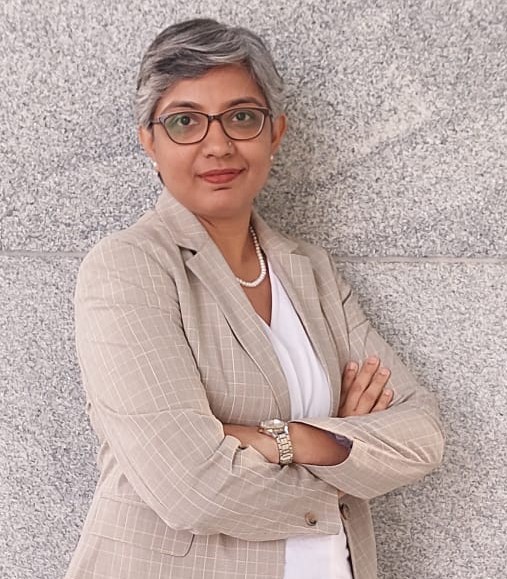
  • “Legal tech can eliminate the mundane routine tasks and save the time of the lawyers in focusing on the core legal areas.” – Sridevi Sidharthan, Principal Associate at M&CO Legal, Dubai

    “Legal tech can eliminate the mundane routine tasks and save the time of the lawyers in focusing on the core legal areas.” – Sridevi Sidharthan, Principal Associate at M&CO Legal, Dubai

    This interview has been published by Namrata Singh and The SuperLawyer Team

    Could you share the pivotal moments and personal motivations that inspired your journey into the field of law, and how did you navigate the initial challenges and struggles as you embarked on your career?  

    My father is an advocate on record practicing in the Supreme court of India. So, most people naturally assume that is the reason why I chose law. While my father is my personal motivation however, there is quite a bit of story behind why I chose law as my career. I was in grade 5 in school when I first visited the Supreme Court with my dad during my winter vacation. The Court was also closed and there were very few visiting lawyers in the court premises. I was in the cafeteria, when a couple of lawyers approached me and my dad, probably they were curious about seeing a 10-year-old kid in the court premises. They started having a conversion and asked the cliché question, what I want to become in the future. I recollect mentioning wanting to become a scientist and they suddenly asked me, “Why don’t you become a judge”. I said okay and they said, “ promise us that one day you will become a judge of the supreme court”. The young me just went with the flow and promised them. But from that day onwards, I was clear that I wanted to pursue my career in the legal field. Even though later, I decided to take a different path and steer towards corporate practice. Nonetheless, I don’t regret the decision till date.

    I guess, the fact that I was determined to be a lawyer and that I wanted to become a corporate lawyer has made it easier for me to focus; the academic faculty at my university, notably Dr. Mamta Biswal, also helped me crystallize my decision to become a corporate lawyer. Our Commerce professor, Mr. Satya Ranjan Mishra encouraged me to pursue the Company Secretary course during my LLB, which helped me in gaining extra learning experience in the subject. While at university, acquiring an internship opportunity was quite stressful and I ended up getting rejected twice by Amarchand for the internship. However, perseverance and proper guidance from my seniors in the University helped me land a job with Shardul Amarchand Mangaldas & Co. (Erstwhile Amarchand Mangaldas Suresh Shroff & Co.)  during the campus placement.

    Given your diverse experience in both India and the UAE, how do you navigate the legal nuances and cultural differences in your practice, and how do you stay updated with the latest legal developments and industry trends to integrate these insights into your work?  

    I am indeed grateful to have worked in such diverse legal landscapes.  In India, working with Shardul Amarchand Mangaldas under the leadership of Mr. Inder Mohan Singh was a great learning experience. I remember when I joined the firm in 2013, the new companies’ law had just been enforced and our team was primarily working on dissecting the law, making submissions on the lacunas and shortfalls to the ministry as well as other organizations like FICCI. I am really thankful to my mentors, Mr. Aayush Kapoor and Mr. Harish Kumar, who moulded me as a lawyer and became a role model for me. In UAE, I work with M&Co Legal, which is a DIFC-registered law firm run by Emirati lawyers. The legal landscape of both India and UAE is completely different, as you may know, UAE is primarily a civil law country and has two common law jurisdictions in free zones (Dubai International Financial Center and Abu Dhabi Global Market). The transition from India to unlearn and learn civil laws in UAE was challenging in the beginning, especially, trying to understand the legal systems in place.  However, the partners and the colleagues at M&Co. Legal were quite helpful during this transition phase, and additionally, the training that I had received at Shardul Amarchand Mangaldas, also helped me to quickly complete the learning phase. Since I am working at a local law firm with a very niche clientele, it naturally assisted me in my understanding of not only the local culture, but also provided exposure in interacting with as well as dealing with clients and peers from different nationalities. The peculiarity of working in UAE (or rather interesting part) is that you get to work under both Civil and Common law jurisdiction, and I have thoroughly enjoyed maneuvering through both these jurisdictions simultaneously.  Both India and UAE have fast-changing economic and legal terrain, and I continue to keep myself abreast with the changing legal dynamics, as this is pertinent to provide plausible legal solutions to the client. I normally do that by following media (through news and professional social media platforms), from newsletters released by legal knowledge platforms, and keep a look-out for any important changes by setting a Google alert on the pertinent topics.

    Your profile mentions your involvement in drafting insider trading codes and handling related investigations. What insights have you gained from such regulatory experiences, and how do they inform your approach to compliance?

    During my tenure in India, drafting insider trading codes and especially handling related-investigations from regulatory authorities in India like SEBI was an interesting opportunity. The experience from dealing with insider trading investigations gave an insight to the regulators point-of-view as well as stance on the points and identify the key areas of focus. This experience in turn guided me while drafting such insider trading codes for the listed entities to ensure the key focus areas, and to effectively deal with the challenges as well as provide proper guidance on these matters to the client. Such matters are extremely delicate and there is a fine-line when it comes to becoming non-compliant, hence, it was important to lay down a proper strategy to ensure effective mechanism to deal with the price-sensitive information with the top management and employees of the organization.

    It is also interesting to mention that in UAE, as well, I have dealt with various investigations issued by the Ministry of Economy related to the breach of DNFBP (Designated Non-Financial Business or Profession) obligations and breach of licensing conditions raised by Abu Dhabi Financial Services Regulatory Authority. All these experiences with the regulators teach you to think from a different angle while approaching a matter, and helps you to visualize everything from a macroscopic level as well as gives you guidance to navigate through the regulatory requirements.

    With your expertise in employment laws, what advice would you offer to companies navigating labor-related challenges, especially in cross-border transactions?  

    During my practice in India, employment used to be one of the crucial areas of concern during the M&A deals, and the matter considering the impact on the livelihood of people had to be dealt with caution and delicately. UAE is a labour friendly country and the employment laws strike a balance between the Employers requirements and Employees rights. I would personally like to advise the companies in UAE to specifically be aware of the local employment laws and to understand that the common law free zones (ADGM & DIFC) have a separate employment law. It is important that the terms of employment are carefully drafted to ensure compliance with the local laws. I would specifically recommend the corporates to have an employee handbook to note down the various employment policies while dealing with matters such as disciplinary actions, internal grievance redressal, employee policies tailor-made to the specific industry and educate the employees about these policies.

    In relation to cross-border transactions, the areas of transfer of employees and secondment needs to be tackled carefully. Employees in international companies with offices in UAE are normally subjected to the group policies wherever applicable, however, it is to be noted that notwithstanding the group policies and benefits available to the employee, such that an employee in UAE will be receiving the necessary benefits and protection mandated by the local laws. Hence, it is important to reconcile these policies to include the local labour laws and the emoluments accordingly.

    In your opinion, how can the legal profession leverage technology and innovation to enhance efficiency and client service while maintaining confidentiality and security?  

    The advent of digital technologies is positively impacting the legal profession as well. At the moment, I don’t believe that AI can take over a lawyer’s job, however, I firmly agree that it can increase the efficiency in doing the job. Legal tech can eliminate the mundane routine tasks and save the time of the lawyers in focusing on the core legal areas. This will in turn ensure faster delivery of tasks and ensure economic efficiency for the clients by reducing the additional billable hours payable by them. Another area where legal tech can help lawyers is in data entry and research. Even though legal tech ensures efficiency, lawyers have to be responsible enough not to use free and public AI platforms to provide inputs on confidential information. It is always key to ensure that only secured legal tech platforms are used to avoid data leakage and breach.

    What motivated you to move your career to Dubai, and how has this transition influenced your professional growth and perspective on corporate law?  

    My career-move to Dubai was purely due to personal reasons and was not a calculated move from my end. However, I am thankful that it happened as UAE was truly resilient to the challenges during the covid times, and post-covid, the country has seen an economic upward trend. UAE is now increasingly becoming the hub not only for all the international businesses but also for the high-net-worth individuals from various parts of the world. Obviously with the increase in business activities in the country, the legal requirements also follow. Being in UAE and working with M&Co Legal has provided a vast exposure to me to develop my personal and professional growth. Being part of a small yet niche corporate team has expanded my horizon in practicing various aspects of the corporate laws and in various industries. This has helped me understand the business and regulatory requirements for various sectors such as F&B Industry, real estate among others.

    As a legal influencer recognized by Lexology, what advice would you offer to aspiring lawyers seeking to establish their presence in the legal community? 

    I would advice aspiring lawyers to carefully understand the law. “ The devil lies in the detail” is especially true in our legal profession. I understand that nowadays everything is available on AI and legal tech platforms, however, it is important not to blindly rely on it for research without reading the underlying law itself. While I am not against using AI, it is important to use these platforms as a reference and not base the entire work on it without using your own analytical skills. You leave a mark in the legal profession and on your client by using your analytical as well as problem-solving skills.

    The acquisition of Al Huraiz Packaging Industry LLC by Hotpack Packaging Industries LLC was a significant deal. What were the most complex aspects of this transaction, and how did you navigate them?  

    We represented the Seller, AL Huraiz Packaging Industry, which is a local Emirati Company involved in manufacturing packaging materials. The deal was a 100% shareholding acquisition by the major packaging company, Hotpack Packaging Industries LLC.  The transaction, considering 100% shareholder takeover included transferring the factory unit and other equipment to the new shareholder. Additionally, there was debt restructuring as part of the transaction; the aspect of regulatory approval and debt restructuring was the challenging part of the deal. However, the negotiations based on good-faith between the parties and legal representatives assisted in finding the appropriate resolution for the concerns.

    When advising on mergers and acquisitions, what key factors do you consider to ensure the transaction is legally sound and beneficial for your clients? 

    Fact-finding by way of due diligence (either legal or financial due diligence) is the most important part of ensuring whether the deal is legally plausible. Additionally,  it is commonly believed that the lawyers should not interfere with the commercial aspect of the transaction. However, I would opine otherwise; since commercial considerations have major legal impact, it is crucial that lawyers carefully review the commercial understanding and advice the client as well as provide any alternative solution for the client.

    Outside of your professional work, what hobbies or personal interests do you pursue, and how do they influence your approach to your legal practice?  

    I love travelling! I know it’s a cliché statement, but I consider myself a “traveller instead of tourist” while exploring a new place. My research skills are utilized prior to and while travelling, especially planning the travel. I plan the itinerary down to every intricate detail. I ensure I understand the local culture, interact with local people, and try out the local cuisine. I use travelling not only to unwind from my daily routine, but also the things I learn my travel helps me understand different people, including my clients and peers. I truly believe that to become a successful corporate lawyer and leader to your team, you not only need technical expertise but also need to have interpersonal as well as people-management skills.

    Get in touch with Sridevi Sidharthan

  • “A lawyer must be open-minded and adaptable enough to quickly adjust to different circumstances, for a successful legal practice”- Dushyantha Perera, Partner, Sudath Perera Associates

    “A lawyer must be open-minded and adaptable enough to quickly adjust to different circumstances, for a successful legal practice”- Dushyantha Perera, Partner, Sudath Perera Associates

    This Interview has been published by Pragya Chandni and The SuperLawyer Team

    Can you share with us the journey that led you to specialize in Corporate and Commercial law, particularly in the non-contentious aspect?

    I am a second-generation lawyer, so attending law school, especially coming from a South Asian background, was almost a ‘fait accompli’. However, during law school, I discovered a keen interest in contract and commercial law modules. I found myself drawn to these modules much more than those dealing with subjects such as criminal or constitutional law, and I also realized that I had a natural aptitude for them. This interest led me to pursue internships that would allow me to delve deeper into related fields. My first internship was with the legal department of Unilever Sri Lanka, followed by another at a corporate law firm in Sri Lanka (where I got to directly work on M&A transactions and corporate restructurings). From then on, I never looked back.

    What inspired you to pursue your master’s degree in International Trade Law after your undergraduate studies?

    Pursuing a master’s degree was largely circumstantial. I had just returned to Sri Lanka after completing my LLB and was getting ready to sit for my attorney’s exams. I had also started working with a law firm as a legal assistant, which was a full-time commitment. The master’s degree in question was being administered by the Advanced Legal Studies Unit of the Sri Lanka Law College and was a part-time course specifically targeting working lawyers. Incidentally, it was a first of its kind at the time, although external LLM degrees from UK universities are now offered by various institutions in Sri Lanka. So, when I saw the advertisement, given the specialisation, the timing of classes (Saturdays and one evening a week) and the lecture panel (which consisted of some of the most eminent subject matter experts in the country, including two current Supreme Court judges – Justice Janak de Silva and Justice Arjuna Obeysekera), I was very keen to apply. 

    I would generally advise any young lawyer or aspiring lawyer to get some real-world experience before pursuing a master’s degree or doctorate, unless you’re inclined towards an academic career or very passionate about the topic of study. It shouldn’t simply become an exercise in enhancing your resume.  

    With your experience spanning across different regions and legal systems, particularly Singapore and Sri Lanka, what are some of the key differences you’ve observed in handling cross-border M&A transactions?

    I’ve only practiced in Singapore and Sri Lanka, but both have involved a lot of cross-border work. In the last 6 months alone, I’ve handled acquisitions, corporate restructurings and VC transactions in the US, Kenya, India and Singapore. In my current role I’m predominantly a domestic lawyer in Sri Lanka, focusing on transactional and legal advisory work within the country, but I have some clients from my stint in Singapore keeping me occupied on offshore transactions. My firm also specialises in helping Sri Lankan companies expand internationally. Each jurisdiction is different; sometimes their legal systems are easier to reconcile and understand because of a common history. For example, Sri Lanka and India share a lot of similar laws and administrative practices due to both having been British colonies, and sometimes they can be very different (such as in civil law countries, as I experienced on a power sector investment in Germany a few years back). M&A or projects/project financing work in Singapore, as compared to Sri Lanka for instance, generally involves more sophisticated and voluminous documentation but comparatively less administrative or practical hurdles; this can perhaps be attributed to the maturity and size of the Singaporean economy. 

    A lawyer must be open-minded and adaptable enough to quickly adjust to different circumstances, for a successful legal practice. I think this is true regardless of practice specialisation, and it is a perspective and approach that my firm endeavours to instill in all our new trainees.  

    As a former Executive Committee member of the Sri Lanka Singapore Business Council and Vice-President of the Inter-Pacific Bar Association, how have your involvement in these organizations influenced your approach to legal practice?

    It has reaffirmed my belief in the value and power of networking. The IPBA in particular (as well as the International Bar Association – IBA) is a fantastic place for any lawyer to make connections, learn of developments globally as well as in other jurisdictions and engage in knowledge-sharing. 

    Could you walk us through a particularly complex transaction or project you worked on, highlighting the challenges faced and how you navigated through them?

    That’s a fairly difficult question to answer, as almost all large transactions and projects I’ve handled have come with some form of complexity. 

    One transaction does however stand out, just because of the timing and the circumstances. In mid-December 2021, I was engaged by an international law firm to assist in the sale of the majority shareholding in two Sri Lankan listed companies for a foreign headquartered MNC client. Whilst that would ordinarily be a challenging transaction in itself, this one had to be negotiated and completed during the Christmas break, when most offices in Sri Lanka were closed and I was on a wildlife safari with my family in Chitwan, Nepal! I remember navigating four different time-zones, negotiating documents from the back seat of a safari jeep and roaming around the camp at 4am for some internet connectivity to send out emails. Thankfully I almost never travel without my laptop and a roaming data connection. I also had fantastic support from the transaction intermediaries, including the Colombo Stock Exchange, the brokers, bankers and another Sri Lankan law firm which was acting as a share trustee. They went above and beyond, working through Christmas eve and Christmas day to ensure that we completed the transaction on time. 

    I think it’s important for lawyers to build and maintain close business relationships, particularly with regulators and other professional service providers in the market – you may never know when you need to ask for a favour. I think it’s also important, if you’re an M&A lawyer, to be prepared for a transaction to kick off at any time. Admittedly, this might mean less of a ‘work-life balance’ and more of a ‘work-life blend’. 

    In your opinion, what are some emerging trends or developments in corporate law, especially in the context of evolving regulatory frameworks and global economic shifts?

    From a Sri Lankan viewpoint, I can say that we are seeing a lot more economic activity with India. Between 2013 and 2018, China was arguably the largest source of FDI into the country, particularly towards various infrastructure projects under the Belt-Road Initiative. From 2019 onwards, and particularly post Covid-19, India appears to have taken the overall lead in trade & investment relations with Sri Lanka. This is perhaps a result of PM Modi’s ‘Neighbourhood First’ policy, and consistent with a growing international perception that there is an emergent India – one that is utilising its clout and reach, and leveraging on its potential, as the world’s fifth largest economy. India also appears to be an economic beneficiary of worsening US-China relations, with US and European companies seeking to de-risk and diversify their supply chains. 

    Given the cultural and geographical links, as well as the substantial similarities in legal and administrative frameworks, I’ve long been an advocate for greater economic integration between India and Sri Lanka; it is, now more than ever, ‘low hanging fruit’ towards reaching our own development objectives in a mutually beneficial manner. 

    Finally, considering your wealth of experience, what advice would you offer to law graduates aspiring to specialize in corporate and commercial law, especially in today’s dynamic legal landscape?

    I would say go for it. There are so many emerging practice areas to explore now, within the broader framework of non-contentious corporate and commercial law work, from data privacy to the developments in blockchain technology, cryptocurrency and the use and application of AI. The best way is to get insights and hands-on experience through internships and work placements etc. 

    Get in touch with Dushyantha Perera-

  • “All the three stages- compliance, crisis management and strategic advisory – can be achieved one after another with strategic advisory being the most important and comes last in the sequence”- Atul Juvle, Managing Partner, Ap2 LEGAL CONSULTING LLP 

    “All the three stages- compliance, crisis management and strategic advisory – can be achieved one after another with strategic advisory being the most important and comes last in the sequence”- Atul Juvle, Managing Partner, Ap2 LEGAL CONSULTING LLP 

    This Interview has been published by Pragya Chandni and The SuperLawyer Team

    You’ve had an illustrious career spanning various industries and companies. What initially drew you towards the legal profession, and how did you navigate your way through different sectors over the years?

    I finished my banking qualification because I wanted to pursue a career in banking operations. While studying for the same  I fell in love with the laws governing forex transactions and the legal decisions made by the courts that impact bankers. This motivated me to finish FCS after LLB. I kind of fell into the legal field by accident. Over time, I became permanently married to legal compliance due to complexities and problems. 

    I have experimented with a variety of business sectors because I love challenges and dislike things as they are. My courageous nature, which I developed by exposure to and experiences gained on the job, has also contributed to my success in adapting and delivering in several organizations. Yes, my wife has given me a lot of support throughout my endeavours, which has inspired me to keep going even now. 

    With your extensive experience in both civil and criminal legal matters, as well as crisis management, could you share some insights into how you approach handling high-stakes matters, or complex legal disputes?

    There are three stages when GC gets  involved (1) from the beginning (2) after trying all the methods to correct the situation (3) this may be part of legacy issues, when you join a new organisation. 

    Based on experiences, I have developed a procedure based strategic approach to handle high stake matters. Whatever may be the stage, when we get involved, the first step is always buying enough time from business or judiciary, under any pretext, to prepare well before getting into filing of legal proceedings or start proceedings before authority (when we got in the matter at proceedings stage) in a high-stakes, complex legal issues. Conduct a thorough internal evaluation review of the matter, not only on the basis of documents but also in consultation with the operational managers directly involved in the matter. Create a SWOT analysis of the situation. The matter’s advantages, disadvantages, opportunities, and threats. Create a plan of action and get going. Be flexible for a few surprises from the opposite side, which may provide threats or weaknesses. Remember to leave the door open for dialogue or informal mediation after filing for legal action. 

    Given your roles in compliance and governance, including ensuring statutory compliances for offices and factories pan India, what strategies have you found most effective in maintaining adherence to regulatory standards across diverse business environments?

    There is no Strategy but a Process, for ensuring a satisfactory compliance system in the organisation.  The written down process with identified process owners, has to be followed religiously. A repository of applicable laws and rules must be established, and when changes occur, one designated individual must be responsible for updating the repository. The repository must be updated with the modifications, and all affected process owners must be notified. Every month, the database must be updated to include compliances, delayed compliances, and failed compliances. The organisation has to promote a “Speak-Up” culture, and reliance and dependence on the same should be prioritized over database reports.  The non-reporting, if any, should be dealt seriously and firmly.  I am blessed to have good teammates in every organisation who followed the process religiously and helped me  to be successful in managing compliances. 

    I will never forget 2010-11, when in one business sector there were more than 90 circulars in one year and only because of dependable team-mates, I could communicate and implement them successfully in the system. 

    You’ve been recognized as a leader in legal ethics and compliance. How do you instill a culture of integrity and ethical behavior within the organizations you’ve worked with, especially considering the diverse cultural and operational landscapes?

    The basic rules of integrity and ethical behaviour does not defer with diverse businesses / operational landscapes or different sets of management.   I am lucky to have worked with businesses, who respect ethical business practices. 

    “Yatha Raja, Tatha Praja’.  The Integrity culture starts with tone from the top.  Integrity is behaving right when no one watches.  The employee follows the leaders. So, senior managers must be role models. The second important step is having a written down policy in the company, which clarifies and codifies the standards, rules and expectations.  The third rule is dealing with violations, without making any exceptions, with warnings, sanctions and sometimes drastic sanctions like termination.  Fourth and last rule is encouraging a speak-up culture.  We also call it the whistle-blower system but it works well when it’s formal as well as informal. If we follow all these rules consistently, integrity and ethical behaviour becomes part of business operations. 

    Your expertise extends to transactions such as M&A and restructuring. What key factors do you consider when advising on such strategic decisions, and how do you balance legal requirements with business objectives?

    M&A and restructuring are two big topics and very difficult to answer it together in short.  I would prefer to share experiences on restructuring because it’s a common activity for a good number of companies and also aligning legal requirements with business objectives are more challenging in restructuring.

    Restructuring involves closing of branches / sale of factories / optimisation of labour force etc. Cost of such projects is perceived as a loss. Handling human angles and related risks and challenges is the first concern. Identifying the external support agencies is necessary to avoid last minute running around, when any angle needs care and cure.   Confidentiality is the most important key factor and it starts from the stage of conceptualisation itself.  I remember in one crucial transaction, we as a team didn’t attend the office for two weeks and even not used company cars and regular drivers.    Complete detailed information about the project.  Identification of risk/trouble pointers and resolution strategy to mitigate the same.   Ensuring 100% compliance with the applicable regulatory provisions, to avoid any surprises from the Regulator.  Handling tough decisions with human touch always helps to mitigate the pains.  Focussed attention, 100% compliant process driven activity, taking care of surprises at the first stage. 

    Could you elaborate on your experience in crisis management, particularly in handling fatal accidents and other critical incidents? How do you approach these situations from a legal and strategic standpoint?

    My first accident handling experience was a troublesome experience, but then I started developing a process based on learning.  Strategy in theory and in real life situations differs vastly.   My learning notes helped me to develop the process.  Eventually later I also got training in crisis management, which helped me to excel in more careful handling of such situations. 

    In case of a fatal accident, the first three days are critical.  Initial communication, immediate financial & emotional support to the victim’s family, cooperation with the regulatory authorities, Police and responses to the media are the major areas.  Seven points, one has to keep in mind in the first 24 hours and then follow the same for another two days.  (1) Minute verification of facts. Zero room for guess work / assumption on the incident background. (2) Emotional and financial support to family without any acceptance of fault- until the same is verified with the facts. (3) Responses to regulatory and media, only after double verification of facts.  While handling media – Reading or releasing written statements- If we buy time, we strictly honour commitment.  ‘No Response’ is an absolutely BAD response. (4) Review carefully the documents and responses submitted to Police (5) Complete the Incident report filing with the applicable regulatory authorities well within time. (normally it’s 24 hours) (6) Estimating loss, Insurance claim possibility. Intimation to Insurance companies. (7) Start parallelly root cause analysis and corrective action to avoid repetition.

    As someone deeply involved in drafting and vetting agreements, what are some common pitfalls you’ve observed in contract negotiations, and how do you mitigate risks while ensuring favourable outcomes for your organization?

    In any contract there are 5-6 clauses that need attention, discussion and negotiations to have a fair contract between both the parties.  But a good number of times the Client has the upper hand and it becomes a difficult decision on whether to accept the project or not?   And Management wants to go ahead with the business decision.  Sometimes the project has strategic importance, too. In some cases, organisations want to accept the project with all the risks as a strategic plan.   In such cases only option is risk evaluation, built in safety measures, estimate and include cost plus insurance.  In simple terms when risks are not avoidable, the option is to accept, create buffers in terms of process as well as cost and transfer risk as a second buffer, to insurance.   In terms of risk mitigation management, it’s necessary to have strong project management with an identified responsible person.   We did wonders on many risky projects by this approach, yes with one or two exceptions where we mitigated risks through insurance claims.

    Finally, with your wealth of experience, what advice would you offer to young law graduates aspiring to make a mark in the legal profession, especially in areas like compliance, crisis management, and strategic advisory?

    All the three stages- compliance, crisis management and strategic advisory – can be achieved one after another with strategic advisory being the most important and comes last in the sequence. 

    First and foremost, even if all the youngsters know, but still would like to reiterate that now there will not be legal & compliance, without information & technology. So, whatever domain one choses, s/he has to keep updated with the technological advancements in the domain.  

    Second, I strongly believe in Brian Tracy’s 6-Ps rulePrior Proper Planning Prevents Poor Performance. Never forget to plan ahead, ask for help when needed and be prepared before beginning any legal battle.  As I said herein above while answering question no.2, that there is nothing wrong in requesting time for preparation and planning.

    A leadership mindset is a must to reach the Top.  Always remember that leadership begins with the letter L, which stands for lifelong learning.  It’s a myth that only seniors have to be leaders, every person can be a leader at his/her level with the right mindset. 

    Last but not least, my all-time favourite saying is: “Know & go, always; there’s no such thing as NO-GO.” When there is no way to completely eliminate the risk, we should accept it, handle it carefully with continuous monitoring backed by insurance to cover it. 

    Best wishes for earning and claiming your  share in one of the fastest growing economies, India. 

    Get in touch with Atul Juvle-

  • “Invest in meaningful relationships with seniors and colleagues and don’t fall into the rat race of titles and pay cheques”- Ketaki Suklikar, Head of M&A, Mahindra Group

    “Invest in meaningful relationships with seniors and colleagues and don’t fall into the rat race of titles and pay cheques”- Ketaki Suklikar, Head of M&A, Mahindra Group

    This Interview has been published by Pragya Chandni and The SuperLawyer Team

    Can you walk us through your journey from starting as an associate at Wadia Ghandy & Co. to your current role as Head of M&A at Mahindra & Mahindra? What motivated you to specialize in corporate M&A law?

    I would say I was extremely fortunate to have landed up at Wadia Ghandy & Co post law school. WG was the best training ground a fresher could ask for. We were taught everything there is to know about being a thorough professional keeping high ethical and quality standards and integrity in our work. I was given responsibility and freedom to navigate complex matters – with the reassurance that my Partner always had my back. To this day, I count my seniors Djena Sunavala and Ankit Majmudar as my mentors and dear friends- I often reach out to them for guidance. 

    Unlike current times where lawyers “specialise” right off the bat, at WG in those days as a fresher you had to work on all types of matters thrown at you be it conveyancing, corporate, M&A, regulatory work etc. across sectors. This gave me a broad view of all aspects of the law. However, within a few years I realised that I am drawn to transaction work and loved to work on PE and M&A matters. I then began focusing more on PE and Corporate M&A. 

    Having 8 years of rich law firm experience meant that I was well placed to join an organisation as in-house counsel. Acumen was a great stepping stone in my transition to in-house life. At Acumen, I was India GC and was responsible for all legal and regulatory aspects of Acumen’s India operations. 

    Mayfield was an exhilarating journey because VC is a very fast paced, high-energy world where the people you interact with are all extremely driven individuals- operating at a high level of efficiency. The expectations were high and I had to quickly step up to the plate. At Mayfield the sense of ownership and responsibility was further amplified which gave me a huge sense of confidence. 

    Again, the experience I gained at Mayfield was the perfect pre-cursor to my current role at M&M. 

    I firmly believe that in a career spanning 4 decades or more, everything happens at the right time when one is ready for the next challenge/shift. I have a very interesting and demanding role at M&M, one that I enjoy thoroughly, but it has come at the right time in my journey when I am well equipped to handle everything it throws at me. 

    Transitioning from a law firm to in-house counsel at Acumen and later Mayfield must have been significant shifts. How did these experiences shape your perspective on legal practice, especially within the context of venture capital and impact investment funds?

    The shift from advisor to decision maker is certainly a daunting one and one must have confidence in one’s abilities to navigate this shift.

    A firm head on your shoulders and being clear & decisive is needed. Understanding the business, the priorities and commercial levers driving an issue or transaction is key. One cannot be a roadblock – being solution oriented and collaborative is important but at the same time you need to set guard rails and ensure transactions are being done in a way that you are comfortable with as GC. You need to set standards and ensure you get buy-in from the business on your way of doing things.

    I would say these experiences have given me a unique perspective of legal practice, in the sense that I know exactly what the business leaders are, or rather, should be, looking to hear from the in-house legal team and what are the key drivers or critical matters concerning the Board. 

    As General Counsel at Mayfield, you oversaw legal aspects of the firm’s India operations, including deal structuring and governance. Could you share some key insights or challenges you encountered while navigating the legal landscape in the venture capital industry, particularly in India?

    As I mentioned, the venture capital space is fast paced and high energy, which is something I loved about it. 

    In terms of insights, I would say that building relationships across participants in the industry is extremely important and it makes deal making very smooth. When dealing with a sticky issue in a deal, often times, after several all-party calls and negotiations fail to resolve an issue,  a personal phone call to the GC on the other side or the law firm partner on the other side to discuss and come to common ground would solve the matter, because there is a personal connect and the person knows you well enough to know it is not an ego trip and you just want to come to an acceptable middle ground. 

    In any role there will be challenges, otherwise there is no fun. There certainly were challenges at Mayfield, but here I would say having a good working relationship with colleagues is very important to brainstorm, discuss, vent and then handle the challenges. Each challenge gives you immense learning and builds a new muscle which you never knew you had! 

    Joining Mahindra & Mahindra marked a shift to corporate M&A, but on a larger scale. What unique challenges do you face as Head of M&A in such a diverse and multinational conglomerate?

    As you have rightly said, M&M is a diverse and large group. The main challenge for me personally when I moved to M&M was that I was used to working independently and taking calls on my own, given that Mayfield (as typical for VC funds) was a small team. For obvious reasons, at M&M one has to work with many stakeholders from different teams and departments and this requires a shift in working style. 

    Apart from this, the sectors are very different from what I was looking at earlier, however, the principles of an M&A deal do not change drastically – it is just a different lens as a strategic player rather than a financial investor.

    Leading a team of lawyers in the M&A department at Mahindra & Mahindra, what strategies do you employ to ensure efficient deal management and coordination, especially across different sectors within the group?

    I think simple strategies like regular check-ins with the team, creating templates and SoPs for deals, and having the right balance of giving independence but still having some oversight, work very well. Most importantly, I seek feedback from my team and I am learning to be a better manager from them. 

    With your extensive experience across various sectors and roles within the legal field, what do you consider the most crucial skills or qualities for success in corporate law, particularly in M&A and venture capital?

    I would say, the following skills or qualities are crucial to success in M&A/VC (and generally as a corporate lawyer):

    • Understanding the commercial rationale for the transaction.
    • Getting comfortable with numbers and basic principles of corporate finance.
    • Balancing attention to detail with having a 30,000 foot view.
    • Being able to anticipate issues before they crop up and having a Plan B ready!
    • Stakeholder management 
    • Great communication and stellar writing skills

    Finally, drawing from your rich experience, what advice would you offer to fresh law graduates aspiring to pursue a career in corporate law or venture capital? What key lessons have you learned that you believe are essential for their success in the legal industry?

    My advice to fresh law graduates aspiring to pursue a career in corporate law or venture capital is to cut your teeth working at a law firm for the first 5-10 years post law school. Do not “specialise” early and work on diverse matters as much as possible. 

    Read the business newspapers in detail. Know what’s happening around you in the world. Keep abreast of changes in law and regulations. Follow some leaders in the field and see what they are talking about. If you don’t know something, ASK someone. Don’t only google it, but have a conversation about it. 

    Invest in meaningful relationships with seniors and colleagues and don’t fall into the rat race of titles and pay cheques. Your career will be very long – there is plenty of time.

    These are some learnings from my experience, every person will have a different journey and experience, and it is important not to compare your journey with others. 

    Get in touch with Ketaki Suklikar-

  • “Think like a lawyer but look beyond the law”- Mirul Bhavsar, Head of Legal, Manipal Academy of Higher Education

    “Think like a lawyer but look beyond the law”- Mirul Bhavsar, Head of Legal, Manipal Academy of Higher Education

    This Interview has been published by Pragya Chandni and The SuperLawyer Team

    Could you share a bit about your journey into the legal profession, particularly what inspired you to pursue a career in law and how your background in psychology has influenced your legal acumen?

    This question is very close to my heart and in its answer lies my firm belief that ‘God’s plan is always better than yours’. I am an accidental lawyer and have never even dreamed of becoming one. I was an absolute introvert in my teens. I was on the verge of getting my bachelor’s degree with a major in psychology but was unsure how to transition that knowledge into a career. Back then, I was terrified by the thought of interacting with people. There were also financial constraints. One day while taking a random stroll in the college lobby, I saw a notice of admission to the evening law degree program run by my college. It was a 3 year program, with no requirement of CLAT and the fee was also very nominal. I was always very much inclined towards reading and had an analytic mind. Piles of books never scared me rather, I found solace amidst them. I have spent more time at the library than at the lectures. The legal profession is always considered as a noble and respectable profession. So, it ticked all the boxes for me.

    Within 2-3 years of working as a lawyer, I really started enjoying my work. As a lifelong psychology student (it is still my favorite subject), I am aware of my personality traits, such as an eye for detail, logical thinking, understanding of human behavior, convincing power, and excellent listening and empathy, all that psychology has taught me. These traits are equally, if not more, required to be a competent lawyer. By then, I had also realized that litigation is not something I would not like to do on a daily basis, and I have a knack for good writing skills; thus, I started focusing on documentation, contracting, and written opinions.

    With your extensive experience across diverse industries such as education, oil and gas, retail, and real estate, could you highlight some key challenges you’ve faced and how you navigated them, especially considering the varied regulatory landscapes of these sectors?

    In the corporate world, legal and regulatory compliance are like two sides of the same coin. Lawyers typically deal with laws and contracts, while compliance officers ensure that a company follows industry rules. Inhouse lawyers handle both by balancing what’s legally required with what’s needed to keep the business running smoothly. They stay ahead by knowing the laws inside out and understanding the operational dynamics of the industry they cater to. Working closely with operation teams and advance planning helps the company avoid or at least anticipate issues and stay on track. In-house lawyers act like guides so businesses can focus on sales, customer delight, production or R and D but within the corners of the laws and regulations. 

    I will put retail and real estate in the same bucket as retail highly depends on real estate availability. In India, we celebrate and are proud of our ‘Unity in Diversity; approach, but ask this to a lawyer handling PAN India real estate title due diligence! There is a lot of dependency on local languages and systems (or its absence) for maintaining land/revenue records at government offices and local municipal laws. When you started the project, the area was under gram panchayat, and by the time the project was complete, the exact location would have fallen within the municipality’s limits. Additionally, you must understand the operations in detail to ensure that landlords give you the required leeway to utilize the property efficiently. Negotiating with different categories of landlords and developers has honed my negotiation skills.    

    I have learned the importance of regulatory aspects in the day-to-day functioning of the legal department during my stint in the oil and gas sector. Oil and gas is an absolutely regulated sector with a monopoly of PSUs. There is limited scope for private or international companies. The organization I was working for is a French conglomerate. So the regulatory requirements of India and as well as that of the parent entity’s country were also required to be met strictly, in addition to the best of corporate governance policies. Your prices are regulated, your territories are marked, you have logistic challenges as the oil exploration fields are situated at particular shores, your hands are tied as you swear by ABAC regulations and FCPA, there are sanctioned countries, and so on. I have learned how to build contracts and draft policies while keeping all these in mind.

    Another interesting experience is in education, which still amazes me. In India, education is a matter of a concurrent list. It means both the state and central governments will try to regulate the sector. With so many states and so many political parties driving the political scenarios in India, we seldom have state and central policies aligned on concurrent lists matters. In some states, the RTE (Right to Education) Act is taken very strictly; in others, you can maneuver around it. Some states welcome private self-funded players to boost the availability of high-class educational institutions in the states, while others prefer control at the stake of quality and feasibility. With approximately ¼ of our population between the ages of 6 and 16 and the growing income of the middle and upper-middle-class population, there is a huge demand for good quality education providers, attracting many PE and VCs to invest in education. So, suppose you are the legal person for a company having PAN India operations in school, in that case, you can imagine the number of state-specific regulations to keep track of while advising on legal matters from a centralized office!

    As the Head of Legal for Manipal Academy of Higher Education, you mentioned restructuring the legal team and enhancing skill development. Can you walk us through some of the strategies you employed to achieve this and the outcomes you observed?

    Life in metro cities and small towns is very different, and these differences are evident due to their different levels of exposure in terms of competitiveness, training, motivation, aspirations, and complex work scenarios. The nature of an organization (i.eMNCs, VC-backed Companies, start-ups, and not-for-profit organizations of different sizes ) impacts its culture, and culture is all about people. What works in metros or big cities may not (I would say ‘will not’) work in small towns. You have to manage with the existing resources, and you will not get new resources easily.  

    The restructuring of the legal team was spearheaded with a focus on clearly defining roles and expectations for both internal and external stakeholders. Significant time was invested in training them on negotiation skills, contract drafting, and legal communication. Assistance was provided to existing teams in understanding the operations and business aspects of the sector, associating the legal aspects and their impact, which has aided in understanding the value of their work.

    I swear by templates, checklists, & SOPs, streamlining legal processes, which have been my go-to tools at MAHE as well, and the team and other stakeholders are pleased with these toolkits.

    Standardization and process enhancement seem to have been pivotal in your role at MAHE. How did you go about developing templates, checklists, and SOPs, and what impact did these initiatives have on the efficiency and consistency of legal processes?

    In the role of an in-house lawyer, I would like to prioritize standardization and process improvement to enhance the productivity of the legal team. Commencing with a thorough examination of existing legal workflows, recurring tasks and areas of inefficiency were identified through collaborative discussions with team members and stakeholders. Tailored templates, checklists, and SOPs were crafted based on these insights to address these pain points, with a focus on streamlining processes, reducing errors, and ensuring compliance. Throughout this process, feedback and input were actively sought from team members, both external and internal to provide practical, user-friendly solutions. Comprehensive training sessions and personalized hand holding were conducted to ensure effective adoption and user comfort.

    Following implementation, key metrics such as negotiation time and success, as well as requester feedback, were closely monitored to assess the impact of these initiatives on efficiency and consistency. Significant improvements were noted in turnaround time, error rates, and compliance levels. The standardized processes implemented not only streamlined workflows, enabling quicker task completion and freeing up time for higher-value work, but also fostered consistency in executing legal tasks across the team, thereby enhancing overall compliance and risk management. 

    Given your focus on the education sector, could you elaborate on the unique challenges and opportunities you’ve encountered in this industry, particularly regarding M&A deals, post-merger integration, and regulatory compliance?

    In education, navigating the regulatory and compliance landscape presents a distinctive set of challenges and opportunities. With education falling under the concurrent list, governance involves coordination between multiple authorities, adding complexity to regulatory compliance. While the sector is socially impactful, profit-making is restricted, necessitating a delicate balance between financial sustainability and delivering quality services. The surge in M&A activity, driven by interest from private equity and venture capital firms, reflects evolving market dynamics, particularly with the rise of Ed-tech post-pandemic. However, traditional brick-and-mortar K-12 schools continue to uphold their significance, requiring continuous adaptation to compete with digital alternatives. 

    Establishing or expanding educational institutions often involves substantial real estate investments, which, coupled with more extended gestation periods, pose financial challenges. Moreover, post-merger integration presents its own set of hurdles, given the absence of nationwide standards and the varied regulatory frameworks across states. Many institutions begin as philanthropic ventures, evolving over time under the influence of passionate founders or promoters and their younger generations wanting to encash on brand and legacy, further complicating the integration process. 

    In summary, the education sector offers immense opportunities for growth and impact. Still, success hinges on effectively navigating the regulatory landscape, adapting to market shifts, and executing strategic M&A deals with diligence and foresight.

    In your career, you’ve been involved in forming and mentoring legal teams from the ground up. What qualities do you look for when assembling a legal team, and how do you foster a collaborative and productive work environment within it?

    My first question in any interview for a legal position or when I meet a law student is, “What made you choose law as your career choice ?” The answer to this lets me into their perception of as well as their expectations from this profession. So, for me, their ‘Why’ is very important. Another critical and non-negotiable quality is a willingness to be a lifelong learner- of new skills, not only new rules and regulations but also new subjects beyond law. Law is such a vast area that one should never be complacent  or consider oneself a law expert. 

    For most of my career, I have worked in large organizations and across sectors, so being a team member and working in groups is another aspect I will look into.  

     Along with legal acumen like good written communication and the ability to summarize or comprehend legal texts, a successful in-house legal person must have a basic understanding of the practical aspects of business and operations to evaluate any document or situation from multiple angles.  

    I would eat, sleep, and breathe law and amongst those lucky people on the earth who love what they do and do what they love, so I don’t need a heavy dose of motivation daily. Still, different persons have different aspirations and motivations. So, I ensure that my team is clear regarding mutual expectations. Clarity and openness in communication are vital for successful teamwork. As stated earlier, training, handholding, and standardization ensure consistency in the output, and I insist on continuous and 360-degree feedback. I am very comfortable in delegation with empowerment and hate micromanaging things. Most importantly, we have a lot of fun banters, teasing, and snacking going around all day amidst heavy negotiations and focused reading sessions, so there is never a dull day at work. 

    As someone passionate about advancing legal education, what initiatives have you undertaken to contribute to the development of young lawyers, both within your organization and beyond?

    I am seriously jealous of today’s generation for the sheer amount of availability of resources and diverse opportunities. But then, there is also a problem of plenty and confusion created due to multiple options. So, they need proper guidance to capitalize on the right kind of opportunity and information. So at every available opportunity, I love to reach out to students and budding lawyers to understand their academic challenges, needs, and wants. I talk to them to identify what they find exciting and boring and learn about their misconceptions and fears. This kind of conversation has a dual advantage for me – it fuels my curious mind, lets me know recent trends and future expectations, and helps me to be relevant while hiring and mentoring young lawyers. I volunteer for lectures in law schools and webinars for the transition from ‘campus to corporate,’ different career options for lawyers, practical contract drafting, and the like.

    For my teams, I identify and ask for their specific training needs for skill enhancement and give them the desired resources. I have always been an early adopter of technology, so I encourage using digital tools such as CLM, digital signature, and chat-gpt (with much caution). My funda is one size does not fit all, and thus, I customize based on the personality and needs of an organization. 

    Lastly, drawing from your rich experience, what advice would you offer to fresh graduates aspiring to pursue a career in law, especially those interested in making an impact in diverse industries like education and beyond?

    ‘Stay hopelessly curious and be an avid learner,’ understand business, and think like a lawyer but look beyond the law. Take calculated risks, and don’t settle for one area or organization for safety; experiment in your early years. Develop transferable skills even as a lawyer, such as due diligence, negotiation, policy-making, legal auditing, etc., and remember to keep asking yourself, ‘Why did you choose to become a lawyer?’ The answer may vary over time, but there must be a clear answer every time.  

    Get in touch with Mirul Bhavsar-

  • “Each step has been instrumental in defining my approach to legal challenges and contributing to the growth and success of the organizations I’ve been a part of”- Mehak Gupta, Senior Legal Counsel & Insurance Counsel at Infosys

    “Each step has been instrumental in defining my approach to legal challenges and contributing to the growth and success of the organizations I’ve been a part of”- Mehak Gupta, Senior Legal Counsel & Insurance Counsel at Infosys

    This Interview has been published by Pragya Chandni and The SuperLawyer Team

    Can you tell us about your journey into the field of law, from your early education to your current role as Senior Legal Counsel at Infosys Limited?

    My journey into the field of law has been both deliberate and transformative. Initially, I embarked on a path in Chartered Accountancy alongside pursuing Bachelor of Commerce (Honours) program at Delhi University. However, it was during this time that I realized my passion lay more in the realm of company and business law rather than accountancy.

    This revelation prompted me to take the entrance exam for law, and I was fortunate to secure a place at Campus Law Centre, Delhi University. This educational shift allowed me to delve deeper into my newfound interest, laying the foundation for my legal career.

    The academic rigor I experienced at law school made me realize that I enjoyed legal research and the discipline that comes with academic writing. I therefore decided to pursue a master’s degree in law and was fortunate enough to get accepted into one of the world’s best LL.M. programs at the University of Cambridge, United Kingdom. 

    At Cambridge, I had the opportunity to delve into a diverse range of subjects, from International Taxation to IP rights and Corporate Financing. This international exposure broadened my horizons and equipped me with a comprehensive understanding of global legal frameworks and practices.

    Upon completing my education, I joined Vaish Associates, where I honed my practical legal skills. Working on complex matters related to the Income Tax Act, 1961, I had the privilege to collaborate with renowned legal professionals such as Mr. Harish Salve, Mr. P. Chidambaram, and Mr. Kapil Sibal. These experiences not only enriched my legal expertise but also instilled in me the importance of diligence, teamwork, and taking ownership of tasks.

    Transitioning to Panasonic as the legal counsel for their Innovation Center was another significant milestone in my career. Here, I was responsible for providing end-to-end legal advisory for cutting-edge technology platforms. My role was multifaceted, encompassing everything from conducting compliance seminars to drafting policies on vendor procurement, social media, anti-bribery, and privacy law.

    Now, as a Senior Legal Counsel at Infosys, I continue to navigate the dynamic intersection of law and technology. My journey from studying Commerce to choosing law has been a continuous learning experience, shaping me into the lawyer I am today. Each step has been instrumental in defining my approach to legal challenges and contributing to the growth and success of the organizations I’ve been a part of.

    With such a diverse educational background, including law and commerce, what drew you specifically to pursue a career in law?

    During my studies in commerce at Delhi University and chartered accountancy at ICAI, I found myself increasingly intrigued by the intricate legal frameworks that govern business transactions, corporate structures, and regulatory compliance. This curiosity led me to explore law as a potential career path.

    Further, the dynamic nature of the legal profession, coupled with its potential to influence business strategies, drive innovation, and promote ethical practices, resonated with my aspirations and values. I was particularly attracted to the interdisciplinary nature of law, which allows me to integrate my background in commerce with legal expertise to provide holistic solutions to complex business and regulatory issues.

    With my diverse educational background in both law and commerce, it has undoubtedly shaped my perspective and enriched my skill set. While commerce provided me with a strong foundation in financial and business principles, it was my growing interest in the legal aspects of business operations and corporate governance that ultimately drew me towards a career in law.

    Your work experience spans across different sectors, from legal counsel at Panasonic to your current role at Infosys. How has this variety of experiences shaped your approach to legal practice?

    At Vaish Associates, I had the invaluable opportunity to gain field-level exposure as a lawyer, focusing on tax litigation and arbitration. This experience was instrumental in enhancing my understanding of the functioning of the court, the mindset and interpretation of judges, and the intricacies of commercial and tax laws /regulations. I learned to navigate complex legal issues, anticipate potential challenges, and develop effective strategies to advocate for clients and protect their interests.

    Transitioning to Panasonic’s in-house legal team and subsequently to Infosys, I applied the insights and skills gained from my litigation experience to navigate the complex regulatory landscapes and provide strategic legal counsel across different sectors. My ability to analyse complex legal issues, identify creative solutions, and communicate effectively with diverse stakeholders has been greatly enhanced by my deep understanding of litigation.

    Further, at Panasonic, I had the opportunity to work as a legal counsel with its Innovation Center. This provided me with a unique opportunity to immerse myself in the world of technology and innovation. As the lead counsel of the Panasonic Innovation Centre, I was responsible for providing end-to-end legal advisory for cutting-edge technology platforms, conducting compliance seminars, and drafting comprehensive policies. This experience taught me the importance of staying abreast of technological advancements, understanding industry-specific regulations, and effectively communicating complex legal concepts to non-legal stakeholders.

    Transitioning to Infosys, has further broadened my horizons and refined my approach to legal practice.

    As a lawyer with a mix of litigation and in-house experience, it equipped me with a multifaceted skill set, enabling me to become a more rounded lawyer and cultivate a proactive, solution oriented, and forward-thinking mindset.

    Could you share some insights into the challenges you’ve faced while navigating the legal landscape in both corporate and commercial settings?

    One of the primary challenges I’ve faced is staying abreast of the ever-evolving regulatory frameworks and industry-specific regulations across different sectors. The legal landscape is dynamic, with laws, regulations, and compliance requirements frequently changing in response to technological advancements, global trends, and socio-economic developments. Keeping up with these changes requires continuous learning, proactive research, and a deep understanding of the nuances and complexities of each sector.

    Another challenge I’ve encountered is balancing legal rigor with practical considerations and business objectives. In corporate settings, legal counsel often plays a strategic role in guiding decision-making, managing risks, and facilitating business transactions. It’s crucial to align legal advice with organizational goals, foster cross-functional collaboration, and develop tailored legal solutions that support innovation, growth, and compliance while mitigating risks and protecting the interests of the organization and its stakeholders.

    Your expertise includes areas like corporate finance, intellectual property, and international taxation. How do you stay updated in such dynamic fields, and how do you apply this knowledge in your day-to-day work?

    One of my key strategies for staying updated is to cultivate a diverse and extensive professional network, comprising colleagues, peers, and mentors across different sectors, industries, and jurisdictions. It’s essential to actively participate in industry conferences, seminars, and engage in professional associations, and collaborate with external advisors and experts to exchange insights and share best practices.

    Additionally, I leverage a variety of resources and platforms, including legal publications, journals, newsletters, and online databases, to access up-to-date information, case studies, and regulatory updates. I also engage in continuous self-directed learning, professional development, and skill enhancement through online courses, certifications, and training programs- the most recent courses completed by me are Anti-bribery and Corruption, M&A Regulation and Compliance, and Concept of Privacy by Design. 

    Applying this knowledge in my day-to-day work involves analytical skills, and practical experience to address complex legal issues and develop tailored legal advice for stakeholders, and cross-functional teams. I strongly believe that one of the essential elements of being an in-house counsel is to collaborate closely with colleagues and stakeholders to understand their needs, and objectives, and accordingly develop innovative, pragmatic, and ethical solutions that align with business goals. 

    Furthermore, I have always taken every opportunity I’ve had to share the information, knowledge, and experience that I have gained during my years navigating the multifaceted and complex work undertaken by me as the in-house legal counsel for two separate Fortune 500 companies, to other members of the legal community either through presenting my learnings in conferences or conducting trainings for various departments within my organization. I actively mentor and train the Infosys’ Legal Process Management (LPM) Team which comprises young lawyers and routinely help them understand the deeper nuances of technology, IPR and Data Privacy Law, along with advising and guiding them on honing their drafting and negotiation skills.

    In essence, staying updated in dynamic fields requires a proactive, multidimensional, and holistic approach to learning and professional development.

    As someone deeply involved in contract negotiation and management, what are some key strategies you’ve developed for ensuring successful outcomes in complex agreements?

    During my 10-plus years in the legal profession, navigating complex contract negotiation and management has been a critical aspect of my role. I’ve had the opportunity to participate in and lead several ‘first of their kind’ transactions in the IT Services sector. These transactions inter alia involved, advising on innovative structures to provide IT services, negotiating complex high-value software development and licensing agreements, as well as advising on and representing my organization in private and public tendering processes.

    One of the key strategies according to me is to conduct comprehensive due diligence, identifying potential risks, challenges, and identifying creative and innovative, solutions to complex legal, commercial, and regulatory issues, and develop flexible, and adaptive, contract structures, terms, and conditions that align with business goals, support innovation, mitigate risks, and provide clarity, certainty, and predictability for all parties involved.

    A crucial aspect of this approach is the importance of understanding the business and project well to be able to negotiate effectively. By gaining a thorough understanding of the business objectives, market dynamics, competitive landscape, regulatory environment, and the specific requirements, goals, and constraints of the project, I am able to align legal advice and contractual terms with business goals, support innovation, mitigate risks, and provide clarity, certainty, and predictability for all parties involved.

    Additionally, effective collaboration with various internal and external stakeholders to successfully close the time-sensitive transactions is an essential part of being a commercial contracts counsel.

    Your achievements include awards for legal excellence and contributions to data governance programs. In your opinion, how significant do you believe receiving awards and recognition is for legal professionals, and how have such accolades influenced your career trajectory and professional development? 

    While awards and recognition in the legal profession may not always translate directly into monetary gains, their importance, in my opinion, should not be understated. 

    These accolades serve as invaluable markers of expertise, dedication, and contributions to the legal field, bolstering credibility and enhancing reputation among peers, clients, and potential employers. 

    Such awards have been instrumental in shaping my career trajectory and professional development in ways that go beyond financial incentives. They have opened doors to new opportunities, such as networking events and speaking engagements, which have enriched my professional network and professional growth. 

    Moreover, awards and recognition act as motivational milestones, driving me to continually strive for excellence, innovation, and they instill a sense of pride, accomplishment, and responsibility, inspiring me to uphold the highest standards of professionalism and ethics in my legal practice.

    Lastly, considering your journey and accomplishments, what advice would you offer to fresh graduates aspiring to pursue a career in law?

    Reflecting on my journey in the legal profession, I have several pieces of advice for fresh graduates aspiring to pursue a career in law.

    Firstly, prioritize continuous learning and professional development. The legal landscape is constantly evolving, so staying updated by attending workshops, seminars, and training sessions is essential.

    Secondly, focus on building a strong professional network. Networking with peers, mentors, and industry professionals can open doors to new opportunities, provide valuable insights, and offer support and guidance as you navigate your career path. Remember, relationships built early in your career can serve as valuable resources throughout your professional journey.

    Thirdly, seek out diverse experiences and opportunities to gain hands-on experience across different areas of law. This will not only help you discover your passion and areas of interest but also make you a more well-rounded and versatile legal professional, capable of adapting to different challenges and opportunities.

    Additionally, maintain a strong work ethic, integrity, and commitment to excellence in all aspects of your work. Building a reputation for reliability, professionalism, and ethical practice is crucial for long-term success and credibility in the legal profession.

    Lastly, and perhaps most importantly, don’t be too hard on yourself. Achieving your goals and building a successful career takes time, persistence, and patience. Set realistic expectations, celebrate small victories along the way, and remember that setbacks and challenges are opportunities for growth and learning.

    Get in touch with Mehak Gupta-

  • “Transparency, direct counsel, and a relentless commitment to securing the best results for clients” – Embarking on a three-decade journey from litigation to global business leadership, Priti Suri, the Founder and Managing Partner of PSA, Legal Counsellors.

    “Transparency, direct counsel, and a relentless commitment to securing the best results for clients” – Embarking on a three-decade journey from litigation to global business leadership, Priti Suri, the Founder and Managing Partner of PSA, Legal Counsellors.

    This interview has been published by Namrata Singh and The SuperLawyer Team

    Could you share a bit about your journey from starting as a litigator to becoming a business lawyer? How has your overseas experience shaped your approach as a business lawyer, and what valuable insights have you gained from working across diverse legal landscapes?

    When I joined the legal profession, it was the norm to work with a senior practitioner in the courts. My first job was with Mr. Pran Nath Talwar, a senior advocate at the Delhi High Court who was the Standing Counsel for DDA. I worked with him for two years, from July 1986 to July 1988. Mr. Talwar was a stellar lawyer with a razor-sharp mind. Every day he regaled me with stories about the law, about life and always insisted we read the jurisprudence deeply and fully and learn how to apply it. He underscored the devil is always in the detail and to ensure we know full facts before starting to think of the merits or demerits of a case. I was fortunate to get solid grounding with him. 

    Subsequently, I left for the US to study further and then had opportunities to work there. My work with the large US law firms exposed me to and gave me insights on the western large firm model functioning – a deeper and different kind of professional ethics, to structured processes and systems, to development of a profound sense of responsibility for the advice we give to clients on the basis of which corporations were going to take decisions, to concepts of negligence if our advice was incomplete or inaccurate. After I moved to Paris, initially for a year, in a pre-Google era, I confronted different challenges including juggling work in a country where the native language was not English and I did not speak a word of French. I had no option but to take up the challenge and do what I had to. I was thrown into the deep end of the pool and simply had to figure out how to swim if I did not want to drown. I did not get anything easy, and, in hindsight, I am glad it was that way. Eventually, my one year in Paris became five! 

    Since my formative professional years were spent overseas, my work experience in both the US and in Europe shaped me enormously and provided insights on how to work which now, over decades, are part of my DNA! My clients reinforced that transparency is key when advising and it is best to be direct, without providing circuitous or ambiguous counsel. Eventually, we must remember they act on our recommendations, relying on our expertise. Plus, there is always a human impact as eventually people implement. So, it is crucial to understand the ramifications of what we say, when we say, and how we say. The work environment coupled with the commitment and diligence towards the tiniest of matters made me realize that regardless of the country, some key fundamentals are global: work hard truly, honestly with the key objective of securing the best result for your client and it will not evade you. All my lessons, professional learnings and value systems garnered from my clients, peers and seniors from around the globe always pointed to one thing only – work hard and the results will come. I suppose it is the age-old wisdom from the Bhagavad Gita. I firmly subscribe to the view that there are no shortcuts to success. Let your work speak for you and do not look for excuses. 

    Congratulations on being named “Woman Lawyer of the Year – India & Middle East” and the recipient of the “Mayre Rasmussen Award” for promoting gender equality. How do these accolades impact your commitment to gender sensitization, women empowerment and equality within the legal profession? 

    Thank you very much. Of course, I am very grateful, but the accolades came much later. Legal awards are a relatively recent development, while I have been personally, deeply committed to the advancement and nurturing of women lawyers in India since I returned to set up the practice. As a first-generation woman lawyer, setting my own firm in the late 90s was a huge challenge in every aspect, be it law firm management, execution of work, finding and training teams. Slowly, but surely, I wanted to try to make a difference and help in gender sensitization, women empowerment and equality. The legal profession is changing so rapidly everywhere, Indian women need to be equipped to handle the change and how the future is likely to impact their practice, be it of solo practitioners in courts or within law firms or in-house positions. While the education system has undergone a change, and the information highway is at everyone’s fingertips, yet most prospective lawyers are unprepared for life with the law. This requires more practical courses and skillful use of interns. All of us who are experienced at the Bar need to contribute to bring about that transformation. There is a dire need to focus on professional development, which must be matched by a desire to grow as well by women protagonists. 

    I think it is essential to focus on the reasons why organizations should create sustainability for women in the legal profession. There should be strategies in place for nurturing our own careers and those of the women following us. I have looked at this issue often, both in India and overseas.  It is essential to address the issues from a positive perspective and focus on what women lawyers can and should do to participate in their own success and the success of those who follow them. Despite a lot of progress in the law firm world, we still have “miles to go.” I could articulate more, but I think these are enough for the moment. After over three and half decades in the law, I feel the legal world needs to be more open to change as we come together to share experiences and aid in finding solutions at a local, national and even transborder level. 

    You’ve authored books and contributed to various publications. How does thought leadership play a role in shaping discussions on legal issues, and what motivated you to share your insights through books?

    So, for me, as a first gen lawyer in an era where technology had not really evolved, I had to devise ways and means to showcase my capabilities while building a practice. Writing came naturally to me. Plus, while navigating through the labyrinth of varied laws, regulations, guidelines, I would often be flummoxed at the lack of clarity, even amongst those who implemented those laws. The challenge was always to find answers in simple words. As a result, I thought writing and publishing would be a tool to demonstrate subject matter knowledge plus say it in a manner which would be easy for the reader to understand.  I still feel the same. 

    As a Board member of the International Technology Law Association, how do you see the intersection of technology and law evolving, and what legal challenges and opportunities do you anticipate in this space?

    I firmly believe whether we like it or not, rapid developments in technology have changed and are continuing to change how people consume, interact, play and work. Like it or not, AI, Big Data, blockchain, cybersecurity, Fintech, IoT, privacy are here to stay and an integral part of daily lives. 

    While government policies will influence the direction of technological developments, laws and regulations will undoubtedly need to match and address the new reality. Some people fear developments in the foregoing areas will somehow replace human interactions and, eventually, make us shed our human persona. Others believe these innovations will benefit humanity and help solve many problems of today and potentially of the future. As companies navigate through these changes and await effective enforcement of new legislation, one key challenge is how to gear up for the future and the need to formulate internal rules that comply with strictest global standards in place in other parts of the world or wait to match with local requirements. Legislating and regulating developing technologies is complex, and it becomes way more complex when crossing borders. A balance between global and local rules with some degree of self-regulation will be the need of the hour. Another problem is legislation can take far too long. Look what happened to the Digital Personal Data Protection Act and the number of years and iterations it has taken to pass this law. More than 4.5 months after the DPDP Act was passed, we still await the rules. In the tech world, this feels like eternity. Finally, I want to touch on cybercrime and data breaches which have grown exponentially even when compared with the start of the pandemic. A systemic threat of cybersecurity risks is the talk of most boardrooms. But while awareness is growing many directors simply are unsure if they have the information and tools to effectively handle today’s dangers. The massive digital transformation requires robust cybersecurity and privacy laws. The Indian government must put in place far more effective mechanisms to regulate cybersecurity and cybercrime effectively. 

    Can you share a particularly challenging or memorable deal you’ve worked on? How did you navigate complexities to ensure a successful outcome? 

    There are many that come to mind, but I will talk about one. I was in Europe for business and had to travel to the US for client meetings. Meanwhile, the Iraq war started which led to companies imposing travel embargoes. I had a tricky transaction that was to close later that week in Delhi. The business and legal team of the client wanted me to travel to India but I had commitments. I managed to convince them to let me stick to my travel schedule, and committed that I would be available to work with my team and the other side according to Indian time that week to ensure closing occurs timely. They agreed. As I was about to board the plane for New York, I got a call from my colleague in Delhi who said there was a problem, which was really an issue of the counterparty. They realized and announced at the last minute, but the effect was the deal could be in jeopardy. We needed to inform the client, and I had to board my transatlantic flight. Oh, and the colleague was to wrap up work on this file and then leave for her wedding, which was 2 weeks later. I felt the flight from London to New York was crawling and just felt helpless due to lack of knowledge. Eventually, I succumbed and asked for a satellite phone, rang my office in Delhi and got all the facts. I knew the client would be unhappy to hear of the developments. Upon landing in NY, I connected with the business and legal people at the client where one was ready to call off the whole thing, while the other wanted to proceed. 

    The problem was that we needed regulatory intervention, and it is always tough to predict the duration a government agency may take. So, there were several moving pieces, and we had no idea how long the closing could take. I told the client if they wanted to proceed, I would find a solution. I canceled my meetings in the US for the next few days, went to a travel agent and bought a ticket to fly to India. I must have been in the US for 5 hours from landing to heading again to the airport. I returned to Delhi as fast as I could, went directly to the office and stayed there for a week. We delayed the closing by a few days, drafted additional contracts to address the new developments which were negotiated each night between 10 PM to 2 AM and, finally, managed to get to the finishing line a week after the original scheduled date. It was tough both physically and mentally as I did not sleep for 3 or 4 days at all but worked non-stop. The satisfaction of a successful outcome with all sides happy was the adrenalin rush that kept us all going!   

    Juggling a dynamic legal career and contributing to various committees and associations can be challenging. How do you maintain balance in your professional and personal life? Any hobbies or activities that you turn to for relaxation?

    Balance does not come easy for anyone, and it needs both method and time and for long-term gains, it is important to cultivate resilience. I meditate regularly, read, take time out for fitness, and find periods of silence, all of which is therapeutic. Then, my closest childhood friends are my rocks and always there for me, when I need to talk. I also think it is essential to create boundaries, personal and professional. I never did that for the longest time when I was building the firm, but I encourage all my colleagues to do so and do so myself as well now. 

    Looking ahead, how do you perceive the future of legal practice, especially considering the evolving dynamics of international business and technological advancements? What advice would you give to the coming generation of lawyers? 

    The legal landscape is at a very interesting phase undergoing rapid and radical change.  Boundaries have blurred with digital and technology transformation. Then, competition has increased exponentially, putting pressure on firms and lawyers to be increasingly open to innovation. While the legal industry is known for sticking to tradition but for practices to thrive, lawyers must be aligned with developments in technology and emerging areas of practice, focus on building skills and learn effective, consistent communication, both internal and external. Never forget clients demand efficiency, transparency, personalized service. I firmly believe lawyers have the potential to seize challenges and convert them to opportunities.

    Get in touch with Priti Suri-

  • “I believe the legal industry is rapidly moving towards specialisation”- Abhishek Dadoo, Partner, Khaitan & co.

    “I believe the legal industry is rapidly moving towards specialisation”- Abhishek Dadoo, Partner, Khaitan & co.

    This interview has been published by Priyanka Karwa and The SuperLawyer Team

    What inspired you to pursue a career in corporate law?

    It was the money. On a more serious note, I was quite lost as a law student on my preferred career stream. My best learnings (and finally my decision) was based on my internship experiences. I liked participating in moot court competitions and learnt a lot during my supreme court internship – but I enjoyed my corporate law internships a lot more. To me, the nature of work (in corporate law) was very interesting and I ultimately decided to pursue the path I enjoyed more.

    Can you tell us about your specialized practice area of Public M&A?

    Public M&A is a practice area focused on listed company transactions. I typically advise financial sponsors and strategic investors in navigating through a complex web of Indian securities laws (such as the insider trading regulations, takeover regulations, etc) which are triggered while dealing in shares of listed companies.

    Public M&A requires expert knowledge and experience about the interplay between various stages of the deal – for instance, a control deal of a listed company generally triggers a mandatory tender offer, requiring the contracting parties to upfront factor various possible outcomes on account of unpredictable public tendering. While most deals are friendly / negotiated, the listed space occasionally witnesses hostile takeover bids and this has been a source of great offensive and defensive learning in acquisition strategy.

    What have been some of your most interesting matters thus far, if you can just share a glimpse of them?

    I have been fortunate to advice on various interesting Public M&A matters, including financial and strategic investments, and hostile takeovers of listed companies. While each Public M&A deal is unique and carries its own set of challenges, some of the matters on which I learnt a lot include: (i) Reliance Group’s acquisition of controlling interest in Justdial, (ii) Sale of Majesco (a NASDAQ listed subsidiary) of Majesco Limited (an Indian listed company), followed by distribution of sale proceeds through dividend and buyback by the listed company, (iii) acquisition of controlling interest in Tide Water Oil Limited (a government owned company), (iv) the attempted delisting and voluntary open offer of Vedanta Limited, (v) an unsuccessful bid for the acquisition of controlling interest in Ambuja Cement / ACC, and (vi) litigation on shareholder rights in Zee Entertainment.

    What challenges have you faced in this field so far and to what extent you acknowledge the role of mentors?

    I have been extremely fortunate to receive mentorship and guidance from some wonderful people. In particular, I have looked up to and learnt immensely while working with Late Mr. S. H. Bhojani, Mr. Cyril Shroff, Mr. Nihar Mody, Mr. Haigreve Khaitan, Mr. Sudhir Bassi, Mr. Arindam Ghosh and Mr. Aakash Choubey. Each one of them has been an incredible mentor and teacher. True masters of their craft, they have all inspired me in more ways than one, and I have sought (and received) their valuable guidance on various aspects of life.

    How has the legal landscape in this field changed over the years?

    I believe the legal industry is rapidly moving towards specialisation. Clients look for efficient delivery of service at reasonable costs – the HQHF (High Quality Honest Fee) model – this is best achieved by utilizing expert or specialised resources to deliver optimal output. For instance, a focused Public M&A team, having already navigated various nuances and complications of listed company deals, is far better equipped to structure, execute and complete a transaction in a time (and therefore cost) efficient manner. A legal advisor’s role has substantially evolved over time – a legal advisor can no longer choose to be myopic about the specific legal issue she / he is advising on. Instead, it is generally expected that legal advisors look out for the overall commercial (and not just legal) interest of their clients. This is the role of a ‘trusted advisor’, who thinks above and beyond her / his call of duty, all to protect the interests of her / his client.

    What strategies do you use to ensure successful negotiations?

    An M&A lawyer broadly requires three essential skills – let us coin it the LDC matrix. The first, knowing the law (that is a no brainer and probably the easiest one to master). The second, understanding the deal – this is a bit more complex – to effectively guide a client, the lawyer must assess not only whether the intended transaction is legally viable but also guide his client on whether the deal conforms to the client’s values and long and short-term commercial vision. The third, create a spirit of collaboration – M&A negotiation by its nature can be adversarial – but it is important to remember that it is the beginning of a new relationship. The most successful deals are where both parties walk away winners.

    I have forged strong professional and personal relationships with the counter party and its counsel during negotiations – and that bond has only helped smoothen out future deals we have done together.

    How do you stay abreast of the latest developments in the industry?

    There is no short cut to keeping up with the latest developments –  the only option is to put in the hours and read. One approach which I try to adopt is writing articles about new and interesting developments in the Public M&A space. This ensures that I read and learn about the topic, and at the same time I am able to share my knowledge with others. Needless to say, I am indebted to my co-authors for the articles (typically, they put in a lot more work than I do). Another approach we follow (as a Public M&A team) is to regularly brainstorm on new developments and trends in this space – it helps spread the knowledge / experience of one to the entire team – and we are all the smarter for it.

    What advice would you give to someone just starting out in this field?

    Be curious and work hard. Ask lots of questions. Looking back to my internship days, I used to ask way too many questions (partly because I was curious and party because I wasn’t smart enough to figure a lot of things by myself). And trust me, it is appreciated that you are interested and are willing to learn. Do not be afraid to make mistakes, it is a part of your development. We make mistakes even today. Simply put, the more mistakes you make, the more you learn.

    What do you find most rewarding about your work?

    I really enjoy my work and admire the people I work with. I believe those are the two most important elements of a rewarding career.  

    Please tell us how you create a work-life balance?

    There is (unfortunately) no magic formula to work-life balance. A career in corporate law is certainly demanding – but there are ways to find balance. Some phases are tough, and others are light. Idea is to work hard when deals demand it and dial down when things are light. In general, team work plays an important part in finding balance – I sincerely believe there is nothing a well-coordinated team cannot achieve – including supporting each other and achieving work life balance.   

    Any parting thoughts you would like to share with our young readers?

    I say this often – knowledge and experience are both privileges – when you can, always pay it forward. Use every opportunity you get to teach, educate, write about your learnings and help spread your knowledge to benefit those who might have use for it. This is bound to help create a better and smarter ecosystem and community of lawyers.

    Get in touch with Abhishek Dadoo-

  • Zeeshan Ali Khan, Partner-IP Enforcement at Rahul Chaudhary & Partners In Conversation with SuperLawyer On IPR and Networking for First Generation Lawyers

    Zeeshan Ali Khan, Partner-IP Enforcement at Rahul Chaudhary & Partners In Conversation with SuperLawyer On IPR and Networking for First Generation Lawyers

    This interview has been published by Prabhjot Singh, Priyanka Karwa and The SuperLawyer Team

    Being a science student, and then choosing law, what was the idea behind?

    Though I was doing good in science, however somehow, I was not interested in pursuing a career in science and therefore, was looking for options. During this time, my family suggested me to go for a career in law and when I started preparing for entrance exams of different law schools (as we did not have CLAT back then) – it really fascinated me. I started reading about famous lawyers in India and also visited the lower Court in my city, the idea of wearing that collar band and arguing in Court used to give me goosebumps.

    At was during this time that I firmly took a call to make a career and practice law.

    How challenging has it been for you so far in the legal industry?

    It has been a very satisfactory journey so far. I was able to clear the entrance exam of two National Law Universities and two reputation private universities and decided to join HNLU, Raipur. I joined the third batch of HNLU, Raipur in 2004 and was fortunate to have been taught by some of the best faculties at the time. My five year stay at HNLU was both memorable and enlightening at the same time.

    The strict time lines to submit projects and moot court memorials gave me an early introduction of how the legal profession going to be and worked as a solid foundation for later part of my career.

    I joined an IP boutique firm ZuesIP immediately after completing my course and thereafter, my joined current firm Rahul Chaudhry & Partners in 2010.

    My firm and my mentor Mr. Rahul Chaudhry, the Managing Partner of the firm have immensely helped me become the professional I am today. I started as a junior associate in the firm and slowly learned the nuances of IP and law in general. I was designed as Partner – IP Enforcement in 2021 and handles IP Enforcement before the Courts in India, Domain Name as well as Custom Authorities.

    What created your interest in the IP sector? And how did you prepare yourself for everyday challenges in the same? 

    My initial interest in IPR started when we were taught IPR in the second and third years of our law course. The idea of knowing, protecting as well as helping the brands grow attracted me and I decided to intern with IP Firms to better understand the subject. I learned the intricacies of IP as a subject and practical aspects of implementing the same in day-to-day legal practice during these internships.

    Accordingly, I opted for IPR as my honours subject in the university and got a specialization in the same.

    Preparing myself to practice IPR was not a challenge for me as I had a keen interest in the subject. I used to go through all major IP judgments by the Courts to keep myself updated of the latest developments and still try to read as much as I can whenever the schedule permits.

    According to you, what networking strategies should be adopted by the first generation lawyers specifically in corporate?

    Being a first generation lawyer myself, I have never felt any difference in terms of treatment by law firms or corporates. If you have knowledge of the subject and good command over language – you are bound to be noticed. The age old saying that there is no substitute to hard work is absolutely correct. I am a strong supporter of making your work speaks for yourself. If you are getting reliefs for your clients and are being recommended for your work – the world will look for you.

    At the same time, I would suggest one to leverage technology, join industry groups in person or through various social media like LinkedIn and also offer educational resources. Give presentations and educational lectures in various industry gatherings as well as educational institutions.

    What are the most important qualities for an intellectual property lawyer?

    An IP lawyer needs to keep himself updated with latest judgments and industry practices. With the creation of IP Divisions in the Courts, IP has become even more niche practice. Going through PTC on a regular basis and keeping a track of prosecution practice is also very important. I always suggest that to be a successful IP lawyer, one should have a good command over prosecution side as the same forms the foundation of one’s IP practice.

    How a trade mark application is filed, the route it takes for registration and how to overcome the objections raised by the Administrative Authorities (like Trade Marks Registry) are all very important. A wrong advice to the client during prosecution and registration procedure can ruin all future prospects of protecting and enforcing the mark.

    Zeeshan, do these legal tech tools have helped litigants and corporates so far in preparation of different documents or filing and what in the future would be challenges for lawyers in dealing with such tools?

    The tech tools are indeed helpful and I see them playing a greater role in future. Along with saving time, the tools also minimise the chances of an error. Many corporates have started using them to keep a track of their matters pending in the Courts, checking the deadlines and even setting reminders to ensure that no deadlines are being missed. As we all know, deadlines play very important role in our profession.

    The time frame provided by the statues to file pleadings/documents before Courts as well as various administrative authorities are to be strictly followed, specially in IP prosecution. Hence, I believe the tech tools are going to be a game changer in future. With respect to the challenges, I believe the new generation of lawyers will not have any difficulty in handling these tools. I suggest even law schools should start preparing the students to use these tools during their course.

    As a partner of a law firm, how do you manage to balance the work-life aspect?

    Work-life balance is very important to ensure a long-term efficiency in work and a satisfaction in your personal life. My day usually starts at 9 am in the office and then few hours are spent in the Court as well. Being a partner, I also try spending sometime with my team members to interact and discuss work and the general life related aspects. However, one needs to prioritise the work and maintain a discipline during the working hours.

    I am a strong supporter of not carrying the work related stress to home and spend my away time playing with my daughter as well as working out. It is equally important to take care of your health and therefore, I have made it a routine to work out for atleast an hour every morning.

    The same not only helps me stay strong physically but also strengths my mind and helps me to prepare myself for the day.

    Lastly, any advice for our young law generation?

    Legal field requires continuous study and keeping yourself updated of the latest developments. So, it is very important to make an early habit of reading latest judgments as well as precedents. Young lawyers should also visit Courts and hear established legal practitioners argue the cases in Court.


    Get in touch with Zeeshan Ali Khan-

  • In conversation with Anweshaa Majumdar, Corporate Lawyer at Trilegal, talking about her current role and her experiences in different areas of the Corporate law practice.

    In conversation with Anweshaa Majumdar, Corporate Lawyer at Trilegal, talking about her current role and her experiences in different areas of the Corporate law practice.

    This interview has been published by Sonali ParasharOjuswi Sahay the SuperLawyer Team


    Tell us about yourself and why you chose law as a profession. What other professions would you have considered if not law? 

    I have always known that I am a people person and communication is a strong skill that I possess, and I knew I wanted to pursue a career wherein I could hone this skill further. Despite taking science as my stream for my 11th and 12th, I knew my calling was not in the science or engineering stream. The career paths that I was keen on pursuing were law and journalism. I had, in fact, gotten into my preferred colleges for both these degrees. However, my parents were insightful about the potential of Jindal Global Law School, even though at that time there was no placement matrix to rely on. They felt that Jindal was a law school of the modern era and I also took the leap of faith and joined. My parents’ insight, has always proved to be correct as now, JGLS is known to be the best private law school in India. I personally feel I would have thrived in journalism as well, but I always knew that I would be a better lawyer than a journalist.

    You have worked extensively on succession planning and wealth restructuring/ management with a lot of experience working with Family Businesses. What drew you to this field in the first place? Would you like to tell us about your journey to this point?

    Honestly, I joined PwC as a fresher from college and when I was told that I would be joining a team which primarily focuses on succession planning and wealth restructuring, I was intrigued as it was a very niche and lucrative field. When I graduated from college, I knew I wanted to be in the corporate field, and being in the succession planning space, I was able to network and interact with various high net-worth families in India Bangladesh as well as Sri Lanka. When you work in a Big4 as a lawyer, your learning goes beyond the technical legal aspects, and you get a lot of exposure to various business building/continuity strategies. Working in PwC also allowed me to gain insight into tax-related aspects of a business and pointers to consider during corporate restructuring. I started in PwC as an Associate and left as an Assistant Manager.

    Other than the above mentioned,  you also hold expertise in General Corporate, Transactions, Mergers & Acquisitions, and Drafting Agreements. What, in your opinion, are the upcoming corporate trendsetters? It would be an excellent compass for our readers.

    In my opinion, an upcoming trendsetter is a simplified style of drafting. Drafting is a skill which will be required in whichever field one is part of, whether it is M&A, private equity, venture capital etc. The documents are essentially the same, but the context of the transaction is different. A trend that I have seen evolving in the legal space is the moving away from verbose legal language to simple language which is understandable to the clients as well as the counterparties. This is a trend I definitely stand by, as I have seen that by simplifying the drafting of contracts, it is possible to keep the rights intact and it also reduces the back and forth between the counsel and the client and even the client and the counterparty, and therefore significantly reducing the transaction closing timeline. My team follows a mantra of “draft the way you speak formally”.

    I have always believed in this concept, and I am elated to see that it is being practiced widely now. Further, I also believe that the M&A, private equity and investment structuring field is a phenomenal space to be in, as one gets to work on different kinds of deals which involve different strategies, negotiation points and consideration structures. After being in fields like this for a while, you are able to anticipate any plausible push-backs from counterparties, push for rights which will be beneficial to your client, address different options of consideration structuring and are able to identify any potential risks and advise to rectify them accordingly. The transaction space such as these typically does have heavy workloads, but the learning curve is steep and the effort you put in along with your experience does positively contribute towards your individual value as a lawyer.

    You are currently working at Trilegal. Previously, you were associated with Cyril Amarchand Mangaldas, and before that, you were with PwC. How different it is to work at these three behemoths?

    After my stint at PwC, my entire team moved out with the Partner as he wanted to start his own ventures – one of them being a venture capital fund called Turbostart. At Turbostart, I was designated as Corporate Counsel and assisted with all the legal documentation required when the fund identified start-ups to invest in. After this stint, I decided that I wanted to move back to a core legal practice and that is when I got into Cyril Amarchand Mangaldas, in the legal advisory team in their General Corporate practice. From there, I was selected for the Transactions team at Trilegal where I am today. At Trilegal, I work on high net worth deals in the M&A and private equity space. In these three behemoths, I have learned different things which I will carry with me throughout my career.

    At PwC, I got to work with many incredible chartered accountants outside my core team on various deals, I was able to get over my irrational fear of numbers and was able to understand various tax and business-related aspects of a transaction. At CAM, as I was in an advisory team, I was able to work on various opinions and memos relating to different aspects of the law, and was able to further my knowledge in these domains and re-connected with the process of legal research and statutory interpretation.

    In Trilegal, I am now working with an incredible team, in a very dynamic field. As we work on different kinds of deals at one time, one gets exposure to many drafting and negotiation strategies, front-ending deal closures, as well as exposure to transactions in various sectors. I would definitely say that during my formative years in PwC and during my time in CAM and now Trilegal, the learning curve has been steep, the professional exposure has increased, along with responsibilities and accountability and I feel that all 3 places have largely contributed to the professional I am today.

    You earned your Diploma in Entrepreneurship Administration and Business Laws from the West Bengal National University of Juridical Sciences after graduating from JGLS. In what ways does entrepreneurship aid a lawyer’s understanding of business?


    Especially in today’s day and age, where entrepreneurship is the theme of the market, I feel entrepreneurship increases a lawyer’s scope of understanding beyond the law itself. As someone who has had exposure to both, I think entrepreneurship is essential in understanding the business, which as a result will improve your legal advice as there is a much more holistic perception rather than a singular focus on a legal point. Once you have a decent understanding of the business, its operations, pain points, and strategies you are in a better position to align your legal advice and anticipate the outcomes of your recommendations which could be both legal and business-centric.

    Are you able to carve out time for your other interests or hobbies given the nature of the legal profession?

    I would not say that it is easy to take out time. But I would definitely say it is essential and sometimes you have to really push yourself to take out time for your hobbies. I choose to unwind with music as I play the ukulele or travel (either to work from out of the station or as a normal vacation). These little breaks are quite important to rejuvenate your mind and especially in this fast-paced profession, it should definitely take precedence to avoid burnouts.

    You are a young and well-established legal professional. What is your success mantra?


    My success mantra actually took some time to build, and now when I look back, it all boils down to “believe in yourself”.  Do not be afraid to take challenging career shifts, if you think it is the right thing to do – and even if it doesn’t work out, at least you tried it. Bounce back up and move on. I also believe in the aspect of not halting the process of learning – I have learnt from every case/matter I have handled and from the people I have interacted with and built a network even after. Another thing that I regularly follow, is self-introspection. It is extremely insightful to honestly connect with yourself, as it helps you figure out what you want, what your priorities are and how to achieve your goals.

    What career advice do you have for our readers?

    Never pay heed to people who discourage you. There are various kinds of people that you will have to encounter during your professional life, there will be people who will think that you do not have it in you to make it big. My advice – do NOT listen to them. Other people’s perceptions do not define who you are or what you can do. In today’s day and age of social media and seeing the career milestones of your peers might lead you to pressurise yourself, but don’t let it. Personally, back in 2020-21, I had found myself in a situation which required an immense amount of self-motivation to get out of. I would urge everyone to find that within themselves. The imposter syndrome is a self-created construct, break it down and thrive. Another piece of advice I would give, especially to people who are starting off their career – is never be afraid to burn bridges if you are not being respected. Put yourself first, know your worth and your path will find you one way or the other.

    Work on your soft skills as much as you would work on your technique. Believe it or not, both are equally important. Build your network, keep reading up, keep working on your communication skills (written and spoken) and always keep in touch with people who have impacted your career path in any positive way.


    Get in touch with Anweshaa Majumdar –