Tag: M&A

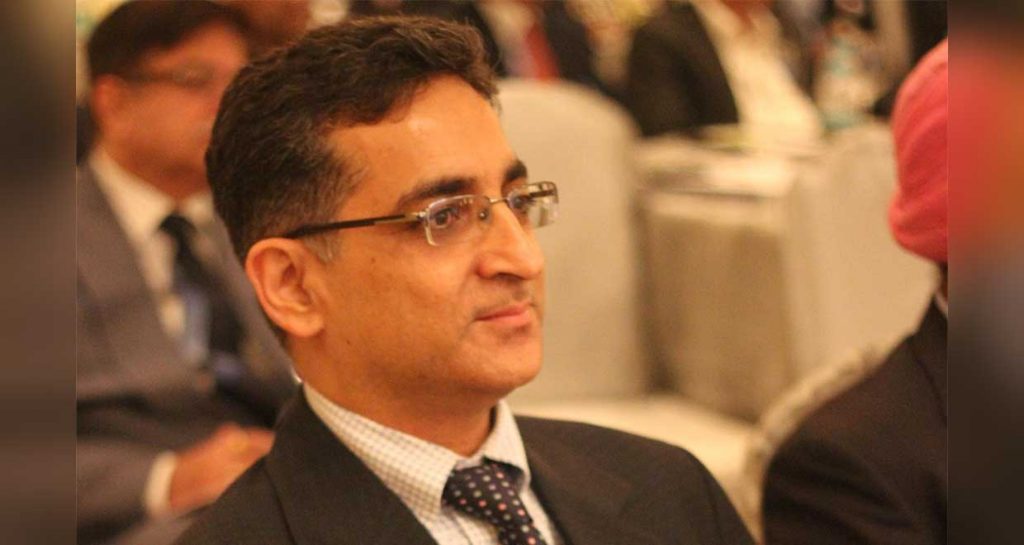
  • Binoy Parikh- part of Katalyst Advisors, a boutique structuring & advisory firm focussing on Mergers and Acquisitions

    Binoy Parikh- part of Katalyst Advisors, a boutique structuring & advisory firm focussing on Mergers and Acquisitions

    This interview has been published by Tanmaya Sharma. The Interview was taken by The SuperLawyer Team.


    How tough was pursuing C.A. with additional professional degrees like B. Com & LL.B.?

    There are two parts to any academic journey, especially when it involves an extremely practical/on the ground kind of qualification such as pursuing CA – first is the academic or theoretical knowledge itself, which is not as tough as one would perceive since many concepts would overlap with B.Com and LLB. If the fundamentals of various topics are clear (at Foundation/Intermediate level), then the theoretical knowledge is relatively comfortable to maneuver.  

    However, the second one, which is more important and will result in long-lasting benefits is the “Articleship”. I started working when I was 17 and worked effectively, in three shifts – from 9 am to 11 am, in M&A/Corporate Tax Litigation, thereafter from 11 am to 6 pm in Audit and again from 6 pm to 9 pm in M&A/Corporate Tax Litigation. Of course, given the time commitment, one has to prioritize a lot and that does create additional pressure while pursuing other degrees. However, to manage the time and overall pressure, one does have to commit to a particular mission, and while on that the time management associated with it. 

    Many students feel that tax litigation is hard to follow, but the same amused you. How can corporate tax be learned in a fun way?

    My stint with corporate tax litigation was during my Articleship/Internship period – in this context, I was new to the field and found the concept of litigation fascinating since it tests the technical prowess of corporates (and their advisors) on one hand, and the might of the Income-tax authorities on the other. Further, complex issues involving corporate restructuring, interpretation of a particular exemption/deduction, etc. would have required in-depth planning and analysis before taking such a position in the return of income, and therefore, the fascination lies in the fact that one would have to defend such a position during litigation, which would have been analysed thoroughly in the past. To me, the learning and the associated fascination comes from the fact that each position or stand is not taken on a stand alone basis, but after considering the previous stands, impact on the future financials of the company involved, interaction and interconnectedness with other regulatory laws (such as corporate law, securities law, FEMA, IndAS, etc.) and therefore, to understand a particular issue under litigation is to again understand that entire gamut of analysis undertaken in hindsight, and what could have been done at that time so that the litigation scenario could have been obviated.

    Binoy Parikh

    Would you like to share your experience of any M&A transaction that shaped your career?

    Initially, I had started my career with KPMG Mumbai in their M&A Team at the age of 20. Then when a part of the team transitioned to PwC Mumbai, I got an opportunity to directly work with the India M&A Head of PwC at the age of 22. And it was at that time, I was handed the responsibility of conceptualising and executing the merger of Cairn India with Vedanta in a $2.9 Bn all-share swap deal. The concept itself dealt with a gamut of laws and regulations owing to a complex ownership structure – tax, corporate law, FEMA, securities law, stamp duty, etc. At that time, IndAS was just taking shape, and we had to figure out the overall impact of IndAS on standalone as well as consolidated financial statements of Vedanta, and without any specific guidance, it was a challenge to apply IndAS 103 and IndAS 110, dealing with business combinations and consolidation/control assessment. Dovetailing and interconnecting all the laws was a task in itself at a conceptual level. 

    In addition to that, corporate India was transitioning from a High Court based jurisdiction to a National Company Law Tribunal based jurisdiction. So, from an execution perspective, we had to unlearn the old procedures, re-learn the new ones, and then present to the NCLT the merits of our case, which was one of the first few to be sanctioned by the NCLT post its formation. 

    I think the key takeaway from this is that the tax and regulatory landscape in India are ever-evolving and one cannot work in a static environment. And I have learnt to rely on my fundamentals while applying the fundamentals to the constantly changing dynamics in the M&A landscape.

    You are a part of “Katalyst Advisors” (Mumbai), a boutique firm focusing on Mergers & Acquisitions. How has the journey been so far?

    The journey has been fantastic so far, to answer in one line. 

    To elaborate – when I joined Katalyst Advisors since its inception, our vision has always been to be a boutique firm, focussing only on M&A and related aspects, and with a limited team so that we can do justice to the matters at hand, especially when it involves complex commercial, regulatory and tax matters. 

    Today, in the era of “accumulation”, quality has been overwhelmed by the quantity, and therefore, our vision, since its inception 4-5 years back, has been to focus only on the quality of our advice, rather than the quantity or volume of clients. This has worked well for us as we have worked on some major deals in the last couple of years – major family separation of the TVS Group, divestment of Eureka Forbes by Advent International, acquisition of Thyrocare by PharmEasy, private InvIT structure between Singapore based GIC and IRB Infra, major fundraising-related structure for the Shapoorji Pallonji Group, etc. This has added a lot of value to our learning in addition to us providing value addition to the client. 

    Apart from the client work, the notion of building a firm right from the beginning – designing the website, newsletter, etc. has excited me a lot and has given me immense satisfaction as compared to my previous endeavours.

    How challenging has it been maintaining a work-life balance in this era of Work from Home?

    Well, we have been partially working from the office since June 2020 after the first complete lockdown – however, I must say that, as an M&A professional, the focus of clients on consummating any deal has increased, and in the last 1 year, as I mentioned, we managed to close three major deals – the TVS Family restructuring (a $7 Bn family separation), acquisition of Thyrocare by PharmEasy and acquisition of Eureka Forbes by Advent International, and therefore, the work pressure has certainly increased. Of course, with high stakes involved, the concept of 9 am to 6 pm workday, or Monday to Friday working week is not obliterated, but at the same time, I have consciously managed to take some time out to maintain my physical and mental health (through regular meditation and cardio), and the hobbies that I love (for example, playing the Tabla), given that in the times of such uncertainties and limited social interaction if one focuses on being mentally and physically fit, one has won half the battle. 

    I look forward to taking some mask-less vacations soon, but till then, the personal health regime that I have managed to maintain has helped me a lot over the last 15-20 months to cope up, and, be more effective at my work.

    What is your current role? Could you walk us through how a normal day looks like in your life?  

    I am into Mergers & Acquisitions at Katalyst Advisors presently. I handle promoter-related issues, such as family settlements, succession planning, pre-IPO planning, etc. corporate restructuring and deal/ transaction advisory related issues, certain specific regulatory-related and corporate/ international tax-related issues and deal with a whole host of laws such as income-tax, FEMA (outbound/ inbound/ debt investment advisory), securities’ law (LODR, ICDR, Takeover Code, AIF/ InVITs/ REITs/ etc.), corporate law, stamp duty, IndAS, competition law, etc.

    In this context, given that we deal with very interesting issues, involving interaction with a lot of tax and regulatory laws, a “normal” day differs from day to day, but largely, it involves conceptualisation of deals, which involves various laws mentioned above, and coming up with innovative ideas to achieve the commercial objective of the client, while keeping in mind the tax and regulatory fetters. Conceptualization becomes all the more challenging and interesting, if it involves listed entities or non-resident parties, etc. 

    From an execution perspective, given that any M&A deal would most likely have in place a Share Purchase/Subscription Agreement, Shareholders’ Agreement, Non-competes, etc. and if it involves a merger/ demerger, then the entire NCLT approval process in place for approval of a Scheme of Arrangement, it requires a thorough understanding of the commercial objectives of the client, and ensuring that the same is reflected in various transaction documents, as well as ensure that the regulatory approvals (NCLT/ RD/ RoC/ OL, etc.) come through based on the definitive agreement.  

    As a result, a “normal” day would involve interacting through meetings and calls with the clients, lawyers, valuers, regulators, etc., preparing decks, notes and emails capturing our advice, following through with the above to get our idea to the client, and finally negotiating and closing the deal with the other parties/ regulators to see the deal seeing the light of day!

    You have authored several articles in relation to the M&A field, rendered several seminars, and co-authored “Impact of GAAR on Holding Structures” published in Compendium of GAAR published by the Bombay Chartered Accountants Society. How important is it to publish legal articles for law students fundraising-related in their career?

    One needs to write articles. There are several reasons for this – firstly, providing an output in a limited number of words requires a combination of thorough research, understanding the issue at hand in-depth, and then paring out the “noise” to articulate in the best possible manner so that your readers understand the core issues. Therefore, writing articles not only help in the technical knowledge getting sharpened (through research) but also the articulation skills getting honed depending on the platform where one is publishing – for example, on a technical platform, one may want to discuss more intricate technical issues, while on a general platform (such as financial dailies), one may want to translate the technical issues into more commercial ones for a wider reach.

    Binoy Parikh

    As you are an expert on Mergers and Acquisitions transactions, would you like to advise anything specific to the like-minded aspirants?

    If one likes the M&A/deals space, then one needs to understand, in detail and thoroughly, the entire gamut of tax and regulatory laws, as mentioned previously. Once the fundamentals are cleared, one can easily traverse through the constantly changing tax and regulatory environment – however, if fundamentals are not clear, then one would be lost in a cyclone of the dynamic environment. In addition, and equally important, is for one to research the commercial aspects of a deal – what was the rationale of a particular deal, what were the valuation parameters, are there similar deals taking place in the same space, was it a distressed or a voluntary deal, what would be the impact on the overall group business as a result of the deal, what would be the impact on the promoters, etc. As I mentioned earlier, any deal is different from any other deal, a deal evolves constantly before its consummation, and therefore, each deal requires a “tailored fit”, which, in turn, requires one to understand the commercial, regulatory and tax matters in-depth and apply one’s knowledge to facilitate deal consummation.



    Get in touch with:

  • ANSHUMAN MOZUMDAR, PARTNER AT L&L PARTNERS (FORMERLY LUTHRA & LUTHRA LAW OFFICES), SHARES HIS EXPERIENCE OF CHOOSING LAW AND GETTING THROUGH LAW SCHOOL, BEING AN INTROVERT IN A PROFESSION THAT IS OFTEN PERCEIVED TO BE FOR EXTROVERTS AND THE IMPORTANCE OF EMPATHY AND PURSUING YOUR INTERESTS

    ANSHUMAN MOZUMDAR, PARTNER AT L&L PARTNERS (FORMERLY LUTHRA & LUTHRA LAW OFFICES), SHARES HIS EXPERIENCE OF CHOOSING LAW AND GETTING THROUGH LAW SCHOOL, BEING AN INTROVERT IN A PROFESSION THAT IS OFTEN PERCEIVED TO BE FOR EXTROVERTS AND THE IMPORTANCE OF EMPATHY AND PURSUING YOUR INTERESTS

    This interview has been published by Maaz Akhtar Hashmi and The SuperLawyer Team. The Interview was taken by Priyanka Cholera.


    How would you define the term SuperLawyer? What does the word represent to you?

    I wasn’t initially comfortable with the fact that I am being interviewed as a “SuperLawyer”. I don’t think that I have achieved something that is “SuperLawyer” worthy. Most of us will have work lives spanning for 35-40 years. Even after 10 years, I feel that I have barely scratched the surface and have a long way to go. I treat my profession as a component of my life (no offence to those who think of themselves as a lawyer 24×7, 365 days a year). Possibly, legal luminaries who have created an impact on the society or fellow lawyers are more suited to such titles.

    Having said that, I do believe that there is a journey that is unique to every individual. I have mine too. My journey as a law student and a professional has been fulfilling and has had its own share of ups and downs. I feel that by narrating my journey and discussing my struggles at a personal and professional level, I may be of help to someone who is experiencing something similar or is looking for guidance or simply wants an assurance that they are on the right path.

    Do you feel serendipity played a factor in your decision to pursue a career in law? On the other hand, did engineering not seem like a better fit for you as a science student?

    I do feel that serendipity played a role in my decision to pursue law. While I must say that my decision worked out well, I didn’t really know what I was aiming to pursue in my professional life at the time of getting into college.

    I don’t have a spectacular backstory on how I decided to pursue law. It wasn’t the case that I felt inspired after reading some book, or meeting a luminary in the field of law, or experiencing some event or tragedy. I finished school from St. Xavier’s Collegiate School, Kolkata, in 2006. In those days, the general trend amongst middle-class family kids with a science background was to pursue engineering or medical. The 5-year integrated LLB wasn’t as prevalent a choice amongst students as it is today. Thankfully, students these days are a lot more aware of other professions (including law) due to the outreach of the internet and the work done by organisations such as Lawsikho.

    My initial goal was to pursue engineering and get into a top IIT. Unfortunately, my preparations took a hit when I contracted a severe case of typhoid in the 12th standard. As expected, my scores in the entrance exams weren’t adequate to secure a seat in a top engineering college. However, I didn’t want to drop a year to prepare for the next year’s entrance exams. My backup plan was to get into a reputed college and pursue an alternative stream that had good job prospects. Unfortunately (like most middle-class family kids), my decisions were driven more with the end objective of securing a decently paying job rather than choosing something which really appealed to me.

    I had heard of the 5-year integrated LLB since NLS and NALSAR were growing in popularity and NUJS was coming up the ranks. The prospect of studying at home (at NUJS) also played a part in me deciding to appear for its entrance exam. Each law university had its own entrance exam in those days. I briefly took entrance exam coaching from a private tutor and went through some of the guidebooks. While I didn’t have much idea about NLU Jodhpur, I decided to appear for its entrance exam to practice for the NLS exam scheduled to be held a couple of days after the NLU Jodhpur exam.

    I got through NLU Jodhpur and only managed to get on the waitlist of a few other NLUs. Though I wasn’t initially thrilled with the outcome, speaking to some of my teachers and school seniors allayed my concerns. NLU Jodhpur was offering an integrated B. Sc. LL.B. degree, which appealed to my science background, as well. My relatives were surprised when I told them that I was going to Rajasthan to study law. My family had to fend questions such as “why law?” and “why Jodhpur?”. While these comments created some initial doubts in my mind, I, fortunately, chose to ignore them.

    How was your law school experience? Being an introvert, did you find it challenging to get through law school? How did you overcome the initial mental barriers linked with the preconception that “introverts aren’t best suited for a legal career”?

    NLU Jodhpur’s first batch had just graduated the year before. In those days, the NLU campus wasn’t the scenic lush green campus with flower beds and so many buildings that you see today. When I stood in front of the college gate for the first time, I remember seeing vast expanses of sand and a few buildings in the middle of it. That sight was quite intimidating for a kid who had never been to a boarding school and had just left the comforts of a highly insulated middle-class environment in a city like Kolkata. My immediate reaction was to look at my father and wonder what I had done and where I had landed.

    My law school journey wasn’t a joyride as it may have been for some others. Some individuals adjust to a new environment a lot faster than others. It won’t be incorrect to say that I took about three out of my five years to fully adjust to a new city and college and “figure things out” (probably the longest amongst my batchmates). I had my own set of struggles with adjusting to a new place and life in a residential university. While I eventually learnt to figure these issues out, I realised that it is a process of self-discovery that everyone has to go through at their own pace – and there are no prizes for figuring things out sooner.  In the process, it is easy to fall prey to frustration and agony if you feel that you are unable to adapt quickly or are unclear on your future goals.

    I am an introvert. I didn’t really know what it really meant to be one until a couple of years earlier when I took a Myers Briggs personality test. It changed the way I perceive myself and helped me understand myself better. Introverts are often passed off as “shy” or “socially awkward” in our society. I used to feel like a fish out of water in college. I could not explain why I didn’t feel the urge to hang out with people more often (even with a familiar bunch of people) or was not very outspoken in my surroundings. Being an introvert does make the process of adjusting to your surroundings difficult. But I promise you – things get better with time.

    Good public speaking skills is an added advantage to every lawyer. However, it doesn’t mean that students who have initial troubles in developing these qualities cannot succeed in the legal profession. This is a misconception largely owed to how the legal profession is portrayed in movies and pop culture. I have come a long way since my initial years of college in terms of the manner in which I conduct myself. While I had my share of low points during my college and professional life, I feel that preparing well and visualizing my professional conversations made me a more confident individual. Finding my interests outside studies/work, pursuing co-curricular activities and learning new things unrelated to work also helped me immensely. At a more personal level, learning to do things without expectations and practising philanthropy (by conduct and not just economically) helped me find inner peace and gain more positivity. I also had some good mentors and teachers who helped me throughout my personal and professional journey.

    In retrospect, how would you describe your initial years at Luthra? Being a young lawyer, how did you balance work and personal commitments?

    I did several internships while in college and wrote publications in order to make my CV more compelling. For me, everything I did was about trying to get a decent job at the end of law school and find financial stability. Unknowingly, I became a part of the rat race without actually learning how to apply the knowledge in practice. It was only when I joined a law firm that I realized that this was not even the tip of the iceberg. You have to unlearn and relearn everything that you have learnt in law school, from a fresh perspective, once you join the profession. Of course, that does not take away the basic fundamentals of laws that you learn in law school – which are extremely important for any professional.

    I joined a private equity and M&A team at Luthra. When I joined, we were a team of four. Within 6 to 7 months, two colleagues (including a senior) left the firm. All of a sudden, I was reporting to the partner directly and handling client-facing work. The next year, our team recruited two more junior colleagues. I was given the responsibility of mentoring them even though I was only a first-year associate.

    The advantage of this set-up was that I wasn’t a mere cog in the wheel and was fully aware of what was happening on a transaction. I was also shouldering administrative duties and playing a managerial role while working with my junior colleagues. At times, junior associates who are a part of larger teams may lose sight of the main objective of an assignment because they aren’t being tasked with the execution of the assignment from the beginning to the end. Hence, even though I was part of a small team, I was getting direct exposure to big transactions. There was one instance where I was given a document to negotiate when I didn’t have any prior experience with negotiation. My partner encouraged me to list out the discussion points and practice what I was going to say before him prior to the negotiation. This experience was definitely a turning point in my career and made me a more confident individual. Despite these positives, there were some drawbacks and sacrifices of working in such a set-up, such as working long hours, working on weekends, losing out on social life or not being able to pursue interests outside work.

    We are looking a decade back, from being interviewed for Luthra during the campus placements and to the firm as a partner. How has this journey been for you?

    My professional journey has been fulfilling and has changed me for the better at a personal level. I have learnt to identify my strengths and translate the same into my work product. My analytical skills have greatly increased. I am also able to contribute to commercial aspects of a transaction, a quality that my clients appreciate. As I mentioned earlier, learning to swim at the deep end of the pool really helped me get early first-hand experience of the skill sets required in the field. The downsides were that I didn’t have much of a life outside the office in my growth years – hence my social life suffered. Whenever someone asks me about how it is to work in a law firm, I tell them that while the job is rewarding in various ways (including financially), it no doubt has its cons and is a tough one to stick to. For this reason, the rate of attrition in law firms is also quite high, and burnouts are quite common.

    While compensation is important, I don’t believe that people stick around in an organisation only for money or out of a sense of loyalty. They have to feel a sense of fulfilment. They have to feel valued and comfortable in the work environment. A firm or a brand name may go to the extent of assuring you of the kind of work you will get or the compensation levels. But it is never the assurance of a great work environment or culture – which is driven largely by the people in the team that you are a part of. It is therefore important for a good leader to possess empathy and good interpersonal skills.

    I stuck around at Luthra because of a positive team and office environment. I was given the freedom to grow as a professional. I made some of my closest friends in the firm. My superiors and co-workers have always been approachable enough to discuss work and personal life. I felt that I was levelling up and learning something new.  It will be incorrect to say that I didn’t have my fair share of disappointments in my professional journey. Every professional in a law firm is bound to face these moments of doubt when they start questioning whether they want to continue in the firm or not. However, overall, I am grateful for the journey and what I have managed to achieve.

    You mentioned that you had to compromise on social life early on in your professional life. Do you believe that socializing today is more about networking than it is about interacting with others?

    I don’t think that professional networking can be equated with socializing. I treat networking as part of my job, which may create opportunities for me or my firm in the future. I never paid attention to networking until I started working. Fortunately, people today are a lot more aware of the concept of networking and why it’s essential. In a week, I try to set aside a few hours to make new connections, reconnect with old ones, or read something that a connection has shared on Linkedin. Networking definitely helps every professional, and one should start as early as one can, but I feel that it’s not the most crucial requirement for a law student. Networking is a continuous process. Even if one is not good at networking initially or has started late, one can always catch up.

    In your career, you have played a key role in various transactions for brands Burger King, Starbucks Corporation and many more. Is it a milestone to represent big names that also hold a personal value as a consumer for millions? How do you keep the team spirits elevated and make a positive environment to work on high-stakes deals?

    No offence to those who feel otherwise, but I feel we corporate lawyers don’t get as many opportunities to make a difference in society as compared to litigation lawyers. While M&A, financing and IPOs form the backbone of a country’s economic activities, I personally feel that a corporate lawyer will not get the same level of satisfaction that a litigation lawyer will get after having successfully filed/argued a PIL or having secured justice for a victim.

    But while working on transactions especially involving consumer-facing parties, one does feel special. When I look at a Burger King restaurant or a Starbucks cafe today, it does bring a smile to my face. It is a representation of a tangible result of the work that I did on the transaction and gives more meaning and a sense of purpose to what I do.

    As regards your second question, I try to inculcate and build a positive work culture as the leader of my team. I detest toxic work environments and gaslighting. Unfortunately, these are quite common in a lot of workplaces and can be detrimental to a person’s self-esteem and career. People often underestimate the impact that their words can have on somebody. While I understand the need for a person to be strict with their co-workers, bad behaviour cannot be tolerated. Unfortunately, I have heard of or come across individuals in the profession who are impatient, yell at their juniors or send obnoxious emails to them when they make mistakes. I understand that it is not easy to always maintain one’s calm amidst work pressure, but one can’t treat their team in such a way. You have no right to yell at your colleagues, especially when you haven’t made an effort to educate them and explain their shortcomings. That’s your job as a senior or as a leader of the team. A lawyer’s ability to empathize with others is crucial for their growth. Everyone is built differently, has different strengths and weaknesses, and is motivated in different ways – and a team leader needs to identify that.

    Congratulations on being in the Forbes 100 Power List of 2020 and securing M&A Deal of the year (Premium) by Asian Legal Business Awards, 2020 (Thomson Reuters). What value do these titles hold on the personal and professional front? Are these a parameter of success or a checkpoint?

    I feel that awards do add some value to one’s resume and does create a good impression on a client, especially when they haven’t previously worked with you. I won’t downplay the value of such awards because it does feel good to get recognized. However, they are definitely not a measure of one’s success or quality. I have been on the side of things far too often where I have felt that I haven’t received the recognition that I deserved. So if you haven’t received an award, it doesn’t mean you are not deserving. At the same time, I will never take any such recognition for granted. At the end of the day, what matters is when the client calls and tells me that I have done a great job.

    What would you tell your younger self if you could go back in time and advise yourself about the journey ahead?

    I would be less harsh and more forgiving on myself. I would take better care of my health and well-being. I would stop putting added pressure on myself to achieve things by a certain time frame. The society sets expectations that we have to achieve certain things by a certain age. We fail to realise that there are no prizes for achieving things earlier in time. I would encourage myself to read more, learn a new language, take more interest in sports and things other than studies as there is a lot more to life than studies and work, and such pursuits help develop positivity.

    What are a few qualities you look for in a prospect when making recruiting decisions?

    Due to the kind of competition, we have in our country, the interview or selection procedure must be completed in a short period, and it may not always be an accurate representation of a candidate’s quality. Many people don’t realize that the competition is tougher in the field of law because, unlike medical or engineering, where there are more jobs and opportunities in a year, the intake in law firms throughout the country is comparatively quite low.

    I personally feel that the interview process is not the most accurate judge of a candidate though we try our best to be as objective as possible in the evaluation. For all that you know, the candidate may be having a difficult day or is generally nervous because of the pressure of trying to create an impression on the interviewer within a short span of time. Unfortunately, we have to assess what is in front of us. Personally, I would prefer to evaluate a candidate during their internship and make recruitment calls on the basis of the same. While I would definitely look into a candidate’s knowledge of basic fundamentals of law, I would also look at their ability to apply legal principles to fact situations or think through a particular problem and provide a solution using logical reasoning, even if they are unaware of the relevant law. The ability to articulate one’s thoughts efficiently also counts. During internships, I generally lookout for candidates who are able to grasp the research problem well, ask the right questions, and provide a concise and well-researched work product. Lastly, I also look for candidates who are hungry to learn and take the initiative or think out of the box to find a solution to a problem.

    What do you hope our readers will take away from your experience?

    A couple of learnings and self-realisations that have helped me in my journey:

    • Not everyone is built the same. You don’t have to be harsh on yourself or question why you behave a certain way. I suggest that everyone takes out a few minutes and attempt to take the Myers -Briggs personality test (online). The feeling of being more connected with yourself is beautiful and empowering.
    • Don’t pile up expectations on yourself or beat yourself up for not achieving them. Be easy on yourself and learn to forgive yourself for things. Everyone has their limits and weaknesses, and even I do. 
    • We don’t realize the impact our words can have on other people. Be kind to others.
    • Share and give more. To the extent feasible, talk about your failures so that others who are battling similar issues can have a better life. Be grateful to your mentors by mentoring someone else. And do so without any expectation. 
    • Never fear asking for help. At times when you feel that no one is around to help you, you will receive help from unexpected quarters. I am a big believer in the quote from Harry Potter – “Help shall be given (at Hogwarts) to those who deserve it“. I promise you that the good you do and the knowledge you impart will come back to help you when you are in need.
    • On a more professional note, set your own goals and standards (and set them high) and try to meet them instead of trying to imagine what standards your senior expects of you and trying to chase such standards. This will lend a sense of positivity to your approach. 
    • Self-evaluate yourself every six months to see if you are learning anything new or doing the same task faster or better than you did before.
    • Develop your interests, whether they are related to or unrelated to your professional life. Engage in creative pursuits outside work whenever you can.

    Get in touch with:

  • DEEPTI SARMA, PRACTICE LEAD, GENERAL CORPORATE & ADVISORY AT ANAND & ANAND & KHIMANI ON ESTABLISHING HER CAREER IN LAW, HANDLING M&A MATTERS AND HER ROLE BEING A CORPORATE LAWYER

    DEEPTI SARMA, PRACTICE LEAD, GENERAL CORPORATE & ADVISORY AT ANAND & ANAND & KHIMANI ON ESTABLISHING HER CAREER IN LAW, HANDLING M&A MATTERS AND HER ROLE BEING A CORPORATE LAWYER

    This interview has been published by Isam Kabir and The Super Lawyer Team. The Interview was taken by Priyanka Cholera.


    After pursuing a Bachelor in Commerce, Economics and Accountancy, you got your career off the ground by studying law. Could you describe the transition from Commerce to Law?

    I was quite sound in academics, right from school through college. I was a gold medallist and one of the state toppers in my HSC examinations (I was a commerce student). The very obvious choice was to pursue chartered accountancy or the company secretary course, both of which didn’t interest me at all!  The lack of alternatives didn’t scare me- I somehow just knew in my heart that I would find my true calling soon (although I must admit, that ‘soon’ happened only once I graduated from college!). I zeroed in on M.Com and Law as potential options for post-graduation. Back in 2005, law as a career had not really gained traction and was not considered as a lucrative career option, especially for first-generation lawyers like me. However, I instinctively decided to apply to Government Law College, Mumbai to give law a shot. I vividly remember the day I had to submit my application when GLC had run out of application forms and I literally wrote mine on a plain piece of paper and made my submissions! I got through and from there on, there was no looking back. I would like to call myself a classic case of a lawyer by chance.  

    You joined Desai and Diwanji as Associate Lawyer immediately after law school. How has that experience shaped you and contributed to your interest in M&A and General Corporate?

    I started working with Desai & Diwanji (‘D&D’) in my second year of law school. The practice of permanent interns was mostly prevalent then, and I was being interviewed along with ten other interns and believe me, I had no idea about the entire process or where I was going to land up! Just like when I got into law school, my academics spoke for me and before I knew it, I was shortlisted and had officially kick-started my journey as a paralegal trainee- my first step towards being a lawyer. Whilst I do agree that the current structure of the legal education system may not exactly unravel how good a lawyer you are, at a time when you are an intern or a fresher with no real experience to do the talking for you, sound academics to some extent helps people take you seriously.

    Interning at multiple firms was something that I never considered as an option because by nature, I am a nester. I strongly believe that understanding a workplace and its dynamics takes time and making a judgement about whether or not a law firm is for you takes a minimum of 6 months. Again, this was my take and I must say that there have been several colleagues I know who have gone the ‘multiple internships’ path and found their conducive work environment as well. There is no ‘one size fits all’ approach to this decision and what works for me or someone else, may not work for everyone. 

    I decided to give my stint at D&D a few months to understand how exactly a corporate team of a law firm functions. I was lucky to have worked with a wonderful team of young and senior professionals who helped me transform into a holistic professional. A law career requires a plethora of skill sets which I understood as my internship progressed. Whether it is interacting on the phone with a client or putting together a legal opinion as per the firm’s standards- I consumed all the knowledge I could during my paralegal trainee days. My commerce background also helped me grasp commercial concepts a lot more quickly and I was happy that I could to some extent, apply what I had learnt to what I intended to convert into a full-time career. I think that marriage of my educational background with my future career pretty much clinched my decision to make corporate law my career and before I knew, my plans to pursue MBA which I had decided as my subsequent career option vanished into oblivion! The few months which I had given myself converged into an association as a paralegal trainee for 2 years and I later got absorbed as a full-time associate on completing law school. Destiny definitely had other plans for me.

    After spending almost a decade working as a corporate lawyer at DSK Legal, where you rose to the designation of Principal Associate, you took a short break before joining your new practice at Anand & Anand & Khimani. How was that decision rewarding on a personal as well as the professional front? Do you endorse the idea of career breaks?

    Law is a demanding and all-consuming career. Most corporate lawyers almost never speak about back-to-back deal fatigue, the challenges of keeping up with an ever-evolving and fast work environment or the inability to consume knowledge at an exponential pace than one would ideally want to. Sometime during the latter part of 2018, I slowly but surely realised that I had completely lost the feeling of the adrenaline rush every new deal brought in. But the burning question was ‘how do you give up something that has been a part of your DNA for 11 odd years! Also, the fact that not too many lawyers take such decisions, makes one question their own! After a lot of thought, I realised that I wanted something more than being a full-time transaction lawyer and wanted to explore more hybrid opportunities that the profession had to offer. Also, although I pride myself on my ability to handle pressure, even the best have their worst days. I realised that I had burnt out and needed to take a step back- but one thing I was sure of was that I never really wanted out of the profession.

    The decision was nothing short of liberating! Those 6 months helped me rejuvenate and do things that I had left behind me over the years. I focussed on rekindling my love for dance (I am a trained Bharatnatyam dancer), I travelled and spent a lot of time with friends and family, especially my then 3-year-old daughter. However, I consciously kept myself updated on legal developments- at least to the extent I could. Like I said earlier, corporate law is a way of life for me and I always knew I was going to bounce back so keeping in touch with developments was something that came very naturally to me.

    I strongly believe that you attract what you are. A good and positive frame of mind always leads to sound decision making and before I knew I found myself speaking with Priyanka (lead partner of Anand & Anand and Khimani) in whom I found a kindred spirit. A few coffees and several discussions later, I embarked on a new professional journey with Priyanka in November 2019 and it remains my best decision till date.

    Are career breaks for everyone? I honestly don’t think so. I have met lawyers who still thrive on the excitement and rush that every new deal brings, in spite of spending several decades in the profession. Every individual is different and it is a very personal decision to make- however, I firmly believe that the decision must be taken not on an impulse but with reasonable thought and planning. Please ask yourself some very important questions before you take the plunge-Like (i) How would you explain a break to your next employer? (ii) Are you financially prepared to be out of a job? If yes, for how long can you sustain? (iii) Is it fatigue/burn out or is it just a situation of ‘being done’ with a particular organisation? Would working with different people solve what you are exactly feeling? Be honest with yourself and you will be able to decide whether you are really ready for that break or not.

    Deepti Sarma

    Many people focus on finding the right mentor, a senior who can train and groom them as their responsibility. Where does your search stop when it comes to finding the right mentor?

    Word of mouth. The traditional way of getting information about your potential senior/partner (who will eventually become your mentor if you are lucky!) is never going to change. You have to speak to people within the profession and understand your potential employer/organisation’s work ethics, cultural fits, team structure etc. Law firms especially are very individually driven organisations and it is imperative to get some knowledge about the person you will potentially be working with. I would also like to add something very important for future lawyers here: Give yourself some time to figure whether a place is really a fit for you or not- especially if you have done your homework and submitted yourself to a place very consciously. Law firms have volatile environments and sometimes you may have just caught your senior/partner in between something very pressing. Under those circumstances, certain situations may not elicit a reaction from them in the way you hoped for. Give your senior/partner some time-just the way they are giving you that time to acclimatise. Don’t instantly judge a senior/partner based on a couple of instances. Judge your experience over a period of a few months and then determine whether you have indeed found a mentor or not. 

    You have a demonstrated history of working in the M&A niche for more than a decade, including advising high profile clients. Could you share how you manage such high stake matters?

    Apart from a strong legal acumen (which is a given), being a lawyer requires you to be mentally strong and possess the ability to think on your feet. Knowledge can be acquired by reading up and spending a lot of time in gaining an understanding of various concepts, which is of course an integral part of being a lawyer. But the other skill sets which keep you going even at 3 am when you need to see a transaction through, is acquired with years of being a part of such situations. The one thing that I have learnt and consistently observed in the 13 odd years of my career is that you are never going to have ample time to ‘think through’ most of the time. This is where a mentor in your growing years plays an important role. You get the opportunity to learn and observe how your senior/partner deals with tight situations and this automatically becomes a part of your skillset over the years. I have had the opportunity to have worked with some absolutely fantastic legal minds at different stages of my career and that has contributed to making me the lawyer I am today.

    How has the transition been for you from working shoulder to shoulder with corporate lawyers on M&A to establishing the practice in general corporate? What are the roadblocks and the lessons that you’d like readers to learn from your journey?

    As a hardcore PE/M&A lawyer one doesn’t get too much of an opportunity to dabble in a lot of general corporate work, at least not on a daily basis. Today, I thoroughly enjoy speaking with 10 different clients in a day and helping them with legal and commercial issues that they encounter on a regular basis. It almost feels like being a general counsel for every client and I would not have it any other way! Having said this, I still do a lot of transaction work and undertake deals of varied sizes for clients- it’s been a part of my career trajectory for too long for me to be completely out of it! Additionally, leading a practice is a huge responsibility- time management, team management, administrative governance, social media presence, networking- the list goes on!

    I would therefore not really call it a transition for me as a lawyer- it is just a wider spectrum of roles and responsibilities within the same area of law.

    My advice to young lawyers (and one thing I really wished I had paid attention to) is to assess your career every 4 years as a lawyer. Pause and reflect. You will realise you don’t want something at 28 when you were very sure of wanting that same ‘something’ at 22. As years pass by (which believe me you, fly past when you are a lawyer), you will realise that your thought process has changed, priorities have shifted and what you want of your career, is perhaps not the same as when you began. Take that time to assess your growth and expectations and once you made a decision, live by it come what may. Like I mentioned before, law is a demanding career and if you are signing up to something, do it wholeheartedly and very consciously. After that, don’t second guess and give it your 200%. One more thing to also bear in mind is that monetary standing doesn’t determine growth. It is a part of your assessment but not the only determinant. Always remember that, while money seems alluring at 25, it may not be so when you are 35. One, therefore, needs to make a holistic decision when it comes to determining career growth and not make an assessment merely on monetary terms.

    In the top 200 US law firms, women make up only 14% of equity partners. Does this trend cascade in India as well? Do you see it changing anytime soon?

    We don’t have any critical data in India to support this, but from whatever one can observe, the numbers do seem diminutive. Even today when you walk into a room for negotiations, you will find fewer women compared to men. There is no denying the fact that there is an obvious imbalance and a high female talent fallout ratio even today. But my general observation also has been that we are taking baby steps to fix this mismatch. To cite an example closer home, at Anand & Anand & Khimani, 95% of the associates are women! Priyanka firmly believes and I second that growth is gender-neutral, and does not have to be compromised because of gender roles or responsibilities. I also think women nowadays are far more prepared and better equipped to handle changing personal situations which invariably used to be considered a deterrent and lead them to take a back seat professionally. As women, we generally hesitate in self-promotion. However, women are now consciously putting themselves forward to seek recognition along with being hardworking and ambitious. The trend is emerging, yet promising and I am positive it is here to stay.

    Deepti Sarma

    Lastly, any parting words of advice for our readers?

    I have tried to build in tips for young lawyers in course of this conversation wherever relevant. However, the one thing I can’t stop impressing upon is- Pick a mentor and not a firm. Working with the right person is very important in your growing years and phenomenally helps in shaping you as a lawyer. So make an informed choice of where and whom you want to work with. Secondly- Have an open mind and consume everything that you learn and see in a way that you will never forget. Before you know the world will be your oyster!

    There are also a couple of leadership skills I would love to see amongst us senior professionals. I wouldn’t say these skills are completely absent, but they aren’t still largely prevalent. The most important of them is empathy. The profession is hard enough and a measured amount of compassionate leadership would take us a long way in building a more sustainable workplace. The stress and burnout caused by the pandemic speak volumes about why a high degree of importance needs to be placed on this quality.

    It would be great for firms to also continue to promote work from home/hybrid workspaces and flexible work hours. While the pandemic forced us into a corner on this one, this is something that has been the need of the hour in law firms for years now. I constantly hear more and more young lawyers mention that flexibility should be an ingrained work culture for lawyers, given the long hours spent at work which in turn ends up causing a direct impact on health and personal life. There is no substitute for physical presence, but it is important to realise that it is not always required and therefore I am a strong advocate of a hybrid work culture (part office/part home). Flexibility in terms of time and place of work enhances work-life balance, could lead to better work satisfaction and possibly less attrition, which is a glaring issue for most law firms till date.

    Get in touch with

  • Pritha Jha, Associate Partner, DSK Legal, on her internships, M&A, and her diverse experience

    Pritha Jha, Associate Partner, DSK Legal, on her internships, M&A, and her diverse experience

    Pritha Jha graduated in law from ILS Law College, in 2007. After a successful stint with Desai & Diwanji, she is currently Associate Partner at DSK Legal, where her role entails managing private equity and M&A transactions.

    In this interview we speak to her about:

    • Her time in ILS Law College
    • Her experience in M&A
    • Her current role as Associate Partner at DSK

    What motivated you to pursue law?

    For me, pursuing a career in any field other than law was never really an option, simply because my mind never contemplated being anything else. As far back as I can remember, I have always wanted to be a lawyer. I always enjoyed logical arguments. Being argumentative came naturally to me. While making a career choice, if you have the option, always choose to make a career in what you love doing. You will never fail because you will never be bored and you will never treat what you do as “simply a job”. When you love what you do, its personal.

    Could you briefly explain your law school experience at ILS? 

    When I started studying law in 2002, law wasn’t considered a serious career option, it was actually considered a “last resort”. There were not many who chose law as their “first option”. There was no CLAT and there weren’t as many NLUs around. At the time, ILS was one of the top three universities. There was no disadvantage.

    ILS Law made opportunities available to those who wanted it. There were classes, there were moots, there were extracurricular activities, but ILS focuses more on the theory of law rather than on the practical aspect of being “market ready”, especially for a corporate lawyer.  


    What kind of internships did you undertake during your student years?

    I didn’t start interning until my fourth year in law. This is primarily because of the way subjects in law school were spaced out. I didn’t see the point in interning when I hadn’t spent any time studying any law. When I did start interning, it was with various law firms to figure out what interested me most. Some of my internships were with a general corporate team, some with litigation teams and when getting an internship at a law firm was hard, I also interned at an LPO. Securing internships can be difficult, but the focus should really be on practice areas rather than just trying to get a big name on your CV. A lot of students think internships are just about that, getting the name of a firm on your CV without realising that if you make the correct impact as an intern at any firm, you may secure a pre-placement offer. To the contrary, if it appears that you’re just out to have fun, you could also be ensuring you never get picked up, even though your CV looks bright and shiny. Attitude towards work always tells a bigger story than the CV.


    What are your areas of specialisation in law? 

    My specialisation is in mergers, acquisitions and private equity. While I’ve worked in a variety of sectors, of late my focus has been on acquisitions through earn out structures. 

    I decided what I wanted to do through my internships and through the first years of being an associate. Speaking with people who have spent some time in the profession helps in analysing the pros and cons of the various options available, whether it be litigation, general corporate, private equity, mergers and acquisitions, taking a position in house, there are lots of options. Every individual needs to understand that they will never have everything they want. You need to decide before hand what your priorities are and what will fit your working style best. Ultimately, people will stick with what makes them happy. That’s how it worked out for me.


    What level of importance needs to be attached to GPAs, in light of the other academic and non-academic activities that may be undertaken in law school? 

    I will not deny that grades are important in giving an individual their first break. But topping your class is not going to help if you do not possess other attributes. Individuals are judged on various levels, their academics, their ability to speak and write English, the way they present themselves, their interests outside of law, everything counts. Rather than focusing on one aspect, one needs to focus on trying to achieve a balance in all. Everything adds to an individual’s personality.


    Is an L.L.M absolutely necessary for a career in law? 

    In my view, an LLM is a good option if your choice of career in law is teaching. From my perspective, an LLM does not really add to what you know after having obtained an LLB. However, an LLM can teach a great deal of things if you choose to pursue it after having gained a few years of practical experience. You relate to the LLM program more and you pick up a few other skills that law school may not have taught you or may not have prepared you for. For example, writing a research paper teaches the mind to think things through methodically, presentations help individuals develop the confidence to speak before large groups of individuals, some courses will also teach business development skills. It depends on each individual and their needs. Lots of LLM programs are offered around the world. If you must, choose from one that helps you achieve your goal. A lot of people join the LLM program for the wrong reasons, sometimes not knowing what they expect to achieve from it. If you don’t know why you’re doing it, don’t do it. Having said all this, is an LLM necessary? Absolutely not.


    When and why did you decide to make the transition from Desai & Diwanji to DSK Legal?

    I made my move to DSK Legal after having spent about two and a half years at Desai & Diwanji. Having spent that time there, I felt like I needed a change because my abilities were not being exploited to their full potential. Being an ambitious individual, I needed to do more and needed to do it more quickly. Added to that, the immediate partner that I worked with back then moved to the United States, and at the time, I was quite emotional about his departure.


    Tell us about your current work profile with DSK Legal. What does a regular work day look like, for you?

    I am an Associate Partner and I specialise in mergers and acquisitions and private equity. Over the last few years I have specialised particularly in mergers and acquisitions in earn out deals in the advertising space. Having recently been appointed associate partner, it’s a shift in focus from delivering work to focusing on delivering and getting new work. It’s a challenging job profile for me.

    I really wish there was something like a regular work day at DSK Legal. There simply isn’t one. Some days are astoundingly fast, some days are excruciatingly slow and then there are days that are just never ending. However, I assure you, it’s never boring.


    What is your message to our readers?

    My message to any young individual aiming to be good lawyers is that their first priority should be on picking up the skills that are required to be a good lawyer. The first few years of being a professional lawyer is all about making sacrifices and learning how to be a great lawyer. It takes a great deal of commitment, and although sacrificing at every turn may not feel the best at the time, it reaps huge rewards in the long run. Work very hard and nothing will stand in your way. Money never comes before hard work, money is a consequence of it. You have to earn it. If you’re good at what you do, you will never need to chase money.


  • Krishna Venkat, Partner, KLaw, on working at Crawford Bayley & Co., AZB Partners, and his experience in M&A

    Krishna Venkat, Partner, KLaw, on working at Crawford Bayley & Co., AZB Partners, and his experience in M&A

    Krishna graduated in law from The University of Manchester in 2004. He is a Corporate/M&A lawyer with of experience in handling cross border M&As for Indian and foreign companies. Krishna has also worked closely in structuring foreign direct investments in a variety of sectors, including into highly regulated areas such as tobacco manufacture & sales, and other general corporate laws. In addition, Krishna has worked closely with pharmaceutical & healthcare companies on a range of legal / regulatory issues that affect companies in this industry. This has involved making appearances before various Indian drug regulators from time to time. At KLaw, Krishna heads the FMCG, pharmaceutical & healthcare practice of the firm. Apart from the pharmaceutical industry, Krishna has also worked closely with several internationally reputed licensed payment system providers. Krishna’s experience also includes handling fraud investigations, dealing with investigators and devising strategies for the disclosure and resolution of findings made on conclusion of such investigations, including for listed companies. This experience also involved handling compounding and other remedial actions to be taken before different Indian regulators and guiding Indian and foreign companies on resolution of such matters.

    He has recently been awarded with 40 Under 40 Rising Star Awards by Legal Era Magazine.

    In this interview we speak to him about:

    • Studying in Manchester
    • His experience in the M&A domain
    • His current role as Partner


    Tell us a bit about your time as an undergraduate student at University of Manchester.

    The immediate thoughts that come to mind are entering lecture halls filled with students from across the world, sharing dorms with an equally diverse crowd of people and trying hard to keep up with all the cultural anecdotes and facets that I would encounter daily. The other vivid memory I have of my time there was our lectures in a building called the “Science building”. There was a large wall display in this building that listed many of the twenty-odd Nobel Laureates who have been associated with the University. Even though most of them were scientists, it was always inspiring to spend a few minutes gazing at that plaque and remembering the rich academic tradition that us students were, and still are, a part of.

    Manchester as a city was also a lively place to be in. The biggest draw of the place for me was the independent music scene at Manchester, which was and probably still is the best in the UK. There were several pubs and bars around the University campus where there were live student bands, which I found to be great fun.


    What co-curricular activities and interests took up your time during your legal education?

    I was a co-founder and the General Secretary of the University of Manchester’s Indian Society. Out of all the events we organised, my favourite was singlehandedly organising a cricket tournament with the Pakistan Society at the University to commemorate the test and one day series that both nations played during that time. From selecting the venue, organising the equipment and overseeing the day’s events, it was a feather on my cap that I’m still deeply proud of.

    I was also a part of the International society at the University, which was responsible for welcoming all new international students to the University over a week-long orientation. In the last year, a German friend of mine and I were responsible for leading a team of 30 student volunteers, to show close to a few hundred new students around the university and the city of Manchester. Daunting as it was, the experience was a lot of fun for every single minute of it!

    I was also an avid debater in college. I was a member in the University’s debating Union, having represented the University at a couple of inter-varsity events. It was an interesting time as well in the UK politically, due to the Iraq war, the proposal to increase tuition fees in colleges and the role of the then Labour government. All of this made for very lively debates.  

    Have you always been keen on a career in corporate law and M&A? 

    I chose Corporate M&A as a subject largely because of my experience in my first internship at Crawford Bayley & Co. I worked for two months on a range of corporate matters and found this subject very interesting.


    What advice would you give students in avoiding a decision paralysis? 

    Personally I feel that a basic law degree from a good university is all you need to start a career in a law firm or to practice before the courts. Further studies make a lot of sense if you are looking at an in-house role in a company or getting into academia. The reason I say in-house roles is because a lot of what you learn during a Masters in Law (or during a Doctorate) can be of great value if you are actively involved in dealing with highly regulated industries or industries where the laws are still being evolved.

    Further studies also make sense if you are looking at working abroad and would need credits from the LLM / Masters course to write a local bar exam.

    If you are planning on working in a law firm in India or practising before Indian courts, a basic degree in law is all you need.

    There are, of course, many lawyers who pursue further studies as a means of experiencing life abroad or the academic rigor of a foreign university. This is worthwhile if your time and money permit.

    What influenced your decision to pursue an LPC as opposed to an LLM from Inns of Court School of Law – City University? 

    I am a firm believer in practical experience and in courses that develop your skills as a lawyer. The LPC syllabus teaches skills such as legal research in a law firm, interviewing, and advising techniques, basics of advocacy as well as how to practically apply business, property and dispute resolution laws.

    The emphasis of this course is on teaching the basic skills you need in order to handle life in a law firm. The course also covered stress management in a law firm, interesting sessions such as reading body language, negotiation tactics and, my personal favourite, tips to preserving profitability in a legal practice.  

    Practising law in a law firm in India does not require a battery of degrees. It requires, in this exact order, experience, very specific skill sets, a clear understanding of the basic laws you covered during your LLB and lastly, confidence.


    From a law student to a lawyer, how will you describe the transition?

    I found this transition to be quite easy. The modules on the LPC Course and a very encouraging boss in my first job helped me enormously in making a smooth and quick transition into law firm life. Within two to three months of joining Crawford Bayley & Co., I was staffed on several critical assignments for the firm. I attribute this heavily to some of the soft skill courses that were covered during the LPC, such as interviewing and advising and research & analytical skill.


    Could you please share with us your early professional experiences at Crawford Bayley & Co.?

    It’s quite hard to describe the early professional experiences there, but I’ve realised that there were a couple of things that they emphasised on while working there.

    The first was on being able to handle an outsized challenge. Legal understanding is important, no doubt. But ultimately, in life, there is no rule book that prescribes the magnitude of a challenge that can be dropped on your head. There were more than a couple of times when I was thrown into the deep end of a pool and had to figure my way out.

    The other thing they placed emphasis on was staying calm, even in the middle of a storm. My first boss (whom I still deeply revere) showed extraordinary calm in some very challenging situations. Watching him over the years, and closely paying attention to how he carried himself taught me the importance of, as well as how to stay calm during difficult negotiations.  

    Thirdly, they expected decisiveness, even from a first year associate. If we expressed a legal view to our seniors, right or wrong, it was critical to be decisive no matter what. On-the-fence answers or highly caveated replies were not tolerated unless the circumstances were such.

    Lastly, but most importantly, creativity and out of the box thinking was deeply encouraged. Regard was always given to the more creatively envisioned answers or creatively presented views, as opposed to run-of-the-mill thinking.

    From my early years in the firm, these were the things that were imbibed vigorously into us. These are the lasting memories from my earlier years at the firm.


    How did you come to take up a position with AZB Partners? 

    I was looking for a change, and the opportunity to work in a large firm such as AZB. This move proved to be perfect for that. AZB is also a great place to learn a few advanced soft skills during negotiations and presentation of ideas; it was also a useful place to learn the latest industry trends and seeing how a top law firm handles a range of issues or how “calls” are taken on critical matters. These skills, along with some terrific partners that I reported to, made this a very positive stint.


    What are the key attributes that one must develop in order to excel in the field of M & A? 

    One common feedback that senior lawyers love giving to junior M&A lawyers is “build a commercial awareness”. Commercial awareness is of course critical in being a corporate lawyer and it eventually helps guide your evolution as an M&A lawyer. Unfortunately in my experience, no senior ever gives an intelligent answer on how one goes about doing that, whatever the reasons may be. And frankly, in twelve years of practice, I don’t think any of this so called “advice”, has made me any wiser.

    If you want to build commercial awareness, I would suggest making friends and developing close associations with startup entrepreneurs. Also spend time with them and learn about how their businesses function practically. A few years back, I partnered with a very dear friend of mine to develop a certain IT platform for companies. My role was to only act as a passive partner/investor and offer suggestions and ideas.

    The experience of working with my friend and experiencing practical problems first hand that a business faces in India were far more valuable in building a commercial understanding than in just blindly repeating ideas that originated from someone else. Hands-on experience carries powerful teachings, which can never be supplanted by simple observation and learning or by any number of books you read.

    I have also found that being in constant touch with startup entrepreneurs in a variety of industries teaches you a lot about what makes businesses work (or not), what sells with investors, how to evaluate long term goals and managing relationships.

    A good commercial understanding is the ability to understand a given business and effectively transpose the objectives of all parties with one another. When you are able to do that, evolving a legally sound strategy for your client and for implementing the deal becomes simpler.


    Tell us about your present role as a Partner at K Law.

    At K Law, I spend a lot of time working with FMCG, pharmaceutical and healthcare companies. I deal with regulatory issues that arise under different pharmaceutical and healthcare laws. This often involves presenting thoughts and ideas at a range of industry specific conferences and seminars and reaching out to industry bodies.

    Another subject that I have built a great awareness of is payment systems and RBI regulations on this subject. I also cover M&A assignments in these industries and for other industries such as energy, manufacturing and infrastructure.


    Did you have a mentor or guide during the formative years of your career? 

    Yes. A good mentor helps you define a career trajectory and give you the skills to fulfil it. My mentor and guide is Mr. R. A. Shah, the Senior Partner of Crawford Bayley & Co. Nobody has taught me more about law and legal practice than he has. I have also learnt a great deal from working at AZB with Mrs. Zia Mody and other partners such as Sai, Ashwin and Essaji. I also learnt a lot and owe a great deal to some terrific in house counsel whom I have worked with over the last twelve years and who continue to provide remarkable support to me even now.


    How do you manage to maintain a work-life balance as a busy legal professional?

    Well, the secret is there is no way of maintaining a work life balance. The best way to come to terms with this revelation is to keep a big jar of Nutella hidden in your work area and liberally dip into it whenever required.

    But what I do try and do when I am not working or spending time with family, is photography, trekking, running (the Mahalaxmi Race course is my favourite), reading fiction, and playing the guitar.

  • Sambhav Ranka, Partner, IC Legal, on his experience, studying in London, and dealing in M&A

    Sambhav Ranka, Partner, IC Legal, on his experience, studying in London, and dealing in M&A

    Sambhav Ranka is a graduate from ILS Law College, Pune, batch of 2005. He subsequently went on to pursue his Master’s degree in Law from Queen Mary, University of London, with a focus on international corporate and commercial laws. Since then he has worked at Morgan Walker Solicitors, LLP and Nithish Desai Associates. He is currently Partner at IC Legal, Advocates & Solicitors and heads the M&A, Private Equity and Venture Capital practice at the firm.

    In this interview we speak to him about:

    • Being a third generation lawyer
    • His diverse work experience
    • Challenges in the field of Mergers and Acquisitions


    How would you like to introduce yourself to our readers?

    I come from a family that has been part of the legal industry for generations now. I too am in the legal profession, but by my own choice, not because it is an evident conclusion. I believe that I belong to a generation, which has broken free from the past practices of following the footsteps of the family profession/business and ours is the generation that has started the practice of having the right to decide the career path of interest and choice. I say this as I had all the liberty to choose a different career path. However, the glory and passion towards the legal field brought me where I am today.


    What motivated you to pursue law?

    My grandfather is a Senior Advocate, Rajasthan High Court. My father is a Judge, Jaipur Bench, Rajasthan High Court and my brother is a counsel. Growing among legal professionals all my life, legal articulation was in my genes and vision. Besides this, meeting and interacting with legal luminaries and legends all throughout my childhood and being in awe of their wisdom, solidity and art of exhibition, I was always inspired to imbibe the same.


    Share with us your experiences as a law student at ILS, Pune.

    ILS Law College laid the ideal foundation for me to join the noble profession of law. The best experiences at ILS Law College were the times invested in the extracurricular activities and looking beyond hard-core academics, which led to a holistic development. All my classmates were from different geographies (even beyond India) which further expanded our horizons. Needless to say, the faculty has always done above and beyond to help us out. Participation in various competitions, events and simultaneous internships at different fora aided in shaping the legal professional in me.


    How did you develop the skills necessary for academic writing?

    The best way to build up the skills for academic writing is by doing ample reading, and more importantly, reading the right content. As lawyers, our profession is anyway built around reading legislations, commentaries, articles, orders, etc. At times, it is helpful to read content that is not related to the legal profession. For example, I make sure that I find time to read the opinion pages from the NY Times, Wall Street Journal, Washington Post and the like. In addition to building vocabulary, such write-ups help in opening the horizon of thoughts and imagination. This helps a lot whenever I try to author any article or write-up myself, as the devil is in the detail.

    In my early days, I was advised about two principles that I believe and follow: 1) Never feel shy in raising any query, whether to a senior, in a meeting or even at a public gathering. No question is stupid. Effective solutions can be arrived at only by questioning everything. Also, not clarifying the fundamentals will make you more susceptible to making bigger mistakes in the future. 2) There is no end to learning, knowledge and education. Even legends in the legal profession (and even beyond) would agree to this. The extent of knowledge that is out there to learn and grasp is enormous, so, it is up to you to capture as much as possible. Among others, these principles have helped me in developing my drafting skills in the legal profession as well as to author articles, etc.


    Tell us about life after college.

    Immediately after college, I pursued my LLM from University of London, U.K. in International Corporate and Commercial Laws and soon thereafter, I was lucky to get into a city based law firm in London called Morgan Walker Solicitors, LLP. The firm had Indian partners and had adequate Indian clientele and work, which I was exposed to. I handled all forms of client work possible, including litigation, corporate, consultancy, etc., which helped me in identifying my interest areas to a great extent. I had a stint of close to a year and a half at the firm in London. This period was immensely important to identify where my interests lie and what areas of law I wish to delve into deeper.

    I started with the London firm as an intern and pursuant to that, the partners were confident to take me on board for a full time position. I have felt that work experience in any form brings in a lot of different perspective than what we typically see or think as a student. Having done my internships at different forums has been tremendously helpful to me to understand the sophisticated work atmosphere that revolves around in a law firm, a chamber or beyond.

    Tell us about your work experience at Nishith Desai Associates.

    NDA has been remarkable in building the foundation years of my legal career. The foremost importance that has been given at NDA is continuing education for the firm members. Everything else in developing an individual concentrated around this principle. Among other practice areas, my initial focus at NDA was in the alternative investment fund space and I gained experience in setting up onshore and offshore funds. Over time, I developed interest in transactional practice and got involved in M&A and private equity investments space. The first three to four years at NDA were focused mostly on two aspects- strengthening the legal and technical knowledge and developing control on different laws relevant to the practice areas, and developing and enhancing the drafting skills for drafting agreements, memorandums, legal opinions, etc.


    What prompted you to pursue an LLM  from the University of London?

    The twofold advantages of pursuing LLM are the in-depth and comparative knowledge that you attain in your area of interest, and the exposure that you gain by learning alongside with students from across the world. These were precisely the reasons for me to pursue higher education and with the recognition that the University of London has, among other top institutions globally, clubbed with the experience of living in the city of London made my decision easier. The common legal system prevalent in India and the United Kingdom made it easy for me to understand the legal processes and hierarchies of the UK legal system. Further, as many key Indian legislatures date back to the British era, the basic tenets of legislations in both the jurisdictions are very similar. Courtesy my LLM, today I have friends in the legal fraternity from all over the world and I have had the privilege of working with quite a few of them in the past years.

    What has your experience of working at ICL been like?

    IC Legal is a young, vibrant and a growing firm compared to many other established firms in India. Two years since I joined them, the firm has grown to almost three times in terms of head count. This speaks of the growth trajectory that we are witnessing here. The firm currently is close to 40 lawyers with seven partners and the team composition is mostly young people. Most of the senior team members have had experiences with leading firms and thus the collective experience ensures that we deliver top quality work to our clients and generate value for them. My other partners at IC Legal are likeminded and we make a great team and passionately enjoy the work that we are doing.


    What are the most challenging parts of being a partner at a law firm? How do you manage to maintain a work-life balance?

    Partnership is all about multi-tasking, and doing all such multiple tasks in the best way possible. As for responsibility, one needs to keep an eye on several aspects in addition to client facing and client deliverables. Business development, firm administration, personnel management, marketing pitches, knowledge management, etc. are some of the regular coups one has to go through.

    Balancing oneself between the professional and personal life is of utmost importance. It does get strenuous at times in the legal profession; however, balancing it with the personal and family time is absolutely critical to bring fresh perspectives to things. Importantly, we all strive to start the day early so that we get off also early and get time with family. It is also important to take off for rejuvenating holidays at regular intervals. Separately, we also do regular firm lunches/dinners, firm weekend outings and annual firm offsite so that there is no overrun of professional life over the personal life.


    What does a typical day of work at ICL look like? What are your roles and responsibilities as Partner at IC Legal?

    There is no fun in doing something unless you passionately enjoy doing it. This has been the mantra for us at IC Legal. We enjoy the work that we all are undertaking. This means also having a bit of fun and laugh during the working hours. Unlike most of the other law firms, we try to keep a light atmosphere at the work place. Cracking jokes, talking movies, discussing sports, etc. keeps us going all throughout the day. However, this does not call for any form of sacrifice to the client work and the respective roles and responsibilities of the firm members.

    Other than developing my own practice area and team, it is important for me to ensure that we are trying to do a holistic development of all the firm members. The objective is to make everyone a better professional and evolve them into swiftly undertaking work under different hats. We try to work from a perspective that everyone in the team should have a basic knowledge of all the practice areas and the related laws and regulations and at the same time one should be an expert in his/her own practice area and knows all the complexities surrounding it. People management, speaking at conferences, practice area development, firm management, administrative concerns, etc. are some of the key roles and responsibilities that I jointly oversee at IC Legal.


    How does one develop an aptitude for a portfolio as diverse as yours?

    We have believed that it is important to develop a sector or industry knowledge for legal experts. Nowadays, clients engage us for not only legal acumen, but also for the strategic inputs and industry familiarity that we are able to contribute. In addition to legal expertise if we generate value for the clients by advising them on additional considerations keeping in mind their specific industry, it goes a long way in cementing the relationship. To develop the knowledge pool for different industries, we regularly keep ourselves abreast with all the latest developments, trends, issues, considerations, etc. affecting different industries so that we can devise innovative solutions and implant such knowledge in our work.


    What are the challenges you face as a lawyer dealing with contentious areas like cross border investments and M&A?

    Cross-border transactions are mostly a complex interplay between laws and regulations of multiple jurisdictions. As an Indian qualified lawyer, we are supposed to be well acquainted with the Indian laws; however, at times, certain transactions require you to analyse and ascertain the best possible solution keeping in mind the laws of other jurisdictions. It then becomes necessary to work closely with attorneys of other jurisdictions on such transactions. The other challenge that at times is faced is with respect to the numerous legal and corporate compliances that the clients have to undertake to ensure that the transaction complies with all the laws and regulations. Given the cumbersome requirements under the Companies Act and the Rules thereunder in addition to the various requirements under FEMA and the regulations thereunder, it becomes challenging to ensure that nothing is missed out from a compliance standpoint. Thus, one needs to keep an eye on the smallest of considerations involved and at the same time keep a solution-oriented approach to achieve efficient outcomes.

    What would be your parting message to our readers?

    First and foremost, it is imperative to know the basics and to make the foundation strong. I have always believed that the initial four to five years in our profession should be dedicated towards building the legal and technical knowledge. Second, concentrate in developing the drafting skills. As a lawyer, drafting agreements, petitions, memorandums, legal opinions, etc. are vital. Capturing the essence accurately is the key. Third, in the initial years of practice, be open to experiencing multiple practice areas and undertake variety of work, until you identify where your interest lies. And, fourth, have patience in whatever you select as your career path. Dedication and hard work will pay off at the opportune time.


  • Shivendra Singh, Senior Associate, Dutt Menon Dunmorrsett, on M&A, corporate law and the potential of start-ups in the legal industry

    Shivendra Singh, Senior Associate, Dutt Menon Dunmorrsett, on M&A, corporate law and the potential of start-ups in the legal industry

    Shivendra Singh is is a graduate from NLIU, Bhopal, batch of 2008. Shivendra has extensive experience in handling Mergers & Acquisitions, Joint Ventures, infrastructure projects and Private Equity deals. He has also been part of several real estate transactions, due diligences, including due diligence on portfolio of assets of banking companies, financing arrangements with banks, and investment in multi-brand retail trading sector. During his professional career, Shivendra has practiced a wide range of laws, such as law of property, companies law, laws pertaining to foreign exchange in India, securities regulations, Sick Industrial Companies Act, trust laws, laws governing education sector, and employment and labour laws. He has regularly contributed several articles to leading law journals and magazines.

    In this interview we speak to him about:

    • His time at NLIU, the curriculum and his extracurricular interests.
    • His decision to move from an established firm like AMSS to a startup, Sarthak Advocate & Solicitors.
    • His experience practising corporate law

    How would you introduce yourself to our readers in one sentence?

    A professional who likes to keep it simple and deliver high quality.


    What attracted you to Law? Is anyone in your family from the legal fraternity?

    During my 12th standard days I stumbled upon a book shelf that belonged to my great grandfather in our ancestral home in Eastern UP. It had a few old law journals. The old collection of books had remained unused as there were no lawyers to come from our family for the following two generations. As a humanities student, I was very excited to discover such an extensive book collection. That was the first time that the thought of being a lawyer crossed my mind.

    Few months later, I came to know about a distant cousin who was in NLSIU, Bangalore and just got placed in Amarchand Mangaldas, Delhi. I can say this event led me and my family to seriously consider law as a viable career option and I ended up applying for few universities.


    Tell us about life at National Law Institute, Bhopal. What was the academic atmosphere like?

    NLIU, Bhopal is a very vibrant campus, where we had space for students who excel not only in academics but also in other extracurricular activities, like moot court competitions, model United Nations competitions and have publications to their name. We even had students who loved to read beyond the prescribed curriculum; they read the likes of Karl Marx, Kafka and other noted philosophers.  .

    I think our university gave everyone a chance to explore themselves in their first three years and then gun after their goal in their last two years. This is why our alumni have made their mark not only in the field of law, but also as social activists, diplomats, bureaucrats and entrepreneurs.


    You have taken part in three moot court competitions, performing well each time. How important is participation in moots?

    I personally consider that moot court competitions teach one how to apply law to a practical scenario. After all, this is what a lawyer does for rest of his life. Participation in such competitions enhanced my research skills, drafting skills, presentation and most importantly, the art of articulation.

    One should definitely experiment with different subjects in moot courts during college. It takes you out of your comfort zone. Then you don’t hesitate venturing into any kind of law because you believe in your core skills as a lawyer. I participated in various moot courts dealing with issues relating to public international law, minority educational rights, cyber law and space law.


    What subjects interested you the most while in law school? Which kinds of internships did you complete while at law college?

    As I mentioned above, I didn’t have any favourite subject consciously but you can say I had an inclination towards public international law owing to my interest in contemporary European history and international relations as an arts student.


    You joined Amarchand & Mangaldas & Suresh A. Shroff & Co., Delhi, soon after graduating in 2008. How did you procure employment there? What was your experience there like?

    I was selected for a four week long internship through the university placement programme. My internship was extended for two more weeks at my request. Few months later, a few other people who had interned there, and I, got a call for an interview. I was selected at that interview.

    Working at AMSS was a wonderful experience. You suddenly find yourself making a small contribution to a headline deal. It was my first job so it will always remain special. An organization that turned a law student into a beginner lawyer, teaching him the nuances of professional life.


    Soon after, you left AMSS to join Sarthak Advocate & Solicitors. What made you shift, especially since AMSS is a leading corporate law firm?

    That was the time of start-ups in law firms. You had success stories coming from every corner. It was an exciting move, where we hunted for our own office and own furniture. It was a fulfilling experience and a risk which a young and carefree lawyer took at that time.


    During the four years you worked there, you moved into the Senior Associate position, and you have continued to hold the position in your present job at Dutt Menon Dunmorrsett. What goes into becoming a Senior Advocate Associate?

    Your responsibility increases manifold when you move up to the position of a senior associate. You are in the driver’s seat of a transaction and the partner would rely on you completely. I have always tried to take as many legal calls as I could with my experience. Number of hours don’t necessarily increase but the timing of those hours does change. You are working or taking calls anytime and anyplace like on the road, in the gym, in the restaurant etc.


    What are your practice areas at Dutt Menon Dunmorrsett? Which kinds of transactions do you like dealing with the most?

    I have always been a general corporate and M&A lawyer. At DMD Advocates, we have a great mix of corporate transactional practice and general corporate advisory. In the last few years, India has seen so many start-ups, a few succeeded and a few failed. At DMD, I got a chance to work with these budding entrepreneurs, almost like a legal incubator, till they reach the angel and institutional rounds. It’s very satisfying to see their journey from a mere business plan on paper to a stage of operational expansion.

    Simultaneously, away from the M&A arena, our other clients who seek day to day advisory on a whole range of laws, such as the Companies Act, FEMA, Aviation Laws and SEBI laws keep us close to the challenges faced by a corporation in its day to day life.


    What are the building blocks for a great practice in M&A? Do you have any advice for young lawyers aspiring to make a mark in this area?

    As is true for any other practice area, providing legal solutions is at the core of M&A practice. Clients appreciate a straight and unqualified view. As an M&A lawyer, you have to completely give yourself to the transaction which goes on for months. You are the anchor for the documentation process and you will be the go-to guy for your client throughout the process. You will have to chase the client for sorting out the commercials between the two parties and keep things moving.

    For young lawyers, my advice is to understand your client’s business and commercials as much as possible. We are business lawyers. We are involved with clients in their day to day life and not only when their dispute reaches court. Therefore, understanding their business challenges is key to solving their problem.


    According to you, which are the arenas of law showing most promise for the near future, and which students should consider taking up law as a career choice?

    India is growing every day and lawyers have a big role to play in this growth story. Corporate law, IPR and Alternate Dispute Resolution will remain at the core of the legal advisory in the times to come. From a start-up to a big corporation, everyone is realizing the value of a commercial lawyer, something which was historically handled by a chartered accountant or a litigation lawyer.

    There is great potential for a corporate lawyer in tier two cities, which are still untouched by corporate law practice. In this age of e-mail, teleconference and video calling, corporate lawyers can disrupt and penetrate cities like Ahmadabad, Kanpur, Indore, Vizag, Kochi, Manesar, etc.


    Which reference authorities do you rely on for your work in the corporate area, as well as for competition law?

    As far as advising the clients on their regulatory matters is concerned, including corporate laws and competition laws it is advisable to rely on the latest printed bare acts and regulations available on the official websites of the regulators. But beyond a point when it comes to more complicated issues, one can refer to a comprehensive commentary and case law research as well.

    For FEMA related issues one can consult updated regulations (Taxmann publications) and Consolidated FDI circular. For competition law advisory, a lawyer can also consult the advocacy booklets published on CCI’s website.


    You were asked to express your views on The Registration (Amendment) Bill, 2013 by the Parliament’s Standing Committee on Rural Development. What was your experience like?

    It was a very enriching experience where I got to share my views with an esteemed panel comprising Rajya Sabha members such as Prof. Saifuddin Soz and Mani Shankar Aiyer. As a real estate practitioner, we apprised them of some practical difficulties faced by people given the archaic nature of the century old legislation. There was a parity of thought on both sides of the table with few common objectives such as ease of registration procedure, prevention of fraudulent transactions, computerization of records and compulsory registration of certain documents.


    How would you suggest students may hone their research skills? What is the secret behind a good quality research paper?

    Perspective, I guess. A quality research paper should reflect clarity of thought backed by comprehensive research. It should give little more than what is already available in the public domain. That little contribution can be in the form of additional facts and information which one has gathered through empirical exercise or in the form of a viewpoint different from what already exists and is well documented.


    What is the one piece of advice you would like to give young law students?

    For the first few years, discover yourself and your inclinations. Experiment as much as possible. You have nothing to lose. Once you know what you want, go all of for it. Most importantly, have lots of fun and make full use of your campus life. Those days will never come back.


  • Prem Rajani, Managing Partner, Rajani Associates, on building a firm practice and experience in corporate law

    Prem Rajani, Managing Partner, Rajani Associates, on building a firm practice and experience in corporate law

    Prem Rajani graduated from Government Law College in 1990 and is now the Managing Partner of Rajani Associates which was established in 1999. In this interview he talks to us about:

    • His time in law school and how facets of the profession have evolved with time.
    • The importance of moots, debating and internships.
    • Building a corporate law firm profile.
    • Working in Structuring and M&A deals.
    • Advice for young lawyers today.


    How would you like to introduce yourself to our readers, most of whom are university going law students in India?

    Currently I am the Managing Partner of Rajani Associates. Rajani Associates is a full-service law firm based in Mumbai and established in November 1999. The Firm has been involved in domestic and international practice in nearly all fields of corporate law as well as commercial litigation and property law. The Firm closely works alongside firms in the US, Europe, Middle East, South East Asia and Australia to meet the needs of our global clients. Our areas of practice are Corporate & Commercial, Mergers & Acquisitions and Competition Law, Banking and Finance, Domestic and International Capital Markets, Private Equity, Corporate Litigation and Arbitration, fund Formation, Real Estate & Trusts, Projects and Project Finance, Technology, Media & Telecom and Intellectual Property rights, Corporate Debt Restructuring, Structuring, Anti-Bribery and Corruption.


    Tell us about your life before you joined law school. What made you gravitate towards law?

    Immediately after finishing with school and college (commerce faculty from Jai Hind College) I joined Government Law College. The paramount factor that made me take up law was my father’s business that had a lot of dependency on solicitors for preparation of legal documents. Alongside my studies, very early on, I started assisting my father with his business and as a result often met many solicitors. The manner in which solicitors conducted themselves fascinated me. I started getting drawn to legalities and the documents that were being prepared. There came a point that I became so passionate about the profession that I had no doubt left in my mind that a solicitor is all I wanted to be.


    You graduated from GLC in 1990. How were the days? What would you advise our readers is the ideal things to look to get out of university, other than a degree?

    During my time law firms did not retain interns for summer/winter training and as such work training for most of us did not happen till we joined a law firm as an article for solicitor examination training. Most of us therefore very seriously attended college and read books from the library. Today the trend has changed. Young students are getting a chance to intern at a variety of established law firms giving them a chance to know and practice law outside of books and may be college attendance has taken a backseat. However I don’t necessarily mean that in a bad way. I only do wish to suggest to the younger generation that along with collecting work experience they must spend more time reading Bare Acts and established commentary books rather than simply relying on test papers to clear examinations, because after all knowledge of Law is paramount and irreplaceable. The opportunity to participate in moot courts as a student is also great and every student must to his or her best ability try and participate in them, whether as the research team or on the argument team. Lastly, irrespective of which branch of Law one wants to profess, it is my sincere belief and advice that every law student must spend the first two-three years of his or her career practicing hardcore litigation.


    What were your areas of interest in the law? Did you engage in extracurricular activities while in college?

    During my college days my areas of interest were predominantly the Transfer of Property Act, Income Tax Act and a few other substantial laws (such as the Contract Act, Trust Act, Sales of Goods Act, and Negotiable Instrument Act). Somehow, I was not very inclined towards the constitution of criminal Laws. As mentioned above, in my opinion moot court competitions, mediation competitions and debates are extremely important both in terms of gaining knowledge and to get over stage phobia. I used to stand up and address the judge as well as counter the opponent quite comfortably, all of which assisted in my overall development.


    How must a law student decide on choosing his internships?  What criteria did you follow if any?

    As I stated earlier, during the initial days a student must try to do more of litigation and property Law and accordingly select law firms established in these practice areas. In my opinion, an understanding of these Laws builds a good foundation for the general practice of Law. However if a student is already decided and is highly focused on a specific branch of Law (such as IPR) then the student must select a law firm accordingly.


    Tell us about your internship experiences while at university. How did they aid your development?

    The concept of internship did not exist during my college / university days. What existed and what I did sign up for was articleship (a specialized training programme required to pursue the examination of solicitors). I for one had a wonderful experience during my articled days. I was fortunate to have not one but three brilliant seniors. The experience and exposure I received was unmatched and changed my entire perception towards how Law is understood, applied and practiced. During my articleship days there was no access to computers or search engines (life without which is unimaginable by many youngsters today). All research was based on the traditional style of referring to books and a physical library and most often but not self-interpretation. It helped us lawyers from those days to hone our research skills, develop our sense of interpretation and most of all gain an all-round knowledge on various topics of Law.


    What led you to gravitate towards Structuring and M&A practice? What opportunities may one find in this area?

    During 1990 private equities and IPOs did not exit much and as such the corporate world mostly comprised M&A activities. Structuring became a natural choice (and is now a hobby) considering the complex Laws, most of which keep changing from time to time and the fact that no single transaction can be considered  keeping in mind only one single statue. M&A transactions at all points require the analysation of various Laws. For instance issue of a convertible security must be analysed under the Companies Act, the FDI Policy, SEBI Regulations (for a listed company) and Income Tax Act and in certain cases special statutes such as the Banking Act, Insurance Act etc.


    Prem-Rajani-2

    You were well placed after graduation with the then new Foreign Exchange laws coming in post 1991, an area you focus on. Having seen the law evolve and various sectors open up, how did this first-hand experience prove valuable?

    I am perhaps one of the few fortunate lawyers who saw the evolution of FDI from 1991 till date. Not only was I amongst those lawyers practicing the Law in 1991 but was also amongst those few who were then working in a corporate law firm. There has been a material shift from what Laws were in 1991 and what the FDI Laws are in 2016. One good aspect has been that during the past 25 years despite several Governments coming up no Government has reversed the FDI Policy. If at all, each Government has systematically liberalised the policy. The current Government has also been quite active and liberalised the policy significantly within the last 2 years. However, liberalisation at each stage has been well guarded and though one may find that there are still some restrictions, under the given economic situation of the country and the globe at large, personally I feel some of the restrictions and regulations are necessary in the interest of the nation.

    As for my personal experience, I have first hand witnessed the initiation and then the journey of FDI in this country. It has given me the advantage of knowing and understanding each stage of liberalisation. I have had the chance to follow why a certain sector was so heavily guarded and why certain sectors have slowly and gradually been liberalised together with the thought process for each change. All of this has made my journey as a lawyer very exciting.


    You have been ranked by Chambers and Partners and IFLR1000 as a leading lawyer for M&A in India. Could you tell our readers more about what this practice entails, for anyone who may be interested in taking it up?

    As stated earlier M&A is an interesting field of Law and one needs to have an overall 360 degrees view and knowledge of the various direct and ancillary Laws involved. For instance, in case of acquisition of a listed company by another listed company one needs to analyse the applicable provisions of the Companies Act, SEBI Takeover Regulations, Insider Trading Regulations, Listing Regulations, FDI Policy (in case there is a significant foreign shareholder) Competition Act, Income Tax Act, Stamp Act and in the event the target company is engaged in any specific sector (viz Banking, Insurance) then those specific statutes also need to be studied. Along with all of this, there is also always a complex grid of transaction documents to be drafted or reviewed. All of this needs proper synchronization amongst various service providers to ensure that both parties to the deal eventually get what they have bargained for.


    You founded a law firm that is doing very well today. What challenges do you think someone who wishes to start a firm or independent practice is likely to face? What would you advise them to do to mitigate such circumstances?

    The challenges faced by me when I started this law firm in November 1999 are different then what are faced by start-ups today. During 1990s, in a year only two or three new firms were registered or formed, while currently there are almost twelve to thirteen new law firms coming up each year. During 1990s, most founders /partners would usually have 10 to 15 years experience before starting their own firm; but of late I have seen that there are some of the law firm’s with partners having 5 to 7 years of experience. Some of the young law firms start out on the promise or assurance of a handful of clients and that is exactly where these law firms should be cautious, in as much as one cannot start the law firm on the strength of 4-5 clients promising some business. Also all clients at the end of the day expect quality work and at no cost should that be compromised on due to inexperience or the lack of a team.


    prem-rajani-1

    Rajani Associates has consistently been ranked at the top in dealing with Asia-Pacific M&A. Has there been a specific push towards this sector and how have you remained the best?

    We are thankful that we continue to be ranked in the top in dealing with Asia-Pacific M&A. There is no specific push towards this sector. It is just that our work speaks for itself backed by the good wishes and recommendations of our clients and occasionally the counter parties in a transaction.


    As Managing Partner of the firm, what is an average day at work like? We would love to hear about the day-to-day responsibilities that need to be handled by someone in your position.

    I am usually in the office by 9:30 -9:45 a.m. and leave around 10:00 p.m., which is nearly 12 hours in the office. Though the Managing Partner, I still enjoy hands on work in any transaction, more particularly transactions that involve conceptualisation and structuring (whether Corporate or Litigation) and at times negotiations. During the day, in addition to working on some transactions, I also need to devote time to meet clients as well as discuss office related issues with the partners and occasionally also spend time with some associates. All of this goes towards grooming budding lawyers that are the future. No doubt there is a support staff, but there are occasions when some decisions do need my intervention. In addition to all this I enjoy speaking at Seminars (which requires me to spend more time reading and updating). And above all is the updates in Law. I spend my weekends reading the latest in Law, be it judgements or reforms in statutes or policies.


    What advice do you have for fresh graduates who are entering law firms as an associate? What can they be expected to be judged on?

    As I stated earlier, my advice to the fresh graduates is that they must spend at least the first two – three years in pursuing a litigation practice and amongst other substantial statutes they must read and understand Transfer Property Act, Sale of Goods Act, Trust Act etc. These mother Acts form the basic foundation of knowledge which sadly most of the young generation of lawyers are choosing to skip in the lure of directly studying and practicing the specialised statutes. Specialised statutes are very important but without the basic knowledge of substantial statues, young lawyers will find interpretation and drafting a legally enforceable document a bit challenging.


    Finally, what is your parting message for our readers?

    Unlike some of the other professions (Medical, Engineering, MBA) that have a high entry barrier requiring extensive hard work even before graduation, the legal profession has fewer entry barriers. Challenges for lawyers begin after they pass Law. The statutes keep changing from time to time, new judgements keep updating interpretations from time to time and more importantly one’s own ability to interpret Law develops from time to time. A lawyer is required to read and update himself or herself on a daily basis and throughout his or her professional career. A lawyer must have the passion for reading and must be open for different views or interpretations.

  • Abhijit Joshi, Founding Partner, Veritas Legal, Ex-AZB Senior Partner on starting up with Veritas

    Abhijit Joshi, Founding Partner, Veritas Legal, Ex-AZB Senior Partner on starting up with Veritas

    Abhijit Joshi is a founding partner of Veritas Legal, Advocates and Solicitors, and is also a qualified member of the Law Society of England and Wales. Abhijit graduated in Commerce and qualified in law from Mumbai University. Over the course of his career he has worked at Amarchand Mangaldas, Dua Associates and AZB Partners. In this interview he talks to us about:

    • How he selected law and his early career.
    • Criteria for selection of associates while recruiting.
    • His formative years as a lawyer and his time at Amarchand and AZB.
    • Veritas Legal and its rapid expansion as well as advice for our readers.


    How did you decide to pursue law as a career option? Were there other lawyers in your family?

    My father passed away very young and what is not untypical of Indian families all our properties went into disputes. As a result at a very young age (school days) unfortunately I had to interact with lawyers along with my mother. It probably had a counter effect, i.e. me not wanting to take up law! So while I studied law, I never intended to become a lawyer. After trying my hand at a few things, I realized that the unplanned training I got during my childhood, had probably made me more attuned towards the profession and ultimately I decided to pursue it as a career. There is no one in my family who was ever a lawyer and I was told that this might be a serious impediment. Needless to say, I realized that if you have merit and are willing to work hard, there are no real impediments.


    abhijit-joshi-2

    Tell us about your schooling and college life before you graduated. Any fond memories or anecdotes that spring to mind that you would like to share with us?

    School days were great, but at the age of nine I lost one of my parents. It had an effect, but I coped well. I then went to Sydenham College for Commerce which was then a premier institution. There are lots of fond memories. I excelled at academics, I excelled at extra-curricular activities, I became the youngest chairperson of the Students Union. I found the love of my life, my wife. I probably learnt my early lessons on the importance of networking at the college.


    Were you always interested in corporate work? Did you have other areas of law that interested you? How did you ultimately choose your field of work?

    Corporate work has a buzz and I guess a lot of young minds would like to be associated with it. Even today, I see the same trend. I had planned nothing. I had applied to Mr. R. A. Shah at Crawford Bayley as he was the pioneer of international corporate work in those days. I was not accepted. I applied at AmarchandMangaldas and they were kind enough to take a risk on me. There were 5 to 6 lawyers in their Mumbai office in those days other than the family. I quickly realized that destiny had made the right choice for me.Amarchand was at the cutting edge of India’s economic evolution and I got to work on many of the firsts. For example, the first Euro issue, the first Cola war , etc. The firm’s orientation was towards corporate law and I eventually got interested in it and continue even today.


    How important is CGPA for a law student? While hiring, are you primarily looking at the academic record of the candidate or other areas like extra-curricular activities too?

    This is a good question. When you are judging a candidate by her resume, academics is going to form a lopsided part of consideration. However, I believe that in addition to academics other aspects of the personality of the candidate is what will give him/her the winning edge. I would assume that everyone is going to be hardworking, but it is important to know who has the “spark”. Personal interviews go a long way in getting a “gut” on the candidate. After having recruited for many, many years, it somehow comes to you within the first 5 minutes of the interview whether there is potential or not. But often this has not been fair to the candidate and this has to be validated by more scrutiny. For example, when you see extra-curricular activities, you see whether the candidate has all-round development. I would typically see what games the candidate has played. Is he a cricketer or is he a tennis player? In other words has he/she excelled at team games or individual games, is he/she a team player or a solo player.These are only aides, but I would admit that in a situation where there is not much to judge from, academics will have a very heavy weightage.


    abhijit-joshi-3

    You started your career at Amarchand Mangaldas and moved on to Dua before joining AZB. How did your initial years in practice shape your outlook?

    My initial years shaped me. My senior Mr. Cyril Shroff has left a deep impression on my work and my style of work as that is what I observed very keenly and closely during my formative years.I remember he once told me to never close the right side of a chart when you are developing options because mentally when you close it, you will feel there are no other options and you will start thinking within the box. He taught me how sound knowledge of law needs to be applied with innovation in thinking. The initial years have left an imprint on me.


    You have been associated with AZB for a number of years – you started as one of their first partners before being made CEO of AZB. How do you look back on your time at AZB?

    AZB holds a special place in my life and career. I got to observe another giant, Zia Mody. Both at Amarchand and AZB , I was around in their initial days of evolution and therefore I had the privilege of working very closely with both Mr. Cyril Shroff and Ms. Zia Mody. We were around 11 to 15 people when I joined AZB (then known as CZM) and the sheer joy of growth and the adrenaline was unparalleled. Working with Zia and Bahram was delightful as not onlywere they good lawyers, but also great human beings. I look at AZB very fondly. It has shaped me.


    Less than a year ago, you left a comfortable job to start out on your own at Veritas Legal. What prompted this move and what role do you envisage for yourself at Veritas Legal?

    I can only quote Robert Frost as an answer to this question. “The woods are lovely, dark and deep, but I have promises to keep and miles to go before I sleep.” I guess I enjoy the growth phase. I enjoy constructing. Both at Amarchand and AZB, I really enjoyed that portion of the journey. In the last decade of my career I guess I wanted to venture out and feel the excitement once again. My decision has nothing to do with any grievances about the past.It was all about the possibilities of the future. My role at Veritas Legal is dynamic at this stage. However, I do not intend to be around forever. Keeping this in mind, I did not use my name or surname in the firm name.This should never be an issue for senior talent aggregation. We have got very experienced resources. In time, I am sure they will step up and I will ease out. But before that, I would like to implement a lot of what I have learnt- what should be done and equally what should not be done. There are a lot of ideas that float in my mind. A lot of initiatives that I could not take up earlier. I intend to live each one of them. I see cultural integrity as a core part of the value system. I see value systems as the only cohesion at work place. I see that only these values will allow resources to flourish and bring excellence at their work. I hope that these will stay central to our growth and we will make all endeavors to see that these are not compromised at the altar of growth or success.


    How did large corporate deals come your way and what do you feel for your firm’s success?

    (In its relatively short period in existence, Veritas Legal has already completed around 27 transactions in the field of M&A and private equity. These include transactions for Recipharm in the acquisition of Nitin Lifesciences which is the second largest deal in India in the injectable space and Evonik acquisition of Monarch Catalyst.)

    We have more than 200 filings in various judicial fora. These have come from various sources and from all directions. I am more than pleased at the firm’s performance in the first year. But I take cognizance that the 2nd year will be more challenging than the first. We are determined to work hard and stay focused on our beliefs and hopefully better times will follow.


    Do you think the firm might perhaps be growing too fast or is hiring based on the amount of work you have to handle?

    (From having started with just two members, the firm has grown in strength to over 35 people with 25 lawyers in such a short period of time.)

    Yes, I think we have grown faster than we would have liked. However, we have not gone out and recruited anyone. The resources have been referred to us and we have recruited selectively. As matters kept coming, we kept increasing our strength to ensure that there is no burn in the system. Therefore, the growth is more a reflection of the thrust of the economy as opposed to a planned one. In fact, we have no numbers in mind. We have only quality in mind and whatever number is necessary to support the quality will be achieved.


    What do you expect from first year associates or interns from law school who wish to work for your firm?

    I do not have any eligibility criteria for interns. How do I put criteria on a student who is himself/herself discovering life? There are only basic attributes of hard work and inquisition. I love working with curious minds. I guess this is inherent and if the resource has it, it will show.


    Where do you see yourself and your firm ten years from now?

    Ten years is a long time. However, I hope that we are known for the job we do. We do not necessarily need to do everything, we do not necessarily have to be a size, but we necessarily have to be a happy place to work in and we necessarily have to be excellent at our work. I have a journey in mind with these values. The destination will reveal itself in good time.


    You are a member of the Law Society of England & Wales and qualified as a solicitor in England. How does one qualify as a solicitor in England and what advantages do you think it poses?

    Degree as such has a limited value. The knowledge you derive in gaining the degree is invaluable. Having a solicitor’s degree from England to my mind has limited value if you are practicing in India. It is not a “must have”, it is “good to have”.


    Finally, what is your parting advice for our readers?

    When I started my career, someone gave me a quote which went as under “Don’t learn the tricks of the trade – learn the trade”.I do not think that I can summarize my advice any better.