Prashant Ramdas qualified in Law from Mumbai University, batch of 2005. His area of expertise includes E-Commerce, Media and Entertainment and Technology. He has more than twelve years of work experience and has worked as a practising lawyer as well as an in-house counsel with organizations like NSE.IT Ltd., Reliance Media (ADAG Group), Star India, Balaji Telefilms and Motion Pictures, Zee Entertainment Network, Essel Group and Times Group.
Currently he is serving as the Associate Vice President – Legal at Entertainment Network India Limited. ENIL is a subsidiary of Times Group and controls Radio Mirchi, Mirchi Movies, Times Outdoors, etc.
In this interview, he talks to us about:
The importance of always being open to learning and zeal for one’s profession.
The factors that recruiters take into consideration while recruiting.
His responsibilities as an in house lawyer.
His inclination towards the media industry.
How will you introduce yourself to our readers?
Well for introduction, I am a young lawyer and always a law ‘student’ just like you guys, grown up only in age a bit. Though there have been no lawyers in the family, my grandfather always wished I become one, so I sort of fulfilled the prophecy.
What was it that got you interested in the legal field and pursue a career in law?
Law was probably the only subject that intrigued me right from the time I got introduced to it during my B.Com. I always aspired to be a professional and I clearly hated numbers and accounts, so I decided to pursue a career in law which was sans any of it. To be completely honest, in my opinion no combination with LL.B really helps in the profession. All what matters is how focused you are on what you have chosen voluntarily as your career path. B.Com in a way helped me generally to get a quick grasp and understanding of the commercial and business aspects of a transaction which are subject matter of the contracting and negotiations or non-litigation as we call it and which is my main area of interest.
How was your experience in law school? Which were the activities that you undertook?
I graduated from a modest evening law school as I had to support my education by working part-time and as such moots and extra-curricular were never my area of focus nor I had bandwidth for it. My internship with a reputed criminal lawyer to start with was surely of immense help. It gave me a clear picture of the struggle that lied ahead to be successful in this field and mentally prepared me for it. I shall forever be grateful to my early mentors to have let me get an early insight into the challenges and many nitty-gritties of legal drafting which laid foundation for my career. The budding lawyers should always remember to be a ‘sponge’ during their internships, take them very seriously and absorb as much as they can during the short stint, it benefits in ways you can never imagine at that stage.
What are your areas of interest in the legal field?
My area of interest has always been drafting and documentation, whether it’s pleadings or agreements or the likes. Oratory was never my forte but articulation was and that’s what I decided to focus on. During my internship, my practice in courts and even in corporate as in-house lawyer I made it a point to read drafts and precedents from good lawyers and reputed law firms as well as international documentations. Reading, observing their styles, vocabulary, logical arrangements with intention to merge and inculcate in what I have learnt, with the intent to develop my skill and ways to bring absolute clarity and simplicity in my drafting, always helped me to enhance my skills. And needless to mention, the learning never stops! Always observe, always be a student and stay humble, no matter how much you climb in your career.
What was your first job after law school?
I started practicing in Thane District and Sessions court immediately after graduation. A senior lawyer practising there was gracious enough to let me be a part of her chambers. The first lesson it taught me was Investment- Investment in your career and goals. I started with a meagre Rs.250/- per month in 2005 whereas my peers started with minimum Rs.15, 000- Rs.20, 000/- with reputed law firms and corporates. It shifted my focus from money to Law. I believe litigation is the foundation of legal career and every lawyer must get hands-on experience in it irrespective of areas of interest. Once you strengthen the basics, rest falls in line. In few years’ time, I did manage to level up with my peers in spite of starting slow. So never be worried about where you start, be focused on ‘how’ you start. Invest your time and energy in learning, rest will take care of itself.
What are the factors do recruiters take into consideration while recruiting fresh graduates or young lawyers?
In my experience, I have always seen recruiters interested in evaluating how much you ‘know’ than how much you ‘scored’ or which law school you belong to. Marks and institution may get you to a door but you can enter only with knowledge. The other factors they consider are how interested you are in learning and exploring various areas of law, whether you are a ‘cultural’ fit to their organisation, how open you are to put in the amount of hard work required for the profile and the zeal for your profession.
You have been previously associated with Star, Balaji Telefilms, Balaji Motion Pictures, Zee Entertainment Enterprises, Times Group which is in the entertainment industry. Were you always inclined towards this industry?
I entered this industry of Media and Entertainment by accident and without intent or much information about it to start with. It was a career decision I had to make from perspective of exploring other areas of law, being in early stage of my career i.e. areas other than Real Estate and IT which I started off with. The Media and Entertainment industry is all about Intellectual Property Law and Copyrights majorly. The field of copyrights, apart from being a niche, is immensely complicated and interesting. Just when you start thinking you have learnt a lot, you realise there is a universe out there waiting to be explored. New challenges keep cropping up every single day and that’s what keeps me interested and fascinated about what I do. The work culture in this industry is indeed one of the factors which keep me glued. Most entertainment companies breed work culture that is informal, un-bureaucratic, open to ideas, casual but at the same time dead serious about the things they do. It’s highly time sensitive, cost-sensitive and keeps you alive and on your toes always. You also get a sense of contribution to your organisation as you are entrusted to protect their core i.e. IPRs. So jump in if you want a rollercoaster ride!
You took up a position at Balaji Telefilms and went on to become the Associate VP of the Legal team at Balaji motion Pictures. Tell us about your professional experience and responsibilities?
After practising for 2 years in criminal and civil litigation as junior advocate, I got into legal team of NSE.IT (IT arm of National Stock Exchange), from where I moved on to media sector starting from Reliance Media. I was approached by a placement firm for opportunity with Star India and I got in to explore the field of copyrights. I handled legal documentation for all major channels of the company including Star Plus and the English cluster and also their content licensing business. However, working there I realised that though a reputed broadcaster gives you immense international exposure, the detailed knowledge of on-ground production of a television serial/films is equally important, to widen your perspective, understanding and practical realities of media production, which in -turn helps you in your overall understanding of the core business of content production and there was no better place than Balaji Telefilms and Motion picture for learn it. In addition to variety of contracts, it taught me the ground realities of productions, artist negotiations, difficulties faced by production teams etc., which helped me to cover the risks as well as be more articulate, accommodative and to simplify my agreements, to standardise them and ensure quick closures.
Can you tell us about your responsibilities as the Managing counsel at Zee Entertainment?
Zee being a media giant gave me exposure to wide variety of businesses and transactions. I handled their major television channels including flagship Zee TV, content acquisition and licensing business, food e-commerce business as well as their digital business apart from general corporate transactions.
What made you shift to the Times Group? How has your work experience been so far?
Shifting to Times Group was again a conscious career decision, as I was presented with an opportunity to handle their Radio Broadcasting business under guidance of an experienced professional and chance to handle litigation profile which I was estranged from a long while. Knowledge of copyrights in musical works is core to this business and is also a very important and complicated area of copyrights. Apart from the work profile, the work culture at Times Group is a huge plus, as they give you complete freedom to work as well as to maintain a healthy work-life balance. It also helps to maintain your efficiency at work, which most organisations talk about but never implement.
What are the skills one needs to develop in order to succeed as an in house lawyer?
As I mentioned earlier, to succeed in any field, the only thing that helps is to focus on your area of interest. If one is interested in litigation aspects, voracious reading of case laws, pleadings and working under a knowledgeable general practitioner (unless you have pre-decided your area of work) is very crucial. If one is interested in documentation side, reading of as much variety of good contract drafts, understanding of contract law and laws relating to the transactions is very important. Sincerity and hard work in these areas will definitely take you places and will make you confident to take up any challenges in your area of work.
Describe the typical day of an in house lawyer? How is this different from working at a law firm or a chamber?
Working in chambers of a lawyer is a whole different experience. You are immersed in research work, reading up laws and precedents and picking up your senior’s manners in dealing with clients. As against that, in-house is more about applying what you learnt in the chambers or law schools. It is more operational in nature and all about meeting deadlines. It also involves the most important and interesting aspect i.e. learning the business models, revenue streams and understanding the business requirements of core business of your organisation. Streamlining and standardising the current processes and continuously evolving your documentation to align it with requirements of your internal customers (i.e. businessmen) to help them expedite document closure, bring in more revenues for the company and at the same time to protect its interest in the best manner. Thus, the core role of an in-house lawyer is to be a ‘business enabler’.
What are you views on the importance of higher education in the legal profession?
Education is never ending. Higher education should definitely be pursued, if you firmly believe it is going to add to your present skill sets and knowledge. Its necessity, I believe depends on lot of factors like personal aspirations, targets, interests in higher studies, career benefits considering the position you are working at etc. I personally did not pursue LL.M or other courses as I felt I have enough to learn in my area of practice alone and being focused on it helped me achieve my personal goals. But as I said it’s an individual choice considering their circumstances.
What are the challenges you have faced in building your career as it stands today?
The basic challenge at the beginning of my career was sustaining with a very modest income in spite of earning pressures, with a belief and faith in what I was investing in. Due to lack of early guidance, contacts and references and also not being from a top rated law-school did hinder my chances to get a rocketing start, however it also taught me the importance of hard-work, self-reliance, self-development, persistence, self-belief and making way through any challenge. It was never a cake-walk to what I managed to achieve thus far, but it taught me to stay humble, to be open to learning from everyone including interns and peers I work with and to help those who have zeal for this profession in whichever little way I can.
How do you maintain a work life balance?
Work never ends. If it does you will no longer be required. Therefore, prioritising is important. Know what is important to be done. Keep a track of your work so that nothing important misses your radar. Work efficiently through the day and more often than not, you will find yourself leaving the office in time, without prejudicing your work. Focus on the fitness levels of your mind and body equally as they in turn help your efficiency at work. Do this and you can maintain a work life balance with ease.
What advice do you have for our readers?
Though I am not as accomplished yet as to advice, from my little experiences, I can only reiterate and say ‘Never stop being a student!’ Identify your strengths and decide your area of focus early in your career and work relentlessly. Work hard but most importantly enjoy whatever you do and never forget to have fun. All the best to each one of the readers for their aspirations and thank you for reading. Feel free to reach out to me at prashantramdas@gmail.com should you have anything to ask.
Sarvesh Saluja graduated in law from Vivekananda Institute of Professional Studies affiliated to Guru Gobind Singh Indraprastha University, in 2008. He then went on to pursue his Masters from Kurukshetra University and holds a Post Graduate Certificate in Cyber Laws from Indira Gandhi National Open University. After successful stints at The Practice, ibibo Group, PAV Law Associates, BT Telecommunications, Khaitan & Co., and Accenture, he is currently Senior Associate at Trilegal, where his role entails advising on various aspects of telecommunication, broadcasting and information technology regulations like interpretation of terms of various telecom licenses like UASL, UL, Audiotex License, OSP Guidelines, uplinking and downlinking guidelines, M&A Guidelines, spectrum trading and sharing guidelines, IT Act etc.
In this interview we speak to him about:
His expertise in media, telecom, and technology law
The importance of pursuing an LL.M
His experience thus far
How would you like to introduce yourself to our readers?
On the professional front, I am a corporate lawyer specializing in Telecom, Media and Technology matters. On the personal front, I am a sports junkie. I follow most sports and try to take out time for some sports like cricket which are very close to my heart.
Did you feel like not being from an NLU was a disadvantage in any way?
Nostalgia kicks in when I think about law school days. They were an eclectic mix of varied influences and activities. Activities in law school comprised moots, paper submissions in addition to the usual classes and the most important of all, college banter. I think the diverse activities and influences shape your personality in addition to your professional skills. Personally, I did not face any discrimination because of the lack of NLU tag. Most law firms judge you based on the work done. Having said that, having the tag of a prestigious institution comes with its advantages but one has to follow up with good work to actually build on the advantage.
What were the activities, academic or otherwise, that you undertook in your law school days which in your opinion have shaped you and your career?
I was an active participant in various moot courts organised by our college. Also, we had a regular system of court visits. I think the court visits and the moot courts got me acquainted with the level of persistence required in the profession.
What kind of internships did you engage in during your student years?
My internships were a heady mix of court practice and corporate law firms. I think the initial internships were more about finding out the fields which excited me and the later ones were about trying to gain a perspective on the work and tasks to be performed. I think all my internships gave me a perspective about various facets of law. I feel that the experiences gained at various internships lay down the foundation on which an individual can shape up the career.
Are LL.Ms absolutely necessary for a career in law?
I do not think that LL.Ms are an incumbent for a career in law unless one is looking to go towards academics. An LL.M program requires you to delve deeper into the areas of law one chooses. So in effect, one gets to do a lot of work and research on the chosen topics. Also, one gets to interact with a variety of people and gain perspectives which enhance the networking skills.
What in your opinion are the factors to be taken into account by a student while choosing a field to specialize in?
I feel that specialization comes in much later. A student should try to gain experience in at least the basics of law before going in for a specialization. One should take into account, I think, one’s aptitude and strengths. Also, one should also be very careful about the anxiety to jump into a specialization very early in career as the basics are something which cannot be ignored.
Could you give us some insights on working with a tier-I firm like Khaitan & Co.?
Khaitan is a truly professional law firm in every sense of the word. Khaitan gave utmost emphasis on looking for pragmatic solutions for clients and building a relationship on the basis of good work. I think the work culture and timings in most Tier-I firms revolve around the requirements of the clients. However, in terms of mentorship and colleagues, I think I was fortunate enough to work with some exceptional mentors and colleagues in Khaitan.
What should the CV of a student aspiring to land a corporate job look like?
A student should try to build in ample internship experience in corporate law firms/ corporates to land a good corporate job. Having said that, other activities like moot courts, court visits and being part of various committees carried out in college also count and one should build up an impressive array of activities to be put in a CV.
I am a firm believer in the notion that during the formative years one should try to get into as many varied internships as possible. Also one should interact with the professionals in the field to gain perspective about the work and understand the finer nuances of the profession.
How do you say interns should go about their work at a firm like Khaitan & Co., so as to get noticed in a positive way in the limited time they have?
Due to heightened competition for slots in Tier-I firms like Khaitan and Trilegal, an intern has to be really pro-active. The earlier measure of just performing the given tasks has been upgraded and now the emphasis is on the analytical capabilities, smart work and ability for value add. I think these factors would help interns get noticed in a positive manner.
Tell us about your current work profile with Trilegal.
My current work profile in Trilegal is a mixture of the general corporate and TMT work wherein I am involved in both transactional work and regulator advisory. A typical day starts much before reaching the office when I read the e-mails and make plans for the work to be done. The timings hover depending on the requirements of the clients. A typical day would involve drafting, internal discussions and research on various aspects.
What is your message to our readers?
As a parting message, I would like to quote Justice Joseph Story who said, “The law is a jealous mistress and requires a long and constant courtship. It is not to be won by trifling favors, but by lavish homage.”
In the present context, I believe this quote has become even more relevant and would go to the extent of saying that it is not only the lavish homage which is required but a lavish and consistent intellectual homage which is required to win it over.
Saumya Prakash graduated from Guru Gobind Singh Indraprastha University, Delhi, in 2010. After a successful stint with UCOL, Advocates & Consultants as Associate, she went on to work for HT Media Limited in 2014, as Assistant Manager-Legal. Her role entails catering to their print business pan India on legal matters pertaining to contract management and advisory.
In this interview we speak to her about:
The difference between working as in-house counsel and being in a firm
Her role and responsibilities at HT Media Limited
Her diverse experience
How would you like to introduce yourself to our readers?
Introducing yourself is one of the most difficult jobs in the world. It is one of those questions that put you into deep introspection. Answers may change depending upon your platform and your audience, as it rightly should. We are many things, they all define us. I am a positive, happy person. If there is something I want from life, that’s:
Inspiration- to do well, to do better, to do more, new, keep that spark alive
Challenges- to keep me agile, on the edge, to give you the taste of success- be it big or small
Failure- cause they teach us more than success does
Purpose- to know you contributed, you added value to something, for me that’s one of the most fulfilling feelings.
Professionally speaking, I am a lawyer. I have been working for the past six to seven years now and currently working with the Hindustan Times Group where I cater to their print business pan India on legal matters pertaining to contract management and advisory.
What motivated you to pursue law?
Choosing law as a career happened to me in the most sedimentary way. There wasn’t a particular defining moment, but rather many sub-conscience stances that led to my inclination towards law. Be it the impression of A Few Good Men on me, or my nagging habit to debate and elucidate and establish my opinions on almost everything, I suppose, added to my set of reasons. But all I remember is the conviction that I felt for only this field to take up as the next step towards my career and I kept moving in this direction. Through the years in college while I studied law books (albeit I was a terrible scorer) and my inclination towards writing were the live reasons that made me believe that I am made for law and I never second guessed this choice.
I remember my mother used to point out to me that while writing, my sentences used to be awfully long and complicated and she used to advise me to keep my sentences short and crisp and use the full stop once in a while. But I never understood how someone can put a break to a flowing thought. Later I realized habit was used to my advantage for reading bare acts and drafting.
How do you think your internships have shaped your career?
Studying law and pursuing it in the practical form are two very different things. While theory is important, you will never know its relevance until it’s applied in real life. Internships are the brief trailers that a law student can see (and if you have good mentors, then live) before they star in the movies. Law is such a vast sea of knowledge and practice. All a law student can wish is to get as much exposure or acquaintance to the possible shores before they choose where to sail from and where to dock. Internships will help you analyze and ascertain what are your interests, what your strengths are. You may even see in you a change in thought and direction as your gain varied experiences. The course of your life, job interest or career path may change even at a much later stage too, or you may have a stark clarity of what you want and go for it head strong, but you’re always better off having tested different waters. Internships at a younger age will help you network, get to know some great and some not so great people in life. It just prepares you for what to expect when you finally step out of that law school.
What was your experience working for a law firm?
I worked with a boutique firm called UCOL (United Chambers of Law) headed by Mr. Sachin Puri and Ms. Kaadambari Puri for the first four years of my career. Needless to say, everyone’s first job is quite special for them. I realized the significance of the knowledge I gained from there after I shifted to my second job at HT. The greatest benefit of boutique firms is the vastness of the work you get there. It’s like a multi-vitamin for a law graduate. The hands on experience you gather there is unparalleled. Boutique firms are close-knit communities with ten to fifteen lawyers who share the entire work load. So you will get to do drafting – from simple letters to pleadings and agreements, you will get to appear in lower courts (and learn from your mistakes, which is crucial), your research–litigation as well as corporate. For your first job go to a place where you are given the opportunities to take actions, make decisions and learn from your mistakes. I remember what Ms. Kaadambari Puri told me once – the first five odd years of your practice are the most crucial. That’s the only time when you can dig in your heels and work with 100% dedication and its benefits are invaluable. We had worked weeks for a stretch there, almost fifteen hours a day, challenging issues, on short deadlines and demanding clients and seniors. That’s the necessary grooming (grilling) that makes a lawyer!
Why did you shift from a mid-sized law firm to a company?
Law is immense, with varied sectors, many streams and various aspects. There is knowledge and learning everywhere. You should expose yourself gather from where ever possible and imbibe as much as you can. After working with a law firm for four and a half years I felt that there is a lot more out in the world that I can gain from and felt the urge to broaden my horizon. I realized that to grow more I needed new experiences. Sometimes, when you work at one place for a considerable amount of time, you create a comfort zone for yourself there, which is good but what’s better is grow, meet new challenges and invoke a whole new set of what when how why. The biggest challenge for a lawyer is to be experienced and versatile. I knew that to better myself I needed to venture into different fields and explore different fields of law and master them and hence landed my job at HT.
What are the challenges you face being an in-house counsel?
Any lawyer would agree that the difference or relationship between a lawyer and an in-house counsel is of two people sitting on either side of the table but working on the same problem. By way of definition, in-house counsels are non-practicing lawyers and while a lawyer has many clients, an in-house counsel has only one client- i.e. its company. Taking on the job at HT made this transition as smooth and beneficial as it can possibly get. The working of the legal department at HT Medial Limited is so self-dependent and active since most of our legal work is done in-house only as opposed to other companies which outsource most of their legal work to the advocates and law firms they have engaged, which is why the transition for me for so rewarding as it caters to me being a lawyer by profession and an in-house counsel by occupation. Challenge for me if any was to get accustomed to the corporate culture as opposed to the type of working environment I came from at a law firm. Coming from a small law firm which had only lawyers I joined an organization that has many businesses pan-India and every department at every location is your client. Change is good. It keeps alive your ability to adapt. Given enough time and space, you slowly learn to ride the tide.
How important are grades?
There is no straitjacketed formula to success. A hard working student will show diligence, sincerity and the willingness to perform. At the risk of sounding clichéd, ‘hard-work always pays’ has truth to it. As I have said previously- there is so much to know, it’s impossible that a person would have knowledge of everything. A hard-working student will prove to you that he may not know but sure has the ability to and if given the opportunity, most probably will succeed.
On the other hand, you can trust a street smart one to get the job done. What is an added advantage of a street smart person is that not only would they be effective, they would be efficient at it. May the best candidate win!
Good grades are important. Not in life, but in crucial junctures of your life. Scoring well doesn’t ascertain but surely helps you cruise through the path you chose. Good grades in 10th and 12th standard help, in fact permit you to choose the career of your choice, get into the college and course of your choice. For professional courses, competitive exams rankings are crucial. In your under-grad courses, your CGPA will allow you interviews with the top firms at the placement cells of your college. Good grades get you only so far and making it till here is a scholar achievement. To reach this point of your life as per your wishes, good grades are your guiding stars. But from hereinafter, you are a package of your knowledge, ability, and willingness.
What are the attributes indispensable to an in-house counsel?
When you are working for a company as an in-house counsel you need to always remember that you are the conduit between law and business. You are there to make sure that the business is run smoothly, from the inception of a proposal till the end and to defend their interests when disputes arise. Being singularly a lawyer would only be half the job requirement- the other half requires you to understand the business, the sentiment of the business and you need to function on how you can assist in running of the business as smoothly and profitably as possible from a legal stand-point. Being a strict black and white legal officer would create a sense of a strict monitor which may render you more of deterrence than a facilitator.
Legal departments of companies are support functions, and by definition it’s the job of the legal department to support the business. For your growth, the company’s growth is paramount and the comfort of the business runners in approaching you for redressing their concerns providing them that support to carry on their work is what would help you grown too. Working as an in-house counsel would require firstly a well rooted understanding of the business and its functionalities. With in-depth understanding of the business you can warn them of the pot-holes, the preventive measures, the compliances, the safeguards, and damage-control measures.
Is it true that work in-house is less tiring than a firm?
There are two sides to every coin. Law-firm jobs are demanding, of your time, energy, and effort, while you have a better work-life balance in a corporate job. But in-house counsel jobs are stressful because you are accountable. Your word and advice matter. You are the counsel in their house. They approach you for legal advice and you provide this advice, be it through opinions gathered from outsourced counsels or on the basis of your knowledge and expertise. The company acts on the basis of your legal counsel, hence you are the face of law for a company. Such intangible responsibility on the shoulders of an in-house counsel has the potential of a stress of another sort. On the basis of your advise, the company binds itself to the actions it takes, hence the accountability, answerability and pressure is more intense for an in-house counsel.
What would be your advice to our readers?
The only advice I can give is based on the learning I took from my professional life. There isn’t one particular mantra or motto to lead your life by but it will be varied and will present itself in different people, choices and challenges. Trust me there is learning in everything! In wins and losses, in yes and nos. My advise would be to be smart enough to recognize these learning.
Another thing I have learnt from my seniors and later found myself advising to my juniors was to read! Read not just a section, but the Act, not the clause, but the Agreement. If you didn’t understand, read again and again. It starts to make sense after all. Reading is a cornerstone of the legal profession. I can’t stress enough, but never laze out of reading and always read more that the bare minimum, you will realize it gives you an edge; sometimes above yourself, sometimes above others.
Compete. But compete with yourself. Better yourself, improve yourself. Inspiration is good, but jealously and comparison has high potential of discouraging you than motivating, and you may exhaust yourself, because there may be people who are better than you, at higher positions or higher salaries, just like some with less than you but their story is different, their journey is not yours. Don’t compare what has no similarities.
Hard work pays. However, deliverance is subjective. Patience is needed too. There is no fixed time frame to fruits of hard work, therefore be patient and keep persevering.
Law, when you practice is two sides to the same coin; plaintiff-defendant, winning-losing, truth and lies. All of that is your job and you should it with honor and integrity. But don’t ever mix your morals with profession. Morals can get diluted, make sure they are separated and intact (not kept aside in a corner).
Alok Shah qualified in law from Pravin Gandhi College of Law in 2010 and worked at Kanga & Co. first as an Article Associate and later at Hariani & Co. as an Associate before pursuing a post-graduation diploma in Media and Entertainment law from NALSAR, Hyderabad in 2014.
Immediately after that he got recruited at IndiaCast Media Distribution Pvt. Ltd (TV18 & Viacom18 Venture) as an Asst. Manager Legal of their International Business. Alok grew in this role and he is at present Senior Manager – Legal (International Business) at IndiaCast Media Distribution Pvt. Ltd. (TV18 and Viacom18 Venture).
With his work experience in the international media distribution industry Alok shares talks to us about negotiation of contract with international lawyers, their interpretations, their contractual skills, and their drafting techniques amongst others.
His shift from law firm to in-house and private equity/real estate to media and entertainment.
How the Indian media and entertainment market has evolved and the dynamics of the media.
Challenges young lawyers might face in the media industry and the challenges he faces in dealing with international lawyers.
Tell us a bit about yourself, and what drives you?
Born and brought up in Mumbai, I breathe the spirit of this city. From my childhood, I was interested in the fields of Political Science, Media, Sociology and Political Affairs. My father is a businessman and my Mother is a successful entrepreneur. Hailing from a family that is passionate about what they do, I wanted to choose a field in which I could truly excel – and that’s how I ended up pursuing law.
My ambition and thirst for knowledge have been the driving forces in all my endeavours.
How was your experience of legal education? Have you thought of higher studies?
My experience in legal education was both a mix of academics and work experience. I was in Pravin Gandhi College of Law which is affiliated with Mumbai University. I enrolled for an articleship to pursue solicitors in my fourth year of law school with a reputed law firm. I was working with the youngest partner of that firm who specialised in Real Estate and Capital Markets. For me back then, work experience was a priority over higher studies, so I kept my focus on gaining as much work experience in multiple legal areas so as to ensure complete grip on the practice. At present, after completing 6 years of work experience in this industry, I plan to enrol in a business school to enhance my expertise in this industry.
What did you do in the year right after graduation?
After graduation, I had an opportunity to either continue with the same firm or join another reputed law firm. This was during the time India was still reviving from the collapse of the Lehman Brothers shock, and I decided to move out of capital markets, considering the change in the market scenario. At that stage, I decided to join another cross functional law firm which had remarkable presence in multiple practice areas. I was excited to learn about new fields and wanted to take my time to decide what drives me to my best.
What was your reason to change from a law firm to in-house?
Well, now that was one of the most path breaking decisions of my career. I realised that it is difficult to understand the dynamics of the industry, being an external counsel who would be approached only in the event of a legal dispute. I had to be an ‘industry insider’ to understand the grassroots of the business. To summarise – I felt the need to move from ‘execution’ to ‘Strategy and Decision Making’ and that’s where my decision to shift as in-house counsel stemmed from.
What about your shift from private equity / real estate to Media and entertainment?
My goal to work as an in house counsel was not only to assist in legal matters but also to understand the nuances of the ever changing and complex business intricacies. Considering that I was primarily involved in private equity and real estate matters, it was not possible for me to enter a hedge-fund or a real estate conglomerate only with a law degree. My law firm had a full-fledged Media and Entertainment team as well. Call it a wonderful stroke of luck or destiny, I was involved in one such transaction and since then there has been no looking back. I gauged that Media is one of the fastest growing industries and is far more challenging in the dual avenues of law and business.
What is so different in Media compared to other areas of law?
The media is one of the most revolutionary industries of this century. What is new right now may become old in the next 6 months. With new inventions, changes in technology and fast-paced innovations, it becomes very challenging not only for industry experts, but also for lawyers to keep pace with this ever growing sector. In this field, in addition to keeping a track of new legislations, a lawyer also needs to understand new technology (which is quite unlike any other field of law) – its dynamics, relevance and functionality. Moreover, Media law itself has so many different areas of practice such as distribution, licensing, acquisition, film production, artist management, merchandising etc. which makes this industry far more dynamic and specialized.
What are the challenges that a young lawyer may face after joining this industry?
I believe that legal education in India does not completely cover all aspects of media and entertainment laws considering that it is one of the most evolving and dynamic areas. Though Intellectual Property Rights (IPR) is one topic in our curriculum which tries to cover basic understanding of this field, I still believe that it is a limited resource to enable young graduates in understanding this industry. To overcome this challenge, I did my post – graduation diploma in Media and Entertainment laws from NALSAR University, Hyderabad. I would advise every young lawyer who is keen and passionate to enter this industry to enrol in some course enhancing knowledge in the field of Media and Entertainment law. Also, they can subscribe to magazines, web portals, newsletters concerning this industry to get a first-hand insight.
How did the Indian market in Media and Entertainment evolve?
Traditionally, in the pre-2000 era the Indian Media industry was not institutionalised and unregulated, under which films were funded by private money lenders, often by underworld gangsters, primarily interested in the collections from distribution rights or the box-office collections. But after it was accorded the “industry status” in 2000 by the Government of India, the following years saw the Indian films receiving funding support from the banks, Indian corporate and foreign studios thereby giving rise to more sophisticated digital production and postproduction techniques.
As far as distribution is concerned, the Government’s move towards digitalization and addressability for cable television by 2016 is expected to provide an impetus to Direct to Home and digital cable growth. The Media and Entertainment industry is at a convergence point with digital being the buzzword and perhaps that is the reason television screens are being replaced with smart phones. From receiving news bulletins on Doordarshan to twitter updates – the Indian Media industry has come a long way.
How is the Indian media and entertainment market different from international market?
As far as media distribution is concerned, India is a highly regulated market as compared to other countries. In India, a broadcaster cannot have an exclusive deal with any platform since the same is prohibited under the Telecom Regulatory Authority of India (TRAI) regulations. However, the international market operates quite differently. In many western countries, the platforms insists on exclusive deals and that’s where the role of a lawyer becomes crucial, giving room for extreme and sometimes crass negotiations. In such deals, the discussions are quite pro-longed since the contract is not subject to any regulations of any territory (barring few clauses), but are based on pure commercial negotiations in which both – the distributor / broadcaster on one side and the platform on the other side try to grab the best deal for themselves.
There are few contracts which may take more than a year just to reach a logical end during negotiations. To summarise, in the international market the broadcaster’s main task is monetary exploitation of content, whereas in India, the broadcaster looks for maximum penetration of its content among masses.
In how many countries is Indian Content available?
In foreign countries, Indian content in Hindi language would not just attract the Indian community but the entire South Asian fraternity. Also, content from Indian regional languages have found substantial prominence in countries which have the presence of Indian regional audience. As far as Indian movies and television shows are concerned, they are available in more than 120 countries. It is pertinent to note that our content is dubbed and subtitled and broadcast on different foreign channels. People will be surprised to know that even in remote eastern European countries such as Georgia and Kazakhstan, our content which is dubbed in local languages is quite popular.
Approximately how many foreign lawyers have you interacted with? Can you share your experiences with a few of them?
I have been involved in negotiations with approximately 20-25 foreign lawyers from different nationalities (such as US, UK, Canada, Bangladesh, Sri Lanka, Australia, New Zealand, Singapore, Russia, Pakistan, Egypt, UAE, South Africa, Brazil, Caribbean Islands etc.). There are times when there are strenuous negotiations involved especially when the first draft of the contract is shared by or with the other side whereas there are some transactions which are quite smooth since there is an existent commercial understanding in place. My personal experience has been both – enduring and challenging in dealing with lawyers from different nationalities. I have felt that the drafting skills of lawyers of western countries are worth appreciating, whereas as far as negotiations are concerned, lawyers based in Middle-East territories can give sleepless nights since they are hard to convince.
What are the challenges you face in negotiating with foreign lawyers?
Considering that the Media and Entertainment industry is evolving at different pace in each country; one of the most challenging aspects is to understand the technology prevalent in that country. When we are negotiating with platforms based in developed countries like US and UK, it is a daunting task as these countries are at least 5-10 years ahead of us when it comes to technology and technical know-how. As a lawyer, we need to imagine and understand how technology functions before we start with our negotiation process. Also, working in different time-zones can be quite taxing but the thrill makes it all worthy.
Moreover, when you cannot have face to face communication or video conference, it is difficult to understand the body-language of the opposite lawyer and that makes the process more time consuming. Their language, interpretation, pronunciation and accent are another set of barriers which a lawyer may face during the negotiation process.
What are the legal issues you generally face in negotiating a media contract especially while negotiating with international lawyers?
There are certain legal issues pertaining to payment of royalties, indemnity, jurisdiction and governing law which are contentious to negotiate in an international distribution and acquisition contract. Limitation of liability is another thorny issue between the parties considering that in the event of any dispute the company should not be exposed to unlimited liability, that too in a foreign court of law. Negotiating a clause on payment of royalties in an international distribution contract is a tough job for an Indian lawyer due to ambiguity in the current copyright regime in India. These clauses are sometimes real deal breakers.
How important are lawyers in this industry?
Over time, the role of a legal department in a company has transformed from merely being a support function in an organisation to a full-fledged in-house counsel, which means that we are advisors to the senior management. Especially in this industry, which is quite niche, I see the role of lawyers expanding specifically in international business. The CEO’s and business managers are now more than willing to rely on people with legal background for complex issues. In USA, there are many managers and business leaders in media and entertainment sector who have their origin in legal industry. In India too, the trend is changing – lawyers have been given role as business managers since they have the dual advantage of understanding and assessing the risk as well as ensuring maximum profit for the company.
What would be your advice to young lawyers who would want to join this industry?
There has never been a time more suitable than today to join this industry. It is exciting, fast paced and dynamic just like the present generation. Technology is set to change the world and its rapid consequences on the law cannot be ignored. There is no age limit for academic centric goals since we are in a field where one has to keep abreast with day to day developments in their respective area of practice. My advice to them is that they should not be satisfied with only becoming a better attorney but go a step ahead and get a perspective of the business world. The key to the next few decades of business operations, Indian or international rests in the hands of the lawyers of today, they only have to realise their pivotal role.
Divyanshu is a graduate of NUJS (2015 batch). Divyanshu interned in various law firms and also successfully completed an internship period in Vodafone India Limited, Legal Department, New Delhi. Divyanshu is largely interested in Media and Broadcasting laws and have landed a job at Star India on graduation.
Divyanshu is also a great performer of Theatre and Music, and have performed in many events, in this interview we talk about:
The journey through five years of NUJS
Being a performer of theatrics and music
Experience of interning with Vodafone and various law firms
Getting through to Star India as an in-house counsel
What caused your inclination towards law? Was it an event of chance or an affect of deliberate effort?
Growing up in Jamshedpur, the career choices that were shoved down our throats, to mildly put it, were very limited. Everyone expected a student to clear any of the numerous engineering entrance tests, get a B Tech degree and THEN decide what he/she wanted to do with his/her lives. In fact thinking of pursuing medical was considered rebellious. Hence I was never really fully exposed to the so called “alternative” career choices. But thankfully, I had a senior who had given CLAT and informed me about the concept of national law schools in general. With a rough understanding of the curriculum and the lucrative job prospects that were reflected in the placement records of the national law schools, my interest piqued. For the sake of my mother’s peace of mind I maintained that I will give all the standard engineering entrance exams and keep CLAT as a backup even though I knew my aptitude was more in line with CLAT. This was eventually reflected in my results where all my engineering entrance tests results made people question my intelligence while in CLAT I managed to get one of the best colleges in the country. Convincing my family became a lot easier. They are still under the presumption that it was an event of chance which just proves they had low expectations.
Law Schools provide a plethora of opportunities – from moot courts to legal journalism to corporate operations to litigation. How do you think a student should select the right by himself?
The good thing about law schools is that the five years give you enough time and traction to set your goals straight and decide definitively what you want to do in life. You really don’t need to have a set career path chosen in the first year of college itself. There is nothing wrong if you do but don’t be scared if you don’t. At the end of the day, that is what law schools are for, to throw enough experience at your face over the course of five years that you are able to make the right choice or at least land around the vicinity of what you want. Internships will always provide you with the seminal moments in which you would understand the kind of work you are comfortable with. So a student has to smartly utilize his/her vacation periods and try to have as many different internship experiences as possible.
Tell us about your timeline at NUJS. How do you think it put your growth in progression?
The biggest advantage of studying in such a law school, in addition to the celebrated faculty members, or the myriad of opportunities that the college provides, is the presence of intellectual and hard working peers. I was actually terrified by the fact that I was surrounded by a bunch of over-achievers but it turned out to be a good thing for me as it taught me the value of hard work. And it was not one of those crippling and cut throat competitive environments, people were there to help you out in a moment’s notice. The environment prompted me to moot, to write, to debate, to voice my opinion or to simply have an opinion on a matter. While such things might not sound much to our readers, for a guy like me whose biggest concern for the day was to ensure that I downloaded the latest episode of whichever series I was hooked on that week, it was a much needed change that prepared me for professional life.
Another important aspect of NUJS was the active involvement of its students in extra-curricular activities. I was the convener of the Cultural Committee as well as the Fest-Coordinator for one of the best cultural fests in the law school circuit, Outlawed. The immense experience of working in a team or leading a group for a common cause that I got while holding these two positions can definitely be termed as one of the most enriching in my college life.
The ratio of students moving towards corporate houses as opposed to litigation is high as ever. What do you think are the reasons for it?
While at the outset it does look like the classic case of people opting for the more materialistic stuff in life, you can’t really blame the students for choosing a financial stable alternative. Law schools are an expensive affair. Unlike our fellow IIT-ians and their elite institutes, we are not provided with that level of concessions and financial aids by the government, leaving most of the national law schools with little choice but to charge almost two lacs per annum as fees. Many of my classmates, including me, have taken educational loans, which with its exorbitant interest rates, requires us to sway towards the well paying corporate jobs. I personally am intrigued by the work ethics and environment in corporate houses and I count my lucky stars (pun intended) that I got a big media house like STAR India, but many of my friends who wanted to litigate were bound simply by their apprehensions of financial instability and had to opt for the so called cushiony offers.
But thankfully, there has also been recent increase in the number of national law school alumni setting up their private practices and recruiting young, hard working individuals with decent pay, which has at least solved the problem of the so called need of “connections” of getting good work in litigation.
You have interned at Vodafone India Limited, Legal Department, New Delhi. Tell us about your work there.
My internship in Vodafone was timed perfectly. I was appointed in the regulatory office in New Delhi where most of my days were spent in the Telecom Dispute Settlement and Appellate Tribunal where one of the biggest telecom disputes between the government and telecom operators was undergoing. It was the Adjusted Gross Revenue matter in which the telecom operators wanted the exclusion of certain revenue heads from the total license fee which is given to the government for the usage of the spectrum.
The who’s who of the legal world was a part of this matter, most of the bigger names being on the side of the telecom operators. I was the only intern in that office and was privileged enough to accompany my mentor in all of the conferences with the senior advocates.
Another memorable part of the internship was when the company sent me to Jammu High Court for a labour law related matter. There I understood the importance of alternative dispute resolution in a sensitive matter involving employees of a company and how negotiation can go a long way in achieving the desired results without the hassle of litigation.
The internship was very fruitful, given the fact that it exposed me to the working of an in house legal team which had premised itself to a hands on approach to all its work contrary to the popular opinion people have of in house work. The internship also helped me in learning a lot about the broadcasting laws and legal policy which was immensely helpful for my STAR India interview as well.
Through your years of law school, you have worked with various law firms. Which subjects do you think have most relevance for working with such firms?
I really believe that ensuring that you are in sync with the work given to you during internships in law firm depends more on the ability of the student to use legal resources at his/her disposal than any previous knowledge on any subject. It is all about working smart rather than working hard. While subjects like Corporate Law and Securities Law do seem to come in handy for many of the corporate law firm internships, the vastness of these subjects render it difficult to be prepared for all kinds of problems that might be hurled at you. Hence according to me the most relevant thing for working in such law firms would be subjects like Legal Methods where the student understands the art of legal research and methodology.
Companies of every industry have certain mutual professional ethics. What would you say are the mutual ethics of law firms?
Based entirely on the internships that I have done in various law firms, I am of the opinion that recent trend in many law firms in general is to adopt the methods and practices of corporate governance prevalent in many industries. The ethics pretty much reflects the ones present in companies, and such instances are even present in small firms. I think that customer satisfaction which is now reflected on various online firm rating portals has prompted the firms to consider ethics as a strong image building tool.
Do you think acquiring great grades is a necessity to be placed in the top-tier law firms?
Yes, it is and frankly speaking there is nothing wrong with that. Good grades are the surest way a top-tier firm can ascertain whether the candidate is dedicated and suitable for the environment present in these firms. If a student has managed to maintain good grades over the five years of college, his/her hard work is recognised by these firms. Having said that, the top-tier firms solely do not depend on grades for their selection but it definitely constitutes a major aspect in their decision. On the flipside, if one has average grades, chances are he/she will not find work in top-tier firms according to his/her liking.
Please share your experience of performing at different college fests. Have you ever thought of pursuing it professionally?
Theatre and music always fascinated me and thankfully I was provided with a lot of opportunities during my college years to pursue it. I was never really great so pursuing it professionally was a thought that never crossed my mind (except during certain exhilarating periods in my life). But yes, any chance to perform on a stage was an exhilarating experience and I believe it all culminated in helping me understand the importance of team work and social skills in any kind of work I do. I am certain that these experiences will help in the professional world as well. Additionally, the connections between the legal profession and theatricality are often quoted to be strong.
How did you bag your current job at Star India? Please walk us through your appointment procedure and interviews.
Our Campus Recruitment Committee was contacted by Star India intimating their interest in hiring new recruits from our college. The Committee arranged for interviews of the shortlisted candidates.
Having interned in Vodafone India, I was well versed with broadcasting laws and the regulatory system in place as it was similar to the ones governing the telecom industry. This proved to be helpful during the interview. Additionally I was sure about my decision of starting my career as an in house counsel and was effectively able to convince them of the same.
Star India shortlisted candidates on the basis of their CVs. Subsequently the shortlisted candidates had their interview taken by an HR personnel and a member of the legal team of the company. They started off with the general questions regarding myself and my family. The subsequent questions were mostly related to my previous internships. The discussion centered mostly on my Vodafone internship. One important question on which I was grilled the most was the reason for my choosing a corporate house over a firm for starting my career. I was also teased by them on the fact that I loved theatre and hence my ulterior motive for wanting this job was looking for opportunities to meet actors which I profusely denied albeit unconvincingly. All in all it was a fun and relaxed interview.
What all does your work profile at Star India include?
The first nine months in Star India would be a training period in which I would be working in every sub group of the legal team. Hence my work profile for now is amorphous and I have to engage in all kinds of projects from litigation to regulatory work to contract drafting. It is after the completion of this training period that I will be given a definite work profile.
If you could rewind the clock, are there things which you would have undone? How do you advice our readers to make the most in their law school tenure?
No, I would not change a thing. I strongly believe that the mistakes that I might have committed over the last five years were equally, if not more, important in the overall development of my personality. While the clichéd-ness of the previous line even made me roll my eyes, it is true. Hence I would like to advice the readers, to take risks during your law school tenure, try everything from mooting, to debating, to writing; you never know what might click for you. And of course, partying is an important aspect of law school life because all work and no play… you know how it ends.
How do you see the bigger picture five years from now? Are you looking forward to LL.M from abroad?
While I have a set answer for this question from when I was preparing for all my interviews, frankly I don’t have a concrete thought for where I picture myself in five years. I am currently excited about starting my career in STAR India and hopefully over the course of my time there I will be able to fructify a successful picture for myself. Yes, I have given thought to LL.M abroad, but not before three years of working. But I do keep finding myself on different universities websites, looking at their scholarships.
What would be your parting message to our readers who are mostly law students, law aspirants and lawyers?
For all the readers, congratulations, you have taken the step in the right direction. Where many fail to even understand the concept of career choices, you have chosen one which provides immense opportunities. And almost all of these opportunities will not dilute the importance of the things that you will learn over the course of five years. Hence be happy with the certainty that you have added in your life. Just remember to have fun while you are at it.
Jai Dehadrai graduated from ILS Pune in 2011, worked as an associate in Karanjawala & Co., got a joint masters from University of Pennsylvania Law School and Wharton University, worked at Kline & Specter Law Firm in the US, came back to India and joined the chamber of Justice S.A. Bobde as a judicial Clerk. Currently he is working as a legal consultant for the Times Group.
Most amazingly he also published a book “Aequabilis” and writes under the name “The Irreverent Lawyer” in the Times of India.
In this interview he talks about
Law school experience from ILS, Pune
Post Graduation from UPenn Law and Wharton University
Work at Karanjawala & Co., Kline & Specter Law Firm and Chambers of Justice Bobde
Current work as a legal consultant in the Times Group
Writing columns under the name of The Irreverent Lawyer
How would you introduce yourself? What motivated you to pursue a career in law?
My family is from a small town near Nagpur, called Dehad. My parents shifted to Delhi in the early 80’s, where my elder sister and I were born. We were both admitted to Delhi Public School – where my sister was hailed as a model student, and I was declared a serial offender.
I was a very naughty student in school and loved playing pranks. Although I was academically bright, my gang of friends and I would invariably get into trouble with our headmistress, Mrs. Raghavan – in whose office we practiced the fine art of talking our way out of trouble! This was probably my first brush with a tough but fair judge. My teachers encouraged me to pursue competitive debating and in the process I fell in love with the challenge of combining words with reason to change someone’s mind.
But it didn’t always work, and I learnt the hard way. We once organised a charity football match and raised a lot of money for the victims of the Tsunami, but without seeking permission from our principal. When she found out about our little ‘match’, she threatened to suspend us for a week. We tried desperately to reason and argue, which soon turned to begging and pleading!
Very similar to a Monday and Friday in the Supreme Court. Nothing worked and eventually our parents were called to school. I was nominated to speak on behalf of my friends, and I successfully bargained for a lenient punishment.
However, our vice principal, Dr. Saini, realized that the best way to deal with us was to give us the opportunity to debate competitively in a courtroom environment. Taking the cue, my partner in crime and classmate Vikrant Pachnanda and I got together to create the first ever moot court society in an Indian school. We organised several moots and had a whale of a time.
It was then that I knew, the law was going to be my calling in life and have never looked back ever since.
How was your experience at I.L.S Law College, Pune? What were your hobbies during your tenure in law school?
Studying at ILS Pune, or ‘Law College’ as it is fondly called was a fabulous experience. The campus is easily one of the most idyllic places to study law– thus aptly called the Oxford of the East. Students at ILS are from different parts of India. It has a cosmopolitan crowd. There is healthy competition – no one will try and jeopardize your work to gain an edge. Some of the sharpest minds at ILS were also the most humble. The student body was very nurturing in that sense.
The college is also blessed with some very committed professors. Right from the doyen of Contract and Civil Law, Mrs. Neelima Bhadbhade to the renowned scholar in Feminist Jurisprudence, Ms. Jaya Sagade. Mr. Ajit Kulkarni had has a roaring practice but yet chose to teach part-time. I can never forget how his lectures on drafting were even attended by practicing lawyers!
In the evenings, my friends and I would play football occasionally (they were far more talented than I could ever hope to be!) or we would go for a swim to beat the heat (ILS has its own pool, which is also built in the midst of a forest). The ILS Canteen was another favourite spot to catch up on the latest campus gossip.
Share with our readers a few actionable tips on managing high grades.
(Jai was one of the most exceptional students at ILS Law College. He had graduated with a first division and achieved highest marks in Interpretation of Statutes, Arbitration and Constitutional Law.)
I think it is really important to be intensely passionate about one’s field – excellence follows automatically. This is a really clichéd phrase but also the truth. My approach in college was to pursue as many moot courts, debates and research articles as possible, especially in the subjects that interested me. I found that it was easier and certainly a lot more fun, to learn about a subject by preparing for a competitive ‘argument’, rather than robotically mugging answers for a predictable university-pattern examination. There’s not much of a challenge in the latter.
Besides, ILS is not an autonomous institution. Thus, the marking is not internal and neither does one receive credit for papers/projects – as is the case in National Law Schools. Making notes, a list of cases and managing time is essential if you want to avoid the stress of deadlines while performing brilliantly.
You have been a mooter through your law school life, what is your take on mooting?
Mooting, was without a doubt my favourite activity at law school. It was the closest thing we had to a courtroom! Unfortunately, some students avoid mooting – for a variety of reasons. Some have stage fright, some consider it a waste of their time and while others believe it is of no utility to their intended line of corporate work. Sadly, they ignore the immense intellectual benefits that a challenging mooting experience can provide. The intellectual gymnastics involved in simultaneously dealing with a tough set of judges and a cut-throat competitor who is waiting to grill you, can get the adrenaline rushing like nothing else. Mooting also forces you to think ‘legally,’ as opposed to studying a statute or case in isolation, as one normally does in a classroom. In a moot, you must apply the law to a given set of facts, build a crisp argument which can stand up against criticism. It also forces you to think on your feet – which rarely happens in our non-Socratic classrooms.
My approach was to treat every opportunity to argue in a moot as ‘consequence-free practice.’ Besides, mooting is so much more than the mere act of submitting a coherent argument before judges. The discipline involved in preparing for a moot court competition tests your commitment for work, to your teammates and most importantly it gives you a glimpse of how gruelling and unforgiving adversarial litigation can really be.
My advice to budding mooters is to grab every opportunity to prepare a well-constructed argument. Never worry about the consequences – if you win, it’s a bonus. Else, it’s just practice for the next case.
Besides, when else are you going to argue a case without a client!
What skills did you get to hone as the President of Debating Society?
Our faculty in charge for the DebSoc, was a very encouraging professor, Mrs. Shobhana Patil. She appointed me the coordinator of the debating society quite by accident. I would meet her often to complain that ILS did not have its own debating competition to hone talent internally. She asked me to stop complaining and to do something about it. Perhaps she also felt it was time that I moved on from debating to organizing debates!
With a phenomenal team of friends, we conceptualised and established, the 1st ever Justice V.M. Tarkunde Memorial Debating Championship in 2010-11. I had interned a few times with Karanjawala and Co. in Delhi, and thus requested Mr. Raian Karanjawala to sponsor the tournament – which he very generously agreed to do. Thanks to his generosity, ILS proudly hosts a very successful parliamentary debating championship every year now.
Hosting any event teaches you many things – like working in a team, building consensus and ultimately surmounting institutional challenges. Most importantly, we had a blast interacting with all the different participants and training the freshers. At one point we even considered inviting a very controversial Maharashtra politician to judge our debate – a request which was politely denied by our principal!
What kind of internships have you done in your five years of law school?
I worked with different firms – to get a flavour of different kinds of work and also to see firm culture first hand. In my first year I worked with Dua Associates in their corporate team. Thereafter, I did a stint with Hemant Sahai and then Karanjawala & Co. I enjoyed the litigation work at Karanjawala& Co. the best, since they had the largest volume of high quality work. In my 4th year, I did a semester long internship with a subsidiary company of Tata Motors – which was also a very rewarding experience.
You managed to make a presentation to Mr. Ratan Tata personally in 2010 while interning for Tata Motors legal department. Tell us about your experience.
As part of my internship with the Tata Motors Subsidiary Company, I was required to conduct a legal audit of that particular unit. I discovered some regulatory anomalies, which I felt were not properly addressed by the management. Dissatisfied with their response, I wrote to Mr. Tata bringing this information to his attention. To my utter surprise, I heard back from his office a few weeks later informing me that he wanted to see me and hear about my findings first hand. The Tata’s flew me into Mumbai and I had an hour-long interaction with Mr. Tata in his corner office at Bombay House. I was enamoured by his humility and his insistence on the highest ethical standards for all his group companies – big or small. He assured me that he would address all of my concerns.
Before going for LL.M , you worked as an Associate at Karanjawala & Co in their criminal law team . How did your appointment at Karanjawala & Co. take place?
My appointment at Karanjawala & Co. was sheer luck. I had interned with the firm twice before, and upon graduating I requested Mr. Karanjawala to give me a job, which he very generously did. He is known to have a big heart! I worked for the first six months in the corporate team and then in the criminal team – I had the good fortune of exploring different aspects of the law, right from mining and electricity matters to the more sensational BMW and Arushi Talwar cases.
I was a part of the team that briefed Mr. Ram Jethmalani for Mr. Nanda’s appeal in the Supreme Court. Although I was the junior most member of the team at the time, my seniors Mr. Sandeep Kapur and Mr. Ravi Sharma gave me ample opportunities to participate in the conferences with Mr. Jethmalani. It is certainly an overwhelming experience to be in the same room as Mr. Jethmalani – his command over the law and his piercing wit are great fun for any young lawyer to observe. I remember distinctly how meticulous and thorough he was during our conferences – with meetings at his Akbar Road chamber often stretching into the wee hours of the morning prior to the hearing. But no one complained.
When the arguments commenced in Mr. Nanda’s case in the Supreme Court, I watched in awe Mr. Jethmalani pieced together all of the material he had absorbed in the preceding days, masterfully connecting the pieces of the puzzle to form a simple yet lethal argument. His ability to interpret the criminal code while unravelling the safeguards inherent in constitutional provisions is simply unsurpassed.
Mr. Karanjawala had very generously agreed to represent the parents of the slain teenager Arushi Talwar without any cost – pro bono. I was lucky in that I was able to assist my senior, Shivek, during various stages of the case in the Supreme Court. It is well known now that the Hon’ble Court did not see any merit in the applications filed before them seeking relief for the parents. But I learnt that responsible advocacy requires vigorous representation to protect your client’s interests. I certainly still believe in the parent’s innocence and perhaps in time their names will get cleared.
Working with a large litigation firm has many advantages. If the firm enjoys a good reputation, it attracts many high profile clients who expect the best quality of work. Mr. Karanjawala runs a meticulous office, and yet the environment of the firm is not stifling or overbearing. Juniors are given many opportunities to get involved in matters and interact directly with clients and Senior Advocates. Since the stakes are high, the pressure to perform tends to be higher.
When did you decide to pursue higher studies? What was your motivation?
I think lawyers must never cease to study – rather, it would be anathema to their professional success if they did so. While ILS was an excellent place to develop a fundamental understanding of the law, I craved a more challenging intellectual environment.
Abroad, the methodology of teaching is very different. Students are expected to be very well prepared before they show up for class. Professors challenge students by employing the Socratic method of teaching, which involves intense class participation. These were novelties for me, since I had only been exposed to a traditional lecture based system of education – as most of us have. My prime motivation for studying abroad was the exposure to a world-class legal education, which I was very fortunate to receive at UPenn.
Besides, I think effective lawyers must keep honing their critical thinking skills. Learning a statute and reproducing answers during a predictable exam might not be the best way of training lawyers. My advice to students contemplating an LL.M. would be to go for it, undoubtedly.
Tell us more about this Joint Master’s Degree from UPenn Law school and Wharton University.
UPenn, like some of the other Ivy League universities in the US, encourages inter-disciplinary course selection. Thus the advantage of being at Penn Law is its proximity and association with Wharton – which is a premier business school. As part of the LL.M., one is permitted to take regular courses at the business school as well – with MBA students. It is truly the best of both worlds – with course credit on one’s transcript from both schools – law and business.
I took a very interesting course on corporate diplomacy, with a Harvard trained Professor, Dr. Sanjay Patnaik. The course covered corporate strategy employed by leading multi-national firms during times of crisis. We interacted with top industry leaders and even leading politicians from the European Union who explained the intricacies of doing business in a complex regulatory environment. Besides this course, Wharton offers a gamut of options ranging from traditional corporate finance to more complex courses on business management. In addition to this, both the law school and Wharton conduct numerous talks and presentations by business and political leaders from across the world.
The exposure is simply mind-boggling – and the result is that one’s worldview is significantly impacted.
What was your topic of dissertation for Masters? Why did you choose that subject for research?
Most graduate programmes in US law schools offer a general LL.M., with a wide array of courses to specialise within the Masters programme. My areas of focus were advanced Corporate Law with M&A and US Anti Trust in the first semester. In the second semester I took litigation and drafting courses – such as Appellate Advocacy and Trial Advocacy.
The great thing about this approach is that it allows the student to customise their learning experience. I wanted a blend of corporate law and US style litigation – which is exactly what I got.
Tell us about your experience working with an eminent personality like Professor Raymond Ripple.
(Jai was the only LL.M student to have been accepted in Professor Raymond Ripple’s class on Appellate Advocacy, where he also received the highest grade.)
Yes! His were one of the best classes I took at Penn Law. Professor Raymond Ripple is actually a full-time senior counsel for a major US Conglomerate, DuPont. He taught as the adjunct professor for appellate advocacy and took only about 9-12 students for his class. I was very fortunate to have been accepted by him.
Professor Ripple taught an intense course about how to draft a high-quality federal court brief. He was very particular about the style, structure and content of the final product. One component of the final examination required us to argue before judges, exactly the same it would happen in a real federal court system. The argument was then recorded and Professor Ripple gave systematic feedback to each student about how to improve his or her presentation and strategy. As someone who is passionate about litigation, it was an enriching experience.
Which events led to your induction into Kline &Specter Law Firm? Were there any interviews or selection processes?
Upon graduating from Penn Law, I applied like everyone else to different law firms. I was very pleasantly surprised when I heard back from Kline &Specter, since it was my first choice. The email came when I was celebrating my graduation with my classmates in Miami – so we had two reasons to celebrate. They called me in for an interview with a Senior Partner, who later became my boss. We spoke about my past experience and also my interest for the specialised nature of work at K&S – pharmaceutical mass torts. Yes, incidentally, I was also the first foreign trained lawyer to have been accepted at the firm – but I owe that to the magnanimity of the founding partners who decided to take a chance with me.
How was it like working in a foreign law firm? How different was the work environment in the USA, from that in India?
American firms – much like top-tier Indian law offices, are very professional and manage their time well. There is a clear expectation for high quality work – which is recognised and duly rewarded. The routine at Kline &Specter was very comfortable and hours stretched only when there was a deadline or a key deposition coming up. The work environment was friendly and supportive. Watching Mr. Specter argue before a full bench of the Pennsylvania Supreme Court (9 judges) was an excellent experience. Top trial lawyers in the US prepare meticulously for their cases – a trait I saw in Mr. Jethmalani in India too.
Our readers would like to know about the whole case which you were involved with your partner. Please share few words about your experience.
(Jai has worked in the pharmaceutical mass torts division with the firm’s partner, Mr. Lee Balefsky, on a multi district litigation (MDL) involving a billion dollar law suit against Johnson & Johnson and American Medical Systems for manufacturing faulty pelvic implants.)
Kline &Specter is one of the top litigation firms on the US East Coast for complex pharmaceutical mass tort cases. They have built a reputation for pursuing meritorious cases in a fair manner – they are not after easy wins. I learnt from Mr. Specter that a good lawyer must keep his client’s interest at the core of his advocacy. This was especially true for those clients who had suffered horrific injuries for no fault of theirs. They deserve the highest level of commitment from those entrusted to represent them – which is what the lawyers at K&S strove to do everyday.
My work in the Mass Torts division with Mr. Balefsky was very exciting. I was involved in a complex multi-district litigation involving a medical implant manufactured by the top names in the industry. We represented a fairly large group of plaintiffs who had suffered terrible injuries as a result of these devices. Before actually taking the cases to trial, there is immense pre-trial preparatory work that goes into it. The discovery of documents can into lakhs of documents – medical papers, contracts and regulatory filings. Junior lawyers must filter through these papers with a fine toothcomb to create an arsenal of questions with which to conduct depositions of the corporate players.
Thereafter, you returned to India and joined the chamber of Justice S.A. Bobde as his judicial law clerk. What prompted you to make this choice and what made this shift possible?
The founding partner at K&S – Mr. Shanin Specter, apart from being a brilliant lawyer, is also a very supportive attorney mentor. He encouraged my work at the firm and told me that my work was very well regarded.
However, when I got the opportunity to assist Justice Bobde in India – I went to Mr. Specter with the honest question, as to what I should do next. He told me to follow my heart and to do what I felt was best for my career. He also told me that the doors to his office would be open after my clerkship concluded. The next step was obvious – I booked myself on the next plane to New Delhi and dove straight into working with his lordship. I have always dreamt of litigating in the Indian Supreme Court – and this shift made it possible.
What was your work profile while working as a judicial clerk under Justice S.A. Bobde? What do you think are the most essential things required to excel in judicial clerkship?
Justice S. A. Bobde is a very meticulous and hard working individual – he expects the same level of commitment from his law clerk. Despite many of my friends questioning my decision to pursue a clerkship at this stage of my career – I felt it was the best decision of my professional life thus far. Working at the apex gives you a top down view of how the matter has progressed through the courts – you get to see which arguments worked and which didn’t. One begins to appreciate the judge’s thought process too – which is trained like a hawk to filter out irrelevant arguments.
To be successful in a clerkship, I feel it is essential to fully understand what is expected from one’s role. The clerk must play a solid supporting role to his or her judge – by carefully following the judge’s instructions, and also by taking the initiative to make the inflow of matters as efficient as possible. Sadly, judges in India are swamped with matters through the week – the workload is truly difficult to fathom until you actually see the volume of matters that come into the office.
I had the opportunity to assist lordship on several criminal and civil matters. The most interesting of the lot was an arbitration decision that centred around the computation of interest on an arbitral award. There is much to be learnt simply by observing a judge.
Ms. Sunita Narain and Mr. Lakhan Mehrotra
How did you think of writing a book?
(All India Reporter published Jai’s book, “Aequabilis”, which is a detailed legal study of former Chief Justice of India R.S. Pathak’s landmark judgments. It also discusses the Bhopal Gas tragedy decision in great depth and the development of mass-tort jurisprudence in India.)
This book happened by sheer accident. I’ve always looked up to Justice R.S. Pathak, as a child would admire his hero. Justice Pathak had a very gentle demeanour and an impressive command over the English language. He was an unassuming man and I was greatly inspired by him. His manner was extremely polished – a result of his fine lineage no doubt (his father was the Vice President and a famous advocate – G.S. Pathak), and he had this knack of being able to connect effortlessly with those several decades younger than him.
When he passed away, rather suddenly in 2007, I wanted to pay a tribute to his memory. When my efforts to organise a memorial lecture for him in my college did not materialise, I felt dejected and demoralised. Instead, I decided to immerse myself in his judgments and other writings – to reacquaint myself with my role model. Over time, I had read through nearly all of his judgments from his days as a high court judge and then his landmark decisions in the Supreme Court. I sensed a pattern in his writings, which was clearly distinguishable from the other cases I had read. Soon, I began critically analysing his judgments – and before I knew it, I had a collection of case comments and essays that aligned with Pathak’s core juridical philosophy.
The main chapter of the book, however, deals with the Union Carbide decision of the SC which awarded nearly half a billion dollars as compensation to the victims of the gas leak in Bhopal. I spent several hundred hours analysing this judgment and all the criticism that had been written against the decision. I realised that a lot of the hate came from journalistic reportage that had little understanding of the inherent delays in the Indian legal system – a fact that was acknowledged even by the Supreme Court. My book attempts to set the record straight in this regard – and counters the unfounded journalistic and academic criticism that this decision has faced over the decades. The fact that the Supreme Court has repeatedly upheld the original judgment is testament to the integrity and foresight of the Pathak Bench.
Share with us your experience in getting your book published and what was the reception to your book?
The editors at AIR Nagpur were extremely supportive and encouraged me to publish my writings in the form of a book. Interestingly, Mr. Ratan Tata has penned the foreword to the book and has praised the chapter on Union Carbide. Ambassador L.L. Mehrotra released the book last September at the India International Centre. The release was followed by a panel discussion with Ms. Sunita Narain – a noted environmentalist who debated the merits of the Bhopal Judgment. All in all – it was a very rewarding experience.
Currently, you are working as a Legal Consultant to the Vice Chairman and Managing Director of the Times of India Group, Mr. Samir Jain. How did you go about bagging this job?
Yes, I am presently attached with the Vice Chairman’s office at the Times Group. I wanted to understand the intricacies of the media landscape in India and also learn about corporate strategy – from a lawyer’s perspective.
I consider myself extremely fortunate to have been picked by the company to assist the CEO Group. I applied and was interviewed by their HR department, before being confirmed for the position.
Please give our readers some tips to nail an interview.
I think it’s really important to be honest and clear in any interview. Most HR professionals want candidates who can think and articulate clearly. It doesn’t help either if one has a negative attitude during the interaction – that would be a big red flag for any organisation.
How do you balance and make out time for writing blogs and other newspapers with your profession?
(Jai is one of the youngest columnists by the Times of India in 2012 and he regularly writes under the name “The Irreverent Lawyer” on legal and political issues as your hobby. Healso writes occasionally for the Hindustan Times, Niti Central, Indian Exponent, Power Politics and the Daily Pennsylvanian.)
Writing helps me to de-stress! With all the views and counterviews flying around on the 24X7 media, I find it very soothing to amplify my own voice of reason to cut through the chatter. I usually write only about issues that I’m passionate about. I dislike hypocrisy and you’ll notice that some of my writings attempt to expose the rampant doublespeak that certain groups indulge in.
I honestly do believe that lawyers can play a productive role in a democratic polity –by speaking up for the weakest sections of society. We’re also bound by our profession’s code of ethics – which demands that we strive for justice, inside and outside the courtroom.
Early mornings work best for me when I want to get some writing done. This way there’s nothing to disturb my thought process – since everyone’s either asleep, or they think that I’m still asleep!
Has writing been a passion ever since childhood? Do you have any future plans of taking up writing as a career?
Litigation is definitely my first love and I am committed to it professionally. Besides, I would make a terrible ‘fiction’ writer – I know that for a fact! Writing is a relaxing hobby for me, and I enjoy indulging in it occasionally. Unfortunately, I feel that I lack the self-restraint and neutrality that a career-journalist should possess. I feel too passionately about certain issues, and I make no effort to hide my biases. Hence writing as a journalist is ruled out for me. Besides, I enjoy the thrill of litigation far too much to do anything else!
What message do you want to give to the Government for not paying attention to this issue?
Judges in India are terribly underpaid – and it is a very serious issue that no one talks about. To compound the issue, our judges tend to be very traditional, and thus choose to suffer in silence to preserve the judiciary’s dignity. Despite their ever expanding workload and long hours, and the astronomical rise of lawyers’ fees, judicial salaries have largely stagnated at unrealistic levels. Good lawyers may one day refuse elevation on the ground of inadequate (in fact insultingly low) pay.
My article highlights this issue and warns the government of an impending constitutional disaster if this disparity is not addressed.
Lastly what would be your message for law students?
The only recipe for success in our profession is perseverance and hard work. Unfortunately, there are far too many young lawyers in Delhi and Mumbai, who are desperate to make a quick buck by adopting unethical means. Please don’t become like them. They latch on to established lawyers to become middlemen between clients and their own seniors. In the process, they swindle the client by over quoting the fee. Sadly, these so-called ‘lawyers’ never realise that their reputation at the Bar suffers immensely – and they are labelled for life.
Justice Pathak gave me excellent advice, which might be relevant to your readers too – “Work honestly for what you want. If it comes too easily, it’ll probably leave just as easily too.”
Nirupama Jayasimha is a graduate from Bangalore University batch 2003-2008. Currently she is an associate at Trilegal, working in the Telecom, Media, Tech team. She has had a brief stint with Infosys and then she worked at Wilson Sonsini Goodrich and Rosati. She has completed her LL.M. from Standford University. She has also been an Exchange Student at Université Paris X Nanterre. She shares her experience as an Exchange Student and tells us why and how an exchange programme is beneficial for a law student.
She tells us about JN Tata scholarship application and other procedures for further studies abroad. She also talks about the job opportunities available overseas.
Though it’s one of the most cliché question, but yet, why law? What were your areas of interest while you were studying law?
I come from a family of eminent lawyers and engineers. Dinner time conversations were filled with stories from the court or the latest developments in technology. This led to an interest in these fields from a very early age. My father thought I would make a better lawyer and persuaded me to take law. In the meantime, the growth of IT in Bangalore presented a unique opportunity to work at the cusp of law and technology. Most of my internships were in the legal departments of technology companies to help me understand the fundamentals of technology, business and its interaction with law.
You have been a part of Université Paris X Nanterre as an Exchange Student. How do you think such exchange programmes are beneficial for a law student? Tell us about your experience there.
When I signed up for the exchange program, apart from getting to live in Paris without paying for it, I couldn’t think of a single way the exchange program would benefit me. If anything, it seemed like opening a Pandora’s box. I had to attend classes and take exams in a language I didn’t understand well, the college administration was not sure if the courses taken in Paris would count towards graduation and I had to live away from home for eight months which I had never done before. Call it adrenaline rush, or the compulsion to be different, I just signed-up for the program. Apart from learning enough French for a lifetime, there were no immediate benefits I saw from the exchange program. It’s only much later that I reaped the benefits. While at Infosys, I worked closely with clients in France and having an idea of civil law and French was an added advantage. It may have influenced my admission to Stanford as I was one of two students in my university to have done the program. Even today, the networks I cultivated have stood me in good stead. So, I guess, my advice to anybody who wants to take up an exchange program is to go for it! Like Steve Jobs said “its only when you look back that you will be able to connect the dots”.
You have studied LL.M from Stanford University, through the J.N Tata Scholarship. Tell us in detail about the application procedure for the JN Tata scholarships and other such scholarships.
The J.N Tata scholarship requires applicants to submit a personal statement along with their application. Based on the strength of the application, candidates are shortlisted for an interview in Bombay. Candidates are interviewed by a subject-matter expert from their particular background for an hour. A week after the interview, successful applicants are intimated by mail. The final distribution of the scholarships is at a ceremony held at the Bombay House (where you may have a chance to meet Ratan Tata!). The ceremony is also attended by scholarship alumni and distinguished members of the Tata Group.
The Stanford acceptance letter comes out well past the deadline for most scholarship applications. I just made it in time for the JN Tata scholarship and that’s only because an extension was granted! However, there are a few scholarships that you can apply prior to sending out your college applications. Applying to these will ensure you don’t lose sleep after receiving the acceptance letter.
In terms of the selection process for the JN Tata Scholarship, it is hard to give a definitive answer of the traits required to bag the scholarship. My advice is that it is good to spend a few days thinking about why you want to do a LL.M, how you would use it to further your career and the interests of the society at large and then present it in your application in a compelling way. This is the most important question any scholarship panel asks and is also a defining part of the application you submit to colleges.
How was your experience with faculty and academics at Stanford University?
As a law student, I spent a lot of time reading and thinking about technology law issues like net-neutrality, P2P sharing, patent trolls, dispute resolution in e-commerce. Quite naturally, the opportunity to study at Stanford, at the bleeding edge of all the action, was an exciting prospect. And I was not disappointed at all. The Socratic method of teaching is crafted towards making you evaluate these issues by questioning the fundamentals. In addition, hearing perspectives from competing stakeholders on issues they deal with on a daily basis makes you appreciate and understand the different facets of the issue. For instance, in a panel discussion onP2P sharing, we had the ex-CEO of Napster, Hank Barry on the panel and a lawyer from Viacom. Meeting such stalwarts on a daily basis inspired me to contribute to the evolution of technology law in a meaningful way.
How is the recruitment/ placement situation for overseas students?
Well, it’s not easy to find a job. If you are looking to do an LL.M just so you may work in the US, then it may not be a wise decision. To land a job in the US, an extensive network of contacts will take you much further than a LL.M degree. When you interview for jobs after your LL.M, you are competing with JD’s. A law firm will not want to pick you ahead of a JD unless you have something a JD doesn’t. More often than not, that X-factor could be your ability to bring in work from your home country. As a general observation, I found that the network one has built in India is the most effective tool to land a job in the US.
How did you get a job as a foreign legal specialist in Wilson Sonsini Goodrich and Rosati? What kind of work did you come across?
My boss during my stint at Infosys, Samuel Mani generously referred me to a partner at Wilson with whom he worked closely. At Wilson, I worked with the Technology Transaction team which primarily worked in representing technology companies in business transactions driven by the development, use, acquisition, or divestiture of intellectual property, including licensing, mergers and acquisitions and public and private offerings. The most interesting piece of work I was involved in was preparing a memorandum for the Demi Moore and Ashton Kutcher foundation on the ethics of web scraping to help prevent child trafficking. Additionally being from India, I helped in cross-border transactions involving Indian clients.
Is it easy to have a work-life balance in this profession?
I think you need to identify as early as possible, the things important to you in life and then prioritize them accordingly. For me, health, family and work are the top priorities. The most important of course is to maintain a healthy lifestyle, without which one can neither do justice to work (no pun intended!) nor spend quality time with your family. If one is disciplined, it is not hard to set aside an hour everyday for some sort of physical activity. I also don’t let work get in the way of having timely meals. As for prioritizing between family and work, it is very contextual and one cannot blindly prioritize one over the other. There are times when you may need to give up working on an important deal because you have a prior family commitment, and there are times when you have to miss a family event because you are committed to closing a deal. I think planning and being organized helps a lot in navigating this tightrope. It is also important that people at work respect your priorities and that people at home understand. I have been lucky to have a very supportive family, and colleagues at work who understand the importance of striking a work-life balance.
Is there any success mantra that you follow which you would like to share with our readers?
Howard Roark, in Fountain Head (which is my favorite book of all time) says,
“I have, let’s say, sixty years to live. Most of that time will be spent working. I’ve chosen the work I want to do. If I find no joy in it, then I’m only condemning myself to sixty years of torture. And I can find the joy only if I do my work in the best way possible to me.”
This really sums up what I believe. Any work you choose to do, do it to the best of your ability. The rest will take care of itself!
Sumeeta Sharma is a graduate from K.C. Law College, 2003 batch. Her work experience has been diverse including litigation firms like Sharma and Associates, Vyas and Bhalwal and M/s. Thakore Jariwala and Associates. Thereafter she was an Associate at Krishna and Saurastri, an IPR firm. She was also the Legal and Secretarial Head at Samsonite South Asia Pvt. Ltd. before becoming DGM Legal at Bennett Coleman and Co. Ltd. (Times Group). She has recently completed Masters in Business Law from National Law School of India University, Bangalore.
In this interview she talks about:
The importance of internships
Working at litigation firms, IPR firms and in the corporate sector
Working at Bennett Coleman & Co.
What got you into legal studies? Was it planned or something that just happened by chance?
My father has been in this profession and I was always inspired by his way of life.I was often recognized as a person with good debating skills and somewhere deep down I felt I can be a good lawyer. Though it was not planned and I wanted to be a scientist, I feel extremely lucky that I actually could take up a profession which was crafted for my personality. I would say that being a lawyer was my calling.
How was your experience at K.C. Law College? What activities were you involved in apart from the regular academic curriculum?
The experience with college was good and K.C. Law College per se conducts lots of activities for young aspiring lawyers to instil the love and passion for the profession. Yes, a couple of writing competitions and moot courts were the activities I was involved in.
What were your major interests as a student of law?
My interest was in Intellectual Property Laws, Laws with respect to Medicine (Medical Laws) and of course, laws with respect to the family. I would suggest young lawyers to take up criminal law, personal laws (family law, succession laws) as there seems to be great change required in the age old formulas and I feel if young lawyers take up these subjects not only can they explore a lot, but also contribute in amendments by questioning the very basics of old fundamentals.
How important is it for a law student to plan out the course of his/her internships to successfully gain from the internship experience?
Every lawyer should start internships right at the start, if they cannot spare more time, at least 4 hours a day. It is extremely important to get your basics strengthened right at the start. Law taught in class and court room working is completely different from each other. Thus, I pay a lot of importance on internships. I would suggest young aspiring lawyers to start with a small time lawyer (younger lot) rather than opting from bigger law firms as they may not be able to teach the core working of the court. So, I suggest they should approach their seniors from the college and request for internships. Once you have interned with such independent practising lawyers and the basics are already in place then the students should approach bigger firms.
Many believe that students of ‘elite’ law schools have an edge over students from other colleges? Is this true at all?
Yes, that is completely true. However, most students from elite colleges end up in the corporate sector with firms barely into transactional work. We have not seen many students from these elite colleges taking up litigation as their career. I feel there is a dearth of good quality lawyers in litigation, thus every lawyer should opt for litigation as their career.
After graduation you worked with various litigation firms including Sharma and Associates, Vyas and Bhalwal and M/s. Thakore Jariwala & Associates. How was your experience working at these places?
I always wanted to be a Generalist and wanted to know various things in one lifetime. Thus, I worked with various law firms in different specialities. As stated earlier, litigation firms are run on age old formulas thus the experience was enriching and I gained a lot from the pool of knowledge these firms hold.
Thereafter you had joined Krishna and Saurastri as an Associate. What led to the shift from litigation to an IPR law firm? How was your experience working there?
As I said, I had to taste law in its different form. The experience was enriching as I was exposed to the dynamically changing IPR norms globally. My experience was fantastic and created an interest and love for IPR Laws.
You thereafter left Krishna and Saurastri to start working at as Legal & Secretarial Head. What does Samsonite do and what was the nature of your work there?
Post Krishna and Saurastri, I started working as a legal counsel with Financial Technologies. FT and Samsonite both gave me an opportunity to learn the workings from the corporate end. Thus, it’s not only about thinking as a lawyer but also as a business personnel ensuring the company’s interests are legally well taken care of and helping the business accelerate.
Currently you work as DGM Legal at Bennett Coleman and Co. Ltd. (Times Group). How did the switch from Samsonite take place?
The Switch was smooth and as I said, I wanted to be a generalist, thus I opted to gain experience with different business sectors.
Please tell us the recruitment process at Bennett Coleman and Co. Ltd. What do they look for in their prospective employees?
The typical process takes 2 to 3 months and comprises 3 interviews (HR, Reporting Manager and the Business Head). They look for domain knowledge primarily.
What does your current work profile at Bennett Coleman consist of?
My current work profile at Bennett comprises mainly of (70 percent) transactional work and the rest is litigation and IPR.
Does Bennett Coleman and Co. Ltd. take interns? What is the process for same?
Yes, you may apply or request various legal heads. (Bennett is segregated into various companies and each company functions separately)
What would be your parting message for our readers?
Read as much as you can. Don’t try to mug. Law is nothing but common sense and once you read and analyse things will automatically come to you. Always take guidance from experienced personnel and buckle up for a tough ride if you want to be a good lawyer as first 5 to 6 years are your investment with absolutely no returns.
Kritika Kapoor is a graduate from Pravin Gandhi College of Law. She has interned with Advocate Rajesh Bijlani and SPN Law Associates under the mentorship of Advocate Satish Nagvenkar. After graduation, she started working at B4U Television Network. Meanwhile, she also pursued a Masters in Intellectual Property Rights from Mumbai University. She is currently an Assistant Manager – Legal at Reliance Broadcast Network Limited.
In this interview she talks about:
Life at Pravin Gandhi College of Law
Working at B4U Television Network
Being Assistant Manager – Legal at Reliance Broadcast Network Limited
How would you introduce yourself to our readers who are primarily budding lawyers? Did you belong to a family of lawyers?
Hello Readers! I come from a family with a strong science background. My father is an engineer, my sister is a dentist and my mother is a homemaker who has a degree in home science. I too, was keen on entering the medical profession and hence took up science in junior college. It was during my junior college days that I was drawn to the legal profession whilst working on a personal property dispute. I believed pursuing law would be a challenging and intellectually rewarding career option and would complement my personality and skill sets.
Tell us about your five year journey through law school. Share some highlights from your college days that shaped you as a professional.
The faculty at Pravin Gandhi College of Law encouraged both academics and extra-curricular activities and the college was always buzzing with action and excitement. I participated in various activities like moots, debates, crime scene investigation competitions, essay writing competitions, etc., and the experience indeed helped me refine my research, analytic and reasoning skills.
Signing up for various courses relating to consumer protection, property transactions, professional legal communication, etc. helped me add on to my knowledge base. I did a 4-month course on intellectual property from NMIMS which really helped me get an in-depth understanding of IP laws.
Students should be encouraged and provided a platform to take up research papers and dissertations.
As President of the college’s Sports Committee, I represented PGCL in various tournaments organised by law schools across India. I won individual titles in Table Tennis & Carrom and team trophies in throwball in various sports tournaments such as: ‘Yuvardha’ organised by National Law University, Jodhpur; ‘Symbhav’ organised by Symbiosis Law School, Pune; and ‘Spiritus’ organised by NLSIU, Bangalore.
I was in-charge of managing 50+ members contingent on these trips and that truly honed my leadership, time-management, and interpersonal skills. Sports helped me imbibe essential qualities such as sportsmanship, teamwork, respect, integrity, dedication and crisis management. Above all, sports taught me how to be perseverant during times of failure and to remain humble in success. I learnt that you may not always win, but you must play the game with all your heart.
Did you take up any internships or work during your college days?
Throughout law school I kept myself busy with one thing or the other. I had 5 years of education ahead of me but still wanted to be occupied and financially independent. In my first year, I took up a job at Intelenet and was working as a Sales & Service Manager for an inbound call process for Barclays Bank, UK, servicing bank accounts and up-selling banking products.
My first legal internship was with a practicing criminal lawyer, Advocate Rajesh Bijlani. I assisted in research and drafting on contentious cases relating to murder, rape, etc. Thereafter, I worked with SPN Law Associates, under the mentorship of Advocate Satish Nagvenkar who has a strong practice in property law. It was during my stint at SPN that I acquired a good grip on drafting and pleading. A few months before my final semester exams I got placed at B4U Television Network and started working there.
How did you secure your appointment at B4U? What did your work comprise of? How would you describe your experience working there?
Like all other enthusiastic final year students, I enrolled for the college placement program and simultaneously started hunting for opportunities myself. I was contacted for an opening at B4U, which is one of the world’s leading Bollywood television networks, by a consultant who found my resume on an online job portal. I had to undergo two rounds of interviews, first with the Legal Head, Natasha D’Souza and the second was with the Chief Financial Officer, Sandeep Gupta. In the first round I had to answer a few pertinent questions related to property laws, drafting and copyright in order to verify the veracity of my resume and was then asked to draft a reply to one Public Notice. In the second round I was asked a few more questions to identify my individuality and to see if I was fitting to the company and team.
Working at B4U, I was exposed to the niche practice of media laws. My work primarily involved drafting specialised agreements related to film acquisition & distribution, hiring of transponders, channel distribution, hiring talent, corresponding with government authorities and administrative bodies like MIB, TRAI, FDA, DAVP, IPRS and ensuring regulatory compliance. During my stint at B4U, I undertook extensive research on TRAI Regulations, content laws and the amendments to the Copyright Act. The company provided me a great learning platform and I was fortunate to work with veterans like Sandeep, Natasha and Manisha, who were extremely kind to invest their valuable time in mentoring and training me.
Tell us about your work as an Assistant Manager – Legal at Reliance Broadcast Network Limited. How has the journey at Reliance been so far?
Reliance Broadcast provides me with simultaneous exposure to the radio & television businesses. I am blessed with a young and vivacious team of lawyers, company secretaries, Charted Accountants, etc. with whom I closely work. My job requires me to juggle between various duties such as drafting & negotiating contracts, regulatory compliance, litigation management, liaison with counsels, intellectual property management & protection, research & strategy, setting SOPs, providing opinions, prescribing S & P procedures, corresponding with government authorities on business and policy related issues. At the office, I’m always on my toes and that’s one of the reasons I love working here.
The exposure I’ve gained at Reliance has helped me grow professionally as well as personally. My work has been recognised and appreciated due to which I was recommended for a promotion to Assistant Manager within a few months of joining.
While working under the leadership and able guidance of Asheesh Chatterjee, our Chief Financial Officer, I have been able to develop a strong commercial acumen and now have a more pragmatic & business focused approach. I am very grateful to my bosses – Asheesh Chaterjee, Gururaja Rao and Shikha Kapadia, who always reposed their faith in me and motivated me to perform better.
Please tell us about the recruitment process at RBNL. What do they look for in their prospective employees?
I have observed that employers are looking for candidates who are eager to learn and are optimistic about work. They want someone who is hard-working and a team-player.
Tell us what your typical work day is like. What kind of work does an Assistant Manager – Legal at Reliance Broadcast Network generally deal with? How has the journey at Reliance been so far?
A normal day at work would involve one or more of the following:
Drafting Agreements
Legal Research
Regulatory Compliance and correspondence
Opinion to S&P Team
Due Diligence
Court Visit
Strategy meetings
Liasoning with counsels
At RBNL, I learn something new each day. I am often assigned tasks that are completely new to me and there is always scope for improving as a professional.
In the meantime, you managed to pursue Masters in Intellectual Property Rights from Mumbai University. Was it a professional requirement to enhance your career?
Since I was working in the media industry, I thought it would be prudent to pursue a Master’s in Intellectual Property. Besides, I’d like to be a guest lecturer of law, few years down the line.
How can one apply for an internship at RBNL? What qualities do you look for in an intern?
The desire to learn and basic understanding of legal concepts are qualities we look for. Usually and candidates pursuing CS and Law are preferred.
What do you think of the young law graduates/students and the standard of education in the field currently?
I think young law graduates feel inadequately equipped in their initial years of practice. The legal education system should be revamped so as to prepare students for the skills required in practice. Various internships during college years should be encouraged, giving students exposure to litigation, corporate set-ups, judicial jobs, research roles, etc. Once a student is aware of the various options available after graduation, he can make a more informed decision regarding his career path.
Lastly, what would be your message for our readers?
Well, considering my target audience is a group of aspiring lawyers I’d like to say, please make the most of your time during law school and explore the various options available to you. Don’t be swayed into choosing a path just because many of your colleagues are opting for it. Know your own strengths and weaknesses and figure what is best suited to you. Set goals for yourself and work hard towards achieving them. Remember if you are passionate about your dreams and pursue them diligently, success will inevitably follow.
Nandini Kumar is a practicing Media, Entertainment and Sports lawyer. She graduated from Government Law College, Mumbai in 2012. During law school, she participated in various co-curricular activities including moot court competitions, debates, and conferences. From her law school days, she was interested in IP laws and therefore, pursued internships accordingly. Her diligence paid off when she received a job offer from KAD Legal and she currently works as an Associate there.
We asked her to share her experiences and strategies she used over the years. In this interview, she talks about:
Studying Law from GLC, Mumbai
Work opportunities in media-entertainment and sports law
Work profile at KAD Legal
Most of our readers are law students and young lawyers. How will you introduce yourself to them?
Hi, I am Nandini Kumar. I am a practicing lawyer with a special interest in media-entertainment and sports law. I pursued the B.L.S LL.B. degree offered by Government Law College, Mumbai after finishing my secondary education at Delhi Public School, R.K. Puram.
How would you describe your time at GLC, Mumbai? What are the co-curricular activities you took part in GLC?
Being a part of the oldest law college in the country was a great learning experience.
Since my school days, I have been involved in various social service activities and consequently, I chose to be a part of the Social Service League and Rotaract Club in college. I was also the Director of the Community Services, Rotaract Club in the second year.
What sort of internships did you do while in law school? How instrumental were these internships in helping you decide what field of law you wished to specialize in?
I have been interning since the first year of college. My first internship was with Senior Advocate of the Supreme Court, Mr. Vijay Hansaria who got me involved in a trademark litigation which made me inquisitive about intellectual property laws. Thereafter, I have interned at Krishna and Saurashtri, Walt Disney, Puneet Aggarwal (Advocate of Delhi High Court), Hindustan Coca-Cola Beverage Private Limited, Nishith Desai Associates and KAD Legal. These internships gave me a platform to understand the nuances of the legal profession. Most of my internships were related to intellectual property matters and drafting agreements and since I was blessed with amazing mentors at my internships, I think they played a pivotal role in my decision to pursue a career in the non-litigation media-entertainment space.
Do NLU students have an edge over the non-NLU students?
NLU students may have an edge over the non-NLU students when it comes to placements, however, I feel that each individual and their interest in learning the tricks of the trade are essential for kick-starting the career and continuous growth thereafter.
You began your professional career with KAD Legal Consultants and currently works as an Associate there. How did you secure your appointment?
I was offered a PPO at KAD Legal Consultants as I had done repetitive internships at the firm during and after the third year of college. I have had a wonderful learning experience since then at the firm.
The firm recruits associates based on the requirements of the firm. In the past, either the final year interns have been absorbed or experienced associates have been engaged after a series of interview, both oral and written.
What does your current work profile at KAD Legal Consultants consists of? Tell us a bit about the firm, your typical workday and the overall work/life balance.
My current work profile consists of trademark prosecution, media and entertainment which primarily involves drafting and negotiating agreements for production houses, music composers, directors, actors and other personnel of the Indian film and television industry, persons/ companies in digital media and sports persons. The firm is a boutique law firm with an expertise in the intellectual property and securities law related matters.
Typical work day starts at 9:30am and begins, without fail, by making a to-do list followed by drafting agreements, trademark work, client interaction and reading to update myself with the current affairs. Regarding work/life balance, just after graduation, my father gave me a book with various quotes and life lessons in relation to work/life balance. Two quotes out of the lot made a huge impact on me were “Life is not about work, office and clients. There is more to life. You need to socialize, entertain, relax and exercise. Don’t let life be meaningless” and “A person who stays late in office is not a hardworking person, instead he/she is a fool who doesn’t know how to manage work within the stipulated time. He/She is inefficient and incompetent in his work”. Initially it was difficult, but I have made best endeavours to finish work on time in order to have the luxury of having a work/life balance.
What brought you towards Media and Entertainment Law?
I come from a non-legal background, I had zero exposure to law before law school but I have grown up watching movies and it was extremely fascinating for me to understand how law protects the makers of movies, how brands are safeguarded, how law prohibits people from copying and manufacturing designs of a fashion designers. Intellectual property laws which form the basis of media-entertainment law made me understand these aspects and that’s why I chose to be a media-entertainment lawyer.
Tell us something about this new and emerging field of law that you practice?
Media-Entertainment and Sports law practice is niche and upcoming field of intellectual property law. What makes it interesting is that is still evolving which requires constant learning and interpretation of law.
What has been your strategy to deal with errors and mistakes? How would you suggest a young associate to deal with them?
As humans we all make mistakes. My strategy has been to accept the mistakes I have made, learn from the errors and avoid repeating them. I would advise young associates to own up to the mistakes and bring it to the attention of their senior as soon as possible. Also, have zero tolerance towards repetition of same mistakes.
Tell us about a case that you are particularly proud of. What steps do you take to prepare for a difficult case?
As an intern at KAD, I had assisted Mr. Kiran Desai (the Founding Partner) in drafting an endorsement agreement of a celebrity and was very excited and proud to see the hoardings of that endorsement. My parents got particularly excited to see my name in the credits of a movie, for which the firm had provided legal assistance.
As a media lawyer, I need to prepare for negotiations. To prepare for negotiations, I make it a point to understand the client’s needs, follow client instructions and know the agreement being negotiated inside out. I also try to have legal and logical reasoning for most of the negotiations that are put forward.
Does KAD Legal Consultants take interns? Please tell us the procedure. What do they look for in their prospective interns and employees?
Yes, KAD Legal does take interns. Law students can apply for internships by sending their resume along with the covering letter to contact@kadlegal.com. The firm believes in giving everyone a platform to learn. Prospective interns and employees are expected to be eager to apprehend the media-entertainment and sports law and the practical aspects of the related business. They are also expected to have clarity in thought process and expression.
Many lawyers would say that the actual learning takes place in the years of practice. How far would you say it is true? What was the case in your situation?
Actual’ learning does come with practice and also experience. The laws are the same for everyone. The practice and the experience provide the capability of applying and interpreting the law in the relevant situation that the client’s face. The practice and the ability to use the experience distinguish a “senior partner” from an “associate” and also a “good lawyer” from a “lawyer”. In my situation, I think I have also grown as a lawyer with time and have started identifying issue points better.
Many law school students aspire to secure a job. What do you think most are doing wrong, from your observations?
In today’s age, I don’t think there is anything wrong in aspiring to secure a job. It is important to understand, during the course of job, if the work excites you enough to want to learn and grow else it’s the waste of time and energy both of the employee and the employer.
Lastly, what would be your parting message for our readers?
Be open to learning and exploring. Think and apply your mind to every situation that appears before you. Especially, to the students who intend to intern, don’t consider any assignment given to be small or irrelevant. Good luck. 🙂
Never Miss Out on Important Updates!
Subscribe to notifications and get instant alerts for everything that matters to you. Stay ahead with real-time updates!
Allow notifications
Enable notifications to get the latest updates, tips, and insights delivered straight to your device.
Click "Allow" on the browser popup to subscribe.
If the modal does not open automatically, then follow these steps.

 I entered this industry of Media and Entertainment by accident and without intent or much information about it to start with. It was a career decision I had to make from perspective of exploring other areas of law, being in early stage of my career i.e. areas other than Real Estate and IT which I started off with. The Media and Entertainment industry is all about Intellectual Property Law and Copyrights majorly. The field of copyrights, apart from being a niche, is immensely complicated and interesting. Just when you start thinking you have learnt a lot, you realise there is a universe out there waiting to be explored. New challenges keep cropping up every single day and that’s what keeps me interested and fascinated about what I do. The work culture in this industry is indeed one of the factors which keep me glued. Most entertainment companies breed work culture that is informal, un-bureaucratic, open to ideas, casual but at the same time dead serious about the things they do. It’s highly time sensitive, cost-sensitive and keeps you alive and on your toes always. You also get a sense of contribution to your organisation as you are entrusted to protect their core i.e. IPRs. So jump in if you want a rollercoaster ride!










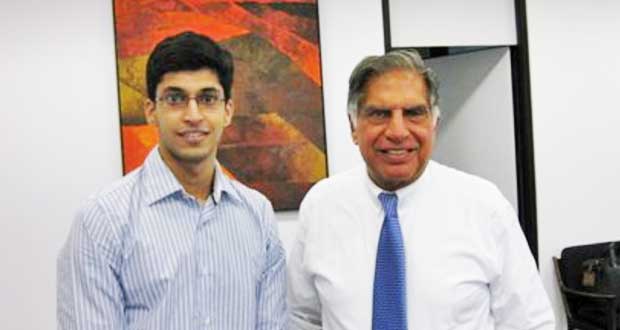


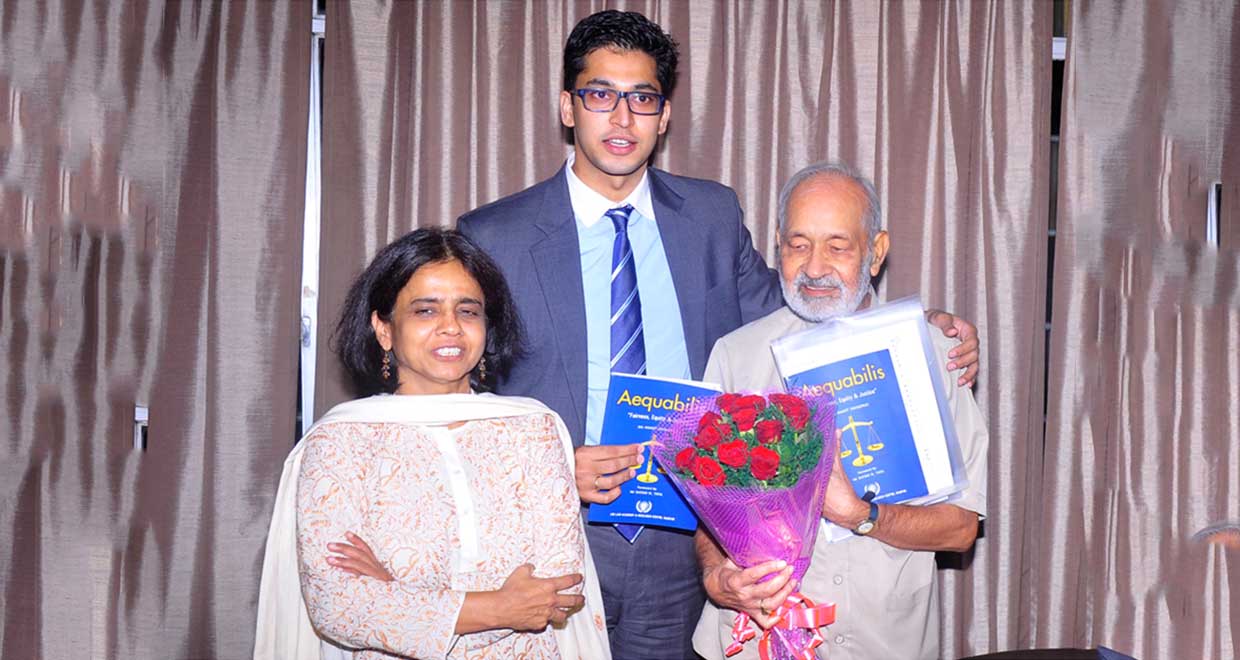




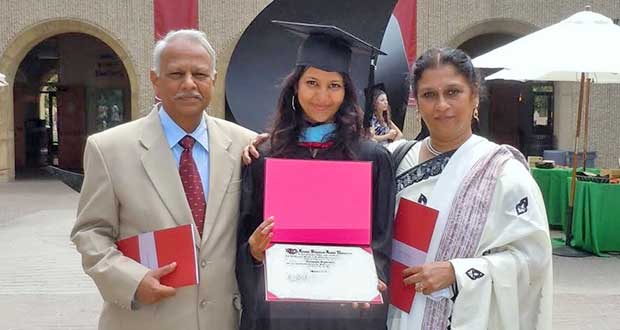




 Allow notifications