Tag: Media

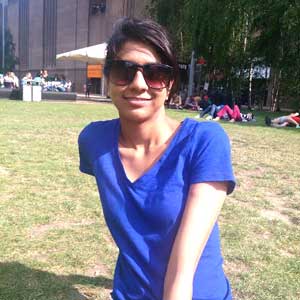
  • Natasha Fernandes, Legal Head, B4U Television on a career in Media Law

    Natasha Fernandes, Legal Head, B4U Television on a career in Media Law

    Natasha Fernandes graduated from Government Law College, Mumbai in 2002 and had thereafter worked as in-house counsels of large corporate houses. She currently heads the Law department of B4U Television Network India Ltd.

    In this interview, she talks about:

    • Building up a career in media law
    • Strategies which she used while working with different places
    • Journey from an Assistant Legal Manager to Legal Head at B4U


    Given that most of our readers are law students and young lawyers, how will you introduce yourself to them? What motivated you to choose law as a career?

    Hi friends, this is Natasha Dsouza.. I head the legal for B4U Television Network India Ltd. Been here since 9 years, with a total rich legal exposure of 12 years.I pursued the 5 years law course from Government Law College, Churchgate. Having no family background in law, the hunger for knowledge was the only factor that kept me going. To be honest, Law was not a career stream for me, rather the interest to know the law of the land so that people could not take me for a ride was the motivation to learn law.


    natasha-fernandes-1

    What all activities did you participate while in your college? What were your areas of interest during your graduation?

    College life was very simple, but fun. Did my 12th from P.D Lions College, Malad and then joined GLC, Churchgate for the 5 year law course. I had a lot of fun with friends but within the four corners of discipline. These years have some of the best memories and friends. College was merely education and fun. All the expertise and practical knowledge was post my completion of law.


    Did you do any internship during the course of your studies? What kind of work did you come across during your internships?

    No, unlike others I did not take up any internship during college. I started my career only post my graduation in law.


    Many lawyers say that the first year after graduation is the most difficult year for young lawyers. How was your first year after graduation?

    I had lived a very simple and protected life, home to college and college to home, never journeyed beyond, rather had always depended on friends or folks to travel to a new place.

    When I joined the law firm after my graduation, I had to appear in all courts all over Mumbai. With no knowledge of routes nor any internship training, had no knowledge about appearing in matters, it was a new world with a plethora of experience, especially with the strict judges who were not very supportive of juniors appearing before them. It was a do it and learn it yourself affair, but a journey that made me independent.


    You had started working at P. V Nichani & Co. right after graduation, and thereafter you joined Shapoorji Pallonji& Co. Ltd.. What led to this shift?

    I always wanted to work for a corporate. I started my career with G.P Consultants and Developers immediately after my graduation in law. On working there, I did feel the need to have procedural and court exposure and hence started my journey with P. V Nichani & Co. Worked there for a year, appeared in all Metropolitan courts in Mumbai, Small Causes Court, City Civil as well as in the Bombay High Court. After a year of enriched experience and exposure, I was approached by Shapoorji Pallonji& Co., and I took up the offer on selection.


    You left SP & Co. Ltd. to join Star India Pvt. Ltd as a Legal Executive. What motivated this shift? What does it take to get job at Star India at that stage?

    STAR motivated this shift. As far as getting a job is concerned, it’s always a matter of confidently marketing your experience and exposure in a way that suits the need of the Company interviewing you. It is very important to know about the job profile and whether you can handle the requirement and an honest answer to everything. It is always good to confess what you don’t know rather than to beat around the bush or lie. Coz even if you sail through the interview, any lie will make you fall flat on your face when you start work.


    Thereafter you started working at B4U Television Network India Ltd. Having been at B4U since 2005 as an in-house counsel, you were promoted to Legal Head; what qualities do you think helped you to achieve this status?

    I joined B4U as an Asst. Manager in 2005 and have been working here since 9 years. My qualities that helped me achieve it, is what every growing employee has..

    • Honesty and sincerity towards work;
    • No saying NO to any work;
    • Constant learning and research. No one knows everything and everyone needs to learn, so never felt ashamed to ask when I didn’t know something. It is better to ask than to make mistakes;
    • Eye to details and re-checking everything that is done;
    • Time management and prioritizing work to achieve within set timeframes
    • And above all my Drafting skills and perfection towards work


    Many lawyers would say that the actual learning takes place in the years of practice. How far would you say it is true? What was the case in your situation?

    Not true in my case. Actual learning takes place wherever there is an intention to learn. You face various challenges as an in-house counsel and also working with a corporate divides your exposure between litigation and non-litigation. Both give you a lot of learning and learning never ends.


    What would be your message to our readers who are budding lawyers and law students?

    • Believe in yourself
    • Be attentive to details
    • Never feel shy to ask what you do not understand
    • Stay positive and self-motivated, focus always on your goal, nothing else matters, no negative comments, no politics, when you know you are working with honest, giving your all, just stay focused, let people not bow you down.
    • Never keep ego at work.


  • Hiral Vimadalal, Assistant Manager-Legal, Viacom 18 on work at law firms and in-house

    Hiral Vimadalal, Assistant Manager-Legal, Viacom 18 on work at law firms and in-house

    Hiral Vimadalal graduated from Pravin Gandhi College of Law in 2009. She is one of the founding members of Moot Court Society at Pravin Gandhi College of Law. She started her legal career as an Associate at ‘India Law Services’. Thereafter she worked at V.A. Associates and Wockhardt Limited. She has recently joined Viacom 18 Media Private Limited as an Assistant Manager – Legal.

    In this interview, we asked her about:

    • Law School experience
    • Importance of internships and co curricular activities
    • Strategies used while working with different law firms and companies


    Why did you decide to study Law? What inspired you to do so? How did you get through to Pravin Gandhi College of Law?

    How the idea of studying law crossed my mind is a very difficult question to answer! Ever since I was a twelve year old, I had pretty much made up my mind to study law. As a twelve year old I had practically zero exposure to what it would be like; but then languages, debates and drama were strong points of interest throughout my school time. I guess law was an extension to doing what I loved the most!

    Well, I guess it was one of those strong intuitive decisions which guide you and shape your future that might’ve inspired me.

    I missed getting into the premier law college in Mumbai and took up admission at another law college closer to home with the intention of working hard in the first year and then getting into that particular premier law college in my second year. However, two months into the course, PGCL (then known as SVKM’s college of law) published an advertisement that admissions for their new five year course were open. Knowing SVKM’s reputation of arranging world class facilities and the best faculty for all their courses, I jumped at the opportunity and moved. I am from the first batch to have passed out of the college. Making that move is one decision I am proud of!


    What were your areas of interest during your graduation? How did you go about developing expertise and knowledge in these areas?

    My key interest areas during my graduation were Intellectual Property Rights, Cyber Laws and Media & Entertainment Laws. My sister has done her MBA in marketing and my best friend is a Creative Designer; hence, I was always over exposed to the world of brands, ads and everything related! I think it was natural for my interest to lie in these areas! A silly confession – I am a brand buff and love advertisements. I am one of the few people who refrain from changing channels during advertisements.

    I had a fabulous college life, where the principal of our college along with the great faculty, ensured that each student’s interests were shown. They arranged for guest lectures and short workshops in various areas of law to ensure that all the students made an informed decision about their future.

    IPR was taken care of in college as a part of the Mumbai University curriculum and I took up a six month certificate course in Cyber Laws from ASCL, Pune. This course provided me with an extensive understanding in Cyber Laws, cases, practical problems and solutions and of course the newly introduced (at that time) Information & Technology Act.


    hiral-vimadalal-2

    As a law student which activities did you participate in? Did you have any guidance on how to go about your academics, co-curricular activities and internships?

    Since we were the first batch, we took up the initiative of setting up the Moot Court Society in our college. I was one of the founder members of the MCS along with few of my batch mates. I have participated primarily in Moot Court competitions in college and also in Client Counselling competitions, essay writing competitions and debates.

    As the years started going by and we grew as an institute, we started taking up the roles as mentors and organizers of various moots in college. We also ensured that the best team gets to represent our college in moots held by other colleges.

    Whatever that I may say about the faculty and guidance, would be less. They ensured that we had great firms/organizations/NGOs coming in for our internships and ensured that we got good exposure in whatever field that we wanted. Of course it was difficult initially being a new college, but we did phenomenally well! We had a very transparent set-up for everything and could openly share ideas and take initiatives for everything from internships, co-curricular activities and even guest lectures.

    Our college organized a one of a kind three day festival called ‘Shartrartha’ which had a series of lectures and discussions by legal luminaries. We had screenings of several trial films followed by discussions on the practicality and applicability.


    What kind of internships did you do while you were a student? Any remarkable experiences during your internships which might’ve contributed towards shaping your career choices?

    I’ve had varied internships throughout my college years. However, I was never working straight throughout those five years since I loved being in college and was actively involved in the fests, moots, etc. I have interned at a full service law firm in my second year (when I hadn’t even started studying the legal subjects) and went back there subsequently in my 3rd year as well. The firm gave me exposure in all sorts of litigation matters, civil and criminal, the nuances of contracts and some knowledge on IPR as well. I used to do a lot of research there, which form the basis of my research skills today.

    Towards the end of my college, I interned at a full service IPR firm, which gave me faith that I could make it as an IP lawyer while reassuring my love for IPR as well. My senior in this firm gave me a lot of insight on Trademarks and the practical applications of what we learn in college. I predominantly did the drafting of replies to the objections raised by the Trademark Registry so it was a stepping stone to what was in store!

    So these internships have shaped different skills and are a founding stone of everything that followed.


    What do you feel about the perception that students of certain ‘elite’ NLU’s have a much easier time in kick-starting their career as compared to law students from other colleges? Is this true at all?

    As much as I don’t want to believe it, it is true. Due to the curriculum and demi-god statuses of the National Law Schools, they manage to get the best internships, best placements and even better salaries. And it is not only the National Schools. It is even between the premier law colleges in cities vis-à-vis the others. I know how many times I have answered questions about my college and why I was not from the premier law college and what my college did. I have seen the scornful look on the faces of prospective employers when they hear that you are not from a particular college. In fact, even after a great interview, things have not worked out because I was not from a particular college.

    I think it is high time the perception changes. People should be judged by their qualifications and talent rather than a name backing their education.


    After graduating from Pravin Gandhi College of Law you joined ‘India Law Services’ as an Associate. How did the appointment take place?

    After completing law, I was looking for a suitable job to kick start my career. I got to know through a friend that ‘India Law Services’ was looking to hire and so I sent my resume. I met the IP partner and it all fell in place.


    You left India Law Services and had joined V.A. Associates. What led to this shift? How was your experience working there?

    Joining V.A. Associates was technically not a shift. The IP partner of ‘India Law Services’ started his own practice and hence the entire team shifted with him. This experience, as I always maintain, was my college to the practical world. Mr. Parelkar is one of the most knowledgeable persons I have come across and to top it, he loves to share his knowledge. I’ve got a great exposure because of him and learned the procedural aspects of IP law, infringement suits and the works. While I was only assisting in suits, it gave me an insight into what is expected in a trademark infringement suit and what must be covered to get a favourable order. I got exposure into the functioning of the Trademark Registry and the nuances of dealing with them. This was also the first real experience at dealing with the clients and the Trademark Registry.

    To sum up, all my skills have been honed by Mr. Parelkar and I would not be what I am and where I am if it were not for this experience.


    You thereafter left V.A. Associates to start working at Wockhardt Ltd. as Senior Legal Executive. What prompted you to keep changing your job so frequently? What was the nature of your work there?

    After working with ILS/VA Associates (which as I explained earlier was not a shift), it was time to spread my wings. I was looking for an opportunity where I could get exposure to the other aspects of IP. Even though my primary interests always have been in Media & Entertainment or Technology, Wockhardt came about and I decided to take it on since Pharma was booming as an industry and lot was happening in the Pharma IP space. My profile was IPR but my responsibility grew manifold. In Wockhardt I was handling a portfolio of 2500-3000 brands and we did everything in-house. We did not engage external counsels, except for litigations.

    The working of a company is completely different than that of a law firm. We were a small team of five-six lawyers and maintained a policy of one-for-all and all-for-one. My senior Debolina Partap might have seen something in me, for she gave me exposure in so many aspects, apart from IP. She groomed me to be an in-house counsel. By the time I left, we had set up a full procedure and SOP for the trademarks/copyrights of the company, I had interacted with a bouquet of law firms internationally for our trademarks, which gave me so much exposure to the Trade Mark policies in various countries and also helped me establish a network. These experiences are really important to shape your future and take you to the next step. I have done several TM litigations, legal notices, and been a keen observer in negotiations, which have all helped me grow in more ways than I can explain. I have done Drug Litigations which involved different laws and had me interact with various government officials. It was also the first time that I got a practical insight into compliances and labour issues. Even though the exposure was limited, I had a lot to learn. I cannot sign off without thanking the organization for giving me my first ever Divestment Transaction. The myriad levels of interaction, the due diligence, IP streamlining, documentation, numerous negotiations and discussions were an experience which I cannot justify with words. Understanding the dynamics of an organization and also the correlation between departments of a company is something that I have Wockhardt and Ms. Debolina to thank for.


    You’ve recently joined Viacom 18 Media Private Limited as an Assistant Manager – Legal. How did the switch from Wockhardt take place? Did you get an offer or did you apply for Viacom?

    Viacom 18 was a dream job. I remember wishing that I somehow land a job there every time I crossed the building. As I said, Media & Entertainment laws have always been a key interest of mine. I was ecstatic when the consultant called me for an interview. While Pharma is extremely lucid and has a lot to offer, I felt it was time to finally pursue a dream job and make the switch before I got labelled as a Pharma Counsel.

    The consultant called me with this opportunity and needless to say, I jumped at it. I was extremely uncertain of landing the job, given my non-media exposure, but my boss may have seen something in me, which I am forever indebted for.


    What does your current work profile at Viacom 18 consists of? How is a typical workday like?

    I am predominantly responsible for the IPR portfolio here as well. Viacom18 is growing every day in terms of IP and the issues are completely different. I am getting more exposure in Copyright and different areas and dimensions of IPRs which are specific to the Media and Entertainment industry. We have also undertaken to sensitize our Business Units to the TM/Copyright Law and hold training for them regularly. I have also been assigned a portion of the litigation profile, which of course is very different from the litigations I am used to handling. So in that sense I am still taking my baby steps with litigation here. My boss, Thomas George is a phenomenal person and is one of the very few “born intelligent” people. He comes from a litigation background, so he is guiding me at managing the litigations like a lawyer, rather than a Manager/In-House Counsel. He teaches in a way that one will never forget for their entire lives. I have a lot to learn from him and hopefully I am taking away as much as I can from his experiences. We have a great team here which is always willing to share and help each other. Everyone is super cool and friendly. It seems like I am working with friends, which makes work twice as exciting. I look forward to every single day here.

    A typical workday is filled with lots of work and lots of fun too. Our day starts at 10.30am and is always action packed. There are several days which are busier than others if there are deadlines in terms of notices, responses to file and if there are several matters on board for that week. But we ensure to get our daily dose of fun as well. So as I said earlier, I really look forward to each day here!


    Does Viacom 18 take interns? What is the process for same?

    Yes. Viacom 18 does take interns. It is need based and we usually route it through HR. Sometimes, we can refer an intern to the team in need for one. However, we do not have a regular policy for taking interns or GTs in the team.


    Many lawyers would say that the actual learning takes place in the years of practice. How far would you say it is true? What was the case in your situation?

    It is true to the last word. While your school or college will lay the foundation stone, it is the practice and what you take out of those experiences that shape the rest of your career and future. You may study the law but will not know which provisions are applicable till you actually do a case involving that law. Further, it is not about the law. It is also about strategy, sometimes avoiding the conflict and how you tie up the interest of the Business unit/client and the facts, to put your best foot forward. Communication is also extremely important. What and how much to say and when is also an important part of the exposure.

    In my case, I believe that every experience I have had during these years has taught me something. Practical aspects of the law can sometimes be very different from what it may appear in theory. This distinction will come only as you move ahead. I have been lucky to have had some great experiences and seniors who have really helped me get till where I am.


    Lastly, what would be your parting message for our readers?

    Law is an amazing field to be in if it gives you the kick. I have never wanted to be anything else. In today’s day and age, when everything can be ‘managed’ it is important to be true to yourself and the profession. We are a big lot and have the power to do a lot if we wish!

    Cherish all your professional experiences. Every challenge you are faced with leaves a lasting impression. So I urge the readers to always be open to getting the best of the experiences, both good and bad. Trust me, the bad ones teach lessons for life! And the good ones stay with you as a fond memory and a teaching for life!

  • Rajni Singh, Associate at Hariani & Co. on work experience in Media and Entertainment Law

    Rajni Singh, Associate at Hariani & Co. on work experience in Media and Entertainment Law

    Rajni Singh is a practicing Media and Entertainment lawyer. She graduated with Bachelors of Mass Media degree from SIES College in 2009. Her interest in law led her to join Government Law College, Mumbai and pursue LL.B. During law school, she participated in various co-curricular activities including moot court competitions, debates, and conferences. She also has a couple of publications to her name. Soon after Graduation she started working as an Associate at Naik, Naik and Co. and has recently joined Hariani and Company.

    We asked her to share her experiences and strategies she used over the years. In this interview, she talks about:

    • Pursuing Law after Bachelors in Mass Media
    • Work experience at Naik, Naik & Co. and Hariani & Co.
    • Work opportunities in media law


    Most of our readers are law students and young lawyers. How will you introduce yourself to them?

    Hi! I am a practicing Media and Entertainment lawyer. I completed my LL.B. from the Government Law College, Mumbai and prior to law school, I completed my under graduation in media studies. Cinema, travel and world cuisine make up for the remainder of my non-work life.


    You are a high distinction media graduate, what led you to pursue law?

    During my Media School days, I learnt the nuances of the media industry including the movie production process, the television broadcasting, advertising, public relations among others. I also interned at various media houses.

    Media provided me with great exposure and I grew increasingly aware and concerned about my immediate surroundings. Issues such as corruption in the private and public space and global warming really affected me. I felt the urgent need to address the problems in whatever way I could. As a result I co-founded the Socio-Enviro Club in my college. The members of the club would make efforts to bring awareness about the impact of social and environmental challenges being faced at a micro level. I was also actively involved in inter-collegiate debating and socio-political discussions these activities taught me how to think on my feet and how to clearly put my point across. In the process I realised that I wanted to take up something with a wider scope and larger social impact.

    Further, exposure to subjects like sociology, political science, economics and more importantly, media and press laws and ethics also played a very important role in my decision to pursue law. I recount being one of the very few students who actually enjoyed the legal aspects of Media. I ended up presenting my final year project on the Consumer Protection Act, 1986 with legal precedents.

    Towards the end of media school, I had to choose from three available options, working ant a leading advertising agency, a seat at a B-School and confirming my admission for a three year LLB at the Government Law College. I chose to spend three more years into studying the law.

     

    rajni-1

    How would you describe your time at GLC, Mumbai? What are the co-curricular activities you took part in GLC?

    The years spent at GLC were the most memorable years of my life. Amidst the short comings, the College survives because of its meritorious students and active student led bodies. One of the best things about the College was its inclusiveness. No matter what you wish to pursue, you could. Not only was the college very close to the Bombay High Court and all the law firms, but it also offered the Mumbai advantage. One could pursue non-academic artistic and cultural interests. Especially the South Bombay area is very culturally rich.

    I consciously decided to not intern during my first year and be involved in college activities. I participated in more activities than I could take. I was an active member of the Student Council, Moot Court Association and the Legal Aid Committee. I participated in several National and State Level Moot Court Competitions, winning a very few and losing many. I personally enjoyed writing research papers particularly on the subject of Intellectual Property Rights and I also professionally learnt Spanish.

    For all the three years, I was associated with an NGO ‘Public Concern for Governance Trust’. I was actively involved with the NGO for spreading awareness across Mumbai about Right to Information Act, 2005 and also the Anti-Corruption Cell. The NGO gave me an opportunity to script and direct plays in Hindi language on the practical application of the RTI Act. The play was performed before a non-English speaking audience and several colleges across the city. The entire process was thoroughly enjoyable and I do not think I could have understood the RTI Act with this clarity if I were to write an exam on it.


    You were heading the Legal Aid Committee (LAC) of the GLC for one entire academic year and you were also awarded the ‘Best Legal Aid Worker’. How do you recall that opportunity?

    That was by far the best decision of my life. The kind of work LAC does, I was fortunate to have had the opportunity to head it. The friendships made while working in the committee will last a lifetime. As a committee, we did some exciting work. To name a few, we started the Annual GLC Legal Quiz which is presently the most loved activity in the College. The idea of the quiz was to test general knowledge of students in creative ways and we consciously decided to un-bore the quiz. To give you an example, we used movie clips in the buzzer round wherein the participants were quizzed on the criminal and civil offences being committed in that particular clip. It was a great learning experience for the organisers as well as the participants.

    We also worked towards the mental rehabilitation of the Juvenile delinquents. My initial years at Law School were spent at the Dongri Remand Home and the Juvenile Court which made all aspects of theoretical legal learning come alive. Members of the LAC also regularly visited the Byculla and Arthur Road Prisons and filed Bail applications for under trails who could not afford legal representation. These bail applications were either for release of the under trails on cash bonds or personal bonds. Can any internship or any law firm give a first year law student this level of exposure? I do not think so.


    What sort of internships did you do while in law school? How instrumental were these internships in helping you decide what field of law you wished to specialize in?

    To be honest, I was always clear about pursuing Media Laws transactional or litigation. Therefore, I chose my internships accordingly. However, there is no doubt that internships really open your mind and help you understand what you like to do or sometimes by law of elimination, what you do not enjoy doing.

    I wanted to understand court practice and procedures first, that’s why my first internship was in the chambers of Sr. Counsel S. Venkiteshwaran I was exposed to Maritime laws and various matters related thereto. Pursuant to that, I interned with Vidhi Partners in their Media and Entertainment team, Anand and Anand in their Trade Mark team and thereafter I was selected to work as a long term intern with Naik Naik and Co. throughout my final year and concentrated on Media and Entertainment Laws. I learnt a lot under my seniors at each place of work. I must mention the learning involved both active learning as well as passive. It merely involves observing the seniors deal with clients or appear in the courts. The dedication and toil they put into their work was amazing. There was just so much to learn.


    What do you feel about the perception that students of certain ‘elite’ NLU’s have a much easier time in kick-starting their career as compared to law students from other colleges? Is this true at all?

    I feel it is more to do with the person. Unless you put in effort, irrespective of which college you are from, one thing is sure, you will not succeed in the long run. I commend GLC for its encouraging attitude towards Counsel Practice (litigation) which is sadly not a very popular option in other law colleges in the Country any more.

    To answer your second question, unlike other professions, in the legal space, kick starting a career does not guarantee a long lasting one. I see law as a big equalizer in that sense.


    What brought you towards Media Law?

    I have been asked this question a number of times and every time I end up saying I don’t know. I will be wrong if I say it is the only aspect of law that excites me. Law is so multi-dimensional, it is impossible to choose a favourite subject. I thoroughly enjoyed reading Constitutional Law, IPR, Law of Crimes, Torts and Contract laws. Therefore, I chose a field of interest in which I could apply all of my above said favourite subjects and cater to the industry I feel I belong and have been exposed to from a commercial/ non-law perspective as well. It really helps me as a Media and Entertainment Lawyer to better understand the industry needs and problems that clients face.


    Tell us something about this new and emerging field of law that you practice?

    You chose your words correctly. It is both considerably new and very emerging. Traditional media was disorganised and rather a close knit emotional lot. I say emotional because till date members of media are very cautious of the words they use. The entire industry at one time and to some extent even today, functions on trust and oral arrangements. In fact, in the earlier days, there was hardly any transaction on paper.

    However, the landscape has changed considerably. With corporate houses and studios setting in and with the digital boom, the complexities of the industry, in terms of commercial exploitation of creative content, has grown enormously. With emergence of new platforms, formats and mediums, the dissemination and reach of information is unimaginable. With intermediaries playing an important role, there arising questions such as profit share, royalties and of course the global favourite piracy.

    Media Law includes several statues such as the Copyright Act, 1957, Telecom Regulatory Authority of India Act, 1997, Cable Television Networks Act, 1995, Trade Marks Act, 1999 and nodal agency of Ministry of Information and Broadcasting and other self-regulation guidelines such as Advertising Standards Council of India, Indian Broadcasting Foundation and so on.


    You have been involved in a few pro-bono matters. What is your opinion on advocates taking up pro-bono matters?

    “Maybe after 35 when I have enough money” is what most of my friends say when we discuss the possibility of taking up pro-bono matters. They are not necessarily wrong, it is their way to look at it. For me, I think it is more selfish, I do it for the satisfaction it gives me.

    The Legal Aid Committee of the GLC always looks for advocates willing to take up matters pro-bono and there are several NGOs and independent practitioners who do take it up.

    I personally feel we should do these matters while we are young, with minimum liabilities and maximum learning curve. I have been fortunate to meet partners of law firms who are willing to spare time into taking up matters pro-bono. I have contributed to a matter on RTE for a minor girl and a few domestic violence matters among others.


    What should the students who look for internships actually look for?

    • Small teams: From personal experience I would recommend one must go for a smaller set up or a firm which has team structures. This allows maximum exposure and learning because one gets to do actual work and be involved in the process.
    • Court exposure: I also strongly recommend Judicial Clerkship and at least one litigation exposure as an intern preferably the first internship.
    • Term: Lastly, even though I know it is not always possible, but the endeavour should be to keep the term of your internship as at least for three continuous months so that it is mutually beneficial.


    Many law school students aspire to secure a job. What do you think most are doing wrong, from your observations?

    While securing a job is very important, I must mention it is not everything. I see students who start interning as early as 17-18 years of age and from day one, work towards securing a job with top tier law firms and the big pay package, I feel the approach may not be correct.

    Students must realise that they have to work all their adult life so they must pause and take it easy. Spend college time in developing skill sets, friendships, play a sport, learn a language, Moot, even if you lose (you will), even if you are embarrassed (you will be) and even if you do it all wrong (you may), but please Moot. Mooting will teach you the Law, in a way it can never be taught. Framing arguments, research on a moot point and tedious drafting (including formatting) are very critical for ones development as a practicing lawyer.

    Finally, chose a field of law not because it is lucrative financially, but because it interests you and you feel like waking up excited to go to work each day. I remember so many of my class mates took up Corporate Laws because it was “the big thing”. Two years into it, many of them realise that they don’t enjoy it as much they thought and find it rather dry. So think personally, what kind of law you would like to practice and then take it up.


    What are the three things a law student should keep in mind while facing an interview or applying for a job?

    From my limited experience, I can say the following:

    1. Comfort: Be comfortable, take it easy, be reasonably confident and strike a conversation, if possible. Also, you can disagree with the interviewer humbly if you don’t agree to what he/she is saying and it’s alright to say ‘I don’t know’ if you don’t know an answer to a question asked;
    2. Keep your CV short and to the point: Know your CV. You need to sound like the same person whose CV you have submitted, so the endeavour should be to keep it in tune with your actual significant achievements and experiences;
    3. Structure your CV in line with the job that you are applying for: For example: if you have a lot of Litigation experience in your CV and you are applying for a Corporate Job, you need to build up your CV accordingly to show that you are actually interested in Corporate Laws. Maybe supplement it with a research paper or a moot on the subject and be ready to face questions accordingly.


    What is your take on LLM?

    Right now I am learning my subjects of interest from some really learned seniors at Hariani and Co. and I am not willing to trade that, even for a year. Also, LLM for me is an expensive affair and needs planning. It does excite me a lot, because I enjoy reading the law, however, right now, I think I need to work and improve my craft. Maybe, after a few years I may look at a professional LLM.

    I must add, if any student wishes to pursue academics, LLM becomes a necessity and plays a very important role. The sole determining factor while choosing to pursue LLM should be what you personally want to do in your career and at what time.


    How important is scoring well in Law School?

    I think there is no taking away from the students who are academically inclined and are consistently high scorers. I have consistently scored well myself. Law as a field is very academic. One has to spend considerable time reading and therefore, you need to have an academic approach towards the profession. However, I think the profession requires more than just high marks. You have to be increasingly interested in what you are doing beyond answering a mere exam.


    What do you think is your way forward?

    I frankly don’t have a conclusive answer for you right now. However, I definitely want to be a good lawyer in my field of practice and currently I am in the pursuance of the same. Having said that, I have a strong liking and inclination towards legal writing, pro-bono litigation and academics so may be a combination of all.


    Do you go back to College?

    Oh yes. Very regularly, I look for opportunities to go there. So whenever I am invited for judging debates, moots or Quiz, I am there.


    Lastly, what would be your parting message for our readers?

    Be open minded about law. There is simply so much that law has to offer. There are academics, research, NGO, policy making, think tanks, litigation and firm practice. Therefore, take your time (you have 5 years) and thereafter but be open to trying and failing and again trying. If you go wrong it’s okay, you can always join the dots backwards and it will all make sense.

    Good luck!

  • Pralika Jain on representing Bollywood celebrities, work at Star India and LL.M in IPR from Georgetown

    Pralika Jain on representing Bollywood celebrities, work at Star India and LL.M in IPR from Georgetown

    Pralika Jain is a media and entertainment lawyer with about three years of experience in the broadcasting and entertainment industry. She graduated from GLC, Mumbai in 2011. Thereafter she worked at Star India Pvt. Ltd. for one year and then with a Talent Management Agency, CAA KWAN as a lawyer to Bollywood Celebrities. Currently, she is pursuing Masters in Intellectual Property Law at Georgetown University Law Centre.

    In this interview Pralika talks about:

    • Work experience at Star and CAA KWAN
    • Choosing Masters over a job
    • Writing an SOP and getting recommendation letters


    Most of our readers are law students and young lawyers. How will you introduce yourself to them?

    I would say I am a media and entertainment lawyer with about three years of experience in the broadcasting and entertainment industry. In an informal setting I would say that I have been a lawyer for the past three years, worked mainly in the media and entertainment industry, tried experimenting in the start-up space and have a passion for technology and still trying to find a way to amalgamate all of that.


    How did you gravitate towards law? Why law and not engineering or medical studies?

    The fear of Math made me gravitate towards law. Being inherently inquisitive growing up, I assumed engineering would be the apt choice for me, but then I realised that, only being a lawyer will give me the opportunity to explore all the facets of this world, be it business, media, technology, health care/medicine or aero-space. Being a lawyer would give me the opportunity to learn everything there is out there to learn and what better way than to get paid for it, right?


    pralika-jain-3

    How would you describe your time at GLC, Mumbai? What sort of internships did you do while in law school?

    I thoroughly enjoyed my time at GLC on and off campus. The first two years at GLC were spent being involved in committees, as most GLC students do. This is where I think we all built our soft skills that no one teaches you in college. Directly connecting with senior lawyers, judges and other eminent personalities to be a part of our college’s activities taught us a great deal about communicating with people, respecting their time and gave us an insight to their work. This was my first preview into the world of law.

    I also enjoyed attending lectures (definitely a few) by Professor Pithawala, Professor Ratho, Professor, Professor Chuganee to name a few. From around the second year onwards I started interning full-time, like most GLC students do. Although I had a fair mix of corporate, litigation and firm internships, my internship at Disney introduced me to the world of media and entertainment, more particularly the role lawyers play in the media and entertainment industry. This internship amplified my interest in the industry and led me to pursue another internship at Viacom. I believe both these internships played an instrumental role in introducing me to an industry I never would have considered pursuing much less enjoy working there.


    You worked at Star India Pvt. Ltd. for a year and at CAA KWAN as a lawyer to Bollywood Celebrities. How would you describe your experiences working there?

    While I had secured a job from the on-campus recruitment at a corporate law firm, I was inclined towards media and entertainment. So I started connecting with lawyers working at various media and entertainment companies and as luck would have it, the then VP of Star and now the General Counsel of Snapdeal, Mr. Ashish Chandra responded to my cold email on LinkedIn.

    I had a quick conversation with him which led to an interview and then my first job at Star. My experience at Star set a strong foundation of law as well as the media, entertainment and broadcasting industry. Using my experience at Star as a springboard, I joined CAA KWAN as the legal counsel.

    Here, I discovered the media and entertainment industry from the other side which was an exciting experience. I was lucky to have the opportunity to work on Bollywood as well as a few deals in Hollywood. Working with celebrities was exciting at first, but it soon lost its charm, as they are your clients at the end of the day. The time spent working will be a memorable one, as I worked with a team of people who were not only brilliant at what they did but also were great mentors to me. The other thing about working in the media and entertainment industry is the informal environment, which I think contributed a lot to my growth there.


    Do you think courts in India are equipped to handle entertainment and media law cases?

    With the increase in entertainment and media litigation I think the courts are getting better at handling those cases. To answer your second question, I think law is never up to date with technology. Technology is growing at a rate faster than expected and no legal regime in the world is equipped for it yet.

    Were you in double minds before joining Georgetown University Law Centre? How did you prefer Masters over your job?

    I knew that I always wanted to pursue my masters, but choosing to study after working for three years was the most difficult decision to make. Once you are used to working and have a comfortable lifestyle it is difficult to get dissuaded to pursue further education. The reason I chose to pursue my masters was because my employers at CAA KWAN were very supportive of it and helped me realise the value any higher education would bring to me. I realised that if I missed out on pursuing the opportunity to study now I would get sucked into the black hole of being employed and would regret not pursuing my masters. I would encourage every student who has the opportunity to pursue their masters to do so. It is an invaluable experience and having good education has never and will never be a waste.


    pralika-jain-1

    How did you choose Georgetown University over others? How did you go about choosing a university?

    Georgetown Law did not seem an obvious choice to me at first, but after I got admitted I researched the faculty and the subjects offered which drew me towards Georgetown Law. My professors are a mix of Judges, Practitioners, Congressmen and Law Makers. I doubt I would have had an opportunity to be taught directly by the law makers in any other school.


    How did you go about writing your SOP? Are there any key factors which one should keep in mind before writing the SOP?

    Writing the SOP was the most difficult bit for me. I was lucky to have a bunch of my seniors from GLC who had followed the same path help me figure how to write a good SOP. I think speaking to people who know you and have been through this process is a good start. Getting your drafts reviewed by others is also very important, as we tend to miss out on a lot of mistakes when we try to proof read our document. Another thing that is good to keep in mind while working on your SOP is being a true reflection of yourself. Writing achievements and stories that do not have a substantial background do not sound convincing.


    How about recommendation letters? Who all recommended you to pursue LL.M?

    I got recommended by my professors and employers. Most foreign law schools would specifically state how many letters of recommendation they want and from whom.


    How is your experience so far? Tell us about the faculty and facilities. Anything memorable that is stuck in your mind?

    My experience so far is great, and people don’t lie when they say the LL.M is going to be the best year of your life. I have made some great friends; I am enjoying the quality of education as well as the campus located in the heart of D.C.


    Where do you see yourself five years from now?

    I hope to be following my passion in the technology world in the entrepreneurial sector or attempting to decipher the media and entertainment industry, all of it as a lawyer.


    Lastly, what would be your parting message for our readers?

    It is a very competitive world out there, so work hard but don’t be too hard on yourself.

  • Kinat Sisodia, Legal Manager, Star India, on being a media and entertainment lawyer, and work at Radio Mirchi

    Kinat Sisodia, Legal Manager, Star India, on being a media and entertainment lawyer, and work at Radio Mirchi

    Kinat Sisodia graduated from Hidayatullah National Law University, Raipur, in 2008. After spending years with Shemaroo Entertainment and Radio Mirchi, Kinat has recently shifted to Star India in capacity of Manager – Legal for its channels Life Ok, Star Jalsha, and Jalsha Movies.

    In this interview, we speak to him about:

    • Working for radio and television
    • The Indian entertainment law regime
    • Striking work-life balance

    What motivated you to choose law as a career?

    My family as most other families laid emphasis on education with freedom for each member to pursue their own educational interests. My father studied pharmacy, which was an unconventional choice of education at his time, and my elder brother went on a completely different tangent to opt for hotel management later. In a similar way, my calling for law came with the opening of National Law University in my hometown Jodhpur. I researched on the changed scenarios for law as a growing choice for a profession and then followed my family tradition of pursuing my own education path.


    How did you come to join Universal Legal?

    I was introduced to Universal Legal by my mentor Mr. Venkatesh Prabhu, with whom I had the honour of undertaking an internship during my final year of college. Under his able guidance and advise I interviewed with Universal Legal’s offices at Delhi and was shortlisted to join. But due to recession, the hiring got frozen. I was later given an option to join their Chennai offices, which I happily availed and joined the firm in February 2009.


    You left a lucrative law firm job and had joined Shemaroo Entertainment as an in-house counsel. What prompted this switchover?

    My move from Chennai was majorly based on sentimental grounds of being away for too long from home, folks and friends. I never planned to make a switch from a law firm to an in-house role, but the chance to be part of glamour and Bollywood was part of the initial appeal for me along with the option of staying close to family and friends.

    After joining Shemaroo, I realized the workload as an in-house counsel demanded almost similar timelines like a law firm. The major practice areas there were contractual drafting and to devote a time and focus on understanding copyright aspects for such drafting.


    How did you get inducted into an FM Radio company?

    (After working with Shemaroo for almost a year Kinat joined Radio Mirchi.)

    Media industry lacks lawyers and therefore with my one year of media experience I started getting couple of job offers. Amongst those offers, I got intrigued by an offer to experience and be part of the events business as part of Radio Mirchi. This gave me a chance to be part of organizing large scale events, viz. Mirchi Music Awards and Spell Bee school competitions to name a few and handling various intellectual property aspects in relation to organizing events.


    What were your primary responsibilities as Senior Manager – Legal at Radio Mirchi?

    I started my stint at Radio Mirchi as part of their events business. Then I also worked for the core FM Radio business for routine compliances, music licenses while negotiating and drafting several different commercial deals. I was also majorly involved in advising and representing the company’s concerns before various forums and courts in relation to changes in the legal system with the introduction of the Indian Copyright Act, 2012.

    With experience in establishing the legal implications for the FM Radio business, I, along with my senior, were also asked to help a sister company for building the FM radio model on the evolving internet radio broadcast business.


    kinat-sisodia-1

    Tell us about your venture into TV.

    That’s a standard interview question I have faced at several times in my career so far. I believe my journey in the media industry started from dealing copyright content (by way of (acquiring/ creating/ licensing) at Shemaroo; later as part of my work at Radio Mirchi I was helping in exploitation of copyright content on the FM Radio and internet platforms on an audio only mode. The logical next move for me therefore was to move towards a platform for exploitation of copyright content on an audio-visual basis and hence television.

    This belief was fueled in the right direction when I was approached to move from top of the FM Radio players to be part of India’s top television network for its relatively new channels Life OK and Bengali channels Star Jalsha and Jalsha Movies.


    How different is the experience of working with a television conglomerate as compared to a FM Radio Company?

    It’s actually a very short time to make any comparisons since I am barely three to four months old at STAR. The significant difference I feel for now while working for television is to be involved in larger projects which have a larger impact on the audience. Also, the functioning and processes for a television conglomerate are many folds since the broadcast happen simultaneously in the entire country as opposed to FM radio where each city has its separate localized broadcast.


    How do you distinguish your role and responsibility as an associate in a law firm and as that of an in-house counsel?

    Working in-house for almost 4 plus years, I have realised that being in-house, lawyers are required to understand the exact requirements of the company not only from immediate legal point but also from a long time business perspective. This becomes a little different for lawyers in law firms since they cater to requirements of multiple clients across different industries on a regular basis. Further, growth for an in-house lawyer is not only on basis of legal knowledge but on an overall understanding of company’s business to support the company’s visions.


    Do you think courts in India are equipped to handle entertainment and media law cases?

    The High Courts of the country are witnessing unique intellectual property cases these days and are dealing them in a commendable way. However, a nation-wide understanding on similar approach remains desirable to effectively mitigate the new intellectual property issues that keep arising.

    The major concerns for all digital platforms are monitored and effectively dealt by a special designated tribunal in India, the Telecom Regulatory Authority of India (TRAI). TRAI not only provides regulatory framework for all digital platforms, but also takes inputs of the stakeholders from such digital platforms to effectively protect the concerns for each platform.


    How do you maintain a work-life balance?

    I feel it can all be handled well if you are able to segregate your work time and family time. It may be little difficult to practice this in the early stages of your career, but it is very important not to carry any work stress once you leave your workplace. In fact, I am pretty sure all of us have handled time crunch in our college lives as part of project deadlines or exams. None of those things bothered us much then because we didn’t carry the stress back, and the same approach needs to be adapted to work life.


    What are your long term objectives? Where do you see yourself by the end of five years?

    Honestly, I didn’t plan my career path to move in any particular way, but here I am after five years in the media and entertainment industry. Nevertheless to answer your question, I would like to make a point that I have been involved in giving suggestions before the passing of the Indian Copyright Act, 2012 in the beginning of my media career. With the way the Indian Copyright Act, 2012 is now being interpreted, I foresee a lot of excitement and challenge to keep me engaged in the media and entertainment sector for the next 5 years hopefully.


    Lastly, what would be your message to an Indian student pursuing a law degree?

    Law is an amazing field and has a plethora of opportunities for everyone. Just maintain your focus for what opportunity you want to aim for and not just because the majority is doing it. Hard work and dedication will take you where you will be content in the long run.