Tag: Mooting

  • Parna Mukherjee, Assistant Professor, GLS Law College, on legal education system, importance of moots and internships

    Parna Mukherjee, Assistant Professor, GLS Law College, on legal education system, importance of moots and internships

    Parna Mukherjee is as an Assistant Professor, having ten years of academic and one year of field experience. She has done Ph.D. in the area of Environmental Impact Assessment. As faculty both in full time and visiting capacity, she has taught in many prestigious institutions of Ahmedabad like Institute of Law at Nirma University, SLS at PDPU, HLIC & BKMIBA in AU, GLS Law College. She has taught several courses like, Environmental Studies & Law and Forest Law (Hons. Course), Legal Research Methodology, Interpretation of Statutes, electives as Business Laws, Tort & Consumer protection, Constitution, etc. She has been actively engaged both in teaching and research at the UG & PG level.  She has also presented papers in various international and national conferences and has few research publications to her credit.

    She has around six publications and has presented over ten conference papers both at national and international level. Her areas of interest include Socio-legal research in the area of Environmental Law and contemporary environmental issues such as EIA, E-waste, CCS, Bio-medical waste, etc. She also was involved in Socio-legal Research and environmental policy review and drafting of Moot Problem, etc. She received “Best Paper Presentation Award” titled  “A Study of the Impact and Efficacy of the EIA Norms in India presented paper in the 1st Annual National Seminar (NUILANS) on Law Impact Assessment organised by the ILNU, Nirma University, Ahmedabad, on 21st-22nd, January, 2011.

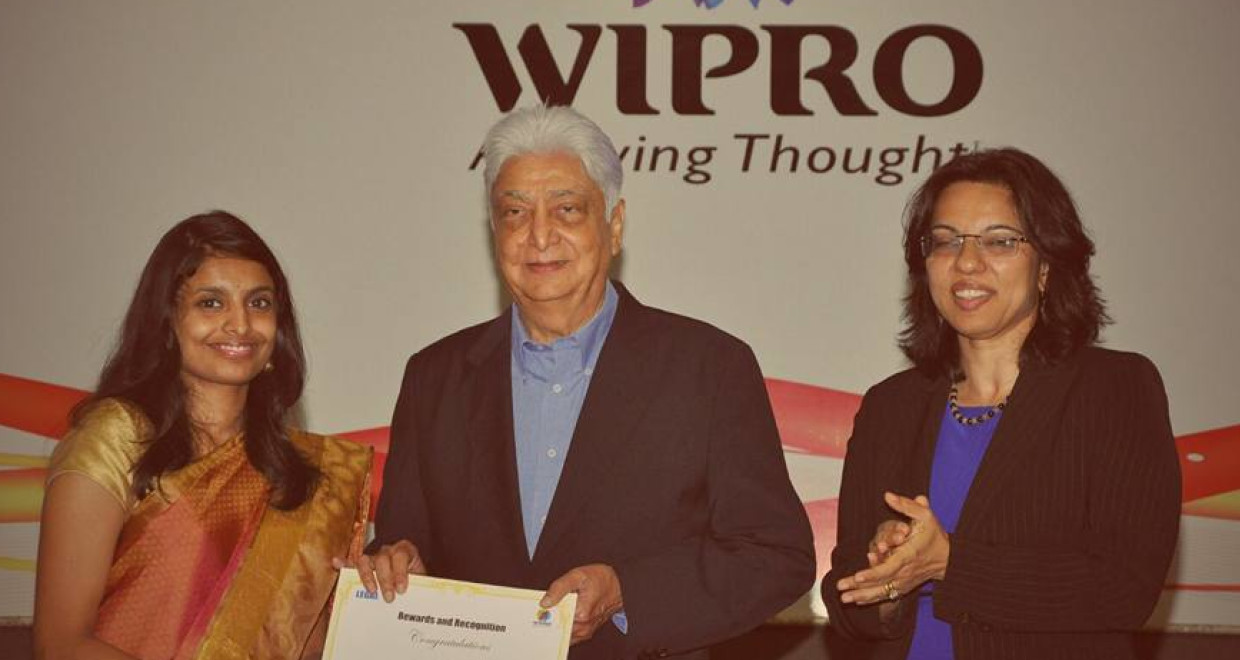
    In 2018 Awarded the “Best Participant” at the One Week Refresher Course for Law Teachers “March of Law: Critical Reflections in Law Teaching and Research Methodology”, organised by the National Law School India University, Bangalore in association with Bar Council of Kerala  M K Nambyar Academy of Continuing Legal Education, Kochi, held at National Law School, Bangalore and  was  awarded the “Best Participant” in June, 2018 held at National Law School, Bangalore.

    In this interview we speak to her about:

    • Her interest in academia
    • Importance of mooting, publications and internships
    • Changes essential in the current legal education system


    BEING A LAW TEACHER, HOW WOULD YOU LIKE TO INTRODUCE YOURSELF TO OUR READERS?

    Being a student of law myself, I am also engaged in teaching the law almost for a decade now and absorbing and learning the law every day.


    WHAT INSPIRED YOU TO PURSUE LAW?

    Choosing law was by accident in my case. I had my bachelor’s degree in (Hons.) Geography, from St. Xavier’s College, Ranchi. Then due to lack of opportunity to pursue Masters in the same field over there, my curiosity drifted towards law. Once I started with law, there was no looking back and no regrets. Rather, I can say that understanding of geography came as handy, it helped to cultivate my further interest in the area of Environmental law.


    YOU HAD AN EXCELLENT ACADEMIC RECORD IN LAW COLLEGE. PLEASE TELL US ABOUT THE MANNER IN WHICH YOU APPROACHED ACADEMICS WHILE IN COLLEGE.

    To be honest, my journey of L.L.B at Bangalore University was not that exciting. As doing law along with part time job turned out to be a disastrous idea and I ended up scoring a second class, which has been my worst academic performance in my entire life till now. However, this turned out to be a new valuable lesson and thus when I opted for LL.M. in Gujarat University in Environment Law; I decided to give up my job. Gave my full concentration towards this academic assignment, which helped me to achieve a 1st class with two gold medals and excel satisfactorily. Thus, the lesson was very simple, straight forward and a memorable one.


    WHAT’S THE BEST THING ABOUT YOUR JOB?

    To able to connect with young minds constantly, it tremendously rejuvenates my own thinking and learning process. As I believe, that teaching is a continuous learning and evolving process. With every lecture, every class, every year, I evolve with new ideas and dimensions of learning law. I love the goal of teaching i.e, inculcating the right perception of law and understanding among young minds.


    ACCORDING TO YOU WHAT IS THE THING THAT A LAW STUDENT SHOULD NOT MISS DURING LAW COLLEGE LIFE?

    First, when law student opts for law programme for his/her future profession whether by choice or accident, they need to devote for five continuous years minimum to learn the basics of law. Then along with academic performance they must start building up other skills like participating in moot competitions, paralegal activities, clinical exercises, internships etc., so that they can be professionally ready after five years of academic journey in law. They must also be updated with recent happenings whether it is at national or international level, as it is essential to understand ‘law in action’ rather than law in texts and statute books.

    WHAT IS THE IMPORTANCE OF MOOTING, PUBLICATION AND INTERNSHIPS IN A LAW STUDENT LIFE?

    Mooting is basically nothing but a mock clinical exercise for stimulation, in which a student is groomed for future legal practices whether for law firms or in litigation or in judiciary. However lately, personally I observed that mooting has become most dominating thing in legal education. Even, at time it takes serious toll on regularity of students and consequentially on their academic activity. Also at times the core academics get undermined due to dominance of extensive and aggressive mooting by institutions and students. Personally, I believe mooting should be considered as a part, not as the core element of legal education. And thus, balancing is important; focusing only on one component won’t help to achieve the purpose of legal education in true sense.

    Whereas publication is also an important skill for law students which helps to inculcate research and comprehension skills, analytical as well as literary skills, etc. It helps to pursue any given topic from different perspectives and angles. A student can always get credits for good publication. However, as teachers, we need to utmost careful to orient the students towards the issue of copyright as it persistent as a big challenge in academic domain presently.

    Internship, it is also another important aspect of modern legal education which tries to impart professional skills. It also exposes the students with the various realities and challenges of legal profession whether internship is done in a law firm, litigation or corporate sector. A student must select internship in order to grow and evolve in the area of their choice and interest in legal field.

    I also feel that the whole area of legal internship needs to be regulated towards protecting the student’s interest, who are at times feels a bit vulnerable as they often do not get positive responses from the professional bodies and many times do not receive any financial incentives, etc. There are also issues of maltreatment and harassment towards the student interns and hence we need some regulations in these areas of legal internship.


    WHAT IS YOUR SUCCESS HABIT THAT YOU WOULD LIKE TO SHARE WITH YOUR LAW STUDENTS?

    To be very practical, being a student of law, you may have likings and disliking’s towards certain subjects. Everyone have their own weakness and strengths, so there is a need to analyse both the aspects rationally to draw a strategy, so that they can complete the academics journey successfully in law. Regularity in attending classes, reading and analysis of law and legal issues, combining with the skills of writing and expressing will help the student to achieve a more realistic and career-oriented goals in legal field.


    WHAT IS THE GOLDEN RULE THAT YOU FOLLOW IN YOUR LIFE?

    To be clean and honest in our actions, as far as possible. ‘Success or failure’ both are facets of human life. So, we should be open to brighter days and glooming days both and continue our journey with bit of passion and dedication. Good things will eventually come to us.


    WHAT WERE YOUR AREAS OF INTEREST DURING YOUR GRADUATION AND HOW DID YOU GO ABOUT DEVELOPING EXPERTISE IN THEM?

    I had a natural inclination towards environment law and that area of interest of mine became stronger, when I pursued my PGDEL from NLSIU Bengaluru. Thereafter, I decided to do LL.M. followed by doctoral studies in the same area. For me reading, discussing and teaching environmental law is a very passionate and exciting journey.


    WHAT ADVICE WOULD YOU LIKE TO GIVE TO YOUNG LAWYERS LOOKING TO MAKE A CAREER IN FIELD OF TEACHING?

    I personally believe that legal institutions, law teachers and especially law students are major stakeholders of entire legal system. Hence, teaching law to law students and grooming them for legal profession is of paramount importance. So young lawyers, who want to dedicate themselves into teaching of law, it is like a silver lining. This will help our judicial and legal system to be better. I always advice brighter students whether they are into corporate or litigation filed, to devote few hours of their week in either para legal or for teaching activities. This will also create a relation between the academia and judiciary and legal profession as well as legal institutions. It will bind all the stakeholders into common thread and will also strengthen the legal education from professional and qualitative angles.


    WHAT CHANGES DO YOU THINK ARE THE ESSENTIAL IN CURRENT THE LEGAL EDUCATION SYSTEM OF INDIA?

    The curriculum of law and existing syllabus must be periodically revised and need to be designed in a way to make it more professionally and socially relevant. Along with this, teachers need to be trained and groomed with the various facets of effective teaching. The law teachers need to be trained in various teaching methodologies, assessment techniques and designing of various clinical legal courses, etc. Teaching and learning should be a process of continuous dialogue between various stakeholders like institution, teachers and students at the receiving end. Even the professional experts can be consulted to review the course from the practical professional parameters and requirements.


    WHAT DO YOU KNOW NOW THAT YOU WISHED YOU KNEW WHEN YOU WERE MY AGE?

    My legal education was of three years LL.B. programme. I wish, I could reverse the time so that I can join in five years integrated course of law again. Because, I feel this course is very well designed with good combination of theoretical, clinical aspects and combining mooting exercises etc., so this is what we missed during our time.


    AS A CONCLUDING MESSAGE WHAT WOULD BE YOUR ADVICE TO THE CURRENT LAW STUDENTS?

    We must be willing to learn every day. Also must keep your mind open in every field of human life and observe the impact and functioning of law. Thus, we can even learn from implementation impacts or failures of law. We need to try to understand very closely how the law virtually affects every facets of human life and learn more from ‘law in action’ rather law as it exists in letters in statutes.


  • Iram Majid, Advocate, Supreme Court of India, on career in arbitration and mediation and future of ADR in India

    Iram Majid, Advocate, Supreme Court of India, on career in arbitration and mediation and future of ADR in India

    Iram Majid is a lawyer, arbitrator, and mediator. She has more than 15 years of experience  in handling wide range of criminal, matrimonial, civil, commercial, banking and finance matters cases in the court as Advocate and outside the court as Mediator. She is also on the panel lawyer for Delhi Jal Board and DSIDC in Delhi High Court. She is a also qualified mediator, enlisted on the panel of Delhi High Court Mediation Centre. She is also the Regional Director of BIMS Bangladesh International Mediation society in India.

    Iram graduated from Aligarh Muslim University. She then went on to pursue her LL.M from Kurukshetra University, Kurukshetra.

    In this interview we speak to her about:

    • Being a successful arbitrator and meditator
    • Skills required to become an arbitrator and a meditator
    • Importance of extra circular activities in law student’s life
    • Significance of moots and their preparation


    HOW WOULD YOU INTRODUCE YOURSELF TO OUR READERS? DO YOU COME FROM A FAMILY OF LAWYERS?

    Every time I am to introduce myself I am thinking how to articulate and craft my self in words. Over the years I have struggled to take challenges towards achieving my goals. My strengths are my attitude that like to take challenges that I CAN do it , my way of thinking that I take both success and failure in a balanced manner.

    I am a practicing lawyer, Arbitrator and Mediator. I am on the panel of Delhi Jal Board, DSIDC, Delhi high court Legal services and mediator in Delhi High Court. I am first generation lawyer. I pursued BA, LL.B degree and thereafter LLM. My father is a service middle class bread earner at Aligarh, It is said that “Behind every successful man there is a women” but I my case there are two men behind my success “ my father “and my “husband” My strengths have driven me to meet unexpected challenges. I believe in myself and my hard work and I want perfection in everything.


    WHAT MOTIVATED YOU TO PURSUE LAW?

    I never wanted to be a lawyer if it had not been my father who had identified my strengths. I wanted to pursue economics but my father has seen some qualities in me and asked me to pursue law. I was having the fear to lose my friend circle my childhood friends and my area of interest was economics and it was very difficult to get admission in economic but I got the same. Under the influence of my father I agreed to give the entrance for BA- LL.B. I opted for economics but my father insisted that I pursue law. The father daughter resistance began with me going on a hunger strike and my father did not ask me for food. It’s after 2 days I agreed to what my father asked for and took admission in law and their came the change. My clinched to help people for which law provided me the necessary background and degree to reach out to people who need help and make a positive impact on a daily basis using my analytical skills.


    HOW WAS YOUR EXPERIENCE AT LAW SCHOOL? DID YOU PURSUE ANY EXTRACURRICULAR ACTIVITIES SUCH AS MOOTS, DEBATES, SPORTS ETC.? HOW DID THIS CONTRIBUTE TO YOUR HOLISTIC DEVELOPMENT? DO YOU THINK SUCH ACTIVITIES SHOULD BE MADE COMPULSORY FOR STUDENTS?

    So the story   after getting the admission in law is that , from the very first week I found law classes interesting. It was 1998 when it seemed to me that I had just about everything one could wish for a comfortable house, a career to pursue and a good family. I think it was my lack of understanding of law that could not comprehend what my father saw. After that day of revelation, my father gave way to feelings of sympathy. I no longer saw law as a burden but as a struggle for my ambition. But it wasn’t long before another feeling began to weigh heavily on my mind—fear. I feared that my life might be wasted too, that I would feel empty if I failed to do something meaningful. That fear and sense of urgency drove me to search for a meaning in my own life, being a merit scholarship holder and a presidential awardee. I saw that a lot of students participated in moot courts, activities such as political debates and volunteering to change society. It was something that I had already interest in and a direction was all I needed, where everyone is expected to “fit in” and conform to social norms. My participation in debate competition, symposium, self-composed poetry and on the academic side it was ADR and personal laws which were admired by the students and the faculty. My passion started to take a turn towards a direction that I had longed to be a part of. After all, to me, it seemed to be doing something meaningful. Nonetheless, I spent the first two years of college studying merely to meet people’s strong expectations for me to be successful. During those two years, I managed to get good grades and took advantage of internship opportunities, but never found joy or excitement in my studies. Instead, I was often visited by the fear that I was walking the same path that my father wanted me to walk. It was only, when I came across classes titled ADR and Personal family laws, which cared for Contemporary Moral Problems and Global Justice, that I finally found direction in my search for meaning in my life. In those classes, we read and discussed fascinating topics, such as which ethical principles we might use to redistribute the wealth of the globe, or how we could stop potential genocides and ethnic cleansing. It was a surprising and strange experience to observe myself changing. When I found myself fervently arguing for one method of global distribution over the other, and voluntarily visiting a professor’s office pursuing further questions, I wondered: “Where has this passion been hiding? What have I been doing all these years?” Studying law has guided me to find my own answer to the question, “What is a meaningful life?” I have realised that I am thirsty for intellectually stimulating experiences, and that I truly enjoy exploring possibilities for making positive changes in people’s lives. I have also realised, more importantly, that there is lots of work to be done in the world—work that sometimes involves facing the dark side of reality, but that somebody has to step up and do. When I read articles in newspapers about horrific living conditions “women” going through legal battles, I read them from a different perspective now. Instead of simply expressing pity, I look at the situations critically and think about what it would take to solve those issues. The fact that I have a genuine understanding of the social conditions, which convinces me that I can contribute to solving these problems more than others. I want to be able to produce tangible influences through my work, witness how these influences cause progress in people’s lives, and find meaning in my life through experiences. Ideas alone cannot achieve this. But with the law, it is possible. I see the law as a powerful framework through which ideas can be manifested and applied in the real world to address different problems utilising the practical power of the law. It is physically tiring, repetitive work, but am happy.


    WHAT WERE YOUR AREAS OF INTEREST IN LAW SCHOOL? HOW DID YOU CULTIVATE AND PURSUE SUCH INTERESTS?

    So What Else were my areas of interest in a law school and how did I cultivate and pursue them. Being good student, I was good in all the subjects and secured distinction in all the subject but my field of interest were ADR and personal laws. When I was exposed to the society and learned from people that they are upset with the judicial system and have no faith in judiciary as there is saying “justice delayed justice denied “.

    Networking and informational gathering was so effective for me that I started to spend time attending the workshops and read publications.

    I saw myself as a creative and non-confrontational person, doing work I loved. This is because the legal community is finally acknowledging a fact that many lawyers have known for some time—that we do not all want to be like Perry Mason. Although there are many lawyers quite satisfied with their choice of profession and I was not at all a law school student yearning to appear in court, work for a big firm, handle large or complex cases, spend the majority of working hours in offices, or even earn top money. Instead, I shelved my course and carved it as an opportunity to explore and pursue ADR and personal family laws with alternative options, both in and outside of the law. I took to further examine quality-of-life and work-style issues. I wanted to create work for myself the one that even if I did not love but took me closer to my goal or at least the work that I felt good about.

    My love for the law got me into its theoretical and practical application often. I found contentment working in research and writing for legal book publishers, research services, or even for law firms.

    I acquired Legal training which became very beneficial in the development of useful, transferable skills that are much in demand. Both legal education and legal work provided excellent training in analytical thinking, communication, writing, and persuasiveness—skills that I am using in many endeavours.

    The previously mentioned my abilities in poetry, writing, editing, interviewing, organising information, researching, and giving attention to detail eventually moved into a full-time position as my writings started to get published for reading.

    I judged moot courts in India and Hong kong as well I enjoyed confrontation and posturing necessary when judging and learnt the science of ombudsman now also popularly known as Mediation.

    My values motivated me and I easily focused on fields that permitted the full use of my skills, integration of values important to me and satisfaction of my interests.

    I identified several trade associations and newsletters available at most public libraries. Joined associations that were in my area of interest in order to meet people working in the prospective field. Professional publications, including those produced by bar association sections, provided insights into new practice areas or new fields. Bar section meetings and conventions created excellent opportunities to meet people who work in one of your targeted fields and provided a reality check for me.

    These people were useful to me for inside information on the realities of working in that field as well as leads.

    My choices were not limited by preference, imagination, and ambition due to which I started to achieve positive results in Counselling.


    HOW IMPORTANT DO YOU THINK MOOTING IS IN SHAPING ONE’S FUTURE CAREER IN LAW?

    Looking back at law school, It’s the mind-set that has a role play Instead. It’s a trial run for your future career. I Embraced it and got involved. I developed a great arsenal of skills that helped me at entering the future career.

    The best piece of suggestion I can give any law student is to really get involved in law school by joining organisations like moot courts and journals, doing pro-bono work, or participating in a clinic (or all of the above), which become important skills that lawyers use every day.

    Moot courts get you involved, the more important is managing your time. Imagine the time management skills you can develop if you are carrying a full course load and conducting a brief for Moot Court, and writing a note for your journal. But image how good at time management you will be by the time you graduate from law school. Then, when you start your career, and one partner is asking for a memo, another is asking you to review thousands of documents, and a third is asking you to write sections of a brief all at the same time, you will already know how to manage your time and get your work done.

    The work through Moot Court, an externship, or a clinic is not like taking an extra class throughout the semester. You will not be sitting in class learning a legal theory on what lawyers do on a day-to-day basis. You will be developing first-hand legal skills like research and writing or getting up on your feet and arguing – real-life lawyer skills. And then, when you are given your first research assignment, at your first job out of law school, you will be really prepared to dive right into the assignment because you already have those skills down pat.

    And then do not forget about all the people you will come in contact with by getting involved – all the other law students on the journal, your clinic manager, your externship supervisor, etc. All of those people become part of your network. Networking is about building contacts across the legal industry – a very valuable skill that you can begin developing right now with moot courts. Say “yes” to moot assignments you might not want to do. Once you start working on moot courts and you say “yes,” and continue to say “yes,” you will open yourself up to bigger and better opportunities. And learning to say “yes” begins in law school.

    I know that all of this is something you have probably heard a million times since law school orientation, but take it from me – these skills are so valuable to have. I truly believe that a lot of my success in my career comes from the skills I learned while I was in law school. For example, in my externship, I learned great research and writing skills because part of my position involved constantly drafting motions. In Moot Court, I learned how to think on my feet, and in my pro-bono work, I learned how to address a judge. All of these skills have made me into the lawyer I am today and have helped shape my career.


    HOW DID YOU LAND YOUR FIRST JOB? WHAT WAS THE NATURE OF YOUR WORK THERE? CAN YOU RECALL THE FIRST TIME YOU ARGUED A SIGNIFICANT MATTER? CAN YOU RECALL ANY MEMORABLE EXPERIENCES AS A FRESH YOUNG LAWYER IN THE LITIGATION PRACTICE?

    I came from Aligarh after completing my law BA.LL.B. On the recommendation of one of my senior of law faculty, I joined the law Chambers Ms Zubeda Begum, Delhi High court. The start of my career was in the hands of a learned and dynamic counsel. I learnt a lot from her not only in legal knowledge but other social aspects as well. She was additional standing counsel for Delhi Government at that time, so being in her office I got a chance to handle variety of matters and exposed to new world. I worked very hard and started arguing matters in court. I still remember when I went in court for a Passover in very high-stake civil appeal matter before Justice Dalvir Bhandari and Justice DK Jain, I was scared to appear and asking for a Passover, the court could call upon me to argue in return. It happened so and I was called upon when I said ‘My lords …”I’m a junior and I am instructed to take passover only”, but court asked me to argue the matter then I thought opportunities may come anytime and I took that as an opportunity and then I read from the file and argued and got the appeal admitted. That was the day when I was very happy but I was unaware that there are many more to come.

    My most unforgettable moment was when had only three years in practice and with my hard work, I got an appointment as sole Arbitrator, that day was a happiest day in my career and my happiness had no bounds. I came to know that my hard work is getting recognition. That was not the last but the beginning thereafter I started getting assignment from the courts like appointment as local commissioner and Arbitrator. I still remember that when in courts judges started calling me by my name that used to be   a proud moment for me as I’m started creating place for myself and started recognition as Iram Majid.  Every job and in this case law chambers and employer/seniors is different but typically it means any experience that is relevant. job working experience is more important for examples because a full-time job is trackable and confirmable as well as usually relevant if the job is similar or in the same field. The word “professional” comes to mind.

    DO YOU THINK THAT METHODS OF ALTERNATE DISPUTE RESOLUTION SUCH AS ARBITRATION ARE THE FUTURE OF DISPUTE RESOLUTION IN INDIA?

    Alternative Dispute Resolution (ADR) is a substitute to the conventional method of resolving disputes including civil, commercial, industrial and family etc. ADR uses neutral third party who helps the parties to communicate, discuss the differences and resolve the dispute. The Advantages of Alternative Dispute Resolution are manifold as its less time consuming ,cost effective ,informal party centred and party autonomous Its promotes co-operation, social order and reduces hostility..

    As 3.3 crores cases are pending in Indian courts in that case alternative dispute resolution will be the future .Importance of ADR in India is to deal with the situation of pendency of cases in courts of India, ADR is expected to play a significant role in India with its scientifically developed techniques. ADR provides various modes of settlement including, arbitration, conciliation, mediation, negotiation and lok Adalat. ADR’s roots stem from the Constitution of India. Arbitration is one of the modes of ADR. The most significant development in future will be emerging divide between procedures for resolving low value and high value. Institutional Arbitration will deal with large sized dispute. The institution will do new form of automation especially version of online dispute resolution (ODR)

    It is evident that arbitration has evolved over the years as the ideal tool for resolution of disputes that saves the courts time and largely instrumental in assisting the parties to resort to quick remedial measures. Every arbitration is based on insightful application of law and its evolution is proof of its significance in the actual proceedings. Thus, arbitration has emerged as the most preferred platform for quick resolution of disputes especially in the industrial and corporate realm.

    So, arbitration is not the alternative dispute resolution but according to me this should be the “Appropriate Dispute Resolution” because its party autonomous and party centred.


    TELL US WHAT GOT YOU INTO TRAINING LAWYERS AND LAW STUDENTS ABOUT MEDIATION IN THE FIRST PLACE.

    Some of the most successful people in the world mediate. I did my mediation training from Pepperdine university USA , I did Negotiation and Conflict Management Skill Certification from ADR ODR Dubi and IIAM kochi and with Delhi High Court Mediation Centre. I am faculty trainer in Bangladesh International Mediation society. Success has its attributes to the practice of meditation and that is why I got into training lawyers and law students about mediation. Moreover, I am not taking mediation as my part time profession what mostly lawyers do but mediation is my passion and that passion is the driven force to push me into training and this is the only way we can spread mediation awareness among the community and moreover for getting more people into mediation we need these kind of training programmes as well as orientation programmes.

    Mediation practice that has a long history in India. Lord Krishna, Guru Nanak Dev ji, Kalidas, Kabir and Mahatma Gandhi the list goes on. Its now developed into a science with time. Mediation the students can use in order to excel in their lives ordinarily.


    WHAT IS THE SKILL SET REQUIRED TO BECOME AN ARBITRATOR AND A MEDIATOR?

    Arbitration is probably the best-known form of alternative dispute resolution, and is a formal, binding process where the dispute is resolved by the decision of a nominated third party, the arbitrator. Becoming a Chartered Arbitrator is a rigorous process, involving a number of stages. In the UK, the Chartered Institute of Arbitrators trains and accredits practitioners. Skills/knowledge needed Arbitrators need to have knowledge of the laws of contract, tort and evidence and understand and be able to use the applicable procedural law one must be able to evaluate the arguments and evidence which seemingly supports conflicting points of view .

    Where disputes revolve around issues of law, lawyers often make the best arbitrators. However, where the dispute revolves around issues of fact, the parties may prefer to have an arbitrator who is skilled in the particular sector involved.

    As far as mediation is concern, mediation as ‘an attempt to bring about a peaceful settlement or compromise between disputants through a neutral party . A mediator is a trained, neutral third party who uses their skills to bring two sides in a dispute to a resolution, without resorting to litigation. Mediation is a science and an art. Although many mediation skills may be taught, the development of a skilled mediator requires experience in dealing with people in all conditions and under all circumstances. Although there are many intangibles in the definition of a “good” mediator, certain character traits are invaluable like facilitator, Active listener ,neutral, impartial . Since mediation is still a relatively new field, there are no statutory qualifications required to mediate at present. However, in order to gain work as a mediator, it would be necessary to have some form of accreditation from a body . Mediators are sometimes qualified solicitors or barristers but also come from a variety of backgrounds other than law such as architecture, human resources, counselling, social work, banking and accountancy. Some mediation is undertaken as voluntary work.

    Parties involved in a dispute requiring expertise in a specific area (such as construction) may decide that it is preferable to have a mediator with expert knowledge of that area, rather than a mediator with a legal background.

    INTERNATIONAL ARBITRATION OFTEN INVOLVES A COMPLEX INTERPLAY OF PUBLIC AND PRIVATE INTERNATIONAL LAW. CAN YOU ELABORATE ON THIS ASPECT FOR OUR READERS?

    The importance is to have a positive approach to international commercial arbitration as a dispute resolution process. I find there is anxiety in the mind of the users of international arbitration where their investments are at stake. There is a need to ensure that commercial disputes would be resolved by specialists, in a neutral forum. The costs are to be kept low with efficiency in procedures and disposal. International commercial arbitration system promotes international trade and investment by reducing the risk that potential commercial disputes that are determined by opposite party’s home courts. It’s this complex interplay of the laws that International Arbitration can eliminate by using the arm of public and private international laws. In the national law when ever and where ever required; with the will of the parties and rules of non-national institutions and international treaties and guidelines control the process. International arbitration is a mixture of public comparative law and private international law.

    The landmarks which helped in development of the modern law and the practise of international commercial arbitration are:

    “The Geneva Protocol of 1923 (the 1923 Geneva Protocol)

    The Geneva Convention of 1927 (the 1927 Geneva Convention).

    The New York Convention of 1958 (the New York Convention).

    The UNCITRAL Arbitration Rules (the UNCITRAL Rules) adopted by resolution of the General Assembly of the United Nations in December 1976.

    The UNCITRAL Model Law (the Model Law) adopted by the United Nations Commission on International Trade Law in June 1985.

    Revisions to the Model Law (the Revised Model Law) adopted in December 2006.

    The major institutions are

    International chamber of Commerce (ICC) Paris,

    American Arbitration Association (AAA), New York,

    London Court of International Arbitration (LCIA) London

    Swiss Arbitration Association (ASA)

    Kuala Lumpur Regional centre for Arbitration (KLRCA)

    The steady growth of international trade across the globe will definitely require ad hoc or international arbitration to have proper training for the arbitrators and counsel who conduct it both in the public and the private domain. The counsel to the arbitration proceedings needs to be chosen who specialise in international arbitration and have sound knowledge of the subject matter of the dispute and a person who can cater to the needs of the party with some regional and local law knowledge.

    YOU ARE A MEMBER OF ALL MAJOR ARBITRATION INSTITUTIONS. WHAT IS YOUR PREFERRED FORUM?

    I am a member of CIArb UK, (YSIAC), ICC YAF, Dubai International Arbitration Centre, AIAC Kualalampur and so on I am doing arbitration in Delhi High Court Arbitration Centre as well .  My preferred forum for Arbitration is Institutional Arbitrations and it is so because of the growth of the economy, trade and commerce. With diverse economy, investment into the Indian market by the foreign investors is the reason for institutional arbitration.

    Prestigious institutional arbitration association like the London Court of International Arbitration, The Permanent Court of Arbitration and the International Chamber of Commerce have opened Centres in India. It’s a positive sign because these institutes are very well-known and prestigious and wouldn’t have opened Centres in India if they did not see a potential growth in Institutional arbitration. Apart this CIArb not only gives accreditation but also trained in arbitration it is world wide renowned body.

    For youngster the forums like ICC , SIAC, CIArb provides the platform to learn and help in career development . As per new bill only accreditation will be mandatory to become an Arbitrator. If you wish to choose Arbitration as a career than please try to get associated with any forum and try to get accreditation with esteemed organisation as in coming days it will be mandatory. So, this is the right time to wake up and act without any delay.

    DO SOMETHING TODAY THAT YOUR FUTURE SELF THANK YOU FOR


    HOW DO YOU REMAIN UPDATED WITH ALL THE NEW DEVELOPMENTS IN THE FIELD OF INTERNATIONAL ARBITRATION AND MEDIATION?

    åI have identified several trade associations and newsletters of different institutions and societies. Joined associations that are in my area of interest in order to meet people working in the prospective field. Professional publications, including those produced by bar association sections s that I can get insights into new practice areas or new fields. Bar section meetings and conventions and workshops also are a creation of source and an excellent opportunity to meet people who work in one of your targeted fields and provide a reality check for me.

    Additionally, by joining organisations like moot courts and journals, doing pro-bono work, and participating in a clinic authored by the respective Bar Associations and Legal Societies. I am also on the editorial board of one of the most widely circulated e magazine of ADR in India i.e IIAM e – magazine that I think also a great help to get oneself updated.


    WHAT ADVICE DO YOU HAVE FOR OUR READERS WHO ARE PRIMARILY COLLEGE STUDENTS?

    BE FAITHFUL TO THAT WHICH EXIST WITHIN YOURSELF. The best piece of suggestion I can give any law student is to really get involved in law school by joining organisations like moot courts and journals, doing pro-bono work, or participating in a clinic (or all of the above), which become important skills that lawyers use every day.

    Work through Moot Court and develop first-hand legal skills like research and writing or getting up on your feet and arguing – real-life lawyer skills. Be really prepared to dive right into the assignment. Become part of a network as it helps building contacts across the legal industry. Say “yes” to moot assignments and learning to say “yes” begins in law school.

    KNOWING YOURSELF IS THE BEGINNING OF ALL WISDOM

    Apart this I want to give a piece of advice for healthy ad self-esteemed life because   most often when we people discuss success they do so in terms of careers. I encourage you to also   pay attention to a different kinds of success as well _ success in life , when we are young we do not quite see the distinction in between career success and success in life but the difference is significant and to achieve ultimate happiness one have to understand , it’s not like we cannot achieve both but we have to consider them both and be the successful person in your own version. Perseverance is definitely the key to success. Every once in a while, you will fail, and most of the time, the circumstances will be beyond your control. The key to overcoming this; is this DO NOT let your failures keep you down. compose yourself, dust the dirt off, take a deep breath and get back up on life saddle and keep going. failures are part of life if you don’t fail, you don’t learn. If   you don’t learn, you will never change. The world doesn’t care how many times you fall down, as long as it’s one fewer than the number of times you get back. so,

    • Know yourself
    • Understand what makes you feel great
    • Recognise things that get you down
    • Set goals to achieve what you want
    • Don’t afraid to ask for help
    • Stand up for your belief & values
    • Help someone
    • Take responsibility of your action
    • Be confident.

    So , act like there is no tomorrow because if you taking your goal for granted or then probably you will be too late
     

  • Rohan Bishayee, Legal Advisor, DFDL, on building his career in Corporate Law and work experience in South East Asia

    Rohan Bishayee, Legal Advisor, DFDL, on building his career in Corporate Law and work experience in South East Asia

    Rohan Bishayee graduated from School of Law, KIIT University with a specialisation in Corporate Law. Throughout law school he was the topper of  BBA LLB course and received several awards for academic excellence. Apart from academics, he won several awards including a Best Advocate Award at the Moot Court Competition held in IMS Unison University, Dehradun. Upon graduating from School of Law, KIIT University, he received job offers from various top tier law firms and is currently working in DFDL and exploring the global market.
    In this interview we speak to him about:
    • Reasons for choosing DFDL and shifting base to South East Asia;
    • Tips on the cv of a  law student aiming to joining an International law firm
    • His role and responsibilities as legal advisor at DFDL ;
    • Recruitment process at DFDL


    HOW WOULD YOU LIKE TO INTRODUCE YOURSELF TO OUR READERS? PLEASE TELL US SOMETHING ABOUT YOUR PRE-COLLEGE LIFE?

    A corporate lawyer, sports aficionado and musician believing in spirit and the power of dreams.

    I practice corporate law with DFDL, a top tier law firm having offices across South East Asia (Phnom Penh, Yangon, Bangkok, Jakarta, Singapore, Hanoi, etc.) Apart from being a lawyer, I am a passionate musician and can play the violin and the guitar, among other instruments. I was part of a chamber music orchestra known as “L’Atelier de Musique” and performed in concerts in India and other countries. I love playing and watching football and was privileged enough to be selected for a “Manchester United Soccer Schools” training programme during my school days.


    PLEASE TELL US ABOUT YOUR TIME AT LAW SCHOOL. HOW WAS YOUR APPROACH TOWARDS ACADEMICS WHILE IN COLLEGE?

    The five years that I spent at School of Law, KIIT University were the best years of my life. I participated in several co-curricular and extra-curricular activities which made the entire experience very enjoyable. During my time at law school I was fortunate to share a very powerful relationship with some excellent professors who taught me valuable lessons of life and law. I was also a part of quite a few societies and worked extensively with some very proficient batch-mates.

    I think the most important thing about academics is keeping things simple. I focused on important classroom lectures, basic reading and spending sufficient time in understanding the fundamentals. This is one discipline which has a large space for independent thought and creativity in application which I coupled with fundamental knowledge of law to yield positive results.


    YOU HAVE REPRESENTED YOUR COLLEGE AT PRESTIGIOUS MOOT COURT COMPETITIONS. HOW DID YOU GO ABOUT PREPARING FOR THEM?

    Mooting has been the single most gratifying experience in law school. When I went up to argue before a judge in a moot court competition, I felt as if the world was mine. If I were to point out the happiest moment of my life, it would be when I was adjudged the ‘Best Student Advocate’ in one of these competitions.

    I would advise law students wishing to take part in these competitions to pick team members who are of a similar academic temperament and are willing to dedicate the same amount of time and energy to this activity. My team and I usually dedicated about two months to prepare for these competitions that required long hours of extensive research to find the most convincing arguments. We took a lot of guidance from our seniors on specific points of research, materials to be referred to, structuring of arguments and drafting memorials. In addition, we took several mock trials before the competitions, which gave us a rough idea of what to expect in real time. I would like to mention the noteworthy contribution of Anubhab Sarkar, Founding Partner, Triumvir Law, a friend and senior from law school towards developing and training our teams before such competitions. Preparing for these competitions tend to get very stressful and mentally challenging. However, I must say it is worth every sacrifice you make.


    HOW SIGNIFICANT IS MOOTING FOR LAW STUDENTS? WHAT ARE THE EPITHETS OF A SUCCESSFUL MOOTER?

    The legal profession demands excellent interactive skills and one of the activities in law school that develops this skill is mooting. Mooting not only hones one’s advocacy skills, but also facilitates overcoming stage fear, builds self-confidence and develops public speaking and interpersonal skills.

    Mooting builds one’s research and drafting skills as well. Young law students often make the mistake of associating mooting with a career in litigation. Litigator, or not, drafting and research are skills required for every career in law and mooting only enhances your skills as a lawyer.

    Mooting helps you gauge the temperament of the various judges and accordingly frame your style of argument. If one is looking at a career in litigation, mooting gives a first-hand experience of the real world. For transactional lawyers, it helps in negotiation, drafting and research. I would strongly advise law students to take an active interest in mooting.

    I don’t know if I’m qualified enough to answer your question on what it takes to be a successful mooter, but since you’ve asked I’ll make an attempt. I think to be successful in anything; the first requirement is desire and drive. A capable mooter would need to have the fundamentals of law crystal clear and have reasonably good analytical skills. There is no substitute to hard work, long hours of research and repeated mock oral rounds (for counsels). For arguing counsels, I’d urge them to get emotionally connected with the moot problem and present submissions as they would for their clients in a real court of law. As long as one is passionate about mooting and does not give up, success will follow.


    PLEASE TELL US ABOUT YOUR INTERNSHIPS. WHAT ARE YOUR SUGGESTIONS FOR LAW STUDENTS TO BAG INTERNSHIPS AT BIG LAW FIRMS AND COMPANIES?

    I have had a varied internship experience ranging from internships with advocates, litigation firms, companies to corporate law firms. My basic objective was to give every field a chance before deciding on my career. While interning, I enjoyed my litigation experiences and the art of practicing in a court of law always intrigued me. However, being a first generation lawyer, not having any connections or references and a considerable financial concern, I soon realised Corporate Law would be a more stable career option. I have had good and bad internship experiences at corporate firms as the work environment and culture at some of these top tier law firms can often get very challenging.

    If we were to talk about internship applications, I have no reservations in admitting that securing an internship in Indian law firms is a difficult task. A lot of emphasis is laid on factors such as ‘institution name’, ‘references and contacts’, etc. My internship applications were mostly rejected or ignored by most of the top tier firms. I used to go and intern wherever I managed to get a reply or a confirmation from, through applications or by connecting with some useful resource.

    However, from the little success that I’ve had in getting through to a few places, I would advise readers to always set objectives on the basis of the firm they have chosen and tailor-make the CV and covering letter accordingly. It is not advisable to send the same generic piece everywhere. A tailor made CV and covering letter shows that you have made the effort and you sincerely want to be considered for an opportunity to work in that firm.

    YOU HAVE BEEN A TOPPER DURING YOUR COLLEGE DAYS. WHAT ARE THE TIPS AND STRATEGIES YOU WOULD LIKE TO SHARE WITH OUR READERS WHO ARE CURRENTLY LAW STUDENTS?

    I wasn’t the epitome of sincerity when it came to academics. In law school we did a lot of group study, which was particularly helpful. I was lucky to have good friends who helped me out with material that was important from an examination point of view.

    My emphasis, as already mentioned was on keeping things simple. I spent my time understanding basic concepts and developing my fundamentals of law. I would urge students to centre their reading on texts and reference materials instead of ‘class notes’. Analysis and originality should be the priority as this discipline encourages independent thought.


    HOW DID YOU CHOOSE CORPORATE LAW AS YOUR SPECIALISATION? WHAT COURSES WOULD YOU SUGGEST TO YOUNG LAW STUDENTS LOOKING TO SPECIALISE IN CORPORATE LAW?

    To be brutally honest, Corporate Law was more of a convenience than a choice. Belonging to a family with no legal background or connections in the legal fraternity, Corporate Law provided me the stepping stone to a successful career in law. My seniors and professors from college were instrumental in steering me towards a career in Corporate Law. I received encouragement and direction from a close friend and confidant from law school, Debottam Chattopadhyay, Associate, Phoenix Legal, when it came to career choices.

    Looking at the Indian market, courses on Competition Law, Capital Markets and Finance would give students ground level knowledge of the legal structure. From a global perspective, courses which give an insight on projects, energy and infrastructure related laws would hold students in good stead. I would advise students to make well informed choices based on their area of interest. The first and foremost aspect which a student should take care of is deciding an area of interest. Once that step is complete, it becomes easier to work towards making a career out of that interest area.


    WHY DID YOU CHOOSE DFDL?

    The decision to choose DFDL was based on a lot of factors. I was particularly impressed with their scope of work and the projects I would be dealing with upon employment, which I learned of during my interview process. My conversations with the firm’s hierarchy was very influential in the decision-making process.

    The aim was always to be bigger, better and to reach out globally. DFDL offered me exposure and experience where I would get to meet and work with ‘magic circle law firms’ and stalwart corporate lawyers from across various jurisdictions. The opportunity at DFDL seemed adventurous, challenging and had novelty. Hence, here I am at DFDL, glad at having taken the leap.


    PLEASE TELL US ABOUT YOUR RECRUITMENT AT DFDL? HOW WAS THE INTERVIEW ? HOW DID YOU PREPARE FOR THE SAME?

    My recruitment at DFDL was routed through the Placement Co-ordination Committee of my law school. I had sent in my resume and received a reply from the firm wherein they set up my interview with the Regional HR Officer. Thereafter, there were five rounds of interview with partners and senior lawyers across the firm’s hierarchy from various offices of the firm via video-conference. Interviews were built around conversations where the candidate’s adaptability to the firm’s culture and work ethos were tested. The scope of work and the projects were explained and general tests on awareness was conducted. There were two technical rounds where there were related questions on work experience and fundamental concepts of law. The areas of law included commercial law subjects such as contract law, property law (including registration and stamp duty), company law and procedural law.

    I prepared for the interview by reviewing and revising my CV in great detail which I recommend all readers do before an interview. The rest of the preparatory process was pretty straightforward. I brushed up on my basic legal principles and concepts of commercial law.


    WHAT IS YOUR FIELD OF PRACTICE AT DFDL? HOW IS THE WORK CULTURE AT DFDL?

    I work extensively in the field of international investment, banking and finance, energy, mining and infrastructure, real estate and corporate advisory. Work includes client advisory and transactions where I advise clients on international investment strategies from a legal perspective. Transactions include preparation of diligence reports and financing documents etc.

    The work environment at DFDL is excellent. The culture promotes learning and nurturing of skills necessary for a corporate lawyer. DFDL is a member of both the American Chamber of Commerce and the European Chamber of Commerce and promotes interaction and networking at various events, which are a great opportunity, for me to meet and interact with lawyers and other driven professionals from various fields. The balance of work-life is commendable and the hours are not remotely as stressful as Indian firms.


    WHAT ARE THE OPPORTUNITIES FOR INDIAN LAWYERS IN SOUTH EAST ASIA?

    South East Asia has a booming market and is developing in leaps and bounds. Most South East Asian countries have offices of international law firms (including magic circle law firms) in operation. I wouldn’t be able to give you statistics but at present there are a sufficient number of Indians working in prestigious law firms across South East Asia. DFDL also has a few Indians working across its offices in South East Asia including an Indian desk at Bangkok. In a nutshell, there are opportunities in top-notch law firms in South East Asia for Indians having the necessary skillset and desire to work across global boundaries.


    PLEASE TELL US IN DETAIL ABOUT YOUR ROLES AND RESPONSIBILITIES AT DFDL?

    My roles and responsibilities at DFDL require me to report to and take instructions from the Partners, Managing Director, and the Head of the Practice Groups of DFDL. I am supposed to provide legal advice on behalf of DFDL to clients and undertake activities which include the drafting of contracts, letters of advice, legal opinions, and other legal instruments. Additionally, I need to peer review the work of other advisers and provide constructive feedback as necessary, draft and deliver fee proposals and review and revise invoices. I am also required to contribute actively in DFDL’s business development efforts, including government relations activities with various chambers of commerce, business clubs and participate in knowledge management, professional development and administrative activities as requested.


    WHAT SHOULD A CV OF A LAW STUDENT AIMING TO JOIN AN INTERNATIONAL LAW FIRM LOOK LIKE?

    Regardless of where you’re applying, I think a CV should be balanced. What I mean by a balanced CV is one, which has good grades, moot court experiences, publications (one area where I had practically nothing to show) relevant internship experiences (quality over quantity) and a good set of extra-curricular activities. There is no priority of importance and it varies from firm to firm on what their qualifying criterion is. However, I would suggest student give sufficient importance to all areas, which I have mentioned.

    Co-curricular and extra-curricular should not be ignored, as interviewers often tend to prefer candidates with a varied set of talents and experiences. A question in one of the interviews asked me about what I understand about ‘teamwork’. I was happy to elaborate on my experiences in chamber orchestra where the entire harmonic is created by collective wisdom. The interviewer was particularly impressed with my answer. I would advise readers to engage in a variety of experiences and build up a CV accordingly. International firms do tend to look at your grades and having a good grade would separate you from the rest of the candidates. A CV and covering letter should also be tailor made to fit the requirements of the firm you’re applying to and the specific practice area should be clearly outlined. International firms focus a lot on your purpose of work and your professional objective. I believe having a balanced CV helps you reach the stage of interview. Your performance in the interview is the deal breaker.


    WHAT WOULD BE YOUR PARTING MESSAGE TO OUR READERS?

    I would start off by quoting one of the most inspirational figures in my life, “You cannot lead by following.”- Sir Alex Ferguson.

    Lead from the front and when you’ve reached there, reach out and help the people who need it most. Promote and practice equality. Respect your elders, live with humility, protect the environment and encourage humanity.

    Make your parents proud and take care of them. As long as they’re happy, you don’t need much more from life. Wherever I am today, professionally and otherwise is because of the most loving, caring and supportive parents who gave me a bit more than everything I ever wanted.

    Thank you for having me here for the interview!

  • Subhayu Chakraborty, Strategy and M&A Investment, Naspers Ltd on transactional law and pursuing Masters from Frankfurt School of Finance and Management

    Subhayu Chakraborty, Strategy and M&A Investment, Naspers Ltd on transactional law and pursuing Masters from Frankfurt School of Finance and Management

    Subhayu Chakraborty, graduated in Law from WBNUJS in the year 2012. Subjects like IPR, Economics, Economics and Law, Corporate Law, Taxation and Corporate Finance/Governance and Law interested him and he has penned down a few articles – one published by the prestigious International Astronautical Federation (IAF) in 2010. Subhayu went on to pursue his Master’s degree in Finance, Frankfurt School of Finance & Management, Germany.

    He landed his first job at Sand Hill Counsel through LinkedIn which was initially an internship turned into a PPO. According to Subhayu, “Internships should be taken as a learning ground and for building lasting connections.” Currently, as an investment banking analyst he is responsible for deal origination and industry wide/company research.

    In this interview, he talks to us about:

    • Converting internships to PPO
    • Importance of higher education
    • Masters in Finance from Frankfurt School of Finance & Management, Germany
    • Roles and responsibilities of an investment banking analyst


    HOW WOULD YOU INTRODUCE YOURSELF TO OUR READERS? DO YOU COME FROM A FAMILY OF LAWYERS? CAN YOU TELL US ABOUT YOUR CHILDHOOD?

    • I am an investment banker, having had a prior experience in VC transactions. I am an avid reader, love to travel, am passionate about city photography, abstract art, F1 and I play chess. Post law, I worked a couple of years; before pursuing MoF (Master of Finance), and thereafter I joined a mid-market investment bank – 7i Advisors LLP. I now look forward to Joining Naspers in a FinTech Strategy and M&A Investments role.
    • My father is a taxation consultant, and that’s where the first nudge came from. At high school, the choice was between computer science or law. Ultimately, at close of 12th I decided to write the law entrance exams. The choice was amongst NLSIU, NUJS and NALSAR. Once admission to NUJS was confirmed, it was convenient to drop the rest.
    • I come from Kolkata and spent my childhood there. I did travel considerably – something I wish I could get time, today; that apart, I owe a lot to my schooling, which afforded an all-round development.


    WHAT MOTIVATED YOU TO PURSUE LAW? CAN YOU TELL OUR READERS HOW LEGAL EDUCATION HAS BEEN BENEFICIAL FOR YOU IN YOUR CAREER?

    • Though most people post 10th took up Science and prepared for engineering or medicals; they were never really an option, given my love of chemistry! Yes, sarcasm intended. In 2005, NUJS had its first batch of graduates. I remember discussing with my mathematics teacher and mentor, about the options a legal education would open. My dad played a big role, too. A couple more mentoring sessions later, law was a clear winner.
    • I believe, the biggest take-away from a legal education has been developing analytical and reasoning faculties; which does help one in roles like advisory/consulting. Having a deep knowledge of corporate law, FDI policies, and being able to structure investments/funds and being adept at soft skills like negotiation does help in Investment Banking.


    CAN YOU DESCRIBE YOUR TIME AT NUJS? DID YOU PARTICIPATE IN MOOTS, DEBATES ETC. OR UNDERTAKE ANY MEMORABLE INTERNSHIPS? HOW DID THESE EXPERIENCES CONTRIBUTE TO YOUR HOLISTIC DEVELOPMENT?

    • Law school, without a doubt were great years. I didn’t have a taste for the liberal arts curriculum; but, mid-way through law school I enjoyed most of my courses. I always enjoyed writing and penned down a few articles – one published by the prestigious International Astronautical Federation (IAF) in 2010. Studying with a cohort of talented and driven students, leaves its mark – and coming from a national law school, your extended alumni connect is the best takeaway.
    • I didn’t have a penchant for moots. I, in fact, never considered anything remotely linked to litigation as an option.
    • Internships should be taken as a learning ground and for building lasting connections. You got to believe the dots would form a line at the end. Few months back – I got off the phone with the India CEO of a real estate investment concern on a possible JV with a Japanese investor. I met him while he headed another concern, with whom I had completed an internship.


    WHAT WERE YOUR AREAS OF INTEREST IN LAW SCHOOL? WHAT PIQUED YOUR INTEREST IN TRANSACTIONS? HOW DID YOU CULTIVATE AND PURSUE SUCH INTERESTS?

    • Business and Law are two sides of the same coin. Legal acumen will stand you in good stead and so will transferable skills like negotiating and reasoning, while making business decisions. Subjects like IPR, Economics, Economics and Law, Corporate Law, Taxation and Corporate Finance/Governance and Law interested me.
    • Measuring value is an inexact science and markets are irrational. The value creation – be through an M&A, or PE/VC transaction; be either in the strategic sense or pure financial, wherein real worth may develop over the considerably longer term always excited me. I found myself reading the FT and HT Mint more often than law journals.
    • I was fortunate to be amongst the students to take part in the Allen & Overy International Finance and Corporate Law course. I took quite seriously the words of a partner, that “you could learn more about Private Equity and LBOs, if you read ‘Den of Thieves’ and ‘Barbarians at the Gates’…” That piqued my interest and some knowledge about the US M&A/LBO boom of that period, does hold one in good stead. Thereafter, it became easier – following up on business pages, HBR and being an avid reader, reading on finance books.

    WHAT MOTIVATED YOU TO OBTAIN A MASTER’S DEGREE IN FINANCE? CAN YOU DESCRIBE YOUR EXPERIENCE STUDYING ABROAD?

    • I found, in my first job, as a transaction lawyer – that, I would inherently spend more time trying to get a better hang of the deal metrics, than documentation and structuring. Somewhere down the line, it struck I could be in deal origination. In India, apart from a lateral move into IB by a lawyer, which is very rare – it made sense to get a master’s Degree in Finance. I had to get a pre-experience one (although the average age of the graduating class was 26), as a post experience programme demanded verifiable quantitative skills. I chose Frankfurt School of Finance & Management, in Germany over a noted Spanish school, to be in close proximation to the continental capital of Finance. Further, an increasing number of German corporates are setting up base in India. I graduated in the FS cohort of 2016, specialising in the Corporate Finance track.
    • Studying abroad is about a journey that ends back at home. Life at FS was a roller-coaster. I had my fair shares of ups and down. Had the good fortune of studying amongst a diverse international student body. Studies were intense, but there were also a lot of free time during weekends. Camping and trails in the German countryside; wine fests, jazz and a dynamic international music scene; are some of the finer things, I do miss. The best part, as always making friends and growing your professional network; and, you know maybe someday I am going to work on a deal alongside a classmate. FS also had a lot of initiatives. FS Buddy for instance, aimed at foreign and exchange students would organize a lot of day trips and cultural activities. They were fun, whilst getting acquainted with the German way of life. There were a lot of focus on student activities and FS Invest and FS Chess were another couple of student run endeavours. At FS we were encouraged to think out of the box, and a lot of students took part in business games and valuation Olympiads. I had the good fortune of being selected to go to Zurich to take part in the India Symposium, attend the 69th CFA Annual Conference in Frankfurt and also take part in the 49th Annual Meet of the ADB.


    WHAT ARE YOUR VIEWS ON THE IMPORTANCE OF HIGHER EDUCATION? WHAT WOULD BE YOUR ADVICE TO READERS WHO ARE ON THE FENCE ABOUT PURSUING FURTHER STUDIES?

    • Well, when speaking about legal education – the value adds of doing a masters, is about your specialization. I am not sure of the graduate job market in London, post Brexit; but English law will continue to be the very basis of our commerce. Of course, there are many students who prefer to do an LL.M or a J.D and then come back to India.
    • A rule of the thumb would be to know what your core interests are and choose a university depending on its specialization. Rankings of course matter, but you must differentiate among universities to choose the best one for you.


    HOW DID YOU LAND YOUR FIRST JOB? WHAT WAS THE NATURE OF YOUR WORK THERE?

    • Here you got a tale! Phew… I had good grades in IPR and was recommended by a noted faculty member to join as a patent attorney in a pharmaceutical concern. Before joining in, I contacted a partner at Sand Hill Counsel on LinkedIn and set up a one-month internship in Mumbai. I left for Hyderabad, post my internship at Sand Hill. When working on IPR, while that was certainly of utmost interest; I got a call back from Sand Hill Counsel and was offered a PPO. I quit my training and returned to Mumbai for another stint – before joining Sand Hill next June. I remember getting an e-mail from the concerned professor expressing disappointment at me having not been able to make a decision earlier – and, this was also the time when I had a pending submission for the Novartis Bio-camp (in Hyderabad, India) – I had to swallow some pills and take a conscientious decision of letting the Vice Chancellor office know of my decision to withdraw from the Bio-camp. Things do have a way of working out, at the end – and, I was thankful for having made that decision.
    • At Sand Hill Counsel, like any other law firm associate, I was responsible for research, drafting legal opinions, firm write-ups, drafting agreements, and the usual ‘on-deal’ responsibilities and closing formalities, with a view to managing expectations and delivering a mature product.


    CAN YOU DESCRIBE THE NATURE OF WORK UNDERTAKEN BY AN INVESTMENT BANKING ANALYST FOR OUR READERS?

    • In IB, one should be prepared for long hours and turning around deliverables in quick time. No two days are the same. I primarily was responsible for analysing business opportunities, develop pitch books for getting mandates, develop target lists, build investment decks, build business models and conduct valuation analysis across sell-side companies. On a live transaction, one has to proactively manage the due-diligence (business, financial and legal) process; and work towards a successful closing. At closing tempers break often and there are long hours, and you do see here, a continuum from my transaction law days.
    • What you do need to be a good investment banker, is better than average modelling skills – having a good understanding of key financial drivers, some hands-on strategy, and being able to work independently and efficiently in a high-pressure environment. It’s also very important to be a thought leader in the space of your calling.

    WHAT ADVICE DO YOU HAVE FOR OUR READERS WHO ARE PRIMARILY COLLEGE STUDENTS?

    • Take risks and believe in your dreams.

    There are no ideal jobs and don’t fall into a peer trap. While some jobs may be paying well, others do come with a long call. Think of the pay-off from that long call, and if that’s a role you do like – take the plunge. Most people I have known, do regret not taking chances; than failing. And, if you do fail, rise; but at the same time be sure to not attempt something, because of your ego – prepare well instead, to truly deserve!!


  • Sonam Taneja, Programme Manager, Food Safety and Toxins, on career in indirect tax and Food Safety laws and policies in India

    Sonam Taneja, Programme Manager, Food Safety and Toxins, on career in indirect tax and Food Safety laws and policies in India

    Sonam Taneja graduated from ILS Law College, Pune, in 2010. She currently works with Food Safety and Toxins division at Centre for Science and Environment as programme manager. She has close to eight years of work experience. She also has expertise in Indirect Tax and has worked as senior associate at Lakshmikumaran and Sridharan.

    In this interview, she talks to us about:

    • Her role and responsibilities as Programme Manager –Food Safety and Toxins at Centre for Science and Environment
    • On career in Indirect Tax
    • Importance of mooting in college

    HOW WOULD YOU INTRODUCE YOURSELF TO OUR READERS?

    I am a lawyer, working in the field of food safety policy at one of India’s leading environment policy think tanks. I am passionate about laws and policies that impact the way we eat.


    WHAT FACTORS INFLUENCED YOU TO CHOOSE LAW AS A CAREER? WHY DID YOU CHOOSE ILS LAW COLLEGE FOR PURSUING LAW?

    I was a science student in school. While I enjoyed the logical approach in science studies, my interests lay in reading, writing, questioning and public speaking. Apart from engineering, I had applied for English honours and law at ILS Law College. ILS has always had a very good reputation, when I got through ILS, I just went for it!


    PLEASE TELL US ABOUT YOUR TIME AT LAW SCHOOL. HOW WAS YOUR APPROACH TOWARDS ACADEMICS WHILE IN COLLEGE.

    ILS has an ‘intellectually stimulating’ environment. There is a strong culture of senior students helping and mentoring juniors. ILS gave us the freedom to spend our time after classes the way we liked. I chose to be a part of several co-curricular and extra-curricular activities at college.

    Coming from a science background, initially, I found theory subjects challenging, but gradually caught up. I had always been an academics-oriented student and my scores did matter to me.


    HOW IMPORTANT ARE EXTRA CURRICULAR ACTIVITIES TO A LAW STUDENT.

    I think extra-curricular activities are important everywhere, every time in life. It helps shape a well-rounded individual. ILS has a very good culture of dramatics, dance, music and sports. It was an amazing experience for me to be a part of some of these and closely observe the others.


    YOU HAVE REPRESENTED YOUR COLLEGE AT PRESTIGIOUS MOOT COURT COMPETITIONS. HOW SIGNIFICANT IS MOOTING FOR LAW STUDENTS?

    Participation in moot courts can add a lot to one’s confidence in terms of public speaking, thinking on your feet and working under pressure. I have applied those learnings very often in my professional life.

    But then, nothing is a one-size-fits-all solution. I believe one should continue to get out of one’s comfort zone, whatever be the route. Moot courts were challenging for me and participating in them was my way of pushing myself.


    HOW DID YOU SECURE YOUR FIRST JOB? HOW IMPORTANT DO YOU THINK A HIGH CGPA/PERCENTAGE IS FOR RECRUITERS?

    I was interning at the Delhi office of Lakshmikumaran & Sridharan in my final year and that is when I got an offer. I think marks can reflect sincerity in a candidate to recruiters, but if I was recruiting, I would keep my cut-off for marks at just average and look for a candidate with the right attitude and a learning aptitude.


    WHAT WOULD BE YOUR ADVISE TO READERS WHO ARE INTERESTED TO PURSUE INDIRECT TAX IN THEIR CAREER?

    Indirect taxation has recently seen a makeover since the inception of Goods and Services Tax. I am not in the field right now, but for those interested, I think this would be a great time to be in the field and see a new law shaping up.

    Lawyers play a very crucial role in this field but atleast in ILS, taxation was an optional subject, indirect taxation being just a part of it. If one is interested, getting the exposure during law school by way of diplomas and optional subjects is a good starting point. Another crucial step is to plan internships with good law firms practicing the subject.


    HAVE YOU EVER FELT THE NLU AND NON- NLU DIVIDE? DO YOU THINK IT IS A CONSIDERATION FOR EMPLOYERS?

    Thankfully, no. LnS is a great place to work in many ways including this one. Hard work and merit is valued there and I didn’t feel any NLU and non-NLU divide.


    PLEASE TELL US ABOUT YOUR CURRENT POSITION AS PROGRAMME MANAGER, FOOD SAFETY AND TOXINS AT CENTRE FOR SCIENCE AND ENVIRONMENT. WHAT ARE YOUR ROLES AND RESPONSIBILITIES?

    I have been working in this position for over two years now and to say the least, it has been an amazing experience. I love the field of food related laws and policies. At CSE, I work on policy issues relating to organic farming and organic food in India, labelling and advertisement of packaged food, regulation of pesticides in India and pesticides’ residues in food etc. We closely analyse legal and policy developments relating to these subjects and based on our research of international best practices, we comment on new regulations and policies.


    WHAT ADVICE DO YOU HAVE FOR OUR READERS, WHO ARE PRIMARILY COLLEGE STUDENTS?

    Law is a beautiful field and it opens a lot of doors for us lawyers. It is crucial to love what you do and in order to know that, it’s a great idea to explore the professional options that being a lawyer gives you. College is a great time for that. It’s important to get out of your comfort zone and try new things.

    Prioritising and managing time is very crucial.


  • Vibhanshu Srivastava, Founder and Partner, Risis Legal, on challenges of litigation, importance of mooting and maintaining work life balance

    Vibhanshu Srivastava, Founder and Partner, Risis Legal, on challenges of litigation, importance of mooting and maintaining work life balance

    Vibhanshu Srivastava, founder and partner at Risis Legal, has diverse experience in handling a vast array of Litigation and Arbitration matters arising out of corporate/commercial transactions, tender-preconditions and terms, winding up of a company, oppression and mismanagement, intellectual property disputes and real-estate dealings. After having finished his graduation in law, Vibhanshu forayed into litigation by joining the Chambers of Prashant Chandra, a celebrated Senior Advocate based at Lucknow who draws crème corporate clientele of the region.

    Vibhanshu heads the Litigation and Dispute Resolution practice of the firm. He has been frequently appearing in the Hon’ble Supreme Court, the Hon’ble Allahabad High Court and its Lucknow Bench, besides the DRT and CESTAT. Vibhanshu has represented known corporate houses such as Ashok Leyland, Idea Cellular, Meraki Inc.,Omaxe, Xiaomi, Indoways E-Commerce & Sales Pvt. Ltd., NGK Infrastructure, besides several individuals, including public servants, etc.

    Vibhanshu is an alumnus of Chanakya National Law University and is registered with the U.P. Bar Council and the Oudh Bar, Lucknow. His inclination and prolific attraction towards litigation acted as a catalyst to pull him towards the walkways of the Court and set up Risis Legal, which has a robust dispute resolution practice.

     In this interview we speak to him about:

    • Importance of academics, internships, and moots
    • Challenges faced in litigation
    • Maintaining work life balance being a partner of a firm


    HOW WOULD YOU LIKE TO INTRODUCE YOURSELF? PLEASE TELL US SOMETHING ABOUT YOUR PRE-COLLEGE LIFE?

    I am a first generation lawyer based predominantly out of Lucknow. I forayed into litigation immediately after graduating from the Law School. After adjusting into the profession which took a while and once I had the feel of it, I went on to set up Risis Legal, a specialised litigation firm. We are thriving hard to make a mark in our sector by extending seamless and comprehensive dispute resolution solutions to our clients.

    My pre-college life was a lot of fun. I studied throughout in an all-boys school and made friends for life back then. During my pre-college days, I used to volunteer in a lot of social activities and gradually, this interest of mine became the stepping stone for me to become one of the founding members of Alexis Society, an international not-for-profit and non-political organisation which promotes creativity, innovation, peace, harmony and inclusive development.


    WHAT FACTORS INFLUENCED YOU TO CHOOSE LAW AS A CAREER? WHY DID YOU CHOOSE CHANAKYA NATIONAL LAW UNIVERSITY FOR PURSUING LAW?

    I always had a knack for public speaking coupled with the fact that math, physics and chemistry were just not meant for me and thus I found my calling in law. Thankfully the realization that I wasn’t meant for technical education and programmes hit me just at the right time and I chose commerce in my HSC over the dreadful P/C/M. By the time I was in my intermediate, I was pretty sure that I was going to pursue law. However, as they say ‘the beauty of life is that, nothing will go per your plan’, I had to joined the B.com (Hons.) programme at the Delhi College of Arts and Commerce(DCAC), South Campus, Delhi University; and almost gave-up on the idea of pursuing a 5 year law programme for I couldn’t secure a decent rank in CLAT. I just didn’t wanted to waste a year and this is what that prompted me opt for B.Com. It was hard to pursue myself that I will go for a traditional 3 year law programme post my graduation.

    But as were things in store for me, a month into the Delhi University already, I got a call from Amity Law School Delhi affiliated by the Guru Gobind Singh Indraprastha University, followed by a call from CNLU Patna. After giving my interview and securing a seat in the Amity Law School, I rushed to Patna to see things myself and make a fair call. After interacting with the students and faculty I met on campus, I had no second thought and on the same day, I was sitting and studying in the B.A., LL.B. (Hons.)-Batch(2009-2014) classroom.


     WHAT ALL ACTIVITIES DID YOU TAKE PART IN DURING YOUR TIME AT LAW SCHOOL?

    I was into mooting big-time. Besides, I even participated in parliamentary debates, paper-presentations, conferences, legal aid camps, law-fests etc. As my association with Alexis Group was at its pinnacle while I was in the law school, I conceptualized and organized many events under the banner of Alexis Group which focused on youth empowerment, sustainability, policy change and development. Law school was fun, all in all.


    YOU HAVE BEEN ARDENT MOOTER AND HAVE WON THE PRESTIGIOUS BAR COUNCIL OF INDIA MOOT COURT COMPETITION, BESIDES REPRESENTING INDIA IN THE STETSON INTERNATIONAL ENVIRONMENTAL LAW MOOT COURT COMPETITION WHICH WAS HELD AT FLORIDA, USA. HOW DO YOU RECOMMEND ONE SHOULD PREPARE FOR THEM? DO YOU THINK MOOTING IS SIGNIFICANT FOR LAW STUDENTS?

    There is no activity in a law school which is as important as mooting, especially if one wishes to join litigation. To begin with the preparation for a moot court competition, one has to submerge in the moot proposition so much so that he/she is completely though with the facts of the case. Unless, this doesn’t happen, one will not be in a position to cull out the legal issues and controversies involved. This is followed by a robust research work on the legal issues identified. The entire team must make earnest and synchronised efforts in the research and the legal issues identified may be divided amongst the team members. Research should be thorough and broad-enough to ensure that none of facets of the legal controversies involved are missed out. Speakers shouldn’t be pre decided and only once the research is exhausted and the memorial drafting begins, one should start thinking on this aspect. Lastly, team efforts are required to win a moot court competition and hence, the team members must be honest and modest in choosing their roles in the team. Let not egos and personal differences come in your way to win a moot court competition. The thumb rule is, choose a team wisely even before you begin preparing for the competition.


    WHAT ALL INTERNSHIPS DO YOU THINK A LAW STUDENT MUST UNDERTAKE DURING THEIR TIME AT LAW SCHOOL AS A STUDENT?

    This should be designed in accordance with the career preference one holds. For example, if one has aspirations to be into litigation, internships right from the first year must be designed accordingly. Thus, one can begin with an internship with a practicing lawyer from the District and Sessions Court, followed by internships with Senior Counsels in the High Court and the Supreme Court. Likewise, one can also intern with the Litigation and Dispute Resolution teams in the reputed Law-Firms.


    HOW DID YOU GET THE INTERNSHIP AT DSK LEGAL?

    Applied through the regular channel and expressed my interest to work with the Lit. group. They have a dedicated office in Colaba, Mumbai from where the Lit. team operates. I was lucky that my request was accommodated and my internship application was approved. Liked the work so much that repeated 2 more internships with them.


    YOU HAVE ALSO REPRESENTED INDIA AT THE PRESTIGIOUS INTERNATIONAL YOUTH FORUM SELIGER, RUSSIA IN 2011. PLEASE SHARE YOUR EXPERIENCE.

    Ahhhhhh, it incredible! We were a handful of us, representing India at the Forum. We were camping a jungle around a lake, called lake Seliger, about 25O miles from Moscow. Lake Seliger is in fact a system of Lakes and the surrounding was pretty picturesque. There were lots of activities, including talks on various agendas, group discussions, key-note sessions with imminent speakers, morning yoga, swim sessions, evening sport activities and what not. Made friends from all across the globe and thankfully we are still in touch. The memories of IYF, Russia are still fresh, all thanks to Alexis Group without whom my participation was impossible.


    HOW DID YOU DECIDE TO CHOOSE LITIGATION OVER TAKING UP A CORPORATE JOB AT A LAW FIRM? WHAT CHALLENGES YOU FACED IN LITIGATION.

    I had no second thought when it came to choosing litigation over a white collar corporate job. I had dreamt of shining into litigation even before I finished my 5 years in the law school. Frankly speaking, I made a conscious choice to begin a career in litigation from my hometown, needless to say to avoid the initial hardships and struggles of the profession; and the decision proved to be great. Three years down the line I was confident enough to go solo and that’s when the idea of Risis Legal struck me. Having said that, litigation will trust your patience and there’ll be times when you will think of ditching the profession in a jiffy, and that’s where you have to calm your nerves and say to yourself ‘Hey! No, don’t do this. You are here to stay!!”


    WHAT ARE YOUR AREAS OF INTEREST IN THE LEGAL FIELD?

    I love doing education matters, and off lately we have been doing many, representing colleges, students and trainees etc. Besides, I like doing matters arising out of corporate/commercial transactions, tender conditions/preconditions and terms, winding up of a company, oppression and mismanagement, intellectual property disputes and real-estate dealings.


    PLEASE SHARE YOUR EXPERIENCE WORKING AT LUCKNOW BENCH OF ALLAHABAD HIGH COURT.

    It is phenomenal. We have been doing matters both at Allahabad and Lucknow. There’s so much young crowd now in comparison to when I Started. Standing on the dice and delivering your arguments is the best experience.


     WHAT IS THE AVERAGE WORKDAY EXPERIENCE OF A PARTNER AT A LAW FIRM LIKE? HOW DO YOU MAINTAIN A WORK-LIFE BALANCE? PLEASE SHARE YOUR ROLES AND RESPONSIBILITIES AT THE FIRM.

    I have been personally monitoring all the important matters being handled by us, either by way of participating with the clients in the meetings, drafting and vetting the pleadings and making frequent appearances in these matters. The day starts early, with a visit to the Court and ends after long hours of work in the Office.

    I travel extensively doing the Court vacations and that’s how I make sure that I make full utilization of the vacations. Post vacations, I join back the Courts with re-enthused vigor and energy.


    HOW CAN A LAW STUDENT APPLY FOR AN INTERNSHIP AT YOUR FIRM?

    One can go to the ‘Careers’ tab on our website, www.risislegal.com. Apply for an internship with by clinking at the relevant link.


     WHAT ADVICE OR SUGGESTION WOULD YOU LIKE TO GIVE TO OUR READERS, WHO ARE PREDOMINANTLY LAW STUDENTS AND YOUNG LAWYERS?

     There’s no shortcut to hard work. Identify your interest at an early stage; say in the late third year of your law and start working in the right direction. Believe my lawyer and to-be lawyer friends, we have chosen a wonderful profession which has many magical sides and colors to it. We get to know each of it just at the right time.


  • Siddharth Acharya, Independent Counsel, on challenges of litigation, planning internships, and directing documentaries

    Siddharth Acharya, Independent Counsel, on challenges of litigation, planning internships, and directing documentaries

    Siddharth Acharya graduated from Government Law College, Mumbai in 2014. After a very brief stint at Oasis Council & Advisory and Khaitan Legal Associates, started his own independent practice before Supreme Court of India & High Courts and various forums like the National Company Law Tribunal, National Company Law Appellate Tribunal and Securities Appellate Tribunal.

    In this Interview, we speak to him about

    • His formative days as a transactional lawyer;
    • His transition from a transaction lawyer to a litigator;
    • His fondness for directing films and his documentary “The Abandoned Cranes” which received attention across the globe and
    • His inclination towards working for think-tanks on various public policy related works.


    HOW WOULD YOU INTRODUCE YOURSELF TO OUR READERS?

    Rather than calling myself as a Super-Lawyer, I will introduce myself as an independent practising super-struggling lawyer who is out there to carve a niche for himself in the Meccah of litigation which is New Delhi. I am in process of building my practice brick to brick here and intend to become Advocate on Record in future. I take up consumer matters pertaining to Insurance and company matters pertaining to Insolvency and Bankruptcy as I personally believe consumer forum and National Company Law Tribunal are the best places where you shall start arguing and it is quite heartening to see how encouraging Judges these days encourage you to speak in court. It is an organic process and takes time but yes I am out there to work hard and learn something daily.


    TELL US ABOUT YOUR PRE COLLEGE LIFE. WHAT MADE YOU DESCEND TOWARDS LAW?

    I was an above average student of Bikaner Boys School. During my school days I had keen interest in quizzing, cricket and debates. I was not a rank holder in my class but I use to get decent grades and use to secure highest marks in History and Political Science. My other interest was the theatre which I used to pursue in my school and read novels and plays of Shakespeare, Munshi Premchand, Anton Chekov, Fyder Dostoevsky and George Bernard Shaw. My great-grandfather was a District Court Magistrate and a prestigious senior lawyer in Bikaner. I still have fond memories of seeing him in the profession. He was a voracious reader and had garnered a lot of respect in the legal fraternity of Bikaner. He used to do a lot of pro-bono work and his stature and prestige stayed in my sub-conscious and has a lot of impact on me even till now. Law as a profession did not come to me as a natural choice, I was clueless and confused after my school on what to pursue. I secured admission in reputed Biotechnology College in South and Agriculture University and wanted to prepare for Civil Services but back in 2009 CLAT was gaining a lot of popularity among the youth in my hometown. My cousin ended up securing job in her campus placement in SEBI after finishing her education from National Law School, Jodhpur and suddenly word of mouth spread in the family that if you wish to have a successful professional life and end up in a dignified post after your graduation then it is the best time to pursue law.


    WHO WAS YOUR MENTOR, OR MAIN SOURCE OF INSPIRATION WHO MOTIVATED YOU ALL ALONG THE WAY?

    There are various people who have motivated me in the journey. My initial mentor was Mr. Dinesh Shripat who is my uncle and he had persuaded me to take up law as a career. After I finished graduation, I started working with Mr. Haresh Jagtian in Mumbai. His flamboyance, articulation, magnanimity and charisma is infectious. I really consider him as an institution and one can learn a lot from him be it law or life. His understanding about subjects like Jurisprudence, Evidence and Constitution is exceptional and I was fortunate to have been associated with him directly on PIL which he had filed against the State of Maharashtra on criminalising possession of beef. I got to work with various legal and constitutional jargons of Bombay High Court Bar including likes of Aspi Chenoy and Navroz Seerwai.

    Another person from whom I garner a lot of inspiration is Mr. Sharan Jagtiani and Mr. Somasekhar Sundaresan, both of them are among the most sought after counsels in the fraternity. At their age, if I achieve even a fraction of their accomplishment, I would consider myself successful. Mr. Sakate Khaitan, Managing Partner of Khaitan Legal Associates and Mr.Yogesh Chande from Shardul Aamarchand also have a strong influence on me professionally.


    HOW WAS YOUR EXPERIENCE AT GLC, MUMBAI? WHAT WERE YOUR AREAS OF INTEREST IN THE LAW? DID YOU ENGAGE IN EXTRA-CURRICULAR ACTIVITIES WHILE IN COLLEGE?

    GLC taught me to be independent and courageous. I was a young naive boy who was going through everyday cultural shock as the transition from a small place like Bikaner was a bit painful to go through. I got to intern with various law firms like Junnarkar Associates, AZB and Partners, J Sagar Associates, Luthra to name a few. I found the firm environment extremely challenging and intimidating and to be honest did not really enjoyed it. Coming from a small place and fear of survival mounting on my head in a super-expensive city like Mumbai, I did not have the courage to take up litigation immediately after graduation so reluctantly I decided to join the firm.

    My area of interest was Investment Laws especially Securities as I had obtained post graduation diploma also in it but what really intrigued me was Constitutional Law. I started watching ShyamBenegal’s series Samvidhan on YouTube which covers the constitutional debates that took place in Constituent Assembly before India became Republic in 1950. My love for politics helped me to understand the contemporary political problems of this country along-with nuances and intricacies involved in the drafting of the most sacrosanct document of the nation. The upheaval and challenges which founding fathers of the Constitution must have had gone through. Understanding the entire process made me aware about the importance and indispensability of Constitution to run such a diverse and pluralistic democracy.

    I was engaged in extra-curricular activities like Model United Nations and authored a paper those days on problems faced by Muslim women in India. I also did Moot Courts and Model United Nations. But what I liked doing the most was debates.


    DURING YOUR LAW SCHOOL YOU HAD DIRECTED VARIOUS SHORT FILMS AND DOCUMENTARIES ONE OF THEM WAS THE ABANDONED CRANES WHICH RECEIVED ATTENTION ACROSS THE GLOBE. COULD YOU PLEASE TELL US ABOUT THE DOCUMENTARY AND YOUR CHALLENGES WHILE PREPARING THE SHORT FILM?

    (Siddharth’s documentary The Abandoned Cranesgot screened at the House of Commons and was screened at Brussels in European Union Headquarters. He has addressed the British Parliament and French Parliament on the socio-economic concerns that hound the Kashmiri Pundits. )

    The Abandoned Cranes was a subject which I would say I had lived with for many years before making it. It was a 52 minute comprehensive documentary film based on Jammu and Kashmir conflict. It was an earnest attempt to sneak into the genesis of political problems in the state of Jammu and Kashmir after the rigged elections that happened in the state in 1986. I also traced reasons on how militancy mushroomed in the state thereafter making Kashmiri Pandits leaving their homeland and also analysing Armed Forces Special Powers Act and Public Safety Act. It took me eight months to complete it and interesting fact remains that I did not inform my parents about the making of film and shooting in Kashmir along-with likes of Yaseen Malik and Bitta Karate (dreadful militants of those times) and other surrendered militants. The film was appreciated at various human rights film festivals and I got an opportunity to speak at House of Commons. I came across various challenges as I had literally risked my final year of law in terms of grades and thereafter my career. From shooting till editing I was a learner myself as I did not come from film-making school but I was so deeply entrenched into it that I could not think of anything else at that time. My parents were apprehensive that this would spoil my career as I was not making it with any commercial interest and had abandoned my regular studies for a while. Finishing documentary itself was an accomplishment and I am really glad that it was appreciated by people all around.


    WHAT ARE THE CAUSES YOU FEEL STRONGLY ABOUT?

    I am extremely sensitive towards the plight of people who cannot afford basic medical facilities and health care. The State plays an important role in providing free medical services through health insurance cards but under the guise of schemes like Rashtriya Swasthya Bima Yojana and Mukhyamantri Swasthya Bima Yojana of States, people have been cheated and most of the premium released by government is siphoned off by the private hospitals and Bureaucrats. The lackadaisical attitude of Bureaucrats in resolving the issue and being insensitive towards them is something I am willing to take up soon in Court of Law.

    I am also extremely sensitive towards what is happening today in State of Jammu and Kashmir. The youth in Kashmir today feels oppressed, marginalised and victimised and rants anti-India slogans. Due to poverty and various other reasons, youth there feels completely disconnected with rest of India. On a personal level, I have taken an initiative where I have hired a law graduate Suhail Ghanie from Kashmir University as my sub-ordinate and in coming years will be giving internships to Kashmiri youth. If my practice picks up more in coming years then I will be doing the same experiment in naxal affected areas and other troubled areas. The time has come where new generation in conflict areas have to be psychologically integrated with our country. If they get exposure to justice mechanism and get aligned to the mainstream which other youngsters do then only they will be able to subscribe to the idea of unified India.


    YOU HAVE DONE SO MANY INTERNSHIPS. PLEASE TELL US HOW FAR DID YOUR INTERNSHIPS DURING LAW SCHOOL HELP YOU IN YOUR CAREER AFTER YOUR GRADUATION? HOW WOULD YOU RECOMMEND THE PRESENT LAW STUDENTS PLAN THEIR INTERNSHIPS?

    (Siddharth has interned at the Chambers of Mr. Harish Salve, Senior Advocate, Luthra and Luthra (Law Offices), J. Sagar Associates, AZB & Partners, Anand and Anand, Crawford & Bayley Co and various other places.)

    Numerous internships actually helped me to analyse myself. It helped me to understand my mettle as a lawyer. What I am suited for and what I am not suited for? Like for an example during my stint in J Sagar and AZB, I realised I can’t become a good transaction lawyer. Those internships and small conversations with accomplished legal luminaries helped me to unleash my own calibre and understand that everyone here is gifted with some ability or the other. Like I remember this encouraging conversation coming from a Senior Partner of a reputed law firm, where he said these words “Every law firm intern wants to take up a corporate job and gets disappointed thinking he does not deserve it. We hire people not only considering the merits but also deeply pondering on the entire thought process of the candidate as to whether he or she will able to acclimatise to the working environment of the firm. We tend to not imbibe free thinkers in the firm. That does not mean we don’t like the candidate or we feel they are good for nothing. Someone who has it in him or her will definitely find the path and next five to seven years decide whether you have it in you or not.”

    Also your internships dismantle various myths and pre-conceived notions legal career and teach basic jobs like filing, co-ordinating with court-clerk, adapting to the chaotic phases in the litigation. In the process, you learn to value everyone working around you. What it teaches you the most is discipline and if you get the right mentor then there is no stopping for you.

    I would suggest law students to try their hands in various fields in initial years so as to understand and grasp the nitty-gritty of various things and analyse your potential. It will help discovering themselves.


    HAVE YOU EVER FELT THE NLU AND NON- NLU DIVIDE? DO YOU THINK IT IS A CONSIDERATION FOR EMPLOYERS?

    It is quite unfortunate that it exists in the fraternity and it is a harsh reality. I am an ardent supporter of non-NLUs as during my own college days, I was a victim of this class divide. Like I remember interning in a premier law firm, the Partner of the firm always use to encourage and delegate work to associates from a specific university where he had passed out from. I am not saying this exists everywhere but employers do prefer N schools and there is a clear bourgeoisie-proletariat kind of divide and they are ruling the roost in firm recruitment. N-school graduates do have an advantage in terms of placement and recruitment but ultimately it is non N-school candidates who emerge more successful in the long run as the vision of N-school alumni do not go beyond campuses and big corporate towers.


    HOW DID YOU SECURE YOUR FIRST JOB? HOW IMPORTANT DO YOU THINK A HIGH CGPA IS FOR RECRUITERS?

    All thanks and regards to Mr.Haresh Jagtiani who had given me a chance in his law firm.

    Recruiters and HR in our country feel CGPA is the most sacrosanct thing in a student’s life, securing important CGPA is very important as it shows how diligent and focused a student is.


    WHY DID YOU MAKE A TRANSITION AFTER WORKING AT CORPORATE FIRMS TO PURSUE A CAREER IN LITIGATION?

    I would say circumstances got me into private practice as neither I come from an established legal background nor I am a local Delhi boy or Bombay boy. My fate offered me the opportunity and I could not succumb to the temptation. Litigation and arguing in court gives me more thrill than sitting and working for hours on a long draft and activist bent of mind helps you in litigation more than corporate.


    WHAT WERE THE STRUGGLES THAT YOU FACED AS AN INDEPENDENT COUNSEL?

    I am facing struggles on a daily basis as most clients do not tend to take you seriously when you are in your twenties. You get to do matters which have small stakes and the appeals which you receive from lower courts and commissions and has already been decided against your clients. These matters are called ventilator matters and they make you an expert at condoling people. But honestly, no fat cheque can match the happiness which you get after a favourable order in the court of law.


    WHAT INCLINED YOU TOWARDS PROPOSING, DRAFTING, FRAMING AND SUGGESTING ON VARIOUS PUBLIC POLICY RELATED WORKS FOR THINK TANKS AFFILIATED TO GOVERNMENT OF INDIA?

    (Siddharth has worked on various policy related work pertaining to Life Insurance and General Insurance and regularly gives legal inputs to the Department of Financial Services, Finance Ministry and Health Ministry on National Health Protection Policy.)

    What really made me inclined towards public policy was an unfavourable order I got from Chief Justice K.M. Joseph of Uttarakhand High Court. This was a PIL filed in September, 2016 where I had brought irregularities to the notice of the Court about how tender processes are rigged in the health sector and beneficiaries of healthcare schemes are not getting benefitted at all due to poor claim settlement ratio thanks to private hospitals. Uttarakahand at that time did not have any tertiary level treatment hospital which could cater heart transplant and cure for serious diseases. I realised it was the time to take a plunge to counter the nexus between bureaucrats, politicians and businessman who will destroy the healthcare system of the country. Healthcare being dormant yet important sector is the pillar of modern India. If the system fails to provide it to the needy then what is the difference between India and a remote third world country in Africa.


    WHERE DO YOU SEE YOURSELF TEN YEARS FROM NOW?

    Honestly speaking I am not that foresighted, I intend to do in what comes to me and rise gradually. I would like to be known as an upcoming lawyer in constitutional courts seeing myself arguing on various constitutional matters.


    WHAT WOULD BE YOUR PARTING WORDS TO OUR READERS, WHO ARE PREDOMINANTLY LAW STUDENTS AND YOUNG LAWYERS?

    Have faith in yourself and keep going. There will be moments of highs and lows in your professional career. Stop comparing yourself with your contemporaries or taking a keen interest in their monthly earning and packages and keep experimenting.


  • Arnavi Panda, Legal Advisor, Global Marketing Systems, on LLM from NUS, preparing for moots and working in shipping industry

    Arnavi Panda, Legal Advisor, Global Marketing Systems, on LLM from NUS, preparing for moots and working in shipping industry

    Arnavi Panda is a graduate from ILS Law College, batch of 2015. She then went on to pursue her Master’s degree in Maritime Law from the National University of Singapore. She has participated extensively in various national and international moots including  Philip C. Jessup International Law Moot and William C. Vis International Arbitration Moot. She is presently a Legal Advisor in Global Marketing Systems, DMCC, Dubai.

    In this interview she talks about:

    • LL.M from NUS
    • Scope of maritime law in India
    • Difference between universities in India and abroad


    HOW WOULD YOU LIKE TO INTRODUCE YOURSELF TO OUR READERS? PLEASE TELL US SOMETHING ABOUT YOUR PRE-COLLEGE LIFE?

    I’d introduce myself as a young lawyer, passionate about the shipping industry and the associated legal practice with a keen interest in arbitration and alternate dispute resolution on weekdays and an amateur Latin American dancer always keen to network over the weekends!

    Prior to college in Pune, I was fortunate to complete my high school life partly in Bombay and partly in Calcutta. The difference in lifestyle in both the cities was my first step to learning to embrace and appreciate diversity. I was always an energetic child, very keen to learn, very curious, a sports aficionado and always came home with scrapped knees or soiled clothes.


    PLEASE TELL YOU SOMETHING ABOUT YOUR COLLEGE LIFE? HOW INSTRUMENTAL HAS YOUR COLLEGE BEEN SHAPING YOUR CAREER?

    I spent five very crucial formative years in ILS Law College, a college I had always heard about being one of the oldest and prestigious colleges in the country for legal studies. It was an honor to have been accepted in face of the stiff competition and competitive cut-off marks.

    ILS as an institution gives its students great autonomy and flexibility to make their own decisions on the course of their career. With five hours of classes a day, I made the most of my leisure time by writing research papers, working on moot court competitions, assisting professors, organising intra-college events and interning at law firms to acquire practical experience. Not only did this serve as great career building exercise but also a character building exercise which taught me to take responsibility for projects I undertook, honed my advocacy and leadership skills and made me realise the importance of being a team player.


    YOU HAVE REPRESENTED YOUR COLLEGE AT PRESTIGIOUS MOOT COURT COMPETITIONS INCLUDING PHILIP C. JESSUP INTERNATIONAL LAW MOOT AND WILLIEM C. VIS INTERNATIONAL ARBITRATION MOOT. HOW DO YOU RECOMMEND ONE SHOULD PREPARE FOR THEM? DO YOU THINK MOOTING IS SIGNIFICANT FOR LAW STUDENTS?

    I have always believed the legal profession to primarily be an interactive profession with regular contact with various parties. Mooting not only hones one’s advocacy skills but also facilitates overcoming stage fear, builds self-confidence and develops public speaking and interpersonal skills.

    Preparing for Philip C Jessup and Willem C. Vis played a major role in my development as a professional for a variety of reasons. My team and I dedicated about six to eight months preparing for these events which required long hours, late nights, developing legal research skills and most importantly knowing how to communicate and work as a team which is an indispensable quality at the work place. I would advise aspirants of these events to firstly pick the right team members who are of a similar professional temperament and are willing to dedicate the same amount of time and effort to these events as they quite literally become your closest friends during this time. It is important to work smart along with working hard which would include seeking guidance from previous participants on what to expect and how to research, the materials to be referred to and how to structure the arguments and lastly prepare with several mock trials. We were fortunate to have very helpful seniors, colleagues and faculty staff who gave us time to review our submissions and prepare for the oral hearing. Preparing and participating for these events is very stressful and I commend my teammates who did not give up despite the odds and went on to qualify as quarter-finalists at Vienna in 2015. Like any other participant of the event, I will have to say that it is absolutely worth every late night, every sacrificed internship and every missed movie/dinner/party!

    While mooting does play a very important role in a law student’s life, I fully recognise that it may not be everyone’s cup of tea. However, I would encourage everyone to have some mooting experience during law school as a career building exercise.


    ARE THERE ANY MEMORABLE MOMENTS DURING YOUR COLLEGE THAT YOU WOULD LIKE TO SHARE?

    Five years of law school created a lot of pleasant memories but if I were to highlight the most memorable one of them all, it would have to be the day my team and I were adjudged as the winner of the intra-college international law moot court qualifying competition. This gave us the opportunity to represent ILS at the Philip C Jessup Moot where we were only two points short of qualifying to the World Rounds. The moto of the team was to only give our very best effort without expectation and consistently challenge ourselves to do better.

    This was a defining moment for us as a team and was testament to the fact that with sincere hardwork, effort and humility, sky is indeed the limit!


    WHAT MOTIVATED YOU TO GO FOR A MASTERS PROGRAMME? WHAT LED YOU TO CHOOSE MARITIME LAW AS YOUR SPECIALISATION?

    I come from a family of teachers who have always believed that education never goes to waste. In the present competitive market, selecting a niche and mastering it is important to establish oneself and it was with thought in mind that I was focused on completing my masters coursework before stepping into the professional job market.

    The shipping industry was an industry which I was familiar with since I was a child by virtue of my father’s affiliation with the Ministry of Shipping for the Government of India where he was the lead advisor and the IMO Representative for the Country on several occasions. The beauty of the maritime industry is that it is extremely multi-dimensional, involves a lot of cross-jurisdictional transactions and disputes and is extremely global in nature. I always knew that I would appreciate a contentious job a lot more than an advisory one and Maritime Law gave me the perfect avenue to combine my passion for international law, commercial laws and dispute resolution.


    WHAT WOULD BE YOUR ADVICE FOR YOUNG LAWYERS AND LAW STUDENTS LOOKING TO SPECIALISE IN MARITIME LAW?

    I would strongly recommend young lawyers to pick maritime law as an area of expertise for a variety of reasons.

    It is an excellent niche area to capitalise on. Given that India is a country with a vast coastline and there is significant Admiralty work which is always done in addition to the new Admiralty Act which was enacted last year; maritime law is a very promising career option.

    However, I would also recommend aspirants to seek internship experience with a firm practising admiralty law to get an insight into the industry to make an informed decision. It is complex; it is contentious; it is challenging at every stage but is also very exciting, very glamorous and very international.

    PLEASE TELL US ABOUT THE APPLICATION PROCESS FOR LL.M. AT NUS?

    The application for LL.M. at NUS is fairly standard as you would find in most universities worldwide. It is important to start preparing early by researching about the program you wish to apply for and the deadlines.

    After submitting an online application, the candidate then has to send a physical copy of the application along with supporting documents (official transcript, degree scroll, recommendation letters) along with the application fee receipt to the university at the indicated address on the website. The results of your application are usually declared only three months after the application. (I remember receiving an acceptance from NUS as one of the last universities as opposed to my acceptances from USA, UK and Australia).

    The information is easily available on the NUS website and the administration and admissions staff is very helpful, friendly and prompt with their assistance.


    WHAT ARE THE NECESSARY TRAITS ARE REQUIRED TO BAG A SCHOLARSHIP FOR LL.M.? WHAT IS THE APPLICATION PROCESS FOR A SCHOLARSHIP AT NUS?

    Like any university, it is highly advisable to have a consistent set of good grades in all years of academic study to secure a scholarship. Universities are usually keen to award scholarships to students who can display merit in academics and outstanding contribution even on extra-curricular activities. NUS has an additional requirement like a few other universities where it requests an Essay from a candidate on a current topic of their interest to assess scholarships awards. It is advisable to select an emerging topic of interest in the field of study that a candidate wishes to specialise in to increase their chances of success.


    WHAT SHOULD BE KEPT IN MIND WHILE WRITING SOPS FOR LLM ABROAD? WOULD YOU BE WILLING TO SHARE YOUR SOP FOR THE BENEFIT OF YOUNG LAW STUDENTS LOOKING TO APPLY ABROAD?

    I cannot stress enough on the importance of being well researched on the coursework, the faculty, the program and most importantly the industry. An ideal statement of purpose in my experience would be one which highlights the candidate’s genuine interest in a field of study even though one may not have taken the ideal modules or courses during undergraduate study for the same. Personally, I have always conceived a SOP to be a personalised document which gives the institution a chnace to understand the candidate’s expectations, aspirations and background better in addition to the professional information that they already have handy from the resume.


    PLEASE TELL US THE RECRUITMENT PROCESS AT GLOBAL MARKETING SYSTEMS, DMCC, DUBAI? HOW DID YOUR APPOINTMENT TAKE PLACE?

    I was introduced to a representative of Global Marketing Systems, DMCC, Dubai while in Mumbai who advised I apply for the position. As is standard procedure, I was interviewed once my Resume was perused and shortlisted prior to an offer being made. Initially I was placed in the Singapore office for a period of 5 months before permanently moving to the head office in Dubai and taking over the complete compliance and legal portfolios at GMS.


    AS LEGAL ADVISOR IN GLOBAL MARKETING SYSTEMS, DMCC, DUBAI, WHAT ARE YOUR ROLES AND RESPONSIBILITIES?

    My current role with Global Marketing Systems in Singapore and Dubai involves extensive risk assessment and legal advisory in relation to contract negotiation, drafting and execution not only for the sale, purchase and demolition of Vessels but also various standard form BIMCO operational contracts, time and voyage charter party contracts, contracts of afreightment, and marine insurance contracts. Currently, I assist and handle three portfolios in the Company namely, compliance and regulatory, legal dispute resolution, insurance claims. I am entrusted with advising the management and the procurement team of the risks in trading and purchasing vessels with prior claims, sanctioned vessels, commercial and legal intricacies of amended contracts and engaging external counsels to represent the Company in various litigation matters in India, Bangladesh and the EU as well as Arbitration proceedings commenced at the London Maritime Arbitrators Association (LMAA) and Singapore Chamber of Maritime Arbitration (SCMA).

    My current profile also involves general corporate advisory in relation to business development and expansion in offshore jurisdictions, employment matters in EU and non-EU jurisdictions and international taxation. This experience gives me a holistic understanding of the Shipping industry.


    YOU HAVE ALSO WORKED AS LITIGATION ASSOCIATE AT CRAWFORD BAYLEY & CO., MUMBAI. WHAT IS THE RECRUITMENT PROCESS THERE?

    I worked as an intern at Crawford Bayley & Co. on three different occasions from May 2012 to July 2014 during the semester break with the Admiralty Partner’s office during which period I was able to get valuable insight into the industry and the associated legal practise. Upon completing my master’s degree coursework, I successfully applied to the firm for a position of an associate and the firm was kind to accommodate me in their team and provide me valuable guidance and mentorship as a young lawyer.

    I would recommend law students to carefully consider their internship experiences and if possible, show loyalty to a firm where they have enjoyed the work and the work environment and would like to see a future. An intern is as much an investment to a firm as a firm is an investment to an intern’s resume.


    PLEASE TELL US ABOUT YOUR TIME AT NUS. WHAT SHOULD ONE EXPECT WHILE STUDYING ABROAD? HOW IS THE ENVIRONMENT DIFFERENT FROM COLLEGES IN INDIA?

    My academic year at NUS was an eye opener for a variety of reasons. Studying abroad gave me the perfect exposure to different cultures, interaction with people of different nationalities and understanding their lifestyle.

    The environment in universities abroad is one of friendly competition which is healthy for growth and encourages one to perform to the best of his/her ability. In my experience, universities abroad usually focus on the overall development of students and are less course intensive as opposed to Indian universities. The coursework and assessment structure is application oriented as opposed to theoretical knowledge which requires a thorough understanding of basic concepts and their applicability. It is this understanding which is ultimately most valuable to a prospective employer.

    While the coursework was tasking, our faculty ensured that there were lots of activities organised to keep the student morale high even during exams which were particularly stressful. Most importantly, my time at NUS was a great platform to network, create lasting memories and have a friendly face to bump into in different parts of the world!


    WHAT WOULD BE YOUR WORD OF ADVICE TO OUR READERS?

    Stay focused, stay motivated and never compromise on your mental and physical health. Make your hobby your job and you will always have a motivator in yourself even when the seas are rough!


  • Varsha Ramann, Junior Associate, Bose & Mitra, on studying maritime law from Southampton University, writing SoPs and bagging Scholarships

    Varsha Ramann, Junior Associate, Bose & Mitra, on studying maritime law from Southampton University, writing SoPs and bagging Scholarships

    Varsha Ramann is a graduate from ILS Law College, Pune in 2015.  She pursued an LL.M in maritime law from University of Southampton, England. She has an excellent academic record and participated extensively in various national and international moots including William C. Vis International Arbitration Moot and Insurance Law Moot at Southampton Law. She is presently a Junior Associate at Bose & Mitra & Co.

    In this interview she talks about:

    • LL.M from Southampton University
    • Tips on writing SOPs and traits required to  bag a scholarship
    • Scope of maritime law in India
    • Work experience in Bose & Mitra & Co.


    HOW WOULD YOU LIKE TO INTRODUCE YOURSELF TO OUR READERS? PLEASE TELL US SOMETHING ABOUT YOUR PRE-COLLEGE LIFE?

    I am a full-time lawyer, a full-time Carnatic classical musician (yes, both form equal facets of my life and one is not more or less important than the other) and a part time Jill of many trades. I love learning languages; as a Tamilian raised in Maharashtra, I automatically learnt four languages simultaneously and later took up French and German. Books and libraries are my best friends. I strive for everything I do to be perfect, much to others’ chagrin and usually set very high standards for myself in whatever I take up. I meditate, practice Yoga and crochet and occasionally dabble in other forms of art when I get some time to myself.

    I did my schooling and junior college in Pune and it came as quite a shock to people who knew me when I picked commerce in class XI, after scoring 91% in my board exams. Having decided to pursue law as a career when I was in Class VIII, it was not a difficult decision to make. Two years of junior college at BMCC were mostly spent being editor of the college’s in house magazine, participating in college fests and occasionally studying! I guess I have always been a proud nerd! (by the time I was done with school, I had exhausted the book collection of two libraries and had asked that the libraries be restocked!!)


    PLEASE TELL US SOMETHING ABOUT YOUR COLLEGE LIFE? HOW INSTRUMENTAL HAS YOUR COLLEGE BEEN SHAPING YOUR CAREER ?

    Although I had decided that I wanted to be a lawyer when I was thirteen years old, being a first generation lawyer, I hadn’t the faintest clue about all the available opportunities out there, the different areas of practice, etc. Movies and shows influenced me at that time (Alan Shore from Boston Legal continues to remain a tremendous inspiration till date) and I walked into ILS wanting to be a corporate lawyer (who doesn’t!). One ‘corporate’ internship later, I knew that that was not my cup of tea. I then got my first taste at mooting in my second year and I was addicted to it! After that point, my entire law school life was divided between mooting, more mooting and studying for my exams (in that order). A combination of obsessive mooting and litigation internships made me realise that my true calling lay in litigation. ILS’s rich mooting legacy has certainly contributed a lot to the path that my career has taken. It was, in fact due to a moot that I got my first academic exposure to maritime/ shipping law, in which field I later went on to do my masters degree.

    ILS also introduced me to Dr. Mrs. Nilima Bhadbhade, with whom I had the good fortune to work closely during my college years. I have grown to admire her as a person and consider her my role model. She once told me “never let your profession get in the way of a timely meal. Nothing is more important than eating on time to ensure you remain healthy enough to work well.” I remember these words every time I miss a meal or eat late due to work and try my best to keep my meals on schedule.


    YOU WERE INVOLVED IN MANY EXTRA CURRICULAR ACTIVITIES AT COLLEGE. HOW IMPORTANT IS IT FOR A LAW STUDENT TO PARTICIPATE IN MOOTS AND OTHER EXTRA CURRICULAR ACTIVITIES?

    I have never believed in being a uni-dimensional person. As a child, my parents encouraged me to try my hand at anything I was even remotely interested in and that resulted in me being curious about anything that came my way. I was into debating and elocution through school and junior college and was exposed to the world of mooting and MUNs in college. MUNs bored me but mooting was my thing. I feel it is very important to participate in extra-curricular activities- it is not only a great stress buster but moots, MUNs etc certainly teach you valuable lessons in team work, division of labour and leadership. Mooting also gives you opportunities to travel to other places and interact with people from other universities, which is a fantastic opportunity for networking.

    Focusing more specifically on mooting, I would say that mooting changes the way you approach a legal problem. It strengthens your analytical skills and most importantly, helps build confidence in standing and speaking in front of a ‘judge.’ The real art of lawyering lies in your quick thinking and presence of mind when you are on your feet before a judge and fielding questions that you may not have prepared answers for. Although mooting is a far cry from how things work in real life in courts, it certainly trains you well to face reality.

    The mooting addiction could not be contained even after graduating. I was chosen to be part of the home team in the Insurance Law Moot hosted by Southampton Law School and managed to reach the semi finals with just two days of preparation. This moot was specifically special for three reasons- first I got to meet and interact with Sir Richard Aikens, got to visit the Supreme Court of the United Kingdom (that’s where the final rounds happened) and this moot gave me the topic for my 15,000 words dissertation in marine insurance law.

    A senior of mine in college and I conceptualised ILS’s very own intra-college Contract Drafting Competition under the able guidance of Mrs. Bhadbhade. We had three successful years of the competition until the time I graduated from ILS. Everything from drafting the problem to managing the logistics upto the day of the competition and later were handled by us and these certainly improved our management skills.


    ARE THERE ANY MEMORABLE MOMENTS DURING YOUR COLLEGE THAT YOU WOULD LIKE TO SHARE?

    The third, fourth and fifth years of my college life were the most eventful in terms of good memories. ILS organises an annual intra-college moot court competition called Raghavendra Phadnis Moot Court Competition which witnesses close to 400 participants every year. The top 60 rank holders get to represent the college at national moots of their choice. I secured rank 1 in the Phadnis moot in my third year. In the same year, our team finished as Runners Up at the Surana and Surana National Trial Advocacy Moot 2013.

    In my fourth year, I was fortunate to be part of a team that represented ILS at the Willem C Vis International Arbitration Moot Court Competition in Vienna, which really gave me a whole new perspective on law, mooting and career options and a bunch of new friends from different parts of the world!

    I returned after Vis, full of ideas to improve the mooting standards in college and along with my Vis teammate, co-founded ILS’s Moot Court Society. The last year was all about giving back to the college and guiding and learning from juniors, who were very enthusiastic and full of new ideas!


    WHAT MOTIVATED YOU TO GO FOR A MASTERS PROGRAMME? WHAT LED YOU TO CHOOSE MARITIME LAW AS YOUR SPECIALISATION?

    I was not entirely sure about pursuing a masters degree by the time I finished my third year because by that time, I had discovered my love for litigation and everyone I spoke to advised me that there was no point in having a masters degree because litigation was all about learning ‘practical skills on the job.’ My father, who is a staunch believer in education never really going waste, encouraged me to not shut out the possibility of continuing my education. It was at such an indecisive time of my life that I stumbled by maritime law.

    My discovery of maritime law was a happy accident. When I was preparing for Vis in my fourth year, I happened to read the Philip C. Jessup moot problem for that year, which was on maritime law. It piqued my curiosity and I dug a little into the subject to see what it was all about. What I read got me interested and led to some more reading. By the end of my fourth year I was pretty sure I’d like to do something in this field. I then did an internship at United Maritime Law Chambers in Kochi to get a taste of the practical aspects of the field. The internship helped me decide that I was interested enough in this field to spend a year living in a different country, cooking, cleaning and washing by myself and generally survive on 4 hours of sleep the whole year. Whether to do an LLM or not is surely NOT a decision one can or must take overnight.


    WHAT ARE THE NECESSARY TRAITS ARE REQUIRED TO BAG A SCHOLARSHIP FOR LLM?

    Having decided to pursue my masters in shipping law, I had zeroed down on England as my country of choice. Each university will have their own requirements for eligibility for a scholarship, although a fairly common academic requirement is to have over 60% as your aggregate score in your undergraduate studies. Even if you don’t make it to the 60% mark, some universities may consider giving you a scholarship if you have a good CV with prior work experience in the designated field.


    WHAT SHOULD BE KEPT IN MIND WHILE WRITING SOPS FOR LLM ABROAD?

    I very strongly believe that SoPs must be genuine, believable and from the heart. A good SoP boils down to honesty, a quality that is rarely appreciated these days. It is important to remember that the people who scrutinise your SoPs have probably been doing that for years and years and they will be able to spot a superficial and unnecessarily glorified SoP from a mile away! I have had a lot of juniors send me their SoPs asking me for my opinion- a common thing I have observed across the board is that they all say that the applicant got into law school because they wanted to make the world a better place, wanted to help the poor wanted to be the next Harvey Specter (nope, not kidding!) Please remember that these are poor clichés and will result in one-way tickets to the shredder for your precious SoP. Remember that there are thousands of other applicants vying for your spot and your SoP needs to make the reader sit up and do a double take within the first paragraph. Bring something fresh to the table, humour in small measures helps. DO NOT start with fancy quotations from great personalities- your SoP is about YOU, not the celebrity you are quoting. Another important tip would be to keep it to a maximum of two pages (1.5 would be ideal); brevity is a virtue that will certainly come to your aid.

    My SoP took me two hours to draft, proof read and finalise, after which it was sent to my father and one of my closest friends for their opinion.


    WHAT DIFFERENCES DO YOU SEE IN THE LEGAL EDUCATION SYSTEM IN INDIA AND ABROAD? HOW CAN THE INDIAN EDUCATION SYSTEM IMPROVE?

    I think we all know the answer to this fairly well already- there is no concept of rote learning abroad. As far as classes go, you are expected to come to class having read at least a bare minimum on the topic that would be discussed. It is true that you may not understand a word of what you read when you do this before class, but as the professor explains concepts in more detail, the foggy words come to life in your brain and everything just fits together beautifully like a jigsaw puzzle. Professors who teach you are mostly stalwarts in the field and are a powerhouse of information. They’ll not only give you academic insights but will also teach you practical ‘tricks of the trade’ where pure academic knowledge may not be of much assistance.

    I must say that I was most chuffed with the manner of assessment in examinations. You are assessed as per your understanding of legal concepts and your ability to apply them to practical problems (yes, your question paper will also contain practical legal problems to which you will be expected to apply the law you studied and provide a solution- it’s like a fun mathematics paper!) Universities abroad do not expect you to remember the names of every case law (you’ll study more than 200 of them during the year!) and reproduce them in your answer sheet. Some people are better at remembering case law in the form of a story that happened and as long as you write the correct facts and ratio, you are awarded full marks even if you did not write the name of the case. Question papers are provided to you 30 minutes before your three hours’ time; you are expected to use this time to ‘think’ about your answers, structure them on a rough sheet of paper and give it the right flow. Such application based evaluation and the importance to quality over quantity certainly makes students better equipped to deal with the shocks of the real world when they graduate.

    I think the Indian education system could do with borrowing a leaf or two from universities abroad and be a little less pedantic in their expectations. We presently proudly tell our graduates that their ‘real’ learning will start only once they step into the practical world. While that is true to a certain extent, our current standards of university education do not do even the bare minimum to equip you to deal with the real world.


    AS JUNIOR ASSOCIATE IN BOSE & MITRA & CO, WHAT ARE YOUR ROLES AND RESPONSIBILITIES?

    Junior Associates at Bose & Mitra get to dive head-first into literally every aspect of practicing law, be it drafting pleadings, legal opinions/ advice, research or the occasional appearance in court. While we prepare the first drafts of every opinion or pleadings, our seniors then vet these drafts and tweak it as they deem necessary. This ensures that as juniors, we get to learn to do the big stuff, the seniors can focus on more work since the juniors have already structured the drafts substantially and while vetting their junior’s work, they also get an opportunity to correct our mistakes.


    WHAT IS THE SCOPE OF A CAREER IN MARITIME LAW IN INDIA?

    India is fast growing as a country of maritime activity. Europe has not yet managed to get back on its feet entirely post the 2008 economic slump and the east is now making hay as the sun shines. The scope of a career in maritime law in India has just widened with the coming into force of the Admiralty (Jurisdiction and Settlement of Maritime Claims) Act 2017. The Bombay High Court now loses its pan India jurisdiction to arrest ships all over the country and it would be interesting to see how other jurisdictions blossom on their admiralty side. Although Bombay still remains a commercially sought after jurisdiction and has a rich heritage of maritime judgments, there is now more opportunity for maritime lawyers in India to open shop in other jurisdictions and establish a good maritime practice.


    WHAT WOULD BE YOUR MESSAGE FOR YOUNG LAWYERS AND LAW STUDENTS LOOKING TO SPECIALISE IN MARITIME LAW?

    Maritime law is definitely extremely interesting as a subject but it is also an incredibly niche field. I would advise students considering the field to take a lot of time before deciding to commit to it. Be at least reasonably sure what your priorities are in life and what you want to do with your qualifications- do you want to practice law or work as an in house counsel for a shipping company? Do you want to combine a degree in maritime law with an MBA and get into core business? The opportunities are endless but you have to find what suits you best. Read up on career prospects and universities enough before you make up your mind. If you wish to work abroad after your specialization, ensure that you are well aware of the odds of success on that front- nobody likes disappointment like that. Most importantly, read about the subject a lot (it’s alright even if you don’t understand much, the subject must keep you hooked) and get a taste of at least some practical exposure before you put in your applications to universities abroad.


  • Parvathy Tharamel, Associate, Trilegal, shares her work experience and on converting her internship to PPO

    Parvathy Tharamel, Associate, Trilegal, shares her work experience and on converting her internship to PPO

    Parvathy graduated from ILS Law College Pune in 2014. She completed her Masters in Business Laws from National Law School of India. She has an enviable academic record and an excellent series of internships at law firms.  She was also nominated by the faculty of ILS Law School by consensus and was awarded the ‘Best Student Prize’ of the five year law course. Soon after graduation, she started working as a Senior Executive, Wipro, Bengaluru where she worked for close to two years. She is currently working with Trilegal, as an Associate in Labour and Employment team.

    In this interview, she talks about:

    • Work experience at Trilegal
    • Converting internships to PPO
    • Importance of extra circular activities in law student’s life
    • Significance of moots and their preparation


    HOW WOULD YOU INTRODUCE YOURSELF TO OUR READERS?

    Though this is a common (yet difficult) question, I still don’t have a rehearsed answer. Let’s just say, I’m a lawyer by profession with an infectious smile who loves to work!


    WHAT FACTORS INFLUENCED YOU TO CHOOSE LAW AS A CAREER? WHY DID YOU CHOOSE ILS LAW COLLEGE FOR PURSUING LAW?

    The result of an aptitude test was a key decisive factor in choosing law. My uncle is a successful lawyer and his work had inspired me right from the beginning. The environment at my school, St Josephs’ Anglo Indians Girls Higher Secondary School, Calicut encouraged students to look beyond the four walls of classroom and my teachers gave me the confidence to take part in debates, elocution competitions and to express my opinions. All these factors prompted me to choose law as a career option. Above all, my father intended to be a lawyer when he was young. So, when I decided to pursue law, I felt that I am fulfilling his dream in my own special way.

    I wrote CLAT and got through NUALS, Kochi and I also made it to ILS, Pune on merit, based on XIIth board marks. Until then, I’d enjoyed the privileges of being at home and a convent school in Calicut. Hence, my parents felt that the exposure in a prestigious institution in Pune would make me independent and that sealed the deal.


    PLEASE TELL US ABOUT YOUR TIME AT LAW SCHOOL. HOW WAS YOUR APPROACH TOWARDS ACADEMICS WHILE IN COLLEGE.

    ILS was a beautiful learning experience and I truly cherish my five years in Pune. It was not just about learning law and giving exams in ILS. Friends became family and I’m confident they will remain so for life. The discussions outside classrooms during intervals, running around in college, the long queues for collecting marksheets, the podium, the pavilion and the beautiful campus. I miss them all now!

    The state of the art library, the committees, events and other extra-curricular activities run by the faculty offered me tremendous opportunities. I had the chance to meet and work with great legal minds in country while working for the Corporate Law Cell and the Editorial Board. The early morning lectures with the added requirement of 75% attendance taught me punctuality and discipline. I maintained a first class throughout all five years of law school. The lecture schedules provided flexibility to pursue other areas of interest and I could be a part of a research project funded by the Commonwealth foundation and complete my Diploma in Corporate Laws at ILS. As I was pursuing a five year integrated course, I received my Bachelor’s degree from the University of Pune after third year and I was able to apply for my Master’s in Business Laws from National Law School of India University, Bangalore (NLSIU). Hence in 2014, I received my LL.B. as well as my Master’s degree.


    HOW IMPORTANT ARE EXTRA CURRICULAR ACTIVITIES TO A LAW STUDENT?

    Extra-curricular activities have proven to be beneficial for me and I believe it would help individuals to hone their skills. Let me cite some examples. As the Student Coordinator of Moots and other Advocacy Skills Activities for three years, I had the chance to organise moot court competitions, conduct mooting workshops for students. I learned something new each time when I donned the hat of a coordinator because I had to interact with a group of more than 300 students each year, who represented ILS in moots, client counselling, negotiation competitions etc., keep track of these competitions and report the progress to faculty. Being the coordinator taught me teamwork, to be a good listener, how to be organised and mange my time. It also helped me to improve my problem-solving and communication skills. There was a sense of satisfaction when I was able to find solutions to problems. Through presenting papers at seminars, I left behind my fear of addressing an audience. With each and every extra activity and going beyond the curriculum, I was learning to unlock another milestone.


    YOU HAVE REPRESENTED YOUR COLLEGE AT PRESTIGIOUS MOOT COURT COMPETITIONS. HOW DO YOU RECOMMEND ONE SHOULD PREPARE FOR THEM? DO YOU THINK MOOTING IS SIGNIFICANT FOR LAW STUDENTS?

    A while ago, I came across a meme which said that “asking someone to be your moot partner is the single most important decision you make in law school“. I couldn’t agree more and I’ve been fortunate to work with wonderful people on challenging moot problems when I was in ILS. A significant part of the preparation goes in forming the group and identifying the competition one wishes to take part in. The selection procedures may vary from one college to another. But I feel the broad steps to address any moot problem is similar. Once you have the moot problem, the key tasks are to (1) understand the facts, (2) identify the issues, (3) research on the law, (4) apply it to your case (5) draft arguments accordingly and (6) improvise them based on multiple round of practice sessions. This is tried, tested and highly recommended.

    Most of the questions in exams tend to judge the memory of the student rather than analysing their reasoning or logical skills. Mooting provides a platform to test a student’s analytical skills. It also trains a law student to prepare effective arguments and to do thorough, in-depth and exhaustive research. Moreover, it also teaches law students to work in a team. Hence, I believe mooting is important.


    HAVE YOU EVER FELT THE NLU AND NON- NLU DIVIDE? DO YOU THINK IT IS A CONSIDERATION FOR EMPLOYERS?

    No. While this may have been true for some, I think recruiters focus on whether the individual would fit in their working environment rather than their law school. At the end of the day, the work speaks for itself and the NLU or Non-NLU tag will not create a distinction at workplace.


    HOW DID YOU SECURE YOUR FIRST JOB? HOW IMPORTANT DO YOU THINK A HIGH CGPA IS FOR RECRUITERS? TELL US MORE ABOUT YOUR SELECTION PROCEDURE AT WIPRO?

    Wipro offered me a PPO based on my internship.

    Though it may not be the sole criterion, I believe that marks generally play a critical role in shortlisting candidates for interviews.

    For internship, Wipro invited applications through the ILS Placement Cell and shortlisted candidates based on their CVs. Thereafter, interns were selected based on two rounds of telephonic interviews. I was offered a PPO based on my mentor’s feedback, the presentation before the legal team and an interview with the General Counsel.


    TELL US ABOUT YOUR ROLE AND RESPONSIBILITIES AT TRILEGAL?

    I’m part of the labour and employment practice at Trilegal. The employment practice in law firms is not confined to the law regarding factories and industries as taught in law schools. Trilegal has one of the first dedicated as well as the most comprehensive employment practices in the country and I consider myself lucky for being able to work under the guidance of Mr. Atul Gupta who inspires me to find practical solutions to issues. I’ve grown as a lawyer, thanks to his brilliance and insights.

    At Trilegal, I routinely work on a variety of labour and employment issues ranging from recruitment until termination of employment. I assist in advising Indian and multi-national clients on matters regarding disciplinary proceedings, senior management exits, anti-harassment, structuring employee benefits, leave entitlements, immigration, transfer of personal data. I’m also involved in business transfers and related employee transfer scenarios. Trilegal has changed the way I look at problems and I’m grateful to the support I receive from my excellent team who makes every day worthwhile at work.


    YOU WORKED AS A SENIOR LEGAL EXECUTIVE AT WIPRO. WHAT WERE YOUR MAIN TASKS AND WHAT RESPONSIBILITY DID YOU UNDERTAKE?

    Parvathy is a recipient of the ‘Best New Lawyer Award’ which is given annually to Wipro’s best in-house lawyer.

    Wipro is a great place to learn and I was truly blessed to have worked with wonderful mentors and colleagues who motivated me at every juncture. I was part of the Compliance team at Wipro and I was primarily advising on Global Data Protection compliance. My portfolio also included advising business, HR and contracts teams on immigration, employment, export control and other regulatory issues in Europe. With the support and encouragement of my mentors, I also had the chance to assist the Government Advocacy team to on matters regarding public policy and also work with the Ethics Compliance team to ensure compliance with anti-corruption, anti-harassment laws etc. The team dynamics influenced my performance and I had a great journey in Wipro.


    WHAT ADVICE DO YOU HAVE FOR OUR READERS, WHO ARE PRIMARILY COLLEGE STUDENTS?

    This is one of the best time in your life and it is important to enjoy what you do. The thought of internships and career prospects can be overwhelming at times. It’s quite normal and everyone goes through the same. So, don’t worry about it. Be confident and express your views and opinions. Work towards enhancing your writing skills. Try to write on a regular basis. It is essential to articulate your thoughts into words and to write with clarity. As Mathew Arnold once said, “Have something to say and say it as clearly as you can“. Channel all your energy in the direction which interests you. Nothing is impossible!