Tag: NALSAR

  • Anirudh Krishnan on graduating from Oxford, leaving Clifford Chance to establish a career in litigation arbitration

    Anirudh Krishnan on graduating from Oxford, leaving Clifford Chance to establish a career in litigation arbitration

    Mr. Anirudh Krishnan graduated from NALSAR, Hyderabad and did his LL.M from Oxford University. He is the founder of AK Law Chambers, Chennai and has previously worked as a trainee solicitor at Clifford Chance, London. He specializes in the area of arbitration, commercial and constitutional litigation. He has authored the book “The Law of Reservation and Anti-discrimination, LexisNexis Butterworths Wadhwa Nagpur (2008)” and has edited “Justice Bachawat’s Law of Arbitration and Conciliation, LexisNexis Butterworths Wadhwa Nagpur (2010)”.

    We asked him to share his deep insights on:

    • Taking up arbitration as a career.
    • The importance of moot and other co-curricular activities.
    • Pursuing LL.M from Oxford University.
    • Being the author of a leading book on Arbitration and Conciliation.


    Please introduce yourself to our readers. Please tell us a little bit about your childhood and your background?

    I am an advocate, an academician, a family man and a travel enthusiast.

    I have spent all my childhood in Chennai. I come from a fairly conservative Tamilian family. My parents are both lawyers. My father is today a senior counsel and like most successful lawyers, has put in the hard work to come up as a litigator. My mother, though busy at work, has ensured that she was there for me at all points of time in my life. The attention that one gets during his/ her childhood largely shapes one’s character and I can say I have been lucky on this count. I have also been greatly influenced by my grandfathers, who have been role models for me.

    My schooling has had a considerable impact on my life. My school- Vidya Mandir is known for focusing on developing the right kind of value system in its students. Vidya Mandir does not expose its students to an ultra-competitive atmosphere till the 11th and 12th standards, the objective being to encourage students to take up activities other than purely academics. In school I used to play state level chess, a fair amount of tennis and also participated in numerous debates and public speaking activities. The public speaking comes in handy today.

    I must say that I was lucky to have had the kind of childhood that I did. While it was a shielded childhood I can say for a fact that the values instilled in me at that point of time ensured that I stood grounded during more challenging times ahead when I faced the real competitive world.


    What impressed upon you to take up law as a career?

    My entry into law was fairly dramatic. I had been focussed only on engineering despite the fact that my parents were both practising lawyers and had their own law firm. So when the prestigious National University of Singapore offered me a seat, I was off to Singapore only to realise that I wanted to pursue my under grad studies in India. I, then, joined a leading engineering college in Tamil Nadu which was affiliated to Anna University. In a funny turn of events, I ended up failing my first semester Physics (a subject about which I was passionate and in which I had always topped), by one mark. I was certain there had been mistake in the corrections/evaluation. I was completely disillusioned by the system and decided that I would attend law entrance classes and take the law entrance the following year. I found the legal reasoning course (taught by Mrs Hema Raman) so interesting that despite clearing the physics paper by 32 marks after applying for re-evaluation (I got 81 on 100 as against the 49 marks initially given), I stuck to my decision of changing over to law.

    When I look back at this incident, I relate very well to the philosophical statement that whatever happens, happens only for the good.


    How was your experience at NALSAR, Hyderabad? What activities were you involved in apart from the regular academic curriculum?

    Perhaps due to the hunger created by the waste of a year in Engineering College, right from day one at NALSAR, I was focused on achieving as much as I could academically. Most of my activities therefore were co-curricular activities such as moot court competitions, attending conferences, writing papers for publication, etc. I was keen to get  overseas exposure and I was among the first few students to represent my university in conferences in London and Australia. I was extremely interested in writing and published numerous articles in various journals, both Indian and International. In my 5th year, I also managed to convert my research on reservation and anti-discrimination into a book which was published by Lexis Nexis Butterworth Wadhwa, Nagpur. I used to play the odd game of cricket but during my 5 years in NALSAR my focus was primarily academic.

    I fondly remember my NALSAR days both from a personal and professional front. I made some very close friends at NALSAR- friends who will be there for me when I need them. Professionally, NALSAR provides a highly competitive academic atmosphere where you push yourself continuously to achieve more and more. This was the first time I was being exposed to such an atmosphere. The NALSAR experience (which in a way is similar to the real life experience) made me aware that to be amongst the top, you need to constantly update yourself and be on the move. You do not have time to celebrate what you have achieved- you constantly look at what is next. However, it gives you a high to be the first to do something and NALSAR provides you every opportunity to achieve this high.

    NALSAR also provided me the great privilege of being taught by the best of Professors- the late Professor Vepa Sarathi was a living legend- at the age of 95 he could still cite case laws far better than anybody I have ever seen. Professor Errabbi’s lectures on powers of the Parliament still reverberate in my ears. I also thoroughly enjoyed Professor Unni’s classes on IPR.


    What were your areas of interest during your graduation? How did you go about developing expertise and knowledge in these areas?

    There were a lot of areas that interested me- Contract Law, Intellectual Property Law, Arbitration, etc. If I were to pick my favorites during my stint at NALSAR, it had to be Constitutional Law and WTO Dispute Resolution. At one point in time, I was thinking about a career in WTO Law very seriously. That would have meant sacrificing all other areas of interest. I liked most areas of law and I did not really want to sacrifice all other areas to become a WTO expert.

    More than any specific area, I just like interpretation of law. I like the fact that as lawyer you would have to look at the same provision of law in two or three different ways based on the fact scenario and which side you are on. This is what fascinated me. It is these interpretational issues which created controversies. So what I would do was for our mandatory projects at NALSAR, I would look up some area in that subject which had caused a lot of controversy and I would request my professors that I be permitted to write on that controversial area. Not only will it make my project interesting but it would give me every opportunity of publishing my paper. Ultimately it is only when you write and research on controversial areas, do you hone your interpretational skills.

    Therefore while I did have my favorites, I have not been an area specific person. Yes, today I do a lot of commercial work, arbitration and company law work but that by itself is a fairly wide range. I am open to most of the other areas and I think if you want to be a litigation lawyer, you cannot say I want to be a person who super specializes in an area.


    What was your motivation behind doing an LL.M. from Oxford? Why not an LL.M. in India?

    I had taken a decision that I would identify 4 to 5 top universities and apply to them and if I did not get into those universities, I would not pursue my LL.M- I would come back to India and practice straight away. My choice was ultimately between Oxford and Stanford- Stanford had a fantastic arbitration course and Oxford was known for its common law centric courses. I preferred the latter. While today arbitration is one of my favorite areas and it is an area where I do a fair amount of work, my intention was always to come back to India and ultimately to become a senior counsel and for that an overall grounding is more important. Oxford is unparalleled when it comes to its common law training- common law originated in Oxford. It is for this reason that I chose to do my masters at Oxford. Oxford, Cambridge and Harvard have run the LL.M programmes for decades. Most of the Indian LL.Ms are comparatively new but are soon catching up.


    Please tell us how one should write a SOP for Oxford and other Ivy League Universities?

    Writing an SOP is like preparing a short marketing flyer of yourself. You need to see which of your achievements is likely to attract a University and package your SOP in such a manner that you link that achievement with your reasons for pursuing a LL.M and ultimately link the two up with your future goals. I was told by a senior who guided me through the LL.M application process, that an SOP was a 1 minute advertisement about yourself and that you had to catch the reader’s attention immediately so as to keep them interested. He was right.

    In addition to the above, I would also look at the areas that each university specialized in- for instance Oxford is known for its common law. I would also bring that into my reasons for application.


    Could you please tell us about your experience at Oxford University? How rigorous is the academic schedule?

    Oxford provides the best possible academic atmosphere in the world. I took a good mix of subjects- some purely theoretical and some case law heavy courses. My focus was on commercial law, international dispute resolution and aspects of constitutional law.

    The course was extremely hectic. There is a common belief that one “takes a break” while pursuing his/ her Masters in Law. While no doubt a person can choose to have it easy by taking easy courses, in my view adopting such a route would only be a huge waste of time and money. My course involved atleast 14 hours of reading every day.

    While the tangible benefits from the unjust enrichment and international dispute resolution courses are palpable, the intangible benefits are extraordinary. You start looking at the logic behind the law rather than only the letter of the law. It was an exhilarating experience to interact with legends such as Professors Gardner, Honore, Swadling, Edleman et al. Some of them used to interpret case laws in manners you did not think were even possible. A one to one with such persons has definitely helped me add to my skill sets. Ultimately, education is only about building skill sets.

    Even on the personal front, Oxford was good- that is the year I met my wife, Goda who was then pursuing her LL.M at London School of Economics.


    You have edited Justice R.S. Bachawat’s ‘Law of Arbitration and Conciliation’ and authored ‘The Law of Reservation & Anti-discrimination’. How was your experience authoring such scholarly books?

    In my 4th year at NALSAR, I wanted to write a book on the Law of Reservation. I got in touch with Mr KK Wadhwa of Wadhwa Publications- frankly I did not expect him to take me seriously as I was after all an unknown 4th year law student and he was India’s leading law book publisher. However, the encouragement he gave me was something I could never have imagined. Another person who made the book possible was my Vice Chancellor, Dr Ranbir Singh, because of whom the book was released by Mr P. Chidambaram, the then Finance Minister at my convocation. The book was published by LexisNexis Butterworths Wadhwa Nagpur. The book had the distinction of being placed in the libraries of various High Courts, the Supreme Court and the Parliament.

    The same publishers approached my good friend and then colleague at Clifford Chance, Anirudh Wadhwa and me to be the Chief-editors of the 5th edition of Justice R.S. Bachawat’s Law of Arbitration and Conciliation, which we took up. I am happy to say that the book has got wonderful reviews internationally including from leading Queen’s Counsel and academicians such as Mr David Joseph QC and Professor Rob Merkins. The book has also been cited by many Indian Courts.

    Book writing is a very exacting yet enjoyable experience. An author has to read every single case law on the point- for the arbitration book there were approximately 5000 cases which we had to read between the two of us. While there were a team of research assistants helping out with both books, it was ultimately for the authors to read each case and ensure that the ratio is extracted accurately.

    I can say that all the effort was worth it. Book writing helps improve your clarity of thought- you look at how best you can simplify a proposition for a reader and how best you can categorize propositions to keep a reader interested. Ultimately, what you do as an author is what you need to do as a litigating lawyer.

    The books have also got me a lot of recognition and today I can say a number of opportunities have opened up because of it. I have got invitations to speak at numerous conferences- Indian and international (including at places such as 39 Essex Street Chambers, London and Kuala Lampur Regional Centre for Arbitration), have had the distinction of being part of an elite panel constituted by the Chairman of the Law Commission (Justice A.P Shah) to deliberate upon proposed reforms to arbitration law, have had the chance to depose as an expert witness on Indian law in an ICC arbitration in London, have been appointed as an arbitrator, have been included as part of the panel of arbitrators of Nani Palkhiwala Arbitration Centre and have built a very good professional network owing to this recognition.


    You have worked at Clifford Chance as a trainee solicitor for a while before establishing your own law firm, AK Law Chambers. What made you come to India and start your own firm?

    I was of the view that work experience in a foreign jurisdiction would always come in handy. Therefore, even though I always wanted to litigate, when Clifford Chance, for the first time, wanted to recruit from India and called for applications, I thought that it was my best chance to get some foreign exposure. After a detailed screening process, I got the job. I decided that I would take up the job atleast for a period of two years and then take a call.

    I enjoyed my stint at CC especially the time I spent in the international arbitration department. More than even the law, CC taught me professionalism and client management. As a lawyer in India, unlike at CC, we often do not pay enough importance to deadlines and minor typographical faux pas in communication. My experience at CC holds me in good stead especially when I deal with foreign firms and MNCs.

    However, my stint at CC made it even more clear to me that I wanted to do contentious work (litigation and arbitration) and if that were so, it made sense to return to India as India provides far more opportunities to young lawyers than any foreign country. The salary to me was never a major factor since I was confident that hard work and focus would get me enough money someday.


    Tell us something about your firm, core areas of practice?

    A.K Law Chambers is a boutique practice primarily focusing on commercial and company litigation, arbitration and public law litigation. I have a team of four very sincere lawyers under me.

    Over a short period we have had the occasion to deal with a fair number of complex and high profile disputes. We have handled numerous arbitrations including the arbitrations relating to construction of the highest rail bridge in the world, to a huge hotel in Bangalore and the digitization of Government services in Tamil Nadu . We have also had the occasion to work on a number of Company law matters- shareholder disputes (including rectification preceding and oppression and mismanagement proceeding), winding up and insolvency matters, scheme of amalgamations and demerger etc. We also have a fair number of general commercial litigation and public law work including Writ Petitions pertaining to constitutional challenges, land acquisition matters etc. One especially interesting dispute which we handled was Writ Petition against the Competition Commission proceedings which had been initiated against all the car manufacturers. The matter involved numerous interesting issues of Competition law as well as Constitution law. We have also represented leading airlines, leading newspaper dailies in insolvency and related proceedings.

    We not only handle work at the High Court level, but also at the tribunal level such as the Company Law Board, National Green Tribunal, Appellate Tribunal for Electricity, etc. It has been a journey every minute of which I have enjoyed so far.


    How different is the scenario of Arbitration in India than abroad?

    The scenario of arbitration in India is very different from the scenario abroad. In India arbitrations are mostly adhoc whereas international arbitrations are almost always institutional and hence by and large more orderly. In India, arbitration suffers from a “Court system hangover” with frequent adjournments and very short sittings. In most international arbitration, a time is fixed and the parties mostly do not deviate from the timeline and deviating has its own cost implications.

    However, there are some arbitrators in India who ensure that arbitration before them is thoroughly professional and that the parties do not deviate from the timelines. These arbitrators also come well prepared and ask the right questions. I am hopeful that this trend will spread quickly and this scenario will improve.

    However for the scenario to improve, there are 2 other factors that need to be addressed- the culture of the arbitration bar and judicial interference in arbitrations. In so far as judicial interference is concerned in India, today arbitration proceedings are not only before the arbitrator . It is also about what happens before and after the proceeding before the arbitrator. There is a culture of excess judicial interference and as a lawyer unless you are aware of how to utilize the interference to your benefit, you are not in the position to offer the best possible solution to the client. However, there is some light at the end of the tunnel. I was fortunate to be part of an elite panel consisting of among others, Justice Rohiton Nariman, Mr. Arvind Datar, Mr Shishir Dholakia, Mr Darius Khambata etc constituted by Justice A.P. Shah, the Chairman of the Law Commission to deliberate upon the reforms to be made in arbitrations in India. After numerous deliberations, the Law commission has come with a very detailed report which has been submitted to the law minister. If the changes in this report are implemented, the judicial interference would decrease a great deal and the arbitration scenario in India would vastly improve.

    In addition, the culture of arbitration has to improve. Today, most lawyers look at arbitration as an evening activity. Unless this changes and we have full day arbitrations, arbitration is not going to become the effective “Out of Court” dispute resolution it was expected to become.


    What should law schools introduce to generate interest for arbitration among law students?

    There is already a fair amount of interest in arbitration among law students .The undergraduate curriculum at least at NALSAR is excellent and I don’t think anything further needs to be done. Perhaps a module on investment treaty arbitration would be helpful.


    What advice would you have for law students who wish to take up Arbitration as a career option and what kind of skills according to you suits best in this arena?

    Arbitration is a fantastic area to pursue. However, it is very demanding and since it often involves  a trial including cross examination of technical experts, attention to detail is most important. Unless, you are on top of the factual matrix, you will never be able to apply the law that you learn. It is easy to get into the tendency of glossing over facts but in an arbitration and in any trial that can prove fatal. Therefore my advice to law students who wish to take up arbitration would be to ensure that they pay enough attention to detail and this skill can be developed by paying enough importance to a factual matrix in a case when you read it. If you read a number of complicated judgments arising out of Section 34 and Section 37 of the Arbitration and Conciliation Act, you will broadly get an idea of the regular issues that come up in arbitrations.

    I would also say that you must be ready to think out of the box. For this you must first need to know the law inside out as you need to know the legal basis when you come up with a new argument. Once that is strong you can experiment on new proposition. I think the ability to think out of the box is a necessary skill one needs to have to become a successful arbitration practitioner and more generally a commercial law practitioner as very often you have faced with cases where your backs are against the wall. This is what makes commercial litigation so fascinating.


    What are the career options for a person who wants to pursue commercial arbitration for higher studies?

    A person, after his/her higher studies in commercial arbitration, can join a leading firm which does commercial arbitration work or at some point of time branch out and start his/ her own practice. The other allied areas are WTO dispute resolution- however this is highly specialized and it would be very difficult to be a general arbitration practitioner who also practices WTO law. The next allied field is investment treaty arbitration which is a fascinating area and picking up fast in India. Investment treaty arbitration would involve disputes between States and investors relating to breach of Bilateral Investment Treaties entered into between the home State of the investor and the State in which investment is made. In India, today there is tremendous scope for this area especially after the investment treaty arbitral tribunal’s decision in White industries v. Republic of India.


    Lastly, what would be your message for the readers who want to pursue career in arbitration in India?

    This is the right time to catch the bus- do not miss it.

  • Abhishek Singh, Law Graduate, NALSAR, on bagging a trainee contract from Linklaters and experience at University of Illinois

    Abhishek Singh, Law Graduate, NALSAR, on bagging a trainee contract from Linklaters and experience at University of Illinois

    Abhishek Singh graduated in the 2014 batch of NALSAR, Hyderabad. He has participated in the international student exchange program of NALSAR with University of Illinois, Urbana Champaign and has secured a trainee contract from a magic circle law firm.

    In this interview we ask him about:

    • Experience as a part of an International Student Exchange program
    • Cracking the rigorous online tests and interviews of a Magic Circle Firm
    • Bagging a Training Contract from Linklaters


    Tell us a bit about your childhood, your hometown and your pre-graduate life.

    I was born in Siddarthnagar. Due to the transferable nature of my father’s job, I was brought up in different cities across U.P. When I was in Class VII, our family took a conscious decision of settling in Lucknow for a while so as to focus on my brother’s and my education. I completed Class X and XII from St. Francis College, Lucknow.


    Why did you decide to study law?

    I studied Science with Maths in class 12. Frankly, I was never interested in studying Science hence after an unsuccessful attempt in the engineering entrance exams I began looking for other career options. My initial plan was to study Economics or Political Science and even took admission in Delhi University. However, during this time I came to know about the Five Year Law Program. I did some research, spoke to my family members and decided to take the plunge. The technicality of law and its close relationship with other social sciences like Economics, Political Science attracted me towards it.


    What were your areas of interest during your graduation?

    My area of interest always evolved during my graduation. This is because I had never given a serious thought about what I would want to do after graduation. Until my second year I wanted to do an MBA after law school. Hence, I interned with LLC, one of the India’s first organizations which provides consultancy to law firms.

    Even my law interests were always varied. I liked studying criminal law and Corporate Law. To this end I always utilised my internships well and tried to intern in places where I could know more about these areas.


    Tell us about your student exchange program?

    I went to University of Illinois, Urbana Champaign (UIUC) in my third year where I studied International Tax, International Criminal Law, International Commercial Arbitration and Comparative Law. Apart from the cultural exposure, in all forms, that a student from India is exposed to, being taught by some of the renowned law professors like Prof. Garoupa and Prof. Dharmapala was one of the most academically satisfying experiences. The courses and the professors challenged me to not just adjust quickly in a new country but also work towards getting grades in tough courses.


    In terms of academics how will you distinguish University of Illinois with NALSAR?

    I went on exchange before NALSAR had introduced choice based credit courses. Hence it was amazing to see the diverse number of courses on offer in a semester. The focus was more on exposure to the practice of law which is actually required in a commercial set up than the black letter of law, which one can always read from the books. For example, my International Arbitration Professor was a practising arbitrator. He took great efforts in explaining the qualities one should look for while a party is looking for an arbitrator and the consequences of a ‘bad choice’.  Normally, one would not find such things in a book.


    When did you start thinking in law school to opt for a training contract from a foreign law firm?

    Having gained substantial experience by the end of the third year, I was clear that I wanted to work in a commercial law firm but the thought of applying for a training contract never occurred to me. It is only when the application process for foreign firms started and I saw my friends applying for it, I decided to give it a chance.


    What sources, materials, books, newspapers or blogs did you read to crack commercial awareness?

    Linklaters, like all other magic circle firms pays a great attention towards commercial awareness. It is basically about putting yourself in the shoes of your clients and think what decisions you would have taken had you been in his position. It is what drives decision making in any deals that you are going to work on in any commercial law firm.

    The best place to start is by reading the business section of any daily newspaper. Pick up one or two deals that are currently happening and try to get as much information about them as you can. It will help you in understanding the thought process of decision makers.


    How was your experience in applying to Linklaters?

    The application is the most important thing in the whole process. I found that the application process is intensive enough to require you to first, introspect about your whole life and career and subsequently present it in a form that the firm requires. Hence, before writing the application, do make an effort to read as much as possible about the firm and its practice areas. In an effort to make the application unique some people try to unnecessarily complicate it by throwing unnecessary legal jargon. I would say write simple and succinct answers. Before submitting the application, proofread it thoroughly as silly mistakes are unpardonable.


    How did you prepare for the Online Aptitude Tests post your application? ?

    Post application, the firm invites a select group of candidates to appear in a critical reasoning test called the Waston Glaser Test. The questions are more or less similar to the ones that are normally asked in the CLAT Logical Reasoning section i.e. deductive Reasoning, Inferences, Recognizing Assumptions etc. I don’t think any special preparation is required for it. A sample test is however available on the firms’ website for practice.


    Could you briefly describe the interview process for us?

    The interview process is divided into four rounds. First is a two part e-tray test. The first part is a work stimulation exercise where you will be given background information about a deal and will have to answer emails arriving in your inbox relating to the deal. In the second part you need to draft a written response to a query emailed to you by your partner, which is discussed at length in the partner’s interview round. In the second round, one has to reappear for the Waston Glaser Text but this time in a controlled environment. Next is the HR Round followed by a one-on-one interview with the Partner. The partner usually asks question based on your written response and later general questions based on your application.


    Did you prepare for some stock questions ahead of time for the HR Round?

    For the HR round I read my application well and also gave good thought as to why I wrote a particular answer. This was because questions like Why Law, Why Linklaters, Why Commercial Law are most likely to be asked in the interview process and you should be very clear in your mind about each one of them.


    How was the social environment during the vacation scheme?

    The graduate team plans a lot of social events so as to ensure that we get to know the firm, its people and other vacation schemers at an informal level too. As part of that, we visited most of the touristy places in London.  We also attended the firms’ 125th party which luckily coincided with our time in the firm.


    What is the evaluation process for the Training Contract?

    During the vacation scheme, a person usually works in two different departments of the firm for 7-8 days each. At the end of each seat there is an appraisal of the work that you did. Interestingly, the Principal (your reporting Association/MA) explains his reasons for his assessment and gives you a feed back on what you can do to further improve. There is also a project component which is discussed with a Partner during the final interview.

    Hence, the two appraisal reports, Project and Partner’s interview decide whether one is getting a training contract or not.


    What was your experience while interacting with law students from different universities?

    It was a great learning experience to interact with students from Oxford, Cambridge, ULC, LSE and other prestigious universities from the U.K. The focus during three years in the university is on learning theoretical and foundational aspects of Law. Post graduation, all Law students have to compulsorily  complete LPC, where the focus is on learning practical aspects of law. Hence role of each institution is clearly defined unlike India where our universities in an attempt to play the dual role, often could not do justice to either.  I found the UK system to be a tad better than ours.


    Lastly, what would be your parting message for our readers?

    Don’t hesitate to take risks, enjoy each and every moment of you law school life and work extremely hard.

  • Ketan Mukhija, Senior VP, SREI Ifrastructure Finance, on working at Herbert Smith, and his diverse experience

    Ketan Mukhija, Senior VP, SREI Ifrastructure Finance, on working at Herbert Smith, and his diverse experience

    Ketan Mukhija had graduated from NALSAR, Hyderabad in 2007. He was the first person from his batch to get placed in a foreign law firm: Herbert Smith. Thereafter, he returned to India and worked as a Principal Associate in a leading law firm for almost two years. At present, he works as the Senior Vice President of SREI Infrastructure Finance Limited, one of the largest Infrastructure Financing firms in India.

    Having a niche in the Corporate Sector and Capital Markets, we asked him about:

    • Internships which propelled him in his career.
    • Work at Herbert Smith and at foreign law firms.
    • Responsibilities at SREI, and various internship opportunities.


    How would you introduce yourself to our readers who are mainly young and enthusiastic lawyers?

    Proliferation of knowledge encompasses an idea of disseminating information what we have gained at the platform where young, deft brains converge. They say that an idea is short-lived if it is bounded. The world has set itself to reap benefits of the knowledge economy, and thus, ideas need to be spread. After all, an informed judgment speaks a lot about itself. I am inclined to place this term somewhere between suspended judgment and premature judgment. The synchronization of radical and traditional approaches in judgments and intentions need to be put under the lens. Also, adopting a multi-disciplinary approach in tackling with problems requires thoroughly researched and genuine arguments. So, originality and innovation would be the key words, and meticulousness always pays. Little things make perfection, and perfection in itself is a very big thing. And once the leader, be a person who knows the way, shows the way and goes the way!

    I have consistently believed and acted in sync with the above and attempted my bit to balance the interests of academic and extra-curricular activities through effective time management and meticulous planning, and will strive and continue to chart the same path.


    Tell us about your life before law school.

    At school, I scored high marks throughout my academic career and managed to position myself among the top three in class. I secured the third rank All-India in my Intermediate Board Examination as also in my Tenth Board Examination. During the final two years in school, I was awarded the Best All Rounder award consecutively. I was the General Captain during my final year at school, and led the school football and swimming teams in a host of District and State Tournaments. Apart from sports and curricular activities, I have consistently and actively participated in literary and debating activities.

    There are no lawyers in my immediate or extended family; and a career in the legal field, honestly, happened to me more as a matter of chance than choice!


    What inclined you towards the field of legal education?

    I had a good academic record in school, and being ambitious enough, I have always wanted to make it big in my professional career, through healthy competition, commitment and integrity of character. We know that in any sphere, there are valuable human, economic, social, physical, natural, cultural, and institutional assets that can be leveraged for vitalization efforts. What ties competitive advantage and these assets together is one’s entrepreneurial drive. Our preference is to think of a pyramid, where the most efforts and resources should be spent at the base, on entrepreneurship, creating an environment of encouragement and support for initiative and creativity; this, in turn, improves the ability of people and communities to retain and expand existing structures; which in turn makes the same regions and communities attractive to incoming businesses and investments.

    The cohesive element in the entire process always being in a good team working and perfectionist attitude, which I feel I am endowed with. Such and other characteristics are well rewarded in the legal profession!


    How instrumental was NALSAR in nurturing your legal career?

    While at NALSAR, I held the position of the Editor-in-Chief of The EDICT, a reputed student-managed law publication. I also availed an opportunity to pursue studies for a semester at the University of Western Ontario, Canada, as part of the Academic Exchange Programme, based on my academic performance. I was further awarded academic scholarships instituted by NALSAR for three years consecutively, on the basis of merit. I attended the Summer Session of Private International Law course on a scholarship basis, conducted by The Hague Academy of International Law, Netherlands. I also held the position of the Convenor of Centre of Environmental Studies.

    These, and various other avenues that NALSAR conferred on me and threw open, clearly aided proliferation of diverse rational thought and its advocacy, sculpturing informed judgment. In a word, I rarely had an opinion earlier about several facts and facets, now I do – for a way or the other !


    Which ingredients of your college life moved to such a superlative position?

    There is quarrel, loyalty, workmanship, indifference, maturity, seclusion, and an effective adhesive for these is leadership. That there is an inevitable growth of human mind in the positive direction, may not always be true. And hence, it becomes essential that enthusiasm of team members is consistently maintained. Hence, an aspirant with a high degree of motivation but low in ability may, at times, be placed higher than a counterpart with lower degree of motivation and higher ability.

    I was encountered with numerous instances while at the law school, when I was benefited from the aforesaid line of thought ! Prolonged argumentation, brilliant infrastructure and educational ambiance, coupled with all possible avenues to release one’s capacities, develop analytical abilities and confidence, goal setting and also achieving core competencies – NALSAR did inspire awe and discipline from all of us.


    What are your thoughts on activities like mooting and article writing for journals?

    I believe mooting is an extremely rigorous activity which on the one hand teaches the mooter research skills and the techniques to draft and present legal arguments, while on the other hand also inculcates essential public speaking skills, court craft, and the ability to strengthen one’s written case with oratorical skills. This may however, not be as easy as it appears. An in-depth research on the subject matter and the applicable laws gives a student the requisite understanding which enables him or her to frame arguments and present them in a manner that shall convince a judge to understand those. This is where one needs to realize that a moot court competition is not about a monologue, but a comprehensive dialogue between the bench and the advocate/counsel to understand the issues and arrive at inferences wherein the advocate serves as an advisor to the court and educate the judges about the case.

    A lawyer, whatever be his area of work, must know where the law is and how to find it out. He also must have the capacity to undertake the rigour of research.  He has to have a comprehensive knowledge of substantive law and legal theories, in order to quickly appreciate the legal point of view. And that’s where the art of writing pieces and stories for journals and newsletters comes in handy !


    Tell us about your internships.

    Law Firms: I have been exposed to the functioning of some of India’s leading corporate firms, and had first-hand experience of conferences with Senior Counsels, concerning important corporate matters, and also both transactional and advisory of significant importance in the contemporary corporate/ financial marketplace.

    Government Authorities: I was also exposed to working of the premiere law authorities like the Law Commission, wherein I worked on various topics relevant to global economic and business trends.

    Think Tanks: During my internship with Centre of Civil Society, I gained experience not only in real life application of economic, political, and social theories and principles, but also honed up my skills of research, analysis, and writing.

    Others: I have done a judicial clerkship under Hon’ble Dr. Justice A.R. Lakshmanan, Supreme Court of India, during which I observed proceedings in important matters in the Apex Court of India. I also worked as a trainee lawyer under Mr. K.T.S. Tulsi, Sr. Advocate, where I gained considerable experience in the drafting and filing work with respect to matters pending adjudication. I further worked with Mr. Sushant Kumar, Advocate in the High Court of Delhi, and Mr. K.L. Saraswat, Advocate, Agra District Court, during which time I was exposed to functioning of trial courts, the process of institution of suits, the examination/ cross-examination of witnesses, arguments, along with the enforcement of decrees, etc.

    All the above experiences and more taught me to be adaptive and acquire a flexible bent of mind, thus, helping me to perform above expectations in odd situations that one is confronted with. At the same time, I can conveniently locate my focus in business and commerce, which have continued to fascinate me till date.


    Could you share with us the series of events that took place before your appointment at Herbert Smith?

    It all started in the campus placements at NALSAR. I was the first one in my batch to get through a foreign law firm. During the second semester of my fourth year, I filled in the application form for Herbert Smith. Once the application form was selected , I was asked to take an online test and once I cleared the online test, I was called for an interview in London and that’s how the appointment took place.


    Could you throw some light upon your experience at Herbert Smith?

    At Herbert Smith, I was in the equity capital market division so my basic work revolved around alternative investment market and London stock exchange listing. I took care of a lot of big transactions in the capital market. Indian Law firms are different from foreign law firms in a lot of aspects starting with their strength. Foreign Law Firms have huge setups, say, for example, any law firm in U.K has around 700-800 lawyers working in the same building ,whereas, in India, a tier I law firm would have a maximum strength of around  200 lawyers. Another very important factor where the foreign law firms are different from their Indian counterparts is that they are super specialized. Say, for example, a firm has a Labour Law department; there will be different sections in that department like the Pension fund department, contract labour department, employment department. But, in India, the law firms are not that super specialized, and there are mostly general sectors in every firm, like the General corporate sector or a general capital market sector. When I was in London, I had a focussed work experience but when I started working in India, I had a more general experience which is good in a way because it is more comprehensive. Foreign Law firms are very formal and structured but in India you have the scope of creativity to deal with not so sophisticated clients.


    The proposition of litigation taking the backseat when law firms come as a choice, seems to be the general notion. What is your take on it?

    I am reminded of an excerpt from the Law Commission Report on Reform of Judicial Administration. Although, published in 1958, it articulated the conditions of legal profession quite harshly, the products of which were “…a plethora of LL.B., half-baked lawyers, who do not know even the elements of law and who are let loose upon society as drones and parasites in different parts of the country.”

    Yes, there was a period when law firms constituted the priority choice among graduating law students but I note that the trends have been constantly changing and more budding lawyers are taking up a career in litigation and even starting their independent practices. After all, the legal system is essentially a multi-disciplined, multi-purpose one that can develop the human resources and idealism needed to strengthen the polity as a whole.


    How do you manage the workload and your personal life?

    Well, I have consistently followed global economic trends and have found tremendous interest in the same. It is important that your workplace not only provides a competitive environment, but also a challenging atmosphere for your growth and development as a professional. Thankfully, I have been lucky in this regard and I plan to continue and contribute my best in whatever tasks I am entrusted with. The key lies in not letting your Mondays be dreary, enjoying your work and aligning your incentives with that of the organization that you work for ! Having said this, I do not believe in putting large number of hours, rather investing quality intensive deep-dived hours to effectively achieve headway and closures on the tasks that I handle.


    What does your role as Senior VP entail?

    My role at SREI is to understand all the contracts, and also structuring deals without much negotiations and obstacles from the other side, to make sure that we do not end up in trouble later on. It is a much more responsible role. I come from a law firm background and this is altogether a different experience. While you are with a law firm, you are only dealing with the legal side of the work but here at SREI, it is an intermingling with the commercial side. Here we don’t have external clients; the client is our own commercial team, our own project team, our own investment team, and we are catering to the business, so here you need to know the commercial logic and the business theory and you have to add value to it. The idea is not just to cut down the costs, but is to streamline and rationalize the entire system so that it works in a way that it increases the synergy. You have to work very closely with the business, technical and commercial teams.


    Does SREI take legal interns?

    Yes, the firm takes a lot of interns. We have a full fledged HR department which takes care of the internship process. The application gets vetted in the HR department there and then, depending on the needs of the firm and the competencies of the intern, we put the legal intern in the required department.


    Where do you see yourselves ten years down the line?

    At the moment, I am very happy with the work I am currently doing; the reason being that it is much more educative and we are trying to get into a lot of managerial work and responsibilities. Couple of years down the line, I probably find myself working in the same company, doing much more responsible work. Regarding higher studies I feel that being in the field teaches you much more than actually studying somewhere. I’ll rather be in the market and learn from my own experiences.


    Last but not the least, what would be your message for law students?

    I have always believed that everything worth achieving in life can be reached only through hard work and diligent effort, and that great things are possible if necessary steps are taken and no stone is left unturned. Typically, the successful people are hard-working and/or inherently smart – belonging to the former certainly constitutes a matter of volition and willingness, so there!

  • Rohit Pothukuchi, Affiliated Fellow, Harvard, on Standard Indian Legal Citation, work with White & Case, and speaking at UNESCO

    Rohit Pothukuchi, Affiliated Fellow, Harvard, on Standard Indian Legal Citation, work with White & Case, and speaking at UNESCO

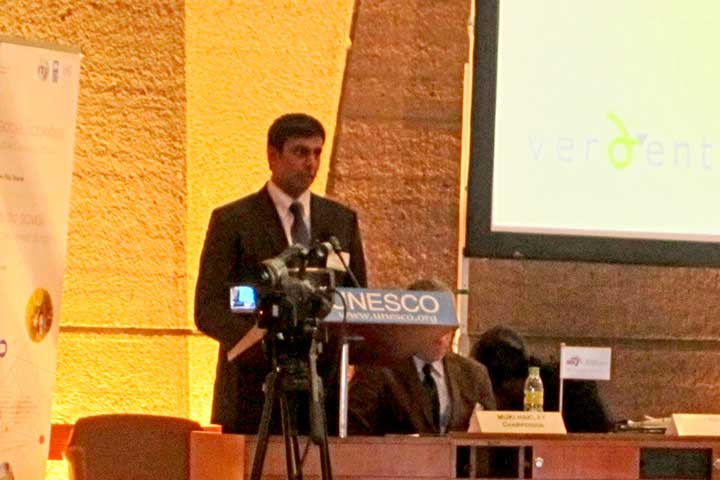
    Rohit Pothukuchi graduated from NALSAR, Hyderabad, in 2013. Subsequently he went on to pursue his Masters from UC Berkley School of Law. He is the Founder and Chief Editor of Standard Indian Legal Citation (SILC). He serves as an Affiliate Student Research Fellow, Harvard Law School Program on the Legal Profession. He will soon be joining White & Case LLP as an associate in NY. In 2013, Rohit was invited to speak as a panelist at UNESCO headquarters in Paris. Rohit will speak to us about:

    • Founding and being Chief Editor for Standard Indian Legal Citation (SILC)
    • Speaking at the UNESCO
    • Joining White & Case, NY as an Associate
    • Serving as an Affiliate Student Research Fellow, Harvard Law School Program on the Legal Profession


    How would you describe your childhood, pre-college life and educational background?

    I spent most of my high school years in Kodaikanal, TN, where I attended the Kodaikanal International School. When I was accepted to NLSIU Bangalore and NALSAR, I chose to attend NALSAR, primarily to spend more time with my family, parents and grandparents. Law and policy have always interested me. Although I almost chose to pursue a career in medicine or finance, I chose law because its such a versatile subject,and it affects so many aspects of society.


    What are your responsibilities as the Chief Editor and the Founding Editor of the Standard Indian Legal Citation (SILC)?

    (Rohit has been a pioneer in creating and promoting our own Indian citation format. SILC now has registered users at over 85 law schools, numerous firms, and courts across India. )

    There was a strong requirement for an Indian citation system. Researchers were frustrated with the difficulty of finding appropriate citation standards for Indian legal sources, most of which are not covered by foreign citation systems. Foreign manuals could be hard to find, expensive, and were just not tailored for India. You have to keep in mind, most of these foreign systems were created for their respective countries (the UK, the US, etc.)—it was time for a change. Debanshu Khettry, Shambo Nandy (the other two founding editors), and I first started discussing this idea when we were doing our B.A.LL.B. At first the task looked very daunting, and even impossible. Convincing the Indian legal community—a group of some of the most argumentative individuals I know—to change their practices is by no means an easy looking task. I didn’t think we could reach a wide enough audience.

    However, I felt it was the right thing to do and that we should put in our best effort. I took leadership as Chief Editor. We have truly been lucky to reach the nation -wide audience that we have, and I am so thankful to all of the practicing lawyers, faculty members, and students who have started using SILC and have taken the initiative to join us in this national movement. SILC has truly been a team effort, Before I speak about my responsibilities, I would like to acknowledge the efforts of our entire team of hard working editors from across India and our phenomenal advisors. SILC would not have taken off without them.

    I especially acknowledge Vikrant Pachnanda, Akshay Sreevatsa, and Megha Mathur, senior editors of SILC, who have put in tremendous efforts and bounds of time to make this citation system a reality. As Chief Editor I was responsible for overseeing all aspects of the citation system. Particularly, setting a vision, building a team, being involved with drafting the citation system, and the daunting task of getting this to a nation-wide audience. I had to think of ways to build an India-centric citation system that was easy and appropriate for a variety of uses and user groups ranging from practicing lawyers to law students to even non-lawyers reading legal material. Seeking the right guidance and building the right team were critical aspects in doing this. As a recent graduate, you can only possess so many skill sets. But in the aggregate, as a team, you can put together the skills needed to create an appropriate citation system. Once our core team of senior editors came together we were able to do this. I reached out to some of the nations leading lawyers and academics to try and get insights on how to make this citation system practical and useful for India—many of them were kind enough to join our advisory panel. Subsequently we added editors from across India who had great experience with journals at their law schools and with legal research.

    I came up with the name “SILC”, because it was catchy and appropriate. Almost everyone I spoke to loved the name, and we stuck with it. I first created the logo on Microsoft word, and eventually ended up providing rough sketches and designs for most of the web-site to our web developers. Our entire team of editors and advisors unanimously wanted a citation system that was not exclusively built and just put online. We wanted this to be a movement of lawyers and students across the nation who are choosing an India-centric citation system that is more suited to the nation’s needs.I hope we have made a move in this direction. We launched a “working draft”, precisely because we wanted to get input from as many practicing lawyers, faculty members, and students as possible. This is, after all, a system built for the Indian legal community, and we wanted to hear from that community before a version 1. Additionally, we wanted this to be accessible to everyone—some foreign citation manuals really can be expensive for Indian audiences and hard to find—cost should not be one of the reasons that deters a student from research.

    If you are interested in learning more, I have spoken about SILC in a podcast/interview with MyLaw, which you can listen to here: http://blog.mylaw.net/a-new-citation-system-for-uniquely-indian-legal-material/


    What is the vision going forward?

    The “working draft” is in circulation and we are getting input from as many students, faculty, and practitioners as possible. I am also conducting a survey for some research, its not directly related to SILC, but is related to citation practices across India and will help us understand areas where citation standards needs to improve. I am thankful to everyone who is able to take it. It can be accessed here.


    What has been the most gratifying moment for you with regard to SILC?

    I think the first few days, launching the citation system, and getting such a fantastic response was frankly a very very happy time for me. I never would have expected registrations from across the country, and such a positive response from academics, students, and practitioners alike. Students from more than 40 law schools registered in the first few days, and we got so many great responses. It’s truly a wonderful feeling to see your vision come to reality. I have to say, I was very nervous before the launch. We still have a long way to go, and our team is committed to working very hard to make this the best it can be.


    rohit-pothukuchi-2

    How was the experience of being invited to UNESCO headquarters to speak as a panelist at the World Summit on the Information Society Review Committee Meeting?

    It was an incredible honor and one of the greatest experiences of my life. The World Summit on the Information Society meetings took place in 2003 & 2005, and came about after the UN General Assembly approved resolution 56/183 resolving for the need for such a summit. The summits were the major effort of the UN to discuss the global information society, access to the internet, the growing digital divide, communication policy, and other issues, amongst nations of the world. The Summits have lead to the establishment of the Internet Governance Forum, and in a sense have helped develop the global vision ahead for dealing with the internet and technology—Wikipedia has a nice summary.

    The Review Committee Meetings which take place pretty much every year look at the issues and upcoming trends as well as developments after the summits. I spoke at one of these Review committee Meetings. A very senior official at UNESCO learnt about some of my work, and subsequently, I received an invitation to speak. Frankly when I saw the email I couldn’t even believe it. I spoke about e-science trends in India, and about Verdentum a non-profit social network I will be launching in Fall this year, which hopes to connect policy makers with students around the world. A portion of my presentation at UNESCO can be found on the UNESCO web page here.

    More information on Verdentum can be found at www.verdentum.org . I never thought I would be invited to give a talk to an audience that would be simultaneously translated into several languages while I was speaking. I kept looking at the translators—I was absolutely baffled. I was a bit nervous, and one of my personal role models, the former head of the Intergovernmental Panel on Climate Change was in the audience, which made it worse! He was speaking on a related panel. Thankfully, I had very positive responses, and I think the talk was well received. Of course, it was such an amazing experience, and I was very very lucky to have been flown there, put up, and have had this opportunity. Paris is a wonderful city.


    How is White & Case different from  top-tier Indian law firms?

    It has been thrilling working with White & Case at three of their offices. The work is some of the best I have seen in any of my internships and experiences–it is truly international, cutting-edge, and exciting. I think there are very few places where, as an intern, you get to help with multi-billion-dollar deals involving 5 or 6 different jurisdictions, and some of the worlds leading corporations, banks, and government bodies. This was especially true at the Abu-Dhabi office, a relatively smaller office, where I had the chance to be involved with the project finance, capital markets, and M&A groups and some of their transactions. Just being able to read through some of the documentation, and having lawyers who care about teaching you the dynamics behind a deal, one can learn so much.

    I thoroughly enjoyed being able to meet and interact with extraordinary, industry-leading lawyers. I never thought I would get to meet some of the lawyers who have truly shaped areas of law, or whom I had read about because of their involvement in prominent deals and transactions. White & Case has an incredibly open culture, most of the doors are open, and even senior associates and partners are really happy to talk about their work, and guide you. I think being in such an environment inspires one to be more involved with his work, and take the extra step. Being at the NY office was an experience in itself, you really cant beat walking into a sky-scraper next to Times Square every morning. I feel incredibly lucky to be joining such a fantastic firm, and to have had these unique experiences. I think the volume of highly international work at White & Case differentiates it from any other firm I know of.

    With that said, the firms I have had the privilege of interning with in India have been outstanding, and I have learned a great deal from being at those firms for even brief periods of time.


    Can you give us advice on applications and interviews, especially with foreign law firms?

    I think that it’s important to tailor one’s application specifically for each separate firm or organization. Many students provide relatively similar or generic answers to most applications. Read through the firm’s web site and identify their core values and principles, ask yourself if your application is in line with those; tailor your answers specifically.

    I think it’s also helpful to ask the question “do I fit into this organization?”—take a look at the lawyers there, their careers, and their achievements, I think that reveals a wealth of information about what the firm is looking for, and what you need to do/work-on to be there. Another piece of advice: build relationships. Don’t just expect to apply one day and get a job, continue to intern there, work with lawyers there to genuinely learn more in fields that interest you, do some research if possible, and have a positive attitude in whatever work you are given. I have interviewed with White & Case, a magic-circle law firm in London, and several international companies/ organizations. I would say do some thorough research about the firm and the deals they are involved in. This information is not easily revealed through the firm’s web-site all the time. Sometimes it helps to talk to lawyers at the firm.

    Know how the firm you are interviewing with is different from other law firms. They will usually have an area of law where they are the absolute best, or particular cases where they have distinguished themselves. Be familiar with the firm’s strategy and vision for the future if possible, ask yourself how you fit into that. I learnt that it really pays off to know a bit about the lawyers interviewing you—the major deals and areas they have worked on. These areas could occasionally come up in your interview.

    Know your CV thoroughly; be ready to answer questions about internships, and research that you have worked on. Additionally, be pleasant and be respectful of your interviewers’ time. Another note: It’s ok to say that you don’t know sometimes. You can’t know the answer to everything, and I don’t think you are expected to always know the answer. Additionally, try to stay positive. The application and interview process can be difficult, and everyone gets at least a few rejections (in my case I got many). As much as there are very low points in this process, learning from those experiences and bouncing back with improved applications is important.


    How did you go about applying for and getting these foreign internships?

    (Rohit has interned with numerous organizations in 5 different countries such as Oracle in Australia, the California Earthquake Authority, Worley Parsons; in India, AMSS, Tatva Legal, SKS Microfinance, and numerous other places.)

    It was very hard getting internships, especially abroad. I had a lot of difficulty. I was an ordinary law student from India, and I didn’t have any contacts who could help me. I had to work very very hard. You are up against candidates who are better suited, are usually graduate students with more experience (because you study law after an undergraduate degree in the US), etc. When I tried getting an internship abroad during an exchange program at Santa Clara University in my 3rd year I think I got rejection letters from most large law firms with offices in the bay area, and most small law firms I applied to as well. Im pretty certain I had at least 30 to 40 rejection letters in my inbox at some point. A litigation-oriented law firm in San-Francisco’s financial district finally gave me a chance.

    The lawyer who gave me the internship was one of the nations leading plaintiff’s attorneys, and truly an inspiring figure, she guided me with my work and we continue to stay in touch today. I’m very thankful for the chance I was given. For the first time I got the feel of a US litigation environment. I got to do hands on work and be involved with real matters. I have to add—it was so awesome working in a sky-scraper in downtown SF. I worked as hard as I could, I tried to catch up on relevant law. I used to travel about two hours by public transport to SF, early in the morning and two hours to come back go to class, and then study till late in the night. I tried to work on research in different areas I was interested in during my second-third year in NALSAR and I tried to seek the guidance of professionals that were in those fields I was interested in.

    Slowly but steadily my internship opportunities increased, and I was very lucky to get the kinds of opportunities I had. I really wanted to travel and see different work environments around the world, and I was able to get foreign internships that paid me enough that I was able to do that. It is possible, it requires perseverance and hard work. My advice is to work hard, build relationships with people and firms that are focused on areas you are interested in, and be perseverant. I have had several mentors from my internships who over the years have given me incredible guidance. Im thankful for their kindness. I think students should seek out mentors who can give them the right advice. If you have a positive attitude and a willingness to work, I think people will help you. I got so many rejection letters, again and again and again, but I kept at it.


    Could you tell us about your current research program at Harvard?

    Headed by Professor David B. Wilkins (Vice Dean for Global Initiatives on the Legal Profession), the Harvard Law School Program on the Legal Profession is a research think-tank which seeks to make a substantial contribution to the modern practice of law by increasing understanding of the structures, norms and dynamics of the global legal profession. As part of it is major, multi-national, multi-diplomacy research on Globalization, Lawyers, and Emerging Economies (GLEE), PLP is actively engaged in examining and understanding the Indian legal profession.

    The GLEE India research team is comprised of scholars from a host of leading universities, research institutions, and law firms in India, the United States, United Kingdom, and Singapore. The GLEE India research team is pursuing the first comprehensive set of studies examining the changes in the Indian corporate legal sector and its effects throughout the legal profession. This includes studying Indian and foreign law firms, in house counsel, legal process outsourcing, trade law capacity and capacity building, senior advocates, legal profession regulation, legal education, the role of gender, small town lawyers, diversity concerns, and pro bono and public interest lawyering.

    Using surveys, interviews, participant observation, and archival research, GLEE’s India research contributes to a richer and more textured understanding of the substantial changes to the corporate sector of the Indian legal profession as well as its relationship to the developments in the legal professions in Brazil, China, and other emerging economies. You can learn more about GLEE – and all of PLP’s research projects – on its website. My current research is focused on citation practices and experiences of lawyers and law students in India, I am currently circulating a survey for my research, the survey can be accessed through this link. I would be thankful to any members of the legal community willing to fill it out. I intend to expand my research to more areas in the future.”


    Tell us about your editorial experience and how it has benefited you as a lawyer.

    (During his time at NALSAR Rohit helped establish the ADR Review and Media Law Review, and served as the highest ranking student editor of two journals simultaneously.)

    I have indeed learnt a lot from this process. As far as the future is concerned I can say that our editors who are in charge are working hard and continuously improving the journals. We are looking at the growing importance of the blog, digital formats, and involving more practitioners. We want to make these journals as relevant as possible to a modern Indian audience. Of course it’s tough getting journals off the ground, but getting experts in the relevant fields to write and being perseverant is really important.


    How were these teams built and what draws students to write an editorial board test for these two journals?

    (Both journals have a truly impressive board of editors that have included winners of prestigious moots such as VIS, Oxford Media Law, etc., associates at leading law firms abroad and in India.)

    We follow a very different approach at the ADR Review & NMLR when it comes to journal leadership and governance. There is hardly any hierarchy. Our editors stay on for the entire period of time at law school. It’s very difficult to be selected, we have a very small intake, but our editors take their job seriously. We also believe in a holistic approach towards selecting editors. As much as the ed-board test plays an important role, we care about leadership and initiative, and people who care about the journals and the subjects—not just people who want to put things on their CV. We strongly believe that it’s difficult to learn enough about a subject and editing in a 1 year period—which is the time span many journals in India continue to keep their editors. We also encourage editors to creatively be a part of the management process and try to actively improve the journals. We are still pretty young, but I believe we have a bright future ahead. We are planning to initiate a mentorship program for editors of our journals, with alumni editors who have graduated, so they can get guidance early on and have access to more career resources in India and abroad.


    How did you manage extracurricular interests with academics?

    (Rohit was a finalist of the Habitat National Geographic Young Visionary Award in your 2nd year, getting through the semi-finals at IIT Chennai.)

    I was pleasantly surprised to have made it through, some of my ideas were climate-change related. I was lucky to be a national finalist. I believe the competition and Award have been discontinued in recent years. I served as the Moot Court Committee Representative to the NALSAR Student Bar Council in my 1st year. I was a bailiff for so many moots, that I never wanted to enter the moot court hall again!

    Well, I guess it’s important to work on what you like. I always did stuff I enjoyed, so it didn’t feel like a lot of work. I had awesome friends through law school. And with some bias I have to say the graduating batch of 2013 is THE best batch NALSAR ever has had and ever will have!! I’ve also gotten to know so many great juniors and seniors. So, spend time with friends. It was a lot of fun taking trips and wasting countless afternoons at local dhabas, driving around the city aimlessly, eating bhajjis on the side of the road, etc. — you need to make time for these kinds of things.

    Also, I would say plan ahead. Just know what you want to do and where you want to be and make schedules (I have to admit I didn’t always do this, but wish I had). You will find that you are hitting your targets and doing what you want to do. Additionally, I tried not to let go of some of my hobbies. I think a lot of people do this, they love to play an instrument or sing, or do something else, and this disappears when they get to law school. Hang on to your passion and continue with it. I tried to continue painting and this really kept me happy. I completed a series of sixteen pieces titled “Shattered Perspectives 1-16”, which are mixed media on paper. I created them for the Disability Law Center at NALSAR, and they are now a permanent installation there. The series of pieces portray the importance of law in piecing together the “shattered perspectives” of society towards persons with disability.


    What would be your message to students who wish to pursue a legal career in a top-tier U.S. law firm?

    I don’t think I’ve come far enough in my career to provide this advice. However, I would say: Start thinking about your goals very early on and seek the right guidance. I wish I had done this earlier. As early as the end of 1st year. I think by the time you reach your 3rd year you realize you’ve lost a lot of valuable time that you could have used towards internships, experimenting in different areas of law, figuring out what you like. Do this early on. Talk to seniors and graduates, find the right mentors, and work on what you love. I think that will take you where you need to be.

  • Sandipan De, NALSAR, on commercial law, his diverse internship experience, and bagging a Training Contract with Allen & Overy

    Sandipan De, NALSAR, on commercial law, his diverse internship experience, and bagging a Training Contract with Allen & Overy

    Sandipan De is a student of NALSAR, Hyderabad, batch of 2015.  He has earned three gold medals through his years of B.A. LL.B. He has secured internships with the likes of PwC, Khaitan & Co., CNBC TV 18, Argus Partners (formerly Udwadia Udeshi & Argus Partners), Talwar Thakore & Associates (Indian 'best friend' firm of Linklaters LLP)Talwar Thakore & Associates, and AZB & Partners. He also received  the opportunity of signing a Training Contract with Allen & Overy, London. In this interview he talks about:

    • Taking up varied internships and developing specific interest
    • Securing a contract with Allen & Overy
    • A typical workday at a Magic Circle law firm


    Why did you decide to study Law? What inspired you to do so?

    I was interested in commerce and business from a very early age. I remember I used to read the Economist, BusinessWeek and preferred the Economic Times over a normal daily. I think that built up my interest in the commercial world. The choice was between doing something finance related or commercial law. I had a flair for the language and logical reasoning. I thought law would best marry both my interests. Thus, law school happened.


    What do you have to say about mooting at law school and legal writing for journals?

    I have done only one moot- Vis. I think I might not be best suited to air my views about mooting but I genuinely feel that mooting as an activity is over hyped in Indian law schools. During my exchange semester at Santa Clara I figured that Indian law schools seem to privilege mooting over other activities but the sort of help, coaching and resources in foreign law schools is unmatched here in India. You should definitely try your hand at mooting but it isn’t the be all and end all of law school. The experience and learning is great but it isn’t something you can’t do without. I think legal writing and editorial positions are possibly very important. The sort of skills you develop there are extremely relevant and the reason why I tried my hand more at legal writing was because it let me delve into any area I wanted- topics that interest me as opposed to the confines of a set problem.


    Tell us about your internship in the chamber of Senior Advocate, Saha & Ray Associates & IMS Learning Resources.

    Well a bit of both to be honest. I wanted to try out the experience of litigation and see how a small law firm worked. I liked the experience and helped me decide that I did not see myself in litigation. Transactional practice was what I wanted. I have been teaching at IMS since my second year of law school. I really like this, as it keeps me in touch with the law aspirants and I enjoy teaching really bright students and try to advise them in making informed decisions.


    Coal India Limited & CNBC TV 18 are unconventional internship choices. What went behind making those decisions?

    I have to admit that by this time I was sure that I wanted to be in commercial law and had a sort of idea of what I wanted to do. I planned to see commercial law in action from every different facet possible. Commercial litigation, a behemoth PSU, etc. I interned with the only show that dealt with corporate law in India, while at CNBC, and that possibly was one of the best experiences during internships because of its unconventional nature.


    What kind of exposure did you gain with PwC?

    I worked with the in-house counsel’s team which was in the risk management vertical. Working with a Big Four was a different cultural experience and the risk management team was a whole new experience- it was about one client and trying to ensure best practices and the best risk management policies. I am not at liberty to divulge the sort of work I did but it was really interesting, tested your mettle and understanding of the business and involved coming up with best practice policies to guard against present and future liabilities.


    What is a typical day like working at law firms?

    AZB is still freshly etched in my memory. It was brilliant work. The work hours were exceptionally long but I enjoyed the thrill of working on India’s biggest transactions. It involved everything from simple research work to even trying your hand at drafting documents. I have to accept that the work I got from seniors was top-notch, they relied on you, gave you responsibility, expected you to put in the long hours but appreciated you for it. UU Argus was a relatively smaller environment and I really enjoyed the personal touch and the individual attention I got. Possibly, this is where I had completely made up my mind on transactional practice.


    You were selected in the Winter Vacation Scheme of Allen & Overy. Our readers are very keen to know how the entire application process works and what they look for in a student when making selections?

    After you get selected for the vacation scheme A&O is the only firm which gives Indian students the option of going for a winter scheme as opposed to the conventional summer scheme. The Magic Circle and Silver Circle firms come down to a select few law schools in India and interview the candidates for their vacation schemes (which are akin to an internship) after having shortlisted students on the basis of the application form which is released in July of fourth year through the RCC.  Some law firms have more rounds after the application form including but not limited to critical reasoning and verbal reasoning tests. The interviews are usually sometime in September.


    How was your experience in the UK working at Allen & Overy? How did you manage the finances and accommodation?

    Finances and accommodation including travel are paid for by the firm. On top of that the firm pays you a weekly stipend. London is not just a great city but a financial, cultural and political capital. It is a thrilling experience to be working in the City of London (which is the financial district) and enjoying the thriving cultural life that London offers which is truly unparalleled. You are working in the world’s greatest financial centre on the biggest and best of deals- transactions that are FT headlines. A&O is a great place- possibly the friendliest of the Magic Circle firms, offers great quality work, exposure and training. Possibly, that is true for all of the MC firms but what really sets A&O apart is that they treat you as an individual, really care about you as a person, your career, future and training and the work atmosphere is collegiate. I never felt like ‘just an intern’. It was the best experience I had had and I was sure that if I was offered the TC A&O and London is where I wanted to be.


    Tell us about your typical working day and the sort of work you were expected to do? How were your fellow co-interns?

    I am presuming that you are asking about the A&O work during the vacation scheme. A standard day involved a commute on the famous London tube to work and reach ingoffice by 8:30 a.m. Put in half an hour of personal work (glancing through the FT, reading up on the topic for the client pitch exercise, mailing a couple of people to benefit from their expertise on a particular area, etc.). I would then carry out the tasks delegated to me by my Trainer, possibly meet my fellow vac schemers for coffee at eleven on the rooftop restaurant which gives you possibly one of the best views of the City and catch up on where we are with our client pitch exercise. Go back to my desk and continue with my allocated tasks. Usually there would be a networking lunch with different people drawn from diverse practices of the firm to know more about the practice areas and the firm in general. We would typically have a couple of talks scheduled by the HR, Partners, etc. during the afternoon which we would need to attend. Following that there would be that surprise drinks counter at the inhouse bar called Lavanda where you would grab a couple of drinks with your fellow vac schemers and catch up on the latest, know more about each other’s work in different departments and then head off to your accommodation unless you had a dinner or social event to attend. The dinners are usually at top-end restaurants and the social event would be really exciting stuff like ice skating at the Tower of London where you would be accompanied by your Trainer buddy and other young trainees at the firm with whom you can informally interact and they would give you informal advice and buy you a couple of drinks after a hard days’ work. You then get back to your accommodation and prepare for your interview or research for your group exercises and then try to catch some sleep to prepare for another exciting day ahead.


    You are joining Allen & Overy after graduation. How did this work out? What would be your advice to those law students who want to secure such a contract?

    After the vacation scheme you fill up a form for the Training Contract application and appear for an interview with a Recruitment Partner on your last day. Once you get back to India the HR will let you know the outcome within a week’s time. Be yourself. There is no one sort of personality that they are looking for. Technical competence is a given. The HR can look through if you are feigning interest and thus I would suggest that you venture down this road if you are really interested in commercial law and you know that this is your calling. Try your hand at everything in law school but keep yourself focussed. Be commercially aware. Very very aware. Do you apps very well so that your real personality is communicated through it. At the interview stage do not try to be a person you are not. I remember that a few people mentioned two so-called ‘tests’ that you need to pass- one is the client test and the other is ‘can we work with you test’. The latter is self explanatory and the former essentially points to whether the firm can put you in front of a client and can you hold your own. The other difference I have to highlight is that the foreign firms value a more holistic approach rather than just technical knowledge. As I said, technical competence is a given, client context and permeating a legal solution through a commercially viable idea is what is expected.


    Any tips for an intern who wants to get noticed at work by dint of her performance?

    Again, be yourself. Don’t try to be someone you are not. Work hard and network with people. Talk to people. Never be afraid to walk through someone’s door and ask for work. The worst that can happen is that person telling you that there is no work at present to delegate and you should ask someone else. Lawyers are a very intelligent crowd. Be a person whom people can work with. I would say know your politics, current affairs, music, etc. At the end of the day you need to be a person with whom everyone enjoys working with. You can spew all the jargon you want but hitting up a conversation with a person on a topic he is keenly interested in would cast a far deeper impression than knowing a particular SEBI regulation. Of course that too is important. (Remember the ‘can we work with you test’)


    How well do you think your education at law school prepared you for real world practice? What do you feel about 5th year in the B.A. LL.B course at NLUs? Is it sufficiently utilized or needs a huge revamp?

    I think the new academic model at NALSAR and the practical and industry oriented courses have really gone a long way in helping us prepare for the real world of practice. I have to thank the seniors and the informal mechanisms at NALSAR which are a sine qua non. I think all that forms a part of the legal education package. I like the idea of fifth year. Lot of partying to look forward to. I can’t speak for all NLU’s but the new model at NALSAR with single credit optionals on such varied subjects along with interesting opportunities like Teaching Assistantships are really exciting and I look forward to the last year of law school. I am TA-ing for Contracts and can’t wait to get back to college.


    You were part of the RCC at your college. What prompted you to volunteer for it?

    I am part of the RCC which is a peer-elected body as the placement process at NALSAR is completely student run. I wanted to run for the RCC because securing your job is important but if you can play a small part in facilitating your batchmates’ jobs- people whom you have literally lived with for the four years in law school- there is no satisfaction like that. The work involves negotiations with organisations, facilitating on-campus interviews, working in a team and trying to secure jobs for all. Involves drafting documents, making pitches, interacting with industry honchos, strategising and not so glorious tasks like running around getting tea, arranging desks and chairs, moving beds to arrange for interviews, etc. The experience is definitely worth it. I work with a great team of people in the RCC. I think the excellent Day Zero figures from NALSAR are a testament to that. I am proud to have a batch where everyone is behind the RCC and don’t just retire into their rooms and let the RCC do all the work. Plus, we have an extremely proactive and excellent administration who always have your back. My sincere hope is to see all my classmates placed as soon as possible.


    Does being from one of the top three NLUs really come with additional perks?

    Well, this might be controversial but I do believe that the top NLUs do have it better for their students. I think it is about getting an edge over others. However, it is not something that one can’t make up.


    How important are grades in securing a job?

    It is definitely important. It does get your foot in through the door but CGPA isn’t the only thing. At the end of the day once you are inside that interview room or in that internship it is your competence that matters and not just your gradesheet.


    Any advice you would like to give to law students aspiring for a job at top law firms?

    Go for it only if you really like commercial law. Try to understand the business and commercial angle to things. That makes it really interesting. Try to learn as much as you can. Contrary to the popular gyan on the topic no task is unimportant- even if you are doing a proofread you are getting the chance to see a document which you would have otherwise never seen. I would say put your mind to it try to understand the transaction, the clauses, ask questions. No one will mind if you are interested and ask questions about the work that they are doing. I think you should rather prepare from your first two years. Try to figure out early in the day where your interests lie. Whether it be commercial law, policy work, social justice or opening a restaurant- figure out early and work towards it from the beginning.


    Lastly, what would be your message to our readers?

    I had a great time at NALSAR over the past four years and made friends for a lifetime, had seniors that I would look up to forever, some of the greatest professors to whom I would be indebted to forever. Don’t lose yourself over CGPA and the proverbial ‘CV building’. Surely that is important but do enjoy law school. It is a unique experience. Very few careers in India offer you the sort of opportunities that law school does. Pay homage to the Old Monk, be intensely loyal to your university, make great friends, and have the time of your life.

  • Roshan Santhalia, Advocate, High Court, on studying criminal law at Oxford, starting his own boutique firm and plans for the future

    Roshan Santhalia, Advocate, High Court, on studying criminal law at Oxford, starting his own boutique firm and plans for the future

    Roshan Santhalia graduated from NALSAR University in 2011. He has interned with Hon’ble Justice Madan B. Lokur, High Court, Delhi, Hon’ble Justice J.M. Panchal, Supreme Court of India, UN Anti-Corruption and Crime Prevention Department, and Cambridge Police Executive Programme during his time as an undergraduate. He then went on to pursue his masters in criminal justice at Oxford University, batch of 2012. He is currently a litigator based in Delhi, and primarily practices at trial courts and the Delhi High Court. He also founded his own boutique firm, Santhalia Law Chambers, in 2012.

    We have taken this opportunity to ask him about:

    • His motivation behind pursuing a LL.M Degree.
    • His experience as a student of the Oxford University.
    • The recruitment rate for overseas students.
    • Means of securing a scholarship to study at a foreign university.


    What was your motivation behind doing LL.M.? When did you finally decide to do your masters?

    I have always wanted to litigate in courts right from the beginning of law school. My primary and predominant motivation for pursuing an LL.M. was to improve my capabilities as a litigating lawyer. Moreover, I have always believed that as a first generation lawyer, the an LL.M. from a reputed university will help me build my litigation practice. As of now, the plan seems to be working. It was by the end of my second year in law school that I had made up my mind to take up an LL.M. after my first law degree.


    How did you choose the university/college?

    I believe that choosing the right university for your LL.M is extremely important. I have always advised my juniors to not apply to universities which are average or below average. With the upsurge in the global education market, there have been numerous universities which have come up with their own LL.M programs. It is important that every LL.M aspirant emphasizes on two aspects of the LL.M program. These are the overall brand reputation of the university and the quality of the faculty in the area of your interest. For instance, an aspirant might want to go to Oxford because of the brand name it has, but, if he/ she wants to specialize in Intellectual Property Right laws then Berkeley or Stanford are much better options. The right balance needs to be struck between these two factors and an ideal combination would be one in which the target university has a good brand name along with having a good faculty in the area of the desired specialization of the aspirant.


    What did you study? Why did you decide to take up this particular subject?

    I took up Criminal Justice at Oxford because I have always wanted to practise criminal law. All throughout my law school career, I have devoted a major portion of education and learning in the field of criminal law. I believe that every aspirant should first locate his or her lead in a particular area of law. An area which interests the aspirant much more than other areas of law and other similar factors should be taken into consideration. It is important that by the end of the first half of one’s law school career, he/ she should decide his/ her lead area so that he/ she can concentrate and build his/ her CV accordingly.


    How has your experience been so far? Tell us about the faculty and facilities. Anything memorable that has stayed with you?

    It’s been about six months since the completion of my masters. I would say that my experience as a Masters student was a bit poorly balanced. The academic side of my entire experience took away all the time in which I should have probably socialized and done other extracurricular activities in and around the town in which I was living. I was very lucky to be a part of a class at which luminaries like Professor Andrew Ashworth and Professor Lucia Zedner taught. One does not need to worry about the faculty if he/she is going to renowned universities. Professors abroad are extremely professional and diligent. They would never ever give you an opportunity to be critical of them in any form.


    How’s the Indian fraternity over there? Are there many Indian students?

    Indians are everywhere, aren’t they? I believe that all the good LL.M schools across the world have an excellent Indian fraternity. We have done very well across different disciplines and therefore, one will never find any dearth of friendly and helpful Indian students in any university. Not to forget, the children of Indians who have settled abroad also form a substantial portion of the Indian fraternity abroad.


    How is the recruitment/ placement situation for overseas students?

    Prior to the recession, I hear that the placement rate for overseas students was good. Currently, I believe that it has become very difficult for anyone who does an international LL.M to get a job in the international market. One needs to appreciate the fact that LL.M is a masters degree and therefore, it is more analytical, jurisprudential and theoretical in nature. As compared to this, the JDs and other undergraduate equivalents in foreign law schools teach the practical aspects of the local laws to their students. Therefore, the undergraduate students always have a better bet with local jobs of that particular jurisdiction. Having said this, I must say that exceptional candidates who do very well in their LL.M programs do end up getting good jobs too.


    How is the academic schedule? Is there a lot of academic work?

    Yes. A lot of academic work. LL.M programs across the globe are designed in a manner that a huge amount of course content can be compressed in one single year. As I have answered before, a major portion of my time which should have been spent discovering other things around Oxford was taken up by the excessive academic pressure which was exerted by the LL.M course on me. One should be mentally prepared for a lot of academic reading during the course of their LL.M program.


    How did you manage food and accommodation?

    Accommodation varies from university to university. Oxford and Cambridge have a collegiate system which means that every student will be allotted a college which shall essentially take care of the residence and food for that student. US universities, I have heard have halls of residence within their faculty of law or very near to it.


    Tell us about your classmates – is there a predominantly international crowd? What is the general age group of students?

    My class had students from all over the world. I had classmates from all the seven continents. The general age group of students is anything between 24 – 30. However, there are certain students who are also more than 30 years old.


    How does one go about scholarships? Does the institute offer any scholarship?

    Comprehensive scholarships to high quality law schools are very difficult to get. Again the mode of scholarship and the way in which one can get it varies from one law school to the other. The US and UK employ different mechanisms to provide academic scholarship to deserving candidates. One needs to do his/ her research very well to apply for all the appropriate scholarships. You can either get a full scholarship or tuition fees waiver depending on your class rank in the undergraduate law school and the interview which you give to the scholarship committee.


    Going forward, how do you expect this experience to influence your career?

    I believe that every LL.M has two major components to it. One is the substantive component of the course which basically relates to the substantive law and theories which you have gained from your LL.M course. The other component is the improvement in your capabilities to analyze, think, draft etc. on different legal issues. I believe that my higher education experience has added much more to the second component mentioned above than the first. The first component is primarily municipal/ local in nature as the theories and substantive law which one learns in his/ her masters can be most related to that particular jurisdiction in which the law school is located. In contrast to this, skills of analysis, drafting and how to critically develop a perspective on any particular area of law are skills which are universally applicable in different fields and sectors of law.