Tag: NALSAR

  • Ishana Tripathi, Legal Practitioner, on Policy Law, working for Tier-I firms, and her diverse experience

    Ishana Tripathi, Legal Practitioner, on Policy Law, working for Tier-I firms, and her diverse experience

    Ishana graduated from NALSAR in 2011 and joined AZB in 2011. After working there for three years in the fields of acquisitions, inbound investments, commercial/civil/corporate crime litigation and arbitration, she then branched into helping set up a private mediation centre – Centre for Advanced Mediation Practice. She assisted them with rule drafting and case management strategies and also a lot of business development. In 2015, she started work on two projects in parallel, the Centre for Policy and Research, Bangalore, and Vidhi Legal, Delhi; one on civic citizenship to develop a constitutional law search engine and the other on court annexed mediation.
    In this interview we speak to her about:
    • Working for Tier-I firms such as JSA and AZB
    • Her time in NALSAR
    • Her experience in Policy Law

    How would you like to introduce yourself to our readers?

    This is a trick question. If it has to be concise, then it would someone who is trying to navigate through the various avenues of the inter discipline of law available today!  To me, there are a variety of experiences that one can gain even while pursuing a corporate law firm career without viewing it myopically.  While “specialising” in an area and building your own niche is important for recognition, if you don’t broaden your horizons to work – in every space and opportunity available, in my view, at this seventh year of practice, your ability as a lawyer stagnate.

    As a professional who is here to stay, you need to keep educating yourself to the changing ecosystem and while you can’t know everything, it our responsibility to be aware of as much as possible and not let go of opportunities that allow us to experiment. Law as professional can be a beautiful thought provoking and life changing way of life.

    Give us a brief overview your NALSAR experience for our readers.

    The NALSAR experience is novel to each one in terms of utility. For me, law school was a confusion on whether I want to pursue the law at all. Today, the passion I feel for law comes from working with some of the best people in the profession – a privilege that at the beginning  of my career in 2011, came from being a NALSAR graduate. It would be foolish to deny the edge that having an “National Law School” label will give you but to say that the students are smarter than the rest would be another thing and misconceived.  Its ultimately boils down to a proof of hard work, integrity and dedication – which you need to find within.


    What kind of internships did you undertake during your student years?

    Law school to me was an opportunity to explore and take chances. I did close to fifteen internships, with different work profiles, I didn’t repeat a single internship. This was a personal choice. I worked with government organisations like TRAI, not for profits like TERI, clerkships with the CLB and the Supreme Court, trial work, general litigation and corporate law firms.  By the end of it, the only thing, I had no idea what I wanted to do but I knew what I didn’t. For instance, I realised I was too mercurial for criminal trial work (here, i mean cases of rape, domestic violence, assault, and not white collar work) and decided not to pursue that route. I am now venturing back into criminal trial work – particularly in relation to restorative justice models – so lets see if I have reached an emotional maturity to handle it.


    Is it absolutely necessary to moot or undertake paper publications in order to be a successful advocate?

    There is no straight jacketed formula to success. Every individual has their own journey.  Like I said, law school is an individual experience. But if it is advice, then I would urge people to not be close minded, especially todays generation of lawyers –  who have many more avenues like legal journalism, legal policy, legislative drafting – which are work spaces available for a lawyer and were not as present in the mainstream in 2011 when I graduated. Try as much as possible in law school but do it with zeal and not because the mass says so. Law school prepares you to embrace different perspectives. While having ambition and direction are important, do not write off anything.


    What are your areas of specialisation and how did you go about choosing these fields to specialise in?

    I specialise in – ADR and corporate /commercial litigation, and, labour and employment laws. The first was an interest in law school which solidified at AZB and is a true academic area of interest which I continue to pursue. The latter is attributable entirely to AZB. If you would have told me in law school that I would become a diligence handbook for labour laws, I would have laughed at myself, it was my worst subject – mostly for the lack of interest in it! Today, the research and jurisprudence in it fascinates me to no end. I read regular updates and amendments.


    How were the first few years after your graduation? 

    Law school was a different phase all together. It engineers healthy competition, using your brains to argue/defend positions, change view points, embrace failure and general personal development.  It doesn’t, however, unfortunately give you notes on implementing the law. It is necessary that the absence of practice from theory in legal education changes. But, that’s a debate for another time. The internships that I was fortunate to get gave me some insights into the inner workings of the lawyer life but I suppose my mind was too young to comprehend and process the amount of handwork and brain cells required to materialise the text book law into strategy.

    I honestly lucked out with the mentors I had at work right out of law school. They instilled a quality of work and pushed my intellectual barriers. They enabled me as a lawyer right from the start, they never treated me as someone fresh off of the boat. It was “use your brains and assume responsibility for work” from go!  If I look back, my time at AZB, gave me a strong foundation and was a very empowering experience. I can blindly say that I am ardent Zia Mody fan, she defies patriarchy in the profession in ways I took for granted at the age of 21, when I started working there.


    Give us some insights on the qualities that Tier-I firms look for in prospective candidates.

    I can’t speak for every Tier-I firm and I also think recruitments and requirements change with time / legal landscapes.  Prospective candidates vary accordingly – depending on type of work, experience, firm expansions etc. If you are asking for what they look for in an fresh of the boat law student in an interview – for me, self confidence, good English (I suppose!), demonstrable ability to work well with others, passion for any element of the law is what worked.  


    Briefly describe your experience in assisting the set-up of the Centre for Advanced Mediation Practice.

    Professionally, after three years of arbitration experience at AZB, mediation was a new bull to me. To study it and embrace it was easier than I thought it would me. CAMP opened a new chapter to me as a person as well as a professional and gave me insight into being non – adversarial in thought process and also gave me new direction towards understanding law.  CAMP, to me, was being a part of a movement, which would shape a new dimension in legal process in India. It was of course, a new challenge, since going from the comfort of a corporate law firm to figuring out how to get conference call facilities! But that’s the beauty of a start up. Its not only the idea of it but also every other element of it that makes it more personal. Combine it with the “purpose” that it seeks to achieve – CAMP was critical in reinforcing the idea of wanting to be a part of the system and help nurture a better case resolution mechanism.


    Please give our readers some insights into the functioning of Policy Law firm.

    (Ishana has worked with two of India’s most reputed firms in policy law- The Centre for Policy and Research, Bangalore and Vidhi Centre for Legal Policy, Delhi.)

    With Vidhi, I worked on a project that studied the efficacy of court-annexed programmes. Here, we studied four centres in India and where there were issues and fallouts. The hope remains that the recommendations are picked up and a change in implementation of mediation is envisioned by the law makers and the judiciary.

    With CLPR, was a project on civic citizenship and constitutional law. This was uncharted territory, since my knowledge of constitutional law was basic and text book. CLPR was spearheading a project that would culminate into a database of the constituent assembly debates that led to the framing of our constitution. I worked on the first phase which was focused on the fundamental rights and directive principles.  The project involved reading through days of debates and coding them in a prescribed format which would then be fed into an algorithm where people could search (like Google).

    It was amazing to learn and unlearn the pre-conceived notions of our rights and in a way get to know the people who fought / argued/ reasoned / shaped the future of individual and social rights in this country. To everyone who reads this, I am shamelessly asking you to check out the CLPR website for the CAD page! It will be worth the effort! The hope is that one day it would reach the common man for general awareness.


    When and why did you decide to leave your job at JSA?

    It was in April 2017 that I decided to leave JSA. I believe it was the right time in my profession to pursue a higher education in law with the Erasmus Mundus programme.  


    Is there any other suggestion you would like to give to our budding lawyers?

    You just have to have the dedication and maintain a standard and drive for yourself.  The day you can’t give your 100% to something – it could be even proofreading ten lines on a matter, then its time to find something else. Demotivation in life is the worst thing you could do to yourself and the person whom you represent – who deserves your dedication, time, thought and places their faith in ‘you’ not anyone else to guide them right.  So if you ever find yourself in a situation where you say “have to” more than ten times a day, move on. It is a disservice to yourself and your colleagues if you choose to continue in the same state of mind.

    As a parting thought, never take any work opportunity and position in life for granted. Moreover, to me work-life balance is a myth. Never take on a task with the purpose of attain this. It is work that has shaped my personality, increased my capacity to question and broaden thoughts. It is practice that has indulged a love of studying the law.  The sooner you accept the importance of work in your life the easier your journey in law becomes!

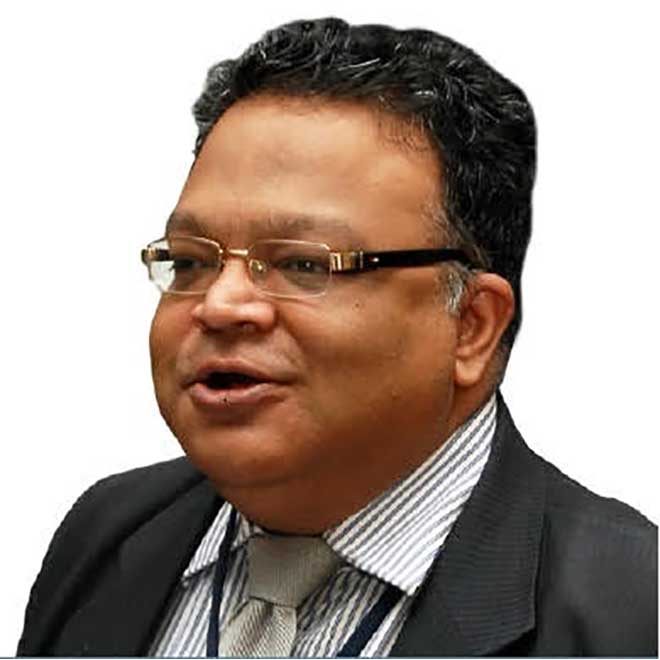
  • Rajendra Misra, Senior VP-General Counsel, Taj Hotels Palaces Resorts Safaris, on IPR, and his diverse experience

    Rajendra Misra, Senior VP-General Counsel, Taj Hotels Palaces Resorts Safaris, on IPR, and his diverse experience

    Rajendra Misra graduated in law from University of Calcutta, in 1991. After successful stints at Indal, Dunlop India Limited, ITC Limited, and Hindustan Unilever Limited, he is currently Senior VP-General Counsel at Taj Hotels Palaces Resorts Safaris. Mr. Misra is the chief legal advisor to the CEO and Board, advising on legal implications of business issues, proactively spotting prospective legal issues, counselling the executive management on legal and regulatory aspects etc. His role encompasses Strategic Litigation planning, Litigation management, selecting and supervising outside counsel, driving strategic initiatives to achieve business objectives while also ensuring adequate protection of legal rights of the organization, building strategic partnerships and alliances with outside counsel and attorneys, Risk minimization and Risk management, developing a Compliance culture, Corporate governance, process improvements, using technology as a tool for efficient management of the function, and developing and managing the team.

    In this interview we speak to him about:

    • His role in ushering in crucial reforms at Taj
    • Receiving accolades such as “GC Powerlist: India 2016″, “Trailblazers: India’s Finest In-house Counsels” by the Indian Corporate Counsel Association, among others
    • His illustrious experience spanning 26 years

    Given that most of our readers are law students and young lawyers, how will you introduce yourself to them? 

    I come from a family of lawyers. My father started his law practice in Kolkata. My sister is a practising lawyer at the Calcutta High Court. I have several relatives as well practising law. I consider myself to be a student of law. I have spent 26 years in the legal field; however, the field is vast, law is ever evolving, and every day one is learning new things. The quest of knowledge is unending, and I am always keen to learn more.


    What was it that got you interested in the legal field? 

    Even before I could understand its true meaning, the expression “Possession is nine points of law” fascinated me! I probably heard it from my father. I think it is the discussions between my father and my sister on legal issues which got me interested in law. Gradually, as my interest in law grew, I decided to make it my career. And once I made the decision, I pursued it seriously.

     

    How was your experience in law school? 

    We were one of the initial batches of the integrated five year law course. Typically, the law schools teach you basics of law, laying the foundation. The other thing which you are introduced to is analytical thinking, debating etc., all of which help one later in life. During law school days, Constitutional Law, Contracts and Conveyancing were my subjects of interest. I believe it is extremely important for the students to supplement the knowledge from law school with practical experience gathered through internships. Even as I was studying law, I used to regularly attend the chamber of a Senior Advocate in Calcutta as a trainee. I used to make it a point to attend college, and then attend court post lunch, followed by attending chamber in the evening. Watching the proceedings in court was a great learning. Carrying on research work at the chamber was also a learning experience. I learnt early on the merits of being precise while drafting, that it always pays to say less and be precise, rather than say more and be rambling. Even before completing my law course, I had the privilege of assisting my senior in a case of copyright infringement. I had not read up on copyrights earlier and IPR was not in our curriculum. I researched the subject and found it interesting – very different from the regular property, inheritance and other civil cases. I think that exposure resulted in my interest in Intellectual Property Rights later.


    Was the decision to work as an in-house counsel as opposed to working at a law firm a conscious one? 

    I was always interested in a counsel practice, as opposed to working at a law firm. As such, I never really considered the option of working in a law firm. I firmly believe that the decision whether to work in a law firm, or as a counsel or as an in-house counsel is an individual decision, and each one should decide on the basis of his/her interests.

    So how did the movement from counsel practice to in-house counsel happen? Fairly early in my law career, Indian Aluminium Company, Limited (Indal) was looking to recruit an in-house counsel to handle their major legal cases. My father suggested I should consider applying. While initially I was a bit hesitant, he encouraged me to explore. I must say that I had never done an internship in an in-house legal department, and as such this was like walking into the unknown, taking a leap of faith. But I did take the plunge, and have never regretted it. It perhaps helped that Indal wanted me to handle its major legal cases. Therefore, I was never far away from litigation, courts and counsel. Gradually, of course, other aspects of the in-house counsel role also grew on me.


    You undertook the Hawkesmere course on IPR in London, and have a Postgraduate Diploma in Patent Law. Can you tell our readers about this course?

    Both these courses were part of the effort to continuously upgrade professional knowledge, and were extremely relevant at the respective point of time.

    A couple of years into my career in ITC, I was given additional responsibility of supervising the IP Cell. Following this, I had gone to London for the Hawkesmere Course on International Intellectual Property Law. Hawkesmere used to conduct such courses aimed towards Continuous Professional Development of executives. This was a two day intensive course, and gave a great insight into various aspects of international IP law, which was very relevant at a time when the IP laws around the world were evolving following the TRIPs agreement.

    Around 2005-06, ITC began diversifying into the Personal Care business. While I was heading its IP Cell, we were mainly into Trademarks and Copyrights. But with the diversification into the Personal Care business, we also began filing patent applications. So I decided to take up the Post Graduate Diploma in Patents Law course of NALSAR. This course was a mix of proximate education and on campus sessions. It was a wonderful way of undergoing training in patents law while working. The faculty was good and experienced. One got a great insight into patents. We had to research and submit two papers on patents as part of the PG Diploma course. The tough part, of course, was balancing work and learning. That was compounded by the fact that I was taking up studying nearly twenty years after having left college. Our professors had sound words of advice for those of us who were taking up studies after a long time – apart from training us on patents, we were also advised to practise handwriting, because twenty years after college, one tends to lose the practice of writing by hand, and it is not easy to write a two hour exam without first building up writing speed!


    What got you interested in the field of IPR?

    My introduction to the world of IPR was through a copyright infringement case on which I assisted my senior during my internship. We did not have Intellectual Property law as part of the law curriculum, and hence, this was then a totally alien field for me. But I enjoyed researching and working on this case. Later, when I began heading the IP Cell of ITC, my interests in this field of law grew further. The late 90s and early 2000s were momentous years for Intellectual Property Law in India, with India overhauling its IP laws after acceding to the TRIPs agreement. This is when the IP law really evolved in the country, and companies began putting greater focus on management and protection of their intellectual property. This field of law is really fascinating. Protecting brand names and logos is now extremely common place. However, with the new Trademarks Act, the ambit of trademarks has really expanded, and it is possible to protect sound, 3D marks, colour combinations etc. as trademarks. There is enormous scope to do innovative work in this area, and I believe that the potential of unconventional trademarks is waiting to be realised, particularly for FMCG companies, media organizations etc. who are extremely focussed on protection of their IP. Another interesting area is of Geographical Indications. I had a great exposure to this subject several years back in ITC when we were embroiled in a litigation relating to the GI Darjeeling, where the plaintiffs tried unsuccessfully to stop a hotel lounge by the name Darjeeling. The awareness of this new area of IP is increasing day by day, and recently I was delighted to find that a society of weavers in Kasaragod had registered a GI for Kasaragod sarees! The other area of IP which has great potential is patents. However, a good grasp of scientific knowledge gives a distinct advantage in this field. We must remember that at this point of time, the Indian economy has the potential to become the world’s third largest economy by the next decade, and one of the two largest economies by mid-century. The International Monetary Fund describes the Indian economy as the “bright spot” in the global landscape. As the economy grows and businesses expand, IPR will continue to become more and more important, and this will give tremendous opportunities to lawyers and law students.
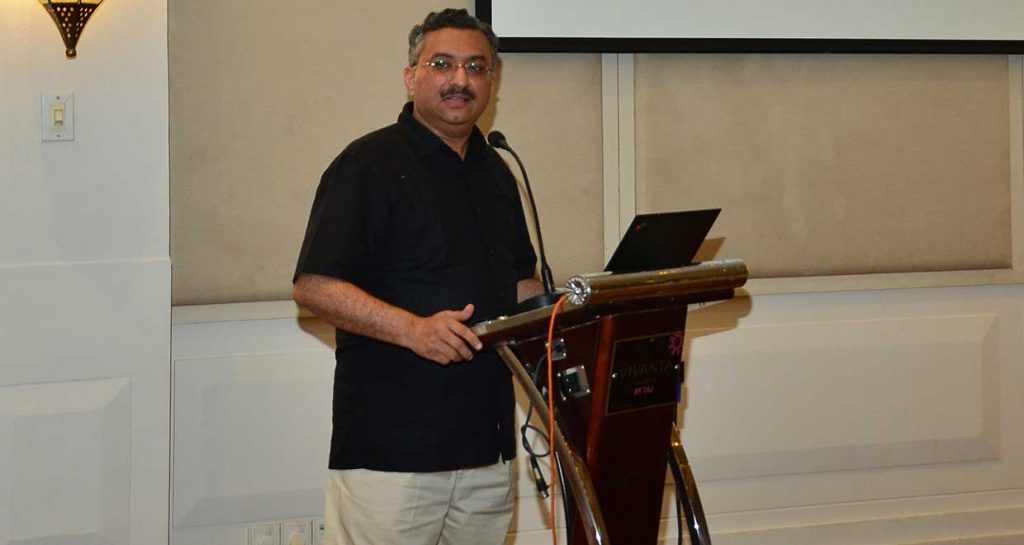
     

    What would be your advice to our readers undecided about pursuing higher education? 

    Life is a process of continuous learning. My advice would be not to lose any opportunity of learning. If there is an opportunity of pursuing higher education in a field of interest, I would earnestly urge the readers to avail it. Particularly, if you get it before the start of, or early on in the career. I acknowledge that it may not be easy to pursue higher education later in the career. But, as they say, if there is a will, there is a way. My courses undertaken in mid-career were extremely relevant to my roles, and hence, I benefited greatly from undergoing the courses. I guess the key in such cases is relevance and interest.

    What was your first job after law school? 

    Even as I was attending law school, I used to attend the chambers of a senior counsel in Kolkata, interning and learning the ways of courts. So post qualifying, I commenced going to court. In 1993 however, Indian Aluminium Company, Limited (Indal), a subsidiary of Alcan, Canada was looking for a legal resource to handle their major legal issues, which were till then being handled by a Dy. Company Secretary, who was due for retirement. I remember going for the interview in the most casual manner – straight from court without any preparation and wearing only a jacket and no tie – only to find to my horror several candidates immaculately dressed in suits and ties, seriously reading business newspapers and waiting to be called for the interview. I don’t know what my interviewer and future boss saw in me, because out of the many candidates, he chose a greenhorn like me for the assignment. God bless him for that choice, because thus began my journey as inhouse counsel in some of the topnotch companies.

    It was a blessing in disguise that a few months after my joining, a library-full of files landed on my head – all relating to the major legal cases of Indal. These were high value litigations relating to electricity laws and mining laws. The best of legal brains of the country were appearing for Indal in these matters, and very early in my career I came to interact with them, initially with a sense of awe, but followed quickly by confidence, even as I saw and learnt from their discipline for this great profession. Several months down the line, Indal went for a Euro issue, and that pitched me in front of US lawyers, defending the major litigations of Indal and assuring them that all was under control and that Indal had good merits in these cases – something which I did with confidence, earning the Managing Director’s special award in the process. I handled my first merger transaction at Indal, when we merged a power generation company, which was a subsidiary of Indal, with the parent company.

    Given that Indal was my first job, apart from learning about corporate law, I also learnt corporate language (very different from the language used in pleadings!), corporate behaviour and corporate dynamics at Indal. The early experiences in Indal transformed me from a counsel to a corporate lawyer. I learnt the importance of dispensing with legal jargon and talking/writing in simple language which is understood by business/non-lawyers. The Indal stint also introduced me to the fact that as in-house counsel, I should be looking at the business aspect of an issue apart from its legal aspects – the fact that legal manager has two facets – ‘legal’ and ‘manager’ – and the in-house counsel has to consider both legal and business aspects in order to arrive at a fine balance, serving the business interests of the organization while remaining within the boundaries of law.


    Can you tell us about your time at ITC?

    It was during 1997 that ITC was looking to augment strength in their Legal Department. I was then based out of Kolkata, and for any legal professional in Kolkata, ITC was a dream job. Therefore, when they offered to recruit me, without batting an eyelid I joined them. The ITC journey was a tremendous one. Fairly early in my ITC stint, I began partnering the Tobacco business, the largest business of ITC. Over time, as they spun off newer businesses, I got the opportunity of advising the newer businesses as well, helping them find their feet the right way, ensuring legal compliance even as the businesses grew, acquiring new brands, manufacturing facilities and companies for the organic and inorganic growth of the new businesses. Thus began my association with the Foods business, the Personal Care business, the Lifestyle Retailing business, the Matches & Agarbatti businesses, and the Stationery business – very diverse businesses. Even while doing so, I continued to partner the Tobacoo business, which had its own set of challenges, Tobacco being a heavily regulated industry.

    ITC takes IP management very seriously, and it was my privilege to lead their IP Cell too. While during the Tobacoo/Foods/LRBD days, management of Trademarks and Copyrights was the dominant theme, the advent of Personal Care business also brought with it experience in handling Patents management. The most interesting thing was that with newer businesses being spun off, we also learnt on the job. Overall, it was a great time, with huge learnings. In many ways, we used to operate as an in-house law firm. We used to do a lot of drafting in-house – agreements as well as pleadings. We also used to do a lot of research in-house, and ITC had an excellent library of legal journals, law books, as well as legal research software like Manupatra, SCC Online, Excus, PTC, etc. to enable research. And, we used to take an active part in briefing counsel in our legal cases. With our drafting and research, we used to support our counsel and solicitors in a big way, something which was well appreciated by them.

    The Tobacco business came up with innovative ways of advertising – it was the role of the Legal function to ensure that the business always remained within the four corners of law. Being a highly regulated industry, the Tobacco business took compliance with legal requirements extremely seriously, and the Legal voice was heard with respect. With the new businesses, I got the opportunity of creating and protecting new brands, acquiring new brands, negotiating and closing with new manufacturing facilities, sometimes buying new manufacturing facilities. The best part was the acquisition of a bio-technology company which was into production of seed potatoes, with manufacturing facilities in multiple countries. Due diligence in multiple jurisdictions, and structuring the transaction was extremely challenging. I distinctly remember the night prior to Closing, when we stayed up the entire night finalizing the transaction documents, to seal the deal at 10 o’clock in the morning. It was a tremendous experience.

    As the years went by and my responsibilities increased, so did my levels. I moved on from being Asst. Manager – Legal to Asst. Solicitor to Associate General Counsel. From a solo start, the ITC stint gave me the experience of managing a team. I had a great time working with fantastic business leaders, excellent mentors, fine peers and a great team. Finally, after spending 14 years in the organization, I had a feeling that I had done all that was to be done in Kolkata and in ITC. I got an urge to spread the wings and fly away out of Kolkata, all the way to the western shores of the country – to its commercial capital. I was looking out when HUL called. And that was a dream assignment, too difficult to refuse.
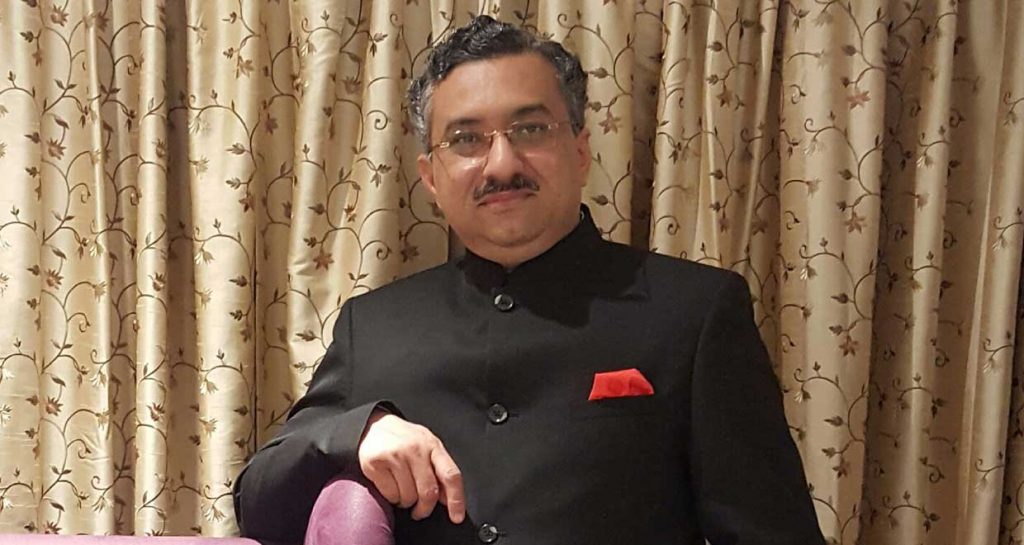
     

    How did your appointment at HUL happen?

    Unilever is a great organization. It is the king of marketing in the country. In 2011, HUL was looking for a senior legal resource for heading its legal team partnering the personal care and homecare businesses, the largest of its businesses, representing more than 75% of its turnover. It was my privilege that they selected me for the role. I became a part of the HUL Leadership team and the Legal Leadership team. Unilever is a powerhouse of great leaders. It would not be wrong to say that Unilever “manufactures” leaders, some of whom occupy some very senior positions across the industry today. It was a great time at Unilever, working and collaborating with some of the finest brains in the business today.

    Over time, my role in Unilever grew. In addition to leading the legal team partnering the personal care and homecare business, I also got the charge to supervise the Legal team of Lakme Lever Ltd., a subsidiary of HUL. Later, the Water business and Kimberly Clarke Lever Ltd. also got added to my profile. Over time, in addition to my above responsibilities, I also became the Global Legal Counsel for Lifebuoy and Fair & Lovely, two iconic brands of Unilever, apart from discharging the role as Brand Development Counsel for the entire South Asia region. I must say that I thoroughly enjoyed my role in Unilever. The learnings were immense. Interacting with the best legal brains across the Unilever universe, one picked up global best practices, and came to learn about new and upcoming fields of law. The business teams in Unilever are demanding and one has to be nimble to manage them, and it was a joy working as a team. One of the most important things which Unilever experience brought out was the risk-taking appetite, something extremely crucial for the business. The best part was that Unilever gives you complete freedom in your job profile – the canvas is yours to paint. Another fantastic thing was that I had a young, energetic and dynamic team. Interacting with such a young and dynamic group was great and challenging at the same time. It kept you young and contemporary, but at the same time you also had to be several steps ahead of them. It was a joy mentoring these bright young legal minds.

    At Unilever, I had the opportunity to look at, frame and defend some cutting edge product claims and advertising. The most memorable was a comparative advertising, where we showed the competitor’s product and claimed that our product was better than theirs. It was risky, but it was a calculated risk we took, and one which was worth taking, given that our product was truly cutting edge and better than competition. Therefore, the claim was factually correct, through it ran the risk of a competitive challenge. During the planning stage, I advised the business group that we should expect the competitor to take the battle to courts. I made intelligent guesses, and was able to accurately anticipate the court where they could file the legal challenge, and prepared counsel in advance so that we were in a position to defend our claims. My forecast proved correct, and we got locked in a fierce competitive battle with the competitor. We succeeded in defending our claims and in keeping the comparative advertising going for a long period of time despite the competitor’s attempts to shut us out. This campaign is a landmark in the history of comparative advertising in the country.

    The other memorable piece of work was acquisition of a natural ayurvedic medicine brand and product for Unilever. With the rise in demand for natural products, and growth of new competitors in this field, Unilever set about acquiring this natural ayurvedic medicine brand and product line, and I was in the thick of due diligence and negotiations with the promoters of the product/brand, and we worked out a great deal for the company. Unfortunately, before we could ink the deal, I quit to move on to Taj, but it gave me immense satisfaction when the deal was finally concluded soon thereafter. It is a matter of pride to see the product on the shelf. Incidentally, this was not the first brand/product line purchase for me. I had done quite a few in ITC as well. And, today when I see these products on the shelf in retail stores, I feel immense pride in having been associated with these acquisitions, and have great stories to tell about them to my children.

    Towards the end of 2015, Taj was looking to appoint a Senior Vice President – General Counsel on its Executive Committee – the highest executive body just below the Board of Directors of the company. When Taj gave me an offer to join their Executive Committee, reporting to the Managing Director, and overseeing the Legal & Secretarial functions, it was a great offer. During my professional career, I have always valued professionalism and high moral standards in an organization. Both Unilever and ITC are extremely professional companies, with high ethical standards. Taj and the Tata group are universally admired for their great professionalism and high ethical standards. Therefore, the organizational profile was a perfect fit. The role was also very interesting and challenging. Apart from supervising my function, sitting on the Executive Committee also gives me a great experience in understanding and analysing business issues, appreciating legal issues in a business context, prioritizing legal issues accordingly, and taking risk calls for business growth. Therefore, I decided to take the plunge and join Taj – a decision which I haven’t since regretted. Today, apart from being a member of the Executive Committee of Taj, I am also a Director on the Board of TajGVK Hotels & Resorts Ltd., a listed company which is a joint venture between Taj and GVK group.


    Can you give our readers some insight into the reforms you brought in Taj during your time there?

    At the Taj, we deal with a lot of contracts, under which we have valuable rights in respect of our 100 plus hotels. Contract management is an important area for us. In the modern world, contracts tracking on Excel sheets is sub-optimal and does not work. With advancement in technology, it was important that we use technology to our advantage in managing our important contracts. Hence, I deployed a Contract Management software at Taj. It serves as an archive of all our hotel management contracts and other important contracts, and also tracks contract renewal dates and auto-generates alerts for the team, ensuring timely renewals, and risk mitigation.

    The next issue was ensuring uniformity of contracts across the organization. My team is spread over multiple locations. It is crucial that everyone in the team follows standardized contract templates, instead of digging into personal drives and using different contract formats. Hence, I constituted a Task Force to standardize about 25 of our main contracts. We spent a lot of time discussing and debating the changes to these contracts. And, we did this inhouse because we believe that being closest to the business, we were the most equipped to standardize our contracts keeping in mind our business requirements and challenges. Once standardization happened, we uploaded the standard versions of the contracts on the Contract Management software so that everyone uses the same format, regardless of location. This ensures consistency of contracts, and has minimized risks for the organization.

    Laws impact everyone in the organization, and increased legal awareness leads to greater compliance and lesser risk exposures; hence, it is important to spread legal awareness within the organization. Here again, I decided to use technology to our advantage. We have developed e-learning modules (Learning Management System or LMS) for our employees on five crucial subjects – Data Privacy & Protection, POSH, Competition Law, Insider Trading, and Related Party Transactions. These are interactive e-learning modules which will explain legal topics in very simple terms and with examples for the non-legal employees.

    The Taj group had deployed a Compliance Management system at its units. I have now commenced Gap analysis, which is in the nature of an audit that will help us identify and fill up gaps, if any, in the compliance management by individual units. This will further strengthen the compliance management within the organization.

    Similarly, Taj was in the process of deploying Litigation management software and Intellectual Property management software. We went full throttle in order to operationalize them on priority basis. All Taj litigations and IPR have now been uploaded onto the Litigation management software and the Intellectual Property management software, leading to better management of litigations and IPR.

    I believe that with all the above measures, people in the organization can sleep better, assured that we are doing the right thing, in the right way and that our risks are getting minimized.

    You pioneered an initiative which led to the Taj Mahal Hotel building in Mumbai being India’s first building to secure a trademark for the image of the hotel. Can you tell our readers about how you achieved this?

    The image trademark registration was a result of a combination of many factors, my fascination with unconventional trademarks being one. The other was the constant feeling of what more one can do to protect the rights of my organization, and how can I ring fence it better. Yet another was the desire to create value for the organization, because I believe that the Legal Department is not just a cost-centre, it can also create value for the organization. The Taj Mahal Palace, Mumbai is the iconic flagship of Taj Hotels Palaces Resorts Safaris, and is a defining structure of Mumbai’s skyline. The distinctive red-tiled Florentine Gothic dome of the hotel, which crowns the elegant Indo-Saracenic arches and architraves of the iconic hotel, sits 240 feet above street level. Since 16th December, 1903, when the hotel first opened its doors to guests, its striking dome has been the triangulation point for the Indian Navy to guide them in the harbor. It is widely recognised as the temple of hospitality. I do not need a signboard on this iconic property for the public to know that it is the Taj hotel. One look at the property and you know that it is The Taj Mahal Palace, representing the finest in Indian hospitality traditions. To my mind, that is exactly what a Trademark is. Therefore, I went about securing this image trademark registration. After conceiving this idea, I presented it to the Managing Director and my peers at the Executive Committee, who enthusiastically supported it. We got the trademark applications filed through Anand & Anand, the top notch intellectual property law firm in the country. The applications were pursued on top priority, and we were able to secure the registration in 7 months. I must say that a stellar role was played by the Trademarks Registry and by Anand & Anand in prosecuting the applications and securing the registrations. Often, people who are part of a historic moment do not realise that they are creating history, and I daresay that most of the people who participated in the process may not have realised the significance of the moment. But history it certainly was – we had become the first Indian building to have secured image trademark registration. Only a few iconic buildings across the world have been able to secure such registration – the Empire State Building, the Chrysler Building and the Sydney Opera House to name some. With this image trademark registration, the iconic Taj Mahal Palace, Mumbai became a member of this unique and elite club – the first Indian building to do so. As an Indian, that swells my heart with pride. As an employee of The Taj group and Tata group, it makes me immensely happy that I have been able to get such a unique protection and status for our legendary hotel. This is a very unusual and unconventional trademark, and the outcome of a pioneering effort. Many organizations register brands and logos as trademarks. However, the scope of “trademark” is much beyond mere brands and logos. Sound, images, colour combinations, 3D images etc. can also be registered as trademarks. Such unconventional trademarks can create great value for organizations, representing its USP. And, being beyond the conventional, they can become great talking points for organizations.


    Can you tell our readers about IBHA’s role in the industry? 

    (Mr. Misra has been the chairman of Indian Beauty and Hygiene Association.)

    IBHA is the premier industry association representing reputed personal care/beauty/FMCG companies in the country, viz. HUL, P&G, L’Oreal, Marico, Dabur etc. IBHA plays a key role in advocacy on behalf of the industry with the government. I was Chairman of the Legal Committee of IBHA, and used to play a very active role on various industry issues. We made representations to the government on various issues impacting the industry. I strategized and handled several legal issues/litigations on behalf of the personal care industry. In my capacity as the Chairman of its Legal Committee, I was the Legal advisor to the Executive Committee of IBHA, which comprised of the Personal Care Director of HUL, COO of L’Oreal, MD of Godrej Consumer Products, CEO of ITC’s Personal Care business etc. It was most wonderful interacting with these industry captains, advising them on the legal issues impacting the industry.


    You have often been recognised as one of the finest in-house counsels in India. What are the qualities required to succeed as an in house counsel? 

    It has been an honour to have got recognition from such leading organizations as The Legal 500 and the ICCA. To succeed as an in-house counsel, one needs several qualities. First and foremost, one needs to have an analytical mind, and should be capable of making dispassionate analysis of issues. Together with legal knowledge, one should have a good understanding of the business of the organization. Risk-taking appetite is an extremely important quality which an in-house counsel should have. An in-house counsel should be solution-oriented, providing the business with solutions to their problems rather than raising the red flag on everything. It is also extremely important that he should be able to speak out his mind without fear or favour, keeping the interest of the organization and all stakeholders over everything else. Above all, an in-house counsel should have the ability to balance the business and legal aspects, and achieve the optimum balance which will ensure that the organization achieves its business objectives without compromising on legalities.


    What are the challenges you have faced in building your career as it stands today?

    One issue which readily comes to mind is the growth challenge in Kolkata. As I mentioned earlier, after 14 years in ITC, I had a feeling that I had done everything possible in ITC and in Kolkata. I was born and brought up in the city, and always worked there. However, at that point of time, I was faced with the situation that if I had to grow my career further, I had to leave my city of birth and move to unknown pastures. Having spent 40 years in a city, that is not an easy decision to take. However, I took the bold decision to quit my job at ITC, and leave my city of birth to move to HUL in Mumbai. At that point of time, it was very unsettling. However, in retrospect, I am glad that I took the decision to move out. My movement to different organizations has given me the opportunity to expand my knowledge and experience. Over time, I have learnt that change is a constant. There is always risk in change; however, as they say, “A ship is safe in harbour, but that is not what ships are meant for.”


    How do you stay up to date about the recent developments in all the fields you work in and have an interest in?

    It is extremely important to stay updated about the latest developments in the legal field. I once came across the statement ,“If the rate of change outside is greater than the rate of change inside, then you become redundant”. That to me underlines the importance of keeping oneself updated with the latest. The world today is changing faster than ever, with new developments coming about everyday. It is important that our knowledge keeps pace with this fast-paced development all around us. Keeping oneself updated also enables one to correctly analyse a situation and advise in any given scenario. Latest changes in the legal field can be gleaned from various sources, viz. the media, professional social media, legal journals, Manupatra alerts, Google alerts etc., as also from participating in various professional knowledge-sharing groups. I also attend conferences and seminars on topics of interest in order to keep myself updated.


    What advice do you have for our readers who are primarily college students?

    A career in law is a great one to take up. Knowledge is the most important asset of professionals. My advice to college students would be to keep increasing their bandwidth of knowledge. Do internships at good organizations and keep gathering new experience.


     

  • Shivani Chopra, Employment and Litigation Lawyer, Hicks Morley, on Labour Laws, and being a lawyer in Canada

    Shivani Chopra, Employment and Litigation Lawyer, Hicks Morley, on Labour Laws, and being a lawyer in Canada

    Shivani graduated from the first batch of NALSAR, University of Law, Hyderabad in 2003. While at NALSAR, she did different internships including working one summer with Justice K.G. Balakrishnan of the Supreme Court of India. After I graduated, she got recruited by Dr. Reddy’s Labs through On-Campus Interviews. At the same time, she got a full scholarship to do her LL.M. from Dalhousie University in Canada. Once she completed her LL.M., she wrote her Canadian legal equivalency exam to get her Canadian Law degree. She then found an articling position with one of the top twenty law firms in Canada, and after articling, became an associate lawyer with them in January 2008. In January 2016, she became a partner at the law firm and was one of the very few visible minority immigrant women partners at a major law firm in Atlantic Canada. This year, she moved to Toronto and is now practising with Hicks Morley which is considered the top law firm in Canada for management-side Labour and Employment work.
    She has also received the Lexpert Award this year in Canada for achievements in the legal profession. The award was given to 50 women across Canada and she was one of them.

    In this interview we speak to her about:

    • Being a part of NALSAR’s maiden batch
    • Her passion for Labour Laws
    • The Canadian legal regime

    Given that most of our readers are law students, how would you introduce yourself to them?

    I am a litigator at heart who loves the practice of law, and would not trade what I do for anything.


    What motivated you to pursue a career in the legal field?

    My Uncle, Dr. Sudhir Chopra, now retired, is a law professor in Europe. He encouraged me to join the legal profession and actually encouraged me to apply to NALSAR. My father, Mr. Pradeep Chopra, is also a lawyer and Engineer. He was the President of a Railway Trade Union Association for most of his career, and was frequently involved in labour disputes. Both of them were instrumental in me joining the legal profession.


    Can you tell us about the experience of being a part of NALSAR’s inaugural batch?

    The time I spent at NALSAR were some of the best of my life. The first batch got a lot of tough, but necessary, love from our director at the time, Dr. Ranbir Singh. We worked hard and played hard. To me, the most important part of NALSAR were the internships we did over the course of our five year program. Those internships introduced us to a lot of good legal professionals, gave us our first glimpse into the legal profession, and helped us figure out which direction we wanted our career to head in.


    Can you tell us about the kind of internships you engaged in?

    I did a total of eight internships in law school! My most significant internship was with Justice K.G. Balakrishnan, who retired as the Chief Justice of India. Justice Balakrishnan taught me a lot about the legal profession and gave me significant insight into the workings of law. I must mention that he was also one of the kindest and most humble people I have ever encountered in the legal profession. Training under Justice Balakrishnan just further solidified my interest in the legal profession.


    What were your areas of interest in law school and how did you cultivate such interests?

    My interest in law school was primarily advocacy. I love a good fight and arguing a case in courtroom is the most fun part of the practice of law – to me. I cultivated that interest by participating in internal moots. I was also part of the University team for the Red Cross Henry Dunant Memorial Moot Court Competition.

    My other interest, and one which I abandoned shortly after law school, was Intellectual Property Law. My LL.M. thesis at Dalhousie University was on an Intellectual Property topic. However, upon completion, I realized that IP and Advocacy would not necessarily go hand in hand. A fight ensued, and my love for Advocacy won!


    What was your first job after law school? How did you secure it and what did it teach you?

    My first job after law school (NALSAR) was a position as an IP lawyer with Dr. Reddy’s Lab. I secured it through on-campus recruitment but ended up not working there because I got accepted into the Masters program in Canada.

    In Canada, while taking my legal equivalency exams, I worked as a paralegal in a law firm. I learned the inner workings of a Canadian law firm in that position.


    What motivated you to pursue an LLM?

    (Shivani was accepted at Dalhousie University in Canada with a full scholarship to pursue her LLM.)

    I would give a romanticized and idealistic answer to your question, but there isn’t one. I did not want to pursue LL.M. My Uncle and my father insisted that I study more and asked that I apply to Dalhousie University. Had I not done that, I would have had a hard time landing at a top-tier firm. My LL.M. is what separated me from many candidates because candidates who want to join private practice do not often pursue LL.M. It did not necessarily make it easy for me to find a position, but it certainly helped law firms here assess my abilities in the Canadian legal system.

    My advice to readers who are undecided about pursuing higher education would be – do it ! Especially if you plan to move to another country. Higher education will set you apart and may help you find that position you always wanted. Plus, you will have your entire life to work but a little more education never hurt anyone.


    How did you secure a scholarship? What can students do to increase their chances of receiving financial aid?

    I had applied for a scholarship at Dalhousie University and had ensured that my thesis proposal was interesting to the University which could increase my chances of securing a scholarship. My tuition fees was fully covered by the University and, in addition to that, I received a small amount for my living expenses. Money was always tight but I was focussed on graduating from the program so lack of money, although challenging, did not impact me much.

    To increase your chance of receiving financial aid, apply to as many universities as you can. Contact professors at the University, discuss financial aid with them, and ask for advise on what may help you secure scholarships. Most Canadian LL.M. programs, at least back when I was studying, consider the strength of your writing proposal and your resume before determining what scholarships you will get. So focus on your resume, get as many internships as you can, and keep your grades up in law school.

    How did you secure an appointment with McInnes Cooper?

    (Shivani initially had an articling position there and then went on to become a Partner.)

    Law students in Canada are required to article/clerk with law firms for a year, with some exceptions, before being called to the Bar. So I applied for an articling position and was hired-back after I finished articling. I became a Partner at the firm in December 2015.

    I was lucky enough to find a great mentor early on in my career. She taught me all I know about the practice of law, and helped shape my legal career. Plus, practice of law is hard work. It is not a 9 to 5 job. I always describe it as being in a medical profession – doctors work endless hours to save lives. Lawyers work endless hours to solve their clients’ problems. I worked very hard, and continue to, to serve clients. I would also say that your home environment plays a tremendous role in how well you do professionally. I have a super-supportive spouse who is just as driven as I am. He has never complained about long hours (he works them too!), or cancelled dinners. That has, over the years, allowed me to focus on the practice of law.

    In terms of the type of work I have handled, I am primarily a litigator and first started my career doing all sorts of litigation work. I eventually focused my practice on employment matters as that is the area that interests me the most.


    What prompted the shift to Hicks Morley? What is your job profile there?

    Hicks Morley is well regarded as the top labour/employment firm in Canada. My husband and I had been considering a move to Toronto, and I knew that Hicks Morley would be the place for me – if I was fortunate enough to land there. They made me an offer, and I took it.

    I am an employment and litigation lawyer at Hicks Morley, and work out of their Toronto office. We counsel and represent employers on all sorts of labour and employment matters. Our client-base is spread across Canada and our team works tirelessly to provide top-tier advise to our clients.

    This is what I had always wanted my practice to look like – and I am loving every minute of it!


    Can you give our readers some insight into the field of Labour and Employment law?

    Labour and Employment law is fascinating. Never a dull moment – which also means you work hard for your clients. You are dealing with people’s employment matters – which are critical to them. So you need to be responsive, sensitive, and have lots of people skills to thrive in this area of practice – that’s my opinion.


    Did you initially find it difficult to familiarise yourself with the Canadian legal system due to having studied law in India?

    Although both India and Canada are common law systems, laws are significantly different. So my articling year was spent on a lot of self-education. I would do a lot of self-teaching and reading when I was given an assignment to even understand what the legal system here was like.
    You pick-up things very quickly though. Six months in and, with self-teaching and good mentoring, I was figuring out things very quickly and settled-in pretty well.


    You are one of the few visible minority immigrant women who has done so well in the legal field. What hurdles have you faced in building your career as it stands today? 

    That is very kind, although I think luckily, a lot of immigrant women are doing well in the legal profession. That said, the sad fact is that it can be challenging for immigrants to break into the legal profession due to several reasons: cost of getting your equivalency to the Canadian law degree; finding people who will give you your first break (takes a lot of faith when you don’t understand their educational background); and family circumstances.

    I was trying to break into the profession in 2006. I sent out a large number of applications, networked constantly with potential employers, and interviewed with big and medium-size firms in Canada – before I finally found a position that was of interest to me.

    My advice to younger candidates who are trying to venture out of the country is to be realistic and strategic. Keep your grades up in school; practice at a good firm in India before making the move if you can; get that Masters degree, if possible. And network! You never know who will take you under their wings and help you achieve your goals in the legal profession.


    Why did you choose to not return to India?

    I love India. I was born and raised there, and it shaped who I am as a person. Not returning to India was a personal decision. I met my husband, who is also from India, in Canada and he wanted to settle here. So we decided to make Canada our home.

    I have now been living in Canada for about fourteen years and have made it my home. I have been practicing law in Canada for about ten years – so this is home now both personally and professionally. This is the legal system I best know, love, and understand.

    With respect to job opportunities, I can only speak about the Canadian legal market. The legal market in Canada is very competitive. There are lots of great candidates coming out of law schools and so finding a good opportunity takes a lot of time, effort, work, and frankly good luck. And to be honest, it is even more competitive for international students and immigrants– because you are the “unknown commodity”. Law firms and corporations may have a hard time figuring out how your experience compares to that of the Canadian candidates. That said, if you work hard and stay focussed, you will achieve that position you are looking for.

    What advice do you have for our readers who are primarily college students?

    Figure out what you want to do in your career and, if possible, plan your every move around it. Use your breaks to do those internships. They are more important than you realize – they help strengthen your resume so use your summer and winter breaks to get quality internships.
    Work hard but play hard too. I had a lot of fun in law school. Made tremendous life-long friendships and it helped shape me into the person I am today.

    One final advice – choose your career wisely. If you love what you do, you will do it well and effectively. There is nothing worse than joining a profession because you are being told to do that – if you don’t enjoy it, chances are you will not last in it.

    Thanks so much for reaching out.

  • Karthik Somasundram, Partner, KLaw, on his time at NALSAR, and his diverse experience

    Karthik Somasundram, Partner, KLaw, on his time at NALSAR, and his diverse experience

    Karthik Somasundram graduated in law from NALSAR, Hyderabad, batch of 2004. He currently heads Disputes practice at KLaw’s Mumbai office. Prior to joining K Law, Karthik was a Senior Associate with DSK Legal and prior to that with Paras Kuhad & Associates. Karthik specialises in dispute resolution in corporate, commercial, securities and investment matters.

    In this interview we speak to him about:

    • His time at NALSAR
    • His internship experience
    • His role as Partner at KLaw

    How would you like to introduce yourself to our readers?

    I am litigator by choice. However, I am trained as a disputes and a transactions lawyer. I am a wildlife and photography enthusiast and recently qualified as a deep sea diver. Presently, I head the disputes practice at KLaw’s Mumbai office.


    What motivated you to pursue law?

    I am a first generation lawyer. I did not aspire to be a lawyer. I wanted to join the Air Force but I didn’t get around to that. We were in Bangalore when NLSIU was founded. Since then it was my Dad’s desire that my sister and I become lawyers. After my 12th grade I chanced upon a few application forms and a few entrance tests later, it started.


    Give us a brief overview of your NALSAR experience for our readers. What is it about NLUs that makes them stand out, as compared to non-NLUs?

    We were the second batch of NALSAR and I only have fantastic memories from our time there. Three of my closest friends are from my time at NALSAR and I have known them for over seventeen years now! Our time at NALSAR was not what it must be like today, I imagine. We stayed in make shift hostels for a year before we moved to the beautiful campus that you can visit today. From the second year we lived on the present campus and for about two to three years there was construction activity all around us. Few of the structures today were not there even when we graduated. However, the best that NALSAR offered was in the form of few of the professors! I think we studied Constitution and Administrative Law from the finest professors at the time. We also interacted with the sitting Judges of the Supreme Court and the Andhra Pradesh High Court at that time. NALSAR opened doors and gave us experiences that (probably) only NLSIU was giving its students, back then. We had access to libraries and resources that few practising lawyers had at that time. Today, everyone has access to these resources and the internet has made everything accessible. When we started, the full potential of the internet was not known, let alone the ability to exploit it. NALSAR gave us an understanding of that potential early on. We participated in international and national moots and the university had the resources to support the students in those endeavours. I think we were the first amongst the law schools to organise a fest (‘Summons’) and students from most of the law universities and colleges participated. It was lot of fun. Lot of impromptu discussions and arguments on different aspects in classrooms— as also during power outages in the evenings during the monsoons. A discussion that has stayed with me was when a junior (practising in the UK now) wondered if he could be ‘stateless by choice’! The world had started to change by 9/11 and we lived the exiting times.

    There are only two things that make the NLUs stand apart from other institutions. The first is the resources to provide opportunities to students and the other is infrastructure. NLUs also benefit largely on account of the human element – professors and lecturers. That is not to suggest that there are no good professors and lecturers in the non-NLUs. A no-brainer analysis will show that most commentaries and authorities are by non-NLU professors and most of the professors and lecturers from the NLUs are students of non-NLU professors. I still remember the week that Late Professor Sathe spent at NALSAR about ten or twelve years ago. I can’t recollect the lectures from back then, but the faculty at NALSAR hung by every word he said and they followed him around everywhere. However, if the non-NLU professors and lecturers are not compensated at industry standards, this too will become another differentiating factor.


    What kind of internships did you undertake during your student years? Any memorable ones?

    In my zeal to figure my area of interest, my internships targeted most areas of practise. I have interned with firms and lawyers on the transaction side, litigation, intellectual property and even maritime practice. The time when I interned in the chambers of the then Solicitor General in the Supreme Court, Late Mr. Kirit Raval, is the most memorable one. I was wide-eyed during my entire stint there and therefore contributed little or nothing, I am sure. I was heading into the fifth year I think and I had not yet made up my mind and I remember sitting through all his briefings/conferences in his office in the Supreme Court and I followed him and his chamber juniors everywhere!


    In your opinion, what are the law school centric activities that you would recommend as necessary experiences for every law student? 

    From a résumé perspective, I think one needs to experience all the activities on offer to gain experience(s) first hand. Also, if you do not try all the activities or even a few of them, how will you know what interests you? College activities can also help open up many avenues and therefore determining interests, I think, should be the endeavour.

    Having said that, since the entirety of our professional life is spent ‘communicating to convince’ – a client, counter contracting party and their attorneys, judges or even a point of view, I suppose activities that help in enhancing communication skills should be explored. It can be in the form of debates, moot courts, publishing, undertaking field work and research, etc. I started mooting in my third year at NALSAR. It was quite late to start but we did fairly well, I think. It was fun. We won a few and lost many more! Looking back now, those experiences feel like the trailer to the movie that we are experiencing now!


    What are your areas of specialisation and how did you go about choosing these field?

    I am a disputes lawyer on the corporate-commercial side. I advise and represent on disputes arising from contractual arrangements, equity investments, lending and borrowing arrangements and securities transactions. I did not plan for this area of practice. I experienced this kind of work along with transactions work and other kinds of litigations and I enjoy this kind of work the most. Hence.


    What are the challenges that one needs to prepare himself/herself for when they step out of the comfort of a law school and into the real working world?

    Be prepared to work hard. There is really no shortcut there and no magic potion to make it work otherwise. Experience is the only teacher. Nothing in law school will prepare you for when you become a service provider. So it is only when you start working that you start learning bits that actually matter. Don’t stop because of setbacks and tough bosses. ‘Mistakes’ and ‘learning’ run parallel. If you don’t work, you won’t make mistakes and if you don’t make mistakes, you won’t learn. So don’t stop working or trying because of a mistake or because you are afraid of making other mistakes.  


    Give us a brief capsule of the life of a partner and your average working day experience.

    A day usually starts and ends in a similar fashion—planning. The hours in between are when we execute the work/ assignment. As for the ‘brief capsule of the life of a partner’, it is similar to managers in other professions. It involves identifying and meeting client expectation and requirements, identifying the quickest and surest way of achieving it by deploying the right Associate/Senior Associate, etc., taking stock of progress and ensuring delivery. Therefore, it’s a result oriented approach that constantly needs fine-tuning or modification. To stay competitive, enhancement of knowledge is imperative and that is the other area that takes up significant portion of a week, even if not every day.


    How are the young partners today different from the ones before them?

    Each year there are thousands of young lawyers entering the profession and that directly results in increase in competition. There are hordes of lawyers catering to different segments and that constitutes the relevant client base. So apart from executing work, we are constantly trying to innovate and develop an edge over the others. The young partners of today specialise in their chosen area of practice and are not multi-disciplinarians like the stalwarts before them. Anand Desai of DSK Legal, Zia of AZB, Berjis Desai of JSA, M. L. Bhakta of Kanga & Co., and M P Barucha of Barucha & Partners, to name a few, are the last of the multi-disciplinarian practitioners. On account of the competition and shorter turnaround timelines, the partners of today are focused on excelling in their chosen area of practice and therefore there is a lot of specialisation.

    Partners today also have ‘financial’ and ‘client acquisition’ targets that they need to meet in addition to servicing the client in the best possible manner. So the young Partners of today are facing more challenges than the ones before them and one needs to be prepared for that. A lot of movement in the legal market at the partner level is on account of these targets and these parameters are here to stay. So it is no longer adequate to be a good lawyer, one also needs to understand the business of operating a law firm as well.

    Karthik with best friends from NALSAR days, Vishnu Dutt, Partner – Bharucha & Partners, Veena Shivaramakrishnan, Partner – Juris Corp, Priyanka Jain Atal, Senior Manager – Firstsource Solutions Limited.


    How important are grades, in your opinion? 

    Grades are important. However, not in the manner of predicting if one is an exceptional lawyer. One may be fantastic in academics but may not be able to master the practical aspect of it and the other way around as well. However, grades are important in the sense of inculcating work ethics and valuing hard work which really is the only way up from being an Associate to a Senior Associate and further up.

    I am not an expert and neither have I studied the workings of the Indian legal education system and therefore, not qualified to comment on it. However, as with any stream of study, an emphasis on understanding and analysis of the subject matter as opposed to knowing it verbatim, can only be positive.  


    Is there any other suggestion you would like to give to our budding lawyers?

    If someone tells you that money is not important, please run very far away from that person. However, if you had to pick between money and experience, pick the latter always.

  • Debarupa Agarwala, Senior Associate, HSA Advocates, on studying in NALSAR, and working at Tier-I firms

    Debarupa Agarwala, Senior Associate, HSA Advocates, on studying in NALSAR, and working at Tier-I firms

    Debarupa Agarwala graduated in law from NALSAR, Hyderabad, in 2007. Debarupa is a dual qualified lawyer (UK and India) and has worked with leading law firms in Tokyo, London, Hong Kong and Singapore. She has extensive experience in general corporate and commercial advisory, M&A, banking and finance and capital markets transactions. She has been involved in advising various Indian as well as international companies on commercial law aspects, including drafting, structuring and negotiating various share purchase agreements, shareholders agreements, and other related legal advisory work. She also advises on joint venture investments, foreign direct investments into India, outbound investments from India, commercial contracts, employment law and compliance related matters.

    In this interview we speak to her about:

    • Her time at NALSAR
    • Having worked all over the globe
    • Striking a work-life balance

    How would you like to introduce yourself to our readers?

    I am a dual qualified lawyer (UK and India) with experience in corporate and corporate finance transactions.


    Give us a brief overview of your NALSAR experience for our readers.

    My time at NALSAR was an eye opener in many ways. Being from a small city (Guwahati), the first couple of years for me were spent in just adjusting to the curriculum and soaking up the cosmopolitan culture. My batch mates were from various parts of India and very intelligent. It was, honestly, a bit overwhelming for me in the beginning. But with each semester, I gained confidence and by the time I graduated from law school in 2007 with a job offer from Luthra & Luthra in hand, I knew I had made it.

    One mistake I made in law school was to focus entirely on classroom curriculum and grades in my initial years there. Luckily, I quickly realised that there was more to being a good lawyer than just one’s grades. I started getting interested in research and publications and that was the beginning of a very fulfilling time at law school. I also attended quite a few space law conferences in India and abroad and the exposure really helped me hone my speaking and soft skills.

    NLUs do have many advantages over other institutions. Providing legal education and access, exposure and infrastructure are the three things that immediately come to my mind. NLUs let you access good faculty, a robust alumni network to help with recruitments as well as access important events such as conferences and moot court competitions. They provide excellent exposure in grooming your lawyering skills. The emphasis on physical infrastructure such as buildings, access to internet and a well-stocked library is also typical of NLUs.

    Life as a law student in an NLU is easier than that in a regular institution because many things are handed to you on a platter. Without this kind of privilege, students from regular institutions have to work extra hard to be noticed.  


    What kind of internships did you undertake during your student years?

    Unlike most of my batch mates, the majority of my internships were with NGOs and academicians. Back when I was a student, I wanted to become a professor of law and I had structured all my internships that way. Believe it or not, I took my all my internships very seriously and each of them taught me something useful to take forward. My NGO internships in Guwahati and Delhi taught me empathy and to respect others. My research internships taught me the art of logical thinking. In my fourth year, one of my professors helped me secure an internship in a renowned IP boutique law firm in Tokyo. It was my first and only law firm internship and needless to say, the experience was worth it. I had to pick up spoken Japanese on the job and even managed to make about half of my leaving speech in Japanese on my last day at the firm.

    In your opinion, what are the law school centric activities that you would recommend as necessary experiences for every law student?

    I would definitely encourage students to engage in extracurricular activities such as mooting, debating or research. They are necessary not only because they equip you with the skills that are necessary to be a good lawyer but also give a big boost to your confidence.

    In the long run, I do not think anyone will judge your advocacy skills on the basis of whether you had mooted or undertaken paper publications in law school or not. But if you want your advocacy skills to stand out, this is what you have to do.


    What are your areas of practice and how did you go about choosing these fields?

    I always like to think that my areas of practice chose me instead of the other way around. I enjoyed practising corporate law and that is what I started my career with. In between, I worked in financial litigation, regulatory (funds), structured finance and capital markets. A lot of these were practice areas that I had to mandatorily experience as part of my solicitor’s training contract with Simmons & Simmons in London. I am back to practising corporate law now and enjoy it to the hilt. My training in finance is a complementary strength.  


    Tell us about your experience with Simmons & Simmons. 

    I have very fond memories of working at Simmons & Simmons. It was a very big deal to be accepted by an international law firm in those days and I was one of the first students from NALSAR to qualify as a solicitor of England and Wales.

    The London office of Simmons & Simmons was a very friendly place to work in and I had the fortune of working with some very good supervisors (partners) and senior associates. Apart from exposure to UK laws and cross-border transactions, I got solid legal training and work manners that I still carry with me.

    As a trainee solicitor, I was rotated through four practice areas, each lasting for six months for a total of two years. The rotation concept helped me get a flavour of different practice areas and based on personal experience, I strongly believe that junior lawyers should try and take on a variety of assignments in their initial years.

    Within my first year at the London office, I was selected for an international secondment to the Hong Kong office of Simmons & Simmons. I was suddenly in a new office in a new country but it was an amazing learning experience. I was given lessons in Cantonese and Mandarin so that I could communicate locally and with clients. Unfortunately, all the clients I interacted with in Hong Kong spoke English and my local language skills were never put to the test!

    You have work experience in Tokyo, London, Hong Kong and Singapore. Why then, did you choose India over all of these places? 

    Indeed, I have worked in all of these cities, sometimes by choice and sometimes by chance. The work culture in all the three Asian cities is quite the same. Lawyers there are hardworking and sincere and spend long hours at work. However, they are socially very active and no matter how busy they are, they always take long lunch breaks to bond with clients, colleagues, and friends. I have even had experiences where we have gone out for dinner with clients and come back to work in the office after that.

    London has the work culture I admire the most. Like in Asia, lawyers there are hardworking too but they are out of the office on time and spend most of their spare time socialising over drinks or spending time with family. I also saw very little hierarchy in law firms there.

    We moved back to India because we wanted to start a family and my husband wanted to set up his start-up on social polling. Our son is almost four now.


    How difficult is it to manage the pressure of working in a law firm with a young child?

    To be honest, it is very difficult. Lawyering and mothering are about as complementary as chalk and cheese! Finding the ideal work life balance becomes that much more complicated when you have a kid in the picture. Living in a nuclear family without continuous family support also puts me on the back foot.

    Luckily, I have made my peace with the fact that it is beyond my capabilities to attempt to be a supermom and a superlawyer at the same time. On some days, I am a slightly bad mother and on some days I am a slightly bad lawyer. But it all adds up to balance at the end of the day!


    What does it take to make the cut and land a Tier-I job?

    (Debarupa has worked at two Tier-I firms, Luthra & Luthra Law Offices and Shardul Amarchand Mangaldas in India.)

    The first thing is to start with a CV that stands out. Decent grades, coupled with extracurricular activities and interesting pursuits are what catch the attention of all law firms including Tier-I law firms. In order to ace your recruitment interview, you will have to demonstrate that you have all the qualities that they are looking for and will fit in well with the practice area. A lawyer who is confident, hardworking, committed and driven is a lawyer no law firm will refuse.


    What is the level of importance given to a student’s Grade Point Average with respect to recruitments at Tier-I firms?

    Some importance is definitely given to Grade Point Average but Tier-I firms generally prefer all-rounders who can demonstrate above average grades as well as extracurricular activities. Previous internships also matter a lot.


    How do you say interns should go about their work at firms like these, so as to get noticed in a positive way in the limited time they have?

    For an intern, the key to be noticed is to be confident in a law firm setting. As a senior lawyer, I look out for interns whose body language conveys to me that they are fine with taking assignments without getting overwhelmed. Diffidence is a big no-no. The second thing is your work product. Be diligent, do your assignment well, ask the right questions and stick to the deadline. I have seen many interns disappearing without notice when they were due to hand in their assignments, especially on matters with tight deadlines. One has to be responsible and avoid doing that.


    When and why did you decide to move to HSA Advocates?

    I moved to HSA Advocates in September 2017. Like most other moves in my profession, this was based on the desire to work more independently and to further my career growth. I was also tempted by the prospect of work life balance that a slightly smaller firm can afford you.


    Give us a peek into what a regular working day looks like for you. How many hours in a day do you spend at work?

    I start my day at work with going through my emails and noting down the to-do list of matters for the day. I also sneak a quick look at the Economic Times online. I discuss the list with my team partner and we prioritise the matters based on our discussion. After that, the list takes over! On a typical day, I could be researching and drafting legal opinions, reviewing documents, drafting agreements, speaking to or meeting clients and making calls to various government departments.

    Typically, my workdays range between eight to ten hours. I carry home whatever work I cannot complete in the office and finish it late in the night or early next morning while my son is asleep.


    Where do you see yourself ten years from now? 

    I see myself happy, wherever I am, and whatever I am doing. I live one day at a time and ten years is a long time to predict where life will take me. In an ideal situation, I would like to complete an LL.M. and Ph.D. and become an academician.

    Generally speaking, avenues for my line of practice include moving in-house or starting your own law firm.


    What is your message to our readers?

    Good lawyering comes with hard work and experience. Let no one ever tell you that you are not good enough or not meant to be a lawyer. There is a lawyer in every one of us – work hard and bring the lawyer out in you!

     

  • Paushali De Roy, Senior Consultant, Strategic Business Alliance, on LPO, her passion for writing, and working for a start-up

    Paushali De Roy, Senior Consultant, Strategic Business Alliance, on LPO, her passion for writing, and working for a start-up

    Paushali De Roy graduated from NALSAR University of Law, Hyderabad in 2011 and joined Ernst & Young (EY), Hyderabad as a campus hire. She has worked as a Consultant for their Indirect Tax practice. She later moved back to Kolkata and there she joined a legal process outsourcing start up – Strategic Business Alliance, as an associate. Paushali is currently located in Amsterdam, Netherlands where her organisation is intending to expand their business. Apart from law, she takes an active interest in creative and literary writing. She is a blogger and a published author.

    In this interview we speak to her about:

    • Her time in NALSAR
    • Her writing experience
    • Working at a startup

    Tell us about your time at NALSAR.

    I graduated from NALSAR in 2011 and I had my fair share of fun and frolic during the five years that I spent there. NALSAR was a melting pot of cultures, opinions and world views. I had the opportunity to interact with some of the best minds in the legal fraternity at NALSAR and that too at a very young age. Being a student of such a prestigious academic institution unquestionably gives you an advantage over your peers in the initial stage, but you also must justify the presence of such a brand name on your resume with your hard work.

    In my opinion, what matters in the long run is your dedication and expertise over your chosen area of work. I have worked with several brilliant people who are not from any national law university (NLU) and that has not been a hindrance towards their growth.


    What kind of internships did you undertake during your student years?

    I interned with NGOs, the State Human Rights Commission, advocates and individual practitioners, corporate legal departments and law firms during my student years. I enjoyed most of my internships and took them as an opportunity to learn even if it was about working on small odd jobs. They taught me how things worked out in the real world.


    Is it absolutely necessary to moot or undertake paper publications in order to be a successful advocate?

    I believe that every law student should have the freedom to chart out their own law school experience and things cannot be termed “necessary” or alike to be successful. One of the obligatory parts about the NLU culture was that one had to try out their luck in moot court activities but I did not enjoy the experience. I was more interested in legal research and related activities. I liked working on my semester projects and converted a few of them in research papers. They were published in reputed law journals like the Labour Law Journal and official University publications.


    Give us some insight into your blog and your work which you regularly publish there.

    I was always interested in creative writing and participated in various writing competitions and workshops during my school and college days. I started my blog when the concept of ‘blogging’ was at a very nascent stage in India. My blog is called – “The Big Bong Theory” and I write about everything – daily mundane chores, literary fiction or travel stories, in there. I write primarily in English but also in my mother tongue – Bengali.

    The blog’s Facebook page is also quite popular among my readers. Though I do not get to write often nowadays due to a very busy schedule, it is my window to the world ‘beyond law’. Apart from that, my blog has also given me the platform to be featured along with other famous bloggers and authors in various newspaper and media reports.

    My literary articles and stories have been published in several magazines and newspapers. In 2015, I also became a contributing author for an anthology of stories selected through a nationwide writing competition.


    Tell us about your experience with Ernst & Young.

    My stint with Ernst & Young (EY) will always remain special as it was my first job. I was selected through the campus recruitment process during my final year at college. I joined the EY, Hyderabad office as a Consultant for their Indirect Tax practice. My work primarily revolved around appearing for Indirect Tax hearings and drafting advices and memorandums for clients. I worked closely with a team of Chartered Accountants and it also involved a lot of number crunching. It was also a client facing job and I learnt my first essentials of client communication at EY.


    What motivated you to make the transition from a reputed establishment such as EY to a start up in Kolkata?

    As much as I loved the work environment at EY, I was gradually getting wary of being labelled only as an Indirect Tax practitioner. I wished to explore new things and the start up boom had just begun in India. I was taking a risk and it involved a lot of brainstorming since I was relocating back to Kolkata, which by popular perception, was not the perfect place for start ups. It also involved work in the Legal Process Outsourcing (LPO) or legal services sector, which was still then not considered to be the exact white collar job that a NLU graduate ventured into. But due to some personal reasons, coupled with an urge to do something in my own city and the promise of rapid growth in a very young work environment, I took the plunge.

    I must say my belief paid off and from a merely eight to ten members team when I joined in Strategic Business Alliance (SBA) India has not only grown in the number of head count or clients, we have also recently moved into a large and plush new office in Kolkata.


    Tell us more about the nature of work at an LLP, especially Strategic Business Alliance.

    SBA is a fully functioning Knowledge Process Outsourcing (KPO) firm and apart from our vibrant LPO division there are other divisions like Accounting and Legal Transcription. All the teams work in close proximity with each other and often there is a requirement of coordination between the teams as there is an overlap of scope of work.

    In the legal division, there are different sub teams working on different projects some of which require specific tool based knowledge or due diligence skill.

    I lead the legal drafting and research team and we often work on projects which require an application of mind along with balancing tight deadlines. On any given day, you may be drafting entire memos or reviewing multiple contracts and leases to prepare advices for clients while with using various research tools.


    What is the position you currently occupy at Strategic Business Alliance?

    I am presently working as a Senior Consultant with SBA and I am stationed in Amsterdam, Netherlands. In addition to my regular work responsibilities, I am presently getting involved in a lot of business development work as we are trying to set up a new office in Europe.

    My regular work day is a mix of daily calls and meetings with my core team members discussing work scenario. There are trainings and client calls also to be attended while keeping in mind the time zone differences. I am involved in a lot of client communication along with day to day hands on work which often needs to be completed on a strict deadline.


    What is the common misconception that keeps law students from taking up placements with LPOs?

    I believe there is no ‘perfect’ or tailor made fit for anybody in any profession or industry. Each one of us need to find what is the ‘better’ option for oneself by exploring all avenues. For me, the option of working at a start up worked out, but there was also risk of it not working out too.

    In regard to the misconception about working in LPOs, I have encountered junior team members coming in and thinking that we work only on tool based projects or ones where application of mind is nil. It is not necessarily so. From my experience, I can say that SBA has a very vibrant multi domain work culture where as a lawyer, your intelligence, coordination and time management is put to test, every day.


    Do you offer internships at Strategic Business Alliance, and how does one go about securing internships at LPOs?

    Yes, we offer internships at SBA. We have a simple application process whereby you can apply to the HR by emailing at – hradm@sbain.com.

    We have recently started offering permanent positions to interns who are in final year or just out of college, if we are happy with their performance during the internship period.


    What are the qualities sought after by LPOs in their prospective employees?

    I cannot speak about LPOs in general, but at SBA we look forward to recruit prospective employees who come in with an open, alert mind, are eager to learn and work in a team and have integrity.


    What other message would you like to put across to our readers?

    If you are a law student, do not run after that ‘perfect job’, as there is none. Explore opportunities, weigh in your personal choices and see for yourself what suits you the best. When you are working too, take breaks, travel often and do not ignore your family or personal commitments for professional ones. In my opinion, finding the right balance between the personal and professional, is supremely important.

  • Sudeshna Chatterjee, Legal Head-Asia, Aggreko, on business law, studying in Singapore, and her experience

    Sudeshna Chatterjee, Legal Head-Asia, Aggreko, on business law, studying in Singapore, and her experience

    Sudeshna Chatterjee graduated from NALSAR, Hyderabad, in 2005. After successful stints with Luthra and Luthra, and Sarthak Advocate and Solicitors, she went on to pursue her Masters at NYU@NUS, with a focus on corporate and financial services law. She’s currently Head of Legal-Asia, at Aggreko’s Power Solutions business, where she handles general corporate advisory, assists in setting up corporate structures, assists in cross border transactions, acts as lead negotiator and assists in M&A activities.

    In this interview we speak to her about:

    • Her time at NALSAR
    • Her experience in business law
    • Studying at NYU@NUS


    How would you like to introduce yourself to our readers?

    I am a business lawyer with a commercial bent of mind. This entails that I wear multiple hats at all times – when I am evaluating and mitigating risks, I put on the lawyer’s hat and when I am taking a call on whether to go ahead with a transaction or not, despite the risks involved, I put on the business/ commercial hat.


    What motivated you to pursue law?

    My father had studied law, but he never practiced it. Being an avid reader I discovered Erle Stanley Gardner’s Perry Mason, Harper Lee’s Atticus Finch and John Grisham quite early on, and as clichéd as it might sound, these piqued my interest in law. When I wanted to sit for the entrance exams (there was no CLAT at that time) there was an initial resistance from my parents. The preferred choice for a majority of students (and more importantly, the parents) in Bengal at the turn of the century was to undertake further studies in engineering or medicines only; anything other than these subjects was an anathema. However, I managed to convince my parents and joined NALSAR.


    Tell us something about your time at NALSAR.

    I was part of the third batch of students at NALSAR, which was a new and upcoming university in the year 2000. Coming from Bengal and Bengali speaking culture, the cosmopolitan culture of NALSAR was quite a bit to take in at the beginning. However my seniors were lovely and adjusting to the new environment was no trouble. I enjoyed my classes (which used to be conducted then within the girls and boys hostels as the academic blocks had not yet come up until late 2001) – especially criminal law, intellectual property law, corporate law, administrative law and transfer of property. The class of 2005 had a healthy dose of scepticism coupled with an unquenchable appetite for questioning, which was an interesting mix to be a part of.

    There were not too many activities apart from moot courts during my undergraduate years. I attended a couple of inter-class moots and quickly realised that I was not interested in moots. I enjoyed debating in school; however there were no formalised debating societies at that time. Sometimes a few of us would debate on topics relevant to the prevailing times. I also wrote a column for ‘Edict’ which was a student’s magazine that one of my classmates had started, for a little while. My free time would be spent reading books, listening to music and generally hanging out with my friends.


    Could you tell us about the internships you took up, and what you learnt from those experiences?

    I undertook a variety of internships while at NALSAR. I appreciated that internships were a way of exploring my interests.

    I took an internship with Mobile Creches, Delhi where I got to work with property developers and builders providing safe creches for the children of construction workers. I also took an internship at the National Innovation Foundation, Ahmedabad under the auspices of Professor Anil Gupta where I worked with grass-root innovators. Both these internships satisfied my desire to give back to the society and were enriching experiences.

    I took a number of internships with Senior Advocate, Mr. Dinesh Mathur, who practiced criminal law at the High Court of Delhi. During those internships I learnt that criminal law was not only about the victim, as was taught in law school. The first duty and obligation of the lawyer is towards the client, who may or may not have been the victim. This shift in paradigm from victim-oriented jurisprudence to perpetrator-oriented jurisprudence made me appreciate criminal law and the criminal justice system.

    Securing internships at law firms was very difficult for me because I neither had the network nor the clout. Further, NALSAR did not then have a robust internship committee that they have now. I managed to get an internship with Khaitan & Co., Kolkata after multiple follow ups. At Khaitan, I worked with the litigation practice and assisted with research, drafting petitions and affidavits. Despite working with the litigation team and spending time in court, this internship gave me a flavour of what it would be like to work in a law firm.


    What advice would you give students in avoiding a decision paralysis?

    It is always good to have more choices rather than few, however if the variety of choices leads to procrastination, then such choices are more detrimental than useful. The best way to go about, in my opinion, is to do proper research, speak to seniors, friends, mentors, and whoever the person can rely on, to gather information. There is no easy answer for this and everyone must find their own equilibrium. The ultimate choice has to be their own. It may or may not be the correct choice – however it is better to have tried and failed, than never to have tried. I would say, don’t be afraid to explore. No amount of knowledge or experience ever goes waste, although the benefits may not be apparent immediately.

    Not everyone has the same circumstances, so the parameters for considering next steps after graduation may vary depending on that. Some prefer to join the profession, through campus recruitment into law firms, with senior advocates or in-house, whereas some prefer to finish their higher education and dive into a masters’ degree immediately. My suggestion to law graduates would be to consider what they want to do in the long run. I appreciate that many may not be very clear about their choices and in such circumstances, it is always more fruitful to practise for some time before going in for higher studies. This allows for more mature understanding of specialised subjects when they go for their masters’ degree.

    Tell us about your early professional experiences at Luthra & Luthra.

    On the first day of campus recruitment I had two offers, one from Luthra & Luthra, Delhi and the other from one of the big four accountancy firms at their office in Bangalore. While considering which offer I accepted, I bore in mind that L&L may be a better fit as it was a full service law firm and I would have the opportunity to explore different practice areas. With the other offer, I would have been ‘pigeonholed’ as a tax practitioner (which I was not convinced that I would enjoy). The availability of choice tipped my decision to accept the offer from L&L.

    In retrospect, joining L&L was the best decision that I made. It is a great place to work in and Mr. Luthra and the team of senior partners bring passion and excitement to work. I had wonderful colleagues and work was exciting and challenging. I started with the trade law practice, followed by working with the intellectual property team and finally settling into the securities and equity capital markets practise at L&L. I was given the choice of moving teams so that I could explore what made me tick. I have always been grateful to Mr. Luthra for that.


    What was the application process like for the NYU/NUS programme? 

    The application process for NYU@NUS program is just like any other masters’ degree program with requirements such as statement of purposes, academic and work references and a specific write up about oneself other than the statement of purpose to show background and whether suitable for scholarship. There were a number of documents (educational qualifications, various certifications etc.) that was required to be submitted along with the applications. The administration at NALSAR was very helpful in getting the documents authenticated and sent across for submission purposes.

    During the final year at NALSAR I had applied and had been offered a seat at the Queen Mary University of London, however I could not take it up at that time. Doing a masters’ degree was always on the cards and I just had to find a suitable time to pursue it. I had relocated to Singapore for personal reasons and thought that the time was ripe to undertake the masters’ degree. However I was not very keen to move out of Singapore to pursue higher education. I was considering NUS but when I found out about the dual degree that was offered by NUS@NUS, the option to undertake the degree from two prestigious universities that are NYU and NUS made more sense. The courses panned from complex securities law to challenging international law, to oversight of business laws, to anti-corruption laws, taught by illustrious professors from both NYU and NUS, hence there was no reason for me to look further than this degree.


    What was the experience at NYU@NUS like?

    NYU@NUS was a great experience – enriching and fulfilling, both from an education and a personal perspective. The class had all of 30 plus students from eighteen countries, so there was a diverse bunch of students with varied legal education and work experiences.  The term started in May, the first three months were NYU subjects and the faculty flew into Singapore for intensive classes. The NUS session started in August followed by NYU session in December and ended with a mixed-bag of NYU and NUS classes between January and March. The NYU@NUS course allowed students to top-load credits so a couple of students finished their entire NYU and NUS credits by December.

    It was an amazing experience to match wits from lawyers around the world, spend nights in the study rooms and at the library, work on multi-party negotiations which were taped and dissect performances thereafter, paper submissions, presentations etc. The list is endless. It really tested my time management and prioritizing skills to the fullest, not to mention the patience it took to concentrate on studies and not get distracted.

    It will be completely unfair to just speak of the education and not mention the personal relationships that I forged in less than a year. I now have friends all over the world – from places like Ecuador, Bogota, Berlin to Zurich, Bologna, Paris and Quebec. I think these friendships have been enriching and have added to the experience that is NYU@NUS.


    How did you come to take up a position with Aggreko?

    Aggreko happened while I was still undergoing my masters’ degree. I was approached by a legal recruiter in Singapore. I had never worked in-house; hence I was circumspect about the role and its requirements. However as I still had about three months left to complete the course, I thought it would be a good experience to give it a try and if it did not fit, I would still have time to explore other opportunities in Singapore.

    Working with Aggreko has been very satisfying. Since I was a securities lawyer and had not worked in projects, it was very important for me to understand the product of the company, the space it functioned in and what was required of me on a day to day basis.  This entailed a detailed learning on the technical aspects which brought me up to speed with generators, load banks, temperature control equipment, how they function, what are the risks in the business and how to mitigate them. Educating myself on the legislative framework in the region was relatively easier.

    There has not been a single dull day at Aggreko. I have advised on tenders, negotiated multi-million dollar contracts and been part of events like the Formula 1, Cricket World Cup and the Olympics, where Aggreko provides primary or standby power. I have also undertaken compliance checks to ensure that the region is always ethically and legally compliant. The thing that I enjoy the most is seeing a transaction from the beginning to the end. I get involved at the start of a deal and handhold the relevant stakeholders until the deal is done – providing legal and commercial advice along the way. It is important to note here that being an in-house lawyer, I am required to provide legal advice without caveats – this requires clarity of thought and a complete appreciation of the risks involved and ways to mitigate it. This is both challenging and invigorating.


    As the Head of Legal – Asia at Aggreko, what does a typical working day look like for you?

    Aggreko is a London-listed FTSE 250 company and the world’s largest temporary power provider. As its Head of Legal for the Asia region, I am responsible for about fifteen countries in the region. I travel quite a bit, depending on the business requirement to support the power project team with negotiations and tenders. Unless I am travelling, my typical day would start with a brief meeting with my team where we would take stock of the deliverables for the day including but not limited to contracts, standard documents, interpretation of internal policies and negotiations. Since the business involves temporary power, some of the power requirements are on an emergency basis, thus requiring agility and quick turnaround of documents to ensure that the business requirements can be satisfied.

    I also get involved with the commercial discussions for various power projects that we set up for public utilities. This includes liaising with the finance and the senior management teams to prepare white papers, project risk summaries and discussions on commercial models to understand the viability of such projects. Unlike popular belief, my work does not have fixed 9AM-5PM timing because emergency power could be required anytime. Hence there are days when conference calls and turnaround of documents may go on until the wee hours in the morning.


    On what parameters do you choose the projects you work on?

    Although there are no fixed parameters to choose the projects that I work on, I usually end up working on tenders and multi-party negotiations. I have a lean but competent team which takes care of daily queries, standard contract reviews, negotiations, due diligences, among others, which enables me to focus on the challenging negotiations and the complex tenders.


    What are the challenges and learning opportunities that you are faced working heading Aggreko Legal? 

    There have been challenges and opportunities both while heading Aggreko’s legal department in Asia.

    Some of the challenges are/have been:

    1. Working in-house is different from working in a law firm. One needs to first reorient oneself that instead of being the revenue centre, they are now the cost centre. This means that budget is important and I do not have the luxury of engaging external counsels on every deal that I undertake;
    2. Culturally each of the countries where I advise in is different. This requires me to be sensitive towards different sets of cultures, protocols and customs;
    3. Time zones and language: travelling across several countries on a frequent basis means that I have to constantly make adjustments to suit time and language differences.

    The opportunities provided by these hurdles are:

    1. Undertake in-depth commercial analysis of the business in order to provide innovative solutions and negotiate contracts successfully;
    2. Working in developing countries where power is scarce and then being able to deliver power in record time gives immense satisfaction, high profile events like the Formula 1, Commonwealth Games, World Cup and the Olympics adds to the excitement.

    The trick of sustaining oneself in this dynamic work environment is to understand what I can control and take charge of it and to let go of things I cannot control. I have a clear understanding of the deliverables from my stakeholders and I never agree on unreasonable timelines as that builds false expectations. This allows me to prioritize the work and ensures that my stakeholders know what they can expect from me and my team. This also ensures that I am not under pressure for things that are not under my control.


    How do you manage your time between your professional and personal interests? 

    I am a meticulous planner where my work is concerned, hence I am more proactive than reactive in the work I do. This allows me time and flexibility to dabble in my new-found passion for photography. I travel quite a bit in and around the region, so I carry my camera along with me and have started photo-blogging the places I visit through Instagram. Further, my kindle is my new best friend and allows me to be on top of my reading lists of thrillers. I am also regularly involved with the Bengali Association of Singapore and its various cultural activities.


    Given the dynamic nature of the field you practice in, how do you keep yourself updated about the latest developments in the law?

    Read, observe, practice and read some more. Speak to law firms, legal contacts, discuss, subscribe to legal tools and then read some more. As I stated earlier – not knowing is not an excuse.


    What advice would you like to give our readers, who are mostly law students and young lawyers?

    I have the same advice for aspiring lawyers and to practicing lawyers – ‘stay hungry, stay foolish’. Our core skills as lawyers never change. Changing ones area of practice is only difficult if you don’t have faith in your abilities to re-invent yourself.


  • Dr. Anindya Sircar, Intellectual Property Professional, on getting two doctorates, his journey from science to law, and the scope for IP law

    Dr. Anindya Sircar, Intellectual Property Professional, on getting two doctorates, his journey from science to law, and the scope for IP law

    Dr. Anindya Sircar has a unique distinction for holding two Ph.Ds, one in science and the other in law. He got his doctorate in Intellectual Property Law from NALSAR, Hyderabad, in 2007. After pursuing a doctorate in industrial microbiology, Dr. Sircar had a long stint heading the Intellectual Property Department at Biocon Group, which he was also instrumental in setting up. He is currently engaged in consulting, strategizing, teaching and conducting training programs in the field of Intellectual Property management. His last employment was as AVP and Head of IP with Infosys Limited where he was responsible for all IP activities of Infosys Limited and its subsidiaries. Additionally, he is visiting faculty on Intellectual Property to several universities and law schools.

    In this interview we talk to him about:

    • His journey from science to law
    • The scope and prospects for intellectual property law in India
    • His teaching experience and what he would like law schools to do differently in their approach to IP law


    You were deep rooted in science and got into the field of law for your Ph.D. How did you manage to acquaint yourself with legal terms and processes after being in the field of science for so long?

    I had started off my career in scientific research after my Ph.D in Microbiology. In fact, I had joined the API research unit of Biocon Limited. Exposure to Intellectual Property at that stage was limited to only reading and understanding patents. Moreover, IP was not looked upon as a viable career option in India in the late 90s. It was at that time that the company got involved in an IP issue with another leading pharmaceutical company and I was asked by the CMD to handle the case with the help of external counsels. That was the first time I got an insight into the world of IP. The heat of the case died soon but my passion for IP continued to only grow.

    I went ahead and started an in-house IP Department for the company. I had spent a lot of time with leading IP practitioners of the west. I stared reading relevant stuff and also took up courses, which finally ended up in my 2nd Ph.D. – in Law, specializing in IP. It was around that time Indian had joined the PCT and so there was some buzz in the air. The transition to IP had been quite smooth and my background in science has always been an added advantage in handling complex technical issues that often arise when dealing with IP. In fact it has been a lovely journey and the journey is still on.


    After being involved with Chemistry and Microbiology at the graduate and post- graduate level, at what point did you decide to go for a Ph.D in Intellectual Property?

    I had been heading the IP Department of Biocon at that time and was also teaching in leading law schools and management schools. My days used to be completely engrossed with different facets of IP, both business and academic. Additionally, my reading habits continuously kept feeding me with the recent developments in IP. At this stage, I happened to see an admission notice for Ph.D. and decided to go for it. The then Vice-Chancellor and Registrar of NALSAR were both extremely helpful and in fact the former ended up as my research guide.


    You received your doctorate in Intellectual Property in the year 2007. We are in 2017 now. Can you see significant developments in this area over the decade?

    There has been tremendous development in the field of IP both in India and rest of the globe – more so in India. In India at the policy levels there have been several amendments to existing Acts, compliance with TRIPS, India becoming an ISR, the IP Policy, CRI Guidelines and many more. Needless to say, numerous workshops, conferences and awareness programs focusing around IP have taken place. The most encouraging fact is that today many students are coming forward to study and specialize in IP and there are several courses available too. The biggest achievement in India is that today people consider it a viable professional choice and the field is being sought after.


    If Intellectual Property must be properly understood, what are the factors that one must necessarily have knowledge of? For instance, in studying law, politics plays an important role. Is there any such thing that goes hand-in- hand with Intellectual Property and Patents Law?

    In today’s world there are several super-specializations in Intellectual Property – prior art analysis, drafting and prosecution, analytics and intelligence, infringement studies, audits and due diligence, opinions, free and open source management, contracts, M&As, litigation and a few more. The requirements are really not the same for each of them. A proper blend of scientific and technical understanding and relevant legal knowledge can always prove beneficial. There is enough scope and space for representatives from both scientific/technical and legal fraternities to coexist.


    You are visiting faculty to a number of law schools and you have also had the experience of working in corporate companies at top positions. What is the difference between the academic learning of IP and Patents and its practical application?

    Most law schools have now incorporated IP in their curriculum. This is very encouraging but several needs of the industry in terms of skills do not get adequately addressed. Internships, which are mandatory in law schools, are an effective means of bridging some of these gaps. Some law schools run specialized courses in addition to the regular undergraduate and postgraduate degrees focusing on some of these skills. Many of the sessions in such courses are taken by industry representatives and practitioners. I am personally connected to some of them and strongly feel that some of the skills needed by the industry get taken care of. But requirements of the industry are obviously much higher.

    There might be disputes between companies that are incorporated in different countries. Where does adjudication of the matter happen in those cases?

    This is primarily as per the statute or as governed contractually.


    Do disputes arising out of IP & Patents Law violations resolve through negotiation and arbitration predominantly?

    Statistically, most of these IP disputes land up in the court. Some may get settled out of court, similar to litigation in other areas. Arbitration however is not very common in IP disputes.


    A purely academic question- what are the grey areas in the framework of IP & Patents Law in our country that need immediate attention and rectification?

    The framework and the statute for IP in India have been constantly evolving and more so in the last decade. Although, the CRI Guidelines are out, there are several ambiguities in the document. Additional clarity is desired, the faster the better. This will be of immense help for the ICT and related industries.


    Students of law typically prefer working in corporate law firms or decide to get into litigation. How does the application of Intellectual Property differ in these career platforms?

    There are numerous Corporate Law firms which deal in Intellectual Property. In fact there are several firms which specialize in IP and handle only IP matters. Corporate Law firms mostly deal in all aspects of IP, including litigation. However, the main focus for IP Law firms remains IP prosecution and IP management. Litigation involving IP in India currently is not very high. There are quite a few trademark cases but those involving patents or copyright are low. Additionally, corporates too employ a sizable number for their in-house IP departments.


    You were AVP and Head of IP Cell at Infosys, and have earlier been Global Head – IPR at Biocon Limited. What responsibilities do these roles entail?

    There could be a detailed JD made available for this. Primarily as a head, one is responsible for the overall and complete IP management of the company and its subsidiaries. In layman terms, this involves – IP Value Management, maximising the IP value for the company, and IP Risk Management, minimising the IP risk for the company. I was lucky that in the organizations that I worked, I always had a brilliant team which not only made my work easy but interesting too.

    Assuming that you have to make hiring decisions for in-house or ad-hoc roles, what do you look for in a lawyer’s profile?

    This will primarily depend on the role for which the hiring is being considered as the work scope and expectations will differ greatly. More than academic records I am keen on the internship learnings when it comes to a fresher. Another aspect which influences me is the ability, and more so the interest to learn. There is no room for short-cuts.


    As part of your work profile you must have had to talk to practising lawyers on IPR. Did the thought of practising law ever cross your mind?

    I have been interacting with several practising lawyers for the last two decades and in fact many of the leading lawyers of the country have become good friends. I find the world of IP very absorbing and challenging and never thought of practicing law yet. Now that you have asked this question, I may start thinking.


    What would be your message to our readers who are mostly young law students and lawyers?

    Decide which branch of law you would like to practice, make an early choice, and stick to your choice. Choice of branch should be only on liking and passion and not any other criteria. You can’t do well in something if don’t love the same, hoping that you will be practising that branch every day for the rest of your life. Growth and success are bound to come. And most importantly, there is no short-cut to reach the top.


  • Rajrupa Sinha Roy, Assistant Professor of Law on importance of mooting, working as a junior research fellow under MoEF and pursuing a PhD from IIT

    Rajrupa Sinha Roy, Assistant Professor of Law on importance of mooting, working as a junior research fellow under MoEF and pursuing a PhD from IIT

    Rajrupa Sinha Roy is an alumnus of NALSAR. Having studied law from Haldia Law College in 2009, she pursued LL.M from NALSAR in the year 2011. Currently pursuing his PhD in Environment Law from Rajiv Gandhi School of Intellectual Property Law, IIT Kharagpur and gainfully employed at Adamas University as an Assistant Professor of law, she has taken part in several conferences in India and abroad. An academician throughout, she has worked in various projects that were funded by Government of India.

    In this interview she talks about –

    • Her college days
    • Her opinion on importance of Mooting
    • Her experience as a Junior Research Fellow in Ganga River Basin Management Plan
    • On pursuing a PhD from an IIT
    • Her experience of working as a professor

    How would you like to introduce yourself to our readers?
    I would describe myself as a strong and dynamic personality with a broad temperament as well as someone who is a staunch supporter of innovative and constructive ideas.


    Tell us something about your school and college days.
    I wish I could travel back in time to be with my friends with whom I cherish fond memories. School and college days had been the best days of my life as it has helped me in shaping my present career. I take pride in being a student of Bethune Collegiate School, Kolkata which has inculcated a sense of discipline in my day to day activities. My tenure as a student at Bethune has always since my graduation from there motivated me to accept the tough challenges presented from time to time. I graciously thank Ms.Rekha Sengupta,my ex Principal, for assisting me to deal with complex situations in life. Graduating from Haldia Law College was no different from my school days since my teachers and friends reserved the same support for the endeavours I had taken now to be a lawyer. My stay at Haldia Law College has nothing but offered immense opportunities in the form of inspiration to take up higher studies that I had taken from my teachers and seniors. I owe a lot of credit to these beautiful people for what I am today.


    How important do you think mooting or any co-curricular activity is in shaping one’s future career in law?

    I being a student of a non NLU understand the importance of mooting in contemporary academics as I never got the opportunity to participate in any National level Moot-court Competition due to lack of proper guidance in regard thereof. Mooting is a vital co-curricular activity for all law students as it brings out the inquisitive personality in a student. It also helps in building inter-personal skills and all-round development which are basic necessities for a successful lawyer. I strongly believe that whether a NLU or non-NLU, the university should prima-facie focus on conducting moot-court competition both at University and National level to help aspiring law students to hone their skill and exhibit the same. As for other co-curricular activities are concerned a law student must make sincere efforts to undertake publication of Research Papers, Articles, Case Notes etc. in reputed journals. Publications in reputed Journals aids in writing a strong resume for students seeking jobs or applying for higher studies in reputed Universities around the world.


    How important a role do you think law school plays in shaping one’s career?

    The theoretical and the practical aspects of studying law are divided by a fine line of critical thinking and analysis which can be put into effective usage. Take for example an instance where the culmination of a research oriented topic could be used for framing policies in the legal domain. As the saying goes that knowledge without its application is meaningless, theoretical ideas supplemented by practical usage can go a long way in grooming a law student for achieving a successful career at the best law firms and companies in India.

    rajrupa-sinha-roy-2

    Please share with the readers your LLM experience at NALSAR. What are the challenges you had faced while studying at NALSAR?

    I did not face much difficulty in terms of my academics as while studying for my LLB degree I had a course structure similar to that in most other law schools. However, though the syllabus and other activities were quite similar, I had but two very significant disadvantages; one was ‘Internship’ and second was ‘Moot-Court’. Nevertheless, I still treasure each and every moment of my stay at NALSAR and made friends for life.


    After completing your LLM, you worked as a junior research fellow in the ganga river basin management plan and policy project under the MoEF, GOI. Do share your experience on the same.

    That was a major turning point in my life where I got the opportunity to begin the most desirable research work on environmental law. I wanted to do my LLM in Environmental Law but that dream materialized in a pragmatic sense only when I started working in the Ganga River Basin Management Project. I worked in the project for almost three years where I mainly researched on various legislation and policies relating to the river Ganga. The association with prodigious academicians as well as the Ministry of Environment and Forest ascertained me with a range of opportunities. I received the chance to not only work with great academicians but to also attend several research-oriented programmes, which eventually helped me to determine the area of my Doctoral Dissertation.


    Please tell us about the selection procedure of for the fellowship program which you were inducted into.

    There is no specific selection procedure for these kinds of research programmes. It depends upon the types of Projects that are presently in the pipelines or are being initiated and the funding which is available for the same.


    Having secured a PhD from IIT, how would you describe the journey to attaining the same?

    The moment I enrolled myself for the PhD I was determined to achieve all the goals which would have never been possible before I joined.  The application procedure is very simple. The admission is open in July and in December every year. One can apply in four different categories for PhD in IIT. The first category is ‘Regular with Institute Assistantship’, which is the category where you will be ensured a Scholarship from the Institute. The second category is ‘Individual Fellowship’ (CSIR/UGC/DBT/ICAR/INSPIRE etc.). The third category is ‘Sponsored’. The fourth category is ‘Through Project’. You shall find all the rest of the details on the relevant web-page for the programme. The topic of my Doctoral dissertation is ‘Law and Policy Framework on Pollution of River Ganga in West Bengal’. I would not call it a challenge because striving hard for something which makes you knowledgeable and strong is worth the hardship and pain. I never thought in my life that I would go to Oxford University to present my thesis. I would always cherish these memories no matter where I go.


    You can be best described as an academician. When did you realize that academics is the place where you can excel professionally?

    I have always been fond of becoming an academician ever since I graduated as a law student. Being among the students gives me a sense of power and happiness. I believe I could positively contribute to the society by being a teacher. I could be a role model for students who are the future of this country.


    rajrupa-sinha-roy-4

    You are now working as an Assistant Professor at School of Law, Adamas University Barasat. How is your work experience so far?

    The experience till now has been very wonderful. Teachers and staff have been very kind and supportive. My role as Assistant Professor has been well appreciated by the Dean of law department and, most importantly, by my students. As I have already pointed out before, it was my love for teaching as well as academics that truly prompted me to take up this job of Assistant Professor at Adamas University.


    In today’s time, every law graduate wants to get into the rat race of landing a job at a corporate law firm. What prompted you to choose the less charted pathway of teaching law?

    Though working with a corporate law firm is a lucrative job, one has to be satisfied as well with what he or she is doing in life. My choice of working as an academician would definitely be more about my sense of satisfaction and happiness. As already mentioned, my love for teaching had a profound influence on me on taking up this job. I believe that teaching as a profession is not a less charted pathway as one can always do better in this field as well.

    You have studied at a traditional law college, a NLU, a college constituted under the aegis of IIT, and, currently, you are teaching at a newly instituted private law school. How has the collective experience of that been?

    It will be wrong to think that you could list out the pros and cons of a University because it is not the same as measuring how you would measure any place of work or vocation.  A more appropriate way to discuss what you mentioned would be to address the challenges I faced as a student at the institutes where I studied or taught. To be very frank, in today’s time, every student faces immense stress related to academics, peer competition and the drive to excel in life. One nevertheless has to remember that opportunities lie in adversity. University is a level playing ground and it is the student who has to decide the rules of the games where he can excel.


    Where do you want to see yourself five to ten years down the line?

    I am very much keen to pursue Post-doctorate from a reputed University where I can excel in my research skills with regard to environmental law.


    What final piece of advice do you want to pass on to the readers of the SuperLawyer?

    A good piece of advice for this young generation would be that no matter how hard life plays with you it is upon you ultimately whether or not you want to get up and walk to see what life has in store for you. Never give up and try to give your best shot and leave the rest up to the Almighty.


  • Aditya Swarup, Assistant Professor, Jindal Global Law School on being a Rhodes Scholar, and pursuing BCL & M.Phil from Oxford

    Aditya Swarup, Assistant Professor, Jindal Global Law School on being a Rhodes Scholar, and pursuing BCL & M.Phil from Oxford

    Aditya Swarup graduated in law from the  National Academy of Legal Studies and Research University in 2010. He was also awarded the Rhodes’ Scholarship the same year, after which, he obtained his Bachelor of Civil Laws degree from the University of Oxford in 2011. He then went on to do his Masters’ degree in Philosophy from University of Oxford in 2012. During his time at Oxford, he focused on various courses such as Restitution, Civil Procedure and Comparative Public Law.

    After practicing law for a few years, he took a break to focus on his research and teaching. He is currently working as an Assistant Professor at the prestigious Jindal Global Law School and is serving as the Assistant Director of the International Institute of Higher Education and Capacity Building.

    In this interview, Aditya talks about: –

    • What made him pursue a legal career;
    • His interests and areas of focus;
    • His journey towards becoming a Rhodes’ Scholar;
    • His views on the Indian Judicial System; and
    • What a student must have, aside from academics in order to have a successful legal career.


    How would you like to introduce yourself to our readers?

    I am Aditya Swarup, currently an Associate Professor at Jindal Global Law School. Before joining academia, I used to work as an associate at a solicitor’s firm in Mumbai, practising primarily in the Bombay High Court and the Supreme Court.

    What led you to enter the legal profession?

    During my 12th standard, I cleared the UPSC-NDA exam and SSB interview and was slated to join National Defence Academy, Khadakvasla with the prospect of joining the Indian Airforce thereafter. However, after a lot of thinking, I decided not to join the Airforce. At the same time, given that I had secured only 59.8% in my class 12 exams, I was denied admission by most of the good colleges. Law happened to be one of the disciplines where your 12th standard marks didn’t matter and all one had to do was to clear an entrance exam. Accordingly, I took a year off and prepared for the law entrance exams for various law colleges (we didn’t have CLAT then) and got through NALSAR.


    Would you like to share with the readers any particular instances during your time spent at NALSAR, which helped shape your views about the law?

    aditya-swarup-3In or around November, 2008, I had the good fortune of interning with Mr. Tehmtan Andhyarujina, former Solicitor General of India. At the time, he was arguing Selvi v. State, a case concerning the constitutionality of narco analysis before the Supreme Court of India. He had only one junior and involved me extensively in the case. I think preparing for the final arguments in that matter, that went on for two whole weeks, has been one of the best experiences in my life. At the end of my internship, Mr. Andhyarujina gave me the most inspirational talk about litigation and Jamshedji Kanga’s chamber and presented me with a copy of Prashant Bhushan’s book “The case that shook India”, a factual account of Indira Gandhi v. Raj Narain. The book also had a transcript of the Keshavananda Bharti review. It is then that I decided to pursue a career in litigation and Mr. Andhyarujina has helped me ever since.


    What are your primary interests in the legal profession? Why?

    During my formative years at law school and immediately after, I used to be quite interested in human rights advocacy. To this end, I used to pursue a lot of work in Chattisgarh and other conflicted regions. After my B.C.L, I took a keen interest in commercial law. I was intrigued by common law decisions on contracts, restitution and civil procedure and the manner in which each statement by a Judge in his judgment impacts the law. I have pursued an interest in commercial law ever since.


    During your time at NALSAR, what extra–curricular and co–curricular activities, if any, did you participate in? How do you think these activities affected your take away from law school?

    Unlike most students during their time at law school, I did not participate in many moots while at NALSAR. In fact, I participated in just one moot, i.e. the Raj Anand Intellectual Property Moot and incidentally, won the best speaker award there. I also debated just once, that too in my final year. However, I spent most of my time writing papers and in research. I feel this interest allowed me to attempt to critique the law beyond what is given in the text book. In fact, the publications have also immensely helped me with my scholarship and post graduate courses.


    You wrote your M.Phil dissertation on “Interim Injunctions and Judicial Delays in India”, discussing injunction hearings taking the role of mini – trials in India. Can you tell us something about it?

    aditya-swarup-1One of the most significant and engaging aspects of a civil suit is the granting of an interlocutory injunction pending the final decision in the matter. The grant of such an injunction is, in theory, purely provisional in nature, with the objective of maintaining status quo, and in the hope that a party doesn’t suffer from irreparable harm. However, in most circumstances, such injunctions are maintained for the entire length of the suit, the length of the suit then itself being a critical issue. A final determination of a civil suit in India can take anyway upwards of 7 years. This poses a peculiar predicament to the Indian legal system in the sense that though an interim measure is merely meant to be provisional, since it lasts the length of the suit, it achieves a sort of finality- an unintended and inevitable consequence. Considering the predicament that currently plagues the Indian judicial system, i.e., an insurmountable backlog of over 300,000 cases, interim injunctions, instead of serving its purpose now merely serve as a clog in the judicial system.

    In light of the above, I studied the relationship between judicial backlog and interim injunctions, culminating in a phenomenon that has acquired the term ‘mini-trials’- where the court conducts a thorough examination of the merits of the case at the interim stage so as to dispose the matter. A similar situation existed in England in the 1960’s and 70s, and I sought to examine the lessons learnt from that experience and  the viability and desirability of mini trials in tackling judicial backlog in India. As part of my research, I studied every reported case on interim injunctions in India.  


    What is your opinion of the current proposals to reduce judicial backlog? From which country/countries should India draw inspiration to solve this issue? Why?

    I believe that the solution to reducing case pendency is not to merely increase the number of judges but to bring about structural changes in the system. Unfortunately, most authorities, including the Law Commission, and lawyers stress on increasing the number of courts and judges to reduce case pendency.

    We should be mindful and borrow from the American experience. A series of suggestions were made in 1959 in the United States to address the increasing case load. The reforms that made their way out of these suggestions were primarily aimed at increasing the number of courts and judicial officers. The result however, was contrary to what was expected. The records showed that the caseload actually increased subsequent to the implementation of the reforms. This consequence has been explained by the renowned American Judge Richard Posner who rightly argued in a landmark paper that “reforms” increasing the number of judges and courts would only have an ad hoc effect. While being initially effective, in the long run, realising the efficacy of the legal system, it would merely result in more litigation. To buttress his argument – he drew upon a rather unusual analogy – while initially a new highway would serve the purpose of easing out traffic, road conditions would in fact induce people who had previously used other modes of transportation, to switch to driving. This would only result in leading to greater congestion. In this light, merely increasing the number of judges or courts is not going to be enough to tackle the predicament plaguing India’s judicial system – one must also address institutional changes and the culture of litigation prevalent in the country.

    The measures to reduce judicial backlog should also include the introduction of information and communication technology (ICT) support systems, developing online procedures for the filing of documents, notification of court dates, periodic reminders for submission of documents, service of documents via email and the like with an aim to have time bound litigation. A judge ought to decide cases and not allot dates. It is also important that we implement the procedure of costs following the event as provided in the CPC.


    In the year 2010, you were awarded the “Rhodes Scholarship”. How much does one have to achieve in order to be awarded such an esteemed scholarship? How did the scholarship benefit your professional career?

    The Rhodes Scholarship, unlike other scholarships, looks at the all round achievements of the individual based on criteria of academics, co-curriculars, leadership, social services and sports. In this sense, I believe that the Rhodes Scholarship is not just a scholarship to study in Oxford but a process and an experience. A process, in the sense that the very process of applying for the scholarship and meeting the various criteria helps one reflect on their life and achievements. An experience, because once you join Oxford, you are amidst a community of highly qualified achievers and even interacting with them is inspirational. I made some great friends amongst the other scholars. As regards my professional career, very few people in India and more particularly, the Bombay High Court were aware that I got the Rhodes so it didn’t matter.


    What is the primary purpose of the site, Something About the Law?

    (Aditya is currently the owner and author of the website, Something About the Law)

    Something About the Law was a blog that was started by my classmate Arun Mohan and myself while at law school. We used to write on various public policy and social issues from time to time. The idea of the blog was not merely to spread awareness about certain legal issues but also to individually hone our respective writing skills. To this end, I think the blog greatly helped me critically analyse various legal issues. During our penultimate year at law school, we started the Socio-Legal debates – the idea being that we would get distinguished speakers to fly down to NALSAR and debate with each other on issues with the entire debate being streamed online. We secured sponsors for the events and enjoyed packed audiences.


    Many a people in the legal practice are awestruck when they look at your long list of publications. Do you have any advice for any of our readers who might be interested in having their research papers and articles published?

    Haha. I am quite perturbed by the fact that students rarely read full cases or books now a days. If any research needs to be done, one instantly looks at online databases rather than open an authority on the subject and read the entire chapter. In fact, I myself used to do this while at law school till I was told by senior lawyers and well-wishers to read full cases (not just paragraphs or head notes). The utility of opening a book and reading all that is written about an issue, including its theoretical underpinnings also acts as a revision and strengthens the foundations of the reader. On the other hand, merely searching for a point of law online lacks these aspects.

    I believe this practice continues to help me in my research and understanding of the law and I would advise the readers to develop this habit, irrespective of whether they are interested in research and publications.


    You have recently taken a break from practicing law to teach and pursue research. What made you take this break? What are you currently focusing your research on? What are your views on the topic?

    I’ve taken a break primarily to strengthen my own foundations in commercial law, primarily contracts and commercial remedies. I am currently researching on the area of commercial remedies, i.e. injunctions, damages for breach of contracts, specific performance and trust based remedies (a largely ignored subject in India). One of the projects I’ve undertaken is to chart out a theory of damages in India. I’ve also taken a “break” to see if academia is my calling.


    Would you like to share any views on the state of legal education in India?

    There are a few disturbing aspects about the state of legal education and the profession in the country. Each of these stem from the fact that the legal profession in India is largely unorganised.

    First, it is quite tragic that even though we have only about 15 National Law Schools and about 5 other good legal institutions (20 in total), we cannot get adequate faculty to teach in these law schools. I was quite disturbed to read online that students at HNLU Raipur and NLU Assam were constrained to protest because they didn’t have adequate faculty or facilities. What was even more disturbing is the report that students at NLU Ranchi were asked to write their end-semester exams without being taught the subject. This points to an alarming trend in legal education.

    Second, and on a related note, not much is being done to attract talent into academia. A lot of students from national law schools are now pursuing LLMs, M.Phils and Ph.Ds. In fact, as of today, about 35 people from my batch of NALSAR itself have completed their Masters from reputable institutions. However, there is hardly any incentive, monetary or otherwise, for many of these students/alumni to get into academia. If one spends lakhs on their Masters, it is likely that they would need a job that can help pay off the loan. It should not then be expected that such person will join an institution that pays little.

    Third, despite graduating from most of these law schools, it is hard for the students to get jobs. This stems from the fact that the legal sector in India is largely unorganised and it is still hard to make it within the system if you don’t have any support/backing. Any organisation only exists in the law firms where one can be said (though some believe it exists here too) to be recruited on the basis of their competence. However, the supply of graduates from the national law schools and other reputable institutions largely overshadows the demand at the law firms.

    I believe that one of the advantages of a law degree is that there are many career options available to a lawyer after graduation. One may consider a career in litigation, law firms, corporates, human rights, the NGO sector, public policy, UPSC, the UN, journalism and the like. Legal institutions must capitalise on these advantages and help students diversify their career options after law school. At the same time, institutions like the Bar Council of India must strive to organise the profession in such a way that one isn’t disadvantaged because he or she doesn’t have a mentor or any backing in the profession.


    Finally, what is your message for our readers, most of whom are college students?

    The law school curriculum is structured in a way that exposes the student to many facets of the law. However, one notices that the moment a student joins law school, he or she is focused on joining a corporate firm, UPSC or the like. While it is good to be ambitious and have a plan, the student must not shut out his or her options. It is beneficial to be exposed to different areas of the law and then make a decision on what line to pursue. Students must also pursue research.