Tag: NALSAR

  • “No matter how much law school prepares us, real life challenges take you by surprise”- Goutham RV, Counsel at Trilegal

    “No matter how much law school prepares us, real life challenges take you by surprise”- Goutham RV, Counsel at Trilegal

    This Interview has been published by Pragya Chandni and and The SuperLawyer Team
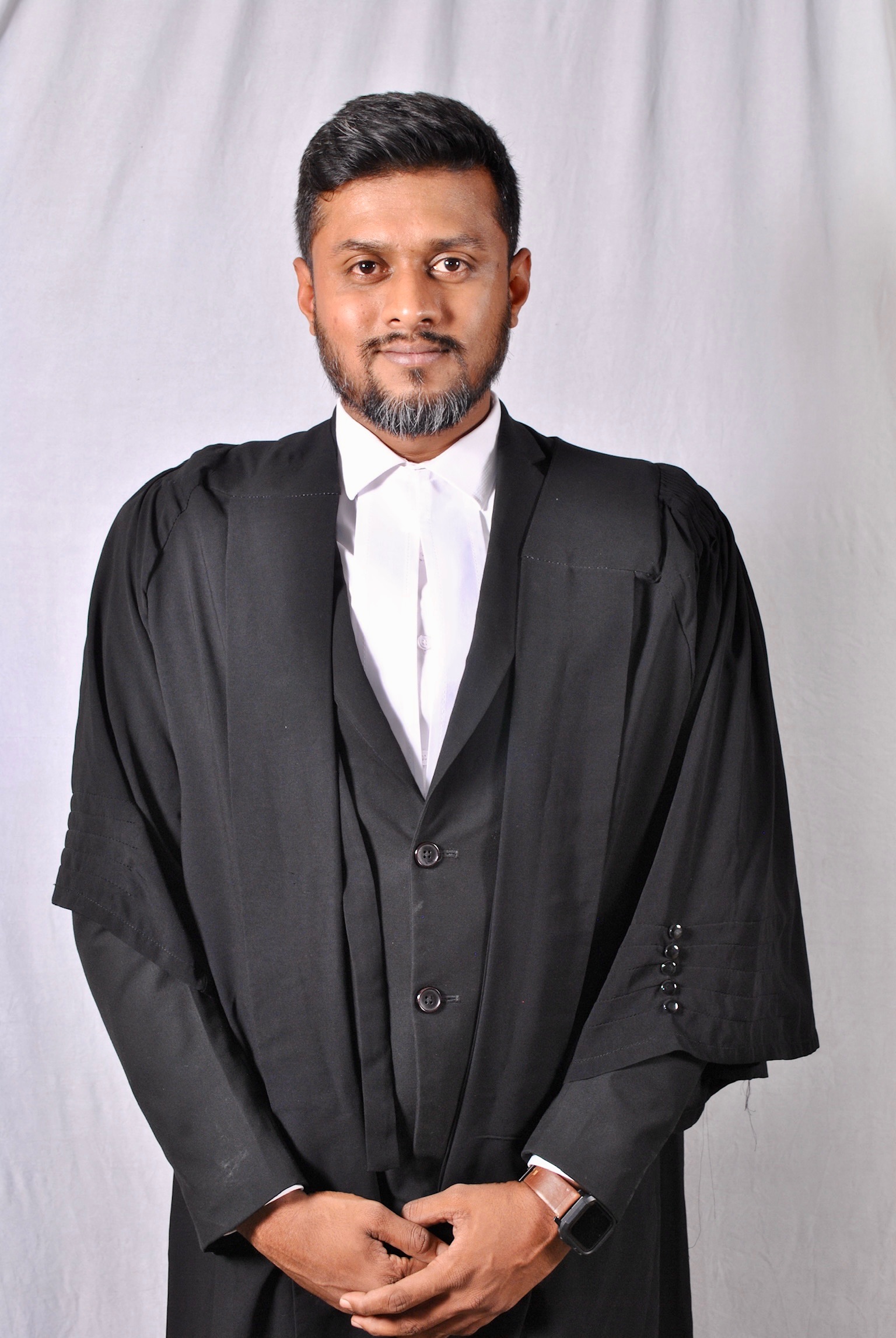
    Can you share the pivotal moments or experiences that led you to pursue a career in law, especially in dispute resolution?

    My journey to law was somewhat pre-destined, but I had not accepted all the signs. Growing up, I frequently visited courts with my father, a trial lawyer. Ironically, those visits initially deterred me from considering a legal career. But my disinterest in traditional science subjects made the writing on the wall clearer. During my higher secondary education, I was introduced to the unique world of law schools. This new perspective piqued my curiosity, and eventually, I found myself at NALSAR.

    It was during my time in law school that my path – as a disputes lawyer – became clearer. Reading Justice HR Khanna’s “Neither Roses Nor Thorns” profoundly influenced me. His principled stand in the Habeas Corpus case, especially his dissent, was both inspiring and instructive – this continues to be my favourite judgment and anchor of sorts.

    During law school, all my internships, predominantly centred around dispute resolution and this further cemented my interest. I saw first-hand, how enjoyable advocacy was and I resonated with it and took an active interest in moot courts. Come placement time, I heard NSE was visiting college for recruitment. Given that there are only a couple of exchanges in the country, and the role on offer involved litigation management, it made sense to work at NSE.  My selection for this position marked a significant turning point.

    Working at the Exchange, I was involved in several high-stakes litigation cases. While I prepared for the cases in detail and worked on strategies with external counsel, it was in the courtroom, as an observer, that I felt my calling to litigation. These moments in court crystallized my decision to transition from an in-house role to becoming a litigating lawyer. My mentor at NSE encouraged this shift, and Trilegal, where I now work, gave me the opportunity to realize this aspiration. The rest, as they say, is history.

    Your experience at NSE involved handling multi-faceted regulatory disputes. Can you shed light on the challenges you faced and the strategies you employed to navigate such complex regulatory issues?

    No matter how much law school prepares us, real life challenges take you by surprise. Although we studied a few of the legislations pertaining to the securities market, it is such a niche area with heavy regulatory oversight that the first few months felt like a return to the academic rigor of college.

    The first crucial lesson at NSE was understanding its dual nature. Firstly, it acts as a regulator of first instance, governed not only by a myriad of laws such as SCRA, SECC, and the SEBI Act but also by its own set of Byelaws, Rules, and Regulations. These are essential in overseeing every facet of the Exchange’s operations. Secondly, the Exchange operates like any other business, facing similar risks and requiring innovative strategies to remain competitive. My role was to bridge these two aspects seamlessly. This meant ensuring that new product ideas proposed by the business teams aligned with the regulatory framework established by SEBI. One strategy I personally employed revolved around prioritizing the Exchange’s regulatory responsibilities, ensuring all other initiatives conformed to this framework. A testament to this balancing act was our success in obtaining an exemption from the CFTC, a major U.S. regulator. This achievement, though time-consuming and challenging, was a significant milestone for us.

    As a key member of NSE’s proposed IPO team, could you share some takeaways from working on such high-stakes projects?

    Working on the NSE’s proposed IPO was a lesson in managing a multifaceted operation involving numerous stakeholders. You have the Company, the selling shareholders, the BRLMs, the Bankers, the Auditors, separate legal counsels for each of these stakeholders etc., and the Exchange’s proposed IPO was a landmark project for all involved. This complex process demanded extensive efforts from every department within the Exchange, with the legal team being no exception. In addition to providing information on the outstanding material litigations, we were also liaising with our internal teams and the Exchange’s external legal counsels (both domestic and foreign), who held the pen on the DRHP. Further, we were negotiating and finalizing all other agreements with the multiple intermediaries, all of which had its own challenges. 

    For me, the process was immensely challenging yet fulfilling. Successfully filing the DRHP within the established timeframe was a testament to our collective hard work and coordination. The experience underscored a vital management lesson for me: with well-defined goals, clear role delineation, and assigned responsibilities, even the most daunting tasks and deadlines are achievable. This endeavour reinforced the wisdom of the adage, “If you want to walk fast, walk alone. But if you want to walk far, walk together.” It was a powerful reminder of the strength in collaboration and shared purpose.

    Apart from the above, another intriguing aspect I gleaned from the IPO process is the concept of “self-listing.” Ordinarily, a company selects a stock exchange for its public listing. However, when stock exchanges themselves decide to go public, they have the option to list on their own platforms, a choice motivated by various factors. This practice is permitted in some jurisdictions, but my understanding is that SEBI ultimately did not endorse this approach. As a result, the country’s exchanges have to list on the competitor bourse. 

    Transitioning from being a Deputy Manager at the National Stock Exchange to becoming a Counsel at Trilegal seems like a significant shift. What motivated this transition, and how did your role at NSE influence your current focus on dispute resolution?

    At its heart, advocacy is about effective communication. This involves understanding the law, applying it to the facts of your case and ultimately seeking a relief for your client. This aspect of the legal profession has always been deeply fulfilling to me. While at NSE, I found myself on the periphery of advocacy, close yet not fully immersed. Thus, my transition from in-house role was motivated by my need to be in the driver’s seat. My confidence in my communication skills drew me towards dispute resolution.

    Coming from an in-house background, I had a clear understanding of the motivations behind corporate litigation, whether for strategic positioning, financial gains, reputation management, preserving shareholder value, or avoiding setting precedents. This insight has been invaluable at Trilegal, where I can effectively align with and contribute to our clients’ litigation objectives. My tenure at NSE taught me the importance of understanding the fundamentals first – we had to learn how a service / product worked, the legal and regulatory regime / challenges around it, the external risk-factors etc. and break all of this down to a Judge, who did not necessarily specialize in the securities market. This is an approach I continue to adopt with my current Clients and their cases. By understanding a client’s business and the rationale behind their litigation, I can create a clear and effective legal strategy. Therefore, lessons learnt during my time at NSE continue to be guiding lessons / principles in my current work.

    Moving to your current role at Trilegal, you deal with a wide range of matters, from civil / commercial disputes to white-collar crimes. How do you approach these matters across diverse areas of law, and what challenges do you typically encounter?

    The firm receives a wide-range of commercial disputes mandates – arising from large shareholder disputes, complex lending transactions, cross-border IP disputes, the list goes on. Similarly, the firm also receives a wide ranging white-collar crime mandates – say internal investigations into corporate espionage, IP theft, misappropriation of funds etc., and these may result into various kind of proceedings before the Criminal Courts. In addition, we routinely appear in mandates challenging local municipal laws, arbitrary government action and the like. The challenges we face in these mandates vary – it could be us dealing with foreign clients who are new to Indian legal ecosystem (and thus managing expectations), not having the luxury of time, logistical challenges in execution of a strategy, to name a few.  

    The approach I adopt in all these matters, irrespective of the diverse areas of law, is rudimentary. First, we meticulously review all the documents Clients share and prepare a comprehensive chronology of events – noting even seemingly minor details relevant to the case. Second, deep dive into the relevant laws, revisiting first principles, statutes and commentaries rather than relying solely on online resources or case law databases. This critical process helps identify both the strengths and potential obstacles in the client’s case. Third, once we have the legal and factual framework, we strategize the most effective path to achieve the client’s goals. This process will include all stakeholders internally, including the Partner. Once we internally deliberate this, we go back to the Client and give them all the options on how we can drive the matter and go on about executing it, based on their instructions. In my experience, these initial steps are crucial for successful outcomes and managing multiple cases simultaneously.

    During your time as a secondee at Allstate India, what was your role? How did this experience impact your perspective on the intersection of legal and business functions?

    At Allstate, my role was essentially that of an in-house counsel, a position I was already familiar with. My primary responsibilities included managing contracts and providing internal legal advice.  My background in dispute resolution enabled me to identify red flags in the standard contracts and negotiate more effectively with vendors and their legal counsels. Over time, I gained insights into the company’s common legal challenges, leading us to review and streamline their standard contract templates.

    In my opinion, most companies see their legal team as cost centres,. he business teams which are keen on getting the revenue, see the legal team as roadblocks or business barriers. This perspective can lead to business teams overlooking crucial contractual provisions such as indemnities, representations, warranties, and dispute resolution clauses, either due to a lack of understanding or the misconception that these are mere boilerplates not warranting attention. While it’s true that these clauses may never be invoked during the life of the agreement if all things go smoothly and as planned, the real value of a well-negotiated indemnity clause, for instance, becomes evident in challenging times, potentially shifting liability away from the company. So this stint reaffirmed my belief that a strong in-house legal team is not merely a cost-centre, but a vital asset that can prevent unnecessary expenditures. Such teams can actually be very effective in ring-fencing the Company from foreseeable and unforeseen risks, thereby preventing value erosion. A competent legal department is instrumental in balancing business aspirations with realistic legal perspectives, ensuring a holistic approach to risk management and decision-making – a message that I reiterate to business teams I work with usually. 

    With your extensive experience in handling high-value disputes, could you share a specific case that posed unique challenges and the strategies you employed to achieve a favorable outcome?

    While there are several cases I could reference, confidentiality constraints prevent me from sharing specific names or details. It is key to note that each case throws unique challenges of its own and as such, our strategies need to be flexible and adaptable. A rigid litigation strategy often leads to less desirable outcomes.

    For instance, in a case involving a shareholder dispute with a foreign institutional investor client, the primary conflict was between domestic institutional investors and the company’s promoters, who had made broad allegations that also implicated our client. Initially, we planned to respond to these allegations directly. However, we soon realized that such a strategy would unnecessarily draw attention to our client in a dispute that was primarily between other parties. Consequently, we revised our approach, choosing to specifically address only the most serious allegations and then shifted our focus to the legal intricacies of the case. This allowed us to take a more reserved role. As the conflict escalated, involving cross-appeals and arbitrations, our client began to be perceived as a neutral entity and was gradually removed from the core of the dispute (we were either formal parties or not arrayed as a respondent altogether). This strategic shift not only limited our client’s legal expenses but also enabled them to divest from the company without loss.

    Contrastingly, in another shareholder dispute, our approach was entirely different. We aggressively addressed each allegation and actively litigated before various foras, to preserve shareholder value and safeguard company assets, amidst a battle between majority and minority stakeholders. This experience underlined the importance of maintaining a dynamic and responsive strategy in litigation.

    As an alumnus of the National Academy for Legal Studies and Research (NALSAR), Hyderabad, what aspects of your legal education do you believe have been most valuable in shaping your career? Additionally, what advice would you give to fresh graduates aspiring to pursue a career in law based on your journey so far?

    Reflecting on my academic journey at NALSAR, Hyderabad, I realize it’s a narrative too rich and complex for a brief summary. Suffice to say, the true value of NALSAR lay in its exceptional faculty, who fostered an environment of independent and critical thinking – a mode of learning that was entirely novel to me. Equally significant was the company of my peers, a group of incredibly driven individuals with clear objectives and ambitions. Their presence was a constant source of motivation, pushing me to surpass my perceived limitations and achieve things I never thought possible.

    Looking back, the most crucial lesson from my college experience is the belief in the boundless potential within ourselves. To the graduates embarking on their legal careers, I want to impart this wisdom: the path may seem daunting, and it’s natural to feel overshadowed by others who appear more accomplished. However, remember that your journey is unique and will unfold in its own time. Treat yourself with kindness, acknowledge your achievements, and maintain patience, a vital trait for any legal professional. Trust in your journey, and know that perseverance will guide you to your destination.

    Lastly, for those looking to have a career in disputes resolution at law firms, do you have any tips / suggestions?

    I believe litigation – whether in a law firm or independently – requires the same set of skills. Law firm cases may often be high-stake or involve significant amounts, but the fundamental approach remains the same. A few things to consider: 

    • Integrity is key to this profession and your reputation. Do not rely on shortcuts and keep all your dealings above board. 
    • Patience is crucial. You might find yourself waiting for extended periods in court, only to speak for a brief minute. Achieving the results your client desires often requires persistent effort and time. Stay patient.
    • Time management is essential, especially early in your career when tasks may seem overwhelming. Gradually, it becomes more manageable. Be prepared to deal with urgent cases and client demands, sometimes with little notice. It’s better to devote extra time to fully understand a case than to be unprepared in court.
    • Develop a reliable process. Being thoroughly acquainted with both the facts of your case and the relevant law is vital. Establish a method that works for you and apply it consistently to each new client or case. 
    • Emphasize teamwork, particularly in a law firm setting. You’ll likely be handling multiple cases simultaneously, so coordinating effectively with your team is key. Remember, you can’t be in two places (read as court halls) at once, so dependability and ownership are important.
    • A quick and sharp presence of mind is essential for dispute resolution lawyers. While you can take time to respond to client queries, the same isn’t true in court. Being unprepared could lead to immediate decisions from the judge, potentially unfavourable to your case.
    • Understanding the concepts is far more important than knowing sections / citations. The concepts should be so clear, that even a common man can understand your iteration of it.  

    Get in touch with Goutham RV-

  • “From books to billboards, I believe in reading everything that crosses my path” – In an exclusive interview, Arushi Gupta, Founder and IP Attorney at Satyaki Legal, shares her remarkable journey from her early legal career to establishing Satyaki Legal.

    “From books to billboards, I believe in reading everything that crosses my path” – In an exclusive interview, Arushi Gupta, Founder and IP Attorney at Satyaki Legal, shares her remarkable journey from her early legal career to establishing Satyaki Legal.

    This interview has been published by Namrata Singh and The SuperLawyer Team

    Your experience includes working with renowned firms and handling diverse responsibilities. Could you walk us through your journey from your early career to founding Satyaki Legal, highlighting key milestones and experiences?

    I am an advocate who started her career 8 years ago, in 2016. After gaining experience of working with senior advocates, I eventually started working as a partner with a firm and now 2 years ago, I started with my own firm, Satyaki Legal. When in my career, I had almost worked in the domains I wanted to practice in, run a team of my own, I believed I could start my own firm. We started in the last month of 2021, where from finding the firm name to getting the website and team members was done, we are now a humble team of 5 with an established portfolio of start- ups and corporates to manage and work with. 

    As the founder of Satyaki Legal, you’ve had the opportunity to work with both national and international clients. How do you approach building relationships with clients, especially in a field that requires a deep understanding of their business and creative assets?

    From books to billboards, I believe in reading everything that crosses my path. To stay in the know has always been my thing- which forms a firm base of my communication skills. To constantly stay in touch with clients is also another thing that helps you understand their operations and the hurdles they face while conducting it. Being able to grasp a client’s work and their industry’s work culture can only be understood while being in touch with them on a 1-on-1 basis as well as having an open mindset towards their point of view.  

    Having worked with notable companies like Blinkit, McCain, and others, what are some of the most interesting or challenging projects you’ve undertaken in the realm of intellectual property, and how have they contributed to your growth as an IP attorney? 

    Intellectual Property has a lot to do with a brands’ market presence and the knowledge of the brand amongst the customers. The legal problems that I faced at that time weren’t simple textbook problems, they were dynamic in nature and needed understanding of the market/industry as well. So, whilst working with these Clients and some others as well, the mere textbook answers weren’t sufficient. There in that situation I learnt to develop a holistic point of view and also assess the legal problem and come out with resolutions accordingly. 

    With your extensive experience, you’ve worked on more than 500 trademarks, 50 patents, and numerous designs. Is there a particular case or project that you found particularly challenging or rewarding, and why?

    Every project or case that comes up to us has unique challenges and they thus after getting resolved or completed do seem rewarding. But I remember this one particular project where an extant variety of plant had to apply for Protection of Plant variety in India which led to several visits to the relevant authority. Similar was the case where I had to apply for registration of a novel food under FSSAI provisions. There was one case where we worked on the terms and conditions of the sale by launching an e- commerce portal a day before because it was then that it was sent to us, one before the Launch of their Sale. 

    You’ve assisted numerous start-ups in strategizing their IP assets. How crucial is intellectual property management for start-ups, and what advice do you often find yourself giving to emerging businesses in this regard?

    I keep telling this to start- ups and I can’t get tired of it, that first protect yourself and then launch yourself. We, often as start- ups are tired of just doing the operations and not launching the product or service. In this scenario, we do not consider IP important and go out and launch the product or service in the market. This also happens because we don’t very well recognise the IP that subsists in our key operations. So, I always ask them to take a pause, recognise their IP and first protect them/it and later on promote. This not only protects their work from being copied but also builds the trust of Investors. 

    Beyond the legal realm, we hear you’re involved in conducting webinars and seminars for IP awareness. What motivated you to take up this initiative, and what kind of impact do you hope to make through these sessions?

    This subject matter of IP is really close to my heart and hence, ensuring that people know the correct forms of it as well. So, in one of my opportunities to conduct a webinar, I got a chance to deliver a presentation to kids of around 10-12 years. This opportunity was so interesting, with all the witty answers and some extraordinary questions that I was motivated to do more of it!! The only impact I seek to create is awareness as well as certain importance and respect towards Intellectual Property that one holds. 

    Balancing departmental operations, client engagements, and business development requires skill. How do you manage these various aspects, and what strategies do you employ to ensure a smooth workflow?

    The only strategy we follow is to maintain dated notes, have clear start of day and end of day discussion along with weekly overview of tasks. Open communication, putting forth point of views within the team has been very helpful too. 

    Looking ahead, what is your vision for Satyaki Legal, and how do you see the firm contributing to the legal landscape, especially in intellectual property and media practice?

    The vision of course, is to engage more team members and work with more people. In a year, the work and team growth has been as per my target and that’s what we aim to maintain.  The mission is to also ensure that the subject matter which is dear to our hearts, Intellectual Property, is given due importance in each of the business operations that take place within an entity. 

    In addition to your legal expertise, we’re curious about your personal interests. When you’re not immersed in the world of IP law, what hobbies or activities do you enjoy to unwind and recharge?

    I have varied interests like reading books. But in order to be stress free as well as lead a healthy lifestyle I do regular workouts (strength training in particular) and meet my friends and family. I am a kathak dancer too, and I take those lessons too, occasionally. 

    What advice would you give to law students aspiring to specialize in intellectual property and media law, based on your own experiences and the evolving nature of the legal landscape?

    I would like to and I always do ask each of those students to simply read. Be well- read, know the market developments, read about brands, their marketing strategies, all of this trivia knowledge will ultimately help each one of them to understand the IP in all of these operations or industries I have told you about. Once that understanding is developed, to work in the realm of IP would not only be easy but interesting as well. 

    Get in touch with Arushi Gupta-

  • “All legal systems cannot deviate from the basic principle of ‘Justice’. The way it is delivered may be different”- Jurist Dr. Srikant Parthasarathy, Senior Managing Partner, Chakra Legal

    “All legal systems cannot deviate from the basic principle of ‘Justice’. The way it is delivered may be different”- Jurist Dr. Srikant Parthasarathy, Senior Managing Partner, Chakra Legal

    This interview has been published by Priyanka Karwa and The SuperLawyer Team

    Can you share with our listeners your journey and what led you to pursue a career in law and arbitration, especially with your background in finance and management?

    I have always been a fan of law. This may seem like a stereotypical answer, but imagine, law is one of the very few areas of study which mixes imagination with practicality. Reading a law or an act or a Bill is no different than reading a Grisham Novel. There is logic. There is context. There is ‘masala’ (if I may say so) and then a reader morphs into the lawmaker and thinks from the point of view of what was running in their mind when they wrote this. It is exciting. The same applies to Arbitration. Arbitration has a history which predates the formation of the Republic of India. Then, we have the UNCITRAL and the Model Law in 1996 coupled with the fervour in amending the law multiple times over the years. Finance is a numbers game along with strategy. To me, Law and Finance go hand in hand because, while the former sets the boundary for innovation, the latter sets the boundary for intricate analysis and strategy. Having been in 100+ Arbitrations and being commended by various courts, I can confidently say that the flavour of the two is currently being sought by the legal world.

    You’ve been involved in a wide range of arbitration and mediation cases, from finance to art and maritime law. Could you tell us about one particularly challenging case that stands out in your career and the lessons you learned from it?

    Contrary to what one may think, all arbitrations look rather similar in nature. I am not being a reductionist, however, when one has seen multiple arbitrations and strategies, it is rather easy to spot where it is heading. The case I am about to share is a case that made me the Lawyer that I am right now. A very senior lawyer was hired in a high-profile arbitration. They called me to represent a counterparty. We concluded the arguments in which I was accused of bias, which the arbitrator quickly dismissed. I was called a ‘Chote bacche’ during the session. I did not respond. The Senior Lawyer invited me for a drink in the evening (I am a teetotaller). I shared the camaraderie and joined them. In that meeting, she asked me how old I was. I quickly quipped “Not young enough to call me Beta, not old enough to call me ‘Uncle’ “. She is someone I still look up to. We became the thickest of friends and I am the Godfather to her grandson. This shows that arbitration hinges not entirely on the law, but in your ability to put up a strong face in spite of the oddities. 

    Being a certified mediator and arbitrator, what key skills and qualities do you believe are essential for success in your field, especially when dealing with complex international disputes?

    Patience and Listening is non negotiable. Everything is a learning in its own might. I believe that everyone is a student of law, no matter how senior they are. Law is so vast that our understanding is miniscule compared to what it has to offer. Once someone is an arbitrator, the job gets harder as every move of yours is questioned. 

    You’ve worked in various jurisdictions, including India, Singapore, UAE, UK, and more. How do you navigate the different legal systems and cultural nuances when handling international cases?

    All legal systems cannot deviate from the basic principle of ‘Justice’ . The way it is delivered may be different. Civil law countries have a system which ensures finality in the process and a certain level of deterrence from bringing vexatious claims. I have seen the UK Pre and post brexit. The nuances may be far more pronounced from, perhaps, wearing a wig (which I do, much to the amusement of my son). In the UK, it is difficult to take a matter to the UKSC unless the point of law in question is framed by the lower courts. They are very picky about what reaches the UKSC. UAE is a superb jurisdiction to practice finance and law, as you have the DIFC as well as the local courts. I sit in various arbitral panels of GCC and have advised them in framing the rules. They are very accepting of changes. I speak 13 languages and it certainly helps. 

    As a Certified Independent Director and with your extensive background in finance, what unique perspectives do you bring to corporate governance, and how do you see the role of independent directors evolving in today’s business landscape?

    Corporate governance in India is going through a difficult phase right now. Primarily, the need for transparency has grown exponentially and is available only through the SEBI. However, integrity in governance is non negotiable in a private entity too. This prompts investors to actively look out for individuals who can be the ‘true independent’ in protecting their investment and also looking out for the shareholders. This has brought in a whole host of ‘stapled agreements’ in the term-sheets which include the clause that ‘such independent director’ shall be appointed and it is not open to negotiation. Being the Ministry of Corporate Affairs certified Independent Director, it is vital that we live up to the expectations of protecting the entity and to give a fair and an independent assessment. Whistleblower protection in private entities is certainly an area that can be strengthened.

    Your involvement with the Government  in various capacities is intriguing. Could you explain your role and share some insights into the intersection of policy, investment, and arbitration?

    I have always felt that I should give back to society. Hence I teach in various schools for the visually challenged. I happened to meet a person who was a teacher in the school. We opened up and I realised that the person was a Secretary in the Government of India. He was very keen about my expertise. That is how the journey started with advising the Government on various bills and amendments. My work on the Arbitration Act of Maldives was appreciated and I was called in regularly as a person who can give a ‘Second Opinion’ on various laws. I consider it pure coincidence that my suggestions are the ones that finally made it to the law. Arbitration is strange. 

    With your teaching engagements at prestigious institutions and numerous publications, how do you balance your academic commitments with your professional practice? What motivates you to continue teaching and writing in addition to your legal work?

    Teaching keeps the student alive in you. I teach at the top 5 NLUs and 2 QS ranked International universities. Ask my students how I balance the commitments and they will rant about how the classes are frequently rescheduled. However, I have always maintained the top ranked visiting professor status. Writing keeps the child in me alive. Since I don’t talk much, perhaps the best way to communicate is to write. Boring as it may sound, I write about law & medicine, and read the most random Wiki pages when exhausted. 

    Finally, what advice would you offer to law graduates and aspiring professionals who want to follow a similar path in arbitration, mediation, and law in general, especially in an international context?

    Find the anchor in the career that you can latch on to. This is the person who you can ask anything and everything. I am what I am because of my juniors and my students. They call me by my first name (you are free to independently verify this). Arbitration is a practice that is more than what it seems and lesser than what you hear about it. Yes, it can be lucrative, but, be careful when you choose this path. Unlike litigation, where there is a fair amount of material available publicly, arbitration does not enjoy that benefit.

    It can be exhausting. It can be nerve wrecking. It can feel like everyone out there is trying to put you down. However, if you know your law, nobody can surpass you. 

    Get in touch with Dr. Srikant Parthasarathy-

  • Never think you are an accomplished professional; you should always be a learner- Iqbal Tauseef, Director Legal Affairs – Country Head – India, TTEC

    Never think you are an accomplished professional; you should always be a learner- Iqbal Tauseef, Director Legal Affairs – Country Head – India, TTEC

    This interview has been published by  Priyanka Karwa and The SuperLawyer Team

    You’ve had an impressive and diverse legal career spanning various industries and roles. Can you share your personal journey and what initially inspired you to pursue a career in law?

    My Inspiration to pursue the law is to understand the world from an equity and justice perspective. My way of seeing things has developed a lot with critical and logical thinking. Another reason was to be part of the corporate world and sit along with the executives on the table, as their advisor for ease of business from a legal perspective, while meeting their business goals. 

    With experience in IT, software, FinTech, pharma, healthcare, energy, environmental, and manufacturing industries, how do you adapt your legal expertise to meet the unique needs of each sector?

    My vast experience on basics of Contracts Drafting and Negotiations, Compliance and Dispute resolutions skills has made it efficient for me to cross through various industries. One, can be part of multi-industries, if you have strong legal skills and business acumen, as every business requires someone who can avoid the disputes and resolve them if they arise. Strong hold on knowing what compliances are applicable to respective industries, is also another tool for getting on different boats.

    You’ve worked extensively in contract management, negotiations, and arbitration. Could you tell us about a particularly challenging contract negotiation or arbitration case you’ve handled and the key lessons you learned from it?

    I have seen multiple challenging negotiations, wherein I bridged between sales targets and risk mitigation, which is not an easy task. One of the important projects in my journey was an agreement negotiation for setting up a Waste to Energy Plant in India. This is to be the third largest Waste to Energy plant in India. This project was awarded by one of the State Governments to the Company and was given on the BOOT model. The main challenge was to figure out the technology procurement which meets the budget and quality specifications. At the initial level the procurement team reached out to a Japanese Company for providing the Incinerator and that was to be done in consortium with one of the Indian Company for civil works. As part of the legal, I advised upon the challenges we may face for any change in scope and compliance by the consortium (consortium being led by a foreign entity). The executive committee including the CEO and CFO took the cognizance of the risk and decided to reconsider the options for procurement. Instantly, I advised an Indian Company who can be prompt to accept the changes based on the requirements and necessity. The Company worked in that direction and got one of the leading players in India on board for supplies. I as a head for Contracts initiated the drafting, negotiating and finalizing the procurement agreements. We successfully had achieved the timelines with efficacy.

    This deal plays an important role in my career as it involves identifying the unforeseen challenges related to technology issues, warranty, onsite safety, labour availability (During Lockdown period) and completions within the timelines. All the legal matters related to drafting of documents, advising on Logistics & Labour, Financial documents including bank guarantees, corporate guarantees are dealt by my team headed by me. I am proud of this work as we successfully deployed the Indian Company to compete with a foreign company on technology and timelines.

    Your experience at Re Sustainability includes some significant achievements, such as incorporating SPVs and advising on public-private partnerships. Can you share more about these experiences and what they meant for the organizations involved?

    Re-Sustainability is India’s leading waste management company. It is also competing with foreign companies and handles certain major projects outside India as well. Re-Sustainability majorly bids on government projects and has its presence in more than 50 cities and towns in India. This makes the company a reliable partner for various governments and helps the company to build public-private partnerships on certain projects. Few of the significant projects are ‘waste to energy plants’ built in Telangana and Delhi, Municipal Waste project in Chennai etc. 

    In your role at TTEC, you’ve managed a wide range of responsibilities, including M&A, global contracts, legal counsel, and more. Can you discuss how you balance these diverse responsibilities and the key to success in such a multifaceted role?

    “Never a learning, will go in vain”, all my experience and learning throughout various industries helped me to bag this significant role at TTEC. I am associated with TTEC as Legal Head for India. I bag legal, compliance and COE domains. Keen eye on corporate compliances, upgradation with Contracts negotiations skills and productive team leader qualities, helps me to balance all the three roles. We give 100% dedication to what we do and that brings the reliability of various stakeholders, on legal. I have a Contracts Centre of Excellence team working with me, which helps global stakeholders to draft and negotiate their revenue and corporate contracts for various regions such as North Americas, Australia, EMEA etc. 

    My Key to success is never say “I can’t”, you learn and you do it with dedication and honesty.

    You’ve contributed as an author and have written articles in the legal field. Can you tell us about your experiences in legal writing, and what impact do you think it has on the legal profession?

    Yes, I do write on legal subjects. I wrote an article “FORCE MAJEURE IN DIFFERENT LAWS AND COVID-19” and also contributed to “Handbook on Arbitration: A Practical Guide for Professionals” – published by Institute of Company Secretaries of India. Serving the legal fraternity is significant for legal professions, who gain a good repute and exposure. The way you can serve is to write and share your thoughts. Legal writing is very important to let young and aspiring lawyers know how industry works, how to interpret the law and share the legal skills. This will motivate and guide them to explore legal avenues and gain the subject matter. 

    Your career is filled with awards and recognitions, such as being recognized as one of the Top In House Counsels by Forbes. What, in your opinion, sets you apart in the field of law, and what advice do you have for legal professionals aspiring to achieve similar recognition?

    I believe, hard work, dedication and honesty in the below aspects, have brought me these recognitions and awards.  What sets a legal professional apart can vary, but here are few aspects that can contribute to recognition and success in the field:

    1. Expertise in a Niche Area.
    2. Strong Advocacy and Communication Skills.
    3. Ethical and Professional Conduct
    4. Community Involvement
    5. Mentorship and Networking
    6. Continuous Learning and Adaptation

    As an accomplished legal professional, what advice would you like to give to fresh graduates or those starting their careers in law?

    Never think you are an accomplished professional; you should always be a learner. Here are some tips that can help new lawyers as they embark on their legal careers:

    1. Continuous Learning: The legal field is dynamic, and laws are subject to change. Make a commitment to lifelong learning by staying up-to-date with legal developments and continuously improving your legal knowledge.
    1. Effective Communication: Strong communication skills are essential in law. Develop your ability to articulate complex legal concepts clearly and concisely to clients, colleagues, and judges.
    1. Legal Research Skills: Become proficient in legal research methods and tools. This skill is fundamental to building solid legal arguments and understanding the legal landscape.
    1. Networking: Build a professional network early in your career. Attend legal events, join bar associations, and connect with experienced lawyers who can provide guidance and mentorship.
    1. Legal Specialization: Consider specializing in a particular area of law that interests you. Specialization can make you more attractive to clients and employers.
    1. Work Ethic: Hard work and dedication are often keys to success in law. Be prepared to put in the time and effort required to excel in your work.
    1. Ethical Conduct: Maintain the highest ethical standards. Trust and integrity are paramount in the legal profession.
    1. Professional Development: Seek out opportunities for professional development, such as CLE (Continuing Legal Education) courses and workshops.
    1. Practice Management: If you’re in private practice, learn about law firm management and business development. It’s not just about practicing law but also about managing a legal practice effectively.
    1. Mentorship: Find a mentor who can offer guidance, answer your questions, and provide insights into the legal profession. A mentor can be invaluable in helping you navigate your early career.
    1. Adaptability: Be prepared to adapt to changing circumstances and legal landscapes. Flexibility is a valuable trait in the legal field.
    1. Attention to Detail: Legal work often involves complex documents and contracts. Pay close attention to detail to avoid errors that can have serious consequences.
    1. Legal Writing Skills: Practice and improve your legal writing skills. Writing clear and persuasive legal documents is a critical part of legal practice.

    Remember that building a successful legal career takes time and dedication. Don’t be discouraged by initial challenges or setbacks, as they can be valuable learning experiences. Over time, your skills and reputation will grow, and you’ll have the opportunity to make a meaningful impact in the field of law.

    Get in touch with Iqbal Tauseef-

  • The multi-dimensional folds of this profession have a lot in store for everyone and if you have conviction in your actions then pursue it without any fear or doubt- Malak Bhatt, Advocate-on-Record, Supreme Court of India

    The multi-dimensional folds of this profession have a lot in store for everyone and if you have conviction in your actions then pursue it without any fear or doubt- Malak Bhatt, Advocate-on-Record, Supreme Court of India

    This interview has been published by  Priyanka Karwa and The SuperLawyer Team

    Can you share your journey of how you ended up pursuing a career in law, and what led you to specialize in commercial litigation and white-collar crime?

    Being a third generation lawyer, choosing a career in the field of law became a natural progression at the crossroads of life. While I was pursuing a science based professional during my high school, I always remained fascinated with my parents talking about cases at home, how things unfolded in court etc. and as it would turn out, my passion and aptitude for law took over.

    While working at Shardul Amarchand Mangaldas since 2012, my Partner Anuj Berry and I were representing certain clients in large scale litigation and anti-corruption compliances in India for foreign companies. Under his able guidance and together with him, we started working to build the white-collar crime practice as a niche area at SAM. As luck would have it, our in-depth work on the advisory side soon translated into many courts facing white-collar crime matters around 2017-18 when there was a surge of criminal investigations by specialized agencies like CBI, ED and SFIO. Once I branched out to pursue my independent practice, I developed this expertise further and continue to ride the learning curve in this field. What is the most interesting part of white collar crime practice is the inter-sectional dynamics it holds between criminal law on one hand and commercial laws, taxation laws on the other. 

    You completed your B.A., LLB (Hons.) from NALSAR University of Law and later pursued a Bachelor of Civil Laws from the University of Oxford. How did these academic experiences shape your perspective and approach to practicing law?

    I believe the holistic course structure at NALSAR and the increasing importance given to procedural laws really helped in shaping my understanding of the court processes. One always found these subjects boring in class – however, once I got into active practice, the realization dawned soon that the foundational stone for easing out court related process and practices was set through these subjects taught phenomenally well at NALSAR. As a word of advice, I always harp on the fact that one must always pay utmost attention to the finer details of our procedural laws – the CPC, CrPC, Evidence Act etc., which are the heart and mind for a career in litigation.

    Coupled with this, the Socratic method of teaching at Oxford really instilled the practice of self-reading, analysis of finer details and most importantly, joining the dots across subjects – a key aspect which one should practice when it comes to a court case.

    You’ve been recognized as a “Rising Star” by Legal 500 in the Asia Pacific Region for White Collar Crime Practice. Could you tell us about one of your most challenging or high-profile white-collar crime cases, and how you navigated the complexities of such cases?

    Undoubtedly, the most challenging case was the investigations being conducted by multiple agencies into the affairs of Frost International Limited and its group companies. What later turned out to be one of the biggest cases – started with 3 different agencies probing the companies on the same set of facts. We were faced with several complex legal issues – such as whether different agencies could look into the same transactions for alleging different offences under special statutes, what would be the evidentiary value of a one sided forensic audit, whether a counter audit would be a plausible defence at the investigation stage itself. Faced with these complex questions, our team was able to ably navigate through these issues with a 3 step simple approach – (i) break down the issue and assess the answer from a first principles perspective (ii) a textbook approach may not always work in niche situations which the law would otherwise not have contemplated – think out of the box when the situation requires (iii) always keep the fundamental rights of the persons facing investigation at the forefront. Since liberty remains at stake in such cases – prompt action and immediate responses are key.

    Your career includes a role as a Panel Counsel for the High Court of Gujarat to represent at the Supreme Court. How has this experience informed your understanding of the judicial process, and what unique challenges does representing a high court at the apex court pose?

    Representing a High Court is the most valuable and honourable experience one can get. Time and again the Supreme Court has reiterated that the High Courts are no subordinate courts – they are equal constitutional courts as the Supreme Court. To appear on behalf of the High Court requires a lot of preparation and is a position of very high responsibility. At times, the High Court is required to take an adversarial stand, in some cases it may not. It is my role and responsibility to assess the High Court’s position for an effective representation before the Supreme Court. 

    You’ve advised and represented multinational companies in litigation proceedings before the Supreme Court and High Courts. Could you share a memorable case where your legal expertise made a significant impact on the final outcome?

    One of the most significant and interesting cases I worked on was the case of Neeharika Infrastructure Pvt. Limited v. State of Maharashtra, which is now a landmark reported judgment. The Supreme Court was faced with a very interesting, yet peculiar question of law – can the High Court give protection to accused while hearing petitions under S. 482 CrPC and in what cases can the trials/investigations be stayed. Knowing that Mr. K.V. Vishwanathan (as he then was before Lordship’s elevation as a Judge of Supreme Court) will be arguing for the Petitioner, I knew my preparation had to be top notch and very detailed. Appearing for the private Respondent in the case, I presented a detailed comparative approach on how this issue had been addressed not only by High Courts, but also by other foreign jurisdictions having similar provisions. The bench was very accommodative and patient during arguments – which really helped me in arguing full length before the Supreme Court. Albeit having lost the matter, it was a great experience which really helped me at the preparation stage of the matter, a practice which I now adopt in all matters.

    Your involvement with organizations like the ICC Young Arbitrators’ Group and the Oxford Cambridge Society of India showcases your commitment to professional growth. How have these affiliations enriched your legal career and influenced your approach to the law?

    Man is a social animal. A lawyer is “social-er”. Our interactions with other members of the society, our intersections with people across other forums, professional and walks of life shapes our outlook and understanding of law. Being a member of these bodies and actively participating in the events has really developed my understanding of one very basic fact – there may be different approaches to the same set of facts and a lawyer’s appreciation of this helps immensely in setting out preparing for a court case.

    As someone who has successfully represented both companies and individuals, what advice do you have for aspiring lawyers seeking a balance between providing effective representation and upholding ethical standards?

    A career in litigation is a steep slope. Gestation periods are high, rewards are initially low and recognition is seldom easy at an early stage. However, my only advice to young lawyers on this difficult path would be not to lose hope or your passion for law. Easy money is easy for a reason – but reputation and recognition is for those who persevere. Never let down your guard when it comes to maintaining the ethics of this noble profession. I echo the words of the one I look upto, Mr. Mukul Rohatgi– don’t count the hours you put in as a young lawyer.

    Lastly, what advice would you give to fresh law graduates who are about to embark on their legal careers, especially considering the evolving landscape of the legal industry?

    The field of law is ever expansive , inclusive and experimental. At the crossroads of choosing what to do, you will always get the conventional options and yet some new avenues which may not only interest you, but may be the path of your passion. Do not ever hesitate to try something new in the field of law. The multi-dimensional folds of this profession have a lot in store for everyone and if you have conviction in your actions then pursue it without any fear or doubt.

  • When one puts their thoughts into words, it unlocks additional dimensions of knowledge-Dr. Sudhir Raja Ravindran, Founder, Altacit Global

    When one puts their thoughts into words, it unlocks additional dimensions of knowledge-Dr. Sudhir Raja Ravindran, Founder, Altacit Global

    This interview has been published by  Priyanka Karwa and The SuperLawyer Team

    Could you please share your journey and how you ended up pursuing a career in law after obtaining degrees in both engineering and law?

    I developed an interest in law while pursuing a Master’s Degree in Engineering from the Warwick Manufacturing Group at the University of Warwick. I was studying regulations relating to automobiles and how they affect innovation, which instilled in me an interest in further exploring and understanding the functioning of legal systems through academic pursuits.

    How do you believe your background in engineering complements your expertise in law, particularly in the realm of intellectual property?

    The diverse educational backgrounds in the fields of Engineering and Law contributed to bring about a range of perspectives in the practice and application of law. This amalgamation of knowledge facilitated the development of a systematic problem-solving approach, nurtured critical thinking skills, and enhanced the ability to provide adept counsel to clients across various industries. It does also help in understanding technology and innovations and their protection under the Intellectual Property regime. 

    As the founder of Altacit Global, a leading Indian law firm, could you tell us about the key factors that led you to establish your own firm and what unique challenges you faced as an entrepreneur in the legal industry?

    The founding impetus behind the establishment of Altacit Global was to create a firm capable of delivering international-caliber services to Indian clients, while fostering a culture of ethical practices. The foremost challenge at hand was to ensure the provision of consistent services on a considerable scale and across diverse geographic locations. This challenge extended to attracting and retaining premier talent, as well as establishing a platform that could foster and acknowledge excellence within a professional work environment. By embracing technology early on and maintaining a commitment to best practices, we have successfully positioned ourselves at the forefront of the spectrum, enabling us to serve esteemed clients.

    You are a regular speaker at universities and national and international conferences. How do you balance your professional commitments with your passion for sharing knowledge and insights with others?

    Professionals in all fields amass a wealth of experience and exposure to diverse facets and issues. This knowledge typically remains within an individual and is seldom shared unless direct interaction occurs through internships, apprenticeships or employment, reminiscent of the ancient gurukul systems. The act of imparting knowledge and contributing to the society from which we have gained is the principal impetus behind authoring articles, publishing books, and speaking. Furthermore, when one puts their thoughts into words, it unlocks additional dimensions of knowledge.

    Your achievements are truly commendable, and you have been recognized as one of the 100 legal luminaries of India and top 100 IP leaders of India. 

    When someone is passionate about their pursuits and excels in them, recognition will inevitably follow. Such recognition serves as a motivating force, propelling individuals to push their boundaries and embark on unprecedented journeys, ultimately leading to a profound sense of satisfaction.

    Your book “Intellectual Property Risk Management” delves into the process of identifying, assessing, and evaluating risks associated with intellectual property. What are some common misconceptions about IP risk management, and how can organizations better understand and address these risks?

    Law is an evolving domain that continuously adapts to the prevailing social, economic, political, and technological developments. The publications “Intellectual Property and Taxation” and “IP Acquisition in India – Tax & Legal Aspects” include chapters authored by various subject matter experts, serving as quick-reference guides and starting points for navigating the intricate landscape of law and its implications on the commercial aspects of intellectual property. The intangible nature of intellectual property poses challenges for all stakeholders within the intellectual property regime. Ensuring appropriate value derivation from intellectual property requires careful attention, distinct from other forms of property.

    The publication “Intellectual Property Risk Management” aimed to elucidate the inherent risks associated with intellectual property and strategies for their mitigation. However, the time has come to release updated versions of these publications to bridge recent developments.

    Lastly, with your extensive experience in the legal and intellectual property domain, what advice would you give to fresh graduates who aspire to make a mark in the legal field and potentially pursue a career in intellectual property law?

    It is of utmost importance for lawyers to remain abreast of developments, encompassing not only the legal field but also various aspects of life, such as technology, social dynamics, economic trends, and more. Grasping the implications of the law and effectively harmonizing economic interests with those of humanity holds immense significance.

    When the process of learning comes to a halt, the growth of the lawyer also stagnates. For law students aspiring to build a career in the realm of intellectual property, which resides at the intersection of technology, law, and economics, a preparedness for perpetual and lifelong learning is imperative.

    Get in touch with Dr. Sudhir Raja Ravindran-

  • Over the years, access to justice has seen a sea change- Ankit Swarup, Advocate-on-Record

    Over the years, access to justice has seen a sea change- Ankit Swarup, Advocate-on-Record

    This interview has been published by Priyanka Karwa and The SuperLawyer Team

    To start the conversation, please tell us how you ended up pursuing law. 

    Even as a child, the legal field excited me, though at the same time I could see the uphill battle that it is. My father being a practising advocate, I had seen his long hours of reading and his associates staying in the office till late hours doing drafting. However, when he would share stories of the day of interesting courtroom experiences at dinner time, those discussions would have me hooked for hours. My interest in the field started developing and I started wondering if I could pursue law as a career. I enrolled myself for law entrance coaching for 2 month – crash course, gave my entrance exams, cleared it and joined NALSAR in 2004.

    Please tell us how our judicial system has evolved over the years. 

    During my internship days, the physical access to courts was more. Interns could witness the Supreme Court proceedings and learn. Further, the clients/ litigants did not have to go through such lengthy procedures to obtain court pass. None of the advocates needed a proximity card but of course, this had to be balanced with rising security concerns. Virtual hearings today, are balancing as well as playing their part in increasing efficiency and transparency in court proceedings. It took some efforts to overcome infrastructural and connection issues but it was handled well. Supreme Court has also introduced judgments in vernacular languages to make judgments accessible to more and more people. Recently, the Constitutional Bench of the Supreme Court began live streaming of its hearings which gives an opportunity to law students as well as citizens to virtually observe the approach that the Apex Court is adopting. Efforts by the Supreme Court for e-filing and soft petitions have been environment conscious steps. Over the years, access to justice has seen a sea change.

    When it comes to the pendency of cases, the Supreme Court, by making some procedural changes to disposal of cases, took the bull by its horns. The common man has its hope resting on the judiciary. The court has attempted to reign the contents and limits of PIL in order to avoid frivolous PILs. Further the Supreme Court has been giving many landmark judgments such as lifting of the ban on women’s entry to Sabarimala temple, Section 377 IPC decriminalization; recognizing individual rights thereby ushering an era of social transformation. However, judiciary should also take steps to achieve greater transparency and providing access to justice and to maintain the independence of the judiciary.

    Given a very busy schedule, please tell us about how do you maintain a work life balance. 

    This profession is invariably demanding. Running from one court to the other, endlessly waiting for the matters, research, drafting and client dealings starting mostly in the third quarter of the day, every day brings its own challenges which takes up most of your time.

    I believe that a fit body is key to an active mind, which is the greatest asset of a lawyer. Apart from law, I love spending time with my family and my dog or watching sports and I try to ensure that I take an hour or so out to do these things every day. It helps me start the day with full enthusiasm. Also, I love to travel both within and outside the country. Take frequent breaks, relax, rejuvenate and re-energize to be back at work or else stress could burn you out.  

    What skills do you think one must possess in order to draft effectively? 

    Drafting is very important in a case, it is a winner or a buster.

    Firstly, one has to develop the skill of reading the case papers in depth in order to have every detail needed to draft and marshall the facts. Secondly, proper research of the law and applicable case laws. Thirdly, have a structure including a sequence of happenings and not being repetitive, keeping it crisp, to the point and use of unambiguous language. Lastly, we have to keep in mind the prayer that we are going to make even at the time of drafting the pleadings.

    We would like to know about that one case you will always remember. 

    This is a difficult one. Law is dynamic, and every case brings with itself a whole new gamut of challenges, and with that comes new possibilities. I remember this case where a higher judiciary officer’s promotion and annual grading were in question. The opposite counsel was certain of his win (as he was usually winning these cases representing the high court), and overlooked placing some vital documents before the court, and that went in our favour. From this I learnt that no matter where you are in your career, how cast iron your case is, one should never be over-confidant.

    Please tell us about the struggles you face during your initial years of practice and how has it changed for you now?

    I had taken the plunge of becoming a litigator, and it is tough. Waiting for clients, long hours of research in the Supreme Court library, filing of matters without the help of any clerk. I worked hard to meet the clients’ expectations and make a mark with my arguments on points of law. But the most difficult task was to make the clients pay the fees, obviously.

    As years go by, you mature into a wiser, more informed counsel, the clients rely on you and so does the court. Being an AOR also contributes in establishing your name as a regular practitioner.

    How far does being a fair counsel take you?

    It is very important to be fair to the opposite side and not to try to mislead the court. Concealment of facts that are prejudicial to your client will not benefit anybody. Maintaining your integrity is imperative. The judges should have absolute faith in the assistance provided by the counsel. That a goes a long way in establishing your practice. In Supreme Court when one appears for the AOR exam, he/she has to also study professional ethics. That provides you with an insight with respect to the importance of ethical practice and its positive impact in your relationship with all the stakeholders including your colleagues, clients and the judges.

    How do you keep up with the recent developments in your field?

    I update myself with legal digests and journals and keep a tab on the online legal news portals. With the emerging legal events in our country, it has become essential to keep yourself informed about the developments which always gives you an edge while strategizing and preparing arguments in the matter.  

    Could you please give some advice to the young legal professionals who are looking forward to start their practice?

    What is constant in this profession is learning and hard work. Perseverance is the mantra. Being only in my 14th year of practice, still one thing that I have learnt and would like to share is that never take your losses to heart and success to mind and do not keep measuring your efforts in terms of the outcomes. As long as you’ve provided the Client and the Court with your best assistance, you should move on. Also, don’t compare yourself to others, everyone has his/her own journey and trajectory. Further, time management is very important and to always be prepared, each time you step in the courtroom. As far as Supreme Court practice is concerned one has to identify the question of law which would get the judges interested in your matter and present it to be easily comprehensible and in least possible time.

    Get in touch with Ankit Swarup-

  • In conversation with Mr Nishant Prasad, Chief Compliance and Legal Officer (CCO) at Wint Wealth, talking about in-house role as well as working at law firms, and choosing between the two

    In conversation with Mr Nishant Prasad, Chief Compliance and Legal Officer (CCO) at Wint Wealth, talking about in-house role as well as working at law firms, and choosing between the two

    This interview has been published by Sonali ParasharOjuswi Sahay the SuperLawyer Team


    Let’s start with a cliché, why did you decide upon law as your career? Happy accident or predetermined plan?

    The career choice for me was probably a mix of a predetermined plan and my own interests as I was growing up. In school, my interest always peaked in Social Science subjects. Reading about the freedom struggle in history, the state of our community and how it functions in Civics and Political Science, especially the entire phase of the drafting of the Indian Constitution was highly intriguing. 

    The constituent assembly debates were a pleasure to explore and the opportunity to have a glance into the lawmakers’ thought processes at the time, to construct laws that stand relevant even to this day and probably for many more in the future, was inspiring. Understanding the interpretations and the multiple perspectives which can be present for a single phrase of legislation was absolutely addictive, and I think the decision was made right there. Add to that the ever involving nature of law where it always keeps you on your toes is great I think. You can’t get lazy. 

    That, supplemented by a background of law in the family, was a heavily contributing factor in the career choice. My great grandfather was a well-respected lawyer even during the British era and my Nanaji was a judge as well as a lawyer. Their stories and experiences narrated to me by my parents are etched in my memory and they became my career role models. 

    But I think one ironic trait I have as a lawyer is that I always hated reading a lot, so that part of my personality probably did not make the career call. 

    You have been part of the esteemed Law Schools of India, NALSAR University for your bachelor’s degree, and NLSIU, where you are currently pursuing an MBL Degree, i.e., Masters in Business Law. How would you describe your Law School days?

    Law school was an enlightening experience. I knew that I wanted to pursue law as a career but it was only after going through law school that I got a firm reason as to why. Law school was a humbling and highly educational experience and I do not mean only in terms of learning the law. 

    I learnt life lessons during law school, through experiences which were both great and some not so great. Just by living life with my batch mates and other members of the NALSAR community, I was exposed to a range of different experiences, thoughts, issues and perspectives which I think was instrumental in shaping me to be the individual I am today. I not only learned how to be a good lawyer at NALSAR but also how to be an open-minded and strong individual. Law school taught me to be open to opinions and shape them after considering all perspectives rather than be stubborn and just maintain the stand on what you believe with no recourse. 

    Other than that, it was an absolute blast to stay in the hostel and conjure up some of the best memories of my life, be it the lifelong friendships I have built or the probably insane activities we participated in sometimes. The madness of law school academics was always nicely supplemented by old school fun. I have a rather distinct memory of our entire boy’s hostel preparing for an all-night barbeque party which was made possible by the base stands of water coolers, steel mesh purchased from the village near NALSAR and groceries ordered through our mess representatives. It was a night of good food, blasting music and plain and simple fun. Memories which cannot be replaced. 

    Law is an ever-evolving profession and it was with this in mind that I joined the MBL degree at NLSIU as part of their distance learning programme. I think it has helped me to touch base with core concepts of law again and also learn the present-day evolution of the understanding of those concepts. It has been an enlightening experience so far and I look forward to completing this journey as well next year. 

    Your professional journey started with working at Khaitan, where you worked on Private Equity, M&A and VC transactions. What was your overall law firm experience like?

    The law firm experience was incredible for me. I won’t be lying when I say that after I joined Khaitan, in my head I knew the objective was to make it as a Partner in the firm and serve out my service years there completely. The people were incredible. My true mentors in the profession have to be all my colleagues and seniors with whom I worked in Khaitan. The work was of the highest quality and professionalism was at its best. The Khaitan team is where I learnt what it means to be a ‘professional’ and the honesty and integrity that should come along with it. 

    Yes, there was a lot of work going into a fair number of days with long hours but when the people you’re working with are amazing, the long hours are also quite fun.  I have learned immensely with the members of Khaitan and am truly grateful to Khaitan for being the stepping stones to any success I have today, it would not be possible without them. The exposure to how the law works in the real world was shown to me by Khaitan and the opportunities provided to learn from the best within the firm and from outside through other firms or clients in multiple transactions was an amazing experience. 

    Even after moving on from Khaitan, I am a proud Khaitan alumnus and they actually do have a newsletter which is sent out to all their ex-members as well to keep you apprised of what is happening. Ex colleagues are still great friends and mentors and you may have heard the famous quote in Harry Potter which states ‘Help will always be given at Hogwarts to those who ask for it’, this statement stays true for Khaitan as well. 

    You made a switch to an in-house role by joining Scripbox, which is a fintech company based out in Bengaluru. What made you decide on switching to an in-house role?

    I think this decision was purely based on the sheer curiosity of what lay on the other side of the fence. While I was part of several large ticket PE and M&A transactions at Khaitan, I was always left curious as to the impact any transaction made on the day to day functioning of the clients. For example, we would have probably closed a 100 million USD funding round but the execution and money transfer were the final destination for me as a law firm lawyer. 

    The ins and outs of how a business works and how such transactions impact the business on a daily basis were where my curiosity always lay. 

    And in my view, satiations of curiosity at an early stage of your career is a must to ensure there are no regrets at a later stage in life where you are stuck with the age-old thought of ‘ Should I have done that?’. 

    What are some of the challenges you believe an in-house counsel faces and how should the upcoming professionals prepare themselves for these?

    The primary challenge which I faced moving in-house was the difficulty in blending legal advice with business goals. If I talk specifically about the fintech field, it is a heavily regulated space and as the name suggests it’s all about technology and providing access to financial products digitally. 

    But to advise on compliance for the business would necessarily involve understanding how the business works and that means not only from a theoretical angle but also the ground realities of how a product functions. You have to understand each step of the entire product as a legal and compliance professional so that when a regulation, circular or any guidelines of any sort come up, you are immediately aware of whether any part of the business is impacted by it. 

    This involved learning a little of everything within the organisation, product, tech, operations, customer service, data privacy, labour laws for the employee-related aspects and of course your basics of contracts continue. You also need a deep understanding of the business strategy and the plan ahead by the management so you can be a productive participant in the discussions. It’s an all-around role and just being a lawyer is not helpful. 

    Another major challenge in today’s industry is to change the perception of lawyers. You will always see that the compliance and legal teams are viewed as blockers in the business industry and they just have to deal with them because they have to and more often than not, they are disappointed by going to them. The requirement of creating a good relationship with all stakeholders within a company, educating them on why you provide a certain view and rather than being a blocker, working with them to create a workable solution for what they are wanting to achieve is exceptionally challenging. 

    The only way to prepare for this I think is to go in head first and attempt it. Having an open mind and not being stubborn about your own thinking is always good. Having an open mind, leading discussions and collectively coming to decisions with logic and as a team will be helpful. Teamwork and a sense of ownership towards meeting the goals of the organisation as a whole are key to success in an organisation. Making yourself useful by providing valuable inputs not only as a lawyer but as a customer of the business or the users of the business or as a product manager thinking of how something needs to be made, what issues need to be solved – that is gold in an organisation. 

    You are currently working for Wint Wealth which is an upcoming Startup in the fintech space, as the Chief Compliance and Legal Officer (CCO). We’d love to know more about the organisation and your role in it.

    Wint Wealth is an exciting platform democratising debt investments in India by offering an alternative investment platform towards fixed income high return assets in India and is a unique platform in the Indian finance ecosystem providing the average retail investor with a great short term alternative debt investment product with fixed and high returns.

    The team at Wint Wealth is young and driven, striving to provide the best experience to its customers. We like to think of ourselves first as educators, attempting to create maximum awareness among customers about the products we provide access to as well as the other financial products. As the CCO, my responsibility of course includes ensuring that the organisation as a whole remains compliant with the regulations and laws of the land. But as previously mentioned, the job involves understanding the needs of the organisation from within as well as those from the perspective of our customers. 

    We have always been a customer-first organisation and that involves doing what’s right, being compliant and doing what’s best for the customer. So I do manage and take care of what you would say are the standard lawyer duties of reviewing the various contracts and general compliances of the company. However, a major part of the job is to remain updated on all the moving pieces of the organisation and be involved at all times to enable constant overview, ensuring that any developments being made by the organisation are all within the purview of the law and are for the benefit of the customer. 

    A daily effort to remain updated about what’s happening in the legal and regulatory space is a major part of the job to ensure that any impact on the organisation is identified and actions which may need to be taken are done at the earliest. 

    Congratulations on winning the Lex Falcon Award in the Lex Talk World Global Conference held in Dubai in February 2022 in the category of Legal (Under 10 years) for impactfully contributing to the legal industry with great knowledge, reach and innovation with a futuristic spirit and approach. Please share your thoughts on receiving such a prestigious award with us.

    It is an absolute honour to be recognised by the Lex Talk team. The conference was an amazing experience and an opportunity to interact with colleagues from India and other countries as well and a great learning experience. 

    The feeling of receiving the award was absolutely overwhelming and provides encouragement to lawyers like me to continue what we are doing and strive for excellence in what we do. Accepting an award in front of colleagues from the legal fraternity, many of whom are close friends, is always something to cherish. 

    The fintech industry provides a massive opportunity for legal innovation and an opportunity to reach the masses and finance is for every individual and organisation. It is a tough and arduous role to play balancing the legal needs and customer needs necessitating innovation in the way one looks at law. Recognition for playing an active part in this proposition of innovation is very satisfying and validation of the good work that the fraternity is doing in this field. 

    Finally, what would you advise an upcoming professional who is confused between a law firm role and an in-house role?

    I think the answer to this question cannot be black and white, as with any legal issue. It is highly subjective depending on the individual and their personality. As we propagate in the financial world, the identification of goals is of utmost importance to plan well and take apt decisions. 

    In my view, one must utilise their internships throughout the law school phase to get an understanding of what they are enjoying. Supplement that by actual experience in the real world after being employed by either a firm or in-house – one can learn what they enjoy doing. It’s a cliché line, but you must do what you enjoy the most. Maybe your two options may not include what you enjoy most, but what you enjoy more is always something you know. I probably enjoy cricket the most, but we all know that’s probably not the best career choice in India, especially at present.

    Never hesitate to take a leap of faith and try something different. But a calculated risk must also be taken. In my opinion, taking these leaps of faith early on in one’s career is helpful as it will help you gain the clarity you need for your future path very quickly.  However, if you are enjoying what you do, then there is no necessity to try something different just for the sake of doing so. 


    Get in touch with Nishant Prasad –

  • What does it take to become a partner? Sahil Narang, Partner at Khaitan & Co and AOR, Supreme Court shares his 8-year-long journey at Khaitan: from junior associate to a distinguished Partner.

    What does it take to become a partner? Sahil Narang, Partner at Khaitan & Co and AOR, Supreme Court shares his 8-year-long journey at Khaitan: from junior associate to a distinguished Partner.

    This interview has been published by Sonali Parashar and the SuperLawyer Team


    Let us begin with the most important question, did you always dream of becoming a lawyer or, did it happen by chance? Also, tell us about your journey.

    Before coming to what led me to become a lawyer- a little bit about me. I hail from Abohar, a small town, about 30 km from the India-Pakistan border, in the State of Punjab. My grandfather was a local politician and social worker, and my father was a lawyer practising at the city civil courts, Abohar who, quite often, also used to attend and appear before the District Courts at Ferozepur (later at Fazilka, a border town). So, I was exposed to the field of law at a very young age. 

    Since I grew up looking at my father, working diligently as a lawyer and collecting hundreds of books for his library every year, the curiosity towards law was imbibed in me by default. However, I had a huge interest in the field of science during my school days and wanted to become either a doctor or an engineer given the trend prevalent at that time.  I went on to study science in the 11th and 12th standard and gave competitive exams such as the IIT, AIEEE, etc. to get admission into engineering courses back then. I had an option to continue that pursuit and become an engineer, however, the innate affinity towards law imbibed within me from childhood, looking at the meticulous way my father used to practise law, pushed me to pursue the study of law. Therefore, rather than getting admission in some renowned engineering college, I enrolled in the B.A.(Hons.) program at DAV College, Chandigarh affiliated to the Panjab University, Chandigarh. I passed BA with a distinction in Political Science in 2005, post which I got selected in the three-year law course at one of the oldest institutions in the region, the Department of Laws, Chandigarh, my father’s alma mater.

    Since I was inclined to continue the study of law and give competitive examinations including the judicial services exam, I got admitted to the LL.M course at NALSAR University of Law, Hyderabad through CLAT. I was actively involved in research, pro bono work and co-curricular activities at the university during the LL.M course

    During my days at NALSAR, I was introduced to various opportunities in the field of law. I also got an opportunity to attend the Private International Law Course at the Hague Academy of International Law at, the Hague, the Netherlands in 2009. Eventually, I joined Khaitan & Co. and a decade later – here we are. 

    The present focus is on advising on regulatory issues, commercial litigation, and the representation of various clients from the entertainment and multiplex industry across India. If we draw a comparison between the global and Indian entertainment and multiplex industries, were you able to predict these advancements in the legal arena?  

    The advancement in the legal arena surrounding a sector depends upon the growth of that sector. I have been blessed to get exposure to and advise and represent clients in various sectors including in the entertainment and multiplex industry during my career. The Indian entertainment and multiplex industry caters to a very different demographic as compared to the western world. Although we receive some guidance from other countries when it comes to legal issues surrounding this sector. While there is a significant amount of autonomy and minimal regulation in western countries in the sphere of entertainment and cinemas, jurisprudence is still evolving in India. We still see heavy regulation by the government in these spheres and archaic laws which are dealing with these fields. The Indian cinema industry is faced with archaic laws which need to be updated given the fast-paced development in this area. The liberalisation of Indian cinemas and the recent shift to OTT has been a game-changer on how people consume entertainment in today’s world. The recent years have witnessed a massive influx of OTT giants such as Netflix and Amazon foraying into the Indian market. This has led to an increased reliance on Indian lawyers to assist them to find their way into the Indian space and steer clear from legal repercussions. The real challenge is for the regulation to catch up with the development of this sector.    

    You were named as one of the lawyers for Legal Era’s 40 under 40 list in the field of law for the year 2020, and you also served as the Co-Chair of Competition Law & Consumer Affairs Committee of PHDCCI for Presidential Year 2021-22. Congratulations on adding another feather to your cap. What is your next goal? Is there anything you’d like to tell us about?

    I had started with Khaitan & Co as an intern in the year 2009, got a PPO and became a Partner with the Dispute Resolution practice group, New Delhi in the year 2018. I have learnt a lot during this time. Currently, I lead a team of lawyers working on the dispute resolution side with a primary focus on commercial litigation and arbitration. The year 2020 was a very challenging year given the outbreak of the COVID-19 pandemic. It brought the best out of many of us. I was very lucky to have worked on a variety of matters despite the disruption in the legal sector because of the pandemic. It was because of the wide variety of work and the client’s recommendations that helped me get recognised in recent years. 

    However, I wish to be mindful that it’s a sea out there and there is still more to be achieved. I would want to expand my commercial litigation and arbitration practice, both domestic and international, and engage more in highly complex and challenging disputes. 

    Besides this, I would also like to contribute to the development of jurisprudence in various nuances of laws including beneficial legislations made for ease of trade and commerce.

    Having received so much from the legal fraternity, I would like to take out time to render legal advice to individuals and organisations that are unable to afford legal advice and/or cannot access legal aid. Various organisations are doing good work in this sphere. However, it is particularly overwhelming to see young law students very effectively running legal aid clinics in their colleges and effectively using social media to educate people and spread legal awareness. It would be a privilege to be associated with such benevolent activities.  

    At this juncture of my career, I would want to engage with law students and young lawyers to share the experiences and learnings, which I have received in my career to date. In fact, in furtherance of this endeavour, I have been actively participating in such webinars and would certainly like to keep that going. 

    I would conclude with a famous quote – ‘Big tasks are still out there and a lot of hard work yet to be done.

    You are involved in research and have authored some extensive research on a variety of topics. How has research work helped you stay updated with the academics as well as policy and legislative changes that we see occur from time to time?

    I think the most important tool in a lawyer’s toolbox is his / her ability to research, read and write. During my time at NALSAR University of Law, while pursuing the masters’ course, I realised that one of the best things one could invest in is books, be it academic or otherwise. This habit of reading will inculcate a life-long habit of curiosity and research.  

    This helped me immensely during my preparation for the coveted Advocate-on-record exam of the Supreme Court of India. Getting admitted is a major achievement as very few lawyers qualify in this annually held examination conducted by the Supreme Court of India.

    In addition, knowing and being abreast of the current position of law gives one confidence in dealing with and correctly advising a client.  

    Further, research methodologies would generally include comparatives analysis of legislation across jurisdictions and critique of legislation and policy prevalent in various jurisdictions. This would in turn give one perspective of laws of developed countries and what legislative changes our country may see. 

    Mr. Sahil Narang, Partner at Khaitan & Co.

    Can you give our readers a brief idea of what they need to prepare for if they want to climb the corporate ladder based on your experience representing international commercial arbitration in a variety of matters?

    There is no shortcut to hard work, perseverance, and commitment. I would add that in the initial years, a young lawyer must remain open to all kinds of work whether he/she chooses to join a law firm, a senior counsel or a chamber practice for his/her training. At a later stage, one may discover their interest in a particular field of law.  

    Further, for one to excel and climb the corporate ladder, it is important to be client-centric, innovative, detail-oriented, and prolific. These virtues will not only make one solution-oriented but also will give them an edge over other contemporaries.

    In the field of arbitration, it is important to refer to commentaries of various celebrated authors on arbitration and keep abreast of recent judgments by the courts.  

    What was the one learning experience throughout your entire career that you’d credit to have shaped your career and brought you to this point?

    My family, I would say has been my greatest motivator, and has shaped my career. Seeing my father practising law at the city civil courts, Abohar, working hard, day in and day out, motivated me at a very young age to work hard and excel in academics. Further, having roots in a very small town has made me grounded but at the same time meaningfully ambitious.

    Can you take us through a typical day in your life? Is it possible to carve out time for your other interests or hobbies given your hectic schedule as a renowned Partner at Khaitan & Co?

    In pre-covid times, most parts of my day were spent either in courts or in office. Substantial time used to be spent commuting from court to office or conferences and venues for arbitration. Travelling used to take a fair share of my time, however, with most courts and tribunals going virtual, I could save a lot of time. Consequently, efficiency increased. During covid times, my day is usually spent on reviewing drafts, attending conference calls with my colleagues in the team, clients, and senior counsel. I also make it a point to read the latest case laws of the Supreme Court and other courts on dispute resolution and arbitration. Even in my hectic schedule, I make it a point to take out time for my family. I love to read books on weekends. My favourite pastime since my college days has been to watch movies in multiplexes and the latest series on OTT platforms. I have recently picked up badminton as a sport and would also like to learn to play the piano soon.  

    What career advice do you have for our readers? In my opinion, to be successful in the field of law one must inculcate a habit of reading at a young age. One thing that has helped me in being thorough in my work is that I read every document in full, irrespective of any preconceived notions. I would advise law students to read, read and read everything you can get your hands on. To put this in perspective, my favourite quote is by Walt Disney- “There is more treasure in books than in all the pirate’s loot on Treasure Island.”


    GET IN TOUCH WITH SAHIL NARANG:

  • Sajid Sheikh, Assistant Registrar (Academic), Maharashtra National Law University on experience as a law professor,  writing research papers and founding Lawlex

    Sajid Sheikh, Assistant Registrar (Academic), Maharashtra National Law University on experience as a law professor,  writing research papers and founding Lawlex

    Sajid graduated from The Law School, the University of Jammu in 2013. He did his post-graduation from National Law University, Jodhpur and is pursuing his Ph.D. from NALSAR University of Law, Hyderabad. With a passion to help the community, one step at a time, he founded Lawlex organisation in 2013. Presently, he is a faculty at Maharashtra National Law University Mumbai. His research interests are Intellectual Property Law, Law of Torts, Research Methodology and Advocacy Skills.

    In this interview he talks about:

    • His experience at National Law University, Jodhpur
    • His NGO – Lawlex organisation
    • Challenges of being a professor
    • Tips on writing research papers


    TELL US A BIT ABOUT YOUR CHILDHOOD, PRE-COLLEGE LIFE AS WELL AS EDUCATIONAL BACKGROUND.

    I have been born and brought up in Jammu (Jammu & Kashmir). I was a shy kid till the seventh standard. From eighth standard onwards, I started developing my interest in literary activities. I wrote two poems that year which I contributed to the school magazine. That was the beginning. Later, I participated in debates, symposium and essay writing competitions and fared well in them. I was much fascinated with science, particularly astronomy which I used to discuss with my friends during breaks.


    HOW DID YOUR INTEREST GRAVITATE TOWARDS LAW?

    My father is an Advocate. I enjoyed having a look at the files whenever I could get my hand at them. I liked the legal language, the sentence construction and how the arguments were presented. Sometimes, I used to assist my father in his office. Moreover, the fact that this profession could help people get justice inspired me to pursue law.


    WHAT DO YOU HAVE TO SAY ABOUT THE SUPPOSED ‘ELITE’ TAG ATTACHED TO CERTAIN LAW SCHOOLS? DO YOU BELIEVE BRANDING OF COLLEGE IS SOMETHING THAT’S VERY RELEVANT/ IMPORTANT AT ANY STAGE IN A LAW STUDENT’S CAREER?

    I have a kind of mixed opinion about this, based on what I have observed. Legal luminaries like Ram Jethmalani, Harish Salve, Fali S Nariman studied from traditional universities and are at the top of their profession. They started from the scratch and reached the zenith. But, these days when we rank everything when there are numerous options, ‘elite’ tag can help at entry level. The employer may give you a job based on the glitz of the institution tag, but your retention and growth depend on your knowledge, skill, and perseverance. There is no other route. Tags fail there. I have been told that there is certainly top tier law firms which provide stipends to interns belonging to certain law schools only.


    WHAT WERE YOUR AREAS OF INTEREST DURING YOUR GRADUATION? HOW DID YOU GO ABOUT DEVELOPING EXPERTISE AND KNOWLEDGE IN THESE AREAS?

    I loved Constitutional Law and Intellectual Property Law. There is no book better to understand law than to read the bare act thoroughly. This is my advice to my students today too. Before exams, I referred to many good books, but during exams, I used to refer to one book only due to time constraints. It’s better to remain focused than to wander.


    DID YOU DO ANY INTERNSHIPS OR EXTRA-CURRICULAR ACTIVITIES DURING YOUR LAW SCHOOL DAYS?

    The internship is the first step towards learning the etiquette of a profession. I interned under my father mostly. However, I did one internship with Luthra and Luthra Law Firm at Delhi which was phenomenal.


    WHEN AND HOW DID YOU DECIDE TO PURSUE MASTERS? WAS IT A PROFESSIONAL REQUIREMENT OR AN ENDEAVOUR OUT OF ACADEMIC INTERESTS?

    After my undergrad, I wanted to pursue my post-graduation either from abroad or from an NLU. I could not apply abroad as the results of UG got delayed, however, I got an opportunity at NLU Jodhpur, the decision which I never regret. Later on, I got an offer from European Masters in Law and Economics (EMLE), Germany, but had to forego due to my professional commitments.


    YOU HAVE DONE YOUR LL.M. FROM NLU, JODHPUR. CAN YOU PLEASE SHARE YOUR EXPERIENCE AT NLU-J? HOW WILL YOU COMPARE THE ENVIRONMENT AT NLU-J WITH THAT OF the UNIVERSITY of JAMMU?

    NLU Jodhpur invests a lot in academics. They provide a student ample exposure by inviting experts from different law schools and industry. All the events were open for all the students be it LL.B. or LL.M. I personally learned a lot. The residential nature of the University definitely helps in getting the best out of a student. The whole idea is of making a student think beyond the text.

    Doing a comparison between NLUJ and Jammu University won’t be fair. But, the teaching methodology which the NLUs use and the mode in which they keep students engaged 24×7 by projects, assignments other literary activities etc., gives an edge to them. Jammu University no doubt is great, but traditional universities have their own limitations.


    LOOKING BACK, HOW SIGNIFICANT DO YOU THINK THAT YOUR LEGAL EDUCATION WAS? WHEN DID YOU HAPPEN TO EXPERIENCE THE LEARNING CURVE?

    Law schools play a limited role in our careers. It can neither define nor decide your fate. To ace the race, one has to make the best use of the law school time. The question is how to get an edge over your other peers. The answer is apparent; by participating in skill-based activities like moots, debates, pursue certificate courses, attend summer schools, conferences, seminars etc. I did one i-policy course of Centre for Civil Society, Delhi which made me think about what I want to do with my life career-wise. I networked with a lot of friends who inspired me a lot. Through this network, I came to know about more opportunities which helped me define my trajectory.


    HOW HAS YOUR EXPERIENCE BEEN AS A LAW PROFESSOR? WHAT ADVICE WOULD YOU LIKE TO GIVE TO YOUNG LAWYERS LOOKING TO MAKE A CAREER IN FIELD OF TEACHING?

    The notion that you learn law to become a lawyer is deeply flawed. I have seen this notion still selling and being imbibed in fresh law students. Law is just like another course which opens a multitude of opportunities, and teaching is one of the best ones. If you have a habit of reading, a habit of writing and the zeal to impart knowledge, then this profession is for you. It is equally challenging like advocacy, every day is a new case, there are arguments and counterarguments, at least at good law schools which encourage discussions and debates. A teacher of today has to be a multi-tasker, you have to teach students, do the evaluation, do the mentoring, guide the students in lit. activities, do your research, work on research projects, spark collaborations and much more.


    DID YOU EVER HAVE DOUBTS BACK THEN ABOUT YOUR ABILITY TO STAND OUT IN THE LEGAL PROFESSION? WHAT, IN YOUR VIEW, ARE THE QUALITIES THAT A LAW STUDENT SHOULD STRIVE TO POSSESS TO RAISE A NOTCH ABOVE THE REST?

    I always believed in myself. But choosing the profession is very tough and no counseling is available for that. A law student should have a habit of reading, a passion for writing and the desire to learn. As mentioned above, within these five years, in the first three years, a student should get a multifarious experience by interning with NGOs, Commissions, advocates, judges, law firms; the last two years should be career specific. A law student should never join law with a notion in mind as what to become after five years. Getting the first-hand experience of various professions via internship always helps in making a good conscientious choice.


    HOW SHOULD LAW STUDENTS GO ABOUT SELECTING TOPICS FOR RESEARCH PUBLICATIONS?

    My response is again in tandem with my last response. For the first three years, topics should be diverse. My suggestion is that always choose a topic which is closely related to the project or assignment you have been given, as writing a reasonable paper takes at least a month of research. Topics should be contemporary, with a question of law which the existing research is not able to answer properly. Lastly, don’t waste time in finding an opportune moment to write. Just write and publish it wherever you can, be it law blogs or school magazines. Once you start writing, the quality will improve and trust me – this habit is addictive.


    YOU ARE THE FOUNDER OF “LAW LEX ORGANISATION”. COULD YOU PLEASE TELL THE MOTIVATION BEHIND THIS?

    Lawlex started with an aim of educational enhancement of law students all over India. In India, there are more than 1500 law colleges but the students are unaware as to the opportunities available to them. There is an information void. Secondly, I always wanted to do social work. I was associated with a blood donation organisation at J&K wherein we organised massive blood donation camps. This inspired me to start the NGO. Thirdly, at the time when limited platforms were available for students to write, Lawlex tried to fill that gap. We have the privilege of having provided more than 800 internships in the past years. With a subscriber base of more than 20,000 users, Lawlex has become one of the well know legal portal in India.


    WHAT ARE THE BIGGEST CHALLENGES THAT YOU HAVE HAD TO GRAPPLE AS A PROFESSOR? WHAT HAVE BEEN THE BIGGEST SUCCESSES SO FAR?

    Teaching profession of the present time is not a cakewalk. Every day is a new challenge. As a young faculty, mistakes are bound to happen. Teachers are also learners and students should accept this. The biggest success for a teacher is when a student fairs well.


    COULD YOU LIST OUT THREE ACTIVITIES WHICH ON A SCALE OF PRIORITY, SHOULD BE AT THE TOP IN ANY LAW STUDENT’S SCHOOL-LIFE?

    Academics (This is what you’re for in a law school. don’t get distracted)

    Co-curricular activities (This is what will give you an edge and will foment your skills)

    Networking (This is your getaway for a job. Meet new people wherever you go)


    LASTLY, WHAT WOULD BE YOUR MESSAGE TO YOUR STUDENTS?

    You cannot change your past but changing your destiny is in your own hand. There is no alternative to hard work. Identify your talent area and make the best use of it. If you are good in Mooting, go for that. If you are good at debating, debate more. If you have a good hand in research, publish good research papers. If you want to develop leadership skills and network, the intern with top legal portals. Just don’t rest, keep running.