Tag: NLIU

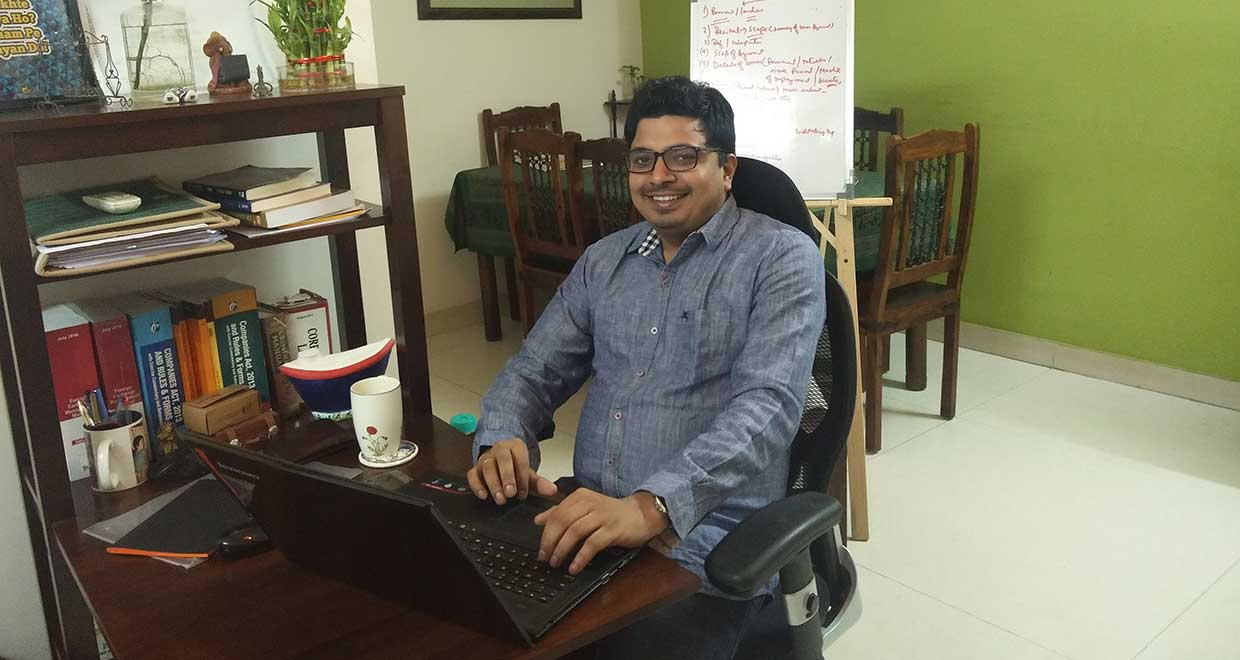
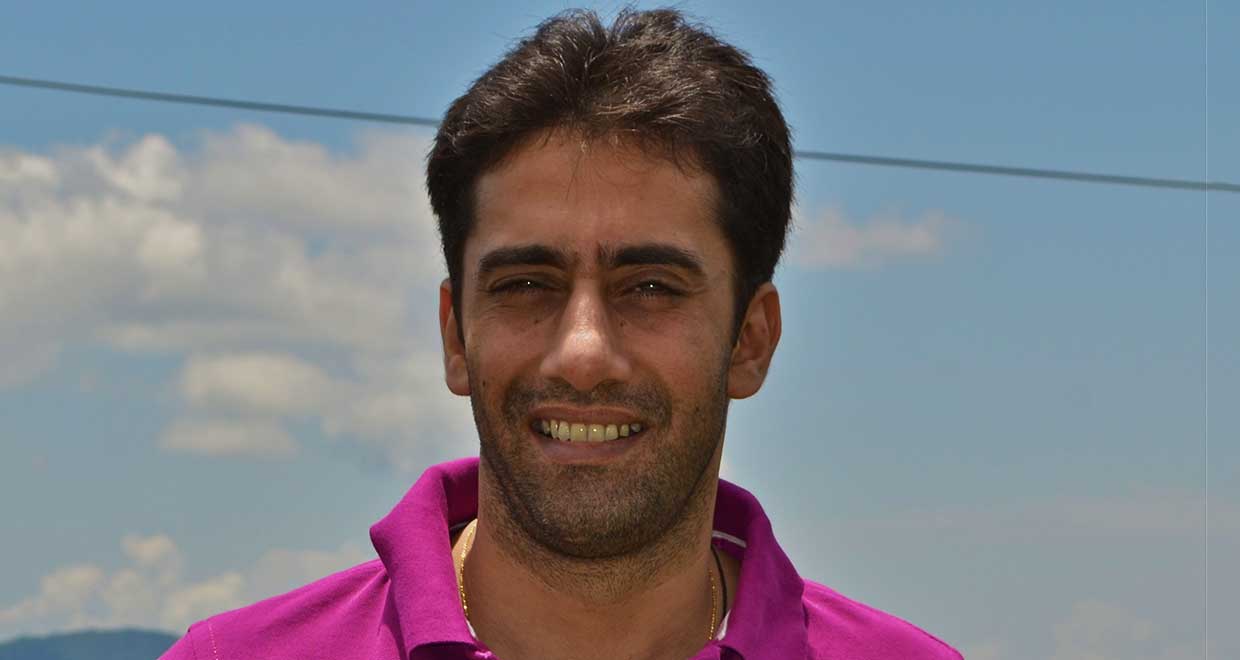
  • Gaurav Wahie, Associate Partner, Clasis Law, on being Partner, and Corporate Law

    Gaurav Wahie, Associate Partner, Clasis Law, on being Partner, and Corporate Law

    Gaurav Wahie graduated from National Law Institute University, Bhopal, in 2005. He then went on to pursue his Masters from University College London, specialising in International Finance. After successful stints with Fox & Mandal, Linklaters, Talwar Thakore & Associates, DSK Legal, Ashurst, and Indian Law Partners, he is currently Associate Partner at Clasis Law, India. Gaurav is also a dual qualified lawyer, enrolled as an advocate in India and registered as a non-practicing solicitor in England & Wales.

    In this interview we speak to him about:

    • His time at NLIU
    • Pursuing a Master’s degree in London
    • His experience in Corporate Law

    How would you like to introduce yourself to our readers?

    I am an Associate Partner in the corporate team of Clasis Law, Delhi office. My primary area of focus is acquisitions and joint ventures (domestic and cross border).


    Can you briefly describe your experience as a law student at a prestigious institution like NLIU, Bhopal?

    I would describe my time at NLIU as exciting. However, given that I was part of the third batch and there was hardly any infrastructure, we did face some challenges.  Also, given that it was also my first time away from home, so that was a bit of a struggle in the initial few months.

    While life as a student was tough with three test weeks (which thankfully changed to one mid-term in the fourth year), project presentation and end term exams, NLIU turned out to be a great learning experience not only as a law student but also on a personal front. It taught me to be independent and I made some of my closest friends in those five years.


    What do you have to say about the difference between here and the University College, London- where you finished your Masters?

    The biggest difference was the faculty. At UCL, a lot of the teachers were current and retired partners of international law firms, which was not the case at NLIU. Another major difference was in the teaching style, which pushed one to be regular in class and up to date with the reading assignments as classes were more of a discussion session rather than a lecture.


    What are your areas of specification? 

    Initially, at Fox Mandal and TTA, my area of focus was capital markets. I developed interest in it during my days at UCL. However, with the 2008 crash and capital market work drying up, I started getting involved in acquisitions and joint ventures and to this day this is my area of focus.


    How significant is a Masters Degree?

    I would say it is a matter of personal preference and goals. A Master’s degree is not a must (particularly for firm or counsel practice), but it helps in several ways. Aside from the focus on academia, it is an opportunity to interact with and get to know people from various countries. I believe that it really broadens one’s outlook. However, for anyone considering LL.M, I would not recommend it immediately after your undergraduate degree. One must work for two to three years and then consider an LL.M. Working first helps in choosing correctly the area of specification and getting the best out of your coursework.


    What were the internships you engaged in during your student years?

    My internships were a mix of firms, corporate houses and chamber practice. Rather than stressing about getting an internship in a law firm, I would recommend that first and second year students should intern with litigators (at District Court and/or High Court). Only from the third year should one look out for internships in the corporate field. Also, it is very important that the last two or three internships are done at firms where one is keen to apply.


    How would you describe your initial experience?

    Baptism by fire. I still remember my first day in a law firm. I had barely settled in when a senior walked up to my desk (for what I assumed would be a courtesy introductory visit) and without saying much left a shareholders agreement on my desk with instructions to proof read the document and give my comments by end of the day. I have been lucky to get opportunities to work with great seniors (be it Fox Mandal, TTA, DSK/ILP) during my initial years who took keen interest in my development and growth as a lawyer.


    Do you have any words of advice for young interns which they may follow to obtain a positive impression in firms?

    Diligence and sincerity, these for me are the two most important aspects not only for interns but for anyone looking at a career in law. You must demonstrate an interest in learning and realise that as an intern it is upon you to make yourself visible to the lawyers.


    As a partner in Classis Law, how does a regular day at the firm go by?

    Absolutely not the way I used to imagine it would be while I was still an associate. It usually starts with taking stock of what needs to be done and then prioritising the deliverables. From there on it’s a mix of attending calls, reviewing documents, discussions with clients and team members and business development pitches.


    Keeping the corporate and law world aside, what are your hobbies?

    Netflix and travelling. I am a firm believer that travelling is a great learning experience – you get to know about different cultures and cuisines, and meet people you would not usually bump into.


    What would be your words of advice for our dear readers?

    Develop a keen interest in reading (absolutely necessary) and keep yourself abreast with the latest developments, not just in your area of practice as a lawyer but generally be aware of what is happening around you.

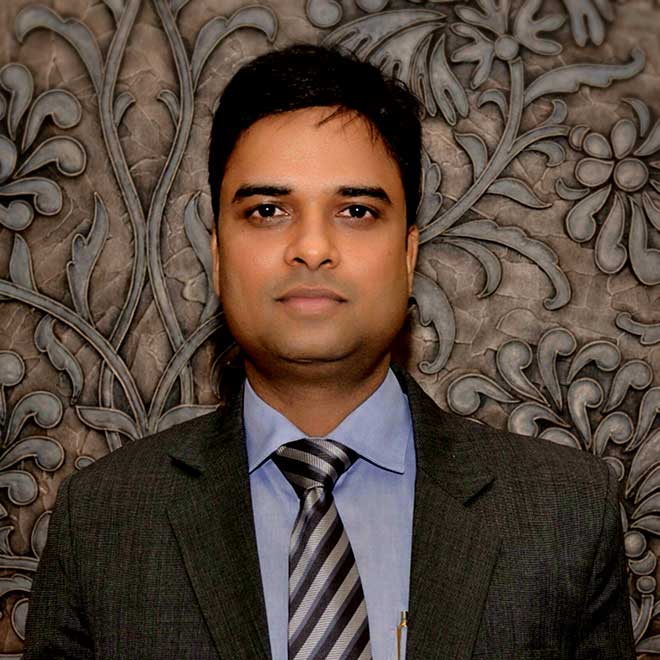
  • Deepika Raikwar, Regional Legal Manager-North, Hindustan Unilever Limited, on life at NLIU and IIM, and her experience

    Deepika Raikwar, Regional Legal Manager-North, Hindustan Unilever Limited, on life at NLIU and IIM, and her experience

    Deepika Raikwar graduated from NLIU, Bhopal, in 2006. She then went on to pursue her Masters in Business Management from IIM, Kozhikode with a focus on Strategy and Marketing. She has worked with companies like TATA AIG as an Assistant Manager, Max Bupa Health Insurance Company Ltd. as Manager Legal and Aviva Life Insurance Company as the Senior Manager. In December 2014 she started working for Hindustan Unilever Limited as its Northern Region Legal Manager where her practice is focused upon Consumer Protection, taxation, food and safety law.

    In this interview we speak to her about:

    • Marrying law with management
    • Interning at Yahoo!
    • Her diverse experience

    Tell us something about yourself, apart from your profession. 

    I am an adventure sports enthusiast with a keen interest for understanding world cultures.  Living with a motto of making each minute count, I have couch surfed and hosted people from nearly half the world. I have an eclectic choice in music from a thumri to a psychedelic trance, and everything in between. I generally like to take life easy; only when I’m not working, of course!


    What made you choose law as a career?

    The smell of old books, lateral thinking, and fascination for courtroom dramas.


    Tell us about your time at NLIU Bhopal.

    Being a first generation lawyer and belonging to one of the first few batches of NLIU (and literally having no placement data/ record or assurance) it felt like subscribing to a much hyped IPO. The jitters and vulnerability were overwhelming for the first few days. The old campus was a small building in a jungle, which made me reconsider my choice many times. But soon it became a milestone in my memory to be a part of the transformation story of NLIU, Bhopal. The campus moved to the new education block while I was in my second year and the new library was also inaugurated. Voila! From a dull and boring life, the campus suddenly transformed into a much talked about hub. The new campus won us over, new batches came in, great friendships were discovered. We had a lot of fun, but the curriculum was equally challenging. 

    The level of exposure and education is and has always remained very structured in NLUs. The trimester pattern gets the rigour going in the right direction. I am impressed by the level of extracurricular activities people get exposed to in law schools these days along with academics, though back then we had fewer choices and avenues. The level of competition is also much higher,which makes every graduate an adept legal professional.


    How much do you recommend pursuing MBA after LL.B?

    MBA+LLB is a great combination, especially if you want to excel in the corporate/ commercial/ start-up space. It always helps one switch between roles and have a larger economic and legal perspective on a global scale. Anyway, what’s the point if you do not understand the other side of the story? How can one think through business when every product, business idea, or operations of a venture is riddled with legal challenges. In fact, many sectors are/ were heavily regulated. I felt a person wearing multiple hats of legal aptitude and business understanding would be able to offer effective solutions as opposed to a plain vanilla approach. Also, CAT was quite sought after and I certainly wanted to crack it. 

    MBA is a great course, which certainly empowers one to think in a larger context by breaking through the stereotypical legal mind-set and is totally recommended for people who want to do different things differently. One should just be mindful of the ground reality. There are very few sectors which can offer combination profiles and cross functional exposure wherein one can use both sets of learning and skills. Typically, the trends are indicative of niche jobs being claimed by combination profiles, and this may result in very few possible change or movement options in the long term.


    Tell us about being a Management Trainee for Yahoo!

    It was an interesting hybrid internship for me. Yahoo! offered a project based role where I was working on a few yet to be launched products to evaluate them legally and to partner the technical team to build up the business case and later ideate on the product specifications along with their think tank. The culture was so strikingly different that in my induction session with the CEO, the gentleman in a floral shirt and shorts assured me it was acceptable to dress casually and told me it was okay to remove my jacket if I wanted to. The law firm internships were equally exciting, though intensely formal.


    Tell us about your experience with TATA AIG.

    TATA AIG was my campus recruiter from IIM, Kozhikode. Joining an insurance MNC as a management associate exposed me to various interesting profiles like Marketing, Business strategy, and finally gave me an opportunity to try my hand at Financial Product Manufacturing. The profile is mentally stimulating and requires a thorough understanding of the regulatory frameworks, finance and advance contract drafting skills. The insurance market leader, was surely on an aggressive plan to expand their national and international product portfolio. I was lucky enough that my first job was very demanding and stressful and I got the support and guidance of some very fine leaders.


    How would you describe your experience Aviva Life Insurance Company?

    Aviva Life exposed me to a large scale life insurance set up with all kinds of legal and business challenges. I also got great exposure to M&A from the strategic and legal side and totally enjoyed leading a very high potential team.


    How was your experience with Max Bupa Health Insurance Company Ltd? 

    I got exposure setting up the health insurance business in India while the industry was just about a start-up. It is an interesting field and requires a deep understanding of healthcare, human physiology, and medicine. The product development and drafting is a complicated process as healthcare sector in itself is changing every day. To draft and make a futuristic product which is market ready, and sustain the test of scrutiny of the regulator is a quite a task.


    Tell us about your role as Regional Legal Manager, North, for Hindustan Unilever Ltd.

    Unilever is a world in itself, every category has multiple brands and the scale of manufacturing and distribution is massive. There is a variety of issues to be handled from business to litigation, IPR, generic strategy. The best part about the work is the complete freedom it offers. The organization loves creativity and would never restrict any one to a particular ‘role’ or profile. The avenues of growth are varied. This imparts dynamism and empowers the next generation of leadership. My immediate goal is to lead a world class legal team and empower my people to grow well, both in the organization and in profession.


    There exists a huge debate with regard to being an in-house counsel versus a law firm counsel. What is your opinion on such a comparison?

    I think this debate’s existence per se is a loss of one’s focus. The right debate to have in one’s mind is how to excel in whatever you choose to do. There are different skill sets which the two profiles would certainly impart. It is completely the individual’s prerogative. 


    How would you suggest a law student should plan his/her career if he/she wishes to join the legal department of any company?

    Just be very good with whatever you study and do. The keenness to learn and the consistency to perform is the success mantra to be ‘employable’ in an organization. What matters most is persistence, perseverance, and the ability to think quick. This would certainly help not only to have a rewarding career, but a sorted life in general. There is no special preparation required; one should just be good with the basic subjects.


    Any other parting advice to our readers?

    There is nothing called preparation, it is just about changing habits to get an impact. My only share of personal experience would be read more, work hard, party harder, and stay focused. 


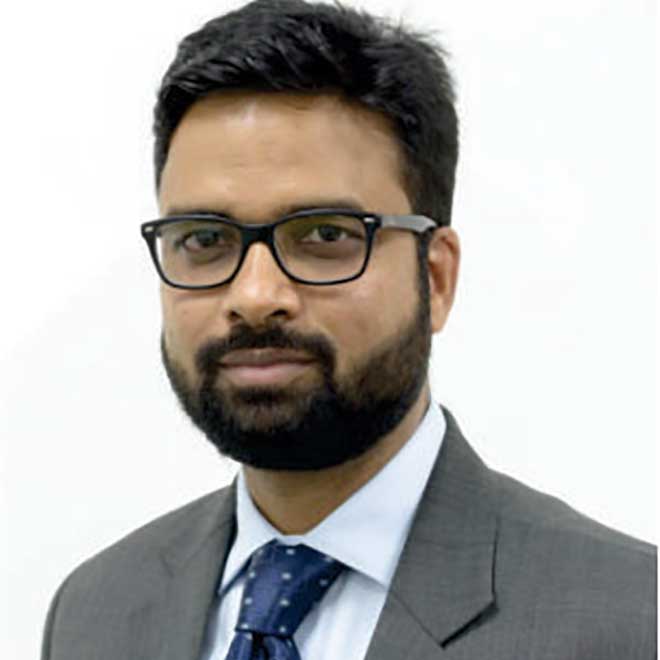
  • Abhiraj Krishna, Founder, Abhiraj Krishna Associates, on independent practice, and e-commerce law

    Abhiraj Krishna, Founder, Abhiraj Krishna Associates, on independent practice, and e-commerce law

    Abhiraj graduated from NLIU, Bhopal, in 2009. Soon after, he joined the Mumbai Office of Khaitan & Co. While with Khaitan, Abhiraj worked on diverse client matters, on domestic and cross‐border mergers and acquisitions, private equity and business transfers. Abhiraj advised many domestic and international clients, on entry options in India and assisted them in setting up businesses in India by advising them on key structuring issues with respect to Indian law including foreign exchange regulations in India. He is currently sole proprietor at his independent venture, Abhiraj Krishna Associates, which aims to provide participative and facilitative legal solutions to business eco-systems in India.

    In this interview we speak to him about:

    • His time at NLIU
    • His experience at Khaitan & Co.
    • Venturing into independent practice

    How would you like to introduce yourself to our readers?

    My professional credentials aside, on an aspirational note, I would always like to be introduced as a lawyer with solutions. And as a business facilitator and somebody who takes the stress out of the legal practice but not seriousness.


    Give us a brief overview of your NLIU experience

    The NLIU experience is fundamental to the development of my overall personality. Law school years are the foundation blocks and so this experience would always remain precious for me. At the cost of sounding a little grandfatherly, I would like to emphasise that law school experience is far more than just legal learning. This is the time for you to involve and engage with the argumentative and reflective side of you. It is this that you carry forward in your life.

    One thing that was distinct at NLIU during our time there was that things were not always easy. The institution was still in its evolutionary stages (from both infrastructure and public perception perspective). Since we knew that things were not always easy to get, we always had the zeal to go that extra mile and we learnt how to wait. The relationships we built then, we carry with pride till today. I am not talking about only my wife, Aditi (who was my batch mate in law school), but also our faculty, office staff, helpers everyone. The immense diversity in terms of social and cultural background of students at NLIU instilled in us acceptance for all. And the ability to hear, understand and appreciate other perspectives. These are real learnings.


    What are the subjects that you took particular interest in during your law school days?

    I have always been the type to be interested in philosophy courses. I was one of those in law school who was often caught reading Kafka, the one who was often told by everyone to stop the gyaan! No wonder then that I have many nicknames around that. So, yes, I had a keen interest in courses that reflected on the philosophy of law like the courses in English (that was more Law and Literature Course), sociology of law, jurisprudence, etc.
    To be honest, these fundamental courses have gone a long way even in developing my practice of corporate law. The methodology of analysis learnt through these humanities courses lay the foundation of going beyond the book. I think this is absolutely critical when you want to expand your practice.


    What kind of internships did you undertake during your student years?

    I have interned at a variety of places, State Human Rights Commissions, SEBI, Khaitan & Co, Talwar Thakore & Associates, district courts and High Courts. I don’t think there is any strategy for internships. However, in my view, five years at law school with approximately ten months of internship is a great time to peep into various practice areas. The best part about legal education is that it opens a whole set of career opportunities. The more you explore the better it is. It is important that you love what you do and it’s difficult to find real love in the first shot. So keep exploring. However, it is still recommended, especially if you are purely applying for jobs through campus or otherwise, that by the start of fourth year you start focusing on internships in the area that you want to work on.


    In your opinion, what are the law school centric activities that you would recommend as necessary experiences for every law student?

    Anything and everything that you are interested in. I am too small to comment on the requirements of being a successful advocate. We all are students and will always so remain. There is so much to learn and explore. I am of the view that this “balanced CV” issue is overhyped. In this profession, you are as good as your last deliverable. So, you would actually not carry your grades, moot-court certificate, or papers anywhere. What you can carry is your learning from them. Having said that, you have to justify your law school stay to your perspective employer. Not doing anything may not be the best option if you’re looking for a job.


    Growing up, did you have a mentor?

    I have received so much guidance from so many people that it is difficult to single out names. But yes, my mother is my constant source of inspiration. My wife, Aditi, is my biggest critique and a pillar of strength. Life is a beautiful gift and legal knowledge is a very effective tool in adding to not only your beauty (through hard-earned money) but also for really creating a positive impact in your client’s business and/or life. This realisation itself is a very positive and inspiring thought.


    What does it take to make the cut and land a Tier-I job?

    (Abhiraj had previously worked with Khaitan & Co., one of the most sought after firms for placements by students, as a Senior Associate.)
    For one, I was amongst the top students (in terms of grades) and had previously interned with KCO. However, ours was a very difficult time in the wake of recession (2008-2009), so it was a lot of divine grace in my case. Law firms today are looking for aptitude and attitude. At times, where we are already discussing artificial intelligence, conventional ways of looking at legal practice of only having certain CGPA/ papers is slowly becoming redundant.


    How significant is Grade Point Average with respect to recruitment at Tier-I firms?

    This is a first indicator of a student’s seriousness, so it is relevant. The first level filter. Grades do not show how intelligent you are but it is a good indicator of how diligent you are. So, it is important to have good grades but that number/rank race is irrelevant.


    What or who motivated you to take the leap of faith to found your own consultancy firm?

    It was an individual phase-wise evolution. Whatever legal practice I have is from my learning at KCO. However, there came a time where I decided that it is time for me to move and concentrate on the areas of law that I am passionate about. I still get a lot of guidance from my seniors at KCO. My father (who was a law professor himself) used to tell me always that in legal practice, if you do not have confidence of earning your bread and butter from independent practice, then don’t expect a law firm to give you a job. They will require you to earn at least four parts so that you can take one part for yourself.

    AKA just happened. Really, I did not think this through then and I am fairly instinctive about this even now. I am fortunate that corporate leaders and institutions have shown faith in my work. I just endeavour to deliver to the best of my ability. This is a long journey. But it is fulfilling and I am enjoying it. This is all what matters now.


    Do you provide internships at your office?

    Yes. We do have a comprehensive intern guidance program. We are open to both in-office and remote working arrangements. We have commenced recruitment and are primarily looking for freshers. The quality we seek is appreciation and eagerness for learning; don’t say no to any work. Since we are not receiving huge amount of applications at the moment, we really don’t need to apply the grade filter


    What does your regular working day at AKA look like?

    To be honest, a typical day is as busy as any corporate firm. Multiple matters are underway at any given point in time. However, we try to keep it as stress free as possible. Removing unnecessary formality in the way of our functioning, we have a relaxed work culture. We do a lot of regulatory structuring / start up advisory so there are lots and lots of discussions. Challenging new developments present themselves every day.


    If given an opportunity, what would you do differently in your career journey up to this point?

    Nothing. The only blunder one can do is to believe that there can be any blunder in career. It is an evolution. There is always a U turn, few miles away. Don’t restrict yourself in any stereotyped images. Experience, explore, then firm up your mind.


    Is there any other suggestion you would like to give to our budding lawyers?

    The legal profession is a very demanding one. You have to enjoy this journey to sustain. While money is a good reason to choose corporate law, it is not good enough to sustain your practice of law. Find your own path. Try opening a PPF account as soon as possible-patience, perseverance, and faith. This account is helping me realise my dreams. It may also be helpful for you.

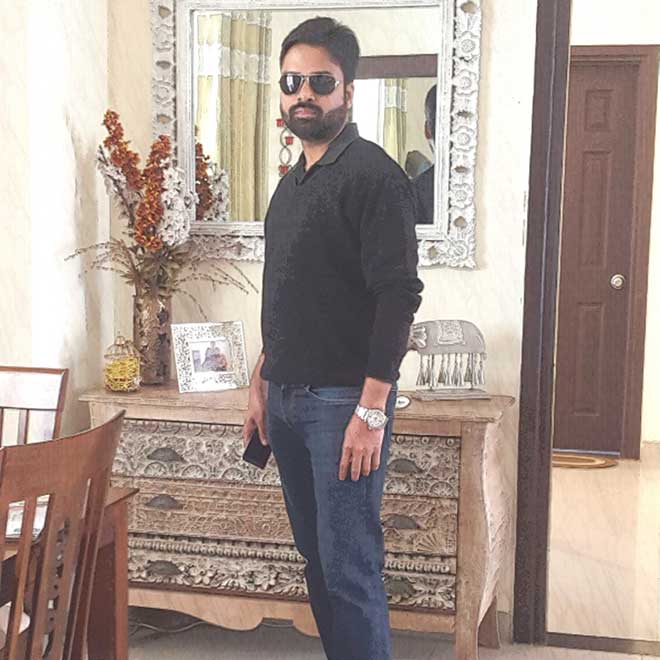
  • Rupesh Mishra, Assistant VP-Legal, Everstone Capital, on being In-House Counsel, working at Khaitan & Co., and his experience

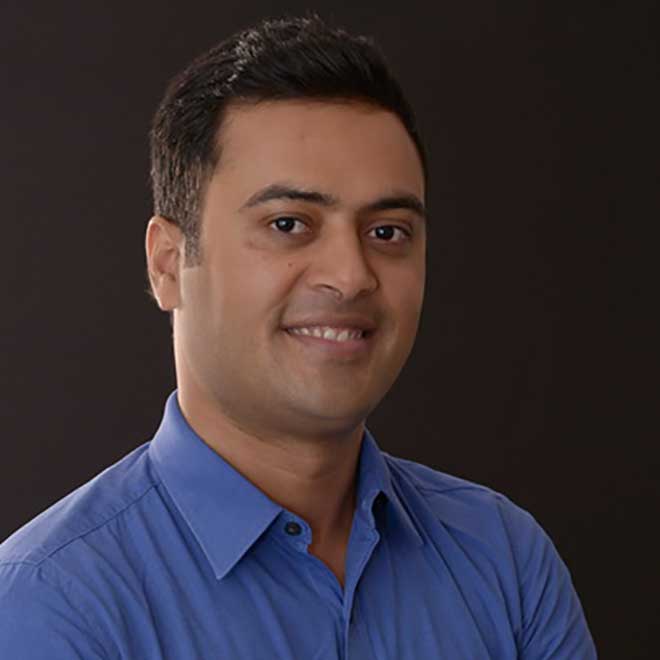
    Rupesh Mishra, Assistant VP-Legal, Everstone Capital, on being In-House Counsel, working at Khaitan & Co., and his experience

    Rupesh Mishra graduated in law from National Law Institute University, Bhopal, in 2007. After a successful stint of approximately seven years at Khaitan & Co., he joined Everstone Capital, a South East Asia focused private equity fund and presently works as Asst. Vice President – Legal (Private Equity) at their Bangalore offices. He focuses his expertise on private equity and venture capital investment, joint ventures, mergers and acquisitions, strategic alliances, foreign investment laws, and general corporate law advisory work.

    In this interview we speak to him about:

    • His time at NLIU
    • Working at Khaitan & Co.
    • His experience thus far

    How would you like to introduce yourself to our readers?

    First and foremost, I would like to thank SuperLawyer for this interview. By way of introduction, I was born and raised in Rewa, Madhya Pradesh, a district town better known for white tigers. In my free time, I like to spend most of it playing with my one-year-old daughter, Miraya, helping my wife with her ventures, and reading fiction.


    Tell us a bit about your time as an undergraduate at National Law Institute University, Bhopal.

    It is indeed a great privilege to attend an NLU. Law school was a massive platform for me both in terms of personality development as well as career opportunities. During the five years, I had the good fortune of reading and understanding law and literature, I met some brilliant minds and inspiring characters, and made some friends for life. Overall, law school was full of fun, friends, aspirations, hard work and, of course, a race to score grades.
    Did you take part in co-curricular activities while in college?

    (Rupesh has represented his law school at the Philip C. Jessup International Law Moot Court Competition.)

    I used to play volleyball, did a few plays, participated in moot courts and essay competitions and wrote a few articles. However, I feel that I could have done much more than this. Co-curricular activities are a medium to express various traits of your personality. It also helps in learning team work, coordination, management, organising skills, etc.

    The Philip C. Jessup International Law Moot Court Competition was probably the biggest event of my law school life. It was the first and only time I participated in a moot court competition. I would like to offer my sincere gratitude to the two speakers of my team who preferred me as their researcher. I think we were a remarkable team. We were really thrilled after qualifying for the international round particularly because it was the first time our university qualified for the international round of Philip C. Jessup International Law Moot Court Competition. The feeling of representing our nation and university on an international platform was incredible.

    The entire process was enriching. It was amazing to witness law students from around the world approaching the same problem in various different ways with their unique style of arguing. It was a great confidence booster for me. It also helped in refining my research and analytical skills which have always been noticed and appreciated throughout my professional career.

    What were your areas of interest during your legal education?

    During the law graduation course, I was more inclined to substantive laws than procedural laws. Contract law, constitutional law, corporate laws, public international law, IPC were my favourites. I developed an inclination for corporate laws in the last two years of the course when I was sure that I will pursue a career in corporate laws.

    What are the causes you feel strongly about?

    I feel strongly about wildlife and nature. I believe that it is our duty to preserve them for the future generations. I am associated with a few NGOs which support these causes.


    What advice would you give students in avoiding a decision paralysis?

    I am always in favour of more education. It is always a plus to your personality and legal acumen. If one has the time and resources, he/she should definitely pursue higher studies without comparing its utility and returns in monetary terms. In my view, going for further education after four to five years of work experience is a better choice.

     

    From a law student to a lawyer, how will you describe the transition?

    Transition from a law student to a lawyer is a gradual process, not an event. It is about responsibility, accountability, coordination, professional conduct, discipline, etc., which you learn over a period of time. Due to the guidance and support of people with whom I worked during my initial professional life, it was quite a smooth transition for me. According to me, perseverance, hard work and discipline are the keys to success.

    Could you please share with us your early professional experiences at Khaitan & Co?

    At Khaitan & Co. my core area of practice was M&A and general corporate advisory. I also worked extensively in the areas of education law, NBFCs and real estate laws. I feel fortunate to be picked up by Khaitan & Co. on day zero of campus placement. In 2007 when I joined Khaitan & Co., it was not as big as it is today. There were a handful of lawyers in M&A and the general corporate team. I had the great privilege of directly working with the managing partner as well as other senior partners of the firm. This helped me immensely in terms of exposure, client management, time management, quality of deliverables, etc. The overall experience with Khaitan & Co was enriching. It laid a strong foundation for my professional career going forward.

    After seven years at the firm, what I can say for sure is that there is no short cut for success; you should keep working towards your goals every day, and over a period of time you will definitely see favourable results.


    What prompted you to take up a position at the Everstone Capital?

    I was always fascinated by the position of a General Counsel, the kind of respect they command inside and outside the organization, their business acumen, their practical and holistic approach towards any legal issue and tremendous risk assessment ability.

    After leaving Khaitan & Co. in April 2014 and shifting base to Bangalore due to personal reasons, I came across this opening at Everstone and decided to go for it. I was particularly impressed with the job profile (mainly the private equity related work, which I enjoyed doing in the law firm as well) and the unique opportunity to get a first-hand experience of private equity business. Today, after working at Everstone for more than two and half fruitful and successful years, I can say that I am a better ‘business’ lawyer. I am glad I took the right decision at the right time! Everstone has a very strong in-house legal and secretarial team. My role as an in-house lawyer is professionally very different than an associate’s role in a law firm. My role is more about risk management and enabling the business to maximize opportunities within its risk appetite. As in-house counsel, I have to move beyond the narrow technician tag and be a proactive and trustworthy partner rather than someone who is reactive and deals with a problem when they arise. Also, there is a great sense of partnership at Everstone—where all functions support each other extensively—as well as support Everstone’s partners such as its portfolio firms and its advisers.

    Right from the non-disclosure agreement and term sheet stage, I am actively involved in drafting and negotiation of definitive documents, monitoring the transaction and implementing the process and systems to achieve the desired outcome in light of my knowledge and understanding of the “bigger picture” of the company’s operations, in coordination with my very smart colleagues and inspirational seniors. Further, I am also responsible for coordinating with and managing multiple work streams such as bankers, legal counsels, tax advisors, internal investment team, finance team, secretarial compliance, etc. This is an exciting experience and allows for great learning. I also help the portfolio companies with legal advice or documentation from time to time as and when required.


    Could you share with us the process you adopt from choosing a research question to writing the article?

    I prefer to write about contemporary issues. There are a couple of processes through which I choose a topic. Firstly, if I have to deal with any peculiar issue as part of any transaction or otherwise, I like to share my research and learning about that issue in the form of an article. Secondly, if there is a new legal development which may have a significant impact on my practice area, I like to share my thoughts about that as well. After selection of the topic, I think about the readers who will be interested in that subject matter. Depending upon the category of readers, I decide the scope, content, and language of the article. Once these things are sorted out and I have a synopsis ready, I start working on the content of the article. For that, I do extensive research and speak to experts to get their practical inputs. Once the first draft of the article is ready, I share it with at least one subject matter expert and someone from the target readers’ community for proof reading and inputs.


    What does a typical working day look like for you?

    There is nothing like a typical working day, every day in office is different. The beauty of private equity is that no shortage of action, especially at an active and highly professional firm like Everstone. There will always be something exciting happening either in the form of potential investments, live deals, exits or portfolio management. A regular working day will involve discussion with business folks on new investments, live deals and exits opportunities, working on NDAs, LOIs, terms sheets, transaction documents and some advisory work for portfolio companies. Further, given that in a private equity firm you are surrounded by many investment professionals, I spend a lot of time discussing and understanding business and market related matters on a daily basis. This helps in honing my commercial and business acumen and the investing professionals at Everstone have a great depth of experience and are very supportive.


    Did you have a mentor or guide during the formative years of your career?

    Yes, I had a few mentors during the different phases of my career. It was a mix of senior folks in the law firm, friends from law school and close family members. In my view, it is vital to have someone around with whom you can share your doubts or problems and who can guide you towards the right path. Having said that, one should not expect that someone else will steer your boat away from troubled waters. That is something you yourself have to do. A mentor or guide can help you with developing the right perspective and a balanced approach to various things but at the end of the day, you have to execute and implement those learnings.


    Where would you like your career to take you five years down the line?

    Five years is a long time and it is difficult to predict anything right now. I am extremely satisfied with wherever I am and what I am doing presently. I wish to continue this momentum and keep discharging my responsibilities with utmost enthusiasm and excellence. In terms of career goals, as an in-house counsel, I am particularly looking forward to enhancing my domain knowledge and acquiring the right skill set to manage and resolve disputes. Further, I look forward to developing expertise in the domain of new laws relating to food products, pharmaceuticals, e-commerce, payment systems and taxation.

     

    Given the dynamic nature of the field you practice in, how do you keep yourself updated about the latest developments in the law?

    I religiously read at least one business newspaper every day to keep myself updated with current affairs. Apart from that, I read newsletters circulated by the Big Four firms and certain law firms on important legal developments. I also visit websites of key regulatory bodies such as SEBI, RBI, DIPP, FSSAI on a weekly basis to track any new circulars/notifications. Further, I read the IPO prospectus filed by the companies with SEBI in detail to understand different sectors and regulatory environments relevant to that sector.


    Do you observe a paradigm shift in the demand for In-house counsels with large companies beefing their in-house legal teams?

    Over the last ten to fifteen years most corporates and financial institutions have come to realize the benefits of having a dedicated legal team and now we see teams of more than just a General Counsel, with many hiring specialist lawyers with niche skills. Today, there is a trend to do more internally than externally. This trend is underpinned by proven cost savings and growth in complexity and risk in modern business models and industry-specific regulations which often need a lot of practical experience to deal with. Often the best response is to have expert lawyers in-house.

    Although the internal legal teams continue to expand due to solid demand for in-house counsels with five to eight years’ post-qualification experience, I believe that there is still room for growth. A lot of large companies still have just one or two lawyers and people still do not know the value that a good in-house legal department can bring because they just go to lawyers when they have a problem and do not have coherent internal processes and procedures to stop them getting into problems. I do hope that there will be an improvement in demand and supply of in-house lawyers. Everstone is one company that really understands the importance of in-house counsels and put them to very good use.


    What would be your advice to current students aspiring to be an in-house counsel and why?

    Contrary to the general perception, being an in-house counsel is no less challenging than being a lawyer in a law firm. Start with being a great lawyer, and then develop the other skills that may prove essential to your career choice. In-house counsel can be a great stepping stone for those who want to be further integrated into the management of an organization. Just like law firms, in-house counsel departments vary significantly in terms of their size, resources, work-life balance and a variety of work. Based on my limited experience in each role, I have found that both positions provided me with tremendous learning opportunities and helped me develop different sets of skills that are applicable to the practice of law, whether it is at a firm or in-house. In short, as with any career decision, there are always advantages and disadvantages. The decision to move to an in-house role is certainly not for everyone and depends on each individual’s personal preferences and career goals. For me, joining Everstone as part of their in-house counsel team was a great step and learning opportunity. Moreover, the opportunities in in-house or in private practice vary significantly and exist across a spectrum rather than as two discrete options. At the end of the day, finding the perfect job is as much of an exercise of introspection as it is an external search.


    Is there any other suggestion you would like to give to our budding lawyers and corporate law enthusiasts?

    Dream big and dare to achieve it. Corporate law practice is not rocket science. Anyone with strong domain knowledge and decent drafting and persuasive skills can do really well. Be original and never lose your identity in the process. Do not let failure go to your heart and do not let success go to your head. Have fun and enjoy every bit of the journey.


  • Manish Gupta, Partner, Link Legal ILS, on working at Luthra, and his diverse experience

    Manish Gupta, Partner, Link Legal ILS, on working at Luthra, and his diverse experience

    Manish Gupta graduated from NLIU, Bhopal, in 2004. After successful stints at Titus & Co., Advocates, and Luthra & Luthra Law Offices, he is now Partner at Link Legal Indian Law Services.

    In this interview we speak to him about:

    • His time at NLIU
    • His experience at Luthra & Luthra
    • His role at Link Legal ILS

    How would you like to introduce yourself to our readers?

    I am someone who has grown and is still growing as a legal professional through hard-work, sincerity, focus on quality and a problem solving approach.


    Give us a brief overview your NLIU experience.

    I was in the second batch of NLIU and there were few issues relating to infrastructure at that point of time. Despite all that, it was a wonderful experience and the things which I learnt there were useful when I started my career and are still useful. While I do not know much about other institutions, things which make NLIU stand apart from other institutions are (i) its location at the outskirts of Bhopal, which in a way avoids distractions, offers more opportunities for students to interact and debate with each other, including their seniors and juniors as well as the resident professors, (ii) a good mix of students from all over the country which exposes students to understand and interact with students having different backgrounds.


    What are the subjects that you took particular interest in, during your law school days?

    I was interested in constitutional law and criminal laws. They did not directly affect my career, but the concepts and logic behind them always allows me to understand other laws well (e.g., why a particular law is being enacted or amended, to what extent the Parliament can go and regulate the conduct of the citizens, etc.)


    What kind of internships did you engage in during your student years which you feel were invaluable to you in reaching your current position?

    I interned with a few litigators and a couple of corporate law firms. Apart from the exposure of working on real life situations, I used to try to cash on these opportunities to closely observe real life law practitioners, who interpret and apply laws in a very different way, work in a very competitive and unpredictable world and deal with real life clients / counter-parties / judges. I tried to apply these learnings when I started working and it eventually helped me to some extent.   


    What are your areas of specialisation in law?

    I do not think that I have specialisation in anything but I do work a lot on transactions in the field of mergers & acquisitions, private equity and venture capital, both domestic and cross-border. Frankly, I did not preplan much from law school days and faced life as it came to me. Perhaps I got the opportunities I liked and moved on with the same, but that is of course not ideal and may not work for everybody.


    How were the first few years after your graduation?

    Quite tough, there was a lot of hard-work – both mentally and physically. There was always an atmosphere of fierce competition and a fear of unknown – what you do not know and what you have not done. I learnt the difference between theory and practice in a very hard way, but yes, the learnings from my law school helped me a lot. At least, I knew the basics of law and I was equipped with the ability to interpret the law. With hard-work and patience and a little bit of good guidance, I eventually managed to cross that hard part of my professional life. Having said that, life is difficult every day for legal professionals.


    In your opinion, is an L.L.M absolutely necessary for a career in law?

    I do not think so but it might give you a different exposure and perspective on things and most importantly, it would look good on your CV. But my advise would be to not do LLM in the very early phase of profession.


    What does it take to make the cut and land a Tier-I job? 

    (Manish has previously worked with Luthra & Luthra Offices., one of the most sought after firms for placements by students, as a Managing Associate.)

    In my case, it was a typical example of being at the right place at the right time. But later on, I have taken a lot of interviews of candidates there and in my view, what we at Luthra & Luthra wanted to see was logical approach, correct basics, some relevant experience and a lot of hunger to grow.


    What is the level importance given to a student’s Grade Point Average with respect to recruitment at Tier-I firms?

    It plays some role in creating the first impression or opening of the door, but it is not the most important or crucial thing.


    How do you say interns should go about their work at a firm like Luthra, so as to get noticed in a positive way in the limited time they have?

    Show more focus and sincerity towards work and desire to learn and work more. Also, try to interact with lawyers/ seniors there to understand their perspective on issues as well as give your views (if they are logical and to the point). Contribute as opposed to simply work on the assignment given to you.


    What was the reason for your transition from the Luthra offices to Link Legal ILS?

    I was looking for some change, including a different role and better challenges and Link Legal came at the right time. It was largely suited to my requirements and fortunately, I was also fitting their requirements. Link Legal is a relatively smaller firm but provides a much better platform for you to express yourself, create your own space and work in your own style. Further, Link Legal is growing very fast and thus, offers a lot of opportunities for you to not only become a part of its growth story but also a growth factor.


    Tell us about your current work profile with Link Legal ILS.

    Every day is like being busy with four to five ongoing transactions, one or two in the pipeline, some administrative and business development work and internal coordination with other corporate partners. My current profile is mergers & acquisitions, private equity and venture capital transactions, both domestic and cross-border.


    Where do you see yourself ten years from now?

    I don’t think that far, but would not be executing work as much.


    What is your message to our readers?

    Success is a constant journey and you should always travel with hard-work, sincerity, logical and problem-solving approach, in your travel bag. In the end, it is more satisfying than taking a short-cut.   

  • Shivendra Singh, Senior Associate, Dutt Menon Dunmorrsett, on M&A, corporate law and the potential of start-ups in the legal industry

    Shivendra Singh, Senior Associate, Dutt Menon Dunmorrsett, on M&A, corporate law and the potential of start-ups in the legal industry

    Shivendra Singh is is a graduate from NLIU, Bhopal, batch of 2008. Shivendra has extensive experience in handling Mergers & Acquisitions, Joint Ventures, infrastructure projects and Private Equity deals. He has also been part of several real estate transactions, due diligences, including due diligence on portfolio of assets of banking companies, financing arrangements with banks, and investment in multi-brand retail trading sector. During his professional career, Shivendra has practiced a wide range of laws, such as law of property, companies law, laws pertaining to foreign exchange in India, securities regulations, Sick Industrial Companies Act, trust laws, laws governing education sector, and employment and labour laws. He has regularly contributed several articles to leading law journals and magazines.

    In this interview we speak to him about:

    • His time at NLIU, the curriculum and his extracurricular interests.
    • His decision to move from an established firm like AMSS to a startup, Sarthak Advocate & Solicitors.
    • His experience practising corporate law

    How would you introduce yourself to our readers in one sentence?

    A professional who likes to keep it simple and deliver high quality.


    What attracted you to Law? Is anyone in your family from the legal fraternity?

    During my 12th standard days I stumbled upon a book shelf that belonged to my great grandfather in our ancestral home in Eastern UP. It had a few old law journals. The old collection of books had remained unused as there were no lawyers to come from our family for the following two generations. As a humanities student, I was very excited to discover such an extensive book collection. That was the first time that the thought of being a lawyer crossed my mind.

    Few months later, I came to know about a distant cousin who was in NLSIU, Bangalore and just got placed in Amarchand Mangaldas, Delhi. I can say this event led me and my family to seriously consider law as a viable career option and I ended up applying for few universities.


    Tell us about life at National Law Institute, Bhopal. What was the academic atmosphere like?

    NLIU, Bhopal is a very vibrant campus, where we had space for students who excel not only in academics but also in other extracurricular activities, like moot court competitions, model United Nations competitions and have publications to their name. We even had students who loved to read beyond the prescribed curriculum; they read the likes of Karl Marx, Kafka and other noted philosophers.  .

    I think our university gave everyone a chance to explore themselves in their first three years and then gun after their goal in their last two years. This is why our alumni have made their mark not only in the field of law, but also as social activists, diplomats, bureaucrats and entrepreneurs.


    You have taken part in three moot court competitions, performing well each time. How important is participation in moots?

    I personally consider that moot court competitions teach one how to apply law to a practical scenario. After all, this is what a lawyer does for rest of his life. Participation in such competitions enhanced my research skills, drafting skills, presentation and most importantly, the art of articulation.

    One should definitely experiment with different subjects in moot courts during college. It takes you out of your comfort zone. Then you don’t hesitate venturing into any kind of law because you believe in your core skills as a lawyer. I participated in various moot courts dealing with issues relating to public international law, minority educational rights, cyber law and space law.


    What subjects interested you the most while in law school? Which kinds of internships did you complete while at law college?

    As I mentioned above, I didn’t have any favourite subject consciously but you can say I had an inclination towards public international law owing to my interest in contemporary European history and international relations as an arts student.


    You joined Amarchand & Mangaldas & Suresh A. Shroff & Co., Delhi, soon after graduating in 2008. How did you procure employment there? What was your experience there like?

    I was selected for a four week long internship through the university placement programme. My internship was extended for two more weeks at my request. Few months later, a few other people who had interned there, and I, got a call for an interview. I was selected at that interview.

    Working at AMSS was a wonderful experience. You suddenly find yourself making a small contribution to a headline deal. It was my first job so it will always remain special. An organization that turned a law student into a beginner lawyer, teaching him the nuances of professional life.


    Soon after, you left AMSS to join Sarthak Advocate & Solicitors. What made you shift, especially since AMSS is a leading corporate law firm?

    That was the time of start-ups in law firms. You had success stories coming from every corner. It was an exciting move, where we hunted for our own office and own furniture. It was a fulfilling experience and a risk which a young and carefree lawyer took at that time.


    During the four years you worked there, you moved into the Senior Associate position, and you have continued to hold the position in your present job at Dutt Menon Dunmorrsett. What goes into becoming a Senior Advocate Associate?

    Your responsibility increases manifold when you move up to the position of a senior associate. You are in the driver’s seat of a transaction and the partner would rely on you completely. I have always tried to take as many legal calls as I could with my experience. Number of hours don’t necessarily increase but the timing of those hours does change. You are working or taking calls anytime and anyplace like on the road, in the gym, in the restaurant etc.


    What are your practice areas at Dutt Menon Dunmorrsett? Which kinds of transactions do you like dealing with the most?

    I have always been a general corporate and M&A lawyer. At DMD Advocates, we have a great mix of corporate transactional practice and general corporate advisory. In the last few years, India has seen so many start-ups, a few succeeded and a few failed. At DMD, I got a chance to work with these budding entrepreneurs, almost like a legal incubator, till they reach the angel and institutional rounds. It’s very satisfying to see their journey from a mere business plan on paper to a stage of operational expansion.

    Simultaneously, away from the M&A arena, our other clients who seek day to day advisory on a whole range of laws, such as the Companies Act, FEMA, Aviation Laws and SEBI laws keep us close to the challenges faced by a corporation in its day to day life.


    What are the building blocks for a great practice in M&A? Do you have any advice for young lawyers aspiring to make a mark in this area?

    As is true for any other practice area, providing legal solutions is at the core of M&A practice. Clients appreciate a straight and unqualified view. As an M&A lawyer, you have to completely give yourself to the transaction which goes on for months. You are the anchor for the documentation process and you will be the go-to guy for your client throughout the process. You will have to chase the client for sorting out the commercials between the two parties and keep things moving.

    For young lawyers, my advice is to understand your client’s business and commercials as much as possible. We are business lawyers. We are involved with clients in their day to day life and not only when their dispute reaches court. Therefore, understanding their business challenges is key to solving their problem.


    According to you, which are the arenas of law showing most promise for the near future, and which students should consider taking up law as a career choice?

    India is growing every day and lawyers have a big role to play in this growth story. Corporate law, IPR and Alternate Dispute Resolution will remain at the core of the legal advisory in the times to come. From a start-up to a big corporation, everyone is realizing the value of a commercial lawyer, something which was historically handled by a chartered accountant or a litigation lawyer.

    There is great potential for a corporate lawyer in tier two cities, which are still untouched by corporate law practice. In this age of e-mail, teleconference and video calling, corporate lawyers can disrupt and penetrate cities like Ahmadabad, Kanpur, Indore, Vizag, Kochi, Manesar, etc.


    Which reference authorities do you rely on for your work in the corporate area, as well as for competition law?

    As far as advising the clients on their regulatory matters is concerned, including corporate laws and competition laws it is advisable to rely on the latest printed bare acts and regulations available on the official websites of the regulators. But beyond a point when it comes to more complicated issues, one can refer to a comprehensive commentary and case law research as well.

    For FEMA related issues one can consult updated regulations (Taxmann publications) and Consolidated FDI circular. For competition law advisory, a lawyer can also consult the advocacy booklets published on CCI’s website.


    You were asked to express your views on The Registration (Amendment) Bill, 2013 by the Parliament’s Standing Committee on Rural Development. What was your experience like?

    It was a very enriching experience where I got to share my views with an esteemed panel comprising Rajya Sabha members such as Prof. Saifuddin Soz and Mani Shankar Aiyer. As a real estate practitioner, we apprised them of some practical difficulties faced by people given the archaic nature of the century old legislation. There was a parity of thought on both sides of the table with few common objectives such as ease of registration procedure, prevention of fraudulent transactions, computerization of records and compulsory registration of certain documents.


    How would you suggest students may hone their research skills? What is the secret behind a good quality research paper?

    Perspective, I guess. A quality research paper should reflect clarity of thought backed by comprehensive research. It should give little more than what is already available in the public domain. That little contribution can be in the form of additional facts and information which one has gathered through empirical exercise or in the form of a viewpoint different from what already exists and is well documented.


    What is the one piece of advice you would like to give young law students?

    For the first few years, discover yourself and your inclinations. Experiment as much as possible. You have nothing to lose. Once you know what you want, go all of for it. Most importantly, have lots of fun and make full use of your campus life. Those days will never come back.


  • Gitanjali Ghosh, Assistant Professor, NLU, Assam, on LLM at NLSIU, academics and teaching as a career

    Gitanjali Ghosh, Assistant Professor, NLU, Assam, on LLM at NLSIU, academics and teaching as a career

    Gitanjali Ghosh graduated from North Eastern Hill University (NEHU), Shillong (2013). In law school she has interned with NHRC and was adjudged as the best Mooter at Henry Dunant Moot Court Competition. In 2014, Gitanjali completed her LL.M from NLSIU, Bangalore and has joined NLU-Assam as faculty. Along with teaching, Gitanjali is pursuing her Ph.D from NLSIU.

    In this interview she talks about:

    • Law school experience at NEHU.
    • LL.M from NLSIU, Bangalore.
    • Internships, mooting and her dream to opt teaching as a career.


    How would you introduce yourself? Tell us a bit about your pre-college years. What motivated you to study law?

    I hail from a town called Mangaldoi in the state of Assam. I finished my schooling from Don Bosco High School in my two and +2 from Cotton College in Guwahati. I went on to pursue B.A. LL.B. (Hons) from NEHU, Shillong and LL.M. from NLSIU, Bengaluru. Currently, I am also registered as a Ph.D. Scholar at NLSIU. Professionally speaking, I would like to introduce myself as an Assistant Professor of Law at the National Law University, Assam where I am also associated with the Centre for Child Rights. I am a very simple, family loving and God-fearing person. I have my fair share of undesirable traits but in all I try to be a good person. I was good at academics right since my ABCD days but I thoroughly enjoyed my school days, despite all the pressure of doing well in Board exams to getting into whatever it was that I wished to pursue, thanks to my friends. I was not great at sports but I did pretty well at cultural events.

    Studying law, I would say, must be due to pure genetics (my parents are lawyers). On a serious note, I always wanted to be a teacher, never a lawyer or a judge or anything else for that matter.As I grew up, my inclination towards pursuing law followed by a career in academics was but natural. Honestly, there is no particular thing that I can pinpoint as my motivation.


    How would you describe your time at NEHU? Tell us about the academic environment and faculty at the law department of the University.

    I had a wonderful time at NEHU as well as the city it is situated in i.e. Shillong. You have to be there to understand why. It is truly the ‘Scotland of the East’. We were the fourth batch to be enrolled in the Department of Law, NEHU and in many ways, we were better off than our seniors in terms of infrastructure, hostels, teachers, library etc. However, we had our fair share of difficulties as well. The academic environment at NEHU is not as hectic as we see at law schools but a lot of effort is put into by a majority of the faculty members in ensuring that the students learn law and are clear with the basic concepts.


    Did you take part in extracurricular activities? How important do you think that extra-curricular activities are to a law student?

    I believe, in today’s world, where recruitment is largely based on one’s curriculum vitae, extracurricular activities are very important for any student. Apart from this, as the saying goes, all work and no play makes Jack a dull boy (law-related extracurricular activities are everything but play). Also, extracurricular activities help one in gaining confidence as well as exposure.

    During my preliminary years, I did not have any information about the scope available to a law student, which readily resulted in my lack of inclination towards these activities. Hence, I spent a lot of time on my academic endeavours. My primary objective was to do well in my studies (I was the gold medallist of my batch) and most importantly, learn the basics of as many papers as I could and be thorough with the papers I wished to pursue further (it is not possible to learn every paper thoroughly). However, with the coming of Internet into my life or should I say with the learning of its proper use, things changed (it was difficult to get even phone signals during my initial years at NEHU). I don’t have a long list of activities that I participated in but I participated in the Henry Dunant Memorial Moot Court Competition where I was adjudged the ‘Best Advocate’ and our team was ranked 5th (a big thanks to our teacher who guided us and my dear teammates).


    Do you believe that excellent CGPA is absolutely necessary for success?

    It may not be absolutely necessary but its importance cannot be negated at the same time. A decent CGPA gives the much-needed boost to those students who may not be the toppers of their class but do well in other extracurricular activities.


    What were your areas of interest during your graduation? How did you go about developing expertise and knowledge in these areas?

    International law and human rights are two areas for which I have nurtured great interest ever since I was pursuing B.A. LL.B. (Hons.). I went on to pursue LL.M. in Human Rights and currently, I am engaged with the teaching of these subjects as well. The only way of developing your knowledge and expertise in any subject is to simply read, read and read.


    Did you do any internship during your graduation? Did you receive any assistance from your college?

    Apart from the regular internships with advocates, I interned with the National Human Rights Commission, New Delhi where I won the Best Intern prize.It was a great experience. Department of Law, NEHU did not have any policy to assist students with their internships but the faculty members were kind enough to right letters of recommendation and help in any other manner within their power.


    What do you have to say about the supposed ‘elite’ tag attached to certain law schools? Do you believe branding of college is something that’s very relevant/ important at any stage in a law student’s career?

    I don’t think ‘elite’ is the right word to describe these institutions because they were not born elite. Both the faculty and the students of these institutions have made several efforts to bring name and fame to these institutions.

    Given the scenario in today’s time, the brand name of one’s college has indeed attained a position of relevance in a student’s career. While students from renowned colleges are automatically presumed to be good at what they do, students from the not so renowned colleges have to put in a lot of effort to be able to create such presumption in their favour.


    When and how did you decide to pursue Masters? Was it a professional requirement or an endeavour out of academic interests?

    I had decided to do pursue Masters even before I joined Bachelors as I had made up my mind at a very young age to become a teacher, although I was not very sure of the subject. When I joined B.A. LL.B., it was only a question of time before I went ahead with Masters towards the fulfillment of my long cherished aim of becoming a teacher. You can call it a professional choice made on the basis of my academic interests.


    gitanjali-ghosh-2

    You have done your LL.M. from NLSIU, Bangalore. Can you please share your experience at NLSIU? How will you compare the environment at NLSIU with that of NEHU?

    I met some of the finest teachers, students and made some friends for life at NLSIU.Also, NLSIU gave me my first job as a Researcher at the Centre for Women and the Law. One year LL.M. was undoubtedly hectic and it gets over even before you think it has started but it was,although draining at times, an enriching experience. I am still associated with NLSIU as a Ph.D. Scholar.

    Asking me to compare the pedagogy of NLSIU and NEHU are akin to asking someone to differentiate between their two eyes as both are my alma mater.  It may not be actually fair to compare the two given the fact that they are majorly different from each other and represent two different kinds of institutions i.e. one being a National Law School and the other a traditional university.


    Looking back, how significant do you think that your legal education was? When did you happen to experience the learning curve?

    Well, I am still a student of law but the legal education I have pursued until now has been quite fruitful in terms of both learning as well as career. However, the main significance of my legal education lies in the fact that I have not lost my interest in it and indeed, have found areas of law, which I am quite interested in pursuing further. Further, with my Ph.D. thesis, I wish to contribute to the largely unexplored field of tribal customary laws and with my teaching, I wish to help students to not only learn but also to retain their interest in learning law.

    I really cannot pinpoint a certain point of time or situation when I experienced the learning curve. It has been a continuous process, I believe right since I started studying law.


    When did you exactly decide to take up teaching as your profession? Has it become easier or more difficult for you to understand the psyche of young students in this process of teaching?

    As I have already said, I always wanted to become a teacher.  I cannot recall the exact time I made this decision but as far as I remember, I have always considered teaching as my profession and nothing else. Given the fact that I was myself a student not two months back and that most of my students are my brothers’ age, it has been very easy for me to understand the psyche of my students.


    Please tell us about your experience with regard to your first year of work as a PhD scholar at NLSIU? What kind of researches you were entrusted with?

    Well it has not been a year since I registered for Ph.D. at NLSIU but in this period of time, I have had an enriching experience in my many roles as a Research Scholar, a Teaching Assistant as well as a Researcher at the Centre for Women and the Law at NLSIU. Also, given the fact that I was the youngest in the class, I learnt a lot from my fellow scholars during our course work.

    As a Research Scholar, the only research one is required to do is on the topic chosen for writing the thesis. However, the Course work requires one to study Research Methodology and Computer Applications as well.


    Please tell us about the requisite soft skills which are essential for a young teacher to build a successful career?

    Apart from a thorough knowledge of the subject that one is entrusted to teach, being humble and humane towards one’s students is of utmost importance. A teacher should always give due regard to the fact that she/he was also once a student and no matter how many years pass, there are certain issues which are common to the students at all times and those need to be addressed humbly and patiently.


    Do you feel that there are differences between students of ‘elite’ law schools and students from other law colleges and traditional universities?

    Students are same everywhere but the opportunities available to them make all the difference. I have studied at an elite law school and also at a traditional university. I do not know about others but I could definitely perceive a change in my life. While at NEHU, I had to tell people what NEHU is (That’s ok) but where is NEHU (Shillong? Where’s that? This was frustrating. Geography and G.K. are probably not well taught these days at school). However, these questions disappeared with NLSIU (what a relief). On a more serious note, there is a common misconception among students from traditional universities that law school students are better than them (I too had this misconception) and even among law school students whose law schools are not ranked higher in the law school rank lists and owing to this misconception, they suffer from lack of confidence. In short, opportunities and confidence are the two major differences.


    What are your views on the future of Indian legal education? How would you suggest that a law student manages to stay ahead?

    Indian legal education has a bright future ahead but sadly, for only those who can afford the top-most institutions. There are many a good students who will loose a lot owing to this unfortunate situation but that does not mean that they should be discouraged from taking up law. CLAT is not the only way to success although it might seem to be the easiest.

    Going by my own experience, a law student should be informed and thanks to the technological advances, she/he no more requires the college notice board for this purpose. Information is power.


    If you could list out 3 activities which on a scale of priority, should be at the top in any law student’s school-life, what would those be?

    Make friends for life (it has nothing to do with law but will help you survive law school and life)

    Concentrate on Academics

    Writing research papers and extracurricular (as per one’s interest and capability)


    What would be your advice to young law students? How do you think that they should approach their career?

    Have a lot of fun while at law school but take care not to jeopardize your academic and extracurricular interests in the process. As clichéd as it may sound, but, sincerity and hard work are the essential requisites for an amazing career (a bit of good luck as well).


  • Neha Thakur, Senior Associate (Indirect Tax), Luthra & Luthra, on work experience in tax firms

    Neha Thakur, Senior Associate (Indirect Tax), Luthra & Luthra, on work experience in tax firms

    Neha Thakur is a graduate from NLIU,Bhopal (batch of 2007). During college, she was quite active in co-curricular activities and has excelled in them. She has also managed to pursue Diploma Course in Corporate Law offered by ASCL, Pune. Soon after graduation, she worked at Vasan Associates for a short period of time and thereafter switched to Economics Law Practice. She has also worked at Ernst & Young. Currently, she works as a Senior Associate (indirect tax) at Luthra & Luthra Law Offices.

    In this interview she talks about:

    • Specializing in Indirect Taxation
    • Working at Vasan Associates and ELP
    • Being a Senior Associate at Luthra & Luthra Law Offices


    How would you like to introduce yourself to our readers who are mainly law students and lawyers?

    Destined to be a lawyer, is how I see my life in retrospect. I have been fortunate to have worked under some outstanding lawyers who guided me through my career so far. It’s extremely important to define what you want in life in order to draw a path to achieve it. My first stint as a legal trainee was at Yahoo!India’s Bangalore office where my mentor Mr. Amitabh Lal Das gave me some of the most important tips to make the right decisions regarding my career path. My first legal engagement after law school was with Mr. R. V. Prasad (Vasan Associate) whose impression as a professional on me will continue for a life time. It was under him that I’ve learnt the most important lessons of life, to never compromise with principles and be very professional in your approach to work.


    What brought you into studying law? Was it fate or planned?

    As I earlier mentioned it was destiny’s play, supported by some favourable turns in life. I started my career much before I actually got through law school. Being a second generation lawyer, I used to visit my father’s chambers regularly and was engaged in some or the other work by his colleagues. This resulted into an early orientation in the field of law. My mother believes in aiming for the moon as even if you miss you’ll land among the stars. She inspired me to take the entrance exam and was the push behind the decision to make a career in the legal field.


    What were your areas of interest during your graduation? How did you go about developing expertise and knowledge in these areas?

    My exposure to tax laws was due to the fact that my father is a tax advocate. Although he practices Direct Taxes and I practice Indirect Taxes, my inclination was always towards tax laws. However, IPR laws did interest me. During my college days I’d done an internship with Kris & Kolloth, Bangalore which is an IPR firm and it was a great learning experience. Subsequently at Yahoo!India I had some more exposure to IPR laws. However, as luck would have it, I got internship opportunities with LKS Bangalore and Delhi office thrice during my 5 years at Law school and it set the path for the future in tax. I also did a diploma course in Corporate Laws through ASCL, Pune.


    Right after graduating, you worked for a year at Vasan Associates as an Associate and then joined Economic Laws Practice as an Indirect Tax Associate. How would you describe you experience at both these places?

    My mentor at Vasan Associates, Mr. R V Prasad is a practising Advocate at the High Court of Karnataka at Bangalore and deals mainly with tax laws. His systematic litigation strategies make him an outstanding lawyer; my foundation in the profession was laid during my tenure with him. It’s very important to have a good mentor in the beginning of one’s career as that characterizes your entire professional life. His approach towards clients and cases is focussed and his emphasis on efforts to excel in one’s subject was a lesson I’d learnt under him.

    I continued to be a part of the litigation team at ELP which furthered my inclination into litigation. It is thrilling to argue your own case. It was a very exciting phase; ELP is one of the market leaders in the field of tax and has a great team to work with. Their knowledge base helps you to learn the subject better with each passing day.


    After one and half year of work as an Associate at ELP, you joined Luthra & Luthra Law Offices as Senior Associate (Indirect tax). What qualities do you think helped you to achieve this status?

    Each firm has set parameters for each role. For example, for the position of a Senior Associate the person should have certain relevant work experience, then again relevant work experience may or may not include your independent legal practice. It all depends on the firm’s policy. So essentially it was the relevant experience because of which the firm decided that position for me.


    neha-thakur-2

    What’s a typical day at work like? How  can one gain expertise in Indirect Tax? What does it take to be a good Indirect Tax lawyer?

    Well, I’ve done a mix of litigation and advisory from Indirect Tax perspective. Both are a different ball game I must confess, although the common string to sail through is regularly updating your knowledge in the field. Once the clients develop a relationship with you as their lawyer, they do not always restrict themselves to ask questions related to your expertise. To a tax lawyer they might ask something to do with evidence law, you are the go-to person for them and you have to obtain answers. My first read at Vasan Associates was a book on human psychology as recommended by Mr. Prasad, which I realise was the best first step taken. In this field we have to understand the human psychology since you are dealing with them at all levels, be it your clients, colleagues, judges, staff etc. You cannot afford to lose patience with clients in a service industry. I would highly recommend all new lawyers some good reading before you start in the profession, it’ll take you a long way. Always remember “be kind, for everyone you meet is fighting a hard battle”.

    Also as you move up in your career, responsibilities increase, you need to watch your act as you’re grooming your juniors. Setting a good example as a lawyer is something all of us should maintain to have a better professional world. As an indirect tax practitioner a lawyer’s competition is mainly with the Chartered Accountants, who are very thorough with their knowledge in this field as they put in long and hard years to be the professionals they are. The only way we stand on the same footing is by systematically updating yourself on a regular basis. Read the relevant journals; stay aware of the recent judicial precedents and statutory procedures. Make networking your strong point, knowledge acquired should be put to use by practice.


    What has been your strategy to deal with errors and mistakes? How would you advise a young associate to deal with them?

    The best thing about mistakes is that you can correct them. It goes on to show that you made an effort in the first place. So have a positive outlook, perspective matters a lot. Consider every error as a step forward and you’ll be better with each one of them.


    What changes has being a Senior Associate brought into your life? Do you ever feel that there is excess of work load on you? How do you manage to strike a balance between your personal and professional life?

    Growing up professionally ensures that you are at the middle of the pyramid and have a team which helps you with matters. Delegation is possible at this stage and also you start getting a better grip on your domain and take less time to complete a task. We start grooming the young lawyers at this stage while still trying to get better ourselves. This stage is hectic and requires a lot of multitasking since you are in the middle of a lot of change at all levels. To be very honest, the personal life definitely takes a hit being a legal professional. Being in client service industry wouldn’t be any different. My suggestion is to be mentally prepared and make the most of your initial years and make a strong base for yourself while you are free of personal responsibilities. Lawyers across the globe work long hours (Harper Lee and John Grisham would agree). By this I’m definitely not suggesting that you do not socialize. Networking is an important aspect of our profession, we cannot survive in isolation. Manage your time well and make time for people who matter, it keeps you sane.


    Tell us about a case that you are particularly proud of. What steps do you take to prepare for a difficult case?

    The burden of Indirect Tax is ultimately borne by the end users. The seller adds the tax to the goods and every unfavourable order adds to that cost. So every favourable order makes me proud to have saved some cost for the common man i.e. us. In my limited tenure so far while there are several matters worth being mentioned, the one which is in my recent memory is that of Mumbai International Airport Ltd. (MIAL). On behalf of the client we appeared along with Senior Adv. Mr Sridharan before the Customs Excise and Service Tax Appellate Tribunal (CESTAT). The point of contention was whether Service Tax is applicable on the development fees collected by MIAL as per the statutory requirement under the Airport Authority of India Act. Development fees is the amount which the passengers pay for the future development of Airport facilities, it may be used for construction of another terminal after a decade. It is in the nature of statutory fees therefore levy of Service Tax on this fee will essentially mean tax on tax and extra cost to the passenger. The final decision is pending and therefore we cannot discuss it any further at this stage. Everyone who’s spent even one year more than you in the profession has something to learn from. Be a sharp observer and try and learn as much as you can. There is always a better way to staple papers, prepare paper books, drafting, dealing with clients & officers of the department and doing research for the matter. While appearing with seniors just by observing them or reading judgments in cases argued by them, you may learn immensely.


    You must have guided several interns. How would you say that an intern can generate a positive feedback in the limited time they have?

    Put yourself in the shoes of the counsel who’s delegating work to you, while they entrust the research they expect you to be sincere and responsible. If I work with an intern I want to believe every word they tell me about a particular topic, I believe they have exhausted every possible source of information and I will not have to confirm facts. There are no short cuts in life. You are a crucial resource for the counsel as an intern, you save them time with accurate information. Before you start, ask as many questions as you want, understand the point well, make notes and do an exhaustive job. Be responsible with the work which has been delegated to you, don’t abandon the counsel uninformed. There are so many times that interns do not count themselves as a vital part of the system and tend to be careless. This often results into double efforts both of the counsel and that of the intern.


    You have excelled in your academics, interned at top-notch Indian law firms. Do you ever feel that you missed out on the fun part of your college life? Could you tell our readers how you managed to excel as a law student and enjoy your college life?

    I believe that I had all the fun I could in my student days. I participated in all extra curricular activities, internal moots, mock UN, world youth conference, was an active member of ATHENA (the culture cell of NLIU). I do not think I missed upon the fun part of those times. I didn’t lose focus of what I wanted at the end of those five years and still had a gala time. My internships were in cities I hadn’t been before like Bangalore. And I loved exploring it. Take your internships as a learning experience both professionally and personally. You explore a new place and make new friends, so you should consider yourself lucky. It’s the perspective which matters.


    What would be your message to our readers who are budding lawyers and law students?

    It’s a great decision taken to be a part of the noble profession. Reading is an integral part of our field, and by reading I don’t mean legal reading alone. Keep your knowledge updated in the area that you practice primarily. General reading, autobiographies such as “Roses in December”, “Before Memory fades” are great for insights. Groom yourself well socially, it’s a service industry and we all need to keep improvising. I wish luck to all of you.

  • Niharika Maske, Law Officer, Bank of Baroda, on application, recruitment and job requirement at banks

    Niharika Maske, Law Officer, Bank of Baroda, on application, recruitment and job requirement at banks

    Niharika Maske graduated from NLIU, Bhopal in 2011. She has participated in various co-curricular activities and has multiple publications to her name. Also, she has an excellent series of internships at top law firms. Soon after graduation, she started working at Juris Corp, Mumbai as an Associate. Currently, she works as a Law Officer at Bank of Baroda.

    In this interview, she talks about:

    • Law school experience at NLIU
    • Work experience at Juris Corp
    • Induction and work at Bank of Baroda

    Given that most of our readers are law students and lawyers, how would you introduce yourself to them?

    Hi, this is Niharika Maske. I can certainly introduce myself as an accidental law graduate from NLIU, Bhopal. Currently I am working, not by accident this time, as a Law Officer – Departmental Head of Legal department in Bank of Baroda, Bhopal Regional Office.

    Though it’s one of the most asked questions but yet, why law?

    Mmm. So honestly speaking, ending up in Law has been a fortunate accident for me. Like most of the students at my age, I was preparing for medical and law was nowhere near my thoughts as a possible career option. I accidently came across a piece in the newspaper about law as a career and NLIU and thereafter just randomly filled up the entrance form for NLIU. Cleared the entrance and here I am today, thankful for the fortunate accident.

    You have done your graduation from NLIU, Bhopal. How would you describe your time there as? Tell us about the academic environment and faculty at NLIU.

    NLIU – my alma mater. My time at NLIU has been blissful. I feel you can never thank your alma mater enough because it gives you so much – knowledge, name and the strong foundation which you require in shaping up your future. NLIU is truly one of the finest Law Universities in the Country. I had the privilege to study under some exceptionally knowledgeable teachers like – Ghayur Alam Sir – Knowing the law is one thing, but knowing how to read it – is what makes all the difference and that’s what he taught us. Then V.K. Dixit Sir – trust me when I say this, if you ever get a chance to even attend any one lectures, never miss it. He taught us Jurisprudence in a way that no one can match – co-relating law with our day to day practical life, it was just beautiful. And the list will go on. So in short, I would say NLIU gives you more than you can expect from your college.

    What were your areas of interest during your graduation? How did you go about developing expertise and knowledge in these areas?

    Initially, Constitutional law was the one subject which excited me the most. I think rarely you will find a young law student who is not mesmerized by those landmark judgments shaping our Constitution. In the later years of law school I started interning with law firms and was exposed to multiple areas in commercial laws, for which I developed a gradual interest. Securities law, which also was my 1st area of practice, is also something I enjoyed. Relentless reading, research papers and umpteen numbers of discussions with my friends really helped me in law school.

    niharika-maske-2

    Your internships at law school have all been with top tier firms. Our readers would be quite curious to know how you went about securing these internships.

    Here, I would definitely like to share my experiences. When we were in 1st-2nd year, we literally had no idea how to go about internships, where to apply, how to apply and when to apply. So for the students in their first and second years, I would suggest to go for internships in District court/High court/Consumer Forums/Human Rights Commissions/NGO’s – try and get knowledge of procedural law in your initial years. And by that I mean try and learn the law in practice as its quite different from law in books. And from third year onwards go for internships at Law Firms (litigation and corporate both – would help you in analysing your area of interest)/Corporate Houses.

    Now coming to how to apply, start applying for internships somewhere in August end for winter internships and around February end for summer internships. Dropping an e-mail along with your resume is never enough. You need to follow up through call and pursue and show that your keen to work with them. Also, contact your seniors in the respective Law firms/offices and convey your intention to apply and I am sure that each of your alumni would be more than happy to help (that’s how I secured some of my internships). That being said, there are few firms/corporate houses which provide internships through college placement cells. So you can always apply there.

    My last internship which got me a Job at Juris Corp – was through Placement Cell of my college only. So all you need to do is just plan a little bit and things will fall in place.

    A lot of law students in their primary years of law school plan to change the legal regime of India. Have you ever felt that kind of thought crossing you?

    I still do. I believe that education, in any stream, empowers you to empower others. Every small step taken is a change in itself. So whenever and wherever I get a chance to make something right I try my best to do it.

    Do you believe that excellent CGPA is absolutely necessary for success?

    For me the golden rule was that a good CGPA never harmed anyone. A good CGPA does reflect effort on your part and in most cases most obvious means to acquire knowledge. I would not say that an excellent CGPA has an ‘absolutely necessary’ role to play in success.

    But yes, it does have an important role to play. See from a plain simple recruitment perspective, these days Law, as a career option, has become really popular and a lot of youngsters are taking it up and the competition has increased quite a bit.

    So in order make yourself stand out, you do need to give importance to your CGPA. That obviously does not mean you need to be a topper, is absolutely necessary. But maintaining a decently good CGPA would help you in the long run. One should always remember that a good CGPA is one of the filters which a prospective employer may use to decide interviewing/ recruiting you.

    You have publications in various renowned journals. How should one go about writing papers and getting the same published?

    Suggestions here are would be:

    1. Read a lot;
    2. Choose a topic intelligently and
    3. Contact the journals/magazines etc. which are concerned with the area of law you have written on.

    How did publishing affect your legal career? Apart from academia, does it help one to secure jobs at all?

    How I feel about publications is that, apart from academia, when ever any organisation is looking to hire, they don’t just look into how well you have scored in your exams. They also look for other achievements of yours apart from it and how active you are in other extra-curricular activities. I feel having good publications definitely helps a lot in securing jobs. It gives you that little ‘extra’ weightage to your resume.

    niharika-maske-3

    Soon after graduation, you started working at Juris Corp as an Associate. How did your appointment take place? What worked for you in securing the job?

    Yes, so as I stated before, that my last internship got me the job at Juris Corp. Juris Corp has a well defined procedure of recruitment – they recruited through internships only. So they had called for applications from our batch. They shortlisted my application for summer internship for both May and June. Now, I knew that there procedure of recruitment was if they like your work in summer internship, they will give you a call back for winter internship and after that again if your work is good, they will give you the job offer. I don’t know why but I wanted to crack the job in my summer internship only and I believe this ensured my single minded focus for these two months. Co-incidentally the placement of our batch was going to commence from 7th August and but I was given pre-placement offer and I took it. Being the first to get a job from my batch – felt amazing.

    Currently, you work as a Law Officer at Bank of Baroda. Please tell us about the recruitment process at Bank of Baroda

    Bank of Baroda and other Public Sector Banks excluding SBI recruits through written examination conducted by IBPS (Institute for Banking Personnel Selection) which is then followed by interview and based on your aggregate marks and your ranking in merit list you are allotted the respective Banks according to their vacancies. So I had done preparation for the written exam seriously and as they say hard work never goes waste, I managed to get through the written exam and interview.

    How did you go about preparing for your interview? Do you remember any of the questions asked to you?

    I did prepare for the interview. As the recruitment was for bank, so I studied banking laws in particular along with Contract Law, Transfer of property Act and CPC, IPC as well. The interview was really difficult; the panellist actually can ask you anything and everything. They mostly asked me questions pertaining to SARFAESI Act, Contract Act and Transfer of Property Act. Apart from this they also asked me questions regarding my future plans in career.

    Any tips on how one should go about framing a C.V. and prepare for an interview?

    I would say keep your CV simple, precise and to the point. Don’t exaggerate or put something just for creating a good impression, unless you can justify and explain what you have written in it. Always remember to highlight your strengths in your CV as the interviewers would expect you to know completely about what you have mentioned in your CV. Say for example, you wrote an article on Takeover Code. Now at the time of interview, don’t limit yourself to just the topic you covered in your article. You should be aware and updated about the recent and major developments relating to it as well. Don’t try to put anything in CV that you may not be able to answer during the interview if asked upon.

    Tell us about the nature of work you’re entrusted with? How is the experience so far? Tell us a bit about the bank, your typical workday and the overall work/life balance.

    The work in bank is varied. Anything and everything remotely linked with law will be given to you. I look after vetting of loan documents, title search reports, monitoring of Consumer Cases, Civil Suits and DRT applications, SARFAESI proceedings, legal aspects of recovery proceedings, RTI applications and appeals etc. So the scope of work is varied and very demanding. You are acting as an advisor to nearly 80+ branches of your Region. So you need to have thorough knowledge of your subject so that you can provide correct guidance. The experience so far has been good. Every day is a challenge and comes with new issues and opportunities to learn something new. Work/life balance in a public sector organisation is slightly better than law firms. The work is not less I would say but, the work timings are better. You get free around 7-8 pm maximum. And so you are able to spend time with your family and friends.

    What were the biggest hurdles and challenges in the first few months? How did you deal with them? What do you think makes a good in-house counsel?

    See, having joined at a ground level and having no practical experience in banking law, it was quite a task and challenge for me to understand the type of work for the first few months. But I have been lucky to have got amazing seniors at the office who understood and acknowledged the fact that I had no prior experience in banking law and gave me time to understand the work and gave me guidance wherever I got stuck. So that helped me a lot. For being a good in-house counsel you need to have complete knowledge about your area of work and patience to peacefully handle clients.

    It’s been almost two years of your work experience in banking law. What would you say contributes to the high attrition rate of the top banks?

    The opportunities are growing day by day. Better job prospects makes one move from one place to another.

    Does Bank of Baroda take interns?

    Bank of Baroda does not take interns. But I have moved a suggestion to our head Office at Mumbai for considering taking interns as I got to know that students are keen in getting internships here. So, if this materialises, I think it would help students get an idea of the work and working environment at banks. Though the recruitment would still be through written exam only, but I feel the internships will be beneficial for students.

    Many people believe that working as an in-house counsel affords more work-life balance and is less demanding. Would you agree?

    I agree with that partially. Working as in-house counsel does give a work/life balance but it’s equally demanding. The work is no less and is varied and very demanding. Imagine proposals of 1000 crores just depending on your saying yes or no as regards legal viability of the same. So I feel, every job has its own challenges and is demanding.

    What would be your parting message to law students?

    I have always believed in few mantras which have helped me always in achieving what I want. First that hard work never goes waste and that there is nothing in this world that you can’t’ achieve if you sincerely work towards achieving it. So be sincere, honest, dedicated, focused and do everything – be it small or big to make your dream come true. Start asking yourself the question where do you see yourself in the next 2, 5 and 10 years from now. That will help you have an answer as to what do you want to achieve. Having realised that, start working towards it, plan it out a little, speak with your seniors, take their guidance. Remember – Your Will decides your Fate. Not the other way round.

  • Munish Mehra, Partner, Saikrishna and Associates, on specialising in IPR, changes in career, tips to associates and interns

    Munish Mehra, Partner, Saikrishna and Associates, on specialising in IPR, changes in career, tips to associates and interns

    Munish Mehra belongs to the first batch of NLIU, Bhopal (Batch of 2003). After graduation he joined AMSS as an Associate for 9 months before switching to Anand and Anand where he subsequently became a Managing Associate. Thereafter, he joined Luthra & Luthra Law Offices as a Managing Associate. In January 2014, he joined Saikrishna and Associates and within 11 months, he was promoted to Partner. In this interview he talks about:

    • Academics and specializing in IPR Laws
    • Working at full service law firms and boutique law firms
    • Tips on converting internships to a PPO


    What brought you into studying law? Was it fate or plan?

    My foray into studying law was totally unplanned as I do not come from a legal background and am a first generation lawyer. I heard of the National Law School at Bangalore for the first time in 1998 through a friend who happened to be studying there. As luck would have it, the National Law Institute University was set up at Bhopal in the same year that I graduated from school i.e. 1998. I gave the entrance exam for the university, got through and things moved ahead from there.


    Please tell us a little about your law school days at the National Law Institute University, Bhopal? How were you at academics?

    As a part of the first batch of NLIU, Bhopal, I think all of us were a little sceptical about how the university would develop in the future. I still remember the first day of the academic session in September 1998 when we started from a premises which had been rented by the Government for the University and we set up the tables and chairs ourselves in a little classroom and got down to studying law. What helped in the initial trimesters was the inclusion of various BA subjects such as sociology, history etc which helped us to get into the groove so to speak before moving onto hardcore legal subjects. I was a relatively good student through my years at the University and finished in the top five of my class when we graduated.


    How important do you say is a good CGPA for an illustrious legal career?

    The importance of a good CGPA has increased over the years with the advent of numerous law schools coming up in various other states. However, I firmly believe that to have a good career in the legal profession, a good CGPA is just one element which plays a part in the making of a good lawyer.


    You have specialized in IPR law. What made you interested in the same? How do you say one can gain expertise in IPR Law? What does it take to be a good IPR lawyer?

    In the first couple of years at the University, a few seminars and moot courts were organized focusing on IPR law which played a major part in me developing an interest in IPR law. We had not yet studied IPR law till then as they were a part of the 4th year subjects. I then did two internships with Anand & Anand at the end of my 2nd and 3rd years which give me an insight into how IPR law actually works in the real world. The process of gaining expertise in IPR law or becoming a good IPR lawyer is no different from any other branch of law and requires one to be able to grasp the issues involved in the case at hand which forms the basis of your claim or defence, as the case may be, and presenting a well drafted and argued brief before a Court.


    You started your career at AMSS as an Associate. How did you secure your appointment? How would you describe your experience working there?

    I was recruited by AMSS pursuant to the first campus placement which happened at the University at the time the first batch was about to pass out. In fact, AMSS was the only law firm which came for the placement of our first batch and two people were recruited by the Firm. Working at AMSS was an interesting experience as even at that time it was considered to be the best full service law firm in India. My area of work involved general corporate commercial advisory and transactions. I think the biggest takeaway from my tenure at AMSS was that it made one realise that there is a sizable difference between studying subjects theoretically in law school and their application in real world deals and transactions as there are so many practical facets and situations which one is not exposed to while studying subjects in law school.


    After 9 months of work at AMSS, you switched to Anand and Anand as an Associate and later worked as a Managing Associate there. You also had the oppurtunity to work at Luthra & Luthra Law Offices as a Managing Associate. Please share your experience at both these place.

    It was a conscious decision to make the shift from AMSS to Anand & Anand as after a while I realised that my real interest lay in practising IPR law even though the initiation into the real legal world through AMSS held me in good stead in the coming years. I worked at Anand & Anand for nearly six years during the course of which I led the anti-piracy and anti-counterfeiting practice at the firm and had a wonderful time doing so. Luthra & Luthra posed a new challenge in terms of setting a new practice area from the ground up and it was an interesting experience to go back to a full service set from a boutique firm.


    Also, was there any difference in the work environment of these two law firms, considering the fact that Anand and Anand mainly deals with IPR law whereas Luthra & Luthra is a full service law firm?

    The work environment of a full service and boutique firm does vary to a large extent. The environment in a boutique firm tends to be more informal and due to a lesser number of individuals, helps in developing interpersonal relationships faster. A full service firm environment on the other hand is much more regimented and necessarily so because of the sheer number of people working there. Therefore, it does take some time to get used to it if you have joined from a smaller setup.


    What qualities do you think helped you for promotion to Managing Associate at Anand and Anand & Luthra and Luthra Law Offices?

    It was a combination of factors such as developing an expertise in my practice area and being able to handle matters competently and independently relatively early in my tenure at Anand & Anand. Most importantly, it helped that I was able to develop a rapport with the clients I worked with regularly so that when the time came for elevation to Managing Associate, clients were more than happy with me leading their matters on a regular basis without requiring a supervising partner. Consequently, my team reported directly to the Managing Partner of the firm.


    You were made a partner at Saikrishna and Associates in just Eleven months of work. What would you say helped you to join the ranks of a Partner?

    In January, 2014, I joined Saikrishna and Assciates as an Of-Counsel and within 11 months, I was promoted to the ranks of a Partner. So to say, yes, I was made a partner in Eleven months.

    Well I was a lateral hire from Luthra & Luthra having spent three years independently handling my own team and servicing the clients which had given me work when I shifted from Anand & Anand. I guess the ability to service clients professionally, train a team from the ground up, manage them and independently run successful campaigns on behalf of various clients were factors which led to me being elevated at a Partner at Saikrishna & Associates.


    munish-mehra-3

    What kind of effort should a young Associate put in to work to get it appreciated? What distinguishes an Associate with a Partner when it comes to work?

    At an associate level, the requirements are relatively simple in terms of being totally aware of the factual matrix of the matter, doing diligent and through research, being reasonably acceptable at drafting and being disciplined at the work place. If an associate is able to display the abovementioned qualities, any firm would be more than happy as nothing more is expected. The deliverables as expected from a Partner are totally different as he or she is expected to provide strategic advice and guidance to a client on a particular matter or campaign, monitor and supervise the work done by associates, and also ensure that billing targets as given by the Firm are met by his team and recoveries happen in a timely manner.


    What does a Partner at a Law Firm like Saikrishna and Associates do? What falls within the scope of your responsibility? Tell us about a typical work day.

    A Partner at Saikrishna & Associates is responsible for supervision of matters handled by his or her team, appearances before various Courts, providing strategic advice in relation to matters, reviewing opinions and memos as required by clients from time to time on various legal aspects, ensuring that billing targets are met by the team and also developing and bringing new work into the Firm. A typical day involves either going to Court for matters as listed, or coming into the office and handling various miscellaneous work such as reviewing opinions, legal pleadings, client meetings and telecons. The Firm does a lot of outstation matters which usually involves travelling to various courts across states and either a Partner or Senior Associate/Associate does that depending upon the importance of the hearing and the complexity of the matter.


    How important is it for a Partner of a law firm to be good at business development, or are great lawyering skills enough to become a partner? What separates the people who become Partner from those who don’t?

    Different people have different skill sets and not every Partner in a law firm is a rainmaker. It is of course beneficial for a Partner to be good at business development as that helps in the overall growth of a Firm but at the same time it is important to have senior people in the Firm who are able to handle the day to day supervision and functioning of their respective departments thereby contributing to the overall efficiency and quality of work done by a Firm. I think the ability to handle and supervise complex matters, manage teams independently, provide strategic but practical advice to clients and having the ability to develop long standing relationships with clients which generate revenues for the Firm is what separates people who become Partners from those who don’t. That is not to say that other individuals are not equally important as human talent and expertise is the most valuable resource of a law firm and that is what gives a firm its “reputation”.


    munish-mehra-1

    How is the work culture at Saikrishna and Associates? If an Associate commits a mistake or an error what course of action do you follow?

    Saikrishna & Associates has a great and innovative work culture which is quite different from the regimented schedules which some firms insist upon. The focus of the Firm is on “client delivery” and empowering individuals to be responsible for their work product. The result is that you find Associates as well as Partners being happily available to clients 24/7 which is much appreciated. I think the way a Firm deals with a mistake by an Associate is reflected by how its senior people deal with such a situation and in that sense the Firm has preferred to explain the error rather than “shout” at an Associate for committing a mistake.


    What are the other areas of study which you think that a law student wanting to excel as a professional in the field of IPR should be proficient in?

    I think it’s important for a lawyer to keep abreast of as many developments in law as possible as you never know on which facet a client may need urgent advice. An IPR matter may involve a taxation or royalty aspect one day or a criminal law aspect another day. Therefore, it’s very difficult to pinpoint any other branch of law which a lawyer must focus on to be proficient in the field of IPR.


    What changes has being a Partner brought into your life, do you ever feel that there is excess of work load on you? How do you manage to strike a balance between your personal and professional life?

    Being a Partner does bring added responsibility as you are ultimately responsible to the client for the work product turned out by your team. A Partner, as mentioned earlier does have to make efforts to bring in new clients into the Firm for its overall growth and development. The culture of the workplace makes a huge difference in being able to maintain a balance between work and personal life while a lot of firms may say that they place a great emphasis on the work life balance of their lawyers, our Firm does actually walk the talk so to speak.


    The trend is now on gathering various internship experiences at different places. Was the scenario same while you were pursuing law? How is internship helpful for a law student?

    The number of internships as done by students now, are a lot more as compared to when I was in law school. It’s not uncommon to find ten to twelve internships on a CV these days while we used to do one internship a year. An internship is very useful for a law student as you are exposed to so many practical facets of actual legal practice which is impossible to experience in law school. However, it is important to focus on the type of internships which a law student does during his law school years as the quality of internships are more important than the quantity on a CV.


    What is the procedure to apply for an internship or recruitment at Saikrishna and Associates? What are the qualities which they look for in their prospective employees?

    We have a Partner who is in charge of internships at the Firm. Prospective internees send their resumes to our HR department pursuant to which the Partner decides the internships to be granted for a particular period. We take special care not to overstuff the firm with a lot of interns at any given time to ensure that all interns get quality exposure to the work being done at the firm.


    What do you feel makes an intern stand out and is very important for him to do to have a chance of getting a call back or even a PPO? How do you think interns can get noticed in a positive way in the limited time they have?

    It’s important for an intern to be diligent and disciplined at his or her work. Reasonable oral and written skills, a decent knowledge of first principles and the ability to research properly is what makes an intern stand out from the crowd so to speak. It’s also important for internees to do at least a one month internship to enable the Firm to assess their capabilities as a 10 or 15 day internship, which some students do today to increase their tally of internships doesn’t really help in them either learning anything about the Firm or increasing their chances of getting a PPO.


    What would you suggest to someone who is preparing to work with an IPR law firm? What are the basic subjects which one should read and have understanding of before sitting for an interview?

    If an individual is interested in working for an IPR boutique firm then it’s advisable to be aware of the “first principles” and basics of IPR law in relation to Copyrights, Trademarks, Patents etc. An awareness of recent developments in the field of IPR is also very helpful and there are various online blogs and commentaries which regularly report such developments and recent case law.


    The question that whether one should specialise in a particular area of law or be more of a general lawyer often comes up before law students. What is your opinion on the same?

    It depends on the type of practice an individual wants to do. As an independent practitioner, it’s necessary to be conversant with various areas of law be it civil, criminal or even company/corporate law litigation and advisory. A lawyer in a law firm will typically specialize in a few areas and will be known in the profession for his expertise in those areas. I have come across very few lawyers working in law firms who can claim to be masters in all fields.


    Is there anything you would like to have done differently?

    I think every experience and decision teaches you something new which makes you a better person and professional. So to sum it up, I really would not have done things differently. There is still a long way to go and lawyers never retire anyways!!


    Where do you see yourself ten years down the line? Do you aspire to be like somebody from this field?

    Ideally sitting on a beach and relaxing!! On a more serious note, one would like to be someone known in the profession as an individual who is dependable, experienced and sought after. Every lawyer likes to be well known and let them not tell you otherwise. I really don’t aspire to be like someone. I would rather be known as myself ten years down the line.