Can you share with us the journey that led you to pursue a career in law, and what specific experiences or influences played a role in your decision to become a lawyer?
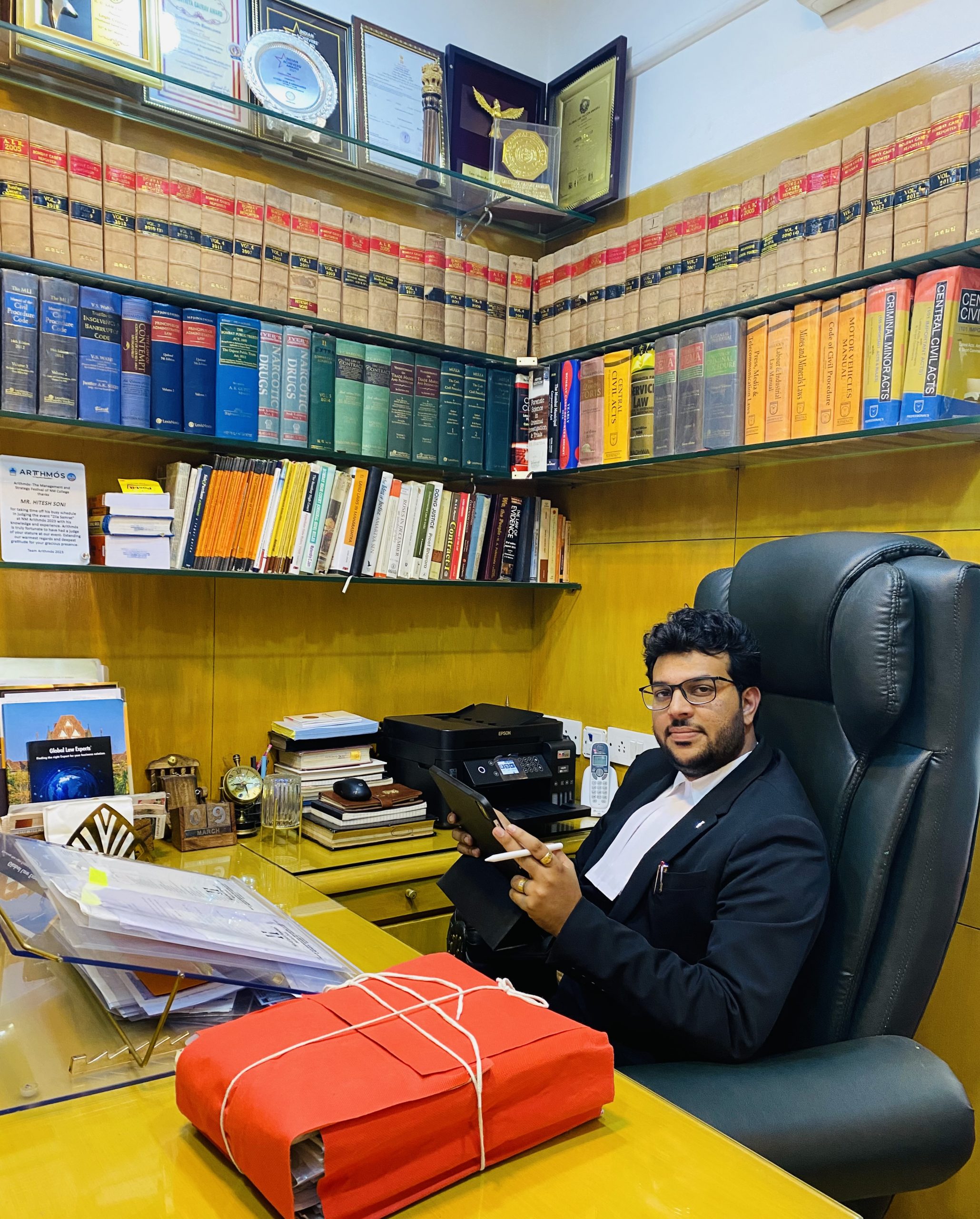
I am a first-generation lawyer and hail from Mount Abu, the only hill station in the state of Rajasthan. While my childhood was spent playing soccer and exploring the wilderness of my town, little did I know I would be becoming a lawyer. Well, I can say the first thought ever came to my mind to become a lawyer was in 8th grade when my father, a businessman, once bought the constitutional book for his simple curiosity of reading it. No, he never wanted to become a lawyer, nor did he understand the legal text, but his choice to bring that book changed my life forever. Of course, television plays an important role in seeing court functions and, most importantly, seeing a duty on a lawyer to fight for someone he or she didn’t know. Another reason that motivated me to become a lawyer was my connection with the wilderness. When you’re close to nature, it is very obvious that you would be very philosophical, and I firmly believe that those encounters with nature were another quite solid reason for me to dream of becoming a lawyer. I was very curious, and the next thing I did was wonder how I could achieve this dream of becoming a lawyer. There was none who could guide me, but I also believe a path searched and chosen by oneself is the one where you do not get lost. I succeeded and joined a law college in Jodhpur.
Establishing a law firm at the age of 26 is quite remarkable. What motivated you to take on such a significant endeavor at such a young age, and what were some of the challenges you faced in building your own legal practice?
When you have clarity of thought and are able to take risks in life, things become achievable. Though it does not guarantee success, it warranties you, assures you to keep going, and when you feel down, it gives you hope to continue. I never followed the crowd collecting the internship certificates and academic accolades. I knew that law books are the same for everyone, and a degree from Harvard or Oxford is no guarantee of success in life. Though worthy degrees can give you placement, they can never give you a sense of satisfaction, especially when your dream is only to become a lawyer who practices law in the real sense and nothing else. Therefore, during my law school for the entire five years of my law, I joined a permanent internship with Rtd Chief Justice Rajesh Balia and majorly interned with Sr. Advocate Vikas Balia in Jodhpur. Since Jodhpur was not my hometown, I still had a choice to choose my life wisely.Bombay was next, a city that changed my life. It not only changed my life but also gave me a platform to show my merit. Immediately, shifting to Mumbai in the month of June 2017 with no background and only after a year of experience was a tough choice, which I never regretted. At the beginning, I faced very common issues like shelter, food, and survival, but God rewarded me with the risk. I was standing tall with limited earnings from individual briefs. I started my law firm, M/s Hitesh Soni & Associates, on November 27th, 2017, with no surety of covering the expenses in the future. I was always confident that if I had merit, I could do it every time. I never looked back then.
Congratulations on receiving the ‘Mahatma Gandhi Lifetime Achievement Award’ at such a young age. How did it feel to be recognized with such a prestigious honor, and how do you believe your work contributed to earning this lifetime achievement award?
Thank you. At first, it sounded like a dream and more of a fear with the title, as it is a precept to give to someone who wishes or thinks that he or she is going to retire from his or her profession, but after interaction with the award presenter, Smt. Meira Kumar, former Speaker of Lok Sabha, and noted personalities like Shri Lal Thanhawla, former Chief Minister of Mizoram, my perception proved wrong. I received the award at the age of 31, when I had just completed six years in the legal profession and five years at Hitesh Soni & Associates. I was the only young awardee in the field of law. Well, from the beginning of my practice until I received this award, I worked in a diverse field of law. This honor is more focused on how I started in a place like Mumbai, with no background, established something, and continued the same spirit, which must have contributed, and the rest are cases I worked on that I feel I should not discuss.
Your expertise covers a wide range of legal areas, including constitutional law, corporate and commercial law, international trade, customs law, immigration law, and white-collar crime. What drew you to these specific fields, and how do you manage to excel in such diverse areas of law?
These practices can never start with the practice of law, but the root is somewhere else. In my case, it is related to my law school days. I never studied for law exams only, but I interpreted the text as if I was going to deal with such cases in the future, and that’s the key. Reading is the key, and reading in a way not just for examination, is to keep in mind. Simply put, I never had any extra interest in any particular subject of law, but I was inclined and interested equally. In fact, if I can share more candidly, you have to be an expert in all subjects; what’s your next case? You never know.
Being featured in the “2023 Annual Guide to the World’s Top Lawyers” and receiving various awards like the International Achievers’s Award and the Rashtriya Gaurav Award is truly impressive. How do these accolades impact your approach to your work, and what do they mean to you personally and professionally?
Thank you.These recognitions bring a great deal of sense of maturity, integrity, and responsibility, specifically when justice in India is not always served hot. Actually, it is also another wrong perception; laymen think urgent reliefs are not justice. The legal profession is a triangle where you have only one edge, while the other edge is the opposition lawyer, and ultimately, the judicial system, which ultimately takes its time and decides finally. In the midst of this lies the other skill of a lawyer: to calm his clients and keep giving them hope, but more than simply giving them hope, you have to keep making consistent attempts for your client because, for you, it may be one of hundreds of cases, but believe me, for your client, that’s the only case and it matters a lot for them. I take it that way, and it helps me a lot. These awards remind me that when I saw a dream of nature somewhere, a prayer for my success was heard and answered. Though there is a lot to be done, it is just the beginning of a lifetime.
Your law firm, Hitesh Soni & Associates, has expanded its presence to multiple locations, including Bombay, BKC, and New Delhi. What challenges did you encounter while expanding your firm, and how do you ensure consistent quality and service across these different locations?
Mumbai was and will always remain a base for Hitesh Soni & Associates; after all, this is the place where my dream took flight. I am not so frequent, but I am a decent visitor to the Supreme Court of India. Whether it is related to our firm client or any other brief, Delhi is something you cannot avoid, not only the highest judicial body but also many other authorities, tribunals, and whatnot. We started the firm in New Delhi last year, in June 2023. The initial challenge for me was handling it without any partners there. Our firm is primarily operated and run by me and my wife, Adv. Vaishali H. Soni, and we are based in Mumbai, so it is a challenge for us to find a team of trustworthy individuals. I believe any law firm cannot go beyond the quality of minds that make it up. Thus, yes, it is challenging to look for like-minded individuals who can understand your value to the firm.
As the founder of an award-winning law firm, what role do you believe innovation and adaptability play in the legal profession, and how do you incorporate these elements into the services provided by your firm?
After international law firms came to India, good things happened, boosting innovation and adaptability for Indian law firms. Like ours, we have to keep adapting to innovation. Innovations for me are not just adopting AI and software but also matching the international industry standard for staff, juniors, and interns, who are ultimately India’s upcoming legal faces. Thus, it has a great role to play; without it, a law firm becomes outdated, and in these changing times, no one can afford to be that.
Given your extensive experience and success in the legal field, what advice would you offer to law graduates who are just starting their careers and aspiring to make a significant impact in the legal profession?
If you read my story, you would have experienced the challenges and had an idea of how I have done it, but to all fresh law graduates and aspiring lawyers, I advise you that it is immaterial how you started, where you started, and how you are going to start, but what is important is to remember that you are never going to feel down when you do not get an internship or a job; you do not get upset when you lose a case or a client backfires on you; and always remember that nothing can force a sun to set for a lifetime. Believe me, you are a sun, and the next sunshines are yours. Wait for your dawn to come. All the best.
Ma’am, please introduce yourself to our listeners and provide an overview of your current role as an Advocate-on-Record at the Supreme Court of India?
Hi! I’m a mom, wife, daughter, sister and also a lawyer and a lifelong learner. I’m deeply privileged to practice as an Advocate-on-Record before the Supreme Court. AORs as original envisioned have a deep role in efficient functioning of the apex court. An AOR is personally responsible to the court; there’s reason why close proximity to Supreme Court complex is provided in SC Rules. The idea is an AOR must be available to assist the court. Since the inception we have around 3000 lawyers who became AOR. The year I cleared my AOR Exams, some 20-25 people made the cut. Earlier only 3 or 4 people could clear AOR Examination. I’m particularly not happy that since past few years over 250 people are made AORs. It is good that so many people are able to clear the examinations but then it also speaks volume about the quality of assessment and nature of question paper set. It is actually disheartening to see that some of the speakers who conduct the lecture series on behalf of SCBA/SCAORA actually give out complete paper. This to me lowers the sanctity of examinations.
Coming back to my own journey, I come from a family of lawyers and some of them were elevated as judges as well. I did my LLB from LA Shah Law College, Ahmedabad. Right from my student days I worked under my senior Sh SN Shelat, Sr Adv and former AG of Gujarat. In my entire professional life, I have just one enduring motive that whatever I do or not do should bring glory to my senior- Sh SN Shelat and my father Justice NN Mathur; I pray that even accidently I should not do something that blemishes their fair name.
Post marriage I moved to Delhi. My husband is a fellow AOR and represent few States before the Hon’ble High Court. He has also penned a book on GST, one of the earliest. I’m particularly proud of that. His book explains conceptual GST soundly. He is a man of few words but probably the sharpest person I have come across.
You have an impressive academic journey with degrees in law, business laws, and even a Ph.D. in Legal Aspects of Pharmaceutical Patents. How did you find your way into the field of law and what motivated you to pursue such a diverse range of qualifications?
I think the answer to this lies in my gender and role attributed by the society. As long as I can remember, I always wanted to be a lawyer. Constitution of India is my only sacred book. My mother retired as a Professor from Jai Narain Vyas University, Jodhpur. So, I believe I have received some academically genes from her. As for my PhD and even AOR examinations I cleared while being a young mother. I absolutely believe in spending quality as well as quantity time with family. For me spending time with my son, reading to him was very important. I have read him many books multiple times. So, yes, at one point of time in my life reading to him and searching for books for him was my number one priority. I’m glad that our initial efforts turned him into a lifelong reader. He was judging MUNs at St Stephen’s and Hindu while he himself was a school kid. He did us proud by securing place to read Undergraduate law at Trinity College, University of Cambridge and topping the University in the 1st year. As for my own academic journey, I could devote time because I was master of my own time. I was privileged that as I was working with my husband I could decide on my own working hours and even choosing what I will work on what I will not. Saying all that, I do miss the fact that I could have advanced my litigation professional profile at better speed but it was the choice I made, so that it is.
With over 20 years of experience as a practicing lawyer before the Hon’ble Supreme Court, you’ve handled a wide range of legal matters. Could you share some highlights or cases that have been particularly memorable or impactful in your career?
Some of the memorable cases I can rattle is- my 1st appearance before the Supreme Court. It was a bail matter. My SLP was dismissed but not before the judge (Justice Rajender Babu) narrated the story of Bruce, the spider- try try again until you succeed.
I remember arguing murder reference of Purshottam Dashrath Borate before the three judges bench headed by the Chief Justice. One case which I particularly remember was fighting for an old father against her daughter. I could secure win for the father. It was emotionally charged matter. We have been doing medical entrance examination matters fairly regularly. We have seen pre and post NEET era. We have got relief in many of these matters. However, seeing these matters closely, I really question our medical education. Just like AOR exams the bar is getting lower and lower. I do educational matters also. I’m counsel for some of universities as well. I’m happy that relying upon an earlier judgement (where I was part) in a subsequent Writ under Article 32 could change the way seats are allocated in PG AIIMS.
You’ve also been involved in advisory work for various corporates and organizations. Could you elaborate on your role in providing legal counsel to corporate clients and startups?
I’m fortunate to get the diverse work. I believe, startups need hand holding. Legal issues are complex and to navigate this maze they need some guidance. Sometimes only discussing the point help them see the point with greater clarity. I do help them on transaction side as well as in drafting and vetting agreements, and even in arraying partners for them.
Your list of appearances before different high courts and your engagements as a speaker on various legal topics are extensive. Could you tell us about your motivations behind sharing your expertise through speaking engagements and publications?
I have started taking out station matters. I derive great satisfaction by arguing before various High Court. Recently, we could persuade a High Court to quash demand notice worth Rs 12 Crores, in another High Court could persuade the court that the fault was not of the tax official but the assessee and could get notice issued against his discharged. Likewise in Delhi High Court could persuade the court for relief in arbitration matter.
As for speaking engagement, I enjoy interacting with young law students and absorb their worldview.
You’ve also been involved in e-learning content development and have written books on legal topics. Could you elaborate on your experience in creating educational content and how it helps in disseminating legal knowledge?
Legal education is something close to my heart. With technological advancement, the access to justice and quality education is more probable now then ever. As a continuous lifelong learner, this is my way of giving back to society.
Lastly, what advice would you give to fresh law graduates who are just entering the legal profession? Are there any key lessons you’ve learned that you believe would be beneficial for them to know?
Like each successive generation, this generation is far smarter than the previous one. It has more resources at its disposal. However, there is no substitute for in-depth understanding, reading and introspection. You must have sometime to reflect, assimilate knowledge. We are not machines who keep on downloading information, idea is to read and reflect. In my opinion, running around for internships is meaningless. First, have conceptual clarity, read case laws, read provisions. Now, with live streaming you can witness finest oral advocacy.
Ma’am, please tell us about your journey and how you ended up pursuing a career in law, particularly in the field of international law and arbitration?
In school, I was head of the debating society and also part of the dramatics club. Obviously, I was fond of being the front and centre of anything to do with expressing and discussing ideas. I wanted to take that forward in my life. For a very long time, I was torn between journalism and law. But then I got to law school, and I just knew from the get go that this is where I wanted to be. Never looked back.
I don’t think it makes sense to jump right into international law or arbitration at the start of one’s career. You have to ground yourself in the practice of law in your home jurisdiction first, get your hands dirty, figure out what area of law you want to practice in, and how you want to practice. Are you into commercial disputes, or criminal law, or corporate transactions, or intellectual property? Do you want to work for a small firm, big firm, senior counsel? This is what I did. I worked with a law firm, then with a practicing advocate in the Delhi High Court. It took me a few years to identify with certainty that I was interested in commercial disputes, and I wanted to be where the hearing was, inside or outside of court. That’s when I went to Cambridge and studied public international law with a focus on international dispute settlement. After that, I worked at the Hong Kong office of the International Chamber of Commerce- Court of Arbitration, and later as a Tribunal Secretary in international commercial arbitrations / SIAC. I spent more than a decade slowly evolving into my chosen area of practice, which was international law and arbitration. In 2021, I felt I had the wherewithal to strike out on my own and set up my own practice. So I did.
You have an impressive academic background, including an LL.M. from the University of Cambridge. How did your time at Cambridge shape your career and interests in public international law?
More than anything, Cambridge taught me that intelligence is inter-personal. If you are truly intelligent, you will have the humility to accept that what you know is not everything, and knowledge comes from everywhere. From your classmates on a Sunday-morning-punting escapade on the Queens’ river, from discussions over coffee, from sport, from music. You must have the versatility to absorb knowledge from any source, and engage in discussions with anyone. That learning gave me immense perspective, and allowed me to look at the practice of law from an objective distance. I began to enjoy the discussion and study of public international law and dispute settlement without the trappings of competition and survival which are so ingrained in traditional systems of education. It helped me become a well-balanced professional, engaged in practice but also entertained by it, and gave me the tenacity to walk away from a bad day in court but keep coming back. More and more, I think the trick to succeeding as a professional is just being patient and consistent, which you can’t be if you don’t enjoy what you’re doing.
You have experience as both an advocate in India and a solicitor in England & Wales. How has this dual qualification benefited your practice, and what unique perspectives do you bring to the table?
Commercial disputes are becoming more and more trans-national, cross-border as the world is becoming more and more economically integrated. Being qualified to practice in more than one jurisdiction brings with it a comparative understanding of fundamental legal principles, for example, of contract, property law, constitutional law, etc. That enables a lawyer to provide more holistic advice in a dispute involving cross-border transactions. I think for a young lawyer looking to get into international commercial arbitration, a dual qualification is increasingly indispensable.
As the Founder & Head of Arbridge Chambers, could you share some of the highlights and challenges of establishing and managing your independent chamber practice?
I think the challenges are two fold, first, to find the conviction in what you know and what you can do despite what other people may think or say, and, second, to back up that conviction with all your resources. Your time, savings, energy. You have to put the cart before the horse and invest in research tools, human resources, networking etc. even before you can see the next big matter coming. If you are going to be scampering for these when the matter actually comes, it is already too late.
You have been involved in several international arbitrations as both an arbitrator and counsel. What drew you to specialize in this area, and what do you find most fulfilling about your work in arbitration?
In essence arbitration is just another method of resolving disputes. If one is interested in litigation and dispute resolution in general, then interest in arbitration follows as a natural corollary. What I enjoy the most is that arbitration has a clear structure, with enough time and flexibility to really get into details of the claims, evidence, matters of procedure. The outcome can genuinely be influenced by the manner in which claims are drafted, presented and argued. I find that very satisfying as a professional.
You havebeen involved in investor-state disputes on behalf of the Government of India. Can you share some insights into the complexities and nuances of handling such cases on a national level?
This is really the most enriching and glamorous part of my practice. Every piece of advice or representation for the GOI comes with the immense satisfaction of knowing that you are doing something which has an impact on a larger scale. But it also comes with immense responsibility. You have to be aware of the practicalities in the conduct of business and the sensitivities involved in government work when you present positions in an international context, and you have to be damn sure of what you are doing. I think being thorough and measured is very important when acting on behalf of a government entity in general.
One of your areas of expertise is infrastructure disputes. What unique legal considerations and challenges are involved in resolving disputes related to infrastructure projects?
It would be safe to say that infrastructure disputes are often bread and butter for an arbitration practice. They are big, complex disputes running into pages and pages of documents, and the trick is always to simplify. I usually start with a pen and paper and spend time chalking out the life of the project. Once that is done, the rest of the effort is to fit pieces of information in the overall story / flow of the transaction.
Over the years, you’ve been actively involved in various international arbitration organizations and committees. Can you tell us about the significance of such engagements and how they contribute to the development of the field?
Like I said, knowledge is inter-personal. It is important to engage with like-minded practitioners in the field, to learn from their experiences and strengthen networks. I don’t believe in being involved in everything all at once. It has always worked for me to find an organisation or committee that genuinely reflects my interests and my professional profile, and then figure out ways of being more involved in it.
As a member of the Global Steering Committee for Young Arbitral Women Practitioners and an Advisory Board Member of Indian Women in International Arbitration, what efforts do you think are crucial to promoting gender parity and diversity in the field of international arbitration?
The most important thing to do right now is to develop the network. Particularly in India, the community of arbitration practitioners itself is very nascent and upcoming, and the women practitioners are an even smaller grouping. Young women arbitration practitioners need to know that there are others like them, and that everyone is in the same boat, dealing with similar challenges. That in itself is likely to be a big source of strength and support for everybody involved. If we can also enhance visibility and work opportunities for members as we go along, that is a bonus. YAWP Steering Committee and the IWIA Advisory Board both have an amazing team of very dedicated and trail-blazing practitioners heavily committed to creating better networks and opportunities for women in arbitration. We are bound to succeed.
You’ve been a guest faculty at National Law University, Delhi, and have conducted courses on investment treaty arbitration. How important is it to impart specialized knowledge to young law students in this field?
I see teaching as a two-way street, having always walked away from a lecture with a question I never thought of, or a perspective I didn’t see. Plus, you have to stay abreast of new ideas. You can’t do that if you are only interacting with people at your level professionally. You see, I learn so much from students, it is hard to say I am the one imparting knowledge to them!
Lastly, what advice would you give to fresh graduates or young professionals aspiring to succeed in the legal industry, particularly in the field of international law and arbitration?
My advice to those looking to pursue arbitration is to start somewhere, anywhere, in a practice focussed on disputes, whether or not it is focussed on arbitration. You need to acquire the skills to be a disputes practitioner. You will get to arbitration eventually, even if you are not there today. Just keep at it. And while you are at it, value your colleagues, even people junior to you. These are the people who will be with you for the ride, and who are likely to help you when you really need it.
Can you tell us about your educational background and how you ended up pursuing a career in law with a specialization in Business Law?
I have done my schooling from New Delhi then I joined NLU Jodhpur after clearing their entrance examination in 2007. That time there was no CLAT examination and each college had their own individual entrance exams. I decided to pursue Business Law Hons because at that time NLU Jodhpur was offering in unique degree of BBA.,LLB (Business Law) Hons which was not given by any other college and since I wanted to pursue commercial law/ commercial litigation, I proceeded with specialisation in Business Law.
What inspired you to focus on corporate advisory, commercial disputes, and various areas of law such as legal metrology, and insolvency and bankruptcy law?
My initial days after graduation led to focus on these areas. Immediately after graduation, I joined a law firm and was with a senior advocate who had a substantial amount of commercial litigation work. That acted as a base for my practice and thereafter, I was fortunate enough to get associated with Clients who required advisory services in Legal Metrology and IBC Laws.
Could you share some highlights from your work experience over the past 10 years, particularly your involvement with the Supreme Court of India, Delhi High Court, and various tribunals?
Every court has a different learning experience and in the past 10 years, I have worked on a variety of matters including some constitutional law matters, commercial litigations as well as niche areas of law. I believe everyone should practice litigation for some year even if they eventually decide the pursue corporate law practice. It is in the courts that you understand completely how clauses are interpreted and how the law (through judgments) is laid down. I believe any lawyer should experience such things before moving into specialisation.
As the Managing Partner of a full-service law firm, GnS Legal LLP, how do you manage the diverse range of legal services provided by your firm?
I am fortunate enough to have had the opportunity to open a law firm with people who were my friends for a long time. Because of the ease and comfort, due to knowing each other for a long time, we have been able to divide the areas of law firm management. Each partner handles a particular aspect of managing the firm and for issues requiring the involvement of all partners, we generally make a consensus and operate accordingly.
What are some of the challenges you face in litigations at the Debt Recovery Tribunal and insolvency proceedings before the NCLT and NCALT?
When IBC was introduced, NCLT and NCLAT were functioning really well and cases were getting adjudicated upon at a very fast pace. Unfortunately, now due to a number of factors including but not limited to limited benches, increase in number of case and specially interim applications and also no adherence to timelines prescribed under the IBC, NCLT and NCLAT have slowly become like DRT/ DRAT. Cases for pending since long with no final decision in slight. In one of my cases, CIRP was initiated in the year 2018, COC passed the resolution plan in April 2020, however, till date the case is pending before the LD. NCLT for hearing and approval of the plan.
As part of your practice, you advise clients on commercial transactions and fundraising strategies. What are some key considerations and legal aspects that clients should keep in mind in these areas?
Everyone should realise that the cost of non compliance is much higher than cost incurred in legal compliance. Our country is moving towards highly regulated businesses and therefore, it is important for everyone to take proper legal advice wherever necessary.
Lastly, what advice would you give to fresh graduates who are considering a career in law, particularly in the areas of business law and corporate advisory?
I would like to say, internships are very important both from a learning perspective as well as building early contacts in the professional world. One has to be patient irrespective of the practice they decide to pursue, be it a law firm or joining a litigation chamber. Young graduates should not be in a hurry to go independent, and I personally believe one should work at different offices/ firms/ chambers for atleast 6-7 years before going independent. This is important to make sure you have enough experience before directly advising the Clients.
In litigation, having a good mentor is very important and if you find a good mentor, make sure to spend a reasonable amount of time in their office.
To start this conversation, please tell us about your decision to pursue law.
I finished schooling in 2007, not so long after my father’s retirement from judicial service and right after enrolment of my brother with Bar Council of Delhi. I got to see both of them in invigorating discussions over nitty-gritties of law. This influenced me considerably in making my mind to pursue law. Also, I realised that graduation in law can be foundation for various vocations.
Can you tell us about your experience as a Law-Clerk-cum-Research Assistant in Supreme Court of India? How did this experience shape your career in law?
In 2012, few month before my graduation from National Law University, Jodhpur, I got the opportunity to intern with Retd. Justice Dalveer Bhandari, Former Judge of Supreme Court of India. This experience encouraged me to seek engagement as a Law Clerk-cum-Research Assistant. At that time, Supreme Court of India conducted interviews for selection to pool of graduates for post of Law Clerk-cum-Research Assistant. After I was selected, I got assigned to the office of Retd. Justice RM Lodha, Former Chief Justice of India. He was a very hard task-master and very disciplined. However, he was very kind to allow me to pursue LL.M. while working in his office. My experience as a Law Clerk-cum-Research Assistant enabled me to have a better understanding of jurisdictions of different court(s) and tribunal(s) as paper-book filed in Supreme Court of India are comprehensive vis-à-vis question of law / issue. After my term as Law Clerk-cum-Research Assistant got over, I got the opportunity to work as an associate in office of Mr. Sidharth Luthra, Senior Advocate & Former Addl. Solicitor General of India.
What inspired you to start independent practice and focus on trial court work?
I got to learn a great deal about working of superior courts in office of Mr. Sidharth Luthra, Senior Advocate. During my time at his office, I realised that when one is young in the profession, judges, senior members of bar & court staff accommodate & condone mistakes to enable a learning curve. However, similar treatment is not easily offered to someone who has some experience at the bar.
Over the period of more than 7 years, since I have been independently practicing, I have made my own set of mistakes and I have learned from them. A large part of my learning curve, in trial court, is influenced by my stint as panel lawyer for Magisterial Courts with Delhi State Legal Services Authority and by rendering assistance to my father with his work.
In my opinion, it is very crucial for a lawyer to have a reasonable understanding of workings of court(s) of first instance, especially procedural law(s). It also helps in having a better understanding of the legal issues while working in appellate courts.
Would you share a cross-examination technique or approach?
I do not think that art of cross-examination can be taught. It is developed organically by every lawyer through his / her own experiences.
I have garnered some experience to identify certain crucial concepts. For example, I have seen many witnesses falling prey to confirmation bias. As a lawyer, while doing cross-examination, it is imperative to identify the potential confirmation bias in the testimony of witness and exploit it to raise doubts on credibility of testimony of the witness
In 2020, you got enrolled in the Supreme Court of India as an Advocate-on-Record. Why did you choose to enrol since you focused on trial court work?
While working in trial court, I got many indigent clients whose case had merit for them to be argued before superior courts. I could continue providing legal services in the High Court of Delhi but not in Supreme Court of India since I could not do filing there. I got enrolled as an Advocate-on-Record to become eligible to file and pursue such matters before the Supreme Court of India which, in my opinion, need consideration qua individual right of such litigant or have a larger impact.
Can you tell us about a particularly challenging case you worked on and how you overcame the challenge?
One of the challenging cases I got to work upon was a medico negligence case. I represented the interest of complainant who, who was otherwise suffering from a terminal / chronic illness, having been advised for a particular surgery, had undergone surgery which did not have a favourable outcome. The complainant chose to contest the matter before State Consumer Commission asserting medical negligence against the surgeon / doctor and the hospital. During the pendency of the matter, upon order of State Consumer Commission, an opinion of medical board from a reputed hospital was taken which recorded that there was no medical negligence. However, eventually, the State Consumer Commission declined jurisdiction as compensation sought was beyond its pecuniary jurisdiction.
Thereafter, complainant approached me to pursue the matter before National Consumer Disputes Redressal Commission. Upon seeing the file, I advised the complainant to pursue the complaint before the National Consumer Disputes Redressal Commission on the grounds of lack of informed consent and deficiency in service as complainants’ consent form was a standardised pre-printed form. The National Consumer Disputes Redressal Commission, in its judgment, though dismissed the complaint but acknowledged that the usage of pre-printed forms for consent, by the hospital, was administrative arbitrariness and one-sided high handedness and imposed heavy cost on the hospital.
You have also worked on notable cases such as Rajesh Tyagi v. Jaibir Singh, FAO No. 842 / 2003 before Hon’ble High Court of Delhi. Can you tell us about it?
The Hon’ble High Court of Delhi in matter titled Rajesh Tyagi v. Jaibir Singh, FAO No. 842 / 2003, dealt with procedural issues faced by Motor Accident Claims Tribunal(s) having jurisdiction in Delhi. The Hon’ble High Court of Delhi directed for Modified Claims Tribunal Agreed Procedure to be followed by all Motor Accident Claims Tribunal(s) which are subordinate to Hon’ble High Court of Delhi and for filing of Detailed Accident Report by investigation agency before concerned Motor Accident Claims Tribunal. These directions have alleviated a large number of concerns faced by Motor Accident Claims Tribunal(s) such as irregular averments in claim petitions, delay in production of documents like proof of income, investigation documents, insurance documents etc., time consumed qua first appearance of parties etc. This has, consequently, resulted in reduction of time span between the date of incident / accident and passing of award.
I got involved in this matter as an associate to Mr. Sidharth Luthra, Senior Advocate who was appointed as an Amicus Curiae. However, after lapse of some time, I got the opportunity to assist the Hon’ble High Court of Delhi in my own capacity.
If we start from the beginning, were you always academically diligent? Did you always want to pursue law? What other career would you have chosen if not law?
I have always considered myself a sincere but average student. I was not excessively academically inclined during my school years. Instead, my interests were directed toward art-related extra-curricular activities. Accordingly, my slam-book career goal was to be a fashion designer. At the same time, I had a strong family background in law, with multiple family members being in judiciary and litigation. Being amidst frequent family discussions involving topical legal issues, I gained valuable insight into the legal world and its opportunities. Ultimately, my interest in engaging with current affairs and doing my part to help the people around me pushed me to pursue law as a career.
You have completed your master’s from NLU Jodhpur. Would you like to share a few tips with the students who are preparing for CLAT? How different is the preparation of CLAT PG from that of UG?
The best advice that I can give to students preparing for the CLAT is to do as many practice tests as possible. In my experience, that is the key to cracking any competitive exam. Of course, studying and knowing the basic material that will be tested in the exam is also essential.
I found the CLAT PG preparation to be easier than the UG preparation. The subjects tested in the CLAT PG exam are part of the law school curriculum. If one has studied and built a strong foundation in the relevant law subjects during their undergraduate years, the CLAT PG exam preparation becomes a revision exercise. On the other hand, students preparing for the CLAT UG exam are right out of high school with no formal exposure to legal academia. In such a situation, enrolling in a good entrance prep course is worth considering.
Despite having an LL.M. Degree from NLU Jodhpur, you decided to pursue another LL.M. degree from NYU and had the flexibility of designing your course structure (subjects) there. What major considerations should one take into account while designing their course? What extra efforts have you made being a foreigner?
Many LL.M. programs provide the students with an opportunity to design their coursework. However, one must consider several factors while making this decision. First, the coursework should align with the candidate’s short-term and long-term career aspirations. A career in law is often path-dependent, and the first job often charts the path for future professional endeavours. Second, it is essential to choose an area that complements the candidate’s prior experience. Choosing a field that builds upon the existing credentials ensures that one can make the most out of a short and rigorous LL.M. program. On the other hand, LL.M. also provides a unique opportunity to diversify into new areas. It is essential to consider one’s areas of interest and the corresponding job opportunities while striking that balance.
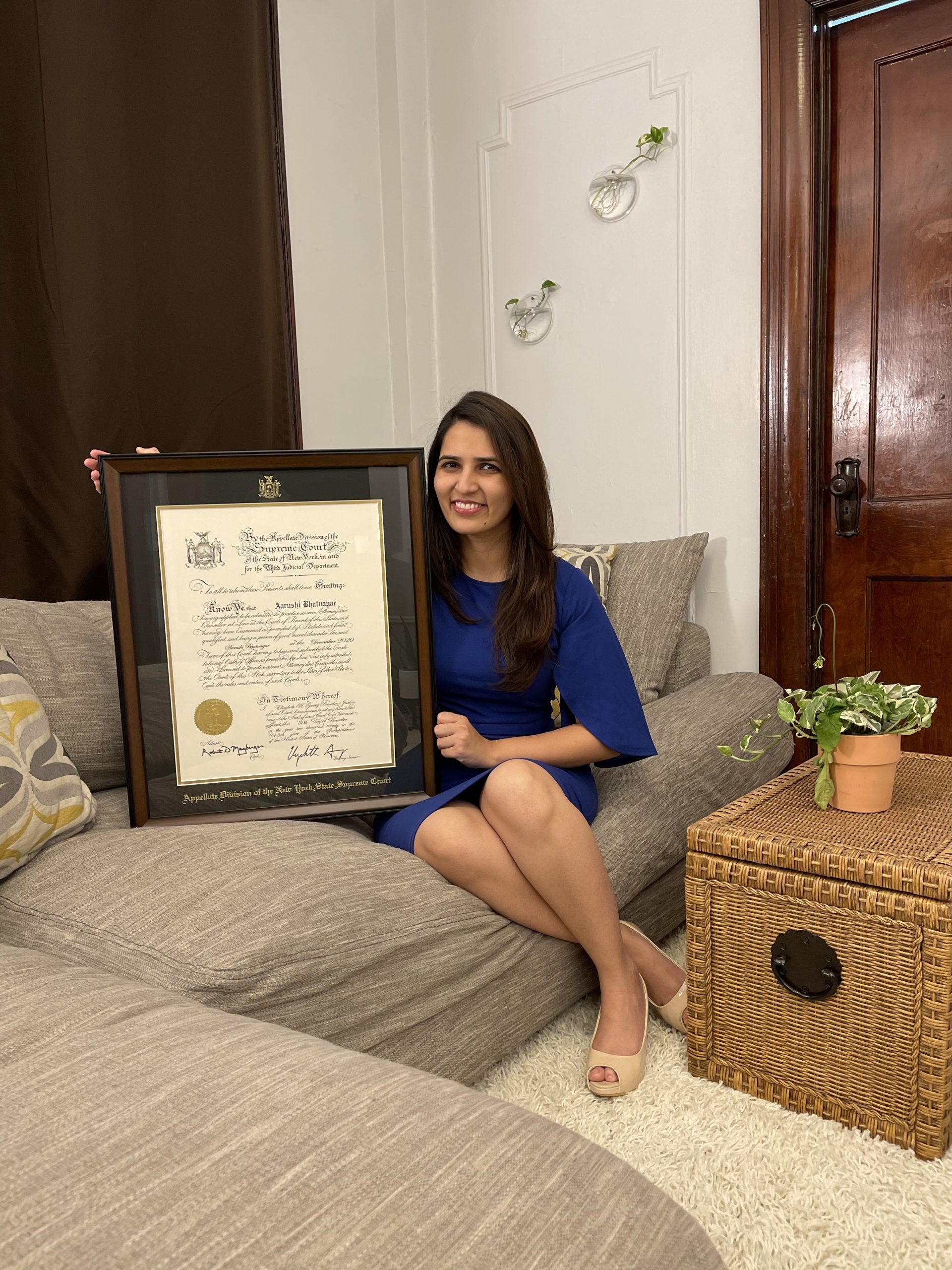
As a foreigner, one should put extra effort when making space in a completely alien environment. I actively participated in networking events (both within and outside the university) and pro-bono activities, which gave me the familiarity and visibility required to succeed in the US job market. At the same time, being flexible and open-minded facilitated my venture into immigration law, a field that I have since fallen in love with.
Can you share in brief about your current role and responsibilities as a Managing Attorney at a boutique law firm in the NJ/NY area? How do you manage to maintain a work-life balance?
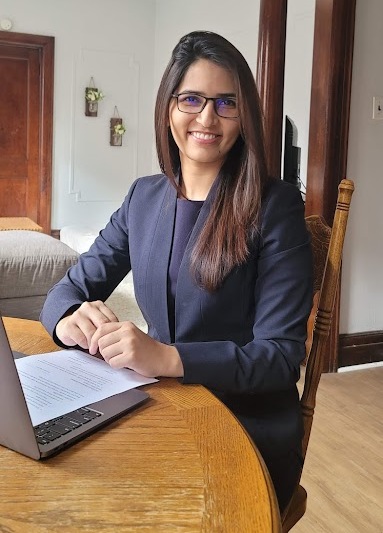
As the Managing Attorney of a boutique law firm, I have a diverse and dynamic set of responsibilities. I am responsible for onboarding clients, managing the cases from inception to completion, and handling the firm’s day-to-day operations. I advise multinational corporations, business units, and individuals on employment-based and family-based immigrant and non-immigrant visa petitions and applications. My role also entails hiring and training junior staff, including attorneys, law clerks, and paralegals.
Compartmentalizing my work and non-work activities helps me maintain a good work-life balance. While at work, I dedicate myself to planning and executing my tasks efficiently. Breaking complex cases and procedures into simple daily tasks helps me leave the office with a sense of completion and accomplishment. It also ensures that work anxiety and stress do not spill over to my personal life. During weekends, I like to travel and engage in cooking, arts, and crafts. Having an active lifestyle rejuvenates me and prepares me for the upcoming work week. However, there are certain times when maintaining a work-life balance is challenging. In those times, having a good support system at home helped me keep my spirits up.
You used to work as an Assistant Professor at Banasthali University, Rajasthan and now you are working in a law firm. What all struggles did you face adjusting in Banasthali and then in a Law Firm? What all things and skills did you learn as an Assistant Professor which are now assisting you in your current role as a Managing Attorney in your Law Firm?
Teaching at a university and working in a law firm is different in certain aspects. As a teacher, I followed a well-structured curriculum and spent all my efforts ensuring that my students remained interested in the topic and benefited from the course. On the other hand, managing a law firm requires me to handle unanticipated challenges daily. However, I have enjoyed both these roles and did not face any issues in transitioning from the former to the latter. Instead, I found that the teaching skills I developed in Banasthali come in handy when I train new hires at the law firm.
Would you like to share a bit about the field of immigration law? What is the future scope and struggles involved in the same?
Immigration is a very dynamic field of law. It involves securing and defending the rights of immigrants from various countries and backgrounds. The legal landscape is constantly evolving, and the changes substantially impact many companies and individuals. The ongoing pandemic has amplified immigration-related issues by forcing many firms to downsize and leaving many immigrants jobless and without a livelihood. Given the ever-increasing importance of the field, it is (arguably) one of the most attractive and rewarding career paths for law students.
You also cleared the NY state bar exam. How strenuous was the preparation? What are the eligibility criteria for the exam?
Preparing for the NY State Bar Exam is like a full-time job. It was one of the most challenging tasks I have undertaken. Enrolling in a good bar prep course is extremely helpful.
There are various qualifying methods to sit for the NY state bar exam. The most common criteria include graduating with a first law degree (J.D.) from an American Bar Association-approved law school. However, in the case of international students/foreign-educated lawyers, the eligibility criteria are pretty cumbersome. All foreign-educated lawyers must submit an online credential evaluation request along with the required documentation to the Board of Law Examiners. One should submit these documents even before the start of the LL.M. program because the evaluation process is time-consuming. LL.M. students must also fulfil the specified credits requirements via classroom courses in substantive and procedural law and professional skills. The official website of the New York State Board of Law Examiners provides the detailed eligibility criteria and application process.
What will be your parting words for our readers?
Focus on having both career goals and life goals. Be ambitious and entrepreneurial but remember that professional success depends heavily on working smart (in addition to working hard). Reach out to people and take their guidance, rather than spending time reinventing the wheel. Be patient and diligent, and success will eventually come. Lastly, prioritize creating a wholesome life experience as it is the journey that counts.
What inspired you to pursue law as a career option? Can you share your experience of studying at NLU Jodhpur?
Hello everyone, I hope everyone is well and safe. To answer this question, we need to look into my academic history. Basically, I am a student who belongs from a Humanities background. After the 12th, I was unsure whether to go for a normal BA or pursue some professional course. At that time, my father told me about the CLAT exam that is conducted by the National Law Universities every year. I took a year drop to prepare for the CLAT examination. Fortunately, I got NLU Jodhpur in the very first list. So there is no one in my family belonging to a legal background. In the year 2014, I started my legal journey when I stepped into NLU Jodhpur. It took me around six months to get accustomed to the Cosmopolitan environment in NLU Jodhpur. But as time passed, my seniors helped me a lot to familiarize myself with the nuances of the law and how to balance life so that I can manage sports and fitness along with Academics. I am very grateful to my seniors who helped me accomplish whatever I wanted and equally grateful to my juniors who motivated me to give my best. My journey at NLU Jodhpur is a very wonderful one, and I cherish my memories a lot. The initial days at the college were very difficult, but I got accustomed to that environment and made a lot of friends as time passed. A good institution teaches you to develop a wholesome personality and maintain a work-life balance. Every day you need to cope up with the pressure; you need to complete the assignment within the given deadline. This is the beauty of a good college which not only imparts knowledge but also imparts essential qualities that are very necessary for your professional career, especially as you grow on the professional ladder. I have always been a person who is heavily oriented towards sports and fitness. During my time at NLU Jodhpur, around 50-60% of my time was consumed by sports and fitness-related activities. Sports has a very unique tendency to develop a strong will and patience, which is very much required in the long course of life. I believe that sports and fitness are part of my lifestyle, and I cannot live without them, so every time I make my schedule, I try to ensure that these activities get enough amount of time. My typical schedule at NLU Jodhpur involved waking up right at 6 in the morning and stretching till 2 in the night. In this duration, I did my fitness-related activities. I then managed to go to classes, studying there and then again coming back to the hostel room and going to the sports complex to prepare for the game (badminton and cricket). After all this, I tried to ensure that I should read whatever was being taught in today’s class. So, in short, I am a person who is Law, Sports and fitness enthusiast.
Has judiciary always been your plan, or did you consider practicing in the court as well after your LLM in Criminal and Security Law?
Before deciding for myself whether I wanted to go into the judiciary, I explored each and every area which Law has to offer. I started interning with an NGO in my first year and then in subsequent years in the District and Sessions Court, and after that, I also worked as a researcher under advocates of Hon’ble Rajasthan High Court. I did some internships at tier I Law Firms as well. After exploring each and every area, I made an informed choice that I wanted to make a career in judicial services as a judge. I started my dedicated preparation at the end of the 4th year. Judicial Services Exam test you on the subjects that you have already covered in your Law School journey. So if you, as a diligent student, have paid enough attention in your classes, it will be very easy for you to crack this exam. After I completed my graduation in May 2019, I took admission in LLM to ensure that in case if I am not able to make it to the judiciary, I may have some good backup options in the academic field. So academics was never my first choice. I always kept it as a backup option, but I always say that it is a very noble profession and if you are interested in this field, you should pursue it. We require a lot of good teachers who can explain the finer nuances of the Law.
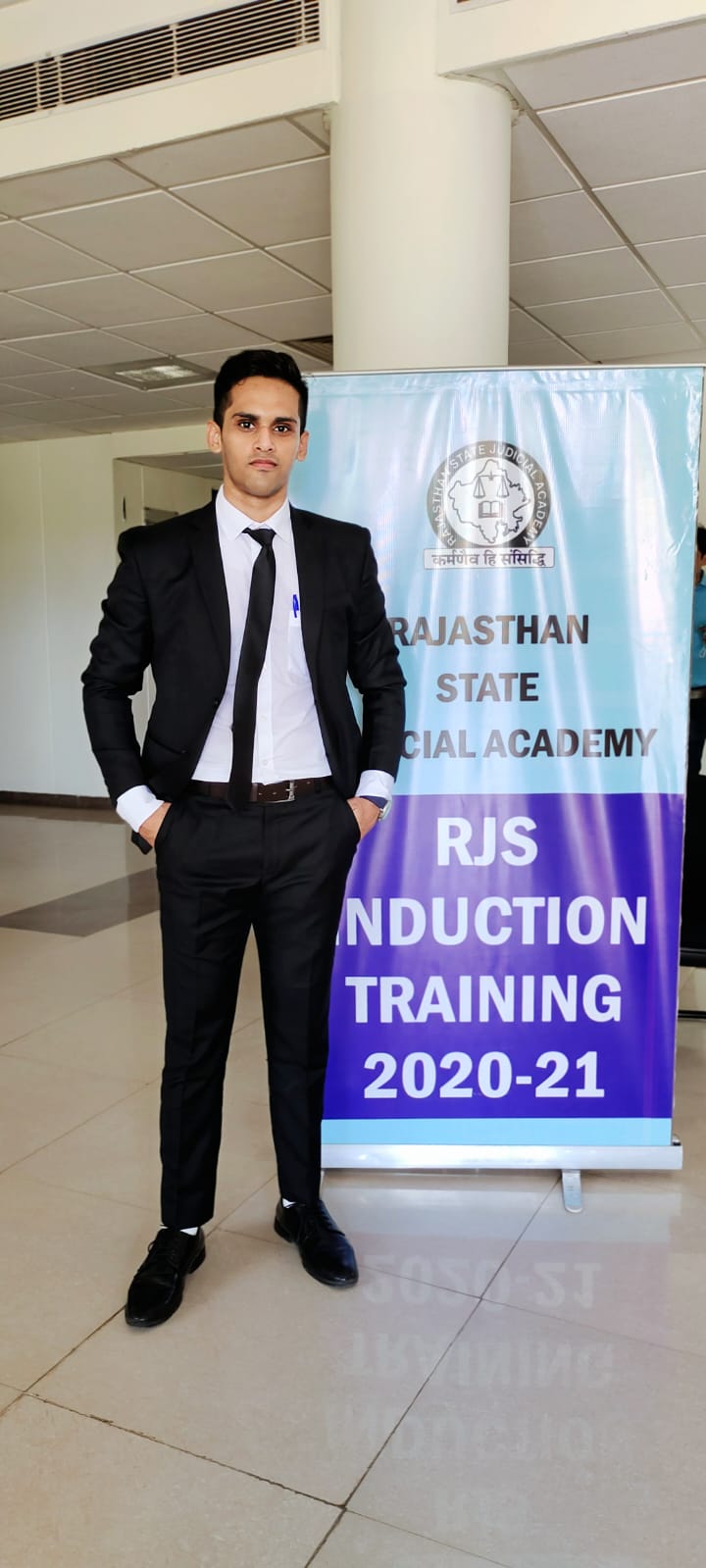
I wrote the Rajasthan Judicial Services Exam Prelims in March 2019, and I completed my graduation in May 2019. Immediately after my graduation, I gave the CLAT PG exam, where I secured an All India Rank 15. After this, my main focus was to clear the Mains of Rajasthan Judicial Services. RJS Mains was conducted in September 2019. Immediately after the Rajasthan Judicial Services mains, I shifted my focus towards Delhi Judicial Services Exam. The Prelims of DJS was conducted in the last week of September 2019 and Mains in the second week of October. In November 2019, I gave the Rajasthan Judicial Services Exam interview and simultaneously appeared for the NET exam. In December, I got this news that I have cleared the NET exam, and I am eligible for the post of Assistant Professor. Meanwhile, I was continuing with my LLM. Because of Covid-19, the interview of the Delhi Judicial Services Exam happened in December 2020. Meanwhile, I was also expecting the waiting list result of the Rajasthan Judicial Services Exam, which also got delayed due to Covid-19. In the Delhi Judicial Services Exam, I secured an All India Rank 68. Immediately after this, I got the news that I got selected in the waiting list of the Rajasthan Judicial Services Exam-2019. Right now, I am undergoing my Judicial training under the able supervision of the Honorable Rajasthan High Court and State Judicial Academy, Jodhpur.
Congratulations on clearing the first phase of your induction training and beginning your field training. How has the experience been so far? It feels to have three significant feats, clearing CLAT [UG-PG], NET [Law] and the Judicial Services Examination?
Thank you very much. The wishes mean a lot to me. During this training phase, I am learning a lot every day. It is an opportunity to learn practical concepts of the law. The law that we read in books and the law that we actually apply is very different. In order to give an experience of the practical world, State Judicial Academy time to time in different phases attaches us to different Judgeships throughout Rajasthan. During this field attachment, we get to learn about the Court functioning and how Judges manage the Dias. The experience till now is a very amazing one.
When I started to prepare for competitive exams, I always had this thing in mind: I want to complete the treble, and these treble stands were completed with my selection in Judiciary. So, it feels very amazing when you achieve what you have always wanted. I believe that this is a very rare feat, but I am not proud of it, and I want to keep this hard work going even in the subsequent stages of life because if you stop putting effort, you stop your own growth. This zeal to grow and learn is something that differentiates a human from an animal. I want to continue with this spirit throughout my life.
How did you prepare for the judicial services examination, and what factors did you take into consideration? Ideally, when should students start their preparation for the exam?
I am a person who always prefers self-study over coaching. Although self-study takes a good amount of time to understand the concepts compared to getting spoon-fed in the coaching institutions, I think it helps you in the long run because when you try to solve everything by yourself, your mind develops a habit to work a lot. But it differs from person to person whether he/she wants to prepare by doing self-study or want to join some coaching institution.
I started with reading Bare Acts of major laws and simultaneously reading standard commentaries on the subject. Multiple revisions are the key to understanding and remembering this vast course. Once you have covered all the major subjects, you can shift your attention towards the minor subjects and local laws. For Prelims, you should try to solve as many multiple-choice questions as possible and once you clear prelims, you can make a specific strategy for mains. The strategy involves going through the past year papers, understanding the exam pattern, and trying to develop the answer writing habit. You will realize the value of good content and standard commentaries at this stage because if you have good content in your mind, you will not encounter many problems while taking down that content on paper. After covering the course thoroughly, you can join some mock test series and give as many mocks as possible. This will develop your answer writing habit, and your mentor can focus on your stronger as well as weaker areas where you need to work. Every person has his own rules for success, and I hope during this journey you will also be able to find your own ways, which you can tell people later on.
If you want to succeed in competitive exams, then you need to be very disciplined, regular and patient in your approach. These are the qualities that are required from a judge and which will help you to clear any exam which you target. Also, there is a need to refrain from using any kind of social media during the preparation phase. I deliberately kept with myself a very normal keypad phone so that I could devote most of the productive hours to my studies and simultaneously focus on my fitness and sports-related activities. The major problem is our generation is wasting a lot of time using social media. I advise you as an elder brother that stops yourself from using social media for a year or two; believe me, when you come back, you will have a lot more followers than you expect.
While conducting interviews, interviewers find qualities like patience, sincerity, maturity and a skillful leader who can effectively manage the courtroom while imparting justice. Could you tell our readers about your experiences while appearing for the Rajasthan and the Delhi Judicial Services Interviews?
Interview is the third stage of this prestigious exam. The interview panel consists of Hon’ble High Court Judges. They already know that since we have cleared the mains exam, we are sound enough in law, so they want to test is whether you have those qualities required out of a judge. Patience, impartiality, ability to listen to the other side, acting on the spot, rational thinking, a reasonable mind, a commonsensical approach, and empathy are qualities that they look for. Apart from this, they will be testing you on the other aspects of life. The interview will not be restricted to the Law portion, but it will revolve around what you did in your college days, what are your interests and what you do in your free time. They will also be presenting to you some actual situations that how you will deal with those situations as a judge. My advice to all the aspirants is to be genuine before the panel, don’t try to give false answers or try to manipulate the panel because they already know whether you are speaking truth or lie. At least be true to yourself. If you don’t know about any questions, just say that I apologize; I don’t know. There is no need to get nervous before the interview; the panel ensures that you feel comfortable before them so that you can answer the questions in the best possible manner.
You are conducting and have been a part of several sessions highlighting the nuances of cracking judicial examinations. What would be your advice to people as a speaker on developing speaking and persuasive skills?
The profession of Law requires good oratory skills. Whenever you get a chance to participate in the events like Debates, Moot Courts, Court Room Exercises, do participate in them. As a judge or a lawyer, you will be heavily reliant on your oratory skills. Even if you are not good at speaking, don’t worry but try to work on your weakness each and every day because there is no such thing that cannot be accomplished. If you are dedicated, you can also develop good speaking skills, and good speaking skills come only when you have good content in your mind.
Along with this, the focus should also be on acquiring good content. Try to read the leading legal websites every day so that you can be aware of the recent developments. This habit will help you in other aspects as well like it will be helpful from the Mains Exam and the Interview Point of view. My advice to the students is always to develop a routine and strictly follow it every day.
Congratulations on your first authorship and its immense success. Have you ever considered taking up writing as a full-time career?
In April 2020, I released my first book in association with LawSikho on contemporary legal topics to help law aspirants clear different exams. I am very happy that this book turned out to be a big success. A lot of students regularly message me on Instagram and LinkedIn that, sir, your book really helped us. Such messages motivate me to help my community as much as possible continuously. I always have this thing in mind that once I achieve my goal, I will help the rest of the community to achieve their goals. During my preparation phase, I gathered a lot of material and then on some random day, I thought of compiling them in a Book Form. So, becoming an author was never a plan. It was totally out of my desire to help my fellow students to clear exams. I am happy that this book is still helping a lot of students.
With AIR-15 & AIR- 23 in CLAT PG 2019 and 2020, respectively, how did you manage to score so well, especially in your first attempt? What were the differences observed in the exam level while appearing for CLAT PG 2020 compared to your previous attempt?
More than the knowledge, I think that intrinsic motivation helps you achieve your desired goals. Motivation is something that helped me a lot to clear each and every exam in which I appeared. I started my journey with the CLAT PG exam, where I secured an All India Rank of 15 and in 2020, I gave that exam again to test myself on the new pattern and secured an All India Rank of 23. Since I was already in preparation mode, I did not encounter a major problem while preparing for the Judiciary as well as the CLAT PG, although you need to have a very different kind of approach and need to cover altogether different kinds of subjects. But as I already told you, if you are in rhythm, continuously studying, and in touch with academics, then there is no stopping you, and the same happened with me. As a result, I was able to clear the CLAT PG as well as the judiciary exams.
The major difference that I found in the 2019 and 2020 CLAT PG examinations was the kind of questions asked and their uncertainty. Until 2019 they had a very predictable pattern in which they focused on the major areas of the laws, and the paper had two essay type questions as well. According to me the paper pattern till 2019 was much easier. But in 2020, they made large scale changes in the pattern and started asking questions based on contemporary legal events. As of today, if you want to score a good rank in the CLAT PG examination, you need to be very much aware of the contemporary legal events, and that means not only what is going in the current scenario, but you should also be aware of the past of that particular topic as well as the chain of events that is related to the topic. If possible, try to find out the major case laws related to that particular topic. Now the strategy is to do a holistic study. For that, first, you need to cover the static part (that is, you need to be aware of the basic static concept), and then you need to make a building that consists of the contemporary developments surrounding that particular topic. For example, if we take the right to privacy, we need to start our study right from the 1950s when the first case related to privacy came before the Hon’ble Supreme Court and the subsequent cases till present. By studying in such a way, you will be able to learn everything related to a particular topic, what was the stand of the court earlier, and the current position.
You are currently pursuing PhD in Criminal law from NLU Jodhpur. What factors did you take into account while pursuing your PhD? Was there a convenience factor, or was it based on the competence of the University?
I never thought that I would be pursuing PhD someday. But you never know what the future holds for you. The Covid era gave me time to write research papers and blogs. Writing a research paper on various topics gave me an understanding of many topics and developed my interest in pursuing higher education. I was already doing my LLM, and the results of the Judiciary exam was getting delayed. So looking at the opportune time, I filled the PhD form of NLU Jodhpur and started preparing myself for the PhD interview round. I was exempted from writing a written examination since I had already cleared NET. Before the board, I explained my topic and ensured that I would be giving the maximum possible time to research-related requirements. Research papers and blogs helped me to prove that I am interested in academics. Based on this board selected me, and I started my PhD in January 2021.
You have always been enthusiastic about getting through the judiciary. You have interned under several advocates and also cleared the AIBE. How has your experience been in the field of litigation?
During my UG, I interned under several advocates at the District Court as well as High Court level. After exploring every field that Law has to offer, I decided to go for the judicial services examination. Litigation was never the first choice in my mind. I was always passionate about becoming a judge because I saw various Hon’ble High Court and Supreme Court Judges coming to the college for some seminars and conferences during my time at college. I was amazed by their charismatic personality and the kind of power and respect that society commands. Right from that day, I decided that I also wanted to be a judge, and I also wanted to give back to society in the best possible manner. But I advise each and every law student that before you choose any field, you should explore because until you explore, you cannot make an informed decision. It is very necessary that you take some litigation experience during your internship as well as you should also do judicial clerkship because this will help you decide whether you want to do litigation or whether you want to come on the other side of the dais.
You have been playing District and State Level Badminton Championships, as well as representing your club in cricket. Do extra-curricular activities help in maintaining one’s mental health? How do you make sure your mental health and work-life balance is maintained, considering your busy schedule?
For me, fitness and sports are always the first priority. I always try to develop my lifestyle so that I should be able to give around 50-60% of my time for sports and fitness-related activity, which is something I am doing right from my school days. So balancing academics and sports life was not a big task for me, but it becomes very hectic to manage both these things on some days. To cope with such situations is something I learnt at the college level. The main thing that sports and fitness teach you is having a strong will and patience to navigate difficult times. I think these are some intrinsic qualities that are required to clear any competitive exams. Although sports and fitness don’t directly impact success in competitive exams, they do play an indirect role.
What advice would you have for law students & young lawyers who want to step into the world of academia and judiciary?
Young students and aspirants, I want to say that you enjoy your college because these are the days where you will make memories and learn a lot of new things every day. Everything has a set time. Don’t try to rush things. Before choosing any field you should explore, you should intern under different organizations and different advocates. Then only you will be able to make an informed choice. Refrain yourself from using social media and use this time to develop some new hobby or if you already have some hobby, try to pursue it regularly. Clearing competitive exams takes a lot of time and effort. It is a long cycle, and you need to have a mental balance, and mental balance comes only when you are physically healthy. In the end, I want to say that by making your own path, don’t try to copy others. You’ll also be having your own rules for success. Have faith and confidence in your abilities.






 Allow notifications