Tag: NLU

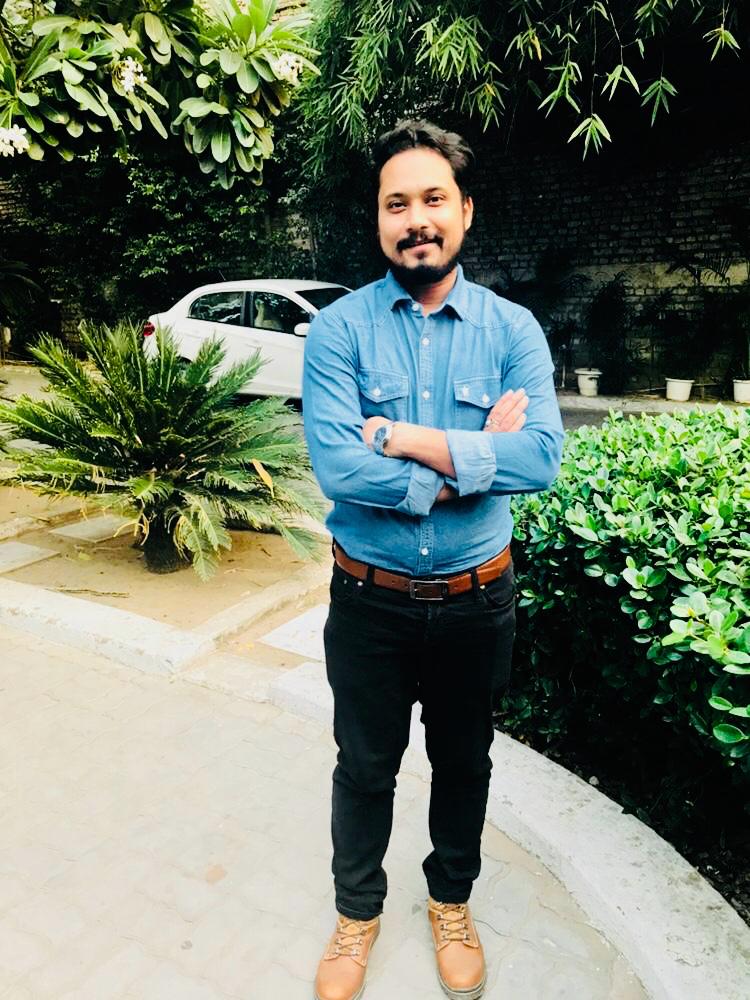
  • “You never know what tomorrow will bring’ so you should always be prepared and embrace it with all your might.” – Arindom Hazarika, Intellectual Property Attorney, Certified Anti-Counterfeit Professional and Senior Counsel at Western Digital

    “You never know what tomorrow will bring’ so you should always be prepared and embrace it with all your might.” – Arindom Hazarika, Intellectual Property Attorney, Certified Anti-Counterfeit Professional and Senior Counsel at Western Digital

    This interview has been published by Namrata Singh and The SuperLawyer Team
    Thank you for joining us. Could you start by sharing a bit about yourself and your journey in the legal profession? What inspired you to pursue a career in law, and how has your journey unfolded until now?

    Thanks for the kind invitation for this interview. Regarding my journey, I am just the second lawyer in my family after my uncle (who practices in the local district court in Assam), so I am a first-generation corporate lawyer. Law was a very interesting option, considering when I was completing my higher secondary education I wanted to explore a career in economics, but somehow the lure of Law especially the Intellectual Property Laws intrigued me along with a massive love for brands. I finally pursued my law from Hidayatullah National Law University, Raipur in 2009 with a major in Intellectual Property Laws. Since then, I have loved every bit of my journey in law. It all started in a boutique IP law firm in New Delhi (Zeus IP), where I learned the practical side of things and horned my skills in the domain. I loved the part that even being an associate I was given complete freedom to advise numerous multinational clients on IP issues. Post the same I moved to a bigger law firm, where I acquired some essential skills of handling big clients having massive IP portfolios. The change to in house role actually came in when I joined an IP consultancy that was working dedicatedly towards brand protection concerns, which is where I was fascinated with this version of IP i.e., enforcement of IP, this also coincided with one of my close aides who got impacted due to counterfeits and my whole perception changed and I wanted to then focus on enforcement of IP which explains my role at Diageo, Flipkart and Currently Western Digital. Protection of consumers and brands became my passion and I wanted to ensure that I do my bit towards this cause. It is such a strange world, where IP enforcement kind of came to me as an accidental or sudden thought and since then has stayed with me as a core of what I am passionate about and love doing as the famous saying goes ‘You never know what tomorrow will bring’ so you should always be prepared and embrace it with all your might.  

    From working with Diageo India to your current role at Western Digital, you’ve navigated various industries in brand protection. How do you adapt your strategies to suit the unique challenges of each industry, from eco-bev to consumer electronics?

    It’s an interesting question as the industries I worked on are completely different having their own set of challenges and issues, but the learnings I gathered over the course of time specially during my role at the IP consultancy helped me build and develop a great core of what essentials are required for brand protection and IP enforcement. A few things that stand out to me would be looking at the problem and its impact on business, understanding the business model (from a sales and marketing perspective) identifying great business partners, market intelligence and data generation. These factors are common across industries and helped me immensely in adapting across industries.

    Your passion for brand protection shines through in your extensive experience and achievements. What advice would you give to aspiring IP lawyers or brand protection professionals looking to make a mark in this field?

    Thanks for your kind comments. I am grateful to the people whom I worked with who have been kind enough to bestow great knowledge. I would advise young lawyers who want to pursue a career in IP, should certainly explore this very interesting and passionate field of IP enforcement, unfortunately at this stage, it’s not being taught as an educational curriculum, so all the knowledge you can gather is through practical experience. I found this very fascinating considering that my stints across organizations from being support functions to being called revenue generators were a very satisfying experience. I would advise young law students to try and work towards IP enforcement during their internships especially those who plan to intern in FMCG companies, wherein they will realize the importance of this domain. I would also advise young lawyers to stay updated by doing additional courses in upcoming domains like cyber laws and other institutes offering such courses. Lastly, I would advise young lawyers and professionals to be very passionate about the work they do and know that they are creating an immense impact on the society as a whole. They should think with a clear motto of ‘PROUD OF WHAT WE DO’ and ‘BE GENUINE’ in their opinions and thoughts.

    In addition to your professional endeavors, you’re known as a foodie and football enthusiast. How do you strike a balance between your career and personal interests, and how do your hobbies complement your work life?

    Balance is a key term. Fortunately, due to my role, I used to travel extensively, which gave me a great opportunity to experiment and experience different cultures and their food, which was something I used to always look forward to. In fact, due to the same experience, I started travelling to places just to enjoy a delicacy, which gave me such happiness and satisfaction.

    As regards football, it has taught me so much in terms of hard work, resilience, and risk-taking towards my everyday work which I am immensely grateful to. Both my interests are great conversation starters which certainly gives me a very good idea about the stakeholders I will be working with and helps create a personal connection with them. Lastly, one of the biggest things that you require in any professional field is great team spirit which helps you achieve the impossible and watching football showcases that in the best possible manner. There is a very famous quote by one of my inspirations from the footballing world Arsene Wenger who says “Team spirit is like a flower. You have to look after it every day or else it will slowly die. But, as well, you can make it bigger, better and prettier if you care for it.”

    The Brand Protection Charter you established garnered recognition and accolades. Could you walk us through the process of creating such a comprehensive strategy and the impact it had on combating counterfeits and infringement?

    This was a very challenging task, as when I joined there was no concept of Brand Protection at the organization. Hence I had to start from scratch in terms of creating structures that defined the said concept, then identifying current and potential problems that would fall within that followed by identifying relevant stakeholders who dealt with the problem and connecting with them to create a common group. This took a long time as I had to educate them about it and its grave importance. This was followed by documentation which led to the building of SOP which included clear guidelines defining the problem and stakeholders who were responsible, accountable, consulted and informed about it. This helped immensely in unifying all existing synergies and using them to solve problems for many brands. As a part of the program, I also reached out to a lot of rights holders or brands to build a spectrum of issues involved and how uniquely and swiftly we can solve them. This charter gave me immense satisfaction when we built it and I do hope the same helps in further evolving the program to new heights. 

    Your journey includes handling various legal matters, from drafting agreements to conducting raids and enforcing IP rights. What are some common misconceptions people might have about brand protection, and how do you address them in your work?

    One of the biggest misconceptions that I have heard being an IP lawyer is that we only deal with IP litigations that involve IP infringement, which is not correct considering as IP lawyers we also do a lot of work around counterfeits which certainly can be done at various levels starting from Law enforcement authorities and customs as well. Additionally, IP lawyers were also part of a lot of interesting and detailed investigations that present different perspectives on a problem. Also, when you say brand protection it’s a very broad domain that is not only limited to IP issues but might involve other areas that involve the protection of brands. Lastly, the biggest one that I have heard is legal function is just a support function, but I can confidently say that during my stint across organizations, the biggest compliments I got were when the sales referred to us as revenue generators and business partners who can help them ensure a smooth sale of products. Brand Protection gives you a unique opportunity to be recognized as one of the important clogs in product life cycle machinery. 

    Being a certified Anti-Counterfeit Professional, you bring a unique skill set to your role. How do you stay updated with the latest trends and techniques in combating counterfeits and online IP infringements?

    I would stay updated with the latest trends by attending various forums dedicated to IP and Brand Protection like INTA events, and IACC events to help immensely in building it. Also being part of sub-committees at INTA (who have dedicated people working on specific brand protection issues in emerging domains like e-commerce platforms and others certainly adds a lot of perspective around current practices and gives a huge amount of learning from them. I also look up to any dedicated programs that have been introduced by reputed institutions to upgrade and upskill myself in them.

    As someone deeply involved in industry associations like INTA, how do you leverage these platforms to drive positive change in brand protection practices and policies?

    I must say it does help a lot to be part of such Associations considering the impact they are creating. INTA is a great example, considering you can gain a lot of knowledge about current best practices for the issues handled, be part of policy dialogue with relevant stakeholders to drive policy changes and impart training to law enforcement officials on the same. I have leveraged the association to a great extent as I was the chair of the Anti-Counterfeit Committee in the 2022-2023 term for the South Asia region and achieved a lot of success in building best practices for the brand protection domain. Being part of the leadership group also provided an opportunity to tie up with other well-known brands towards the same cause and create many meaningful discourses.

    Looking ahead, what do you envision as the future of brand protection, especially in the face of evolving technologies and global markets? And what role do you see yourself playing in shaping that future?

    There is a massive potential for Brand protection especially with emerging technologies and global market expansion for brands across the world. When I joined the domain, I still remember there were very few multinationals who had dedicated brand protection professionals, teams and most of such work was done by IP and legal teams, in the past few years we have seen brands getting very aggressive about it considering the big important role it plays especially towards revenue generation. Efforts made by brand protection teams go a long way in ensuring revenue growth and great sales. The importance is also further highlighted by emerging problems that come with technology, especially with the advent of the Internet and online business.

    In the bigger scheme of things, I would like to be the evolving face of brand protection professionals leading such initiatives with innovative solutions with the help of technology and helping businesses garner revenue growth while ensuring the end consumers enjoy and reap the benefits of using genuine products everyday everywhere. 

    Get in touch with Arindom Hazarika-

  • The ever-changing regime of arbitration has become a major challenge for all of us. Every day the Courts are coming with different judgments with reference to interpretation of the Arbitration act provisions-Vaibhav Choudhary, Advocate, Supreme Court of India

    The ever-changing regime of arbitration has become a major challenge for all of us. Every day the Courts are coming with different judgments with reference to interpretation of the Arbitration act provisions-Vaibhav Choudhary, Advocate, Supreme Court of India

    This interview has been published by  Priyanka Karwa and The SuperLawyer Team

    Can you please share the story of how you embarked on your journey in law, from your days at National Law University to opening your own law firm, ‘YHprum Legal’ and establishing your practice in Delhi being a first-generation lawyer?

    To start with, I come from a family of engineers and pursuing law was never a consideration during my school time.  However, on advice of a family friend, I visited NLU Jodhpur and from there I was intrigued in law (as a probable career option), in the year 2006. I was enthralled by the environment & culture of NLU and after contemplating possible future opportunities in the field of law, decided to appear in the law entrance examination. 

    At that time, in the pre-CLAT era, each NLUs conducted their own entrance examination. Hence, I appeared for the entrance exams and got selected in the Rajiv Gandhi National University of Law (RGNUL), Punjab in the year 2007 for a five-year integrated B.A., LLB course.

    Speaking of initial days at Law school, I must say that it was a whole roller-coaster, from studying different branches of law to participating in Moot court competitions, to preparing research projects and multiple seminar presentations to then applying for internships! With so much to do and learn, those five years went by in a flash and shaped my personality in a way that changed my perspective towards life. 

    After completing the Law in 2012, I was selected for a prestigious Judicial clerkship in the Supreme Court of India, wherein, I was assigned to the office of HMJ Dipak Mishra (Former Chief Justice of India). While working for the Bench at the highest level for a considerable time-period, later on, I decided to join the litigation and joined the Chamber of Mr. Gopal Jain, Sr. Advocate, Supreme Court of India, as litigation associate thus embarking on my journey in the field of litigation in Delhi. 

    Being a first-generation advocate and an outsider for Delhi legal circles, I was also inclined to join a Tier-I dispute resolution firm in Delhi for financial stability and professional growth, just like every second lawyer. 

    The thought of going independent, establishing my own law firm was intimidating and a distant dream at that time. But destiny had different plans and the path was already chosen for me! 

    After learning some basics of law & litigation at the Chamber of Mr. Jain, I started my independent practice before the Supreme Court, Delhi High Court, and various other tribunals for a few months with limited financial resources, zero clientele at hand and without any support or mentors. As a first-generation advocate, had his own share of struggles and difficulties, and it takes a whole lot of perseverance to survive the initial turbulent years of independent litigation practice.

    The only strength that kept me going through that period was the consistent support of my colleagues from the Bar and my law school batch mates and friends, who were practising before different courts across the country and referred briefs to me in Delhi. 

    I was well aware that starting and running a law firm is not without its challenges, including competition, financial considerations, administrative responsibilities, and the need for marketing and business development.

    After gaining some experience as an independent litigator, I, along with my colleague, Akanksha, decided to launch our Law firm, ‘YHprum Legal’, which means “Everything that can work will work”, it is ‘Murphy’ spelled backwards.  The motive behind this move was to provide personalized, client-centric legal services, wherein, we can have client-focused practice that prioritizes individual needs and attention, with our expertise.  

    You’ve had a diverse legal career, working with prominent legal professionals and in various areas of practice. Could you highlight a few pivotal moments or experiences that significantly shaped your legal career?

    I must admit that I did not choose the brief/case or court, they were referred to me and I accepted them all with a challenge to perform to the best of my ability.

    All the briefs/cases that came my way were from different branches of law. As an independent litigator, you don’t really have an option of choosing the briefs or the area of practice. Fortunately or unfortunately, since the beginning of my litigation career, I had the opportunity to appear before different courts and forums, i.e., Supreme Court, Delhi High Court, and district courts, NCDRC, TDSAT, APTEL, CERC, NGT, NCLAT, NCLT, Arbitral Tribunals etc. 

    Appearing before a specialised Tribunal, such as APTEL, TDSAT, NCLAT & NGT, helped in expanding my horizon and understanding of the subject matter.

    Highlighting a few cases that played a significant role in shaping my diverse legal career, naming a few of those, are as follows: 

    • One of the intense legal battles that I was part of, TDSAT, was hearing AGR dues case wherein all the telecom companies challenged the validity of levy of license fee by TRAI, which was ultimately decided and settled in the Supreme Court. This intense legal battle has made me understand the nuances of telecom law.
    • Another case pertained to cancellation of AIPMT due to large scale irregularities in which a historical judgement was delivered by the Supreme Court by cancelling the examination on our plea. 
    • Then, a large-scale irrigation project in the state of Telangana was also challenged by us due to violation of various environmental norms before the National Green Tribunal and subsequent to the Supreme Court;
    • I had the opportunity to work on the Ansal brothers (Uphar cinema fire) case, on quantum of sentence before the Supreme Court along with legal tycoon, Late Sh. Ram Jethmalani, the case preparation had forced me into sleepless nights.  
    • In the Supreme Court the national newspaper were faced with contempt proceedings for non-implementation of Majithia wage board recommendation, wherein, we had to justify the non-action by the client and difficulties to implement to the committee report ;
    • I had been part of numerous mining lessees matters under the MMDR Act arising out of the state of Goa, wherein, the State Govt. had terminated the lease deed of various mining lessees due to non-compliance of Supreme Court direction in the landmark Goa foundation judgement.
    • Post cancellation of Coal blocks by the Supreme Court, various mining lessees had to fight hard for deemed renewal under Section 8A of the MMDR Act in various High Courts i.e. Delhi, Odisha and Jharkhand. 
    • Recently, we were representing home buyers before the Supreme Court on application of MOFA Act and RERA in relation to deemed or blanket consent for additional structure to be constructed by the Builder.
    • One of the highly contested litigation is the effective implementation of All India Quota in PG courses for AIPMT/NEET aspirants, which we keep doing as and when the situation arises. 

    The above list is just an indication, wherein, the dispute or the judgment had made significant impact by laying down legal principles of constitutional importance.

    As the founder and managing partner of ‘YHprum Legal’, you handle a wide range of cases, including arbitration, civil and criminal litigation, and commercial disputes. Can you tell us about a particularly challenging case that you’ve worked on and the lessons you learned from it, especially during COVID time?

    The firm was founded in the most turbulent times that the world was seeing at that time, the COVID Pandemic. Due to the national lockdown wherein the courts were also shut, we were facing a complicated and unimaginable situation, the Indian Courts were embarking a new tech-era through virtual hearings and e-courts across the country.  

    Our advisory work during lockdown increased exponentially, wherein, we were answering numerous legal queries regarding the effect of lockdown on the clients’ cases and business. The notifications issued by RBI for moratorium and by local governments in relation to rental payments and employee payments required interpretation by the Courts. All pending arbitration were made virtual or adjourned indefinitely. The limitation period was extended by the Supreme Court. There was a sudden death in regular appearances due to adjournments and sudden fall in fresh matters filing. 

    It became difficult to get relief in regular pending matters due to non-listing. We had multiple arbitration proceedings pending at various levels in different courts or arbitral tribunals and clients were getting restless due to decline of urgent hearing or relief by the Courts. It took a while for us to settle down and make peace with the lockdown and its aftermath. 

    The Supreme Court passed an order for the release of under trials which created havoc across the country for the execution. We had to approach the Supreme Court through IA for implementation of the order in favour of our clients due to reluctance shown by the local authorities and Courts. Due to a sudden health emergency, we had to approach different Courts for regular and anticipatory bails for our clients, which at that time was a herculean task. Our existing clients were seeking legal opinion on application of force majeure on a daily basis. All physical meetings shifted to virtual meetings, which now have become a norm in our office. 

    The ever-changing regime of arbitration has become a major challenge for all of us. Every day the Courts are coming with different judgments with reference to interpretation of the Arbitration act provisions. The recent Constitution bench judgment on the stamping of the arbitration agreement and followed by a detailed judgement of Delhi High Court in the NHAI case had changed the scenario overnight. The IBC, 2016 being a new law is getting a makeover on a daily basis, which has become a different game altogether.  

    Representing homebuyers, post the enactment of the RERA, IBC and new Consumer Protection Act, 2019 had caused unwarranted confusion among the homebuyers about their status and forum hunt for appropriate relief. The Supreme Court judgments on anticipatory bail have no universal application and each bench has their own set of rules and consideration, which put the advocates in a perplexing situation to make clients understand if bails are getting rejected by the SC. A new phenomenon of putting strange bail conditions in matrimonial matters is making our work harder to get relief for our clients. 

    Each case has its own merits and demerits, and we are learning with each brief that is coming to us. In my more than eleven years of journey into litigation in Delhi, every appearance has been a learning experience, though sometimes we won our battle and sometimes lost it. But each brief leaves memory and is an experience, which motivates us to work harder, smarter and faster making survival possible in this continual race of successful litigators with client satisfaction. 

    In addition to your legal practice, you also serve as a judge for international moot court competitions. How has this experience influenced your perspective on legal education and advocacy?

    During my law school, I had participated in a few moot competitions in which I played the role of a speaker as well as a researcher. I then realised that being a speaker in the moot competitions is not really my cup of tea and I was more comfortable in research & drafting. However, as an advocate, although initially I was hesitant to judge the moot competitions but eventually started enjoying the whole process of interacting with the participants and guiding them further. I had the honour to judge the international rounds and national rounds of the Jessup moot competition multiple times. I have now participated almost in every international moot court competition either as an arbitrator or judge viz., Willem C. Vis Moot (Vienna & Hong Kong), ICC trial, Frankfurt Moot, FDI Moot, Cross Examination Moot and various pre moots across continents. 

    During my journey as a judge for various international moot court competitions I had learnt various aspects of international law, commercial arbitration, investment law, international criminal law etc. Due to my extensive representation in different international moots, I am receiving multiple requests for support and assistance as a coach by different law (domestic and international) schools regularly, thereby complying to most of the requests.

    I firmly believe that participation in such competitions is necessary for the law students during their law school because it would eventually help them in preparing for the art & craft of advocacy.

    I think Indian legal education needs a revamp to realise the current reality and the same cannot be restricted or limited to bookish knowledge. The new emergent legal regime such as crypto currency, bitcoins, data protection, sports law, privacy law, AI, online ADR and emerging new technology needs to be taught in law school as part of their curriculum. The legal regime is changing with the speed of light and therefore, the law schools also need to catch up with the same to be at par with the real-time advocacy.

    Your practice covers a wide array of areas, including constitution, arbitration, commercial disputes, and more. Is there a specific area of law that you find particularly fascinating or challenging, and why?

    As you rightly mentioned, I have a whole diaspora of practice while appearing for my clients before various courts and forums. As I stated earlier, I had not selected my cases or had the privilege to select my clientele, therefore, it is very difficult to now admit or say which branch or specific area of law I find fascinating. But I can now confess, my most favourite part is appearing before the Supreme Court.

    In the Supreme Court, the advocates are like all-rounder players who draft a wide range of petitions i.e., special leave petitions, writ petition, transfer petition, arbitration petition, civil and criminal appeals and sometimes contempt petition and review petitions. 

    To answer the question, commercial litigation before any Court or Tribunal fascinates me as I find it exhilarating. Now after spending a good number of years in litigation, I had realised that arbitration matters, IBC related matters and disputes arising out of special laws i.e. RERA, Electricity Act, Telecom Law, and Consumer Protection are always challenging. 

    You’ve represented clients in various high-profile cases, including matters related to home buyers, sexual assault victims, and constitutional validity. Could you share some insights into the strategies and approaches you employ in handling such sensitive cases?

    The term ‘high-profile’ cases has no meaning in actual litigation. Every case is high profile for us. Our work strategy or approach is not different due to involvement of a high-profile individual or big amount. I had recently, represented a victim of gang rape before the Supreme by filing cancellation of bail application. The details of the case had shocked our conscience. We were shocked to see that the identity of the victim is disclosed everywhere by the local authorities, Trial Court and the High Court. We had to seek specific direction from the Supreme Court to redact her name from all court records.  

    Introduction of RERA and IBC has changed the legal scenario. While appearing in RERA, we had a different strategy in place if a case needs to be filed in UPRERA or HRERA. We prepared a ‘to do’ chart from filing till final grant of relief. The orders of RERA are paper decree and need special litigation strategy for enforcement, sometimes by approaching the High Court. We are representing home buyers under IBC, at different stages of the Insolvency before various NCLTs. The Supreme Court, post Judgement in Amrapali and post constitutional validity of the IBC, had settled law to certain crucial issues in favour of the home buyers, which eventually led to multiple litigation also. The challenge to constitutional validity of CAA is still pending in the Court, therefore, it would be difficult to divulge into that in more details. 

    There is no specific strategy or approach while handling sensitive cases. The facts speak for themselves, we make sure all facts are verified through documents and correctly represented in our drafts before filing. Our work is very client centric, wherein, we update our client about regular court proceedings as well our line of action. We believe that the client is first & foremost and it is ensured that the client is heard properly and advised as per law, to the best of our ability. 

    As a writer and columnist for legal publications, you have a keen interest in legal commentary. Are there any current legal issues or trends in India that you find particularly noteworthy and would like to share your perspective on?

    I am quite inquisitive about the Supreme Court Judgements and make sure that in my free time I read them and if possible, share my views through social networking or by writing articles or commentary. 

    The recent development in the arbitration law is worrisome and will work against our country’s official position of being an arbitration friendly nation. The judicial interference or intervention in arbitration matters especially in Section 34 and 37 proceedings needs a revisit by the legislature. 

    At times, the Supreme Court judgements/orders are contrary to already settled legal positions and passed by ignoring the previous precedents which is a dangerous proposition. 

    The decision of the Constitution bench in the demonization case had set a wrong precedent by going against the settled legal position in relation to RBI’s power and involvement of the Central Government by announcing the same in hurry without any application of mind.  

    The Maharashtra CB Judgement had failed to lay down any legal position and indirectly supported and gave a stamp of approval for dethroning an elected government by money power.

    I firmly believe that the State should not enter into the personal space of an individual and privacy must be respected as per the scheme of the Constitution. 

    The Supreme Court refusal to hear cases of individual liberty and matters of national importance has created a doubt on authority of the Court. I feel that the Supreme Court cannot be a CJI centric Court and the administrative side also needs to be run through a consultation process of the senior most judges. The ‘Master of the Roaster’ power given to the CJI must be reviewed and individuals cannot be given an absolute power, which can compromise integrity of the Institution. 

    I must laud the various measures taken by the current CJI DYC for making the court more litigant centric and approachable for a common man. The virtual hearing needs to be made permanent and not optional on behest of the Court. The litigant and advocate must be given the right to choose how they want to appear in the Court.  

    The enactment of the Mediation Act and Digital Protection Act and establishment of different arbitration centres across the country is a welcome step in the field of law. 

    Given your extensive experience in the legal field, what advice would you offer to recent law graduates who are starting their legal careers, especially those interested in litigation and dispute resolution?

    I consider myself as a student and try to learn everyday through different modes. Despite spending a considerable time in litigation and dispute resolution, I still go to the Court just to hear the arguments of the Counsel, whenever some important matter of national or constitutional importance is going on. I had also enrolled myself for various mentor mentee programs offered by multiple platforms. I interact with law students and share my experience with them by telling do’s and don’ts before entering litigation with my little experience. 

    In today’s AI centric world, the legal profession is also not immune from its impact. Adoption of technology and usage of social networking is a key to survival for a better future to all those who are planning to enter this profession. Young lawyer’s must do networking and interact with their seniors and colleagues in the profession for guidance.   

    All those who are planning to enter litigation as a first-generation lawyer or an outsider, start networking from college days itself and try to get internships from those places wherein you seek future opportunity post law school. Get accustomed to technology and AI and try to be updated with the latest legal news around you. If you are curious and patient, you will surely survive in this profession. 

    I feel that Delhi as a place for advocates is full of opportunities and there is work for everyone, even though the competition is tough, the best will survive and grow gradually. Patience, perseverance, optimism and inquisitiveness are the key factors for survival in the litigation. 

    Lastly, considering your diverse legal background, what are your future aspirations or goals in the field of law, and how do you plan to continue making an impact in the legal profession in India?

    We are growing gradually with help and assistance from all our well-wishers. Our aim is to continue making a difference in people’s lives through our legal work and assist all our clients to get them appropriate relief effectively.  

    I am planning to continue my contribution to legal education and advocacy by teaching law students in law schools and writing on legal issues to advance knowledge and promote legal research and writing. 

    I will continue to promote alternative dispute resolution (ADR) as an alternative to resolving issues through mediation and arbitration which can help reduce the burden on courts and promote quicker, cost-effective resolution of disputes for everyone.  

    I am a firm believer of sharing legal knowledge by teaching and mentoring law students and young lawyers which will ultimately help shaping the future of the legal profession.

    Get in touch with Vaibhav Choudhary-

  • The hard work you do in your senior’s office helps  a lot when you start your own practice- Yasharth Kant Srivastava, Advocate on Record, Supreme Court of India

    The hard work you do in your senior’s office helps  a lot when you start your own practice- Yasharth Kant Srivastava, Advocate on Record, Supreme Court of India

    This interview has been published by Priyanka Karwa and The SuperLawyer Team

    Sir, can you tell us a little about yourself and how you decided to pursue law as a profession?

    I am a practicing lawyer with over 10 years of experience at the bar. I completed my law degree from National law University, Lucknow  and started my career as an associate with a Senior Advocate in the Supreme Court. However, I always had a passion for advocacy and decided to switch to  independent litigation after a few years. I was drawn to law as a profession because of its ability to bring about  change in society  Moreover  I am a second generation lawyer therefore I grew up watching lawyers in my family, which actually created my interest in the field. 

    You have a vast experience of more than 10 years at the bar. Could you please share with us how your experience has been so far and some of the significant cases you have handled?

    My experience at the bar has been challenging and rewarding at the same time. Even though I come from a family of lawyers,  initially it was difficult to get your own clients , so in my early day I decided to sharpen my skills on cases allotted  by my seniors.I have had the opportunity to work on a variety of cases across different areas of law, including Constitutional Law, Criminal Law, commercial disputes, Educational and service law, and arbitration. I have been involved in many constitutional bench cases  and one of them was a 9 judges bench on tax matters. That case went on for 2 months. It was a complex case that required extensive research and preparation, but it was a great learning experience.

    The hard work you do in your senior’s office helps  a lot when you start your own practice.  

    You have dealt with cases before Constitutional benches of the Supreme Court. Can you tell us about your experience of appearing before the highest court of the country, and what is it like to argue before such benches?

    I was one part of a team of lawyers who appeared before various  Constitutional benches of the Supreme Court and it  was an exhilarating experience. When you appear before the constitutional bench , you are part  evolution  of laws which the future generation will read, However, it is also a daunting task as the stakes are high, and  as young lawyers there is a lot of  pressure ,to prepare for such cases, I spend a considerable amount of time researching and analysing the legal issues involved. We also try to anticipate the questions that the judges may ask and prepare my arguments accordingly. All this hard work helps you sharpen your  legal mind. 

    You have represented insurance companies, banks, and government departments before the Hon’ble Supreme Court. Can you talk about the challenges that you face while representing these clients, and how do you overcome them?

    Representing insurance companies, banks, and government departments can be challenging as these clients have unique requirements and expectations but it is like any other client , as they  also want results. One of the significant challenges is to balance the client’s interests with the legal and ethical obligations of a lawyer. To overcome these challenges, I ensure that I have a thorough understanding of the client’s business and objectives. I also maintain open communication with the client and keep them informed about the progress of the case . Regular updates to the clients from the lawyers is also one of the important  tasks of a lawyer.  Clients are also part of the process. 

    You have also dealt with arbitration matters, including the appointment of arbitrators through Courts. Can you tell us how you prepare for such cases and what makes them different from regular court cases?

    Arbitration matters require a different approach than regular court cases, However pre arbitration litigation is very common these days and often requires court orders ,to even get the arbitration started. Arbitration as such is considered  to be a quicker remedy to settle the dispute, but it only works if both sides want an authoritative pronouncement  , otherwise it might also become cumbersome.

    What are some of the skills that you think are essential to be a successful lawyer, and how can young lawyers develop them?

    My usual advice would be , excellent communication skills, analytical abilities, and attention to detail. But I would also add that one should also start investing in human resources. Young lawyers should start to develop genuine human relationships in life and it will help them in the long term. People should trust you as person and as lawyer both. Trust building is a very important part of litigation. Lawyers are engaged mainly because the clients trust them.

    Finally, what advice would you like to give to young law graduates who are just starting their careers and looking to establish themselves in the legal profession?

    My advice to young law graduates would be to focus on building a strong foundation in the law and developing a deep understanding of legal principles and concepts. They should also cultivate a strong work ethic, be open to learning, and seek opportunities to gain practical experience. Finally, they should always maintain high ethical standards and uphold the integrity of the legal profession.

    By practical experience I mean , they should start working like a lawyer ,even when they are  interns, don’t wait  for your degree , start early , Don’t go for short cuts in early days ,because later on you will have much lesser time in your hand. 

    Build rapport  with your teacher, seniors ,colleagues and even  boss.

    Everyone has a different journey , but your seniors can always shows you the path.

    Get in touch with Yasharth Kant Srivastava-

  • All areas of law and equally thrilling as they are collectively required to maintain order in the society- Namit Saxena, Advocate on Record at Supreme Court of India

    All areas of law and equally thrilling as they are collectively required to maintain order in the society- Namit Saxena, Advocate on Record at Supreme Court of India

    This interview has been published by Priyanka Karwa and The SuperLawyer Team

    Sir, please tell us about the person you thought you would become when you reach your current age.

     There is no person as such whom I thought I would become at my age. Professionally speaking, there are senior advocates from whom all young lawyers derive inspiration at different times. I also derived inspiration from senior colleagues at bar.

    Please enlighten our audience about effectively preparing for AOR examination. 

     The AOR examination comprises of 4 subjective question papers of 100 marks each. To clear the exam, the aspirant needs to secure atleast 20 marks (60%) in aggregate and atleast 50 marks in individual papers. The papers are – Practice & procedure of the Supreme Court, Drafting, Leading Cases and Professional Ethics. There is a well defined syllabus including a readily available list of leading cases for that paper. The exam is going to be conducted in June 2023 now. I had prepared a short course with Eastern Book Company (EBC) on this which is available here – https://www.ebcwebstore.com/product_info.php?products_id=99097675&trk_bn=1

    We would like to know more about your experience as Law Clerk cum research assistant to Hon’ble Mr. Justice Kurian Joseph.

     It was an enriching experience with Justice Kurian Joseph. I was selected as a Law Clerk cum research assistant in 2013 and was attached with him for an year. He was my first professional mentor. There was so much to learn from him not only on law but spirituality as well. We worked on important matters particularly the coal block allocation scam case. I wrote an article on his superannuation which can be read here – https://www.livelaw.in/passionate-and-compassionate-justice-kurian-joseph/.

    Having a good experience in the area of research, please give our audience few tips in order to conduct effective research. 

    Always look for the primary source. For example, if you are researching on a particular point of law and in your commentary or journal you find a reference of a particular judgment, locate that judgment and read it. Then follow up with judgments which have followed it or distinguished it and update yourself with the latest law on the subject.

    Please enlighten us about the area of practice you like the most.

    All areas of law and equally thrilling as they are collectively required to maintain order in the society. I practice more on the criminal side.

    Lastly, could you please give a piece of advice to the legal professionals who are in the initial years of their legal journey?

     I can only advise on colleagues who are starting their respective journeys in the field of litigation. Focus on observing senior members of the bar and try to learn how do they present a case. Learn filing work from the clerk in the chamber you are associated with. Keep a diary with you and keep making short notes and keep visiting them once in a while. Keep yourself engaged with a sport. Initial few years are taxing, treat your mentor’s matters as your own and always compete with yourself. Don’t compare yourself with anyone.

    Get in touch with Namit Saxena-

  • Bhavana Chandak- Associate at Kachwaha & Partners, Delhi, also volunteering as an Additional Director of Philanthropy at CAN Foundation

    Bhavana Chandak- Associate at Kachwaha & Partners, Delhi, also volunteering as an Additional Director of Philanthropy at CAN Foundation

    This interview has been published by Tanmaya Sharma. The Interview was taken by The SuperLawyer Team.


    You participated in a few National Rowing Championships and secured a great position. What made you choose law over sports? 

    Rowing till date is very close to my heart and I will never forget the days where it was rain or shine we would go down to the jetty and race against others. My passion kept me in the sport and I won the gold medal at the National Championships more than once. I loved my journey as a rower but at the same time, I was not keen on making it my full-time profession. In the penultimate years of school, I decided to pursue law. The prospect of being a lawyer and having a voice in a society wherein I could defend myself lured me to choose law as a career. 

    Do you think that participating in National MUN, National Parliamentary Debate, or National Moot Court Competition helps in real litigation or legal fields?

    Any form of extra-curricular, be it MUN, parliamentary debates or Moots plays an important part in one’s journey in law school.    A MUN gives you exposure to a pre-prepared competition in international diplomacy whereas a Parliamentary Debate teaches you to be quick on your feet and cull out the most interesting arguments in a short span. While the former is a well-rehearsed and researched competition the latter is dependent on your knowledge. Both these competitions are extremely fun, but I would prefer a Parliamentary Debate, because of the adrenaline rush. They help hone your public speaking skills. 

    Moot Court Competitions for sure help you in real-life litigation because they are the closest experience to a courtroom during law school. You learn how to draft issues, present arguments, learn court demeanor, and understand the courtroom. You may participate as a researcher or a speaker, but in either role, you understand the basics of real-life litigation, which you can then build upon once you’re a professional. For instance, when I took part in Mediation at the Symbiosis ADR Competition, I found one of my interest areas in law and when I won the third best memorial at the Philip C. Jessup, I learned how to deal with multi-dimensional issues, court craft, and drafting. I cherish all my participation and accolades in Moot Court Competitions because they have helped me grow as a student of law. 

    Should one always intern under the same Advocate/firm or explore new places with time? What will be best for a law student to establish his/her career in law? 

    Internships are without a doubt a vital part of law school which helps you find your passion and interest areas. Having said that, it is implied that one should explore through in their nascent years, say up to your 3rd year by working at different places. By interning at different places, one is exposed to different laws, working environments, projects. For example, in my first three years, I worked with NGOs, State Commission, a boutique family law firm in Bangalore, a Calcutta High Court Advocate specializing in company law matters, Sr. Advocate Siddharth Luthra specializing in criminal law. In those years I learned how different Courts operate and got a macro understanding of various laws and practices. On the way, through my internship with the Disputes team at Khaitan & Co., I found my interest in arbitration. 

    Then in my last two years, I streamlined my internship opportunities at the Disputes team of various law firms, like Nishith Desai Associates, Dua Associates. In my final year, I was looking to intern with a law firm for the long run or do repeat internships to secure a job. Since I already knew by then that I wanted to practice arbitrations I applied for an internship at Kachwaha and Partners. Once I completed that, I received my assessment internship at the firm for two months and then I was offered a PPO in my last semester. 

    My only reason to lay down my journey so far is to depict that one should not lay their eggs in the same basket. If you are trying to find your interest then explore your options, after a while streamline your internships and then choose what fits you the best. 

    You are dealing with national and international arbitration matters. How do you feel about it?

    I am fortunate that Kachwaha & Partners has allowed me to work on multiple high stake arbitrations. The experience has been exhilarating so far! I have for a year working on both ad hoc and institutional arbitrations on an array of topics. I feel humbled that I have worked so early in my profession, worked on such big-ticket matters, and attained knowledge about the intricacies of the profession. All in all, I would say that I have had a great kick start to my journey in the field of arbitration and undoubtedly it will go a long way in the profession. 

    Could you please tell us about your role in the CAN Foundation? How has your experience with the Foundation been until now? 

    Before I get into the specific role, I’d like to tell you a little about our work. At the Foundation, we support law students at various National Law Universities to complete their academic courses and freshers as well. I work there in the capacity of Additional Director of Philanthropy. My main role is to secure as much financial support we can to help out our applicants. Over the past few months, I have worked closely with Siddharth Sir (the CEO of the Foundation) and spearheaded the fundraising campaign for our flagship program Eklayva (wherein we provide scholarships to financially distressed law students). One would expect it to be a fairly simple task, but over almost three months, my team had approached approximately 400 potential donors daily to raise funds. 

    Being involved in fundraising at such a big scale has made me more humble and conscious of my privilege. While perusing through the applications, the obstacles which students have faced, the backgrounds they hail from, their stories, can shake a person to their core. It is honestly a fulfilling task to see that our hard work over the past few months has led to awarding of scholarships to so many students in need. 

    We have an audience that is interested in legal writing. Could you tell them how to utilize their interest in shaping their career?

    Legal writing is undoubtedly a very important part of our profession, and it is a skill best developed if started early. The beauty of legal writing is that firstly, it provides you with a holistic understanding of the topic one is writing on, and secondly, it improves your drafting skills. I would advise interested students to try and pen one article each semester. This would not even put a lot of pressure on the student or hamper their extracurriculars. It is important to mention that, it is not necessary to write your articles on the same law, but rather you can choose to diversify depending on the current topic of relevance and interest. For example, I have written on niche topics in arbitration, and alongside have written pieces on environmental law, human rights law, etc. The tricky bit while writing is not penning down the article but rather choosing a good platform to publish it. One should choose a forum of repute while sending in their manuscript for publication; only then will the publication be of relevance in the long run. 

    You are a young established legal professional. What is your success mantra?

    Thank you for your kind words, but I think I am too young in the profession to be called established. However, the only mantra I abide by is to learn something new every day, however inconsequential it may seem. It may so happen that the task you are allotted might be small but only if your basics are coherent can one build a strong empire. I would also like to say that it is important to not rush in the journey because it is a marathon, not a sprint. You need to perform every day and be a better version of yourself as compared to yesterday.  

    What career tips do you want to give to our readers? 

    The only career tip I would like to give everyone who is reading this is to do their tasks diligently. There is no shortcut to hard work. So if you put in your hours and apply yourself to the task you are working on and be patient, there is absolutely nothing stopping you from attaining success in the field of your choice. 


    Get in touch with:

  • Tariq Khan, Senior Associate, Advani & Co., on authoring a best seller book and challenges faced by Non NLU students

    Tariq Khan, Senior Associate, Advani & Co., on authoring a best seller book and challenges faced by Non NLU students

    Tariq Khan completed his graduation from Faculty of Law, Jamia Millia Islamia in 2014. He specialises in International and Domestic Arbitrations, MSME disputes, Commercial Laws, Writ Remedies, etc. He is currently working as a Senior Associate, Advani & Co., Barristers-At-Law, (New Delhi) and has also been appointed secretary to the tribunal for SIAC arbitration.

    He is also a guest faculty in various law colleges across Delhi and NCR including Indian Law Institute and is currently working on his next book. Recently, Tariq featured in Fortune 500 (India) magazine (Special Issue, 2017-2018) for authoring the best seller book ‘On the Rise’ published by Universal Law Publishing (an imprint of Lexis Nexis). In 2017, All India Reporters Association conferred on him the title of Shaan –E- Awadh. He is a columnist and made it to the conference round of Judge Advocate General. He is associated with various NGO’s, commissions and is frequently invited by law colleges across the country for interactive sessions.

    With his demonstrated experience of working as a lawyer, author, academician, columnist, he talks to us about:

    • Problems in the Indian Legal Education
    • Biggest Challenges faced by Non-NLU students and First Generation Lawyers
    • Challenges faced in authoring first book
    • Making litigation more attractive to young lawyers


    HOW WOULD YOU LIKE TO INTRODUCE YOURSELF? PLEASE TELL US SOMETHING ABOUT YOUR PRE-COLLEGE LIFE?

    This is perhaps the first time I am writing about myself and it reminds me of a line from the brilliant film The Devil’s Advocate: “Vanity is definitely my favorite sin.” I am extremely fond of music and an ardent traveler. I can be described as a lone ranger who lives life by his own template and a frugal eater who mostly gorge on snacks. Incidentally, it is also literature that fills me with inspiration. I sometimes write on arcane but interesting topics and I feel that reading has shaped me personally and professionally. To sum up, I am brusque, direct and unbending.

    I belonged to a middle class family and spent my early childhood in Shahjahanpur, a small city in Uttar Pradesh. I was an average student in a very average school and never possessed erudition or eloquence. English was a language I was not very familiar with. When I was in my seventh standard, I was relocated to New Delhi where I jumped eighth standard and took admission directly in ninth standard. I had a tumultuous school life in view of fact that my parents put me in science stream as a consequence of which I had a terrible sort of anger and grudge against them. The minutiae of mathematics and science did not interest me at all. Contrary to my apocryphal perception, my father would always tell me not to run after money but prodigious prospects. Throughout my school life I had a feeling that I was never adequately praised or appreciated for my achievements but frowned upon transgressions. All in all, suffering has been the best teacher as it has bent and broken me but in a better shape.


    WHAT FACTORS INFLUENCED YOU TO CHOOSE LAW AS A CAREER? WHY DID YOU CHOOSE JAMIA MILIA ISLAMIA UNIVERSITY FOR PURSUING LAW?

    Well the truth is that I never wanted to be a lawyer for three reasons firstly, I did not have command over English language; secondly, I had stage fright and thirdly, I hated studying/reading. I clearly remember my father telling me to give law entrance however; I told him that I would do anything but law. I surreptitiously began exploring other options as I did not feel the influence of law, lawyers and judges in my life early on even though much of my character was built early in life as I grew up in a household where free expression was practiced and encouraged. Since I was a science student, I wanted to be an engineer and hence, I appeared for various engineering exams however, I failed miserably. I must add that it is hardships in life which we have to meet with and overcome them to build our true character. Nevertheless, I realized the unvarnished truth that it’s not what we take, it’s what we leave that enables us to sieve and confidently winnow down the choices to career path and therefore, I can vouch for the fact that I didn’t choose law , law chose me.

    Amidst challenging economic circumstances, not all can afford the exorbitant fees charged by private law colleges and thus, Jamia was a perfect choice as our annual fees was around five thousand rupees.


    WHAT ALL ACTIVITIES DID YOU TAKE PART IN DURING YOUR TIME AT LAW SCHOOL? HOW IMPORTANT DO YOU THINK IS MOOTING FOR A LAW STUDENT?

     My law school journey was fraught with controversies and obstacles. Compared with my contemporaries in other law colleges, I was a struggling law student in the first two years. What was even more disconcerting was that there was no mooting or debating culture in our college and there was hardly any support from seniors barring one or two. There was dearth of internship opportunities and there was no campus placement. But there’s a silver lining; in stark contrast to this depressing picture, Jamia gave me a larger slice and a canvas to draw on. We learn best when we learn by doing and that’s exactly how we learnt. At the end of the day, it’s all about your perspective whether you see the positive or the negative. Some people complain because God put thorns on roses, while others praise God for putting roses among thorns. You always have that choice.

    During college I applied for internships in almost every senior’s chamber and almost all tier one and tier two law firms however, most of them never responded despite repeated follow ups though, some of the firms were gracious enough to revert with a standard email saying “Currently we do not have any slot available. We will get back to you in case of a suitable opportunity”. Interestingly, this was the response even when I applied one year in advance. However, instead of giving up, I would remind myself of William Ernest Henley’s golden words in the poem, Invictus: “It matters not how strait the gate, how charged with punishments the scroll, I am the master of my fate: I am the captain of my soul.” Consequently, I had the rare honour of interning under the tutelage of veteran lawyers and in tier one law firms. Insofar mooting is concerned, my team won various national and state level moots. To my surprise, my team qualified for the Oxford Price Media Moot Court Competition and we were the twelfth Best Team of South East Asia. This was the first time Jamia participated in Oxford Price Media International Moot. I was an avid debater in college and won in various national debate competitions. As the president of the debating society of my college, I organised the first Jamia National Parliamentary Debate and also worked as the Coordinator for Internship and Placement Committee.

    Mooting broadens the horizon of law students and provides them with a platform wherein they can learn, grow, work in new environments and of course travel and meet new people. It is the most enriching activity that gives law students a firsthand knowledge of being a lawyer. It’s a platform for the law students to polish their rhetoric and research skills. However, appearing before a judge in a court of law who has to adjudicate many matters in a day is completely a different experience. Hence, in my view mooting doesn’t really help much after the student graduates.


    WHAT ACCORDING TO YOU ARE THE PROBLEMS IN THE PRESENT INDIAN LEGAL EDUCATION?

     To borrow the golden words of Justice Krishna Iyer: “Education is now priced in India, not given.” Money power has captured legal education in our country which is nothing but malignancy. Law colleges have become money sucking engines. Surprisingly, law students are being taught by teachers who have never even appeared in any court. There are certain anomalies e.g. we are taught penal statutes and tax statutes in second year or third year however, we are taught Interpretation of these penal and tax statutes in the fourth or fifth year. Serendipitously, we were fortunate to have a professor like Mr. Atyab Siddiqui who is a brilliant lawyer and equally a good professor who taught us the practical applicability of law using analytical method rather than the rote method.


    WHAT ARE THE BIGGEST CHALLENGES FACED BY NON NLU’S AND THE FIRST GENERATION LAWYERS IN THE LEGAL PROFESSION?

     There are more than 1300 Non NLU’s in India and the law firms recruit only from the top most law schools. Even the internships are given on the basis of the tag of your college and not on the basis of your achievements. Unfortunately, some law firms discriminate between trainees/associates at the same position or level by offering lower salaries to the Non NLU’s. These practices deprive meritorious students of opportunities. Also, Non NLU’s don’t get internship opportunities with a lot of tier one law firm. In litigation even today, it is extremely difficult for a first generation or a Non-NLU student to get into a good chamber.

    Nonetheless, it doesn’t matter which college you are from and it doesn’t matter ‘who you know’, the only thing that gets you ahead in the profession is ‘what you know’. It doesn’t matter whether you are a first generation lawyer or a second generation lawyer. There are ample opportunities for all of you who are ready to face the challenges and strive for such opportunities. There are humongous prospects for those who are willing to make their mark in this field. This reminds me of few lines by George R.R. Martin “Never forget what you are, for surely the world will not. Make it your strength. Then it can never be your weakness. Armour yourself in it and it will never be used to hurt you.” Initially the profession may not be very rewarding however, if you stay in the profession and not give up, then you will be rewarded beyond your imagination. My mentor Dr. Singhvi has very rightly said that being a second or third generation lawyer definitely gives you a push and backup however, if you do not do well in first few cases, the system rejects you.


    HOW DID YOU GET A JOB AT A TOP TIER ARBITRATION LAW FIRM? TELL US ABOUT YOUR LIFE AT ADVANI AND CO.?

    When I was in my final year of law school I was very restless and perplexed and I would ask myself, what’s next? It seemed like a dead end to me with no place to go. Mr. P Chidambaram has pithily put it that “In law, there is no dead end. What seems to be the end could very well turn out to be a new beginning.” During my final exams, I applied for a job at Advani and Co. even though I had never studied Arbitration as a subject in college. I was interviewed by the then partner Mr. Apar Gupta who did not judge me on the basis of my law school and gave me a job. I was fortunate to work with him in the very first year of my career and learnt various facets of drafting and research under his tutelage. Thereafter, Mr. Gupta set up his independent practice as a counsel and left the firm. Since then, I have been working with Mr. Shashank Garg who is the partner in charge of our Delhi office. Mr. Garg in true sense is my ‘Arbitration Guru’ as he introduced me to the arbitration fraternity and gave me innumerable opportunities to argue matters in district courts, high courts and handle domestic as well as International Arbitrations all by myself. Advani and Co. has helped me grow as a person and as a professional. Since day one I have been working closely with Mr. Hiroo Advani who is an authority on the subject and I am privileged to have learnt the art of cross examination from him.

    As a senior associate at the firm, I am primarily representing various Multi National Corporations, Public Sector Undertakings and individuals in high profile arbitrations and civil litigation. I have also published various articles on the subject and I am a guest faculty at Indian Law Institute where I teach ADR in PG Diploma Course.


    YOU HAVE WRITTEN THE BOOK ‘ON THE RISE’ . PLEASE TELL US WHAT MOTIVATED YOU TO WRITE THE BOOK AND HOW CHALLENGING IS THE TASK OF AUTHORING A BOOK?

    (Tariq authored the book ‘On The Rise’ that covers inspiring stories of young legal professionals which featured in Fortune 500 magazine.)

     I realised that there is no dearth of opportunities, but it is the dearth of information that restricts the trickling down of variety of options available to budding lawyers and hence, I felt that there was a dire need for a publication to give budding lawyers an insight of the legal profession and the challenges that follow. I must thank my mentor Mr. Shashank Garg who helped me extensively and also motivated me to come up with a book like this. Incidentally, the 20 contributors who believed in my idea deserve full credit of this book. When I came up with this idea, many people in fact discouraged me thereby making it one of the most challenging works of my life. It was difficult to execute the idea as it was my first book and being a first generation lawyer I did not have any connections however, I felt that here was no harm in taking aim, even if the target was a dream.

    There has been a divine intervention in my life that cemented my faith in this noble profession as there are some veteran legal eagles namely Justice A.K. Sikri, Dr. Abhishek Manu Singhvi, Mr. Sidharth Luthra, Mr. Fali S Nariman, Mr. J.P Sengh, Mr. Arvind Datar and Dr. Faizan Mustafa that have constantly motivated and guided a ‘nobody’ like me. This book would not have been possible without their support. To my surprise the book featured in Fortune 500 Magazine. All in all the journey of this book has taught me that ideas become clear as we work on them. We just have to get started.


    ACCORDING TO YOU, HOW WOULD LITIGATION BECOME MORE ATTRACTIVE TO YOUNG LAWYERS?

     Most of the law students come from middle class and lower middle class families. After graduating, they have to assure their parents that they are going to be self sufficient if they are not making fortunes and will not be requiring the support of their family financially. This is possible only when seniors in the profession become more professional about this. Young lawyers on joining should be assured of reasonable remuneration. Of course an individual litigating lawyer would not offer as much as law firms would offer and those juniors who enter into litigation are generally prepared for that however, those who have responsibilities or family expectations, they avoid entering litigation but it often happens that when they join chambers, they are not told how much they are going to get. Those who take juniors owe a duty to their juniors clearly as to how much they are going to pay them. Additionally, what puts off many young entrants is the spectacle of lawyers hanging out in the courts during the day often without substantial work and then having work in the evening later hours. I feel time management in courts and in office can make litigation more attractive.


    WHAT ADVICE OR SUGGESTION WOULD YOU LIKE TO GIVE TO OUR READERS, WHO ARE PREDOMINANTLY LAW STUDENTS AND YOUNG LAWYERS?

    I may not be the right person to give any advice or suggestion to young lawyers as I am myself in my legal cradle striving to grow up and increase knowledge and stature however, we must always remember that no matter how big the problem is, time will solve it. First and foremost, get rid of all the negativity around you, some people in our lives act like anchors that are constantly trying to slow us down, cut them lose. Live in your present and plan the future because if you carry the burden of past negativities/unpleasant memories and recall them, then your downfall is inevitable. Always remember that the greatest successes come from having the freedom to fail and by keeping your mind on the objective, not on the obstacle. Keep in mind, success is the best revenge. My senior friend Mr. Bharat Chugh time to time keeps reminding me that readers are leaders and he keeps giving me books to read. Reading definitely helps! In my free time I see speeches/videos of the legends of law and learn from them and I read judgments of my role model centenarian Justice Krishna Iyer who possessed hoarded wealth of a vast vocabulary which helps me in writing articles and has also improved my legal lexicon over the period of time. Keep yourself updated with recent developments in law that can easily be done by following legal news portals like Live law, which is an excellent initiative, by MA Rashid. Scrolling through Live law for two minutes in a day gives me insights of what’s happening in the legal fraternity.

    Lastly, I would like to borrow words of Chief Justice John Roberts who is one of the most brilliant judges in the world: “From time to time in the years to come, I hope you will be treated unfairly, so that you will come to know the value of justice. I hope that you will suffer betrayal because that will teach you the importance of loyalty. Sorry to say, but I hope you will be lonely from time to time so that you don’t take friends for granted..And when you lose, as you will from time to time, I hope every now and then, your opponent will gloat over your failure. It is a way for you to understand the importance of sportsmanship. I hope you’ll be ignored so you know the importance of listening to others, and I hope you will have just enough pain to learn compassion. Whether I wish these things or not, they’re going to happen. And whether you benefit from them or not will depend upon your ability to see the message in your misfortunes.