Tag: NUJS

  • Piya Bose on believing in dreams, leaving law firm & starting up Girls on the Go Club

    Piya Bose on believing in dreams, leaving law firm & starting up Girls on the Go Club

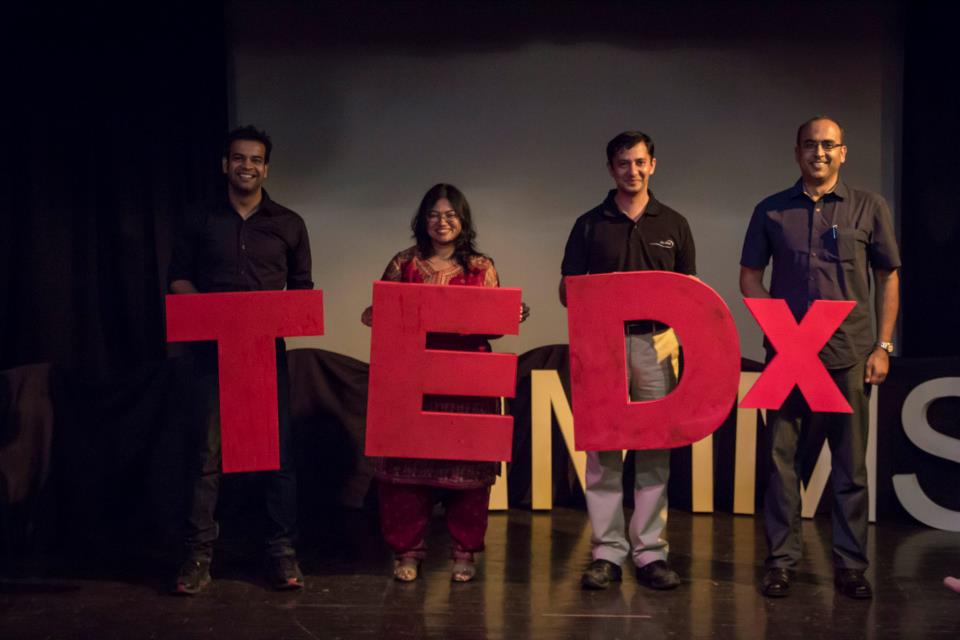
    piya-bose1Piya Bose is a corporate lawyer who left her job to follow her passion: Travelling. She now writes regularly for travel magazines and have also given presentations for TEDx events. Here, she discusses her decision to leave a safe, lucrative career and following her dreams. In this interview, she talks about:

    • Discovering her passion for travelling.
    • Her startup – Girls on the Go Club and it empowers woman.
    • Difference between Legal Education and Legal Profession.
    • Why is it important to follow your dreams.


    Given that most of our readers are law students and lawyers, how would you introduce yourself to them?

    Though I have chosen to take up tourism as a profession, it still does give me pride that I have a degree in BSc.LLB from the prestigious National University of Juridical Sciences(NUJS) and have worked with great legal minds.

    The training I received at law school has helped me greatly in the work I do, starting from research methodology, to drafting a contract with people I do business with or being aware of my rights and liabilities as a service provider. So, to sum it up, I would not say I have totally left the profession as law is very integral to the work I do. Being from a legal background, gives greater credibility and respect to the work I do now.


    Though it’s one of the most asked questions but yet, why law?

    Frankly, I never gave much thought to it at the time of applying for the course. I was fresh out of school and it was one of the many options I was exploring. I happened to get through NUJS first and decided to stick to it, as everyone advised me a professional course like this would be a good degree to pursue. So, in a sense I think I just let destiny lead me and I got great exposure to different thought processes and interesting subjects, which are valuable to me even today.


    If you have to sum it up in a word, what would that be?

    Intense.


    You worked with a law firm before starting off with Girls on the Go Club. What made you make the jump?

    Frankly, I could not see myself sitting at a desk for the larger part of the day and working graveyard shifts for the rest of my life. Even when you really like the work you do, there has to be a work – life balance that I found totally missing. My mind would wander off to exotic islands and snow capped mountains and I realised that given the kind of work timings I had I would probably never get to travel to even a fraction of places in my bucket list. So, I had to make a decision about whether I wanted to continue with my current lifestyle and of course earn a great salary or just risk it all, take a leap of faith and start living my bucket list. I chose the latter option and then there was no looking back at all.


    Starting an all girls club is certainly a very interesting concept but why just an all girl club?

    I have been travelling since I was 16 years of age. My first solo trip was to Brazil as a Rotary Exchange student. Little did I know then, but that experience did shape my views greatly and taught me that there is a world outside the box I live in, just waiting to be explored.

    I continued of course with school and went on to get my LLB degree.

    But something in me was begging to get out there and travel. Even while I was working at a law firm, I would get out of the city at every possible opportunity. I would research on interesting travel routes and places. I remember telling a colleague once that it is possible to travel from India to London by land and he thought I had completely lost it. Since I did not have the time for extensive travel, I hosted several travellers from various countries. I remember listening in awe to the tales of a 18 year old woman from Israel and how she had been backpacking for a year and I thought if women from other countries could do it, what was stopping Indian women to travel on their own?

    When my wanderlust got the better of me, I decided to put in my papers one day and take off for a trip from Lucknow – Nepal – Tibet. Standing in front of the Mount Everest I got my calling to do something unique in the field of travel. In the weeks following the trip, I gave it some thought and decided I wanted to infect other women who were scared to travel on their own, with my travel bug. That is when I started ‘Girls On The Go’ in 2008 and since then more than 1,000 women have travelled with us from Nagaland to Bali and now we are braving it to Antarctica.


    Leaving a cushy well paying job and taking the plunge requires good amount of guts, plus our society generally has this concept of being realistic. Keeping all this in mind, did you face any difficulty while starting up?

    Yes, it was like sailing over very choppy waters. Parents and well wishers thought I would just move on to another law firm or do something else in the field of law. They were disturbed to see that I was quitting the legal profession and in their opinion throwing 5 years of legal education down the drain. I could not make them understand that though I would not be in the mainstream legal field, but my 5 years of legal training would come into maximum use now that I was starting a venture on my own.

    Convincing family was really tough, so I had to really steel myself up to work very hard and prove myself. Once the first few trips took off and the media encouraged me by featuring GOTG in prominent newspapers, magazines and news channels, it was only then that they started seeing some sense in what I had set out to do.

    Startup capital was a challenge. I had spent almost all my savings in travelling to Tibet. Everyone thought it was impossible for me to start a business without money. But I knew deep down that with the correct combination of passion, out of the box thinking and determination, I could start my venture on a zero cash model. This is what economists call ‘Human capital’ which we tend to not even consider when we talk about startup capital. I was not scared of failure, because frankly I had nothing in the first place to lose. So, I decided to fully use the potential of my creativity, my power of conviction (thanks to my legal training), research skills etc to get the first trip going. Once the trip took off, I knew I was on the path I was meant to be and there was no going back.


    A roller coaster ride or a pleasant journey in woods, which describes your journey so far in a better way?

    I would say a bit of both. The thrills of a roller coaster ride and the highs and lows and the challenges of coming out in broad day light from the woods unharmed.

     

    piya-bose2How is a typical day for you like?

    A typical day for me is full of exciting research on the next place to take women travelling to, attending travel conferences, meeting suppliers from various countries, meeting up clients (I really look forward to this, as I get a chance to meet phenomenal women from various backgrounds) or interacting with them on social media, catching up with travellers etc. I also love to write or blog once in a while. English Literature was always the subject I wanted to study, but destiny had different plans for me.

    Most importantly I get to spend quality time with family and friends and have a healthy social life too.


    You have written for publications like Outlook Traveller, Hindustan Times and websites like Makemytrip.com. Tell us something about that.

    I love writing and I love travelling. So, it is but natural that I would do some amount of travel writing, describing the sights and sounds of every new place I visit.


    Not intending to make it sound like a 5 year government plan, but yet, where do you see yourself five years down the line?

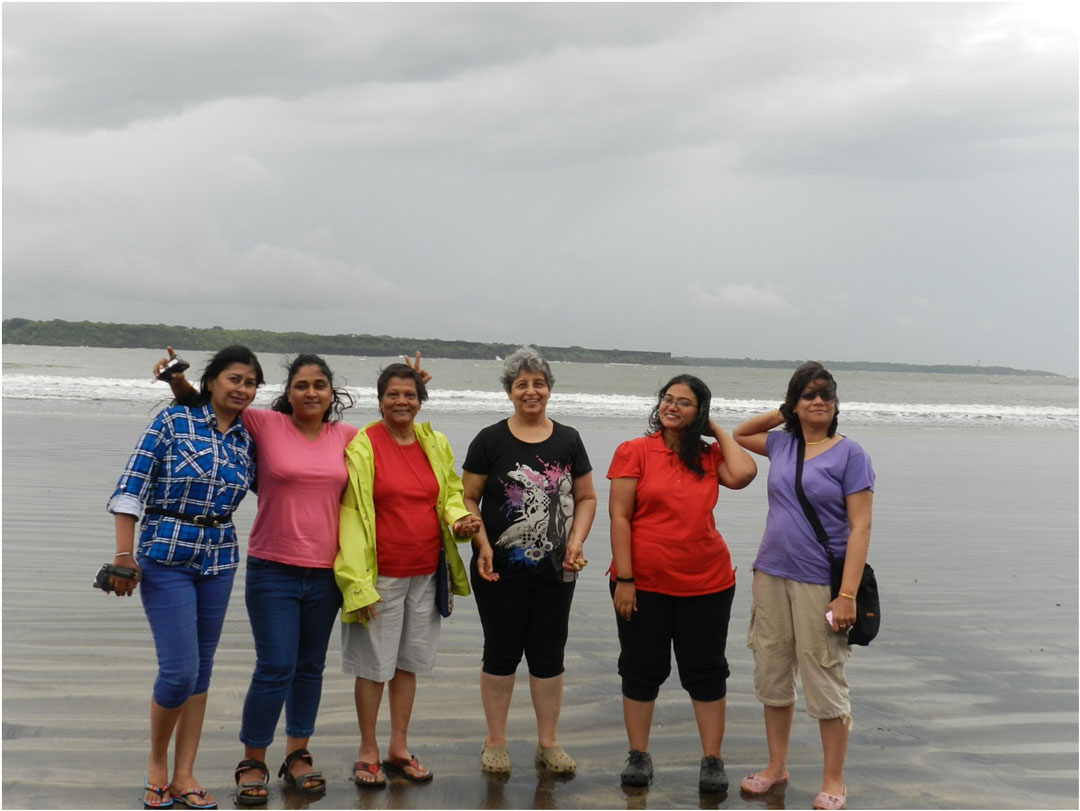
    I definitely plan to expand GOTG, so I can get every woman in this country to travel like never before. My work will only be truly fulfilling, when every woman irrespective of her economic background can travel. To me, travel is empowerment and liberating and every woman travelling on her own would be absolute empowerment in my opinion.
     

    piya-bose3

    Last but not the least, what would be your advice to law students and dreamers?

    A dream is something that does not let you sleep. If there is a burning desire in you to do something, you really must do it. It could be a change within the profession or stepping outside it. Irrespective, your legal knowledge will never go wasted. In fact it will really push you to put all the skills you have learnt in law school and your legal acumen to the very best to survive.

    Law as subjects of study and as a profession are two very different genres and one must remember the difference. You may leave the profession of law (i.e. not work in a law firm, court, in house legal team etc), but you can never really get out of studying law as a subject. Irrespective of the profession you choose, there will always be contracts, legal bindings, tax laws, intellectual property rights etc that one has to be familiar with. Everyone with a legal background is privileged that we have a basic understanding of this discipline and that puts us in a more favourable position. So, in that sense remember ‘you can check out any time you want, but you can never leave’.
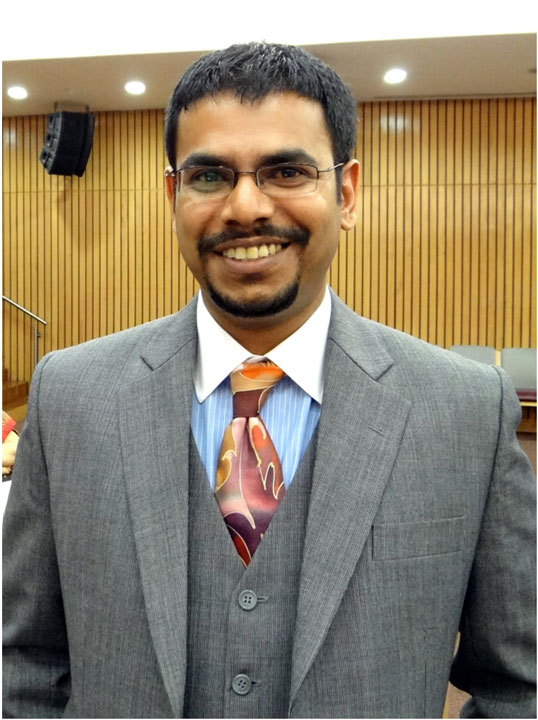

  • Arjya Majumdar an NUJS grad on his LLM at the Tulane Univ Law School, work as senior associate at 2 major law firms and teaching at JGLS

    Arjya Majumdar an NUJS grad on his LLM at the Tulane Univ Law School, work as senior associate at 2 major law firms and teaching at JGLS

    Arjya traces his life from his unlikely admission to NUJS, his internships throughout and his growth as a person during his LLM. He makes most interesting observations on the fundamental similarity between the work at a law firm and academia as making different sets of people aware of the law with certain differences that were small but are all that matter at the end of the day.


    Most of our readers are law students and young lawyers. How will you introduce yourself to them?

    I’m assuming you know my name. For a full description of my education and work life, please refer to my linkedin profile. What won’t be mentioned there is that I love singing and I crack bad jokes. Really bad jokes.

    In a nutshell, former corporate lawyer- now turned professor, aging hippie and slightly intolerable.


    arjya-mWhy did you decide to study law? Tell us about your college life.

    In many ways, this decision was made for me. I originally wanted to be a journalist. My mother came home one day with an application form to a completely unheard of NUJS. I decided to give it a shot, just for a lark. Didn’t study at all. Landed up at the exam centre half an hour late. Managed to clear it. That was when I realized that the people who administer the entrance test must think of my answers as worthwhile enough to teach me to be a lawyer. These people had been (presumably) teaching law for many years and therefore knew better than I did. I gave up on my journo dreams. The rest is history.

    College life was mostly fun. For the first couple of years, I learnt about stuff I didn’t know existed (coming from a science background in 11-12, studying Rousseau and Hobbes was scary). Getting into a groove in my latter years, I managed to devise a personal pattern of attending classes, studying and fun and games which allowed me to get by with regard to CGPA. Like many others, I fell in love and out of love- the standard ups and downs. Had my share of substances that shall not be named and fights with people who will also not be named.


    NUJS, now and then. How would you describe the change?

    Major changes. As one of the first few batches, we were instrumental in our own successes and relied less on teachers. As a new national law university we had a point to prove to NLSIU and make ourselves known. We won international moots without any mentoring or help whatsoever. This kind of enterprising behaviour has, in my opinion, died out over the years.

    On the flipside, I know it’s become tougher to survive. With more national law colleges, the competition, and not just for jobs, has become fiercer.

    I do wonder though, whether NUJS is still as chilled out a place as I remember it to be. I have made friendships which will last for life. I do hope the same applies to present students of NUJS.

    Not going to comment on the recent developments concerning the NUJS administration.


    What kind of internships did you do while you were a student? Any remarkable experiences during your internships that shaped your career choices later?

    I did the standard NGO, trial court, appellate court and law firm internships. Mind you, it was one internship a year and not two or three as I see happening presently. Two internships stand out. One was with the WWF where (along with dear friend Sagnik Ghose) I visited fish markets in Calcutta to find out if turtles (a Bengali delicacy) were being sold. Trading in turtles is generally illegal. We managed to rescue one turtle from certain death and released it in Alipore zoo. We also managed to tip off the local police regarding these illicit activities.

    The second internship was with Mulla and Mulla in Bombay. Mr. Shardul Thacker was most encouraging and allowed me to work on matters that would usually be given to first or second year associates. Of particular note was an opinion on software technology parks which gave me the inspiration for an article “Taxation in BPOs” published by ELT and later on, a book titled “Special Economic Zones: Policy and Procedure” published by CCH India.

    Both of these internships inspired two very important aspects of my career- one, a love for the environment and two, a love for legal academic writing.


    Right after graduating, you worked for three months in a law firm and then went for LLM. Why did you decide to go for higher studies?

    Somewhere down the line at NUJS, I got interested in Maritime Law (possibly because my father was a sailor). I must have written about 4 or 5 projects in maritime law and did maritime law based internships (including at Mulla). I wanted to learn more about the subject. Hence the choice to opt for higher studies.


    Tell us something about your LLM year at Tulane University Law School. How did this influence your career?

    As a lawyer, it didn’t influence my career at all. At least not professionally. A degree in maritime law has no place in a corporate law firm where you’re working on M&A and Capital Markets.

    But it did influence me in many other ways which I found to be invaluable in my career. A foreign degree forces you to stay in a foreign land, to understand and appreciate customs other than yours. I was staying in a town steeped in conservative American and black culture and the university had possibly 10 students from India. You learnt something new every day. As a result, I became more open minded, I gained an ability to walk up to and talk to complete strangers. More importantly, it broadened my horizons and sociability.

    It was also tough. Having to fend for yourself in a foreign land (where you might be misunderstood) is not easy. That, plus working part time and studying was a novel experience at the time.

    I’d say everyone should live (and not visit) abroad for a year. It gets you out of your comfort zone and makes you learn things about other countries (and more importantly, yourself)


    Any memorable experience you would like to share?

    I was working part time as a cashier at the university grocery store. A lady customer, upon noticing that I wasn’t white, black or hispanic, asked me if I was from India. When I affirmed her assumption, she asked me if we all rode elephants to work and had charmed snakes as pets.

    I still don’t know if she was joking or was for real.


    You worked as a senior associate at two major law firms. Tell us something about that.

    It takes a while to learn the ropes. You need to be able to put in the long hours and the constant attention to detail. Your boss also plays a huge role in your life. How he/she allocates work and how much you can learn from him/her will decide your bonuses and career in the firm. I am and will forever be grateful to Mr. Som Mandal, a number of former partners at FML, and some present partners at D&D.

    I also realized along the way, how important it is to create an image of excellence for yourself. Like the saying goes “Justice must not only be done, it must also appear to have been done”. This plays a huge role in law firm politics which I have unfortunately been witness to from time to time.


    How is a typical day for a senior associate in a law firm?

    Depending upon whether you have a deadline that day, life in a law firm varies on a daily basis. You work on your transaction, consult with your partner on a point on which you are stuck, read up on it, revise your document accordingly. If you have been diligent in your work, it should pass your partner’s review and the client should be happy. If not, you do get screamed at (not necessarily literally) and its back to the drawing board. All this is fairly par for the course.

    Sometimes a client will come back and express his appreciation for your work or will come to you (and not the partner) for a new mandate. Somedays you get to scream at an investment banker or a merchant banker. Those are the days which are worth recalling with a smile.


    Currently, you are teaching at Jindal Global Law School as Assistant Professor. Why this switch?

    About two years into FML, I realized that I didn’t want to spend the rest of my life drafting and negotiating on the same standard agreements, chasing after new clients for mandates and old clients for pending invoices. I knew I loved teaching (ask any of my former interns or colleagues) and had a flair for academic writing.

    Unfortunately, academia in India doesn’t pay as much as a law firm. Given the vast sums of money transferred to my bank account at the end of every month, it was difficult to tear myself away from the comfortable lifestyle I had built. However, JGLS salaries are at par with law firm standards and when the opportunity came, I took a leap of faith.


    Life of a law firm associate and a professor, what do you think are the major differences between the two?

    There aren’t too many differences. As an associate, your job is to make your clients aware of the law. As a professor, your job is to make your students aware of the law. As an associate you are expected to research and provide answers to questions of law in the form of a legal opinion. The same applies to being a professor, where instead of an opinion, you publish a paper.

    The only difference is that as a professor, you get to choose what turns you on intellectually. You choose what you want to research on and not what the client wants. You develop your own understanding of the research questions and are not expected to adhere to the understanding of your partner. And this makes all the difference in the world.


    Please describe a typical work day of yours at JGLS.

    Since classes haven’t started yet (it’s been less than a month that I’ve joined), much of my work is preparatory in nature. Preparing course modules and lists of possible research topics which my students will write projects on, consulting with the administration on university policies, studying for my own course (which I remember very little of) takes up most of my time.

    A lot of time is also spent in researching on ongoing projects which will hopefully be published or presented sometime soon.

    When classes start in August, I suppose a lot of time will be devoted to teaching, mentoring and guiding students and reading up on the next day’s class.


    How would you compare the JGLS of today with the NUJS of your time?

    I have seen NUJS during its fledgling years and am seeing JGLS during its early years now. I’d say the infrastructure at JGLS is far better than that at NUJS at the time. The faculty is younger, and therefore a lot more attuned to the needs of students (I feel that as students, we didn’t always connect with old, but very respected teachers such as Prof Menon, Prof Konar and Prof Banerjea).

    As I mentioned before, the competition has gone up. I see JGLS students applying for and presenting papers at conferences and publishing papers. While all this has happened during my time at NUJS too, I think the need to stand out in the crowd has become even more imperative now.

    One interesting difference I see is the student demographic. While at NUJS, you had a fair cross section of society in terms of economic class. At JGLS, that demographic is slightly skewed upwards, although you do have a large number of very deserving scholarship holders.


    arjya-m2What’s your take on work- life balance?

    Extremely important. You need to have the courage to refuse work if you think you have too much on your plate. Either that, or devise a way where you can work quickly without sacrificing accuracy. I have personally followed this through my years and it has ensured my sanity for many years. Singing at a rehearsal for a Broadway musical or an opera after a bad day allows you to get back to work the next day with a smile on your face.


    Last but not the least, what would be your message for law students?

    Don’t take law school too seriously. CGPA and class ranks, like old friends and enemies, will be forgotten. Learning the law isn’t important, anyone can learn the law. What is important is that you learn how to learn the law. Other than that, chill (while you still can).

  • Teslin Augustine, NUJS grad on interning with MP Naveen Jindal, the LAMP fellowship & life in the public policy sector

    Teslin Augustine, NUJS grad on interning with MP Naveen Jindal, the LAMP fellowship & life in the public policy sector

    Teslin AugustineTeslin an NUJS graduate tells us about her inspiration for joining law and her internship with Naveen Jindal which set her on the course for a career in public policy. She talks about the transition from law school to the real world and how best to have a work life balance.

     

    How will you introduce yourself to our readers?

    My name is Teslin. I graduated from NUJS in 2012, after which I did the Legislative Assistant to Member of Parliament fellowship offered by PRS Legislative Research in association with the Constitution Club of India. I am currently working as a policy consultant in a law firm in Delhi.


    Why did you decide to study law? Tell us about your college life?

    Perry Mason – the oh-so-cool defence attorney who was the star of a series of Erle Stanley Gardener books which I was addicted to as a child, is the single biggest reason why I decided to do law. Of course, I found more logical-sounding reasons when I had to justify my choice of profession to my family but the truth is that I found the long-winding arguments Mason hashed out in Court too hard to resist.

    College made me the person I am today – and for those who don’t know me, I am a pretty awesome person (modesty is probably not one of my traits though). Jokes apart, I made some amazing friends, who gave me the confidence to not be apologetic about myself – my choices, my likes & my dislikes and most of all it gave me the NUJS tag which meant instant “smart-alert” for my future employers.


    What kind of internships did you do while you were a student? Any remarkable experiences during your internships that shaped your career choices later?

    I did the usual run of the mill corporate internships. The only internship that was of any real significance was my 6-week stint at the office of Naveen Jindal, MP. I stumbled upon this internship purely by chance and it was the only internship where I felt like what I did mattered – that I wasn’t just another person helping rich corporations get richer.


    We often hear that more lawyers are getting into “policy work”. What does this actually involve? What is it that policy lawyers do?

    Courts take years, sometimes decades, to correct a legislative mistake. As a lawyer working in the realm of public policy (I wouldn’t call it “policy lawyer”) I do what I can to influence what a piece of law ultimately looks like – be it through making standing committee representations or educating the political class about lesser known concepts. I make sure that our legislators have all the information they should have to make intelligent policy choices which will ultimately decide the trajectory which our country will take. To put it simply, as a policy worker, I try to make sure that the Bill that ultimately becomes a law is in its best possible format.


    What made you interested to get into this area of work?

    Be prepared to roll your eyes, some naive ideology coming your way – I have always believed that at the end of 20 years if I can think of one thing that I did to make things better for this country then I will have deserved my place in this world. To me, policy seemed like the most direct way to make a difference. Even if I don’t make any direct changes, as long as I can keep the dialogues happening I have done my job well.


    When did you start thinking of going into such an offbeat career? What precipitated this decision? How difficult was it for you to make an out of the box career choice?

    I wanted to be happy about the work I did and that’s all that mattered to me. Sure, at the beginning, I was filled with uncertainties and always wondered if I was making a big mistake. But I soon shed all my uncertainties and insecurities about my choice of profession, when I realized I was one of the few people to have a smile on their face at the end of every day.


    How did LAMP Fellowship happen? What are the criteria to apply? How did you go about your application process?

    I first heard about the fellowship during my internship at Naveen Jindal and I had thought to myself at that time that no matter what happens I would definitely give this a shot. The LAMP fellowship is open to everyone who has an undergraduate degree, is below the age of 25 and is an Indian citizen. There is an online application form which asks for a statement of purpose along with your CV and some other details. Once you get shortlisted based on the SOP, there is a telephonic/skype or walk-in interview. The panel who interviews is made of ex-LAMP fellows, PRS analysts and usually a third party policy expert. There is no secret mantra to the interview or the application. The most important thing they try and ascertain during the interview is your reasons for applying and how passionate you are about policy-making. I think, if you truly care, your sincerity shines through.


    How was your typical day over there?  What kind of work were you involved in?

    I spend most of my time preparing questions that my MP could raise in the House, helping him with his Standing Committee responsibilities, doing issue-based research for him, prepping him for debates, preparing special mentions, zero hour submissions and private member bills.


    Is the pay enough to sustain your life in a megacity like Delhi, especially if you are not living with your parents?

    I am a very middle-class person with very middle-class needs. That said, as a LAMP fellow I lived in a constant state of poverty, my current job as a consultant allows me to lead a comfortable life.


    Currently you are involved in policy related work in a law firm. What kind of work do you have to do? How is it different from your previous work profile?

    As a LAMP fellow my work was mostly parliamentary in nature. This means that I helped my MP raise questions in parliament, introduce private member bills, raise special mentions, zero hour submissions and prepared his speeches for parliamentary debates and media appearances. The work I am doing right now uses a lot of the experience and knowledge I have gained over the past year as a fellow. I advise clients on implications of laws and policies passed by the Government, how it is likely to affect them and how to make representations to the Government so as to have a regulatory system in place that is favourable to clients.


    Would you throw some light on your current job profile? Is this an emerging area that law students should keep an eye on?

    I currently work as a Policy consultant in a law firm. We are in the business of providing policy-based advice to corporate clients.


    Any memorable career experience you would like to share?

    The highpoint of my fellowship was when a private member Bill I had drafted was introduced in the Rajya Sabha and was discussed and debated upon for 7-8 hours. There is nothing more rewarding than seeing Parliamentarians discuss, argue for or against a clause that you have yourself drafted.


    Where do you see yourself 5 years down the line?

    I eventually want to work with the Government and do policy making at the most basic level. I want to directly be responsible for what a policy document or a Bill looks like when it is introduced in the Parliament.


    What would be your advice to people interested in policy work? How should they prepare themselves for a career in policy? What are the essential qualities one should cultivate?

    As simple as it sounds, read the newspaper – to begin with. Policy work is a lot about being up-to-date with everything – be it the latest consultation paper that TRAI has released or the Orissa High Court’s judgement about mining. Know what is happening around you and take an interest to keep yourself updated. Do internships with a couple of policy organizations – Rakshak Foundation or Observer Research Foundation for example are excellent organizations to get an idea what policy work is all about. Talk to people who work with policy and leave behind all your fantasies


    How difficult or easy is the transition from being a law student to a lawyer?

    It is difficult. Your first job always feels like an internship. You keep waiting for it to get over and when it finally hits you that there is no getting over and that you have to do this every single day – pay rent, bills, buy groceries, fight with the maid, sit at the same desk everyday – it can get difficult. But once you accept that, life is good. It’s good to not be bound by any rules and finally be an adult, it’s good to be outside the constant scrutiny and judgment that is such an essential part of college life and do what you really want to.


    What’s your take on work- life balance?

    I know plenty of workaholics who are perfectly happy working all day everyday. Fortunately or unfortunately that is not me. I have to have the time to meet my friends, once in a while, come back home before the sun is up and go for a holiday once in a while.  I will probably be “lagging behind” my peers who work day and night but I choose not to measure my success based just on my professional life – it is a success for me if I have the time to explore every nook and corner of Delhi, it is a success for me if I have been able to take a dance class outside work and it is a success for me if I have gorged down 5 kgs of meat in a pigging competition. It is upto every person to decide what they want from life and there are no set rules.


    Last but not the least, what would be your advice to law students?

    I completely understand the glitz and glamour of corporate law and if that is what you really want to do then good for you. But if it is not, then there is no point fooling yourself. There is only so much happiness and satisfaction money and things can give you – true happiness is in finding something that you are truly passionate about and in waking up in the morning and actually being happy about going to work – that’s what matters in the end. Have the confidence to explore and find out what you love doing – don’t settle for anything lesser.

  • Esha Shekhar on being a legal correspondent for Bloomberg TV & moving back to the world of corporate law

    Esha Shekhar on being a legal correspondent for Bloomberg TV & moving back to the world of corporate law


    Esha graduated from WBNUJS, Kolkata in 2012, instead of applying for mainstream corporate jobs, or pursuing a career in litigation, she applied for jobs in the legal journalism. She worked at Bloomberg as an anchor for quite a span of time, and is currently an associate at Dua Associates. Let’s talk with her about her experience in the legal journalism sector.


    Most of our readers are law students and lawyers. How will you introduce yourself to them?

    An apt introduction would be law student turned journalist turned advocate.


    Please tell us something about your college life. Why did you want to study law?

    I was preparing for medical entrances, but a lack of interest in science made me give that up. I saw the law school entrance question papers and an aptitude based test seemed like an interesting option 🙂 Law is very logical, and that was the first thing which drew me towards it.

    I graduated from National University of Juridical Sciences, Kolkata. The five years spent in NUJS and Kolkata was truly an experience. Apart from academics, which of course is the staple of any college life, a good circle of friends, and gaining the independence to do what I wanted to do is what I give the college credit for.


    When you were in college, what were your thoughts on career? What kind of internships did you do?

    When I first came to college, becoming a corporate lawyer was the thing everyone aspired for, and naturally, I believed in the same. Gradually, I started questioning whethercorporate law was what I wanted to do. The bad thing was I had very little idea about the other options I had. The good thing was lot of seniors from NUJS, even current students had started exploring new career options, which took off some pressure from me.

    My internships were varied. It was a conscious decision to work with as many diverse organizations as I could manage, to gain perspective on my career options. I interned with Down to Earth magazine (the flagship bi monthly magazine by Centre of Science and Environment) where I wrote for them for two months, litigating lawyers, a multinational company, Jharkhand State Electricity Board (to gain some experience with a government body), a boutique IP firm and of course the customary top corporate law firms.


    You worked with Bloomberg TV India after graduation. Don’t you think this is an unusual career choice for a law graduate?

    I would say it is not the usual career choice for a graduate from a five year law school. Legal journalism is an option many students from 3 year law colleges, especially CLC opt for. A major chunk of journalists who report from Supreme Court and High Courts are law graduates since they are supposed to be equipped to understand the legal jargons and give a clear understanding of what the Court said in a particular matter. Also, a court accredited journalist needs to have a law degree. So it is not an unusual choice per se. I was interested in journalism from the beginning because of my interest in writing. I worked with and ran the in house NUJS magazine, Writer’s Block for some time. Working with Down to Earth magazine gave me an understanding of print media. But yes, working with a TV channel was entirely a different ball game altogether.


    esha-shekharWhat motivated or encouraged you to join Bloomberg? Was this a campus placement? Did you consider other media companies at that time?

    Bloomberg was a classic case of being at the right place at the right time. When I didn’t get through the top law firms’ interviews, I was very dejected initially, but a bit of thinking made me realize that it was more because of peer pressure rather than the actual loss of a coveted job. I stopped applying for such jobs, started applying to print media houses and I was getting favourable replies from some of them. However, I didn’t know that TV channels were an option.

    Bloomberg was not a campus placement. I happened to be in Delhi at the time when a college professor sent a batch mail saying his friend was working with a business news channel, who were looking for law graduates to work for a new legal show. I applied, got a call for interview and was really skeptical about it. But it was the first interview where I actually meant whatever I said, vastly in contrast with my other numerous ‘lost attention in 5 minutes’ law firm interviews. That was something which encouraged me to join Bloomberg.


    What were your primary responsibilities in Bloomberg?

    My responsibilities were two fold – daily news reporting and working for the weekly legal show. As a legal correspondent of a business news channel, my responsibility was to report all the corporate related legal news from the courts. Since I was the only person assigned to the legal beat, I ended up covering corporate legal news coming from all courts in Delhi. This includes Supreme Court, Delhi High Court, District Courts, Company Law Board, Appellate Tribunal for Electricity, Competition Commission of India, National Green Tribunal, Income Tax Appellate Tribunal among others. So a major part of my job was to be in Courts from 10 to 4, report the news, talk to various lawyers and figure out their next step of action in all such high profile matters.


    You worked on their show The Courtroom. What did you do for the show?

    The Courtroom was launched last June, when I joined. The entire idea behind it was to make a half hour news show of important corporate legal news of the week. We at Bloomberg discussed how there were so many important legal stories/judgments coming from the courts, specially High Courts which either didn’t get noticed, or were given a ‘five line space’ in newspapers. The judgments had a much bigger impact if analysed properly.

    My job was to identify such judgments/ stories which had a bigger impact, and provide an analysis of the same explaining the larger picture. This involved writing the script for the segments, talking to lawyers and taking their opinion and putting up a segment together for the show.


    You were involved with content analysis and editing of the show, The Courtroom. What does that exactly mean?

    The format of the half hour show was top legal news headlines followed by three short segments on analysis of the top judgments of the week. Content analysis involved brainstorming about the headlines, and the content of the three short segments. Identification of the story/judgment is just the first step. Writing the script was the toughest bit. The script was for a layman’s understanding, so I had to forget being a lawyer, and focus on explaining legal jargons in the simplest way possible, without losing the essence of the story. It was initially very difficult, but my boss, who is the Associate Editor in Bloomberg was a good teacher who taught me how to do the scripting.

    So the script for one segment was ready on paper. Two or three lawyers’ opinion was taken on record to give an expert insight. To make it a seamless story for TV viewership, editing came in. I worked along with the editing team. I would record some part of my script (Voice over),figure out the videos which  would come along with voice over, edit/shorten the comments of the lawyers (bytes), put it in place, record a small bit where I would conclude the analysis (reporter’s link) and place it all together to make one segment of the show.


    How is the place to work at? Were there other lawyers?

    It is a great place to work at. I really enjoyed my work experience there. The USP of the place was that being a young news channel, it gave a lot of space to its reporters to identify their beat (the area which they would cover), build their contacts and identify a story. There is intense pressure on the reporters in other news channels, specially other business news channels to break one news story every day. That was not there in Bloomberg, and they pay a lot of attention on the news content. One thing which I learnt was that breaking the news was not priority, breaking the correct news was. So if I heard something in court which I knew was important but was not sure of, even though every other reporter was rushing to report the same, I was taught to get a confirmation before I reported on the story.

    No there were no other lawyers. I was the only lawyer reporting legal news among the business news channels.


    What was the work environment like?

    The Delhi Bureau of Bloomberg TV India has around 8- 9 reporters. The news content is policy based because of Delhi being the centre of power. I learnt a lot about policy because the news reported from Delhi were mainly from Finance, Aviation, Telecom, Commerce, Coal Ministries among others. Being a part of the newsroom is interesting, as it is not only about a reporter’s knowledge but how he/she handles the pressure of getting confirmation about an important news from a source, verifying it, putting on make up to appear presentable onscreen and then reporting the news live as calmly as possible. It’s about knowing your topic well, in case the teleprompter stops working. Bloomberg’s work environment is good. There is constant pressure to report news, but the bosses didn’t make life hell for losing out on a story, and that’s saying a lot for a news channel.


    Young professionals almost inevitably hit rough patches in the career. How do you think they should handle such situations?

    I think it’s all about understanding what would work for you. A lot of us end up looking at a situation from another person’s view point, rather than looking it from one’s own. What would work for your friend may not work for you. It may sound straight from a self help book but it helped when I was going through a lot of stress with my law firm interview rejections – keep faith in yourself.

    Also, I think one should not postpone something they want to do for later. In college, my plan was to work with a law firm for a year and then try my hand at journalism. Exactly the opposite happened, and in retrospect it was better that way, andnowI am much more confident about my decisions.


    You recently shifted and started working for Dua Associates. What made you change jobs?

    Yes, I shifted recently to the litigation team in Dua Associates. After college, I knew I didn’t want to quit law altogether, but I also knew that I did not want to be on the corporate side. In law school, litigation is seen to be pursued by someone who has a lawyer in the family, or as a poor cousin of the corporate side. But in reality, it’s a much more satisfying experience for a lawyer. When I started reporting for Bloomberg, I was in courts from 10- 4 everyday, and it was fascinating. I interacted with many lawyers, including senior advocates across all courts because of my work and that made me learn a lot how litigation works- in both good and bad ways. I covered many high profile court proceedings, including SEBI- Sahara dispute, Presidential Reference (of 2G spectrum issue), Uninor dispute, Bellary mining, Novartis patent dispute in Supreme Court. Hearing the senior advocates argue the matters was quite exciting. One prominent lawyer told me that even if there are hundreds of adjournments you face, one chance to argue a matter in court is worth the hassle.


    How does working at Dua Associates compare with Bloomberg TV India?

    They are different in a lot of ways. There was a constant pressure in Bloomberg to report news/break news or constantly be in touch with lawyers to get information. Plus there was the additional pressure of brainstorming for each episode of the show every week. Dua is more relaxed that way. I don’t get to see all the high profile litigation matters in court. But now the pressure and priority is about either researching or reading for drafting petitions, applications, and written submissions for the matters you are handling or preparing for filing the same in court. It seems like I am back in college, except that I am studying much more than I did there 🙂


    The working environment of a legal firm must be different than working with network television. What does it take to make a shift like that?

    For me, it was not much about the shift, as it was about figuring out what would work for me. I trained to become a lawyer, and I knew I wanted to be one. Litigation is what I have realised would work for me for now. The experience with network television made me get out of my comfort zone, and experience something which was very new. I have become more confident in my interactions with people, and once you start doing live news, everything seems easy in comparison. Bloomberg experience helped me get familiarized with courts, court jargons, proceedings etc. I could make a more informed decision about my current job. So if you are working somewhere, and get a new opportunity, you need to make weigh the pros/cons and understand what kind of learning curve you’ll get.


    Lastly, where do you see yourself in the future, in say another 5 years? Any chance that you may get back to journalism?

    I will be litigating hopefully. I don’t see myself getting back into journalism per se, but I plan to start writing for newspapers or magazines soon. As much fun as my TV stint was, with the thrill of appearing on TV and talking to the camera, I don’t see myself returning to news channels as a journalist.

  • Divya Vikram, Consultant, Legal League Consulting, on her experience and the future of Legal Management

    Divya Vikram, Consultant, Legal League Consulting, on her experience and the future of Legal Management

    Divya Vikram is a graduate from NUJS, batch of 2012. During her time as an undergraduate, she was Director of the Society for Advancement of Criminal Justice (SACJ) for two consequent years. She has also taught at the Adult Literacy and Legal Education Programme, an initiative undertaken by the Legal Aid Society of NUJS. She is currently a consultant with Legal League Consulting, where she handles Strategy and Business Planning, Practice Development, Brand Communications & Client relationships, Law Firm Alliances and Synergies.

    In this interview we speak to her about:

    • Her experience at LCC and the responsibilities the job entails
    • Striking a balance between work and personal life
    • The future of legal management


    How did you decide to study law? Tell us about your college life


    Let’s just say, law was sort of a happy accident. College life in the first year I would say was sort of tough. You had to get adjusted to living away from home, your parents and friends back home, hostel life, hostel food, making new friends, coping with law school in general. However, things got better with subsequent years. Law school shapes you as an individual and professional. NUJS offered me diverse things to do as a student, be it moot courts, publications, managing committees/societies, volunteering in various activities etc. apart from the regular studies and projects.


    What kind of internships did you do while you were a student? 

    After my first internship at Lawyers Collective (NGO), I decided to do my second internship in a law firm. I started with ALMT Legal then subsequently interned at AZB & Partners, Trilegal, Brus Chambers etc. None of my experiences were remarkable as such but each internship taught me something new. However, at the end of 4th year I decided that five years down the line, I don’t see myself working in a law firm.  Hence in my 5th year in order to experience the corporate world as well, I interned at a Corporate (SunEdison) and loved it.


    How did you decide to work with Legal League Consulting?

    The first time I heard about Legal League Consulting (LLC) was in my 5th year when they invited applications through Campus Recruitment Committee. That’s when I checked online about LLC and the managing law firms. Also, I was lucky to find a junior who had interned there and he explained me the nature of work they undertook. From what I learnt about the nature of work I was almost immediately convinced and interested at the prospect of working at LLC.


    divya-vikramCan you tell us something about the kind of work LLC does?

    (LLC is the first law firm management company in India legal industry.)

    Legal League Consulting (LLC) provides Management Consulting to the legal industry. We provide solutions to the legal industry with respect to Human Resource Management, Financial Management, Business Development, Strategic Business Planning, Knowledge Management, Partnership Structuring, Alliance, etc. In a Nutshell, it’s basically a 360* degree management service to the Legal industry.

    My role at LLC majorly involves, but not restricted to, formulating policies essential for running of a law firm, undertaking activities to assist firms in developing business. I also assist Law Firms in the implementation of various Human Resource, Business Development and Knowledge Management related systems.


    Did you ever hit a rough patch in the beginning of the career? 

    Student life was fun and apart from scoring good grades and working towards a making a good CV and enjoying college life, there was not much you really had to do. But being a professional is altogether a different ball game. It was indeed a little difficult to transition. Firstly, my transition from a lawyer to a management consultant itself was a difficult one, especially those work involving compensation structuring and other finance related aspects. Learning various management concepts, its application and understanding the rationale behind it. As a Consultant, you are solely responsible for all the clients you handle and the documents you send them etc. therefore the accountability factor is more and one cannot afford to make mistakes. Furthermore, one has to be well informed about not only the Company’s clients but the market and global trends and keep evolving.


    What is a typical day at work like?

    At LLC I work for the Law Firm Management Team (the other two being Brand Communications and Talent Acquisition Team), where we undertake a wide variety of work starting from HR, Finance, Partnership Structuring, Compensation Benchmarking etc. Hence most of the days, depending on client needs I work on the client deliverables for that particular day or week. Apart from that sometimes I accompany Ms. Bithika Anand, our Founder & CEO and sometimes other seniors to client meetings. In addition to client work we work on developing new products, and other upcoming initiatives of LLC.


    What are your thoughts on work-life balance? How do you achieve it yourself?

    Work- life balance is definitely of utmost importance to me. I would definitely need a day off from work to clean my apartment, wash clothes, cook some good food, relax, watch television and catch up with friends. At LLC 2nd and 4th Saturdays is off in addition to Sundays, which is good enough for me to relax. However, very rarely, you might have to attend some client meeting on a non-working Saturday or work towards completing some client deliverable… but that’s fine!


    What do you think is the future of Legal Management?

    The future of Legal Management is bright… in fact very bright. Almost every other day we have a new client (law firms, corporates, LPO’s, recently even an NGO) who has approached us for handling their various management related issues and needs. There is growing awareness and realization on the importance of management in runningone’s organization. As lawyers are busy with execution of law, they prefer to leave the day-to-day running and management of their organization to experts in the Management field.


    Where do you see yourself five years down the line? What kind of work will you like to do?

    Since I seem to be enjoying my job a lot, I certainly see myself as a Management Consultant… however, a much experienced and evolved professional. As I love doing more of HR work than Finance, I would like to specialize more in the HR related aspects.


    What do you do apart from work? How is the life of a law graduate in Delhi?

    I would prefer spending my off days at home either watching television, experimenting my culinary skills, reading books and sometimes meeting up with friends and not to forget shopping.

    Delhi is a wonderful place for youngsters. It offers a wide variety of options for all kinds of people. There are places to shop starting from your malls to Sarojini Nagar and the old Chandni Chowk, places to eat ranging from your Sheraton, Hauz Village, ParanteWaali gali and other street delicacies. For those who love Indian culture and history, there are remains of the past Mughal Rule in India which can be visited and many other places.


    Would you like to work for law firms as an associate in future?

    No, not at all.

    Last but not the least, what would be your message for law students?

    There is no reason why a law student will be interested in a message from me. But then if I had to say something, I would say enjoy every bit of your college life, because they are priceless and they will never come back to you. Once you are a professional you will yearn for that kind of time and fun.

    Also, don’t spend law school life just being bothered about internship and grades. Trust me, at the end of the day that hardly matters!

  • Anwesha Pal, Masters candidate, Nottingham University, on staying in academia, pursuing IP Law and plans for the future

    Anwesha Pal, Masters candidate, Nottingham University, on staying in academia, pursuing IP Law and plans for the future

    Anwesha Pal is a graduate from NUJS, Kolkata, batch of 2009. She then went on to pursue her LL.M. in IP Laws from Nottingham University.

    In this interview we speak to Anwesha about:

    • Her time in Nottingham, the curriculum and faculty
    • Application procedures and scholarships available
    • Her decision to pursue a career in academia and plans for the future


    What was your motivation behind doing an LL.M.?

    I have always wanted to teach and when I realized that teaching law at prestigious institutions is indeed possible, I decided on pursuing my masters in law. LL.M. is an academic degree. Therefore, if you are thinking about a career in academia, then an LL.M. is mandatory. Also international exposure could be an added benefit in more ways than one. LLM should be done primarily if you want to gather more knowledge in your area of interest. An LL.M. is mandatory if you wish to study further. It is not entirely true in the present day job market that only a master’s degree in law will help you in grabbing high paying jobs.


    anwesha-pal2

    How did you choose the university? Where else did you apply?

    To do an LL.M. I thought UK would be best suited to my needs. I was interested in Intellectual Property laws and other commercial laws. I had applied to King’s College London, QMUL, University of Warwick and University of Nottingham. I went through the course structure for each, the faculty concerned with the subjects I chose to study, the place of study and the costs involved.

    University of Nottingham has one of the best faculties for Intellectual property laws in the UK and one of the most intensive courses in Masters of International Commercial Laws. With an amazing library and a brilliant atmosphere for studies and a superbly picturesque campus, every second spent there studying has been worthwhile.


    Any interesting details about the course worth sharing?

    To start with, our Intellectual property law course instructors were Dr. Estelle Derclaye and Dr. Paul Torremans who are very renowned in their fields. For all the other subjects, the seminars were coupled with lectures from Mahesh Uttamchandani from the World Bank, Pascal Kamina for Intellectual Property law and some other eminent dignitaries.


    How was your experience? Tell us about the faculty and facilities. Any memorable instances you might want to share with us?

    Situated two and a half hours from London, the facilities in and around this university are incredible. The 24 hour access to all the buildings and the library within the university was very helpful since we had to prepare for the day-to-day seminars on almost all the days and additionally research for our papers due at the end of the term. The faculty was very helpful and understanding. The staff in the school of law were equally well-informed and organised.

    The hand-outs and the manuals were extremely helpful in preparing for the classes and the students’ portal was very well designed to cater to all our research needs. University of Nottingham has access to innumerable journals across the globe in almost all the major areas of research and studies. The library is huge and divided into levels. The basement and the ground levels being group study zones designed with brightly coloured walls and a brilliantly designed cafeteria. The other two levels above it are the silent study zones with in-built study carrels that have a plethora of books and journals for almost all the humanities related subjects.

    anwesha-pal8The University of Nottingham, UK is divided into four campuses where the University Park Campus is the one where the school of law is situated amidst beautiful gardens and a lake with swans and lots of greenery. The hopper bus services are very effective which transfer you from one campus to the other for free. These are double-decker buses which run every few minutes.

    A funny thing to note here would be that two of University of Nottingham’s campuses had been shown in a Bollywood movie called Teri Meri Kahaani, which some of our European and English professors went to watch too!
    Well, I think one of the best experiences while living in the UK was when I got the opportunity to watch the Olympics (rhythmic gymnastics) at the Wembley Stadium.


    Holi at Nottingham
    Holi at Nottingham

    How’s the Indian fraternity over there? Are there many Indian students?

    The Indian community in the University is not very big. The LLM Class of 2011-12 had around 100 students out of which 25 were Indians and a few Indian origin UK citizens. The Asian community is pretty big there with a lot of students from China, Korea and South East Asia. There are many societies such as the Indian society, the Hindu society, the ISKCON society and so on where you can meet a lot of Indians too who are enrolled in various fields of study at Nottingham. These societies make you feel like you are a part of a family away from home and the activities during Holi and Diwali were very well organised which my friends from all cultures and ethnicities enjoyed alike. There are quite a few excellent Indian restaurants that have all-you-can-eat buffets in store. They are preferred by Indians and non-Indians alike.


    How is the recruitment/ placement situation for overseas students?

    Ever since the UK did away with the PSW (Post study work visa), the placement situation has not been very encouraging for international students in UK. However, there are a lot of companies including banking companies and other organisations that introduce the graduate program each year. One can always apply for the same and get recruited at the end of the training period. For students applying to law firms in the UK, I found in addition to the international law firms such as Clifford Chance, Herbert Smith and the likes, there are many ethnic minority law firms which release their training contract schemes and vacation schemes every year. The best place for the information regarding employment opportunities is in the law fairs organised by your universities.

    The University of Nottingham has the reputation of getting the majority of students employed each year, undergraduates and postgraduates alike. However, if you are interested in a career in academics, you should keep an eye out for various research associate positions in various universities in the UK including your own university. The Careers and Employability Services cell of University of Nottingham was very helpful with such information.


    How was the academic schedule? Was there a lot of academic work?

    The academic schedule was brilliantly designed, although the courses were very demanding. The course was a mix of full year and half year options along with a dissertation at the end which summed up to 180 credits overall. The students were at liberty to choose the subjects they wanted to take. The assessments for all the subjects were not the same. For some, 15 page essays had to be submitted, whereas for some there were exams in the end. The majority of the subjects one took decided the specialisation such as Masters in International Commercial Laws, European Laws, Human Rights Laws, Maritime law and so on.

    Yes, there was a lot of academic work. For the LL.M. students there were two hour seminars each day for the subjects one chose. The hand-outs for these seminars were given out and additional reading material was put on the portals a week in advance. Studying the given topics thoroughly was a must since the seminar could not be followed otherwise and moreover one would not be able to take advantage of the seminars and the discussions in the class if they were not familiar with the topics. Also, the class performance, which was instrumental in getting recommendations from the professors, was gauged according to one’s participation in the class.

    Formative assessments were also very crucial in understanding the expectations of the professors with regards to our assessments. These were not marked and were meant for practice alone. Apart from that, all the professors were very approachable and always ready to help with your doubts.


    anwesha-pal5What about accommodation?

    The accommodation that I had booked before I left for the university was Broadgate Park. It is situated in Beeston that is a 5 minutes’ walk from the School of Law and other administrative buildings. The road leading to the university goes alongside huge playgrounds, a lake with swans and a small hillock paved with neatly trimmed lawns and bushes with concealed lights that give you the feeling of living in a scenic resort.

    The experience was brilliant. The best part of it was when I was placed in the students’ accommodation with girls from various countries in my flat. I made new friends from various cultures, learnt a lot from them and shared my own too.

    With vast green expanses sunny days were enjoyed by the students whiling away their time on these lawns, debating over issues of politics, playing games and flying kites. We would even organise barbecues during summer break.

    Broadgate Park
    Broadgate Park

    Broadgate Park also organises balls every half a year. The Christmas ball is an extravagant affair with European expert acrobats performing difficult acts followed by prom dances by the guests later on in the night.

    The accommodation that I chose was that of a single study, although there are a wide variety of accommodations that one can choose from, including lesser expensive options.

    The flat that I was allotted had flatmates from Canada, Uganda and China. I found really good friends in them. They were very accommodating and immensely helpful. Exploring Nottingham with them was an experience I will never forget. Social get-togethers with classmates were another highlight that was a very culturally enriching experience. I would encourage students going abroad to take advantage of the international experience as a whole and not limit their world to studies alone.

    The accommodation also organises feasts on various occasions for free for the residing students. At such events one can get sumptuous grub, cultural exchange and make new friends.

    Nottingham is a beautiful town that hosts one of the biggest fairs in Europe which is called the Goose fair. The largest Indonesian festival in the UK was held here as well. It is the land of Robinhood and his friends and you can even find the roads of the town named after them such as the Maid Marian Way, Friar Tuck lane and so on.


    anwesha-pal3Tell us about your classmates, was there a predominantly international crowd? What was the general age group of students?

    My classmates were predominantly European and Chinese students. However, there was an eclectic mix of students from the continents of Africa and other Asian countries. The style adopted in their countries regarding research and studying case laws is very different from the ones adopted in India. The way of teaching was mostly in the form of discussion and reading beyond what was enlisted in the seminar hand-outs.

    The general age of students varied from 24 to 40 years. I met students from Pakistan and Africa who were in their 40s and were either already teaching at various institutions in their countries or working at solicitor firms or were Barristers in London. There was even a student from Czech Republic who was in his mid-thirties and had been working at Clifford Chance for a few years. Some of them were working in Government organisations in their countries.


    Did you get time for any extracurricular activities?

    The course had been designed very beautifully that it even left quite some time for pursuing activities other than the one that were related to academics. During the summers when the lake was not frozen, one could participate in rowing activities around the lake or join the swimming club or the belly dancing societies to learn something new. There are several student-run activities for the health conscious too. Also one could even join the baking club to learn baking or help with the charity functions. There was even a Quidditch society for the Harry Potter buffs. There were societies that enacted period wars, replete with costume and props. For those who were passionate about volunteering, there were charities that needed volunteers to work at the local departmental stores and places like the British Heart Foundation and Cancer Research Institutions to help raise money.

    However, for people who wanted to earn some extra bucks during the breaks, Nottingham being a university town was full of opportunities for students to work in. The ones offered by the university was the Note-taking service and other related support work for the disabled or people with handicaps in the university. The pay was very attractive with almost 16 to 20 pounds per hour with an extra holiday pay. Jobs offered by the university were by far more lucrative than any other jobs that were being offered by other organisations.


    How does one go about scholarships? Does the institute offer any scholarship?

    There are many scholarships on offer such as the Commonwealth Shared Scholarship Scheme, The Developing Solutions Masters Scholarship, IELTS Scholarships, Charles Wallace India trust Scholarship, Aga Khan foundation Scholarships, Goa Education Trust (GET) Scholarships, Chevening Scholarship and so on. The detailed information is given on the university’s website. The University offers a scholarship as well. This scholarship is given by the International Office of the University. Information about the same has been provided on the website.


    What are your future plans? Going forward, how do you expect this experience to influence your career?

    My plan at the moment is to focus on my academic career and move ahead with it. I believe the experience that I have had at Nottingham coupled with my undergraduation from NUJS would be a stepping stone to an academic career that I have always dreamt of. I hope to find better opportunities for my higher research degrees with my experience in Nottingham.

  • Rukmini Das, Masters candidate, international dispute settlement, on studying in Switzerland, demanding curricula, and plans after masters

    Rukmini Das, Masters candidate, international dispute settlement, on studying in Switzerland, demanding curricula, and plans after masters

    rukmini-das2Rukmini Das graduated from NUJS, Kolkata, in 2011. Following that, she worked with PXV Law Partners as an associate for three months, before deciding to pursue her masters.  She is currently pursuing a masters in international dispute settlement, a degree which is jointly offered by the Geneva University Law School and the Graduate Institute of International and Development Studies, Geneva.

    In this interview we speak to her about:

    • Studying in Switzerland as opposed to more conventional destinations abroad
    • Application procedure, scholarships and her curriculum
    • Her experience studying in Switzerland and plans thereafter

    What was your motivation behind doing LL.M.? 

    At the graduation level, we only touched upon all the main branches of law, learning only a little more when we took optional subjects. I decided during  my 5th year that I would pursue an LL.M., but was not yet sure when or where. However, following the herd mentality, I started working in a corporate law firm right after graduation. Halfway through the year, although I liked the work atmosphere, loved my colleagues and superiors, I realized that I cannot see myself doing this year after year. This was not my area of interest! Then I started applying for LL.M.

    How did you choose the university/ college? Where else did you apply? How should one go about choosing an university?

    I came across the course I am studying now, on the website of the International Law Students Association (ILSA), while preparing for the Jessup Moot in 5th year (ILSA organizes Jessup). This is not a particular university/college, it is a programme organized jointly by the Geneva University Law School and the Graduate Institute of International and Development Studies, Geneva. I want to stress that I selected the course, not the school. This is very important for anyone deciding on an LL.M. [for example, Harvard is famous for its business law, and maybe some other kinds of law, but may not be the best for all branches of law. Don’t go to Harvard for the sake of Harvard, as long as your other option is among the better ones].
    The main reason for zeroing in on the course that I did? The faculty! Recruitment chances are also a consideration.
    I had also applied to Queen Mary’s arbitration programme (chose not to take it up) and Cambridge University (did not get a call).

    What are you studying now? Why did you decide to take this particular subject? Any interesting details about the course worth sharing?

    I am studying Masters in International Dispute Settlement (MIDS). I selected this for the course structure and content. It is one of a kind in the world (www.mids.ch). There are so many interesting things, I don’t know where to begin! Though the course focuses on private and public international dispute settlement (why I selected it in the first place), there are opportunities to take optional courses from the regular courses offered at the graduate institute and Geneva university law school, which means I can also take courses in substantive law subjects. There are also many intensive courses offered at MIDS, over two to three days, by the best in the profession. Tutorials are also an integral part of the curriculum, not to forget conferences, site visits to international institutions, etc. I could go on and on.

    How is your experience so far? Tell us about the faculty and facilities. Anything memorable that is stuck in your mind?

    The Course directors (professors of our main courses on dispute settlement), the staff all make us feel like part of a family, with regular cocktail events which give us an opportunity to talk about stuff outside class. The experience has been mind blowing! Everything is memorable. Especially memorable were the public international law tutorials because of our Tutor, who is now a professor at Geneva University, and I feel really bad for future MIDS students, who will not have the opportunity to be taught by him.
    Facilities are great, giving us access to two libraries (Geneva Uni and Graduate Institute) as well as facilities coming with them.

    How’s the Indian fraternity over there? Are there many Indian students?

    My class has only 33 students, with one other Indian. There have been two Indians in every year of the programme, which commenced in 2008. The graduate institute has many Indian students, in economics, social sciences, development studies. I am not sure of Geneva University.

    rukmini-das3How is the recruitment/ placement situation for overseas students?

    All students are overseas in my class – not a single Swiss citizen. We get all the help possible from the career services of the graduate institute. We keep getting information on internship and job openings, via email. Career services is always there to help us with any questions we may have.

    How is the academic schedule? Is there a lot of academic work?

    Because of the immense flexibility in courses we can choose, in terms of optionals and intensives, and the conferences and institution visits we go for, hardly anybody has the same schedule as another. Schedules also vary from week to week. There is a LOT to read, a LOT. One week (the worst), we had to read about a 1000 pages. Except for that week, readings are in the vicinity of 500 pages, and are manageable if you manage your time well. Moreover, if you like the reading material, which you should, since you selected the courses, time should just fly. Classes are not just one-way lectures with note-taking, they are full of interesting discussions, made even more exciting with the presence of students from around 25 countries and teachers of such vast experience.

    What about accommodation?

    Depends on how much money you have. Of course, Geneva is among the most expensive cities in the world. Taking that into consideration, accommodation offered by MIDS administration is pretty good. Kitchens are provided, there is no concept of a “mess”. Cooking is ideal anyway – saves a lot of money!

    Tell us about your classmates – is there a predominantly international crowd? What is the general age group of students?

    I don’t have a single Swiss classmate. The students largely come from Europe, few from North and South America, and a decent number from Asia. I don’t have any classmates from Africa, but that is probably a coincidence this year. I have met quite a few at the Graduate Institute, part of other courses. Ages of my classmates ranges from 23 to 32 years. Many have come for their second LL.M., some have come here in the middle of their Ph.D.

    Do you get time for any extra-curricular activities?

    No. Partly because there’s too much to read, partly because a lot of the Geneva University activities requires a good knowledge of French!

    How does one go about scholarships? Does the institute offer any scholarship?

    MIDS offers a few scholarships every year (from an external sponsor). As far as I understand, they are merit-cum-need based. There are also scholarships offered by the Swiss government for Indian students, but the deadline generally expires before the MIDS offer letter arrives.

    What are your future plans? Going forward, how do you expect this experience to influence your career?

    My future plans are related to public international law. No further comments on that! Too early to say anything concrete. The MIDS is perfect for the faculty there, the opportunities one gets for contact-building, the variety of job opportunities in a single city! I strongly recommend it.

    rukmini-das4

  • Deepak Raju, Masters in Law, Cambridge University, on the curriculum, scholarships and plans thereafter

    Deepak Raju, Masters in Law, Cambridge University, on the curriculum, scholarships and plans thereafter

    Deepak Raju graduated from WBNUJS, Kolkata in 2011. During his time in NUJS, Deepak has won the University Gold Medals in Administrative Law, Property Law and Corporate Law. He went on to work with Amarchand & Mangaldas for a period of ten months where he gained experience in the financial regulatory practice of the firm. Subsequently he was engaged with Clarus Associates for a period of five months where he worked on various aspects of international law including international trade law, international investment law, international environmental law, etc.

    In this interview we speak to him about:

    • Bagging the Shared Commonwealth Scholarship to pursue his masters in Cambridge
    • His curriculum in Cambridge and the university’s academic diversity
    • Deciding on his area of specialization


    Tell us about your experience at Cambridge. How would you say is it different from an Indian university?

    The experience has been wonderful for many reasons. First of all, having done my undergraduate education from NUJS, this is my first brush with a university in the traditional sense, which offers a variety of disciplines. One day I find myself listening to an art historian talk about the evolution of the printing press and the next day, it is a cancer researcher trying to make me understand what he is doing. The collegiate system in Cambridge allows students and researchers from different disciplines and backgrounds to exchange ideas and engage in the craziest discussions cutting across a large variety of topics.

    The faculty of law is amazing. The highlight of the experience is Professor James Crawford who was the International Law Commission’s Special Rapporteur on State Responsibility and an agent before the ICJ in a large number of cases. He has also been nominated by Australia for a position as a judge in the ICJ commencing in 2014. He teaches two of my subjects and listening to his background stories and in depth analysis of ICJ cases is a highly enriching experience. Every Friday, the Lauterpacht Centre for International Law hosts a lunchtime lecture on international law. Apart from the free sandwiches (if you ever attend one, go for the prawn sandwiches), the lectures feature some of the greatest names in international law – Sir Elihu Lauterpacht, Professor Malcolm Shaw, Professor Marcelo Kohen, etc. Most professors in the faculty are the leading authorities in their disciplines and some are great practitioners too.

    In addition to all this, Cambridge is a beautiful town that looks like a scene from Harry Potter. There are ancient castles and a vibrant young crowd everywhere. As I type this, I am sitting on Charles Darwin’s ancestral property (Darwin College), and the beautiful river Cam flows outside my window. Newton’s apple tree is rumoured to be in the botanical garden. Oliver Cromwell’s head is supposed to be buried in one of the colleges. King’s college boasts of 31 Nobel prizes and Darwin (my college) of 31 single malts… So Cambridge is not all about studies, it is a lot of fun.

    To top it all, I saw Stephen Hawking!


    You went to Cambridge on a scholarship. Can you tell our readers about available student aids and the procedure it entails?

    The major scholarships that Indian students coming to Cambridge can apply for are those offered by the Cambridge Commonwealth and Overseas Trusts and the Cambridge Gates Scholarship. The applications for these scholarships are made through the same online application system as the one for admission. Each scholarship has a different set of requirements and some have an earlier deadline for application. Hence, it is very important to check the details relating to each scholarship. There are also some smaller bursaries and awards that various colleges in Cambridge offer.

    In addition to these scholarships offered by Cambridge there are some India specific scholarships that applicants to Cambridge are eligible for. These include Inlaks and Chevening. The Indian government also gets to nominate a few students to the British government for the Commonwealth Scholarship. This process is administered by the Ministry of HRD and a notification comes out on the ministry website. But I have some reservations about the selection process for this nomination.


    Students can often be indecisive about the courses they want to take for their masters. How did you make this decision?

    An LL.M. is a very challenging intellectual exercise. It is also an expensive affair unless one has a full scholarship or a very rich parent. Given this, I would personally not embark on the journey unless I knew what areas I was interested in. I have always been interested in public international law. So, the choice of subjects was not difficult for me.

    Once one has a broad understanding as to what area(s) of law (s)/he wants to pursue, the selection of specific courses can be done once the classes start. Cambridge holds introductory talks on all the subjects and allows students to attend classes in any number of subjects they want before they finalise the list of subjects.


    deepak-raju-1

    What are your future plans after finishing your LL.M.?

    I am planning to consult Didi’s (Mamata Banerjee) astrologer who has reportedly been appointed to the executive committee of my alma mater (WBNUJS, Kolkata). On a serious note, I am not yet sure about what I will do immediately after the LL.M. The long term goal is a career that combines the practice of international law with academic research and teaching.


    What would be your advice for the students planning to pursue higher studies?

    There is no ‘one size fits all’ way to get into a reputed university or get a scholarship. At the LL.M. program here, we have an ex-cop, at least two ex-bartenders and a 50 something old ex senior associate at a reputed international law firm. They look for a diverse set of interesting and promising people. I feel the most important part of the application process is your personal essays where you describe why you want to do a specific program. It is important to highlight your interest/experience in your selected field and how the LL.M. will contribute to your future plans. The scholarships may also need you to demonstrate some social commitment. Write these essays well ahead of the deadline and have them reviewed by a few friends with excellent drafting skills.

    As I mentioned earlier, an LL.M. is a challenging and expensive affair. So, do not apply unless you are ready for it. I would personally discourage those who take a loan for an LL.M. since the job markets are bleak and the amounts involved are large.