Tag: NUJS

  • Rachit Ranjan, Research Fellow, WTO, on studying at UC-Berkeley, and his passion for academia

    Rachit Ranjan, Research Fellow, WTO, on studying at UC-Berkeley, and his passion for academia

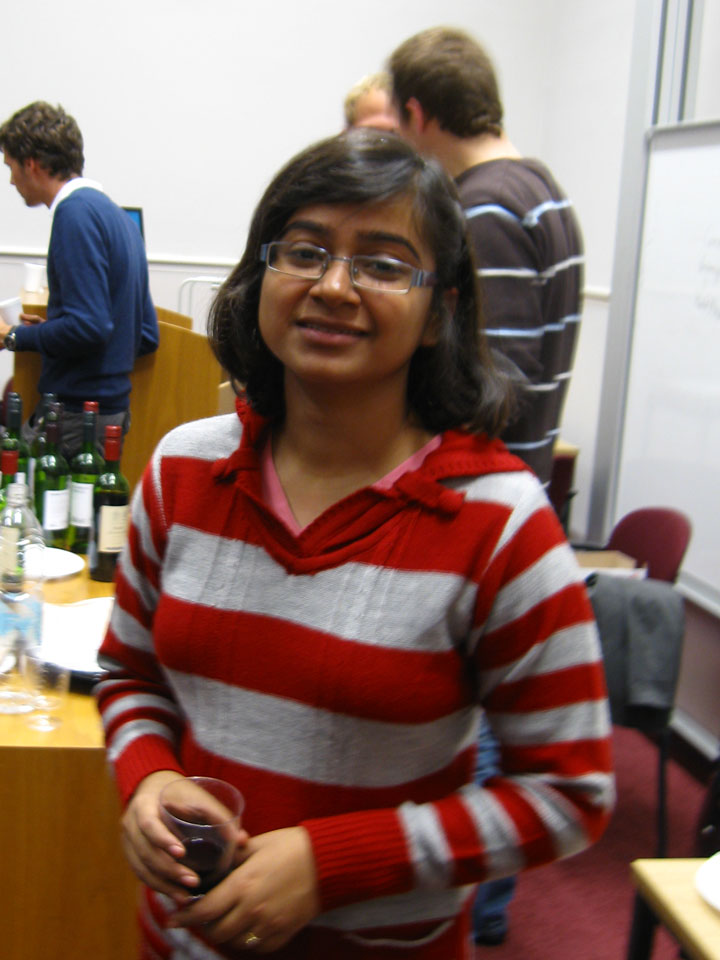
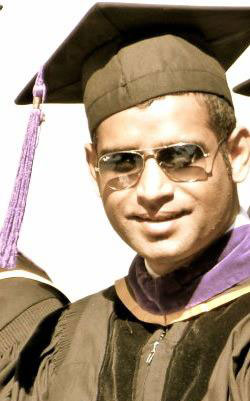
    rachit-ranjan-1Rachit Ranjan graduated from WBNUJS, Kolkata in 2010. He had finished his schooling from the USA and France to join NUJS for legal studies. After graduating from NUJS he had the opportunity to teach at CNLU, Patna for more than a year. Thereafter he left to pursue his LL.M from University of California, Berkeley. Later he also had the opportunity to teach at Jindal Global Law School, Sonepat and is currently working at the WTO, committed to pure research work.

    In this interview we requested him to share:

    • The differences between academic culture of India and other countries.
    • Teaching experience at CNLU, Patna and JGLS, Sonepat
    • His experience at UC- Berkeley while pursuing higher studies
    • Research work at IIFT and at WTO


    Tell us a bit about yourself.

    At the outset, let me congratulate you for this wonderful initiative. I only wish that there was this sort of guidance at our disposal during my law school days. I would also like to mention that I am not deserving of the tag of superlawyer yet but would like to thank you for allowing me to share my thoughts with your readers. I hope that my experiences will encourage some students to pursue academia as a profession. I graduated from NUJS in 2010 and did my LL.M. from UC Berkeley in International Law. My career decisions are small platforms, which may (or may not) help me in realizing my ultimate goal of becoming a reputed academic.


    What differences did you find between the education systems of India and US?

    Both systems have their pros and cons. I moved to France in 9th grade because of my father’s job. Coming from an Indian education system, the American curriculum and pedagogy was a refreshing experience. I believe the greatest tragedy that plagues the Indian education system is the ubiquitous culture of rote learning. Although the Indian education system had prepared me well to adapt to a completely new system, it did not allow me to adapt easily to the immense focus on logic and analytical thinking which is encouraged in the American curriculum. I believe it is a practice which will help any student in the long run regardless of their career choice. To that extent, I feel India must eschew the culture of rote learning and start treating students as co-creators of knowledge rather than blank slates.


    What was your motivation behind pursuing law?

    My career choices have been nothing short of a serendipitous discovery. I had never considered law as a career option. In fact, I was planning to study biotechnology in the US or Canada but due to the high tuition fee I had to reconsider my options and move back to India. My cousin, who was at NLS Bangalore, encouraged me to apply for law. She did a mighty fine job at selling national law schools and what they had to offer. At that time, my idea of a lawyer was a person in an expensive suit driving a fancy car. I must admit this is what drove me to choose law. I wasn’t really passionate about law when I began preparing for the entrance examinations. I applied in the pre-CLAT era, when all these institutions had separate exams.

    NUJS happened to be the first one in the series. I was really keen on joining NUJS because I heard great things about the place from my cousin and my uncle, who is a lawyer. Naturally I put in the most amount of hardwork for the NUJS exam and was lucky enough to crack it. Upon receiving confirmation about my selection, I made up my mind that I wanted to move to Calcutta and did not put much effort in preparing for other entrance examinations.

    It was only after I joined NUJS that I got a real taste of law. I was intimidated initially but the constant intellectual rigor was something which appealed to me. Even though many of my peers have completely moved away from law, my passion for this discipline keeps growing stronger. This passion stems from a sense of intellectual and moral satisfaction, I receive from this discipline.

    What motivates me now to uphold my decision is how well I am equipped to explore issues that confront the global community today, where lawyers have a definite and positive role to play Inter aliaissues relating to human rights, environment, global trade and intellectual property rights. Owing to the training I have received as a lawyer, I am confident about dealing with such issues, which bear a direct impact on our society.


    Tell us about your time at WBNUJS.

    Unfortunately my law school experience isn’t one which I would wish upon anyone. I have battled great adversity to complete my legal education, which severely affected my ability to be active in extra-curricular activities. From 2005-2010, I suffered from four extremely severe bouts of Hepatitis A, which would render me incapable of attending classes or partaking in any event. My illness prevented me to gaining a holistic law school experience.

    Out of 10 semesters in NUJS I was sick for six. Nevertheless, I did not let this affect me adversely and took part in extra curricular activities, whenever I had the time. Perhaps the proudest moment of my college experience was being part of the organizing committee for the ILSA International Conference. At that time, no law school in India had managed to host a conference of this scale. We won the bid for the conference by virtue of networks made by my batchmate Kinshuk Jhunjhunwala, when he went to present a paper at the ILSA Conference in 2007 (co-authored by me).

    Although NUJS had already gained international recognition in mooting and debating, the conference helped the institution to achieve immense adulation and respect among some of the foremost international law scholars of the world. I believe it assisted the institution immensely in establishing itself as a law school, which engages in serious scholarship. To be an important part of institutional development was exhilirating and humbling at the same time.


    What are your thoughts on these activities like mooting, debating and publications in journals?

    As mentioned above, the debilitating circumstances during my law school prevented me from partaking in many of these activities. In fact this is part of the reason why I chose teaching law as a profession. During my stint at CNLU and JGLS, I actively engaged in mooting activities by coaching certain teams for competitions. I coached the JGLS team, which won the NLS Arbitration Moot recently ( although all the credit goes to them). All these activities are extremely important and every law student must engage in them.

    Although real court procedure is very different from mooting, the essential reason behind this activity is to teach you legal research and argumentation. It is the ultimate training program to help you to “think like a lawyer”. Debating requires you to be updated with the latest developments across the world and further allows you to dissect these issues by engaging in reasoned discourse. This is another element, which is extremely important in order to become a good lawyer.

    As for publications, I have always maintained that if you want to understand a subject in-depth, you should write a paper on it. Much like mooting it teaches you legal research and argumentation. However, legal scholarship goes a step beyond and allows you to engage with the subject in a more nuanced manner. It will consolidate your foundations and prepare you to “think outside the box”. There is far too much focus in law schools about the “CV value” of these activities, which in my opinion is very unfortunate. I believe there needs to be a major overhaul of this mindset and both students and faculty should espouse such practices not because of their respective “CV value” but as a personal(ity) development initiative.


    Please tell us any remarkable internship experience of yours which shaped your legal career?

    My internship experiences are more or less comparable to any other law student’s experiences. I wanted to experience each and every avenue, where lawyers had a role to play before making a final career decision. What distinguishes my experience from majority of the law students is a focus on international organizations.

    I have always been fascinated by international affairs and am quite the international relations nerd. To this extent, I always wanted to explore how international organizations functioned, the dynamics at play re the political and structural constraints of these institutions and of course, the role of law. I interned with INTERPOL and UNODC, to understand issues relating to international money laundering, drug trafficking and financing of terrorism. I engaged on a special project with UNICEF as a lead researcher to study the implementation gap in Bihar re child rights legislation and India’s international commitment regarding the same. All these experiences allowed me to gain a better understanding of the expansive contours of international law and international affairs, a discipline which I intend to pursue in the long run.


    Why did you choose teaching as a job and not a corporate job?

    As mentioned before, my career decisions have been nothing short of a serendipitous discorvery. I moved to Patna upon my graduation to prepare for the the Civil Services Examination with a “dream” to join the Indian Foreign Service. Despite knowing that joining the government would severely curtail my ability to voice my dissent on pressing international issues, I was convinced( and am still partially) that it is the best platform to understand geopolitics. I joined CNLU, with the objective of using the university’s resources for my preparation.

    After an interview with the Vice-Chancellor, I was given the opportunity to join the University as his teaching assistant. My work profile ranged from handling the student recruitment/internship intitiave to delivering lectures on certain aspects of public international law and international trade law. This was my moment of epiphany and I am most thankful to the institution for this experience as it allowed me to discover my passion.

    Whenever I delivered a lecture, there was a feeling of self gratification and intellectual empowerment. The adulation I received from my students further assisted me in realizing that this was my calling in life. Ever since then all my career moves have been strategized to realize the ultimate dream of becoming most importantlya good teacher, and an authority in my field of specialization.


    What prompted you to join IIFT?

    (Rachit went on to join the Indian Institute of Foreign Trade as a research fellow.)

    A very renowned jurist told me that If I wanted to excel in academia, I must understand how each functionary of that discipline operates (i.e. academic/government/practiotioner). Since my area of primary interest was trade law, I wanted to join a government department to gain hands on experience on how policies are deliberated within such departments.

    I joined the Centre for WTO Studies at IIFT, which is a government think tank mandated with the task to assist the Ministry of Commerce and Industry on issues relating to international trade and investment policy. My work at the Centre ranged from writing policy papers for government officials to offering legal advice on international trade disputes and policies at the WTO.


    When did you finally decide to pursue masters?

    Since I was certain about pursuing academia, pursuing an LL.M. was a professional requirement. I concentrated on the top 15 schools in the U.S.  because after doing a lot of research on the LL.M. program in general,  I reached the decision that U.S. law schools offered a far greater level of academic rigor than U.K. or Indian law schools in their respective advanced degree programs.


    How did you get through the selection process of UC Berkeley School of law?

    I feel extremely fortunate about being admitted to a great institution like UC Berkeley. I don’t believe there are set criteria, which will decide your success in securing admission into such institutions. I certainly believe, that grades do play an immense role when you are aiming for the top institutions. However, even if you don’t have a stellar academic record, you can very well make up for it by your work experience, extra curricular activities and mostly importantly you statement of purpose.

    I have researched in great detail on how to prepare the best LL.M. application and will not be able to do justice to this question in the limited space. Perhaps I could write another piece on the aspects you must focus on while applying for your LL.M. If I had to sum it up, it all boils down to how well you are able to sell your achievements, interest in law, interest in the institution and how you fit in with the tradition of the respective institution coupled with the designation and background of your referees and the content of the recommendation.

    Click here to download the Personal Summary

    Click here to download the Statement of Purpose
     

    rachit-ranjan-2Tell us about your time at UC Berkeley.

    An LL.M. abroad is what you make of it. If you want to treat it like an extended holiday, it would be a fantastic holiday albeit very expensive. I was certain about what I wanted to attain from this experience. I went on the thesis track at UC Berkeley, which required me to write a dissertation of publishable quality. Naturally, this required a lot of research and background reading followed by grilling sessions with my supervisor.

    Apart from my thesis, I took international law courses at Berkeley. This was the first time I was exposed a proper socratic style of teaching, which required me to read about 200 pages on any given day. Initially, it was difficult for me to adjust to this practice but with time I managed to find balance between work and play and really enjoyed the assigned readings.

    I may add here for the voracious readers that legal reading is far more time-consuming and intellectualy exhausting than reading a novel.  I must admit that, by my own experiment, the socratic method is an extremely effective pedagogical tactic and must be implemented by every faculty in Indian law schools.

    My time at Berkeley is one of my most cherished memories. It was the first time, I had a complete college experience, where I actively participated in social and academic events. The faculty, staff as well as your peers from across the world made the task of settling in a new country and new education system extremely easy.


    How did the opportunity of teaching at Jindal Global Law School come to you?

    Upon graduating from Berkeley, I returned to India to pursue teaching while awaiting the decision on my application for internship at WTO. I heard great things about JGLS from many academics and decided to join the institution. My experience at JGLS was my first real exposure to teaching law. I was assigned to teach Alternate Dispute Resolution to third year students. I was also attached with two research centres within the institution. I believe JGLS is an institution with great promise provided they find a way of retaining talent. They certainly offer unprecendented incentives to aspiring academics but there remains a serious mismatch between the vision of the institution and its implementation. Nevertheless, my stint at JGLS was wonderful because it reinforced my decision to pursue academia. I met some brilliant academics and students there, whose support is essential for my development as a teacher.


    What do your responsibilities at the World Trade Organization, Geneva entail?

    The WTO has a very robust and an extremely competitive internship program. I had applied for an internship during my LL.M. (internship programme only selects professionals holding a masters degree) and decided to pursue teaching in the meantime to enhance my chances of securing a good PhD program.

    As a legal intern, my work can range from anything as mundane as updating footnotes on dispute reports to as interesting as providing legal input on an ongoing dispute at the WTO. I have been involved in formulating e-learning modules for delegates of Member States to working on thematic research papers, which study the dynamics between diplomacy and litigation with respect to disputes at the WTO. Till now, my exposure to trade was very academic but the internship has filled the void and allowed me to witness the day to day functioning of this institution and learn how trade deals/disputes are negotiated and executed at the highest level.


    What are the factors you consider while making a crucial decision?

    As mentioned above before I can call myself an full fledged academic, I must have an understanding of how each functionary of this discipline operates. I have made these career moves with this backdrop. I firmly believe that between you and your ultimate goal there is no room for complacency or satiability. As the American humorist Will Rogers quipped:

    “Even if you’re on the right track, you’ll get run over if you just sit there.”


    What are your long term goals?

    I intend to become a full time academic with a focus on international law in general and international trade and investment law in particular. Through this position and my work,  I intend to establish myself as an authority in my respective field and engage in policy making with governments across the world. The truth about law is, regardless of which avenue you choose to pursue, it will be an incredibly long and tedious journey towards your ultimate goal but the trick is to enjoy the process and the immense opportunities at your disposal.


  • Shezin Hussain on comparative Legal Practice of Bangladesh and India and organising Women’s T20

    Shezin Hussain on comparative Legal Practice of Bangladesh and India and organising Women’s T20

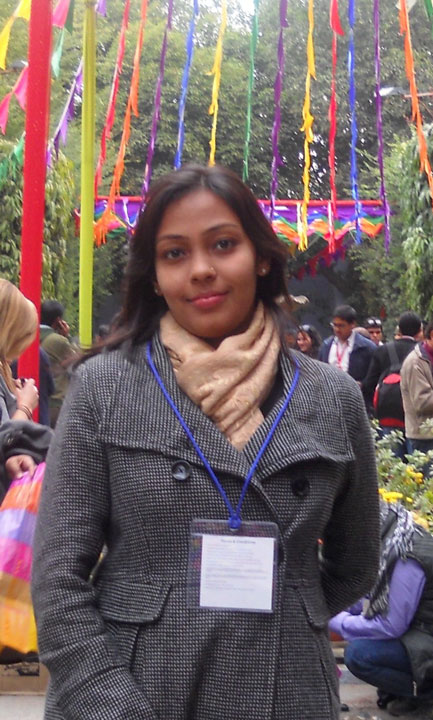
    shezin-h4Shezin Hussain graduated from NUJS, Kolkata in 2009. Being a Bangladeshi citizen educated in India she has the insights of the legal systems of both the countries. After graduating from NUJS, she completed her LL.M. from Southeast University, taught as a guest lecturer at Metropolitan University, Sylhet, and has been a practicing lawyer at the Judges’ Court at Sylhet.

    She has also been an Investigation Officer for BRAC which is the largest NGO in the world. Most amazingly being a passionate sportsperson she has had the opportunity of organising the latest ICC Women’s T20 World Cup 2014 among all her commitments.

    In this interview she has talked about:

    • Life at NUJS and interning at places in India and Bangladesh
    • LL.M. from Southeast University, Dhaka
    • Organising the ICC Women’s T20
    • Being an investigation officer at BRAC
    • The comparative legal practice of India and Bangladesh


    Our readers mainly consist of young lawyers and law students, how would you like to introduce yourself to them?

    Hi, I am Shezin W. Hussain residing in Sylhet, Bangladesh. Currently I am practicing as an Advocate at the Judge’s Court, Sylhet. Apart from that I’m working as guest Lecturer for the Department of Law & Justice, Metropolitan University, Sylhet and a political fellow for Democracy International, a USAID Agency.


    You finished your schooling in India. What prompted you to pursue your education in India? How were your formative years as a school student? Did you partake of all activities in school?

    It was solely my parent’s decision to send me to India to complete my schooling. Both my parents were involved (Mom is still involved) in politics, due to which they couldn’t spend much time on me and my siblings, hence they sent us away to boarding schools for better education.

    During my early school days, I focused more on my academics; hence I worked on my grades instead of concentrating on other activities. Eventually, when my grades started soaring upwards, I started participating in various co-curricular activities.


    How did the thought of pursuing a career in law cross your mind? Did you have lawyers in your family who motivated you to pursue a career in the legal field?

    I never thought of entering the legal profession, it was my dad’s decision that I take up law as a subject after I had completed ISC in 2004.

    My grandfather was a practicing Advocate in the Judge’s Court, Sylhet but I had lost him while I was in Standard VI, so I wasn’t actually motivated by him. It was more of my dad’s decision. Now that I don’t have my father to see me pursuing my career, I feel lucky to have had a father who anticipated the potential in me and asked me to tread the path of the legal profession.


    What prompted you to consider NUJS, Kolkata for your legal studies? How did you get to know about it? Which other universities were in your shortlist?

    My mother, while visiting Kolkata in November 2003, came to know about this University in some newspaper. She had visited the University and collected the application form, which she later posted me. I was preparing for the ISC exam, scheduled in March 2004, I was asked to fill up the application form and post it back to the University. This was the first and last University I had applied for. I didn’t consider looking for any other Universities.


    Please share some of your memorable experiences at NUJS, Kolkata. What made your college life exciting? How well do you think your education at NUJS prepared you for the real world practice of law?

    Securing a place along with other meritorious students made me wonder how I ended up there.

    Initially life in NUJS was hectic, nerve wrecking & challenging. I was not a brilliant student but more of a mediocre student; hence I had to struggle with the study pressure in the beginning. Eventually, when I had settled in, things started to fall into place. My grades stabilised and I could engage in other extra-curricular activities.

    The years I spent at NUJS have been the best 5 years of my life, I made wonderful friends, discovered the vast arena of legal education, and ventured the city of Kolkata in every possible way. Overall, it was a great experience.

    The legal education that I received from NUJS, has helped me imparting knowledge to my students during my teaching experiences. It has also equipped me to deal with the legal complexities of litigation.


    Tell us about your internships. Any remarkable internship experience which shaped up your career? How would you recommend students to go about choosing their internships?

    I have done several Internships, under the Advocate on Record of Supreme Court of India, Kanga & Company, Jyoti Sagar Associates, Mumbai, Senior Advocates of Judge’s Court in Sylhet, Bangladesh. All, these internships have given me an opportunity to experience different aspects of the legal profession. Corporate culture, litigation gave me an opportunity to decide what kind of a career I’d like to pursue. Unfortunately, in my country, there isn’t much scope for students to carry out internships. The sole reason is that the corporate culture in Bangladesh is still developing and  the universities in the country don’t emphasise on Internships, due to which many students are unclear about their careers after graduation. Indian students already know what they’d like to pursue after completing their graduation but  it is important to focus on law firms that you’d like to work with in the future while choosing your internships. A good internship definitely reflects well on your C.V. while recruiters hire you.


    What was your motivation behind pursuing LL.M.? Was it a personal endeavour or a professional requirement? Why didn’t you opt for Indian Universities?

    I wanted to pursue LL.M from the U.K but due to personal anomalies I couldn’t do so. Later, pursuing LL.M was more of a professional requirement than a personal endeavour. I didn’t opt for Indian Universities as they don’t offer specializations in subjects; plus, since the duration is of 2 years, it didn’t seem very encouraging to me.


    You completed your LL.M from Southeast University, Dhaka, Bangladesh. What all did you consider before choosing your subject for Masters? What are the differences you found between Southeast University and NUJS?

    As I said, since it was more of a professional need to pursue LL.M, I opted for Southeast University. Since there was no specialization, it was a general LL.M, and hence I didn’t have the option to choose any subjects.

    There are numerous differences between NUJS and South East University. I cannot compare NUJS with any Private University. If I ever get an opportunity again, I’d like to pursue my LL.M in a foreign country.


    shezin-h3

    You were closely associated with the ICC T20 Women’s World Cup 2014 and the South Asian Games 2010. How was your experience organising these events? Have you been a sportsperson? What draws you to sports?

    I was the MC for the South Asian Games 2010. It was definitely a great experience. That was the first time I faced thousands of people. This experience has definitely added as a boost to my experience during the ICC T20 Women’s World Cup 2014. I worked as a Local Coordinator for the women’s teams along with being the MC for the player of the ceremony after each match. Dealing with ten teams was super challenging and hectic. The event was scheduled for more than a month. It was an eye opening experience as I came in contact with hundreds of officials and employees of the International Cricket Council, the Bangladesh Cricket Board, famous players and match officials. I feel extremely lucky to have been a part of such a stupendous event.

    I was more into sports during my school day and college life. I have played almost all kinds of sports and was a part of the football team and cricket team while at university and the basketball, hockey teams during school days. It’s rejuvenating and I enjoy playing sports.


    You worked as an investigating officer at the Gender Justice & Diversity Section, BRAC, Dhaka, Bangladesh. Tell us what your job profile was all about, what comes under the responsibility of an investigation officer?

    The job as an Investigation Officer in Gender Justice & Diversity at BRAC was interesting and challenging. Basically this job profile was focussed on working with sexually harassed men/women at work place. A grievance cell was created whereby those working with BRAC if they faced any sexual harassment at work place could launch complaint with SHARE Unit, (Sexual Harassment Elimination Unit). After receiving complaint from SHARE, two investigation officers are given the task of visiting the place of occurrence and carry out investigation. After returning back from investigation, report has to be prepared and handed over to the Team Manager. Later Team Manager along with the head of SHARE Unit would decide upon what action to be taken. The punishment could range from termination, temporary suspension and warning. An aggrieved person if not satisfied with the awarding sentence could approach to Ombudsman. The decision of the Ombudsman is final.

    So, as an investigation officer, I had to investigate the matter by visiting the place of occurrence, take statement of the victim, accused and witnesses. It was very challenging job because sometimes the accused would turn hostile, the witnesses would refuse to meet. Most importantly basing on my report following actions would be assigned. So since it was sensitive issue dealing cautiously was essential.

    BRAC’s GJ&D had formulated Sexual Harassment Elimination (SHE) Policy in 2004, following which BRAC was committed to follow the High Court Division’s Guideline against sexual harassment that was promulgated on May 14, 2009.


    Given the Law firms where you interned offer a lucrative pay package and a prestigious career, how did you decide to return back to Bangladesh and start practice? Have you always thought of litigating from your days of being a law student?

    It was simply my father’s decision that I come back to Bangladesh and start working here. Since 1994, I have been in India for education purpose, hence my father wanted me to return back just as I had completed my graduation in 2009. I didn’t think of taking up litigation while I was a law student. The circumstances lead me to opt for this path.


    You are currently working as an advocate at Judge’s Court, Sylhet, Bangladesh. How is the court atmosphere in Bangladesh? Can you share some of your experiences in the first few sessions of the court?

    The Judge’s Court scenario is pretty much different. Though initially I didn’t like the atmosphere but gradually over time I got used to. The first few sessions of the court was challenging as most of the time while appearing for any matter, I am facing a senior opposing counsel. I was nervous at the beginning but over time I have grown confident and hesitation don’t take over me.

    Also, immediately after graduating in 2009 I couldn’t start practice straight away. In the legal system of Bangladesh one has to pass the bar examination before practicing as an Advocate. Passing the bar exam is really challenging as one has to face more than 15,000 or more examinees from all over Bangladesh every passing year.


    Can you tell us about a few highlights of the legal system of Bangladesh? Do you find any major differences between India and Bangladesh?

    The legal System in Bangladesh follows the Common law. The Judiciary is independent. The Supreme Court of Bangladesh is the Apex Court with two divisions, The Appellate Division and the High Court Division. Appellate Division hear and determine appeals from judgments, decrees, orders or sentences of High Court Division. High Court Division has both Appellate and Original Jurisdiction. It hears appeals from orders, decrees and judgment of subordinate courts and tribunals.

    The laws and acts are all most similar except that amendments have made certain changes. The personal law is different than that in India. Also, unlike the Indian System, one has to qualify the bar examination in order to practice in the Judge’s Court in Bangladesh. For enrolment in High Court, minimum two years practice in lower court and if the candidate has LL.M that he /she can sit for enrolment examination of High Court.


    What are the primary requirements of a practicing lawyer in Dhaka? Is it possible for an India educated lawyer to start practice in Dhaka and vice-versa? Do you consider practicing law in India ever? How would it be for you to adjust your career in a city like Delhi or Kolkata?

    Primary requirement for a practicing lawyer is that he/she has to be enrolled after passing the Bar Council Examinations. It is not possible for an Indian Lawyer to practice in Bangladesh unless he/she is a citizen of this country and vice-versa. I had considered practicing in India but since I am not an Indian Citizen, hence I cannot practice. If I would have the opportunity I would comfortably adjust my career in Kolkata, as I’m accustomed to the life in Kolkata after staying there for 5 long years.


    shezin-h1

    Is legal practice in Dhaka as lucrative as in Kolkata? What are the primary challenges in establishing an illustrious career there?

    If you consider the High Court practice, then I would say both Dhaka and Kolkata are on same footing. Even though primarily it’s very tough to build up this career in litigation but with time one can blend in.

    The primary challenge in litigation is being a woman. If the family is not supportive than pursuing litigation, maintaining family could be pretty challenging. Though now days the families are less conservative so this makes the chances a bit better to opt for litigation. And of course competition is there considering clients prefer Barrister-at-Law than other Advocates. This trend has been since there after independence and till date it continues. People have the notion in Bangladesh that if you become a Barrister you are much more qualified than ordinary advocates who are in practice for long years. The trend is changing though, after realising that not all Barristers are worth the penny.


    You have worked in India as an intern in various law firms and under various famous advocates, do you find any difference in the working cultures of India and Bangladesh? How different are both the countries in terms of work culture?

    The work culture is much more different in Bangladesh in comparison to India. The education I got from NUJS has given me an upper hand. In comparison to other graduates from certain private universities and public universities in Bangladesh, I think I had a great exposure in this profession. The experience that I have gained has pushed me ahead in my profession. As a result, I am pursuing litigation along with teaching and also being a political fellow for Democracy International, a USAID agency. Also, the corporate culture is not yet full-fledged in Bangladesh unlike India. It will take another few more years to form the corporate culture like that of India. Also the political instability has direct influence in our legal system, so that works to as a barrier for companies coming in and investing in Bangladesh.


    Lastly, what would be your message to a law student who wants to excel in the legal profession?

    For the law students, please utilise your time wisely while studying and try selecting the good law firms for internships. The internships reflect a lot in what you are capable of pursuing as a lawyer while you will enter professional field. Most importantly, let your heart follow what you want to pursue, don’t follow anyone because making your own identity will always lead you ahead in life no matter what you chose. Good wishes to all the upcoming lawyers.

  • Pankhuri Mehndiratta on working for International Human Rights Organisations and insights of a career in research work

    Pankhuri Mehndiratta on working for International Human Rights Organisations and insights of a career in research work

    pankhuri-a-m-4Pankhuri Anuradha Mehndiratta is a NUJS graduate of the Class of 2014. She has recently joined the Centre for Legislative Research and Advocacy as she is keenly interested in International Human Rights and Public Policy. We have taken out this opportunity to ask her about:

    • Specifically choosing internships that help in Humans Rights Law.
    • The importance of taking up courses that have an impact on one’s career as a Human Rights Researcher.
    • Things to be kept in mind while compiling a research work.
    • Insights for law students who aspire to work for international non profit organisations.


    Most of our readers are law students and young lawyers. How will you introduce yourself to them?

    Hello! I am Pankhuri Anuradha Mehndiratta. I am a graduate of the Class of 2014 from NUJS. I am keenly interested in International human rights and public policy. I have just joined the Center for Legislative Research and Advocacy as a Project Associate.

    I was born and raised in Jaipur and did my schooling at Maharani Gayatri Devi Girls’ School .I trained as a kathak dancer from a very young age and was also the Cultural Head Girl of my school. I love to read, travel and am also a licensed Scuba Diver. I enjoy my adventurous streak. I like to learn new languages and am pursuing French as a foreign language at the moment.


    You studied Humanities before finishing your schooling. How did you gravitate towards law thereafter? Did you have someone who inspired you to study law?

    I took up Humanities in school owing to my inclination towards it. I had always been interested in subjects that relate to the human behaviour and relationships.

    I come from a family of doctors and thus the importance of a profession that adds value to society had been instilled in me at a very young age.The pursuit of law not only trained me to think critically but also gave me the tool to make the change I wanted to see in the world in however small a measure. I am a first generation lawyer and in that sense did not have any person who I looked up to at the time I entered law school. However, along the way I met many admirable individuals in capacities of mentors, teachers and peers who enriched me immensely.


    pankhuri-a-m-3Barring one or two exceptions almost all your internships at WBNUJS were focussed on non-profit and research work involving primarily matters of Human Rights Law. Were these all planned internships or did you just take them up as they came along?

    I do not believe in coincidences. I consciously opted for subjects that exposed me to the various facets of Human rights. I backed my theoretical knowledge with practical and on the job experiences at various national and international organizations through my internships. Apart from one corporate internship which helped me be sure of the fact that I did not want to tread the path of the corporate world, all other internships were consistent and conscious choices.


    Your work shows a great enthusiasm and interest in the field of Human Rights Law. What brought you into Human Rights? Were there any incidents which inspired you into it?

    Thank you. As I said it always has been very important to me that the work I do has a direct and positive impact on the lives it touches. I have never been one to accept things on face value and have always intellectually pushed the limits of what the apparent status quo is in my sphere.

    As for what inspired me, there was not any one definitive moment that did. It was the steady and gradual realisation of how much discrepancy that lies between ‘what is’ and ‘what should be’ which inspired me to work towards bridging that gap.


    You interned at The Office of the Prosecutor, The Special Tribunal for Lebanon, at The Hague. How was your experience as an intern? What work did you get to do there? How did you come across such an opportunity?

    It was truly enriching. Each day was packed with immense experiential learning. The level of mentoring and guidance to the interns was stellar .The STL was at the Pre- trial stage at the time and I got to do lots of research and drafting on topics of International Criminal Procedure as well as Human rights that apply to the victims of terrorism. Since the nature of the work was sensitive and confidential, it is best not discussed on public forums. But most importantly, I got to witness the workings of the various echelons of International justice up close and that to me, was a reward in itself.


    pankhuri-a-m-5

    What are the courses you have taken up as a law student? And which are the ones that may have a long-lasting impact in your career as a Human Rights researcher?

    My university offered quite a few optional as well as credit courses. I took up a few on Human rights and its relations with many aspects of life as and when they were offered. Unfortunately, the practice of offering of the Credit courses is not very regular in most law schools as it is basically dependant on availability of experts in a field and the liasoning of the university with them. Hence, you just basically make your choices based on the available options at the time. I feel each of these courses that I took gave me an added perspective on human rights and its various facets and helped me understand the corpus of International human rights and its various off shoots from different angles.


    What has been your most memorable incident working for these NPOs?

    I think the best part about the field of human rights is the fact that you have your memorable incidents everyday! Considering how I have human rights internships spanning my whole law school career, skimming out only one such incident would be grossly unfair. Suffice it to say that the satisfaction you get after back breaking effort to entitle someone to a better life is mighty addictive.


    What is it like researching for so many International Organisations? How hectic is it? Are there new challenges everyday or has work settled into a predictable pattern?

    I researched for a couple of International and Non Governmental organizations during the course of my law school. It used to be hectic but it was not an impossible task to make time. Most of the work is project based and spanned over a duration of weeks/months. On a lighter note, what else have we learnt in law school if not time management?


    Most of our colleagues would say they need a higher pay package than an NPO can offer to sustain themselves. Do you think remuneration is a serious impediment to pure research based work?

    I strongly feel that research and innovation is a grossly undervalued professional arena in our country and it can be very difficult for people to sustain themselves with the pay packages that NPOs offer and in turn the NPOs lose out on brilliant people as a result of the same. However, it is also true that should one go through the rigours and hardships of the first few years, the experience gathered is unparalleled and the remunerations follow in due course.


    What are the top three things you keep in mind while compiling a research work? How do you suggest we become efficient at it?

    Firstly, the researcher must get acquainted herself with the topic across a range; starting with something as banal as a Google search on the same.

    Secondly, the sources are what differentiate a good research piece from a bad one and it is for this purpose that one should be very sure of the source of the information and its authenticity and admissibility.

    Thirdly, after the information is gathered from eclectic sources and duly analysed, a logical skeletal structure for its presentation must be kept in mind.

    Lastly, the end product/report should be aimed towards the audience and at all times be concise, precise and comprehensive.


    Where do you suggest one can intern or apply for research opportunity if she is interested in working for Human Rights issues?

    There are various levels of organisations at the national, international, micro as well as macro levels. Since the arena of Human rights law is vast, the best thing to do is to identify an area of specific interest and then go ahead and look for available opportunities.


    What is the best possible course of action for a law student who aspires to work for international non profit organisations?

    In my opinion, the peculiar thing about the arena of International law is that it follows the rules of Calvinball. That is to say, that there are no set rules or course of action since it is a very niche area. That being said, the best thing to do is to gather as much experience at various levels and be consistent in your endeavours.


    Where do you see yourself by the end of the coming five years? What are your long term objectives?

    At the end of five years, I see myself as a specialist in International Human rights, making a significant contribution as part of an International Organization.


    What would be your message to law students who are research enthusiasts?

    I would like to tell them that as future lawyers they have a very powerful tool to effectuate social change and that they must use it to its fullest potential. Even though the field of International human rights might look very glamorous from the outside, it requires immense emotional maturity and objectivity. That being said, if anyone is fortunate to have it as their calling, they must absolutely pursue their dreams. In the current law school set up in India, it can feel like a lonely path in the absence of proper mentorship, counselling, guidance and placement efforts, not to mention the assessment of your worth by the pay package you land by your peers. However, they say the roads less taken most often lead to beautiful destinations and that’s the road to take for anyone aspiring to be an International Human rights lawyer.


    Pic credits: Arghya Brata Mandal
  • Tanuj Kalia, Founder, Lawctopus, on his passion for entrepreneurship, blogging, and plans for the future

    Tanuj Kalia, Founder, Lawctopus, on his passion for entrepreneurship, blogging, and plans for the future

    Tanuj KAlia graduated from NUJS, batch of 2013. He is founder, CEO, and publishing editor of Lawctopus, an online portal designed to help law students. The website has been featured in leading dailies such as the Economic Times, The Telegraph, among others. His other achievements include being student mentor for law students at IMS Learning Resources; research intern at A.K. Bansal and Advocates,  Fidus Law Chambers, Research Foundation for Governance in India, among others.

    In this interview we speak to him about:

    • Combining law with his passion for entrepreneurship
    • Working as Vice President of vakilsearch
    • The future of Lawctopus


    How would you like to introduce yourself to our readers?

    I am Tanuj Kalia, born and brought-up in a small town in Himachal called Sundernagar. I started writing poems when I was 9, ended up doing law from NUJS, Kolkata, and started Lawctopus.com thanks to a heady mix of serendipity and chicken pox.


    Tell us something about your life before law school.

    My childhood was spent in a small town in Himachal Pradesh, Sundernagar, and it was an awesome idyllic place with lots of piddu ball cricket. For my Class 11 and 12 and LST I was in Chandigarh, where I did nothing but study well and hard.


    What motivated you to pursue law?

    I was pretty weak in Maths. I could actually feel my brain cells’ synapses give way when I tried to do any mathematical sums. Also, I was quite good in English. My parents never forced me to do Engineering etc., and it was my dad who brought home the 2008 NLSIU paper. After seeing the questions I was like “This requires writing, yippy!”. And so I was in. Also my dad is a civil servant and had studied law, so he knew a bit about the profession.


    How did you get into blogging?

    (Tanuj was awarded ‘Best Legal Blogger in India’ by LegallyIndia.com.)

    I started writing and blogging for Legally India accidentally. When Legally India had just started, I had e-mailed Kian (the founder editor) that I wanted to intern under a good family law lawyer and could not find any information on it. Kian, the fantastic person that he is, put up my query on LI forums where I did get some good replies.

    We got introduced this way and I told him that I loved writing and wanted to write for his website. The freelance rates for Legally India are top-notch and Kian is an excellent mentor. My first write-up for Legally India was on ‘Internships’.

    I was a reluctant blogger, too. But Kian sort of goaded me into writing. And Legal Poet took off.


    How does one become an excellent writer?

    Innate talent is required. But it is just the starting point. If you are not talented, but work hard at this craft, you can get good, but maybe not great at it. Similarly, if you are super talented but do not work hard, you will remain just average.

    I do not think I am up there to offer advice yet. But still, write from the gut, use simple words, short sentences, have shorter paragraphs. And then, edit ruthlessly.


    Tell us about your life at NUJS.

    It did get monotonous for me in the first year, when I was like, “Hey, what should I do?”

    I played quite a bit of cricket then and made it into the University team. So yes, cricket took a bit of time then. Also, I was convinced that ‘internships’ were the be all and end all of a successful career in law and I researched like crazy on internships too.

    In my second year, I took to blogging. In third year it was IDIA and Lawctopus. In the fourth year, love made me crazy! ” And hey! Is there even a fifth year in law school?


    What kind of internships did you do while you were a student?

    I stopped interning after my third year, because Lawctopus was doing well and in my view working on it was as useful as any internship. I interned at a lot of small places doing excellent work.

    My internships sort of convinced me that I can do something similar what these people (the founders of the places I was interning at) are doing and that I should do ‘something of my own’.

    I interned at Malhotra and Malhotra Associates in Chandigarh, which is a nice family and immigration law firm; RFGI, a think tank based in Ahmedabad; Fidus Law Chambers, an IP and Sports Law firm in Noida. I also worked under Ashwinie Kumar Bansal, an author/WIPO mediator.


    What are the skills you have learnt at internships and you could not have learnt otherwise?

    Not skills as such, but internships gave me a perspective.

    Fidus Law Chambers taught me that sometimes you can suck, and it’s ok.

    RFGI taught me how a small group of young people was making good changes, both big and small.

    Malhotra and Malhotra taught me, that, well, there’s loads of money to be made in law.


    How adept are you in Search Engine Marketing and Search Engine Optimization?

    I really do not have proficiency in these areas. But yes, I did a one month course in SEO/SEM so that when I talk to a tech guy I can understand what he says and he can understand what I want.


    How did you fare in your academics at NUJS?

    I did well in my first year. From my third year onwards I took exams just to pass them. So, I used to curse myself if I scored anything above 45 marks (40 is the passing mark, so getting a 50 did not make sense; why work that hard for something you do not want). I ended up in the middle of my batch.

    There was academic pressure, but I did not take it. My parents were again okay with it. They told me, “Complete law in five years, and do whatever you want.”


    What did you do after your graduation?

    I did not sit for campus placements in my fifth year. I was not looking for placements really, but I was sort of ‘open’.

    Now vakilSearch is a very exciting company and I knew about it since my third year and had track its (and Akosha’s) growth since then. Both the companies were an amalgamation of law, entrepreneurship and big change which appealed to me.

    The job and vakilSearch happened accidentally. I was on phone with Hrishikesh Datar (the CEO of vakilsearch) regarding some tie-up with Lawctopus. At the end of the phone call he was like “Why don’t you join vakilSearch?” I told him that if the offer ‘excited’ me, I would be up for it. And well, it indeed was a super exciting offer!

    Frankly speaking, vakilSearch, Akosha, Rainmaker etc. had been on my hit list since the third year and I’d have loved to work for such companies.


    What did you have to do as a VP of Marketing for VakilSearch?

    I worked for six months. Basically I had to oversee lots of things: SEO, site design, social media, tie-ups, affiliates etc.


    Tell us something about getting recognised by iversity as an ambassador.

    I won a competition where you had to get the maximum number of people to join their courses. I did that through the Lawctopus network. And of course, then I had to blog, too, which was more exciting.


    tanuj-kalia1

    How did you manage your academics and Lawctopus together?

    Well, I did NOT manage my academics. I used to study the night before the exam for over six hours straight. I used to be on two red bulls and I speed read well (1000 words+ an hour). So yes, that’s how I mismanaged my academics!


    Did you visit entrepreneur meetings during the formative years of Lawctopus?

    Yes, our common friend, Ramanuj introduced me to Start-up Saturdays and I found the events good, though not great. I’d say start-ups in India are going to rise. (Am patriotic, so anything I say about India is going to be positive).


    How difficult would you say the first two years were of Lawctopus?

    Starting a website requires very little money. So, the five of us just pooled in our pocket money. It was not difficult because we were then just doing it for fun. But yes, there were lots of ups and downs in the initial years. Lawctopus is a self-sustaining, profit-earning entity now. So, if I need to invest in a new related project, the money that Lawctopus generates by itself, does it for me.


    There were news once that Lawctopus had lost all its database and files due to a server crash. Is it true?

    Yes, quite true! Stupidity and carelessness lead to this. Yes, it was devastating. But well, I had come afresh from a gruelling ten day Vipassana meditation retreat (which is by far the best experience I  have had in my life). The crux of the learning is that everything is impermanent and so I took it in my stride. The Lawctopus’ co-founders Prateek and Dhruv worked like maniacs to restore whatever they could via Google cache. It helped, but only a bit. Unfortunately, we could not manage to get all the lost data.


    What were the most difficult times for you regarding Lawctopus?

    The most difficult time was when we had to decide the ‘equity’ for five of us. We had just started as friends without a care for all this. But the fight turned ugly and one of co-founders left the team. We had a great shouting match and I don’t think either of us (both pretty calm souls) has ever been that angry. Luckily, we (the friend who left the team and me) are still best friends and are planning something together.


    What do you have to say about so many people blindly copying the Lawctopus model?

    The egoist in me says: ‘Imitation is the best form of flattery.’ But yes, this mindless copycatting confuses me. There are so many things to be done. Have a look at Legal Sutra. It was such a nice concept. Someone could have done that. They did not. Now, we are trying to do a Legal Sutra!

    I do not think the present lot will sustain themselves for even two or three years. A couple of the clones are already dead. I thought Project Cloud was great and had invested in better technology but they too are not doing much nowadays. But then again Lawctopus is also far from perfect or even excellent. There is so much to be done and I am sure we will soon have a worthy competitor.


    Were there any occupational hazards running Lawctopus?

    The occupational hazard is that you have to be on it daily. You have to be regular or else the readers will lose trust in you. Yes, I do get hate mails. They help us and keep us on our toes. But I do get love mails too. So it sort of balances out. Meditation helps in dealing with all this


    Do you provide any work opportunities for law students?

    We do not take interns. But we have a college manager program, which has been improving in its form and effectiveness.


    What are your thoughts about raising capital for Lawctopus from investors?

    I have had three/four investor talks. But money does not excite me too much. So, I have never taken it seriously.


    What are your plans regarding Lawctopus for the upcoming years?

    We’ll be launching a massive open online law journal (inspired by Legal Sutra), a law school listing and review section (inspired by Zomato), a social networking functionaliy and an app.

    There are two types of growth in my mind: one is slow and steady, but works like magic (just like compound interest does magic to your money) and is achievable with good old hard work. The other type of growth is the massive, black swan types. It takes innovation and hard-work and a bit of luck. The first type of growth should always occur (or else you are dead). One should also strive towards achieving the second by making bold moves and taking big risks; but I don’t think you should be dependent on these.

    So, I don’t think of growth in terms of being ‘ready’ or it being in ‘phases’. You should always be growing.


    What does it take to be an entrepreneur?

    One can be entrepreneurial by default and we can even be inspired and encouraged to be entrepreneurial.

    Three skills required for an entrepreneur:

    • Good at ideating: If you struggle to come up with ideas, maybe this is not your cup of tea. Again, if you fear experimenting and failing at things, drop the plans!
    • Convincing: You need to convince the world at large about your idea. It includes your co-founders and investors and clients. To convince you will need truckloads of passion and be great at talking or writing.
    • Determined: Do your thing relentlessly. Take feedback and work on improvements. But do not get bogged down by what others say.


    Lastly, what would be your message to law students and young lawyers who want to pursue alternative legal careers or entrepreneurship?

    Just go ahead and do it. Start with small achievable goals. Do not lose too much sleep or money on your plan. Bring improvements to your plans and include consistency in your modus operandi. Learn learn learn. Learn from books. Learn from other people. You do not need to reinvent the wheel.

  • Iram Huq, Juris Doctor Candidate, Harvard, on interning at the UN, working pro-bono, and working in the US

    Iram Huq, Juris Doctor Candidate, Harvard, on interning at the UN, working pro-bono, and working in the US

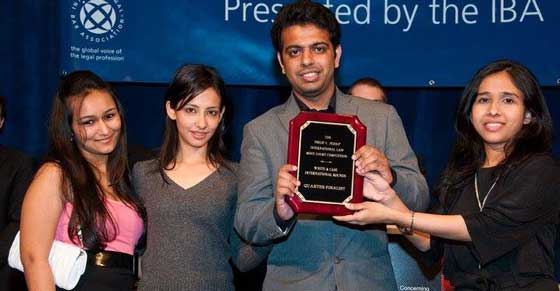
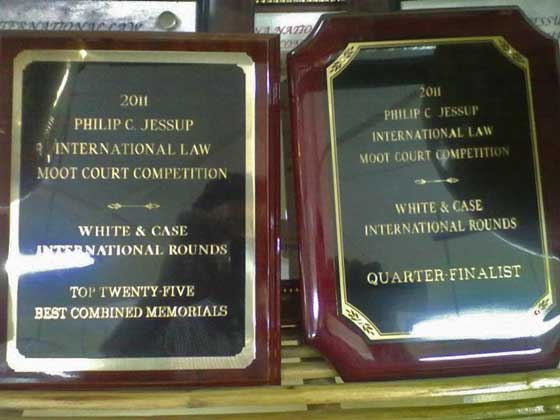
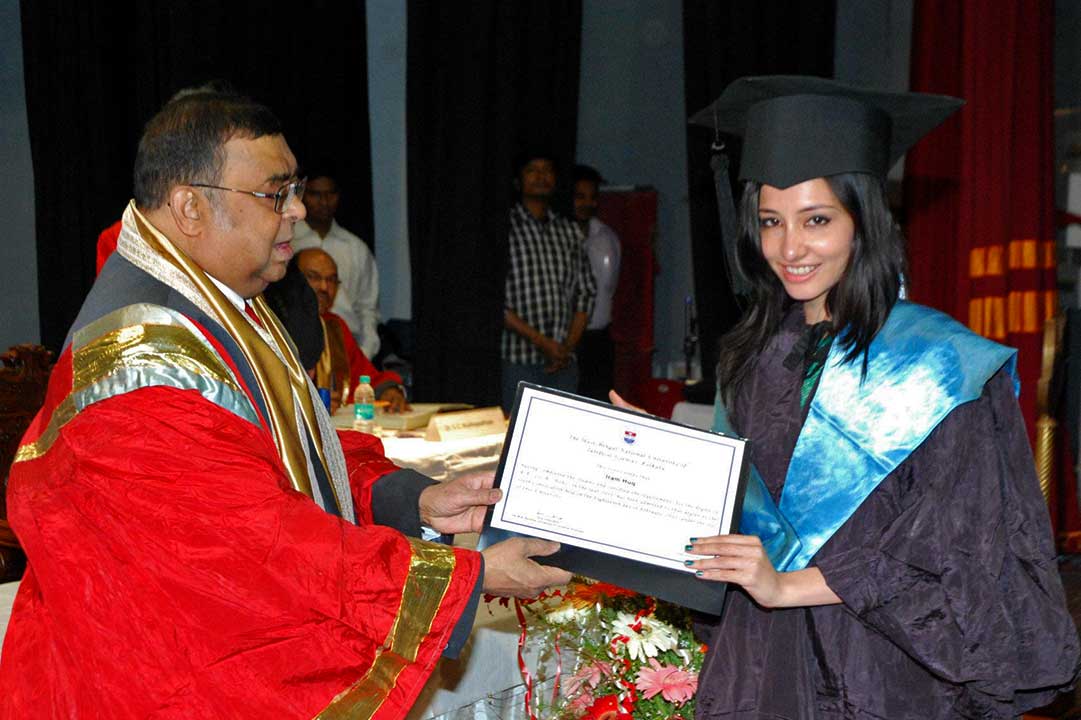
    Iram Huq is a graduate from WBNUJS, Calcutta, batch of 2011. She was a top ranker as an orator at the Phillip C. Jessup International Law Moot. She is currently a Doctor of Law at Harvard University, where she is also student of the Moot Court Board (2013-2014).

    In this interview, we speak to her about:

    • Getting a JD from Harvard
    • Interning at the United Nations
    • Taking time out for pro-bono human rights cases

    Tell us a bit about your life before college.

    I went to La Martiniere for Girls in Calcutta and was in the school’s debate team. That inspired me to write the law school entrance exams. I had studied science in plus two, and I liked Physics and Maths. Occasionally, I wish I had taken those subjects more seriously. I really enjoyed them conceptually, but I never saw myself as having a career related to either of those subjects.

    I think that my debating and science background helped me to develop a more objective view of the world. I appreciate the subjective aspects of the law, but I can’t help feeling that our legal system tends to reward sophistry and obfuscation instead of real analysis. I do not have lawyers in my family.


    What motivated you to choose law as a career?

    I wasn’t really paying attention to what people thought would be an ‘acceptable’ career. My parents were very encouraging, and my teachers also thought that law would be a great choice, given my skill set. It helped that a lot of people graduate from national law schools with excellent, respected jobs.

    I think middle-class Indian parents tend to be very conservative in estimating what careers are satisfactory for their children. However, I have learned that it is very hard to be successful at things that you do not enjoy. I am glad I was never pressured into choosing some other career.


    iram-huq3

    Did your debating skills help you at Jessup?

    Yes, that is absolutely correct. Debating is a great platform to learn public speaking. Once you understand how to put forward an argument in a clear and convincing way, you can apply that skill to any number of activities, including moot court. My father was also in debate teams of La Martiniere and St. Xavier’s so he was a great help. We had a teacher to coach us in school.

    I will say my ‘mentors’ for moot court were my friends and teammates, Deepak Raju and Rukmini Das, who helped me understand the basics of moots and coached me during the initial auditions for the moot court team. (They were both excellent mooters before I had even considered moot court). I also learned a lot from my experience in Vis Vienna, and could apply those lessons to Jessup. Deepak and I were on a debate team together, and that’s how we started working with each other. It was a pretty organic process, and I would like to believe that all three of us learned a lot from each other. I am not a fan of hierarchical team structures where the senior mooters mentor the junior mooters: the best teams are those consisting of friends.


    iram-huq4What are your thoughts on activities like mooting and article writing for journals?

    I think that writing for journals is a wonderful educational activity, if you can do it. Unfortunately, I was always too bored of academic articles to attempt to write them (but that was a personal preference). I liked mooting because, in addition to the academic part, it allowed me to travel and work on a single, practical project. Jessup (and Vis, Vienna) helped me understand how the rest of the world views different aspects of international law, improved my analytical and writing skills, and taught me how to network in professional settings. I definitely think that law students should try either mooting or writing for journals, if not both.


    Did you get any institutional support for internships from your college?

    No, I did not. NUJS was remarkably reticent when it comes to helping its students get good jobs or internships. It left everything in the hands of students, which was a good thing since the administration was both languid and incompetent. I did network with some of my seniors in law school, who recommended places where I applied and later interned. On two occasions, I secured internships through personal contacts. Young students should not be ashamed of using their contacts to secure internships. It is a perfectly natural process. If you don’t believe me, watch this TED talk


    How well do you think your education at WBNUJS prepared you for real world practice of law?

    Honestly, I think we could do with less compulsory classes and more optional classes in law school. It is absurd to think that someone who only wants to be a securities transactions lawyer should be required to study jurisprudence or intellectual property. We were required to study so many things that were absolutely useless to me when I finally began clerking at the Supreme Court. And yet, I never had the opportunity to learn subjects that would become really important in my job, like lower-court trial procedure.

    Additionally, our subjects were often taught in a completely academic manner, devoid of any instruction on how the law actually worked in practice. Finally, we never had clinics or any other option to learn through practical work. If not for moots and internships, my law school experience would have been completely inadequate.

    I do have to say that I had some excellent professors, and their teachings proved to be very useful for me later on in my work. I think law schools need to work on rewarding quality professors.


    iram-huq2

    Do you think being from WBNUJS helped your career in any way?

    Yes. Even though I complain a lot about NUJS, I have to say that I was surrounded by very intelligent students and studied under some wonderful professors. Compared to other law schools in India, NUJS has an institutional presence that reinforces an academic spirit and encourages its students to learn the law. I’m very grateful to my peers for challenging me and helping shape the direction of my legal career.


    Tell us what factors contributed to your decision to purse Juris Doctor from Harvard?

    I did not want an academic degree, like the LL.M. I was certain that I wanted to work in a law firm in the US. I was applying at a time when the rate of legal hiring was depressed (it still is), and so I concluded that the JD degree was the best option.


    iram-huq1What is the application procedure for a JD from Harvard?

    Applicants have to sit for the LSAT, and submit a couple of essays (a personal statement, a diversity statement, and any other essays they want the admissions officer to consider). Needless to say, successful applicants usually have good LSAT scores and compelling essays. Quite a few people have asked me similar questions, and it’s hard for me to explain what constitutes a ‘compelling essay’. But there is a lot of information available on the internet and on LSAC.

    I do not think that anyone can ‘hack’ their way into Harvard. My only suggestion is that applicants should be able to demonstrate a real vision of what they want to do with their Harvard Law degrees once they graduate. I do not think my own essays were particularly good, but I was able to make up for it during the phone interview. That is why I think that some imagination goes a long way.

    The application also requires at least two recommendation letters. Applicants should make sure that they get letters from teachers/employers who really know them and are willing to bat for them. But some institutional weight is also a good thing. I had a letter from Justice Patnaik, for whom I was clerking at the time I made my application. I highly recommend that graduates clerk after law school. It’s a great opportunity to learn how judges and the justice system works. And if you do good work, you’ll have a recommendation letter from a high court or supreme court judge, which is invaluable.

    As for scholarships: I am on a need-based grant at Harvard. Harvard Law does not have academic scholarships, as far as I know. Once you get in, you have to submit a lot of documents about your parents’ income and assets, and they assess a grant package. The whole process is very transparent, and applicants can find all the information on the Harvard Law website.


    Do you plan to have a career in the USA?

    Yes. I am currently working as a summer associate at WilmerHale’s New York City office. I hope to secure a job offer by the end of my internship, if everything goes well.


    You have been a Chayes Fellow for 2013-14. What does the fellowship entail?

    The Chayes Fellowship is awarded to first-year Harvard Law students who travel internationally for public service work. More information can be found at Chayes international public service fellowship


    As part of your Chayes fellowship you were an Intern at United Nations Assistance to the Khmer Rouge Trials. Please share your experience of working at Cambodia.

    Yeah, that’s what I did last summer for ten weeks. It was a great experience—I enjoyed working for the UN in Cambodia. I was working on the prosecution of senior Khmer Rouge leaders. I wrote a blog post about it: Blogs.law.harvard.edu


    I gather that most of your internships have been concentrated in and around Human Rights organisations. Is it planned or they just happened?

    I was looking for internships where I would get real experience in research, drafting and filing. It just so happens that large law firms in India rarely let interns shoulder much responsibility. Working for human rights organizations gave me a sense of purpose and also the opportunity to be far more involved in the projects to which I was assigned.

    The firm where I work at present is WilmerHale; it has a large pro bono practice with substantial human rights work. One of my projects is an asylum case. WilmerHale’s pro bono practice allows younger lawyers to shoulder greater responsibility and learn the art of appearing in court. No firm can afford to provide these opportunities in high-stakes litigation, and so human rights work is a great way for younger lawyers to acquire this experience.


    How do you manage Human Rights activities alongside the corporate world?

    I am committed to Human Rights work, but I am not a fulltime Human Rights lawyer. My goal has been to work in the corporate world for quite some time now (I have to say that I joined NUJS hoping to be a human rights lawyer). I guess I am privileged, because a few US law firms allow you to do corporate litigation work while still fighting Human Rights cases. I do not think that the two goals have to be mutually exclusive: many US law firms are very profitable even though they allow associates time for different kinds of pro bono work.


    Lastly, what would be your message to law students who want to pursue a career in human rights?

    I would say that they should go for it. Personally, I find the Human Rights ‘world’ to be a little oppressive: there is a constant sense of urgency and sadness associated with Human Rights work which interferes with my ability to objectively go about my work. But God knows we need more people dedicated to this field. I respect Human Rights lawyers for their courage and tenacity in the face of all odds. I will acknowledge that money is important, and there is not much of that in the human rights world. But we would be wrong to conflate wealth with success. If there are people who are willing to dedicate themselves to this field, we need to respect their legal skills and talent even as we respect rich and powerful lawyers.

  • Jaiveer Shergill on being a spokesperson for INC, career in politics and practice as an SC Advocate

    Jaiveer Shergill on being a spokesperson for INC, career in politics and practice as an SC Advocate

    jayveer-shergill1Jaiveer Shergill graduated from WBNUJS, Kolkata in 2006. Thereafter he worked as an associate for Economic Laws Practice, in their Corporate Commercial/Indirect Tax Team in Delhi for some time.

    In June, ’12 he made his entry into Politics by joining Indian National Congress and then he was appointed as a spokesperson in January, ’14. He has been the India Representative of Young Lawyers Committee at International Bar Association and presently, he is working as an independent practitioner in Supreme Court of India.

    We asked him a few questions about:

    • Choosing a specific arena and establishing a legal career
    • Being an independent practitioner at Supreme Court
    • Career options for a lawyer in politics
    • and many other questions relevant to a successful legal career


    How should a student structure his internship during law school?


    How to make a conscious career choice – corporate vs. litigation?


    Who are going to be the best teachers in a law firm?


    How far is theoretical knowledge in law schools consistent with the practical arena?


    Which forum will give the best exposure? What are most important skills required for subsistence?


    When is the right time to decide whether to become drafter or pleader?


    What can you expect to learn from a senior counsel?


    When is the right time to consider practicing independently?


    What does going independent really entail?


    How do you measure success? What should be the milestones?


    What are the paybacks of practicing independently?


    Should you choose what kind of matters to take between civil and criminal?


    What are the career options for lawyers in politics?


    What are the options in corporate transactions? Is seat-hopping more beneficial in litigation or corporate?

  • Debadyuti Banerjee, Assistant Manager, Lexplosion, on studying abroad, and her editorial experience

    Debadyuti Banerjee, Assistant Manager, Lexplosion, on studying abroad, and her editorial experience

    debadyuti-banerjee1Debadyuti Banerjee graduated at the top of her class from WBNUJS, Kolkata, in 2011. Thereafter she went to King’s College, London for an LL.M. in International Commercial and Business Laws. She has been in the editorial board of both NUJS and KCL’s Law Review. Presently, she is working as an Assistant Manager at Lexplosion, Kolkata.

    In this interview we ask her about:

    • Studying in King’s College
    • Insight into the International Commercial and Business Laws Course
    • Experience as a member of Editorial Board of NUJS and KCL Law Review.
    • Work at Lexplosion and internship requirements


    How would you like to introduce yourself to our readers?

    I am a lawyer by profession, and I’d like to clarify at the very outset that I did not gravitate towards Law but, in fact, chose it after careful consideration. I decided right after ICSE that pursuing law was the way forward for me. Till then I had been toying with two very different subjects—engineering in Computer Science or English literature. And then, I landed on the perfect combination—law!

    Awareness of the presence of conflicts in every sphere, from personal to political and the tiff between theory and implementation—how sometimes something in theory looks good but may actually be different in reality—made me keen on pursuing law as a career. It might be pertinent to mention that I do come from a family which has a long history (and hopefully future) of lawyers and judges and it’s always been a part of who I am.

    I made the switch from Science to Humanities for ISC and started preparing for the National Admission Test for admission to NUJS. I cannot begin to emphasize how helpful subjects like Economics, Sociology and Political Science at the school level were to build a solid base for the first couple of years in a LL.B course.


    Did you have an opportunity to study the subjects you chose to specialize in your LL.M?

    My specialization was in International Commercial and Business Laws from Kings College London (KCL/Kings). Other than World Trade Law, which was taught on the bare minimum terms in NUJS, I did not really get an opportunity to study the subjects that I chose in my LL.M. Lectures in World Trade Law were delivered by Federico Ortino and Piet Eeckhout, who are subject matter experts in the EU and thorough in research in this area as well. I must make a special mention of the subjects lectured by Mihael Jeklic (who has also been associated with Harvard Law School in the past)—Legal Negotiation and Analytical and Quantitative Methods for Lawyers (AQM).

    Mihael is a very cordial teacher and his classes were an absolute pleasure to attend. He adopted an extremely casual attitude inside the class, going as far as to encourage us to eat our breakfast in our early morning class! Legal negotiation involved us to engage in real life negotiation situations, sometimes in class and at other times of our convenience. These exercises consisted of real life scenarios, requiring participants to come up with well thought out BATNAs, be aware of the Zone of Possible Agreement (ZOPA) and learning on the job to exert soft skills to achieve the closest best result each person had in his/her mind. Closely related to this was AQM, where things became more interesting. These lectures weren’t lectures at all, in that it was completely a discussion.

    We got to read and talk about interesting topics like decision analysis, game theory, behavior of markets especially its irrationality, bubbles and their growth trajectory and a fair bit of accounting. The skills learnt in these courses go quite far to teach one to evaluate real life scenarios from all angles on a rational basis and would find application in litigation as well as a corporate scenario. A thing to note here was that I was the only Indian national in my batch to take both these courses. Legal negotiation was a bit more popular among my Indian counterparts as it was a half module, while AQM was a heavier subject which involved deep diving.

    For example: We were expected to take part in an exercise on Marketwatch which provided valuable insights into the mechanics of trading and provided several discussions surrounding efficient markets theory and behavioral finance. For those interested to read up on this further, I would suggest “Freakonomics” to be a good starting place. I would also recommend reading of “A Random Walk Down Wall Street” for its stellar theory on the efficient market hypothesis and Warren Buffet’s rebuttal of it.

    These are very interesting eye-opening subjects. Apologies if I rambled there. I also took International Commercial Arbitration on which I chose to submit my primary research paper. This comprised a much larger group, both international and Indian, the lectures themselves were more of a formal structured style and there were periodic (about fortnightly) written assignments to complete. Lectures were delivered by Toby Landau, Salim Moollan, Ricky Diwan, Sam Wordsworth, Maria Duval, among others.


    How did you go about choosing which college to go to for your LL.M?

    Having pursued an integrated B.A.LL.B (Hons) programme at the UG level from a prestigious law school in India, pursuing a Master of Laws seemed to be the next step for me especially since I have always been academically predisposed. I was sure that I wanted to go to the United Kingdom for my postgraduate studies. I had applied to Kings College London, Queen Mary University of London, University of Durham, University of Kent and University of Nottingham based on my course preference. I was accepted to all these Universities and was offered scholarships at KCL and Kent. I accepted KCL because of several reasons—location (both in UK and in London), faculty, ratings (consistently ranked in the world top 20 for law), history and background, employability ratings and the most important, the Kings International Graduate Scholarship that I was offered. There were only two scholarships given out that year and I was thrilled to have been offered one. Finances were always the most important consideration in my mind. (I’ll talk about it in some detail later.) KCL is international in its composition and outlook, with a wide array of organisations and societies made available for students, and this offered me a superbly rich study environment. It is located in the heart of London, and by that I mean, I could see the London Eye every day, the law department is housed in the historic Somerset House—it doesn’t get much better than that!


    You have worked on the board of the NUJS & the Kings Student Law Review. How has that experience been for you?

    That’s a very good question. Both experiences were fantastic albeit in very different ways. I worked as a Senior Associate of the NUJS Law Review and it was a great learning experience to make the transition from merely writing and onto mentoring, reviewing and finishing articles within a given time period. There was some editorial work involved, but not much, it was more about writing articles. Kings Student Law Review (KSLR) was a different ball game altogether. As a member of the Editorial Board there was a good amount of reviewing and decision making in the selection process involved. Since I was also heading the copy editing team (which is somewhat rare for a LL.M student as the other guys heading teams were PhD students), I think my previous Law Review work experience held me in good stead there. The painful bit of citing articles as a writer was of great help when I was doing the editing especially as OSCOLA was the norm and it was new to me. It was amazing that I had the independence to choose my own subordinate team members. Having been a Law Review member certainly did add to my resume when I was tailoring it for the LL.M application.


    How did your interning experience boost your LL.M. application?

    (Debadyuti has interned at Khaitan, Amarchand & Fox & Mandal in addition to interning with advocates and Supreme Court judges.)

    A well rounded CV is always helpful and I think that a variety of internships at leading law firms or advocates or even Supreme Court clerkship showed willingness to learn different skills and thriving under pressure. I believe that this unique blend of experiences also gave me an unique point of view in life and that was super helpful while writing the Case for Support applications for scholarships. Each of these internships imparted new skills and a view into how these organisations work so I would say cumulatively they all helped in grooming my legal skill set.


    debadyuti-banerjee3

    How difficult was studying abroad in terms of finding accommodation, finances and settling in?

    Personally I faced a lot of trouble with finding accommodation in London, but mine was a one off thing. There was a certain amount of time during which I was staying with kind strangers and then flat-sharing with a friend. I was finally offered a place in Kings College Hall (There are separate applications for accommodations as well—the various application processes are mind boggling!). It was a beautiful old Victorian building with a park and a thriving international body of students which made my life incredibly interesting! I got the opportunity of interacting with a wide milieu of students (both UG and PG) cutting across continents and cultures. I would definitely recommend living in student halls for the experience it offers. One needs to be careful of finances and carefully plan the expenditure from beforehand, otherwise it’s easy to go overboard since London is an expensive city. However, there are several concessions available to students like the Oyster card and discounts at departmental stores. I was extremely thankful to have been offered a scholarship award as I was very clear that I would not be pursuing my masters without one. There are several attractive scholarships available at KCL especially full scholarships now that it has received extremely generous donations from its alumni.


    How was the faculty and academic schedule at KCL?

    I spoke in detail about the faculty and the subjects before so I won’t repeat myself. A typical day would be early morning classes, hanging out with my fellow LL.M mates in the canteen discussing any topic under the sun, afternoon classes (if any), going to the library to study/pick up books, going back for late evening classes (some were scheduled at 7 pm so that active members of the Bar could come down to lecture), travelling for an hour to go back to hostel (Travelling is a big part of living in London!), reading up for future lectures and/or assignments. Readings were given beforehand and one was expected to have read most (if not all) the articles or pieces of work on the list. If you are not reading and not updated, it is very difficult to keep up with the lectures and engage in a meaningful discussion with the class. It will be waste of time if you’re not engaged in the classroom discussions is what I think. There were regular assignments and written essays which needed to be handed in on specified dates, so it was an intense course and pretty busy.


    Was there time enough for non academic pursuits at KCL?

    You need to find time for non-academic pursuits. There’s no work without play! In London there’s always something or the other happening—be it wine tasting sessions, guided tours, and the like. I found the study-life balance to be easy to handle and anyone who is good at time management would enjoy their time in KCL and London. There is an education happening inside the classroom and there is an education that London as a city has to offer. It feels extremely rewarding to have gotten a taste of both.


    How in your opinion is the LL.M experience abroad different from that in India?

    Not having pursued a LL.M from India, comparing an undergraduate course in India to a postgraduate course in the UK might be a little unfair so I would not like to venture there. However, I would like to emphasize on the world view it imparted and the variety of specialized skills I picked up in my LL.M.

    Again, I cannot really comment on the decision of my batch-mates. Personally speaking, it was never about the job prospects. I was placed as a part of the CRC process with a law firm in Mumbai which I declined to go abroad for my higher studies. I have always been keenly interested in legal writing / research and that’s what led to the LL.M.


    There is a school of thought that labels LL.Ms as being little more than an expensive holiday unless the individual concerned wishes to enter the world of academia/research? Your thoughts?

    I am yet to come across a person who has gone on this “holiday” terming it as one! It is expensive and I would not dream of having gone on a fully self-funded LL.M without a scholarship. So the “expensive” bit is definitely true. I rate the LL.M to be an educative experience beyond par—both inside and outside of the classroom. Whether one practices, joins the corporate world or is into research is a purely personal preference, but I am sure reading for an LL.M helps in that journey. In my experience, employers also give a fair amount of weightage to an education abroad.


    Tell us a bit about Lexplosion. What is an ordinary work day like?

    Lexplosion is a new age company which is blending law with technology to solve clients’ pain points. Its tagline is to “Innovate Legally” and its main product offering is a cloud-based software which offers regulatory and legal compliance management. Other than that, it also provides a plethora of services which includes a fair bit of work that a typical law firm does, like legal research on specific client queries, contract drafting, due diligence and the like. Lexplosion was set up by a group of ex AMSS, GE, Seth Dua alumni. It’s a young place with the average age being around 30. There is no ordinary work day as such; each day brings with it a set of challenging activities my way.


    Can you tell us something about mentoring interns at Lexplosion.

    I am happy with the law students that I have had the chance to interact with during my stint as a mentor here. Most are bright, enthusiastic and make me optimistic about the new gen lawyers. I wish to emphasize writing skills which is frequently missed out on. It’s important as a lawyer to have impeccable research and writing skills. And by that I mean looking at primary sources, citing everything properly and deep diving into issues to address multifarious angles. You don’t need to write using a lot of meaningless words strung together. Writing in simple formal English which shows depth of thought is how one should start.

    Regarding internship applications…a well written cover letter and a proper CV with no grammatical/spelling mistakes are a MUST and automatically points towards a person being organized and diligent. Random applications with multiple addressees are not welcome. And that does not mean putting everybody in the bcc either. There is also a telephonic interview as part of the selection process here and that is very helpful to both parties involved for determining suitability.


    Given a chance to turn back the clock would you have done anything differently from what you’ve done?

    Not second guess a lot of things!


    What would be your suggestion to law students who plans to go for higher studies?

    Do your research on the courses, faculty, living costs et al., do not blindly follow rankings and go to a University which would suit you the best. Apply well in advance of the respective deadlines for application to the selected course, scholarships and accommodation, and put in a fair bit of thought to each application. Honesty shines. I had made a controversial quote in my SOP for the KCL scholarship and had a lengthy discussion about it with my mentors at the KCL scholarship ceremony. Important takeaway for me was that people will remember you for who you are and what you stand for.


  • Debosmita Nandy, Associate Legal Manager, ITC, on being an author, her litigation experience, and plans for the future

    Debosmita Nandy, Associate Legal Manager, ITC, on being an author, her litigation experience, and plans for the future

    debosmita-nandy4Debosmita Nandy graduated from WBNUJS, Kolkata, in 2009. During this time she interned with the likes of Luthra & Luthra Law Offices, Trilegal, and Amarchand Mangaldas. She is an in-house counsel with seven years of PQE in diverse commercial and civil disputes, alternate dispute resolution, negotiation and agreement drafting and corporate mergers and amalgamations. She specialises in Mergers and Amalgamations, International Commercial Arbitration, Legal drafting, Advising clients and appearing in court, Contract Negotiation.

    She is currently Associate Legal Manager at ITC Limited.

    In this interview we speak to her about:

    • Her experience with writing and publishing
    • Being a litigating lawyer
    • Her internship experience


    Tell us a bit about your life before law school.

    I was born and brought up in Kolkata. Throughout my school life, I was miss goody two-shoes and the only things which interested me apart from studies were reading and creative writing.


    How did you gravitate towards the field of law?

    I was very clear from the beginning that I would not go down the traditional career path. I was trying to decide between the armed forces (yes, I wanted to join the Air Force!) and research in the field of Genetics (Biology was a favourite subject then) till I read To Kill a Mockingbird by Harper Lee and was blown over by Atticus Finch and his profession. I also came to know of national law schools at the same time, which helped me in finally deciding on taking up law as a career.

    However, convincing my parents was a tough task! I took up Science with Biology in plus two to keep my options open but mainly to appease them. Towards the end of class XII, I chucked my parents’ dream of being a doctor and set myself on the path of preparing for law entrance tests (every law school had its own entrance tests then). I took a chance and wrote only the entrance test of NUJS, whose results were declared during my ISC examinations.


    Tell us about your writing experience and how it has helped you as a lawyer.

    Getting associated with Writer’s Block, the NUJS in-house magazine stemmed from my love of creative writing.However, being associated with NUJS Law Review helped me develop a very important skill – that of teamwork. I wrote two articles jointly with two juniors and was also responsible for mentoring them. Both of them brought fresh insights to the table and it was a good learning experience for me. Moreover, it helped fine-tune my legal research and writing skills.

    Writing a well-researched and publication-worthy legal article hones one’s logical reasoning, analytical mind and research skills. While writing an article, one has to be very careful about grammar, formatting requirements of the publication house and spelling. These things, however minor they may appear, are very important for good drafting. You have no idea how many junior lawyers get a rap on their knuckles due to bad grammar or wrong spelling or because they did not put a comma in the right place!


    Tell us about your internship experience.

    In terms of law, one does not really learn much of it during internships. I worked on formatting and cross-referencing 30-page long agreements, read through voluminous documents in the name of due diligence, copy-pasted information in the standard template in the name of drafting reports, researched judgments on points of law on which none existed and read litigation files but failed to understand the difference between a plaint and a petition! Personally, I think that it is difficult to develop an understanding of how the law works in the real world in a span of just four to six weeks.

    However, these internships gave me the chance me to visit different cities, taught me how to live on my own, introduced me to the ‘law firm culture’, gave me a taste of how long the working hours and how competitive the professional life would be and brought me in touch with all kinds of people! It was a very good life lesson, something I would not have learnt otherwise. I also picked up skills like good communication, multi-tasking, working on tight deadlines and effective networking, which are important for any profession.


    What role did the placement committee play in securing internships?

    I just went with the flow. I interned in all possible places – NGOs, trial court, High Court and Supreme Court lawyers and three top law firms. All my internships were arranged through the placement committee except the one at Luthra where I applied on my own.


    Any advice for the young law students as to how they should choose and plan their internships?

    When it comes to internships, I believe that one should try all before deciding on the one they want to pursue. Despite my misgivings about how much law one learns during internships, I believe that internships give a flavour of the place, which helps decide one’s career path. However, one might still end up in a completely different place of which s/he has no idea, like I did – first at a litigating law firm and then in a company!


    What do you think an intern should do (or should not do) to get noticed at work?

    Be sincere and diligent in the assignments that you get, show your eagerness to learn and go the extra mile. Maintain punctuality in reaching office, finish the tasks within the time permitted and if not, then take permission for extension of the deadline. If you have more than one assignment at a time, then ask the associates about the order in which they want them rather than you deciding which one you would finish first.

    Ask work from as many associates or managers and their bosses as possible so that most people know you, admit mistakes and do not repeat them, but hold your ground if you think you are right. Do not fib about anything since you will be easily caught.

    Avoid logging into social network sites from office computer, do not engage in idle chit-chat with fellow interns but be generally sociable. Avoid going on dates with any associate so that you are not accused of using improper means of getting a PRO! Above all, behave as if you are already a part of the organisation.


    How relevant did you find your law school education with the kind of work you were required to do at law firms?

    Legal education is definitely far removed from the way law is required to be applied in the profession. An apt example would be the procedural laws. The way CPC and CrPC are taught in law schools will be of  little help when one has to apply his/her knowledge at the workplace. I learnt CPC fully only when I began working in Khaitan & Co.

    In my opinion, law is a subject which is learnt only on the job. One can begin working at a lawyer’s chamber or a law firm along with regular classes to get a head-start. However, I believe that the law school days will never come back, so why waste precious time stuck away in a cubicle? Everybody will learn the practical application of law once they start working, so make the most of the five years that you have!


    debosmita-nandy3What kind of work did you do at Khaitan?

    Khaitan & Co. was instrumental in introducing me to the various facets of the profession, especially teaching me the procedural aspects of law. I mainly worked on a wide range of litigations, including arbitration and got trained in the aspects of client handling, research, identifying relevant documents, research, drafting, briefing counsel, appearing in court, organising papers (trust me, litigation generates piles of papers!), knowing how the court machinery works and everything in between. Early on, I was given independent charge, which was scary, intensely pressurizing but highly beneficial and satisfying.


    How different would you say is working as a disputes lawyer as opposed to working as a corporate lawyer in a big law firm?

    Disputes lawyers spend the half of their days running around in court, getting the much-needed exercise, while corporate lawyers sit in their chairs for the whole day!

    On a more serious note, it would be unfair on my part to comment on this since I only have internship experience in corporate law firms to go by.


    What were the top three challenges you faced right at the beginning as you began practice as a litigating lawyer at Khaitan?

    1. Lack of understanding of  how the court works – I trailed my court clerk, asked questions to whoever listened and witnessed all ground level work right from paying stamp duty on a plaint and having it notarized till going to the Registry for certified copy of an order.

    2. No family legal background – I did not know the top lawyers, their clerks or their chamber addresses. It was difficult to get the lawyers to listen to me since they considered me a rookie. I managed to gain their attention only with sincere and hard work. I strongly believe that it does not matter who your father is as long as you can show them who you are and what you can do.

    3. Being a woman – The profession, especially in the litigating field, is still quite patriarchal, although I believe times are changing. As long as you maintain a no-nonsense and a professional attitude towards your work and surroundings, you should not face any problem.


    After Khaitan, you shifted to ITC Ltd. What prompted the switchover?

    At the end of three years at Khaitan & Co, I was looking for a different challenge and so joined ITC Limited as an in-house counsel.


    What is the role of an in-house counsel in a multi-business Indian conglomerate like ITC?

    A typical work day for me begins at 9 AM with checking the mailbox and making a list of things to do for the day. Shortly thereafter, I get calls from other departments of the company, asking for my inputs on day-to-day operational issues. Between 1 and 2 PM, I enjoy the lunch arranged by the company and chat with my colleagues. Post lunch, I try and schedule all meetings so that I do not end up snoozing at my desk from the heavy lunch! Apart from internal cross-departmental meetings, I also attend various meetings with outside parties as a member of the company’s negotiating team. I offer my legal inputs on agreements, negotiate with the lawyer from the other side and help the company in closing the deal. Towards the end of the day, I meet my reporting bosses and discuss my areas of work for their inputs and advice.

    On some days, I research on the legal points in a proposed dispute and draft suitable applications.If a case involving the company is going on in the court, then I go for briefing conferences with the counsel and attend the hearing in court. However, this is a very general version of my routine here, since no two days are same – each day brings new challenges and exciting opportunities to my desk.

    Simply put, the role of an in-house counsel is to assist the company in all its legal issues.


    Many people believe that working as an in-house counsel affords more work-life balance and is less demanding. What has been your experience?

    Law, as a profession is very demanding no matter where you are. You will be required to work all night or over the weekend if need be. You may have to cancel holiday plans for a last minute urgent case (like I did). So I would request all to dispel any misconception they may have about an in-house counsel having it easier than their law firm counterparts.

    However, the best part about working in a company is its HR practices e.g., leave policy. ITC, for example, encourages you to take a minimum of fifteen leaves a year, and also accommodates health and personal exigencies. This invariably contributes towards a better work-life balance.


    How can one apply for an internship at ITC?

    One can apply through his college placement committee. I am not in a position to comment on the second question, but I can say this much from personal experience that an academically sound resume opens all doors. If that is not the case, then one has to build an all-round CV to justify the lack of CGPA.


    debosmita-nandy1You have co-authored a book on forest laws and policies in India, and another on environment and wildlife laws in India. Tell us how did the idea of writing a book germinate and what prompted you to choose these specific topics?

    When I was in my fourth year, Dr. A. K. Poddar (our professor of Environment Laws) asked me if I was interested in contributing to a book that he was working on. I readily agreed and the result was publication of the book, Forest Laws and Policies in India by Regal Publications after almost 3 years!

    While I was working on this book, I gathered a lot of material on related topics. My co-author and I then tied up with a senior from college – Arjya B. Majumdar to compile another book, Environment and Wildlife Laws in India, which was published last year by LexisNexis. The first book happened by chance and thereafter, led to the second book.


    debosmita-nandy2Can you tell our readers about your short stories?

    I have continued to pursue my most favourite hobby i.e., creative writing through my blog as I am very passionate about it. My first short story appeared as part of Chicken Soup for Indian Soul On Friendship, published by Westland in 2011. Recently, I participated in a nationwide short-story writing contest organised by Rupa Publications where my entry won the second prize from the best-selling author, Anuja Chauhan. They also published it as part of an anthology An Atlas of Love, and it has received some good reviews.


    Given a chance to turn back the clock is there anything you would have done differently?

    Looking back, I believe that I am where I am only because of all the choices I made and the opportunities I got in the past. I have no regrets and so would not change a single thing.

  • Shreyas Tirunagari, Legal Consultant, Sriram Associates, on interning at the United Nations, being a judicial clerk, and plans for the future

    Shreyas Tirunagari, Legal Consultant, Sriram Associates, on interning at the United Nations, being a judicial clerk, and plans for the future

    Shreyas Tirunagari is a graduate from NUJS, batch of 2011. During his undergraduate years, he interned with the United NAtions, Since then, he has worked under Ministry of Finance, Government of India, as Associate and later as Consultant. He was also a judicial clerk to Justice Dipak Mishra, Supreme Court of India. Following his stint at the Supreme Court, he joined the National Institute of Public Finance and Policy (NIPFP) on the Black Money Report commissioned by the Ministry of Finance in 2011.
    He is currently Legal Consultant at Sriram Associates, where he provides legal advice on various sectors including infrastructure, finance, real-estate and energy.

    In this interview we speak to him about:

    • His time at NUJS
    • Being a judicial clerk, the process of application and the responsibilities it entails
    • Plans for the future


    Why did you decide to study law?

    I did not really decide to study law as a career choice. Barring a few options such as Liberal Arts, in the Indian educational set-up students are required to make a choice of professional career at a rather young age. Most colleges are professionally exclusionary and do not permit students to transit from engineering to life sciences and then to law. Well, that being said, I was inclined to understand what bound a society together and so, law was a natural choice. As for how it came to be NUJS, it was a choice of city – Calcutta being steeped in history, culture and as a symbol of liberal development was quite an attraction. If you ask me about it now, I’d say I was mistaken – attending NUJS can and should be a compelling choice. It is a top-3 law school, it has a culture that embodies innovation and enterprise, and it provides a great platform from which to build a career.


    shreyas-t3Tell us about life in NUJS.

    One’s time in college is perhaps the most receptive phase of life—after early childhood—to the process of habit-formation in the human life. As such, the habits I formed at NUJS continue to occupy a sweet spot in my everyday life. For one, the library was the only room with an air-conditioning facility and it became habitual to spend time reading there. Since then, reading has become a habit and I continue to devote some time to reading despite moving across very different environments.

    That apart, NUJS has a very collegiate atmosphere that provides many opportunities to explore avenues within and outside of the law. During my time, I was also fortunate to have a very inspiring set of faculty members who drove students to understand, introspect and challenge the norm.

    Recently, we had a batch Reunion in Delhi where I caught up with some old friends and it led me to reflect on one critical aspect of the growth process–diversity. We had a very diverse student body with students from Punjab, Bengal, Tamil Nadu, Kerala, Shillong, Gujarat, Bihar, M.P. – pretty much all states were covered as were all income, social and cultural classes. This diversity set up a great recipe for embracing new cultures, taking up new initiatives and learning a lot in the process.

    Moreover, Calcutta is a city soaked in culture and arts. There are film festivals, book festivals, football games, quaint neighborhoods, some amazing culinary options and a relatively safe and indigenous nightlife. In comparison with the other NLUs, I feel that NUJS is a first among equals in the ‘uniqueness’ of the experience.


    Which one has been your most memorable internship?

    My most memorable internship was at a United Nations Agency, the World Intellectual Property Organization in New York during the summer before final year. I interned alongside 350 other people from over 50 different countries. In a nutshell, that is why it ranks as the best internship I’ve done during college.
    The wide variety of perspectives that were available provided an opportunity to learn from different cultures and critically evaluate the role of one nation vis-à-vis 192 others. Moreover, this was in the summer of 2010 – at a time when the Football World Cup was in full swing. For the first time, I had witnessed the enormity of a platform that was divisive and unifying while being friendly ! Watching a Nigerian Finance Minister and a Belgian Trade Representative let their hair down at the Vienna Cafe, the UN Lounge where all games were being screened, was a sight to behold, indeed!

    Beyond the global dimension to this internship, working at the UN was quite professionally challenging. I was assigned the task of covering ongoing negotiations and meetings at different segments of the UN ecosystem – in the morning I would be at the ECOSOC only to be told to rush to the Sixth Committee meeting by the afternoon, following which I would prepare reports, participate in meetings and draft memos to be sent to other UN offices. The nuances of diplomacy are deeply entrenched in cultural, social and professional engagements. As such, observing and participating in diplomatic interactions on the plank of intellectual property led me to see the ‘bigger’ picture within which economics works alongside politics which works alongside law which works alongside business and so on.

    Before this internship, I had worked in the securities division of Crawford Bayley, the office of Senior Counsel P.P. Rao, and the legal department of TCS. All of them were strictly legal internships that focused on handling legal transactions – both, corporate and litigation, and so in comparison, this was a truly unique experience. So while I cannot say that this was the best internship, it was the most interesting.


    How do internships help in the evolution of a legal profession?

    As I mentioned right above, internships are great avenues to evaluate what you read in the classroom in the real world. For example, most of the assigned case-readings for class are primarily Supreme Court judgments. And for a diligent student, it is likely that they will have a reasonable grasp over the case-law of the subject. However, if one were to go practice in the lower courts, it is more often than not other aspects of the law such as legislative instruments and local regulations that will assist one’s arguments. Internships help in understanding how theory fits into the dynamics of the world. It is also an eye-opener.

    To analogize in cricketing terms, internships are T20s – fun, short and exciting. Your career is the Test Match – strategically engaging, long and detailed.


    You were engaged as a judicial clerk in Supreme Court after your graduation. Why did you make this choice?

    Firstly, it is the Supreme Court of India and a place that, especially in these politically and economically volatile times, wields enormous influence in shaping the direction of the country. Even now, the Supreme Court’s recent judgments on 2G, Subrato Roy, the Novartis case and Section 377 have led the charge on financial propriety, global intellectual property and the individual-societal conflict of identity.

    In my fourth year of law school, I undertook a policy research project on the pharmaceutical industry, and found that the idea of government policy and processes fascinated me. The fact that millions of people can be impacted by a change in the script of one or two documents is something I that I found incredible. One government order here, one new court decision there, and all of a sudden interest rates are changing, investments are soaring/crashing, crores of rupees are released in pension schemes.

    The Supreme Court is one of those places that makes decisions on subjects that affect us daily in our lives – it’s like one of the control rooms in a big ship, and so when I got a chance to be in that room, I just did.
    Moreover, let’s not forget that as law students, most of our readings and studying had to do with Supreme Court judgments – it was but a natural progression to understand the judicial process and explore career options thereafter.


    Is it difficult to get a judicial clerkship with a Supreme Court judge?

    The difficulty of a clerkship I think is two-fold; the first rung of screening is perhaps a preliminary screening for eligibility. Most of the judicial clerks are selected from a handful of law schools such as the NLUs and a couple of others such as ILS and Symbiosis with the rest of the law schools out of the running. This makes the process numerically difficult. If one were to attend a lower-ranked state school, it is probably harder to get a clerkship. That being said, the NLU graduates compete internally with the graduates of similar schools for the clerkship positions. This makes up the second rung of competition.

    Within the application process, the first stage is to send in a completed application form along with a CV. After the court receives all applications, the Court conducts a preliminary screening. Following this process, the Court invites applicants for an interview conducted by a panel of three Supreme Court judges. A few weeks after the interview, the Court makes decisions and informs applicants.

    While I can’t definitively point out what contributed to my selection, I can only presume it is a combination of one’s academic performance, work experience, as well as the interview. At the time that we interviewed for the clerkship, a few of my classmates with higher grades didn’t make the cut while some with lower grades than me were selected. I think the Court seeks out candidates who they can find a workable fit with – it is very important that the clerk understand the Judge’s methods of working and adapt quickly to fill that role.


    What kind of tasks were you given as a judicial clerk?

    My day-to-day duties would be flexible depending on the cases, the work for that day, conferences/seminars etc.

    There are of course, some tasks that almost all judicial clerks will do, and one of them is handling SLPs.
    The way Special Leave Petitions work is that the Supreme Court allows SLPs to be introduced on Mondays and Fridays, and invariably 30-40 such petitions always show up in every Judge’s office. As a clerk, you’re required to review these briefs, and prepare short summaries of facts, arguments and point of issue.

    This is a cyclical process – the Friday filings come into office by Tuesday, and the Monday filings come in by Thursday. That gives you two to three days to go through each set, and this cycle is essentially the first pillar of work schedule for most law clerks.

    In addition to SLP briefings, there are cases that are being argued at the court and when they move into stages of final arguments, there is a heavy focus on case-briefing, research and preparation for that case. This is the second pillar of work.

    Another pointer here is that unlike a law firm/lawyer who is free to hire many juniors, a judge is assisted primarily by his law clerks. And judges usually hire just two clerks. This limitation creates a situation where the clerks have to be flexible in their duties, and the workload keeps fluctuating depending on how many cases are being argued in court. Just as lawyers prepare briefs for filing in Court, judges must prepare judgments and pronounce them. This brings us to the third significant task and perhaps the most exciting one–helping the Judges in researching, editing and drafting judgments. In my case, I did get a chance to work on one constitutional case, and to me, that’s the holy grail – to be a part of cases that will later go into law textbooks.


    How do you think the experience of being a clerk is now helping your career?

    As I mentioned earlier, the Supreme Court more often than not adjudicates issues that have national significance. Given the nature of the work at the Court, a clerkship is one of the pathways to exploring the depth of an idea, broadening one’s perspective and learning to see ‘the bigger picture’. Other than that, let us remind ourselves that the Judges of the Supreme Court possess a staggering intellectual and strategic strength that is built over years of adjudicating complex issues. I believe in the idea that the people are shaped and influenced to some degree by their surroundings–in this regard, a clerkship is an amazing surrounding to be influenced and shaped by.

    Anyone with these goals in mind should pursue a clerkship. This is not to say that a clerkship is useful only for an open-ended exploratory mind; even a fixed and defined career path can benefit immensely from the process of understanding judicial process, understanding a broader context and building an essential skill set. Specifically, as a judicial clerk, you end up constantly reading briefs and so, finding the main point and evaluating it’s strength slowly becomes habitual. And that, I believe is a skill that can be useful both within and outside the courtroom.


    You also worked with the Government on financial policy and black money. What was the nature of your work and what is a day’s work like?

    It was a unique experience and one that I cherish. For most lawyers, including me, working in a corporate or litigation practice means that the work is focused, defined and there are clear pathways to get to solutions. This project was the exact opposite.

    Understanding illicit finance and the black money market means that you have to navigate a lot of uncertainty and dense materials. Let me give you an example – we all know that there’s a lot of corruption, that money gets distributed during elections, that money laundering happens, and so on. Now how do you find out how much money travels to the wrong pockets, and how does it get there? That was my job and my favorite part of my work there was in digging things out from layers and layers of dust.

    My team also made my work memorable because it was very flavorful – senior bureaucrats, policymakers, economists, lawyers and statisticians. I had never worked with such a diverse and multidisciplinary team before! All in all, that sort of work led to developing new skill sets, understanding and integrating multiple perspectives. In a nutshell, a day’s work involved lots of researching policies and briefs, discussions, meetings, and a lot of ‘figuring things out’.


    Do they take interns? How can one apply?

    Yes, they do take interns but a lot of it depends on the requirements of the current projects. If I had to guess, it would be that interns with backgrounds in economics, law and politics are preferred. When they are on the lookout for lawyers though, I am sure the national law schools are on their radar.


    What career goals have you set for yourself?

    I plan to work on developing an entity that integrates business with policy and thus, participate in the rapid global changes that are taking place. For now, that’s the most I have; as for the achievement bit, I believe in keeping my eyes and ears open, work hard and build opportunity where it arises. I picked up the habit after reading this book. Who moved my cheese? It’s a compact book with lots of wisdom.

    Sniff and scurry all the time, and things will figure out a way of falling into place! It is a formula that has worked in the past for me, and I am confident it will work in the future.


    What would be your parting message to our readers?

    The world is changing and the future will bring exciting developments at a pace and in ways that were previously unimaginable. For example, we have recently developed the ability to understand, modify and change genetic structures. Such developments will fundamentally alter our world. Let’s be a part of the story.

  • Om Agarwal, Founder, EazyCoach, on being an entrepreneur, the startup climate in India, and juggling law with business

    Om Agarwal, Founder, EazyCoach, on being an entrepreneur, the startup climate in India, and juggling law with business

    Om Agarwal is a student of WBNUJS, Kolkata, batch of 2016. He embarked upon his entrepreneurial venture, AimCLAT along with a few of his batchmates in the beginning of law school. He later developed EazyCoach, an online mentorship portal that helps students discover colleges globally, get admission help from college seniors and alumni, enabling them to pursue their dream. They are a portfolio company of NASSCOM and have been sponsored by tech heavyweights like Google, Microsoft, Amazon, and IBM. He is currently travelling to the US on an all expenses paid trip.

    In this interview we speak to him about:

    • Taking the entrepreneurial plunge
    • Managing law with business
    • Travelling to the US on an all expenses paid trip

    How will you introduce yourself to them?

    Crudely stated, I am an entrepreneur studying law. I love to discuss and experiment with new ideas, no matter how crazy it seems.


    Given your love for tech startups, why law? Why not engineering?

    From Google to Facebook to Snapchat, our lives have been deeply influenced by tech startups. I love using them and am working on creating new ones.  However, you do not have to write lines and lines of code to pursue your love for them. All you need is a great team, determined to work towards a problem worth solving. I love interacting with people and prefer to spend my time knowing what excites them. I know how to build a great team and keep them motivated.

    Law, centered around people and research skills, has helped me with all aspects of my startups: searching for a co-founder, doing market research for my idea, attracting good talent and preparing business plans, which make sense.


    You have been a part of many initiatives. Would you please give us some insight on them?

    Right from AimCLAT, an online portal for law aspirants, to DesignTurks, an organization helping college students create their own digital impression, I have always wanted to solve the problems, faced by students like myself. Aspiring to take this to the next level, I am working round-the-clock on my upcoming startup, EazyCoach.


    So, what is Eazy Coach?

    Simply put, Eazy Coach is a P2P guidance platform for college entrances. It would help students aspiring to get into the top colleges in the world, by getting them personally coached from students already studying the same.


    And what has been the progress till date?

    We have been included in the Microsoft BizSpark programme, entitling us to receive lots of free perks. We even went up to the finals of the business plan competition of IIM Ahmedabad. Right now, a prospective investor of Eazy Coach has sponsored my way to USA to learn the startup ecosystem and network with like-minded entrepreneurs in the West.


    Getting an all expenses paid trip to USA is just awesome! How do you feel about it?

    Well. I am presently in the States and I am loving it. Interacting with people much better than you, is a great experience in itself. Plus, the trips to places like Niagara Falls and Times Square provides the ‘fun’ element. Today (18/05/14), I am going on a weeklong trip to Wharton, Harvard and MIT. Thrilled, is the word.


    So what do you expect to learn from this trip? How would it be beneficial for the EazyCoach project?

    I am taking numerous courses on growth hacking, hiring talent, building revenue models, raising funds, etc. These would definitely help me towards my current and future startups. Apart from this, I am trying to attend as many networking events as possible. New York is turning into one of the most startup friendly state in the world and entrepreneurs are swarming in from all around the world to showcase their awesomeness. It is great to network with such people.


    When are you expecting it to launch?

    Right now, we are on our way to complete the web version of the platform and are busy fixing bugs. We are expecting it to be online in a few weeks. However, you can sign up to get early access by logging on to Eazy Coach.


    How did you find the time to do so many things? What motivates you to keep going?

    Law school is hectic, but we always find time for the things we love. Building a product from scratch, getting it to the market and improvising it every now and then, is an amazing experience. Customer appreciation provides those added cookies.


    How has your entrepreneurial experiences changed your life? Are there any anecdotes on this?

    The one major thing I learnt was to never take yourself lightly. I always felt that being a student, I am somehow at a lower position compared to those people, with years of experience. One thing I learned from Eazy Coach is that age and past experiences do not matter in the startup world. All that matters is your passion and your hard work.

    After a business plan competition last year, I got the first investment offer for Eazy Coach. However, the investor primarily seemed to discount my startup’s valuation due to the fact that I was a student. One side of me wanted the money (which student doesn’t). However, I decided to go with my guts and I rejected the offer. It paid off well and Eazy Coach is currently valued double the offer, even before launch!


    Does law school in any way facilitate or impede your ventures?

    A law school, with its tight deadlines isn’t very supportive of start-ups. There were times, when project submissions were a day away, and I had to complete my pitch deck for a competition. However, it is the love and passion for startups which has kept me afloat till now (and I hope it does for the next two years).


    Will you ever do an MBA?

    Yes. I surely plan to pursue an MBA after law school, provided I can sponsor the same with own initiatives. The entrepreneurship environment of B-Schools interest me more than the classroom teaching. The thought of studying at a place where people are as motivated to bring about a change, as you are, gets me excited. Wish me luck for that.


    What would be your message for wannabe entrepreneurs and law students?

    I can just say one thing from experience. Start-ups always have a J-curve. It is easy to get discouraged if one does not get a viral opening like Facebook; and couple it with the demanding law school life, we decide to quit. But only if we stick through the initial slump of the “J”, can we be eligible for the sharp growth coming our way.